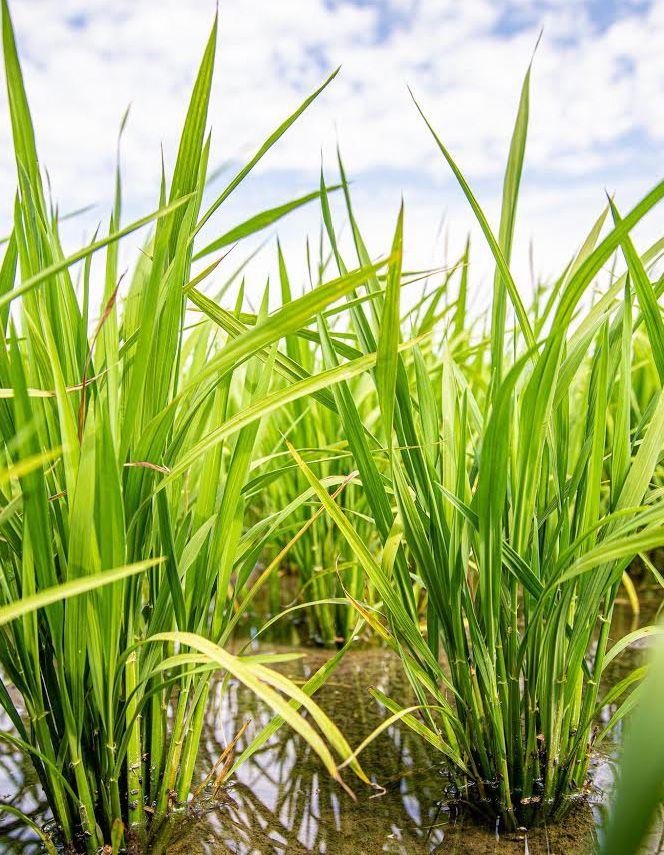
First steps toward commercial rice production in Ontario PG. 6
LIMITING LODGING IN OAT
Developing strategies to reduce the risk of this major constraint PG. 12
the go-to resistance management tool for soybeans.
If you’re using advanced soybean technology, doesn’t it deserve protection to match? Engenia® is exclusively designed for Roundup Ready 2 Xtend® soybeans. Its highly concentrated liquid formulation offers easier handling and a lower use rate. Engenia is also an effective tool for managing Group 2-, triazine- and glyphosate-resistant biotypes. In other words, it seems tough weeds have also met their match. Visit agsolutions.ca/htsoybeans or contact AgSolutions® Customer Care at 1-877-371-BASF (2273) for more info.
Always read and follow label directions.
TOP CROP
MANAGER
SPECIAL CROPS
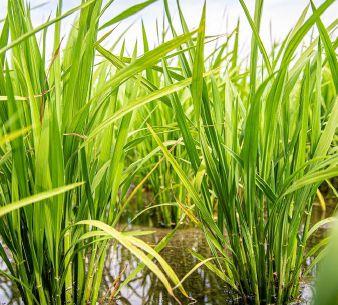
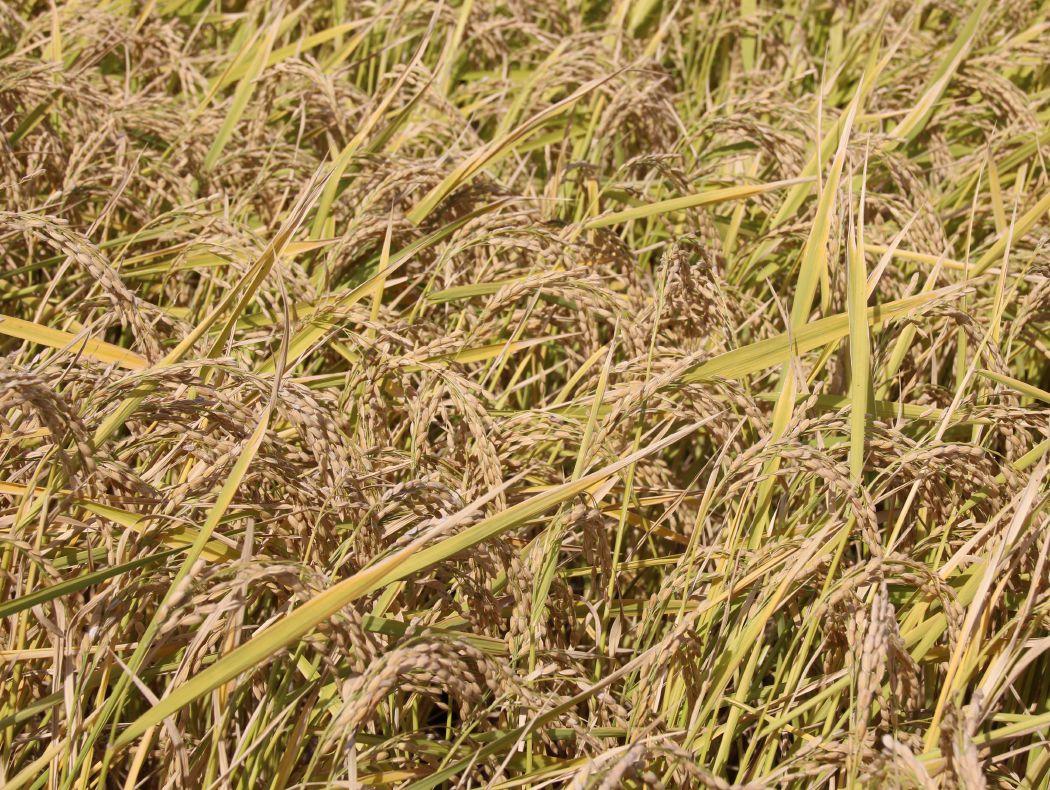
6 | Something completely different Field trial takes first steps toward commercial white rice production in southern Ontario.
by Carolyn King
4 Spotlight on influential women by Stefanie Croley
WEED MANAGEMENT
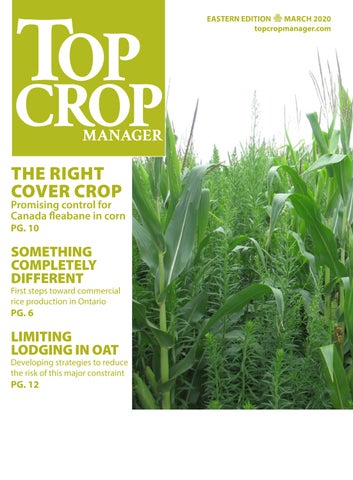
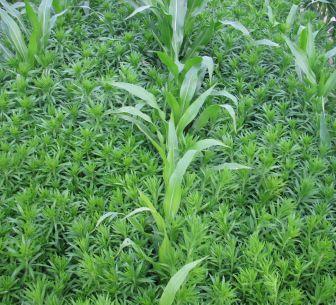
10 | Finding the right cover crop Study shows cover crops provide promising control for Canada fleabane in corn. by Julienne
Isaacs
16 Controlling dry bean anthracnose by John Dietz
CROP MANAGEMENT
12 | Limited lodging in oat
Developing strategies to reduce the risk of this major constraint on oat yields. by Carolyn King
ON THE WEB
STATISTICS CANADA RELEASES SMALL AREA DATA ON FIELD CROPS
The tables show the yield and production data from 2015 to 2019 (where available) for barley, canola, corn for grain, oats, soybeans and all varieties of wheat grown in Canada. Read the full story on topcropmanager.com, and subscribe to our weekly e-newsletter for regular news updates.
Readers will find numerous references to pesticide and fertility applications, methods, timing and rates in the pages of Top Crop Manager. We encourage growers to check product registration status and consult with provincial recommendations and product labels for complete instructions.
STEFANIE CROLEY EDITORIAL DIRECTOR, AGRICULTURE
SPOTLIGHT ON INFLUENTIAL WOMEN
When the teams behind our agriculture brands at Annex Business Media tossed around the idea of a project recognizing women in agriculture, I’ll admit I was hesitant to move forward.
My skepticism wasn’t because I thought women aren’t worthy of recognition, or that we’d have a hard time finding candidates – in fact, it was kind of the opposite.
I started working in agriculture in 2013, and since then, I’ve worked alongside a team comprised almost entirely of women (although I’d be remiss not to mention Bruce Barker, our invaluable Western Field Editor, who fits in seamlessly among us). I’ve met, read about and learned from hundreds of women doing great things within the industry. I grew up listening to stories from my grandparents, who were raised on farms in Canada and Italy, and know that the women who came before me played an important role in agriculture too. Traditionally, being a woman in agriculture meant you would take care of the meals, house and family while men worked the fields or tended to livestock. Make no mistake: these tasks were – and still are – important to the success of the farm, but this was a stereotype for many years that wasn’t definitive of every farm wife or daughter. I’m willing to bet my grandmothers and greatgrandmothers weren’t the only women helping out in the barn when needed. With time, a woman’s role on the farm has evolved from the traditional interpretation, but the point is that women have been making their mark in this sector for centuries. When is it not considered “new” anymore?
But then I realized this was exactly why we needed to go forward with our initiative. It doesn’t matter that women have been playing an influential role in agriculture for the better part of the last century. What matters is that we have to continue to recognize the importance of women in agriculture. The onus is on us to honour the women who have paved the way for us in the past by spotlighting some of the industry’s brightest lights.
Influential Women in Canadian Agriculture will honour six women from all areas of agriculture – farming, research, consulting, breeding, medicine and everything in between. We know that the work women do on farms and partner farms, in the lab or classroom, or behind the scenes at an office is making a difference to the future of agriculture in Canada, and we intend to highlight their important work and contributions through this program.
Please visit www.agwomen.ca to submit your nomination. Nominees must be 18 years of age or older and must reside in Canada. After the honourees are chosen, we’ll be sharing their stories with you through podcasts and a special digital edition. Stay tuned – you won’t want to miss what’s to come.
TOP CROP
services we believe may be of interest to you. If you prefer not to receive this information, please contact our circulation department in any of the four ways listed above.
No part of the editorial content of this publication may
topcropmanager.com
We’re looking for six women making a difference to Canada’s agriculture industry. Whether actively farming, providing agronomy or animal health services to farm operations, or leading research, marketing or sales teams, we want to honour women who are driving the future of Canadian agriculture.
SOMETHING COMPLETELY DIFFERENT
Field trial takes first steps toward commercial white rice production in southern Ontario.
by Carolyn King
At first glance, growing white rice – a semi-aquatic plant – might seem like a surprising idea for crop production in Ontario fields. And yet the United States has successfully produced rice for years. Now, an effort is underway to start delving into all the considerations that need to be addressed to develop rice as a commercial crop in southwestern Ontario.
The U.S. is one of the top rice exporters in the world. Statistics from the U.S. Department of Agriculture show that, from 2007 to 2017, average returns on rice production were much higher than for any other major field crop. The crop is grown mainly in Arkansas, Texas, California, Louisiana, Mississippi and Missouri.
“In the U.S, rice production is done profitably and it has been for many, many decades,” notes John Zandstra, professor of fruit and vegetable cropping systems at the University of Guelph’s Ridgetown Campus. “So we might be able to grow it here. But rice production is very different from anything we have done here.”
Zandstra is working with Ontario FangZheng Agriculture En-
terprise Inc. on the rice research. This effort began in 2016 as part of an initiative by the municipality of Chatham-Kent to work with China to look for shared economic development opportunities. One of those potential opportunities was rice production.
“When I first heard that a group from China was interested in developing rice as a crop here, I kind of chuckled because rice is traditionally grown in warmer climates. But over the years, the Chinese have developed cultivars that can grow in cooler conditions. So now they grow the crop in areas with a similar climate to ours,” Zandstra says.
As he discussed the possibility of rice production with the company, he realized that they needed an interpreter with good agricultural knowledge, so he thought of Wendy Zhang. “At the time, Wendy was a graduate student with one of the other researchers on this campus. She was from China and she knew ag-
ABOVE: The trial, which was done in collaboration with U of GRidgetown researcher John Zandstra, produced rice yields that are comparable to those in China.
riculture – her family is actually involved in rice production – so I asked her to be the interpreter.” The company hired Zhang, first as an interpreter and then as the manager of the rice research project and manager of the small farm west of Chatham that Ontario FangZheng has purchased.
Zhang, who now has her master’s degree, is conducting rice production trials on this 70-acre farm. “Ontario is a gift place for many kinds of crops, and it is easy to find places in southwestern Ontario that fit the essential requirements of rice production: a flat field and water resources,” she explains. The farm has both of those critical elements, as well as clay loam soils that are good at holding water.
For the trials, they selected a variety of rice that is grown in northern China. Zhang says, “We chose a rice variety suited to the local environment and the length of the growing season here in the Chatham area. We need a variety that can produce satisfactory yields and we hope it will grow well in this new environment.”
In 2018, they obtained the rice seed from China. Zandstra and his research group grew some of the seed in the greenhouse at Ridgetown, providing an initial look at the plant’s growth and development. They also helped Zhang with some of the logistics of rice production, like where to buy agricultural inputs and how to apply for water permits, and with her preparations for her 2019 field trial.
“We made some paddy beds in the fall of 2018 and we got Wendy set up with pumps,” Zandstra notes. “She made the applications to take water [from a municipal ditch that runs by the farm], and got everything ready for a one-hectare [2.5-acre] field trial in 2019.”
For this 2019 trial, Zhang grew the seeds as transplants in a
small greenhouse on the Ontario FangZheng farm and transplanted them in mid-May.
As well, Zhang and Zandstra both did a little experimenting with planting the seed directly into the field. Zhang planted some seed by hand in a little corner of a paddy, and Zandstra and his group set up a small paddy at the Ridgetown campus where they grew some seed and tried different fertility levels. He says that these little direct-seeded test areas seemed to grow quite well, but the researchers didn’t collect any data on plant growth or yields.
“Using transplants is expensive because of the greenhouse cost, the labour involved and the specialized machinery. In the southern U.S., they direct-seed rice. They either flood the paddy and then fly an airplane over and drop the seed, or they use a grain drill, like we would use to plant wheat, and then flood the paddy afterwards,” Zandstra explains.
“However, the risk with direct-seeding here is that we would run out of time [if the growing season in southwestern Ontario is too short]. With transplants, you’re getting two, three, four weeks of growth before you put them in the ground.”
For this trial, Zhang generally followed the recommended practices used in rice production in China for things like fertilizer management, water management and so on.
“Rice production uses much less water than I would have thought,” Zandstra says. “Just from what I had seen in movies and such, I had imagined that you would be up to your ankles in water. But having visited China [as part of this project] and watching Wendy do it, it doesn’t use nearly as much water.”
Zhang notes that she is using a new method for flooding fields that doesn’t require as much water. Most of the time, the water on the paddy only needs to be a few centimetres deep, enough to cover the ground.
“When the crop is close to being ready for harvesting, we stop pumping water and let the field naturally dry out. We try to avoid letting any water go back to the drainage ditch. This can help to prevent water pollution and leaching,” she notes.
The trial didn’t have any disease or insect pest problems, but there were a few weed problems. Zandstra says, “The water will control perhaps 70 per cent of the weeds that you would see in an open field. But you get different weeds. For one thing, bulrush can come in because bulrush seeds float around in the water. And when bulrushes get established, they are quite difficult to pull out. So, in the trial, they had to do some hand-weeding because, of course, at present Canada does not have any registered crop protection products for use on rice.”
Rice production requires some infrastructure for pumping and managing the water and some specialized field equipment. “We imported some new machines that can work in rice paddies. These included a specially designed tractor, a rice transplanter, a berm builder, and so on,” Zhang notes. She wasn’t able to find any of these machines locally, but she expects that as more farmers in the area start to grow rice, the local equipment dealers will start to offer this type of equipment.
The field was harvested in late September. Zandstra says, “They used an ordinary John Deere combine; there are rice settings in the combine. There is also some combine hardware – plates that you would purchase to add onto the combine – for rice harvesting, but we didn’t bother with that for this trial. So there was a little more grain left on the field than we like to see, but it wasn’t too bad.”
For most of the growing season, the water on the rice paddy is only a few centimetres deep.
PHOTO COURTESY OF ONTARIO
INC.
The yield from the trial was about 153 bushels per acre (6,885 pounds per acre). “The yield was comparable to what you would have in China,” Zandstra notes. He was impressed that this first try at rice production worked out so well.
Plans for 2020
“In 2020, we are going to expand our rice production to 70 acres,” Zhang says. “This will help us have a better understanding of the costs and benefits of growing rice commercially. We will also keep going with our research trials to modify the rice production into a Canadian style.”
Zandstra and Zhang are in the process of developing their research plans for the coming growing season. “With any new crop, you try to tailor your production practices to local conditions. So, there are a lot of things I would like to try,” Zandstra says.
“I have an interest in fertility levels, plant density and direct-seeding versus transplanting, water-use efficiencies – there are all kinds of things we can play with. One of my colleagues is a horticultural weed scientist, so we’re trying to get him on board to do some weed control trials with herbicides that are already registered on rice in the U.S.”
He adds, “I find this work really, really interesting. It’s all new and all different so it’s a learning curve. It’s fun to try, and hopefully something good comes out of it [for Ontario farmers].”
Challenges and chances
“Rice is a new crop in Canada, which means challenges and chances,” Zhang says. “We see the potential of how rice can make a difference.”
She is hopeful that rice will find a place in Ontario crop production systems. “Some Ontario farmers have to pump water out of their fields in the spring. Ontario usually has enough rainfall, but sometimes the rain comes at the wrong time for cash crops. So why don’t we try some crops that like wet conditions? Rice will give the farmers more options [especially if they have flat fields with poorly drained clay soils].”
Zhang also thinks Ontario rice could find a market with consumers interested in locally grown food. “We believe that once people discover how tasty Ontario-grown rice is, they will like it.”
In the long run, Ontario FengZheng would like to see many Ontario farmers growing rice, and Zhang is working to make that a reality.
“According to my conversations with local farmers, they have three main concerns with rice production. These concerns will be our challenges to expanding rice production to a commercial scale,” she notes.
“The first one is the revenue. We need more production years to collect data on rice yields and production costs, and we need to look into potential markets and prices for Ontario rice. If the crop is profitable, that is always the best encouragement for producers.
“The second concern is that farmers here do not like to flood their fields because it would create more work and increase the risk of soil compaction. My company is working on testing a different way of flooding the rice to minimize their concerns.
“The third one is how to make the production process easier to use with local equipment and facilities. These are the three major areas I’ll be working on in the next few years.”
FINDING THE RIGHT COVER CROP
Study shows cover crops provide promising control for Canada fleabane in corn.
by Julienne Isaacs
Cover crops can’t be used as the sole management strategy for weeds in field crops. But as one strategy in an integrated management approach, they show enormous promise, according to University of Guelph professor Peter Sikkema.
“I’ve been working in weed science for 25 years. My research program has been largely focused on herbicides,” Sikkema says.
Two years ago, Sikkema’s graduate student Taiga Cholette published a study looking at suppression of glyphosate-resistant (GR) Canada fleabane in corn with fall-seeded cover crops after winter wheat combining. Of the 15 graduate students Sikkema has supervised who have worked on glyphosate-resistant weeds, Cholette was the first to look specifically at cover crops as a weed management tool.
Cholette’s results were impressive: all of the cover crop treatments tested suppressed GR Canada fleabane in corn the following year compared to the no-cover crop control. Annual ryegrass was most effective: in combination with oilseed radish, it suppressed GR Canada fleabane 87 per cent in the following year’s corn crop.
“Farmers need greater than 95 per cent plus control, so this is not a standalone strategy, but Taiga’s data suggests that cover crops are one component of an overall weed management strategy,” Sikkema says.
“The fact that we’ve relied on herbicides to the exclusion of other weed management tactics has led to widespread herbicide resistance. I’m not throwing darts at anybody because that was considered the best science for 50 years, and I’d have to throw them at myself as well. But I think for long-term sustainable crop and weed management, we need to get more diversity into our weed management programs.”
Study design and results
The experiment was conducted in southwestern Ontario over three years, from 2015 to 2017, and included seven site-years. Studies started when cover crops were seeded after winter wheat harvest in late summer, and completed after corn harvest the following year.
Treatments included oilseed radish, crimson clover, annual ryegrass, oat and cereal rye, seeded alone and in combination. The researchers also looked at three commercial blends: oilseed radish, crimson clover and oat (Cover 60/20/20), pea and triticale (Tripper Maxx), and oat and pea (Sprint Maxx). Every replicate included a no-cover crop control as well as a weed-free control maintained with Marksman applied preplant to corn.
GR Canada fleabane suppression in corn was assessed visually in mid-May and early June, July, August and September, with
researchers also evaluating Canada fleabane density and biomass at the beginning of July.
Among the treatments tested, annual ryegrass, crimson clover/ annual ryegrass, oilseed radish/crimson clover/annual ryegrass, and oilseed radish/crimson clover/cereal rye were the most consistent treatments for the suppression of GR Canada fleabane in corn.
Annual ryegrass planted alone or in combination with crimson clover provided the most consistent GR Canada fleabane suppression. Planted alone, annual ryegrass suppressed 65 per cent of GR Canada fleabane in May; planted with crimson clover, annual ryegrass suppressed 74 per cent of GR Canada fleabane in the same month.
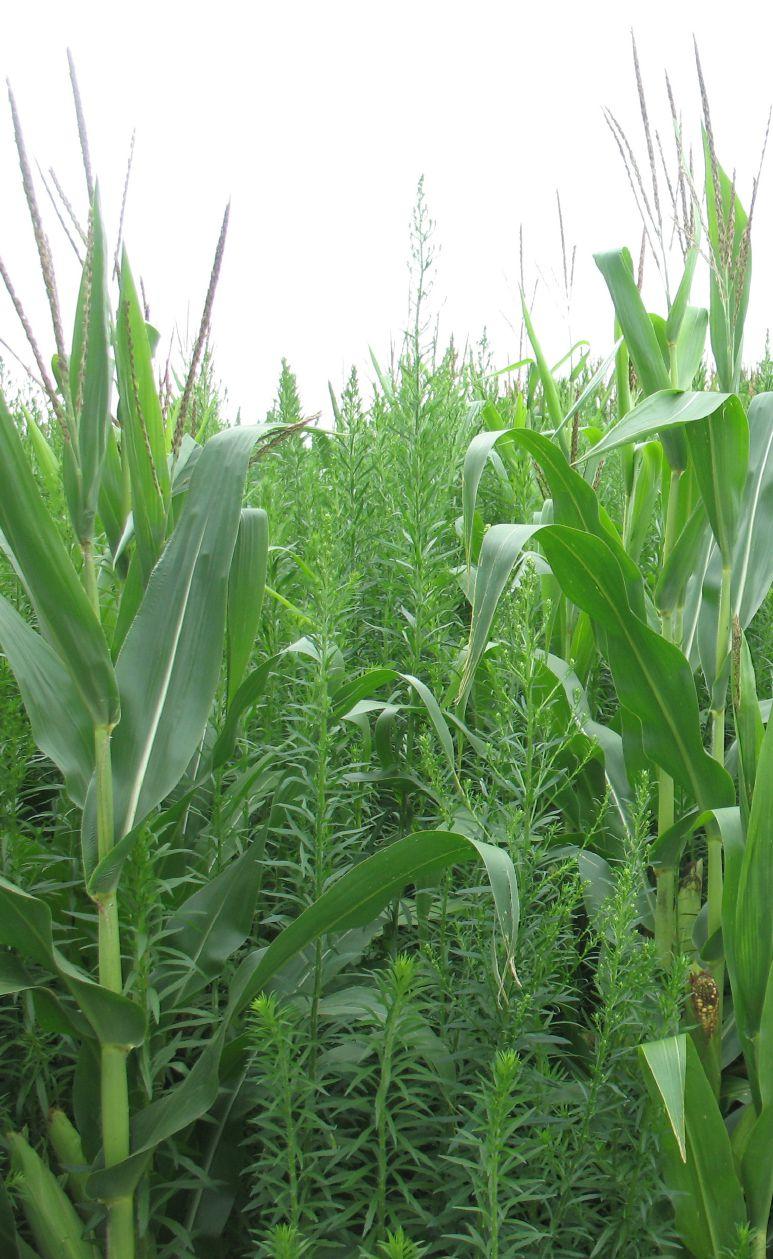
GR Canada fleabane in corn.
Ontario farmers typically plant a cover crop blend, Sikkema says. In their current work his research group is looking at oilseed radish and oat blends.
The most logical place for cover crops in Ontario, he says, is after winter wheat combining in a corn-soy-wheat rotation; the benefit is reduced GR Canada fleabane in the subsequent corn crop.
Ongoing research
Ted Vanhie, a master’s student working with University of Guelph professors François Tardif and Clarence Swanton, began a project in May 2018 that also aims to assess the effectiveness of cover crops for Canada fleabane suppression.
Vanhie’s project has four objectives: to validate the suppressive effect of cereal rye against Canada fleabane, to compare rye’s performance to that of other cereals, to evaluate control of Canada fleabane when rye is used in combination with chemical and cultural weed control methods, and to look into the mechanisms responsible for rye’s control of the weed.
One experiment was a field trial that ran on a farm near Delhi, Ont. in 2018 and 2019.
This experiment was organized in a split-strip plot design and looked at control of Canada fleabane with a rye cover crop used in combination with herbicides and/or tillage. For herbicide treatments, Vanhie applied dicamba, saflufenacil and 2,4-D in the spring. Three tillage intensities – no-till, aggressive tillage and passive tillage (a method that disturbs fewer soil aggregates than aggressive tillage) –were compared.
Each possible rye, tillage and herbicide combination was replicated at least three times, notes Vanhie. Population and height
measurements were evaluated at zero and four weeks after herbicide application, with visual ratings collected at two and four weeks and Canada fleabane biomass measurements collected at four weeks after application.
Vanhie says the study’s results are still being evaluated, but he’s comfortable saying that rye did suppress Canada fleabane.
“We’re seeing that suppressive interaction. I’m not saying it’s strong enough alone to be your sole weed control method – you’ll need multiple modes of action to control Canada fleabane,” he says.
Vanhie did observe better control of the weed when rye was used in combination with tillage in 2018, although the effect was less consistent in the second year of the study.
Control improved with the addition of an herbicide, particularly dicamba; Vanhie noted that 2,4-D did not provide adequate control to justify the cost of application.
Where rye “really shined,” Vanhie says, was in reducing the density of Canada fleabane. In 2018, the use of rye alone decreased the density of Canada fleabane by roughly half. Rye also reduced the height of Canada fleabane plants that escaped herbicide application or tillage, he says.
While it’s too soon to make specific recommendations, Vanhie says the use of a rye cover crop is very promising – and not just for its efficacy against weeds.
“Oftentimes we come up with strategies to manage weeds but we can overlook costs,” he says. “As part of an integrated management strategy, this is a cost-effective system.”
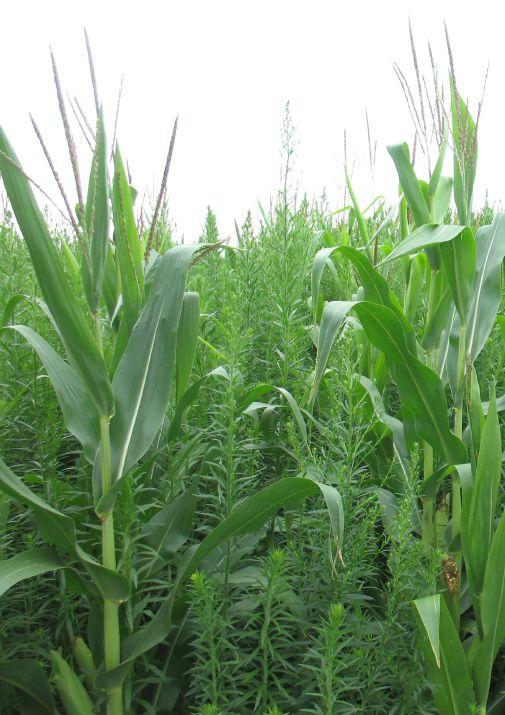
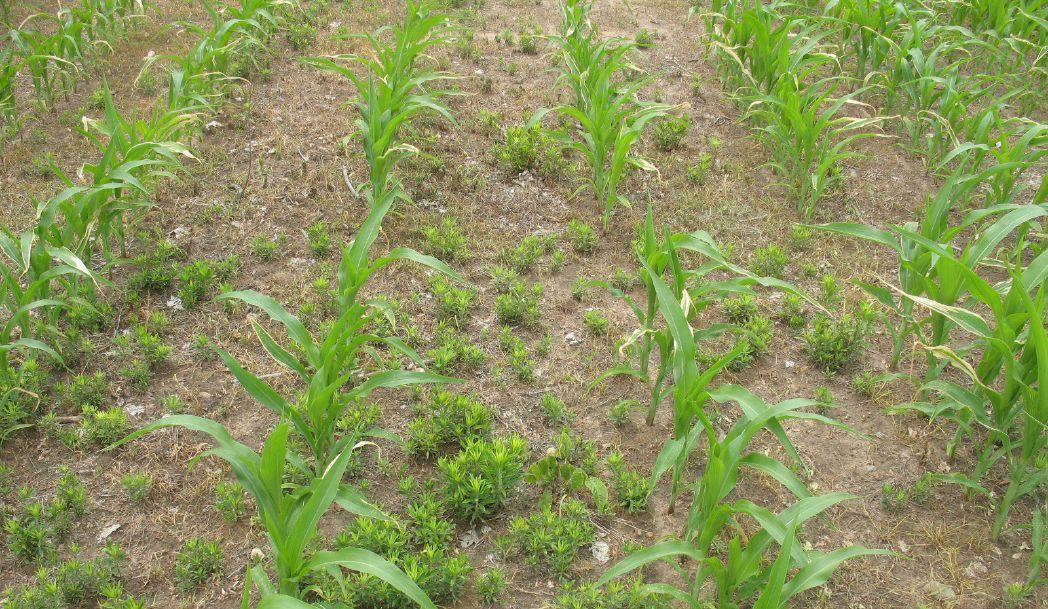
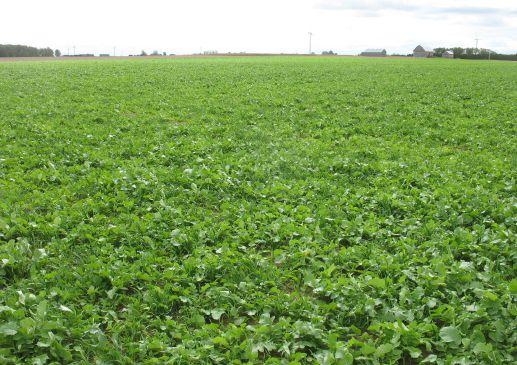
ABOVE AND RIGHT: Suppression of glyphosate-resistant Canada fleabane in corn with a cover crop of cereal rye and crimson clover. The cover crop was seeded the previous summer after combining winter wheat.
PHOTOS COURTESY OF PETER SIKKEMA.
LIMITING LODGING IN OAT
Developing strategies to reduce the risk of this major constraint on oat yields.
by Carolyn King
Lodging is a very serious problem for oat, more serious than for any other cereal,” says Bao-Luo Ma, a research scientist with Agriculture and Agri-Food Canada (AAFC) in Ottawa. His recent research on oat agronomy and crop physiology has produced valuable findings to help in the battle against oat lodging.
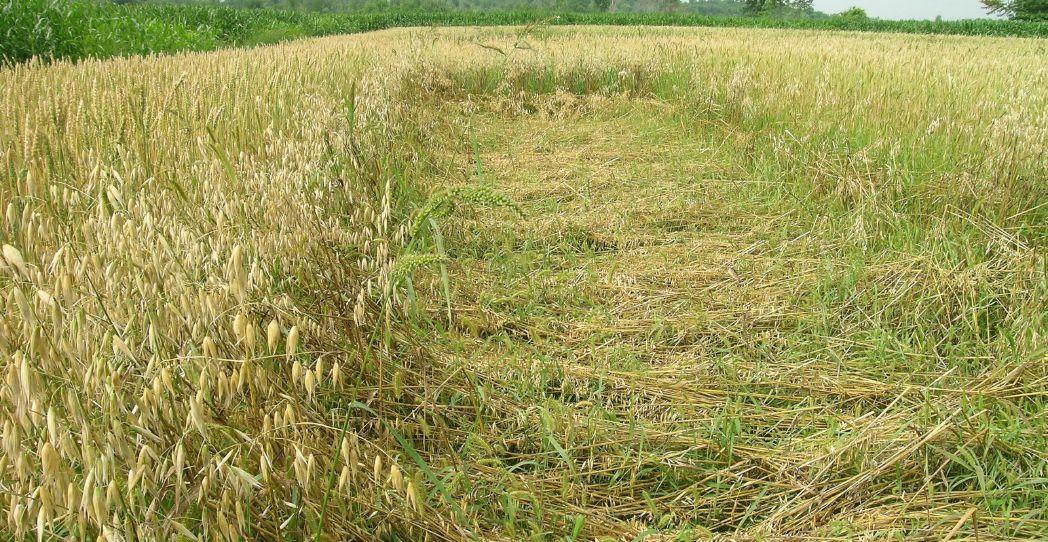
“Lodging is an important factor limiting yield potential and reducing a farmer’s profitability. Depending on the timing and severity of lodging, it can reduce oat yields by 10 to 40 per cent. In extreme cases, yield losses can be as much as 80 per cent. Lodging can have a negative impact on grain quality, possibly leading to grain contamination with mycotoxins. Lodging also makes harvesting difficult and can add an additional cost on grain drying.”
Through their studies, Ma and his research team have identified some key traits for oat breeders to target for improved lodging resistance, and have underlined the importance of developing region-specific best management practices to reduce the risk of lodging.
Nutrients, climate and lodging
Since lodging risk tends to increase with higher nitrogen levels, lodging and nitrogen rates are closely tied considerations as growers try to maximize their oat yields. So, Ma and his team examined the effect of nitrogen fertilizer rates on lodging and yields in various oat varieties in different environments, looking for possible breeding criteria and management strategies that could reduce lodging.
“Genetic differences in lodging resistance and yield potential are well known. However, our understanding of the mechanisms of differential response of oat cultivars to nitrogen fertilization is still limited,” he explains.
This study involved 10 to 12 varieties grown in Normandin,
Que., Ottawa and Melfort, Sask. It compared four nitrogen fertilizer rates: zero, 50, 100, and 150 kilograms per hectare (kg/h).
In general, they found that grain yields tended to increase as the nitrogen fertilizer rate increased, but yields levelled off when the fertilizer rate reached 100 kg/h. The oat varieties had a sitespecific response to nitrogen: the yield for each cultivar differed significantly from site to site. The highest yields were in Melfort and the lowest in Normandin, regardless of the cultivar.
Lodging resistance of the oat cultivars was also site-specific. Severe lodging occurred only at Ottawa.
“We found that crop lodging was the key trait that limits the yield response of oat cultivars to nitrogen applications. We also found that cultivar responses are site-specific,” Ma says. “Therefore, best management strategies should be developed to address regional requirements.”
The expected association between higher nitrogen supplies, taller varieties and a higher risk of lodging was found at the Ottawa test site. However, when you compare the data for the three sites, Melfort actually had the highest nitrogen supply (due to its higher soil residual nitrate levels) and the tallest oat plants, but only mild lodging problems.
Site-specific factors that influence the risk of lodging include things like weather, soil type and disease. Ma gives an example of how temperature plays a key role in lodging. “Under cooler conditions, the soil microbes are not as active, so the breakdown of organic matter and the release of nutrients from the organic matter will be slower. Also, under lower temperatures, the plant will develop slower, so the enlargement of cell size will be slower and internode growth will be slower.”
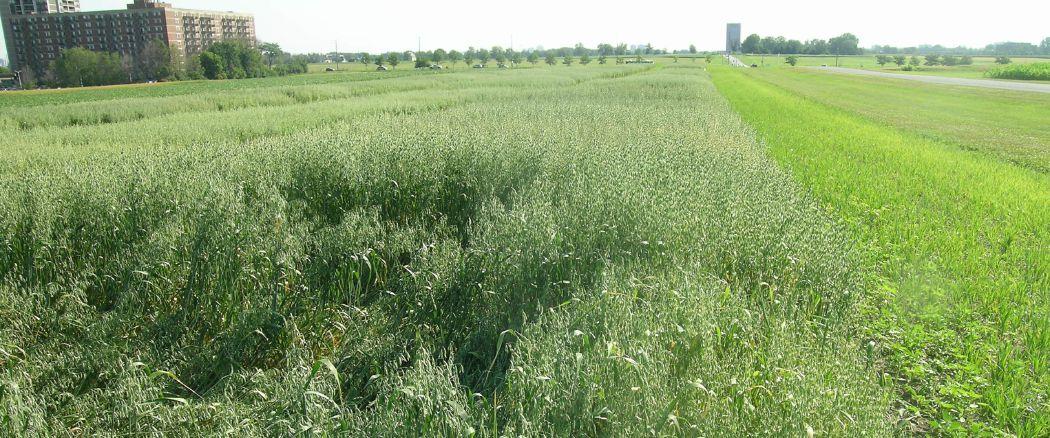
ABOVE: In one study, Ma evaluated the effects of different nitrogen rates on lodging and yields of different oat varieties grown at three sites.
So, if an oat plant’s early growth takes place under cooler conditions, then the lower part of the stem will have shorter internodes and thicker cell walls, resulting in a stronger stem that is less likely to buckle in stormy weather. Conversely, warmer growing conditions will lead to taller stems with thinner cell walls that are more likely to buckle. During the study, temperatures were warmest at the Ottawa site, increasing the lodging risk there.
The study’s results also showed that higher levels of nitrogen and phosphorus in the oat straw were both associated with a greater risk of lodging. The connection between higher straw nitrogen levels and lodging was expected, but the connection with higher straw phosphorus levels was a surprise.
Ma and his team speculate that the higher straw phosphorus content was stimulated by the higher nitrogen supply, and that the higher nitrogen and phosphorus levels in the straw might both lead to enhanced elongation of the basal internodes, a weaker stem and increased top-growth, all of which make the plant more prone to lodging.
The oat varieties all had much higher straw phosphorus levels when they were grown at the Ottawa site than at the other two sites. Ma explains that in Ottawa, straw phosphorus content was positively related to the fertilizer nitrogen rate. In Normandin, phosphorus uptake was likely limited due to the cooler temperatures and lower soil pH. In Melfort, the cooler conditions probably slowed phosphorus uptake, and the longer growing season meant that more of the phosphorus moved from the straw into the grain, resulting in lower straw phosphorus and higher grain yields.
Ma says, “Our study indicates that site-specific nitrogen application rates and appropriate cultivars could be recommended for increasing oat yield and reducing the risk of crop lodging.”
Plant architecture and lodging
In another study, Wei Wu, a post-doctoral researcher from China, and Ma’s team investigated the effects of plant architecture on lodging and yield performance. They compared four oat varieties, all with similar yield potentials, but two had erect leaves and two had droopy (prostrate) leaves. They grew these varieties under three different plant populations, from 200 to 600 plants per square metre.
“Increasing the seeding density is the easiest way to increase the aboveground biomass and oat yield, but it often leads to a high risk of crop lodging,” Ma explains.
He notes, “While there is no doubt that both leaf architecture and root system structure significantly influence oat crop yields, it is unclear how these traits can also affect crop lodging, especially under growing conditions that favour lodging, such as a high nutrient supply, high plant populations, favourable weather and so on.”
The researchers determined that leaf architecture has an important effect on lodging. “We found that erect leaf posture could promote crop resistance to lodging in oat production. Therefore, varieties with an erect leaf posture can be grown under higher population densities to achieve their yield potential,” Ma says. “Prostrate leaf varieties, however, should be grown under intermediate densities to prevent lodging.”
AGRICULTURE
He explains, “An erect leaf posture could lead to lower competition between individual plants, allowing higher light transmittance through the lower canopy, even under high plant populations, which will improve lodging resistance. In comparison, a prostrate leaf posture will lead to lower light transmittance, and the non-uniform distribution of the leaves within the canopy could further deteriorate the canopy structure that is exacerbated by dense planting.”
As part of their oat studies, Ma and his team conducted tests to measure the two types of lodging: stem lodging, where the stem buckles, and root lodging, where the root anchorage system fails. They confirmed that oat plants are more prone to root lodging than stem lodging.
He summarizes, “Our results suggest that oat breeders and growers could breed or select for cultivars with erect leaves and rigid root systems for lodging-prone environments to reduce the risk of crop lodging and achieve the genetic yield potentials, especially under high plant population conditions.”
Challenges ahead
Ma identifies a couple of reasons why progress to improve lodging resistance in oats has been relatively slow. One factor is that research funding for oats is lower than for major crops like wheat – substantial advances have been made in enhancing lodging resistance in wheat through the strong investment in wheat research.
Another aspect is that oat straw has more value for livestock rations – it is more palatable and nutritious than barley or wheat straw. So, research to develop shorter or semi-dwarf oat varieties may not be a priority for producers, even though such varieties would be more resistant to lodging.
However, Ma says there is good potential to increase lodging resistance in oats through breeding and agronomic research.
“There are large variations among oat genotypes and their plas-
ticity in their response to management-by-environment interactions. I think that along with studies to determine the appropriate amount of nitrogen fertilizer in a specific environment, research is also needed on the soil supplying power of other macro- and micronutrients,” he says.
“Often other under-investigated nutrients and/or agronomic measures may play decisive roles in yield formation and lodging resistance. In particular, we wish to expand our research toward the understanding of micronutrient dynamics in the soil, interaction with macronutrients, and their roles in the response of crop plants to biotic and abiotic stresses.”
Ma concludes, “As we work to increase oat yields, we also increase the risk of crop lodging. The strategies I’ve mentioned – like site-specific nutrient management recommendations and breeding for erect leaf posture – could be effectively implemented to reduce crop lodging. But lodging can never be completely eliminated under favourable weather and high-yielding conditions. Our battle against crop lodging will continue.”
Ma’s recent oat research, including the lodging studies, was funded in part by Growing Forward 2 and the Canadian Agricultural Partnership of AAFC with the Canadian Field Crop Research Alliance (CFCRA) through joint agreements between AAFC and CFCRA. Ma appreciates the collaboration with oat breeders and researchers from other AAFC research centres and universities. He also notes that AAFC technicians Lynne Evenson, Scott Patterson, Ulrica McKim, Zhiming Zheng and Alex Quesnel provided excellent research support.
PHOTOS COURTESY OF BAO-LUO MA.
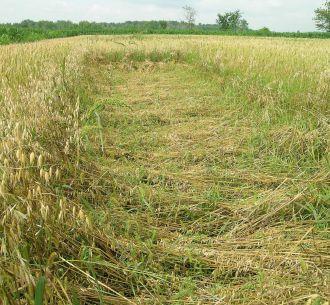
ABOVE: Lodging is a more serious problem for oats than for any other cereal.
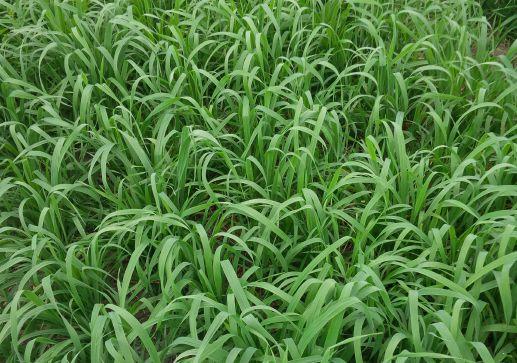
RIGHT: Droopy leaf varieties like AAC Nicolas should be grown under intermediate plant densities to prevent lodging.
PESTS AND DISEASES
CONTROLLING DRY BEAN ANTHRACNOSE
If the dry bean disease returns, be ready to manage it.
by John Dietz
Dry bean anthracnose has kept a low profile over the past decade, but it’s due for a reappearance. If the disease happens to rear its ugly head in 2020 or 2021, new management strategies have emerged from research conducted in Ontario and Manitoba to help you control it.
“It was the number one disease of beans when I came to Morden about 19 years ago,” says Robert Conner, pulse crop plant pathologist with Agriculture and Agri-Food Canada (AAFC) at the Morden Research and Development Centre in Manitoba. “We were finding it in most of the bean fields that were being grown at the time. Now, we probably haven’t detected it in over six years.”
Chris Gillard is an associate professor in the Department of Plant Agriculture at the University of Guelph’s Ridgetown campus, whose research focuses on pest management in Ontario dry bean. Years ago, Gillard had similar encounters with dry bean anthracnose.
“I’m happy to say we haven’t had a good outbreak of anthracnose in 10 years. I’ve been doing this job for close to 30 years, and the first 20 years, it was rough,” Gillard says. “We’d get a good outbreak every six to nine years, and it was impacting a good percentage of the crop – like 10 to 15 per cent of the crop. I walked through fields where we had 50 to
60 per cent yield loss, and what was left was so badly damaged – from visible damage on the seed – that it was unmarketable.”
Their new research confirms that clean seed, tillage and crop rotation are the basis of integrated control of bean anthracnose, providing an update to research from the 1980s.
More than 10 years ago, the two recognized that dry bean growers in Manitoba and Ontario needed help managing anthracnose. The fungus that causes it, Colletotrichum lindemuthianum, wasn’t well understood.
Gillard and Conner say at that time, the length of time the fungus could survive on crop debris and the effectiveness of crop rotation to control the disease were uncertain. Now, their studies provide management guidelines for effective control.
They collaborated in a series of three two-year studies, monitoring the survival of the fungus on crop debris at the Huron Research Station (operated by the University of Guelph’s Ridgetown campus) near
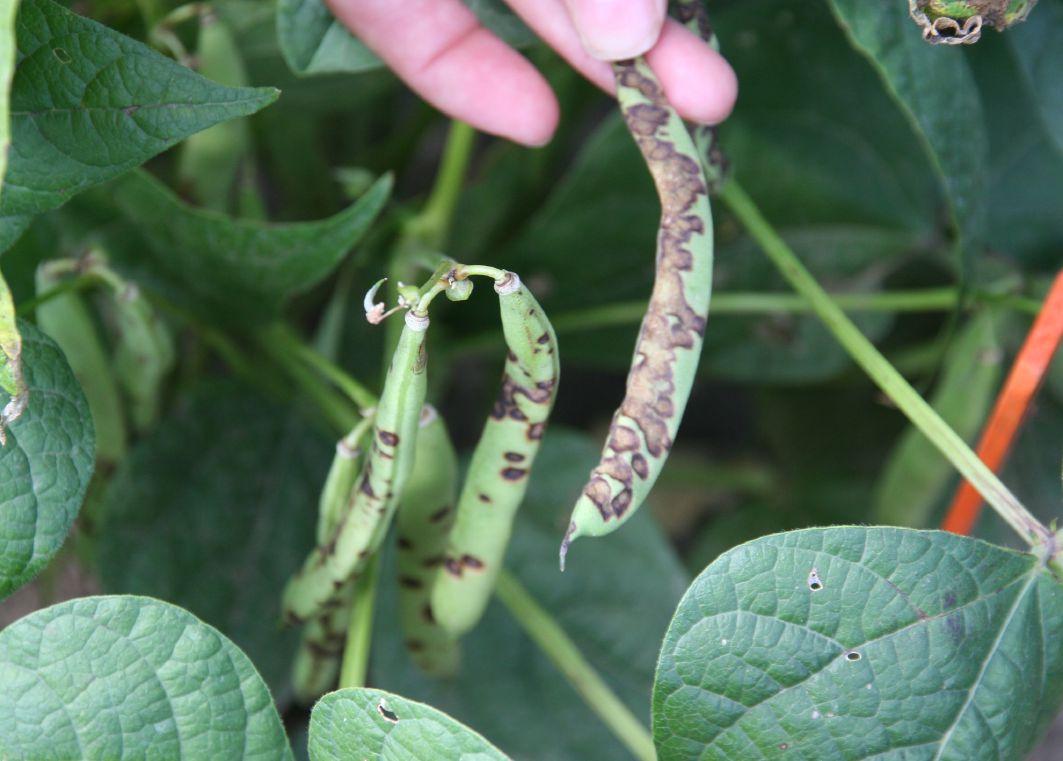
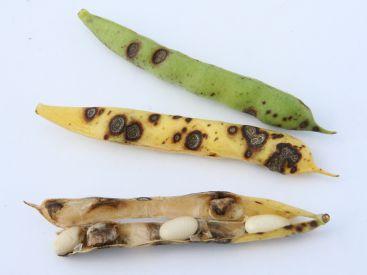
TOP: Dry bean anthracnose hasn’t troubled growers for several years, but the disease tends to operate in decade-long cycles. INSET: Bean pods infected with anthracnose, showing the progression of the disease.
PHOTOS COURTESY OF CHRIS GILLARD.
Exeter, Ont., and at an AAFC field site near Morden. They began in October 2008, repeating the study in 2010 and again in 2016.
Conner also did a three-year replicated trial in Morden, Man. to test the effectiveness of managing anthracnose with a no-till crop rotation. That trial began in 2006 and was completed in 2010, but wasn’t reported.
The full set of findings, including the research from a decade ago, was released after the third two-year study was completed in 2017. The team led by Conner and Gillard published the results in the Canadian Journal of Plant Pathology in January 2019.
The research took a long time, but the approach was simple and the results are quite clear. What they learned is that, essentially, anthracnose is relatively easy to manage. In fact, this may be the reason the disease has “vanished” from field reports for the past six to 10 years.
For background information, anthracnose on beans is distinct from the anthracnose that infects lentils. The fungus survives on seed, crop debris and stubble, and fababeans are the only other host crop. Spores are airborne, so survival in soil isn’t an issue. Spore production and infection need warm weather and high humidity. Past research indicates epidemics of dry bean anthracnose are brought on by frequent showers, especially accompanied by driving winds.
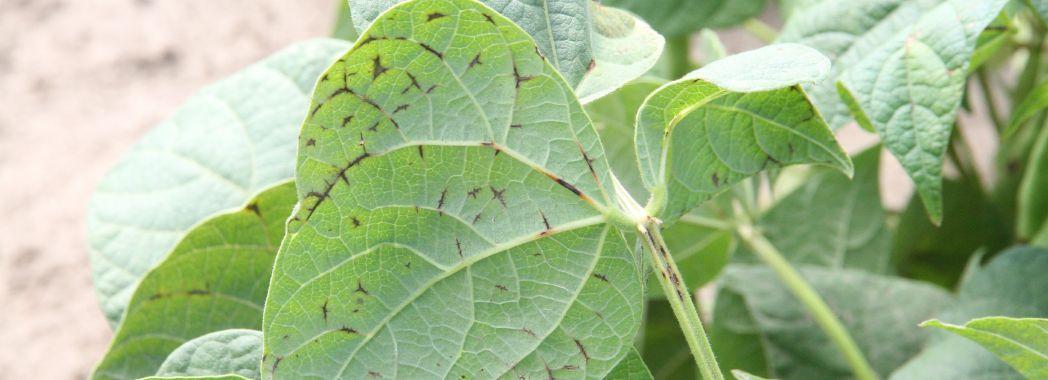
Symptoms begin with darkening and collapse of veins on the underside of leaves. The infection progresses to dark brown, sunken lesions on the stems and pods, from which spores emerge. The seed also becomes discoloured. In wet weather, rain splash can produce secondary infections.
Before this research began, there was disagreement on the length of time the anthracnose fungus could survive on infected crop debris.
There was also disagreement as to the effectiveness of crop rotation in controlling the disease under different climate conditions.
To develop reliable results and settle the disputes, Conner and Gillard set up one study for survival of the fungus on crop debris and a second study (at Morden) for survival of the fungus on zero-till plots under different crop rotations. In the two growing regions, they were dealing with essentially the same variety of fungus and similar soil types.
Weather conditions at the two locations varied considerably over the years of the studies. In general, Morden was consistently much colder and drier than the Exeter region.
Study design
To evaluate survival on crop debris, they gathered infected plant material, which was separated into stem pieces, pod halves and seed. Stem pieces were trimmed to 10 centimetres (cm) in length; pods were opened and separated.
Weighed samples for pods, stems and seeds were separated into 32 mesh bags made from nylon mosquito netting. The sample bags were either placed on the soil surface (pinned with bamboo stakes) or buried 15 cm below the surface in plastic pots. The treatments were replicated four times.
The samples were placed in the two fields in October, then were left to endure the elements for two years. At eight specific dates spaced in three-month intervals, four samples of each tissue type were retrieved, dried and sent to Conner’s lab in Morden for anthracnose evaluation.
This entire two-year cycle then was repeated twice to ensure the results.
Conclusions
On average, C. lindemuthianum could persist for 18 months in Morden and about nine months in Exeter, long enough to serve as a source of primary infection for subsequent dry bean crops. It overwintered longer on infected stems and pods than it did on bean seed. Burial of infected tissue reduced the viability.
The trials with infected debris in mesh sacks provided clear answers. “We tried to determine if we could have any viable disease left on that tissue when we pulled it out of the ground,” Gillard says. “The bottom line was, the fungus persisted for 18 months at Morden, nine months at Exeter. We never got samples to go past nine months at Exeter.”
The difference between anthracnose and a typical bean disease like white mould is that the latter packs the spores into seed-like bodies called sclerotia. Inside the protective sclerotia, white mould can survive winter conditions and attacks from pathogens in the soil.
“Anthracnose doesn’t have that special overwintering structure – it only survives on bean tissue. As that tissue is broken down and incorporated back into the soil, the disease spores get broken down. The more moisture you have, the faster the residue breaks down and the faster the disease disappears,” Gillard says.
The slower the decomposition, the longer the anthracnose fungus can survive.
“We learned it survives quite a bit longer on the soil surface than when it is buried. That makes sense – buried tissue decomposes faster. When we buried residue, the disease didn’t last as long as it did when we left it on the surface.
“As for the type of residue, the stems and pods decomposed slower than the seed. So, the disease lasted longer on the stem and pod tissue than it did on seed,” Gillard says.
Zero-till rotation study
The zero-till crop rotation study confirmed that if infected debris stays on the surface, the fungus can survive long enough to infect a new bean crop two years after the original infection and can lead to considerable downgrading, Conner says.
The rotation study was on zero-till plots more than 200 metres from the closest bean crop. Continuing in no-till, the field was put into three different three-year cropping sequences: bean/wheat/bean, bean/fallow/ bean and bean/bean/bean.
Anthracnose-infected pinto bean seed was planted throughout the entire site in the first year. Irrigation established uniformly infected
symptoms throughout the field, and the infected straw remained on the field after harvest in early August.
In 2007, the field was split into four randomized replications of the three rotations, including spring wheat, disease-free navy bean seed and a summer fallow treatment.
In 2008, disease-free navy bean seed was planted across the entire site in Morden. During the growing season, data on anthracnose incidence and severity was collected from all the plots. Harvested bean seed was also assessed for anthracnose.
Anthracnose was severe in the continuous dry-bean plots, and was much lower – but still damaging to quality and yield – in the plots that had been left fallow or in wheat production.
Recommendations
“Clean seed has kept us free of anthracnose since 2008,” Gillard says. “The industry really came together after we last had an outbreak in 2008, really focused on high quality seed, and then on treating that seed with repeated fungicide applications to keep it clean.”
But, he adds, anthracnose comes along roughly once every 10 years, so it is due again. If we can keep it from getting into a field through the seed, we can bring the disease risk to almost zero. However, once we do get it in a field, we’ve got to be able to manage it.
Foliar diseases like anthracnose do quite well in Ontario due to the humid climate and warm growing seasons; scouting is the only way to find them. There are good fungicides available for short-term control, but by then the field is probably infested.
“If you get anthracnose in a crop, you ask how to make sure it doesn’t affect a future crop in the same field. That’s where this study comes in. How do I stop from repeating the problem? You can’t just sit there and say, ‘It’s never going to happen again.’ Someday growers will need this tool. We’ll be able to pull it out and say, ‘Here’s what you need to do and this is why.’”
Using clean, disease-free seed is the best long-term way to control this disease, Conner says. He credits bean producers and seed growers for getting the disease under control about 10 years ago. They used disease-free bean seed, scouted their fields and then proactively sprayed once or twice in the growing season.
“After two or three years of that, it became very difficult to find any fields in Manitoba where anthracnose was a problem. I certainly give the bean producers and seed growers in Manitoba a lot of credit for getting that disease under control,” Conner says.
Symptoms of dry bean anthracnose begin with darkening and collapse of veins on the underside of leaves.
NATURE’S TRIFECTA
THREE CROP-FRIENDLY NUTRIENTS BALANCED IN EVERY GRANULE
Sometimes the best solutions aren’t engineered, they’re discovered. From a unique mineral found at only a few locations in the world, K-Mag® features crop-friendly potassium, magnesium and sulphur with low chloride levels and neutral pH. The result is a safe and powerful crop fertilizer that allows every plant to get the nutrition it needs to achieve its full potential.
Talk to your retailer or visit Kmag.com to learn more.