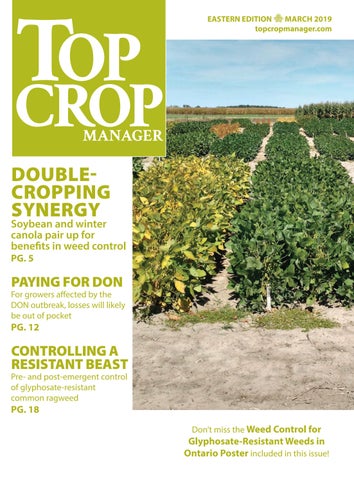
Soybean and winter canola pair up for benefits in weed control
PG. 5
PAYING FOR DON
For growers affected by the DON outbreak, losses will likely be out of pocket
PG. 12
CONTROLLING A RESISTANT BEAST
Pre- and post-emergent control of glyphosate-resistant common ragweed
PG. 18
Don’t miss the Weed Control for Glyphosate-Resistant Weeds in Ontario Poster included in this issue!
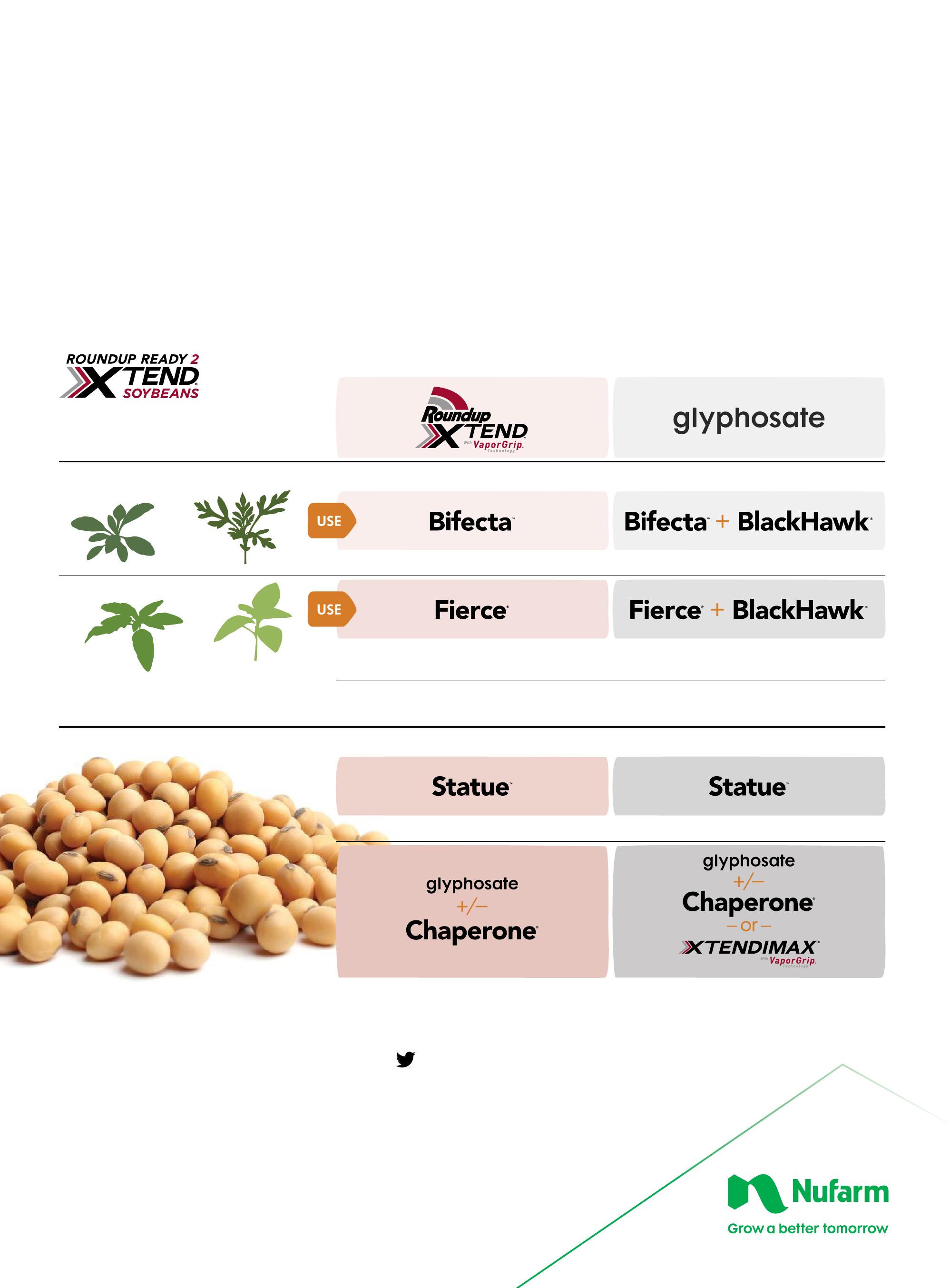
Nufarm knows the importance of getting weeds out of the way early. Our trusted soybean herbicide portfolio will strengthen your weed control program at both the pre-seed and in - crop application timings. Listed below are some options that will also help manage Group 2- and glyphosate-resistant weeds.
fleabane
PRE-SEED APPLICATION OF common ragweed
PRE-SEED/PRE-EMERGENT HERBICIDE TANK-MIX OPTIONS
Excellent control of Canada fleabane, lamb’s-quarters, common ragweed
waterhemp palmer amaranth
Industry leading control of waterhemp, palmer amaranth, other small seeded broadleaf and grassy weeds
The products listed above also offer excellent control of lamb’s-quarters, nightshades (flushes), pigweed species (flushes), chickweed, velvetleaf and other broadleaf weeds. They also suppress annual grass weeds. Consult the respective label for more information.
PLANNED IN-CROP HERBICIDE OPTIONS
Volunteer corn and grass weed control
Annual or perennial broadleaf weeds
TOP CROP
MANAGER
5 | Double-cropping synergy
Winter canola and soybean pair up for benefits in weed control, economics and more.
by Carolyn King
12 | Paying for DON
For growers affected by the DON outbreak, losses will likely be out of pocket. by Mark Halsall
Controlling a resistant beast
Pre- and post emergent control of glyphosate-resistant common ragweed in corn.
by Julienne Isaacs
ON THE WEB
STEFANIE CROLEY | EDITOR
ACCESSING INFORMATION
An interesting article landed in my inbox one day in mid-February, just as southern Ontario was getting hit with yet another winter storm. On first glance, the title – “Why do we need to keep breeding new crop varieties?” – seemed a bit, well, redundant. I already know several reasons why plant breeding is important; surely this article won’t tell me anything new.
I nearly deleted the email, but decided to click through when I realized it was actually a featured post from the Sustainable, Secure Food Blog, which is sponsored and written by members of the American Society of Agronomy and the Crop Science Society of America. The website’s “About Us” page says the blog aims to build the story of how food is grown, both in the United States and worldwide, and the general tone of it speaks to consumers and members of the agriculture industry alike. Much like the rest of the blog, the particular article I read was written in plain, factual terms and was easy to understand and digest for those; one worth passing along to someone with or without a background in agriculture.
I’ve always taken interest in how other people like to consume information. As a writer, I do have loyalty to the written word on paper, whether in a book, newspaper or magazine. But it’s 2019, and digital platforms like Twitter, blogs and websites are becoming greater sources of information than ever. Blogs and online articles take up a mere fraction of the Internet’s real estate, and yet they are so easy to read, access and share with the click of a button.
Now, you’ll be able to do this even more easily with the launch of our new website, TopCropManager.com. Not to worry – all of your favourite parts, including agronomy news, feature stories and our webinar archive are still prominent. You’ll still find the latest industry news on the homepage, but our new “Features” category will make it easier than ever to find our cover stories and web exclusive features. A drop-down menu lists topics and categories so you can read content about one specific topic, and the webinar and digital edition archives are still handy along the top of the homepage. Want to read the blog post I referenced above, or an article from a past issue? Simply begin typing the headline into the search bar and related results will show up as a preview. What’s particularly exciting is the site’s mobile optimization, so its even easier for you to find resources and content while you’re on the go.
For our team, an important part of this redesign was making the website easier to navigate, with a clean, fresh look. We’re thrilled with the result, and we hope you are too. In the coming weeks and months, we’ll be making small tweaks and adjustments. If you spot something you love – or something doesn’t look right – send an email to topcrop@annexweb.com. We’d love to hear from you!
TOP CROP
Crop Manager will mail information on behalf of industry related groups whose products and services we believe may be of interest to you. If you prefer not to receive this information, please contact our circulation department in any of the four ways listed above. Annex Privacy Office privacy@annexbusinessmedia.com • Tel: 800 668 2374
DOUBLE-CROPPING SYNERGY
Winter canola and soybean pair up for benefits in weed control, economics and more.
by Carolyn King
We have to try new and different things to move forward,” says Eric Page, a weed scientist with Agriculture and Agri-Food Canada (AAFC) in Harrow, Ont. And that’s what he is doing in his research on double cropping, the practice of growing a fallseeded crop followed by a late-seeded summer crop. This strategy could offer a way to effectively control troublesome weeds and reduce selection pressure for herbicide-resistant weeds, while allowing the grower to harvest two crops in one season.
One of the most intriguing options he is investigating is a winter canola-soybean double crop.
Page’s interest in this pairing comes from the experience of soybean production in southwestern Ontario. “Down here in Essex, Kent and Lambton counties, we have the unhappy distinction of having four glyphosate-resistant weeds. We’ve got Canada fleabane, giant ragweed, common ragweed and now waterhemp. That makes growing soybeans here a challenge.”
Although there are new options on the market, such as dicamba-tolerant soybeans and 2,4-D-tolerant soybeans, Page is keenly interested in integrated strategies that include nonchemical weed control options. And he knows that a competitive
winter crop can fight these glyphosate-resistant weeds in several ways.
“For Canada fleabane, which is a winter annual, the rosettes overwinter and then get a really early start in the spring. If you can’t control them with glyphosate, they become a problem. Having a competitive winter crop really helps to suppress growth and seed production in winter annuals,” he explains.
“For the two ragweeds and waterhemp, a competitive winter crop like winter canola is at its peak canopy when those weeds typically would be emerging in our late spring/early summer timing. The winter canola crop is intercepting most of the light [so it suppresses weed emergence and growth]. That acts as a really good non-chemical weed control mechanism.” And any weeds that do manage to grow in the canola stand are killed during combining, before the weed seeds mature.
Ideally with this double-cropping system, the soybean crop might only need a burndown herbicide to avoid yield penalties due to weeds. In-crop herbicide applications could be eliminated, or at least reduced.
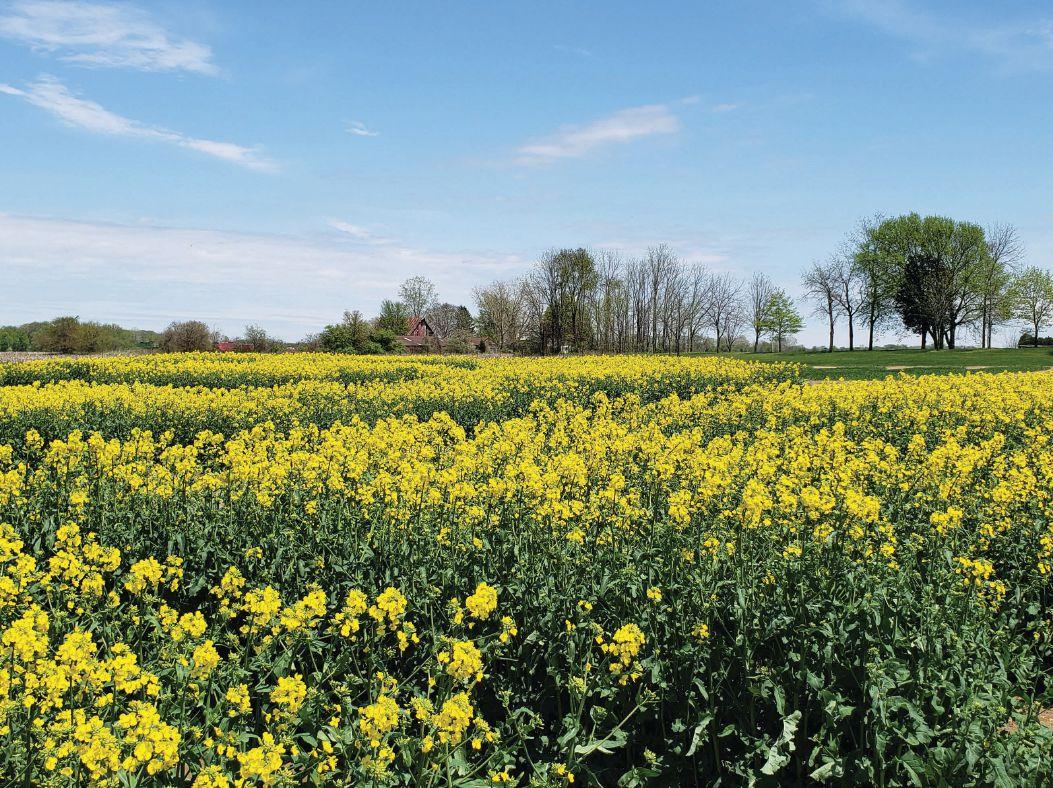
ABOVE: Page’s winter canola plots at Harrow are getting great yields.
Agronomically and economically, winter canola is a good option for double cropping with soybean because it is a competitive, high-value crop and because it has the potential to be harvested early enough that the following soybean crop could produce reasonable yields in southwestern Ontario. Page explains, “Winter canola could be harvested from the last week of June to about the second week of July. Winter wheat here is typically harvested around the second to third week in July.”
Growing canola as a winter crop could also benefit canola production. For instance, winter canola could avoid or have fewer problems with pests like swede midge, lygus bug and cabbage seedpod weevil because the plant has passed its vulnerable growth stage by the time the insect is at the right stage to attack. Also, winter canola typically blooms in May, avoiding heat-stress damage to flowers and pods that can strike spring-seeded canola, especially in the southern-most parts of Ontario.
Page notes, “In terms of heat units nec -
essary for a double crop, most of the growers who will be interested in this practice will be in our area. But I think the region where this practice would work could stretch up towards Guelph, Toronto and maybe even the Grey-Bruce area, given the right germplasm.”
Strong canola yields
To figure out whether winter canola-soybean double cropping would work agronomically, Page and his project team have been conducting trials with the two crops at Harrow. In 2016-17 and 2017-18, they compared several winter canola hybrids at five different planting dates.
In the 2016-17 trials, his team grew Mercedes, Inspiration and CC17070. In 2017-18, they added Sitro to the trials. Page had to obtain the seed for the four hybrids from an American company, Rubisco Seeds, although Mercedes, Inspiration and Sitro are originally from DL Seeds, a company based in Morden, Man. He explains obtaining seed for high-yielding, winter-hardy hybrids suited to Ontario can be a challenge: “For whatever reason, winter canola hasn’t taken off here.”
Thanks to Page’s research, Mercedes now has an interim regional registration for Ontario. Sitro is an older hybrid with national registration. Inspiration and CC17070 are not registered in Canada.
Page is very happy with the performance of these hybrids. “We are getting comparable yields to some of the best locations in the United States. For example, our yields with Mercedes are as good as or better than the best locations in the U.S. national performance trials. We have a really great climate for winter canola,” he says.
“And it’s not just my research that is getting good yields with winter canola. The Ontario Canola Growers Association [OCGA] runs a challenge every year for high-yielding canola, and the second place winner for 2018 was a producer growing Mercedes.” That producer, who is in the Woodstock area, achieved a yield of 3,705 pounds per acre.
The planting dates in the Harrow trials ranged from September 1 to mid-October. Page says, “We chose five dates that stretched across what we believed would be the permissible range and some that we
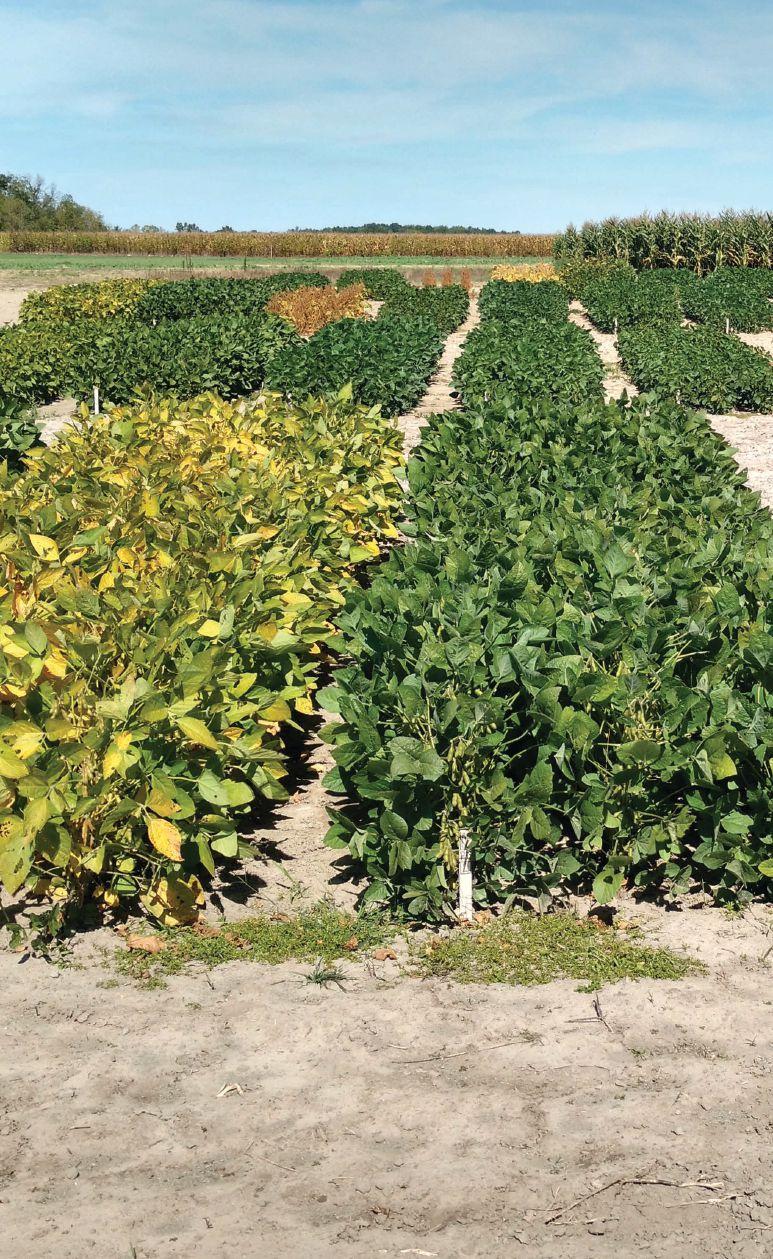
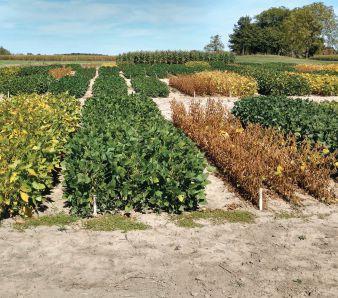
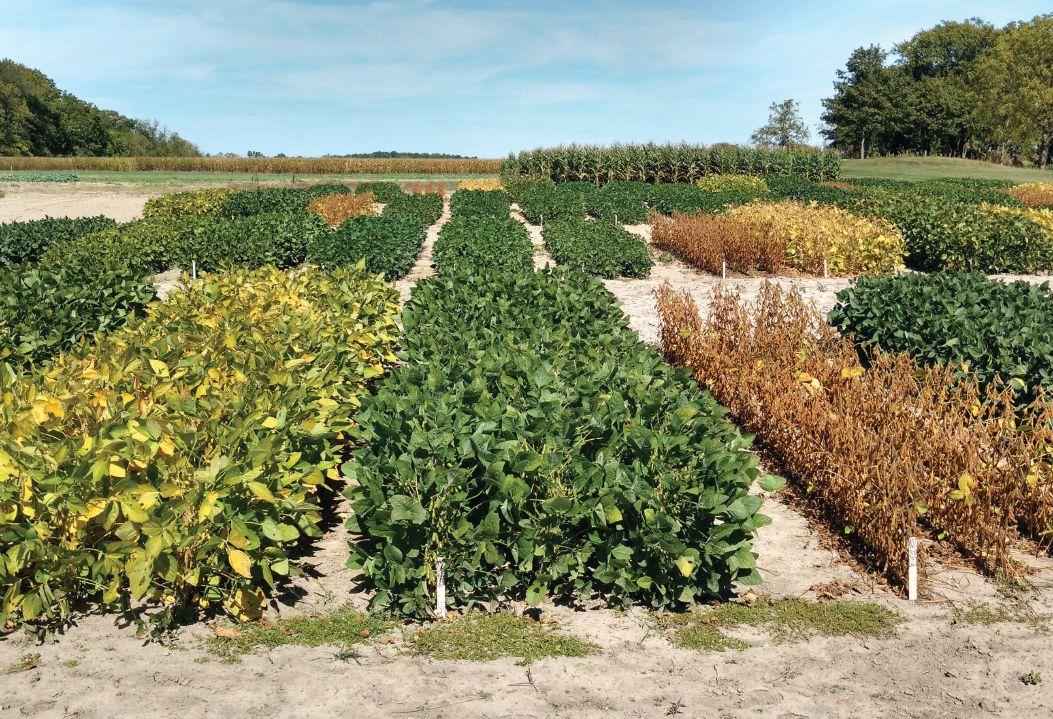
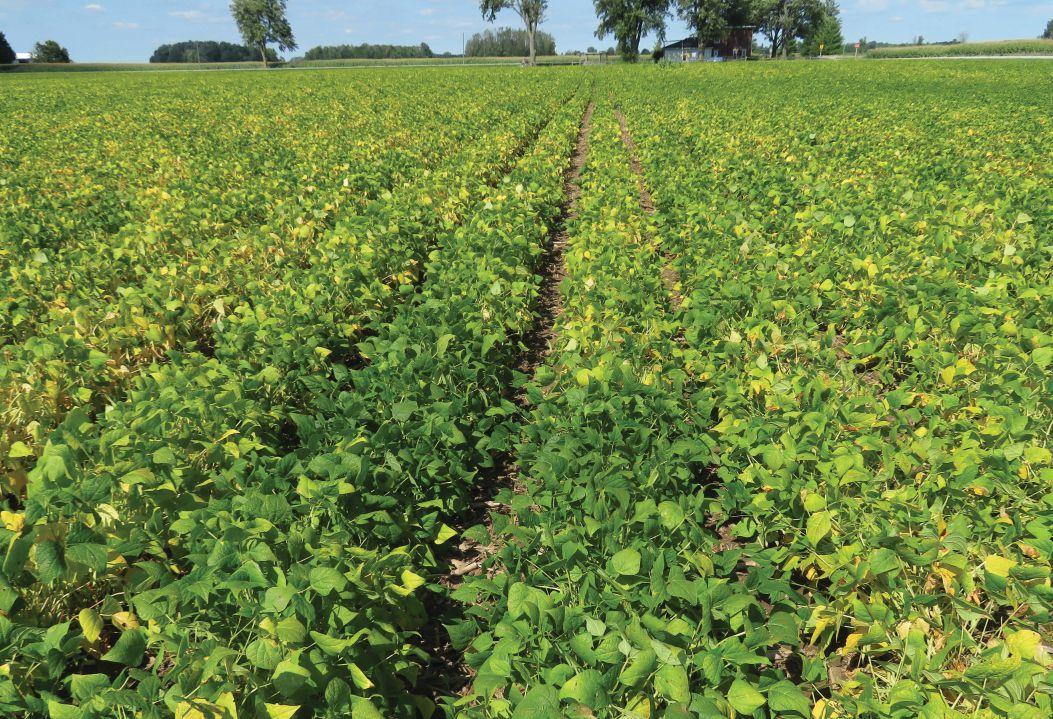
In this treatment, the three soybean varieties (maturity ratings, left to right, are 1.8, 3.3 and 00.8) were planted in the first week of July at Harrow and are shown here on October 2, 2017.
THERE’S STRENGTH IN NUMBERS
Three different powerful herbicide Groups have been combined to make one simple solution for cereal growers.
Infinity ® FX swiftly takes down over 27 different broadleaf weeds, including Canada fleabane. And if you’re worried about resistance, consider this: you’re not messing with one wolf, you’re messing with the whole pack.
knew to be outside the permissible range, to prove where the optimal date was.”
The results show the optimal planting date for winter canola in the Harrow area is mid-September. “With the right plant date, we have experienced very low overwintering stand losses between 15 and 25 per cent. But if you get the plant date wrong, you could have 50 to 70 per cent losses.” Although a late September date can produce very good yields, it is riskier than mid-September.
Page explains that August is too early for planting winter canola in the Harrow area. If planted too early, winter canola may bolt (stem elongation) before the winter. Bolted plants are very susceptible to cold temperatures so they die during the winter. “So it’s a tricky balance. You want the plants large enough to overwinter, but not too large.”
The trials used a pre-emergence herbicide to prepare the plots for canola planting. No in-crop herbicides were needed because the canola crop was very competitive. For more information on the production practices and yields in these winter canola trials, you can access Page’s reports on the OCGA website.
In the trials, the canola plots seeded in mid-September reached physiological maturity between June 20 and 28, depending on the hybrid and the year.
Good soybean yields
In 2017 and 2018, Page and his team conducted similar trials in Harrow to compare three soybean varieties at five planting dates that ranged from the last week of June to the first week of August.
They selected soybean varieties with three different relative maturities: 2510RY, rated as 00.8; 3012RY, rated as 1.8; and P33T72R, rated as 3.3. Essex County is in maturity zone III for soybean, and Kent and Lambton are in zone II. A fairly narrow row spacing of 15 inches was used so the soybeans could close their canopy faster and be more competitive with weeds. The team collected data on things like yields and weed populations.
Page is in the process of analyzing the data from the 2018 soybean trials. Based on his initial results, a soybean double crop could work well.
“We are finding that if you plant soybeans on the first two plant dates – the
last week of June or the first week of July –you could still use your full season variety. That timing probably isn’t achievable with winter wheat, but it might be with winter canola. However, as the plant date gets later, about July 10 to 20, it really pays to change your maturity,” he says.
“We found that the 1.8 maturity group was our best yielder at the first three plant dates, from the end of June to the third week of July.”
That maturity group reduction from 3.3 to 1.8 is roughly a drop of one whole maturity group, which is what Page recommends if you grow soybeans in a double-crop system. “As growers know, soybeans are photoperiod sensitive. From what I’m seeing in my analysis so far, soybeans tend to adjust at the later end of their growth stages. That really inhibits yields in the longer season varieties because they tend to have a longer pod-filling stage. So if you choose a variety with a shorter maturity, it will fit better in the double crop’s shorter window.”
Although soybeans and canola share some diseases, such as white mould (sclerotinia), these diseases weren’t a problem in these trials.
Dry beans are almost better suited to a double crop than soybeans because they have more flexibility with planting dates.
PHOTO COURTESY OF MEGHAN MORAN.
Ideally with this double cropping system, the soybean crop might only need a burndown herbicide to avoid yield penalties due to weeds. In-crop herbicide applications could be reduced.
Page’s small-plot soybean yields are much higher than growers would get on a field basis. He estimates that a grower in the Essex/ Kent/Lambton area could probably expect about 30 to 40 bushels per acre with the first two or three planting dates; “a very respectable yield for soybean as a double crop.”
More double crop possibilities
Page is actively exploring other aspects of double cropping, including various options for winter crops and for summer crops. AAFC is the main funder of his double-cropping research overall, and the OCGA is supporting his winter canola studies.
With OCGA funding, Page will be starting a two-year project in 2019 to look at the effects of different tillage methods and crop residue types on winter canola establishment and yields.
Along with his soybean trials, Page has been working on summer planting date trials with corn and dry edible beans at Harrow for the past two years. His initial corn results suggest summer planting might work better for silage corn than grain corn. The results from his dry bean trials, which involved white bean varieties, look very promising.
“Dry beans are almost better suited to a double crop than soybeans,” he says. “Part of the reason why we see such a steep decline in soybean yields the later and later they are planted in the summer, is that soybeans are adjusting based on the changing photoperiod. But dry beans are not photoperiod sensitive; they are just driven by heat units. So they will behave the same whether you plant them in the third or fourth week in June or the third week of July.”
In his upcoming dry bean trials, Page will be working with Jamie Larsen, the dry edible bean breeder at AAFC-Harrow, to see if some market classes of dry beans might work better than others as a double crop. They hope to start a project in 2019 to evaluate how well dry beans work after three different winter crops – winter canola, winter barley and winter dry peas. They will be looking at things like the effects on crop yields, weed populations and disease incidence.
Page picked these three particular winter crop species partly because they could potentially be harvested a little earlier than winter wheat. In addition, canola is a high-value crop option, and he thinks winter barley and winter peas might become higher value options in the future, depending on variety and market developments.
The winter barley variety he has selected for these trials is a malting barley. “Ontario has a craft brewing industry, and there could be demand for home-grown malt barley. I think winter barley would be a good fit for that.” Not many breeders are currently working on malting quality in winter barley, but more breeders might become interested as the craft brewing industry continues to expand in North America and as the potential for double cropping is demonstrated.
At present, winter dry pea crops are generally processed for animal feed, but Page says some breeding programs are developing varieties suitable for human consumption. He is planning to test some of these types of lines from the U.S. Department of Agricul-
ture’s winter pea breeding program.
“For the successful adoption of double cropping, I think the number one challenge is availability of appropriate germplasm,” Page notes. He hopes his research will generate interest among producer groups and others, and prompt more breeding as well as testing and registration of suitable varieties, as people learn about the significant benefits that could come from double cropping.
Taking the winter canola-soybean combo as an example, he summarizes the potential economic, agronomic and workload benefits. “By growing winter canola, you are incorporating another high-value oilseed into your rotation. Typically soybeans have played that role, but having an oilseed in the winter cycle incorporates diversity into your rotation in terms of when you are planting it, when you are doing your management practices and when you are taking the crop off.” And that diversity provides important advantages for growers.
The diversity in herbicide timings and modes of action and in non-chemical weed control options helps in controlling herbicideresistant weeds and in reducing selection pressure for herbicide resistance. The diversity in timing of crop growth stages can help in managing certain insect pests and diseases. And the diversity in timing of field activities spreads out a producer’s workload.
Page says, “We hope our work is proof of concept that double cropping is feasible and economically beneficial in Ontario, and that some other people will want to fit into the value chain.”
The easy way to manage your farm
Analyze your data. Plan your strategy. Then track your performance. AgExpert Field gives you the details you need to know to make the best business decisions.
It’s all new. And seriously easy to use. Get it now and see.
fcc.ca/AgExpertField
Dead simple weed control.
Enforcer ® M works fast to take out tough weeds in cereals.
Knocks down your toughest weeds
Including lamb’s-quarters, chickweed, common ragweed and cleavers (including Group 2- and glyphosateresistant biotypes)
Spray when it works for you with a wide window of application and an all-in-one formulation Convenient and flexible to use
Manage leaf disease and fertility with several tank-mix options Gentle on wheat and barley crops
Enforcer M is an exciting new broadleaf herbicide for cereal growers in Eastern Canada Now available in Eastern Canada
Ask your local retailer for more information. 1.800.868.5444 | Nufarm.ca | NufarmCA
FOCUS ON: CROP AND FARM INSURANCE
PAYING FOR DON
For many growers affected by the DON outbreak that afflicted Ontario corn crops last year, the losses will likely be out of pocket, according to the Grain Farmers of Ontario. With great corn yields in the province overall, what are the next steps for corn growers that experienced a different looking year?
BY Mark Halsall
The mould infestation that swept through field corn crops in many parts of southwest Ontario in 2018 could end up costing growers hundreds of millions of dollars, according to the Grain Farmers of Ontario (GFO).
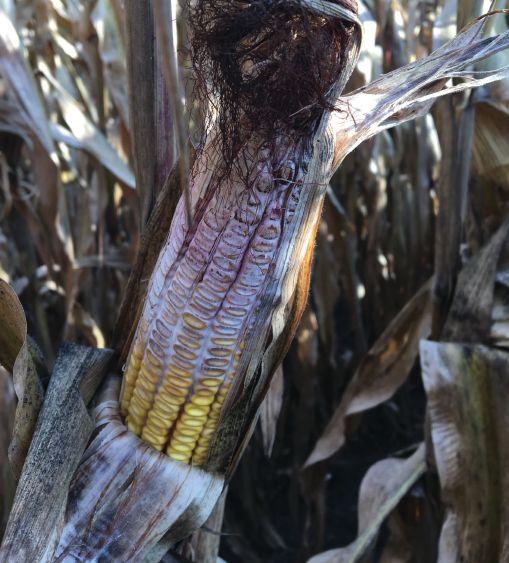
The losses are the result of corn infected with Gibberella ear rot that produces a mycotoxin called deoxynivalenol, also known as DON. High DON levels limit the end-uses possible for grain corn. Many growers had to accept steep discounts on their corn at grain elevators because of high DON levels, and in some cases, corn lots were rejected altogether.
“We’re estimating losses could be up to $200 million for those farmers involved, and that’s because of the significant discounts they’ve had to take at time of delivery,” says Barry Senft, the CEO of GFO.
Senft maintains some of the losses will be addressed through a salvage benefit that Agricorp insurance offers, “but it’ll be a small part of what that $200 million represents.”
Affected growers are eligible for a production or salvage benefit.
Agricorp offers a production insurance program to protect growers against yield losses. Because the DON outbreak affected crop quality but had little impact on yield in many cases, Senft doesn’t anticipate that many corn producers will benefit from this kind of coverage. As a result, he says, losses will likely be out of pocket for most growers.
Senft says 2018 was the worst year for DON that he can remember, with reports of levels from one to two parts per million all the way up to 25 to 30 parts per million.
Grain producers have been reporting their final yields to Agricorp. Debbie Brander, Agricorp’s manager of product management, says approximately 3,000 Ontario growers contacted the agency with concerns about DON levels in their corn, and of these, about 500 were worried their crops may be unmarketable.
According to Brander, there were pockets within province that were hit much harder than others by DON. She says there was a lot of variability within farms, and even within individual fields.
Brander says corn growers with high DON levels in their crop can call Agricorp to discuss how their coverage works and whether they are eligible for a production or a salvage benefit. “The salvage benefit is intended to cover the extraordinary costs required to harvest, market, test and store damaged crops, such as crop that’s above five parts per million DON,” she says.
Brander adds, in many instances, afflicted corn crops were accompanied by high yields, meaning some DONrelated claims likely won’t result in a production claim; however, some will qualify for the salvage benefit instead.
She notes that there were pockets of farmland negatively affected by weather over the summer that reported
lower yields and could qualify for a production claim as a result.
“We are working with customers on an ongoing case by case basis, because every situation is different,” Brander says.
Senft points out that under the Agricorp program, growers with DON corn can still qualify for production insurance coverage if they decide not to market their crops. However, that decision needs to be weighed carefully, because guaranteed yields under production insurance are based on a revolving 10-year average. An unmarketable crop means a zero yield, which will lower base coverages for guaranteed yield for years to come.
Agricorp explains there is a buffering mechanism under its Production Insurance program that lowers the impact of extreme yields on a customer’s 10-year average. Buffering helps producers maintain a stable average despite having one bad year.
“Growers need to sit down with the crop adjustor and really determine what they want to do, and for each individual it’ll be a little different,” Senft says. “Even if you had higher vomitoxin in your crop and you can find a decent market for it, you might be better off marketing that higher yield corn and not make a claim.
“We’ve talked to a number of producers who are having a difficult time deciding which way to go,” he adds. “But ultimately it’s a decision they’ve got to make.”
Brander encourages Ontario corn growers concerned about damage caused by DON and other diseases to contact Agricorp.
“We will follow up with each one to ensure they understand their coverage and their next steps,” she says. “Once they call us, we will visit or contact them within two days.”
SAFETY NET EROSION
Barry Senft says the Grain Farmers of Ontario has been meeting with similar groups across the country to discuss how recent government cutbacks have eroded the safety net system for Canada’s farmers and what can be done about it.
“At the federal/provincial [agricultural] ministers meeting last July, the ministers gave us the go ahead to start reviewing the program and that’s what we’re basically undertaking now,” Senft says. “But for these producers affected by DON, it’s going to be too late.”
According to Senft, GFO has approached both the federal and provincial governments seeking financial help for Ontario grain growers facing significant losses due to DON.
“We’ve had discussions . . . about the need for some compensation to these producers because basically they’re not even covering the costs of production as far as their corn crop goes. Corn is an expensive crop to grow, and they’re going to be short,” Senft says.
“These farmers contribute significantly to the economy of Ontario, and so while we understand that [governments] have to watch their costs, we feel that this is well worth their while to be making an expenditure like this.”
In November, the Ontario and federal governments announced a new program separate from crop insurance that’s aimed at helping farmers experiencing high levels of DON. It includes some funding to help with a portion of their DON-related expenses such as testing, as well as financial support for new projects addressing challenges in the grain sector value chain, such as finding ways to best process or market corn impacted by DON.
SHIPPING SUPPLY SPECIALISTS
BROADLEAF WEED CONTROL
A
new bioherbicide is in the works that will offer Canadian growers another tool in integrated weed management.
by Mark Halsall
Anew bioherbicide could be in the hands of Canadian farmers soon.
The product, which utilizes a fungus found in Canada thistle called Phoma macrostoma, is able to control a range of broadleaf weeds and was initially developed by Agriculture and Agri-Food Canada researchers.
The technology has been patented in more than a dozen countries, and here in Canada, a Quebec firm is getting closer to commercializing the selective bioherbicide.
Premier Tech, which signed a licencing agreement with AAFC in January 2017, is currently working on reducing production costs so Phoma can realize its full market potential and become a commercial success.
According to Louis Simard, product development director for Premier Tech, commercialization is likely still a year or two away.
“The main challenge that we have now is to develop the necessary industrial process to make the active ingredient in large scale,” says Simard. “We want to go into the market with a price that’s affordable for the growers.”
Serge Gagne, innovation, research and development director for the Premier Tech Biotechnology Business Unit, says the firm is also focusing on coming up with the right formulation for field applications.
“It has to be easy [to apply] with conventional equipment,” Gagne says. “So this is something we have to address at the same time we are developing the industrial process.”
Simard says Premier Tech has assembled a registration team to speed up the process when the time comes to register the final product with Health Canada’s Pest Management Regulatory Agency.
Michelle Hubbard, an AAFC research scientist based in Swift Current, Sask., who first became involved in the Phoma project in 2012, continues to provide background data to Premier Tech to assist in its commercialization of the product.
According to Hubbard, Phoma was isolated from Canada thistle plants by AAFC researchers in Saskatchewan in the 1990s.
“When it occurs in nature, the fungus will cause relatively minor photobleaching. [Infected] thistles will be lime green or yellow or white but it’s relatively mild as a pathogen in nature,” she says.
“The researchers isolated it in the lab and tested it in the greenhouse, and they discovered that it is effective for weed control, not just Canada thistle but for things like dandelion and groundsel and a range of other broadleaf weeds.”
Other weeds controlled by Phoma include clover, wild mustard and ragweed. The fungus does not affect grassy weeds or crops such as wheat, barley, oats and millet.
Following the discovery of the fungus, the federal government invested millions of dollars over nearly 10 years in research on Phoma and its compounds called macrocidins, which are phytotoxins produced by the fungus during its growth.
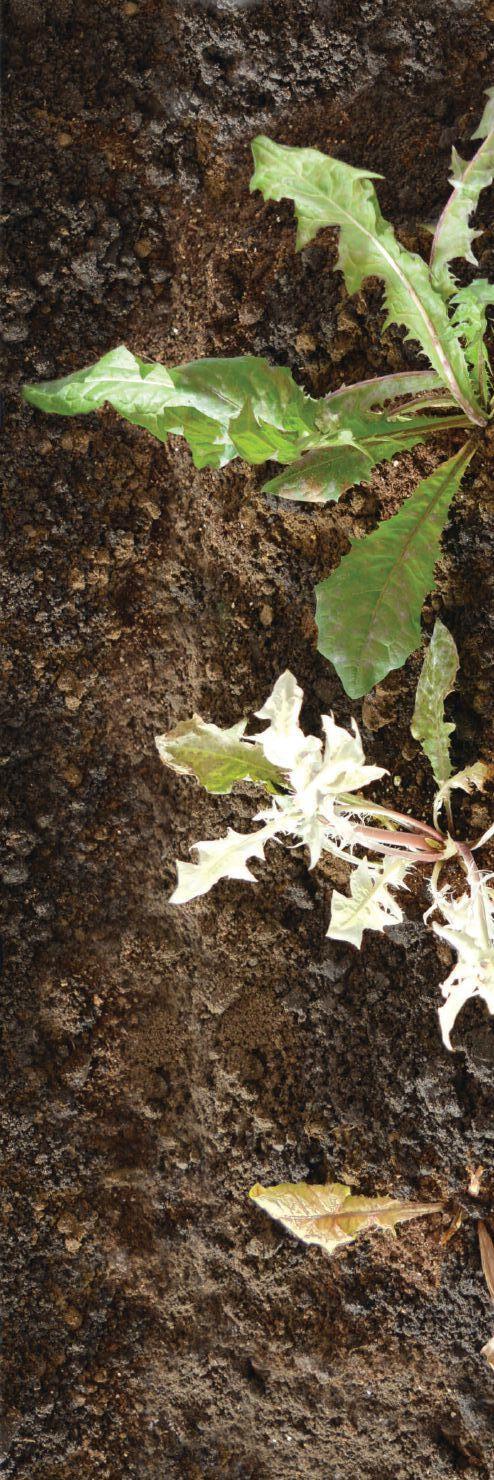
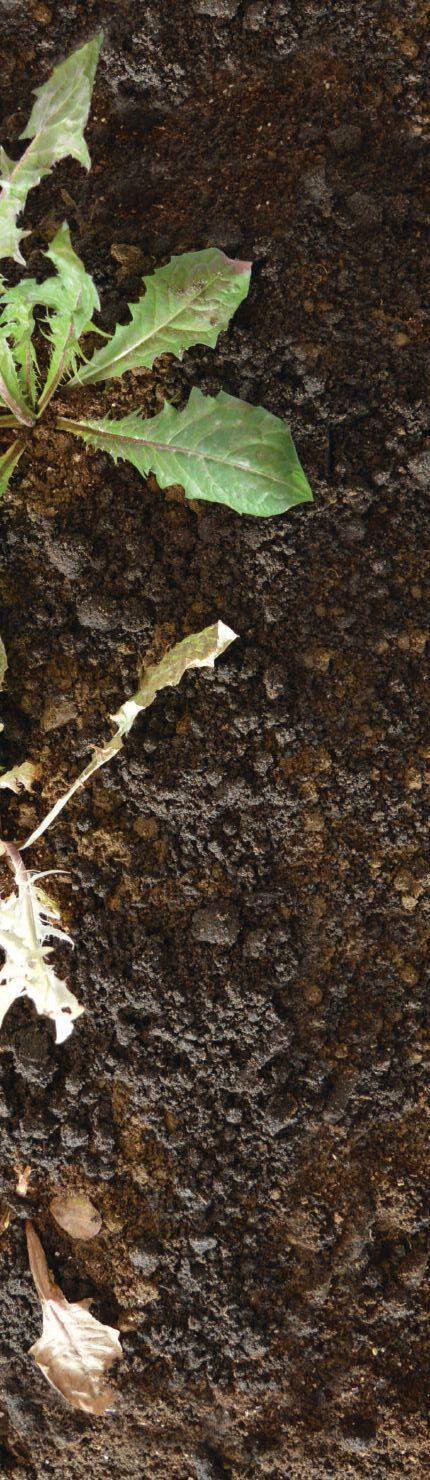
<LEFT: (Left to right) Dandelion untreated with Phoma macrostoma and weed after pre-emergent application.
Phoma
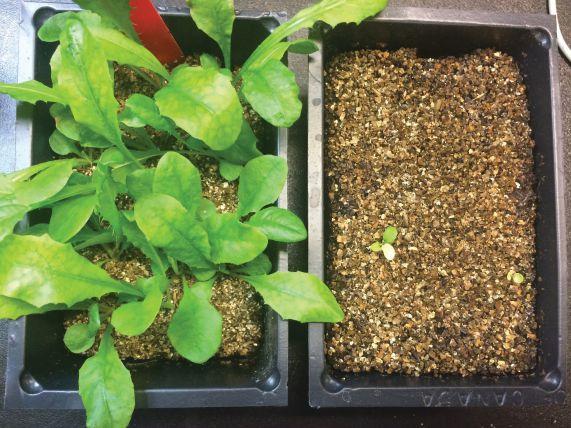
<LEFT: (Top to bottom) Dandelion untreated with Phoma macrostoma, dandelion after one post-emergent application, and dandelion after two post-emergent applications.
Hubbard notes that what makes the bioherbicide particularly effective is that it has both a living and a chemical component.
“It has two main modes of action, one being a living fungus in the product that will grow out of the granule and colonize the plant root and continue to grow in the plant and cause symptoms that way,” she says.
“Another way that it works is by producing these compounds called macrocidins. Even if the living component is killed by heat or filtered out, the macrocidins on their own can cause the photobleaching symptoms,” Hubbard adds. “Weed resistance would be less likely to develop because it does have multiple modes of action.”
AAFC research into Phoma macrostoma showed that weed control is achieved when a granular formulation of the fungus is applied to moderately moist soil when the air temperature is between 10 C and 30 C. AAFC trials have demonstrated between 80 and 100 per cent control of dandelion and wild mustard, and between 50 and 80 per cent control of Canada thistle.
According to AAFC, the selective bioherbicide has limited mobility in the soil because growth is primarily by mycelial fragments, which means it stays mostly where it is placed. The fungus is not very competitive with other soil mycoflora and its presence declines with time. AAFC research also indicates that one year after application, the bioherbicide is rarely detected in the soil and there are few carryover effects to non-target plants. Above 30 C, its growth is curtailed.
Hubbard notes the Phoma macrostoma fungus has minimal impact on the environment and is considered safe even at high doses for people, animals and aquatic life: “It’s a safer alternative to synthetic herbicides,” she says.
Hubbard says the product has a long shelf life, which will appeal to farmers, and she sees it as a very helpful tool in organic farming, where Canada thistle is a major problem, as well as in conventional agriculture for crops such as wheat, barley and established alfalfa.
Gagne says Premier Tech will likely initially target organic agriculture, where there are fewer weed control solutions available to growers. The company plans to eventually market the bioherbicide to other farmers as well, as a complementary tool for use in integrated weed management systems.
“For the conventional growers, there is also a good fit,” Gagne says. “It can be used in combination with conventional herbicides to help reduce the resistance that is happening with some herbicides now.”
BOTTOM:
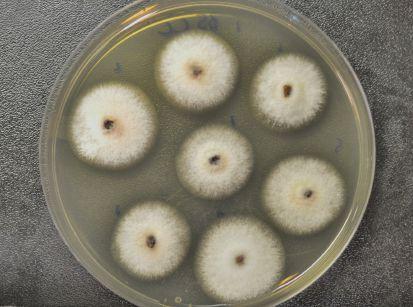
macrostoma colonies in a Petri dish.
ELIMINATING EARLY WEED COMPETITION IN SOYBEANS
Controlling weeds during the critical weed-free period is crucial to soybean crops.
Similar to corn and other crops, controlling weeds early and through the critical weed-free period for soybeans is very important for maximizing yields and crop performance. Although soybeans are quite adaptable, research is showing they are very sensitive to early season weed competition and need all the help they can get until the plants are large enough to crowd out competition.
Clarence Swanton, weed scientist at the University of Guelph, recently completed a study on the impact of weed competition on the crop. According to Swanton, as reported in the October 2017 edition of Top Crop Manager East, plants detect neighbouring plants by constantly analyzing the spectrum of light reflected from surrounding surfaces. A plant experiences physiological stress when surrounded by other plants, and the impact of weed competition on the crop goes beyond just competition for resources such as water, nutrients and light – it also includes a plant’s ability to sense competition. If weeds emerge prior to or shortly after the crop, the soybean plant senses the weed pressure and will change its growth pattern such as
shallower rooting or reducing size and yields.
“Although soybeans are very plastic and flexible, they will grow differently if they sense weeds are there,” says Allison Hayward, field development representative for FMC Agricultural Solutions. “From basic soybean physiology, the plant needs to have no competition until it’s well established. Then it can grow to its genetically designed potential, including yields.”
Soybean growers often hear the “start clean, stay clean” message from industry, Hayward adds. “In Ontario, tillage practices, or nonresidual herbicides like glyphosate, may help the crop start clean, but it won’t stay clean. Soybeans do not compete well with weeds; even the smallest ones at the time of germination will affect the growth of the soybean. That’s where a pre-plant/pre-emergent residual product, providing a longer-lasting herbicide barrier, really comes into play.”
Eliminating weeds early by applying a pre-emergent herbicide
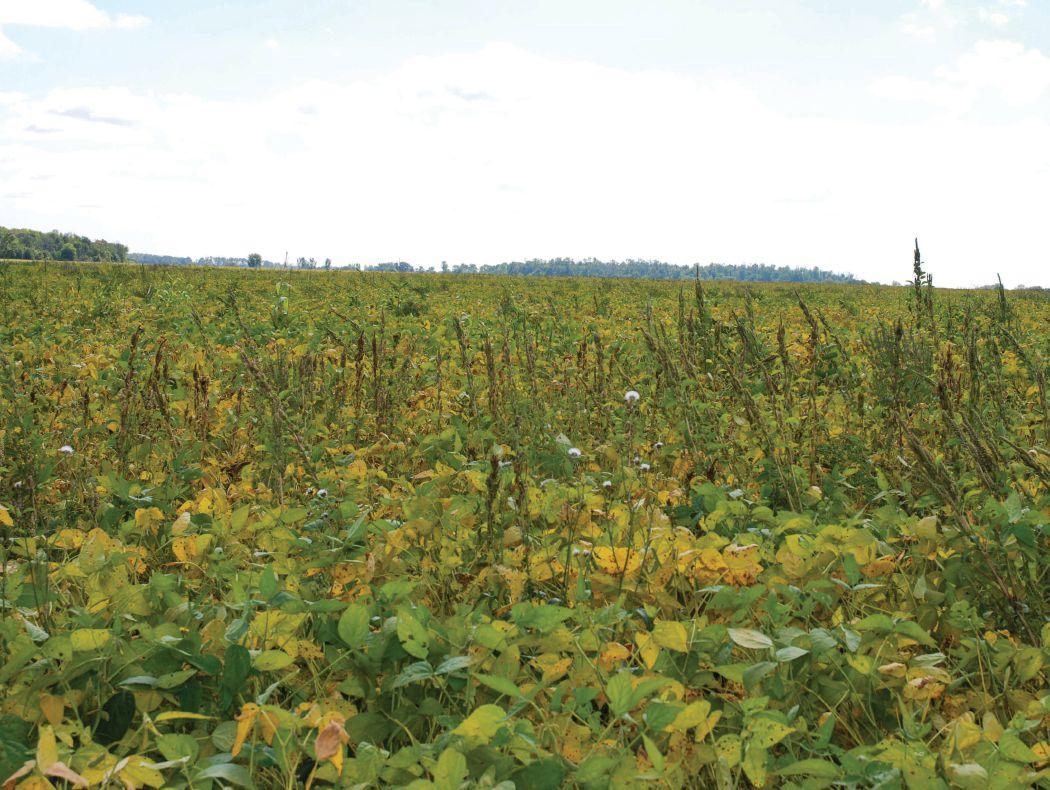
TOP: A weedy soybean field near Denfield, Ont. Controlling weeds early is important for maximizing soybean yields.
PHOTO
with extended residual control can help soybean crops get well established without competition.
Hayward advises applying a moisture-activated preventive product, which forms a barrier at or just below the soil surface. Products like FMC’s Authority family of herbicides provide a protective barrier, controlling weeds before they can emerge and cause that growth pattern change in the soybean plant. With unique modes of action, they can be tank-mixed with other residual and burndown products to control the weed spectrum growers have in their fields, including weeds resistant to groups 9 (glyphosate), 5 and 2.
With some pre-emergent application, once the product is rainfall activated and it’s not disturbed by other field operations, it will alleviate pressure from the first flush of weeds and help make post emergent weed control applications more effective.
For broadleaf weed control in soybeans, Hayward says applying a pre-plant or pre-emergent herbicide, like Authority 480 (Group 14), with or without glyphosate, will help facilitate timelier glyphosate applications in glyphosate-tolerant soybeans.
For grassy and broadleaf weeds in identity-preserved (IP) and herbicide-tolerant soybeans, Hayward recommends choosing a preplant/pre-emergent herbicide with two modes of action, like Authority Supreme (Groups 14 and 15). This allows growers to layer herbicides, rotate groups and manage weed resistance as they move from their burndown to in-crop herbicide program.
It’s important to keep soil type, soybean system and weed spectrum and/or pressure in mind when choosing the right product and appropriate rate, adds Frances Boddy, product manager for FMC. An Authority Supreme “setup treatment” for herbicide-tolerant soybeans will provide
early-season control of grassy weeds and resistant or hard-to-control broadleaf weeds, allowing the in-crop glyphosate application to perform better. Conversely, a higher or “residual rate” can be used for herbicidetolerant and IP systems, “where longer residual is needed for difficult-tocontrol weeds like waterhemp and lamb’s-quarters,” Boddy says.
“There is an increasing trend of growers using residual products prior to herbicide-tolerant soybeans with the increasing recognition of controlling weeds early and extending that control to protect yield. Some growers have indicated they feel less pressure to go out with multiple in-crop applications because of the extended control of an earlier residual application,” she adds.
Boddy reminds growers that resistance management is an important factor for all growers to consider. “Using diversified modes of action in your pre-emergent application with the same high level of weed control as an in-crop herbicide is a very strong approach to delay the onset of resistance and control already resistant weeds.”
And Hayward notes the importance of diversity in a long-term herbicide plan. “Growers are recognizing the benefits of using the various tools in the toolbox for tank-mixing and multiple modes of action,” Hayward adds. “The Authority products are part of a handful of residual products that provide that diversity in an herbicide plan with different modes of action. They are also an important partner in eliminating early weed competition to start clean and stay clean during the critical weed-free period – a priority for soybean growers.”
For more information, visit fmccrop.ca/products/authority-480-east or fmccrop.ca/products/authority-supreme-east.
SHOW YOUR ONTARIO ROOTS
You know good food comes from right here in Ontario. OntarioFresh.ca has the platform to connect you to buyers, and the Greenbelt Fund has the tools and resources to get your products onto the plates of more Ontarians.
CONTROLLING A RESISTANT BEAST
Pre- and post-emergent control of glyphosate-resistant common ragweed in corn.
by Julienne Isaacs
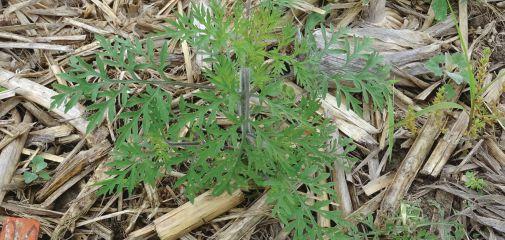
The list of herbicide-resistant weeds is growing in Eastern Canada, with some a greater concern than others. Glyphosate -resistant (GR) common ragweed was discovered in seed collected in Essex County, Ont. in 2011, says Peter Sikkema, a professor of weed management at the University of Guelph Ridgetown Campus. Eight years later, GR common ragweed is one of four GR weeds documented in the province, but it still hasn’t yet spread out of Essex County, bumping it to last place on the list of GR weeds in terms of its economic importance for producers.
Of the other three GR weeds known to be in Ontario, GR Canada fleabane has spread to 30 counties. GR waterhemp, confirmed in four counties, is an emerging problem. But, producers have done a “fantastic job” controlling GR giant ragweed in the six counties where it has been found, Sikkema says. Though GR common ragweed is very localized to a handful of fields in the northwest corner of Essex County, it is still important for producers who have it to know how to handle it, he says.
Sikkema led a two-year study consisting of eight field experiments in 2016 and 2017 to evaluate the efficacy of pre-emergence and postemergence herbicides on controlling GR common ragweed in corn.
The study was conducted in a single field infested with GR common ragweed near Tecumseh, Ont. Two experiments with pre-emergence herbicides were conducted in each calendar year, separated by two weeks. Treatments included a weedy control, a weed-free control, and fifteen soil-applied herbicide treatments. Each of the herbicide treatments were applied using the highest registered label rate in Eastern Canada. Glyphosate was applied to the entire experimental area to remove the confounding effect of all other weed species.
Common ragweed interference reduced corn yield by 63 per cent. In the weedy control plots, corn yield averaged 63 bushels per acre (bu/ac) compared to 170 bu/ac in the weed-free plots.
Of the 15 herbicide treatments applied pre-emergence, dicamba, dicamba/atrazine, mesotrione plus atrazine, isoxaflutole plus atrazine, saflufenacil/dimethenamid-P, and S-metolachlor/mesotrione/atr azine and S-metolachlor/mesotrione/bicyclopyrone/ atrazine proved most effective, providing between 87 and 100 per cent control, and reducing density and biomass by between 98 and 100 per cent.
Post-emergence treatments
Sikkema also completed a parallel study looking at the efficacy of post-emergence herbicides. This trial ran on the same fields in
Tecumseh, Ont. in 2016 and 2017, and included a weed-free control, a weedy control, and 13 herbicide treatments, each of which included glyphosate.
In the weed-free plots, corn yield averaged 36 bu/ac, while in the weedy plots corn yield averaged 163 bu/ac – a 78 per cent reduction due to GR common ragweed interference.
Among the treatments applied, glyphosate, atrazine, prosulfuron plus dicamba, mesotrione plus atrazine, tembotrione/thiencarbazone-methyl, and halosulfuron applied post-emergence provided only nine to 41 per cent control of GR common ragweed at four weeks after application and 10 to 37 per cent control of GR common ragweed at eight weeks after application.
On the other hand, dicamba, dicamba/diflufenzopyr, dicamba/ atrazine, topramezone plus atrazine, bromoxynil plus atrazine, glufosinate and 2,4-D ester proved to be most effective in controlling GR common ragweed – 58 to 85 per cent at four weeks after application and 49 to 88 per cent at eight weeks after application.
Sikkema says although these studies show there are effective preand post-emergence herbicide options, the industry needs to shift toward more diverse weed management programs.
“We need to have more diverse crop rotations – ideally a minimum of three different crops in the rotation, – and I think we need to incorporate multiple herbicide modes of action across the rotations.”
In corn and soy, Sikkema recommends a two-pass weed control program, starting with a soil-applied herbicide that matches the weed spectrum in each individual field. For some producers, a wellrounded weed control program might include strategic tillage or the use of cover crops after a winter wheat rotation.
“For some GR weeds the objective may be perfect weed control with no weed seed return to the seedbank. We have to think of weed management in a more holistic pattern than we did 15 years ago.”
Despite being localized, it’s important for producers with GR common ragweed to know how to handle it.
BIGGER PICTURE SEE
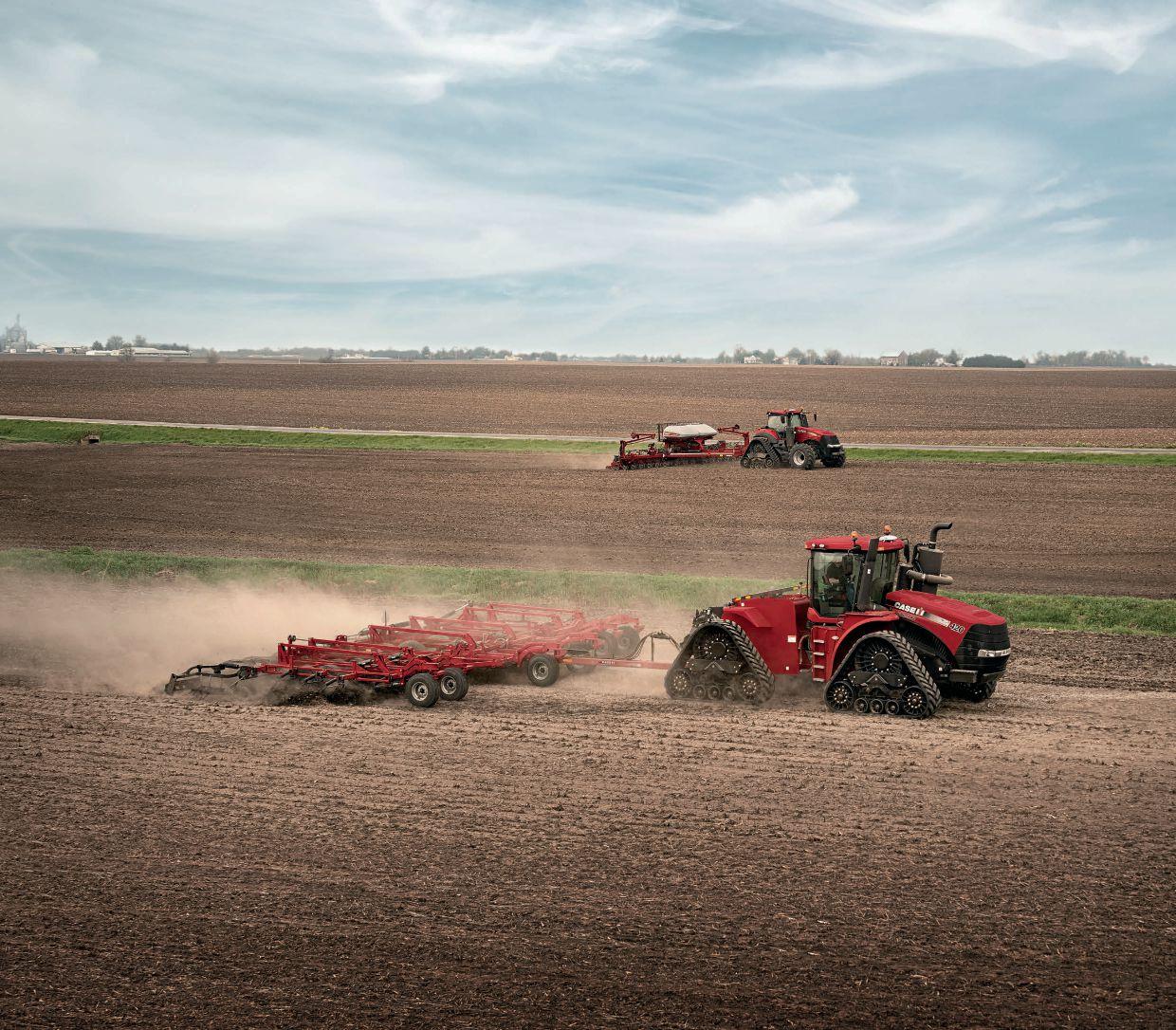
With the new Tiger-Mate® 255 field cultivator and 2000 series Early Riser ® planter, you can maximize every single square inch you farm. It’s creating the most level seedbed in the industry, while others are just scratching the surface. It’s the ability to gauge ground pressure 200 times per second. It’s targeting a nickel-sized area to plant a seed — and never missing. Then, inch by inch, the result is productivity like you never thought was possible. Start rethinking the productivity of your seedbed by visiting a local Case IH dealer or caseih.com/Seedbed THERE ARE 6,272,640 SQUARE INCHES IN EVERY ACRE.