Headline® AMP is the fungicide that delivers premium disease control plus the benefits1 of AgCelence® in cereals and corn. That means plants with increased growth efficiency and enhanced ability to manage minor stress.2 More specifically, Headline AMP offers exceptional flexibility in cereals with its wide window of application – from stem elongation to the end of the flag-leaf stage. In corn, it provides enhanced performance and efficacy through its multiple modes of action. For more information, visit agsolutions.ca/HeadlineAMP or call AgSolutions® Customer Care at 1-877-371-BASF (2273).
1 AgCelence benefits refer to products containing the active ingredient pyraclostrobin. 2 All comparisons are to untreated, unless otherwise stated. Always read and follow label directions. AgSolutions is a registered trade-mark of BASF Corporation; AgCelence and HEADLINE are
TOP CROP MANAGER
WEED MANAGEMENT
5 | Managing glyphosate-resistant waterhemp
Researchers are finding some promising options for controlling this tough weed.
By Carolyn King
FROM THE EDITOR
4 Programming plants for self-defence
By Brandi Cowen
CEREALS
8 Results of the winter wheat trials are more intense
By Rosalie Tennison
WEED MANAGEMENT
10 | Keeping the lid on woolly cupgrass
The weed is limited to southern Quebec, but researchers continue to monitor its spread with cross-country surveys.
By Carolyn King
CROP MANAGEMENT
16 Soybean trials offer key metric for comparisons
By Julienne Isaacs
WEED MANAGEMENT
17 2017 Weed Control Guide
36 Cultural controls not a viable option
By John Dietz
ON THE WEB
REDUCING RUNOFF WITH ENGINEERED SPRAY DROPLETS
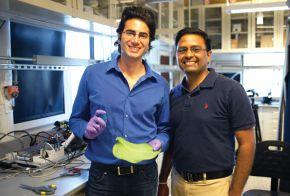
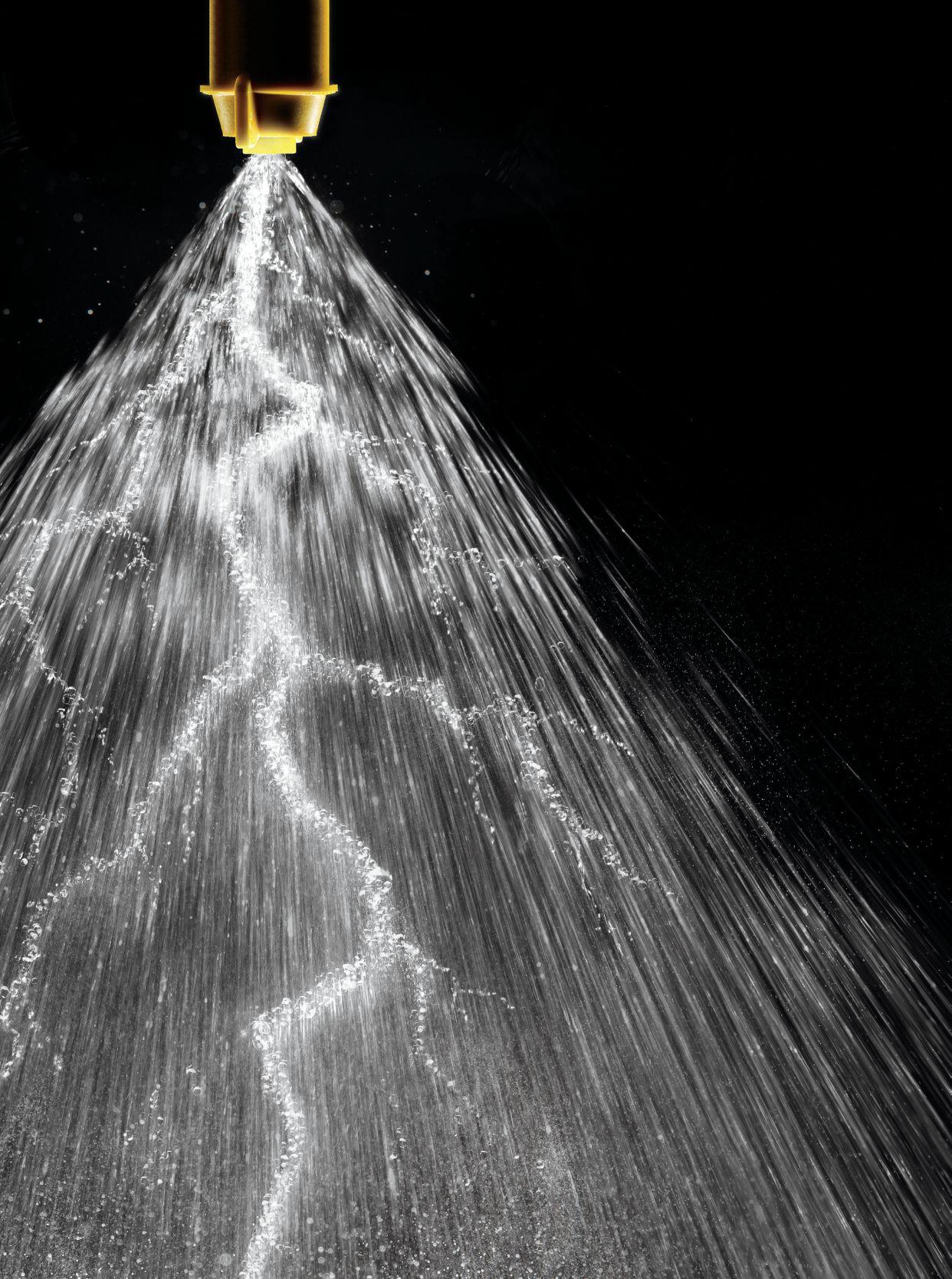
When farmers spray their fields with pesticides or other treatments, only two per cent of the spray sticks to the plants. A significant portion of it typically bounces right off the plants, lands on the ground, and becomes part of the runoff that flows to streams and rivers, often causing serious pollution. But a team of MIT researchers aims to fix that.
CROP MANAGEMENT
30 | Benefits from tree-based intercropping
Trees transform production on marginal land – and become a significant investment in their own right.
By Julienne Isaacs
PLANT BREEDING
34 More tools for improving crop traits
By Carolyn King
PESTS AND DISEASES
40 Stamping out swede midge?
By Donna Fleury
Readers will find numerous references to pesticide and fertility applications, methods, timing and rates in the pages of Top Crop Manager. We encourage growers to check product registration status and consult with provincial recommendations and product labels for complete instructions.
PHOTO COURTESY OF ROBERT BRADLEY.
PHOTO COURTESY OF ROBERT NURSE.
PHOTO COURTESY OF PETER SIKKEMA.
PHOTO BY MELANIE GONICK.
BRANDI COWEN | EDITOR
PROGRAMMING PLANTS FOR SELF-DEFENCE
Each issue of Top Crop Manager can often involve digging into genetics to answer key questions. What makes a plant susceptible to one disease but not another? Why do some pests seem to reproduce at a faster rate after an insecticide application? Genes often hold the key and we rely on researchers to open the door to understanding.
With the rise of gene-editing technologies like CRISPR, these researchers also possess the ability to alter DNA and RNA, transferring the genes responsible for beneficial traits from one organism to another and deleting undesirable traits altogether. Sometimes these alterations lead to surprising results.
Last summer, a team of researchers at Michigan State University (MSU) “knocked out” a defence hormone repressor and a light receptor in a line of Arabidopsis plants (a small flowering species related to mustard). This genetic alteration created a line of plants able to defend themselves against insects while growing faster than their unmodified counterparts.
“This is the growth-defence concept: you promote defence but at the same time you give up growth,” said Gregg Howe, research lead and a professor of biochemistry and molecular biology at MSU, in a press release. “More growth equals less defence, more defence equals less growth. But we’ve done some genetic trickery to get a plant to do both.”
Howe believes this discovery could have implications for food producers, noting the same hormone and light response pathways altered in the Arabidopsis plant are found in major food crops.
Plants can certainly benefit from genetic interventions that accelerate natural evolutionary processes and help them adapt to changing conditions, but they are by no means defenceless without this help.
In 2014, researchers at the University of Missouri discovered Arabidopsis plants can distinguish between different types of vibrations, for example, insect movement versus wind. The team placed caterpillars on the plants and recorded the vibrations they caused while snacking on the leaves. The researchers later played the recording back to one set of plants; a recording of silence was played to a control group. When caterpillars were later allowed to munch on both groups, the ones exposed to the feeding vibrations produced more mustard oils – a turn-off for many caterpillar species.
“What is remarkable is that the plants exposed to different vibrations, including those made by a gentle wind or different insect sounds that share some acoustic features with caterpillar feeding vibrations, did not increase their chemical defences,” said Rex Cocroft, a professor with MSU’s division of biological sciences, in a press release. “This indicates that the plants [can] distinguish feeding vibrations from other environmental vibrations.”
Findings like these have many researchers wondering how they can they apply what they know about a plant’s genetic code to support its existing self-defence abilities. This, coupled with a growing ability to edit genes to produce plants with the most desirable traits, is creating new opportunities for researchers to meet their goals of creating more profitable, plentiful and sustainable crops, which in turn benefits producers.
Top Crop Manager will be closely following these developments and we look forward to sharing the latest discoveries with you in the years ahead.
MANAGING GLYPHOSATERESISTANT WATERHEMP
Researchers are finding some promising options for controlling this tough weed.
by Carolyn King
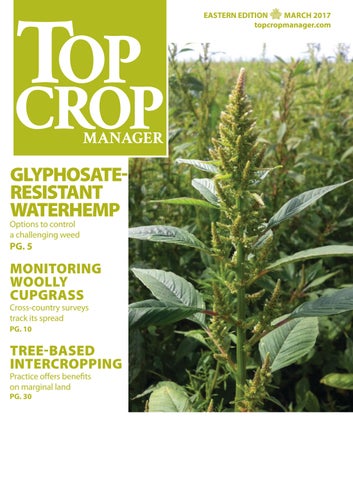
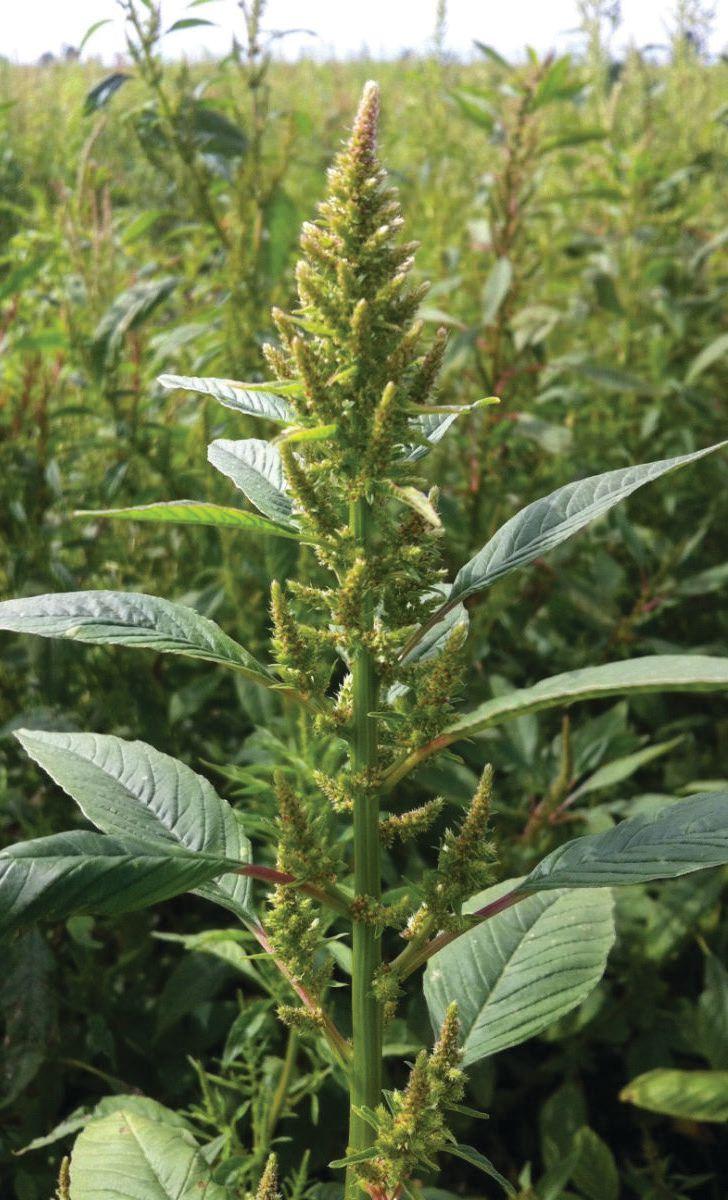
Glyphosate-resistant (GR) waterhemp was first found in Ontario in 2014, but it already has a foothold in three counties in the southwest of the province. Fortunately, Peter Sikkema’s research group at the University of Guelph’s Ridgetown Campus has made a good start on finding effective options for controlling this challenging weed.
“Waterhemp is the number 1 annual broadleaf weed that they tackle in the corn-soybean belt of the United States Midwest. I thought it would spread rapidly across Ontario as it did in the U.S. Midwest, so we did research on waterhemp in the early 2000s,” Sikkema says.
“Then in 2014, a salesman from one of the herbicide manufacturers brought a weed into my office – it was a waterhemp plant, and the grower had applied glyphosate twice and had poor control, so we started conducting research on it again.”
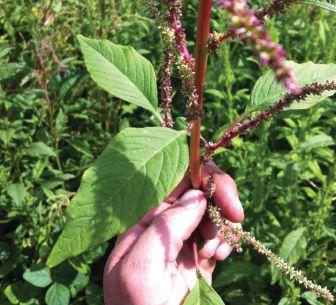
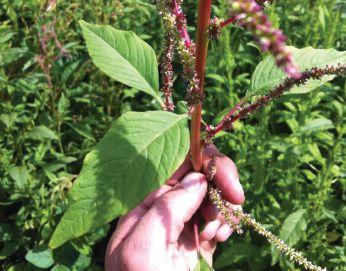
In 2015 and 2016, Sikkema’s group found GR biotypes of waterhemp at 40 of the 49 sites they sampled in the three southwestern Ontario counties (Table 1). Sikkema suspects GR waterhemp had been present in those counties for a number of years but that farmers had misidentified the weed as redroot pigweed, green pigweed or smooth pigweed. Waterhemp (Amaranthus tuberculatus var. rudis) is in the same family as the pigweeds and looks somewhat similar. If you are unsure whether you have waterhemp in your fields, the Weed ID Guide for Ontario Crops (available online) has
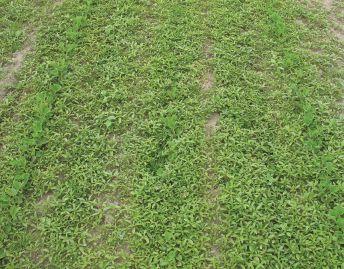
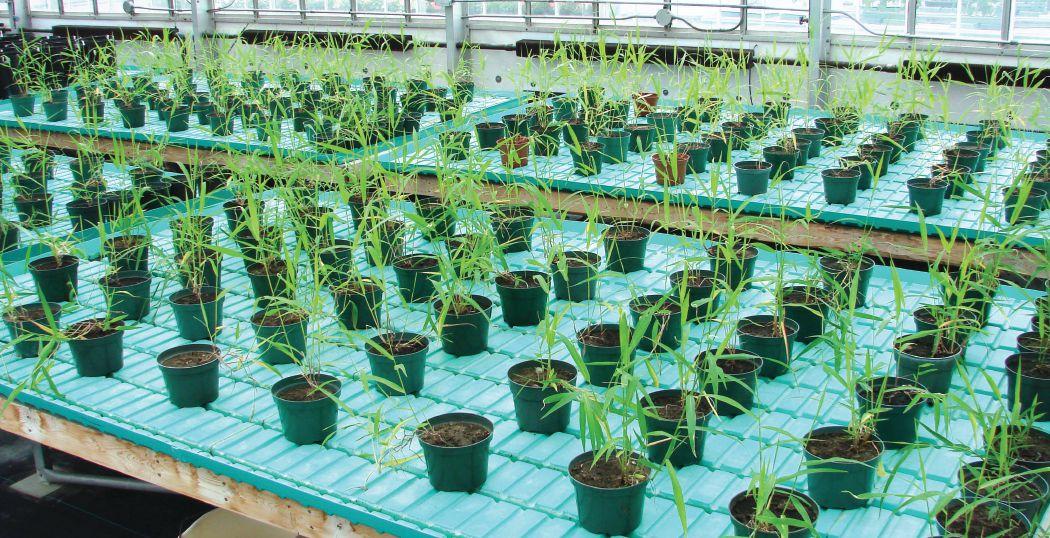
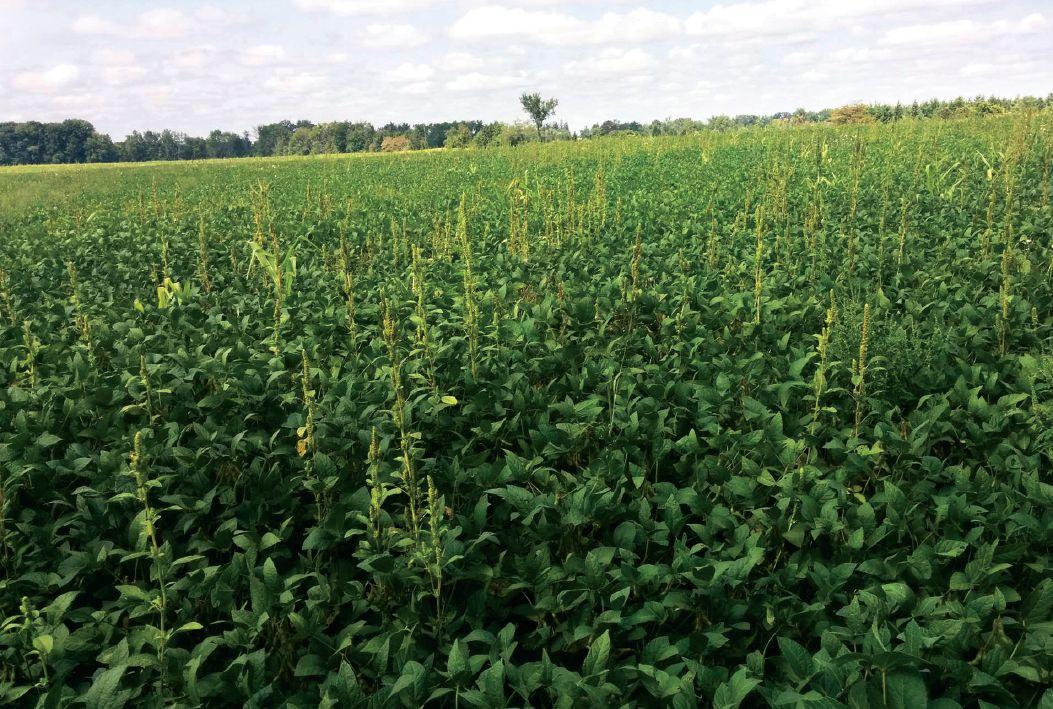
TOP: Some of the weedy checks in the glyphosate-resistant waterhemp trials had significant yield losses.
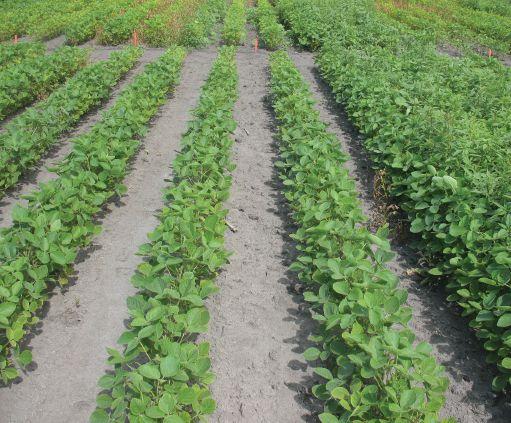
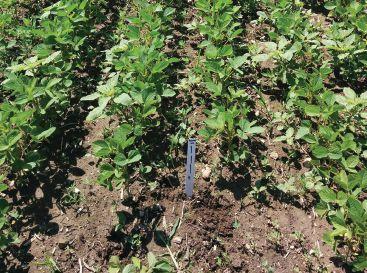
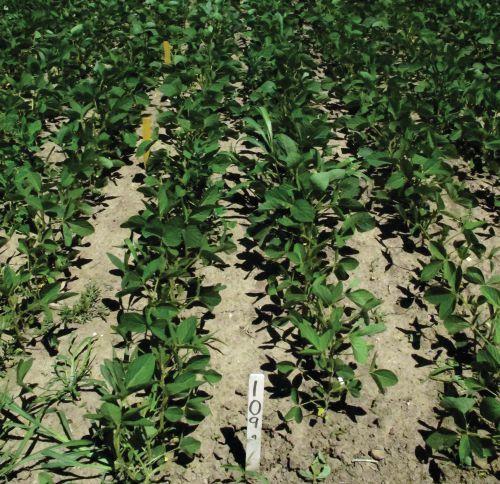
MIDDLE: Sikkema’s research is finding some promising options for controlling glyphosate-resistant waterhemp, like this treatment in LibertyLink soybean where Boundary (pre-emergence) was followed by Liberty (post-emergence).
In 2016, some fields had greater than 1,000 waterhemp plants per square metre.
tips for distinguishing between the different Amaranthus species.
Waterhemp is very good at developing herbicide resistance. As Table 1 shows, 100 per cent of the sampled sites had biotypes with resistance to Group 2 herbicides (Pursuit), and most sites had biotypes with resistance to multiple herbicide groups. In the U.S., researchers have found waterhemp biotypes with resistance to one or more of Groups 2, 4, 5, 9, 14 and 27.
“I think the main feature that contributes to waterhemp’s rapid development of herbicide resistance is that it is a dioecious species. Dioecious simply means waterhemp has male plants and female plants, and therefore you always have cross-pollination between the male and the female, which by definition means there will be a huge amount of genetic diversity in a waterhemp population in a field,” Sikkema says.
“In addition to that, waterhemp is a very prolific seed producer, producing up to a million seeds per female plant, according to some sources. So there are a large amount of seeds with wide genetic diversity. That means there is a high likelihood of selecting for resistant biotypes if you use the same weed management tactics year after year.”
One of the challenges in controlling waterhemp is its very long emergence
In Ontario, glyphosate-resistant waterhemp was first found in 2014.
period. Two of Sikkema’s graduate students conducted trials to document waterhemp’s emergence pattern. They found waterhemp begins to emerge shortly after spring tillage and continues to emerge through the entire summer. “In both studies, waterhemp still came up into September," Sikkema says.
If waterhemp is not controlled, it can cause substantial yield losses. “In some of the earlier research that we did in Ontario, yield losses in soybean approached 75 per cent. In 2016, we had fields with greater than 1,000 waterhemp plants per square metre, so the yield loss was absolutely tremendous,” he notes. In some of the weedy checks in his research group’s 2016 waterhemp trials, yield losses were around 75 to 85 per cent in corn and soybean.
Control in soybean
Over the past two years, Sikkema’s group has done a lot of research on GR waterhemp control in soybean, looking at preemergence, post-emergence and two-pass systems and various types of herbicideresistant soybean. They are testing products used in Ontario, as well as some that are not yet registered.
They’ve found some options that look pretty good. “With soil-applied herbicides,
Table 1. Summary of herbicide resistance in waterhemp at 49 sites in three Ontario counties
Waterhemp has a smooth, hairless stem and lance-shaped leaves with a wavy margin.
two products gave greater than 85 per cent control: Fierce and Boundary,” Sikkema says. “Some of the other soil-applied herbicides provided disappointing control. For instance, Prowl was 16 per cent, Eragon was 35 per cent, and Pursuit was 10 per cent; the poor control with Pursuit was because there is Group 2-resistant waterhemp at all the sites.”
A two-pass approach worked well in the Roundup Ready soybean trials. “In terms of the two-pass programs, Fierce or Boundary can be used as a setup program, but control was less than 90 per cent. However, when the pre-emergence herbicide was followed by either Blazer or Reflex, there was 94 to 99 per cent control.”
Sikkema adds, “I think Ontario farmers are going to have to be prepared to use a two-pass program [to control glyphosateresistant waterhemp], using their best soil-applied residual herbicide, and then scouting the field regularly. If they get a late flush of the weed, they’ll have to come back with an effective post-emergence herbicide and our data would say Blazer and Reflex are the best options.”
His research group is also conducting trials with Enlist soybean, although this soybean is not currently registered in the province. He says, “Boundary and Fierce with no post-emergence herbicide provided 80 and 95 per cent control, respectively. I think Fierce is the best soil-applied herbicide, and this experiment shows that. However, where we followed either of these soil-applied herbicides with Enlist Duo applied post-emergence, the control was 99 per cent. I really think the Enlist technology will give Ontario farmers an option in terms of managing this weed when the technology gets registered.”
Similar trials with LibertyLink soybean have shown good results with a two-pass program. “In these trials, Boundary and Fierce provided 81 and 92 per cent control
Courtesy of Peter Sikkema.
[respectively] at 56 days after application. Where we followed the soil-applied herbicide with a post-emergence application of Liberty in LibertyLink soybean, the control was between 95 and 99 per cent,” Sikkema says.
As well, his group has been doing experiments with Xtend soybean. For example, they found a pre-emergence application of Frontier followed by a post-emergence application of XtendiMax at 300 grams per hectare provided 99 per cent control.
In addition to these trials, the research group is also exploring some related issues. For instance, they are examining the biologically effective rate of Fierce. They want to see if they can lower the rate to reduce the risk of soybean injury while still getting commercially acceptable control of GR waterhemp. Another experiment is assessing how the size of waterhemp at the time of application affects herbicide efficacy.
Control in corn
Sikkema’s group has just started evaluating control of GR waterhemp in corn, comparing soil-applied herbicides in one experiment and post-emergence herbicides in another. He says, “In terms of the soilapplied herbicides, our data says that, of the herbicides available in Ontario, Lumax is the most efficacious for the control of glyphosate-resistant waterhemp. For postemergence, we had 96 per cent control with Callisto + Atrazine and 91 per cent with Marksman.”
However, Sikkema stresses, “That is based on just two experiments in 2016, so that is not a very robust data set. It gives an indication of which herbicides are more effective, but we will definitely repeat that research for the next two or three years to get a more robust dataset so we can have more confidence in the data.”
As with soybean, a two-pass program might be necessary for controlling GR waterhemp in corn.
“Our data would say that you have to start with a very effective pre-emergence residual herbicide, and then you have to monitor the field for the entire summer. And if you do get a late flush, you may have to come back with a post-emergence herbicide,” Sikkema says.
Funders for Sikkema’s GR waterhemp studies include the agricultural products companies, Grain Farmers of Ontario and Growing Forward 2, through the Agricultural Adaptation Council.
USE A GLYPHOSATE THAT WORKS IN YOUR TANK AND
ON YOUR WEEDS.
Credit ® Xtreme is a patented glyphosate formulation containing Dual-Salt Technology™ . Its high-load formulation provides excellent GM crop safety, fast and complete control of troublesome weeds, and exceptional compatibility with phenoxy herbicides, even in hard water.
RESULTS OF THE WINTER WHEAT TRIALS ARE MORE INTENSE
Trials compare how varieties perform with fungicide applications under Ontario’s growing conditions.
by Rosalie Tennison
The Ontario Winter Wheat Performance Trials have always been designed to give growers useful information to help them make decisions, but the historical data is equally helpful because it shows how varieties perform over time under diverse conditions. The intensive management data introduced in 2013 proved invaluable in 2016 and could have an impact on growers’ choices in the future.
“The intensive trials include two applications of fungicide,” says Peter Johnson, an agronomist with Real Agriculture. “We got into a stripe rust epidemic in 2016, and had we not had the intensive trials, we would have been looking at a stripe rust trial. But over 80 per cent of growers use fungicide, so for those growers the unsprayed trials did not reflect what would happen in their fields.”
As a result of the comparison between the regular yield trials and the intensive trials, growers can not only see which varieties yield well, but also which ones yield better when fungicides are used. Johnson says the unsprayed trials are still important because they show the genetic differences between varieties.
Each year, sponsors enter current and newly released varieties into the trials, which are overseen by the Ontario Cereal Crop Committee. This gives growers an opportunity to see how newer genetic material compares with older varieties. However, the trial co-ordinator, Ellen Sparry of C & M Seeds, says varieties with more years of data give growers an idea of how they perform over time against the new kids in the plot. In 2016, the report also indicates which varieties are protected under plant breeders’ rights.
“We encourage growers to consider varieties with a long history of data and to make their own determinations as to what varieties they want to grow based on their needs, whether they want to achieve high yields or they need disease tolerance,” Sparry says.
The results of the trials are reported by area with results of each variety grown under regular management and intensive management. Growers operating in select regions can see a variety’s performance and will get an idea of how it will work in their fields.
“Every grower will look at the information differently depending on their area,” Johnson explains. “Yields are important, but it’s also the additional information that can be applied to each grower’s situation. For example, lodging data will matter to growers who have issues with
lodging…growers along Lake Erie may have powdery mildew problems, so they may put more value on the intensive trials.”
Straw yield is another piece of data Johnson would like to see included in the trials, but he hasn’t yet figured out how to quantify it. “We know there are markets for it and we’d like to have winter wheat straw data, but only two of our locations have equipment to measure straw yield,” he says. “Getting this kind of data increases the time it takes to harvest the trials, and that can be an issue in some years.” Johnson believes the information would be useful because a variety that offers a good straw yield may appeal to some growers who have a market for straw. According to Johnson, the ability to sell straw increases profit opportunities.
The results of the trials are reported by area with results of each variety grown under regular management and intensive management.
The data available to growers is comprehensive and can be found online at gocereals.ca (including previous reports). The website also allows comparisons of two to five varieties for yield and agronomic traits, making it easier for growers to compare varieties. While some varieties appear to be clear winners in the yield column, they may not be as attractive in the lodging column or the powdery mildew column and that could matter to some growers. If a grower is only interested in finding a variety that performs well on multiple fronts in the area where the farm is located, the comparison helps.
“The winter wheat performance trials are a fair and open, unbiased place to get information,” Sparry says. The results give growers an idea of how varieties from Ontario’s seed distributors compare and how they might perform under each farm’s field conditions.
“We try to give growers the kind of data that is useful to them,” Johnson says. “If we can’t do that, why bother?”
For growers who have been to a company’s demonstration plots and who have seen a promising variety, the trials show how that variety will work in normal field conditions and all its attributes and failures can be compared to what other breeding programs offer.
PROTECTS AGAINST THE WEEDS YOU HAVE AND THE WEEDS YOU DON’T HAVE YET.
Weeds can be a detriment to your soybean crop. Fortunately, DuPont™ Canopy® PRO pre-emergence herbicide contains two modes of action to help manage herbicide resistance and control troublesome weeds like glyphosate resistant Canada fleabane. Plus, with its’ broad-spectrum residual activity on tough weeds like velvetleaf, dandelion and annual sow thistle, Canopy® PRO is the solid defence you need for the latest in glyphosate tolerant platforms like Roundup Ready 2 Xtend™
Save up to $4.50/acre with the DuPont Head Start and DuPont™ FarmCare® Row Crop Programs when you early order before March 31, 2017.
Ask your retailer about Canopy® PRO today. For more information, call the DuPont™ FarmCare® Support Centre at 1-800-667-3925 or visit canopypro.dupont.ca
KEEPING THE LID ON WOOLLY CUPGRASS
So far the weed is limited to southern Quebec, but researchers continue to monitor its spread with cross-country surveys.
by Carolyn King
Originally from Asia, woolly cupgrass has been in the United States since about the 1950s and has caused problems in field crops across the corn belt. This annual grassy weed was first found in Canada in 2000, when it was discovered in Quebec. Since then, government agencies and producers have been working to prevent the weed from getting out of hand, and researchers have been learning about the weed and its management under Canadian conditions.
In Canada, woolly cupgrass (Eriochloa villosa) is listed as a pest under the Plant Protection Act and it is listed as a prohibited noxious weed under the Seeds Act. “Woolly cupgrass is an invasive plant that the Canadian Food Inspection Agency [CFIA] regulates mainly
because it competes with crops, specifically corn and soybeans. So it can reduce crop yields and also increase the cost of weed control for producers,” explains Kristina Pauk, an invasive alien species and domestic programs officer with the CFIA.
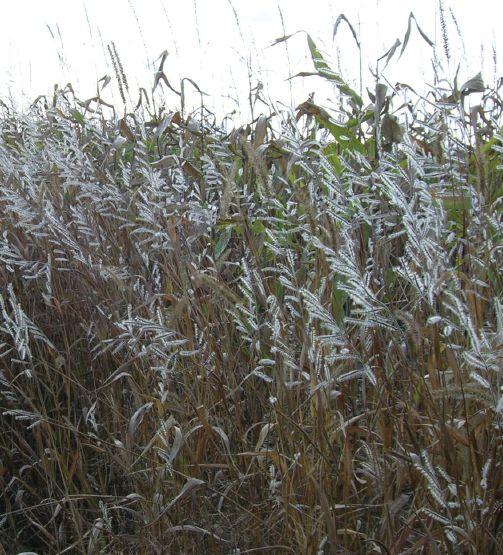
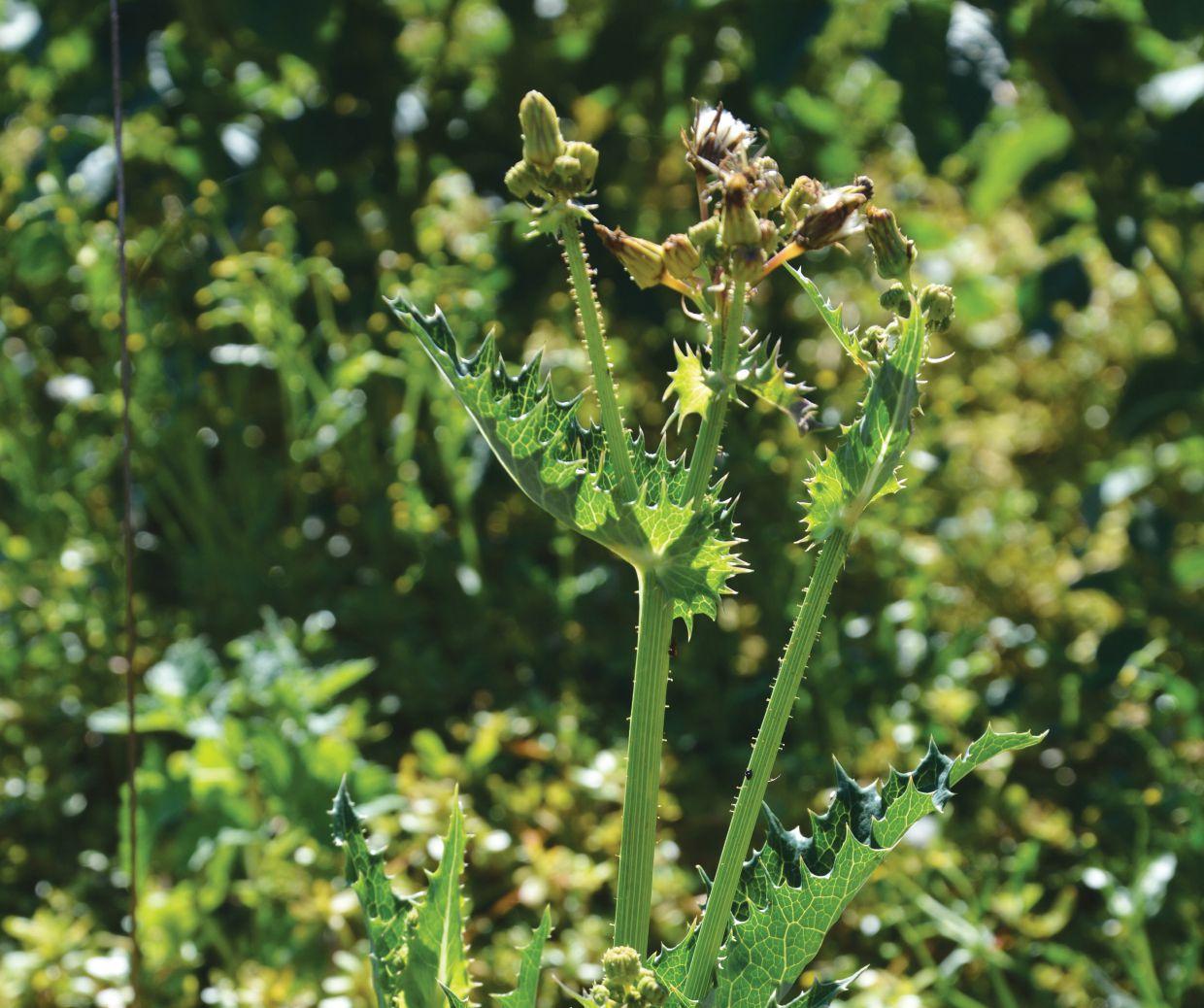
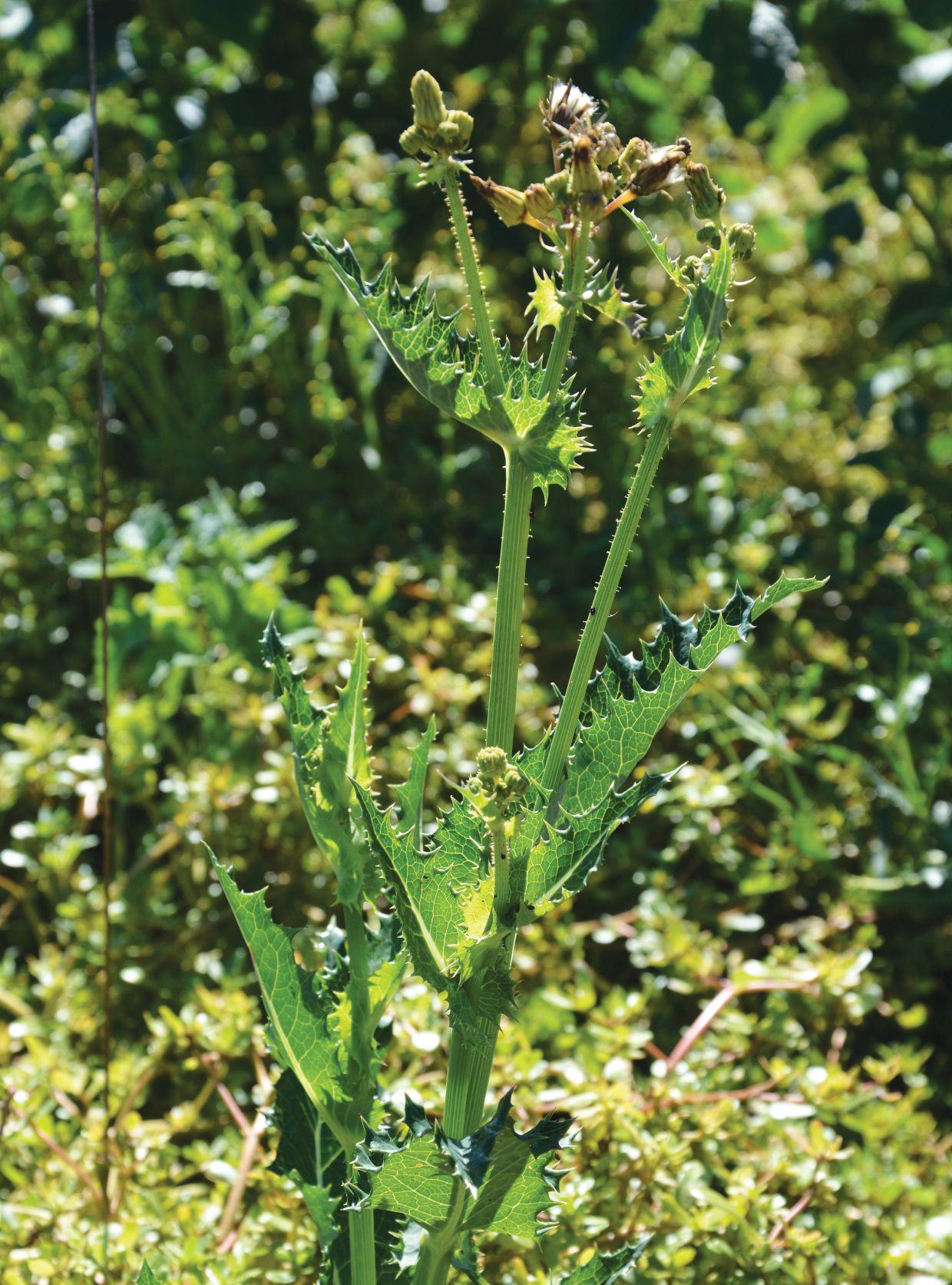
The weed is called “woolly” because many parts of the plant are hairy. The plant grows from 30 to 200 centimetres tall. The leaves are crinkled along one edge and the flowering head (inflorescence) has seeds along one side.
Woolly cupgrass can produce a large number of seeds: an Iowa
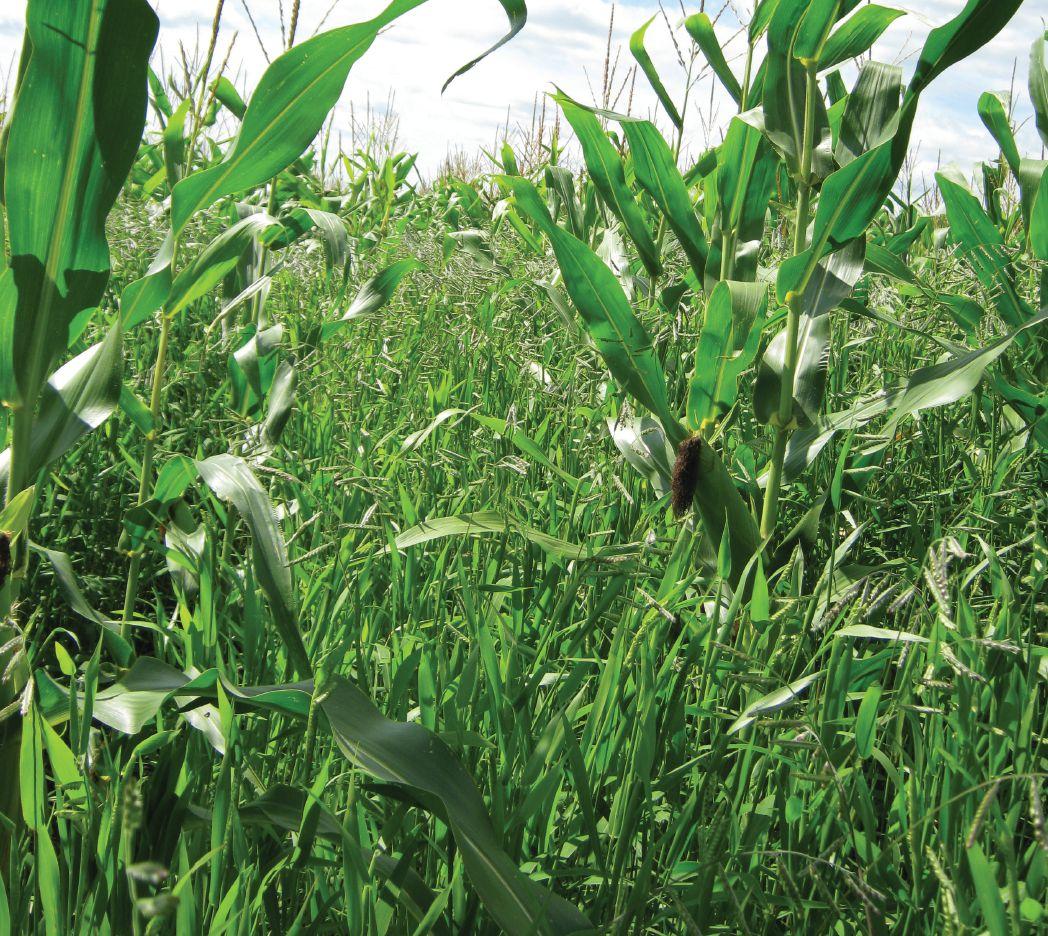
ABOVE: Woolly cupgrass, an invasive weed, can reduce yields and increase weed control costs in corn and soybeans.
PHOTO COURTESY OF CFIA.
Special Delivery for Your Crops.
Nu-Trax P+™ with CropStart™ Technology turns every granule of your fertilizer blend into a special delivery of early season nutrition.
Nu-Trax P+ is the ideal blend of phosphorus, zinc and other nutrients essential for vigorous crop growth. Featuring patented EvenCoat™ Technology, it coats onto dry fertilizer, ensuring blanket-like distribution near young plant roots.
See how Nu-Trax P+ can deliver the agronomic benefits of a starter to your crops. Ask your retailer to add Nu-Trax P+ to your dry fertilizer blends.
study found a plant could produce up to 164,000 seeds when grown under good conditions that allowed the plant to produce a lot of tillers.
The seeds are able to germinate and grow in a wide range of conditions. In a Quebec study, the seeds started to emerge in late April to early May. Although most of the seeds emerged in the spring, scattered emergence occurred into July. This prolonged emergence period makes managing woolly cupgrass very difficult in single-pass weed control systems.
So far, the weed seems to be spreading only very gradually in Canada. The most recent national survey for woolly cupgrass was in 2013, and at that time the weed was still limited to a few parts of southern Quebec. Pauk says, “As far as we know right now, it is present in three administrative regions in Quebec: Montégie, Lanaudière and Mauricie.” The CFIA plans to do another cross-Canada survey this year.
Exploring cupgrass control
Robert Nurse, a research scientist with Agriculture and Agri-Food Canada (AAFC), has been working with AAFC colleagues MarieJosée Simard and Stephen Darbyshire to investigate some aspects of woolly cupgrass and its control.
“We found that woolly cupgrass is pretty variable in its response to herbicides, especially glyphosate. If it is escaping glyphosate control, it will be in the fields later and later, so even when you come in with later glyphosate there could be challenges. So we did a study to look at late glyphosate control and how it affects seed production,” Nurse says.
In this study, they assessed the effect of post-anthesis timing of glyphosate. Nurse explains that woolly cupgrass is very unusual in that it reaches its flowering stage and starts to set seed while the inflorescence is still within the leaf sheath. “So when you look at the plant in the field, you just see the leaves and you don’t see the inflorescence. As a result, you may not realize that it is actually in
its reproductive stage. Growers might apply glyphosate at this stage, thinking they can control the weed because it hasn’t reached its reproductive stage yet, but in fact it is already in its reproductive stage.”
Woolly cupgrass tends to reach this growth stage – that is, after flowering and just before emergence of the inflorescence from the leaf sheath – at about the same time as a grower would apply a second in-crop application of glyphosate in soybeans. So the researchers asked themselves how a glyphosate application at this stage would affect the seed production and maturation in woolly cupgrass.
To answer this, Nurse led a greenhouse study in Harrow, Ont., comparing three treatments at post-anthesis: an untreated control; glyphosate at 900 grams of acid equivalent per hectare; and glyphosate at 1,800 grams of acid equivalent per hectare.
“We found that when you go in with glyphosate at that stage, it is too late to affect the number of seeds that are produced because they have already been fertilized. However, it did affect the viability of those seeds. We saw really marked decreases in viability, sometimes over 95 per cent, and it also decreased the seed weight. The glyphosate application stopped the maturation of the seeds. Some seeds had no embryo present and even the ones that did mature still weren’t viable,” he says.
“We concluded that even those late applications of glyphosate in soybeans when the woolly cupgrass had reached the post-anthesis stage could be an effective measure to control and prevent viable seeds from going into the seed bank.”
The researchers have also done several field studies in Quebec to look at factors that could play a role in the spread of woolly cupgrass.
In one study, they evaluated the effect of a legume forage crop on woolly cupgrass populations. Despite application of a grassy herbicide (sethoxydim) to control the initial flush of the weed and a standard cutting regime for the forage, the seed bank inputs from
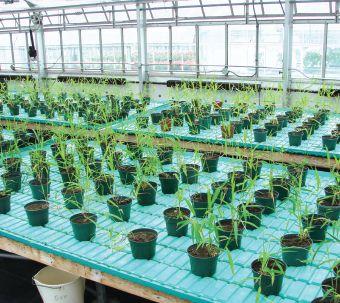
AAFC researchers set up this greenhouse trial to evaluate the effectiveness of late applications of glyphosate for controlling woolly cupgrass.
PHOTO COURTESY OF ROBERT NURSE.
THREE WAYS TO LOSE YOUR NITROGEN.
ONE REMARKABLE WAY TO KEEP IT.
More than half of your unstabilized nitrogen can vanish due to ammonia volatilization, denitrification and nitrate leaching. Secure your nitrogen investment and your yield potential with AGROTAIN® PLUS nitrogen stabilizer. This patented technology contains the premier urease inhibitor plus a proven nitrification inhibitor, making it the only product for use in UAN or liquid manure with two proven inhibitors that protect against all three forms of nitrogen loss. Ask your retailer if AGROTAIN® PLUS nitrogen stabilizer is the right fit for your operation.
woolly cupgrass increased each year in the forage plots. Therefore, adding a perennial legume to a crop rotation is unlikely to reduce woolly cupgrass numbers in an infested field. Another interesting finding from this study was that, in the untreated check plots, woolly cupgrass became the dominant weed after only three years, despite higher initial numbers of other weeds, including other grass species and common ragweed.
The researchers also evaluated the effect of predation by invertebrates, such as crickets and beetles, on seed loss for woolly cupgrass and for yellow foxtail (a native weed species). “We found much higher levels of seed predation by these invertebrates on the foxtail. That is probably because the foxtail has already been in their diet, whereas the woolly cupgrass is new to the system so it may not be
“The glyphosate application stopped the maturation of the seeds. Some seeds had no embryo present and even the ones that did mature still weren’t viable.”
]
a part of their diet [yet],” Nurse says. The researchers had thought woolly cupgrass seeds might be attractive to seed predators because the seed has a little globule full of lipids (fats), but it didn’t seem to be a factor in this study.
“We concluded that because other species in the system, like the foxtail, were being predated upon more, this might actually open up the system for woolly cupgrass to have more survival in the fall,” Nurse says.
In another study, they tested water as a seed dispersal mechanism for woolly cupgrass and various other species. “We were
thinking: ‘how is a weed like this dispersing from field to field? Is it through machinery, through wind, is it through animals?'’ And one of the ways could be through irrigation ditches, creeks or other waterways running through the property,” Nurse says. “So we looked at how well the seeds floated in water because if they float, then they could be easily dispersed from field to field through water systems or irrigation systems.”
Although the seeds of some of the other species studied floated for days, the woolly cupgrass seeds didn’t. “We found that once the woolly cupgrass seeds hit the water, they germinated immediately or within a couple of days. Usually they would clump together and then sink as that clump. Even if they were single seeds, they would germinate and sink,” he notes. “So waterways would not be a good dispersal mechanism for woolly cupgrass, which is good news.”
Slowing the spread
Pauk stresses that controlling invasive pests is a shared responsibility between the CFIA, municipal and provincial organizations, and producers “because we all share the risk of consequences of pest introduction and spread.”
Producers can help by reporting the spread of invasive pests into new areas. If you suspect woolly cupgrass plants are on your land, the CFIA encourages you to notify the agency. “In most cases, with any invasive plant, the CFIA inspection staff would work with the affected producer to try to limit the spread while minimizing the impact on the producer where that is feasible. However, the regulatory measures for woolly cupgrass were suspended by the CFIA in September 2012 so we could concentrate resources on survey efforts and re-evaluate the situation in light of emerging information on new control options. So in this case, we would just work with the producer to encourage them to implement best management practices, which maybe they are already implementing,” Pauk says.
These best management practices are biosecurity measures to prevent, minimize and control the spread of invasive plant pests. The CFIA website provides a guide for grain and oilseed producers who would like to implement these farm-level biosecurity measures.
One of the key biosecurity measures for woolly cupgrass is to clean soil and plant material from equipment after working in an infested area. Pauk explains, “Woolly cupgrass seed doesn’t have any specialized dispersal structures, so the seeds generally fall close to the parent plant. There is a chance that the seeds could be dispersed by insects and animals, like birds and rodents, but there is not much research or evidence to support that. However, there are reports of seed movement by machinery and vehicles. We definitely think that machinery, vehicles and tools are the most likely mechanism of spread, so keeping those clean and avoiding spread in that way are definitely most important in our eyes.”
Another role producers can play in preventing the spread of invasive plants is to participate in the CFIA’s public consultations. Pauk says, “As we learn about new potentially invasive plants, we have public consultations. We consult broadly with stakeholders across Canada to solicit their feedback on whether we should regulate or not.”
As the CFIA gathers more information on this weed through surveys and research, it may review its decision on woolly cupgrass and consult with stakeholders on whether or not to continue regulating this weed under the Plant Protection Act and on the best regulatory approach if it continues to be regulated.
The annual grassy weed was first found in Canada in 2000, when it was discovered in Quebec.
PHOTO COURTESY OF CFIA.
LIGHT ’EM UP
Resistant or not, powerful Infinity® herbicide takes out the toughest broadleaf weeds in your cereals including Canada fleabane. With its unique Group 27 mode of action, Infinity helps ensure the profitability of your farm today and for years to come.
Managing herbicide resistance is everyone’s fight; please spray responsibly.
SOYBEAN TRIALS OFFER KEY METRIC FOR COMPARISONS
Researchers urge Ontario producers to make use of the data when selecting varieties to grow.
by Julienne Isaacs
Though soybeans are Ontario’s largest field crop, 2016 presented difficult conditions, with hot, dry weather continuing until August in many areas. As a result, soybean production was down overall, from 3,728,500 tonnes in 2015 to 3,374,700 tonnes in 2016, as reported by Statistics Canada.
But according to Horst Bohner, soybean specialist for the Ontario Ministry of Agriculture, Food and Rural Affairs (OMAFRA), yields were “surprisingly high” at some of the sites in the 2016 Ontario soybean variety trials despite the weather.
Many maturity group 0 (2,500 to 2,800 heat unit) areas yielded over 50 bushels per acre over a two-year average; in maturity group 1 (2,700 to 2,900 heat units) areas, two-year and three-year average yields tended to hit over 60 bushels per acre for Roundup Ready varieties. At Ridgetown, the two-year average yield for early maturing group 2 varieties (2,900 to 3,300 heat units) sits at a remarkable 86.7 bushels per acre.
“Although it’s not the case for all sites, we’ve had some tremendous yields over the last couple of years,” Bohner says. The trials are a collaborative effort run every year through the Ontario Soybean & Canola Committee (OSACC) and conducted by representatives at Agriculture and Agri-Food Canada, OMAFRA and the University of Guelph.
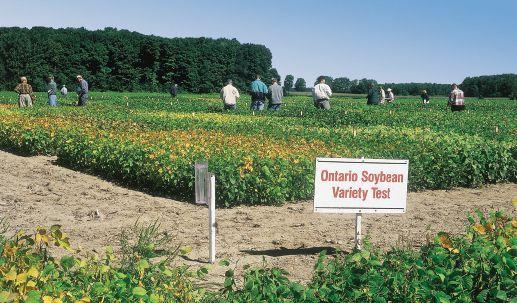
Like the province’s annual hybrid corn variety trials, the soybean trials offer producers a source for unbiased data on variety performance when it comes time to make seed purchasing decisions. They’ve been running since 1964. These days, data is collected from 19 sites across Ontario, from New Liskeard down to Woodslee, Bohner says. Teams gather information on yield, lodging and disease resistance; yield data is graphed showing days to maturity so producers can compare similar varieties, and the data is presented in one, two and three-year averages.
“You can really see that in the early zones, there is quite a difference in terms of yield potential of longer maturing beans versus shorter beans,” Bohner says. “It can be as much as 10 bushels over a 10 to 15 day period in maturity. It’s a very important thing to know.”
But Bohner says he sometimes comes across producers who don’t know about the trials or make use of the data. It’s not that producers don’t have other data on soybean varieties – they can also consult regional information, including information from seed dealers – and their own experience contributes the most important information. But the performance trials offer “the main piece of unbiased information in Ontario,” Bohner says.
Herbicide resistance
According to Tom Welacky, soybean data co-ordinator for the OSACC, roughly 270 varieties are tested each year from about 30 different seed companies and breeding programs at the University of Guelph, University of Guelph Ridgetown, Harrow Research Station and the Ottawa Research and Development Centre.
Things have changed since the trails began in the 1960s. Soybean breeding programs have made enormous strides breeding for aphid resistance, Phytophthora root rot resistance, soybean cyst nematode resistance, white mould resistance and agronomic qualities. The biggest changes have been in breeding for herbicide resistance.
In Western Canada, breeding programs are focused on developing early maturing, shorter season soybean varieties; in Eastern Canada, these varieties are also under development for northern growing regions. The main driver, Bohner says, is herbicide tolerance – as in the Roundup Ready 2 and Xtend soybean varieties.
Xtend soybeans are part of Monsanto’s Roundup Ready 2 Xtend platform and are tolerant to both glyphosate and dicamba; they will be available for spring planting in 2017, following European Union import approvals in 2016.
Welacky says the variety trials offer a crucial intersection of information, by getting performance data out to producers as well as breeders. “These tests are all voluntary. Companies don’t have to sign up, but companies and public breeders alike are interested in having this data published. It offers a good perspective on how varieties perform,” he says.
The Ontario soybean variety trials offer producers a source for unbiased data on variety performance when it comes time to make seed purchasing decisions.
2017 WEED CONTROL GUIDE
Weed management – a top priority for producers – seems to become more complex year after year. At times, the decisions may seem overwhelming: which products should be applied when and in what combinations? To aid you in your decision-making, Top Crop Manager is pleased to bring you our annual Weed Control Guide for corn, soybeans and cereals.
The information within these pages comes primarily from the chemical companies themselves. By going directly to the source, we are able to provide as much information as possible about the products featured and can often include products a year ahead of provincial guidelines. That being said, always check provincial regulations and product labels to ensure you are making decisions based on the most current information available.
Top Crop Manager’s 2017 Weed Control Guide is laid out with products listed for each crop in alphabetical order, followed by tank-mix partners. Herbicide-tolerant systems are listed separately. This format allows producers to compare their options for grassy and broadleaf weed products. Once you’ve made your choice, you can take the next step and compare the tank-mix choices to select the one that will best address the range of grassy and broadleaf weeds in your fields.
The ratings provided in the tables should be used as a guide when selecting herbicides. Please be aware that actual control can vary greatly depending on a variety of parameters, including soil type, moisture conditions, weed pressure, weed size and environmental conditions. Also, remember that some tank mixes have additive
effects and products may be more effective on specific weeds when used together. As well, sometimes products can be antagonistic and will therefore be less effective on a particular weed when used in combination compared to when used separately.
Again, we strongly advise producers to check provincial guides and product labels for full details and as a cross-reference.
Each year, new products are introduced to the market while others are withdrawn. Owing to the fact that publication lead-time conflicts with confirmation of registration for new products, we may not have been able to include all of them in this year’s guide. We recommend readers make suitable notes in their copy of the guide as new products are introduced.
Control rating: 9 = >90% control 8 = 80 to 90% control Ratings 5, 6, 7 = 50 to 80% control
Performance of some products on certain weeds may vary according to application timing. Some tank-mixes may have higher ratings on some weeds than shown, especially if various timings are recommended. Various formulations may be available and additional application rates may be recommended.
Barnyard Grass (A)
Smooth Crabgrass
Large Crabgrass Fall Panicum Foxtail, Giant Foxtail, Green (B) Foxtail, Yellow (A) Old Witchgrass (A) Proso Millet
WEED CONTROL GUIDE 2017
Buckwheat, Wild Cocklebur (B) Corn Spurry Fleabane, Canada (B, C) Lady’s Thumb
Lamb’s-Quarters (A, B) Mustards (A)
Nightshades (B) Pigweeds (A, B) Ragweed, Common (A,
9 8 8 9 9 9 7 9 9
9 9 9 8a 8 9/8c 9/8c 9 4/2c 2/0c
? Insufficient data available to provide control rating
a Use high rate for optimum control
b Use ppi timing for optimum control
c Use pre timing for optimum control
d Directed spray only
e Use post timing for optimum control
A Triazine-resistant biotypes exist
B Group 2-resistant biotypes exist
C Glyphosate-resistant biotypes exist
LL LibertyLink corn only
RR Roundup Ready corn only
EWC Enlist-Tolerant corn only
* Early post-emergence/late post-emergence: each product has its own specific recommendation on stage of crop growth.
Check product label for details.
WEED CONTROL GUIDE 2017
Armezon / Impact + Atrazine + Glyphosates
Armezon Pro + Atrazine + Glyphosates 15, 27+9+5
Atrazine + Glyphosates
BlackHawk + Glyphosates
Callisto 480SC + Atrazine + Glyphosates
Callisto GT (Callisto + Glyphosate)
Converge XT + Glyphosates
Destra + Glyphosates
Engarde + Glyphosates
Halex GT + Atrazine
Marskman / Propero + Glyphosates
Permit + Glyphosates
II Magnum + Glyphosates
Vios G3 + Glyphosates
+
+ Liberty 200 SN
14+9
27+9
Atrazine + Enlist Duo 5+4, 9 E
Callisto + Atrazine + Enlist Duo
Converge XT + Enlist Duo
Enlist Duo
Halex GT + Atrazine + Enlist Duo
Primextra II Magnum + Enlist Duo
Primextra II Magnum + Broadstrike RC + Enlist Duo 5, 15+2+4, 9
Performance of some products on certain weeds may vary according to application timing. Some tank-mixes may have higher ratings on some weeds than shown, especially if various timings are recommended. Various formulations may be available and additional application rates may be recommended.
Barnyard Grass (A) Smooth Crabgrass Large Crabgrass Fall Panicum Foxtail, Giant Foxtail, Green (B) Foxtail, Yellow (A) Old Witchgrass (A) Proso Millet
WEED CONTROL GUIDE 2017
Buckwheat, Wild Cocklebur (B) Corn Spurry Fleabane, Canada (B, C) Lady’s Thumb
Lamb’s-Quarters (A, B) Mustards (A) Nightshades (B) Pigweeds (A, B) Ragweed, Common (A, B, C) Ragweed, Giant (B, C) Velvetleaf
contact/residual
Bindweed Field Horsetail Milkweed Nutsedge Quackgrass Sowthistle Thistle, Canada
Performance of some products on certain weeds may vary according to application timing. Some tank-mixes may have higher ratings on some weeds than shown, especially if various timings are recommended. Various formulations may be available and additional application rates may be recommended.
Barnyard Grass (A) Crabgrass Fall Panicum Foxtail, Giant Foxtail, Green (B) Foxtail, Yellow (A) Old Witchgrass (A) Proso Millet
WEED CONTROL GUIDE 2017
Buckwheat, Wild Cocklebur (B) Fleabane, Canada (B, C) Lady’s Thumb
Lamb’s-Quarters (A, B)
? Insufficient data available to provide control rating
a Optimum growth stages for best control of these weeds will not likely be attained prior to planting in early to mid spring
c Use pre timing for optimum control
d PPI timing is required to achieve this level of control
e Use post timing for optimum control
Mustards (A) Nightshades (B)
Pigweeds (A, B)
Ragweed, Common (A, B, C)
Ragweed, Giant (B, C)
A Triazine-resistant biotypes exist
B Group 2-resistant biotypes exist
C Glyphosate-resistant biotypes exist
LL LibertyLink soybeans only
RR Roundup Ready soybeans only
EWC Enlist-Tolerant soybeans only
*** Most annual weeds will be controlled if emerged
WEED CONTROL GUIDE 2017
SOYBEANS
GLYPHOSATE PRODUCTS
Assignment [Pursuit + Glyphosate]
Assure II + Glyphosates (to control Roundup Ready corn)
Bifecta + Glyphosates
BlackHawk + Glyphosates
Canopy Pro [Classic + Tricor] + Glyphosates
Classic / Chaperone + Glyphosates
CleanStart Plus [Aim + Glyphosate]
Fierce + Glyphosates
+ Glyphosates
+ Glyphosate]
Freestyle (Classic + Imazethapyr) + Glyphosates
[Assure II + Glyphosate]
(many different
[Classic + Glyphosate]
Plus WDG [Classic + Valtera + Glyphosate]
Integrity [Frontier + Eragon] + Glyphosates
Optill [Pursuit + Eragon] + Glyphosates
Prowl H2O + Glyphosates
/ Nu-Image +
Basagran Forte + Liberty
TANK-MIXES FOR BURNDOWN AND/OR ROUNDUP READY PROGRAMS
Classic + Enlist Duo
Eragon LQ + Enlist Duo
Broadstrike RC + Enlist Duo
Firstrate + Enlist Duo
Integrity + Enlist Duo 14, 15+9
Optill [Pursuit + Eragon] + Enlist Duo 2, 14+4, 9
Prowl H2O + Enlist Duo 3+4, 9
Pursuit + Enlist Duo
Bifecta + Glyphosates + XtendiMax
Canopy Pro + Roundup WeatherMax + FeXapan
Classic + Roundup WeatherMax + FeXapan
Engenia + Glyphosates
Freestyle + Roundup WeatherMax + FeXapan
Guardian MAX + FeXapan
Guardian Plus II + FeXapan
Roundup WeatherMax + FeXapan
Roundup Xtend with VaporGrip Technology
XtendiMax with VaporGrip Technology + Roundup
Control rating: 9 = >90%
14+9+4
Ratings 5, 6, 7 = 50 to 80% control
Performance of some products on certain weeds may vary according to application timing. Some tank-mixes may have higher ratings on some weeds than shown, especially if various timings are recommended. Various formulations may be available and additional application rates may be recommended.
? Insufficient data available to provide control rating
a Optimum growth stages for best control of these weeds will not likely be attained prior to planting in early to mid spring
c Use pre timing for optimum control
d PPI timing is required to achieve this level of control
e Use post timing for optimum control
A Triazine-resistant biotypes exist
B Group 2-resistant biotypes exist
C Glyphosate-resistant biotypes exist LL LibertyLink soybeans only
Roundup Ready soybeans only
Enlist-Tolerant soybeans only
Roundup Ready 2 Xtend soybeans only
Most annual weeds will be controlled if emerged
WEED CONTROL GUIDE 2017
CEREALS
Pre-Emergence Herbicides
Post-Emergence Grass Herbicides
Post-Emergence Broadleaf Herbicides
Refine M (Refine SG + 114 g/ac MCPA) / Boost M (Boost + 225 g/ac MCPA) *ratings based on Boost M
SG / Boost / Nimble
/ Sword / Tracker XP
Performance of some products on certain weeds may vary according to application timing. Some tank-mixes may have higher ratings on some weeds than shown, especially if various timings are recommended. Various formulations may be available and additional application rates may be recommended.
Buckwheat, Wild Cocklebur (B)
Chickweed, Common Corn Spurry
Fleabane, Canada (B, C)
Hempnettle Lady’s Thumb
Lamb’s-Quarters (A, B)
Mustards (A) Nightshades (B) Pigweeds (A, B)
WEED CONTROL GUIDE 2017
Ragweed, Common (A, B, C) Ragweed, Giant (B, C) Shepherd’s Purse Stinkweed
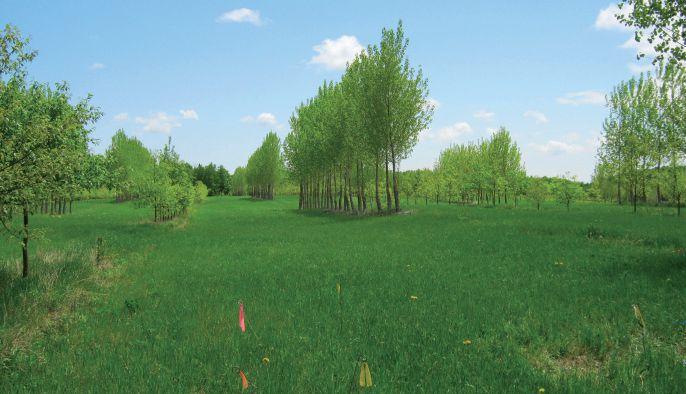
Trees can transform production on marginal land – and become a significant investment in their own right.
by Julienne Isaacs
Tree-based intercropping – growing trees together with crops – is a historical agricultural practice. These days primarily smallholder farmers use it in tropical systems, but researchers are focused on potential applications in the temperate soils of southern Ontario and Quebec.
The field is not new: Guelph researchers worked on tree-based intercropping (TBI) in the late 1980s and the 1990s. In 2004, Quebec researchers built on that work with new pilot studies funded by the provincial agency Fonds de recherche du Québec - Nature et technologies (FRQNT). The results were encouraging enough to stimulate further research funded through the Natural Sciences and Engineering Research Council of Canada (NSERC)’s Strategic Projects Program, the Green Crop Research Network, the federal government’s now-defunct BIOCAP Canada program and Canada’s Agricultural Greenhouse Gases Program.
Recently, they published a study looking at carbon sequestration and possible carbon markets for TBI systems in southern Quebec. They found TBI systems had approximately 33 to 36 per cent more carbon storage than adjacent non-TBI systems. Though Quebec’s cap-and-trade system for Greenhouse Gas Emissions Allowances (Système de plafonnement et d’échange de droits d’émission de gaz
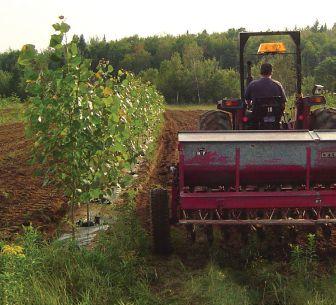
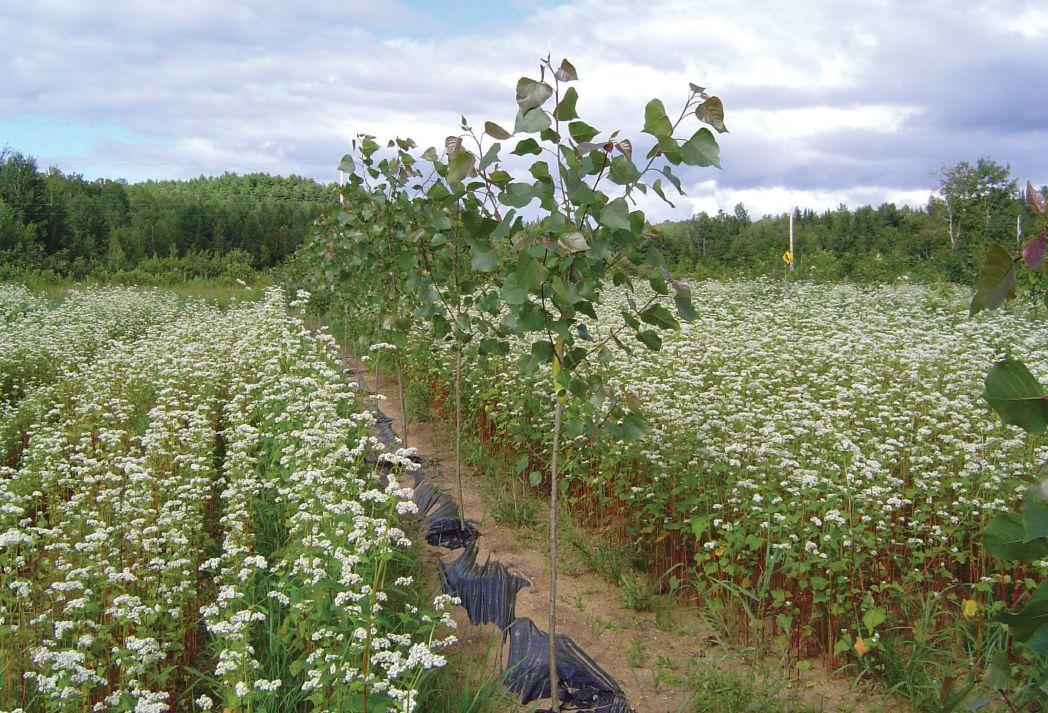
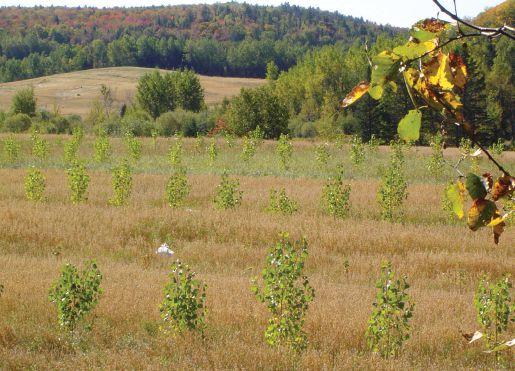
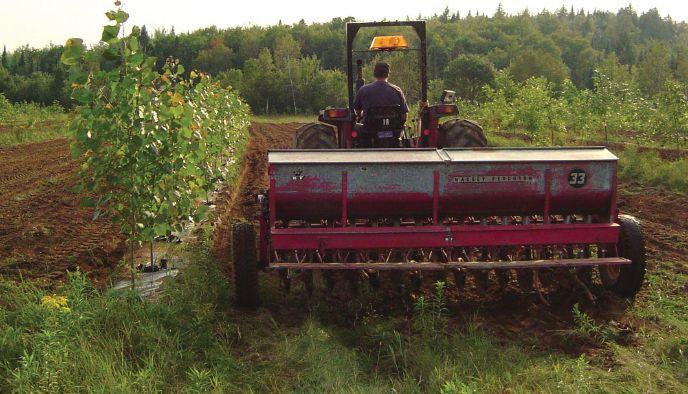
TOP: Trees intercropped with a rotation including buckwheat, winter rye, winter wheat, canola and forages at the Saint-Édouard study site.
MIDDLE: Trees intercropped with a rotation including oat, buckwheat, canola, winter rye and forages at the Saint-Paulin study site.
à effet de serre du Québec, or SPEDE), is still in its infancy, there could be room for producers using TBI to claim carbon credits in the province.
“The financial benefits of carbon sequestration after 10 years of TBI practices amounted to $2,259 to $2,758 per hectare and $1,568 to $1,913 per hectare [at two sites],” the study concludes.
But are producers up for the challenge?
“For agricultural producers, the question is, ‘Why do I want to put trees in my field?’” says Joann Whalen, a professor at McGill University and an author of the carbon study. “Tree-based intercropping hasn’t been widely adopted in Canada.”
On the surface, it seems there are more drawbacks than benefits to the system: the tree spacing between cropping rows used in most research studies is quite narrow, measuring between 15 and 20 metres. That’s too narrow for large equipment, although technically producers can space rows as widely as they wish. In tropical systems, plots are usually worked by hand, but mechanized systems prioritize movement of large equipment and machinery. After a few years, trees begin to compete with crops for light and inputs.
But Whalen says there are many benefits to TBI for the crops. “The nutrient cycling is improved and you could see a reduction in fertilizer in these systems, maybe on the order of 10 to 20 per cent,” she says. “There’s a more diverse type of litter coming into the ground, allowing different types of microorganisms to come into the soil.” Trees also act as natural buffers against wind, rain and hail.
There’s also the carbon storage potential to consider. “There’s no question that if you have trees growing amongst your crops you’ll have more carbon storage. The tree is a reservoir for carbon storage in the wood, branches, leaves and roots.”
Robert Bradley, a professor at the University of Sherbrooke and co-author on the study, adds to the list of benefits. In an earlier study completed by the same team, he says land equivalency ratios for a TBI system with field crops and hybrid poplar reached 2.4, meaning you’d need 2.4 times more land to get the same yields in both crops when planting them separately in a non-TBI system.
In addition, tree roots can salvage leached nutrients. In one study during a particularly wet year, tree roots recuperated over 200 kilograms per hectare of leached nitrate from field crops.
Somebody should speak up.
Somebody should set the record straight. Somebody should do something.
Well I’m somebody. You’re somebody. Everyone in ag is somebody.
Somebody should set the record straight. Somebody should do something
Well I’m somebody.
You’re somebody.
Everyone in ag is somebody
So be somebody who does something
So be somebody who does something.
Somebody who speaks from a place of experience, with passion and conviction
Somebody who proudly takes part in food conversations big or small, so our voice is heard.
Somebody who speaks from a place of experience, with passion and conviction.
Somebody who tells our story, before someone else does.
Somebody who proudly takes part in food conversations big or small, so our voice is heard.
Somebody who builds consumer trust so our industry can meet the demands of a growing, and very hungry, world.
Somebody who tells our story, before someone else does.
Somebody who shapes people’s relationship with agriculture
It can be done
Somebody who builds consumer trust so our industry can meet the demands of a growing, and very hungry, world.
But it’s a big job that takes co-operation, patience and respect for every voice in the conversation
We need to build lines of communication, not draw lines in the sand.
Somebody who shapes people’s relationship with agriculture.
It can be done.
Somebody
Be somebody who helps everybody see Canadian agriculture as the vital modern industry it is.
Somebody who helps everybody see people in ag for what they are – neighbours friends and family who share the same concern everyone does: providing safe, healthy food to the people we love
But it’s a big job that takes co-operation, patience and respect for every voice in the conversation. We need to build lines of communication, not draw lines in the sand.
Our point of view is important
Our story is important
And people want to hear what we have to say
So be somebody who takes, and makes, every opportunity to share it.
I’m somebody
You’re somebody
Together, we can tell everybody
Be somebody who helps everybody see Canadian agriculture as the vital, modern industry it is.
Somebody who helps everybody see people in ag for what they are - neighbours, friends, and family who share the same concern everyone does: providing safe, healthy food to the people we love.
Our point of view is important. Our story is important. And people want to hear what we have to say.
So be somebody who takes, and makes, every opportunity to share it.
I’m somebody. You’re somebody.
Together, we can tell everybody.
Applications
Whalen says it’s essential to provide producers with incentives to adopt TBI systems on their operations, and the carbon sequestration research helps provide an initial benchmark for cap-and-trade or SPEDE payment calculations.
There is precedent for carbon credit incentives in Quebec: Whalen points to a buffer zone project in the province several years ago in which participants were compensated for planting trees in buffer zones at the edge of agricultural fields in vulnerable watersheds.
But what TBI compensation would look like is not known. “There would have to be some clear guidelines on what type of land is suitable, what types of trees are the right ones, and who should get the monetary reward for doing this program,” Whalen says.
Most researchers do not recommend producers establish TBI systems on prime agricultural land. “That would be a hard sell,” Whalen says. Rather, her recommendation is that producers interested in the practice begin by slowly converting marginal land, for instance, areas with poor drainage or rocky soils.
“You could abandon the whole thing and let it re-vegetate itself, but why not make some money off that land?” she asks. “By incentivizing TBI, we could give farmers that option. We could get them to do something on that land that would bring them some revenue.”
Bradley says considering the socioeconomic context of a region, as well as its biological potential, is extremely important to assessing the success of a TBI program. Recently, a graduate student at Laval
University completed a PhD project looking at obstacles to uptake of TBI systems in Quebec. In highly productive, competitive regions in the St. Lawrence Lowlands, producers were less open to changing practices. In other areas with more marginal land, producers responded much more positively, according to Bradley.
It’s not that TBI can’t be applied in productive, as well as marginal land – Bradley points out that a single stem of black walnut can earn between $5,000 and $10,000 in revenue. “These trees would take 70 to 100 years to get to maturity in southern Ontario, but if they’re in an open area because they’re not competing for light, occasionally pruned to maintain stem quality, and in a system where the intercrops are being fertilized, these trees can potentially be ready for harvest in 35 years.”
He completes a quick calculation: “33 trees times 5.5 rows – that’s 165 trees per hectare, and if they’re worth $5,000 each at the end of 35 years, that’s a good pension plan,” he says. “A young farmer starting out at 25 could attain millions of dollars for that wood.”
Black walnut is a high-value hardwood that takes significant time to grow; in most TBI systems, faster-growing trees like hybrid poplar are used on their own, or in combination with higher-value trees like black walnut, red oak, white oak or ash. But even for hybrid poplar, which takes 10 to 12 years to mature, Bradley says there are untapped opportunities.
“There are markets that are begging to be opened in Canada. Here in southern Quebec, we use poplar mainly for fine paper pulp, but in Europe they use it for all kinds of things,” he says. “One hectare of corn will bring in more money than poplar. But there are a lot of environmental and yield benefits for the farmers even in productive areas. There is quite a lot more than just year-toyear return on investments.”
Quebec producers interested in diversifying the landscape and their revenue sources might do well to pay attention.
At the Saint-Paulin study site, hybrid poplar rows alternate with rows of red oak and black cherry.
Researchers work between rows of hybrid poplar alternating with rows of red oak, white ash and red ash at the Saint-Édouard study site.
The
Leading
Delegates
MORE TOOLS FOR IMPROVING CROP TRAITS
New findings about gene expression are a step forward for future crop breeding.
by Carolyn King
Recent discoveries by researchers at Agriculture and Agri-Food Canada (AAFC) are shedding new light on how genes are turned on and off. Switching genes on and off is critical for improving crop traits, so these research findings have exciting implications for crop advances in the future.
A quick look at the science
The research relates to chromatin regulators, which play a crucial part in gene regulation as DNA is compactly coiled into the nucleus of a cell.
“All the DNA in the cells of plants or animals is not naked. It is wrapped up around proteins, mostly histones, and it is very tightly organized within the nuclei of the cells so the DNA can fit within the space,” explains Yuhai Cui, the research scientist at AAFC’s London Research and Development Centre who led this study. This tightly packed structure is called chromatin.
But when DNA is tightly packed, the transcription machinery (the things that regulate the genes) can’t access the genes they want to reach. So, for the DNA to be transcribed or expressed – in other words, for the genes to be turned on or off – the chromatin structure has to be partially relaxed or unwound. “That is the role of the chromatin regulators,” Cui says. “They pack the chromatin or they relax the chromatin so the genes can be exposed to the transcription machinery and be expressed.”
The science of studying chromatin structure and regulation is called epigenetics. In epigenetics, a long-standing puzzle has been how chromatin regulators are able to find their specific targets in the genome. It was thought that most chromatin regulators don’t have a structure that would enable them to bind directly to the DNA.
Cui and his team have made two important contributions to solving this puzzle.
First, they determined that a certain chromatin regulator can actually bind directly to the DNA. “This is a surprising finding, and that is why some of our colleagues consider this as paradigm shifting,” Cui says.
Second, they discovered that once it binds to the DNA, this chromatin regulator can also help a different chromatin regulator reach the same target DNA sequence, so those two regulators can act in concert.
Why this matters for crop improvement
“Epigenetics has been a hot research area for the past 10 or 15 years. Twenty years ago, most molecular biology focused on just the DNA and the transcription factors that can bind to the DNA directly. But within the past 15 years, it has become widely realized that you have to regulate the chromatin structure and that chromatin regulators play a very important role,” Cui says. “Their role in crop improvement
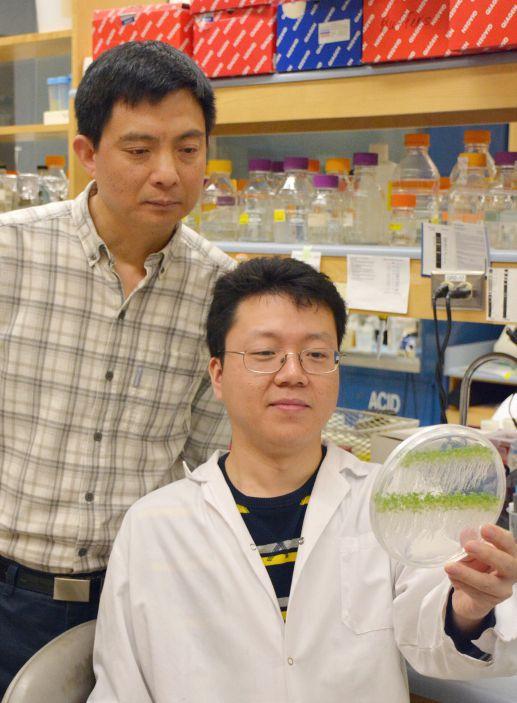
Yuhai Cui (left) and colleague Chenlong Li (right) inspect Arabidopsis plants, which they used in their study of chromatin regulators.
is everywhere because, in order to improve a crop, you need to regulate gene expression to control the on and off of a particular gene.”
In plants, for example, chromatin regulators are key players in the expression of genes related to disease resistance, drought tolerance, heat tolerance, insect resistance, seed characteristics, plant growth and development, and many other traits – almost every plant trait you can think of.
Cui’s team looked at the functioning of those two chromatin regulators in Arabidopsis thaliana, a plant species in the mustard family. Arabidopsis is a small plant with a fast life cycle, and its genome is small and has been sequenced, so researchers use it as a “model” plant – they learn about how this plant works and then they transfer that learning to other plant species. The two chromatin regulators in Cui’s study are known to influence many different genes, so the findings could have wide-ranging applicability.
Cui’s team determined that the two regulators target a specific DNA sequence. Potentially, scientists could use this understanding to improve crop plants in the future using gene-editing technology. For instance, researchers might insert or manipulate a target DNA sequence in a gene in order to direct a certain chromatin regulator there to control the expression of that gene.
The first chromatin regulator in Cui’s study is an epigenetic eraser. Epigenetic erasers are able to remove epigenetic marks, which tell genes to switch on or off. The eraser in Cui’s study is able to home in on that little DNA sequence and remove an epigenetic mark that represses gene expression. You can imagine how such an eraser might be helpful for crop improvement. For example, let’s say the crop plant you’re trying to improve has a gene for resistance
to a disease, but the gene has a repressive mark that silences it. If you could target the appropriate part of the DNA with an epigenetic eraser, then you could erase that mark and produce a plant with better resistance to the disease.
Cui’s research team was also able to identify the structure that the first chromatin regulator uses to bind directly to DNA. Some other chromatin regulators are known to contain this same type of structure so it’s likely that they too are able to bind directly to DNA in the same way, although research will be needed to confirm whether this hypothesis is correct. The research team’s discovery is opening up new areas for investigation toward better understanding of other chromatin regulators.
The two chromatin regulators in Cui’s study are known to influence many different genes, so the findings could have wide-ranging applicability.
Overall, the study’s results could have far-reaching implications. “Our contribution is opening up new doors. These important chromatin regulators control many genes across the genome and they can bind to the target by recognizing a specific DNA sequence. This opens up the opportunity that we can control targeting and gene expression by changing or introducing specific DNA sequences,” Cui says. “This research gives us more tools in the future to manipulate crop traits.”
“It’s all of our responsibility to speak up for agriculture.”
Emmett Sawyer, Agvocate 4-H Member and Farmer
CULTURAL CONTROLS NOT A VIABLE OPTION
Weed scientists in Guelph experimented with some non-herbicide options to control weeds in soybeans – with limited success.
by John Dietz
In 2013, two University of Guelph weed scientists began collaborating on alternatives to herbicides for weed control. The report, by Francois Tardif and Mike Cowbrough, was released in 2016.
The study began after the Environmental Commissioner of Ontario’s office released a report looking at herbicide resistance. It concluded farmers were relying too much on herbicides. Instead, the report said, alternative cultural methods exist, they could save the day and should be promoted.
“So, we tried to address the issue. In the research, Mike’s interest was to show how easy it is to implement these methods. I was always interested in preventing resistance,” Tardif says.
Many cultural methods can be used to kill weeds or even prevent their germination. Indirectly, the crop becomes more competitive.
“As it becomes more competitive, it can exclude the weeds. That way, in principle, you would reduce the dependency on herbicides,” Tardif says. “With preemptive cultural control, instead of using
three shots of herbicide, maybe 80 per cent control could come from two herbicides and the rest from the cultural management.”
With the aid of graduate student Tasha Valente, the weed professors set up trials at research farms in Elora and Woodstock, each in 2014 and 2015. They tried pumping up the seeding rate, adding 50 pounds of nitrogen and controlling light availability for weeds.
An important part of the research was that the trials were done on sites with a “medium” amount of weeds present, as opposed to under weed-free conditions. Common ragweed, lamb’s-quarters and redroot pigweed were the main broadleaf weeds present in the fields. The grassy weeds were primarily green foxtail at the Elora
TOP: Common ragweed, lamb’s-quarters and redroot pigweed were the main broadleaf weeds present in the field trials.
INSET: The Environmental Commissioner of Ontario’s office released a report concluding farmers were relying too much on herbicides. Since alternative cultural methods exist, could they save the day?
site and barnyard grass at the Woodstock site.
The researchers either applied no herbicide at all, or a very low rate of herbicide, so they could monitor impact of the cultural control methods on weeds at both sites.
Results
“What we found is that you may get some positive effect on weeds with these methods, but they are not consistent over years and sites. So, you can’t really say, ‘always do this and it will work,’” Tardif says.
Increasing the seeding rate was easy, but costly. In a preliminary analysis in 2013, Tardif and Cowbrough increased the rate by 42 per cent, from a normal rate of 400,000 seeds per hectare up to 568,000 seeds per hectare.
At first, there was a modest trend showing that the high seeding rate reduced the amount of weeds in the field.
“It was a one to five per cent reduction in weed biomass, depending on the year. Over four site years, it was significant for yield only once, and that year we had a very low yield because of a dry season,” Tardif says. “Under conditions where the soybeans were able to grow normally, there was no real benefit to increasing seeding rate. You didn’t get back that 42 per cent increase in the farmer’s investment.”
The nitrogen trial was suggested by a soybean specialist who, under weed-free conditions, had seen soybeans get a “kick-start” when extra nitrogen (N) was supplied.
So, the researchers compared the effects from the normal practice – letting soybeans produce their own nitrogen supply – to stimulating the site with a spring pre-plant treatment at 50 pounds of N per acre. Their site, however, was not weed-free.
That first result on weed biomass in 2014 was either neutral or next to it. The second year, results were negative.
“In 2015, [nitrogen fertilizer] increased the weed biomass by 50 per cent. We had better weeds,” Tardif says. “Basically, they sucked up the nitrogen, so we made the weeds tougher.”
That effect has been seen before. It’s called nutrient luxury consumption. Many weeds are adapted for stress conditions. Given a boost in nitrogen, they collect it and put it into a reserve. Foxtail, lamb’s-quarters and pigweed tend to be luxury consumers.
Two other cultural control options for this project involved light.
To increase shading of the weeds with
THE TRIPLE, TRIPLE THREAT.
TriActor® controls the toughest weeds in your premium IP soybeans. Three active ingredients support stronger resistance management. Three modes of action extend control to weeds that show resistance to other herbicides. And three-in-one packaging delivers the ultimate convenience. Get it all with TriActor.
15, 2017.
Many cultural methods can be used to kill weeds or even prevent their germination. Indirectly, the crop becomes more competitive.
light after being buried seems to trigger germination in the weeds. If the tillage is done at night, they don’t get that needed light.
“It didn’t make a big difference. Whether we cultivated in the day or at night, we had the same number of weeds,” Tardif says.
Other options
Changing row spacing, using cover crops and destroying weed seeds are other cultural control options.
Row spacing studies for soybeans were not included, Tardif says. Thirty-inch row spacing used to be common, but it has been replaced with 15-inch spacing for soybeans. Making rows tighter than 15-inches would quicken canopy closure and would increase competitiveness of the crop, but it would come at the cost of more disease. It also would require changing planters.
Cover crops planted in the fall and left to grow until the soybean crop is well established may be able to reduce weed competition. Tardif and Cowbrough have that option under a longer-term study.
“We have a long-term rotation of corn-soybean-winter wheat where we compare the normal practice with an increased seeding rate and cover crop. So far, we have two summers of data,” Tardif says.
“We don’t yet see a reduction in yield, and we do see some reduction in weed population, but the effect is subtle. We need at least two more years to see accumulative effects. For instance, the weather last summer got pretty dry. The cover crops started to suck up the moisture and caused the normal crops to suffer. That’s not supposed to happen, but it did.”
A third project was planned to look at weed seed destruction. It was delayed two years, but now is underway.
Tardif says the first trial in Canada with a Harrington Seed Destructor was conducted last October in Swift Current, Sask. Collected weed seeds from both Eastern and Western Canada were put through the machine to determine its effectiveness at destroying the seeds. Initial results from germination tests may be available soon, however, the project is planned to run for at least two years.
Conclusions
While the effort to find cultural controls that could exploit the weed life cycle has been disappointing to date, the weed scientist says it also has highlighted at least two issues: the need for more competitive crops and the need for broad public support to encourage “friendly” farming practices.
“We probably need a better partnership between breeders and weed scientists to come up with more competitive cultivars.”
early canopy closure, the researchers tried growing a standard slim soybean and a very bushy soybean cultivar. But the researchers didn’t see any differences.
“If there are differences, they are very subtle. There were not enough differences in the branching pattern to affect shading,” Tardif concludes.
Neither extra fertility nor soybean variety affected canopy closure.
The team also checked claims that tillage in the dark might reduce the number of weed seeds that germinate. In about half of the studies that have been published on the topic, there is evidence that night tillage reduces weed germination. A short exposure to
Breeders use a weed-free environment when developing and selecting new varieties. There’s an assumption that new lines will be in herbicide-protected, weed-free fields, without any need to compete against unwanted weeds. If breeders selected for a trait like rate of canopy closure, it could be a strong cultural assist for farmers.
Tardif’s other observation is around the cost of integrated weed management at a level that meets the recommendations for using cultural controls.
“It’s asking farmers to take the brunt of integrated weed management and the cost of that without help. Next, they are either going to be forced by law to do it, or they will need help financially. Cultural weed management is good, but it’s a very general recommendation. When you look at how to implement it, it’s not that easy.”
Francois Tardif, one of the researchers of the study on alternative cultural methods to stamp out weeds.
PHOTO COURTESY OF MARTIN SCHWALBE.
PHOTO COURTESY OF TASHA VALENTE.
STAMPING OUT SWEDE MIDGE?
Swede midge continues to be a major pest in Ontario, while low populations are spreading across the Prairies.
by Donna Fleury
In Ontario, swede midge continues to be a major pest for canola growers. Swede midge first appeared in canola in Ontario in 2003, and extreme populations in northeastern Ontario resulted in the Ontario Canola Growers’ Association (OCGA) strongly recommending in 2015 that producers avoid growing canola for three years across the New Liskeard area in an attempt to suppress swede midge populations.
“In 2016, swede midge populations in some areas in Ontario seemed to be less of a problem, likely due to a slow spring and very dry conditions,” explains Rebecca Hallett, a professor at the University of Guelph. “Earlier in the season, populations appeared to be lower. However, rainfall in late July saw numbers of swede
midge increasing in some areas. In the New Liskeard and Temiskaming district, swede midge continues to cause significant concern for canola growers, although canola acreage is down as growers extend rotations with new crop options such as fababeans, peas and flax, in an effort to reduce swede midge populations.”
Researchers have confirmed four generations of swede midge in Ontario, but with climate change and weather conditions, five generations are possible. Hallett is continuing to lead research on pheromone action threshold development to try to develop
ABOVE: Boyd Mori checking swede midge pheromone traps in early spring 2016.
economic recommendations for growers. The yield impact on canola depends on midge population levels, timing of infestation relative to plant stage and timing of insecticide application.
“Because of the variation at different sites across Ontario, it has been difficult to pinpoint the appropriate threshold and number of insecticide applications for swede midge control,” Hallett says. “With the repeated presence and successive generations of swede midge, it is difficult to determine the impact on yield. Currently, we are tentatively recommending that growers spray for swede midge when they are capturing five or more midge per pheromone trap per day. Populations tend to be field specific, so localized trap information is key. There should be multiple traps per field that are checked two or three times per week and the average number of midges captured calculated per trap, per day. A spray application is only recommended at the most susceptible stages, particularly at the late vegetative and early bud stages to protect the primary inflorescence. We hope to refine the timing and number of applications that are economic and needed to protect yield over the next couple of years.”
To get a better understanding of the impact of swede midge on canola in terms of growth and yield, Hallett and a grad student are planning to conduct more laboratory experiments. The objective is to look at the effect of single and multiple infestations of swede midge on growth and yield parameters. The controlled experiments will provide a more clear understanding of the impacts from individual generations, rather than trying to assess field conditions with multiple generational impacts.
“This work will help us understand the relationship between larval numbers in plants in the field and pheromone trap captures,” Hallett adds. “For example, as the number of males in the traps goes up, we can assume there will be a peak of adult emergence, females will be laying eggs and larvae will begin developing within a week or so. If we see 10 males per trap, per day, what does that mean in terms of damage down the road, and when is it going to be critical to spray? Bringing all of these aspects together will ultimately strengthen the action threshold we recommend.”
Determining when to spray and at what threshold has economic implications. Hallett explains that a missed spray can have financial losses associated with it if there
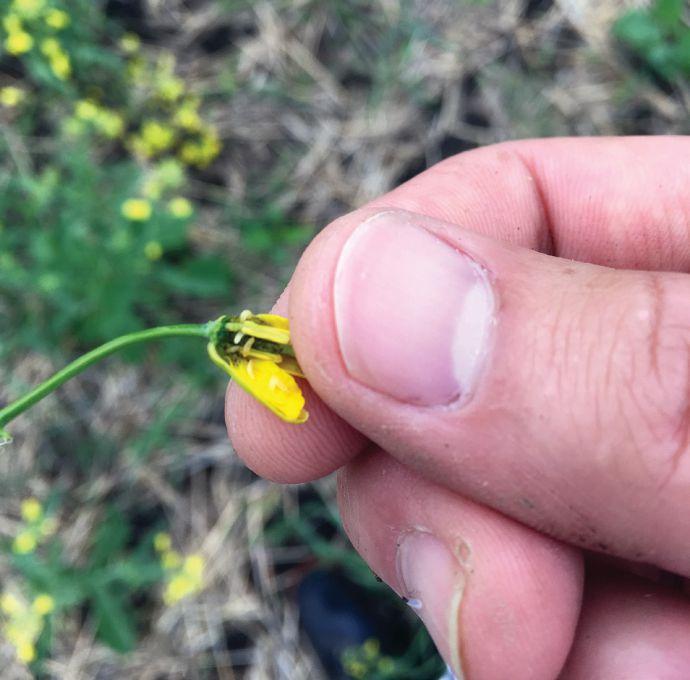
Canola infested with swede midge larvae in 2016.
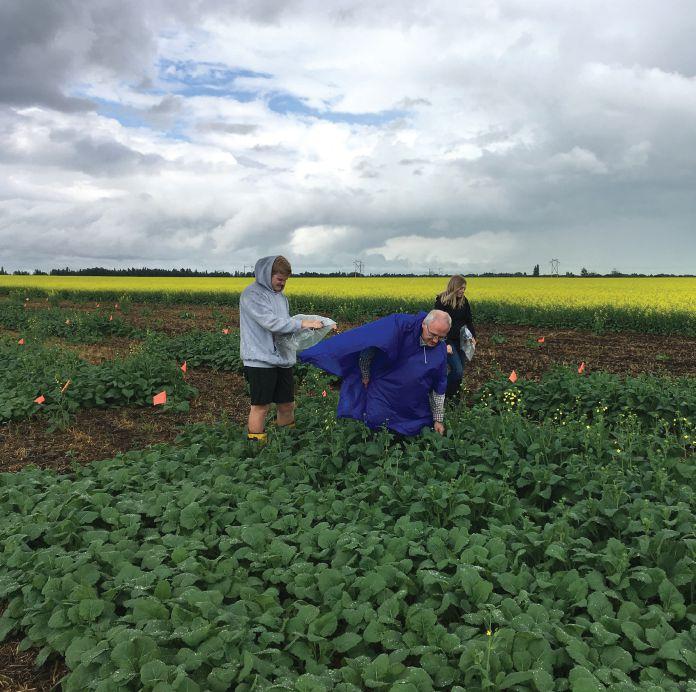
Assessing swede midge damage in early and late spring seeded canola plots at Saskatoon in 2016.
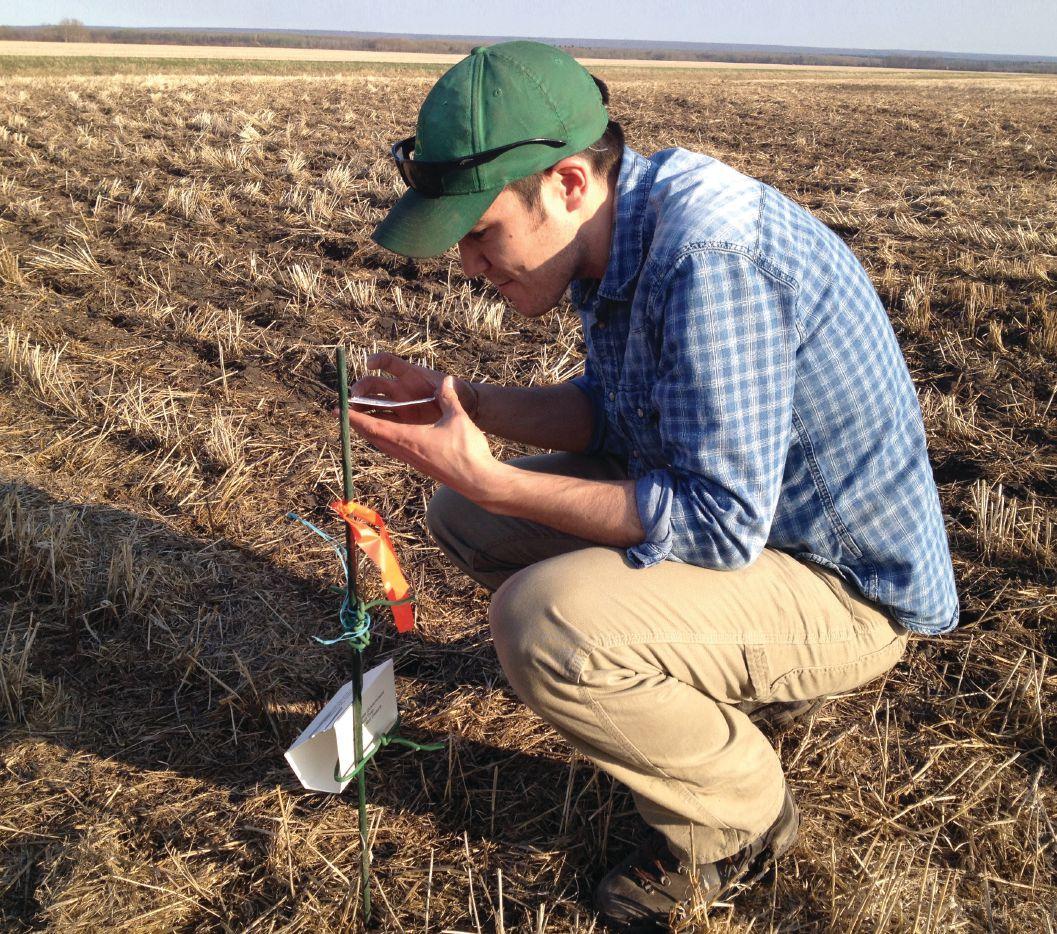
are yield losses. However, an unnecessary spray also has an associated cost, because it wasn’t required. Depending on the year and the cost of production, an estimated six to nine per cent yield loss is required to justify an insecticide application. However, an unnecessary application, depending on the rate of return, could end up cutting profits by 30 to 40 per cent. So fine-tuning the economic threshold and timing of application recommendations is very important.
Currently, the recommended canola rotation for managing swede midge (and other pests and diseases) is one in four years or longer. Seeding early is also recommended, although in areas where cabbage seedpod weevil can also be a problem, earlier seeding may not be feasible. Growers will need to determine which pest is more of a problem for their individual situation. In areas where swede midge is a problem,
areas of Saskatchewan near Carrot River and Nipawin,” says Boyd Mori, an entomology biologist with Agriculture and Agri-Food Canada (AAFC) in Saskatoon. “In a driving survey across Saskatchewan, we found swede midge everywhere we looked, but in very low density. There were very minor symptoms on canola crops, and not nearly enough to cause concern or economic damage. Even with the higher populations in northeastern Saskatchewan, we don’t believe the levels would be causing economic damage yet.” Driving surveys conducted in Alberta in 2016 resulted in similar findings.
The warmer winter in Saskatchewan followed by warmer spring conditions saw swede midge adults flying a few weeks earlier than in previous years. For now, researchers have confirmed two generations of swede midge on the Prairies, but data collected over the summer may show three
The yield impact on canola depends on midge population levels, timing of infestation relative to plant stage and timing of insecticide application.
avoid growing other crucifers either as cover or field crops in rotation or in nearby fields. Use of pheromone traps and regular monitoring is important for determining the timing and necessity of a spray application. As economic threshold recommendations are refined, this decision will be more straightforward for growers to make. Swede midge can even persist in areas with low canola acreage, so good management is key to keeping canola profitable in Ontario and other regions.
In Saskatchewan, swede midge was first observed in 2007 in small, scattered populations. Although recent monitoring efforts have confirmed swede midge across Western Canada, the populations are still very low and not yet causing economic impacts. “Swede midge populations in 2016 in emergence trap monitoring were higher than in previous years, particularly in northeastern
generations are possible under conditions like those in 2016. Warmer winters and wetter summers like those experienced last year are good conditions for swede midge, so populations could potentially keep increasing, meaning potential heavy damage in future years. Researchers are seeking funding to continue swede midge monitoring across the Prairies over the next few years.
Biological control options and other strategies
Researchers in Saskatchewan began looking at potential biological control in 2014 with the confirmation of two species of parasitoids in canola. Led by recently retired AAFC research scientist Julie Soroka and postdoc Lars Andreassan, these were the first parasitic wasps (Gastrancistrus sp. and Inostemma sp.) identified in Canada for potential control of swede midge. In Saskatchewan, parasitism
NEW SPECIES FOUND
Researchers have found a new insect damaging canola in northeastern Saskatchewan and east-central Alberta. The new species, a midge that (as of press time) had yet to be named and scientifically described, belongs to the genus Contarinia. It is similar in appearance to the swede midge (Contarinia nasturtii) commonly found in Ontario. Currently, the only
was noted in the field during the 2016 driving surveys. Another parasitic wasp of swede midge was recently found in Quebec.
In Ontario, researchers started looking for parasitoids last summer and did find fairly high rates of parasitism in some canola fields in southern areas of the province. “We did weekly sampling throughout the summer and found rates of four to 20 per cent parasitism over a six-week period at several different locations,” Hallett explains. “Species identification is tricky, so we are in the process of having these species identified by a specialist to determine if they are local species or not, but it is a good sign that natural enemies are beginning to show up against swede midge.”
Both Hallett and Mori applied for funding to look at biological control with these parasitoids in more depth.
Another area of research is a focus on host plant resistance and other possible sources of genetics that may help with plant breeding efforts. Hallett and others have assessed several different host plants, including cruciferous weeds and cover crops in Ontario that have resistance to swede midge damage. Mori has a four-year project underway to expand this work into the Prairies.
“The goal is to identify any resistance mechanisms in cruciferous weeds in the Prairies as well as older historical canola lines that swede midge may avoid and to determine why,” Mori adds. “We will be looking at potential early season and late season host plants when canola is not at the right growing stage to see if they have any resistant properties. If we can identify resistance mechanisms in any cruciferous weed plants, or canola lines, then this technology can be provided to breeders for new canola lines under development.” The project is in early stages, with seed and plant collections initiated in 2016; laboratory bioassays began in the winter. Researchers continue to work towards identifying strategies to help growers and industry manage swede midge in canola across Canada.
confirmed symptom of damage by this insect is the “bottle”shaped galled flowers that form as a result of larval feeding inside flowers. Damaged flowers do not produce pods or seeds.
TopCropManagerwill provide an update on this new species when more information is available.
Holding up traffic is out of sight. Holding up traffic is out of sight.
cropscience.bayer.ca or 1 888-283-6847 or contact your Bayer representative. @Bayer4CropsCA Always read and follow label directions. Stratego® is a registered trademark of the Bayer Group.
Get ready to cause even more gridlock out there. Trust Stratego® PRO fungicide to drive up the quality and yield of your winter wheat, spring cereals, soybeans and corn. While you may not end up too popular on the road, you can count on protecting against devastating diseases including rust, Septoria and white mould… and harvest healthier, higher-yielding crops. Learn more at cropscience.bayer.ca/StrategoPRO More than the best products. Great rewards. Ask your retail about our program.