TOP CROP MANAGER
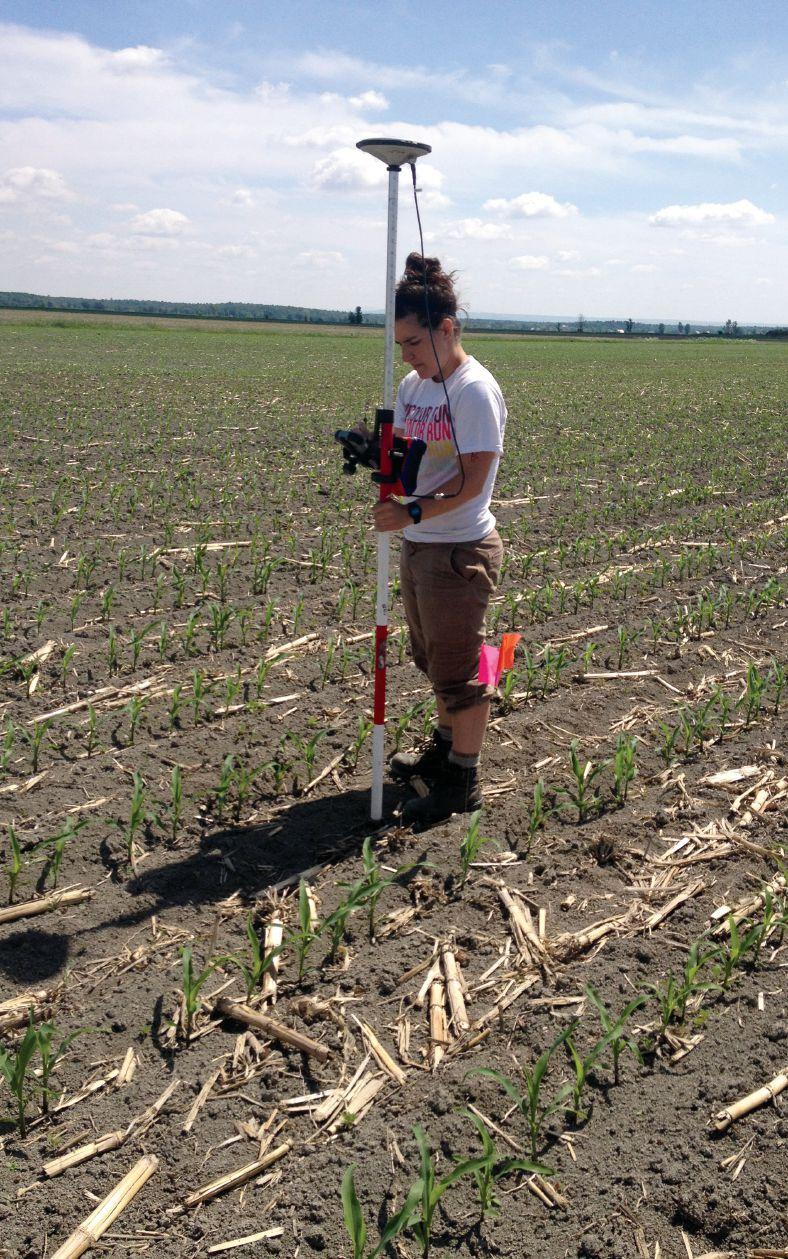
NEW TOOLS FOR N RATES
Helping corn growers save money
PG. 20
ESTABLISHING A WINDBREAK THAT
WORKS
Impressive agronomic and yield benefits
PG. 16
MAXIMIZING SOYBEAN YIELDS
Patience is a virtue when growing soybeans
PG. 28
Helping corn growers save money
PG. 20
WORKS
Impressive agronomic and yield benefits
PG. 16
Patience is a virtue when growing soybeans
PG. 28
For higher yield potential and better returns, order your seed pre-treated with Optimize® inoculant today.
The LCO technology in Optimize helps your soybean crop by enhancing nutritional capabilities. Benefit from improved nodule formation, increased nitrogen fixation and enhanced root and shoot growth for better plant performance.
Get the most from your soybean crop with Optimize.
See your local retailer or visit www.OptimizeLCO.ca.
5 | Predicting sidedress nitrogen rates
Tips to help improve estimates of corn’s nitrogen fertilizer needs. by Carolyn King 20 | Improving nitrogen fertilizer recommendations a new web-based decision-support tool for corn growers is coming soon. By Carolyn King
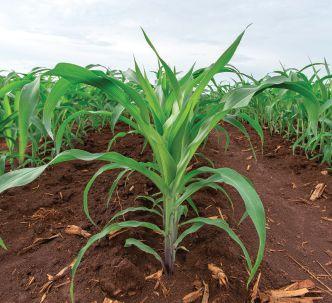
30 | Additional benefits of neonics Thiamethoxam has been found to assist corn seedlings with stress. by Treena Hein
Amy Petherick
Donna Fleury
Madeleine Baerg
Trudy Kelly Forsythe

LIANNE APPLEBY | ASSOCIATE EDITOR
The Twitter hashtag #farm365 has created somewhat of a buzz in the industry recently. originally conceived by young, progressive ontario dairy and cash crop farmer, andrew Campbell, as he tweets a photo a day for a year, the hashtag is a way to tell the story of typical farm life and help to inform the masses.
But the hashtag has fallen under attack by animal rights activists.
These few radicals quickly seized the opportunity to try and begin a public bashing of livestock agriculture, by trying to hijack what was begun with good intentions.
Yet, despite cynics, Campbell pushes on with his commitment. He’s one farmer valiantly trying to do his part to make agriculture more transparent to those who want to know, driven by a sense of wanting to help the industry on a grander scale. nonetheless, on a grander scale, there is more quietly going on behind the scenes in agriculture – to make agriculture better – than critics probably realize.
Quickly, off the top of my head, I can think of nine agriculture task forces, committees and coalitions across Canada that have been created to address a specific issue in the sector. each one has identified a concern or inequality – from environmental protection and farm stewardship, to proper compensation for products, to animal health, to trade issues – and is working to put it right.
and now, there’s one more.
The word neonicotinoid (or “neonic” for short) has also become a buzzword of late, as mainstream media caught wind of the uproar over the ontario government’s pledge to reduce neonic seed treatment on corn and soybeans by 80 per cent. Farm groups argue the commitment represents a “departure from science-based decision-making,” and a “lack of defendable evidence” which could put crop farmers at a “serious competitive disadvantage, both domestically and internationally.”
agriculture doesn’t deny there is a problem – but there does need to be a reasonable, achievable solution that works for all. Farmers realize pollinators are important to their livelihood, and are ready to sit down and talk about what can be done – from the pollinators’ perspective, not just their own.
as part of the Bee Health roundtable, the national Bee Health action plan is a formalized effort to address factors impacting bee health in Canada. particular priority will be placed on Varroa mite control and reduction of pesticide exposure in and outside the hive. The roundtable will also investigate solutions in such fields as bee care and nutrition, pests and pathogens, environment and foraging surroundings, and growing agricultural needs.
In a true sense of collaboration, partners in the initiative include federal and provincial government departments and a promising cross-section of agricultural interest groups. These include the Canadian Honey Council, the Canadian association of professional apiculturists, grain growers of Canada, the Canadian Seed Trade association, la Fédération des producteurs de cultures commerciales du Québec, grain Farmers of ontario, CropLife Canada, the Canadian Seed growers association and the Canola Council of Canada. That is an impressive group to have sitting around one table. establishing policy is never an easy thing, but agriculture consistently shows that it is ready to be a part of any discussion. Whether it is one farmer Tweeting a picture a day to tell a story, or a coalition of groups working to address an issue, the industry is committed to continuous improvement. and not even the naysayers can deny that.


mfredericks@annexweb.com
MAIL AGREEMENT #40065710 RETuRN uNDELIVERABLE CANADIAN
TO CIRCuLATION DEPT. P.O. Box 530, Simcoe, ON N3Y 4N5 email: subscribe@topcropmanager.com
Printed in Canada ISSN 1717-452X
CIRCuLATION email: subscribe@topcropmanager.com Tel.: 866.790.6070 ext. 202 Fax: 877.624.1940 Mail: P.O. Box 530, Simcoe, ON N3Y 4N5
SuBSCRIPTION RATES
Top Crop Manager West - 9 issues - February, March, Mid-March, April, June, September, October, November and December - 1 Year - $45.00 Cdn. plus tax
Top Crop Manager East - 7 issuesFebruary, March, April, September, October, November and December - 1 Year - $45.00 Cdn. plus tax
Potatoes in Canada - 2 issues - Spring and Summer 1 Year - $16 CDN plus tax
All of the above - $80.00 Cdn. plus tax
Occasionally, Top Crop Manager will mail information on behalf of industryrelated groups whose products and services we believe may be of interest to you. If you prefer not to receive this information, please contact our circulation department in any of the four ways listed above. No part of the editorial content of this publication may be reprinted without the publisher’s written permission © 2015 Annex Publishing & Printing Inc. All rights reserved. Opinions expressed in this magazine are not necessarily those of the editor or the publisher. No liability is assumed for errors or omissions.
All advertising is subject to the publisher’s approval. Such approval does not imply any endorsement of the products or services advertised. Publisher reserves the right to refuse advertising that does not meet the standards of the publication. topcropmanager.com
by Carolyn King
Applying some nitrogen (n) to your corn crop at planting time and some as a sidedress at about the six-leaf stage often makes more economic sense than a single application at planting. That’s especially true if the later application allows a more accurate estimate of how much nitrogen to apply.
“The principal advantage of applying nitrogen at sidedressing time is being able to have a better look at the situation to help you in deciding whether to apply the average sidedress rate – or less, or more – depending on what the crop’s yield potential looks like and what the weather has done from april to the first part of June,” greg Stewart, corn industry program lead with the ontario Ministry of agriculture, Food and rural affairs (oMaFra), says.
“If you have to decide in april how much nitrogen to apply in a one-shot preplant deal, you really have only one option. That is to use a historical calculator, like the ontario Corn nitrogen Calculator. With that calculator, you describe your field, where it is, what the previous crop was, what you think the current crop will yield, etc. Then the calculator provides a nitrogen recommendation based on how much nitrogen a field like that has needed historically. on average that prediction will be pretty close.”
But in years when the weather is distinctly different from the average, ontario research indicates it is better to assess a crop’s n needs at sidedressing time. “For instance, in a cool, wet year like 2011, we needed significantly more nitrogen, and we really couldn’t have made that decision until June 10,” Stewart notes. “In 2012, we were in our T-shirts at March break, april was hot, and rainfall was less than average, so the weather would have dictated that we needed less sidedress nitrogen. Then there are years like 2013 or 2014 where perhaps you don’t change the nitrogen rate that you would have applied in april because the weather is sort of average.”
The other key advantage of sidedress applications is there’s a lower risk of n loss. a corn crop’s maximum n uptake occurs between about the V9 stage and just before tasselling, so n applied at around V6 isn’t at risk for as long a period as n applied at planting.
“If you apply all your nitrogen fertilizer in april, you are putting more of it at risk,” Stewart says. “It converts to nitrate, and nitrate can leach out of the soil because it is soluble. [The amount of leaching will be higher when rainfall amounts are higher and when soils are sandier.] nitrate can also denitrify [become lost as a gas] if it is sitting in saturated conditions, so sidedress nitrogen also makes sense for
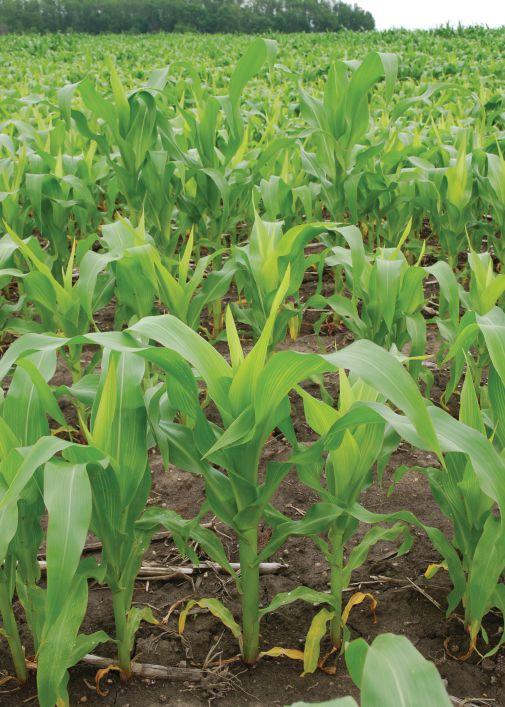
Pre-sidedress N tests can be a fairly good predictor of a corn crop’s N fertilizer needs.
growers with heavier, poorer drained soils.” of course, n requirements not only vary over time, they also vary across a field as characteristics like soil texture vary. So another aspect of improving estimates of sidedress n rates is to evaluate the crop’s n needs in ways that take in-field variability into account.
soil nitrate tests, rainfall data and sensors
Stewart explains that you can look in several places for clues as to how much sidedress n your corn crop needs.
one place to look at is the soil’s nitrate levels. Stewart and Ian McDonald, applied research coordinator for field crops with oMaFra, have conducted various studies that show pre-sidedress n tests (pSnT) are a fairly good predictor of the crop’s n needs.
This test measures the amount of nitrate-nitrogen, in parts per million (ppm), in a soil sample. oMaFra recommends pSnT soil samples should be collected when the corn is six to 12 inches tall and should be taken to a soil depth of 12 inches.
Stewart and his colleagues are currently working on some strategies to make pSnT a better n rate predictor. For example, they recently recalibrated oMaFra’s sidedress n rate recommendations. previously, these recommendations were based solely on the pSnT results. So the researchers have gone back into the original dataset, added more data and revised the approach so the rate recommendations now take into account both the pSnT results and the field’s expected corn yield.
For accurate results, soil needs to be drained out, not freshly-rained-on
“Together, the soil nitrate test and the yield expectation give you a better estimate of how much nitrogen you need,” Stewart says, adding the recalibrated recommendations will soon be available at goCorn.net.
an additional possibility is to collect the pSnT soil samples based on yield maps, sampling the high-, medium- and low-yielding areas separately, so the pSnT results would be specific to each of those areas.
Stewart will also be talking to growers about ways to improve pSnT sampling procedures. For example, he advises growers to avoid collecting the samples in soggy weather. “If it rains all weekend, it is not a good time to take soil nitrate samples because those damp soils seem to respond inaccurately in the soil nitrate testing process. For accurate results, soil needs to be drained out, not freshly-rained-on.”
Stewart and his colleagues will also be investigating whether there are benefits from collecting more than one nitrate sample before sidedressing.
another place to look for clues to help in predicting sidedress n rates is the local weather. “For instance, if the rainfall has been way above average from april 10 to June 10, and the corn crop looks pretty good, then you probably need more nitrogen. If rainfall has been 75 per cent of normal and the corn crop looks pretty good, then you probably are in better shape and need less nitrogen,” Stewart says.
He would also like to see growers improve their rainfall data. “If you have accurate soil nitrate data and rainfall records, and then you add in the soil type, maybe you can start to draw a pretty nice picture of the crop’s nitrogen needs. For instance, if you know you’ve had a lot of rain, and the soil nitrate tests seem low, particularly low on your clay soils, then you could decide to put more nitrogen on the clay areas.”
a further place to look for guidance in estimating n rates is at the crop. In various studies, Stewart and his colleagues have been evaluating plant sensors like the greenSeeker technology for determining in-crop n needs. In the coming months, Stewart will be analyzing the results from their 2014 greenSeeker work.
“The greenSeeker probably can do a decent job of determining this part of the field needs more nitrogen and that part needs less, but where in the spectrum between 50 pounds and 200 pounds should that ‘more’ and that ‘less’ be? That’s our challenge: finding the proper calibration for the greenSeeker or other sensors.”
optical sensors like greenSeeker do not directly detect a crop’s n
needs. They emit specific wavelengths of light onto the crop canopy, and the canopy reflects some of that light back to the sensors. The sensors determine the difference between the emitted and reflected light. They are able to detect how much biomass the crop has produced, which allows an estimate of the crop’s yield potential and how responsive it might be to n
one advantage of sensors like greenSeeker, CropSpec and optrx is they can be used for on-the-go variable rate n applications. The sensors are attached in front of the fertilizer applicator unit and are integrated with the application system. Most of these sensors require an n-rich strip as a standard for comparison with the rest of the field. If the sensor readings in another part of the field are close to the readings in the n-rich area, then the fertilizer system doesn’t apply any n to that part of the field. If readings are quite different, then the system uses a formula to calculate what n rate to apply. The formula, or “algorithm,” varies depending on such factors as the climate, tillage practice, soil texture, crop type, crop growth stage and sensor type. researchers in various parts of north america have developed algorithms for their own regions.
Stewart and his colleagues have also started to explore the use of in-field soil sensors, like Soiloptix. This particular sensor is able to map a wide range of soil characteristics, but it needs to be calibrated for local conditions.
“This tool can estimate soil moisture-holding capacity, soil texture, organic matter and many other characteristics based on scanning the soil. So the idea is that you could perhaps divide a field up into zones that would make sense to be managed differently in terms of nitrogen,” Stewart explains. “and possibly you could combine that map with some of the other technologies. For instance, you might do your soil nitrate sampling based on the Soiloptix management zones to get more meaningful results from the soil nitrate tests.”
He adds, “You could argue that yield maps, or soil organic matter maps or other maps might capture those management zones, too. We’re looking at the research to see whether something like Soiloptix might do a better job of dividing a field up into management zones and so give better direction on how to manage nitrogen within those zones.”
For corn growers who want to aim for more accurate sidedress n rates, Stewart suggests the following steps.
“Step one, I would open the ontario Corn nitrogen Calculator [on goCorn.net], and describe the current situation: my field’s soil texture, previous crop, expected yield, the current cost for nitrogen, the expected price for corn and so on. The calculator will tell me that, historically, research suggests this field needs X amount of nitrogen. So that gives me a benchmark of about what the range should be.”
Step two is to apply some portion of the total n application at or near seeding time. “To keep this example simple, I’ll say I’m going to put down 30 pounds of nitrogen per acre through my planter.” Thirty pounds should be enough n to take the corn crop up to sidedressing time.
“Step three, I am going to use the new and improved soil nitrate test to evaluate how much nitrogen I should put down as my sidedress rate. and I’m going to do the nitrate sampling based on some sort of map – maybe a yield map, or an aerial image, or a topographic map – that helps identify areas with about the same yield potential.”
Step four is to input that map with the n recommendations into a variable rate n application system and apply the fertilizer as a variable rate sidedress.



by Dr. Tom Bruulsema
According to Canada’s provision Coalition, today’s sustainability-conscious consumers want to know the whole story – cradle to grave – behind their food purchases. How can nutrient stewardship – the responsible management of crop nutrition – be communicated in a manner that builds the public’s trust?
Nutrient management plans
nutrition management plans that track the source, rate, time and place of every nutrient application help crop producers and their advisers as they seek to improve the sustainability of their crop nutrition management. They are inadequate, however, for communication to all the stakeholders of the agricultural system, since they do not condense and interpret the vast volume of information they generate.
For crop producers to be recognized as contributing to sustainability, their management plans need to fit into sustainability reporting systems that address the key questions being raised. Such reporting needs to distill the detail of nutrient management plans into simple reportable metrics that are meaningful to the people who use the products of the farming system and breathe the air it impacts.
a plan considers all four Rs Sustainable crop nutrition demands use of the “right” combination of source, rate, time and place for each nutrient application. The right combination is the one that makes progress on three key areas controlled by management of crop nutrition: supporting productive crops, keeping soils fertile and improving nutrient use efficiency. Fertilizer source, timing and placement can dramatically impact air and water quality even in situations where their effect on nutrient use efficiency is small. all key areas need to be reflected in the metrics that are chosen.
In many regions, excellent software tools have been developed for such plans. In general, they track the source, rate, time and place of all nutrient applications made on the farm. The plans, supported by software, have become useful for education, management and record keeping. Yet relatively few growers, particularly among cash crop operations, have adopted them. also, even where they have been adopted, they are not always referred to or followed.
To gain greater adoption of nutrient management planning, what needs to change? The 4r nutrient Stewardship framework offers up some ideas. a 4r plan has a purpose that benefits the farm. The plan is part of a strategy to highlight the farm’s progress toward
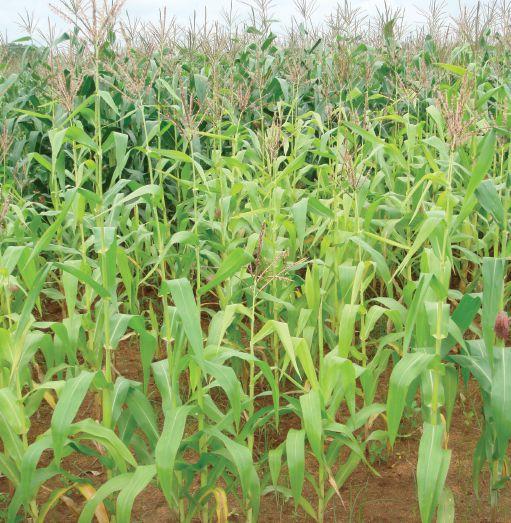
enhanced sustainability. It reports on metrics of key importance, related to the farm’s sustainability goals. The goals relate to economic, environmental and social impacts of the operation, the key current concerns of the farm’s regional stakeholders. reporting these metrics to an aggregator for the industry supports a communications program that can contribute to building public trust and improving the business climate for farming.
efforts are currently underway to raise the profile of 4r nutrient Stewardship. These efforts across north america include gaining the support of many stakeholder organizations including industry, government, research, extension and environmental groups.
Whether you are a crop producer or a crop adviser, now is the time to become familiar with the benefits and requirements associated with 4r nutrient Stewardship planning.
Dr. Tom Bruulsema is director, Northeast, International Plant Nutrition Institute (IPNI). Reprinted with permission from IPNI plant nutrition Today, Winter 2014/15, No. 1.


Phosphorus control remains key to repairing Lake Erie.
by amy petherick
Farmers have long been regarded as stewards of the land. although that opinion may be less popular in recent times, researchers at the University of Waterloo (U of W) are proving that restoring Lake erie absolutely requires agriculture’s help.
phosphorus (p) is feeding Lake erie’s problematic algal blooms, and one of the many ways it’s getting to the lake is from field runoff. Merrin Macrae is an associate professor at the U of W who is particularly interested in surface-water chemistry research. Together with Chris Van esbroeck, a student who recently earned a Master of Science degree under her supervision, Macrae recently concluded a monitoring study that attempts to identify where all the water in the lake is really coming from and, as a farm boy, Van esbroeck is particularly interested in seasonal patterns of p exports from reducedtillage farming.
“Hydrology is a big part of what’s driving phosphorus losses,” Macrae says. “When water’s on the move, phosphorus is on the move.”
as many farmers would likely have expected, Macrae says the majority of the field runoff they’re interested in happens between october and april. Those who remember the heavy spring rains in 2011 might not be surprised to recall the largest algal bloom in Lake erie’s history occurred during the very warm summer that followed. That particular disaster inspired the establishment of the Lake erie ecosystem priority (Leep) in 2012 and their research soon identified that non-point sources are a big part of the problem. In fact they discovered more than 50 per cent of incoming loads are from nonpoint sources and they also pinpointed which watershed systems are delivering the most p
“Certainly there is a lot coming into the lake from the U.S.,” Macrae says, “but it’s important to realize ontario also has a contribution and it’s an appreciable contribution.”
one cause for concern behind non-point loads may be higher concentrations of p in soils. Macrae says the best estimate of just how much is coming in from ontario cropland amounts to roughly 10 per cent of all non-point source loads or 0.33 kg per hectare of total p annually, when the estimated tributary loads are averaged across all of the cropland contributing to runoff. But most researchers agree monitoring has been poorly conducted in ontario, offering Macrae and Van esbroeck the opportunity to undertake their current monitoring study.
Monitoring observations
although dissolved reactive phosphorus (Drp) is the soluble form of p they monitor, Macrae says they also monitor total p, which

includes many types and forms of p, namely the particulate or sediment-related form. although researchers have established the total amount of p reaching the lake is not really increasing, concentrations close to shorelines are. The culprits behind this development are zebra and quagga mussels, which consume particulate p and excrete the Drp that algae populations love.
“We know these mussels are a complicating factor,” Macrae admits, “but they are not the ones that put the phosphorus in the lake, they are just making that lake more sensitive.”
Since they began monitoring the edge of fields at two sites in the Maitland and Thames watersheds, between May 2012 and april 2013, Van esbroeck says the Maitland site demonstrated that although tile sources contributed 78 per cent of total runoff, surface runoff contained 81 per cent of the 0.096 kg of Drp lost per hectare and an equal amount of total p. The Thames site was a very similar story – just less pronounced – allowing them to conclude surface runoff is a very important pathway for annual p loss.
“The majority of all reactive phosphorus is coming from overland flow, even though overland flow really only accounted for
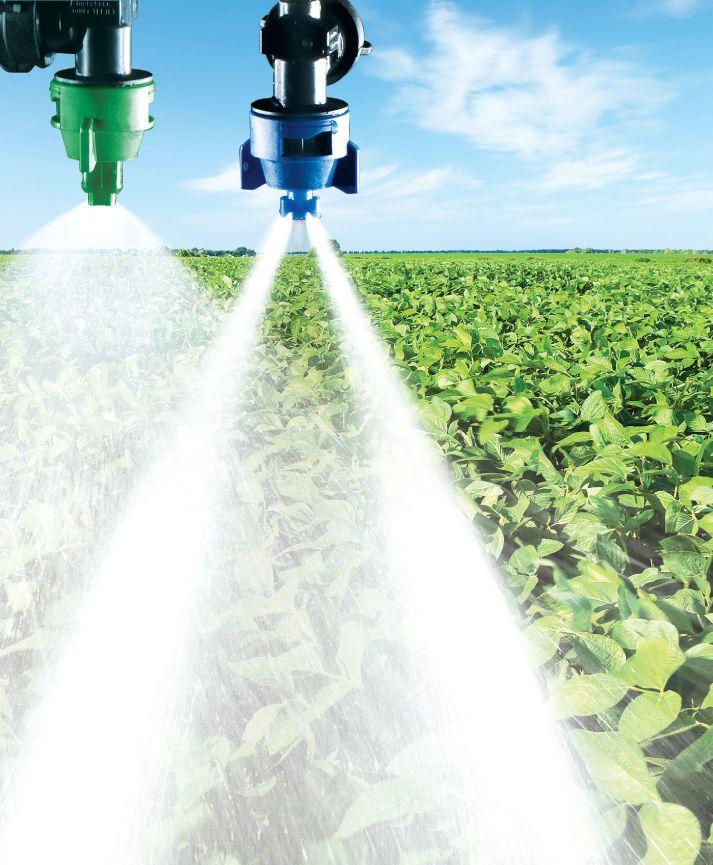
15 per cent of runoff,” Van esbroeck says. “Because such a small amount of surface runoff contributes so much to reactive and total phosphorus, any steps you can make to improve soil structure and infiltration will produce a better situation.”
“With clay, we have more of that tendency to swell and shrink, forming cracks in the soil and that provides a direct conduit for surface water to get into our tile,” he theorizes. “If you’re doing straight no-till and you’re not incorporating fertilizer, you end up with two centimetres of soil that are actually quite stratified.” at their sites, levels of p in the top six inches were not excessive, but the phosphorus that was there was concentrated near the surface due to the tillage systems in place. With only one year of data from essex, he says there are too many moving pieces to identify the cause of the differences in their observations. But they can say with more certainty when runoff is occurring. Van esbroeck says they observed large losses of p in fall runoff events that occurred after fertilizer was applied in october at their sites. This is why he says p applications made in the fall are a concern.
“If you’re applying fertilizer in the fall, you lay it down on the surface, and you’re a lot more likely to have it leave than if you apply it preplant in the spring and you incorporate it,” he says.
solutions with potential as a result of their observations, both Van esbroeck and Macrae are able to offer farmers lake-friendly fertilizer management recommendations. First of all, Macrae says, soil test before you apply p if you’re farming land that drains into Lake erie, and be sure you know what you have. If your soil is already testing high
for p, then aim for more moderate levels. Cover crops can help with this, and she also recommends them for erosion protection. Because the non-growing season is so critical, simply increasing crop diversity with cover crops, winter wheat and forages helps to hold more total p back from waterways. Macrae says it’s all about making it more difficult for water to get off the field.
“a small loss can have a big impact downstream,” she explains. “anything you can do is going to improve the situation.”
Where water flow is particularly concentrated, she urges farmers to add strips, buffers, or even Water and Sediment Control Basins (WaSCoBs). Macrae says she’d also like to see farmers apply fertilizer that contains p in the spring, not the fall, and follow that with some form of incorporation. She believes banding it within two inches of seed placement could prove to be the ultimate solution, but admits she’s no expert on the agronomic or economic implications farmers would face in making such a change.
For more on fertility and nutrients, visit www.topcropmanager.com

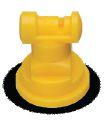
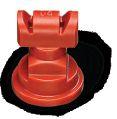
TeeJet tips: precise herbicide application to wipe out weeds & boost yields.


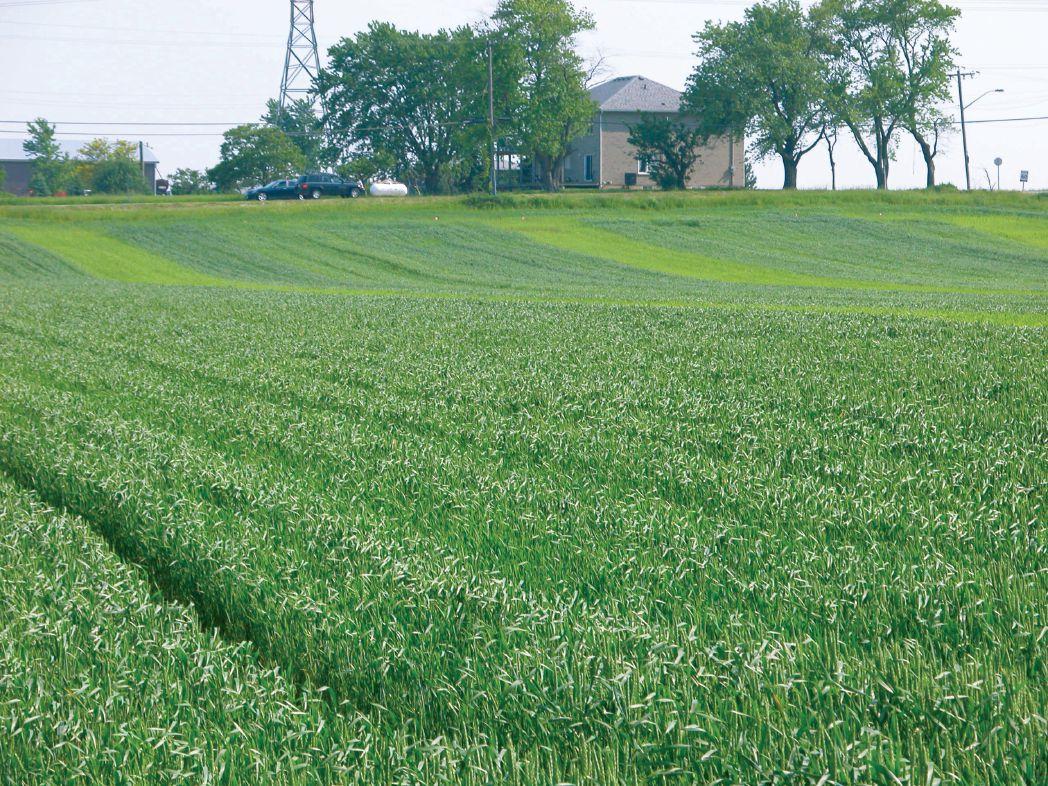
New agronomy guide contains updated N recommendations and a nitrogen-rate calculator.
by Trudy Kelly Forsythe
Current winter wheat nitrogen (n) recommendations in ontario are a little behind the times. Based on 30-yearold research, the recommendations do not take into account such considerations as the significant changes in production practices, the potential for increased yields through the use of better genetics and the availability of fungicides and growth regulators.
new research on n response conducted by the University of guelph (U of g) and the ontario Ministry of agriculture, Food and rural affairs (oMaFra) is changing that. and the work is helping to develop new tools for ontario farmers to use to help them maximize their winter wheat yields; namely a new agronomy guide with updated n recommendations and a n-rate calculator that will include selections with or without fungicide.
The first results being used for these tools come from field trials led by David Hooker, field crop agronomist and assistant professor with the department of plant agriculture at the U of g, on soft red winter wheat (Triticum aestivum L.) from 2008 to 2010.
Hooker and his team looked at interactions among three
fertilizer n rates, eight fungicide application strategies and various cultivars grown in nine fields across southwestern ontario.
They found that cultivar, n rate, fungicide strategy and interactions among n rate, fungicide and cultivar significantly affected wheat grain yield. The results indicated there is potential for farmers to increase wheat performance by increasing n and using fungicide application strategies, particularly in some cultivars and in high yielding environments that may be favourable to disease development.
Concurrent to Hooker’s small plot research, 52 field scale trials were conducted by oMaFra cereal specialist, peter Johnson, and Shane McClure, a research lead with the Middlesex Soil and Crop Improvement association. Doing field scale trials at the same time as intensive small plot work was a new approach, and proved to be a significant step forward in grower uptake. By the end of the three-
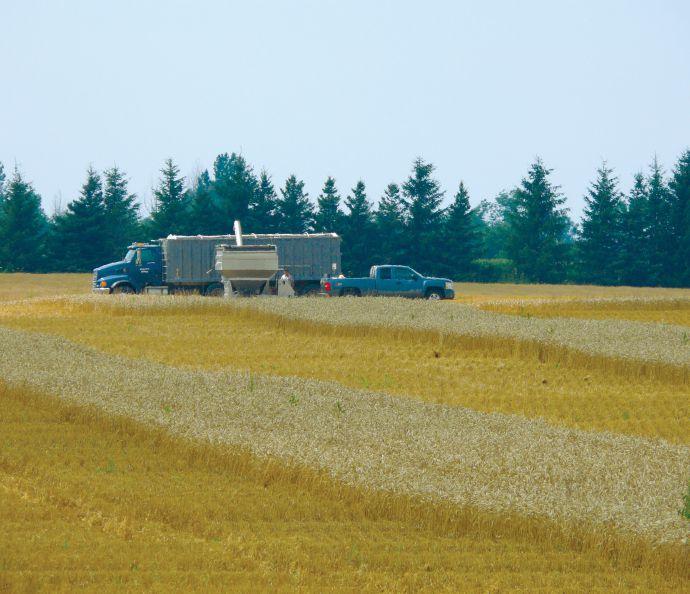
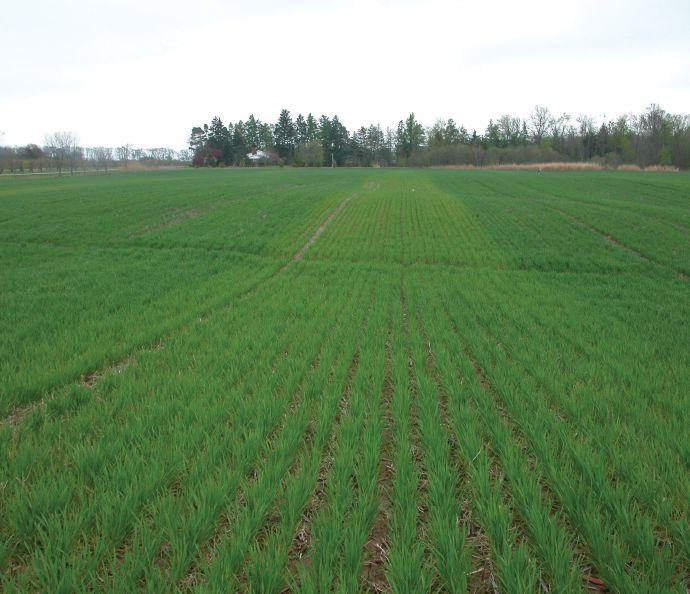
aBOVE: The response of the different nitrogen rate strips in fields during trial examining maximum rate of nitrogen applications on winter wheat.





Meet the team that’s tough on weeds. Guardian® herbicide delivers maximum knockdown and residual activity on hard-to-kill weeds like dandelion and annual sow thistle. And if you’re looking for increased protection, Guardian® Plus herbicide contains an additional mode-of-action designed to control Eastern black nightshade, and herbicide-resistant pigweeds, lamb’s-quarters and common ragweed. Get the protection you need to give your IP and GT soybeans a clean, weed-free start. Questions? For more information, please contact your retailer, call your local DuPont rep or the DuPontTM FarmCare® Support Centre at 1-800-667-3925 or visit guardian.dupont.ca or guardianplus.dupont.ca







year project, many producers had already adopted this new production technology.
Following up on these initial results, further trials by Johnson and McClure from 2010 to 2013 looked at the maximum rate of n applications on winter wheat under current management practices. During these trials, they applied n rates ranging from zero to 180 pounds per acre to generate n response curves and determine the maximum economic rate of n (Mer-n).
The only variable that changed at each site was the n rate. all other variables remained the same following the producer’s normal production practices. Serendipity prevailed: at seven of 35 sites the grower did not get their fungicide applied. This “mistake” led to some interesting findings.
Yields “hit the wall” when 90 pounds of n was applied. However, this was only the case at the sites where no fungicide had been applied.
“We started looking at the difference in response when fungicide was applied and, lo and behold, there was a significant difference,” Johnson says.
What these follow-up studies indicated was that without fungicide, 90 pounds per acre was most economical; but with fungicide, there was an additional 6.1 bushels of yield response at 120 pounds of n. By increasing to 150 pounds, they gained another 3.6 bushels, although this added only a small increase to the bottom line. In 58 per cent of the trials where fungicide was applied, 150 pounds of n per acre was the most profitable.
“That’s way above what I ever would have anticipated,” Johnson says. “Whether or not you spray fungicide is significant in n response.”
While they were at it, Johnson and McClure included additional treatments at some of the sites to evaluate the impact of fall n on wheat yield and economics. Johnson says the data is clear: there is no benefit to applying n on winter wheat in ontario in the fall.
“Most growers use a phosphorus fertilizer in fall that has four to 12 pounds of nitrogen in it,” he notes. “That is all the wheat plant can use in the fall. More than that is a potential environmental concern because the crop can’t use it, it’s there over the winter and might move off site. no fall nitrogen should be applied on wheat.”
Next steps
research continued to study n and fungicide interaction in 2014 and will continue for two more years to help with the development
of the n -rate calculator. Further research will examine the relationship of split n, growth regulators, planting dates, and new fungicides and their response to n rates.





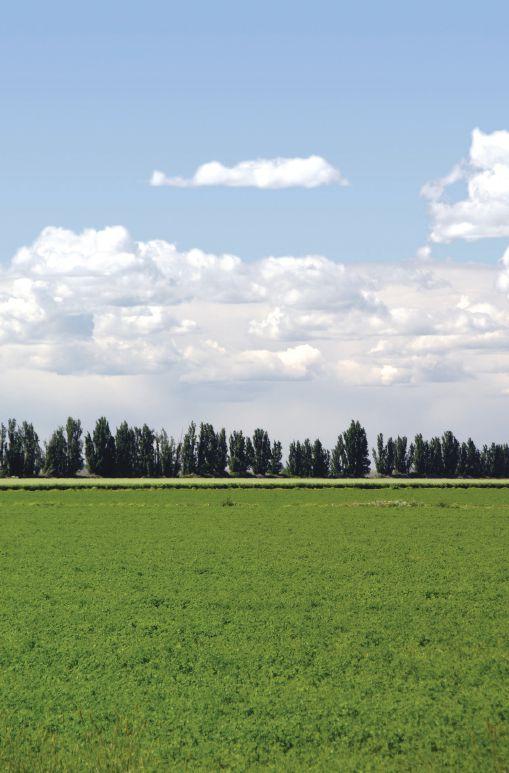
Sacrificing a small strip of land for a windbreak can offer impressive agronomic and yield benefits.
by Madeleine Baerg
With the ever-increasing price of land, it can be very tempting to try to maximize production by cropping every possible inch of one’s acreage. While a row of tall trees along the edge of a field is a nice visual break, many producers question whether the trees’ agricultural benefits justify pulling multiple metres of viable cropland out of production. The short answer is a resounding yes. In fact, a well-designed and managed windbreak is the ultimate proof that less (land in production) really can be more (yield and soil health).
“a lot of producers will look at a windbreak and only see the small strip of land that is out of production, the limited area that adds root competition to the crop. They don’t see that the windbreak produces yield increases far out into the field,” John e nright, a forester with the Upper Thames river Conservation authority, says. “You have to look at the big picture and the long term. In corn, we’re talking about a 10 per cent yield increase in the protected zone; in soybean the increase is 20 to 25 per cent. There’s no question the benefits far exceed the low cost of planting a windbreak and the small reduction in cropping space.”
a windbreak is a long, straight row of trees planted to limit the negative effects of harsh winds. By acting as a living wind fence that either allows, slows or forces horizontal wind currents upward, a windbreak’s crop yield benefits extend eight to 12 times the height of the trees on the leeward side and three to five times the height of the trees on the windward side. Therefore, a 30-foot tall windbreak will provide a zone of protection up to 360 feet in one direction and 150 feet in the other.
a windbreak’s crop yield benefits come from a combination of the improvements it makes to growing conditions. Wind protection means soil erosion decreases out as far as 15 times the height of the trees on the leeward side. Better snow distribution allows moisture to more evenly distribute and the land to warm earlier and more consistently in the spring, resulting in less runoff, better availability of water, earlier planting and a longer growing season. Decreased wind also allows better spray application and less drift. and, the trees that make up a windbreak suit beneficial wildlife: insect predation improves because the trees provide bird habitat, and pollination increases because lower wind speeds allow bees and other pollinating insects to work their magic.
a windbreak’s benefits are certainly not limited to the crop producer. a livestock producer will appreciate a windbreak’s improvements to noise, dust and odour control; their livestock’s
decreased stress in extremely cold or windy conditions; and lower heating costs in barns and homes.
It can also improve road safety by reducing blowing snow, enhance wildlife habitat by serving as a travel corridor, enrich recreational opportunities like cross country skiing, snowmobiling and walking, and boost property values.
For those who might say “yes, but…,” the negative side of the windbreak equation is almost non-existent. recognizing the multiple environmental benefits of windbreaks, conservation

Announcing an innovative partnership between Case IH and Precision Planting.® The technology that allows each Early Riser ® row unit to adapt to the distinct conditions of your field now comes to you in a distinctly different way. You can now get it installed, serviced and supported on the industry’s best planter right at an authorized Case IH/Precision Planting dealer. It helps you get more out of every planting season and improve the yield potential in every field. Learn more at your local Case IH dealer or online at caseih.com/planter.
BE READY.
Ave. 2 Locations 1980 and 1982, SOILS RCAT, R
authorities in many regions are willing to do much of the work of planting and early maintenance of windbreaks on both public and private land. and grants that cover as much as 70 per cent of the cost of planting a windbreak exist in many areas.
“We recognize spring is a very busy time of year for agricultural producers, so we do our best to make it very easy for them,” enright says. “In southern ontario, for example, our conservation authority does the planting and then two applications of herbicide following plant-
ing to control vegetation. We ask that the producer mow adjacent to the windbreak for the first couple of years until the trees are well enough established to compete. It is not a big commitment on the part of the producer.”
For best success, enright suggests planting a cover crop like spring barley or fall wheat under-seeded with white Dutch clover during a windbreak’s establishment period. Doing so helps to reduce weed pressure on the young seedlings, makes maintenance substantially easier
and helps with tree growth rates due to the nitrogen fixing nature of the clover. alternatively, producers seeking an even easier, herbicide-free system of weed management might opt for plastic mulch.
“at any of the sites where we’ve used plastic mulch, the success rates have been absolutely fantastic,” e nright says. “all things being equal, that’s the route I’d recommend.”
e stablishing a healthy and effective windbreak does take some time and energy, however. adequate planning, site

When storing and managing grain, look to a name you trust. Westeel supplies a full line of farm management products and accessories, all manufactured to the same industry leading standards our bins are famous for. Talk to your Westeel dealer today.
preparation and early management are critical to success. Talking to your municipal planner and neighbours to get their approval in advance, then thinking through geographic factors like the location of drainage tiles and necessary spacing for equipment movement will save huge headaches in the long run. Finally, expect to have to look after your windbreak for some years before it starts to look after you: sign the establishing windbreak well so snowmobilers and equipment operators do not accidentally damage young trees, be prepared to water in drought conditions, and plan to mow and apply herbicide for at least three years to limit weed pressure and nutrient and water competition.
There will always be those who pull out windbreaks because they don’t factor in all of the benefits
“[Is there] return on investment? There’s no question. But some people just don’t see it. There will always be those who pull out windbreaks because they don’t factor in all of the benefits. part of that, certainly, is just a lack of understanding. If people understood how beneficial windbreaks are, we’d see a lot more of them going in,” e nright says.
For more on crop management, visit www.topcropmanager.com
Know. Grow. www.topcropmanager.com
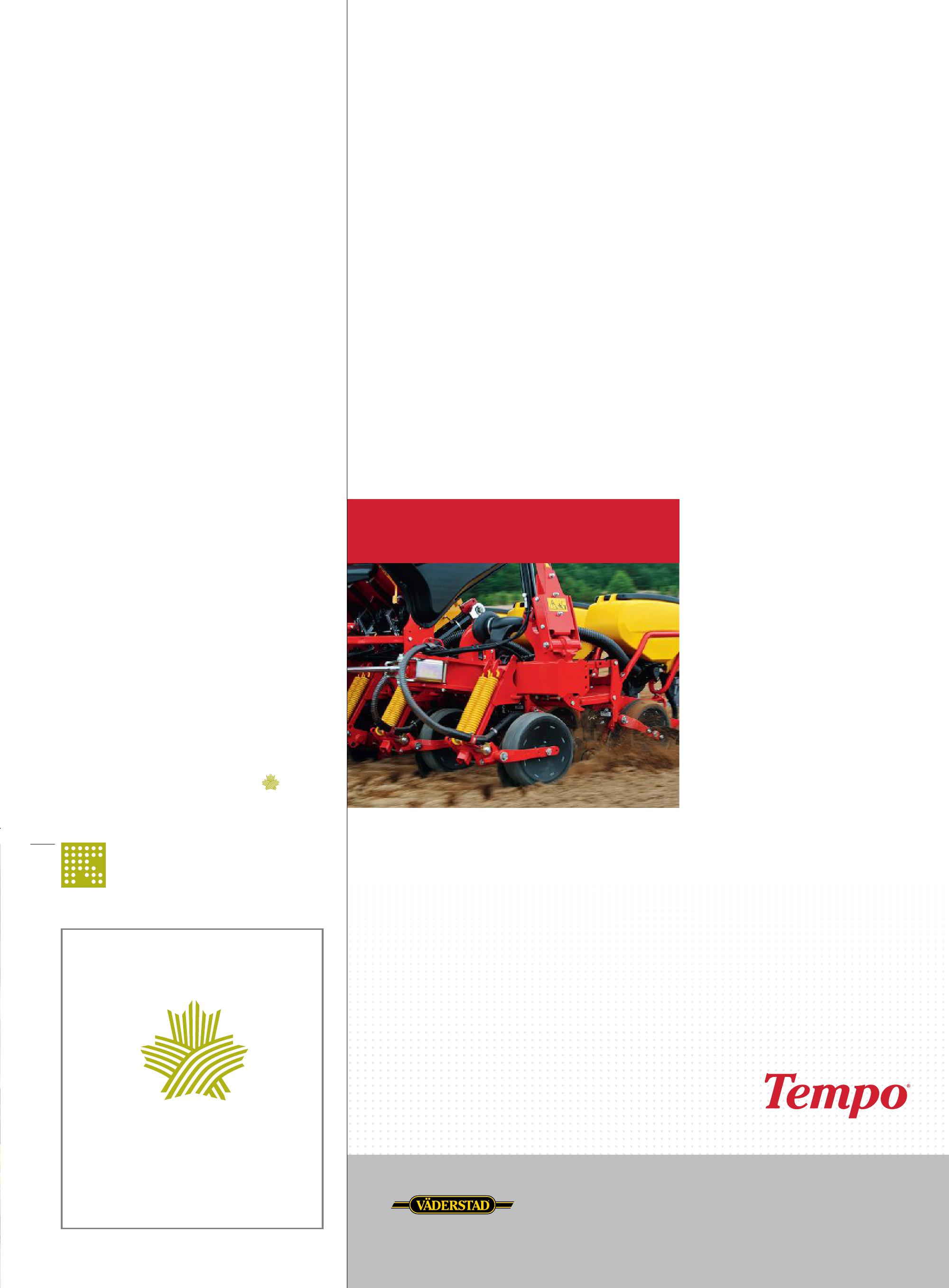
THE TEMPO HIGH SPEED PLANTER DELIVERS BOTH.
Until now, planters made you choose: you could be fast or precise, but not both. That’s frustrating when you’re faced with a short spring planting window.
The Tempo High Speed Planter changes that forever. Even at 10.5 mph, spacing and seed-to-soil contact are excellent. The result is faster, even crop emergence and a greater opportunity to reach maximum potential at harvest.
At 10.5 mph, our meter gives you precise placement of every seed. Driven by individual electric motors, each meter moves seed extremely quickly and accurately. The result is virtually no skips or doubles and the best chance for your crops to mature evenly and reach optimum yield.
The Tempo Planter doing what it does best: fast, precise seed placement.
Tempo’s setup, calibration and monitoring of seed delivery and placement are managed by the Tempo Planter E-Control, an innovative iPad-based wireless control system.
The E-Control comes loaded with an app featuring large, easy to use graphics to make all functions simple to monitor. Naturally, E-Control works seamlessly with your existing guidance system.
If it seems as though the window for planting gets shorter every year, you can be confident that a Tempo High Speed Planter will give you the opportunity to plant more acres in a day, during the short spring window of good conditions.
No matter how you look at it, the combination of speed and precision makes the Tempo High Speed Planter a true evolution in farm equipment.
See how fast and precise planting can be. For more information contact:
LARRY WIELER
Market Development Manager C 289.527.4697
A new web-based decision-support tool for corn growers is coming soon.
by Carolyn King
Finding that “just right” rate between too much nitrogen (n) fertilizer and too little isn’t simple. Fortunately a new tool is being developed to improve n rate recommendations for corn. Tests so far show using the tool could help growers save money by reducing their fertilizer inputs and achieve higher yields by adding more n when it is truly needed.
Many changing factors influence a crop’s n needs. “In most fields, about half the nitrogen the crop takes up comes from the soil. Soil organic matter breaks down and releases nitrogen that gets taken up by the crop and then recycled back to the soil. organic nitrogen breakdown varies with the weather, soil conditions, and the interaction between the soil conditions and the weather. So the supply changes from year to year and place to place,” Keith reid, a soil scientist with agriculture and agri-Food Canada (aaFC),” explains.
“In addition, the amount of nitrogen the crop needs varies from year to year and place to place because a crop that is growing well needs more nitrogen than a crop that isn’t doing as well.”
also, both the n released by soil organic matter and the n applied as fertilizer can be lost to the surrounding environment through leaching and gaseous losses, and those losses vary depending on such factors as the weather and soil characteristics.
“Further complicating the picture is some of the variation happens before we would normally apply nitrogen fertilizer and some happens after. So nitrogen rate predictions are never going to be 100 per cent accurate because we can’t account for the strange things the weather might do later in the growing season,” reid says. “So how do we integrate all of those things in that intricate dance, and zero in on what’s the right amount of nitrogen to apply?”
reid and nicolas Tremblay, a research scientist with aaFC, are working on answering that question through their project to develop a n fertilizer rate prediction tool. The initial version of the tool will provide n recommendations for corn. Down the road, the plan is to add other crops like wheat, potatoes and canola to the tool.
“The project’s overarching goals are to help farmers improve their bottom line by not applying more nitrogen than the crop needs and also not shorting the crop by applying too little
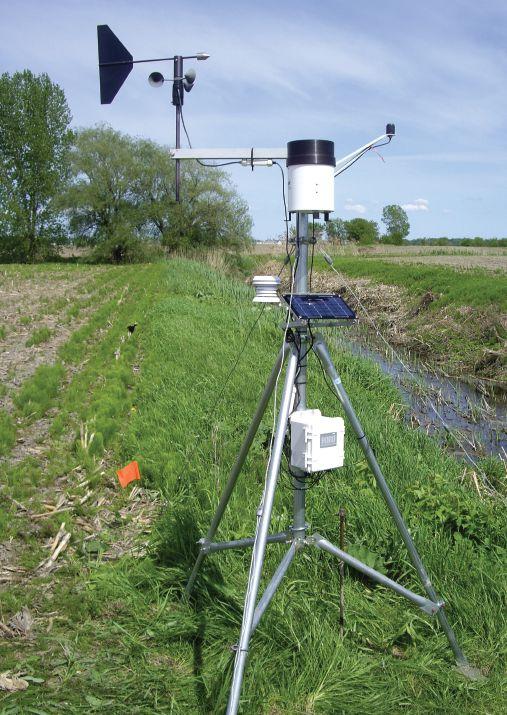
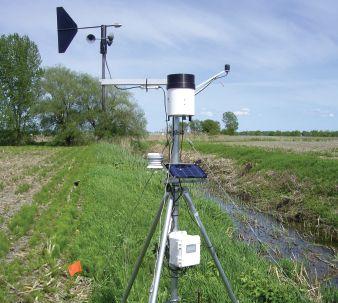
Nicolas Tremblay’s team uses complete weather stations to record seasonal characteristics, including rainfall amount and distribution over time, which are used in the equations to predict nitrogen rates.
nitrogen, and at the same time to reduce the environmental impacts of applying too much nitrogen,” reid notes.
“Using the tool should remove a lot of the uncertainty around what is the right amount of nitrogen to apply. That would mean growers would be less likely to apply ‘insurance’ rates of nitrogen. We know it is a pretty direct loss off your bottom line if you leave
20 or 30 bushels of yield in the field that you could have had if you had put on a little extra nitrogen. That is a powerful incentive to make sure you don’t short the crop,” he adds. “at the same, if growers routinely put on an extra 20 or 30 pounds of nitrogen ‘in case,’ that is an economic drain because it’s an expense they didn’t need to make. over enough acres and enough years, that adds up.”
reid explains if the crop didn’t need those extra 20 or 30 pounds, it represents about a pound-for-pound loss of n to the environment. nitrate leached into the groundwater is a concern for drinking water quality. There are also concerns nitrates in water harm some types of amphibians and other aquatic organisms. and n can be lost to the air as nitrous oxide, a greenhouse gas.
“agriculture is one of the sources of those nitrogen forms that get into the environment, and it is part of agriculture’s responsibility to try to minimize that,” reid says.
...if growers routinely put on an extra 20 or 30 pounds of nitrogen ‘in case,’ that is an economic drain...
Tremblay’s recent research studies have laid the scientific foundations for the tool. He notes, “We have conducted a suite of projects over about the last decade to sort out the critical factors involved in the selection of optimal nitrogen rates to be applied to a crop.” Through these studies, Tremblay and his research group have identified key factors including soil texture and rainfall, as well as other factors that also play a role. and they have quantified the complex, interacting effects of these factors on corn’s response to n reid explains the research work involves meta-analysis of data from many n response trials. “Instead of looking at the average results from the trials, we’re looking at the variations in the results to determine what is causing some sites to need more nitrogen and some sites to need less, to see how that is related to soil type, weather conditions, crop management,
previous crop and so on. along with that meta-analysis, we’re using some advanced soil and crop growth models to extend the information from the trial locations into other environments.”
He adds, “nicolas has done some really good work on developing an index of abundant and well-distributed rainfall – did you receive enough rainfall, not too much or too little, and how evenly was it distributed over the given time period? That parameter does a good job of encapsulating those two rainfall aspects
into a single factor.” This factor has helped to improve the accuracy of the equations to predict n needs.
as a result of all these studies, the researchers have been able to put together the most important decision rules into a model that could be used as a decisionsupport system to help growers select the n rate for their corn crop.
Tremblay’s research team tested the system in 2013 and 2014 at 18 fields

When you know your cost of production, you can make confident business decisions. AgExpert Analyst, combined with our AgExpert Mobile app, is designed for agriculture. Document historical prices, truly understand your expenses and know when to make your move. If improving profit matters to you, talk to us.
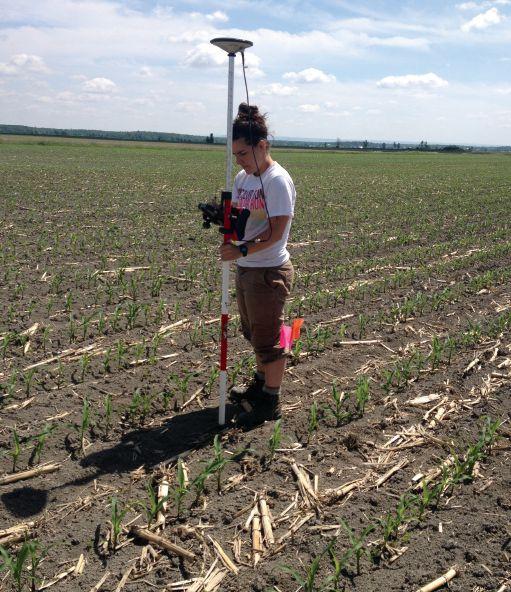
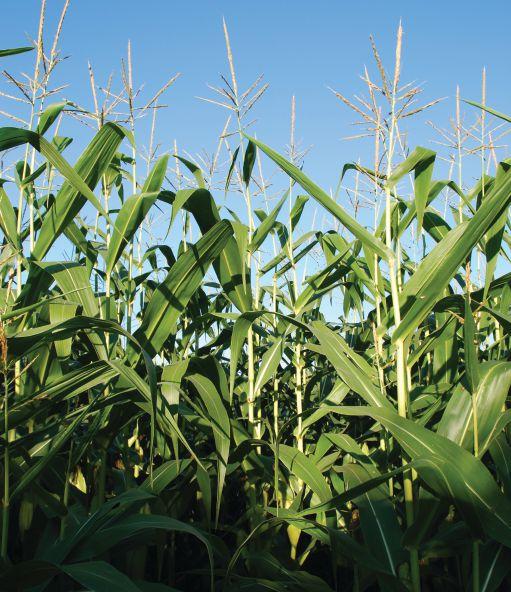
across the corn-growing region of Quebec. “o ur goal was to compare our model’s recommendations with what the grower was applying in his normal management,” Tremblay notes.
The results from these tests have been quite positive. “In 2013, on average, we had the same yield level as the grower but with 15 per cent less nitrogen applied,” he says. “and in 2014, we had an average profit of $42 per hectare. This profit was due either to a 24 per cent reduction in nitrogen fertilizer for the same yield as the grower’s, or to a five per cent yield increase with a 29-kilogram nitrogen supplement when [higher nitrogen rates were] required by our system.”
The researchers are now in the process of putting the decisionsupport system into a web-accessible tool for growers.
“The grower will be able to locate the field he wants to fertilize on a map on the Internet. Then, based on the gp S location defined, there will be information in the background on soil and rainfall that will be considered by the software to calculate the optimal nitrogen requirement of that particular field at that particular time,” Tremblay explains.
The grower will also need to input the field’s soil texture, along with other information such as the field’s previous crop, soil organic matter level and tillage system. The tool will use data from e nvironment Canada to determine rainfall the field recently received and the forecasted rainfall for the area.
reid thinks the tool will likely provide more accurate predictions if it is used to predict fertilizer rates for sidedressing or later applications, rather than applications around planting time. “The later the fertilizer application is delayed, the more of the weather variability we can take into account. But I hope the model has some value for preplant applications because a lot of growers [apply all of their n as a preplant application].”
reid is working on a way for the tool to provide recommendations that address in-field variability in n requirements, perhaps through the use of optical sensors, like g reenSeeker technology. “a lot of studies are being done using optical sensors to sense the variability across a field and to change nitrogen rates on the go, but those studies really haven’t linked with soil-based indicators or weather-based predictions,” he notes. “I’m looking at how we can actually integrate the information from the optical sensors in the field with what we know about the soils and the weather conditions, so we can go to that next level of precision in being able to account for both spatial and temporal variability.”
over the coming months, the researchers will continue to fine-tune the web platform for the tool and to further strengthen the model’s accuracy with new statistical analysis. aaFC is also working on an agreement with environment Canada so the webbased tool can access the necessary weather data.
Because the federal government doesn’t deliver tools directly to farmers, aa FC will be collaborating with other agencies to deliver the tool. Tremblay expects aa FC will eventually set up an agreement with a private company to make the tool available to users and to maintain and improve the tool in the years ahead. reid thinks provincial governments might also be interested in the tool; for example, o ntario might want to incorporate some of the tool’s equations into the o ntario Corn nitrogen Calculator.
The tool is expected to be ready for corn growers in 2016.
For more on precision farming, visit www.topcropmanager.com

IT STARTS BY PROTECTING WHAT’S IMPORTANT.
Resistant and hard-to-control weeds impact the way you farm, your yields, your bottom line. They impact your future.
Introducing Enlist™ — a new weed control system featuring Enlist Duo™ herbicide plus innovative traits that provide tolerance in Enlist corn and soybeans. It’s a highly effective solution to modern weed control challenges.
Only Enlist Duo herbicide, featuring Colex-D™ Technology, includes glyphosate and 2,4-D choline for exceptional performance on hard-to-control weeds plus two modes of action for superior resistance management.
It’s protection of what’s important – plus advanced flexibility, convenience and drift control.
To learn more, call the Solutions Centre at 1-800-667-3852. Dowagro.ca
by Donna Fleury
Herbicide resistant weeds are continuing to increase in number of species and area across Canada. glyphosate resistant weeds (group 9) are increasing their spread, as many growers rely on glyphosate for weed control in roundup ready soybean, corn and canola crops, and as a pre-seed or pre-harvest burndown.
according to peter Sikkema, a professor of field crop weed management at the University of guelph, ridgetown Campus, in ontario, glyphosate-resistant weeds are increasing both in terms the number of fields or counties infested and in the number of species resistant to glyphosate. “In December 2014, another glyphosateresistant weed was added to the list, bringing the total of glyphosateresistant weeds to four in ontario and five in Canada,” he says.
The main reason there are glyphosate-resistant weeds is overreliance or exclusive reliance on glyphosate for weed control by some producers. For glyphosate resistance to develop, there must be resistant biotypes in the field and there must be selection pressure, which is almost directly correlated with how frequently glyphosate was applied. Therefore, it is important to implement weed management practices
that limit the selection of additional glyphosate-resistant weeds.
In 2008, giant ragweed (Ambrosia trifida) was the first glyphosateresistant weed confirmed in ontario, followed by Canada fleabane (Conyza Canadensis) in 2010, common ragweed (Ambrosia artemisiifolia) in 2011 and most recently, waterhemp (Amaranthus tuberculatus) in 2014. In Western Canada, glyphosate-resistant kochia (Kochia scoparia) was first confirmed in 2012. In the U.S., there are 14 species resistant to glyphosate and 31 species worldwide. The complexity of the problem in ontario is exacerbated by the fact there are biotypes of all four species that have multiple resistance to both the group 2 and group 9 herbicides.
“Farmers have told us by their purchasing decisions that they like the roundup ready technology and the corresponding use of glyphosate for weed control,” Sikkema says. “In 2014 in ontario, 96 per cent of corn and 76 per cent of soybeans were seeded to roundup ready hybrids/ cultivars. Therefore, it is incumbent on all of us to use this technology properly so that future farmers continue to realize those benefits.”
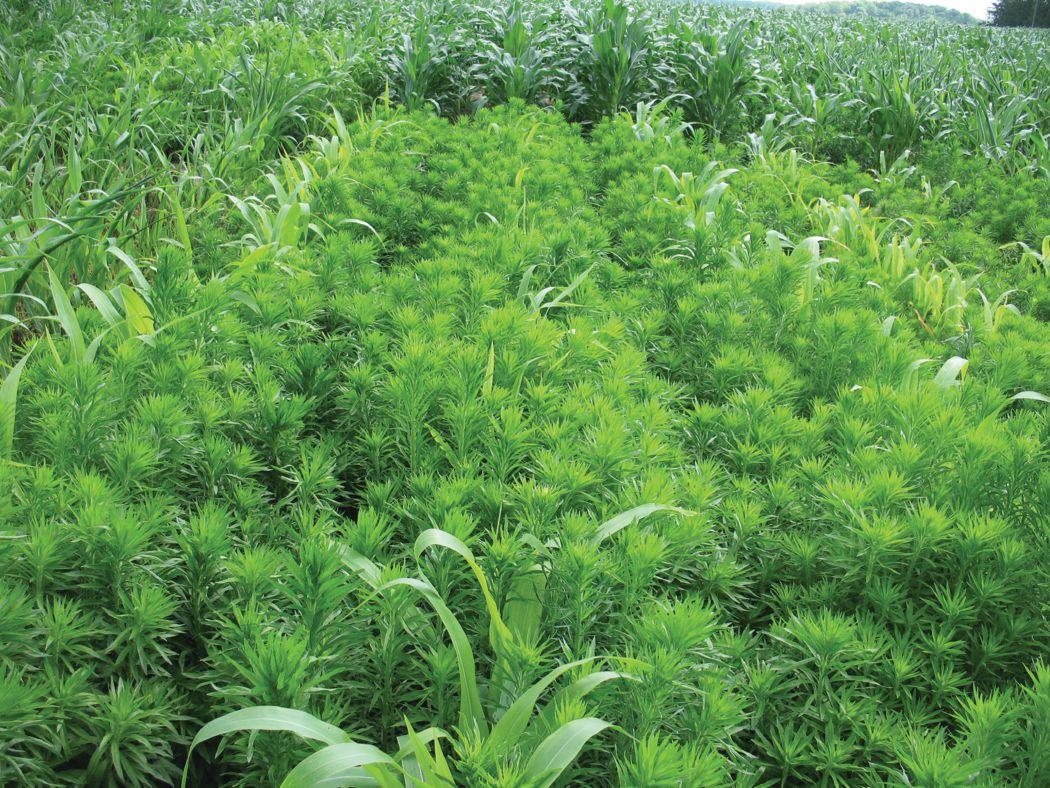
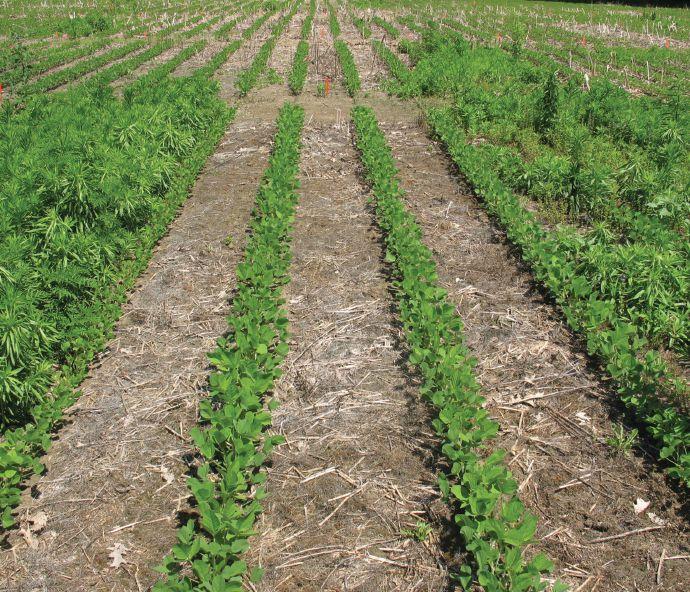
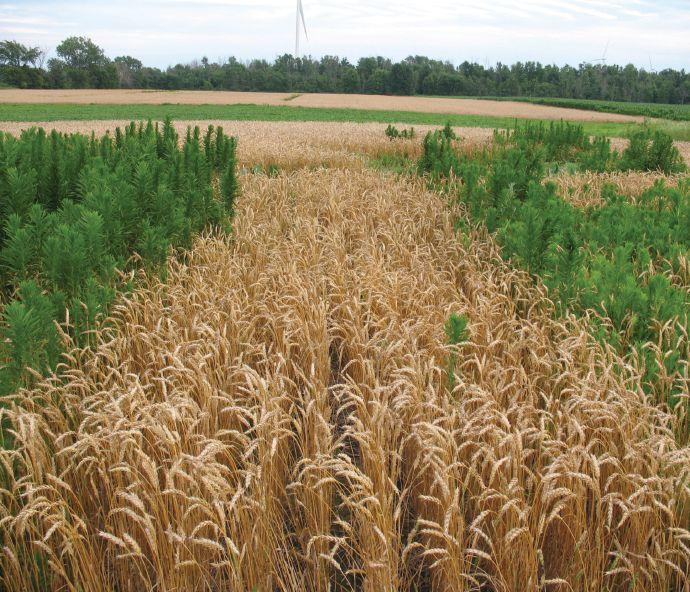
aBOVE: glyphosate-resistant Canada fleabane in corn.





Weeds can be a detriment to your soybean crop. Fortunately, DuPontTM CanopyTM PRO pre-emergence herbicide contains two modes-of-action to help manage herbicide resistance and control troublesome weeds. Plus, tank-mix with glyphosate to take advantage of three weed-busting modes-of-action. In addition, CanopyTM PRO delivers broad-spectrum residual activity on tough weeds like velvetleaf, dandelion and annual sow thistle. Give your crops the protection they need with CanopyTM PRO Questions? For more information, please contact your retailer, call your local DuPont rep or the DuPontTM FarmCare® Support Centre at 1-800-667-3925 or visit canopypro.dupont.ca
one of the most important strategies for managing the problem is to have a diversified crop rotation, which would help reduce the reliance on glyphosate. “Try to add a nonroundup ready crop to your rotation, and consider adding crops like spring cereals, winter wheat, dry bean, forages or vegetable crops,” Sikkema says. “In those crops, glyphosate is obviously not used for in-crop weed control, although it might be used for a burndown. also, consider including crops with alternative herbicide resistant traits such as Liberty Link, and in the near future, enlist or roundup ready Xtend.”
Within every crop in the rotation, consider using more than one mode of action on every acre every year. This will protect that technology for a longer period of time. If you are growing corn or soybean, using a two-pass weed control program is the best way to manage weeds in those crops. Sikkema explains a two-pass weed control system means applying a soil-applied residual herbicide in the spring, followed by a post-emergent in-crop herbicide.
“our data shows there are very good reasons to do this and the benefits are twofold. In addition to reducing the selection intensity for glyphosate-resistant weeds, our research shows it also maximizes yield. The weed control and the net returns from a twopass system are equivalent to a glyphosate only program,” he says.
although not applicable to every farm operation, another thing farmers should consider, especially in ontario, is including tillage at strategic points in their crop rotation. This is especially applicable to those species that are winter annuals or ones that emerge really early in the spring.
“one of the biggest problem glyphosateresistant weeds in ontario is Canada fleabane, which produces lots of seed – up to one million seeds per plant – that moves by wind and has an extended emergence pattern,” Sikkema says. “a timely tillage operation early in the spring is one practice that can help control emerged Canada fleabane. In contrast, for other glyphosateresistant weeds like common ragweed or waterhemp, no matter how much tillage you do, it won’t help because they emerge after the last tillage operation is complete.”
Sikkema recommends seeding early in narrow rows and at high populations to improve crop competitiveness. “Seeding at the optimal seeding date and rate, [seeding] in narrow rows, using a balanced proper fertility program, and timely
insect and disease control helps the crop outcompete weeds,” he says. “Increased crop competition makes it more difficult for weeds to emerge and complete their life cycle.”
each individual farmer will have to tailor practices to their operation
and determine which components will fit into their overall farming strategy.
“The goal for all of us should be to protect and manage these technologies, and reduce the selection of herbicide-resistant weeds so these technologies continue to be of benefit to future farmers.”

by anne Cote
La Coop fédérée crop specialist François Labrie visited Manitoba in november 2014 and he brought along some tips for prairie soybean growers.
Labrie says in order to maximize soybean yields, growers have to understand the physiology of soybeans in the field, emphasizing that patience is a virtue when growing the crop.
Labrie says there are eight opportunities during the growing season where a grower’s decisions will affect the crop yield and profits. The first decision is the choice of a seed variety. Labrie says price and yield statistics aren’t the only factors to be considered when buying seed. Field conditions and planting times are also factors. Labrie suggests buying a variety suited to the growing season, soil conditions and resistance to local diseases and fungus infections.
His advice to growers is to plant the variety they’ve purchased at the recommended planting date. “Keep your seeds for planting at their best date. If it’s too late for them, plant a different crop,” he notes, cautioning growers shouldn’t wait too long for the ground to dry before planting as waiting to seed will reduce yield.
“If the ground is suitable for seeding, then go. If soils are very wet during the optimum planting time, stay out of the field,” he says. That’s the time to decide on whether it’s worth planting a soybean crop in that location.
according to Labrie, soybeans respond to seasonal changes in daylight and don’t rely as heavily on heat days for reproduction as corn does. Soybeans switch from vegetative growth, or trifoliolate development, to reproductive growth on June 21, the day with the most daylight hours during the year. He notes the reproductive efficiency of soybeans is quite low compared to other crops with only half the flowers on a plant producing pods. The challenge for growers is to encourage the soybean plant to produce as many trifoliolates as possible before the summer solstice using optimum seed positioning, effective row spacings and planting at just the right time.
Labrie says research indicates the optimum time for planting soybeans in eastern Canada is before May 15 and he suggests that farmers in Western Canada should plant before May 25. So growers should relax and get their corn, which relies on heat days for development, planted before the soybeans which develop according to the available daylight hours. In fact, he says, early planted soybean seeds simply sit in the ground. nor does an early planting mean an equally early harvest. The gain in harvest time is only one day for each three days of early planting.
The goal is to get the seeds sprouting as quickly as possible. The first leaf, or unifoliolate, has just one job and that’s to get photosynthesis underway to foster the development of the first trifoliolate. That’s
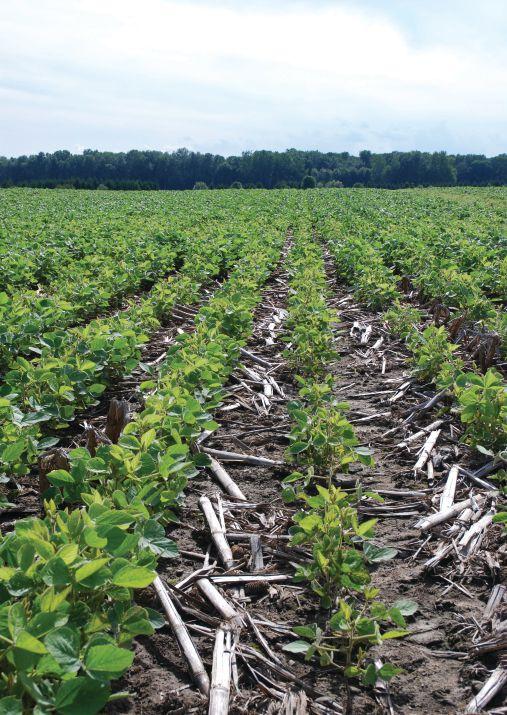
Research indicates the optimum time for planting soybeans in Eastern Canada (above) is before May 15, while farmers in Western Canada should plant before May 25.
when the process of nitrogen fixing begins and the foundation for a good yield is established. Labrie says there should be a new trifoliolate every four days after the first one develops, and by June 21 each plant should have four to five trifoliolates.
getting the seeds in the ground at the optimum time is just one part of the seeding decision. The number of seeds required per acre is another. again, Labrie suggests that input costs should be the guiding factor. His calculations from research trials on the economics of seeding
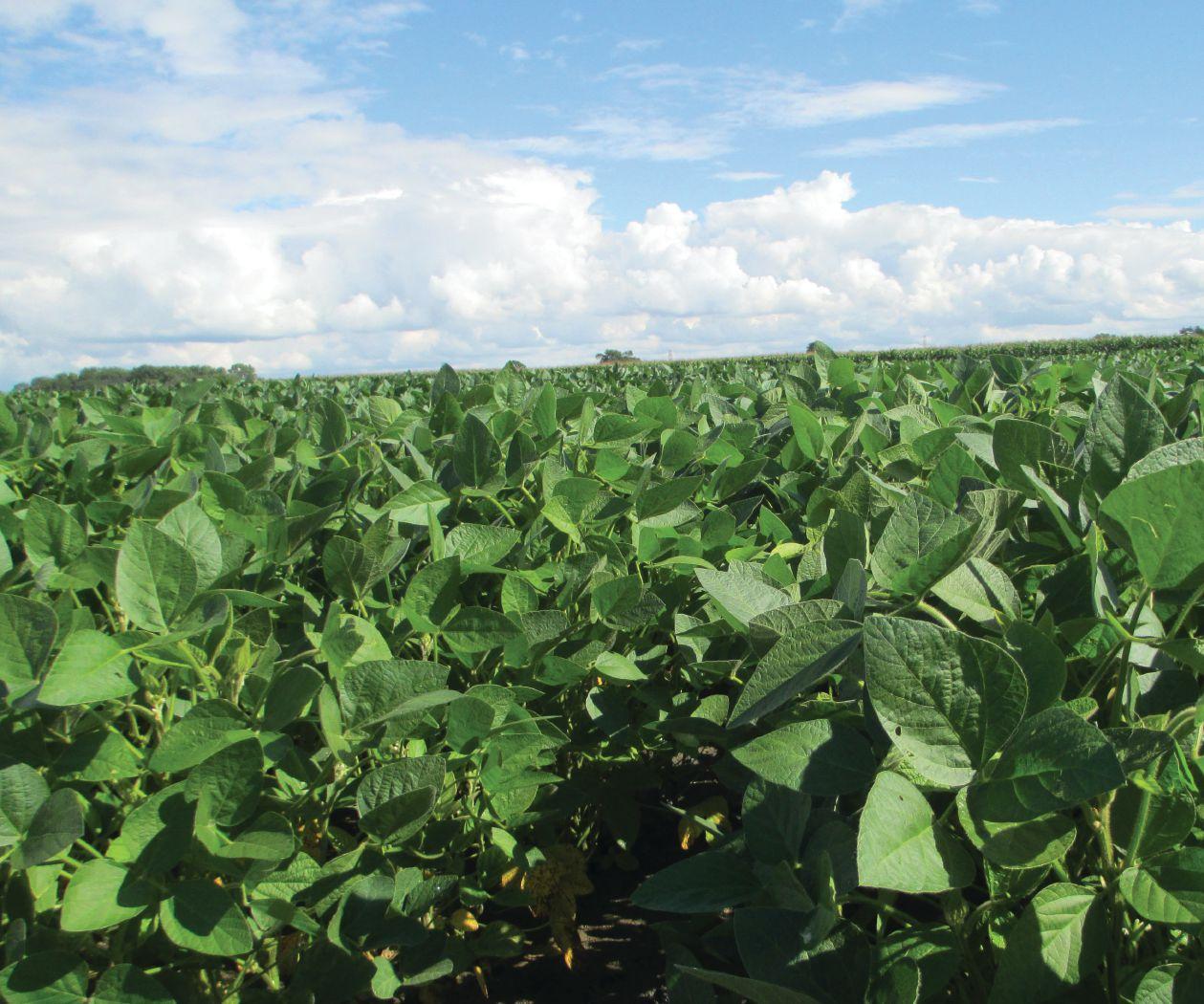
Thiamethoxam has been found to assist corn seedlings with stress.
by Treena Hein
Do certain seed treatments go beyond protecting young plants from insect pests? That’s an important question, especially if the seed treatment is a neonicotinoid insecticide. neonics are currently under intense scrutiny by government agencies in many countries and their use is being restricted in some jurisdictions.
It’s clear that at least one neonic seed treatment seems to provide more than insect pest protection in corn, but just what protection it provides and how it does so hasn’t been completely clear.
“Thiamethoxam is a broad-spectrum neonicotinoid insecticide that, in seed treatment form, contributes to better seedling vigour compared to no treatment,” Clarence Swanton, a professor in the department of plant agriculture at the University of g uelph (U of g ), says. Thiamethoxam controls a wide variety of commercially important crop pests, and is used as a foliar spray or soil treatment ( actara), or as a seed treatment (contained within Cruiser).
“When thiamethoxam is applied to seed, we see increased germination rates, faster root growth, greater seedling heights and more biomass accumulation, but the physiological mechanisms by which these enhancements occur is not well known,” Swanton explains. “other researchers have measured the ability of thiamethoxam to do things such as increase the antioxidant capacity of a certain molecule found in corn seedlings, called salicylic acid, which is an antioxidant that plays an important role in the defence against plant pathogens. It is also able to improve plant response to abiotic and biotic stresses, including those caused by the presence of weeds.”
However, thiamethoxam seed treatment may be helping seedlings perform better because it reduces the amount of hydrogen peroxide (H 20 2), a free radical that can accumulate in a seedling due to the stress of having weeds nearby. (Free radicals cause damage in plant and animal cells through a process called oxidation.)
“Thiamethoxam may be elevating the expression of genes involved in natural scavenging and destroying of H 20 2, in addition to genes involved in other metabolic pathways. This is what we wanted to find out more about,” Swanton says.
Swanton and his colleagues have investigated how much better corn seedlings perform with weed pressure, with and
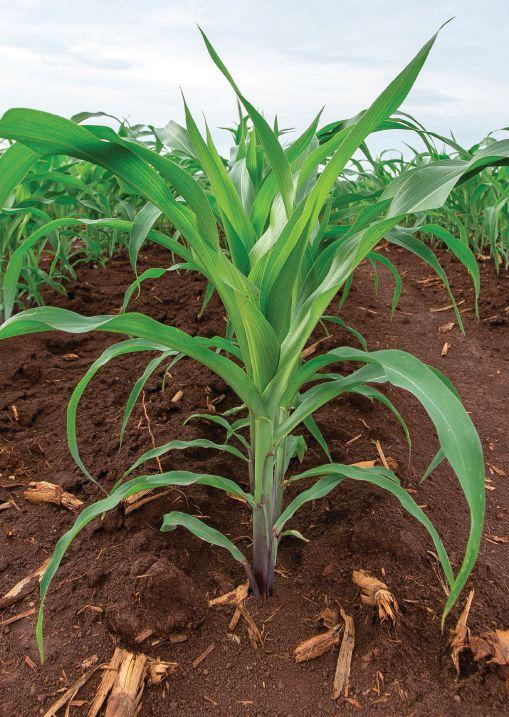
Thiamethoxam, a broad-spectrum neonicotinoid insecticide contributes to better seedling vigour compared (as compared to no treatment) says Clarence swanton at the university of guelph. When applied to seed, he and his team saw increased germination rates, faster root growth, greater seedling heights and more biomass accumulation.
without thiamethoxam as a seed treatment. They conducted measurement and analysis at the plant (macro) level, as well as at the molecular level. In addition to Swanton, the team included Maha afifi, e lizabeth Lee and Lewis Lukens, a research team at the department of plant agriculture at the U of g. In a laboratory
environment, thiamethoxam-treated seeds were planted, with some of the resulting seedlings growing up in the presence of neighbouring weeds (a perennial ryegrass). The researchers harvested seedlings at the fourth-leaf-tip stage, washed the roots, and counted and measured crown roots. Shoots and the entire root system were then bagged separately and dried to determine total shoot and root biomass. o ther seedlings were harvested for physiological and molecular analysis.
“at the macro level, we found the treated corn seedlings showed enhanced root development and seedling vigour, with none of the shade avoidance characteristics that typically develop when there are neighbouring weeds present,” Swanton explains. “We believe this was a result of morphological, physiological and molecular processes. This is the first report to identify the mode of action of thiamethoxam within the physiological mechanisms of early crop and weed competition.
“In short, our results suggest thiamethoxam enables corn seedlings to maintain their antioxidant protective system to avoid damage caused by oxidative stress from neighbouring weeds,” Swanton says.
Swanton, afifi, Lee and Lukens found thiamethoxam reduced H202 accumulation, as well as the subsequent damage caused to cells by its accumulation. “It seems to accomplish this through boosting the capacity of genes involved in scavenging this free radical,” Swanton says. “preventing the accumulation of H202 and enhancing the entire antioxidant system means the plant experiences less cellular damage caused by abiotic and biotic stresses, such as lower light levels caused by neighbouring weeds.
The plants from treated seed don’t have to expend as much energy for cellular repair and the energy can therefore be used for growth and maintenance of plant tissues. So, these results suggest plants from thiamethoxam-treated seeds may be better adapted for survival under harsh environmental conditions.”
Thiamethoxam reduced H2O2 accumulation, as well as the subsequent damage caused to cells
Swanton believes these results have several other implications for the role of seed treatments in agriculture. “normally, seed treatments are thought of only in terms of insect and disease control, but the results of this study suggest it may be very worthwhile to explore entirely new chemistries and new modes of action in novel seed treatments to enhance free radical scavenging and activate genes involved in the antioxidant defence system,” he says. “It’s clear from our study and the work of other researchers that some seed treatments have this capacity, and that may be critical in the development of crop hybrids and cultivars that are more stress tolerant to weed competition.”
The researchers are now investigating whether soybean seedlings grown from thiamethoxam-treated seed will demonstrate the same responses to weed pressure as those of corn seedlings.
For more information on seed topics, visit www.topcropmanager.com

Give those weeds something to fear with the longer lasting residual weed control of Focus herbicide.
Focus is a pre-plant/pre-emergence group-15 herbicide that offers longer residual activity on both grassy and broadleaf weeds – even those resistant to other groups. Since Focus is registered in both corn and soybeans, you’ll enjoy maximum application flexibility, helping you move from field to field with ease. www.fmccrop.ca
Research shows a high seeding rate is not a valid herbicide resistance solution.
by Madeleine Baerg
New research from the University of WisconsinMadison refutes the widely held belief that growers should employ a high soybean seeding rate in order to counter herbicide resistance.
Because a higher plant density generally results in a thicker crop canopy, it might seem intuitive that seeding heavily will improve weed control and reduce the likelihood of weeds overcoming herbicides. In fact, this supposition forms the basis of the integrated weed control advice given by many agronomists and crop researchers.
according to Vince Davis, an assistant professor of cropping systems and a weed science extension specialist at the University of Wisconsin-Madison and co-lead on this research, within that logic is a vital flaw. Specifically, herbicide resistance does not develop at a stage in the season when crops are big enough to impact weeds competitively. Therefore, Davis argues, seeding rate cannot positively or negatively impact herbicide resistance development at all.
“We have long known that extra crop plants are helpful for overall weed control throughout the season because they compete with weeds. However, how do extra plants help specifically with resistance management?” he says. “I’m a bit of a lone ranger on this. Ultimately, there are a lot of people who will say we should continue to preach high seeding rates for weed control. I don’t disagree with that thinking, but we have to think of how herbicides work and when resistance develops, and then make seeding decisions based on economics.”
given that the price of soybean seed has increased by more than 200 per cent in less than two decades, producers need to be very sure of what increased seeding can and cannot achieve, since farm profitability can be hugely impacted by seeding rate. Herbicide resistance develops at the moment that weeds face selection pressure from a herbicide. In other words, herbicide resistance develops at the time of herbicide application. If the moment of resistance development occurs when a pre-emergent herbicide is applied, the crop will be in seed form, so will have no competitive effect on weeds. If, instead, the moment of resistance development occurs when a post-emergent herbicide is applied, the crop will have emerged but is too small to place any significant competition pressure on weeds. Therefore, while a heavy crop canopy later in
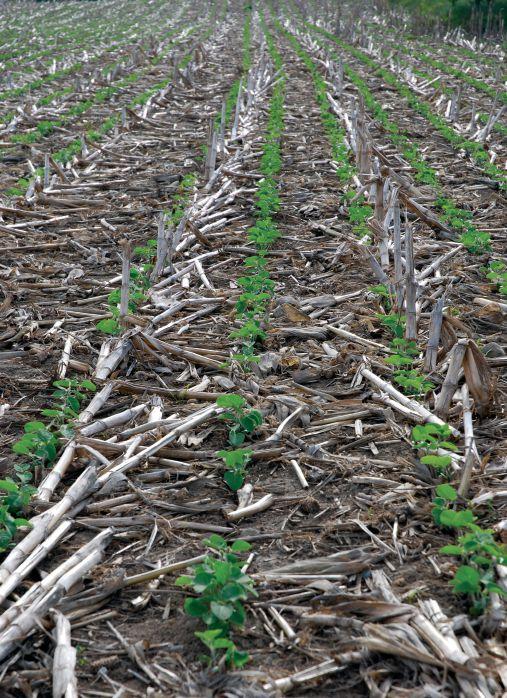
Vince davis, a weed science extension specialist at the university of Wisconsin-Madison says a high soybean seeding rate does not deter herbicide resistance from developing.
the season will decrease weed biomass, it will not stop resistance development because that resistance will already have developed many weeks before.
“To reduce selection pressure that could result in weeds overcoming a herbicide, you have to decrease the number of weeds exposed to that herbicide. When someone says growers should use more seed as a resistance management tactic, to me that means those extra plants have to have an effect on the amount and size
Field envy. Included with every box of our glyphosate-tolerant soybean herbicide.
Fast, complete burndown that lasts.
Nothing gives growers a feeling of pride like a great looking field. And it’s one that’ll last thanks to the extended residual activity of Optill® herbicide. Applied pre-plant in a two-pass program, it provides quick burndown of all broadleaf and grassy weeds for the cleanest start possible. Optill is also an excellent fit in both no till and vertical tillage operations. So all you have to worry about is getting used to your neighbours’ jealous stares. For more information, visit agsolutions.ca/optill or call AgSolutions ® Customer Care at 1-877-371-BASF (2273).
Always read and follow label directions. AgSolutions is a registered trade-mark of BASF Corporation; KIXOR, and OPTILL are registered trade-marks of BASF SE; all used with permission by BASF Canada Inc. © 2015 BASF Canada Inc.
of weeds exposed to the herbicide, which isn’t possible when the crop plants are tiny,” Davis says.
Davis’ research instead suggests another tactic for battling resistance. The reality is that growers have few options to solve any herbicide failures after a post emergent herbicide application. Therefore, producers should opt to counter resistance as early as possible with a herbicide applied at the preemergence timing.
“We sometimes take criticism when
we say we need to use more pre-emergence herbicides to protect us from herbicide resistance at post emergence. Some people will say that we’re just advising them to use another chemical to prevent chemical resistance. But, when you use a herbicide at the pre-emergence timing, you have time to react to failures by implementing a post-emergence mop-up. You have a greater window to make better choices to fix failures. If you only opt for a single application at the post-emergence timing, you don’t neces -

“The NORAC system is very reliable. It has auto-everything and I don’t have to worry about a thing.”
- Blair Gerein Unity, SK


We aren’t surprised to hear words like reliable and responsive when people talk about our products.
What you may be surprised to hear is that our award winning Hybrid Mode™ is exclusive to NORAC.
Boom height control systems start at $5900. Call 1 800 667 3921 today.



sarily have the opportunity to solve resistance issues,” he explains.
To study the impact of seeding rates when used with and without pre-emergent herbicide, Davis and co-researcher Shawn Conley planted field trials in Wisconsin in 2012 and 2013. The plots were planted at five different seeding rates, half of the plots were treated with a residual preemergent herbicide, and then all plots were treated post-emergently with either conventional herbicides or conventional herbicides and glyphosate.
During the course of this research, Davis and Conley used digital analysis technology to be able to quantitatively analyze the amount of cover soybean plants achieved using various herbicide management practices. The finding that surprised the researchers most was that applying herbicide at pre-emergent timing produced an increase in soybean canopy development.
“What we are saying is that using a pre-emergent herbicide is not only the better chemical means to prevent chemical resistance, we also get more canopy development, so we are getting more cultural weed control. This finding was really not expected. even at lower seeding rates, we saw a better canopy development,” Davis says.
With proper resistance-management focused weed control in place, producers should make a seeding rate decision based on good agronomics and solid economics.
“at the end of the day, the economics of seeding rate should be determined by those relationships you’d expect under a weed-free environment. growers should make their rate decisions based on their yield expectations for their geography and not necessarily on the expectation of additional weed control,” Davis says.
“I don’t necessarily disagree with the conventional thinking that encourages using extra seeds for weed control,” he says. “If we go back 15 or 18 years, it was really economical to do that because soybean seeds were so much cheaper. But today, a lot of people with a lot of experience still have the mindset that you can ignore the economics of soybean seeding rate. What has changed over the last decade or so is the cost of soybeans. It’s not an economic decision that should be ignored anymore.”
For more on weed management, visit www.topcropmanager.com.
Continued from page 28
rates show that a planting rate of 182,200 seeds per acre (450,000 seeds per hectare) produced income of $676.11 per acre. With soy selling at $9.24 per bushel and seed costs of $57 per 140,000 seeds, increasing the seeding rate to 222,700 seeds per acre only increased income by $8.10 per acre while cost of the extra seeds was roughly $17.
Labrie says that when projected yields don’t support higher input costs, increasing the amount of seed per acre isn’t a viable option for the grower. He says a more cost effective method of increasing yields and decreasing weeds, which compete for soil nutrients and require herbicide applications, is proper placement of the soybean seeds in the field.
Because the natural canopy created by well-spaced soybean plants deters weed growth, Labrie advocates spacing rows 15 inches apart. He says crop trials indicate 15inch rows form an effective canopy 15 days later than seven- or eight-inch rows, but 25 days sooner than a 30-inch row. Thirtyinch rows provide less protection for soil and allow late emerging weeds to fill in. rows spaced 15 inches apart reduce weed growth, promote soybean trifoliolate growth through better light efficiency and reduce the incidence of mould because they provide more space for air movement between the plants than seven-inch rows.
Labrie says twin row planting, two rows eight inches apart with a 22-inch row between each set of eight-inch rows, produce higher yields, enough to pay for the custom seeding costs. and, he adds, navigating the field to apply insecticides or fungicides is much easier with 22-inch rows than it is with either seven- or 15-inch rows. planting seeds too close together within 30-inch rows won’t improve yields either, according to Labrie. It only increases the opportunity for white mould to develop in the crop. and he has some advice about seed placement within any row: “I would say up to 15 inches for spacing at one inch deep.” research plays a major role in the development of soybean crops in north america. Labrie, who has been a corn and soybean specialist since 2010, developing the elite line of soybean seeds, says his job is to provide knowledge and support to the coop network sales representative. His work includes finding ways “to increase corn and
soybean yield through fertilization, seeding date, seeding rate, crop protection and the use of cover crops.”
Soybeans have their genetic origins in asia, and through the process of natural selection have developed and adapted to north american climate zones. Developing plant genetics is a long process and soybeans take longer to develop than
Top Crop Manager Column: AMI #6—Leadership
some other crops. Labrie says, “It takes at least eight years to develop a new soybean variety.” and yield increases within varieties take even longer. He says it took 87 years to attain an increase of .38 bushels per acre while corn yields have been increasing at 1.5 per cent annually.
“The soybean yield will increase, but it’s a long process,” he says.

Want your farm operation to reach its full potential? Lead with conviction! Good leaders are role models that share their vision, motivate employees, and help drive productivity gains.
Yes, leadership is an intangible that can be hard to quantify, yet operators who purposefully develop skills in this area can make the difference between success and failure on the farm, says Rob Black, CEO with the Rural Ontario Institute. Strong leadership also reaches beyond the farm gate to positively impact communities, farm organizations, extended family and more, he says.
Effective leaders are confident, committed and inspirational. They communicate clearly in describing what needs to be done so that everyone is working toward the same goal, and they have an open door policy for discussing issues and ideas. They have a positive attitude that helps keep energy levels high; know how to build a team and capitalize on their strengths; and provide an environment for creativity and innovation.
All of these traits help bring out the best in each individual working in an operation, along with benefits to the bottom line.
To get a quick start on becoming an outstanding leader and in moving your farm business to the next level, take a new approach with these tips from Rob Black:
Have a vision: Know where you want to be and what you want to do. Inspire your team by sharing your vision of success—it will go a long way toward attaining your goals.
Build a network: A good leader needs a strong network that can be called on for assistance when necessary. Think beyond your own field of expertise to ensure that all the bases are covered.
Find the right tools: Grow your skills by participating in the Rural Ontario Institute’s Advanced Agricultural Leadership Program (AALP), or the Advanced Farm Management Program and others offered by the Agri-food Management Institute (AMI). These programs will teach you a great deal about yourself and help you view things from a different perspective. Learn more at ruralontarioinstitute.ca and takeanewapproach.ca
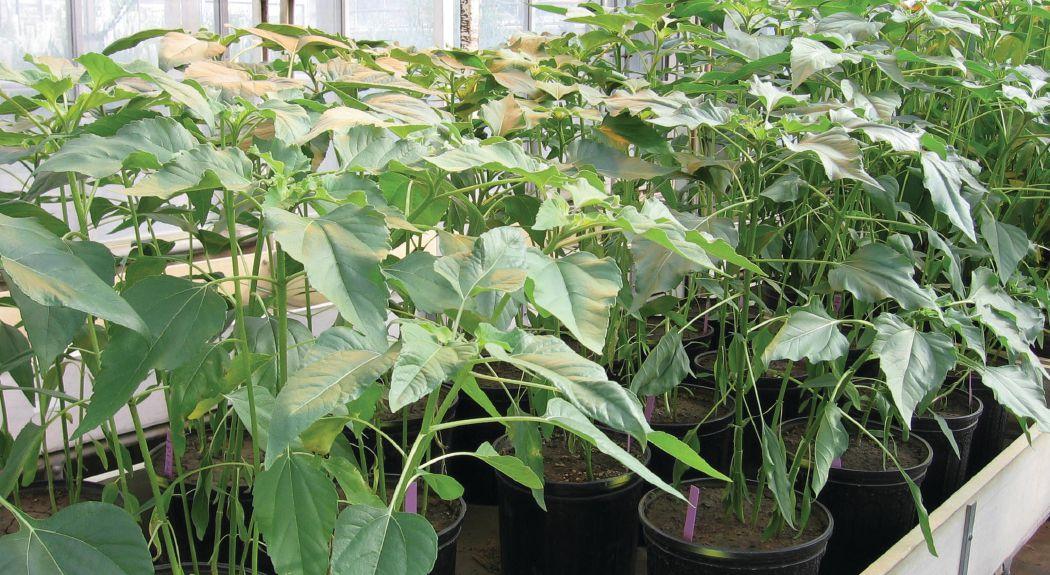
by Trudy Kelly Forsythe
Researchers in the United States are looking at the relationship between plants and soil and how this relationship might be used for weed control. and they are solving the mystery like any good investigators would, using Dna fingerprinting.
Tony Yannarell, assistant professor of microbial ecology with the Department of natural resources and environmental Sciences at the University of Illinois (U of I), and grad student, Yi Lou, extracted the microbial Dna from soil collected for 10 home and away trials using two agricultural weeds – the common sunflower, Helianthus annuus L., and giant ragweed, Ambrosia trifida L. This gave them a pool of Dna from all of the micro-organisms in the soil and allowed them to create fingerprints of each soil community.
The trials took place independently at agricultural research facilities in Michigan, Illinois, Kansas, South Dakota and oregon using local soils gathered on site. each trial used common seed stocks, with the sunflower seeds gathered in Manhattan, Kan. and the ragweed seeds gathered in Urbana, Ill.
“Soil from Michigan and Montana have different organisms so we would get a different fingerprint,” Yannarell says. “When soils have similar micro-organisms, then we get similar fingerprints.”
Yannarell became involved in the research after results from other trials examining plant-soil feedback loops ruled out nutrient depletion and soil chemistry as the causes of plant growth changes.
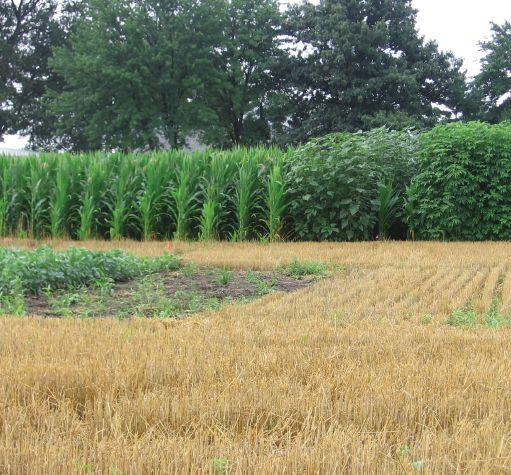

Without Vios, even a full tank is half empty.

Ever wonder if your weed control program has a hole in it? Now you can erase all doubt by tank mixing Vios™ G3 herbicide with glyphosate or Liberty® herbicide. Tough grass and broadleaf weeds won’t know what hit them, but you will: three modes of action. Plus, you can count on the broadest spectrum residual weed control available from an in-crop herbicide.*
Learn more at BayerCropScience.ca/ViosG3
or 1 888-283-6847 or contact your
MIX IT UP
Weed out herbicide resistance. Vios G3 uses 3 different modes of action to help you control resistant weeds. Visit MixItUp.ca to learn more.
If you’re looking to bring new employees into your business, you’ve seen first-hand how difficult it can be to attract the right people.
There are plenty of reasons why: An aging labour force means fewer workers. Competition for those workers from other sectors is steep. And the nature and location of the work may not be what people originally have in mind. But as the Executive Director of the Canadian Agricultural Human Resource Council (CAHRC) says, there are things we can do as an industry and inside our businesses to tip the scales in our favour. And it all starts with letting people know what’s out there.
“Although opportunities abound, agriculture is not
top of mind for youth and their influencers exploring career options. It is misrepresented and misunderstood as unsophisticated, lacking in innovation, repetitive and non-entrepreneurial,” says Portia MacDonaldDewhirst. “As an industry, we need to increase awareness of all the opportunities in agriculture and let people know what a personally satisfying, exciting and rewarding career it is.”
MacDonald-Dewhirst also notes that businesses can do a lot in their own backyard to attract and retain the right people. That starts with
understanding what they’re looking for, where to find it and how to create an environment where new employees can succeed.
“Employers need to understand the value and return on investment that can be realized by focusing on HR management,” she says. “If you provide training and other support, are flexible and open to new ideas, and actively manage performance, you’ll be rewarded with loyal, productive employees.”
The real good news is the right people are out there.
“Anyone who seeks active work that requires creative problem solving in an interesting environment should look into agriculture,” says MacDonald-Dewhirst. “It also offers great opportunities for those with entrepreneurial interests .”
No matter what role we play in the industry, big or small, we can all set the foundation by sharing the real story – with young people, at career events or by getting in on the conversations that are already happening about Canadian agriculture and the opportunities it holds.
For information and tools, check out the CAHRC’s website at cahrc-ccrha.ca or visit AgMoreThanEver.ca.


In order for our industry to reach its full potential, we need to capture the imaginations of thousands of skilled, energetic workers. The good news is we can do it. One person at a time. If you know someone who is still weighing their career options or looking for a change, take the opportunity to let them know that Canadian agriculture offers more opportunities and more things to do than they might realize. And encourage them to consider these facts:

From 2013 to 2022 there will be almost 74,000 projected openings in Canadian ag, but only 49,000 projected job seekers1.
Canada’s ag industry has far more jobs than people to fill them. And that spells opportunity for workers across the country. Lots of opportunity. Employers are looking for energetic, enthusiastic people who want to learn and grow with this dynamic industry. It’s there for the taking.
Canadian agriculture has never been more important to Canada or the world, and there are so many ways to be part of it, both on the farm and off. Hundreds of occupations directly contribute to ag – in fields like manufacturing, research, education, finance, trade, retail and more. The opportunities are endless.
You’re in good company. As someone who works in ag, you’re one of 2.1 million people who propel the sector forward every hour of every day. That’s one out of every eight Canadian jobs! It’s time to get the word out, because even though there are a lot of us, there’s definitely room for more.
The career opportunities in Canadian ag are incredibly diverse – and so are the opportunities to train for those careers. That means, if you can imagine a career in ag, you’ll probably find the training you need to land the job close to home.
The impact of agriculture on Canada’s economy, communities and families is truly remarkable. And this is just the beginning. So spread the word. Encourage young people to build a career in ag. There’s never been a better time. Learn more at AgMoreThanEver.ca .

Creating a positive perception of Canadian agriculture is a big job. That’s why Ag More Than Ever is built on partnerships. Our partners come from many different backgrounds to support one great industry. They actively grow awareness of the cause and spread positive messages about Canadian ag to their employees, associates, customers and the public. Interested in becoming a partner? Visit AgMoreThanEver.ca/Partners to find out how.
Are you or someone you know looking for a career in agriculture, but don’t know where to start? The Canadian Agricultural Human Resource Council has some great online resources to help.
This site features a great virtual tool to help you find opportunities in ag that match your interests. It’s a great starting point for your career path.

Once you have an idea of the opportunities you want to pursue, it’s time to find out how to pursue them. Agritalent.ca is a national database of learning opportunities in agriculture. If Agripathways.ca is your starting point, this is your road map.

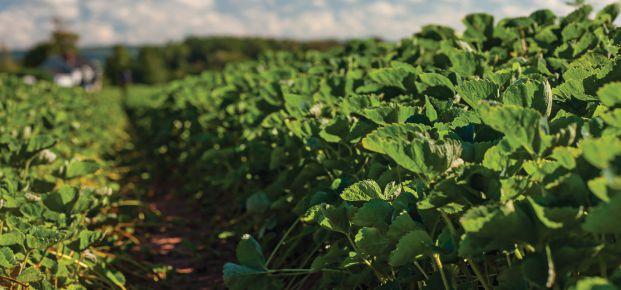

“ The natural environment is critical to farmers – we depend on soil and water for the production of food. But we also live on our farms, so it’s essential that we act as responsible stewards.”
– Doug Chorney, Manitoba
“ We take pride in knowing we would feel safe consuming any of the crops we sell. If we would not use it ourselves it does not go to market.”
– Katelyn Duncan, Saskatchewan

“ The welfare of my animals is one of my highest priorities. If I don’t give my cows a high quality of life they won’t grow up to be great cows.”
– Andrew Campbell,
Ontario
Safe food; animal welfare; sustainability; people care deeply about these things when they make food choices. And all of us in the agriculture industry care deeply about them too. But sometimes the general public doesn’t see it that way. Why? Because, for the most part, we’re not telling them our story and, too often, someone outside the industry is.
The journey from farm to table is a conversation we need to make sure we’re a part of. So let’s talk about it, together.
Visit AgMoreThanEver.ca to discover how you can help improve and create realistic perceptions of Canadian ag.


“plant-soil feedback research has been going on for 15 years or so,” Yannarell says. “When you have a particular plant growing, as it grows it interacts with the soil and what’s in the soil, and it changes the makeup of soil.”
For this research they were looking at the feedback from the soil to the plant. If there is a positive plant-soil feedback, it will make the soil better for the plant. alternatively, negative plant-soil feedback will be bad for the plant. The question was, how did these feedback impact generations of plants?
“The idea is that weeds that have negative plant-soil feedback are good for us,” Yannarell says. “They can help farmers with weed control and potentially replace herbicides. We wondered if two weeds might have positive or negative plant-soil feedback, [and] did positive plant-soil feedback change as you go east to west.
“Sunflower gives positive feedback in the west, negative in east. Maybe ragweed does the opposite?”
In the trials, the researchers grew ragweed and sunflower plants in home and away soil to see how they interacted with the soil. They grew two generations of the plants in the same pots to give them the opportunity to do what it would do to soil, and then looked at the average growth of each in the away soil versus the home soil. If it does better in the away soil, it’s a negative plant-soil feedback; if it does better in the home soil, it’s a positive plantsoil feedback.
“They expected the ragweed would show negative in the west but positive in east and that sunflower would have positive feedback west of the Mississippi and negative east,” Yannarell says. “That was not what they found at all. ragweed showed negative feedback everywhere we did the experiment and sunflower showed positive feedback everywhere, although sometimes very slight.”
They next looked to see if plants were making chemical toxins in the soil that might affect the plant, but found no evidence of this. “They started to think about micro-organisms and that’s where we got involved,” Yannarell notes, adding because the researchers froze the soil, they were able to study its microbial makeup.
When they didn’t see similar organisms in the home and away soils, they realized ragweed was doing a good job picking out the bad-for-it micro-organisms wherever
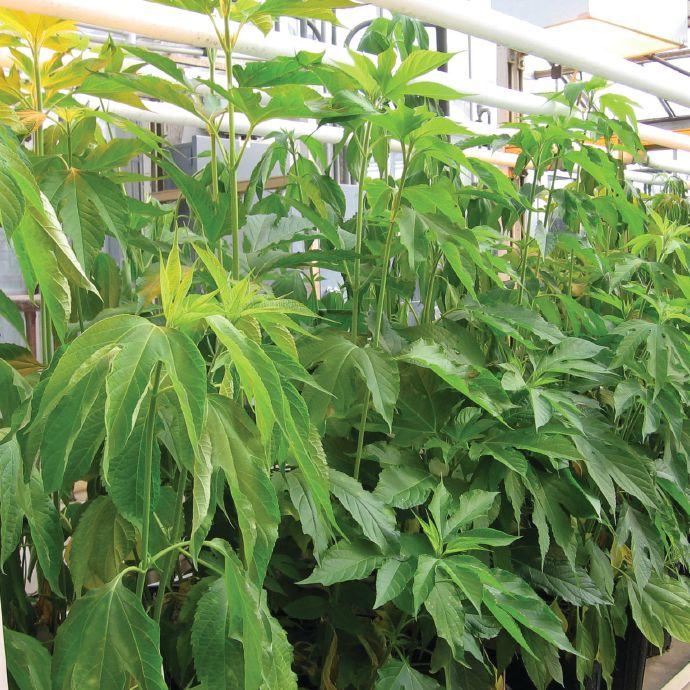
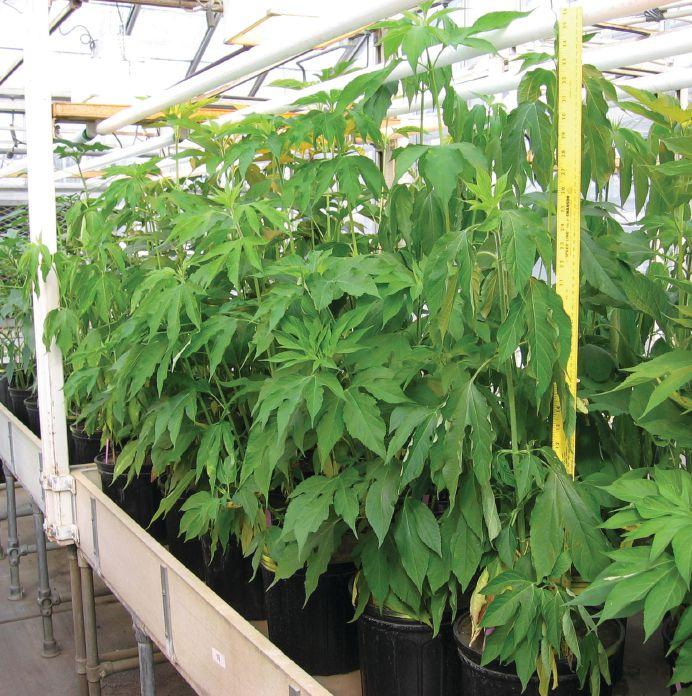
it grew. The search was on to find out just which micro-organisms might be bad for it. They developed a math equation to determine how good or bad each microorganism is for ragweed or sunflowers.
Scientists estimate a gram of soil contains over 10,000 species of bacteria. “If we drill down to the ones most responsible for soil health, on average less than seven per cent of the bacteria in soil could explain about 90 per cent of change in plant growth,” Yannarell says, adding while they can’t give a list of bacteria or fungi to use for weed control just yet, his department’s research does raise the possibility of identifying micro-organisms for weed control.
“We can find plants we desire and plants we don’t want,” he says. “We are now looking at the use of cover crops to set up a soil environment that is good for plants but bad for weeds.”
In Canada, Kari Dunfield, an associate professor and Canada research chair with environmental Microbiology of agroecosystems at the University of guelph’s School of environmental Sciences, says they have been using similar molecular methods to examine pathogen communities associated with dog strangling vine, Vincetoxicum rossicum, a highly invasive plant in north america.
“Dog-strangling vine is on ontario’s noxious Weeds list, and is not only an environmental concern, but a big problem for farmers and gardeners,” Dunfield says. “My graduate student, nicola Day, and collaborator pedro antunes at algoma University, have been looking across 100 years of natural invasion of dogstrangling vine in ontario, and using high throughput genetic sequencing to identify the fungal communities associated with field-grown plants. We have been looking for fungal communities to attempt to identify communities that may build up over long periods of time.”
along with genetic methods, Day
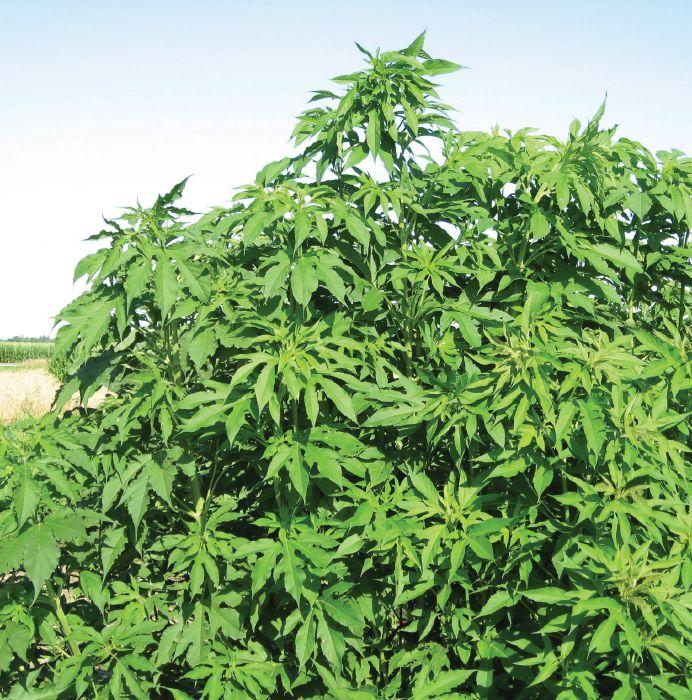
giant ragweed.
has cultured fungal isolates from dogstrangling vine and is now testing them to see if they are pathogenic to this plant, and also to native plants, in order to get a better understanding of how dogstrangling vine becomes invasive.
Dunfield explains that plants are associated with a diverse microbial community both surrounding their roots, in the rhizosphere, and within the roots, the endosphere.
“plants attract specific microbial groups through their pattern of root exudation,” she says. “By getting a better understanding of this relationship, it is possible we could either grow plants in rotation that attract beneficial microbial
groups, or alternatively, attract weed specific pathogenic microbes.”
She adds the value in research such as that being done at the U of I is its focus on targeting soils’ Dna.
“Since less than one per cent of microbes are able to be grown in the lab, a critical component of this work is our ability to target Dna in the soil and identify microbial communities,” Dunfield says. “This metagenomics approach has allowed research groups to begin to move forward in these areas and ask these types of research questions.”
For more on soil and water, visit www.topcropmanager.com
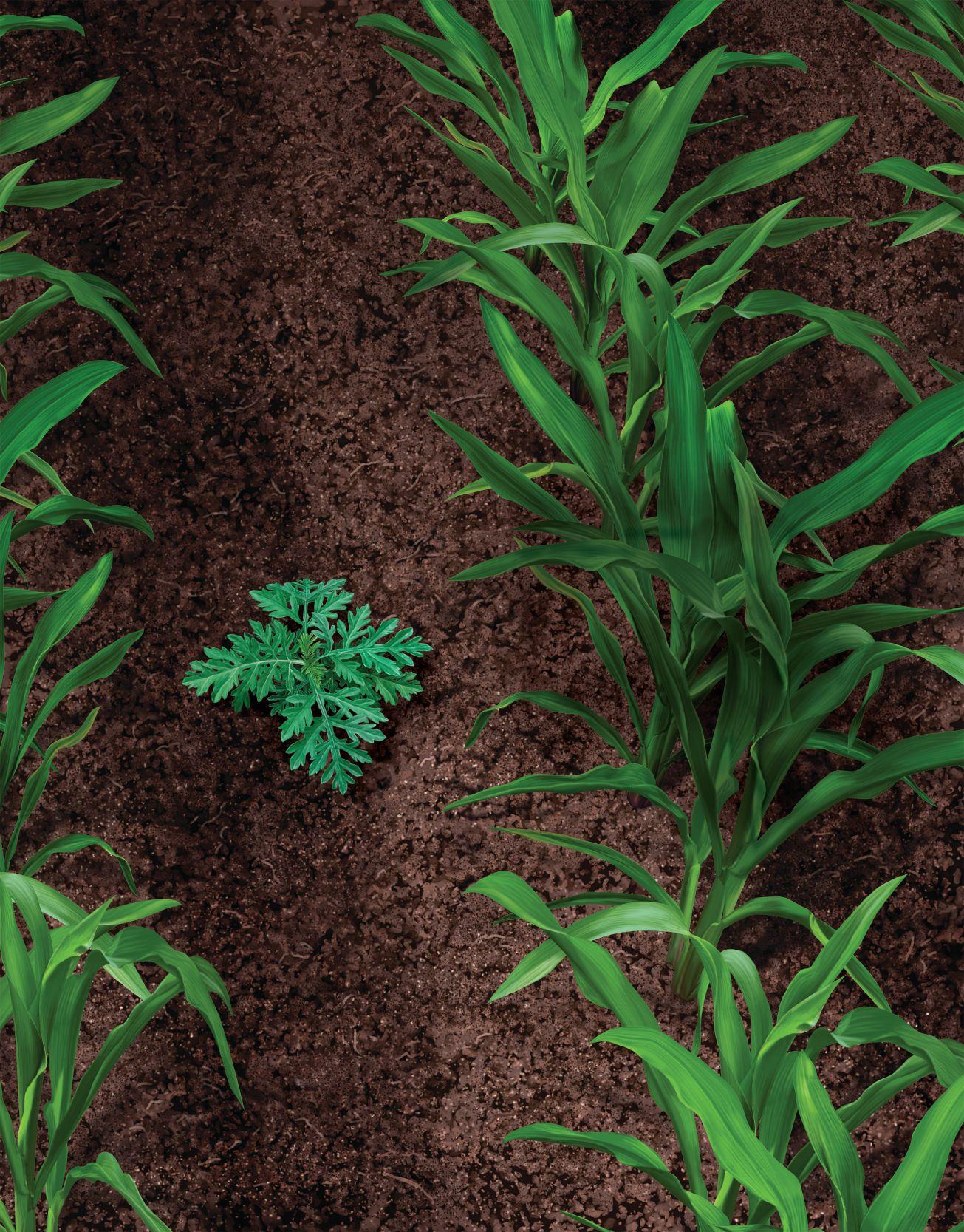
The weed in this ad could be the last weed you see.
Imagine going an entire growing season without worrying about a single weed. Think it sounds too good to be true? Think again.
Converge® XT features strong residual activity that controls more weeds than the competition. It’s the most consistent solution for crop-safe grassy and broadleaf weed control.* Make your first thought of the season the last time you think about weeds. Add Converge XT to your spray program today.
Learn more at BayerCropScience.ca/ConvergeXT
Weed out herbicide resistance. Converge XT uses multiple modes of action to reduce the risk of herbicide resistance. Visit MixItUp.ca to learn more. MIX IT UP
Start this season with Wolf Trax Innovative Nutrients. Wolf Trax technologies deliver important nutrients to your crops more effectively, so they can access the nutrients earlier. With a better start, your crops can finish strong – and that’s a better use of your fertilizer dollar. So stand up for your crops, and ask your retailer for field-proven Wolf Trax Innovative Nutrients.