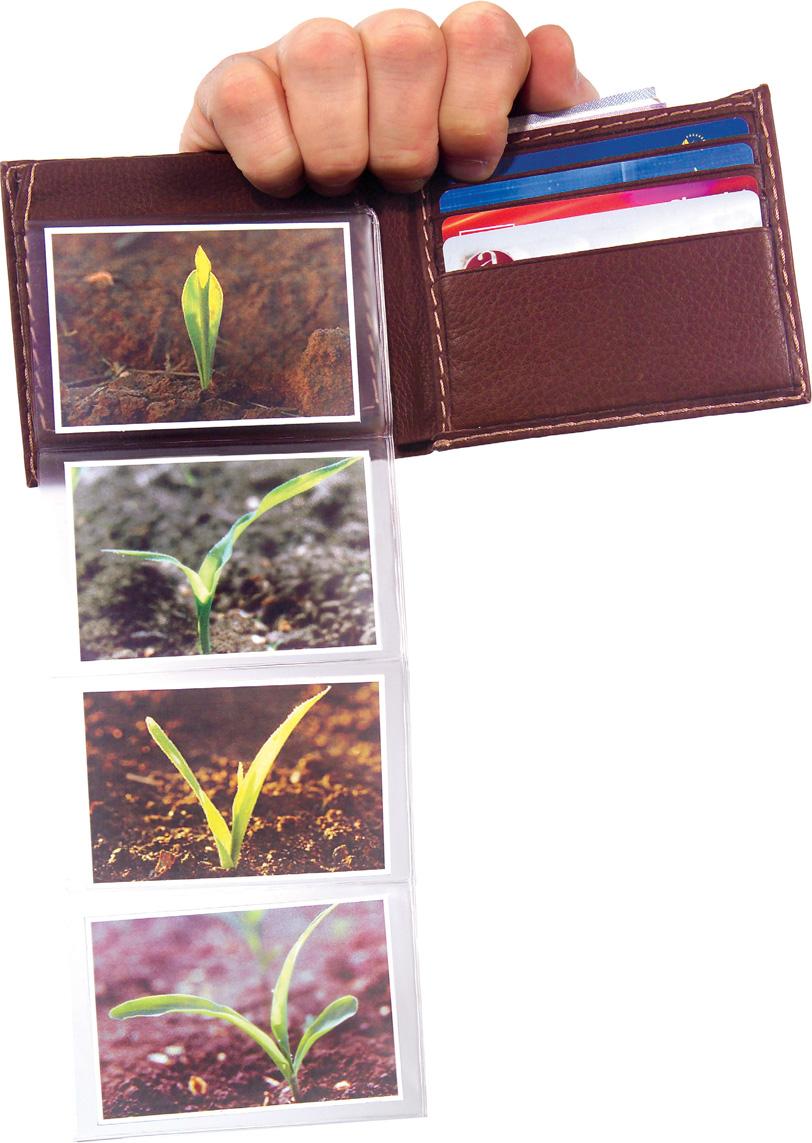
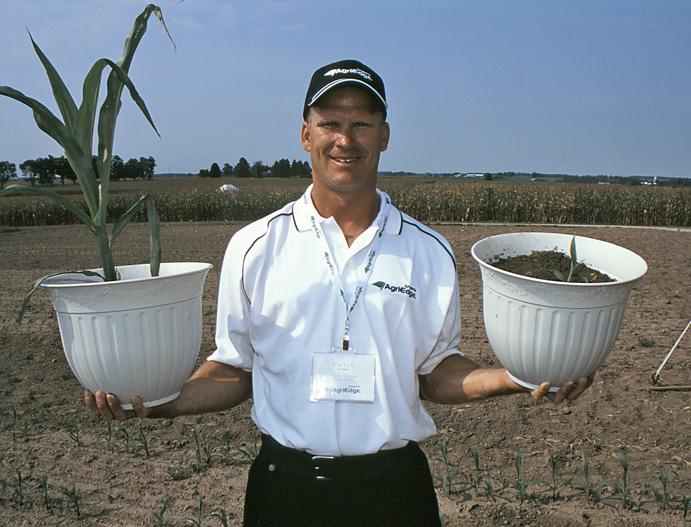
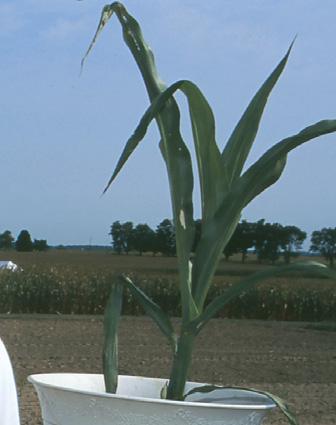
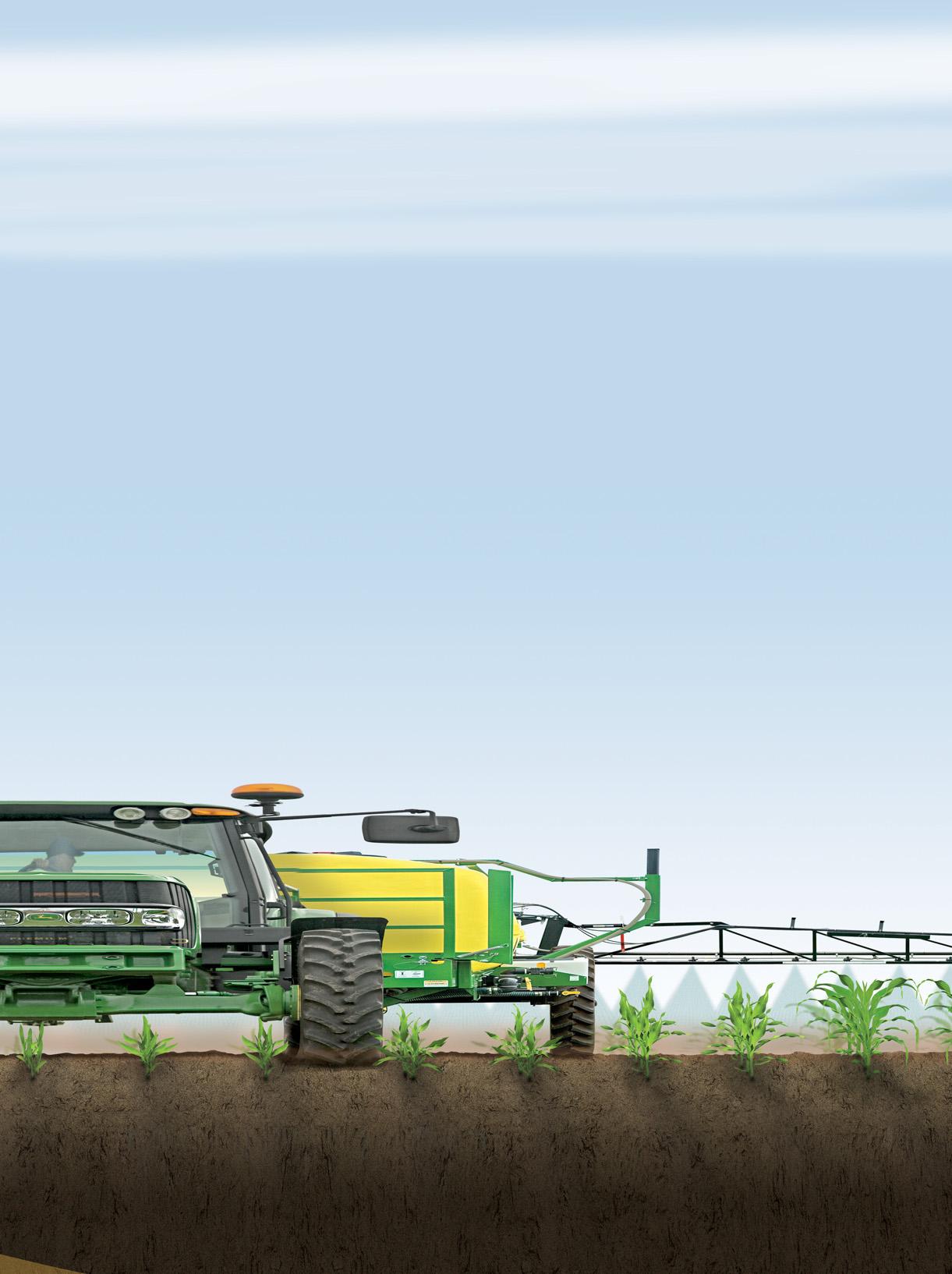
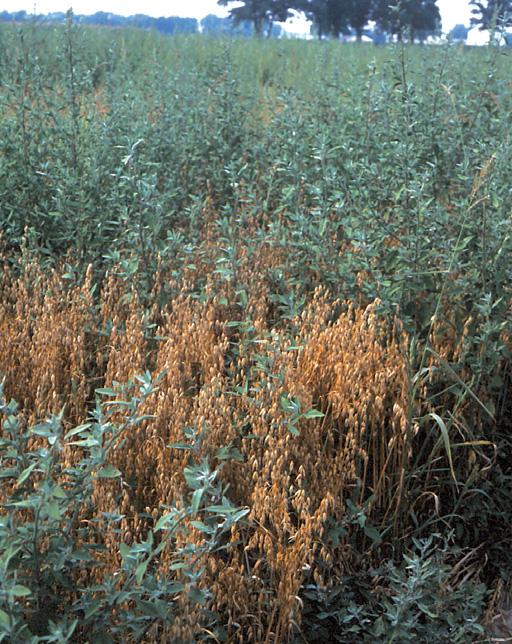
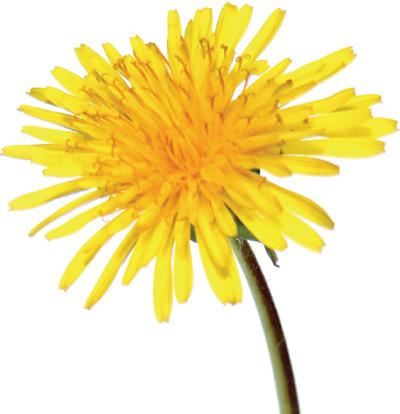
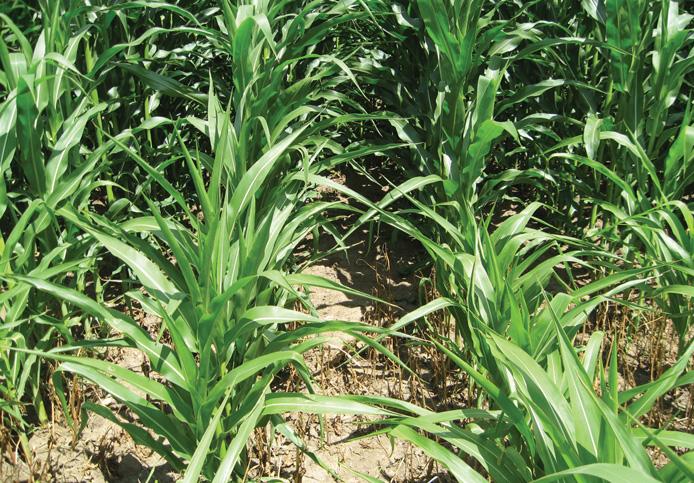
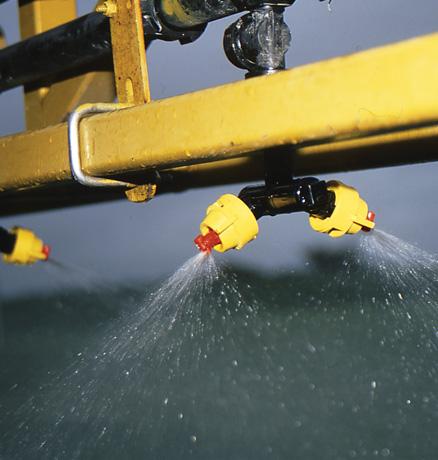
Protecting your corn from early weed competition is critical for a healthy crop. That’s why new Option® 1.2.3. corn herbicide is so important. When tank mixed with atrazine and applied from the one- to three-leaf stage of corn, Option 1.2.3. provides one-pass, seasonlong control of grass and broadleaf weeds. So your corn can grow up good and strong.
Weed Control Guide
Top Crop Manager’s annual weed control guide for corn, soybeans, and cereals 20-36 includes products and their ratings from OMAFRA’s Publication 75, 2008 edition.
The latest on aphids 12, 37 Understanding aphids and plant breeders efforts to thwart them.
Weed management
See how important timing is.
The bottom line
Top Crop Advisors return with comments on several stories in this issue.
Check out the new Top Crop Manager web site and enter the on-line contest for a chance to win significant prizes. Register to recieve on-line editions. Reference information of this calibre is hard to find, so many growers choose to keep Top Crop Manager issues on file. If you have not kept issues for your library, you can find our stories on our web site archive.
Printed in Canada. All rights reserved. Editorial material is copyrighted. Permission to reprint may be granted on request.
Subscription rates: Canada/USAForeign
Western editions
Top Crop Manager – seven issues: January, February, March, April, July, November and December
1 issue$9.00$18.00
1 yr.$50.00$100.00
3 yrs.$100.00$200.00
Eastern editions
Top Crop Manager – five issues: January (Winter) February (Early Spring) March (Season Ready) August (Summer) November (Fall)
1 issue$9.00$18.00 1yr.$30.00$60.00
3 yrs.$60.00$120.00
Specialty edition
February (Potatoes in Canada)
1 yr.$9.00$18.00
3 yrs.$20.00$40.00 ALL OF THE ABOVE 13 ISSUES OF Top Crop Manager 1 yr.$80.00$160.00
3 yrs.$160.00$320.00
Send cheque or money order to Annex Publishing & Printing, Attn: Circulation.
Claims for missing issues must be made in writing within three months of publication and will be subject to the availability of back issues.
Associated Publications:
• Glass Canada
• Ground Water Canada
• Manure Manager
Publications Mail Agreement #40065543
Return undeliverable Canadian addresses to Annex Publishing & Printing Inc., 145 Thames Rd. W., Exeter, ON N0M 1S3 Canada.
March 2008, Vol. 34. No. 10 ISSN 1717-452X
From the first to the last
It has been both a privilege and a pleasure to have been involved in the growth of Top Crop Manager . From its inception in 1989 as it developed from the Agri-Book Magazine series of annual editions, each dedicated to specific crops, it has developed steadily to become a fully fledged crop technology focussed magazine reaching commercial producers of major field crops in Canada.
Now, as I embark on the ‘retirement phase’ of my personal journey, it is difficult to point to one particular event, meeting or field tour as being the most significant. There were many individuals who assisted and encouraged us in providing a magazine of this type. Though it was a novel concept 20 years ago, to some degree it still stands alone in how it approaches content and then presents information to readers. The bottom line for our writers has always been to ask ourselves ‘have we provided something that can help a reader make or save significant additional profit over time?’
Change in these past 20 years in Canadian agriculture has been huge. Probably the most significant have been the widespread adoption of no-till planting and direct seeding and herbicide tolerant traits in an ever-widening variety of crops. Our readers have not simply learned how to use these techniques, they have figured out how to use them wisely and how to expand their business enterprises by using these new ideas and methods. Hats off to the innovators who have shared their experiences, good and bad, in these pages.
The ‘promise’ of end-use traits is now a reality and there are projections of more market-driven opportunities just around the corner. I am sure Canadian producers will grasp these possibilities too.
Ralph Pearce will take over as editor. For the last five years, he has
been Top Crop Manager’s eastern field editor. I know you will soon find he will continue to build on the foundation of Top Crop Manager’s editorial mandate, in the print and now the new on-line editions. Behind the scenes, there are dedicated production staff members, some of whom have also worked with Top Crop Manager since it began as an annual issue for western Canada. These individuals are the ‘hidden gems’ who have and will continue to make sure readers’ expectations of content and layout are consistent, issue-by-issue and year-over-year.
It’s time to thank you: readers, researchers, crop advisors, extension personnel and industry suppliers who have helped make Top Crop Manager the wonderful communications vehicle it has become. I have made hundreds of farm visits and have enjoyed all of them: from digging into soils across the county, to riding the demonstration plot wagon or along in the cab of tractors and combines, while collecting story ideas across Canada, and arriving unannounced in a field to take action photos. Everywhere I have stopped, there has been a pleasant welcome and all too often, the visits were cut short by the press of time.
Every single stop yielded a story, an idea for a new story or an image to illustrate a story or magazine cover. Every single visit was special: from the first to the last! ■
Peter Darbishire Publisher and editor
Bring your tools, your gear, and then some. Yes, the Arctic Cat® utility ATV can handle it all. For starters, it features a responsive 695cc engine. Add 1,050 pounds of towing capacity, and you’ve got serious hauling potential. And don’t forget the SpeedRack® accessories, ideal add-ons for whatever dirty work you need done. Not to mention the storage for all you need to carry. Because if you’re going to work, you might as well bring the work to you. To learn more or to find a dealer near you, visit arcticcat.com. Arctic Cat. More to Go On.™
Crop management key in resistance build-up
Not
just a question of which herbicide to use.
Early in 2006, Dr. Bill Johnson, a researcher at Purdue University, made a presentation on developing resistance in Canada fleabane (horseweed in the US) and
by Ralph Pearce
marked its rapid migration northward. In just a few years, the glyphosate resistant weed had advanced as far north as Fort Wayne, Indiana and Findlay, Ohio, and Johnson warned growers its appearance in Ontario was only a matter of time. Since then, the weed has been confirmed in Michigan.
Anecdotal evidence indicates other weeds, including ragweed, have shown signs of glyphosate resistance in the US, meaning growers need to rotate their chemistries more often.
As it turns out, the transfer of resistance in various weed species has been under the watchful eye of two other researchers since 2001. Dr. Micheal Owen of Iowa State University and Dr. Mark VanGessel at the University of Delaware have been trading insights and information on the recurring resistance within various weed species. In particular, they have been working with Conyza canadensis (Canada fleabane) and Conyza ramosissima (dwarf fleabane) and testing the relative ease with which the two can develop resistance.
In particular, the researchers wanted to study the variations in the plants’ abilities to adapt their appearance, development or behaviour relative to their respective genetic traits, also known as heritability. Owen started with forced and natural crosses to ensure a purely resistant plant, and compared it to the populations that were sensitive, then performed various crosses of those and went through the typical backcrossing procedure. “What we determined was that glyphosate resistance in Conyza is transferred through the pollen, in a ratio that strongly supports a partially dominant single gene trait,” explains Owen.
The importance here is the ease of transmission. Canada fleabane is a wind disseminated seed and is highly prolific, but it is the existence of the dominant single gene that may be the key. In the case of waterhemp, which likely has a polygenic controlled trait for glyphosate resistance, the spread has not been as extensive. “And it’s taken a lot more selection for populations to shift from that which are primarily sensitive to that which are primarily resistant,” says Owen. “In the case of horseweed, it just exploded and that makes sense when you have a single, semi-dominant gene trait; everything it crosses is going to be resistant,” says Owen.
The ‘plane’truth about wind dissemination
To confirm the ease with which wind disseminated seed can spread, VanGessel collaborated on research with colleagues from Cornell University and Penn State University which tried to gauge the long
Glyphosate resistant Canada fleabane, also known as horseweed, has moved from Indiana and Ohio into Michigan, making Ontario the next likely destination.
distance movement of horseweed seed. Using remote controlled airplanes fitted with apparatus that could capture seeds, researchers flew the planes to set altitudes for about 30 minutes with the traps open.
“We were able to catch horseweed seed at about 125 to 150 metres above the ground,” says VanGessel. Based on aerodynamics, their altitude suggested they were ascending to cloud layer, where they would normally stay aloft until about one hour before sundown, when the earth’s surface begins to cool, at which point they would then begin to descend. “If you have a mild breeze of 15 to 25 kilometres per hour (10mph to 15mph) during that time of five to 10 hours, you can easily see how seeds could move in excess of 200 kilometres (120 miles) in a day. The fact that once that seed settles to the ground, we have so much no-till being adopted across the US and Canada, it’s finding a safe site to germinate and emerge and develop a
plant that’s going to produce seed in that new location.” And then the process is repeated.
Management practices also a factor Recognizing Canada fleabane’s single genetic feature, and confirming the ease with which it spreads, is only part of the picture, states Owen. “There’s nothing magic about growing glyphosate resistant crops and weed population shifts,” he says. “The culture in which the crops are produced has a much more pervasive impact on the weed population and the weed community than the crop itself. The weeds have to be there initially and they have to be ecologically adapted before the herbicide can come in and select for the resistant individual weeds within the population.”
In that case, it is believed, the wide adoption of Roundup Ready technology and its corresponding impact on no-till farming has allowed the easy and fast spread of Canada fleabane across the US midwest and northward towards Ontario. VanGessel agrees with that assessment and points out that the biology of the weed is such that it germinates predominantly in the fall. Then there is often another flush of weeds in early spring just before growers begin tilling their ground for corn and soybean planting. “That’s not to say we should begin plowing to control Canada fleabane,” says VanGessel. “We have to look at the whole picture, and no-till just brings so many benefits to farming that tillage is the tool of last resort to control it.”
At the same time, adds Owen, there needs to be a mind-shift as to the rationale for using various herbicides. In the case of glyphosate, he says, too many growers view it as a means of just killing weeds, instead of trying to managing them. “Yet growers lose a lot of bushels because they spray glyphosate when it’s convenient and simple, but it’s often too late: they kill the weeds but they’ve already lost crop yield,” relates Owen. “What’s important is that by using alternative strategies, whatever they may be – but in all likelihood, those are older herbicides –they’re also providing ways to protect against the evolved resistance to glyphosate.”
One particular value statement that stands in the way of shifting mind-sets, notes VanGessel, is the relatively
inexpensive pricing structures for newer trait technologies. Glyphosate tolerance is just one of many different genetic traits imparted into seed. “You’ve already invested in that technology when you buy the seed and whether you want it or not, it goes against human nature to use a different herbicide,” concedes VanGessel. “To do so, you have to pay more.” ■
Take-home message
An analogy Dr. Micheal Owen likes to use to demonstrate the issues and development of resistance involves a partially filled balloon, which can represent a weed community or cropping system. Closing one’s hands around that balloon can represent a herbicide or cropping system being used to influence the inner system (the balloon).
“If you begin to squeeze the balloon, the balloon begins to push back and that’s nature’s way of saying, ‘I’m going to do what I have to do, regardless of what you do’,” relates Owen. “Because your hands are not able to entirely encompass the agro-eco system, which is analogous to imperfect weed control and the incredible genetic diversity in weeds, eventually a bubble will appear and that bubble is a weed that doesn’t respond to whatever it is that you’re doing.”
The weed may not respond to a particular herbicide or management practice. “Or it could be a weed that has been selected for that rare genetic event that provides resistance to herbicide brands X, Yor Z, or even glyphosate. And because it’s better adapted to all the other measures you’re using, it becomes the predominant weed in the field,” says Owen. “And it’s because growers continue to squeeze the balloon with the same control tactic; they generally have a very strong acceptance of anything that they perceive to be simple and easy.” ■
Foundation of herbicide may help corn yields
New research indicates early presence of weeds can directly impact crop development.
According to Dr. Clarence Swanton, at the Department of Plant Agriculture at the University of Guelph, corn growers need to start thinking about weeds long before they appear.
Swanton, who has been studying the impact of weeds on corn seedlings for several years, believes that corn seedlings can detect the presence of weeds and will alter their growth pattern in response, which may have an effect on crop yield potential.
In studies conducted by Swanton and his associates at the university, corn seedlings detect changes in light quality that are caused by the presence of weeds, and adjust their biomass
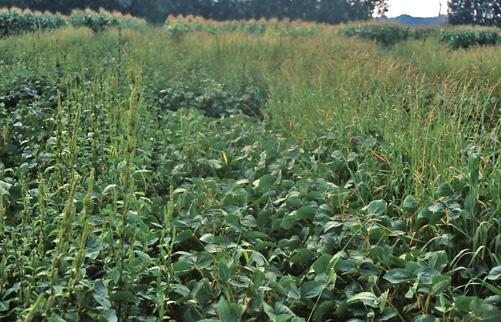
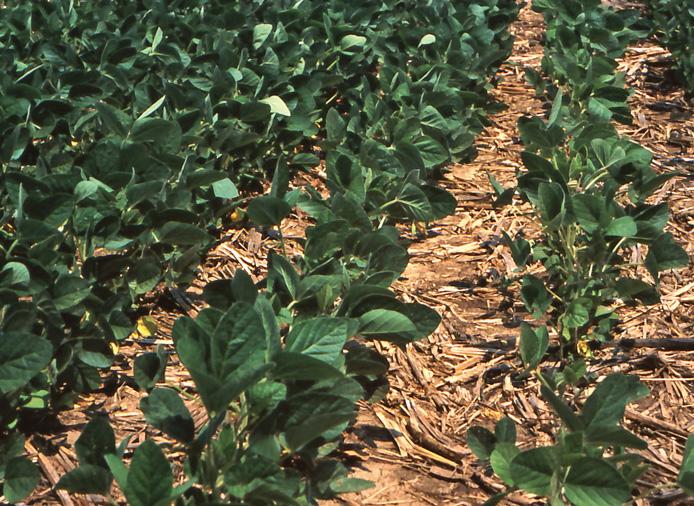
There can be significant yield loss (0.5 to 3.0 bushels per day) if weeds are not controlled in corn between the three leaf (right) and eight leaf (left) stage, Syngenta’s Paul Cowan told growers at its Honeywood research farm in September.
allocation and leaf orientation in response.
“We believe that as a young seedling emerges through the ground, it very quickly starts to sense the environment,”
Swanton explains. “As a seedling comes out of the ground and detects weeds, it senses that competition and triggers the shade avoidance response.”
The studies also revealed that weed competition had an impact on seedling growth and development. Corn seedlings emerging with weeds experienced a 0.2 gram reduction in biomass per day relative to weed-free seedlings. Seedlings that had weedy competitors emerge after the three to four leaf tip stage, meanwhile, did not elicit a similar response.
What does this mean for growers?
“This has direct relevance to day-to-day decisions when it comes to weed management on farms,” says Swanton. “When a seedling comes out of the ground, you don’t want it seeing green material. If weeds are emerging at the same time, the plant will respond to the
pending competition and change its growth pattern.”
While many growers are aware of the importance of early season weed control, Swanton wants farmers to know it is not only a question of killing weeds once they have grown: prevention is key to avoiding critical damage at the seedling stage. “Weeds that emerge with the crop are especially troublesome for competition,” he explains. “Preventative action is critical because of how weeds and the crop interact at a very early stage.”
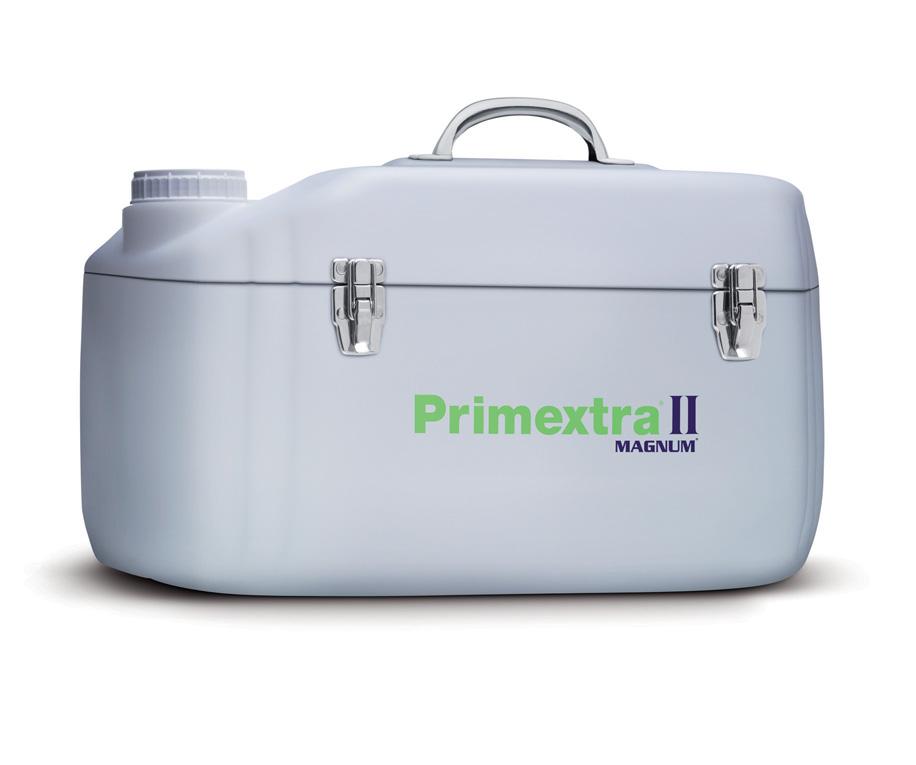
The new research is helping some corn growers look at their herbicide program in a new way: as a tool to manage plant health and encourage strong yields. “At Syngenta, we call this the Foundation Acre,” explains Kristine Savage, corn and bean crop manager at Syngenta Crop Protection. “It’s about laying the foundation for a healthy crop by ensuring your seedling corn plant does not even ‘see’ weeds, thereby avoiding critical damage at the seedling stage. The best thing growers can do is use a Foundation Acre approach with Primextra II Magnum.”
According to Savage, “More growers of both conventional and glyphosate tolerant corn systems are spraying Primextra early and selecting a glyphosate or Callisto for the balance of their herbicide program. That is the yield management approach of the Foundation Acre.”
Corn growers such as Tom Oogema in St. Thomas, Ontario, are making practical use of this knowledge. “Swanton’s research makes sense, so I apply his teachings to my field,” Oogema explains. “It’s important to treat corn at an early stage to prevent weeds, and then it’s a question of helping the crops come through.” ■
Soybean aphids have quickly become the single largest insect pest Canadian soybean producers face since they were first discovered in Michigan fields in 2000. Researchers at Kansas State University, working in conjunction with Pioneer Hi-Bred, have discovered that soybean aphids reproduce more quickly on some soybean varieties than on others. Researchers are still trying to determine exactly why some varieties are able to inhibit aphid reproduction. In the meantime, Pioneer has given all their soybean varieties an aphid antibiosis rating to help producers make seed selections.
“No soybeans are resistant to soybean aphids,” explains Glen McDonald, Pioneer area agronomist at Mt. Brydges, Ontario. “Some varieties do have some mechanism in them that either favours, or doesn’t favour, aphid reproduction. We call this plant reaction aphid antibiosis. We’ve looked at our seed varieties and given those with better antibiosis properties an above average rating. Other varieties, with slightly less, are rated average. Varieties that allow aphids to thrive are given a below average rating.”
McDonald says that at present there are only small differences between varieties with an above average aphid antibiosis rating and those with an average rating, but there are definite differences. In some cases it might make the difference between whether they need to be sprayed.
“Planting a variety with an above average aphid antibiosis rating doesn’t mean you won’t need to spray if you have high aphid pressure in your area,” McDonald says. “It will probably hold them off for a certain period of time, but if it’s a high aphid infestation, then you may end up spraying them as well. However, if you’re in a lower population scenario, then you may not have to spray above average varieties. Some of our new lines show some pretty good tolerance.”
Until resistant lines are developed and reach the market, producers need to maintain their scouting to make sure that soybean aphids are not causing yield loss. If aphid numbers reach 250 aphids per plant, when the soybeans are in the R1 to R5 stage, then fields should be treated within seven days to prevent economic losses.
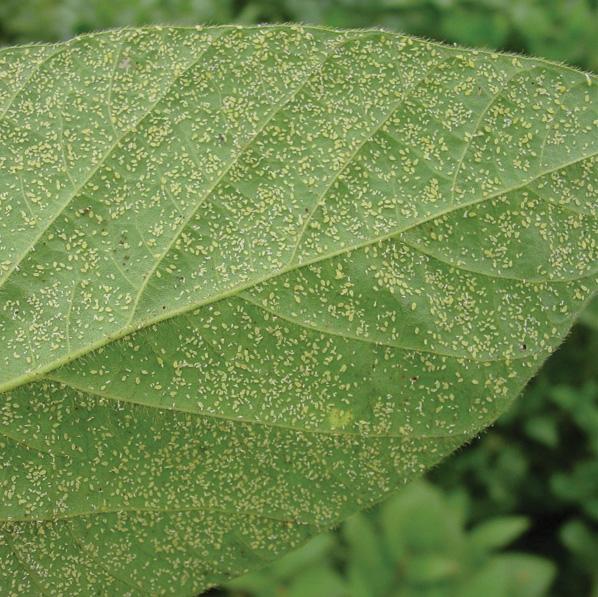
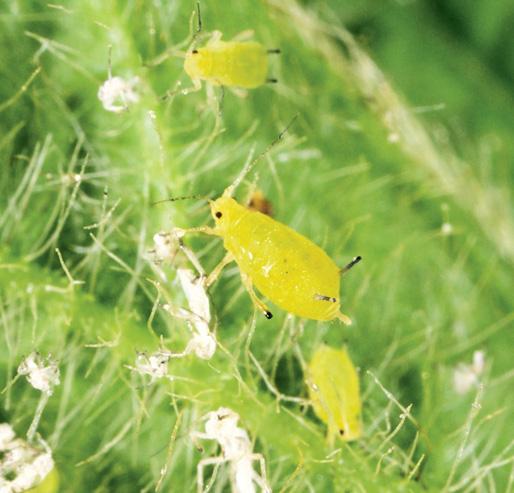
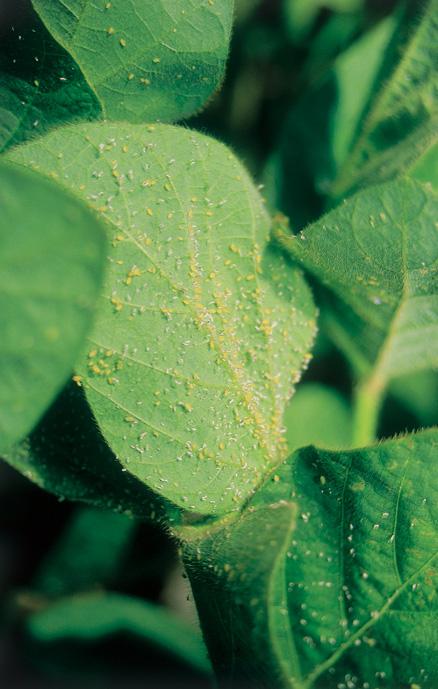
Aphids are small and light green in colour, with small black cornicles or ‘tailpipes’. They generally prefer new growth. Since aphids are not always evenly distributed throughout the field, it is wise to keep an eye open for hot pockets. McDonald recommends picking representative spots in the field and then monitoring them every few days depending on infestation levels.
Scouts should consider thresholds and assess yield loss potential.
CROP MANAGEMENT
They feed by sucking nutrient carrying juices from infested plants. Soybean aphids directly compete with the plants for the nutrients they need to grow and produce seed. The largest yield losses occur when aphids combine with some other plant stress. For example, losses will be much higher if aphid stress is compounded by drought stress.
The worst outbreaks seem to be occurring every second year: 2001, 2003 and 2005 all had major outbreaks. Ontario Ministry of Agriculture, Food and Rural Affairs advisors, however, are not yet convinced whether the alternate year outbreaks are cyclical or perhaps due to a combination of factors. There were isolated problems in 2007 but they were not widespread. No one is quite sure why, but one theory is that severe cold temperatures in April likely reduced the overwintering population.
Alternating infestation years is likely an indication of the predator cycles. Ladybugs and perhaps more importantly, their larvae, are vicious aphid predators. They alone will often be able to control a moderate outbreak. Since 2007 surprisingly did not have a large outbreak, no one is quite sure what 2008 will bring.
“In winter meetings, I joke with producers that they will definitely need to purchase a new pair of running shoes before spring,” McDonald says. “I don’t think they always appreciate my attempt at humour but that’s the reality. They will have to start scouting fields thoroughly in mid June and depending on conditions, continue scouting regularly until the end of July. Aphids are born pregnant so numbers can explode quickly. If you aren’t keeping an eye out for them, they can become a problem in a hurry.”
If aphids do become a problem, they can be effectively controlled by timely spray applications in mid July to early August. Since they are primarily found on the underside of leaves they can be difficult targets. Spray applications can be done with either an air or a ground sprayer. Higher pressures and water volumes should be used to ensure maximum coverage. ■
Aphids, with their black cornicles or tailpipes, can vary greatly in numbers in just a few days, which is why scouting on a regular basis is so important.
against weeds,likevelvetleaf.AndnowCallistocanbetankmixedwithglyphosateonyour glyphosatetolerantcorncrops.Formoreinformation,talktoyourlocalretailer,callSyngenta CustomerResourceServicesat1-87-SYNGENTA(1-877-964-3682)orvisitsyngenta.ca
Root scanning technology reveals key factors in crop health
by Dr. Ravi Ramachandran*
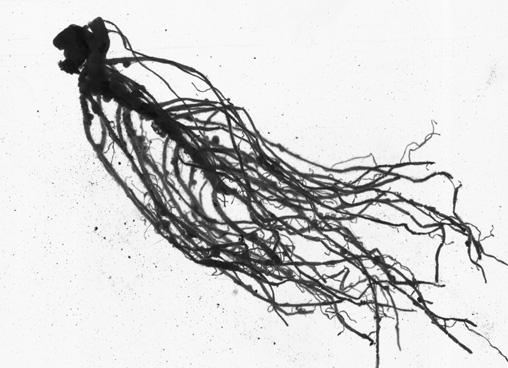
Root scanning is a modern technique that enables researchers to conduct extensive evaluations on root structures. At Syngenta, this technology is being applied for the first time to crop health. Researchers are using it to detect diseases in plants and determine the effectiveness of seed treatments.
To-date, most field biology research has focussed on plant health above the soil, rather than the root structures below. Yet, roots are an essential part of a plant’s health. They must contend with various threats, such as seed and soilborne disease and insect pests, in order to absorb nutrients and water and support healthy plant growth. Athorough understanding of plant roots is critical to developing products that help grow healthy crops.
Research at Syngenta has shown a strong correlation between the fresh weight of seedlings and root morphology, which indicates that a healthy root system is the foundation for a healthy plant. With root scanning technology, researchers are finally able to carefully examine the plant below the soil. This is revealing new insights about the importance of root health, the impact of pests on root development and most importantly, how to fight these challenges with the right seed care products.
How does root scanning work?
The root scanner is an image analysis system designed for root evaluation. It measures morphological features such as root length, surface area, volume and average diameter. Finer root architectural details including the characteristics of the secondary root, such as the number of branches and development of root hairs, may also be studied in detail.
In a typical study, seeds first germinate either in the field or in a laboratory. One to three weeks after planting, the emerged plant is extracted from the ground with the growing root intact. Following a thorough wash, the plant is put in a transparent tray containing water and placed on the root scanner. The scanner produces an image of the plant root and using the appropriate software, the researcher evaluates various root development parameters.
What can be learned from root scanning?
During the past two years, the root scanner system has proved to be a powerful tool for measuring the effect of seed care products on crops such as corn, soybeans, dry beans and pulse crops. As a result, Syngenta researchers have been able to quantify the impact of seed care products.
For example, root scanning makes it possible to analyze the forks in plant roots, which are essential to anchoring the plant in the soil and establishing a healthy plant stand. Using root scanners,
researchers found that peas treated with
Effects of Apron Maxx RTAon peas: untreated (top) vs treated (bottom). The effects of a seed treatment such as Apron Maxx RTAis demonstrated in an analysis of pea roots.
Apron Maxx RTAseed treatment exhibited a 92 percent increase in root branching relative to untreated seeds.
Studies also revealed that plants germinating from pea seeds treated with Apron Maxx yielded roots 15 percent longer and with 17.5 percent more surface area than untreated pea seeds.
Even more importantly, further research revealed that these healthy roots translated directly to greater yields. In replicated trials, untreated seeds yielded 55bu/ac, while seeds treated with Apron Maxx yielded 61.5bu/ac. Seeds that were treated with both Apron Maxx and an inoculant yielded 64.6bu/ac.
What does this mean for growers?
By providing measurable results of seed care treatments, root scanning technology can help growers make more informed choices and better define their expectations when it comes to selecting and using seed care products. This technique will help Syngenta continue to develop products that promote healthy roots and plants. Given the link between root health and high yielding crops, root scanning technology will be a valuable research tool for the industry in the years ahead. ■
*Dr. Ravi Ramachandran is manager of product chemistry and chemical services with Syngenta Crop Protection Canada.
Pressure rinse or triple rinse your pesticide containers
Completely remove the paper booklet
Return clean, empty containers with no paper booklet to your local collection site
NO INTEREST. NO PAYMENTS.
90 DAYS ON $500 OR MORE 180 DAYS ON $5,000 OR MORE*
HURRY! LIMITED TIME OFFER!
Save big on New Holland original parts. Engineered to exact specifications for longer wear and better performance, our parts are designed specifically for your machine — so they fit right and work right the first time.
A guide for your reference
Weed management is one of the top priorities for corn and soybean growers. Each year the choices available, of products and timing of use, become more complex. To simplify the decision-making process and to provide a handy reference, Top Crop Manager publishes its annual Weed Control Guide
An important feature of the tables is the chemical group column. Using this, growers can quickly check the group their product or tank-mix choices belong to, thus taking an important step in managing the development of herbicide resistance in weeds by rotating products between different modes of action.
We are grateful to Peter Sikkema, weed control specialist at Ridgetown College, and Mike Cowbrough, OMAFRA’s weed management specialist, for reviewing the Top Crop Manager Weed Control Guide and making numerous helpful suggestions. Product suppliers have also been of assistance in keeping the guide up-to-date. We have made the tables as user friendly and as concise as possible. Remember though, it is a guide adapted from OMAFRA’s Publication 75, not a definitive text. Growers should double check Publication 75 and product labels to avoid errors.
The Top Crop Manager Weed Control Guide is laid out with products listed by trade name in alphabetical order with major grassy weed products listed first, then major broadleaf products, then the tank-mix partners and finally products that are solely for herbicide tolerant crops. This format allows growers to compare their options of grassy weed and broadleaf weed products, then
after making their choice, to take the second step of comparing the tank-mix choices and picking one that best tackles their grassy and broadleaf weed spectrum.
Product ratings for each weed are the same as Publication 75 and tank-mix ratings are based on the better rating for each weed attributed to the products in the tank-mix. In some cases, the ratings of efficacy for a product may differ from one application timing to another. Note that this guide includes only one
rating. “The ratings provided in the tables should be used as a guide when selecting herbicides. Growers should be aware that the actual control obtained can vary greatly depending on soil type, moisture conditions and weed pressure with soil applied herbicides. With post-emergence herbicides, control will vary with weed size and environmental conditions,” says Sikkema. The information contained in the tables is derived from OMAFRA’s Publication 75 and we strongly suggest this publication and product labels are used for details and cross-reference.
Each year, new products areintroduced. However, due to publication lead-time conflicting with confirmation of registration for new products, we may not have been able to include them. We suggest readers make a suitable note in their copy of the tables as new products are introduced. ■
Peter Darbishire Editor
2008-2009 EDITION
• Problem weed control options in corn and soybean.
• Crop tolerance ratings for cereal herbicides.
• Responsible glyphosate use guidelines for field crops.
• Atable that calculates adjuvant rates to L/100 U.S. gallons.
• New products and tank-mixes.
• New crop staging diagrams.
• More re-cropping information.
• Herbicide resistant weeds.
COST: $15 plus GST
TO ORDER A COPY: 1-888-466-2372, press “1” and then “2”
Roundup Ultra2® herbicide with its high concentration formula delivers superior weed control over imitators. With the best guarantees in the business and unmatched after-sales support, all for $7.49 per acre*, that’s unbeatable value! For affordable proven performance rely on Roundup Ultra2. www.monsanto.ca
Roundup Ultra2® Features
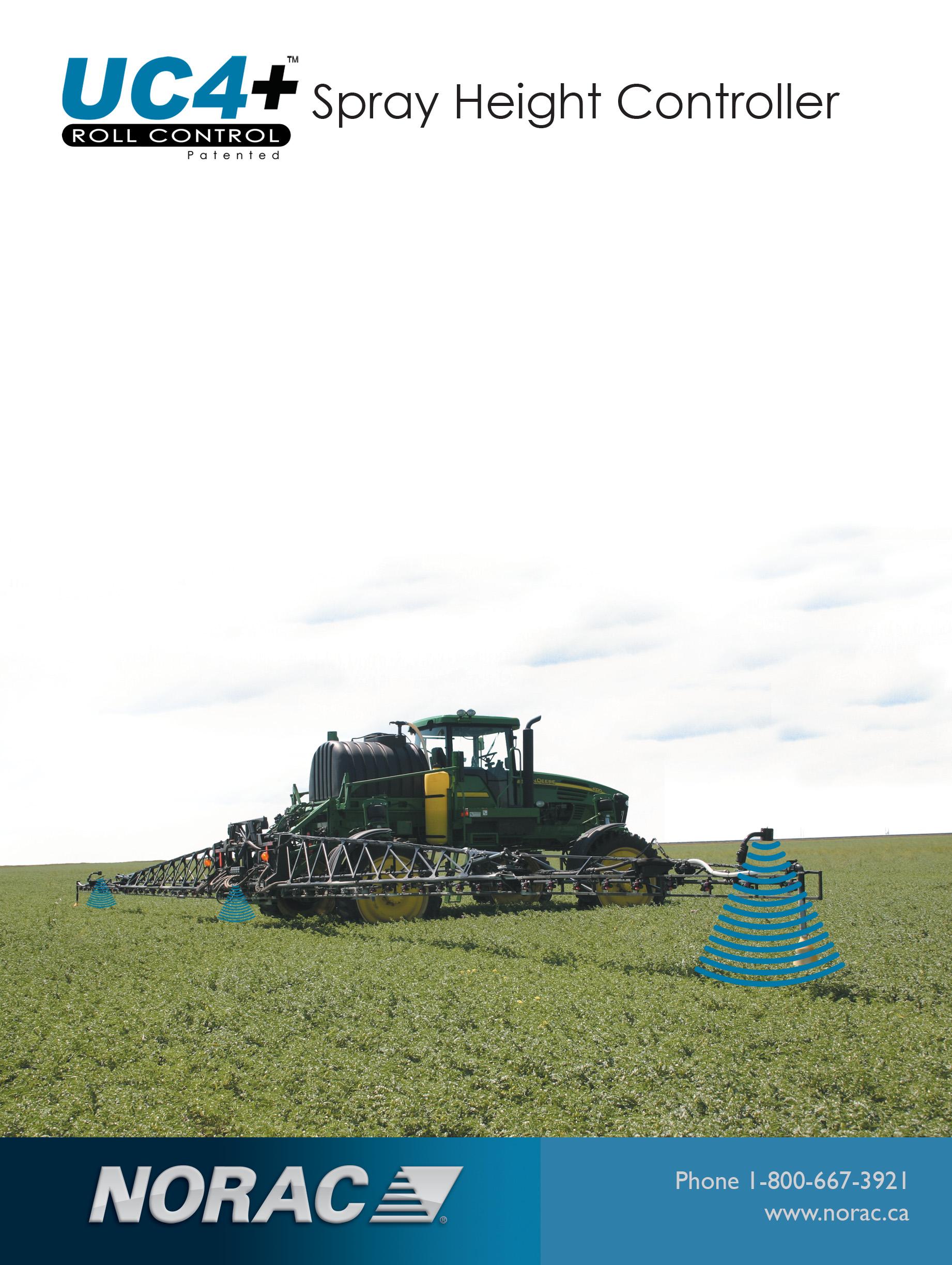
ROLL CONTROL for superior performance in all terrain. NORAC’s patented ROLL CONTROLTM system provides unmatched response speed and boom stability.
“Soil Mode” to “Crop Mode” with the flip of a switch. SMART SENSOR TECHNOLOGYTM gives the operator the target choice that best suits the stage of the crop and weed profile.
Center section height control comes standard.
True height control for the entire length of the boom. Unfold, hit AUTO and go.
100% satisfaction or your money back. Guaranteed. We stand behind our product.
? Insufficient data available to provide control rating.
c Use pre timing for optimum control.
e Use post timing for optimum control. A Triazine resistant biotypes exist. B Imidazolinone resistant biotypes exist. RR Roundup Ready corn only. STS Sulfonylurea tolerant soybeans only. * ppi rating: May differ from that shown. For most products, ratings for ‘pre-plant incorporated’ and ‘pre-plant surface applied’ are the same. For a few products ratings may change slightly between treatments. Check Publication 75 for details. ** Topgrowth burndown for emerged weeds: Gramoxone and glyphosates. Red
Learning more about soybean aphids
by Ralph Pearce
In 2001, growers in Ontario were introduced to soybean aphids in a rather abrupt fashion. It was a bumper crop, so to speak, and the damage was relatively widespread and severe. The learning process had begun.
Six years and several infestations later, growers, extension personnel and researchers are still learning. And some of the lessons are advising some adjustments to conventional thinking that developed in the early years following 2001. For instance, one of the widely held notions of soybean aphids being an ‘every other year’ occurrence, is simply untrue for Ontario. That may have been the case within the first three years, but warm winters, sufficient hosts for overwintering and early spring storms that bring aphids into Ontario have combined to make their ‘visits’ an annual event, even if only in patches.
At the 2007 Southwest Diagnostic Days at Ridgetown College, Tracey Baute, field crops entomologist with the Ontario Ministry of Agriculture, Food and Rural Affairs (OMAFRA), spoke of the changing standards. In addition to soybean aphids being an every year pest, she shared some of what she has learned during the past three or four years, particularly pertaining to thresholds for spraying. Since 2001, the threshold standard has been 250 aphids
per plant. At that point, it was said, a grower should be out spraying. But now there is a better understanding of what that 250 level signifies.
Leanne Freitag, an agronomist with Cargill, agrees with Baute’s observations. “There is definitely much interpretation to be had when looking at aphid thresholds, including the time of year when those populations are heavy,” she says. “In 2007, they came in earlier than we’ve ever seen them before. So the state of the crop and the health of the crop are both very important to consider when you decide to pull that trigger for spraying.”
The general guideline Freitag follows is the 250 aphids with the population increasing, however, 250 aphids on soybeans that are six inches in height is more stressful to the plant than 250 aphids on soybeans that are knee high. In other words, timing is everything. In 2005, Freitag remembers aphids entering Ontario later in the summer and during a growing season where soybeans were not drought stressed. “There were fields that reached 1000 to 1500 and we sprayed them, and there was a bit of a yield increase from spraying,” she says. “But in 2007, we saw upwards of 20 or 30 bushels per acre increase by spraying, so having that additional stress on the plant allows the aphids to have more of an impact.”
Soybean aphids can occur every year, not every other year, so growers must scout more frequently to help with their spraying decisions.
PEST PATROL
The more scouting, the more understanding Laura Neubrand is another agronomist who uses the 250 threshold as more of a guideline, however, she holds to it as a default position. For most growers who do not scout, the conventional threshold is a quick and easy figure on which to base their spraying decisions. “If you have someone who is checking their fields constantly, then it depends,” explains Neubrand, who works with Hoegy’s Farm Supply in Brodhagen, Ontario.
“We had one of the first fields in this area that was infested with aphids in 2007 and we held off and held off, and we watched it every single day, and all of a sudden, there was a day you could tell the aphid numbers were increasing and the beneficials were not handling it. That’s the day we went in there and nailed them. Was the threshold over 250? Yes it was, but as a general rule, we do need to stick with that 250 because we don’t check every field as we need to.”
The key to the threshold is preparation. At 250, says Neubrand, growers should ‘get ready’ and monitor the aphid populations during the course of several days, not just scout once and decide to pull the trigger. The challenge here is an old one: growers need to do more scouting of their fields, preferably every five to 10 days, particularly at mid season.
Like Freitag, Neubrand cautions against treating soybean aphids as an
odd year pest; there are local hot spots which can happen in any one year. “In our area, some growers have been saying they are a problem once every three years, so aphids aren’t going to be a problem in 2008,” says Neubrand. “But, that’s not the case. It also depends on the weather conditions that we’re dealing with. We’re definitely having more of an issue with them in the drier years. When we get rainfall, that changes a little bit as to how we manage them, but I think we’ve seen them probably two out of the last three years and it was not every other year we saw them; we saw them in 2006 and we saw them in 2007.”
Role of beneficials on the rise
The 2007 growing season also saw the arrival of aphids much earlier in parts of Ontario, particularly along a corridor north of London, from Komoka to Thorndale. Early arrivals coupled with drought stress through the summer months forced many growers to spray earlier than in past years, which is a concern for Baute. As aphids have become a more regular pest in Ontario, populations of beneficial insects, those that feed on aphids, have grown, as well. Ladybird beetles, syrphid fly larvae, minute pirate bugs and parasitoid wasps are usually out in force to meet aphids as they arrive in fields in June or July.
Earlier spraying by growers poses a threat to natural enemy populations for the entire season. “It would be disappointing to see growers start misusing pesticides, mainly because of convenience, time restrictions or their misunderstanding of when to control their aphid problems,” says Baute. “Because that will impact their biological controls and when it comes to parasitoids, and ladybugs in particular, they are very sensitive to pesticide use.”
As part of the learning curve pertaining to beneficial insects, Baute points out that there are three classes: predators, which simply eat aphids; parasitoids, which lay eggs on or inside the aphids to continue their life cycle; and the pathogens which consist of fungi, bacteria or viruses which can infect and kill off the aphids. As more information about the predators and parasitoids is brought forward, there is a great opportunity for growers to begin understanding that there is a degree of biological control, working for them, something Baute says can and must be protected.
In fact, some chemical agents that can kill aphids are begin deregulated in the US and simply are not available in Canada because they can be harmful to the environment, including beneficials. “But we also have a diverse cropping system here in Ontario, where other types of aphids may live and support and allow the parasitoid population to build before they move to soybeans,” says Baute. “All around, we have a good system in place.” ■
THE BOTTOM LINE
This is a very tough decision to spray or not. Aphids have appeared here the last three or four years, but until 2007 we did not spray. Approximately half of our soybeans were sprayed with no noticeable difference in yield. Grahame Hardy, Inkerman, Ontario. Humbling! Just when you think you’ve got it figured out, the next season is different. One common factor from year to year seems to be that if the soybean plant has an additional stress such as drought or low potassium fertility, then aphids will have an even greater impact on yield, shifting the bias toward control. Alan McCallum, Iona Station, Ontario.
Monitoring the progress of soybean aphids should be done frequently during the growing season, as much to check the control by beneficials as the movements of aphids.
Simple. Affordable. Helps keep things straight.
The new Raven Cruizer ™ Precision guidance that is surprisingly simple.
Big 5.7” color touch screen display Includes 3-D and 2-D swath display plus integrated light bar system. Field review display to verify coverage and skips during tillage, seeding, harvesting or spraying.
Available at a competitive price Quick payback on your investment. More-for-your-money features that can actually improve profitability.
Simple do-it-yourself installation Just plug and play. Just as easy to move from tractor to tractor, or tractor to truck!
Simple operation The easiest-to-use contour guidance program available. Even your brother-in-law can figure it out.
Essential information to improve efficiency Built-in DGPS receiver keeps you on track all the time. Easily switch between straight line (A to B) and Last Pass views (ideal for terraces or grass waterways).
Ready for what’s next Easy to upgrade with Raven assisted steering products or a Raven tilt sensor. So get it together. See your participating Raven distributor. Or visit www.ravencruizer.com
Huge potential for soybean traits PLANT BREEDING
Challenge is to convince processors of value.
An important announcement was made late in the summer of 2006: Vistive soybeans, low linolenic varieties were offered to growers for the 2007 growing season. The announcement was significant on several different fronts. First, the variety was being brought to market in answer to requests from Kellogg’s and McDonald’s, two large-scale interests in search of a solution to the trans fat issue challenging food processors and manufacturers. Second, it was commercially available to growers despite the absence of an Ontario based crusher willing to take this variety, which would require segregation, and therefore a premium. And third, this was a consumer related cause-and-effect development. Vistive had been created and then offered to help consumers; it was not a biotech development that only helps growers reduce their costs, a long-time non-farming complaint about biotech endeavours.
Now in 2008, the initial success of Vistive’s 10,000 acres in Ontario is brighter with the recognition of key industry players. Monsanto Canada, Thompson Limited and Hyland Seeds, Soy 20/20 and the Ontario Soybean Growers have come forward
with expressed interest in a medium sized, flexible crusher plant for the province, something that would keep Vistive soybeans grown in Ontario, home in Ontario.
Then there is the prospect of Vistive 2 and Vistive 3 soybeans becoming available within the next five to seven years. There is considerable optimism for these developments, the former of which has a mid level oleic acid profile, and the latter, a combination of mid oleic and low linolenic acid profiles. At the 2007 Farm Progress Show in Decatur, Illinois, growers asked why the Vistive 3 soybean, which has many of the same properties as olive oil, is so significant? Olive oil purchased at a grocery store at 23 cents an ounce, it was explained, is more than 10 times the current value of two cents per ounce for soybean oil purchased at the same store. Beyond these developments, Dan Wright predicts more innovations, particularly for oil components. “Things like Omega 3, which is an oil component that won’t be under a Vistive brand, and high beta conglycinin which isn’t an oil but could be more of a health benefit or more applicable to soy milk or as a filler,” explains Wright, the traits manager for Monsanto in eastern Canada. High beta conglycinin levels in soy beverages do not settle out as much. “And in processed meats, it doesn’t bind
to off flavours but absorbs the flavour of whatever you’re making.”
Alot of educating to do
Despite the enormity of such long-term stability for soybean oil, there is the simple hurdle facing Vistive’s growth in Ontario: no provincial crusher is willing to switch from their commodity soybean oil mindset. The road to success in establishing such a crush facility has many twists and turns. It requires education on several levels, including consumers, food processors and manufacturers.
“The trick is to get the consumer demand linked to the processor and then the grower, and then trying to understand that that time frame is a long one,” says Wright. “And then getting food manufacturers to understand that time frame and not just to try to find some quick fix somewhere else.”
Regardless of how long that education process takes, everyone involved in the enhancement of soybean oil agrees the fundamental issue in 2008 is developing a crush facility in Ontario. “We have to have a processor here in Canada to ramp up the acres,” states John Cowan, general manager at Hyland Seeds in Blenheim, Ontario. “We’re talking 10,000 acres right now, but a processor says that production acreage is nothing, that they need up to 70,000 acres to make it worth their while.”
The problem here is one of perspective. Growers – and seed companies to an extent – ask for a premium to secure supply: the processors demand consistency and quality of supply before they offer premiums. Again, educating the unfamiliar becomes necessary. Cowan points out that historically, buyers who represent processors are not in business to pay premiums; in fact, their success hinges on acquiring their raw materials at the lowest price. That mentality is reflected in consumer buying habits where price is often the predominant purchasing criterion.
“We have to convince the processors and manufacturers that they’re part of the value chain and that they can extract value in this, too,” reasons Cowan. He
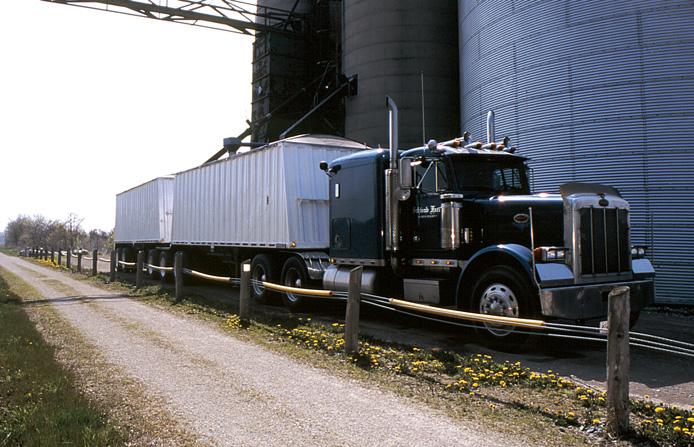
The nearest facility to accept Vistive soybeans from Ontario is located in Zeeland, Michigan, which means trucking costs will negate the bulk of any premiums.
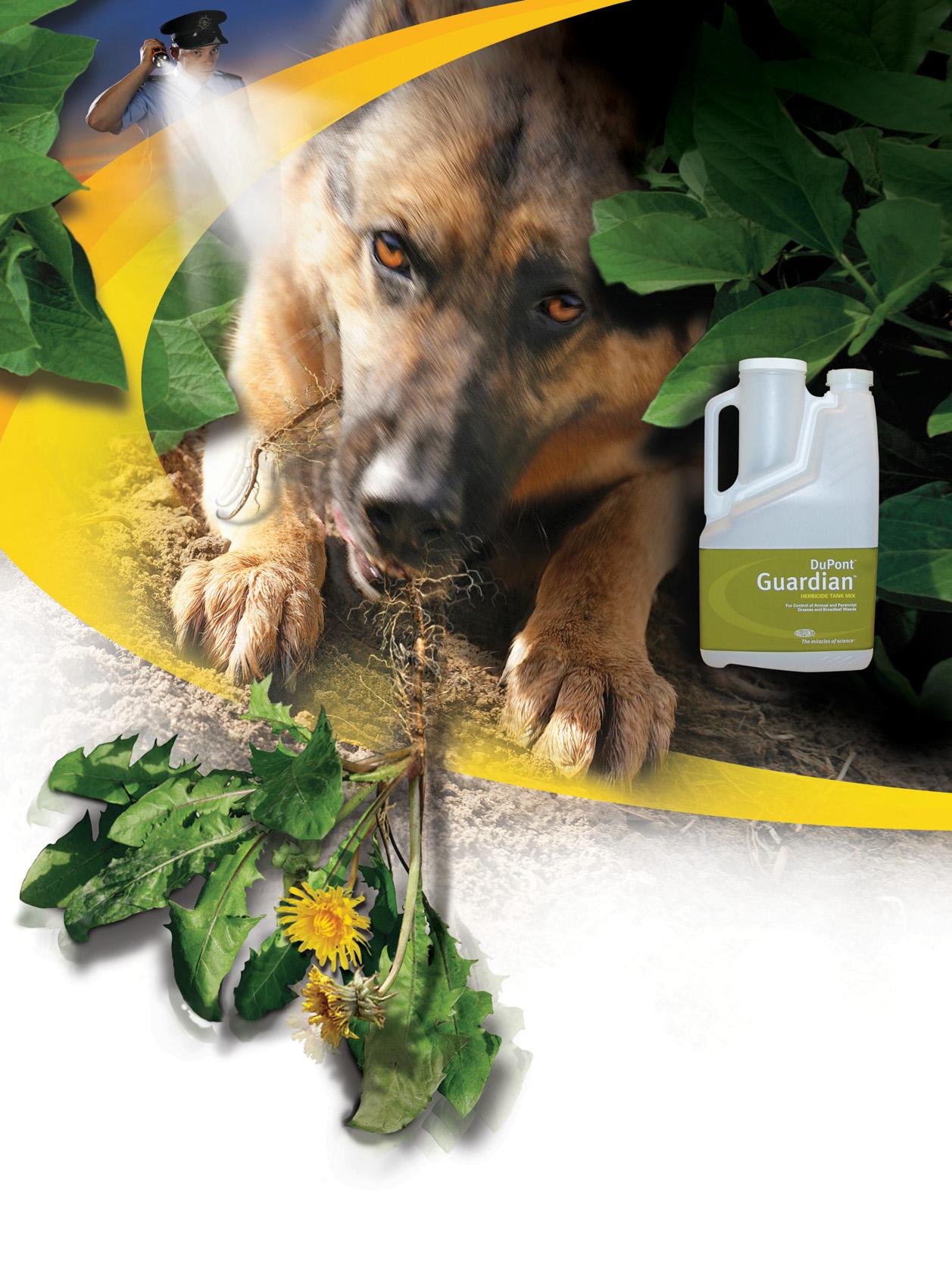
In glyphosate-tolerant soybeans, DuPont ™ Guardian™ goesbeyondglyphosate.Itdelivers one-pass,residualcontrol–includingtoughweeds likedandelion,yellownutsedgeandannualsow-thistle. Plus, it guards against weed shifts.
PLANT BREEDING
Developments such as polyols, methyl soyate and a type of soy wax will push the demand for soybeans beyond conventional crush to a ‘flexible’crush facility in Ontario.
agrees with Wright’s assessment that education at various levels is required. “Growers and the seed trade and the trait provider are pretty informed on what the process is and who their customers are in terms of oil processing. But I’m not sure the same knowledge goes back to a processing perspective.”
Currently, the closest processing facility accepting Vistive soybeans for crush is in Zeeland, Michigan, on the
west-central side of the state. Cowan commends the plant for accepting the soybeans, however, the cost of transportation from points in Ontario negates any benefit that can be derived from a premium.
Present processor links potential prosperity
Jeff Schmalz knows all about present needs leading to success in the future. As executive project director with Soy 20/20 Project in Guelph, Schmalz is well aware of the challenges facing the soybean sector, not just where Vistive is concerned, but with other valueenhanced developments. And the food sector represents the greatest potential in terms of premiums to the grower and benefits through the entire processing and manufacturing chain, and including the consumer.
Consumption of soy proteins is one key indicator, says Schmalz. “The average Canadian eats about 3.25 grams of soy protein per day; in the Orient, the average per capita consumption of soy protein exceeds 25 grams per day,” he notes. “Acase can be made that the Oriental diet is healthier. We believe there is an opportunity to increase soy protein consumption in Canada by developing new and unique food products with enhanced levels of soy protein.”
Beyond the enormous upside for food grade soybeans enhancing North American diets, Schmalz agrees with Wright and Cowan on the need for a crush facility in Ontario. In fact, change is sweeping through the industrial processors and chemical manufacturers, and a domestic crusher is the fulcrum on which success in the future is teetering. Polyols, methyl soyate and a type of soy wax are just some of the products being explored.
“Alot of chemical companies in the US are taking a look at what goes into their chemicals,” says Schmalz, predicting emerging markets for new uses for soybeans and other crops. “In 2009, there will be new environmental requirements, the reduction of petroleum based, volatile organic chemicals, and this will create an opportunity for new bio-based solvents, and soy based methyl soyate is one of those.”
However, before there can be success in attracting investors for these innovations, the first order of business is building a dedicated, but flexible
medium sized crush facility in Ontario. “If we’re really going to capture the wealth here, we need to be able to crush the beans in this province,” relates Schmalz. “One figure that has been discussed would be a new crushing plant in the range of 1000 tonnes per day. Both ADM in Windsor and Bunge Milling in Hamilton are three to four times that size and can crush both soybeans and canola. A1000 tonnes per day facility might cost around $25 million. And if you were into biodiesel alongside it, you can double that figure.” That secondary product issue is another facet that must be considered, Schmalz adds. Adedicated, domestic crush facility would give growers a direct market for their value added identity preserved soybeans, but there is more to that facility than just oil and meal. “You have to work both ends of that plant, so while we need that crush facility, we also need the businesses surrounding soybeans,” he says. “Businesses like that are not for the faint of heart. They’re often low margin, but
THE BOTTOM LINE
There is a huge potential for soybeans in Ontario. I feel that producers will be growing soybean varieties for specific markets. The general idea that soybeans are for animal feed and oil will be gone. Grahame Hardy, Inkerman, Ontario.
Eventually, consumers demand what they want in health benefits at prices they find acceptable. The processors and retailers will meet their needs, but I am not sure farmers will see much in the way of increased income. When we grow any crop, whether it is specialty trait or otherwise, we always strive for the best yield possible using the lowest input costs.
We also understand that any crusher must have enough volume of any specialty crop to justify changing over its facility. Perhaps we will see new smaller operations that will process specialty runs. We may find ourselves dealing with these if they develop. Lennie Aarts, Wainfleet, Ontario.
Circle 23 on reader reply card
TILLAGE AND PLANTING PLANT BREEDING
they are large scale, and you’re not going to shut down their operation to put 10,000 acres of soybeans through one of their facilities.”
Future imposition?
On a very positive note, if patience is a virtue, good times may be close at hand. Reports of government acceptance of studies by Monsanto and other groups that confirm the benefits of low saturated fats, and linking those to enhanced soybean varieties, may prompt government ministries to establish new food standards. “I’m thinking that two years down the road, the government could say to the processors and food manufacturers, ‘You’re going to have to do this, and use these farm-based products, because we say you have to’,” predicts Cowan. If that happens, the short-term probability of an Ontario based crush facility being built would be much higher. ■
Success in soybeans will hinge on attracting more consumers to the benefits for soy foods, and building demand for chemical solvents and compounds, car parts and biofuels.
Simple tools best for wheat ‘starter’
by Ralph Pearce
Ask Stephen Thompson about the implement of his that can help even tough planting conditions and boost yield, and one thing he will stress is that it is not a revolutionary piece of farm equipment. He does not even like to refer to it as ‘innovative’. Instead, it is a testament to simplicity and an accountant’s dream.
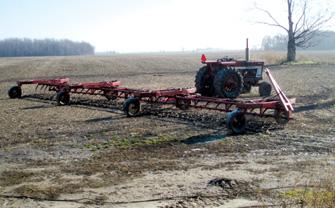
Purchased for almost nothing, Thompson’s less-than-miraculous find is no more than a 16 section drag harrow bar that is roughly 50 feet wide. Thompson made his own refinements to it, creating an implement that raises and lowers the harrows hydraulically and has two hitches; one for the field position and the other for the road position. It also has eight wheels which pivot 90 degrees to allow for the change from field to road positions.
Thompson, who farms near Clinton, Ontario, came by the harrow through a friendship he cultivated with George Wraith, a former dealer with Versatile Farm Equipment in Goderich. Wraith had brought the implement from western Canada. After he died, Thompson paid the Wraith family the princely sum of a bottle of rye in exchange for the harrow bar. “The family told me I was the only person they knew who would make George proud the machine was going to be put to good use,” relates Thompson, noting that such attachments were common in the 1950s. “There’s nothing high tech about it at all, essentially it levels the ground.”
And it did just that. In the fall of 2006, when most growers were having to decide whether to mud-in their winter wheat or wait to plant spring varieties, Thompson found the perfect use for the harrow bar. “Our soils were a little ‘cheesy’ so, as we were trying to plant the crop, the soil wouldn’t cover the seedrow,” he explains. “So we ran the harrow bar crossways to cover the slots and the bottom line was that we averaged 80bu/ac. That $200 investment in time and some extra metal made $20,000 in total return. Even if I only use this once in six years, it’s worth the investment.”
Simplicity is one key to success for this harrow bar, but width helps cover a large acreage in a short time period.
The best news is, these types of implements are available at most auctions throughout rural Ontario.
Nothing but admiration
One convert of the Thompson Tickler is Pat Lynch of Cargill AgHorizons in Stratford. Lynch acknowledges Thompson’s reluctance at being considered an ‘innovator’ for using the harrow bar, yet he admires the Thompson family for their collective integrity and creativity, and their ‘Why not?’ approach.
The fact that Thompson was able to acquire the harrow bar for just a bottle of rye – and make it work to the extent he has – only deepens that respect. “I had worked with the Thompsons for a long time and I’d seen them use it at different times, as a sort of a rotary hoe, but where it really made a big difference was in the fall of 2006 with the wheat crop,” says Lynch. “They’ve used it at different times, as somebody would a rotary hoe, or maybe even as a soil finisher, just to rough the soil up a bit if it’s crusted and really just to help emergence.”
While Lynch cannot think of any other application than as a leveller or soil finisher, he would like to see its effect on weed control. “If somebody had conventional till or even in no-till, just to do some early weed control, just to get rid of weeds,” says Lynch, “I would be interested to see what this would do for that first flush of weeds if you put on herbicide and don’t get enough rain. It’s cheap herbicide, you don’t have to worry about resistance and the beauty of Thompson’s unit is that it’s so wide, you can cover large acreages in a short time.” ■
How your seeds could grow a money tree.
If you treat your seeds before you plant, they will grow into successful crops. And successful crops translate into more money. In fact, you can receive an increase of up to two bushels per acre when you use Syngenta Seed Care™ products. By controlling insects plus seed- and soil-borne diseases, you’ll be producing strong crops, which can lead to much more. For more information, call Syngenta Customer Resource Services at 1-87-SYNGENTA (1-877-964-3682) or visit syngenta.ca
Refuge in corn fields still a concern
Acceptance is better than before.
When Bt corn became commercially available in the mid 1990s, the yield advantages were clear, even if the requirements for aspects like refuge, minimum distance and record keeping were not. Ten years later, with some significant advancements in breeding and technology, grower aptitude in planting these hybrids has advanced as well. It is to the point where there is more than a passing familiarity with pest management practices concerning the use of Bt and now, corn rootworm (CRW) Bt corn hybrids.
Growers today are well acquainted with the primary requirements for
Scouting is Essential!
Scout refuge plantings to determine the level of insect pressure in your field. Then scout the Bt hybrids to note their effectiveness and look for signs of damage that may indicate resistance to Bt.
European Corn Borer Damage Scout at whorl stage, look for shot holes.
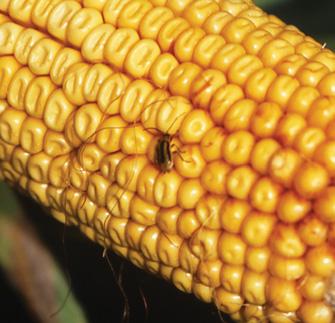
Corn Rootworm Damage
Dig up roots with a shovel to look for CRW feeding njury in mid-July when they have finished feeding. Look for lodging or goosenecking in the field.
For more information on Bt corn, scouting procedures and IRM:
growing genetically modified corn as a tool to manage existing populations of European corn borer (ECB), and are becoming aware of the increased risk of corn rootworm resulting from an increase in corn on corn with the biofuels trend.
Far from becoming complacent however, the industry as a whole is working to further acceptance of the requirements, in advance of newer hybrids with stacked genetic traits. Predictions of a day in which refuge crops will be unnecessary or where a glyphosate tolerant hybrid could be used in place of a conventional non-Bt hybrid are cause for concern by some.
The concern is rooted more in the ultimate impact of newer genetically modified (GM) events. Despite their
BtCORN NEEDS A REFUGE
If you are planting Bt corn this spring, you need to plant a non Bt refuge too.
insistence, science and industry can provide solutions that appear to be sound and lasting. But nature’s ultimate impact can be far more random and severe.
Acceptance
and reluctance
There are several types of Bt, each controlling a specific group of insects. Some control beetles while others control larvae of the moths and butterfly group, Lepidoptera. The advent of ECB Bt technology has been reliant on a few single Cry proteins, which cause a disruption in the epithelial layer of the gut in some members of the Lepidoptera group, namely European corn borer and corn earworm larvae.
This is a requirement set by the Canadian Food Inspection Agency. It is also a strategy endorsed by leading scientists to reduce the risk of insect populations developing resistance to Bt corn.
Failure to comply with refuge requirements may:
• lead to insect resistance
• slow down the introduction of new Bt corn technologies
• affect individual grower’s access to these products
When growers pick up their seed in 2008, they will receive a double sided pamphlet with a front page similar to this, stressing the importance of refuge crops in both ECB Bt corn fields and CRW Bt corn fields.
The theory behind establishing refuge and the associated guidelines was to slow development of resistance against those single Cry proteins. “The original refuge was set conservatively to consider all the possible options, and it was based on science, too,” insists Tracey Baute, field crops entomologist for the Ontario Ministry of Agriculture, Food and Rural Affairs at Ridgetown. “We realized that we can’t take a risk, and it’s a good idea to establish resistance management strategies so that the insect does not become resistant to one mechanism of control. We all agreed that 20 percent refuge fit the bill, and it was easy enough and flexible enough for the grower to work it into his plan.”
Since its establishment, there has been some reluctance to planting refuge: initially growers relied on their neighbour’s conventional, non-Bt fields for their requirements. However, the Canadian Food Inspection Agency (CFIA) quickly joined the international scientific community, recognizing the need for six primary guidelines for Bt corn and pressed seed companies to carry that message to growers.
In the US, some researchers, including Dr. Kevin Steffey of the University of Illinois at Urbana-Champagne, have voiced their frustration at growers who have admitted they plan on or continue to plant 100 percent Bt hybrids. Dr. Marlin Rice of Iowa State University also has warned against abandoning corn refuge, echoing Steffey’s comments about preserving the technology responsibly. His commentary appeared
After pollination scout again for this damage:
Shotholes
Broken TasselFrass At AxilTunnelling
Shotholes
Farming isn’t brain surgery. Now, it’s much more precise. With RTK sub-inch accuracy, Case IH AFS AccuGuide™ equipment is the most precise in the industry. Eliminating skips adds rows to every acre. Removing overlaps cuts fertilizer and fuel costs. Even a brain surgeon can see how our precision equipment will boost your yields and maximize profits. See your dealer or visit caseih.com/AFS. CASE IH. FOR THOSE WHO DEMAND MORE.™
Shotholes, one of the many signs of European corn borer damage, indicate continued vigilance is needed, in spite of relatively high rates of compliance with refuge crops.
as a guest column in the University of Guelph-Ridgetown Campus weekly newsletter in April 2007. Others in the US and Canada have suggested the 20 percent rule, and the other requirements, are based only on theory, not empirical data, thus questioning their value.
However, with the introduction of CRW Bt hybrids, and with stacked trait hybrids set to become a new standard, the theory behind refuge may become more pressing. Future hybrids are expected to have two Cry proteins that control ECB and two other Crys that control rootworm, all in one hybrid. Despite the principle of using two Cry proteins against the same pest at one time to reduce the risk of resistance, Baute maintains much is unknown about how these pests will adjust.
“The seed trade is going to be coming out with these multiple stacked products that are going to be used even in fields that only have one of these pests as a problem. But both insects are being exposed to Bt,” she explains. In theory, with two different modes of action, the insect is less likely to develop resistance. “But it can happen and a lot
of the work isn’t done yet. We need to know whether that resistance can occur. Until we have both answers, we’re just guessing at the theory because you never know with nature. It tends to adapt to survive rather than go extinct.”
Project now underway
It is of vital importance to the seed trade that any and all questions are answered, says Gary Bauman, manager of technology and agronomic services for Syngenta Seeds Canada. On the one hand, he lauds the efforts of growers to implement the requirements for growing refuge crops, and he believes that most growers who are not complying are likely doing so because of miscalculations or time constraints coupled with shifts in acreages at planting.
Based on the most recent industry survey from 2007, most were found to be in compliance with refuge requirements. Where the numbers did drop were in areas of southwestern Ontario where growers were new to planting corn; compliance there dipped from roughly 85 percent to 65 percent. In light of word from the CFIAthat 2008 will be a year they are monitoring fields in Ontario, Quebec and Manitoba, Bauman says there will be a renewed effort in communications and education to recognize the need for greater diligence with refuge crops.
However, Bauman also notes there is a considerable learning curve with the newer CRW and stacked traits hybrids, an example of which is the minimum distance requirement. “If the grower is
Requirements for management of Bt and CRW corn hybrids
The Canadian Corn Pest Coalition (consisting of an expert panel of Canadian researchers), in concert with the Canadian Food Inspection Agency, the Ontario Ministry of Agriculture, Food and Rural Affairs, the Ontario Corn Producers’ Association and seed industry representatives, have agreed on these requirements for planting Bt corn.
Requirements for management of ECB Bt corn hybrids:
1. Plant a minimum of 20 percent of total corn acreage to non-Bt refuge.
2. Refuge must be within 400 metres (roughly 1000 feet or 1⁄4 mile) of Bt corn.
3. Keep Bt and non-Bt seed separate at planting to decrease chance of resistance.
4. The use of ECB insecticides is not permitted in refuge.
5. Refuge hybrids should be of the same maturity as Bt hybrids.
6. Growers must keep careful and accurate planting records, including location of Bt and non-Bt hybrids, for monitoring of insects and hybrid performance. It is also strongly advised that growers scout Bt corn for the presence of European corn borer feeding. Where there is greater than five percent ECB feeding, contact
the seed company agronomist (procedures exist to assess possible resistant populations). Requirements for management of CRW Bt hybrids:
1. Plant a minimum of 20 percent of total corn acreage to non-Bt refuge.
2. Refuge must be adjacent to or within CRW Bt field.
3. Refuge may be treated with CRW larval control with soil applied or seed insecticides (provided economic thresholds warrant their use). Insecticide use for adult control is not permitted.
4. CRW Bt corn and refuge planting must be owned or managed by the same grower.
5. If refuge is treated for other late season insect pests such as corn borer, then the CRW Bt field must be similarly treated.
6. Where adjacent field option is used, CRW Bt corn and refuge fields should have the same rotation histories and maturities.
7. Mixing CRW Bt and non-Bt corn seed at planting is not permitted. More information is available from the second edition of the publication, AGrower’s Handbook , on-line at: www.cornpest.ca/lib/bmp.cfm ■
*Article used with the permission of the Canadian Corn Pest Coalition.
PEST PATROL
Corn rootworm has been in Ontario since the 1970s but has been controlled largely through rotation, which is why it is such a concern with talk of corn on corn or continuous corn crops.
just planting corn borer technology, then the guidelines on refuge percentage, the distance and the record keeping, they’re all pretty clear,” says Bauman. “Now that they have the rootworm trait, the 20 percent refuge still stands, but now when we start talking about proximity, the distance, the 1000 feet, is no longer sufficient.”
In fact, for growers with CRW Bt hybrids, the simplest solution will be to plant their refuge crops in the same field. The shift in that particular guideline is due to the fact that rootworm adults tend to stay in the same field where they emerge to mate. “The next best thing which is acceptable is that the refuge is planted in an adjacent field,” states Bauman. “You do not want any
part of the field that has CRW Bt corn in it where the adults emerging will have more than a quarter of a mile before they hit a refuge area. It’s pretty clear that’s something the industry and growers have to work better at and not just adopt the ECB guideline.”
Another difference with CRW Bt hybrids is that growers can use Poncho 1250, Cruiser 250 or a granular application of Force on the refuge crop, as an insurance against surviving emerging adults. The current guidelines for ECB Bt hybrids make no such allowances.
Low, medium and high dose
As part of the learning curve where CRW technology is concerned, the ceiling has yet to be reached in terms of potency. According to Bauman, the VT YieldGard hybrids from Monsanto, Pioneer’s Herculex and Syngenta’s Agrisure RW hybrids are all at medium strength. “They control the first instar very well, with some effect on second instar feeding, but generally the later instars will survive feeding, so you can have as many of the numbers that they have in the grower’s guide,” he says. “Five percent of the larvae that were hatched and feeding in there could emerge as adults. The fact you can find emerging adults of corn rootworm in a Bt field is a reality and therefore, it’s very important to have that refuge principle in effect, so that you get the mixing of the populations on an ongoing basis.”
Bauman adds that current corn borer technology is all high dose, with very few survivors, where later feeding might occur because the protein has been deactivated as a result of drought. The other instance might be a later instar from a refuge crop, surviving and moving into the field to feed.
Management a multi-faceted matter
The idea of managing for CRW is dependent on other factors, as well.
Alan McCallum, an independent crop consultant from Iona Station, Ontario, believes the advancing technology of stacked traits and enhanced hybrids will usher in the need for much more detailed planning on the part of the grower. Faced with higher prices, parity in currencies and speculation of tightening supplies in wheat and corn, McCallum sees the increasing demand for better management and planning.
“There’s going to be a lot of thinking around corn on corn going in to 2008, and what are the considerations we have to make, particularly with insect tolerance and herbicide tolerance, and whether we’re worried about taking volunteer corn out of a corn crop,” says McCallum. “Certainly we have a lot of tools available, and the fact that we have both genetic resistance and seed treatment control for rootworm helps, but it takes more planning to make it work.”
One aspect that could help further the acceptance of refuge would be to ensure availability of the same base genetics and resulting yield potential to refuge
PEST PATROL
hybrids. “From a grower’s standpoint, they would love to see the refuge-type hybrids being available in the premium genetics,” suggests McCallum. “Seed supply is such that we’re seeing a larger yield penalty because the only refuge hybrids that are available in some maturities are the older genetics, so we end up paying for that lack of technology and a lack of the premium genetics, and compliance becomes more difficult.”
Be certain the pests are present
Of course, increased scouting and diligence as to the presence of the pests targeted by the technology would also help. According to Baute, a sense of complacency may be setting in, given the technology that is now available to growers. “The hybrids are getting so good now and with the agronomics, some growers don’t even feel the need to go out and make sure it fits their needs,” she says. The first order of business for any grower should be to confirm that corn borer and rootworm are both pests on the farm. Otherwise, she adds, focus on the one pest that is present and find the best agronomics for the hybrid that applies to the conditions on that farm.
Without taking such basics into consideration, growers can be mixing up which traits and guidelines to use, leaving themselves ill-equipped to properly manage corn borer or rootworm. “That’s what scares me, because if it gets really inconvenient, some growers may stop planting refuge
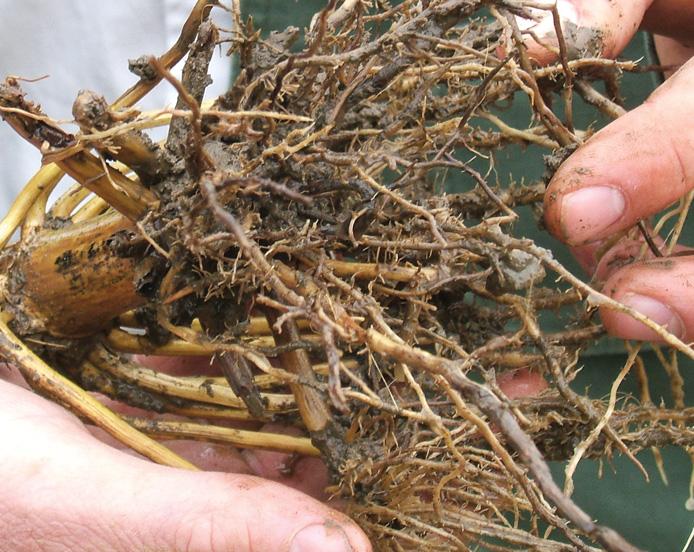
Feeding on main roots and smaller root mass are something to be avoided, hence the heightened awareness surrounding use of CRW Bt corn hybrids.
and that’s not the goal for anyone here,” concedes Baute. “And CFIAis watching and there are flags for some potential problems there.” Still, Baute is encouraged by the acceptance of refuge requirements and the successful use of Bt technology for more than a decade. The unknown factor in 2008 is the development of rootworm and its potential for resistance.
From a private sector perspective, however, Bauman points out research work being done by the Corn Pest
Coalition. With the help from Dr. Mark Sears of the University of Guelph, along with OMAFRAstaff, Syngenta, Monsanto, Pioneer and Dow, this co-ordinated effort is trying to develop an effective protocol for corn rootworm larval feeding and assessing injury levels. The project would then determine the economic injury levels of that feeding and whether resistance is developing. “That’s a big project underway right now within the industry,” says Bauman ■
Fusarium in soybeans not new, not appreciated
Species and conditions vary for it to have impact.
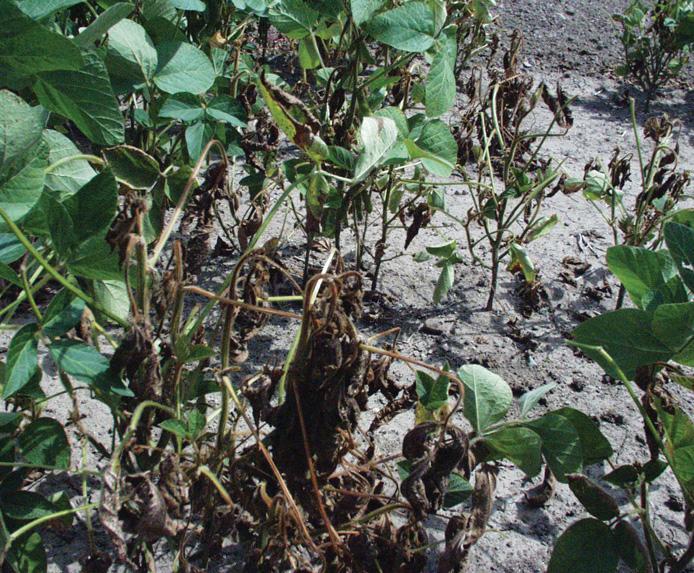
In all three of the major crops in eastern Canada – corn, soybeans and wheat – fusarium can be a problem. It is a disease that has the same name, yet all are very different in terms of the impact on their respective crops. In wheat, F. graminearum is the pathogen for fusarium head blight. In corn, F. verticillioides is the cause of fusarium ear rot. Yet in soybeans, there are two primary pathogens: F. oxysporum, which causes fusarium wilt or blight of soybeans, and F. virguliforme, the culprit behind sudden death syndrome (SDS). It is not that fusarium is a new disease for soybeans, it is that 2007 was a year in which many growers were impacted by it, while researchers and pathologists try to learn more about it. When it comes to diseases, fusarium is abundant in numbers, with more than 20 different known species. Although they have been identified, the sheer numbers can make specific identification of one species or causative agent more of a challenge among growers.
Fusarium wilt is often confused with phytophthora root rot, even though wilt usually occurs in a dry summer while phytophthora is more common in wet years.
According to Albert Tenuta, field crops pathologist with the Ontario Ministry of Agriculture, Food and Rural Affairs (OMAFRA), fusarium has become one of those disease complexes that growers tend to overlook. “As far as I’m concerned, fusarium complex or fusarium root rot in soybeans are two diseases that have not been fully understood or fully appreciated over the years,” he says, adding that many of his colleagues are quickly arriving at the same conclusion. “It’s only now that many people are starting to realize that fusarium truly does have a potentially significant impact on soybean production, not only in Ontario but in North America.”
Wide point of infection
In soybeans, fusarium can infect the field at any point in the growing season. “It’s a great pathogen that can affect the plant at any stage of development and particularly when it is under stress,” says Tenuta. “The other thing is it can also weaken the plant, so there are many
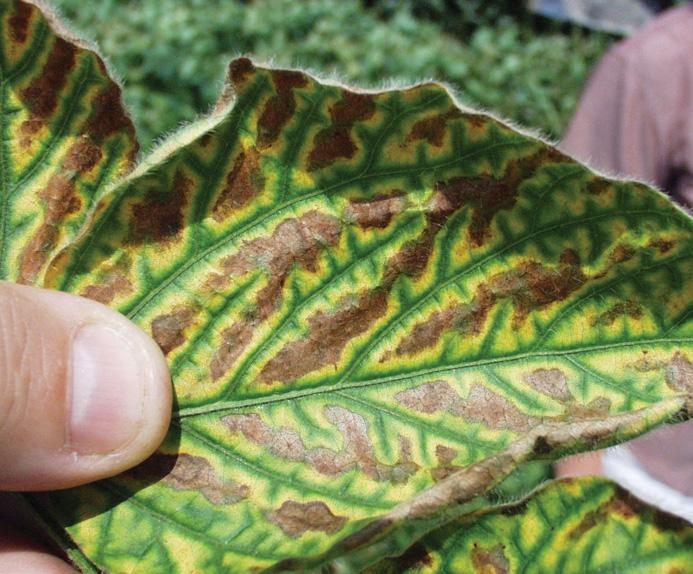
Sudden death syndrome caused by the fusarium species creates a distinctive pattern of interveinal browning and necrosis on the upper leaf surface of soybeans.
PHOTOS COURTESY OF ALBERT TENUTA, OMAFRA.
Top Crop Manager Season Ready Contest
AgExpert Field Manager PRO Software (Desktop and Mobile edition)
• 4 draws: December, January, February and March
AgExpert Field Manager PRO software provides a complete record keeping and crop planning system. Utilizing your desktop computer and mobile device, AgExpert Field Manager PRO provides producers with easy data entry and powerful reporting features.
UC4 Spray Height Boom Control System
• Free installation, training and delivery
• One year parts warranty
• Grand prize draw April 15, 2008
UC4 Precision Control with ...Ultrasonic Technology! Give your equipment the ability to automatically react to changes in field terrain with the flip of a switch!
DISEASE WATCH
other different interactions going on, so other diseases may be worse under a fusarium infection.”
What makes this situation worse is that although the various species have been identified, there is little to be done about preventing them. Horst Bohner, soybean specialist with OMAFRA, notes that 2007 was made more difficult because of the dry conditions in which the disease can actually do more damage than in a normal year. As well, fusarium in soybeans is often mis-diagnosed as phytophthora root rot or some other problem. “At a quick glance, the above ground symptoms can look similar to phytophthora or even soybean cyst nematode (SCN) damage. Yet in every case where the diagnosis was not one of the more easily diagnosed pests, it turned out to be fusarium in 2007,” says Bohner. “Agood rotation will help to minimize these kinds of problems.”
He adds that in 2008, it will likely be another disease that becomes the primary focus for growers. Yet what is particularly troubling for Bohner is that ‘out of sight’ does not mean it is ‘out of mind’. Just because fusarium may not be a problem in 2008 does not take away from the bottom line that there is little that growers can do about it. “It’s a different species than in corn and we don’t have soybean varieties that we can say are completely resistant,” states Bohner.
Although he concedes it is a cyclical disease, Bohner also notes that as more acres of soybeans are grown north of Highway 89 and east of Toronto, the incidence of diseases that can hurt yields will increase as well. Yet as Tenuta points out, the Ontario soybean crop is a relative newcomer, which is why some of the diseases are beginning to show with greater frequency. “You’re just talking about the past 30 years, so from an evolutionary standpoint versus long-term, that’s still pretty new,” he says.
Twenty years ago, disease problems in the US Midwest began increasing in much the same way, and then started migrating north into Ontario. “In eastern Ontario, they’re where we were 15 or 20 years ago in southwestern Ontario, and the eastern region is where some of the best yields have been seen in over the past four or five years. But we are seeing things starting to change and as long as the environment is conducive for diseases or pests to survive, over time, they will find their way there.” ■
THE BOTTOM LINE
We are very conscious of fusarium in our seed soybeans. We plant all the soybeans in rows to allow air movement through the plants. Some years, row crop cultivation also helps when done early. Grahame Hardy, Inkerman, Ontario.
One more reason for a good rotation. Alan McCallum, Iona Station, Ontario. I have been guilty of scouting too many soybeans from the pickup, especially since the advent of Roundup Ready. With aphids, spider mites, bean leaf beetle, fusarium/SDS, phytophthora, rhizoctonia, SCN, stem canker, brown stem rots, AND $11+ beans, I need to get a lot more green stains on my socks. Ken Nixon, Ilderton, Ontario
WEED MANAGEMENT
Herbicide application timing more important
by Ralph Pearce
It may be a worst case scenario but the effect is obvious; waiting too long to spray for a weed like lamb’s quarters can lead to significant losses in yield.
Value increases as crop prices climb.
At this time of high commodity prices when growers should be doing everything to maximize their earning potential, a somewhat disturbing trend has arisen. In the spring of 2007, Robert Moloney, an agronomist with FS Partners in Mitchell, Ontario, was fielding an uncommon number of calls from growers seeking advice on spray timing. With some probing questions, he was finding that many growers had been letting weeds climb to troublesome heights; in conventional soybeans, he was hearing about lamb’s quarters with more than four leaves.
It was a point of surprise that he expressed during a breakfast meeting in May 2007. In spite of relatively high prices for corn, soybeans and wheat at the time, most growers he was talking to seemed more concerned with crop stage than weed stage. “They were forgetting that in conventional soybeans, especially if we get lamb’s quarters that are beyond the four leaf stage, they become tough to kill,” reminds Moloney. “If they’re beyond eight leaf, they’re really tough to kill.”
The same scenario applies with grasses, he says. Although the weed might be just an inch in height, it may have tillers on it. “At that point, a CleanSweep program isn’t going to do it, so you’re going to end up with a two pass program and probably throwing in a grass herbicide,” says Moloney. “It’s a lot more dollars, tougher to kill, and if you throw in dry weather on top of it, you have a whole other scenario.”
It may be part of a disturbing trend of complacency, or it might be a sign of emerging struggles with time management or a reliance on newer technology, be it seed traits, computer aids or farm equipment. Moloney is concerned more growers are leaving yield behind, largely because of a simple misunderstanding. “What growers were seeing was that 21 days after planting, the beans were just barely out of the ground, so they didn’t want to spray that early because they felt they were going to have escapes with the beans just barely at unifoliate,” he says.
“Well, that may be true, but the problem was that growers already had a six leaf or an eight leaf lamb’s quarter in there and they should be spraying at that time. They’re ignoring the fact that you need to look at weeds as much as you’re looking at the crop.” One of the key issues for Moloney is the reliance on US practices, particularly taking weed height and not weed stage of development into consideration. Spraying at four inches instead of a weed or crop stage sets up growers for potential losses in yield.
Mike Cowbrough agrees that much of the problem with application timing and understanding stems from height. “I understand why that’s done, because it’s simple. And how do you accurately count leaves on a lamb’s quarter when it starts to put out little leaflets here and there?” explains Cowbrough, weed management program lead with the Ontario Ministry of Agriculture, Food and Rural Affairs. He believes much of the problem exists as a result of a particular farm’s size and managing the time to attend to things like spray applications.
“I don’t doubt that growers are out scouting, and let’s say they go out on Tuesday and things are looking as though they are a couple of inches tall. And they will say they’ll be in a position to go in a week, but they get back there in a week and it’s been good weather, and suddenly, these weeds are out of
control. Maybe that’s part of it. We don’t appreciate how quickly things progress, particularly weeds.”
Understanding not the issue, time is During a presentation late in 2007, to demonstrate an efficacy trial in velvetleaf, Cowbrough explained to growers that he had purposely waited until the weeds were six inches or at the eight to 10 leaf stage in development.
Growers pointed out that the weeds were too large to get effective control with anything, proving Cowbrough’s contention that growers do understand there is a point where weeds are too far gone to control effectively.
“Part of the presentation showed the tremendous difference in products and when weeds get large,” says Cowbrough. “You can go from 85 to 90 percent control down to 70 percent control, just based on four to six leaves. So I really believe it’s a time
management issue because the fields I see are the large acreage growers who might only have time to see that field at planting, at spraying and at harvest.”
Whatever the reason may be, Dr. Peter Sikkema’s concern is that growers are, as he says, ‘leaving money on the table’. Like Cowbrough, he believes growers understand the importance of herbicide application timing. There is, however, a crucial gap in associating that level of understanding to the loss of yield, often on a daily basis.
Sikkema echoes one of Moloney’s observations that growers should pay more attention to timely herbicide application. “As I tell my students, the higher the price of the corn, the earlier you spray,” advises Sikkema, an associate professor, field crop weed management specialist at the University of Guelph’s Ridgetown Campus. “If corn is $4.00 a bushel, it’s worth it to get out there and protect the full yield
Points to remember on weeds and application timing
The following is a list of tips worth considering when planning spray application timing for corn or soybeans. Each year, Dr. Peter Sikkema, an associate professor at the Ridgetown Campus of the University of Guelph, shares these with his students and Top Crop Manager thanks him for sharing them with our readers.
☛ Weed species composition. In general terms, broadleaf weeds are more competitive than grasses. With a lot of broadleafs, growers must spray earlier than with annual grasses which are not as competitive.
☛ Weed density. In short, the heavier the weed pressure, the earlier a grower must spray.
☛ Relative time of weed and crop emergence. If weeds come up early in the development of the crop, those weeds will be extremely competitive and a grower has no choice but to spray early to avoid substantial yield losses. In contrast, a corn or soybean crop with no weeds for the first four to six weeks after
planting is not likely to lose a lot of yield due to weed competition.
☛ Environmental conditions. In a dry year, there is not enough moisture for both the crop and the weeds, which makes early spraying an easy decision to make.
☛ Fertility level. Weeds are more competitive in soils with poor fertility; like soil moisture, there are not enough nutrients for the crop and the weeds. Early herbicide application is advised.
☛ The cost of the herbicide. In this case, glyphosate is a relatively inexpensive herbicide. Even if it requires a second later application to control late flushes, it may be cost effective. In contrast, imazethapyr + bentazon (Clean Sweep) at $30 per acre requires more attention to detail on the part of a grower, and places a greater emphasis on accurate application timing.
☛ The price of the commodity. As a general rule of thumb, the higher the price of corn or soybeans, the earlier they should be sprayed: a grower wants to protect every last bushel out there. ■
•
•
•
potential of the crop. If corn is $2.50 a bushel, you have to really be careful in terms of your input costs.”
Weed management will still cost about $20 to $40 per acre, he notes, regardless of the commodity price. If corn is worth just $2.50 per bushel, a grower may try to use a single herbicide application. But if corn is at $4.00 per bushel, Sikkema notes, spraying twice may be the most profitable weed management program. “Every bushel is worth so much that it’s worth your investment,” he says. Sikkema can quote from a wealth of research data that points to yield loss resulting from delays in herbicide application, often on a daily basis. “Depending on the field, yield losses can be as high as 3.0bu/ac per day in corn, just by spraying on Tuesday versus Monday morning. Now that corn is around that $4.00 per bushel mark, you’re losing $12 per acre from spraying on Tuesday versus Monday morning in a competitive environment.”
Appearances are deceiving
Good weed management, continues Sikkema, goes beyond mere appearances in the field. Aclean field at harvest may look good, but it could be an indication of lost yield potential. “There’s still this perception among some growers that they want to make sure every last weed is up before they spray on their glyphosate, just so they don’t have to spray twice,” he says, calling it a bad management practice to start. “Some
growers have the perception that if they spray at the seven leaf stage of corn or the third or fourth trifoliate in soybeans, and it’s perfectly clean at harvest, they’ve done a good job of weed management. For all the appearances, it looks like they’ve done a good job, but they have lost money by spraying too late.”
The answer comes back to two things: scouting and recognizing the specific nature of any field. Moloney contends that growers could alleviate much of the uncertainty of weed size and staging by walking their fields. “If they do the ‘drive by’ while those soybeans are cracking through the ground, it’s only been 21 days and the grower says, ‘There’s nothing coming’, but there is, because that little half or one inch lamb’s quarter that you don’t see has six or eight leaves on it,” says Moloney. “You can’t tell that when you drive by a field.”
“Weed management is field specific,” says Sikkema. In experiments conducted in fields at Ridgetown Campus, where there are 250 acres of test and research plots, results can vary dramatically within a distance of two miles. “It’s all because of differences in soil type, weed species composition and weed density,” says Sikkema. He adds that $30 per acre spent on weed management on all parts of a farm may not be the best investment. “If you use the same weed management program on every acre, chances are you’re not spending enough on weed control on some fields and spending too much money on the others, and you’re losing money on both fields because of it.” ■
THE BOTTOM LINE
We are not driven by crop price to change our methods: you still have to go for the best possible yield. We always try for the earliest application we can. We may start a little too early, like spraying at the two leaf stage instead of waiting until the three leaf stage, because we never know when we might not be able to get into a field due to conditions. If someone is concerned about a clean looking field, they are still better to go early then spray again later if needed. Looking at growth stage of the weeds is a very valid point. Lennie Aarts, Wainfleet, Ontario.
Excellent article. I see far more problems resulting from weed control timed too late than too early. Time management is definitely a factor in a busy season, but delayed weed control usually cost you yield and often results in more total dollars spent on herbicides to get the job done. I consider timely weed control
a high priority in herbicide tolerant crops and an absolute necessity in conventional crops. Alan McCallum, Iona Station, Ontario
The last decade or so has brought us several excellent post-emergence herbicides, pushing aside the ‘soil applied’ chemistries that dominated the 1970s and ‘80s. However, just because it is now possible to control eight inch quackgrass in corn, or have soybeans magically appear from a forest of broadleaves, doesn’t mean these applications maximized profit. It isn’t the size of the weeds or crop staging the day we start spraying that matters, but the day we finish.
Cool, backward springs are exceptionally deceiving; weeds germinating close to the surface will rapidly advance on ‘marginal days’, while the crop planted at one to 11⁄2 inches barely moves. Ken Nixon, Ilderton, Ontario
Late herbicide applications may appear to be doing a sufficient job, however, yield losses have likely occurred.
PHOTO COURTESY OF ROBERT MOLONEY, FS PARTNERS
MACHINERY
Sprayer technology tune-up
How it is used is most important.
The advent of newer sprayers, nozzles and chemistries in the past decade has had a curious impact on growers and their understanding of sprayer efficiency and product efficacy. Despite higher commodity prices and the prevalence of advanced genetic traits, the fundamentals of spraying have never been more important. The intricacies of sprayer technology, nozzle designs, water volumes and pressures, droplet physics, boom height and how they affect optimum product performance is complex enough. Yet growers can become too focussed on outdated standards on spray pressures or get bogged down in the overwhelming choices of nozzle designs and types, often leading to less-than-ideal performance in the field.
For Dr. Tom Wolf, a research scientist with Agriculture and Agri-Food Canada’s Saskatoon Research Centre, the simple take-home message on sprayer technology is that what a grower has is not as important as how it is used. It is not necessary to buy the latest nozzle designs to maximize the performance and efficiency of the sprayer. “With our trials, we discover that there’s a fair bit of new learning that
has to accompany the use of a new nozzle,” says Wolf. “Anew nozzle by itself doesn’t solve your problems for you, it creates new ones, actually.”
What has driven this shift, notes Wolf, is a combination of a number of factors. On one hand, there was the arrival of a relatively new class of low drift nozzles in the past 10 years, along with the use of high clearance sprayers and their capacity to change speeds quickly resulting in pressure changes at the nozzle through rate controllers. On the other hand, there has been a heightened awareness of the societal shift towards environmental stewardship in Canadian society. “With that was the change in regulatory structure within the Government of Canada, where they went from having pesticide regulations led by Agriculture and Agri-Food Canada to having it lead by Health Canada,”explains Wolf. That placed a new emphasis on a greater willingness to regulate. “Finally, we started to see genetically modified crops for herbicide tolerance, where the herbicides used in those crops were not selective by nature, or had a very broad spectrum. We never used to spray glyphosate in the middle of the growing season, it was always before seeding or after harvest, when off target impacts were not as likely. Now, we spray them when everything is growing vigorously and green.”
by Ralph Pearce
Canopy penetration can be affected by a number of factors, including nozzle design, pressure and speed of the applicator.
Other factors affecting sprayer technology use and adoption include price volatility and in eastern Canada, a shift in diseases and pests now confronting soybean growers. Growers now can look forward to having to deal with a mix of soybean aphids, bean leaf beetles, soybean cyst nematode, phytophthora root rot, fusarium and now Asian soybean rust, all on a more frequent basis.
The one thing to remember from Wolf’s perspective is that there are really only four types of nozzles: Conventional flat fan, pre-orifice, low pressure air-induced and high pressure
The bottom line on nozzle designs: it is not whether it is the latest but how a grower uses it that is the most important factor.
air induced. The manufacturers may insist there are differences in their designs but Wolf tests their performance upon release, determining which of the four it represents.
Of fundamentals and revelations
All of these factors present a greater argument for understanding the basics of spraying technology, and that goes beyond the specifications of the sprayer or the nozzles. It also includes water volumes, pressures, boom height and the product being applied (fungicide and insecticide versus herbicide).
“One thing about low drift nozzles is aside from being a way to reduce environmental impact, they’re also an agronomic tool,” says Wolf, noting the advantage of having a positive outlook.
“Because of their ability to minimize drift even under windy conditions, these nozzles let you be timely when previously you couldn’t be. Afungicide applied well at the wrong time is not very valuable compared to a fungicide applied at the right time even if the application isn’t 100 percent.”
As more research is done, more is understood about spray patterns and boom height, water pressures and volumes. Droplet sizes and the physics of how they shatter on contact and the coverage that results is one factor that has come out of more research.
Although the mechanism of how airinduced sprays maintain good coverage
is not well understood, we've been successful in pushing the envelope toward practical goals, like using as little water and causing as little drift as possible while maintaining coverage and efficacy.
Wolf also concedes that improved technology has shown that as specific as a grower could get with nozzles and water volumes, speed and boom height, time and physical constraints simply do not allow growers to be that precise. “Every single situation is a special case, and are we prepared to make an adjustment for every single situation?” poses Wolf. “The short answer is that we can’t afford to.”
The example Wolf cites is using a fungicide. To protect the plant, the active ingredient has to cover the plant. But the plant is not the same all over: there are flat leaves, leaves that point up, there are stems and petioles, there is the underside of the leaf, the top of canopy and the bottom of the canopy. And some pathogens are more aggressive on stems than leaves. One spray solution is not likely to cover all those bases. “It’s the same thing with insecticides, where some of them are systemic requiring the insects to consume plant material to acquire the dose while others are contact,” says Wolf, adding that insect location is also very important. “Very quickly, you realize there’s no way someone can
communicate this complexity with enough recommendations for the farmer. At some point, we’re going to have to say, ‘This is the way I think you should spray in general, and when you get into this situation, make ‘this’ adjustment in water volume or rate pressure to optimize that’. I’d rather do that than over-complicate things and say, ‘Buy these 10 nozzles and change them every time your field changes’.”
Old habits may be hard to change Helmut Spieser understands all of what Wolf is trying to convey to growers; he has been saying much the same thing for years: the technology is good and it is readily available, but it is how it is used that is the key. “We tend to think, ‘I’m not getting really good weed control, therefore I need a new sprayer’, and it’s a way of justifying it,” says Spieser, engineer specializing in field crop conditioning and the environment, with the Ontario Ministry of Agriculture, Food and Rural Affairs. “I tell growers that a brand new rig hooked on behind does not a good job make. It’s the person in the seat and the decisions, and the when and how and what product they use that really dictates the success.”
Part of the challenge Spieser has found from past presentations is that what was said years ago comes back to haunt them, as growers readily commit
Quick list of dos and don’ts
As a quick aid in nozzle selection, Helmut Spieser of the Ontario Ministry of Agriculture, Food and Rural Affairs offers this list of dos and don’ts when in the market.
Do:
• Choose water volume based on product performance, not acres per tankful.
• Calculate nozzle size required based on travel speed, nozzle spacing and application rate.
• Determine droplet sizes required to apply the spray product.
• Learn new droplet classification system adopted by all nozzle manufacturers (VERYFINE, FINE, MEDIUM, COARSE, VERYCOARSE, EXTREMELYCOARSE).
• Operate nozzles at a pressure to produce the required droplet size.
• Understand the environmental influences on droplets travelling from the nozzle to the target.
• Maintain adequate nozzle-to-target distance to allow full spray pattern development.
• Calibrate routinely to know your precise application rate.
Don’t:
• Choose a nozzle type without considering drift consequences.
• Buy nozzles based only on price. ■
MACHINERY
their recommendations to memory. “Once upon a time, we said anything more than 40psi is just silly if we’re spraying weeds,” details Spieser. “Now, the new nozzle technology allows you to go higher, yet still result in much less spray drift but the farmers still remember the 40 pounds of pressure, and they’re often reluctant to change. They like it but they don’t understand that with air induction nozzles, they can run boom pressures of 80psi yet the working pressure at the exit orifice is likely still around 40psi or less.”
Yet growers are stressed for time to the point where they might argue they cannot afford to immerse themselves in the science of something like droplet technology. The only counter to that for Spieser is that without the right information, the likelihood of doing the wrong job increases. “If a grower chooses a brand of nozzle that requires higher pressures and runs it at 40 pounds pressure, they’ll end up with less than acceptable weed control,” he says. “It’s not the fault of the nozzle, it’s not the fault of the product, it’s really an error in setting it up and where it was operated in terms of pressure.”
Companies helping out
The best part of the change in technology is that the companies have been doing their best to help. As more information becomes available, not just about the specifications of their nozzles but about droplet physics and matching pressures with volumes and products, the companies are incorporating more into their catalogues. “The nozzle manufacturers have made a major shift in putting a lot more detailed droplet size information into their catalogues and that’s excellent,” says Spieser. “But growers have to go there, and normally if a new catalogue comes out, they’re into what’s new, what sizes and colours are there, but the technical information is in the back of the book, and I suspect not many of them venture to that section.”
The only issue Spieser has with the companies releasing so many new designs is that they may not be doing growers any favours. “Now, instead of 20 choices to get the job done, we may have 24,” he says. “If you have a choice of two, sometimes that’s enough, otherwise it can become a little overwhelming. ■
AD INDEX
EDITOR’S NOTE
Your advisors
In this issue of Top Crop Manager we include the comments of Top Crop Advisors who have previewed selected stories, and offer their comments and local perspectives. Here are their profiles:
• Alan McCallum operates McCallum Agronomic Services at Iona Station in Elgin County, Ontario. He is an independent agronomist and certified crop advisor, he was previously a soil and crop advisor for the Ontario Ministry of Agriculture and Food.
• Lennie and Peter Aarts farm 2000 acres near Wainfleet, Ontario. Two thirds is in a corn-soybeans-wheat rotation, one third is in a corn-soybeans-corn-soybeans rotation (lighter ground, not as well suited to wheat). In addition, they do 1000 acres of custom work.
• Grahame and Stephen Hardy crop 1000 acres and operate Hardy Seeds at Inkerman, Ontario. Corn is planted on 400 to 500 acres and the rest is divided between soybeans, wheat and barley, all for seed. Cropping methods range from notill to full tillage.
• Ken Nixon, brother Kevin and father George farm near Ilderton, Ontario. They no-till corn, soybeans and wheat, and provide planting, spraying and harvest services to neighbouring operations.
These Top Crop Advisors have added wisdom and practical perspectives of their own to some of the stories in this issue. Our editorial team and Top Crop Advisors hope you will put some of the ideas and new techniques in this and the subsequent issues of Top Crop Manager to work on your farm to improve your bottom line. ■
Peter Darbishire Editor
Now this product does it all. New Touchdown Total® covers all your glyphosate uses, including in-crop for glyphosate tolerant corn hybrids. Plus, its low foam technology and superior tank mix compatibility make it easier to use. And it comes fully guaranteed by our Touchdown Assurance Plan, so you’re getting everything you need and more. For more information, call Syngenta Customer Resource Services at 1-87-SYNGENTA (1-877-964-3682) or visit syngenta.ca