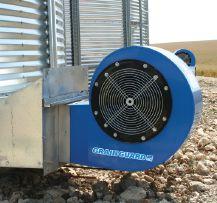
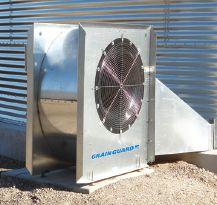
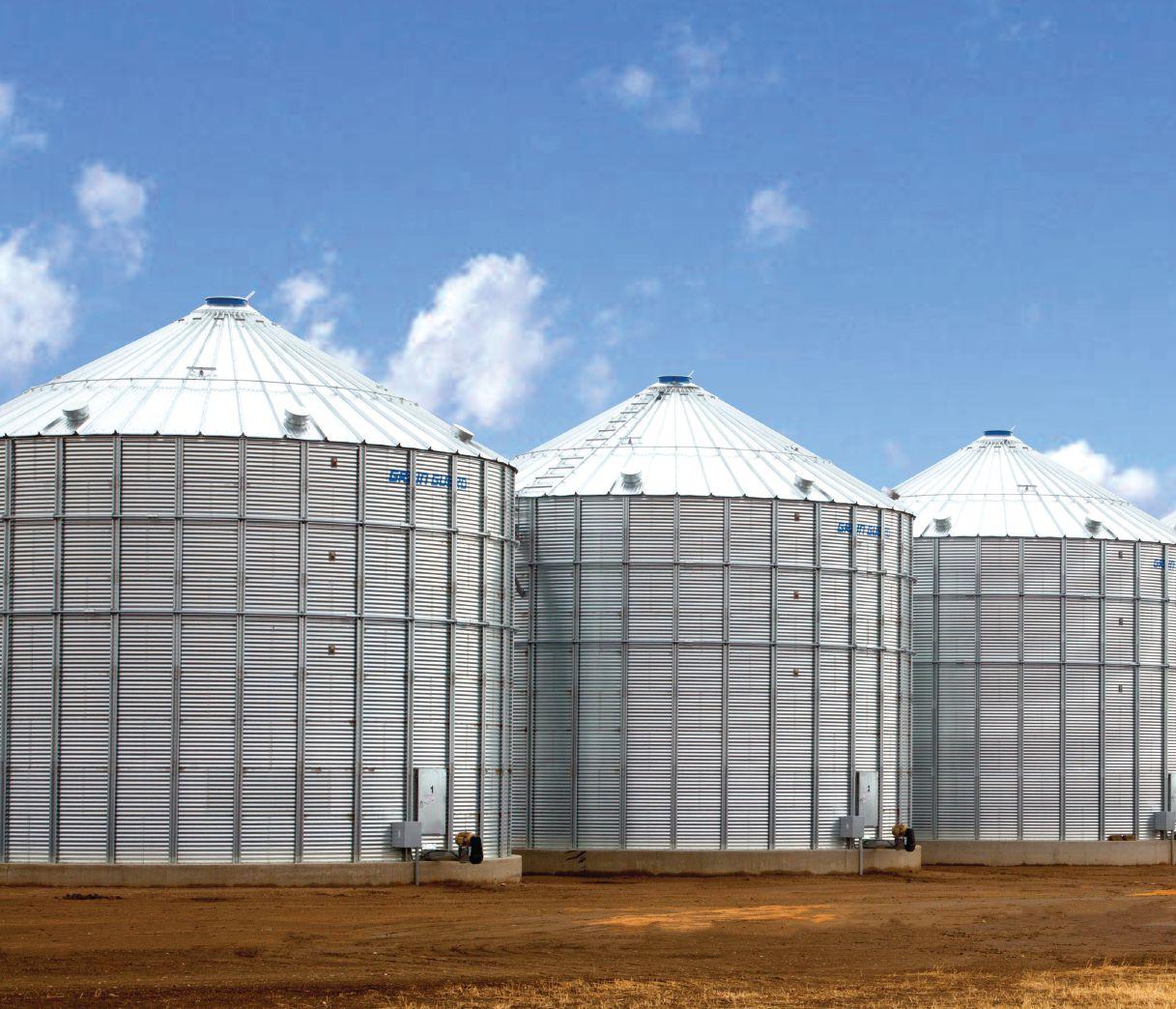
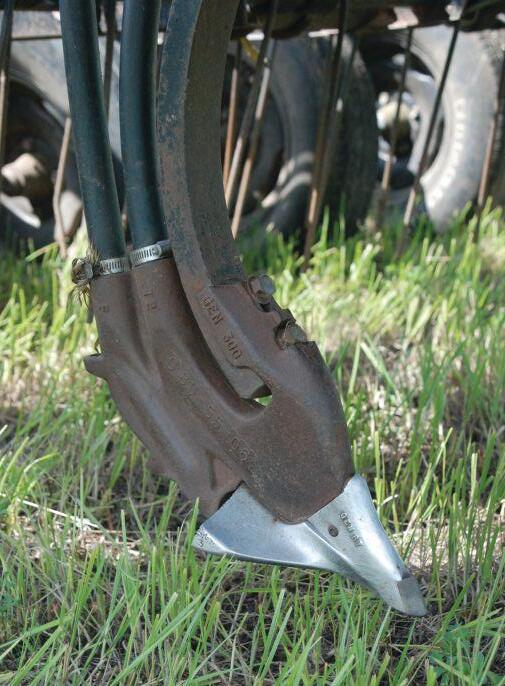
Grain Guard’s new line of 4" wide corrugated grain bins are manufactured using state-of-theart technology and are available in diameters from 15' to 105' in flat bottom models, as well as 15' to 27' in hopper bottom models. With an established catalogue of aeration and conditioning equipment, high-quality grain storage bins are yet another solution provided by Grain Guard.
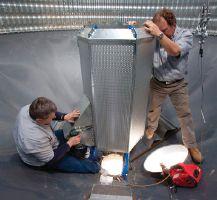
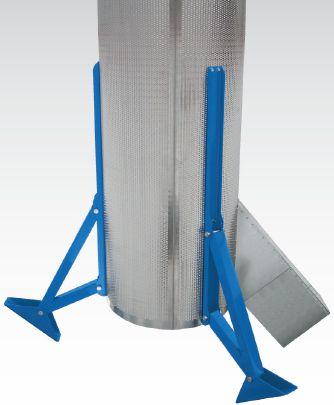
Our research and development team has put in countless hours working to improve our Classic Rocket design. Resulting in an innovative, stronger and even more reliable rocket; The Next Generation Rocket
The revolutionary Retro Rocket is the only do-it-yourself rocket system that allows you to retrofit existing hopper bottom and smooth-walled bins with farm proven Grain Guard aeration. Grain Guard also offers turnkey construction packages on all flat bottom bin models. Trust the storage and conditioning experts to be your one-stop shop.
The Next Generation Rocket
TOP CROP
MANAGER
6 | Wheat breeding: Amazing changes Four decades of wheat breeding on the Prairies. By Carolyn King
16 | What’s up with corn? Still an important crop in Ontario, corn production continues to evolve.
Rosalie I. Tennison 22 | Conservation tillage through the decades No-till firmly rooted on the Prairies.
Bruce Barker
JANET KANTERS | EDITOR
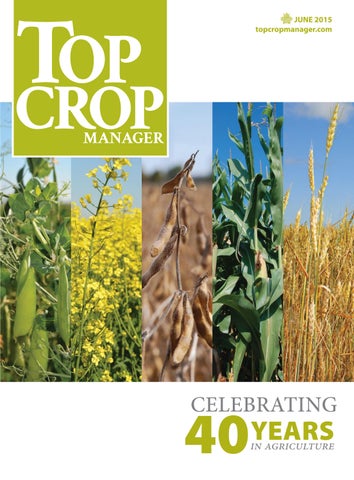
CELEBRATING 40 YEARS IN AGRICULTURE
Over the past 40 years, the name may have changed, but the format of Top Crop Manager has remained the same – to bring Canadian crop producers the most up-to-date cropping information available through our well-researched, third-party stories, written by award-winning writers.
Top Crop Manager had its start as Beans in Canada which was first published in 1973 and was the first in a series of annual editions that became Agri-book Magazine. Editions included Corn in Canada, Potatoes in Canada, Canola in Canada, Elevator Manager and Seed in Canada, all aimed at specific crop producers. In 1989, the Agri-book Magazine name was retired and replaced with Top Crop Manager. Today, Top Crop Manager is published nine times per year in Western Canada, and seven times per year in Eastern Canada.
Forty years may not seem like a long time in the grand scheme of things, but a lot has happened in the past four decades in agriculture. And in those years, Top Crop Manager has attempted to grow as well, to bring you the latest and greatest information on new technologies and new ideas. Since day one, we’ve been providing insights and in-depth information on plant breeding, research and development, fertility and nutrients, the seed and chemical industries, farm equipment, trends and technologies, markets and business management issues. And we continually hear from our readers that Top Crop Manager remains a trusted source for farmers, crop advisors and other industry stakeholders.
We continue to grow in other ways: our website, topcropmanager.com, offers our magazine content plus much more; we publish a weekly electronic newsletter; and we can be reached on Twitter @TopCropMag. We also offer a wide variety of value-added print and electronic resources, including our annual Weed Control Guide, Fungicide Guide, Traits and Stewardship Guide, and regular Machinery Manager booklets.
If history has taught us anything, it is “the more things change, the more they stay the same.” Indeed, this phrase, attributed to French critic and novelist Jean-Baptiste Alphonse Karr (originally penned “plus ça change, plus c’est la même chose”), certainly applies to agriculture today. The names, the faces, the technologies and the ideas may change, but the ultimate goal is the same – to ensure the production of our food, feed and fibre crops remains sustainable in order to feed a world population that is growing at an alarming rate. By the same token, the more things change at Top Crop Manager (for instance, the way we bring the magazine to you), the more they stay the same – by continuing to offer the most up-to-date information available to help you grow those crops.
In this special edition of Top Crop Manager, we present a series of stories that touch on agriculture over the past 40 years, as well as a look back at the way we presented new ideas to our readers at the time.
I invite you to share your thoughts on this special issue via Twitter, using the hashtag #40TopCrop. I’d also like to hear your suggestions on how we can improve our offerings to you over the next 40 years. Email me at jkanters@annexweb.com.
PUBLICATION MAIL AGREEMENT #40065710 RETURN UNDELIVERABLE CANADIAN ADDRESSES TO CIRCULATION DEPT. P.O. Box 530, Simcoe, ON N3Y 4N5 subscribe@topcropmanager.com
SUBSCRIPTION RATES Top Crop Manager West - 9 issuesFebruary, March, Mid-March, April, June, September, October, November and December - 1 Year - $45.00 Cdn. plus tax
Top Crop Manager East - 7 issuesFebruary, March, April, September, October, November and December1 Year - $45.00 Cdn.
SCOUT AND CONTROL WESTERN BEAN CUTWORM FOR BETTER YIELDS
First identified in Ontario in 2009, Western bean cutworm (WBC) has seen a steady increase in range and intensity. Even growers using resistant corn hybrids are seeing a loss in yield and quality due to WBC. Here’s how to proactively scout and manage this costly pest in your corn crop.
Easily identified
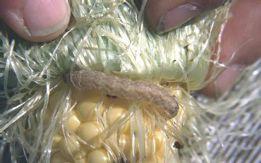
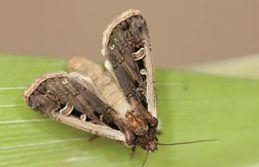
WBC infests and feeds on the ear of field, sweet and seed corn as well as dry beans. The WBC moth is easily identified with a white band running along the wing margins and both a spot and boomerang-like mark on each wing.
Scouting strategy
Pheromone traps can be used to monitor for peak moth flight, which will indicate when eggs are being laid in the field and when to begin scouting. Closely examine 40 plants in five areas of the field from early July to the end of August, particularly when the crop is in the pre-tassel to full-tassel stages.
DuPontTM Coragen® offers fast-acting, residual control of WBC
Powered by Rynaxypyr®, Coragen® insecticide is from a novel class of chemistry – Group 28, the anthranilic diamides. With extended residual control, including translaminar movement across the leaf surface, Coragen® can stop pests from feeding within minutes of ingestion. Coragen® is particularly potent against larvae as they hatch from the eggs, but also provides excellent control at the ovicidal and larvicidal stages. Excellent rainfastness also delivers long-lasting, reliable and consistent protection.
Easy on bees and beneficials
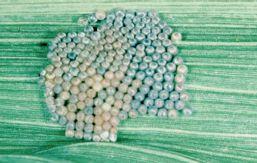
Focusing on the top three-to-four upper leaves of the plant, look for egg masses and young larvae. If egg masses have been newly laid, appearing white, flag the plant and return in a few days to determine if the eggs are turning purple, indicating that they are ready to hatch. This is the stage that insecticide application is most effective because newly hatched larvae will initially climb to the top of the plant to feed but only for a short time before climbing down to feed on the ear. Spraying is recommended if 5% of the plants scouted have eggs or small larvae. Coragen® is a Class 2 pesticide which requires a permit to apply by air in Ontario. More information is available at https://www.ontario.ca/environment-and-energy/pesticide-licences-and-permits .
Coragen® is classified as a Reduced Risk product and is easy on applicators, bees2 and other beneficials1. Coragen® has negligible impact on key parasites, predators and pollinators at field use rates. This selectivity, along with its robust control and environmental profile, makes Coragen® a strong tool for Integrated Pest Management programs.
Save with the 2015 DuPontTM FarmCare® Row Crop Grower Program
This year, when you match your Coragen® purchase with eligible DuPont herbicides, or Acapela® fungicide, you can save $1 per acre. For more details, ask your retailer or visit farmcarerowcrop.dupont.ca
Questions?
Call your DuPont rep, the FarmCare® Support Centre at 1- 800-667-3925 or visit coragen.dupont.ca. 1 Studies from the University of Guelph, conducted by Dr. Cynthia Scott-Dupree and Angela Gradish, indicate that Coragen® is an excellent alternative product when bees are present if used in accordance with the label instructions.
White bands and spots on wings of adult Western bean cutworm.
Western bean cutworm eggs, one or two days before hatching.
Western bean cutworm larvae feeding damage.
SOURCE: Adam Sisson, Iowa State University, Bugwood.org
SOURCE: Frank Peairs, Colorado State University, Bugwood.org
SOURCE: Eric Burkness, Bugwood.org
WHEAT BREEDING: AMAZING CHANGES
Four decades of wheat breeding on the Prairies.
by Carolyn King
Looking back at the past 40 years of wheat breeding in Canada, Ron DePauw says, “I’m absolutely amazed at all the changes.” Those changes include impressive advances in quality, disease and insect pest resistance, agronomic traits, and in the technologies used in breeding.
DePauw has seen those changes firsthand during his 48-year career in wheat breeding. He has just retired as senior principal wheat breeder with Agriculture and Agri-Food Canada (AAFC) at the Semiarid Prairie Agricultural Research Centre (SPARC) in Swift Current, Sask. Over the course of his career, he and his team of scientists and technicians have developed 61 varieties of wheat and triticale.
Canadian wheat breeding had its beginnings in the late 1800s. Wheat first came to Canada with settlers, missionaries and others. Many of the wheats they brought from their home countries were not suited to Canadian conditions. So in the late 1800s, William Saunders and his sons began efforts to breed varieties especially for the Prairies. They developed the famous Marquis variety by crossing
Red Fife, thought to have come originally from Galicia (currently a province in western Ukraine), and Hard Red Calcutta, from a mountainous region in India. Marquis had Red Fife’s excellent bread wheat quality and Hard Red Calcutta’s early maturity. With that winning combination, Marquis provided a strong foundation for Western Canada agriculture and the economic growth of the nation. Today, about 95 per cent of all wheat produced in Canada is grown on the Prairies.
In the century since Marquis was released, Prairie wheat breeding has made continued progress, and the last 40 years are no exception.
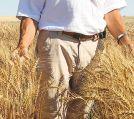
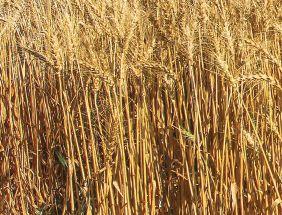
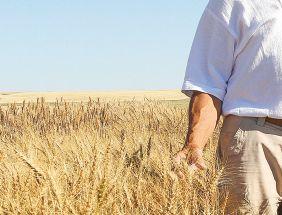
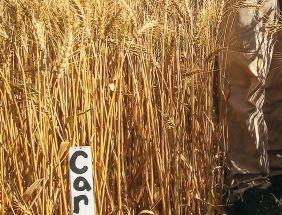
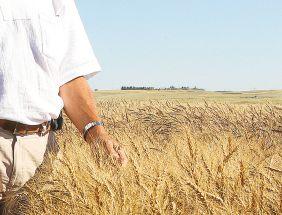
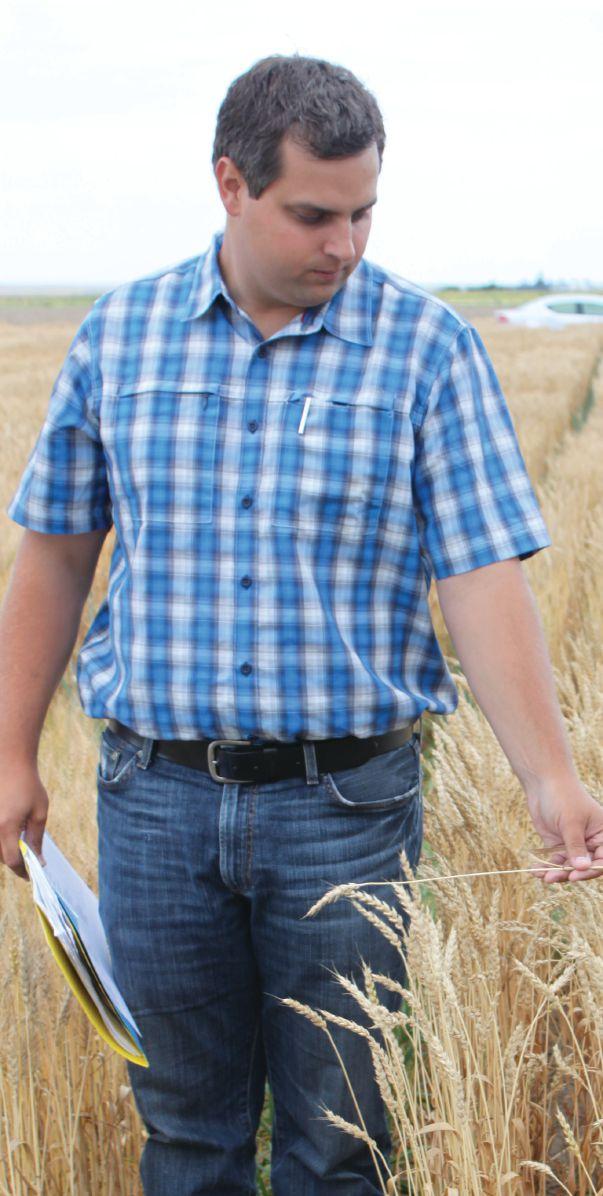
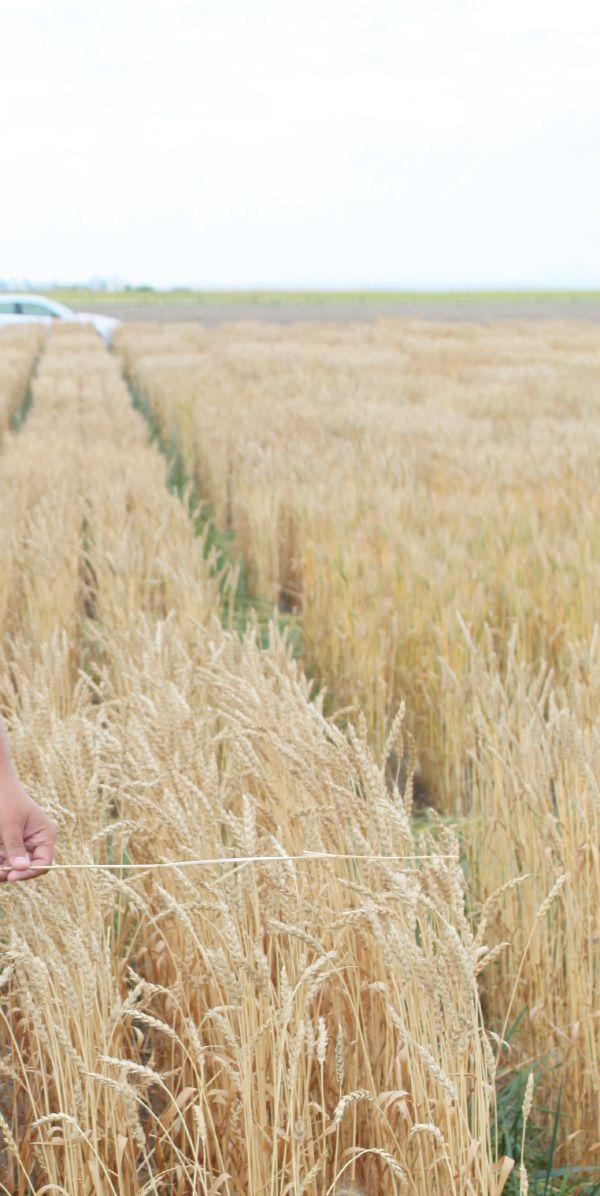
TOP: DePauw examines Carberry, a high-yielding, strongstrawed, semi-dwarf with resistance to Fusarium, leaf rust, stem rust, yellow rust, common bunt and loose smut. It is one of many varieties developed by his group using markers and doubled haploid techniques.
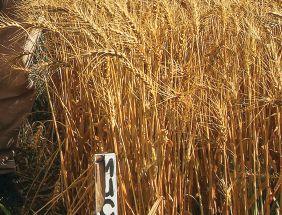
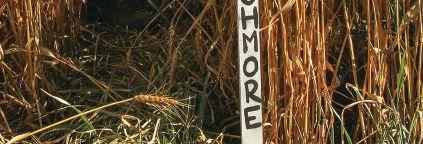
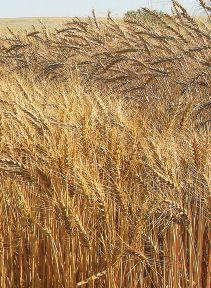
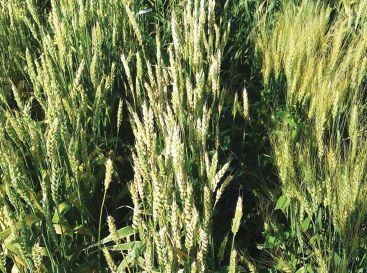
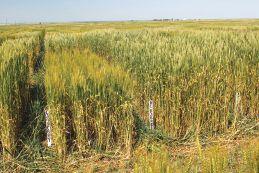
INSET: Prairie wheat breeding has produced impressive advances in quality, disease and insect resistance, and agronomic traits.
PHOTO
PHOTO
Advances in traits
Over the past four decades, the quality attributes of Canadian wheat varieties have changed and diversified with updates to the wheat classes in the Canada Grain Act. “The changes in wheat classes are all in response to major market changes, such as shifting from a more European focus to an Asian focus, and to changes in what consumers are wanting,” DePauw explains.
For example, in 1993 the Canada Western Extra Strong class was established for varieties with very strong gluten (which previously had been included in the Canada Utility class); those varieties are suitable for making frozen dough products, and the new class helped spur the growth of that industry. In the 1980s, the Canada Prairie Spring Red and Canada Prairie Spring White classes were created for medium hard, medium protein quantity and medium gluten strength varieties targeted for markets in South America, the Middle East, and Southeast Asia. More recently, Canada Western Hard White Spring (2001) was established for the Asian-style noodle market, and General Purpose (2008) for the livestock and ethanol markets.
Along with targeting quality traits, wheat breeders develop varieties with resistance to emerging disease concerns. “Fusarium head blight was really not an issue on the Prairies until about the mid to late 1980s. It is now the number one disease issue. It impacts yield and quality, producing a mycotoxin that is harmful to humans and animals. And it is the most difficult disease in terms of incorporating good genetic resistance,” DePauw notes. “We’ve made progress, but we have not defeated the pathogen.”
Breeders are also working hard to stay ahead of changing rust pathogens. “Over the last 30 or 40 years, major shifts in the leaf rust pathogen have knocked out some very effective resistance genes. Yellow rust [also known as stripe rust] used to be mainly in the Pacific Northwest of North America, but now it is able to reproduce at warmer temperatures, so it can come up from northern Mexico through the Great Central Plains to Canada,” he says.
“Globally, the stem rust race Ug99 is very virulent on important resistance genes like Sr31 and Sr24. Ug99 and its variants could take out about 80 per cent of all the wheat varieties globally. Fortunately, researchers have been developing resistant materials, so if Ug99 gets to North America, we’ll have something for that.” (See sidebar.)
Breeders have also improved insect pest resistance, developing varieties like Lillian,
WIDE CROSSES FOR EMERGING DISEASE THREATS
Sooner or later pathogens will evolve to overcome the existing resistance genes in wheat. And some of the new disease strains, like Ug99 stem rust, present very serious threats to wheat production. So George Fedak and his research team cross wheat with other grasses to bring in new resistance genes to enable our crops to withstand these emerging threats.
Back in 1990, Peter Lewington wrote a TopCrop Managerarticle about Fedak’s work with these “wide crosses.” This research is just as crucial today as it was in 1990, but today’s technologies – like markers and doubled haploids – make this challenging work much more precise and faster.
“Finding these genes and then bringing them into wheat is a long process, but it’s doable and we’re getting more tools all the time,” Fedak, who is a wheat geneticist with AAFC in Ottawa, says.
Fedak and his team test a wide range of species for disease resistance, including the wild relatives of wheat and even other grasses, like quackgrass. For instance, they’ve found Ug99 resistance in species like rye, triticale, wheatgrasses and some of the wild wheats, and Fusarium head blight resistance in quackgrass.
When the researchers find a promising resistance gene, they use various techniques to make sure the gene is different from the previously discovered resistance genes for the same disease. “For example, in rye, there is a stem rust resistance gene called Sr31, which has been defeated by Ug99. So we’re checking all of our rye accessions with the marker for Sr31 to make sure the resistance we’re finding is not Sr31,” Fedak says.
Once they have found a new resistance gene, the researchers begin the process of moving that gene into wheat. Fedak explains, “You start with a wheat variety that has crossability genes, and you cross your wild species onto that variety. Then for 24 to 48 hours after you make the cross, you apply growth hormones to the pollinated florets to stimulate embryo growth. Then, if you excise that young embryo at 14 days after pollination and put it on an artificial medium, it may grow.”
The result of such a cross is usually a sterile haploid. So the researchers either use a doubled haploid technique or they backcross it with the original wheat line to restore most of the wheat chromosomes while still retaining some of the material from the wild species. Then the progeny can be tested to see if they have the disease resistance trait.
Wild species often have undesirable traits such as late maturity or poor seed set, so the researchers don’t want to bring in too many other genes along with the disease resistance gene. The extra, undesirable genetic material from the alien species is called linkage drag. Progress in breeding technologies over the last few decades, such as the development of more and more markers, has enabled the researchers to minimize linkage drag.
Using these types of techniques, Fedak’s team has achieved significant advances. For example, the researchers recently developed a wheat line with four resistance genes: one for leaf rust, two for Ug99 stem rust, and one for Fusarium head blight. In another project, a student has developed wheat lines that carry four different stem rust resistance genes, all resistant to Ug99, because pyramiding the four genes together results in much more durable resistance.
As he looks ahead, Fedak is concerned that few Canadian researchers are still doing this type of pre-breeding work to bring resistance genes from wild species into wheat and other crops. He recalls that, from about the late 1960s to early 1990s, AAFC scientists Eric Kerber and Peter Dyck crossed wheat with its wild cousins to produce a large supply of new disease resistance genes ready for use by breeders if and when the genes are needed. For instance, some of Kerber and Dyck’s stem rust resistance genes are resistant to Ug99, so Fedak’s team has been using those genes in the work to pyramid Ug99 resistance genes.
“I think we need a continued effort to bring new disease resistance genes into pretty well every crop,” Fedak says. “We need people to keep looking at wild species for new genes for leaf rust resistance, stem rust resistance, mildew resistance, Fusarium head blight, barley yellow dwarf virus – all kinds of diseases – and to put those in a background without too much linkage drag.” That way, when the next devastating disease strain comes along, we’ll have genes on hand to fight back.
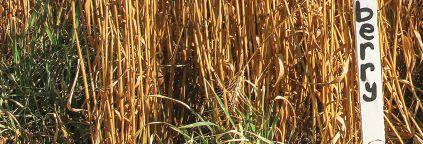
AC Barrie was a highly successful bread wheat variety that was eventually overcome by leaf rust as new strains of the pathogen emerged. So breeders developed varieties, like Carberry, with new gene sources of leaf rust resistance.
PHOTO COURTESY OF JIM DOWNEY (SECAN ASSOCIATION).
which has stem solidness to combat the wheat stem sawfly, and varieties with a single gene called Sm1 that confers some resistance or tolerance to orange wheat blossom midge.
However, insects and pathogens are continually evolving, and eventually they will be able to defeat genetic resistance in a plant; if there is only a single resistance gene, then it is relatively easy for them to overcome that gene. In the case of Sm1, varieties with this single gene are sold with a refuge to minimize the selection of midges with the ability to overcome the gene. “The bag of seed that a farmer buys is a blend of 90 per cent of an Sm1 variety and 10 per cent of non-Sm1 variety. [Including a refuge in the bag] represents a huge change within the Canadian pedigreed seed system,” DePauw explains. “The Canadian Food Inspection Agency had to make changes in the regulations for that to occur, and the Canadian Seed Growers Association and many other players had to agree with the changes to facilitate pedigreeing a blend.”
Wheat breeders have also developed varieties suited to changes in farm equipment and agronomic practices over the past 40 years. For instance, they have added traits like shorter stature and stronger straw to make zero tillage and straight combining easier and more profitable.
Advances in breeding technologies
According to DePauw, advances in equipment, computerization and biotechnology have revolutionized the capacity of breeding programs over the past four decades.
Breeders, technicians and engineers have worked together to develop specialized small plot equipment to enable more plot work with the same amount of labour. Some examples include mini self-propelled planters that can seed multiple rows of variable row lengths, multi-row planters with the capacity to seed each row with its own specific seed lot, and mechanized plot trimmers to trim the plots so they are all exactly the same length for very accurate yield comparisons.
Computerization has revolutionized data collection and information management. “All of the information in our plant breeding program is integrated: to pedigree all of our genetic materials, to randomize the experiments, to generate electronic field books, to generate planting plans, to generate labels for the harvest bags,” DePauw notes.
As well, computers have transformed data analysis capacity. He says, “[In the late 1940s], it would take several months of work to do just one single analysis of variance of a lattice design. Now our technical people can do that in about half an hour.”
He adds, “Between computerization and equipment advances, I suspect that we are handling five to six times more breeding material with the same number of people [compared to 40 years ago].”
When storing and managing grain, fertilizer and petroleum products, look to a name you trust.
supplies a full line of farm management products and accessories, all manufactured to the same industry leading standards our bins are famous for. See everything we can bring to your farm. Talk to your Westeel dealer today.
Richard Cuthbert, who is leading the spring wheat breeding program at SPARC, has several new varieties.
Dramatic changes have also occurred in breeding technologies. “When I was a graduate student, the words ‘biotechnology’ and ‘doubled haploidy’ did not exist,” DePauw says. “The first release of a doubled haploid wheat variety [in Western Canada] was in the late 1990s. Since about 2008, about one-third of the area planted to wheat in Canada is with cultivars that are doubled haploids.” In the doubled haploid technique, researchers first produce haploid cells, which have one of each of the chromosomes rather than a pair of each. Then they use a drug to induce those chromosomes to double, creating identical sets of chromosomes. So the doubled haploid technique is a faster way to create an inbred line that breeds true, compared to the conventional inbreeding process, which takes six to eight generations to develop a line that breeds true to itself.
Another key advance is molecular marker technology, which started to be used in Canada in about the mid-1990s. A molecular marker is a sequence of DNA that is associated with a particular trait. It can be used to quickly screen breeding material for that trait in the lab.
DePauw highlights two examples of the many Prairie wheat varieties developed using markers and doubled haploids. “The variety Lillian is a doubled haploid cultivar developed using marker-assisted selection. It has the Gpc-B1 gene [for high protein], and the Gpc-B1 gene is fortuitously linked to Yr36 [for yellow rust resistance], plus Lr34 [for leaf rust resistance], which is linked to Yr18 [for yellow rust resistance]. So Lillian has a solid stem for wheat sawfly resistance, plus yellow rust resistance and leaf rust resistance. Lillian was the most widely grown cultivar in Western Canada for three or four years. Another doubled haploid cultivar is Carberry, released for commercial production in 2012. It is a strong-strawed, semi-dwarf that has resistance to Fusarium head blight, leaf rust, stem rust, yellow rust, common bunt and loose smut. This combination of traits found favour with producers and it was the most widely grown CWRS [Canada Western Red Spring] variety in Canada in 2014.”
For many years, Canadian wheat breeding has been mainly a public sector endeavour, with AAFC playing a big role. However, AAFC is changing its priorities to focus more on the early steps in the breeding process, like germplasm development, with the idea that agri-business and producer groups would play a major part in the later steps, including variety testing and release. “My point of view is that competition contributes to a healthy environment. So wheat breeding shouldn’t be only public or only private; it has to be both,” says DePauw. He adds, “I think producer involvement is important so breeding programs are not subject only to government budget pressures, and so growers can get their seed from either public or private sector sources.”
PHOTO COURTESY OF JIM DOWNEY (SECAN ASSOCIATION).
DEVELOPMENT OF CANOLA IN CANADA
Poised for another 40 years of success.
by Carolyn King
Four decades ago, the first canola variety was released. Today, Canadian farmers grow the crop on about 20 million acres, and canola contributes about $19 billion to the country’s annual economy. Canola’s remarkable transformation into one of Canada’s most important crops has come about through research and rapid adoption of advances by producers, crushers and others in the value chain. With continued innovation, canola’s future could be just as bright.
Canola’s story begins with rapeseed. Canadian interest in growing this crop was spurred by the Second World War. “Rapeseed oil was the best oil of any type to cling to metal surfaces when washed with steam or water, and that is what steam engines required. So it was an essential oil for trains, ships [and other machinery needed in the war effort],” Keith Downey, who led the rapeseed/canola breeding program at the federal agricultural research station at Saskatoon from 1957 until he retired in 1993, says. Downey is known as one of the “Fathers of Canola,” along with University of Manitoba breeder Baldur Stefansson.
During the war, Canada’s rapeseed oil supply was cut off first
from Europe and then from Asia. So the Saskatoon research facility was asked to investigate if rapeseed could be grown on the Prairies. Downey’s first experience with the crop goes back to that time, when he was a schoolboy working in the rapeseed plots during the summer.
That initial research showed rapeseed could be grown quite successfully on the Prairies. By 1945, rapeseed was seeded on 12,500 acres. Both Argentine rapeseed (Brassica napus) and Polish rapeseed (Brassica rapa) were grown.
“The Argentine type probably originated on the docks in Argentina, off-loaded from some vessel from Europe,” Downey says. “The Polish type originated with a farmer [Fred Solvoniuk] in the Shellbrook area [of northern Saskatchewan]. The story goes that he came from Poland and brought some of the seed in the seams of his clothes. His wife used it as a source of oil, and they grew it in their garden before the war.”
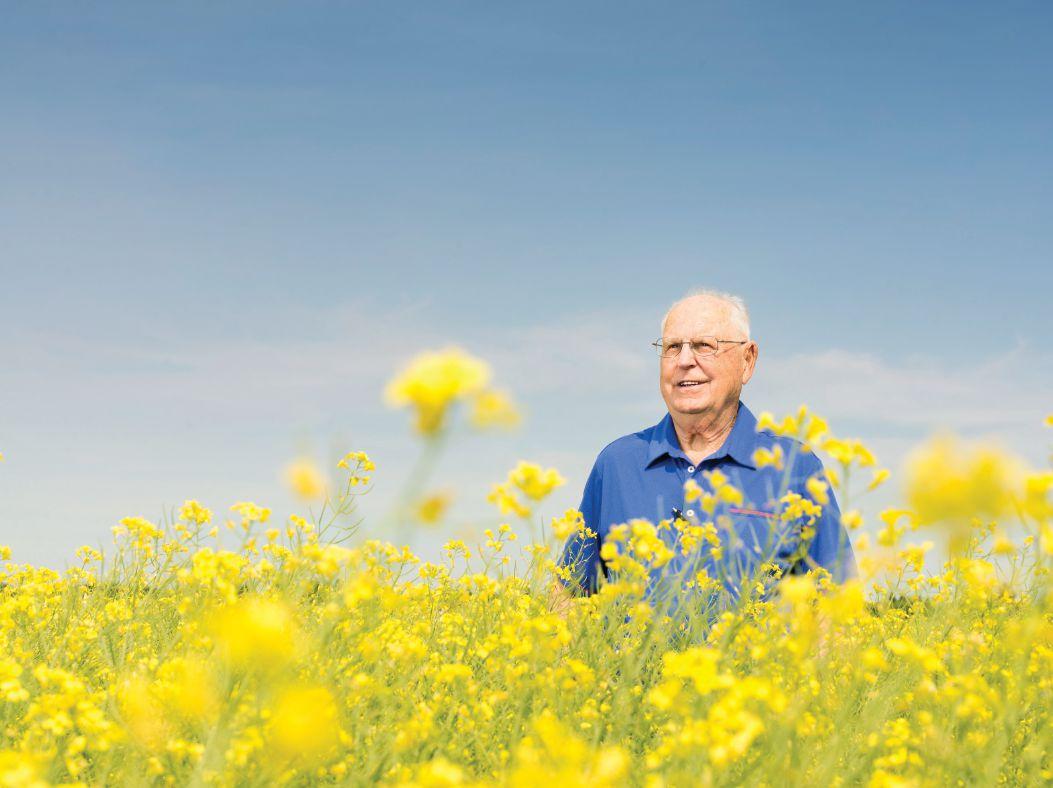
ABOVE: Canola breeder Keith Downey, one of the “Fathers of Canola.”
Rocky Mountain Equipment has over 40 locations across the Canadian prairies to serve you. With the best people, products and services, you can depend on us to get what you need. Visit us at one of our CASE IH Dealerships today.
DEPENDABLE IS WHAT WE DO.
CANOLA MILESTONES
Tower, the first canola, was released. Tower was a Brassicanapusvariety.
Candle, the first Brassica rapa canola variety, was released.
1974 1977
More than 3.4 million hectares (8.4 million acres) were seeded to canola. During the 1978-79 crop year, Japanese imports of canola seed exceeded one million tonnes for the first time.
1979
1st
Puritan canola oil receives the American Health Foundation’s Health Product of the Year award and the American College of Nutrition’s first ever Product Acceptance Award.
1988-89
1975 1978 1985 1995
First canola crushing plant established in Canada.
Source: Canola Council of Canada.
The term canola was trademarked by the Western Canadian Oilseed Crushers Association (now the Canadian Oilseed Processors Association) to differentiate the superior low-erucic acid, low-glucosinolate varieties and their products from rapeseed.
Downey notes, “At the time, the Argentine type was about 10 to 15 per cent higher yielding than the Polish type. However, it took 105 or more days to mature, and that was a little late for most of the growing area. The Polish type was 10 days earlier maturing, so a grower could seed it early and take it off before the wild oats shattered their seeds, or he could kill the first flush of weeds through cultivation and then sow the crop and get it off before the fall frost.” So the Polish type was more attractive to most growers.
Rapeseed was traditionally used as an edible oil in various other countries, and in the 1950s, Canadian interest in this use was increasing. However, as nutritional researchers began to study the oil, they identified erucic acid, a long-chain fatty acid in rapeseed oil, as a possible health concern.
So, in 1958, Burt Craig of the National Research Council (NRC) of Canada developed a rapid, accurate method to analyze the fatty acid content of oils. That enabled Downey and Stefansson to evaluate their breeding material for erucic acid levels. By 1961, both breeders had very low erucic Argentine lines, and by 1964 Downey had a very low erucic Polish line. Downey’s Argentine variety Oro, with an extremely low erucic acid level, was released in 1968.
By 1970, the nutritional evidence against high erucic rapeseed oil was overwhelming. So Agriculture Canada took seed of Oro and Downey’s low erucic Polish line to southern California to increase it over the winter to ensure plenty of seed was available. At the same time, Downey and his colleagues brought together Canadian crushers, oil manufacturers, nutritionists and others, and they convinced the crushers of the crucial importance of using low erucic rapeseed. “Within two years, the Canadian rapeseed crop was completely changed to the low erucic material,” Downey says.
But another issue was still holding back Canadian rapeseed oil production. “The seed contained high levels of glucosinolates, which caused health and feed efficiency problems when the meal was fed to non-ruminant animals like chickens and swine. So even though the oil market wanted more and more of the oil, the crushers could only provide so much oil depending on how readily they could sell the meal,” Downey explains.
Once again, NRC researchers provided a key step forward. “In 1970, two chemists at the NRC in Saskatoon – Clare Youngs and Les Wetter – came up with a fast, accurate method to determine the levels
Canola receives Generally Recognized as Safe (GRAS) status in the U.S., opening the doors to the American marketplace.
The first herbicide-tolerant canola variety is released.
of glucosinolates,” Downey says. That allowed Downey and Stefansson to screen their germplasm for glucosinolate levels. In 1972 and 1973, they each had an Argentine line with low erucic and low glucosinolate levels – called “double-low” rapeseed – in the co-operative trials to evaluate rapeseed lines. Stefansson’s line was a little higher yielding so the expert committee chose it. That line was registered as Tower in 1974.
The industry’s transition to double-low rapeseed wasn’t quite as fast as its change to low erucic rapeseed because Tower, as an Argentine variety, was only adapted to southern Manitoba and a small part of southeast Saskatchewan. However, the 1977 release of Downey’s Polish variety, Candle, provided the rest of the growing area with a double-low option. By the 1980s, all rapeseed production on the Prairies was double-low.
In 1978, double-low rapeseed was named canola, for “Canadian oil,” to distinguish it from regular rapeseed, with its very different fatty acid composition. “All of the nutritionists and oil chemists working on canola oil were also key to making this crop successful,” Curtis Rempel, vice-president of crop production and innovation with the Canola Council of Canada, says. He points to Prairie researchers such as Frithjof Hougen, James Daun, Bruce McDonald, Michael Eskin and Roman Przybylski, who worked on characterizing canola oil and its nutritional properties, and on canola oil utilization for successful use in the food industry. As well, Downey notes researchers such as Milton Bell, Don Clandinin and John Bowland were instrumental in establishing the value of canola meal for livestock and poultry.
Ongoing advances
Canola research and production continued to advance over the following decades. “In the early 1980s, the big story was increasing acreage and profitability as growers became more familiar with the crop and as global demand increased. By 1979, Japanese imports of canola exceeded one million tonnes,” Rempel says.
“Another milestone was in 1985, when canola received GRAS –Generally Recognized as Safe – status in the U.S., and the U.S. became a big buyer of canola oil and meal.”
The next big changes were the herbicide-tolerant canolas, with the first major commercial plantings on the Prairies in 1997, and high-performing canola hybrids, with the first major commercial release in
Industry sets new annual production target: seven million tonnes of seed by 2007.
USDA authorizes a qualified health claim for canola oil based on its high percentage of unsaturated fats.
Canadian canola production sets new record (14 million tonnes).
Industry launches new target: 52 bushels/acre by 2025.
2002 2006 2011 2014
2004
First high-stability canola oil introduced.
2007 2013
Industry sets new annual production target: 15 million tonnes of seed by 2015.
2001. Both innovations were rapidly adopted by producers. “Those two advances together led to a steep change in yield and profitability on the Prairies,” Rempel says. “Around that time, farm cash receipts and profitability from canola surpassed wheat.”
A further milestone was the introduction in 2004 of high oleic acid canola. The oil from this type of canola has high levels of heart-healthy omega 9 fatty acids. And it has an extended shelf life without hydrogenation, so it’s a great option for companies that want to produce foods with zero trans fats. Rempel says about 11 to 12 per cent of the marketplace is currently high oleic, and he expects that percentage to increase.
A bright future
With continued breeding improvements, Downey and Rempel see a strong future for canola.
“The genus and species are very accepting of genetic manipulation, and I’m hopeful that we can overcome the misinformation [about genetically modified crops] out there on the Internet,” Downey says. “It needs to be understood that all the foods we eat have been genetically modified by man, and we need that ability to genetically manipulate plants so we can continue to feed the world. The opportunities there are huge, so we need to be able to take advantage of that.” However, Downey is very concerned that the decline in federal funding for longterm basic research will hamper further improvements in canola, as
well as other crops.
The 2007 goal of 15 million tonnes by 2015 is exceeded, two years early.
Rempel is optimistic private breeders will continue to be interested in canola. “Globally when companies consider making investments in crop research, acreage is one of the tipping points. Especially if canola acres stay above 20 million, then I think abiotic traits like drought-tolerance and frost-tolerance will come into canola.”
He adds, “We’re getting new pests like Verticillium wilt, swede midge, etcetera, so we’ll need ongoing adaptation of the crop for disease and insect resistance. I can even see something like Bt canola in the not-so-distant future.”
Rempel thinks some of the biggest wins will be related to oil modification. For example, he notes, “Global fish stocks are under intense pressure. So, to provide the omega 3 fatty acids that come from fish – EPA and DHA, which are important for heart health, brain development and cognition – canola is going to be modified to produce those omega 3s. At least four companies are working on that, and I believe we’ll be growing those types of canola in the next decade.”
Further down the road, Rempel sees the potential to breed canola for enhanced protein bioavailability for the human food market. “The Food and Agriculture Organization is predicting a dramatic increase [in global demand] for vegetable protein for human health and dietary reasons. I believe canola, with its protein profile and some of the breeding tools that we have, could be a player in the human protein marketplace.”
Canada is the world’s largest canola producer.
Source: Conference Board of Canada, Valuing Food Report, June 2011
THE THREATS REMAIN
THE SAME
The names might change, but problem weeds will always be just that – problems.
by Rosalie I. Tennison
As science gives growers more knowledge about how weeds reduce yield and increases the number of tools in weed control toolboxes, what was annoying 100 years ago is now no longer as great a threat. As recently as 34 years ago, growers were seeking ways to control a “new” weed in corn – proso millet. Research on weed threats and the advent of effective herbicides, which can control many problems, has only proven weeds will always be with us. But, we now have more knowledge on how to deal with them.
In the February 1981 issue of Corn in Canada magazine, proso millet was identified as “giving headaches” to many corn producers. At that time, the herbicide choices were not as sophisticated and proso millet went unchecked. But, a dozen years later, a class of herbicide was developed that has kept proso millet under control ever since.
“What we know about the trends over the last 40 years in terms of problem weeds is that certain problem weeds come and go,” Mike Cowbrough, weed specialist with the Ontario Ministry of Agriculture, Food and Rural Affairs (OMAFRA) in Guelph, says. “Since the late-
1990s, we have seen the introduction of herbicide tolerant corn varieties and new herbicides, so proso millet still exists, but it isn’t a problem these days.”
Cowbrough says field horsetail is a perennial weed that suits its category – it will always appear and it will always be a challenge to control. He says the conversation 40 years from now will likely list sow thistle and field horsetail as problems.
“What we used to deal with problem weeds 40 years ago was new chemistry,” Cowbrough says. “But then herbicide resistant weeds became a problem and new products were introduced to deal with that. But that solution is only sustainable so long.” The next step, he adds, was development of resistance management strategies in order to lengthen the life expectancy of the new chemistries. The latest strategy
CONTINUED ON PAGE 17
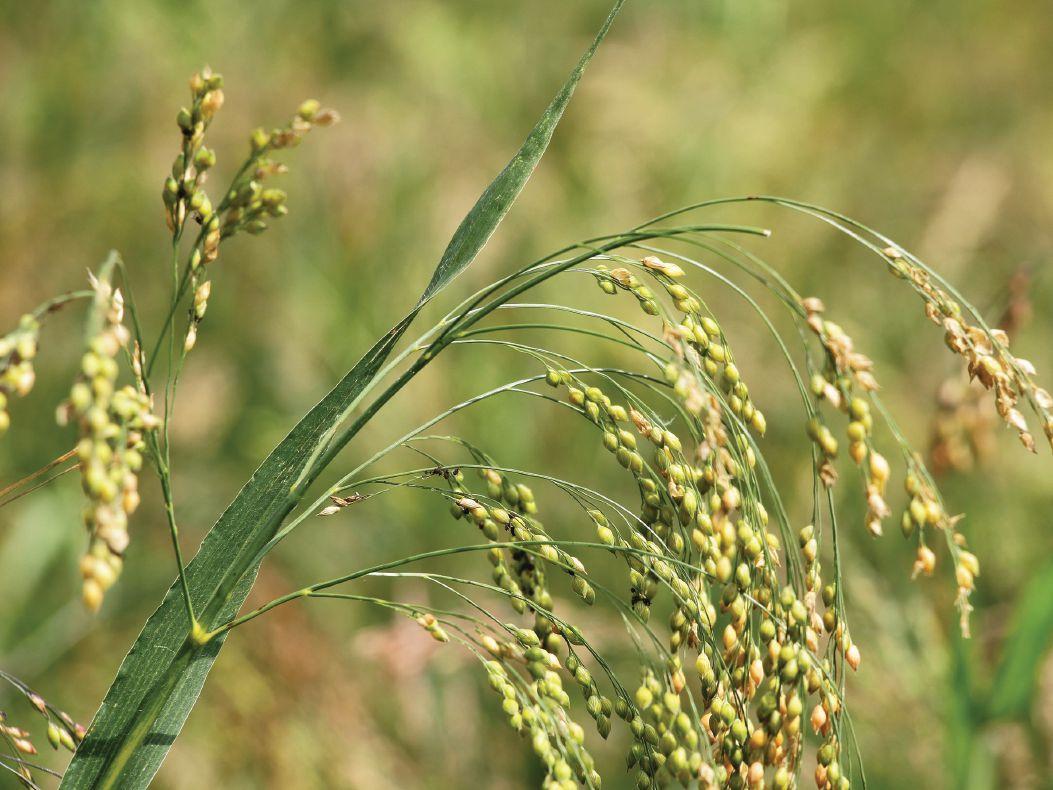
ABOVE: Proso millet was a problem for Ontario corn growers 34 years ago. While it still exists today, it isn’t as great a problem because of effective herbicide options.
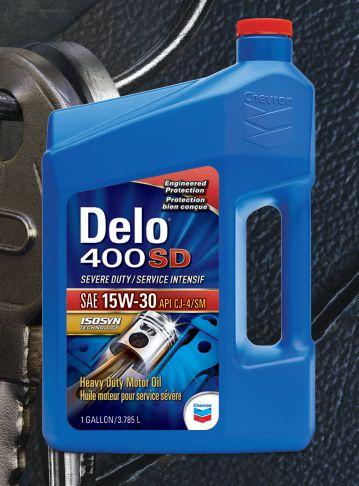
Under today’s conditions, piston temperatures are hitting new highs that can lead to oxidation and viscosity increase that compromises an oil’s ability to protect your engine. You can now protect your engine against Severe Duty conditions with Delo 400 SD SAE 15W-30. It’s a new kind of oil engineered, using patent pending technology, to protect engines under Severe Duty conditions.
To know more about Severe Duty visit thisissevereduty.ca
Products are available from the following locations: CHEVRON
BC V4K 1E7
Free: 1 (855) 946-4226 catalyslubricants.ca
CORN WHAT’S UP WITH CORN?
Still an important crop in Ontario, corn production continues to evolve.
by Rosalie I. Tennison
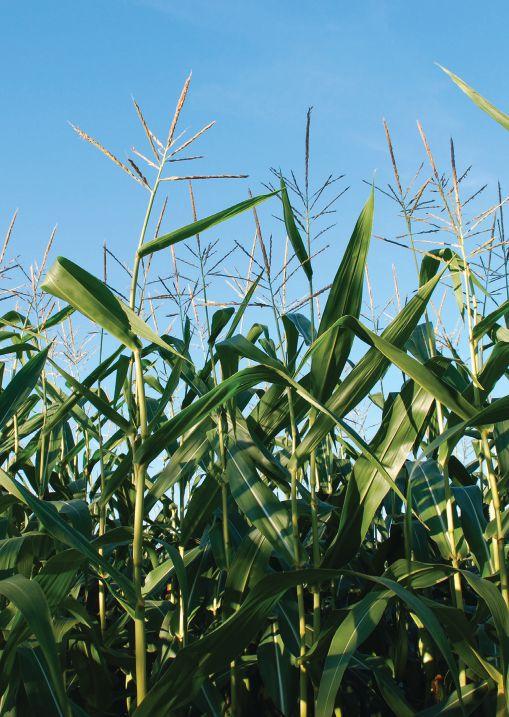
As one of the oldest crops grown in North America, corn found a growing niche in Ontario from the time farmers in that province began tilling the soil. Corn production now accounts for a high percentage of the acres currently under cultivation in Ontario.
For over 40 years, Top Crop Manager has been assisting Canadian corn growers with production advice and scientific research to encourage successful corn cultivation. In those decades, articles covered varietal improvements, agronomic advice and equipment reviews. The news just kept getting better and better over the years with yields improving from roughly 75 bu/ac in the 1950s to, on average, 160 bu/ac in the 2000s. Corn’s versatility has progressed from being merely livestock and poultry feed to a source of bio-fuel, starch, sugar, oil, syrup and distilled beverages. Perhaps the crop’s shape-shifting qualities is what keeps it at the top of most Ontario growers’ production choices.
Without question, corn is sometimes a bellwether in Ontario’s agricultural belt. If corn prices are down, other crops seem to struggle as well. If prices go up, more acres are planted to corn, if rotations allow. Of course, as corn’s star has risen, so too do the branches of agriculture that support it, from agronomic traits and production recommendations, to planting and harvesting equipment, to storage and shipping recommendations. With the advent of the Internet, websites are dedicated to successful corn production, including gocorn.net.
With all the improvements in the production of corn, is there anything we don’t know about producing this important crop?
“The planters have changed, but the principles haven’t,” Terry Daynard says. Besides being a corn researcher at the University of Guelph for years, Daynard has also been growing corn for just as long. After graduating from the Ontario Agricultural College in the 1960s, Daynard became a recognized expert in corn production, completing research in many areas including developing guidelines on successful planting. He says research dollars have been spent over the years improving corn production and that is why the crop remains successful.
“We learned back then that uniformity of depth is highly critical and that seed spacing is not as critical,” Daynard notes. “We now have better accuracy with modern planters, but the principles of planting corn remain the same whether you are using a state of the art planter or a hand planter.”
Daynard was on hand to initiate the long-term crop rotation
Corn is a remarkable field crop because yield increases in corn have gone up faster than any other crop.
project at Elora, Ont. in the 1980s that, he says, has helped the province’s growers understand the importance of rotating between crops. Before the industry understood the value of rotation, corn was often grown year after year on the same field. The rotation study has proven that corn yields are better when the crop alternates with soybeans and cereals.
“It’s true that rotation is often dependent on market opportunities, soil structure and available crops,” Daynard admits. “But we learned that any rotation is better than no rotation.” He says the rotation study proved that growing the same crop year after year
would eventually lead to other problems with weeds, disease and pests, and overall soil health would decline.
“Corn is a remarkable field crop because yield increases in corn have gone up faster than any other crop,” Daynard says. “This could be due to breeding and the introduction of hybrids, which give breeders an incentive to improve the crop.” He adds that resistant or tolerant corn varieties, either to pests or herbicides, have had a huge effect on the success of the crop. “I would suggest that plant breeding is why yields have improved dramatically.”
From a scientific standpoint, Daynard notes there is nothing preventing corn from continuing to improve in yield results or in efficiency of use. Genetic modification is becoming more and more refined and production practices have become, well, a science. But Daynard is concerned the improvements made in the last four decades with the promise of even more will be stalled due to society’s concern about genetic modification.
“The biggest cloud is cultural,” Daynard says. “Society is reacting to technology that has little to do with science, such as the European Union’s aversion for genetically modified crops. I fear we will see more and more push-back, but there is no scientific basis for this concern. This is a perception of a problem that is not there. We can feed the world, but will we be allowed to?”
Daynard says that despite being at the leading edge of corn production in North America, Ontario may also be at the leading edge of a growing anti-farm movement. The neonicotinoid issue could be the beginning of a new world order in terms of what growers will be allowed to produce, and he is concerned the decisions will be made by lobbyists and not scientists.
Nevertheless, Daynard is optimistic about the future of corn production in Ontario and in Canada. “We’ve been growing corn in this area of the country for some 1500 years and I don’t see that changing,” he says. “There’s no other crop that matches it in production of digestible energy on the lowest number of acres and for the lowest cost. Nothing grows carbs as quickly and as efficiently and as cost effectively as corn.”
Improvements in corn have continued unabated over the last few decades and, unless the publicity war is lost, it will likely continue to increase in importance. The early research Daynard worked on has been fine-tuned and corn continues to hold its place at the top of the crop production ladder. It is his fervent hope this will not change and that his views on corn production will still hold true if this conversation is held 40 years from now.
THE THREATS REMAIN THE SAME
CONTINUED FROM PAGE 14
is to put herbicide tolerant traits into seed.
Cowbrough suggests the best way to minimize the occurrence of “new” weeds is to continually scout fields. “Scouting is pivotal in weed management,” he says. “Identify weeds at an early stage and deal with them before they can set seed, which will prevent their spread. Always deal with the species that will affect yield the most.”
The most prevalent weeds will always be the problem weeds, according to Cowbrough. In weed surveys in six Ontario counties, the same four weeds keep showing up – foxtail, lamb’s-quarters, pigweed and ragweed consistently cause problems.
Cowbrough compares weed control to a juggling act: there are balls in the air at all times but one or two will be coming down. “Herbicide resistant weeds will always be present as a result of the herbicides we use,” he says. “Perennial weeds are and always will be problems. Canada thistle was legislated as a problem in the 1800s and was to be eradicated, how are we doing with that? Finally, regional weed species will continue to be problems because they take advantage of patterns in management and environmental conditions.”
Despite all the scientific advancements in controlling problem weeds, they will continue to exist, Cowbrough admits. He saw a big threat to corn growers in the early 2000s with glyphosate-resistant weeds. As a result, growers now need to tank mix to ensure control.
“Nothing has really changed in the last four decades. The weeds are occasionally the same – resistant weeds, heavy perennials – and we deal with them in the same way,” Cowbrough say. “I’ll always be asked how to control Canada thistle, sow thistle and field horsetail as long as I live.”
In four decades, the weeds haven’t really changed, but our approach to controlling them has and that has made a difference. Cowbrough says weeds become problems due to lack of good management or as a result of environmental conditions that will encourage their appearance. We’ve learned that crop rotation is better than growing corn year after year on the same ground and we’ve learned that using the same herbicide year after year will also cause problems. In short, it doesn’t matter how much we learn about controlling weeds, they will always be a problem.
2.2 million Canadians.
Source: An Overview of the Canadian Agriculture and Agri-Food System, 2015
PESTS AND DISEASES
CPB IS STILL A HUGE PROBLEM
Insecticide resistance continues to be a major management challenge.
by Donna Fleury
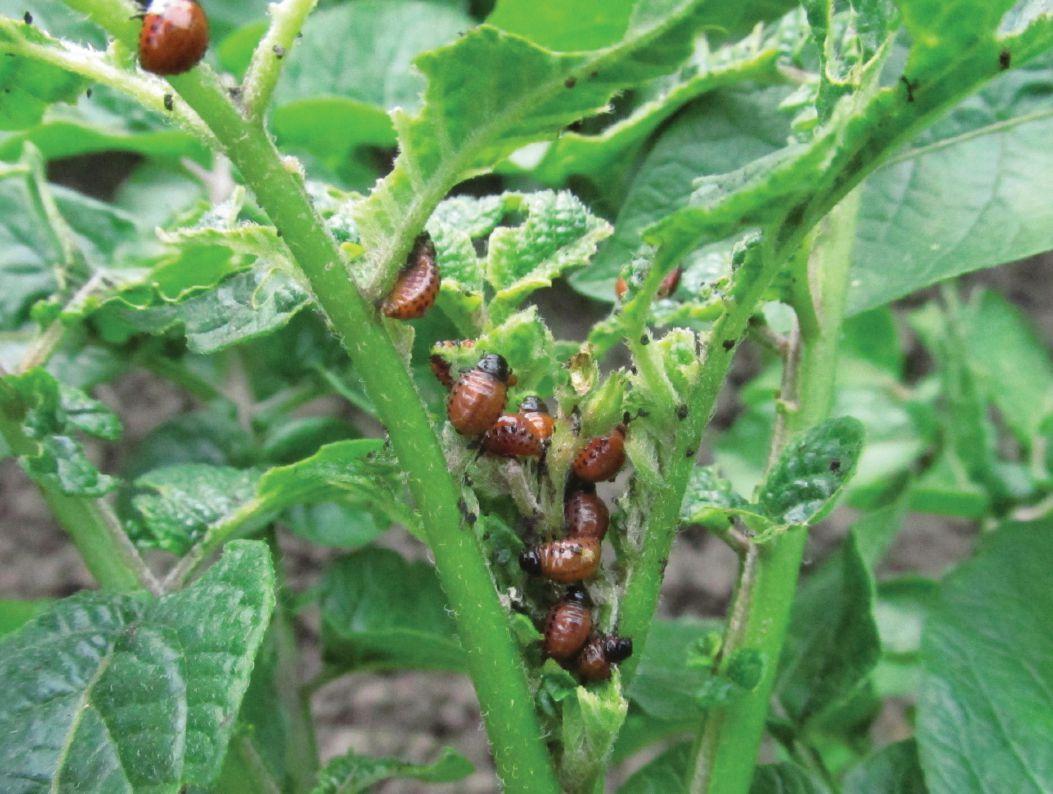
Colorado potato beetle (CPB) has been a challenging pest for potato growers for more than a century, and today it continues to be the most damaging insect defoliator of potatoes across Canada and the U.S. If uncontrolled, growers suffer yield losses and potential crop failure in potato crops and other field vegetable crops such as tomatoes and eggplant. Growers continue to rely on insecticides for control, however CPB is very adept and successful at developing resistance, creating additional challenges for researchers, industry and growers.
With increasing potato farm size and repeated use of effective insecticides, there has been high selection pressure on CPB to survive. Insecticide resistance develops largely from the overuse and repeated application of chemicals with similar modes of action that increase the selection of the resistant individuals in the population. “Colorado potato beetles resistant to DDT were first reported in 1955, and have since developed resistance to over 51 different insecticides, including imidacloprid and eight other neonicotinoids
in the U.S.,” Ian Scott, research scientist with Agriculture and Agri-Food Canada (AAFC) in London, Ont., says. “Colorado potato beetle resistance in Canada has developed more slowly, with the first findings of resistance in 2003, to imidacloprid (Admire), the first neonicotinoid registered in Canada, and increasing reports of problems and crop failures in Ontario and Quebec by 2007.”
In 2008, Scott and colleagues initiated a four-year project to survey CPB neonicotinoid resistance in Canadian potato fields. Growers and agronomists from across Canada sent live samples to AAFC every summer. “We partnered with different chemical companies on the project and, depending on which products were surveyed in a particular year, we conducted bioassays in the lab,” Scott says. “We were able to screen quite a few populations of Colorado potato beetle through the bioassays. We were trying to confirm what growers and extension people were seeing relat-
TOP: Severe Colorado potato beetle larval damage to potatoes.
PHOTOS
Performance,
The Harvest Grainbelt is faster, more reliable, and easier on your grain. The Brandt Harvest Grainbelt delivers superior reliability and reduced maintenance with exclusive features like our new precision drive rollers that extend roller bearing life, and our new synchronous belt drive system that delivers enhanced wear advantages over a conventional chain drive – which of course means less downtime and more productivity for you come harvest time. That’s Powerful Value. Delivered.
BURN, BEETLE, BURN
In February 1994, Potatoes in Canada magazine, a sister publication to Top CropManager magazine, published a story with an eye-catching headline: “Burn, beetle, burn.”
The story explains that in the summer of 1992, field trials began on an eight-row flamer designed to control Colorado potato beetles (CPB) that had recently demonstrated resistance to traditional chemical treatments. The flamer tests were initiated by ICG Propane, in co-operation with the Ontario Ministry of Agriculture, the University of Guelph, and growers in Alliston and Leamington, Ont.
The trials showed that flaming had several mechanisms for limiting beetle damage. The most obvious was that it could kill the beetle adults outright. But the trials also shows there were three secondary controls: First, flaming caused sufficient damage to the CPB so that it died in the near term; second, if eggs and antennae were damaged, the beetles became disoriented and, thus, unable to feed or mate; and third, the heat from the flaming resulted in a high mortality for the eggs already laid.
The trials showed that using the propane flamer in the spring for overwintering adults gave control of 70 to 80 per cent of the adult beetles and also killed nearly 50 per cent of the eggs. Late season control, the time of top killing, gave 95 to 100 per cent control of adult CPB. In addition, the 1994 story stated growers were “astonished at the level of weed control that came as a result of the flaming activity.”
Even more interesting was the low level of plant damage from the flaming. The story states that in almost all locations of the study, slight plant injury similar to that observed when plants are hit by a late frost did occur. However, the growing tip of the plant was not affected, and most injury was unnoticeable after about a week.
“Potato yields taken at four of the test sites showed no difference in yield between flamed and unflamed areas.”
At the end of the day, physical methods to control Colorado potato beetle and other pests are seeing resurgence, as the very real threat of insecticide resistance increases.
ed to resistance concerns with registered neonicotinoid uses. Also, some companies were planning to introduce new products of the same class or different groups and wanted to see if there was any potential cross-resistance with the older products.”
The results of the four-year survey confirmed previous studies showing that many CPB populations have become less sensitive to imidacloprid and that cross-resistance with the second-generation neonicotinoids thiamethoxam and clothianidin is a growing concern. Scott adds the survey also demonstrated cross-resistance is on the rise.
“Using comparisons of Colorado potato beetle mortality generated from lab bioassays with Admire, Actara and Titan, a strong positive correlation indicated there is potential for cross-resistance between these three neonics,” Scott notes. “However, cross-reaction correlation was weaker between neonic Admire (Group 4A) and diamide insecticide Coragen (chlorantraniliprole, Group 28), indicating the cross-resistance between these classes is less likely to develop.”
According to Vikram Bisht, plant pathologist with Manitoba Agriculture, Food and Rural Development, the Atlantic provinces, and Quebec and Ontario have had a greater problem with CPB resistance to Group 4 insecticides. “However, Manitoba has seen some population shifts to resistance,” he notes. “Alberta currently does not have serious issues and so far even older chemistries appear to still be effective there. Resistance to the newer insecticides is highly likely if the products are continuously used without proper in-
secticide resistance management practices being applied. It is important to rotate chemistries to prevent multiplication of insecticide resistant populations.”
Vikram adds CPB populations collected from treated fields in Manitoba in 2012 and 2013 and tested by Scott were also found to be imidacloprid resistant (with less than 30 per cent mortality) or showed reduced sensitivity to clothianidin or thiamethoxam (with 30 to 70 per cent mortality). Repeated use of similar mode-of-action insecticides may often lead to development of cross-resistance against newer insecticides, even though they had not been previously applied. Therefore, resistance against clothianidin and thiamethoxam has a greater chance of appearing in imidacloprid-resistant CPB populations.
“Generally, every commercial grower treats seed potato for Colorado potato beetle and in most cases control is quite effective,” Bisht says. “In areas where resistance is developing and in situations where growers also need to use a foliar application for in-crop control, they must make sure to use a different chemistry in-crop than was used for seed treatment. There are at least five different seed treatment or in-furrow chemistries and a few other chemistries for in-crop, so growers do have options available. Growers should make rotating insecticide chemistries a priority whether or not they have resistance concerns, as it is good practice to ensure long-term use of the good tools available.”
Bisht adds crop rotations of two years or longer are needed to be effective. However, fields must not be adjacent to last
year’s crop. “Short distances from previous potato crops reduces the advantage of crop rotation, since the overwintering Colorado potato beetle adults from last year’s field can easily crawl to adjacent fields. Also, Colorado potato beetles can fly short distances during warm days and can easily move 100 to 200 metres.”
New research and management options
“We are working on other projects focused on understanding the mechanisms responsible for resistance of Colorado potato beetle through molecular and biochemical analyses,” Scott says. “We have maintained a number of Colorado potato beetle colonies in the lab for use in various projects; for example, screening alternative biopesticide products and the use of natural plant compounds as insecticide synergists.”
One recent project studied the potential use of dillapiol, the main constituent in Indian dill (Anethum sowa), as a synergist to help improve insecticide activity
and longevity, and control of resistant pest populations. Synergists have a long history of use, one of the most frequently used ones being piperonyl butoxide (PBO) in combination with the natural insecticide pyrethrum. PBO is a very effective synergist but has related toxicological concerns.
“Our laboratory trials testing of pyrethrum alone versus pyrethrum combined with dillapiol indicated that the synergist increased the activity of pyrethrum against insecticide-susceptible and -resistant Colorado potato beetle,” Scott explains. “In field trials, both the PBO and dillapiol synergized pyrethrum had 10 times the efficacy of pyrethrum alone. We continue to work on dillapiol and other natural plant-derived synergists that may offer compounds with improved health and environmental safety and potential for organic certification.”
Research continues on other strategies to help growers manage the challenges of CPB. “There continues to be a focus on the development of new varieties with Colorado potato beetle resistance, however trans-
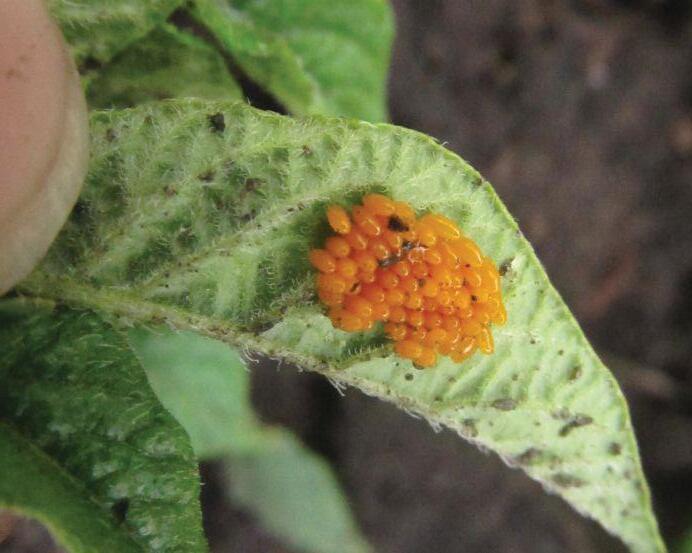
FAR LEFT:: Colorado potato beetle eggs on the underside of potato leaf.
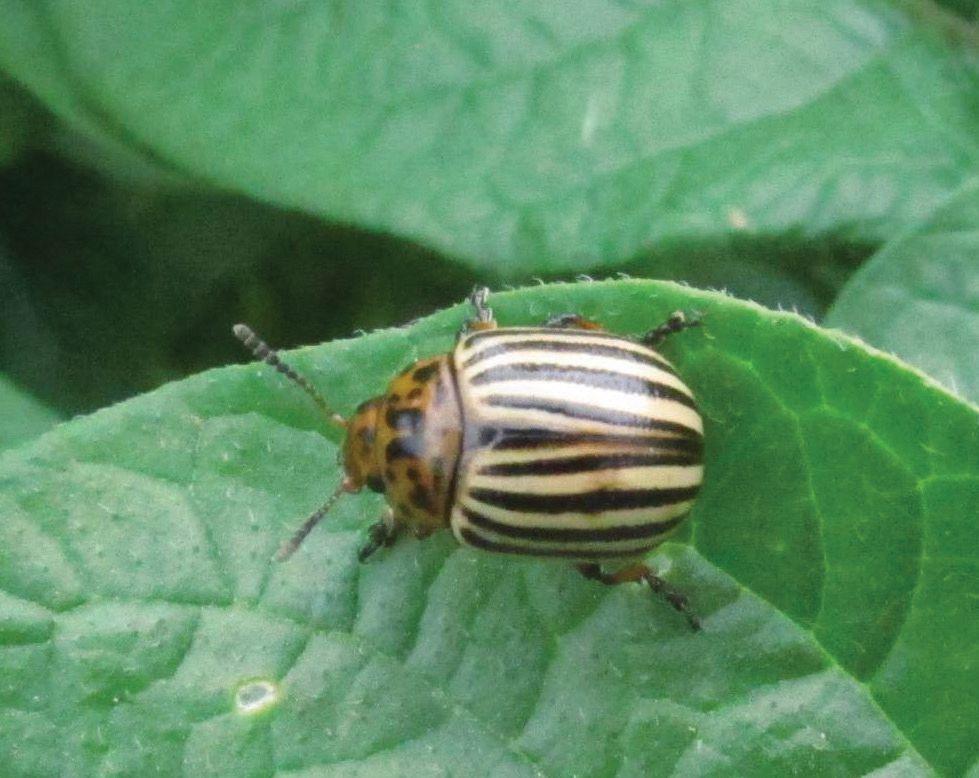
LEFT:: Adult Colorado potato beetle.
genic varieties have not yet been accepted by the market,” Bisht says. “Plant breeders are also using conventional breeding to introduce natural resistance genes from wild species, and hopefully in the future varieties will become available.
“There are other cultural practices that can be options for organic or smaller growers, but so far most are not practical for larger commercial growers. There is a new biological insecticide available – Novodor (Bacillus thuringiensis subsp. tenebrionis, strain NB-176) – but it is not currently used by commercial potato growers. Plastic-lined trenches on field edges could be effective for small farms, which trap Colorado potato beetle and prevent movement into the field.”
Considerable efforts continue to be focused on addressing resistance. Scott and Bisht remind growers everyone must do their part to be vigilant in monitoring and scouting for CPB resistance, follow proper insecticide resistant management practices and alternate classes of insecticides available.
“The survival of beetles after an insecticide application could be due to a variety of factors, including improper coverage, failure to apply the full rate of insecticide, or precipitation soon after application and existence of actual insensitivity (tolerance/ resistance) to the insecticide,” Scott says. “It is very important for growers and industry to practice good stewardship and maintain the use of these products as long as possible. It takes a considerable [amount of] resources, time and funds to develop new chemistries, so protecting the tools we have as long as possible is a best practice.”
Canada produces about 10 billion pounds of potatoes every year.
CONSERVATION TILLAGE THROUGH THE DECADES
No-till firmly rooted on the Prairies.
by Bruce Barker
It’s amazing to see how far western Canadian agriculture has come. Forty-five years ago, conservation tillage was unknown, save for a few forward-thinking research scientists and concerned farmers.
In 1970, a world wheat glut had wheat prices low and federal agricultural initiatives produced Lower Inventories for Tomorrow (LIFT) where farmers were paid to keep land out of production. The result was a dramatic increase in summerfallow, with some land not seeing a grain crop for several years. Salinity was on the rise and dust storms were brewing.
Fast forward to 2011 when the last Statistics Canada Census found 62 per cent of land was seeded with no-till and an additional 24 per cent seeded with a low disturbance system that left most of the crop residue on the soil surface. The time between then and now was truly transformative and revolutionary, spawning new crops, machinery innovation and a more sustainable agriculture. (See Fig. 1 on page 24.)
Early pioneers
Dust storms weren’t new to the Prairies in the 1970s and 1980s but old tillage habits die hard. Following the Dirty Thirties, research scientists at Agriculture Canada Experimental Stations across Western Canada, as well as the Prairie Farm Rehabilitation Act (PFRA), focused on keeping crop residue on the soil surface during summerfallow years.
According to the book Landscapes Transformed, The History of Conservation Tillage and Direct Seeding*, published by Knowledge Impact Society at the University of Saskatchewan (U of S), the earliest concept of reduced tillage seeding, where farmers seeded directly into standing stubble, was developed by R.A. Johnson, a Saskatchewan farmer, who is credited with developing the one-way discer seeder in the 1940s. Many machinery companies, including Cockshutt, produced the seeder, which allowed farmers to direct seed without pre-seed tillage, albeit with high soil disturbance. The development of herbicides to control weeds also helped farmers reduce tillage after the Second World War.
Early research on no-tillage highlights the concern some pioneering scientists had regarding the detrimental effects of tillage on soil degradation. Edward H. Fowler published The Plowman’s Folly in 1943 and made the case to get rid of the plow, stating: “No one has ever advanced a scientific reason for plowing.”
The first commercial no-till drill was introduced in 1967 by Allis-Chalmers, although it wasn’t suited to small grain crops. Machinery limitations were a major barrier for these early pioneers.
Agriculture Canada researchers continued to look into ways to re-
duce tillage, and in the 1960s, C.H. Anderson looked at low-disturbance direct seeding, reporting in 1971 that “…direct seeding with hoe and double disc press drills provided equal yields to that with pre-seeding tillage from 1966-1970 at Swift Current [Sask.].” At that time, however, Anderson pointed out that direct seeding was more of a scientific exercise: “Economics was not considered; we wished only to ascertain whether cultivation had any beneficial effect other than for weed control.”
Other researchers were doing low-disturbance direct seeding in the late 1960s and early 1970s as well, including Agriculture Canada researchers Wayne Lindwall at Lethbridge, Alta. and Ken Bowren at Melfort, Sask. University researchers included Elmer Stobbe at the University of Manitoba and Brian Fowler at the U of S.
PHOTO BY BRUCE BARKER.
A typical sideband opener.
PROSARO
WITH PROSARO, WINNING IS SO MUCH EASIER.
Forget about a level playing field. Prosaro ® fungicide has the proven effectiveness to tilt the odds in your favour. Canada’s #1 cereal fungicide has the broadest spectrum of leaf disease and fusarium head blight activity for improved yield and quality. Combined with its curative and protective properties, Prosaro helps you ring the bell on a better harvest.
Ask your retail for Prosaro fungicide, today.
Source: Statistics Canada.
Explosive growth
Many factors collided in the 1970s and 1980s to drive the no-till movement. Don Rennie, a former dean with the U of S’s college of agriculture, joined the university in the early 1970s and started to promote the message that summerfallowing was not sustainable and was actually destroying cropland.
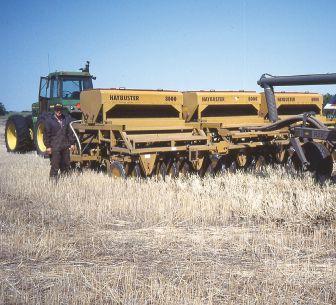
While the message was controversial at the time, it has been proven many times over. Still, farmers had few practical or economic ways to implement direct seeding or no-till. Machinery was a major limiting factor, as was weed control. The Haybuster drill was one of the early no-till drills, but its limitations of seeding efficiency and residue penetration with discs limited its use. (See Fig. 2 opposite page)
Air seeding technology gradually started to develop in the late 1970s and early 1980s. One of the earlier air seeders, developed by Ross and Davies of Antler, Sask., was patented in 1975 and went into commercial production in 1979 as the Prasco air seeder. These early air seeders, though, were primarily used for banding fertilizer – a concept championed by John Harapiak of Western Co-operative Fertilizers Ltd., who subsequently did research on seed and fertilizer placement in direct seeding. The air seeders were simply cultivators with an air delivery system, not necessarily designed for seeding crops with poor depth control across the toolbar.
In 1984, Canadian Senator Herb Sparrow delivered the Soils at Risk report on soil erosion and ways to minimize it, including investment in research, farmer education, government policy, and the creation of national and provincial councils to promote better soil conservation. It became one of the best-circulated Senate reports. Farmers were ready for the message, and the droughts of the mid1980s served to emphasize the concept of soil and moisture conservation.
Information from Alberta Agriculture indicates the 1980s were a time of innovation for machinery. Friggstad Ltd. began producing air seeders using Wieste components from Germany. Flexi-coil produced a modified Australian seeder from Fusion Engineering called the Air Flow seeder in 1981. Morris sold the Australian Napier Grassland seeder; Bourgault utilized the Bechard seeding system in their
seeder. Others producing air seeders included Wil-Rich, Leons, Concord, Great Plains, Case IH, C.C.I.L. and John Deere.
In the mid-1980s, floating hitch and five row toolbars were developed, allowing better depth control for seed and fertilizer placement. Openers were generally cultivator sweeps or spoons where seed and fertilizer were scattered together. These openers limited the amount of fertilizer that could be applied with the seed, and still resulted in large soil disturbance during seeding. At that time, wide sweeps provided preseed weed control in the absence of effective and affordable herbicide control.
Sideband openers were eventually developed, allowing farmers to place seed and fertilizer separately. These openers were one of the key factors that allowed farmers to move to a one pass seeding system.
Still, farmers struggled to control weeds economically before seeding. Roundup was introduced in 1974 but wasn’t economical for broad spectrum weed control until 1983 when Monsanto started to reduce the price in anticipation of the patent on glyphosate expiring. The development of herbicide-tolerant crops gave farmers even greater choice and ease of weed control in no-till.
From 1971 to 1993, no-till seeded acres was only approximately eight per cent of seeded acres. With the price of glyphosate dropping as competition entered the marketplace, the tipping point was reached for farmers looking to enter no-till. From 1993 to 2011, no-till grew to 62 per cent of seeded acres.
In the intervening years, machinery innovation continued, with Seed Hawk, SeedMaster and ConservaPak developing independent, ground following opener systems. Notably, these systems were developed by farmers like Pat Beaujot, Norbert Beaujot and Jim Halford, who were all looking for a better way to no-till seed. Mid-row band technology was developed, and disc openers were refined. Today, no-till equipment is reliable and falls mainly into independent openers systems or disc drill systems.
The perfect storm
Many factors, including machinery, herbicides, cost of production and increased cropping choices with no-till, provided the foundation for the
Source: Nagy and Gray. RateofReturntotheResearchandDevelopmentExpenditureonZeroTillageTechnologyDevelopmentinWesternCanada(1960-2010) , U of S 2012.
explosion in no-till, but researchers and farmer organizations certainly played a key role. The Manitoba-North Dakota Zero-Till Farmers Association, the Alberta Conservation Tillage Society (eventually Alberta Reduced Tillage LINKAGES) and the Saskatchewan Soil Conservation Association took up the cause. The efforts of these organizations, through extension, field demonstrations and annual conferences, helped drive technology transfer. It wasn’t uncommon for field demonstrations to draw hundreds of farmers and annual conferences to pull in 500 or more farmers.
Research scientists were also heavily involved in low disturbance direct seeding research, and spent much time in the 1980s and 1990s conducting research and technology transfer. Significant trials were initiated by Wayne Lindwall at Lethbridge, Stewart Brandt at Scott, Sask., Ben Dyck and Sylvio Tessier at Swift Current, and Guy Lafond at Indian Head, Sask. The Prairie Agricultural Machinery Institute tested much of the new equipment throughout the 1980s and 1990s. Many more trials were conducted off-site on farmers’ fields. Since then, many more scientists have conducted research into conservation tillage and have gained a better understanding in nutrient management, weed control, crop diversification and rotation, and disease management.
A U of S study (Nagy + Gray) published in 2012, Rate of Return to the
Research and Development Expenditure on Zero Tillage Technology Development in Western Canada (1960-2010, stated: “A return of $52 dollars for every dollar invested in zero tillage research by public, NGOs and private sector was estimated. Approximately, 50 per cent of the $3.4 billion net benefit of the research was captured directly by farmers in terms of fuel, labour, machinery and other input cost reductions.”
Since the 2011 Census, no-till has likely suffered some with the above-normal rainfall and flooding in some parts of the Prairies. For most of the last 100 years, Prairie farmers have been trying to conserve moisture, while over the last 10 years there has been too much in some areas. Old cultivators have been dusted off and used to dry out soils. New vertical tillage equipment has been promoted as a way to dry out the soil as well.
So is tillage making a big comeback? Given the many sustainable benefits of no-till, the answer is likely no, except for localized areas were environmental conditions dictate some tillage. But only time will tell what the next 40 years will bring.
*Landscapes Transformed is a must-read for those interested in the history of Conservation Tillage in Western Canada. Significant parts of this article are based on this book, with permission. Fig
Source: The Real Dirt on Farming, 2014
2. Milestones in the adoption of zero tillage cropping systems
CONTROLLED TRAFFIC FARMING
Is this the next evolution in conservation tillage?
by Bruce Barker
Agroup of intrepid farmers and researchers are working on what could be the next evolution in conservation tillage. Called Controlled Traffic Farming (CTF), it is a crop production system in which the crop zone and traffic lanes are distinctly and permanently separated. In practice, it means that all implements have a particular span or multiple of it and all wheel tracks are confined to specific traffic lanes. Permanent wheel tracks (tramlines) are established in the field where all machinery travels year after year.
“Controlled traffic is widespread in Australia, and is gaining popularity in Europe and North America. We want to help Alberta farmers assess the practice to see if it makes management sense here, and to help reduce the risk that farmers may encounter when converting to controlled traffic farming systems,” Peter Gamache, project leader of Controlled Traffic Farming Alberta (CTFA), says.
Controlled Traffic Farming Alberta was launched in 2011 as a three-year project to compare controlled traffic cropping systems
to random traffic cropping systems. CTFA will help farmers assess and evaluate CTF under Alberta conditions by developing a largescale on-farm research project on four sites in 2011.
In 2014, CTFA entered its fourth year as a joint project with the University of Alberta’s department of renewable resources, and is funded primarily by the Alberta Crop Industry Development Fund (ACIDF). The Alberta Canola Producers Commission provided funding for 2014-15. Additional funding and help comes from CTF partners Farmers Edge, Beyond Agronomy, Point Forward Solutions, AgViser Crop Management and Paradigm Precision, and managing partner Agricultural Research and Extension Council of Alberta. The farmer co-operators at seven sites in 2014 have made significant investments and undertaken additional risk to implement CTF on their farms.
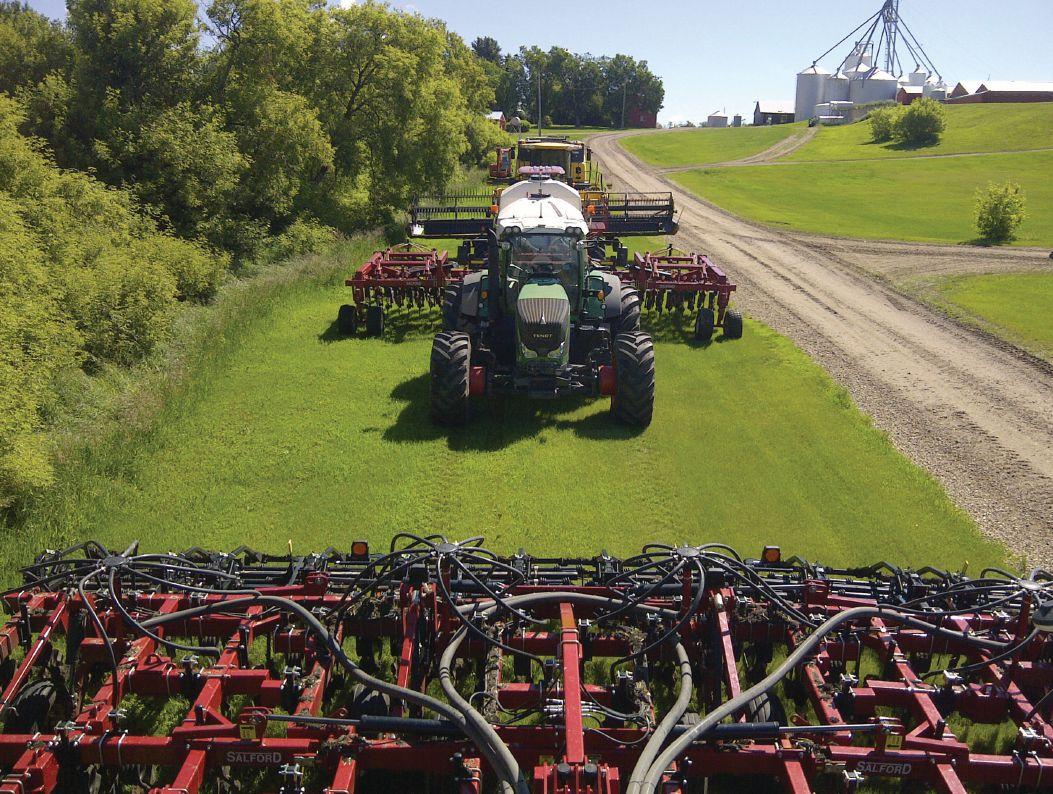
TOP: With CTF, machinery is modified to have the wheels run on permanent tramlines.
PHOTO
In 2014, random traffic was simulated on field scale plots on a CTF field at each co-operator location. The simulated random traffic results in approximately 50 per cent of the soil surface being tracked versus the CTF check where about 15 to 20 per cent of the soil surface is being tracked. The treatment plots match the combine header or swather width for each co-operator. The plots will be repeated for three years and will feature the same treatments in the same locations.
Gamache says CTF could significantly improve crop production. By combining no-till and CTF into one system, farmers may be able to increase their net returns. CTF has the potential to improve soil structure, reduce overall compaction, increase soil water storage, improve infiltration, increase moisture use efficiencies, improve nutrient uptake, reduce pesticide costs, reduce fuel consumption and lower machinery investment.
CTFA is evaluating weed communities, crop emergence, water infiltration and yield, and will conduct an economic analysis to determine if CTF is more profitable than random traffic farming.
Gamache says to date, the CTF systems are performing well in extreme climate conditions, and are increasing the resilience of the cropping systems.
“While we are not yet seeing consistent and significant yield increases, the advantages of the system are proving to be valuable. The timeliness and efficiency of operations is a significant benefit. The ability to do accurate, reliable on-farm research is valuable. The precision of a CTF system opens up a whole new world of agronomic and economic opportunities such as in-crop nitrogen application, on-row fungicides and precision seed location,” Gamache adds.
Time will tell if CTF will help move conservation tillage to the next level of sustainable farming. Learn more at controlledtrafficfarming.org.
PHOTO BY BRUCE BARKER.
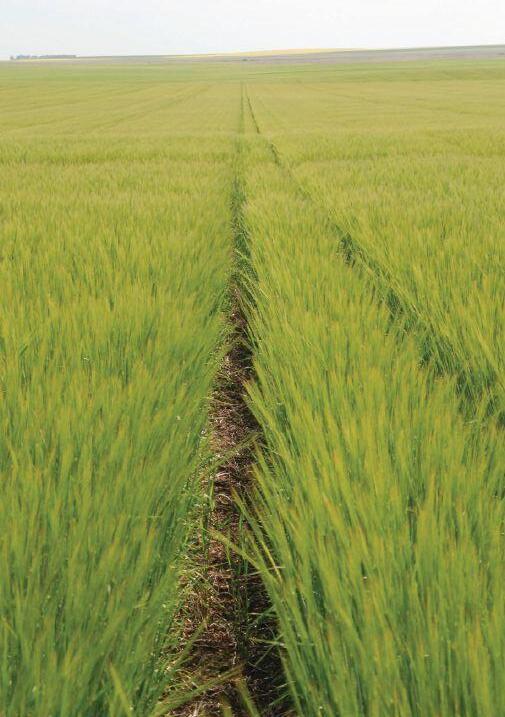
Permanent tramlines under CTF may be the next evolution in conservation tillage.
SOYBEAN RUST MONITORING
Helping in continental soybean rust management – and more.
By Carolyn King
Top Crop Manager has been keeping an eye on soybean rust ever since the pathogen’s spores first blew into Ontario in 2007. Those spores were captured at monitoring sites in one of the largest crop disease monitoring efforts in North America to date. This soybean rust monitoring system has helped researchers, crop advisors and growers to get a better handle on the disease.
So far, soybean rust has not caused problems in Canada, in part because monitoring has contributed to more effective control measures in the United States. On top of that, the monitoring program has laid the foundation for developing a Canadian system that could monitor the full range of airborne fungal spores and bacteria, as an early warning system for diverse pathogen concerns.
“When soybean rust was first detected in late 2004 in the southern U.S., it was really of great concern,” Sarah Hambleton of Agriculture and Agri-Food Canada (AAFC) in Ottawa says. She explains the pathogen was already known to be both invasive and aggressive. Since its discovery in Japan in the early 1900s, the pathogen had spread to other Asian countries and then to Australia, Africa and South America, and had shown its ability to cause devastating yield losses when conditions favour the disease.
“Also, we understood a lot about how rusts can be disseminated; the spores can be carried in air currents over very long distances and remain viable. And we knew soybean rust was well established in South America. So we knew there was a potential for the pathogen to come to North America and cause a lot of yield loss if the environmental conditions were suitable.”
When soybean rust was found in the U.S. in 2004, plant pathologist Albert Tenuta with the Ontario Ministry of Agriculture, Food and Rural Affairs (OMAFRA) was ready. In OMAFRA’s regular weekly scouting to monitor for crop diseases, watching for soybean rust became a high priority, and Tenuta started providing soybean rust information and updates to growers.
In addition, he asked Hambleton if she wanted to get involved in doing molecular diagnostic testing for the pathogen. So, in a collaborative effort with support from the Grain Farmers of Ontario, OMAFRA, AAFC’s Pest Management Centre and others, Hambleton set up automated equipment to collect air and rain samples at OMAFRA scouting sites and other locations. On a weekly basis, the crop scouts or collaborators on site collected the samples and sent them to Hambleton’s lab. Such samples contain airborne organisms, so her lab extracted the DNA from the samples and used
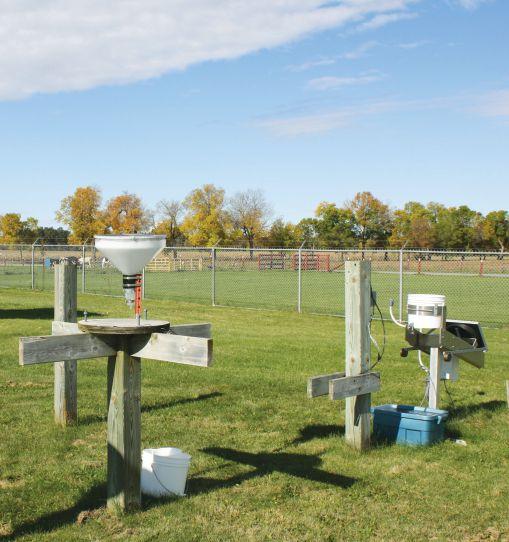
Weekly rain and air samples collected by active and passive collectors were screened for soybean rust DNA.
a very specific real-time PCR test to quickly determine if soybean rust spores were arriving at the monitoring sites. She says, “In 2006, we ran trials with the collectors, and in 2007 we were operating.”
The Canadian monitoring effort came together with efforts in the U.S. and Mexico to form the North American Soybean Rust Monitoring Network. This international initiative involves field scouting, spore trapping, DNA-based screening, predictive modelling and extension to soybean growers. The field scouting includes sentinel plots (soybean plots planted earlier than the local commercial soybean fields), commercial fields and patches of kudzu (an invasive legume that can be a winter host for the pathogen in areas with very mild winters). The network’s public website (sbr. ipmpipe.org) provides near real-time maps of the monitoring results, as well as information about managing the disease.
In Canada, the monitoring work involved nine sites in Ontario, including one on the roof of the University of Toronto’s Earth
PHOTO COURTESY OF SARAH HAMBLETON, AAFC.
Sciences Centre, two in Quebec with support from the Quebec Ministry of Agriculture, and one each in Manitoba, Saskatchewan and Alberta, sited at AAFC research stations. Fundamental to the success of the program was the weekly commitment for many years by all collaborators to oversee the sites and collect samples.
“The first time we detected the DNA of the soybean rust spores was in July 2007,” she notes. “Then in October, the team in southwestern Ontario found a few diseased soybean leaves. At that time of year the crop is quite senescent [so the disease did not affect soybean yields]. But it demonstrated to us that the disease could happen here.”
As it turned out, that 2007 detection has been the only time that rust-infected soybean plants have been found in Canada so far, although the spores were detected over the next few years mostly at the Ontario sites.
“In 2007 and 2008, we had many positive detections of the pathogen’s DNA in the air and rain samples. Then the number of detections started to decline. We did not have any positive detections in 2011, 2012 and 2013, so we decided to stop the molecular side of this program,” Hambleton says.
“However, OMAFRA’s regular field scouting continues, and I maintain readiness here – we would be able to use our specific assays to test and identify any suspicious samples that might be found in the field.”
Continental soybean rust control
Several things have helped limit the spread of soybean rust in North America, including important weather-related factors, registration of additional fungicide products, and the monitoring program.
The monitoring and modelling work has enabled researchers and specialists to get a much greater understanding of the disease, its yield impacts and its spread under North American conditions.
The web-based reporting of monitoring results has provided vital information for extension agents, crop consultants and growers. Hambleton notes, “The website allows people to check and see which areas have been scouted and whether the disease was there.” That information is key for timely fungicide applications – if growers wait to spray until they see the disease in their own fields, then the fungicide application may not be as effective. So the monitoring results have allowed U.S. soybean growers to better control soybean rust. And that, in turn, has helped limit the spore load carried northward toward Canada.
“The disease is established in the southern U.S. and they have
[infected] fields every year, but the soybean growers are aware of the disease, and they know how to find it and control it,” she explains.
Just as important, when the monitoring results show that an area is currently free of the disease, then the local growers can avoid unnecessary spraying, which reduces their input costs and helps the environment.
Hambleton adds, “In the early days when everybody in Ontario was very concerned about soybean rust, we were able to say, ‘We’re monitoring and we don’t find it on the ground so you don’t need to be concerned right now about the threat from this disease.’”
She notes that, for the pathogen to cause problems in Canadian soybean crops, we now know that several conditions have to happen at the same time: a heavy spore load in the southern U.S.; big storms that can carry viable spores into Canada; Canadian weather conditions favouring the pathogen’s germination, infection and growth; and Canadian soybean crops in the reproductive stages. Those factors came together in 2007, except the infection occurred very late in Ontario’s growing season. Changing weather patterns could increase the risk of the disease, but the disease would impact Canadian soybean yields only if all the other factors were also present.
From monitoring one, to monitoring many
The monitoring work has also sparked an initiative by a team of Canadian researchers, led by AAFC’s André Lévesque, to develop a system that uses the same type of spore trapping equipment and DNA-based screening for much, much broader monitoring of airborne microbes.
“I work closely with André Lévesque, and we really feel there is a lot of value to this approach,” Hambleton says. “We think we can use DNA extracts from the air and rain samples to look for not just one disease but all the organisms that we can detect if we have the molecular markers to do that. And we are constantly building our databases for reference DNA sequences of different organisms, especially those of importance to agriculture. So I think there is a huge potential.” This approach would be especially valuable for early warnings of airborne fungi and bacteria that are spreading into new regions.
A pilot project on this approach was completed in 2013. Now, Hambleton is a collaborator on a new project that will be using this approach to monitor for wheat rusts and several other airborne diseases in Alberta. “So we will be starting up again, and we’re looking for partners to do more of this kind of work.”
WEED COMPETITION IN SOYBEANS
Twenty years ago science recognized weeds competed with soybeans to reduce yield, now we know how.
by Rosalie I. Tennison
Back in 1993, Clarence Swanton with the University of Guelph identified the critical period of weed control in soybeans. He proved that weeds left unchecked during this window of opportunity would become a problem for the crop later in the season, competing for nutrients, moisture and, ultimately, reducing yield. All those years ago, Swanton proved that keeping a soybean crop weed-free for about 25 days after the crop’s emergence could hold “yield loss due to weed pressure” to 2.5 per cent or less.
Swanton’s findings at the time were featured in the 1993 issue of Beans in Canada, a sister publication to Top Crop Manager magazine. In the years since those recommendations were introduced, which have now become the standard weed control recommendation, Swanton and his colleagues and a succession of doctoral candidates have worked to explain how the soybean plant “understands” the threat of weed competition.
Earlier theories suggested the soybean plant was somehow “weaker” and that weeds being the stronger plants would outperform the crop. It was also considered that stronger weeds required more nutrients and moisture, and would rob them from the soybean plants causing yield loss. While all the theories are true in a sense, Swanton says his latest research actually provides “the science behind the recommendations we made years ago on the timing of weed control.” He adds he can now explain why the weeds can outperform soybeans, and it all has to do with communication.
“This current research makes us think differently about weed competition,” Swanton explains. “It shows how yield loss is affected in the plant and how yield loss is accomplished in the plant.” It turns out weeds and soybeans are actually communicating with each other. When faced with competition from weeds, the soybean plant will actually reduce its claim to nutrients and moisture, in effect backing away
from the schoolyard bully.
The research focused on the red to far-red ratio in the light spectrum that is reflected off the soybean leaf surfaces. Essentially, when the soybean plant detects another plant reflecting far-red light back to it, it begins to prepare itself for survival by becoming taller and thinner to “out-compete” the threat. Naturally, as the soybean plant struggles to survive, seed production is reduced and, hence, yield will be as well.
“This work suggests this is less about plant competition and more about detecting or sensing a change in the environment,” Swanton explains. “The soybean is changing to improve its own fitness and, as it does this, yield is reduced.”
According to this latest research on how weed competition affects yield, the reflected light from the red spectrum causes a delay in the development of the root system, which will affect the plant’s ability to produce yield. But, it isn’t just lack of light, it’s specifically an issue with the reflected far-red light that causes the plant to change. The low red to far-red light reflected from weeds reduced the soybean’s total root biomass by 36 per cent.
“The research reinforces the importance of early weed control,” Swanton says. “We have just proven the rationale behind this advice.” But, the research did not stop at just proving how weeds reduce yield, it also looked at how weed competition affected nodulation in the soybean plant. The researchers learned that a soybean plant will reduce nodulation when faced with weed competition, giving growers another reason to ensure weed control is done early and effectively. The levels and effect of stress on soybean plants was also measured as part of the research and, not surprisingly, they proved that stressed plants had elevated levels of hydrogen peroxide, a compound plants produce when under stress.
ABOVE: When faced with competition from weeds, the soybean plant will actually reduce its claim to nutrients and moisture, in effect backing away from the “schoolyard bully.”
We all share the same table. Pull up a chair.
“ The natural environment is critical to farmers – we depend on soil and water for the production of food. But we also live on our farms, so it’s essential that we act as responsible stewards.”
–
Doug Chorney, Manitoba
“ We take pride in knowing we would feel safe consuming any of the crops we sell. If we would not use it ourselves it does not go to market.”
– Katelyn Duncan, Saskatchewan
“ The welfare of my animals is one of my highest priorities. If I don’t give my cows a high quality of life they won’t grow up to be great cows.”
– Andrew Campbell, Ontario
Safe food; animal welfare; sustainability; people care deeply about these things when they make food choices. And all of us in the agriculture industry care deeply about them too. But sometimes the general public doesn’t see it that way. Why? Because, for the most part, we’re not telling them our story and, too often, someone outside the industry is.
The journey from farm to table is a conversation we need to make sure we’re a part of. So let’s talk about it, together.
Visit AgMoreThanEver.ca to discover how you can help improve and create realistic perceptions of Canadian ag.
HISTORY OF HERBICIDE RESISTANCE
Herbicide resistance: Then, now, and the years to come.
by Carolyn King
“
This problem will strike everybody in one way or another sooner or later, and it is developing faster than people are responding to it.” That’s how Ian Morrison, who was then a plant scientist at the University of Manitoba, described herbicide resistance in a 1993 Top Crop Manager article by Rosalie I. Tennison.
At the time, Morrison’s research on herbicide resistance was triggered by the discovery of trifluralin-resistant green foxtail, the first confirmed case of herbicide resistance on the Prairies, found in 1988 in Manitoba.
“Dr. Morrison’s research team was very careful to make sure the research was done correctly and the results were valid because they knew there would be scepticism, especially among the industry players, which there was,” Hugh Beckie, who started at the University of Manitoba in 1988, says. Beckie has been focusing on herbicide resistance ever since, in his role as research scientist specializing in herbicide-resistant plants, with Agriculture and Agri-Food Canada in Sas-
katoon, Sask.
“At the time, a lot of the [herbicide] industry people had no knowledge of or experience with herbicide resistance, so they were sceptical that we would actually have herbicide resistance in Western Canada, even though Eastern Canada had been dealing with triazine resistance for many years. So there was push-back from industry [in Western Canada].”
Herbicide resistance was also a new issue for Prairie crop growers, as Australian weed scientist Ian Heap found. After completing his PhD on the first weed found to have multiple resistance (resistance to more than one herbicide mode of action, or herbicide group) in Australia and worldwide, Heap came to Manitoba in 1990 to work with Morrison for several years.
“I travelled around and tried to find out what problems farmers
TOP: Green foxtail was the first confirmed herbicide-resistant weed on the Prairies, found in 1988.
PHOTO BY JANET KANTERS.
REBORN AND RESETTING THE STANDARD
New Flexi-Coil® P Series air carts from New Holland are “resetting the standard” for unprecedented accurate, reliable air delivery. Redesigned from the ground up, these new air carts are a fresh example of Flexi-Coil heritage and innovation. The proof? Over 50 new patents pending, the real advantages that increase your return on investment. Now with more acres per hour, you can make the most of your seeding window.
Choose from seven models with capacity up to 950 bushels. Choose from two, three or four-tank models and the option to select tow-between or tow-behind implement configurations. See our entire line of seeding solutions, visit your local New Holland dealer.
A unique case refers to both the weed species and the herbicide mode of action. So if Canada fleabane becomes resistant to atrazine (Group 5), it is listed as one unique case. If another population of Canada fleabane becomes resistant to ALS-inhibitors (Group 2), then it is a separate unique case. But if a third population has multiple resistance to Groups 2 and 5, then it does not count because the other two cases already cover the modes of action.
Source: Ian Heap, weedscience.org.
were having with resistant weeds. Wild oat was the biggest problem at the time – and it still is for many farmers in Western Canada,” Heap says. “All I did was look around from the road to see which fields had a lot of wild oats. Then I asked the farmer, ‘Why is your field full of wild oats?’ They’d say, ‘I don’t know. I’ve been spraying the same herbicide for years and it’s worked in the past, but in the last few years it hasn’t worked very well.’
“So, for the vast majority of farmers, resistance wasn’t even on their radar. Once they knew the cause of the problem, they were able to switch to a different herbicide mode of action and get some control.”
By 1993, Heap had found resistant wild oat, green foxtail and wild mustard, and multiple-resistant green foxtail in Manitoba.
Heap is founder and director of the Internet-based International Survey of Herbicide-Resistant Weeds (weedscience.org), which now involves weed scientists in over 80 countries.
Evolution of the issue
As Morrison predicted over 20 years ago, herbicide resistance has continued to grow. Every year, in Canada and around the world, there are more and more resistant weed species on more and more acres.
The first Canadian case listed in the International Survey is 2,4-D-resistant wild carrot, found in Ontario in 1957. Then, in the mid1970s, the number of cases in Eastern Canada started to climb with the discovery of atrazine-resistant weeds (see Fig 1).
“Prior to 1970, people weren’t thinking about resistance. But in 1970, in Washington State, a researcher found a weed called common groundsel with resistance to simazine, which is a triazine like atrazine,” Heap explains. “That paper was quite an eye-opener in that farmers were applying a lot of atrazine in corn. So people started to search for resistance, thinking that maybe some of [the] weed problems in corn were because of resistance.” As a result, many cases of atrazine-resistant weeds in corn were found in the 1970s in the United States, Canada and Europe.
“Then, in the 1980s, farmers started to use other herbicide modes of action to control the triazine-resistant weeds, such as ALS-inhibi-
tors [Group 2] and ACC-inhibitors [Group 1]. So the weeds evolved resistance to those next herbicide modes of action, and so on,” Heap says.
These days, the big concerns are glyphosate-resistant weeds and multiple-resistant weeds. And of course, some glyphosate-resistant weeds have multiple resistance such as kochia in Western Canada, and common ragweed, giant ragweed, Canada fleabane and, most recently, tall waterhemp in Eastern Canada.
Another concern is that no major new herbicide modes of action have been introduced in Western Canada in the last 25 years, and it’s hard to say when the next new one will be available. “Companies find it very difficult to register new herbicide products, and they are not searching for new herbicide modes of action as much as they used to,” Heap notes. “So for the moment, we’re pretty much left with the herbicides that we have.”
But it’s not all bad news. Important advances have occurred in several areas.
“We’ve made huge strides in the last 20 years in understanding and knowledge of herbicide resistance, and also in recommendations for best management practices to slow resistance,” Beckie says. For instance, research resulted in the recommendation to rotate herbicide groups, and then the recommendation to also use herbicide mixtures or sequences as an even more effective way to delay resistance.
More recently, researchers have been gaining important information on enhanced metabolism, a resistance mechanism in which the weed breaks down a herbicide so fast that the herbicide doesn’t reach its target site in the weed. Beckie says, “Finding widespread metabolic resistance, especially in grass weeds, not only in Western Canada but worldwide, was a milestone in terms of [the need to figure out] how to deal with weeds that are able to break down herbicides across herbicide groups. That’s where using herbicide group rotation or mixtures tends to fall apart. With the increase in metabolic resistance that we’re seeing, that is certainly a challenge with no easy solution.”
Today, crop growers are much more knowledgeable about herbicide resistance than they were 25 years ago. Beckie says, “Most growers now are fully aware of the issue and the best management practices. But on the other hand, they have restrictions in terms of their herbicide program, cropping system, etcetera, so they are trying to deal with resistance as best they can.” As well, herbicide companies are taking action, by setting up websites with resistance information, and by offering products with more than one mode of action.
What’s ahead?
In terms of how the herbicide resistance issue might evolve over the coming decades, Heap says, “One way companies are getting around the problem of resistance is to make crops resistant to a wider variety of herbicides, so even if you don’t have a new herbicide, you can use it in a new way.” So in the short-term, he expects more herbicide-tolerant crops, including ones with stacked herbicide tolerance.
He adds, “In the long-term, hopefully we can do a lot more with non-chemical weed control. I also think the companies will eventually bring some new herbicide modes of action to market. But it’s very expensive for them, and the regulations – environmental regulations, toxicology regulations – are always tightening.”
Beckie says, “I think it is inevitable that herbicides will not be playing the dominant role that they’ve had in the last 50 years. Growers will be forced to adopt a more integrated approach to weed management [including practices such as higher seeding rates, more diverse crop rotations and weed seed management at harvest].
IMPORTANCE OF SOIL SAMPLING
Soil sampling and testing remain valuable tools for growers.
by Donna Fleury
Soil sampling has a long history of use in cropping systems across Canada, and continues to be a mainstay of nutrient management planning and fertilizer recommendations today. The basic principles of soil sampling and soil testing haven’t changed a lot over the years; however advancements in cropping practices, machinery and technology, new crop genetics and need for increased application of fertilizers have resulted in advanced techniques and management strategies.
According to Tom Jensen, director of the North American Program with the International Plant Nutrition Institute (IPNI), soil tests are very useful and even growers who don’t use them can actually benefit as well. “Fertilizer rates and recommendations are based on average soil tests and area conditions, along with target yields,” he notes. “Growers will usually take the recommendations and adjust them based on their experience and target yields for their crop. Without soil testing, growers may under fertilize or over fertilize, both [of] which can impact yields and profits.”
Typically in Western Canada, farmers regularly soil sample fields once every three years, primarily to monitor phosphorus (P) and potassium (K). Sampling and testing for soil nitrate N, to estimate available N and sometimes ammonia, is very useful, particularly in crop years with unusual weather. For example, in 2013, Western Canada had some of the highest average crop yields ever, and it was very useful for farmers to soil test prior to planting in 2014.
“In Western Canada and the Northern Great Plains, fall soil testing is quite reliable, although it is weather dependent,” Jensen says. “Fall sampling works well for drier, cooler climates; however, for nutrients such as N in areas with warmer milder winters, spring soil testing provides more reliable results, as some N present in the fall could be leached and denitrified before spring planting.” Soil samples are usually taken at a 15 cm (six-inch) depth for most less-mobile nutrients such as P and K, but to a 60 cm (24-inch) depth for N.
In Ontario, fall soil sampling is common for most nutrients, except for N. According to Adam Hayes, soil management specialist with the Ontario Ministry of Agriculture, Food and Rural Affairs (OMAFRA) in Ridgetown, many growers will try to sample at the same point in the rotation, so they soil test every three to five years in late summer or early to mid-fall prior to corn for P, K, secondary micronutrients and pH to a 15 cm (six-inch) depth.
“Winter wheat and most cereal crops are harvested between mid-July and mid- to late August,” Hayes says. “Once cereal harvest is complete, growers have the opportunity to soil sample to prepare for
the next corn crop and make sure fertility is up. Growers are encouraged to have the sample analyzed for organic matter as well, as levels are dropping in many fields. Sampling for nitrate N is typically done in a corn crop just prior to sidedress timing to a 12-inch depth.”
The challenge with soil sampling has always been, and continues to be, how to sample appropriately and get the best representative sample of the field or management zone. In earlier years, a series of random samples from across one field were typically mixed together to create one sample for an entire field. Over the years, strategies such as benchmarking and grid sampling were used to gain a better understanding of variability in different areas of a field. As GPS technology and advancements in precision farming and variable rate application of crop inputs improved, fields tended to be divided into reliable stable management zones and representative samples were taken for unique zones.
“One of the ways to get a better average sample is to take more random samples across the field or areas,” Jensen says. “Although pure benchmark sampling is not as popular as it was a few years ago, growers or crop consultants often use random sampling with GPS and will tend to go back very close to where they sampled previously.”
He says another sampling technique some crop consultants are starting to use is to take a small slice (two centimetres) of soil across the seedrow as a way to collect from areas that are banded and not banded to get a better representative sample.
Hayes says crop consultants and growers today often use a combination of information and knowledge of the field to direct where soil sampling should take place. “Many growers will combine information gained from yield maps, satellite imagery, electrical conductivity maps, topography and other crop imagery with their knowledge of each field to target sampling. Consultants use automated probes on ATVs and GPS for sampling to either record sampling sites or to follow a preset sampling pattern in the field. Many suppliers offer a service that puts the GPS locations and soil test results into a mapping program to average out between the points, before turning that information into recommendations.”
The principles of soil testing and analysis in the lab haven’t changed significantly over the years, although automation and new technologies have made improvements. “In some cases, advancements in equipment and increased automation have increased the accuracy of results,” Jensen explains. “Auto-analyzer type analysis equipment and
SPOT THE DIFFERENCE
The guy on the left saved $7/acre* protecting his canola from Sclerotinia.
Don’t lose your shirt. Get advanced protection at a fraction of the price with a unique Group 2 MOA fungicide. Rovral Flo is proven to control Sclerotinia and suppress Alternaria, so you’ll enjoy higher yields at a lower cost.
FMCcrop.ca
FLAX ACRES SLOWLY REBUILDING
Flax acres rising out of the ashes of Triffid gene contamination.
by Bruce Barker
If 1956 was the glory year for flax with over three million acres sown in Western Canada, then 2011-2012 was the bottom of the barrel with only 398,900 acres seeded.
The year 2009, of course, was the year of Triffid, when European officials found genetically modified material in two loads of Canadian flax. The material was identified as a gene from CDC Triffid, a variety developed in the 1980s and 1990s, but never commercially sold.
Somehow the gene made its way into commercial seed production, and when detected, flax exports to Europe were shut down. Flax prices went into free-fall, as the EU market is the biggest importer in the world, and accounted for over 65 per cent of Canadian flax exports before Triffid. Since then, the Canadian flax pedigreed seed industry has rebooted flax seed purity from the Crop Development Centre (CDC) at the University of Saskatchewan.
“Getting the system rid of Triffid took a lot of the industry’s time and resources, and it really set back the flax industry in Western Canada,” Don Kerr, president of the Flax Council of Canada, says. “So much of the focus was on damage control, and trying to clean up the seed supply and recapture markets. Triffid really had an impact on the in-
dustry.”
Flax trade with the EU has resumed, albeit with tight testing protocols at varying stages of shipment to ensure no GMO material enters the EU. Going back to 2010, the CDC and the seed industry committed to reconstituting CDC flax seed to ensure Pedigreed flax seed was without the Triffid gene.
The Flax Council of Canada’s Triffid Stewardship program recommends the testing of all flax seed intended for planting, and only flax seed that test negative for the presence of Triffid should be planted. The CDC and SeCan Association are co-operating on efforts to rid the seed industry of the Triffid gene. For 2015, supplies produced from re-constituted breeder seed of CDC Bethune, CDC Sorrel, CDC Sanctuary and CDC Glas were expected to be good.
Steady growth curve upwards
The 1999-2000 crop year saw flax acres in Western Canada hovering around the two million acre mark, having fluctuated between one mil-
ABOVE: Flax acres are rebounding after the crash of 2009.
Source: Statistics Canada.
lion and two million since the big acres of 1956, a Statistics Canada Census year. A 1998 Top Crop Manager article stated that Canada was the world leader in production and export of flax with Statistic Canada’s 10-year average (1986 to 1995) production of 710,000 tonnes grown on 1.5 million acres.
In another Top Crop Manager article in 2014 post-Triffid, then Flax Council president William Hill said the goal for 2014 was one million acres. He conservatively missed the mark as acres hit 1.5 million, and today Kerr says the industry hopes to see 1.75 to two million acres in 2015. Those higher numbers could be on the mark if prices hold: going into spring seeding, new crop flax prices were in the $11.60 per bushel range. Compared to other crops, flax was looking quite profitable, so Kerr’s estimates may be fulfilled.
In the meantime, post-Triffid markets for Canadian flax have shifted. China is now a major customer projected to take about one-half of Canadian production, with the U.S. and Europe taking about one-quarter each. That’s a major shift from pre-Triffid when the EU took about two-thirds of Canadian production.
Kerr says the shift in exports to China is also shifting where flax acres are grown in Western Canada. Acreage has steadily declined in Manitoba, dropping from over a million acres in 1986 to 90,000 acres in the 2013-2014 crop year.
“Some of the drop in acreage is because flax is in competition with soybean for oilseed acres, and while prices can be similar, soybean yield is much higher, so farmers are putting their acres into soybeans,” Kerr says. “The other factor is the shift in exports to China mean higher freight costs for flax moving west from Manitoba.”
Meanwhile, Saskatchewan acres have rebounded to almost 1.35 million acres over the last five years with less competition from soybean. Alberta acres are creeping up, and have overtaken Manitoba as the second largest flax producer at 115,000 acres in 2013-2014.
Refocusing the industry
Kerr says that post-Triffid, the flax industry is embarking on a strategic plan to move forward over the next four years. While the plan is still in draft stage, he says the Flax Council is working with its stakeholders on strategies to grow flax production in Western Canada.
“The flax industry fell behind over the last five years because of Triffid, and we haven’t kept pace with other crops like canola, which has continued to improve agronomically. We have identified agronomics as an important goal and need to address factors like yield, yield stability and weed control over the next four years to keep the industry growing,” Kerr notes.
Kerr says the strategic plan will also address best management production practices for producers. Average yield for flax is 22 bushels per acre while soybeans are 35 bushels per acre in Manitoba. Average canola yield was 34 bushels in 2014 and the Canola Council of Canada has a goal of 52 bushels per acre by 2025.
The CDC’s flax program, which began in 1974, is actively involved with improving flax varieties for western Canadian producers. In the early years, CDC flax program founder and flax breeder Gord Rowland oversaw the development of 11 flax varieties, most notably CDC Bethune. Prior to his retirement in 2010, he also registered CDC Sorrel and CDC Sanctuary. More recently, CDC’s sole flax breeder Helen Booker has registered CDC Glas in 2012 and CDC Neela in 2013.
Agriculture and Agri-Food Canada closed their flax breeding program at the Morden (Manitoba) Research Station in 2014 and is transitioning the program into agronomy research over several years. The existing germplasm will either be transferred to other breeding programs or brought to registration, depending on the stage of development.
Looking forward
Kerr was excited and pleased when, in January 2014, Health Canada approved a health claim linking ground whole flaxseed to blood cholesterol lowering, a major risk factor for heart disease, after a rigorous review of scientific information presented by the Flax Council of Canada. With 39 per cent of Canadians aged six to 79 having unhealthy cholesterol levels that put them at increased risk of heart disease, Kerr says the flax industry is working to promote the healthy benefits of flax to nutritionists and consumers. “The flax health claim is one of the few in Canada, and is an important tool for us to help grow demand for Canadian flax.”
Moving forward, the Flax Council launched a redesigned website this past April, resulting in a more user-friendly and simple-to-navigate site. “This site is dedicated to our [Flax Council of Canada] stakeholders and members, recognizing the contribution from producer groups, industry, researchers and government in working together towards the common goals and objectives of enhancing the flaxseed value chain,” Kerr says.
He adds that despite the challenges the flax industry has gone through in the last few years, he is positive the industry will continue to grow, especially with the increasing Chinese and U.S. markets. Whether it can make it back to the glory years remains to be seen.
“Things are looking positive. As long as we can keep improving genetics and markets stay strong, flax acres should remain relatively high. If we could get things happening on the fibre side, that would be exciting potential for growers as well,” Kerr says.
IMPORTANCE OF SOIL SAMPLING
CONTINUED FROM PAGE 38
adapted soil extraction procedures are used to replace some of the older, labour-demanding wet chemistry analyses, and overall the results are still very acceptable.”
Advancements abound
Other significant advancements over the years include farming practices, and machinery and fertilizer application technologies. There was a long history of broadcasting fertilizer and working it in at seeding when tillage was the predominant practice. As growers began to switch to conservation tillage, direct seeding and no-till practices, they also moved to banding fertilizer and other strategies, and away from broadcasting. Precision farming and variable rate technology have also changed how some growers apply fertilizer in their operations. Soil sampling and testing are very important to these advancements.
“Research in the 1980s showed that banding fertilizer was much more beneficial than broadcasting by fertilizing the crop and not the weeds,” Hayes says. “Corn growers traditionally relied on broadcasting N, working it in and then planting the crop. Growers moved to side-dressing N in-crop at the time the corn is starting to ramp up its N requirements. Anhydrous ammonia was used a lot as it was less expensive, but also riskier. Many growers now use liquid N as a side-dress. As fields are getting larger in Ontario, a number of growers are choosing to use liquid fertilizer, even if it costs a bit more, because they can quickly refill applicators and cover more acres in a day.”
Jensen adds there is also an increased use of plant sampling and
analysis along with soil sampling. “Especially with higher value crops, growers have more invested in seed and fertilizer, and are monitoring to ensure they have the right nutrient plan in place. There are also new technologies being developed for in-crop variable rate application. As those technologies, such as crop imaging, NDVI (Normalized Difference Vegetation Index) and other tools become more refined, we will likely see more growers using on-the-go application of some nutrients.”
Fertilizer forms haven’t changed much over the years – until recently. “We are starting to see new options such as controlled release products, additives for urease and nitrification inhibitors, and new technologies for applying micronutrients as a seed or seedrow fertilizer dressing or foliar application to improve distribution of less mobile nutrients,” Jensen notes. “There are also some pretty exciting advancements in compound fertilizer products, such as mixtures of nutrients in one fertilizer granule. Although Europe has been doing this for a long time, we are starting to see these products available in Canada. For example one new product has nitrogen, phosphorus, sulphur and zinc in the same granule, which puts more bits of zinc distributed along the seedrow, resulting in better crop utilization.”
Soil sampling and testing will continue to be an important tool for growers striving to optimize nutrients, yields and profitability. There will also be valuable tools for other programs, such as environmental footprinting and sustainability, reducing greenhouse gas emissions and nutrient management planning.
PRECISION HAS EVOLVED.
Bring a new level of precision to your operation, with a Seed Hawk Seeding System. With features like Sectional Control® Technology and the iCon™ Wireless Control System, our tanks and toolbars place seed and fertilizer with unparalleled accuracy. The result is fast, even crop emergence and greater opportunity for higher yield.
Discover a level of precision that makes seeding more efficient and your life a little easier. Talk to your Seed Hawk dealer today or visit SeedHawkSeeder.com.
PREVENTING POTATO DISEASES IN STORAGE
Disease prevention in the field remains best strategy for storage of healthy potatoes.
by Donna Fleury
Best practices for potato storage begins with disease prevention in the field and good agronomics. Although practices and disease concerns may have changed over time, the basic principles of managing potato production and storage haven’t changed much.
“Whatever is happening in the field is going to have an impact on storage,” Eugenia Banks, potato specialist with the Ontario Ministry of Agriculture, Food and Rural Affairs (OMAFRA) in Guelph, Ont., says. “If the crop is growing well, not stressed and harvested two weeks after killing the top growth, and the potatoes are mature with adequate skin set and no bruising, then everything should go really well. However, Mother Nature doesn’t always help, and wet conditions at harvest is bad for diseases such as late blight or pink rot and others. I think the expression ‘potato storage is not a hospital’ is great advice, as whatever goes into storage is not going to get better.”
Over the past several decades, potato production has seen a lot of changes. According to Lawrence Kawchuk, research scientist with Agriculture and Agri-Food Canada (AAFC) in Lethbridge, Alta., three big changes are pesticide resistance, the emergence of new diseases and the re-emergence of old diseases.
“Pesticide resistance remains an issue as pathogens such as Fusarium continue to develop resistance. There are also market sensitivities to pesticides and a growing interest in moving away from their use, and reducing economic and other trade costs,” he says. Also, one of the new devastating diseases of concern is zebra chip, “which has been found in Idaho and Washington, but so far monitoring programs have not yet identified the disease in Canada.”
Kawchuk says the re-emergence of late blight, a historic disease of potatoes, is due to a variety of changes, including new strains. “A lot of resources have been allocated to monitoring changes in the late blight population and helping growers respond to keep it at low levels and protect potatoes in storage,” he notes. “In the last couple of years, backyard garden tomatoes have been identified as the primary source of late blight in Canada and the U.S.”
Strategies to reduce the risk of late blight include encouraging gardeners to select resistant tomato varieties and quickly remove and dispose of any diseased plants. If the disease is not controlled, it will contaminate neighbouring fields downwind. Indeed, there is evidence of the pathogen moving 30 to 50 kilometres in the air in a single day, and perhaps more under very windy conditions.
According to Banks, an integrated pest management (IPM) program continues to be a best management practice for growers for
disease prevention, including field monitoring, adequate soil moisture and fertilization, and timely application of crop protection products. “Rotation of chemical products is an important part of an IPM program, particularly to address resistance concerns, [as] Fusarium has developed different degrees of resistance to most of the chemicals currently registered for control,” she notes. “As well, storage diseases including Fusarium, late blight, soft rot, pythium leak and pink rot continue to be management issues for growers. However, there are various phosphorous acid products registered as a post harvest treatment to control late blight when potatoes go into storage. Several foliar applied fungicides for late blight and other diseases are
PHOTOS COURTESY
Potatoes entering a storage facility at Allison, Ont.
available, and there is a new biopesticide registered, Serenade SOIL, for in-furrow application for suppression of pythium leak, pink rot, rhizoctonia, silver scurf and Fusarium dry rot.” Serenade SOIL applied as a post-harvest treatment may reduce silver scurf in storage.”
Potatoes are produced for various markets, and some potatoes are harvested during the summer and processed immediately into French fries or chips, or packaged and sent to markets and retail stores. Some potato production includes varieties that are grown later into the fall and stored for a longer duration in large temperature-controlled storage buildings.
“I’ve been working on potatoes for decades and continue to be amazed at the advancements in potato storage,” Kawchuk says. “Growers can now store high-quality potatoes for several months, and still have good quality products for the market 10 or 11 months later. Quality is everything to the market today, as the potato market is quite saturated.”
Advancements in handling and storage
Growers today have access to various technologies to protect healthy
potatoes going into storage and over the long term. Advanced technologies for controlling ventilation, relative humidity, temperature and other factors are available. Many technologies can be managed remotely from computers and smart phones, helping growers easily monitor storage conditions.
“There is a wide range of advanced technologies and equipment available, but the number one priority of all new storage technologies and facilities today is to save energy,” Banks explains. “One of the new field technologies that is proving to be very useful is the Impact Recording Device (IRD), which helps detect where in the harvesting and handling process potatoes suffer bruising. The device is the shape of a potato and as it passes through the harvesting, conveyors, transportation and handling processes, it records where impacts and bruising are occurring.”
She adds eliminating bruising is key to reducing the incidence of serious diseases such as Fusarium dry rot and soft rot. Fusarium, which is a difficult pathogen to control, is always ready to penetrate potatoes if they have bruises or wounds, and then soft rot will follow, attacking potatoes infected with Fusarium. The device costs about
$5000, but it pays off and helps growers optimize their system quickly to prevent bruising. The device is available through Techmark Inc. based in Michigan, which also carries a wide range of potato storage technology, equipment and devices.
Potato breeding and varietal development advancements continue to focus on bruising and disease resistance to improve potato quality and storage. The Potato Research Centre in Fredericton, N.B. holds the Canadian Potato Genetic Resources germplasm collection and leads some of the variety development in Canada.
“There are new varieties being released constantly with improved traits,” Banks says. “For example, Simplot in the U.S. recently received USDA approval for the release of Innate varieties, which are improved versions of existing potato varieties created through a proprietary biotechnology process called Innate.” Innate potatoes contain genes from wild and cultivated potatoes. According to Simplot, these potatoes pose no environmental risk, create no harm to other species, and grow just like conventional potatoes in extensive field tests. The first generation of Innate potatoes includes Russet Burbank, Ranger Russet and Atlantic. They are tolerant to black spot bruising and pressure bruising, and they produce less acrylamide after frying. Simplot expects to soon add resistance to late blight.
“Another similar technology, Cisgenesis, uses natural genes (cisgenes) from wild potatoes, and is being used to improve disease resistance in plant breeding,” Banks adds. “However, questions remain whether or not these potatoes are going to be accepted by growers and consumers. The technology is there to offer good improvements, but the consumer also has to be considered.”
FSome of the new varieties have improved cold tolerance and can be kept in storage longer. This impacts sugar content and issues with French fry and chip quality, including discoloration when fried.
“Another emphasis is on the development of varieties resistant to common scab, one of the main production problems in Ontario and Quebec,” Banks says. “The use of resistant varieties is the only reliable control method. A new scab resistant variety, Whitney, was recently released, and hopefully we will have more resistant varieties in the years to come. However, the breeding process is not easy, and it usually takes plant breeders 10 to 12 years to develop, evaluate and release a new commercial potato variety.”
“This is a very exciting time for the potato industry,” Kawchuk adds. “If we can keep inputs on the lower side as we have traditionally, and with continued advancements in varieties, technology and storage enhancements, markets will continue to expand. There are huge opportunities opening up in Asian-Pacific markets, with over 50 per cent of Alberta potatoes, for example, currently being shipped offshore.”
Kawchuk says advanced plant breeding techniques using molecular approaches will become more commonplace in the next five to 10 years. “Science has been completely revolutionized with low-cost genome sequencing and the understanding of how genes function. This is a real game-changer and has the potential to eliminate the use of pesticides in the future. These new advancements will allow growers to produce healthier products on a consistent basis by eliminating disease, improving storage quality and increasing access to new markets in the future.”
STORAGE RESEARCH IS ONGOING
ifteen years ago, “The future of fighting disease in storage” was published in a special edition of PotatoesinCanada , a sister publication to TopCropManager magazine. The story highlighted several new research projects that were underway at the time, which could potentially help growers maintain crop health in the field and in storage.
Some of the research projects highlighted in that story, such as biological controls and new varietal development, are still underway today. And what was a concern 15 years
ago, namely the risk of fungicide resistance, remains a management issue for growers today. Then, like now, growers are encouraged to rotate between products with different modes of action.
Other research 15 years ago focused on storage disease control alternatives, such as ozone generators, ultraviolet light and irradiation. “However, those alternatives such as ultraviolet light, irradiation, ozone or the use of volatile compounds, never resulted in commercial use,” Banks notes.
Healthy potatoes going into storage in Shelburne, Ont.
HAIRY CANOLA AND FLEA BEETLES
The search for host plant resistance continues.
by Donna Fleury
Flea beetles have been causing economic damage to cruciferous crops for decades and continue to be a problem pest for canola growers and crucifer vegetable crops across Canada. In a December 2003 Top Crop Manager article, researchers noted: “Even though flea beetles have been a problem for canola growers for many years, alternative methods have not been easily discovered.” At that time, the beginnings of an integrated flea beetle research program were underway.
Researchers have continued working on alternative flea beetle control methods over the past decade. And although some options show promise, over 90 per cent of canola grown in Western Canada today is treated with an insecticide for flea beetle control. Seed treatments are predominant, with an additional application of foliar insecticide when feeding damage encompasses 25 per cent of the leaf surface.
However, an integrated approach that could include host plant resistance is now becoming a promising option.
Flea beetles introduced to Canada
“The two most economically damaging species of flea beetles are both introduced species to Canada, the striped flea beetle and the crucifer flea beetle,” Julie Soroka, research scientist, entomology with Agriculture and Agri-Food Canada (AAFC) in Saskatoon, Sask., says. The striped flea beetle (Phyllotreta striolata) was first recorded in New York in 1776 and gradually spread throughout the continent. It was not considered a problem, as populations were not concentrated in any one area. The crucifer flea beetle (Phyllotreta cruciferae) was first recorded in 1921 in British Columbia, rapidly spreading its way east into the Prairies, causing significant damage to cabbages and other crucifer crops by the 1940s and 1950s. A third species native to Canada, the hop flea beetle (Psylliodes punctulata), is present in small numbers across Canada.
The crucifer flea beetle continued moving east to Manitoba’s Red River Valley and, by the 1960s and 1970s populations explod-
ABOVE: Striped flea beetles Phyllotreta striolata
ed, especially as canola acreage increased. “As canola acreage spread westward from Manitoba, the numbers of crucifer flea beetles also increased, pushing the striped flea beetles, which are more tolerant to cold and emerge earlier, to the northern edge of their range in the Peace River area,” Soroka says. “At that time, the hop flea beetle was actually the predominant species in the Peace. By the late 1990s, the crucifer flea beetle was the primary pest in over 70 to 80 per cent of the canola growing area in Western Canada.”
Soroka began a flea beetle monitoring program in 2001 that showed that flea beetle distribution remained relatively similar until about 2005. The situation changed between 2005 and 2007. “At that time, canola acreage was increasing, and in the Peace River [region] and other areas, growers started growing canola in shorter rotations,” Soroka notes. “This period also coincided with deregistration of the insecticide Lindane, which was equally effective on all three species. Since 2003, all seed treatments registered for control of flea beetles in Canada contain a neonicotinoid insecticide, which research has shown to be less effective on striped flea beetle populations.”
Between 2005 and 2007, Soroka started to notice striped flea beetle showing up more often in survey results. More intensive monitoring showed striped flea beetle had taken over the Peace Region and had moved as far south as the monitoring went. “Currently striped flea beetles have supplanted crucifer flea beetles as the principle flea beetle across most of the Prairies, except in the very southern regions and the Red River Valley area that has mixed populations,” Soroka says. “We believe this shift has been generated by several factors, including heavy use of neonicotinoid seed treatments. Until we can develop alternative strategies such as host plant resistance, growers
for now are relying on chemical seed treatments for control of flea beetles.”
Hairy canola shows promise
As part of an integrated flea beetle management strategy, plant molecular breeders and entomologists began working on developing canola germplasm with protection against flea beetles in early 2002. “We initially introduced a trichome (or hair) gene from Arabidopsis thaliana, a close wild relative of canola, into the canola cultivar Westar,” Margaret Gruber, AAFC research scientist, explains. “This original transgenic experimental line of canola had a large density of hairs on the first three leaves, a few on the fourth leaf, but none on any other leaves or cotyledons. In laboratory and field studies led by Julie Soroka at Saskatoon and Lethbridge, crucifer flea beetles didn’t like feeding on hairy canola. Unfortunately the agronomics of that first experimental line, Hairy 1, were poor.”
In a second project, researchers developed a new line of hairy plants by depressing the activity of a second trichome gene within the Hairy 1 canola plant. The resulting line of plants, Hairy 2, had higher trichome density with longer hairs spread over the first 12 leaves and along parts of the stem. “This new plant line with expanded trichome density and coverage also had flea beetle resistance on the hairy leaves and non-hairy cotyledons, as well as some resistance to diamondback moth,” Gruber notes. “Although all cotyledons of canola are hairless, those from the hairy canola germplasm are resistant to flea beetles.”
The good news is the agronomics of the Hairy 2 canola line were so improved that the plants grew as well as the Westar control plants,
STOP THE SPREAD
and the seed yield was more variable (towards higher yield).
Gruber and her team also compared seed composition from the field trials of both lines. They found that all hairy canola plants had identical oil, protein, chlorophyll and glucosinolate levels as the control plants, except for some variability in two factors. Minor fatty acids in the seed oil of Hairy 1 plants were slightly lower, and three glucosinolates were more variable and slightly higher in Hairy 2 seeds, although still very close to the levels in the Westar control plant (in which the gene modifications had been undertaken). This meant transferring the enhanced trichome trait into a current commercial cultivar should result in seed quality within industry standards.
The information on these transgenic experimental hairy canola lines was shared with industry and plant breeders. Seed and genetic tools are also available from Agriculture Canada for others to transfer the trichome trait into their own elite B. napus germplasm.
One other study underway compared 1000 accessions of natural (non-transgenic) plant germplasm collected by Plant Gene Resources of Canada to evaluate hair density patterns within all of the Brassica species used in canola and mustard breeding. Researchers were looking to select plants with the most number of hairs spread evenly over the young leaves and stems, or plants with no hairs at all. If the coverage is patchy, insects will eat around the hairs.
“We are now looking across these different selected plants for real commonalities in gene expression patterns within hairy leaves compared with non-hairy leaves and cotyledons,” Gruber says. “For example, B. nigra (black mustard) is very hairy, although not as
hairy as our hairy canola lines. B. villosa, a native species, is most hairy and averages 4000 hairs/cm2 on the leaves, but as with all of the other species, it has no hairs on the cotyledons.
“We have also found natural B. napus canola accessions with hairier leaves than in current cultivars. We are comparing expression intensities for all genes that influence hair density, growth or metabolites that influence insect fitness or attraction or avoidance of food. These plants and their genetic information are road maps that can be used in future breeding efforts to create non-transgenic host resistance to insect pests.”
Use all the chemicals you purchase Keeps collection sites safe for workers
In the field and lab trials of these projects, the hairy canola plants were resistant to both species of Phyllotreta flea beetles, in some cases surpassing the protection level provided by neonicotinoid seed treatments. “In our field trials in 2006, virtually all of the flea beetles were crucifer, but by 2012 at our Saskatoon field location, close to 80 per cent were striped flea beetles,” Soroka notes. “The results of our lab trials showed that striped flea beetles are as repelled by hairy canola as are crucifer flea beetles, unlike their insecticide responses. The hairy canola plants were also somewhat resistant to diamondback moth.”
Over the years several others were involved in the project, including Song Wang (former MSc student) and Ushan Alahakoon (former PhD student) who developed the two transgenic hairy canola lines. Gruber adds Peta Bonham-Smith, with the biology department at the University of Saskatchewan co-supervised both of the students, “and has collaborated with me from the beginning on hairy canola.” Visiting fellows Ali Taheri, Nagabushana Nayidu, and Zohreh Heydarian are still working on expressed gene analyses, and Larry Grenkow and Jennifer Holowachuk played major roles in field trials. Dwayne Hegedus is carrying the project forward. Funding outside of AAFC came from western Canadian canola growers groups, the Alberta Agricultural Institute, and the Saskatchewan Agricultural Development Fund.
Should hairy canola cultivars result from these efforts, growers could have alternatives to insecticides for control of flea beetles, and potentially other pests such as diamondback moth. Growers would then be able to implement an integrated flea beetle management program for canola. Researchers say the trichome trait will also be transferable to crucifer vegetable crops.
Comparison of a hairy canola seedling with an unmodified canola seedling.