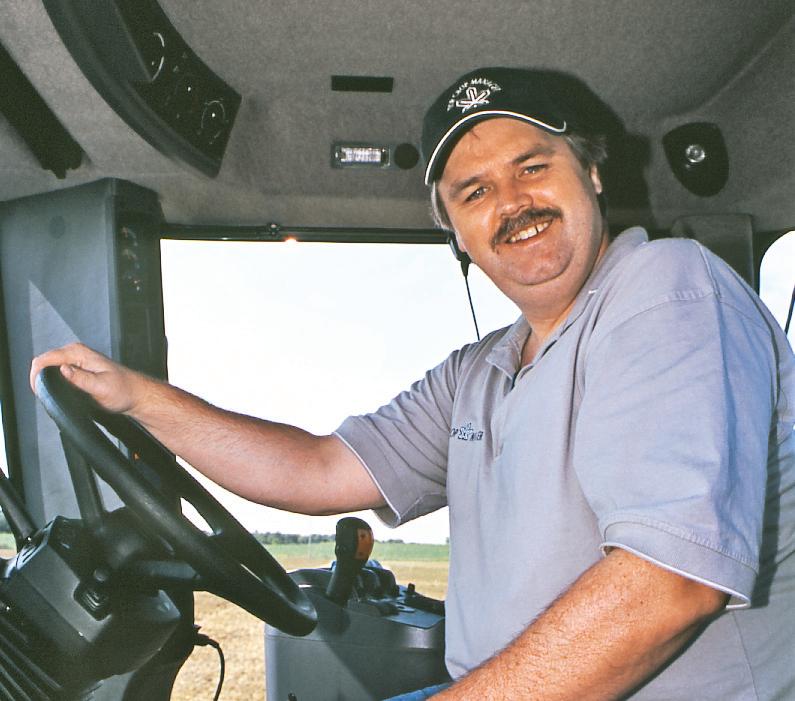
- Mel & Peter Brouwer, Father/Son, eaSt GaraFraxa, ontario (near oranGeville) Corn, Soy, hay and SPrinG Grain oPeration
8, 16, 26
Soybean Focus
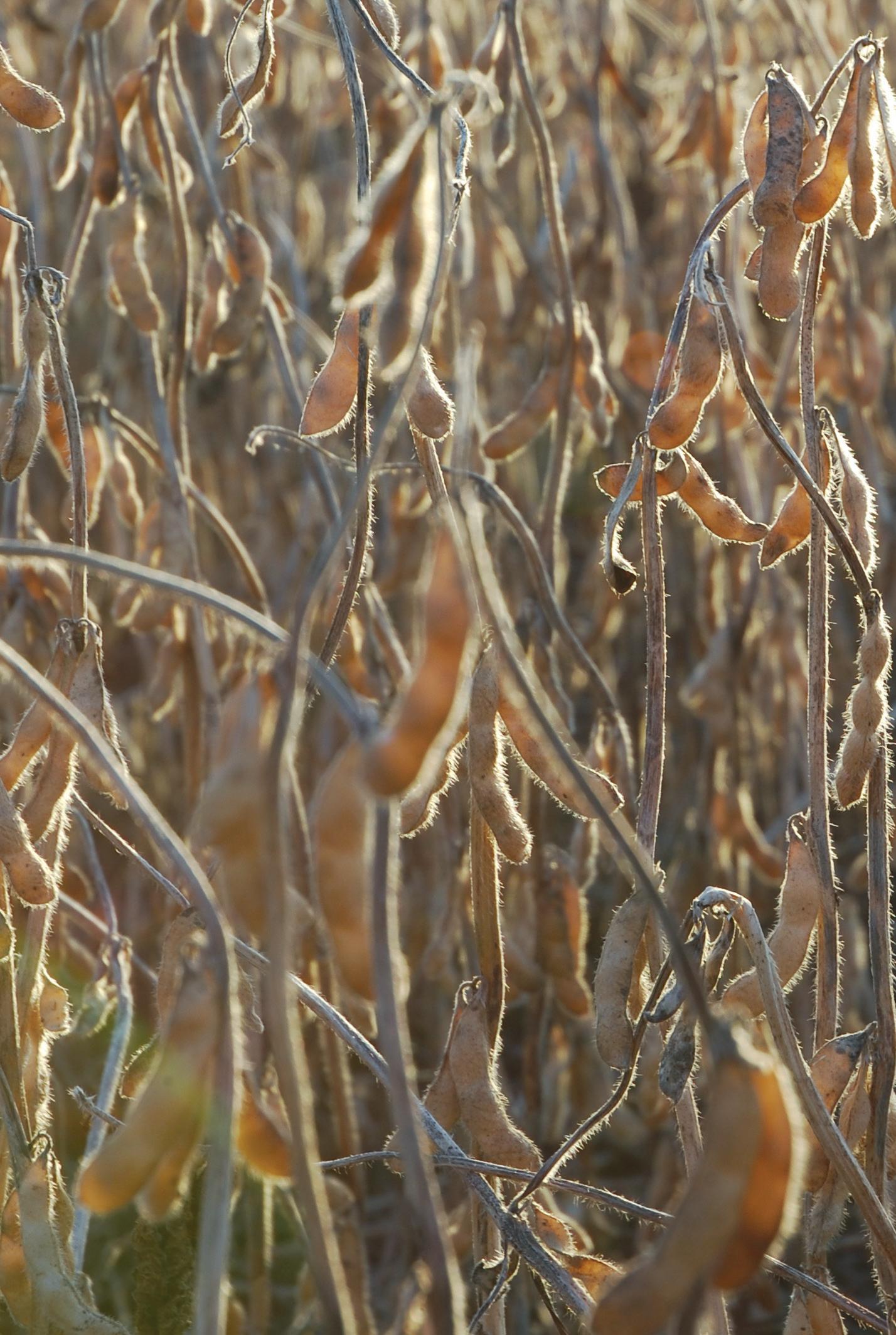
In this issue of Top Crop Manager, we explore some of the weed management and seed treatment issues that are coming to the fore for soybeans.
Crop Management
From managing dessicant residues in edible beans to managing the flow of information away from the office, there are new courses being charted for growers.
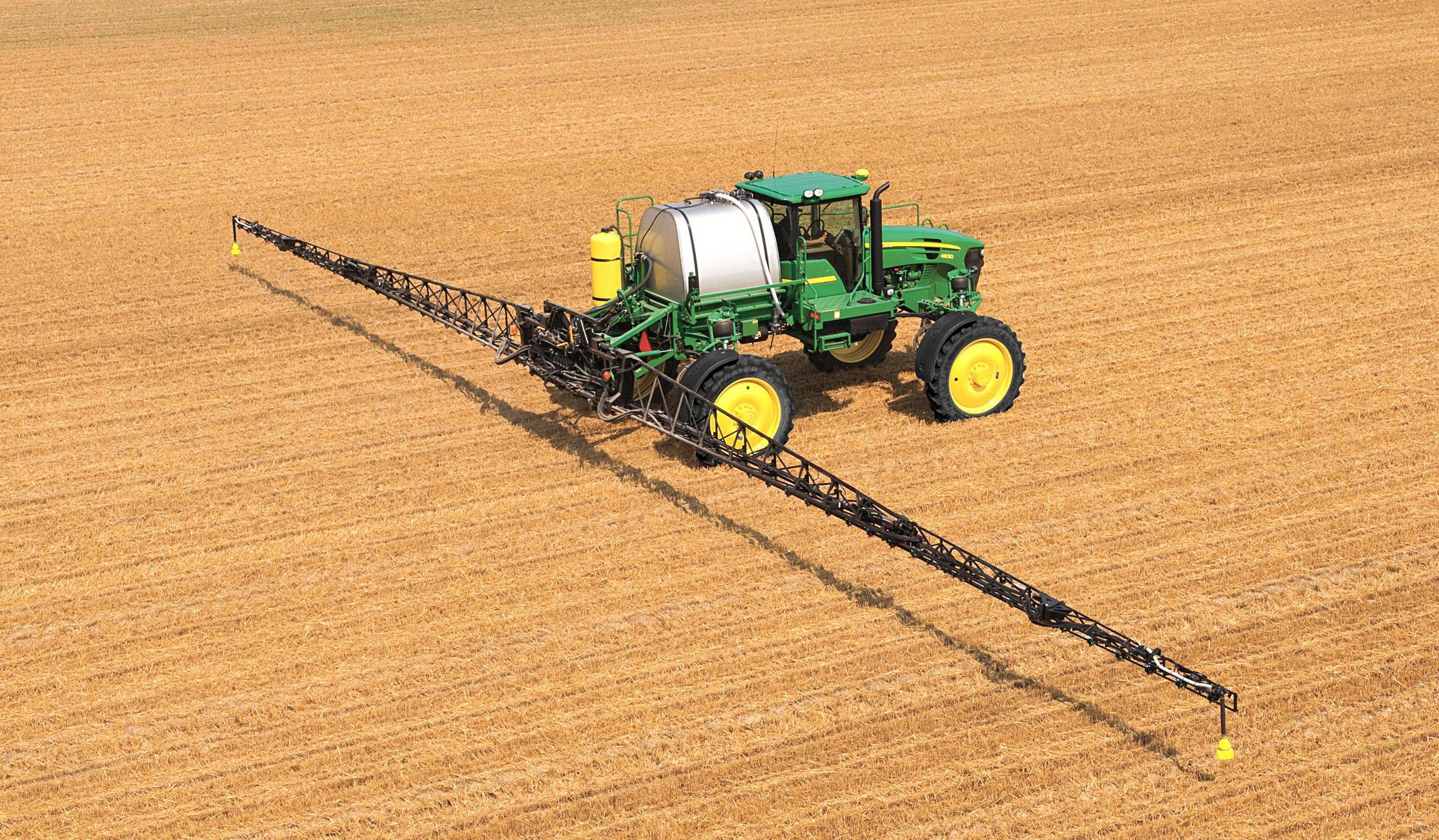
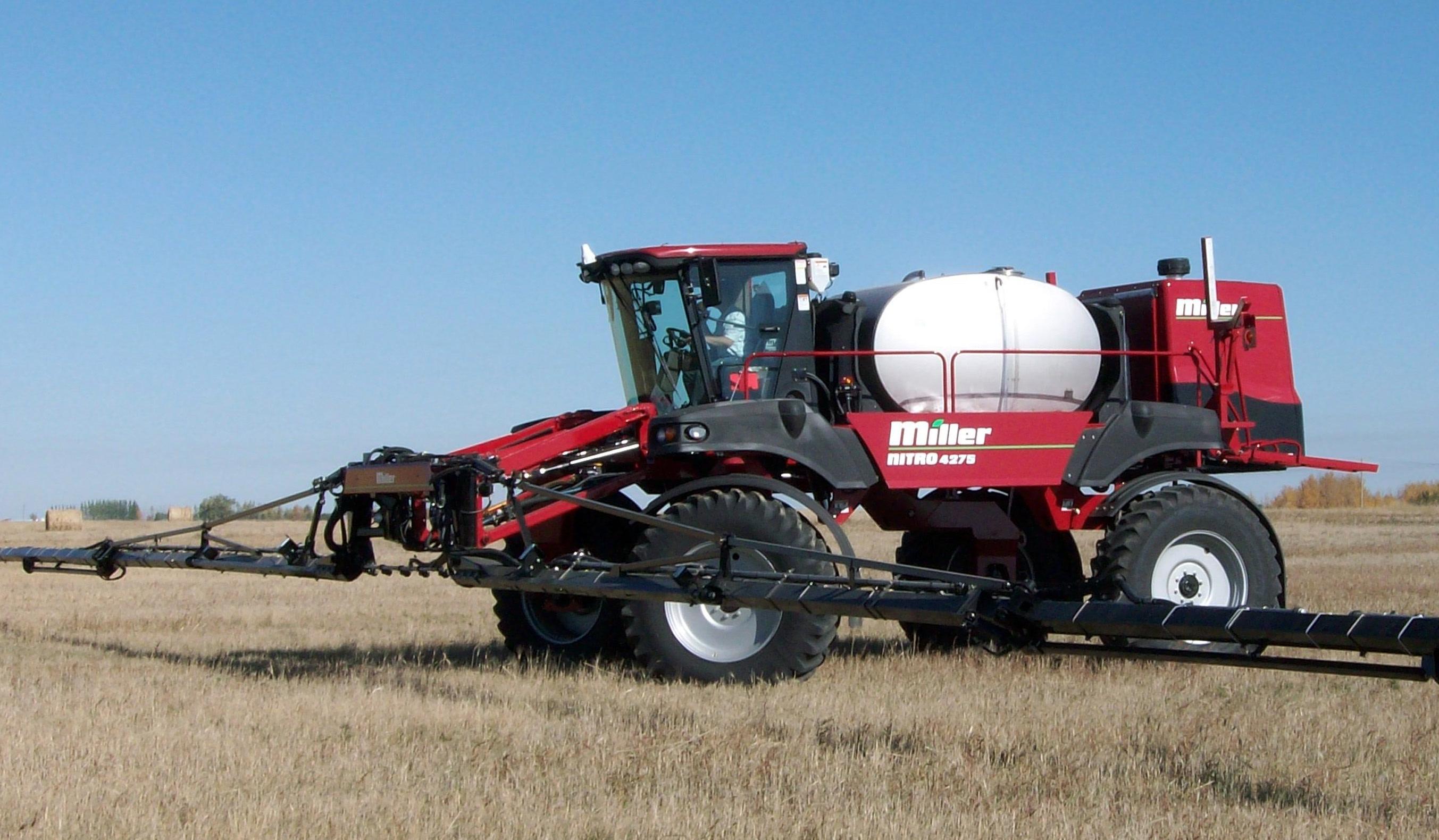
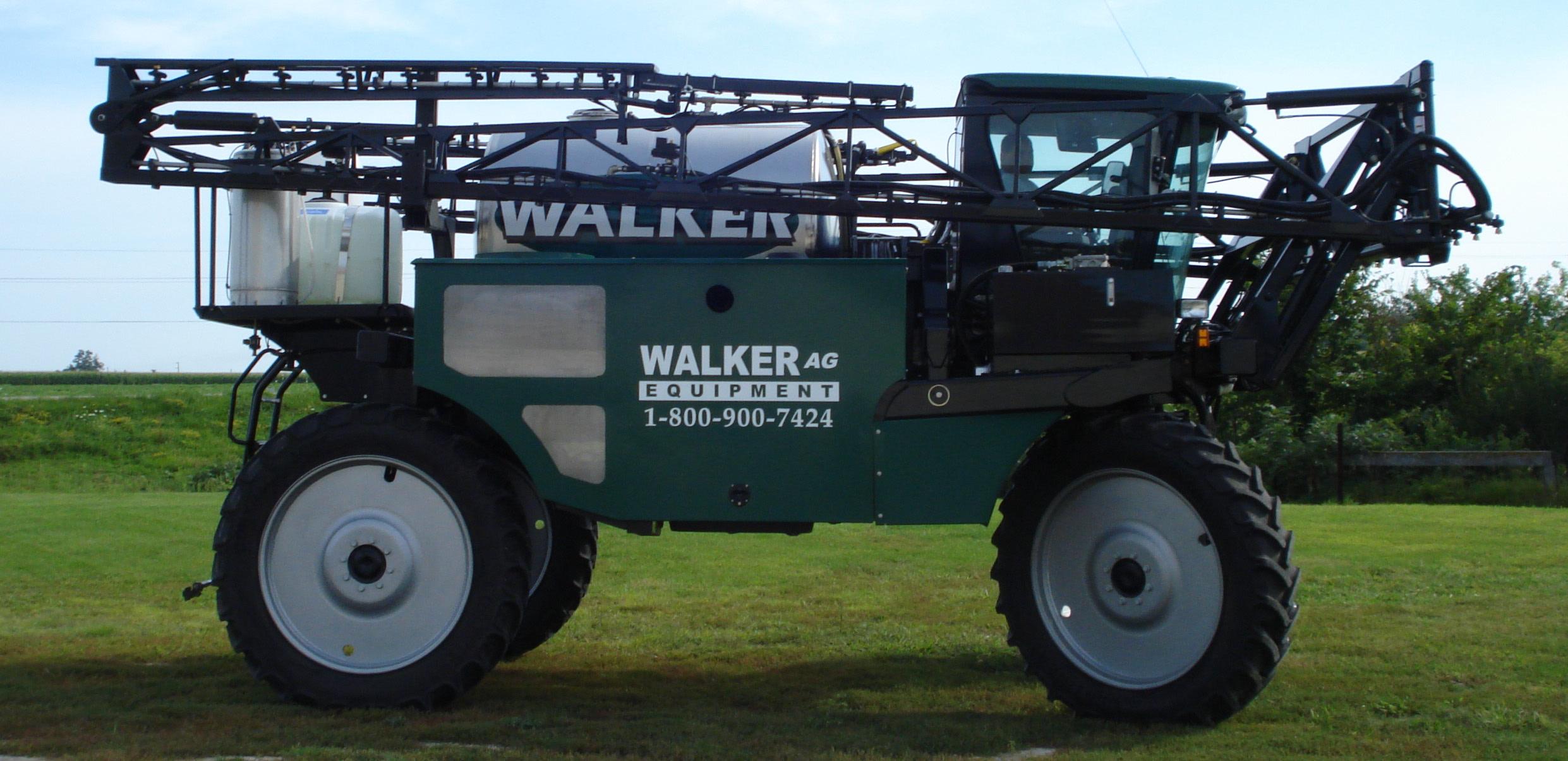
Machinery Manager: High-clearance sprayers When it comes to finding comprehensive information on high-clearance sprayers, our latest Machinery Manager has it all, including the full specs on our website.
Reference information of this calibre is hard to find, so many growers choose to keep Top Crop Manager issues on file. If you have not kept issues for your library, you can find our stories, and more, on our interactive website. Cover: A
All advertising is subject to the publisher’s approval. such approval does not imply any endorsement of the products or services advertised. Publisher reserves the right to refuse advertising that does not meet the standards of the publication. www.topcropmanager.com
Here’s to an endless supply of matches
At this point of the year, it is the usual custom that I address the hopes and aspirations of 2010, with a requisite glance back at 2009. Certainly with an issue that focuses on soybeans, I should not be commenting on corn. Yet circumstances dictate that I dedicate this space to events of two years past and perspectives from different parts of the world, all as a prelude to what may happen in 2010.
Are you with me so far?
Two years ago, as the calendar turned from 2007 to 2008, the world was careening towards a food price scare that had newspaper editors and television news anchors breathing heavily. There were food riots in Mexico, armed guards on docks in Indonesia and the Philippines and a biofuels industry that was taking it all on the chin.
Finally, agriculture will be reined in for the sake of feeding the world! Sustainability, organic food production and fair trade coffee will free everyone from the shackles of corporate agriculture.
Pardon me while I giggle.
Two years later, we still have columnists opining on the travesty of taking “large quantities of maize out of food markets and (putting) it into petrol tanks” (The Economist), a position we know is untrue. Much of the corn used on a continental basis has not been spirited away by the ethanol trade. In fact, a quick look at USDA corn utilization projections to 2018, and the amount to food, seed and industrial use (FSI) remains largely unchanged. And although ethanol production is poised to double in that time frame, much of it will not come at the expense of livestock usage or FSI, but as a result, we are told, of gains in yield due to biotech advances.
Here again, is a positive story turned negative, simply for a lack of understanding on the part of those not familiar with the realities of farming. It continues to be a source of frustration, because the factual and relevant
information is all there, waiting to be ingested and digested, by a world that is increasingly hungry for such detail.
How does that relate to 2010?
As a new year lies before us, this little history lesson actually brings a wealth of promise. We can turn that negative back into a positive by always providing relevant information. I know I have said this before, but I will say it again because it bears repeating. I can be very pessimistic in my views about information exchange, and in the past I have been, always seeing an insurmountable pile of garbage that is passed off as relevant news and discourse. How often have I cursed the darkness instead of lighting a candle?
Well, that is my New Year’s resolution for 2010: to be positive, to light that candle against the darkness, and hopefully, with a little help, use that candle to light a bonfire.
Shifting gears
With the onset of winter, Top Crop Manager provides a glimpse of warmer weather with its latest installment of our Machinery Manager features, looking at high-clearance sprayers. Western field editor Bruce Barker has done his usual excellent job, collecting data tables and writeups on nine manufacturers, with the full specs available on our website at www.topcropmanager.com.
Ralph Pearce Editor Top Crop Manager
Glyphosate resistance draws attention to herbicide stewardship
by Heather Hager, PhD
Ontario might be home to Canada’s first confirmed glyphosate-resistant weed.
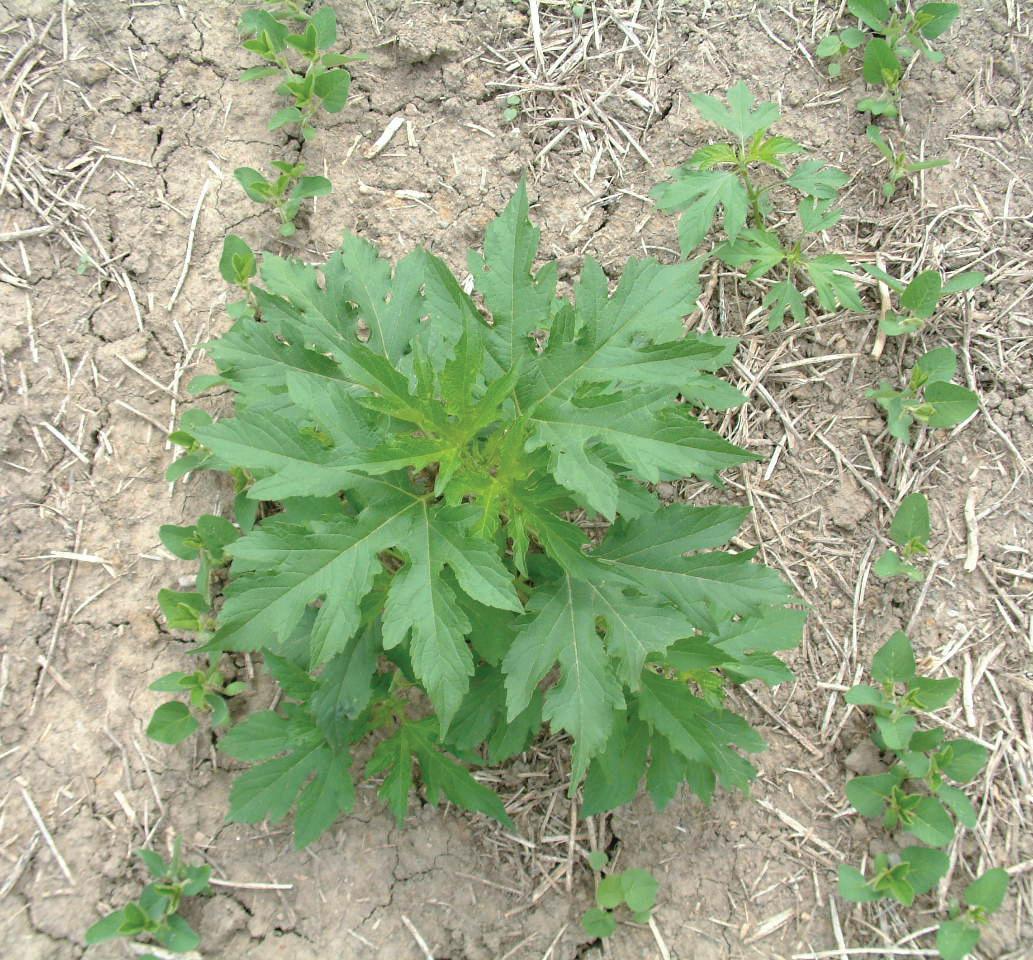
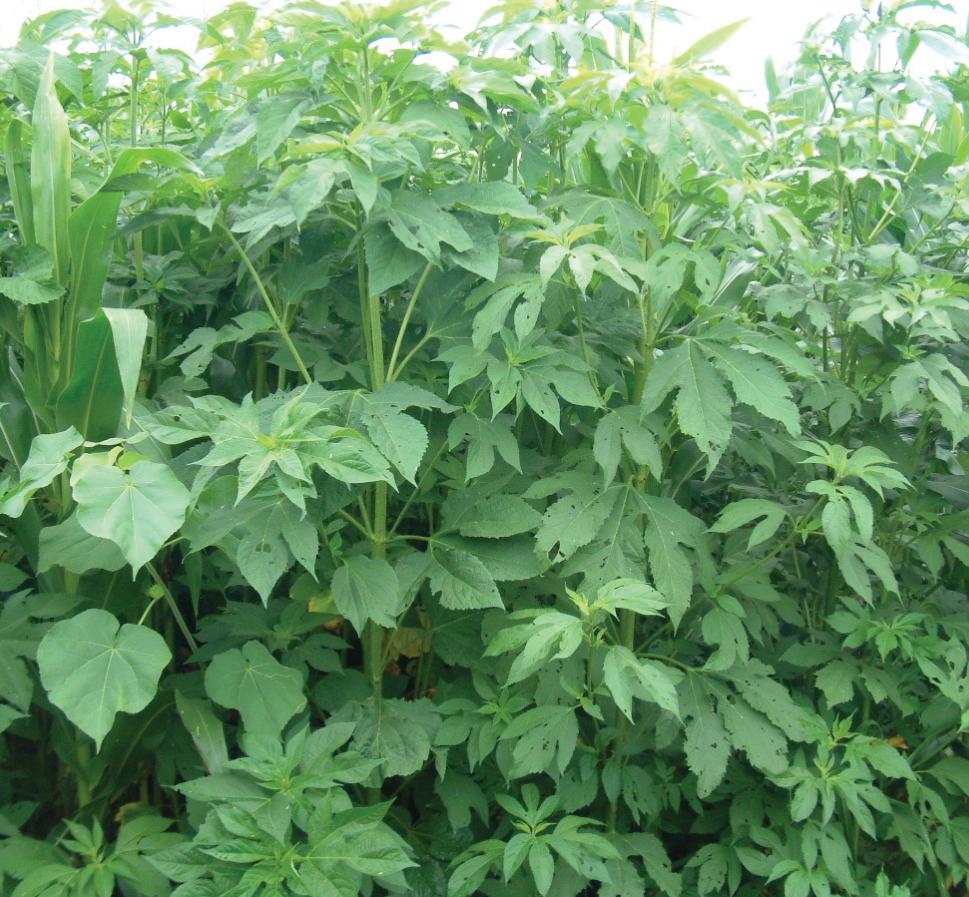
One final test remains to confirm whether a giant ragweed population in Ontario is glyphosate resistant. If confirmed, it will be the first case of glyphosate resistance in Canada. That would be a dubious distinction for Ontario, although the herbicide would join the ranks of others that now fail to control certain weed biotypes. This situation is a significant reminder that good herbicide stewardship practices should be at the forefront of growers’ minds.
Dr. Peter Sikkema, weed management specialist at University of Guelph’s Ridgetown Campus, was first notified in 2008 of poor control of a giant ragweed population in a field in Essex County, in the southwestern corner of Ontario. “The field had a history of glyphosate use, but it wasn’t that excessive,” says Dr. François Tardif, a University of Guelph plant scientist who is involved with the herbicide resistance testing program. The field had been planted with glyphosate-tolerant soybeans for six of the prior seven years. Tardif says that, unlike situations in which growers have used glyphosate-tolerant soybean technology continuously since its introduction in 1996, the grower had used the technology in the field only six times.
To test for resistance, giant ragweed seeds were collected from the field and grown in a growth chamber along with a known glyphosate-resistant giant ragweed population from Ohio and several susceptible populations. When sprayed with glyphosate, suspected and known resistant plants survived, whereas known susceptible ones died, says Tardif. Seeds were then collected from the suspected resistant plants that survived. The testing takes some time because giant ragweed seeds must be treated for two months to break dormancy, and plants surviving the first test must be grown to maturity to collect seed for the second test. If the second generation of giant ragweed plants survives testing, glyphosate resistance will be confirmed. Tardif estimates that the final testing should be completed by late January 2010.
Minimizing herbicide resistance
Experts agree that the best strategy for minimizing the risk of herbicide-resistant weeds is agronomic diversity. “I think that if farmers have a diversified crop rotation and they use multiple herbicide modes of action over time, those would be the two best strategies,” says Sikkema. “They can introduce those different herbicide modes of action in different crops or even within the Roundup Ready crop using a pre-emergence residual herbicide or a tank mix of glyphosate and another effective herbicide.” Using an additional herbicide reduces the selection intensity for glyphosate resistance by reducing weed populations before or concurrent with glyphosate spraying.
Over the years, Monsanto has developed herbicide stewardship recommendations that have been fine-tuned by studying the situations underlying previous occurrences of glyphosate resistance, says Dr. Mark Lawton, Monsanto Canada’s technology
If glyphosate resistance is becoming a problem in Ontario, it signals something of a new era in weed management.
Photo courtesy of Dr. Peter sikkema, university of GuelPh
Weedy checks are often grown out in research plots, but the process for confirming resistance also requires extensive laboratory testing.
Photo courtesy of Dr. Peter sikkema, university of GuelPh
development lead for Eastern Canada. The recommendations include starting with a clean field and staying on top of weed control, using the full labelled rate at the right time for the weeds of interest, and adding other herbicides or cultural practices where appropriate in the production system. “I think those three simple reminders are good advice for success this year and for many years to come. For the giant ragweed site, if those tactics would have been an option for the grower, we might be dealing with a different situation,” he remarks.
The good news for Ontario growers is that this discovery of potential glyphosate-resistant giant ragweed should raise awareness of herbicide stewardship, says Tardif. “Resistance doesn’t suddenly appear over the whole field. It very often starts as small pockets of weeds that look like maybe the spray didn’t reach that spot for some reason.” These should be knocked down with a different herbicide early on, or flagged or coded into a GPS at harvest and double-checked the following year after spraying to ensure they have been killed. Growers should consult their agricultural input suppliers or the Ontario Ministry of Agriculture, Food, and Rural Affairs (OMAFRA) for guidance with weed control issues.
Beans on beans
Crop rotation is not just a good idea to minimize herbicide resistance; it also has other agronomic benefits. “We’ve learned that a continuous production practice of the same crop in the same way over a number of years can be troublesome,” says Lawton. “Rotating provides benefits for soil structure, disease pressure, weed control and insect control. It’s not specific to any one issue; it’s just good practice to remain successful over many years in a field.”
Although it is not a recommended practice, some growers in Ontario do plant soybeans in the same field continuously or for multiple years in a row, says Horst Bohner, soybean specialist with OMAFRA. Many of those would be found in Lambton and Essex counties and the Niagara region. In these areas, says Bohner, the heavy clay soils can hinder corn planting in spring, and getting good yields can be difficult.
Planning for rotation does not always work in the heavy clay soils. “You might plan to plant corn and then it rains all of April and three-quarters of May, and you may not have the opportunity. Some of those clays take a month to dry out. So you’re forced back into growing soybeans,” explains Bohner. Market fluctuations are also a factor. Plans to plant wheat might be scuttled because of low prices, giving soybeans a short-term economic advantage on paper.
Regardless of difficulties in introducing regular crop rotation, growers should be careful to introduce herbicide diversity. “It’s not a good idea to use the same chemistry consistently,” says Bohner. “But people grow glyphosate-tolerant soybeans year after year because it’s a simple system that’s easy to keep clean.”
Going for what is easy and looks good economically in the short term can set growers up for grief down the road. It is a matter of weighing the short-term profit from soybeans with the less tangible longer-term agronomic gains from planting an alternative crop. So far, the suspected glyphosate-resistant giant ragweed is proving difficult to control (see sidebar: Giant ragweed control options). “I think growers that have this problem may have to consider the economics of planting an alternative crop relative to trying to control glyphosate-resistant giant ragweed in soybeans, where there are not many control options,” says Sikkema. n
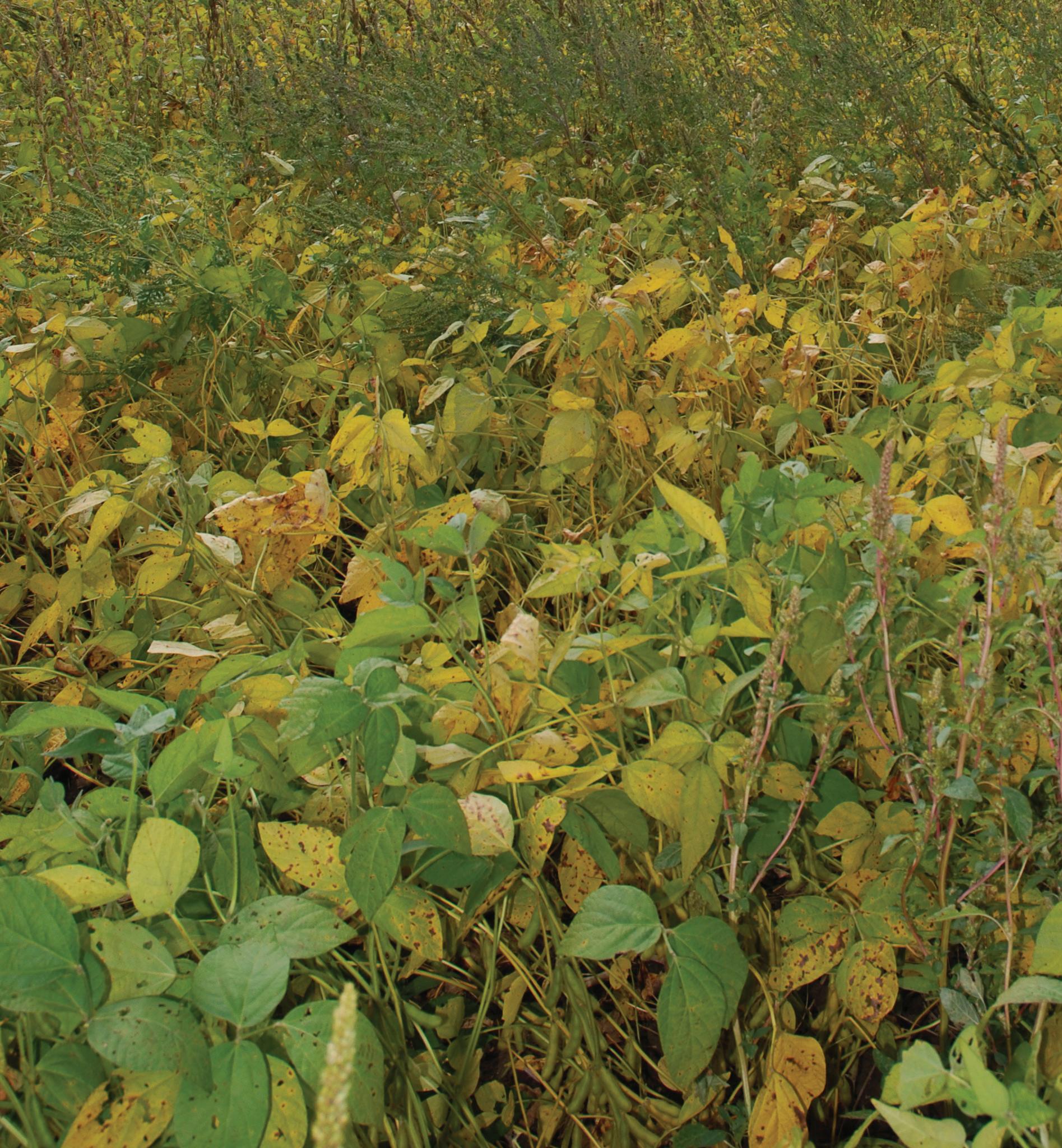
Resistance to glyphosate and Group 2 herbicides is another issue facing growers, researchers and industry stakeholders.
Giant ragweed control options
Dr. Peter Sikkema, weed management specialist at University of Guelph’s Ridgetown Campus, has tested herbicide options for controlling the conventional type of giant ragweed in corn and soybeans. In corn, for pre-emergence herbicide application, Marksman and Banvel gave better control than the other options registered in Ontario, he says. Post-emergence, the best control was obtained with Marksman, followed by Banvel and Distinct.
In soybeans, for pre-emergence herbicide application, FirstRate gave the best control. “All of the other options gave pretty disappointing control that farmers would not be happy with,” says Sikkema. Post-emergence, the two best options are FirstRate (94 percent control) and Pursuit (88 percent control); Classic gave only 68 percent control, and the remaining options gave less than 50 percent control.
In Roundup Ready corn or soybeans, Sikkema says that two applications of glyphosate typically gives good control, whereas control is variable with one application.
Controlling glyphosate-resistant giant ragweed, however, is another matter. Sikkema says that the data indicate that good control might be achieved in corn using a tank mix of Roundup plus Marksman. In soybeans, he suggests that Roundup plus FirstRate should be quite effective. “Having said that,” he continues, “the population that we think is resistant to glyphosate also appears to be resistant to the Group 2 herbicides, and FirstRate’s a Group 2 herbicide, so it doesn’t work. So control in soybeans will be a huge challenge if it’s resistant to both glyphosate and Group 2 herbicides.”
Proactive approach to pre-harvest residues in dry beans
by Carolyn King
A new research project is seeking the best options for dry bean treatments.
Maintaining Canada’s reputation for high-quality food products is vital to the country’s export markets. So when Japan detected glyphosate residues above the maximum allowed level in imported Canadian otebo beans in December 2008, Canada took immediate steps to address the problem. Recognizing the significance of this issue, the industry has taken proactive steps in 2009.
For instance, the Ontario Agri Business Association issued preharvest treatment recommendations for all types of dry beans. And many companies and industry groups are supporting a new research project to find pre-harvest treatments with the best performance and least risk of leaving residues. “Until this year, there has never been widespread agreement within the industry to limit desiccant products or use certain products for certain crops in dry beans. The only exception I can think of is for seed crops, where there are regulations that only Reglone is allowed to be used,” explains Chris Gillard, who is leading the new project.
Gillard is a dry bean agronomist at the University of Guelph’s Ridgetown Campus. He describes why minimizing chemical residues is so important for the dry bean industry. “There
Choosing the right type of pre-harvest product
“It’s important to pick the right pre-harvest product for what you’re trying to achieve in the field,” says Brian Hall, edible bean specialist with the Ontario Ministry of Agriculture, Food and Rural Affairs. He explains that there are two types of preharvest aids: true desiccants and glyphosate. True desiccants disrupt plant cells, causing them to drydown.“True desiccants are products like Aim, Ignite or Reglone that are designed to speed up the drydown of green weeds and plants.”
Glyphosate is a translocated herbicide that kills plants by stopping amino acid synthesis. As a pre-harvest treatment, it primarily controls annual, winter annual and perennial weeds. Hall says, “But glyphosate is not a true desiccant, so it’s not going to speed up harvest. Under good growing conditions when we have good activity from glyphosate, you might be able to harvest in two weeks. But when the weather is cool or damp, then the glyphosate is going to work slower, and the plant material will dry down a lot slower, so your harvest time can be delayed by three weeks or longer.”
Some growers use a tank mix of glyphosate and a true desiccant. Hall says, “The idea of a tank mix is to reduce bean re-growth and allow for the harvest of a higher-quality product, but still get the activity out of the glyphosate for weed control.”
are internationally accepted maximum residue limits for a lot of different chemistries. Some countries agree with those limits, and some countries set their own. A lot of the dry bean crop that Canadians export goes into western Europe and the Pacific Rim, and the countries in those areas are quite sensitive to pesticide residue levels.”
On top of that, advances in analytical techniques are allowing scientists to detect multiple products in increasingly smaller amounts. So countries could choose to set maximum residue limits at lower and lower levels.
Pre-harvest treatments and residues
Dry bean growers use pre-harvest products such as Ignite, Reglone, Aim and glyphosate to assist with defoliation, allow a timely harvest, maintain crop quality and control weeds. Unlike the other products, glyphosate works by translocation within the plant.
There are two main situations in which glyphosate residues can occur in dry beans, explains Gillard. “One situation is if glyphosate is applied too early, while the bean plants are still immature.” The immature plants translocate materials to the seed rather than the root, so glyphosate ends up in the seed. “The other situation is if glyphosate is applied to a field that is very mature except for some
Chris Gillard is leading a new project to evaluate dry bean preharvest treatments from several perspectives, including desiccation effectiveness.
Photos courtesy of Dr. Peter sikkema, university of GuelPh, riDGetown camPus
Think more than just seeding this spring.
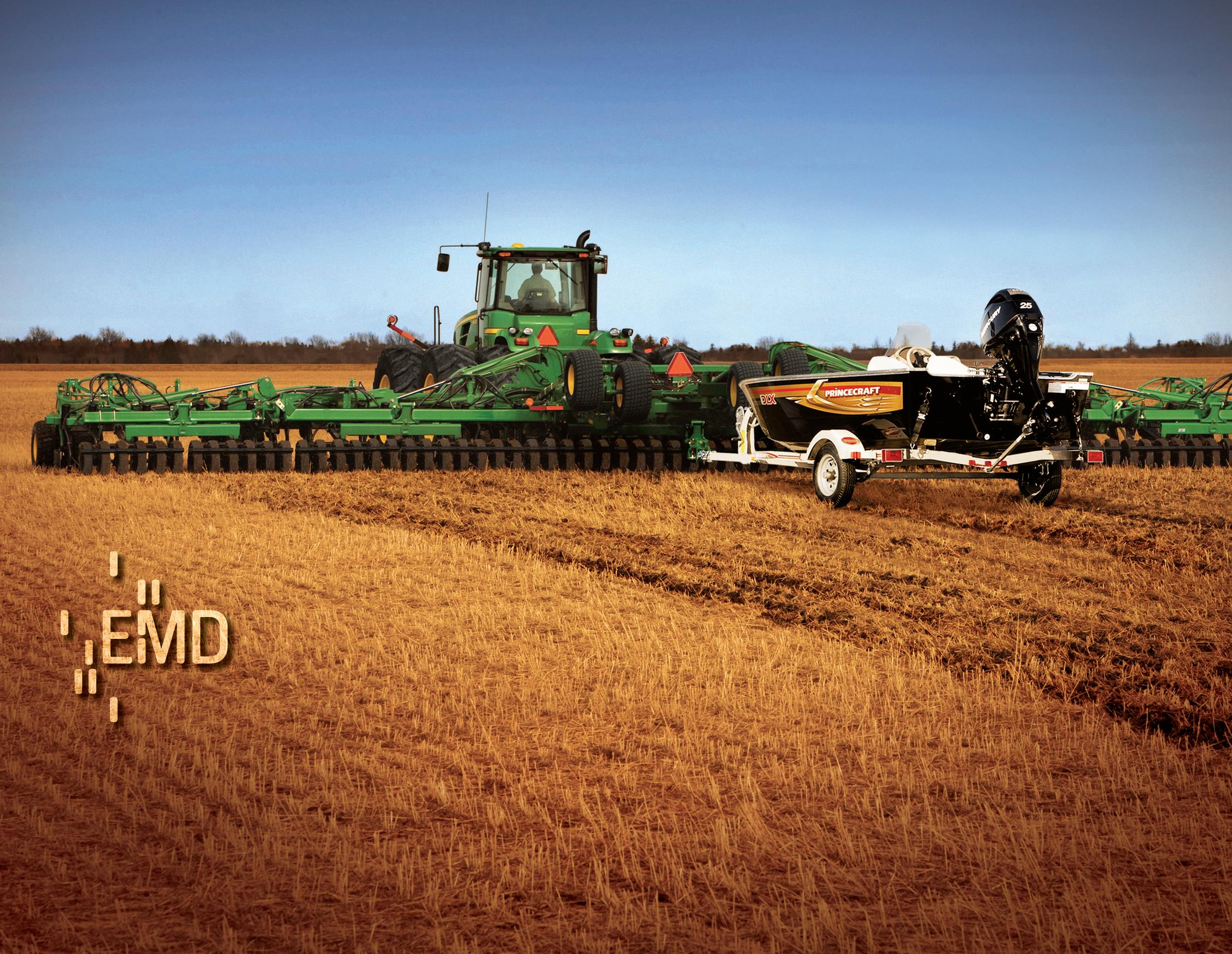
Reel in the profits with EMD Crop BioScience’s full line of soybean inoculants in 2010. And, reel in a chance to win a new, Princecraft Resorter DLX SC fishing boat.
Take this ad or just walk in and ask participating retailers how you can win. Remember to ask for information on Cell-Tech SCI, ApexPro, ApexExtra, Cell-Tech, SoySelect and PulseR HP inoculants. This year, you
pockets with green plants that are still translocating to the seed. So you can have hot spots in the field with residue levels while the rest of the field has very low or no residues.”
To prevent residues in the seed, pre-harvest glyphosate needs to be applied according to the label, at the proper rate, with the proper number of days before harvest and at the proper crop stage. “If you have areas within a field that are immature, I think you have to look at not applying glyphosate to those green areas,” recommends Brian Hall, an edible bean specialist with the Ontario Ministry of Agriculture, Food and Rural Affairs. “And then come back later to apply a fast-acting desiccant like Reglone (if permitted by the buyer) to those areas to allow harvest of the entire field at the same time without risking quality or residue concerns.”
The Ontario Agri Business Association’s recommendations for dry bean pre-harvest treatments are available on the association’s website (www.oaba.on.ca). Contract dry bean growers should consult their contracting company for specific requirements.
Finding the best pre-harvest options
The new research project will evaluate and compare a wide range of pre-harvest treatments. “We’re looking at all the existing registered pre-harvest products on the marketplace right now and at least three products that are in the experimental stage. And we’re looking at all of those products alone and tank-mixed with glyphosate to do a broad-brush study to start with,” says Gillard. “Once we’ve got a couple of years’ data with that, we’re going to try to shortlist the ones that look most promising from the viewpoint of residues, crop desiccation and weed control.”
Then researchers will examine the shortlisted options in depth. Gillard says, “We’ll try to pinpoint the best of them as a desiccant, the weed species that they control or don’t control, their speed of desiccation and any other things that crop up, like plant integrity after the desiccant is applied. You’ve got to look at all aspects of the products to see which ones are going to be the best fit.”
He adds, “We’re evaluating a lot of different tank mixes,
Tips to reduce the
chances of needing a pre-harvest treatment
Chris Gillard, dry bean agronomist at University of Guelph’s Ridgetown Campus, says that the best way to reduce the risk of needing a pre-harvest treatment on dry beans is “to do all the other things right, like plant the crop on a good field, plant it when the soil is warm and the forecast is good so you get nice, even emergence, use good seed lots, and use a good weed control package.”
Brian Hall, edible bean specialist with the Ontario Ministry of Agriculture, Food and Rural Affairs, emphasizes the advantages of giving the crop a good start. He says that, along with seeding in warm conditions, you need to pick the right field. “Dry beans are not very competitive, and we have a very limited number of weed control products for dry beans, so starting with a clean field that has lower weed pressure is a good idea. And putting edible beans on land with good drainage, that offers the best chance for the crop to grow, develop and mature evenly, will help.”
But even when everything is done right, there might still be a need for a pre-harvest treatment.
Gillard says, “We are constantly at the mercy of Mother Nature and she will quite often throw a curve ball at you. That curve ball generally means you end up with unevenness in the crop for some reason. So there is always going to be a need for products to desiccate the crop. And there is always going to be a need for products to desiccate weeds because despite everybody’s efforts you still run into issues with weed control.”
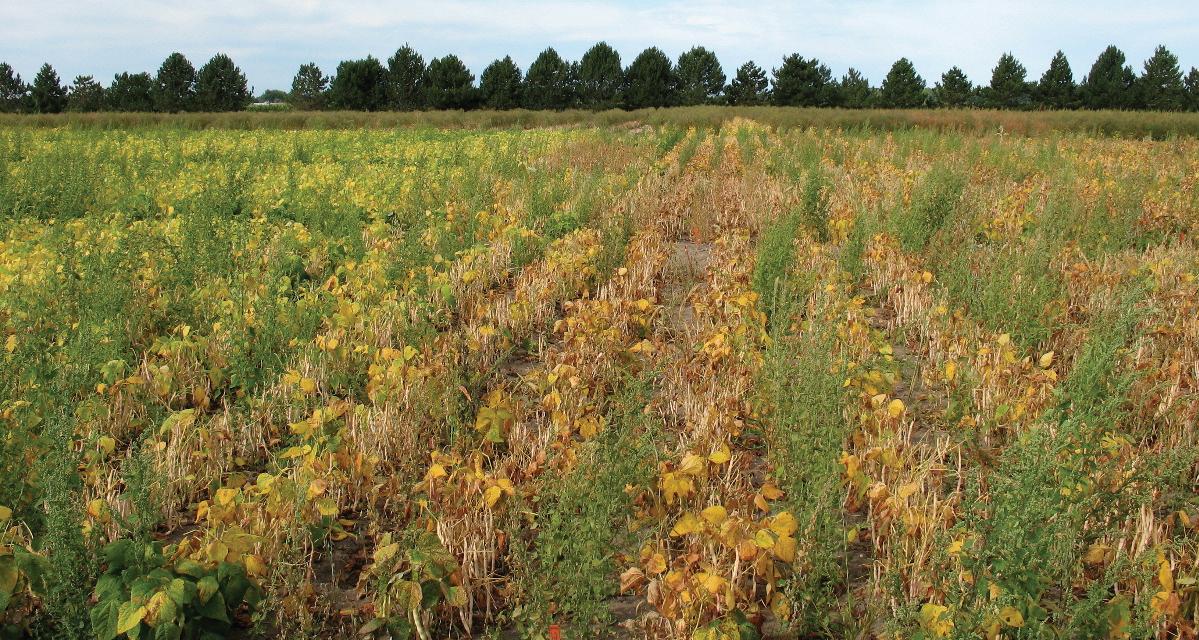
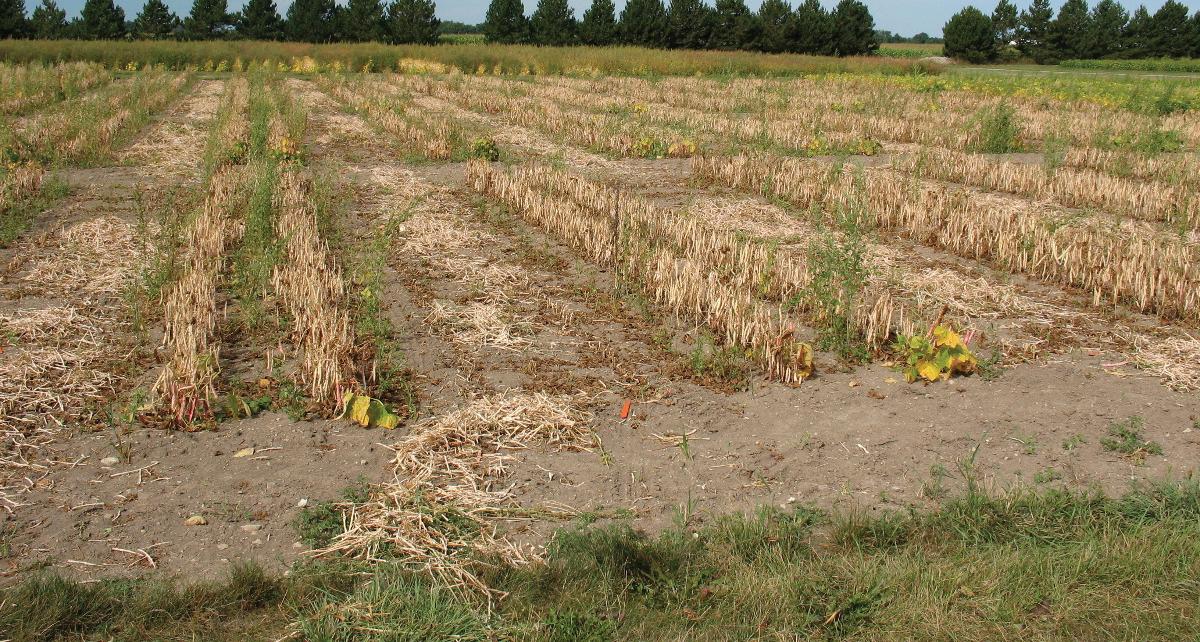
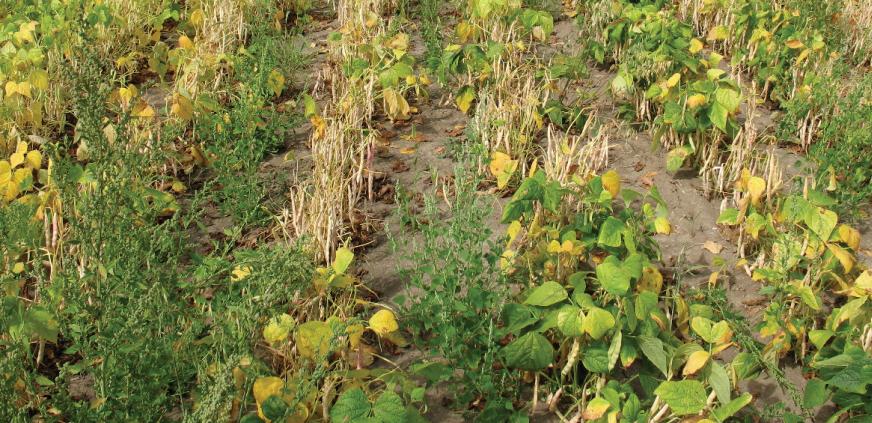
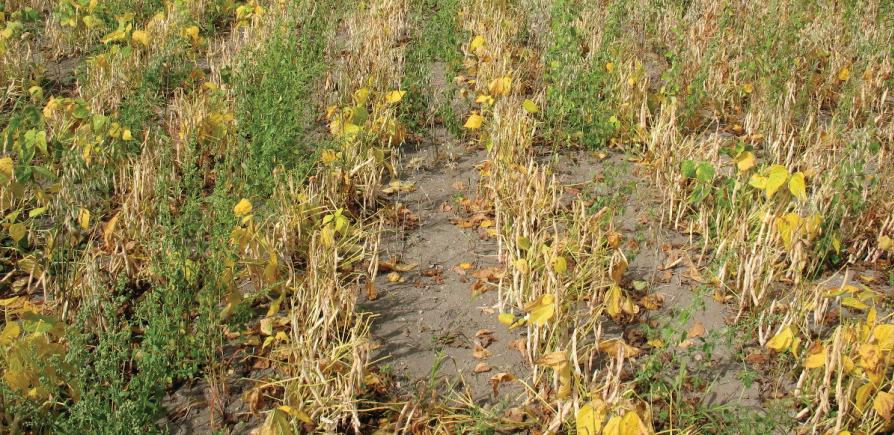
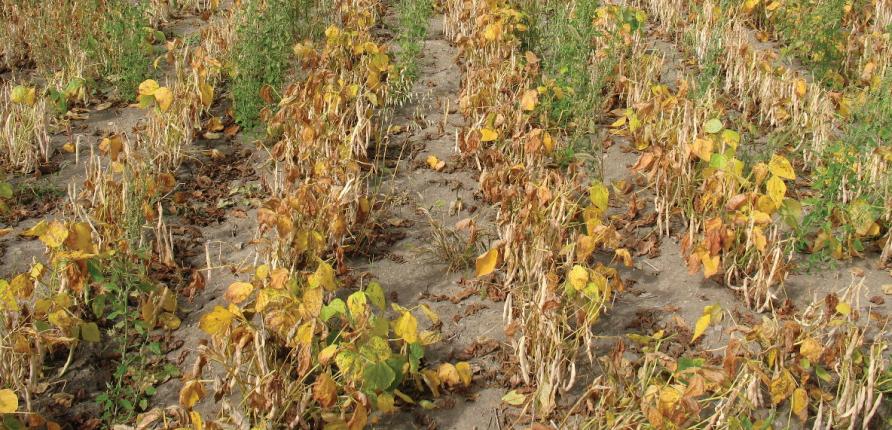
The project is also comparing the weed control effects of various pre-harvest treatments. For example: a) weedy control; b) Roundup; c) Eragon 50 (a new product in the experimental stage) + Merge 0.5 percent; and d) Reglone.
including tank mixes that an individual company may not do themselves. We’ll be looking at questions like: can we influence the residue levels of glyphosate and minimize the risk of residues by using it in a tank mix compared to using it alone?”
In 2009, the project involved a dark red kidney bean in Ontario. In 2010, the researchers hope to study at least two market classes in Ontario: a navy and a dark red kidney. They also have submitted a proposal to replicate the study in Manitoba, probably with a pinto bean, and in Alberta, probably with a small red bean.
Dr. Peter Sikkema, a weed scientist at the Ridgetown Campus, is working on the project’s weed control component. He says, “We’re optimistic that we will find new alternatives for dry bean producers that will help them in terms of weed desiccation and crop dry-down, and minimize the incidence of residues in the bean.”
Hall believes that this project provides a timely opportunity to assess some promising pre-harvest products. “We are excited about the potential of some of the new preharvest products that will be coming onto the market. They appear to have very good activity as a desiccant and perhaps could be used in combination with glyphosate. It would be a real plus for growers if they can still use glyphosate for control of perennial weeds and bean re-growth and at the same time use a true desiccant product with it that will speed up dry-down of plant material.”
Gillard says, “I think this project will answer a lot of questions for the industry and for countries that we are exporting to. It’s going to show that the industry here is being proactive and responsive to their concerns and looking for answers that will work long term.”
Sikkema adds, “I think it’s extremely important that this research is completed so that pesticide residues in beans at harvest time do not impact the export and trade of Canadian-produced edible beans. I’ve been involved in weed management in dry beans for 15 years, and this is a very important research project.”
Current funding for the project is provided by bean processors (Thompsons Limited and Hensall District Co-operative), chemical companies (e.g., Valent, BASF and NuFarm), grower organizations (Ontario White Bean Producers’ Marketing Board, Ontario Coloured Bean Growers Association, Manitoba Pulse Growers Association) and Agriculture and Agri-Food Canada through the CanAdvance Program. n
High interest in humic acid
by Treena Hein FertIlIty and nutrIents
Effects of alternative fertilizer products is ‘intriguing.’
Each time fertilizer prices go up, as they did in 2009, curiosity about unconventional options also spikes. “There’s always a huge interest in alternative products when the price of fertilizer goes through the roof,” says Keith Reid, soil fertility specialist with the Ontario Ministry of Agriculture, Food and Rural Affairs. “It will be interesting to see if that interest holds in 2010, when fertilizer prices are expected to come down.”
Among the alternative products gain-
ing attention, those containing humic acids are of particular note. “Only a few producers are dabbling with them, but there’s lots of interest,” says Reid. “Gypsum, kelp, molasses, there are lots of alternative products that have come and gone. The humic acids are still a bit fringe, but there is some suggestion there could be something to them – a credible explanation for the effects we are seeing.”
Reid observes that although the mode of action of humic acids has not yet been pinned down, two possible mechanisms have been identified. “Perhaps they increase soil availability of nutrients,” he
With just one set of replicated trials on humic acid products completed, more research is needed to confirm their effects on yield.
FertIlIty and nutrIents
says, “or they might provide a hormonal effect on plants that helps increase their nutrient and water uptake. There is evidence for both of these.”
Most of the scientific research in Canada on humic and fulvic acid soil chemistry has been conducted by Dr. Morris Schnitzer, emeritus distinguished scientist at Agriculture and Agri-food Canada. Humic acids, fulvic acids and humin are the three main components of soil organic matter, he says. “Some parts of soil organic material are degraded quickly, providing something for bacteria to feed on,” Schnitzer notes, “but humic and fulvic acids stay in the soil a long time, which is also important.” He has found evidence that these acids increase soil availability of nutrients.
At the same time that some effects of humic acid products are being observed, however, Reid cautions that there is considerable variability in the effect of various humic acid products. “Humic acids are not a single compound, but a group of high molecular weight organic acids,” he says. “Every commercial humic acid product contains a different proportion. Some of them probably have a lot of chelating or hormonal activity, some will have no effect, and some may even be phytotoxic.”
Reid also observes there are “lots of cases” in which the same product has given inconsistent crop performance results, which he says is most likely due to variability in the manufacturing process. “Some of them appear to vary greatly batch to batch,” he says, “and that’s been a large barrier to humic acids becoming a large part of a crop production package for farmers.” No fertilizers containing humic and fulvic acids are yet registered with the Canadian Food Inspection Agency. “That these products have not yet gone through the formal commercial fertilizer approval process is not to say they don’t work,” says Reid, “but it means the evidence to say they do work has not undergone formal scrutiny.”
Using humic acids
There are a number of important points to consider before trying humic acid products. At the outset, Reid cautions, “If you’ve got a nutrient deficiency, none of these products will replace fertilizer. Some livestock farmers are saying they’re getting great results and saving money with alternative programs, but they already have the nutrients they need on the farm.”
Laird Currie, crop advisor at Huron Bay Co-operative in Belgrave, Ontario, has tested Humika during the past several years and can provide some insight into the use
As growers continue to cultivate their fields, there is a greater need to maintain soil organic matter concentrations. Humic acid products may help.
FertIlIty and nutrIents
of this particular humic acid product. Humika was created in 2001 by Arnold Wiegersma, owner of Alpha Agri-Products in Bluevale, Ontario. Humika is derived from lignite coal through a lengthy process.
During the course of three seasons of 20 acre long strip trials on winter wheat using a spring application of a 0.5 litres/ ac of Humika with a full rate of fertilizer, Currie found that the treated strips gave an average of 5.5 bu/ac more. Currie has tried a similar test with a fall application once, which produced nine bushels more. In corn, Currie says that one year’s testing resulted in a three acre long test strip yielding an additional 20 bu/ac.
With regard to application, Currie notes “You can’t mix Humika with herbicides and pesticides because it’s not registered. You take a risk of what chemical it might produce (tank injury, crop injury and so on), so an extra trip with the sprayer is required. However, $8 for application and $8 for product per acre is a substantial return for money invested.”
Wiegersma says Humika works best on fields with less than five percent organic matter and should be applied at the same time that liquid starter fertilizer is used.
HiStick® N/T: We hope you’re hungry. For yield!
HiStick® N/T soybean inoculants are BioStacked® for increased crop performance.
Our unique, patented micro-organism, Bacillus subtilis, acts as a Nodulating Trigger® and in combination with Bradyrhizobium japonicum results in more vigorous plants with greater root biomass, more nitrogen-fixing nodules, and what you really want – increased yield.
Proudly distributed by Available in liquid or sterile peat formulations, HiStick® N/T is quite simply the best investment you can put into your beans.
HiStick® N/T — value and performance that really stacks upTM
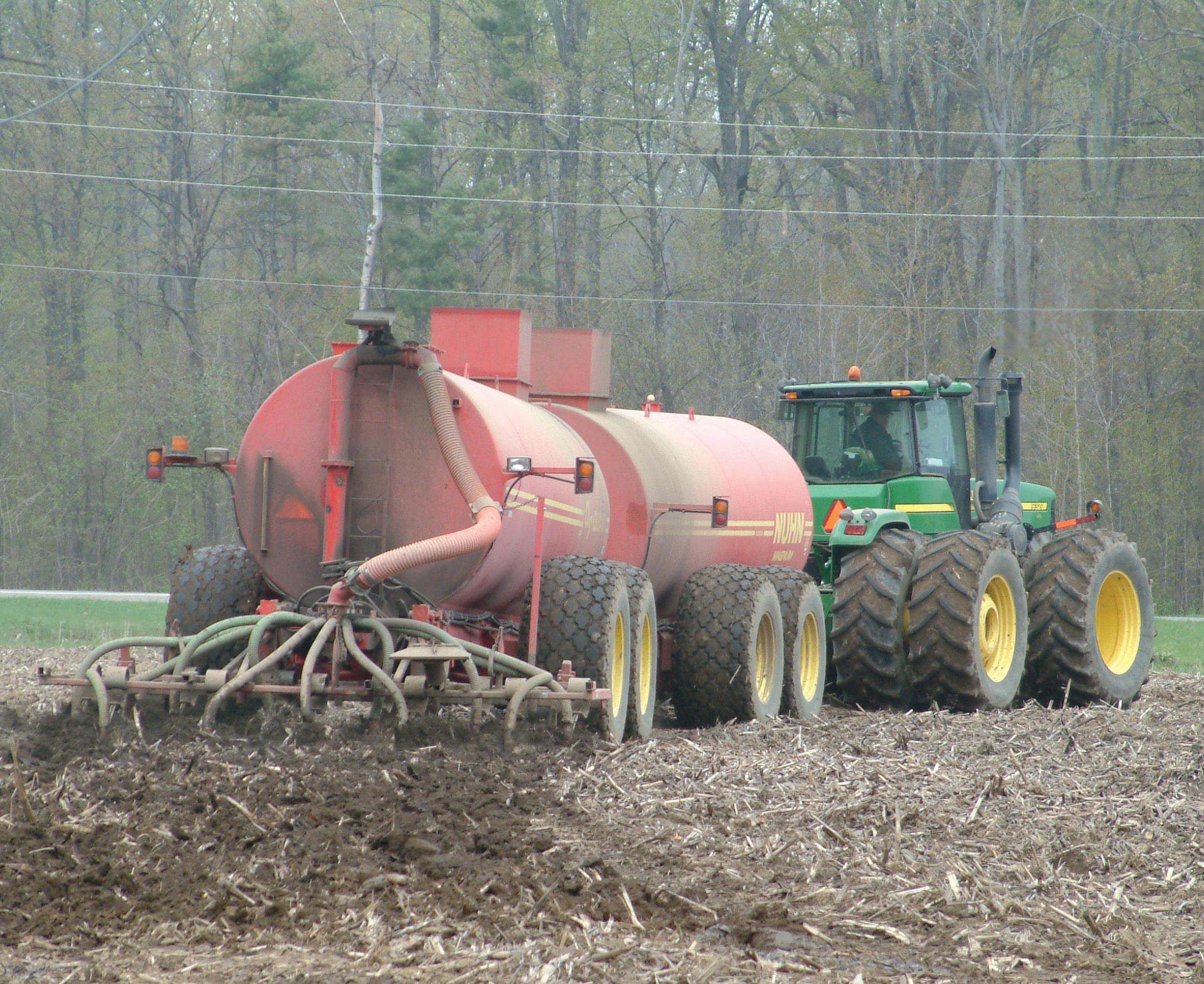
Spreading manure is the default option for many when it comes to adding organic matter to soil, but other options, including humic acid, are being studied.
Photo courtesy of marGaret lanD
When asked for final thoughts on using humic acid products, Schnitzer says “Adding humic acid products to the soil is very good, but adding any soil organic matter that is not toxic is critical to maintain the soil and maintain high fertility, water content and soil structure. As we keep cultivating, we need to add a great deal of organic material back to soil. It is very important to keep the concentration up.”
Reid concludes, “Does it promote increased growth and yield? There are some results that are intriguing. It’s something we’re watching and looking for more data on. If it is one particular acid or group of humic acids, the question is, how would you extract or manufacture it? It’s from an organic substrate, so this is difficult.”
Reid believes the only way the cropgrowing community will know if humic acid products definitively promote higher yields is with much more evidence. “It would be nice to see farmers do replicated field trials,” he says, where more than one test site is used in the same season. “The only replicated trial I’ve seen was done in 2008 with Humika, but I don’t get excited about just one year’s data.” n
High tech, high expectations in the field
by Blair Andrews
How it is used matters more than what it is.
New and relatively inexpensive technology is changing how and where growers make management decisions. While gadgets such as smartphones may not have been designed for agriculture, farmers have a great opportunity to maximize the technology’s key features.
Peter Gredig, project coordinator at Farms.com, is an avid user of the smartphone on his cash crop farm, northeast of St. Thomas, Ontario. He describes the smartphone, with brand names such as BlackBerry and iPhone, as a cell phone that can access e-mail and the internet, take pictures, store audio files, and even provide GPS capability. By using the smartphone, Gredig has found that he now has the ability to perform many of his “office” tasks from the field, for example, sourcing production information and communicating with suppliers. In essence, Gredig says the new technologies have enabled a virtual farm office. “I would be like most guys; I would farm and then come home at night, or first thing in the morning, and do my desk top computing, checking markets, newsletters and weather for the day, spending an hour or more on the computer.”
But with the combination of higher speed Internet access and his overall comfort with the mobile technology, Gredig has dramatically reduced his time on the desktop. Moreover, he also does not have to leave the field to go back to the office to source the information, including the markets and the weather, which Gredig says are the two most important things for crop producers. “I’ve got my BlackBerry set up so that if I press a button, I go directly to the Farms.com markets page from the Chicago Mercantile Exchange. Although it’s a 10-minute delay, I’m right there, and it takes five seconds to get that information. Likewise, I have programmed another button to get the weather and radar.”
In addition to information, Gredig
Considering the cost of mistakes with something like spray applications, faster communication between a grower and a crop input dealer can provide obvious financial gains.
Crop ManageMent
uses the e-mail function of the smartphone to effectively send specific information to others to help him make crop management decisions. “I can be in the field, take a picture of a crop that is under stress from something, and e-mail it on the spot to my seed dealer or my agronomy guy and keep on working,” says Gredig, adding that he could also use the rudimentary GPS system on the smartphone to mark the exact location in the field. “What I’m seeing, my team can see almost immediately. The fact you can do it on the fly saves a lot of time, and during certain times of the year, that is the most valuable commodity there is.”
If the field observations call for a management decision such as having the crop sprayed, Gredig will phone his crop advisor and then send an e-mail to confirm that the decision has been made and executed. “If something goes wrong, we’ve got an electronic trail to come back to, to give me some protection.”
Ian McDonald, applied research coordinator with the Ontario Ministry of Agriculture, Food and Rural Affairs, says
the electronic communication between grower and crop input dealer might be the most pertinent application of the technology. “When you consider the costs of the mistakes in this game; when you’ve got sprayers with 1500 or 2000 gallons of water that will cover more than 100 acres, a mistake can get to be very costly for everyone involved, and quickly,” says McDonald. “This technology helps to reduce errors and ensure accuracy and timeliness.”
Not only does this process protect the farmer, notes McDonald, but other people involved in the decision are covered because the e-mail creates a confirmation of the voice discussions. The immediacy is also a benefit. Prior to the new mobile capabilities, McDonald says a producer would have made the phone call from the field and would plan to follow up later by sending an e-mail from the farm office. Because of fatigue or other reasons, the producer might sometimes forget to send the follow-up message. “Now you can do right there in the field when you are thinking about it and
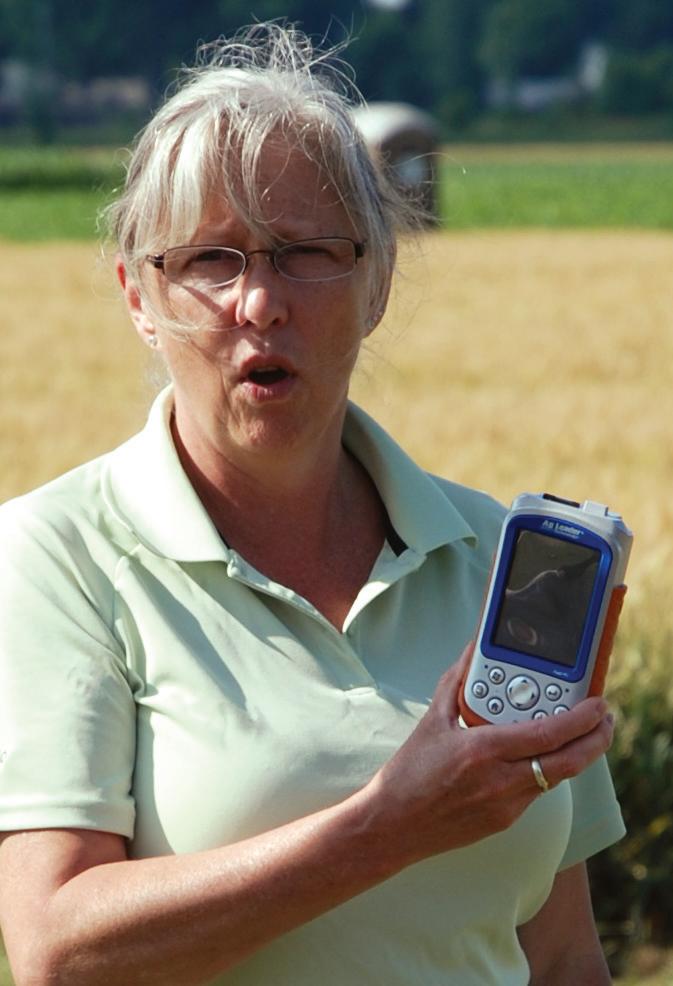
The key to making better management decisions, says Karon Cowan of AgTech GIS, is finding the right software that co-ordinates all the information from technology that is currently available.
The CounteringDistractedDrivingandPromoting GreenTransportationactin Ontario
Another important consideration for the farm use of smartphones relates to the newly implemented Countering Distracted Driving and Promoting Green Transportation Act. Ian McDonald, research coordinator with the Ontario Ministry of Agriculture, Food and Rural Affairs, says the new law is very simple: it prohibits the use of handheld cell phones and other hand-held communications devices while driving.
Hands-free use of electronic devices would still be permitted, so Bluetooth technology, which enables handsfree use, will become more important. With this technology, a number can be dialed on command using voice recognition. The process, however, can be inconsistent. McDonald says that Blue-tooth will recognize certain names, but will have difficulty with others. It is also not entirely hands-free because a button must be pushed on the earpiece.
McDonald says that people will have to be aware of the safety concerns related to other functions while driving. Applications such as internal contact lists and the ability to capture information through e-mail are valuable, but they are not accessible in a hands-free mode. “People have got used to using the features and it will be hard to get them to stop using them while driving. With many jurisdictions banning hand-held use, the technology vendors will be forced to find solutions that will allow users to access these features in a hands-free environment.”
In late summer 2009, the Ontario Ministry of Transportation (MTO) website stated that Bill 118, The Countering Distracted Driving and Promoting Green Transportation Act, 2009, is expected to come into effect in the fall of 2009. In fact, the law took effect on October 26, 2009. The MTO website also notes that reports indicating that the law took effect on September 1 were incorrect. With the new law in place, drivers who text, type, e-mail, dial or chat using any hand-held device will face fines of up to $500 upon conviction.
Cell Phone Usage While Driving
Distracted drivers are a safety risk to themselves and • others.
It is illegal in Ontario for drivers to use any electronic
devices that can cause driver distraction as of October 26, 2009.
The focus is on educating drivers until February 1,
2010.
During this educational period officers will use their • discretion as to whether a charge is warranted, which would be by way of a summons.
Starting February 1, 2010, charges can be laid by • issuing an offence notice with a set fine.
Police have always had the ability to lay charges for • careless driving or criminal driving offences such as dangerous driving, if warranted.
Crop ManageMent
everyone is clear on the decisions that were agreed upon,” says McDonald.
Given the significance of such an exchange, farmers will want to ensure they have reliable service. Gredig says it would be wise to ask neighbours and friends about the performance of the wireless providers in the area before signing a three-year deal. Depending on the location, he says, choosing the right provider is critical.
McDonald organized an information session on the new gadgets at the 2009 Southwest Crop Diagnostic Days in Ridgetown. While Peter Gredig covered smartphones, Karon Cowan of AgTech GIS Sales and Leasing, in Embro, Ontario, discussed GPS technology and mapping systems. Cowan agrees that smartphones and precision agriculture gadgets are providing more tools, but says that the critical aspect is the ability to pull the information together to make the best management decisions. She remarks that the tools have given growers the ability to put information with location, thereby creating a “new language” of crop production. “We can gather information in the field using electronics such as yield monitors, planting monitors and application monitors, to monitor what we’re doing and we bring it back into the office to analyze it. We communicate with service providers or business partners to make and deliver those management decisions back to the field using GPS to take us back to those same places where we noticed something that we want to manage differently,” explains Cowan.
To demonstrate the importance of integrating the information and analyzing it, Cowan says people should view the effort as producing revenue maps. “I can see where the highs and lows are in the field, and we can put a dollar amount to that, not only yield in bushels per acre between this area and that area, but how much money was generated in each area of the field. I can then take the map to the appropriate service provider and talk in a concrete way about field conditions and crop performance to discuss what products they recommend for this situation; seed varieties, fertility or crop protection options.”
This example is just one scenario. Cowan says the map provides a solid recording mechanism for various aspects of production, including fertility issues, crop rotation and tiling. “There are so many possibilities for the ‘why’. This mapping technology doesn’t tell you how to fix everything. It shows you the ‘where’, which makes you ask the ‘why’. Then you have figure out what you are going to do with it and, with the technology, you have the means to take the strategy back to the field.”
As with smartphones, Cowan says other computer technology is becoming less expensive, more portable and user friendly. The advent of powerful and rugged hand-held devices has given farmers tools they can use in the field. Netbook computers, which look like miniature versions of laptop computers, provide powerful and inexpensive computing options for much of the software that is useful for agriculture.
Although much attention is given to the gadgets, Cowan highly recommends a good software package. “I consider software critical because that is what allows you to buy the best of breed. I can perhaps buy one brand of GPS or lightbar, another brand of monitor and a third brand of controller. I can mix and match, and what pulls that together is the office software.” n
Fungicide application by helicopter is on the rise pests and dIseases
This aerial method reduces limitations and provides greater flexibility.
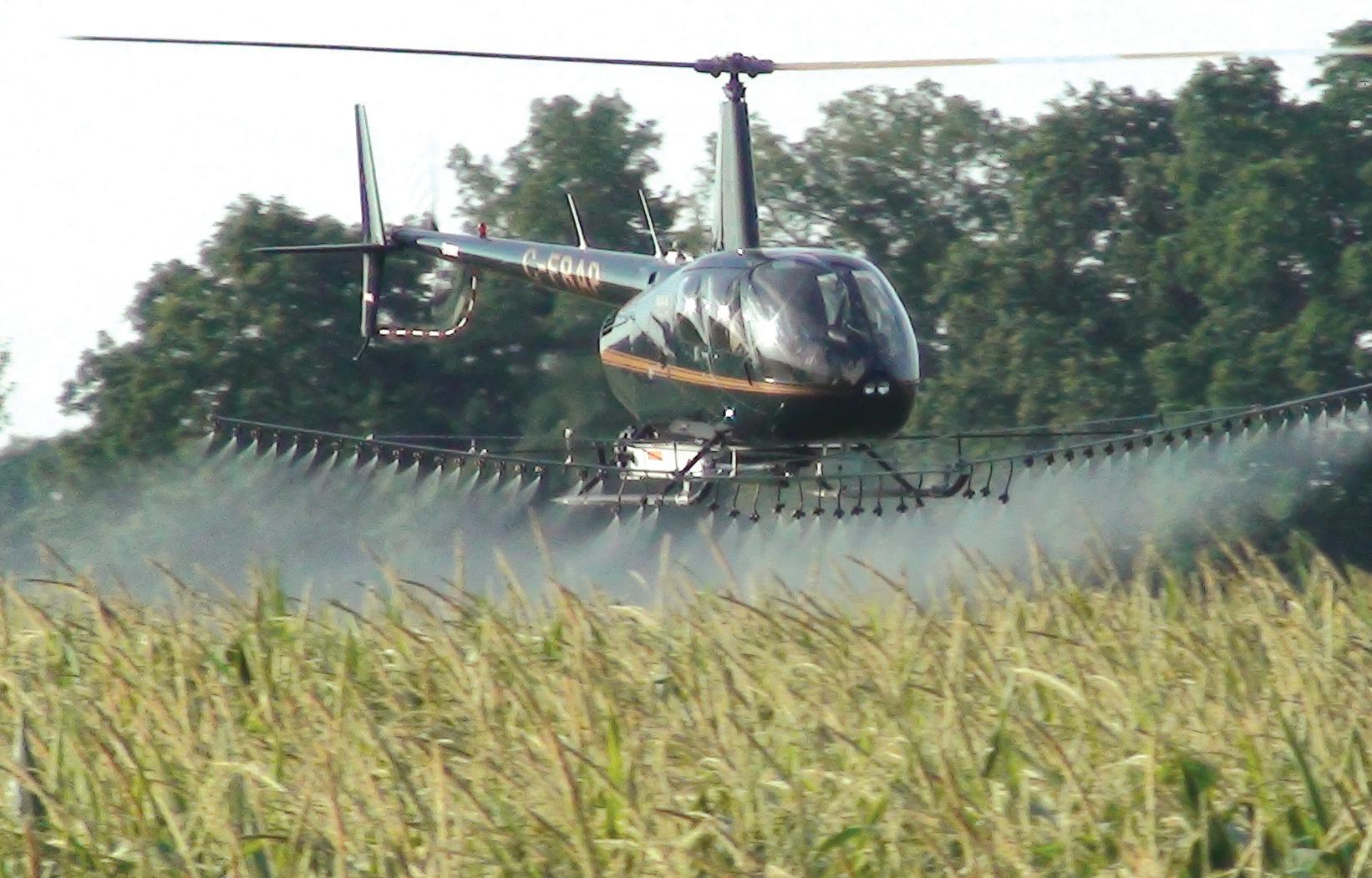
Aerial application is becoming more prevalent in Ontario, which is not surprising given the flexibility and benefits it offers growers. Aerial application in Ontario is much different than in Western Canada, where it has been a commonly used spray method for years. Airplanes are widely used on the Prairies, where they can spray large tracts of land with few barriers and a low potential for spray drift. But in Ontario, helicopters lead the pack for aerial application. They can treat more fields on an hourly basis, fly closer to the fields and do not have to travel back and forth to an airport for product or refuelling. Helicopters are also able to fly slower than a plane, 60 mph (100 km/h) compared to 120 mph (200 km/h), allowing them to get closer to obstacles because they do not have to pull up as soon. And in Ontario, where field sizes are smaller and other impediments such as tree lines, buildings, hydro lines and radio towers surround farmland, agility is paramount.
For Paul Zimmer, president of Zimmer Air Services in Blenheim, Ontario, there has been a definite increase in the amount of aerial application over the past few years. “In the late 1970s and early 1980s, we devoted three to four machines to agricultural applications, but the amount of work slowly decreased as products were replaced with ones that weren’t being registered by the PMRA (Pest Management Regulatory Agency) for aerial application,” explains Zimmer. “Now we’re seeing crop protection companies developing more products registered for aerial application, giving us the opportunity to get back into the market and giving growers another application option.”
Helicopters account for the majority of aerial applications in Eastern Canada where field size and other impediments such as trees and hydro lines require agile and precise application.
Photo courtesy of Basf
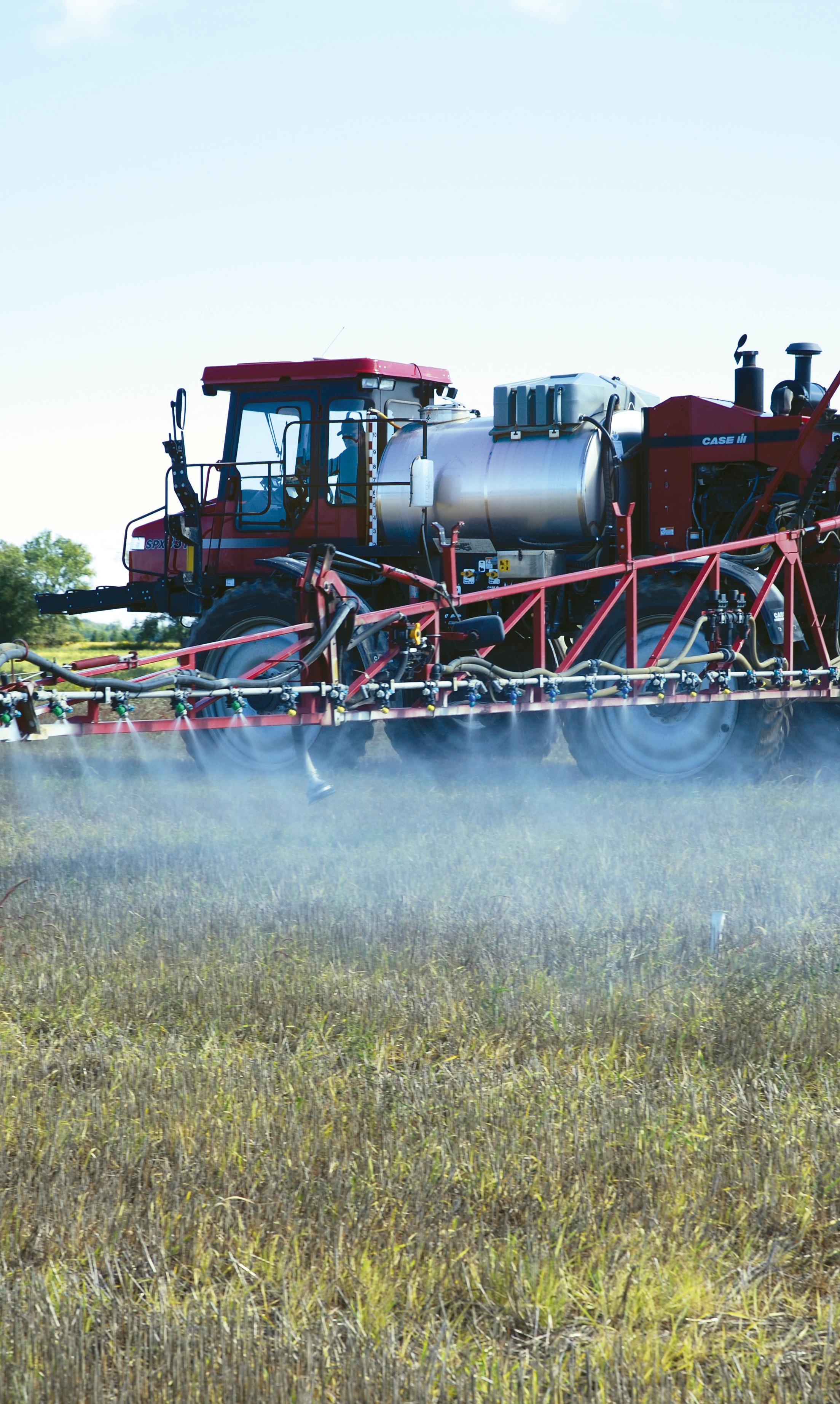
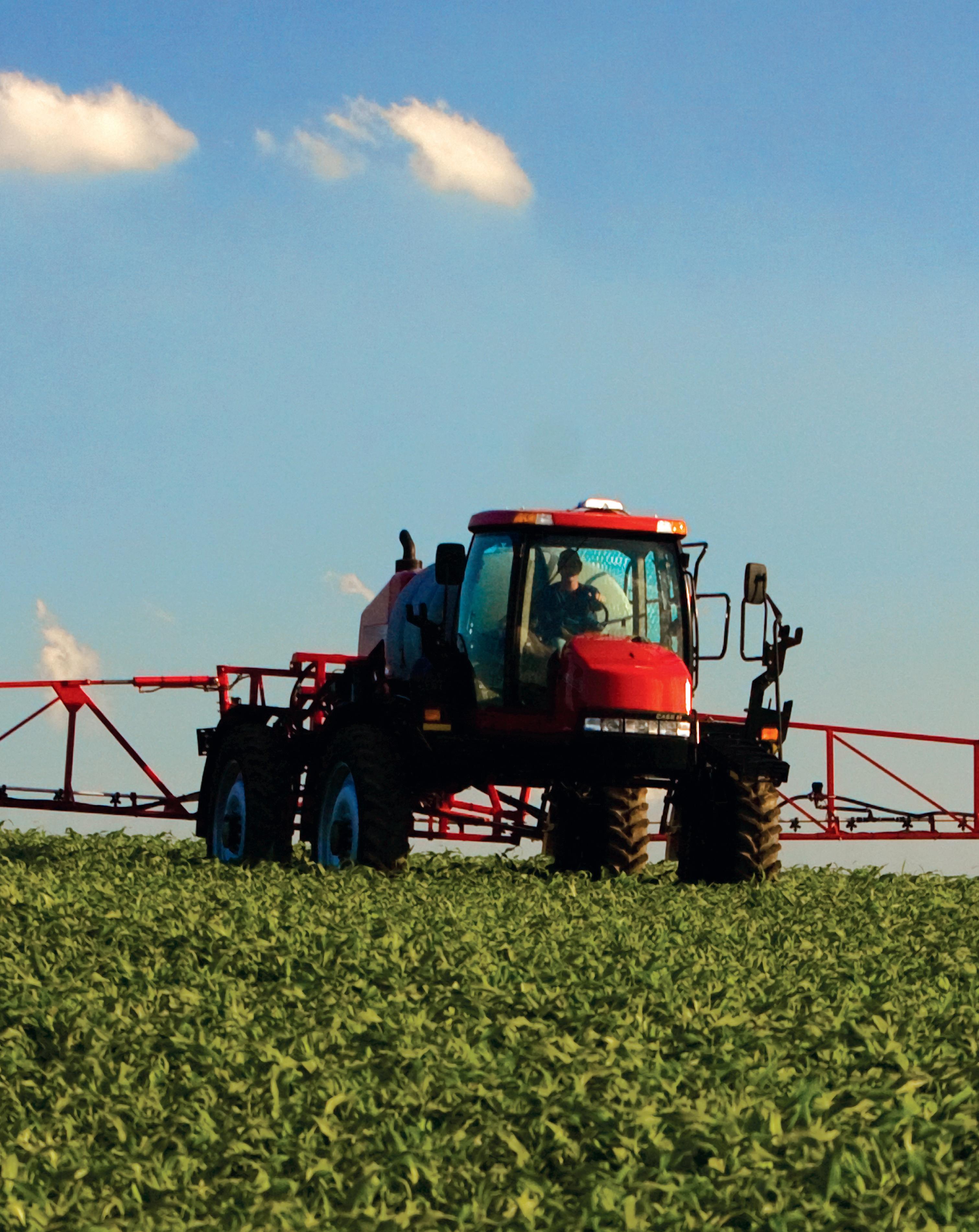
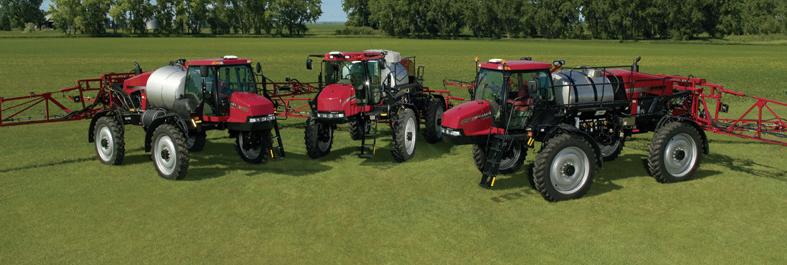
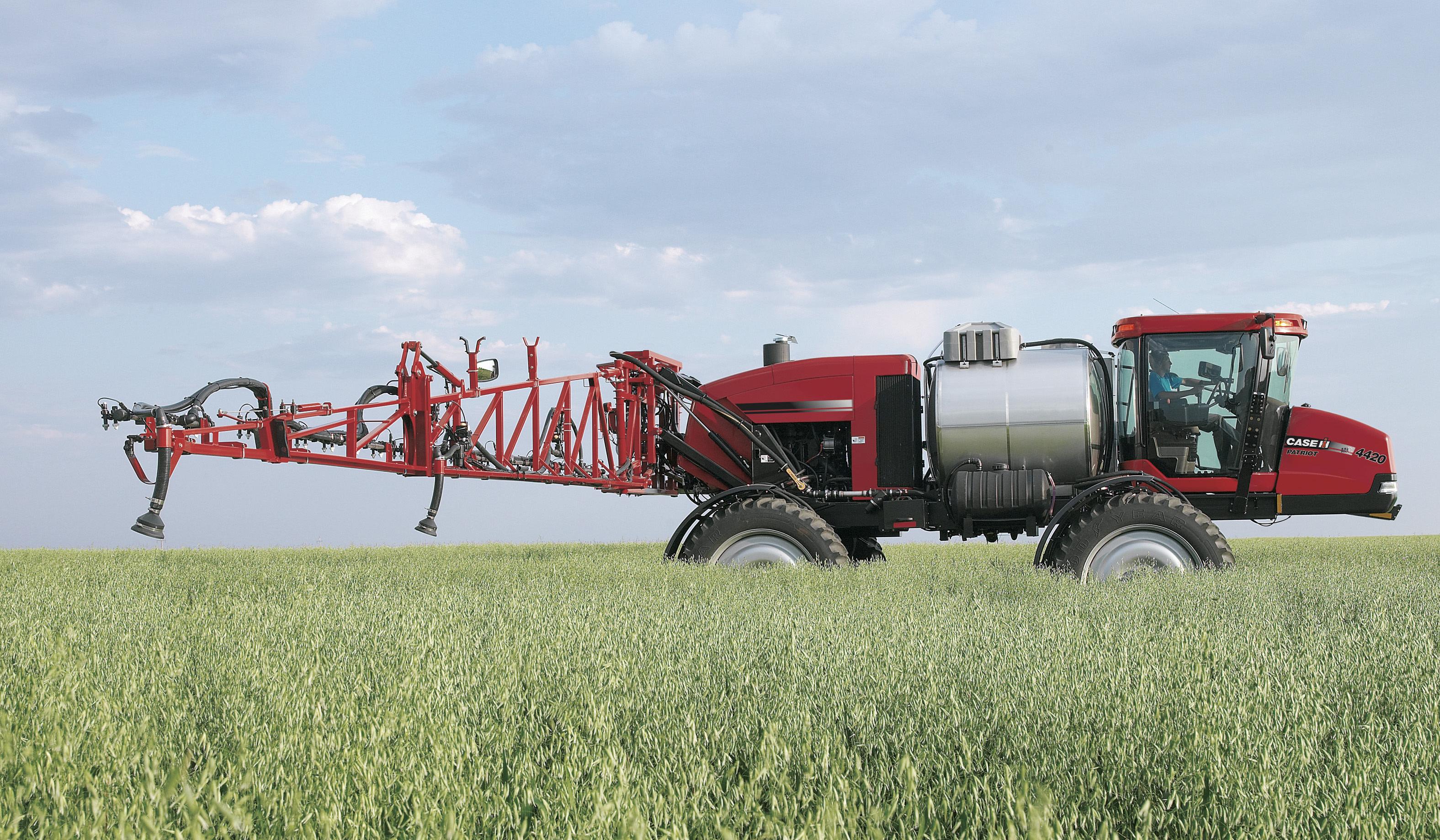
With the 4420, 3330 and new 3230 Patriot ® models, you now have a choice of tank capacities ranging from 800 to 1200 gallons. Case IH sprayers feature a cab forward/rear engine configuration to minimize rutting and soil compaction, so you can get into the field earlier. And our exclusive AIM Command® spray technology option allows application rate and spray pressure to remain constant, regardless of sprayer speed or fi eld conditions. Which means you, not the fi eld, will be making the decisions on when and how to spray. To learn more, see your Case IH retailer or visit caseih.com.
pests and dIseases
The benefits of aerial application
For certain products, aerial application offers a distinct benefit over ground application. “We spray mostly fungicides, insecticides and some fall desiccants,” says Zimmer. “We can get to a field in a timely manner and cover large areas in a very short period of time, which is critical when dealing with disease and insect control. We’re not limited by wet soil conditions and you don’t have to worry about damage or losses from tracking or compaction. In addition, because we’re not actually in the field, we don’t spread fungal spores from one field to another.”
According to Dr. Trevor Kraus, supervisor of research and commercial development and technical development for Eastern Canada with BASF Canada, these are just some of the many reasons the company included aerial application on its Headline fungicide label. “We have certainly seen an increase in the aerial application over the last few years, and it’s been very advantageous for growers. In particular, as more corn growers protect their crops against disease with Headline fungicide, aerial application is a great option because the fungicide needs to be applied when the crop is at tassel, which is when it is fairly tall.”
For Kris Martin of Martin Farming in Brant County, 2009 was his first experience with aerial application, and for him, seeing was believing. “I had two farms with IP (identify preserved) soybeans that were heavily damaged by hail in early August, and I wanted to get Headline applied to ward off any disease,” he explains. “My Cargill representative recommended aerial application as an option, and given how nice the crop looked, I hated to go in and trample it with a ground sprayer. I was impressed to see how close the helicopter pilot got to the crop when he was applying; he didn’t have his boom any higher than a typical Ro Gator would and he was very precise.”
Training is a priority
To ensure efficacious application, pilots are trained to understand the specific product labels so that all applications are made in accordance with the label directions, including water volume, product rate, droplet size and height above the crop. For example, BASF recommends that Headline fungicide be applied at a 10-foot release height and sprayed when the wind speed is less than 15 mph (24 km/h). According to Kraus, these recommendations are based on research done by BASF to determine which height and wind speed will provide optimal coverage.
Safety is also critical. Zimmer Air, for example, has its own training facility and provides in-house training for all its applicators. There are many requirements aerial applicators must meet to be licensed to spray crops. “For growers looking to hire an aerial applicator for the first time, it’s also a good idea to verify the applicator’s credentials,” suggests Zimmer. “By law, applicators need to have a Transport Canada Operating Certificate. If you hire someone without this and there is a problem with the job, their insurance will be null and void because they’re operating illegally. Growers should also inquire about the pilot’s experience level to ensure the individual is properly trained for agricultural applications.”
Aerial application is not always possible, and there are a number of products that are not registered for aerial application and a number of areas where applicators cannot fly. However, it does provide an excellent alternative to ground application, particularly if there are spraying constraints due to timing or weather conditions. n
arranging an aerial application
Growers who want to apply products aerially in 2010 should notify the applicator of their intentions soon after planting. Doing so does not set the application in stone, explains Paul Zimmer, president of Zimmer Air Services in Blenheim, Ontario, because as the season progresses, weather conditions, quality of the crop and commodity prices will dictate how many acres actually get sprayed and with what product. With that said, advance notification does help applicators plan out their season, so they are more likely to have enough helicopters prepared to handle the potential workload. Aerial applicators often work closely with retailers, so if growers inform their retailers of their intentions, it helps the applicator set a plan to service multiple customers within one area on a single day, increasing efficiency for the applicator, and ensuring growers’ applications are done in a timely manner. When booking an aerial application, growers need to provide:
•
The field location (911 numbers are helpful);
• into the helicopter’s GPS are preferred);
•
•
•
A field map (electronic shape files that can be loaded
The number of acres to be sprayed;
The product to be sprayed;
Their contact information;
A listing of any obstacles or hazards including towers,
• neighbouring residential areas or water ways. Once arranged, the actual application is hands-off for the grower. Zimmer Air, for example, is full service. “We provide the labour and the water; the only thing the grower needs to provide is the field information, an estimated spray window closer to application timing, occasionally a place to land and the product, which we sometimes also get directly from the grower’s retail,” explains Zimmer.
Aerial applications are increasingly popular as more growers apply a fungicide to maturing corn crops.
Purple tofu a turn-off
by Heather Hager, PhD
Late-season weeds may not affect yield, but they can still hurt revenue.
Just a minor population of lateseason weeds can ruin a whole load of soybeans. For most commodity soybean producers, this is not a major concern. However, for those who produce premium beans such as foodgrade soybeans, light-coloured edible beans, or bean seed, late-season weeds can mean the difference between earning a premium and sending the beans to the crusher.
Late-season weeds can cause seed contamination and staining. They can also contribute to adhering dust to the beans, called mud tagging. Staining and mud tagging are problems that Jim Barclay, crop retail manager at Hensall District Co-operative in Hensall, Ontario, sees periodically in identity-preserved soybeans. “I would say it happens maybe five to 10 percent of the time, if they don’t do a pre-harvest herbicide application or if they combine too late at night.”
Weed seeds can contaminate beans if they are of similar size or if sticky weed juices adhere weed seeds to the beans, says Dave Bilyea, weed science technician at the University of Guelph’s Ridgetown Campus. This is a concern because of restrictions against the import, export and sale of certain regulated weed species. For example, giant ragweed has seeds that are difficult to separate from soybeans and is considered a noxious weed in areas of Canada. Cleaning the beans is unlikely to remove the contaminating seeds.
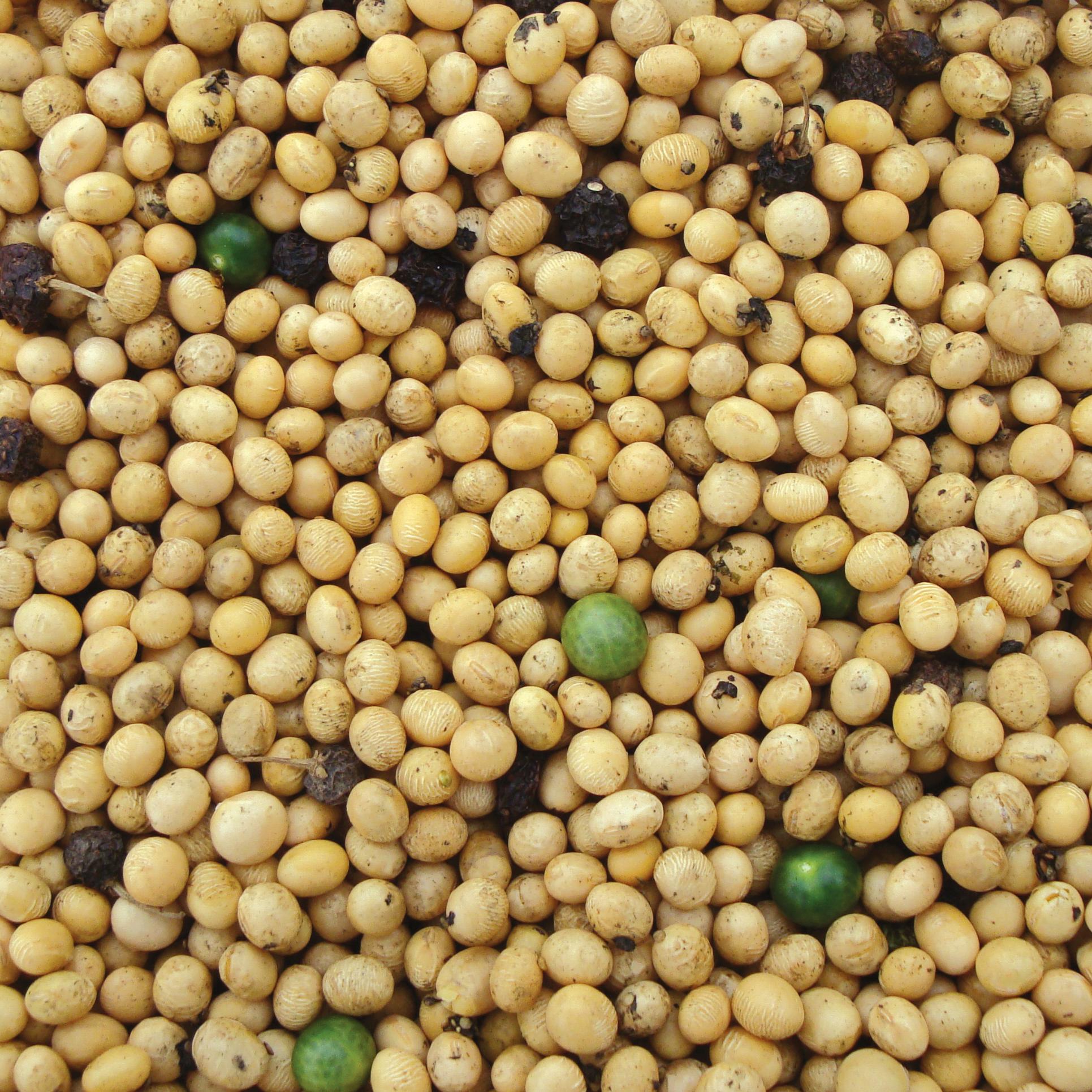
Bean seed staining by weeds and berries at harvest can also be a serious problem. “It doesn’t necessarily impact the total yield because yield’s already there,” says Bilyea. “But the quality is important. People don’t want beans with a dingy colour or a green hue because a lot of these beans are going for food-grade products, and you cannot remove that discolouration.”
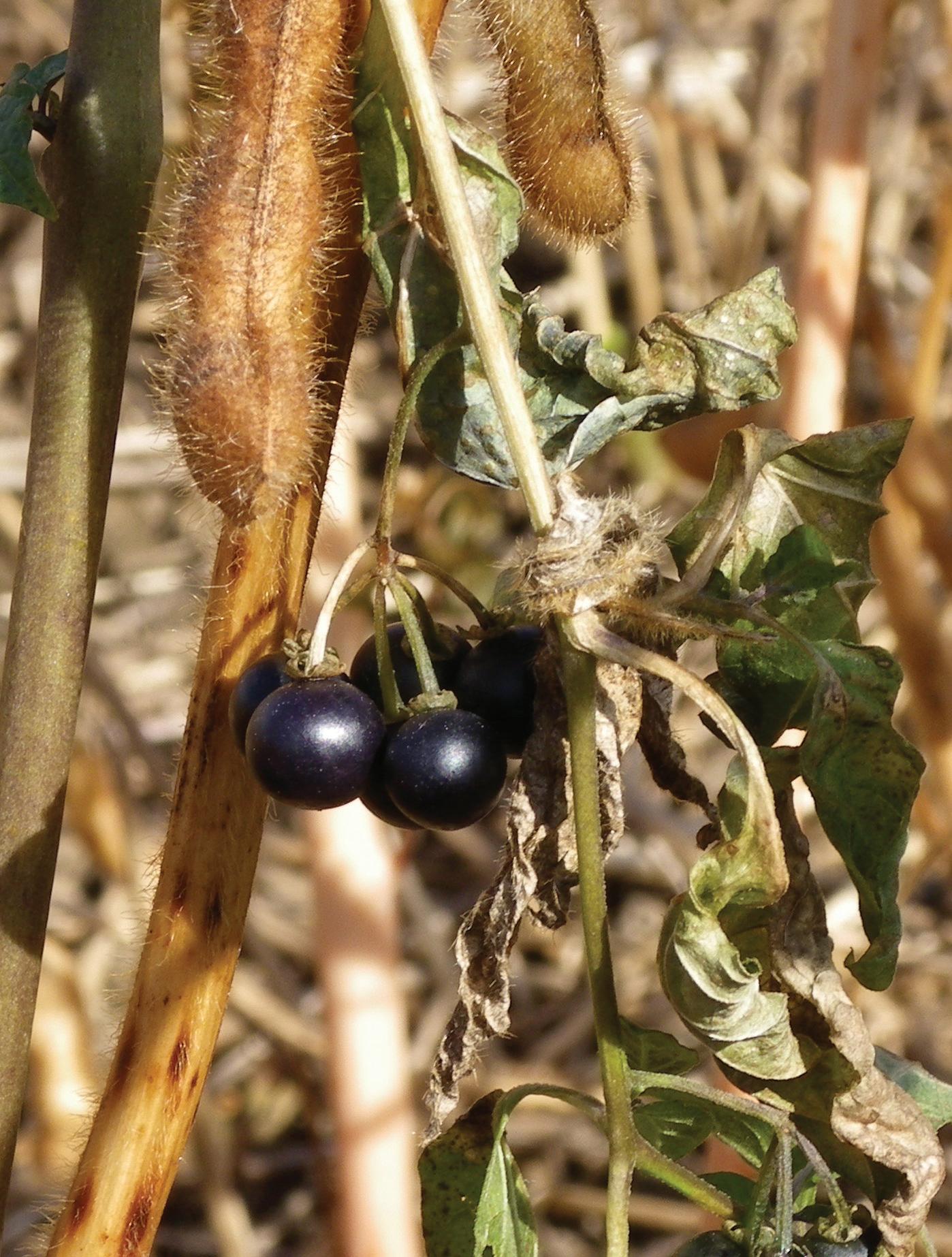
Staining can range from dramatic to subtle, depending on the weed species. Pokeweed and nightshade, which have
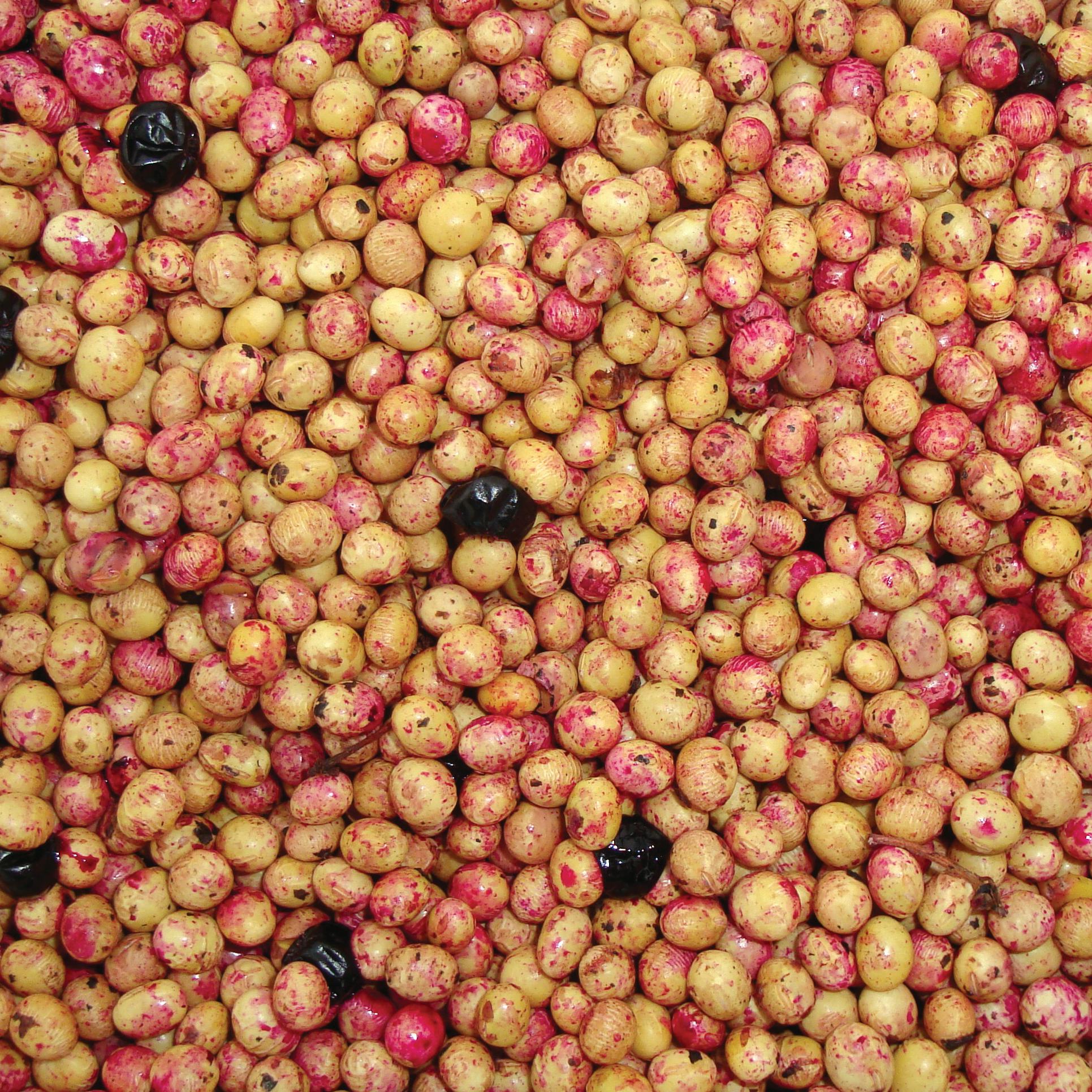
dark berries, are especially problematic. The purple or red berries can cause severe staining in the combine, making the beans appear pink, as though they have been treated with pesticides. An average-size pokeweed plant might have 300 to 400 berries, says Bilyea. “The berries are the size of a currant, they crush fairly easily, and the stain is colourfast. It might be a case of the
combine head just taking in two or three of those plants, and then the whole load is stained with the pink juice. It’s quite a disaster, really.”
The residual stain in the combine could also affect subsequent loads.
Weeds that remain green at harvest such as lamb’s quarters can leave subtler green stains. Staining from green or partly green weeds is compounded by
Eastern black nightshade can have deadly effects on a crop of IP soybeans and is a problem best addressed before planting.
Photo courtesy of mike cowBrouGh, ontario ministry of aGriculture, fooD anD rural affairs
combining when there is excess moisture in the field such as early or late in the day, says Mike Cowbrough, Ontario Ministry of Agriculture, Food, and Rural Affairs weed management program lead for field crops. The moisture rehydrates some of the plant and helps to spread stain-causing substances.
Weeds can also exacerbate mud tagging, says Bilyea. Horsenettle, smooth ground cherry, clammy ground cherry, biennial wormwood, and Canada fleabane, for example, emit sticky juices or resins when crushed. The sticky juices, as well as moisture from precipitation or dew, can mix with dust and stick to the beans. This gives the beans a dingy appearance. Another potential red flag noted by Bilyea is plants like catnip or field mint, which can infuse the beans with an unwanted aroma.
Prevention is the solution
If the beans do not meet the colour requirements, they do not receive the premium. “A fairly well-stained load just wouldn’t make the grade,” says Barclay. “Depending on the year, it would either get rejected to crusher beans or it could go to a nongenetically modified soybean market.” So it is imperative
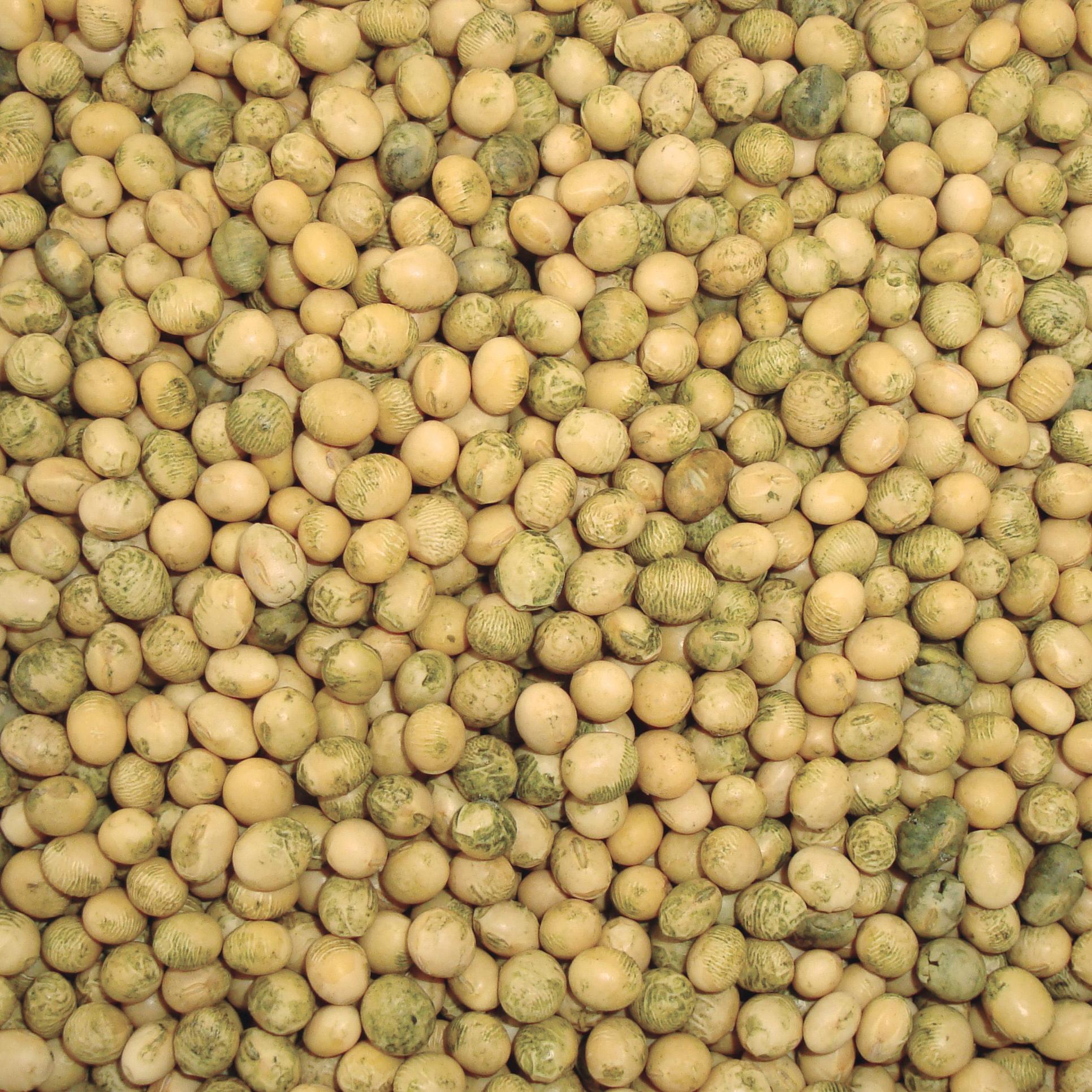
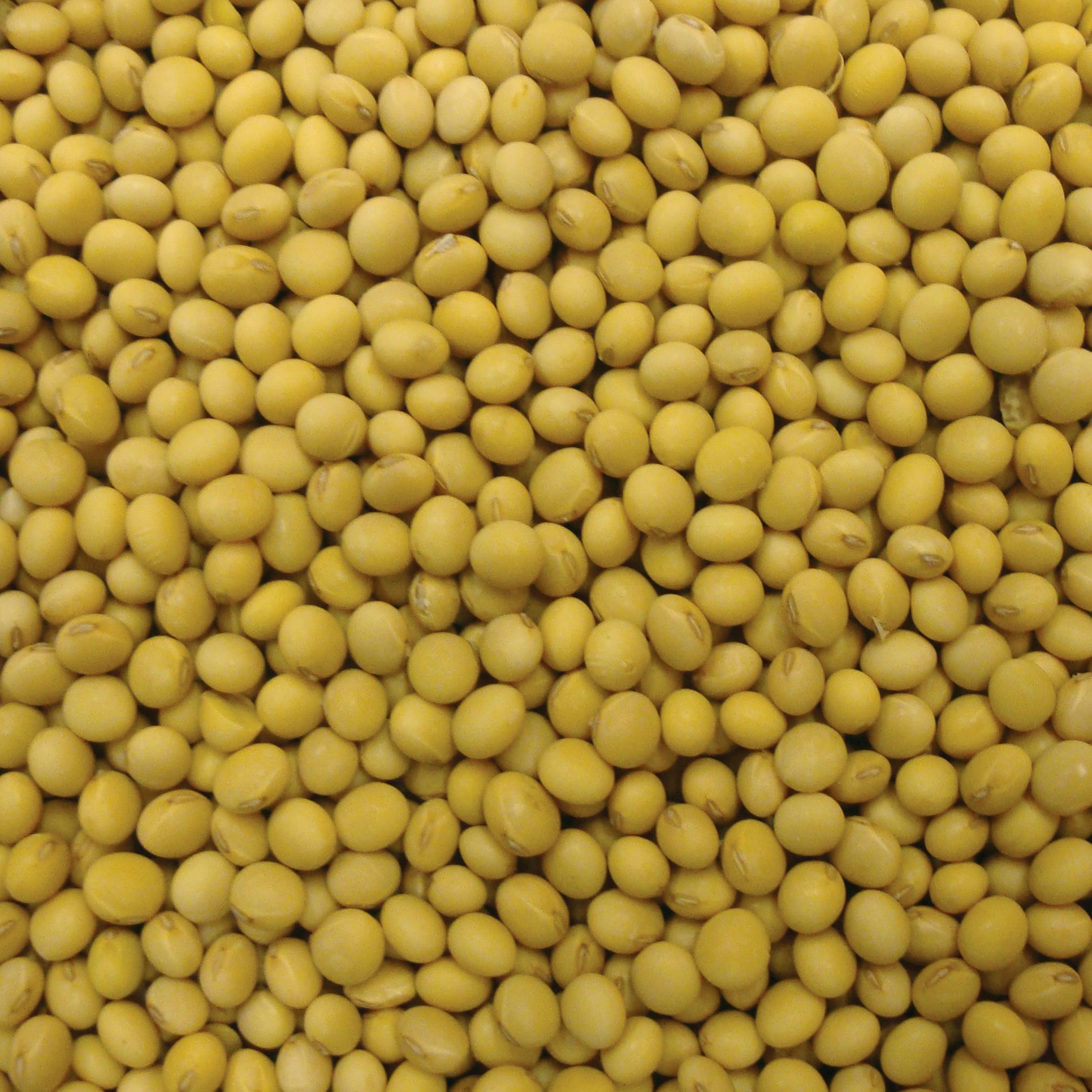
Staining or contamination by the berries from weeds such as eastern black nightshade (A) and pokeweed (B) and the green tissue of others such as lamb’s quarters (C), can reduce marketability versus the appearance of clean soybeans (D).
to address weed issues before harvest.
In fact, late-season weed issues are something that growers should consider even before spring, when they are planning their planting regime and weed control program, suggests Cowbrough. He says that many late-season weeds can be controlled by a late-season burndown with Reglone (diquat) or Roundup (glyphosate). However, with eastern black nightshade, “you might get the plant to dry down, but you won’t get the berries to dry or drop.” If eastern black nightshade cannot be controlled in a field early in the growing season, Cowbrough suggests that growers should plant identity-preserved soybeans elsewhere.
OMAFRA recommends that growers scout their fields for weeds and volunteer crops so that they can stay on top of any problematic species. One place where Bilyea says that weeds can hide out is at the perimeter of fields, where they could end up being caught by the combine head during harvest. So it can be beneficial to check and clean the field’s perimeter before berries develop and/or prior to harvest. Within the field, the combine operator should avoid harvesting specific areas that are particularly weedy. n
Beware the nightshades
Not only is eastern black nightshade potentially poisonous, its berries can wreak havoc at harvest by staining light-coloured edible beans and soybeans in the combine. Killing this weed using a late-harvest burndown will not solve the problem because the berries tend to remain on the standing plant, says Mike Cowbrough, weed management program lead for field crops for the Ontario Ministry of Agriculture, Food, and Rural Affairs. “If you can’t get rid of nightshade, your beans will be crusher beans.” He says that if growers are finding the plant where it should be absent, they need to re-evaluate their weed control program to determine why it was not controlled.
Cowbrough suggests that growers first determine whether the initial herbicide was appropriate for controlling eastern black nightshade. If an appropriate herbicide was used, then environmental factors should be reviewed. In a given year or field, certain conditions may shorten the period of residual herbicide control, allowing the weed to establish later in the season.
A more serious concern is herbicide resistance. Eastern black nightshade resistance to Group 2 herbicides has been detected in Bruce, Elgin, Essex, Huron, Middlesex, Perth, and Wellington counties of Ontario. Almost two dozen other species are resistant to various herbicide groups in Ontario, according to the University of Guelph Department of Plant Agriculture’s resistant weeds website. “The University of Guelph will test weed samples for resistance,” says Cowbrough. “It’s free and it’s confidential.”
Proper sample collection is critical for accurate testing. Specific sampling instructions and submission forms are available at the resistant weeds website: www.plant.uoguelph.ca/resistant-weeds.
Photos courtesy of Dave Bilyea, university of GuelPh riDGetown camPus
Forages and Feed
Answering the need for better forages
by Treena Hein
Decision-making help for producers left with severe alfalfa winterkill.
In early 2009, many producers faced severe alfalfa stand damage. With weather unpredictability becoming commonplace, serious alfalfa winterkill could easily become a regular occurrence. This means crop farmers need solid advice and the latest findings when choosing which quick, high-quality forages will best alleviate their shortages. “Which forages to use is certainly an issue when we get a lot of alfalfa winterkill, and we had unprecedented winterkill in the spring of 2009,” says Joel Bagg, forage specialist with the Ontario Ministry of Agriculture, Food and Rural Affairs (OMAFRA). “We had saturated soils going into the fall, which is the opposite of the cool and dry weather that alfalfa prefers to develop good cold hardiness.”
The challenging wet weather during the summer of 2008 also meant that in the fall of that year, farmers cut during the critical fall harvest period. “Then, during midwinter we got some snow melt and extremely cold weather so some icing and freezing occurred,” Bagg notes. “In the early spring of 2009, there was significant alfalfa frost heaving in many areas. We’re also seeing more alfalfa disease such as brown root rot and aphanomyces.”
All these factors, he says, are leading to increasing interest in forages such as sorghums and other warm season annuals, as well as cool season annuals such as Italian ryegrass, peas and cereals. “There are good opportunities to use these crops if producers are able to find out early that they have sufficient winterkill to warrant their use,” observes Bagg. However, he warns that if producers do not seed the cool season annuals early, or if a dry year occurs, they will not get the yield they expect.
OMAFRA’s emerging crops specialist Scott Banks says much of the decision making about which forages to use depends on when the crop is seeded. “If a farmer with winterkill looks at options, first and best is to reseed alfalfa or establish a new alfalfa field, ideally after soybeans the year before,” he says. “If
In the past few years, the quality and quantity of forages have been strained by a combination of cool wet falls and winterkill.
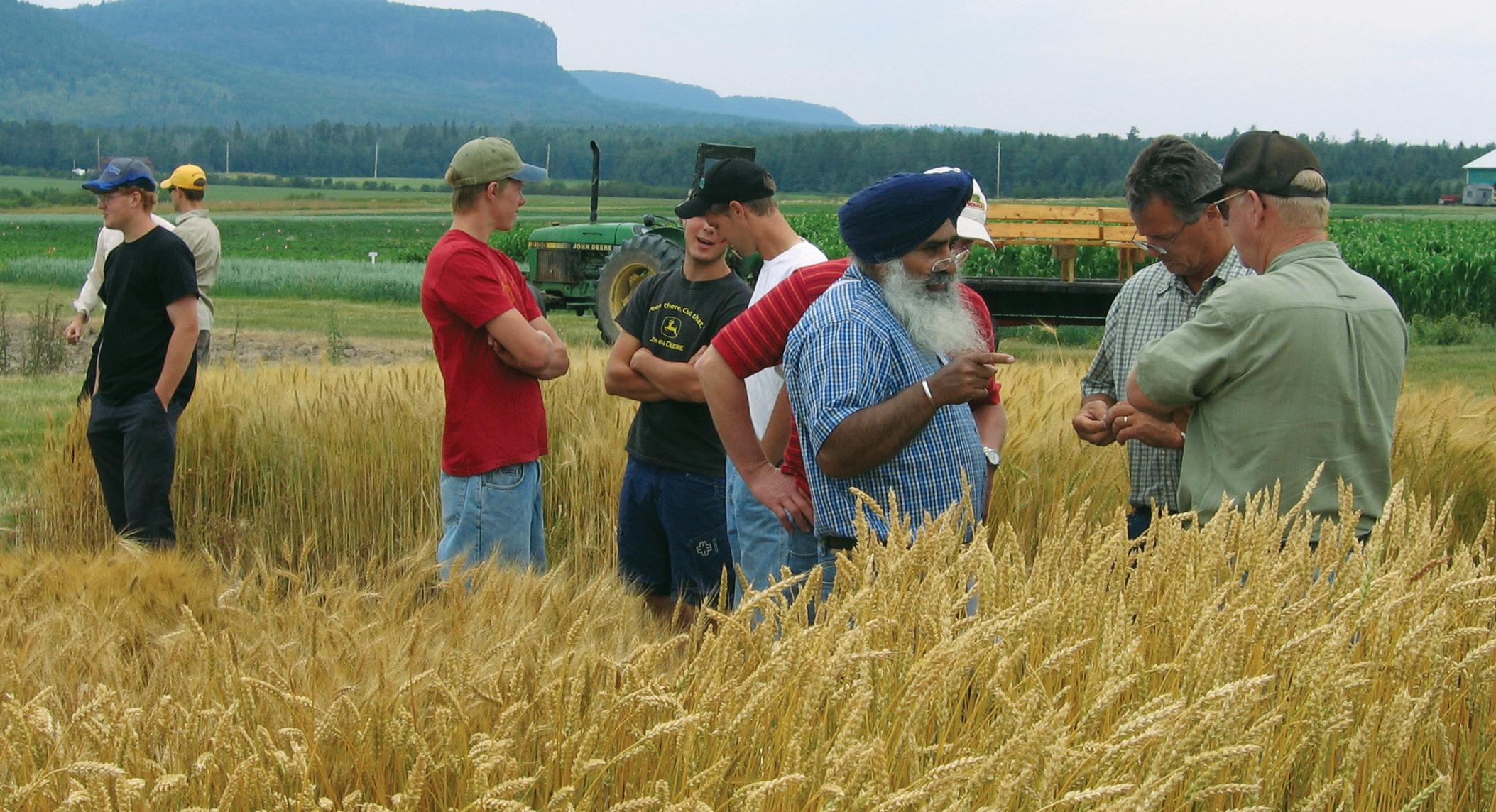
Dr. Tarlok Singh Sahota has conducted research near Thunder Bay, Ontario, to determine the best varieties and blends of cereals, grains and silage from various points across Canada.
you want to seed cereals instead, seed as early as you can also. If you’re late, pick the warm season crops such as sorghum or sorghum-sudangrass because they’ll produce the best yields.”
There are also other factors to consider. “Cereal companion crops provide weed
and erosion control,” says Banks. “Your livestock’s needs are also important.” A mix or straight cereals is best for cow-calf operations. For milking cows, Banks says that while adding peas brings up forage quality and increases crude protein slightly, it is more costly. In general, he
Photo courtesy of Dr tarlok sinGh sahota, tBars
Forages and Feed
has found teff grass to be no better than oats as a livestock feed.
Current research
Extensive ongoing research into mainstream and alternate forages has been conducted for many years by Dr. Tarlok Singh Sahota, director of research and business at the Thunder Bay Agricultural Research Station. In 2008, he compared nine high-yielding varieties of barley, silage and grain from Eastern and Western Canada. “Brucefield had the highest silage yield (8087 kg/ha or 7215 lbs/ ac), followed by CDC Coalition at 7060 and Millhouse at 6987 kg/ha (6299 and 6233 lbs/ac, respectively),” Sahota notes. “Protein content in silage barley was equally highest in CDC Battleford and CDC Coalition at 14 percent, followed by Cyane and Trochu at 13 percent. Cyane produced the highest grain yield of 8344 kg/ha (7444 lbs/ac).”
In terms of winter wheat, Sahota concludes, “At the boot stage, it definitely could be used as forage. I found the best overall yield in AC Morley, which increased in dry matter accumulation from 6114 kg/ha (5455 lbs/ac) on June 24 to 8740 kg/ha (7798 lbs/ac) on August 4. However, its protein yield at boot stage (July 24) of 726 kg/ha (648 lbs/ac) was bested by AC Sampson at 843 kg/ha (752 lbs/ac).”
Considering both yield and protein content, Sahota also found that 90M01 is the best variety of soybean to choose as an emergency forage option. He also concludes that berseem clover, which is the main forage crop in northwest India, could be a potential new forage crop for Ontario. “Its protein content was 21 percent in our trials, versus 14 for teff and nine percent for oats,” he says. “Seed it early. Also keep in mind that we found seeding it with oats at a rate of either 50 or 70 percent gives an increased dry matter yield over berseem or oats alone.”
Sahota also tested Galega, a forage legume from Scandinavia. “I found the dry matter yield (4440kg/ha or 3961 lbs/ ac) of Galega to be 95 percent of alfalfa yield (4684 kg/ha or 4179 lbs/ac), but in pure stands, orchard grass was higher than alfalfa or Galega,” he says. “Mixed cropping of orchard grass with Galega, but not with timothy, tended to improve yield. In alfalfa, mixed stands with both the grasses improved the yield.”
In terms of meeting dairy cattle dietary needs, Sahota recommends diverse cropping. “Try new crops and add old ones
such as soybean and peas. Intercrop barley with peas rather than growing barley alone,” he says. “Grow winter cereals for forage-fall grazing or spring harvesting. Fall-grazed winter cereals can be left for grain production.”
Aside from advice about which forages are best, Bagg stresses that it is best to stay out of a situation where emergency forages are needed in the first place. “Assess alfalfa stands in the spring by digging out roots and crowns with a shovel and
examining them by slicing with a knife,” he says, “and use better varieties to minimize disease and increase persistence. Test your soil to ensure proper fertility.”
As a final word advice, he says, “Considering the yield loss as stands age past three or four years, the relatively small cost of establishment over the life of the stand, and the nitrogen credit as we rotate alfalfa into corn, the best option is often to shorten our rotations with new alfalfa seedings.” n
Value of seed treatments spreads to more crops
Research shows a growing list of benefits for soybeans.
Seed treatments have played an important role in the production of healthy, profitable corn and cereal crops for many years. And as insects, diseases and variable soil conditions continue to affect crops, seed treatments are gaining prominence as an important agronomic tool to improving productivity in corn, cereals, and now in soybeans. Crop protection chemistry and seed treatment application methods also continue to evolve, helping growers to keep pace with nature’s challenges to ensure valuable seed gets the best start possible.
Corn and cereals already benefiting Today, most corn seed arrives at the farm with a commercially applied seed treatment to protect hybrids from insect pests and diseases. Growers rely on this treatment for a yield increase of as much as 5 bu/ac, according to Luc Bourgeois, research and development manager with Bayer CropScience in Eastern Canada. “Cereal seed treatments offer a yield increase by creating a better stand with an average increase in plant emergence of 10 percent,” says Bourgeois. He estimates that 95 percent of all cereals are treated: 100 percent of winter wheat and 90 percent of spring cereals. Wheat is most commonly treated with a fungicide, and in some cases, an insecticide too. “There are many seedborne diseases that decrease cereal yield and quality, and a lot can happen between planting and seed emergence, making it critical to plant treated seed.”
“Seed treatments are a must,” says Peter Johnson, cereals specialist with the Ontario Ministry of Agriculture, Food and Rural Affairs (OMAFRA). This is especially true when growing winter wheat in the Ontario snowbelt with the presence of soil-borne diseases like dwarf bunt. Bunt (dwarf and common) has the greatest economic impact with the potential to cause complete yield loss. Smut, another soil-borne disease, can reduce yield by as much as 10 percent, and can be controlled with seed treatments. Insecticide seed treatments also provide protection against soil insects such as wireworm, European chafer and white grubs.
Improving treater technology
Corn seed treatment is applied, and there is a growing trend towards purchasing commercially treated certified soybean and cereal seed. Seed protection is limited, to some extent, by the quality of seed treatment application. Uniform, precise application is important to ensure correct rates are applied to each seed. “When establishing a crop, it’s important to do everything we can to reduce insect and disease pressure,” says Marty Vermey, product manager for Hyland Seeds. “And applying the proper amounts of treatment to the seed will provide the best control.”
Convenience, environmental stewardship and yield gains are important considerations that have led many farmers to purchase commercially treated seed. Commercial application does more to ensure that the seed is treated with the appropriate amount of product to prevent unnecessary leaching into soil. Excess application can also harm the seed, reducing quality and yield while unnecessarily increasing treatment costs.
To improve the accuracy of all its commercially applied seed treatments, Hyland Seeds recently invested in a new Gustafson continuous flow commercial seed treater that accurately applies treatments on a variety of crops, with the flexibility of applying up to nine products in a continuous, closed-loop system.
Vermey expects a continuous increase in the use of seed treatments, especially in soybeans, and this new investment will ultimately offer growers more options and flexibility for new advancements in seed treatments. “In the past, seed treatments were applied based on bulk weight, which could lead to overor under-applying, as seeds vary in size,” says Vermey. “Today, seed treatments are often applied by seed count, a much more accurate application method.”
The use of seed treatment in all cereals is nearly 100 percent.
Crop ManageMent
Growing trend in soybeans
Treating soybean seed is an emerging trend to protect against soilborne diseases, and unfavourable soil conditions and to protect the seed and seedlings from insect pests. “Soybean growers are beginning to recognize the benefits of seed treatments,” says Horst Bohner, soybean specialist with OMAFRA. “In 2007, only three percent of certified soybean seed used in Ontario was treated with an insecticide and fungicide, and in 2009 that number jumped to 30 percent.” Soybean seed treatment is most beneficial in stressful seeding conditions such as heavy clay or sandy soils, in fields with a history of root rot or insect pests, in no-till fields and for earlyseason planting. However, there are other considerations when making the decision about using a soybean seed treatment. Bohner has been investigating how seed treatment affects seeding rates and the role that seed treatments play in early soybean planting, along with possible yield increases with earlier planting dates.
Early protection and an economic advantage
“Seed treatments have proven effective and offer more protection for the early planting of soybeans,” says Bohner, who has seen yield increases of 4 bu/ac when planting soybeans in early May, rather than late May. Early planting can be tougher on the seed because soil conditions are often cooler and wetter, creating the perfect environment for disease. In these conditions seeds can benefit from a protective seed treatment.
Soybean seed treatments also offer economical advantages by reducing seeding rates. “Seeding rates can be reduced by at least five percent by using a combination treatment of insecticide and fungicide,” says Bohner, who is involved in research that may indicate seeding rates could be reduced by up to 10 percent. Typically, soybeans have 75 percent emergence and seed treatment can boost emergence and produce a more consistent stand, often resulting in 10,000 more plants per acre. Lowering seeding rates while protecting plant health with seed treatment can have a positive economic result. Growers can benefit from reduced input costs while maintaining or increasing yield.
Seed treatments are most effective at protecting the seed and early plant stages. Growers should refer to seed tag or product labels to determine how long a particular treatment will last. Many fungicides protect for a number of weeks, whereas some insecticide seed treatments are systemic and continue to work within the plant, fighting pest infestation. In-season applications of fungicides or insecticides may be necessary, depending on disease and insect pressure in a particular field. n
A growing body of research points to the benefits of treating soybean seed.
Photos courtesy of Bayer croPscience
Adding fuel to growing sorghum for ethanol
by Blair Andrews
Industry is trying to drive interest with more research, greater returns.
Driven by rising ethanol production and Canada’s status as a net importer of corn, industry researchers are stepping up efforts to find an additional feedstock for the biofuels market. Among the potential candidates is sorghum. Primarily grown for silage, forage and sugar production, sorghum is often cited as a promising crop because it costs less to grow than corn and it can thrive in conditions that are less than ideal for good corn production.
Besides being used for food and feed consumption, more sorghum is being used in various ethanol production methods in the US. Similar to corn, the starch from grain sorghum, also known as milo, is converted by enzymes into sugar, which is fermented to produce alcohol. Another method uses the sugar from the stalks of sweet sorghum.
“It’s like sugar cane; there is juice in the stem, and if you extract this juice and ferment the sugar, it can be made into ethanol,” says Om Dangi, chief executive officer of Agriculture Environmental Renewal Canada (AERC). The Ottawa-based company specializes in the development of sorghum hybrids for both grain and silage. The research program, started by Dangi in 1994, has developed hybrids to grow in Eastern Canada’s climate. He says sorghum can be grown easily from Thunder Bay, Ontario, to Quebec City.
One area that has been touted for sorghum production is Ontario’s tobacco belt in southwestern Ontario. Jim Todd, transition crop specialist with the Ontario Ministry of Agriculture, Food and Rural Affairs, says the sandy soils in the region are capable of growing a great corn crop if there is adequate rainfall. “But when it gets dry and hot, it isn’t an ideal location. Sorghum requires 30 percent less water than corn to sustain the same amount of dry matter,” explains Todd, noting that sorghum also needs 30 percent less fertilizer than corn.
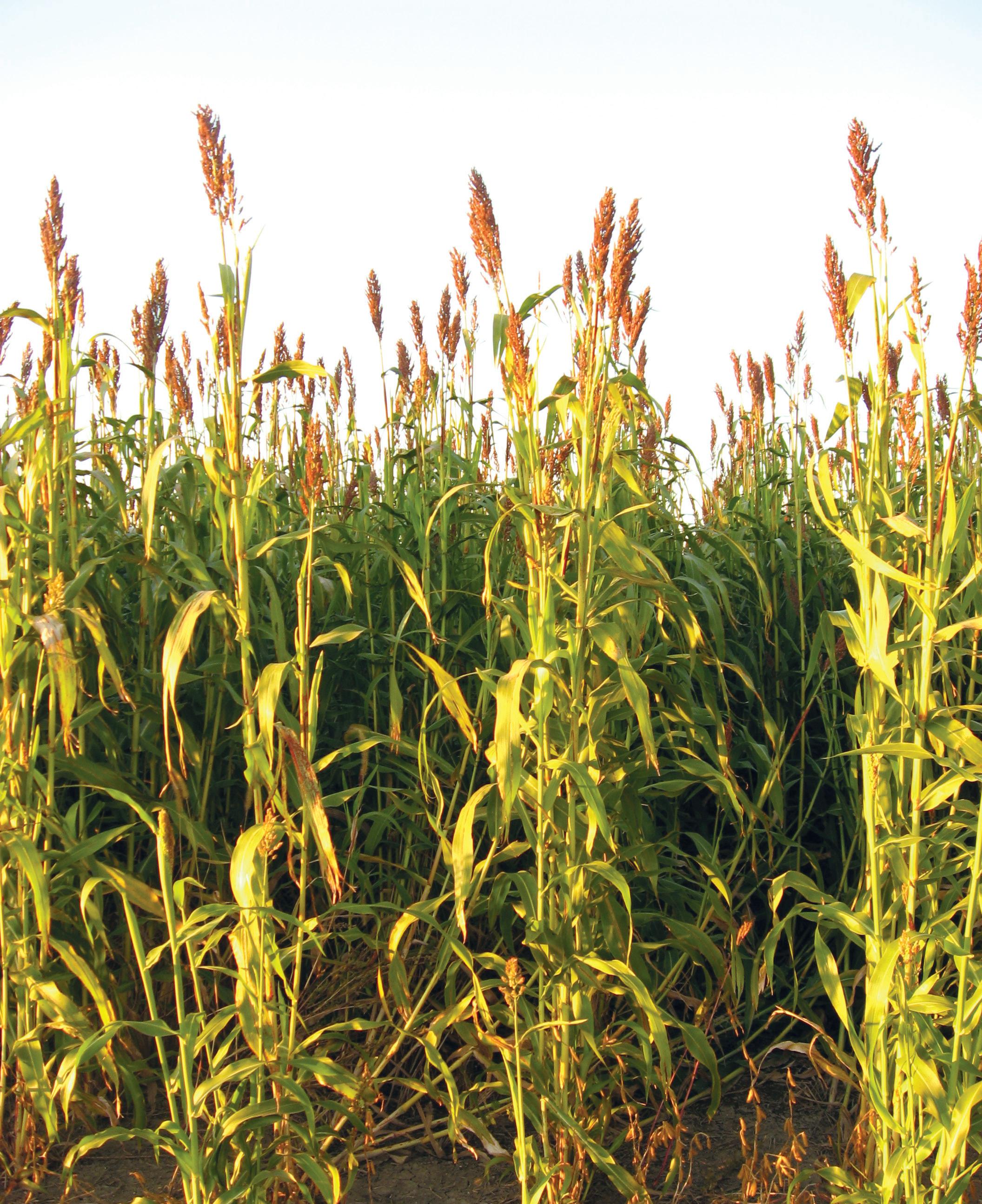
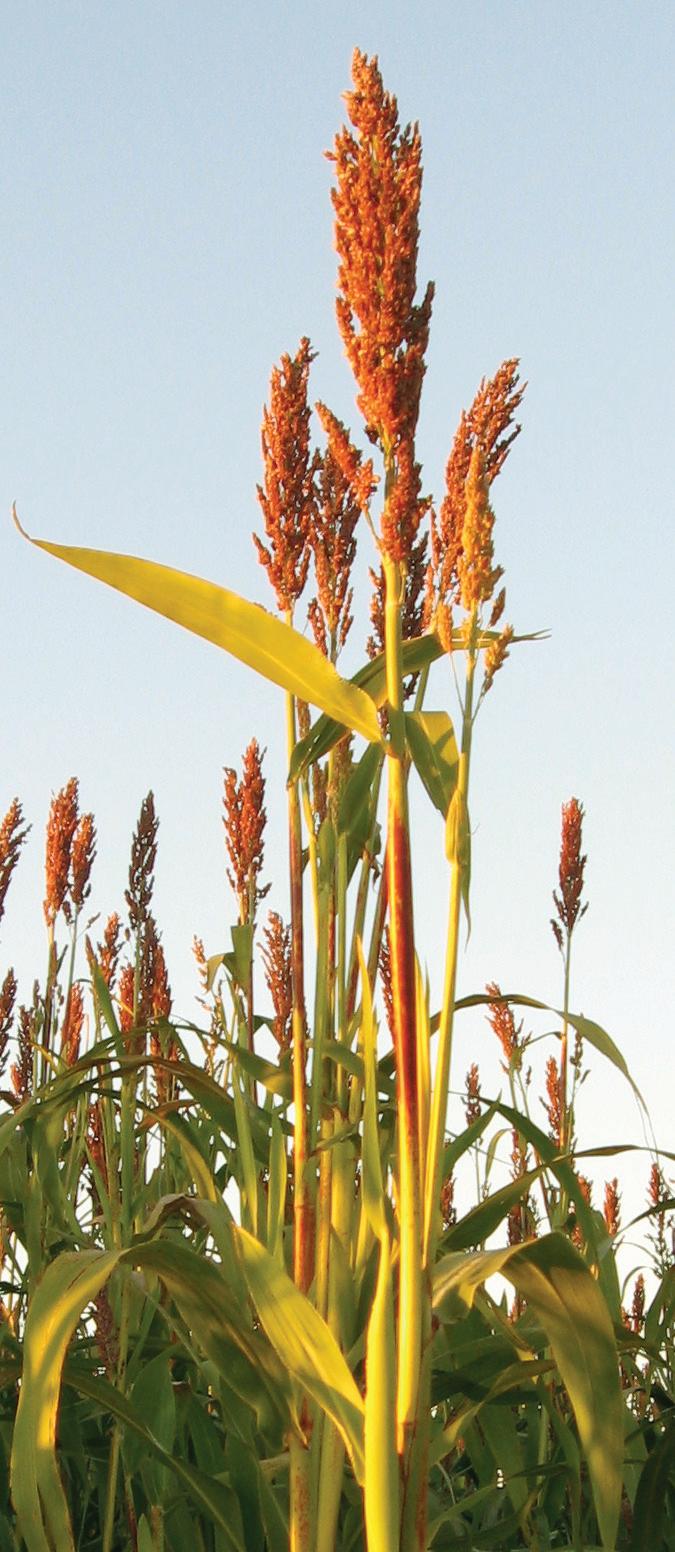
ABOVE: Sorghum costs less to grow than corn and it can thrive in conditions that are less than ideal for good corn production.
RIGHT: Another option for sorghum production is in the emerging biomass sector, grown for its juice and the leftover plant material.
Economics still trump interest
Although sorghum has demonstrated its agronomic potential, GreenField Ethanol, Canada’s leading manufacturer of the biofuel, has run tests to determine if the crop can be profitable for ethanol production. Mark Schwartz, business development manager in GreenField’s engineering technology group, says their interest is not about replacing corn but about supplementing it with another source. “We’re looking at an additional crop or feedstock, mainly from areas where they do not grow corn to any extent, so that we can make more ethanol. That’s the main thing.”
Schwartz says GreenField was approached by AERC to study the potential of one of its grain sorghum hybrids in conjunction with corn at its plant in Tiverton, Ontario. For Greenfield, the main objective was to determine how sorghum would affect its core business. “We wanted to see two things: how much ethanol we could get out of the
Photos courtesy of lisa hiGhfielD
speCIal Crops
grain versus the corn, and what the DDGs (dried distillers grain) looked like.”
The tests revealed that the sorghum produced eight to 10 percent less ethanol than corn. In its favour, Schwartz says the sorghum fermented well and produced a quality, gluten-free ethanol, which would be good for beverage ethanol. He also says the DDGs had a high protein level and good palatability.
As for grain sorhgum’s potential as an additional feedstock for ethanol, Schwarz says it would have to be contracted at a discount to corn to compensate for the lower yield and excess production cost. “It made good ethanol, just less than corn. Based on the last trial, we could bring sorghum into Tiverton if they could provide it in a structured way that would be 10 percent less than the cost of corn.”
Whereas GreenField has been testing grain sorghum, other research involves sweet sorghum, which produces a sugar-rich juice that can be easily converted into ethanol. North Americans may be familiar with sweet sorghum’s syrup or “molasses”, but China and India have been leaders in producing ethanol from the crop. The simplicity of converting sweet sorghum to biofuel also creates the biggest constraint for using this method in Canada. Jim Todd says the main challenge becomes handling the crop after harvest because the sugar has to be fermented immediately. “It’s a good crop for ethanol production, but if you can’t reduce the amount of fermentation that occurs from wild yeast that is around before you get it to the ethanol plant, then the quality of the feedstock is reduced.”
Another limitation is that only one crop can be grown in a year, thus restricting the year-round feedstock supply to an ethanol plant. One solution is to process the juice on the farm. Sorghum growers in the US are studying this application and have designed harvesting equipment that squeezes the sorghum stems on the farm. The juice would then be allowed to ferment in tanks in the field. The next step involves reducing the amount of water, by boiling or filtration, to make transporting the material more economical.
Other challenges to overcome
Searching for ways to reduce the costs of handling sweet sorghum is just one hurdle. Dangi says the concept of farmers processing it in the field raises another potential challenge. In this scenario, farmers would be producing alcohol at the farm gate, which Dangi says is not permitted. There would also be questions about on-farm processing and how that would affect property tax assessments.
The emerging biomass sector is another possibility for the crop. Dangi says that sorghum could be fed into a bio-digester at an ethanol plant. Once the crop has been pressed to remove the sugar-rich juice, the leftover plant material could be fed into an anaerobic digester to produce methane-containing biogas that could be converted into electricity. Such a method would require private-sector involvement to develop the technology as well as sorghum hybrids for that purpose.
Although sorghum’s role in the future of Canada’s ethanol industry appears to be uncertain, the drive to find more costeffective and additional feedstocks will continue as the industry strives to become less dependent on corn-based ethanol. “I was an advocate for sorghum grain because Ontario is a net importer of corn, and you have a lot of corn grown in certain areas,” says Schwartz. “So if you grow another grain, that is good for everybody’s business.” n
Companies like GreenField Ethanol are looking to sorghum to supplement corn as a feedstock, not replace it.
Machinery Manager
HI g H-CL earan
C e
SP ra Y er S
Each year, growers across Canada look to expand their limits with early seeding, seed treatments, improved genetics and new chemical formulae.
The combined value of seed and crop protection agents is at an all-time high, and the margins they create are just as vital. The revenues mean more, so the delivery methods for their protection are equally important.
All of these higher values and more precise spray applications require a greater level of management skill and understanding.
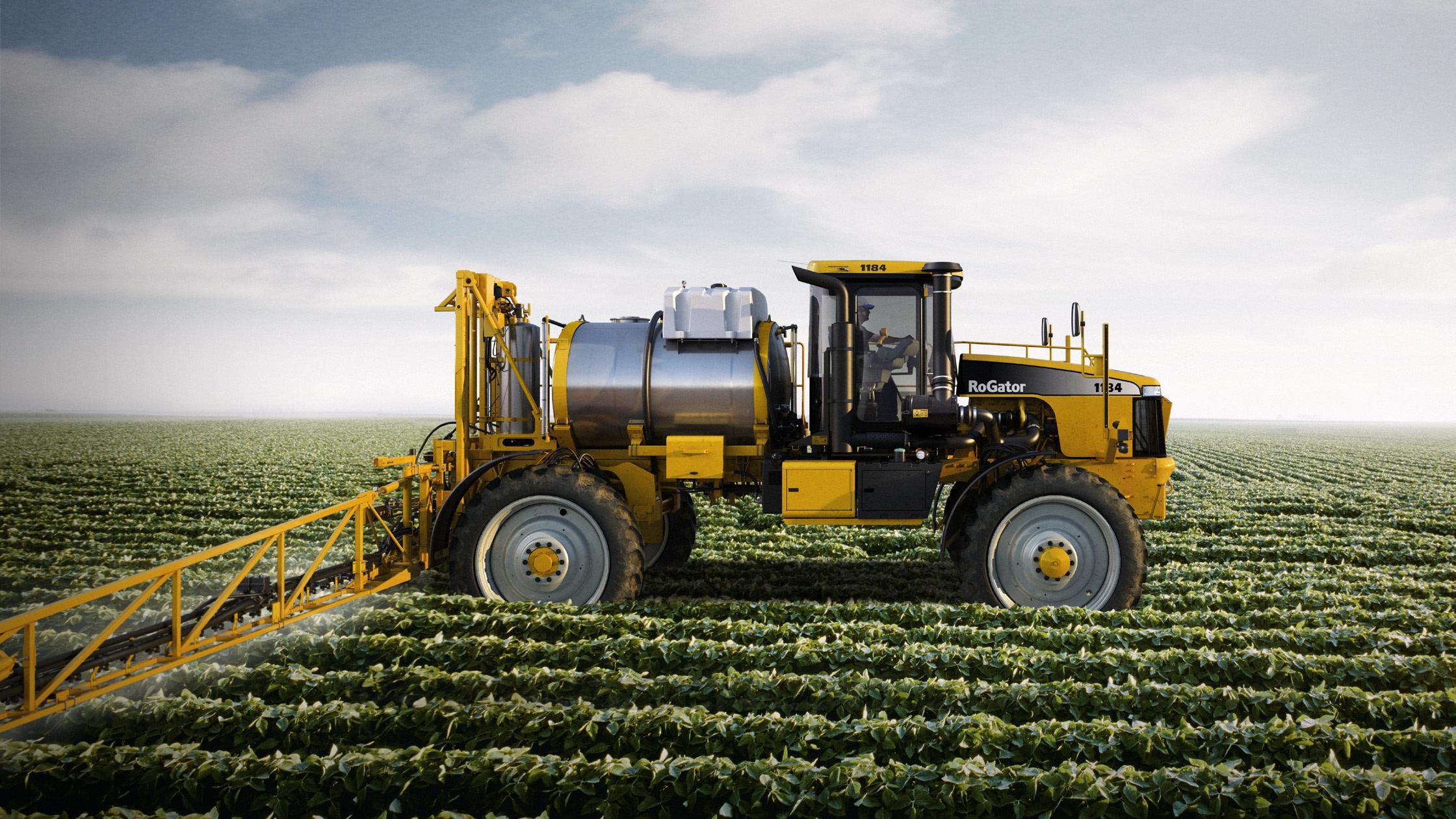
RoGator High-Clearance Applicator
That is why we present Top Crop Manager’s Machinery Manager for high-clearance sprayers, with our streamlined format of summaries and specifications, along with the complete charts available on our website, at www.topcropmanager.com.
As always, we at Top Crop Manager advise growers to consult with the equipment manufacturers, dealers and other trusted agronomy professionals for more information.
Ralph Pearce, Editor Top Crop Manager
For 2010, AGCO Application Equipment offers five new models of the RoGator high-clearance, post-emergence applicator. The machines offer the industry’s largest tank capacity with 900-, 1100- and 1300-gallon liquid systems plus added horsepower to help meet today’s application needs.
Front-entry is the most noticeable new feature, with a fold-down ladder, easy first step, gentle angle of ascent, wide-set hand rails and a wide cab-side walkway to allow the widest cab door opening in class. The 6-post Advanced Application Cab provides a clean, comfortable operator environment, plus an air-ride seat and conveniently located controls help increase operator comfort during long days in the field. In addition, the exclusive and industry-preferred “C” channel frame delivers greater durability and flexibility to keep all four wheels securely on the ground for better traction, fuel economy and field performance.
Lowered boom mounts, a lowered tank saddle, and off-cab rear-view mirror mountings mean the panoramic view of the 6-post cab is now even better in the field and on the road. Changes to the plumbing and hose-routing mean the RoGator’s clean underside and simple plumbing and wiring systems are even more streamlined, enhancing machine life and minimizing costly downtime.
HIGH-CLEARANCE SPRAYERS – MACHINERY MANAGER
Spra-Coupe 4000 and 7000 Series Sprayers
Spra-Coupe is the leading self-propelled sprayer on the market, offering unequalled reliability and superior application accuracy to reduce product waste and avoid crop damage. Light, nimble and powerful, the Spra-Coupe gets a grower into the field days before other self-propelled machines. The largest machine runs on a Perkins 174-horsepower diesel engine and features a 725-gallon poly tank and 60/80-foot or 60/90 foot adjustable boom.
The quieter engine, combined with sound-proofing improvements to the cab means a quieter ride. Plus, innovative machine and boom suspension smoothes the ride and allows for more accurate spraying in the field. Bolted, flex-frame design keeps all four tires in contact with the ground, even in rough conditions for a smoother ride, less stress on the machine and maximum fuel efficiency and pulling power.
Industry-exclusive 6-post Advanced Application Cab provides a clean, comfortable environment for the operator, and an air-ride seat plus conveniently located controls help reduce operator stress during a long day. Tough, reliable construction and extensive service, repair and parts support keeps you in the field until the job is done. Finally, for 2010, the Spra-Coupe line adopts the yellow colour of the AGCO Application Equipment line.
Engine
1104D 4.4L Perkins Certified EPA Non-Road Tier III
1106D, 6.0L Perkins Certified EPA Non-Road Tier III Hp
drive
BorgWarner T-5, 5-speed manual or Allison 2100 RDS 5-speed automatic
Caterpillar PG 115 PowerShift, 6 forward and 2 reverse speeds
Suspension
Independent strut and spring suspension with oscillating front axle; Independent knee action suspension with coil spring rear axle.
Independent strut with linear rate suspension springs front axle; Independent knee action suspension with hydraulic suspension rear axle. Fuel
(167 L)
(246 L)
Go to www.machinerymanager.ca for further specifications and links to Spra-Coupe 4000 and 7000 Series Sprayers.
Case IH Patriot Sprayers
Put yourself in total control with the Patriot Series sprayers from Case IH. The cab-forward, rear-engine design provides balanced weight distribution and a light footprint. During critical application windows that impact yields, Patriot sprayers can get into wet fields sooner with minimal field disturbance, rutting and crop damage.
Featuring the AIM Command spray system, Patriot sprayers let operators manage spray flow and droplet size according to field and weather conditions without changing tips, speed or rate. Other features offer precision control of boom height, GPS-guided boom-section control, automated boom folding functions and even fully automated steering, for the ultimate in product application control and convenience.
All Patriot sprayers are also equipped with the Case IH Surveyor cab, offering unmatched visibility, plenty of legroom and a MultiControl Armrest that puts all key controls at your fingertips.
Three models are available to fit every operation, with engines ranging from 220 to 290 hp, boom widths up to 120 feet and tank capacities from 800 to 1200 gallons.
HIGH-CLEARANCE SPRAYERS – MACHINERY MANAGER
Condor G Series
Setting a new standard for mechanical drive productivity, the all-new Condor G-Series Sprayers are all about delivering tough, rugged reliability. With an efficient and simple heavy-duty mechanical drive train, growers will see simplicity is the defining characteristic of the new G-Series Condor sprayers. The new Condor G Series boasts more features, a wider range of options and greater value.
Choose between the 240-horsepower Condor G40 and the 275-horsepower Condor G75, powered by Cummins. The G40 is available with an angled rear final drive with 42 inches of clearance, while the 48-inch clearance cast iron drop box final drive is optional on the G40 and standard equipment on the G75. For challenging field conditions, mud and soft soil, the G75 is also now available with the brand new SmartDrive Front Wheel Assist hydrostatic drive system for extra tractive effort.
With a choice of 1000- or 1200-gallon tanks in poly or stainless steel; booms from 90 feet to120 feet wide, also available with the patented Spray-Air air boom technology; road speeds up to 46 mph; and a full range of precision products all for a lower price than the mainline competition; growers will be more productive and more cost efficient than ever before with a Condor G-Series sprayer.
ModEl
Engine
Hp
drive
CoNdoR
G40
240 hp;
250-hp power bulge
Cummins QSB 6.7 L Tier III
Allison 5-speed with locking torque converter
CoNdoR
G75
275 hp
Allison 6-speed with locking torque converter, with SmartDrive Front Wheel Assist
Wheel track adjustment 120 to 150 in. adj; Fixed 120 in. opt.
Tank size
Boom length
1000-gal. poly or stainless steel; 1200-gal poly
1000-gal poly or stainless steel; 1200-gal poly or stainless steel
90/60 ft.; 100/60 ft.; 90/60 ft; 100/60 ft.; 120/65 ft.
Ground clearance 42 or 48 in. 48 in.
Suspension
Automatically adjusted air bag with sway control
Fuel capacity 120 gal. (454 L)
Go to www.machinerymanager.ca for further specifications and links to Condor sprayers.
Equipment Technologies’ Apache sprayers
Starting with a torque-converted mechanical drive, growers will begin to notice something is very different. Make no mistake: it is the mechanical drive of an Apache that proves different is better. Through the simplicity of the drive train, Apache customers boast 50 percent better fuel efficiency, easy do-it yourself maintenance, significantly less soil compaction and an overall smoother, quieter ride compared to hydrostats. The drive train makes comfort and profitability possible, but the full picture requires a closer look at the suspension.
Moving a little closer to ground, there is a patented hydraulic suspension. When combined with the focused power of a mechanical drive, the Apache’s suspension allows an operator to take off from any gear position and do so without tearing up the field. They can do this because the Apache is geared to multiply engine torque up to two times when needed for hilly terrain and muddy conditions. Then a limited slip differential kicks in and the operator gets traction where they need it. This unique suspension system also features anti-sway and auto-levelling technology designed to keep the booms out of the dirt on sharp turns regardless of whether or not the tank is full or close to empty.
ModEl
AS715
AS1010
AS1210
Engine Cummins Tier III Cummins Tier III Cummins Tier III Hp 160 hp 215 hp 275 hp
drive
Wheel track adjustment
Tank size
ITL/JCB Powershift 4-speed
31 in. clearance: 90 in.
40 in. clearance: 120 in. fixed or 120 to 140 in. adj.
48 in. clearance:
88 or 90 fixed or 100 – 101, 102 – 104, 105 – 114, or 120 – 144 in. adjustable
Boom length 80, 90, or 100 ft.; 60/80 or 60/90 ft.
Ground clearance 31, 40 or 48 in.
Suspension
42 or 48 in.
Front axle: center oscillation with independent hydraulic accumulation.
120 to 144 in.
1200-gal. stainless steel
48 in.
Rear axle: patented hydraulic load suspension with compensating anit-sway control, self-adjusting for diminishing/increasing load.
Fuel capacity 100 gal.
Go to www.machinerymanager.ca for further specifications and links to Equipment technologies’ Apache sprayers.
HIGH-CLEARANCE SPRAYERS – MACHINERY MANAGER
GVM Predator
Two GVM models deliver proven performance for liquid and dry applications. GVM Predator models feature an Air Ride Cab to complement GVM’s patented Air Walk self-levelling single airbag suspension. The Predator comes standard with 115-gallon fuel tank, differential lockup, power brakes, variable displacement hydraulic pump, hydraulic quick couplers, a 75-gallon hydraulic tank with cooler, and front and rear halogen flood lights. GVM offers a deluxe cab for operator comfort and precision farming tools like boom height control, boom section control, mapping and assisted steering.
A Cummins QSB-6.7-litre diesel engine coupled to an Allison transmission and JCB differential provides great fuel efficiency and 40 mph road speeds to save time and fuel. In addition, the Predator has 50-inch clearance and hydraulic adjusted axles. The 8275 model comes standard with hydraulic front-wheel assist to conquer a variety of field conditions. The Predator has various boom configurations in 1000- and 1200-gallon liquid systems plus GVM’s innovative Combo System that allows for a dry applicator that can spread up to 105-foot swaths. The Combo System can be switched from dry to liquid in less than one hour on the 8275 Predator model.
2-wheel drive Allison 2500 series mechanical 5-speed transmission with torque converter lock-up
Allison RDS 3500 series 6- speed mechanical transmission with on-demand front wheel assist.
Suspension GVM Air Walk self-leveling air bag Fuel
Go to www.machinerymanager.ca for further specifications and links to GVM Industries’ sprayers.
John Deere
For the ultimate in capacity and performance, the 4930 Sprayer offers a 325 horsepower John Deere PowerTech Plus engine and 1200-gallon capacity spray boom up to 120-feet wide. For three-season performance, the 4930 is available with the 300-cubic-foot drybox.
The newest member of the 30-Series Family, the 4830 Sprayer, offers a dependable 275-horsepower John Deere PowerTech Plus engine to answer the call for a machine with 100 feet of boom width and 1000 gallons of tank capacity.
With 800 gallons of capacity and boom widths to 100 feet, the 4730 Sprayer is a high-capacity, manoeuvrable addition to any fleet with an additional 20 horsepower over its predecessor.
With 600 gallons of solution capacity and 80 feet of boom width, the 165 horsepower 4630 Sprayer lets you cover 60 to 100 acres per hour, all packaged in a comfortable, manoeuvrable machine.
Every 30 Series model is available with John Deere options like AutoTrac Assisted Steering, BoomTrac Pro Automatic Boom Leveling, and Swath Control Pro, which automatically turns individual boom sections on and off at turnrows or other non-spray areas.
HIGH-CLEARANCE SPRAYERS – MACHINERY MANAGER
Miller Nitro 4000 Series
With a true high-clearance machine and a front-mount boom, growers will be able to spray late into the season in tall crops, such as pre-harvest canola, with a Miller Nitro 4000 Series sprayer, without ever looking back. Choose from one of six models ranging from 215 horsepower, all the way up to 365 horsepower. New for 2010 is the Nitro 4215HT and 4240HT, Miller’s new High Torque series sprayers. Boasting tank size options of 1000, 1200, 1400 and a massive 1600 gallons, growers will be hard pressed to find a more productive sprayer available. And with a choice of booms from 60 to 120 feet wide, there is a Miller Nitro 4000 Series sprayer specifically suited to any operation’s needs.
The Miller Nitro 4000-Series sprayers feature the industry-leading and award-winning HydraLink all-wheel suspension, ensuring four-wheel traction and the smoothest ride for reduced operator fatigue and minimal machine stress, resulting in more acres covered per day. Combine the superior ride with a deluxe air-ride cab suspension, air-ride operator seat, and fingertip controls, and growers will be able to stay comfortable, and stay in control all day long.
Wheel track adjustment
to 120 in.
Suspension 8 in. travel/air strut
Fuel capacity
100 gal. (379 L)
3-speed Torq-Trac hydrostatic drive
to 160 in.
5-speed Torq-Trac hydrostatic drive
Full suspension travel of 20 in., hydraulic leveling/shock absorbers
150 gal. (568 L)
Go to www.machinerymanager.ca for further specifications and links to Nitro 4000 series sprayers.
Walker Ag 8800 Series
Walker Ag Equipment’s new 8800-Series high-clearance sprayer has been in production for three years, and offers a front-mounted boom for high visibility, foam marker or GPS system and six-foot (or optional eight-foot) crop clearance. This model includes an air-ride cab, Walker’s proven walking beam suspension, up to 100-foot booms and a 1200- gallon stainless steel tank. Walker has redesigned the hydraulic functions for simplified service and improved reliability. The superior cooling package for engine, CAC, hydraulic and A/C systems offers improved cooling and ease of routine maintenance.
The 8800-Series also features a John Deere 6.8-litre, 275-horsepower Tier 3 engine powering two 100cc Sauer Danfoss hydrostats. Poclain MS18 wheel motors are standard for proven field performance, or Fairfield torque hubs are available optionally. The 90-Series John Deere cab offers operator comfort and visibility for night and day operation. Walker’s full truss boom and frame design exceeds industry standards in strength and durability. With the 8800 Series, Walker reflects the new ownership vision of building a reliable machine for farmers, based on farmer input.
8809
Engine
John Deere 6.8 L Tier III
Hp 275 hp
drive
Sunstrand hydrostatic 3-speed
Wheel track adjustment 108 to 156 in.
Tank size 1000 or 1200 gal. stainless steel
Boom length 60/80 ft.; 60/90 ft.; 60/100 ft.
Ground clearance 72 in.
Suspension
Walking beam, pivot point oscillation
Fuel capacity 116 gal. (439 L)
Go to www.machinerymanager.ca for further specifications and links to Walker Ag 8800-Series sprayers.
ModEl
DuPont™ Guardian® herbicide tank-mix goes beyond glyphosate alone to deliver one-pass, broad-spectrum residual control including tough weeds like Dandelion, Yellow nutsedge and Annual sow-thistle. And, it guards against resistance and weed shifts. For burn-down in all soybeans or for in-crop use in glyphosate tolerant (GT) soybeans, unleash the power of Guardian®.
If you’re going to quack about soybean yields, we think it best you first
have all your ducks in a row.
Because when you line up all the facts, it’s time to ask Pioneer’s competitors just how their numbers stack up? In over 1,700 on-farm comparisons, Pioneer® brand soybean varieties with the original Roundup Ready® trait are outyielding varieties with the Genuity™ Roundup Ready 2 Yield® technology by 2.7 bushels per acre*. So don’t duck the question. If Pioneer soybean growers get more bushels in their bin, just what have you got to quack about?
*Pioneer® brand leader soybean varieties with the original Roundup Ready® trait are outyielding competitor varieties with the Genuity™ Roundup Ready 2 Yield® (RR2Y) technology by 2.7 bu/acre in 1,700 on-farm comparisons as of 11/16/09.