TOP CROP MANAGER
CHECKING IN ON TAR SPOT
The disease isn’t in Ontario yet, but producers should stay on alert.
PG. 2
The disease isn’t in Ontario yet, but producers should stay on alert.
PG. 2
2 Checking in on tar spot by
Julienne Isaacs
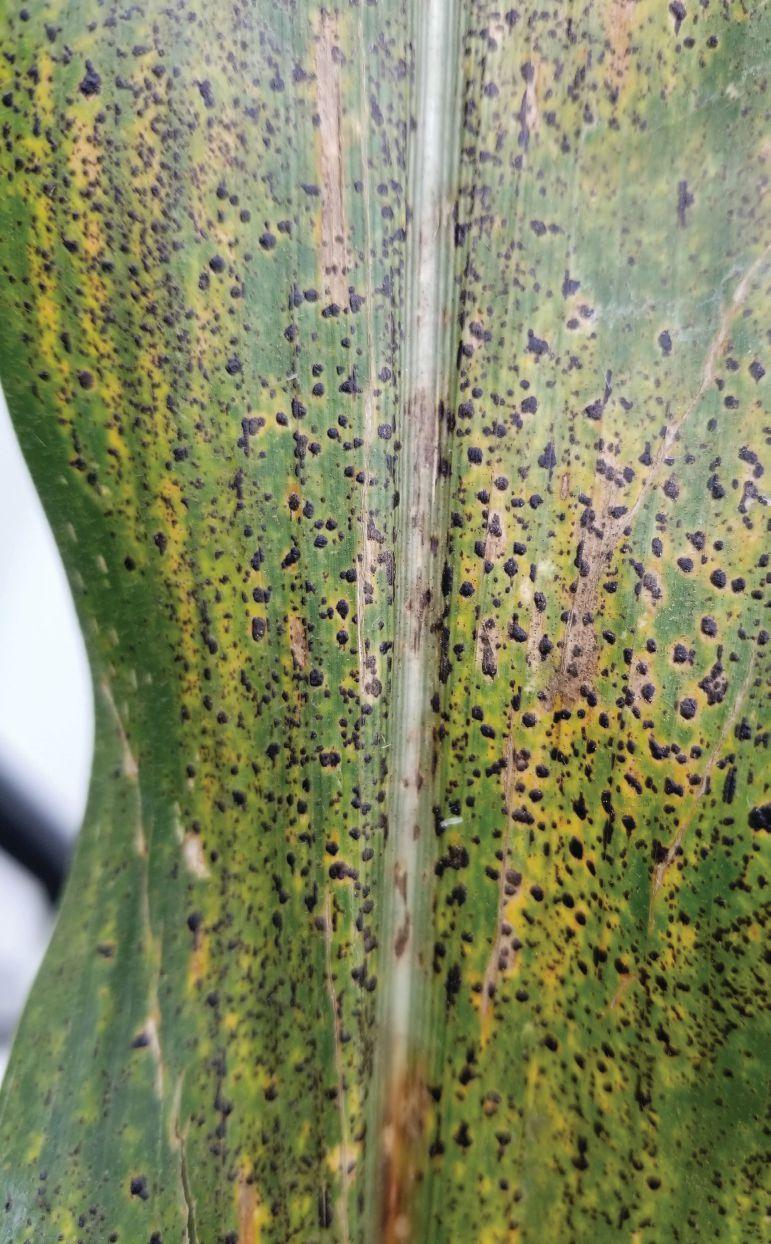
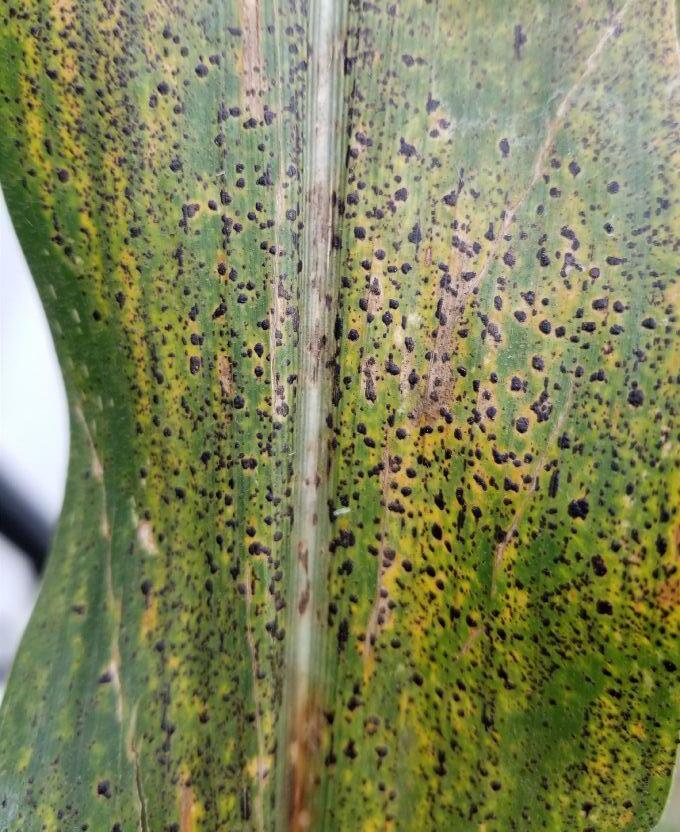
Tar spot can be identified by raised black circular lesions on the leaf.
PHOTO BY DARCY TELENKO.
Top Crop Manager thanks Syngenta for sponsoring this year’s Fungicide Guide.
Top Crop Manager thanks the numerous disease management specialists who contributed to this guide. We do our best to ensure accuracy, but in case of any discrepancies, please refer to your provincial crop protection guide.
The disease isn’t in Ontario yet, but producers should stay on alert.
by Julienne Isaacs
TEDITORIAL
ASSOCIATE
Alex Barnard
ASSOCIATE
Michelle Allison
VP
Diane Kleer
ar spot hasn’t yet been confirmed in Ontario, but it’s moving swiftly through the Great Lakes region in the northern U.S. and may soon arrive in the province, says Albert Tenuta, field crop pathologist for the Ontario Ministry of Agriculture, Food and Rural Affairs.
In the province’s annual disease survey, researchers look for endemic diseases, such as northern corn leaf spot, as well as new-to-Ontario diseases like Goss’s wilt and tar spot.
The disease was first found in 2015 in Indiana and Illinois, says Purdue University pathologist Darcy Telenko, who leads the Tar Spot Working Group. “Since then it has spread to Florida, Wisconsin, Michigan and Iowa in 2017, Ohio in 2018 and Minnesota and Missouri in 2019,” she says.
Tenuta, who is part of the working group, says researchers will likely confirm tar spot in Ontario within the next year to two years – but this isn’t an immediate cause for panic.
“At that moment it is confirmed here, we will have to assess the risk to Ontario growers and the sector overall. In most cases, as we saw with tar spot in Indiana and Illinois in 2015, it takes time to develop.
“The one caveat is that if it’s found early in the season – by the time corn is at the ten-leaf stage or less, or before tassel – that is more concerning, especially if the weather conditions are favourable. But again, that will depend on the severity or how much of the disease is found. A lot of assessments will need to be done to truly gauge the risk,” he adds.
The Tar Spot Working Group works closely with OMAFRA through Tenuta’s participation in the Corn Disease Working Group network, Telenko says. The former working group’s activities include monitoring disease spread, evaluating management options, including fungicide efficacy and timing and new resistance options, and validating weather-based models and remote sensing platforms.
In-season updates are communicated to the research group via an app, and to producers through newsletters, blogs and social media, as well as at producer meetings.
As a team, Telenko says the working group gave more than 100 presentations about tar spot to over 10,000 people in 2018 alone, with webinars and video presentations reaching at least 100 million acres.
Tenuta says that, as monitoring picks up steam in 2020, researchers will be “upto-date in terms of where it is daily, and of course looking at forecasts and predictions of weather storm fronts that could push the spores into Ontario.”
Tar spot, caused by the airborne pathogen Phyllachora maydis, can be identified by raised black circular lesions called “stromata” on the upper and lower leaf surfaces of corn hybrids; tan lesions with black borders (“fisheye” lesions) can also develop. In severe cases, the spots also appear on husks and leaf sheaths.
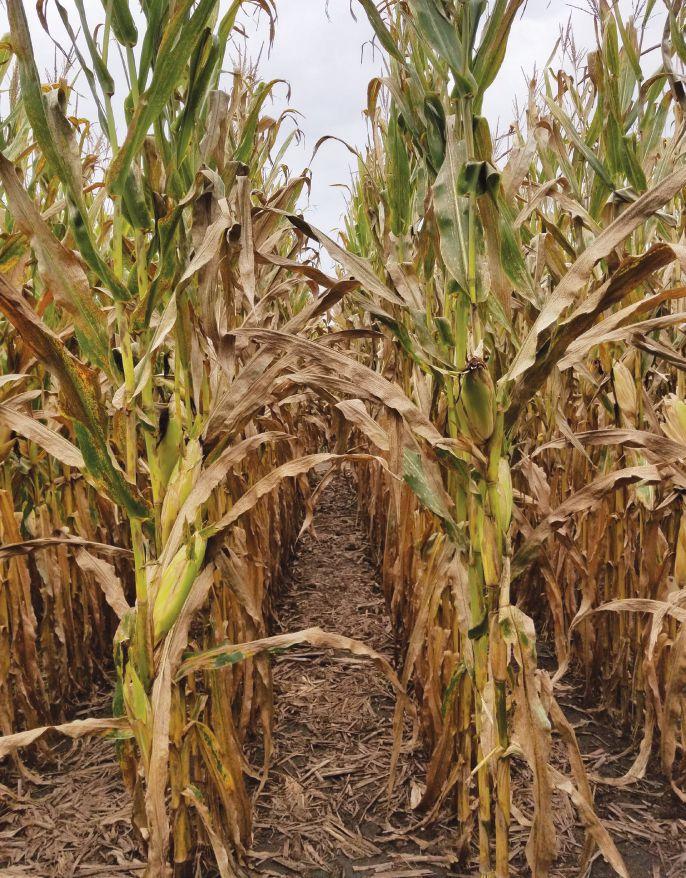
In Indiana’s severe epidemic in 2018, fields in the most infected region reached 100 per cent disease incidence with over 50 per cent severity on the ear leaf before the kernel dent growth stage, according to Purdue University.
As with many other diseases, an integrated pest management (IPM) approach is best for dealing with tar spot, says Rob Miller, a technical development manager
for BASF in Eastern Canada.
“Once it arrives, we’ll have several tools,” he says. “We want to take that IPM approach in terms of hybrid selection, crop rotation and fungicides.”
So far, tar spot is not on the label for any fungicides registered in Canada, but there are some products registered on tar spot in corn in the U.S., including BASF’s Headline Amp, a Group 3/Group 11 pyraclostrobinmetconazole formula.
Syngenta currently has two products, the Group 7/Group 3/Group 11 fungicide Trivapro (azoxystrobin, propiconazole and solatenol) and the Group 7/Group 3/Group 11 fungicide Miravis Neo (adepidyn, azoxystrobin and propiconazole) registered for tar spot on corn in the United States, according to Harold Wright, product development manager (East) for Syngenta Canada.
Wright says no field trials are currently underway in Canada, but Syngenta U.S. has ongoing field trials.
Adam Pfeffer, row crop agronomic systems manager for Bayer Canada, says the company received registration in the U.S. last December for its Group 3/Group 11 Delaro 325 SC fungicide (prothioconazole-trifloxystrobin) for control of tar spot in corn. This fungicide is also sold in Eastern Canada as Stratego Pro, he adds.
“Since we haven’t had tar spot show up in Ontario yet, thankfully, we haven’t had an opportunity to run local field trials for efficacy,” Pfeffer says.
In the meantime, Miller echoes Tenuta’s caution not to focus on tar spot to the exclusion of existing disease pressures.
“Until there’s an issue, don’t panic, but take an IPM approach in terms of cultural practices,” he says. “Don’t always rely just on fungicide control, but use hybrids that are more tolerant, and include good rotations with non-host crops. [These strategies] will be key to successfully managing this disease.”
In time for 2020, two powerful new Miravis® fungicides will help growers change the way they manage their most challenging diseases in corn and wheat.
So, what is Miravis® anyway and what makes it new and exciting? Simply put – Miravis® is a different kind of fungicide, designed to deliver more complete, long-lasting disease protection and plant health benefits across multiple crops.
Innovative corn disease control is here
Miravis® Neo fungicide lets growers manage for quality and yield in their corn without compromise. Miravis® Neo delivers best-in-class control of the broadest range of leaf diseases from pre-tassel through tassel and offers a completely new mode of action to suppress Fusarium and Gibberella ear rots.
Nick Lenos, owner of Lenos Custom Farming in Waterford, ON, tried Miravis® Neo for the first time in 2019 and says it helped to streamline his disease control program.
“We decided to use Miravis® Neo this year to simplify with three modes of action—including one new mode of action,” he explains. “[Miravis® Neo] streamlines things for us and our growers so that we can get many different leaf diseases, have Fusarium and Gibberella ear rot protection and help our guys that have concerns over grain quality.”
Miravis® Neo helps preserve green tissue longer than competitors for improved yields, and also suppresses ear rots to protect crop quality.
Syngenta small plot trials (See Figure 1) conducted in 2019 also showed that applying Miravis® Neo at VT and R1 stages helped deliver a significant yield response – results Nick Lenos saw echoed in his own trials.
“We had an on-farm trial that we monitored with aerial imagery. We saw that the corn looked fairly even from the early spring through to fungicide application timing,” explains Lenos. “But when we took the corn trial to yield, we were upwards of a 20-bushel difference with Miravis® Neo. It worked well for us.”
Similar to Lenos’ trial experience, Jesse Kloepfer, owner of LolaMay Farms in Muir, ON, says he saw a yield bump when applying Miravis® Neo to help reduce DON (deoxynivalenol) production in their corn.
“We thought we would give it a try and definitely saw a yield advantage,” he says. “The small plots we had were nine to 10 bushels over check.”
In wheat, Miravis® Ace fungicide provides best-in-class Fusarium head blight protection, along with excellent control of leaf diseases. For growers struggling with quality issues and loss of grade related to Fusarium infection, Miravis® Ace represents a breakthrough in growing better, more marketable wheat crops.
Miravis® Ace helps prevent Fusarium head blight infection and is effective on all significant Fusarium species. This helps reduce the production of mycotoxins, such as DON, that can impact quality as well as limit grain end uses and marketing potential.
Miravis® Ace has also been shown to perform and protect wheat in high disease risk conditions, like hot, humid or wet weather during head emergence and flowering.
Katherina Dietrich, with W. Charlot Grains Farm in Stratford, ON, saw a three to five-bushel yield increase with Miravis® Ace and a clear difference in crop quality at harvest time.
“We noticed the wheat was cleaner and healthier in the end with less rust and look forward to using this product again in the future,” she says.
Randy Chevalier, a grower and retailer with Setterington’s Fertilizer Service in Leamington, Ontario, says he saw healthier wheat heads in his plots treated with Miravis® Ace.
“When we walked the plots with Syngenta reps, they pointed out the difference while we were hand shelling wheat heads,” he explains. “The contrast between the treated zone and the untreated zone was phenomenal.”
Aerial photos taken in Clinton, ON, also help tell the story of Miravis® Ace delivering quality differences that growers can visually see.
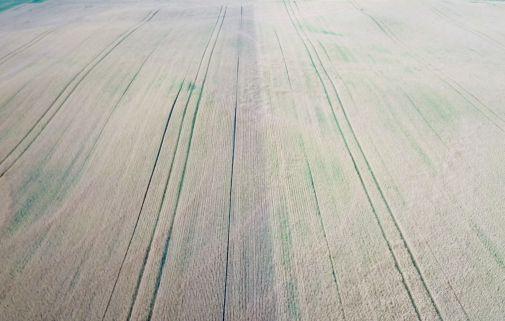
“With Miravis® Ace we had a lot clearer, brighter straw,” says Mark Davis, owner of Hay Bay Genetics in Napanee, ON. “In our 50-acre plot, we saw a low of six and a high of a nine-bushel yield increase.”
So, how does Miravis® Ace stack up to the competition in terms of yield? Small plot trials conducted in 2019 show that Miravis® Ace applied at BBCH 57 out-yielded Prosaro® XTR by 19.8 bu/ac. When applied at BBCH 65, Miravis® Ace out-yielded Prosaro® XTR by 21.8 bu/ac.
(See Figure 2)
Source: Syngenta small plot research conducted at Honeywood Research Facility in Plattsville, ON, in 2019. Application dates BBCH 57-65; July 11, 2019. N = 4 The letters “a”, “b”, “c”, “d” and “e” refer to statistical differences between treatments. If the letters are the same, there are no statistical differences between treatments. If the letters are different, there are statistical differences between treatments. (Tukey’s LSD, P=0.05)
ADEPIDYN® – a new, next-generation molecule Now, we’ll take a closer look “under the hood” at what makes Miravis® Neo and Miravis® Ace truly innovative fungicides.
At the core of both products is ADEPIDYN® – a breakthrough, broad-spectrum, Group 7 SDHI that’s in a chemical group of its own. ADEPIDYN® delivers powerful activity and long-lasting protection against a broad range of key diseases.
ADEPIDYN® gets its broad spectrum of disease control is from its unique chemical structure. It works by binding strongly to the plant surface and moving rapidly in the leaf, where it forms a reservoir of active ingredient in the waxy layer of leaf tissue.
Once in the plant, ADEPIDYN® moves slowly into the cells of the leaf and throughout the xylem – or water conducting vessels – for even distribution and long-lasting protection as the plant grows.
To learn more about Miravis® Ace and Miravis® Neo fungicides, visit Syngenta.ca/Miravis, contact the Customer Interaction Centre at 1-87-SYNGENTA (1-877-964-3682) or speak with your local Syngenta Sales Representative.
Performance evaluations are based on internal trials, field observations and/or public information. Data from multiple locations and years should be consulted whenever possible. Individual results may vary depending on local growing, soil and weather conditions.
Always read and follow label directions. Miravis® Neo refers to Miravis® Neo 300SE fungicide. ADEPIDYN®, Agral®, Miravis®, the Alliance Frame, the Purpose Icon and the Syngenta logo are trademarks of a Syngenta Group Company. Other trademarks are the property of their respective owners. © 2020 Syngenta.
Acapela 11 picoxystrobin
Bumper 418 EC 3 propiconazole
Caramba 3 metconazole
Evito 11 fluoxastrobin
Headline AMP 3, 11 metconazole, pyraclostrobin
Headline EC 11 pyraclostrobin
Miravis Neo 3, 7, 11 azoxystrobin, propiconazole, adepidyn
Priaxor 7, 11 fluxapyroxad, pyraclostrobin
Proline 480 SC 3 prothioconazole
Quadris/Azoshy 250 SC 11 azoxystrobin
Quilt/Fungtion 3, 11 azoxystrobin, propiconazole
Tilt 250 E/Propi Super 25 EC 3 propiconazole
Trivapro 3, 7, 11 azpoxystrobin, propiconazole, solatenol
Zolera FX 3, 11 fluoxastrobin, tetraconazole
Acapela 11 picoxystrobin
Bumper 418 EC 3 propiconazole
Contans (bio-fungicide) N/C Coniothyrium minitans strain
Cotegra 3, 7 prothioconazole, boscalid
Evito 11 fluoxastrobin
Folicur 432 F 3 tebuconazole
Headline EC 11 pyraclostrobin
Priaxor 7, 11 fluxapyroxad, pyraclostrobin
Quadris/Azoshy 250 SC 11 azoxystrobin
Quilt/Fungtion 3, 11 azoxystrobin, propiconazole
Stratego 250 EC 3, 11 trifloxystrobin, propiconazole
Tilt 250 E/ Propi Super 25 EC 3 propiconazole
Topnotch 3, 11 azoxystrobin, propiconazole
Trivapro 3, 7, 11 azoxystrobin, propiconazole, solatenol
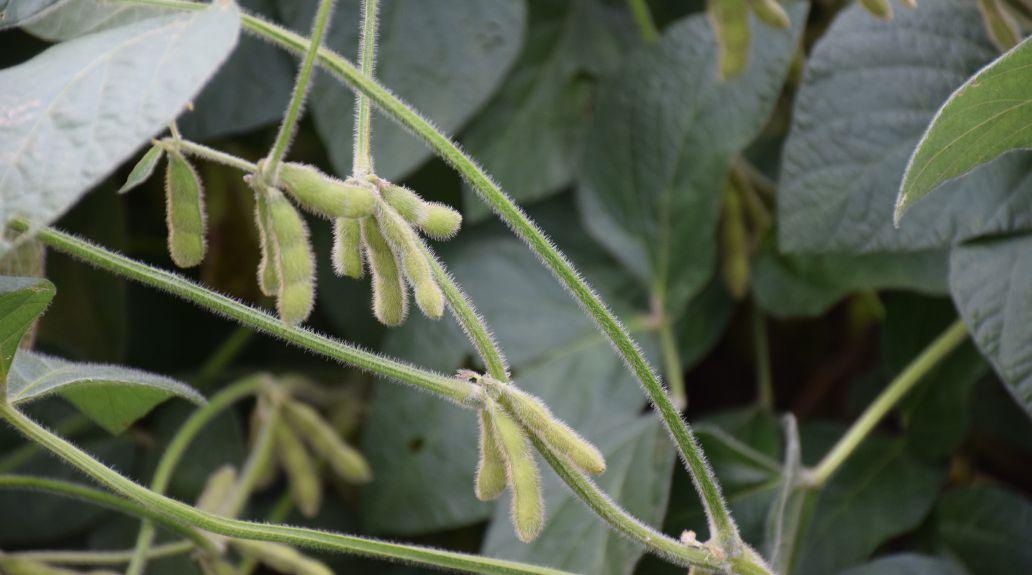
HEADLINE
(metconazole, pyraclostrobin)
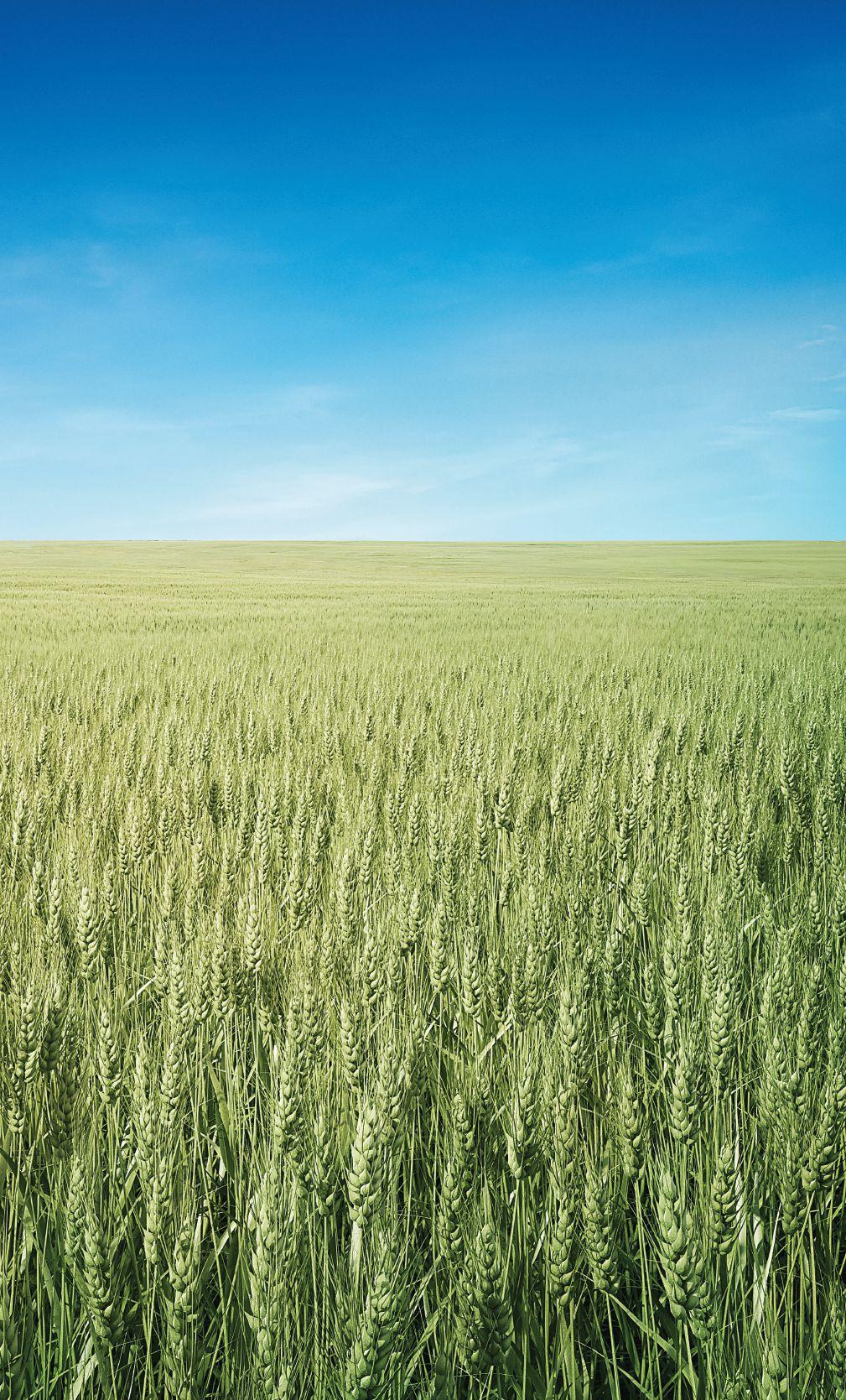


Turns out, you can catch lightning in a bottle. New Miravis® Neo fungicide lets you manage for yield AND quality in your corn without compromise. Miravis Neo delivers best-in-class protection against the broadest range of quality and yield-robbing diseases—including Fusarium—for a higher-yielding, healthier crop. And a difference you can clearly see.

For more information, visit Syngenta.ca/Miravis-Neo-corn, contact our Customer Interaction Centre at 1-87-SYNGENTA (1-877-964-3682) or follow @SyngentaCanada on Twitter.