A large-scale Canadian soil mapping initiative aims to unearth new knowledge
PG. 12
EVALUATING SOIL HEALTH
Quebec working toward province-wide soil health information
PG. 18
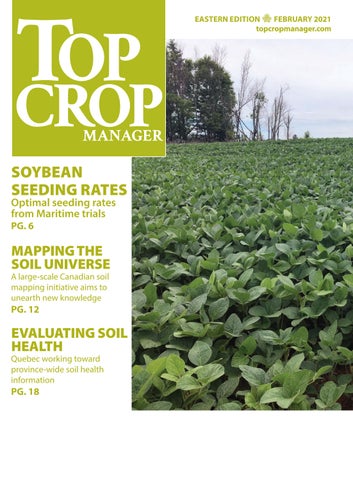
TOP CROP
MANAGER
SOYBEANS
6 | What soybean seeding rate should I use?
Optimal seeding rates from Maritime trials and tips for target plant populations. by Carolyn King
FROM THE EDITOR
4 Looking ahead to a bright future by Stefanie Croley
SOIL AND WATER
12 | Mapping the soil universe
AAFC scientists have embarked on a largescale soil mapping initiative to unearth new knowledge about the ground beneath farmers’ fields. by Mark Halsall
FERTILITY AND NUTRIENTS
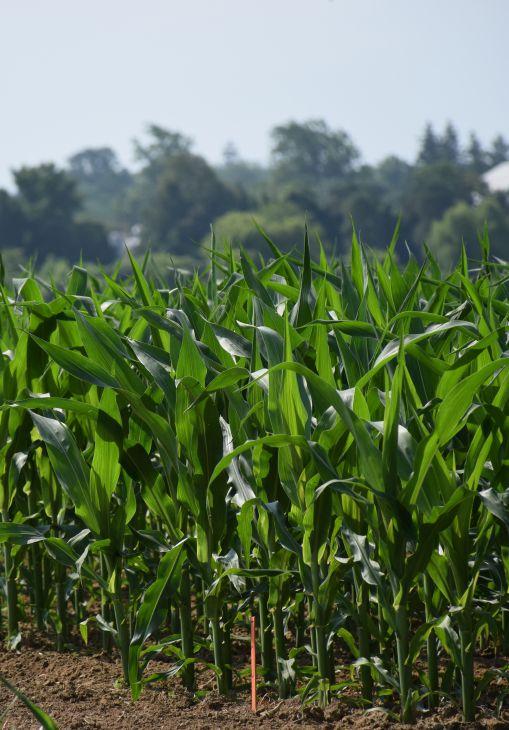
16 Reducing N losses in corn systems by Julienne Isaacs
SOIL AND WATER
18 | Evaluating soil health in Quebec Quebec’s agriculture minstry and IRDA are updating a soil health survey from 1990 to have province-wide soil health information. by Julienne Isaacs
20 Improving canola’s nitrogen use by Carolyn King
ON THE WEB
GOVERNMENT SEEKS FEEDBACK ON CANADA GRAIN ACT
The federal government is asking Canadian grain farmers, handlers, processors and exporters to share their views on the Canada Grain Act, the legislative and regulatory framework for grain quality assurance in Canada. The consultation will be held online until April 30.
TopCropManager.com
Readers will find numerous references to pesticide and fertility applications, methods, timing and rates in the pages of Top Crop Manager. We encourage growers to check product registration status and consult with provincial recommendations and product labels for complete instructions.
PHOTOS
COURTESY OF DANIEL DESJARDINS.
PHOTO COURTESY OF MARC-OLIVIER GASSER.
PHOTO COURTESY OF RON COLES, RGC CONSULTING.
CANOLA
STEFANIE CROLEY EDITORIAL DIRECTOR, AGRICULTURE
THE POWER OF A GOOD CONVERSATION
Irecently had the pleasure of interviewing Curtis Rempel, the vice-president of crop production and innovation with the Canola Council of Canada, for an on-demand session for the Top Crop Summit. And if you’ve ever had a conversation with him, I’m sure you’ll understand why I say it was a pleasure.
Besides being a wealth of knowledge, Rempel offered a realistic perspective on growing canola, specifically regarding the challenges and opportunities that Canadian canola producers have faced and continue to deal with. Between trade disputes, disease risks and terrible weather, the last couple of years in particular haven’t been easy – and Rempel not only acknowledged that, but also offered support, encouragement and solutions.
I don’t want to spoil the whole interview – you’ll have to register for the Top Crop Summit, to be held Feb. 23 and 24, to see it for yourself (visit TopCropSummit.com to register and catch this and several other valuable sessions and conversations). But one highlight I will share was Rempel’s outlook on innovation, which I found to be especially poignant this time of year. When we chatted about some of the challenges for canola growers going into 2021, Rempel discussed several – weather, of course, among many others. But he was also quick to point out the myriad opportunities for canola growers, specifically surrounding biofuels and plant protein.
“There’s clearly a global trend for plant-based proteins. That doesn’t diminish animal proteins,” he said, quoting the Food and Agriculture Organization of the United Nations in saying highly bio-available protein is a basic human right. “That really has kicked off a renewed interest in protein,” he added. “It takes good protein to make good protein, so in the animal feed space, canola protein still has an amazing fit for monogastric, for dairy and for aquaculture.” And on the human side, as many look for other ways of increasing protein content in their own diets, Rempel recognizes that plant-based protein is clearly a staying trend.
As valuable as Rempel’s comments and advice were, what struck me most about our conversation was his realistic, practical and balanced approach, specifically by acknowledging both the challenges and opportunities growers are facing. Farming is hard. We can’t pretend the skies are always blue, but we can recognize that it’s not all doom and gloom either.
Unfortunately, in our current climate, encouragement can be hard to come by some days, especially without the regular opportunities to have great conversations with like-minded people. My interview with Rempel reminded me just how much I’m missing that this winter, especially without the usual conference circuit, and how I need to actively look for new opportunities to connect with the industry.
If you find yourself also missing out on real conversations right now, send me an email –I’d be happy to jump on a Zoom call with you. Sure, it’s not quite the same as chatting over a coffee break at a conference like we might normally do at this time of year, but with the right perspective, it’s the next best thing.
When it comes to controlling broadleaf weeds, we are always up to the challenge. With three powerful herbicide Groups, Infinity® FX herbicide is the best way to take out over 27 different broadleaf weeds, including one of the worst: Canada fleabane. Use Infinity FX so you have time to get back to the parts of farming you really care about. GET
WHAT SOYBEAN SEEDING RATE SHOULD I USE?
Optimal seeding rates from Maritime trials and tips for achieving target plant populations.
by Carolyn King
With seed being such a key input cost for soybean production, it’s especially important for soybean growers to use seeding rates that produce the greatest yields for the lowest seed costs. But what rates are best for growing conditions in the Maritimes?
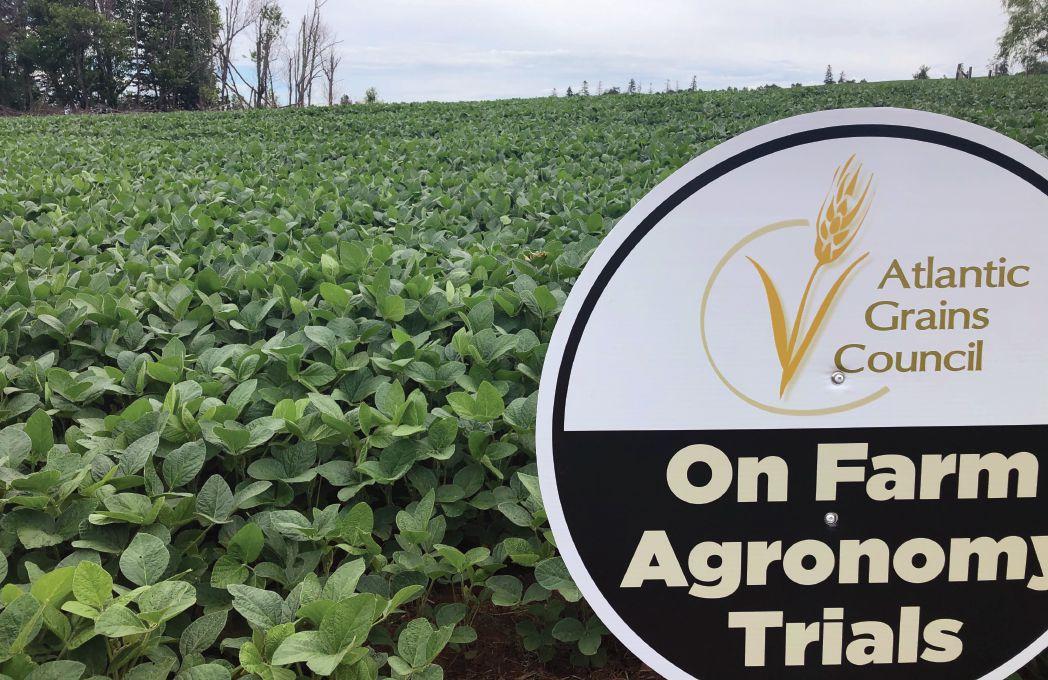
To help answer this question, the Atlantic Grains Council (AGC) carried out more than 40 on-farm trials to identify optimal soybean seeding rates. Conducted from 2015 to 2019 across New Brunswick, Nova Scotia and Prince Edward Island, these trials compared rates of 90,000, 110,000, 130,000, 160,000, and 190,000 seeds per acre.
“AGC’s on-farm agronomy trials are designed to be as close to regular farming practices as possible while still following protocols specific to each trial. So in these seeding rate trials, the farmers used their own equipment and followed their usual production practices, while we made sure the seeding equipment was calibrated and gave them the settings to plant at the different rates for the trial,” explains Misty Croney with LP Consulting, which is one of AGC’s implementation partners in its agronomy trials.
The participating farmers used their regular seeding depths, row widths, soybean varieties, tillage practices, crop rotations, and so on. LP Consulting kept track of all those details for each trial location, and counted the actual plant populations in each plot, monitored the plots, and recorded the yields.
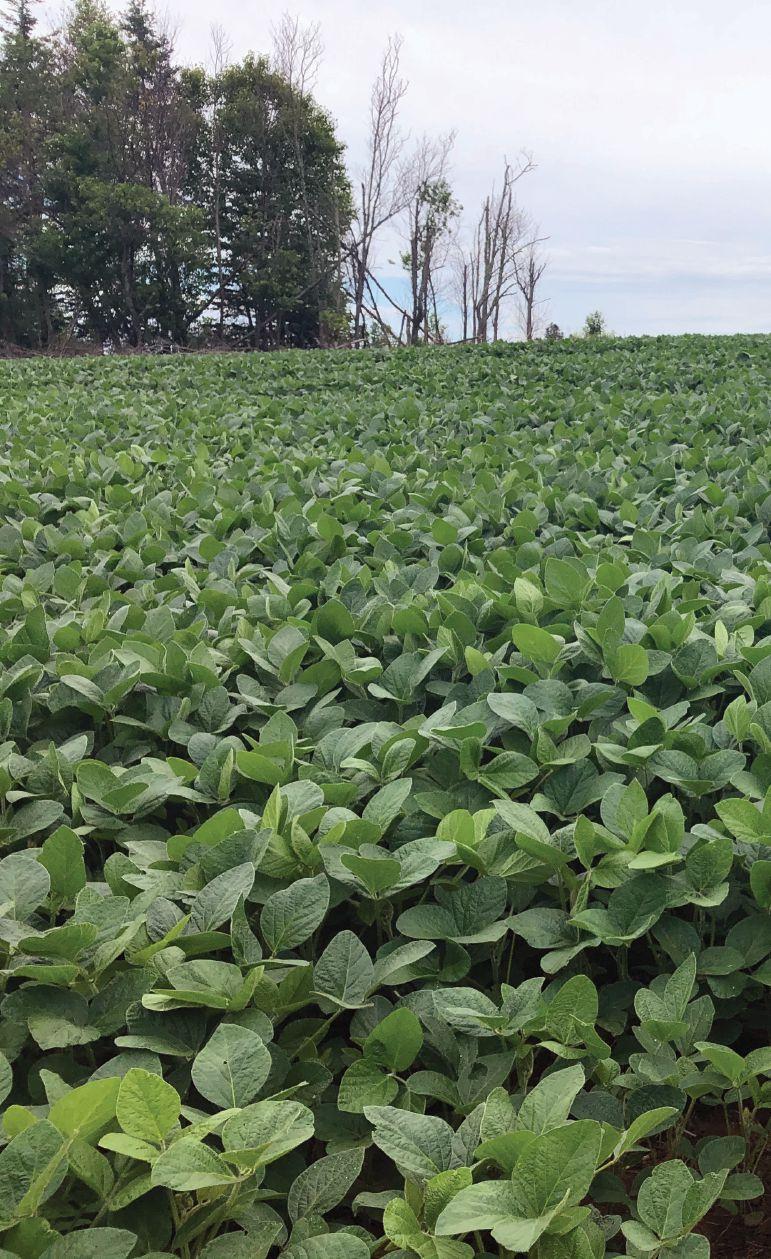
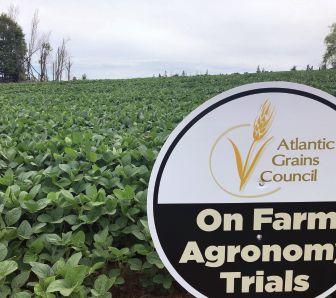
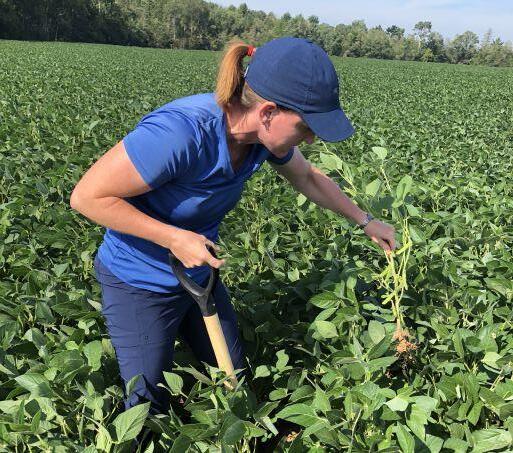
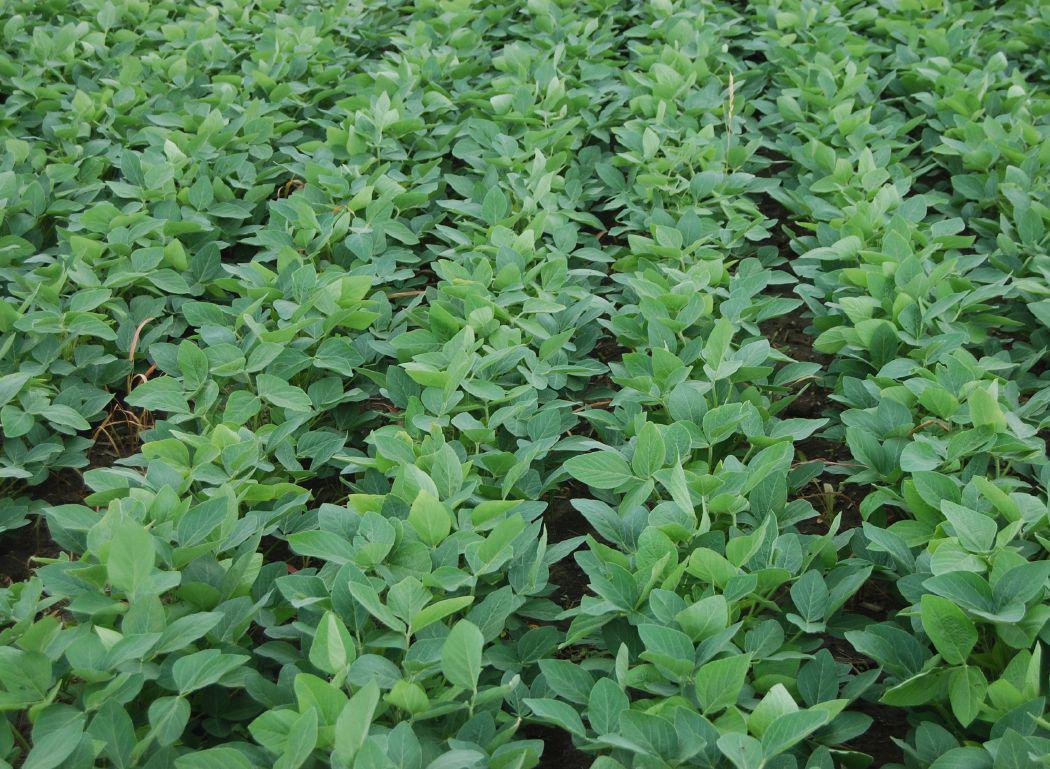
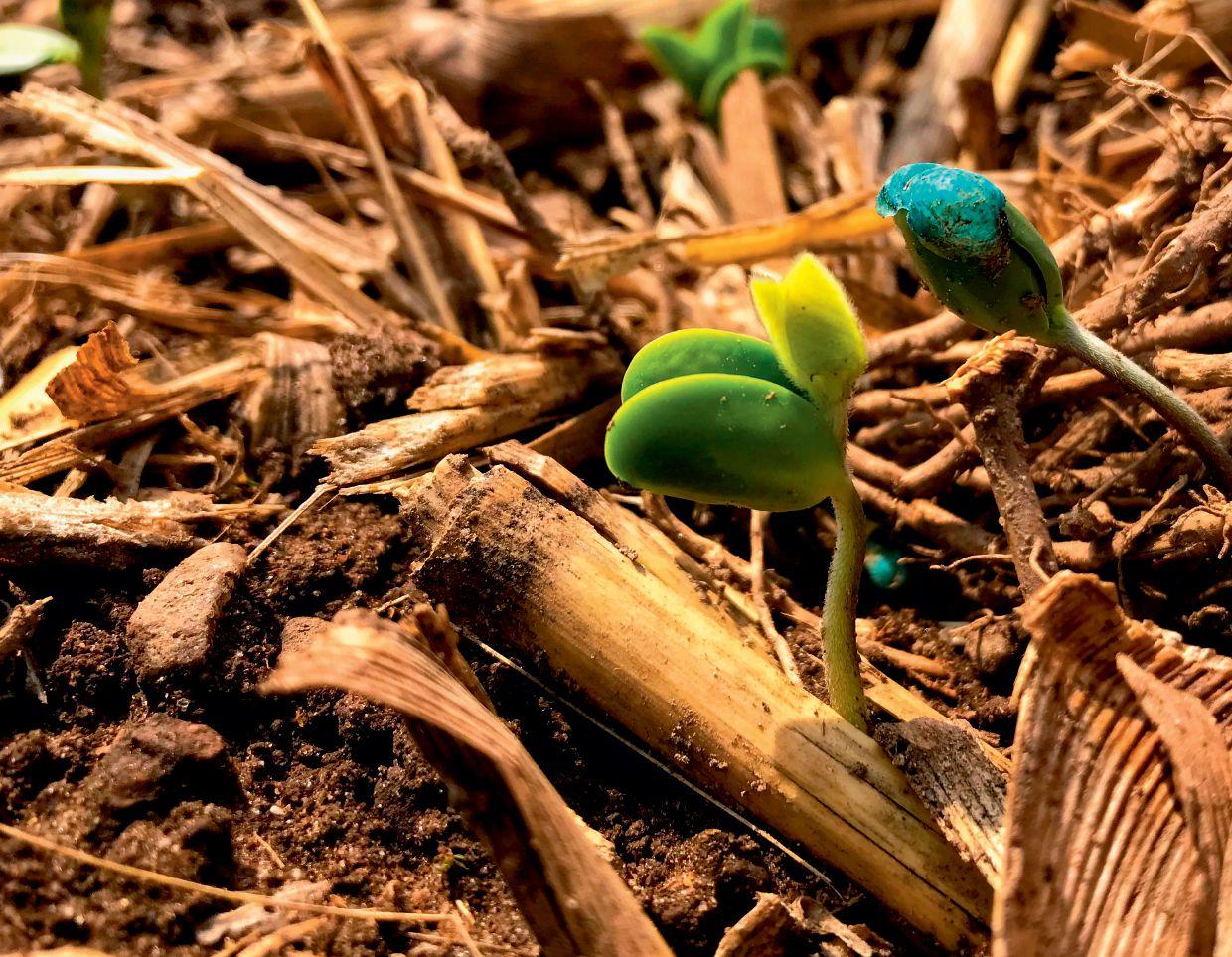
TOP: The Atlantic Grains Council carried out more than 40 onfarm trials across the Maritimes to determine optimal soybean seeding rates.
MIDDLE: Misty Croney monitoring one of the plots in the soybean seeding rate trials.
Rates, populations and yields
“The biggest result was that there was no significant difference in soybean yield between seeding rates. And I wondered, how is that possible? Common sense would tell us that if we plant more seeds we should have a higher yield, but that’s not the case,” says Croney, who has been analyzing the data from these trials.
“I dug into the data on the emergence rates and actual plant populations. Using only the data from the plots where the actual population was between 80 and 120 per cent of the target population, I found no significant difference in yields between the different plant populations.”
Why did seeding rates and plant populations make so little difference to soybean yields over the range of rates used in these trials? Croney says it is likely because soybean plants are very good at compensating for lower plant populations.
“With fewer plants crowded in, each plant can capture more sunlight, and some varieties can branch more.” On the other hand, very dense soybean plant populations mean greater competition between the plants for sunlight, moisture and nutrients, which limits the growth of each plant. Dense stands may also increase the risk of disease.
“The results from the trials lead to the conclusion that there is no economic advantage to seeding soybeans at high rates,” she says.
“Really, by seeding at high rates, all you are doing is increasing your input costs and decreasing your potential net returns.”
Croney also looked at the effect on soybean yield of the previous crop in the rotation. In these trials, the crops before soybeans included wheat, barley, oats, soybeans, corn, potatoes and forages.
“We found that the previous crop actually had a greater impact on yield than the seeding rate. The best soybean yields came following forages or corn; the lowest yields came following cereal crops.”
As well, Croney compared the effects of seed drills versus row planters. “Drills were more commonly used than row planters in the trials. However, drills were less accurate, only meeting the target populations about 38 per cent of the time. The planters hit their target 60 per cent of the time.”
She thinks the challenges in hitting the target plant populations were partly due to equipment limitations. “Some farmers have described seeding with a drill as ‘a controlled spill.’ And not all seeders are created equal; for instance, some of them can be dialled in more accurately than others,” she says.
“Also, you generally calibrate the equipment in your barn or on flat ground. But when you are out in the field, the jostling and bumping as the equipment moves across the land can affect how the seeds fall through the seeder.”
Croney is hoping to look into some of the other practices that
Based on the trial results, a rate of 130,000 to 160,000 seeds per acre will maximize yield potential and minimize the risk of low yield. PHOTO
varied from location to location – like soybean variety, row widths and fertilizer practices – to see how they relate to plant populations and yields in the trials. “I am continuing to look at other factors and trends in the data through our collaboration with Agriculture and Agri-Food Canada, which calculates the stats for us.”
AGC’s research is funded in part through a voluntary research check-off. AGC has used those check-off funds to match with Agriculture and Agri-Food Canada funds and access federal/provincial research funding.
“Really, by seeding at high rates, all you are doing is increasing your input costs and decreasing your potential net returns.”
Take-home messages from the trials
“Based on the trial results, my recommendation is to seed between 130,000 and 160,000 seeds per acre,” Croney says.
“I’ve looked at the minimum yields, maximum yields and average yields, and the input costs from the trials. With a seeding rate of 130,000- to 160,000-seeds per acre, you are going to maximize your yield potential and minimize your risk of low yield,” she explains.
“The lowest seeding rates – 90,000 and 110,000 – had the lowest yields recorded in the trials, even though those rates sometimes had really great yields. So those low rates are risky.”
The highest rate of 190,000 seeds per acre not only had the highest seed costs, but also the lowest average yield, so it was a poor option.
“Another take-home message is to really try to get the best calibration you can for your seeding equipment,” Croney notes.
“For example, the calibration needs to be based on the seed size. However, sometimes farmers assume that all soybean varieties or even one variety in multiple totes have the same seed size, but they don’t. You might be out by 20,000 seeds per acre if you assume two different soybean varieties have the same seed size.”
Tips for achieving target populations
Cereal and oilseed development officer Steven Hamill offers some advice to help farmers achieve optimal seeding rates and target plant populations for soybean crops.
One of his main recommendations is to use properly maintained and calibrated seeding equipment. Hamill, who is with the P.E.I. Department of Agriculture and Land, explains that the seeding rate chart on your seeder gives you a starting point for achieving your desired seeding rate. Then you determine the actual settings through the calibration process. If you would like step-by-step details on seed drill calibration calculations, Hamill has a new calibration video, article and spreadsheet available on the AGC website (atlanticgrainscouncil.ca).
“When you calculate your seeding rate, it is very important to base it on your seed size. Seed size varies greatly between soybean
A LONG WAY TOGETHER
V-FLEXA
No matter how challenging your needs, V-FLEXA is your best ally for agricultural trailers, tankers and spreaders. This latest-generation product features VF technology, which enables the transport of heavy loads both in the fields and on the road at lower inflation pressure. V-FLEXA is a steel-belted tire with a reinforced bead that provides durability, excellent self-cleaning properties and low rolling resistance even at high speeds.
V-FLEXA is BKT’s response for field and road transport with very heavy loads avoiding soil compaction. For info:
514-792-9220
varieties and even between lots of the same variety,” Hamill emphasizes. The formula used in Hamill’s calibration article accounts for both the seedlot’s seed size and germination rate, another key factor affecting how close your seeding rate will come to your target plant population.
“I also recommend that you use high-quality seed with good vigour and germination, so I highly recommend using certified seed,” he says. “Seed treatments will help improve stands by providing early season protection against diseases and insects, especially with earlier planting dates. In addition to seed treatments, inoculating your soybeans can help increase yields in some situations.
“However, seed treatments and inoculants also can affect the flow of the seeds during seeding and sometimes cause bridging [clumps of seeds sticking together] especially in box drills. So it is always a good idea to calibrate your equipment with the actual seedlot that you will be planting.”
Hamill notes, “The main objective of any seeding rate is to optimize your yields and minimize your seed costs, so you want to adjust your seeding rates based on factors like planting date, field conditions and row widths.
“If you are planting within the optimal time frame, go with the recommended seeding rates for your area. But if you are outside that window, consider adjusting that rate accordingly,” he explains.
“For example, if you are planting early, you would increase your seeding rate to help combat the negative effects of cold soils and delayed emergence. Likewise, if you are planting late, you would increase your seeding rate to compensate for the reduced vegetative stage and the shorter grain fill period experienced with later planting dates.”
Regarding field conditions, Hamill suggests you consider using a higher seeding rate when you are seeding into difficult conditions like cold, wet soils, heavy crop residue, or soils that are prone to crusting.
For row spacing, he says, “Soybeans grow well under a wide variety of row widths, but generally speaking the wider the row spacing, the lower the plant population that is required.”
Taking care during planting also helps in achieving target plant populations.
“When planting, unless your planter is equipped with highspeed planting technology, try to limit your speed to five milesper-hour or less. That will provide you with the most accuracy and the best stand establishment. Often if you are going too fast, your singulation [the ability to drop one seed at a time] is reduced and you’ll end up with more skips and doubles,” Hamill explains.
“It is also a good practice to get out of your tractor every so often to check your seeding depth and do some seed counts to make sure you are actually hitting the correct seeding rate. There are lots of charts and tables available to assist growers in doing these counts,” he notes.
“Seeding depth is very important and should be adjusted on a field-by-field basis to ensure that you are always planting into moisture. Seed needs moisture to germinate, so making sure that you are planting into moisture will help ensure good germination and uniform stand establishment.”
Using properly maintained and calibrated equipment, finetuning the seeding rate for your specific situation, and keeping an eye on things during planting will all help get your soybean crop off to a great start.
Soybeans are adaptable to a wide variety of row widths, but wider rows typically mean a lower plant population is required.
PHOTO BY TOP CROP MANAGER.
MAPPING THE SOIL UNIVERSE
Agriculture and Agri-Food Canada scientists have embarked on a large-scale soil mapping initiative aimed at unearthing new knowledge about microbial life, chemistry and processes in the ground beneath farmers’ fields.
by Mark Halsall
Claudia Goyer considers soil to be one of the last frontiers. Goyer, an Agriculture and Agri-Food Canada (AAFC) research scientist who’s an expert on soil microbial ecology, says that’s because there is still a great deal of mystery around the microbiology within soil.
This is changing, thanks to new technologies like nextgeneration sequencing, which are enabling researchers like Goyer to get a much more complete picture of biological diversity in the soil.
“We can now really do an in-depth study of the microbes to understand what’s there in the soil and what are they doing,” she says. “This is a resource we can really tap into . . . I think there’s a lot of promise that soil microbiology offers in terms of helping agriculture.”
Louis-Pierre Comeau, Goyer’s colleague and a soil scientist at
the AAFC Fredericton Research and Development Centre in New Brunswick, agrees. He says microbial biodiversity and soil health are central to soil fertility and crop productivity, but he notes the determining factors that influence soil biodiversity and health aren’t yet fully understood.
“There is still so much we don’t know about what’s happening in the soil, and how processes and life at the micro-level are influencing the way our soils function,” Comeau says.
Since 2019, Comeau and Goyer have been co-leading a large project aimed at shedding new light on the subject by mapping the
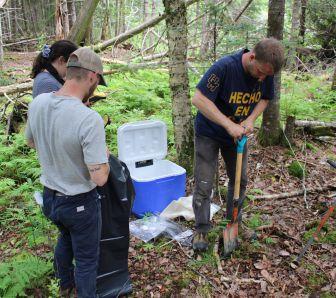
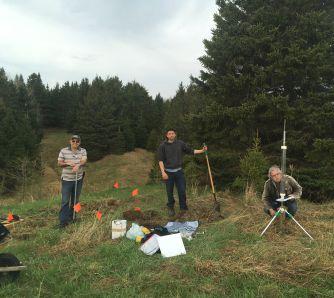
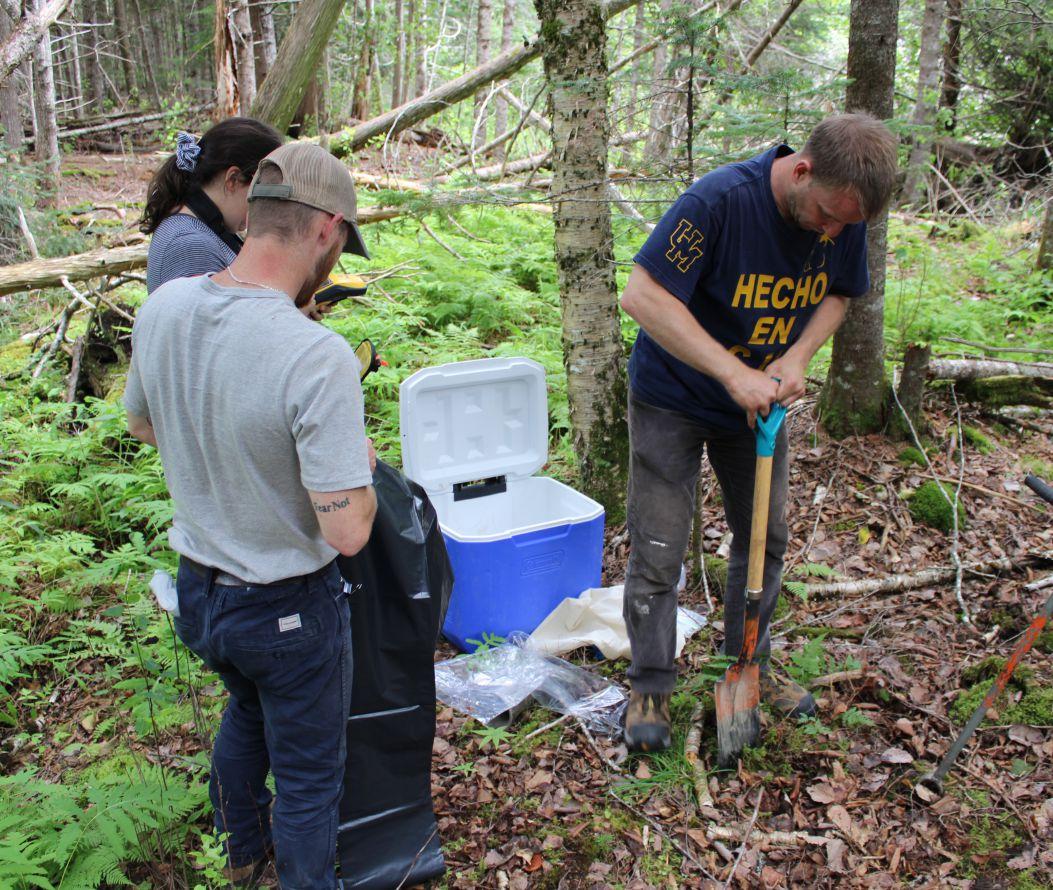
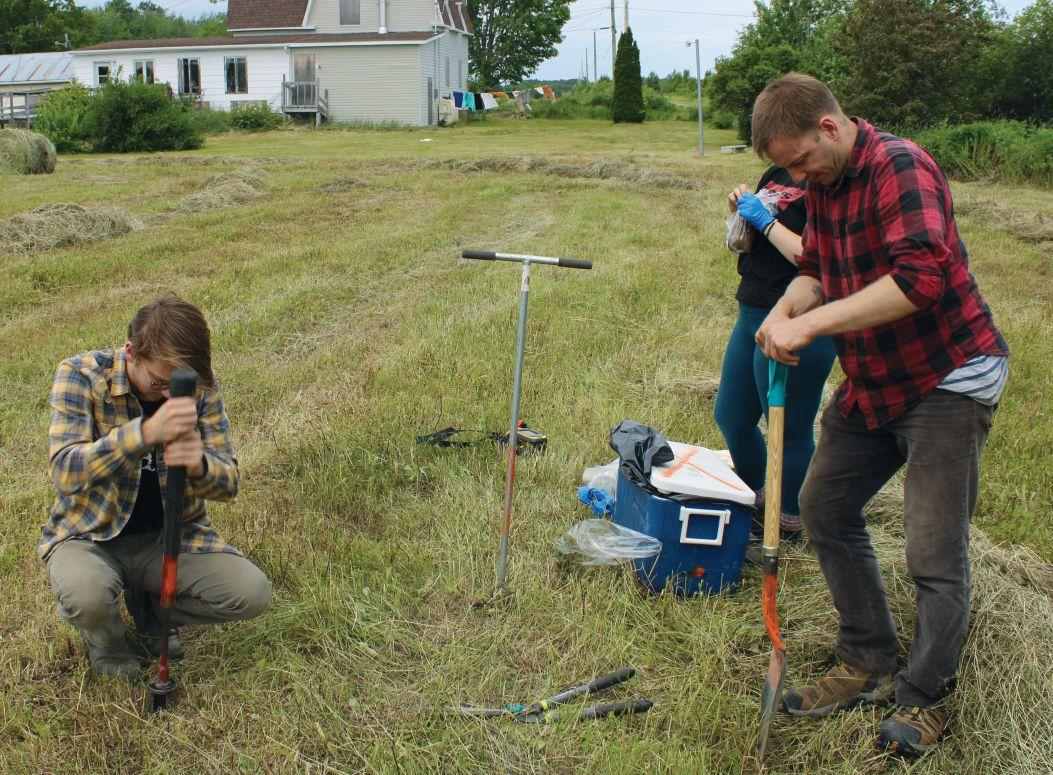
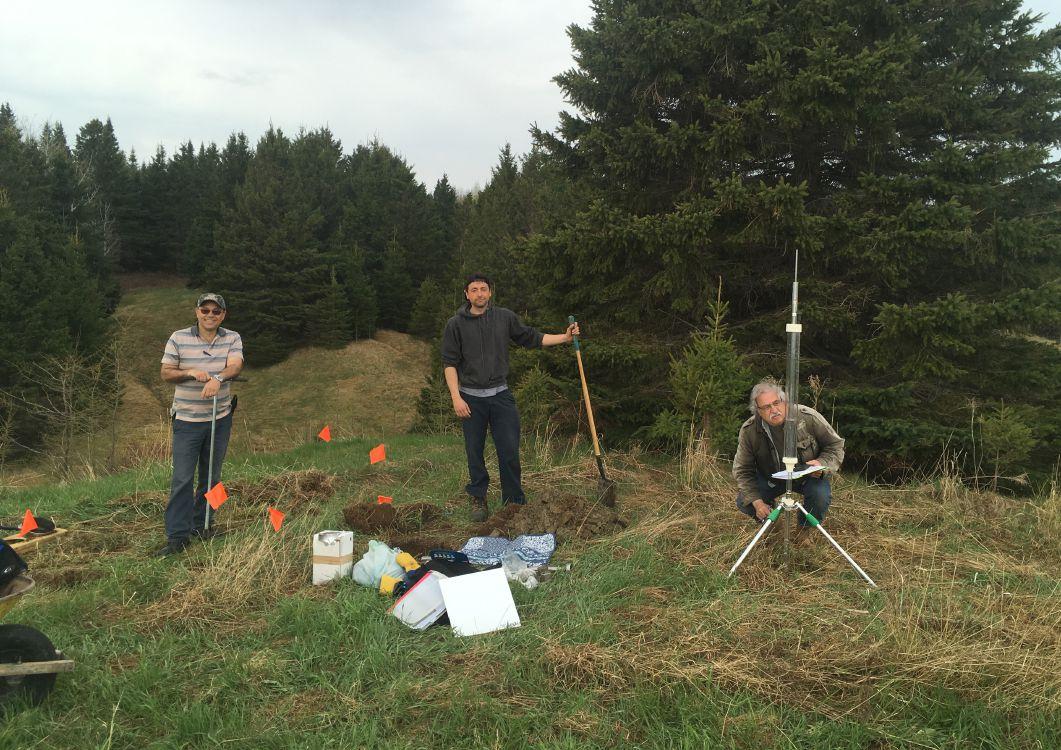
ABOVE: Soil scientist Louis-Pierre Comeau (right) collecting a soil sample with University of New Brunswick students Simon Barthelme and Allysia Murphy in the summer of 2019 for Agriculture and Agri-Food Canada’s soil-mapping project.
PHOTOS COURTESY OF DANIEL DESJARDINS.
RANCONA® TRIO seed treatment for pulse crops takes disease protection and improved crop emergence to new levels. By combining three powerful fungicides that provide both contact and systemic activity, with the superior coverage and adhesion of RANCONA advanced owable technology, you have a seed treatment that delivers more consistent protection under a wider range of conditions. Because when more seed treatment stays on the seed, you get more out of your seed treatment. Ask your dealer or UPL representative about RANCONA TRIO, or visit ranconatrio.ca.
distribution of microbial diversity on a wide spatial scale, a field known as microbial biogeography.
In addition to Goyer’s project in Atlantic Canada, another initiative led by Frank Stefani, an AAFC research scientist in Ottawa, is mapping soils in parts of Quebec and Ontario. The long-term goal is to map soils across the country.
To develop the maps, researchers are evaluating the diversity and abundance of soil microbial communities and their relationships with soil health and land use and management practices. Soil organic matter characteristics and soil functions are also being assessed in an effort to better understand the ecological processes that influence microbial distribution in the soil.
The microbiology includes fungi, bacteria, nematodes, microarthropods, mycorrhiza and enzymes. Some of the properties being assessed through a wide range or soil tests and measurements
are soil type and texture, soil moisture, pH, soil carbon levels, soil organic matter fractions, and nitrogen and other nutrient levels.
Most of the research focuses on the first 15 centimetres of the soil, where most of the micro-organisms are found. Samples are also being taken at depths of 15- to 30-centimetres to measure certain processes, such as how carbon moves through the soil.
AAFC researchers and summer students have collected hundreds of soil samples from croplands, pasturelands, forests and wetlands in the survey areas. “We want to see how those different environments influence the microbes,” Goyer says. “We’re also looking at how soil properties are changing, and if can we see any correlation with the diversity of the organisms from the microbial community.”
So far, more than 250 samples have been in gathered in New Brunswick, Prince Edward Island and the Gaspé region of Quebec. There are plans to collect hundreds more samples in Nova Scotia and Newfoundland in summer 2021 and then in Labrador and northern Quebec in 2022.
There is still so much we don’t know about what’s happening in the soil, and how processes and life at the micro-level are influencing the way our soils function.
“We are covering a huge amount of land,” Comeau says, noting all of the sampling points are selected through an artificial intelligence smart sampling technique that uses an algorithm to ensure that every type of soil, agricultural setting, landscape feature and climatic region is
Soil scientist Louis-Pierre Comeau (right) collecting a soil sample with University of New Brunswick students Matthew Milne and Kayli McGarrigle in the summer of 2019 for Agriculture and Agri-food Canada’s soil-mapping project.
An AAFC project aims to map the distribution of microbial diversity in soil. Soil organic matter characteristics and soil functions are some of the several factors being evaluated as part of the study.
represented within the four Atlantic provinces and the Gaspé area in Quebec.
“We aim to cover all type of crops and farms in the region,” Comeau says, adding this is a departure from traditional research that would normally focuses on one type of crop or farming operation.
Comeau explains the more inclusive approach was chosen so that the soil biodiversity and soil carbon level results for farmland could be extrapolated broadly and also compared to natural forest and wetland ecosystems that are included in the study.
Comeau says by providing scientists with a detailed view of the health and diversity of the soils in this area of Canada, the maps of the “soil universe” will benefit future research and eventually lead to recommendations for farmers for enhancing soil health and increasing crop productivity.
Goyer believes the soil maps will help illustrate how soil biodiversity is changing across Canada and also aid in the development of biomarkers, or biological indicators, that be used to assess whether a soil is healthy or not.
In addition, Goyer is hopeful that a clearer understanding of the soil microbiome and how micro-organisms work together will lead to improvements in biological products like inoculants, adjuvants and bio-fertilizers that can help farmers protect and boost food production, as well as reduce their dependence on chemical inputs.
“We can use the soil microbes basically to produce better food and with less impact on the environment,” she says.
PHOTO BY TOP CROP MANAGER.
REDUCING N LOSSES IN CORN SYSTEMS
Modelling study highlights how agronomic practices influence efficiency over time.
by Julienne Isaacs
Anew study from the University of Guelph looks at how management approaches can reduce N2O emissions at the provincial level, while considering trade-offs with other forms of N loss, such as leaching and ammonia volatilization.
The study was led by Claudia Wagner-Riddle, a professor in the School of Environmental Sciences at the University of Guelph, in collaboration with Agriculture and Agri-Food Canada (AAFC) researchers, and funded by the university, AAFC and OMAFRA.
The goal of the study, Wagner-Riddle says, was to play out nutrient management scenarios over the long-term. Nitrogen losses through nitrous oxide (N2O) or greenhouse gas emissions are hugely affected by interactions between the weather, management decisions and soil. “It’s difficult to explore all the scenarios with field data,” she says.
The study used a crop model called the Denitrification-Decomposition (DNDC) model, which was originally developed at the University of New Hampshire but has been validated for Ontario conditions, to look at the effects of 11 different fertilizer management strategies on N losses in Ontario’s corn-growing regions over a 30-year period.
Wagner-Riddle says the study aimed to quantify the impacts of different agronomic approaches on N losses in the whole of Ontario’s corn growing region, but also quantified potential yields per hectare to offer a sense of how individual growers might be affected.
The fertilizer industry coined the term “the 4Rs” – right rate, right source, right time, right place –to highlight four factors that affect N losses, Wagner-Riddle says. But the 4Rs concept doesn’t offer guidelines on how changes to one of these factors might affect the other three.
“There is interest and awareness of the 4Rs, there’s a lot of effort put in by the fertilizer industry – the message is getting there, that it’s good to manage fertilizer judiciously. I guess the other message then is that it’s really important to look at the combinations of practices. If you’re improving placement and using inhibitors, you should really be looking at adjusting the rate,” she explains.
“The whole idea of the 4Rs is to increase efficiency and reduce losses, but if you’re, say, injecting N into the soil as a sidedress treatment versus surface broadcasting N, and you’re not reducing your rate, you might have a negative effect via much more nitrous oxide or nitrate leaching.”
A study led by the University of Guelph’s Claudia WagnerRiddle looks to determine the impacts of different agronomic approaches on nitrogen losses in Ontario corn.
Study design and results
The DNDC model simulates crop growth and soil dynamics within a cropping system, according to Wagner-Riddle. Inputs for the model include soil properties, daily weather and cropping system management (including crop rotation, tillage implements, fertilizer management, etc.)
The 11 management scenarios used in the simulations were drawn from a survey of 506 corn growers in Ontario and Quebec.
PHOTO BY TOP CROP MANAGER.
The survey showed that eight per cent of N fertilizer volume is applied as a surface broadcast, while fertilizer injection at planting and sidedress application respectively account for 38 and 26 per cent of N application in corn. The study considered broadcast application five days before planting to be a “worst-case” scenario, and the other 10 scenarios included one or more improvements in application method, source, timing or rate.
The study showed that much greater volatilization losses occured in broadcast versus injection and sidedress scenarios. The use of nitrification and urease inhibitors reduced N 2 O emissions by 11 to 16 per cent. The best case scenario, the study found, was to combine N rate adjustment with other practices.
“When N rate was not adjusted, 30-year median N2O emissions were 73 to 98 per cent greater for injection and 60 to 88 per cent greater for sidedress compared to broadcast,” write the authors of the paper. “However, this increase in the N2O emissions was partially or fully offset when N rate was adjusted.”
Over the 30-year period, addition of inhibitors following N rate adjustments reduced N2O emissions by between 11 per cent (in the broadcast scenario), 13 per cent (injection) and 15 per cent (sidedress).
In terms of yield, the model found that a management shift to the use of injection, injection plus inhibitors or sidedress plus inhibitors would increase corn yield by three to four per cent and reduce fertilizer rates by 23 to 32 per cent compared to baseline –which would have a significant positive economic effect.
Future work
Wagner-Riddle’s team is working on a second paper that will look more closely at the economics of various fertilizer management scenarios. But they’re also looking at how they might eventually offer decision-making tools to farmers based on what they’ve learned.
“I think there are general assumptions that are made in terms of the losses of ammonia during application, but it’s not a finetuned algorithm that takes into account all these subtleties of weather and soil, the product and how you place it,” she says.
“The goal for us, ideally, is that we’d have a more sophisticated tool, like a calculator, for taking all these different combinations into account – how the product was applied, the rate and the time.”
Such a calculator might help a farmer determine appropriate N rates based on application method, soil type and weather conditions – as well as, potentially, economic impacts of the various approaches.
Wagner-Riddle says her research is slowly helping build toward that goal.
“It’s a team effort between students, postdoctoral fellows and colleagues at Ag Canada,” she says.
21_0180_TopCrop_Eastern_FEB_CN Mod: January 8, 2021 9:00 AM Print: 01/14/21 9:26:42 AM page 1 v7
SOIL AND WATER
EVALUATING SOIL HEALTH IN QUEBEC
Quebec’s agriculture minstry and IRDA are updating a soil health survey from 1990 to have province-wide soil health information.
by Julienne Isaacs
Acomprehensive study funded by the Ministère de l’Agriculture, des Pêcheries et de l’Alimentation du Québec (MAPAQ) aims to evaluate soil health in the province’s soils.
The study, which began in 2017 and will conclude in late 2022, is run by the Institute for Research and Development in AgriEnvironments (IRDA), a non-profit research organization whose mission is “to engage in agri-environmental research, development and transfer activities that foster agricultural innovation from a sustainable development perspective.”
Marc-Olivier Gasser, a soil and water researcher at IRDA and the project’s lead, says the study will analyze soil health conditions in 426 producer fields across the province.
Gasser says MAPAQ ran the first project of its kind in 1990, but the survey needed an update.
“They were hearing from producers, extension agents and crop advisors that they could see some soil health issues in some places, but the information is scarce and not systematic, and this is the
first reason they wanted to get a portrait of the real state of soil health in 2020,” Gasser says. “They also wanted to find a relationship between soil health and productivity.”
Quebec’s soils are higher in organic matter than soils in other countries, with levels often above four per cent, Gasser says – with the exception of the southern parts of the province where there is more intensive cropping. The study will use previously cultivated soils in undisturbed perennial grassland, hedgerows or under fences that are not physically degraded as its benchmark for healthy soils.
“In the 1990 inventory, soils in cultivated grasslands were used as benchmark soils but were not necessarily in optimal condition physically. However, they saw improvements compared to monoculture,” Gasser says.
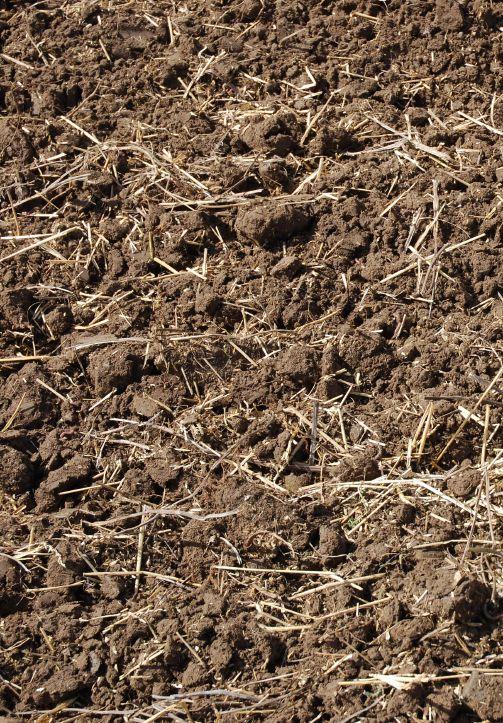
TOP: Field teams were asked to sample soils to evaluate biological, physical and chemical properties in the lab, as well as visual qualitative analysis.
INSET: Composite soil samples were taken at three soil depths in each field.
Once Gasser and his co-researcher Claude Bernard have analyzed the data, they will make recommendations on soil management and conservation strategies, and MAPAQ will set priorities for promoting specific interventions.
“Healthy soil is soil that can support life – in the soil and the people and fauna who depend on it,” Gasser says. “It is a difficult task to establish soil health parameters. Soil health as a term relies on so many properties – physical, chemical and biological. It is a challenge to assess.”
Study design and next steps
Soil sampling took place in 2018 and 2019. Gasser says the teams in the field were asked to sample soils to evaluate biological, physical and chemical properties in the lab; they also conducted visual qualitative analysis of soil profiles.
Composite soil samples were taken at three soil depths in each field: two samples from the Ap horizon (the surface level of soil that is normally ploughed) – one in the top 10 centimeters at the surface and the second deeper, depending on the depth of the Ap horizon; and one sample from the first 15 centimeters in the B horizon, or subsoil layer.
Soil health parameters measured included qualitative and quantified measurements, such as stoniness, porosity and soil structure; physical properties, including particle size distribution, aggregate stability and hydraulic conductivity; chemical properties such as pH and cation exchange capacity; and biochemical properties such as organic matter levels, active carbon, and potentially mineralizable nitrogen. Soil erosion will be quan-
tified using Cesium 137 inventories.
Prior to soil sampling, the farmers were asked to complete a questionnaire and provide field histories dating back five years for fields with sampling sites. They were also asked for their perceptions on field and soil qualities.
Data analysis is ongoing, but Gasser says results should be made available in late 2022. Initially, results will be published through MAPAQ; two to three reports are planned and the team is also looking at other knowledge transfer activities.
Gasser says the project will help producers understand the different aspects of soil health and aid soil preservation efforts, which should boost soil productivity and make farming systems more sustainable in the long run.
But the study should yield practical solutions, too.
One planned project will take soil aggregate photographs and pair them with the study data so producers can take samples from the three soil horizons and analyze soil health parameters using a mobile app and image analysis.
“We have the intention to use a lot of other new techniques to measure soil quality and evaluate soil properties,” Gasser says. “These should be a lot cheaper than conventional laboratory soil assessments, but they need to be calibrated, and this study gives us a good soil database to do it at low cost. So there are new tools that should result from this study.”
Note: Claude Bernard has published an initial report based on the data gathered from the study that looks at the movement of soils using isotopes of the chemical element Cesium. The report can be found on the IRDA website at https://www.irda.qc.ca/en/publications/.
AGRICULTURE
IMPROVING CANOLA’S NITROGEN USE
Developing better fertilizer recommendations for growers and a tool for breeders.
by Carolyn King
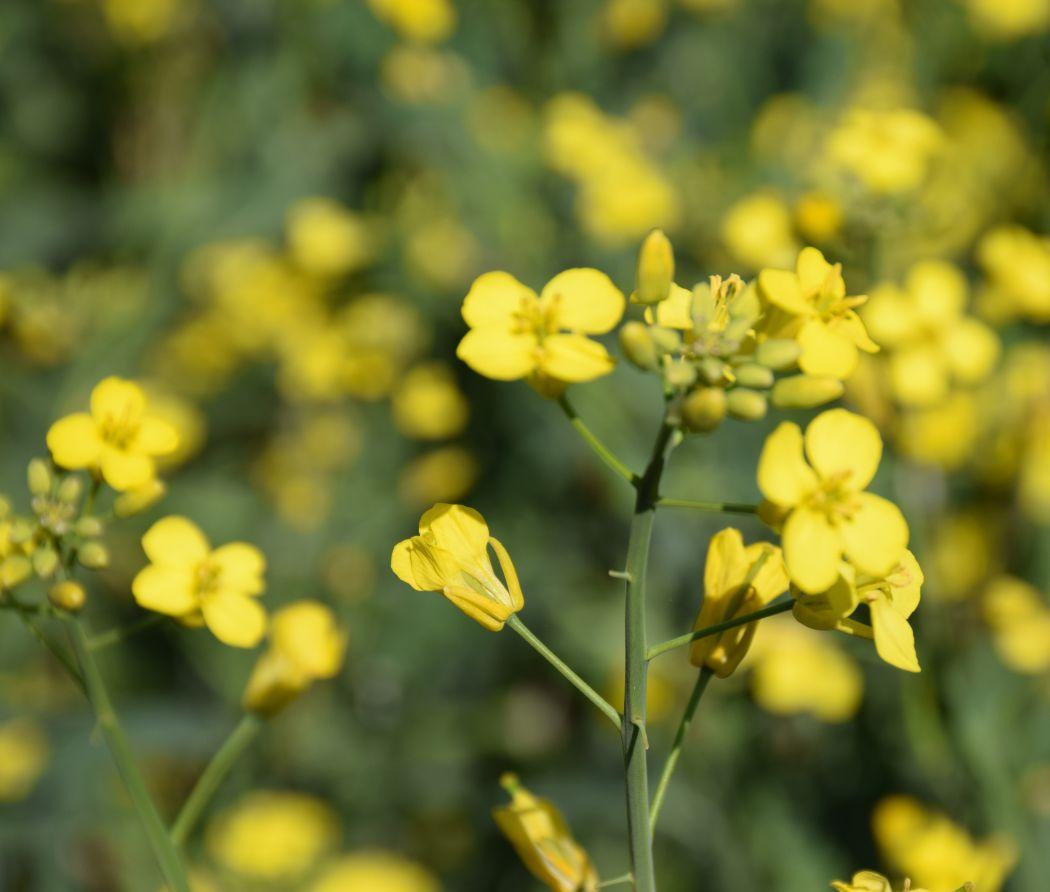
Aproject happening across Canada is aiming to improve canola’s nitrogen use efficiency, yields and standability – three related factors that will help growers reap better returns from their canola crops and enhance the sustainability of their farm.
“Nitrogen (N) is an essential nutrient required in large quantity for canola crop production, but its use efficiency by the crop is relatively low,” explains Bao-Luo Ma, a research scientist with Agriculture and Agri-Food Canada (AAFC) in Ottawa.
“This creates two major concerns: low efficiency means low profitability for canola growers, and low efficiency implies that a large amount of unused N could be lost from the soil, thereby causing a negative impact on the environment.”
Ma is leading the five-year project, which started in 2018, to address these concerns.
Researchers collaborating on this project include: Mervin St. Luce, Kui Liu and Luke Bainard, AAFC-Swift Current; Alick Mulenga, AAFC-Scott; Gary Peng and Patrick Mooleki, AAFCMelfort; Rob Gulden, University of Manitoba; Stephen Crittenden, AAFC-Brandon; Paul Tiege, Olds College; and Greg Semach, AAFC-Beaverlodge. Project funding is from the Government of Canada and the Canola Council of Canada (representing Alberta Canola, SaskCanola and Manitoba Canola Growers) under the Canadian Agricultural Partnership’s Canola Cluster.
The project’s main objectives are to assess the agronomic and
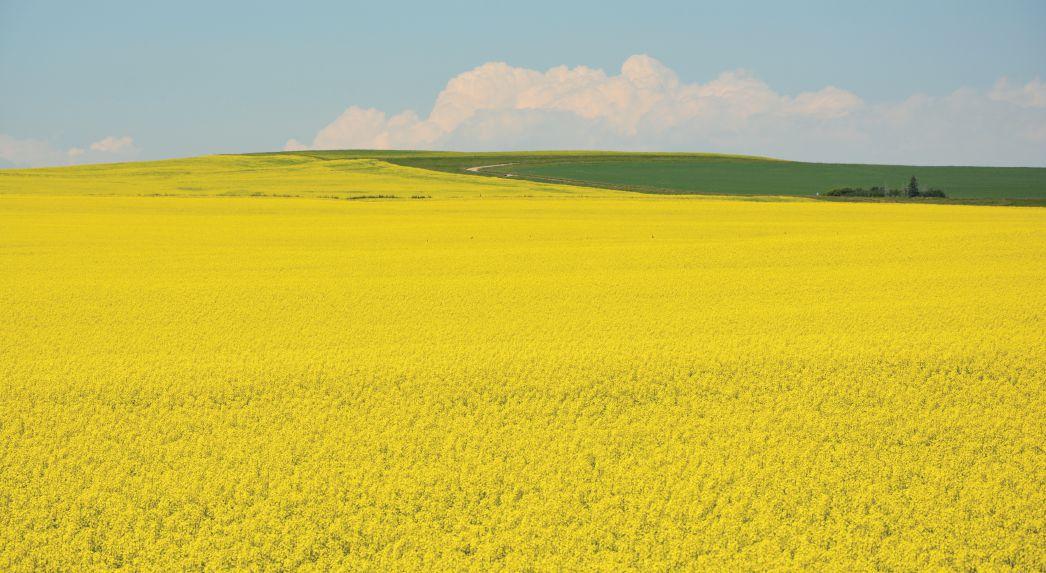
ABOVE: A multi-site experiment looks to improve canola’s nitrogen-use efficiency, yields and standability, with the goal of helping growers across Canada reap better returns on their canola crops.
PHOTO BY TOP CROP MANAGER.
economic responses of canola cultivars to N fertilizer management, and determine best N management practices under different soil and cropping conditions.
To achieve these objectives, Ma and his collaborators are conducting two field experiments at eight sites: Ottawa; Brandon and Carman, Man.; Swift Current, Melfort, and Scott, Sask.; and Olds and Beaverlodge, Alta. In both experiments, the nitrogen is applied as urea.
One experiment is examining the responses to different N timing options (preplant versus split application) and different N rates (zero, 50, 100, 150, 200, 50+50, 50+100, and 50+150 kilograms of N per hectare), and the treatments are applied to two different canola hybrids. For the split applications, the in-season N is applied at the four- to six-leaf stage, which is usually about a month after planting.
Some findings from Ma’s earlier studies have suggested that split nitrogen applications might have yield and standability advantages. Those studies indicated that side-dressed N appeared to be better used by the crop, with a split application producing a higher yield than a single pre-plant application. The studies also indicated that applying more N at planting seemed to promote stem elongation early in the plant’s growth, which could result in a weaker stem base that is more prone to buckling. Ma wants to see if this current experiment will confirm those preliminary results.
The second experiment is evaluating the N requirements of a canola hybrid under three different crop rotations: canola/canola/ wheat/canola; wheat/canola/field pea/canola; and wheat/flax/field pea/canola. This experiment involves preplant N applied at 0, 50, 100, 150 and 200 kilograms per hectare.
The multi-site data from both experiments will enable the researchers to develop N management recommendations specific to different growing conditions across the country.
Belowground studies: hidden worlds
As additional elements to the two main experiments, the researchers are exploring belowground dynamics in two studies.
One of these studies aims to identify root architecture traits for efficient N acquisition, high nitrogen use efficiency (NUE) and stronger root anchorage.
“Roots absorb water and nutrients from the soil, produce signal substances that regulate shoot growth, and keep plants upright. Therefore, the shape and size of roots play a key role in regulating N absorption and utilization,” Ma explains.
“However, accurate quantification of the canola root system remains challenging because of the inherent nature of root architecture as the ‘hidden half’ of the plant.”
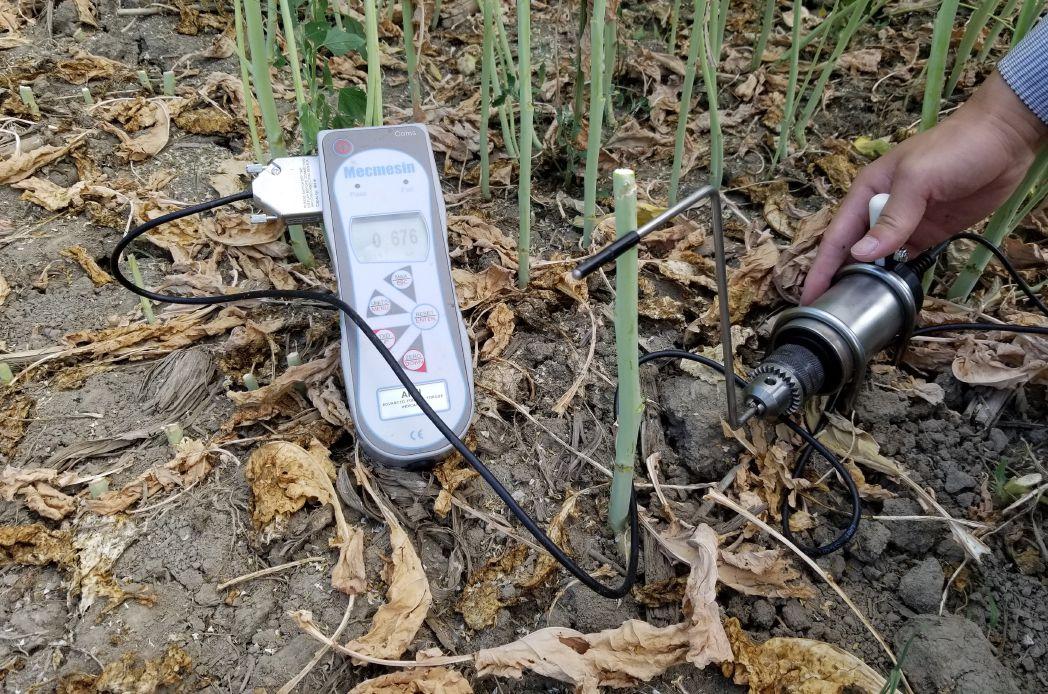
Traditional methods to determine root architecture involve digging up the roots, carefully washing them and then measuring things like root length, volume and surface area. However, Ma and his research group have previously investigated a much simpler way to estimate root architecture by measuring an electrical signal called root capacitance. Root capacitance is measured in the field in just a few seconds using a small meter with one electrode attached to a needle in the stem and the other electrode in the soil.
In those previous studies, they found that higher root capacitance values tend to be correlated with larger root systems, and larger root systems enable plants to take up more water and nutrients and also increase lodging resistance. So, larger root systems contribute to greater N use, higher crop yields and easier harvestability.
In the current study, measurements include root capacitance, stem base traits, simulated stem and root lodging-related parameters, and root volume, surface area, length and biomass. Because these measurements are so time-consuming, the root architecture study is only taking place at Ottawa. Ma’s group is conducting the measurements for both canola hybrids but only for selected N rates
As part of the project’s root-related measurements, Ma’s technician performs a simulated root lodging test, using a device that determines the force needed to push over a plant.
PHOTO
(0, 100, 200, 50 + 50, and 50 + 150 kilograms of N per hectare).
“We are attempting to establish relationships between root traits and yield, and root traits and NUE, so that sensitive traits can be identified for assessing differences in NUE and yields among different N management strategies,” he explains.
The other belowground study, which is led by Luke Bainard, is looking into the taxonomic and functional response of the soil microbial community to the different N treatments.
“Soil micro-organisms play a critical role in the cycling and transformation of nitrogen in soil. They regulate the availability of nitrogen to crops in agricultural systems and environmental losses through leaching and greenhouse gas emissions,” Bainard explains.
“By examining the soil microbiome, we can complement the other aspects of the larger project – agronomy, physiology, soil chemistry –to provide better insight into the fate of nitrogen fertilizer in soils of agricultural systems.”
He notes, “We are primarily using next-generation sequencing to understand how different nitrogen and crop management strategies alter the diversity and community of micro-organisms that live in the soil and the roles they play in transforming nitrogen.”
Initial findings
Ma highlights some of the project’s preliminary results from the two main experiments. “Canola yields positively responded to N application rates. In some cases, the split-N resulted in a better yield response compared to the same amount of N applied only at preplant,” he says.
“Under favourable growing conditions, the estimated maximum economic rate of N (MERN) averaged 170 kilograms of N per hectare, with achievable yields up to 4.8 tonnes per hectare, but this varied largely among site-years. Canola grown in rotation with wheat generally produced higher yields, with a lower MERN requirement than canola grown after canola.”
Overall, these initial results underline the need to develop locationspecific N recommendations to achieve profitable and environmentally sustainable canola production.
For the root architecture study, the preliminary findings indicate that canola plants with larger root capacitance values appear to have
better tolerance to heat and drought stresses, and are expected to have better capacity in N uptake, compared to plants with smaller capacitance values.
These findings suggest that plant breeders could use root capacitance as a tool for selecting breeding lines with better NUE and higher yields.
In 2020, this national project was strongly affected by COVID-19 restrictions. Field planning and preparation were delayed, and the plots were either seeded late or not at all. For example, in Ottawa, Ma’s group planted the plots about two to three weeks later than normal. Generally speaking, later seeding tends to reduce canola yields, so it may have affected the results for 2020.
In addition, because of COVID restrictions, the researchers had to reduce project activities by 40 per cent. Further complicating this situation, the different research centres had different interpretations about how to implement this reduction. In Ottawa, Ma’s group was allowed to plant both of the main field experiments, but they could only collect some key data, like yield and crop growth data. They weren’t able to conduct the root architecture study. The collaborators at the other sites were required to omit the first main experiment and only conduct the second one.
Looking ahead
Ma hopes that 2021 will be a more normal year and that the project team will be able to make up for some of 2020’s challenges and continue towards achieving the project’s valuable outcomes.
Those outcomes include: up-to-date information on N rates and timing for canola in different regions of Canada; maximum economic rates of N fertilizer under different soil and cropping conditions; better understanding of soil nitrogen mineralization processes under different conditions; and tools to help breeders develop canola varieties with better root systems for enhanced NUE, higher yields and stronger lodging resistance.
Those outcomes all work together to increase the profitability of canola production and improve long-term soil health and environmental sustainability. And these benefits will contribute to the societal benefits of affordable food and a healthy environment.
The project’s preliminary results show canola yields positively responded to N application rates, and in some cases, the split rate contributed to a better yield, compared to the same amount of N applied at preplant.
PHOTO
TOP CROP SUMMIT
Steve Larocque Dr. Don Flaten Megan Bourns Dr. Hugh Beckie
Dr. François Tardif Robyne Bowness Davidson Curtis Rempel
Tracey Baute
Dr. Breanne Tidemann Albert Tenuta Dr. Craig Drury Dr. Jocelyn Smith