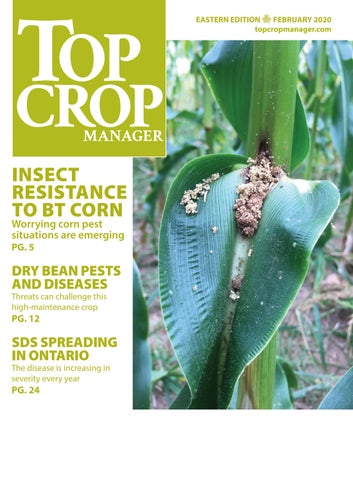
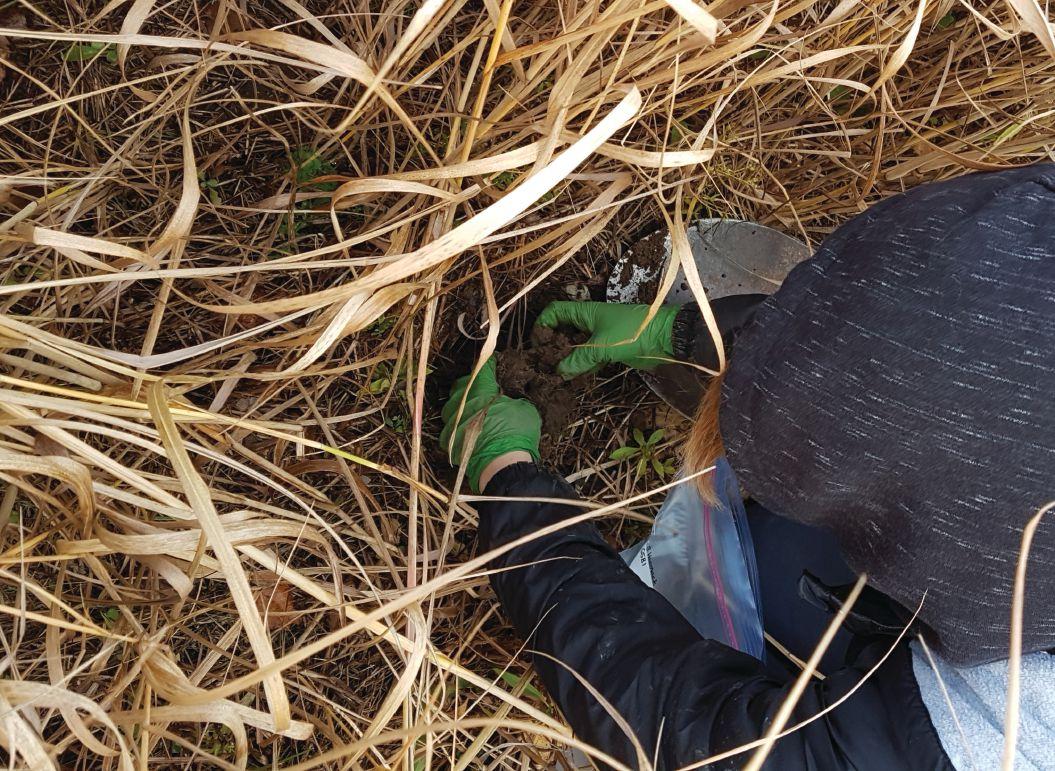
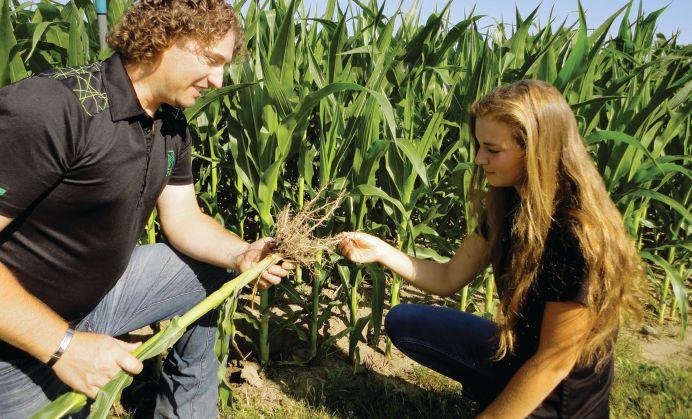
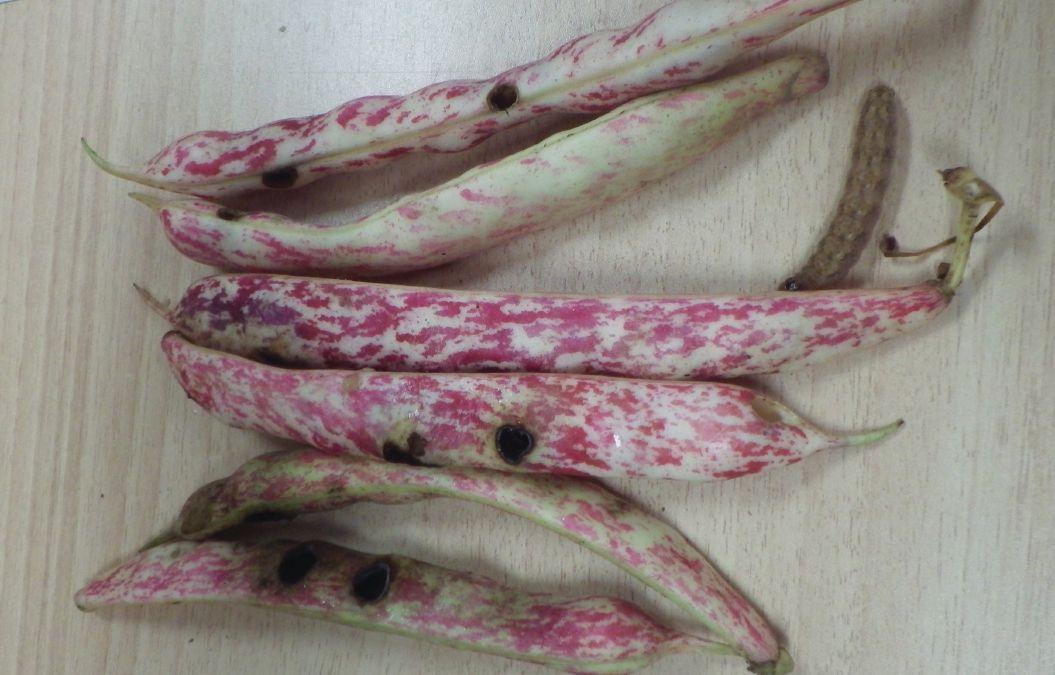
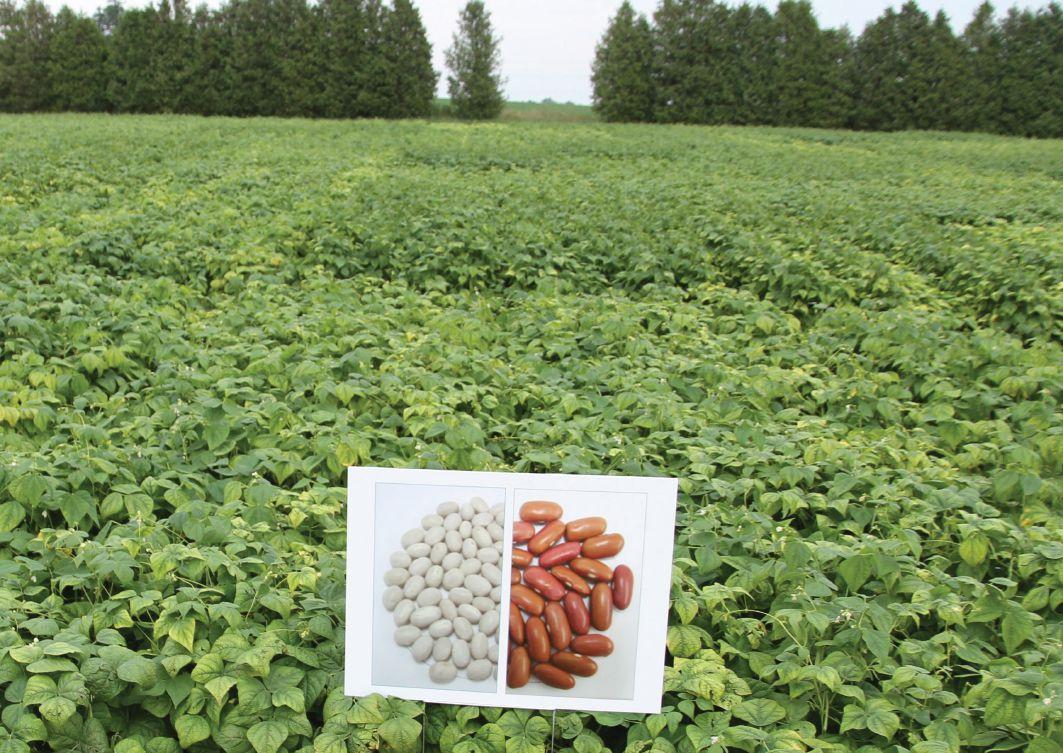
Threats can challenge this high-maintenance crop PG. 12
SDS SPREADING IN ONTARIO
The disease is increasing in severity every year PG. 24
THERE’S STRENGTH IN NUMBERS
Three different powerful herbicide Groups have been combined to make one simple solution for cereal growers.
Infinity® FX swiftly takes down over 27 different broadleaf weeds, including Canada fleabane. And if you’re worried about resistance, consider this: you’re not messing with one wolf, you’re messing with the whole pack.
TOP CROP
MANAGER
PESTS AND DISEASES
5 | Insect resistance to Bt corn
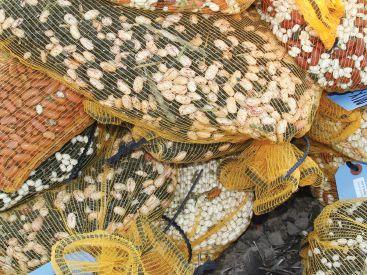
Worrying situations are arising after years of relying on this technology. by Carolyn King 12 | Scouting dry bean pests and diseases
Disease and insect pests can be challenging for this high-maintenance crop. by Julienne Isaacs
SOYBEANS
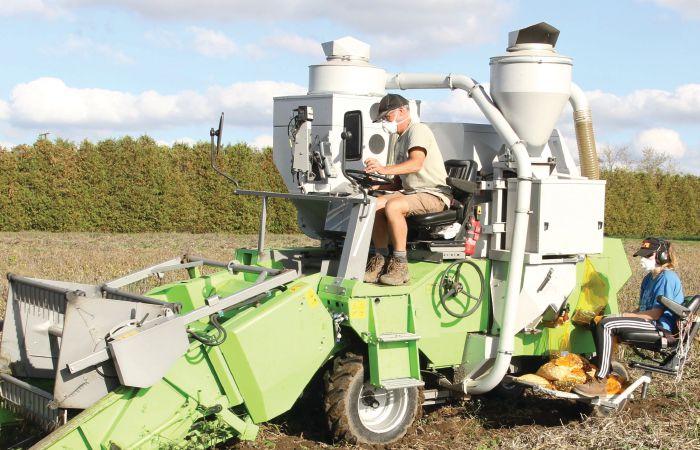
24 | Sudden death syndrome spreading in Ontario
Experts say this disease is increasing in severity every year. by Julienne Isaacs
Terrific malts with a Quebec terroir by Carolyn King
by Julienne Isaacs
Julienne Isaacs
ON THE WEB
STEFANIE CROLEY EDITORIAL DIRECTOR, AGRICULTURE
THE POWER OF PEOPLE
Technology in agriculture has made countless advancements over the last few decades. These innovations can drive efficiency and process, but can anything truly replace a human?
I recently tuned in to The Calgary Eyeopener podcast, featuring highlights from the CBC Radio Calgary program, where host David Gray interviewed Will Evans, a farmer from Wales, U.K., and host of the Rock and Roll Farming podcast.
Evans, a multigenerational farmer, aims to share the human side of agriculture through his podcast. He visited Edmonton in January, attending and speaking at the FarmTech conference, and is passionate about telling the story of agriculture through the people most involved in it.
Much like their Canadian counterparts, Evans says farmers in the U.K. are focused on soil health and regenerative agriculture. And, of course, technology is making all the difference. “We’re really on the cusp of a fourth agricultural revolution in terms of robotics and technology on farms and how it can drive us forward,” Evans said in his CBC interview.
But, he said, it seems as though the challenges are mirrored too.
“I think, speaking to Canadian farmers here over the last few days, [it’s] very similar [to] issues we’re having in the U.K. in terms of finding people to work on farms.
“It’s changed a lot certainly from my father’s generation, when there [were] a lot of small family farms around us. A lot of them are gone now. They’ve been swallowed up by the neighbours . . . a lot of the [larger farms] are really driving in efficiency and have incredibly high standards of animal welfare. It’s not as simple as ‘big farms are bad, small farms are good,’ but it certainly has changed a lot over the last generation.”
He’s not wrong. Advancements in technology and equipment have provided numerous benefits, including efficiency and precision. But to me, smart farming goes hand-in-hand with the shift in farm labour and dynamic. Yes, the benefits are proven – but that also means that the operator needs to be willing to adopt and understand the technology.
In addition, finding someone qualified to take over the farm has been a longstanding challenge for many Canadian farmers. Much like Evans has observed in the U.K., small farms with no one to succeed them often get purchased by a neighbour – in fact, the majority of respondents polled in our 2019 Succession Planning Survey revealed they have no succession plan in place (you can read more about that on www.familyfarmsuccession.ca).
The bottom line? Engaging the next generation is more important than ever, and it’s encouraging to see government and industry recognize and respond to this. In January, Marie-Claude Bibeau, Canada’s minister of agriculture and agri-food, announced the launch of the Canadian Agricultural Youth Council, a group of young Canadians who will be asked to provide input on agriculture and agri-food issues. In addition, the Canadian Young Speakers for Agriculture competition is calling for entries to the 2020 competition, and the Ontario Outstanding Young Farmer program closed nominations for its 2020 award at the end of January.
It’s 2020. We know technology isn’t going anywhere. But if we want to keep up with smart farming, we need the right people to help.
TOP CROP
FEBRUARY 2020, VOL. 46, NO. 02
EDITORIAL DIRECTOR, AGRICULTURE
Stefanie Croley • 888.599.2228 ext. 277 C – 226.931.4949 scroley@annexbusinessmedia.com
ASSOCIATE EDITOR Alex Barnard
PESTS AND DISEASES
INSECT RESISTANCE TO BT CORN
After years of relying on this technology to control corn pests, some worrying situations are emerging.
by Carolyn King
“
We’ve had Bt corn to control European corn borer since about 1996 in North America, and there has never been a case like this until now,” says Jocelyn Smith, a research scientist at the University of Guelph’s Ridgetown Campus.
Smith is talking about the finding of European corn borers with resistance to a Bt protein in Nova Scotia in 2018. “This is the first documented case in North America of practical resistance – where the product actually does not work in the field – in European corn borer to any Bt corn trait.”
Bt corn expresses insecticidal proteins from the bacterium Bacillus thuringiensis. This technology is a key tool for targeted insect pest control, so strategies have been established to really reduce the risk of resistance to the Bt toxins in the target pests.
The Nova Scotia case of Bt resistance in European corn borer is particularly worrisome, but other corn insects have also developed field-evolved Bt resistance in recent years in North America.
These emerging problems underline the need for growers, seed companies and researchers to help stop or slow the spread of Bt resistance.
The Nova Scotia case
In 2018, a Bt corn hybrid with the Cry1F protein, which should control European corn borer, was found with damage caused by this pest in a few fields near Truro, N.S. Smith and Art Schaafsma,
a professor at the University of Guelph-Ridgetown, carried out the work to check for Cry1F resistance in the local corn borers.
In 2018, Smith collected European corn borer populations from four fields in the Truro area. To look for the possible spread of resistance, she also collected a corn borer population in the Annapolis Valley, about 120 kilometres west of Truro. The Annapolis Valley is upwind from Truro, making it harder for the adult corn borer moths to fly in that direction. So if the resistance had spread, it would be less likely to spread in that direction.
“When we tested them in the lab, we found that all four populations from the Truro area were highly resistant to Cry1F,” Smith says. “And the population from the Annapolis Valley was also resistant to Cry1F, so there has already been some spread of resistance within Nova Scotia.”
In 2019, to find out if the resistance had spread any further, Smith and Schaafsma obtained collections of European corn borer from Prince Edward Island, Quebec and eastern Ontario, as well as more samples from Nova Scotia, from collaborators in these areas.
“We will be assessing all of those collections in 2020 to determine their susceptibility to Cry1F,” she says. This assessment of resistance in each population is a lengthy, rigorous process that includes rearing the insects, testing their response to the Bt protein
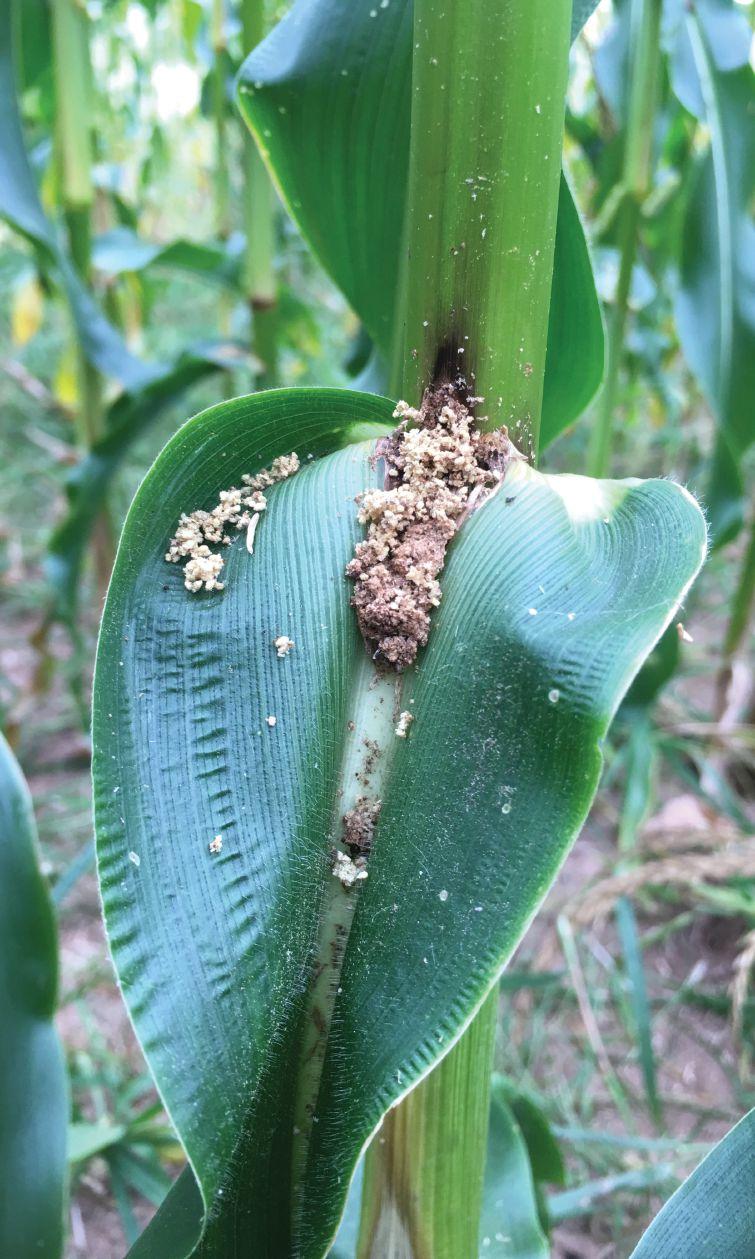
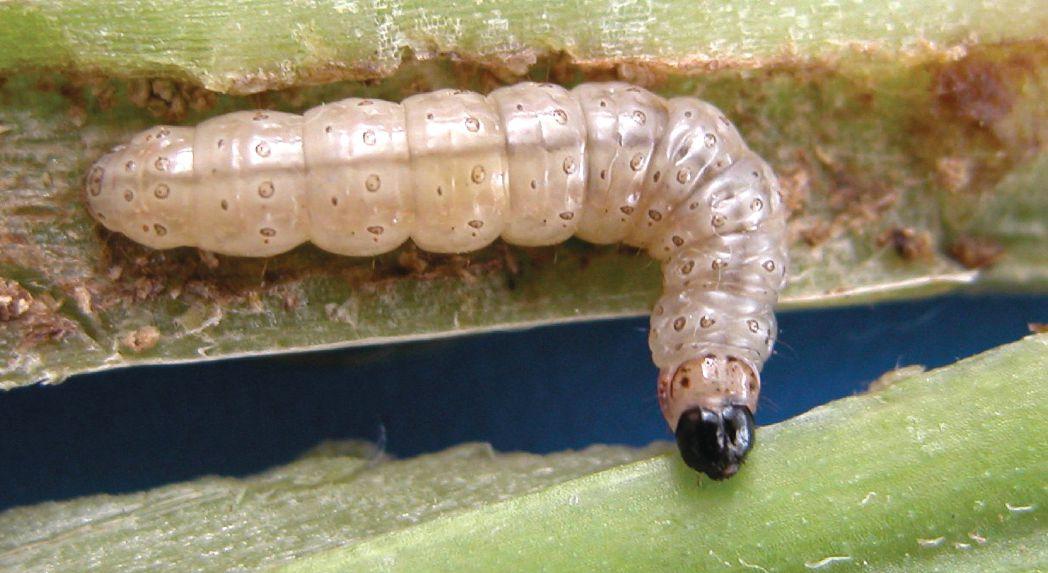
ABOVE: The European corn borer’s larva attacks corn stalks and kernels, affecting both yield and quality.
and, if the insects show some reduced susceptibility to the protein, testing the insects on plants with the protein, and then replicating the assays at least three times to confirm the results.
Possible contributing factors
Smith emphasizes that Bt resistance in European corn borer is a serious concern for growers because larval damage to stalks and kernels can affect both corn yield and quality. “European corn borers can decrease the quality of grain in that their feeding wounds expose the plant to more fungal pathogens, so you get more mycotoxins and grain quality issues for livestock feed. Also, corn borers cause real problems when it comes to the crop’s standability,” she says.
“So it’s a significant pest and we don’t want to lose this technology.” And we don’t want Cry1F resistance to spread to other regions in North America.
The original strategy to prevent or delay Bt resistance in European corn borer is considered to be very effective. It involves combining high-dose Bt toxins with a non-Bt refuge. A high-dose Bt toxin is one that kills more than 99.9 per cent of a population of the target insect. A non-Bt refuge is a portion of a Bt field that is planted to a non-Bt hybrid.
The Nova Scotia resistance problem emerged only 12 years after Cry1F hybrids were first sold in the region. There could be various issues contributing to this rapid development of resistance.
Smith thinks one possible factor could be the use of Bt hybrids
America they now have very low susceptibility to Cry1F.”
According to Smith, several things probably led to the very quick development of Cry1F resistance in western bean cutworm.
First of all, Cry1F is not a high-dose toxin against western bean cutworm. “From the beginning, western bean cutworm populations had some tolerance or weren’t highly susceptible to the Cry1F protein. It looks like there was a lot of variability in western bean cutworm populations when researchers first tested the insect on Cry1F.”
Another factor was that the pest expanded its range; beginning in about 1999, it spread eastward from the western Great Plains through the Corn Belt. “Cry1F has been ubiquitous in most Bt corn hybrids since about 2006 so the insects had more and more exposure to that protein,” she says.
A third factor was the reduced refuge requirements. She explains that back in the early days of Bt corn deployment, a singletoxin hybrid was required to have 20 per cent of the field in a structured refuge, where the non-Bt corn is planted in blocks or strips. “However, because the rest of the industry has gone to pyramiding traits that control European corn borer in this part of North America, we’ve allowed the refuge size to decrease to five per cent and incorporated as refuge-in-a-bag [where the non-Bt seed is mixed with the Bt seed in the same bag],” she says.
“We now know that this really increases the risk of resistance in western bean cutworms because these insects move around so much.”
Since Cry1F is no longer effective against western bean cutworm, there is now only one Bt protein to control this pest: Vip3A.
Bt resistance in European corn borer is a serious concern for growers because larval damage to stalks and kernels can affect both yield and quality, according to Jocelyn Smith.
with only a single toxin for controlling European corn borer. “There are four Bt proteins that we consider high-dose toxins against European corn borer: Cry1F, Cry1Ab, Cry1A.105, and Cry2Ab2. In most of North America, we have corn hybrids that express more than one Bt toxin that will control this pest. With multiple modes of action, there is less risk of resistance,” she explains.
“However, in smaller markets with short-season hybrids, like Nova Scotia, some single-toxin Bt hybrids were still being sold.”
She also notes, “We don’t know whether there was good compliance to the refuge requirement in Nova Scotia, so that may also have contributed to the problem.”
Bt-resistant western bean cutworm
In Canada, we have another corn pest with resistance to a Bt toxin: western bean cutworm. In corn, the larvae of this moth species feed on the ears, causing yield losses and increasing the risk of fungal disease and mycotoxins in the grain.
Smith and Schaafsma were the first researchers to document Cry1F resistance in western bean cutworm, through field and lab studies between 2011 and 2016 in Ontario. Since then, resistance to Cry1F has been confirmed in populations of this insect in the U.S. in the Great Lakes region and the Corn Belt. Smith notes, “Anywhere that western bean cutworm populations occur in North
“We have been working on Vip3A in our lab. It looks like it is a high-dose toxin against early instar western bean cutworm larvae – the really small larvae after they hatch out of the egg masses. However, when we give third and fifth instar western bean cutworm larvae Vip3A in the lab, it takes significantly more Vip protein to kill those older instars. And we’re not convinced that the Vip corn plants produce a high enough level of the protein to provide a high dose for these older instars,” Smith explains.
“This is a concern especially with refuge-in-a-bag. Because the larvae move around a lot, they might be able to grow to become a third instar or later on a refuge plant and then move to a Bt plant and be able to tolerate the Vip protein.”
So deploying Vip3A as refuge-in-a-bag over many acres could lead to resistance in western bean cutworm. And that would leave corn growers with no Bt proteins to control this pest.
One of the things that Smith would like to study is whether a larger refuge would help slow the development of Vip3A resistance in western bean cutworm. “Since we just have a single effective toxin for western bean cutworm, in theory we should be doing at least a 20 per cent structured refuge.”
Resistant earworm on our doorstep
In the U.S., several other corn pests have developed Bt resistance including corn earworm, fall armyworm, northern corn rootworm, southwestern corn borer and western corn rootworm.
Of these pests, Smith thinks corn earworm is probably the greatest Bt resistance risk for eastern Canadian corn crops. “We always get some migratory flights of corn earworm moths that come into eastern Ontario each year late in the season. They originate from the southern U.S. and even further south.”
Corn earworm attacks many different plant species. In corn, the larvae feed on the silks and kernels, where the feeding damage creates an opening for fungal infections that can affect grain quality.
This insect has always had some tolerance to Cry toxins so the high-dose approach to fighting resistance was not possible.
“There is a lot of research showing that corn earworms are developing resistance to all of the Bt toxins that are out there already,” Smith says. “The only one that they are still susceptible to is Vip3A. But some preliminary data is showing that there may already be some reduced susceptibility in corn earworm to Vip in the U.S.”
Tips for managing Bt resistance
Smith has some advice for growers to help prevent development of Bt resistance and to slow its spread.
“The number one thing is to use pyramided, multiple Bt traits for any of the pests that you are targeting to control. Whenever possible, stop growing corn hybrids that produce only one Bt toxin.”
However, single-toxin hybrids may be the only option in some situations. “In Nova Scotia, the problematic hybrid where the Cry1F resistance developed in European corn borer has been replaced with a pyramid Bt hybrid. But the pyramid consists of Cry1F and Cry1Ab. So growers are effectively down to one trait again, being Cry1Ab. So we are putting more selection pressure on Cry1Ab,” Smith says.
In addition, she explains that there is also a risk of cross-resistance with the Cry1 proteins, so a pest with resistance to Cry1F might also be resistant to one or more other Cry1 proteins.
“So we would prefer to see the two other Bt toxins for corn borer – Cry1A.105 and Cry2Ab2 – deployed on a greater acreage in Nova Scotia, rather than a pyramid that has Cry1F and one other protein.”
For corn earworm and western bean cutworm, Vip3A is the only effective Bt toxin available. “In the case of a target insect like that, you need to think about an integrated pest management strategy rather than relying solely on those Bt hybrids year after year,” she says.
“Some years we don’t have high populations of those pests, so you might be able to scout and spray insecticide if your threshold is reached. That type of approach would be a better way to delay resistance to any technology used to control the insects,
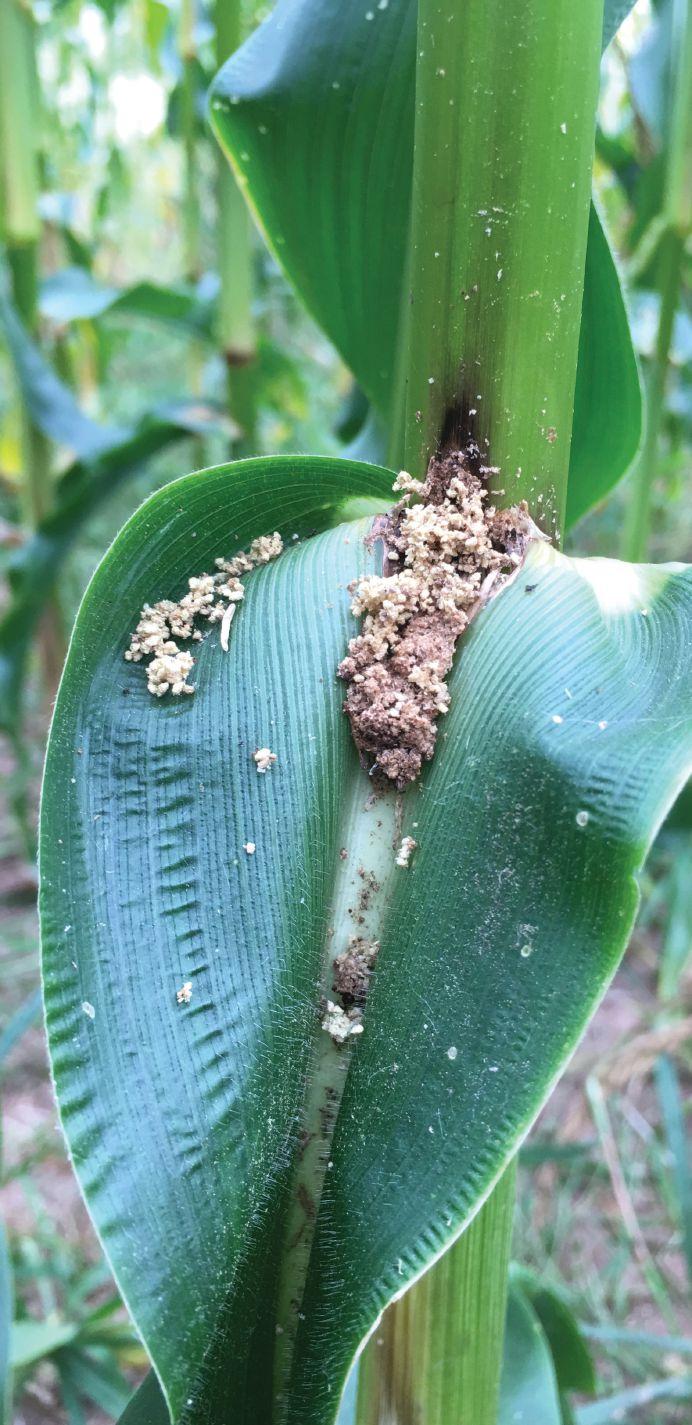
European corn borer feeding in Cry1F corn near Truro in 2018, the first documented case in North America of Bt resistance in this insect.
PHOTO COURTESY OF JOCELYN SMITH.
whether it be Bt toxins or insecticides.” And if growers are using insecticides, they should rotate the chemistries.
She also reminds growers to always follow the refuge requirements for their hybrids.
Another good practice is to scout for insect damage in Bt corn and non-Bt refuges. If growers find damage by their target pest in their Bt corn, they should report it to their seed company representative or provincial specialist so the insects can be tested for resistance.
“If you have Bt fields with European corn borer damage in them, definitely try to destroy the corn stalks in the fall to kill the overwintering population,” Smith notes. “These insects burrow down to the bottom of the corn stalk to overwinter. So if you do a really good job of chopping stalks [as close as possible to the soil surface] and then burying the chopped stalks with tillage, you could kill a lot of that resistant population.”
Smith explains that crop rotation is not very helpful in managing any of the moth pests because they move around so much. “However, for corn rootworm, crop rotation is your number one strategy to reduce populations and prevent resistance. If you have corn rootworm in your cornfield one year, the adult beetles will lay their eggs in that field. If corn is planted in the same field the next year, the larvae will survive on that. But if you plant a non-host crop like soybeans in the field, the larvae will all die.”
Research towards better management
Smith and Schaafsma plan to continue their Bt resistance research, working on European corn borer, western bean cutworm, and possibly corn earworm.
In particular, they have submitted a proposal for a major study on the European corn borer resistance case in Nova Scotia. “We want to determine how far the resistance has spread so we need to do a lot more monitoring of populations to find out the distribution of the resistance,” Smith says.
“We also want to assess the susceptibility of the Cry1F-resistant corn borers to the other Bt proteins for controlling this insect to see if the insects are still susceptible to those other proteins or if there is some cross-resistance.
“And we need to learn a lot more about European corn borer in Eastern Canada. Because corn borers have been well controlled for over 20 years, they have fallen off the radar in research in a lot of ways. We don’t really have a good understanding of the populations [in the Maritimes]. We don’t know exactly how many generations per year they get. We don’t know what host crops they are surviving on there – they can feed on over 200 plant species including potatoes, apples and peppers, which are all present there.”
The researchers also want to determine if a molecular method developed in the U.S. to detect Cry1F resistance in a laboratoryselected European corn borer colony would also be applicable to the corn borer population in Nova Scotia. If the method does apply, then it could really speed up the testing to confirm whether or not resistance is present in a population.
Ultimately, Smith and Schaafsma’s research will help in figuring out the best strategies for stopping the spread of the current Bt resistance problems in Canada and preventing development of new problems, so corn growers will continue to have access to effective Bt proteins.
RESEARCH RAMPS UP ON SOIL BIODIVERSITY AND HEALTH
Management practices play key role in influencing soil diversity.
by Julienne Isaacs
Anew Ontario Agri-Food Innovation Alliance (previously the OMAFRA-U of G Partnership) study shows that management practices, such as tillage and use of cover crops, can play a major role in influencing the diversity of bacterial and fungal microbial communities in the soil.
The study, which was led by University of Guelph professor and Canada Research Chair Kari Dunfield, ran between 2015 and 2017 and used high-throughput sequencing and real-time quantitative PCR to examine the abundance and diversity of bacterial groups in a long-term experimental trial at Elora, as well as a medium-term trial at Ridgetown.
Dunfield studies microbes in the environment, looking at their ecology, their microbial processes in the soil, and how they can be used in beneficial ways in agricultural systems.
In this study, Dunfield and her collaborators analyzed soils from the long-term plots at Elora (led by Guelph professor Bill Deen) and Ridgetown (led by professor Laura Van Eerd).
“We were really interested in examining the microbial com -
munities in these systems, because both Bill and Laura had some indications that their systems were impacting crop yield and some soil properties,” she says. “We wanted to know how the microbes were changing.”
Some of their findings were expected: in the long-term trials, tillage reduced fungal diversity, and rotation changed the types of fungi and bacteria in the soil with a stronger influence in no-till plots, Dunfield says. In long-term plots there was decreased soil health with long-term tillage and lower fungal diversity.
Cover crops had an impact on microbial community diversity, but had less impact than crop rotation and tillage.
Of the cover crops tested in the trial at Ridgetown, the treatments that scored the best for soil quality and crop yields were cereal rye and oilseed radish-rye.
“We found nearly 159 million bacteria per gram of soil and 460,000 fungi per gram of soil in the cereal rye cover crop plots,
ABOVE: Soil sampling at the Ridgetown field station.
PHOTO COURTESY OF KARI DUNFIELD.
and these populations were the highest of all the treatments,” she says.
But the researchers were surprised to find that most cover crops had less of an impact on microbial communities than they expected. “Even after 40 years, when red clover cover crop was added to a corn-soy-wheat rotation, there was little difference in the bacterial communities between the two treatments at Elora,” she says.
They were also surprised that, in the medium-term horticultural cover crop trial, the no-cover crop control plots didn’t have lower diversity. “We realized that the cash or main crop plays a big role in determining the microbial community, and that leaving crop residues from the main crop on the field can feed the microbes and supply them with carbon,” Dunfield says.
New studies
Dunfield’s study is part of a larger suite of projects on soil health at the University of Guelph.
Adam Gillespie is an assistant professor at the School of Environmental Sciences who focuses on soil organic matter – for instance, how land management can influence how organic matter is stabilized and how it decomposes.
With Dunfield and Van Eerd, Gillespie is beginning a major new project looking at how organic matter contributes to crop yield. The study will look at crop rotation and cover crops in longterm experimental plots in Ontario as well as on farms.
They’re also collaborating on a new study that will compare and validate multiple soil health frameworks, including the Haney Soil Test and Cornell Soil Health tests, both of which were developed in the U.S. and tested in long-term trials in Ontario by Van Eerd, but which Gillespie says haven’t yet been validated in Ontario.
“Soil health ties in pretty strongly with organic matter content. It takes a long time to detect differences in the soil. You can send a test to the lab and get a total organic matter number, but it takes a long time to move that number,” Gillespie says. “We’re trying to come up with more targeted tests.”
Because the Cornell testing suite includes 12 tests, not all of which will necessarily be useful for Canadian farms,
the researchers will focus on three: Active Carbon, which targets fast cycling carbon, Autoclave Extractable Nitrogen, which targets fast cycling nitrogen, and a third, Aggregate Stability.
While many fertility tests are accredited in Canada, meaning there’s enough data to support the regulation of standard operating procedures for those tests, no soil health tests have yet been accredited here, Gillespie says. He isn’t involved in accreditation, but his lab’s data will help build a sense of which soil health tests are particularly relevant in an Ontario context.
A third study will focus on modelling emissions based on land use. Gillespie says most models used in Canada were developed three decades ago and need to be updated to reflect modern agronomic practices and genetics.
There’s another reason a refresh on modelling is particularly relevant: where models once reflected regional trends, farmers are starting to ask whether their agronomic approaches are helping sequester carbon on their own land.
For example, Agriculture and Agri-Food Canada’s front-end modeling project Holos helps farmers get a feel for how their operations are performing.
“People are interested in farm-scale performance. That’s pretty nice, because we can start thinking at the farm scale rather than the regional scale,” Gillespie says.
“We know crops are performing differently than 30 years ago, when some of these models were developed. Modern cultivars are going to make a big difference,” he says.
Van Eerd, Dunfield and fellow University of Guelph professor Claudia WagnerRiddle are recipients of a new endowment called Soils at Guelph that is meant to promote sustainable soil management through outreach and extension.
The initiative includes a new podcast on campus radio called “Talk Dirty to Me,” created by Soils at Guelph’s communications and outreach co-ordinator Cameron Ogilvie. It will help connect the research community with Ontario producers. Archived episodes are available at https://soilsatguelph.ca/podcasts/.
ALPINE G241-S® is a new starter fertilizer formulation for today’s crop needs
Contains K-Tech® potassium technology
- Higher nutrient uptake
- Soil health benefits
Sulphur for early plant uptake
Proven ALPINE® reliability
SCOUTING DRY BEAN PESTS AND DISEASES
Disease and insect pests are challenging in this high-maintenance crop.
by Julienne Isaacs
Dry beans are a high-maintenance crop relative to most field crops, according to Chris Gillard, associate professor in the department of plant agriculture at the University of Guelph.
That’s why disease and insect pests represent a tougher challenge in dry bean than many other crops. “I routinely get questions from growers asking, “Do we ever get to leave the sprayer out of the field with this crop?” Gillard says.
From fungal diseases to soybean cyst nematode, keeping on top of the latest research and management strategies will help producers minimize the risks in 2020.
Gillard is the lead on a five-year pest management project under the federal government’s Canadian Agricultural Partnership funded through Saskatchewan Pulse Growers. The project, which began in 2017 and will continue until 2022, includes a range of studies investigating pests of dry bean and control options.
Belowground diseases are harder to scout and diagnose, Gillard says, so they often don’t get the attention they deserve.
Root rot, caused by Rhizoctonia, Fusarium and Pythium pathogens, is the biggest issue facing dry beans – “it’s a problem in most fields in most years,” Gillard says. Symptoms aboveground can include damping off, stunted growth, leaf-yellowing and leaf drop; belowground, producers should look for root death or brownish
lesions on roots. The disease can be managed with a combination of seed treatments and the use of nitrogen fertilizer to help the crop grow out of it.
White mould, caused by Sclerotinia fungal pathogens, is exacerbated by wet, cool weather and humid conditions under the canopy. For that reason, it can affect producers’ better fields. Gillard’s team is involved in evaluating fungicides for their effectiveness against white mould.
In research published in 2015, Gillard demonstrated fungicide was most economical in early-planting environments, and the Group 29 fungicide fluazinam (trade name Allegro) offered most consistent control.
Anthracnose, caused by the fungus Colletotrichum lindemuthianum can also be an issue in dry bean, Gillard says. “Anthracnose can get into the crop at any time, and it continues to work at the crop until the crop dies or matures,” he says.
Gillard’s team is involved in evaluating seed treatments for anthracnose in dry bean, but if it’s found in a crop, foliar fungicides are required for control. The good news is that most fungicides that are effective against white mould are also effective against anthracnose,
ABOVE: Western bean cutworm is a late-season pest that feeds on pods and can cause significant yield loss.
says Gillard, which means producers get “two for the price of one.”
Producers are spraying hundreds of thousands of acres of corn and dry beans for western bean cutworm (WBC), Gillard says.
In dry bean, WBC represents a threat partly because the pest is very difficult to scout. The larvae feed at night and hide in soil cracks during the day, so producers are unlikely to find it in the crop. Most cutworms are early season pests, but WBC is a late-season pest that feeds on the pods, which can mean significant losses in yield and quality.
A little over a decade ago, the pest hadn’t yet been detected in Ontario; now, researchers have proof WBC overwinters in the province, but still don’t have enough data to support specific control recommendations.
For the last five years Gillard’s team has employed pheromone traps to try to predict peak moth emergence; this typically happens from the end of July to the beginning of August. In one study, spray timing was most effective in the four to 20-day window following emergence.
Research on the plant parasitic pest soybean cyst nematode has mostly focused on soybean, but Gillard believes SCN will be the “single largest insect pest in dry bean.” Currently, damage from SCN amounts to over two billion dollars annually around the world, and one billion dollars annually in North America.
The pest has spread across western and southwestern Ontario, but although dry bean is an alternate host of SCN, very little research has focused on control measures.
“We don’t have one five hundredth the research effort in dry beans as in soybeans,” Gillard says. Again, it’s a belowground
pest, so its presence can fly under the radar until there are visible aboveground symptoms. “You can have 30 per cent yield loss before it’s visible in the crop,” he says.
This summer, his team plans to do some survey work to establish its prevalence in the province. But because resistance is the best management tool for SCN, another new project will focus on finding resistance genes.
Some market classes of dry bean already have good resistance to SCN, Gillard says, including black beans and navy beans, but others – like kidney beans – are more susceptible.
“We have resistance available within dry beans but it seems to be only in some market classes, and we don’t know if it’s a single gene or multiple genes, or where they are in the genome, or really anything about them,” Gillard says.
This summer, Gillard will partner with Ag Canada researcher Jamie Larsen to begin identifying resistant genes and molecular markers so they can improve dry bean genetics in the longer-term.
Until then, Gillard continues to evaluate chemical and biological seed treatments currently on the market for soybean for their efficacy in dry beans. None of these products is yet registered in dry beans; Gillard says they may not provide enough of a measure of control that registration is warranted.
For now, producers’ best approach to pest management in dry bean is to stay alert. For many pests, chemical controls can be effective if producers have a handle on field history, weather forecasts and risk factors. For others, staying up-to-date on the latest research is a good first step.
“We can manage a lot of these problems,” Gillard says.
MIX AND MATCH
Planting specific bean varieties together in a field could boost yields and enhance sustainability.
by Carolyn King
Genetic diversity can improve the resiliency and sustainability of agricultural systems. An Ontario study is investigating this by examining the possible agricultural and ecosystem benefits of different dry bean variety mixtures.
Research has shown that mixing crop varieties in a field can have production benefits like improved disease management, water-use efficiency or yield stability. You can probably imagine how such mixtures might provide advantages.
For instance, let’s say you are growing a high-performing variety but it is susceptible to a disease that decimates the yield in your field one year. If you grow that variety in a 50:50 mixture with another elite variety that has somewhat different traits including resistance to this disease, then half of the plants in the field would not be affected by the disease. Also, with fewer susceptible plants in the field, perhaps the pathogen’s spread might be slower, which might reduce disease impacts on the susceptible variety. Or perhaps some other characteristic like the canopy shape of the second variety might make the field’s microclimate less favourable to the pathogen, which again might help the susceptible variety.
Similarly, increased genetic diversity in an agricultural landscape can contribute to a resilient, healthier landscape that can
withstand challenging growing conditions and provide enhanced ecosystem services. For example, greater plant diversity in an area might support more productive soil microbial communities and higher populations of beneficial insects, such as pollinators.
“The whole idea of trying to increase genetic diversity in agricultural systems really drove our interest in this mixture concept,” says Peter Pauls, a professor and bean breeder at the University of Guelph who is leading the study. “People were looking at increasing genetic diversity in the field margins, like in the hedgerows, and in less productive places within a field. But we were intrigued by the notion of trying to increase genetic diversity within the production field.”
The study’s first year, which was 2017, provided a great example of how a bean variety mixture might benefit a grower.
“[In one of the study’s treatments,] we planted a black bean and a white bean in alternate rows. We had a heavy rain shortly after the crop was established, and in some spots the conditions were very wet. The black bean variety was quite susceptible to that flooding damage, but for the white bean variety the wet
TOP: Peter Pauls is leading a study to investigate the effects of planting different bean varieties together in a field.
INSET: Pauls’ study is comparing a wide range of bean variety combinations to find the best yielding mixtures.
PHOTOS COURTESY OF K. PETER PAULS.
conditions didn’t matter at all. So crop establishment in the black bean rows was very poor, while in the white bean rows it was just fine,” he explains.
“That’s the kind of genetic flexibility you can build in when you plant a variety mixture. And often the bean crop then compensates by filling in the holes. So in this case the white bean would have filled in the holes that the black bean had left. If the whole plot had been in that black bean variety, there would have been very little yield.”
He adds, “Essentially, with a variety mixture, you’re building in some insurance, because you just don’t know what the environment will bring over the course of the growing season, and even within a field there are differences in the ways in which the plants are challenged.”
Which mixtures are best?
The four-year, small-plot study is comparing Ontario bean varieties grown as mixtures and as pure stands. The varieties are mostly from the University of Guelph’s bean breeding program. Pauls and his research group are collecting data on characteristics like plant height, days to maturity, seed weight, photosynthetic activity and yield.
In 2017, they had one site at the Woodstock Research Station and one at the Elora Research Station. At each site, they grew four varieties – Lighthouse (white), Rexeter (white), OAC Vortex (ACUG 15-B4, black) and OAC Inferno (light red kidney) – as pure stands, as mixtures of pairs of varieties grown in the same row, and as pairs grown in alternate rows.
Pauls notes, “For that first year, we just asked: is there a downside to mixing? For example, would a mixture consistently yield lower than the pure varieties?”
The Year 1 results showed that the mixture yields were usually as good as or better than the mathematical average of the yields of the two pure stands.
So starting in 2018, Pauls and his group expanded the study to work on finding the best yielding varietal combinations. They increased the number of bean varieties to seven, adding Bolt (white), Dynasty (dark red kidney) and Red Rider (cranberry) to the four varieties selected for Year 1. As in Year 1, they grew the varieties as pure stands and as all possible pairings in same-row mixtures and alternate-row mixtures.
They also increased the number of field sites, with one at Woodstock and two at Elora. “The Elora Research Station is big enough that you can put one site at one end and another site at the other end and they are in quite different conditions. And we planted the two Elora sites at different times so that they would be in somewhat different growing environments,” explains Pauls.
The 2019 experiments were at the same three sites and involved white navy bean varieties Mist, Rexeter, Bolt, AAC Shock and Nautica as pure stands and all possible mixtures, as well as pure stands and mixtures of Lighthouse, Rexeter, Bolt, OAC Vortex (ACUG 15-B4, black), OAC Inferno (light red kidney), Dynasty (dark red kidney) and Red Rider (cranberry).
The 2019 mixtures were planted only as same-row mixtures. Pauls says, “We decided to just go with same-row mixtures because that would likely be the simplest way for a grower to
handle it. You could just put the seeds in the bin together, making sure to compensate for the weight differences so that you end up with an equal mixture.”
The study’s final field season will be in 2020.
Along with assessing the yield effects of the bean variety mixtures, Pauls and his group are collaborating with other University of Guelph researchers to explore some possible ecosystem benefits of the mixtures.
Kari Dunfield and her group in the School of Environmental Sciences have collected soil samples for an initial look at whether the soil microbial communities differ between the pure plots and the mixtures. And Dirk Steinke and his group from the Department of Integrative Biology set up traps to determine abundances of aboveground insect species in the pure stands, mixed stands and hedgerows.
“There are lots of bees and other insects in those plots; it would be interesting to know whether the variety mixtures have benefits to pollinator diversity and other beneficial insects,” Pauls says.
Pauls also hopes to work with Clarence Swanton, a weed scientist at the University of Guelph, to better understand the bean variety interactions. “Clarence has looked at interactions between weeds and crops that are mediated primarily by light communication, light quality bouncing off of the leaves.” This same mechanism could be important in determining whether specific bean varieties help each other or compete with each other.
Promising combinations
The findings so far look promising. “There are some variety combinations that seem to be consistently better than the mathematical average of the yield of the pure stands, over at least two years in multiple locations,” Pauls says. “Some of those combinations are within a market class, and some are across market classes.”
He points out another interesting aspect: “If the driving factor in mixture performance is just genetic diversity, then I would have anticipated that more of the mixtures would have performed well. So I think it is probably the specific interactions between the individual varieties that determine whether a particular mixture results in a benefit or not.
“So, based on the results so far, it seems that one has to do the work to identify the specific combinations that work well together.”
He also notes, “If using varietal mixtures is something that bean growers would be interested in adopting, then it would very much change the way in which we would evaluate breeding lines for possible variety registration. We would want to evaluate them in combinations with existing varieties, which we don’t normally do now.”
Pauls says the next logical step after this current study would be to scale up the research to on-farm trials. Working with grower co-operators to evaluate the variety mixtures in plots that cover several acres and where the co-operators are conducting the field operations would provide a good test of how the mixtures
perform under practical conditions. If variety mixing is going to be adopted, then initially the mixtures would probably be within a market class, as that works with the existing bean handling system. “For instance, when navy beans are harvested in Ontario and collected at a place like Hensall Co-op, they don’t keep one navy bean variety separate from another. They mix them all together,” he says.
If growers become interested in mixtures of different market classes, “then we would have to ask the question: is there a market for that kind of bean mixture, or do we need to separate them after harvest?” Pauls says. That separation could be done with sieves and colour sorters, but it would add a cost. “So another question would be: is the benefit that the mixture might bring in the field worth that extra cost?”
By the end of his current study, Pauls hopes to be able to recommend some variety mixtures that, on average, would benefit bean growers compared to growing single varieties. As well, he hopes this research might also speak to consumers who are asking questions about the environmental footprint of food production. He explains, “Producers are very interested in preserving their basic resource, the farming environment, the soils and the surroundings, but that is not always obvious to a consumer who doesn’t have a lot of experience with the farming community. So we want to also be engaged in research that addresses those types of questions so that consumers can have confidence in our food production systems.”
This study is funded through the Food From Thought research program, which receives support from the Canada First Research Excellence Fund. It directly supports the position of Yarmilla Reinprecht, who is the research associate in Pauls’ group responsible for carrying out the mixture research, and another Food From Thought study focused on nitrogen fixation in beans. The field studies also rely on technicians Tom Smith and Lyndsay Schram, and other part-time employees and equipment involved in Pauls’ bean breeding program, which is funded by the Ontario Bean Growers and Agriculture and Agri-Food Canada, and on field sites and equipment supported by the Ontario Ministry of Agriculture, Food and Rural Affairs.
Seeding certain bean varieties together could have agricultural and ecosystem benefits.
HOW DOES TECHNOLOGICAL CHANGE IMPACT CROP YIELDS?
Modelling can help farmers build resilient systems and mitigate risk.
by Julienne Isaacs
Statistical modeling can help researchers predict the impacts of new technologies on long-term cropping system stability and resiliency.
There’s plenty of research in modeling technological change in U.S. yields. But, until last year, there was almost no corresponding work for Canada, according to Alan Ker, a professor in the University of Guelph’s Department of Food, Agricultural and Resource Economics and the Ontario Agricultural College Research Chair in Agricultural Risk and Policy.
Ker and his student Horlick Ng are the authors of one of the first such studies anchored in a Canadian context, which will be published in the Journal of Agricultural and Resource Economics in 2020.
Much of Ker’s research focuses on estimating insurance premium rates. To do this, he says, he looks at yield distributions and assesses changes in yield risk with respect to climate and technological change.
In Canada, average yields have approximately quadrupled for corn, tripled for canola and doubled for soybean and wheat, according to 2018 Statistics Canada data cited in Ker and Ng’s study.
Innovation, in seed genetics for instance, is expected to be critically important in yield resiliency and economic development in the long term, Ker points out. Publicly subsidized crop insurance programs help mitigate the risk of low yields for farmers. If effective crop insurance programs are in place, farmers may be more likely to adopt high-risk high-reward technologies, making Canadian agriculture more competitive on the global stage.
Compared with the vehicle industry – for which premiums are calculated on the basis of hundreds of thousands of data points – in the U.S. and Canada, crop insurance premiums are very difficult to estimate, says Ker, because the drivers of yield loss are continually changing.
“I’m sure there’s plot data here and there, but in a bigger, more macro sense of what’s going on in farms as a whole, I don’t believe there’s much out there,” he says. “This research attempts to fill that gap.”
ABOVE: Technology can help farmers produce greater yields every year.
PHOTO BY WANG TAO.
In Ker’s study, country-level yield data was only available for Alberta, Saskatchewan, Manitoba and Ontario, but was of insufficient length for Alberta and Manitoba to be included in the models.
Study results
For his study, Ker’s goal was to look at the effect of technology and climate on yields when times are bad as well as good. Using country-level yield data, the study estimated the structure of technological change for barley, canola, corn, oats, soybean, and wheat using mixture models.
Ker found that all yields tend to go up overall whether in good or bad years in Canada, but the shortfall between bad and good years is getting spread out.
“Even though yields are going up in both good and bad years, they’re going up more quickly in good years. However, during bad years, that shortfall is going to be bigger and that might cause more issues for the farmer economically,” he explains. “That’s where crop insurance steps in, to provide a safety net. That’s why we have those programs.”
New technologies allow farmers to produce yields that would have been unheardof 30 years ago, he says, without much more land.
For example, a farmer’s overall income might have gone up from $50,000 to $100,000, but their shortfall has also increased to $20,000, Ker explains, meaning risk management has become much more important.
“We’d much rather be in the situation where we’re making $100,000 with a possibility of it dropping to $80,000. But we have to manage things appropriately for that shortfall,” he says.
Corn, for example, is becoming more sensitive to precipitation downfalls, because with increased seeding rates the demand for rain on a given acre has gone up. “So of course, if water demand goes up and the supply of water is constant, then in those years where we have less precipitation, we will see more of a drop-off than we would have otherwise, but we are still much better off planting at that higher density,” he says.
In other words, relative yield risks are smaller, but absolute risks are higher because dollar values are bigger.
“Again, I think we’d much rather be in the situation where we are making more with the chance of a bigger drop-off. But
it would be better if both relative and absolute risk were decreased,” he says.
Is this scenario achievable? Ker says he isn’t sure. The more farmers push the boundaries of what is possible, making more efficient use of their land, the more susceptible they’ll be to, say, extreme weather events - because there are more plants on an acre. But new technologies –like drought- or flood-resistant seed – can also make those crops more resilient.
This research just scratches the surface, mainly due to the lack of relevant data.
Ker’s team is now focusing on climate change and disease, and whether a warming climate will make plant and animal agriculture more susceptible to disease.
“We’re always limited by whether or not we have data to address a question,” Ker says. “We’ve started down that road in the U.S. and now we’re looking at it in Canada.
“It’s a hard question to look at – we might not see it yet in the data. Is it because there’s very little additional risk, or because farmers are very good at adapting?”
Ladybird Beetle (Coccinellidae)
Western Bean Cutworm (Striacosta albicosta)
Coragen® Insecticide knows the difference
All bugs are bad? Not when you get to know them. Western bean cutworm, for example, cause major quality and yield damage in corn. Ladybird beetles feed on cutworm eggs and larvae. Because Coragen® insecticide knows the difference, it protects your corn from Western bean cutworm at all life stages and leaves helpful beneficials alone. Group 28 Coragen® insecticide has excellent tank-mixability, can be applied any time night or day and gives you 7 to 21 days of extended control. Think of it as nature and science working together.
TERRIFIC MALTS WITH A QUEBEC TERROIR
Quebec craft malthouses are adding value to local barley and contributing to unique craft beers.
by Carolyn King
Quebec has some great examples of craft malthouses that are committed to using Quebec-grown barley.
Malterie Frontenac, MaltBroue, Malterie CauxLaflamme and The Maltraiteur each have their own approach to malting, but they all offer niche market opportunities for Quebec malt barley while creating distinctive malts for the province’s thriving craft brewing industry.
In simple terms, malting involves soaking, germinating and kilning (heating) grain. Maltsters decide on the exact specifications for each step in this process to create malts that meet the needs of the brewers they work with. Since the only ingredients in a malt are grain and water, the choice of which particular barley, or other cereal, to use for the malt is pretty important.
You may be familiar with the term “terroir” in relation to grapes for wine, referring to their unique characteristics that come from their specific growing conditions – the grape variety and the local soil, weather, farming methods and so on. Beer aficionados will tell you that the terroir concept also applies to malt barleys.
Producing barley that meets the strict specifications for malting can sometimes be a challenge, especially in the moister conditions of Canada’s eastern provinces, because wet weather can promote problems like pre-harvest sprouting. These four malthouses use great Quebec malting barleys and tweak their malting practices to make unique, high quality malts with a Quebec terroir.
Malterie Frontenac
Buying Quebec-grown cereals is a vital part of Malterie Frontenac’s (www.malteriefrontenac.com) approach to malting. “Our idea is to try to go back to how things were made in an artisanal way, in a craft way. Back when brewing started, you didn’t buy things from really far away. You made it work with what you could find around your area,” explains Bruno Vachon, the owner and malting master of Malterie Frontenac, which is located in Thetford Mines.
“So, all our grains are sourced in Quebec. We don’t buy barley from many different areas and blend it to make it an average [like a big malting company would do to create a standardized product]. So, you do have slight variations in the product, which I like to think is a good thing because then you get the idea of terroir. And without having great fluctuations, you do have a product that is more alive and more interesting.”
Established in 2006, Malterie Frontenac was one of the first craft malthouses in Canada. “It all began when I had the chance to get Brau-und Malzmeister training – training as a brewing
and malting master – at Doemens in Munich, Germany, and be fully licensed to practice there. It was a year-long training, all in German, and it was a really great place to learn,” says Vachon.
“ That training is what gave me the idea to do something with malt, and also the knowledge to be able to do something a little different than was already on the market.”
Rather than following conventional modern methods, Vachon decided to take more of a heritage approach to malting. “Back when beer was made really locally in villages by small brewers, they didn’t go out and buy base malts [which contain the fermentable sugars and enzymes needed to make beer] and specialty malts and all kinds of different malts to mix into the beer. They bought grain from the local farmers, malted it and made beer with that one malt. So, I thought we should be able to make a very good tasting, interesting beer with just one malt,” he says.
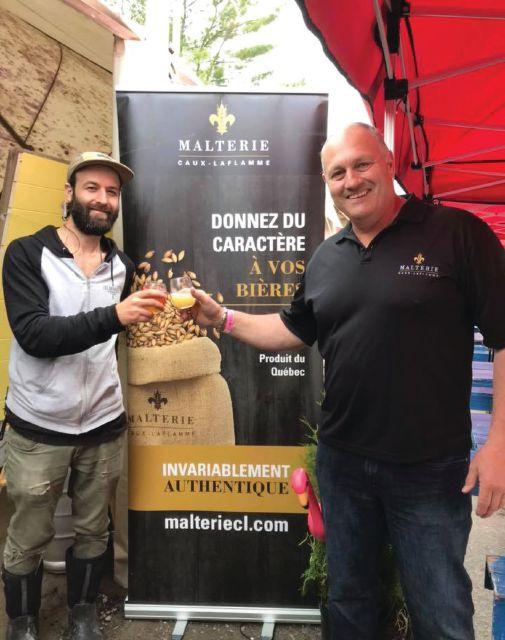
Malterie Caux-Laflamme’s Normand Caux (right) with Felix St-Hilaire from Microbrasserie Les Grands Bois.
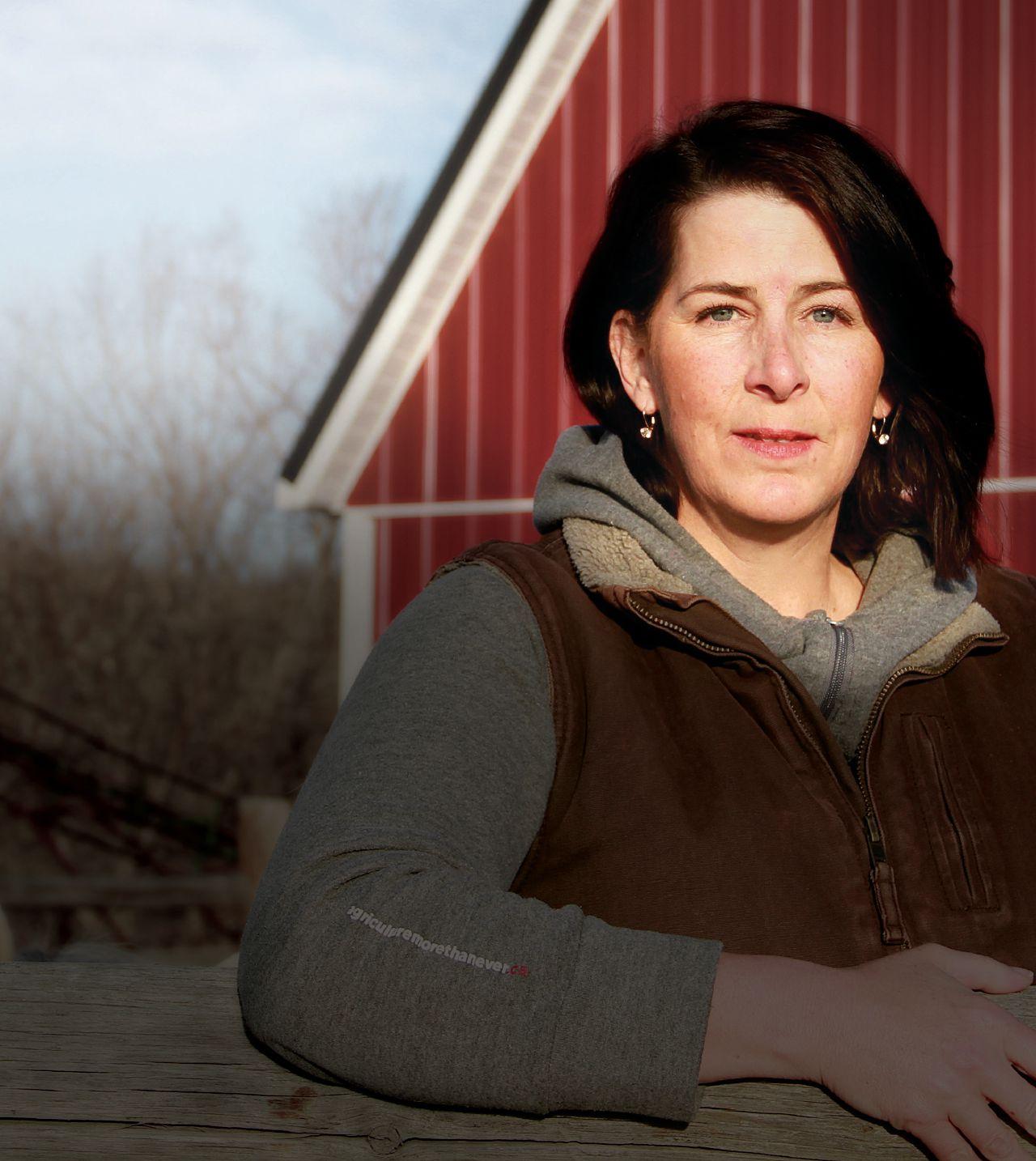
Tamara Carter Co-founder
Carter Cattle Company Ltd. Lacadena, SK
“ We started with a German pilsner malt, and then an English pale ale malt in the British tradition and a Belgian pilsner. We wanted to try to capture the essence of the different brewing traditions and make malts that would represent these traditions.”
Since then, the malthouse has branched out from these types of barley malts to also produce malts with other grains.
Vachon notes, “We work closely with farmers to get the grain. We buy mostly barley and some wheat, and one malt I personally really like is made with oats – it brings all kinds of interesting flavour profiles. I’m also looking into maybe making 100 per cent oat beer. It would be a lower alcohol, really creamy, really refreshing beer, and I think that would catch on.”
MaltBroue
“ The reason why we founded MaltBroue (www.maltbroue.com/ en/) was because we wanted to add value to the crops growing on our land,” says Cindy Rivard. She and her husband and business partner Dany Bastille started MaltBroue about 14 years ago and launched its first malts on the market in 2008.
“ We wanted to settle on the shore of the magnificent Témiscouata Lake. My husband grew up here so we decided to take over the family farm. At first, we had the dream of doing all the steps –growing the barley, malting and brewing beer. But when we began to work on the project, we learned that malting was a job with a lot of technical aspects and so was brewing. So, we decided to stick with malting only,” she explains.
“And we decided to offer specialty malts to Quebec brewers because there was no one here offering those. Even now, we are the only one offering caramel malts in Quebec.” Specialty malts are used to add colour, flavour or body to beer.
“ We produce barley caramel malts and also rye and wheat caramel malts.” She adds, “Sometimes brewers think we only work with brew pubs, the very small brewers, but we also supply our malts to craft breweries that are a little bigger; for instance, we work with breweries like Oshlag, Pit Caribou and Les Trois Mousquetaires.”
Rivard and Bastille are currently looking into the possibility of producing barley flakes and oat flakes for breweries. These flakes are used by brewers for many reasons, such as adding body or enhancing head formation in beers. Rivard notes that there are not a lot of locally produced flakes available in Quebec, so it could be a good opportunity for MaltBroue, and another way to add value to local cereals.
With MaltBroue’s increasing malt production, their farm doesn’t produce enough barley to meet all of the malthouse’s needs, so they also buy from other cereal growers in the area.
Rivard says, “Of course, first and foremost, the grain we use must absolutely meet the quality requirements for malting. Beyond that, it is just logical for us to use cereals that have been grown as close as possible to our farm and malthouse.”
Malterie Caux-Laflamme
“Malterie Caux-Laflamme (malteriecauxlaflamme.com) started in 2016. Normand Caux, the founder of this malthouse, had been a milk producer. But because of an injury he wasn’t able to do that anymore, so he sold his quota. He was searching for a second career and decided to start the malthouse because he had been producing malt barley,” says Vincent Roy, the operations manager for Malterie Caux-Laflamme.
“ With the help of a local engineering firm, we designed an all-in-one vessel for malting. So, we do the steeping, germination and kilning in the same vessel. In 2016, we started with one of these vessels and now we have three.”
Malterie Caux-Laflamme makes a pale malt with barley. He says, “Instead of making four or five recipes, like a Munich malt, a Vienna malt and so on, and only supplying a few breweries with each malt, our approach is to go with one recipe and supply a lot of breweries. And then our expansion plans are to produce other recipes for those breweries.”
Along with the barley malt, the malthouse also makes wheat malt and rye malt. 40 per cent of its production is organic malt.
Malterie Caux-Laflamme is located near Saint-Narcisse-deBeaurivage. In the malthouse’s first year, the Caux farm was able to produce all the barley needed for their malt production. Since then, the malthouse’s production has increased, and the farm now supplies about a quarter of malthouse’s needs. The rest of the barley is purchased from other Quebec producers.
“ We make contact with a lot of producers from each region in Quebec and purchase barley from each region. That way we can make malts for the craft breweries in each of those regions from the barley that was grown in their own region,” Roy explains.
He adds, “For us, buying locally grown barley was an easy choice because we are a barley producer and we know a lot of other producers. And we also understand the value of the farm and farmland.”
The Maltraiteur
The Maltraiteur (www.lemaltraiteur.com) is located in TroisRivi è res, and Luc L é vesque’s business plan for his malthouse focuses on serving the surrounding Mauricie and Centre-duQuébec regions. “My concept of the enterprise is to provide the bridge between the local growers and the local brewers. The idea is to grow the cereal here, transform it into malt here, brew it here, and consume the final product here.”
Lévesque first started thinking about setting up a malthouse in 2013. “I was a home brewer, making beer with friends, and I got interested in trying recipes and experimenting with malting.”
S o, he researched the concept, developed a business plan, studied the technical aspects of malting – including learning about traditional malting at a craft malthouse in France – and gradually scaled up his operation. The Maltraiteur started commercial operation in 2018.
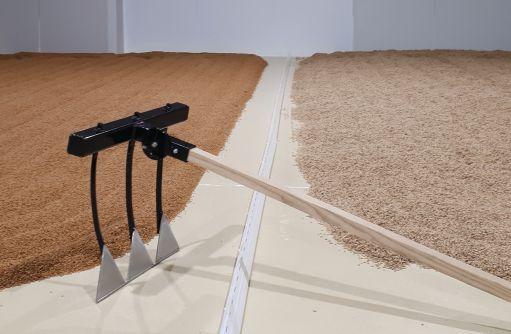
“ The Maltraiteur makes floor malts. Floor malting is a tradi-
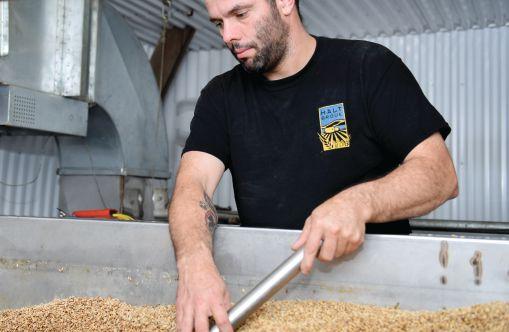
MaltBroue’s operator Yvan Bouchard making malt in the malthouse.
PHOTO COURTESY OF LUC LÉVESQUE, THE MALTRAITEUR.
tional style of malt production [where the grain is germinated on the malthouse floor] to make more aroma and flavour. It is a very distinctive approach,” he explains.
“Principally we make base malts – a pale malt, a UK-style pale, a pilsner malt, and a Munich malt – from barley. And we also make wheat, rye and oat malts.”
A s well, the malthouse produces smoked malts, which are mainly for Quebec microdistilleries to use in making whisky. To create smoked malts, special equipment is used to pass smoke through the grain during kilning. Lévesque says, “We use different types of wood to give each of our smoked malts an original flavour. We smoke with maple, peat, beech, oak – the sky is the limit.”
All of the crop growers who supply cereals to The Maltraiteur are within about 50 kilometres of the malthouse, and they all have Agrinature certification through BioMalt Mauricie. L é vesque explains that Agrinature certification is between conventional agricultural production and certified organic production. It is less expensive and a little easier to achieve than organic certification, but inspectors do visit the growers to certify that they are meeting Agrinature’s criteria for environmentally friendly practices, such as not using pesticides.
L é vesque likes using locally grown cereals because of the terroir, and he also likes being part of the craft brewing value chain, with its spinoff benefits to local communities. Especially with the growing popularity of craft brewery tours, many people are exploring small towns and villages that have microbreweries, tasting the beers, and discovering new beers that they want to buy.
Strengthening the value chain for barley growers
M alterie Caux-Laflamme is committed to increasing and enhancing malt barley production in Quebec. Roy points out that barley production in the province has fallen in recent years while production of higher value crops like soybean has risen. For instance, Quebec’s barley production declined from 520,000 tonnes in 2001 to 151,100 tonnes in 2019, but soybean production increased from 315,000 to 1,051,000 tonnes.
“It is really important to keep the pricing up for the barley so we will still be able to purchase great quality barley here in Quebec,” Roy says.
“For instance, if a producer’s malting barley is exceptional quality, we give them a bonus [unlike some big malting companies]. That way we make the producer happier and it makes the land more efficient.” Adding a cereal like barley into a crop rotation along with corn and
soybeans makes the rotation more diverse, which provides benefits like fewer problems with crop diseases, insect pests and weeds.
Roy notes, “We can also teach producers about practices to make great barley for malting. For instance, it is crucial to have a good system for ventilating the barley in storage. Right now, for a lot of producers, the quality of their stored barley is going down each week because of their storage conditions.”
Vachon has noticed that the demand for Quebec barley from craft malthouses is encouraging some growers to get back into barley production. “And often for the farmers it’s not about making a lot of money; they find it interesting that they can produce something that went into producing a really cool beer that they can go with their friends and drink.”
B oth Rivard and L é vesque say that craft malting can allow closer connections between the grain producer and the maltster and between the maltster and the brewer, which can help in finding options that work well for everyone.
For example, Lévesque says, “Everyone in the value chain has to be happy with the barley variety you use. The variety needs to grow well here so the growers can get good yields and reasonable returns from their crop. And we have to test the grain to make sure it will meet the quality specifications of our malthouse and the breweries we work with.” Currently, The Maltraiteur is using CDC Bow, a high-yielding, two-row malt barley that performs well in Quebec growing conditions and makes malts with a lovely aroma that is of interest to breweries.
Strengthening the value chain for brewers
“Quebec is a great scene for craft breweries; the industry is really booming. But a lot of the craft breweries are less than five years old. And from what we have seen, in a craft brewery’s first few years, they just want to make their business plan work. So, they don’t look at the malt and the hops and going organic or going local,” Roy says.
“So, it’s pretty rare that a craft brewery starts up with 100 per cent local purchasing. That tends to come after two or three years, once they know their business plan is working, and they start thinking about how they can express themselves with more locally grown ingredients.”
In the past few years, Roy has noticed that more and more Quebec craft breweries are moving into this second phase of their business. “In November 2019, the Association des microbrasseries du Québec (AMBQ, Association of Quebec Craft Breweries) held its 10th annual meeting. Four years ago, when we first attended an AMBQ meeting, almost none of the craft breweries were interested in craft malts; they were not ready to look inside their brewery to change their recipes. The most difficult thing for a brewery is to change an existing recipe that is working well and change the ingredients, like the malt and the hops, for locally grown malt and hops,” he says.
“But this November, when we went to the AMBQ meeting, we didn’t have a minute alone; we were continually pulled off for discussions with brewers. And it was the same for every other malthouse. There is really a movement going on, but we need to continue on that vibe.”
Vachon would like to see this movement grow, with more Quebec craft breweries working on enhancing the uniqueness and the distinctiveness of their beers. “It would be interesting for the brewers to give themselves the freedom to explore new territories.”
Continued on page 26
The Maltraiteur uses floor malting, where the grain is germinated on the malthouse floor.
SUDDEN DEATH SYNDROME CONTINUES TO SPREAD IN SOUTHERN ONTARIO
Experts say the disease is increasing in severity every year.
by Julienne Isaacs
It’s news to no one that sudden death syndrome (SDS) in soybeans is established in southern Ontario. According to new disease survey data, the disease is most severe in Chatham, Elgin, Norfolk and Essex counties, says Owen Wally, a plant pathologist with Agriculture and Agri-Food Canada.
But the disease continues to spread, increasing in severity every year, says Albert Tenuta, field crop pathologist for the Ontario Ministry of Agriculture, Food and Rural Affairs (OMAFRA), who worked with Wally on the survey.
“We’re starting to see it in Middlesex, North London and Perth as well,” he says. “Anywhere where you find soybean cyst nematode (SCN), you’ll find SDS as well, either immediately or soon after. That’s been a common feature with the spread of SCN – these diseases seem to go hand-in-hand.”
SDS is a soilborne fungal disease caused by Fusarium virguliforme.
The pathogen can stay dormant in the soil for more than a decade, and once it’s in a field it’s nearly impossible to eradicate.
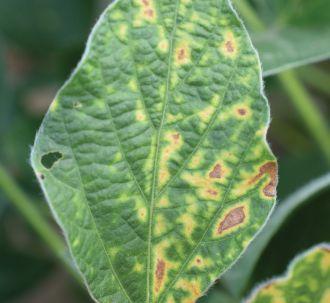
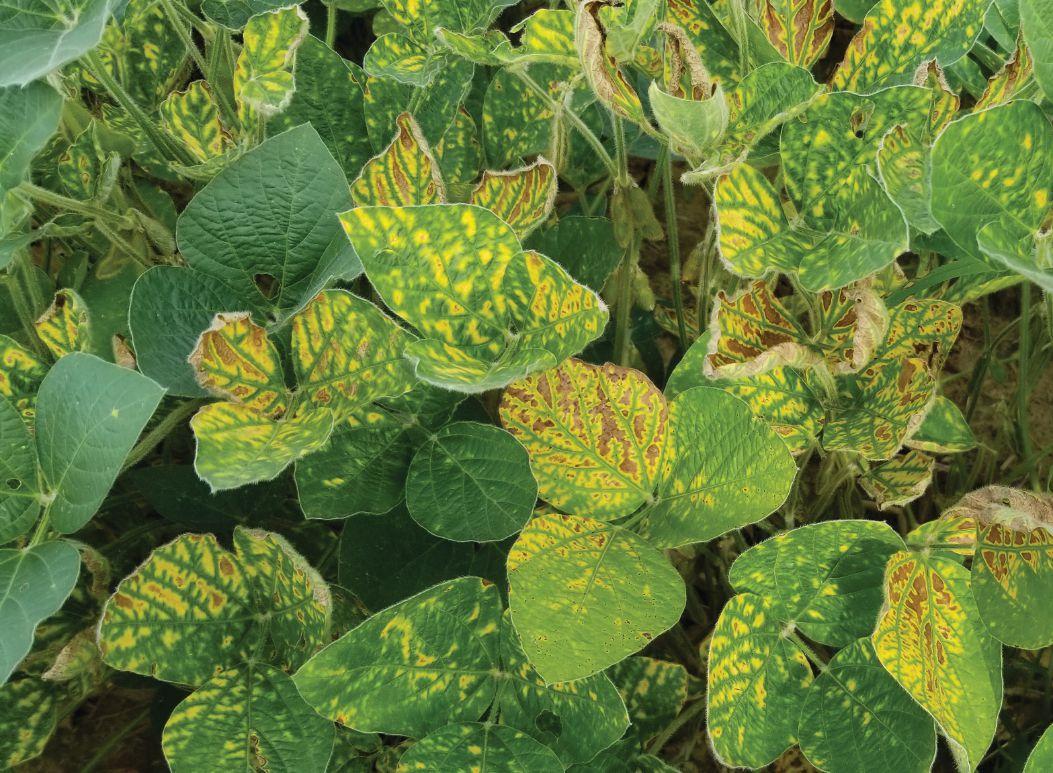
The fungus infects soybean roots and produces a toxin that translocates through the vascular tissue of the plant, eventually entering the leaves and causing characteristic interveinal chlorosis, or browning of the leaf tissue between the veins. Eventually the leaves yellow and die. In severe cases the disease can cause complete defoliation.
Wally says in bad fields, producers could be facing 30 per cent yield losses. In some parts of Elgin County, producers are looking for alternatives to soybean because the disease is so severe.
Sudden death syndrome earned its moniker because the
ABOVE: Interveinal chlorosis, or browning of the leaf tissue between the veins, is a sign of sudden death syndrome in soybeans.
process can happen very quickly, Wally says.
“Plants will go from looking good to just dying in a couple of weeks – especially when conditions are right. If we get a flush of rain through an area in late July to midAugust, that can exacerbate disease progression.”
Tenuta adds that the disease can be particularly frustrating for producers because it seems to affect fields with the highest fertility and yield potential – in other words, the best fields. These fields – which often boast otherwise healthy, productive soils – offer the perfect environment for the fungus to develop.
Predictors for SDS
Tenuta says the research community has invested a lot of time and resources investigating the connection between SDS and SCN.
One reason why the diseases so often go hand-in-hand, he says, is that the cysts on soybean roots caused by SCN are often colonized by F. virguliforme. The pathogen is one of a complex of Fusarium pathogens for root rot, and when the nematode “opens the door” into the root, it’s easier for fungal pathogens to enter and establish.
“You could almost say that SCN is a vector for SDS,” Tenuta says.
He adds that anywhere SCN is established, SDS is likely to follow.
Tenuta is part of an SDS consortium with researchers south of the border. He says their combined data shows other connections producers should be aware of. For example, SDS can be a problem in cornsoybean rotations. F. virguliforme is not a pathogen of corn, but it has adapted to the point where it can use corn as a substrate or food source to continue development in non-soybean years, says Tenuta.
“What that means is that, as corn is harvested and residues are left in the field – particularly corn roots, cobs, kernels –these act as a substrate for the SDS Fusarium to grow and to increase, even though you have a non-host in the field.”
SDS is prominent in the U.S. corn belt, where corn and soybeans are often grown in tight rotations, allowing the pathogen to adapt and survive on corn.
But the connection is no longer confined to the U.S.; research plots have shown the corn residues are a suitable host for SDS Fusarium in Ontario, too.
AGRICULTURE
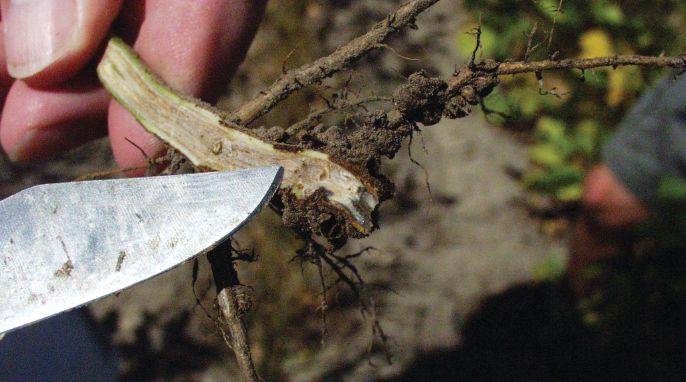
Brown root decolourization caused by SDS infection.
Management
Wally says the first step for managing SDS is correctly diagnosing the disease. Interveinal chlorosis caused by the disease can be misread as brown stem rot or stem canker. It also looks a little like potassium deficiency.
“When we get reports of suspected SDS from agronomists, usually it’s SDS only about half of the time,” he says.
Tenuta says producers should be alert to whether SCN levels are increasing or decreasing in their fields. Because of the positive relationship between the two diseases, if SCN is on the rise in a field, SDS will likely follow suit. Because the two diseases are so closely connected, the most important management technique for producers is to handle them together.
First and foremost, this means selecting soybean varieties with good resistance.
“Regardless of what disease we’re talking about, the cornerstone of management is genetics. In the case of integrated management for SDS, it starts with varieties that have good tolerance or resistance to SCN as well,” he concludes.
Early planting, when the soil is too wet or cold, can also favour the SDS pathogen. Producers can minimize risk by planting later, in drier conditions. This does not mean waiting until yield potential is compromised, but rather holding off a few days until the soil is fit for planting, Tenuta says.
In 2019, SDS was a major problem in the southwest, and this relates to planting conditions. “Many producers said the ground
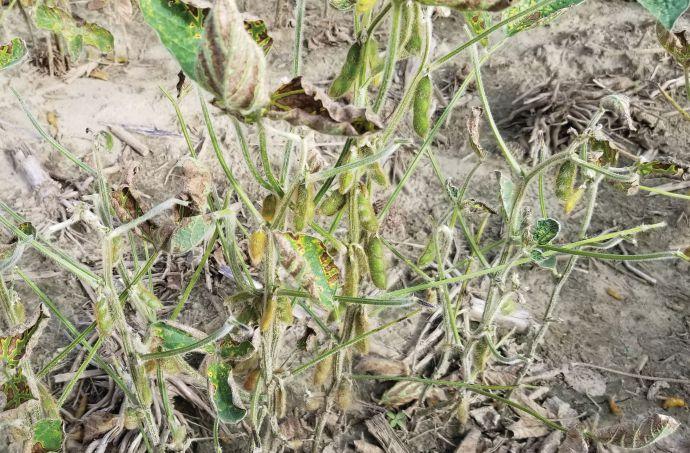
In severe cases, sudden death syndrome can cause complete defoliation.
wasn’t quite fit when we planted. That falls squarely into SDS’ favour. Make sure the ground is fit to get in there as soon as possible but under good conditions.”
Tillage or strip-tillage can also help warm up the soil pre-plant.
Research has also shown that a three-crop rotation including a cereal such as wheat or oats can help mitigate the effects of SDS, Tenuta says, particularly because the pathogen has adapted to a corn-soy rotation.
But another approach is seed treatments. Two promising options are available with others on the horizon for Ontario producers. The first is ILeVO, a Group 7 BASF
chemistry containing the active ingredient Fluopyram. ILeVO is proven to reduce SDS severity in Ontario, says Tenuta.
Syngenta’s Saltro, which contains the company’s new Adepidyn (pydiflumetofen) Group 7 chemistry, is also in the queue for registration in Canada.
No seed treatments can completely eliminate SDS, but they can help limit disease establishment. “These seed treatments delay the development of the disease and hence the disease severity and potential yield impact – and a delay of two or three weeks in August makes a big difference in seed fill and yield potential,” he says.
The Crop Protection Network (https://cropprotectionnetwork.org/) is a good source of up-to-date research and extension information on soybean cyst nematode and sudden death syndrome management as well as other issues for producers in the U.S. and Eastern Canada.
TERRIFIC MALTS WITH
A QUEBEC TERROIR
Continued from page 23
With that in mind, Vachon is now developing a new Pirate portfolio of malts, which Malterie Frontenac will launch in 2020. These malts are inspired by Vachon’s three-year-old son, who loves everything to do with pirates, and Alestorm, a pirate metal rock band that Vachon really likes. “Alestorm has a song [with the lyrics], ‘We are here to drink your beer!’ and I thought, ‘This is totally awesome because this is totally what I want to do.’ The inspiration just came flowing from there, and their really cool songs about Vikings, odysseys, quests and storms,” he explains.
“I thought if we were to make malts inspired by these songs –storm malt, quest malt, Viking malt – I would have to work with really interesting specs that go out beyond what are currently the usual specs for malt. So, these new malts are going to be very unique malts with very special properties, and a tribute to Alestorm’s spirit of fun, freedom and joie de vivre. And hopefully a lot of cool,
innovative, distinctive beers will come out of these malts.”
Another sign that Quebec’s craft breweries are becoming very interested in using local ingredients is a new multi-stakeholder consultation that started in the spring of 2019.
“It is an AMBQ initiative. They had the request from their members, the brewers, to do something to get more ingredients locally,” Rivard says. She explains that the craft breweries are interested in using local ingredients, but they want to be sure they can get sufficient supplies and consistent quality.
“So, all the players in Quebec’s microbrewery sector – the brewers and the people who produce the grain, the malt, the hops, and the yeast – have come together, and we are in a strategic planning process.”
She adds, “As maltsters, we know that we produce really quality malt. Better communication with the brewers could increase their confidence in our products.”
T his initiative holds promise for further strengthening Quebec’s beer value chain so everyone from the local growers to the beer drinkers will continue to see increasing benefits –including many flavourful, unique beers. Cheers to that!
TAKE THE NEXT LEAP FORWARD
Introducing the new 8 S eries Trac tor s, now available with wheels, t wo track s and the all-new four-track con figuration A ll built with more comfor t and convenience thank s to a larger, re fined c ab, plus added p ower and legendar y reliabilit y. W hat ’ s more, they ’ re completely integr ated with precision ag technolo gy. T hey make it eas y for you to t ake advant age of precision ag solutions to help increase your yields, lower your cost s and improve the e f ficienc y of ever y job T hey ’ re full y integr ated, full y c ap able and – thank s to the best dealer net wor k in the industr y – full y supp or ted
S o if you ’ re ready to t ake your op eration for ward, t ake time to see your John Deere dealer to day.
NATURE’S TRIFECTA
THREE CROP-FRIENDLY NUTRIENTS BALANCED IN EVERY GRANULE
Sometimes the best solutions aren’t engineered, they’re discovered. From a unique mineral found at only a few locations in the world, K-Mag® features crop-friendly potassium, magnesium and sulphur with low chloride levels and neutral pH. The result is a safe and powerful crop fertilizer that allows every plant to get the nutrition it needs to achieve its full potential.