Study examines the nutrient benefits cover crops provide PG. 5
IT’S MORE THAN A NEW FUNGICIDE. IT’S A NEW ERA.
Setting the new standard with two active ingredients that target white mold.
With the rising incidence of white mold, Cotegra™ fungicide couldn’t have come at a better time. Cotegra provides best-in-class management of white mold in soybeans, dry beans and canola. It also protects soybeans against other key foliar diseases, including frog eye leaf spot and septoria brown spot. In other words, Cotegra is a game changer. Visit agsolutions.ca/cotegra/east to learn more.
TOP CROP
5 | Cover cropping to capture nitrogen Red clover, alfalfa increase N and minimize leaching.
By Julienne Isaacs
10 | Scoping out soybean disease A survey and risk assessment for the province’s soybean growing areas. By Carolyn King
An action-packed off-season
Jennifer Paige
7 Understanding inoculation and N fixation in pulse crops By Ross McKenzie
ON THE WEB
TOP CROP MANAGER'S WEBINAR SERIES
Pyramided anthracnose resistance in dry bean By Madeleine Baerg
A closer look at western bean cutworm in Ontario
Carolyn King
Top Crop Manager's inaugural Webinar Series has hosted a number of industry professionals, discussing timely agronomic topics, such as the effects of salinity on crop growth and production, new midge species, and seeding rates and dates for irrigated cereal and oilseed crops.
Check out these free, 60-minute sessions at Topcropmanager.com/webinars
16 | Shining a light on problem fungi Study shows ultraviolet light reduces fungi and fungal toxins. By Carolyn King
Yield/anti-yield gene alleles in dry beans By Trudy Kelly Forsythe
New tools for grain bin monitoring
Julienne Isaacs
Readers will find numerous references to pesticide and fertility applications, methods, timing and rates in the pages of
Manager. We encourage growers to check product registration status and consult with provincial recommendations and product labels for complete instructions.
JENNIFER PAIGE | ASSOCIATE EDITOR
AN ACTION-PACKED OFF-SEASON
With industry meetings and conferences in full swing across the country, many producers have taken the winter months to seek out information and networking opportunities. As I recently navigated my way through a number of sessions at the SouthWest Agricultural Conference (held in early January at the University of Guelph Ridgetown campus), the turnout painted an obvious picture. The classrooms and auditoriums were filled to capacity – farmers were hungry for the latest information from industry experts.
The two-day event offered a packed agenda, touching on everything from seeding to marketing. In a conference presentation entitle, Drying and Storage Pitfalls, John Gnadke from Advanced Grain Systems Inc., explored best management practices for various drying and storage operations.
“There are special considerations associated with producing quality grains that growers should be prepared to manage. Careful and proper harvesting, drying, handling and storage of grain are necessary to ensure full grower rewards are realized,” Gnadke said. “A farmer drying grain in temperatures below 50 degrees (Fahrenheit) had six per cent cracked and broken kernels, resulting in discounts exceeding $50,000 for his total dried bushels. I was on-site the next year to help him reset his tower dryer so that corn exited at no less than 75 degrees F. The result was no discounts for cracked and broken kernels.”
With forty years’ experience working with multiple grain drying systems, Gnadke has spent many hours advising and educating producers, helping them enhance their grain management skills.
He recommends checking grain temperature by, “Placing a thermometer 12-inches deep in the grain at the top of the bin on drying bins, or positive aeration bins or attach it in front of the aeration fan on negative aeration bins. With the thermometer at these locations, it will read the highest temperature the grain is “feeling” and by comparing it to the average daily temperature you will know if you are within 10 F of outside air.”
How are you monitoring your stored grain, and what tools are you using? (Wireless, solar powered, mobile, handheld probes, manual monitoring?) In this month’s issue of Top Crop Manager, our special section is dedicated to storage with a look at the latest in grain bin monitoring tools. Check out what will be coming down the technology pipeline in 2018 on page 18.
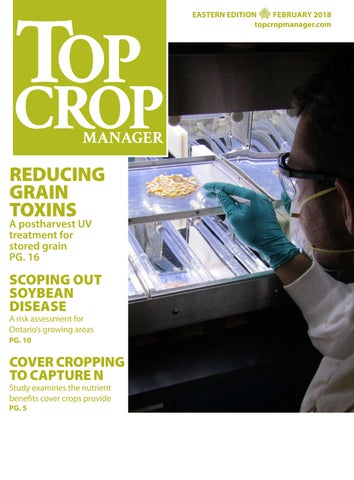
The special storage-focused section also includes our cover story on page 16, Shining a light on problem fungi, which discusses a recent feasibility study that shows ultraviolet light reduces fungi and fungal toxins on corn and wheat kernels.
“The objective is to explore the feasibility of UV treatment as a postharvest intervention for reducing Fusarium and Penicillium growth at different points of [the cereal value chain] because we don’t know where exactly it can be applied yet,” explains Tatiana Koutchma, a research scientist with Agriculture and Agri-Food Canada in Guelph, Ont.
As the industry continues to innovate and develop the tools you need to increase productivity and profit, you can be sure Top Crop Manager will be a part of it, providing you with the latest news, research and reports to aid in management decisions.
CIRCULATION email: rthava@annexbusinessmedia.com Tel: 416-510-5600 ext. 3555 Fax: 416-510-6875 or 416-442-2191 Mail: 111 Gordon Baker Rd., Suite 400, Toronto, ON M2H 3R1
SUBSCRIPTION RATES
Top Crop Manager West – 9 issues February, March, Mid-March, April, June, September, October, November and December – 1 Year$47.50 Cdn. plus tax
Top Crop Manager East – 7 issues February, March, April, September, October, November and December – 1 Year - $47.50 Cdn. plus tax
Potatoes in Canada – 1 issue Spring – 1 Year $17.00 Cdn. plus tax
All of the above - $80.00 Cdn. plus tax
COVER CROPPING TO CAPTURE NITROGEN
Red clover, alfalfa increase N and minimize leaching in the fall.
by Julienne Isaacs
Over the past several years, interest in cover cropping has increased in Ontario, says Laura Van Eerd, an associate professor in the School of Environmental Sciences at University of Guelph’s Ridgetown Campus.
“Over the past five years we have had cover crop open houses on campus in the fall and we can get 20 to 30 people coming out,” she says. “Now we’re getting new people, including certified crop advisors, input providers and crop consultants, and they in turn reach many more people.”
A growing body of research is helping point out the benefits of cover cropping. Van Eerd’s research program looks at how management practices (such as cover cropping) influence nitrogen availability and soil health. She is the corresponding author on a new study looking at the role of legume cover crops in maximizing nitrogen availability to corn.
Led by then-master’s student Claire Coombs, the team conducted a field study over four site years between 2012 and 2014 to assess nitrogen dynamics and grain corn yield in a cover crop-corn rotation.
Results showed that the use of legume cover crops minimizes nitrogen loss from the soil, and the use of alfalfa or red clover as a cover crop resulted in overall increased levels of nitrogen in the system. In one of the two years of the study, the team also observed a boost in corn yields after use of alfalfa or red clover as a cover crop.
According to Van Eerd, the team used a winter wheat system so cover crops planted after harvest could have a long growing season before corn planting the following year.
Van Eerd explains that red clover is commonly underseeded with winter wheat, or frost-seeded in the early spring. “In that system, it can work wonderfully; however, in some years you’ll have variable red clover stands, from nothing to lush stands.”
“Our question was, if you have a variable stand when you harvest winter wheat, what is the value of planting red clover, alfalfa or crimson clover after harvest, and how should you do it? If you have to plant after wheat harvest can you get a similar response to underseeding red clover?”
When the team began the study, crimson clover was becoming more widely available. “We learned quite a lot,” Van Eerd says. A warm-season cover crop, crimson clover is not competitive and, in the trial, wasn’t suitable for underseeding with winter cereals. “We didn’t do this in our study, but based on what we’ve seen since starting the study, crimson clover is nice in a mix that is drilled in the
summer after winter wheat,” she says. “If you’re going to plant a cover crop mix it works okay there, but be prepared to have to terminate it in the spring.”
Research findings
Coombs, who now works as an educator at Penn State Extension in Pennsylvania, says she compared three different cover crops with a no-cover crop control. In the control plots, three nitrogen fertilizer rates were used (no nitrogen added as a side dressing, a low rate of 100 pounds per acre (lbs/ac) added, and a high rate of 200 lbs/ac added).
“These three rates would allow for comparison between the amount of nitrogen in the cover crop plots during corn season and a fertilized corn plot,” Coombs explains. “We also split all our plots to be tilled in the fall or spring to determine if different tillage timing would influence nitrogen cycling.” Results showed that delaying tillage to the spring meant overall nitrogen levels increased in the system compared to fall tillage.
Coombs notes the most significant finding had to do with the amount of nitrogen available for uptake or loss. Use of a cover crop means the amount of nitrogen available for loss is significantly lower than when a cover crop is not used.
“The three cover crops I studied all reduced the amount of nitrogen that was in the soil during the non-growing season and could potentially be lost to the surrounding environment,” she says.
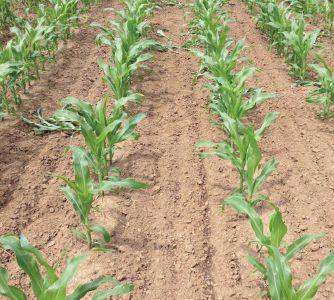
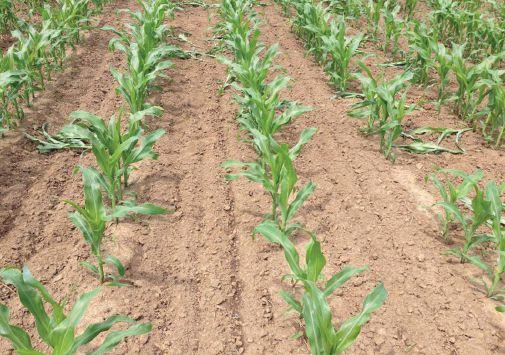
Corn seedlings emerging after termination of a cover crop.
Benefits did differ depending on the cover crop used. Red clover and alfalfa had higher nitrogen levels in the system versus crimson clover or no cover crop. “This indicates that there should be more nitrogen in the system at corn planting when one of these two cover crops are used as compared to not having a cover crop in the rotation,” she says.
Though there was a demonstrable improvement in the amount of nitrogen left in the system at corn planting, Coombs says it was difficult to track nitrogen availability throughout the corn growing season, or to assess the ongoing benefits of the previous season’s cover crop.
According to Coombs, the results of her study should encourage more producers to add cover crops into their rotations. “Though our study did not show a significant yield improvement, several other studies have demonstrated the positive effects of cover crops on yield,” she says.
“I would recommend producers start with a mid-rate (six to eight lbs/ac) and allow it to grow for as long as possible. I would also encourage allowing the crop to overwinter and terminating in the spring only a few days before corn planting.”
What to consider when choosing a cover crop
Each cover crop has its own attributes, some are better suited for particular uses than others. Consider the following when making your selection:
• What are your goals with that cover crop? Erosion protection, grazing, nitrogen production
• What kind of growth habit is needed?
• When is the growth required? Lots of vigorous late fall growth or rapid early spring growth? Is deep rooting important?
• Do you need the cover crop to survive overwinter?
• Will the cover crop become a weed concern?
• How sensitive is the cover crop to herbicide residues from other crops in the rotation?
• Seed cost and availability?
• How easy is it to establish? Will it create a solid cover? (Good establishment is critical to the success of the cover crop)
• Is it a nitrogen producer or does the cover crop require nitrogen to grow well? Does it scavenge well for nitrogen?
Source: Ontario Ministry of Agriculture, Food and Rural Affairs
NATURE’S DESIGN
THE PROCESS OF PULSES
Understanding inoculation and nitrogen fixation of legume crops.
by Ross McKenzie PhD, P. Ag
Legume crops are unique in that they can fix much of their own nitrogen (N) requirements from the air to reduce or eliminate the need for N fertilizer. Legume crops include, alfalfa, clover, soybean, dry pea, bean, lentil, fababean and chickpea.
Legume crops form a relationship with living bacteria called rhizobium. Rhizobia bacteria live in association with legume plant roots to convert N from the air into useable N for the plant.
The atmosphere contains about 79 per cent nitrogen gas. Atmospheric nitrogen gas (N 2) exists as two N atoms with very stable bonds that are not easily broken. As a result, N 2 is relatively unreactive and not available for uptake by most plants, except for legumes.
Understanding biological nitrogen fixation
Biological N fixation transforms atmospheric N 2 gas into plant available N forms by N-fixing bacteria. These bacteria are a broad group of single-celled organisms capable of fixing N by producing nitrogenase, an enzyme that catalyzes the reaction that breaks the strongly bonded N 2 gas into ammonia-N (NH 3).
Nitrogen fixing bacteria can occur as free-living microbes in soil, or as bacteria that live in association with legume plant roots. The N-fixing rhizobia bacteria that live in association with plant roots form nodules on legume roots.
The protective environment of the nodule is ideal for the rhizobia and the nitrogenase enzyme. Legume plants provide carbohydrates to sustain the bacteria. In return, the rhizobia bacteria provide ammonia-N to the plant, which is rapidly assimilated into organic N compounds. The relationship between the N-fixing bacteria and the plants is symbiotic, meaning both the legume plant and the rhizobia bacteria benefit from the mutual association.
Healthy soil contains vast populations of bacteria. Each legume plant requires specific rhizobia bacteria for the symbiotic relationship to form root nodules. For example, the rhizobia bacteria that form symbiosis with pea, lentil and fababean will not form symbiosis with other legumes. Most prairie soils lack the specific rhizobia needed for effective legume nodulation.
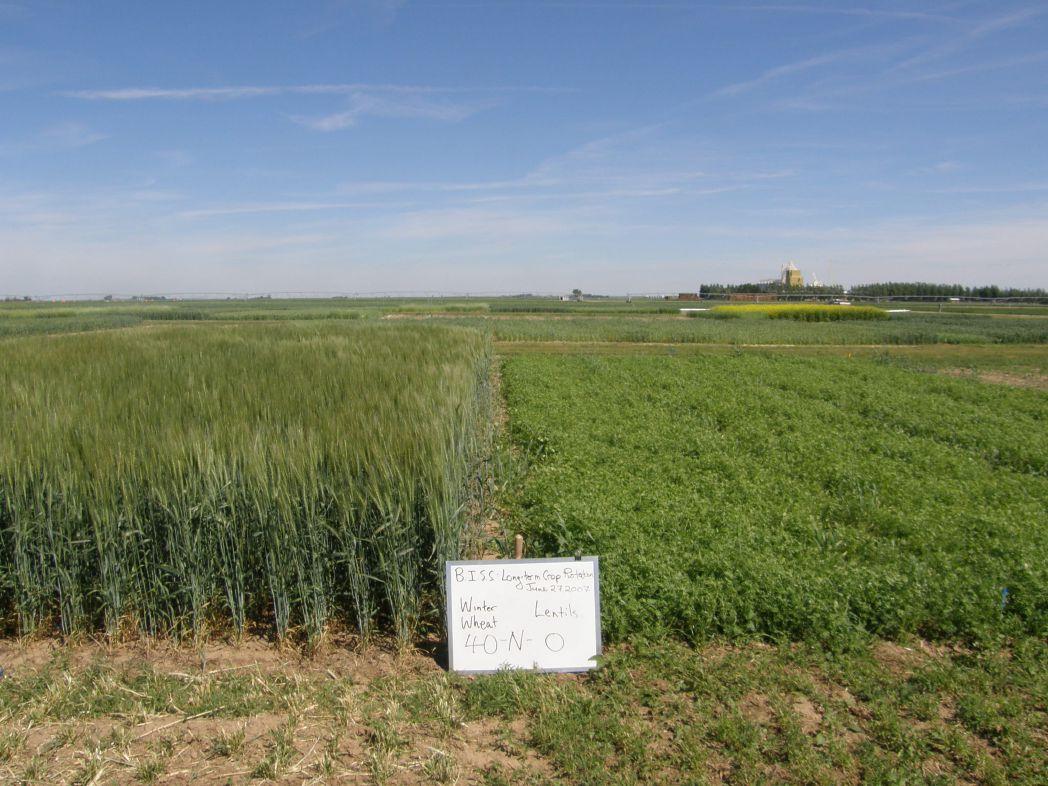
ABOVE: Lentil on right and winter wheat seeded in lentil stubble in long-term rotation plots at Bow Island, Alta.
PHOTOS COURTESY OF ROSS MCKENZIE.
This means legume seed must be properly inoculated with the correct specific rhizobia bacteria (Table 1).
Rhizobia can live freely in soil for several years, without a legume host plant. When free-living in soil, they survive on dead or decaying organic matter. Introduced rhizobia that survive in soil often gradually lose the ability to fix higher levels of N. As a result, for effective N-fixation to take place, legume crops should always be inoculated.
Nodulation of legume roots
The ability of rhizobia bacteria to infect plant roots is very unique and complex. Plant roots must differentiate between numerous micro-organisms and beneficial rhizobia bacteria. For rhizobia infection of legume plant roots to occur, there are unique multi-step interactions or communications that take place between the legume roots and rhizobia.
The process is very complex, but simply explained, plant
root hairs release specific substances called flavonoids, which are used to attract specific rhizobia. Each legume type secretes a different type of flavonoid, therefore only certain rhizobia respond to specific flavonoids. The rhizobia bacterial use flagella, a tail-like structure, to move in the soil solution toward the plant root hairs secreting the specific flavonoid. Movement is limited to a couple of millimetres in the soil. When a plant root is encountered, rhizobia attach to the surface of the root.
Inoculation of specific rhizobia on the legume seed results in nodules clustered near the vicinity of seed placement. When legumes are inoculated with rhizobia bacteria, placement on or very near the seed is essential to ensure contact between the inoculant and legume root hairs.
The root rhizosphere is the zone of soil immediately adjacent to the plant root, that is influenced by root activity. Roots take up nutrients like phosphorus and potassium from this zone. Roots also release nutrient rich exudates into the rhizosphere, which are an excellent source of nutrients for soil microbes including rhizobia bacteria. The abundant nutrition in the rhizosphere promotes rapid multiplication of the bacteria.
Pea, Lentil, Fababean Rhizobia leguminosarum
Dry Bean
Chickpea
Soybean
Source: Ross McKenzie
Rhizobium phaseoli
Mesorhizobium cicero
Bradyrhizobium japonicum
Small colonies of bacteria become anchored near the tip of the growing root hairs. The tip of a root hair curls around the rhizobia colony which becomes entrapped by the tip of the root hair. A deformation of the root hair occurs and a nodule develops, which contains the N fixing bacteria.
The plant provides carbohydrate and nutrients to the rhizobia, and in return the rhizobia provide useable N to the plant. There is increasing evidence that the symbiotic relationship between the plant and rhizobia is controlled to restrict too many nodules from forming on root hairs, to optimize the amount of
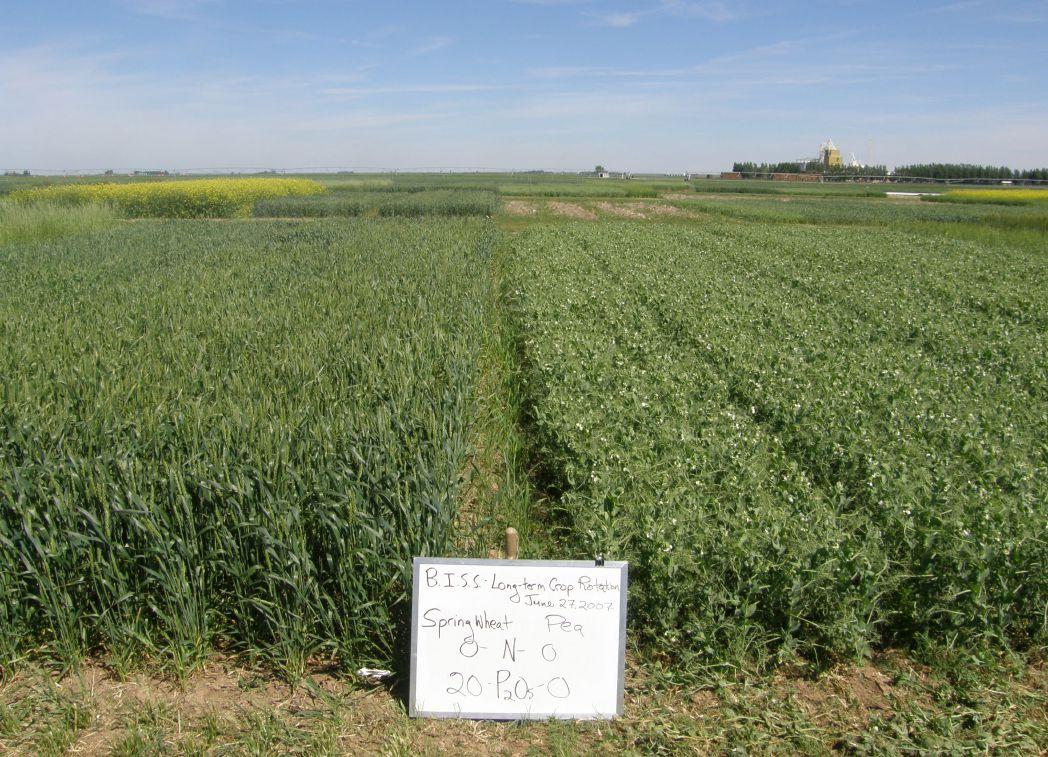
Pea on right and spring wheat seeded in pea stubble in long-term rotation plots at Bow Island, Alta.
Table 1. Recommended rhizobium bacteria for specific legume crops
Crop Rhizobia bacteria
Alfalfa, Sweat Clover Rhizobium meltoti
Clover Rhizobium trifolii
carbohydrate provided by the plant to the rhizobia, and in turn, optimize N provided to the plant for growth.
Scientists have done extensive work over the past 50 years to develop an understanding of the nodulation processes, to isolate the most effective strains of rhizobia bacteria and develop these strains into commercial inoculants to optimize N fixation.
Types and effectiveness of inoculants
An inoculant contains live bacteria that is placed on the seed surface or very near the seed. When purchasing inoculant, always check to ensure it is the correct rhizobium species for the crop being grown and check the expiry date on the inoculant container. After purchasing inoculant, make sure it is stored in a cool, dark environment to maintain the viability of the live bacteria in the inoculant. Always apply the inoculant according to the manufacturer specifications to ensure correct application and rates. Never mix inoculant with fertilizer as this often kills the bacteria.
There are three main types of inoculants:
Powdered – Fine peat containing rhizobia at a specific number per gram, applied directly to the seed. A sticker is usually needed to ensure rhizobia adhere to the seed coat.
Liquid – Contains the rhizobium in a buffered liquid, that is normally applied directly to the seed usually at the time of auguring and is held in place using a sticker. Some liquid inoculants are registered for use in a seed row application. Check label for correct application instructions.
Granular – Small, peat-based or clay based granules contain the rhizobium in a protective environment; the granular product can be accurately metered into the seed row. A separate tank and meter is required on the seeder.
Depending on soil environmental conditions, it takes threeto-five weeks after seeding for bacteria to infect plant roots, form nodules and start fixing N. The effectiveness of the inocu -
• Low rate of inoculant used or poor retention of inoculant onto seed surface
• After seed was inoculated - was planting was delayed? If so, the inoculant may not have survived on seed
• If seed bed environmental conditions were warm and dry after planting, desiccation of rhizobia may occur while seed was in dry soil and rhizobia may not survive
• If soils are cold or excessively wet after seeding, the rhizobia may not survive
• If soil nitrate levels are excessively high, this may inhibit root infection by rhizobia causing reduced nodulation
• When plants are under stress from factors such as a lack of moisture or low soil fertility, the nodulation process may be affected
"To take advantage of the N-fixing ability of legumes, it is important to use the correct rhizobium bacteria and follow proper inoculation recommendations."
lation process can be assessed by simply digging up and examining the plant roots for the number, size, colour and distribution of the nodules.
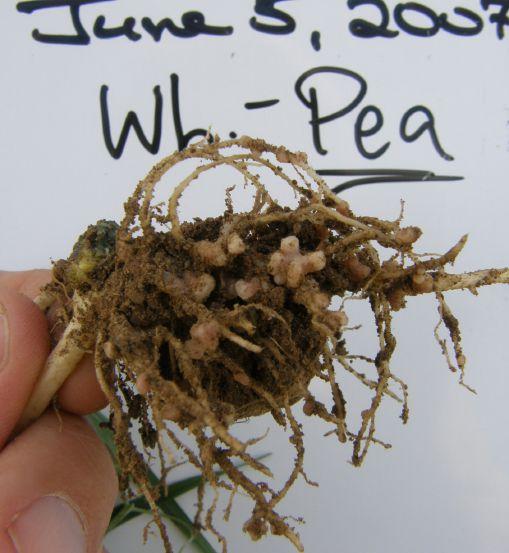
Nodules on roots close to the original location of the inoculant that are red or pink inside indicate the bacteria are functioning and fixing N. Nodules are likely not fixing N when the inside appears white, grey or greenish. Nodules distributed through the root system may indicate that native soil bacteria have also infected the roots. These bacteria may not function effectively in fixing N to meet plant requirements.
Possible reasons for inoculant failure
Inoculating a legume does not always result in successful N-fixation. When inoculant failure occurs, some possibilities to investigate include:
• Always save a sample of inoculant to check for viability, in-case of inoculant failure
• Was the correct rhizobium species used?
• Was the rhizobia viable? If not, was it due to poor storage?
• Some seed treatments can interfere with rhizobia survival. Was the seed treatment used approved for use with inoculants
Legume plants that have limited nodulation will often have lower yield potential. A rescue, in-crop application of N fertilizer may be needed to ensure a reasonable crop yield.
Legume crops are great to include in a diverse crop rotation. The need for costly N fertilizer is reduced or often eliminated for a legume. To take advantage of the N-fixing ability of legumes, it is important to use the correct rhizobium bacteria and follow proper inoculation recommendations. The N-fixing benefits of a legume often persist for a year or two after the crop is grown. As roots and nodules breakdown, N is mineralized to benefit subsequent crops.
Nodules on pea roots.
SCOPING OUT SOYBEAN DISEASE IN ONTARIO
A survey and risk assessment for the province’s soybean growing areas.
by Carolyn King
Know the enemy. That’s the goal of a project now underway in Ontario. In this case, the enemy is soybean disease – a continually changing foe, with new pathogen species spreading into different growing areas and new strains evolving to overcome control measures.
Owen Wally, a field crop pathologist with Agriculture and AgriFood Canada (AAFC) at Harrow, Ont., is leading the project with the goal of providing up-to-date information on soybean disease distribution and to start assessing disease risk levels for the province’s growing areas. Results from the project could help breeders, researchers and growers to improve soybean disease management.
A key component of the project is to survey Ontario soybean fields to determine the distribution and levels of soybean pathogens. Wally and his research team are surveying many fields, especially in southwestern Ontario. They also have co-operators going to fields in other parts of the province. Wally notes, “We have pretty good coverage in the south and the east, but we don’t have as many co-operators in the northern part of Ontario. We also get some samples from Quebec, mostly in the western part of that
province.”
The project, which runs from June 2016 to March 2019, is funded by Grain Farmers of Ontario, with additional support from the federal government and soybean growers under the Growing Forward 2 program.
Wally explains that the occurrence of a disease in a field de pends on the pathogen’s levels in the environment, the presence of host plants and their degree of susceptibility to the disease, and whether the environmental conditions favour development of the disease. “Just because a field isn’t showing any symptoms at the particular time that we visit or even in that particular season, it doesn’t mean the pathogen isn’t there. It may just be that the envi ronmental conditions weren’t favourable for the disease,” he says.
In the survey, Wally is looking for all types of soybean pathogens, but he has a particular interest in root pathogens. He explains, “A
ABOVE: Phytophthora root rot has been in Ontario soybean fields since the 1950s and occurs across the province’s soybean growing areas.
PHOTO COURTESY OF OWEN WALLY.
WHACK WESTERN BEAN CUTWORM
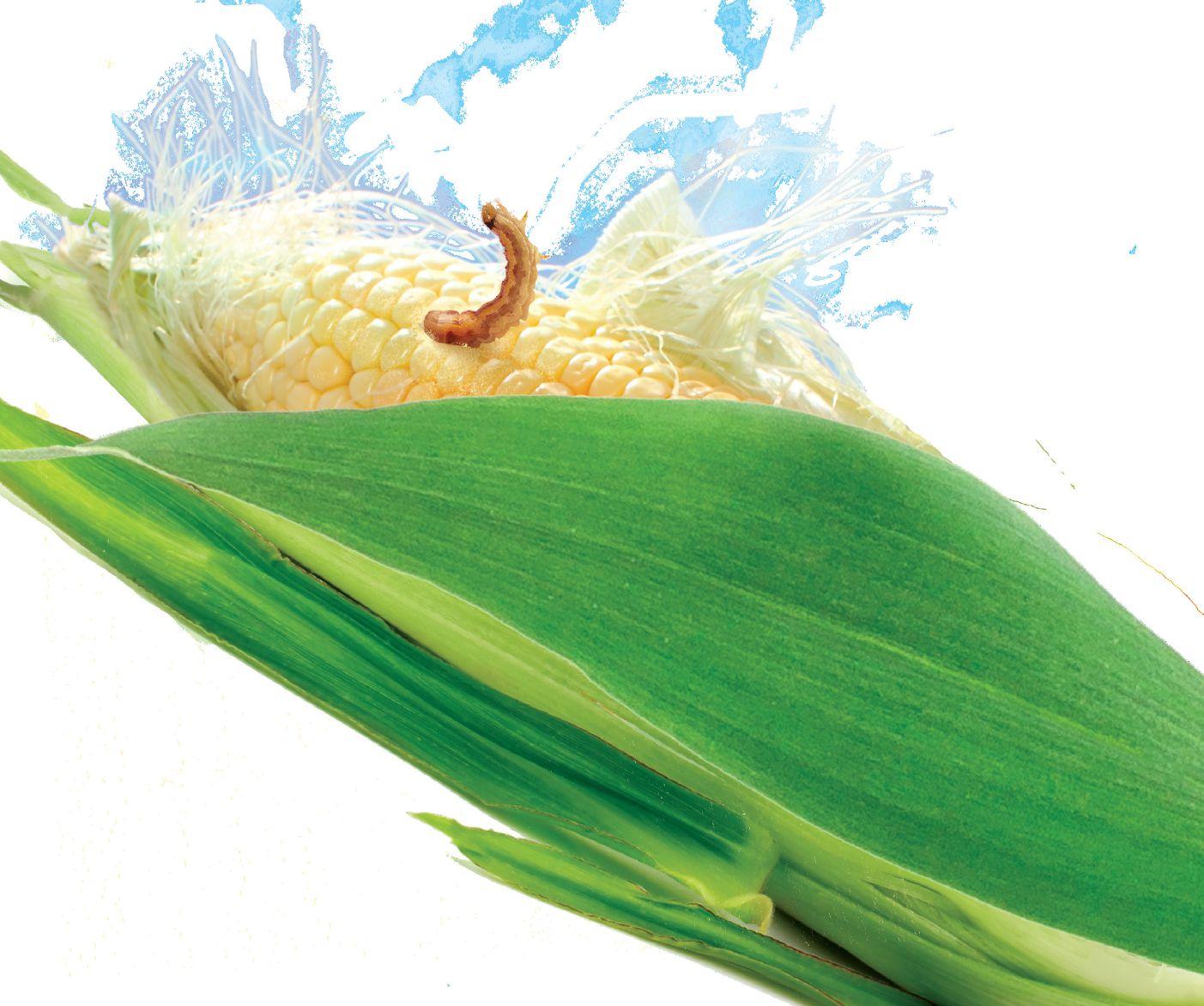
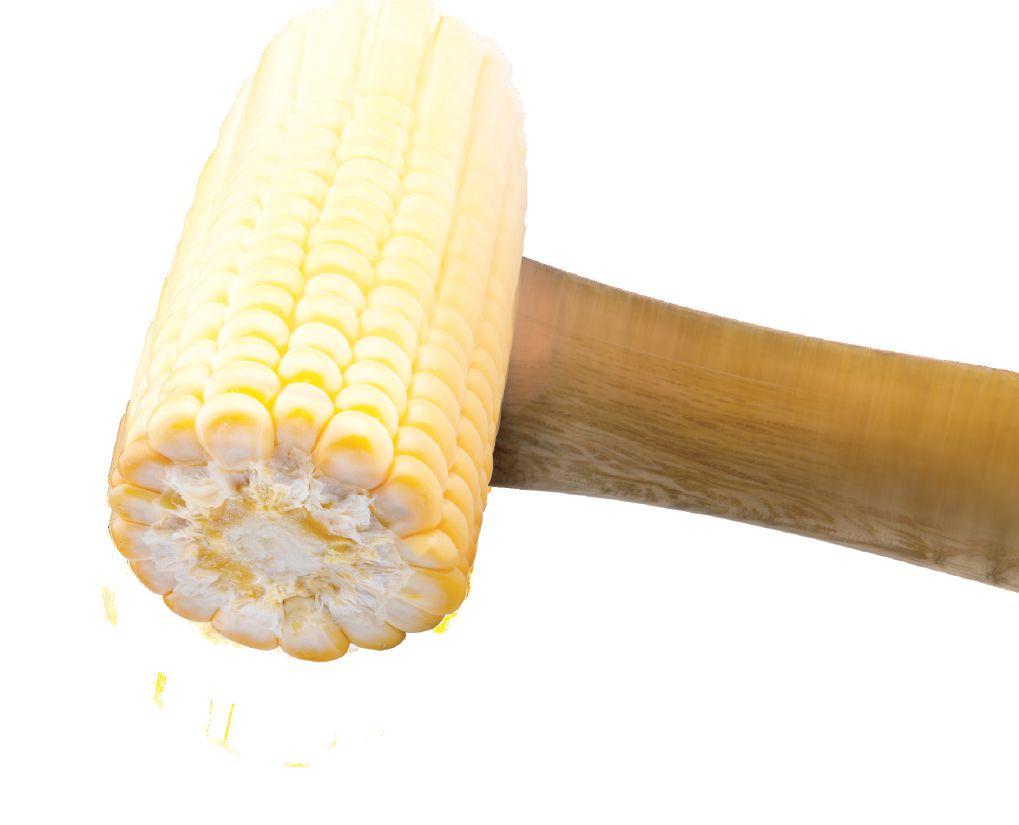
Western bean cutworm doesn’t stand a chance with the fast and effective control of Delegate™. Its unique Group 5 chemistry provides contact and residual control of western bean cutworm to help ensure a high-quality corn crop at harvest. This year, bring the hammer down on WBC with Delegate.
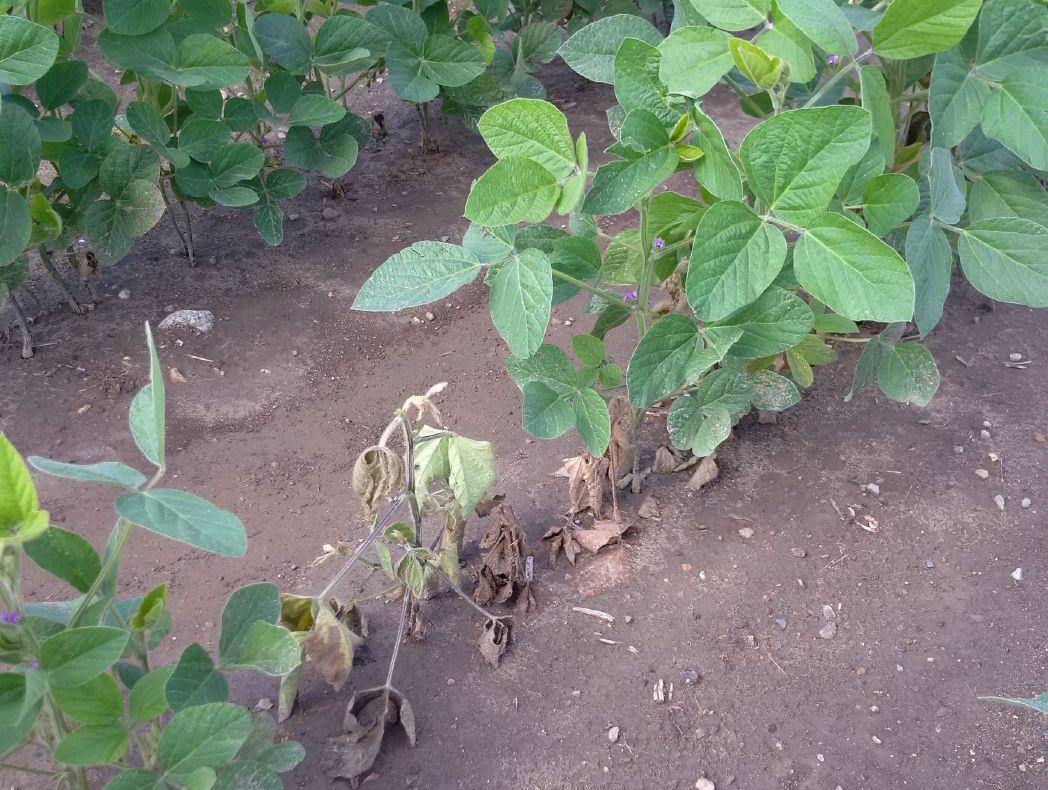
pathogen like Sclerotinia sclerotiorum, which causes white mould in soybeans, is essentially everywhere and its airborne spores can travel for miles, so white mould’s occurrence is more dependent on the year-to-year variability in the environment. The occurrence of a root disease like sudden death syndrome or Phytophthora root rot in a crop is more dependent on whether or not the pathogen is actually in the field to begin with.”
When the surveyors go to a field, they collect soil samples and, if plants are showing disease symptoms, they collect samples of the plant tissues. Wally notes, “We are trying to get a snapshot of the disease situation at each location at least twice over the three years.” So far, they have surveyed over 100 fields in 2016 and about 120 fields in 2017.
“Last year was very dry so most of the surveyed fields didn’t show a lot of disease symptoms,” he says. “But even in the fields that didn’t show any symptoms, we were still able to detect a lot of the different root pathogens within the soil.”
The regional distribution patterns vary from pathogen to pathogen, as can be seen in the 2016 data for Phytophthora root rot, sudden death syndrome and soybean cyst nematode.
Phytophthora root rot is caused by the oomycete Phytophthora sojae, a fungus-like microbe. This pathogen has been a problem in Ontario for years; it was first observed in southwestern Ontario soybean fields in 1954.
“In 2016, we found the Phytophthora root rot pathogen throughout pretty much the whole province. We found it even in fields that would be low risk because they have the wrong soil type for the disease [which tends to occur in poorly drained clay soils]. So, in years when the weather favours this disease, like 2017 where the spring was really wet, you would get a lot of this root rot.”
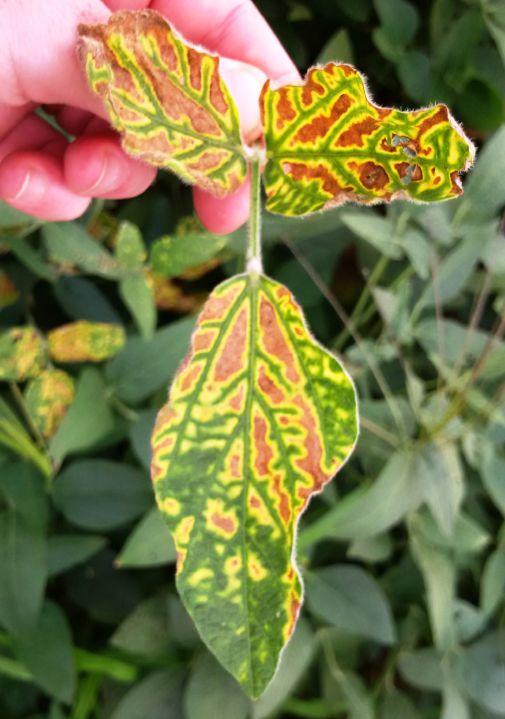
Sudden death syndrome, caused by the fungus Fusarium virguliforme, is a relative newcomer to Ontario. Symptoms of this disease were first noticed in 1993 in Kent County, and the pathogen was confirmed in 1996 in Essex, Kent and Lambton counties. The 2016 survey found that the pathogen’s spread was still limited. “Sudden death syndrome was only in the southern-most part of southwestern Ontario, up to Elgin, Oxford and Norfolk counties, and usually in the lighter soils,” Wally says.
Soybean cyst nematode is a soil-dwelling, microscopic plant parasite. In Ontario, it was first detected in 1988 in the Chatham area. Since then, this pest has been spreading across the province’s soybean growing areas with the movement of infested soil.
Wally is collaborating with his AAFC-Harrow colleague, Tom Welacky, on the nematode species collected in the survey. The 2016 survey showed that, although soybean cyst nematode can be found in most soybean growing areas, the highest levels are in the southwest. Wally says, “There are some pockets of it in other soybean growing areas where there are lighter soils. We didn’t find very much of it out near the Ottawa Valley or in Quebec. For the most part, soybean cyst nematode is still more of a southwestern disease. I think it is at lower levels in the other growing areas because they haven’t been growing soybeans nearly as long. [So, the potential disease risk could be quite high in those areas], but it might take quite a few years before they build up a lot of pressure.”
DNA-based analysis
Some of the project’s pathogen analysis, especially for the soilborne pathogens, is done with a DNA-based approach. This approach allows Wally’s team to identify and quantify many of the soybean pathogens down to the species level, but not to the strain, race or pathotype level.
“We extract DNA from the soil sample, and then we use what is called quantitative PCR [Polymerase chain reaction] to determine how much of each pathogen’s DNA is in the soil. Then, by looking at standard curves, we can tell roughly how much of the pathogen is present in the soil,” Wally explains. “Using these molecular techniques, we can process up to 200 samples in a day, whereas if we used cultural methods [growing the pathogens in the lab], it would take us a month to do 200 samples. It definitely speeds things up.”
As part of the project, Wally and his team are fine-tuning these procedures for more efficient analysis of large numbers of soil samples and to provide faster reporting of the results. “We are optimizing the extraction methods for getting the DNA out of the soil samples, which vary from soil type to soil type. We are trying to come up with a standardized method that will work for all the different soil types, and we’ve had pretty good success with that,” Wally says. “And we’ll be determining the minimum amount of a pathogen that needs to be present for us to detect it accurately in a sample and the highest level that we can detect and quantify accurately in a sample.”
Risk assessment
Wally and his team have also started to work towards predicting disease risks in the different soybean growing areas and identifying ways to proactively manage those risks.
“Currently, most of our work on this is in the greenhouse. We take soil from the field and sterilize it using heat sterilization, and then we inoculate it with a known amount of the pathogen. (For
Sudden death syndrome, a relative newcomer to the province, is limited the southern-most counties of southwestern Ontario.
PHOTO COURTESY OF OWEN WALLY.
example, so many spores of a fungus.) Then we plant soybeans in the inoculated soil, and we see how long the disease takes to develop under the different levels of the pathogen,” he explains. “That will enable us to come up with the amount of the pathogen that needs to be present in a field [to start causing symptoms in soybeans].”
For now, they are working with single biotypes of each pathogen of interest so they can optimize the lab procedures. Once they have developed those procedures, they will start evaluating different strains, races and pathotypes of each pathogen in terms of their effects on different soybean cultivars under a range of growing conditions.
Next steps
Once the current project is completed, Wally hopes to continue and expand this research. “We have put in proposals to look at this issue in more detail. We are also hoping to collaborate with people in Quebec and Manitoba, as well as throughout the north
central United States, to get a broader outlook on the distribution of the different diseases and a better idea of where the diseases are moving, especially as soybeans continue to move into areas with shorter and shorter growing seasons,” he says.
“If we know how far and how fast these pathogens are spreading, then we might be able to reduce some of the potential risks [by more proactive development and adoption of appropriate diseasemanagement practices].”
With better information on disease distribution and risk levels, soybean breeders could better target programs for developing disease-resistant varieties, agronomists and other specialists could better target research on other disease-management measures, and growers could have better information for making disease-management decisions.
“This project and other similar projects could really help improve disease management,” Wally says. “And improved disease management could help increase soybean yields and reduce costs for growers.” `
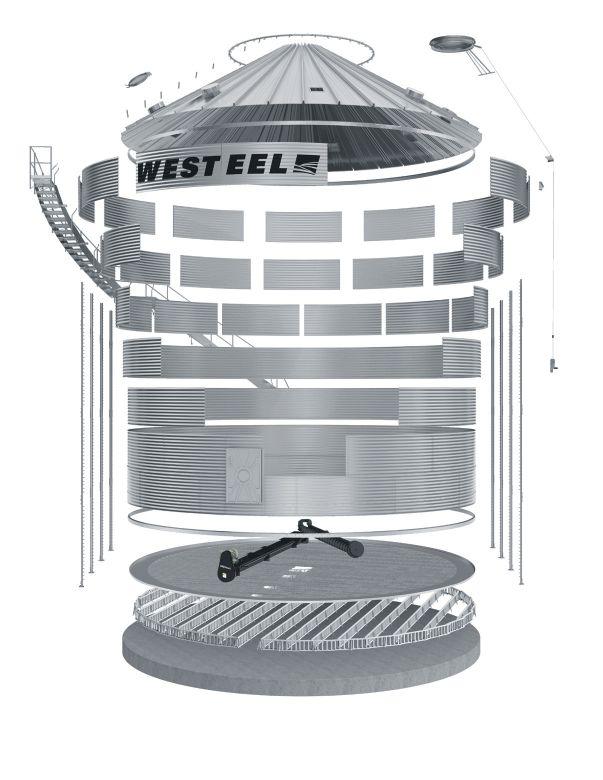
QUALITY TOP TO BOTTOM
ADVANCED CONTINUOUS ROOF ANGLE
15" ROUND GALVANIZED ROOF VENTS
SPIRAL STAIRCASE
WALK-IN-DOOR
EASYFLOW2 U-TROUGH UNLOAD SYSTEM
24" - 36" WIDE FILL CAP WITH REMOTE OPENER
4" WIDE CORRUGATION WITH G115 GALVANIZED STEEL
VARIABLE SECTION STIFFENERS (VSS)
CONTINUOUS BOTTOM RING ANGLE
LOCK-N-LOAD FLOOR SYSTEM
RESEARCH POINTS TO HIGHER YIELDS IN DRY BEAN CROPS
Findings feed the plant breeding pipeline.
by Trudy Kelly Forsythe
Athree-year research project with the goal of streamlining dry bean breeding projects shows promising developments that could lead to significant increases in yield for dry bean crops.
Research work being done by K. Peter Pauls, a professor with the department of plant agriculture at the University of Guelph, and his team – PhD research associate Yarmilla Reinprecht and technician Tom Smith – has uncovered new information on yield/ anti-yield gene alleles in dry bean. The project is a joint effort between the Ontario Ministry of Agriculture, Food and Rural Affairs (OMAFRA) and University of Guelph.
A gene discovered
When the project first started, no one was even sure this gene existed in bean. It was based on a discovery by researchers at the University of Guelph, including PhD student Fariba Shahmir, who showed that a gene in canola influenced yield in Arabidopsis thaliana, a model plant widely used in plant molecular biology research. From there the focus moved to soybean and dry bean.
The aim of the OMAFRA-funded research is to test the correlation between yield and the expression of this gene in a large collection of 121 bean varieties and develop a gene-based marker to rapidly test for alleles associated with high yield.
Pauls says there was skepticism when the project first started because so many factors contribute to overall yield.
“Yield is generally attributed to the action of many genes with small effects, distributed throughout the genome,” he explains.
The project looked to identify alleles, or the forms of the gene, that might be associated with yield.
“This gene has a strange name – yield/anti-yield,” he says. “Most often we look for an upregulation of a gene. But in this case, the yield effect is related to a form of the gene that has a lower level of expression than normal. The effect we’re searching for is higher (increased yield) if the gene is turned down.”
Previous research
Previous work done with different plants, particularly Arabidopsis – the white rabbit of plant molecular biology, because it is a small plant with a short life cycle totalling six weeks from seed to mature plant – led to a lot of gene discovery work.
“When we over expressed, or turned up the activity of the antiyield/yield gene, we saw lower seed production and lower pod production,” Pauls says. “Generally, the overall plant size and mass was reduced if it was over expressed.”
However, when the researchers supressed the activity of the gene, they noted plant vigour, pod number and seed number also increased.
Pauls says the researchers wondered if a similar gene existed in beans. Yanzhou Qi, an M.Sc. student, uncovered a very similar gene in the bean genome and found that its expression in leaves of ten different bean varieties was negatively correlated with their
PHOTO COURTESY OF K. PETER PAULS.
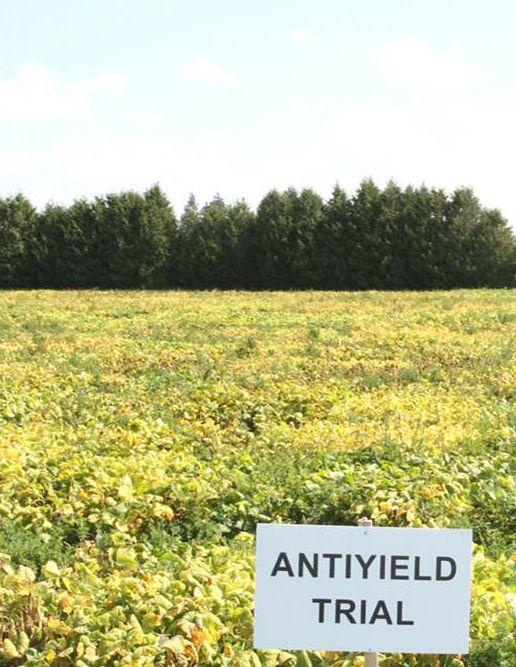
Replicated field trials of all of the 121 varieties in the antiyield/ yield trial in Elora, Ont.
yield. However, the type of experiment they did with Arabidopsis couldn’t be performed with bean because it is not as easy to transform.
“We did a much larger correlation study and asked if there is any connection between forms of the gene [alleles] in bean and yield,” Pauls says.
The researchers did two years of field work with 121 bean lines evaluated in replicated trials at two locations (Elora and Woodstock, in Ontario) in 2015 and 2016. The evaluation of the lines for yield and a number of yield-related traits showed there were significant associations between yield and yield-related traits in various regions of the bean genome, including a region that contains the homolog of the yield/anti-yield gene.
“What’s unique here is to have a gene show significant effect on yield,” Pauls says. “Ten to 20 per cent of the variation in yield among the 121 lines that we measured in the field was due to the activity of this gene. That doesn’t feel huge, but typically a breeding program goal in most field crops is to achieve an increase in yield of one per cent per year across all field crops.”
Moving forward
Since the researchers now have knowledge of the gene, they have the molecular markers to help them select the plant with different forms of the gene. The focus of the research will now move to applying that information to identify lines in breeding populations that have the desirable form of that gene.
“We can focus on lines with those markers we think would have yield advantage,” Pauls explains. “We have about 15,000 plots
of lines at various stages in our breeding program; it’s a numbers game.”
The question about why a plant would have an anti-yield gene is unclear. Pauls theorizes it may be involved in mediating a stress response.
“The plant senses drought stress or heat stress and sets up a response to prevent growth, to give the plant a metabolic break,” he says. “Some plants have a form of the gene that leads to a strong conservation response, while other plants have a form that is not as responsive and puts the plant at some risk during the stress, but if they survive, they are ahead developmentally because they didn’t shut down their metabolism and impact yield.”
This is the final year for the OMAFRA grant; Pauls says the next steps are to file a report and carry on with the research.
“So far we have a correlation between yield and the form of the gene at this location in the genome; we’re also going to measure expression levels of the gene in the 121 lines,” he says. “Expression levels are important to establish the direct link between the activity of the gene and yield. That measurement of gene expression levels in large groups of plants we’ve looked at is what’s next.”
And with these markers identified, Pauls says they’ll help other researchers in terms of selection studies, especially considering that yield is the first criteria that any plant breeding program must address.
“The first hurdle is yield. Then we look at other traits to give value,” he says. “This work feeds a plant breeding pipeline and I hope it is of benefit to Ontario producers. Dry bean is the largest legume consumed by people, so it has implications.”
“To the consumer, our story doesn’t exist until we tell it.”
Andrew Campbell, Agvocate Dairy Producer
SHINING A LIGHT ON PROBLEM FUNGI
Grain growers follow best management practices to reduce or prevent diseases in the field and in storage in order to maximize the value of their grain. A recent feasibility study is pointing to a new option for reducing fungi and fungal toxins on corn and wheat kernelsultraviolet light.
BY Carolyn King
Some fungi such as Fusarium and Penicillium can infect the grain of corn, wheat and other cereals and may produce toxins under certain conditions. Preventing or minimizing the accumulation of these toxins is very important for ensuring food and feed safety and for maintaining the grain’s value in the marketplace. A recent study shows that ultraviolet (UV) light might offer another way to decrease fungi and fungal toxins in harvested cereals.
“Ultraviolet light is already used in the food industry [to kill or suppress pathogens]. The main applications are for the treatment of drinks and beverages, food contact surfaces, food surfaces and the air in food processing facilities. It is also widely used for water treatment,” explains Tatiana Koutchma, a research scientist with Agriculture and Agri-Food Canada (AAFC) in Guelph, Ont.
UV light is classified by its wavelength into UV-A, the longest wavelengths, UV-B, medium wavelengths, and UV-C, the shortest of the three. Light in the UV-C range (200 to 280 nanometres) is used for treating microbes like fungi, bacteria and viruses.
In addition to wavelength, several other factors influence the effectiveness of the treatments. UV-C light has to reach a microbe to “inactivate” it – to make the microbe incapable of reproducing and causing disease – so the optical properties of the item to be treated are a key factor. For example, clear water is transparent to UV light so the light can easily reach any pathogens in the water. Juices and milk transmit less UV light so treating them requires a more specialized approach. UV light can easily reach pathogens adhering to a smooth surface like a stainless steel countertop, whereas an item with an uneven surface may shield some microbes from the light, especially if the light comes from only one direction. Other factors include the dosage of UV-C light and the microbe’s resistance to UV-C light.
Koutchma, an expert on innovative processing technologies, has been working on UV-C light uses in the food industry for a number of years, including work on toxin-producing fungi. Previous studies by Koutchma and others have shown that UV-C light is a simple, environmentally-friendly way to inactivate such fungi, resulting in lower toxin levels, and that it can directly degrade fungal toxins. Studies also show that UV-C treated foods tend to retain their nutritional, taste and aroma characteristics.
Koutchma is now leading a research effort to determine whether UV light could be an effective method for reducing fungi and fungal toxins on postharvest corn and wheat. “The objective is to explore the feasibility of UV treatment as a postharvest intervention for reducing Fusarium and Penicillium growth at different points of [the cereal value chain] because we don’t know where exactly it can be applied yet,” she says.
The first phase of this work focused on the treatment of corn kernels and wheat kernels. Koutchma and her research team have completed this phase and have submitted a related paper to a peer-reviewed journal. This study was funded by Grain Farmers of Ontario (GFO) and AAFC’s AgriInnovation Program under Growing Forward 2.
The study targeted Penicillium and Fusarium and the toxins deoxynivalenol (DON), zearalenone (ZEN) and ochratoxin A (OTA) because those fungi and toxins were the major concerns identified by GFO and AAFC. All three of these toxins, DON, ZEN and OTA, each have the potential to cause serious health impacts in humans and animals. Various Fusarium species can infect grain and produce toxins. One of the most important is Fusarium graminearum, which causes Fusarium head blight in wheat and other small grains, and Gibberella ear rot in corn. Fusarium graminearum can produce several toxins, including DON and ZEN. Warm, moist conditions during flowering favour development of this fungus and the production of DON and ZEN.
Several fungal species produce OTA, but Penicillium verrucosum is the species of concern in Canada. Penicillium
verrucosum infection and OTA production can occur during grain storage if the temperature and moisture levels are too high.
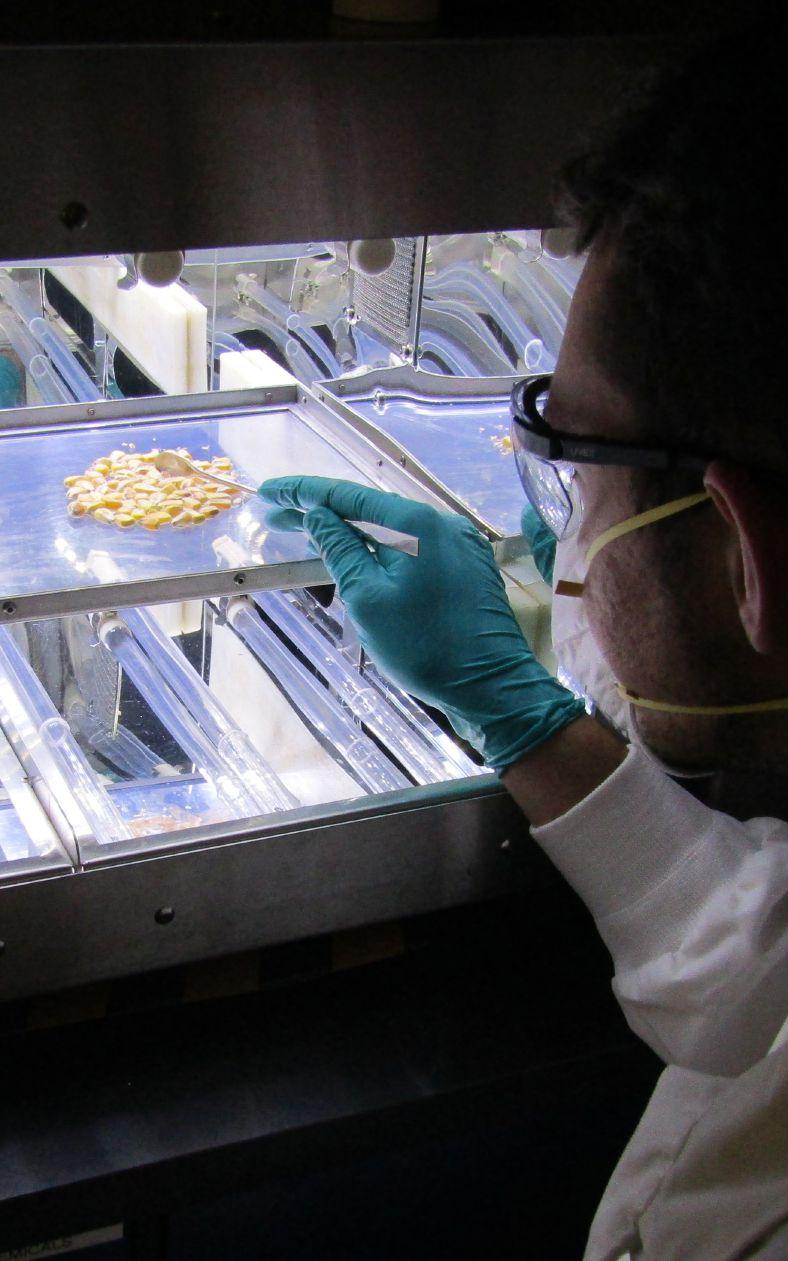
In the study, Koutchma and her research team developed a methodology for using UV-C technology with corn and wheat kernels, including optimizing the exposure of the samples to the light, determining which dosage was most effective for reducing each of the fungi and each of the toxins, and figuring out how the sample’s characteristics influenced the effectiveness of the UV treatments.
They used a special UV-C unit with low-pressure mercury lamps for the treatments. These lamps are commonly used in the food processing and water treatment industries. The lamps are called monochromatic because they emit light at a single wavelength of 253.7 nanometres. The UV-C unit used in the study surrounded a UV-transparent shelf with UV-C light from all sides to provide 3-D treatment of the samples placed on the shelf.
First, the team applied the UV-C treatments to the two fungi growing on agar (a growth medium) and the three toxins on filter paper. Next, they applied the treatments to corn kernels and wheat kernels that had been spiked with the fungi and the toxins.
For the fungi on agar, UV-C light reduced fungal spore counts by 90 to 100 per cent. For the toxins on filter paper, the treatments lowered toxin levels by 70 to 95 per cent.
For the kernels, the treatments reduced the fungi and the toxins, but did not eliminate them completely. For example, fungal growth of Fusarium and Penicillium on the corn kernels was reduced by 50 to 75 per cent. The toxins on the corn kernels were reduced by 15
to 50 per cent. The study’s results also suggest UV-C might be more effective at other points in the cereal value chain than the kernels.
The UV-C treatments were more effective for inactivating Penicillium than Fusarium. The treatments didn’t have any adverse effects on the grain’s crude protein content, moisture content, colour or germination.
Based on the results from this initial phase, Koutchma would like to follow up on several possibilities in a second phase. For instance, she suspects it might be possible to improve the efficacy of the treatment of the kernels if the samples are rotated or moved past the UV-C source, rather than just sitting still on the shelf.
As well, she wonders if some other UV-C light source might be more effective. “The doses we determined for the kernels are higher than for water treatment. So in the future, we would like to compare different types of UV sources. For instance, instead of using low-pressure mercury lamps, maybe for some applications medium-pressure mercury lamps would be more effective because their intensity is higher, so the treatment time would be shorter, and they have a polychromatic spectrum.” A polychromatic spectrum would allow users to adjust the lamp’s wavelengths to suit the specific characteristics of the item to be treated.
Koutchma would also like to explore where along the cereal storage/handling/processing chain that UV-C light treatments would be most useful for growers and processors. She notes, “The cost of the technology is quite affordable. But we need to have more discussions with the grain producers on this and look at our results and consider how they could be applied.”
Bigger Picture
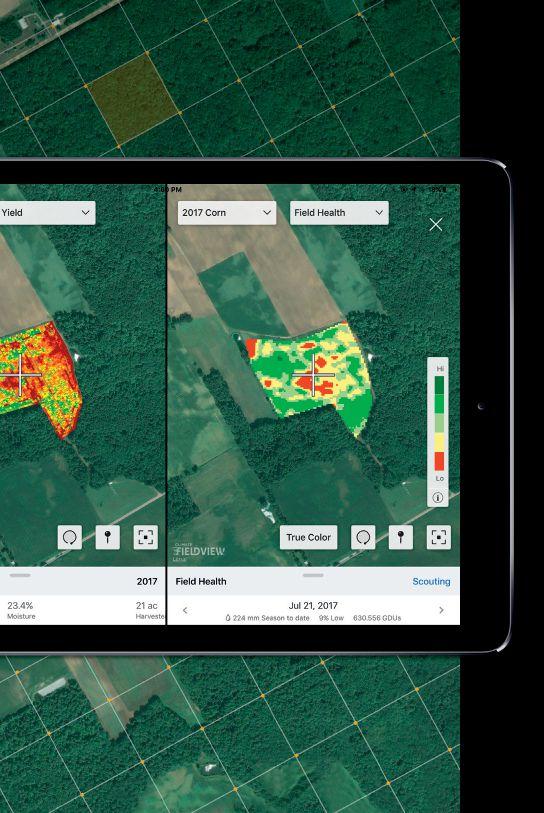
Let Your Data Drive You
No two farms are the same. Your farm is as unique as you. Climate FieldView™ is an integrated digital platform that allows you to easily aggregate your field data in one easy to use software application. Simplify field data management. Climate FieldView is your data partner to support the decisions you make every day.
Get started today at ClimateFieldView.ca
NEW TOOLS FOR GRAIN BIN MONITORING
As technology advances, so too do the options for producers. With products like integrated systems and cable-free monitoring, there’s little need for producers to reach for the rebar when it comes to monitoring stored grain for spoilage.
BY Julienne Isaacs
About a decade ago, Kyle Folk was at his parents’ grain farm helping his dad load up a semi of canola to meet a contract when the two made an unpleasant discovery.
“We went to put the auger in the bin and realized the grain was spoiled,” Folk says. At the time, Folk, who was running an electrical contracting business, says he didn’t know that spoilage could happen on such a scale. “People didn’t talk about it.”
“When the dust settled I asked my dad, ‘Why don’t you monitor this?’ He explained what was available on the market, and told me that he’d always felt that he could check it manually. He’d go up to the top and smell, or he’d shove a piece of rebar in and feel if it was hot.”
“His mindset was similar to that of a lot of producers [in the area]. That blew me away, because you assume all that risk with uncontrollable factors like the weather. You roll the dice.”
Following this experience, Folk founded IntraGrain Technologies, a grain storage monitoring company that offers the Bin-Sense Live wireless temperature and moisture monitoring system.
Bin-Sense Live is battery and solar-powered, and sends hourly temperature and moisture readings to the producer via cell networks. When the product went up for sale at the Farm Progress Show in 2012, all 40 systems sold. At Canada’s Farm Progress Show in Regina in 2014, the product won a gold Innovation Award.
“I came from the farm and I designed this product so that it gives the needed information but in a simplified manner – you have all this data, but it’s usable,” Folk says.
These days, the company manufactures the product but doesn’t sell it directly; retailers sell the hardware while IntraGrain maintains the software and charges data fees.
“We have quite a few clients throughout Western Canada and even northern B.C.,” Folk says. “We’ve also started selling outside of Canada: in the U.S., Mexico, Australia and Southeast Asia.”
Although the company and its partners collects data on stored grain from farmers, their agreement with customers stipulates that they will not sell that data to any third party, which Folk says protects farmers. “As the clock turns and more and more people monitor grain, it could be a very delicate and dangerous situation for producers,” he says.
CABLE-FREE MONITORING
Integrated systems like Bin-Sense can offer peace of mind to farmers with a great deal of stored grain or grain in multiple locations. However, cable-free monitoring is also an option for producers managing smaller volumes of grain, or for use as a back-up monitoring tool.
Winnipeg-based Dimo’s/Labtronics recently introduced a handheld, ten-foot infrared Wi-Fi grain bin probe designed to be inserted into filled bins.
The probe, which requires no installation, contains an infrared sensor near the tip that provides instant temperature readings that farmers access on their smartphone. The connection between the probe and the farmer’s phone is closed-looped and doesn’t require cellular reception or an internet connection.
“This is something for farmers maybe renting bin space or using grain bags,” says Jason Diehl, vicepresident at Dimo’s. “It gives them flexibility to probe anywhere they want in the bin.”
But hand-held probes are only the beginning in terms of cable-free grain bin monitoring, and a Chicagobased startup is about to take another step forward.
INTERNAL MONITORING
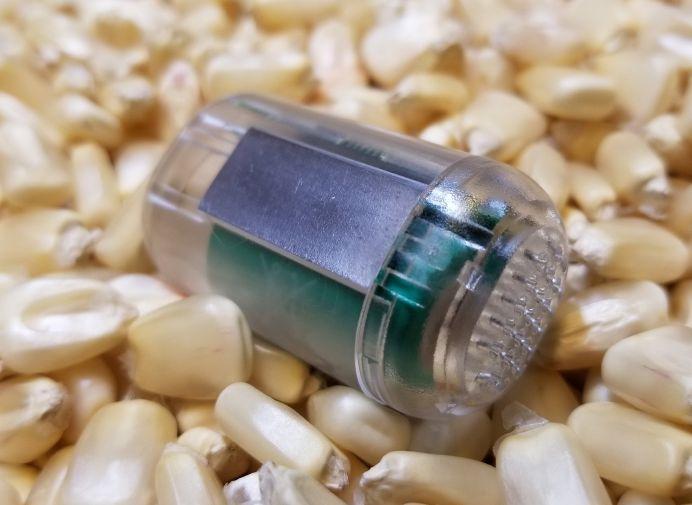
Amber Agriculture, which began as a student-run initiative out of the University of Illinois, is currently testing the prototype of a pellet-sized wireless sensor that can capture temperature, humidity, carbon dioxide and organic compound volatile readings from stored grain.
“The sensors can be tossed in at the truck, auger hopper, or anywhere, to flow and distribute with the grain as the bin is being filled,” says Lucas Frye, co-founder of Amber Agriculture. “They are built to take a beating. On the outflow, they can be recaptured with an auger attachment mechanism.”
Installation of the system is relatively
simple, Frye says, and takes only 15 minutes. To install, producers drill a hole at the top of the bin for a wireless receiver hub that sits on the roof, collecting information from the individual sensors in the bin.
Frye says the product is designed to meet the needs of farmers frustrated with cable-based systems with “big sticker prices” and extensive installation and maintenance requirements. Frye estimates the system to cost approximately half the price of current systems.
Amber Agriculture spent several months prototyping and sourcing components for the product in Shenzhen, China, but the company is now based in Chicago, Illinois. The system also offers complete mobile control. Producers are able to watch trend lines, receive alerts about unplanned changes and adjust fans from their mobile devices.
The concept for Amber Agriculture spurs from Joey Varikooty and Frye’s initial idea of creating a sensor that could be thrown into a clothes dryer to tell you when your clothes are completely dry.
Photo courtesy of Kyle Folk.
A prototype of Amber Agriculture’s pellet-sized wireless bin sensor.
SAFETY FIRST
Take time to review safety measures with workers and all family members. It is better to be safe than sorry around grain and hazardous machinery.
• Don't enter a bin of flowing grain
• Don't enter a bin to break a crust or remove a blockage when unloading equipment is running, whether or not grain is flowing. Restarted flow can trap you
• Always wear a respirator capable of filtering fine dusts when working in obviously dusty-moldy grain
• When entering a questionable bin or storage, have two outside and one inside workers. Attach a safety rope to the man in the bin with two men outside capable of lifting him out without entering the bin.
Before entering a bin, or cleaning and repairing conveyors:
• Lock out the control circuit on automatic unloading equipment
• Flag the switch on manual equipment, so someone else doesn't start it
• Maintain proper and effective shields and guards on hazardous equipment
Source: Alberta Agriculture and Forestry, Management of cereal grain in storage, Agdex 736-13
From there the two University of Illinois students applied the idea to production agriculture.
In 2017, among 4,000 competitors, Amber Agriculture earned the title of Top Startup at the Consumer Electronics Show, the world’s largest consumer electronics and technology tradeshow. Frye says farmers across Canada and the U.S. Midwest are testing out the technology during the current storage season and the company plans to roll out the product in batches starting in 2018.
MONITORING TIPS
Leaving grain in storage undisturbed can cause convection currents to develop, which in turn will create hot spots and increase the possibility of moisture. When exterior temperatures are vastly different than the temperature of the grain, the convection currents will become stronger.
The Canadian Grain Commission (CGC) recommends producers check grain temperature every two weeks, sampling the grain from the core, at a depth of 30 to 50 centimetres from the surface. The temperature of grain should be less than 15 degrees.
Keeping grain at the appropriate moisture level can also reduce the risk of spoillage. The CGC recommends checking moisture levels every two weeks.
For a number of helpful graphs outlining potential risk of spoilage for various grain commodities, visit: grainscanada.gc.ca/storage-entrepose/ssg-deeng.htm
INSECT INVADERS
Insects are likely to be found in the pockets of warm or moist grain. Insects could be grain feeders, fungal feeders or predators of these insects. Identifying the insects is a vital step in determining the right control methods.
While checking grain moisture and temperature, it is suggested to take samples from the core of the grain as well as the top of the grain bin, as heat and moisture will collect here, which may attract insects.
NEW! 3D MAPPING MOISTURE CONTENT
A newly developed grain bin monitoring system is utilizing medical imaging
techniques to build a real-time 3D map of the moisture content in your grain. GrainViz allows producers to accurately see the moisture content of every individual bushel and its location in the bin, allowing you to understand airflow patterns and proactively manage trouble spots before any damage to grain occurs.
Using a series of sensors on the inside wall of the bin, GrainViz gives you real time insight, data and the ability to monitor 100 per cent of your bins contents. The state-of-the-art secure portal provides customers with the opportunity to set conditioning parameters, create alerts and control fan operation from anywhere in the world. Producers are able to manage moisture content across crops, ensuring the highest grain quality while reducing your overall energy costs.
“Having visibility of the inside of your bins at all times allows you to safely store more grain and reduce the need and cost of many smaller sized bins. GrainViz gives you the ability to harvest weeks earlier by accurately controlling the conditioning process. Less time spent drying in the field reduces its risk exposure to the elements and quality degradation resulting in a higher quality commodity and maximized returns,” says Boyd Koldingnes, vice-president of sales and marketing with GrainViz.
“In addition, this system also provides detailed inventory management and reporting, grain weight, insect detection in real time before they become a problem and integration into your existing precision agriculture platform. The results are profound; enhanced commodity quality, higher profits and your peace of mind.”
For more information on how to add GrainViz into your operation please contact: Boyd Koldingnes, bkoldingnes@grainviz.com
KNOW. GROW. www.topcropmanager.com
For more on storage or cereal research, visit topcropmanager.com
Photo courtesy of Kyle Folk.
IntraGrain’s Bin-Sense sends hourly temperature and moisture readings to the producer via cell networks.
It was amazing to get a chance to network with other women in the industry from around the country. Was an awesome conference. Loved the speakers. All very empowering. –
CREATING A SOIL-HEALTH NETWORK IN ONTARIO
Pilot project seeks to support farmers who strive to improve soil health. #LetsTalkSoil
by Helen Lammers-Helps
The Ontario Soil Network (OSN), is a one-year pilot project that aimed to support farmers who are improving soil health by implementing beneficial practices, like no-till and cover crops.
With funding from the Ontario Ministry of Agriculture, Food and Rural Affairs (OMAFRA), the OSN pilot project was a way of formalizing that networking process, says project co-ordinator, Mel Luymes. She says that instead of farmers going to a conference and hoping they will connect with someone doing similar things, they can have more deliberate conversations.
The project, which is under the auspices of the Rural Ontario Institute, is a collaboration of organizations including the Innovative Farmers Association of Ontario, Ontario Soil and Crop Improvement Association (OSCIA), Soil Conservation Council of Canada, Farm and Food Care, and the Ecological Farmers Association of Ontario.
Thirty-five farmers who already had a track record of using practices that benefit the soil were selected to participate by the project steering committee. They started the year by taking part
in a leadership training workshop where they learned about designing meaningful field trials, how to improve their presentation skills and learning about the latest in farmer-to-farmer soil initiatives that benefit soil in Quebec and the U.S. Approximately 15 representatives from conservation authorities, government and industry were also involved in the workshop.
According to Luymes, about twice as many farmers applied to participate in the OSN as could be accepted. OSN participants will be sharing their experiences at various farm meetings this winter. The project was intended to give them the confidence and presentation skills to communicate their message effectively.
She is quick to point out that the Soil Network is not an exclusive club. “Anyone can tap into the conversation,” she says. Farmers are encouraged to sign up on the OSN’s website (ontariosoil.net) to find out about small group discussions that will be taking place
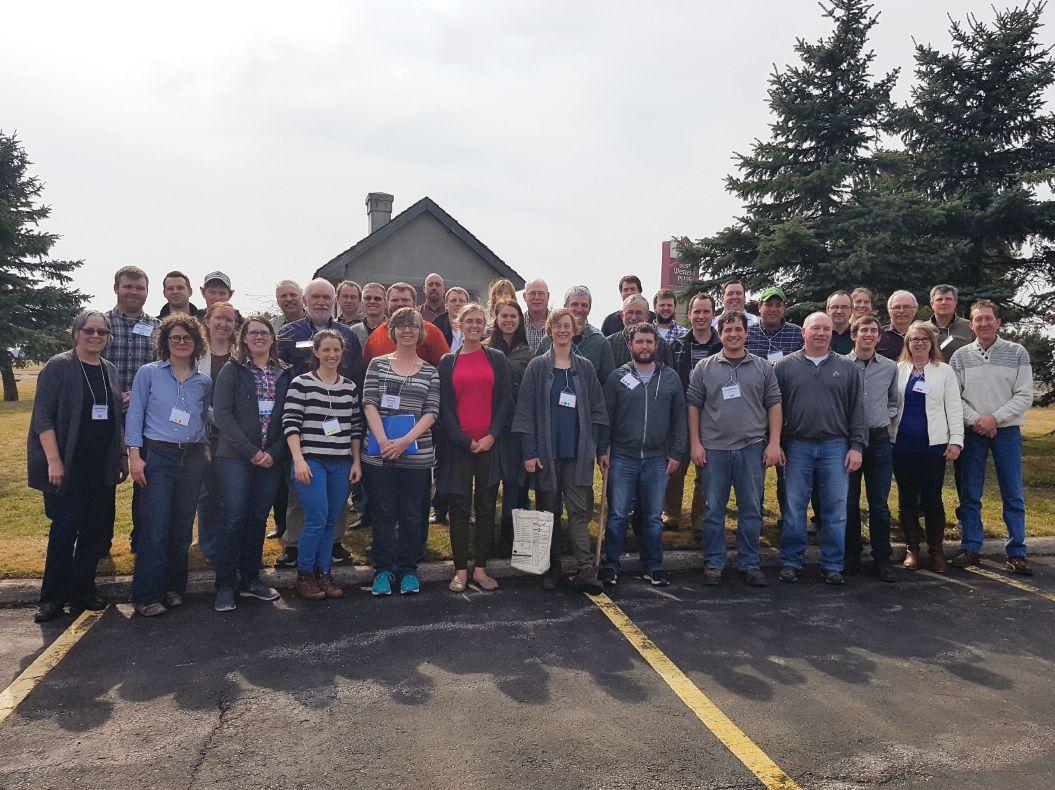
ABOVE: The group of farmers who completed the Ontario Soil Network leadership workshop in March 2017.
this winter. “There’s no membership and no fees,” says Luymes, who hopes there will be dozens of conversations with small groups of ten or fifteen people. “Small conversations, shop talk…is where you do more learning,” she says.
To create awareness about the project, profiles of some of the participants and their soil health practices have been popping up throughout the industry. Farmers can also join the conversation on social media using the hashtag #LetsTalkSoil.
With some additional funding provided by OSCIA, Anne Verhallen, OMAFRA soil management specialist and steering committee member, says her team of summer students was able to sample fields at each participant’s farm to determine baseline soil health parameters. These included fertility, pH, aggregate stability, water infiltration rates, residue cover counts, earthworm counts, and penetrometer readings that estimate soil compaction. Agriculture and Agri-Food Canada and the University of Guelph are also conducting a bioanalysis of soil samples to better understand the science behind the, “Soil Your Undies” test (which assesses soil health based on the rate of decomposition of cotton underwear buried in the soil).
“Farmers will have these results available to them when they are giving presentations and it provides a baseline for future comparisons,” Verhallen says.
OSN steering committee member Ken Nixon, a farmer in Ilderton, Ont., hopes the network will help break down barriers between growers. “While those of us practicing no-till or growing cover crops aren’t as fringe as we used to be, there still needs to be
a dialogue between growers,” he says. “Too often the ‘black dirt’ farmers slow down to see what the ‘crazy neighbour next door’ is doing, but seldom drive in the driveway to ask questions.” As a result, Nixon says those doing innovative practices can feel marginalized and forced to keep to themselves or only interact with a select group of like-minded people.
“Farmers understand farmers so [that’s why] these events work,” Luymes says.
Kootstra, who has been using no-till, strip till and cover crops, says the event was an opportunity for him to give back. “I don’t have all the answers but it was an opportunity to learn and share,” he says.
Kootstra has seen the benefits of these practices in the soil on his farm. “We’re already seeing reduced wind and water erosion and improved water infiltration,” he says.
Many farmers know there is a problem but aren’t sure what’s wrong, says Kootstra, who believes cover crops are essential for improving soil health. “If we can increase soil organic matter a lot of these issues go away or become a lot less difficult.” Cover crops work with nature, are beneficial to the farm and to the environment, he says.
The one-year pilot project will wrap up this month (February 2018) but Luymes is hopeful that the network will continue to evolve and get the resources it needs. “It’s about investing in farmers’ solutions,” she says. For the pilot project, there was a concentration of farmers from southwestern Ontario but Luymes would like to see it expand to the rest of the province.
NATURE’S DESIGN
BE PREPARED
PYRAMIDED ANTHRACNOSE RESISTANCE IN DRY BEAN
An Ontario research group aims to monitor the spread of anthracnose’s fungal pathogen across the province and develop a high-yielding bean germplasm with anthracnose resistance.
by Madeleine Baerg
Ateam of researchers led by University of Guelph plant scientist and professor, Karl Peter Pauls, recently completed a three-year research project to tackle one of Ontario’s most costly bean diseases: anthracnose. In addition to monitoring the spread of anthracnose’s fungal pathogen across Ontario, the project’s goal was to develop high-yielding bean germplasm with durable (multigene) anthracnose resistance as well as resistance to both common bacterial blight and bean common mosaic virus in a range of market classes and maturity groups.
Anthracnose is a potentially devastating seed-borne disease that can affect the yield and quality in all classes of beans. The disease results in poor seed germination, reduced seedling vigor, lower yields and – because of the disease’s characteristic dark spots on harvested seeds – marked reductions in a crop’s quality rating and marketability.
Like most fungal pathogens, anthracnose thrives in moist, warm environments. Ontario’s frequently humid, warm summers can provide ideal conditions for fungal proliferation. A particularly devastating anthracnose outbreak occurred in Ontario in 2010, but smaller outbreaks are common.
While anthracnose can be well managed with timely applications of fungicide, developing resistant varieties would decrease producers’ cost of production and eliminate fungicide application timing errors. As well, resistant varieties may allow early generations of certified seed to be grown in Ontario rather than in Idaho as is currently the case.
“Bringing seed grown in Idaho back to Canada is costly and you don’t always know if you’ll be able to get it in a timely way,” Pauls says. “In the long-term, it might be a possibility to bring more of the seed increase steps back to Ontario. If we have effective control against seed-borne disease, that would be a real improvement for producers.”
Pauls, postdoctoral researcher Raja Khanal and technician Tom Smith began by monitoring the spread, virulence, and specific races of the Colletotrichum lindemuthianum fungus, the pathogen that causes anthracnose, across Ontario.
“It’s a very specific reaction between the unique fungal race and the gene that exists in a plant which gives you susceptibility or resistance,” Pauls says. “For this particular disease, we have a classical gene-for-gene disease interaction between pathogen and host plant. It means that it is possible for the pathogen to mutate somewhat so that the plant’s defense systems can no
longer recognize it. That’s what we’re watching for.”
Pauls’ research group analyzed samples collected from bean cleaning facilities in order to test for disease from areas across Ontario. The good news is that a single race of fungus – race 73 – is the dominant and, hopefully, exclusive race currently in Ontario.
“We expected and hoped that it would be only one race because if there is another one starting to appear then the genetic material we’re working with may no longer be resistant. The overall view of the screening we did was that we didn’t detect another race,” Pauls says.
The team then moved onto studying the genetics of known sources of anthracnose resistance in existing bean germplasm. Knowing that mutation is only a matter of time, Pauls’ breeding efforts attempted to combine multiple sources of anthracnose resistance.
“Until now, we think the source of [anthracnose] resistance has been similar to what Bolt has, which carries a gene for resistance on chromosome 1,” Pauls says. “Ultimately we would like to understand what we’re manipulating at the gene level, to be able to know that the mechanism of resistance is attributable to a specific gene. We’ve been able to localize the region in the
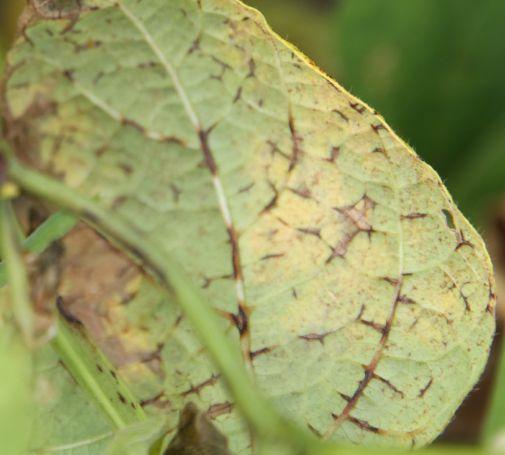
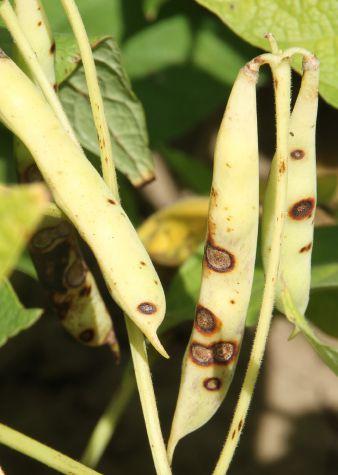
Anthracnose disease symptoms on a bean leaf.
PHOTOS COURTESY OF PETER PAULS.
genome responsible for anthracnose resistance with much more precision than in the past. Getting to that level of understanding is gratifying and interesting from a scientific standpoint and important to moving forward.”
In addition to incorporating anthracnose resistance into new lines, Pauls’ project strived to include resistance to two other seed-borne diseases: common bacterial blight (CBB) and bean common mosaic virus (BCMV). Pyramiding, layering resistance to multiple invaders inside of a single variety, makes a plant breeder’s task far more difficult but ultimately far more beneficial.
CBB is endemic to all bean growing areas of the world. Because widespread spaying of antibiotics is not permitted, the disease cannot be successfully controlled except via genetic resistance. Genetic resistance is the only option for viral diseases like BCMV.
While multiple breeding programs worldwide are simultaneously attempting to incorporate CBB resistance into new cultivars, Pauls says Canada’s researchers are among the leaders of the charge.
“We’ve been doing this for longer than many. We have good experience with finding sources of resistance for CBB that seem to be holding up,” he says. “Bacterial pathogens don’t have the same race structure as fungal pathogens, so we don’t have the same gene-for-gene interaction as fungal resistance. But in both cases we would like to have multiple resistance sources in our breeding material so over time they’re able to withstand slight variations in pathogens.”
Pauls points out that progress done throughout this project is only possible because it builds on efforts of the past. In previous years, Pauls’ breeding program produced multiple lines of CBB resistant cultivars, including OAC Rex, Rexiter and Lighthouse.
“We’ve made a lot of progress for CBB. Most lines released in the last 10 years have CBB resistance,” Pauls says. “Because plant breeding is a legacy game, you don’t go through material in a year or even three years. The crosses we are releasing now have a history of at least five to 10 years.”
The first line to combine both anthracnose and CBB resistant bean was Fathom, commercially released by Hensall District Co-op in 2016. Last year, Apex and AAC
Argosy followed.
Fourteen lines from Pauls’ recent project showed promise for anthracnose and CBB resistance in early testing and trialing. Most of these lines were also carrying molecular markers for BCMV resistance as well.
Currently, the research team is reviewing data from each line in order to choose which to send forward to provincial trials. To be supported for registration lines must meet a host of criteria. Not only must they prove resistant, they must meet or exceed check varieties’ yield, prove successful in processing and utility tests, and offer multiple physical and agronomic attributes including correct plant architecture, appropriate size of seed, and good standability.
It is too early to guess whether any of the lines Pauls is currently working with will ultimately reach commercialization. Even if they do not, however, every bit of knowledge gained and every resistant line produced is an important step in the right direction, says Pauls.
“We hope these are big steps towards durable resistance. Ultimately, the point
of this work is to help make farming a little more secure.”
While the funding for this project concluded in October, 2017, Pauls says developing anthracnose resistance remains a key priority for Ontario’s bean industry, with ongoing support by the Ontario Bean Growers, the Pulse Cluster program through AAFC and the Ontario Ministry for Research and Innovation.
Foliar Feeding:
ADVANCING WESTERN BEAN CUTWORM CONTROL
Understanding more about this pest’s biology could improve its management.
by Carolyn King
Figuring out how to fight a fairly new pest, like the western bean cutworm (WBC), is a bit like preparing to face off against a new sports opponent. “If you’re going to compete in a sport, the best thing to do is study your opponent’s strengths and weaknesses, and then try and play to their weaknesses,” says Jeremy McNeil, a biology professor at the University of Western Ontario. “If you’re going to try and develop a rational pest management program, the first thing you have to do is really understand the organism you’re trying to manage.”
So, McNeil and his research group are working to fill some key gaps in our understanding of WBC reproductive and overwintering biology in Ontario.
“The WBC was originally limited to the Western United States. Then, from about the turn of the 2000s, it started moving eastward and came into the Great Lakes area,” he notes. Ontario researchers began monitoring for WBC in 2006 and caught their first specimen in 2008. Since then, the pest has been spreading in the province, now causing serious problems in corn and becoming a growing concern in dry beans.
“The Great Lakes area is very conducive to western bean cutworm, in comparison to Nebraska where most of the research has been done on this pest,” says Tracey Baute, field crop entomologist with the Ontario Ministry of Agriculture, Food and Rural Affairs (OMAFRA). “So [Ontario researchers] have had to reinvestigate certain aspects like management and thresholds and even some basic biology to better predict and understand what is going on here.”
The insect has a single generation per year. The adult moths begin emerging from the soil in mid-summer. The females lay their eggs on host plants soon after. The eggs hatch in a few days, and the larvae begin feeding on the plants. In the fall, the mature larvae drop to the ground and burrow into the soil. In this pre-pupal stage, they remain dormant until they pupate in the spring.
The moths prefer to lay eggs in corn from the late whorl to early tassel stage. If they can’t find corn at this stage, they’ll lay their eggs in dry beans.
The larvae feed on corn ears and dry bean seeds. In corn, the feeding damage causes direct yield losses, but more importantly it provides entry points for ear rot pathogens like Fusarium that can produce toxins. Similarly, in dry beans, the larvae cause direct yield loss, but quality loss, due to damaged seeds and increased pod disease, is a bigger concern.
Predictive ability of traps
One aspect of McNeil’s studies relates to WBC traps. These traps use lures based on the sex pheromones that female WBC moths emit to attract potential mates. The traps are used to track the presence of the moths so growers can identify at-risk fields and determine when to start scouting for eggs and larvae. However, the trap counts don’t predict the crop damage levels in Ontario.
“Normally, if you catch lots of moths, you would expect to see lots of damage,” McNeil says. “They were catching lots of moths [in Ontario traps] but there was no good correlation between the number of moths and any level of damage.”
To figure out what might be causing this oddity and perhaps to enhance the ability of trap counts to predict damage levels, McNeil and his research team have been investigating several elements of WBC reproductive biology.
For instance, they have been studying WBC pheromones. McNeil points out that the pheromone formulation currently used in WBC traps is based on a blend of pheromones extracted from just four female moths of unknown age and mating status in a 1983 study. So, one of McNeil’s graduate students, Joanna Konopka, analyzed the pheromone components in the glands of WBC females. Her results suggest further study of the pheromone blends actually emitted by females might result in a more effective lure.
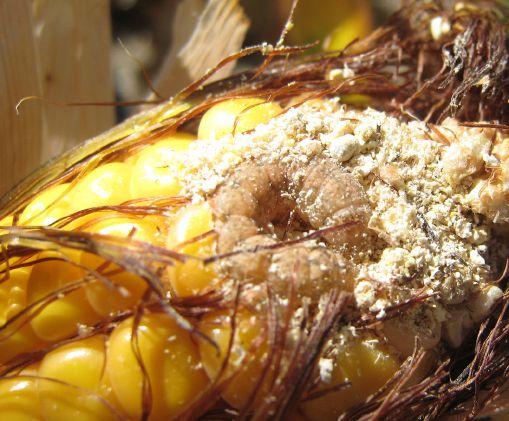
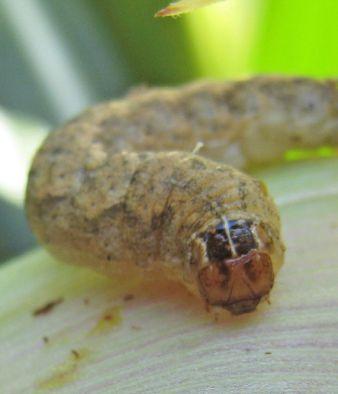
Western bean cutworm, a pest in corn and dry beans, was first detected in Ontario in 2008.
PHOTOS
Another example is a current study about why both female and male moths are found in the traps. “It’s a female sex pheromone, so normally you would expect only male moths,” McNeil notes. “There’s a number of possible reasons why both males and females are in the traps. For example, maybe both sexes respond to the pheromone, or maybe the males get caught and then they emit a pheromone that attracts females.” McNeil’s group is comparing traps baited with males and with females in a field experiment.
Overwintering survival
From McNeil’s perspective, the biggest WBC question is the relative importance of immigrant versus resident populations in Ontario. Answering that question could be helpful for predicting WBC populations in the province and for developing management strategies. One part of finding the answer is to assess the insect’s overwintering success in Ontario. To this regard, McNeil and his group, are working with Brent Sinclair in Western’s biology department, to look into several factors affecting overwintering survival.
They have already completed a cold hardiness study with the pre-pupae. “We have shown that they do not freeze until they are at about -6 to -14 C,” he says. Whether the insect encounters such cold temperatures depends on factors like the insect’s burrowing depth, snow cover depth and air temperature.
McNeil adds, “Some people suggest that the insect’s expansion into the Great Lakes region has been the result of climate change. But the results from our cold hardiness studies seriously suggest that western bean cutworms could have survived here 20 years ago. In fact, I could possibly argue that recently our weather has gotten less favourable for them because we are getting very hot falls now and less snow cover than we used to.” With less snow cover, the soil is less insulated from the cold, and hot fall weather could lead to desiccation and other problems for the insect.
Basically, the insect needs to burrow deep enough that it isn’t harmed by extreme conditions like very cold or very hot weather, but not so deep that it uses most of its energy in digging down and doesn’t have enough left to survive until spring.
Kurtis Turnbull, another one of McNeil’s graduate students, is looking at WBC burrowing depth and how it is influenced by factors like soil type, temperature and humidity conditions, and how the depth relates to overwintering survival.
The easy way to manage your farm.
Analyze your data. Plan your strategy. Then track your performance. AgExpert Field gives you the details you need to know to make the best business decisions.
It’s all new. And seriously easy to use. Get it now and see.
fcc.ca/AgExpertField
“[To do this experiment], we get big fivelitre buckets, drill holes in the bottoms so the water can drain out, and put small pebbles in the bottoms. We place temperature probes at different depths in the buckets to track the temperature profile. Then we fill the buckets with different types of soils, about 60 centimetres (cm) deep.” They put the prepared buckets into holes in the ground early in the season so the soil will have time to settle and reach a density similar to that of normal field soils. Some buckets are planted with corn, and others are left with bare soil, to compare the effects of these two treatments on burrowing depths.
In addition, the research team collects egg masses in the field twice a year – earlier and later in the egg laying period. Then they rear these two groups of eggs in what is called an insectarium, under natural conditions of temperature, humidity and day length. When the larvae are ready to go into the soil, they are allowed to burrow into the soil in the buckets. Then in late September, November and March, the research team digs up subsamples of the early and late groups to determine the burrowing depths and survival rates.
BLACKHAWK BURNDOWN.
POWERFUL PRE-SEED BURNDOWN IS WITHIN YOUR GRASP.
BlackHawk® delivers a strong burndown for battling tough weeds like glyphosate-resistant fleabane, and giant and common ragweed in your soybeans, cereals and corn. When mixed with Credit ® Xtreme, BlackHawk provides faster, more complete weed control than glyphosate and Group 2 herbicides alone. Get early season results with BlackHawk.
Ask your local retailer for more information.
As the western bean cutworm larva gets older, it develops two broad dark brown stripes behind its head, which differentiate it from other ear-feeding larvae.
McNeil and his team are seeing some interesting preliminary results from this study. For instance, most of the larvae are burrowing no deeper than about 30 centimetres.
Also, the overwintering mortality has been quite high so far. The hot fall conditions in 2016 and 2017 appear to be playing a big part in that. In 2016, some of the pre-pupae had already pupated in the fall when normally they would not pupate until the following spring. And in late September 2017, overall less than 20 per cent of the pre-pupae were still alive in the eight-bucket subsample that was dug up at that time.
McNeil adds, “We have demonstrated very clearly that when the insect goes into the soil in the fall, it forms this lovely little adobe hut, more or less. Does this little chamber protect them climatically in some way? If so, why are they dying?”
The findings from these overwintering studies could be used in developing a model to predict WBC’s overwintering survival in different parts of Ontario each year. The findings also might help in devising specific control strategies. McNeil gives an example, if a field has serious problems with overwintering WBC populations, then one possible management option might be to disk the soil down to about 25 cm early in the spring. That might kill many of the overwintering insects and bring others to the soil surface where predators like beetles and birds could eat them.
Migrant populations
According to McNeil, a significant proportion of the WBC moths in Ontario are likely migrants from the United States. One of the indicators his group has looked at is how soon after emergence the moths are ready to mate. In moth species, resident moths are usually ready to mate as soon as they emerge from their pupae, whereas migrating moths gener-
ally have a delay of several days or more before they can mate, giving them time to get to their new home. Konopka studied the age at which virgin WBC females emitted sex pheromones for the first time under various conditions. All females had a pre-reproductive period of several days, suggesting that the WBC is a migrant species. Thus, it is possible that the majority of the moths captured in Ontario each summer are immigrants, although a certain proportion may be local.
McNeil is hoping to start a new study to determine what percentage of the population is migrating into the province and where the migrants are coming from. If the migrant populations always come from the same general area every year, then researchers could develop models to predict immigrating populations based on the conditions in that source region. However, if the migrants come from a huge area and from different regions from one year to another, then predicting migrating populations would be pretty tough.
His proposed study, in collaboration with Keith Hobson at the University of Western Ontario, aims to examine stable isotopes in the moth wings. “The stable isotope profiles in rainfall and groundwater vary on a northsouth axis, and the stable isotopes in the insect’s diet as a caterpillar are what it will have as stable isotopes in its wings as a moth,” McNeil explains. Using the hydrogen isotopes in the wings, the researchers could determine if the insects were local or from farther south. As well, the carbon isotopes in the wings could show whether the caterpillars were feeding on dry beans or corn, another useful piece of information.
The results from all these WBC studies will help inform strategies for managing the pest in Ontario. This research is funded through the Ontario Bean Growers and Grain Farmers of Ontario, as well as Growing Forward 2, a federal-provincial-territorial initiative. The Agricultural Adaptation Council assists in the delivery of Growing Forward 2 in Ontario.
Dry bean risk factors
Other Ontario researchers have also been working on WBC. “Jocelyn Smith and Art Schaafsma at the University of Guelph’s Ridgetown Campus have really focused on understanding more about the pest in corn and getting a handle on management and vomitoxin concerns. They are going to continue that work,” Baute says. “[Chris Gillard at Ridgetown Campus] had a grad student some years ago who looked at western bean cutworm in dry beans, but the pest wasn’t very
prevalent in dry beans in Ontario at that time.”
Now that WBC has become more established in Ontario dry beans, Baute is collaborating on a new dry bean project with Gillard, Jim Barclay at the Hensall District Co-operative, and Meghan Moran, who is OMAFRA’s canola and edible bean specialist.
“We want to get a better handle on when and what conditions might make a dry bean field more attractive to the moth than the neighbouring cornfield,” Baute says. “We want to see if there are any other elements [in addition to crop stage] that could help us predict if a specific bean field is going to be at risk.”
Predicting which dry bean fields are at risk is especially important because it’s almost impossible to scout for WBC eggs and larvae in this crop. The moths lay their eggs on the underside of the bean leaves deep in the canopy, and the larvae mainly live in the soil during the day and feed at night. Scouting in corn is much simpler because the moths lay their eggs on the upper side of corn leaves near the top of the plant, and the larvae feed during the day.
In 2017, Baute and the other researchers chose several sites where a corn field and a dry bean field were adjacent to each other. She says, “We set up traps in each of the fields, and we looked diligently for eggs and used sweep nets [for moths] in the dry beans. And we tracked features like crop stage and all the other elements that we think may potentially play a role.”
This was just a preliminary look at the issue, but they hope to continue this study in 2018 and perhaps get a grad student to work on it.
Baute emphasizes that WBC is a widespread and growing problem in Ontario, so growers need to be looking everywhere for this pest. “Originally, we were focused on the hotspot regions, the sandy soils around Bothwell and around Tillsonburg. But growers need to lose the idea that it’s only a Bothwell and Tillsonburg issue. Enough moths have been spreading out across the province that we are starting to reach a critical mass, where enough larvae are going into the soil in Ontario. [So, if overwintering conditions allow most of those insects to survive, then the pest could become] much more established farther and farther east and north. Monitoring the moths with traps and gauging your crop’s stage at peak flight are really key to staying ahead of this pest.”
For more information on WBC trapping, scouting and management, see the WBC corn and dry bean factsheets available at fieldcropnews.com.
SMALL GRANULE, ENORMOUS POTENTIAL.
Scientifically proven to guard against all three forms of nitrogen loss while allowing growers to cover more acres in a day, SUPERU® premium fertilizer packs unmatched efficiency and productivity into every granule. Fewer passes across the field, broader and more even spread patterns, one ready-to-use formula; SUPERU will change the way you grow.
Talk to your retailer or representative to learn more about SUPERU ® premium fertilizer.
You may not even realize you have it. Soybean Cyst Nematodes (SCN) cause root damage and make soybeans more vulnerable to diseases such as Sudden Death Syndrome (SDS). So when you think of your soybeans and higher yields, think ILeVO : ™ the only seed treatment that protects against SCN and SDS. Learn