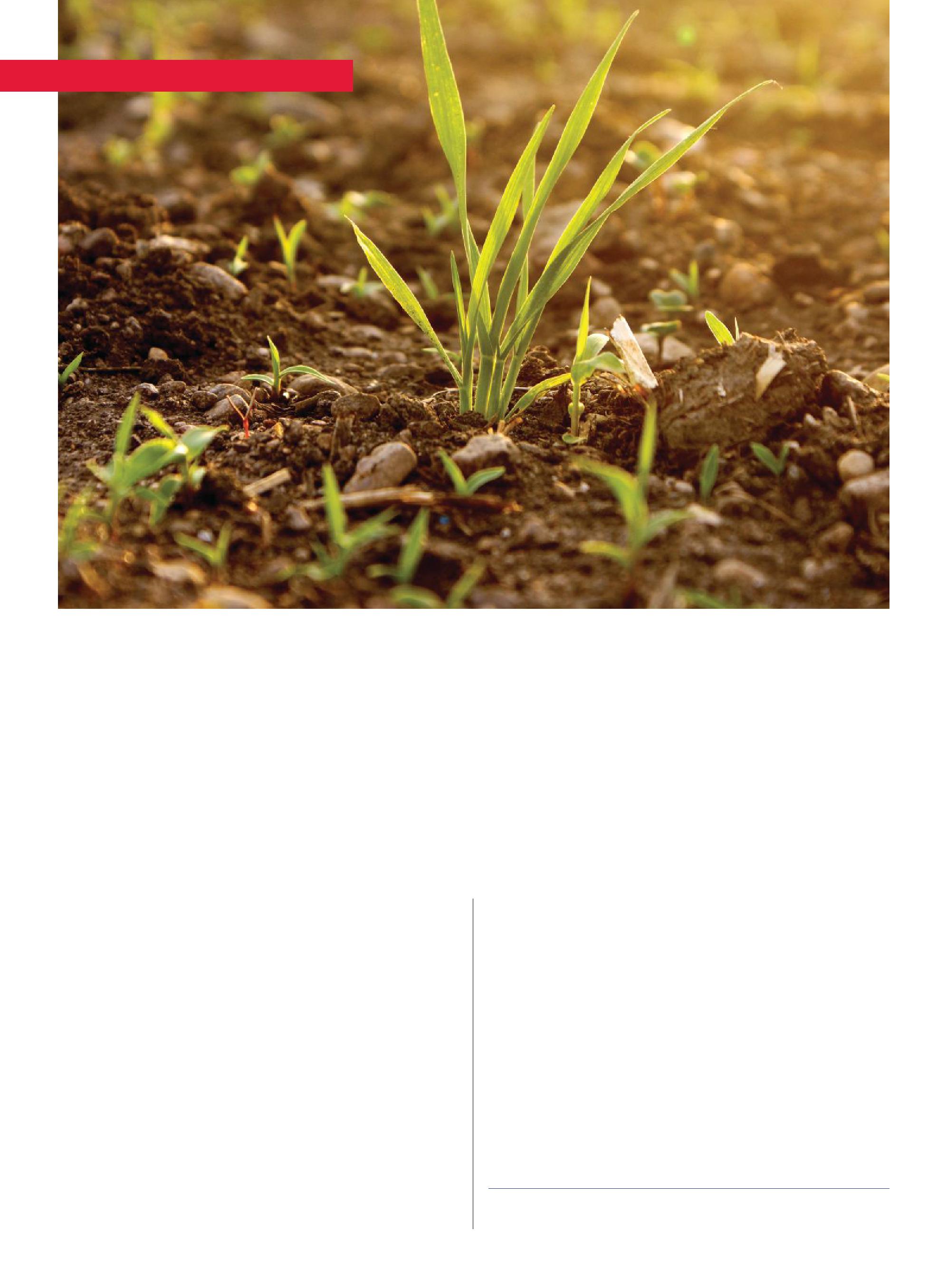
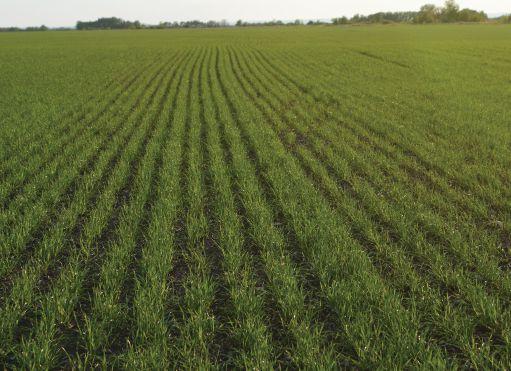
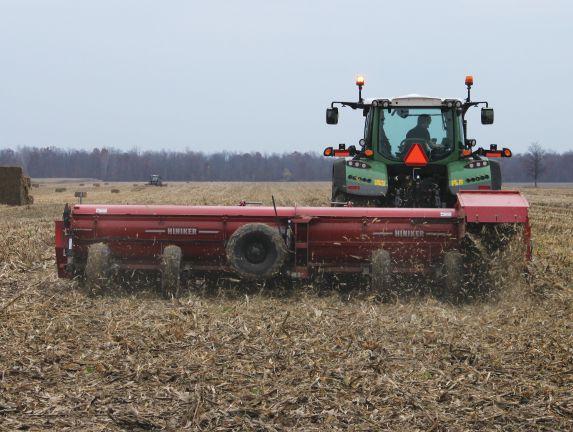
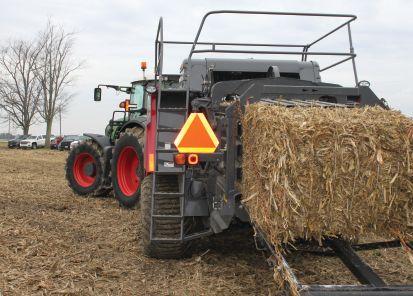
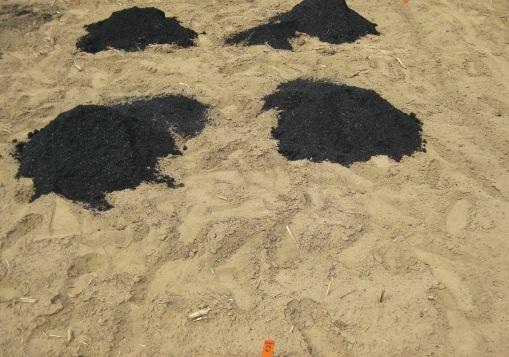
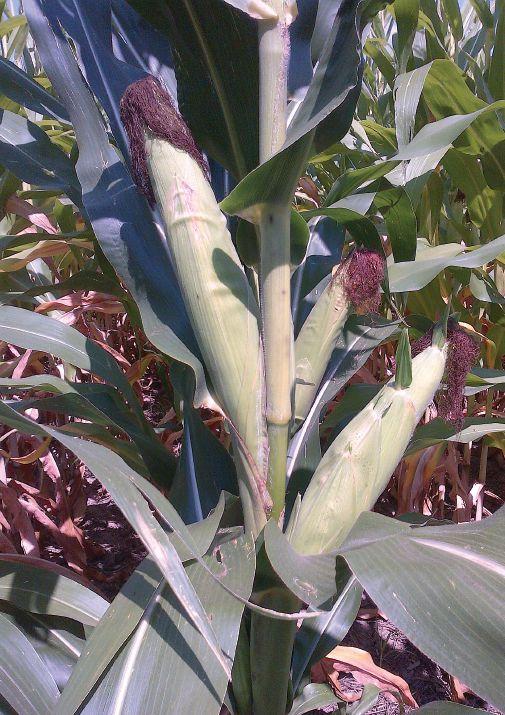
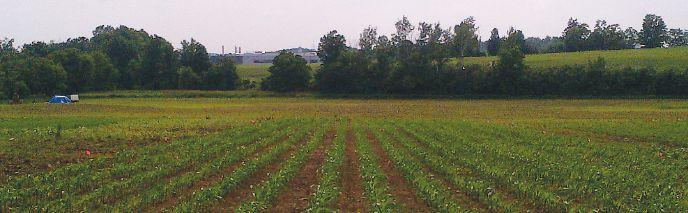
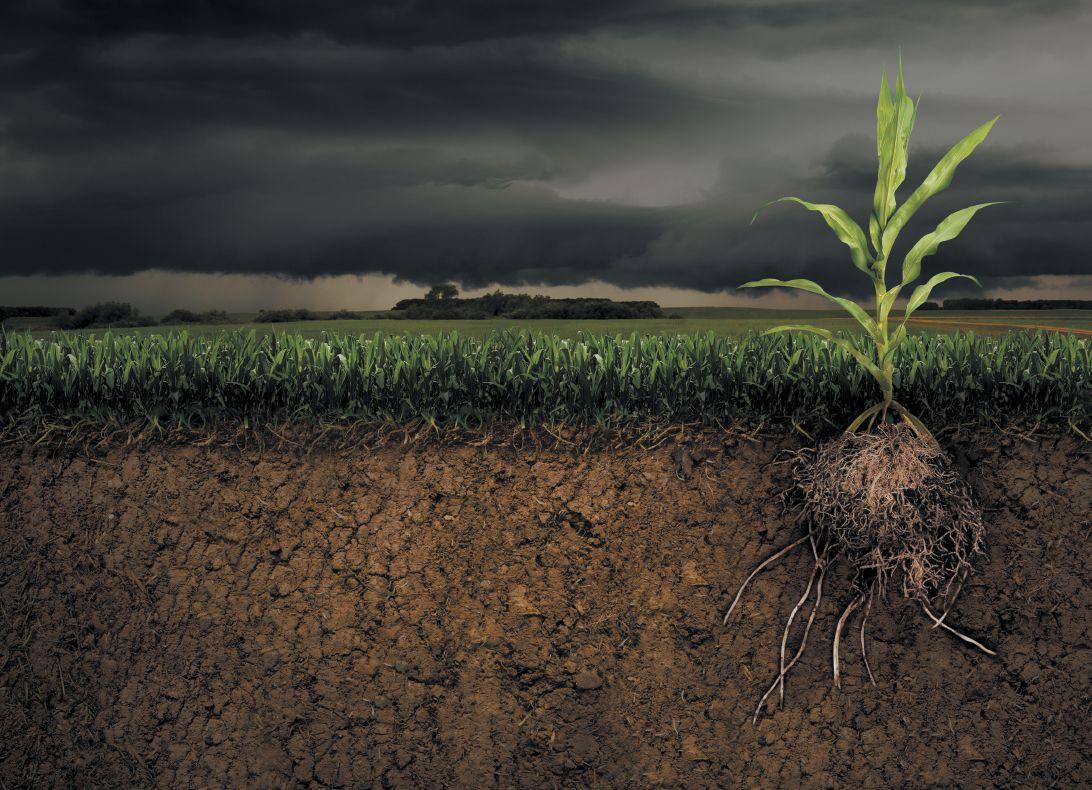
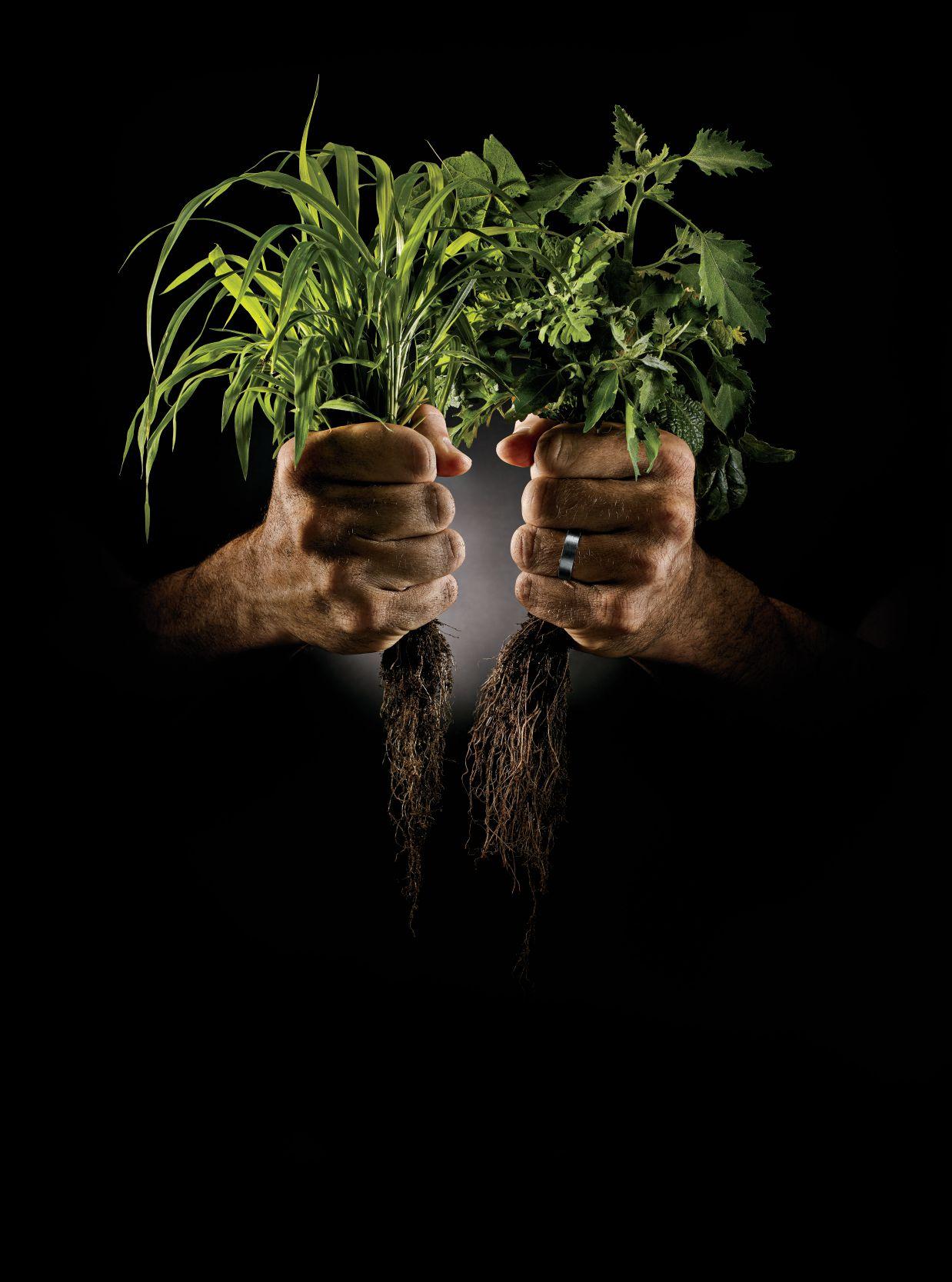
You might think that when nitrogen fertilizer is in the ground, it’s safe. Research suggests you need to think again. When shallow banding unprotected urea less than two inches deep, researchers found that nitrogen loss due to ammonia volatilization can be even greater than unprotected broadcast urea. Protect your nitrogen while maintaining the operational efficiencies of side banding or mid-row banding at seeding by using AGROTAIN® DRI-MAXX nitrogen stabilizer. Whether you choose to band or broadcast, you’ll be confident that you’re protecting your nitrogen investment, your yield potential and your return on investment.
Ask your retailer to protect your urea today with AGROTAIN® DRI-MAXX nitrogen stabilizer.
agrotain.com/getthedirt
TOP CROP
MANAGER
10 | Searching for drought-tolerant wheat
Scientists are hunting high and low for a wheat variety that can perform well under drought stress, as well as in normal conditions.
By John Dietz
FROM THE EDITOR
4 Preserving gains in corn yields By Stefanie Croley
PESTS AND DISEASES
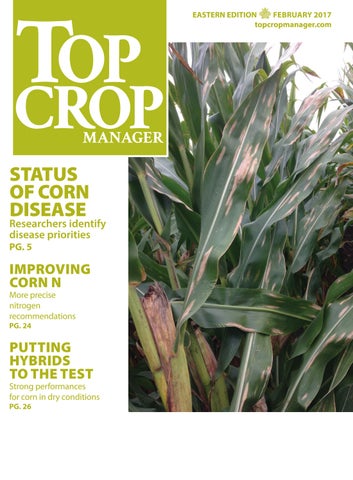
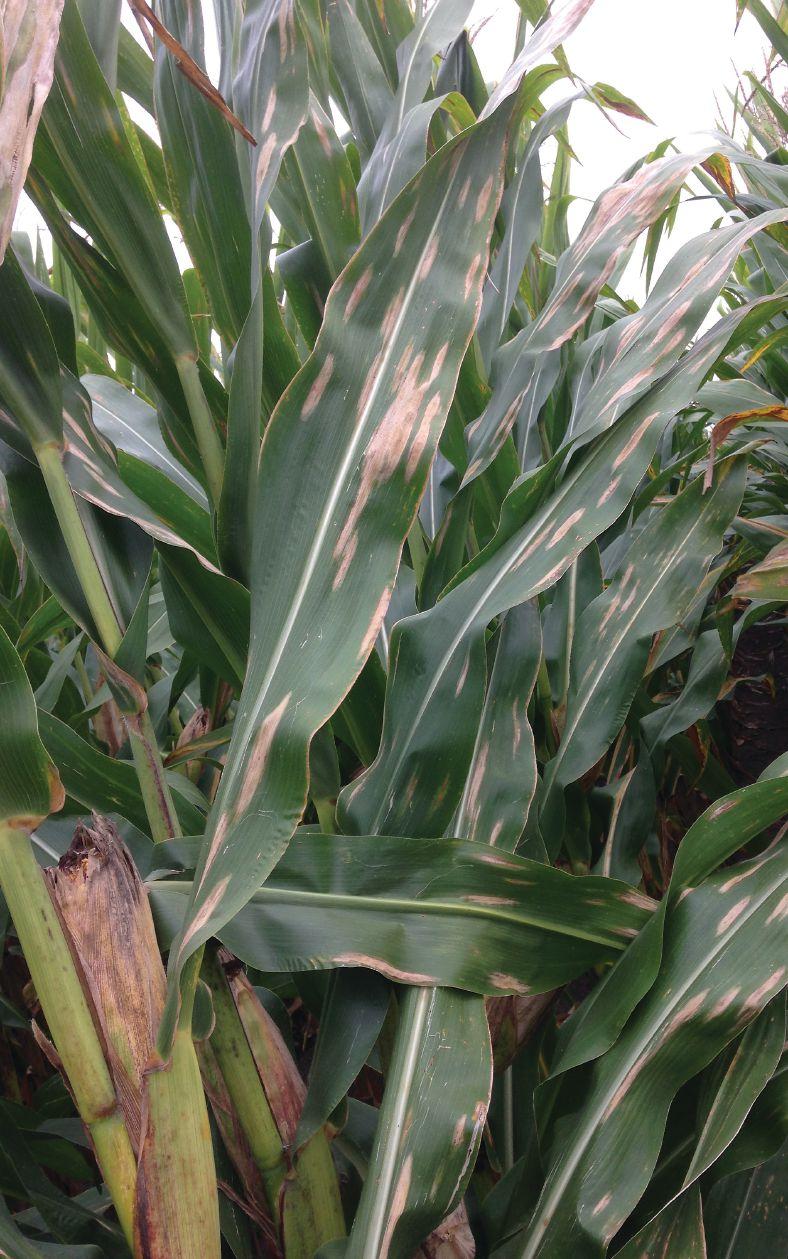
5 Northern corn leaf blight, grey leaf spot top Ontario corn diseases By Julienne Isaacs
PLANT BREEDING
8 Sorghum’s encore By Rosalie Tennison
ON THE WEB
FEBRUARY 2017 • EASTERN EDITION
FERTILITY AND NUTRIENTS
18 | Measurement made easier
Using root and stem measurements to identify better agronomic practices and better breeding lines.
By Carolyn King
SPECIAL CROPS
14 Stover and straw for sugar-based biochemicals
By Carolyn King
FERTILITY AND NUTRIENTS
22 Biochar: a quick fix for taxed soil? By Julienne Isaacs
CANADIAN PRODUCERS BENEFIT FROM 2016 DROP IN LOONIE: BMO
Foreign exchange developments have yielded very different experiences for producers in Canada and the United States, according to the BMO 2016 North American Agriculture Report.
FERTILITY AND NUTRIENTS
24 | Improving corn N recommendations
Working towards more precise nitrogen fertilizer recommendations for corn in Ontario.
By Helen Lammers-Helps
CROP MANAGEMENT
26 Putting corn hybrids to the test By Julienne Isaacs
MACHINERY
28 The 2017 Canadian Truck King Challenge By Howard J. Elmer
Readers will find numerous references to pesticide and fertility applications, methods, timing and rates in the pages of Top Crop Manager. We encourage growers to check product registration status and consult with provincial recommendations and product labels for complete instructions.
PHOTO BY JOHN DIETZ.
COURTESY OF BAO-LUO MA.
STEFANIE CROLEY | EDITOR
PRESERVING GAINS IN CORN YIELDS
Even though it seems far away right now, another growing season is around the corner. Despite the frigid conditions outside, researchers are continually working indoors to develop new methods and technologies to better prepare you for what may come in the warmer months.
Across the border, scientists at the University of Missouri have made advancements in learning how corn plants combat the western corn rootworm – a ravenous corn pest that can be especially damaging in parts of southwestern Ontario. The pest’s eggs are deposited in the soil from July until a killing frost in the fall, then overwinter and begin hatching in early June. Adults emerge in late July and feed on silks and tassels.
The Ontario Ministry of Agriculture, Food and Rural Affairs (OMAFRA) outlines management strategies on its website, but ultimately reminds growers that rootworm has developed resistance to many forms of control, so it’s important to use control products only when necessary.
With that said, any new advances in breeding corn that can fight or resist these pests are welcome alternatives. The researchers involved in the University of Missouri project are making great progress on this front.
R ichard Ferrieri, a research professor involved in the project, and his team used radioisotopes to trace essential nutrients and hormones as they moved through live corn plants, both healthy and rootworm-infested. Auxin, a powerful plant hormone, can stimulate new root growth, so the team followed auxin with a radioactive tracer to see exactly how it contributes to new growth. They also attached a radioactive tracer to glutamine, an amino acid important in controlling auxin chemistry, to study how the corn plants transport glutamine, and the relationship between glutamine and auxin biosynthesis.
The team found new understanding about root regrowth in crops that can fend off a rootworm attack. Auxin is tightly regulated at the root tissue level, where rootworms are feeding, and auxin biosynthesis is vital to root regrowth. Ultimately, the findings could help crop breeders develop new resistant lines of corn.
Sound complicated? Research like this may be beyond the scope of your daily practice, but our goal at Top Crop Manager is to keep you up-to-date with advancements like these so you’re already in the loop when new management strategies and recommendations come into effect. And, as our February issue is traditionally corn-themed, you’ll find even more information about corn pests, diseases and varieties in this issue to ensure your corn crop thrives this coming season.
If disease threats are on your radar, be sure to flip to page 5 to read about the top corn diseases found in Ontario in the last year. As Albert Tenuta, a field crop pathologist at OMAFRA, notes, new disease threats shouldn’t be overshadowed by current risks. Be sure to take note of Tenuta’s recommendations when planting time arrives.
A nd on page 26, we look at the advancements in yields observed in the Ontario Corn Committee’s Ontario Hybrid Corn Performance Trials, in spite of dry conditions affecting many of the participating fields.
We hope the information provided in these stories, and in all of our pages, helps you make the best decisions for your farm.
NATIONAL ACCOUNT MANAGER Sarah Otto • 888.599.2228 ext 237 519.400.0332 sotto@annexweb.com ACCOUNT COORDINATOR Alice Chen • 905.713.4369 achen@annexweb.com
Corn producers shouldn’t worry about new disease threats before they strike, advises Albert Tenuta, field crop pathologist for the Ontario Ministry of Agriculture, Food and Rural Affairs (OMAFRA).
“A lot of times [farmers] worry about the exotic diseases that are coming, like soybean rust, Ug99 and Goss’s wilt,” Tenuta says. “But we have more than enough pathogens and pests [already] in the province that cause us issues.”
Diseases producers are already familiar with, such as Northern corn leaf blight (NCLB) and grey leaf spot (GLS), are emerging as bigger threats each year.
With regard to NCLB, researchers are seeing new races that can bypass resistance genes, Tenuta says. And GLS is an example of a disease that’s slowly widened its presence in Ontario – from just a few fields 25 years ago to most of southern Ontario within the last seven years.
This information reaches growers annually via the Ontario corn disease survey, co-ordinated by Tenuta and Agriculture and Agri-Food Canada (AAFC) research scientist Lana Reid. The survey, a joint AAFC-OMAFRA venture, is designed to provide an overview of endemic and invasive corn pathogens.
In 2015 and 2016, AAFC’s Krishan Jindal helped conduct the survey, which has run uninterrupted for 15 years (with the exception of 2013, when no survey was conducted due to lack of funding). The survey is supported in part by the AAFC Growing Forward partnership with the Canadian Field Crop Research Alliance and the Grain Farmers of Ontario, who obtained partial funding through Growing Forward 2.
Dave Hooker, an agronomist at the University of Guelph Ridgetown campus, is also on the grant for his work on NCLB, and conducts fungicide trials with Tenuta for NCLB and other foliar diseases.
Jindal says it’s crucial the survey is conducted annually.
“Surveys are a continuous process. The climate is changing, the pathogen profile is changing and there are new genotypes coming into the field with different resistance,” Jindal says.
One of the chief objectives of the next Growing Forward science cluster is to identify current and emerging corn pathogens, and use that information to improve management, screen inbreds and identify and validate new sources of resistant germplasm. Jindal and his
Grey leaf spot has slowly widened its presence in Ontario, from just a few fields 25 years ago to most of southern Ontario within the last seven years.
colleagues are submitting a proposal to expand the survey’s scope in 2018 to help meet these goals.
2015 and 2016
The survey takes into account both disease incidence and severity, Tenuta says, which helps researchers note, for example, whether diseases are widespread with minimal severity or not
widespread with high severity.
Incidence and severity of corn disease overall in Ontario decreased in 2016 compared to 2015 and previous years, due to early planting and hot, dry conditions throughout the growing season.
In 2016, as in 2015, NCLB, common rust and eyespot were the most common leaf diseases found in Ontario cornfields. According to the survey results, NCLB and common rust were found in at least 92 per cent of fields tested in southern and western Ontario, with only 16 per cent and nine per cent, respectively, of the affected fields having incidence levels of at least 25 per cent. Eyespot was found in 75 per cent of the fields tested.
GLS was identified in 72 per cent of fields sampled in southern Ontario, widening its spread from 2014 and 2015.
Ear and stalk rot diseases were not significant in the 2016 results, and as in 2015, Stewart’s wilt and Goss’s bacterial wilt were not detected in the province.
Tenuta says the team always checks for Goss’s wilt, which has been detected in Alberta, Manitoba and northern U.S. states, but there was no sign of the disease in 2015 and 2016.
“I’m not saying it’s not here, but if it is it would be trace amounts, and the season wasn’t conducive to it,” he says. “With a lot of these new pathogens, they often will start at really low levels and build up slowly.”
Jindal says researchers are closely monitoring Goss’s wilt. “It’s a very serious problem and we are keeping an eye on it as it is seedborne. We always tell companies and farmers that they should keep an eye on their seed.” he says.
Though the survey was conducted too early to register any
incidence of stalk rots, including Pythium stalk rot, Tenuta says these are always a concern. “We’re seeing more species of Pythium in the province. You’ve got a greater diversity in the environmental conditions that they favour,” he says. “So you’ve got a greater window of activity for these pathogens.”
But there are examples of major economic diseases the province has successfully managed, such as Stewart’s wilt. The disease, which is vectored by flea beetle, has been virtually eliminated in Ontario through targeted use of seed treatments. This success proves careful monitoring and management is worth a great deal in the long term.
As always, successful management starts with the seed, Tenuta says. Producers should look at the disease package of any given variety, as well as its agronomic qualities, and examine current hybrid disease pressure ratings. “Tie those characteristics to your specific fields – those fields that have a history of NCLB, and have more residue, for example. Those are the fields that are more at risk,” he says.
Use seed treatments to manage early seedling diseases and plant earlier.
“In season, scout those fields and know what’s going on,” Tenuta says. “If you are not identifying the issue or problem or disease, your management strategy may be ineffective and end up costing you a fair amount of money.”
Finally, Tenuta advises producers to keep an eye on their investment. “Whatever your management strategy is, if you have a resistant or tolerant variety, or if you use a fungicide or seed treatment, you’ve got to follow up to see if it’s working in that field.”
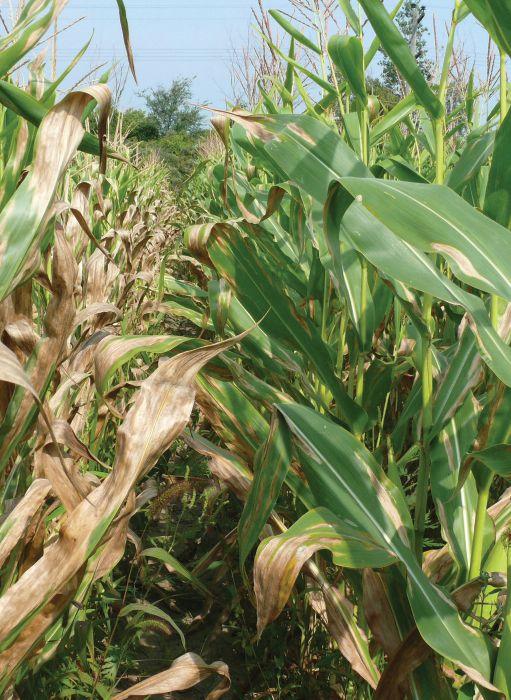
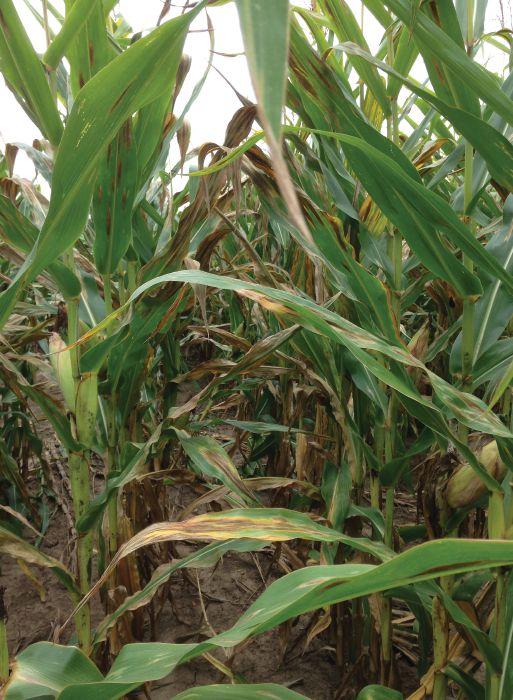
Northern corn leaf blight damage on susceptible corn hybrids (left) versus tolerant hybrids (right).
Damage due to Northern corn leaf blight, the most severe leaf disease of corn in Ontario.
PHOTO COURTESY OF KRISHAN JINDAL.
PHOTO COURTESY OF ALBERT TENUTA.
Looks like the latest soybean seed innovation has met its match.
Introducing Engenia, our most advanced dicamba formulation for Roundup Ready 2 Xtend ® soybeans.
If you’re planting the very latest soybean technology, doesn’t it deserve protection to match? New Engenia™ herbicide is exclusively designed for dicamba-tolerant crops. Its new, highly concentrated liquid formulation offers easier handling and a lower use rate. Engenia is also an effective tool for managing Group 2-, triazine- and glyphosate-resistant biotypes. In other words, it seems tough weeds have also met their match. Visit agsolutions.ca/engenia or contact AgSolutions® Customer Care at 1-877-371-BASF (2273) for more info.
PLANT BREEDING
SORGHUM’S ENCORE
This oft-overlooked crop is offering a much needed option in rotations and markets.
by Rosalie Tennison
While most other crops have research dollars devoted to improving yield, pest and herbicide resistance, and input management, sorghum has been left behind in the move towards genetic improvements, better management options and pest reduction.
“There’s never enough supporting research for many grain crops, but sorghum gets the least amount of attention,” says Justin Weinheimer, the crop improvement director for Sorghum: The Smart Choice, a check-off program initiated by growers to fund research. The program, based in Texas, is investing in sorghum improvement and, as a result, the future is starting to look brighter for the former staple in crop rotations.
“Research shifted to corn and soybeans, which affected grain sorghum,” Weinheimer says. “Growers are now playing catch-up to get grain sorghum technology improved. Grain sorghum brings value to farms because it works well in rotation – especially winter wheat and legumes. It also provides organic matter to soil and helps to break up disease and pest cycles.” He adds that in the U.S., sorghum has been successful in wheat rotations as well.
The current issue facing sorghum growers, according to Weinheimer, is the lack of technology support; while other crops were being studied to develop new pesticides and herbicides, sorghum was not. Without the technology support, growers began to drop it from consideration in their cropping plans. With the help of the check-off program, Weinheimer and his colleagues are trying to address the crop improvement needs of sorghum.
A Canadian perspective
In Canada, Agriculture Environmental Renewal Canada (AERC) Inc. was formed to conduct sorghum research after federal, provincial and university funding for the crop dried up. “We do research in collaboration with government and universities,” explains Om Dangi, AERC’s president.
Sorghum works well in rotation with potatoes in sandy soils, making it a good option in areas of the country with high concentrations of potato production. They are also trying to determine if a popular corn herbicide could work with sorghum.
“Our breeding program is ongoing,” Dangi says. “We are always trying to improve the seed because it is wanted in China, East Africa and Vietnam.” Sorghum is a good alternative to corn, particularly in areas where corn can be more challenging to grow successfully.
Because many growers moved away from sorghum production for many years, it does not have the same pest and disease pressures
that have been seen increasing in other crops that are grown repeatedly. Weinheimer says this is what makes sorghum so welcome in a rotation. However, as acreage in the U.S. has increased, so have the pest problems. Sorghum grown in wetter areas is subject to anthracnose and sugar cane aphid.
But, despite the challenges facing growers as they wait for sorghum breeding to catch up with corn and soybean programs, there are newer markets that make growing sorghum lucrative. According to Weinheimer, China currently buys almost 70 per cent of U.S. grain sorghum.
“We’ve seen a massive shift in where our grain sorghum is going and that has affected prices,” he says. “In some cases, it has been trading similar to corn, which is a big improvement.”
Here in Canada, Dangi says most domestically grown sorghum is used in the country, but he sees growing market opportunities. Growers just need to be given the right varieties and technology for success.
“Our hybrids are adapted to our climate,” Dangi says of his
PHOTO
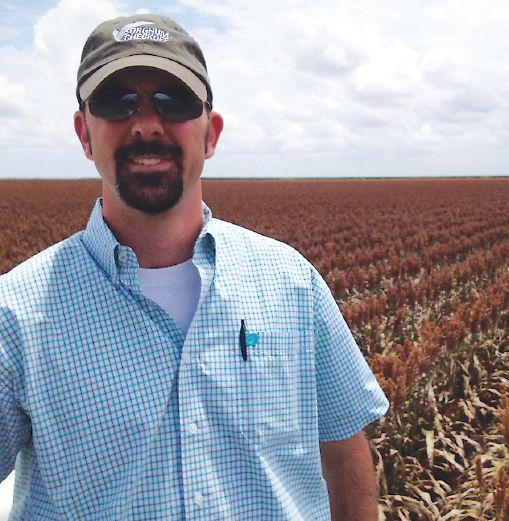
Justin Weinheimer is the crop improvement director for Sorghum: The Smart Choice, a Texas-based check-off program initiated by growers to fund research on sorghum improvement.
“Growers are now playing catch-up to get grain sorghum technology improved. Grain sorghum brings value to farms because it works well in rotation – especially winter wheat and legumes. It also provides organic matter to soil and helps to break up disease and pest cycles.”
sorghum-breeding program. “We will continue our research because there looks to be more opportunities in the future.”
Weinheimer agrees, based on what he is seeing in the U.S. He maintains genetics is the greatest impediment to getting sorghum grown in more fields. From a high of 18 million acres seeded to sorghum in the States 30 years ago, to the seven million acres seeded in 2016, sorghum has a lot of catching up to do.
“Yield expectations need to catch up to other crops – we currently have a yield drag,” Weinheimer says. “We also need to address pest and disease problems. Sorghum has been grown more frequently in areas with drought pressure, but it could shift back to being grown on more productive land with the right support.” He adds that the check-off program, which started in 2008, has helped reboot public sector breeding and research programs. The check-off program acts as a hub to provide research dollars and
help regain lost ground in sorghum research.
“If Canadian growers are interested in sorghum, the real value is to discuss opportunities in key growing areas,” Weinheimer says. “There are opportunities for it to be grown in northern areas with shorter growing seasons. We have seen acres increase in South Dakota, for example. The strength of sorghum is its diversity because it can be grown in many areas successfully.”
Both Weinheimer and Dangi say shifts in the way crops are bred in the 21st century will help sorghum breeding catch up. They say a lot of the guesswork of traditional breeding by natural selection has been removed from the process, making varietal improvements less costly.
“Sorghum is trending upward now, but there are still challenges,” Weinheimer says. “However, long term, we expect the sorghum story to improve.”
For Canadian producers looking for another option for their rotation, it might be time to consider this overlooked crop.
Pamela Ganske, Agvocate Ag Retailer
KNOW. GROW. www.topcropmanager.com
SEARCHING FOR DROUGHTTOLERANT WHEAT
Scientists are hunting high and low for a wheat variety that can perform well under drought stress, as well as in normal conditions.
by John Dietz
Drought-tolerant wheat may exist on some mountaintop in Nepal, but in the laboratories of wheat breeders, it is truly elusive. It’s on the priority list, but don’t look for significant changes coming any faster than climate change.
However, one lab in Canada has gone to the mountaintop –metaphorically. At the University of Guelph, the plant agriculture department has a project funded by the International Development Research Centre (IDRC), for the purpose of doing research on drought tolerance in wheat from Nepal. Kamal Khadka, a PhD candidate from Nepal, is deep into the multi-year research project.
According to Alireza Navabi, a wheat breeder at the University of Guelph and advisor to Khadka, the search is likely to be long and difficult. Similar projects are underway in other labs in Canada and in other countries.
“Many groups are focusing on drought tolerance in the world,” Navabi says. “It has become more and more important with climate
change. Hopefully, new wheat varieties will have a better response to drought stress, but look for small incremental changes.”
Pressed for how much to expect – and how soon – he points to results with efforts to increase grain yield. “We think of a one per cent gain in yield over the last 50 or 60 years. Improvements in response to drought will be the same: slow. That’s how things work with plant breeding,” he says.
Resistance to drought isn’t a single trait, he explains. Many genetic factors can be behind the reason for one line of wheat performing a little better when conditions are dry.
With 320 lines of wheat now in the Nepal project, Khadka is collecting many lines of data, and near-drought conditions this past summer in southwestern Ontario were good news for the researcher.
“We had a wide variation among the genotypes for different
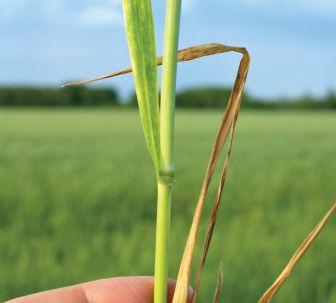
ABOVE: Researchers expected a plant with a stronger root to be better able to absorb water.
PHOTO BY JOHN DIETZ.
traits, due to the droughty environment,” Navabi says. “It’s too early to comment, but [Khadka] is seeing a very wide diversity in traits potentially associated with drought tolerance.”
Timing is one aspect in the research. Timing can be regional, with dry conditions being frequent in the early growth stage in one part of the world, to being frequent when the crop is close to maturity in other parts of the world.
Internally, the stage of growth that is stressed by lack of moisture is very important. In early growth, dry conditions can limit the number of tillers or the potential number of grains that can be produced. In mid-season, at flowering, dry conditions can limit anthesis and lead to empty florets that could have become grain. Later stress can limit production of the photosynthates that go into the grain. If that happens, you have lighter seed that isn’t plump enough for a milling grade.
In growth chamber testing, Khadka is separating his seed samples by several other physical characteristics. Some are associated with roots.
“You can definitely expect that a plant with a stronger root has a better capacity to absorb water. It also can contribute to how efficient in water use a variety can be,” Navabi says.
A strong root can be one that has more surface area than other roots. It can also be a root that’s longer than most, one that has more hairs on the root, or one that sinks deeper into the soil than others.
Genetic characteristics, like the physical, also can separate “good performers” for dry conditions.
Khadka has been developing a “harvest index.” It deals with biomass, the total amount of above ground material produced by a plant during its growing season, and compares that to how much grain the plant is able to produce.
“The harvest index is a very important trait for drought tolerance,” Navabi says.
In terms of genetics, Khadka is also looking for performance differences in three critical yield components: tillers, potential number of grains and potential weight of the grains.
“The combination of these three yield components determines how much yield we have. Under drought stress, if you find a variety in the early growth stage that has the ability to maintain its tillering capacity, that can also produce more grains for each tiller, you expect it to be a more tolerant variety,” Navabi says.
Other traits with a role to consider include variations in the amount of wax in leaf tissue (affecting evapotranspiration) and the role of awns in a dry environment.
“Awns are not important in a normal environment, but they contribute to photosynthesis and are close to the seed. There’s a theory that awned varieties can be more drought tolerant because they have a very close source of photosynthates for the grain. That’s another parameter we can be looking at,” Navabi says.
Growth chambers let Khadka test material in both optimum and dry conditions. He’s also co-operating with an irrigation research centre in Nepal and is searching for DNA markers to associate with the traits he’s observing.
The big picture
Guelph’s drought research effort is one of many. Canada has six research areas, or pillars, for wheat research under a national 11-year umbrella program known as the Canadian Wheat Alliance (CWA). Members of the CWA include Agriculture and Agri-Food Canada, the University of Saskatchewan, the province of Saskatchewan and
In terms of genetics, Khadka is looking for performance differences in three critical yield components: tillers, potential number of grains and potential weight of the grains.
the National Research Council of Canada (NRC). This research is focused on accelerated breeding, disease resistance and reduced losses due to drought, heat and cold stress.
“We essentially have an alliance of breeders and molecular biologists in agriculture working together,” says Jitao Zou, a senior research officer with NRC in Saskatoon. “To a large extent, we focus on Canadian germplasm that has been traditionally utilized for breeding.”
In the Canadian pool of wheat genetics, researchers are trying to associate important crop traits with specific gene segments. The pool, he says, has 17 billion identifiable segments known as base pairs of DNA – about five times more than the human genome. When a trait is associated with a specific segment, it has a “marker” in the pool that breeders can use to help their selection program.
Basically, drought tolerance or resistance requires water uptake and usage efficiency. Measurables include how much water the roots can harvest from the soil and how well the above ground portion of the plant can resist the loss of that moisture through leaf pores.
“We look at how deep the root can grow, at the branching and the biomass, then we try to find markers for the breeders,” Zou says. “We screen the individual lines to understand which one has a better root system. The better root system is likely to be more resilient in dry soil.”
Above ground, wheat with a waxy surface is more likely to retain water under heat and drought. There’s a hunt for those markers in the gene pool, too.
Gradually, the program will build new lines of spring wheat with bigger roots and heavier wax. They will survive and thrive in a dry season better than present wheat varieties. A parallel program, Zou adds, is working with cold tolerance in winter wheat. The process is faster, with marker-selected assistance, but still slow.
“I think, in terms of the next five years, we are going to have some markers that will be valuable for the breeders to use,” Zou says.
Then, with a plant population that already is close to the registration process, a breeder can sort through the markers to look for drought tolerance, rather than investing five more years in checking roots and leaf wax.
Private research
Agricultural biotech researchers are starting to use a cut-and-paste
PHOTO BY JOHN DIETZ.
gene editing technique for quick, non-GM trait selections. This technology, CRISPRCas9 editing, is based on research at the University of California, Berkeley.
One multinational corporation on that track is DuPont. In October 2015, DuPont announced it is growing a drought-resistant corn as well as an altered wheat variety that will breed like a hybrid. Both are products of the CRISPR technology.
Other technologies – like highthroughput phenotyping for traits, nextgeneration sequencing for markers and genetic engineering – are being brought in to open the bottleneck in wheat genetics for improved drought resistance.
At least one private laboratory is also searching for the elusive drought-tolerance trait. Frontier Agri-Science (FAS), an agricultural biotechnology company located in Toronto, specializes in non-GMO genetic technology. It was launched in 2010 by Julian Northey, who holds a PhD in plant molecular genetics from the University of Toronto.
FAS now has a team of seven scientists and a website listing partnerships with four Canadian universities as well as BASF, Biogemma and the International Crops Research Institute for the Semi-arid Tropics (ICRISAT).
The company has three research platforms, including one that specializes in water-use efficiency and stress tolerance.
According to Northey, his lab harvested six lines of durum wheat as foundation seed in September. It hopes to enter those in registration trials in 2017.
“We’ve been working on [this] for four years, and we feel it has great promise in drought resistance. The science itself has been 10 years in development,” Northey says.
He added, for Ontario wheat producers, “We will be starting to select this [trait] in bread wheat as well, very shortly.”
Chemical technology underlying this drought-screening platform is a trade secret, but his research using Arabidopsis genetics and the genetic pathway was published in the journal Nature Plants in July 2016.
“We have flipped, on its head, decades of common thinking about what leads to drought resistance with this particular plant hormone,” he says. “We hope to have significant yield increases under waterlimited conditions in (non-GM) wheat.”
When the new lines go into registration trials, the industry will be watching.
BlackHawk® has been reformulated to deliver a better burndown in corn, soybeans and cereals with the added flexibility of spraying up to one day after planting soybeans. When mixed with Credit ® Xtreme glyphosate, BlackHawk delivers faster, more complete weed control in a pre-seed burndown treatment than glyphosate and Group 2 herbicides alone. Get a better burndown when you need it, with BlackHawk. Ask your local retailer for more information.
STOVER AND STRAW FOR SUGAR-BASED BIOCHEMICALS
A
farmer co-op in the Sarnia region is partnering to make this value-added opportunity a reality.
by Carolyn King
The Cellulosic Sugar Producers Co-operative (CSPC) and its partners have almost finished putting all the pieces in place for a southern Ontario value chain to turn crop residues into sugars. Those pieces include a feasibility study, a technical-economic assessment and a collaboratively developed business plan. Some important steps still have to be completed, but they are aiming for processing to start in 2018.
Dave Park, who is now CSPC’s president, got interested in the idea in 2014 after he and some other farmers in the Sarnia region were invited to a meeting about it. The meeting was set up by Bioindustrial Innovation Canada (BIC), a not-for-profit business accelerator centred in Sarnia, and AGRIS Co-operative Ltd., a farm supply and grain merchandising co-op in southwestern Ontario.
“Bioindustrial Innovation Canada wanted to do a study analyzing different conversion technologies to turn cellulosic materials – corn stover and wheat straw – into sugars,” Park says. “They had put a proposal together for this study that brought together all the players in the value chain – including suppliers and endusers of cellulosic sugars, technology providers, government agencies, commodity organizations – and they wanted to get a group of farmers together to help with this project.”
Park and a few other innovative farmers at the meeting thought this could be a good value-added opportunity for their crops, so they decided to start CSPC and participate in the study.
The co-op and its collaborators have put in a lot of work during the past two years, but the venture actually had its beginnings several years earlier.
“Bioindustrial Innovation Canada started this venture,” explains Sandy Marshall, BIC’s current executive director and a former chair of its board. “BIC focuses on helping sustainable chemistry technologies and helping them get commercialized. A number of years ago we worked to get BioAmber to select Sarnia as the location for their first commercial plant, over about 100 other sites in the United States. BioAmber needs sugars as the raw material for their [biochemical] plant, and they currently use corn sugars from a wet mill [a type of corn processing] in London, Ont. But as BIC looked at what BioAmber was doing and where this whole bioeconomy was going, we realized that having the feedstocks was going to be critical to developing this bioeconomy cluster in the Sarnia-Lambton area.”
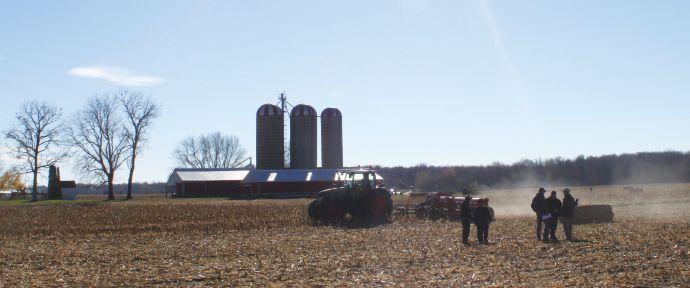
<LEFT: A co-op in the Sarnia region is collaborating on a value-added opportunity to turn corn stover and wheat straw into sugars.
<LEFT: Flail windrower.
BOTTOM: CSPC held two demonstrations in November 2016 to show interested producers how the corn stover harvesting methods and equipment work.
So, about four years ago, BIC initiated a study to assess the feasibility of producing sugars from cellulosic materials, like corn stalks. The study received financial and in-kind support from industry, government and not-for-profit agencies.
The University of Guelph researchers who conducted the study found potential for the opportunity in southwestern Ontario, with the possibility to benefit both corn producers and bioprocessing companies. The researchers recommended a bioprocessing co-op as the business model, where corn stover producers would share in the returns of the processing plant.
The next step was the techno-economic assessment of the different conversion technologies, which was sponsored by the Agricultural Adaptation Council. At that time, Marshall was hired as an independent consultant to work on the study. “We looked at 19 different sugar conversion technologies. Ultimately we made recommendations to the co-op of the ones we thought might be suitable for them,” Marshall says.
Park notes, “BIC tested the technologies versus the specs and requirements that the endusers were looking for, and they did some economic analyses to make sure the conversion costs made sense. They also garnered feedback from us on whether we could meet the specs for raw materials.”
CSPC decided to work with Comet Biorefining, based in London, Ont. This company has developed a novel process to convert cellulosic biomass into sugars that can be used in the manufacture of biofuels, biochemicals and other bioproducts.
“BIC then initiated another project, which was to develop a business plan for the co-op and Comet together,” Marshall says. “We built the aggregation, transportation and storage model for the biomass. Then we coupled that with the business plan from Comet and created a plan for the combined entities of the co-op and the technology company.”
Park says one of the first things CSPC and Comet Biorefining discussed was the nature of their partnership. “We said, ‘We don’t want to be just raw material providers. We want to be part of the plant.’ And Comet said, ‘We don’t want to just buy feedstock from you. We want you to be part of the plant too.’ So it’s a real, true partnership and we share the same vision. I think when we are working together, rather than from opposite ends of the spectrum, we can extract the most value out of this partnership.”
In March 2016, CSPC and Comet entered into a memorandum of understanding to collaborate on the development of a sustainable agricultural biomass supply chain. In April 2016, Comet signed an agreement with BioAmber to supply sugars to BioAmber from
PHOTOS COURTESY OF CSPC.
Comet’s planned processing facility, to be built in Sarnia by 2018.
In October 2016, CSPC launched its equity campaign, aimed at getting farmers in the Sarnia region to join the co-op and invest in the sugar production facility. Along with hosting field demonstrations to show how the stover harvesting works, the campaign includes holding public information meetings and talking to individual farmers.
Potential benefits
Park sees several important benefits for participating farmers. “We can increase our revenues per acre from the sale of the stover and straw and from the proceeds from the sugar that we’ll get when the sugar produced by the plant is sold. We’ll also be able to get back to utilizing more no-till on our land.”
He explains, “We’re finding on our farm that no-tilling into increasingly heavy crop residue has become more and more difficult as the years have passed. Corn yields have been increasing. Hybrids are being bred for better stalk strength and standability so the stalks take longer to break down. We are planting in narrower row widths than we did 10 years ago. We’re increasing our plant populations. We’re also utilizing fungicides so the plants live healthier, longer.”
With all that residue cover, Park has had to “stop, chop and plough and then cultivate the field to get it prepared for planting soybeans.”
He notes, “By having the co-op remove a portion of the stover, we’ll reduce our need for tillage, reduce our fuel costs and have less soil disturbance. Also, our soils will warm quicker in the spring, allowing timelier planting of our soybeans. Timely soybean planting results in quicker emergence and quite often with quicker emergence you get better soybean yields and more consistent stands. We’ll also be able to cut our soybean
seeding rates back from some of the heavier populations we utilize when we’re no-tilling into that heavy mat of stover that is left traditionally.”
According to Marshall, the value chain will also help sugar bioprocessors and the local bioeconomy. “The companies need sources of raw materials. They can continue to use traditional corn sugars, but there are only a couple of wet mills around here. We see the opportunity to provide a lot more feedstocks for these companies, to allow them to come here, set up and create jobs."
“A lot of these companies are also looking for non-food-based sugars. When you make sugars from things like corn stover and wheat straw, you get away from a discussion about food-based sugars for industrial applications,” he says. “Also, when you use wheat straw, you’re getting into the discussion that wheat straw is non-GMO, and in some areas of the world, that is an important consideration. So for the companies, it is about having diverse feedstocks and access to feedstocks.”
Producer participation
CSPC’s business development manager, Jay Cunningham, is the primary contact for producers who are considering this opportunity. “CSPC is a closed farmerowned co-op, so the farmer would need to be a producer of corn stover and/or wheat straw. The idea is that the farmers will provide the biomass for the production facility through the co-op, and they will own part of the production facility. They’ll be paid for their biomass and then they’ll also receive a return on their investment in the plant,” Cunningham says.
“The facility requires approximately 75,000 metric tonnes of biomass a year, so we’re looking for approximately 55,000 acres. I am hoping to contact, meet, talk and discuss whatever needs to happen, with
anyone interested in joining the co-op and participating in the supply of stover for the new facility.”
CSPC is currently focusing on farmers within 100 kilometres of Sarnia. “If you’re really close to the border of that 100-kilometre radius, we’ll work with you, but we have to set some boundaries because of transportation costs,” Cunningham says.
The co-op will look after all of the crop residue harvesting, aggregation and transportation to the Comet facility, ensuring the facility will get consistent feedstock.
Because crop residue protects soil from erosion and provides nutrients and organic matter to the soil, the co-op also wants to be sure participating farmers will retain sufficient residue. Park says, “We’re only going to remove about 30 per cent of the stover. And we’re not promoting or suggesting removal of stover from any corn field yielding under 150 bushels per acre. When yields are over 150, you’re left with a considerable amount of stover.”
He adds, “We’re able to set the flail choppers at the desired height to ensure we leave the desired residue that a farmer wants left on the land. We’re also not suggesting that farmers sign up 100 per cent of their acres for residue removal, so they can utilize crop rotations and not be removing stover from the same land year after year. And utilization of cover crops is also going to be a best management practice that farmers can follow to ensure they are keeping adequate organic soil carbon levels in their fields.”
“It’s an opportunity for producers to capitalize on a crop without diminishing the natural resources that are there,” Cunningham says. “We won’t go into a field unless we have the permission of the farmer. When a farmer is completing grain harvesting of a field that he would like to have the biomass harvested from, he will contact his CSPC field representative, who will then schedule a crew to harvest the biomass.”
According to Cunningham, the residue will be left in a field for no more than four months. “Some will be trucked right away, some will get trucked within a month or two, and some may take the full four months.”
Over the next year, along with conducting the equity campaign, the co-op will be confirming their protocols for handling the stover and straw and purchasing the necessary equipment.
The co-op will look after all of the crop residue harvesting, aggregation and transportation.
Special Delivery for Your Crops.
Nu-Trax P+™ with CropStart™ Technology turns every granule of your fertilizer blend into a special delivery of early season nutrition.
Nu-Trax P+ is the ideal blend of phosphorus, zinc and other nutrients essential for vigorous crop growth. Featuring patented EvenCoat™ Technology, it coats onto dry fertilizer, ensuring blanket-like distribution near young plant roots.
See how Nu-Trax P+ can deliver the agronomic benefits of a starter to your crops. Ask your retailer to add Nu-Trax P+ to your dry fertilizer blends.
MEASUREMENT MADE EASIER
Using root and stem measurements to identify better agronomic practices and better breeding lines.
by Carolyn King
If you can’t measure something you can’t improve it. Since plant breeders want to develop improved crop varieties with bigger, healthier root systems to ensure the plants are well anchored in the soil and can take up plenty of water and nutrients, and agronomic researchers want to know whether different management practices improve crop root systems, they need to be able to measure the roots. The conventional way to do that is to dig up the plants, carefully wash the roots to remove all the soil without removing too many fine root hairs, then measure characteristics like root length, volume, surface area and weight – a timeconsuming process.
Bao-luo Ma, a research scientist with Agriculture and Agri-Food Canada (AAFC), has been working on a number of studies involving root and stem measurements. Through these studies, Ma and his post-doctoral fellow, Wei Wu (from Northwest A & F University in China), have developed a much faster, easier way to measure root systems. They are using this method (and others) to
compare different cultivars and to evaluate the effects of different agronomic practices on crops.
Canola lodging and management
Ma and Wu began this research with a study on lodging in canola. Ma says, “Lodging is a common problem for most field crops, but we don’t have a conventional way to quantify the difference in susceptibility to lodging between different varieties, and we don’t know what traits are associated with lodging problems.”
Cultivars are often evaluated for susceptibility to lodging based on observations of actual lodging in the field. However, that approach isn’t always effective because the weather conditions that favour
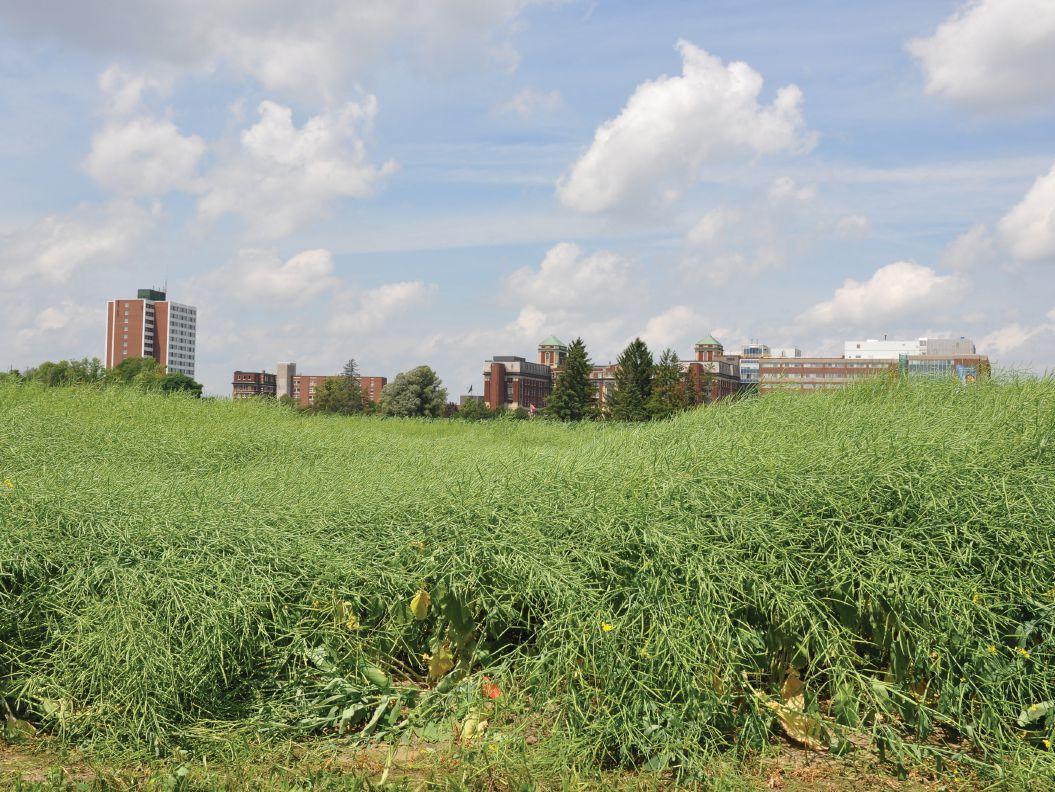
TOP: Researchers are evaluating ways to reduce lodging, which is a common problem in many crops.
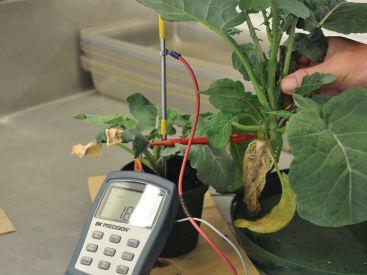
INSET: Ma and Wu have developed a much faster, easier way to measure root systems by measuring an electrical signal called root capacitance.
PHOTOS
lodging don’t always occur when and where a researcher would like them to occur.
Ma explains that lodging is usually assessed by estimating the portion of the field that is lodged, using a scale from one to nine, and then estimating the intensity of lodging based on how far the plants lean from the vertical position, using a scale from one to five. Those two numbers are multiplied to calculate an overall lodging score.
“But this score will not tell you the cause of the lodging,” he says. Lodging can be grouped into two types: stem lodging, where the stem buckles, and root lodging, where the root system fails.
Plant breeders need to know which type of lodging is causing problems to target their future breeding work, so Ma and Wu used various measures to assess the ability of three canola varieties to tolerate root lodging and stem lodging. The field trials were conducted in Ottawa in 2015 with funding from AAFC and the Canola Council of Canada under Growing Forward 2.
One measure Ma and Wu used was a three-point bending test that simulates stem lodging. This test determines the strength of a force pushing on a stem and how much
force the stem can tolerate before it cracks. Another measure involved a similar method that simulates root lodging to see how much force is needed to push over a plant.
They also measured a range of lodgingrelated traits such as plant height, stem diameter and centres of gravity of the stem and plant. As well, they washed the roots and measured root morphology characteristics, such as root length, area and volume.
Based on several of these measurements, they calculated the susceptibility of the plants to root lodging and to stem lodging.
In addition, they measured an electrical signal called root capacitance; previous research indicated such electrical measurements could be used to estimate root characteristics. Ma and Wu measured root capacitance right in the field, using a small meter with two electrodes. One electrode is attached to a needle that is inserted into the plant’s stem near the soil surface. The other electrode is placed in the surrounding soil. Each root capacitance measurement can be done in a few seconds, so it’s much faster than washing and measuring the roots.
The researchers examined how different agronomic practices, like planting date
and nitrogen fertilizer applications, were related to the various stem and root measurements, including root capacitance, in each of the three canola varieties.
Their planting date trials compared early, middle and late planting. Early planting was associated with characteristics like greater root anchorage strength, greater stem diameter, greater stem strength, higher seed yields, and greater root capacitance. The conventional root measurements showed the taproots of the earlier planted canola had larger lateral roots that really helped to further anchor the plant.
Their fertilizer trials compared single preplant applications and a split application. With the single preplant applications, increasing the nitrogen rates from zero to 200 kilograms per hectare (kg/ha) significantly increased the seed yield. Unfortunately, that also increased the risk of stem and root lodging. Even though the higher nitrogen levels somewhat increased root and stem strength, the higher seed yield made the plants more top-heavy and therefore more likely to fall over. In contrast, the split nitrogen application (50 kg/ha preplant and 150 kg/ha side-dressed at the
NATURE’S DESIGN
Pre-treat your soybean seed and treat yourself to a better performing crop. Optimize® ST is a dual-action inoculant that combines a specially selected Bradyrhizobium japonicum inoculant with LCO (lipochitooligosaccharide) technology to enhance nitrogen fixation through better nodule formation. Increased nitrogen availability supports root and shoot growth – providing greater yield potential for your crop.
Driving the Bottom Line
#bottomline
rosette stage) increased the plant’s ability to resist lodging compared to 200 kg/ha preplant.
“More research on nitrogen fertilizer management in canola is needed to find better strategies for minimizing lodging risks while maintaining high seed yields,” Ma says.
The study results also showed the canola plants were more susceptible to root lodging than stem lodging. That finding suggests root lodging resistance would be an important criterion for canola breeding programs.
Root capacitance had a strong positive relationship with root anchorage strength and with measures like root length, volume and area that are related to a plant’s ability to remain anchored in the soil. These findings suggest root capacitance could be an easy, inexpensive way to evaluate root lodging resistance in different canola breeding lines and to evaluate the effects of different agronomic practices on lodging.
“This study was the first to determine the feasibility of conducting electrical measurements in the field as a relatively quick way to indirectly assess root anchorage strength in canola,” Ma says.
Root capacitance was also strongly correlated with seed yield. He explains, “Plants with high root capacitance values usually have larger root systems, and larger root systems enable plants to take up more water and nutrients.”
Root capacitance is a promising tool for screening canola lines to identify lodging-resistant, high-yielding lines with large root systems.
Wheat lodging and nitrogen management
In 2016, Wu and Ma conducted a preliminary field experiment in Ottawa looking at lodging in wheat, with funding from AAFC. They wanted to evaluate how nitrogen fertilizer timing and rates affected wheat yield and lodging risk, and to identify whether stem or root lodging was more common in wheat.
“Optimizing nitrogen timing and rates is critical for controlling lodging and for ensuring optimum wheat yields and grain quality,” Ma says. “If you apply insufficient nitrogen, then you’ll reduce grain protein and yield potential. But if you apply a lot of nitrogen at planting, then it will cause lodging if the environmental conditions are right.”
High nitrogen levels during a wheat plant’s vegetative growth stages tend to cause the stem to become much taller with thinner cell walls, so the stem has a high risk of buckling. However, a split application with most of the nitrogen applied after the jointing stage reduces this risk. Ma notes, “As the plant transitions from vegetative to reproductive growth, the plant needs large quantities of nitrogen and the nitrogen is used for both vegetative and reproductive growth.”
In this study, the researchers used two wheat varieties and compared five nitrogen treatments: a control with no applied nitrogen; 100 kg/ha preplant; 150 kg/ha preplant; a split application with 50 kg/ha preplant and 100 kg/ha side-dressed at booting; and a split application with 50 kg/ha preplant and 50 kg/ha side-dressed at booting. At crop maturity, the researchers used the simulated root and stem lodging tests to see how much force was needed to cause root lodging and stem lodging, respectively.
The researchers determined root lodging was more prevalent than stem lodging in wheat. “The results suggest that root lodging should be targeted as the priority in wheat breeding to increase lodging resistance,” Ma says.
As expected, high nitrogen fertilizer rates at planting increased the risk of stem and root lodging, while the 50/100 split application reduced the risk of lodging. However, the split applications resulted
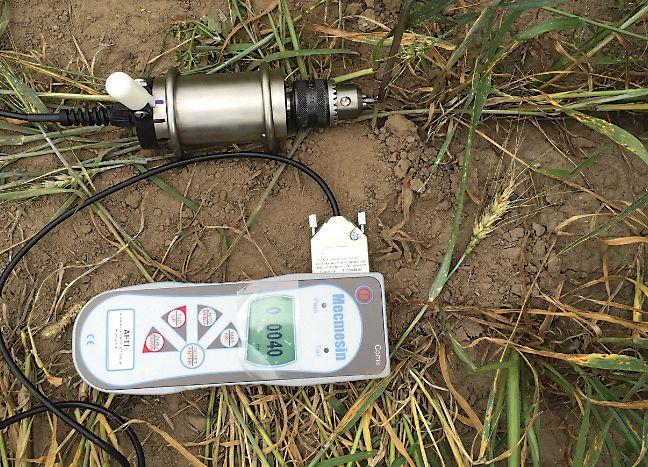
Another way the researchers measured a plant’s susceptibility to root lodging was with this device, which determines the amount of force needed to push over a plant.
in slightly lower grain yields than the single preplant applications in 2016, likely because of drought stress at the site.
Ma is hoping to do more detailed work on the effects of split nitrogen applications on lodging and yield in wheat because of the potential for such applications to improve the efficiency of nitrogen fertilizer management and the need to increase grain protein in high-yielding wheat varieties.
Heat and drought stress in canola
With funding from AAFC and the Canola Council of Canada, Ma, Wu and Robert Duncan from the University of Manitoba evaluated root capacitance as a way to assess root traits and to evaluate tolerance to heat stress and drought stress in canola.
In this controlled environment study in Ottawa, the treatments included a normal temperature regime (23 C in the day, 17 C at night) and a high temperature regime (27 C in the day and 24 C at night), combined with three soil moisture levels (well-irrigated, moderate moisture stress, and severe moisture stress). The treatments involved two canola genotypes. A previous trial revealed one of the genotypes was more susceptible to heat and drought stress.
The researchers measured root capacitance and also washed and measured the roots. In addition, they tested different ways of measuring root capacitance to see what would work best.
As in the canola lodging study, root capacitance was positively correlated with measurements like root length, area and volume. Heat and drought stress resulted in significantly smaller root systems and lower root capacitance values. Also, the canola genotype that was more susceptible to heat and drought stress had smaller roots and lower root capacitance values than the other genotype.
“This research shows root capacitance could be a practical way to assess root morphology or root biomass, and potentially root function, in canola plants subjected to heat and drought stress. And it shows that high root capacitance values are associated with tolerance to heat and drought stresses,” Ma says.
Root capacitance could be used to quantify heat- and droughtinduced changes in root morphology, to screen canola lines for resistance to these stresses, and to evaluate the effects of agronomic measures for reducing drought and heat stresses. The study results also suggest root capacitance could be used for measuring the effects of other stresses, like nutrient deficiency or disease, on roots.
Here’s to the farmer who’s willing and able, Who’s at every meal, but not at the table.
Here’s to the farmer who cares for the earth, Who loves every creature and knows their true worth.
Who wears many hats with honour and pride, With love for their business that shines from inside.
Who respects what they do and how to get through it, Constantly learning the best ways to do it.
Who’s open and honest and willing to share, With nothing to hide, anytime, anywhere.
Here’s to the farmer, who’s in every bite, Feeding the world and doing it right.
Canada’s Agriculture Day is February 16th and FCC is proud to celebrate our wonderful industry.
Here’s to the farmer. Here’s to Canadian ag. Here’s to you.
BIOCHAR: A QUICK FIX FOR TAXED SOIL?
Researchers are exploring whether this amendment, already widely studied in tropical climates, can also benefit soils in more temperate regions.
by Julienne Isaacs
Modern crop production has a lesson or two to learn from the ancient Amazonians, including the benefits of using biochar to enrich infertile agricultural soils.
Biochar, defined as charcoal produced from organic material, is used as a soil amendment to improve carbon capture and nutrient availability. It has been widely studied in tropical environments, but recently, it has also generated some research interest in the northern hemisphere.
According to Maren Oelbermann, an associate professor at the University of Waterloo’s School of Environment, Resources and Sustainability, biochar is “a very ancient product,” used for thousands of years to improve crop production in the Brazilian Amazon. Sites in the Amazon still boast areas of black soils, which contain charcoal, mixed with the regional red soils. These black soils are referred to as “terra preta” and are extremely productive.
“Tropical soils are, by nature, acidic and nutrient-poor. By adding charcoal, you increase the pH and this increases microbial activity and enhances the availability of these nutrients for uptake by plants,” Oelbermann says.
In 2016, Oelbermann received $173,000 in funding from the Ontario Ministry of Agriculture, Food and Rural Affairs (OMAFRA) to study the effects of biochar in temperate soils. The study, which began last year, will run for three years on six hectares of farmland in Huron County, making it the largest replicated biochar trial in Ontario.
Oelbermann has been working on biochar for a few years. In 2014 she co-authored a study with a graduate student, Matthew Dil, looking at the impacts of biochar pre-conditioned with urea ammonium nitrate (UAN) on maize in a potted greenhouse.
The study found biochar added to soil could increase maize production and soil fertility.
“We saw differences in soil chemistry and soil biomass,” Oelbermann says. “It seemed also that light textured soil – sandy soils – responded the best. That’s not so surprising, because light textured soils are low in organic matter.”
In the current study, Oelbermann’s team is looking at three treatments. The first comprises six tonnes per hectare of poultry manure plus 135 kilograms per hectare of nitrogen in the form of urea. The second treatment is three tonnes of poultry manure plus
three tonnes of biochar. The third treatment contains all three elements: three tonnes of poultry manure, three tonnes of biochar and 135 kilograms per hectare of nitrogen fertilizer. These three treatments are replicated three times.
The team will analyze grain yield, biomass productivity and soil characteristics (including soil organic carbon, total nitrogen, phosphorus, pH, aggregate stability and infiltration) in each year of the farm’s corn-soybean-corn rotation. They’ll also quantify biological characteristics, such as microbial biomass and soil macrofauna, Oelbermann says.
Variables
Complicating biochar research around the world is the fact that not all biochars are created equal. Depending on the material used to create the biochar and the temperature it’s heated to, the end results can be radically different.
“When you make biochar you can start off with many different starting materials – biosolids or food waste, for example – and then you heat it to different temperatures,” says Rachel Backer, a PhD student at McGill University.
Biochars cooked at lower temperatures contain carbon sources that can be recycled by soil bacteria. When biochars are cooked at
PHOTO COURTESY OF RACHEL BACKER.
Biochar ready for incorporation into test plots in Rachel Backer's McGill University trial.
higher temperatures, “the carbon condenses, and that’s good for carbon sequestration because it can’t be used by bacteria in the soil,” Backer explains.
In addition, the effect of biochar depends on soil type – not all benefit.
In spring 2016, Backer published research results from a three-year field study in which pine wood biochar was added to two soil types (sandy and sandy clay loam) in Quebec to analyze the effects on nutrient availability, soil organic carbon (SOC) and yield in corn, soybean and switchgrass. Backer’s team concluded yields increased 14 per cent in corn when soils were treated with biochar, while SOC increased in switchgrass and corn plots.
“What I think is going on with the corn on the sandy soil is that that soil doesn’t retain as much fertilizer compared to the loamy soil, and that’s related to the soil chemistry. I think the biochar acts almost as a trap for the fertilizer,” she says.
Backer is currently following up on the field study with greenhouse work analyzing how biochar interacts with N fertilizer. “It seems like it does increase fertilizer retention,” she says. “It increases cation capacity in the soil and it changes the way the roots grow in the soil. This means the plants are searching more for nutrients, which suggests that in the event of a drought, the plants already have a larger root system, allowing them to access water.”
Applications
Whether biochar will become the poster child for improving taxed soils in temperate climates is not yet clear. Backer and Oelbermann agree more research needs to be done before producers jump on the bandwagon. But Oelbermann says it never hurts to have an open mind and try biochar on a small area. In the future, biochar could present an opportunity for producers to earn tax credits for improved carbon sequestration.
“But increased SOC doesn’t always translate to enhanced soil fertility. Part of the problem is that the only way to find out is to do replicated longer-term trials. I’m grateful OMAFRA has provided this chance and hopefully we can continue this research,” Oelbermann says.
Backer notes a few biochar products have been registered for use in Canada, and producers interested in experimenting with biochar as a means of reducing fertilizer requirements should stick to
registered products.
But the usefulness of biochar will also depend on why the soil isn’t productive in the first place. “If you look at the one soil in the study, the pH of the sandy clay loam soil was really low and the biochar we used didn’t increase the pH all that much, so it didn’t fix the problem. We would have been better off adding lime,” Backer says. “But if you have a sandy soil and you put nutrients on and they’re just disappearing, biochar might have a role to play.”
Backer also cautions producers to test
biochar in a small area before applying it everywhere. “My first experiment was in the greenhouse and our first application killed all the corn seeds. Don’t repeat my mistake,” she says. “CFIA has guidelines for biochars under the Fertilizer Act. Buy something certified.”
Biochar can be applied in much the same way as manure and in roughly the same quantities. In Backer’s study, the team applied 10 to 20 tonnes per hectare, discing the material in to incorporate it into the top 10 inches of the field.
TRUSTED THEN,TRUSTED NOW
In the 1920s, farmers trusted Westeel to protect their grain. We’ve built our legacy on careful planning and wise innovation, and we share these same values with our customers. Start building your legacy by choosing a storage system you can depend on for years to come.
IMPROVING CORN N RECOMMENDATIONS
Working towards more precise nitrogen fertilizer recommendations for corn in Ontario.
by Helen Lammers-Helps
Figuring out precisely how much nitrogen fertilizer Ontario farmers should apply to their grain corn is tricky business. For starters, nitrate – the form of nitrogen (N) in the soil that is readily available to plants – is highly mobile and susceptible to being leached away by rainfall. Therefore, the spring soil nitrate test that’s standard in Western Canada is not always useful in Eastern Canada, where rainfall tends to be heavier.
To further complicate matters, 95 per cent of the N in the soil is tied up in organic matter. However, this nitrogen only becomes available to plants once it has been converted into ammonium and nitrate by soil microbes. The rate of this conversion, known as mineralization, is weather-dependent and varies depending on soil moisture and temperature.
It’s crucial farmers get N fertilizer applications right on their corn crops. If there is insufficient nitrogen, both corn yield and profit will suffer. But applying too much is problematic too, resulting in environmental degradation as the excess nitrogen washes into rivers and lakes when it rains, or is emitted as a gas, resulting in poor air quality.
With more than three million acres of corn grown in Ontario, the stakes are high. Mehdi Sharifi, a research scientist at Agriculture and Agri-Food Canada in Summerland, B.C., estimates that if farmers could fine-tune nitrogen fertilizer recommendations to apply 20 per cent less nitrogen fertilizer without losing yield, they would collectively increase their profits by almost $1 billion. In 2013, Sharifi, who at the time held the Canada Research Chair in Sustainable Agriculture at Trent University’s School of the Environment, set out to improve Ontario’s N fertilizer recommendations for corn.
Sharifi took a two-pronged approach to his research. First, he wanted to be able to predict the potential capacity of Ontario soils to supply corn with N from soil organic matter. He also wanted to assess the ability of lab tests to predict how much N the soil could supply to the corn crop. This amount would then be accounted for in the N fertilizer recommendations.
During the 2013 and 2014 growing seasons, corn N response trials were conducted at 19 sites in Ontario, ranging from Ridgetown to Peterborough. Most of the sites were located on growers’ fields and were part of a nitrogen response trial conducted by the Ontario Ministry of Agriculture, Food and Rural Affairs (OMAFRA). At each site, four or five rates of N were applied, varying from zero to 180 pounds of N per acre (lbs N/ac). Soil samples were taken to a depth of 30 centimeters within seven days of planting and then sent to the lab for analysis.
The samples were categorized by soil type and analyzed for
several potentially plant-available nitrogen forms using biological and chemical tests. Researchers explored the relationship between lab tests and grain yield, relative yield (RY) and the maximum economic rate of N (MERN).
Sharifi says the project proved Ontario soils have a significant ability to supply N to the corn crop from soil organic matter. Under optimum conditions, the potential release of N from the province’s soils ranges from 250 to 700 lbs N/ac. Sharifi stresses this amount represents the potential N release, which may take more than one growing season to achieve.
PHOTOS COURTESY OF MEHDI SHARIFI
During the 2013 and 2014 growing seasons, corn N response trials were conducted at 19 sites in Ontario, ranging from Ridgetown to Peterborough.
When comparing the usefulness of selected lab tests for predicting the soil’s capacity to supply nitrogen, Sharifi’s research team found the traditional pre-plant nitrate test (PPNT), which measures nitrate levels at planting, is a good predictor in most years. They also introduced the water soluble nitrogen (WSN) test as an alternative – and effective – predictor of soil nitrogen availability. The WSN test measures the total soluble soil nitrogen and the nitrate plus ammonium plus soluble organic nitrogen, and its results are more consistent across years. However, Sharifi points out that the WSN test has limitations. Not all soil labs
are equipped for measuring WSN and the analysis is more costly than nitrate analysis.
The team also found that considering the texture of the soil enhanced the predictive accuracy of the soil tests. “Coarse- to medium-textured soils showed the most promising relationship between laboratory soil N tests and field-based indicators of soil nitrogen supply,” Sharifi says. “The heavytextured soils showed more complexity and had variable and unpredictable responses.”
While the research project showed good potential for the lab tests to help fine-tune nitrogen fertilizer application rates, especially on coarse- to medium-textured soils,
more field validation is needed. “The selected soil nitrogen tests need to be calibrated and validated over several years across the province in farmers’ fields before they will be ready to use in making nitrogen fertilizer recommendations,” Sharifi says.
Management practices were also found to have an impact on soil organic N forms – another area that should be studied in future research. Soil microbes are responsible for recycling organic N in soil, however, their populations, diversity and community structure are influenced by soil conditions and management practices.
The effect of climate change and the impact of new corn varieties will also need to be studied and the corresponding N fertilizer recommendations will have to be updated on a regular basis, Sharifi adds.
Now that he’s moved out west to work in British Columbia, Sharifi hopes his colleagues in Ontario will carry on this research.
The project was funded by the Grain Farmers of Ontario with assistance from OMAFRA, Trent University and the University of Guelph.
Researchers collected samples from 19 sites and categorized them by soil type in order to explore the relationship between lab tests and grain yield, relative yield and the maximum economic rate of N.
PUTTING CORN HYBRIDS TO THE TEST
Last year saw many strong performances in Ontario’s hybrid corn trials in spite of dry conditions.
by Julienne Isaacs
David Morris is not only secretary to the Ontario Corn Committee (OCC), which conducts the province’s annual hybrid corn performance trials. He’s also the committee’s “corporate memory,” having been involved for about 40 years.
The former soil and crop specialist for the Ontario Ministry of Agriculture, Food and Rural Affairs (OMAFRA) has been secretary of the OCC since 1997. He’s done a lot of research on the OCC and the hybrid performance trials’ beginnings. Formally established in 1941, the OCC’s responsibilities originally included co-ordination of breeding, recommending varieties for registration and production in Ontario, and zoning the province with regard to corn maturity.
In the early ‘90s, the seed industry successfully lobbied the government to do away with the variety registration requirement, so the OCC now exclusively collects hybrid performance data.
Some aspects of the trials have remained the same since 1941. For example, the OCC has always collected data on yield, lodging and moisture content – but a few things have changed, notably overall variety performance.
Fifty years ago, for example, average hybrid corn yield in the Chatham-Kent region was about 115 bushels per acre, versus today’s average yields of 235 or 240 bushels per acre even in relatively dry years, like 2016.
“We’ve had trials other years that have averaged in the 250 bushel range, and the odd year one or two hybrids have gone above 300 bushels per acre,” Morris says. “If you’d asked me when I started whether we’d ever have a trial average over 250, I wouldn’t have thought it would happen in my lifetime!”
This year, Morris says varieties performed well overall, considering the hot, dry weather conditions.
“We’ve seen this before, but it was really dramatic this year [2016] how much corn can yield with no rain,” he says. “We went through June to August in some areas with almost no rain, but we had much better than average yields on some farms, particularly those that got planted in a timely fashion.”
The strong performances demonstrate major improvements in corn stress tolerance, Morris says. The quality of hybrid corn varieties’ basic genetics has climbed since the trials began, as plant breeders have continued to put together better combinations for stress tolerance, disease resistance and agronomic performance.
Over the years, Morris has counted 80 different brand names with submissions; that number is down to 11 or 12 now, reflecting consolidation and the resources required to develop advanced hybrids.
Reading the data
The hybrid corn performance trials offer producers an important piece of the puzzle when making seed purchasing decisions in the winter: side-by-side comparisons of variety performance from all seed companies arranged by growing region.
According to Ben Rosser, OMAFRA’s corn specialist, trials are held across the main corn growing regions of Ontario, from low heat unit areas like Dundalk to higher heat unit areas like Ridgetown. Data is arranged in five tables based on maturity.
Over the last two years, trials have been run in 16 locations across the province.
As for which hybrids are grown in the trials, it’s up to seed companies to submit hybrids. Each hybrid may only be submitted for a couple of years, and Rosser says turnover is regular as newer, higher yielding hybrids are released.
All trials are over-seeded before being thinned back by research crews to ensure each trial has the same population. Each trial is inspected before harvest to ensure all hybrids get a fair test. “Toward harvest the teams go in and do lodging ratings,” Rosser says. “After that it’s combining. The combine has a continuous batch weigh system – as you harvest, it weighs each plot and records moisture.”
Rosser says yields weren't as high in 2016 as they were in 2015, which saw record yields. However, provincial yields are estimated to be close to longer-term averages, despite the dry weather.
According to Morris, 2016 marked the second year of a trial project nested within the variety trials called the Intensive Management Trials. In this project, a smaller group of varieties (15 to 20 per group) is planted in eight locations and intensively managed to analyze which hybrids respond better to higher input levels.
Shawn Winter, product development manager for Maizex Seeds and current chair of the OCC, says Maizex has been involved in the hybrid performance trials for over 30 years.
“We had 32 hybrids in the 2016 OCC performance trials and eight hybrids in the intensive management trials,” Winter says. “The value of the OCC trials results from providing producers [with] independent, third-party data to support their purchasing decision. The appropriate selection of hybrids can influence the profitability of producers more than any other crop input.”
Morris echoes the value of the trials for producers.
“The advantage is that it gives producers information about a wide range of varieties from a range of companies,” he says. “There are lots of on-farm trials out there, and farmers rely on their own experience and trials close to their region, but the OCC trials give them a chance to see how varieties perform compared to others.”
THE 2017 CANADIAN TRUCK KING CHALLENGE
Ram’s 2017 Hemi-powered 1500 nabs this year’s top spot.
by Howard J. Elmer
The Canadian pickup truck market caters to the multiple needs of those in need of a truck for either work or personal use. But pickups that serve both the workplace and family are becoming the norm. Trying to offer buyers an unbiased perspective is one of the reasons I started the Canadian Truck King Challenge 10 years ago. Each year, a group of journalist judges continue to fulfill that original mandate: testing pickup trucks and vans the same way owners use them.
The judges are members of the Automobile Journalist Association of Canada who devote their entire year to driving, evaluating and writing about the Canadian automotive marketplace. Collectively they brought over 200 years of trucking experience to this year’s testing while driving a combined total of almost 4,000 empty, loaded and towing kilometres over three long days.
This year judges travelled from Quebec, British Columbia and Saskatchewan to attend the event, which takes place at a private 70-acre site in the Kawartha Lakes region of Ontario.
The testing pool
Since there are rarely more than two new trucks in a given year, we look to fill out each group to offer a decent sized comparison. For this year’s testing of 2017 models, we had a field of 11 pickup trucks, which fell into four classes: mid-size, full-size half-ton and full-size three-quarter-ton, tested in the Kawartha Lakes region, and full-size one-ton trucks, tested in London, Ont., a few days later.
The testing method
The route we use is called the Head River test loop. It’s a combination of public roads spread over 17 kilometres. It starts on gravel, moves to a secondary paved road and finally a highway. Speed limits vary from 50 to 80 kilometres per hour, and the road climbs and drops off an escarpment several times, giving good elevation changes.
Driving over the same route, the judges first drive each truck empty, then with a payload on board, before finally towing a trailer, Although this is repetitive, it’s the best way to feel the differences from one truck to the next. Trucks are scored in 20 different categories before being averaged across the field of judges and converted into a percentage. The “as tested” price of each vehicle is then weighed against the average price of the group (which adds or subtracts points) for the final outcome. Four-wheel drive equipped trucks (which all of our entries were) are driven on an internal offroad course built for that purpose at the IronWood test site.
The mid-size trucks carried a payload of 500 pounds and towed 4,000 pounds. The full-size half-tons hauled a 1,000 pound payload and towed 6,000 pounds. The three-quarter-tons towed 10,000 pounds and also used 1,000 pounds for payload. We choose these loads by taking into consideration the lowest manufacturer set limits
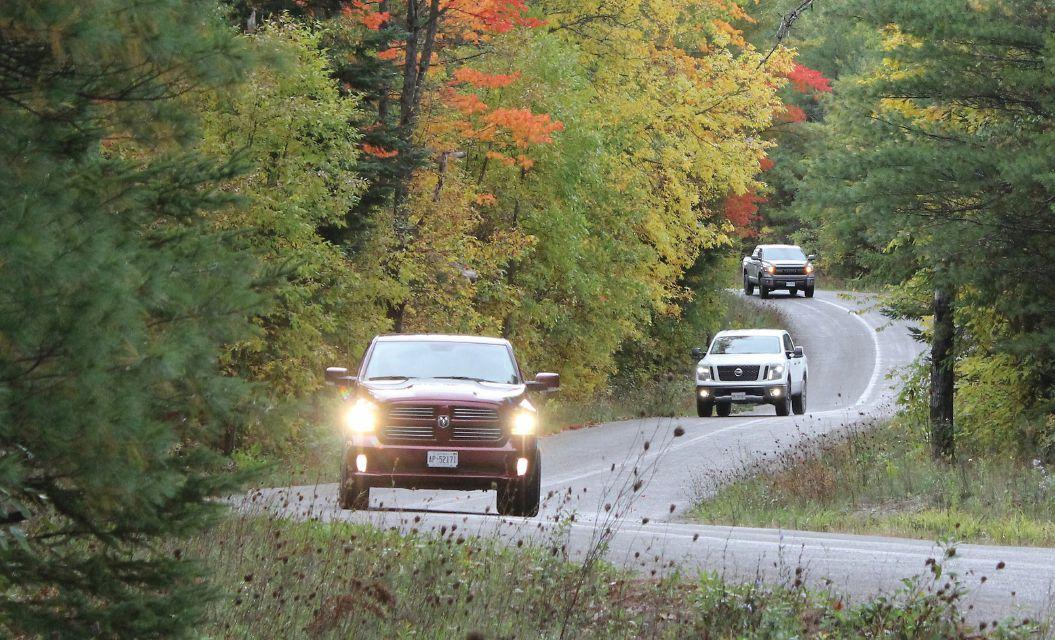
ABOVE: Eleven pickup trucks were put to the test during the 2017 Truck King Challenge, travelling nearly 4,000 kilometres over three days.
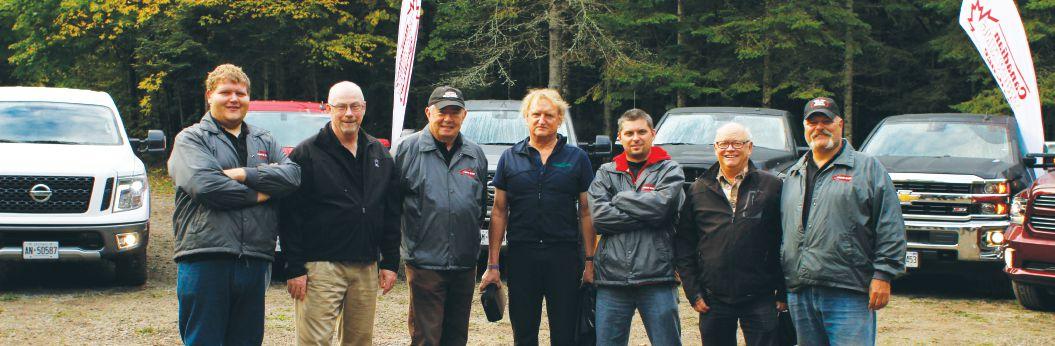
Judges brought more than 200 combined years of trucking experience to this year’s testing and logged a combined total of almost 4,000 empty, loaded and towing kilometres over three days.
among each group of entries. The weights we use never exceed those published limits.
For the one-ton trucks, we changed locations to London. Here we had access to partners who loaned us the weight and trailers necessary to test the big pickups. Patene Building Supplies and IKO let us use 4,000 pounds of shingles for payload, while CanAm RV Centre let us tow 15,000 pound fifth-wheel travel trailers.
Mid-size group
• Honda Ridgeline – 3.5L V6 gas, 6-speed auto, AWD, crew cab, Touring trim. Price as tested: $47,090. Final score of 75.5 per cent.
• Chevrolet Colorado – 2.8L Duramax turbo-diesel, 6-speed auto, 4WD, crew cab, Z71 trim. Price as tested: $44,695. Final score of 72.2 per cent.
Of the two, the Honda impressed the judges. As with anything new, it had an edge, but it wasn’t just the new factor that pushed its score past the Colorado. The prior generation of Ridgeline had a niche: a quirky truck that appealed to a select buyer. This time the Ridgeline moved closer to the mainstream while retaining some of its unique characterises. It did most everything well (payload, towing, even off-road) and still offered the most “car-like” ride. The judges rewarded Honda for a significant generational update. Toyota opted not to participate with the Tacoma (which we tested last year). The Nissan Frontier was also not offered, perhaps because it’s in its last cycle before a major upgrade.
Full-size half-ton group
• Ram 1500 – 5.7L Hemi V8 gas, 8-speed auto, 4WD, crew cab, Sport trim. Price as tested: $58,110. Final score of 79.4 per cent.
• Chevrolet Silverado 1500 – 5.3L V8 gas, 6-speed auto, 4WD, crew cab, Z71 trim. Price as tested: $59,890. Final score of 76.7 per cent.
• Nissan Titan – 5.6L V8 gas, 7-speed auto, 4WD, crew cab, PRO4X trim. Price as tested: $63,050. Final score of 74.3 per cent.
• Toyota Tundra – 5.7L V8 gas, 6-speed auto, 4WD, crew cab, TRD Pro trim. Price as tested: $60,025. Final score of 73.7 per cent.
In Canada, this group makes up almost 80 per cent of total pickup sales. For us at the Truck King Challenge, it’s a segment where we consider what models to test carefully.
This year we asked each of the manufacturers to give us their bestseller in the half-ton category (the most popular combination of body style, trim and powertrain). This way we would test the trucks Canadians buy most often.
The Nissan Titan is new, while the Chevrolet and Ram are
midway through their current life cycle. Toyota gave us an offroad version of its Tundra, the TRD Pro. This is the newest truck they had, but not necessarily the model purchased most often. As you would expect, it did really well off-road. The Ram emerged as the judges’ choice for best all-around half-ton.
Ford – the leader in half-ton Canadian truck sales – chose not to compete.
Full-size three-quarter-ton group
• Ram 2500 – 6.7L Cummins I6 turbo-diesel, 6-speed auto, 4WD, crew cab, Laramie trim. Price as tested: $86,830. Final score of 77 per cent.
• Nissan Titan XD – 5L Cummins V8 turbo-diesel, 6-speed auto, 4WD, crew cab, PRO-4X trim. Price as tested: $64,950. Final score of 74.9 per cent.
• Chevrolet Silverado 2500 – 6.6L Duramax V8 turbo-diesel, 6-speed auto, 4WD, crew cab, LTZ trim. Price as tested: $82,560. Final score of 74.9 per cent.
In the three-quarter-ton category, each of the trucks were diesel-powered. Since these are the most common big haulers purchased by Canadians, we towed 10,000 pounds of concrete. The judges made a point of saying that they really felt how the trucks behaved when under-loaded. The scoring here was close, but the Ram 2500 with the Cummins 6.7L diesel came out slightly ahead. What’s interesting is that the Nissan tied with the Chevrolet.
The Titan XD has the lightest gross vehicle weight rating (GVWR) of the three trucks and has the lowest tow and payload limits, which is reflected in its price and elevates its overall score. These lower limits are not a disadvantage though – if anything, it means the segment is growing and offering up more choices for consumers.
This was the first time we tested Nissan’s new 5L Cummins diesel V8. It’s worth noting that Chevy’s veteran 6.6L Duramax diesel will be generationally updated next year.
Full-size one-ton group
• Chevrolet Silverado 3500 – 6.6L Duramax V8 turbo-diesel, 6-speed auto, 4WD, DRW, crew cab, High Country trim. Price as tested: $83,390. Final score of 75.1 per cent.
• Ram 3500 – Cummins I6 turbo-diesel, 6-speed auto, 4WD, DRW, crew cab, Laramie trim. Price as tested: $88,085. Final score of 71.8 per cent.
We missed having Ford in this category, particularly because its 2017 Super Duty trucks are all new. After a full day of driving the Chevrolet and Ram trucks back to back, the judges awarded the win
to the Chevrolet Silverado 3500. Both trucks worked well; the key difference was ride-quality when towing, where the Chevy outperformed the Ram.
Conclusions
The close scores reflect how fierce the competition is among companies. This competition is good, as it results in sharp, constant innovation. Consider Nissan. This year it’s virtually a new player in the
market, while others have brought significant improvements to powertrains. These changes give buyers an ever-widening range of choices. As for electronic conveniences and luxury appointments, the variety and range of content for 2017 continues to expand unabated.
The overall w inner of the 10th annual Canadian Truck King Challenge with the highest collective score of 79.4 per cent is the 2017 Hemipowered Ram 1500.
ENGARDE ® DELIVERS THE OL’ ONE, TWO.
Twice the protection in one powerful corn herbicide. DuPontTM Engarde® herbicide delivers twice the performance with two modes of action; twice the control with knockdown and residual activity; twice the coverage with broadleaf and grassy weeds; and twice the exibility with a window of application from pre-emergence to the two-leaf stage.
Save up to $4.50/acre with the DuPont Head Start and DuPont™ FarmCare® Row Crop Programs when you early order before March 31, 2017.
Ask your retailer about Engarde® today. For more information, call the DuPont™ FarmCare® Support Centre at 1-800-667-3925 or visit engarde.dupont.ca