Greater consideration for soil biota may be secret to better yields
PG. 14
Micronutrient deFiciencies
Why is micronutrient availability so patchy in a field?
PG. 42
Announcing an innovative partnership between Case IH and Precision Planting.® The technology that allows each Early Riser ® row unit to adapt to the distinct conditions of your field now comes to you in a distinctly different way. You can now get it installed, serviced and supported on the industry’s best planter right at an authorized Case IH/Precision Planting dealer. It helps you get more out of every planting season and improve the yield potential in every field. Learn more at your local Case IH dealer or online at caseih.com/planter
BE READY.
TOP CROP
p
5 | Staying ahead of corn pests
Corn pest forecast maps may soon be available to producers.
By Madeleine Baerg
Amy Petherick
Howard J Elmer
6 | Spraying into a mature crop canopy? How to do it depends where the spray needs to go.
Carolyn King
14 | Canola crop rotations could condition northern soils greater consideration for soil biota may be the secret to better yields. By
Amy Petherick
Lianne Appleby, Associate Editor
Madeleine Baerg
LIANNE APPLEBY | ASSOCIATE EDITOR
Crude awakeNiNg
Two months into the new Year, it’s fitting that our annual truck review coincides with a time when most consumers seem to be paying much attention to considerably low gasoline prices.
Through the miracle that is satellite radio, I recently caught the musings of a radio host who was broadcasting oldies from new York City. In digression between songs, he mentioned crude oil prices, and said something that caught my attention and stuck with me - not least because it came out of the mouth of an urbanite.
“…great right now, but are any of us thinking about the longer-term impact that today’s low crude oil prices may have? Like what it means for that whole ethanol-from-corn debate we hear farm groups talk about. Hmmm. anyhow, back to the music. Here’s Herman’s Hermits. ”
He didn’t elaborate further, but he’d already left me contemplating crude oil pricing trends while other listeners got into something good. What does the sudden drop mean for farmers, if diesel prices haven’t fallen much? and, as our disc jockey pointed out, what does it mean for the emerging ethanol market, the very existence of which has caused rifts in agriculture as demand drives corn prices up, subsequently raising feed prices for livestock producers?
But Mr. Deejay and I aren’t alone. a lot of educated speculation is taking place as to how crude oil trends will affect agriculture from different perspectives. In one such scenario, University of Illinois agricultural economists have looked at the situation as it applies to biofuels. Scott Irwin and Darrel good, in a December post on farmdocDaILY, say that the scale of the decline in crude oil and subsequent gas prices has taken a lot of people by surprise, describing it as a “major economic event with potentially far-reaching impacts for biofuels markets.”
“Consequently,” they continue, “we expect the curtain to come down on the current period of exceptional ethanol production profits fairly quickly.” So then, does cheaper crude oil mean corn prices will be affected, if ethanol subsequently loses favour? Will corn be the only commodity that may be affected?
probably not. In a recent posting by Farm Credit Canada, Mike Jubinville, of pro Farmer Canada, offers his thoughts about farm commodity prices as they relate to crude oil and the like.
“Massive long liquidation in the energy futures markets can trigger selling pressures across all other commodity markets”, he writes. “In the overall commodity marketplace, it will be difficult for the grain and oilseed segments to establish an independent and sustained rally while energy markets are under pressure.”
In 2010, the last year that data is available, agriculture and agri-Food Canada reported that machinery fuel was only about 6.1 per cent of the average yearly farm operation expense. Stateside figures must be similar since according to Irwin and good, lower crude oil prices don’t necessarily translate to a lower cost of production at the farm level - especially since diesel has only dropped a few cents. In another post on farmdocDaILY, they write that fuel costs are such “a low proportion of total costs of producing corn and soybean” that “oil and fuel price declines will have a small impact on 2015 production costs.”
Depending, then, on the nature and size of your operation, crude oil prices will have varying, but not necessarily beneficial effects on your 2015 production year. It’s important, as a farm operator, to make sound business choices.
Informed decisions in the face of recent trends can make the difference in whether 2015 is indeed a Happy new Year or not.
TOP CROP
MeDIa DeSIGNer Katerina Maevska PreSIDeNT Michael Fredericks mfredericks@annexweb.com
PUBLICATION MAIL AGREEMENT #40065710 reTurN uNDeLIVerabLe CaNaDIaN aDDreSSeS TO CIrCuLaTION DePT. P.O. Box 530, Simcoe, ON N3Y 4N5 email: subscribe@topcropmanager.com
Top Crop Manager West - 9 issues - February, March, Mid-March, April, June, September, October, November and December - 1 Year - $45.00 Cdn. plus tax
Top Crop Manager East - 7 issuesFebruary, March, april, September, October, November and December - 1 Year - $45.00 Cdn. plus tax
Potatoes in Canada - 4 issues - Spring, Summer, Fall and Winter 1 Year - $16 CDN plus tax
All of the above - $80.00 Cdn. plus tax
Occasionally, Top Crop Manager will mail information on behalf of industryrelated groups whose products and services we believe may be of interest to you. If you prefer not to receive this information, please contact our circulation department in any of the four ways listed above.
all advertising is subject to the publisher’s approval. Such approval does not imply any endorsement of the products or services advertised. Publisher reserves the right to refuse advertising that does not meet the standards of the publication. www.topcropmanager.com
STayiNg ahead
oF C orN peSTS
Corn pest forecast maps may soon be available to producers.
by Madeleine Baerg
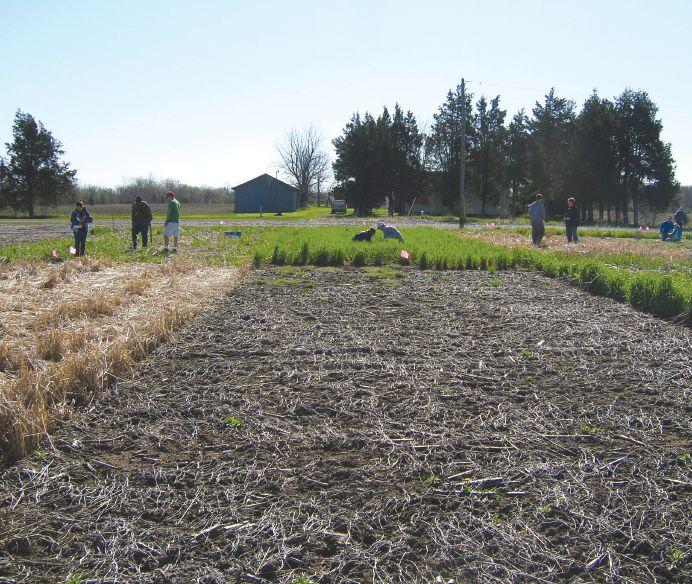
Staying ahead of pests is key to high yield and good quality in every crop. In corn, however, ontario producers are forced to do much of their pest management by guess, since little scientific research exists on the lifecycles, specific species, or geographic dispersion of many of corn’s most damaging early season pests. Until now.
In 2014, researchers from the University of guelph started an ambitious, four year corn pest survey project designed to determine where, when and what to expect in early season corn pests.
“We don’t have pest forecasting maps for most of the early season insect pests in ontario. There are some models that attempt to predict the overwintering success of certain pests such as corn flea beetles or bean leaf beetles, but nothing currently exists for pests like grubs or wireworms. growers can sometimes be caught off guard with a pest problem, or in some cases, insecticidal control can be applied unnecessarily,” says lead researcher Jocelyn Smith, a field crop pest management research associate at the University of guelph’s ridgetown campus. “our hope is to give producers some of the information they need to make good pest management decisions.”
The project’s goal is to identify risk factors around various early season corn pests, based on identifying geographic regions that are more prone to each type of pest, and analyzing agronomic risk factors. In addition, researchers hope the yield data from the trials will provide better information on the economics of neonicotinoid seed treatments.
The scale of the project is impressive: Smith and her team studied 75 grower planted fields as well as 25 sites planted in conjunction with the ontario Corn Committee Trials. In all cases, the trials consisted of side-by-side, minimum three repetition strips treated either with fungicide or a neonicotinoid seed treatment.
“our goal is to get to a place where we can use more prescriptive application of neonicotinoids, which is a hot topic right now,” says Smith.
once corn crops came out of the ground this past year, Smith and a large crew of summer students surveyed the many strip trials for early season pests. They began by putting out wireworm bait traps early in the season. They then returned at the V1-2 and V4-5 crop stages to do destructive sampling, looking carefully at
last year, researchers at the University of guelph began a mulitple-year survey project focused on early season corn pests.
each plant in a square meter for any injury above and below the ground, and sifting the soil for any pests.
“We were looking for wireworms specifically, because we don’t have a good handle on what species of wireworms exist around the province. But we were also looking for white grub species, and any other pests we could find,” says Smith.
Sprayi Ng i NTo a
M
aT ure C rop C a Nopy?
How to do it depends on where the spray needs to go.
by Carolyn King
Anew project to discover the most effective ways to spray fungicides into mature crop canopies is already generating some interesting preliminary results.
The three-year study was initiated in response to emerging information needs.
“Fungicides are the growth area in the crop protection business. More acres and more new products are being sprayed in that part of the business than any other. So we’re seeing a lot of promotion of fungicide use by the crop protection industry. and we’re also seeing quite a bit of interest from the applicators; they have now purchased high-clearance sprayers, and they want to know how to apply fungicides better,” explains Dr. Tom Wolf of a grimetrix research & Training. “We realized that we didn’t have a lot of the answers to that because fungicide spraying is a relatively new business.”
Wolf, who is an expert in sprayer and nozzle technologies, is working on this project with two plant pathologists:
Dr. r andy Kutcher of the University of Saskatchewan and Dr. Bruce g ossen of a griculture and a gri-Food Canada. project funding is from Saskatchewan’s a griculture Development Fund, the Western g rains research Foundation, and nozzle companies Hypro, TeeJet Technologies, g reenleaf Technologies, and Wilger Industries. a s well, some new funding will be coming from the crop protection industry.
a s a first step, the researchers conducted lab experiments in the fall of 2014 to determine where the spray goes in the crop canopy under various treatments. Then starting in 2015, they will evaluate the most promising treatments from the lab study in on-farm research trials.
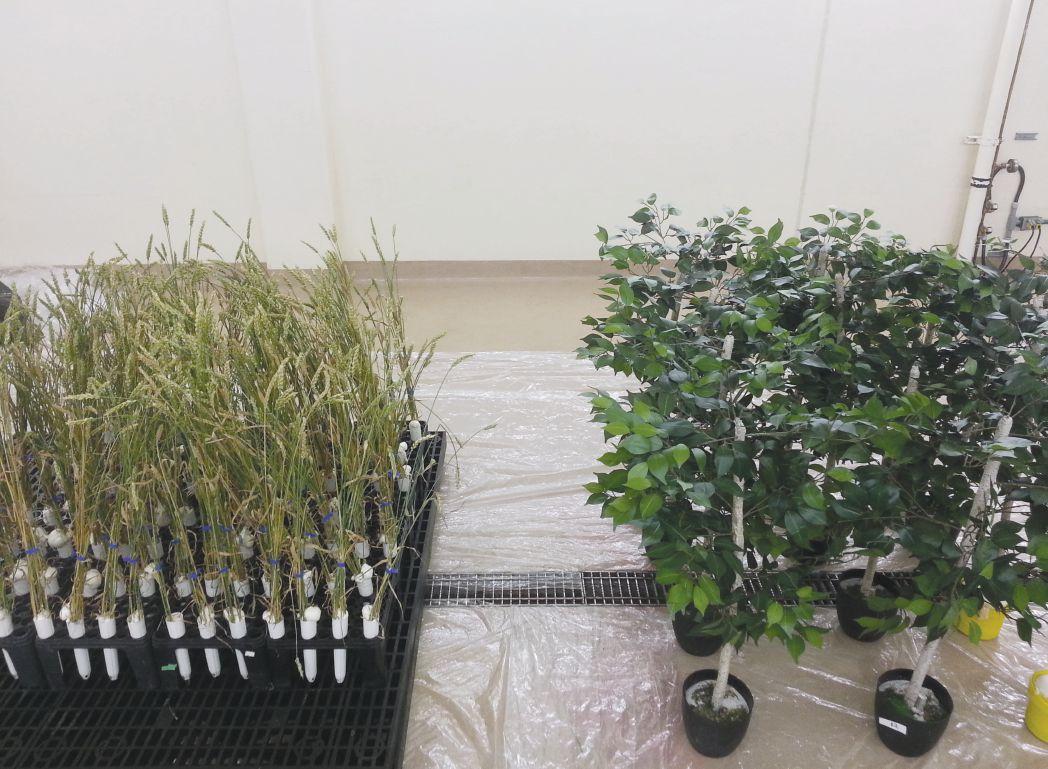
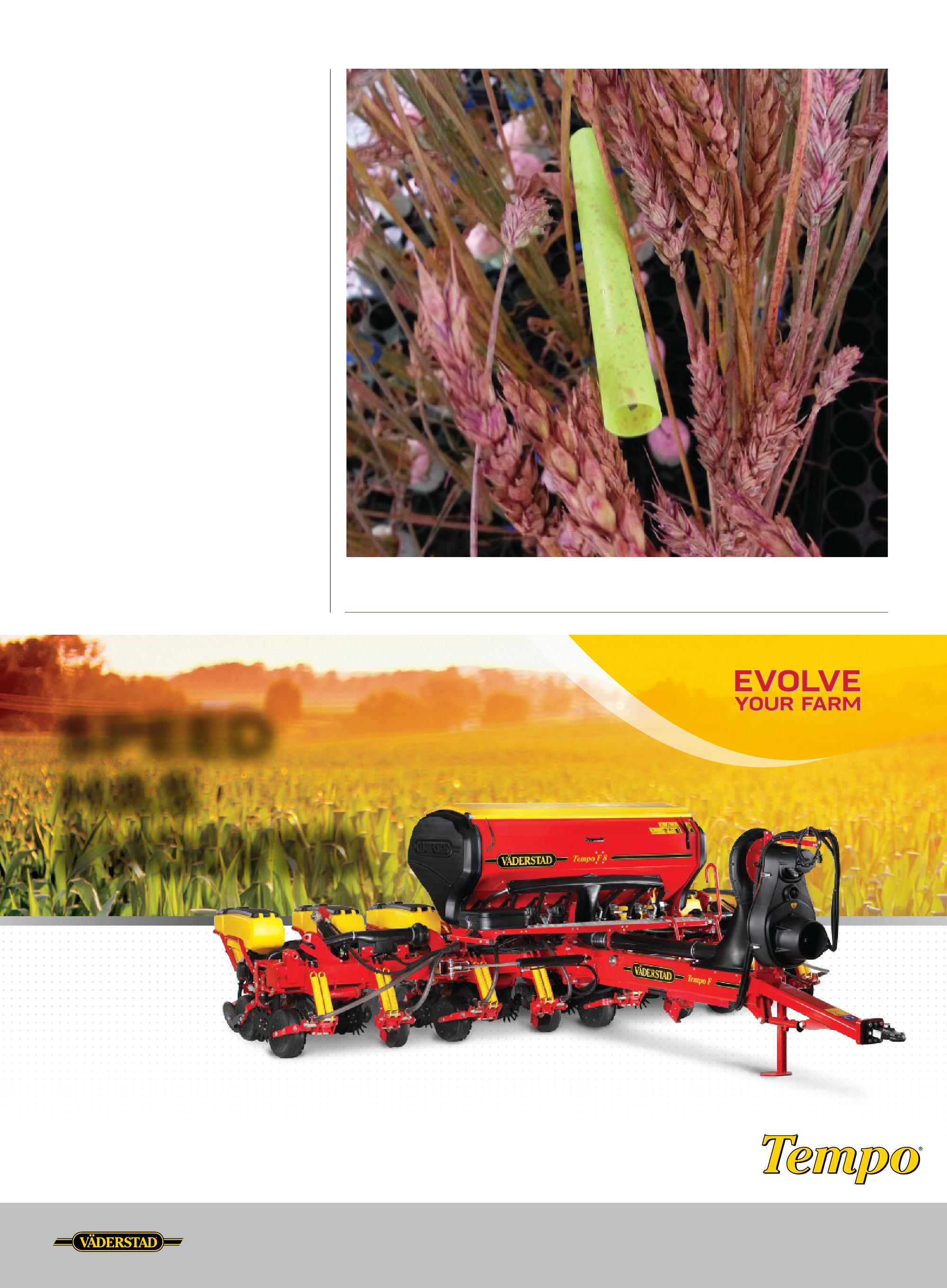
aBOVE: for the project’s lab component, the researchers created a canopy of mature wheat plants and a simulated broadleaf canopy, and assessed canopy penetration using different spraying practices.
THE
Now available in a convenient liquid formulation. Tank-mixed with glyphosate, the easy-to-use formulation of new Eragon® LQ controls key broadleaf weeds including triazine-, Group 2- and glyphosate-resistant biotypes such as Canada fleabane and ragweed. It’s absorbed quickly and is very rainfast, for efficient and effective control you can count on. Visit agsolutions.ca/eragonlq or contact AgSolutions® Customer Care at 1-877-371-BASF (2273).
Always
and follow label directions.
“Determining where the spray goes is one of the big challenges in the spraying world. It’s very difficult to quantify the amount of spray that ends up in different parts of the canopy, and yet in the plant disease world, that is a very important aspect,” says Wolf. “For example, to control Fusarium head blight (FHB), a prominent cereal disease that is all over e astern Canada and moving into most parts of Western Canada, the spray needs to land on the wheat head. So we need to know how much of the spray we are actually getting on the wheat head. For a disease like sclerotinia in canola, usually the spray has to hit the flower petal or the flower bud prior to opening. and for diseases like tan spot or septoria in wheat, we need to spray the flag leaf and perhaps the penultimate leaf, so we need to make sure most of the spray goes at least halfway down into the canopy.”
For the lab study, the researchers created two crop canopies. o ne was composed of mature wheat plants with emerged heads, the crop stage for spraying FHB. The other was a simulated broadleaf canopy made of silk plants that were configured to provide a quantifiable canopy density and a generic look.
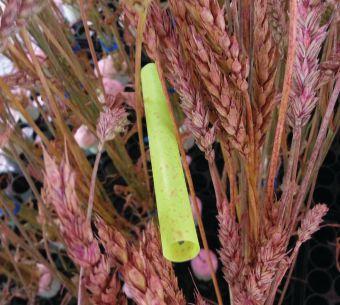
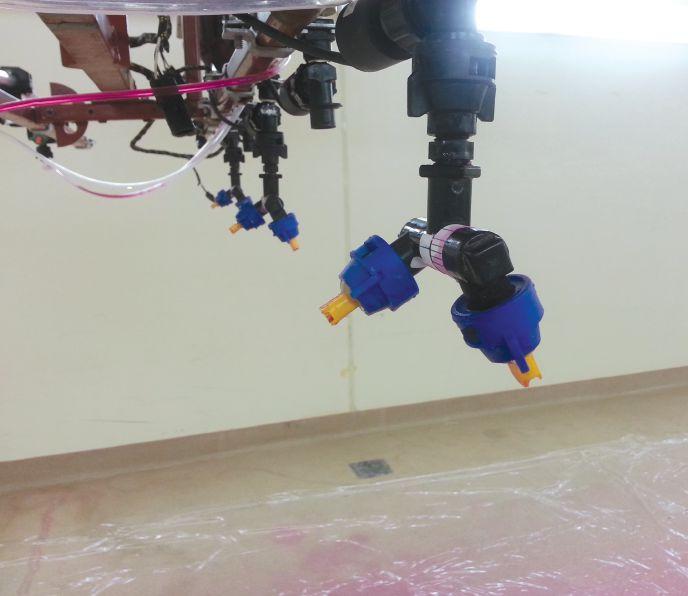
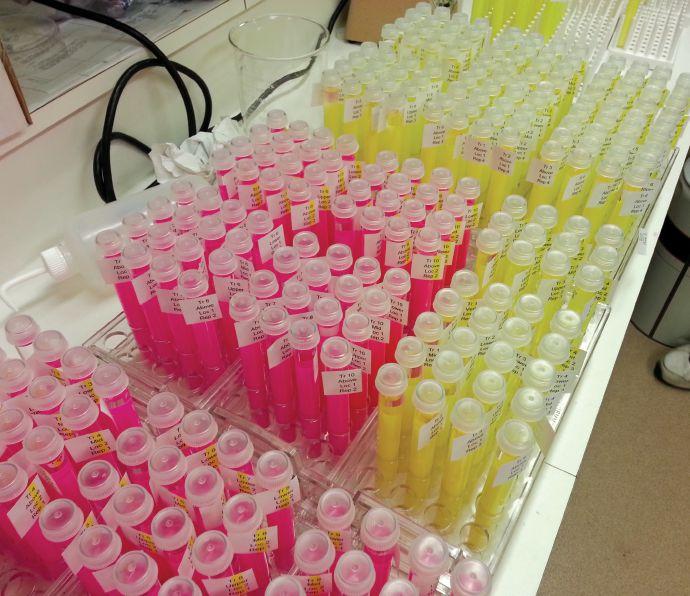
For each spray treatment, the researchers placed plastic drinking straws as spray targets at different heights and orientations throughout the canopy. Then the sprayer moved through the canopy and applied a fluorescent dye mixed with water. after each spray pass, the researchers removed the straws, washed them and accurately measured the amount of dye on each straw using fluorimetry.
The sprayer passes were designed to compare a wide range of factors including different travel speeds, boom heights, spray pressures, droplet sizes, nozzle types and nozzle brands.
So the researchers were able to determine what proportion of the total spray applied to the canopy landed on the different places within the canopy, for each application method.
preliminary findings
Wolf is now analyzing the data from the lab study. Based on his initial look at the data, he makes several observations.
“The first observation is something we’ve known from other studies, which is that it is very difficult to get much of
each
the spray beyond the top third of the canopy [no matter which application practices are used].
“In the wheat canopy, about 65 per cent of the spray that we applied was
intercepted by the wheat head, which is a pretty high percentage. But at the bottom of the canopy, only about 25 per cent of the spray was intercepted.
“In the broadleaf canopy, the picture
The sprayer passes compared a wide range of factors including different nozzles, travel speeds, boom heights, spray pressures and droplet sizes.
after
spray treatment, the researchers collected the straws and measured the amount of dye on each straw to evaluate canopy penetration.
Start this season with Wolf Trax Innovative Nutrients. Wolf Trax technologies deliver important nutrients to your crops more effectively, so they can access the nutrients earlier. With a better start, your crops can finish strong – and that’s a better use of your fertilizer dollar. So stand up for your crops, and ask your retailer for field-proven Wolf Trax Innovative Nutrients.
was bleaker. Typically about 50 per cent was intercepted near the top of the canopy and only about 20 per cent near the bottom.”
Wolf’s second observation is that the answer to the question “Which application practices are most effective?” really depends on where in the canopy the spray needs to go.
“The first and absolutely the most important question to be answered by the applicator is: ‘Where does the spray have to end up?’ The applicator
has to know that to make the correct application decision,” he says.
For example, the lab study showed that if the wheat head is the spray target, then the best option is to use an angled spray, a boom height that is relatively close to the wheat head and a relatively fast travel speed. If the target is deeper into the canopy, then the best option is to travel a little slower, spray vertically and keep the boom low.
Determining the best application methods for the broadleaf canopy is a
bigger challenge for the researchers. “It was very difficult to find one application method that was much better than another one. For spraying the top of the canopy, all the treatments were pretty similar. and we always found very little at the bottom of the canopy, no matter how we sprayed it,” notes Wolf.
“So we’re not comfortable yet saying what growers ought to be doing when spraying broadleaf canopies. The general recommendations about travelling a little slower, using a higher water volume and keeping the boom as low to the canopy as possible are probably true, but the overall benefits of doing it that way over doing it a different way were not as big as we expected.”
“We know this farm like no one else.”
Joel Dykstra – FCC Customer
The most important question to be answered is: ‘Where does the spray have to end up?’
Next steps
The researchers will be releasing their final results from the lab study in the coming months.
They will also be working with some chemical companies, manufacturers, dealers and agronomists to find crop growers who are willing to collaborate in on-farm research trials. They are looking for Saskatchewan field sites because all three researchers are based in that province.
“We want to work with producers who have sprayers and fields that need to be sprayed,” notes Wolf. “It’s a real opportunity for us to speak directly with the applicator and get a very good sense of how they do things. and it could be an opportunity for the applicator to learn, too. For instance, they might already have two or three different nozzles for their sprayer and may not be sure which would be best to use in a specific situation, so we could approach their field trial from that angle. Farmers love to learn, so if we can help them do that learning, usually they can meet us half way.”
The researchers will probably do just two treatments at a site because each site will have to include space
for the treatments to be replicated to ensure statistically valid results. So, for instance, they might compare two different nozzles on one farm, and two different travel speeds on another farm.
Kutcher and g ossen will assess the level of crop disease in the different treatments. and crop yield data will be collected for the treatments. Then the researchers will analyze the data to determine which application methods are the most effective for controlling disease under real-life conditions.
some principles and tips
Understanding the principles of spray management can help with decisionmaking on fungicide applications. although it’s too early to formalize such principles for spraying broadleaf canopies, Wolf outlines some principles for spraying grass canopies.
He identifies four principles to use when applicators are aiming for exposed vertical targets, like wheat heads. “The first principle is to use an angled spray to hit the vertical target from the side. If you have a vertical droplet direction,
SPEED HAS EVOLVED.
Until now, planters made you choose between speed and precision – the Tempo High Speed Planter changes that forever. Even at 10.5 mph, the Tempo is so precise it virtually eliminates skips and doubles. The result is crops that mature more evenly and yield to their full potential.
Evolve the way you plant. For more information about the Tempo, visit TempoPlanter.com
drinking straws were placed throughout the canopies as spray targets to show where the fluorescent dye spray went in each treatment.
one that just goes straight down to the ground, it is unlikely to hit a wheat head that is also vertical.”
The second principle is to use slightly larger spray droplets. “That angled spray needs to make it all the way from the nozzle to the wheat head, without losing momentum from air resistance and so on, and eventually falling vertically with gravity. So you want to make the droplets bigger to ensure they retain their initial angled direction for as long as possible.”
The third principle is to keep the boom as close to the canopy as the nozzle allows. “There are minimum boom heights that make sure you have good spray patterns, but you want to be as close to those minimum heights as possible. That minimizes the amount of time that a droplet has to travel, so the droplet will likely still be moving at its initial angle [when it gets to the target].”
and the fourth principle is to enhance the horizontal momentum of the spray. “Typically it’s better to have the nozzle pointed forward and not backward. also, faster travel speeds for the sprayer are usually better in this particular case. Those two practices combined impart greater horizontal velocity to the droplet.”
In contrast, when applicators are aiming for the leaves in the middle of the canopy, the spray droplets should fall directly downward. So, almost the opposite application methods are needed – the applicator should use a vertically oriented spray and travel a little slower, while keeping the boom height as close as possible to the minimum.
Wolf understands why growers are often reluctant to follow advice to go slower and use lower boom heights, so he offers some tips to help make these recommendations more practical.
“at the research end, we are responding to some very powerful market trends. Those trends are that sprayers are bigger and sprayers travel faster, and because of those two factors, sprayer boom heights are generally a little higher than we would like. Farmers are buying these sprayers because they need to do more acres per hour so they can spray everything on time, which is a very important priority. So when we say, ‘To get maximum benefit from this spray, you should slow down, lower your boom and add more water,’ it contradicts some of the productivity gains they are trying
Notes:
1. The calculations don’t include the turns at the end of the field, so the actual number of acres sprayed per hour will be lower.
2. The tank fill speeds are chosen to represent either 15-minute fill times or 5-minute fill times, so the 5-minute fill times would involve practices to increase fill speeds.
3. The numbers in orange indicate which factors have changed from the base scenario.
to achieve,” he explains.
“Therefore, I think we have to find other ways of achieving efficiencies in the spraying world. o ne approach is to reduce your downtime, so you can maximize the amount of time you spend actually spraying, which allows you time to do a slightly better job while spraying.”
according to Wolf, examples of ways to reduce downtime include things like using a larger spray tank and/or a higher capacity transfer pump with larger diameter plumbing to allow faster tank filling. Table 1 compares several ways to increase the number of acres sprayed per hour.
“another time-consuming activity is tank
waste disposal, which can take as much time as it takes to spray
an entire field. By investing in more efficient cleaning equipment like a clean water saddle tank, a wash-down nozzle or boom-end rinse valves…an applicator can win some time back.”
Norwich Optimist Corn Maze 2013
Ca Nola C rop roTaT ioNS
C ould C oN di T ioN
NorT
her N S oil S
Greater consideration for soil biota may be secret to better yields.
by amy petherick
Not that long ago, farmers didn’t know planting bacteria with soybean seed produces better crops. There could be hundreds of equally critical underground interactions farmers don’t know about, but at least some progress has now been made by studying canola.
Dr. pedro antunes, a researcher at algoma University in Sault Ste. Marie, o nt., says canola associates with a huge diversity of fungi and bacteria, viruses, and also larger living organisms much like every plant that grows in soil. His studies indicate, however, that certain crop rotations condition the soil’s biota to work with canola better than other plants because of the sequence of plant characteristics canola has, that lead to the greatest difference between beneficial and antagonistic biota. antunes says plant roots are constantly exuding sugars and organic compounds which attract or deter different organisms, leading to a process called soil biota feedback, and he has gathered evidence supporting this that could explain his results.
“The way that a plant influences the soil has consequences for its own success and that of other plants,” antunes says. “If we’re talking about agriculture, then this is going to influence the competition of plants in the field: it has consequences for how plants interact with weeds and, also importantly, it will affect plants that are coming in after.”
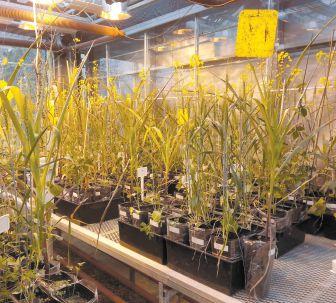
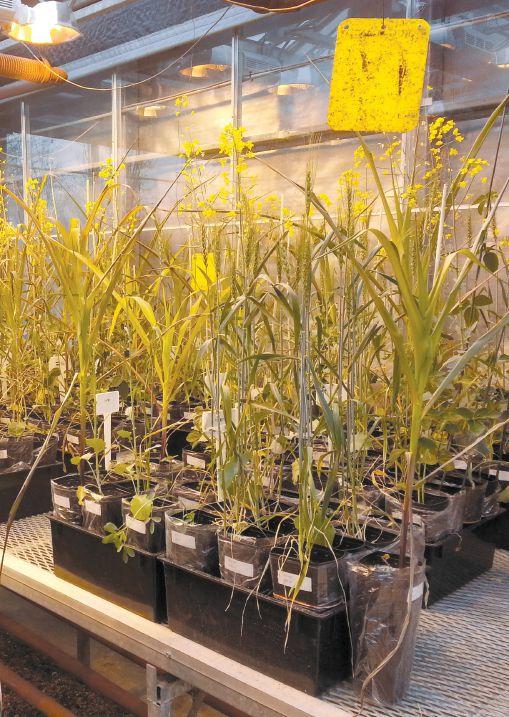
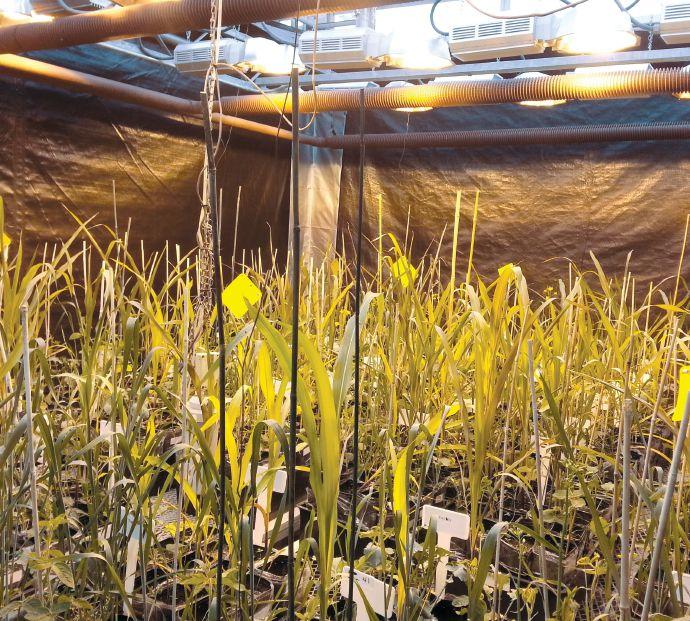
researchers like antunes have questions about the biodiversity in soils and how that biodiversity influences plant growth, nutrient availability and general crop quality. These questions inspired the controlled environment study. In a greenhouse setting, alfalfa, canola, corn, soybeans and wheat were rotated through pots of typical northern o ntario soil. o nce the potted sterilized and unsterilized field soil had been “trained” by the initial crop over 10 weeks, crop rotations were simulated (that is, each plant grew in its own trained soil and in soil trained by all other plants). In order to gain conclusive evidence of the impact of soil organisms, antunes said the later crops had to be grown again in all combinations of trained sterilized and unsterilized soil and in untrained sterilized soil that was only inoculated with a small portion of the previously trained unsterilized field soil to control for soil fertility. a s a result, his team found that, for instance, canola grew 20 per
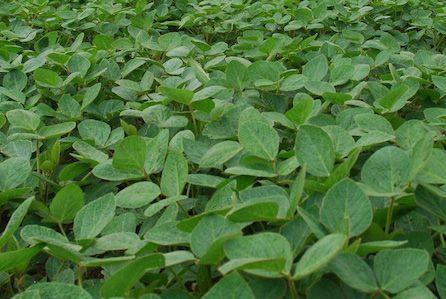
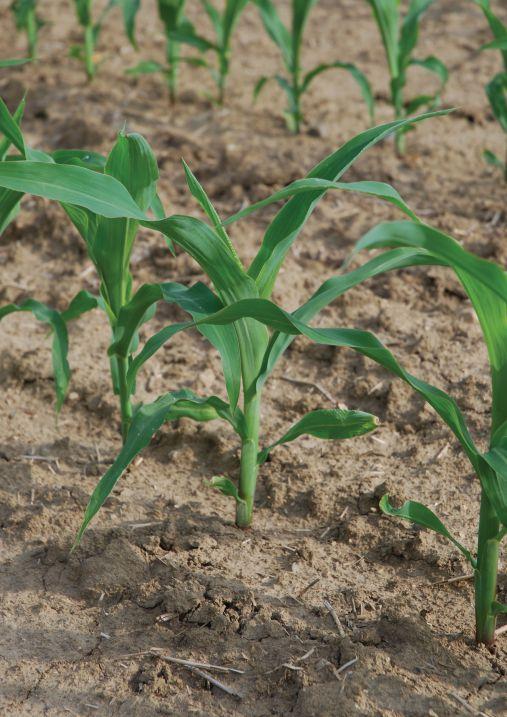
field crop rotations tested in a greenhouse setting at algoma University revealed that organisms in the soil can be coached to contribute to higher yields if crops are grown in specific rotations. for best canola crop results, ideal rotations include canola-corn-soybeans-alfalfa and canola-alfalfa-corn-alfalfa.
cent more after alfalfa than a repeat canola crop, and they were able to gain insight into the contribution of soil biota to these growth increments.
“So this approach allows you to choose the best kind of crop rotation to get maximum yield, including taking into account plant-soil biotic interactions,” he says. “Though we have to
be cautious because these are findings from a greenhouse experiment.”
In the real world, there are even more variables to impact the interactions between soil microbes and plants. antunes is eager to start multi-year plot trials in the field to confirm his top recommended rotations for northern canola production which are canola-corn-soybean-alfalfa or canola-alfalfa-corn-alfalfa. although his research has extensive application, focusing on canola for the algoma district was timely for regional farmers.
“Most people do hay, there’s cattle and a little corn, and not too many field crops because of challenges imposed by soil drainage and the climate,” antunes says. “However, there’s much potential for farming in northern o ntario and to try out new crops.”
David Thompson, research project co-ordinator with the rural a gri-Innovation network ( ra I n ) based in Sault Ste. Marie, helped to secure funding for antunes’ research. Thompson says with the unreliable nature of beef prices and a slow decline of dairy in the area, farmers have been looking to expand their operations. With a new cold press oilseed crushing plant recently established in nearby Bruce Mines, the association has taken an active interest in canola research.
“In our area, we haven’t seen many cash crops like soybeans and canola in recent years, there are only a few farmers who are actually trying it,” Thompson says. “We wanted a project that helped farmers understand the conditions and the techniques that you would use for growing canola.”
ra I n was established to support applied research projects
Table 1: Best and worst crops to grow before target crop, based on greenhouse experiment (values in per cent).
* Canola grew 20 per cent more after alfalfa than after canola.
When all other variables are completely controlled, Dr. Pedro Antunes found that the microbes which reside in the soil following an alfalfa crop can improve canola crop yields by 20 per cent than in a continuous canola environment. Similar alfalfa-loving organisms also enabled a yield boost of 26 per cent in following corn crops.
Give those weeds something to fear with the longer lasting residual weed control of Focus herbicide.
Focus is a pre-plant/pre-emergence group-15 herbicide that offers longer residual activity on both grassy and broadleaf weeds – even those resistant to other groups. Since Focus is registered in both corn and soybeans, you’ll enjoy maximum application flexibility, helping you move from field to field with ease. www.fmccrop.ca
that meet the needs of local producers and encourage farmers to try new things. But antunes says that in addition to providing data specifically about canola production to algoma district farmers, he has already collected enough data to attract a wider audience. “This work is novel, not just for northern o ntario, but has potential applications globally, because we have very poor knowledge of soil biota,” he notes. “These biota, they form soils, maintain soil aggregate stability, they are soil engineers. and if we don’t understand what they’re doing belowground, then we can’t capture the benefits that they can provide.”
antunes suspects unravelling the secrets of soil biota could be significant in improving soil health. To begin answering the scientific questions that antunes alone thinks of would require armies of researchers. In the meantime, he believes his work is a starting point for researchers to better understand and build on what farmers already know about crop rotations in general.
“There’s a lot of empirical knowledge that farmers use based on word of mouth and we had a hard time finding any criteria for the design of crop rotations,” he explains. “So the first thing we did was publish a review paper on the sets of criteria that could be used.”
(“accounting for soil biotic effects on soil health and crop productivity in the design of crop rotations.” Journal of the
Science of Food and Agriculture : Volume 95, Issue 3, pages 447–454, February 2015.)
antunes has high hopes future research will identify the many individual organisms and their roles in the soil, while also contributing towards
STayiNg ahead oF CorN peSTS
CONTiNUEd fROM pagE 5
To further analyze the agronomic and geographic factors that might affect pest dispersal, the researchers also collected cropping history from each producer, plus soil samples to analyze soil texture class.
“It is an unusual research project – a huge project - with more of a survey objective than most projects,” she admits. “But the results we hope to achieve will be incredibly useful to producers.” over the next three years, the team plans to follow crop rotation cycles in the same fields.
“Some of the pests we are surveying for have multiple year lifecycles. We want to follow the growers’ fields throughout their crop rotation over the next three years to analyze pest presence and see which risk factors influence pest incidence,” says Smith.
For the purposes of this project, the research team is more interested in pest presence rather than abundance.
more sustainable agriculture that is still capable of offering higher yields in canola and other cash crops grown around the world.
for more on canola, visit www.topcropmanager.com.
“once we identify hot spot areas and can make growers aware of the risk, they’ll have helpful information as to when and what to scout for,” says Smith. “This project was driven by producers – it sprang from requests by the members of the ontario Soil and Crop Improvement association – and it is extremely applicable to producers.
“growers typically have some idea of where they have risky areas on their farm for pests, and what pests they usually see. But, it’s often hard to step back and look at pest issues on a larger scale, to figure out where the pests are on a regional basis and what is contributing to them,” she adds.
not only does a project like this give important information to producers, but from a research perspective it leads to many other questions. “For example, once we know what wireworm species we have, it might direct other research about management,” says Smith.
How a plant influences the soil has consequences for its own success and that of other plants. dr. pedro antunes is studying these underground interactions as they pertain to canola.
Forward THINKING
For higher yield potential and better returns, order your seed pre-treated with Optimize® inoculant today.
Take your place in the conversation
There’s
been a lot of talk about food and farming lately – online, in the media and at the dinner table.
That’s a really good thing. It means people are concerned about their health and wellbeing, and that they’re in a position to make positive choices about what they eat. It also spells opportunity for Canada’s agriculture industry. What we do has never been so important to so many people here at home and around the world.
Unfortunately, too many of these conversations are generating false perceptions about what we produce and how we produce it. That’s often because for all the people talking about food, too few are actually part of the agriculture industry. And if we’re not telling our story, someone else will. The good news is, it’s not too late – and we’ve got lots of positive news to share.
Canadian agriculture is remarkably diverse and dynamic. Yet for all the change
the industry has seen over the years, one important constant remains: the family farm. In fact, 98 per cent of Canadian farms are family farms. That’s a key part of the conversation, because from the ground up, what we eat every day is produced by people who want the same things all families want: safe, nutritious food. Those same values also extend to how our food is produced. Canadian farms produce more than ever in ways that are more sustainable than ever. What a great legacy for future generations!
You’re an important part of the conversation. So speak up – tell the real story.
Every fact
Canadian agriculture has a lot going for it, and sharing the facts is a great way to join the conversation. Our resource section is filled with timely, interesting content – including dozens of easy-to-share fact photos. And each one tells an important story. Here are just a few:
Source: CropLife Canada
Canada’s opportunity: world food demand is set to grow 60% by 2050
The world is growing, and everyone deserves to have access to safe, high quality food. It’s a huge responsibility and an incredible opportunity for Canadian agriculture. Canadian farmers are responding by producing more food than ever, all while using fewer resources. That’s good news here at home and around the world.
Thanks to Canada’s ag and food industry, more than 2.2 million Canadians are bringing home the bacon (pardon the pun) every day. That’s like the entire population of Vancouver. The impact on Canada’s economy, and on our communities and families, is truly remarkable.
Never has Canadian agriculture offered more – and more diverse – career options than right now. There are opportunities in research, manufacturing, financial services, marketing and trade, education and training, and more. And all of these positions need to be filled by talented, energetic people. Visit the website and consider what the facts mean to you. Then join the conversation! AgMoreThanEver.ca
Source: An Overview of the Canadian Agriculture and Agri-Food System 2014 (Agriculture and Agri-Food Canada)
Be an AGvocate
Resources to get you started
Joining the ag and food conversation isn’t always easy. What you say is important. So is how you say it. If you’re feeling a little unsure about what to do next, you’re definitely not alone. Fortunately, we’ve got practical expert advice to help you become an effective agvocate.
Our online webinar series brings recognized experts in communication, social media and media relations right to your screen. Topics include:
• The art and science of the ag and food conversation
• Social media 101 for agvocates
• Getting in on the tough conversations
• Working with the media as an agvocate
Visit AgMoreThanEver.ca and click on Ag Conversations.
Agvocates unite!
Looking to channel your passion for ag? Adding your name to our agvocate list is a great way to get started. You’ll join a community of like-minded people and receive an email from us every month, with agvocate tips to help you speak up for the industry.
Visit AgMoreThanEver.ca/agvocates to join.
We a ll sha re t he sa me ta ble.
Pul l up a c hai r.
“ The natural environment is critical to farmers – we depend on soil and water for the production of food. But we also live on our farms, so it’s essential that we act as responsible stewards.”
- Doug Chorney, Manitoba
“ We take pride in knowing we would feel safe consuming any of the crops we sell. If we would not use it ourselves it does not go to market.”
- Katelyn Duncan, Saskatchewan
“ The welfare of my animals is one of my highest priorities. If I don’t give my cows a high quality of life they won’t grow up to be great cows.”
- Andrew Campbell, Ontario
Safe food; animal welfare; sustainability; people care deeply about these things when they make food choices. And all of us in the agriculture industry care deeply about them too. But sometimes the general public doesn’t see it that way. Why? Because, for the most part, we’re not telling them our story and, too often, someone outside the industry is.
The journey from farm to table is a conversation we need to make sure we’re a part of. So let’s talk about it, together.
Visit AgMoreThanEver.ca to discover how you can help improve and create realistic perceptions of Canadian ag.
uaVS : w here drea MS
T du ST
Researchers look to the sky in advancing precision agriculture.
by amy petherick
The dream of using Unmanned aerial Vehicles (UaVs) for precision agriculture took off faster than many developers could realistically keep up with, but researchers at the University of g uelph are hoping to close some critical technical gaps.
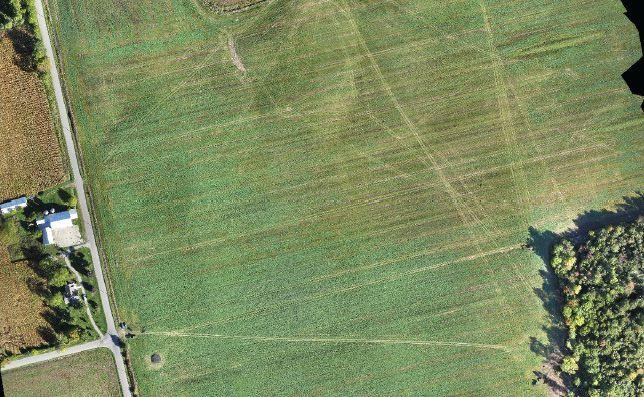
The UaV equipment now commercially available is highly sophisticated, featuring a wide range of image sensors that are capable of collecting a vast amount of information. So much data, in fact, that it becomes very difficult to make much use of it all. Which is why ammar abuleil, a Master in e ngineering student, is trying to teach these flying machines how to produce something more than a pretty picture.
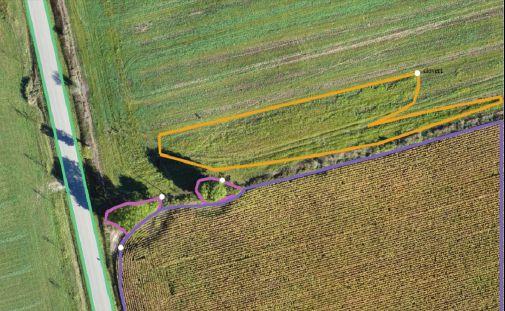
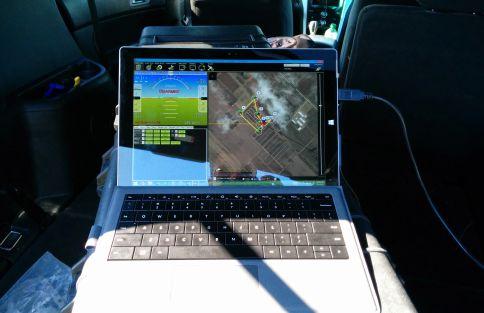
Under the direction of Dr. g raham Taylor, an expert in managing large data sets, and Dr. Medhat Moussa, who specializes in robotics, abuleil has been creating an algorithm which filters the information collected by a UaV into a map that’s based on user-defined criteria. This would allow a farmer to upload the pictures taken of a field to the Internet and receive a colourcoded map back, indicating areas of weed infestation, flooding, canopy closure or any other label the farmer wanted to program into the model. For the purposes of developing the tool, abuleil has been working on an assessment of red clover stands in wheat fields.
“What we’re trying to do is use remote sensing platforms and machine learning to try and make sense of what’s happening in the field without actually having to take samples,” abuleil explains.
abuleil worked with seven farms in the g uelph area, but only ended up collecting data from two because there were kinks to work out of the UaV’s system. In one particularly patchy 19acre field, researchers asked the farmer to identify areas on a map of the field where the red clover stand achieved 100 per
cent, 67 per cent, 33 per cent and 0 per cent ground cover. after that, the UaV flew over the field to collect visual data and the researchers collected 100 50-by-50 cm samples to verify the accuracy of the final image produced. abuleil says using the classifications provided by the farmer as a scale and a very simple algorithm, the final image produced was 70 per cent accurate. With just a little more tweaking, abuleil thinks he can improve those results to an accuracy rating of 80 per cent.
although they focused on the red clover in the field, abuleil says he has designed his algorithm to respond to any input reference so if the farmer wanted to assess the oilseed radish stand in that same field, it could do that too. “Because it’s a machinelearning algorithm, this program was not written specifically for this application, it can be applied to any application,” he explains. “So if a farmer, for example, circles ‘good moisture content’ and ‘bad moisture content’, then the algorithm will apply what the user circled and what the user labelled on the entire image.” The only thing that would limit what the machine could learn would simply be the quality of input data it collected. This is where the quality of the machine being used, and especially the quality of the sensors it can house, comes into play.
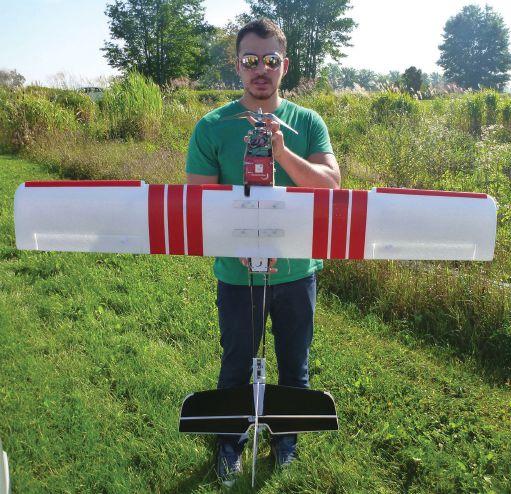
The UaV model abuleil has been using to conduct his research is a precision Hawk Lancaster p latform, which was selected and purchased for the university upon the advice of Loblaw Chair of Sustainable Food production, r alph Martin.
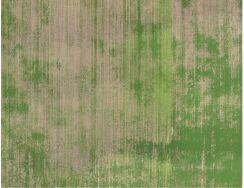
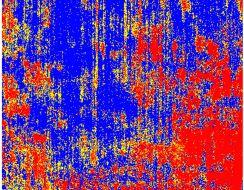
lEfT: after using a UaV to collect aerial images, abuleil’s online tool allows users to label it according to their interests which was red clover ground cover in this study. RigHT: The application is designed to handle very large images, greater than 200MB and with resolutions greater than 12,000 pixels by 12,000 pixels where each picture can represent roughly a three centimeter square section of the field.
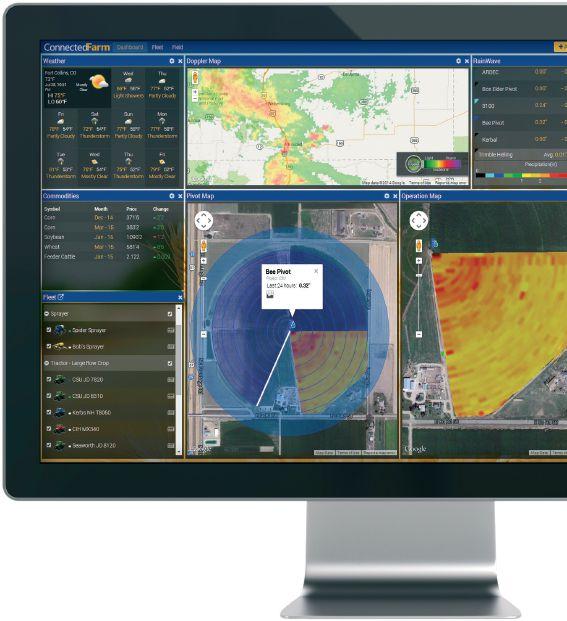
Field
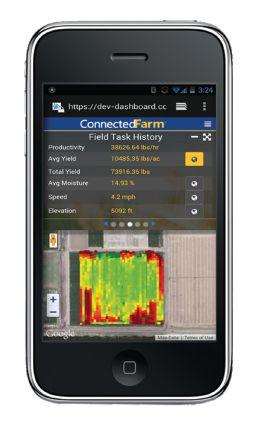
View detailed coverage maps as they are completed in the field.
Rainfall
Use virtual rain gauges for each field and create a map of rainfall.
Irrigation
Monitor and control water, fertigation, and effluent applications.
Fleet
Track fleet locations and alerts while viewing reports on productivity.
Crop Health & Scouting
View crop health imagery to assist scouting efforts.
Soil
Understand how water and other inputs move through your soil.
Each red, orange, yellow, or blue box in the image represents a 50cm x 50cm area of the field scanned with a UaV.
The red clover ground cover (gC) percentage is colour coded according to classification labels determined by the farmer and abuleil determined the images to be roughly 70 per cent accurate when compared to actual field conditions.
abuleil used a precision Hawk, lancaster platform, UaV for collecting the aerial data needed to develop his online data management tool. dr. Ralph Martin says he selected this UaV model for the university because of its advanced multispectral image sensing abilities.
Martin says he selected the model particularly because of the sensing options it offered. “From a research perspective, we wanted to have options to use sensors with as much capacity as possible,” he explains.
Many of the other different models he considered had fairly
similar visual sensors, offered red-green and blue-green near infared sensors much like this UaV, and some also had the thermal sensors and LIDar , which evaluates elevation, that it had. “But the reason we decided to go with precision Hawk is that they also have a hyperspectral sensor with a range from about 400 nanometres to 1000 nanometres,” he said. Since the platforms and sensors don’t mix and match, at least not at the time of purchase, it was a clear advantage to go with the only company that had been able to miniaturize this sensor. according to Martin, this is where the real advances will be in making UaVs a viable technology for precision agriculture.
We don’t want to oversell the potential of UaV technology...we still have a lot of research to do
]
“With the basic visual sensors there are a few things you can do,” he says. “You’ll get a pretty quick estimation of whether or not there are things like deer damage; or in the spring you might want to get an idea of how wet it is, but that has limited use.”
Testing these new sensors to ensure they deliver what they promise, however, is an important part of developing the technology, work that abuleil and his supervisors are contributing to. “groundtruthing,” as they call it, costs significant man hours. But Martin’s sure the work being conducted will be worth the wait.
“We have to keep testing until we’re confident that what we see from the sky is really what we can measure on the ground,” Martin emphasizes. “It takes a little more time than some people would like it to take, but we don’t want to oversell the potential of UaV technology because we feel that we still have a lot of research to do.”
Martin got involved with UaV research in the first place because he saw a clear fit with his mandate to engage in research activities most likely to increase the future sustainability of the agricultural industry. If given the time and resources to properly develop these new tools, he believes farmers could be well positioned to get just the right amount of crop inputs exactly where
they’re needed, attaining economic and environmental benefit all around. nicole rabe, land resource specialist with the ontario Ministry of agriculture, Food and rural affairs, sees similar potential, if only problems in using the technology could be eliminated. For example, she says, development really needs to reach the point where most agronomists can receive real-time data from the UaVs. For most, uploading massive data files into a van and waiting a day or two for a map is still far less efficient than walking fields.
Top Crop Manager Column: AMI #5—HR Management
“The volume issue is going to go away very quickly with folks like ammar and his supervisor graham Taylor working on industry software developments around real-time processing of UaV imagery after the photos are acquired,” she says. “That’s probably going to go away before you and I know it.”
rabe strongly believes the real power of UaV technology is the mapping element. There is a real difference between
CONTiNUEd ON pagE 36
Linking people and profits
Want your farm operation to succeed and grow? Hire the right people! In a sector that relies on people to get the job done, investing in human resources can have a significant impact on a business.
Recruitment and retention are two of the biggest challenges facing farmers today, says Portia MacDonald-Dewhirst, Executive Director of the Canadian Agricultural Human Resource Council (CAHRC). Developing a human resources plan helps attract the right people to the right job, which is a step forward in achieving production and expansion goals.
A human resources plan can also identify the critical roles in an operation and help mitigate the risks if a key player leaves the organization. Having a plan will allow the ideal replacement to be found quickly and efficiently, whether they are from within or from outside the business.
It may take time, but creating and implementing a human resources plan might be just what’s needed to drive the next level of innovation, expansion and achievement on your farm.
To get a quick start on building a great team, take a new approach with these tips from Portia MacDonald-Dewhirst:
Be supportive. Explain to employees why their job is important to the operation and ensure that they feel comfortable asking for help. Workers are more committed to operational success when they understand their role in the larger context.
Provide training opportunities. Allowing employees the opportunity to grow in their career is a key to long term retention. Seek out online training, workshops and local organizations that provide the skills development necessary to do a job more effectively or move into a more senior role.
Value employee suggestions. Create an environment of information exchange and demonstrate that you value the ideas workers bring to the table. Those suggestions might just improve the output of your operation.
And don’t forget to check out CAHRC’s online HR Toolkit that will guide you through hiring, training, and health and safety practices. The Toolkit includes downloadable templates for job ads, hiring letters, employee manuals and more that can be customized for individual farm businesses. Visit cahrc-ccrha.ca or takeanewapproach.ca to access the HR Toolkit.
k eepi Ng a N eye
oN S wede M idge
Researchers are developing management recommendations for canola.
by Donna Fleury
Swede midge is a serious pest of canola and cruciferous vegetable crops in ontario. First identified in vegetable crops in 2000, damage to canola crops was not reported until 2003. Since then, swede midge populations have been spreading and increasing across ontario, with 2011 one of the worst years for damage for canola growers across much of the canola growing area.
“In ontario, years where crops are planted later because of wet weather usually result in worse swede midge damage than early planting,” says rebecca Hallett, professor and associate director, School of environmental Sciences at the University of guelph. “In 2011, swede midge erupted as a serious problem in both southern and northern areas of ontario, and currently swede midge damage can be found on most canola plants in the northern region.”
Hallett has been researching swede midge since 2000, studying its biology, life history and overwintering habits, and developing IpM recommendations for cole crops. Most recently, she has been focusing on canola, and developing management recommendations and pheromone-based action thresholds for timing of insecticide control.
“although swede midge populations take time to build up in a field, populations can build up to incredibly high levels and, if left unmanaged, become a serious problem that is really difficult to handle,” says Hallett. “With the density of plants in canola fields, the size of fields and large number of growing points on canola plants that are susceptible to swede midge during the growing season, infestations are causing economic damage across ontario.”
In ontario, swede midge adults typically begin emergence in mid to late May, with the peak occurring in early June. Swede midge overwinter as larvae in the soil of infested fields. “In the spring in ontario, there are two distinct peaks of emergence of overwintered adults: the early emergers in late May to early June, and the late emergers about one to two weeks later,” explains Hallett. “With four generations of each of these populations occurring each year, the generations overlap with each other so every stage is often present in the field at the same time.
“In ontario, the most damage to canola appears to occur at the vegetative stages through early bud formation before bolting. Female swede midge like to lay their eggs at the base of leaves around the young, rapidly growing meristematic tissues, so this is the most important stage to protect,” she adds.
Management strategies for control
In ontario, canola growers should use a combination of management practices including crop rotation, planting early, monitoring and insecticides for control of swede midge. Swede midge is a crucifer specialist and a difficult pest to control, so crop rotation is very important. “although it can be difficult for growers to rotate on a large enough scale to be very effective on a regional scale, it is still really important for fields to be rotated to keep individual field populations down,” explains Hallett.
“Without proper rotation, populations can build up in fields to levels where pesticides may not be able to reduce economic
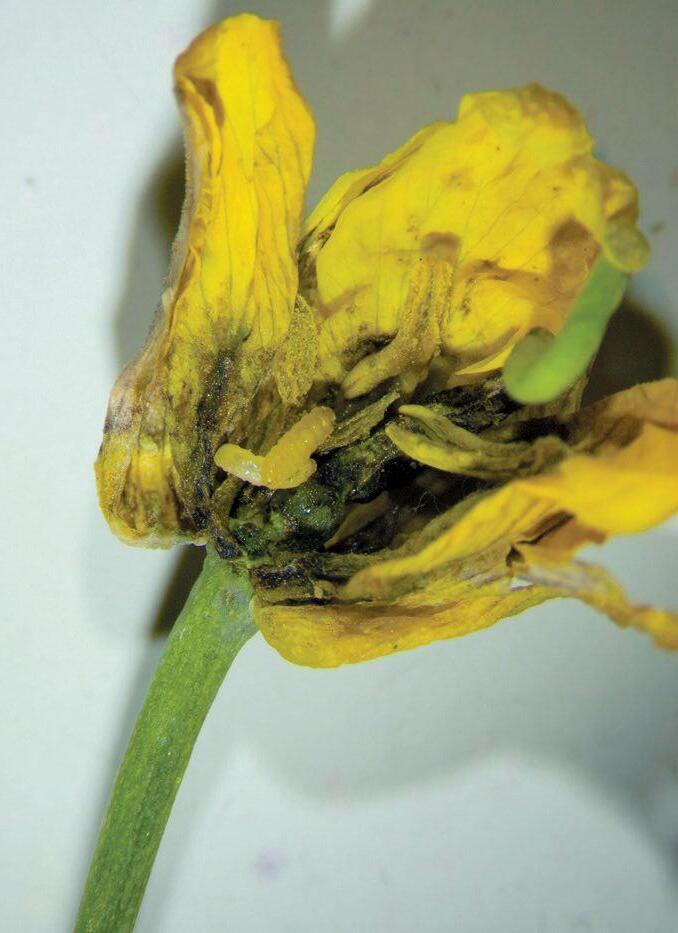
swede midge larvae inside a canola flower.
impacts. about five to 10 per cent of the swede midge population will stay in the soil and overwinter for up to two years. Therefore, a three-year crop rotation away from canola on given fields is very important.”
planting canola as early as possible so that it is well established before midge emergence helps prevent damage by swede midge, since females prefer to lay their eggs in the early vegetative and bud stage before bolting.
“We are still working on identifying critical stages and swede midge numbers for developing action thresholds for insecticide application,” says Hallett. “We are targeting various stages including the vegetative rosette stage, the very early bud stage and secondary bud formation stage, and then conducting spray trials in either single or combinations of those timing to find something that will be the most effective and economical for growers.”
pheromone traps that attract male swede midge are used to develop thresholds. For broccoli and cabbage crops, the action threshold is five males per pheromone trap per day. “We are still working on the levels for canola, but for now it looks like a similar level will be an important threshold in canola,” says Hallett. “We recommend growers set up four pheromone traps around each field and check two or three times a week. When checking traps, add up all of the midges, divide by the number of traps and number of days since last counted for a threshold count.”
Swede midge requires intensive field-specific monitoring, more than for most other pests. The timing of peaks in terms of swede midge emergence is a little different in every field, and populations can vary a lot within a field as well as between fields.
Therefore, it is not possible to estimate populations based on other nearby fields. Hallett emphasizes there likely isn’t any other pest in canola that has to be managed that intensively or is more challenging across huge acres like swede midge.
There are currently two insecticides from different chemical families registered for use on swede midge in canola. Matador is a synthetic pyrethroid, which is effective on both larvae and adult swede midge. Coragen is in group 28, a new class of pesticides known as diamides with a translaminer effect, which means that although it is not a true systemic, it can slowly move into the leaves and tissue it is applied to. Coragen is effective against larvae.
“In our various field trials, both products have been equally effective,” says Hallett. “Both Matador and Coragen are limited to three applications per season. g rowers also need to be aware that if they have used the new Lumiderm insecticide seed treatment for flea beetles, also a g roup 28 insecticide, then they cannot use Coragen for swede midge control in the same field in the same year.”
Canada’s Source of Crop production & Technology available online www.agannex.com
TeeJet tips: precise herbicide application to wipe out weeds & boost yields.
SIX WAYS TO WIN THE WEED ESCAPES BATTLE
2015 Ca Nadia N Tru C k k i Ng Challe Nge
This year’s heavy duty king is the GMC Sierra 3500.
by Howard J elmer
Who rents a drag strip, borrows seven-ton fifth wheel trailers and has five respected automotive journalists race the one-ton trucks head to head? We do. The eighth annual Canadian Truck King Challenge did just that (and much more) to clearly show the truck buying public which is the best of the best for 2015.
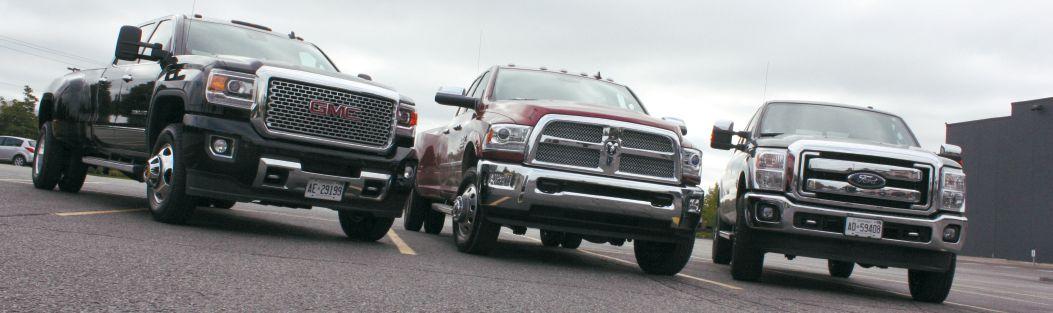
This year, three heavy-duty (HD) pickups from ram, Ford and gMC ran head-to-head at the grand Bend, ont., Motorplex drag strip while towing 15,000 lb trailers as just one part of two intensive days of Truck King testing. The outcome? The gMC Sierra 3500 beat the Ford and ram in each heat. It would also go on to win the title.
But back to the drag strip. a curious fact emerged during this testing. on paper, the gMC boasted the least amount of horsepower and torque among the competitors. Yet it won each race. We ran it several times, with the trailer and without. It pulled away from its competition each time. and, that’s the difference between realworld testing and paper tigers.
Here are the quickest quarter miles from each truck taken from multiple runs:
• gMC: 16.098 seconds when running empty 21.932 seconds with trailer attached
• ForD: 16.542 seconds when running empty
23.303 seconds with trailer attached
• raM: 16.927 seconds when running empty
23.581 seconds with the trailer attached
The trap speed for all three trucks (at the quarter-mile line) was always plus/minus one MpH of 80 MpH. Trap Speed with trailer
attached, again for all three trucks, was also plus/minus one MpH of 60 MpH. gM’s HD’s are not new to the Truck King podium –the Chevy Silverado HD took the title in 2013 but failed last year mostly due to its dated interior. This year that’s changed with a significant interior refresh. However what really put it over the top are new electronic systems for 2015 that can only be felt, not seen. and those can only be really appreciated when towing.
after eight years of testing trucks, most readers are familiar with our methods; and while locations sometimes change, the methodology remains the same. We use multiple qualified automotive journalist judges who drive the trucks back-to-back in the same conditions on the same day.
We always start with empty loops then we add payload and finally towing (with the payload removed). over the years, we have always kept track of our fuel consumption during each of these tests; however, our pencil and paper calculations were replaced last year with electronic data readers that take that information directly from the trucks’ computer. These readers are plugged into the on-board diagnostics (oBD) port on each truck and record speed, distance, time and even hard acceleration and braking events. needless to say, this is much more accurate in determining fuel consumption (see Table 1). This was our second year using the readers – they will be standard testing equipment during all Truck King events from now on.
once again we spent two days driving around southwestern ontario. The first day, we ran the trucks empty from Toronto to London (200 km). next, we loaded up at patene Building Supplies of London. Supplier IKo has helped us out for several years by pre -
aBOVE: This year, three heavy-duty (Hd) pickups from Ram, ford and gMC were put through the paces as part of the 2015 Canadian Truck King Challenge.
paring pallets of shingles to use as payload. In this case, each pallet weighed 4,080 lb exactly. The dimensions of each pallet were four feet wide, four feet high, and five feet long. after loading, we took the shingles for a 200 km ride, switching up trucks every 30 minutes.
The next morning saw us hooking up fifth wheel travel trailers at our other partner’s place of business – Can-am rV Centre. We hitched them to three similar fifth-wheel rV trailers. These weighed in at around 14,500 lb each. We than spent the day doing a 300 km tour with the judges, which included a three-hour stop at the drag strip in grand Bend, ont.
as always, each judge (five for this competition) scores each truck independently and the final outcome is an average. To view and download the full result spreadsheets, visit www.canadiantruckkingchallenge.ca.
for more on machinery, visit www.topcropmanager.com
Table 1: Data gathered during testing September 2014.
* The fuel consumption numbers as shown have been reviewed and confirmed by the FleetCarma team.
Note: This real-world energy test utilized the MyCarma/FleetCarma monitoring process. All vehicles were equipped with cellular on-board loggers capable of measuring real-world fuel consumption.
w hiC h C oV er
C rop i S be ST ?
A new interactive tool helps you find the best options for your needs.
by Carolyn King
With dozens of different cover crops to consider, deciding which ones to grow can be a challenge. now an online tool is available for crop growers in e astern Canada to help make that choice much easier.
“In recent years, there has been a lot of talk about cover crops. But for the most part, people generalize, saying ‘cover crops can do this, cover crops can do that,’ which is true in general terms. However, growers work with specifics – they grow specific cover crops and have specific goals,” says Dr. Laura Van e erd at the University of g uelph’s ridgetown Campus.
“To match the cover crop with your goals, you have to pick the right cover crop. By using this decision tool, you can see which cover crops will perform the best and eliminate the ones that aren’t good choices for your goal.”
Van e erd led the effort to develop the Cover Crop Decision Tool for e astern Canada. She was already familiar with this type of tool because she had worked with the Midwest Cover Crop Council (MCCC) on its Cover Crop Decision Tool for
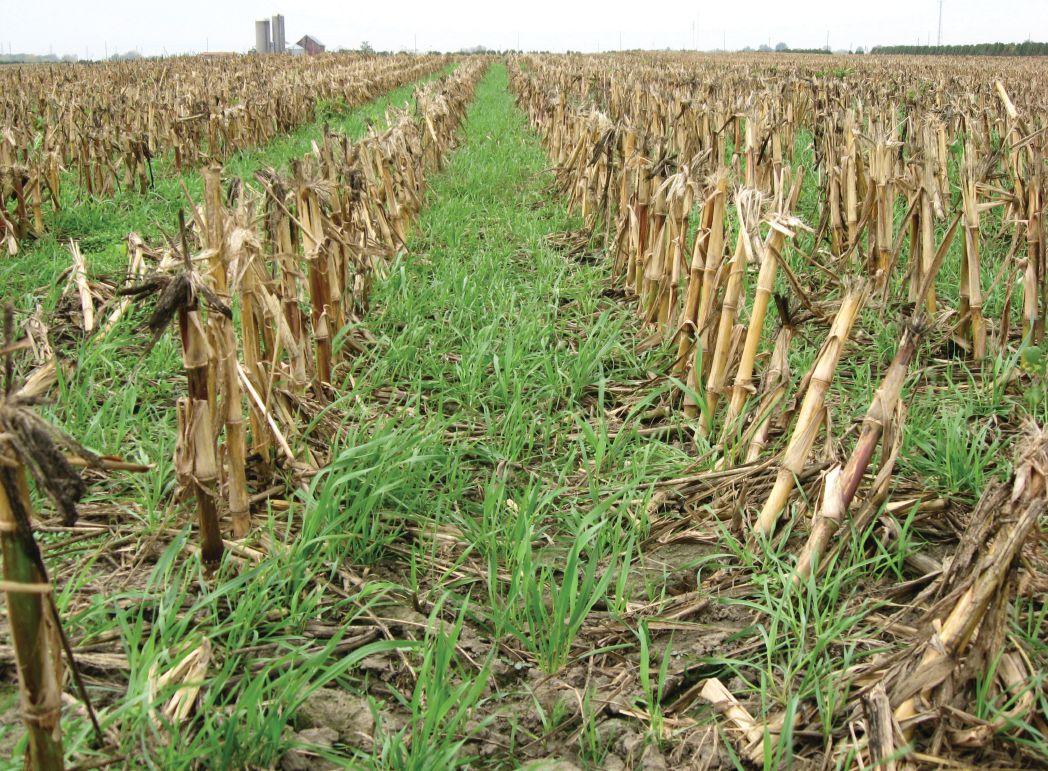
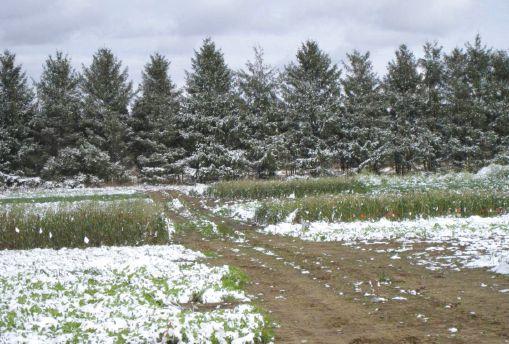
TOp: This rye cover crop, seeded after harvest of processing sweet corn, provides excellent living cover over the winter. MiddlE: in this long-term cover crop trial at the University of guelph’s Ridgetown Campus, the oats planted in early august are still standing in early december.
seven U.S. Midwest states and ontario. So the pesticide risk reduction program at agriculture and agri-Food Canada approached her to lead the project to adapt the MCCC tool for eastern Canada. The project fits with pesticide risk reduction objectives because certain cover crop species can help in managing disease, weed and/or insect infestations in crop production systems, along with providing other sustainable agriculture benefits.
“We had a team in each province that decided which cover crops and which criteria were suitable for their province,” explains Van e erd. The provincial specialists included: anne Verhallen ( o nt.), Stephanie Sanchez (Que.), Claude Berthélémé ( n.B.), Viliam Zvalo ( n.S.) and Shauna Mellish ( p. e .I.).
Like Van e erd, Verhallen was involved in the development of the MCCC tool. “o ntario is a member of the Midwest Cover Crop Council, so we had done some of the tool development work already for o ntario. This new project was an opportunity to expand the tool to the rest of e astern Canada and to make it a little more vegetable-focused because the Midwest Cover Crop Council tool is more field crop-focused,” says Verhallen, soil management specialist with the o ntario Ministry of a griculture, Food and rural affairs ( o M a F ra ) in ridgetown.
She adds, “It was also an opportunity to make a truly Canadian version of the tool. We had brought in farmers to look at what we were doing with the Midwest Cover Crop Council version and we got some feedback from them. We incorporated that into this new tool. So it’s similar to the MCCC tool, but there are some very significant differences in how the information is presented in some of the visuals.”
The five provincial teams compiled information from published scientific papers, research studies, on-farm experience and practical knowledge. They developed information for each cover crop species, including its potential benefits and disadvantages, agronomic characteristics and management practices for the province. The planting dates for each cover crop are based on expert analysis of 30-year regional weather data and are specific to each county in each province.
Van e erd says, “The tool is based on
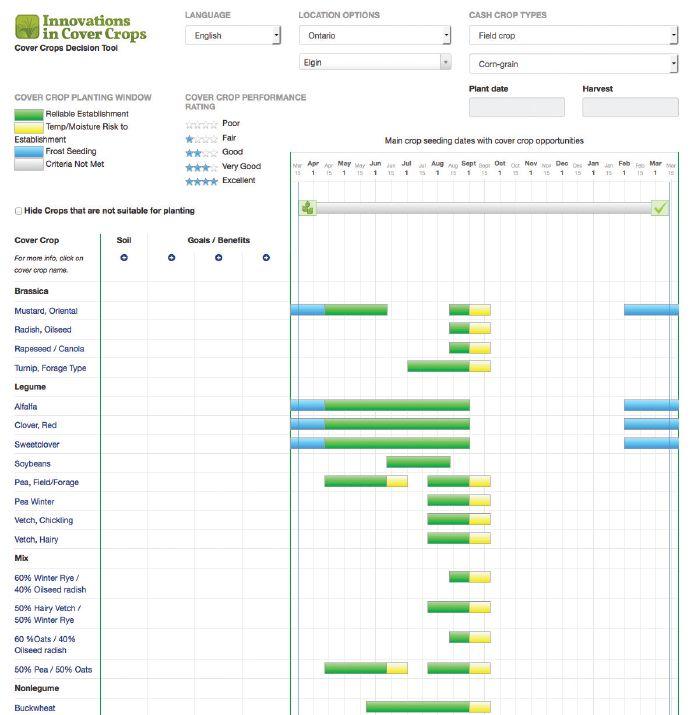
The interactive online tool provides easy access to the information growers need for informed decisions on cover crops.
Table 1. Cover crop goals/benefits that can be selected with the tool.
expert knowledge from many people, including growers, people from seed companies, soil and crop experts, extension personnel and researchers. They have gone through the data and validated it based on their knowledge, and made certain that it is specific for each province.”
Verhallen was involved in developing the o ntario portion of the tool. “For me, bringing together a group of farmers and industry people was probably the most fun but also the most challenging part –trying to get everyone in the same room, or at least on the phone, at the same time. We needed to do that because – although as many as possible of the cover crop ratings in the tool are based on research and data – a lot of them are based on experience: farmer experience, industry experience and extension experience across the province. and everybody has a different perspective on things, and what we see down here [in the ridgetown area] is a lot different than you’ll see in eastern o ntario. We had to take all those comments into consideration. So it was great fun to work on it and to come to a consensus on the ratings and what comments we were going to make on the benefits, warnings and so on.”
o verall, more than 50 experts were involved in developing and validating the Cover Crop Decision Tool for e astern Canada.
interactive, easy to use
The new interactive tool is available at decision-tool.incovercrops.ca. available in both english and French, the tool provides quick and easy access to accurate, relevant information to help crop growers make informed decisions on cover crops, and to increase adoption of this practice in eastern Canada.
The tool allows the user to specify the province and county, and to select the main crop that the cover crop is aiming to benefit. all five provinces have main crop options for vegetable cropping systems; o ntario also has main crop options for field cropping systems.
The user can select among several other options to describe the field’s growing conditions, such as its drainage and flooding characteristics, and can choose up to three goals for the cover crop (see Table 1, previous page).
The tool’s graphic display is easy to
understand and updates immediately as the user enters each new choice. The graphic display rates the cover crop options – about 30 in total – for how well each one meets the selected criteria, highlighting those that best meet the criteria. and it shows the recommended planting window for each cover crop.
Clicking on the name of a specific cover crop in the main display links the user to an information sheet about that cover crop, including such details as the cover crop’s life cycle and growth habit, agronomic practices, advantages and challenges.
So the tool allows growers to efficiently identify and compare cover crop options suited to their local conditions and their goals. “The tool gives a lot of information really quickly and allows growers to choose what they want from the cover crop,” notes Van e erd.
“It’s kind of a one-stop-shop deal where you can look at a variety of different cover crops and their attributes, including characteristics that will be really good and things that might be a problem. all that information is in one place,” says Verhallen. The tool also allows growers to try out various scenarios to see how different cover crops would fit in with their production system.
The Cover Crop Decision Tool for e astern Canada can be continuously improved in the years ahead. “The tool has been designed so we can easily update it if new cover crops come onto the scene
or if new recommendations come out,” says Van e erd. “The long-term goal is to perhaps pull the teams together in a few years and have a re-look at the data to make sure it is still relevant.”
Verhallen adds, “I think it is a good tool and it will get even better with time. We know a lot more about some of these cover crops now than we did two or three years ago. So about every three years or so we’ll
uaVS: where dreaMS MeeT duST
CONTiNUEd fROM pagE 27
eye-balling everything and estimating from ground references as opposed to holding a map in hand that clearly identifies the exact boundaries of a trouble spot.
“We can have a continuous map of the entire crop, you can calculate acres, you can quantify product, based on the decisions we made on that image,” she says. “It’s another map tool that allows us to quantify what we’re doing, so maybe we don’t have to put fungicide on the whole field or maybe we only have to spread a micronutrient across part of the field because the UaV image brought the scout to the region of the field that needed the farmers attention.”
The environmental and economic benefit of using the imagery marries perfectly with precision ag philosophies. So although it may still take time to realize the full potential of UaV imagery as another precision agriculture tool, it does remain a goal worth working toward.”
probably review and update the tool.”
The pesticide risk reduction program funded the project to develop the tool. Matching funds from an agri-Food and rural Link’s Knowledge Translation and Transfer grant supported development of the ontario field crop portion of the tool.
Researchers conduct spring soil sampling and cover crop biomass collection for (left to right) oat, radish and cereal rye plots. studies like this provided valuable information for development of the cover crop tool.
abuleil has been creating an algorithm which takes the information gathered by a UaV and creates a map that’s based on user-defined criteria.
WRITING A NEW CHAPTER FOR SOYBEAN PERFORMANCE
When it comes to trait technology, you’re looking for leadership and innovation. Hyland™ is powered by Dow AgroSciences outstanding research and development. Balance that with exemplary customer service and you have a combination of performance and profitability that is worthy of an encore.
iNVa Si V e pe ST i S Se T To ST rike F ield C rop S
Brown marmorated stink bugs are poised to wreak havoc.
by Madeleine Baerg
Brown marmorated stink bugs are on the march, heading from the Hamilton and niagara regions inexorably towards ontario’s crop fields. once they do arrive in ontario’s major agricultural region, they will - very unfortunately for the crops they infest - be there to stay. If there is any good news in this otherwise all-bad story, it is only that ongoing surveillance surveys by the ontario Ministry of agriculture, Food and rural affairs (oMaFra) suggest the bugs have not moved into crops…yet.
“given that the brown marmorated stink bug (BMSB) is an invasive species and it has a plethora of hosts including tree hosts, it is just a question of time for it to spread into ontario’s field and horticultural crops. We didn’t find any in crops this year, but we know they are coming,” says Tracey Baute, field crop entomologist with oMaFra who is part of a team monitoring the spread of the insect.
BMSB feed on a wide variety of crops. on fruit and vegetables where quality is everything, the disfiguring wounds are a major
issue in and of themselves, drastically limiting the marketability of affected product. Like other stinkbugs, BMSB have needle-like mouthparts that pierce through corn husks and soybean hulls to the kernels or beans within. This sting allows a starting place for ear rot and vomitoxin development in corn, and pod diseases in soybean. additionally, changes to soybean plants’ hormones when under attack can cause stay green syndrome. In field crops, the sting is less of a concern than the secondary problems that stem from those wounds.
“The typical threshold for any stinkbug in soybeans is one individual per foot of row. We’re looking at lowering that for this pest to 0.5 or 0.75 bugs per foot of row. Initial research conducted in Virginia saw losses of up to 40 bushels per acre in the first 40 feet of the field at a density of one bug per foot of row,” says Baute. “In a
aBOVE: Tracey Baute, OMafRa field crop entomologist says it’s a question of when, not if, the brown marmorated stink bug spreads into Ontario field and horticultural crops.
soybean crop you can visibly see the impact: when a producer goes to harvest the field, there’s a huge strip that’s still green, which significantly delays harvest.”
BMSB originate from a large area of southeast asia including South Korea, Japan and eastern China. Since it was first detected in pennsylvania in 2001, BMSB has made a home for itself in 41 States, reaching economically damaging levels in at least six of them. In ontario, the very first individuals were identified in 2010, but sightings are now commonplace.
“We went from having known sightings in the Hamilton area to finding them overwintering in homes from ottawa to Windsor, which spans most of the growing region in ontario. and, in some areas we are now spotting multiple breeding populations (multiple stages of insects) on tree hosts in a single location, which means we’re not only seeing individual insects spreading outside of areas of known establishment, they are now becoming established in more locations,” she says.
“Climatically, it can tolerate anywhere we grow its host crops, and it doesn’t matter how harsh the winter because it overwinters inside homes, making it a homeowner’s headache too. Detection in fields is key to implementing timely control options if growers are to stay ahead of the damage.”
While making an accurate count of BMSB is a far cry from stopping the pest, it is a very necessary first step.
“our efforts at management are still preliminary. There is a collaborative effort in the mid-atlantic States to try to develop management strategies and thresholds for field crops. We are quite lucky in that they’ve been dealing with these bugs for some time, so we can work off of the knowledge they’ve already built up,” says Baute.
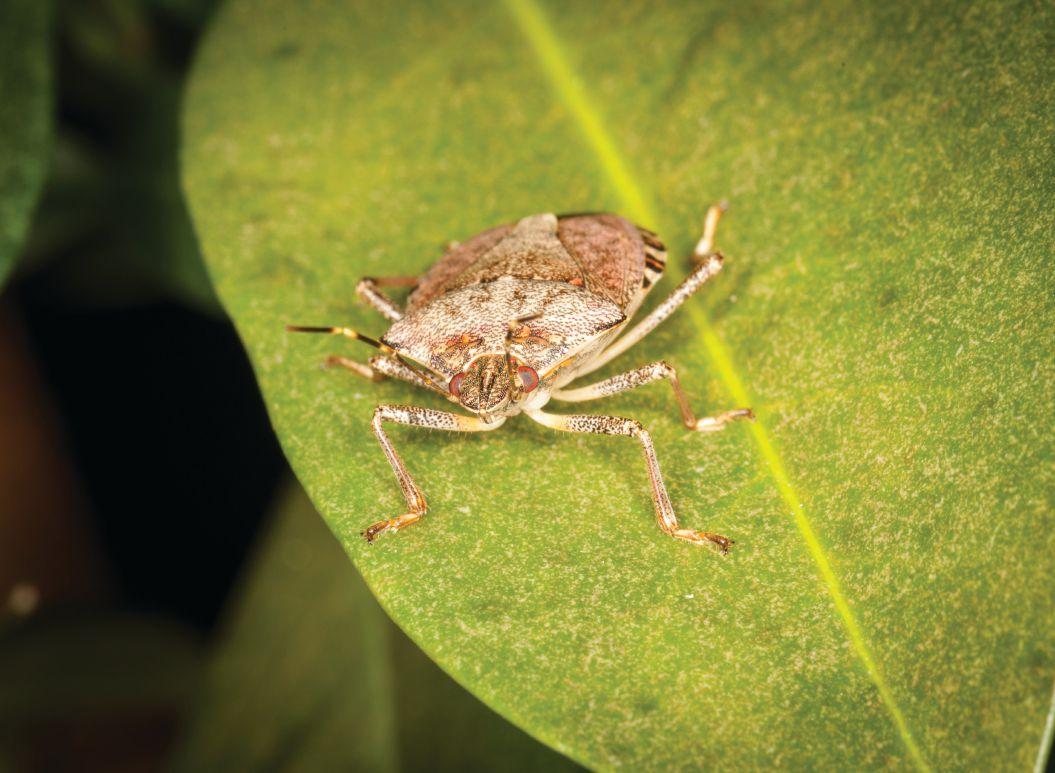
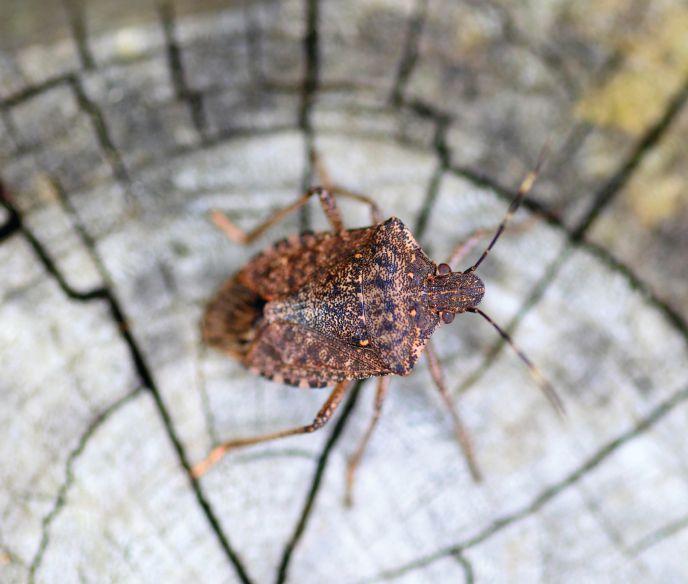
Though it looks similar to other stink bugs, BMSB has several unique features – white bands along its antennae, white triangles in a pattern on its abdomen, and smooth (non-serrated) “shoulders” – that make it clearly identifiable even to a layman. Simple identification is incredibly important since, because it always overwinters inside a closed building, it is most likely to be first detected by homeowners. as such, oMaFra conducted an intensive public outreach campaign to educate ontario residents about BMSB and to help people learn how to identify the pests. now, much of Baute’s survey and tracking work is based on data phoned in by homeowners.
“It is incredibly vital, I can’t stress enough how vital, for the public to notify us when they find them,” she says. “We researchers can’t be everywhere all the time, so it is incredibly important that farmers, crop scouts, homeowners and the general public let us know when they find them.”
In addition, she and a team of researchers conduct annual field surveys on high-risk crops to monitor the advancing edge of the invasion. once the pests reach a high enough density on the tree hosts they target first – a reality in the very near futureBaute expects them to start honing in on the host crops they are most attracted to.
BMSB is an edge insect, choosing to stay within about 40 feet of the edge of the corn or soybean field. This may decrease the cost of control for field crop farmers who may be able to focus insecticidal efforts exclusively in that zone.
all growers, particularly growers with fields neighbouring host trees (buckthorn, maples, oaks, elms, cedars, hawthorn, etc.) or horticultural crops (including apples, pears, peaches, blueberries, raspberries, grapes, peppers, tomatoes, snap beans and lima beans) should begin scouting weekly as soon as their corn or soybean starts developing flowers and ears/pods. Because BMSB often catch a ride on vehicles, farmers with fields
close to tourist locations or thoroughfares should also be particularly vigilant, as should farmers with fields near any of the towns/cities where BSMB have been identified as overwintering (Windsor, Cedar Springs, London, Hamilton, Kincardine, paris and guelph).
new invasive pests are becoming more common, both because of climate change and the way we now routinely transport goods around the world.
“as much as our borders do a good job of detecting invasive species, there are many ways for things to be carried in. and in terms of a changing climate, the more ideal a location starts to become for a pest, the more likely it is to survive when it does arrive,” says Baute. “Finally, when an invasive shows up, there are not a lot of natural predators that recognize it initially, so the invasive has the upper hand until the natural ecosystem catches up. BMSB have quite a number of advantages in their favour.”
For more information, visit www. ontario.ca/stinkbug. To report a sighting of BMSB, call the agricultural Information Contact Centre at 1-877-424-1300.
for more on pests and diseases, visit www.topcropmanager.com
OMafRa is asking that farmers, crop scouts, home-owners and even the general public let them know if they see brown marmorated stink bugs in fields in their area.
de F iC ie NC ie S
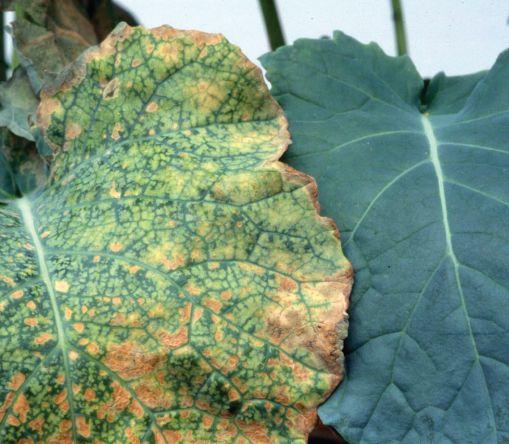
Why is micronutrient availability so patchy in a field?
by Dr. Thomas L. Jensen
When we think of applying fertilizer, the nutrients that come to mind initially are the major nutrients nitrogen (n), phosphorus (p), potassium (K) and sulphur (S). However, there are 10 other mineral elements or nutrients needed by plants – most are micronutrients. In most agricultural soils, widespread shortages of micronutrients are uncommon, but when one or two of them are in short supply, crop growth can be severely restricted and crop yields depressed.
Most areas readily accept that micronutrient deficiencies can occur. There are a number of reasons why this has happened. First, farm soils have been cropped longer, with most fields having a crop production history of over 100 years. Secondly, as higher yielding varieties and hybrids have been developed, crop yields and nutrient removal through harvest have continued to increase. Third, agronomic science has continued to improve soil and plant analysis techniques to better detect low availability of micronutrients. This probably means that moderate to slight deficiencies were present in the past, we just didn’t have the experience and ability to test for and detect these deficiencies. Lastly, education of field agronomists and crop advisers has increased the awareness and ability to look for, and diagnose, possible micronutrient deficiencies.
It is important to understand how micronutrient deficiencies are distributed and observed within a field. a micronutrient deficiency will not occur over a whole field, but will be present in irregularly shaped areas within a field. patches are often severely affected, and these graduate into moderately affected areas, and finally transition into areas that do not exhibit or have any micronutrient deficiency. This is the result of natural spatial variability in soil characteristics that affect micronutrient availability. These characteristics include soil pH, texture, organic matter, cation exchange capacity, electrical conductivity and soil drainage.
Just because there are some areas of micronutrient deficiency doesn’t necessarily mean a whole field should receive a micronutrient application. For example, while field scouting with a farmer for the presence and severity of an insect pest so he could make a decision whether to apply an insecticide or not, he asked me to look at an area of canola that had poor growth. I was able to recognize boron (B) deficiency symptoms and took both soil and plant samples from the poor growth area, as well as from an adjacent area with better crop growth. The analyses confirmed my visual diagnosis of B deficiency, but I’ll admit his response at first was a bit disappointing. He said “I realize you did a great job, but it’s only five acres and there is no sense getting too excited for such a small portion of the field.” His response
made sense after some thought, as the benefit of correcting the deficiency on such a small area didn’t justify the time and cost.
The patchiness of micronutrient deficient areas in a field and the difficulty of assessing the true extent of a micronutrient deficiency are challenging. I suggest we approach the challenge in much the same way crop advisers approach pest infestation assessments. First, confirm the suspected problem and assess the extent of the field that is affected. next, make an estimate of what the economic cost will be if nothing is done to correct the problem. Lastly, compare the cost of treating the problem with the value of the expected yield increase if treated with an in-crop foliar micronutrient. If there is sufficient net return from applying a micronutrient to the crop, go ahead with the application.
one last word of advice: even if an in-crop micronutrient application isn’t justified using this assessment procedure, it is useful to conduct further soil sampling on the field after harvest to more accurately assess the extent of a micronutrient deficiency. Further investigation may show more of the field may be moderately deficient, and a blanket application of a soil-applied micronutrient containing fertilizer may be a useful decision for longer-term crop production on the field.
Dr. Thomas L. Jensen is Director, Northern Great Plains, International Plant Nutrition Institute (IPNI). Reprinted with permission from IPNI plant nutrition Today, Fall 2014, No. 2.
a boron deficient canola leaf (left) versus healthy leaf.
Accurate at 16 km/h.
Exactly.
What’s speed without accuracy? Nothing. But when you can plant 16 kilometers-perhour without giving up accuracy – well now, that’s everything. The new John Deere ExactEmerge row unit offers you just that: all the agronomic advantages to help you get the highest yields possible, and the fastest performance time in the business.
ExactEmerge gives corn and soybean growers unrivaled speed to plant much faster, helping you widen those narrow planting windows. More importantly, we replaced the seed tube with our industry-exclusive brush belt to put your seed directly in the bottom of the trench – without any roll – for consistent seed spacing, while providing optimal depth for uniform emergence. A new bowl-shaped disk and double eliminator offer greater than 99% singulation, even at higher speeds. And two independent electric motors allow for target populations that truly hit the mark.
Visit your John Deere dealership to learn more about ExactEmerge. Nothing Runs Like a Deere™
Optimum® AQUAmax® products deliver, rain or shine. No matter what the weather may be, Pioneer® brand Optimum® AQUAmax® corn products are designed to deliver. Their superior genetics use water more efficiently from root to tassel. So you’ll enjoy top-end yield potential under ideal conditions and harvest more bushels per drop under drought stress. Talk to your local Pioneer sales rep about the right Optimum® AQUAmax® corn products for your acres.