Our engineers love a challenge. And if that means not following traditional planter design rules, so be it. Our Early Riser® planters have changed the game when it comes to delivering accuracy with uniform spacing, depth, and soil-to-seed contact. Consistent pressure surrounding the seed provides improved moisture conductivity resulting in consistent, even emergence – on average up to 3 days earlier than others. To us, it’s all about giving you the highest yields possible. To learn more about how you can be ready with the proven leader, visit caseih.com
TOP CROP
MANAGER
By Carolyn King
By Howard J. Elmer
By John Dietz
By Carolyn King
By Jeanine Moyer
Ashraf Tubeileh, Ph.D.
Peggy Brekveld
ON THE WEB
Sara Avoledo
Photo
Sara avoledo | editor
Happy new year!
Happy new Year to all of our Top Crop eastern Canadian readers! a s is customary, right after the holidays, I travelled to ridgetown, o ntario, for the 20th annual Southwest a gricultural Conference – and what a conference it was! o ver 1700 producers, industry people and researchers took part in the event put on by the o ntario Ministry of a griculture, Food and rural affairs, the University of g uelph’s ridgetown Campus and the Southwest Soil and Crop Improvement a ssociation. Those in attendance said they learned a lot.
The topic on this special 20th anniversary was “The Future of agriculture,” which encompassed 71 speakers in 46 sessions, and two keynote speakers over two days. The proceedings also featured a 60-exhibitor trade show, Internet café, research posters on display and sessions that were webcast to eight alternative locations across ontario.
I always enjoy this conference and not just because I touch base with many people in the industry I see but once a year at SWaC. There is also the new information, research and innovations (stay tuned for some great articles on topics covered in future issues of Top Crop Manager ). Finally, the farmers and producers I speak with and learn from make it the perfect opportunity for TCM to gain insight into what we can expect in 2013 and what topics we need to be sure to cover.
o ne of the most talked about subjects this year was cover crops. There are lots of innovations happening in cover crop research and farmers packed such sessions as Cover Crops are Cash Crops to find out more. Did you know you can grow radish in with your wheat? Have you ever tried it? Would you like to learn more? Stay tuned to Top Crop for an upcoming story.
also, soil health, as we found out in our December issue, was the primary difference between crops that fared well in last year’s drought and those that did not. Soil testing was also a hot topic at SWaC, with sessions on beginner and advanced testing as well as multiple sessions on nutrients in your soil.
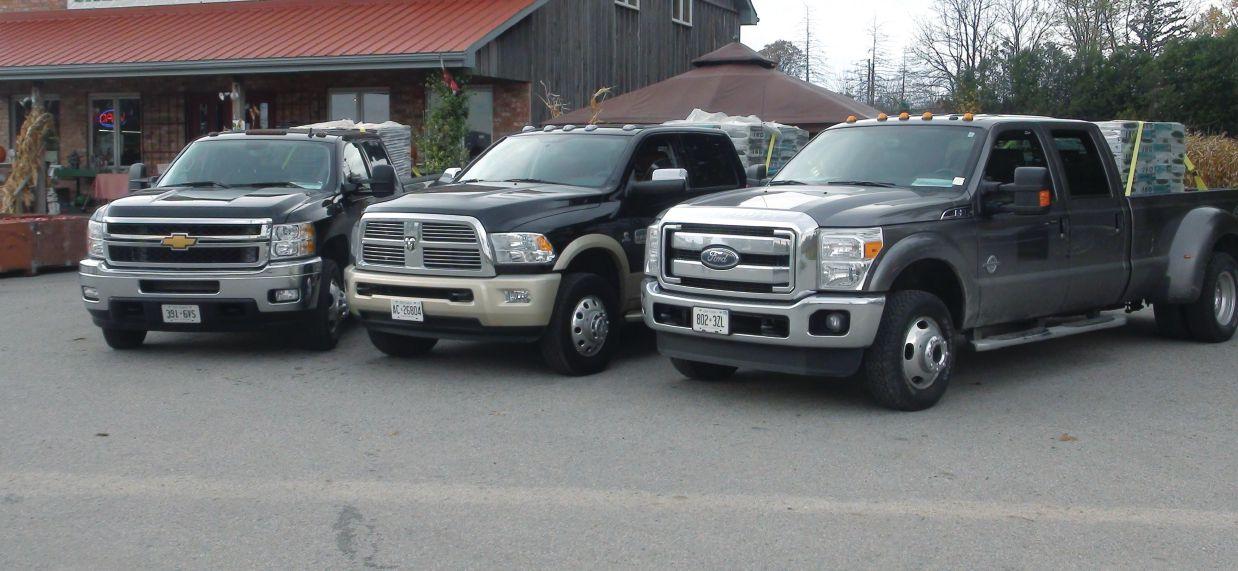
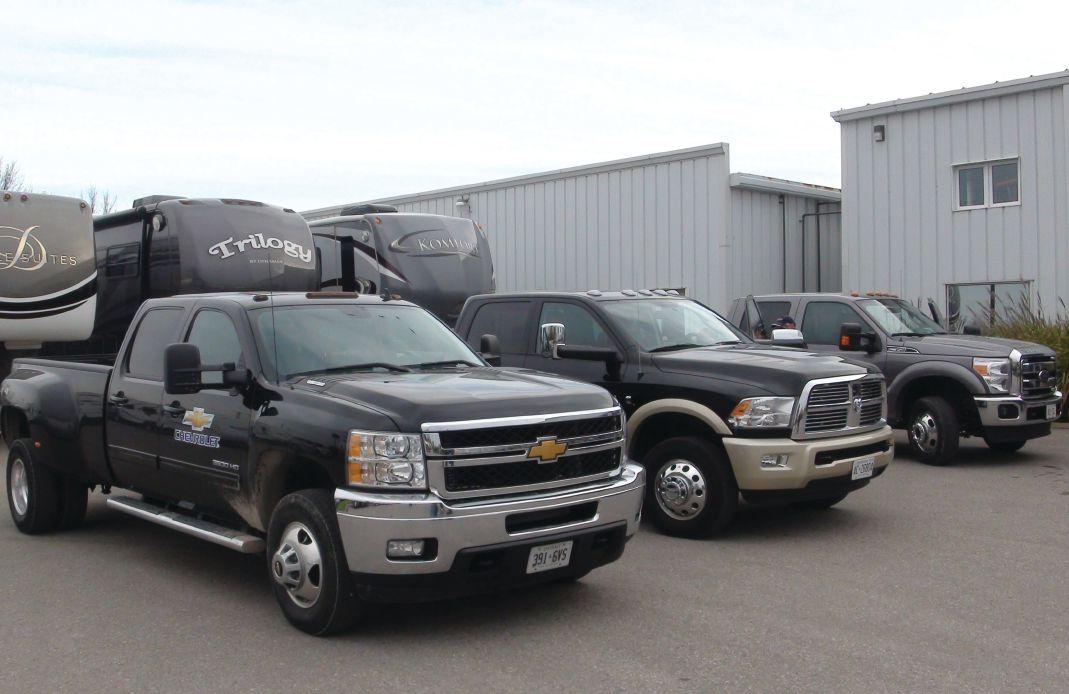
Finally, it wouldn’t be an agricultural event without farmers discussing their trucks, and this wouldn’t be a February issue of Top Crop Manager without our annual Truck King Challenge feature. This year, Howard J. e lmer discusses how, from a fleet perspective, real-world testing of the one-ton truck segment is very important. (Turn to page 18 to read the full story.) The challenge puts the Ford F350, the Chevrolet Silverado 3500 and the Dodge r am 3500 up against one another. Will your tried and true favourite brand be declared the winner?
all in all, I am very excited about the year we have planned for the e astern Canada edition of Top Crop Manager and I hope that you will be too. My thanks and congratulations go to the organizers of the Southwest a gricultural Conference for putting on such a great event. I recommend that all of you in the industry consider attending next year if you don’t already plan to, and learn and network as much as you can. It is always held in the first week of January and is a great time to start learning for the growing season ahead, not to mention getting out of the holiday mindset and back into the everyday work schedule. Happy new Year from all of us here at annex Business Media. I look forward to hearing your comments and continuing our conversations online . . .
TOP CROP
MANAGER
FEBRUARY 2013, vol. 39, no. 3
EDIToR Sara Avoledo • 226.979.9094 savoledo@annexweb.com
EASTERn SAlES MAnAGER Steve McCabe • 519.400.0332 smccabe@annexweb.com
WESTERn SAlES MAnAGER Kevin Yaworsky • 250-317-1992 kyaworsky@annexweb.com
AccoUnT cooRDInAToR Alice Chen • 905-713-4369 achen@annexweb.com
MEDIA DESIGnER Katerina Maevska
GRoUP PUBlISHER Diane Kleer dkleer@annexweb.com
PRESIDEnT Michael Fredericks mfredericks@annexweb.com
PUBLICATION MAIL AGREEMENT #40065710 RETURn UnDElIvERABlE cAnADIAn ADDRESSES To cIRcUlATIon DEPT. P.O. Box 530, Simcoe, ON N3Y 4N5 e-mail: subscribe@topcropmanager.com
Top Crop Manager West - 8 issuesFebruary, March, Mid-March, April, June, October, November and December - 1 Year - $45.00 cDn plus tax
Top Crop Manager East - 7 issuesFebruary, March, April, August, October, November and December - 1 Year - $45.00 CDN plus tax
Specialty Edition - Potatoes in Canada - February1 Year - $16 CDN plus tax
All of the above - $80 CDN plus tax
Occasionally, Top Crop Manager will mail information on behalf of industryrelated groups whose products and services we believe may be of interest
www.topcropmanager.com
@TopCropMag
opEN -polli NATE d C oRN BAC k oN T h E MAR k ET
Old-fashioned corn for cattle, the standard before hybrid corn came along, is back.
by John Dietz
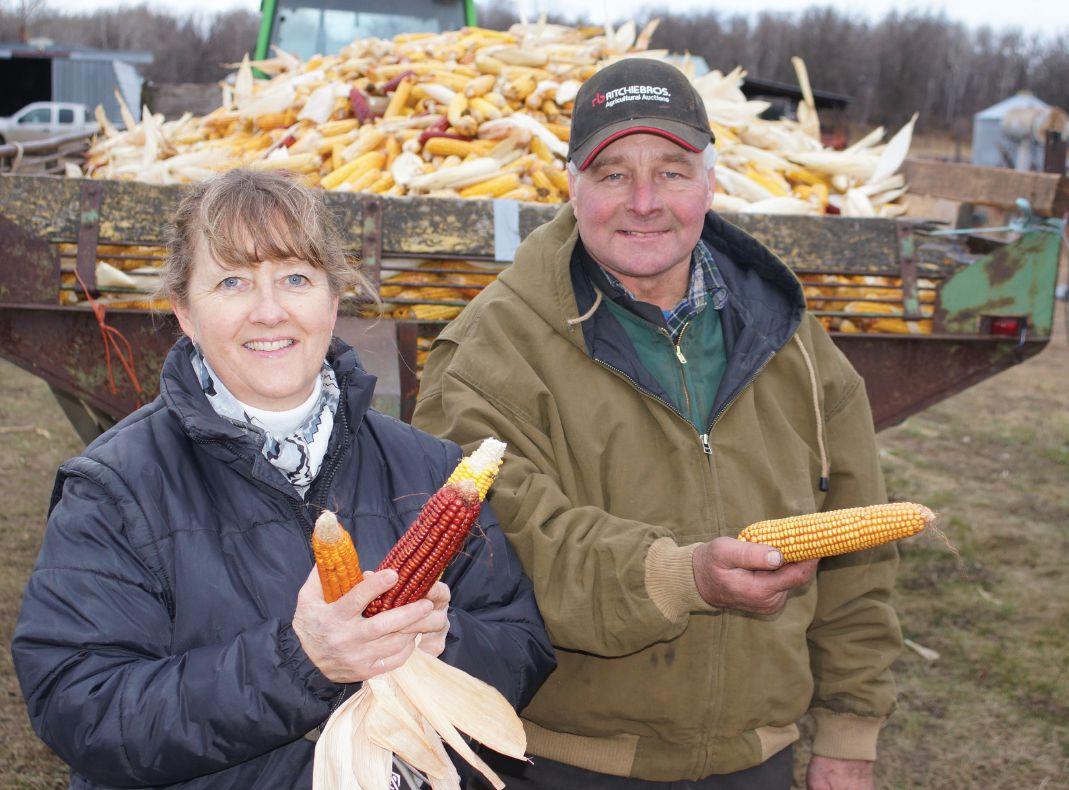
In a small way, ron and Linda Catt are giving prairie ranchers an opportunity to grow corn the old-fashioned way: without hybrid vigour, but with the advantage of natural genetic diversity, if they want the choice. They have even developed their own corn brand and are selling retail to farmers.
Need for feed
The Catts have a herd of registered polled Herefords that ron’s father started in 1939. Sixty years later, they had adequate pasture during the grazing season but were limited in winter feed supply. They saw an opportunity to increase the herd size if they could increase the winter feed supply.
For starters, they tried growing dwarf corn in 1999 as a cash crop with residue that would serve the cattle as a winter forage.
“We looked around and thought, the land we’re cropping is fairly decent, and corn might be an ideal fit on this better land,” says ron Catt. “We thought we’d grow corn for silage on that, and be able to
run 30 to 50 more cows on the same land base.”
after a little experience with dwarf corn, they began looking for other corn options. They wanted an old-fashioned, open-pollinated corn that Mother nature could pollinate, that could do well with a low rate of fertilizer and still produce a reasonable return – without risking the farm on the investment.
“We didn’t like the costs that were involved with other corn; they were fairly high,” says Catt. “We kept looking (for options), and that’s how we came up with open-pollinated corn.” They found a supplier in southern ontario and planted their first bag of openpollinated corn in 2001. eventually, they wanted to be able to process about 50 acres of corn for silage.
TOP: Ron and Linda Catt have developed their own corn brand and are selling retail to farmers.
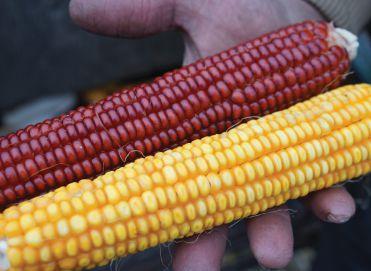
INSET: Catt Corn cobs are eight to 10 inches long, and red, yellow or orange in colour.
Photos by John d ietz.
■ Seed-placed liquid orthophosphate
Immediately available in cold soils
Faster emergence; Larger root mass
Higher yields
■ NPK analysis with micronutrients
A complete starter fertilizer
■ Convenient low rate liquid
Easy set-up on large planters
Their corn originated from a cross of two lines, a tall, leafy 2700 CHU late-maturing open-pollinated corn suited to southern ontario and an early maturing open-pollinated corn from the state of new York.
“our first plots did quite well,” notes Catt. “The corn was eight or nine feet high; we were quite pleased with what we saw.” Since then, Catt has sourced other open-pollinated corn and has been intentionally breeding open-pollinated corn suited to Western Canada.
Most cobs today are eight to 10 inches long. They are red, yellow, a mix with both colours, and sometimes orange. Catt Corn still is leafy, still grows seven to nine feet tall, and matures on 2150 to 2350 CHUs.
“We say it can do well on less fertilizer or manure because it has a more extensive root system than other corn,” says Catt. “Cattle tend to prefer it over other corn because it’s a little sweeter with a more tender stalk. We have a few dairy customers, who tell me their herds seem to have better health with it, too.”
Catt plants the corn crop in 30-inch rows with an average of 24,000 to 27,000 plants per acre, depending on the soil conditions and intended use. He puts on approximately 40 to 50 pounds of fertilizer, including some manure.
on the silage side, he hopes to harvest 12 tonnes to the acre. “I think 12 tonnes is a profitable crop when your inputs are not extremely high. Under the right conditions, it can do better than that,” he says.
Gearing up
Catt didn’t have a sheller in 2001 when they first became interested in open-pollinated corn, but they had long winter nights and curiosity about developing their own open-pollinated corn seed. “The first corn we actually shelled with our thumbs as we were sitting on the couch in front of the TV. We’ve come a long way since then. We have a proper sheller now,” says Catt.
By 2003, they were able to put 40 acres in the ground. They had a few acres in trials, too, to see if they could improve the performance. Today, they have a fanning mill for cleaning. They also have a picker, conveyors and other pieces needed for converting acres of standing corn into bags of dry seed.
“We grow about 90 acres of corn now,” says Catt. “Some is for grazing, some is for silage and some is for seed. Depending on how things are, we might pick 40 or 50 acres for seed.”
Personal touch
The seed business began, unexpectedly, after a few people asked them for a bit of seed. ron and Linda spend about three weeks in the fall hand-sorting as the cobs first go into storage and dry-down. around February, they hand-sort a second time as they feed the dry cobs into a sheller. Then, the kernels go through a cleaner and bags are filled. Samples of the corn seed are sent to a seed lab for professional germination testing.
The bags are weighed and piled on pallets, then placed in storage for spring delivery. The Catts collect orders through very limited advertising, trade shows and Internet contacts. “We try to group lots so that we can take a decent load in our cattle trailer and deliver it ourselves,” notes ron Catt. “Customers appreciate that. They get to meet the person who’s produced the product, and we enjoy it as much as they do.”
The Catts sell their open-pollinated corn in 55-pound bags from their farm in south-central Manitoba, between austin and Treherne. They have been selling it in Manitoba, and into Saskatchewan and alberta for six years, and often deliver it themselves in early spring. although most Catt Corn stays on the southern prairies, they have sent shipments to the eastern border of ontario, to northern ontario and to Vancouver Island. online, they advertise Catt Corn as an early maturing “lower cost alternative for grazing and silage” that is seven to nine feet tall, leafy, with high nutrition and yield potential. It requires 2200 to 2350 corn heat units. each bag contains about 100,000 kernels, enough to plant four acres of open-pollinated corn at $25 an acre. Conventional hybrids for an equal plant population retail at about $45 an acre.
Today, the Catts have met their original goal. They have increased the number of animals they can feed in winter, and they’ve added a whole new business as producers of open-pollinated corn seed.
Catt plants on 30-inch rows with an average of 24,000 to 27,000 plants per acre.
Open-pollinated corn is a more affordable option for the Catts’ grazing operation.
Photo by b ruce b arker.
Photo courtesy
The PursuiT is over
PHANTOM™ puts an affordable end to broadleaf weeds.
Control weeds on contact and in soil residual with the takeout power of imazethapyr, the same active ingredient found in Pursuit®. Support fair pricing and protect your soybean, dry bean and other broadleaf crops with Phantom herbicide. Available at leading retailers. Ask for Phantom by name.
SMART NiTRogEN
Environmental advantages for spring wheat and corn.
by ashraf Tubeileh, ph.D.
One of the first questions farmers ask every spring is whether or not they should split their nitrogen (n) application. This is a very legitimate question, as we have to weigh out the pros and cons of splitting our n application versus adding the entire amount of n in one application at the beginning of the season. adding all n early in the season, when the crop does not need a whole lot, will mean losing some of that n to leaching and denitrification.
Splitting the n application on wheat and corn has historically shown a small yield advantage over a one-time application at planting. However, this yield advantage is usually offset by the cost of the extra pass and the trampling effect on the crop from the additional application.
environmentally Smart nitrogen (eSn) was developed in an effort to supply n to the crop at the right time while minimizing the number of passes on the field. eSn consists of a urea granule provided with a semi-permeable polymer coating that allows water to enter the granule and dissolve the nitrogen inside based on temperature and mois-
ture, providing a slow release of nitrogen. This extra layer reduces the overall n concentration in the product to 44 percent, as opposed to 46 percent for urea.
To evaluate the advantages of eSn versus straight urea, grain Farmers of ontario is funding a research project at the University of guelph’s Kemptville Campus assessing different combinations and application rates of the two fertilizer products on spring wheat and corn. The experiment was started in 2011 on a clay-loam soil in Winchester, eastern ontario.
Spring wheat
Ten n treatments were applied to spring wheat at planting in early May. The treatments totaled 0, 45, 90 or 135 kg n per ha. each of the rates was applied as straight urea, straight eSn or 50/50 blend of both. a straight eSn application at 135 kg n/ha tended to depress plant
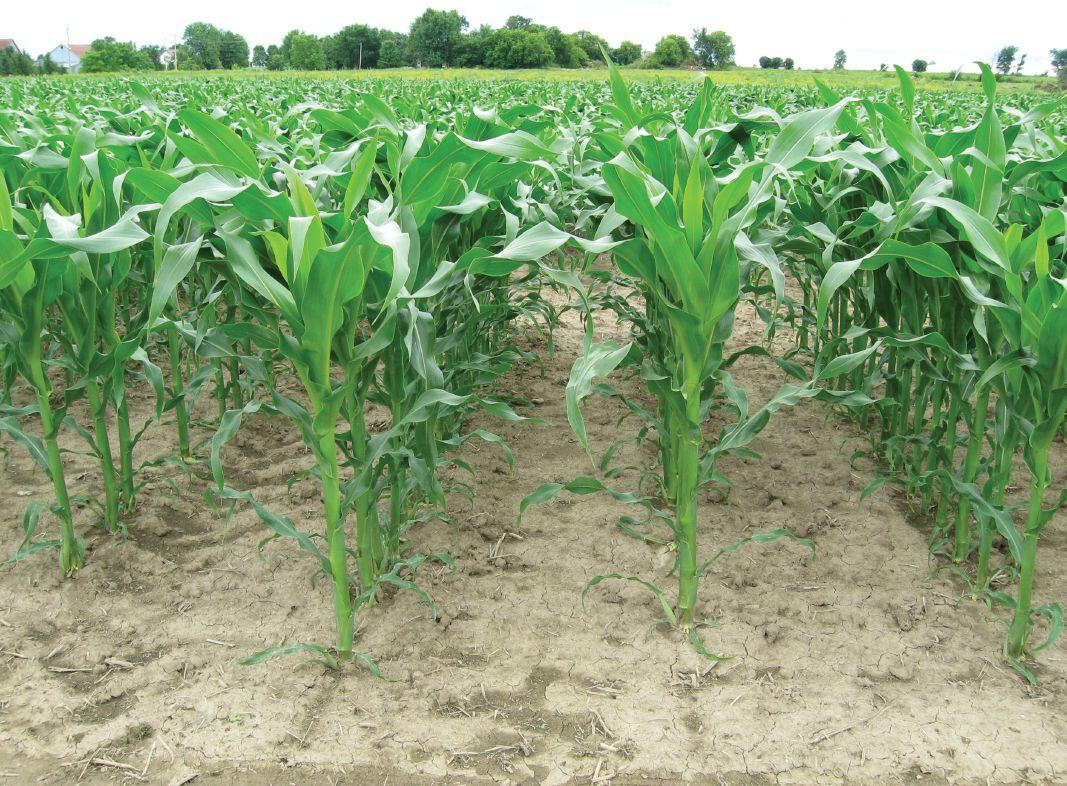
TOP: Corn treated with Smart Nitrogen (ESN).
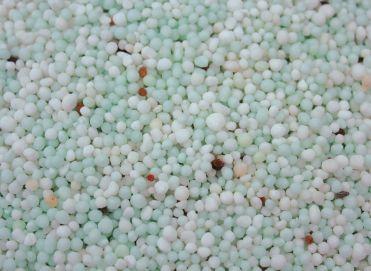
INSET: ESN granules.
Photos by a shraf
ubeileh, P h d
height as opposed to a straight urea application. Within the same n rate, eSn did not increase yields or any of the other parameters monitored. The highest yield was recorded for the straight urea treatment with 135 kg n/ha, which topped 4.73 tonne/ha, while straight eSn at 135 kg n/ha produced 4.56 tonne/ha. However, the main effect of eSn was observed on protein content. The highest n treatment with 100 percent eSn pushed grain protein content above the 14 percent bar, although this increase was not statistically different from urea or urea/eSn combinations at the same n rate, but statistically higher than the other treatments with lower total n applications. These preliminary results show that replacing urea partially or completely by eSn does not improve spring wheat yields. However, the slow release of eSn is having a beneficial effect on protein content, through providing n later in the season.
The project results for spring wheat show that eSn did not significantly increase yields compared to urea. Similarly, plant height and thousand kernel weight were not affected by the eSn on the other hand, 100 percent eSn treatments tended to decrease yields as opposed to 100 percent urea or combinations of the two sources.
protein content tended to increase with the application of eSn on the clay loam soil in Winchester.
Corn
given the differences in growing season and fertilizer requirements, the treatments for corn were different than those for spring wheat. The ten treatments totaled 0, 50, 100 or 150 kg n per ha. each of the rates was applied as straight urea or urea-eSn blends (60/40 or 75/25). all n treatments were applied at planting. Corn hybrid n23F-3000gT was planted at 35,000 seeds/acre and 30” row spacing.
at a rate of 150 kg/ha, a urea-eSn blend had a yield advantage of 11-12 percent (17-19 bu/ac) compared to straight urea. Corn yield did not benefit from the highest urea application (150 kg/ha) as to 100 kg/ha. on the other hand, blending eSn with urea at a total rate of 50 kg ha-1 did not affect yields compared to straight urea.
Corn grain test weight was not significantly affected by the different fertilizer levels or sources. The n source did not affect corn kernel
CONTINUED ON PAGE 15
The smile says everything.
InVigor growers are just like other growers. Every day, they’re up before sunrise and work until everything gets done. Because when you love something this much, it’s not just a job. It’s everything.
InVigor growers might be just like every other grower, but the same can’t be said about their canola. InVigor consistently delivers early season vigor, high stress tolerance and superior yield. This year, grow with confidence. This year, grow InVigor.
Dennis Jibb of New Liskeard, ON
SUR pR i Si NglY good C oRN Y i E ld S
What can we learn from corn performance in 2012?
by Carolyn King
Although drought severely impacted corn yields in some parts of o ntario, yields were actually better than expected in many areas of the province in 2012. are there things growers can learn from corn’s performance this past year that could help deal with the next curve balls thrown by Mother nature?
A look at yield patterns in 2012
Statistics Canada, in its final estimates for 2012 crop production, reported that o ntario corn production reached a record 8.6 million tonnes from a record harvested area of 2.2 million acres. That works out to an average yield of 153 bu/ac, which is very close to o ntario’s current five-year average corn yield of 150 bu/ac.
But many ontario growers experienced far-from-average yields.
“I think overall the provincial average is strong, but yields were quite variable,” says Steve Denys, vice-president of sales and marketing with pr ID e Seeds. “We had many farmers who
had possibly the highest yields they may see in their lifetime, because they had rain along with the heat. and then we had all the way to growers in severely dry pockets who had probably the worst yields they’ll see in their lifetime. There was a severe pocket in renfrew County near o ttawa and another one through Simcoe, Delhi, e lora and the g uelph area, where growers had drought combined with high heat. So we had yields ranging from 40 to 250 bushels per acre.”
The results from the ontario Corn Committee’s 2012 hybrid trials at 21 sites across the province show some of that wide range in yield. at one extreme are the ottawa and pakenham trials, which had to be discarded due to the high level of variability caused by very dry weather. at the other end of the spectrum are the southwest trials, which had excellent yields.
“The average of the southwest trials, which are at ridgetown,
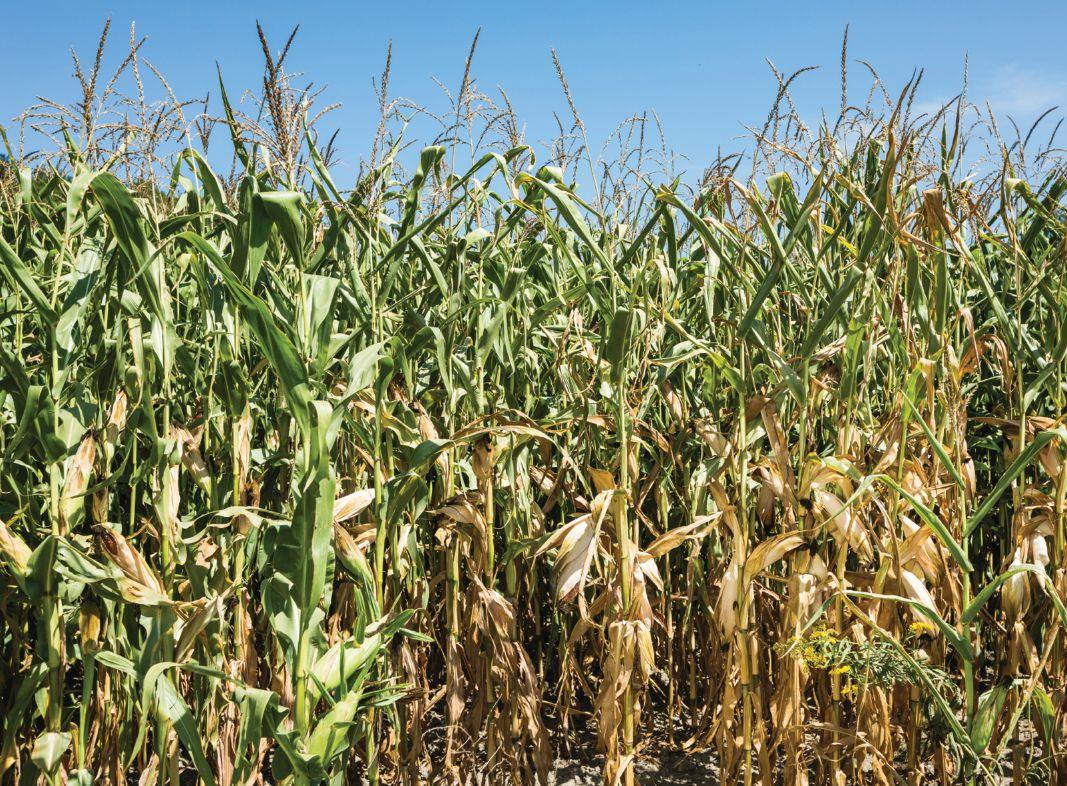
ABOVE: Corn yields in Ontario in 2012 ranged from excellent to very poor.
Tilbury and Wallaceburg, exceeded the 2010 average, and in 2010 we thought we had climbed to new heights for corn yields. The 2010 average yield for the three sites was 238 bu/ac, while in 2012 it was 249 bu/ac,” says greg Stewart, corn industry program lead with ontario agriculture, Food and rural affairs. He adds, “They just kept getting rain whenever they needed it this year!”
Stewart points to another interesting comparison: the 2012 trial results for Wingham and e lora. These locations grow the same hybrids and have similar soils, but in 2012 the average yield was 226 bu/ac at Wingham and 175 bu/ac at e lora. “Wingham received about four inches more rain than e lora over the course of the season, including a nice little bit more rain in July. Those four inches of rain resulted in about a 50-bushel yield increase compared to e lora. That’s about 12.5 bushels of increased yield per inch of rainfall.”
Reasons for better-than-expected yields
Looking at corn performance in 2012, Monsanto’s technology development lead for e astern Canada, Derek Freitag, says,
“Yields looked surprisingly good but what that means differs depending on where you were. In areas with severe drought stress, growers were surprised that corn yielded 70 or 80 bushels when it really didn’t look like there was anything there. In areas with moderate drought stress, growers were pleasantly surprised to find they reached the 180- to 200-bushel range. and in the areas with decent moisture, we had growers harvesting their best crop ever.”
along with the crucial help of timely rains, a couple of other factors helped corn crops to better withstand heat and moisture stress and achieve those surprisingly good yields.
o ne factor is that corn crops got off to a very good start. “The dry april and May in 2012 set us up for excellent planting conditions and made the root systems develop very nicely in the early going, enabling the crop to withstand relatively dry conditions across a fair bit of the growing area,” explains Stewart. another factor is improved hybrids. Freitag says, “The progress in corn hybrids has been almost unimaginable as far as their ability to tolerate stress. … o ur breeding program has
“In this business, you deal with a lot of uncertainty –weather, soil, timing. You can plan all you want but you never really know how things will turn out.
“InVigor is the one thing on my farm I know I can trust. Year in and year out, it delivers early season vigor, incredible stress tolerance, and some of the highest yields I’ve ever seen.
“Why do I plant InVigor? Drop by at harvest and see for yourself.”
Learn more at BayerCropScience.ca/InVigor
Shane Noblett of Grand Valley, ON
incorporated a lot of traits from other world areas that help, whether it’s disease tolerance in wetter years or drought tolerance or heat stress. It’s also the adoption of biotech traits [to protect against insect pests and herbicide damage]. So we’re putting the corn crop through a lot less stress nowadays. It’s kind of ‘the straw that broke the camel’s back’ scenario where it takes a lot more straws to break the camel’s back nowadays because the camel is a lot stronger.”
Du ppont p ioneer area agronomist Blair Freeman says, “If you look at 1988, a year with extreme drought stress when corn yields suffered, if a grower could have had a 150-bushel crop back then, he would have been thrilled. o bviously we have
Breeding programs often plant inbreds at very high populations to sort out the genetics that can withstand stress
been raising the bar on corn yields in stressful years.”
He gives the example of Bt corn, a trait that people don’t necessarily think about in connection with drought stress. “Bt corn can indirectly improve a hybrid’s ability to withstand moisture stress conditions. Corn borer can damage the vascular system of an individual corn plant and its ability to transport water within the stalk. This damage leaves the plant in poor shape to handle future moisture stress. Bt corn is less prone to corn borer damage and should be able to better withstand moisture stress as a result.”
Freeman notes, “Breeding programs often plant inbreds at very high populations to sort out the genetics that can withstand stress, and they target things like silking and pollen-shed synchrony. So, as we move through time, we’re getting hybrids better able to pollinate [even in stressful conditions].”
Dry conditions may affect this synchrony by shortening the length of time that a tassel sheds pollen and by delaying silk emergence; sometimes the combined effect may mean that pollen shed is over before silk emergence. “With corn you have one kick at the can to set grain – to shed pollen and have the silk there to be receptive. If you don’t have that synchrony, you can have a 50-bushel crop rather than a 150-bushel crop, even if the rest of the season goes right,” says Freeman
What was learned from 2012
Corn performance in 2012 reinforced the value of some key practices and pointed to some opportunities for fine-tuning to deal with weather stresses.
“Using multiple hybrids with multiple flowering dates, planting as early as agronomically sound, and using multi-year data to choose hybrids – those are probably the key messages we would like to take to our growers over the winter months,” says Freitag.
Freeman advises, “I think 2012 is a lesson in risk management and diversifying your [hybrid] portfolio to be successful even in stressful years. If you can get a package of hybrids together that will spread out maturities and spread out your silking window over a week and a half rather than just a couple of days, you will be better able to weather different stresses.”
He notes, “This year in many places heat and moisture stress tended to get worse as the summer went on, so some of the later
silking hybrids tended to be penalized in some situations. But in another year the situation could be reversed. So all you can do is spread out your silking window and hope for the best.”
growers shouldn’t overemphasize 2012 data when choosing their hybrids for 2013; using multi-year data is as important now as in any other year. Stewart says, “evaluate all the data you can get your hands on – your on-farm data, the data your seed company has, the public performance trials – and try to pick the highest yielding hybrids for your area.”
Just as corn growers learn from multi-year data, so do corn breeders. “In breeding programs, decisions on what hybrids are going to go forward are based on multiple years of data. The heat and moisture stresses of 2012 will add an important chapter in terms of stress response to the book that breeders look at to make decisions about which lines they want to continue with to go towards commercialization,” explains Denys.
For Denys, 2012 showed the value of three basics for corn production. “number 1 is to make sure the ground is in good shape when you plant and that planter maintenance and those types of things are done before the season. next is the value of the genetics. I look at my own farm and even though there was some moisture stress in 2012, the genetics helped me get a better yield than I expected. Then the third factor is in-season fungicide sprays, especially applications around pollination time. I believe they give a disease control benefit as well as a plant health benefit, adding to the yield.”
as for what Stewart learned from his corn research in 2012, he gives an example from his nitrogen trials. “The weather influences how much nitrogen is mineralized out of the organic matter in the soil naturally, without the farmer adding any fertilizer. In 2011, we had a cool, high rainfall in april and May, and the soil nitrate tests showed that the amount of nitrogen coming out of the organic matter was quite low. So farmers needed to add more nitrogen to meet the crop’s demands.
“In 2012, we had relatively low rainfall in april and May and quite warm conditions, so we got the organic matter warming up and kicking out higher than average amounts of nitrogen. So in 2012, farmers needed to add less nitrogen because of the greater supply coming out of the soil’s organic matter.”
Stewart advises, “To do a good job of getting the nitrogen rate right for your field, you have to consider the previous crop, soil texture and yield expectation to get a snapshot [of the field’s nitrogen status]. But to really get it right, you then have to take into account the influence of april and May weather, and our only way of really capturing that is through a soil nitrate test. Then you add the information from the soil nitrate test to the snapshot, and make an adjustment.”
as Freitag says, when it comes to the weather, “the only thing we can almost guarantee is that next year will be different.”
The ups and downs of 2012 underline the importance of spreading your risk by growing multiple hybrids with multiple maturities and silking dates, of doing everything you can to give the crop a good start so it can withstand stress – and of having some luck with timely rains.
Know. Grow. www.topcropmanager.com
SMART N i TRog EN
Continued from page 11
weight or harvest moisture content.
our results for corn show that including eSn with urea at 150 kg n ha-1 increased yield by 11-12 percent. a urea-eSn blend at a ratio of 60/40 was the most profitable as it would increase farmer profit by over $200 per hectare. Corn grain moisture at harvest and test weight were not affected by the amount or source of nitrogen.
Fertilizer cost-benefit analysis of ESN and urea applications
Fertilizer nitrogen costs and yields per treatment were computed using an average price for a bushel of corn at $6 (average price for the first half of 2012). Urea and eSn prices used were $750 and $900 per tonne, respectively. no other costs were included in the analysis, as these will be fixed for the different treatments.
The economic analysis shows that treatment with 150 kg n/ha at 75 percent urea and 25 percent eSn was the most profitable. This treatment would increase the per hectare profit by $267. as agricultural commodity prices soar, each bushel of yield increase will be important.
These results shed some light on the effects of eSn and explain some of the contradictory results from ontario and
other jurisdictions. Using eSn in blends with urea will be more profitable for farmers on corn than on spring wheat. The environmental effects of eSn application and nitrogen use efficiency still need to be evaluated. More trials are underway to validate these results and to test these treatments on sandy loam soil.
choose any of the spray tips in our extensive line to replace your non-teeJet nozzles.
Only TeeJet offers:
• The broadest selection in the industry – more types, sizes and materials than any other supplier
• Spray tips designed, manufactured and tested by us in the USA
Why risk your big investment in chemicals? Make sure you’re using the best spray tips available. act by may 31, 2013 to trade up to teeJet.
Specialization in spray tips. Our focus is on spraying – and has been for more than 75 years
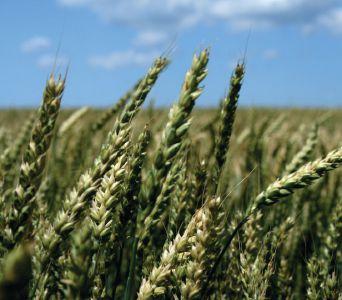
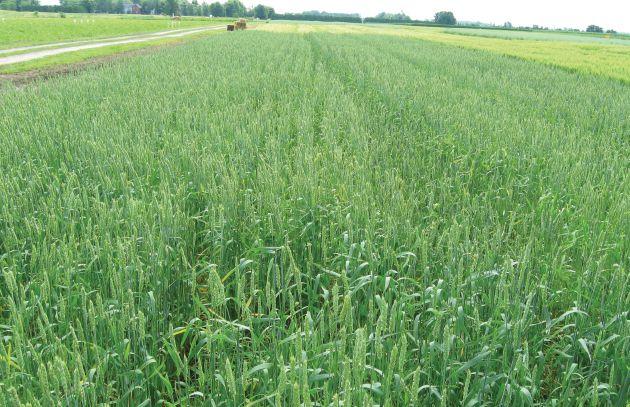
Wheat treated with ESN.
Photo
Biopl AST iC FRoM BEAN CU ll S
Adding value for the dry bean industry.
by Carolyn King
These days, dry beans that get broken or cracked during combining or cleaning are culled from the food stream and put into low-value uses. But o ntario researchers are working on an exciting, environmentally friendly, higher-value opportunity for bean culls – bean bioplastic!
Dr. peter pauls, chair of the Department of p lant a griculture at the University of g uelph, is leading this research. His lab focuses on such areas as molecular characterization of plant traits, plant bioproduct development and dry bean breeding. all those areas are important for the development of bean plastic.
pauls explains how he and his research team became interested in developing bean plastic: “We’ve been working with the Hensall District Co-operative, a company that cleans and packages beans and markets them around the world. We’ve visited the plant a number of times and we’ve seen the culls that come from it. They are mostly cracked beans so they aren’t appealing for consumers, but they are perfectly good in terms of their functional characteristics.”
The researchers knew from other studies that bioplastic could be made from any crop with protein in it. Since beans are a good source of protein, they decided to give bean plastic a try.
The science behind bean plastic
Some of the key players on the bean plastic team at the University of guelph are Dr. Loo-Sar Chia, with expertise in protein chemistry and bioproduct development, Dr. Loong-Tak Lim, a professor in the Food Science Department, and graduate student Muhammad arif, who worked on using soybeans to make bioplastic.
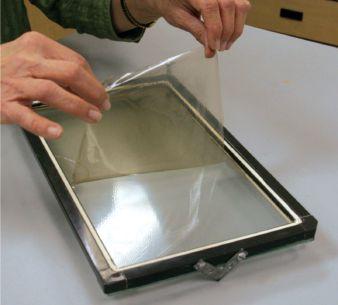
pauls and his team extract protein from different types of beans, mix the protein with glycerol (an edible plant product), and make it into plastic films. o ne aspect of their work involves testing these films to determine their physical characteristics, such as strength, permeability to water and elasticity, because such properties are important for the end use of the plastic.
The researchers can make thin, flexible plastic films that can be used in a variety of ways. one great idea is to make edible food packages. For instance, the plastic can be formulated so that it’s water-soluble and can be formed into pouches to hold dried soup. a consumer would place a soup pouch in a bowl and add hot water, and the pouch would dissolve and become part of the soup.
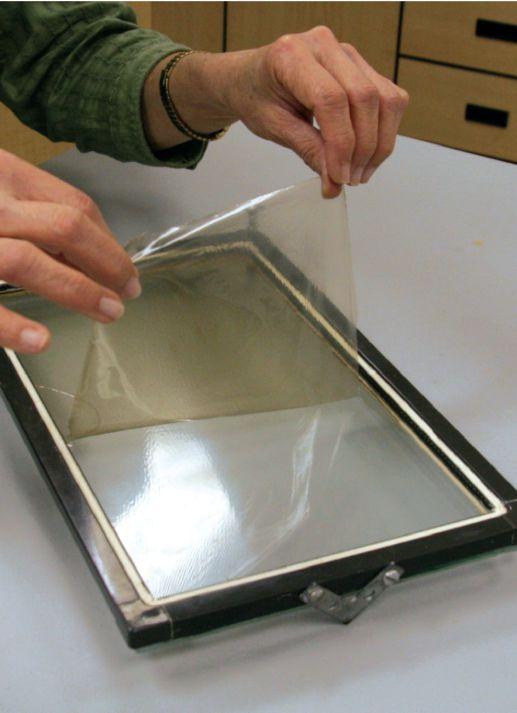
University of Guelph researchers are extracting protein from different types of bean culls, and making it into bioplastic.
o ther possibilities include edible wraps for foods such as sausages, capsules for powdered medicine, and edible sprayedon films to preserve fruits and vegetables. pauls notes, “Some of the uses, like capsules for pharmaceuticals, would provide a plant-based alternative to capsules made from animal protein, for instance, for people who have allergies to certain products.”
Bean plastic can also be made so that it’s more rigid, which allows other uses. “For instance, inside a chocolate box, there’s
often a tray made of shaped plastic that holds the chocolates. We can thermoset these films so they hold their shape to make those types of trays,” says pauls.
another component of the research is to analyze the protein composition of different dry beans and investigate how that influences the properties of the plastic. “Different bean sources give us films with different physical properties. The determinant seems to be the protein composition,” explains pauls. “What we extract from a bean is really a mixture of a number of different discrete proteins. e ach bean has a little different protein composition – they usually have a very similar overall ‘pattern’ but some components might be a little higher in one bean and a little less in another. Since each individual protein has its own specific physical properties, the collective at the end is a little bit different from one bean to the next.”
pauls and his team are building their understanding of which particular bean protein component gives which particular physical characteristic to a plastic film. For example, they have been examining several lines of beans that lack certain classes of proteins, and are finding some interesting flexibility and elasticity characteristics in the resulting plastics.
a s well, the researchers have been determining the variations in protein composition in bean germplasm from a wide range of sources. They hope to introduce modified protein characteristics into new bean varieties through the joint a griculture and a gri-Food Canada ( aa FC) and University of g uelph bean breeding program, located at the University of g uelph and led by pauls and Dr. ali navabi of aa FC.
“We’re exploring crossing that material into our conventional bean varieties to see if we’re able to preserve their yield potential and other important traits, while adding the potential for a plastic end-use to give them an economic advantage,” says pauls.
Economic considerations
“ right now bean culls are sold for a fraction of what normal beans would be sold for. If there were an economic benefit to the culls, then that would add to the attractiveness of that particular variety.”
The next stage in developing the plastic production aspect of the research involves scaling up the process. “So far, most of our tests have been done on small-scale preparations of the plastics in a lab. We have a bioproducts centre in our department, and our next step will be to make these films in a larger format, such as a long sheet or a long roll, and in a larger quantity. Then we’ll do some of those tests to measure their physical properties. I think once we have that, we’ll have a better way of talking to companies who might be interested in the manufacturing end,” says pauls. “So I’m optimistic, but we still have a ways to go.”
Bean plastic has a positive potential for both the environment and the bean industry. The plastic comes from a renewable source and it’s biodegradable. also, some of the ideas for bean plastic uses, like those edible pouches for dried soup, offer a novel way to help address the environmental issue of packaging wastes. a s well, the bean plastic process targets a low-value byproduct of bean processing and adds value to it – extra value that can ultimately be passed along to bean growers.
Brad Chandler, commercial business manager for the
CONTINUED ON PAGE 25
Let’s Get GrowInG!
Growing Forward 2 is an investment of $3 billion in strategic initiatives to assist farmers like you find innovative ways to expand markets and stay competitive.
Learn more about these and other programs that can help you manage your business risks.
Growing Forward 2 programs focus on:
Innovation
Competitiveness
Market Development
Business Risk Management
To find out more about programs and application deadlines, visit www.agr.gc.ca/growingforward2 or call 1-855-773-0241 today!
2013 TRUCK KING CHALLENGE
By Howard J. Elmer
One-ton pickup trucks are a small slice of the pickup truck segment – within the larger automotive segment. as such, you’d think the segment small enough to escape much scrutiny; certainly the lack of marketing publicity suggests that. Yet, the numbers are not as small as most would think.
according to Desrosiers automotive reports, the Honda Civic is the bestselling car in Canada at 42,412 units (YTD). However, the bestselling truck is the Ford F-series with 74,362 sales (YTD). now, that encompasses all Ford pickups (and I’m not even adding Chevy or ram, so that gives you a sense of how big the segment is), but around 30% of full-size pickup sales are in the Heavy Duty segment. one-ton duallys are a smaller slice again, but on a percentage basis they outsell high-end luxury and performance cars across the country, and that’s a group that gets no end of attention in the media.
From a Fleet perspective, real-world testing of the one-ton segment is very important. after all, these vehicles work for a living, and how well they work – not what colour they are – is what buying decisions are based on.
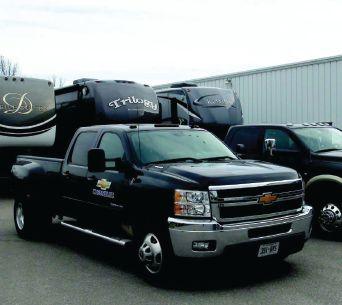
This year the Canadian Truck King Challenge decided to concentrate on this segment; testing the Ford F350 head to head with the Chevy Silverado 3500 and the r am 3500. e ach of these was the Crew Cab, long box, 4WD, diesel-powered version equipped with a removable fifth-wheel hitch. o ur testers were two
2012s (the r am and the Ford) along with a 2013 Chevy. While we prefer to always compare same-year models, we conceded that the Ford is virtually unchanged for 2013. The r am, though, will be substantially changed next year – but it is unavailable until the end of the first quarter of next year. So, we appreciate r am being involved because while we were already aware of the planned changes for 2013 – namely, Cummins diesel updates, new chassis and new air suspension – having the 2012 really demonstrated not only the areas that were lacking but also how it compared to both the Ford and Chevy that were both new in 2011. In essence they have offered a truck doomed to lose – yet the fact the company is changing almost everything we could be critical of this year speaks to its competitiveness.
Testing this year was conducted in southwestern o ntario in and around London. The first day we ran the trucks empty from Toronto (200 kilometres (km)) to London, then we hitched them to three similar fifth-wheel rV trailers. These weighed in at around 14,500 pounds (lb.) each. We then spent the day doing a 400 km tour with the judges (of which there were five) switching up every 80 km. e ach judge, therefore, was able to spend at least an hour hauling with each truck – and sit as a passenger on two legs to evaluate the interior design, comfort and conveniences in each truck from a crew perspective.
It’s worth mentioning right here that
this is the fifth time we have run the Canadian Truck King Challenge in the last six years – skipping only 2008 – when the industry was in crisis.
How we decide which trucks to test has to do with the normal life cycles of trucks. In this case the three HD pickups are the newest offerings from the manufacturers, with the Ford and Chevy being all-new in 2011 and the r am being new in 2010. Curiously though, as mentioned earlier, the r am will be coming to us as an almost-new 2013 in the early spring. Those who have been around for a while know this short three-year run is almost unheard of. Trucks typically have a generational life span of between five and seven years. Well, that’s what it has been historically, but moving forward I can see the market heating up. Competition is growing ever fiercer, in part because the buyers are demanding more and more capability. payload and towing capability keep rising – engine output is growinginterior comforts and electronic conveniences are expanding.
Either way, it’s BioStacked®.
Only HiStick® N/T inoculant and HiCoat® N/T S225 preinoculant are BioStacked®. The BioStacked® system unleashes multiple beneficial organisms for greater plant vigour and more root biomass – bumping your soybean yields up 1.5 bu/ac to 2.5 bu/ac more than non-inoculated soybeans. Will that be HiStick® N/T or HiCoat® N/T S225? Either way, you’re getting BioStacked®, with all the yield benefits of Canada’s #1 soybean inoculant.
I apply my HiStick® N/T prior to planting. I like the flexibility.
I order my seed treated with HiCoat® N/T S225. I like the convenience.
BioStacked® , HiCoat® and HiStick® are registered trademarks used under license by Becker Underwood Canada Ltd. The Becker Underwood logo is a trademark of Becker Underwood, Inc. and is licensed to Becker Underwood Canada Ltd.
Trust me – this is not the industry leading the market. This is the market (that’s you and me) demanding more from the builders. This statement is the indicator that the nature of the typical buyer of HD trucks is also changing. How so? Well, fleet buyers traditionally look for a fair saw-off between capability and price, as they buy in bulk. But small business (the one- to five-truck market), which is on the rise, is much more interested in capability and comfort – they still want a decent price, but are less likely to go for the cloth seats and rubber floors. a nd I think it’s also fair to say they do care how the truck looks.
What all this means from a testing point of view is that we as judges work to put ourselves in those shoes. This doesn’t even take into account that as much as 30% of this HD market is purchased by retired recreational-only haulers. They too have specific needs, which include having comfortable space for the grandkids.
So with all this in mind, we towed our fifth-wheel trailers through wind and rain (because it always rains during Truck King – just lucky I guess) on highways and byways. a fter a full day of towing, we put the trucks to bed. The following day was dedicated to payload. a s with any test, we had to go with the lowest published weight, and this year that was the r am at 4,600 lb. r oof Mart, an IKo company in London, loaded us up with pallets of singles, which weighed in at 4,480 lb. e ach pallet was four feet wide, four feet high and five feet long. Watching the trucks drop under that weight was fascinating. We then set off on a 300 km loop, down to Lake e rie and back, where we once again cycled through the trucks as judges.
The 2013 Canadian Truck King Challenge took on the task of evaluating the three Detroit-designed one-ton pickup trucks from Ford, Chrysler and g M last month. This is the fifth year the challenge has been held; each year looking at a different segment in the truck market. Last year, for instance, we tested the five most popular half-tons – however, this year the HD segment (which has had the most recent updates) deserved scrutiny.
Judges’ Highlights
FORD F350
Andy says:
• 0-100 km acceleration, with trailer, was 21 seconds. Very quick –anything under 30 seconds is considered adequate when towing.
Jil says:
• Like flat rear floor.
• Big, easy-to-use vents.
• Confident brakes.
• With payload: squats the most of any truck. rides fine, just looks bad.
Matt says:
• Like the heated/cooled seats, and reverse camera.
• While towing: the overall ride is smooth: acceleration is great and transmission shifts up and down smoothly.
• With payload: the truck squats too much. The steering gets lighter.
Stephen says:
• Middle console storage is poor; seats get hard over time.
Howard says:
• powerful engine; transmission shifts are sometimes harsh.
• good interior, best info screens; greatest amount of electronic info of the three.
CHEVROLET SILVERADO 3500
Andy says:
• 0-100 km acceleration time matches the Ford. However, fifth gear is a much taller ratio – yet stays in that gear even on grades.
Jil says:
• Like the three-position heat seat – comfortable.
• nav system is easy to use.
• good mirrors.
• Climate buttons are too small and fiddly – way too low.
• needs a dead man’s pedal.
Matt says:
• Didn’t like the plastic bedliner –too slick and covers tie-downs.
Stephen says:
• While towing: steering feedback is minimal; crosswind control good; take-off is effortless; hood design helps road positioning; brakes engage instantly, feel strong.
Howard says:
• Seats are best part of cabin.
• Quiet inside.
• power is ample; tranny is strong and very smooth.
As much as 30% of the Heavy Duty truck market is made up of purchases by retired recreational-only haulers.
CHRYSLER
RAM 3500
Andy says:
• 0-100 km acceleration was 28 seconds. Slowest of the three. However, tons of low-end torque. Would climb moderate grades in sixth gear while the other two had to downshift.
• Steering precision was better than Ford, but not as good as gM.
• The ram had the best interior –best thought out, attractive with very nice seats.
Jil says:
• only one with a 110V outlet. Heavy steering when empty, better when loaded.
Matt says:
• Lots of storage; quiet cabin; seating is comfortable; good space and legroom.
Stephen says:
• exhaust brake is effective, sounds good.
• With payload: spongy suspension gives no confidence; lots of body roll; spring back from bumps is too aggressive.
Howard says:
• Best interior of the three; best-looking design.
• engine has lots of torque, but is slow off the line with load.
So, what were the conclusions? Well, in short, we collectively came up with the following insights:
• The Ford and Chevy were very close in all areas while the ram just wasn’t in the same league this year.
• The Ford and Chevy both handled the towing weight and payload weight well; however, the suspension on the Chevy was better, meaning it sat more level under load, it squatted less, and in general it felt better while driving.
• Steering feel was best on Chevy, under all conditions.
• as an empty truck, everyone loved the ram best – interior-wise and design-wise. However, that love was lost once weight was added.
• Fuel consumption on the Ford and Chevy was almost identical; however, the ram was a distant third.
So, what were the conclusions? Well, in short, we collectively came up with the following insights:
• The Ford and Chevy were very close in all areas while the r am just wasn’t in the same league this year.
• The Ford and Chevy both handled the towing weight and payload weight well; however, the suspension on the Chevy was visually better, meaning it sat more level under load, it squatted less, and in general it felt better while driving. also, Ford took hits for a light front-end under load and twitchy steering.
• We had little or no criticism of the Chevy powertrain – the diesel is strong, smooth and the transmission flawless in its operation. Ford and r am both registered minor concerns with their transmissions. nothing serious (during our testing); however, there was noticeable roughness in operation.
• a s an empty truck, the r am was loved best by everyone – interiorwise and design-wise. However, that love was lost once weight was added. Its suspension was spongy and it exhibited too much body roll. The Cummins engine, while very strong (torque), was slow in acceleration.
• Where the Chevy excelled was in the work aspect of the Challenge. It towed well, handled payload best and exhibited the most confident driving characteristics. The interior, though, is old and dated and the dash controls small and awkward – this is Chevy’s shortfall right now.
• While the Ford interior is superior, its higher score in that area wasn’t enough to eclipse the Chevy’s sterling work record.
Once all the numbers, driving opinions and fuel calculations were added up, the 2013 CHEVY SILVERADO was named this year’s CANADIAN TRUCK KING CHALLENGE wINNER
Biopl AST iC
Continued from page 17
Hensall Co-op, is interested in the potential of bean plastic. “We’re always looking for new opportunities that take any of the byproducts and add value that we can pass on to our growers or make contracts more attractive to our growers. In all parts of our business we’re trying to bring all the stakeholders together to encourage communication and challenge one another as to how we can bring added value not only to the growers, but also to our end users. In this case, peter pauls saw an opportunity with beans that don’t have much value. If we can get this opportunity going, it will bring value to that byproduct and hopefully we’ll increase the contract value for growers and help the bean industry.”
Chandler adds, “I think the timing is right for this idea. everybody is looking at the environment. There are already examples of plant-based biodegradable plastic jars and containers. It’s a growing trend. If edible beans could become part of that value chain, that would be great.”
The bean plastic films are tested to determine strength and elasticity. Photo courtesy
Wi NTER Wh EAT
N EE d S pho SphoRUS
Returns realized from seed-placed starter fertilizer.
by Jeanine Moyer
Since 1988, peter Johnson has been has talking about the advantages of phosphorus (p) application in wheat. as the ontario Ministry of agriculture, Food and rural affairs’ cereal specialist, Johnson has studied the impact of p on wheat yields, crop uniformity and resiliency for almost 25 years and he is still astounded that approximately 10 percent of ontario growers still don’t apply fertilizer to their wheat at all. Surprising as well, is the popularity of broadcasting starter fertilizer on wheat fields.
“at least one-third of ontario growers are planting wheat without seed-placed fertilizer application with a drill,” says Johnson. Speed and convenience of seeding without a fertilizer box on drills has decreased the popularity of fertilizer boxes, but that doesn’t mean growers can’t find alternatives to applying seed-placed dry starter fertilizer, such as twin tank air carts, that allow in-furrow fertilizer application while seeding. Since most seed drills don’t have fertilizer boxes on them at all, it can be more difficult to apply starter fertilizer when seeding, but Johnson says growers still need to be conscious of their fertilizer application decisions and how they choose to apply the nutrients.
Bushel benefits
It is no secret that seed-placed dry starter fertilizer brings significant yield advantages – 7.5 bu/ac on average – and Johnson believes the majority of growers are aware of these benefits. Broadcast starter fertilizer is beneficial since the fields receive the valuable fertilizer, but Johnson says in-furrow application is still best. He says a standard Map starter fertilizer (11-52-0) application rate of 100 lbs/ac is likely a grower’s most economical source of p that will deliver results. each year, Johnson plants side by side strips of winter wheat with and without seed-placed starter fertilizer. Strips without starter fertilizer sometimes have a 30 percent winter survival rate while those seeded with the valuable starter fertilizer have an 85 percent survival rate. Further supporting Johnson’s recommendation, he says similar results have been seen in corn planted with in-row starter fertilizer. Field trials of corn planted with in-row starter fertilizer have shown
ABOVE: Applying P in a seed-placed starter fertilizer on wheat, especially winter wheat, boosts yields.
by Marina Signer.
Photo
Photo by m arina s igner.
DEFENDING YOUR FIELDS, YOUR YIELDS AND YOUR BUSINESS.
DuPont™ Guardian® brand herbicides control the worst weeds in soybeans – the ones glyphosate alone can’t handle.
Guardian® gets your IP and GT soybeans off to a clean, weed-free start – with maximum knockdown and residual activity on hard-to-kill weeds like dandelion and annual sow thistle. Guardian® Plus does all that, plus it controls Eastern black nightshade and herbicide-resistant pigweeds and lamb’s-quarters. In fact, according to OMAFRA Publication 75, Guardian® brand herbicides earned the top rating (9 out of 9) for residual control of many of the most economically damaging weeds in soybeans. It’s the kind of protection and security every farm should have this growing season.
Questions? Ask your retailer or call 1-800-667-3925 or visit guardian.dupont.ca.
higher survival rates in circumstances where the seed has sat under water or has been exposed to excess moisture in the spring.
Studies have shown that, unlike corn, wheat doesn’t respond to potassium (K) in the same way. K is known to increase corn yields when applied in starter fertilizer, but, Johnson says, the same response is not seen in wheat. However, applying p in a seed-placed starter fertilizer on wheat, especially winter wheat, not only boosts yields, but also can establish stronger root systems, increase plant stress tolerance and create a better, more uniform stand overall.
Chad anderson, Lambton county farmer and crop consultant, won’t grow winter wheat without seed-placed starter fertilizer, saying it can be the difference between a successful wheat crop and replanting that same land in soybeans the following spring due to winter kill. anderson applies dry starter fertilizer with his seed drill and says it provides a better anchor and improves winter crop survival. Farming on heavy clay, anderson says his wheat crops are prone to winter kill from late winter heaving and thawing of frost. “Wheat is an important part of our rotation and it takes starter fertilizer to ensure we have a crop to harvest,” says anderson.
Phosphorus loss
Seed-placed dry starter fertilizer and the advantages of additional P nutrients on wheat shouldn’t be a surprise to wheat growers, but sometimes a reminder can help make good field management decisions even better.
Photo by m arina s igner.
levels for the remaining plants and fish in our great Lakes and associated waterways. These problems are often aggravated by the proximity of streams and lakes to agricultural land.
Because p is such an important nutrient to wheat production, reducing p loss should be an important factor in field management decisions. “In-field dry starter fertilizer application is a much more environmentally friendly and efficient way to handle phosphorus since there’s less chance of surface water runoff,” says anderson. reducing dissolved p loss from leaching and runoff involves implementing practices that maximize crop p uptake, such as subsurface placement of fertilizer. “It’s simple: seed-placed fertilizer reduces the risk of particulate p loss since the fertilizer isn’t on the soil surface,” says Johnson. “and it doesn’t increase the risk of soluble p either.”
Tillage practices reduce nutrient loss
recommending seed-placed dry starter fertilizer application in wheat isn’t just about boosting yields and creating stronger crop stands, says Johnson: growers need to be conscious of the economic and environmental implications of in-furrow and broadcast fertilizer application methods. While it is more convenient to apply liquid or broadcast starter fertilizer, anderson points out that two to four times the volume of broadcast fertilizer would have to be applied to get the same yield responses and crop results from seed-placed dry starter fertilizer.
“Broadcast p left on the soil surface increases the risk of movement into watercourses,” says Johnson. “not only can this be an environmental issue, but a rainfall can wash it away, causing growers to lose the money they invested in fertilizer.” potassium is lost in two ways: particulate p, which is nutrient loss from surface runoff, often associated with soil erosion, and soluble p, which is nutrient loss from leaching.
Loss of p from leaching into waterways is less common in ontario, but particulate p movement can be a real issue and the resulting transport of p in soil runoff contributes to freshwater eutrophication. By definition, eutrophication is the process by which excess nutrients, such as p, are dumped into bodies of fresh water and stimulate excessive plant growth. In ontario, increased p levels cause algae blooms. When algae blooms die, either from nutrient shortage or from cold weather in the fall of the year, they remove oxygen from the water to decompose. This leads to reduced oxygen
Conservation tillage practices are also known to reduce the movement of p into waterways. Johnson notes soil erosion in general and the associated particulate p loss was first identified in the 1980s as an environmental issue, which led to an increase in conservation tillage practices. “Conservation tillage has had a remarkable impact on reducing particulate matter in the great Lakes,” says Johnson. To reduce the risk of soil erosion and runoff, conservation tillage requires 30 percent of residue be left on soil surfaces 100 percent of the time. particulate loss from erosion accounts for a significant percentage of overall p loss from cultivated land. and a recent shift away from conservation tillage practices is resulting in a return to more intensive tillage and increased soil erosion and nutrient losses into the great Lakes. “growers have access to the widest array of tillage tools ever seen to loosen soils and create ideal seedbeds,” says Johnson. “There’s no excuse to go back to mouldboard ploughing and intensive cultivation.” overall, soil loss, particulate p and total p losses can be reduced using conservation tillage or no-till methods when compared to conventional tillage under ontario conditions.
Seed-placed success
Seed-placed dry starter fertilizer could almost be a grower’s secret to success, especially if p application is emphasized. The economic benefits of increased yields, minimizing p loss and stronger crop stands are sound arguments for investing in the right fertilizer equipment for in-field application, says Johnson, not to mention the associated environmental benefits. Seed-placed dry starter fertilizer and the advantages of additional p nutrients on wheat shouldn’t be a surprise to wheat growers, but sometimes a reminder can help make good field management decisions even better.
NortherN director, oNtario FederatioN oF agriculture
| Peggy Brekveld
Th E U N -k E p T SECRETS
There is a demand for farmland in all parts of the north.
Secret #1: I admit that I have a bias for northern ontario.
Born and raised in northern ontario, my husband gert and I have been dairy farming in Thunder Bay for 18 years. I often use the word potential when I speak about “home.” When many view the north, they see the “rocks and trees” (mining and forestry) that dominate the northern economy. But as all farmers do, I forever catch glimpses of the rolling beef pastures and the canola fields growing beside the roads. I will admit that farming communities can be few and far between, but I envision more and more of this land becoming farming acres. For you, the reader, I will try to curb my enthusiasm with facts and statistics.
I am also a privileged person. Between my current position as northern director for the ontario Federation of agriculture, my previous time in the advanced agricultural Leadership program and my family and friends scattered around this world, I have been able to see a great swath of ontario and parts of Canada, the United States and europe.
Secret #2: one place where farming acres are growing is northern ontario. In fact, there are several million acres of unused arable land across the north.
o ntario increased from 2,261 acres to 5,932 acres, soybean production increased from 94 acres to 4,385 acres; wheat production increased from 5,416 acres to 21,264 acres; and alfalfa production increased from 66,908 acres to 103,232 acres (Statistics Canada, 1996 and 2006). This fall alone, I am aware of over 1000 acres being tiled between r ainy river, Thunder Bay and Temiskaming, with more tiling planned in the spring.
Where is this increased acreage coming from? part of it is upgrading pastureland and hay fields. But what is unique in the north is the amount of land clearing going on. Land is being cleared, tiled and brought into production. Some may fear that this process is taking away from the forest. In the District of Cochrane, for example, in 1961, there was 187,000 acres of farmland; in 2006 there was 75,000. of that land, in 1961, 54,000 acres was listed as cropland; in 2006 it was 28,500. So even if we reclaim historical farming land, the growth potential is huge!
Northern o ntario has the natural climate and soils for crops.
one of the first things you will notice when you examine farming areas in northern ontario is the fact that it tends to be in pocket areas, versus large swaths seen in the southwestern part of the province. Because climate and soil type determine farm class soils, there are no Class 1 soils in northern ontario. (Basically, if you can grow field tomatoes, you have class 1 land.) However, there are class 2, 3 and 4 soils, all with farming potential. regional crops include soybeans, white beans, wheat, hay, corn and potatoes. northern ontario has the natural climate and soils for crops such as barley, oats and canola; in fact, 50 percent of the canola grown in ontario is from this region. one thing that is very clear to me is that climate change is real. I see the winters getting shorter and rainfall patterns changing. one study predicts that around Thunder Bay and Fort Frances, CHUs will rise by almost 400 units between 2010 and 2039. That is easily within my lifetime. another study foresees the number of frost-free days increasing by 30-45 days in northern ontario by mid-century. This would have significant benefits for those growing cash crops.
all of this, coupled with continued research into new crop varieties and improved soil management practices, will ensure improved crop yields in this area. Indeed, it is already happening. Between 1996 and 2006, corn production in northern
Farmers from all areas are taking notice. There is a demand for farmland in all parts of the north. The Municipal property assessment Corporation has noticed northern farmland values rise 34 percent between 2008 and 2012. The bidding in Temiskaming is very competitive and spilling over into Cochrane and Verner. Manitoulin Island has seen large amounts of land change hands. rainy river has advertisers looking to buy acres for cash crop. The unknown area in this is Kenora/Dryden, where there are 374,000 acres of Class 2,3,4 land; of this only 10 percent is currently farmed. Compared to other areas in the province, northern farmland prices are still low, varying from less than $1000 to $3000 per acre. even when you must clear the land and tile, the prices often come out lower than in the south.
am I telling you that you must go north? Well, be aware that you can’t bring southern farming practices with you and expect the same results. Watch the neighbours and follow their lead. Communities are friendly, and there is often a helping hand when you need it.
either way, you will want to keep your eyes on us in the future. northern farming is growing, no matter which way you look at it. The advantages for those who live here are clear.
So far, it’s our little secret.
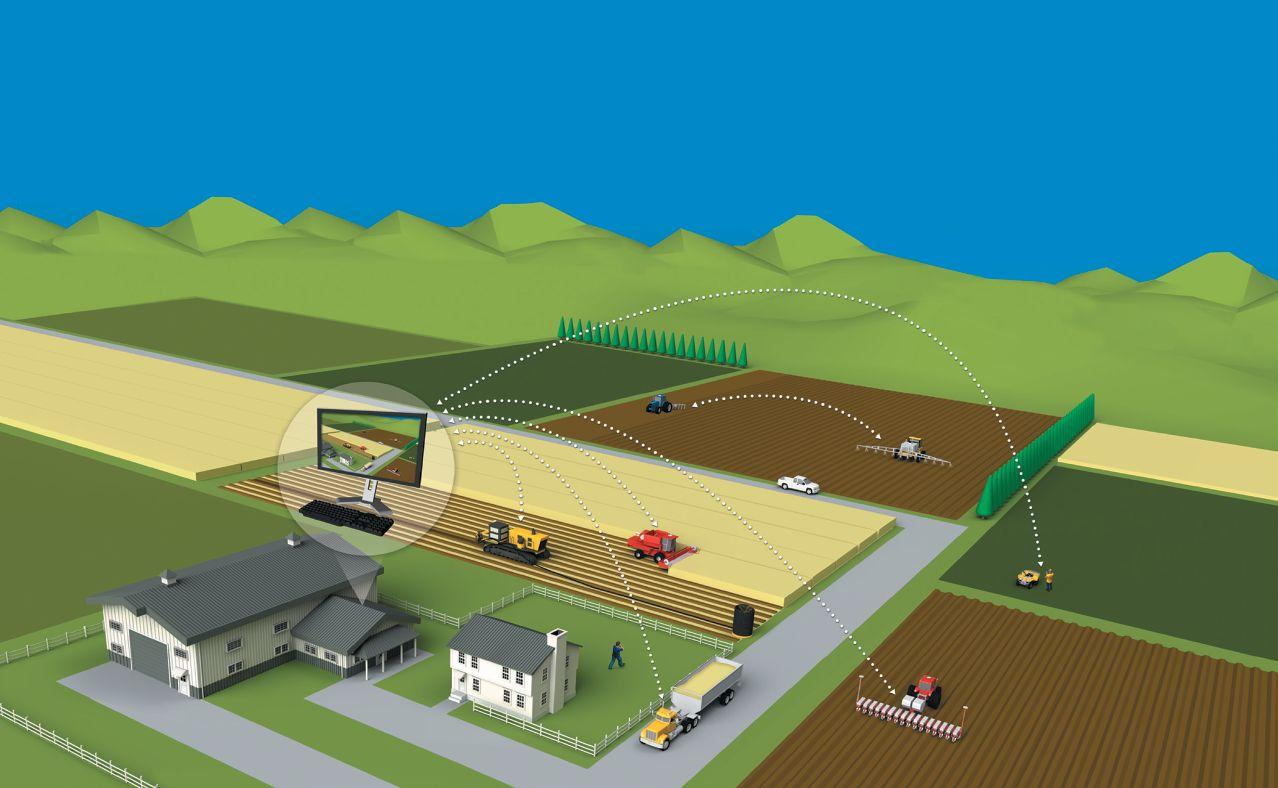
• Share guidance lines and coverage maps from vehicle to vehicle.
• Exchange prescription maps, guidance lines, coverage maps, drainage designs, soil sampling/scouting jobs, and yield data between the office and field.
• Access real-time movement of your vehicles, engine performance data, vehicle alerts, and fleet productivity.
• Use the Connected Farm app on your smartphone or tablet to map field boundaries, enter scouting information, and calculate nitrogen rates using the GreenSeeker handheld crop sensor.
• NEW! Utilize Remote Assistant to diagnose a problem in the field by remotely accessing Trimble’s FmX® integrated display in real time.
Because of you, Pioneer® brand seed is planted on twice as many farms and twice as many corn and soybean acres as any other seed brand in Canada. But we don’t take our leadership role for granted. We take it personally.
We know serving growers is a privilege, not a job. We believe that leadership comes with a responsibility to work smarter and try harder. So we don’t stop at good enough. Or better than last year. And neither do you. That’s why together, we’re breaking barriers in yield, knowledge and success on your farm.