From fertility and nutrients to management considerations to impacts on the environment, Top Crop Manager provides plenty of information to take to the field.
Pick-up Farm Truck Review
Four new models, a valuable shopping list of tested and marketable traits, all provided without bias or bluster: Howard Elmer delivers with his take on new trucks.
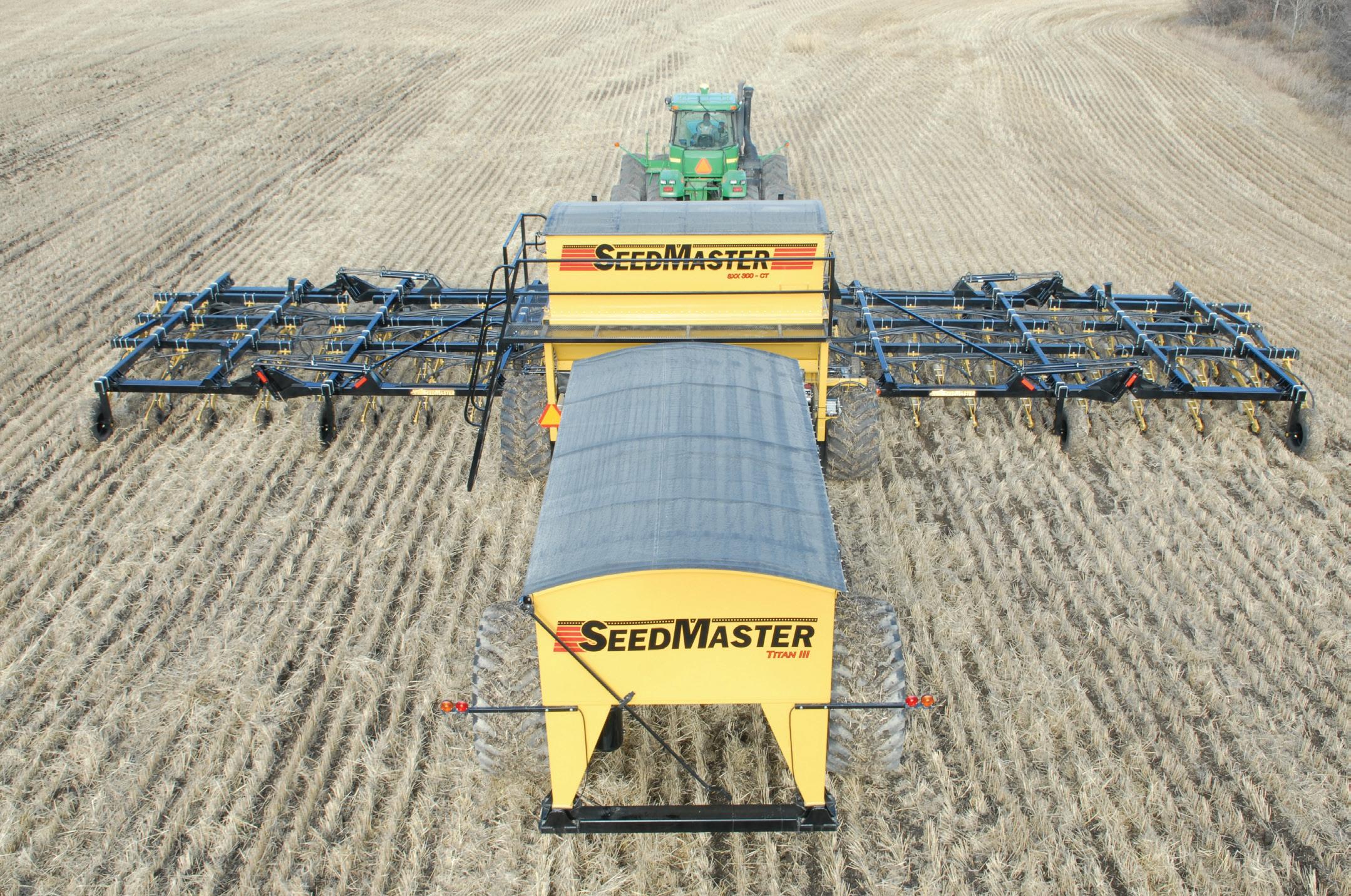
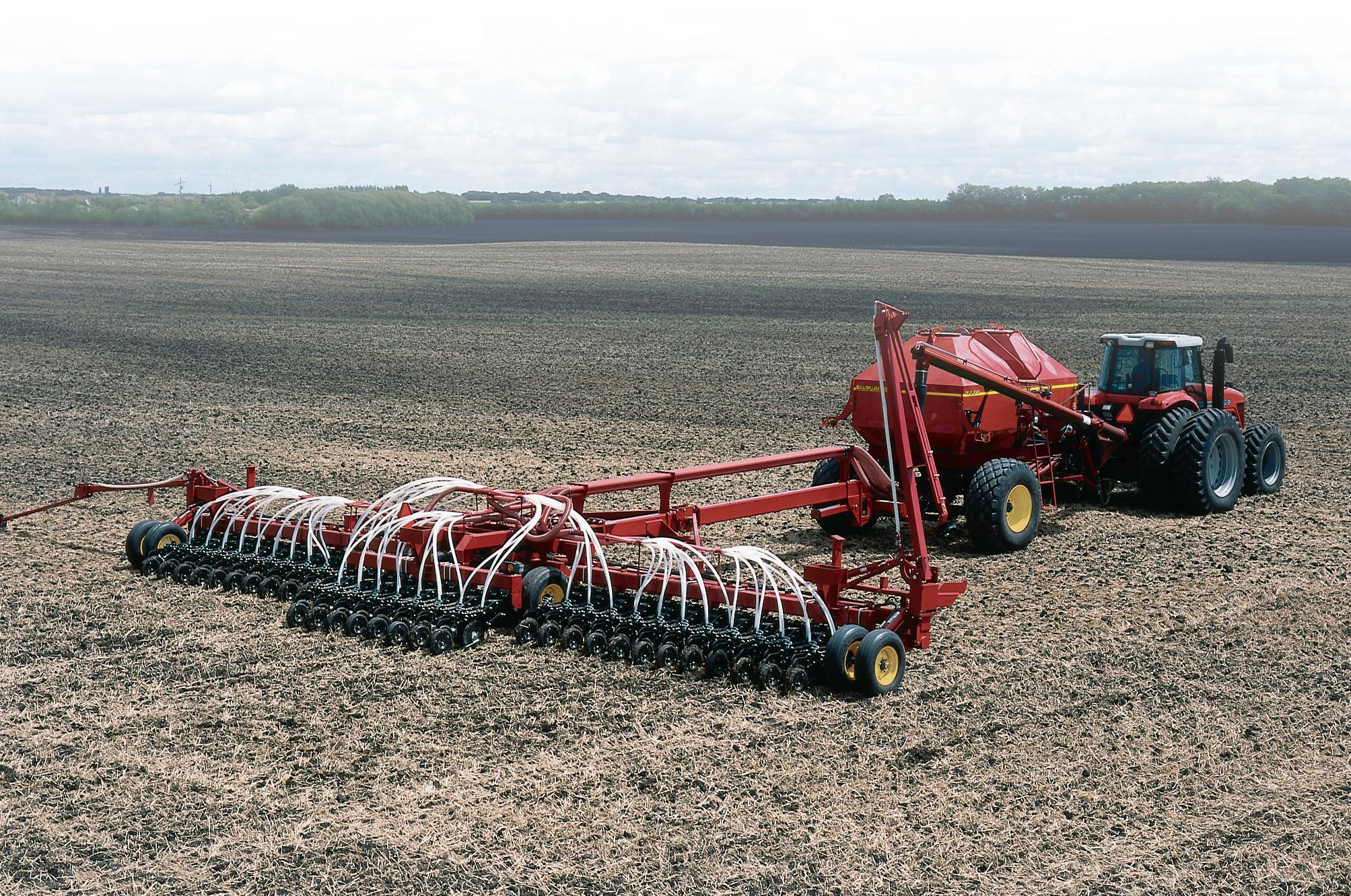
Machinery Manager: Air Seeders & Drills
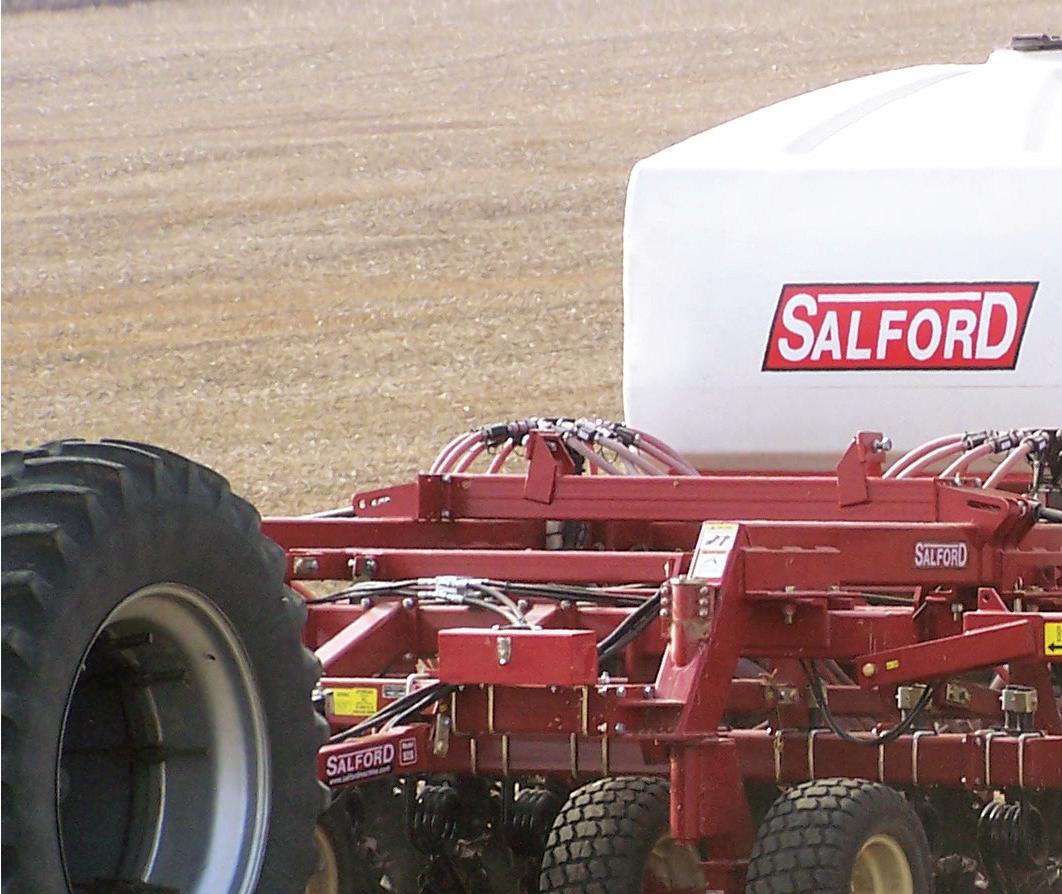
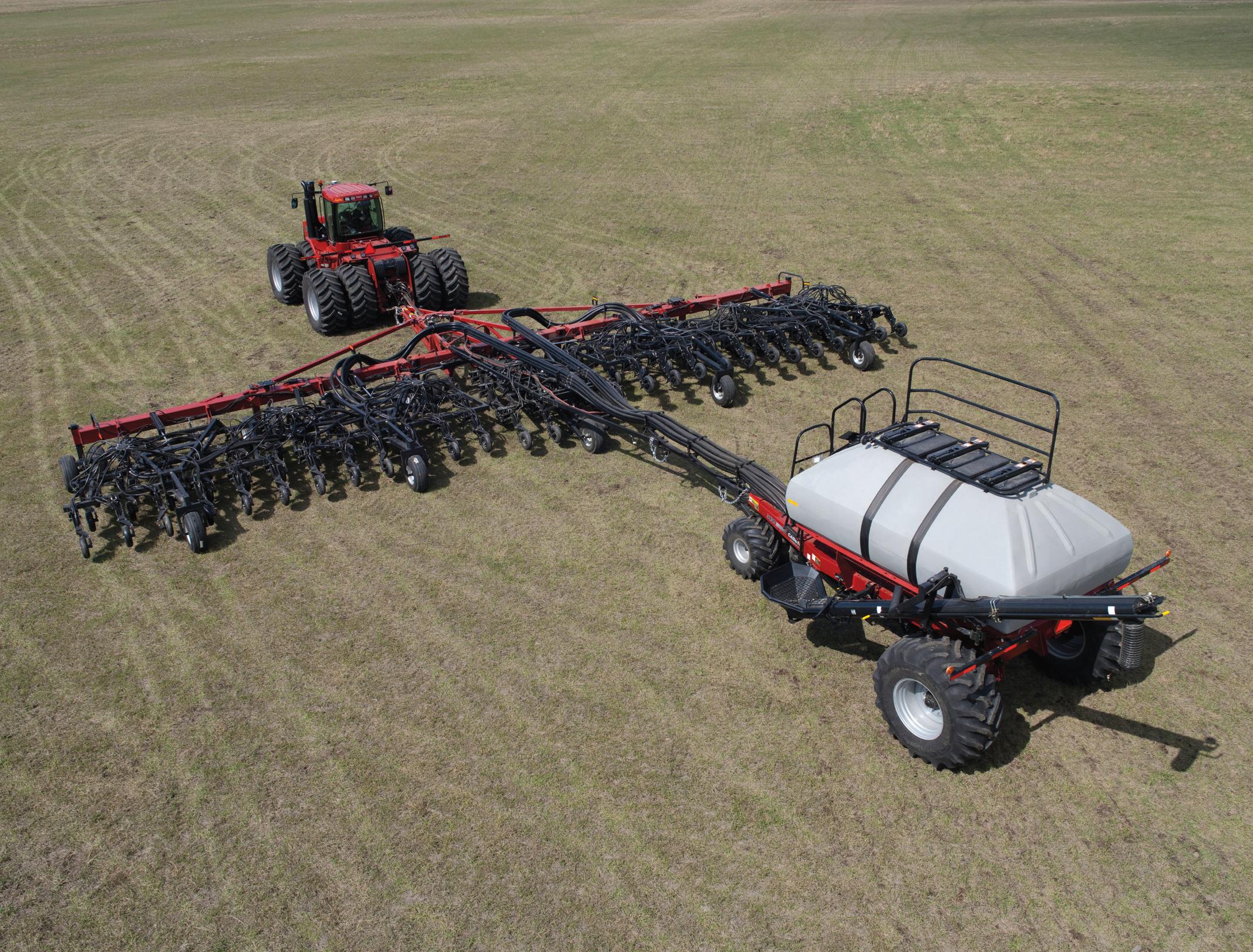
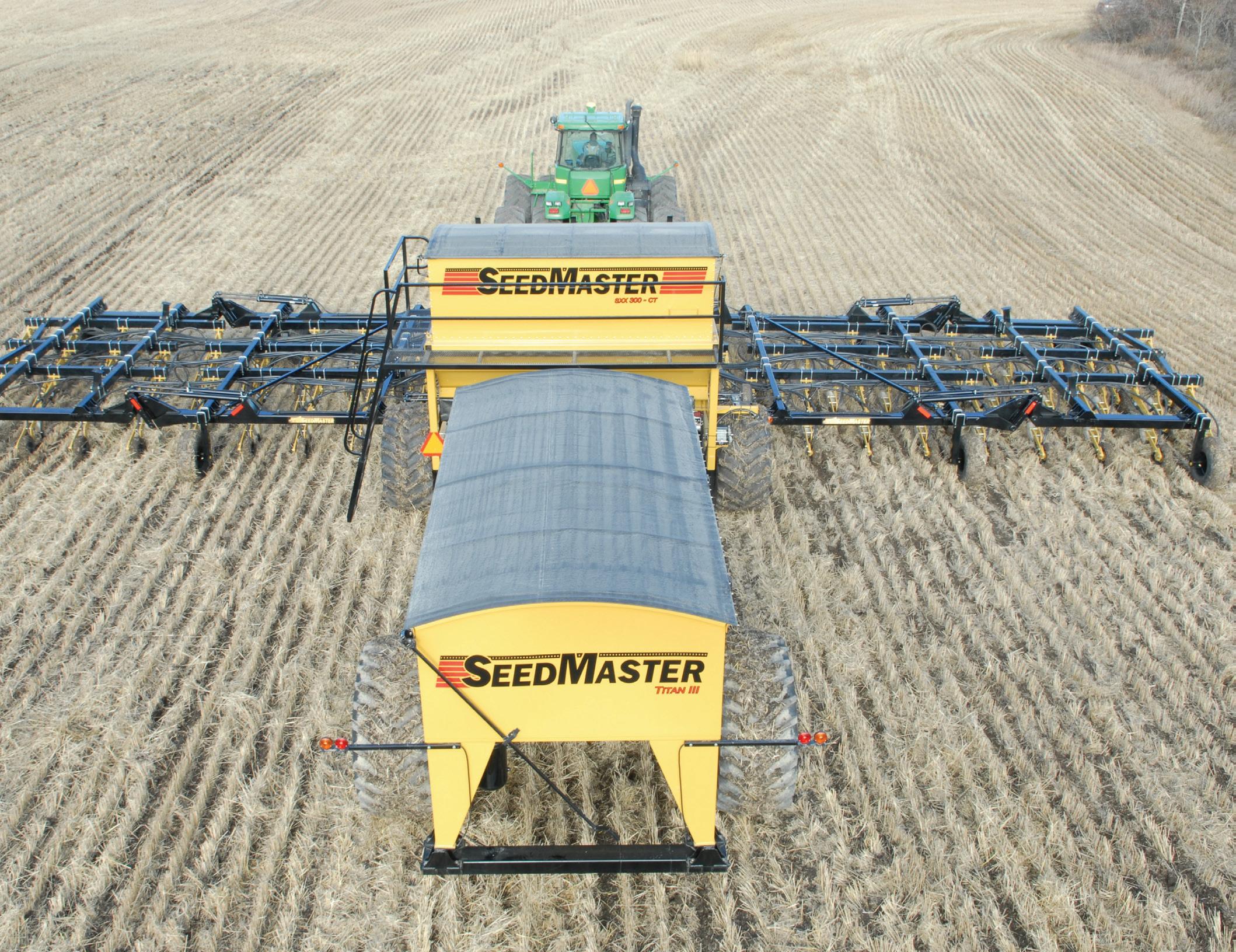
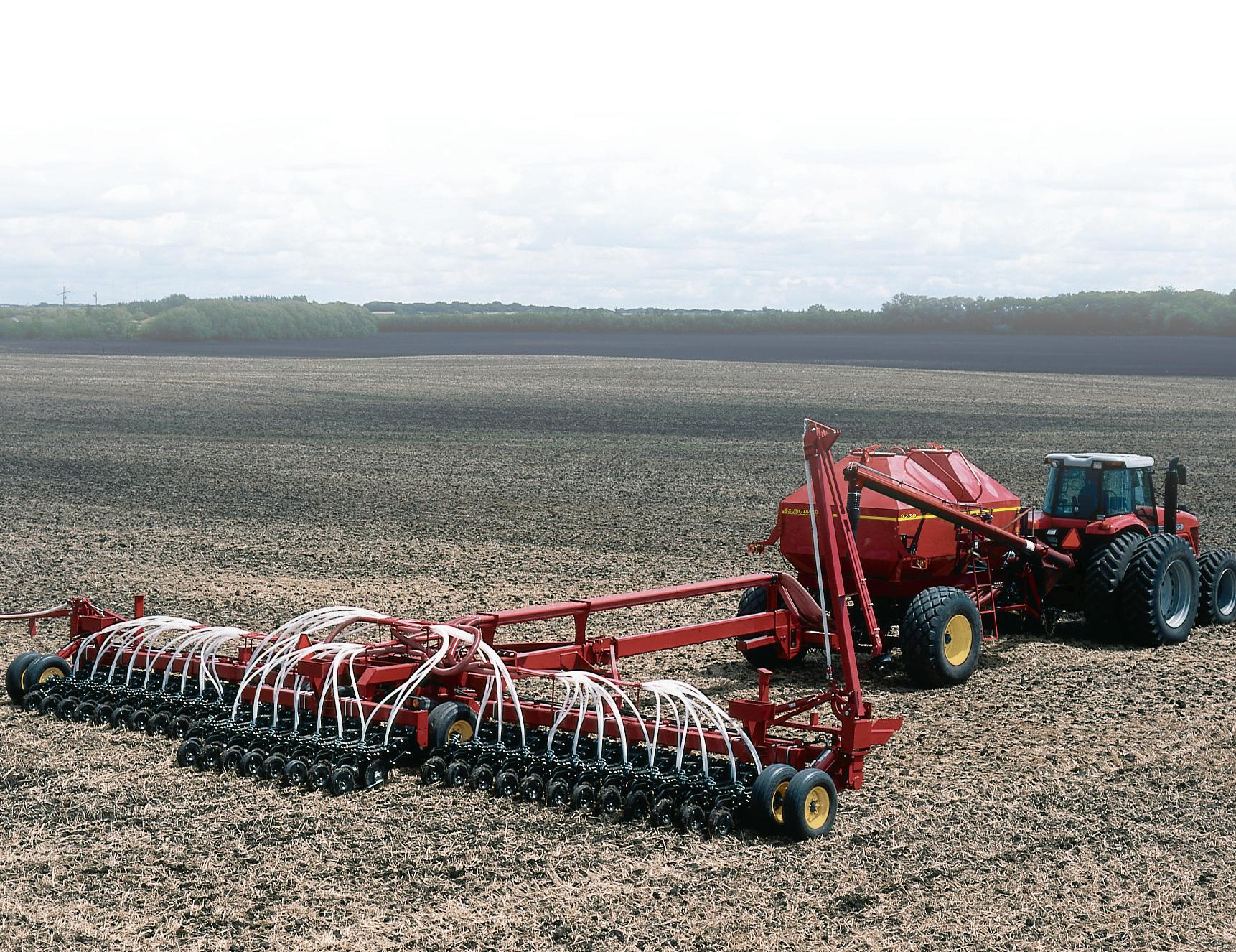
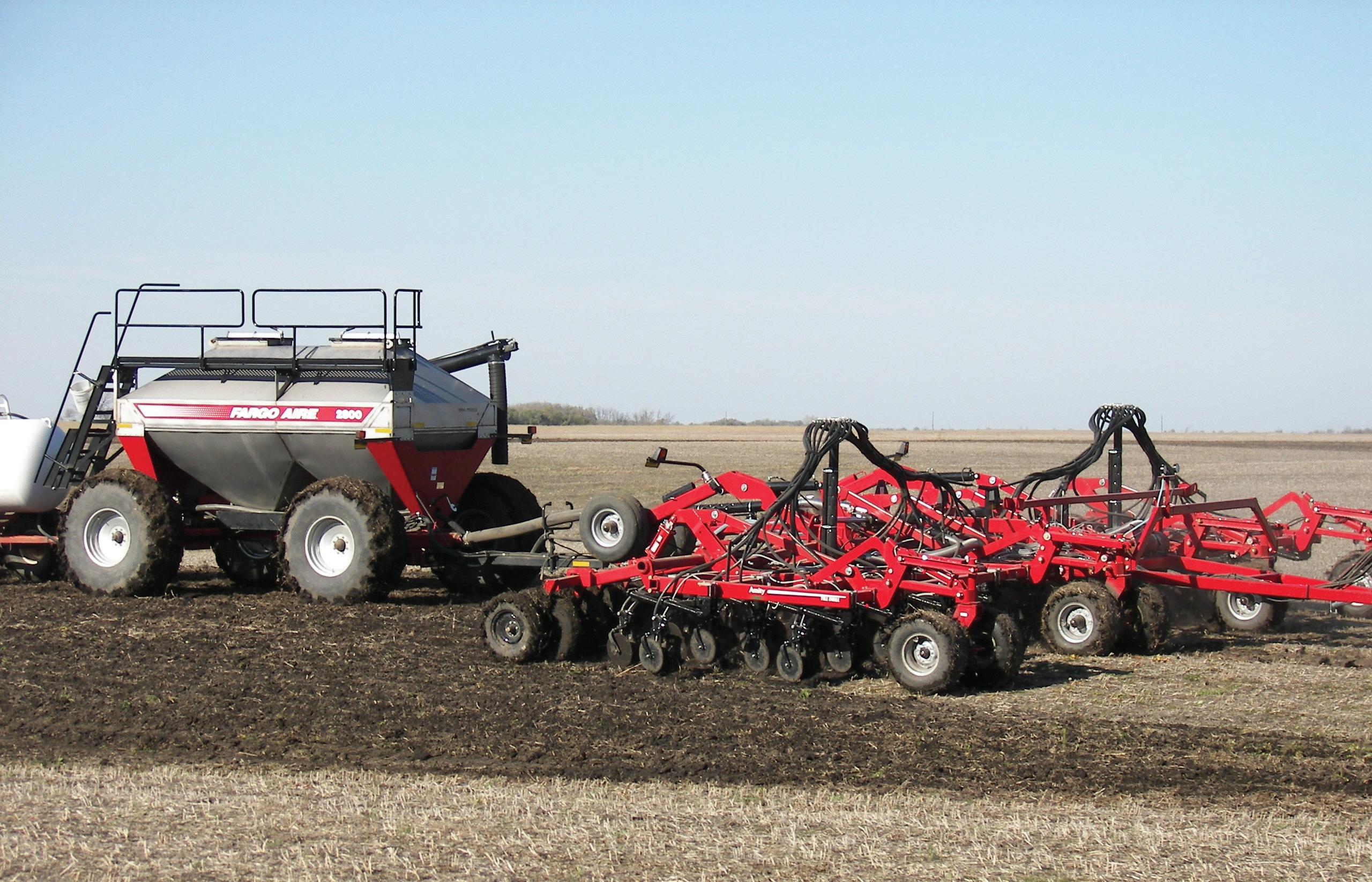
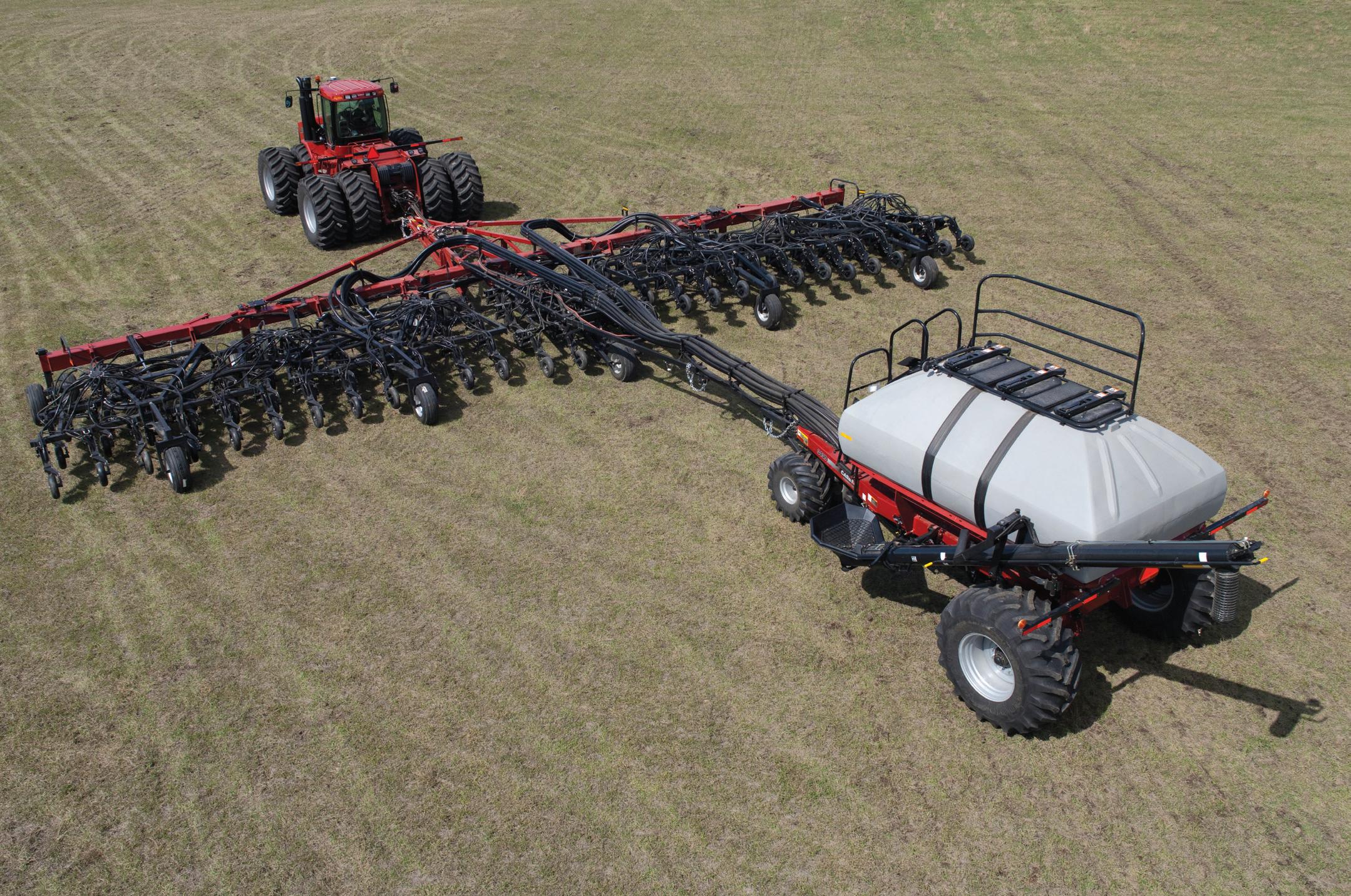
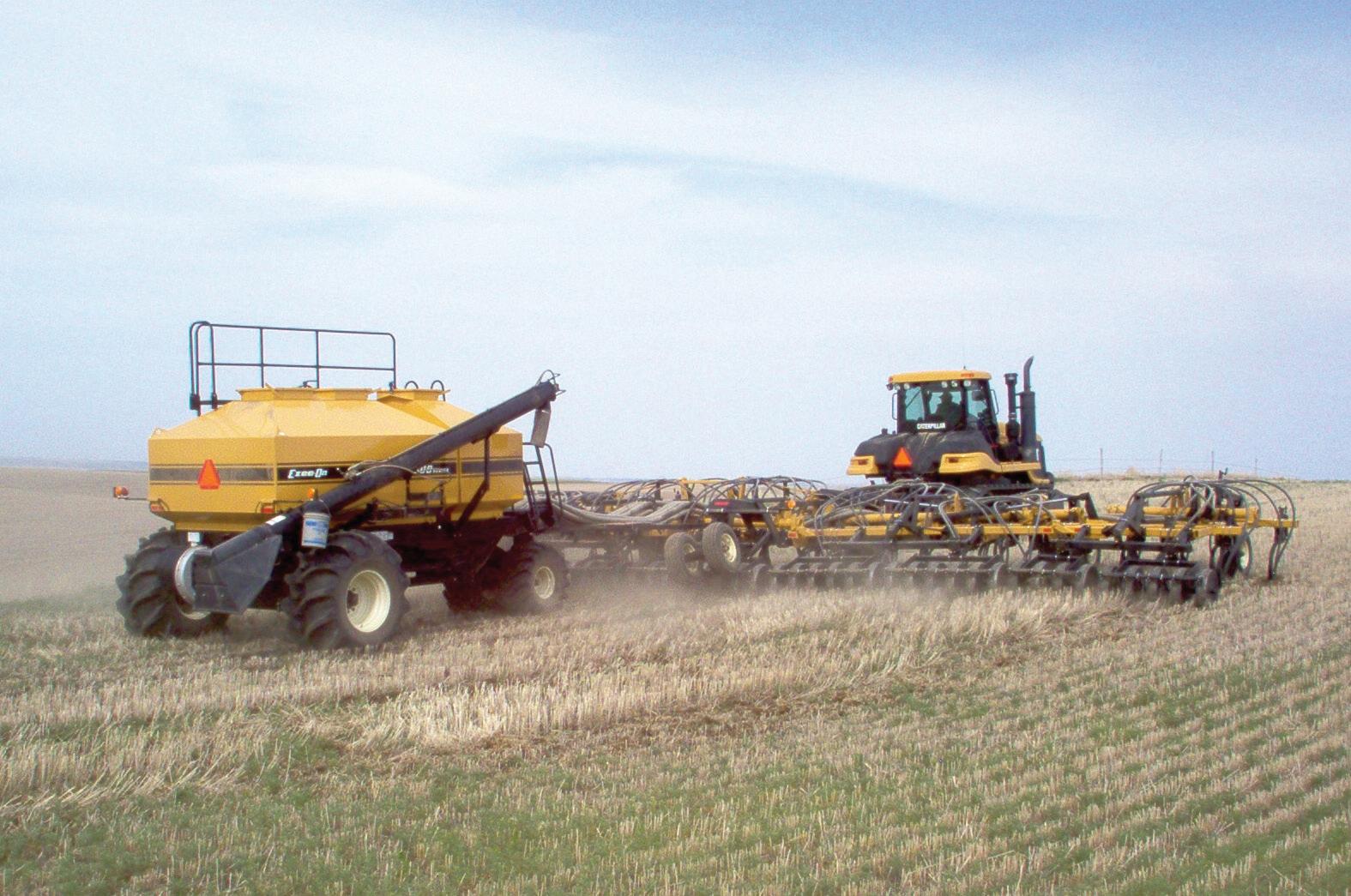
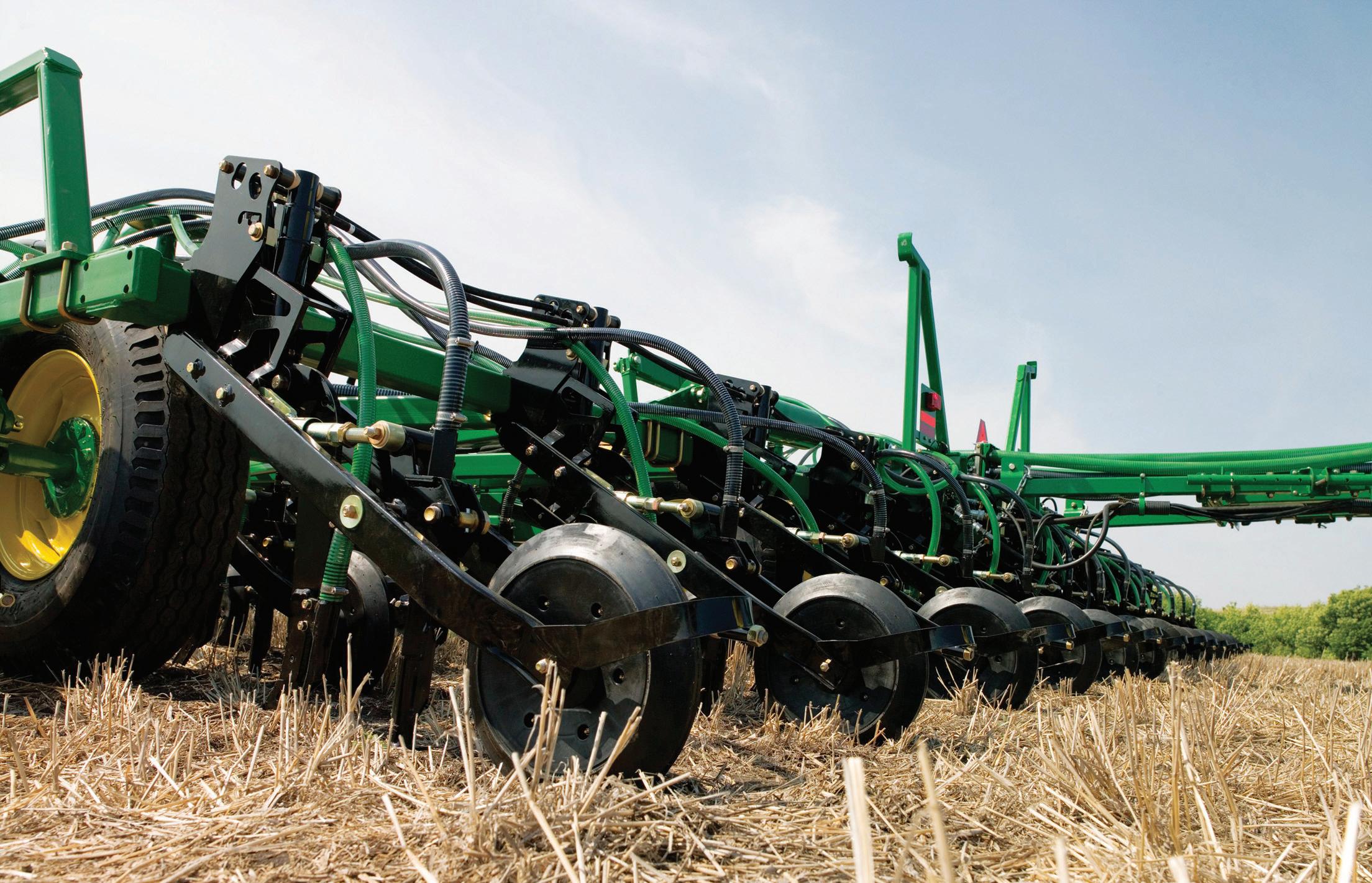
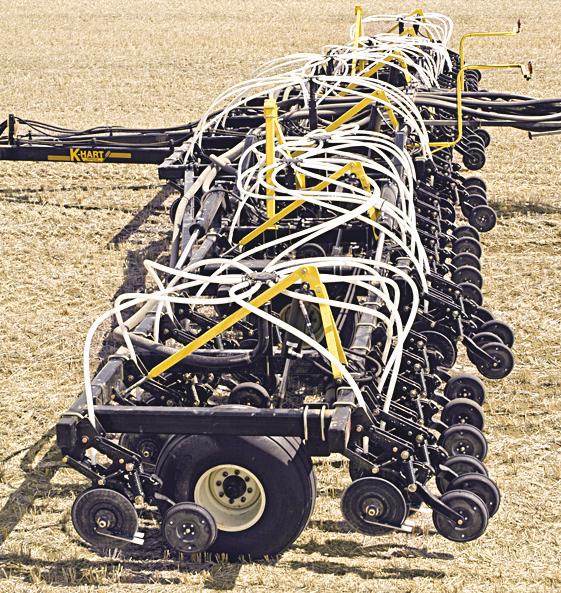
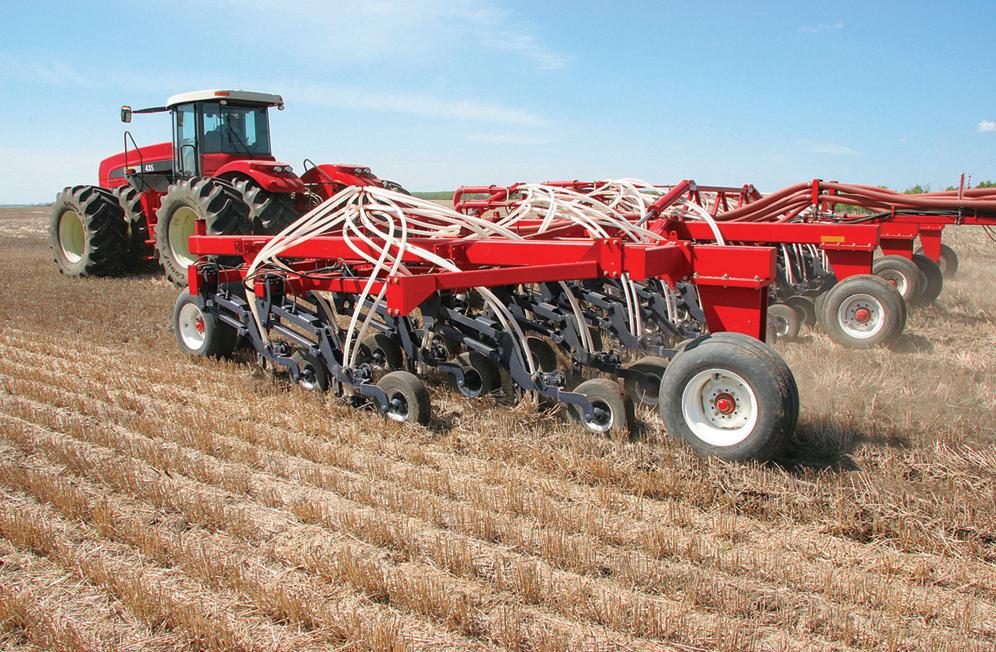
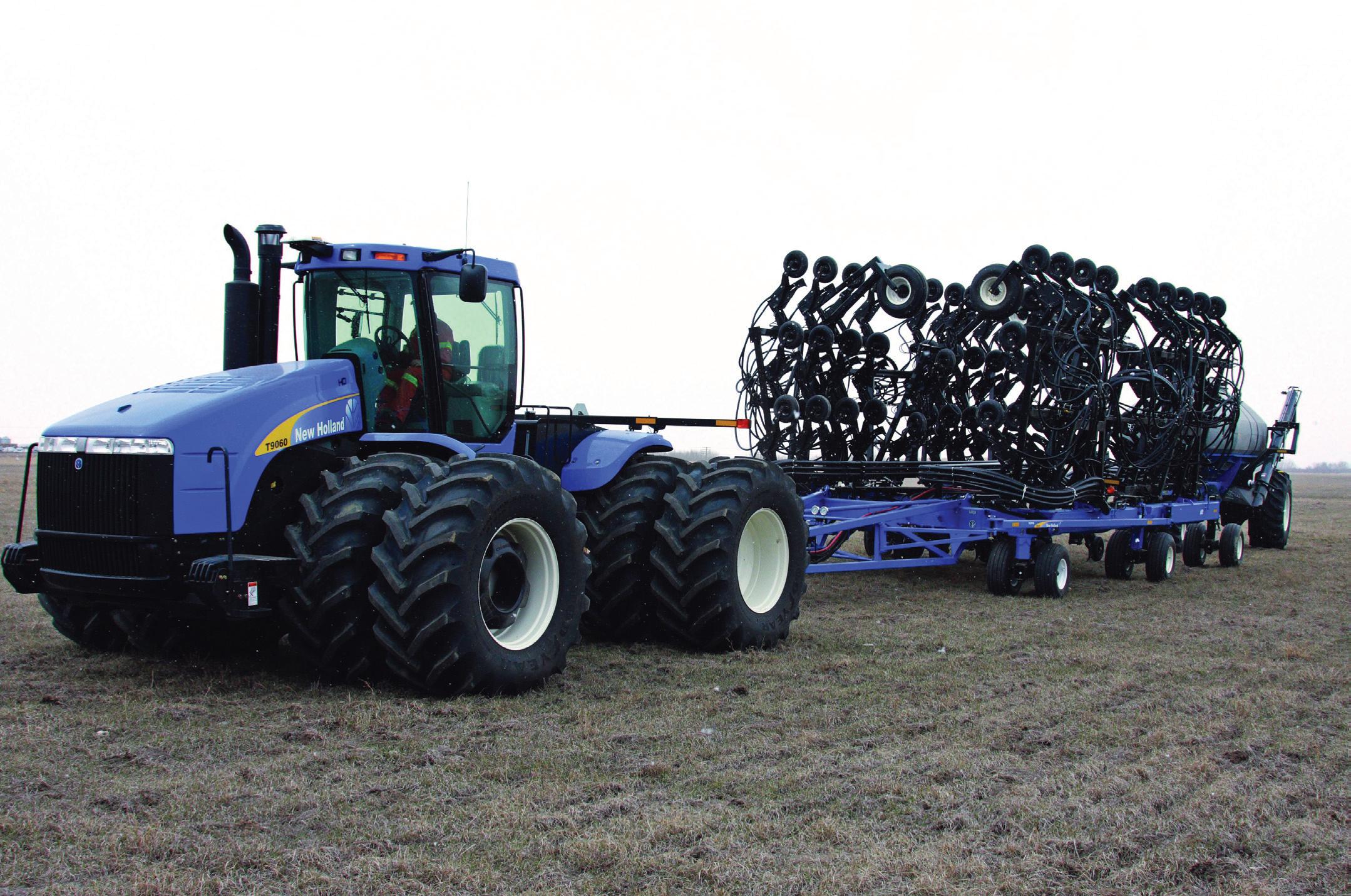
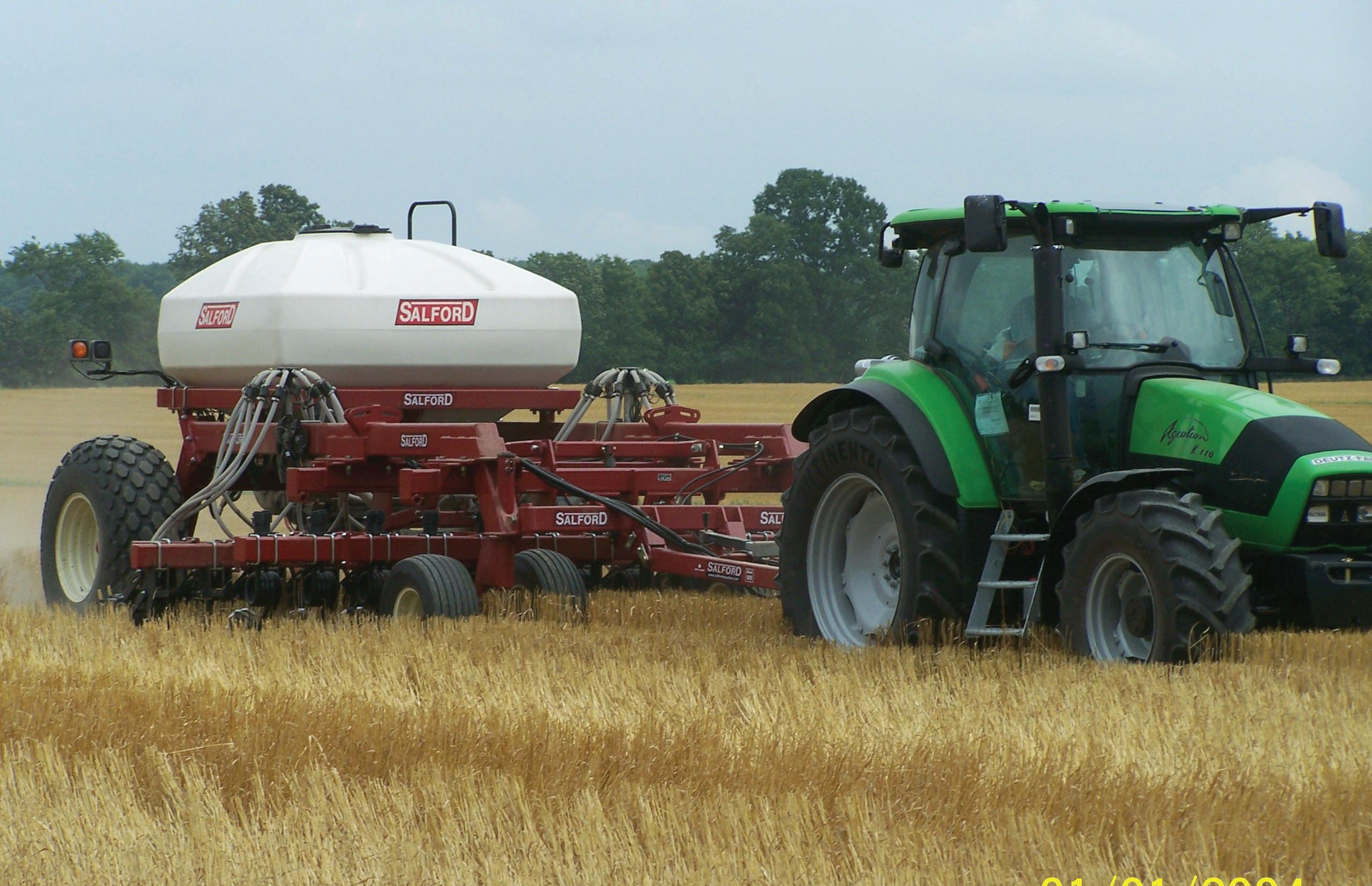
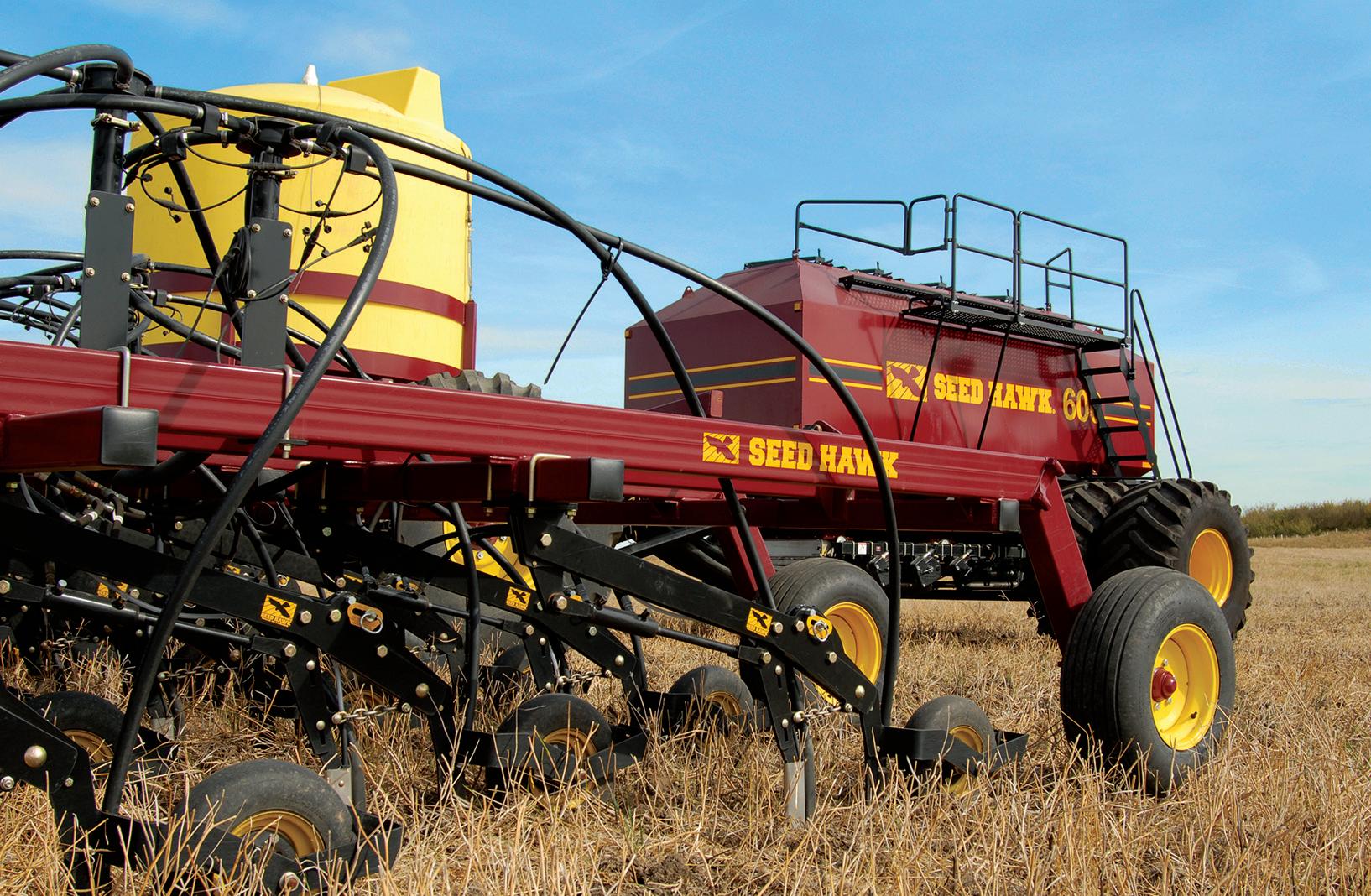
Without seeding equipment, other equipment needs become secondary, which is why Top Crop Manager provides the highlights from eight manufacturers.
www.topcropmanager.com
Reference information of this calibre is hard to find, so many growers choose to keep Top Crop Manager issues on file. If you have not kept issues for your library, you can find our stories, and more, on our interactive website.
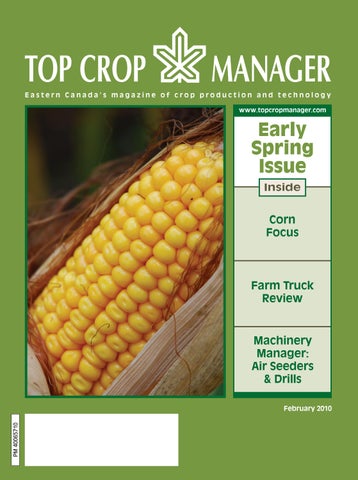
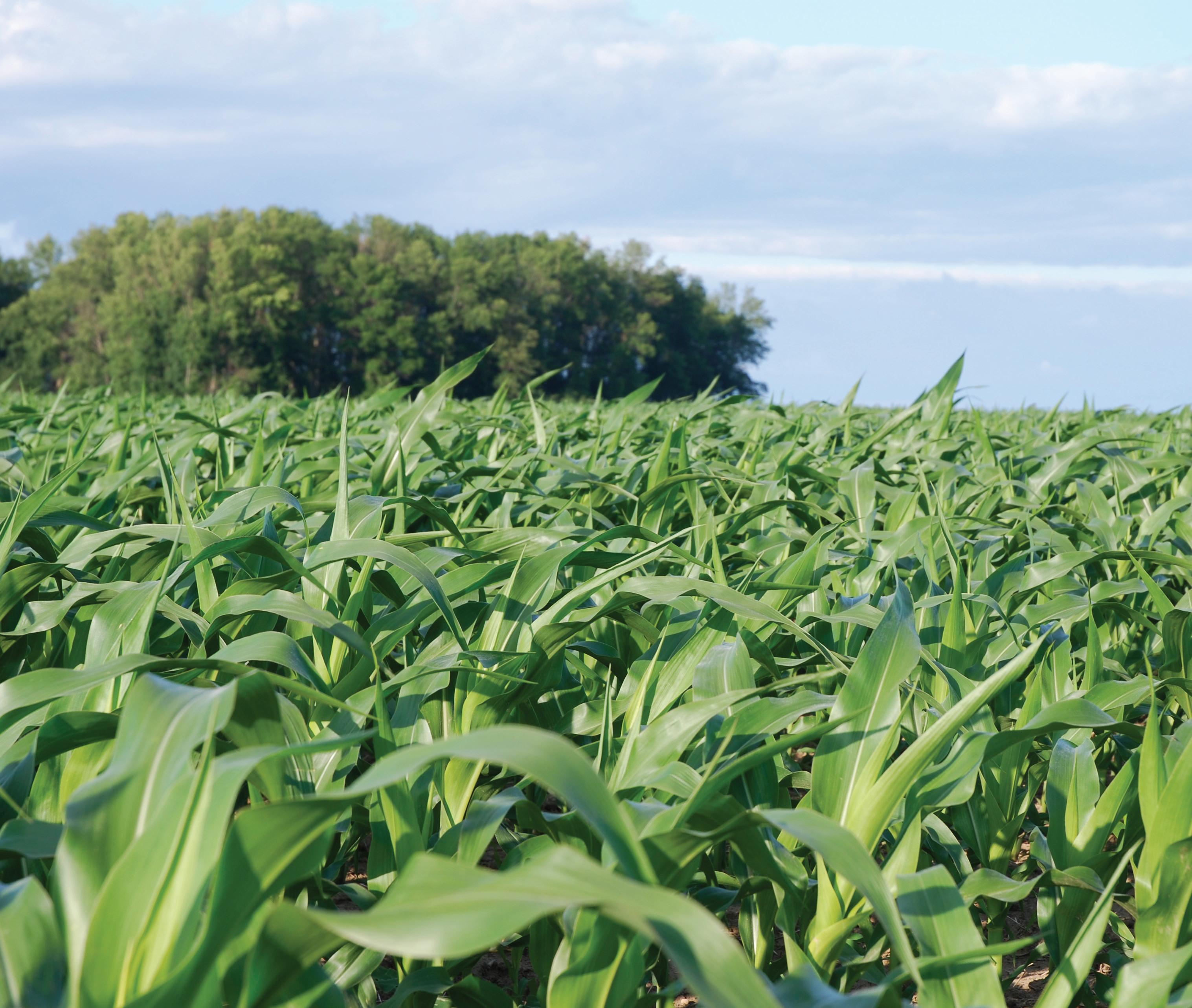
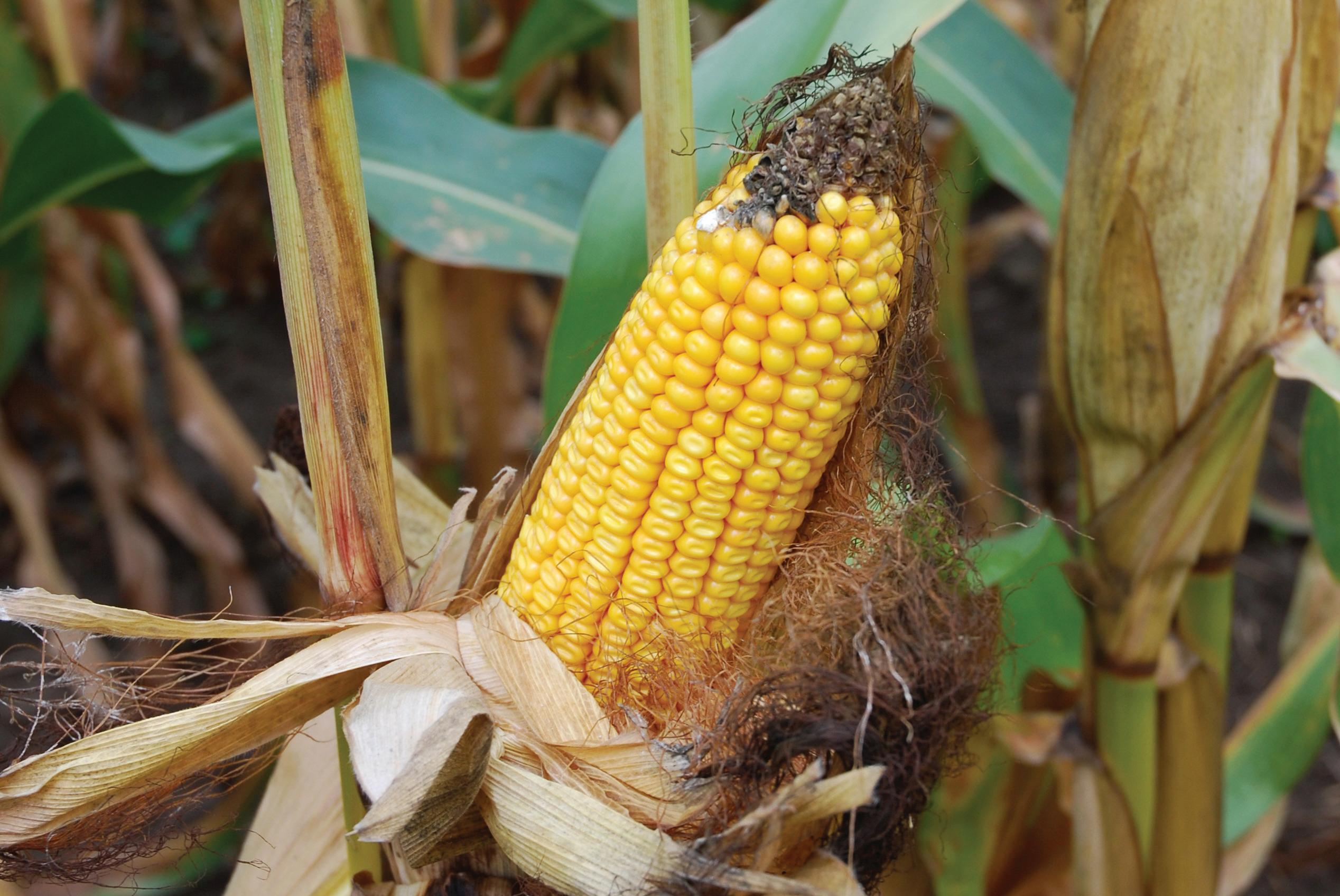
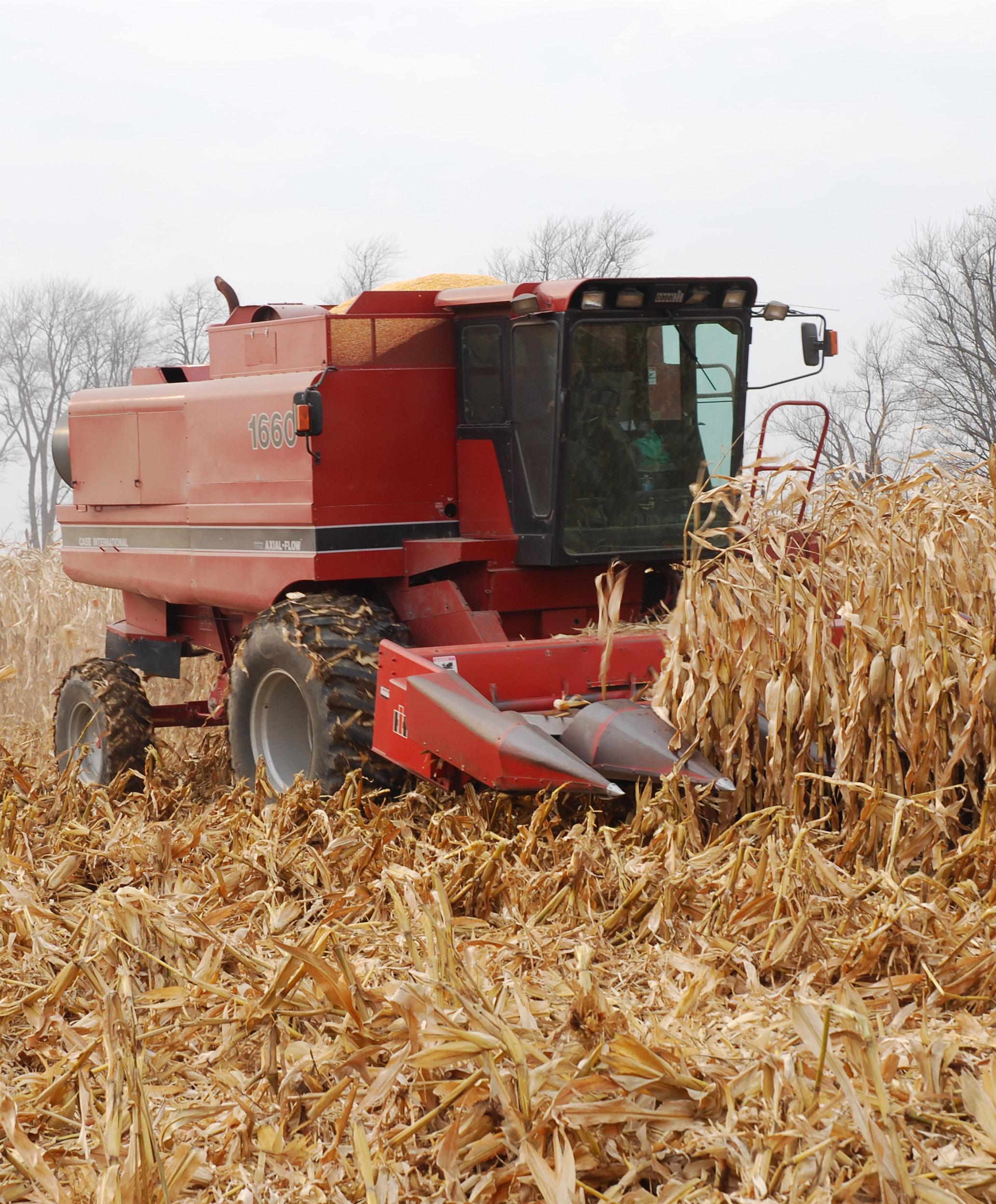
Cover: Prices may take some shine off the short-term outlook, but in Eastern Canada, corn is still king.
Kevin Yaworsky • 403.304.9822 kyaworsky@annexweb.com
SALES ASSISTANT
Mary Burnie • 519.429.5175 888-599-2228 ext. 234 mburnie@annexweb.com
PRODUCTION ARTIST
Gerry Wiebe
GROUP PUBLISHER
Diane Kleer dkleer@annexweb.com
PRESIDENT
Michael Fredericks mfredericks@annexweb.com
PUBLICATION MAIL AGREEMENT #40065710
RETURN UNDELIVERABLE CANADIAN
ADDREssEs TO CIRCULATION DEPT.
P.O. BOx 530, sIMCOE, ON N3Y 4N5
e-mail: mweiler@annexweb.com
Printed in Canada IssN 1717-452x
CIRCULATION
e-mail: mweiler@annexweb.com
Tel.: 866.790.6070 ext. 211
Fax: 877.624.1940
Mail: P.O. Box 530, simcoe, ON N3Y 4N5
SUBSCRIPTION RATES
Top Crop Manager West - 8 issuesFebruary, March, Early-April, Mid-April, June, October, November and December1 Year - $50.00 Cdn.
Top Crop Manager East - 7 issues - January, February, March, April, August, October and November - 1 Year - $50.00 Cdn.
specialty Edition - Potatoes in CanadaFebruary - 1 Year - $9.00 Cdn.
All of the above - 15 issues - $80.00 Cdn.
From time to time, we at Top Crop Manager make our subscription list available to reputable companies and organizations whose products and services we believe may be of interest to you. If you do not want your name to be made available, contact our circulation department in any of the four ways listed above.
In spite of all that life, markets and society can throw at producers, optimism on the farm is still something of a redundancy. Farm producers are pragmatic at heart, yet they are perennial optimists. Every year, just about this time, the meetings and conferences play host to growers and myriad farm publications offer opinions and learned spins on agronomy and plant breeding, trends and technology, and market potential. And through it all, the market prices dictate the coming growing season, always with that dose of reality, which would normally blunt the spirit of anyone not involved in agriculture. Yet growers continue to find the light, hopefully make the right assumptions, read the right forecasts on the season ahead and prosper in spite of all that nature can do to challenge them.
Since late 2007, commodity prices have been relatively stable and well above cost of production values. They have been the cause of a considerable degree of optimism in farming circles and, unfortunately, the butt of negative commentary from endless business columnists and spin doctors, most of whom understand very little of the reality facing producers. In fact, the majority of detractors only see economic stability on the farm linked weakly to the prospect of higher food costs. The unwritten theory of Canada’s “Cheap Food Policy” takes some of the shine off of the “Better Times” of the past two years.
It is not a very pleasant response, but then again, not a very surprising one, either.
All good things…
Now, thanks to a bountiful corn and soybean harvest in the US, the prices for both have declined since December 2009, with wheat following suit. And while some growers may start researching the prospects for oats or flax or canola, most will stick to their rotations, in spite of price fluctuations and market speculation. As they do
every year, they will watch for those weather-related opportunities, lock-in some of their crops at various prices and forge ahead when the ground is fit within the next two months.
In other words, they will continue doing the job they do so well.
And that is why I love being a part of this industry!
Hope springs eternal or spring hope’s eternal?
It is with a fond look forward that we bring you our annual Corn Focus edition, in this, our Early Spring Issue. In addition to our lineup of stories geared to corn and agronomic insight, we are pleased to include Howard Elmer’s perspectives on four new truck lines, which he has tested and rated with his usual straightforward and unbiased view. We are also adding to our lineup of Machinery Manager features, with Air Seeders & Drills in this edition.
As always, it is my wish that you find this issue informative and useful, and a resource worth keeping close as you move forward into spring and throughout 2010. n
Ralph Pearce Editor Top Crop Manager
Think more than just seeding this spring.
Reel in the profits with EMD Crop BioScience’s full line of soybean inoculants in 2010. And, reel in a chance to win a new, Princecraft Resorter DLX SC fishing boat.
Take this ad or just walk in and ask participating retailers how you can win. Remember to ask for information on Cell-Tech SCI, ApexPro, ApexExtra, Cell-Tech, SoySelect and PulseR HP inoculants. This year, you
Do ethanol plants affect land use?
Recent research findings open the door to debate on the topic.
by
Research from the University of Illinois at Chicago has revealed that a modern ethanol plant has negligible effects on land use. The findings contradict other studies that claim corn-based ethanol contributes more to greenhouse gas emissions than previously thought. The land-use change issue is yet another point of contention in the ongoing debate concerning the use of corn as a feedstock in the expanding North American biofuel market.
Two theories against corn-based biofuel allege that increased ethanol production results in native land being converted into crop production and an increase in the number of corn acres planted versus other crops. Previous studies examined two types of landuse changes: direct and indirect. Direct land use change refers to the conversion of acres in the direct supply chain of an ethanol plant. Indirect land use change takes market forces into account, which act to induce land-use change on domestic but mostly foreign land that is not part of the direct supply chain. For example, one proposition of indirect land-use change is that increased ethanol production in the United States leads to increased planting of corn, which reduces available areas for soybean pro-
duction. This reduces soy exports from the US, prompting other countries, such as Brazil, to adjust their agricultural land use and ultimately convert native land to meet the soybean shortfall created by US biofuels production.
Led by Dr. Steffen Mueller, the Energy Resources Center at the University of Illinois at Chicago has examined the land-use impacts of two ethanol plants in Rochelle and Annawan, Illinois. “I’m looking at mostly direct land use, and the premise of my argument is if we don’t see any direct land-use change after an ethanol plant goes into an area, and there are increased yields, there shouldn’t be any indirect effect,” says Mueller.
Using satellite images and farmer surveys, the research monitored each acre of farmland within a 20- to 40-mile (32- to 64-kilometre) radius of the plants before they opened and after. In addition to land-use change, the study also examined the land carbon balance for corn produced to supply the plants. “We found that there was, before and after the plants went in, at a maximum, a couple of hundred acres of changes of non-agricultural land to agricultural land that took place in the startup of the ethanol plant,” explains Mueller. “We concluded that an ethanol plant going into a par-
ticular area, at least in the central Midwest, will likely not prompt large-scale conversion of non-agricultural land in the area.”
Mueller’s research, commissioned by the Illinois Corn Growers Association, started with the Illinois River Energy Center that began operating in Rochelle in December 2006. The study has been updated to include the plant’s expansion in November 2008, as well as the Patriot Renewable Fuels plant in Annawan that started in September 2008. The analysis performed for the corn supply areas showed that 534 acres of forest and 105 acres of grassland were converted around the Rochelle plant while 609 acres of forest and six acres of grassland were converted to corn near the Annawan plant.
The study also notes that the draw of the ethanol plants was relatively small compared to the amount of corn produced in the areas, and increases in corn yield in the regions were sufficient to meet the ethanol plants’ demand.
Despite the start-up of the one plant and the expansion of the other in the fall of 2008, Mueller says the corn acreage decreased, providing further evidence that the ethanol plants have a weak influence on corn rotations.
Research from the US Midwest indicates that corn acreage actually decreased around both a newly constructed ethanol plant and one that expanded in 2008.
Blair Andrews
Keep on spraying
With Converge® XT herbicide, you get an extended window of application with excellent crop safety and the same trusted, seasonlong grassy and broadleaf weed control of Converge PRO. The patented safener lets you confidently apply Converge XT from pre-plant surface right up to the three-leaf stage of corn. So you can keep on spraying and spraying and spraying.
In-depth numbers do not jibe with speculation
As for the assertion that ethanol plants indirectly affect land use elsewhere, the study analyzed Illinois’ corn production, export and uses. It showed that during the past 35 years, corn production almost doubled from 1.2 billion to 2.2 billion bushels. Moreover, corn carryout has also been on the rise. The study notes that feed corn has been decreasing, which may be indicative of decreasing livestock but also increased use of dried distillers’ grains with solubles (DDGS) as feedstock. Meanwhile, the data show that increases in corn production on relatively constant corn acres were sufficient to support both increasing exports as well as corn for ethanol use.
Another notable aspect of the study is the method by which it examined the land-use issue. Mueller says that his research differs from the other studies because it takes a bottom-up approach, meaning it uses relevant farming data, including farmer surveys and sophisticated satellite imagery. “We’re using actual land-use change analysis on the ground; it’s a big difference from using a computer model,” says Mueller.
The implications of these assessments
are significant to the future direction of ethanol policies, particularly in the US. The concept is to ensure that certain energy sources that are promoted as greener alternatives to gas and oil are not actually worse options than the fossil fuels.
One such case is playing out in California. Ethanol supporters have been crying foul over the way the Air Resources Board in the state is regulating its low carbon fuel standard. By using the indirect land-use change figure in its calculations, the carbon footprint of corn ethanol is increased. Ethanol proponents, pointing to Mueller’s research to support their case, argue that current and future technological advancements in agriculture need to be accurately accounted in the assessments of renewable fuels.
Dr. Claudia Wagner-Riddle, professor in the School of Environmental Sciences at the University of Guelph, is also of the opinion that the agricultural data in these models should be improved. In several cases, she notes that the models use emission factors that are not representative of local soil and crop management practices. “It is important to consider how corn is grown. What are the
inputs in terms of nitrogen fertilizer, and the typical yields for a region? Are best management practices used? Often the numbers used are not the best for a given location.”
She adds that having better data will be important as Canada seeks to provide life cycle assessments on growing biomass for fuel or energy under Ontario or Canadian conditions.
In another reaction to the Illinois research, Dr. Al Mussell, senior research associate at the George Morris Centre, would like to see a longer-range analysis of the impact of ethanol production. Mussell has co-authored several studies on the impact of ethanol on Canada’s livestock sector. He says that the main anticipated result from the construction of an ethanol plant is that the local corn basis will strengthen. “The result of that is, over time, it provides an incentive to move acreage into corn from other uses. While the Illinois study results show the corn acreage hasn’t changed much, you won’t get dramatic shifts when you have acreage bound by crop rotations, and the latent potential of shifting acreage also strengthens the basis for soybeans.”
Mussell adds that acreage shifts will be gradual, and looking for them in such
Further research on the impact of corn and ethanol production should also include the livestock sector.
FertIlIty and nutrIents
a short time frame with so many other potential factors, including wet weather delaying corn planting, may not be a sufficient assessment.
More than just cropping issues
When discussing changes in pasture acreage, Mussell says it is important to consider how the livestock sector operates. With so much time and money invested in the business, he says the producers are not likely to abandon it quickly. “When you get talking about pasture, for folks that are in the cattle business, it’s a very long lag time, driven by gestation and biology,” explains Mussell. “If you have a herd of cows that you’re breeding and putting your imprint on, you’re loathe to get out of that business. I could show you any number of places in Ontario where folks, even if they understood their land values, and understood there’s no way they can afford to have cows running on it, are loathe to get out of it because this is their career, their life’s work, and they’ll absorb a fair amount of financial hardship and stick with it.”
From the perspective of a farmer, and
an ethanol producer, Tom Cox says the impact of an ethanol plant is creating more enthusiasm to grow corn. Cox is chair of the Integrated Grain Processors Co-operative (IGPC) in Aylmer, Ontario. The IGPC ethanol plant started operating in the fall of 2008 and Cox says that some farmers may be more enthusiastic, but he is not sure how that optimism translates into tangible cropping plans, noting that the wet, cool spring of 2009 made it difficult to plant corn. “The most compelling argument is the fact that since about 2002, the output of ethanol from North America, derived almost entirely from grain, has increased by more than 400 percent,” says Cox, commenting on the land-use issue. “Meanwhile, corn exports from the US have remained very much within normal annual variation while soybean exports continue to increase and are about 20 percent higher this year from 2002 when the current rapid expansion of the ethanol industry began.”
Furthermore, Cox says that because the ethanol industry has experienced rapid expansion without sacrificing
domestic or export markets, a less frantic expansion should be manageable in the coming years. “If we are to believe, according to those advancing the landuse issue, that corn usage for ethanol in North America is causing land to be diverted from soybean production here, then it would seem to follow that we would see declining, not growing, North American soybean exports,” says Cox.
As far as the future of the land-use debate and the role of life cycle assessments are concerned, ethanol proponents have received some positive news. Their requests for better information about calculating land-use impact did not fall on deaf ears. The California Air Resources Board has agreed to convene an expert working group to help refine and improve its land-use analysis. The group has been directed to evaluate key factors that might impact the land use values for biofuels, including agricultural yield improvements, changes in farming practices and biofuel co-products such as DDGS. The group is expected to return to the board with its recommendations by January 2011. n
Company vehicle
When you live agriculture, you see things differently Canadian producers know they’re part of something special. In fact, they’re feeding the world. These entrepreneurs rely on people who understand that agriculture is unique. FCC financing is designed for them. Agriculture is life
www.fcc.ca/advancing
Using climate patterns to predict corn yields
by Treena Hein
Harnessing the power of computers to make better N management decisions.
The power of computer modelling is becoming increasingly important in farming. It is proving helpful in predicting things like the spread of pests, diseases, pesticide resistance, even the effects of climate change.
Modelling is also helping producers with nutrient management. Researchers with the US Department of Agriculture’s Agricultural Research Service (USDA-ARS) have analyzed long-term climate patterns in order to predict corn yields, and have discovered that there is a basic pattern of low yield and high yield every second year.
In years that lower yields are expected, fertilizer application can be reduced. “The hope is that if farmers in the US Corn Belt can lessen fertilizer application in predicted low yield years, the flow of excess nitrate into watercourses and into the Gulf of Mexico will also be lessened,” says Rob Malone, an agricultural engineer at the USDA-ARS National Laboratory
Photo by RalPh PeaRce
for Agriculture and the Environment in Ames, Iowa. “There is a substantial ‘hypoxic zone’ in the water there, partly resulting from too much nitrate. It’s a large environmental concern, as is excess nitrate runoff in Canada and many other parts of the world.”
In bigger yield years, small increases in crop N uptake from a bigger yield can result in substantial decreases in drainage N loss, notes Malone. “For example, we’ve determined that four percent greater crop N uptake can result in 30 percent less N in subsurface drainage in northeastern Iowa,” he says.
Malone, with laboratory director Dr. Jerry Hatfield and their colleagues, studied two climate phenomena that possibly contribute to the biannual weather patterns, the El Nino Southern Oscillation and the North Atlantic Oscillation. “Higher yields occur in years where these phenomena are correlated with higher surface radiation and lower temperature early in the corn growing season, with good rainfall later in the season,” says Malone.
The yield difference between high- and low-yielding years averages 19 percent. If the long-term pattern holds, Malone says 2010 will be a high-yield year in central Iowa, about seven percent higher than the long-term median yield.
Besides these effects of seasonal weather produced by
The results are in. With Foundation Acre™ you get an average of 32 more kernels per ear. Foundation Acre is based on the discovery that corn can sense competition from weeds as it emerges. By applying Primextra® II Magnum® at the pre-emergent stage you’re ensuring your crop will develop a healthy root biomass and strong leaf development which ultimately leads to more consistent kernel output and yield. For further information, please contact our Customer Resource Centre at 1-87-SYNGENTA (1-877-964-3682) or visit SyngentaFarm.ca
Issues and envIronment
climate phenomena, the researchers have also discovered another powerful additional factor limiting corn yield. “What our research shows,” says Hatfield, “is that N response and associated yield are dominated by water availability. We’ve found some of farmers’ lower yielding areas are water limited more than N limited.”
Hatfield found that in fields in the same year with the same N application rate, differences in yield could be at-
tributed to the distribution of soil types. “Different soils provide different soil water availability, which is especially important during the grain-fill period of the growing season,” he says. Clarion soils (very deep, moderately well-drained upland soils) provided lower yields, and Webster soils (very deep, poorly drained, moderately permeable upland soils) produced higher yields. “This suggests that the availability of soil water should be considered by farmers as part of their
FS Finance
A Crop Input and Fuel Financing Program
Flexible:
• Competitive interest rates
• Terms of payment- allowing up to 18 months to pay
• Due dates that allow you to defer payments to the next crop year
• More opportunity to pre-purchase your crop inputs
Convenient:
• One-stop source for all your crop inputs (seed, fertilizer, crop protection, agronomy services and fuel)
• Full financing available (up to 100%)
• Easily transfer your existing account to FS Finance
For more information, contact your local FS Co-operative:
AGRIS Co-operative Ltd. (519) 380-2370
County Farm Centre Ltd. (613) 476-2171
FS PARTNERS (519) 895-5375
Huron Bay Co-operative Inc. (519) 392-8692
nutrient management decisions,” says Hatfield. “They might also consider how they can increase soil water availability by boosting the percentage of organic material and by adopting soil management practices that reduce evaporation and runoff of water from the soil surface to increase the amount of water available to the plant.”
Computer and sensor power
North Wellington Co-operative Services Inc. (519) 338-2331
Scientists at Cornell University in Ithaca, New York, are also using weather and climate data, this time to give corn growers guidance about how much N to side dress in-season.
The Adapt-N software is based on findings that soil N varies according to early season weather. Every day, data on temperature and precipitation from radar, satellites and ground stations are fed into the database. The modelling software then provides growers (who log in to the website and give their farm location) with recommendations to adjust N applications to more precisely match crop N demand. The program uses the application of well-calibrated and tested dynamic simulation models of soil N dynamics and crop N uptake, which account for changes in soil N.
“It’s currently functional for 13 states in the Northeastern US,” says Cornell Crop and Soil Science Department chair Dr. Harold van Es, who co-founded Adapt-N with Jeff Melkonian. “We’re currently working with researchers in Iowa to expand it there, and have had some interest in Indiana as well.” He says the modelling software can be hooked up with weather collection systems anywhere.
Ian Nichols, business manager at Weather INnovations (WIN) in Chatham, Ontario, says “I think this system would definitely be of interest here for farmers who side dress corn. Our weather program is ideally suited to deliver the results from this type of model for Canadian producers.” Weather INnovations specializes in providing turnkey weather-based monitoring and modelling solutions for producer organizations, agencies and growers of specific commodities in the agricultural industry. n
For more information, go online to: Adapt-N website: http://adapt-n.eas.cornell.edu Weather INnovations www.weatherinnovations.com
Issues and envIronment
World fertilizer nutrient reserves: a view to the future
by Dr. Paul E. Fixen*
Supply is stable for now, but prices will favour the easiest to extract.
The stewardship responsibilities of agriculture include the wise use of the raw materials from which commercial fertilizers are produced. Development and implementation of fertilizer best management practices (BMPs) with focus on the “Four Rs” – right source, right rate, right time, right place – are timely not only for short-term economic and environmental reasons, but also for the wise stewardship of the non-renewable nutrient resources upon which food, feed, fibre and fuel production depend.
The extreme spike in N, P, K and S fertilizer prices midway through 2008 sent shock waves around the world. Some pondered whether fertilizer nutrient reserves were reaching critically low levels and contributing to market volatility. This paper will attempt to review the status of world nutrient reserves in terms of current production.
Phosphate
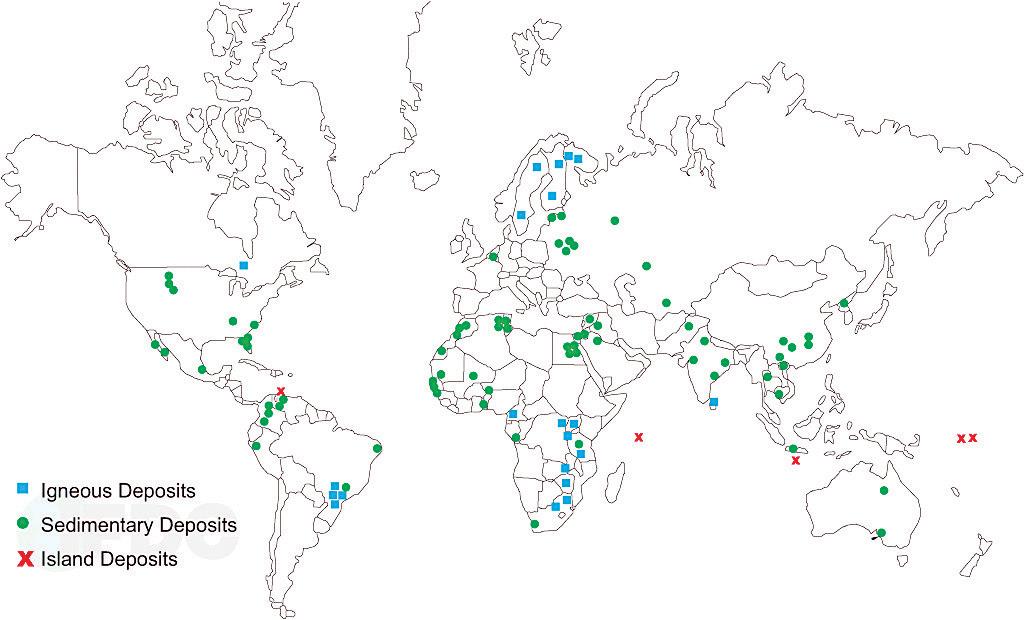
The main raw material used in the production of nearly all phosphate fertilizers is phosphate rock (PR). There are two general types of PRs, igneous and sedimentary. Insular or island deposits are a special type of sedimentary deposit. Figure 1 shows a map of PR deposits currently being mined, those that have been mined in the recent past, and those that have been shown to be potentially economic (McClellan and Van Kauwenbergh, 2004). They are widespread throughout most of the world.
Igneous PRs typically contain apatite as the P form along with other igneous minerals. Igneous deposits often yield low grade ores, but can be beneficiated to higher grades in the range of 36 to 40 percent P2O5 (Stewart et al., 2005). Ores from igneous deposits are relatively unreactive. Consequently, they are not well suited for direct application to cropland and typically must be finely ground for use in fertilizer processing.
About 80 percent of the PR produced
in the world is from sedimentary deposits. These deposits vary markedly in both physical and chemical properties, ranging from loose, unconsolidated materials to hardened rocks and from fluorapatite with almost no carbonate substitution to six to seven percent carbonate for phosphate substitution (Stewart et al., 2005).
World PR production since 1981 has been generally rather flat overall, ranging from 120 to 165 million tonnes per year (Figure 2). However, the breakup of the Soviet Union caused a substantial disruption in phosphate production, resulting in major declines in the early 1990s. World production has just recently climbed back up to pre-breakup levels exceeding 160 tonnes. China has been the major source of production increases during the last 20 years.
Estimation of PR reserves and resources is plagued with uncertainty due to limited information to assure accuracy of the estimates. Phosphate producers often consider reserve information to be confidential, leaving publicly available scientific papers and specific deposit reports as the primary information sources. Therefore, the reserve information presented here needs to be viewed as general approximations with broad confidence intervals.
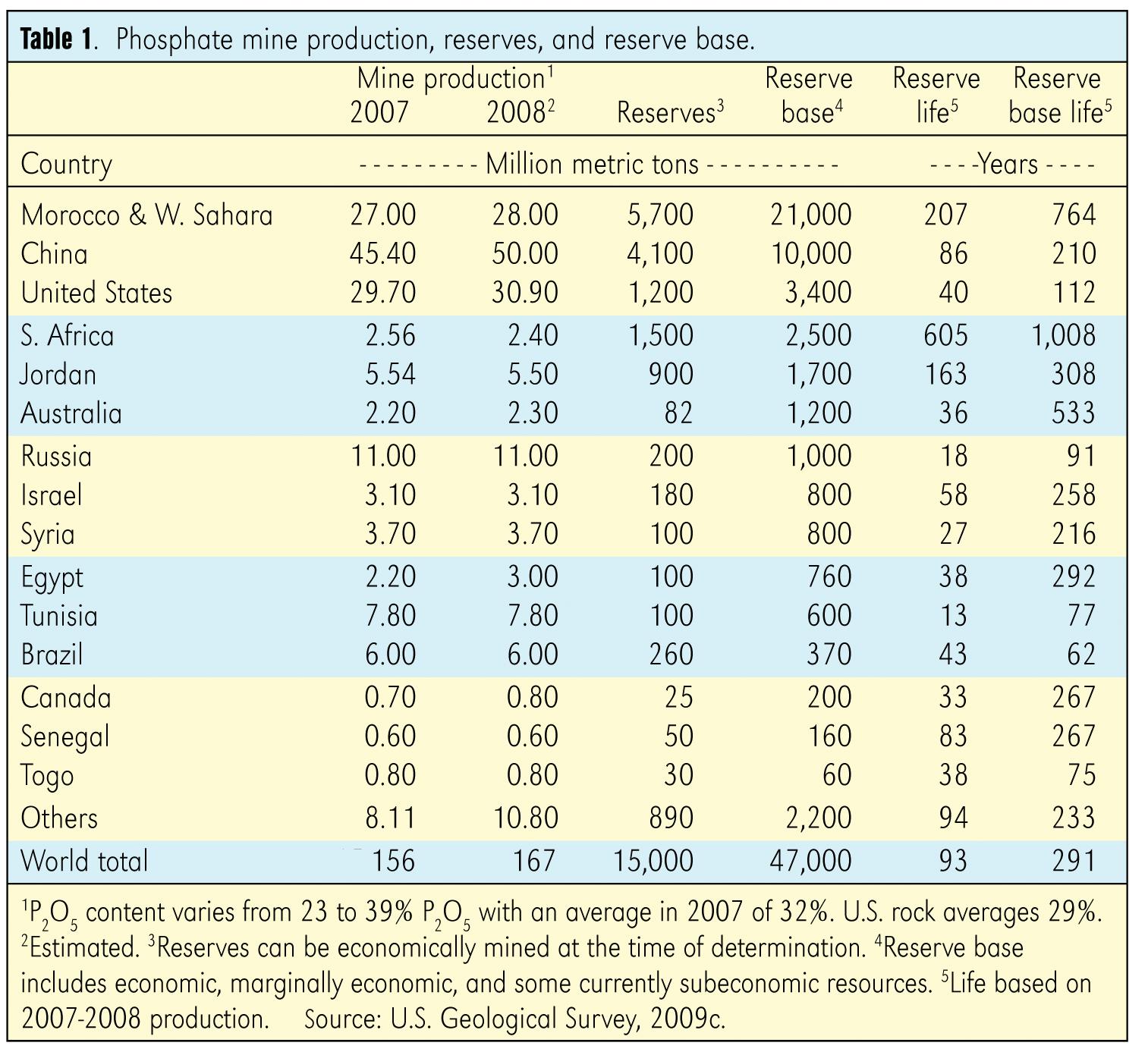
Table 1 contains current estimates of
world PR reserves and reserve base sorted by reserve base tonnage. Reserves and reserve base terms are defined by the US Geological Survey (USGS) as follows. “Reserves, that part of the reserve base which could be economically extracted or produced at the time of determination. The term reserves need not signify that extraction facilities are in place and operative. Reserve base, includes those resources that are currently economic (reserves), marginally economic, and some of those that are currently sub-economic.”
However, personal communication with USGS indicated that current reserve estimates are based on market conditions from at least a few years ago and so do not reflect 2008 prices. Therefore, the portion of reserve base tonnage reported as reserves may be underestimated.
Morocco and Western Sahara are reported to have the largest PR reserve base and reserves in the world, accounting for 45 percent of the world reserve base (Table 1). China follows with 21 percent of the reserve base, so these two countries have two-thirds of the world RP reserve base. Table 1 also contains estimates of PR reserve life and reserve base life based on the average production of 2007 and 2008. At these production levels, world PR reserve and reserve
Figure 1. Economic and potentially economic phosphate deposits of the world
SouRce: S.J. Van KauwenbeRgh, IFDc
Issues and envIronment
Figure 2. World phosphate rock production, 1981-2008. For 1992-1997, former Soviet Union includes Kazakhstan and Russia data; afterwards, only Russia.
base longevity would be estimated to be 93 and 291 years, respectively.
At this point, it is critical to remember the earlier comments about the reliability of these estimates. Two examples illustrate this point. First, in 2002, USGS was estimating PR world reserves and reserve base at 12,990 and 46,990 tonnes respectively (Stewart et al., 2005). The 2009 estimates discussed above represent 122 percent and 100 percent of these earlier estimates, even though an additional 7 years of production has occurred
since they were made. As a second example, Sheldon (1987) reported world PR reserves at 15,259 tonnes (about the same as is being estimated today) and identified resources (reserve base plus inferred reserve base) as 112,431 tonnes. These identified resources based on today’s production would amount to longevity of 696 years.
Clearly, great uncertainty exists in these estimates. And just as clearly, the world is not on the verge of running out of raw materials for phosphate fertilizer
production. That said, these are non-renewable natural resources and deserve our very best stewardship.
Potash
Potash refers to a variety of K-bearing minerals with the most common ones being sylvite (KCl), sylvinite (KCl+NaCl), hartsalz (ore deposits with sulphate salts) and langbeinite (K2SO4 • 2MgSO4). Economic sources occur in sedimentary salt beds remaining from ancient inland seas (evaporate deposits) or in salt lakes and natural brines. The world’s largest reserves occur in Saskatchewan, Canada, where the ore is exceptionally high grade (25 to 30 percent K2O) and occurs at depths of 1000 metres up to greater than 3500 metres. These deposits are mostly sylvinite, with some carnallite (KCl•MgCl2•6H2O) and clay.
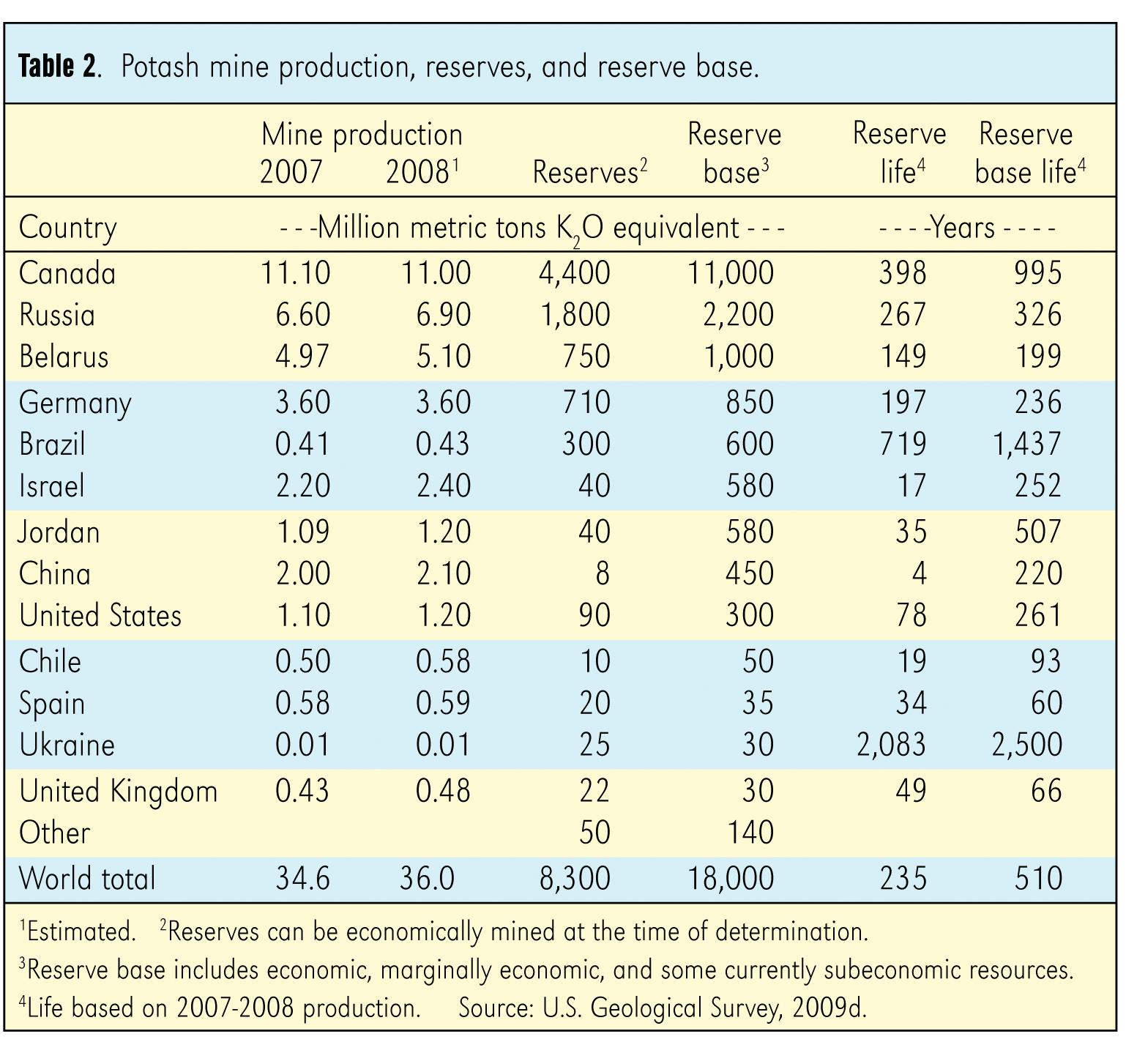
Production, reserves, reserve life and longevity based on USGS data are reported by country in Table 2 Canada has 53 percent of world potash reserves while Canada, Russia, Belarus, and Germany collectively have 92 percent. World potash reserves are huge, with a reported reserve life based on current production of 235 years and a reserve base exceeding 500 years.
New production of about one tonne of K2O capacity is expected to be added per year from 2009 through 2011, mostly by Canada, Russia and Israel, with some from Jordan and the US. An additional five tonnes is expected in 2012 by Canada, Argentina, Belarus and Jordan (Prud’homme, 2008). New production through 2012 would total approximately eight tonnes.
Sulphur
Sulphur is one of the more common constituents of the Earth’s crust. USGS estimates resources of elemental S in evaporate and volcanic deposits and S associated with natural gas, petroleum, tar sands and metal sulphides at about five billion tons. The S in gypsum and anhydrite is almost limitless, and some 600 billion tons of S is contained in coal, oil shale, and shale rich in organic matter. But low-cost methods have not been developed to recover S from these sources (USGS, 2009e). However, S is not generally produced intentionally as a primary product. Most of the S available on the world market today is extracted from natural gas and oil as crude oil contains from 0.1 to 2.8 percent S (IFDC, 2008). Some S is also
Issues and envIronment
recovered from coal, the roasting of sulphides in metallurgical processing, and by mining of pyrites.
About 80 to 85 percent of the world’s S production is used to manufacture sulphuric acid. Half of the world’s sulphuric acid production is used in fertilizer production, mainly to convert phosphates to water-soluble forms. About one ton of S is needed to produce a little more than two tons of diammonium phosphate (DAP) (IFDC, 2008).
The leading countries in S production are the US, Canada, China and Russia. These four countries produce almost half of the world’s S. Because petroleum and sulphide ores can be processed long distances from where they are produced, USGS points out that actual S production may not be in the country for which reserves are attributed. This is one of the reasons that reserves and reserve base data are not reported by country for S. Gypsum (CaSO4•2H2O) production is reported by country. A small amount of this product is used for agricultural purposes as a soil conditioner and a nutrient source. As
Responsible use of fertilizer is in the best interests of all producers, despite large world supply of N, P, K and S.
Photo by RalPh PeaRce
an example, a little more than one tonne of the 12.7 tonnes of gypsum produced in the US in 2008 was used in agriculture. In the long-term, the increase in world S supply is expected to overcome spot shortages as occurred in mid-2008 when S prices skyrocketed from less than $100/ton to more than $800/ton. The price spike was driven by tight supplies resulting from lower than expected production in the US and slow progress at new petroleum and natural gas developments, coupled with increased consumption at phosphate fertilizer operations. A sharp decline in S demand in Asia in the third quarter of 2008 drove the price crash that occurred late in the year.
Nitrogen
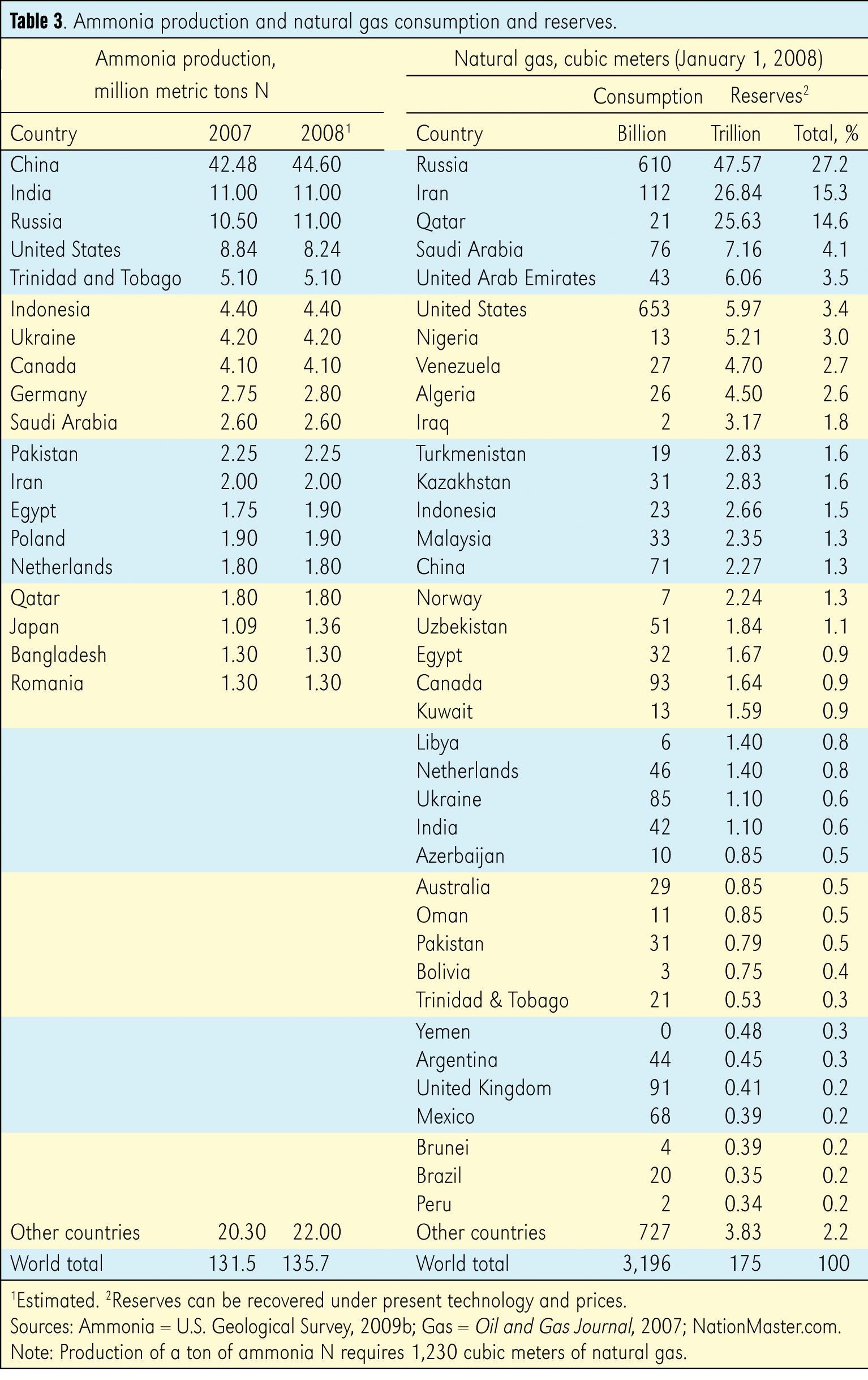
Ammonia (NH3) is the basic N source used in the manufacture of most N fertilizers. About three percent is used in direct application to crop land, mostly in North America. Non-fertilizer use accounts for about 16 percent of world NH3 production (Abram and Forster, 2005). China, India, Russia and the US account for more than 50 percent of total current NH3 production, with China alone contributing nearly one-third of total production (Table 3).
Natural gas (CH4) is the feedstock used in 75 to 80 percent of ammonia manufacturing (Abram and Forster, 2005) worldwide with about 1230 cubic metres of gas required per ton of ammonia N (Huang, 2007). However, NH3 manufacturing is a very small consumer of natural gas in most countries. Even if one assumes that all NH3 is produced from natural gas, five percent of annual world gas consumption would be used for NH3 production. In the United States, only about 1.5 percent of natural gas goes to NH3 synthesis.
Thus, natural gas prices are generally independent of fertilizer markets, but greatly influence where fertilizers are manufactured. Rising natural gas prices in developed countries are causing a shift of N production to developing countries. Several companies have announced plans to build new ammonia plants in Algeria, China, Libya and Peru (USGS, 2009b).
The topic of reserves for N fertilizers, considering the dominant manufacturing processes in use today, essentially becomes a discussion of natural gas reserves. Gas consumption and reserves sorted by reserve quantity are reported in
Magnum™ tractors from Case IH are true row crop tractors in every sense of the word. With industry-leading cab size, intuitive controls and an unmatched turning radius, they give you the power and confidence to farm the way you want to farm. To experience the 180-335 HP Magnum tractors, built right here in the U.S., see your Case IH dealer or visit www.caseih.com.
Issues and envIronment
Table 3. Russia, Iran, and Qatar have 57 percent of proven world gas reserves. Globally, we are consuming about 3.2 trillion cubic metres of gas per year and report 175 trillion cubic metres of proven reserves, giving longevity of 55 years. However, world natural gas reserves have generally trended upward, indicating that thus far producers have been able to continue replenishing reserves with new resources over time (Energy Information Administration, 2008). The largest recent additions to natural gas reserve estimates were reported for Venezuela and Saudi Arabia.
Summary
World reserves and resources for N, P, K and S appear adequate for the foreseeable future. However, nutrient costs will likely rise over time as the most easily extracted materials are consumed. Therefore, an added incentive for continued refinement and implementation of fertilizer BMPs is that the resulting gain in efficiency will slow the increase in fertilizer costs. Wise stewardship of non-renewable nutrient resources is a critical responsibility for the agriculture industry. n
*Dr. Paul E. Fixen is senior vice-president, Americas Group co-ordinator and director of research with the International Plant Nutrition Institute in Brookings, South Dakota. Reprinted from Better Crops with Plant Food, with permission of International Plant Nutrition Institute (IPNI).
Light years ahead
Infinity® herbicide represents a quantum leap forward in weed management and is the first new mode of action (group 27) in wheat and barley for over 20 years.
Use Infinity for ‘out of this world’ control of the notoriously toughest broadleaf weeds in the galaxy, including chickweed and cleavers. It is a flexible broad spectrum product providing growers with a wide window of application and multiple modes of action for effective resistance management.
Infinity - light years ahead
Pests and dIseases
Western bean cutworm continues to spread
by Heather Hager, PhD
Numbers increase in Ontario as the insect advances eastward.
Western bean cutworm continues to expand its range throughout the eastern Great Lakes region and has now been found as far northeast as south-central Quebec. This is a concern for corn and dry bean growers because larval feeding can cause serious damage in these crops. Although economic damage has not yet occurred in Ontario, growers are wondering what to expect in 2010 and beyond.
To get a handle on what could happen as the insect moves east, entomologists and extension personnel in the eastern Great Lakes region are communicating and comparing insect numbers and control measures. In Ontario, the moth mainly appears to be coming across Lake Huron from Michigan, rather than north from Ohio, where numbers are still low, says Tracey Baute, entomologist with the Ontario Ministry of Agriculture, Food, and Rural Affairs (OMAFRA). Baute is watching the moth’s progression in Michigan as a model for what might happen in Ontario.
Western bean cutworm was found in Michigan in 2006 and in Ontario in 2008. The larvae consume the fruit of dry edible beans (Phaseolus vulgaris varieties) and corn, and can cause direct yield loss, grain quality issues, and exposure to secondary pests such as moulds. In western Michigan, nine counties experienced some form of economic loss from the insect in 2009. However, feeding damage reported in eastern Michigan and Ontario was still at low levels.
Because the larvae overwinter as prepupae in soil, entomologists predict that areas that had higher numbers of adult moths in the preceding year will be at greater risk for economic damage. Accordingly, Baute is making suggestions for 2010 based on county trap counts from 2009. “Huron County might be at risk, and potentially Lambton, Middlesex, and Chatham/Kent, but the majority of the province didn’t have enough
pressure and feeding damage to really start focusing their management strategies against this pest yet,” she says. “Eastern Ontario and Quebec had few moths, and I’d be very shocked if they have any levels that have to be managed in 2010.”
Use traps to detect moths
For laying eggs, the adult moths tend to prefer corn until the crop is tasselling, says Baute. Once the crop is tasselling, moths will look for younger cornfields or dry-bean fields to lay eggs. To determine the presence and numbers of adult moths, which emerge in mid-June to early July, they are trapped using simple pheromone traps placed at the crop’s perimeter.
Two traps are recommended at bean fields. Moth numbers are counted, and control measures are implemented once a threshold number of moths has been trapped. Based on the observations of Michigan State University entomologist Chris DiFonzo, says Baute, the economic
threshold for dry beans that was developed in Nebraska does not seem to be working in Michigan. “It didn’t protect the crop in time, and there was still yield loss.” The researchers speculate that more eggs and larvae are able to survive to inflict damage because of the greater humidity in the Great Lakes region than in Nebraska. “For now, control thresholds are a bit of guesswork in the dry bean crop,” says Baute. However, the entomologists are working to determine appropriate thresholds for the Great Lakes region.
In contrast to bean fields, traps at cornfields are used to determine when the moths arrive and when their numbers peak, indicating when the most eggs are being laid. “If we see peak moth flight, that tells you that you should be out there scouting for eggs and trying to control the larvae,” says Baute, noting that a single trap at the cornfield perimeter is recommended.
“I find it difficult to predict if you’ll see damage in corn based on the trap-
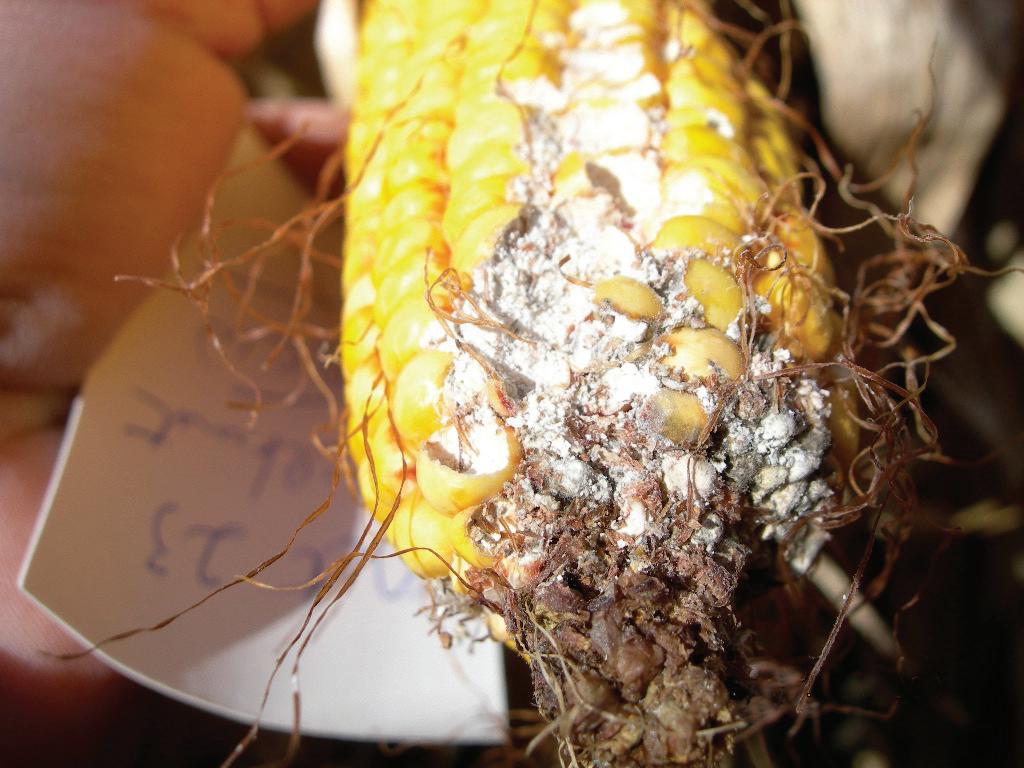
Damaged cobs and kernels are evidence that western bean cutworm has left the plant to overwinter in the soil.
Photo couRteSy oF MeRVyn eRb
Pests and dIseases
ping numbers,” says Dr. Andy Michel, Ohio State University entomologist. “I’ve looked at some of the data that Tracey Baute has put together across the whole eastern Great Lakes. In Michigan and Ontario, trap counts can be as low as two, and minor (noneconomic) damage can be detected, whereas in some Ohio counties, I have almost 100 moths and haven’t been able to find damage.” So crop scouting is necessary to determine western bean cutworm pressure.
Scouting: difficult, but important
Once the moths are found in the traps, it is time to start scouting for eggs and larvae to determine if control is necessary. The timing of insecticide application is extremely important, as only the exposed larvae will be affected. Those that have not yet hatched and those that have already entered the corn ear or bean pod will not be killed. “That leaves a small window when spraying must be targeted in order to be effective against western bean cutworm,” says Michel. Scouting differs for corn and dry beans because of differences in insect behaviour. In corn, the moths lay eggs
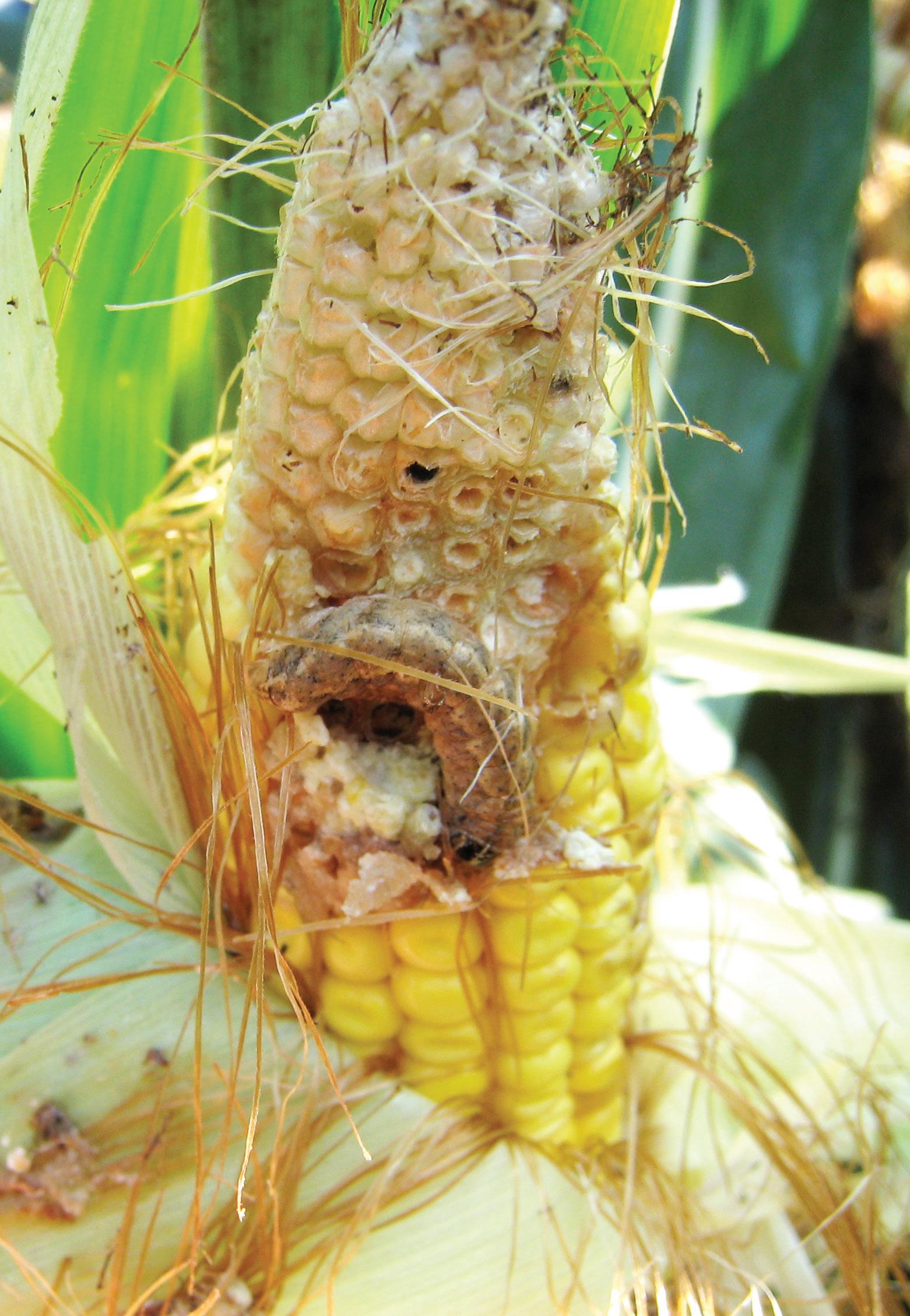
a single corn ear.
on the upper surfaces of the upper leaves. “If five percent of plants scouted across the field have egg masses on them, then you spray when they’re about to hatch,” says Baute (see www. omafra.gov.on.ca/english/crops/field/ news/croppest/2009/12cpo09a6.htm for details on scouting methods in corn). However, in dry beans, the moths lay eggs low in the canopy on the underside of leaves, and larvae usually spend the daytime in the soil, rather than on the plant. “They’re very hard to find, and even damage is sometimes hard to
find,” says Baute. So growers must rely considerably on moth trap thresholds for dry beans.
Mervyn Erb, an independent crop consultant from Brucefield in Ontario’s Huron County, has scouted for western bean cutworm in both corn and dry beans. He saw some feeding damage in corn in Chiselhurst, near Hensall, in 2008 and north of Exeter in 2009, both in Huron County, as well as in kidney beans west of Innerkip in Oxford County, in 2009. “In corn, they had chewed the kernels and burrowed
Western bean cutworm can be particularly damaging because multiple individuals can infest
Photo couRteSy oF tRacey baute, oMaFRa
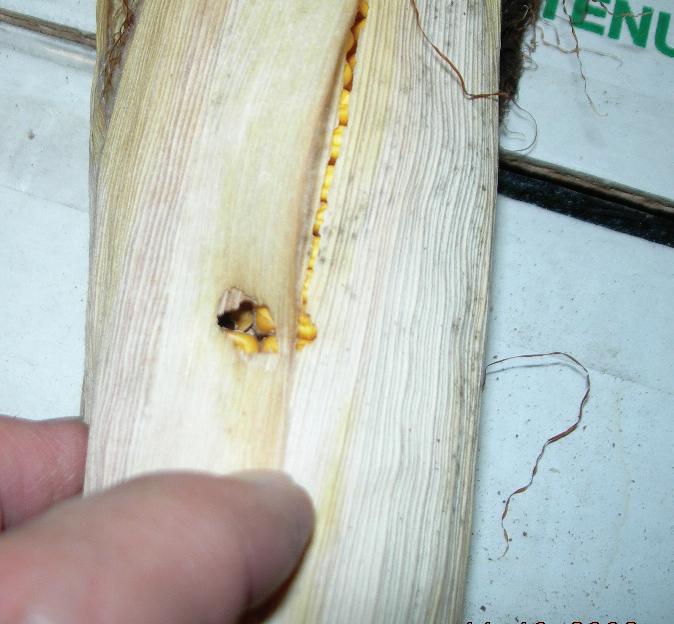
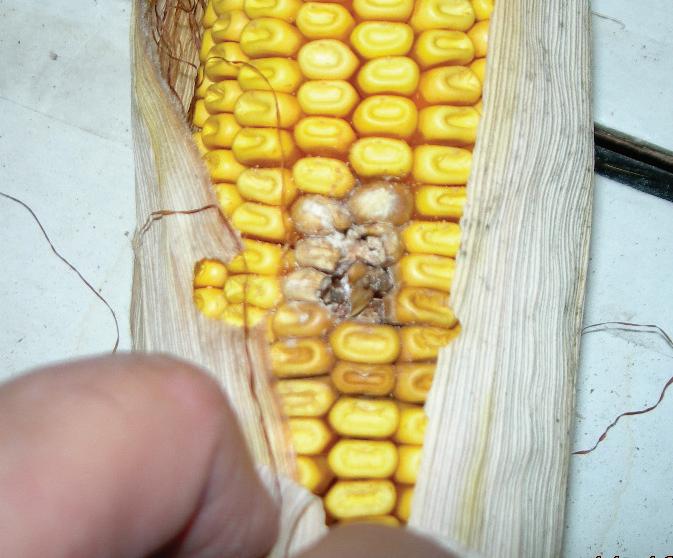
(Top) Signs of feeding can be seen where the insect penetrated the corn husk, and (Bottom) upon further inspection, on the kernels.
PhotoS couRteSy oF MeRVyn eRb
Pests and dIseases
Chemical companies are working on a solution to western bean cutworm, and if there is a need in 2010, OMAFRA could sponsor an application for emergency use registration.
into the cob, and all that was left of the cob in that feeding area was the kernel caps holding themselves together and a big hollow spot underneath,” he describes. “The kidney beans were just pods with holes in them, and all the seeds inside were chewed up.” However, he says the damage was not widespread.
Scouting for western bean cutworm in corn is not as easy as it sounds because the eggs are on corn leaves that are above head height, says Erb. “You just
don’t walk into a field and find them that readily.” It is not easy in beans either. “Beans are usually easy to scout because you can look down on them and see them,” he says, but for western bean cutworm, each leaf must be turned over to look for egg masses.
However, Erb thinks that the insect might be less of a problem in dry beans than in corn because growers are already scouting and applying insecticide to control tarnished plant bug and leafhopper. “Normally, we are doing one or
two sprays for those two insects in edible beans, so chances are, western bean cutworm is going to show up around the end of July or first week of August, and in that time frame, we’re quite often making a first or second application of insecticide,” he says. He thinks that what will be important is having insecticides with extended residual activity, in hot, dry weather, for dry beans because the eggs will hatch over a period of time.
Chemical companies are working towards registering pyrethroid insecticides for dry beans and corn. “I’ve been told by our OMAFRA minor use co-ordinator that he’s quite confident that we will have something for the 2010 season,” says Baute. If registration is not complete by then, OMAFRA could sponsor an application for emergency use registration if necessary.
Recommendations for 2010
It is anyone’s guess as to how serious this pest will be in 2010. However, growers who have already had it in their area should be especially vigilant, put up traps, and “expect at least to be scouting next year,” says Baute. This will give
Photo couRteSy oF tRacey baute, oMaFRa
growers a level of comfort as to whether management is necessary, allowing them to respond if needed. Because of the high numbers trapped in Huron County, “that area will be more at risk next year for having larvae overwinter, as well as receiving more from Michigan, so we’ll be really monitoring that location,” she says.
Erb reports that growers are already showing concern about western bean cutworm and asking if it is as bad as it looks in photographs. “I think it’s a good thing to have some sense of alarm and some sense of urgency, so they can be prepared,” he says.
However, both Baute and Michel caution that their respective regions are not at the stage where everyone needs to plant transgenic corn with traits againstwestern bean cutworm (see sidebar). They also note that, unlike traits for rootworm and corn borer control, these hybrids still allow some damage from the pest. Thus, growers who plant them still need to scout both the transgenic and refuge to determine if additional management might be required. (continued on page 26)
Photo by RalPh PeaRce
Pests and dIseases
Transgenic corn offers control options
Although there are no transgenic options for protection against western bean cutworm in dry beans, there are options in corn. Some of those are available now, and others are in the registration process. These are described in chronological order.
The Herculex trait, co-developed by Dow AgroSciences Mycogen Seeds and Pioneer Hi-Bred, has been commercially available since the early 2000s. This was the first protein from the Bacillus thuringiensis (Bt) bacterium that showed efficacy against multiple lepidopteran corn pests, says Bill Webster, agronomist for Dow AgroSciences Mycogen Seeds. The trait involves the Bt cry1F gene, which produces Cry1F protein. The protein kills lepidopteran pests such as European corn borer, western bean cutworm and black cutworm by disrupting the digestive system.
Although the Herculex trait gives good control of western bean cutworm, growers should not expect the same full results as with Bt traits against European corn borer. This is because European corn borer shows a rapid, acute response, whereas western bean cutworm seems able to tolerate a certain level of exposure to Cry1F protein, explains Dave Harwood, technical services manager for Pioneer Hi-Bred. “The insect can do some injury to the crop before succumbing to the toxin,” he says. “Under high western bean cutworm pressure, growers might observe some tip kernel feeding on Herculex corn. However, the degree of damage compared to unprotected corn in the same circumstance is night and day.”
New for 2010 is SmartStax, which was developed under cross-licensing of Dow’s Herculex and Monsanto’s YieldGard traits. SmartStax contains a combination of Monsanto’s technologies and the Herculex cry1F, says Michael Nailor, corn and soybean trait marketing lead for Monsanto Canada. It is the cry1F in this combination that provides protection against western bean cutworm.
Because SmartStax just received registration in July 2009, seed for the 2010 growing season is being produced in winter production areas such as Chile, says Webster. “It is for sale now, but in limited quantities and limited hybrids. As time goes by, the breeders will incorporate the trait into more lines of genetics.”
Stacking traits gives multiple modes of action against the primary pests. This reduces the risk of the insect developing resistance to the trait because the probability of an individual insect developing mutations to overcome two (or more) genes simultaneously is very low. This means that less refuge is required.
For corn, the primary above- and belowground pests are European corn borer and corn rootworm, respectively. Because SmartStax contains three traits against European corn borer and two against corn rootworm, its refuge requirements have been reduced from 20 percent to five percent. “That’s good for the farmer because they can protect more acres against those primary pests, as well as cover off potential secondary pests like western bean cutworm as it comes into the area,” says Nailor. Monsanto markets SmartStax under the Genuity brand and is forecasting a launch of up to
100,000 acres for 19 hybrids from eight seed brands.
Two additional products are currently in the registration process, but are not yet registered for use in Canada. One of these involves stacked traits. The other is a new Bt protein that has efficacy against multiple lepidopteran pests.
Pioneer’s AcreMax product concept, which is in the regulatory process, involves stacking its Herculex cry1F and Monsanto’s YieldGard trait to get two modes of action against European corn borer, with the aim of reducing refuge requirements. It also introduces the refuge-in-a-bag concept for above- and belowground insects whereby a certain proportion of seed in each bag would lack the traits for insect protection, says Harwood. The cry1F would provide protection against western bean cutworm.
Syngenta has developed a new trait that works against a broad spectrum of lepidopteran pests such as western bean cutworm, black cutworm, fall armyworm, and corn earworm. The Agrisure Viptera trait involves the vip3A gene, which was isolated from Bt found in a carton of sour milk, says David Townsend, crop manager for Syngenta Seeds Canada. The vip3A protein acts similarly to Cry proteins by disrupting the insect’s digestive system. Syngenta is hoping to have materials for sale in 2011, pending registration, and the trait will only be available stacked with a corn borer trait, says Townsend. An April 2009 cross-licensing agreement with Dow gives the two companies reciprocal access to the Herculex and Viptera traits.
Most growers buy corn seed from various sources each year, notes Harwood. This could make seeding requirements somewhat confusing because different seed will require different refuge, particularly over the next couple of years. However, he says, “It’s my expectation that with time, it will settle out and there will be a common approach to refuge.”
With all of the cross-licensing deals, traits for insect protection in corn are becoming ubiquitous among seed companies. So how do the companies differentiate themselves? “You’re really back to the same old game of differentiating corn products based on the characteristics we’ve always differentiated them on: yield, disease reaction, standability, dry down, all of those typical corn traits,” says Harwood. “It’s really only in those brief windows of time, as new traits come into the market, that there’s some differential.” n
CroP
management
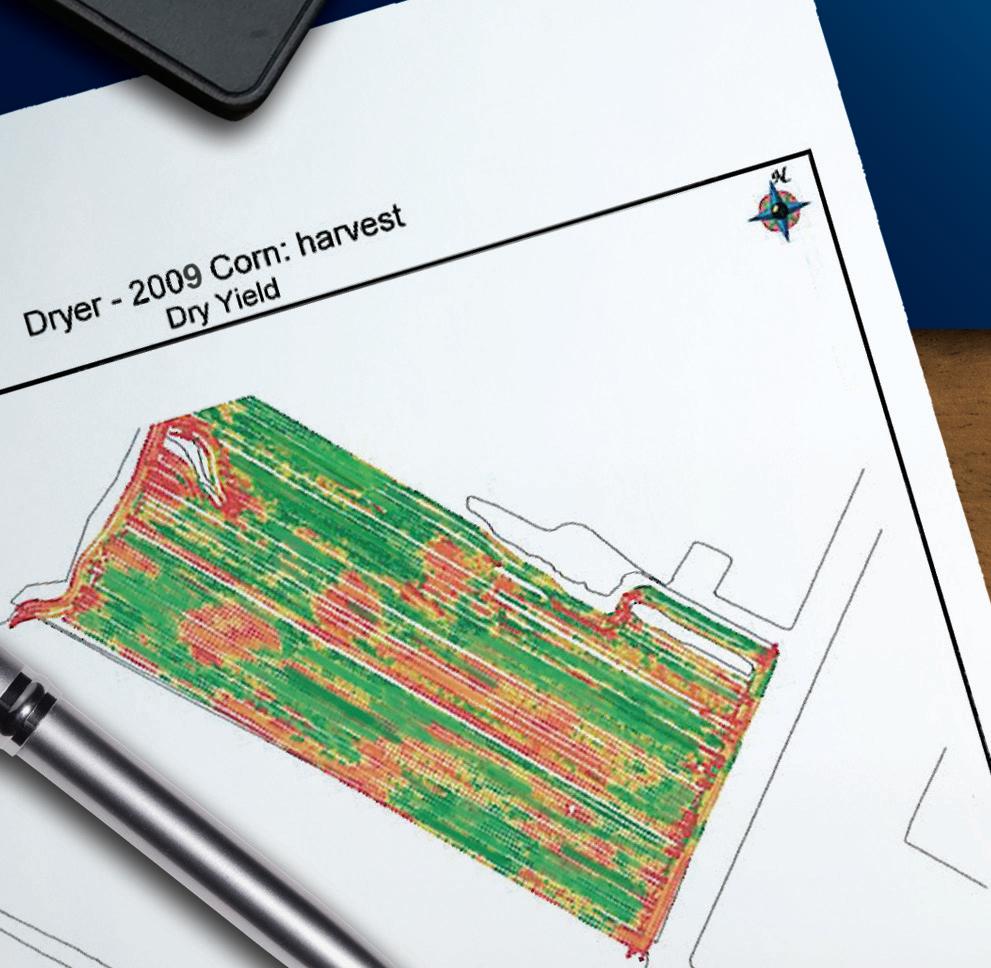
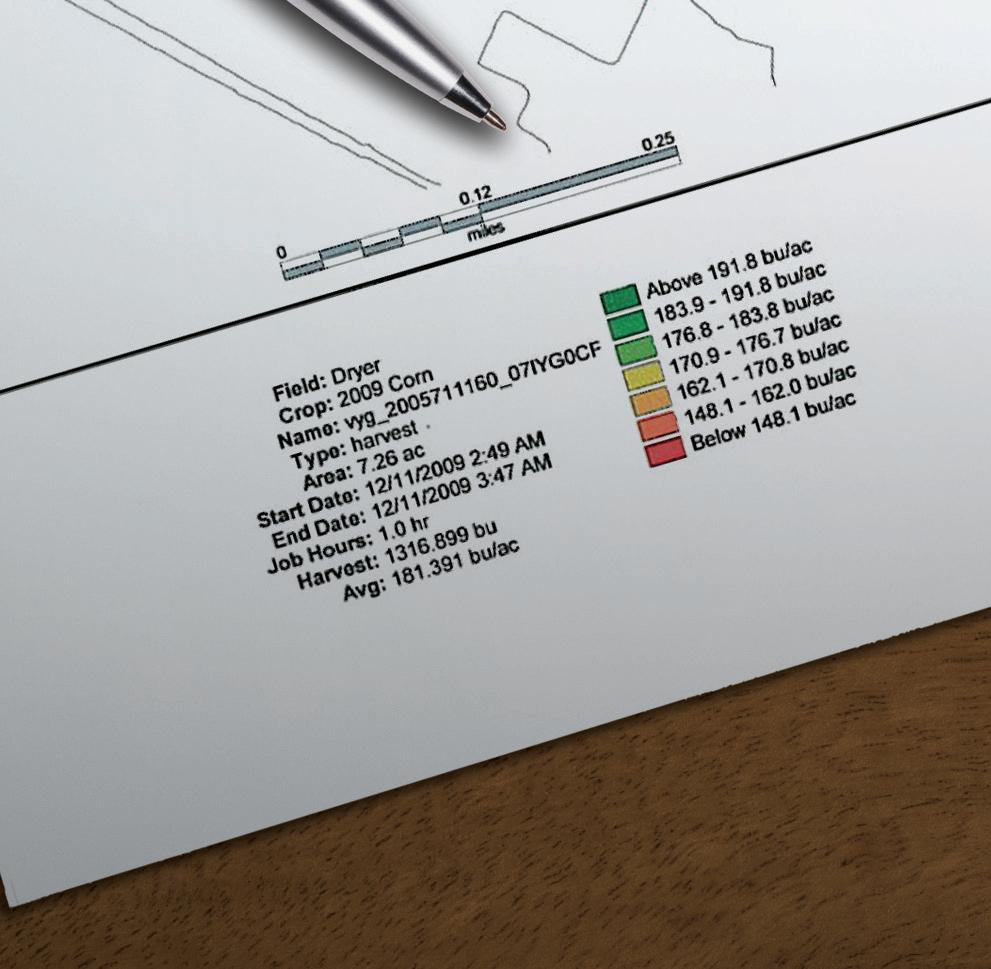
Will field drying corn save money?
by Carolyn King
The economics of delaying corn harvesting.
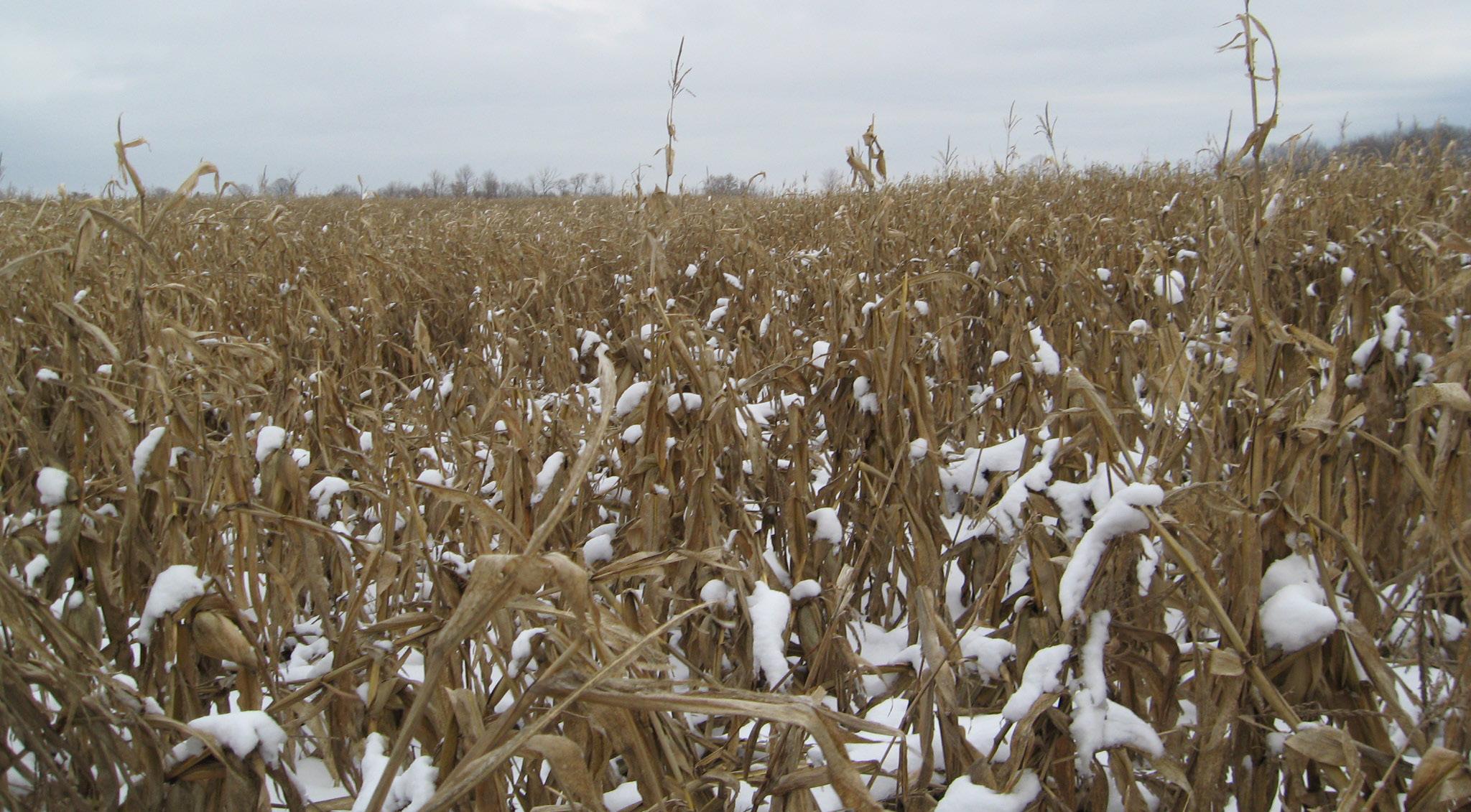
In the fall of 2009, many farmers had to decide whether to harvest highmoisture corn and pay the extra drying costs or to delay harvest to allow field drying. For growers facing that decision in the future, here are two approaches, one quantitative and the other qualitative, to help assess the options.
Calculating the break-even point Robert Moloney, an agronomist with NK Seeds/Syngenta, recommends that growers take a hard look at the costs when deciding whether to delay harvest. In a recent issue of Crop Barometer, he uses a simplified equation, developed by Dr. Paul Carter of the University of Wisconsin, to determine the break-even yield loss. That is the maximum number of bushels per acre a grower could afford to lose during field drying before it becomes cheaper to harvest when the crop is mature and pay for the extra drying.
Moloney works through an example to show that the calculation is not quite as agonizing as one might think. “Let’s say your corn is at 35 percent moisture, and if you harvest now you’ll get 150 bu/ac,” he explains. “You’re considering whether to harvest it now or leave it in the field until next spring when it’s at 16 percent moisture.”
The cost to dry corn at an elevator is $0.04 per percentage point of moisture per bushel, so the cost to dry corn from 35 percent to 16 percent would be (35-16) x $0.04 = $0.76 per bushel. So the drying cost per acre would be: 150 bu/ac x $0.76/bu = $114.00/ac.
If the price of corn is $4.00/bu, then that $114.00/ac cost would be equivalent to ($114.00/ac ÷ $4.00/bu) = 28.5 bu/ac of corn, which would be a 19 percent yield loss (28.5 bu/ac ÷ 150 bu/ac x 100).
So if a grower lets the corn field dry, and if the yield loss from field drying is less than 28.5 bu/ac, then the grower comes out ahead. But if the yield loss is more than 28.5 bu/ac, then it would have been less costly to harvest the corn at 35 percent moisture and pay for drying.
A grower performing this calculation
with his own numbers will indicate the costs he is facing; however, he still needs to evaluate the risk of whether he will exceed the break-even yield loss.
Weighing the risks
The key factor to consider is standability. “If you’ve got stalk rot and you get a couple of big wind storms and/or a big wind with heavy, wet snow, that can pull the whole stalk down. It doesn’t take long to reach a yield loss of 10 percent if you start losing plants that can’t get picked up by the combine,” says Moloney.
A grower can check standability using a pinch test or a push test.
Another consideration for growers is how long the corn might have to be left in the field to achieve a preset moisture level: Is it a few weeks or all winter? The longer the harvest is delayed, the greater the risk of loss, especially in or on the edge of areas that are prone to windy or snowy conditions, or if warm, wet weather causes ear moulds. Moloney notes, “If your corn already has some ear mould, it’s best to harvest and dry it as soon as possible to stop mould growth and possible toxin production.”
Moloney adds that, in southern Ontario under good drying conditions, corn moisture content might drop about 0.5 percent per day in early fall while the weather is still warm and perhaps
0.25 percent per day in late fall. But the drying rate can vary greatly depending on the weather and the corn’s maturity and condition. “The primary way corn gets down to harvest moisture is that, as it matures, it fills the kernel with starch, which physically pushes the moisture out of the kernel,” explains Moloney. He says that in 2009, some parts of southern Ontario got an early frost before the corn was fully mature. As a result, the kernels did not completely fill with starch, so they tended to have higher moisture and to take longer to field dry.
He adds, “The other issue in 2009 was that the corn husks tended to stay very tight. Quite often by December, the husks have loosened up enough to allow air movement to get the moisture out. But this fall they stayed tight so the kernels haven’t lost as much moisture as usual.”
A grower who decides to harvest very moist, immature corn can run into other problems. “You usually store corn at about 15 percent moisture, so normally you would dry it to about 13 or 14 percent knowing that it’s probably going to bounce back to 15 percent and a bit, as moisture in the very middle of the kernel migrates to the outside. But if the corn hasn’t fully matured and is really wet to begin with, it will tend to have a big bounce-back factor,” says Moloney. “You can dry it down to 13
Poor standability and bad weather can produce high yield losses in corn crops left to dry in the field.
Photo couRteSy oF RobeRt Moloney
or 14 percent, but it can bounce back way above 15 percent because it’s not easy to remove the moisture trapped in the very centre of that kernel.“ Another challenge with lower quality corn is the high potential for fracturing and breakage of kernels rapidly cooled after high-temperature drying. Higher temperatures can increase dryer throughput with higher moisture corn, but it’s a trade-off with potentially causing more quality issues.
To calculate or not to calculate Moloney advises growers to check the numbers before deciding whether to delay corn harvest. “It hurts to have to pay megabucks to get corn dried, but you really should look at your field’s standability and offset that with what it’s going to cost you to dry it.”
For those who feel profound sleepiness washing over them when the talk turns to equations, there is another option. Greg Stewart, corn specialist with the Ontario Ministry of Agriculture, Food and Rural Affairs, offers a qualitative approach. He notes, “Sure, you can calculate what the savings will be if, for instance, you’re at 28 percent now and you leave the corn till it’s 16 percent in March. But the yield loss side of it is much more iffy. Is it going to be a 10 percent yield loss or a 35 percent yield loss? Other than evaluating standability, it’s almost impossible to say for sure how much you’re going to lose over the winter.”
In a recent issue of the CropPest Ontario, Stewart provides seven questions to help evaluate the situation:
Standability: Evaluate stalk strength using a pinch or pull test. Does the test
Whether harvesting in the fall or the spring, growers must assess their own break-even yield loss.
Photo by RalPh PeaRce
show the stalks are weak or suspect?
Snow load: Is the farm in an area where snow load is often significant?
Crop insurance: Has the harvest to date already put a grower over the guaranteed production level?
Crop quality: Can the crop be harvested mid-winter and get corn that is Grade 4 or better?
Corn moisture: Is the corn moisture less than 35 percent?
Drying charges: Is the corn drying done on-farm, rather than off-farm?
Soil conditions: Can harvesting be done without rutting the soil?
If the answer to most of these questions is “yes,” then harvesting right away is probably best. If the answer is “no” to most of them, then delaying harvest may make more sense.
Stewart adds, “If your answers line up in favour of harvesting now, then you probably wouldn’t consider leaving your crop out regardless of what you thought the economics might be. And, similarly, if your answers all lean in favour of leaving your corn out, you probably will.”
A tip for next fall: Checking standability
Growers can check corn standability with a pinch test, squeezing the stalk to see if it has weak spots, or a push test, pushing on the plant to see if it lodges.
Moloney describes how to do the push test. “Randomly select 20 plants from five different areas of the field, for a total of 100 plants. Then push the top portion of each plant, just above the ear, six to eight inches from the vertical. Note the number of plants that break and whether the break occurs above or below the ear,” he explains. “The number of plants that break is the percentage of plants at risk of breakage if the crop is left in the field. If the break occurs above the ear, it may slow harvest but shouldn’t cause yield loss. If it occurs below the ear you may have yield loss if you can’t get the ear into the combine.”
Moloney adds, “While you are doing the test, split some stalks to see if the weakness is due to stalk rot, which could get worse if the weather is warm. The centre of a healthy stalk will be a bright white. Stalk rots cause the centre to be off-white, pink, brown, depending on the type of rot.”
If there is a standability problem with more than about 10 to 15 percent of the plants, consider harvesting earlier rather than later. n
A tip for the winter: Watch the bins
Moloney cautions, “Anyone who is storing corn on-farm this year needs to keep a super-close eye on it. There are so many fines and other junk in the bin that a lot of corn will spoil if farmers are not right on top of managing what they have in the bin.”
He says the 2009 corn harvest in many parts of Ontario was “beyond ugly” for fine particles; lots of kernel damage occurred during combining because the corn was so soft. “And every time you move it, every time
it goes through an auger or does anything, just makes it that much worse.”
Those fine particles tend to end up in the centre of the bin. They clog up the spaces between the kernels so the air cannot move around the kernels. Consequently the kernels do not dry down properly, and problems like mould and insect damage can result.
Many growers choose to core the bin to take out most of the fines from the bin’s centre. The cored material
should be cleaned or put into another bin to be used or shipped as soon as possible. Note that buyers have a limit on the percent of fines they will accept.
Moloney states, “This year I’ve heard of guys who took the core out but weren’t happy with the results. They damaged that much more corn coming out of the bin, cleaning it and putting it back in the bin, that they ended up not much better off.” n
Company on the move
GreenField Ethanol – making FUTURE FRIENDLY FUEL
GreenField Ethanol is Canada’s largest producer of grain-based renewable fuels. It’s a homegrown business that relies on homegrown – and renewable –resources to generate transportation fuels. In the process, we generate a win-win in economic and environmental terms that relies upon and directly benefits Ontario’s agriculture sector, rural communities and farm families.
From an economic perspective, GreenField brings jobs and growth for today and for tomorrow. With three Ontario-based refineries in Chatham, Johnstown and Tiverton as well as one more in Varennes, Quebec GreenField manufactures more than $1.7M litres of corn-based ethanol each and every day. In so doing, it provides a reliable market for farm families and delivers high-tech, value-added jobs to rural communities.
To put that in perspective, one recent study by Econometrics firm Doyletech examined what a single ethanol plant means for a typical farm community. The results: an additional $53.7M in additional spending for the local economy and at least 55 person years created annually in terms of job creation.
In some ways the environmental benefits are even more compelling.
Transportation fuels – the gasoline and
fossil fuels we use to power our cars and trucks – account for fully 30% of our country’s green house gas (GHG) emissions. So when it comes to combating climate change, finding ways to lower the carbon footprint from our vehicles is essential. The ethanol produced by GreenField makes an enviable contribution toward this end.
According to a recent study by ChemInfo, Canadian-produced ethanol such as that manufactured by GreenField reduces GHGs at a rate of 63% compared to traditional fossil fuels. And that’s in addition to reducing harmful tailpipe emissions and cutting smog.
Even more exciting are the prospects for the future – with new technologies and new benefits being pioneered. Our researchers at GreenField’s Centre of Excellence have figured out how to make ethanol fuel from wastes like corn cobs, cardboard, packaging and wood wastes like sawdust using biochemical and thermochemical techniques. These breakthroughs will give rise to even more jobs and growth for rural Canada while cutting GHGs at even greater rates than those produced from corn ethanol.
The bottom line is that GreenField Ethanol is in the business of building a greener, cleaner future. And, at the same time, creating new jobs and new opportunities for farm families and rural communities.
GreenField Ethanol working closely with Ontario farmers for the past 20 years.
Buy Direct Program
Exclusive to Ontario farmers.
To sell your corn: Johnstown, Bill McDonald or Daniel de Moissac 613-933-3400
Chatham, Tiverton 1-888-471-3661
We proudly produce high protein animal feed at all our ethanol plants.
Distillers Grains with Solubles
To purchase DDGS: Johnstown, Bill McDonald 1-888-265-7878
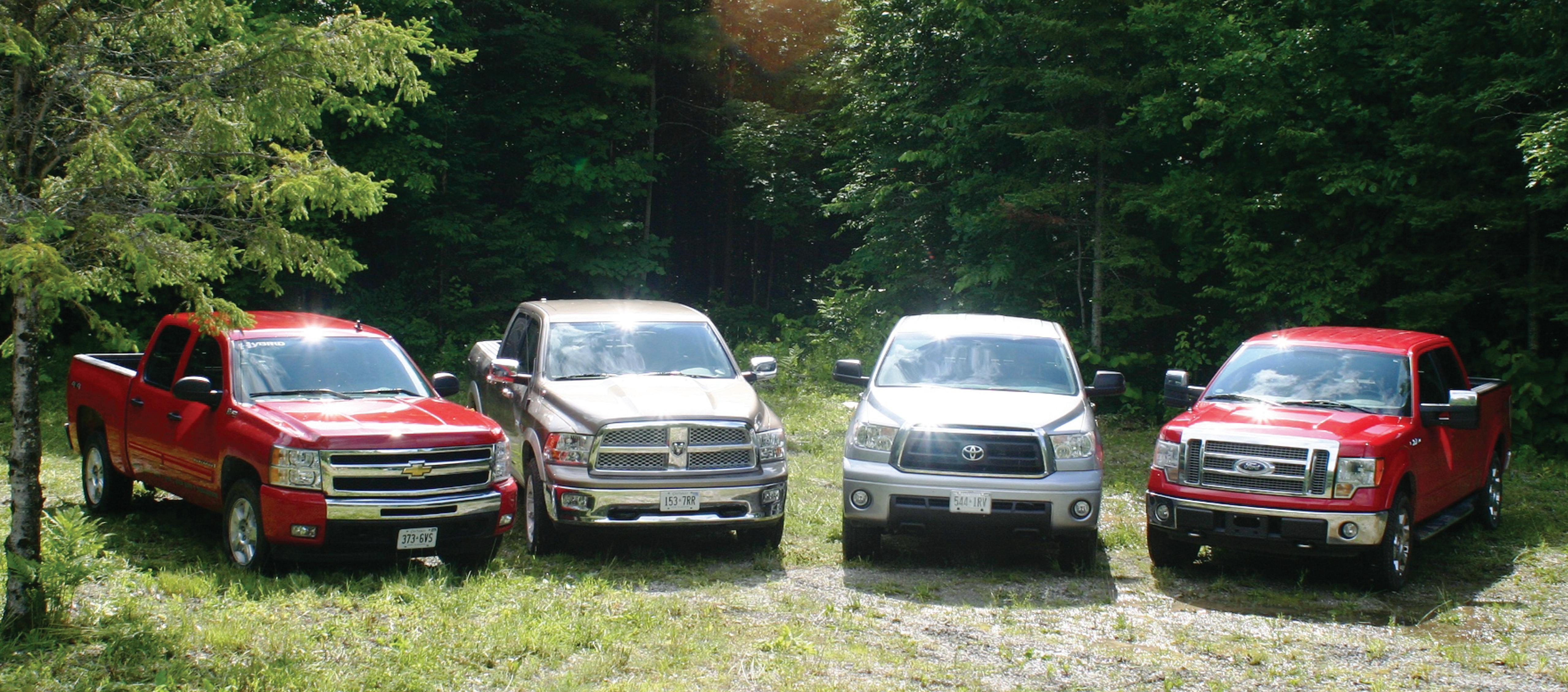
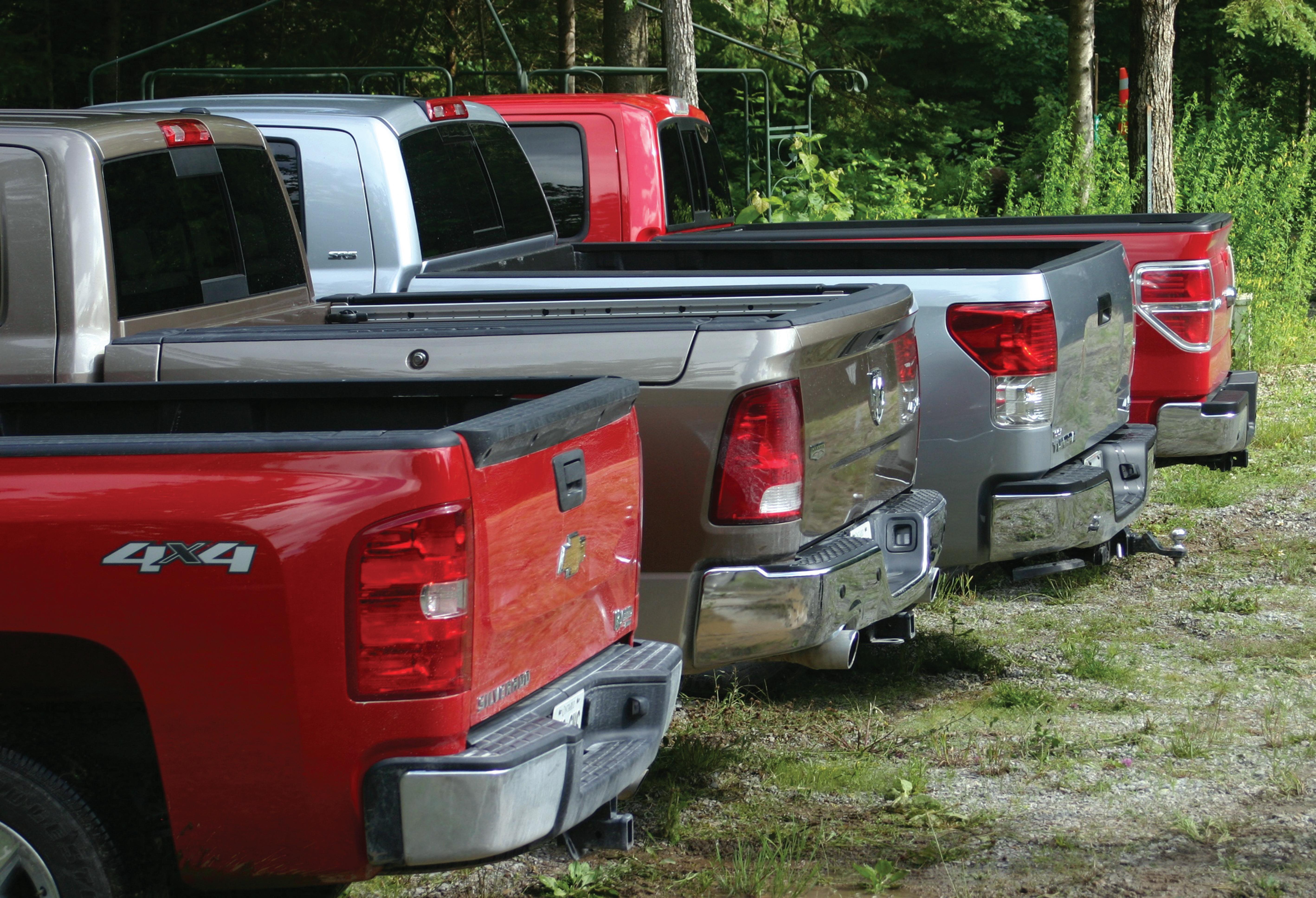
The year 2009 is one that the automotive world would like to forget: pick-up truck sales across North America fell by around 300,000 units. But despite this trend, purchases, particularly for industries such as farming, continue and topped 1.6 million trucks in the year. The year 2009 also saw a new Ford F-150 and a Dodge Ram, while the new GMs were just a year old at the time. So with 2010 dawning, hope returns to the auto makers, but there are no new trucks. In fact, the start of this new decade is simply a carryover year for the Big Three’s halftons, so all the testing we did last summer is still fresh and relevant. The exception is Toyota, which added a new small V-8 for this year, but we were fortunate to get the first one in Canada in July 2009, and those results are included.
The purpose of Truck King Challenge has always been to test pick-ups under real world conditions, which is what we continue to do, but because of the small number we felt that to try to judge categories numerically (as we have done in the past) wouldn’t work, the sample was too small. So, with two veteran AJAC truck writers, and me, we agreed that it was best to simply report our observations rather
than try to declare a winner.
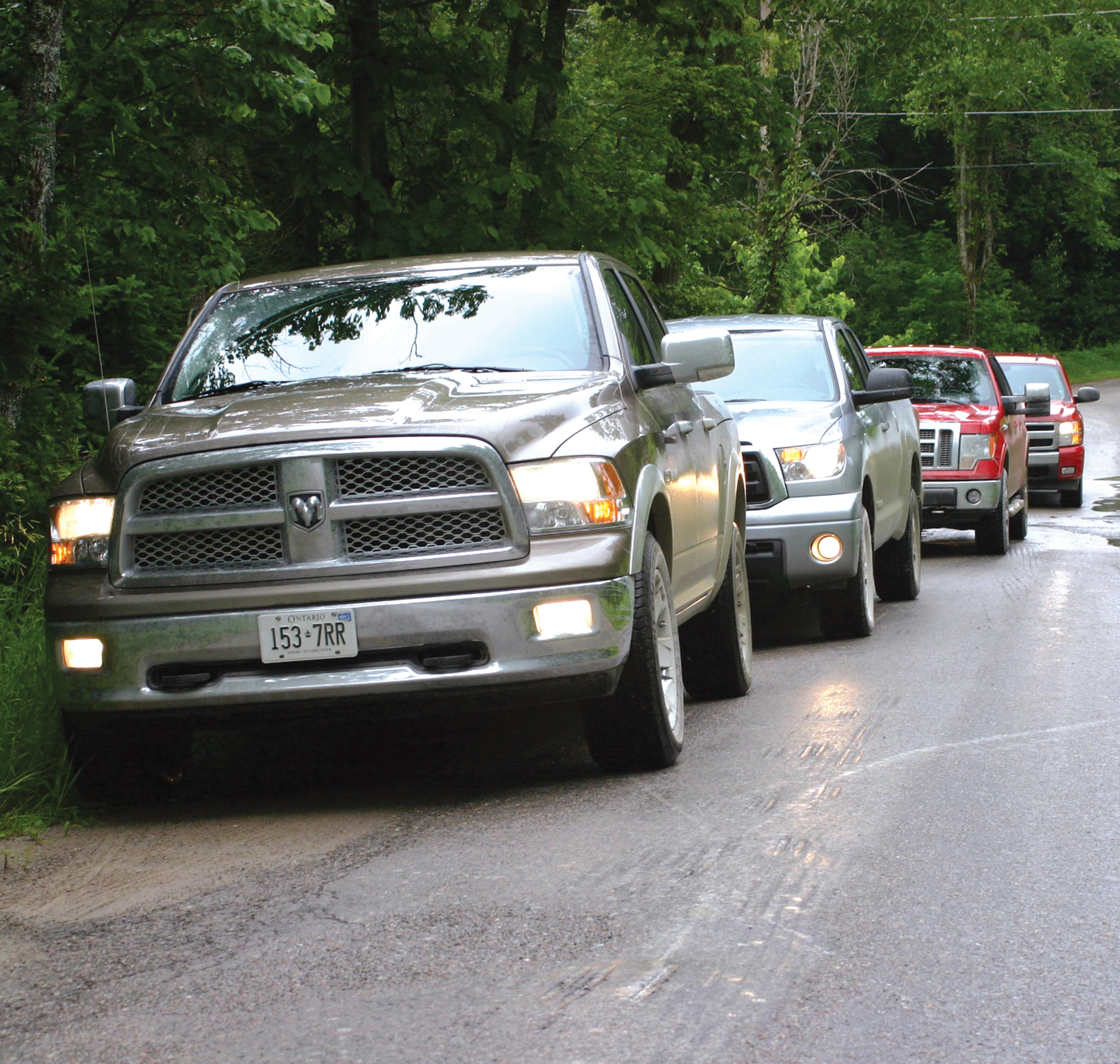
Of the trucks we had to test, the F-150 Ford and Ram from Dodge are the newest in terms of their most recent updates. Both were ’09 models (neither brand plans any significant changes for the ‘10 model year) and both featured body, powertrain and suspension upgrades. The Chevy Silverado that we were given to test by GM Canada was the unusual one of the bunch because of its hybrid powertrain.
The Toyota Tundra we had on hand was the exception as it was one of the first 2010 models available in Canada. It was equipped with the new 4.6L V-8 engine, which will now be the entry-level motor and has been specifically added to offer a fuel-efficient alternative to the powerful 5.7L V-8.
We spent two days running back-toback test loops empty, while towing and while on an off-road course. A good portion of this route was on gravel roads that are great for three things: evaluating cabin noise levels, getting steering feedback and driving dirt into every possible crevice on the truck; and with the rain we had managed all three equally.
Consensus was that the Chevy and Ford were the quietest of the trucks. Not just on overall road noise, but they also deadened the pinging in the wheel wells
from the gravel hits. Meanwhile, on pavement, tire noise was low and with both engines at idle it was almost impossible to tell they were running. (Well, with the hybrid that is a bit deceiving because at stops the engine does too.)
Steering feel is good on all the trucks, but again Ford and Chevy seem to have it over the other two with a more controlled, confident feel. Certainly the Ford’s new longer wheelbase adds to the overall ride quality, the tradeoff is that it increases its turning radius. Inside, though, the Ford puts this added length to good use as rear cabin space, adding almost six inches of floor space. For spaciousness Ford has it over the others.
It was interesting to see that on the 2010 Toyota Tundra we tested, a fold-down cargo bed step has been added. An obvious add-on that mimics the Ford step, it’s good to see that Toyota reacts quickly to the changing market, not necessarily waiting until the next generational update to make build changes.
That said, it was noted on the off-road portion of our test that of all the trucks the Tundra has the most play between box and cab; it needs to be stiffened up. With the rain pelting (and mosquitoes attacking) we attempted the off-road in 2WD mode first with each of the trucks, but with
From left to right, the trucks in this year’s review are the Chevy Silverado, the Dodge Ram, the Toyota Tundra and the Ford F-150.
all PhotoS couRteSy oF howaRD elMeR, tRucK KIng MeDIa gRouP
the slick mud we were soon stuck. Still, we noted that the mechanical locker that the Chevy has in its rear differential provided the most traction before we switched to 4WD. From here each truck performed adequately with the Ford’s turning radius once again causing us to have backup where the others didn’t need to.
Also on our off-road we noted that the Tundra and the F-150 persist in putting their trailer light connections below the rear bumper. We managed to bend both. These belong above or in the bumper, as Dodge and Chevy have done.
Each of our test trucks was V-8 powered with the Toyota sporting the smallest engine and the hybrid Chevy the largest at 6L. Interestingly, from a fuel perspective, the hybrid saved only about 1L/100km more than the new 4.6L Toyota engine. And while this spoke to the strides made by Toyota to put a fuel efficient motor in its Tundra, the real difference emerged when towing.
The new Ram came to us equipped with the 5.7L Hemi engine that has been doing duty in that truck for several years now. The F-150 was equipped with the 5.4L V-8, which has also been around as long as the
Hemi, but which was updated with new valves and coupled to an all-new six-speed automatic transmission (the Dodge stayed with the previous generation’s five-speed auto, though it added VVT to its Hemi). In fact, Dodge is now the only one that doesn’t run a six-speed tranny, so it’s obvious that multi-gear transmissions are playing much larger rolls in power and fuel management these days (these are a far cry from the threeon-the-tree days). But these gearboxes also show off advanced computer programming with tow/haul settings that electronically change the shift points for acceleration and also allow manual control for use with engine braking on long grades. Many of these changes are innovations that have migrated from the HD truck segment. Frankly, with what half-tons will tow now, it’s needed.
Our test trailer was a dual-axle, landscapetype trailer with a tare weight of 2400 lbs. On it we loaded two ATVs that I had on hand for testing. A new Yamaha Kodiak 450 and a ‘09 475cc Honda Foreman fit our trailer and these weighed in at 629 lbs and 639 lbs, respectively. So with the trailer included we put together a modest tow test weight of 3668 lbs. Respectable for any of these halftons to tow, but far from a real workout.
While towing this trailer, once again the power and wheelbase of the Ford and Chevy proved to be the best combinations. The Dodge lacked only in its gearing, where a long second gear tended to bog a bit on hills while accelerating. The Toyota, while it handled the weight, used all its power and the transmission was worked hard to keep pace; this is an obvious trade-off for the improved fuel economy. Of course where neither was affected was on the Chevy hybrid. With its 6L Vortec engine, it pulled with strength and confidence, and the electric motors even have enough power on their own to move the truck and trailer from a standing stop on electric power only.
As for suspensions, we concluded that our modest load wasn’t enough to highlight any major differences between leaf springs and coil suspensions, in fact the new setup on the Dodge felt pretty good. As for design, we try to be practical in our evaluations but we are as swayed by a truck’s looks as any buyer. And while there isn’t a mutt in the bunch we have to admit that the current Ram is a very pretty truck, inside and out.
With the market now recovering w expect to stage a full-blown Canadian Truck King Challenge again in the fall of 2010. n
*Howard Elmer is editor of Truck King Media Group.
Liberty® herbicide is now under $12/acre* for excellent broad-spectrum weed control on Herculex®, Agrisure® or SmartstaxTM corn hybrids containing the LibertyLink® trait.
Weed management
An innovative approach to innovative chemistry
Industry and research working together.
Within the agricultural sector, research and industry often collaborate to bring new crop varieties to market. What occurs infrequently, however, are third party researchers working together with crop protection companies on the development of new active ingredients. For Dr. Peter Sikkema, field crop weed management professor at the University of Guelph’s Ridgetown Campus in Ridgetown, Ontario, the opportunity to be involved in the development of a new molecule right from the start meant he had a unique opportunity to help shape the crop protection product that would ultimately be available to growers.
Helping to shape the future
In 2004, Sikkema was invited to work with crop protection company BASF to provide his expertise and perspective on a new molecule that company researchers had discovered, a protoporphyrinogen-IX-oxidase (PPO) inhibitor, which belongs to the pyrimidinedione class of chemistry (Group 14). This particular molecule was different from others in its class because it exhibited more mobility within the plant versus other Group 14 products. As a result, the researchers began discussing its potential for onfarm weed management and its practical benefits for growers.
In order to verify its initial research findings, the crop protection company assembled a small group of public sector specialists in weed science from Canada and the US to form an advisory council. Three Canadian and seven American researchers, including Sikkema, who would oversee the development of the molecule and assess its use as a pre-seed burndown, represented the council. Within the council, there were two committees, one assessing the product’s chemfallow use patterns in cereals, and the other assessing its use patterns in corn and soybeans. Sikkema participated on the corn and soybean committee and provided the Eastern Canadian grower perspective as the molecule progressed through development.
According to Sikkema, he saw his participation on the advisory council as an excellent opportunity to not only conduct new research but also be on the ground floor of bringing a new active to Canadian growers. “We did a lot of research and found that it is like any other herbicide,” he explains. “This product has its strengths and its weaknesses. It has an optimal application timing and a sub-optimal timing resulting in either reduced weed control or increased crop injury. This is the value of applied research: identifying the best fit for this herbicide and providing the best recommendations to Ontario farmers.”
The mandate of the council was to share and exchange data and information about the molecule, and BASF would do the same. The council acted as a type of board of directors during the development phase, with each member conducting his own internal trials, analyzing results and helping to provide answers to technical questions and concerns. Council members also
The only Group 10.
width. Planter precision and depth control. When it comes to seeding and planting solutions, only Salford delivers these great features:
• Available in tow-between or tow-behind in single or double tank mount configurations
• Largest tank-mounted planter on the market – up to 345 bushel capacity
• Easy to adjust depth control and down pressure systems
• Row width options from 6 to 30 inches and twin line capability
Available in widths from 15 to 55 feet Call your Salford dealer today
Weed management
provided regional insight on the overall potential of the product.
Meetings were held twice a year. The summer meeting included a field tour, where the team visited BASF and advisory council research trial sites and discussed their observations. The second meeting was typically a fall results meeting, where the data gathered by each researcher was presented and examined. The advisory council was encouraged to provide critical feedback on the research direction, help interpret results and provide recommendations for the future.
From Petri dish to product
The Kixor active, as this new molecule is named, was submitted to the appropriate regulatory authorities for registration in January 2008 in the United States, Canada and Australia. Advisory council research and other external trials demonstrated that Kixor offers excellent control of all major broadleaf weeds, including glyphosate, acetolactate synthase (ALS) and triazine-resistant biotypes; both rapid foliar burndown and rate dependent soil residual activity; compatibility with burndown and residual graminicides to provide broad-spectrum weed control; complementary activity with glyphosate; utility in multiple crop and non-crop use segments with rotational crop flexibility; and a favourable environmental, toxicological and ecotoxicological profile.
The herbicide products with the Kixor
active are currently under review by the Pest Management Regulatory Agency (PMRA), and will be registered under two separate trade names: Integrity for corn, and Eragon for soybeans. Both will be recommended for use in pre-seed and chemfallow applications, as tank-mixes with glyphosate.
Integrity herbicide will offer seasonlong control of grasses and broadleaf weeds in corn applied either early preplant, pre-plant incorporated or preemergence. It can be used in both conventional and Roundup Ready corn, it does not require atrazine and offers excellent early-season crop safety.
Research has demonstrated that in soybeans, Eragon tank-mixed with glyphosate will provide a faster and more complete burndown than glyphosate alone, and will control many of the broadleaf weeds that glyphosate is weaker on.
A win-win for all
The resulting benefit of the advisory council was not only two effective new products for Eastern Canadian growers, Sikkema was also very impressed with how the Advisory Council process worked and what he gained from the experience. “There are a number of things
that were really valuable for me, first was to get as much basic information on the characteristics of this herbicide as early as we did in the development process. The second was the opportunity to participate in a number of meetings at various locations around North America, and exchange results with both BASF personnel and other members of the advisory council. And the third was having an opportunity to work with this new molecule and see first-hand where it fits into weed management strategies for Ontario growers.”
And BASF could not be happier with the results. “For any company to bring a new product to market, it can take many years of lab, greenhouse and field research before the product gets to the grower,” explains Dr. Trevor Kraus, research and commercial development and technology development manager with BASF Canada. “By involving third party scientists in the research and evaluation process at the early stages of product development, we were able to capture their initial feedback, comments and research results to ensure that the products we bring to market offer growers the benefits that they need in a quicker timeframe and contribute directly to the success of Canadian agriculture.” n
Research demonstrates that Kixor provides fast-acting pre-plant burndown of weeds (left) compared to glyphosate alone (right) and the untreated check (middle).
Photo couRteSy oF baSF.
Pull out all the stops
Finance day-to-day expenses with AdvancerPlus
Need funds to buy inputs and supplies? Want to take advantage of last-minute deals? AdvancerPlus is a short-term loan that’s always there to cover your day-to-day operating expenses. Pull out all the stops and get financing that keeps up with you.
To find out more about AdvancerPlus, call your nearest FCC office at 1-800-387-3232.
www.fcc.ca
Machinery Manager
a I r S e e D e r S & D r I LLS
EEach phase of crop production has its own unique level of importance. Sprayers are responsible for providing nutrients and protecting against weeds, disease and pests; tractors literally pull a vast majority of the workload on the farm while combines reap bountiful harvests: some larger than others.
ach phase of crop production has its own unique level of importance. Sprayers are responsible for providing nutrients and protecting against weeds, disease and pests; tractors literally pull a vast majority of the workload on the farm while combines reap bountiful harvests, some larger than others.
However, it is what is planted that many will argue is what is most important. Without the equipment to put the seed into the ground, there would be little need for tractors, sprayers or combines.
However, it is what is planted that many will argue is most important. Without the equipment to put the seed in the ground, there would be little need for tractors, sprayers or combines.
Top Crop Manager’s latest in our Machinery Manager series is only a seasonal reflection on that importance. With our latest offering, Air Seeders and Drills, we are simply acknowledging the importance of getting the seed into the ground relative to the time of year.
Top Crop Manager’s latest in our Machinery Manager series is only a seasonal reflection on that importance. With our latest offering, Air Seeders & Drills , we are simply acknowledging the
importance of getting the seed into the ground relative to the time of year.
Seasons change, and so does the importance of each piece of equipment.
As we do with each issue, in addition to our brief and insightful write-ups, we offer the full specs for each model on our website, along with links to each manufacturer’s web page.
Seasons change, and so does the importance of each piece of equipment.
As we do with each issue, in addition to our brief and insightful write-ups, we offer the full specs for each model on our website, along with links to each manufacturer’s web page.
While some manufacturers chose to include their full product line, others chose only to highlight the air drill that they believe has the best fit in western Canada.
At Top Crop Manager, we also advise growers to consult with the equipment manufacturers, dealers and other agronomy professionals for more information.
At Top Crop Manager , we also advise growers to consult with the equipment manufacturers, dealers and other agronomy professionals for more information.
r alph Pearce editor, Top Crop Manager
Ralph Pearce, Editor Top Crop Manager
AIR SEEDERS & DRILLS – MACHINERY MANAGER
Amity Technology
Amity Technology, based in Fargo, North Dakota, manufactures air seeding equipment including air drills and air carts, sugar beet equipment, soil samplers and crop management products.
The Single Disc Drill is the first completely new seeding concept in generations. It is extremely effective in notill and conventional cropping systems. Its patented opposing single discs are extremely effective in high residue field conditions, and it has mid-row fertilizer placement capability with no change to the seeding configuration. The seeding depth and down pressure can be adjusted on the go, from the tractor seat. This allows for precision depth control and seed placement.
The Air Double Disc Drill is an extremely effective minimum tillage drill with excellent seed placement at higher field speeds, and an efficient and reliable drill for a variety of crops. This proven seeding technology has been re-engineered for less maintenance and greater precision. The air double disc drill is available in 40- and 45-foot widths, with 6- or 6.75-inch row spacing.
The Air Till Drill, a single pass “direct seed” drill, is unmatched in shank seeding technology. The exclusive 5.5-inch-wide, fully pneumatic packer wheels mounted on walking beams, provide maximum seedbed utilization and more uniform packing. Nitrogen banding options allow growers to apply 100 percent of required fertilizer during seeding. The air till drill is available in 40-, 50- and 60-foot widths.
MoDEL
SINGLE DISC DRILL
Classification Independent openers
Width options
30-, 40-, 50-, 60-ft.
DoubLE DISC DRILL AIR TILL DRILL
Independent openers
40-; 45-ft.
Shank
40-; 50-; 60-ft.
Shank type Not applicable Not applicable 50 C-shank; 85 edge on opener type 18-in. dia. single disc 14-in. dia. double disc Ribbon seed band up to 6-in.
Fertilizer option
Mid-row option
Single shoot
Mid-row option
Depth control 0- to 4-in. Individual row depth ¼-in. increments 0- to 4-in.
Row spacing options 6-in./9-in. paired row 6- or 6.75 in. 10-in. or 15-in.
Packing type On-row On-row Walking tandem
Packer wheel type Pneumatic tire
Semi-pneumatic Pneumatic tire
Packer wheel size 26/6.50-15 3-in. wide by 14-in. dia. 26/6.50-15
Go to www.machinerymanager.ca for further specifications and links to Amity Technology.
Bourgault Air Seeders and Air Drills
The Bourgault line-up includes a selection of seeding systems to fit the needs of different farming systems in Western Canada. The Bourgault 3310 PHD openers feature independent depth and packing control for excellent seed depth consistency.
The rugged 5710 Air Hoe Drill is ready to take on acre after acre, with the ability to change depth quickly, level easily and avoid maintenance. Compatible with a multitude of openers and six packer wheel options, the 5710 can call any farm home.
The 3710 ICD is new to the Bourgault line-up. It can be configured in either a low disturbance or high residue anti-hair pinning configuration. The opener’s parallel linkage arms and walking axle packer/gauge wheel deliver unprecedented seed depth accuracy.
The Bourgault 8810 cultivator harrow arms can be quickly detached and the same packer wheel gangs as on the 5710 Air Hoe Drill can be added transforming the 8810 into an air hoe drill. This versatile machine is perfect for farms that require a cultivator and a drill for seeding activities.
Shank type Edge-on parallel linkage, independent shanks 1 x 2-in. C-shank or tapered 1.25 x 2-in. C-shank
opener type
Wide range of single and double shoot options
Fertilizer options Depends on opener. Mid-row banding available
Depth control
0- to 2.5-in. independent depth control with in-cab adjustments
Coulters 1 x 2-in. C-shank or tapered 1.25 x 2-in. C-shank
Wide range of single and double shoot 20-in. coulter Wide range of single and double shoot
Depends on opener. Mid-row banding available
Single point depth control
Single shoot or mid-row band option Depends on opener. Mid-row banding available
Hydraulic adjustable with up to 450 lbs. downforce
Single point depth control
Row spacing options 10- or 12-in. 7-, 9.8- or 12.6-in.7.5-, 10- or 12-in. 8- or 10-in.
Packing type
Packer wheel type
Independent on-row
Rear mount
Pneumatic or foam filledSteel, rubber or pneumatic
Packer wheel size 4.8-in. wide
Steel: 2.25-, 3.5-, or 4.5-in. wide X 21.5 dia.
Rubber: 3- or 4-in. x 22-in. dia.
Pneumatic: 5.5 x 20.5 dia.
Independent on-row
Shoulder, round or V-style
N/A
Rear mount exchangeable with harrows
Steel, rubber or pneumatic
Steel: 2.25-, 3.5-, or 4.5-in. wide X 21.5 dia.
Rubber: 3- or 4-in. x 22-in. dia. Pneumatic: 5.5 x 20.5 dia.
AiR SEEDERS & DRiLLS – MACHinERY MAnAGER
Case IH Air Seeding Equipment
Case IH Flex Hoe Series air hoe drills offer the size, configuration and precision growers need to match their operations. Choose from seven widths, a wide variety of seed and fertilizer placement options, openers, row packing, trips and shanks to match your field conditions.
The Case IH Precision Hoe 800 air hoe drill is ideal for farmers growing canola, wheat and other high-value, small-seed crops on large acreages. It delivers accurate seed and fertilizer placement and good residue flow in uneven conditions, thanks to the patented parallel link row unit and unique single-shank design. The rear folding frame design allows working widths up to 70 feet (21.3 metres) while providing industry-leading narrow transport width and height.
For no-till operations, the Case IH Precision Disk Series single disc no-till air drills offer excellent low disturbance seeding in high residue conditions while delivering accurate depth control, consistent seed placement and low furrow sidewall compaction. They also reduce soil disturbance to minimize weeds and improve residue clearance, allowing tall straw to flow through easily. Choose 30- or 40-foot (9.1- or 12.2-metre) widths and 7.5- or 10-inch (19- or 25-centimetre) row spacing.
MoDEL
Classification
PRECiSion HoE 800
FLEx HoE 400 & 700
PRECiSion
Width options 50-; 60-; 70-ft. 27-, 33-, 39-, 45-, 51-ft.; 60- or 70-ft. (700 model) 30-ft. or 40-ft.
Shank type
opener type
Fertilizer options
Depth control
Standard with hydraulic trip force and down pressure adj.
Double shoot sideband; ultra-low disturbance, carbide tip
Dry, liquid or AA
1 x 2-in. 50 degree C-Shank; 1 x 2-in. 84 degree edge-on (700 model) N/A
Wide range available
Single or double shoot
Adj. 0- to 2-in. Each section independently hydraulic control. Single point adj.
22.5-in. diameter disc with 5 degree angle
Single shoot
0.25- to 3.5-in. in 0.25-in. increments
Row spacing options 10- or 12-in. 7.2-, 10-, 12-in. depending on model 7.5- or 10-in.; plus 15-in. on Disk 40
Packing type On-row
In-line gang or walking V On-row and adjustable up to 2-in. to side
Packer wheel type Pneumatic with sealant Steel V; semi-pneumatic; pneumatic Rubber
Packer wheel size
4.8 x 8-in. dia.
Steel: 3.5- or 4.5-in. Rubber: 3-, 4- or 5.5-in.
Pneumatic: 6.5-in. (depends on model)
N/A
Go to www.machinerymanager.ca for further specifications and links to Case iH Seeding Equipment.
Ezee-On Seeding System
Ezee-on produces the Model 7550 in three-section and five-section versions. The three-section drill utilizes single cylinder depth control to raise or lower the entire drill width. Positive mechanical depth stop segments control depth cylinder in 1/8-in. increments.
The air drills use a 47-degree C-shank with 350 or 500 pounds dual spring trips. Eight-, 10- or 12-inch row spacings are available, with a variety of ground openers to configure the air drills for single or double shoot seeding. Semi-pneumatic or rubber gang packers accommodate a variety of openers and soil types.
On the five-section drill, two 4-inch x 12-inch cylinders are used with a 5.5-inch double-walled main frame rockshaft with single-point hydraulic depth control to maintain structural integrity and ensure precise seeding depth is achieved. Flex-wing hinges are designed into all five frame sections to provide excellent ground-following ability, even in the most challenging fields.
The 7550 three-section air drill is suitable to small- and mid-sized operations with widths from 28 to 40 feet. The five section drill comes in widths from 48 to 60 feet.
7550 3-SECTion
Classification
Width options
Shank type
28-, 33-, 37-, and 40-ft.
Hoe shank drill
7550 5-SECTion
48-, 56-, or 60-ft.
47 degree C-Shank with 350 or 500 lbs. dual spring trip opener type
Fertilizer options
Depth control
Single or double shoot options
Depends on ground opener
Single cylinder with mechanical depth stops in 1/8-in. increments
Row spacing options 8-, 10-, 12-, and 12.25-in. 8-, 10- or 12.25-in.
Packing type
Press wheel type
Press wheel size
Packing pressure
Rear mount walking gang
Rubber or steel
Steel: 3.5- or 5-in.
Rubber: 3- or 5-in.
N/A
Go to www.machinerymanager.ca for further specifications and links to Ezee-on Seeding Equipment.
AiR SEEDERS & DRiLLS – MACHinERY MAnAGER
John Deere 1870 Air Hoe Drill
Adding to an already extensive line-up of air seeding tools, John Deere has launched the new 1870 Air Hoe Drill with the Conserva Pak hydraulic shank opener. The 1870 provides accurate placement of fertilizer, reduced seed, fertilizer and input costs, and consistent, uniform emergence throughout the field for higher yields.
The new Conserva Pak shanks use simple and adjustable hydraulic accumulator force for accurate fertilizer placement down to six inches deep, even in variable field conditions. There is low soil and residue disturbance with a very positive closing system by the seed opener to ensure good seed-to-soil contact.
Seed depth consistency is also improved on the 1870 Air Hoe Drills because the hydraulic accumulators permit separate control of down-force of the fertilizer shank and the press wheel/seed opener. The Conserva Pak opener achieves consistent depth with an even amount of soil placed over the seed in a single or paired-row setting, even in variable seeding conditions.
Another feature is that the easily adjustable openers, with independent down-force can be set between 100 and 800 pounds with a trip clearance to meet seeding conditions. The adjustable breakout force is ideal for rocky conditions.
The 1870 Air Hoe Drill is available in two widths, the three-section 40-foot model, and the five-section 56-foot model. Transport width for both models is 20 feet. A rigid, three-rank frame provides strength and support for even and consistent depth and yet allows the openers to follow contours and flex with field conditions to deliver the seed at the prescribed depth.
Classification Independent hydraulic hoe drill
Width options 40- or 56-ft.
Shank type Conserva Pak independent but linked fertilizer shank and seed opener
opener type
Single or paired row seed
Fertilizer options Independent shank bands dry, liquid or anhydrous ammonia
Depth control
Adjustable 0- to 3-in. seed depth
Row spacing options 12-in.
Packing type
Packer wheel type
Packer wheel size
Independent on-row
Semi-pneumatic rubber
3.5 x 16-in. dia.
Go to www.machinerymanager.ca for further specifications and links to John Deere’s 1870 Air Hoe Drill, and other seeding equipment.
K-Hart Double Disk Air Drills
K-Hart Direct Seeding Disk Drills are one of the simplest designs in today’s market, one of the main reasons farmers/ operators choose to purchase these drills. K-Hart disc openers work well in both loose and firm soil and can outperform other disk openers when seeding conditions are extremely wet.
Another appealing feature of the K-Hart Disk Drill is that it works exceptionally well in fields where combine stripper headers have been used. The frame design can be outfitted with either Model 3612, which has one articulating pivot point and two different packer design options, or the new-for-2010 Model 4612, which has a parallel link design with the deluxe packer option as standard equipment.
The flexible K-hart disc openers can seed canola to peas, grass seed to cereals. The easy frame design comes in varying widths of 34, 42, 52 and 65 inches. Optional mid-row fertilizer coulters can be installed easily on the frame.
MoDEL 3612
MoDEL 4612
Classification Independent double disc Independent parallel link double disc
opener type 16 in. double disc with 0.25-in. offset
Fertilizer options
Depth control
Single shoot, or optional mid-row band
Adjustable with 80 to 500 lbs. blade pressure
Adjustable with 75 to 600 lbs. blade pressure
Row spacing options 9-, 10- or 12-in.
Packing type
Independent, on row
Press wheel type Rubber
Press wheel size
2 x 13 in. dia. flat; 2 x 14 . in. dia. V; 23 x 13 in. dia. V; 3 x 13 in. dia. centre rib
Go to www.machinerymanager.ca for further specifications and links to k-Hart Seeding Equipment.
MoDEL
1870 AiR HoE DRiLL
AiR SEEDERS & DRiLLS – MACHinERY MAnAGER
Morris Industries
The Morris Contour Drill has redefined the Independent Opener Drill market. It all starts with the independent contour opener that features parallel linkage for ultra-precise seed and fertilizer placement. This true one-to-one parallelogram linkage maintains a constant opener angle relative to the soil and constant opener depth in relation to the packer wheel throughout its 17-inch range of travel. Each opener moves independently of the frame and of each other to closely follow the contours of the land. The Contour Drill delivers unsurpassed seed placement for quick, even germination and its simple, rugged design provides ease of operation and years of durability. A unique passive hydraulic accumulator system acts as a hydraulic cushion for the trips, greatly reduces the demand on the tractor hydraulics. The single-shank design has lower draft requirements than most double-shoot air hoe drills and disc drills.
The Maxim II Air Hoe Drill uses a flexible frame to deliver accurate seed placement, followed by on-row packing for fast, even germination. Rear stabilizers ensure proper tracking for fully flexible front to back and side-to-side land following. A unique trip pattern on a four-row configuration provides optimum residue flow. A simple, adjustable collar depth stop on the hydraulic depth cylinders ensures exact, repeatable seed depth. Dual gauge wheels offer optimum flotation. A wide selection of trips, openers and press wheels lets growers match the Maxim II to the individual’s seeding style and desired field finish.
Depends on opener. Optional angle disc fertilizer coulter for mid-row banding
Adjustable collar depth on hydraulic cylinders
7.5-, 10- or 12-in.
Rear mount gang, on-row
Steel or rubber
3.5- or 4.5-in.
Go to www.machinerymanager.ca for further specifications and links to Morris industries air drills.
New Holland Seeding Systems
The New Holland line-up includes the hoe shank drills Models P2050 and P2060, along with the new independent, parallel linkage hoe drill, the P2070.
With durability and innovation reflective of its Flexi-Coil heritage, New Holland’s P2070 precision air hoe drill provides precision seed placement with adjustable individual opener depth control.
Each opener on the P2070 follows terrain independently of the frame, closely following contours of the ground. Patented individual opener depth control provides zero- to two-inch seeding depth in 1/8-inch increments. A single bolt on each opener has an indexed slotted design which makes it easy to adjust depth.
The true parallel link design maintains consistent seed depth through the complete operating range of each individual opener. Fully adjustable trip force (adjustable from 275 to 550 pounds) and packing force (adjustable from 135 to 215 pounds) provide operators with exceptional control. The single-shank, double-shoot minimum disturbance opener provides 1-7/8-inch lateral separation and 7/8-inch vertical separation between seed and fertilizer.
Available in 50-inch, 60-inch and 70-inch working widths, with either 10- or 12-inch spacing, the P2070 air hoe drill’s innovative fold-back design allows it to be folded into a 18-foot, four-inch wide x 16-foot, six-inch high envelope equal to or smaller than the 4WD tractor pulling it for safe and easy transport.
MoDEL
Classification
Width options
Shank type
opener type
Fertilizer options
Depth control
P2050
Hoe shank drill
27-, 28-, 33-, 34-, 39-, and 40-ft.
C-shank; 350 or 550 lbs. trip pressure
Wide range of single, double shoot and paired row
P2060
Hoe shank drill
60- or 70-ft.
Conventional C or edge-on
Wide range of single, double shoot and paired row
Inter-row band optional Depends on opener
Single point depth control
Row spacing options 7.2-, 10- and 12-in.
Packing type
Packer wheel type
Packer wheel size
Single point depth control
P2070
Independent parallel linkage
50-, 60-, 70-ft.
Independent opener depth control with dual pivot arm
Double shoot, side band (1 7/8 in. lateral and 7/8 in. vertical)
Single or double shoot
Individual opener adjustable 0 – 2 in. depth in 1/8-in. increments
7.5-, 10- or 12-in. 10-in. or 12-in.
Rear mount gang on-row Rear mount on-row in-line gang, or walking beam
On-row
Steel or rubber Steel, rubber, or pneumatic Rubber
Steel: 3.5- or 4.5-in. x 22-in. dia.; Rubber: 3-, 4- or 5- in. x 22-in. dia.
Steel: 3.5- or 4.5-in. x 22-in. dia.; Rubber: 3-, 4- or 5-in. x 22-in. dia.; Pneumatic: 5.9- or 6.5-in. wide
Smooth profile 4.8 x 8-in.
Go to www.machinerymanager.ca for further specifications and links to new Holland air drills.
MoDEL
ConTouR AiR DRiLL
MAxiM ii AiR DRiLL
AiR SEEDERS & DRiLLS – MACHinERY MAnAGER
Salford Air Seeder and Disc Drill
Salford Farm Machinery Ltd’s new line-up of air seeders and air carts offers growers the versatility and durability to perform well in no-till, conservation tillage or fully conventional seeding operations.
The air seeder’s double toolbar design sets it apart from other brands. The row unit features an offset double disc with up to 500 lbs of down pressure. Depth control settings are in quarter-inch increments. Coulters or shanks can be mounted to apply high rates of fertilizer between seed rows, saving time with a one-pass seeding and fertilizing operation. Toolbars are hydraulically raised to quickly adapt to a wide variety of applications. Additional residue management can be provided by coil-tech coulters, which can also function as fertilizer incorporation units.
Salford also offers mounted single tank or twin tanks on the seeder frame. These high-capacity commodity tanks minimize fill-up stops, allowing growers to cover more acres with less support. The peg roller meter accurately delivers both seed and fertilizer without requiring that the meter cartridge be changed. The Zero Max transmission provides exceptional control and the hydraulic variable rate drive is optional. Tow-between and tow-behind commodity carts and a variety of tank sizes complete the product line.
Designed to reduce seed costs and speed up seeding, Salford’s air seeding line-up combines simplicity with strength and precision. The flexibility of tow-between, tow-behind or three-point hitch gives growers options that work on any farm operation. Single, twin or triple plastic tanks are available on all systems, with capacities of 110-340 bushels.
Fertilizer options Single shoot; banding with optional coulter or shanks Single shoot; banding with optional coulter or shanks
Depth control
Single pivot in 0.25-in. increments
Independent with 90 to 500 lbs. down pressure
Row spacing options 9.5-in. 6-, 7.5-, 10-, 15-, or 20-in.
Packing type
Pivoting on row
Pivoting on row
Packer wheel type Rubber Rubber
Packer wheel size N/A 3-, 4- or 6-in.
Go to www.machinerymanager.ca for further specifications and links to Salford air seeders and air drills.
Seed Hawk Seeding System
Seed Hawk’s precision seed and fertilizer placement gets the crop off to a safe, fast start, and a high-yielding finish. Seed Hawk’s dual-knife, side-banding system provides ideal seed and fertilizer placement, and overcomes problems found with other single-knife side-band and inter-row banding systems: fertilizer too close or too far away from the seed.
Seed Hawk toolbars are built strong enough to be 85 feet wide and still tough enough to pull an 800-bushel tank. Built to last, Seed Hawk toolbars are backed by an industry- leading five-year warranty.
The Twin Wing seed knife allows higher seedbed utilization on wider row spacings, improved clearance and more primary heads in cereals. It follows behind the fertilizer knife, and cuts a shelf, placing seed on undisturbed ground in two rows 0.75-inch above and 1.5 inches to each side of the fertilizer band.
The original Seed Hawk single sideband seed knife delivers precise, accurate seed and fertilizer placement. The dual knife system cuts a separate trench for the seed as well as the fertilizer, protecting and ensuring the seed is placed on undisturbed soil, accurately placing fertilizer 0.75-inch deeper and 1.5 inches to the side of the single seed row.
Seed Hawk’s Sectional Control Technology (SCT) is an innovative way to eliminate overlaps and save on input costs. It works in conjunction with GPS and autosteer to lift openers when seeded ground is encountered, and shut down metering of seed and fertilizer, reducing ground disturbance and input doubling.
Independent hydraulic with separate seed and fertilizer placement
Twin wing paired row, or single sideband seed knife
Narrow, carbide-tipped banding knife
Depth control Independent fertilizer and seed placement on each opener
Row spacing options 10-, 12- or 15-in.
Packing type
Press wheel type
Press wheel size
Independent on-row
Pneumatic 4-ply with tube
N/A
Go to www.machinerymanager.ca for further specifications and links to Seed Hawk Seeding Equipment.
AiR SEEDERS & DRiLLS – MACHinERY MAnAGER
SeedMaster
SeedMaster drills provide ultra precise seed placement with their patented two-knife opener system. SeedMaster manufactures a range of frame sizes to suit any farm, large or small.
The heart of the SeedMaster drill is the patented terrain-following opener, providing industry-leading seed and fertilizer placement. Hydraulic cylinders place down pressure on the packer tires, ensuring both seed and fertilizer are placed at a uniform, pre-set depth for the entire field. Adding to the precision is the short distance between the seed knife and packer tire. The opener design results in increased cost-efficiency on crop inputs, fuel and operator time.
The SeedMaster frame and opener is designed for strength and convenience. All parts are laser cut inhouse, making the bolt-together frame extremely precise, and making it easy and affordable for farmers to make changes to their drill. Farmers can also load the rugged frame without sacrificing seed placement, a feature that adds to the manoeuvrability of the drill since there is no need to pull carts.
Farmers can also achieve significant savings by purchasing an unassembled drill to assemble on the farm. Sales of unassembled drills in Canada have increased from under five percent to more than 30 percent.
SeedMaster widths range from eight-foot-wide plot seeders to 90-foot drills, with a wide range of seed and fertilizer options. They also make a Compact-in-Transport (CT) line, which is available in widths up to 70 feet, and folds to 18 feet wide in transport. The CT model has quickly become SeedMaster’s most popular.
CLASSiFiCATion
Width options
Shank type
opener type
Fertilizer options
Depth control
inDEPEnDEnT HYDRAuLiC HoE DRiLL
20 through 90 ft.
Independent hydraulic with separate seed and fertilizer placement
Independent but linked narrow carbide shank seed and fertilizer openers
Fertilizer banded 1.5 in. to the side and 0.75 in. below the seed
Independent depth control on each opener
Row spacing options 10-, 12- and 14-in.
Packing type Independent on-row
Packer wheel type
Packer wheel size
Pneumatic
N/A
Go to www.machinerymanager.ca for further specifications and links to SeedMaster Seeding Equipment.
Sunflower 9230 Series
The 9230 Series air drills are part of the larger Sunflower 9000 series that offers 10 models to fit growers’ needs from seven to 40 feet. All models feature the all-purpose planter style row units and low-maintenance drive systems. The Sunflower 9000 series drills are also known for their exclusive soil control devices and easy changes from no-till to conventional in minutes. Narrow transport folding models are available in the series.
The all-purpose double disc openers are staggered a full eight inches to provide plenty of clearance of stover and crop residues to pass through easily and not gather within the openers and cause clogging. With more than nine inches of vertical travel and up to 400 pounds of down pressure, the openers stay in contact with the soil in even the most severe undulating conditions.
The Sunflower 9000 Series air drill line combines large tank capacity with the industry’s most proven all-purpose Heads Up opener. Built to high Sunflower standards, the 9000 series seeding unit is designed to handle conventional, minimum till, and the toughest no-till situations with a minimum of machine changes.
MoDEL
9230-30
Classification Parallel link double disc
9230-40
Width options 30 feet 40 feet
Shank type N/A
opener type
Fertilizer options
Depth control
Heads Up parallel link 15-in. diameter double disc
Single shoot
0.25-in. depth adjustments with up to 410 lbs. pressure at opener blade
Row spacing 7.5 or 10 in.
Packer type Independent on-row
Packer wheel type Swivel type; rubber
Packer wheel size
2 x 13 in. dia. smooth or V; 3 x 13 in. dia. centre rib; 3 x 13 in. dia. double rib; 4 x 12 in. dia. double rib.
Go to www.machinerymanager.ca for further specifications and links to Sunflower Manufacturing.
THE CLEAR CHOICE FOR TOUGH WEEDS.
INCLUDING EASTERN BLACK NIGHTSHADE.
Fight tough soybean weeds with Valtera™ Herbicide. Valtera provides excellent residual control against tough weeds such as Eastern black nightshade and even weeds resistant to Group 2 and Group 5 herbicides. And with great rotational flexibility, there are no rotational restrictions or carryover into next year’s crop.
If you’re going to quack about soybean yields, we think it best you first
have all your ducks in a row.
Because when you line up all the facts, it’s time to ask Pioneer’s competitors just how their numbers stack up. In over 1,700 on-farm comparisons, Pioneer® brand soybean varieties with the original Roundup Ready® trait are outyielding varieties with the Genuity™ Roundup Ready 2 Yield® technology by 2.7 bushels per acre*. So don’t duck the question. If Pioneer soybean growers get more bushels in their bin, just what have you got to quack about?
*Pioneer® brand leader soybean varieties with the original Roundup Ready® trait are outyielding competitor varieties with the Genuity™ Roundup Ready 2 Yield® (RR2Y) technology by 2.7 bu/acre in 1,700 on-farm comparisons as of 11/16/09.