
Boost the power of glyphosate, and expect more yield from your fields. DuPont™ Galaxy™ herbicide helps maximize yield by giving you strong residual control of troublesome weeds in GT (glyphosate-tolerant) corn.
• Go early, at the 3 to 4 leaf stage, and you'll see the results later - in your bin.
• Recent grower trials show higher average yields - an increase of 11.1 bushels per acre when compared with glyphosate alone used on GT corn†
• With Galaxy™ you might only have to apply once, saving you valuable time, fuel and input costs.
• Two active ingredients help protect against weed shifts and resistance. Take your yields to new heights. DuPont™ Galaxy™ shows you how high.
Questions? visit www.dupontpowerzone.com/galaxy

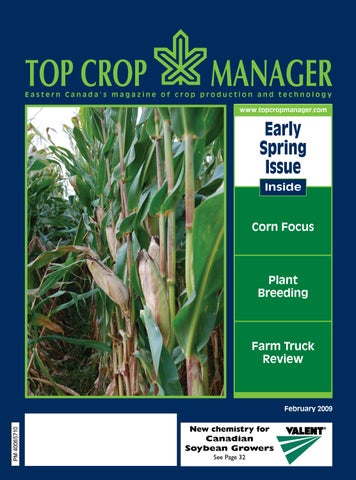
Corn Focus
From the intricacies of using less fertilizer to the pushing the limits on early planting, Top Crop Manager gathers some timely insight from informed industry perspectives.
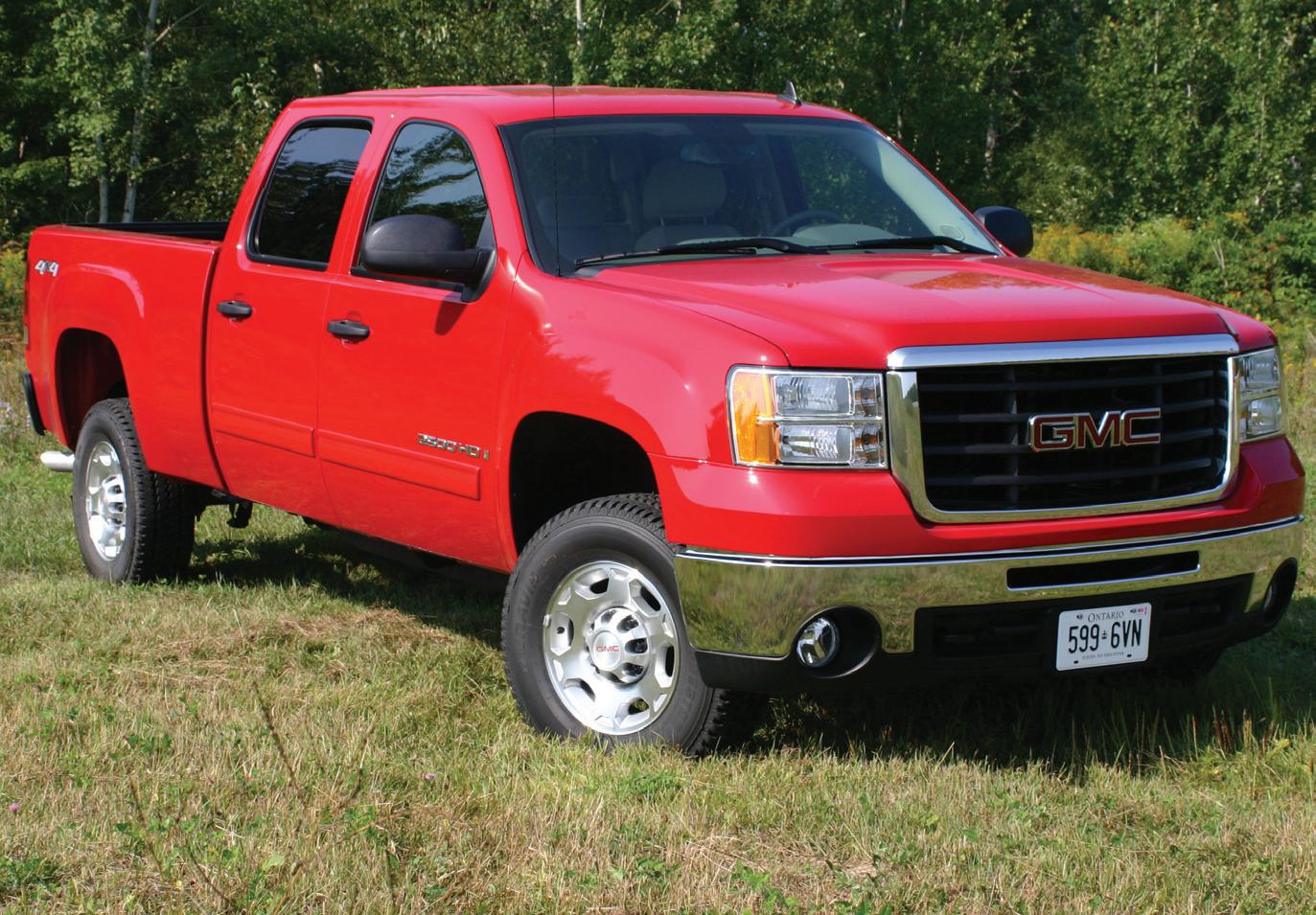
Here is a quick look at the latest from the laboratory, soon to be in the fields Truck King Review Truck King editor Howard Elmer is back with his review of farm pick-up trucks.
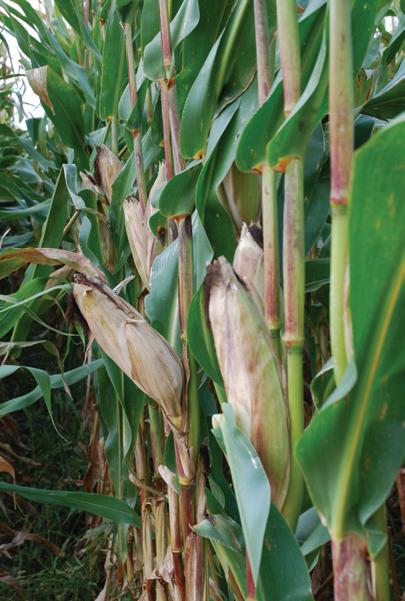
Photo by Ralph Pearce
February 2009, Vol. 35, No. 1
EDITOR
Ralph Pearce • 519.280.0086 rpearce@annexweb.com
FIELD EDITOR
Heather Hager • 519.428.3471 ext. 261 hhager@annexweb.com
CONTRIBUTORS
Blair Andrews
Treena Hein
WESTERN SALES MANAGER
Kevin Yaworsky • 403.304.9822 kyaworsky@annexweb.com
ASSOCIATE PUBLISHER
Kelly Dundas • 519.280.5534 kdundas@annexweb.com
SALES ASSISTANT
Mary Burnie • 519.429.5175 mburnie@annexweb.com
PRODUCTION ARTIST
Gerry Wiebe gwiebe@annexweb.com
GROUP PUBLISHER
Diane Kleer dkleer@annexweb.com
PRESIDENT
Michael Fredericks mfredericks@annexweb.com
PUBLICATION MAIL AGREEMENT #40065710
RETURN UNDELIVERABLE CANADIAN ADDREssEs TO CIRCULATION DEPT.
P.O. Box 530, simcoe, ON N3Y 4N5
email: mweiler@annexweb.com
Printed in Canada
IssN 1717-452X
CIRCULATION
e-mail: mweiler@annexweb.com
Tel.: 866.790.6070 ext. 211
Fax: 877.624.1940
Mail: P.O. Box 530, simcoe, ON N3Y 4N5
SUBSCRIPTION RATES
Top Crop Manager West - 7 issuesFebruary, March, Early April, Mid-April, July, November and December - 1 Year - $50.00 Cdn.
Top Crop Manager East - 7 issues - January, February, March, April, August, October and November - 1 Year - $50.00 Cdn.
specialty Edition - Potatoe in CanadaFebruary - 1 Year - $9.00 Cdn.
All of the above - 15 issues - $80.00 Cdn.
From time to time, we at Top Crop Manager make our subscription list available to reputable companies and organizations whose products and services we believe may be of interest to you. If you do not want your name to be made available, contact our circulation department in any of the four ways listed above. No part of the editorial content of this publication may be reprinted without the publisher’s written permission © 2009 Annex Publishing & Printing Inc. All rights reserved. Opinions expressed in this magazine are not necessarily those of the editor or the publisher. No liability is assumed for errors or omissions. All advertising is subject to the publisher’s approval. such
As hard as it may be to believe, a great deal of comfort comes out of the month of February. Particularly here in the early days of 2009. Against foreground reports of global recession and failing economies is that stalwart and annual reminder that no matter what, farming always presents a series of constants in our lives. As much as farming is a business, it also represents a sense of tradition, and traditions provide structure and stability and from those, we can derive a great sense of comfort.
Despite plant shutdowns and layoffs within the residential and commercial construction sectors, most primary producers have been busying themselves, making some kind of plans for the spring. The ground may be locked in snow and ice for another eight to 12 weeks, yet the process of seeding, spraying and harvesting is never far from the minds of growers. Contrary to some reports outside of farming, growers in Canada continue to grapple with volatility in the commodity market, and in spite of declines in the price of inputs, planning and preparing, and ‘controlling the controllable’ are as much a part of success as being blessed by the weather.
And although February is often disparagingly referred to as the ‘longest month of the year’, it is rife with meetings and workshops, seminars and conferences, all geared to helping growers improve their farming operations. More important, there is a greater sense of renewal and anticipation in this second month of the year, beyond resolutions made in January yet far enough away from the anxiety that comes with the lingering effects of winter in March and April.
February is an important month for Top Crop Manager: It is our annual Corn Focus issue, featuring stories that address the topics of crop, weed and pest management. In this edition,
we also offer the Truck King Review, as a supplement to the Truck King Challenge, and I extend my thanks to Howard Elmer of Power Sports Media Services for his dedication. Last summer he opted to postpone the 2008 Truck King Challenge, in light of the troubles experienced by the truck manufacturers even then. Although this Truck King Review does not have the full participation of all manufacturers, Howard has pulled together an excellent series of model reviews, and written them in a style that is as insightful as it is unbiased.
That is very similar to our sense of tradition at Top Crop Manager, where our goal is to provide our readers with solid, unbiased stories that deal with agronomics, research, machinery and farm business practices. We want to offer you value, right from the moment you turn the first page or click on the website. Meeting that goal has always been part of our tradition, and always will be, just like thinking about farming in February. Because a sense of tradition, even in these trying times, can be comforting. n





Ontario group heads south for closest look.
“Keep your friends close, and your enemies closer.”
Sun-tzu, Chinese general and military strategist (400 BC)
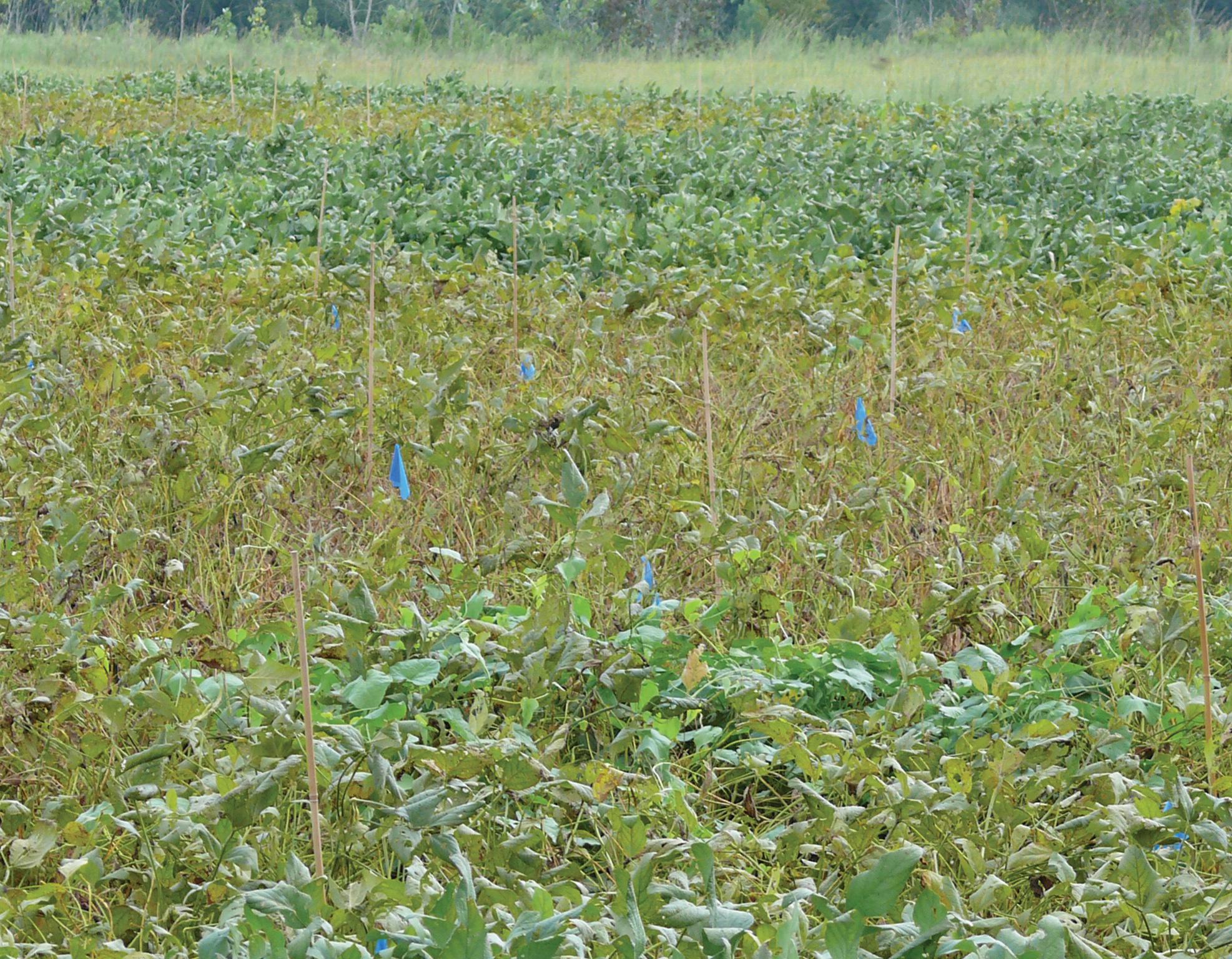
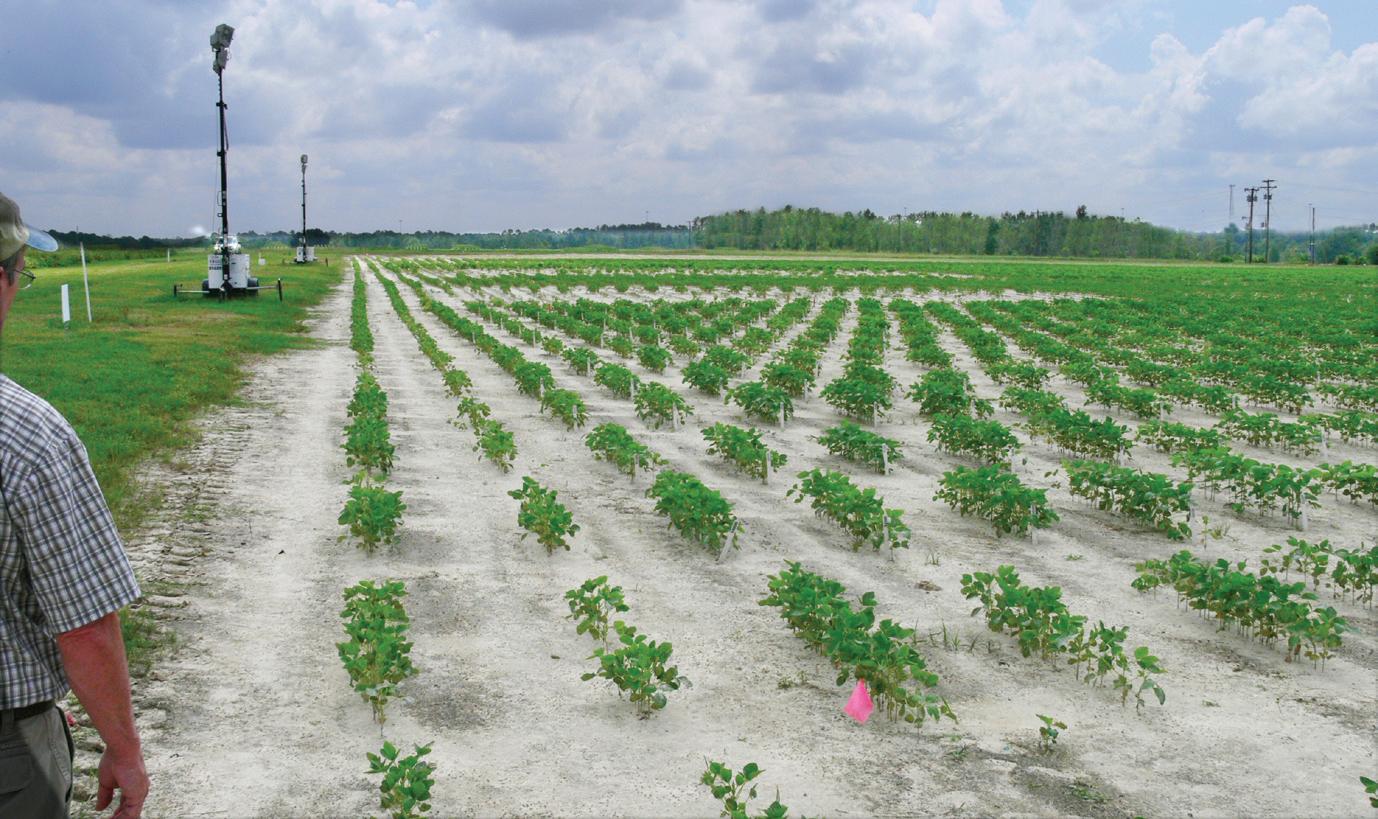
The familiar adage could be used to describe how Ontario’s soybean industry is meeting the potential challenges of Asian soybean rust. Although this aggressive crop disease was detected in Ontario only once late in the 2007 growing season in plots at the University of Guelph Ridgetown Campus, it is important for Canadian crop advisors, researchers and growers to keep tabs on its development in the United States. Several people from the Ontario Ministry of Agriculture, Food and Rural Affairs (OMAFRA), University of Guelph, the Ontario Soybean Growers and other crop industry representatives got much closer to soybean rust by attending a training session at the University of Florida’s Quincy Research Station.
Albert Tenuta, OMAFRA field crops pathologist, says it was a chance to see soybean rust at its height in one of the hotter spots for the disease in the US. The group also had the opportunity to view various research plots and management trials. “We’ve had germplasm trials down in Florida for the past two years where we have taken some of our crosses, from Agriculture and AgriFood Canada in Harrow and Ottawa, as well as from the University of Guelph, Ridgetown, and are running them down there under significant disease pressure,” explains Tenuta. “We’ve also had fungicide trials down there where we have taken our registered fungicides for rust and applied them under rust pressure in Florida. So this was a great opportunity to learn about the disease, but at the same time see it up close and personal.”
The people who participated in the training learned first-hand how to scout for and identify rust in field situations. They also were able to look at the disease under a microscope and in various conditions. “The biggest take home is that it was actually an opportunity to see it in the field. You can read about it and you can look at it on websites but there’s nothing like seeing it for real,”
by Blair Andrews
says Crosby Devitt, research manager for Ontario Soybean Growers, who was part of the Canadian contingent.
And while the tour participants still respect that rust can inflict heavy economic damage to the crop, they came home feeling a little more confident about being able to deal with the disease whenever it may strike eastern Canada.
“One of the big things that I took away from it is they see soybean rust every year in the southern US, and it’s a matter of when it affects the crop and how bad it’s going to be, ” says Leanne Freitag, an agronomist with Cargill in Princeton. “It was really good to see how they react to it. They’re not afraid.”
Different perspective than in the past
The fear concerning soybean rust has declined substantially since the disease was first detected in the United States in 2004. Education and research have gone a long way toward easing the anxiety. As the disease was making its way across South America and was heading for the United States, and with no germplasm showing resistance, it became clear to US soybean industry officials that they needed to obtain a better understanding of soybean rust. “We had
to find ways to train our infrastructure. We were looking at a pathogen nobody knew and nobody knew how to identify except for a handful of individuals in the US,” says Dr. David Wright, of the Iowa Soybean Association and director of the North Central Soybean Research Program (NCSRP), which sponsors the rust training in Florida. “We had no management recommendations for it, no genetic resistance for it, so it was really scary. Our infrastructure, our scientists and our crop advisors really needed to get up to speed.”
NCSRP consists of the state soybean checkoff boards in Kansas, Illinois, Indiana, Iowa, Michigan, Minnesota, Missouri, Nebraska, North Dakota, Ohio, South Dakota and Wisconsin. Wright says its partnership with the University of Florida has fostered the development of effective management recommendations for Asian soybean rust. He says they have the tools for early detection and there are also fungicides available to help control it. “We understand it a whole lot better. There’s a whole industry that is well-trained in the possible impact of rust and its biology. And I am certainly less fearful of it today than in November 2004.”
Similar feelings are being expressed four years later by the Canadian visitors after seeing the management techniques for themselves. Devitt says the learning experience will be valuable for Ontario crop specialists in the event that Asian soybean rust crosses the border. “One of the values of having the Canadians down there was that now we have agronomists from Ontario with first hand knowledge in scouting for rust and seeing what it can do. But also we learned about control measures such as fungicides, including timing and how well they work, which I think is going to be important in case we have it in Ontario.”
Echoing Devitt’s comment on fungicides, Freitag is of the opinion that triazoles and strobilurins are effective on rust. Triazoles, found in products like Folicur and Tilt, have better activity on rust, but strobilurins, like Headline and Quadris, are stronger on some of the other leaf diseases that could be present. “There are strengths to both chemistries. The two modes of action combined will control a broader disease spectrum and will help with resistance management, too.”
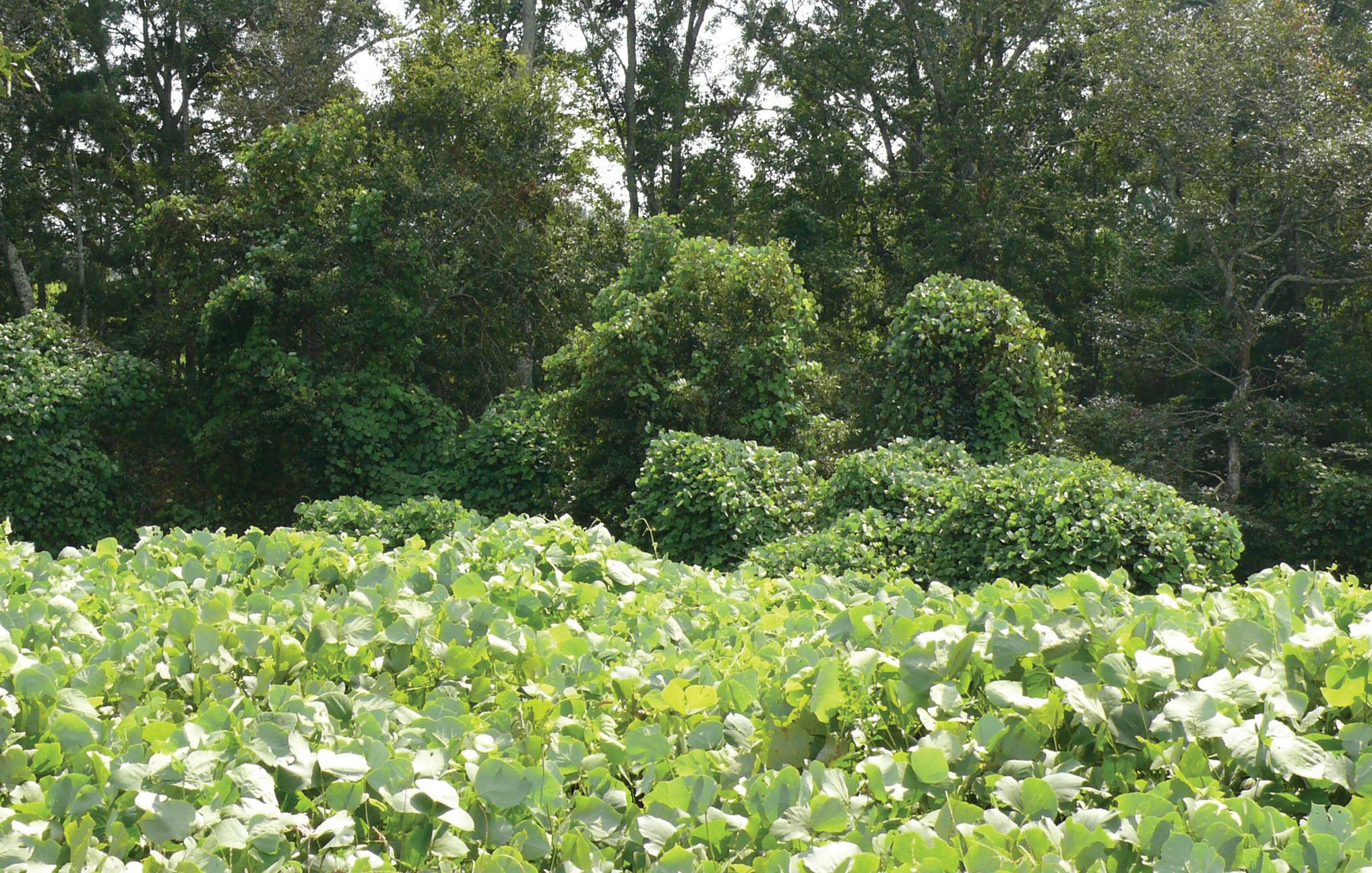
While Freitag, Devitt and other members of the Canadian contingent are more confident about the industry’s ability to respond to an outbreak, they also stress that the industry should not get complacent. In addition to learning about rust identification and control, Tenuta says the group saw the need to be vigilant about this disease, which is still in its infancy in North America. “Soybean rust is evolving. We still have a lot to learn. It can be managed, but we have to be proactive in managing it,” notes Tenuta. “One of the events that really took people aback was the look at the kudzu plots, the main overwintering host of soybean rust in the US, and how well it is infected. Just the difficulty in scouting and managing it in the early phases was something the participants gained a whole new appreciation for.”
While less fearful of the disease, Wright also notes that there is still much to be learned about rust, stressing that it is a pathogen that causes serious economic loss. “We still don’t understand how severe it may become in our upper soybean producing areas. It is definitely severe in Florida,” says Wright. “But we do have the know-how to monitor its movement throughout the United States. We’re still working on other
tools to help us detect it early.”
As the industry expands its knowledge of the disease, Wright recommends people pay attention to the messages from university extension and crop specialists about soybean rust. Ontario is part of the North American soybean rust early warning sentinel plots system. Through the efforts of Dr. Sarah Hambleton of AAFC in Ottawa and Tenuta with OMAFRA, soybean rust spores are consistently trapped in the province each year from June through September. The appearance of the spores does not mean the disease is present. However, the potential for an outbreak exists, depending on the amount of spores and environmental conditions. “We have a huge infrastruc-
ture now that we’re using to monitor the movement of rust and it’s been very effective. There’s a wonderful working relationship between OMAFRA, Canadian scientists and the Ontario Soybean Growers, working closely with their counterparts in the United States. I think it’s a great model for future activities,” says Wright.
About 25 Canadians joined their industry counterparts from Nebraska, North Carolina, Missouri and South Dakota for the training session that was held September 18-19, 2008. Funding for the trip was provided by a grant from Agricultural Adaptation Council’s CanAdvance program. It was part of a three-year project for soybean rust education and communication. n

by Heather Hager, PhD
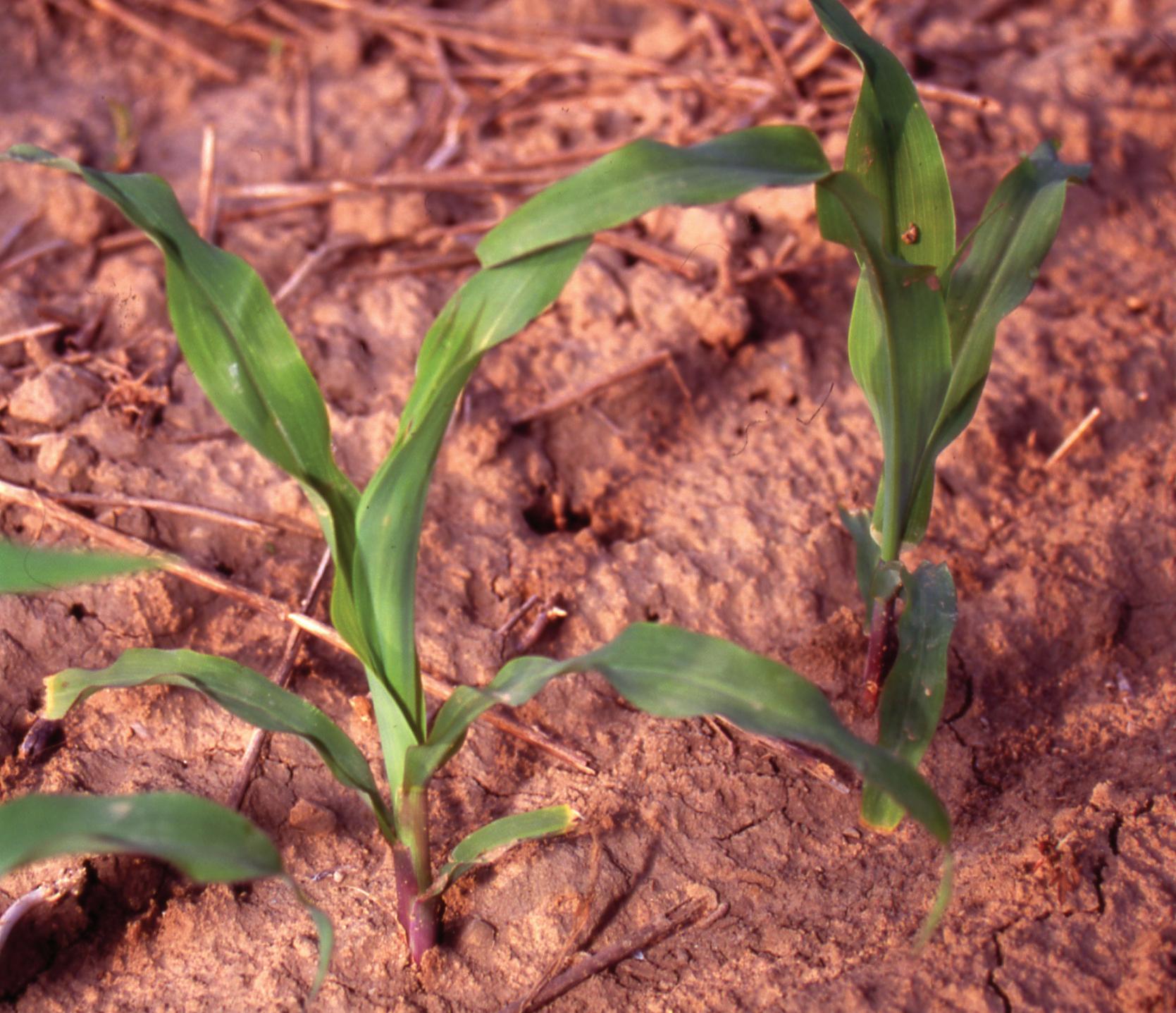
Researchers from various regions of the Corn Belt have estimated optimum planting dates for corn by examining how yield changes with planting date. Data from the northern US indicate that the corn yield in this region is greatest for planting dates in mid-April to early or mid-May and then decreases with later planting dates. The Ontario Ministry of Agriculture, Food, and Rural Affairs (OMAFRA), in its Agronomy Guide for Field Crops, gives optimal dates of “on or before May 7 in southwestern Ontario and May 10 in central and eastern Ontario.” However, there is a fair amount of year-to-year variability in the relationship between yield and planting date. Indeed, knowing the optimal planting date is important, but many other considerations come into play when growers are deciding how early they can begin to plant corn in the spring. “When I talk to growers, the first thing would be the window of time they have to get their corn acres in. If it’s a grower who has eight or 12 days of corn planting, he probably has to look at starting as early as it’s fit to start,” says Fred Sinclair, product development manager for Pride Seeds.
Greg Stewart, corn specialist at OMAFRA, and Mervyn Erb, an independent crop consultant located in Brucefield, Ontario, have similar ideas about taking an early window of opportunity to plant at least some fields in April. “If you have a window of opportunity in April when the soil is in good physical shape from a moisture, friability, and soil–seed contact perspective, then you’re tempted to plant on those days, regardless of whether the soil is still cold. If it starts raining on April 30 and rains for 10 days, you will have missed your opportunity to plant early, and that is probably much more of a yield sting than what you might experience by planting in soils that are cold,” says Stewart.
Erb notes that historically, there are only about 100 hours of opportune planting time in early May, and that is if the weather co-operates. “We might get a
nice week of weather in April, and then it might get nasty and stay wet for a week or 10 days. Then you wake up and it’s May 6 and you wonder where the days went. So you want to take advantage of every good situation you can.” What determines this early window of opportunity is the soil condition, specifically moisture and temperature. If the soil is too wet, explains Dr. Steven King, corn breeder with Pioneer Hi-Bred, the sidewalls of the planting trench will smear, causing problems for root penetration later on. “If you do something like that,” says Sinclair, “It’s going to haunt you for the rest of the season because you’ve done something you can’t fix.”
Determining soil fitness is a somewhat qualitative process. “What we do when we’re deciding whether to plant is to take a ball of soil in our hand and see how easily it crumbles,” says King. “If it stays as a ball, it’s not good enough to plant. If the soil crumbles easily, then it’s fit.”
Corn requires a soil temperature of 10 degrees C (50 degrees F) for good, even germination and emergence. The Agrono-
my Guide for Field Crops states, “If average soil temperatures are at or beyond 10 degrees C (50 degrees F), the soil conditions are favourable, and the weather forecast is predicting average to above-average temperatures, then early planting (i.e., April 15 to 25) of at least a portion of the corn crop is recommended. After April 26 or May 1 in areas receiving less than 2700 CHUs (crop heat units), it is generally advisable to pay less attention to soil temperature and to plant as soil moisture conditions permit.”
The timing of corn planting in the spring has become earlier by 10 to 14 days since the 1970s. The ability to plant earlier is mainly attributed to advances in plant breeding and seed treatments, and perhaps changes in climate. Over the years, plant breeders have selected for hybrids that will tolerate cold, wet soil. “For a farmer to plant early to achieve that higher yield potential, he needs to be careful with the hybrid selection,” says King. “If he’s going to grow three or four different

The first new mode of action in cereals in more than 20 years.
New Infinity® represents a giant leap forward in broadleaf weed control. Infinity belongs to an entirely new group of herbicides (Group 27) that provides superior control of the toughest weeds in cereals – including Group 2-resistant weeds.
It is a simple and flexible broad spectrum solution that gives you infinitely better control in wheat, durum and barley.
Visit www.cerealcentral.ca for our complete line of cereal products, programs and resources.
hybrids, he should plant the one with the highest stress emergence score first, and wait until the soil warms up before planting one that has a lower score.”
Seed treatments for diseases and insects have also improved, say King and Sinclair. So even if the seed is planted in fit conditions and then must sit in the soil for a couple of weeks for whatever reason, it is protected from diseases and from insects that might start to feed on it. “Those improved seed treatments definitely have allowed us to plant earlier,” says King.
In terms of nailing down a date before which it is too early to plant, suggestions vary from April 15 to 24, all with the stipulation that soil conditions are fit. It is all about bet hedging and avoiding undue risk. “You’re taking a pretty big risk by putting a lot of corn in the ground April 15,” says Erb. “I guess if I had a really nice stretch of weather April 14 to 17, I might plant a little bit of corn, but I wouldn’t get too carried away; it is pretty early.”
It is not as simple as a decision to plant on the optimum date, says Stewart. “It has to be factored in against things like the size of the planter, how many acres you
can plant in a day, how many acres you have to plant, and whether you have other operations that interfere with your planting efficiency. Therefore, you keep moving the start date of your planting back to accommodate optimum planting.”
Although breeding and seed treatments have allowed earlier planting, it is still a good idea to consider the weather forecast. “Even if the ground is fit and it’s April, if there’s going to be cold rain or snow three days after planting, then I would really hesitate to plant,” says King. “It seems to be that the most sensitive time for a kernel in the ground is three days after planting. That corresponds to when the radicle, the root, just breaks the seed coat, so the seed is more vulnerable at that time.”
Of course, the debate as to how early is too early would be incomplete without knowing whether crop insurance specifies a “do not plant before” date, suggests Stewart. This was a topic of discussion amongst the Ontario Corn Producers’ Association, OMAFRA, and Agricorp in the early 2000s. Lindsay Barfoot, Agricorp account lead for grain and oilseed crop insurance plans, says that these discussions have impressed upon him that because

of year-to-year and site-to-site variability, “it’s difficult to just choose a date on the calendar and say you can’t plant before that or you’re not eligible for insurance. We do require that producers are required for crop insurance purposes to use sound farm management practices, and honestly, we’ve found that to be a workable policy for us.”
Barfoot states that Agricorp relies on OMAFRA’s recommendations for sound farm management practices. “If our customers are doing anything that is not recommended or is outside of accepted practices, their insurance coverage could be jeopardized.” When a claim is submitted, the adjustors take into consideration what practices were used in planting the crop, including soil fitness.
In the end, it comes down to a judgment call. “It’s too early to plant when the soil conditions are not right,” says JeanMarc Beneteau, a grower located in Essex county, Ontario, and a director of the Ontario Corn Producers’ Association. He stresses that it is important for a grower to know his own fields. “Farming is not a science, it’s an art. It’s not that you stick a thermometer in the ground or you take a
HiStick® N/T is a new category of soybean inoculant BioStackedTM with multiple biologicals to stimulate greater root growth and nodule development.
Designed for performance in Canadian growing conditions, HiStick® N/T combines specially selected rhizobial strains that fix nitrogen and Bacillus subtilis – the organism behind Nodulating Trigger ® technology – for greater nodule biomass, faster canopy closure and higher yield. It’s the soundest investment you’ll make all season. Ask your local dealer for HiStick® N/T Inoculant for soybeans
shovel of soil and you see that it’s fit, some people would say it’s too dry; some people would say it’s too wet, and some people would say it’s just right. It’s an art.” He says that nasty weather can occur in any month, so if the ground conditions are right, you plant, and if not, you wait.
“It’s hard to figure out when to plant at times,” concedes Beneteau. “That’s just part of being a farmer. When you have to justify it to a third party like crop insurance, that can be tough too. But I think they have excellent adjustors out in the field who understand when the farmer has pushed the limits too far. I think those instances are rare.”
Once the fall harvest has been gathered, it is not too early to start thinking about spring planting. “Maintenance of your planter is critical,” says Sinclair. The best genetics and seed treatments are not going to substitute for planting at appropriate spacing and depth. After all, notes Sinclair, some things can be controlled and some cannot. “Do what you can to prepare beforehand because Mother Nature is usually going to throw something at you that you can’t control.“ n
by Tom Jensen*
Most grain and oilseed producers are pleased to realize the recent increase in crop prices after many years of relatively low and at times depressed grain and oilseed prices. There is an overall feeling of optimism in crop production. However, the accompanying increases in fertilizer prices have growers questioning whether or not the changes in crop and fertilizer prices relative to one another justify changes in fertilizer application rates.
A few calculations show that optimum rates of fertilizer have changed very little if at all, while the size of fertilizer expenditure has increased. Associated with the larger fertilizer expenditure is more up-front financing and much more valuable potential crop growing in the field. This combines to create an increased need for careful decision making. Growers can manage this increased need by doing the following.
minimize unwanted losses. Generally this may mean application near the time of planting or in split applications during the growing season for some crops.
Place N fertilizers in the soil in bands to reduce losses compared • to broadcast applications.
Use appropriate starter fertilizer blends precision placed near • or for some crops in the seed-row when planting.
Consider using fertilizer forms or additives that can result in • enhanced efficiency and/or reduced losses of applied nutrients. This may include use of controlled release fertilizers or addition of inhibitors that keep fertilizers in forms less susceptible to losses.
Seek the advice of Certified Crop Advisers (CCAs) and crop • consultants in making fertilizer decisions. Sound advice from an experienced CCA can help a grower determine whether or not there should be changes in fertilizer rates. This is especially important when both grain and fertilizer prices change.
Have soil samples taken and analyzed for nutrient availability
• and adjust fertilizer rates on each individual field. Soil test laboratories are seeing an increase in fields being soil sampled.
CanEast_3.375x4.875 1/11/08 11:39 AM Page 1
Time fertilizer applications to maximize crop utilization and •
An excellent example of a crop planning tool used with farm customers was developed by Keith Mills, a CCA working for a retail grain and crop input company in Western Canada. He works with farm customers growing crops under both irrigated and rain-fed conditions in southern Alberta. His easy-to-use Basic Crop Planner is a spreadsheet program he uses with customers to estimate potential returns per acre for a number of different crops. His customers often use this tool to help them decide which crops to grow if they are considering changes in their crop rotations. The grower can quickly calculate margins per acre by entering realistic crop yields for their farm along with current area prices for crop inputs, including fertilizers, and prices expected for harvested crops.
Keith Mills emphasizes that the yield and input price estimates entered need to be realistic for the area. The Basic Crop Planner is based on variable crop inputs and expected crop yields and current market prices, and does not include fixed costs as this can vary greatly from farm to farm depending on specific land ownership and rental conditions. Mills updates his crop planner each year with average crop prices and input costs for the area where he works. It can be modified by an individual customer especially for expected crop yields depending on specific field conditions, and if an alternate source for crop inputs at different prices is found.
It is interesting to compare information from a number of years for a specific crop and see how changes in crop input prices or operating costs and grain prices affect margin returns considering growers are reducing their rates of fertilizer solely because of increases in fertilizer prices. However, when they saw what the margins were using current fertilizer and crop prices, fertilizer rates have in most cases remained similar to recent years and margins have increased. An example in Table 1 shows estimated returns over the years 2005, 2006, 2007 and 2008 for irrigated durum wheat.
Operating costs have increased and fertilizer inputs have increased more compared to most other crop inputs, such as herbicides and fuel. The fertilizer costs as a percentage of operating costs are 29 percent, 33 percent, 37 percent and 48 percent, respectively for the years 2005, 2006, 2007 and 2008. For example, if the years 2006 and 2008 are compared, fertilizer costs increased
121 percent, but margins increased 202 percent. Between the two years, every extra $1.00 of investment in fertilizer has been offset by $2.49 in increased margin per acre.
Fertilizer rates have remained similar over the past four years even though the portion of the operating costs from fertilizers has increased. Fortunately for growers, the return on fertilizer expenditures remains very positive and optimum economic fertilizer rates have remained similar to rates before the increases in both grain and fertilizer prices. n
*Dr. Jensen is IPNI Northern Great Plains Region Director, located in Saskatoon, Saskatchewan, Canada. Reprinted from Better Crops with Plant Food, with permission of International Plant Nutrition Institute (IPNI).
Table 1. Estimated margins (total revenue minus operating expenses) for years 2005 through 2008 for irrigated durum wheat, southern Alberta.

Some types of clay are best suited to the crop.
by Blair Andrews
This makes the soil even more clayey than Brookston and it is slightly more
ducted by the Ontario Research Foundation in 1967 showed that early season
ucts for a variety of reasons including food safety, supporting their local farmers and reducing their carbon footprint. Rice is one of the more popular food crops that must travel thousands of kilometres to reach Canada’s major markets. Meanwhile, more rice than ever before is being consumed in Canadian diets. According to Statistics Canada, rice available for consumption set a new record in 2007, reaching 5.2 kg per person.
The combination of local food interest and the increased consumption begs an obvious question: Could rice be grown in southern Ontario? It should be noted that the rice crop being cited here is paddy rice or rough rice, which is grown in rice paddies. Wild rice, which matures in other regions in Ontario, is a different species.
The concept of growing rice in Ontario has been examined well before this era of local food enlightenment. Dr. A. George Caldwell, a retired professor of soil chemistry from Louisiana State University, is a longtime proponent of growing rice in the southern part of the province. He believes the flat, clay soils of Lambton County, in particular, are ideally suited to grow the crop. Caldwell, who grew up in Watford, Ontario, mapped the soils in Lambton County in 1947-48. The key, he says, is that a good part of central Lambton sits on Jeddo clay. “Brookston clay is the major, flat clay soil in Essex, ChathamKent and the southern edge of Lambton County. It’s tile-drained and grows great corn, soybeans and wheat,” says Caldwell. “Jeddo clay has more shale.
In addition to the appropriate soil type, the production of rice requires water. Caldwell says that is something else that Lambton can readily provide. “In Lambton, there’s been a big drainage program to get excess rain water off the land. This actually represents an opportunity to maybe get the water back in. You could use the drains to bring water from the St. Clair River back into Lambton.”
Rice has a history in Ontario Caldwell adds that rice has been grown before in the province. Field trials con-
says the yield was more than 5000 pounds of rough rice per acre. Rough rice is the term that refers to the rice as it comes off the field before processing, where its protective hull is removed. “Rough rice in Houston is 10.5 cents per pound,” notes Caldwell, citing the price in late 2008. “So you’re talking about maybe a $500 to $600 per acre harvest.”
Furthermore, Caldwell says important advancements in rice breeding have occurred since the 1967 research. He suggests that some short-season rice varieties developed for Louisiana
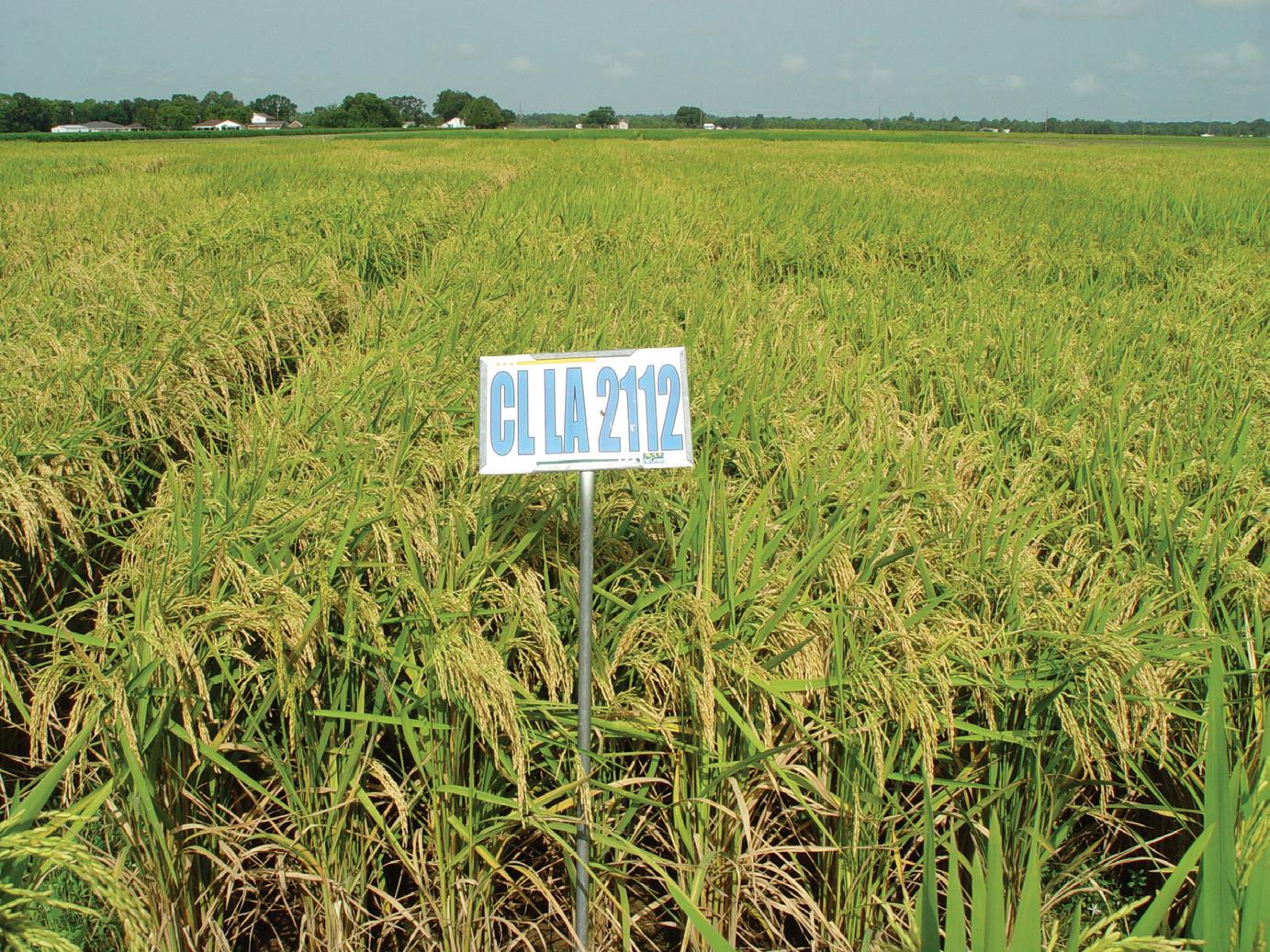
Research in the late 1960s indicated rice could be grown to maturity in southwestern Ontario, and it could grow again, insists Dr. Caldwell.



Raindrops keep fallin’, but I’m not complainin’ ‘cause Roundup Ultra2® herbicide gives me premium preplant performance, every time. And it’s backed by its own unique RiskShieldTM protection package including:
60-Minute Rainfast Guarantee Crop Establishment RiskShareTM Warranty
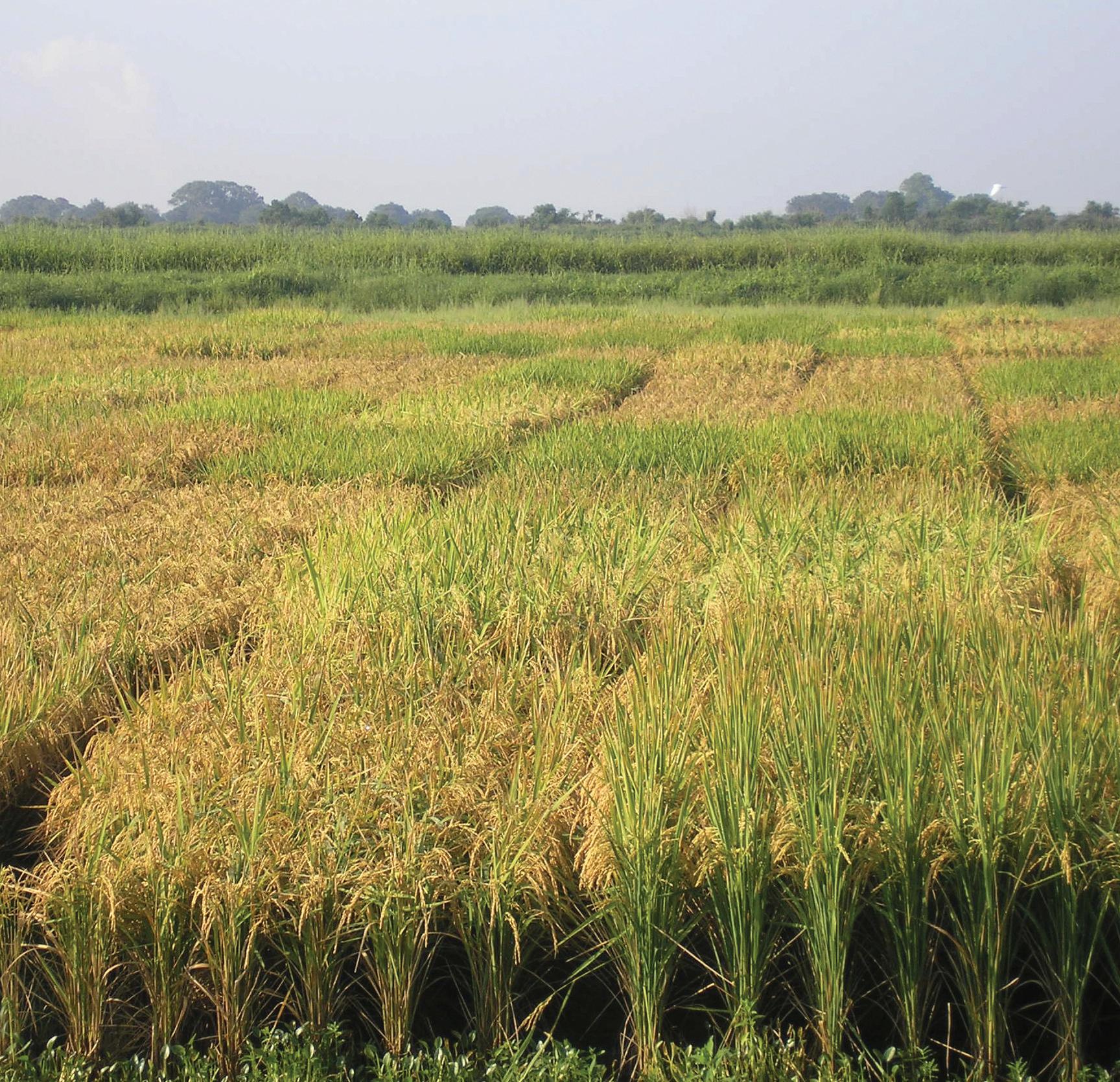
As always, price dictates whether rice might make it as a commodity in Ontario, and go beyond test plots like these.
would be ideal for Ontario’s climate. Referred to as “90-day” rice, these varieties are planted in March or April in Louisiana for harvest at the end of July. As for Ontario, Caldwell says rice could be planted between the 15th and 24th of May and would likely be combined around the first of September, depending on maturity.
In a more a recent experiment, paddy rice was grown for two years near Holiday Beach in Essex County in the late 1990s. Led by Ducks Unlimited Canada, conservation was a key focus of the project as the flooded fields would produce excellent feeding grounds for waterfowl. Dr. Soon Park, a crop breeder from the Agriculture and Agri-Food Canada research station at Harrow, Ontario, was one of several people who participated in the study. Now retired, Park, is well known for his work with dry bean crops. But he started his career in 1963 as a rice breeder at a research station in Suwon, Korea, with training stints at an international rice research centre in the Philippines.
The Essex County project used a few varieties of short-grain rice from Cali-
fornia, Japan and Korea. Park says the experimental area yielded a fair amount of rice. “When we harvested, yield was quite good. Actually, I was surprised the second year,” recalls Park, who estimated the yield at five tonnes/ha (about 4460 lbs/ac) with hulls removed.
He adds that a small, experimental combine for edible beans, soybeans and wheat was used to combine the rice.
From an agronomic standpoint, Park agrees with Caldwell’s assertion the rice can be grown in southern Ontario. On the question of it being economically feasible, Park is much less certain. He explains that the yields from the Essex County project were about 30 to 50 percent smaller than those in California. “I’m not sure if our production record will be competitive with California rice. That’s one of the reasons why I have doubts,” he says.
The rice fields also produced broadleaf and grassy weeds, prompting Park to say that more weed science research would be required in future projects.
Justifying the costs
Echoing Park’s comments, Peter Johnson, cereal specialist with the Ontario
Ministry of Agriculture, Food and Rural Affairs, says rough rice could be grown in the province but there are several challenges, including a limited amount of potential acreage and high infrastructure costs. “Is it a valuable enough commodity to justify the expenses? Because in most places of the world where they grow rice, the infrastructure already exists in a crop that is really a commodity,” explains Johnson.
Drawing a comparison with horticulture crops, Johnson says the rice scenario would be different than investing in something like Bok Choy production. “The input costs are high but the potential return is huge if you find the market and if you have a good quality crop. I’m not saying horticulture production is easy. It’s still a risk. But at least when you hit it, you can hit it big.”
Conversely, a commodity, says Johnson, does not sell much above the cost of production. As for research, he is not aware of any new studies related to growing rice as an alternative crop. He says many efforts are related to using crops for different applications as well as supplying a bigger portion of our energy needs.
Johnson and Park do not completely rule out the possibility of growing rice in the future. Acknowledging the local food interest, Johnson says there is definitely a transportation advantage to supplying the local market. Park says higher food prices could change the outlook as well. According to the Consumer Price Index, the price of rice increased 2.5 percent from 2006 to 2007. Park has noticed an even higher increase in recent months. “The rice price at the supermarket almost doubled, from $7.99 per eight kilogram bag in 2007 to a cost of $13.50. And sometimes it’s not available. So if the price is still like that it may be a different story for growing rice in Ontario.”
He recommends that an economic analysis would be needed to justify growing rough rice in the province at a commercial scale. More than 40 years later, this recommendation strongly reflects the conclusions of the 1967 research. “It appears that there are commercial possibilities for rice growing in southwestern Ontario. Paddy rice is not an easy crop to grow and whether it develops will depend on cost of product and sale prices that cannot be specified at present,” wrote L.J. Chapman, director of the Department of Physiography of the Ontario Research Foundation n







Seed corn is usually more affected than field corn.
Stewart’s wilt is caused by the bacterium Pantoea stewartii, which is transmitted from plant to plant by the corn flea beetle. Many field corn hybrids have adequate levels of tolerance against the bacterium, so its effects on yields in these hybrids are not usually economically injurious. Seed corn inbreds and sweet corn, however, can be quite susceptible to the disease, and it can be an issue for both the yield of sweet corn and quality of seed corn.
Xiaoyang Zhu, a biologist with Agriculture and Agri-Food Canada (AAFC) in Ottawa, performs yearly cornfield disease surveys with other biologists from AAFC and the Ontario Ministry of Agriculture, Food, and Rural Affairs (OMAFRA). According to Zhu, Stewart’s wilt occurs mainly in southwestern Ontario and occasionally in eastern Ontario, and has not been found in Quebec since 2000. The disease’s distribution is mainly related to its mode of transmission via the corn flea beetle. Thus, the disease can be tracked by understanding the beetle’s population dynamics.
by Heather Hager, PhD
Corn plants can be infected early as seedlings or later as mature plants, depending on when they are exposed to the bacterium by the corn flea beetle. Other grassy plants and insect species may harbour the bacterium as symptomless reservoirs, but little is known about the extent of their involvement in the disease process.
The ability of the corn flea beetle to overwinter affects the risk of early infection. “The Stewart’s wilt bacterium overwinters in the gut of the corn flea beetle,” says Tracey Baute, field crops entomologist with OMAFRA. “The beetle can then transmit it to the young crop when the crop is just emerging.” Transmission occurs when the beetle takes a bite of the plant and then regurgitates or defecates into the wound. Early infection takes place in spring and often kills the young corn plants.
Baute explains that the disease is less prevalent in eastern Ontario and Quebec than in southwestern Ontario because the harsher winters in the more northerly areas usually kill many of the corn flea beetles. In southwestern Ontario, the beetle’s abundance in spring is relat-
ed to the severity of the preceding winter. Colder winters kill off more beetles, reducing the risk of early infections in corn. Seed treatments may also help to reduce early infections, says Baute. “A lot of seed treatments now do control corn flea beetle, with the exception that the beetle still has to take a bite out of the plant and could transmit the bacterium.” Baute says that the beetles do not have natural predators that specialize on them, but wet weather can be detrimental to them in the spring because it benefits fungi that can kill the beetles.
The surviving beetles eat, potentially transmit the Stewart’s wilt bacterium, lay eggs, and die in late spring. The bacterium is not passed to the eggs, says Albert Tenuta, OMAFRA plant pathologist, so the new adults that emerge in June must acquire the bacterium by feeding on infected plants. They spread Stewart’s wilt to mature plants at around the tasseling stage. This is known as the late phase of infection.
“If we had a cold winter, we would observe few early season effects of Stewart’s wilt, unless it was an extremely susceptible variety,” says Tenuta. “We may see the disease later on in the


E v e r y c o r n a c r e y o u f a r m d e m a n d s b e t t e r c a r e . A n d b e t t e r c a r e s t a r t s w i t h t r e a t i n g e a c h a c r e w i t h
P r i m e x t r a® I I M a g n u m® , e a r l y, a t t h e p r e - e m e r g e n t s t a g e. W e c a l l t h i s p r a c t i c e F o u n d a t i o n A c r eTM . O n c e a p p l i e d t o e v e r y c o r n a c r e, w i t h N o F i e l d L e f t B e h i n d TM , y o u r c r o p w i l l f u l f i l l i t s y i e l d p o t e n t i a l A n d i n t u r n, y o u ’ l l s e e n o t h i n g b u t h i g h e r r
season because both the corn flea beetles and the bacterium would have time to build up.” The late phase of infection may also be supplied by the movement of corn flea beetles from the Midwest Corn Belt on wind currents, says Tenuta. “The later they arrive, the less time there is to infect the plants, and therefore, the effect on the crop is less. But over the past number of years, we’ve been seeing Stewart’s wilt relatively early, which would indicate that we have a base level of infected corn flea beetles that has overwintered from year to year.”
OMAFRA has been evaluating several models that predict the risk of corn flea beetle survival over winter. Generally, these models use December to February temperatures, although Baute says that the extent of snow cover can also be a factor by providing the beetles with some insulation from extreme cold. Predictions of high risk in spring should prompt producers to monitor and manage corn flea beetle populations. “By managing the vector, particularly early in the season, you can reduce the potential impact of the flea beetle and limit its feeding so you have less transmission of the bacterium,” says Tenuta. However, he says that genetic resistance is probably the best management tool to reduce the spread of Stewart’s wilt. “We see the effectiveness of genetic resistance in our commercial corn hybrids, where we have good tolerance to Stewart’s wilt. We’re seeing more in the in-breds as well, but we still have in-breds that are very susceptible to the disease.” This means that seed corn producers need to continue to watch out for the disease.
Export implications
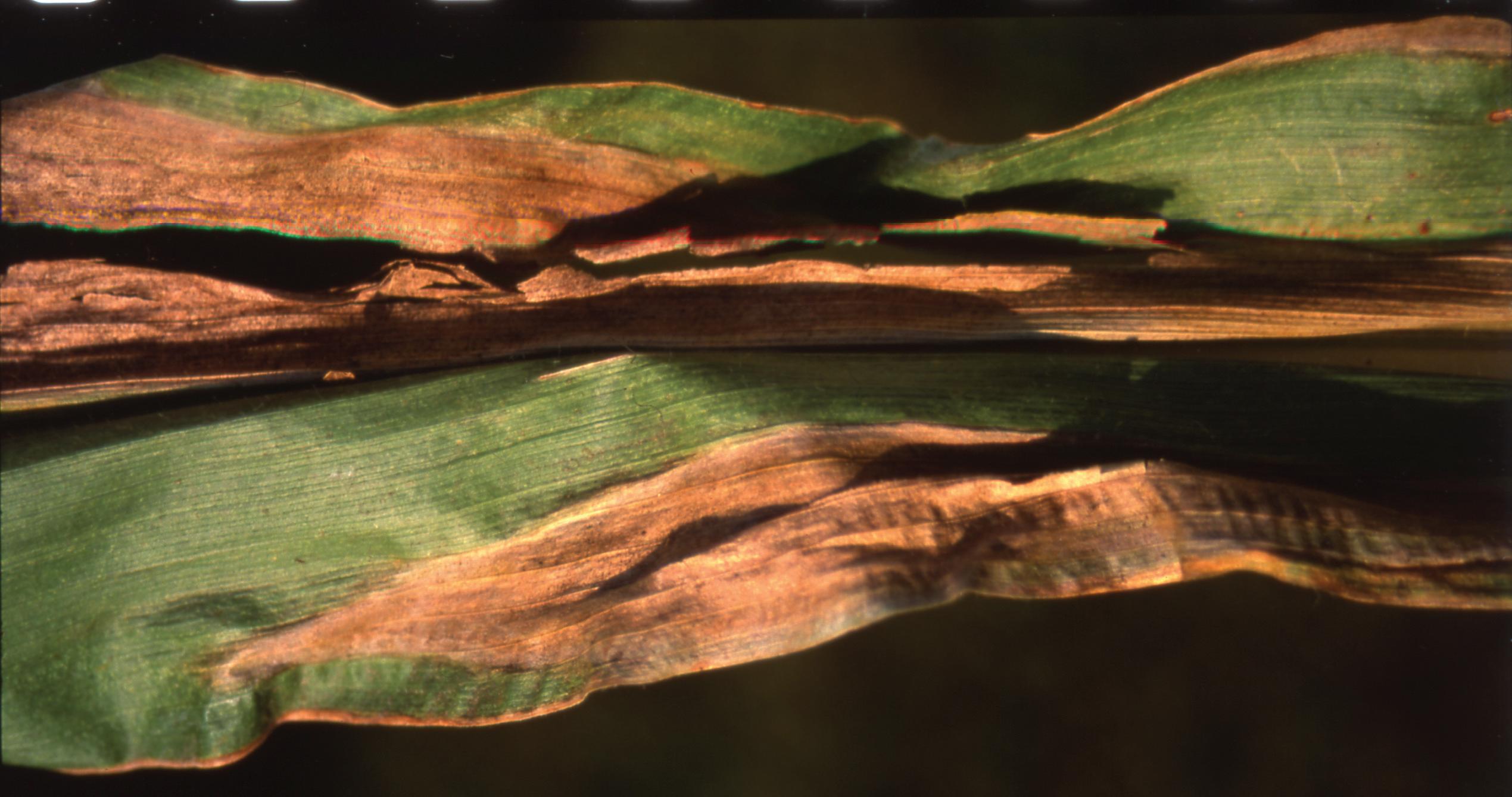
Whereas infection in the young plant can cause it to wilt and die, infection in the mature plant causes leaf lesions, which can contribute to other problems such as stalk rot. In seed corn, mild infections usually remain in the leaf tissue, but severe infections can lead to systemic disease and some infection of the seed. “What we see is that if the plants have more than 75 percent of the leaves infected, some of the seeds may contain the bacterium,” says Zhu.
This is a concern for seed producers because Stewart’s wilt is a quarantine pest for certain countries that import corn seed. The conditions that must be met to export seed to these countries differ depending on the country’s spe-
cific import requirements, says Lois McLean, Ontario network plant protection specialist with the Canadian Food Inspection Agency. “Usually for Stewart’s wilt, phytosanitary certification is based on the condition that the seed is grown in an area free from the pathogen, a field inspection during the growing season, or laboratory testing of the seed,” she explains.
In field inspections, leaf tissue is sampled. The presence of the bacterium in the leaf does not necessarily mean that it is present in the seed, so most exporters prefer to test the seed. Samples are tested using an enzyme-linked immunosorbent assay (ELISA) to detect the Stewart’s wilt bacterium. In the ELISA, a specific antibody that recognizes only the Stewart’s wilt bacterium changes colour if the bacterium is present. “If
we find it and it’s being shipped to a country that has it on their regulated list, we can’t issue a phytosanitary certificate,” says McLean. “In that case, the producer could ship it to a country that doesn’t regulate for Stewart’s wilt or sell it domestically.”
Glen Hellerman, plant manager with Syngenta Seeds Canada, says that seed companies rarely treat for the corn flea beetle unless there is a severe infestation because it is not economically advantageous to do so. “Typically, the results of the seed tests do come back favourable, so even though Stewart’s wilt does exist in the seed corn production area, it doesn’t usually show up in the seed itself,” says Hellerman. “It does exist, but it really has not been a hindrance for Canadian seed companies to do business with other geographical areas.” n

•
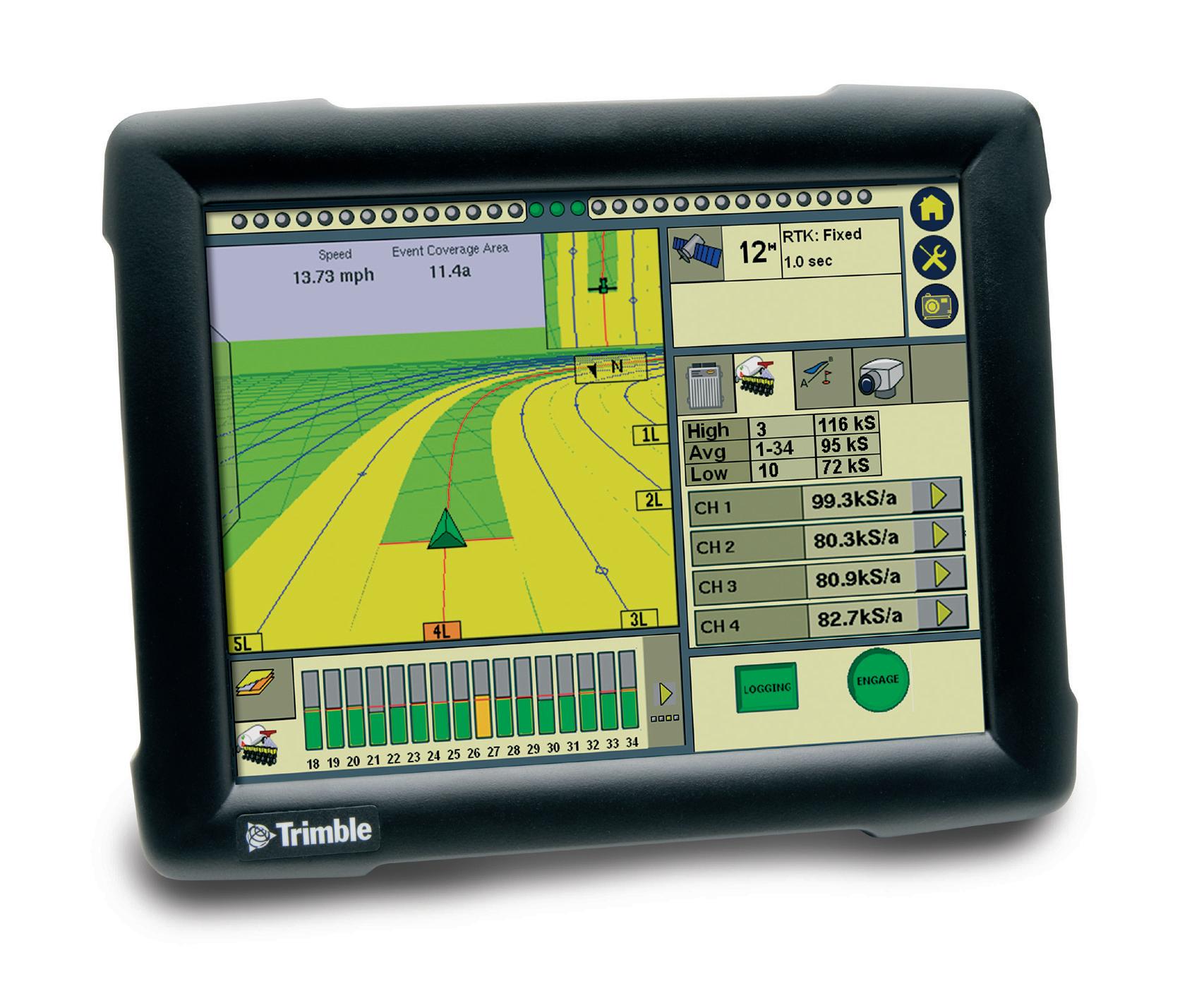
• Two GPS+GLONASS receivers built right in, so no need to buy more hardware.
• It works with both manual guidance and automated steering so it’s easy to hook up to your existing steering system.

Tweaking the efficiency of nitrogen applications might pay off in multiple ways.
Nitrous oxide (N2O) is a potent greenhouse gas that reportedly contributes to climate change. According to the Intergovernmental Panel on Climate Change’s 2007 synthesis report, the current increase in global atmospheric N2O concentration has been caused primarily by agricultural activities such as soil management and nitrogen fertilization. The good news is that farmers can decrease N2O emissions through changes in management practices. At the same time, they may eventually be able to obtain carbon credits, or offsets, for these emissions reductions and sell them in the carbon market for additional revenue.
“N2O is produced in soils as a natural part of the nitrogen cycle,” explains Dr. Philippe Rochette of Agriculture and Agri-Food Canada (AAFC) at Quebec City. A small amount is produced during nitrification, which is the conversion of ammonium (NH4) to nitrate (NO3) by microbes and requires oxygen. Most N2O, however, is produced during denitrification, which occurs when oxygen is not available to microbes, for example, in wet soils. In denitrification, soil microbes use nitrate for respiration, converting it to nitrite (N2O), then to nitrogen oxide (NO), N2O, and finally nitrogen gas (N2). “Since N2O is a free intermediate, it is released in the soil environment and some of it can escape,” says Rochette.
For denitrification to occur, there must be a nitrate source, wet soil conditions in which very little oxygen enters the soil, and a carbon source for the microbes, says Dr. Craig Drury, soil scientist with AAFC at Harrow, Ontario. Although denitrification occurs in all natural ecosystems, specific agricultural practices that affect the soil nitrate, moisture, and carbon contents can enhance denitrification and therefore N2O emissions. Scientists such as Rochette and Drury of AAFC and Dr. Claudia Wagner-Riddle of the University of Guelph are trying to tease apart the complexities of practices that affect N2O emissions. Their data are used to improve annual estimates of emissions and emissions reductions.
by Heather Hager, PhD
to barley at the AAFC Harlaka research farm near Quebec City. “In the two soils that we studied, no-till had no effect on N2O emissions on the sandy loam because even if it increased the bulk density and water content a bit, it didn’t really decrease the aeration to a point where denitrification was really enhanced. But on the clay soil, which was already more dense, wetter, and less aerated, the practice of no-till decreased aeration below a threshold where denitrification was enhanced and N2O was produced,” says Rochette Rochette has also examined 25 published studies that directly compared emissions from no-till and tilled soils. His results suggest that N2O emissions increase under no till in poorly aerated soils, but not in well-aerated soils. “So if you practise no-till, for example, in eastern Canada on a clay soil where the climate is wet, what I am proposing is that this is likely to increase N2O emissions. If you adopt no-till in the prairies where the climate is dry and the soil is well aerated, there will be little effect of no-till on N2O,” says Rochette.
High N applications a factor
Many soil factors affect denitrification and N2O emissions
No-till can be a beneficial practice because it improves soil water conservation and may promote carbon sequestration. However, do increases in soil moisture cancel out the emissions reductions achieved via carbon sequestration because of increases in N2O emissions? In a September 2008 publication in the Soil Science Society of America Journal, Rochette and his colleagues studied the effects of no-till on N2O emissions on a heavy clay soil and a well-aerated sandy loam soil planted
Likely the major factor affecting N2O emissions in agricultural systems is the application of nitrogen fertilizer far beyond the levels available in natural ecosystems. “Agroecosystems are a significant source of N2O, and that has to do with this addition of nitrogen,” says Wagner-Riddle. “Almost every study shows a significant effect of fertilizer additions on N2O emissions.” At a research site at Elora, Ontario, she and her colleagues compared a conventional plowing and nitrogen fertilizer regime with a best management practice of no-till plus reduced nitrogen fertilizer on a corn-soybean-wheat rotation. To reduce the amount of nitrogen applied, they gave nitrogen to young corn seedlings as a sidedress according to soil tests taken during planting. They also gave a nitrogen credit to the legume rotation and reduced the subsequent amount of nitrogen applied, and added a red clover cover crop in the rotation after winter wheat. This reduced the amount of nitrogen applied from 150 to 50–60 kg/ha (134 to 45–54 lbs/ac) for corn and from 90 to 60 kg/ha (80 to 54 lbs/ac) for wheat. “The combination of all

• Highest quality liquid starter fertilizers
• Quality, precision placement, seed safe
• Low impurities
• Low salt
• True solution N-P-K
• Orthophosphate (available phosphorus)
• Highly soluble
ALPINE liquid starters have a neutral pH and are low in both salt index and impurities. These features of our liquid starters enable the product to be placed directly with the seed at planting time. Placement with the seed enables the available phosphorus to be taken up at the critical early stages of growth to maximize yield potential.
ALPINE liquid starters contain a minimum 80% of their phosphates in the available orthophosphate form.
Orthophosphate is immediately available to the plant during the critical early stages of growth. Plant can only take up phosphorus in the orthophosphate form.
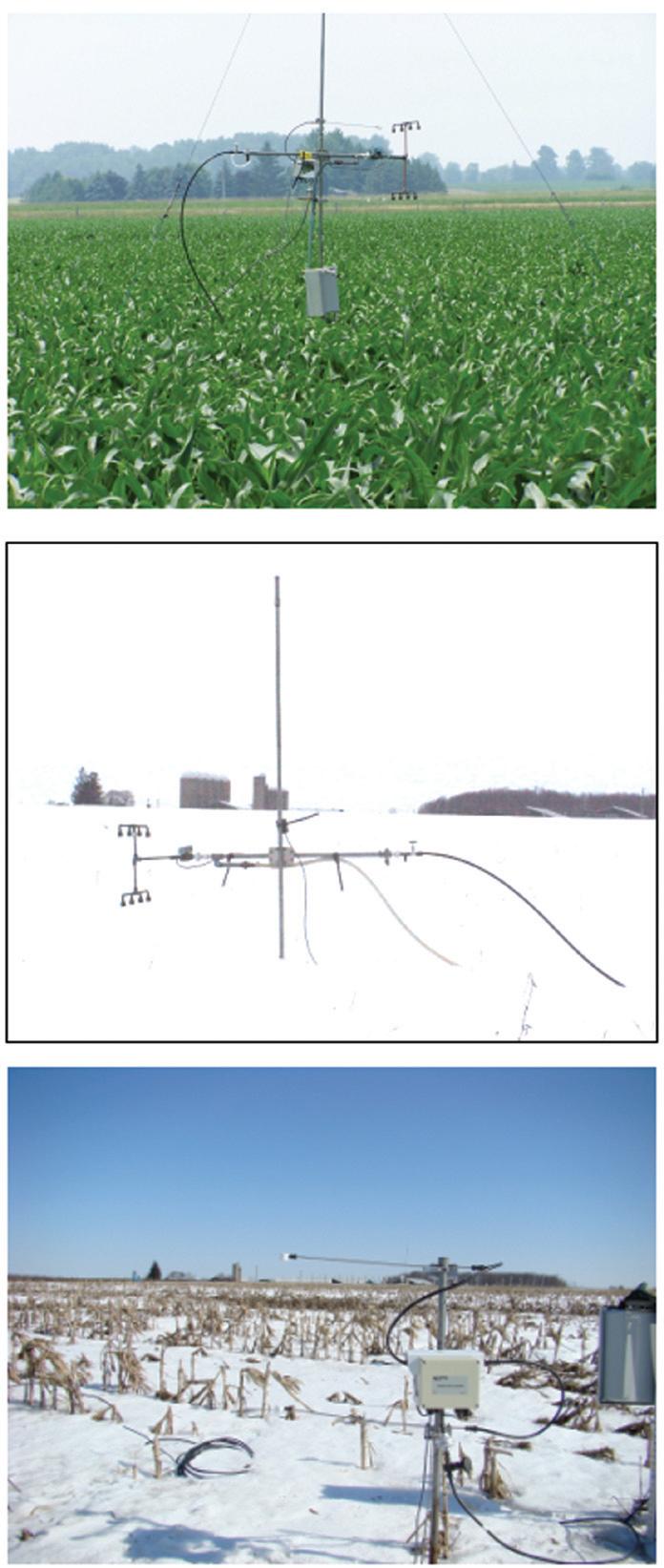
of those practices told us that the emissions can be reduced significantly,” says Wagner-Riddle. “Averaged over the five years of the study, the mean annual N2O emissions decreased by 0.79 kilograms of nitrogen per hectare, or 35 percent,” by using the best management practice. “This corresponds to 1.2 kilograms of N2O per hectare or 366 kilograms of CO2equivalents per hectare.”
Interestingly, only 20 percent of the emissions reduction occurred during the growing season, and only for corn. “The majority of the reduction (30–90 percent) was associated with the spring thaw effect,” says Wagner-Riddle. “It’s a beneficial sideeffect of no-till that we hadn’t predicted when we started the experiment.” She explains that with conventional tillage, the soil lacks the insulating blanket of residues and trapped snow that moderates soil temperatures, so soil freezing is more intense. This freezing releases carbon that can be used by the microbes and causes the soil to be wetter during thaw, resulting in greater N2O emissions. So the moderating effect of no-till can depend on the coldness of the winter and the amount of residues.
To further complicate matters, different combinations of the various factors that affect N2O emissions can have different effects. Drury and colleagues looked at the interaction between three types of tillage and two depths of nitrogen placement in the soil (160 kg/ha, or 143 lbs/ac) for the corn phase of a corn-soybean-wheat rotation at Woodslee, Ontario, during the growing season. When nitrogen was applied shallowly, at two centimetres (less than one inch) depth, there was no difference in growing season N2O emissions among tillage types. However, when nitrogen was applied at 10 centimetres (four inches) depth, zone till had the lowest growing season N2O emissions. “Over that three-year study period, N2O emissions from zonetill were 20 percent lower than from no-till and 38 percent lower than from conventional mouldboard plow tillage,” says Drury. This was unexpected because one might think that the emissions from zone-till would be intermediate to those from no-till and conventional-till. This is where the effect of the carbon source becomes noticeable. Drury explains that zone till has the advantages of both no-till and conventional-till: the soil is more aerated than with no-till, but compared to conventional-till, “the carbon residue is still on the surface, not where the most of the nitrate is located.” Both of these factors contribute to minimize N2O emissions.
These and other factors that affect N2O emissions allow for many ways that growers might tweak their management practices to reduce emissions. “It is complex, but it also gives you the opportunity to reduce emissions by placing nitrogen shallower in the soil, using zone-till or no-till, or using crop rotation,” says Drury. “All of these management practices can help you reduce the amount of N2O that’s being lost from the soil. And hopefully, more of that nitrogen would then go into the crop to enhance growth and yield, which is where you really want it.”
Because of its lifespan and effects in the atmosphere, the estimated global warming potential of one tonne of N2O is 296 times that of one tonne of carbon dioxide emitted. A carbon offset is standardized as a reduction in one tonne (1000 kilograms) of carbon dioxide emitted, which is equivalent to 3.38 kilograms of N2O emitted. Theoretically, a grower could adopt specific nutrient management practices that would reduce N2O emissions and
Nitrous oxide emissions were reduced by using specific best management practices to reduce the amount of nitrogen fertilizer applied to cropland (BMP) compared to conventional practices (CONV). Source: Claudia Wagner-Riddle and colleagues, University of Guelph; research funding provided by the Ontario Ministry of Natural Resources and the Natural Sciences and Engineering Research Council of Canada.
then voluntarily obtain and sell the resultant carbon credits, if an emissions trading system were in place that allowed regulated industries to purchase carbon offsets, and if nutrient management were an approved emissions reduction practice.
Alberta is currently the only province or territory that has mandatory emissions reductions, an emissions trading system, and carbon offsets as a compliance option. Growers in Alberta have already participated voluntarily in this system under an approved protocol for reduced-tillage practices. To date, more than 1.9 million tonnes of offsets have been created in the Alberta market, and half are from reduced-tillage projects. Currently, there is no accepted protocol for nitrogen fertilization reduction in Alberta.
However, according to Karen Haugen-Kozyra of Climate Change Central, the Canadian Fertilizer Institute is sponsoring the development of such a protocol based on the application of the right form of nitrogen fertilizer with appropriate placement, timing, and rate. Average N2O reductions will be determined for various levels of nitrogen management. A technical seed document based on scientific investigations such as those described here is currently in development as the second step in an 11-step process to seek provincial government approval for the protocol.
In Ontario, the Ministry of the Environment is developing a cap-and-trade program that could be in place as early as January 2010, says Heather Pearson, manager of the Air Policy Instruments program. This development is part of the Provincial–Territorial Cap and Trade Initiative memorandum of understanding signed by Ontario and Quebec in June 2008. One challenge to implementing a cap-and-trade system at this time may be the number of different organizations that are undertaking the same task, but in a slightly different manner. For example, the Canadian federal government, the Western Climate Initiative, the Midwestern Greenhouse Gas Reduction Accord, and the Regional Greenhouse Gas Initiative all count Ontario as a member or observer. “It is a very fluid time with respect to cap-and-trade programs, both within Canada and on a broader level across North America, so we need to be very flexible in terms of what we do and propose,” says Pearson. “Our interest is to make sure that we have a program in place that will provide very broad access to Ontario industry in terms of


linking to other systems.”
This summer, 24 Ontario corn producers participated in a pilot project with the Ontario Ministry of Agriculture, Food, and Rural Affairs to evaluate aspects of the nitrogen fertilizer reduction protocol. The pilot project “is about making sure that that protocol works the way that it’s supposed to, that the recordkeeping is adequate to substantiate the reductions,” says Pearson. The analysis should be completed in early 2009, and the results “should be helpful in informing the development of an offset program.”
The pilot project did not involve the creation of carbon offsets. “I would be cautious with respect to raising expectations,” says Pearson. “We can’t presume what the mandatory cap-andtrade program will look like at this point in time.” However, even in the non-mandatory market, administrated by the Chicago Climate Exchange, nitrogen fertilization reduction is not yet a method by which producers may receive carbon credits.
Until such protocols are developed and approved, producers may be consoled by the fact that with the high costs of fertilizer, any switch to a management practice that reduces the amount of nitrogen required while maintaining yield will still result in financial savings. These are early days yet for carbon credits. n
For further information on the current science underlying nitrogen fertilizer management and nitrous oxide emissions, see: Snyder, C.S., T.W. Bruulsema, and T.L. Jensen. 2007. Greenhouse gas emissions from cropping systems and the influence of fertilizer management – a literature review. International Plant Nutrition Institute, Norcross, Georgia, USA. Available online at: http://www.ipni.net/ghgreview
by Treena Hein
Learning what weeds are invading fields is much easier with online tools.
Weed identification skills are something that can, and should, be constantly improved. Efficient identification of weeds, especially young weeds, helps growers choose the right herbicide sooner and achieve better overall weed control.
To help farmers do just that, a team of experts has created several online tools available at www.ontarioweeds.com
Headed by Mike Cowbrough, weed management field crop program lead with the Ontario Ministry of Agriculture, Food and Rural Affairs, the team includes other OMAFRA specialists, as well as experts from Agriculture and Agri-Food Canada, Wilfrid Laurier University and the University of Guelph.
Visitors to the site are first presented with the “Search” function. “This allows producers to input some key words that will help them narrow down the weed they are trying to identify,” says Cowbrough. “Key words might be related to aspects such as the colour of flower, smell of the weed, or the shape of the stem. The more key words you input, the narrower the given results will be.” Once the search results are presented, users can click on the weed species for more information, such as photos and diagrams.
Those who are a little more certain of what they have can go straight to the “Weed Index” option, which presents an alphabetical list of weeds, but the list can be narrowed according to whether a
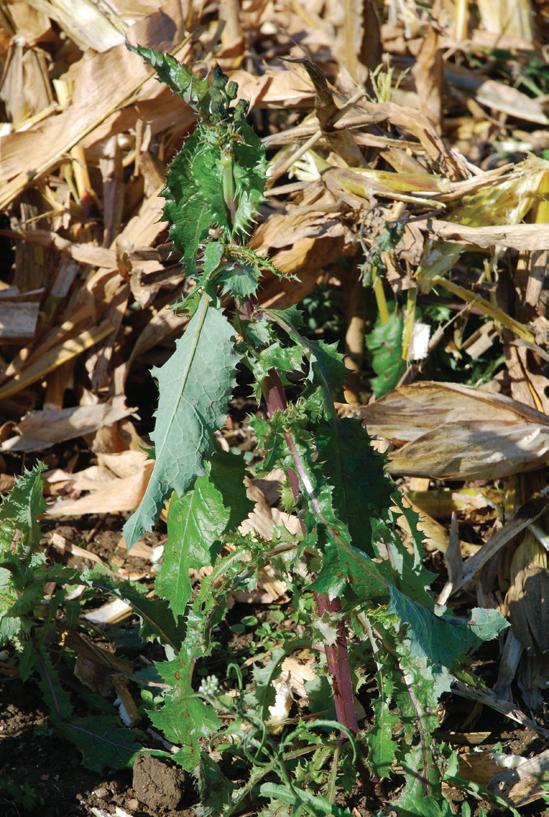
grower would like to see grasses and/or broadleaf weeds listed, perennial or non-perennial or noxious/not-noxious. “The glossary helps users learn the official terms for parts of the weed, its plant morphology,” says Cowbrough.
If growers are really stumped, they can click on “Weed ID Services” and send in pictures. The site experts will respond to a query as quickly as they can. “There are certain things that are most helpful to us in terms of pictures,” says Cowbrough. We explain on this page of the site that in all or most of your pictures, you should include a reference object (for example, a coin) so that the approximate size of the plant part can be identified. Also, along with a whole plant picture, take pictures of every distinguishable feature of the plant (e.g., leaf, stem, flower, etc.). It is always better to have too many photographs versus not enough.”
Cowbrough adds that the vast majority of the few weeds that have not been identified by sent-in pictures have been due to several reasons, including poor quality photos and/ or no reference object provided to show the size of the object in the picture. Sometimes, Cowbrough adds, “No additional information is provided, like leaf orientation and other morphological clues, or the information is contradictory to what the photo shows, thus adding confusion.”
However, before photos are sent in, Cowbrough suggests users try the “Search” and also click on “Weed Identifier” on the top right of the “Weed ID Services” page, to see pictures of weeds sent in by stumped farmers. “Over 80 species have been identified,” he says, “and you may find the one you are looking at.” n Weed ManageMent
For growers, using the weed identification tool is as easy as e-mailing a digital photo.



Which one is glyphosate-tolerant?
They both are. You’ve known one for over nine years. Now let us introduce you to the other. Discover a new choice in GT (glyphosate-tolerant) corn from NK.® Get the results you need plus the protection you want against pests with more traits like Corn Borer, LibertyLink,® Rootworm, and Triple and Quad stacks. For more information contact your NK dealer, call 1-800-756-SEED or visit nkcanada.com today. The results you need. The freedom to choose.TM

by Treena Hein
Smart producers are using the tools available on GoCorn.net.
Choosing a hybrid for the upcoming season is an important winter research project for corn producers. The information and software comparison tools made available by the Ontario Corn Committee (OCC) at GoCorn.net, in addition to hybrid performance information from industry, provide a great deal of help in this decision-making.
Included on the site are “Hybrid Corn Performance Trials,” which feature data collected during the 2006, 2007 and 2008 growing seasons. These are identical to what is mailed out to producers, says Greg Stewart, corn industry program lead with the Ontario Ministry of Agriculture, Food and Rural Affairs, and GoCorn.net contributor.
Under the “Tools and References” section, GoCorn.net also features the ‘1987-2007 Corn Hybrid Selector’ software tool. “This database contains information on yield, moisture and broken stalks,” says Stewart, “allowing farmers to see multi-site and multi-year averages on the hybrids they are interested in. It means farmers can go beyond just looking at a piece of paper with that year’s performance data on a certain hybrid. With this, you can look at how up to four hybrids went head-to-head under OCC trials over up to four years of testing.”
Stewart adds “This software program has been received very positively by the industry.”
Dr. Steven King, senior research manager at Pioneer HiBred, observes that the Selector “simplifies hybrid comparisons.” He says traditional published tables can be cumbersome to interpret, even for analytical types of people, because of the huge amount of data they present.
At the same time, King cautions, “Something that the OCC doesn’t really highlight is hybrid agronomic and disease tolerance characteristics. It’s not just about yield and moisture. You can have all the low-moisture and high yield performance in the world, but if the hybrid has a fatal flaw in one of its characteristics, then those other performance factors don’t matter.” He says some of the key measures Ontario producers should be looking at are stalk and root lodging resistance, stress emergence and Gibberella mould tolerance.
King therefore advises using industry trial databases, some of which are available online, in addition to the OCC data. “If I was a customer, I would want to look at all data out there and know the disadvantages and advantages of each. GoCorn. net is an effective way of presenting independent public trial data. While industry trial databases are not independent, they are much more extensive and include not only small plot performance but also on-farm strip testing and side-byside comparisons, so there are much larger plots and more of them. They also include comparisons with key competitors in the marketplace, in terms of disease factors, yield, drying and much more.”
Under the “1987-2007 Corn Hybrid Selector” tool, producers will also find the “Economic Return Calculator.” This tool
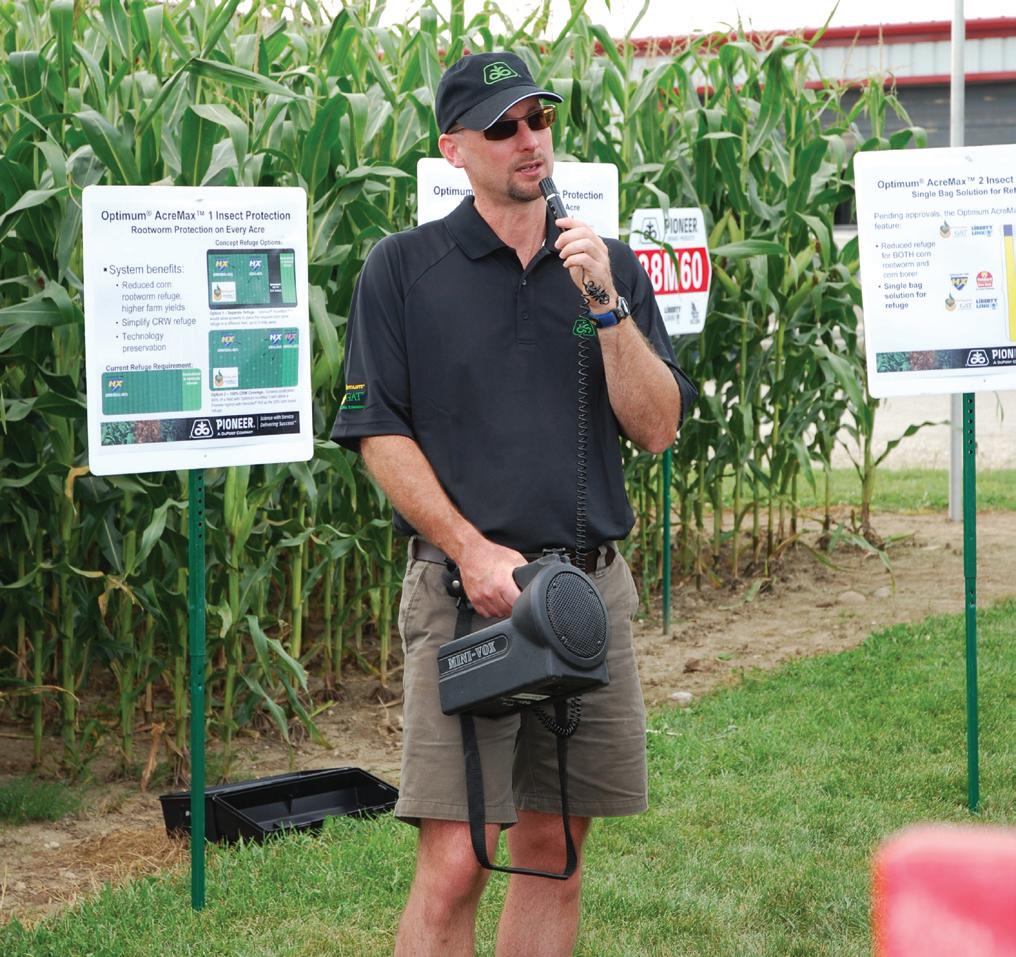
allows farmers to play out profit trade-off scenarios for hybrids of interest in terms of yield, harvest moisture, drying costs and seed cost. King says, “A tool like the Calculator is helpful. Farmers can use that data to make some guesses based on some scenarios to maximize profit per acre, which is the ultimate performance measure.”
Stewart observes “Some of the decisions about hybrids are huge. For example, do you want to spend a lot on a new hybrid with high yield that has a more expensive seed cost, or go with a less expensive seed with lower yield? When things like yield range versus seed costs are presented to the growers, they are quite surprised.” Stewart adds “It’s hard for producers to get a handle on how much difference seed cost and yield alone will make, and this tool allows them to factor in moisture content and drying costs as well.”
The cost of drying has continued to increase during the past decade, says Stewart, and this fall it is the highest it has ever been. “It is an interesting process for growers to evaluate yield versus drying costs,” he says. “Our analysis to date is that planting a shorter season hybrid in order to cut drying costs has often resulted in lower economic returns than what you could get with a full season hybrid,” Stewart adds. The calculator allows growers to input their own drying costs, yields and moistures to explore the options.
New updates were to be added as usual, to www.GoCorn. net in the fall of 2008. Those include drying costs, for example. Stewart notes “These costs are considerably higher than the last time the program was updated.”
Stewart and his colleagues also have plans for improvements and additions to the site, which will be presented as they are prepared. n
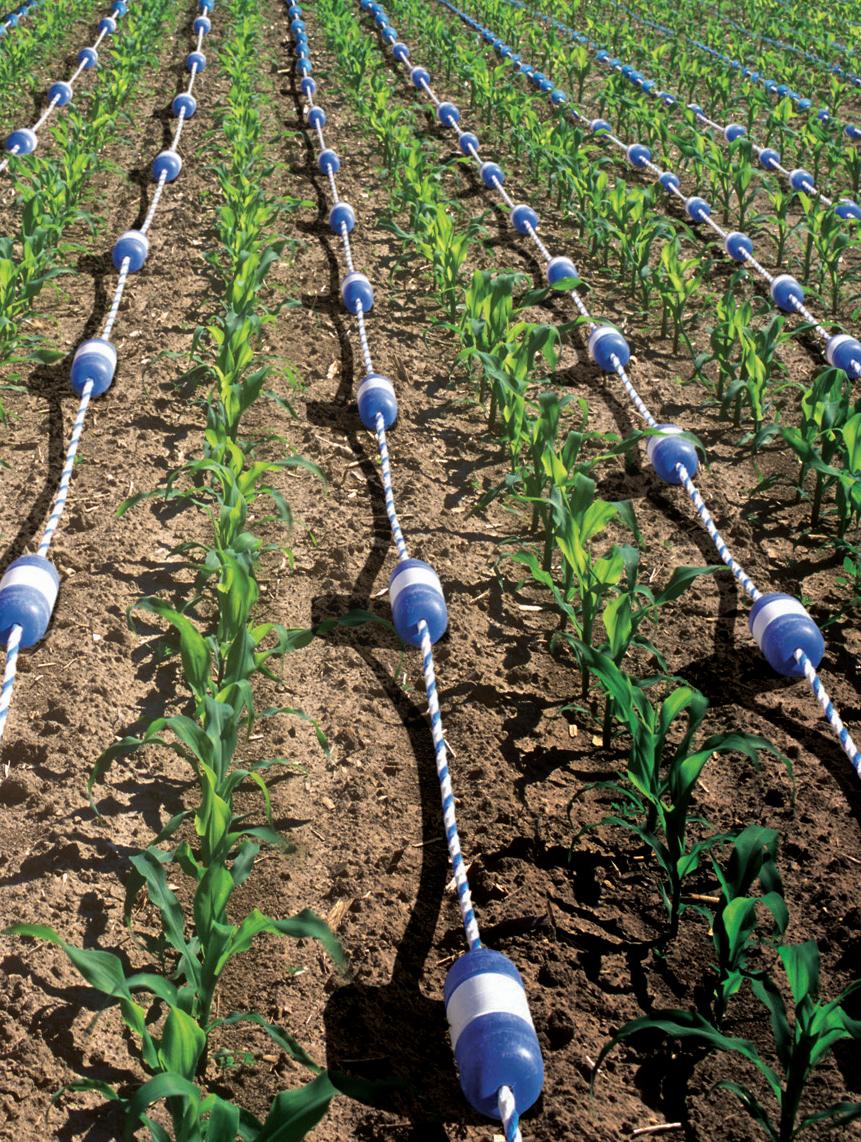
Option® Liquid is the only post-emergent sulfonylurea herbicide available in a liquid formulation. That means it’s easier to measure – especially when your fields don’t come in exact 20-acre increments.
Option® Liquid is the only post-emergent sulfonylurea herbicide available in a liquid formulation. That means it’s easier to measure – especially when your fields don’t come in exact 20-acre increments.
Option Liquid can be used from the oneto eight-leaf stage of corn. And it comes with a long list of broadleaf tank-mix partners for one-pass weed control.
So you’re not doing laps out there.
Option Liquid can be used from the oneto eight-leaf stage of corn. And it comes with a long list of broadleaf tank-mix partners for one-pass weed control. So you’re not doing laps out there.
Almost all of the spring wheat crop in Ontario consists of hard red. Flour mills in eastern Canada that use hard white spring wheat have been sourcing it from western Canada, a proposition that becomes more costly every day due to rising fuel costs.
If, however, tests in Ontario during the next couple of years show hard white spring wheat to be feasible for both producers and millers, this crop could be grown in Ontario on a small scale.
Peter Johnson, the cereals specialist with the Ontario Ministry of Agriculture, Food and Rural Affairs, says hard white spring wheat is similar to hard red in most respects, but gives an increased yield of flour, a plus for milling companies. “You don’t need to mill off anything past the
by Treena Hein
bran because the colour of the bran is not an issue,” says Johnson. “The white bran also means it works well for whole wheat products as the bran won’t discolour the flour. In addition, the taste of white bran is less bitter.”
Besides being better suited for whole grain food products, which become more popular by the day, hard white spring wheat is also well-suited to the production of Asian-style noodles and other similar “ethnic” foods.
Performance trials
Parrish & Heinbecker (P&H) coordinated a small program with SeCan during the 2008 season to see if hard white spring wheat and some other new varieties can be grown in eastern Canada and whether they have the desired characteristics for milling. “Western wheat is getting pricey,” says Harvey Wernham, manager of P&H Brand Seeds.

Four different farmers grew three hundred acres of AC Snowstar in different areas of Ontario. A hard white spring wheat variety, AC Snowstar was developed at Agriculture and Agri-Food Canada-Winnipeg by Dr. Gavin Humphreys and released to SeCan in early 2006. Phil Bailey, SeCan’s eastern territory manager, says hard white spring wheat varieties have been introduced in the past but were never able to compete agronomically.
Bailey considers AC Snowstar, however, a “very competitive” variety, with a demonstrated yield index of 103 percent in Area 2 (southwestern and central Ontario) in 2007 performance trials (see www. gocereals.ca). “This is quite interesting,” he says, “because in the past any hard white spring wheats introduced in the east usually yielded significantly lower than other hard red spring wheat varieties.”
Analysis of the 2008 trials has reflected

this year’s unusually wet weather, says Wernham, with some high DON levels and some acceptable levels as well. Bailey says. “AC Snowstar is certainly still susceptible, but would be considered one of the better varieties when it comes to fusarium tolerance for a white wheat.”
Johnson adds “Every variety is different, but one of the concerns is that in general, white wheats as a class have higher DON concentrations than reds. The reds have phenols that give the red colouration and provide some fungicidal activity, which results in a lower concentration of toxin in the grain than the whites.” He says that because of this, the maximum amount of fusarium in red wheats in eastern Canada is 1.5 percent, but it is one percent for whites, to maintain the grain below 2 ppm of DON concentration for both types of grain.
Next season – and beyond Mill run testing to determine how this variety can be used, as a whole grain or whole grain blend, will be complete by early 2009. “Plans for next year hinge on the mill tests,” says Wernham, “and we have to determine from a grower perspective if agronomically it makes sense to grow it in comparison to other spring seeded crops.” He adds “We want to examine data over a two- to three-year period. If it’s feasible at that point for the grower and acceptable to the milling industry, we would contract growers, and give them recommendations for plant population, fertilizer and fungicide.”
Johnson says that, in terms of the longterm future for hard white spring wheat, “I see that the focus on health consciousness is going to continue to increase, especially with the aging population, and whole grains are certainly one of the things that health professionals point to as having increased health benefits. The desire for exotic foods such as Asian noodles is also growing, and I think the willingness of consumers to pay a little bit more for these products will also grow.”
“Will that mean the hard white market in Ontario will develop?” Johnson asks. “That’s an interesting question. I hope it does, as it offers some great opportunities for Ontario wheat growers, millers and food processors. If companies want to develop something unique and focus on the premium food market in Asian noodles and whole grain foods, there’s growing demand there. Overall, there’s some real potential, but it’s far from being a done deal.” n


Coming to Canada, it works for broadleaf and grass weed control in all types of soybean cultivation.
Herbicide resistance is a constant and pressing problem for soybean farmers, which is why the development and testing of new herbicides is an ongoing endeavour. “One of the key components to herbicide resistance prevention and management programs is the availability of a wide array of herbicides with different modes of action,” says Dr. Francois Tardif, associate professor in Plant Science at University of Guelph. “In Ontario since 1996, resistance to acetolactate synthase inhibitors (Group 2) has developed at a steady rate in many species. In addition, resistance to photosystem II inhibitors (Group 5) is still quite widespread.”
Flumioxazin, says Tardif, is a member of the protox inhibitor type of herbicides (Group 14) that offers new weed management options. “However, contrary to other Group 14 herbicides registered for soybeans in Canada,” he says, “flumioxazin is a soil-active pre-emergent herbicide, which means it provides both enhanced burndown and residual control.” The family of chemicals to which flumioxazin belongs works by inhibiting production of an enzyme important in the synthesis of chlorophyll.
Tardif observes that the availability to Ontario soybean growers of a herbicide containing flumioxazin would provide another weed management option and contribute to resistance prevention. Valent Canada Inc. based in Guelph, Ontario, has recently applied for registration of a flumioxazin-containing herbicide, which the company is hoping will be available for the 2009 season. Valent claims that Valtera promises control of “even the toughest broadleaf weeds” while also suppressing annual grasses in Roundup Ready and Glyphosate Tolerant soybeans as well as non-GMO and identity preserved (IP) beans.
Valent company studies have found Flumioxazin Technical, as it is referred to on registration forms, is practically non-toxic to bees and avian species. It is slightly to moderately toxic to fresh-
by Treena Hein
water fish and moderately to highly toxic to aquatic invertebrates. It does not present a genetic hazard.
Valtera should be applied as a preplant or early pre-emergent herbicide, from 30 days prior to planting up to
three days after planting (before emergence). In burndown situations, it can be used as a foundation herbicide partner with glyphosate in Roundup Ready or glyphosate tolerant soybeans. In research, flumioxazin has been shown to

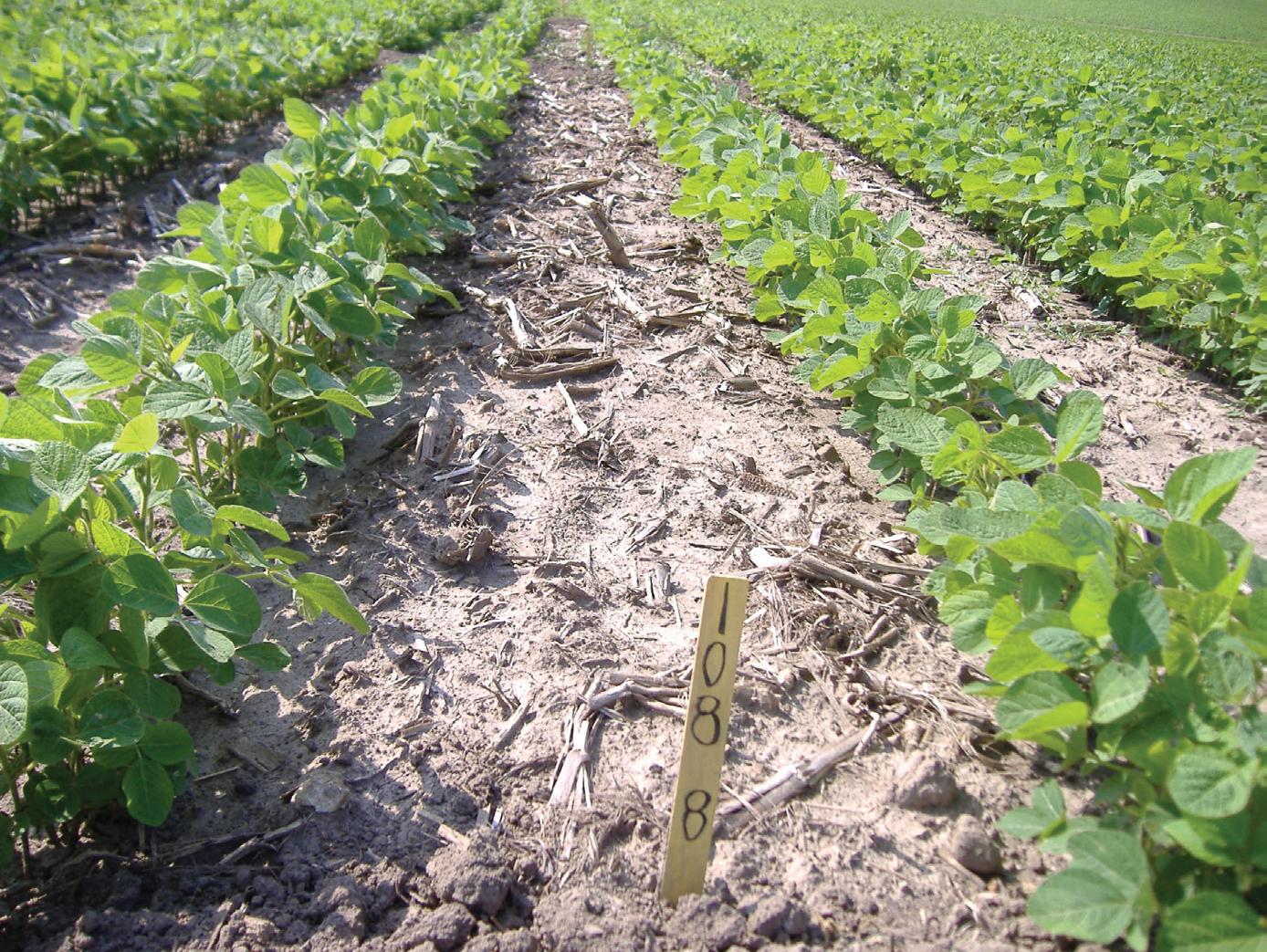
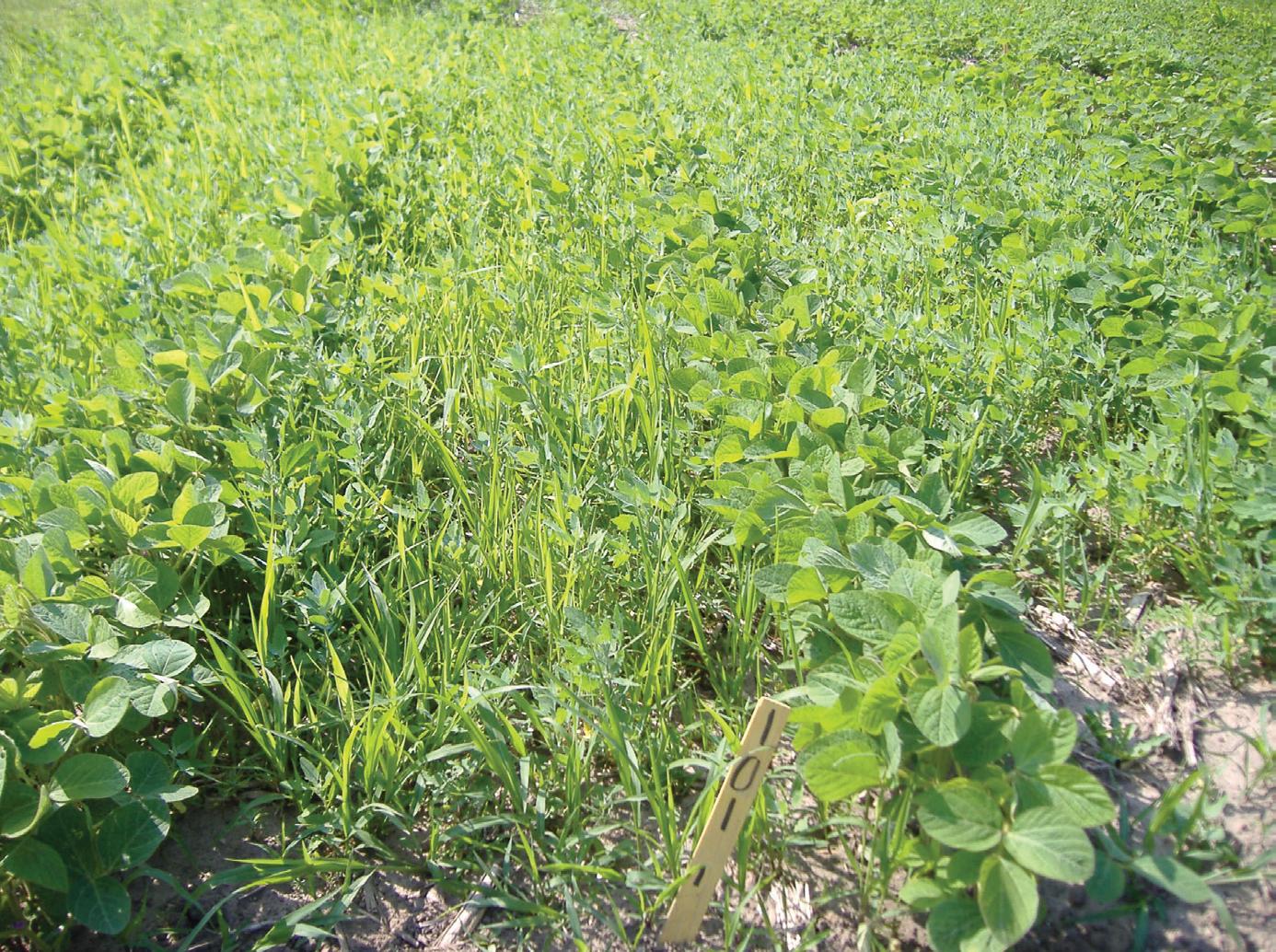
A great deal of the yield potential of your corn or soybeans is decided very early during the growing season. The best way to enhance yield is to keep your crops clean during this make-or-break period. We call this weed control window the POWER ZONE –the Critical Weed-Free Period (CWFP).
Take corn, for example. Corn’s CWFP extends from the 3-leaf to the 8-leaf stage of growth. A good deal of the crop’s yield potential is decided during this time. When you keep your crop clean, you maximize yields. The same principle holds true for soybeans. In soybeans, the Critical Weed-Free Period runs from the 1st to the 3rd trifoliate stage. You need effective weed control during this period to achieve maximum yields.
Some herbicides, such as glyphosate, only control weeds that have emerged and come directly in contact with the application. Or strictly pre-emergent herbicides that require lots of moisture for activation and may not work well in a lumpy soil, which could be a problem in 2009. For control throughout the CWFP and protection of your crops' yields, you need residual control.
For 2009, DuPont brings you POWER ZONE products for corn and soybeans – proven performance and flexible strategies to achieve residual weed control during the Critical Weed-Free Period.
Galaxy™ performs better than glyphosate alone
It can be applied from emergence to the 6-leaf stage on glyphosate- tolerant corn adapted to greater than 2500 CHU.
Guardian™ provides sharp control and saves time and money
DuPont™ Guardian™ Herbicide can be applied two ways –both of which help keep your soybean crop clean during the Critical Weed-Free Period.
Used as a pre-plant burndown, before either conventional or glyphosate-tolerant soybeans, Guardian™ allows your crop to get established quickly, with less weed competition. Or, applied in-crop from the 1st trifoliate to the 3rd trifoliate in glyphosate-tolerant soybeans, Guardian™ allows you to focus on planting first and spraying later.
Either way, Guardian™ delivers one-pass contact and residual control, including control of tough weeds like dandelion, yellow nutsedge and annual sow thistle. It reduces the need for extra passes over the field, which saves you time and money. With two modes of action, Guardian™ is also an effective resistance-management tool for glyphosate-tolerant soybeans – as well as guarding against weed shifts.

Let’s start with glyphosate-tolerant corn. DuPont™ Galaxy™ Herbicide goes beyond glyphosate to provide residual, onepass control that will help keep your crop clean during the critical period. Because you don’t have to wait until all the weeds are up, you can start spraying earlier, thus spreading out your workload. Galaxy™ also improves control of troublesome weeds such as fall panicum, green foxtail and redroot pigweed. Proof is in yield results – grower field trials showed an 11.1 bu/ac increase over glyphosate alone1 With two active ingredients from different herbicide groups (2 and 9), Galaxy™ helps protect against weed shifts and resistance.
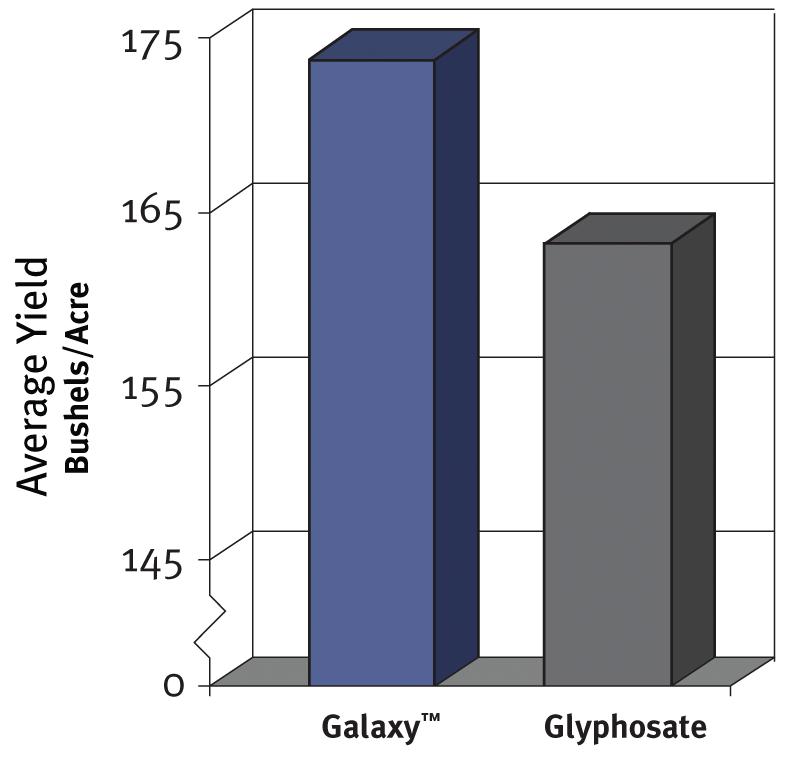
Optimum™ GAT™: new control options on the way Guardian™ and Galaxy™ are compelling choices for today, but of course, our business is also about the future. The good news is technology, now being developed by DuPont, will allow more flexible use of glyphosate and ALS herbicides. Optimum™ GAT™ is a new herbicide resistance technology that combines a new glyphosate metabolic inactivation mechanism with an ALS enzyme that’s insensitive to all ALS herbicide types, including sulfonylurea herbicides.
What does this mean? In a nutshell, crops with the Optimum™ GAT™ trait carry resistance to glyphosate and ALS herbicides while keeping their natural resistance mechanisms, so herbicide mixes with other modes of action are also possible. This gives growers the power to use new herbicide technologies to control their toughest weed problems. Look for the first sales of Optimum™ GAT™ technology in the near future.

We take a more....in-depth look at your crop inputs.
Our focus starts with your cropping GOALS. CAN GROW then develops a FLUID Solution that captures that GOAL.
With CAN GROW,it’s all about starting right by working with you to determine what’s best – for your crop,and ultimately your bottom line.
increase the speed and consistency of the glyphosate burndown and to give about six weeks of residual control.
Flumioxazin degrades rapidly in water and soil. The molecules present after degradation are incorporated into soil organic matter and carbon dioxide. Regina Rieckenberg, sales and marketing manager with Valent Canada, says “Based on column leaching studies and the short aerobic soil half-life, the potential for flumioxazin or its degradation products to leach in field agricultural soils is low. The low use rate and rapid soil dissipation results in low carryover potential to rotational crops.”
Testing details
Tardif tested Valtera during the summer of 2008. He says “I have found it effective in controlling many dicot weeds that demonstrate Group 2 resistance such as common lamb’s quarters, green and redroot pigweeds and eastern black nightshade. I could envision Valtera being used in a tank mix with metribuzin, metolachlor or imazethapyr to broaden the spectrum of weeds managed in IP soybeans. It would also fit well with glyphosate products and help prevent glyphosate resistance in Roundup Ready systems.”
Research on Valtera also has been conducted by Dr. Peter Sikkema, professor of field crop weed management at the University of Guelph, Ridgetown Campus, and Mike Cowbrough, weed management lead for field crops with the Ontario Ministry of Agriculture, Food and Rural Affairs (OMAFRA).
Cowbrough says “During the 2008 growing season, I had the opportunity to evaluate flumioxazin treatments in a University of Guelph/OMAFRA research project. By comparing all of the standard conventional herbicide programs for weed management, I sought to identify consistently effective herbicide treatments in IP soybeans.” He adds “We were addressing the difficulty Ontario soybean producers are having with resistant weed species, namely lamb’s quarters, pigweed and eastern black nightshade. Poor control of these weeds significantly reduces soybean yield and has caused quality issues, such as seed staining, which reduces the grade of the crop and the financial premiums associated with this specialty food grade crop.”
One of the trial locations in 2008 had significant populations of Group 5 and Group 2 resistant lamb’s quarters and pigweed species. “Due to this spectrum of weeds, the majority of herbicide programs currently in the Ontario marketplace failed to adequately control these weed populations. The only herbicide treatments that effectively managed these resistant weed populations contained the active ingredient flumioxazin,” says Cowbrough. “The registration of flumioxazin would address a number of deficiencies for management of herbicide resistant weeds in Ontario soybean production.”
Rieckenberg adds “The flumioxazin compound in Valtera has a long, proven history in the US against weeds such as Eastern black nightshade, which is a significant problem across several American states. In various trials in southern Ontario in 2008, Valtera showed as much as much as eight weeks’ control on Eastern black nightshade and pigweed, and six weeks’ control on lamb’s quarters, Canada fleabane, three seeded mercury and velvetleaf.
Both this broad spectrum control and extended length of residual control are attributes that set Valtera apart, says Rieckenberg. “Valtera will not only effectively control tough weeds, but will give Canadian soybean farmers a good rotational tool to help manage future resistance issues.” n
by Heather Hager, PhD
Since the early 1990s, the potential yield of soybean “has increased by about one percent per year based on sideby-side comparisons of today’s varieties with those that came on the market 15 years ago,” says Dr. Dave Hume, University of Guelph professor emeritus and crop consultant for Agri-Trend Agrology Ltd. “However, in that same time period, average Ontario soybean yields seem to have plateaued around the 36 to 40 bu/ac mark, with the exception of two wet years.” In contrast, the 2007 US record holder for soybean yield produced 154.7 bu/ac of intensively managed, irrigated soybean in Missouri. Is this high level of production an anomaly or is more intensive soybean management really worth the effort?
The soybean crop has generally received minimal inputs, especially when compared to a crop like corn. “In the past, there’s been a widespread opinion that soybeans are relatively easy to grow and need few inputs,” explains Horst Bohner, soybean specialist with the Ontario Ministry of Agriculture, Food and Rural Affairs (OMAFRA). “The idea of just planting and spraying and then leaving them alone until harvest was the way it was done 20 years ago.”
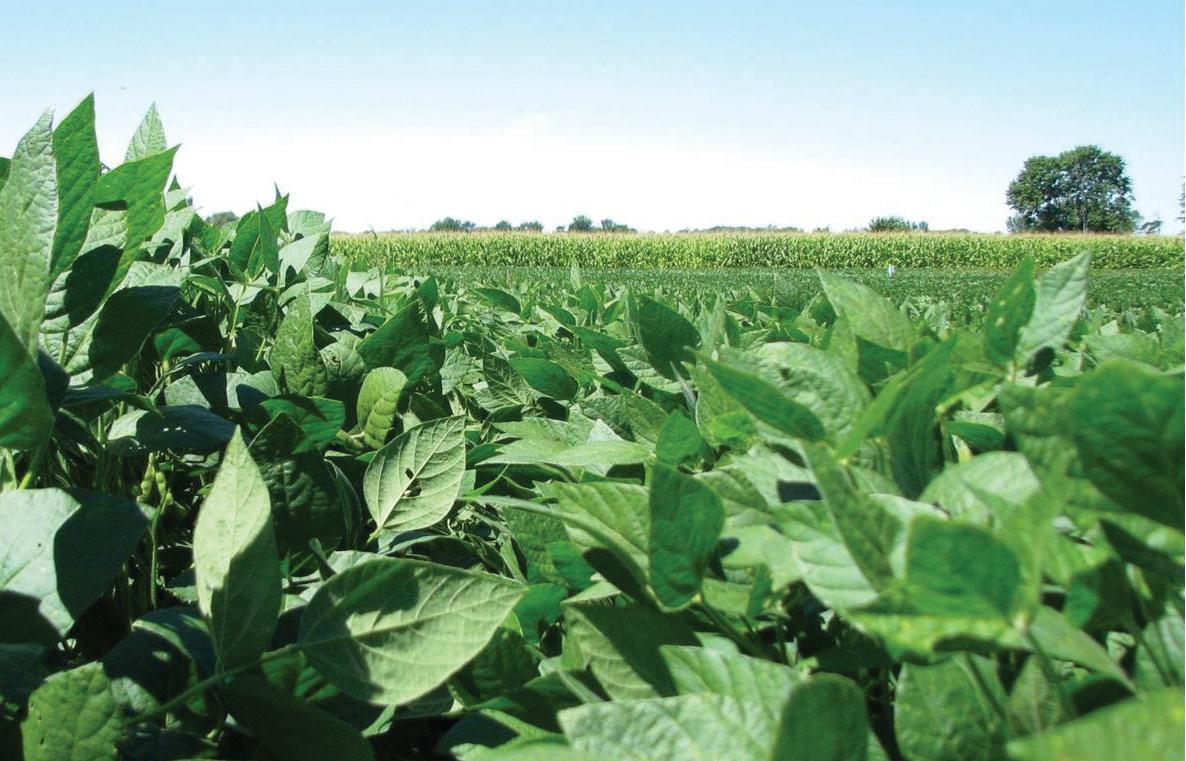
Recent issues with insects and disease have necessitated more management. Nevertheless, Bohner estimates that most soybeans in Ontario do not receive a fungicide or insecticide




seed treatment. He reckons that about half do not receive an inoculant containing the symbiotic microbes that are necessary for nitrogen fixation, and most do not receive nutrient inputs.
Still, in field experiments, specific treatments have achieved clear increases in soybean yields. Hume cites the addition of phosphorus, potassium, manganese, and inoculants as factors he has studied that can increase soybean yields. There may also be positive effects of
rotation, planting date, tillage, insecticides, fungicides, and plant hormones. The challenge is to determine whether the costs of extra inputs will pay off in increases in yield.
In a rotation, the usual management strategy is to feed the corn well and then let the soybean scavenge whatever phosphorus and potassium is left in the field the following year. “My research data say that we’re getting a seven to 10 percent increase in yield from meeting
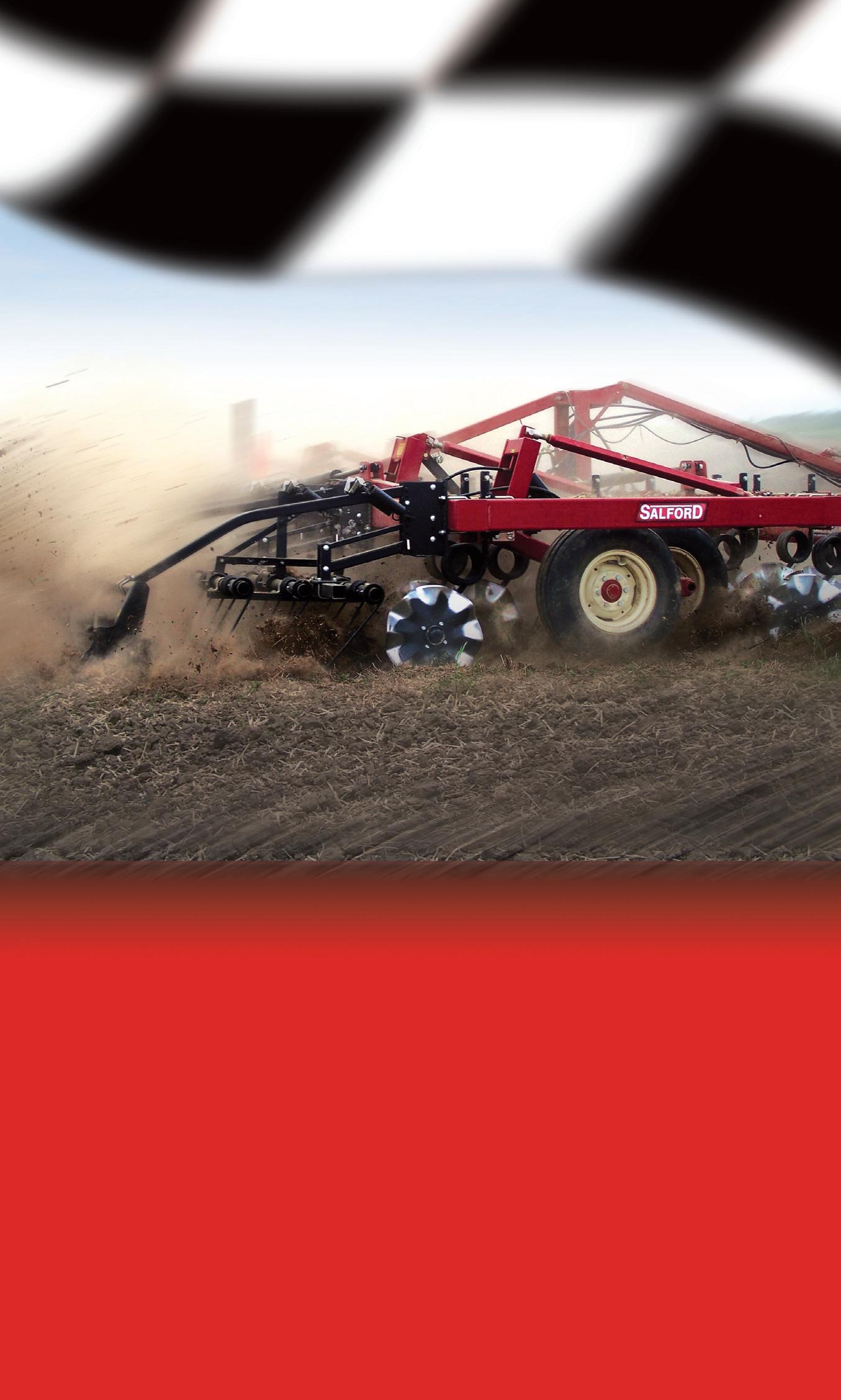
the phosphorus and potassium requirements that the soil tests would say were needed for those soybean varieties and banding it into the soybean field,” says Hume. This effect is especially noticeable in medium- and low-fertility fields and in dry summers. He notes that some growers are going to 30-inch rows to facilitate banding two inches below and beside the seed with the planter.
Research is pointing to an inconsistent response of Roundup Ready soybean to foliar manganese applications. “In 2007, we averaged a seven percent yield response to foliar manganese,” says Hume. “In a 40 bu/ac soybean crop, we’re talking about a 3 bu/ac increase, and that will pay for itself handsomely.” In the wet summer of 2008, there was no response to foliar manganese. In 2007, the effect was not achieved if the glyphosate and manganese were applied together and was best if the manganese was applied 10 days after the herbicide. Banding about 2.5 lbs/ac of manganese at planting time gives the same effect and can be combined with a phosphorus and potassium application.
If there were a finish line you’d be the first one there
Salford’s best-selling residue management solution
operating speeds and better fuel efficiency.
Salford’s RTS handles any and all residue. A top performer, this machine gives you all the speed, performance and strength you look for while delivering the lowest operating costs on the market. Vertical soil movement prepares the soil with no chance of creating a secondary density layer or leaving an uneven soil surface. The result is a rich, textured soil that enables improved planter performance. Featuring the widest range of uses, over the most extreme range of soil and weather conditions combined with the best in fuel efficiency.
Aggressive, durable, versatile and efficient: winning residue management from Salford. Call your Salford dealer today, or visit www.salfordmachine.com.
Ontario, Canada Iowa, USA 1-866-442-1293
Hume is also finding small increases in yield with the use of an inoculant, even in fields with a history of soybean. “In our trials, we’ve averaged about 1.5 bu/ac from the HiStick N/T technology compared to just using the older HiStick technology.” If soybean prices are high, the payoff for using an inoculant is improved. “What all this is saying is there are a bunch of little increments out there from sharper management. None of them by themselves are very big, but you start adding threes and threes and twos, and all of a sudden you’re looking at maybe a 10 percent increase in yield,” concludes Hume.
Hume has some other advice gleaned from 35 years of field-testing soybeans. His highest yields have consistently come from early planting and in fields with a history of manure applications, not for the soybean, but rather for corn or wheat crops earlier in the rotation.
New research looks at synergies and economics
In Ontario, a group of partners from the University of Guelph, OMAFRA, and the Ontario Soybean Growers (OSG)is looking at the effects of more intensive soybean management through the Strategic Management Adding Revenue Today, or SMART, project. This three-year project began in 2008. The objective is to use
scientific, replicated experiments at both small plot and large field scales to determine which inputs make sense economically. To this end, SMART researchers are evaluating input costs and yield outputs for the standard soybean practice compared to additional management factors that might affect yield. Testing on small, intensive plots is led by Dr. David Hooker, agronomy professor at the University of Guelph Ridgetown campus, and testing at the field scale is led by Bohner, with the aid of participating growers.
Five factors were examined in the first year of the project: planting date, spring pre-tillage, seed treatment, fertilizer, and foliar insect and disease control. “Researchers have typically looked at each factor individually, but this project looks at all five factors together. So we’re looking at synergistic or additive effects of the treatments,” says Hooker. His preliminary results indicate that planting date had the greatest and most consistent effect. “We’ve seen yield responses of 10 bu/ac just by planting early,” he states.
The project targeted early planting dates of the first week of May versus late dates of the last week of May or first week of June; however, the actual early planting dates were the second to third week of May versus late dates of the second week of June because of wet soil conditions in spring of 2008. Ac-
Preliminary results from one of the intensive small-plot trials in 2008. A very late planting during the second week of June reduced yields by an average of 10 bu/ac compared to earlier planting during the third week of May. Seed treatment (ST) with insecticide, fungicide, and inoculant increased yields by 2 bu/ac only for the early planting. There was little response to phosphorus and potassium fertilizer at this site. Foliar insecticide produced some yield response by controlling bean leaf beetle.
fiGure courtesy of Dr. DAViD hooker, uniVersity of Guelph riDGetown cAMpus, AnD horst bohner, oMAfrA.
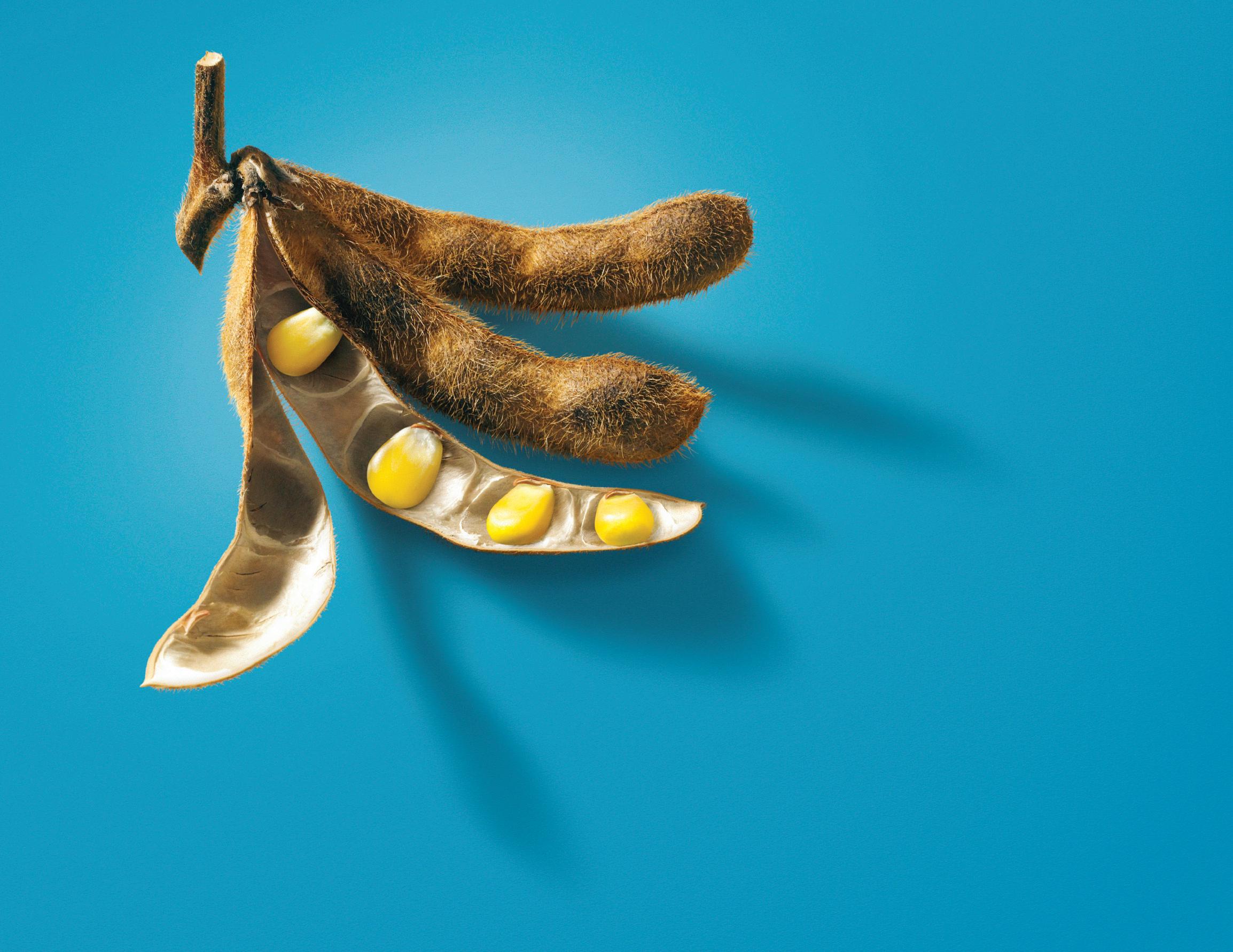





If you grew Roundup Ready® soybeans last year, it’s a good idea to rotate to something else to break the cycle of



And Liberty® herbicide is the only Group 10 herbicide on the market. It’s non-selective and works fast, even in the hottest weather.
Choose Liberty on LibertyLink® corn as your herbicide and crop rotation option.
Seed treatment with a combination of inoculant, fungicide, and insecticide gave a two bushel per acre average increase over no treatment. A combination of broadcast and seed-placed phosphorus and potassium gave a 1.5 bu/ac average increase over no fertilizer. The amount of fertilizer added was based on the amounts of phosphorus and potassium used by a 50 bu/ac crop of soybean: 40 and 70 lbs/ac, respectively. In contrast, the response to foliar insect and disease control was highly variable. “It just depends on whether there are insects or diseases,” says Hooker. “We can get up to a 15 bu/ac response.” He estimates an economic response that pays for the application as about a 3.2 bu/ac increase. Hooker is currently analyzing how the different inputs interact.
In the field-scale experiments, some inputs were lumped together to reduce the number of combinations for the sake of practicality, says Bohner. Among the eight test sites, responses to inputs differed depending on the field conditions. For example, fertilizing seemed to produce the greatest response at one site, whereas foliar insecticide and fungicide had the greatest effect at another site because of moderate bean leaf beetle pressure. “When we average across all eight no-till sites, the response is not that exciting,” says Bohner. The best combination of inputs increased the yield by 3.2 bu/ac on average, “and we spent a bunch of money on that treatment,” he states. For conventional tillage, the best yield increase was only 2.8 bu/ac.
And, says Bohner, the economics are not pretty. He estimates the costs per acre in 2008 at $19 for the seed treatment of insecticide and fungicide with inoculant, $79 for seed treatment plus pretillage ($15) plus fertilizer ($45), and $103 for the previous inputs plus foliar insecticide and fungicide. For the latter treatment with all inputs, the best yield response was 6.5 bu/ac, and the average response was 3.0 to 4.0 bu/ac. “In 2008, the only input that made sense averaged across all sites was the seed treatment,” says Bohner. “At least it paid for itself.”
Other inputs made money at a few sites, but were not profitable when averaged across all locations. Thus, some paybacks can be achieved if inputs are applied on a field-specific basis according to integrated pest management and agronomic principles.
Bohner and Hooker conclude that the yield responses from the various inputs are not necessarily additive, but it will require more years of study to determine which ones or combinations are the best choices. They state that management decisions will require the consideration of factors such as field conditions and year, e.g., some fields may require fertilizer, others insecticide, and adding inputs without considering that year’s conditions will likely result in money lost. They also note that some inputs can result in a negative response. For example, soil compaction that occurred with pre-tillage in wet soil produced a 5.0 bu/ac loss, so agronomic principles remain important.
In combination with the SMART project, OSG held a soybean yield challenge to recognize high-yielding growers and learn about their management approaches. The highest yields ranged from 69.1 to 72.1 bu/ac for three zones of Ontario classified by heat units. In most areas of Ontario, 2008 was a good year to grow soybean because of abundant rainfall. Important factors suggested by the yield challenge winners were planting early in spring into warm soil, choosing a high-yielding variety, and the use of seed treatments.
There is still work to be done, especially in determining which inputs achieve yield increases that are economically beneficial. Further results from this research will be something to watch for during the next couple of years. n
Researchers have used DNA testing to select for traits like disease resistance ever since marker assisted selection (MAS) techniques were developed 20 years ago. With those defensive-type traits breeders can identify the gene responsible for providing resistance to a certain pathogen and then test to see if it is present in a variety: relatively simple stuff for a researcher or breeder who knows what they are doing and what to look for.
However, the ability to find the places in the genome that are directly responsible for yield is very new and is being utilized in the Pioneer Hi-Bred soybean breeding program for both eastern and western Canada. Pioneer Hi-Bred has coined this new process the Accelerated Yield Technology (AYT) system.

It is already paying dividends for growers. Bert Rammelaere of Tilbury, Ontario, grew 200 units of Pioneer-brand 92Y80 soybeans in 2008. “They looked a little greener all year and seemed to have more pods on them,” he says.
He grew another high-yielding variety in the same field. “When I ran the combine with the yield monitor on the other variety and took the yield it was 50.5 bu/ac,” says Rammelaere. “I wrote it down, zeroed the yield monitor and then drove down the 92Y80 strip and took 55 bu/ac.”
Pioneer Hi-Bred is using sophisticated genetic testing not only to flag defensive traits, like disease resistance, but also to boost yield. That is new technology and already is translating into big yield gains in soybeans. “In the past, the yield trial winner in a breeder’s plots was the heaviest bag of seed,” says Scott Sebastian, senior scientist at Pioneer Hi-Bred based in Des Moines, Iowa. “But that’s confounded with error. Ten percent of yield is based on genetics but 90 percent is based on environment and things like disease pressure, soil type and the availability of water.”
Sebastian is the inventor of one of AYT’s system at Pioneer. “Yield was an elusive thing because it’s a network of genes working together, not a single gene,” he says. “Now we can quickly find the hotspots in the genome that affect yield.”
He uses a technique where a leaf sample is obtained during the growing season, carefully catalogued, and taken back to the lab.

A lab technician grinds it up, extracts the DNA and puts it under a powerful microscope. The technician looks for yield “hotspots” in the genome.
Leon Streit, senior research scientist at Pioneer, has been waiting for this kind of opportunity to make dramatic steps forward in yield. In 2004 he went into the cold storage room at Pioneer Hi-Bred and pulled seeds of soybean varieties from the past 30 years. When he grew them out and charted the yield gain, he found that on average there was a 0.5 bu/ac increase per year for Pioneer products and 0.4 bu/ac increase in yield per year for other varieties.
Then he grew Pioneer-brand varieties that were developed using MAS technology for things like soybean cyst nematode and other defensive traits. The yield enhancement since 1995, when varieties using MAS technology were first released, was 1.2 bu/ac per year.
That is a jump in yield three times the industry average but Streit predicts even better things to come in soybeans developed with the AYT system. “In terms of major advancements in plant breeding this ranks right up there with MAS,” he says. “It’s very important to have disease protection to protect yield. But by moving to the next level and identifying regions in the genome that are responsible for yield improvement, we could double the rate of genetic gain.”
“We use the term genetic gain in plant breeding the same way drivers refer to the speed on their speedometer,” says Dave Harwood, technical services manager for Pioneer Hi-Bred in Chatham, Ontario. “The rate of genetic gain has been around one bushel per year. With AYT soybeans we’re hoping to double the rate of genetic gain by 2010 and increase soybean yields by 40 percent within the next decade.”
Practically, it means that Pioneer plant breeders like Streit can quickly hone in on the best-yielding varieties. “We’re able to go back to a plot and pick the one variety with all the favorable genes,” says Sebastian. “All 1000 pieces of genetic data that we sift through point to that plot, even though it might be the lowest yielding because it’s in a puddle. If you trust the data and select for it, it will win yield trials next year.”
Sebastian draws an analogy with the insurance industry and how they will grill prospective customers before granting a policy. They want to know whether a potential client smokes, is overweight or likes to sunbathe. “You may or may not get cancer but your chances change as they take your risk factors into consideration,” he says. “The insurance companies can make some good decisions on that data.”
Breeders still have to grow out varieties and test them in plots. But with these new tools, selection precision could go up by a factor of 10. That is significant considering that in a traditional breeding program, only one variety out of 20,000 ends up in commercialization. “There’s a misconception about AYT soybeans,” says Streit. “There isn’t this one gene that we’re inserting into all the new soybean lines. It’s a complex set of genes and a combination of traits that we’re identifying”
Streit says in some cases they are not even sure why those particular yield hotspots they identify are boosting yield. It could be that area of the genome helps the plant better absorb carbon or helps in photosynthesis. Or maybe those genes provide resistance to a soil pathogen that science has not yet identified. “For the farmer, all this doesn’t really matter,’ says Streit. “Molecular geneticists challenge me on this. Yes, we’ll figure out why these genes work the way they do but in the end we know the most important thing… that they yield better.” n

by Howard J. Elmer*
Despite auto sector troubles now, next two years bringing big changes.
The 2009 Canadian Truck King Challenge fell victim to the unprecedented economic turmoil we saw last year. Simply put, manufacturers were fighting for survival rather than crowns and opted out of the challenge; not everyone, mind you, but I felt it would be unfair to run a competition where only some of the vehicles were represented.
But as you and I know, the truck business is not going away; not today or tomorrow and I continue to watch it closely. What follows is a roundup of what is happening today and what I see coming for the Canadian pickup truck market.
Consider that despite the current market upset ’09 is the setting for all new pickups from all three of Detroit’s builders along with promises of additional new engines to come. So, rather than dwelling on a dismal market we are all familiar with let’s look at what we can expect to see in the next two years.
First, fuel-saving measures from the truck makers will be coming fast and furious; new smaller diesel engines are supposed to available in the Dodge and GM half-ton trucks by the 2010 model year. This direction assumes that half-ton owners want a diesel option. But the demands on light-duty pickups are different and the price difference between gas and diesel engines, and fuel, may take some of the shine off these new half-ton diesels.
That is why GM is covering its bets by offering a hybrid pickup as well. In fact the GM two-mode hybrid system is now available in the ’09 Chevy Silverado: I drove one over Christmas and it works seamlessly. Ford had planned on offering a half-ton diesel in 2010 but rumour now has it that this move is on hold. Instead it is pushing EcoBoost, a fuel injected gas-turbo combination that Ford says is fuel efficient and
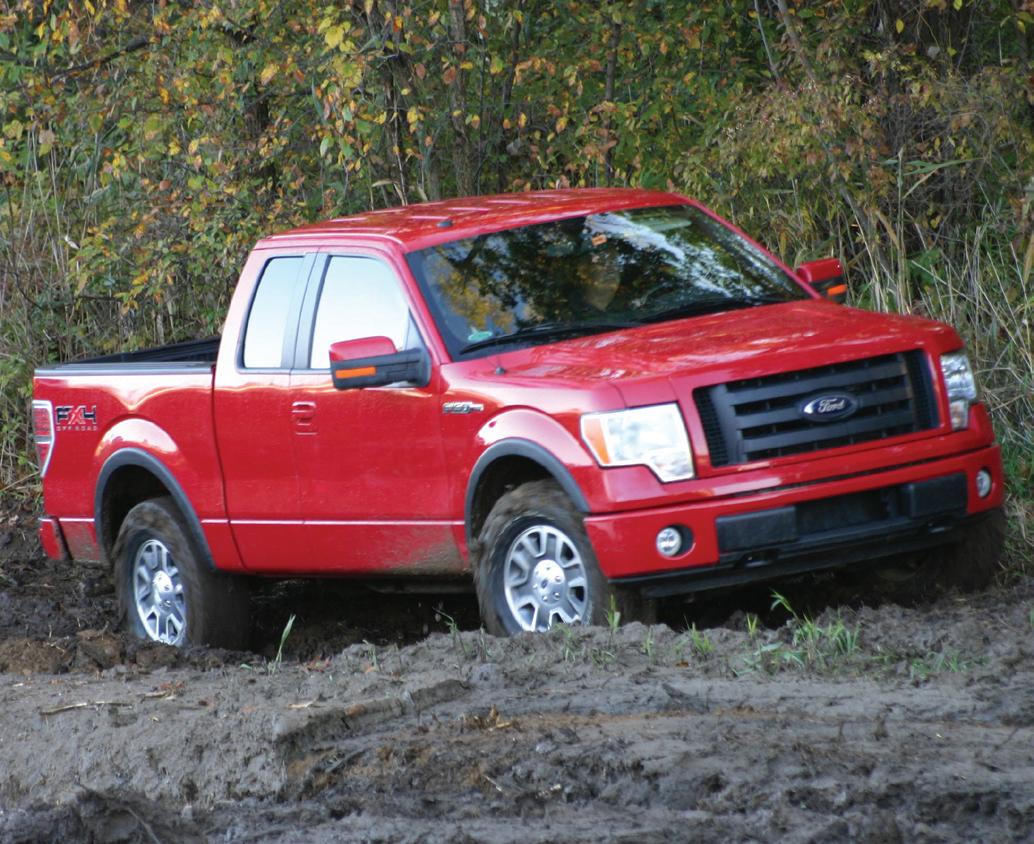
100 Stone Rd West, Suite 201, Guelph, Ontario N1G 5L3
Tel: 519-767-6537 Fax: 519-767-9713 www ontariowheatboard com
The 2008 crop year brought record acreage But as the crop year ends and the new year begins with slightly smaller acreage, the OWPMB is no less optimistic about export possibilities. We expect 2009 to yield two million tonnes of winter wheat Of that, 600,000 tonnes is expected to supply domestic markets and 400,000 tonnes will be sold to our neighbours to the south That leaves approximately one million tonnes of Ontario wheat available for overseas exports
This is not a new scenario for Ontario wheat producers. As the graph below demonstrates, Ontario is increasingly producing more wheat than our domestic market can utilize Within the graph, the blue line, representing domestic tonnage, is continually increasing while the red line, domestic demand, has remained nearly stagnant The gap between domestic supply and domestic demand is ever increasing.
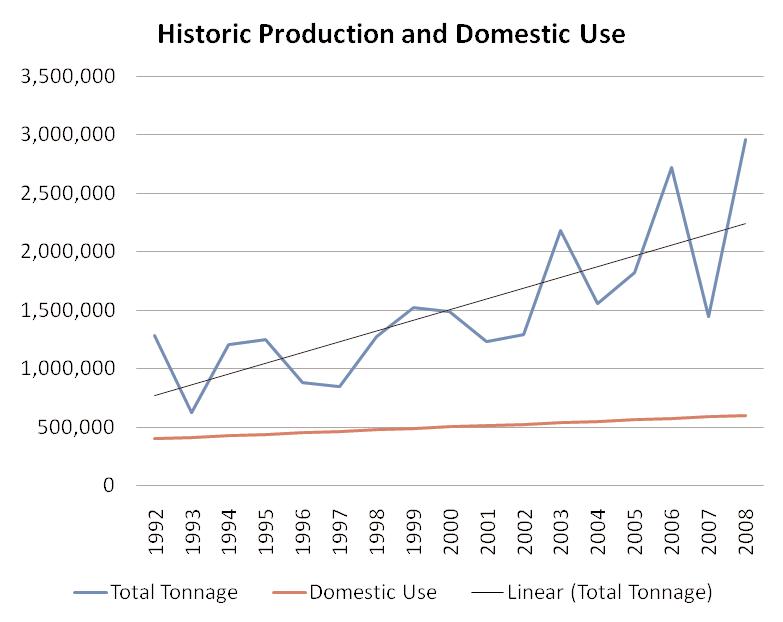
However, the OWPMB do not view this oversupply has a negative issue but rather as an opportunity for Ontario wheat producers In the past, Ontario wheat has been exported on an ad hoc basis with no solidified export development plan But now that Ontario is becoming a more consistent and reliable supplier of high quality wheat, importing countries have begun to take notice
The OWPMB hopes to nurture this budding export market by promoting Ontario wheat through trade missions and by developing a long-term export development plan In 2008, the OWPMB attended the International Association of Operative Millers conference and expo in Tanzania, Africa The conference attracts many importers from North Africa and the Middle East, offering lots of opportunity for Ontario wheat.
With Agriculture and Agri-Food Canada’s new agricultural framework, Growing Forward, the Ontario Wheat Producers’ Marketing Board is anxious to see what’s in store for research funding
The Growing Forward framework is a five year agreement to Canada’s agricultural sector Originally, it was set to launch in 2008, however it has been delayed by a year and we are anticipating a launch of the Growing Forward programs in April, 2009
Prior to this framework, the OWPMB relied on funds from the CORD IV program which ended in 2007 The CORD IV program, or Canada-Ontario Research and Development Program, was funded through the federal-provincial Agricultural Policy Framework The program provided resources for producer driven research supported by the OWPMB, among other organizations The program helped fund many projects including research in weed management, fusarium management, nitrogen fertilizer management and research into the milling and baking quality of Ontario wheat
Other high profile research projects are the on-farm research trials coordinated through OMAFRA and partially funded by CORD IV and the OWPMB The trials focus on cutting edge agronomics and on going extension support throughout the growing season The OMAFRA Agronomy Guide, set to come out in March 2009, will feature some of the recommendations discovered through these projects
The OW PMB is optimistic that the new Growing Forward framework will provide resources that will help continue producer driven research in the future The OWPMB has been working with the government and we are asking for the launch of these programs immediately
March 9 to 11, 2009 – London Convention Centre
A block of rooms has been reserved until February 23rd at:
The Hilton London, 300 King Street, London (stnd $119) 519-439-1661
Holiday Inn Express, 374 Dundas Street, London (stnd $109) 519-661-0233
Joint Conference Day – Tuesday, March 10, 2009
Ontario Corn Producers’ Association Annual Meeting - March 9, 2009
Ontario Soybean Growers Annual Meeting - March 9, 2009
Ontario Wheat Producers’ Marketing Board Delegates Conference - March 11, 2009
Please register before February 20, 2009 by contacting Louise Bignell at 519-767-4126 or louise bignell@ontariowheatboard com
affordable. And with the price of gas they may well have it right. I reviewed purchase numbers for diesel engines, which are favourites among Ford HD truck buyers, and found they had taken a sharp dive in 2008 as the mileage on the new 6.4L Power Stroke turned out to be lower than expected, and the price of diesel higher than gas.
Can someone explain to me why that is, other than greed?
EcoBoost is said to offer up to 20 percent better fuel economy, and make 15 percent less CO2 than an equivalent nonEcoBoost gas engine. It is also coming in a V-6 version, which will probably make it into the F-series pickup. Still, Dodge says that with its Cummins clean-diesel technology, its all-new turbo diesel engine the truck maker intends to deliver in the light-duty Ram pickup will increase low-end torque, offer up to a 30 percent improvement in fuel economy and a 20 percent reduction in CO2 emissions, compared to an equivalent gasoline engine.
The engine GM intends to put into its half-tons is a new 4.5L V8 Duramax turbo-diesel. In comparison to a similar sized gasoline engine GM says the 4.5L will improve fuel efficiency by 25 percent and reduces CO2 emissions by 13 percent. This new V8 diesel engine will fit the same as a small-block V8 gas engine. This then opens up the possibility of swapping engines across the line should future markets demand it. Output on this engine will be rated in excess of 310 hp and 520 lb-ft of torque.
Toyota is the other big question mark right now. But having invested over $2 billion in a new truck plant in San Antonio, Texas, building just the new Tundra, it is obvious the company is committed to being a player in the half-ton market. But its problem is that it has the fewest engine options of all the builders and, while I asked, how or when they will move forward with new powertrain offerings is a closely guarded secret; I am just sure they will, as they also have a depth of world diesel experience. But for ’09 anyway there are no significant changes.
For ’09 the F-series has expanded its offerings with a new longer wheelbase that supports a stretched four-door SuperCrew (six inches more for the backseat alone) without robbing the cargo bed for that stretch. Other choices include three box sizes (5.5, 6.5, 8-ft) and three rear axle
ratios to choose from (3.15, 3.31, 3.73). There are also three engine choices and two automatic transmissions, and those seven trim levels. With these choices, as many as 35 differently configured trucks can be ordered.
The new six-speed tranny has a responsive low end and a double set of overdrive gears. This new gearbox alone contributes a four to six per cent fuel savings over the old four-speed. Also standard in ’09 is an integrated trailer brake controller, pull-out tailgate step, retractable box-side steps, stowable bed extender and available cargo management system.
Wheelbase: 126-, 133-, 144- and 163-inch
Cab Styles: Regular, SuperCab, SuperCrew
Engine: 4.6L (two-valve) V8
4.6L (three-valve) V8
5.4L V8
Power: 248 hp and 294 lb-ft of torque
– four-speed auto
292 hp and 320 lb-ft of torque
– six-speed auto
320 hp and 390 lb-ft of torque
– six-speed auto
Max Payload: 3000 pounds
Max Tow Rating: 11,300 pounds
NOTE: A new standard anti-sway system works automatically with the truck and trailer brakes and is designed to bring a fishtailing trailer back into line.
This new Ram gets some rounding of the fenders and a forward-tilt to the crosshair grille, yet the truck has kept its old silhouette by pulling the lights back over the new one-piece bumper. The bigger story is inside though. The new interior features redesigned, bolstered seats, soft-touch material in two and even three colour patterns, rather than nasty hard battleship gray plastic. Elements include a new centre console, upper and lower glove boxes and a sculpted dashboard featuring chrome, leather and cloth accents, including items like real saddle stitching across the dash. Other available options include power adjustable pedals, double the number of previous storage spaces and for the first-time items like heated and cooled front seats, heated rear seats and even a heated
steering wheel. Engines too are largely the same as 2008 with only the 5.7 L Hemi getting a few tweaks, bumping up torque and hp with added VVT. But the tranny remains a five-speed versus the F-series six-speed gearbox. Dodge has gone with a new coil spring rear suspension that changes the ride of the solid rear axle for the better.
NOTE: Mega Cab, the oversized four-door crew that put a new spin on the term Cowboy Limousine is gone from the 1500 series; it is strictly an HD option now.
Wheelbase: 120-, 140-inch
Cab Styles: Regular Cab, Quad Cab, Crew Cab
Engine:
Power:
3.7L V6 (four-speed automatic)
4.7L V8 (five-speed automatic)
5.7L V8 Hemi MDS (five-speed automatic)
215 hp and 235 lb-ft of torque
310 hp and 330 lb-ft of torque
390 hp and 407 lb-ft of torque
Max Payload: 1900 pounds
Max Tow Rating: 9100 pounds
CHEVY SILVERADO HYBRID
This two-mode hybrid is designed to power the full-sized Silverado pickup truck from zero up to 30 km/h on electric power in one mode, then to assist the cylinder deactivation function of the V8 engine by adding in power at highway speeds so the engine can remain in fourcylinder-only operation for as long as possible. That is its second mode. The net result is a possible fuel savings of up to 30 percent says GM.
The key to this capability is the ECVT or electric continuously variable transmission. With its unique setup of two 60 kW electric motors. Also at stoplights the engine shuts off while all the electrical functions remain on. This too saves fuel, particularly for trucks used mostly in the city. But if you do hit the gas hard, the engine responds normally. This Hybrid can handle normal pickup payloads and will also tow as well.
Wheelbase: 143.5-inch
Cab Style: Crew Cab
Engine: 6.0L V8
Power: 332 hp and 367 lb-ft

Ontario AgriCentre, Suite 201 • 100 Stone Road W. • Guelph, Ontario • N1G 5L3
Phone: (519) 767-1744 • Fax: (519) 767-2466
E-mail: cansoy@soybean.on.ca • Website: www.soybean.on.ca
By Mary Wiley, Ontario Soybean Growers
Promoting Ontario-grown soybeans and soy products in general is an important priority for the Ontario Soybean Growers (OSG). Strategic messaging about the goodness of soy will resonate throughout 2009, both here at home and in export markets.
OSG plays an active role in Soyfoods Canada (www.soyfoodscanada.com), an industry association dedicated to promoting soyfoods to consumers.
Over the past decade, soyfoods have become more widely available in food retail and foodservice outlets across Canada. Traditionally distributed mainly through health and ethnic food stores, over 70% of soyfoods’ sales are now through mainstream outlets.
During this same time frame, Mintel statistics state that U.S. food manufacturers have introduced over 2,700 new foods with soy as an ingredient. The Canadian equivalent is estimated to be around 700 products. Soy-based meat alternatives, beverages, snacks, frozen desserts and soy protein energy bars have all helped to boost soy’s presence in Canadians’ diets.
According to Peter Joe, Chairman of Soyfoods Canada and CEO of Vancouver-based Sunrise Soya Foods, this increased market penetration can be attributed in part to the wide array of new products available. He points out that other factors have also helped to drive the growth of Canada-wide sales. “A number of trends, including healthier lifestyle and diet, more awareness of soyfoods, better distribution and retail shelf space, as well as new and bettertasting soyfood products have helped to boost sales”.
A Canadian soybean delegation representing all aspects of soybean production and processing will travel to Japan, Malaysia and Singapore from February 17 to 28, 2009. The program, coordinated by the Canadian International Grains Institute (CIGI) is designed to update current and potential
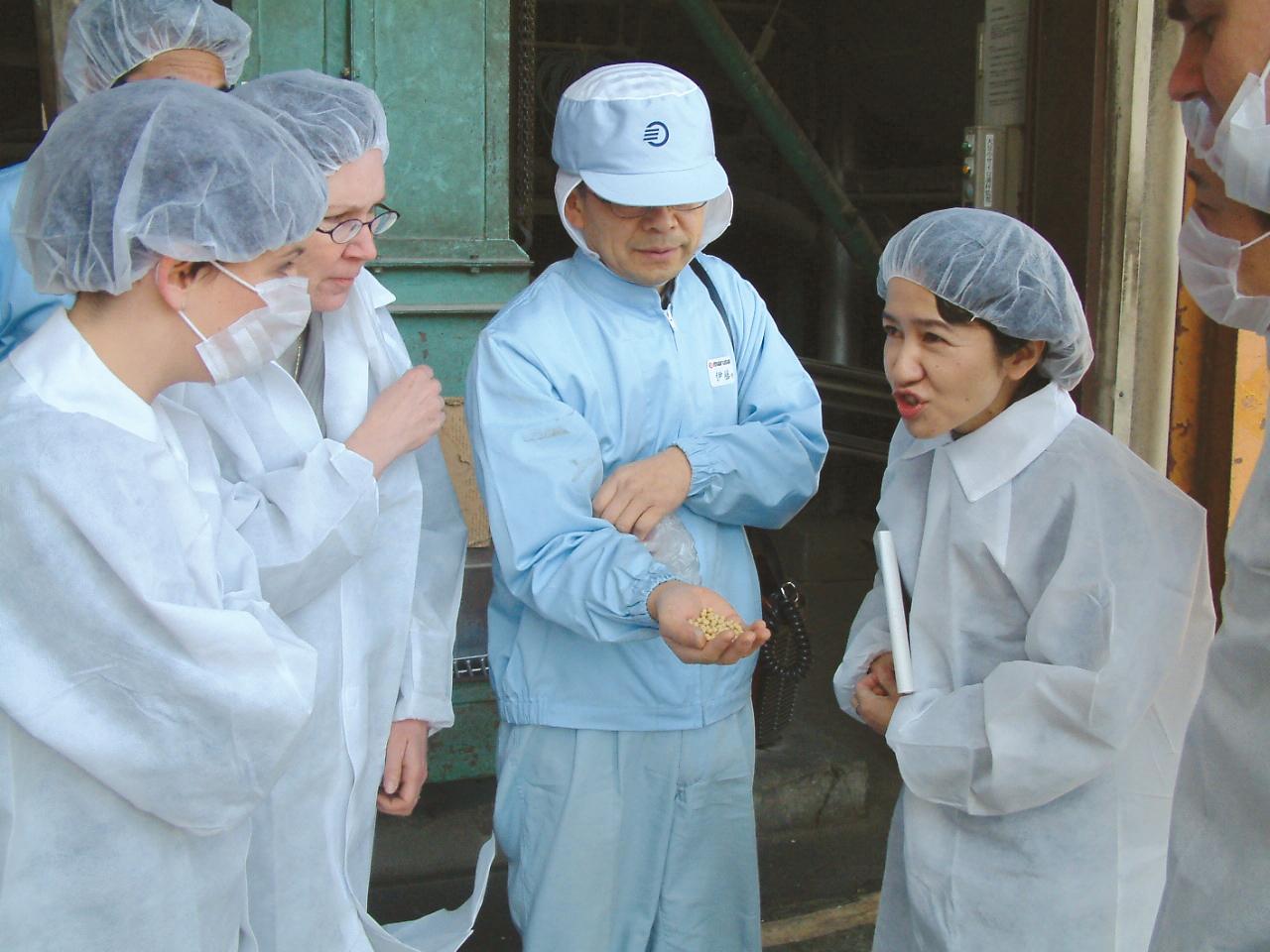
buyers about what’s happening here in Canada. It will also help Canadian soybean industry stakeholders better understand the needs of soyfood manufacturers in key export markets.
The Canadian Soybean Council (CSC) (www.soybeancouncil.ca) will host information seminars in Tokyo, Kuala Lumpur and Singapore. Canadian soybean exporters will also be in attendance to network with participating soyfood manufacturers.
Industry visits involving one-on-one meetings with soyfood companies and industry associations will be coordinated in each market by the Embassy of Canada or the Canadian High Commission. These visits will allow for an exchange of information between current or potential customers and Canadian soybean industry representatives.
2009 outgoing Delegation Members include: Jim Gowland, CSC Chair; John Johnston, IP Soybean Grower Representative, Ontario Soybean Growers; Dr. Elroy Cober, Soybean Breeder, Agriculture and Agri-Food Canada; Dr. Linda Malcolmson, Director of Special Crops, Oilseeds and Pulses, CIGI; and Michelle McMullen, Manager, CSC.

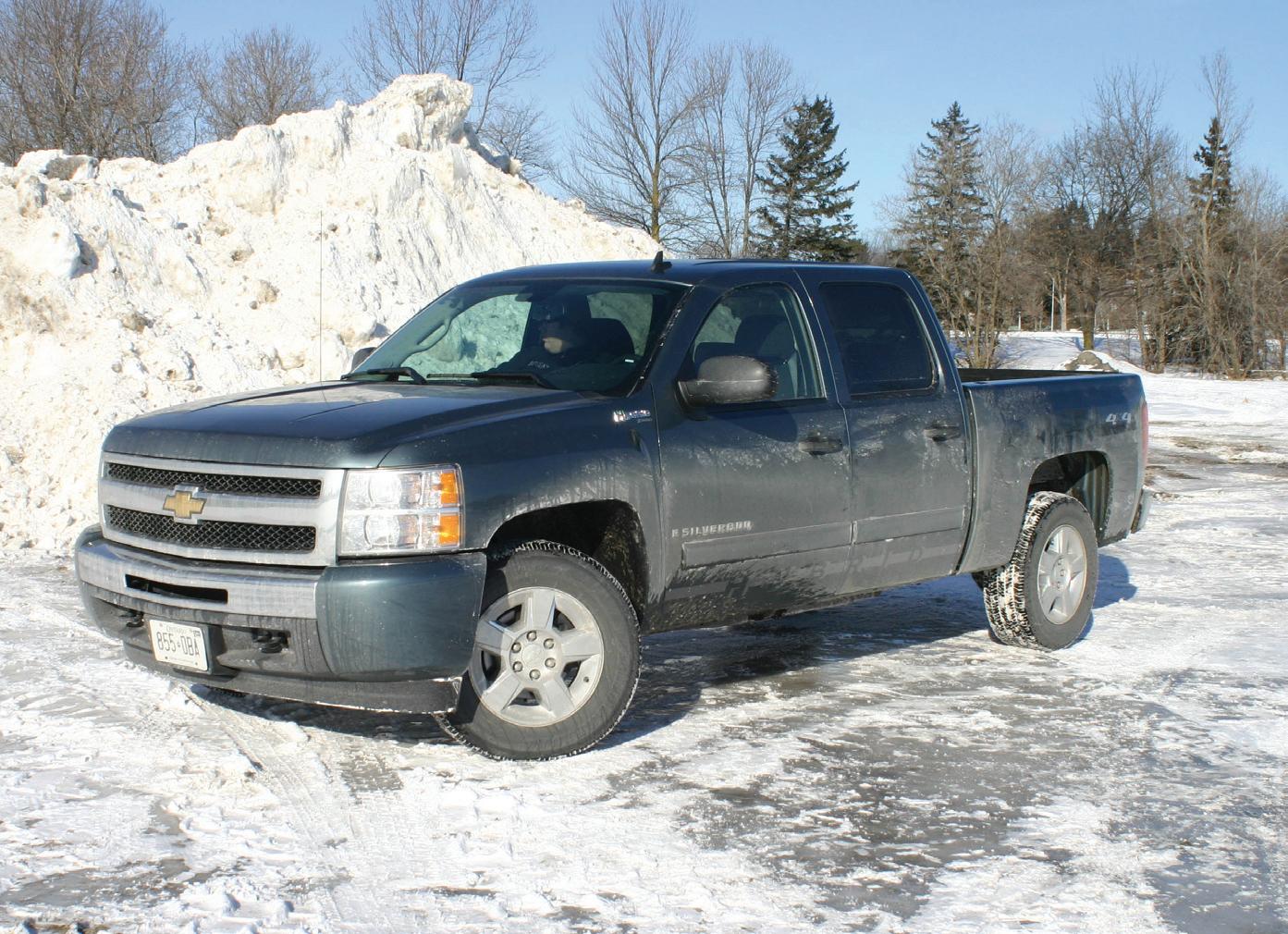
of torque
– four-speed auto
Max Payload: 1459 pounds
Max Tow Rating: 6100 pounds
NOTE: This particular hybrid system is the only one rated to tow this much weight; I have driven it and it works well. The question is, is it worth $10,000 more than a nonhybrid?
Into the second year of its last major half-ton overhaul, these GM pickups are pretty much the same for 2009. In fact they have been well received in the market and continue to sell well. They have won a number of awards and they offer enough versions to satisfy pretty much any need.
Model: GM 1500-series
Wheelbase: 119-, 133- and 157.5-inch
Cab Styles: Regular Cab, Extended Cab, Crew Cab
Engine:
Power:
4.3L / 4.8L V8 /
5.3L FlexFuel V8/
5.3L AFM V8 / 6L AFM V8
195 hp and 260 lb-ft of torque
295 hp and 305 lb-ft of torque
315 hp and 338 lb-ft
of torque
315 hp and 338 lb-ft of torque
367 hp and 375 lb-ft of torque
Max Payload: 1952 pounds
Max Tow Rating: 10,500 pounds
For the Tundra, 2009 is a hold steady year, though there are a few small changes. First the 4.7L engine option has been dropped, so the 5.7L V8 is the only engine for this year. A new A-suffix base model will offer 40/20/40 Split bench seat, steering column shifter, 18 inch
styled steel wheels and manually-adjustable driver seat for more of a work truck. At the other end of the scale Tundra now offers an “i-Force” package which includes things like 20 inch aluminum alloy wheels, tri-fold hard tonneau cover, bedliner, stainless steel side step bars, front and rear parking sensors, special colours and detailing. Tundra continues to offer a four-door cab called CrewMax. This last one mimics the MegaCab introduced by Dodge in 2007.
Wheelbase: 126, 145.7 and 164.6-inch
Cab Styles: Regular, Double, CrewMax Engine: 5.7L V8 Power: 381 hp and 401 lb-ft of torque
Max Payload: 1900 pounds
Max Tow Rating: 10,800 pounds
NOTE: Previously hinted at expansion into the medium-duty truck market seems to be on hold as does the diesel – in fact they do not seem quite as gung-ho as they did in 2007 about being in this market.
DODGE 2500 - 5500
This year Dodge offers new Ram 4500 and 5500 Chassis Cab models. The two engines of note are the 5.7 Hemi, which has added Variable Valve Timing and the 6.7L diesel that is now available with a remote start feature. The Hemi’s fuel economy is up four percent and its horsepower now hits 380 as a result of VVT. The Cummins diesel with auto-


matic transmission also offers a unique engine exhaust brake that can save money on rotors and pads.
NOTE: There is an all-new Gooseneck Trailer Hitch for Dodge Ram Heavy-duty Pickups. The gooseneck trailer hitch from Mopar mounts in the pickup bed using a kit that attaches directly to the frame rails.
Model: 2500, 3500, 4500 and 5500 Series
Wheelbase: 120.5-, 140.5-, 160.5, 188.5-inch
Cab Styles: Regular Cab, Quad Cab, Crew Cab, Mega Engine: 6.7L I6 diesel –six-speed auto
5.7L V8 – fivespeed auto
Power: 350 hp and 650 lb-ft of torque
345 hp and 375 lb-ft of torque
Max Payload: 11,800 pounds
Max Tow Rating: 18,050 pounds
For 2009 Ford’s TowCommand System returns as an option. It includes a factory-installed electronic brake controller that now works with the anti-lock braking system The TorqShift five-speed automatic transmission also has Tow/Haul mode. Also available is a PTO feature and dash-installed extra power switches for any number of custom applications and/or ready for upfitters equipment installations. Twin alternators in the Super Duty supply enough power for multiple uses including hydraulic addons. PowerScope trailer tow mirrors are large, heated mirrors that slide-out at the push of a button affording a clear view down the sides of a towed trailer.
A stylish new “Big Dog Daddy” F-450 has in excess of 24,000 pounds of towing capacity and a max payload of 6000 pounds
NOTE: I found out the hard way that the new 6.4L diesel has a flaw. After getting a “check air filter” warning I found it packed with snow. Ford is aware of the problem and is now providing a winter front cover as a remedy to any customer who experiences this problem. Make sure you ask the dealer about it.
Model: SuperDuty F250, F350 and F450
Wheelbase: 137-, 141.8-, 156.2-, 158-, 172.4-inch
Cab Styles: Regular Cab, SuperCab and SuperCrew
Engine: 5.4L V8 / 6.8L V10/ 6.4L V8 diesel
Power: 300 hp and 365 lb-ft of torque
362 hp and 457 lb-ft of torque
350 hp and 650 lb-ft of torque
Max Payload: 6120 pounds
Max Tow Rating: 24,000 pounds
The 2009 3500-series pickup trucks come standard with the 6L V8 and the six-speed Hydra-Matic transmission. Included are two overdrive gears and a manual range selector with tap up/ tap down gear shifting. Optional is the new Duramax 6.6L diesel and the new six-speed Allison automatic. Moving in step with Ford and Dodge, GM now has an all-new 4500 chassis cab that they say
will offer a best-in-class payload. It will be available with either the Vortec 6.0L or the Duramax 6.6L turbo diesel. Both come with a new Hydra-Matic fourspeed automatic transmission or the sixspeed Allison. n
Model: 2500 and 3500-Series
Wheelbase: 133-, 143.5-, 153-, 157.5-inch
Cab Styles: Regular Cab, Extended Cab, Crew Cab
Engine: 6L V8 / 6.6L V8 diesel
Power:
353 hp and 373 lb-ft of torque
365 hp and 660 lb-ft of torque
Max Payload: 9100 pounds
Max Tow Rating: 16,700 pounds
*Howard Elmer is editor of Truck King Media Group.