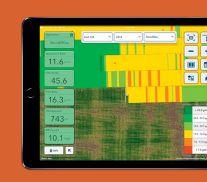
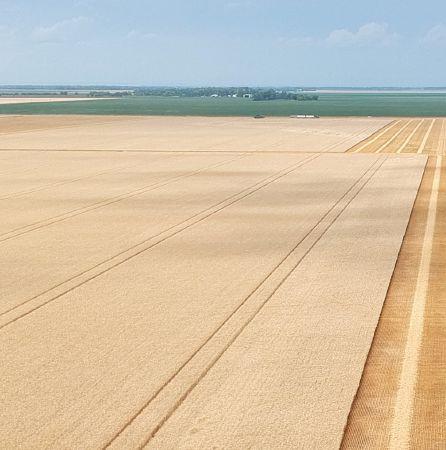
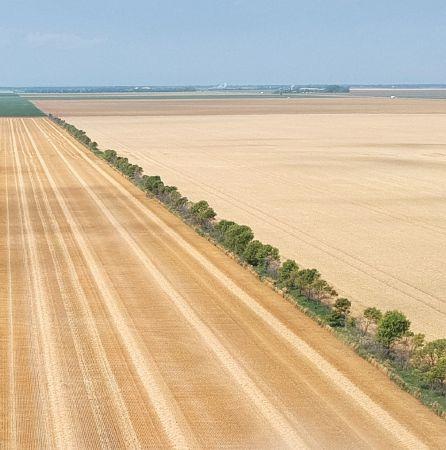
Clean fields lead to higher yields. That’s why growers trust Simplicity™ GoDRI™ to get the job done right. For convenience, performance and outstanding wild oat control in wheat, the choice is Simplicity.
For more information, call the Solutions Center at 1-800-667-3852 or visit SimplicityGoDRI.Corteva.ca
Contact your local retail to purchase Simplicity™ GoDRI™
Learn how you can save big with
visit flexrewards.corteva.ca
TOP CROP
MANAGER
CROP MANAGEMENT
6 | Companion cropping in southwest Manitoba
The science and economics of companion crops and living systems.
By Donna Fleury
FROM THE EDITOR
4 Photos, planning and the Plant Health Summit by Stefanie Croley
FERTILITY AND NUTRIENTS
10 Improving nitrogen use in corn by Mark Halsall
PESTS AND DISEASES
14 Spotlight on bacterial brown spot by Carolyn King
PESTS AND DISEASES
20 | Detoxifying DON
A new soil bacterium could neutralize the disease.
By Mark Halsall
SOYBEANS
24 | Rolling without stones
The pros and cons of land rolling non-stony soybean fields in Manitoba.
By Carolyn King
FERTILITY AND NUTRIENTS
18 A not-so-basic test by Bruce Barker
ISSUES AND ENVIRONMENT
30 The ecological diamonds in the rough by Jennifer Bogdan
PESTS AND DISEASES
32 Forewarned is forearmed by Carolyn King
CROP MANAGEMENT
40 Ideal conditions for soybeans by Donna Fleury
Readers will find numerous references to pesticide and fertility applications, methods, timing and rates in the pages of Top Crop Manager. We encourage growers to check product registration status and consult with provincial recommendations and product labels for complete instructions.
STEFANIE CROLEY | EDITORIAL DIRECTOR, AGRICULTURE
PHOTOS, PLANNING AND THE PLANT HEALTH SUMMIT
There’s something special about December. I’m not winter’s biggest fan by any means, but thoughts of the holiday season, gatherings with family and friends, and a period of rest and renewal before we hit the ground running again in January bring a smile to my face.
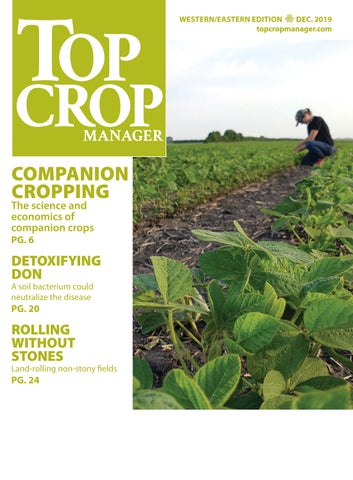
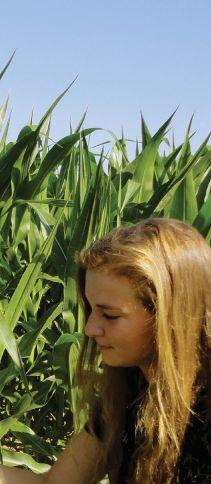
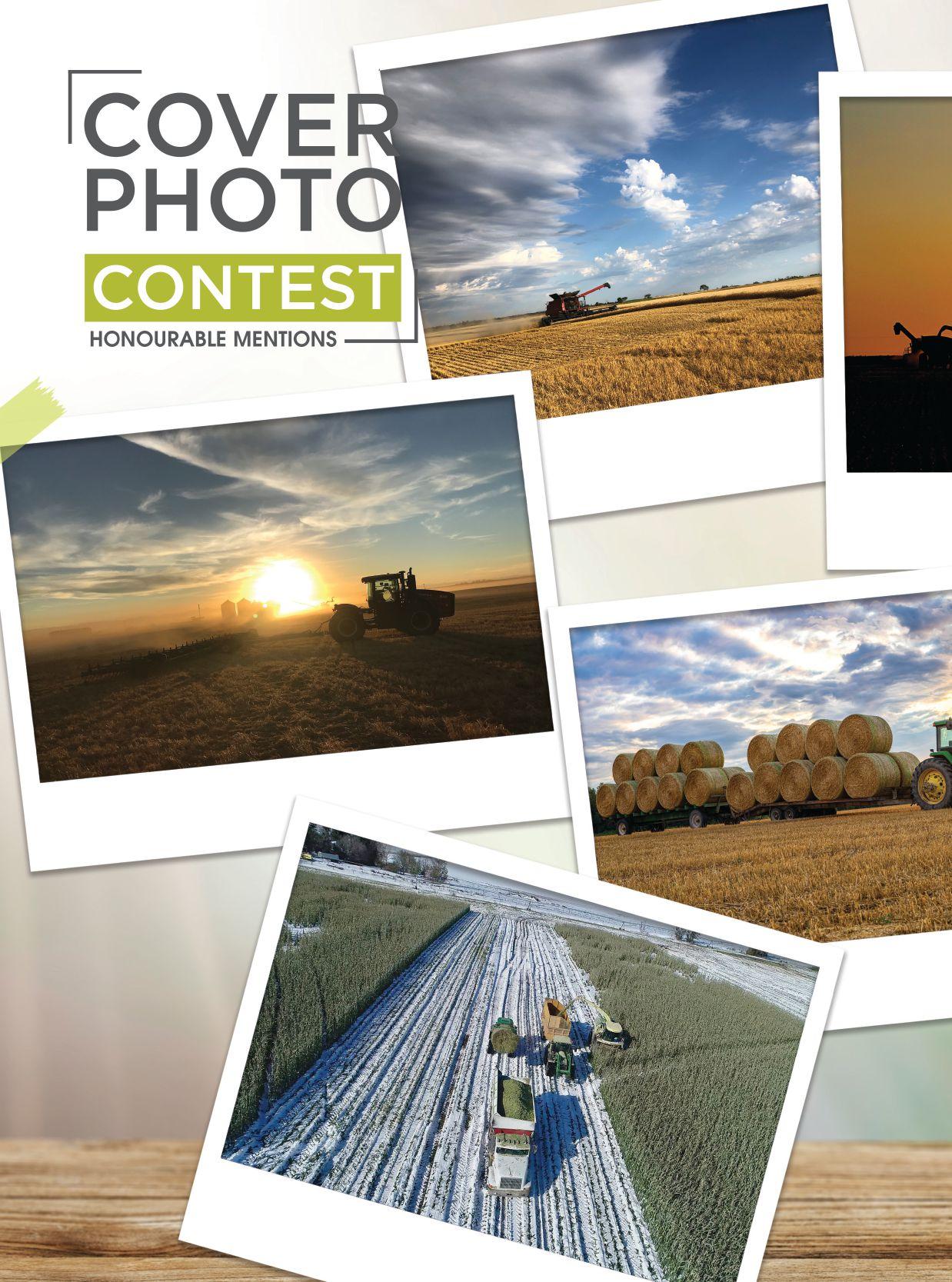
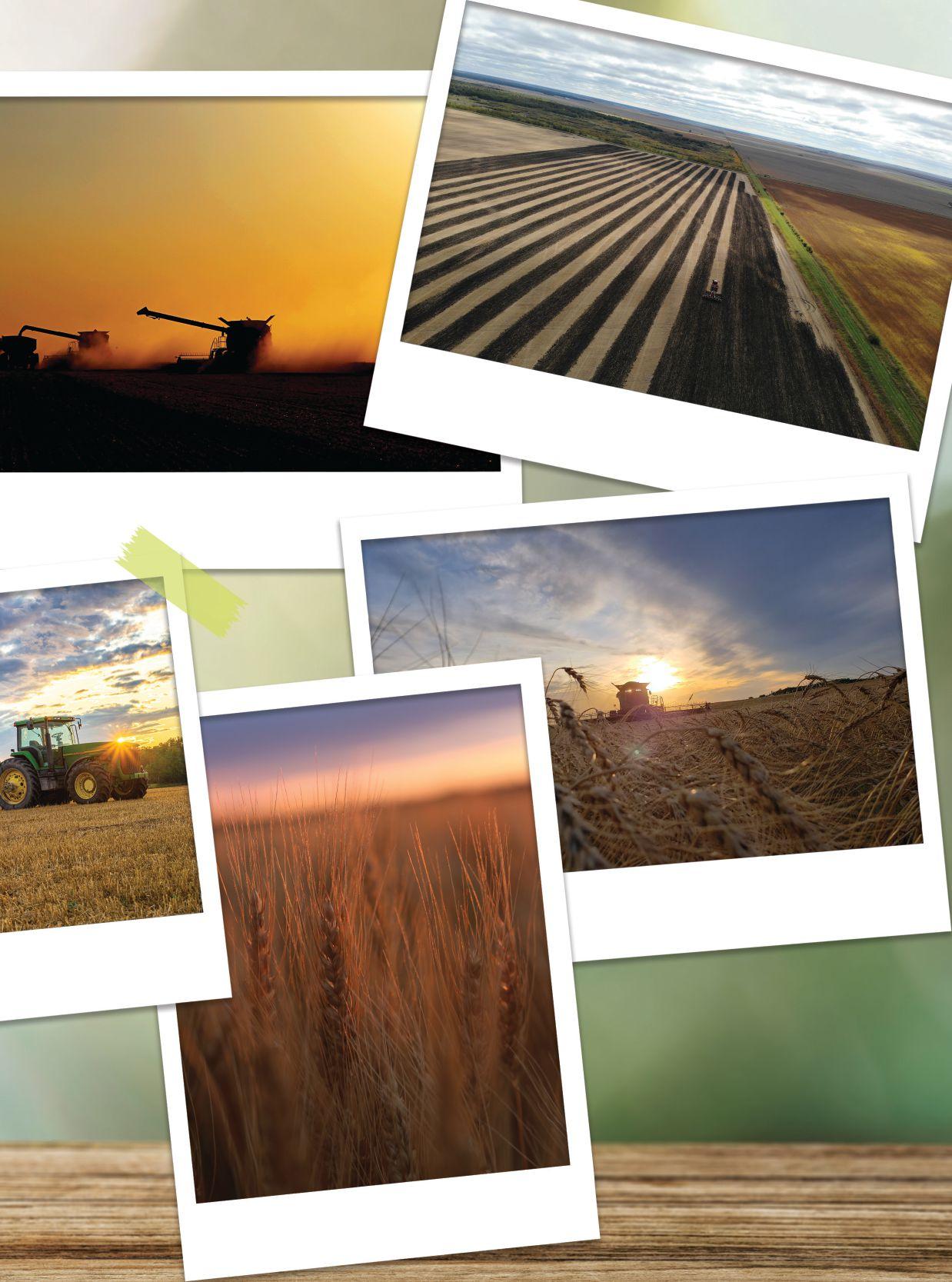
Here at Top Crop Manager, our national December issue is marked with a special photo on the cover: the winner of our second annual photo contest, which came to a close this fall. Our team was, once again, flabbergasted by the beautiful array of images that were submitted throughout the growing and harvest seasons. From stunning fields of flax and canola, to photos of the first and second (and sometimes even third) generations of farmers hard at work, to difficult harvest conditions, we poured over nearly 200 entries showcasing the ins and outs of Canadian crop farming.
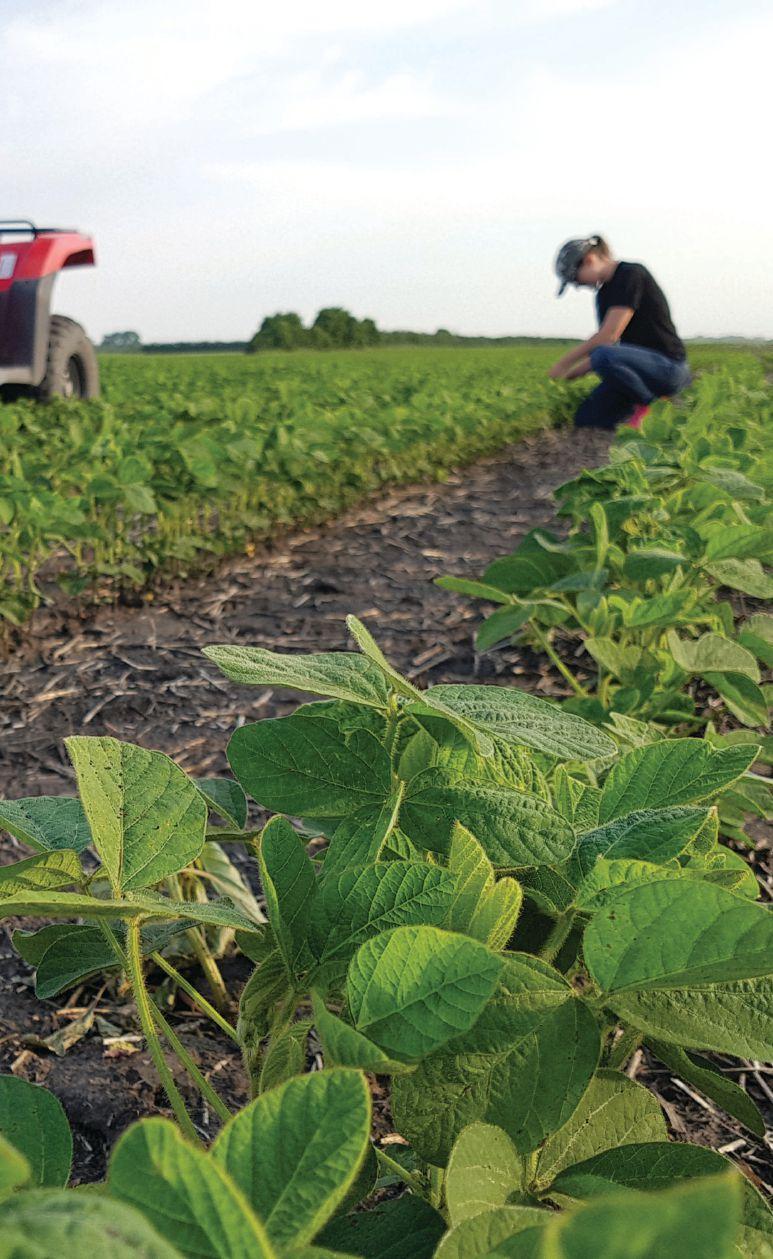
The winning photo, captured by Harv Hildebrand of Winkler, Man., was submitted with the caption “Scouting” – a simple word with an impactful message. Harv is part of a fourthgeneration farming family, and with his brother, Brad, owns Hildebrand Brothers Farming, a mixed-grain operation north of Winkler. Pictured in the photo is Harv’s daughter, Taylor Koetler, who is an agronomist and Certified Crop Adviser. “I try to take every opportunity to get to tag along with Taylor as she scouts the fields,” Harv says.
When you’re planning for the year ahead, your to-do list will surely include tasks like calibrating your equipment and making time for maintenance, and meeting with your dealers, agronomists and consultants to purchase the products that will set you up for success. But a task like scouting – something that should be as obvious of a task as brushing your teeth in the morning – can’t be overlooked. It’s easy to look at the big-picture decisions and solutions at your fingertips, but sometimes, the best way to see what exactly your fields needs is getting down on your hands and knees and taking a good, hard look at what’s going on.
We’ve highlighted a few more of the beautiful photo entries on pages 38 and 39 of this issue, and we’ll be sharing more online our Facebook page (facebook.com/TopCropManager), on Twitter (@TopCropMag), and on our website (TopCropManager.com). We love seeing a glimpse of what’s happening in your corner of the world. On behalf of our team, thanks for participating again this year.
As you take some time to rest and enjoy this season with your loved ones, and begin making plans for 2020, don’t forget about the Plant Health Summit, happening Feb. 25 and 26, 2020 at TCU Place in Saskatoon. We’re bringing farmers, agronomists, industry members and the scientific community together to discuss optimum plant health strategies, with topics ranging from plant breeding to disease, insect pests, spraying and much more. Take advantage of the early-bird registration price of $120 and visit planthealthsummit.ca for more information.
Thanks for closing out another year with Top Crop Manager. We look forward to seeing you in 2020!
YOU HAVE OPTIONS. WEEDS DON’T.
Effective weed management is critical to maximizing yield. To ensure you’re utilizing the best strategy, look no further than the Advanced Weed Control Program from BASF. It’s your best line of defense with both pre-seed and in-crop options for a range of crops, including peas, Clearfield® lentils, soybeans and corn. Combining multiple modes of effective action, herbicide layering and residual action, the Advanced Weed Control Program helps you achieve consistent, reliable performance and resistance management all season long.
PRE-SEED
Applying a pre-seed herbicide gives your crops a cleaner, weed-free start to set you up for success.
IN-CROP
Eliminate costly competition from weeds with a planned in-crop herbicide application.
SOMETHING ELSE TO PLAN ON: PEACE OF MIND.
We’re so con dent in the Advanced Weed Control Program, we provide additional re-spray support for weed escapes – even resistant biotypes.
COMPANION CROPPING IN SOUTHWEST MANITOBA
Understanding the science and economics of companion crops and living systems.
by Donna Fleury
Growers continually look for strategies to fine tune their cropping systems to reduce risk and increase productivity and returns. Recently, some researchers and growers in Western Canada have been looking more closely at companion cropping strategies and other options to increase revenues, reduce input costs and risk, and address pest management challenges.
“In our applied research program, we are trying to put some science and economics behind various cropping options,” explains Scott Chalmers, diversification specialist with Manitoba Agriculture working at the Westman Agricultural Diversification Organization (WADO). “There is lots of interest in diversifying cropping systems to include more companion cropping, however this is a relatively new and evolving area and at this point there is no guide book. We have several projects underway and in collaboration with other researchers trying to gain more information about what some of the more successful options might be and the various benefits and general economics of these options.”
Companion cropping is a strategy of growing various crop species together to benefit or co-exist for various reasons, and can include intercrops, relay and cover crops. Along with better utilization of available inputs and resources, other benefits include improved fertilizer and water use efficiency, improved soil health and reduced potential for pesticide resistance. Many growers already have flexible seeding
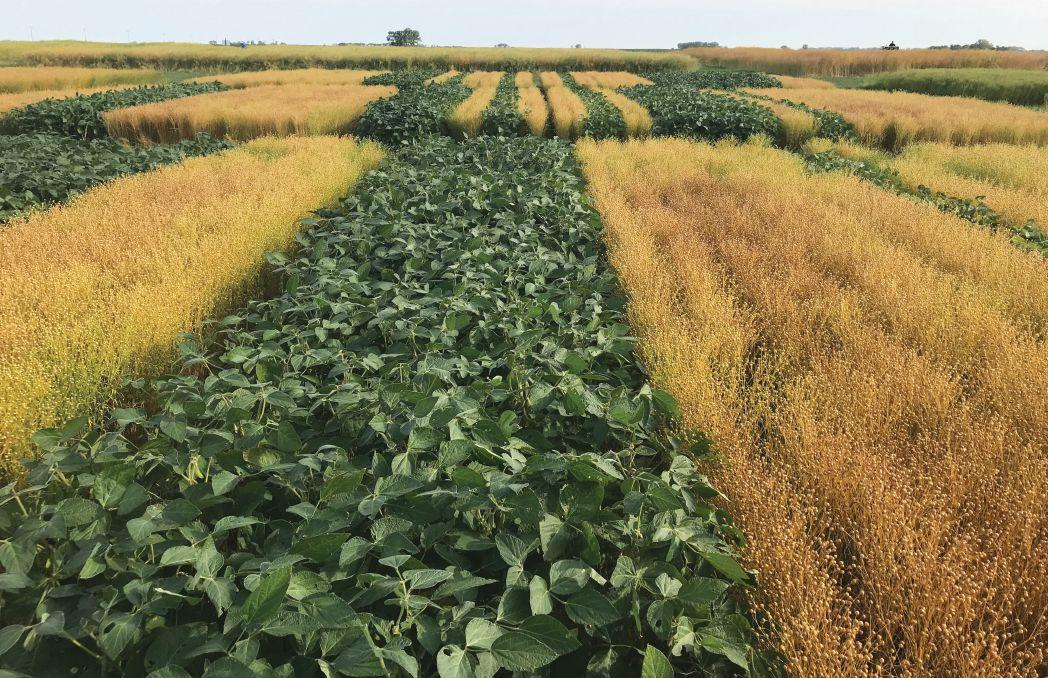
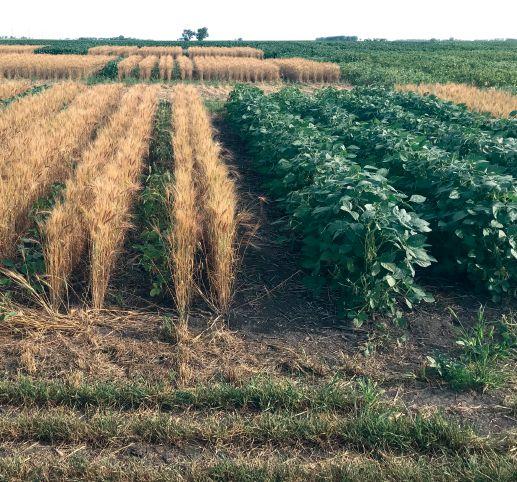
PHOTOS COURTESY OF SCOTT CHALMERS.
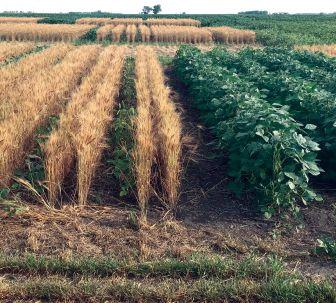
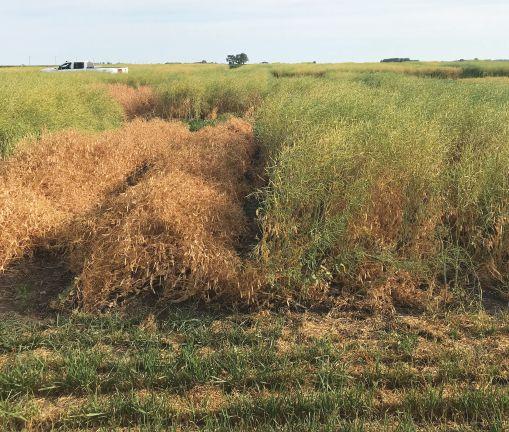
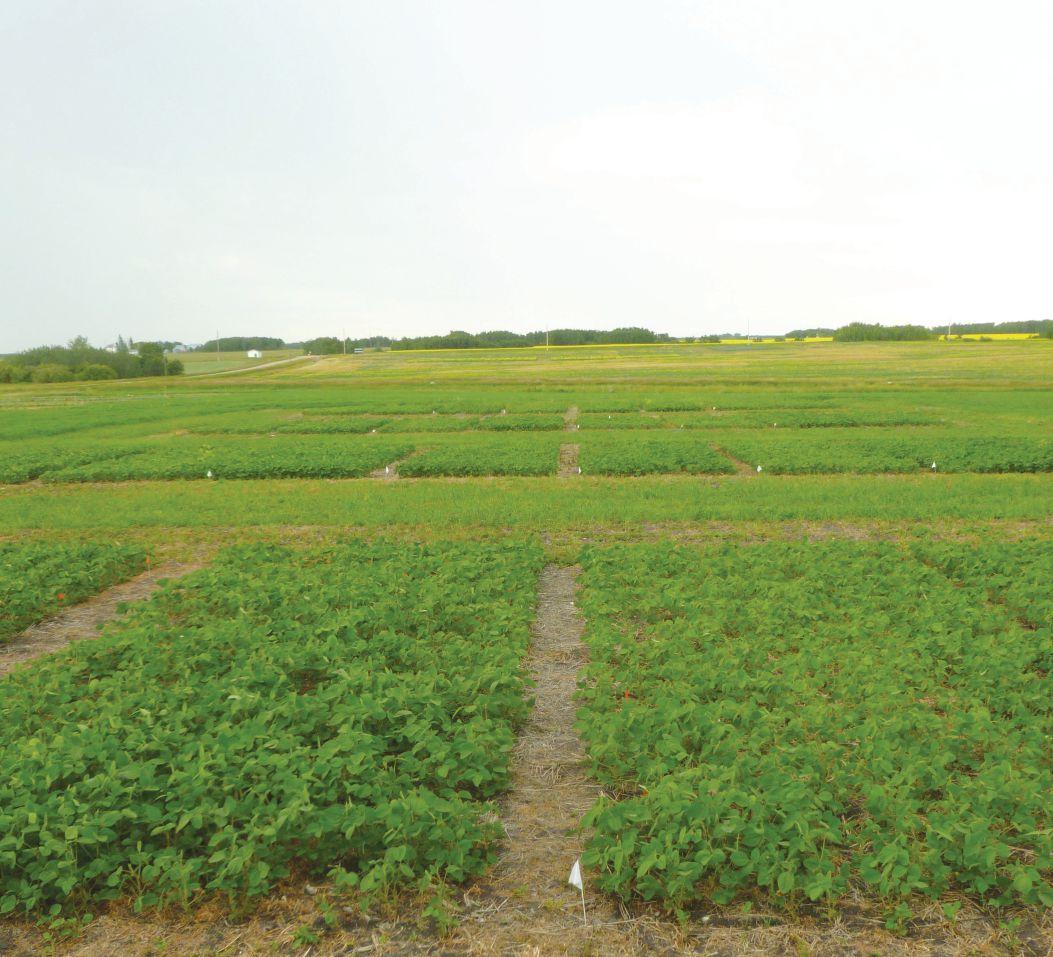
TOP: The 2019 soybean-flax intercrop in paired rows compared to a monocrop of soybeans in front.
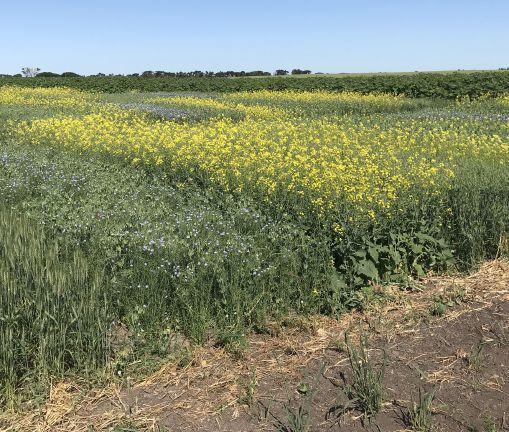
MIDDLE: The winter wheat-soybean experiment looking at interrow planting of soybean in rows of winter wheat.
and harvesting equipment in place for managing multiple crops and more sophisticated seed cleaning systems are increasingly available. However, there are also considerations that may make companion crops less suited for some operations, such as harvest and labor considerations, rotations, markets and insurance, and overall interest and courage to trial new cropping systems.
“Intercropping, which includes two or more crops growing at the same time in the same space, is one strategy we have been trialing for a few years,” Chalmers says. “One successful intercrops is peas and canola, which have seeding dates and herbicides that overlap and similar growth stages. The intercrop helps growers save on nitrogen fertilizer and pesticides and we have found some disease and pest benefits. The peas hold on to the canola, improving canola seed shatter tolerance while keeping peas off the ground, reducing disease risk and making combining easier. In our 2017 and 2018 trials, pea aphids were significantly lower in the pea-canola intercrop compared to monoculture peas, although we aren’t sure why. So far, an economic analysis shows less risk with a pea-canola intercrop and higher yields. Pea-canola intercrop yields averaged 20 per cent (and up to 60 per cent) higher than monocropping in the past few years, and the magnitude of benefit tends to follow growing season rainfall amounts. The intercrop also provides some insurance against things like an early frost where frost tolerant peas will continue to grow even if a spring frost kills the canola seedlings, eliminating reseeding and still having a crop to harvest.
There are several other intercrop trials underway with peas and various crops including oats, wheat, flax, mustard and canola to assess the agronomic potential, yields, diseases and other factors. One
trial in partnership with Syama Chatterton from Agriculture and Agri-Food Canada in Lethbridge, Alta., is experimenting with an intercrop of pea and mustard for potentially managing diseases such as aphanomyces in pea, the hypothesis that mustard may prevent disease development. Samples will be assessed and characterized in Lethbridge for diseases and in particular incidence and levels of Fusarium and aphanomyces.
Flax and soybeans are another potential intercrop that tend to mature at the same time and share herbicides. Chalmers found that seeding the two crops in alternate rows is a better strategy, because in mixed rows flax tends to outcompete the soybean seedlings. “We also applied N treated with Agrotain to the flax rows to try and hide the N from soybean so it will continue fixing N,” adds Chalmers. “Overall we saw a significant increase in soil moisture use and increased nodulation in soybean with the intercrop over monocrops. The one challenge with this intercrop is harvesting because combine settings are different. There is also a potential allergen issue of crosscontamination of flax with soybean chips or soybean with flax bolls, which we are still trying to figure out. We aren’t promoting this intercrop for now until we better understand the science and economics of growing flax and soybean together.”
A pea-canola intercrop is also being included in a relay trial with alfalfa, which staggers the outcomes for harvest and takes it to the next year or stage. In this trial, the alfalfa seed was broadcast first in the spring, followed by direct seeding of the peas and canola. The alfalfa can either be left for forage production the following year or terminated using a burnoff. Chalmers says one of the benefits that alfalfa can offer, particularly under wet conditions in the fall or spring,
is reducing moisture issues by taking up excess water and improving field access. With the alfalfa understory, getting into the field to combine or seed in wet spring conditions may be easier. The alfalfa may also act as a soil splash barrier of disease onto pea plants, reducing disease incidence. Other trials have included spring wheat and sweet clover, hemp and legumes, and a corn and hairy vetch trial.
“Growing hairy vetch as an understory to corn provides weed suppression and improves the competitiveness of the corn crop,” Chalmers explains. “We are trying to determine the best rate of glyphosate to use to suppress the vetch without killing it so the corn can get ahead and past the critical weed stage. The corn can either be harvested for grain corn or silage, or left standing for grazing. The corn and vetch together provide a forage that is very high quality, with corn providing high energy and vetch providing high protein. The following spring the vetch will usually die off if it has been grazed, or it can be terminated and seeded into. Rye and hairy vetch grow well together and can be harvested for seed together, then separated after harvest. The seed is toxic to livestock, so it can’t be used for feed, but hairy vetch can provide a reasonable return as a seed crop selling for about four dollars per pound. Another big benefit of vetch is in its ability to fix 80 to 100 pounds of [nitrogen] in a season, which changes the N economy of the whole system.”
Chalmers cautions that the key is to plan ahead – if you don’t, you’ll set yourself up for a wreck. For example, hairy vetch can grow quite aggressively if not managed properly, and can cause significant challenges in the next crop. Vetch can also be a vector for sclerotinia, so if conditions are wet it can cycle the disease and possibly infect the other crop if it is susceptible as a physical transmission. Unlike traditional spring crops that typically have a break over the winter, relay crops create a ‘green bridge’ over the winter and into spring, so there is a higher risk of hosting or contracting a disease that wasn’t intended or for different insect or weed pests. However, this also brings the interconnectedness of systems to the forefront that have been somewhat ignored in the past. Using this knowledge to benefit our understanding to make better choices with these living systems is valuable. Some farmers are also looking more closely at regenerative agriculture and the specific principles to see the benefits in a holistic view. These living systems often provide external benefits that aren’t immediately visible, but may benefit a future crop or the system in various ways.
Next steps include a winter wheat and soybean intercrop trial, with the winter wheat already seeded in paired rows early in the fall
of 2019. The soybeans will be seeded in alternate rows next spring in a relay. The trials also include a spring broadcast of N fertilizer and crop effects. “We expect to be able to harvest winter wheat in early August, and the soybeans will continue to grow like a row crop and be harvested in late September,” Chalmers says. “At harvest the winter wheat is taller than the soybean and we have put a deflector on the harvest knife of the combine that will go across the top of the soybeans pushing them out of the way. There have been some social media posts and discussions around this intercrop, so we are trying to get more specific information with our trials. One of the questions and scrutiny of this combination is going over the field twice for seeding and harvest, so we will have to find out whether the economics prove out or not.”
Chalmers notes that each farm is different and there are different reasons for looking at alternatives from narrowing margins and lowering risk, to reducing the intensiveness of inputs and trying to put the “art of farming” and creativity back into cropping system management. Consumer demand is changing with more interest in sustainable and environmentally friendly products that sometimes offer a premium, so some farmers are trying to meet that demand. Pesticide or herbicide resistance to particular weeds or diseases means farmers have to think outside the box to keep up with challenges. Regenerative farmers are also concerned about soil quality and have been trying to enhance soil health with greater carbon sequestration in addition to no-till, in order to build organic matter, a buffer for drought, enhance nutrient storage and availability, improve water infiltration, and other benefits. Coincidently this is also helping fight climate change by capturing carbon and storing it into the soil profiles.
“Ultimately it is about each farmer integrating all of the various options and tools they include in their system together, from no-till, new genetics and herbicides to new crops and systems, new equipment and many other options,” Chalmers says. “Companion cropping and regenerative agriculture is a very dynamic and quickly changing space with lots of different aspects to follow. Farmers should try to gather as much information as possible from the various research projects, on-farm trials and experiences is a good strategy. Farmers are very good at taking good ideas they see from others and reinventing or innovating those ideas on their own farm. The key for making any changes is to take small steps, you can’t expect to switch the entire farm over completely, and modify the system until it works for every individual operation.”
The pea-canola intercrop looking at effect of alfalfa in the understory and fungicide use.
Research trials at the Elva, Man. location to assess the agronomic potential of growing peas with other companion crops such as oats, wheat, flax, mustard, and canola.
NATURE’S TRIFECTA
THREE CROP-FRIENDLY NUTRIENTS BALANCED IN EVERY GRANULE
Sometimes the best solutions aren’t engineered, they’re discovered. From a unique mineral found at only a few locations in the world, K-Mag® features crop-friendly potassium, magnesium and sulphur with low chloride levels and neutral pH. The result is a safe and powerful crop fertilizer that allows every plant to get the nutrition it needs to achieve its full potential.
Talk to your retailer or visit Kmag.com to learn more.
IMPROVING NITROGEN USE IN CORN
A new corn research project is examining how to make N fertilizer applications more profitable for farmers and better for the environment.
by Mark Halsall
Anew national research project is underway that’s aimed at helping corn producers boost their bottom line, while also reducing the potentially harmful effects of nitrogen (N) fertilizer on the environment.
The project, entitled the Cross-Canada Agronomic and Environmental Benefit of Advanced 4R Nitrogen Management of Corn, is part of a larger corn research initiative led by the Canadian Field Crop Research Alliance.
Mario Tenuta, a soil science professor at the University of Manitoba, is leading the project with a team including researchers from multiple Agriculture and Agri-Food Canada centres, as well as Quebec’s McGill University and the University of Guelph in Ontario.
“The project will help corn growers to maximize profitability and lower environmental impact through use of 4R nitrogen practices,” Tenuta says, referring to the four Rs of applying fertilizer: at the right source, rate, time, and placement.
“If investment into 4R practices by growers is to pay in the short term, there must be compelling evidence that they can get more yield from the amount of nitrogen used,” Tenuta says. “We seek to determine what it pays to use 4R practices.”
During the course of the research, which is being conducted through replicated plot trials at locations in Manitoba, Quebec, and Ontario. Tenuta’s team will be working towards determining optimal application rates for nitrogen that provide the best balance of environmental stewardship and economic gain for corn producers.
According to Tenuta, the researchers are assessing increasingly sophisticated 4R practices, including using a novel approach of layering rates of N application with combinations of enhanced efficiency fertilizers, application timings, and placement methods.
With respect to increasing profitability for growers, Tenuta says it isn’t just yield that’s being examined. Other factors such as fertilizer costs and returns on investment for different nitrogen products and application methods are also being evaluated in terms of providing the most financial value for farmers.
Tenuta notes that nitrogen is the largest operating cost for grain corn producers, one reason being that N application rates in corn are higher in corn than for all other field crops, except for potato. He says those costs could climb even higher under carbon tax models proposed by government jurisdictions in Canada.
As Tenuta points out, practices that promote the more efficient use of nitrogen, such as precision N applications that provide just enough product to support plant growth at planting and in season,
can take a big bite out of fertilizer costs.
“The effect of 4R practices on the best economical rates of fertilizer N is often overlooked but it should change if we are using N fertilizer much more efficiently,” he says.
Tenuta notes that among essential plant nutrients, nitrogen is one of the most difficult to manage, with significant losses often occurring both during fertilizer applications and afterwards. He says
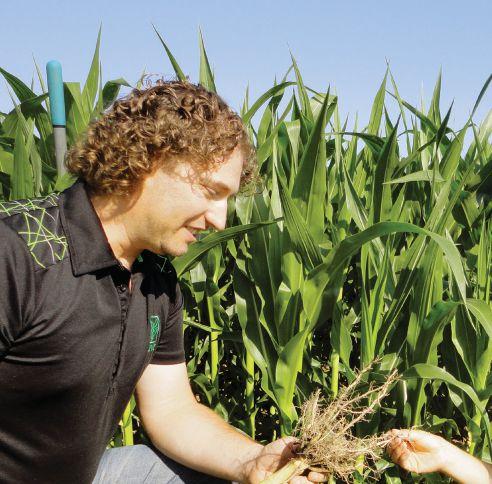
University of Manitoba researcher Brad Sparling collecting corn stalk samples at a field site located near Carman, Man. in 2018 as part of the Cross-Canada Agronomic and Environmental Benefit of Advanced 4R Nitrogen Management of Corn project.
TAKE YOUR FIRST STEP WITH US
WITH YOU EVERY STEP OF THE WAY
that’s partly due to corn being a long season crop which has most of its N uptake happening later than that of other grain crops.
“If you put your nitrogen on at planting or preplant or even the previous fall, you have a longer period of time until a corn crop is taking up most the majority of that nitrogen, compared to something like spring wheat which will take the nitrogen up earlier,” says Tenuta, adding this this increases the risk of nitrogen loss due to environmental factors such as heavy rains.
Tenuta notes out nitrogen sources containing urea can be subject to a process known as volatilization, in which nitrogen can be lost as ammonia gas. Once soil microbes convert N fertilizer to nitrate, nitrogen can be released into the environment through leaching as well as surface water movement. Nitrous oxide, a powerful greenhouse gas, can also be produced.
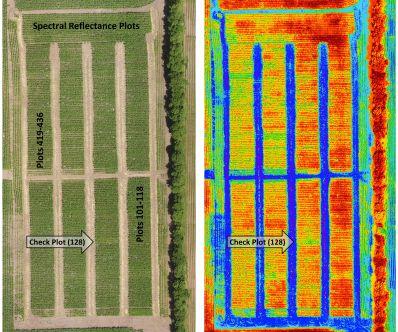
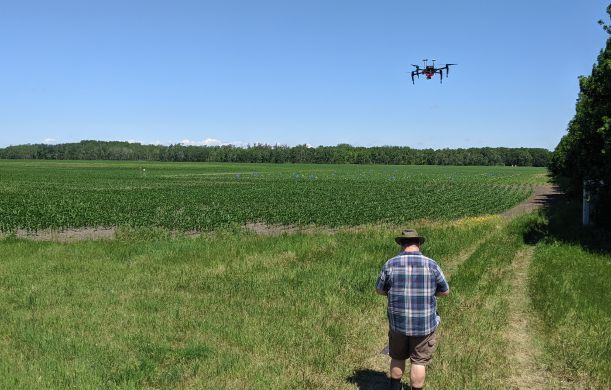
Another important objective of the project is the development of tools to help growers the assess the most efficient in-season application rate, using multispectral hand-held spectrometers and aerial drones to estimate corn N uptake in season and response to topand side-dressing fertilizer sources.
The project is slated to wrap up in 2021. Tenuta is confident that when the results are released, there’ll be no shortage of interest among corn producers and others in the ag industry, as well as government policymakers.
“With practical research such as this, especially when it comes to a big cost component of production and trying to improve that, people will be interested in it because it can have implications on their bottom line,” he says.
“There’s also more interest than ever in using our inputs better in agriculture, especially with nitrogen fertilizer,” Tenuta adds. “There is a sense out there that we all want to do better for our environment.”
Industry support
Federal funding for the Cross-Canada Agronomic and Environmental Benefit of Advanced 4R Nitrogen Management of Corn research initiative was announced in January as part of Ottawa’s $4.1-million investment over five years to the Canadian Field Crop Research Alliance under the Canadian Agricultural Partnership’s AgriScience Program.
Fertilizer Canada is among the industry partners also helping to finance the project. Clyde Graham, executive vice-president of Fertilizer Canada, stated in a media release that the organization supports scientific research that improves best management practices in 4R nutrient stewardship for Canadian growers in all crop regions.
“These [BMP] recommendations improve confidence for Canadian growers who are facing increasing pressure to boost yields for export while contributing to national climate change goals,” he said.
Side-by-side aerial views of a research field site located near Haywood, Man., that is part of the Cross-Canada Agronomic and Environmental Benefit of Advanced 4R Nitrogen Management of Corn project. The image at right was captured by a Normalized Difference Red Edge sensor and shows the spectral reflectance of the field.
PHOTO COURTESY OF MATT GERVAIS.
PHOTO COURTESY OF MACKENZIE BOOKER.
PHOTO COURTESY OF KRISTA HANIS-GERVAIS.
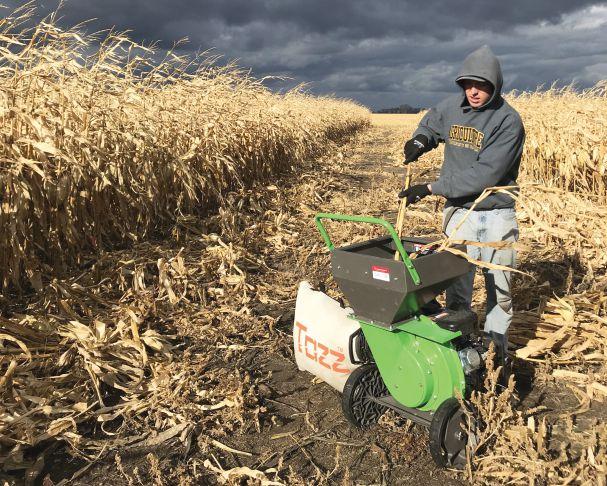
University of Manitoba researcher Lanny Gardiner mulching a large corn biomass sample at a field site located near Carman, Man., in 2018.
University of Manitoba researcher Matt Gervais using a drone to collect spectral reflectance images at a field site located near Haywood, Man., in 2019.
NOW THAT DEKALB ® CANOLA IS A PART OF BAYER, IT’S THE START OF SOMETHING MORE FOR YOUR FARM.
With our new products, you get more yield potential, more straight cut options, and more weed control traits, including the first TruFlex™ canola with Roundup Ready
and LibertyLink® Technologies hybrid from DEKALB. When you choose DEKALB canola seed from Bayer, you get MORE THAN SEED.
SPOTLIGHT ON BACTERIAL BROWN SPOT
Working toward better control of this emerging threat and other bacterial diseases in dry bean.
by Carolyn King
Bacterial blights – such as common bacterial blight, halo blight and bacterial brown spot – can cause serious problems in dry beans. Until recently, common bacterial blight was thought to be the most important of these blights in Ontario. But new research is showing that the biggest concern is now bacterial brown spot, for which there are no really effective control measures.
“We are finding that bacterial brown spot is often misdiagnosed as common bacterial blight, leading to underestimates of bacterial brown spot,” says Owen Wally, the pulse pathologist with Agriculture and Agri-Food Canada (AAFC) in Harrow, Ont., who is leading this research.
“I think bacterial brown spot is probably number two on the list of the most damaging diseases in Ontario dry beans currently, right after white mould.”
In a five-year study (2018 to 2023), Wally and his research group are getting a better handle on the occurrence and yield impacts of bacterial brown spot (BBS) and other bacterial diseases in Ontario dry bean crops, and they are working on new ways to control these diseases.
Bacterial brown spot 101
Bacterial brown spot is caused by Pseudomonas syringae pathovar syringae (‘pathovar’ or ‘pv.’ refers to a type of bacterial strain). “This pathogen can affect the foliage, pods and seeds of dry bean plants. The symptoms start as small, brown, water-soaked lesions. Under the right conditions, these can spread fairly rapidly on both the pods and the leaves,” Wally explains.
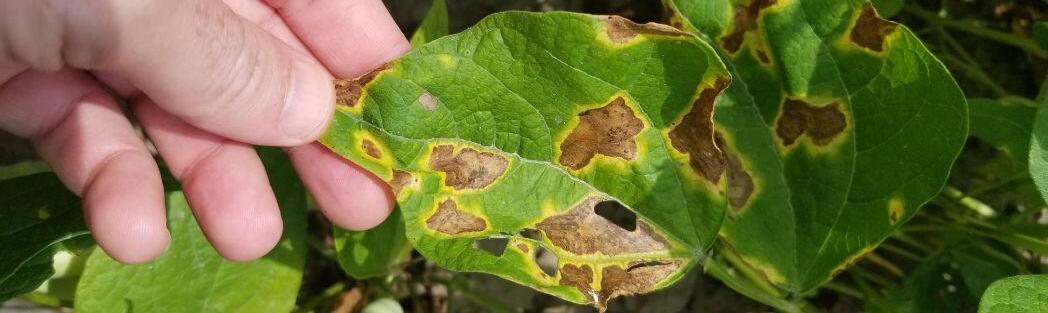
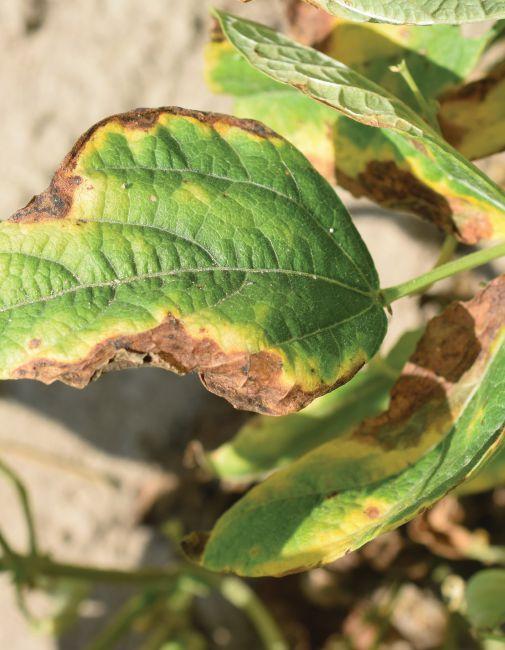
“On the leaves, those little lesions will start to coalesce and form larger lesions and become completely necrotic. Although it varies, the lesions will often develop a pale yellow ring around the outside of the necrotic areas as the disease progresses. And as the
disease progresses further, it can cause a lot of defoliation. When bacterial brown spot affects the pods, it can lead to seed abortion, so the seeds just sit there and don’t mature.”
Like common bacterial blight (CBB) and halo blight (HB), BBS requires high humidity. However, BBS tends to be favoured by temperatures from 12 to 20 C, more moderate than CBB prefers. He notes, “These humid and somewhat cooler conditions are common in the evenings and early mornings in a lot of the Ontario bean-growing regions. For instance, a heavy dew or fog in the morning provides optimal conditions for bacterial brown spot.”
Although BBS can be seedborne, Wally doesn’t think the disease is coming from the seed. “Almost all of the dry bean production in Ontario uses certified, disease-free seed. That seed usually comes from Idaho, which is very dry [so these bacterial diseases are not a concern]. Even when Ontario-grown seed is not showing any symptoms, there is always going to be a minor amount of [bacterial disease on the seed] because of the humid conditions in Ontario. If you plant that seed again, the disease problem will get much, much worse. So Ontario growers have to pay quite a premium to get seeds from Idaho.”
Wally thinks BBS is coming from crop residues and alternative hosts in and around bean fields. “Bacterial brown spot has a very broad host range. The pathogen infects many other species such as corn, [some other legume crops, wheat, barley] and some perennial and annual weed species. For example, the pathogen causes a minor disease on corn called Holcus spot, which is not treated because it doesn’t attack corn yields. But growers often have beans in rotation with corn, so we think this is probably where most of the inoculum is coming from.”
ABOVE: Common bacterial blight symptoms (shown here) look very similar to bacterial brown spot symptoms.
PHOTOS
Given its wide host range, Wally suspects that the BBS pathogen is probably present in much of Ontario and just needs the right conditions to begin causing the disease in dry bean crops.
“If the pathogen is on the bean seed to begin with, then it is already within the plant cells and the disease will progress quite rapidly. If the pathogen is coming from crop residues, then the bean plant would need to have some sort of wounding event so that the bacteria can enter; bacteria cannot directly invade plant cells,” he explains.
“Wounding events could be high winds and especially hail. We also think insects are playing a role. They may not be directly vectoring the pathogen, but they may be moving it around and causing damage to the leaves and pods where the bacteria can enter the plant.”
For Ontario bean growers, BBS stepped into the spotlight in 2014 when the disease caused serious problems in adzuki bean crops. Wally says, “Adzuki beans are extremely susceptible to bacterial brown spot, but the disease affects pretty much all the market classes of dry beans grown in Ontario.”
He notes, “We don’t really know the impact of bacterial brown spot on yield, but it has been estimated to be as high as 40 per cent in some severe cases. We think it is somewhere between five and 10 per cent under normal conditions without the disease really having been noticed. So the average field might see that type of yield loss.”
Control challenges
“Currently, there are not really any effective options for controlling bacterial brown spot,” Wally says.
Longer crop rotations don’t help to control BBS because of the pathogen’s many other hosts.
No Ontario dry bean varieties are known to have BBS resistance. In contrast, breeders have developed many CBB-resistant varieties for Ontario, such as Rexeter, Mist, Lighthouse, Apex and AAC Argosy.
Copper-based products are available for in-crop spraying to help slow the growth and spread of BBS, HB and CBB. However, these products tend to have limited effectiveness, depending on factors like the weather, the disease pressure and the particular bacterial pathogen.
“Streptomycin used to be the main seed treatment for controlling bacterial diseases in bean crops, but it is no longer registered,” Wally notes.
Using certified seed is important to help prevent the disease situation from worsening.
Another challenge is figuring out whether BBS or some other bacterial pathogen is causing the symptoms. “The symptoms of bacterial brown spot, halo blight and common bacterial blight can fool most people, including myself sometimes, because they look very, very similar. Bacterial brown spot and common bacterial blight look almost identical,” says Wally.
“The lesions [in all three diseases] have brown, necrotic centres, but the ring of the chlorosis [yellowing] is typically smaller with bacterial brown spot as compared to halo blight and common bacterial blight. On the pods, bacterial brown spot lesions are slightly smaller than common bacterial blight lesions.” With
brown spot, the leaves tend to look more tattered.
Genetic sequencing is the most reliable way to tell the diseases apart. HB is caused by Pseudomonas syringae pv. phaseolicola. CBB is caused by Xanthomonas axonopodis pv. phaseoli and Xanthomonas fuscans subspecies fuscans.
BBS predominates in study’s surveys
Wally’s bacterial blight research is targeting BBS, CBB, and HB, as well as bacterial wilt. Bacterial wilt in dry bean is caused by Curtobacterium flaccumfaciens pv. flaccumfaciens; some reports indicate bacterial wilt may be resurging in North America.
Part of Wally’s research is focused on improving our understanding of the Ontario situation for these four diseases. “We want to determine the impact that these bacterial diseases are having on bean production in Ontario – how much are they impacting yields and under what conditions do these yield impacts happen? We also want to find out how widespread they are in Ontario,” he explains.
“In addition, we want to determine the genetic diversity of these different bacterial populations, if there are different races or if they differ in virulence within these different growing regions.”
So Wally and his research group, along with collaborators throughout Ontario’s bean-growing regions, are collecting samples of symptomatic plant tissues. In 2018 and 2019, they collected about 30 samples.
In the lab, they isolate any bacteria present in these samples. Next they do genetic analysis, including DNA sequencing, to confirm the species. And then they do virulence testing to make sure the isolates cause disease in bean plants.
“Close to 90 per cent of the isolates so far have turned out to
be bacterial brown spot,” Wally notes. “These samples came from people who thought the symptoms were common bacterial blight.”
Developing BBS-resistant varieties
Another component of this research involves screening dry bean lines for resistance to bacterial diseases. In this work, Wally is collaborating very closely with Jamie Larsen, who leads AAFC’s dry bean breeding program at AAFC Harrow.
As part of this component, they set up a new BBS disease nursery at AAFC’s London Research and Development Centre in 2019, and they are also doing indoor BBS screening.
The BBS nursery joins AAFC’s CBB nursery at Harrow and HB nursery at London. These three field nurseries are used to screen dry bean varieties in the Ontario registration trials as well as some advanced lines from Larsen’s program and the University of Guelph’s breeding program. The nurseries are irrigated and inoculated with the appropriate pathogen to increase the probability of disease development.
“From the variety screening, we are finding definite varietal differences in the response to bacterial brown spot. So there could be some genetic resistance already within some bean lines. So far, it seems that the large-seeded bean market classes are a little more tolerant to brown spot than the small-seeded market classes,” says Wally.
He adds, “Once we start publishing the varietal differences, growers will be able to select cultivars that have more tolerance to bacterial brown spot.”
Wally is excited about the potential to develop BBS-resistant varieties for Ontario. “This would provide growers with an effective way to manage one of the major disease problems in Ontario dry bean crops.”
The researchers’ longer-term goal is to develop bean varieties with resistance to multiple diseases, particularly CBB, BBS and anthracnose. “And further down the road, if we get enough resistance packages together, growers might be able to use Ontario-grown seed for regrowing in Ontario instead of having to pay a premium for Idaho-grown seed.”
Testing new seed treatments
Wally is also involved in a cross-Canada study to evaluate some novel seed treatments for managing bacterial diseases in beans. “We’re trying to find some alternatives to streptomycin. If we can find suitable seed treatments, they could be easily added to the existing treatment packages for dry beans.”
At Harrow, Wally’s group is assessing the effectiveness of about eight different seed treatment products in controlling BBS, CBB, HB and bacterial wilt. They are testing the products on both Ontario-grown seeds and on Idaho-grown certified seeds.
He notes, “There is some evidence that [the efficacy of] some of these seed treatments can last a fairly long time within the plant, almost to maturity, because they are not working directly on the pathogen but they are influencing the plant to produce different responses.”
The results from all of Wally’s bacterial disease research will help provide much-needed information and tools for Ontario dry bean growers to manage BBS and other bacterial diseases.
The main funding for this research is through the Canadian Agricultural Partnership’s Pulse Cluster, which is a partnership between AAFC and the Ontario Bean Growers and other pulse agencies across Canada.
Bacterial brown spot is emerging as the most important bacterial disease in Ontario dry beans.
MANI
BRETT YOUNG 17
A NOT-SO-BASIC TEST
Plant tissue testing can be useful as a diagnostic tool, with some caveats.
by Bruce Barker
On the surface, plant tissue testing looks like a reliable method of assessing fertility programs: compare nutrient levels in the tissue with a known range of nutrient concentrations for that variety to see if the fertility program is adequate. If only it was that easy.
“Plant tissue testing is really valuable if you have the proper criteria to assess nutrient levels in the tissue. Back in the day, criteria had been established for many crops, but with all the new canola, wheat and hybrid crops, you can’t apply the older criteria when making recommendations for some of today’s crops,” says Rigas Karamanos, senior agronomist with Koch Fertilizer Canada in Calgary.
Karamanos says in order for tissue testing to provide reliable guidance, a research database needs to be set up for each crop that calibrates the tissue nutrient level with yield responses to applied nutrients. And because varieties differ within crop type in their nutrient levels, each crop variety needs calibrating to ensure reliability. As a result, high-value crops are the ones most often calibrated.
“Because [potatoes] are a high-value crop, calibration is kept up on every cultivar. Most of the corn hybrids are well calibrated as
well,” Karamanos says. “Sample. Analyze. Calibrate. Interpret. You have to ask the labs what criteria they are using to get any value out of the tissue test.”
As an example of the variability of nutrients between varieties, Karamanos cites research on 12 different edible beans and their zinc concentration in Morden, Man. Zinc tissue content ranged from a low of 18 parts per million (ppm) to a high of 29 ppm on the control plots without added zinc, and a low of 23.5 ppm to a high of 34.5 ppm on plots receiving zinc fertilization.
Sampling challenges
Stage of growth, the plant part and number sampled, and time of sampling can all affect nutrient concentrations. For example, nitrate accumulates at night, so tissue samples should not be taken in the early morning or late afternoon.
Stress can also impact nutrient concentrations in tissue. If plants
ABOVE: Tissue testing can be a useful diagnostic tool in corn and potatoes.
PHOTO BY BRUCE BARKER.
are under stress caused by factors other than nutrient deficiency or toxicity, the tissue can accumulate higher than normal nutrient levels. A reliable tissue analyses can only be achieved after the stress has alleviated.
Plant tissue can also be contaminated with dust or soil, and this contamination can result in inaccurate results. Avoid contact with fertilizers, salts, grease, and cigarette ashes.
Each laboratory has its own sampling protocols. Growers and agronomists should consult with their laboratory for proper sampling techniques.
Interpreting the results
Plant tissue testing can be useful in evaluating fertilizer management programs, diagnosing nutrient-related crop production problems and identifying nutrient levels in crops that may limit yield. Plant analysis is very useful in assessing boron, iron and molybdenum, since these nutrients do not have reliable soil tests. It can also be used to evaluate phosphorus, potassium, magnesium and manga-
nese fertility, but is not always reliable for nitrogen and zinc. If used as a diagnostic tool, remedial fertilizer applications can be applied in-season to help overcome the deficiency. There is a small window of application for nitrogen and sulphur fertilizer of about four to six weeks after seeding. Phosphorus and potassium do not usually respond to in-season application, so tissue sampling would be used for fertility planning the following year.
Micronutrients have a wide window of in-season application, and because they are applied at relatively low rates and are also important during the reproductive stages of crops,(i.e. seed formation), tissue testing can help provide the information for rescue applications when a deficiency is analyzed.
“Tissue testing is a great tool for high value crops where the database is kept up to date. It can be useful in potatoes and corn where in-season fertilizer application can improve yield, but for the rest of the crops, it is usually too late to do much,” Karamanos says. He recommends talking to the seed supplier and sampling laboratories to determine if a particular crop or variety has been calibrated in your area.
PROVEN BY DESIGN
The way we see it, the Proven® Seed lineup is state of the art. Proven Seed offers leading edge technology you can count on in canola, cereals, corn, soybeans and forages. You get choice in herbicide systems, disease management, high yields and performance from every seed, across all your acres. No matter how you look at it, there’s a Proven Seed that fits your farm. Only available at Nutrien Ag Solutions™. Learn more at ProvenSeed.ca
DETOXIFYING DON WITH SOIL BACTERIUM
Agriculture
and Agri-Food Canada researchers have discovered a new bacterium in soil that could provide the key to neutralizing the disease.
by Mark Halsall
DON is produced by a number of fungal pathogens, most commonly Fusarium graminearum, which can cause Fusarium head blight in cereal crops and Fusarium ear rot in corn. The mycotoxin can cause serious yield losses in infected crops, and makes contaminated grains unfit for human consumption. In Canada, grains contaminated with small amounts of DON can be used as food for some types of livestock, but higher levels make the grain toxic for animals as well. This means farmers with grains containing high levels of DON could have their crop subjected to deep discounts or even rejected altogether by grain processors. Infected corn can be used to make ethanol, but dried distillers grain, a byproduct of the production process that is a popular feedstuff for livestock, may not be saleable if it contains high levels of DON.
For years, researchers around the world have been searching for a solution to the problem, but because the DON mycotoxin is resistant to heat treatment and there are currently no satisfactory processes for effectively and economically detoxify DON-contaminated grain, it has proven to be very challenging.
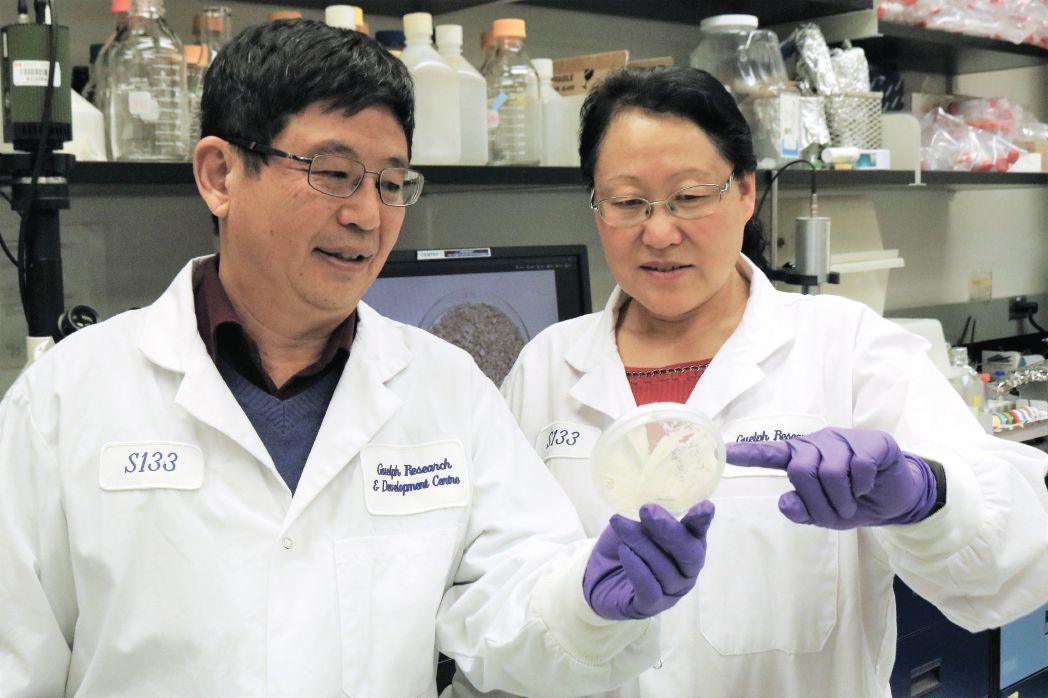
Now, AAFC researchers working at the Guelph Research and Development Centre in Ontario have discovered a new species of bacteria that could provide the key to detoxifying DON.
“DON has been a serious issue for corn and other cereal crops for a long time,” says Ting Zhou, the AAFC scientist leading the DON research program.
“The disease is very difficult to control. There has been so much effort, so much research already done, but the problem is still severe and even worsening in recent years,” he adds.
“We needed to find something new, something that was kind of out of the box. We thought maybe we should use a biological approach because it is green and sustainable. We started looking for microbes that may be able to degrade or detoxify DON.”
Zhou says several other researchers, including Jianwei He,
TOP: Agriculture and Agri-Food Canada researchers Ting Zhou, left, and Xiu-Zhen Li examine a culture containing Devosia mutans, a new bacterium that can detoxify deoxynivalenol (DON).
Yousef Hassan and Jason Carere, have played an important role in the research, leading to the discovery of a naturally occurring, soilborne bacterial species named Devosia mutans that is capable of detoxifying DON.
The bacterium, which was found in an alfalfa field in southern Ontario, produces two enzymes, DepA and DepB, which convert DON to a non-toxic or a much less toxic form by altering the molecular structure of deoxynivalenol.
Zhou says besides helping to inhibit DON toxicity in the field, the enzymes may also be able to detoxify harvested grain that is contaminated with the toxin.
“The DON detoxifying bacterium and enzymes provides an innovative technology to solve this persistent and devastating problem,” he says. “They can be applied in both pre- and post-harvest treatments to effectively reduce DON contaminations, which is new.”
Zhou notes that other bacteria capable of degrading DON have been found, but this is the first time that bacterium enzymes responsible for detoxification have been identified.
He adds that unlike previously discovered bacteria, Devosia mutans doesn’t need DON as a food source to grow, it can grow at lower temperatures, and it can grow in the presence of oxygen. Zhou says that makes it well-suited to a variety of industrial applications in areas such as livestock production, corn milling and fuel ethanol fermentation.
The detoxifying enzymes, for example, could be used to treat harvested grain to reduce DON contamination down to levels that are acceptable for animal feed, or they could be incorporated into production lines at animal feed processing plants to significantly reduce the amount of DON in feed products leaving the facilities. Zhou says the enzymes may also have applications at the farm level, where they could be applied directly to animal feed.
Zhou maintains there are also opportunities to utilize microbial detoxification from a crop management perspective, by utilizing the Devosia mutans bacteria or the DepA and DepB enzymes in new forms of seed treatment that target DON or even as a soil amendment. He believes the genes from the DONdetoxifying bacterium could also possibly be used to improve the resistance of plants to Fusarium graminearum infections.
According to Zhou, the next steps are to work with industry partners to develop the applications and delivery methods needed to successfully commercialize the technology.
Zhou says the first commercial products could be available in as soon as two or three years, but he notes the timeline will depend on how much investment the companies involved in the commercialization process are prepared to put towards research and development, as well as their capacity for building large-scale enzyme production facilities, and how quickly the final products can be registered.
PHOTO COURTESY OF TING ZHOU.
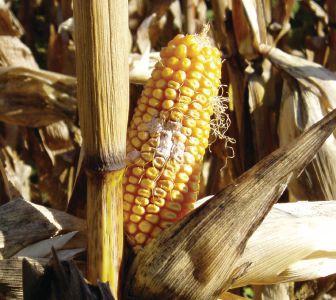
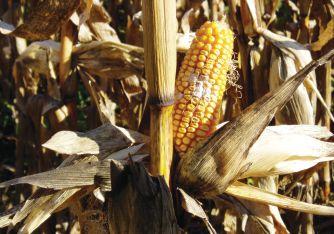
A corn ear infected with Fusarium graminearum.
Your better beans are here.
Better genetics. Better yields. Better for your community. Introducing Enlist E3™ soybeans, a more advanced seed with the highest yield potential and a robust herbicide tolerance. Pair it with Enlist Duo™, part of the Enlist™ weed control system, for a better low drift, near-zero volatility solution.
Enlist E3™ soybeans are now available for 2020 planting. Talk to your local seed supplier.
Simply Better Soybeans. Learn more at enlistcanada.ca
SOYB EA NS
Advancing Modern Farming
The Enlist™ weed control system will change how you think about weed management in soybeans. Farmers can NOW purchase Enlist E3™ soybean varieties and take control of resistant and hardto-control weeds.
INTRODUCING THE ENLIST™ WEED CONTROL SYSTEM
The Enlist weed control system will help growers meet the challenge of farming today, and in the future.
Key Benefits of the Enlist weed control system:
• Provides robust crop tolerance to Enlist Duo™, a new herbicide featuring glyphosate and new 2,4-D choline, containing Colex-D™ Technology
Enables the use of a multi-mode of action herbicide approach against hard-to-control and resistant weeds.
• Includes a stewardship initiative to promote responsible use and sustain long-term performance
ENLIST E3 SOYBEANS
Enlist E3 soybeans provide elite, high yielding soybean genetics and industry leading multi-mode of action herbicide tolerance.
Enlist E3 soybeans provide robust herbicide tolerance to 2, 4-D, glyphosate and glufosinate
• Enlist Duo herbicide can be used in Enlist E3 soybeans with confidence as a pre-emergent or post-emergent herbicide
• Enlist E3 soybeans provide an alternate glyphosate tolerance trait source
A multi-mode of action program approach is recommended to minimize the potential for the development of resistant weeds. This includes the use of residuals and complementary effective modes of action for pre-emergent and in-crop weed control
• Enlist E3 soybeans are not tolerant to dicamba
ENLIST DUO™ HERBICIDE
Enlist Duo herbicide, a proprietary blend of glyphosate and 2,4-D choline, contains Colex-D™ Technology. Enlist Duo has two modes of action to provide exceptional weed control and herbicide resistance management.
WHAT GOES INTO IT
2,4-D choline with Colex-D Technology Latest formulation science Proprietary manufacturing process
WHAT IT DELIVERS
Near zero volatility
Minimized potential for physical drift Low odour Improved handling characteristics
KEY WEEDS CONTROLLED BY ENLIST DUO
Enlist Duo controls more than 70 weeds, including the toughest to control. Here’s a snapshot of some of the most important.
WEEDS CONTROLLED
Grass Weed Species
• Barnyard grass
• Crabgrass
• Fall panicum
• Green foxtail Quack grass
• Volunteer barley
• Volunteer wheat
• Wild oats
• Wild proso millet
• Yellow foxtail And many more…
Broadleaf Weed Species
Hemp-nettle
• Buckwheat, tartary & wild
• Canada fleabane*
• Canada thistle
• Chickweed
• Cocklebur
• Common ragweed*
• Corn spurry Dandelion
• Eastern black nightshade
• Field horsetail
• Flixweed
• Giant ragweed*
• Kochia* Lady’s-thumb
• Lamb’s-quarters
• Morning glory
• Palmer Amaranth
• Smartweed
• Sow thistle Velvetleaf
*Including biotypes resistant to glyphosate and ALS modes of action Bluebur
• Red root pigweed
• Vetch Volunteer canola*
• Waterhemp
• And many more…
ROLLING WITHOUT STONES
The pros and cons of land rolling non-stony soybean fields in Manitoba.
By Carolyn King
Land rolling has obvious benefits for managing stones in soybean fields. But should you roll a field that isn’t stony, where the risk of combine damage from stones is very small?
The Manitoba Pulse & Soybean Growers (MPSG) is hoping to answer that question through two complementary studies.
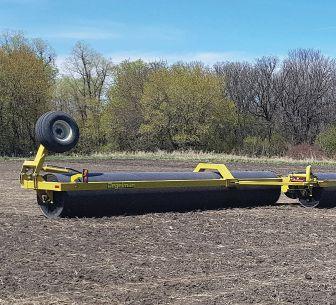
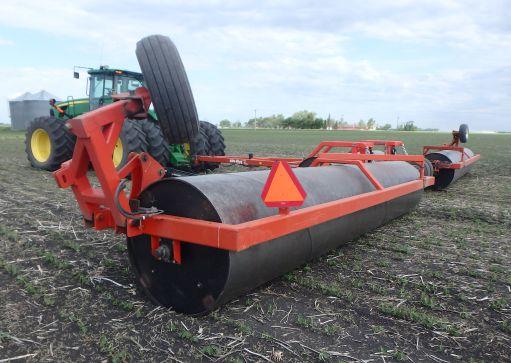
As growers know, land rolling pushes stones into the soil and flattens clods and crop residues, reducing the risk of costly damage to the combine header as it runs close to the ground to pick up the lowest soybean pods. By reducing this risk, rolling may allow faster combine speeds, may make conditions less stressful for the combine operator, and may reduce earth tag in the harvested grain. Also, rolling may improve the seedbed in some situations.
However, rolling also heightens the risk of wind erosion, increasing the potential for dust storms, topsoil loss, soil nutrient loss, and abrasion of crop plants by wind-blown particles. Rolling after the soybean crop has emerged can damage some of the plants. And rolling adds another cost to soybean production and takes up time during the busy spring season.
“Land rolling of soybean fields is a pretty common practice in Manitoba. Many fields have lots of stones that farmers are worried about because of the risk to equipment at harvest time, especially with the low soybean pod height. But we also see that soybean growers like to roll whether or not they have stones,” says Cassandra Tkachuk, an MPSG production specialist.
“MPSG’s funding commitment to this research stemmed largely from the fact that we want to increase our involvement and knowledge base in improving soil quality and preventing erosion. Pulses and soybeans are low-residue crops, and we want to be a part of the conversation around improving soil quality.”
MPSG’s current recommendations on land rolling are in line with findings from the University of Minnesota, which has done a
lot of land-rolling research.
“We recommend that you only consider rolling your field if stones or corn root balls are present, because they can pose a risk to equipment,” Tkachuk says.
“Most Manitoba soybean growers roll right after planting, before the crop has emerged, but extension messaging from Minnesota indicates this timing has the greatest soil erosion risk. So if you need to roll, we recommend that you do it either before planting or at the first trifoliate stage, V1. With V1 timing, your crop should be in the clear of the hypocotyl arch stage, which is most prone to breaking, and also of the third trifoliate stage, V3, where the plants are again prone to breakage. Post-emergent rolling should be done during the heat of the day when the plants are limp and less likely to be injured.
“We also recommend that you avoid rolling in windy weather because you are pulverizing the soil at the soil surface, increasing the risk of topsoil loss.”
Tkachuk notes, “The two Manitoba studies are building on the Minnesota research, looking at some of the gaps in knowledge, and adding a Manitoba twist.”
Both studies involve on-farm trials conducted in 2018 and 2019. One study, led by Lorne Grieger with the Prairie Agricultural Machinery Institute (PAMI), is focusing on the economics of land rolling. The other study, led by David Lobb from the University of Manitoba, is examining the wind erosion aspects.
“Both parts of this work – what is your erosion risk, what is the cost of rolling – are things that can help farmers in their decisions about whether or not to roll,” Tkachuk says.
MPSG is coordinating the trials through its On-Farm Network,
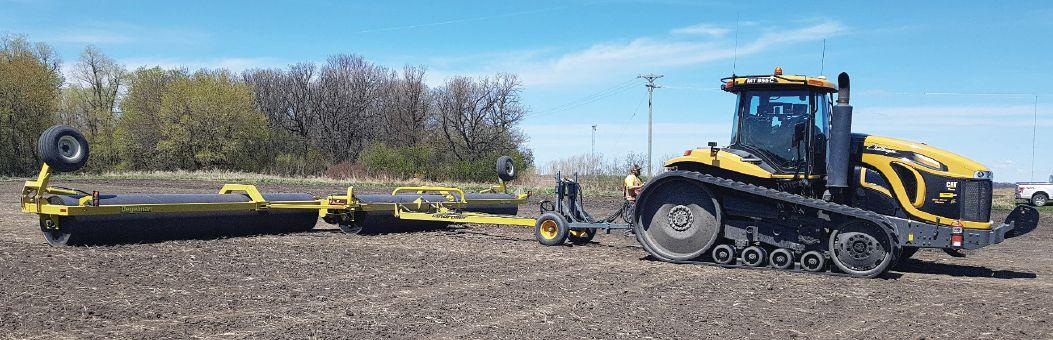
ABOVE: The PAMI team collected data on pre-emergent land rolling operations, measuring things like fuel consumption.
decide whether or not they can skip rolling,” explains Charley Sprenger, the project leader for the PAMI study.
“Their time is very valuable in the spring when they’re trying to get everything seeded, and rolling is one more pass on the field. So we want to determine the true cost of rolling and the economic returns provided by rolling non-stony fields. We want to see if they can skip rolling without sacrificing crop quality and yields, and without affecting harvestability of the field.”
The study’s treatments include: 1) either pre-emergent rolling (done right after planting) or post-emergent rolling (done before V3); and 2) non-rolled.
In Year 1, the PAMI team collected data for the pre-emergent rolling and non-rolled treatments. They weren’t able to assess any post-emergent rolling treatments because of field availability issues.
That year, they evaluated the rolling operations at three sites (East Selkirk, Elm Creek and Dencross). They measured things like fuel consumption, draft load, seed-to-soil contact, and seeding depth. And they calculated rental/ownership costs based on the type of rolling equipment and work rate. Agriculture and Agri-Food Canada assessed surface roughness at the sites.
The PAMI team evaluated the harvesting operations at three sites (Elm Creek, Dencross and Altona). They collected data on such aspects as combine harvest speed, combine rock trap collection, harvest losses occurring at the combine header, plant and pod heights, and operator fatigue.
PAMI’s Year 1 report highlights some interesting preliminary results. For instance, the fuel consumption used in rolling ranged from 0.36 to 0.50 litres per acre for a 36-inch roller pulled by a 200-horsepower and 450-horsepower tractor, respectively. The average cost of rolling was $3.53/acre, based on ownership/rental costs for a roller being about $74/hour.
In Year 1, combine header losses showed no clear trends: at one site, the rolled plots had lower losses; at another site, the non-rolled plots had lower losses; and at the third site, there was no significant difference between the two treatments. As well, there was no significant difference between the treatments at each site in terms of the average combine operating speed and the combine operators’ experiences with handling the equipment.
“From the harvest data last year, it was pretty inconclusive whether rolling had any effects on harvesting in non-stony fields,” says Sprenger.
including helping with trial establishment and harvesting to collect yield data.
The field sites for both studies are in the Red River Valley because much of this region has non-stony soils. Lobb explains, “The Red River Clays, which are the vast majority of the clays in the Red River Valley, have almost no stones. They are clays from the old lakebed [of glacial Lake Agassiz] except for the occasional stone dropped from icebergs floating in the lake 10,000 years ago. But these occasional stones can sometimes be the size of cars.” So the risk of stone damage in fields with these soils is small but not zero.
Costs and benefits of rolling
“With our study, we want to give producers who don’t have stony fields some data so they have better information to help them
“This suggests that whether or not you roll a non-stony soybean field comes down to producer preference. A lot of times, rolling provides reassurance that you might be able to drive a little quicker because you are not worried about having the one stone in the field go through the combine.”
In Year 2, the PAMI team collected rolling data at Elie, Brunkild, and Sperling. They hope to get back to all three sites for harvest measurements despite the poor fall weather. Those planned harvest measurements include a site with post-emergent rolling (rolled in late V2) so they may be able to get some data on this type of rolling.
Also in Year 2, PAMI asked the producers to try some ‘gear up, throttle down’ strategies during rolling. Sprenger says, “We noticed in Year 1 that fuel consumption during rolling was fairly high or they were using power units that were larger than required. If producers decide to roll, we want to find strategies that will reduce their power consumption.”
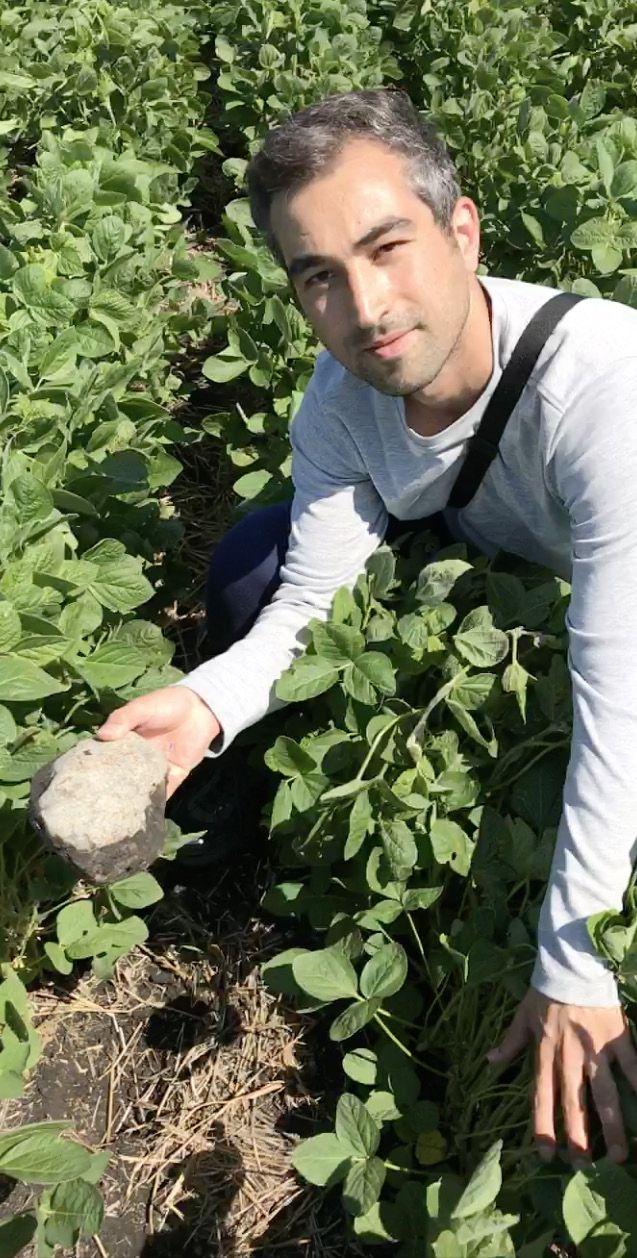
University of Manitoba masters’ student Ehsan Zarrinabadi holds a stone found on the surface of a soybean field in the mostly non-stony Red River Valley.
PHOTO COURTESY OF DAVID LOBB.
stage is another option for soybean growers.
Wind erosion and rolling
“In the Red River Valley, and across the Prairies, in the winter we often see what we call snirt [dirt on snow], which is one key sign of wind erosion, and in the spring we sometimes get dust storms,” says Lobb, an expert in soil erosion. “Soybeans have a greater risk of wind erosion because of the lack of crop residue. MPSG was concerned that farmers who roll their soybean fields are increasing their risk of wind erosion and therefore exacerbating what is perceived to be a major problem.”
Lobb explains why land rolling increases the wind erosion risk: “Surface roughness is one of the biggest factors affecting wind erosion. All of the little pockets on a rough surface trap material, so the soil doesn’t really start to blow, and if it does start to blow a little bit, the sediments [eroded soil particles] get stuck in the little pockets. So if you smooth the surface, the sediment can move along the surface and contribute to significant wind erosion events, that is dust storms.”
In Year 1 of this study, Lobb and his study team had four sites, which were located across the Red River Valley at Morris, Elm Creek, Dencross and Randolf. It turned out that only two sites had the non-stony Red River Clays.
The other two sites had Scanterbury Clays, which are gravelly or stony in some places. One site in particular was quite stony. Lobb says, “If I were a farmer who had the stony conditions in that field, I would be rolling my land too, regardless of the wind erosion risk. Stones going through the combine could represent days of delay during harvest and thousands of dollars to repair the damage. If you weigh that against the potential increase in wind erosion risk, you are going to worry about the stones going through your combine.”
In Year 2, the study had four sites that were all on fairly similar, non-stony soils southwest of Winnipeg. Two sites were near Brunkild and two were near Starbuck.
Lobb’s graduate student Ehsan Zarrinabadi is running this study. At each site in 2018 and 2019, the study team compared two treatments: 1) pre-emergent rolling; and 2) non-rolled.
The study team assessed the effects of land rolling on the potential for wind erosion, measuring characteristics like surface roughness, stoniness, surface and root zone moisture content, and crop residue cover. They also trapped the eroded sediments from each treatment and analyzed the properties of these sediments such as
nutrient levels and particle sizes. In addition, they surveyed nearby roadside ditches for wind-eroded sediment.
As well, the team assessed crop growth and yield. That work included measuring the amount of abrasion of soybean plants caused by wind-eroded particles. Such abrasion can result in increased crop disease and poorer crop growth.
In spring 2018, two severe wind erosion events occurred in the Red River Valley, but they happened before soybean seeding and land rolling. So land rolling did not affect these events. The soil loss impacts of these events were captured through the ditch survey.
The Year 1 results didn’t show any significant differences between the rolled and non-rolled treatments in terms of things like plant abrasion and crop yield. Also, there was too much variability in the amount of wind-eroded sediments to say if the rolled treatments had more erosion than the non-rolled. Lobb notes, “Keep in mind that this is a very limited data set. For Year 1, there were only five plots within two treatments at each of four sites.”
So in Year 1, there wasn’t a big difference between the rolled and non-rolled treatments. If these initial results hold true for Year 2, it will be good news for growers who want to roll fields where the risk of stone damage is minimal.
Over the coming months, the PAMI team and the University of Manitoba team will be completing their analysis and reporting on their MPSG land rolling studies. The new information from these studies on the costs of the rolling operation and how to reduce those costs, and on the effects of land rolling on soil loss, crop yields and harvestability will help growers with non-stony fields in making their decisions about whether or not to roll.
Trait Stewardship Responsibilities Notice to Farmers
Monsanto Company is a member of Excellence Through Stewardship® (ETS). Monsanto products are commercialized in accordance with ETS Product Launch Stewardship Guidance, and in compliance with Monsanto’s Policy for Commercialization of Biotechnology-Derived Plant Products in Commodity Crops. These products have been approved for import into key export markets with functioning regulatory systems. Any crop or material produced from these products can only be exported to, or used, processed or sold in countries where all necessary regulatory approvals have been granted. It is a violation of national and international law to move material containing biotech traits across boundaries into nations where import is not permitted. Growers should talk to their grain handler or product purchaser to confirm their buying position for these products. Excellence Through Stewardship® is a registered trademark of Excellence Through Stewardship.
ALWAYS READ AND FOLLOW PESTICIDE LABEL DIRECTIONS. Roundup Ready® Technology contains genes that confer tolerance to glyphosate. Roundup Ready® 2 Technology contains genes that confer tolerance to glyphosate. Roundup Ready 2 Xtend® soybeans contains genes that confer tolerance to glyphosate and dicamba. LibertyLink® Technology contains genes that confer tolerance to glufosinate. Glyphosate will kill crops that are not tolerant to glyphosate. Dicamba will kill crops that are not tolerant to dicamba. Glufosinate will kill crops that are not tolerant to glufosinate. Contact your local crop protection dealer or call the technical support line at 1-800-667-4944 for recommended Roundup Ready® Xtend Crop System weed control programs. Insect control technology provided by Vip3A is utilized under license from Syngenta Crop Protection AG.
FOR CORN, EACH ACCELERON® SEED APPLIED SOLUTIONS OFFERING is a combination of separate individually registered products containing the active ingredients: STANDARD offering for corn without SmartStax® Technology: fluoxastrobin, prothioconazole, metalaxyl and clothianidin. STANDARD plus DuPont™ Lumivia® offering for corn: fluoxastrobin, prothioconazole, metalaxyl and cyantraniliprole. STANDARD plus Poncho®/VOTiVO® offering for corn with SmartStax® Technology: fluoxastrobin, prothioconazole, metalaxyl, clothianidin and Bacillus firmus I-1582. COMPLETE offering for corn with SmartStax® Technology: metalaxyl, clothianidin; prothioconazole and fluoxastrobin at rates that suppress additional diseases. COMPLETE plus Poncho®/ VOTiVO® offering for corn with SmartStax® Technology: metalaxyl, clothianidin, Bacillus firmus I-1582; prothioconazole and fluoxastrobin at rates that suppress additional diseases. COMPLETE plus DuPont™ Lumivia® offering for corn: metalaxyl, cyantraniliaprole, prothioconazole and fluoxastrobin at rates that suppress additional diseases. Class of 2019 and 2020 base genetics are treated with BioRise™ 360 seed treatment. FOR SOYBEANS, EACH ACCELERON® SEED APPLIED SOLUTIONS OFFERING is a combination of separate individually registered products containing the active ingredients: BASIC: prothioconazole, penflufen and metalaxyl. STANDARD: prothioconazole, penflufen, metalaxyl and imidacloprid. STANDARD plus Fortenza®: prothioconazole, penflufen, metalaxyl and cyantraniliprole. FOR CANOLA seed treatment offerings can include: Prosper® EverGol® seed treatment containing the active ingredients clothianidin, penflufen, metalaxyl and trifloxystrobin. Fortenza® Advanced seed treatement consisting of Fortenza Seed Treatment insecticide containing the active ingredient cyantraniliprole and Rascendo® Seed Treatment insecticide containing the active ingredient sulfoxaflor. Helix® Vibrance® seed treatment containing the active ingredients thiamethoxam, difenoconazole, metalaxyl-M, fludioxonil and sedaxane. Jumpstart® XL inoculant containing the active ingredient penicillium bilaiae.
Agriculture and Agri-Food Canada Saskatoon Research and Development Centre
Evaluating root rot and other pulse diseases |
Agriculture and Agri-Food Canada Lethbridge Research and Development Centre
The future of neonics |
Manitoba Agriculture
Smart farming and a glimpse into the future
Joy Agnew |
Maximizing fungicide use
Agrimetrix Research and Training
Tackling clubroot: disease updates, reducing risk and practical management
Canola Council of Canada
Alberta
THE ECOLOGICAL DIAMONDS IN THE ROUGH
Understanding the role of field boundary habitats.
by Jennifer Bogdan
Adrive through the Saskatchewan Prairies shows exactly what one may envision when it comes to crop production in the province: ocean-like expanses of swaying cereal fields, broken up by yellow canola and blue flax fields, all intertwined with fields of lush green pulse crops. The cropland stretches on for miles, making it almost believable that you actually could watch your dog run away for three days, as the joke goes. The colourful pattern of fields resembles the patches of a giant quilt – but what exactly is in the stitching that holds it all together? A new study is taking a much-needed look between the fields, by exploring field boundary habitats.
Shathi Akhter, research scientist at Agriculture and Agri-Food Canada in Indian Head, Sask is assessing the role of field boundary habitats in agro-ecosystems and why producers should be concerned.
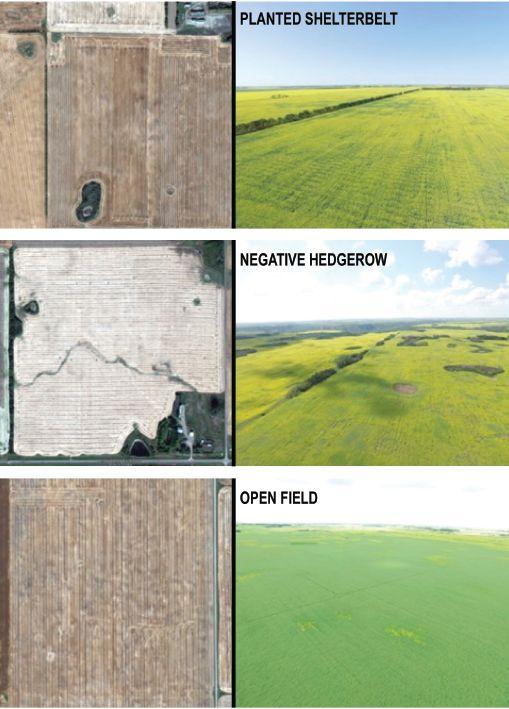
“Field boundary habitats (FBH) are non-cropped areas adjacent to annual crops. There has been little documented research on the ecological and economic benefits of FBH in promoting crop productivity and ecological diversity in intensely cropped agricultural landscapes in Saskatchewan. This project attempts to measure the benefits or services provided by FBH, such as increased pollination from native bees and predation of flea beetles and other pests by carabid beetles, to determine whether it is advantageous for producers to maintain these habitat areas on the landscape,” she explains.
Examples of FBH include shelterbelts, native hedgerows, road allowances, wetlands, and streams. These natural habitats support thousands of species of native plants, insects, birds, mammals and reptiles. As part of the ecosystem, FBH also play a role in pollination, natural pest control and drought and flood mitigation. “At present, we classify these ecosystem services as non-market good and services. Therefore, it is difficult for crop producers to identify these services and include them in their farm operation management decisions,” Akhter says.
One of the main objectives of the project includes determining the risks and benefits of FBH to the neighbouring field crops. This assessment includes measuring crop yield and quality, as well as pollinator, beneficial insect, and bird biodiversity. Soil parameters, such as quality, moisture, and the microbial community, will also be studied. After the data is analyzed, Akhter’s team will put forward best management practices that producers can use to improve crop yield and quality, while simultaneously supporting pollinators and other beneficial species.
While honeybees seem to hold the pollinator spotlight, Sas-
katchewan is home to 350 species of wild bees. However, some of these species, like bumblebees, are decreasing sharply in population. Many of the native bees are solitary and nest in undisturbed areas that also provide them with a season-long food supply and overwintering sites. It’s not surprising that field boundary habitats are critical to the survival of these important pollinators.
Another objective of the project will be to assess the risk of weeds spreading from the FBH into the adjacent crop. Field boundaries can be reservoirs for unwanted plants; the researchers will study the soil seed bank from the boundary and extending into the crop, so any
Examples of field boundary habitat types (planted shelterbelt and native hedgerow) used to compare with open field sites in the FBH project.
weed spread potential can be quantified.
When all of the data has been collected, a cost-benefit analysis of FBH will be performed. Producers will then know the economic impact of plant and animal diversity, and microclimate effects on crop yield and quality. Taking it one step further, the project will summarize the overall relationship of FBH on crop yield on a large-scale, regional basis.
Akhter also points out the importance of the societal benefits provided by FBH. Native prairie, natural habitats, and wetlands are all critical components of a healthy ecosystem, aiding in functions such as carbon sequestration and water filtration. Research that facilitates more in-depth knowledge of FBH can also help with policy development in the future, which can potentially add greater benefit for producers.
Early results look promising
Preliminary data from research conducted in 2017 and 2018 using canola fields found that fields with FBH produced three per cent higher oil compared to open fields. The thousand seed weight of canola also increased in the FBH areas. These years also were drier with low precipitation, yet the benefit of FBH remained. In addition, FBH sites had significantly greater population and diversity of pollinators, carabid (ground) beetles, birds and soil microbes compared to open field sites. Some locations had up to 20 times more carabid beetle populations in the FBH sites than in the open fields. Carabid beetles are general predators, consuming cutworms, bertha armyworm larvae, lygus bugs, flea beetles, pea leaf weevils, and many other insects.
Data from 2019 will soon be compiled with the previous two years and effects on yield will be more closely examined. Akhter hopes to gain additional funding to extend the project to a five-year study, where they plan to collect three years of continuous data from the same sites in a canola-wheat-pea rotation.
Overall, Akhter’s research hopes to encourage producers to consider the hidden ecosystem benefits before removing habitats that are often viewed as wasted land that could be farmed instead.
“Habitat destruction associated with the conversion of natural areas to cropland, drainage of wetlands, and removal of shelterbelts and natural field barriers to accommodate larger machinery have contributed to a loss of diversity. The FBH project will provide recommendations for managing these critical areas to mitigate the further loss of suitable habitat or to create new habitat by implementing best management practices,” she says.
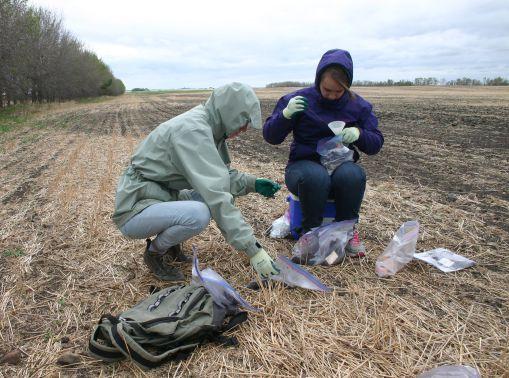
Microbial sampling for field boundary habitat project.
FOREWARNED IS FOREARMED
Early
detection of soybean cyst nematode in Manitoba gives growers a better chance to fight back.
by Carolyn King
Careful surveying has determined that soybean cyst nematode has now arrived in Manitoba and is present at very low levels in some isolated fields. This soildwelling, microscopic roundworm has been spreading across the soybean-growing areas of North America. Manitoba’s really early detection gives growers the opportunity to take steps to slow the pest’s spread in the province.
“Soybean cyst nematode is ranked as the number one disease agent for soybean in North America,” says Mario Tenuta from the University of Manitoba, who has been leading the surveys.
“It is a serious yield robber of soybean grain in areas of North America that have a history of soybean production, which is most of the soybean-growing areas in Canada and the U.S. Yields losses
can vary from zero to five per cent up to as high as 30 or 40 per cent in severe cases under dry weather conditions.”
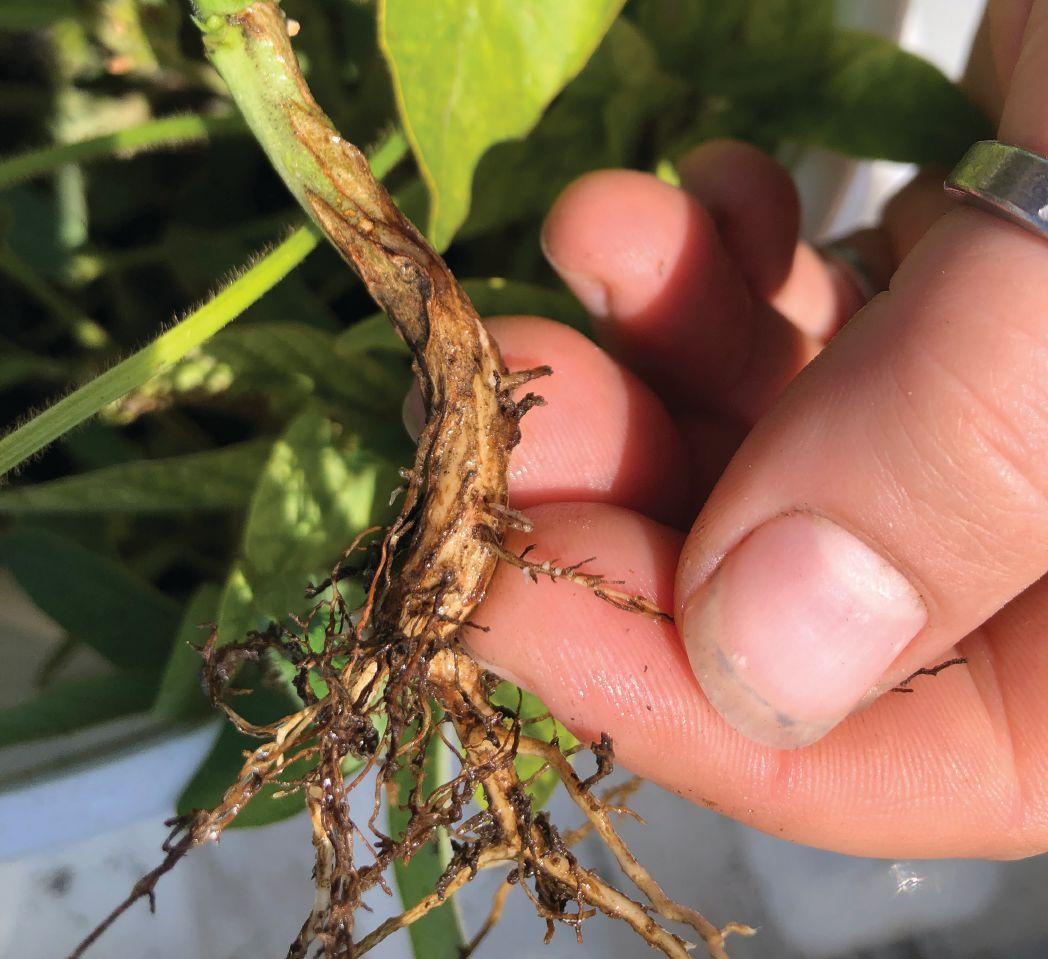
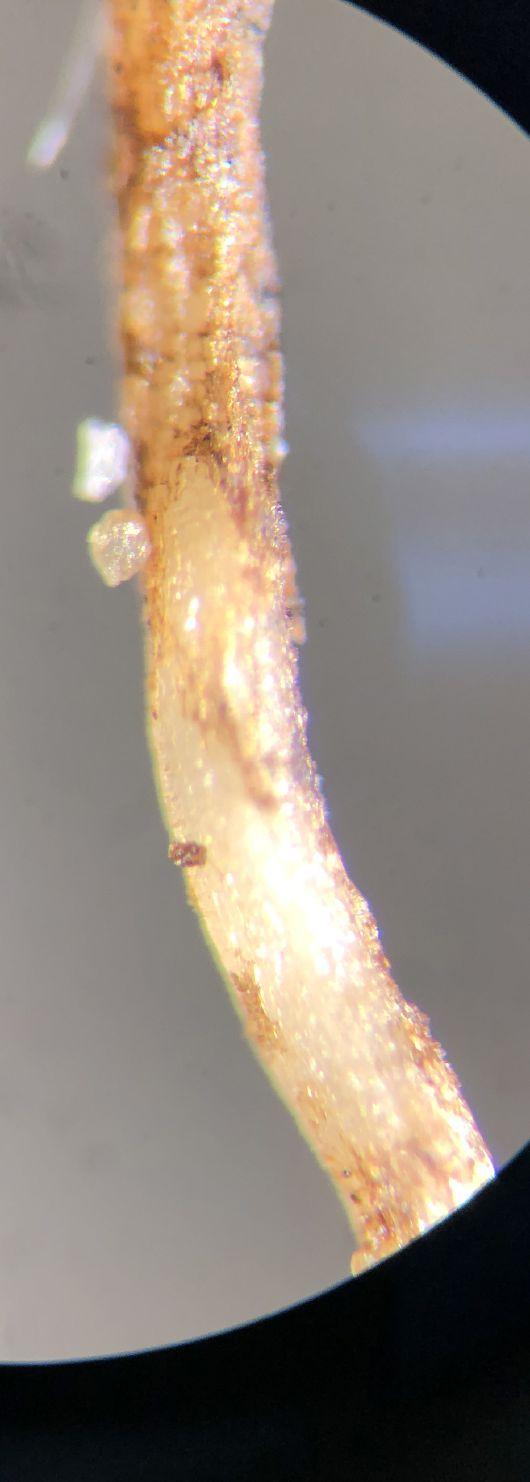
Soybean cyst nematodes (SCN, Heterodera glycines) attack the roots of soybean plants, stealing nutrients, impeding water uptake and interfering with nodulation. The nematodes also reproduce on the roots. Each cyst starts as an adult female nematode swollen with eggs while attached to the root to feed. A cyst is about the size of a pinhead, and it changes colour from white to yellow and then to brown or black as the female completes her life cycle and dies. The hardened cyst, which eventually falls
ABOVE: The little pinhead-sized, white cysts on this soybean root are soybean cyst nematodes.
PHOTOS COURTESY OF NAZANIN GHAVAMI SHIREHJIN, UNIVERSITY OF MANITOBA.
Maximize your savings on every acre. Save up to 16%
No matter what you grow, BayerValue™ can help you save more on every acre. Up to 16% more. Now, with a much wider range of eligible products, there are more ways to qualify and save than ever before. Our innovative seed-to-harvest solutions will help you get the most out of your growing season while earning rewards every step of the way.
Ask your local retail for complete details or visit GrowerPrograms.ca to sign up today.
off the root, provides protection so the eggs can survive up to several years in the soil, until conditions are right for hatching.
“This disease doesn’t outright kill the soybeans; the plants survive but produce lower yields,” Tenuta notes. “So the problem can go for a long time without being really recognized by farmers. This is probably its most detrimental characteristic, in that it can be ignored up to a point and then it delivers a serious hit on yield.”
When SCN first arrives in a field and its population is still very low, it doesn’t produce any aboveground symptoms in the crop. As its population grows, it starts causing symptoms like stunted plants, yellowing leaves and poorer yields, but these impacts are easy to confuse with symptoms of other crop problems. On top of that, it also takes a while for the SCN population in a field to become high enough to be detected in routine soil tests in commercial labs.
Another challenging aspect is that the nematode spreads from field to field by the movement of infested soil. That includes soil on field equipment, vehicles, boots and clothing, and soil carried by wind, water or even birds. So it is difficult to completely stop the nematode’s spread to new fields. And once SCN arrives in a field, it is very tough to eradicate.
The nematode’s damage to soybean roots can also facilitate infection by other pathogens. In particular, the spread of SCN is closely associated with the spread of soybean sudden death syndrome, a yield-limiting fungal disease. Tenuta says, “There is no doubt in my mind that as soybean cyst nematode levels increase in more fields in Manitoba, soybean sudden death will increase as well.”
A needle in a haystack
Tenuta knew it would only be a matter of time before the pest arrived in Manitoba – SCN has been in Minnesota since 1978 and in North Dakota since 2003, and it has been spreading in both states. So he and his research group at the University undertook a series of surveys to watch for the nematode’s arrival in the province.
“We have done three soybean cyst nematode surveys, starting in 2012, with the support of the Manitoba Pulse and Soybean Growers, in collaboration with Manitoba Agriculture and us at the University,” Tenuta explains. The surveys focused on the region of Manitoba with the greatest potential for early arrival of SCN. This region includes areas with a long history of soybean production and that are also close to the U.S. border and/or along the Red River. The survey team contacted soybean growers in this region and obtained permission to sample their fields. He says, “All the farmers said, ‘Yes, no problem.’”
Over the course of the three surveys, the team sampled 106 fields in 18 rural municipalities. Using a soil probe, they sampled each field’s high-risk spots – such as field entrances, depressions, and areas near watercourses – taking dozens of cores per field.
They analyzed those samples in the lab for the presence of the nematode. In this analysis, they used a U.S. Department of Agriculture cyst extractor, which floats, sifts and traps the little cysts onto a screen. This equipment allowed Tenuta’s group to analyze large, 5-pound soil samples. “Since we were looking for the first occurrence of the nematode in Manitoba, we were expecting very low levels of cysts in the soil so we wanted to
A stereomicroscope image of a soybean cyst nematode on a soybean root.
Choose from 6 patented Pod Shatter Reduction InVigor hybrids. The perfect blend of strength and durability. The patented Pod Shatter Reduction technology from InVigor® hybrid canola helps protect your yield potential and give you added flexibility at harvest, even when dealing with adverse weather conditions.
Stronger pod seams protect you from potential yield loss until you’re ready to harvest – regardless of whether you prefer to straight cut or delay swath.
To learn more visit agsolutions.ca/InVigor or call AgSolutions® Customer Care at 1-877-371-BASF (2273).
The first two surveys, which were carried out in 2012-13 and 2014-15, found no SCN cysts.
“Then in the latest survey [which started in fall 2017], we found four fields with low levels of SCN cysts. The identification was confirmed with DNA tests,” he notes.
One field was found in each of four rural municipalities: Emerson-Frank-
lin, Montcalm, Rhineland, and Norfolk Treherne. Since these locations are fairly far apart, it may be that SCN is present in some other fields in the region that were not surveyed.
Tenuta’s group was very careful in conducting the soil sampling and analysis and in re-sampling the soil in the SCN-positive fields to confirm the nematode’s presence.
“As well, this year, my PhD student Naza-
Stereomicroscope view of an SCN cyst extracted from a soil sample; the cysts turn brown over time.
nin Ghavami Shirehjin visited the field that had the highest level of the cysts in the soil samples; the producer was growing soybean in that field this year so Nazanin could check the roots for cysts. She found some cysts and visually confirmed that they were soybean cyst nematode. The nematode was at very low levels on the roots, as we expected.” The soybean crop in this field didn’t have any visible symptoms of SCN infection.
Cyst numbers in all four Manitoba fields were extremely low. For instance, the surveyed field with the most SCN cysts had just 20 cysts per five pounds of soil. Tenuta explains that in some Ontario soybean fields where the pest has been present for several decades, there can be 3,000 to 4,000 cysts per five pounds of soil.
Developing a better, faster test
Long, tedious lab procedures are currently used for SCN analysis – first to find cysts in soil samples, then to check that those cysts are Heterodera glycines and another nematode species, and then to count the SCN cysts. These steps include things like hand sorting of the debris on the screens, careful visual examinations of the tiny cysts, and then DNA techniques to confirm the species identification.
made easy
Running your payroll is easier than ever. Set up staff. Print cheques. Submit remittance. Customize deductions. And a lot more.
Use AgExpert Accounting Premium for your payroll. Just $399 a year.
So, as part of his current SCN project, Tenuta and his group are developing some improved molecular methods to identify and quantify SCN levels in soil samples. He says, “The idea is to make the testing a lot faster and more economical so diagnostic labs can provide a quicker turnaround time with lower costs to the farmers. We also want to see if a molecular method can provide a much more robust test, because there can be user variability with the traditional methods.”
Ghavami Shirehjin is working on these methods with colleagues in Ontario, including Tenuta’s brother Albert, who is the field crop pathologist with the Ontario Ministry of Agriculture, Food and Rural Affairs.
Slow the spread of the pest
“I believe we have probably the earliest detection of soybean cyst nematode
compared to other soybean-growing areas because we have been really diligent and because we had the support of the Manitoba Pulse and Soybean Growers to do surveys early on,” Tenuta says.
“I’m hopeful that this early detection gives Manitoba an advantage to get the word out to growers so they can take steps to really slow the nematode’s spread. In other soybean growing regions, the nematode has moved fairly quickly as soybean years in a field increase.”
“I’m hopeful that this early detection gives Manitoba an advantage to get the word out to growers so they can take steps to really slow the nematode’s spread.”
which varieties are resistant to soybean cyst nematode.”
Tenuta recommends that Manitoba soybean growers be proactive, taking action while SCN levels are still low.
“The best advice is to be aware of the nematode, to know about it and particularly know how it spreads. So try to avoid bringing soil into a field from other fields. Knock off the soil, then pressure-wash field implements. Minimize traffic onto the field with your vehicle or boots. Wash your vehicle, and wash your boots or wear plastic booties.”
Crop rotation is also important. He says, “Make sure you don’t have tight soybean rotations. Use a rotation with soybean once in four years or once in three years [with non-host crops in the rest of the rotation].” The nematode requires a host plant – such as soybean, dry edible bean, field pea and other legumes – for reproduction, so a longer rotation gives more time for the eggs in the cysts to die.
“And I encourage growers to choose resistant soybean varieties for their rotations. The Manitoba Seed Guide will tell you
Tenuta also recommends scouting soybean fields for SCN. Look for areas with dwarfed plants, delayed canopy closure, and yellowing patches. And in July and August, check the roots of some soybean plants in the high-risk areas of your field, like the field entrance, and any areas showing possible aboveground SCN symptoms. To examine the roots, use a shovel to gently lift up the plant with its roots and put the roots in a bucket of water, to avoid knocking the cysts off the roots. Use a magnifying lens to examine the roots. Look for little pinhead-sized, lemon-shaped, translucent to white cysts.
If you find what you suspect are SCN cysts, contact Manitoba Agriculture or the Manitoba Pulse and Soybean Growers.
Funders of Tenuta’s SCN research include the Manitoba Pulse and Soybean Growers, Western Grains Research Foundation, and Manitoba Agriculture through federal-provincial agreements for agricultural research including Growing Forward 2 and the Canadian Agricultural Partnership. Syngenta and NorthStar Genetics provided seed for some of the project’s growth chamber and greenhouse work.
Tao Wang,
Dean Bricker
Scott Day, MB AdrianMoens
Blair Matchizen, MB
Courtney Tuck, SK
Sonya Toews, MB
Brent Mills, ON
IDEAL CONDITIONS FOR SOYBEANS
Optimizing the early-season environment and soil temperature for growing soybeans.
by Donna Fleury
The soybean industry in Manitoba has grown rapidly over the last few years, partly due to the introduction of better-adapted varieties. However, even with improved genetics, soybean is still inherently a cold-sensitive crop and can be affected by cold temperatures in a number of ways. Finding strategies to address cold early-season soil temperature conditions may be a tool to improve soybean production in short season areas.
“With the expansion of soybean production, we were interested in determining whether there would be a way to create an early season environment that was better for establishment of soybean crops by adjusting residue management practices,” explains Ramona Mohr, research scientist with Agriculture and Agri-Food Canada
at the Brandon Research and Development Centre in Manitoba. “We know that seeding soybeans into cold soils can be problematic. The literature shows that if soybean seeds absorb cold water (less than 10 C) during the first 24 hours after planting, it can affect cell division and as a result impact germination and emergence. In addition, growing soybeans in short season areas adds the risk of potential spring or fall frosts that can impact the crop.”
Researchers initiated field studies with co-operators at four sites in Manitoba including Brandon, Carberry, Portage and Roblin in 2014. The goal of the project was to determine if different preceding residue management practices would have an impact on
ABOVE: Soybean trials at the Brandon field location.
soil temperature and moisture at planting, crop emergence, and soybean performance through the growing season to final soybean yield and quality. The study included canola, wheat and oat as preceding crops to soybean, as well as a control treatment of tillage. The canola plots included standing stubble with the chopped residue returned to the field. The wheat and oat plots had two different treatments, either removal of the straw and only standing stubble left, or chopping the straw and returning it to the plots along with the standing stubble.
“Our study results showed that the preceding residue management often did impact soil temperature and moisture at the time of planting,” Mohr says. “The tillage control plots and the cereal plots with straw removed and only stubble left standing tended to result in a warmer and/or drier seedbed at planting in some sites in some years. Where there were differences, tillage increased soil temperature by one to five degrees [Celsius], while removing the straw from the cereal stubble plots increased soil temperature by one to three degrees, compared to no-till treatments where straw had been chopped and returned.”
However, when researchers looked at the impact of preceding residue on soybean emergence and final yield and quality, there were few differences in the trials. Based on visual assessments of the crop, tillage and/or straw removal occasionally reduced the days to emergence by one or two days. “As well, when we compared the soybean yield at the end of the growing season, we rarely found any differences in the effects of residue management. In two of 12 site years there were some differences, however it wasn’t clear that the differences were associated with soil temperature or moisture. It may be that the temperature differences early on weren’t enough to affect the crop, or the soybean crop was able to compensate for any small differences. Overall, residue management had limited effects on yield and various quality factors measured in the study including seed weight, test weight, per cent protein and per cent oil of soybean.”
One important factor to note is that for this study researchers
followed the recommended management practices for growing soybean in Manitoba, including seeding soybean when average soil temperature is at least 10 C, with 18 C to 22 C being ideal. In the study, soil temperatures at planting were greater than or equal to 15 C in all treatments, and soybeans were planted during or near the recommended planting window for Manitoba. Therefore, Mohr cautions that although they did not find any significant effects in their study based on current provincial recommendations, under more marginal growing conditions there may have been an effect of preceding residue management practices.
“We have initiated a follow-up study that is underway to try to determine if there may be more of an effect on soybeans under more marginal conditions compared to during the recommended timing,” she adds. “In this study, we are comparing different residue management but only with wheat and using two different seeding dates, early and late. The soybean seeding protocols include an early seeding date of May 10 and a second seeding date two weeks later. There are also a few additional residue management treatments including tillage, stubble burning, short and tall stubble with either the straw chopped and returned to the stubble or the straw removed completely. We expect to get more detailed information in terms of the potential effect of the different residue management practices under more marginal conditions by the end of the study.”
For successfully growing soybeans in short-season areas, following recommended practices and using management strategies to reduce the risks of cold temperature is important. “Growers will need to take an integrated approach for managing risk of cold temperature damage including selecting varieties adapted to local growing areas, seeding at the right time and under the right soil conditions,” Mohr says. “These strategies may be even more important under more marginal conditions. Research to identify management strategies to improve the early season environment and soil temperature to help get the soybean crop established and set up for the growing season remains a priority.”
Comparison of different preceding residue management practices and their impact on soybean production.