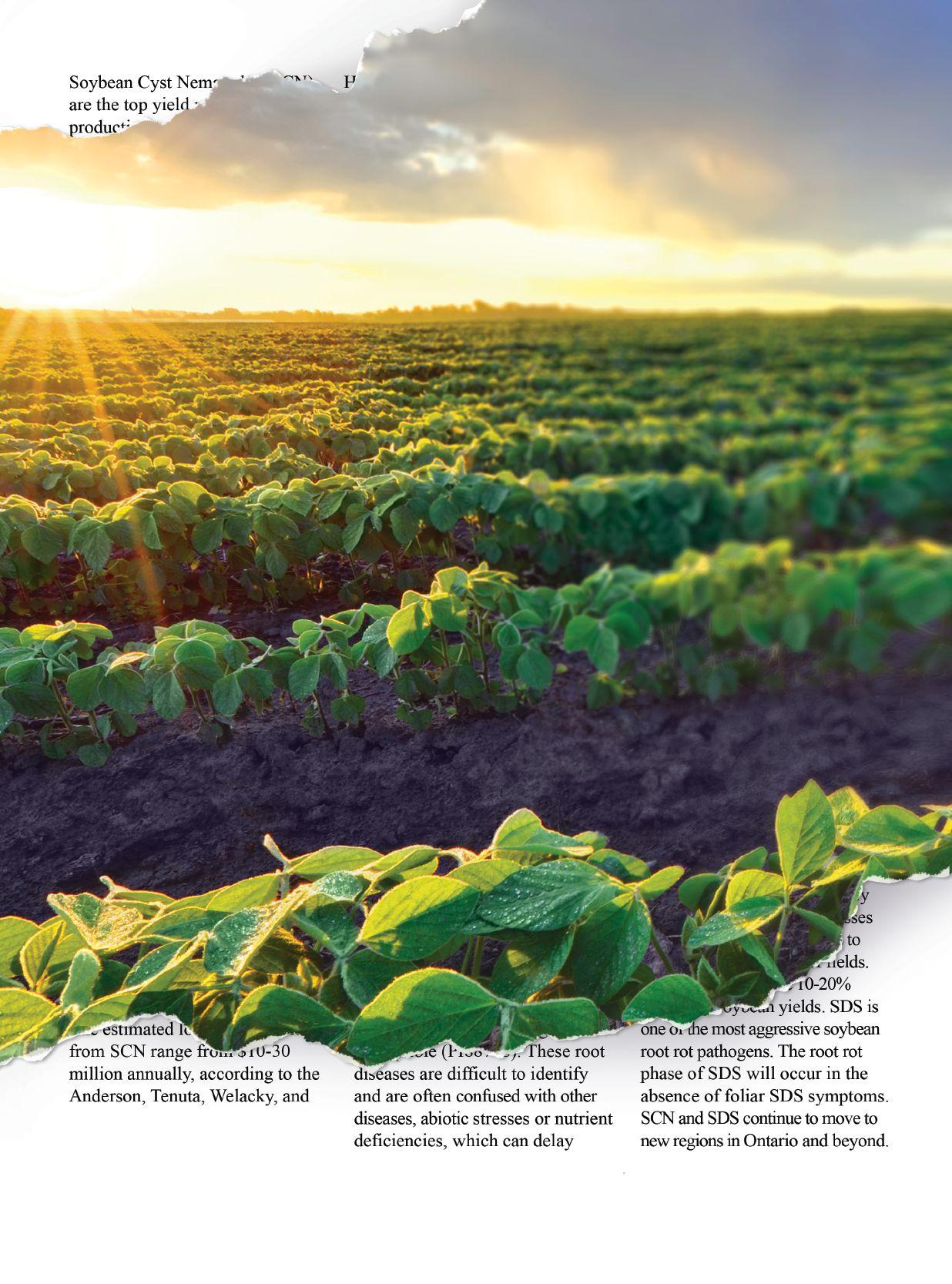
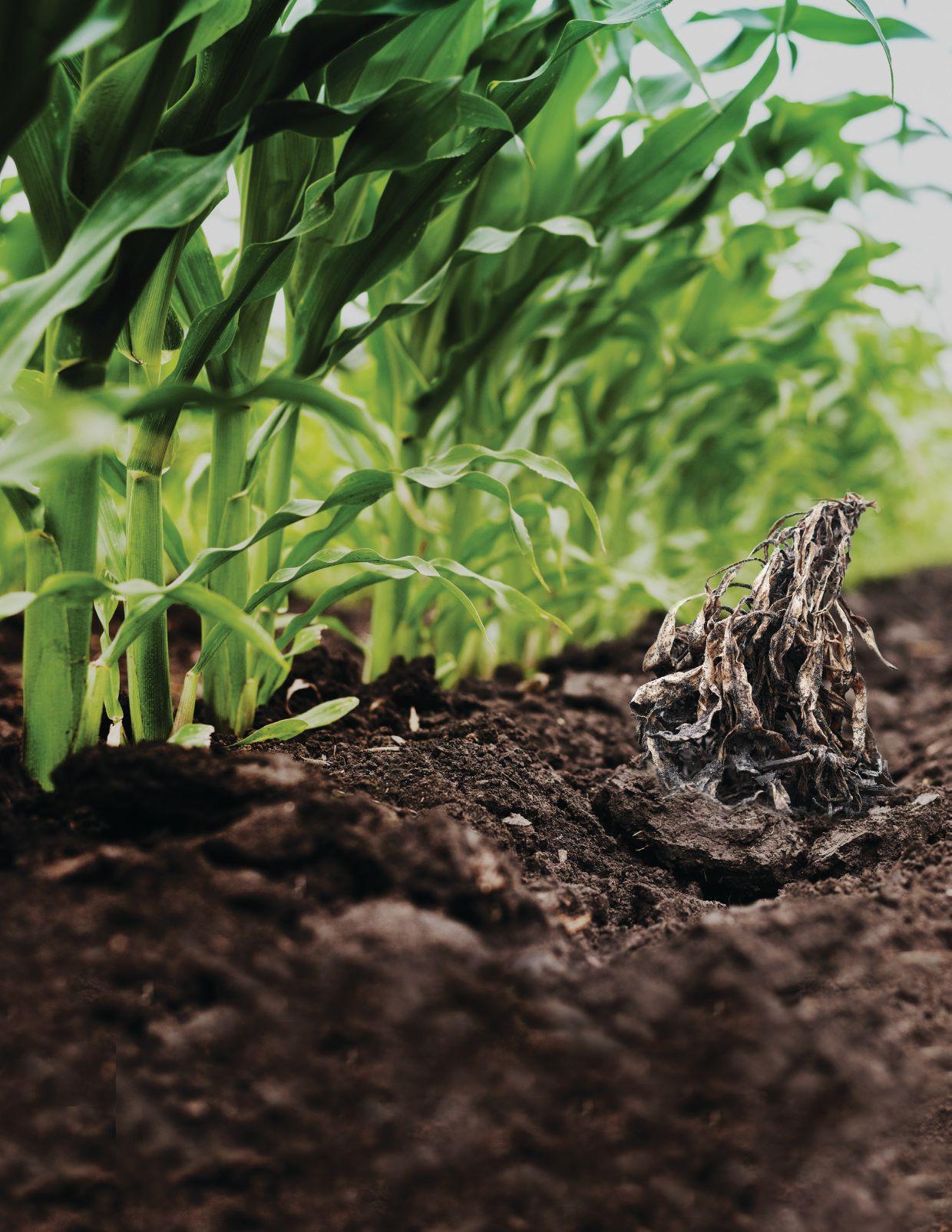
Research helping to uncover these hidden yield robbers
PG. 10
FUNDAMENTALS MATTER
Top ten agronomy tips for corn growers
PG. 44
At Richardson Pioneer, we know choosing the right product is only part of your success. We’re here to help you increase your yields profitably with expert agronomic advice and fully integrated service. From crop planning to grain marketing, we’re truly invested in helping you grow your business.
TOP CROP
MANAGER
Donna Fleury
Carolyn King
ON THE WEB
Stay up-to-date on the latest advances in herbicide resistance research with the Herbicide Resistance Summit, to be held Feb. 27 and 28, 2018 in Saskatoon. Participant will walk away with new insights, technology and tools to protect their crops from the growing threat of herbicide-resistant weeds.
Readers will find numerous references to pesticide and fertility applications, methods,
encourage
labels for complete instructions.
PHOTO COURTESY OF TAMRA JACKSON-ZIEMS.
JANNEN BELBECK | ASSOCIATE EDITOR
POWER OF PRECISION
The more tools we can use, the better yields and the healthier our crops – the basis of precision agriculture. Precision ag has grown incredibly over the last few years, and many growers, technicians and equipment specialists are eager to get on board.
From the early days of GPS and satellite imagery, to the more recent push of using drones and a variety of imagery (see our story on page 32), the tools of precision agriculture have adapted and changed farming practices for the better. Farmers today have more information on the health and status of their crops than ever before.
Precision ag ultimately helps growers respond to field variability, taking into account the fact that crops in your acreage cannot be treated the same. There may be small typography changes in the land, where water runs off or collects that a grower wasn’t necessarily aware of before, or growers may be unwittingly depositing more or less fungicide to certain rows of crops due to issues with a sprayer, leading to crop injury.
Technology like Climate FieldView (which went live in January and has recently expanded into Manitoba, Saskatchewan and Alberta), and the partnership between Farmers Edge and Planet, which marries global monitoring data and different platform capabilities, all aim to help producers get the most out of their fields using data.
Using analytics-based agronomy makes sense, but it’s also a case of finding ways to actually use the immense amounts of data. Some argue the more data the better – it’s just finding the best solution to access and apply all of that info, says Denise Hockaday, Climate FieldView business lead for Canada.
“[What we know about data collection] thus far is that probably only about 40 per cent of farmers are actually taking the data that comes off the monitors in their equipment, and a much smaller percentage of that (less than 10 per cent) are actually using that data to make decisions on their farm,” says Hockaday. “The information that comes off of the equipment is only one source of data. A successful crop is more than just what was planted. It’s the conditions, so you want to be able to pull the information in, but also [take into account the] environmental conditions.”
After all, changing weather patterns mean that the field you knew five years ago may drastically change. Compounded with the threat of herbicide resistance, the many elements producers must take into account will continue to change. And you can count on Top Crop Manager to guide you through the latest research so you can be on top of your game.
In fact, we’re only a couple of months away from our third summit, which aims to give the agriculutral industry a more unified understanding of herbicide resistance issues across Canada and around the world. Take a look at our summit preview (on page 26) to get a firstlook at our agenda, and the line-up of incredible speakers, including their topics of discussion.
Lastly, I hope you and your family have a joyous holiday season. See you in 2018!
Crop Manager West – 9 issues Feb, Mar, Mid-Mar, Apr, June, Sept, Oct, Nov and Dec – 1 Year - $45.95 Cdn. plus tax Top Crop Manager East – 7 issues Feb, Mar, Apr, Sept, Oct, Nov and Dec – 1 Year - $45.95 Cdn. plus tax Potatoes in Canada – 1 issue
Occasionally, Top Crop Manager will mail information on behalf of industry related groups whose products and services we
EFFECT OF HAIL DAMAGE ON SOYBEAN MATURITY, YIELD AND QUALITY
Crop insurance adjustment procedures are being updated with local data to better reflect unique soybean growing conditions in Manitoba.
by Donna Fleury
Severe weather and hail events in field crops seem to be more prevalent over the past few years. In 2015 and 2016, The Manitoba Agricultural Services Corporation (MASC) estimated crop-hail loss payments to Manitoba producers from all sources at $54.1 million and $77.7 million, respectively. Those payments were more than double in 2015 and triple in 2016, the average annual crop-hail loss payments over the previous 10-year period, which MASC estimates at $24 million from all sources on average. With all of these claims, growers and insurance providers would like to see crop loss procedures based on local conditions and data. In an effort to help close the gaps and update crop insurance hail damage adjusting procedures to reflect the unique soybean growing conditions in Manitoba, Kristen MacMillan, soybean and pulse research agronomist at the University of Manitoba has initiated a four-year project.
“This research project was really sparked by questions from farmers back in 2013,” MacMillan explains. “After a few severe weather events, farmers started to recognize that crop loss procedures were not necessarily reflecting what they would predict or were seeing as the crop progressed throughout the year. Early season events seemed to raise the most questions, and they started asking me to come to the field and take a look at the situation with them.”
MacMillan began by looking into the scientific research that was backing crop insurance procedures and realized that all of the data for soybeans was based on research done in the U.S. “This made sense because although soybeans have been grown in Manitoba for the past 15 years, it is only the last five years that the acreage has really expanded and more hail events have farmers noticing these issues. We realized we needed more local data to help address the inconsistencies, disagreements and crop loss procedures in Manitoba, which led to the launch of this project.”
The research project was initiated in 2015 at two Manitoba locations, Portage la Prairie and Minto, to reflect both eastern and western growing areas. The project was funded by the Manitoba Pulse & Soybean Growers Association (MPSG), Growing Forward 2 and the Western Grains Research Foundation (WGRF). MacMillan explains this is a large experiment with several components. The objective of the project is to determine
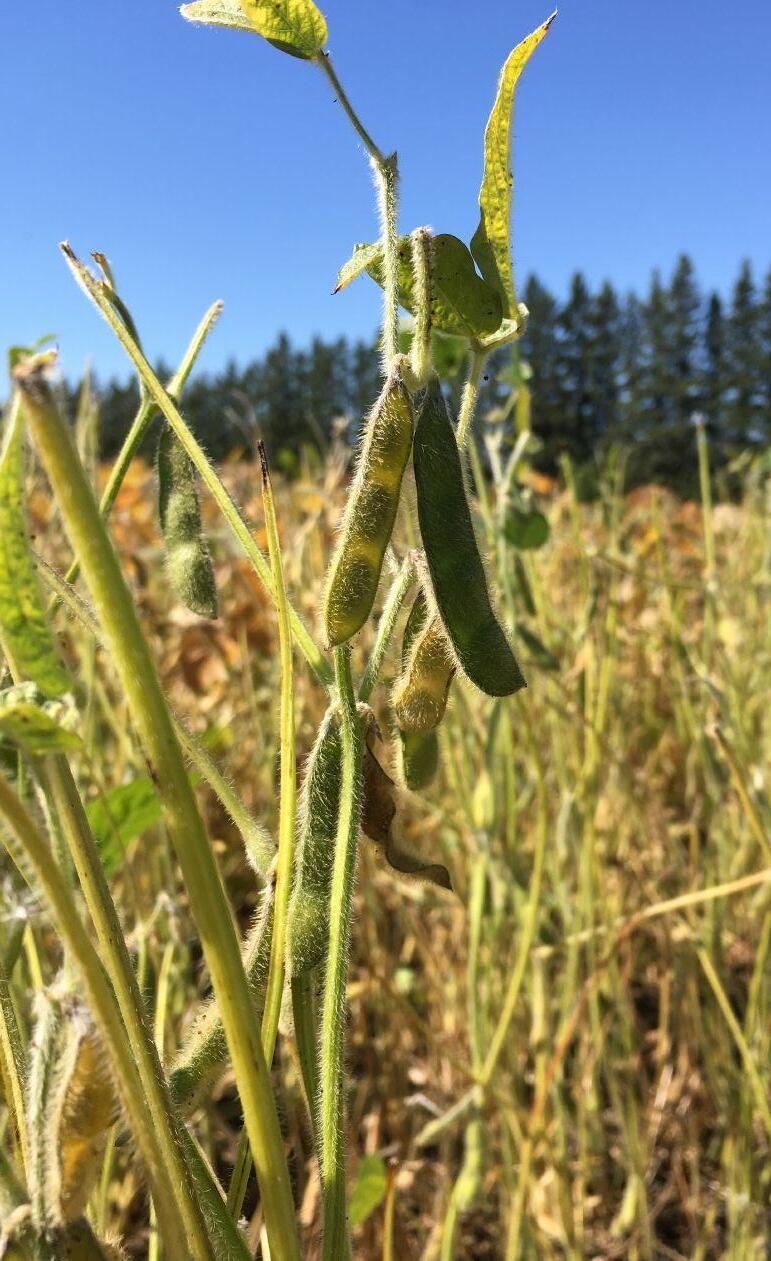
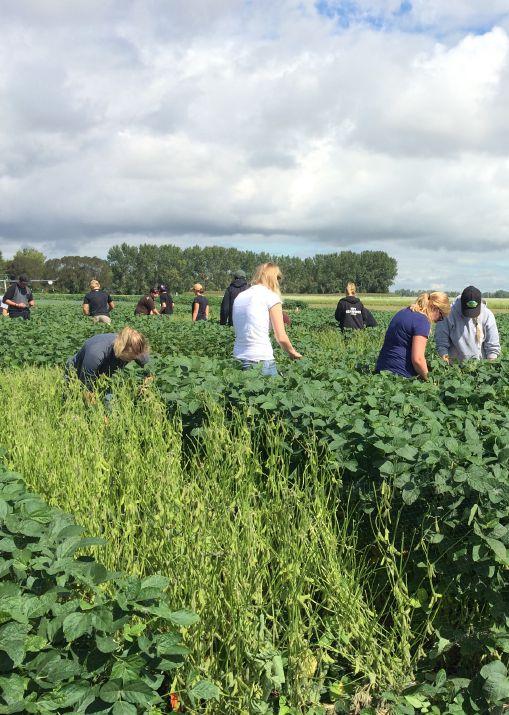
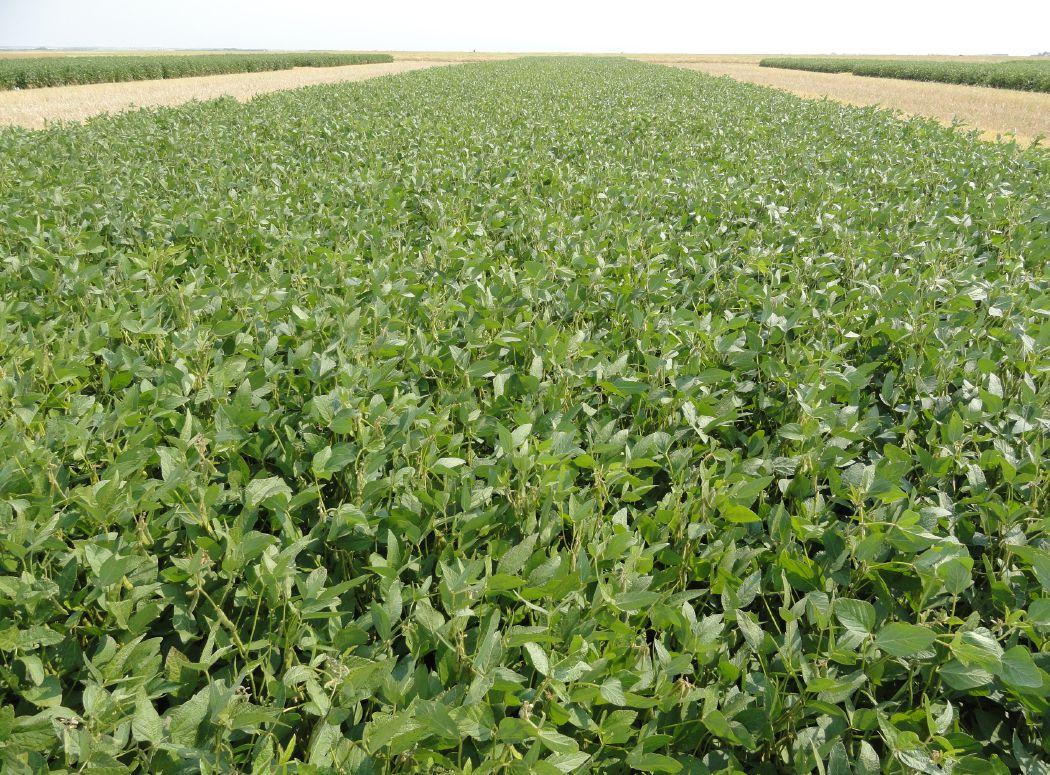
ABOVE: Field crew collecting data in soybean trials in Manitoba.
the effect of simulated hail damage at various growth stages on soybean maturity, seed yield and quality. The ability of soybean to recover from hail damage (defoliation, node removal, stand reduction etc.) depends on several factors including timing and severity of damage, and environment. One unique factor to Manitoba (and Western Canada) is the short growing season that reduces the time to maturity that soybeans have when affected by hail events.
PHOTO COURTESY OF KRISTEN MACMILLAN, U OF M.
NEW Prosaro XTR fungicide. The best just got even better.
Prosaro ® XTR is here and it’s better than ever. How much better? How about a whopping 14% over untreated * . So regardless of disease pressure, in wet or dry weather, give your wheat and barley yields a big-time boost come harvest time. Protect your cereals and your bottom line with New Prosaro XTR.
“In the study we are measuring two types of hail damage: node removal (or stem breakage) and defoliation at multiple levels of injury,” MacMillan says. “The effect of hail event timing on yield at early, mid and late season stages is also being measured. Rather than trying to use a simulation model where a random pattern and level of damage would be imposed on the treatments, we are actually going in and doing hand removal to simulate damage. This provides for more precise measurements and enables us to quantify the impacts on crop growth and crop yield.”
Research data was collected from field trials in 2015 and 2017. Ironically, both sites were completely hailed out in 2016; Minto in July and Portage la Prairie in August.
“The results so far are very preliminary, but the results from 2015 have identified some gaps in information specific to Manitoba,” MacMillan says. “There are certainly discrepancies in yield loss percentages between the existing Manitoba crop loss procedures and what we are seeing in the trials. In some cases the difference is greater than 10 per cent, so that is an area that needs to be updated. There are also more gaps in defoliation damage, particularly when there are high levels of defoliation early in the season. Node loss damages were updated this year, still based on U.S. data, but the gap is much smaller. So there certainly are some areas that still need fine tuning. Another area that will be interesting for Western Canada is potential delays in maturity.”
One of the largest data gaps seems to be when there is complete node loss in the vegetative stage. MacMillan notes this was particularly prevalent in 2017 where there were quite a few hail events in June in Manitoba. In her trials, when all of the nodes were removed during the V3 stage, there were fairly significant yield losses, which are higher than currently predicted. Along with yield data, other notes on plant productivity including pods per plant and seeds per plant are being collected to help determine where the yield loss is coming from. For example, there are differences between hail damage during pod development and seed development. These observations are related more to plant physiology, where loss of photosynthetic tissue affects production and movement of carbohydrates for yield formation.
Growers have also been questioning the impact of hail damage on maturity. This is a factor that is more unique to Manitoba and Western Canada because of the shorter growing season compared to the U.S. mid-west. In some of the trials, MacMillan has detected a seven to 10-day delay in maturity with some levels of hail damage, and will be able to provide better results at the end of the project. She has also added some novel components to the research including looking at impacts of hail damage and maturity on seed quality, including oil, protein, seed size, green seed count and other factors.
“I am also working directly with hail adjusters and growers
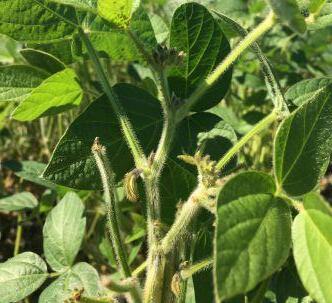
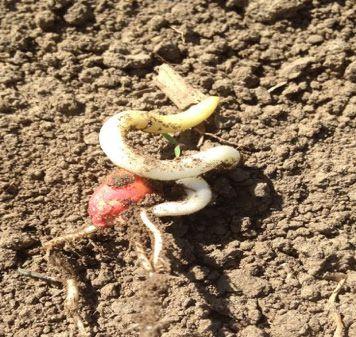
Comparison of staging and pod development of 66 per cent (left) vs 100 per cent (right) defoliation during R3 growth stage of soybean.
PHOTOS COURTESY OF KRISTEN MACMILLAN, U OF M.
through training opportunities and field events,” MacMillan says. “The adjusters are looking to this research to help answer questions for them. They see the frustrations of the growers and they are eager to increase their knowledge, as some have little experience with soybeans as compared to other crops such as wheat or canola. In August 2017, MASC held a training session for 120 adjusters in Manitoba where I provided training on identifying and understanding soybean growth and development in Manitoba. They can use this knowledge when they go to a field that has been damaged, in addition to the physical clues they use to identify the crop stage at the time of hail damage. For both adjusters and growers, the training, information and filling in the research gaps can help clarify situations and potentially reach a settlement earlier rather than deferring a decision. Deferred decisions can have agronomic, economic and environmental costs and implications for growers such as weed control but also soil erosion risks.”
The project includes one more field season planned in 2018 to collect data, and the final research results are expected to be available in 2019. Once the productivity of hail-damaged soybeans is determined, the current crop adjusting procedures can be updated. This will improve efficiency and accuracy, and in some cases reduce the need for further production and energy costs in fields that do not have the potential to recover.
“MASC will be able to use the information to develop more accurate and consistent crop loss measures specific to Manitoba and western Canadian conditions,” MacMillan says. “Growers can be more confident working with their hail insurance providers in terms of the procedures being used and the settlements they receive as more fair and accurate, knowing the decisions are based on Manitoba research.”
“The information will also be an asset for all of Western Canada, as other provinces such as Saskatchewan and Alberta, which are currently relying on the same U.S. data as Manitoba. The project has been conducted in co-operation with the MASC, and the information will be made available to the national crop insurance organization and other private insurance providers as well.”
THIS CHANGES EVERY THING AND IT’S PROVEN
Introducing the revolutionary Genuity ® Roundup Ready ® canola hybrid from Proven® Seed. It’s an exciting new way to meet your high yield and profit demands — while getting world-class blackleg protection and incredible ease of harvest. New PV 540 G . Proven performance, and more, on farms across Western Canada. Time for a change, available only at your CPS retail.
WELCOME TO THE EXCITING NEW WORLD OF PROVEN SEED
PESTS AND DISEASES
AN UPDATE ON THOSE NASTY NEMATODES
When the usual suspects don’t fit the bill, check for nematodes.
by Carolyn King
Plant-parasitic nematodes are hidden yield robbers. But research and monitoring efforts are helping to uncover their secrets. Plant pathologist Albert Tenuta conducted a survey of soil-dwelling nematode species in Ontario crops and his ongoing collaborative research looks to improve management strategies for these microscopic, worm-like pests.
Tenuta explains that many different nematode pest species are in Ontario crop fields, and usually several species coexist within a field. Each species has its own particular habitat and host plant preferences. They feed on plant roots, stealing nutrients from the plant. As well, the damage from feeding can provide entry points for other root pathogens.
“The first challenge with managing nematodes is general awareness. In many cases, growers, agricultural consultants and others don’t think of nematodes first or may not even think of them at all as a potential cause of the problems they see in a field,” notes Tenuta, who is with the Ontario Ministry of Agriculture, Food and Rural Affairs (OMAFRA).
“If you’re a soybean grower in the southern part of the province, particularly the southwest, soybean cyst nematode should be on your radar because it is a serious issue that has been around for a while. But every year I find new infestations and growers aren’t even aware of the problem,” he says.
“The other challenge is that nematode impacts are easy to misdiagnose. Many of the symptoms mimic other common problems, such as drought, insect injury, herbicide injury, compaction, pH issues, or fertility issues.”
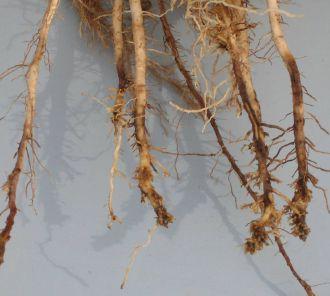
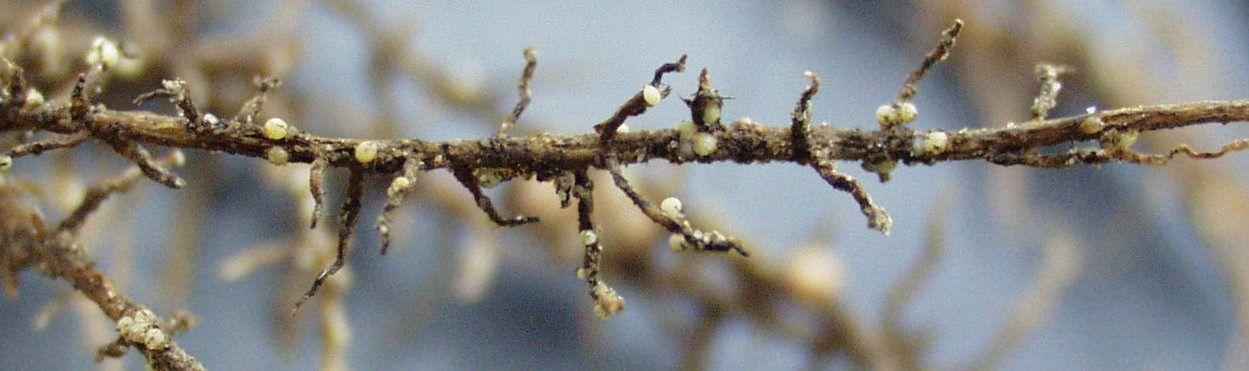
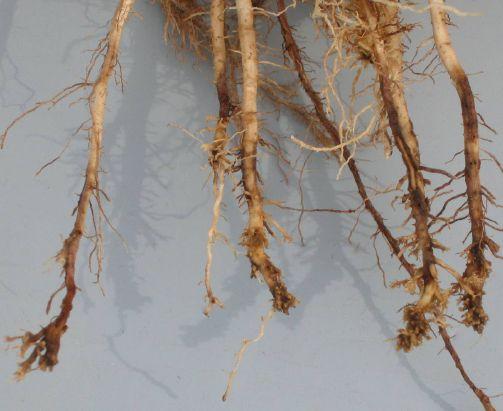
The exact symptoms depend on the nematode species and the crop type. Typical aboveground symptoms include patches of yellowed, wilted or stunted plants. Root symptoms may include things like lesions, swellings and discolouration. In the case of soybean cyst nematode, the roots have tiny, lemon-shaped cysts.
These cysts, which hold the nematode’s eggs, change from white, to yellow, to brown over time.
Tenuta has been involved in a range of nematode studies over the years. Most recently, he completed a three-year project (2014 to 2017) on soybean and corn nematodes. Grain Farmers of Ontario funded the project, including Tenuta’s participation in collaborative research with researchers from the United States, whose activities are funded under the U.S. North Central Soybean Research Program.
Survey highlight
One of the project’s objectives was to survey nematode species and their population levels across Ontario, mainly in corn and soybean fields. The patterns seen in this latest survey continue the trends revealed in previous nematode surveys that Tenuta has worked on.
The two most important nematodes in Ontario are still soybean cyst nematode and root-lesion nematode.
“In soybeans and dry beans, soybean cyst nematode is the number one nematode issue in terms of yield loss potential. And for soybeans, this nematode is the number one yield-limiting soybean disease across the province in most years,” Tenuta says.
He notes that soybean cyst nematode has a very narrow host range. “Just a few legume species are hosts. In Ontario, soybeans and dry beans are the most common hosts, and some cover crops may be susceptible.”
Soybean cyst nematode (Heterodera glycines) is not native to Ontario; it was first found in 1988 in the Chatham area and has since spread. Tenuta says, “[The latest survey shows] soybean cyst
ABOVE: Soybean cyst nematode is the number one yield-limiting soybean disease in Ontario in most years.
PHOTO COURTESY OF ALBERT TENUTA, OMAFRA.
nematode is continuing to spread across Ontario and to increase in numbers in certain parts of the province, such as the southwest. We are seeing more of it in eastern and central Ontario, and those populations are starting to build up. This species tends to first be found in sandy soils, but it can also occur in heavier soil textures.”
Root-lesion nematode (Pratylenchus species) is a widespread group that includes multiple species. “Root-lesion nematode is the one type that we have across the province in basically all soil types and regions and at levels that are high enough to be a major concern,” he notes. “Its broad host range not only encompasses corn, soybeans and wheat, but also horticultural crops, multiple weed species, ornamentals, etcetera.”
According to Tenuta, root-lesion nematode seems to be an increasing problem in the province. “In about 25 per cent of the fields we surveyed, the rootlesion nematode numbers were at or near what we consider to be the threshold [the level that would justify control measures], which is very similar to the levels seen in the U.S. Midwest.”
He suggests a couple of possible reasons for this nematode’s increase. “One reason could be a reduction that we have seen in the use of some of the in-furrow or seed treatment insecticides. Those products might have had helped suppress some nematode populations in the past,” he explains.
“In addition, we don’t have a handle on the genetic tolerance or resistance to root-lesion nematode in different varieties of corn, soybeans, wheat and other crops. With soybean cyst nematode, we have some very good resistance genes, some very good [varietal] data and ongoing breeding efforts. But we generally don’t have the same types of efforts for other nematodes. That is important to consider in the future for private and public breeding programs.”
As expected, the survey found various other nematode species. “You will often find other nematodes such as the spiral nematode [Helicotylenchus species] and pin nematode [Paratylenchus species]. Most of those are at background levels. It’s rare that we would see populations of these other nematodes creep up and cause an issue under Ontario conditions.”
For example, one nice finding from the survey was that some of the nematode types
causing serious issues in the U.S. Midwest, like the needle nematode (Longidorus species), are not causing problems in Ontario. He notes, “The needle nematode is the most devastating type of corn nematode in the U.S. Midwest.”
Rotation effects
Tenuta’s project also included a component about the impacts on nematode populations of various crop rotations, focusing on cover crop effects. This is an ongoing study.
“Crop rotation needs to be one of the tools in the IPM [integrated pest management] toolbox for producers. For soybean cyst nematode, crop rotation definitely helps, although it will not eliminate the nematode,” he notes. “But with root-lesion nematode’s wide host range, don’t expect to see a reduction in its population with just crop rotation.”
It’s too early in this study to draw conclusions about the effects of specific cover crops on nematode populations. But Tenuta offers some general advice,
HEALTHY ROOTS, HEALTHY PLANTS, HEALTHY RETURNS.
“Remember that cover crops have the potential to be hosts to beneficial organisms as well as pests. We are trying to get a better handle on that. For instance, we have indications that some cover crops may increase nematode populations.”
“Remember that cover crops have the potential to be hosts to beneficial organisms as well as pests. We are trying to get a better handle on that. For instance, we have indications that some cover crops may increase nematode populations.
“A great example is sunn hemp [a fast-growing legume]. It has been promoted as a way to reduce nematodes including soybean cyst nematode, and we did not see soybean cyst nematode reproduction on sunn hemp. But, among the cover crops in the study, sunn hemp had by far the most root-lesion nematodes associated with its roots. That suggests sunn hemp would be a very big concern when it comes to root-lesion nematode.”
Nematicide testing
Another component of the project is part of an ongoing collaboration to assess various nematicide seed treatments for corn and soybeans. Tenuta is evaluating how the seed treatments perform under Ontario growing conditions and management systems.
“Some of the products in the trials are available right now in Ontario; we’ve got Clariva [active ingredient Pasteuria nishizawae] and Votivo [Bacillus firmus]. Because we are collaborating with the U.S. universities involved in the North Central Soybean Research Program, we have also been looking at products registered in the U.S. but not yet registered in Canada, as well as products that are getting close to being registered in the U.S. or Canada. So you will probably start to see three or four new nematicide seed treatments start to come to market here in the next two to five years.”
Tenuta emphasizes, “These seed treatments are not a silver bullet. They will not eliminate nematodes from a field, and their effectiveness may be greatly impacted by field variability, nematode population levels, environment, and so on. However, they may help reduce the reproduction of nematodes in a given year. And they may slow increases in new populations like the soybean cyst nematode HG types [Heterodera glycines variants] that have overcome the resistance genes in our resistant soybean varieties. So these nematicides can be an important addition to our IPM toolbox.”
In these trials, the biggest impact from the nematicides occurred when the products were used in conjunction with a soybean cyst nematode-resistant variety. “The seed treatment was able to build onto that resistance package, increasing the
“If we talk about what we’re doing, people will understand how their food is grown and why we grow it the way we do.”
Pattie Ganske, Agvocate Former Owner, Ag Retail
effectiveness,” he explains.
“On the susceptible varieties, we could see a response to the nematicides, but in many cases, the fields where we were testing had moderate to high soybean cyst nematode populations. And with high nematode pressures and a susceptible variety, it is very difficult for a seed treatment to do a full job.”
He adds, “Whenever it comes to disease management, the ideal approach is to start with genetic resistance, and build from
there with other IPM tools.”
For information on using the currently registered nematicide products, see OMAFRA’s Field Crop Protection Guide.
Tenuta’s tips
A crucial step in dealing with nematodes is to get them on your checklist of possible problems. “When you scout your crop, go with an open mind and look at all the factors. Nematodes are one of those factors,” Tenuta says.
“We need to start thinking about those fields or areas within fields that have chronic problems. Once you have ruled out the typical causes of those problems such as fertility and soil issues, then those areas are prime locations for nematode testing.”
Sending soil and root samples to a nematode-testing lab is the most reliable way to diagnose a nematode problem. You need to test both the roots and the soil because some species live inside plant roots for most of their lives, while other species live in the soil and feed on the outer parts of the root. Contact your lab for proper sampling and handling procedures.
Tenuta notes that these lab tests will identify the nematode species in the samples, which can be important for crop rotation decisions since different nematode species prefer different hosts.
If you’re considering a nematicide seed treatment, you may want to begin with a strip trial to check its effectiveness under your field’s specific conditions. For managing soybean cyst nematode, growing resistant soybean varieties is a key practice, and crop rotations with non-hosts will provide additional help.
NATURE’S DESIGN
BE PREPARED
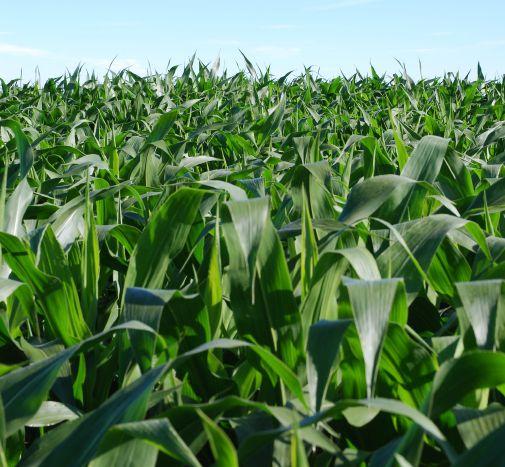
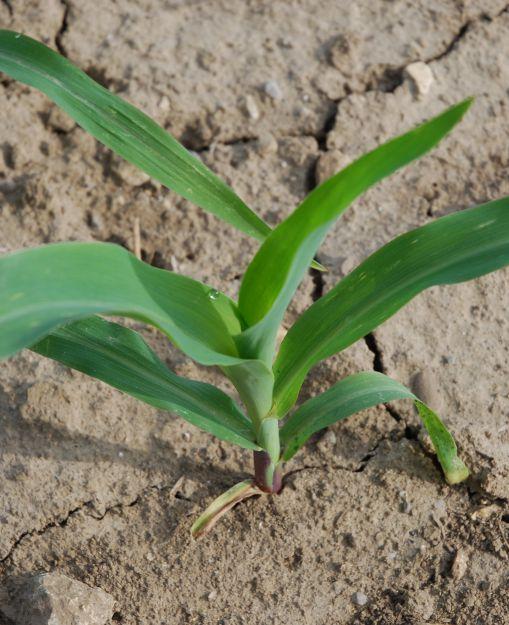
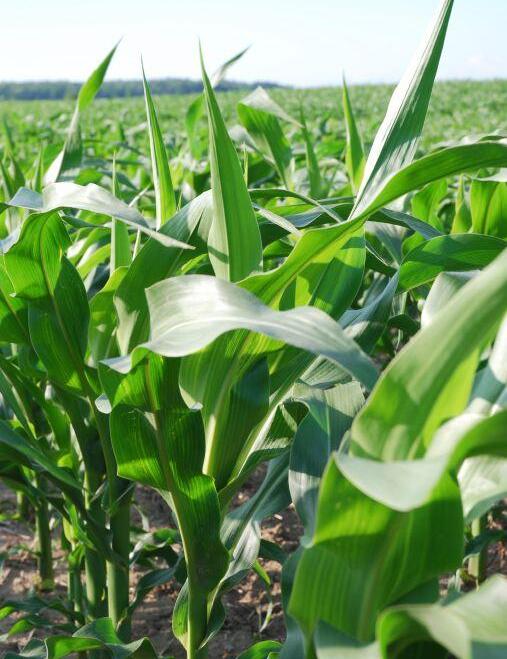
Ontario research is evaluating options for managing nematodes in corn (shown here) and soybeans.
PHOTO COURTESY OF TAMRA JACKSON-ZIEMS, U OF N EXTENSION.
IRON DEFICIENCY CHLOROSIS MANAGEMENT
2017 was a wake-up call for growers.
by Bruce Barker
IDC [iron deficiency chlorosis] was much more of a concern [this year] than in previous years,” says Dennis Lange, pulse specialist with Manitoba Agriculture. Symptoms persisted for 14 to 21 days rather than 10 to14 in typical years.
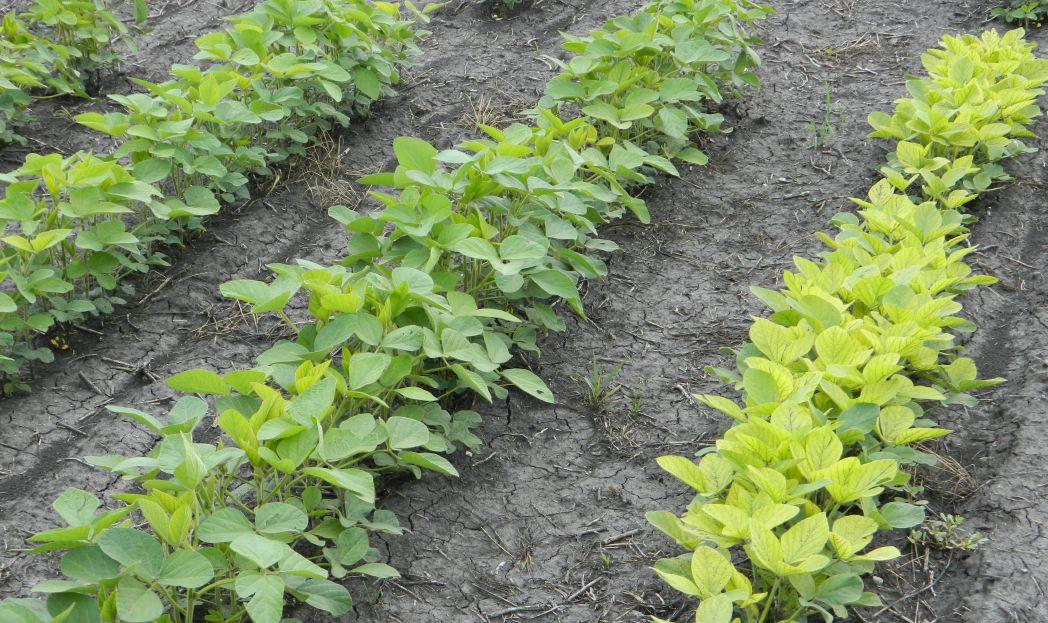
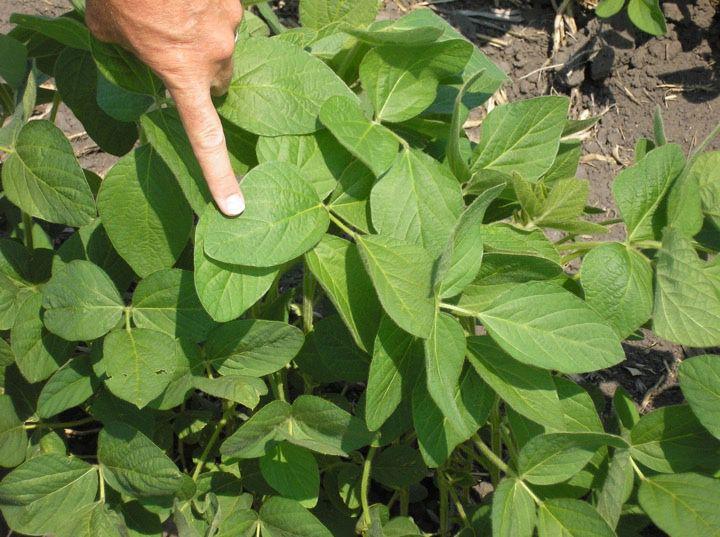
Symptoms of IDC typically show up in the second and third trifoliate stage, if the plant is unable to take up enough iron from the soil. A plant with IDC will have interveinal chlorosis, which is a yellow leaf with a network of dark green veins. More severe symptoms include entire leaves turning yellow. If severe, the outer edges of the leaf may turn brown and die. There may be an overall yellowing of the soybean field, especially during the early vegetative stages of soybean growth.
Although most Prairie soils have very high levels of iron, high levels of calcium carbonates (lime), soluble salts, and high pH can inhibit iron uptake. These factors can vary across the field and between fields.
“Part of the reason IDC was more common in 2017 relates to the wetter 2016 growing season when salts were brought close to soil surface with a higher water table and then with the drier weather in 2017, those salts were stranded near the soil surface. We never had the rain to push the salts back down,” Lange says.
Lange points out that soybeans often outgrow IDC when normal growing conditions allow the soybean plant to eventually
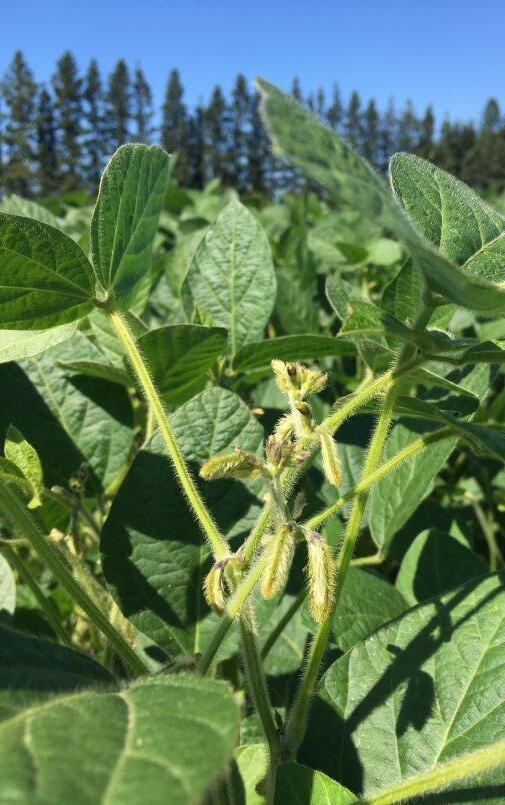
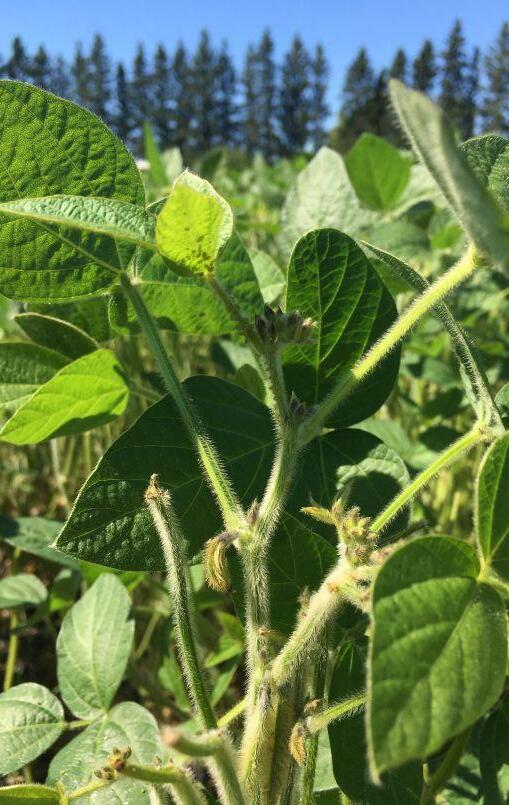
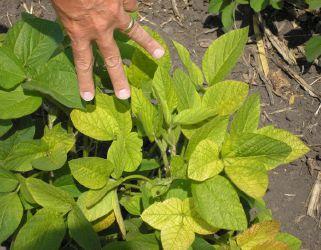
TOP: Symptoms of IDC typically show up in the second and third trifoliate stage, if the plant is unable to take up enough iron from the soil.
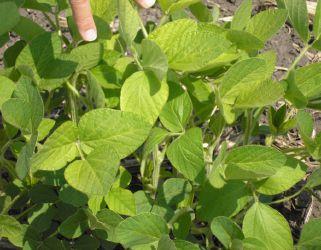
BOTTOM: In terms of the Iron Deficiency Chlorosis Rating Scores, this would be rated 1, since we see green leaves and little to no indication of IDC.
It’s hard to imagine that one small seed could hold so much promise, but it does. And when you consider the importance of having a successful season, a cereal seed treatment you can rely on makes a huge difference.
Raxil® seed treatments provide first-class disease control and a faster, stronger emergence that helps you realize the full potential of your crop.
access and take up iron from the soil. New plant growth will be a healthy, normal green colour. However, iron is very immobile in a soybean plant so iron in the new growth will not move to leaves with symptoms nor will they recover and turn green.
In Manitoba, yield is not usually impacted. However, if IDC persists into the fifth to sixth trifoliate stage, yield loss may occur. Research at North Dakota State University found that IDC can cause yield loss if it persists.
Research from 1998 through 2000 on susceptible varieties found a nine to 19 bushel per acre decrease in yield, depending on IDC severity at the five to six trifoliate stage. The experiment varied by year, and included variables like variety, seeding rate, foliar spray, and seed treatment with FeEDDHA.
Lange says that with the lack of rain at the end of July and
NATURE’S DESIGN
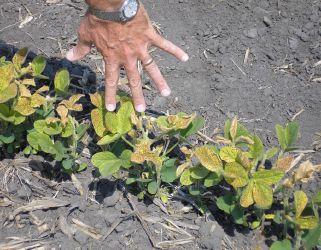
terms of the Iron Deficiency Chlorosis Rating Scores, these plants would be rated from left to right: 2, yellowish leaves; 3, green veins with yellow leaves; and 5, severe chlorosis and a stunted growing point.
early August, a critical period for yield, correlating IDC to yield loss will be difficult for Manitoba soybean growers. “It looks like we are going to have an average yield in 2017, but I think that has more to do with the weather than IDC.”
Managing IDC
When IDC is noticed in the field during the growing season, no in-crop rescue treatments are effective. Rather, Lange says growers should take note and plan field and variety selections for the next spring.
Carbonate and soluble salt levels can be obtained from soil tests. Manitoba Pulse & Soybean Growers (MPSG) has produced a Soybean fertility fact sheet that indicates different IDC risk levels based on the soil test. Current recommendations state that if fields are at moderate to high risk of IDC, soybean growers should select a soybean variety with a good or low IDC rating.
“This year, farmers found out which fields were susceptible to IDC. If their soil tests show an higher risk of IDC, they should be selecting varieties with better tolerance to IDC,” Lange says.
Manitoba Agriculture evaluates varieties for reaction to IDC with independent, replicated trials each year, which are co-ordinated by MPSG. The ratings are taken from a site prone to iron chlorosis over the past three years. IDC tolerant varieties are varieties with lower IDC scores and perform better on soils prone to iron deficiencies. These ratings can be found in the soybean tables in Seed Manitoba published December each year, and at seedmb.ca.
TRUSTED THEN,TRUSTED NOW
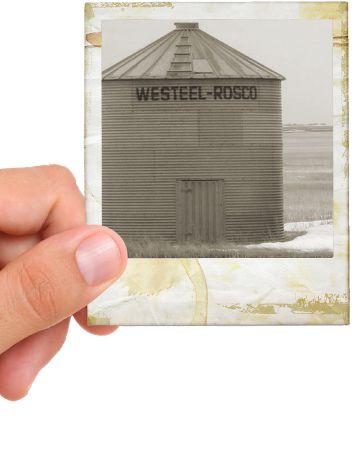
In the 1920s, farmers trusted Westeel to protect their grain. We’ve built our legacy on careful planning and wise innovation, and we share these same values with our customers. Start building your legacy by choosing a storage system you can depend on for years to come.
With full global export approval, 2017 was a major breakthrough year for Roundup Ready 2 Xtend soybean acreage in Canada. Approximately 700,000 acres were grown in Canada with about 250,000 acres grown in the West, mostly in Manitoba.
Seed grower Murray Froebe with Agassiz Seed Farm in Homewood, Man., has a leg-up on most growers, having grown Roundup Ready Xtend soybean for the last three years. “I’m excited about this technology. It is extremely good on wild buckwheat, and with the new genetics coming out, I believe that it will help raise soybean yields above the plateau that we are stuck at,” he says.
Roundup Ready 2 Xtend soybeans are tolerant to both glyphosate (Group 9) and dicamba (Group 4) herbicides. Two herbicide options can be used with the system. XtendiMax is a stand-alone dicamba formulation that can be tank-mixed with Roundup WeatherMax (glyphosate). Roundup Xtend is a mixture of glyphosate and dicamba. Both use Monsanto’s VaporGrip
technology that helps to reduce dicamba drift. The VaporGrip component reduces the chemical volatility of the product compared to older formulations of dicamba, which helps reduce off target movement but does not help reduce physical particle drift when making an application.
Application timing for both herbicide approaches is flexible. Both products can be applied pre-plant burndown or preemergent after planting but prior to crop emergence, and up to twice post-emergent.
“Unfortunately the Xtend system doesn’t control Roundup Ready volunteer canola, the number one weed issue in soybean in Manitoba (according to the 2016 Manitoba Weed Survey). However, use of Roundup Xtend does give growers improved control of wild buckwheat, the number two weed issue in soybean. It’s also likely to become an important tool for growers
ABOVE: Murray Froebe believes the Extend system offers improved yield potential.
that have glyphosate-resistant kochia, especially since 99 per cent or more of kochia is already resistant to Group 2 herbicides,” says Jeanette Gaultier, former weed specialist with Manitoba Agriculture at Carman, Manitoba.
Residual weed control
“I like to see growers use a residual product with their glyphosate in soybean because it is a longer season crop with a longer critical weed free period compared with wheat or canola.”
In Ontario, several research studies have looked at dicamba weed control in the Xtend system over the last few years. In one study looking at broadleaf weed control, a tank-mix of glyphosate and dicamba improved red root pigweed control by 14 per cent, common ragweed by three per cent, lamb’s-quarters by seven per cent and lady’s thumb by five per cent, compared to glyphosate alone when applied post-emergence.
Other research studies looked at control of glyphosate-resistant weeds found in Ontario including ragweed, waterhemp, Canada fleabane (horsetail), and common ragweed. Generally, a pre-plant and/or a pre-plant and post-emergent sequential application of dicamba provided the best control of these glyphosate resistant weeds, often approaching 100 per cent control.
“The newest weed threat in Manitoba’s near future is waterhemp. We currently have only a few known fields with a low level of waterhemp plants. But every year it inches northward through North Dakota. Although the Manitoba waterhemp seed has not been sent for resistance testing yet, we are encouraging growers to treat it as resistant to both glyphosate and Group 2 herbicides,” Gaultier says.
For glyphosate resistant waterhemp control in Ontario, dicamba applied pre-emergent provided poor control. However, dicamba post-emergent at the high label rate of 1.71 litre per hectare (600 g.a.e/ha) provided 91 per cent control. When dicamba was applied both pre and post, control moved up to 95 per cent. A second option was the application of dicamba with Outlook (dimenthemamid-p; Group 15) herbicide. Again, best control at 97 per cent was achieved with a pre and post application of the herbicides.
Residual weed control
Along with improved broadleaf weed control, a major benefit of the Xtend system is residual weed control from dicamba applications. Monsanto research in Western Canada shows the value of residual weed control. When Roundup WeatherMax (0.67 L/ac) was applied with dicamba (0.7 L/ac) in a pre-plant burndown followed up with Roundup WeatherMax in-crop, annual broadleaf weed control was 86 per cent compared to 35 per cent when Roundup WeatherMax was applied alone as a preseed burndown. That translated into a 2.4 bushel per acre yield advantage.
“Our research is showing that the first time in the field with a herbicide, pre-plant or pre-emergent, we encourage growers to put XtendiMax or Roundup Xtend in the tank at the high application rate to maximize the benefits of residual weed control,” says Adam Pfeffer, technology development manager with Monsanto at St. Thomas, Ont.
Froebe has used XtendiMax at all three application timings. He has applied it as part of a pre-seed burndown, after planting
but before crop emergence, and in-crop.
“Under cool conditions, soybeans take seven to 14 days to emerge, and during that period is a great time to apply XtendiMax. It is a great tool to help get the crop off to a clean start and we are seeing residual control up to three to four weeks after application,” Froebe says. “I like using XtendiMax because I have flexibility in the application rate of dicamba.”
As a seed grower, Froebe typically does two in-crop applications with glyphosate. He is not sure the second application provides an economic return from higher yield, but it does keep his fields cleaner.
“The fact that the dicamba, at the Xtend soybean rate, provides residual control is also a benefit for flushing weeds like kochia. I like to see growers use a residual product with their glyphosate in soybean because it is a longer season crop with a longer critical weed free period compared with wheat or canola,” Gaultier says.
Resistance management tool
Another major benefit is management of herbicide resistance. Weed scientists recommend using dual modes-of-action to help reduce the selection pressure for resistant weeds. However, with glyphosate resistant kochia and waterhemp already confirmed, growers are cautioned to use all the tools they can to help manage herbicide resistance.
“It’s never a bad idea to use multiple modes of action on target weeds, especially with glyphosate. We have to be cautious though, because only the dicamba will have activity on glyphosateresistant weeds like kochia and waterhemp, which increases the risk of developing Group 4 resistance in those weeds if growers only use the Xtend system,” Gaultier says.
How growers end up using Xtend herbicides will depend on their own farm operation. The flexibility of application timing and herbicide rates provide growers the opportunity to tailor weed control based on their individual weed problems.
“So far, the pre-emergent application of Roundup Xtend or XtendiMax best addresses the cool season weed spectrum in Manitoba. But we are starting to see a shift in weed species in our soybeans, especially in the eastern, Red River Valley and south central regions of the province. Many of these species, like hairy galinsoga and nightshades, emerge much later than our traditional cool-season weeds and may prompt growers to switch to an in-crop application in Xtend soybean,” Gaultier says.
KNOW. GROW.
WHAT’S NEW FOR 2018: SOYBEANS AND CORN
If you haven’t ordered your seed yet, it’s time to get serious and determine what you will grow. Outlined below are some of the corn and soybean varieties available to both eastern and western Canadian growers in 2018.
Compiled by Top Crop Manager
EASTERN CANADA: SOYBEANS
DKB06-43 [0.6 relative maturity (RM)] Medium statured, branchy variety with excellent standability. Roundup Ready 2 Xtend (RR2X) variety with resistance to soybean cyst nematode (SCN) and excellent tolerance to Phytopthora root rot (PRR). Available at select Dekalb retailers.
DKB12-57 (1.2 RM) Medium statured, branchy variety with resistance to SCN and very good tolerance to white mould and PRR. RR2X variety fits best in wide rows. Available at select Dekalb retailers.
DKB17-34 (1.7 RM) Medium statured, RR2X variety resistant to SCN. Excellent field tolerance to PRR and very good tolerance to white mould. Well suited to all soil types and row widths. Available at select Dekalb retailers.
DKB20-14 (2.0 RM) Tall RR2X variety with excellent seedling vigour and emergence. Resistance to SCN and very good field tolerance to PRR and brown stem rot (BSR). Suitable for no-till clay situations. Available at select Dekalb retailers.
DKB24-97 (2.4 RM) Medium-to-tall statured, RR2X variety with resistance to SCN and excellent standability. Very good field tolerance to PRR, charcoal rot, and BSR. Suitable no-till environments. Available at select Dekalb retailers.
DS0099B1 Strong emergence and good white mould tolerance. High yielding with good lodging tolerance. Visit dowseeds.ca.
DS031M1 Good defensive package including RPS 1c and excellent emergence and standability. Visit dowseeds.ca.
DS095D1 SCN-resistant with good white mould tolerance and excellent standability. Visit dowseeds.ca.
DS198T1 SCN-resistant with very good sudden death syndrome, BSR and PRR field tolerance. Visit dowseeds.ca.
DS250H1 SCN-resistant medium-tall bean with good standability and strong disease package. Strong performer in lowyield environments. Visit dowseeds.ca.
RX ELDON (2775 CHU, 0.9 RM) Excellent seedling vigour ideal for no-till and heavy soils. Medium to tall height. Stacked Phytophthora genes provide excellent tolerance. For optimum performance position in wider rows (15”). Visit maizex.com.
RX TITUS (2900 CHU, 1.3 RM) Very good seedling vigour and excellent standability. Ideal for no-till or wide rows. Stacked Phytophthora genes, SCN resistance and BSR resistance. Above average white mould tolerance. Visit maizex.com.
RX COLUMBIA (2975 CHU, 1.6 RM) Medium plant height and SCN resistant. Excellent late season appearance and standability. Conventional tillage on all soil types for optimum yield. Visit maizex.com.
RX OPTIMUM (3150 CHU, 2.4 RM) Very good seedling vigour. Excellent PRR tolerance and SCN and BSR resistance. Ideal for
Please note many brands have provided their “top five” varieties for either Eastern or Western Canada for publication. For full lists, please contact your seed dealer or visit the company websites.
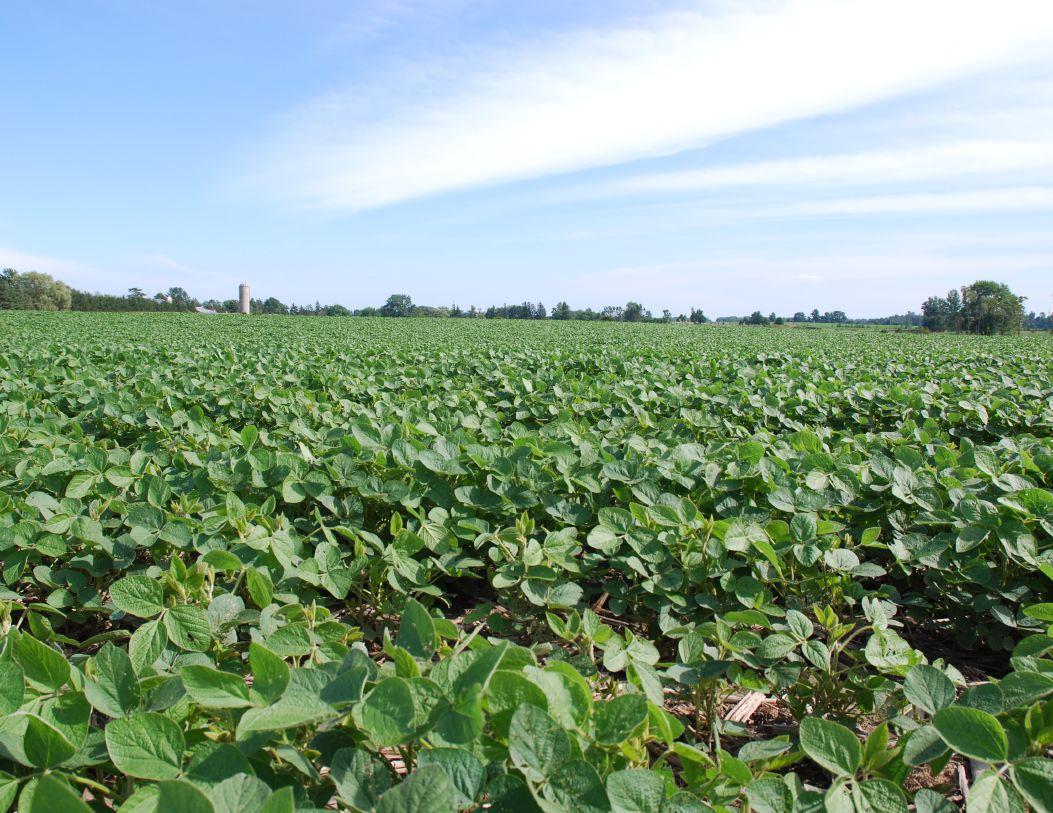
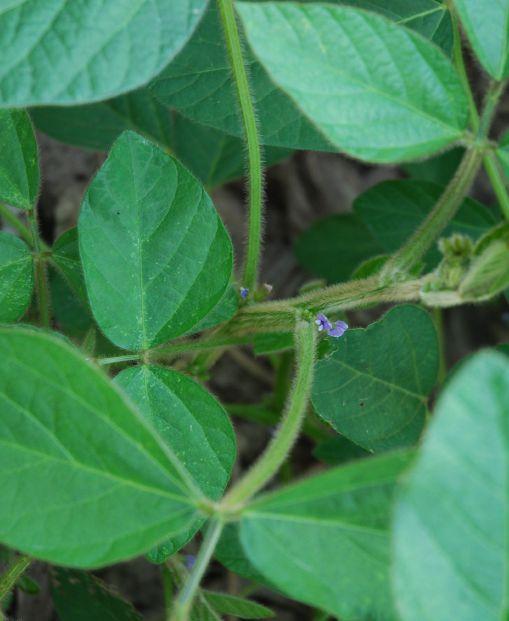
ABOVE: Blossoming soybeans.
You may not even realize you have it. Soybean Cyst Nematodes (SCN) cause root damage and make soybeans more vulnerable to diseases such as Sudden Death Syndrome (SDS). So when you think of your soybeans and higher yields, think ILeVO : ™ the only seed treatment that protects against SCN and SDS.
clay soils in wider row spacing with preferance to reduced tillage. Visit maizex.com.
RX REGATTA (31275 CHU, 2.8 RM) Medium to tall plant height with mpressive seedling vigour. Stacked Phytophthora genes combined with SCN resistance. Impressive standability. Adapted to all row widths and soil types. Visit maizex.com.
2735R2C Roundup Ready 2 Yield (RR2Y) variety with very good PRR and SCN tolerance. Great variety for lighter soils with higher fertility. Medium height with excellent standability. Visit sevita.com.
PRO 24X663N (3150-3200 CHU) Xtend variety that performs across all soil types and tillage systems. SCN-resistant with a great general disease package. Medium height that stands exceptionally well. Visit sevita.com.
Skyline (2800-2850 CHU) Conventional variety with SCN resistance. Performs very well in 15” row spacing. Good standability with very good disease package including good PRR and BSR
tolerances. Visit sevita.com.
Panorama (2600-2650 CHU) Great early season vigour that branches out to fill wider rows. Ideal for fertile, no till situations or on clay soils. Good yield and premium potential. Visit sevita.com.
Candor (3000-3050 CHU) Optimal blend of performance and export demand. Tall plant fills medium to wide rows, stands all season. Visit sevita.com.
PS 0044 XRN RR2X variety for the early to mid maturity group (MG) 00 zones. Very good stress tolerance and white mould resistance. SCN and PRR Rps 1k protection. Strong emergence and vigour. Contact your Pride seed dealer 1-800-265-5280.
PS 0777 XRN RR2X variety for the mid to late MG 0 zones. SCN and PRR Rps 3a protection. Exceptional emergence and early seedling vigour. Contact your Pride seed dealer 1-800-265-5280.
PS 1888 XRN RR2X variety ideally suited to the mid to late MG I zones. SCN and PRR Rps1c protection. Outstanding emergence and early seedling vigour. Contact your Pride seed dealer 1-800-265-5280.
PS 3033 XRN RR2X variety ideally suited to the early MG III and late MG II maturity areas. SCN and PRR Rps1c protection. Tall plant well suited for no-till and all soil types. Contact your Pride seed dealer 1-800-265-5280.
S01-C4X RR2X variety from Syngenta. Offers good plant height, high yield potential and excellent performance across most soil types. Excellent field tolerance to PRR and strong rating against Sclerotinia white mould. Available from NK seed dealers.
S07-K5X RR2X variety from Syngenta. Tall plant offers excellent standability and strong tolerance to Sclerotinia white mould, plus good disease ratings against PRR and IDC. Available from NK seed dealers.
S14-B2X RR2X variety from Syngenta. Offers strong yields and an outstanding disease package. Strong tolerance to Sclerotinia white mould and SDS, plus very good field tolerance to PRR. Available from NK seed dealers.
S20-L8X RR2X variety from Syngenta. Offers fast emergence
SPEAKERS INCLUDE:
and high yield potential coupled with outstanding stress tolerance. Strong SDS tolerance. Available from NK seed dealers.
S29-K3X RR2X variety from Syngenta. Offers excellent yield stability across growing environments. Excellent tolerance to BSR. Available from NK seed dealers.
Executive R2X, Excellence R2X, Edge R2X, Electra R2X SeCan welcomes the addition of four new varieties to their RR2X soybean portfolio. Maturity ranges from 2600 to 3200 CHUs and offers great yield potential and agronomic characteristics.
EASTERN CANADA: CORN
DL 2202 (2550 CHU) Consistent ears that flare husks for very good drydown and produce clean grain. Good roots and stalks, easy to harvest and very good yield potential. Visit dedellseeds.com.
DL 3146 (2750 CHU) Hybrid with girthy ears. Excellent stress
STATE OF HERBICIDE RESISTANCE IN WESTERN CANADA
Hugh Beckie • Agriculture and Agri-Food Canada/University of Alberta
Sponsored by
HERBICIDE USE IN CANADA: RESULTS FROM TOP CROP MANAGER’S INAUGURAL SURVEY
Gerald Bramm • Bramm Research Sponsored by
EVOLUTION OF RESISTANCE: AMARANTH SPECIES AND GROUP 14 HERBICIDES
Franck Dayan • Colorado State University
HARVEST WEED SEED CONTROL IN THE CANADIAN CONTEXT
Breanne Tidemann • Agriculture and Agri-Food Canada
SPONSORS
Member
GLOBAL EFFORTS TO PREVENT HERBICIDE RESISTANCE
Mark Peterson • Herbicide Resistance Action Committee
USING AGRONOMY TO CONTROL WEEDS: WHAT WORKS AND WHAT DOESN’T
Steve Shirtliffe • University of Saskatchewan
CONTROLLING GLYPHOSATERESISTANT WEEDS: AN ONTARIO PERSPECTIVE
Peter Sikkema • University of Guelph - Ridgetown
MANAGING RESISTANCE WITH SPRAYER APPLICATION TECHNOLOGY
Tom Wolf • Agrimetrix Research & Training
Sponsored by
EMERGENCE, STATUS AND MANAGEMENT OF HERBICIDE RESISTANCE IN EUROPE
Josef Soukup • Czech University of Life Sciences
GROUP 4 RESISTANCE AND THE NORTH AMERICAN KOCHIA ACTION COMMITTEE
Todd Gaines • Colorado State University
Company on the Move
BUILD A STRONGER SOYBEAN PROGRAM
Soybeans acres continue to rise in Ontario and Quebec. And with those acres comes a continued demand for trusted solutions to get the most from every field. Nufarm knows the importance of getting weeds out of the way early in the season. Our proven portfolio includes pre-seed and in-crop weed control to set up your soybeans for stronger performance, better yields and a better bottom line.
BIGGER YIELDS
Extensive trials1 have shown a 4-9 bu./ac. yield gain when you use a pre-emergent herbicide before a post-glyphosate application, compared to only using a post-emergent application of glyphosate.
REDUCE THE COMPETITION
Keep your soybeans clean by reducing weed competition during
MANAGE YOUR RISK
Using multiple modes of action makes for a stronger stewardship plan, and reduces the risk of weeds developing resistance to glyphosate and dicamba. You’ll also be helping to protect the integrity of technology traits like Roundup Ready 2 Xtend ® soybeans.
Some of the most effective ways to manage resistant weeds includes crop rotation, changing weed management practices and using multiple modes of action. Tank mixing herbicides to deliver multiple modes of action will exponentially decrease the risk of resistant weeds developing.
STRENGTHEN YOUR PROGRAM
Nufarm and Monsanto have partnered to deliver exceptional broad-spectrum control for improved performance and stewardship in the leading herbicidetolerant soybean system.
SOYBEANS FOR SUCCESS DECISION GUIDE
PRE-SEED HERBICIDE
• Multiple Mode of Action defense strategy
• Improved control of nightshade, waterhemp, mustard, pigweed
• Longer residual control of fleabane
PRODUCT USE MATRIX
If glyphosate-resistant fleabane is present
If glyphosate-resistant ragweed is present
If glyphosate-resistant common waterhemp is present If glyphosate-resistant Palmer amaranth is present
2018 HERBICIDE RESISTANCE SUMMIT PREVIEW
Join us February 27 and 28 in Saskatoon, Sask., for a great lineup of speakers and discussion surrounding herbicide resistance issues across Canada and around the world. weedsummit.ca
The Herbicide Resistance Summit is a bi-annual conference brought to you by Top Crop Manager (TCM) and a group of generous sponsors that aims to facilitate a more unified understanding of herbicide resistance and promote awareness that all industry members have a role to play in managing the growing threat of herbicide resistance.
At the event, being held at Saskatoon’s TCU Place, leading researchers will present on key issues faced by farmers, agronomists and crop protection researchers in meeting the challenges herbicide resistance poses to agricultural productivity in Canada.
Attendees will be presented with up-to-date data and specific actions that can be taken to help minimize the devastating impact of herbicide resistance in their fields.
DISCUSSION TOPICS AND SPEAKERS
State of herbicide resistance in Western Canada
Hugh Beckie, weed scientist, Agriculture and Agri-Food Canada (AAFC) and adjunct professor, Department of Agricultural, Food and Nutritional Science at the University of Alberta.
Since the initial discovery of herbicide-resistant (HR) weeds in the late 1980s in Western Canada, the majority of annual cropland across the prairies is now affected by HR weeds – most notably wild oat, green foxtail, kochia, and cleavers.
Beckie will discuss the results of the 2014-15 Saskatchewan weed resistance survey and the 2016 Manitoba survey (Alberta was surveyed in 2017 but results pending), as well as 2012-2016 test results of samples submitted by producers or industry.
Additionally, the results of Saskatchewan and Manitoba producer management questionnaires regarding adoption of weed resistance management practices and cost of resistance will be highlighted, in the context of recommended best management practices.
Herbicide use in Canada: Results from TCM’s inaugural survey
Gerald Bramm, president of Bramm Research
Get an early look at the results of TCM’s first-ever Herbicide Use Survey, plus exclusive insights to help you gain a deeper understanding of how herbicides are being used in your area and across the country.
Evolution of resistance: Amaranth species and Group 14 herbicides
Franck Dayan, professor in the Department of Bioagricultural Sciences
HERBICIDE RESISTANC E 2018 SUMMIT
and Pest Management, Colorado State University
Franck Dayan will focus on how two plants from the Amaranth species (waterhemp and Palmer amaranth) have evolved to resist Group 14 herbicides. He will explain how Protoporphyrinogen oxidase (PPO, Group 14) herbicides work, as well as cover the research underway to help growers deal with these resistant weeds.
A few of the key takeaways from the presentation will include strategies to manage and mitigate this type of herbicide resistance, including the role of crop rotation and avoiding the application of herbicides with the same mode of action over several years.
KEYNOTE: Global efforts to prevent herbicide resistance
Mark Peterson, chairman, Herbicide Resistance Action Committee Resistant weeds have been around almost since the beginning of synthetic herbicides, but the issue has taken on a new urgency in the past few years. Basic evolutionary biology principles drive the development of resistance and understanding these principles can help design resistance management programs. Adoption of best management practices can help preserve our critically important herbicide tools.
Using Agronomy to Control Weeds –What Works and What Doesn’t
Steve Shirtliffe, professor in the department of Plant Sciences at the University of Saskatchewan Decades of research and experience has taught us one unequivocal truth: Using herbicides selects for herbicide resistant weeds. However, when scientists are pressed for solutions they often offer up a shopping list of every possible chemical and non-chemical method that can control weeds. This presentation will attempt to cut through the vagueness of scientific recommendations and give farmers key practical advice on how to effectively control weeds while reducing the likelihood of selecting for herbicide resistance. Shirtliffe will be looking back at a couple decades worth of alternative weed control research and critically evaluate the potential as well as the pitfalls of these methods. These weed control methods include growing competitive crop varieties, harvest weed seed management, mechanical weed control, alternative herbicide application methods and combining tactics.
WHO’S TOUGH NOW?
Exceptional weed control with NEW Enlist Duo™
NEAR-ZERO volatility
MINIMIZED potential for physical drift
An EASY-TO-USE SYSTEM for use on exceptional new Enlist™ corn hybrids
STOP WEEDS, WITHOUT DRIFT OR VOLATILITY.
Weeds started this fight. Time to finish it with the Enlist weed control system. Enlist Duo herbicide makes it easy to protect your crops. And our Colex-D™ technology reduces drift and volatility to protect your neighbour’s crops too. So much for those so-called “tough” weeds.
Take control at EnlistCanada.ca or visit your local seed retailer.
Distribution and control of glyphosate-resistant weeds in Ontario
Peter H. Sikkema, professor of Field Crop Weed Management, University of Guelph, Ridgetown Campus
Glyphosate resistant (GR) common ragweed, waterhemp, giant ragweed and Canada fleabane have been confirmed in 1, 3, 6 and 30 counties in Ontario, respectively.
Surveys show that over time the number of locations is increasing and GR weeds are found over a wider geographical area. In Ontario studies, GR Canada fleabane interference reduced corn and soybean yield 65 and 71 per cent, and GR waterhemp competition reduced corn and soybean yield 52 and 32 per cent, respectively.
A nine-year Integrated Weed Management study has been established on two Ontario farms to determine if GR waterhemp seed in the seedbank can be depleted. It is important to implement weed management practices that limit the selection of additional herbicide-resistant weeds. This will ensure the usefulness of glyphosate and GR crops for many years in the future.
KEYNOTE: Emergence and status of herbicide resistance in Europe and its management
Josef Soukup, professor in the department of agroecology and biometeorology at the Czech University of Life Sciences in Prague, Czech Republic
Soukup will present an overview of European agricultural
herbicide resistance and main threats for the future.
Diversity of cropping systems, environmental conditions and weed flora produce a variety of specific cases of herbicide resistance. An overview of major European agricultural practices and factors leading to the emergence and spread of herbicide resistance and main threats for the future will be presented. Solutions-focused information will be shared with participants about the strategies for management and mitigation of herbicide resistance, which are being implemented on farms voluntarily or as a consequence of recent political documents such as EU directives ensuring sustainable use of pesticides.
Harvest Weed Seed Control in the Canadian Context
Breanne Tidemann, research scientist with AAFC
Explore the theory behind harvest weed seed control, its use in Australia, the adoption levels there, and the newest techniques. Tidemann will provide an overview of research conducted in Canada on the potential for harvest weed seed control, its potential to control problematic species like wild oat, cleavers, volunteer canola and kochia, and cropping system opportunities (i.e., swathing versus straight-cutting).
She will also provide updates on Harrington Seed Destructor stationary testing and the implementation of field testing in Canada. Tidemann and her team have learned a number of valuable lessons already in fall 2017 on using the Harrington Seed
SUMMIT
2018 HERBICIDE RESISTANCE SUMMIT SCHEDULE HERBICIDE RESISTANC E 2018
FEBRUARY 27, 2018
10:00 REGISTRATION
10:30 WELCOMING REMARKS
10:35 KEYNOTE – Mark Peterson, Global state of herbicide resistance
11:25 Gerald Bramm, Results from Top Crop Manager’s Herbicide Use Survey Sponsored by
11:55 LUNCH
1:10 Franck Dayan, Evolution of resistance: Amaranth species and Group 14 herbicides
1:50 Hugh Beckie, State of herbicide resistance in Western Canada
2:30 NETWORKING BREAK
2:50 Breanne Tidemann, Harvest weed seed control
3:50 Peter Sikkema, Glyphosate-resistant weeds in Ontario: Distribution and control
4:30 NETWORKING BREAK
4:45 PANEL – Farmers share their management techniques for herbicide-resistant weeds
Sponsored by
Sponsored by
5:45 HAPPY HOUR Sponsored by
7:00 END OF DAY ONE
FEBRUARY 28, 2018
8:00 BUFFET BREAKFAST
8:30 Todd Gaines, Group 4 resistance and the North American Kochia Action Committee
9:20 KEYNOTE – Josef Soukup, Emergence and status of HR in Europe and its management: What can Canada learn?
10:00 NETWORKING BREAK
10:30 Steve Shirtliffe, Using agronomy to control weeds: What works, what doesn’t
11:10 Tom Wolf, Managing resistance with sprayer application technology Sponsored by
11:50 CLOSING REMARKS
12:00 END OF DAY TWO
WHAT’S NEW FOR 2018: SOYBEANS AND CORN
CONTINUED FROM PAGE 23
and drought tolerance; maintains good drydown characteristics. Visit dedellseeds. com.
DL 3808 (2835 CHU) Excellent early season vigour and quickly closes rows to minimize weed pressure. Large hybrid with excellent resistance to Northern corn leaf blight. High test weight grain, loose husks and excellent for grain or silage. Visit dedellseeds.com.
DL 4902 (2975 CHU) Medium-sized ears consistently filled to the tip, with a high test weight grain. Flowers early to finish well in the fall. Hybrid demonstrates desirable characteristics for the food grade corn industry. Visit dedellseeds.com.
DKC50-26RIB (3050 CHU) SmartStax RIB Complete hybrid with excellent seedling vigor and drydown. Excellent stalk strength and late season health, exceptional test weight and yield potential. Available at select Dekalb retailers.
DKC51-40RIB (3075 CHU) Very good grain quality and exceptional test weight.
VT Double PRO RIB Complete hybrid has excellent late season appearance with big girthy ears and excellent drydown. Performs best in medium to high yield environments and across a range of planting populations. Available at select Dekalb retailers.
DKC59-50RIB (3300 CHU) VT
Double PRO RIB Complete hybrid demonstrates exceptional staygreen. Performs best in dryland conditions but also has strong irrigated yield potential. Excellent stalks and roots for late season standability. Semi-flex ear type provides some population flexibility. Available at select Dekalb retailers.
DS90K07RA Medium-tall hybrid with excellent top-end yield potential. Strong stalks and roots suitable for delayed harvest. Strong disease package. Visit dowseeds.ca.
DS92J87RA Stable, early-flowering hybrid with strong emergence and earlyseason vigour. Excellent drought tolerance, good disease tolerance and staygreen. Visit dowseeds.ca.
DS04Y97RA Hybrid with new genetics, delivering impressive yields, good drought tolerance and disease package, plus strong roots and stalks. Visit dowseeds.ca.
E44H12 R (2100 CHU) Genuity VT
Double Pro RIB Complete hybrid with
good seedling vigour. Early flowering and short relative maturity ideal for shortseason regions. Excellent yield and test weight. Visit eliteseeds.ca.
E52V97 R (2450 CHU) Roundup Ready version of E52V92 R. Medium-tall with very good stalk and root strength. Adapts to high population and good yield response in all environments. Excellent
test weight. Visit eliteseeds.ca.
E61H72 R (2700 CHU) Genuity VT
Double Pro RIB Complete. Versatile hybrid for silage or grain. Consistent large cobs with superior yield response to high populations. Good roots and stalks for good staygreen and plant integrity in the fall. Visit eliteseeds.ca.
CONTINUED
Save dollars and make sense
With accounting software built for agriculture
Keep your business on track and on budget with AgExpert Analyst – do everything from basic bookkeeping to GST returns, inventory management, payroll, forecasts, automated or customized reports, and more.
fccsoftware.ca | 1-800-667-7893
UAVS IN AGRICULTURE: GOOD NOW; GREAT SOON.
Researchers say, in the near future, infrared imagery may be able to detect plant stress far earlier and more specifically than is possible now.
BY Madeleine Baerg
Few agricultural technologies capture people’s imaginations as much as unmanned aerial vehicles (UAVs), more commonly known as drones. Since the first day a UAV looked down on a crop field, farmers have dreamed up a million ways that a bird’s eye view and remote access could improve agricultural operations. While some of that functionality is achievable by today’s UAV technology, much more is coming in the future. Here’s a rundown on some of UAVs’ current agricultural uses and what may lie ahead.
NOT THERE YET: PRECISION PESTICIDE AND WATER APPLICATION
Agricultural researchers and technologists are investing significant effort into improving UAVs’ ability to apply site specific, ultra-precise pesticide and water applications. Right now, carrying capacity severely limits tank size, making this function good in theory but less than practical on a farm of any size.
However, two major improvements may be around the corner.
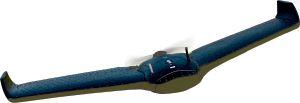
While the majority of UAVs flying for agricultural purposes are very small quadcopters, larger aircraft are being developed. In North Dakota, 1000 pound (lbs) UAVs with 34-foot wingspans have been tested over agricultural fields for the past 15 years. While large UAVs obviously carry greater risk, their size also opens all kinds of potential. Researchers are also making big steps forward every year in battery efficiency, flight time and carrying capacity, meaning that even smaller UAVs are gaining enhanced utility.
The second improvement relates to artificial intelligence. Currently, UAVs used for water and/or pesticide application require an operator to choose where to apply the cargo based on imagery transmitted by the UAV. But, that may soon change.
“We’re not at the point yet where the drone itself has the software to identify a pest or a problem and then choose to apply or not apply product accordingly,” says Dr. Mary Ruth McDonald, research program director in the
Norm Lamothe, head of Deveron UAS Agriculture.
department of plant agriculture at the University of Guelph.
“But, this is one of the areas where a lot of research is currently occurring. I think we’ll soon be at the point that a drone can fly along and say, by itself, the colour is different here so I’ll put fungicide on this patch, but this other area looks healthy so I won’t put fungicide there.”
GETTING BETTER: PEST SCOUTING
Over the past three years, throughout the growing season, McDonald and her team have taken aerial photos of their test plots and of growers’ fields on a weekly basis. In addition to seeing patterns such as the movement of disease into a field, drone photography has revealed some less expected disease and pest findings.
“In one case, we could see that the pattern of disease development seemed to be associated with differences in soil type across the field. We speculate that plants in certain soil types were under more stress, so more susceptible. That’s a fascinating observation,” she said.
That said, pest scouting via UAVs carries two challenges. First, the window to halt a pathogen or insect is often very small, which means one’s scouting flights must occur often enough or at just the right time in order to identify the problem before it is too late. Second, though a bird’s eye view offers insight into patterns, it does not offer the hands-on, up-close view necessary to identify a problem early. As such, aerial photography must be used as an additional tool rather than a replacement of one’s boots on the ground.
These issues may soon be corrected, since today’s pest management functionality is just the tip of the iceberg, McDonald believes. Currently,
most UAVs take true colour photographs, or images recorded using the visible light spectrum. True colour images can only detect pest and disease damage once leaves change colour or drop off the plant.
However, the next step is already arriving. Some custom UAV imagery companies and researchers are using near-infrared, a type of photography that blocks most of the visible light spectrum. Near infrared images can be processed to create a Normalized Difference Vegetation Index (NDVI), which is a calculation of crop canopy covering the field. A crop stressor that slows plant growth or starts to defoliate plants can be identified by the NDVI before it is obvious visually. Some studies are even showing that NDVI data may also be useful in assessing crop maturity and harvest timing in certain crops.
Researchers hope that, in the near future, infrared imagery will be able to detect plant stress far earlier and far more specifically than is possible now. Various diseases cause unique stress signatures in the plants they attack. That finding, combined with huge advances in multi-spectral cameras, suggest that imagery captured by UAVs may soon identify individual diseases and pests from even minute changes in leaves and/or overall plant health.
“Ultra-early disease and pest detection is the holy grail. The promise is there but the technology hasn’t yet developed quite enough,” McDonald says.
“There are a lot of people working on it but, so far as I know, no one has managed it, even on an experimental basis. But everyone agrees that at some point we’ll be able to do this.”
WORTH THE COST: AGRONOMIC AND EQUIPMENT ASSESSMENT
Bird’s-eye view images of the
landscape below can offer all kinds of insight to producers. For the first time, UAVs give growers a snapshot of overall crop health and growth midseason and in real time. In addition to vastly speeding up crop scouting, an aerial image provides an overview one just can’t capture when walking amongst plants.
“We see clear best management practices patterns in most fields we fly. They’re sometimes equipment related: planting depth issues causing patterns of inconsistent emergence, or inconsistent tillage tools creating streaks. We see a lot of compaction issues from growers getting on the fields at the wrong time, lines [are showing] in the field that you can follow from the beginning of the season right through to the end. And, we see a lot of patterns related to fertility spread as well, where there’s gaps or improper overlaps,” says Norm Lamothe, the head of Deveron UAS Agriculture, a custom drone service operating from B.C. to Quebec.
These patterns, Lamothe says, can be easily translated to actual dollars lost.
“A yield monitor at harvest is good, but it averages out crop yield across the whole swath, so you don’t get a true representation of what an equipment issue is costing per acre. We’ve worked out that compaction
Q&A WITH MARKUS WEBER, PRESIDENT AND CO-FOUNDER OF LANDVIEW DRONES
Is hiring a professional drone pilot necessary? There are times when it makes sense to hire a drone imagery service – when mapping large acreages for variable-rate application or if you don’t yet own a drone. But, there are currently no sensors that definitively diagnose specific crop problems, so the imagery will always require further investigation on the ground. Rather than incurring the expense of a pilot, growers and agronomists may get more value from operating the drone themselves because they can use their deep knowledge of a field to interpret the drone data directly.
User-friendly software allows growers to produce maps and topographic models of entire fields. Mapping is particularly useful for documenting crop damage whether from hail, frost, flooding, trampling, or herbicide.
What laws apply to on-farm drone use?
It is crucial that everyone comply with the laws designed to keep shared airspace safe. LandView offers a two-day Ag Drone School where farmers and agronomists can gain the knowledge Transport Canada requires for commercial UAV flights. The school also offers “how to” instruction from first flight to mapping missions. Growers are able to learn how drones can give them deeper insight into their crop management decisions.
For more information, visit: landviewdrones.com
from a manure spreader can cost $24 per acre. That’s pretty specific and actionable information for a producer,” Lamothe says.
MONEY IN YOUR POCKET: ZONE MAPPING AND MULTI-YEAR ASSESSMENT
Nature is rarely perfectly consistent. Across virtually any crop field, topography, soil type, moisture levels, pest issues, nutrient mix, and soil microbial activity will vary. UAVs allow farmers to easily see variability in a field, which is the first step towards optimizing yield and crop health by zone.
“I’ve never seen a map where we have a consistent crop across the entire field. Each factor that causes variation can be managed. If a certain part of the field is performing differently than another part of the field, there’s opportunity to go in, assess, and improve your outcomes,” Lamothe says.
The high-tech cameras on board Deveron UAS’ UAVs use a sunshine irradiance technology to calibrate each image to the ambient light.
“A plant at a certain growth stage should give you a certain light value. By analyzing
A plant at a certain growth stage should give you a certain light value. By analyzing those values, we can identify whether a plant is above or below where it should be at that time of year.
those values, we can identify whether a plant is above or below where it should be at that time of year,” Lamothe says. “If a plant is under stress for any reason, wheth er that’s water related, disease related or whatever, the sensors will identify that there is a problem. It still requires boots on the ground to go in and figure out what the problem actually is, but the identification piece is huge.”
The efficiency with which UAVs oper ate means farmers can conduct multiple real-time check-ins throughout the season. Once areas of subpar or exceptional growth are identified, growers can analyze the factors that are limiting or improving growth, and then begin thinking in terms
NATURE’S DESIGN
THE POWER OF THREE
BUILD PHOSPHORUS FERTILITY WITH VARIABLE RATE APPLICATIONS
Put your dollars in areas that need phosphorus the most.
BY Bruce Barker
Overshadowed by variable rate nitrogen (N), variable rate phosphate (P) is coming to the forefront to help farmers get the biggest bang for the fertilizer dollar, as soils on the Prairies continue to decline in P fertility.
“We continue to remove more phosphate than we replace. At the very least, we should be applying enough phosphate to offset removal, but as crop yields increase and more oilseeds are in the rotation, fertilizer P applications aren’t keeping up,” says Stu Brandt, technical advisor with the Northeast Agricultural Research Foundation at Melfort, Sask.
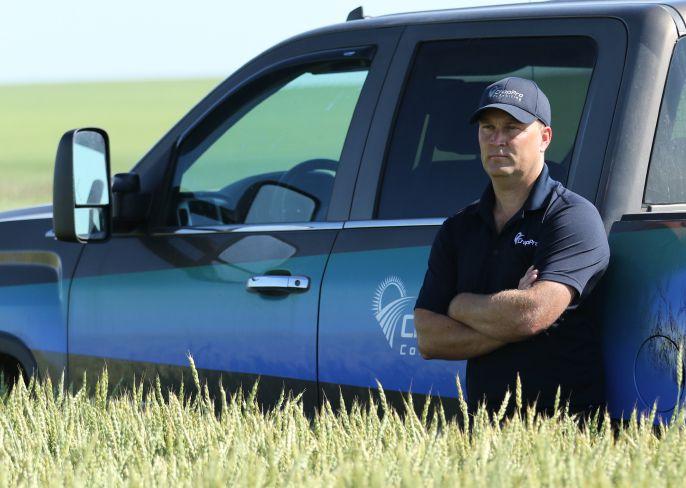
Cory Willness, president of CropPro Consulting at Naicam, Sask., says an additional challenge is that P is variable across the field and across the farm, so blanket applications are over-applying P in some areas and under-applying in others.
“Typically eroded knolls are low in phosphate and as you go down the mid-slope to the depressions, P levels go up,” Willness says.
CropPro uses a zone mapping system called SWAT (Soil, Water and Topography) that is developed by layering in RTK elevation, topography features, soil organic carbon, water flow paths and electrical conductivity maps. He uses these SWAT zones to establish yield goals and vary fertilizer rates, including P.
Willness looked at two farm scenarios where variable rate P was conducted from 2008 to 2013. One farm had 21 fields and the other 25 fields. After five years, soil P levels had not changed.
“The challenge is that we are increasing the productivity of those areas low in P by adding more P and also increasing other nutrients. The yield potential in those zones goes up, phosphate uptake and removal goes up, so we are still removing as much as we are putting on,” Willness says. “We are taking the low fertility areas of the field to a new level of yield, but we’re not increasing soil phosphate levels.”
Generally, soils very low in P with soil tests less than eight ppm (Olsen bicarbonate) require a high annual rate plus additional high build rates each year to move soil test P levels up to the threshold of 15 ppm generally accepted as a level that supports high yields. Soils testing between nine to 15 ppm need high annual rates plus medium build rates. Soils with P testing more 15 to 20 ppm need annual maintenance rates to match crop removal with low build additions. Over 20 ppm P maintenance rates can be used or if soil test P is much higher, a farmer could even start to mine the soil of P.
Willness says that to increase soil test P by one ppm, the rule of thumb is that it takes an addition of 46 pounds P2O5 per acre over and above crop requirements – in some cases this may be about 90 pounds 11-52-0 per acre. That is hard on cash flow if done across the entire field.
However, the advantage of variable rate P application is that areas with high soil test P could receive just a starter P rate, with additional P fertilizer going to the low soil test areas. Economically, how advantageous this is depends on how much of the farm needs a higher P rate to build fertility levels.
“Some areas of the field might need 300 to 400 pounds per acre of phosphate fertilizer while others might not need any. On a 10,000-acre farm, there might be 2,000 to 3,000 acres that are extremely deficient. A farmer might decide to target those areas with higher rates of phosphate to try to build them up,” Willness says.
A challenge to building – or even maintaining – soil P levels is that safe rates of seed-placed fertilizer P are too low to meet crop removal in oilseed and pulse crops. Strategies to build soil P can include applying higher fertilizer applications by sidebanding at seeding, using a separate banding operation in the fall or spring prior to seeding, and
applying manure.
“How a farmer approaches variable rate management of P depends a lot on his equipment limitations. Sidebanding high rates at seeding can be done but you would be putting a lot of fertilizer through the air cart. Mid-row banding requires the same volume. Pre-seed banding is likely the easiest way to apply high rates of variable rate P,” Willness says.
Another approach is to apply a onetime high rate of fertilizer P to help correct deficiencies and build soil P. Research by Wagar et al 1986 showed that a single high application rate of fertilizer P would correct P deficiencies more efficiently than the same total amount applied in annual increments over a five year period. This could be accomplished by banding or broadcasting.
“Which approach a farmer takes comes down to how deep the pocket book is. We’ve been mining phosphate for quite a few years, so it will take a while to build it back up,” Willness adds.
Cory Willness says variable rate P can help build soil fertility.
STARTER NITROGEN RARELY NEEDED FOR SOYBEAN
Successful inoculation and nodulation eliminates need for nitrogen.
by Bruce Barker
In an effort to investigate agronomic factors that could push soybean yields higher, research is being conducted to see if there is a yield response to starter nitrogen (N). In areas with high yield potential for soybean, some research has shown benefits to early season fertility N. But so far the results in Manitoba and Saskatchewan have found that with proper inoculation, starter N doesn’t pay.
“There was a theory that with our cool, wet soils in Manitoba and the long time between seeding and when nitrogen fixation begins, that there might be a response to starter nitrogen,” says Yvonne Lawley, assistant professor of agronomy and cropping systems with the Department of Plant Science at the University of Manitoba. “I was skeptical that we could push yields higher with starter N, but sometimes researchers have to do crazy things to see what happens.”
Lawley supervised post doctoral fellow Navneet Brar on research into starter N at Carman, Man. Another three-year research study headed up by Chris Holzapfel with the Indian Head Agricultural Research Foundation (IHARF) is being conducted at Indian Head, Outlook and Melfort, Sask. Both studies started in 2015 and preliminary findings indicate that there are no yield responses to starter N.
In the Black soil zone at Carman, Brar planted soybeans on 15inch rows inoculated with a Brady-rhizobium inoculant from CellTech. Starter N was applied at 0, 15, 30, 45, 60 and 75 pounds per acre (lbs/ac). Soil tests prior to seeding were 39 lbs/acre in 2015, 56 lbs in 2016 and 45 lbs in 2017 in the top two feet sampled. Results are still being analyzed, but Brar has preliminary data on three-years of nodule counts and two years of yield data.
In two of three years, as starter N increased, nodule counts at R1 decreased significantly at the higher N levels. However at R5, only the highest N rate decreased nodulation. In 2016 and 2017, N uptake by the soybean plants were not significantly different. In 2015, the highest N rate had higher N uptake. However, no difference in grain yield was observed in 2015 and 2016. No differences in protein content were found, either.
“The research is helping to rule out the inputs that do not contribute to increased yield,” Lawley says.
ABOVE: In Saskatchewan trials, dual inoculation on new soybean land eliminated the need for starter N. CONTINUED ON
PHOTO COURTESY OF CHRIS HOLZAPFEL, IHARF.
Richardson is committed to developing markets for your grains and oilseeds.
From working with international buyers to develop new markets to ensuring efficient transportation and logistics, we are proud to market your grains and oilseeds to customers in more than 50 countries. With a network of port terminals on both the East and West Coasts, we are well positioned to deliver your Canadian grain and oilseeds to the world.
Being truly invested is at the heart of everything we do. To learn more, visit richardson.ca
WHAT’S NEW FOR 2018: SOYBEANS AND CORN
CONTINUED FROM PAGE 31
E62H80 LR (2750 CHU) Genuity SmartStax RIB Complete hybrid. Responds well in stress or in corn-on-corn situations, Consistent large cobs with great yield potential. Very good silage option. Visit eliteseeds.ca.
E67H95 (conventional) and E67H92 R (Genuity VT Double Pro) (2900 CHU) Two versions of the same hybrid give high yield, excellent stalk quality, and early flowering with a fast dry-down. Visit eliteseeds.ca.
MZ 2655DBR (2600 CHU, 86 RM) VT Double Pro. Industry leading yield and stalk strength. Rapid grain drydown for movement north of adapted zone. Superior plant health and staygreen. Visit maizex.com.
MZ 3397SMX (2800 CHU, 93 RM) SmartStax performs positively in low and high yield enviroments. Early flowering allows movement north of adapted zone. Strong stalks allow for a flexible harvest. Visit maizex.com.
MZ 3656DBR (2900 CHU, 96 RM) Impressive seedling vigour for exceptional plant health. Open husks lead to rapid grain drydown. Exceptional stalk strength. Excels under high fertility. Visit maizex.com.
MZ 402X (3050 CHU, 100 RM) Exceptional plant health and staygreen. Strong stalks and short plant height. Impressive yield and responsive to intensive management. Visit maizex.com.
MZ 4511DBR (3150 CHU, 105 RM) Strong spring vigour with strong disease package. Early flowering variety with leading stalk strength and grain drydown. Visit maizex.com.
PS 2648GSX RIB (2625 CHU) SmartStax RIB Complete hybrid with consistent overall yield potential. Medium-tall plant provides rootworm control. Available at your Pickseed sales agent or dealer.
PS 2777RR (2625 CHU) Roundup Ready hybrid with very high yield potential. Widely adapted with very good plant health and performs well at higher populations. Available at your Pickseed sales agent or dealer.
PS 2745VT2P RIB (2750 CHU) VT Double PRO RIB Complete hybrid has very high yield potential. Medium-tall plant with
excellent stalk and root strength. Available at your Pickseed sales agent or dealer.
A4477HM (2300 CHU) Conventional hybrid for silage and high moisture usage. Features slow grain drying rate. Very girthy ears, outstanding standability and disease resistance. Contact your Pride seed dealer, 1-800-265-5280.
AS1036 EDF (2475 CHU) Conventional hybrid for silage and high moisture usage. High-volume plant type with yield potential for silage featuring a slow grain drying rate. Consistent ear size, Outstanding standability and disease resistance. Contact your Pride seed dealer, 1-800-265-5280.
A5910 (2700 CHU) Conventional hybrid with very strong performance, exceptional yield potential, rapid drydown, and great drought and stress tolerance. Features blocky, girthy ears and consistent uniformity. Allows late season harvest flexibility. Excellent foliar health and disease resistance. Contact your Pride seed dealer, 1-800-265-5280.
A6018G2 RIB (2800 CHU) Also available as PRIDE G2 VT Double PRO RIB Complete. Delivers above-ground insect control. Excellent for grain or silage usage, with long-lasting health and outstanding stalk strength. Exceptional performance consistency, with plant and ear uniformity. Contact your Pride seed dealer, 1-800-265-5280.
A8300 (3325CHU) Hybrid with high yield potential, outstanding ear size consistency and features a quick to fully canopy. Ears hold heavy packed grain and adapts to all production systems. Contact your Pride seed dealer, 1-800-265-5280.
NK7701-3110 (2300 CHU) Early hybrid with excellent performance across yield environments. Strong disease resistance with excellent staygreen. Outstanding stalk strength for easy harvestability and exceptional test weight and grain quality. Available from Syngenta retailers.
NK8920-3120 E-Z Refuge (2775 CHU) Hybrid boasting strong roots and stalks. Offers excellent emergence and seedling vigour, plus superb staygree. Offers good tolerance of Goss’s wilt and Northern corn leaf blight. Available from Syngenta retailers.
WESTERN CANADA: SOYBEANS
Nocoma R2 (000.8 RM) Medium to tall plant with excellent tolerance to white mould and very good podding height. Well suited to the more northerly production zones. Available from BrettYoung retailers.
Mani R2X (00.4 RM) Roundup Ready 2 Xtend (RR2X) with excellent white mould tolerance and soybean cyst nematode (SCN) resistance. Medium to tall plant adapted to all soil types and row spacings. Semi-tolerant to iron deficiency chlorosis (IDC) and excellent tolerance to Phytophthora root rot (PRR) (Rps1C). Available from BrettYoung retailers.
DKB003-29 (00.3 RM) Medium-to-tall statured with resistance to SCN and excellent tolerance to white mould. RR2X, well suited to low productivity growing conditions as well as high yield environments. Available at select Dekalb retailers.
DKB006-29 (00.6 RM) RR2X with excellent standability and tolerance to white mould. Well suited to highly productive, loam soils. Available at select Dekalb Retailers.
FILE PHOTO.
S TRI7XT (2225 CHU, 0.007 RM) Medium-height with great standability. Rated good on white mould and a great option for narrow rows. Available from Legend seeds.
LS TRI9R2Y (2275 CHU, 0.009 RM) Great emergence. Upright to semi-bush plant with medium plant height. Considered high yielding for its maturity group. Available from Legend seeds.
LS 004XT (2425 CHU, 0.04 RM) Tall plant with great standability; offers high yields for mid-season maturity. Great tolerance to PRR and suitable for all row widths. Available from Legend seeds.
LS 006XT (2475 CHU, 0.05 RM) Mid-full season maturity. Tall plant with strong emergence. Recommended for all soil types and great for all row widths. Available from Legend seeds.
RX ACRON (2450 CHU, 00.6 RM) RR2X with strong seedling vigour and aggressive early growth. Ideal for heavier soils and reduced tillage. Very good PRR tolerance and SCN resistance. Prefers row spacings greater than 15”. Visit maizex.com.
NSC Riverside RR2X (2475 CHU, 007 RM) Tall, aggressive plants that stand well. Performs extremely well in tough, stressful conditions. Available from NorthStar Genetics.
NSC GreenRidge RR2Y (2500 CHU, 0008 RM) Resistance to SCN, stacked RPS (1c and 3a) for excellent PRR resistance and very good ratings for IDC and white mould. Available from NorthStar Genetics.
PS 0044 XRN RR2X variety for the early to mid MG 00 maturity markets. Very good stress tolerance, white mould
Trait Stewardship Responsibilities Notice to Farmers
Monsanto Company is a member of Excellence Through Stewardship® (ETS). Monsanto products are commercialized in accordance with ETS Product Launch Stewardship Guidance, and in compliance with Monsanto’s Policy for Commercialization of Biotechnology-Derived Plant Products in Commodity Crops. These products have been approved for import into key export markets with functioning regulatory systems. Any crop or material produced from these products can only be exported to, or used, processed or sold in countries where all necessary regulatory approvals have been granted. It is a violation of national and international law to move material containing biotech traits across boundaries into nations where import is not permitted. Growers should talk to their grain handler or product purchaser to confirm their buying position for these products. Excellence Through Stewardship® is a registered trademark of Excellence Through Stewardship.
ALWAYS READ AND FOLLOW PESTICIDE LABEL DIRECTIONS. Roundup Ready 2 Xtend® soybeans contain genes that confer tolerance to glyphosate and dicamba. Agricultural herbicides containing glyphosate will kill crops that are not tolerant to glyphosate, and those containing dicamba will kill crops that are not tolerant to dicamba. Contact your Monsanto dealer or call the Monsanto technical support line at 1-800-667-4944 for recommended Roundup Ready® Xtend Crop System weed control programs. Roundup Ready® technology contains genes that confer tolerance to glyphosate, an active ingredient in Roundup® brand agricultural herbicides. Agricultural herbicides containing glyphosate will kill crops that are not tolerant to glyphosate.
Acceleron® seed applied solutions for corn (fungicides only) is a combination of three separate individuallyregistered products, which together contain the active ingredients metalaxyl, prothioconazole and fluoxystrobin. Acceleron® seed applied solutions for corn (fungicides and insecticide) is a combination of four separate individually-registered products, which together contain the active ingredients metalaxyl, prothioconazole, fluoxystrobin, and clothianidin. Acceleron® seed applied solutions for corn plus Poncho®/VOTiVO™ (fungicides, insecticide and nematicide) is a combination of five separate individually-registered products, which together contain the active ingredients metalaxyl, prothioconazole, fluoxystrobin, clothianidin and Bacillus firmus strain I-1582. Acceleron® Seed Applied Solutions for corn plus DuPont™ Lumivia® Seed Treatment (fungicides plus an insecticide) is a combination of four separate individually-registered products, which together contain the active ingredients metalaxyl, prothioconazole, fluoxastrobin and chlorantraniliprole. Acceleron® seed applied solutions for soybeans (fungicides and insecticide) is a combination of four separate individually registered products, which together contain the active ingredients fluxapyroxad, pyraclostrobin, metalaxyl and imidacloprid. Acceleron® seed applied solutions for soybeans (fungicides only) is a combination of three separate individually registered products, which together contain the active ingredients fluxapyroxad, pyraclostrobin and metalaxyl. Visivio™ contains the active ingredients difenoconazole, metalaxyl (M and S isomers), fludioxonil, thiamethoxam, sedaxane and sulfoxaflor. Acceleron®, CellTech®, DEKALB and Design®, DEKALB®, Genuity®, JumpStart®, Monsanto BioAg and Design®, Optimize®, QuickRoots® Real Farm Rewards™, RIB Complete®, Roundup Ready 2 Xtend®, Roundup Ready 2 Yield®, Roundup Ready®, Roundup Transorb®, Roundup WeatherMAX®, Roundup Xtend®, Roundup®, SmartStax®, TagTeam®, Transorb®, VaporGrip® VT Double PRO®, VT Triple PRO® and XtendiMax® are trademarks of Monsanto Technology LLC. Used under license. BlackHawk®, Conquer® and GoldWing® are registered trademarks of Nufarm Agriculture Inc. Valtera™ is a trademark of Valent U.S.A. Corporation. Fortenza® and Visivio™ are trademarks of a Syngenta group company. DuPont™ and Lumivia® are trademarks of E.I. du Pont de Nemours and Company. Used under license. LibertyLink® and the Water Droplet Design are trademarks of Bayer. Used under license. Herculex® is a registered trademark of Dow AgroSciences LLC. Used under license. Poncho® and VOTiVO™ are trademarks of Bayer. Used under license.
resistance and semi-tolerant IDC rating. SCN and PRR Rps 1k protection. Strong emergence and vigour. Contact your Pride Seed Dealer, 1-800-265-5280.
Foote R2 (2400 CHU) Medium maturing Genuity Roundup Ready 2 Yield (RR2Y) oilseed soybean. Excellent disease package. Semi-tolerant to IDC. Available from SeCan members.
S0009-D6 Genuity RR2Y. Excellent drought tolerance, standability and yield potential. Delivers high number of beans per pod and heavy top pod clusters. Outstanding tolerance to white mould. Available from Syngenta retailers.
S008-N2 is a Genuity RR2Y. Excellent tolerance to IDC. Delivers top yields with fast canopy closure. Available from Syngenta retailers.
WESTERN CANADA: CORN
A44H12 R (2100 CHU) Medium-height hybrid for grain. VT Double PRO RIB Complete for pest protection. Exceptional spring vigor, excellent bushel weight and very good stock strength for silage/grain. Available from BrettYoung retailers.
DS79C56 Part of the Enlist weed control system. High-yields, early flowering and good stalk quality. Stays intact until late in the season. Visit dowseeds.ca.
DS81R65RA Hybrid features PowerCore trait, providing aboveground insect pest control. Consistent-sized ears with good tip fill, fast grain drydown and good grain quality. Visit dowseeds.ca.
E44H12 R (2100 CHUs) Genuity VT Double Pro RIB Complete hybrid with good seedling vigor. Early flowering and short relative maturity for short-season regions. Excellent test weight. Visit eliteseeds.ca.
E52V97 R (2450 CHUs) Roundup Ready, medium-tall plant with very good stalk and root strength. Adapts well to high populations and a good yield response in all environments. Excellent test weight. Visit eliteseeds.ca.
E55T37 R (2600 CHUs) Roundup Ready (RR) version of E55T32 R. Good seedling vigour and great staygreen – a good candidate for silage or grain corn. Fast dry-down with high yield potential in high-yielding regions. Visit eliteseeds.ca.
MZ 1340DBR (2150 CHU, 73 RM) VT Double Pro, ultra early flowering hybrid. Exceptional grain quality and test weight. Early season vigour adapted for short seasons, with open husks at maturity to aid rapid drydown. Responds to increased population. Visit maizex.com.
MS 6902R (1950 CHU, 69 RM) Robust RR2 with combination of very high maturity and yield plus leading performance for early silage. Large, girthy ears with wide leaves to maximize tonnage. Visit maizex.com.
MS 7420R (2300 CHU, 74 RM) Aggressive RR2 with strong seedling vigour. Large ears with soft textured kernels and white cobs. Visit maizex.com.
MS 8088R (2400 CHU, 80 RM) Agrisure GT with strong stalks for flexible harvest. Tall, robust plant increases tonnage. Excels in low and high yield environments. Visit maizex.com.
LF 9066SMX (2600 CHU, 90 RM) SmartStax variety with advanced traits for continuous corn rotations. Strong early vigour with impressive plant health. Visit maizex.com.
NSC 72-521 (2100 CHU, 72 RM) Extremely early VT2PRIB grain corn hybrid. Excellent yield potential. Strong agronomics, including root and stalk strength, and drought tolerance. Very good drydown with a very high test weight. NorthStar Genetics.
STARTER NITROGEN RARELY NEEDED FOR SOYBEAN
CONTINUED FROM PAGE 38
Interactions between inoculants and N fertilizer
At Indian Head, Holzapfel started a three-year study in 2015 to investigate soybean responses and interactions between granular inoculant rates and different fertilizer N practices, including starter N. The treatments evaluated were four N fertilizer treatments (0 N or 49 lbs/ac as side-banded urea, side-banded ESN or post-emergent surface dribble-banded urea ammonium-nitrate) and four granular inoculant rates (0, 1x, 2x and 4x the label recommended rate). All treatments received seed-applied liquid inoculant and the surfacedribbled banded urea ammonium-nitrate (UAN) was targeted for early pod fill (R2).
In 2015 and 2016, starter N occasionally increased above-ground biomass but rarely increased yield at all four sites. The exception was at Indian Head when in the absence of granular inoculant, starter N increased yield.
“Essentially, the response at Indian Head to nitrogen was similar to an inoculant failure. If you do a good job of inoculation, there is no reason for starter N,” Holzapfel says.
Holzapfel says the 2017 yield results will be interesting. Growing conditions in 2015 and 2016 were very good for soybeans, but 2017 was drier and more of a struggle. The nitrogen treatments did increase soybean height and vegetative growth, but whether that translates into yield is still being analyzed.
Nitrogen uptake slow to occur in soybean
An explanation of why starter N is not beneficial with good inoculation may be that uptake of N by soybean plants is slow to occur until the reproductive stages. In 2005, John Heard with the soils and crops branch of Manitoba Agriculture, Food and Rural Development, looked at the timing of uptake of primary and secondary nutrients and where those nutrients accumulated in the plant.
Soybeans were sown on May 22, 2005 near Carman, Man. Soybeans reached the R1 stage about July 13. Nitrogen accumulation started around June 15 – about 24 days after seeding. The most rapid N uptake didn’t occur until R1 to R4 at 4.5 lbs N/ac/day. Maximum accumulation in leaves was 71 lbs. N/ac, and 33 lbs N/ac in the stem at the R4 stage. Total N accumulation was 199 lbs/ac, with 88 per cent or 176 lbs/ac in the grain.
“Nitrogen fertilization is just not needed for adequately nodulated soybeans,” Heard says.
“However, we do recommend growers assess nodulation of soybeans, and if for some reason nodulation is unsuccessful, supplemental nitrogen should be applied. Studies have shown delaying application of 50 to 100 lbs N/ac until early pod fill is more effective than earlier applications.”
WHAT HAS FNA DONE FOR MEMBERS LATELY? IF
YOU ARE NOT A MEMBER - WHY NOT ?
Only FNA Members benefit from immediate wholesale pricing, direct to farm delivery and MPower Rewards from AgraCity’s continuing stream of new generic crop protection products... breaking all the rules of the managed market approach of old chemical companies.
30 plus new products! All at wholesale prices direct to you. Think the leading edge strategies of Amazon, Costco and FNA all rolled into one new farm economy for members.
FNA, Agracity, Stag, and Genesis / Project N teams have been working quietly and tirelessly for years to create these and other massive benefits that are just now launching solely for members.
Sure, you can hold out until FNA’s actions have the $100 M effect on the whole market to get only some of these benefits, but you lose thousands while you wait and never get anywhere near all the benefits or the pride of participation.
Only FNA Members get amazing benefits from Preferred Suppliers like Cummins, Ford, A&I Parts, DSG, NAPA, RONA, EMCO, CanTarp... all only for FNA Members.
Only FNA Members have a 30% Premium Reduction on the most advanced risk reduction program in the world created by FNA and STAGguaranteeing up to 90% of the value of farm sales. Just think of the possibilities - new customers, new markets, lower risks, higher profits.
So, what has FNA done for you lately?
If you are a Member, a whole lot!
There is so much more to come. Participate at our town hall meetings this fall in a community near you.
AGRONOMY TIPS FOR NEW CORN GROWERS
Fundamentals matter – here are the top ten tips
by Bruce Barker
The highest recorded corn yield is 532 bushels per acre set by David Hula at Charles City, Virginia in 2015 in an annual contest conducted by the National Corn Growers Association in the United States. By comparison, the highest yield in 2016 in Manitoba Corn Growers Association’s annual yield contest was 274 bushels per acre (bu/ac) set by the Baker Colony at MacGregor, Man. Both impressive yields indeed, given growing conditions at those locations. But how can new corn growers reach those yields?
“Whether you’re a high yielding corn grower from Georgia or a new corn grower in Nanton, Alta., fundamental management decisions that you make are going to determine the level of success that you have with your crop,” says Nicole Rasmussen, area agronomist for southern Alberta and British Columbia with DuPont Pioneer.
Rasmussen provided the following tips for new corn growers at the 2017 Alberta Agronomy Update in Lethbridge, Alta.
1) Understanding corn maturity
Seed companies use Corn Heat Unit (CHU) ratings for maturity ratings. Weather stations around the province can provide historical CHUs for an area, and CHU maps are available from provincial agriculture departments. Rasmussen says what is often misunderstood by growers is that there is no industry standard for corn hybrid maturity ratings and none of the corn seed companies use the same method for rating their CHUs for corn hybrids, so comparing hybrids between companies can be challenging. For example, one 2200-rated CHU hybrid might mature differently than another company’s 2200-CHU corn.
“There is a lot of information, so take your time, ask questions of companies, and try to find yield data for your area so you can base your decisions on local data,” Rasmussen says. “Look for not only yield, but quality factors, because a few days difference can make a big difference in quality.”
2) Hybrid selection
Roundup Ready hybrids comprise almost all of the corn grown on the Prairies, and the next trait selection to consider is corn borer protection. Rasmussen says corn borer is present across the Prairies and growers should select a hybrid with a corn borer BT-trait.
“Here in southern Alberta, if corn has holes in the stalks, it doesn’t stand very well,” she says. “It affects yield, and silage corn goes down in a tangled mess.”
3) Plant populations
Plant populations can be confusing because there is no perfect answer. Early corn responds to higher plant populations, and depending on the region and level of early stress, the best results are usually observed between 28,000 and 34,000 plants per acre in Alberta. Planting 32,000 plants per acre is a good starting point, but populations should be increased by 10 per cent if seeding into cold, wet soils says Rasmussen.
“The rule of thumb for corn is that for higher yield environments, you plant higher plant populations and lower yield potential means a lower population. In northern Montana growers are seeding 18,000 to 20,000 plants. At Lethbridge under irrigation, growers are planting 36,000 to 38,000,” Rasmussen says.
4) Planter versus air seeder
Rasmussen says that corn performs best when planted with
ABOVE: Early corn responds to higher plant populations.
a planter rather than an air seeder. Air seeders don’t have the accuracy required in depth and space that a corn planter provides. Plants that are too close together will feel competition and plants may be thin and spindly often don’t produce an ear.
“The difference in yield can pay for a custom corn planter pretty quickly,” Rasmussen explains. “A compromise might be grazing corn where uniformity isn’t quite as important as grain or corn silage, but you are still giving up quite a bit of yield.”
5) Nitrogen fertility
A big hurdle for growers is to understand the amount of fertilizer required to grow the crop, but Rasmussen says that corn is one of the most nitrogen (N)-efficient users of nutrients. For example, corn takes up 1.18 pounds of N for every pound of corn produced, compared to 2.12 pounds for wheat and 3.12 for canola. The difference is that the yield potential for corn is much higher so the N fertilizer rate is also higher.
“Don’t let the amount of fertilizer required hold you back. Corn is a very efficient user of nitrogen,” she says.
6) Starter fertilizer
Corn is very sensitive to starter fertilizer. Follow safe rates of starter fertilizer so that you don’t lose plants in your plant stand due to germination damage. For example, on non-sandy soils, five gallons per acre of ammonium polyphosphate (10-34-0) is the recommended safe rate when placed with the seed. Rasmussen cautions that micronutrients can also cause germination damage and has seen up to 50 per cent stand loss.
“We believe that boron is the biggest problem because we haven’t seen the same with other micronutrient mixes, but we
don’t know for sure so we don’t recommend any micros with starter fertilizer,” she says. “If you want to put on micronutrients, just find a different way to put it on away from the seed.”
7) Stand establishment factors
High corn yield potential is established by getting the crop up out of the ground quickly in a uniform plant stand. In the U.S., the goal is to have all the corn up within 12 hours of planting. Here, Rasmussen suggests a goal of emergence within 48 hours. Later emerging plants will be smaller and further behind, resulting in lost yield.
The minimum soil temperature should be eight to 10 C, but higher temperatures are better. According to Rasmussen, for many growers tillage is used to help warm up the soil and can be used as the operation to put down pre-seed fertilizer as well.
Corn should be sown at 1.5 inches deep so that the roots develop properly. Even if soil moisture is at 0.5 inches, place seed at 1.5 inches. Deeper seeding can be successful as long as the soil is warm.
Don’t plant if a cold rain or snow event is forecast for the next one to five days. A seed that takes up cold water early can get imbibitional chill. The cells rupture and the mesocotyl (the structure between the corn seed and the crown) can corkscrew, rupture or leaf out underground, which causes the seedling to die. Early irrigation can also have the same effect with cold irrigation. “We see that cold chill effect up at Lacombe just about every year.”
Corn doesn’t like compaction, which often happens on land that has been silage. Corn roots can’t grow down through a compacted layer, and often silage tracks can be seen in cornfields.
Corn is relatively frost-resistant since the growing point is below the ground. Rasmussen says that corn up to the V4 stage can completely die back to the ground and still grow back, although yield may be affected.
8) Corn leaf stages
Rasmussen recommends the leaf collar method for staging corn plants. Leaves are counted if the leaf collar is emerged. Accurately staging corn plants will help with application timing of herbicides.
9) Weed control
Corn does not like competition from other corn plants or weeds. The biggest weed problem in corn is volunteer Roundup Ready canola. Corn yields are reduced when weeds are allowed to grow past four inches in height. Herbicide application should be targeted before weeds reach this height for consistent weed control and maximum corn yield.
Do not spray 2,4-D on corn. 2,4-D on corn is a labelled application but Rasmussen says modern corn hybrids do not tolerate phenoxy herbicides – MCPA has caused the same damage. Banvel isn’t as bad, but Rasmussen says there are other, safer herbicide options.
10) Insects
Other than corn borer, Rasmussen says the next biggest insect challenge is wireworm. Don’t plant corn on fields where wireworm damage has been a problem. Wireworms zero in on the growing point and can quickly damage corn stands. She has seen fields where over one-half of the plants were lost to wireworm, especially in a slow growing spring.
Corn is one of the most nitrogen-efficient users of nutrients.
FILE PHOTO.
VALMAR AIR BOOM APPLICATORS
DELIVER HIGH RATES AT HIGH SPEEDS - 9620 models cover 110 acres per hour at 14 mph. UP TO 20 TON CAPACITY & TWO PRODUCT BLENDS - The 9620 carries 20 tons or 660 cu. ft. total capacity. 8600 models carry up to 11 ton (357 cu. ft.). Each model has an optional 60 cubic foot second tank and optional secondary metering that allows for custom blends on the fly*.
ISOBUS COMPATIBLE SECTION CONTROL OPTION* - Follow prescription maps variable rate application and left/right section control*.