With the new Tiger-Mate ® 255 field cultivator and 2000 series Early Riser ® planter, you can maximize every single square inch you farm. It’s creating the most level seedbed in the industry, while others are just scratching the surface. It’s the ability to gauge ground pressure 200 times per second. It’s targeting a nickel-sized area to plant a seed — and never missing. Then, inch by inch, the result is productivity like you never thought was possible. Start rethinking the productivity of your seedbed by visiting a local Case IH dealer or caseih.com/Seedbed THERE ARE 6,272,640 SQUARE INCHES IN EVERY ACRE.
TOP CROP
MANAGER
DECEMBER 2016 • EASTERN EDITION
PESTS AND DISEASES PESTS AND DISEASES WEED MANAGEMENT
8 | Western bean cutworm in dry beans
Staying on top of a growing problem.
By Carolyn King
FROM THE EDITOR
4 Take the education conversation back to basics
By Brandi Cowen
FERTILITY AND NUTRIENTS
5 Building P and K levels in soil By Julienne Isaacs
ON THE WEB
14 | Tracking soybean aphids
Researchers find populations of this pest have decreased in Quebec and Ontario.
By Julienne Isaacs
CROP MANAGEMENT
16 Improving wheat yields with oilseed radish?
By Amy Petherick
SOIL AND WATER
18 The more you know, the better you’ll grow
By Madeleine Baerg
ANTIFUNGAL RNA SPRAY COULD FIGHT BARLEY DISEASE
Plant diseases caused by fungi that grow on crops seriously threaten the world’s food supply, and fungi can develop resistance to traditional pesticides. To improve the antifungal arsenal, Aline Koch of Justus Liebig University in Germany and colleagues are investigating RNA-based techniques that fight fungi at the genetic level.
20 | Multipronged management
Managing tufted vetch in soybeans – and the rest of the rotation.
By Carolyn King
PESTS AND DISEASES
24 Strip cropping for pest management
By Julienne Isaacs
PULSES
26 Banking on edible dry beans
By Julienne Isaacs
Readers will find numerous references to pesticide and fertility applications, methods, timing and rates in the pages of Top Crop Manager. We encourage growers to check product registration status and consult with provincial recommendations and product labels for complete instructions.
PHOTO COURTESY OF JULIE-ÉLÉONORE MAISONHAUTE.
PHOTO COURTESY OF MIKE COWBROUGH.
PHOTO COURTESY OF JOCELYN SMITH.
BRANDI COWEN | EDITOR
TAKE EDUCATION BACK TO BASICS
An oft-repeated call to action – and one frequently taken up here in the pages of Top Crop Manager – urges agriculture professionals to seize opportunities to educate the consumers who expect farmers to keep their kitchens stocked with safe, plentiful and affordable food. However, it turns out educating the average Canadian on the hows and whys of farming may be even more difficult than many of us appreciate.
A recent online survey conducted on behalf of the Ontario Science Centre revealed science literacy is sorely lacking among Canadians. More than 1,500 respondents were asked about their specific knowledge of several science-based topics, including frequent headline-makers such as climate change and genetically modified organisms (GMOs). While 85 per cent of respondents claimed to understand the basic science behind climate change, 40 per cent reported they believe the science is unclear despite broad consensus within the scientific community. With respect to GMOs, 19 per cent of respondents reported their opinions are based on intuition rather than science.
Further evidence of widespread science illiteracy among consumers can be found in a recent Health Canada report, which revealed Canadians have very limited understanding of the science behind GMOs. In fact, the term “GMO” itself is problematic. Research conducted via focus groups and online surveys found the term is often understood to refer to foods with additives, such as preservatives and hormones.
These results hold an important lesson for anyone who finds themselves speaking to laymen about agriculture: going back to the basics is a must. Whether the conversation happens in the grocery store checkout line or on the farm during an educational outreach event, the agriculture industry needs to talk to consumers at their own level. You may often find that level is below where even the consumer perceives it to be. In these cases, helping that consumer learn what they don’t yet know may spark curiosity about those pulses in their shopping cart or the chemicals they’ve heard that you spray on your crops. That curiosity can serve as a starting point for a meaningful conversation rooted in science and facts.
Identifying a problem is the first step in solving it. While school boards and governments wrestle with ways to address scientific illiteracy among children, the agriculture industry will have to develop its own strategies to educate the rest of the population. And, of course, we ourselves must never stop learning. That’s why Top Crop Manager is hosting the inaugural Field Crop Disease Summit on Feb. 21 and 22, 2017, at TCU Place in Saskatoon. Researchers will present on many of the key issues farmers, agronomists and plant pathologists face when dealing with challenging and ever-changing field crop diseases, and share advancements to help combat current and emerging disease threats. Participants will walk away with a clear understanding of specific actions they can take to lessen the effects of various diseases and protect crops and crop yields. Full details are available online at www.topcropsummit.com.
We hope this issue of Top Crop Manager offers up new information to help you grow your mind as well as your business.
and
– 1
- $45.95 Cdn. plus tax
Crop Manager East – 7 issues February, March, April, September, October, November and December – 1 Year - $45.95 Cdn. plus tax
in Canada – 1 issue Spring – 1 Year $16.50 Cdn. plus tax All of the above - $80.00 Cdn. plus tax
BUILDING P AND K LEVELS IN SOIL
Do old fertility recommendations need updating?
by Julienne Isaacs
“When you’re trying to decide how much fertilizer to put down, you need a strategy,” says Horst Bohner, provincial soybean specialist with the Ontario Ministry of Agriculture Food and Rural Affairs (OMAFRA).
It might seem like a statement of the obvious, but right now, there’s no “obvious” strategy for maintaining nutrient levels in soil. In fact, there are multiple strategies, especially when it comes to nutrients such as phosphorous (P) and potassium (K).
Bohner is part of a collaborative long-term study that began in 2012, evaluating two different approaches to P and K fertility management – the “sufficiency” approach and the “build and maintain” approach – on four sites with three-year winter wheat, corn and soybean rotations.
“The sufficiency approach, or ‘feed the crop’ approach, is a way of looking at each individual crop for that year and maximizing your profits by adding what is sufficient for that year,” Bohner says. “It’s not giving you the highest yield possible, but the maximum economic return.”
This approach is contrasted with the “build and maintain” approach, which Bohner says is a longer-term strategy.
“For some nutrients that leach or disappear throughout the
growing season, like N [nitrogen], the sufficiency approach is the only way to do it because it’s a short-lived nutrient and there’s no long-term approach. That’s common sense,” he says.
“But for other nutrients that don’t move as much and can be stored in the soil to some extent, like P and K, you could imagine that you might be better off to build the soil to a reasonable level, and that takes out some of the variability.”
Old data
The study has been a long time coming. The province’s current P and K fertility recommendations were established more than 30 years ago, when yields were much lower. Since 1981, corn yields have increased by 80 per cent, winter wheat yields by 65 per cent and soybean yields by 35 per cent, according to the team’s 2015 Field Crop Report.
These recommendations were based on the sufficiency approach. Bohner says although they have worked well for producers, the yield increases mean more nutrients are removed from the soil at harvest, potentially limiting crop response. But
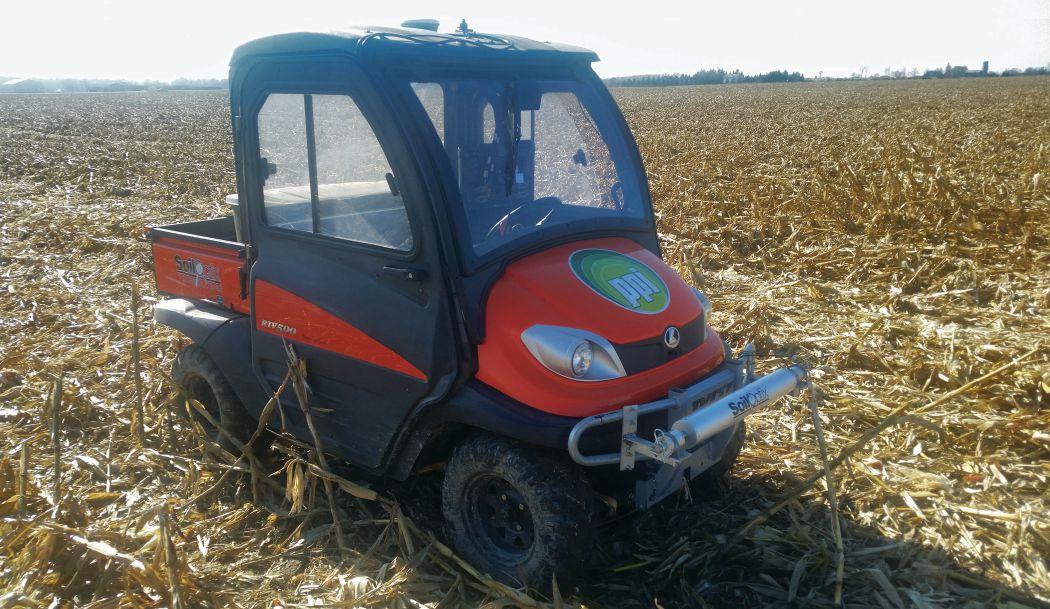
TOP: SoilOptix is a digital high-resolution top soil mapping system that includes a calibrated sensor – a gamma ray spectrometer – to assess the geological properties of the soil.
he’s quick to note adding more nutrients may not necessarily be the answer.
“The last thing we want to do is put on excessive amounts. Economics drives a lot of this, and these are costly inputs. Farmers want to do the right thing in terms of the environment and the pocketbook,” he says.
David Hooker, a field crop agronomist and assistant professor at the University of Guelph’s Ridgetown campus, says preliminary data suggests there is already some early indication that crops respond well to higher background levels of P and K versus the sufficiency approach.
Hooker manages the Ridgetown site, representing a large corn, wheat and soy producing area. (The other three sites involved in the project are located in Elora, Bornholm and Lucan.)
He says crop yield response depends on the yield potential as well as the cation exchange capacity (CEC) of the soil – an efficiency factor that plants respond to in terms of how much P
and K are available to the crop.
“A high testing CEC soil tends to retain a lot of the P and K nutrients and does not release these to plant growth. An example is clay soils,” Hooker says. “In these conditions you’d need
Producers will be able to assess P and K fertilizer responses and use the data to apply P and K variably across the field.
more P and K fertilizer to show a response, compared to a sandy soil where P and K nutrients aren’t held very tightly to soil particles and the response to the fertilizer might be higher.”
Though soils can vary greatly across Ontario regions, they can
MEASURING P – GEOLOGICALLY
Paul Raymer, owner of Practical Precision in Tavistock, Ont., says soil testing could be combined with another method of analysis to deliver promising results when it comes to mapping P in the soil.
Raymer is the developer of SoilOptix, a digital, high-resolution topsoil mapping system that includes a calibrated sensor – a gamma ray spectrometer – that assesses the geological properties of the soil, such as thorium and uranium.
“We feel that if we can measure the very stable, naturally occurring geological properties of the topsoil layer, married
with regular lab soil test results, it can give us a slight ‘leg up’ to spatially identifying nutrient variability over traditional spatial sampling practices,” Raymer says.
These geological properties, in different ratios, can have a relationship to plant available P. In other words, if an area of the field contains a certain amount of thorium or uranium, it likely contains a proportionate amount of phosphorous.
“Not to discount traditional sampling practices, but two practices combined may help us identify a field’s fertility and textural property ‘personality,’ ” he says.
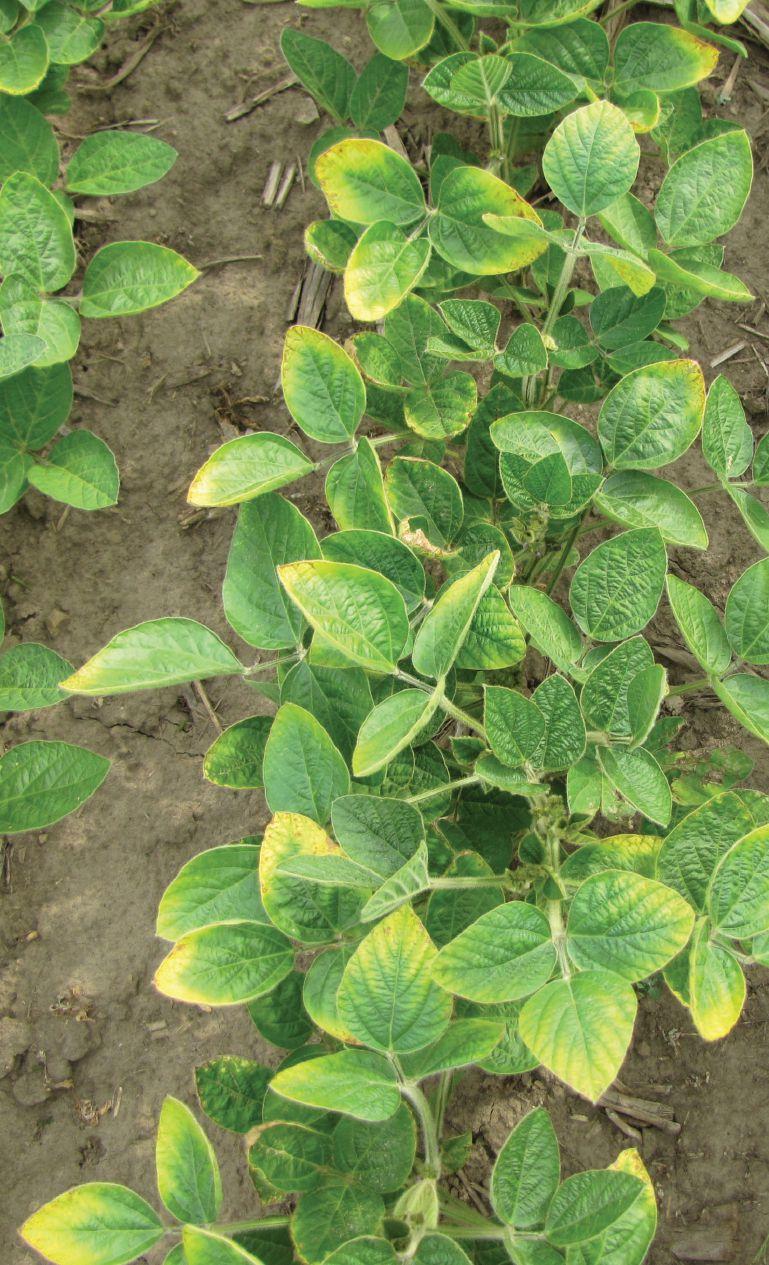
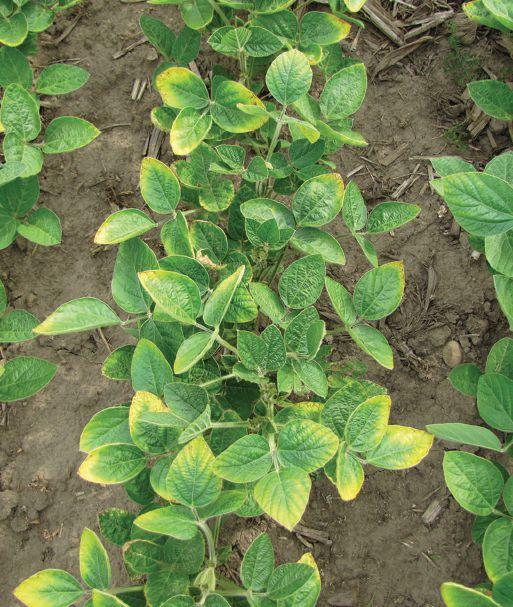
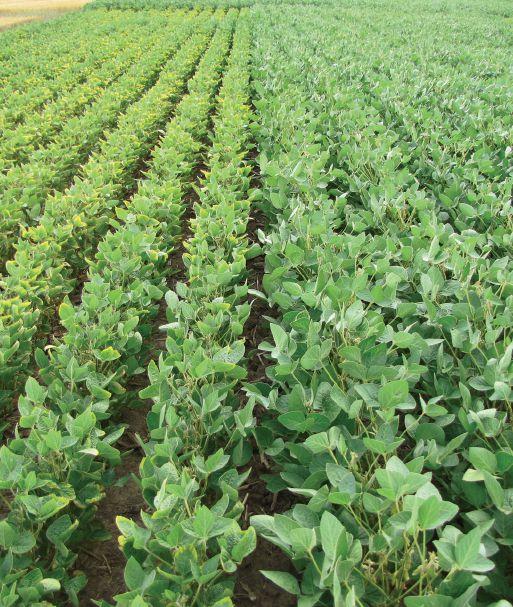
Phosphorus-deficient soybeans.
Soybeans with a severe P deficiency (left) beside soybeans with no deficiency (right). PHOTOS
also vary within a single field.
“Within any of these trial locations, and any field, we often forget that the variability within a field is tremendous, especially with P,” Bohner says.
But so far the study has demonstrated that consistent, higher yields result when soil fertility has been built up over time. “I think it’ll shake out that if your soil test is a low number in PPM [parts per million], you simply can’t put on enough with the planter to get maximum yields. You’re going to have to build that soil to a reasonable level,” he predicts.
Precision applications
Hooker believes there will be major applications for this research in precision agriculture in the near future. Producers will be able to assess P and K fertilizer responses and use the data to apply P and K variably across the field.
But P and K are notoriously difficult to measure using soil tests; levels might change within a single metre. “Soil testing tends to get expensive in a hurry,” Hooker says.
More data is needed to understand how P and K work in the soil, and how to keep the levels up. But regardless of what precision agriculture applications might include in the future, Bohner believes the basic P and K management research the team is doing is essential.
“These are fundamental questions we need to know as producers: how to best treat the soil in the cropping system for long-term sustainability, how to handle P and K in the long-term,” he says.
“In today’s world you cannot ignore the other factors of sustainability. It’s not just about getting the highest yield but the most profitable and sustainable system.”
For more on fertility and nutrients, visit topcropmanager.com.
USE A GLYPHOSATE THAT WORKS IN YOUR TANK AND ON YOUR WEEDS.
Credit ® Xtreme is a patented glyphosate formulation containing Dual-Salt Technology™ . Its high-load formulation provides excellent GM crop safety, fast and complete control of troublesome weeds, and exceptional compatibility with phenoxy herbicides, even in hard water.
PESTS AND DISEASES
WESTERN BEAN CUTWORM IN DRY BEANS
Staying on top of a growing problem.
by Carolyn King
Sometimes it’s a good thing to come second. Dry beans are the second choice for western bean cutworm moths looking for a place to lay their eggs. They prefer corn at the pre-tassel stage, but if they can’t find that, then they’ll go to dry bean fields. So far in Ontario, this invasive pest is causing the biggest problems in corn, but western bean cutworm has the potential to be a serious pest in dry beans, as Michigan growers have found.
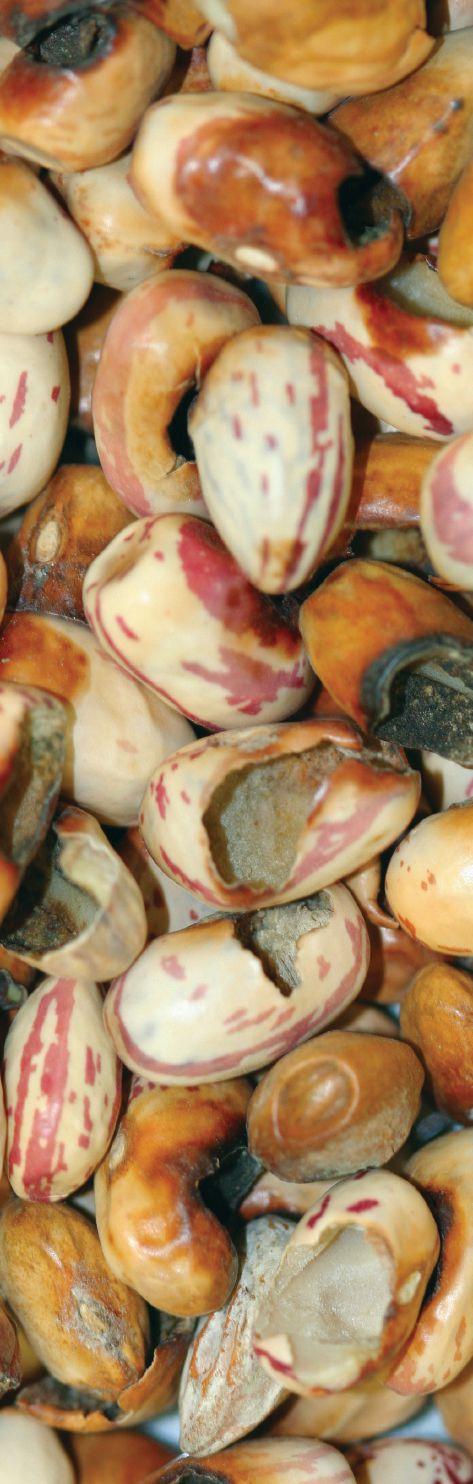
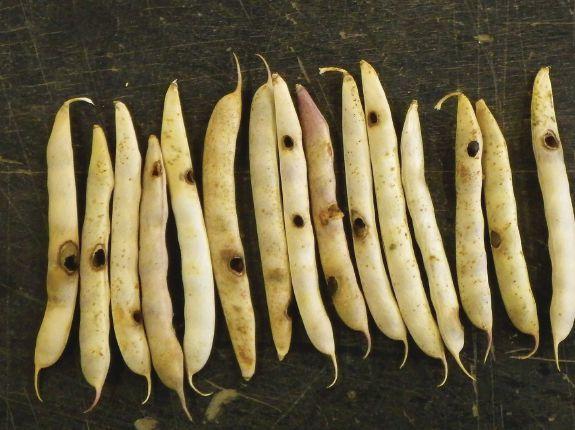
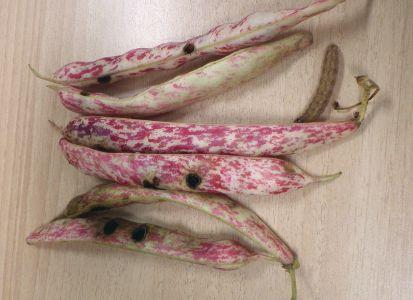
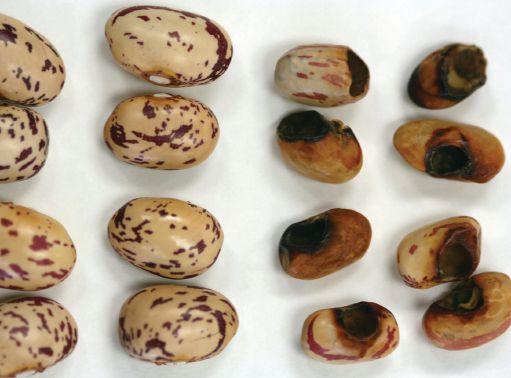
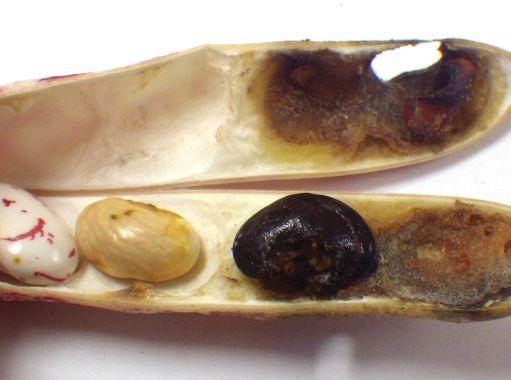
Compared to its attacks on corn plants, this pest is fairly sneaky in dry beans. After emerging from the soil in early summer, the adult moths lay their eggs in clusters on the underside of bean leaves hidden within the crop canopy. The tiny larvae hatch from the eggs and initially feed on the leaf around the egg mass, but they are hard to see and the leaf damage is easy to confuse with damage by other insects. The larvae soon disperse to feed on the leaves and blossoms of that bean plant and other nearby bean plants. As the larvae grow older and larger, they start feeding on the pods and seeds, chewing little round holes. The older larvae tend to feed at night or on cloudy days, and hide in the soil or crop debris at the base of the bean plant on sunny days. The larvae feed for a few weeks and then drop to the soil to overwinter.
The seed damage reduces the bean crop’s marketable yield. As well, the damage to the pods and seeds allows pathogens and other insects to enter and cause further damage.
Since 2000, this insect has been spreading east from the western U.S. across the midwest into the Great Lakes region, including Ontario and Quebec. “We’ve been monitoring this pest’s range expansion since 2006 in Ontario. We caught our first ones in 2008. It has consistently continued to expand its distribution slowly throughout Ontario since then,” says Jocelyn Smith, a research associate in field crop pest management at the University of Guelph’s Ridgetown Campus.
“Almost year-over-year, we have found new areas throughout the province where we detect the moths during the flight period. The economic injury also keeps expanding in Ontario a little year-over-year in corn and in dry beans. We haven’t had too many issues with dry beans, but as of 2015 and 2016 we’re seeing it starting up there as well.”
“Damage by this pest in dry beans has been gradually going up in Ontario,
<LEFT: When scouting for western bean cutworm, look for little round holes in the pods.
BOTTOM: Pod feeding usually occurs about 10 to 21 days after peak moth flight.
<LEFT: Western bean cutworm can be a serious pest in dry beans.
but it is still very low and very sporadic,” says Chris Gillard, an associate professor at the University of Guelph-Ridgetown. His research focuses on dry bean agronomy and pest management. “I have been in dry bean fields where about five to seven per cent of the pods have a hole in them. When you split that pod open, you find one, or occasionally two, beans affected out of the six or seven beans in that pod. I’ve heard of damage levels [in 2016] of 10 per cent of the pods with holes and two beans out of six or seven affected.”
“If 10 per cent of the pods are affected and 10 per cent of the beans in a pod are affected, that’s 10 per cent of 10 per cent, which is one per cent of the crop affected,” he adds. “You would probably need to have at least two or possibly three per cent of the seed affected to justify a control. I’m not aware of a field in Ontario yet that has reached that two or three per cent damage threshold.”
Western bean cutworm overwinters most successfully in areas with sandy soils, so those areas tend to have larger populations. For example, in Michigan, the worst areas for dry bean damage are pockets in several counties where corn and dry beans are grown together and soils are sandy, explains Christina DiFonzo, a field crop entomologist at Michigan State University.
Her research group has done a lot of work on western bean cutworm. The pest was first documented in Michigan in 2006, and it soon became a problem in both corn and dry beans. DiFonzo says, “Most of our dry bean growers are now spraying every year for western bean cutworm. Even so, dry bean loads still sometimes have damaged beans that have to be [removed by seed cleaning equipment].”
Her group has examined thresholds for spraying based on the number of western bean cutworm moths caught in pheromone traps. They’ve found Michigan thresholds are much lower than the thresholds for the western U.S.
For example, an extension publication from the University of Nebraska–Lincoln states the risk of significant damage from the pest in dry beans is low when the cumulative catch at the peak of the moth flight is fewer than 700 per trap, moderate when the number is between 700 and 1,000, and high if the count exceeds 1,000 moths per trap. “But once the pest got into our region, perhaps because we have higher humidity and higher survival, the damage in corn and dry beans occurs at much lower numbers of moths,” DiFonzo says. “When about 150 or so moths are captured, then typically Michigan bean growers will spray.”
PHOTO COURTESY OF CHRISTINA DIFONZO.
PHOTO COURTESY OF JOCELYN SMITH.
PHOTO COURTESY OF JOCELYN SMITH.
Her group has also been evaluating insecticide application options. “In dry beans, we compared one well-timed spray with a ‘super’ treatment where we sprayed about three or four weeks in a row, which would be utterly ridiculous – no grower would actually do that. We found that one well-timed spray was just as good as that super spray treatment,” she says.
They found that a pyrethroid spray directly kills larvae in the field and also gives a seven- to 14-day residual control of larvae hatching from egg masses laid after the peak trap catch. So Michigan dry bean growers usually do a single spray applied up to 18 days after the peak moth flight.
Monitoring and research in Ontario
Traps for western bean cutworm moths are spread across the corn-growing region of Ontario and into Quebec. “The trap network was originally funded as a collaborative effort with OMAFRA [Ontario Ministry of Agriculture, Food and Rural Affairs], the Ontario Bean Growers and the Grain Farmers of Ontario. That funding ended in 2013. So since 2014 we haven’t had the same level of funding behind the trapping network and it has decreased in size,” Smith says. “Western bean cutworm has been more of an issue in corn so a lot of the co-operators from the trap network continue to do trapping in their corn fields, and we’ve kept working with them but it’s on a shoestring budget.”
Interactive maps of the trap results are available on the Canadian Corn Pest Coalition website, www.cornpest.ca. “The traps are baited with a pheromone that attracts the male moth. When they come into a trap, they are killed by an insecticide strip in the trap,” Gillard says. “The moths are counted on a weekly basis to determine when the moth flight peaks. Typically, the peak in Ontario is sometime between about July 25 and August 2.”
The timing of the moths’ flight depends on the weather: the warmer it is, the earlier the moths fly. “A growing degree day model from Nebraska has been slightly modified [by the University of Minnesota] recently to take into account more of the temperatures during the overwintering period. We hope to validate that model for Ontario in the next year or so,” Smith explains.
“We don’t have a threshold for corn or beans that is related to the trap counts [in Ontario].” she says. However, trapping does indicate if the pest is in an area and when growers should start
scouting to make spray decisions.
Gillard isn’t certain why the pest is causing more problems for dry bean production in Michigan than in Ontario. One possibility is that the growing conditions are somewhat different. “I don’t know if they have more of their bean production on sandier soil. [In Ontario] you don’t see a lot of dry beans planted on really sharp, light sands because they just don’t do well on droughty soils.”
One of his graduate students, Lindsey Goudis, conducted field and laboratory studies on western bean cutworm from 2011 to 2013. Part of this research involved examining the efficacy of various insecticides such as Matador, Coragen and Voliam Xpress. “We didn’t have really strong pest populations so it was fairly tough to say that one product was better than another,” Gillard says.
“We also looked at the timing of application of two of the products, comparing applications at peak moth flight, peak moth flight plus four days, plus eight days, plus 11, plus 18, etcetera. We found that the four- to 20-day window after peak moth flight was the best time to spray dry beans.”
Goudis compared egg-laying locations and didn’t find any differences between the different market classes of dry beans. As well, she compared the pest’s response to feeding on navy bean, kidney bean and adzuki bean plants. Gillard says, “She fed them leaf, flower and pod tissue and that is all they got to eat. The larvae fed and grew a little better on kidney bean tissue than on navy bean. They did the poorest on adzuki bean. That was a bit contrary to some anecdotal evidence from industry indicating that they were seeing more damage in adzuki bean than other beans.” In Michigan, bigger seeded types of dry beans tend to have more problems with the pest.
Gillard’s group hasn’t done any further work on western bean cutworm since Goudis wrapped up her studies. “I’m not going to pursue more research on it until I see the need for it from a commercial production point of view and until we have more questions that we need answered,” he says.
Scouting and thresholds
“It is practically impossible to scout for western bean cutworm in dry beans. It is practically impossible to find the egg masses in a canopy with a big amount of foliage and practically
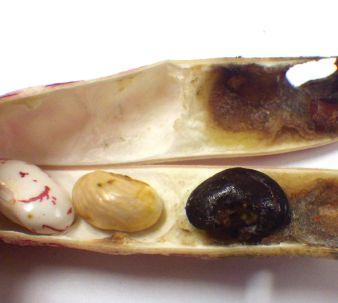
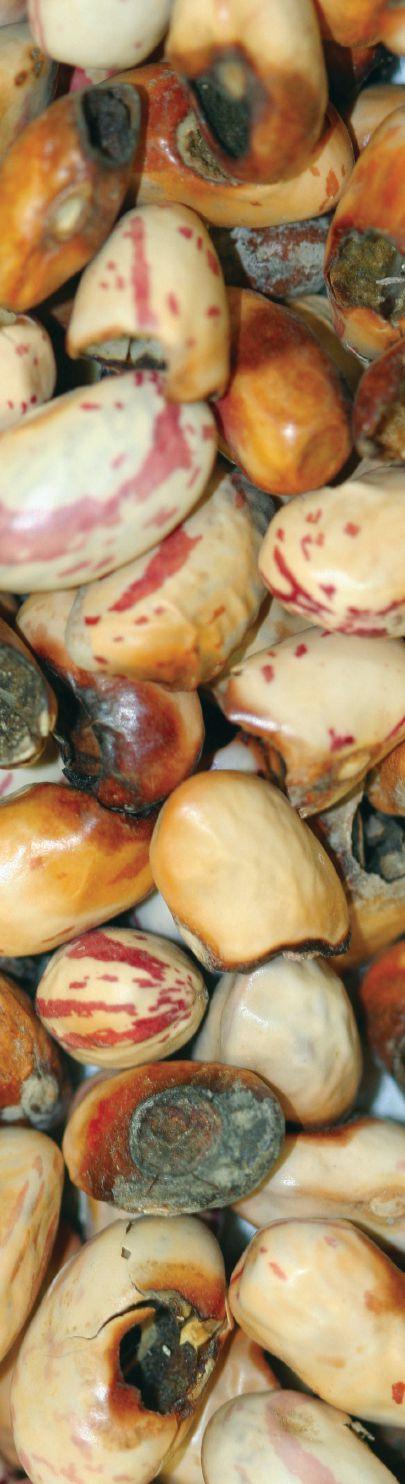
Undamaged beans compared to beans with western bean cutworm damage.
Sometimes the larvae curl up inside the pods.
PHOTO COURTESY OF CHRISTINA DIFONZO.
PHOTO COURTESY OF JOCELYN SMITH.
impossible to find the larvae because they feed at night in beans,” Gillard says. “In corn, they seem to act like a completely different insect – they feed in the day instead of at night, and they lay the egg masses up near the top of the plant.”
So the Ontario recommendation for dry beans is to scout for pod damage, rather than trying to find the eggs or larvae. Pod feeding typically occurs about 10 to 21 days after peak moth flight. OMAFRA recommends randomly selecting some plants in your bean field and taking a close look at all of the pods on each of those plants. If you see a small pinhole into the cavity of the pod, it could be western bean cutworm damage. To be sure, open up the pod. If you don’t find a larva, then it’s very likely western bean cutworm damage. If you do find a larva, it may or may not be a western bean cutworm; cornpest.ca has a factsheet to help you tell western bean cutworm from similar-looking pests.
“If you see any western bean cutworm pod feeding, start measuring that,” Gillard says. He advises growers check their fields about once a week. “Once you get to two to three per cent of seed impacted, it is time to spray. And the critical window for spraying is four to 20 days out from peak moth flight.” Currently in Canada, Matador or Silencer (lambda-cyhalothrin) and Coragen (chlorantraniliprole) are registered for control of western bean cutworm in dry beans.
“I suspect five years from now we will be spraying dry bean fields in Ontario for western bean cutworm,” Gillard says. “The problem is getting a little worse every year so we’re going to have to be that much more diligent in walking dry bean fields in the first couple of weeks of August, looking for symptoms of
damage and staying on top of it so it doesn’t get out of hand.”
To stay on top of western bean cutworm problems, you may want to set up pheromone traps in your bean fields. Smith notes, “Because we have seen an increase in damage in dry beans last year and this year, we are looking for more co-operators who have dry beans to participate in the trapping network in 2017.”
For more on pest management, visit
Damage by this pest has been gradually increasing in Ontario dry bean crops. PHOTO
FEBRUARY 21
Diseases of Field Crops in Canada: Past, Present and Future
Dr. Bruce Gossen, Agriculture and Agri-Food Canada
Advances in Breeding and Management of Fusarium Head Blight
Dr. Anita Brûlé-Babel, University of Manitoba
Founding Member
The Dynamics of the Pathogen Population and Cultivar Resistance for Blackleg Management
Dr. Gary Peng, Agriculture and Agri-Food Canada
Getting the Most out of your Cereal Fungicide: A Western Canadian Perspective
Dr. Kelly Turkington, Agriculture and Agri-Food Canada
Aphanomyces and Fusarium Root Rots of Pulse Crops
Dr. Syama Chatterton, Agriculture and Agri-Food Canada
Disease Management: Lessons from Australasia and Europe
Dr. Nick Poole, FAR Australia
War of the Titans: The Battle for Supremacy in Wheat-Fusarium Interactions, and Lessons from the Canola-Blackleg Playbook
Healthy Seed, Healthy Start: The Importance of Seed Testing in Preventing Diseases of Pulse Crops
FEBRUARY 22 The 2017 Field Crop Disease Summit has been approved for 12 CEUs (CCA) and 9 CEUs (CCSC).
Dr. Dilantha Fernando, University of Manitoba
Dr. Mary Burrows, Montana State University
PESTS AND DISEASES
TRACKING SOYBEAN APHIDS
Researchers find populations of this pest have decreased in Quebec and Ontario.
by Julienne Isaacs
Anew study is helping Quebec researchers understand how to better control soybean aphid in the province.
Julie-Éléonore Maisonhaute is the author of “Population dynamics of the soybean aphid in Québec,” along with Geneviève Labrie and Eric Lucas. The article, published this spring in the Journal of Economic Entomology, analyzes 12 years of archive and field data collected from the Montérégie area of Quebec. “There was no study in Quebec regarding the soybean aphid so it was the first big study looking at population dynamics,” Maisonhaute says.
The study, conducted under the co-supervision of Lucas (at Université du Québec à Montréal) and Labrie (at the Centre de recherche sur les grains), was part of Maisonhaute’s PhD research at Université du Québec à Montréal, and looked at data from 2004 to 2015.
Maisonhaute’s fieldwork involved sampling 30 plants per field in 37 to 40 fields per year from soybean emergence through the end of August or beginning of September between 2010 and 2012, and averaging the number of aphids on the plants. This data was analyzed together with data collected by the provincial phytosanitary surveillance network in the rest of the study period. The article notes soybean populations ran in two-year oscillation cycles in the region between 2005 and 2011, with severity increasing every second year.
But overall, Maisonhaute says, soybean aphid populations decreased in Quebec during the study period and there were some changes in the population dynamics for the past few years.
The decrease in soybean aphid populations is a trend that has been noted in Ontario too, says Rebecca Hallett, a professor in the School of Environmental Sciences at the University of Guelph.
Hallett references a 2015 study by her former student, Christie Bahlai (now at Michigan State University), that suggests seed treatment and foliar insecticide use has negatively impacted populations of soybean aphid in four midwestern states in the U.S.
“Neonicotinoids were never promoted as control for soybean aphid, but Bahlai’s modeling work shows that reducing the early season population growth of soybean aphid has resulted in widespread depression of populations,” Hallett says.
In Quebec, Maisonhaute points to factors including the efficacy of natural enemies and abiotic conditions, as well as the increasing use of neonicotinoid seed treatments, as possible reasons for the decrease in aphid density.
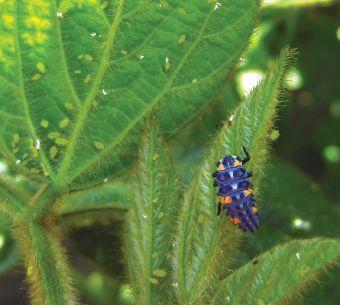
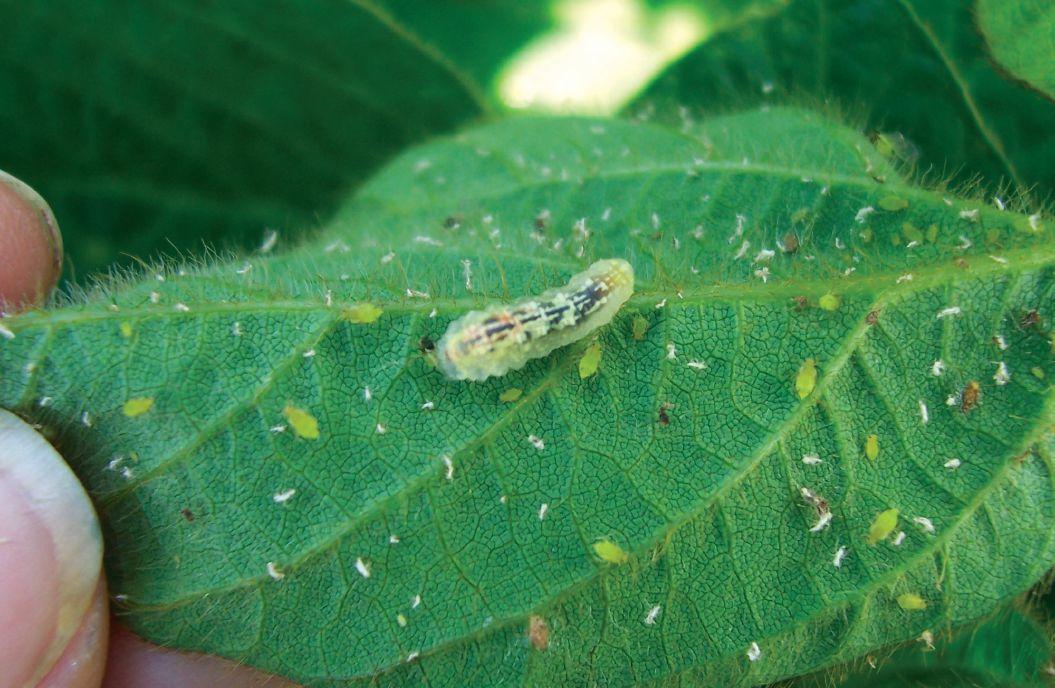
TOP: The hoverfly larva.
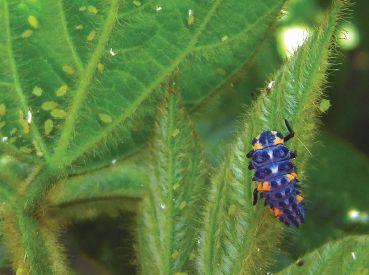
INSET: Predators in aphid colonies include the seven-spot ladybird.
PHOTOS
COURTESY
Management possibilities
The science of population dynamics lays crucial groundwork for the development of management strategies for insect pests such as soybean aphid, but it’s incredibly complex work. According to Maisonhaute, many factors influence population dynamics, including abiotic conditions such as temperature and rainfall, climate changes, the presence of natural enemies, use of insecticide treatments, landscape and the presence of other host plants.
Maisonhaute’s research offers local confirmation of generally known information about soybean aphid that could aid producers in combatting the pest. For example, she says, the researchers found landscapes with higher proportions of soybean attracted more soybean aphids in the Montérégie region. “On the opposite side, there are fewer aphids when landscapes are more diversified, when there are not only soybeans and corn but vegetable crops or other crops in the landscape – at least five to six different crops in a radius of 1.5 kilometres round the fields,” she says.
Another key inference from Maisonhaute’s study, and one that was first discovered by Bahlai in Ontario, is that the buckthorn shrub, an invasive species often found in Quebec hedgerows, is the overwintering site for the soybean aphids in the province. “We found a positive relationship between the presence of buckthorn in the landscape, and aphid density in the fields,” Maisonhaute says. “We knew it overwinters in buckthorn in the U.S. and in Ontario, but our research strongly [suggests] that soybean aphid now overwinters in Quebec.”
Natural enemies
Maisonhaute says there are three major implications to be drawn
from her study. First, higher crop diversity nearly always decreases soybean aphid populations. Second, producers should consider destroying buckthorn shrubs in hedgerows. This is not a hardship, she notes, as buckthorn is a non-native species that damages the ecosystem in several ways: besides harbouring soybean aphids, it aggressively spreads and displaces native plants, and can serve as a host for the fungus responsible for oat crown rust.
Third, and perhaps most importantly, producers should take into account the presence of natural enemies of the soybean aphid, including lady beetles, pirate bugs and parasitoid wasps that may already be present in a field. “In Quebec, we use an alert threshold of 250 aphids per plant,” Maisonhaute says. “When this is reached, we observed the presence of natural enemies. If there are lady beetles and other predators, we return three days later. If there is an increase of 35 per cent of the aphid population at that point, producers should use foliar insecticide. Otherwise, the population will reduce itself through the action of natural enemies.”
If producers don’t have strong populations of natural enemies in their fields, they can be introduced.
Hallett has previously worked on dynamic action thresholds for soybean aphid in Ontario. A few years ago, after prompting from producers in the province wondering about the impact of lady beetles on aphid populations, her team developed a smartphone application called AphidAdvisor (www.aphidapp.com) that can be used to calculate the economic imperative to spray.
“Producers can enter the number of aphids and natural enemies they see on a plant and it helps them with the decision-making process,” she says.
IMPROVING WHEAT YIELDS WITH OILSEED RADISH?
Researchers are working to understand on-farm findings.
by Amy Petherick
Generally researchers try to stay ahead of farming practices, but lately they find themselves chasing an explanation for an emerging one.
Dean Baas, a sustainable agriculture extension educator at Michigan State University, started testing oilseed radish’s reported ability to boost yield when interseeded with winter wheat back in 2012. Several farmers from Ohio were claiming low rates of oilseed radish added to their wheat prior to planting produced yield increases, but no one had tested their results without oilseed radish in the same field.
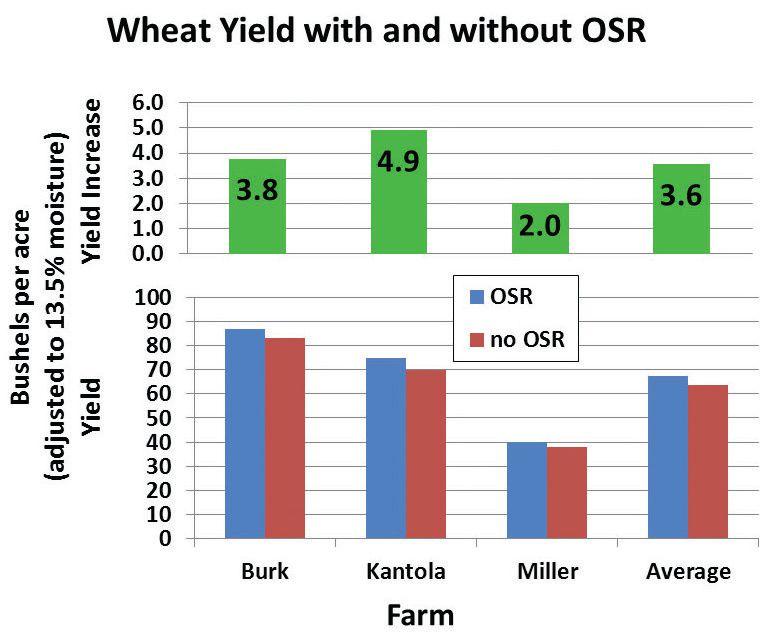
Baas worked with three Michigan farmers – John Burk of Bay City, Dean Kantola of Ravenna, and Henry Miller of Centreville – to plant strips throughout the field of oilseed radish (at a rate of three pounds per acre, or lb/ac) with wheat to compare to wheat planted alone. All of the wheat was planted at the same rate each farmer would usually use on his fields, and results from 2012 and 2013 showed a promising yield increase.
Wheat yield on all three farms increased with oilseed radish,
ranging from two bushels per acre (bu/ac) on the Miller farm to 4.9 bu/ac on the Kantola farm. The average increase across all three farms was 3.6 bu/ac and the earlier planted farms (Burk and Kantola) appeared to produce the greatest increase.
Repeating the trial in 2013-2014, Baas looked further into the optimal timing of oilseed radish seeding, and expanded to five locations. Gerald Heck of Monroe, Mich., joined as another farm co-operator. In addition, a small-scale plot was established at the W.K. Kellogg Biological Station in Hickory Corners, Mich., where three different rates (1.5, three and 4.5 pounds of oilseed radish per acre), planted at three different dates, could be tested.
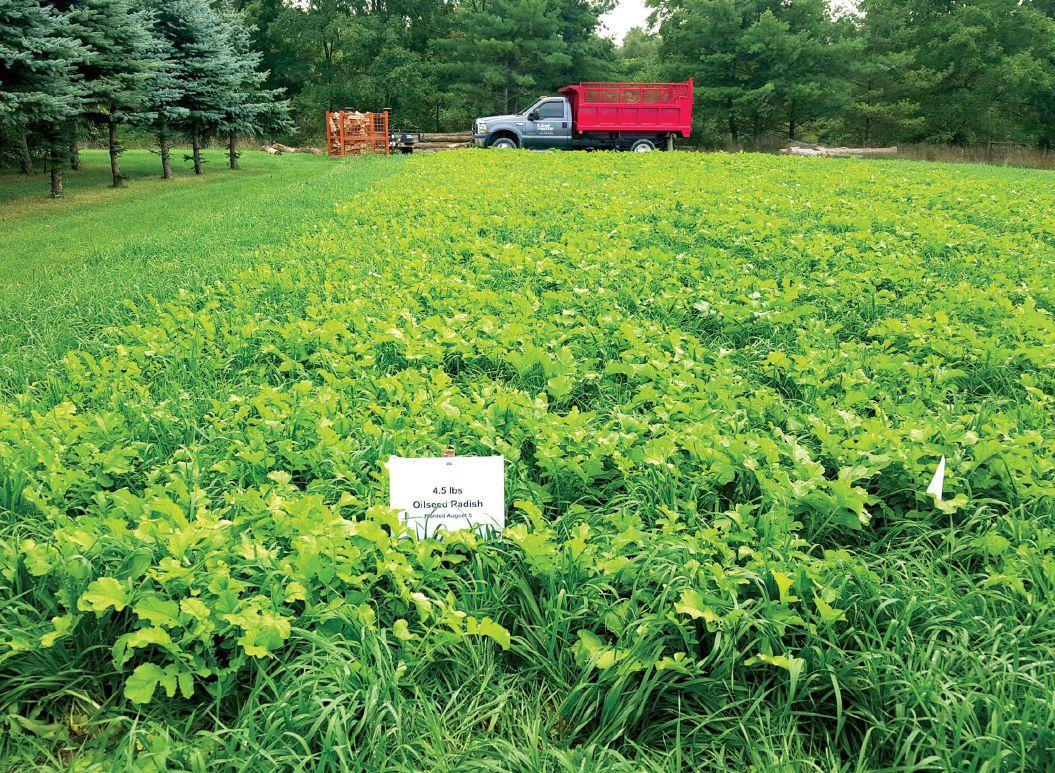
ABOVE: A demonstration plot at this year’s Outdoor Farm Show showcased the potential of oilseed radish in Ontario wheat crops. It’s unknown what the impact of each seeding rate might have been on yield, since the plot never reached full maturity for harvest, but the 4.5 lb/ac rate visually appears to overcrowd wheat plants more than ideally tolerated.
At harvest time, the research station results were mixed, which was thought to be a result of late planting and the harsh winter. Baas repeated the trial again in 2014-2015, including early and late planting dates, and evaluated three different seeding rates at the research station. For the third year in a row, the results on the co-operator farms showed a consistent increase in yield, while the multiple rate trials in the small-scale plots were inconsistent.
“I took everything we had done on small plots, on-farm, and I took the three years’ worth of data, and looked at it all together,” Baas says. “Basically, anything that we had done on a small scale, whether it was all of a small plot, or a small part of a very large plot, you can flip a coin: you get an increase 46 or 48 per cent of the time and you get a decrease the rest of the time. If you look at large scale farmer fields, they get an increase 86 per cent of the time and we have no logical explanation why.”
Baas thinks the best explanation for this irreproducibility comes from variability in the plots that is produced by inconsistencies in the mixture. “If you mix three pounds of oilseed radish with 170 pounds of wheat, you can imagine how little oilseed radish there is in that wheat and I believe that what happened, on a small plot scale, is we couldn’t get it evenly mixed enough,” he says. “So, some of the plots that we thought were at a certain rate were much lower, and some of them were much higher.”
If he’s right, it’s possible half of the plots were underpopulated and half the plots were over across the whole length of the plot, basically creating a situation where the lows didn’t show any increase. That would cancel out the highs in areas that did achieve an increase. “And the reason that it worked in the farmer’s field was because even though they weren’t any better at mixing or planting it, we were averaging all that variability by sampling a large enough area.”
"If you mix three pounds of oilseed radish with 170 pounds of wheat, you can imagine how little oilseed radish there is in that wheat and I believe that what happened, on a small plot scale, is we couldn’t get it evenly mixed enough."
To test his explanation – and he is determined to keep working toward an explanation – he’ll be planting the wheat and oilseed radish separately this year using small and large boxes on the seed drill. It’s not a realistic practice for most farmers, but until Baas can reproduce the yield increase resulting in farmers’ fields at a small plot level, he won’t be comfortable recommending the practice.
Still, many farmers aren’t even waiting for the results of his current trial.
“Farmers that I’ve been working with have become so convinced, they are kind of working on it as a standard practice,” he says. “That tells you something, so, I still have to believe that this has potential.”
Results from trials conducted in Michigan during the 2012-2013 growing season produced yield increases in all cases with oilseed radish. Although successive trials continued to support these findings on-farm, small-scale research could not replicate similar results.
Implications for Ontario growers
Keeping a keen watch for Baas’ future results is Joanna Follings, the Ontario Ministry of Agriculture, Food, and Rural Affairs cereals specialist. She says there aren’t a lot of growers who are adopting the addition of oilseed radish in their winter wheat stands this far north, but some are dabbling with the practice.
To showcase the potential of the practice, she planted a demonstration plot at this year’s Outdoor Farm Show in Woodstock, Ont.
“It’s not what a grower would typically do, because we planted it in August, just so that it would be ready for the show,” she says. “So, the radish was a lot bigger than it normally would be.”
The demonstration did effectively show how much difference was produced by adjusting the oilseed radish rate. Follings says visually the 4.5 lb/ac rate in 1.6 million seeds per acre of wheat seems to dominate a little more than she’d like to see, but since these plots weren’t harvested, it’s difficult to say whether or not that impact would be significant in terms of yield.
That’s why a plot was planted at the Winchester research station on Sept. 30. She says the field crop team is not only looking at different seeding rates in this plot, but also at the impact of the oilseed radish on nitrogen. “Just to see if perhaps you don’t need to put as much nitrogen on when you have the oilseed radish,” she explains.
Whether or not they extend this trial beyond the current year will depend on the results they see at harvest. Follings advises any growers interested in testing the practice on their own farms to include a yield check between wheat that is planted with oilseed radish and wheat planted without it.
“If you can, do a couple strips in different areas having different topography, through the waterhole, that type of thing. That’s what I would try to do,” she says.
Visit topcropmanager.com for more crop management strategies.
THE MORE YOU KNOW, THE BETTER YOU’LL GROW
Frequent soil testing is an under-appreciated and under-utilized way to optimize one’s fertilizer program and maximize crop yield.
by Madeleine Baerg
Conducting regular soil tests is one of the simplest, fastest and least expensive ways to optimize one’s fertilizer program and maximize crop yield. Yet many producers still underuse this vital tool. Some farmers believe their experience and knowledge of their fields offset the need for the test; others are unclear about how to read and analyze results. And for others, the subject may simply not be glamorous enough to draw their attention. In an industry jumping leaps and bounds forward in technology, soil testing remains simple, humble and far from sexy. The reality, however, is that soil testing – be it composite, zone or grid sampling – should be considered a vital tool for every producer.
“It can be a challenge to get producers to think about soil testing,” says Jake Munroe, soil fertility specialist for field crops with the Ontario Ministry of Agriculture, Food and Rural Affairs (OMAFRA). “It’s not a subject that people usually get really excited about, but it’s a really important one. Soil test results can guide decision making and make it more likely that a farmer will achieve greater returns, so for those not soil testing regularly, there is definitely a missed opportunity.”
Most farmers still opt for a single composite test, in which samples taken from a minimum of 20 cores from the field are combined and analyzed as one. Depending on one’s field, field knowledge, and preference, composite samples can be conducted entirely randomly or in a more directed manner, prioritizing average producing areas of the field.
A composite sample provides a single snapshot of the average nutrient profile of the field. Though it is far better to base fertilizer rate decisions on composite results than estimation alone, in-field variation will skew the results. Fertilizer applied based on composite results will improve but not optimize in-field fertility.
Producers looking for more in-depth information and a way to better optimize a fertilizer management program should consider zone sampling or grid sampling. Each of these more intensive sampling techniques are intended to assess the specific nutrient needs of different parts of the field.
In zone sampling, growers divide fields into management zones that have similar yield potential and then separately
analyze samples from each area. Zones are typically identified by two or more pieces of data or history (topography, slope position, soil type and/or chemistry, microclimate, multi-year historical yield, soil conductivity, etc.). Though zone sampling sounds relatively simple, the reality is that identifying management zones can prove challenging.
Some producers attempt to create zone maps based simply on their memory of historical crop growth variation and visual field variations such as slope or moisture. For better accuracy, zone maps should be drawn with the help of a precision agriculture computer tool designed to accurately layer multiple pieces of data. Currently, OMAFRA and the Grain Farmers of Ontario are collaborating on an in-depth precision agriculture research project that will include the development of a free zone mapping tool.
Zones tend to be relatively stable and permanent. As such, investing in developing accurate zone maps can pay dividends in the long run, so long as a producer has the technology and the desire to manage those zones separately.
Producers interested in going a big step further towards full variable rate fertilizing should grid sample, or separately analyze individual soil samples from a large number of carefully plotted locations in a field. Whereas breaking a field into management zones allows a producer to separately manage multiple areas of a field, grid sampling provides one level of data for the framework required to build a prescription map. Once a precision map is finalized, fertilizer application can be fine-tuned to every minute change in a field.
Which soil sampling technique is right for an individual producer depends on how they farm and how much they want to spend, Munroe says.
“There can certainly be value in taking things to the next level by sampling more intensively. But, if you’re treating the whole field as a composite and applying fertilizer at the same rate across the field, don’t put the money into grid sampling if you’re not going to act on the results.”
Ontario fields should be sampled at least every three years. Growers of alfalfa, silage corn and other crops that are particularly nutrient-depleting should test annually, especially in sandy soils.
Ideally, growers should sample just after thaw in the spring, since significant nutrient losses through leaching and runoff can occur over the winter. That said, most growers find it more practical to find time for soil sampling in fall or late summer. Regardless of when you choose to sample, be consistent about your timing from year to year in order to ensure results are comparable. At the very least, have your samples analyzed for soil pH and macronutrients (phosphorus, calcium, magnesium, potassium). Though Ontario soils tend to be relatively high in magnesium and calcium, there has been a trend of dropping levels for both
phosphorus and potassium in recent years. Consider also testing for micronutrients (copper, manganese, zinc and boron), especially zinc and manganese. While soil tests are not as well calibrated for micronutrients as they are for macronutrients, micronutrient levels can play an important role in cash crop yields and so should not be ignored. Sample for organic matter too, in order to get a good feel for the biological activity, structure and overall health of the soil.
Completing sampling and sending soil away for analysis are necessary preliminaries. The real work – and the real reward –occurs once analysis reports are returned to the grower.
“Some growers are very competent in interpreting the analysis reports, and are very able to create detailed plans based on that interpretation. Others are less comfortable in making sense of the numbers. Fortunately, there are a variety of resources that can help,” Munroe says. “Agronomists and certified crop advisors also play a very important role in interpreting soil test results and making fertility recommendations.”
OMAFRA offers a variety of resources online including the Soil Fertility Handbook and the Agronomy Guide for Field Crops to assist growers in interpreting soil test results.
“A great starting point for Ontario producers is to look up the specific crop they plan to grow in our Agronomy Guide. Then, look at how their soil test results match up against our fertilizer guideline tables. That is an excellent first step to figuring out your nutrition plan for the coming year,” Munroe says.
The bottom line is clear: get out there and soil test. The more you know, the better you’ll grow.
NATURE’S DESIGN
Pre-treat your soybean seed and treat yourself to a better performing crop. Optimize® ST is a dual-action inoculant that combines a specially selected Bradyrhizobium japonicum inoculant with LCO (lipochitooligosaccharide) technology to enhance nitrogen fixation through better nodule formation. Increased nitrogen availability supports root and shoot growth – providing greater yield potential for your crop.
#bottomline Driving the Bottom Line
Soil testing in the spring is ideal, but it may be more convenient in the fall. Regardless of when a sample is taken, Jake Munroe recommends keeping the timing of soil testing consistent from one year to the next.
PHOTO BY STEFANIE CROLEY
MULTIPRONGED MANAGEMENT
Managing tufted vetch in soybeans – and the rest of the rotation.
by Carolyn King
The key to controlling tufted vetch in soybeans is to try to maximize control in all crops in the rotation and in all kinds of windows. That’s the advice of Mike Cowbrough, weed management specialist with the Ontario Ministry of Agriculture, Food and Rural Affairs (OMAFRA). He has been investigating options for tufted vetch control for about 14 years so he knows just how difficult this weed is to conquer.
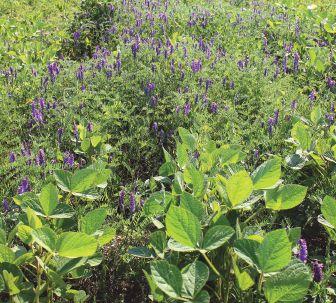
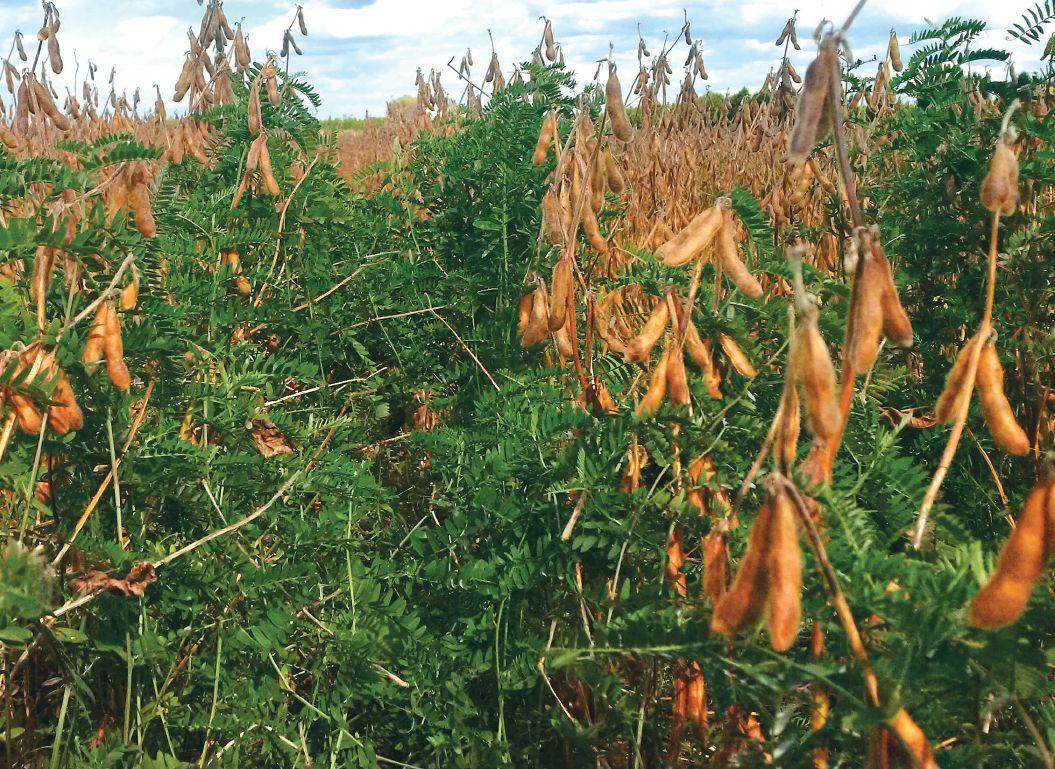
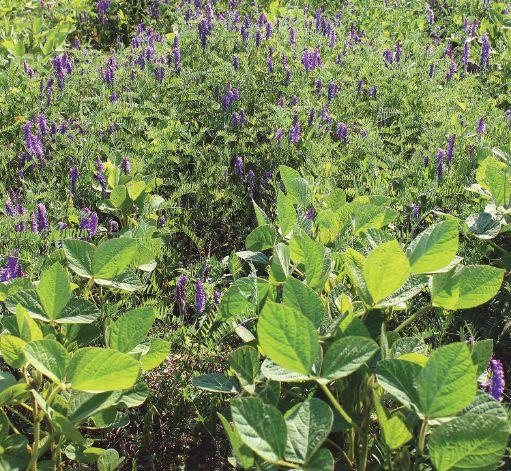
Tufted vetch (Vicia cracca) is a purple-flowered perennial legume that can climb onto and smother other plants. It reproduces by seed and also spreads by underground rootstocks. It can tolerate various herbicides, including glyphosate at the rates typically used in glyphosate-tolerant crops. The weed can also get tangled around equipment, reducing harvesting efficiency. In short, it’s troublesome in any crop.
It’s an especially tough problem in soybeans because of three factors, Cowbrough explains. “The first thing is that there are fewer herbicides with activity on tufted vetch in soybeans than in crops like corn and wheat.
“The second is that vetch is a late-germinating species, but
the arsenal of herbicides in soybeans that actually give you a fighting chance to control the weed can only really be applied prior to planting. Unfortunately, in most years vetch hasn’t even reared its ugly head out of the ground yet at that point, so there’s not much top-growth to target with a pre-plant herbicide.”
And the third factor is that tufted vetch has one heck of a root system. “It has a very thin, narrow but very persistent root system, which goes down to pretty significant depths. So it has quite a reserve to feed top-growth. To whittle that down takes years of effort,” he says.
This root system makes season-long control challenging. “It can continually send up new vegetative shoots, and the bigger the root system, the greater the ability to send up new shoots throughout the season.” He adds, “Vetch tends to show up in dry years because crop canopy closure isn’t as good and because its root system allows it to handle drought stress a lot more easily.”
ABOVE: Tufted vetch can be a serious problem in soybeans.
Options in the soybean year
Although there are no effective options for controlling tufted vetch in conventional soybeans once the crop has emerged, Cowbrough has found some promising pre-plant and pre-emergence options.
He recently evaluated pre-plant burndown treatments in plots on a block of land at the Elora Research Station in Ontario, which has significant vetch pressure. The trial involved 14 different treatments, duplicated in 2014 and 2015.
The most effective treatment was 2,4-D ester 700 at 320 millilitres per acre (mL/ac) tank-mixed with glyphosate and applied seven days before planting. “In the first year we had amazing control [with 2,4-D ester + glyphosate] for most of the year. Then in the second year, it wasn’t as impressive.” He adds, “I’m using the term ‘amazing’ loosely because the bar is set pretty low for tufted vetch control in soybean. No treatment in soybean at any application timing has consistently provided over 80 per cent control.”
The difference in control between 2014 and 2015 was mainly due to the difference in the amount of tufted vetch that had emerged by application time. “In 2014, we had a wetter than
normal spring, so we weren’t able to get into the field and plant soybeans until early June. As a result, a good amount of vetch was already up. In that situation, a pre-plant application of 2,4-D and Roundup is more likely to give better control throughout the season,” he says. “The second year had a more typical start to the spring, so the soybeans were planted in mid-May. As a result, fewer vetch plants had emerged at the time of the pre-plant application.”
For the 2,4-D ester + glyphosate tank mix, the average control eight weeks after application was 70 per cent. This could be a good strategy in years when a lot of tufted vetch has already emerged by a week before soybean planting time.
Cowbrough has also seen some fairly good results with a preemergent application of Boundary LQD tank-mixed with Broadstrike RC. (Table 1)
In 2016, Cowbrough shifted his tufted vetch/soybean work at Elora to dose-response trials with the new herbicide-tolerant technologies: Enlist soybeans, which are tolerant to glyphosate, glufosinate and 2,4-D choline; and Xtend soybeans, which are tolerant to glyphosate and dicamba (the active ingredient in Banvel).
Table 1: Best herbicide options for tufted vetch control in soybean
Table 4: Best herbicide options for tufted vetch in winter wheat, applications made to emerged weeds and crop (post-emergence)
Table 2: Best herbicide options for tufted vetch control after cereal or soybean harvest and before the first frost
Table 3: Best herbicide options for tufted vetch in corn, applications made to emerged weeds and crop (post-emergence)
LEFT: In 2014, a pre-plant application of glyphosate + 2,4-D provided unusually good control of tufted vetch, shown here over six weeks after application, because a good amount of vetch had already emerged by application time. RIGHT: In contrast, a pre-plant application of glyphosate alone did not control tufted vetch, as shown here on the same day in 2014.
Both 2,4-D and dicamba are Group 4 herbicides (synthetic auxins).
“In this trial, we are evaluating the active ingredients 2,4-D and dicamba to see what rates optimize top-growth control,” he says. “[As of mid-October 2016] we haven’t summarized the data yet, but both those systems certainly show some promise for managing vetch in a soybean crop.”
Other windows in the rotation Ontario studies, especially by University of Guelph researchers, have also identified options for controlling tufted vetch in other windows in the rotation. “The research programs of Peter Sikkema, Clarence Swanton and François Tardif are responsible for generating a lot of this data. I’m thankful that they let me tag along and help out where I can,” Cowbrough says.
Generally, the most effective herbicide application times for this late-emerging weed tend to be after crop emergence or after harvest because there’s more vetch top-growth.
Cowbrough says there’s an opportunity to hit tufted vetch in the fall after harvest of a cereal or soybean crop but before the first frost because tufted vetch is sensitive to cold temperatures. In the fall, perennial plants are storing sugars and photosynthates in their roots, so the flow within the plant is from aboveground tissues into the roots and herbicides move with this flow.
“We’ve done a limited amount of research, but generally speaking managing vetch in the fall has benefits for the next year. We
found that the addition of either Distinct (diflufenzopyr/dicamba) or Lontrel 360 (clopyralid) to glyphosate significantly reduced the amount of vetch that emerged the following spring and into the summer.” But, he cautions, “Don’t use Lontrel 360 in the fall if you’re going to plant a legume, such as soybeans, edible beans or alfalfa, the next year because significant injury will occur.” (Table 2)
The most effective herbicide application times for this late-emerging weed tend to be after crop emergence or after harvest because there’s more vetch top-growth.
In corn, Cowbrough says the most consistent control is with post-emergence applications of Distinct, Callisto + AAtrex 480 (mesotrione + atrazine), or Banvel II applied on emerged tufted vetch. (Table 3)
In cereals, trials show the best options are post-emergence applications of Trophy (fluroxypyr + MCPA), 2,4-D ester or Estaprop (dichlorprop / 2,4-D) applied to emerged tufted vetch. (Table 4)
Editor’s note: The tables in this article are adapted from a book about problem weeds Mike Cowbrough is working on. The book will be available in several formats through www.fieldcropnews.com in early 2017.
Trait Stewardship Responsibilities Notice to Farmers
Large-strip cropping proves to be an effective soybean aphid management tool.
by Julienne Isaacs
Strip cropping is a method of cultivation in which a variety of crops are sown in alternating strips in a single field. It is a type of intercropping that involves planting crops in distinct rows that can be separately managed.
According to Geneviève Labrie, a biologist-entomologist at Quebec’s Centre de recherche sur les grains, it’s a system that can provide multiple “eco-services,” ranging from erosion control to nitrogen supply to weed control. But the benefit she’s focused on is the dramatic effect on soybean aphid populations.
Labrie is the author of a recent study, “Impact of large strip cropping system (24 and 48 rows) on soybean aphid during four years in organic soybean,” published last winter in Agriculture, Ecosystems and Environment
The publication presents the results of a four-year study, conducted between 2007 and 2010 on a single organic farm near Les Cèdres, Que., in which a strip cropping system of soybean, wheat, corn and vetch (a cover crop) was installed in 18 and 36 metre strips and compared with a control crop of 180 metres of soybean.
“When I finished my PhD some producers called me because they wanted to evaluate strips on their farms,” Labrie says. “We evaluated all of the pests in the soybean, wheat and corn, and also the pests’ natural enemies.”
The experiment confirmed the producers’ assumptions: the system demonstrated a dramatic impact on soybean aphid populations, with a reduction of 33 to 55 per cent compared with the control plots during high infestation years.
Recipe and results
Thomas Dewavrin is a co-owner, along with two brothers, of Les fermes Longprés ltée, the farm where the study was conducted.
He says the family operation went full-scale organic in 1997 and has diversified to include a flour mill and cold-pressed oil processing plant. They’ve been ridge cropping and strip cropping since the late 1990s, but enlisted Labrie’s help to quantify pest population reductions.
“We saw a 50 per cent reduction in aphids with Dr. Labrie,” Dewavrin says.
Dewavrin’s “recipe” for a four-year strip cropping rotation is as follows: spring wheat underseeded with red clover; green manure and summer fallow followed by hairy vetch; corn seeded after a green manure of hairy vetch; and soy planted directly on corn ridges, followed by an application of poultry manure and wheat
<LEFT: Eighteen-metre strips in a large-strip cropping system.
ABOVE: The strip cropping system showed a reduction of 33 to 55 per cent in soybean aphid populations compared with the control plots during high infestation years.
again in the spring.
Labrie quantified soybean aphid and the pest’s natural enemies, including lady beetles, cecidomyiid larvae, syrphid fly larvae, neuropteran larvae, hemipteran bugs, spiders and parasitoids. She found soybean aphid abundance was reduced in strips versus control plots during periods of high infestation, and natural enemies had a higher impact on aphids in strips.
She also looked at yields in the strip cropping system, comparing them to yields in the control plots. While the strip cropping system did not show a yield difference versus the control, it made a difference in terms of efficiency and total system performance.
Using a tool called the “land equivalent ratio (LER),” defined by the United Nations Food and Agriculture Organization as “the ratio of the area under sole cropping to the area under intercropping needed to give equal amounts of yield at the same management level,” Labrie and her team found that the 18 metre strips were between 18 and 69 per cent more efficient compared with sole crop, while 36 metre strips were similar to control plots.
The finding suggests multiple ecological benefits to the system beyond the most obvious: dramatic reductions in soybean aphid populations.
Advantages
Labrie believes the drop is due to a combination of factors, including the increased efficiency of natural predators, the physical barrier of corn stalks, the presence of plants that are not natural hosts to soybean aphids, and the mixed visual cues presented by multiple crops planted together.
“Aphids arrive by wind from the United States, and sometimes from overwintering sites that are really close to the field, and they will choose to land on the field at the beginning of the season,” she says. “They choose by colour and then by olfactory cues.”
Large fields planted solely to soybean will attract more soybean aphids, drawn by the uniform colour and the scent of the plants; strip cropping systems tend to attract fewer aphids to begin with.
The system is not only used by organic producers, Labrie says, but many conventional producers in Quebec use it as well. The drawbacks are few but significant; the biggest is time management.
“What I heard from the conventional or organic producers is that it takes more time,” she says. “You have to be very, very precise with the strip sizes, because if you have spaces between the strips, there will be a lot of weeds.”
“I know that one of the conventional producers used it for 20 years, and last year he was tired and even though there was an increase in yield and reduction in pests he decided it took too much time,” she says. “There is an increase in yield in many fields, and the landscape is more diversified, and there is an impact on pests. So there are many advantages, but the time could be the inconvenient thing.”
PULSES
BANKING ON EDIBLE DRY BEANS
Black, white beans harder to grow, but more profitable than soybeans.
by Julienne Isaacs
When Meghan Moran, the canola and edible bean specialist for the Ontario Ministry of Agriculture, Food and Rural Affairs (OMAFRA), is out at an event, soybean growers usually outnumber edible bean growers.
“Sometimes the soybean growers will ask if small seeded dry beans, or edible beans, are more profitable,” she says. “And the truth is that they are!”
Moran has the numbers to back up this claim: this summer she published a side-by-side comparison in Field Crop News, presenting the profitability of soybeans versus white, black and adzuki beans, based on cost of production, yield, price and profit per acre. Soybean profits ranged from $335 to $465 per acre, while white beans ranged from $310 to $590 per acre, black beans from $260 to $660 per acre and adzuki beans from $390 to a whopping $790 per acre.
Moran estimates there are roughly 800 edible dry bean growers in Ontario, many of whom have been growing these beans for a long time. “They don’t grow soy,” she says. “They’re specialized growers.”
These beans have always been profitable for famers in the province. Moran says in the 1980s a grower could produce one crop of white beans and pay for his farm.
So why aren’t more growers in the edible bean game?
“The quick answer is they’re not as easy to grow,” Moran says. “Cost of production is higher. You have to spend more time in the field, there are more passes through the field, more scouting. A lot of farmers do more tillage in the dry edible beans than soybeans because it improves their margins.”
Edible beans boast fewer herbicide options than soybeans, and weed control can be challenging, she adds. To boot, during a wet year, edible beans are less hardy than soybeans. “They don’t like wet feet, where soybeans are more tolerant,” she says. “Good field selection is key, but part of that higher risk is that there are fewer varieties to choose from.”
The main advantage of growing edible beans versus soybeans is the price, but the challenge also draws some producers. “I haven’t quite figured out why, but some farmers who grow these beans just really love doing it,” she says.
Marketing options
Paul Cornwell, a seed manager and field marketer with Hensall District Co-operative, says white beans, navy beans and baked beans are the most popular edible beans to grow in Ontario, surpassing other bean classes in terms of acres. Despite the higher input costs and extra work, he says some growers like growing them because they can be harvested earlier, allowing more time for planting winter wheat.
Cornwell says white bean acres in Ontario were down to 60,000 this year due to lower prices, but can push 80,000 acres in a good year.
White beans are largely exported to the U.K. market, which takes 85 to 90 per cent of Ontario’s white beans; the rest are sold domestically. Black beans mainly head to Mexico, with some sold domestically.
“We contracted white beans at $34 per hundredweight or 34 cents per pound 10 months ago,” Cornwell says. “Now, the price has risen because acres were down, so white are at $38 per hundredweight or 38 cents per pound [as of mid-October]. Black beans are at $40 per hundredweight for this fall.”
Moran says nearly all of Ontario’s edible dry beans are grown on contract; growers work on white and black beans with dealers, who provide seed and information on growing the crops and sometimes even offer custom harvesting. “It is different than soy; the price doesn’t move around that much,” she says. “You can store soybeans and sell them when you’re ready, but with edibles you’re probably working with one dealer.”
Production tips
Although growing edible beans is more labour-intensive than growing soybeans, Moran says growers looking for a change can shift to edible beans fairly easily.
“If you’re a soybean grower, you’re not going to grow kidneys or cranberry beans, so you’ll look to small seeded beans – white, black and maybe adzukis – because you can use the same equipment to harvest them. You can clip white and black beans with a soybean combine,” she says.
Adzuki beans – the most profitable of the lot, depending on the year – are newly covered by crop insurance in Ontario, but Moran says adzuki is not an entry-level crop. “There is interest in Ontario, but there’s only one variety,” she says. “They’re not new, but there isn’t much production info out there. I wouldn’t recommend starting with adzukis.”
In Moran’s online publication, she notes good drainage is key for planting edible dry beans, along with well-rotated ground with good soil structure. Corn and cereals are good previous crops for weed control. Adzukis should not be grown unless there are low levels of soybean cyst nematode (fewer than 3,000 eggs per 100 grams of soil).
Although edible dry beans can bring an excellent return on investment, Moran cautions growers that the risk may be too high if they typically produce average or below average soybean yields on their acres.
You might think that when nitrogen fertilizer is in the ground, it’s safe. Research suggests you need to think again. When shallow banding unprotected urea less than two inches deep, researchers found that nitrogen loss due to ammonia volatilization can be even greater than unprotected broadcast urea. Protect your nitrogen while maintaining the operational efficiencies of side banding or mid-row banding at seeding by using AGROTAIN® DRI-MAXX nitrogen stabilizer. Whether you choose to band or broadcast, you’ll be confident that you’re protecting your nitrogen investment, your yield potential and your return on investment.
Ask your retailer to protect your urea today with AGROTAIN® DRI-MAXX nitrogen stabilizer.