Bringing new sources of SCN resistance into Ontario soybeans
PG. 5
CASHING IN ON CANOLA
BMPs for growing canola in Eastern Canada
PG. 10
CONTROLLING
G IANT R AG w EED
Best-management practices for field crops
PG. 12
TOP CROP
MANAGER
5 | Resisting soybean cyst nematode Bringing new sources of soybean cyst nematode resistance into ontario soybeans. By Carolyn King
PLANT BREEDING
8 rnai: The future of pest control
By Julienne Isaacs
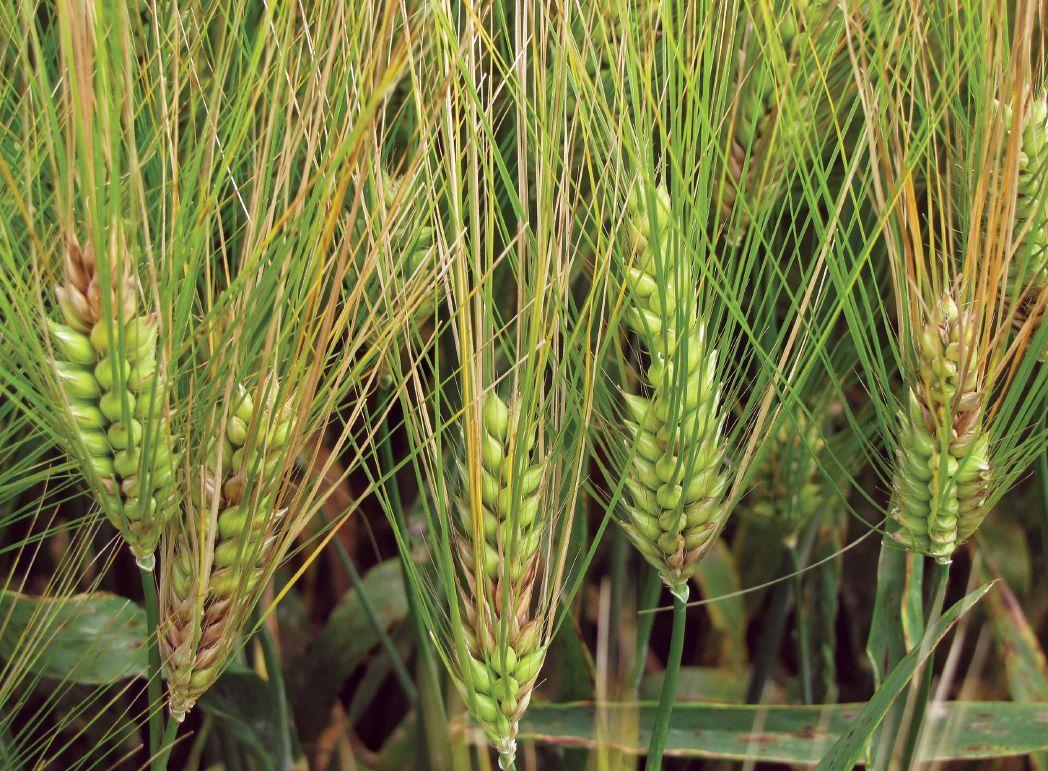
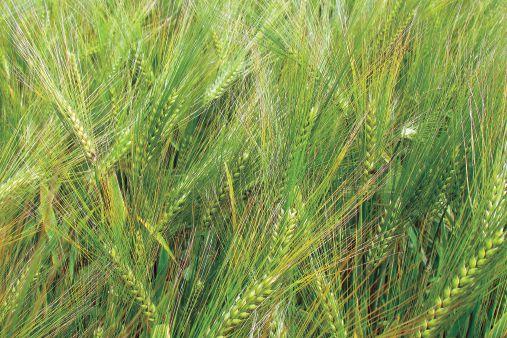
14 Barley breeding update
By Treena Hein
16 Developing stronger soybeans
By Julienne Isaacs
10 | Cashing in on canola Developing nutrient best-management practices for successfully growing canola in eastern Canada.
By Trudy Kelly Forsythe
WEED MANAGEMENT
12 Controlling giant ragweed in field crops
By Helen Lammers-Helps
PESTS AND DISEASES
20 Soybean cyst nematode in dry beans
By Carolyn King
ONTARIO fARmERS PuT ENvIRONmENT fIRST IN CROP IRRIGATION
After experiencing drought-like growing conditions in 2012 and watching regions in the United States deal with severe water restrictions, Ontario agricultural researchers are working to find new cropping methods to use water as efficiently as possible.
24 | Managing micronutrients Choosing the best products for your crop. By John Dietz
MARKETS
26 Canada broadens global wheat markets
By Julienne Isaacs
FROM THE EDITOR
4 Something to be proud of
By Stefanie Croley, editor
Something to be proud of
Do you remember the very first time you felt proud of the crop you grew? perhaps it was as a child, after pulling the first carrot out of your very own vegetable garden. Maybe you first felt proud of what you grew as a young teenager, after a long day of harvest in the combine with a parent – or even a grandparent. or maybe it was the first crop you harvested after you took over the farm from a family member. Does that feeling of pride hit you after planting is finished, or does it resonate post-harvest, year after year?
Though it’s considered one of the seven deadly sins, pride can be a good thing when it comes to success. Quite often, taking pride in an accomplishment drives us to succeed further – even when there are obvious obstacles in the way.
a professor at the grenfell Campus of Memorial University in Corner Brook, n.L., has an extra special crop to feel proud of this year. Dr. Mumtaz Cheema has successfully grown the first crop of his pilot project to grow silage corn in newfoundland. and while it’s likely not the first time he’s felt proud, this is definitely an accomplishment in which Cheema can relish.
When I spoke with Cheema in late october, his passion for the project was very clear. Farmers in newfoundland import approximately 50 per cent of feed (including fodder and silage) for their animals from mainland Canada, and prices have increased. The stats inspired him to do something.
This year marked the first of a two-year study during which Cheema and his team planted five carefully chosen varieties of corn on a test area that measured 122 feet wide by 136 feet long, using glyphosate for weed control. He used manure from four nearby farms as fertilizer, and among other things, is analyzing the greenhouse gas effects of doing so, and determining what corn varieties and fertilizers work best in the province.
Cheema harvested the crop in late october and is now analyzing the information he has collected from the varieties, including root architecture, biomass and plant height at final harvest and other qualitative traits.
We’ll follow up with Cheema in a future issue of Top Crop Manager to check in on his research.
The rock, as newfoundland is so affectionately nicknamed, doesn’t offer a particularly warm environment to grow corn for silage – according to Cheema, the average temperature in this year’s growing season was between 16 C and 17 C – but in ontario, this year’s corn crop could be a home run.
In fact, before the 2015 harvest was even complete, rumour had it this year’s corn crop would set yield records in the province. greg Stewart, an agronomist for Maizex Seeds in ontario, told the London Free press in mid- october that an under-average corn crop won’t likely be found anywhere in ontario, with many areas holding the potential to break records.
The previous record was set in 2010, with an average yield of 172 bushels per acre. This year, some farmers in Chatham-Kent, ont., reported yields of 240 and 250 bushels per acre in mid- october, peter Johnson, resident agronomist with real agriculture, told the London Free press.
of course, many factors contribute to a record-breaking crop. Some, like planting dates and conditions, are a precise ingredient in the recipe for a record yield. one wrong measurement and your above-average crop suddenly becomes . . . well, average. other factors – namely weather – are out of the producer’s control.
as the growing season comes to an end, it’s important to reflect on challenges and resolve for next year. But whether your end goal is to improve the sustainability of your province’s food requirements, or grow a record-breaking corn crop, be sure to take pride in what you’ve accomplished this year.
Top Crop Manager West - 9 issues - February, March, Mid-March, April, June, September, October, November and December - 1 Year - $45.00 Cdn. plus tax Top Crop Manager East - 7 issuesFebruary, March, April, September, October, November and December - 1 Year - $45.00 Cdn. plus tax
Potatoes in Canada - 2 issues - Spring and Summer 1 Year - $16.00 CDN plus tax All of the above - $80.00 Cdn. plus
r e Si Sting Soybean cySt nematode
Bringing new sources of soybean cyst nematode resistance into Ontario soybeans.
by Carolyn King
Soybean cyst nematode (SCn) is a tiny plant parasite that is causing big problems for ontario soybean growers. SCn-resistant varieties are key to managing this yieldrobbing pest. However, almost all the resistant varieties for ontario rely on a single source of resistance genes. That increases the risk that new SCn variants will emerge that are able to defeat those resistance genes. So a project is underway to bring different sources of SCn resistance into high-yielding, high-quality soybean varieties for ontario.
“Soybean cyst nematode is one of the most damaging pathogens of soybean in the world, including ontario. Damage by SCn costs ontario soybean growers more than $30 million each year, and it is estimated to be more than $10 million in southwestern ontario,” notes Milad eskandari, a soybean breeder at the University of guelph’s ridgetown Campus, who is leading the project.
SCn was first found in ontario in 1988 in the Chatham area and has been spreading across ontario’s soybean growing area ever since. This soil-dwelling, microscopic roundworm moves from field to field through the movement of infested soil, for example, on field equipment or by soil erosion. Its population in a field increases when a susceptible host crop is grown and decreases when a non-host or a resistant host is grown.
The nematode attacks a host plant’s root, pulls nutrients from the root, and reproduces on it. The root damage also provides entry points for other types of root pathogens. The nematode’s
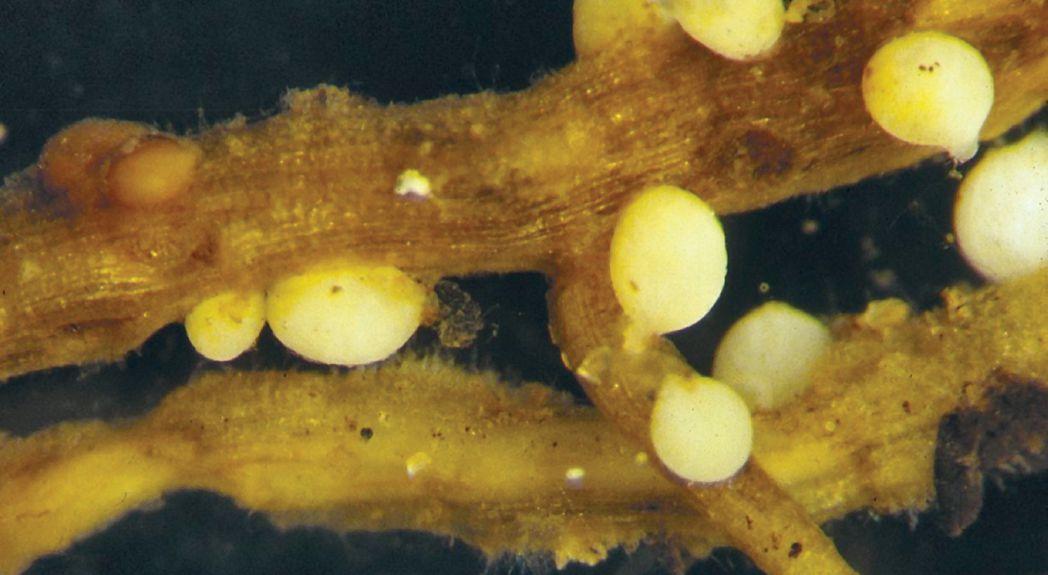
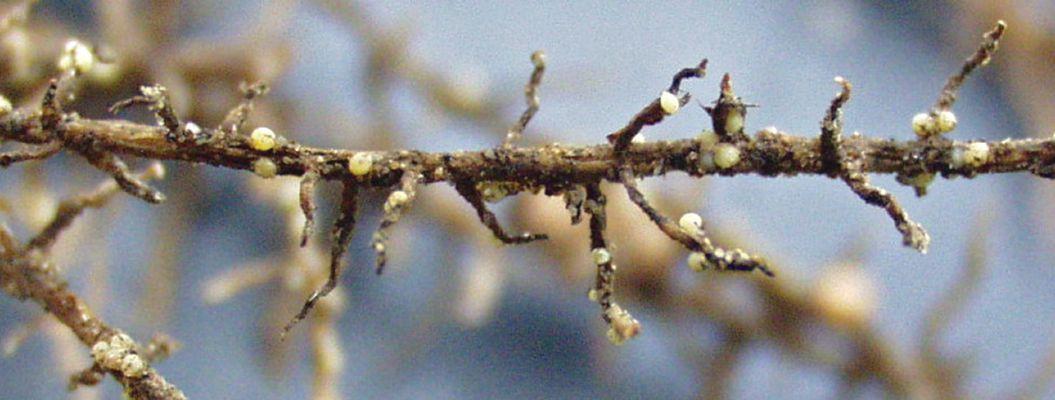
name comes from the lemon-shaped cyst that protects its eggs. These cysts are about the size of a pinhead and change from white to yellow to brown over time.
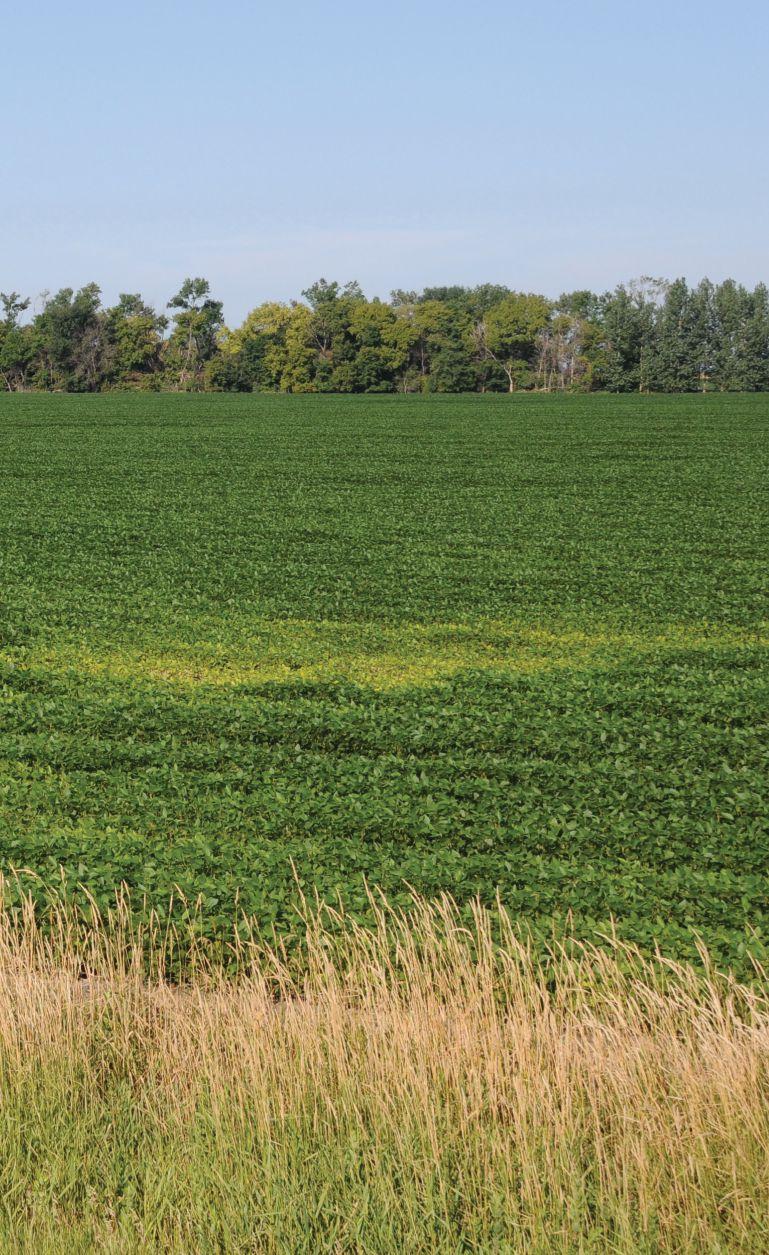
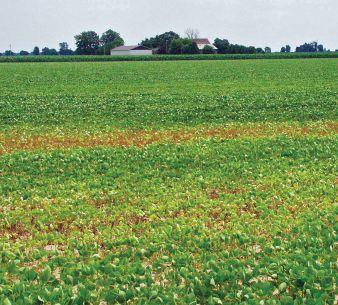
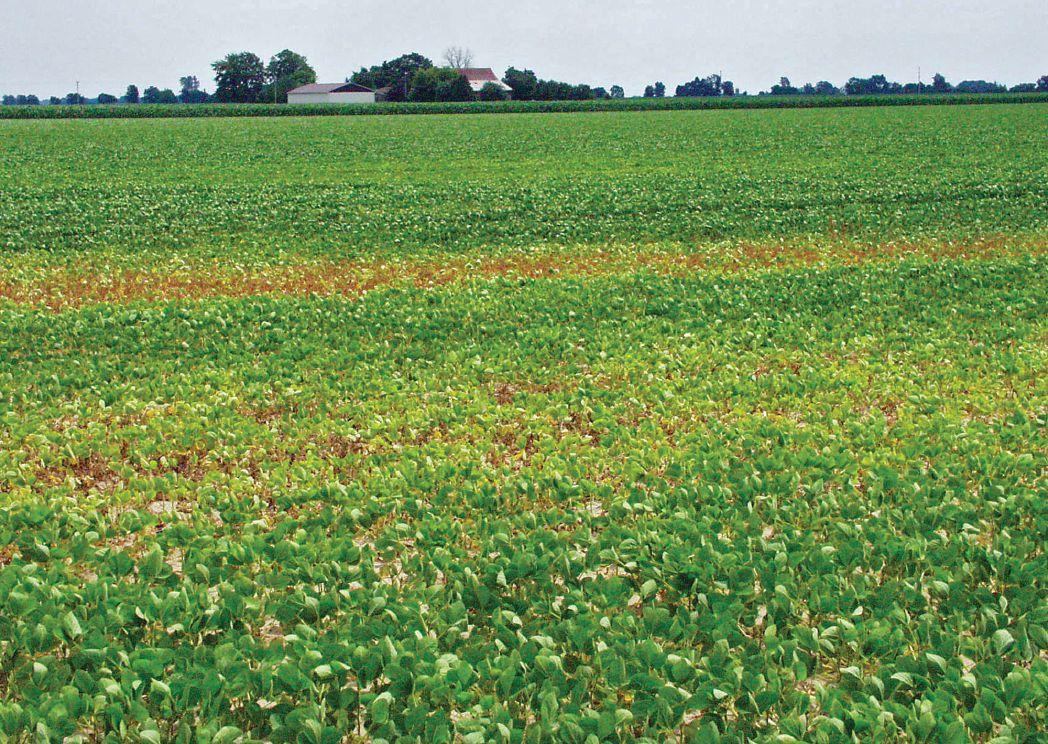
“Soybean cyst nematode can have a significant impact on crop health and yields,” says albert Tenuta, a plant pathologist with the ontario Ministry of agriculture, Food and rural affairs (oMaFra). “Yield losses can range from a minimum of about five to 10 per cent all the way to total failures in many parts of a field. a general rule is that when growers start to see aboveground SCn symptoms – which are yellowed, stunted or dead plants in patches in a field – you’re probably looking at a 25 per cent yield loss by that point. Those symptoms often indicate that the nematode’s population in the field has built up significantly.”
resistant varieties are a cornerstone of SCn management. SCn resistance genes are identified by the name of the soybean line that was the original source of the genes. For instance, in ontario soybean varieties, SCn resistance genes are from plant introduction (pI) 88788 and from pI 548402, also known as “peking.”
“In ontario, more than 98 per cent of our SCn-resistant soybeans have their resistance genes from pI 88788,” eskandari notes.
“We believe that our farmers are too much dependent on this specific resistance source.” growing a particular resistance source
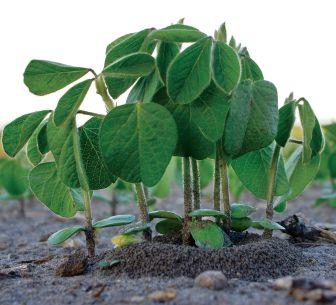
TOP: The nematode’s lemon-shaped cysts change from white to yellow to brown over time.
The
in a field selects for those few variants in the nematode’s population that can overcome the resistance genes because those variants survive and reproduce. repeatedly growing the same resistance genes in the field shifts more and more of the nematode’s population to those variants. eventually that resistance source will no longer be effective in that field.
according to Tenuta, soybean growers in areas with a relatively long history of SCn, such as Missouri and Illinois, are starting to see significant SCn populations that can bypass pI 88788 resistance. Tenuta and Tom Welacky, who is with agriculture and agriFood Canada at Harrow, have been looking at this issue in ontario.
Repeatedly growing the same resistance genes in the field shifts more and more of the nematode’s population to those variants.
With funding support from the grain Farmers of ontario, they conducted SCn sampling over 10 years at various ontario locations. Welacky’s lab tested the samples to determine the SCn variants, or Hg types. “Hg” refers to Heterodera glycines, the scientific name for the nematode. “In Hg type testing, an SCn population from a field is grown on a susceptible check variety and seven different resistance sources,” Tenuta explains. “SCn reproduction on the check is compared to the reproduction on the resistance sources. If the population grows quite well on a particular
]
field.
resistance source, then it is identified as the associated Hg type. For example, Hg type 1 reproduces on peking, Hg type 2 reproduces on pI 88788, and Hg type 1.2 reproduces on both.”
Tenuta and Welacky have found some SCn populations that can reproduce on pI 88788 and peking. Fortunately, such populations are very low overall in ontario, so both pI 88788 and peking are still effective resistance sources for the province.
Developing varieties with new resistance sources for ontario would help growers where the SCn population has started shifting. plus it would allow growers to rotate between different resistance sources. So, it would help lower SCn populations, reduce the selection pressure pushing the population toward particular variants, and decrease the risk of yield loss due to SCn
given the importance of having diverse resistance sources, why have breeders relied so heavily on pI 88788? “When breeders introgress SCn-resistance genes, or for that matter any gene of interest into elite soybean lines, there are potential yield reduction side effects. pI 88788 has less of these side effects than other SCn resistance sources, so it’s much easier for breeders to use,” eskandari explains.
In his project to bring new resistance sources into superior ontario varieties, eskandari is working with resistance genes from pI 437654, or “Hartwig.” (In another project, his lab is working on peking resistance sources.)
“Incorporating Hartwig into elite agronomic soybean varieties has been a challenge, so nobody likes to work with it,” notes eskandari. “But Hartwig is the best source of SCn resistance; it is
aboveground symptoms of soybean cyst nematode include yellowed, stunted or dead plants in patches in a
resistant to almost all of the existing SCn races in ontario.”
eskandari’s Hartwig project runs from 2014 to 2017 and is funded by oMaFra, the University of guelph and SeCan. His lab has crossed a Hartwig line with 12 elite soybean lines that are well adapted to ontario conditions, to create 12 different breeding populations.
Fortunately, eskandari didn’t have to start from scratch by crossing with the original Hartwig line. “We are using a line from Dr. Brian Diers’ lab at the University of Illinois. That line is a soybean cultivar with a relatively high seed yield and good agronomic traits and performance,” he says.
His lab already has F4 and F5 generation progeny for each of the 12 breeding populations. eskandari notes, “We hope that in 2016 we will evaluate the progeny in the lab and field to select lines that have Hartwig SCn resistance genes for further breeding work. In the following years, we will evaluate those resistant lines for yield and other agronomic traits, to pick the best ones for commercial release in ontario.”
In addition to developing superior ontario varieties with Hartwig SCn resistance, the project is also examining the genetic control of these resistance genes in their ontario breeding lines. eskandari’s Master’s student Xin Lu is working on this aspect of the project.
The primary reason for this genetic work is to find Dna markers that are linked to the resistance genes. Such markers would allow soybean breeders to quickly screen breeding material for the presence of those resistance genes, rather than going through the labour-intensive, time-consuming and expensive process of greenhouse and field trials to evaluate the thousands of progeny in their breeding programs for SCn resistance.
Managing SCN
Tenuta provides some important SCn advice for ontario soybean growers. “a key recommendation is to scout your fields and look for the cysts on the roots. It can be done any time during the growing season, and even after harvest. The earlier SCn is detected, the better; that is an important message where SCn is a relatively new problem. In southwestern ontario, we have a long history of SCn, and growers know what it looks like and the significant damage that can occur. But new areas – like central ontario, eastern ontario, the ottawa Valley and into western Quebec – are
seeing the nematode’s populations building up. producers in those areas need to look for SCn and start dealing with it before those populations build up.”
If you find SCn in your fields, then choose SCn-resistant soybean varieties, use non-host crops such as corn, wheat and forage in the rotation, and rotate between different SCn-resistant varieties and if possible between resistance sources. The go Soy website (gosoy.ca) provides performance data on SCn-resistant varieties, as well as each variety’s resistance source.
Tenuta also suggests learning more about a variety’s SCn resistance package when you order seed for an SCn-infested field. “In cyst nematode resistance sources, there is no one specific gene that provides total resistance. Instead, a combination of major and minor genes produces the resistance. So, different soybean varieties that have SCn resistance from the same source may have differing combinations of those resistance genes,” explains Tenuta. “For instance, one variety might have most of the resistance genes and as result have more effective resistance. another variety might have only some of the resistance genes and may be only moderately resistant. So ask the company if the variety you’re interested in is highly resistant and what is the reproduction ability of the nematodes on the variety – low, medium or high. go for the variety that is best for both yield and SCn resistance.” Because of the differences between resistance packages, rotating between different soybean varieties with the same resistance source may help reduce selection pressure on the nematodes.
Tenuta also notes that additional SCn management tools are coming soon. “a number of nematicides are being registered or will be available to producers in the near future. a two-way combination of SCn resistance and nematicide seed treatments will provide another level of protection for growers against SCn as well as soybean sudden death syndrome [a fungal disease associated with SCn].”
The cysts protect the nematode’s eggs and are about the size of a pinhead.
rnai: t he future of pe St control
RNA interference will soon be moving from the lab to a field near you.
by Julienne Isaacs
Aquiet revolution in pest control is underway in labs in Canada and around the world. rna interference (rnai) is a natural, biological process by which rna molecules suppress or “silence” genes targeted as threats. Discovered in the 1990s, rnai technology has since become a research and development priority across the life sciences, with promising applications in antiviral therapy, cancer treatments and biotechnology.
The range of potential applications of rnai in agriculture is extraordinary – the technology can be used to increase yields and improve agronomic performance; metabolic changes have been achieved in crops ranging from coffee to peanut to petunia. and rnai shows great promise for pest and pathogen control. Using rnai, researchers have achieved increased resistance to virus diseases, nematodes, bollworm, powdery mildew and leaf rusts in a range of crops.
“rnai is going to be an unprecedented game changer,” says Curtis rempel, vice-president of crop production with the Canola Council of Canada (CCC). “From the canola industry’s perspective,
it’s a big priority, for a whole host of reasons. We’re keen to find out what can be done to control different insect pest species.”
The CCC is currently in talks with the entire canola value chain – life science companies, producers, handlers and crushers – to create public/private partnerships to develop rnai for the canola industry.
“We think there needs to be a consortium around this,” rempel says. “How will farmers benefit from the technology? How can we implement rnai so it doesn’t stay as a journal article?”
Thus far, rnai for pest control in Canada has mainly focused on crops such as corn and soy, but rempel believes it has enormous potential for the canola industry as well.
In Canada, public research agendas are focused on applications of rnai in control of malaria vectors, with life science companies such as Monsanto and Syngenta leading the way in developing rnai for application in agriculture.
ABOVE: A plot treated with RNA-based biocontrol.
Forward THINKING
For higher yield potential and better returns, order your soybean seed pre-treated with Optimize® inoculant today.
The LCO technology in Optimize helps your soybean crop by enhancing nutritional availability. Benefit from improved nodule formation, increased nitrogen fixation and enhanced nutrient availability to support root and shoot growth.
Now with up to 220 days on seed,* get the most from your soybean crop with Optimize. See your local retailer to order or visit OptimizeLCO.ca to learn more about Optimize ST, a new concentrated formulation.
Nature. It’s powerful technology.
c a Shing in on canola
Developing nutrient best-management practices for successfully growing canola in Eastern Canada.
by Trudy Kelly Forsythe
Developed by plant breeders in Saskatchewan and Manitoba during the 1960s and 1970s to meet a growing demand for edible oil production in Canada, canola has become a major cash crop in Western Canada. It has been less attractive economically for eastern producers, primarily because so few crushing facilities are located within a reasonable distance from the major growing areas in eastern Canada.
However, that is changing. Between 2006 and 2011, canola production in eastern Canada increased 305 per cent to more than 141,000 acres, increasing farm-gate cash receipts almost 700 per cent to $46.3 million. and the 2010 operationalization of a canola and soybean crushing plant and oil refinery in Becancour, Que., by Twin river Technologies – enterprise de Transformation de graines oléagineuses (TrT-eTgo) further significantly brightens the prospects of canola production in eastern Canada.
This growth created an urgent need for the industry to develop sound agronomic practices for canola production in eastern Canada, particularly with respect to nitrogen fertilizer application and improved nitrogen-use efficiency, for the environmental and eco -
nomic sustainability of canola production.
To address that need, agriculture and agri-Food Canada (aaFC) scientist Dr. Bao-Luo Ma is leading a project at the eastern Cereal and oilseed research Centre (eCorC) in ottawa, with the assistance of university professors Dr. Donald Smith and Joann Whalen from Mcgill University, Dr. anne Vanasse from Laval University, Dr. Claude Caldwell from Dalhousie University and Dr. Hugh earl from the University of guelph, as well as peter Scott, the provincial forage specialist for new Brunswick’s Department of agriculture, aquaculture and Fisheries.
Since 2011, the group has conducted experiments during the growing seasons at various sites in eastern Canada to investigate the growth, yield and yield components of canola in response to various combinations of pre-plant and side-dressed nitrogen with
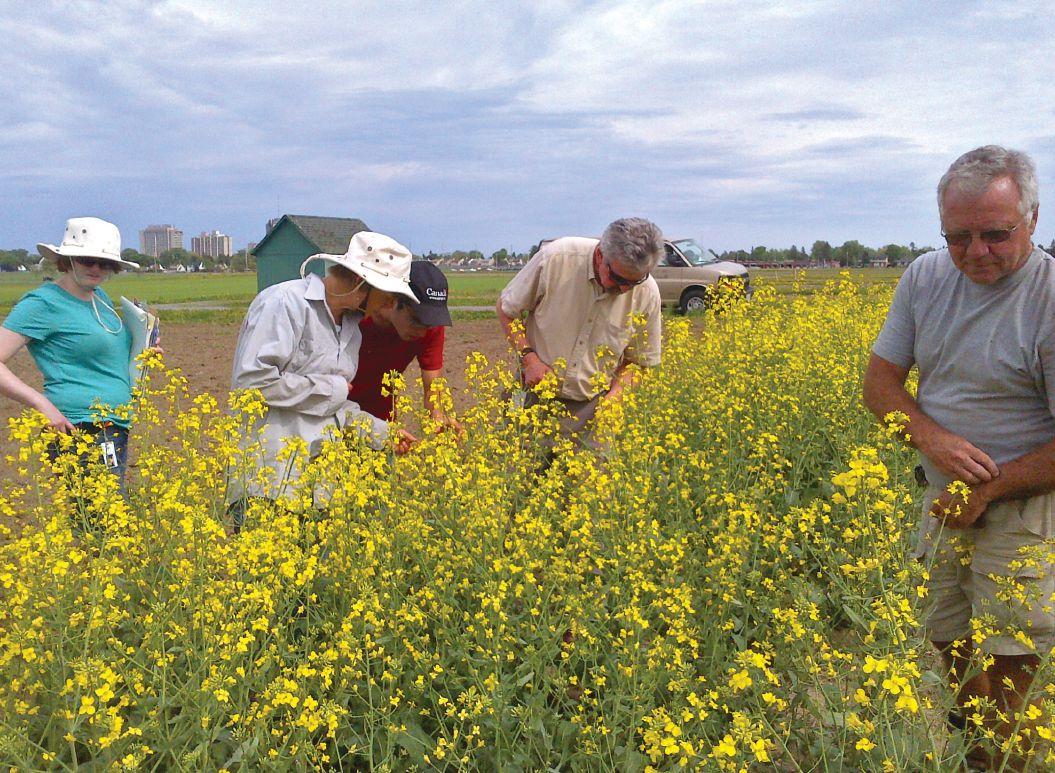
ABOVE: From left to right: Cailin Deacon (summer student), Lynne Evenson (AAFC technician), Valentin Fevre (French co-op student), Dr. Peter Mason (AAFC research scientist) and Scott Patterson (AAFC technician) check for the cabbage seedpod weevil in a field of flowering canola.
soil-applied sulphur and soil and foliar-applied boron. Sites are located in ottawa and elora, ont.; Ste-anne-de-Bellevue and St-augustin-de-Desmaures, Que.; Fredericton, n.B. and Canning, n.S. at these sites, the researchers are investigating the responses of different canola cultivars (hybrids) to the timing and rate of nitrogen application, the combination of nitrogen and sulphur, nitrogen and boron, yield, nitrogen use efficiency and carbon footprints of different rotation systems – canola following wheat, soybean or corn. and, they are identifying the traits and tools for the development of nutrient cycling knowledge, implementing site-specific best management practices and adapting canola to existing cropping systems.
“our preliminary results indicate that canola yields increased by 9.7 kilograms per hectare (kg/ha) for pre-plant nitrogen application and by 13.7 kg/ha for side-dress nitrogen application, for every kilogram of nitrogen per hectare applied, in six of the 10 site-years,” Ma says. “The challenge remains to develop site-specific fertilizer applications that deliver ample nitrogen, sulphur and boron for canola production considering that unfavourable weather conditions may cause nutrient losses and constrain canola growth at key development stages in eastern Canada.”
Because agriculture production is a complex system, modifying one nutrient in the cropping system could have cascading effects on other nutrients and other crops as well. Developing efficient nutrient management regimes is a prerequisite for promoting canola as a viable cash crop in eastern Canada.
“Canola is a non-legume crop and requires large amounts of nitrogen fertilizer for production,” Ma says. “Inefficient use of this nutrient not only reduces farmers’ profits, but may also put the environment at risk with nitrate nitrogen leaching, ammonia volatilization, nitrous oxide emissions, etc. affecting the air we breathe, water we drink and daily environment.”
From their research, Ma’s team have determined a number of
best practices for successfully growing canola in eastern Canada, including applying a small portion of nitrogen fertilizer at pre-sowing and the majority of the nitrogen nutrition at the five to six leaf, or bolting, stage. “This would increase canola seed yield and/or increase nitrogen use efficiency,” Ma says. “This may also give farmers the option to reduce the amount of nitrogen application when drought or other stresses are expected during the growing season.”
other best practices are to plant the crop in narrow row spacing – seven inches – at a seeding rate of five kg/ha and, based on the long-term trend of average minimum air temperature in april and May, to determine the optimum seeding date. optimum seeding dates usually occur the last week of april to the first week of May for ottawa, guelph and Montreal regions; May 11 or after for Sainte-Foy and northern Quebec region; and late May for Harrington, p e.I.
“The challenge remains to develop site-specific fertilizer applications that deliver ample nitrogen, sulphur and boron for canola production.”
Ma says they will continue to create and advance the knowledge and technology required to broaden canola production in eastern Canada to meet the demand of the industry, improve producers’ competitiveness on the global market, provide consumers with healthy and environmentally friendly food and fuel and provide the general public with a continued high quality environment.
“as new cultivars are being developed, research activities are required to develop/implement site-specific and matching strategies to obtain the true potential of new cultivars in farmers’ fields,” says Ma, narrowing the gap between cultivars’ potential yield and realized yield under field conditions as an example.
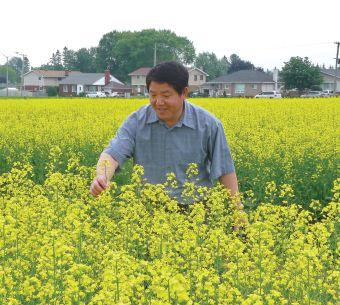
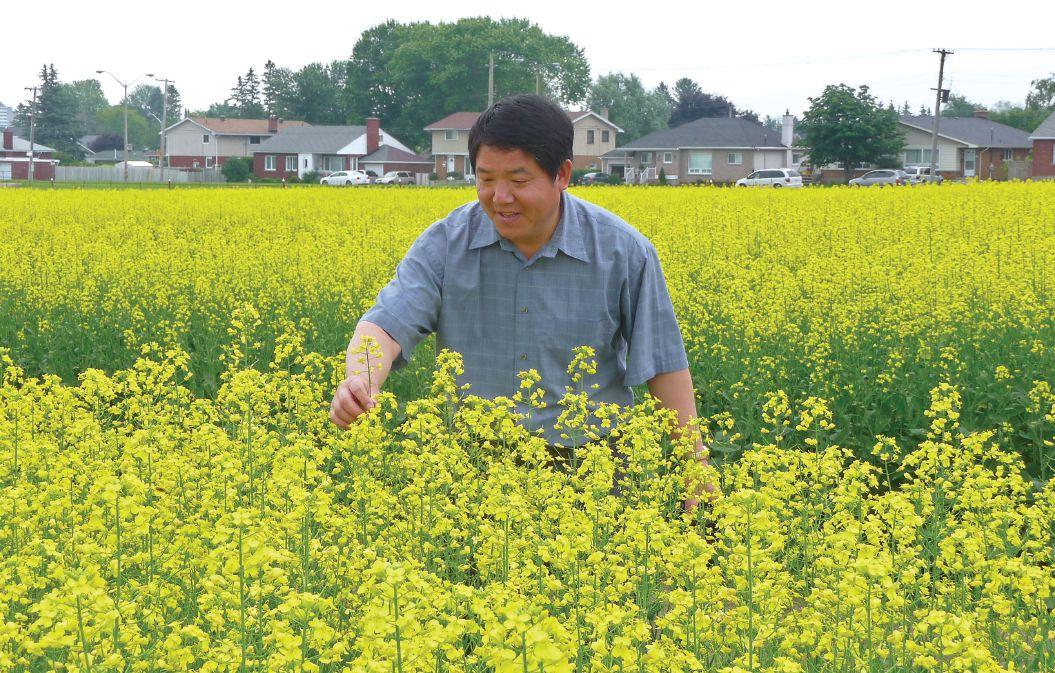
Agriculture and Agri-Food Canada scientist Dr. Bao-Luo Ma in a field of flowering canola.
c ontrolling giant ragweed
Best-management practices for preventing a common glyphosate-resistant threat to field crops.
by Helen Lammers-Helps
Glyphosate-resistant weeds are not a new problem in Canada, but producers must be proactive to keep these weeds from getting out of control.
There are now five glyphosate-resistant weeds found in Canada: giant ragweed, common ragweed, water-hemp, Canada fleabane and kochia (which is currently the only glyphosate-resistant weed not found in ontario).
giant ragweed, the first glyphosate-resistant weed found in Canada, is an aggressive weed that can cause substantial yield losses in field crops if left unchecked. although it’s not a new problem – giant ragweed was first discovered in Canada in 2008 in essex County, at the tip of southwestern ontario – it’s a growing issue, according to peter Sikkema, a researcher at the University of guelph’s ridgetown Campus. He notes glyphosate-resistant giant ragweed has so far been confined to the six most southerly counties of the province. However, the weed is becoming increasingly prevalent in corn and
soybean fields, and growers need to be vigilant in order to protect their fields.
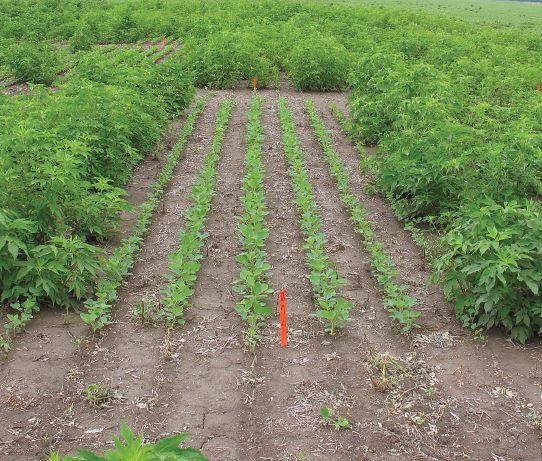
Sikkema warns that if no action is taken to control giant ragweed (Ambrosia trifida L.), the potential yield loss is very high. His research has shown yield losses in corn from giant ragweed ranged from 63 to 82 per cent, with an average of 72 per cent. In soybean, the yield losses ranged from 19 to 96 per cent, with an average of 73 per cent.
In the past, giant ragweed was mainly found along roadsides and creeks, but a shift to no-till soybean production has allowed giant ragweed to gain a foothold in southwestern ontario, according to Sikkema.
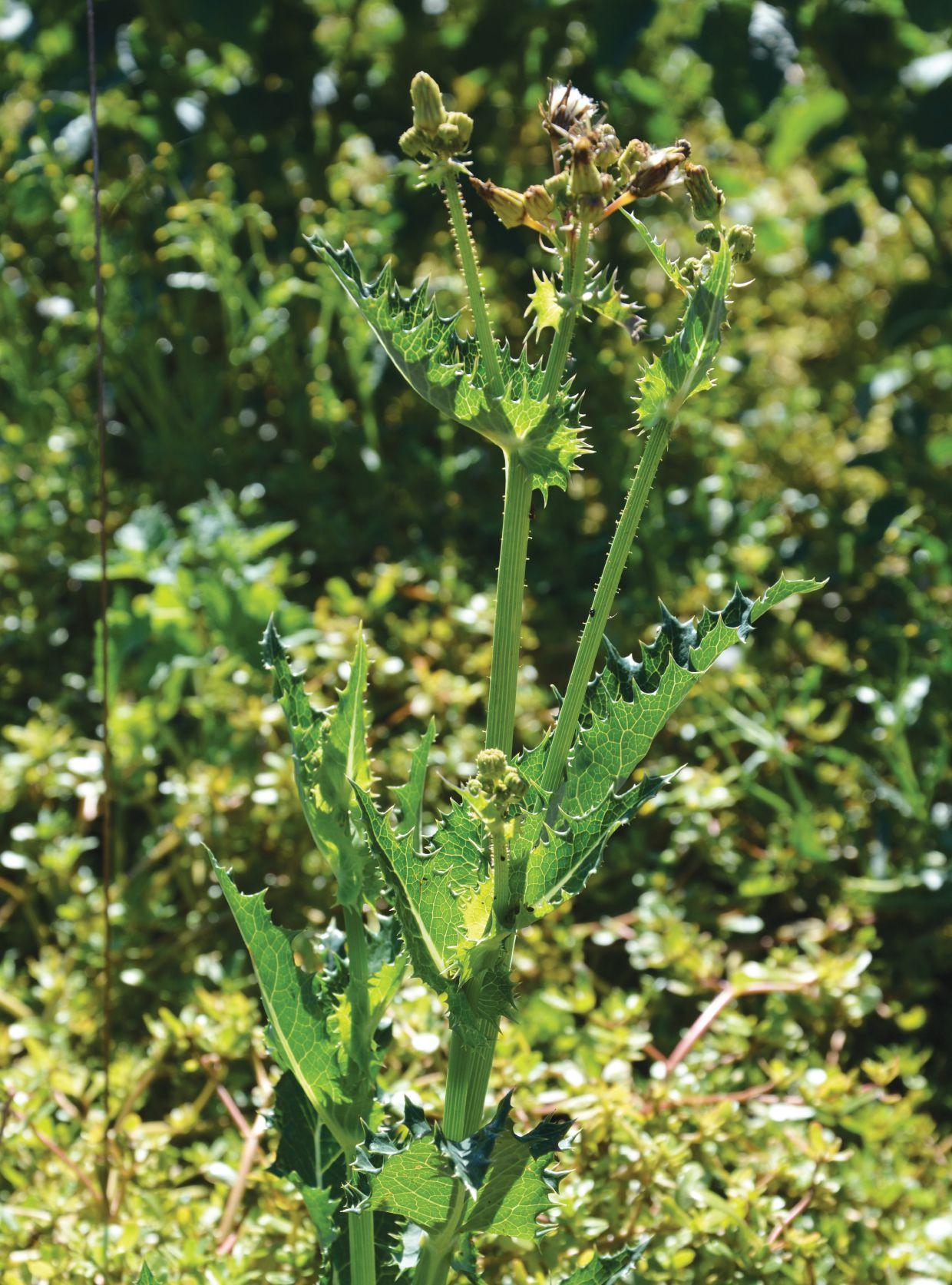
The annual weed reproduces by seed and grows up to four metres in height. according to the ontario Ministry of agriculture
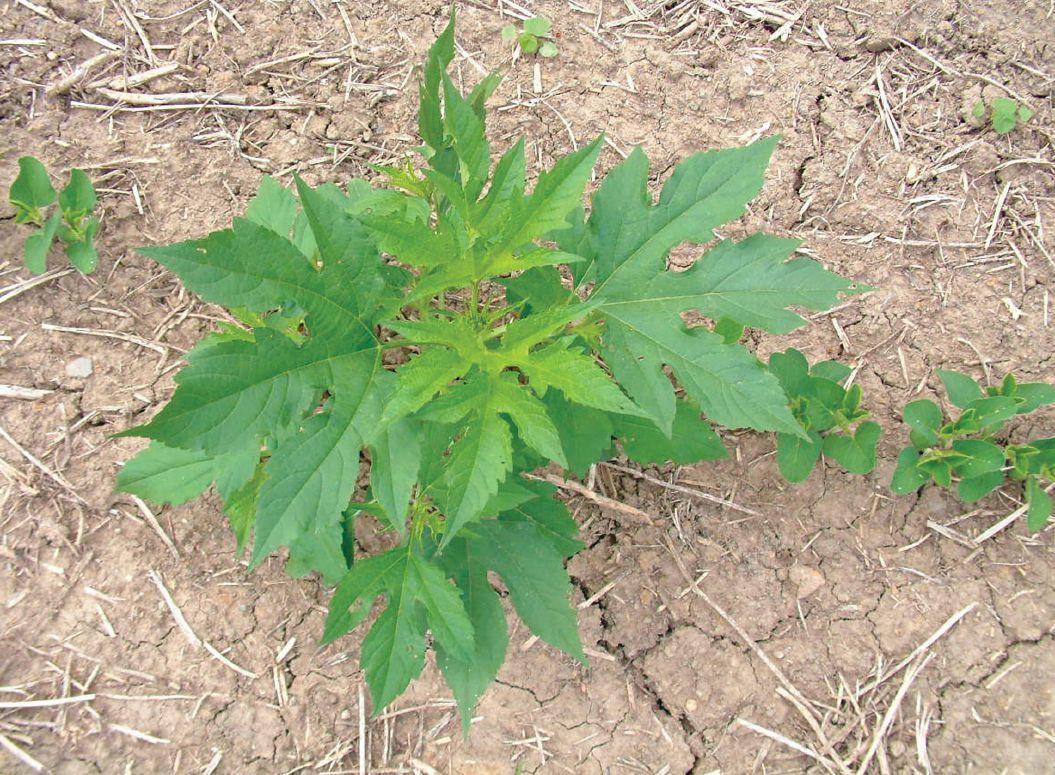
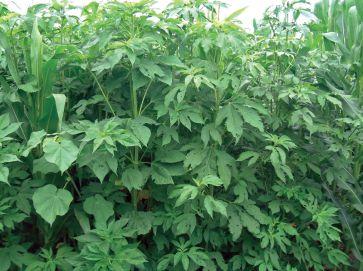
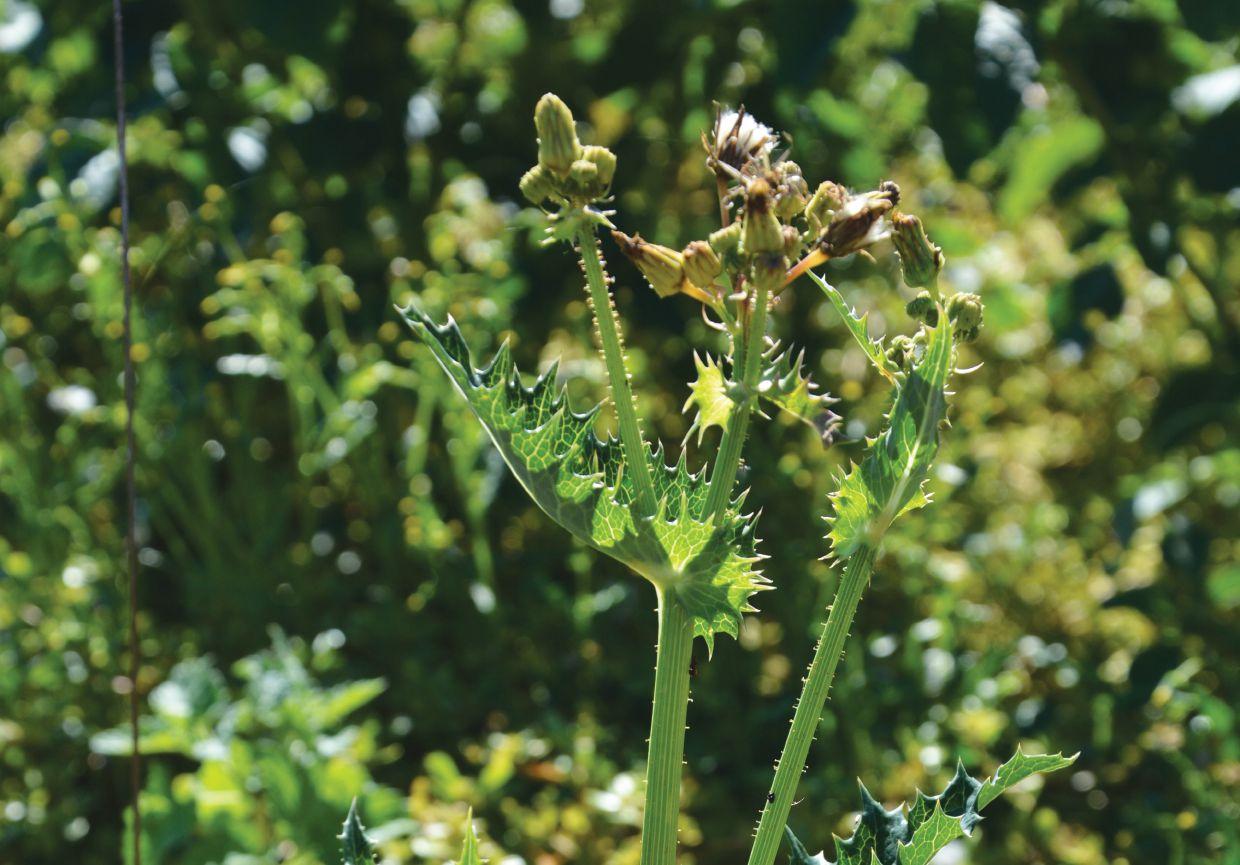
TOP: Glyphosate-resistant giant ragweed has only been found in the six most southerly counties of Ontario so far, but it’s becoming more common in corn and soybean fields.
INSET: The weed is annual and grows up to four metres high.
Peter Sikkema says farmers have options when it comes to controlling the weed in corn, soybean and winter wheat fields.
publication 505: Weeds, “It is distinguished by its very tall stature, its large, lobed but not divided leaves, its long, slender spikes of pollenproducing flower heads and its large, angular seeds with spines around the upper shoulder.” For allergy sufferers, its pollen is a common allergen from august to September in southwestern ontario.
When it comes to controlling glyphosate-resistant giant ragweed in corn, soybean and winter wheat fields, Sikkema says farmers have options. The first line of defense is to use good crop husbandry practices that keep weed populations in check. Using a diverse crop rotation of three or more crops and using herbicides with multiple modes of action is fundamental, Sikkema advises. other good practices include seeding a cover crop after winter wheat harvest and using practices that give the crop a competitive advantage, such as seeding at higher populations, using narrower row spacing, and controlling insects and diseases, he adds. aggressive tillage in spring might be able to control giant ragweed, but Sikkema has doubts about this method of control, particularly the negative effects of aggressive tillage on soil structure and soil health. “I’m not sure that’s a practice that’s sustainable long-term,” he says.
When it comes to control of glyphosate-resistant giant ragweed with alternate herbicides, the options vary by crop. “We have good solutions in corn,” Sikkema says. “Marksman, Banvel and Distinct can be used postemergence in corn.”
In winter wheat crops, 2,4-D, along with Target, estaprop, Lontrel and Trophy give good control. In soybean crops, he has found roundup plus 2,4-D tank-mixed applied pre-plant, seven days before seeding soybean, is very effective. “It’s important to have that seven-day interval to prevent injury to the soybean.”
With soybean, Sikkema notes it’s important to control glyphosateresistant giant ragweed before the soybean comes up. There are no herbicides applied post-emergent that provide acceptable control of glyphosate-resistant giant ragweed in soybean, he says.
giant ragweed seedlings initially emerge in early spring. They can be identified by their spatulate (spoon-shaped) cotyledons, which unfold from a hairless hypocotyl and an indentation at the base of the cotyledons. The first true leaves are entire and ovate with deep lobes.
Farmers are doing a good job of managing glyphosate-resistant giant ragweed, Sikkema says. However, he cautions that some giant ragweed biotypes have multiple resistances to both glyphosate and group 2 herbicides. In the future, Sikkema says the roundup ready Xtend soybean, which are resistant to both roundup and dicamba, will give farmers another tool for managing glyphosate-resistant weeds.
At Ag Leader, we're solely focused on precision farming and bringing you year-round tools to make your operation more efficient and profitable. Backed by local precision experts and dependable support, look to Ag Leader to put precision in your operation.
*Meredith Agrimedia Study
barley breeding update
New varieties building on high-yielding and Fusarium head blight resistant varieties.
by Treena Hein
Barley is the fourth-largest crop in eastern Canada, after the standard rotation crops of soybeans, corn and wheat. approximately 150,000 hectares of land in eastern Canada were seeded to barley last year, which led to a harvest of 460,000 tonnes of grain.
Fusarium head blight (FHB) is a serious concern in barley. “The outbreaks of FHB vary from year to year, with 2009 and 2010 most severe in eastern Canada,” says Thin-Meiw (alek) Choo, a breeder at the agriculture and agri-Food Canada (aaFC) eastern Cereal and oilseed research Centre in ottawa. “The disease, caused principally by Fusarium graminearum Schwabe, can result in mycotoxin contamination such as Don in the grain. During those years, many barley crops were contaminated with Don.”
aaFC breeders have developed several barley varieties (see sidebar for agronomic details) that have proven more resistant to Fusarium head blight than many others. These include aaC Starbuck (released in 2014), aaC azimuth (2013), aC Minoa (2010) and Island (2002). Choo reports, for example, that under natural conditions in prince edward Island from 2004 to 2012, Island contained
only 0.2-2.1 mg Don/kg while susceptible cultivars contained up to 17.6 mg Don/kg. During the epidemic year of 2010, aaC azimuth contained only an average of 1.7 mg Don/kg, while susceptible sixrow cultivars contained an average as high as 5.1 mg Don/kg.
aaC azimuth and aC Minoa are well adapted to ontario, aaC Starbuck is well adapted to Quebec and the Maritimes, and Island is well adapted to all of eastern Canada. These performance differences mostly relate, says Choo, to the varying climatic conditions of the regions.
Breeding program update
The present barley-breeding program run by Choo and his colleagues richard Martin, allen Xue, Marc Savard and Barbara Blackwell, continues to develop high-yielding, FHB-resistant barley cultivars for eastern Canada. “Many elite lines are now under intensive testing,” Choo notes. “We have crossed our local
TOP: Fusarium head blight (FHB), shown in this barley plot, is a serious threat to the crop.
varieties with FHB-resistant germplasm from different places in the world and have produced many breeding lines from these crosses. Some of them have been screened in our FHB nursery and are now under evaluation for agronomic traits.” The team has 12 elite lines now being evaluated in the Maritime Barley registration and recommendation Tests, 10 elite lines in the Quebec Barley registration and recommendation Tests, and 10 elite lines in the ontario Barley orthogonal Trials. “Hopefully,” Choo says, “some of them will be released as new varieties in the next few years.”
In terms of specifics on genetic resistance, Choo say there is no major resistance gene for FHB in barley and that this makes improvement for resistance a slow breeding process. “Because of this, we use an indirect approach to mitigate the severity of Don contamination in barley,” he says. “Two-row barley is more resistant to Don accumulation than six-row barley. Hulless barley contained less Don than covered barley, and black barley is more resistant to Don accumulation than yellow barley.”
Choo and his colleagues have found black barley to be more resistant to Don accumulation because it contains higher total phenolic content than yellow barley. In lab tests, the phenolic acids in black barley have been shown to inhibit the growth of F. graminearum and F. culmorum. Black barley also contains flavonoids, which also play a role in FHB resistance. Some flavonoids have been shown to severely inhibit the growth of F. graminearum and other fungi on culture medium. In addition, preliminary results indicate that black barley contains more lignin than yellow
NEWEsT BarlEy variETiEs
Island is a two-row, spring feed, nonmalting barley cultivar developed by the Eastern Canada Barley Breeding Group, Agriculture and Agri-Food Canada. It is named after the province of Prince Edward Island and was registered in mid2002. Island is well adapted to Eastern Canada. The plant has erect juvenile growth, green coleoptile, blue-green leaves and intermediate flag leaf attitude. Other characteristics include purplish auricles, fine, dark green and waxy stems, a v-shaped collar and a straight neck. The spike is two-row type with tapering shape and lax density. The spike is medium length with nodding attitude, rough awns, medium (equal to the length of glume) and rough glume awns, purplish lemma awn tip and green glume awn tip. The kernel is covered, long and medium width, with long rachilla, short rachilla hairs, yellow aleurone and incomplete horseshoe basal marking. Island is susceptible to net blotch, scald, septoria leaf blotch, spot botch, and leaf rust, but highly resistant to powdery mildew and moderately resistant to barley yellow dwarf virus and Fusarium head blight.
AAC Azimuth is a six-row hulless non-malting barley (Hordeum vulgare
Thin-Meiw (Alek) Choo, a breeder at the Eastern Cereal and Oilseed Research Centre in Ottawa, is working with a team to develop high-yielding, FHB-resistant barley cultivars for Eastern Canada.
barley, and lignin/lignification may create some physical barriers to inhibit Fusarium growth.
In terms of yield, 26 varieties of barley were compared in the 2014 ontario Cereal Crops Committee spring barley trials in three areas of ontario (see www.gocereals.ca/bat3.php). The averages for each area were 98, 89 and 76 bushels per acre. “Chapais has been the dominant barley variety in eastern Canada for many years and now, many varieties have out-yielded Chapais,” Choo notes. “We expect that future barley varieties will have higher yield, be better resistant to FHB, and be better resistant to lodging. In addition, malting barley and food barley varieties will be developed to provide some niche markets for eastern Canada.”
L.) cultivar developed by the Eastern Canada Barley Breeding Group, Agriculture and Agri-Food Canada. AAC Azimuth was registered in early 2013. It is well adapted to the province of Ontario. The plant shows erect juvenile growth, blue-green leaves, upright flag leaf attitude, white auricles. Other characteristics include thick, dark green and pronounced waxy stems, a v-shaped collar and straight neck. Its spike is sixrow type with parallel shape, medium density, medium length, erect attitude, smooth lemma awns, longer than the length of glume with smooth glume awns, green lemma awn tip and green glume awn tip. The kernel is hulless with medium length, medium width, medium rachilla length, short rachilla hairs, yellow aleurone and incomplete horseshoe basal marking. AAC Azimuth is moderately susceptible to net blotch and spot blotch. It is resistant to scald and barley yellow dwarf virus and moderately resistant to powdery mildew. This variety is susceptible to leaf rust and low in DON content.
AAC Starbuck is a two-row, hulless barley cultivar developed at the AAFC Eastern Cereal and Oilseed Research
Centre. It was registered in mid-2014. AAC Starbuck is well adapted to Quebec and the Maritimes. The plant has erect juvenile growth, green coleoptile, green leaves, upright flag leaf attitude and purple auricles. The waxy stems are fine, medium green, and pronounced with a v-shaped collar and straight neck. The spike is two-row type with parallel shape, lax density, long spike, horizontal attitude and rough lemma awns. It is longer than the length of glume, with rough glume awns, green lemma awn tip, green glume awn tip. The kernel is hulless with medium length, medium width, long rachilla and rachilla hairs, and yellow aleurone. It is susceptible to net blotch, spot blotch, scald, and speckled leaf blotch. The variety is resistant to powdery mildew and leaf rust, and low in DON content (Fusarium graminearum Schwabe).
AC m inoa is a two-row; spring feed barley (Hordeum vulgare L.) cultivar developed by the AAFC Eastern Canada Barley Breeding Group and registered in 2010. It has high yield, high test-weight and good resistance to powdery mildew and DON accumulation. AC Minoa performs well in the state of New York and in the province of Ontario.
developing Stronger S oybean S
University of Guelph researchers are analyzing ancestral soybean lines.
by Julienne Isaacs
Since Istvan rajcan began working in soybean breeding in 1998, his team has developed 54 commercial soybean varieties.
The University of guelph scientist is heading up a major research effort pinpointing genetic markers to develop highyielding, high-quality soybean varieties. rajcan, along with research partners Chris grainger, Francois Belzile (Laval University), Milad eskandari (guelph – ridgetown) and robert Bruce (phD candidate, guelph), is studying a diverse panel of ancestral soybean lines, looking for traits that will improve varieties developed for ontario, Quebec and southern Manitoba soybean producers.
The program has two main research focal points, one of which analyzes yield and soybean seed quality traits for potential niche market applications; the other looks at the genetics of disease resistance.
rajcan received a natural Sciences and engineering research Council Collaborative research and Development grant in 2013, matched with funding from industry partners grain Farmers of ontario (gFo), SeCan and Huron Commodities Inc. The four-year grant, which expires in 2017, follows on the heels of a previous study funded by gFo and the growing Forward 1 Science Cluster.
“I’m grateful for the funding from the industry and federal government and I’m excited about the results we’re generating, which will help to make faster progress in soybean breeding,” rajcan says.
Plant ancestries
The project relies on the investigation of plant history – namely, the ancestries of successful soybean lines.
rajcan’s previous project looked at the dynamics of allelic variation in the “descendants” of a highly successful, high-yielding variety from the program: oaC Bayfield, which won the University of guelph and SeCan’s Seed of the Year award in 2013. “We looked at the parents, grandparents and great-grandparents of this variety to see which qualities had been passed on to make oaC Bayfield so successful, and we also looked at the progeny of oaC Bayfield to understand why it has been such a good parent for new varieties, also,” rajcan says.
For the current project, the team has expanded the project beyond Bayfield, collecting a panel of close to 300 different soybean lines and varieties, including ancestral lines – a diverse panel of va-
Cultivated soybean (Glycine max) variety (left) and recombinant inbred line of soybean (right) derived from an interspecific cross with soybean’s wild progenitor, Glycine soja. Both lines are part of the genomic panel illustrating differences in leaf shape, size and plant architecture.
rieties dating back to the 1920s and 1930s, when commercial soybean breeding began in north america.
“We have the capacity, with our technology, to look at the alleles inherited from those ancestral lines that remain, and to look at alleles that have been lost over the generations of breeding,” rajcan explains. “With that information, we can look at the chromosomes of soybeans and see which segments of the chromosomes have been
We sh a re the sa me ta ble
“ The natural environment is critical to farmers – we depend on soil and water for the production of food. But we also live on our farms, so it’s essential that we act as responsible stewards.”
- Doug Chorney, Manitoba
“ We take pride in knowing we would feel safe consuming any of the crops we sell. If we would not use it ourselves it does not go to market.”
- Katelyn Duncan, Saskatchewan
“ The welfare of my animals is one of my highest priorities. If I don’t give my cows a high quality of life they won’t grow up to be great cows.”
- Andrew Campbell, Ontario
Safe food; animal welfare; sustainability; people care deeply about these things when they make food choices. And the agriculture industry cares deeply about them too – not just to ensure a bright future for our industry, but to feed our own families for generations to come.
The journey from farm to table is a conversation everyone should be a part of. So let’s talk about it, together.
Ag More Than Ever is an industry-driven cause to improve and create realistic perceptions of Canadian agriculture. Visit AgMoreThanEver.ca to learn more.
RNAi two ways
Monsanto has made rnai a research priority since the 1990s, and has successfully applied rnai technology for virus resistance in papaya and squash. Currently, Monsanto’s next generation corn rootworm product that will ultimately become part of the Smart Stax pro product is under regulatory evaluation in the U.S. In Canada, a single event using rnai that will become part of Smart Stax pro –Mon 87411 – is under review with the Canadian Food Inspection agency (CFIa). Following approval of Mon 98411, expected in December 2015, Monsanto will submit the Smart Stax pro “stack notification” to CFIa.
rnai can work in two ways for pest control in crops: plants can be genetically modified to “knock down” the expression of a target gene in an insect pest using rnai, or topical applications of double-stranded rna (dsrna) can be administered to the plant exogenously – through a spray, for example.
In Monsanto’s corn rootworm product, a transgene has been introduced that results in the production of dsrna molecules with a segment of the corn rootworm DvSnf7 gene sequence – genetic material that is present throughout the corn plant’s root tissue, where the rootworm feeds. “The level of dsrna produced is not high – approximately one microgram DvSn7 dsrna per kilogram of root tissue, or roughly a billionth of the mass of root tissue,” explains greg Heck, weed control team lead for Monsanto’s chemistry technology area.
When rootworm larvae consume the plant tissue, the dsrna is taken up by the larvae’s gut proteins. “once in cells the long dsrna is processed to shorter pieces that are used by proteins to scan other rnas for matches to the short rna,” Heck explains. “If an exact match occurs, then the protein machinery cuts the target rna in two and renders it non-functional.” When all 21 base pairs of the introduced rna find a match, the worm’s cells begin to treat its own rna like a virus, cutting it in pieces using a protein called argonaute. The introduction of dsrna results in destruction of specific rna strands needed for normal growth, effectively killing the rootworm within a few days.
“The rnai function is naturally present in the rootworm cells,” Heck says. “There, it is used to destroy viruses as well as remove the rootworm’s own rnas that are no longer needed. If specificity were not part of the system, then the cell would mistakenly destroy needed rnas. By providing the triggering rnas via a transgene, we can program the cellular rnai to go after an rna of our choosing.”
When dsrna is applied exogenously to a plant through a spray, it works in essentially the same way – target pests take up dsrna when they feed on plant tissues. Monsanto is currently in the early stages of research and development of topical applications of dsrna for potatoes, targeting Colorado potato beetle (CpB). “earlier this year the CpB project advanced to phase 2 of product development,” Heck says.
Topical dsrna sprays are years away from commercialization, but this approach offers a viable non- ge alternative that may see greater initial consumer acceptance.
Syngenta is also invested in rnai as part of its portfolio of biocontrols. In 2013, for a price tag of $522 million, Syngenta acquired Devgen, a Belgium-based multinational biotechnology company that pioneered and licensed rnai in nematodes in the late 1990s. according to Luc Maertens, Syngenta’s rnai platform lead
based in Belgium, the company’s most advanced rna-based biocontrol targets CpB in potato. Syngenta is also working on rnai for soil pests in other crops. “Based on the successes on above ground soil pests, Syngenta has broadened its technology-focus to include soil pests, and finding solutions for scientific hurdles specific for the soil environment,” Maertens says. “That work is currently in an exploratory stage, and our research and development platform makes us uniquely placed to develop it.”
Stewardship is key
Like any pest control method, rnai needs to be stewarded to ward off the development of resistance in target pest species. “resistance has developed to major classes of pesticides, and we should not assume that rnai will be an exception,” Maertens warns. “It is imperative to gain insights into probable resistance mechanisms to rnai triggers in insects, to monitor possible resistance in the field, and to support the use of the technology with appropriate stewardship requirements.”
rnai is not designed as a replacement for chemical controls, but rather as a unique mode of action that can help reduce chemical inputs in an integrated pest management system. and like any pest control option, its safety and utility in the long-term depends on careful stewardship.
Monsanto’s Smart Stax pro product will express Bacillus thuringiensis (Bt) proteins as well as dsrna designed to silence DvSnv7, and Heck says the combination of traits will mean greater control over the long-term. “Because multiple mechanisms of control are present, this will help to forestall the development of resistance in the corn rootworm population,” he says.
An untreated plot. RNAi is not designed as a replacement for chemical
potential applications of rnai technology in agriculture. “an advantage of the rna silencing technology is that it does not rely on the production of proteins to have an effect, thereby eliminating the chance of possible allergic reactions (in animals or humans),” Bakkeren said.
Bakkeren noted in his presentation there might be some fears that rna silencing molecules linger in plants intended for consumption. “The human (mammal) gut is a very hostile place for small rna molecules so these are not likely to survive there to cause unintended (adverse) effects,” he said. “However, more research needs to be done to study such possible effects.”
according to rempel, early consumer acceptance of the technology will be key in Canada. “Having worked at Monsanto through the release of gMos, I believe that more than ever there’s a consumer outreach piece,” he says. “Consumers have to feel safe and confident. Some of that is asking, ‘What are the real risks?’ and then understanding that we can’t turn our back on this technology for the wrong reasons.”
rempel says public dollars should also be invested early on to drive innovation and allow Canada to keep up with its competitors.
“public scientists working together with private companies can counteract that narrative that farmers are just being led to the trough. It’s a partnership,” he says.
For more on plant breeding, visit www.topcropmanger.com controls, but a unique option to help reduce chemical inputs.
Safety and consumer acceptance
Maertens says one of the benefits of rna-based biocontrol is that it employs new modes of action, providing a high degree of precision in pest control. It is highly selective for target pests, even between closely related species. “So far, our data has reinforced that it is safe for people, animals, non-targeted insects and the environment, making it a safe biocontrol option,” he says.
“When an insect consumes plant tissue, the dsrna, applied as a biocontrol, or expressed by the plant, is taken up into the pest’s cells and triggers the rnai process which stops the synthesis of the one, targeted essential protein in the target pest,” Maertens explains. “The biocontrol does not change, or have any effect on, the Dna of the pest. The process is highly selective for the target protein and pest because it is based on the rna sequence which is unique for each protein. The pest’s cells start to die before the pest can cause too much damage to the crop.”
“The specificity of rnai is a benefit,” Heck agrees. “This is considered when choosing a gene sequence for targeting the pest that is not found in non-target species. For example, the rootworm DvSnf7 sequence is not found in humans. Many natural barriers also exist in non-target organisms like fish, birds and mammals that prevent significant uptake from the environment.”
Heck says the specific sequence used in the corn rootworm product has been tested against more than 15 representative species that might encounter the dsrna in the field, with no impact observed in the tests.
In a talk delivered to the Lower Mainland Horticultural Improvement association in 2014, agriculture and agri-Food Canada (aaFC) researcher guus Bakkeren outlined some of the
Trait Stewardship Responsibilities Notice to Farmers
Monsanto Company is a member of Excellence Through Stewardship® (ETS). Monsanto products are commercialized in accordance with ETS Product Launch Stewardship Guidance, and in compliance with Monsanto’s Policy for Commercialization of Biotechnology-Derived Plant Products in Commodity Crops. Commercialized products have been approved for import into key export markets with functioning regulatory systems. Any crop or material produced from this product can only be exported to, or used, processed or sold in countries where all necessary regulatory approvals have been granted. It is a violation of national and international law to move material containing biotech traits across boundaries into nations where import is not permitted. Growers should talk to their grain handler or product purchaser to confirm their buying position for this product. Excellence Through Stewardship® is a registered trademark of Excellence Through Stewardship.
ALWAYS READ AND FOLLOW PESTICIDE LABEL DIRECTIONS. Roundup Ready® crops contain genes that confer tolerance to glyphosate, the active ingredient in Roundup® brand agricultural herbicides. Roundup® brand agricultural herbicides will kill crops that are not tolerant to glyphosate. Acceleron® seed treatment technology for canola contains the active ingredients difenoconazole, metalaxyl (M and S isomers), fludioxonil and thiamethoxam. Acceleron® seed treatment technology for canola plus Vibrance® is a combination of two separate individually-registered products, which together contain the active ingredients difenoconazole, metalaxyl (M and S isomers), fludioxonil, thiamethoxam, and sedaxane. Acceleron® seed treatment technology for corn (fungicides and insecticide) is a combination of four separate individually-registered products, which together contain the active ingredients metalaxyl, trifloxystrobin, ipconazole, and clothianidin. Acceleron® seed treatment technology for corn (fungicides only) is a combination of three separate individually-registered products, which together contain the active ingredients metalaxyl, trifloxystrobin and ipconazole. Acceleron® seed treatment technology for corn with Poncho®/VoTivo™ (fungicides, insecticide and nematicide) is a combination of five separate individually-registered products, which together contain the active ingredients metalaxyl, trifloxystrobin, ipconazole, clothianidin and Bacillus firmus strain I-1582. Acceleron® seed treatment technology for soybeans (fungicides and insecticide) is a combination of four separate individually registered products, which together contain the active ingredients fluxapyroxad, pyraclostrobin, metalaxyl and imidacloprid. Acceleron® seed treatment technology for soybeans (fungicides only) is a combination of three separate individually registered products, which together contain the active ingredients fluxapyroxad, pyraclostrobin and metalaxyl. Acceleron and Design®, Acceleron®, DEKALB and Design®, DEKALB®, Genuity and Design®, Genuity®, JumpStart®, RIB Complete and Design®, RIB Complete®, Roundup Ready 2 Technology and Design®, Roundup Ready 2 Yield®, Roundup Ready®, Roundup Transorb® Roundup WeatherMAX®, Roundup®, SmartStax and Design®, SmartStax®, Transorb®, VT Double PRO®, and VT Triple PRO® are registered trademarks of Monsanto Technology LLC, Used under license. Vibrance® and Fortenza® are registered trademarks of a Syngenta group company. LibertyLink® and the Water Droplet Design are trademarks of Bayer. Used under license. Herculex® is a registered trademark of Dow AgroSciences LLC. Used under license. Poncho® and Votivo™ are trademarks of Bayer. Used under license. All other trademarks are the property of their respective owners.
Soybean cySt nematode in dry bean S
Managing this yield-limiting plant parasite.
by Carolyn King
As it spreads across ontario’s bean-growing region, soybean cyst nematode (SCn) is an increasing issue – not only for soybeans, but also for dry beans. Chris gillard, a dry bean researcher, outlines the problem, highlights the results from some recent SCn field trials, and provides advice for managing SCn in dry beans.
gillard, an assistant professor in the department of plant agriculture at the University of guelph’s ridgetown campus, sees SCn as a serious concern for ontario dry bean production for several reasons. “Soybean cyst nematode is primarily a soybean pest but dry beans are an alternate host to it. although there are known resistance genes for SCn in soybeans, there are none for dry beans. So we don’t have the tools in our toolbox to manage it as effectively in dry beans,” he says. “also, we’ve had SCn in ontario for almost 30 years now; it is migrating across the province and most of southern ontario has SCn in the soil. [With ontario being an important production area for both soybeans and dry beans] and the fact that the pest is well spread around the region,
a lot of ontario growers are impacted by SCn.”
Soybean cyst nematodes are soil-dwelling microscopic worms. The juveniles hatch from eggs and then move through the soil pores to a host plant’s roots. “They attach themselves to the root, and they use a stylet to poke a hole in the root and pull nutrients from it,” gillard explains, “The adult female forms a cyst, which is really an egg sack within her body. When she comes to the end of her life cycle and dies, her body wall forms the cyst around these eggs.” each cyst can contain between approximately 100 and 300 eggs.
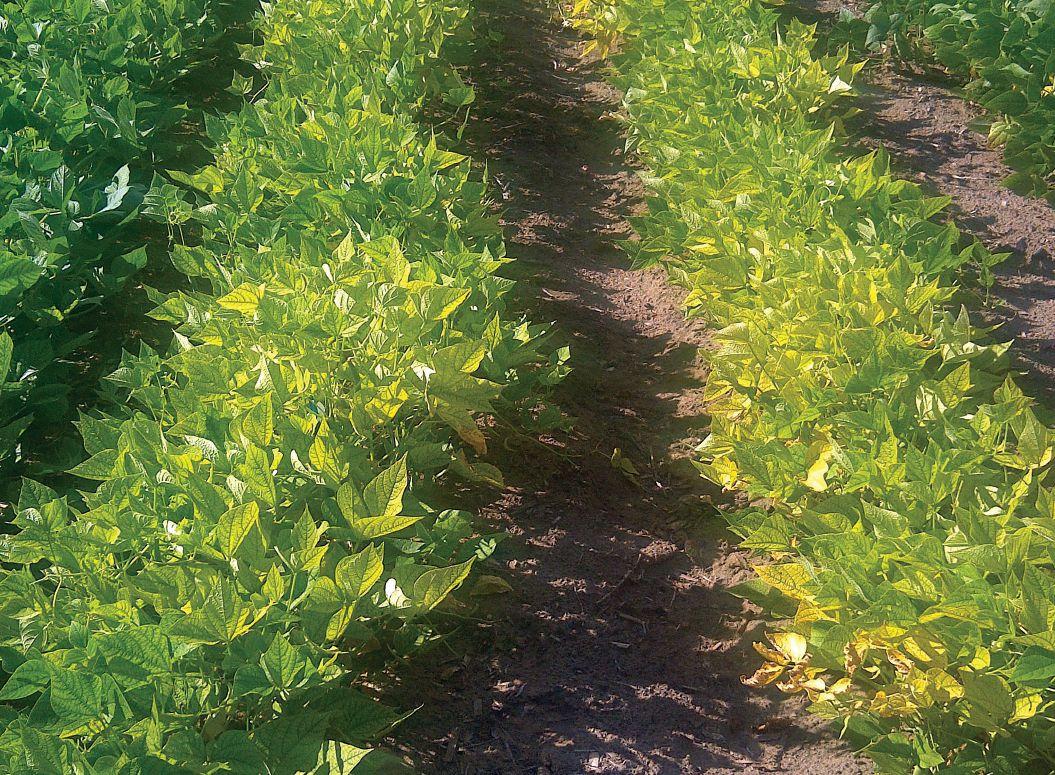
above-ground symptoms of SCn include stunting and yellowing of the plants. “The nematode is attacking and stunting the root system, which stunts the top-growth. and its ability to pull nutrients from the roots is why you get yellowing of the top-growth,” he notes. “The root damage also gives a point of attack for other pests
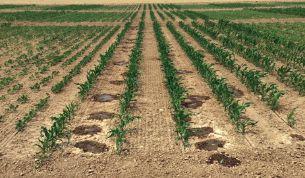
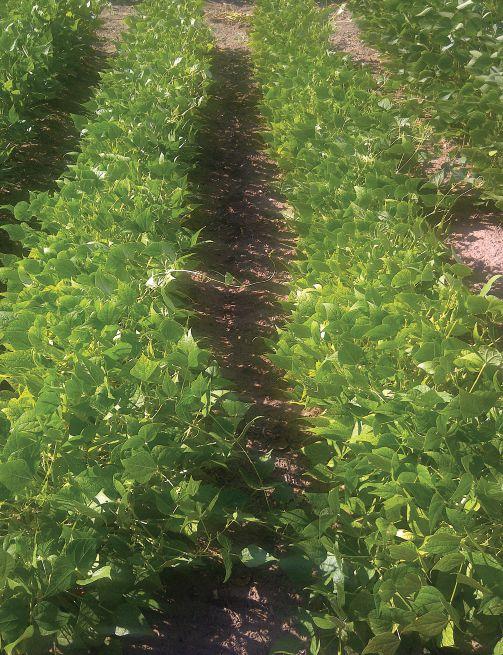
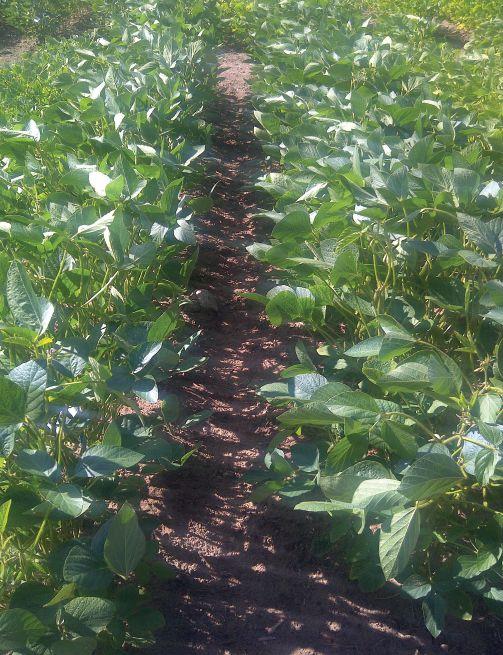
ABOVE: Yellow foliage is a symptom of soybean cyst nematode damage. The variety trials showed that adzuki beans, like the two rows of Erimo shown here, tended to be even more sensitive to SCN than SCN-susceptible soybean varieties.
that penetrate into the root systems, so you can have an increase in diseases like root rot.”
SCn spreads from field to field through the movement of infested soil, for example, on field equipment or by soil erosion. and once you have SCn in a field, it’s there to stay. “It is a pest that you are never, ever going to get rid of,” gillard says. growing susceptible crops in an SCn-infested field will increase the nematode’s population.
gillard estimates that yield losses due to SCn in dry beans range from zero to about 20 per cent. The severity of the loss is influenced by such factors as the SCn population in the soil, the dry bean market class being grown, soil conditions and moisture levels.
SCn tends to be worse in sandy soils than in clay soils, and dry weather can aggravate the problem. “If you have a sandy soil and you have a stunted root system from SCn and maybe some associated root rot too, you’ll see the plants really go backwards in a dry august,” he notes. “If you have the same soil, but good, timely rains throughout august, then you wouldn’t see the damage the stunted root system is causing to the plant and you wouldn’t see the yield loss as visibly in the crop.”
gillard suspects that dry bean growers could have up to about 10 per cent yield losses without seeing any symptoms of the problem above-ground.
He emphasizes, “The definitive way to tell if you have these nematodes is to dig up some plants and look for cysts on the roots.” The cysts look somewhat like the root nodules formed by nitrogenfixing bacteria, but root nodules are much bigger. The cysts are about the size of a pinhead and are lemon-shaped. They are initially white and gradually turn yellow and then brown.
Some market classes are more susceptible gillard’s graduate student Xinyu Zhang conducted a four-year field study (2011 to 2014) on SCn in dry beans. This study evaluated the
response of different dry bean varieties to SCn and assessed the effectiveness of different products for controlling SCn. Funding for this research was from the ontario Bean growers and Manitoba pulse growers, with matching funds from agriculture and agri-Food Canada through the growing Forward 1 and growing Forward 2 programs.
The field sites were located near exeter, ont., and rodney, ont. “In the field, you can have a fair bit of variation in the population of the pest in the soil within just a few metres. So we tried to pick sites that were relatively high in SCn to try to give a good, strong pest pressure,” notes gillard.
The number of varieties in the trials differed slightly from year to year, with about 22 dry bean varieties from seven to eight market classes (navy, cranberry, otebo, adzuki, pinto, dark red kidney, light red kidney, and black), plus a few SCn-susceptible and SCnresistant soybean varieties for comparison.
“We picked the dry bean varieties based on their relative popularity with growers, but also to cover a range in genetic backgrounds,” gillard says. all of the dry beans in the study are the same species, Phaseolus vulgaris, with the exception of adzuki beans, which are Vigna angularis.
gillard explains that all Phaseolus dry beans originate from two regions of the world. “The centre of origin for the small-seeded dry beans, like black and navy beans, was in Mexico and Central america. For the large-seeded ones, like kidney and cranberry beans, their centre of origin was in the andean mountains, around peru and Chile.” The trial results consistently showed that the large-seeded types are more susceptible to SCn than the small-seeded types.
The trials also showed that adzuki beans are very sensitive to SCn – even more sensitive than the SCn-susceptible soybean in most cases. He notes, “adzuki beans makes up a fairly large percentage of the ontario dry bean crop, so that’s a real concern.”
The control product trials included two biological products,
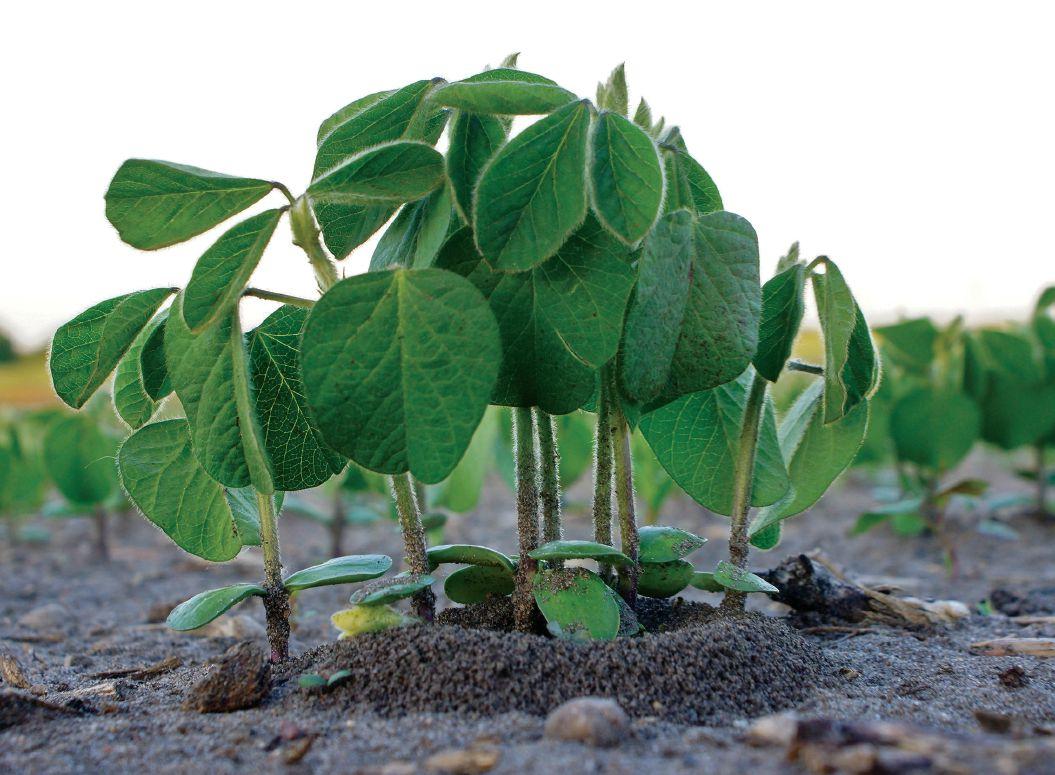
The small-seeded Phaseolus vulgaris dry bean market classes, like the navy bean variety T9905 shown here, tended to be more tolerant to SCN than the large-seeded market classes.
For comparison, the trials included SCN-resistant soybeans, like S14-M4 shown here, which carries resistance genes from two different sources.
one from Bayer CropScience and one from Syngenta, and an insecticide from Bayer CropScience that seems to have some nematicidal activity.
“The crop response to the products was fairly low. We weren’t able to come to any strong conclusions, at least not with our testing methods,” notes gillard. He explains, “Field trials with SCn can be a challenge because you are dealing with variation in the pest’s population and with the variability in the soil, weather conditions, et cetera, that vary from one year to the next.”
So, the next step in gillard’s SCn research will be to conduct variety and product trials in a greenhouse. These trials will build on the results from the field trials, while allowing the researchers to control the growing conditions and reduce the variability in SCn populations. This should allow a more accurate evaluation of the yield losses due to SCn and the effectiveness of the different products in controlling the pest.
Key tips for managing SCN
gillard outlines some key management practices for dealing with soybean cyst nematodes in dry beans. “My first recommendation is to find out if you have SCn, which a number of southern ontario growers likely do, and what you have for SCn populations. Send a soil sample to a recognized lab and have SCn cyst and egg counts
Developing stronger soybeans
Continued from page 16
conserved in successful varieties versus not-so-successful ones.”
This data tells the researchers which regions of the chromosomes are adapted for doing well in specific growing regions in Canada, and provides information about seed composition, such as isoflavones and fatty acids, and plant qualities, such as yield, maturity, and photosynthetic capacity.
So far, rajcan’s team has genotyped the panels, or analyzed them using molecular markers. “now, we’re collecting phenotypic information,” rajcan says. “robert Bruce, my phD student, has started harvesting some material already, and there will be one more year (next year) of collecting phenotypic information. The next step is associating those phenotypes or traits with genetic information on the lines from the panel, using various genetic and bioinformatics software packages.”
The project’s final results will be collected by 2017, but since the beginning, rajcan’s team has put their knowledge to good use, implementing it on the go in new breeding populations. “In my program every year we work with 120 populations from as many crosses, and they’re at all stages depending on when
done. Separate samples should be taken from sandy areas in a field that have a history of stunted bean growth. also scout your fields in late July and look below the ground. Dig up spots, know what you are looking for, and measure it.
“If you do have SCn and it’s at moderate to high levels, then you should be planning longer crop rotations with less susceptible crops in the rotation; our primary susceptible crops are soybeans and dry beans. If you are growing soybeans, then definitely choose a variety with at least one resistance gene for SCn because the goal is to continually try to reduce SCn populations in the soil.
“and if you have relatively high SCn populations, then consider growing small-seeded dry beans, like navies and blacks, instead of large-seeded ones, like kidneys and crans, because the smallseeded ones can be more tolerant to SCn.”
gillard also has some recommendations for dry bean breeders and extension agents. “We really should be testing up-and-coming dry bean varieties under SCn conditions, the same as we test them against other diseases and insect pests.
“and we need more grower education on SCn. I’ve talked to numerous growers who really don’t have a handle on the SCn pressure on their farm. They are on sandier soil in the middle of bean country, and they really don’t know what they have. You have to know what you’ve got to know how to handle it.”
we made the cross, from F1 to F8 , the highly homozygous true-breeding population,” he says.
genetic material is delivered to industry partners SeCan and Huron, which commercialize the varieties year-to-year.
Industrial applications
rajcan’s program is aimed first at achieving higher seed yield in soybean varieties.
“For every soybean breeder that’s the main focus, and yield itself is a very complex trait conditioned by a large number of genes,” he says. “It’s not easy to breed for yield but we all do it. Yield is the result of everything that happens to the plant – that brings into the picture the plant’s ability to resist abiotic stresses like drought, waterlogging, heat or frosttolerance; or biotic stresses like pests and diseases.”
But beyond breeding for soybean yield and food quality, rajcan’s lab has smaller projects developing varieties with traits suitable for non-food industries, such as the paint and auto-parts industries. “We’ve developed a variety with very high linoleic acid (18:2), which is very important for paints and polyurethane for interior parts of various vehicles,” he says.
“Various industries that manufacture paints, varnishes, lubricants and autoparts are currently using crude oil as the feed stock in processing, and they could use a renewable source such as soybean oil for the same purpose.”
Through Soy 20/20, a not-for-profit organization that connects government, academic and industry representatives for the development of Canada’s soybean industry, rajcan’s team has been linked directly with a variety of end-users. “Soy 20/20 makes these connections and arranges meetings with reps from, for example, the paint industry. They find out from them what they need, and then we can answer whether we can do this, and how long it will take.”
The project is truly collaborative –rajcan’s team also meets annually with gFo representatives to report on the study’s findings, who, in turn, communicate that information to their membership. “The information we generate is ultimately for the soybean breeders, and they see that as valuable. The practical value for the farmer comes from developing better and more productive new varieties using technologies that we develop,” he says.
m anaging micronutrient S
Choosing the best products for your crops.
by John Dietz
Cautious optimism is likely a good way to approach the new products section for any local ag retail outlet, according to veteran agronomist norm Flore.
Flore has been involved with agriculture, fertilizers and research in Western Canada for 35 years. Currently, he provides agronomic services in retail outlets for Crop production Services (CpS) in southern alberta. CpS has a wide range of products for crop nutrition, seed and protection. The shelves are more packed than ever.
“There is a barrage of products that farmers are faced with right now, and they have a wide range of claims associated with them,” Flore says. “our customers, often in conjunction with an agronomic advisor, have to sort through that, especially new products. There’s always been a lot of products out there, but the rate for new introductions seems to be increasing or spiking.”
He’s right. Before april 26, 2013, the federal Fertilizers act regulations contained quality and efficacy requirements for fertilizer and supplement products. The Canadian Food Inspection agency
(CFIa) enforced these regulations by conducting pre-market efficacy assessments, verification of performance or benefit claims and monitored for product quality in the market. It also required regionally based efficacy data.
It reviewed all labels being planned – and took up to three years doing it – to protect customers. If a label claimed a product could improve yield, the agronomist and all customers knew the label claim had hard scientific data.
Those CFIa practices were discontinued as of april 26, 2013. The CFIa process for registration takes the same amount of time today, but the scope is narrower.
In principle, according to the CFIa, this new flexibility supports innovation, reduces burden and expedites delivery to market for safe fertilizers and supplements.
With a wide variety of products for crop nutrition, seed and protection, farmers have more supplement and micronutrient choices than ever.
Theresa White, a Monsanto Canada regulatory officer in ottawa, offers this insight: “The registration-approved stamp means that the product has been assessed by CFIa for safety for human health and the environment and is safe when used according to the approved label information.
“The CFIa also reviews product labels to verify that requisite information, such as guaranteed analysis, directions for use, company/manufacturer contact information, appropriate units of measurement, and mandatory cautionary statements, correctly appear and are clearly legible on the label.”
each product registration is valid for three years, after which is must be re-registered. The categories and registration numbers on the CFIa website (www.inspection.gc.ca) can be summarized into four categories: farm fertilizer (50), fertilizer-pesticide (30), micronutrient (335) or supplement (392).
recently, the number of registered supplements has been increasing: in april 2013 the number sat at 291; in September 2015 it increased to 366 with another jump to 392 in october 2015.
registered micronutrients change, too. Twelve micronutrient registrations were issued in the first 10 months of 2015. The companies with most total registrations, as of october 2015, included: nutri ag Ltd. (31), Terralink Horticulture (31), Cameron Chemicals (21) and Winfield Solutions (19).
The big registration activity recently has been on the other side – registrations for supplements, that is. as of october 2015, the posted list shows 216 active supplement registrations predating 2014 and going back many years. However, 53 new registrations were issued in 2014. another 74 were issued in the first 10 months of this year.
Buyer beware
For Flore, the issue comes down to data. If a new product has lots of local data, he probably will try it and encourage customers to try it. If it doesn’t have that, it’s time to be cautious.
“To go through the registration process now, you don’t have to show product efficacy at all. In a lot of cases, it’s simply claims being made for a product. There’s a lack of good hard scientific
Novozymes and Monsanto lead the registrant activity for micronutrients and inoculants. They account for 108 of the nearly 400 registered products in the CFIA list of supplements as of October 2015.
The two companies formed BioAg Alliance in February 2014 with a mandate to provide sustainable bioagricultural solutions. Many of the “me-too” new registrations for Monsanto reflect its new access to Novozymes technology.
The companies say the BioAg Alliance is meant to bring the capabilities of Novozymes in microbial discovery, development and production together with Monsanto capabilities in microbial discovery, advanced biology, field-testing
research to demonstrate the effectiveness of some products,” the senior agronomist says.
For new products, he tries to keep an open mind. He looks for the science behind the label claim, but allows for customer influence. If a grower is interested in something new, Flore eagerly coaches the grower to test the product in the local environment. He believes newcomers to the market should have a fair trial.
“Yes, I tend to be skeptical on many of the products that are introduced especially if there are no claims on the label or a lack of performance results in the local area,” he says. “Still, I encourage customers to give it a try. I like being in the field with growers. I say, let’s try it in this environment where it has the best chance of working. I’ll monitor it. I’ll even do some crop yield and quality assessments to get a handle on whether a product is working.”
product introduction time is a good time to ask if some product is available at no cost – select suppliers offer some product at no cost in exchange for some data on its performance.
a fair trial, Flore suggests, can be in proportion to a farmer’s confidence in the likely benefit from a new product. For example, he suggests, if there’s a 20 per cent chance of a benefit, try it on up to 20 per cent of a field or a crop.
“Talk to the reputable local agronomist and the input supplier to learn what they’ve seen and what they’ve heard, in the area, about the product or the type of product. We don’t have all the answers, so I encourage quality on-farm testing,” he says.
or, after consulting a bit, perhaps buy the smallest jug or package available. In most cases, one container is enough to get a feel for the product performance.
“Work with an agronomist to help you select the right product, right field, the right crop, the right timing, the right application method to do things as well as possible. Then, use gpS technology and do 20 or 40 acres. You know exactly where it’s at and you can assess the yield,” he says.
“We can’t wait now for third-party research to cover off all these different products, it’s just not happening. There’s very little independent third-party research left out there, so it goes back to growers to do their own testing.”
and commercialization. The stated goal of the alliance is to help farmers meet the challenge of producing more with less in a sustainable way.
Monsanto BioAg is the commercial division of the BioAg Alliance.
This year, Novozymes BioAg gained 13 registrations for QuickRoots in either wettable powder or a dry formulation, for soybeans, small grains, corn, canola, alfalfa or pulse crops.
Meanwhile, Monsanto BioAg broadened its product portfolio by registering 11 of the 13 QuickRoots products with Monsanto labels.
“To fully understand what this means, they are primarily Monsanto asking for
the registration based on existing Novozymes BioAg product registration,” says Jon Treloar, a technical agronomist with Monsanto BioAg.
Treloar says the BioAg alliance is datadriven. Monsanto BioAg is responsible for field-testing in Canada. It proves the efficacy of each claim by doing costly, time-consuming testing.
“This year, we had 150 small plot trials at 150 locations across Canada, and we had close to 200 field scale trials through the BioAdvantage Trials program.”
However, he adds, supplying the data to prove a label claim is voluntary. The CFIA efficacy requirement has been removed for nearly three years.
BiOag alliaNcE acTiviTy grOWiNg
c anada broaden S global wheat mar K et S
A new study urges Canadian wheat ambassadors to capitalize on growth markets.
by Julienne Isaacs
The Canadian International grains Institute (CIgI) and Cereals Canada has published a wheat and durum market analysis that urges Canada to look outside traditional markets to grow its cereals export industry.
The study, conducted by market research firm LMC International, claims that Canadian wheat is known for its consistency, high quality and cleanliness around the world, and this brand differentiates it from competitors’ products in long-standing markets like north america and Japan. However, more needs to be done in coming years if we wish to keep pace with competitors like the United States and australia in key growth markets, says Cam Dahl, president of Cereals Canada.
“If we’re going to pursue growth, then we are going to have to look outside of those traditional markets for Canada Western red Spring (CWrS) wheat and amber durum and carry that differentiation and branding into other markets, such as West africa,” Dahl says.
West african nations, as well as important South american markets, will be high on Team Canada’s priority list for trade missions this fall and winter. Team Canada refers to a collaborative effort between Cereals Canada, CIgI, the Canadian grain Commission, industry representatives, and Canadian wheat and durum growers, which sends representatives of each of these groups on trade missions around the world. Team Canada’s first trade mission, in 2014-2015, helped promote the Canadian wheat and durum industry to 20 countries.
This fall and winter, Team Canada will hit the road, meeting with customers, government officials and agencies in the United States, Korea, Japan, and West african nations ghana and Ivory Coast, as well as countries in north africa, the Mideast and South america.
Dahl says there’s potential to expand Canada’s market for prairie spring wheat in South america, because this class meets particular demands of the South american market. and in West africa, there is strong potential to emphasize the different uses for CWrS as an enhancer of wheat purchased from other countries.
according to Joanne Buth, chief executive officer at CIgI, West and sub-Saharan africa is a very interesting market for Team Canada. once French or english colonial nations, there is a market in these countries for high-quality baked breads rather than traditional flatbreads. “Just before I came on with CIgI, the staff did an investigative mission to africa to look at where wheat was going, and nigeria has some of the largest mills in the world,” Buth says. “My colleagues saw some of the opportunities and thought this was where there was going to be great growth and demand.”
Canada needs to get moving to meet that demand. according to Buth, the United States and Black Sea nations are Canada’s chief
competitors in West africa. Though Canada’s wheat is of higher consistency and quality than wheat from the United States, it is sometimes used as the strong component in blends with Black Sea wheat.
In Southeast asia, australia is our chief competitor for white wheats; in recent years, australia’s production of white wheats has significantly improved.
Market support
Team Canada’s missions are not just about grabbing market share. an important aspect of Team Canada’s trade missions is market support, Buth says. prior to Team Canada’s trade missions each year, CIgI runs a full analysis on samples from all of its wheat grades, so Team Canada can present up-to-date data on the current crop’s qualities.
“The tests look at protein content and quality and gluten strength. The samples are milled, flour is tested and we produce end products like bread, pasta and noodles,” Buth says. “Then we’re able to provide customers with the technical information that they’ll need, from the water absorption to the volume and size of the loaf, as well as loaf colour and pasta colour.”
as part of that market support, the Canadian producers on each trip take an active role in discussing their on-farm practices and answering questions on wheat quality and cleanliness.
“growers are a very important part of the team that goes. When a grower stands up to talk about their operation, there is silence in the room,” Buth says. “Buyers, millers and users are always fascinated by where the product comes from, and there’s enormous value in hearing from the producer.”
But beyond customers listening to Canadians representing our wheat and durum, Dahl says it’s critical that Canada listens to the needs of end-users if our markets are to expand. “as an industry, we have to pay attention to what the customer wants. everybody in the value chain needs to be happy, which is another way of saying profitable,” he says. “That includes the companies developing new varieties, that includes the farmers growing them. If customers don’t like them we’re not going to have anywhere to sell them.”
Buth says that post-Canadian Wheat Board, there was concern about what would happen to the Canadian brand. “The report made clear there is a Canadian brand. and our growers are the start of all this, producing high-quality wheat.”
and, Buth adds, growers will play a crucial role in Canada’s continued market expansion abroad. “If we’re going to develop new markets and classes, we have to pay attention to how competitive we’re going to be, and we want grower participation in those conversations.”
WHY ATTEND THE 2016 weed summit?
To gain a better understanding of herbicide resistance issues across Canada and around the world.
Our goal is to ensure participants walk away with a clear understanding on specific actions they can take to help minimize the devastating impact of herbicide resistance on agricultural productivity in Canada.
Some topics that will be discusSed are:
• A global overview of herbicide resistance
• State of weed resistance in Western Canada and future outlook
• Managing herbicide resistant wild oat on the Prairies
• Distribution and control of glyphosate-resistant weeds in Ontario
• The role of pre-emergent herbicides, and tank-mixes and integrated weed management
• Implementing harvest weed seed control (HWSC) methods in Canada