Don’t be fooled by imitators. AGROTAIN® nitrogen stabilizer is the original, most research-proven urease inhibitor technology on the market. With 20 years of trials and real-world results on millions of acres worldwide, it’s the one growers trust to protect their nitrogen investment and yield potential every time. Ask your retailer for AGROTAIN® stabilizer, or visit agrotain.com to learn more.
TOP CROP
MANAGER
TILLAGE AND SEEDING
5 | Minimizing “yield drag” in no-till
Making adjustments to management can maintain the advantages of no-till. By Rosalie I. Tennison
PESTS AND NUTRIENTS
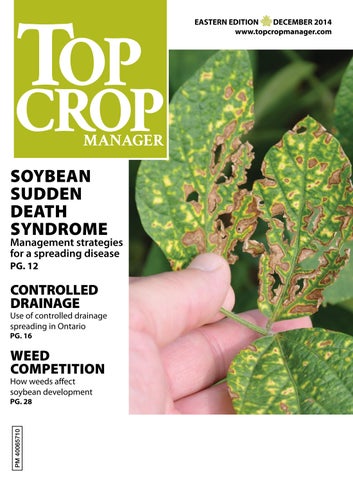
12 Soybean sudden death syndrome
By Carolyn King
SOIL AND WATER
16 Use of controlled drainage is spreading in ontario, but flat fields a must
By Treena Hein
8 | Delving into white mould resistance
Deeper understanding for more efficient breeding of resistant soybean varieties. By Carolyn King
CROP MANAGEMENT
21 Theories about maximizing glyphosate efficacy prove false
By Madeleine Baerg
FERTILITY AND NUTRIENTS
23 Interaction of foliar fertilizer and fungicide
By Treena Hein
Could
Greg
MANAGEMENT
26 | Long-term tillage and crop rotation
Southwestern ontario study finds no-till and winter wheat beneficial for soil quality. By Trudy Kelly Forsythe
FROM THE EDITOR
4 Full steam ahead for soybeans
By Lianne Appleby, Associate Editor
CROP MANAGEMENT
28 The surprising secret of weed competition
By Rosalie I. Tennison
LIANNE APPLEBY | ASSOCIATE EDITOR
Full STEAM AhEAD
FoR SoyBEANS
One of my first real assignments as a farm journalist was to cover “project SoY” (Soybean opportunities for Youth) for a segment of a now-defunct agricultural television show. That was in 2001, but the initiative was already five years old. as a rookie, the experience afforded me a whole new perspective on what this legume was capable of. The competition itself was kind of a big deal for the University of guelph. and now, 13 years later, soybeans remain a key focus in Canadian agriculture – if reported figures are right, and the formation of a new group is any indication. national soybean production has increased significantly over the past few years. acreage is at an all-time high and, according to experts, there is room for yet more future growth.
Despite this good news, however, the industry continues to face challenges both domestically and internationally. While project SoY continues as an annual event that harnesses students’ creative power to develop innovative products for soybeans, farm leaders have recognized there needs to be a unified industry voice to address more immediate issues.
Thus the perceived need for said new group, one that brings together all sectors with the same vision.
enter Soy Canada, an entity backed by a letter of intent signed by nearly 30 industry organizations and companies. Signatories to the letter recently elected an interim board of directors, and an executive director was selected in october. according to a news release, the mandate of the organization will be to increase the profile of the industry, maintain current market access, open new markets and strengthen relationships among stakeholders – issues the industry faces now.
Soy Canada will focus not only on growing Canada’s soybean industry, sustainably and profitably, but also ensure government relations efforts are focused and clear. To do this, the entire value chain will need to work together – producers, crushers, commodity and food-grade exporters, and even seed companies. The organization will tackle all issues related to soybean production and marketing, including: domestic and exports markets; trade and promotion of soybeans and soybean products; co-ordination of innovation and research activities; attraction of new investment in the industry; industrial, food and feed uses for soybeans; and gM and non- gM varieties and markets.
Statistics Canada’s September 2014 Production of principal field crops report estimates that soybean production in ontario will increase 10.3 per cent, to 3.6 million tonnes. a 16.8 per cent increase in harvested area is expected to drive the overall gain, compared with 2013. Similarly, farmers in Quebec can expect overall output to reach the 1.0 million tonne mark for the first time in 2014. as in ontario, a larger harvested area (19.8 per cent increase) is expected to boost production.
With these promising numbers already recorded, and forecasts of growth opportunities ahead, it is important that the way forward be plotted carefully for the soybean industry. Soy Canada is poised to captain the ship to ensure all hands on deck are working together with the same destination in mind.
I, for one, look forward to seeing what collaboration, in its truest sense, can do.
TOP CROP
michael
mfredericks@annexweb.com
MAIL AGREEMENT #40065710 ReTuRN uNDeLIVeRAbLe cANADIAN ADDReSSeS TO cIRcuLATION DePT. P.O. Box 530, Simcoe, ON N3Y 4N5 email: subscribe@topcropmanager.com
Top Crop Manager West - 9 issues - February, march, Mid-March, April, June, September, October, November and December - 1 Year - $45.00 Cdn. plus tax
Top Crop Manager East - 7 issuesFebruary, march, April, September, October, November and December - 1 Year - $45.00 Cdn. plus tax
Potatoes in Canada - 4 issues - Spring, Summer, Fall and Winter 1 Year - $16 CDN plus tax
All of the above - $80.00 Cdn. plus tax
Occasionally, Top Crop Manager will mail information on behalf of industryrelated groups whose products and services we believe may be of interest to you. If you prefer not to receive this information, please contact our circulation department in any of the four ways listed above.
All advertising is subject to the publisher’s approval. Such approval does not imply any endorsement of the products or services advertised. Publisher reserves the right to refuse advertising that does not meet the standards of the publication. www.topcropmanager.com
Mi N i M izi Ng “yi E l D DRAg”
i
N
No-
T
ill
Making adjustments to management can maintain the advantages of no-till.
by rosalie I. Tennison
Despite the many advantages of no-till, some soybean growers are considering whether the benefits outweigh the disadvantages. It turns out that field trials conducted by the ontario Ministry of agriculture, Food and rural affairs (oMaFra), using several planting systems, showed little yield advantage between the systems.
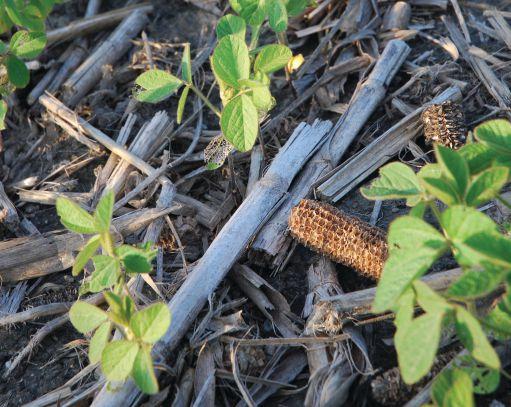
However, one of the greatest issues for no-till soybeans is too much corn residue, which causes “yield drag.” practicing good management can minimize yield drag, allowing growers to enjoy the benefits of no-till while growing soybeans successfully. according to Horst Bohner, a leading researcher on soybean tillage systems and a soybean specialist with oMaFra, improvements in corn varieties have led to more residue due to yield improvements; and, while this is good news for corn growers, it has had a detrimental effect on the yield of no-till soybeans the following year. But, Bohner’s research offers some solutions.
“We see the bulk of yield development in soybeans in the second half of the growing system. Therefore, promoting early season growth is less important than it is with other crops. But, if plant establishment is poor, the yield will be affected,” Bohner explains.
hoto
Photo courtesy of h orst Bohner, o M afra
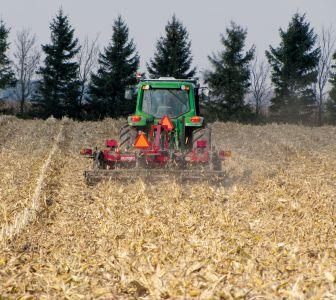
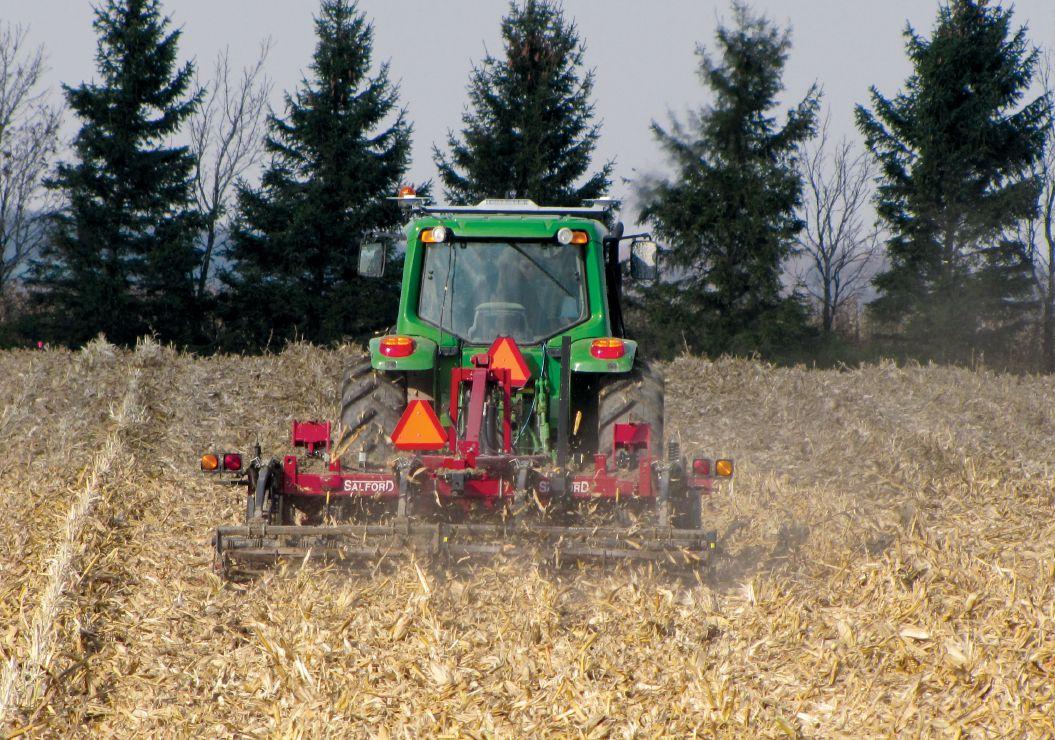
TOP: Vertical tillage conducted in the fall (minimal tillage).
ABOVE: One of the greatest issues for no-till soybeans is too much corn residue, which causes “yield drag.”
“If there is slow growth early on, it is largely due to the corn residue, which keeps the soil cooler and ties up nitrogen.” He adds that when soybean plants have to emerge through heavy corn residue, it results in poor plant stands and a reduction in yields.
In his field studies, Bohner compared no-till, minimum tillage and conventional tillage, along with two levels of corn residue removal, stalk chopping, use of a planter and a drill, and a nitrogen application. He says there is no one system that “fits all” – meaning growers have to determine which works best in their operation. However, with some management adjustments, soybeans can be grown successfully in each system.
“no-till is by far the most economical production system, as long as yields remain high,” Bohner admits. “But, you need to ensure you establish enough soybean plants for success and that means dealing with corn residue. growers need to incorporate excess corn stalks, remove stalks, or chop them in order to allow the soybean plants to establish. Chopping corn stalks and leaving them on the surface can be a problem if they are not incorporated; or use a drill to seed into the stalks.”
There is also a geographical and soil type distinction that must be made when speaking about tillage for soybeans, Bohner adds. northern counties, poorly drained fields, or heavy textured soils benefit more from some form of tillage. Fortunately, minimum tillage is usually sufficient. “There is no evidence a mouldboard plow is necessary in soybean production,” he says.
Bohner admits much depends on soil type, which can dictate what operations will be most successful. The costs increase as more
Trait Stewardship Responsibilities Notice to Farmers
Monsanto Company is a member of Excellence Through Stewardship® (ETS). Monsanto products are commercialized in accordance with ETS Product Launch Stewardship Guidance, and in compliance with Monsanto’s Policy for Commercialization of Biotechnology-Derived Plant Products in Commodity Crops. Commercialized products have been approved for import into key export markets with functioning regulatory systems. Any crop or material produced from this product can only be exported to, or used, processed or sold in countries where all necessary regulatory approvals have been granted. It is a violation of national and international law to move material containing biotech traits across boundaries into nations where import is not permitted. Growers should talk to their grain handler or product purchaser to confirm their buying position for this product. Excellence Through Stewardship® is a registered trademark of Excellence Through Stewardship.
ALWAYS READ AND FOLLOW PESTICIDE LABEL DIRECTIONS. Roundup Ready® crops contain genes that confer tolerance to glyphosate, the active ingredient in Roundup® brand agricultural herbicides. Roundup® brand agricultural herbicides will kill crops that are not tolerant to glyphosate. Acceleron® seed treatment technology for canola contains the active ingredients difenoconazole, metalaxyl (M and S isomers), fludioxonil, and thiamethoxam. Acceleron® seed treatment technology for soybeans (fungicides only) is a combination of three separate individually registered products, which together contain the active ingredients fluxapyroxad, pyraclostrobin and metalaxyl. Acceleron® seed treatment technology for soybeans (fungicides and insecticide) is a combination of four separate individually registered products, which together contain the active ingredients fluxapyroxad, pyraclostrobin, metalaxyl and imidacloprid. Acceleron® seed treatment technology for corn (fungicides only) is a combination of three separate individually-registered products, which together contain the active ingredients metalaxyl, trifloxystrobin and ipconazole. Acceleron® seed treatment technology for corn (fungicides and insecticide) is a combination of four separate individually-registered products, which together contain the active ingredients metalaxyl, trifloxystrobin, ipconazole, and clothianidin. Acceleron® seed treatment technology for corn with Poncho®/VoTivo™ (fungicides, insecticide and nematicide) is a combination of five separate individually-registered products, which together contain the active ingredients metalaxyl, trifloxystrobin, ipconazole, clothianidin and Bacillus firmus strain I-5821. Acceleron®, Acceleron and Design®, DEKALB and Design®, DEKALB®, Genuity and Design®, Genuity®, RIB Complete and Design®, RIB Complete®, Roundup Ready 2 Technology and Design®, Roundup Ready 2 Yield®, Roundup Ready®, Roundup Transorb®, Roundup WeatherMAX®, Roundup®, SmartStax and Design®, SmartStax®, Transorb®, VT Double PRO® and VT Triple PRO® are trademarks of Monsanto Technology LLC. Used under license. LibertyLink® and the Water Droplet Design are trademarks of Bayer. Used under license. Herculex® is a registered trademark of Dow AgroSciences LLC. Used under license. Poncho® and Votivo™ are trademarks of Bayer. Used under license. All other trademarks are the property of their respective owners.
tillage is done, so he cautions growers against only increasing tillage to solve the problem. In addition, much depends on the type of soil in the field, which could require further adjustments to ensure a healthy, well-established soybean crop.
“It’s important to note that in other long-term tillage trials, no-till operations have achieved higher soybean yield over the long term, if there are a lot of soybeans in the rotations,” Bohner admits. “notill can also offer some plant health advantages because we see less white mould in this system and there is additional water retention.”
If plant establishment is poor, the yield will be affected
growers need to determine how best to make their chosen system work, and then make the adjustments necessary to ensure top yields in every crop grown. accepting lower yields in soybeans following corn does not make sense if the return on soybeans offers a greater advantage. Finding a balance is what is needed in order to grow all crops successfully.
“on average, we found that the difference between tillage systems is only about two bushels per acre,” explains Bohner, “but it could cost four bushels per acre to achieve that yield advantage. on occasion the advantage to tillage is four or five bushels per acre. In those fields it makes sense to conduct tillage. The hard part is identifying those fields.”
“In certain years, you may need to do some tillage in the spring because of what was grown in the field the previous year or because it is a wet spring,” he adds. “In particular, you need to get corn residue minimized to allow the soybean plants to get established.”
Bohner suggests growers need to consider using a row unit planter instead of a drill in heavy corn stalks. one of the main findings of the study was that a planter unit will outperform a drill, especially in chopped corn stalks. or, if that is not an option, some form of minimal tillage can be a real aid to no-till drill performance.
Increasing the seeding rate is often recommended in order to overcome yield drag, but that may not be enough if the residue cover is too great. In most of Bohner’s trials over 10 years, no-till yielded very well. However, there was some improvement if corn residue was managed effectively. although no-till yields were very good at most sites, Bohner admits there were certain fields where continual yield reductions, that could not be easily addressed, were noted.
again, Bohner says his trials show there is some advantage to managing corn residue particularly when it is heavy, but growers need to decide if the time and energy required will prove advantageous in the long run. For growers who favour the no-till system and want to stick with it but are disappointed in the results of their soybean production, Bohner’s trials offer a way to continue using the system they want while getting yield stability. With careful management and some wise choices, yield drag in no-till can be minimized while continuing to reap the advantages the system offers.
DE lvi Ng i NTo whi TE Moul D RESi STANCE
Deeper understanding for more efficient breeding of resistant soybean varieties.
by Carolyn King
The results of a recently completed project are shedding light on how soybean plants respond to white mould at the cellular and molecular levels. That information is an important step towards more efficient breeding of soybean varieties with resistance to this yield-limiting disease.
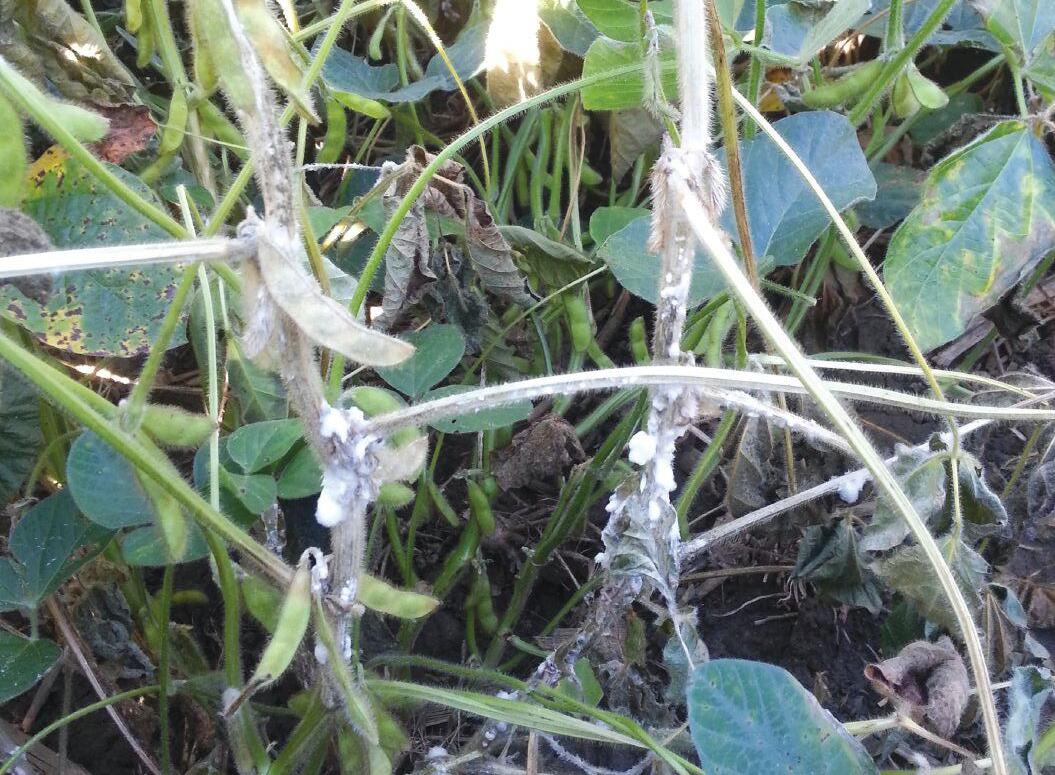
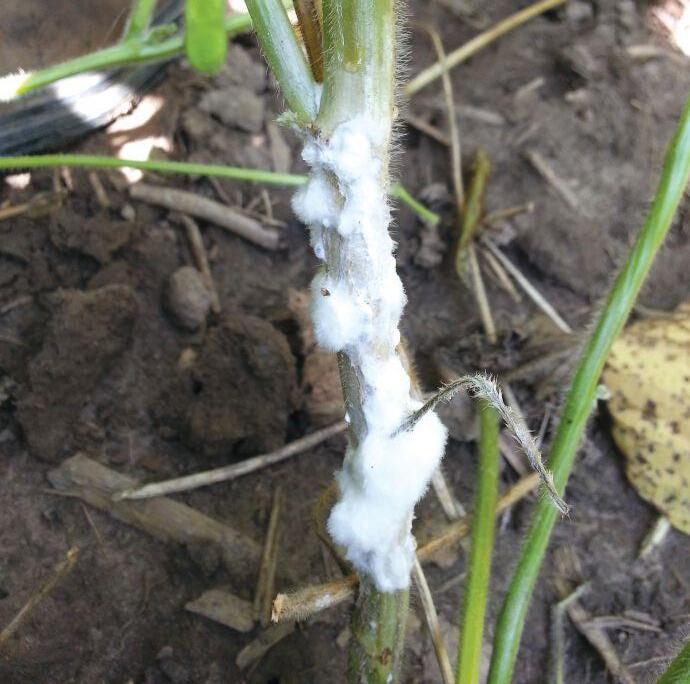
White mould, also called sclerotinia stem rot, is a soil-borne disease caused by the fungal pathogen Sclerotinia sclerotiorum. The fungus overwinters in the soil as resting bodies called sclerotia, which can survive for up to seven years in the soil. In the spring, the sclerotia produce apothecia, which are little golf tee-shaped mushrooms. The apothecia release millions of tiny spores into the air. The spores can colonize soybean flowers and use them as an energy source to infect the plant’s stem. e ach step of the pathogen’s development depends on having the right set of environmental conditions.
a s the third most important soybean disease in Canada
in terms of the crop damage, white mould is a key focus of Dr. Istvan r ajcan, who leads the soybean breeding program at the University of g uelph. He says, “White mould is considered one of the most damaging diseases in soybeans in the northern parts of the United States and Canada. It affects the crop more frequently in Quebec and Manitoba, and in some years in o ntario as well.”
Sclerotinia sclerotiorum is a widespread pathogen that affects more than 400 plant species, including many crops in addition to soybeans, such as canola, dry beans and sunflowers. “The losses due to white mould in the U.S. according to data from 2009 were estimated at $500 million,” notes r ajcan.
He worked on the project with p hD student evelyn Valera
ABOVE: University of Guelph researchers are shedding light on white mould to help breeders develop resistant soybean varieties.
Photos courtesy of
rojas and Dr. g reg Boland, a plant pathologist and professor e meritus at the University of g uelph. The project was funded by the Canadian a gricultural adaptation program in conjunction with the g rain Farmers of o ntario ( g F o ), and rojas received a Highly Qualified personnel (HQ p ) scholarship from the o ntario Ministry of a griculture, Food and rural affairs ( o M a F ra ) to do this project.
at present, no soybean varieties are completely resistant to white mould. “It’s a very complex disease that is conditioned by multiple genes with small effects. There is no soybean variety that would have all those genes to give it complete immunity or full resistance. The best that has been accomplished so far is partial resistance,” explains r ajcan.
This genetic complexity is one of the major challenges in breeding resistant soybean varieties. It’s much easier to develop disease-resistant varieties if only one or two genes are needed to confer resistance to a disease. Trying to pyramid all of the many genes needed for complete white mould resistance into a single soybean variety would be extremely difficult.
another key challenge for breeders is the weather factor. “Breeders want the disease to be present so they can see which plants are resistant [and select those plants as the parents for the next generation in their breeding program]. However, white mould will not develop unless certain weather conditions and soil conditions are met. So we are hampered by our inability to control the weather conditions [in the field] for a meaningful evaluation of our genetic material,” notes r ajcan.
“My group and other research groups have tried a number of different approaches, like irrigating plots, misting them, and so on, to try to create conditions that favour white mould. Sometimes even when you think you are providing the perfect conditions, you still don’t get the disease.”
o ne way to enhance the process of developing resistant varieties is to create “markers.” Breeders use markers for screening the thousands of plants in their breeding programs – which helps identify those individual plants with the desired characteristics. For instance, a molecular marker is a specific
sequence of D na that is associated with a particular trait. researchers use molecular markers to quickly screen the D na of their breeding material in the lab, rather than having to take weeks or months to grow seeds into plants and test them for the trait.
a s a step towards developing such markers for white mould resistance, the project aimed to characterize in detail the soybean plant’s physiological, anatomical and molecular responses to the pathogen as it infects and spreads in the plant.
“Characterizing the disease in detail allows us to understand what processes are ongoing in the course of plant infection and disease development,” says r ajcan. “Unless we understand the genetic and physiological basis of disease development – or lack thereof in terms of resistance – we will not understand how we can address the issue of developing new resistant varieties.”
To examine the plant’s physiological responses to the disease, rojas inoculated a susceptible soybean variety, oaC Shire, and a partially resistant variety,
oaC Salem, with the pathogen. Then she measured a number of physiological characteristics at the cellular level. For example, she looked at whether the susceptible plants accumulated more starch or less starch, whether their photosynthesis was slower or faster, and whether the pathogen’s mycelia (the thread-like filaments that make up the vegetative part of the fungus) developed faster or slower, in comparison to the partially resistant plants.
The molecular characterization involved comparing the inoculated susceptible and partially resistant plants to see which genes were more expressed and less expressed as the disease developed.
r ajcan outlines a few of the highlights from the project’s results. “Starch was accumulated more in the infected cells of the susceptible plant versus the partially resistant plant. We see that as a sign that the susceptible plant is feeling stressed out. It is accumulating more energy in the starch granules because it is trying to fight off the pathogen, but that fight is taking a toll on its energy level. Therefore, the plant may wilt and die
The researchers compared how susceptible soybean plants (shown here) and partially resistant plants responded to white mould at the cellular and molecular levels.
because it doesn’t allocate its resources properly.
“also the susceptible plants had a higher stomatal conductance. That means the infected plants were transpiring faster –losing water faster – which resulted in their wilting.”
For the molecular response, rojas looked at all the genes that were expressed in the diseased versus the healthy tissues. Some genes were downregulated, meaning their expression was reduced, and others were up-regulated, in response to infection. r ajcan notes, “ e ach of these genes belongs to a group of genes that is made up of genes with similar functions. Based on the function of the genes that changed their expression, we identified those that have been reported previously as being associated with disease resistance. In these groups, there are specific genes that we will now be able to focus on in a follow-up study.”
Losses due to white mould in the U.S., according to data from 2009, were estimated at $500 million
So the next step for r ajcan’s research group is to isolate and test a few key genes that have been identified by rojas.
“We’re planning to take the knowledge we gained from this project, which was based on only two soybean varieties, and to assess a whole range of other soybean cultivars that were not related to these two cultivars to see if we get the same physiological and molecular patterns of response to the pathogen,” says r ajcan.
“If we do see those same patterns, then that would give us the chance to validate the findings from this study and to develop physiological markers or molecular markers for more efficient selection of partially resistant soybeans to white mould.”
In particular, the researchers hope to narrow down the dozens of genes identified in the project to the most important ones for use as molecular markers. and that advance could help breeders to develop more white mould-resistant soybean varieties more quickly.
“On this farm, we’re the experts.”
Sean Gorrill – FCC
Customer
Soy BEAN Su DDEN DEAT h Sy NDRoME
Management strategies for a spreading disease.
by Carolyn King
Plant pathologist albert Tenuta with the o ntario Ministry of a griculture, Food and rural affairs ( o M a F ra ) is collaborating with researchers in the United States to fine-tune management options for soybean sudden death syndrome (SDS).
“[The disease] is definitely on the rise and has considerable economic implications. So growers need to watch for it and address it,” says Tenuta.
SDS is caused by Fusarium virguliforme . This fungal pathogen overwinters on crop residue and in the soil as survival structures called chlamydospores. In the spring, the chlamydospores germinate and infect soybean roots.
“The pathogen colonizes the roots early in the season, but we don’t usually see foliar symptoms until later on when it warms up, either when the plants are under stress or as they get into the reproductive stages in mid to late July and august,” explains Tenuta.
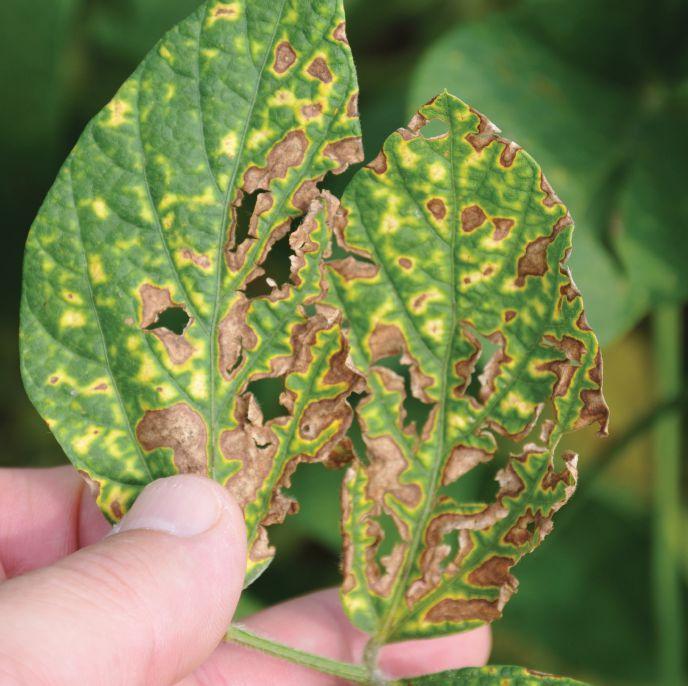
The pathogen causes root rot but it also produces a toxin. When that toxin moves up into the leaves, it causes the disease’s
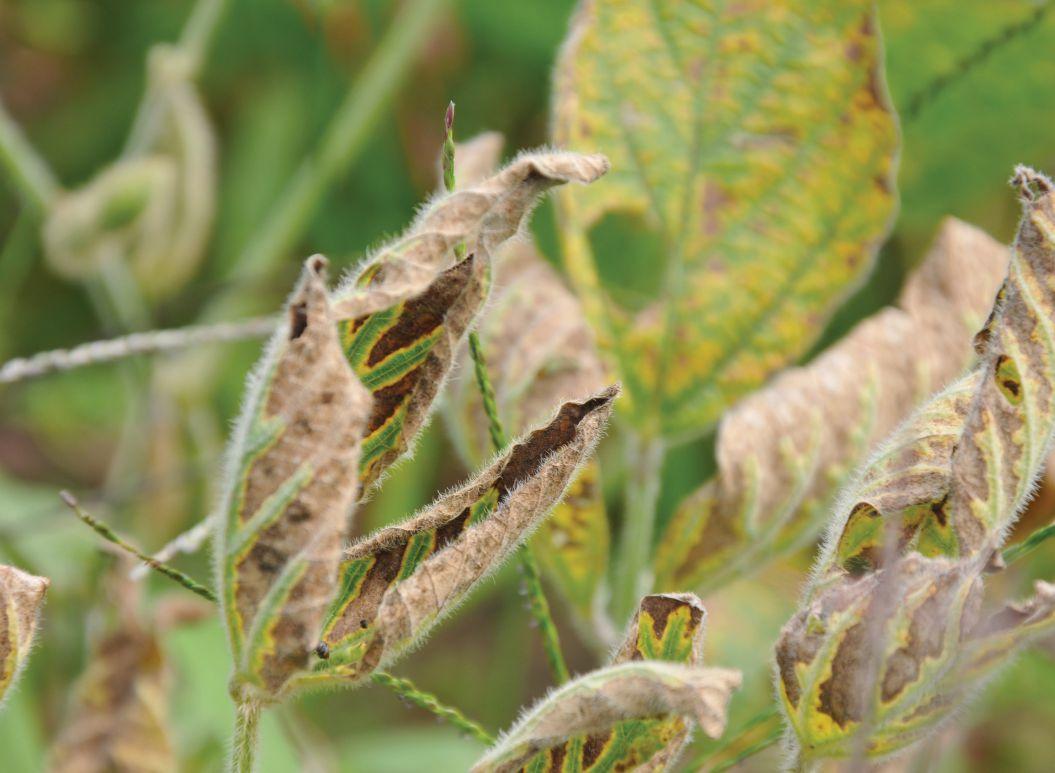
TOP: Soybean leaves affected by sudden death syndrome tend to curl inward.
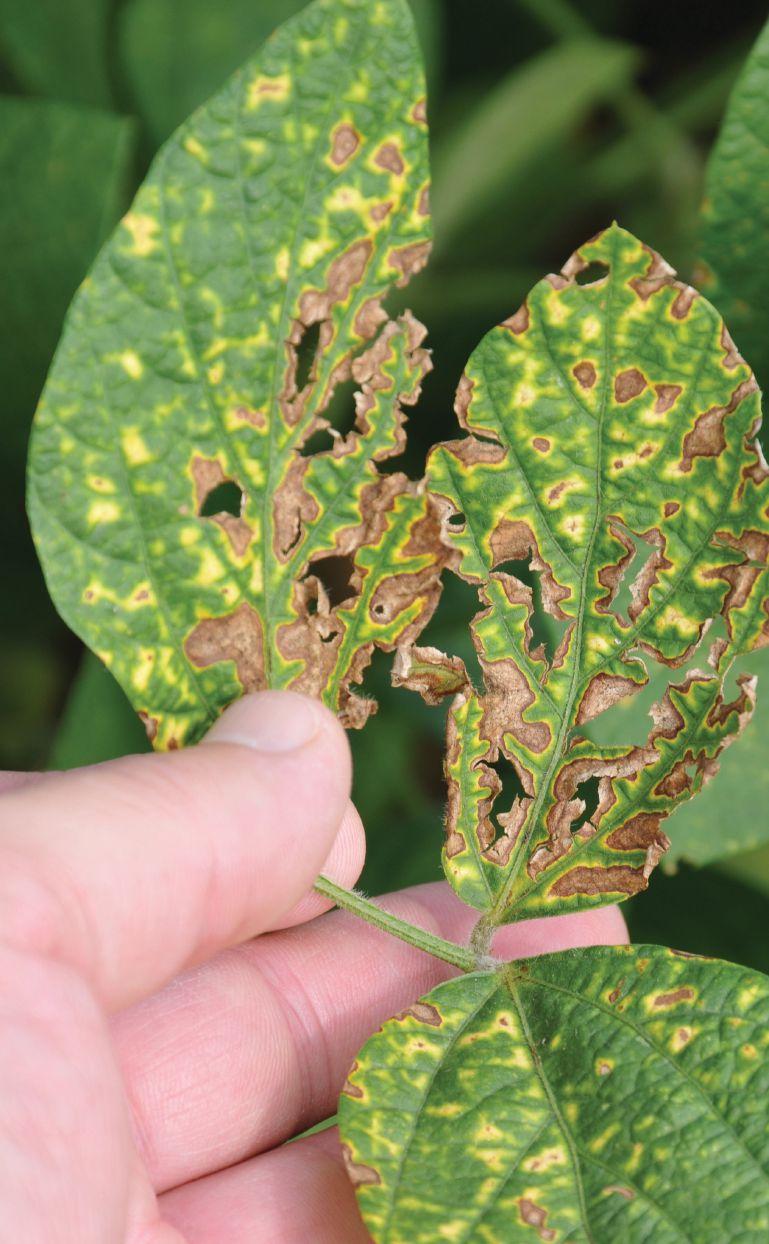
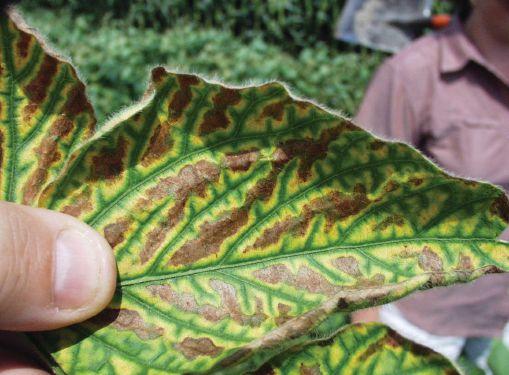
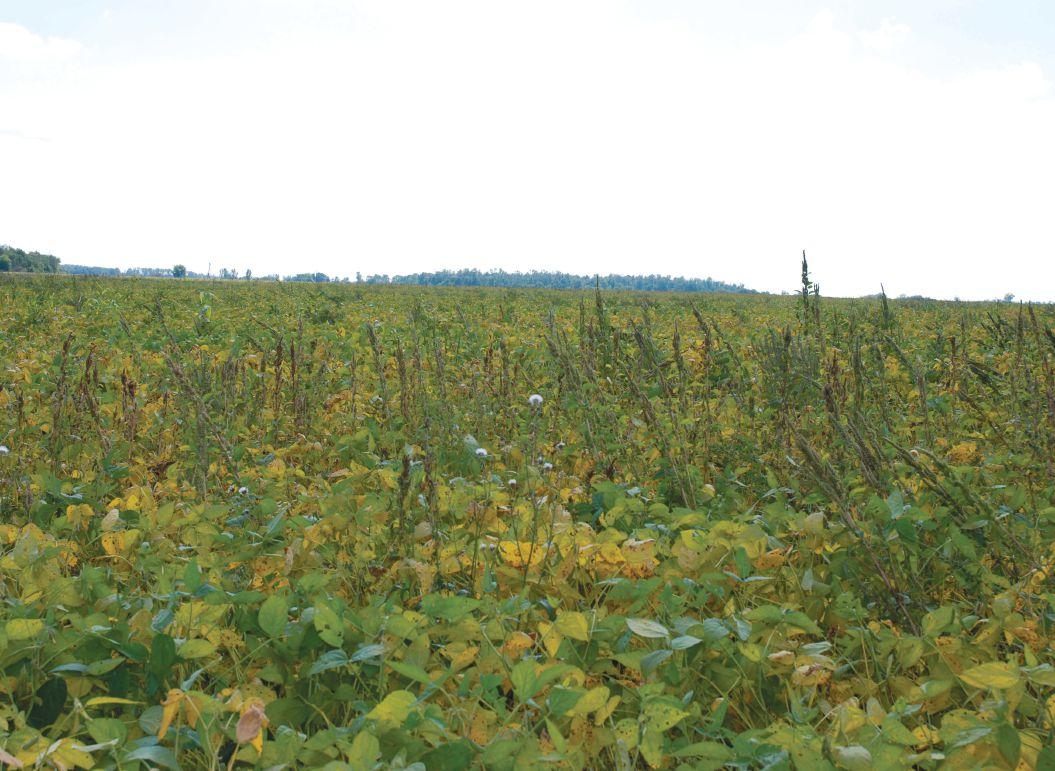
MIDDLE: Soybean sudden death syndrome causes characteristic yellowing between the veins of the leaves.
Photos courtesy
Field
View detailed coverage maps as they are completed in the field.
Rainfall
Use virtual rain gauges for each field and create a map of rainfall.
Irrigation
Monitor and control water, fertigation, and effluent applications.
Fleet
Track fleet locations and alerts while viewing reports on productivity.
Crop Health & Scouting
View crop health imagery to assist scouting efforts.
Soil
Understand how water and other inputs move through your soil.
characteristic foliar symptoms. “The leaves will show an interveinal chlorosis, yellowing between the veins, while the veins will stay green. The affected tissue will turn brown and then disintegrate, leaving just the veins. In severe cases, the leaves will fall off, but the petioles –the stalks that attach the leaf to the stem – will remain attached to the stem.”
The disease is a growing problem in o ntario and the north central U.S. In o ntario, SDS symptoms were first noticed 20 years ago in the Chatham area. These days, the disease continues to spread, primarily in southwestern o ntario. Tenuta notes, “Both the incidence and severity continue to increase on an annual basis, and the disease continues to expand into new areas and new fields each year.”
according to Tenuta, one of the key factors in the spread of SDS is the presence of soybean cyst nematode (SC n ). “Soybean cyst nematode damage to soybean roots can aid the SDS pathogen in its ability to get into the plant. a s well, our studies and others’ have shown that the SDS pathogen moves around in the cyst of soybean cyst nematode. So as soybean cyst nematode moves into new areas, then closely after that sudden death syndrome is found.”
Weather is a crucial factor in the impact of SDS on soybean yields. “Cool, wet conditions at planting are ideal for sudden death syndrome infection. We have those conditions in most years in o ntario and we had them in 2014. also, as growers are planting earlier and earlier, we’re seeing a greater likelihood of cool, wet conditions at or shortly after planting. The pathogen also likes wetter conditions throughout the growing season,” says Tenuta.
Like o ntario, Iowa had high levels of SDS in 2014, due to early wet weather followed by rainy weather later in the season. “When you get years like this with a lot of rain in august and September it can definitely finish off your crop early,” says Dr. Daren Mueller, an assistant professor and plant pathologist at Iowa State University.
SDS yield losses also depend on the soybean variety. Tenuta notes, “o verall in most cases, it’s not unexpected to see a 10 to 20 per cent yield reduction in parts of fields with moderate levels of SDS infection. The greatest yield losses
we see in o ntario are on varieties that are susceptible to soybean cyst nematode and have little tolerance to sudden death syndrome. In those fields, you can get losses of 40 to 50 per cent or more. In some parts of those fields, you can have up to 100 per cent loss, particularly if the disease starts early.”
Advancing SDS management
Mueller is leading a collaborative project with Tenuta and university researchers in several states in the north central U.S. to develop improved strategies for SDS management. now in its second year, this three-year project is actually the third in a series of three-year SDS projects.
Mueller explains, “The first six years involved a lot of neat work on the pathogen’s biology – how does it infect, what does it infect, how does it survive in a corn-soybean rotation, and so on. That work has allowed us to better understand the disease at a level where we can really make forward progress. So we’ve taken all of that information and put together some experiments to finetune management options for farmers.”
This series of SDS projects is part of the multi-state north Central Soybean research program and is funded by the Soybean Checkoff. The o ntario portion of the current project is funded by g rain Farmers of o ntario ( g F o ) through g rowing Forward 2 funding.
The researchers are evaluating a variety of practices for managing SDS. o ne of those is planting date. “Until now, all of the literature showing that planting ‘early’ increases the SDS risk has been based on comparing mid-May to mid-June planting dates. But farmers are planting into late april now, so we want to see how these earlier dates affect the SDS risk,” says Mueller. The researchers are also hoping to work with a climatologist to develop some risk assessments for earlier planting as the climate becomes more uncertain.
They are also comparing a wide range of fungicide treatments. Mueller notes. “There are a lot of new products – foliar fungicides, in-furrow fungicides and seed treatments – and we’re assessing them to see if any of those affect SDS.” a s well, they are examining SDS levels in relation to SC n -resistant
As the disease progresses, the yellowed leaf tissue turns brown and then disintegrates.
soybeans. “Soybean cyst nematode is the number one soybean disease. o ver the last several years there has been increased reproduction of soybean cyst nematode on the most popular source of SC n resistance, although it is still considered the best source of resistance. We want to see if that increased reproduction will affect SDS, since one of the ways you manage SDS is by controlling soybean cyst nematode,” explains Mueller.
The project also involves some side studies, including a recently completed study about herbicides and SDS. In addition, Mueller is conducting some Iowa-specific research with his colleague Dr. Leonor Leandro to assess the effects of practices like tillage and cover crops on SDS.
Findings so far
The researchers are already gleaning valuable information from the project. For example, only one of the many fungicide treatments looks promising so far. “It’s a new seed treatment from Bayer CropScience; it seems to be holding up well in different environments,” says Mueller.
Tenuta adds, “This seed treatment doesn’t eliminate SDS, but it delays development of the disease until later crop growth stages and decreases the amount of SDS. This product is available in the U.S. and hopefully it will be available in o ntario soon.”
The researchers also tried using this seed treatment’s active ingredient for in-furrow and foliar applications, although these uses aren’t on the label. The in-furrow application worked very well, but the foliar applications did not work.
They are also finding that slightly delaying the planting date helps in some cases. “o ur research here as well as in the U.S. shows that the earlier we plant, the more favourable the conditions are for infection and higher levels of SDS,” says Tenuta.
But he doesn’t recommend really delayed planting. “although we can avoid or minimize sudden death syndrome by planting into warm conditions in early to mid-June, the problem with that is the loss of yield potential, so waiting that late to plant is not a viable option.”
a s well, Mueller notes, “Very early planting did increase the SDS risk in some fields, but this year we had fields with just as much SDS in the latest planting as in the early planting because we had so much rain in late august. So the driving factor is moisture, as long as the inoculum is there.”
o ne of the project’s side studies examined whether glyphosate affects the occurrence of SDS. “Some people have said that sudden death syndrome increases in the presence of glyphosate use. So we conducted a three-year study at multiple locations in six states and provinces, comparing various applications of glyphosate and other herbicides to assess the effects on sudden death syndrome levels,” explains Tenuta. “The results, which were recently published, found glyphosate did not increase SDS infection and hopefully will end the discussion.”
Mueller adds, “Where we had no SDS, none of various roundup rates and timings caused SDS to appear. and where we had any levels of SDS, none of those glyphosate regimes caused SDS to be increased.”
This fall and winter the researchers will complete their analysis of the 2014 data. Mueller says, “We’re hoping to be able to finalize some of the recommendations this year, and
then start tweaking treatments and maybe combining practices together for 2015.”
Tips for managing SDS
Based on their findings so far and previous studies, Mueller and Tenuta offer several tips for managing soybean sudden death syndrome.
“The number one thing is to make sure you actually have SDS. We had a lot of fields this year that had brown stem rot or stem canker, and they were both misidentified as SDS,” says Mueller.
[The disease] is definitely on the rise and has considerable economic implications
“Stem canker is caused by a whole complex of fungi called Diaporthe and Phomopsis , which cause stem canker, pod and stem blight, and Phomopsis seed decay. I think that whole complex was confused with SDS in some fields this year. So look at the outside of the stem to see if there is a canker, which is where stem canker gets its name. also, the initial foliar symptoms for stem canker are more of a general yellowing, rather than the yellowing between the veins that you get with SDS.”
Tenuta notes, “The interveinal chlorosis symptoms of SDS are very similar to the foliar symptoms of brown stem rot. The main way to distinguish between the two diseases is to split the stems. If the pith, the centre portion of the stem, is brown, then that is brown stem rot. If the pith is white, but there’s browning or discoloration of the tissue just below the stem surface, and there’s also root rot, then that is often SDS.”
If you diagnose the problem as SDS, then also look at the roots for soybean cyst nematode symptoms or test for the nematode. although there aren’t any in-crop treatments for SDS, you’ll need the SDS diagnosis for crop planning. “a s you evaluate your fields and yields and plan for next year, note any disease or insect pest problems in each field and target varieties or hybrids that have resistance or tolerance to those problems,” says Tenuta. “If the field has SDS, look for soybean varieties with good tolerance to both SDS and soybean cyst nematode. and be on the lookout for new SDS seed treatments. o ur results show that the SDS seed treatment in conjunction with a soybean cyst nematode-resistant variety and even an SDS-tolerant or moderately susceptible variety is a benefit.”
o n fields with a history of SDS, Tenuta also suggests considering planting those fields last and using other practices such as tile drainage and tillage to promote warmer, drier conditions early in the season.
Know. Grow. AgAnnex.com
CoNTRoll ED DRA i NAg E
The use of controlled drains is spreading in Ontario, but flat fields a must.
by Treena Hein
On flat cropland, controlled drains may become the new norm in o ntario, replacing conventional tile drainage on many of the province’s farms. The flexibility of controlled drainage delivers benefits for farmers and the environment that standard drainage cannot offer, and the use of these systems is spreading accordingly.
Controlled drains have been studied at the a griculture and a gri-Food Canada ( aa FC) research station in Harrow, o nt., for two decades, and some farmers in e ssex and Kent have already installed them on their land. “This practice is somewhat common in that area because the land is very flat there,” notes Ken McCutcheon, owner of McCutcheon Farm Drainage Ltd. in Thorndale, o nt. “The americans in various states have really embraced controlled drainage as well. However, there are not many areas where it works well in o ntario because it totally hinges on flat topography.”
e arlier this year, McCutcheon (who has five employees in the field plus office staff at his 37-year-old business) installed two controlled drains on the farm of Henk and annie Van Den
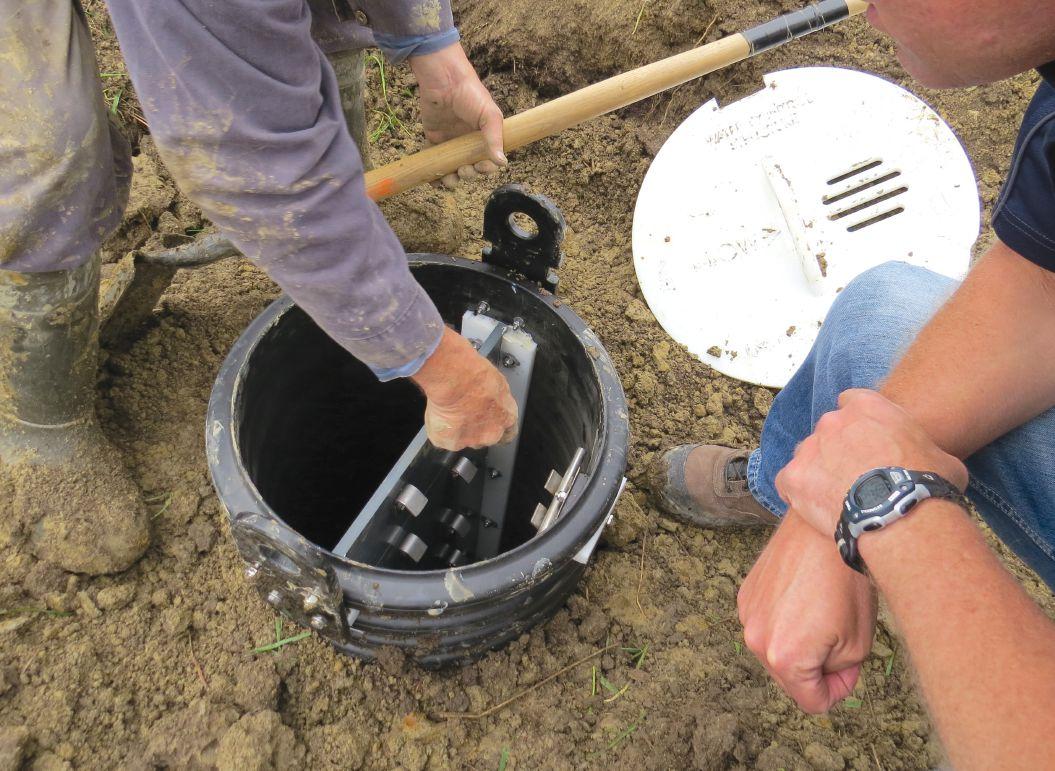
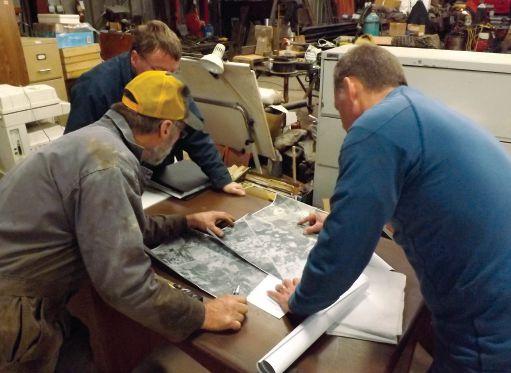
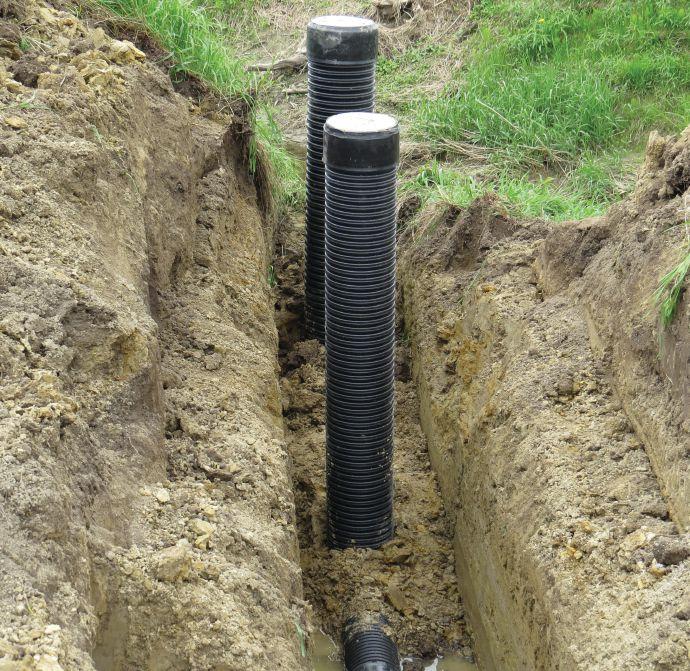
TOP: Installation of controlled drains on the Van Den Berg farm by drainage contractor Ken McCutcheon and UTRCA. MIDDLE: Drainage contractor Ken McCutcheon (left) and UTRCA’s Brad Glasman (right) planning the project this past spring.
Norwich Optimist Corn Maze 2013
Berg in Lucan, o nt. It was a project spearheaded by Brad g lasman (coordinator of conservation services) and Craig Merkley (conservation services specialist) at the Upper Thames river Conservation authority (UT rC a ), along with aa FC senior water management engineer andrew Jamieson. e ach controlled drain covers a five-acre field.
“It was an ideal site for this project as it was very flat,” McCutcheon says. “That’s a key factor in making this sort of controlled outlet work. It allows you to control the water table within 12 inches.” He notes that if there are elevation changes in a field, the installation of more controlled drain structures would be required to control water flow, and you end up with structures in the field instead of just at the outlet at the edge of the field. This interferes with planting, harvesting and so on.
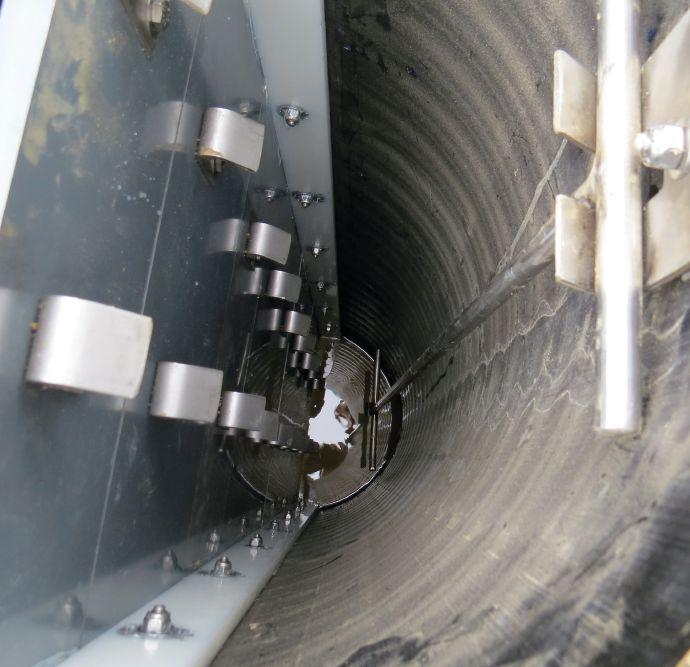
e ach controlled drain, placed just before the outlet, consists of a plastic tube 45 cm wide and almost 2 m long integrated with the existing drainage tile. Inside each tube are vertical plastic panels that can be pulled up to let the water flow or pushed downward to stop it. e xcessive rainfall can cause water to be pushed up and over the panels and flow out, so additional panels must be added to block water flow if desired in that case.
The system is meant to be left open in the spring and fall to drain the field, and closed during the summer to retain water. It is designed to allow faster drying of fields in the spring so that crops can be planted earlier, and to conserve the water from summer rainstorms. This year, the Van Den Berg’s got a large rainfall at the end of July, and closed the two controlled drains at that point. “Water ran through the controlled drains for about a day, and through the conventional drains on the rest of the farm for four days, which is a substantial amount of water loss in comparison,” says Henk Van Den Berg.
Environmental benefits
Keeping nutrient-rich water in the field instead of having it flow away (as it does in a conventional tile drainage system) is not just better for crops and farmers. It is also, as g lasman notes, better for the environment and human health. High levels of phosphorus from fertilizer, for example, can lead to algae
About 80 to 90 per cent of the phosphorus and nitrogen in a field will stay put with controlled drainage compared to what would have been lost into the watershed with conventional tile.
The system is meant to be left open in the spring and fall to drain the field, and closed during the summer to retain water.
blooms in Lake e rie. nutrient runoff from farms also contributes to generally poorer water quality in creeks, rivers and lakes in o ntario, including the g reat Lakes. The cleaner water provided by controlled drainage, therefore, benefits all organisms, from invertebrates to birds to human beings.
g lasman, Merkley and Jamieson estimate that about 80 to 90 per cent of the phosphorus and nitrogen in a field will stay put with controlled drainage compared to what would have been lost into the watershed with conventional tile. Monitoring equipment to measure nutrient and water outflow (from the Van Den Berg’s controlled drainage fields as well as their regularly tiled fields of a similar size and topography as a control) is expected to be in place soon. Jamieson says this three-year project will involve year-round monitoring.
Measuring benefits
“as far as how the system is working so far, it’s early days yet,” says Merkley. “We are still learning the drainage characteristics of the site and how the system is responding to rain events.” He says there are no plans at the moment to test the system on other fields, but they may look at the feasibility of automating the stop panels – tying in the raising and lowering of the panels to the amount of rainfall received. “We’re not sure it can be done, but there are plans to investigate the idea,” Merkley notes.
In addition to needing flat topography for controlled drains, McCutcheon says newer tile drainage systems – with pipes that are closer together than older systems – make controlled drains much more effective. “In older systems, the spacing of the tile is wider and you’re backing the water up in those pipes with the water level varying because of the distance,” he
says. “In newer systems, the tiles are closer and you have more pipes in the ground with a more uniform water table, so with controlled drains [incorporated with those systems], you will more evenly distribute and store water.”
glasman says yields should be able to be increased by 10 to 15 per cent over time with a controlled drain system. The controlled drainage structures are approximately $700 apiece plus installation, and are available from some of ontario’s largest drainage material suppliers. When a
Top Crop Manager Column: AMI #4—Advisory Teams
farmer would achieve cost return depends on a few factors. each year is different in terms of how much water conservation matters (how dry it becomes) in crop yield, weather patterns, the price farmers get for their harvests, and so on.
However, in these times of increasing drought conditions, return on investment for controlled drainage may be swift.
For more on tillage and seeding, visit www.topcropmanager.com
Building a winning team
Want your operation to run like a well-oiled machine? Get an advisory team!
A team of professionals with different skill sets can help in the decision making process and guide growth and succession planning.
“Like everything else today, farms have become incredibly complex and highly specialized. One person can’t be expected to do it all,” says Liz Robertson, executive director of the Canadian Association of Farm Advisors (CAFA). “It takes a team pulling together to make the whole thing work, and getting good advice is simply good business.”
An advisory team can include tax, financial planning, real estate, accounting, and human resource specialists. Consulting with the team before key decisions are made ensures that all areas of the business are considered and that the best option for your operation is implemented.
There are many additional benefits of working with a multi-disciplinary team. These three top the CAFA list:
Increased profits. With a team of experts helping to run your business there are many eyes on the prize. This can mean more monetary gain and less business management pain.
Harmony. Relationships between families and business partners work better when a neutral party is helping to steer the operation. This leads to a constructive and harmonious work environment and a more stable business.
Professionalism. Hiring an advisory team not only brings a wealth of skills and knowledge to the table, it adds professionalism to your business.
To get a quick start on building your own advisory team, take a new approach with these tips from Liz Robertson:
Begin with trust. Ask your most trusted advisor—the one you’re most comfortable with—to invite others they’d like to work with to an introductory meeting. This will kick off the process with a team that is already compatible.
Bring everyone to the table. Have a discussion with family members, business partners and the next generation about the vision for the farm over the next three to five years to confirm you’re all on the same page.
Open your mind. Be open to new ideas... they may help you improve the bottom line!
ThEoRiES AB ouT MAxiMiziNg glyPhoSATE EFFiCACy PRovE FAlSE
Commonly believed factors have little actual impact on weed kill and no impact on final crop yield.
by Madeleine Baerg
Maximizing the value – and minimizing the cost – of crop inputs is key to agri-business success. For this reason, all kinds of money-saving theories about improving efficacy are debated back and forth when producers meet across fences, in coffee shops and at field days. as solid science is more useful than supposition and hearsay, researchers at the University of guelph decided to put some of the most common farmer theories about glyphosate – namely that its efficacy decreases due to time in solution and hard water, yet increases with the addition of ammonium sulphate (aMS) to the test. Their results may surprise but, far more importantly, save farmers dollars.
“I’ve been involved in weed management research long enough that I never make all-encompassing, definitive statements, because in biology you will always be proven wrong. However, the results of these trials are strong. The vast majority of growers in ontario – maybe even all growers in ontario – can confidently base their management decisions on these results,” says Dr. peter Sikkema, field crop weed management professor at the University of guelph-ridgetown Campus and co-lead researcher on the two-year study.
Together with Dr. robert nurse, a weed science research scientist with agriculture and agri-Food Canada (aaFC) at Harrow, ont., Sikkema conducted field trials in 2010 and 2011 in four locations around ontario.
producers may plan a glyphosate application but can be thwarted by poor weather conditions, machinery breakdowns, or other delays. popular theory says the glyphosate loses its effectiveness if it sits in solution. Sikkema and nurse’s trials prove this belief is absolutely false.
“I’m 100 per cent confident that there is very little negative effect on the activity of glyphosate if it is held in solution for a short period of time. even if it is left in solution for up to seven days, our data would say it remains equally biologically active, which is good news for producers,” says Sikkema.
Concurrently, the researchers looked into the effect of water quality, specifically water with a very high mineral content. Water in most parts of ontario contains between zero and about 2000 parts per million of calcium, magnesium and other minerals. The researchers opted to use some of the hardest water they could find – 1600 ppm –to test the theory.
of five weed species analyzed over two years, hard water did not impact glyphosate in any measurable way nine out of 10 times, with
Peter Sikkema is conducting research regarding the three factors commonly believed to impact glyphosate’s efficacy, which have little actual impact on weed kill and no impact at all on final crop yield.
the single exception being there remained a higher density of common lamb’s quarters post-glyphosate where the hard water was used.
“The take home message is, by and large, we did not find a large effect of water quality on glyphosate’s efficacy. Having said that, I’ve heard from other scientists there are water sources in north Dakota
iNTERACT ioN oF F oliAR FERT iliz ER AND F u NgiC i DE
Three-year project in Bruce County showing some positive results.
by Treena Hein
It is somewhat well known that greater nutrient use efficiency is seen in wheat when fungicides are applied. This has spurred interest in further study of this interaction and how it can boost yields of other crops, such as soybeans.
“In previous years, Bruce County Soil and Crop Improvement association (BSCIa) participated in projects on wheat looking at the interaction of nitrogen use and fungicide application, so we wanted to try a similar project on soybeans to investigate if the same synergies exist,” says Blair Scott, BSCIa president and an agronomist at Sprucedale agromart in Hanover, ont. “We based our study on a similar trial in the Chatham-Kent area, conducted by agris Co-op, that showed a measurable economic response when the applications were timely and followed by rainfall.”
The BSCIa supported studies over both the 2013 and 2014 growing seasons, led by certified crop advisors Scott, and Jonathan Zettler, agronomic advisor with Cargill. The ontario Soil and Crop Improvement association (oSCIa) provided financial support in the form of a major project grant. The ontario Ministry of agriculture, Food and rural affairs (oMaFra) edible beans lead,
Brian Hall, acted as project sponsor and provided project design leadership, and oMaFra soil fertility specialist, Bonnie Ball, conducted the statistical analysis. nutri-ag provided Kp plus Foliar Fertilizer as well as the guidance of staff members Joe Uyenaka and allison Hayward. BaSF donated Headline eC Fungicide as well as the support of staff members Tim Trinier, David Townsend and richard anderson. Dale Cowan, a senior agronomist at agris Co-op, also provided assistance.
In the trials, Kp plus or Kp plus and Headline eC were applied at the rate of 1 kg/ac of Kp plus and 160 mL/ac of Headline on soybeans at the r1 plant stage (first pod initiation), with numerous replications in the same field. The expected response was five bushels per acre over the control, but in 2013, neither treatment provided a statistically significant result.
“Using less sophisticated analysis, we did find a trend at two sites, one with Kp plus only and the other with the fertilizer and
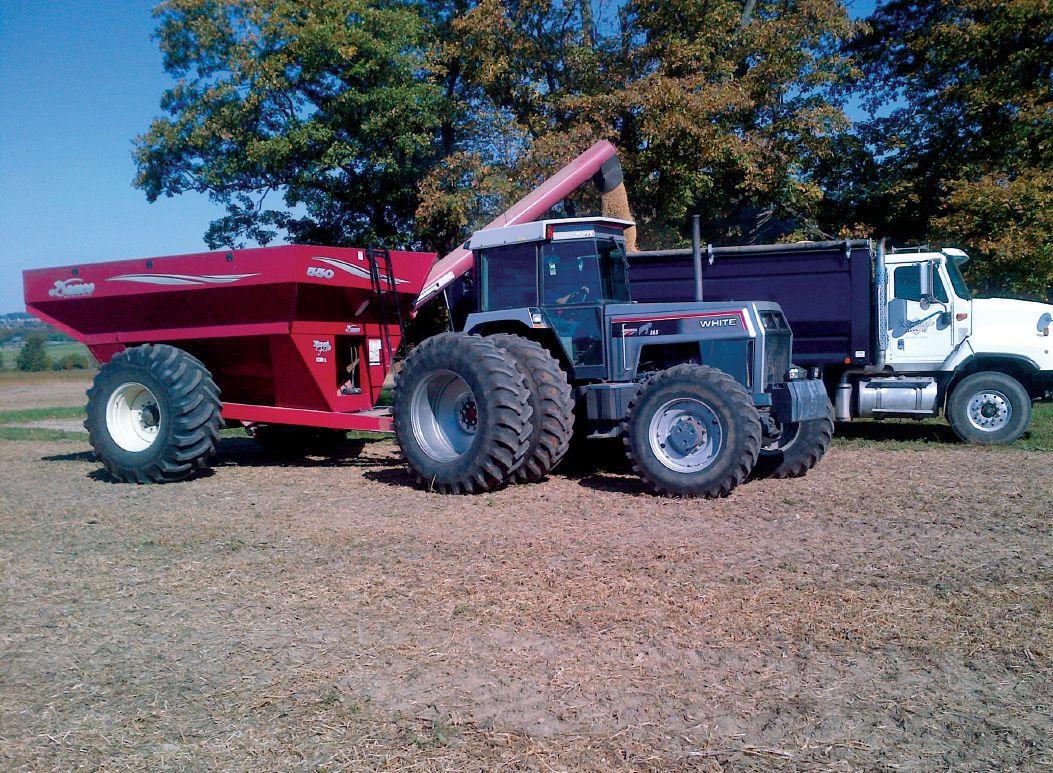
ABOVE: Grain buggy unloading soybeans into Ikendale Farms straight truck for delivery to the elevator.
fungicide,” Zettler notes. “Kp plus alone provided the largest average positive response, yielding 1.33 bushels per acre about 66 per cent of the time.” With both fertilizer and fungicide, the interaction led to an average positive response of 0.65 bu/ ac, but only half the time.
This has not been typical of findings at other trials conducted in the province, Zettler notes. on average, other trials showed a greater response from the interaction of Kp plus and Headline treatment over Kp plus applied alone. The differing result could stem from the fact the summer of 2013 was quite dry, with many of the sites actually in a drought situation following application.
“application timings in 2013 were also on the late side,” Scott explains. “In 2013, by the time our collaborators were able to spray, some of the sites were in the r4 growth stage.” a larger response was noted between different parts of the field, rather than from differences in fertilizer application, which supports the finding
that soil type plays a bigger factor in soybean yield than foliar amendments.
“Soybean growth stage and timing could be factors in yield response from plot to plot, [a] finding we planned to examine in 2014,” Scott says. “We also planned to take soil and tissue samples in 2014 to provide more data points for analysis purposes from the applied fields.”
In 2014, the trials again tested Kp plus alone, and Kp plus and Headline eC fungicide, in addition to the untreated check. each field had a minimum of two passes of 1 kg/ac of Kp plus, or two passes of 1 kg/ac of Kp plus and 160 mL/ac of Headline eC. The team recorded field size, soil type, soybean variety, plant stage and condition, and weather conditions following application.
“In 2014 we made sure we got the sites sprayed sooner, targeting the r2.5 to r3 growth stage,” explains Zettler. “We are hoping that the earlier application in 2014 combined with the wet summer we just had will produce some more interesting
ThEoRiES ABouT MAxiMiziNg...
CONTINUED FROM PAGE 21
and Colorado that do really impact the efficacy of glyphosate. My hunch is there is something different about that water that could have a bigger impact on glyphosate activity: perhaps the range of cations in the water. In ontario we have mainly calcium and magnesium, but perhaps if the water contains a different ion, glyphosate activity could be affected. In ontario, generally speaking, producers do not need to worry about the effect of water quality on glyphosate activity,” says Sikkema.
Why the water quality had an effect on lamb’s quarters is a difficult question to answer, he adds. “of the weed species we looked at, lamb’s quarters and velvetleaf are a little harder to control, so consequently if you were to pick up an effect of hard water I would have guessed you’d see it on one or both of those weeds.”
That said, even in the case of the small decrease in weed control, ultimate yield remained unaffected.
In the United States, it is fairly common for agricultural retailers to recommend growers add ammonium sulphate (aMS) to glyphosate to achieve optimum weed control. But is the combination more effective than glyphosate alone? not enough to make the additional cost worthwhile, says Sikkema.
In nine out of 10 of the trials, there was no weed killing improvement at all from adding aMS to the glyphosate. In a single trial, velvetleaf biomass decreased somewhat.
“our data says it’s very few and far between that you would get economic return on the addition of aMS,” says Sikkema.
Consider the numbers: in ontario, aMS costs approximately $3/L with a recommended rate of 1L/acre, making for a total
results this fall. We are also going to make sure we have soil test results collected from each site so we can see if there is any relationship between soil test K and response to Kp plus.”
Due to the delays caused by wet weather, harvest progress was slow in october. as in 2013, harvest yield and yield/moisture measurements are the highest priority for the team in terms of data gathering. But Zettler, Scott and their colleagues are also attempting to observe things like plant standability, number of pods and seeds per pod if at all possible.
Scott and Zettler both say preliminary results are promising. In one trial field harvested, the results show a 1.3 bu/ac increase using Kp plus over the untreated control, and a 3.9 bu/ac increase for soybeans applied with both Kp plus and Headline. The full results will be available on the oSCIa website in future. “It is our intent to carry the trial on for a third year in 2015 if we have enough interest and funding is available,” says Scott.
additional cost of $3/acre.
“If you as a grower are willing to spend $3 more per acre on weed control, I would immediately say you should increase your rate of glyphosate by $3 an acre (so long as you stay within the label rate) rather than spending the $3 on aMS because you will get far greater value for your money,” he advises.
Interestingly, according to Sikkema, not all scientists agree with his and nurse’s study results on this particular point. In fact, there are other scientific papers that clearly contradict their findings.
“In many other studies, scientists use less than the label rate of glyphosate, then add aMS and show a weed control benefit. However, if you use glyphosate at the rate farmers use in ontario, it is very difficult to show a benefit of adding aMS,” says Sikkema.
Further, as with the hard water study, no ultimate yield difference was found between plots treated with glyphosate versus plots treated with the same rate of glyphosate plus aMS. as Kris Mahoney, research associate at the University of guelph and author of the scientific paper on nurse and Sikkema’s research, says, “I attended University at north Dakota State where some of the seminal research on glyphosate efficacy was conducted. The use of aMS was such a common practice in my experience working on the farm and for the local co-op, and the importance was also driven home in my weed science classes at University. Before I started writing the scientific paper on Drs. nurse and Sikkema’s work and digging deep into the literature, I didn’t believe the results. I thought the opposite was true. This research really turned my thinking around.”
loNg- TERM T ill Ag E AND CRoP RoTAT ioN
Southwestern Ontario study finds no-till and winter wheat beneficial for soil quality.
by Trudy Kelly Forsythe
Using winter wheat in crop rotations has long been known to benefit soil quality and crop production. It provides good coverage to prevent erosion, it holds moisture and it helps with weed management.
researchers in ontario wondered how different tillage systems might impact the equation, so they conducted experiments at the University of guelph’s ridgetown campus to evaluate the effect of tillage systems and crop rotations on soil quality.
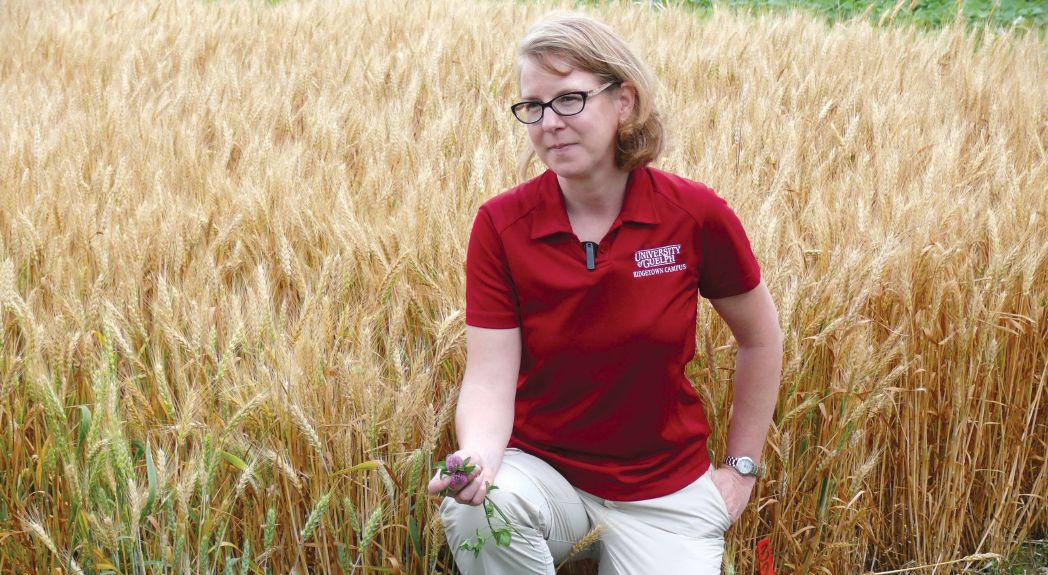
Their recently published paper, Long-term tillage and crop rotation effects on soil quality, organic carbon and total nitrogen, concludes that if farmers in southwestern ontario incorporate no-till practices and winter wheat into their crop rotations, it will benefit production and soil quality over the long term.
“other studies in ontario have shown similar results with winter wheat, but this showed we can see higher carbon sequestration with no-till and adding winter wheat to the rotation to the three foot soil depth,” says Dr. Laura Van eerd, associate professor of soil fertility and cover crops at the University of guelph.
Van eerd is co-author of the research paper, along with Dr. Katelyn Congreves and Dr. David Hooker, also from the University of guelph, ridgetown campus; and adam Hayes and anne Verhallen from the ontario Ministry of agriculture, Food and rural affairs (oMaFra).
“Soil health is more than just fertility and the ability of soil
to do its job to produce crops,” says Van eerd. “It has to hold water, filter water, hold life, have biodiversity and be resilient. a good quality soil will still produce a good crop, even in a stressful season, such as too dry or too wet, so soil’s organic matter is important.”
one of the challenges for researchers, and farmers, is that soil quality is difficult to measure. For this reason, Cornell University developed the Cornell Soil Health assessment (CSHa), which measures the biological, chemical and physical properties of soil and assigns a score represented by a single number out of 100. “The higher the number, the better the quality,” explains Van eerd.
Verhallen and Hayes wanted to see if the assessment would work in ontario so they used it to quantify the soil quality of samples from field trials established by Dr. Tony Vyn and Doug Young in 1995 and maintained since 2008 by Hooker and Scott Jay. The long-term tillage system and crop rotation trial is on a Brookston clay loam soil. each crop rotation – continuous corn, soybean-corn, continuous soybean, soybean-winter wheat and corn-soybean-winter wheat – was done under no-till and conventional tillage with the conventional tillage being fall
Photo courtesy of Micah
TOP: Dr. Laura Van Eerd in front of a winter wheat plot from the long-term tillage system and crop rotation study at Ridgetown, Ont.
plowed with spring cultivation.
“The trial was sampled 14 years later for the CSHa, soil organic carbon and total nitrogen,” says Van eerd. “We collected soil up to three feet depth in five, 10 and 20 centimetre increments, took different sections of soil, and analyzed them for soil health.”
The researchers found that there was better soil quality with the no-till system than the conventional tillage system.
“That was true whether we used CSHa, soil organic carbon or total nitrogen as the test of soil health,” says Van eerd, adding that, “in scientific literature, Cornell University found similar results with no-till using the CSHa.”
“The part that was surprising was with soil organic carbon,” she adds. “We are the first ones in ontario to demonstrate higher soil organic carbon in no-till versus conventional to the threefoot depth.”
Van eerd cites an Indiana study out of purdue University which found similar results with higher organic carbon and nitrogen under no-till to the three-foot depth, but adds other ontario researchers have found no difference with depth.
“It could be just our site’s soil texture, a clay loam soil; it could be our environment,” she says. “now we need to look at more locations to see if there is also an increase in soil health with notill and crop rotation.”
as for the crop rotation side of the equation, the researchers found they had better soil quality with winter wheat in rotation than without in terms of CSHa, soil organic carbon and total nitrogen.
Verhallen and Hayes also collected soil samples from four long-term trials in Woodslee, lora, ottawa and Delhi. Thanks
to funding from the Water adaptation Management and Quality Initiative through Farm & Food Care ontario, Van eerd and Congreves are now working with that data set to see how CSHa works with rest of o
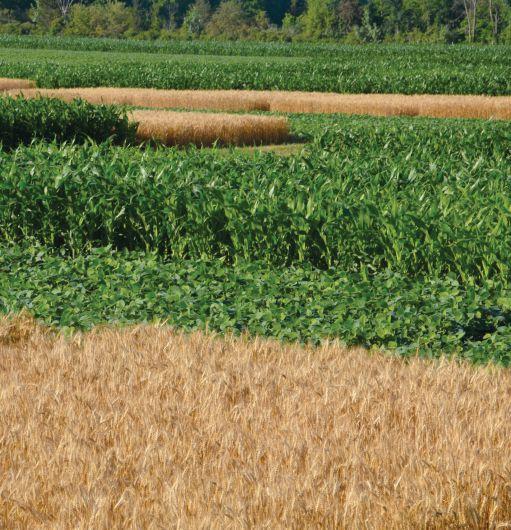
Long-term field trials at the University of Guelph’s Ridgetown campus to evaluate the effect of tillage systems and crop rotations on soil quality.
Photo
Th E Su RPR i Si Ng SECRET oF
w EED C oMPET i T ioN
Research shows how weeds affect soybean plant development.
by rosalie I. Tennison
Knowledge about weed competition has been understood for decades and science has explained the optimum time to control weeds to prevent crop losses. But, why are weeds so much stronger? In most crops it appears the weeds will always claim the upper hand – so scientists at the University of guelph began to wonder why. For example, what is it about a weed plant, any weed plant, that makes it seem stronger than soybeans?
There is now proof that, in fact, in a simplistic sense, the weed is “communicating” with the soybean plant. Dr. Clarence Swanton and M.Sc. candidate Jessica gal undertook research to understand the mechanisms of plant competition. They learned why, if during the critical period for weed removal, weeds are not controlled, the soybean plant will cede the ground and will, figuratively, leave the field.
“We saw the physiology of the soybean plant change in the seedling stage of the growing period when weeds were present,” says gal. “We wondered how the plant could detect the presence of weeds. What we learned is the plant can detect the weed through changes in light quality. When the soybean plant detects the weeds,
it undergoes significant and rapid physiological changes, which may affect the yield.”
Swanton explains the research focused on the red to far-red ratio in the light spectrum that is reflected off the soybean leaf surfaces. When the soybean plant detects there is another plant reflecting red light back to it, it senses the competition and begins to prepare itself for survival by trying to “out-compete” the weed by becoming taller and thinner. of course, as the soybean plant changes to survive, seed production may be affected and, ultimately, yield.
“This work suggests this is less about plant competition and more about detecting or sensing a change in the environment,” says Swanton. “The soybean is changing to improve its own fitness and, as it does this, yield may be reduced.”
gal did most of the work on this project in a growth chamber in order to control the environment of plant development, and to
ABOVE: Research has found that when a soybean plant detects weeds, it undergoes significant and rapid physiological changes, which may affect crop yield.
ensure all growing needs were met equally. Her work focuses specifically on the light reflection theory as all the plants, whether weed or soybean, were not competing for nutrition, water or the amount of light.
“We looked at the stages of plant development from emergence to the second trifoliate stage of growth,” gal explains. “We began to see an increase in the soybean shoot height so the plant could out-compete the weed and we saw this competition continue through to the cotyledon stage. We also looked at the
roots and saw a decrease in the root length as early as the second trifoliate stage. In addition, the root surface was reduced. Just by detecting the presence of the weed, there was a significant change in the physiology of the soybean plant, which is something that we can’t see when standing in the field.”
The reflected light from the farred spectrum is causing a delay in the development of the root system, which will ultimately affect the plant’s ability to produce yield. It is specifically an issue
with the reflected light in the red spectrum range that is causing the plant to change. gal found that even when additional light was introduced the soybean plant still changed because of what would have been a comparable increase in red spectrum light reflected off the weed.
“This research reinforces the importance of early weed control,” notes Swanton. “Start with a weed-free field and keep it clean. We have just proven the rationale behind this advice. This study shows that any change in the root structure of the soybean plant may affect yield.”
The next step in the research was to determine how weed competition affected nodulation. Since nodules are not viable until the unifoliate stage, the presence of above-ground weeds was found to reduce the development of nodules.
“If your soy plant is not fixing nitrogen plant protein will be reduced and this all ties in to yield,” says Swanton. as gal explains: “We see the gene that promotes early nodulation is reduced in plants faced with competition. So, the above-ground weed signals the soybean to suppress the gene required for nodulation.”
If the information on how root development is affected by weeds causing yield reduction is not enough, the results of gal’s research showing how weed competition can also trigger reduced nodulation should provide the incentive to ensure early and effective weed control.
The researchers also attempted to measure the plant’s response to stress. They found the plants had increased levels of hydrogen peroxide, a compound that plants produce when they are under stress. The result, not surprisingly, was even more soybean plant damage.
What the researchers learned is difficult to quantify in a field situation because the variables cannot be controlled. But, they are convinced the principles they have uncovered are true. In the end, it may not matter as much how the plant gets stressed and how it reacts to that stress. Instead, the understanding of how that stress is caused and how it gets triggered in the plant proves why delaying weed control in soybeans could be a critical factor in the eventual yield. By reducing the chance for the plant to experience stress by controlling weeds, it will have no need to increase its response to stress and, instead, will concentrate on creating seed to ensure its survival.
Our innovations do more than solve everyday problems – they maximize output while saving your operation money. That’s why Case IH continues to innovate with proven, efficient and reliable solutions. Be ready with innovations like the Axial-Flow ® rotor that started the rotary combine revolution; Quadtrac® technology that gives you less compaction and better traction; Advanced Farming Systems – a less complex precision farming solution; and an SCR-only emissions solution that gives you more power with less fuel. To learn more, visit your local dealer or caseih.com.
A higher yIEld begins withT Series.
Series Soybeans
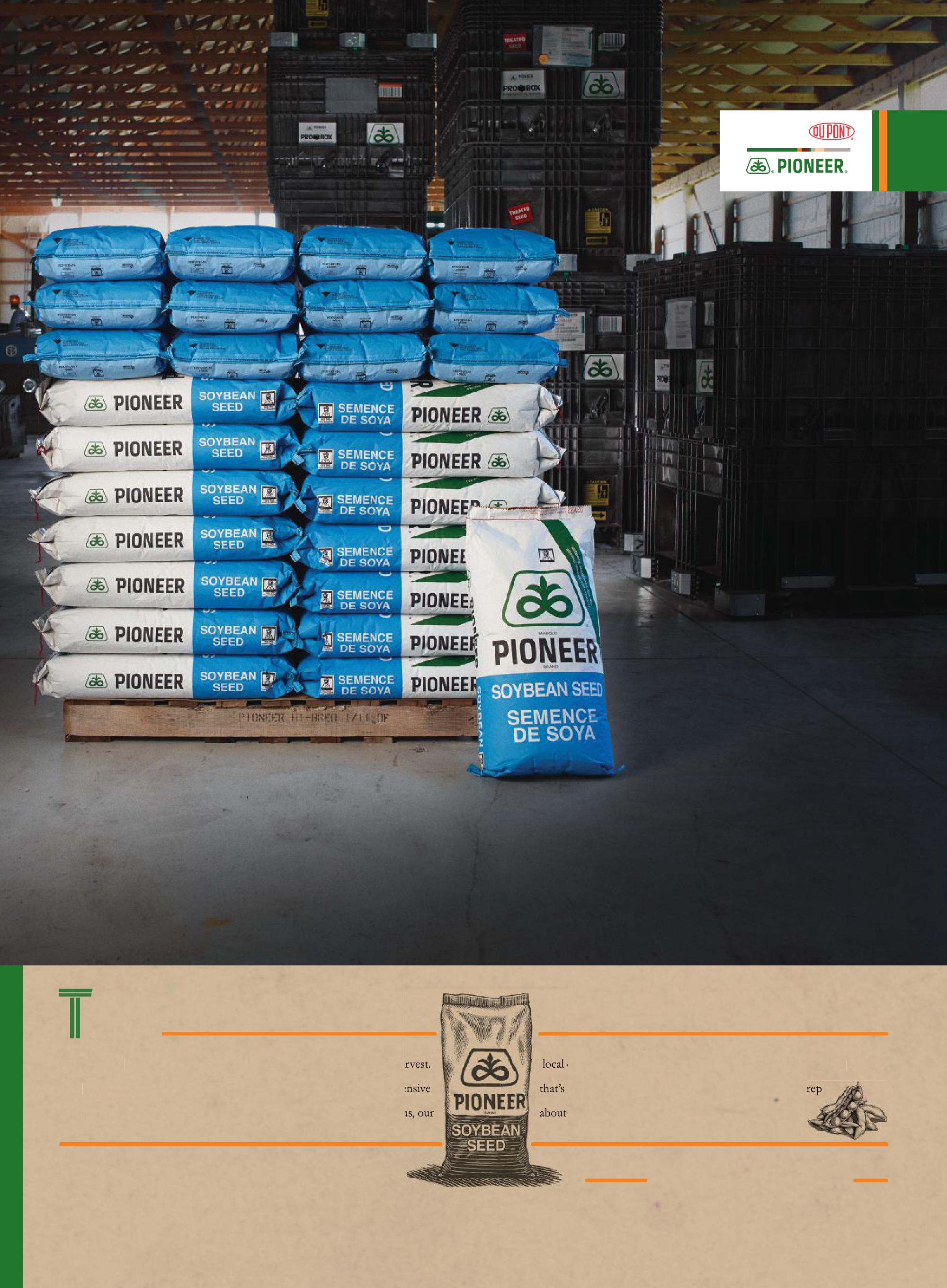
Pioneer® brand T Series soybeans are designed to give you a great harvest. They provide a winning combination of advanced genetics and defensive traits to help deliver a consistent, impressive yield from every acre. Plus, our
local expertise and testing will help ensure you choose the variety that’s right for your farm. Ask your local Pioneer sales rep about the right T Series soybean varieties for your acres.