TOP CROP MANAGER
New soybea N varieties
The latest seed company offerings
PG. 6
s oybea N s pecial
s ectio N
Building blocks for yield
cor N
bumpi N g soy
China’s demand may have little effect
PG. 10

New soybea N varieties
The latest seed company offerings
PG. 6
s oybea N s pecial
s ectio N
Building blocks for yield
cor N
bumpi N g soy
China’s demand may have little effect
PG. 10
6 | What’s new in soybean varieties? More choices now come with roundup ready technology. by Ralph Pearce
SOYBEAN SPECIAL
Next generation inoculant technology new advances provide multiple benefits in one treated package. by Treena Hein
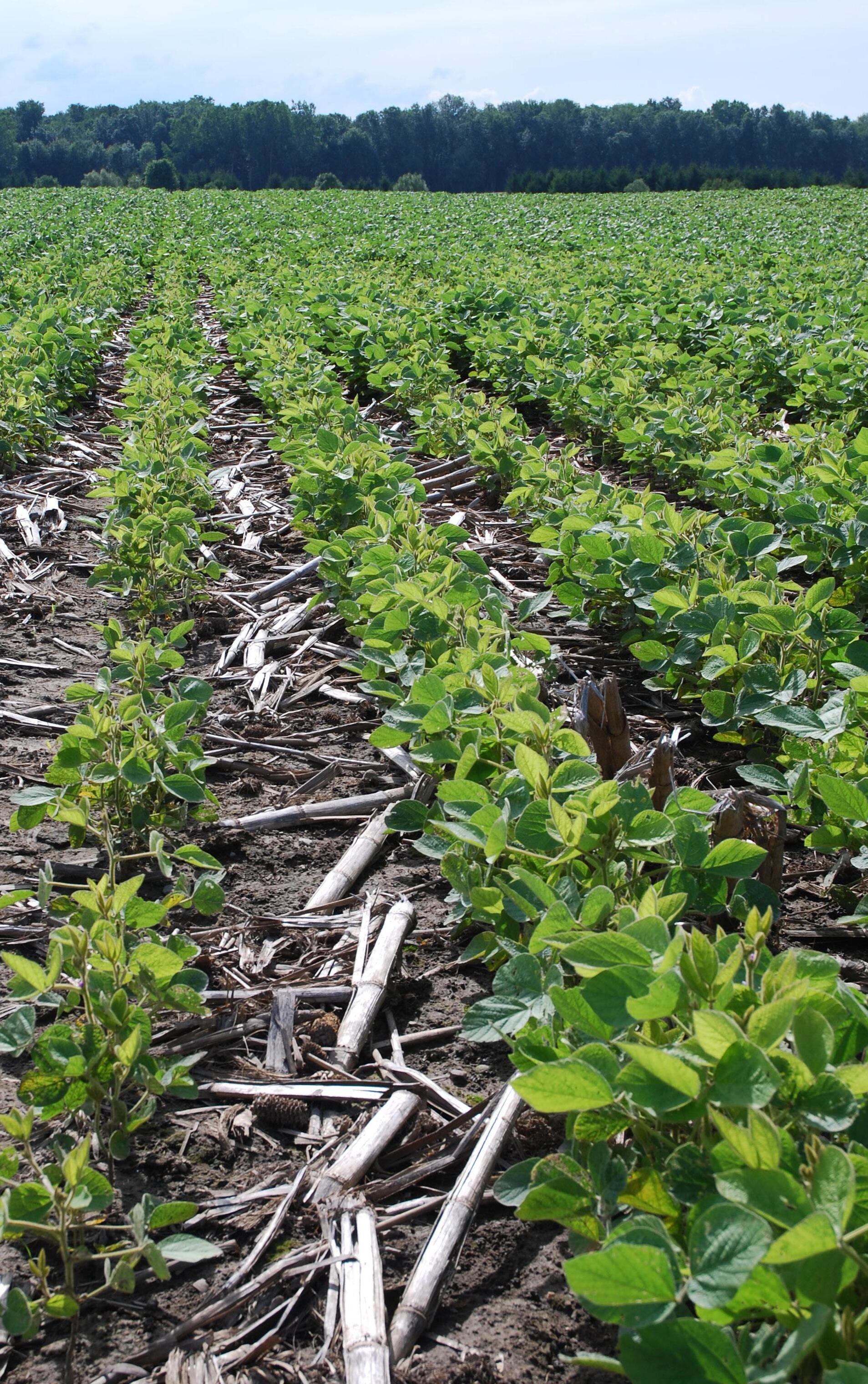
No-till on heavy clay soils at Kaiser Lake Farms
The results are hard to dispute. by Carolyn King
Floods and fungi and phosphorus – oh my! a lack fo fungi can be a problem. by Dr. T. Scott Murrell
10 | Is demand for corn threatening soybeans? How China’s future needs affect soybean production here. by Rosalie I. Tennison
Soybean planting dates are potential yield gains worth the risks of planting earlier? by Treena Hein

Grain transport and export issues responding to future demand is all about ‘nimble infrastructure.’ by Treena Hein
12 | How does one pH compare to another? Answer is complex Understanding the differences is a big help. by Dr. T. Scott Murrell
Soybean variety improvement patents The trend is moving north from the US. by Blair Andrews
Reaping new ag technologies Farm decision-makers need to get their hands dirty with data. by Treena Hein Is ‘sound science’ a fading priority? Scientific research is being replaced by desired answers. by Ralph Pearce
Ralph peaRce | editoR
Astory about Dr. William Davis recently caught my attention, and it is one worth sharing. Davis, a physician from Wisconsin, has written a book titled Wheat Belly, explaining why wheat is bad for human health (so bad, he insists, it should carry a surgeon general’s warning) and how people can lose weight if they shun the grain, entirely. now, free speech is a wonderful thing; and I honour and defend Dr. Davis’s right to express himself. However, I question the validity of any piece of writing that is presented as a factual rendering on a subject, but has not been peer reviewed, and according to several sources I’ve corresponded with, is highly subjective in its findings and statements.
It is also sad that Maclean’s, like most media outlets, no longer employs science or farm writers who can lend credibility to the task of telling Canadians about this book, or better still, challenge or deconstruct some of the statements made in it.
Science no longer theoretical early in november, the Conference Board of Canada issued a report that, on the surface, appeared to be great news for the bioenergy sector. The document concluded that cornbased ethanol was good for the ag-economy as well as the environment. great news! But at the bottom of the news release on the report was the paragraph that led me to question its validity: it was funded by the Canadian renewable Fuels association. Is it a surprise to learn the CrFa would fund a report that favours renewable fuels?
When I think back to my early high school years, I remember the headings we included in our lab reports for physics and biology. They put forth a “theory,” detailed the “apparatus” and “procedure,” followed by our “observations,” all leading to a “conclusion.” Seldom were we expected to prove our theory was correct: that is what makes it a theory and not a “goal.” Instead, we were expected to make unbiased observations and conclusions and keep our opinions to a minimum.
That is the problem with a lot of research being conducted in the past 10 to 15 years. We have heard about this with climatology and global warming, and it was there in the late 1990s with genetically modified potatoes and Bt corn killing lab rats and Monarch butterflies, respectively. The principles used in both studies were so flawed as to render their findings utter nonsense, and peer reviews of both showed that, conclusively. That is where peer review has its place: to ensure that researchers remember that science should be about determining outcome, not proving someone or something, right or wrong.
I encourage you to read the Wheat Belly article for yourself, at http://www2.macleans. ca/2011/09/20/on-the-evils-of-wheat-why-it-is-so-addictive-and-how-shunning-it-willmake-you-skinny/.
Do not take my word for it, because the more we accept these kinds of articles, without question, the more we contribute to ignorance on a large scale.
not to get completely lost in the seriousness of the subject, Merry Christmas, Season’s greetings, and the very best in the new year, to you and all you hold dear in your heart.

DECEMBER 2011, vol. 37, no. 16
EDIToR
Ralph Pearce • 519.280.0086 rpearce@annexweb.com
CoRREsponDEnTs
Blair Andrews, Treena Hein, Carolyn King, Rosalie I. Tennison
EAsTERn sAlEs MAnAGER Steve McCabe • 519.400.0332 smccabe@annexweb.com
WEsTERn sAlEs MAnAGER Kevin Yaworsky • 403.304.9822 kyaworsky@annexweb.com
sAlEs AssIsTAnT Mary Burnie • 519.429.5175 888-599-2228 ext. 234 mburnie@annexweb.com
pRoDUCTIon ARTIsT Gerry Wiebe
GRoUp pUBlIsHER Diane Kleer dkleer@annexweb.com
pREsIDEnT Michael Fredericks mfredericks@annexweb.com
PUBLICATION MAIL AGREEMENT #40065710 RETURn UnDElIvERABlE CAnADIAn ADDREssEs To CIRCUlATIon DEpT. P.O. Box 530, Simcoe, ON N3Y 4N5 e-mail: subscribe@topcropmanager.com
printed in Canada ISSN 1717-452X
CIRCUlATIon e-mail: subscribe@topcropmanager.com Tel.: 866.790.6070 ext. 202 Fax: 877.624.1940
Mail: P.O. Box 530, Simcoe, ON N3Y 4N5 sUBsCRIpTIon RATEs
Top Crop Manager West - 8 issuesFebruary, March, Mid-March, April, June, October, November and December - 1 Year - $44.25 Cdn. plus tax
Top Crop Manager East - 7 issuesFebruary, March, April, August, october, november and December - 1 Year - $44.25 Cdn. plus tax Specialty Edition - Potatoes in Canada - February1 Year - $8.57 Cdn. plus tax
All of the above - $76.19 Cdn. plus tax
Occasionally, Top Crop Manager will mail information on behalf of industryrelated groups whose products and services we believe may be of interest to you. If you prefer not to receive this information, please contact our circulation department in any of the four ways listed above.
no part of the editorial content of this publication may be reprinted without the publisher’s written permission © 2011 Annex publishing & printing Inc. All rights reserved. opinions expressed in this magazine are not necessarily those of the editor or the publisher. no liability is assumed for errors or omissions.
All advertising is subject to the publisher’s approval. such approval does not imply any endorsement of the products or services advertised. publisher reserves the right to refuse advertising that does not meet the standards of the publication. www.topcropmanager.com
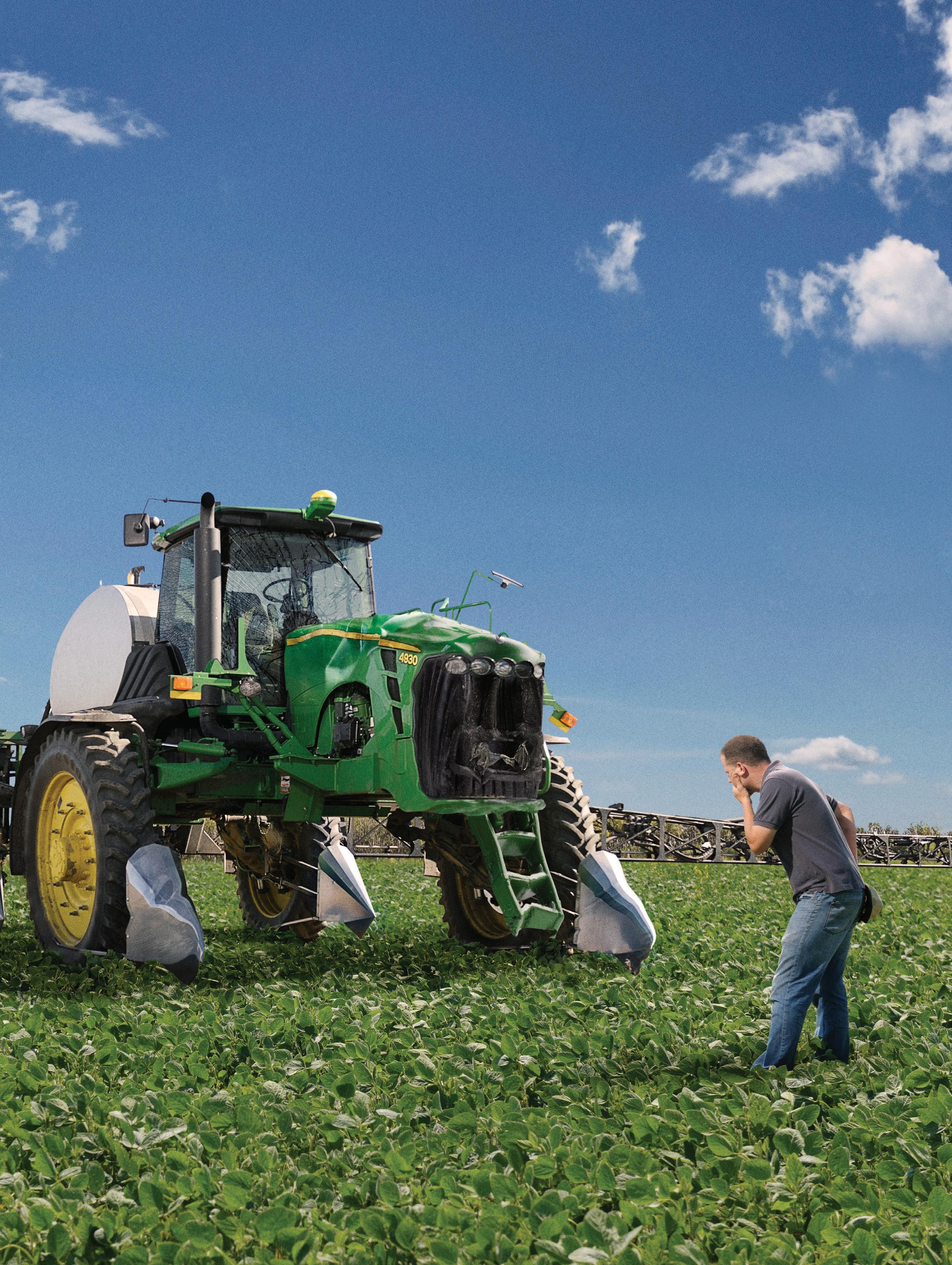
Overuse of glyphosate is becoming a serious concern in Ontario, and it won’t just put a dent in your wallet this year.
But now there is an alternative. Rotate to the LibertyLink® Soybean system and get the complete package. Powerful non-selective weed control with no trait associated yield drag. And with Liberty®, the only group 10 in the marketplace, you also get effective resistance management. For more information visit: www.BayerCropScience.ca/LibertyLinkSoybeans
’
More choices now come with Roundup Ready technology.
by ralph pearce
Here are the newest soybean varieties being introduced in commercial quantities for 2012. This list has been compiled based on the participation of many of the seed companies across o ntario and Quebec. In most of the entries provided, the companies have included crop heat units (CHU) and a very basic description of the variety’s traits and performance. a s always, we recommend that you talk to your local seed supplier to confirm availability, and to find out how the new varieties performed locally and in field trials.
OAC Drayton is a conventional brown hilum soybean with excellent yield and standability. This is a 2700 CHU variety that topped the performance trials for the last three years.
Windfall is a high protein, white hilum soybean that is a very early (2600 CHU) variety. This soybean has large seed, stands well and is easy to combine.
R2T0221 is rated at 2550 CHU and is a medium height plant with a bush canopy and above average standability. Best results are obtained on fine- to medium-texture soils. good performance in soybean-on-soybean rotation.
R2T1741 is a 2925 CHU variety with strong emergence whose intermediate plant structure works well in narrow-row situations. Best performance will be on medium- to fine-textured soils and with reduced tillage systems.
R2C2351 a variety where the “C” stands for SCn tolerance, is a 3125 CHU soybean. It is adaptable to multiple soil types. a bush type plant structure and good standability. a defensive soybean to protect yield when challenged by seasonal stresses, r2C2351 fits into either conventional or no-till systems. R2C2861 features SCn tolerance and is rated at 3250 CHU. This soybean has excellent
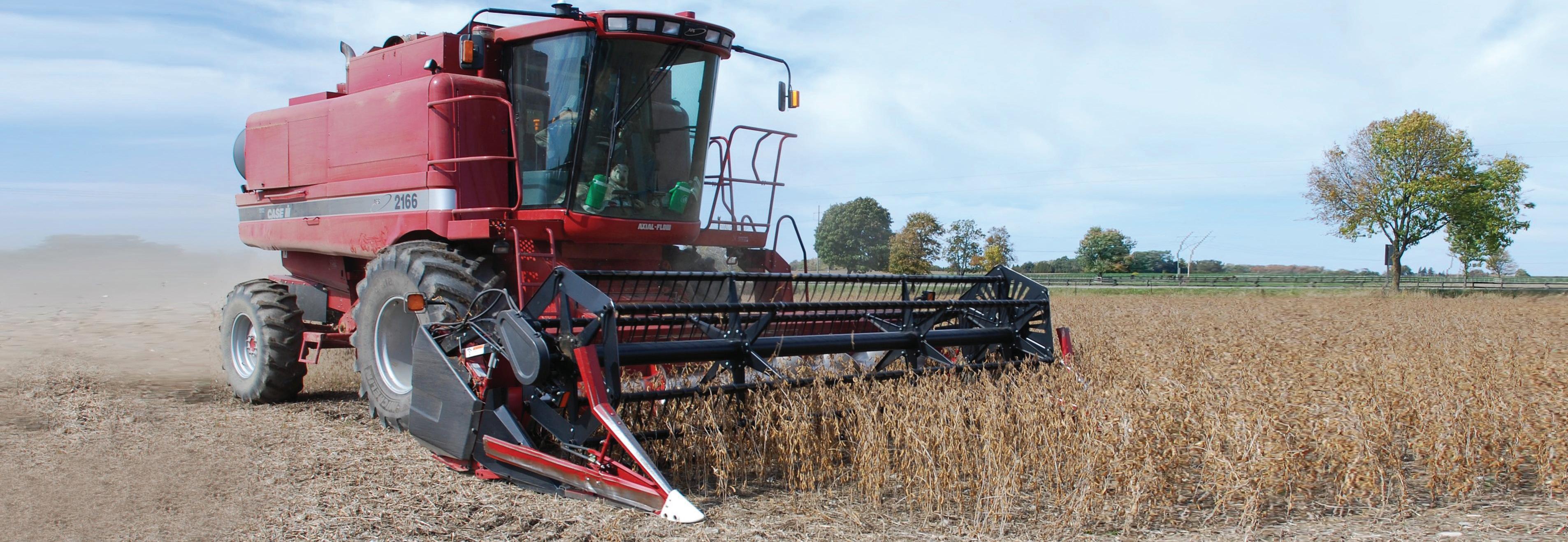
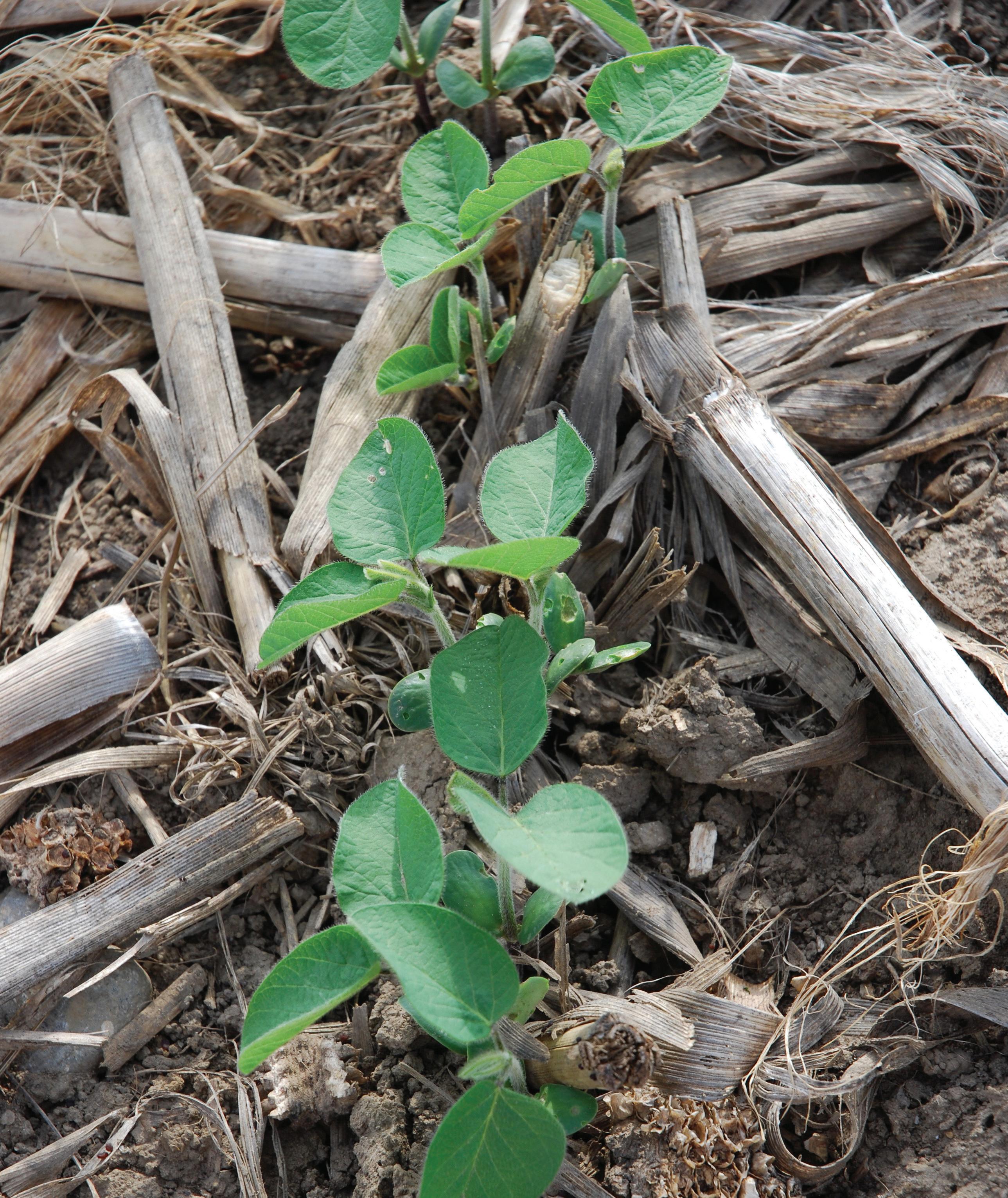
ABOVE: Although the majority of offerings from seed companies are Roundup Ready or LibertyLink varieties, there are still a number of non-GMO varieties available for 2012.
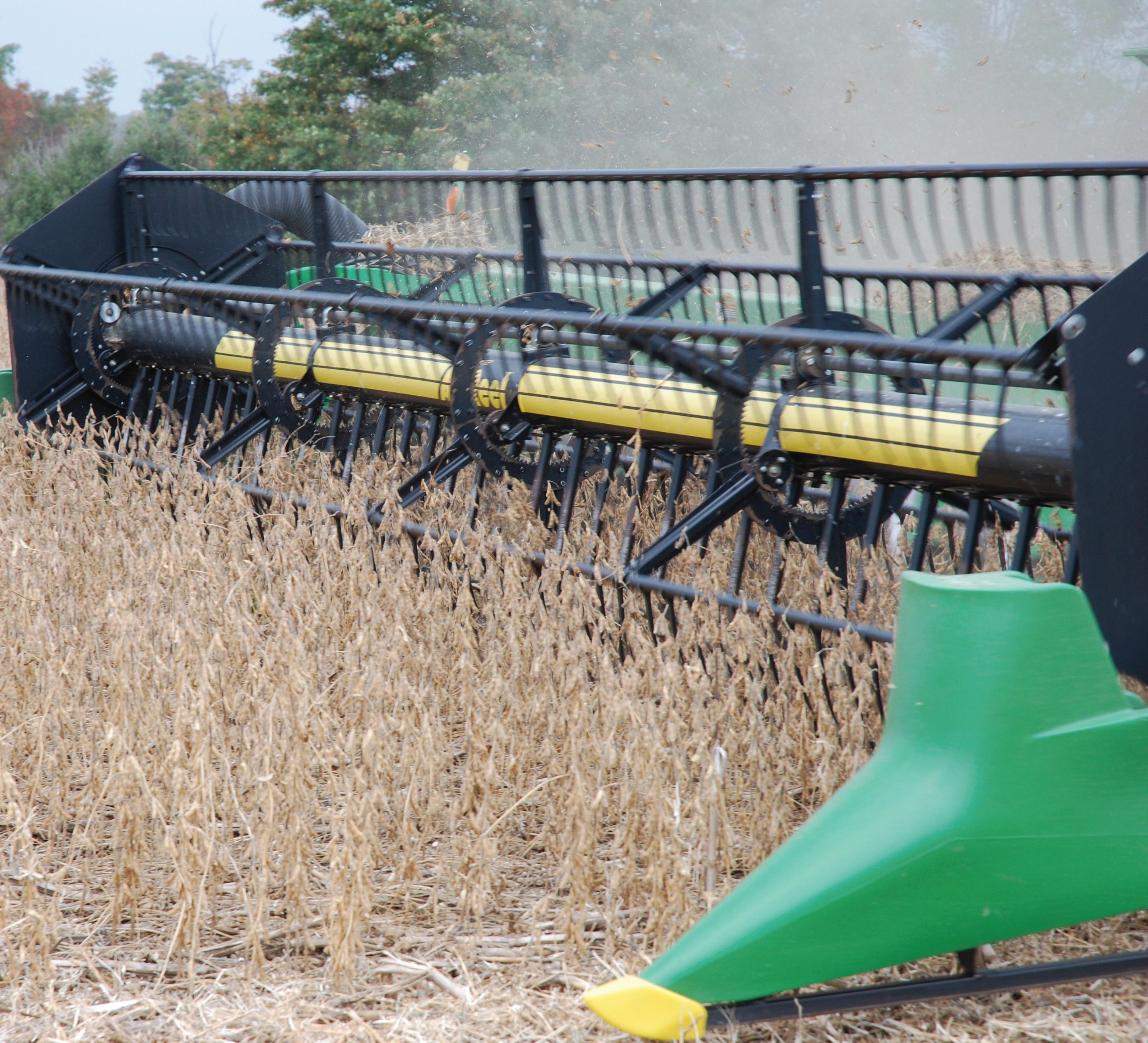
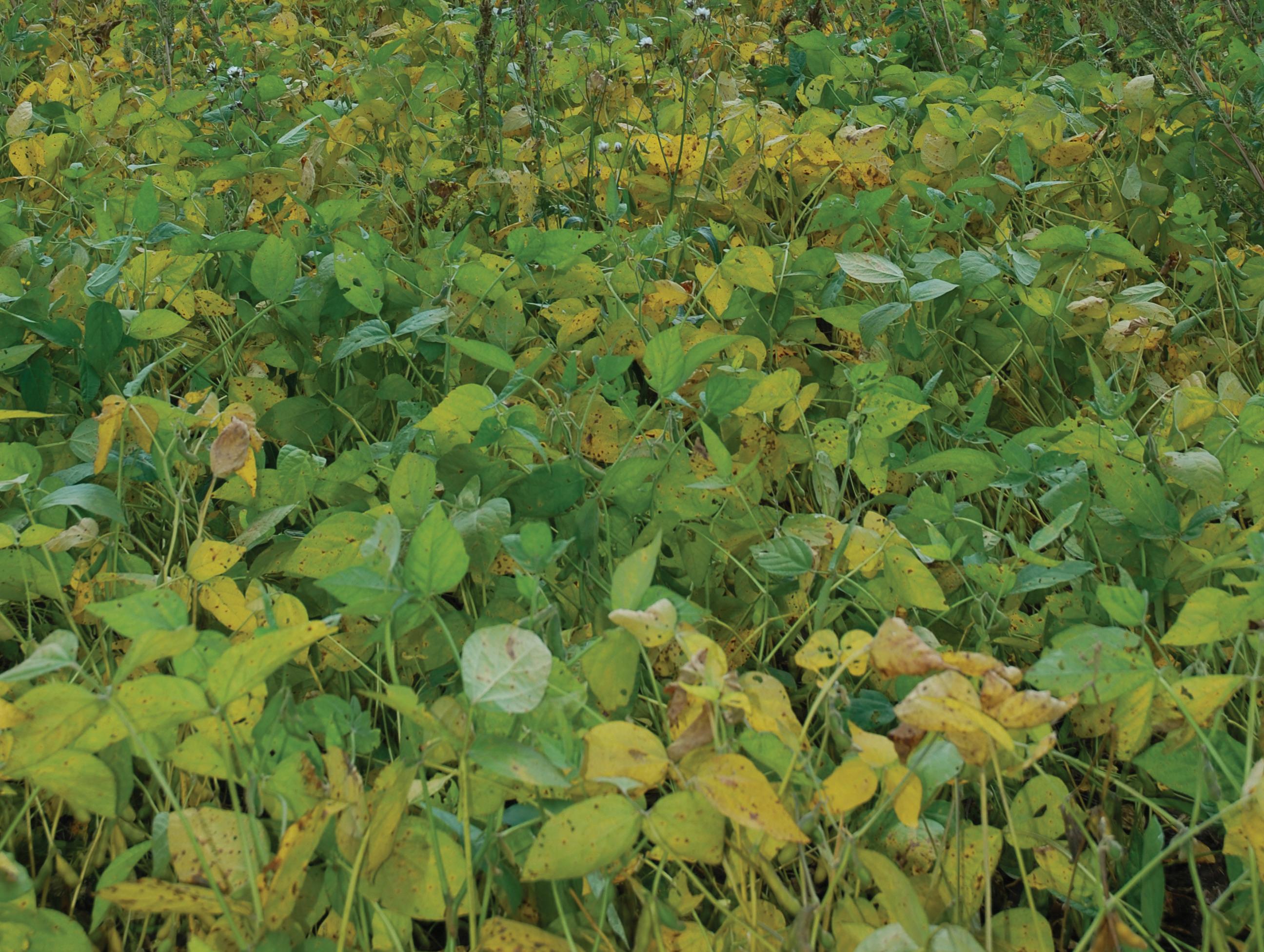
The many varieties providing enhanced disease tolerance or resistance can also provide the most enticing trait in a soybean: better yields.
emergence and is adapted to multiple soil types. Intermediate bush type plant structure.
R2C3011 is rated at 3300 CHU, and is a full-season soybean that has strong yield characteristics on fine- to medium-texture soils. provides resistance to SCn with a bush type plant. plant in 15- to 30-inch rows to optimize plant strengths.
There are two Liberty Link varieties offered by Croplan genetics featuring herbicide resistance to Liberty, a non-selective contact herbicide. LC1070 is a 2800 CHU soybean with excellent yield potential. The second variety is LC2399, rated at 3175 CHU. a defensive plant adapted to multiple soil types, LC2399 is best suited for wider rows. Liberty herbicide provides a rotational option in herbicide strategies for growers.
RR2 Bronze (2650 CHU) It has superior yield performance and impressive seedling vigour. It is taller in height, with excellent standability. This variety has roundup ready 2 Yield technology.
RR2 Platinum (2800 CHU). This variety has exceptional seedling vigour and ease of harvest. rr2 platinum is medium to tall plant height with very good standability. rr2 platinum has roundup ready 2 Yield technology.
RR2 Impact (3100 CHU) offers leading yield performance combined with excellent harvestability. rr2 Impact has medium plant height with outstanding standability and roundup ready 2 Yield technology combined with SCn resistance and very good SDS tolerance.
RR2 Dynamite (3275 CHU) It has impressive seedling vigour ideal for no-till in heavier soils. Medium to tall plant height with very good standability and harvestability. rr2 Dynamite has roundup ready 2 Yield technology, SCn resistance and very good SDS tolerance.
900Y61 is a very early maturing variety rated at 2425 CHU. It contains the roundup ready trait, and exhibits very good field emergence, excellent harvest standability and contains multi-race Phytophthora resistance (Rps1c).
900Y81 is an early variety rated at 2475 CHU. It contains the roundup ready trait. Moderate stature and canopy
width. Very good standability. Built-in multi-race Phytophthora resistance (Rps1c)
90Y21 is an early variety rated at 2575 CHU. It contains the roundup ready trait. It is a new variety with excellent yield potential. It has a moderate stature and canopy width along with excellent field emergence.
90Y90 is a variety rated at 2750 heat units that contains the roundup ready trait. It has superior yield potential for its maturity, good white mould tolerance and very good standability.
91Y41 is a high performing variety rated at 2875 CHU. It contains the roundup ready trait. This variety contains soybean cyst nematode resistance (pI88788). It is a taller variety with moderate canopy width and is an excellent choice for no-till systems.
91Y61 is a variety rated at 2925 CHU. It contains the roundup ready trait and has superior yield potential. It is a tall, bushy variety and an excellent choice for no-till systems.
92Y12 is a variety with exceptional yield potential rated at 3050 CHU. It contains the roundup ready trait and has excellent agronomics and a solid disease-resistance package.
92Y74 is a variety rated at 3200 CHU. It contains the roundup ready trait and is a high-yielding variety with shorter stature that has good white mould tolerance. This variety contains soybean cyst nematode resistance (pI88788). It is an excellent option for highfertility fields.
004R21 is a 2450 CHU genuity roundup ready 2 Yield soybean variety. It has medium plant height with very good standability. adapted to all soil types with best performance in row widths of less than 15 inches.
PS 0753 R2 is a 2750 CHU genuity roundup ready 2 Yield soybean variety. outstanding yield potential and a great complement for pS 0650 r2. It is suitable for a wide range of soil types and row widths.
PS 1563 R2 is a 2900 CHU genuity roundup ready 2 Yield soybean variety. Medium tall with excellent yield potential and very good standability, it is also suitable for a wide range of soil types and row widths.
PS 2393 NR2 is a 3100 CHU genuity roundup ready 2 Yield soybean variety. It offers outstanding yield potential with resistance to soybean cyst nematode (SCn).
PRO 2525R2 is a roundup ready 2 Yield soybean with a CHU rating of 2450. It is a tall, mid-bushy plant with excellent standability. Strong yields in early maturing zones and on all soil types.
PRO 2535R2 is a roundup ready 2 Yield soybean with a CHU rating of 2575. It contains an excellent disease package with built in Phytophthora tolerance gene (Rps1k), that exhibits good spring vigour and excellent white mould tolerance.
PRO 2725R2 is a roundup ready 2 Yield soybean with a CHU rating of 2750. It is a variety with good emergence and seedling vigour. a tall plant with excellent pod height gives this variety a very high yield potential.
PRO 2835R2 is a roundup ready 2 Yield soybean with a CHU rating of 2800. This variety is a medium-tall plant with excellent lodging resistance. Very high yield potential especially on fertile soils. It is a great choice for no-till management.
OAC Sunny is a non- gMo soybean with a CHU rating of 2750. It is a medium-tall plant with excellent tolerance to white mould.
With exceptional yield and protein levels, this variety has proven qualities for the export market.
OAC Calypso is a non- gMo soybean with a CHU rating of 2900. It is a consistent performer on all soil types. With exceptional emergence and spring vigour, this variety excels in both conventional and no-till conditions.
Black Pearl is a non-gMo soybean with a CHU rating of 2800. This variety is a black soybean with growing market potential. With high levels of antioxidants and phytochemicals, this variety has unique qualities for the export market.
DH618 is a non-gMo conventional variety rated at 2550 CHU. This early maturing variety has excellent yield potential and emergence, is well indexed against Sclerotinia and Phytophora, and has excellent standibility, average plant height, brown pubescence, broad leaf, narrow canopy, and imperfect yellow hilum medium-sized seed.
DH405-2 is a non-gMo conventional variety rated at 2800 CHU. This mid-maturity variety has good yield potential. Tall plant height, broad leaf, narrow canopy, grey pubescence, attractive yellow clear hilum large seed, elevated protein and isoflavone variety.
DH863 is a non-gMo conventional variety rated at 2500 CHU. This high-protein, early maturing variety has good yield potential, excellent emergence and seed vigour. average plant height, brown pubescence, broad leaf. Its branching canopy reduces weed pressure, and offers high protein levels, imperfect yellow hilum and medium-sized seed proven to adapt to various climate conditions.
Chadburn R2 is an early maturing, genuity roundup ready 2 Yield soybean rated at a 00.5 relative maturity (2475 HU). Its early season vigour and excellent standibility give it a great fit in short-day areas of ontario and Manitoba.
Colt RR has been developed for the 2600 CHU areas of ontario. It has a relative maturity of 0.3 (2625 CHU). This genuity roundup ready 2 Yield variety provides excellent yields with its package of good agronomics and ease of harvest.
OAC Madoc is a conventional yellow hilum soybean for the 2600 HU areas. It has a relative maturity of 0.1, and is becoming known for its high yields and Ip premiums.
Valiant RR is a genuity roundup ready 2 Yield soybean with a relative maturity of 2.1 (3000 CHU). This soybean has proven yields on clay and clay-loam soils. It has great pod height off the ground, excellent standability in the field and SCn tolerance.
AC Mersea is a conventional yellow hilum soybean developed for the southwestern part of ontario. It has a relative maturity of 2.0 (3000 CHU) and an excellent agronomic package with high yields. This soybean has potential for food-grade programs.
Monaco RR has been developed for the extreme southwestern part of ontario with a relative maturity of 3.3 (3300 CHU). It has SCn tolerance and good agronomics for clay soils. This is a great new
genuity roundup ready 2 Yield soybean for the longer growing areas of the province.
S01-K8 is a top-yielding roundup ready 2 Yield soybean for the early maturity zone. This 2575-CHU soybean has good white mould tolerance and performs exceptionally well in narrow rows.
S05-A7 provides consistency across environments with this 2675 CHU roundup ready 2 Yield soybean. It offers fast emergence, and is a top choice for no-till and narrow rows.
S06-R9 comes with top-end yield and excellent standability. This new 2700 CHY roundup ready 2 Yield soybean is suited for all soils with top phytophthora root rot protection (Rps3a) and good field tolerance.
S10-G7 is a yield leader in this 2800 CHU roundup ready 2 Yield soybean. a medium, tall bush type plant that comes with Rps1k phytophthora root rot protection, meaning it can planted across all environments.
S11-P3 is an imperfect yellow hilum with roundup ready 2 Yield technology. Check for premium availability. This strong performing 2800-CHU soybean is widely adaptable and works well across tillage systems and soil types.
S14-M4 offers solid performance and carries the “peking” resistance gene for soybean cyst nematode (SCn) in a roundup ready 2 Yield soybean. It has excellent stress tolerance and works well in notill, heavy clay environments.
S25-F2 provides aphid resistance in a 3150-CHU roundup ready soybean. also offers strong white mould tolerance with excellent standability and average plant height. This variety comes treated with CruiserMaxx.
S25-W4 is a consistent, high-performing 3150 CHU roundup ready 2 Yield soybean. It is also SCn resistant and responds well on highly productive sands to loams.
S28-M1 offers rugged performance in stressful environments. This 3250-CHU roundup ready 2 Yield soybean has the full package for top performance on heavy clay soils, including Rps1c protection from phytophthora root rot, good field tolerance and SCn resistance.
S31-L7 provides top-end yields in this 3300-CHU roundup ready 2 Yield soybean. Widely adapted across soil types, this variety provides protection from soybean cyst nematode, sudden death syndrome and phytophthora root rot.
S07-D2 is a high-yielding, high-demand yellow hilum food-grade soybean for 2700 CHU.
S09-L7 provides high premiums for this high-protein, contractonly 2750-CHU soybean. It also offers good tolerance to white mould and phytophthora root rot.
S23-J8 provides aphid resistance and non-gMo premiums for this 3100-CHU soybean. excellent stress tolerance allows it to be planted across soil types. These soybeans come treated with CruiserMaxx.



Combine the right two things and you can really

With DEKALB ® brand’s combination of genetics and traits, you get all the soybean yield you could ask for.
Soybean farmers have discovered that something incredible happens when you bring together DEKALB brand genetics and Genuity ® trait technology. With DEKALB ® Genuity ® Roundup Ready 2 Yield ® soybeans, farmers are finding more beans per pod, and more bushels per acre. It’s a combination that delivers a significant yield advantage over original Roundup Ready ® soybeans. Contact your DEKALB dealer today or visit us on-line at DEKALB.ca and see how DEKALB genetics and Genuity ® traits can multiply your yield potential this season.
How China’s future needs affect soybean production here.
by rosalie I. Tennison
At the end of october 2011, the world’s seven billionth child was born, quite possibly in China, where a growing and increasingly affluent population hungers for a more western lifestyle, which includes more meat. not only is China’s population one of the largest in the world, but its manufacturing sector is making it one of the more influential in terms of purchasing power. So, what China wants, China can likely afford and what China wants is corn to feed its burgeoning livestock industry. But, how will this affect world and domestic soybean production that less than two decades ago exploded to meet the needs of China. “This is a big topic and is about the entire world production of soybeans and corn,” admits Victor aideyan of HISgraIIn Commodities in London, ontario. “The USDa and independent projections indicate increased sales of corn to China within the next year. In fact, China is on track to import two million tonnes of corn in 2011, which is a big increase of about 100 percent. Truthfully, I don’t think anyone knows what the final number could be.”
aideyan says the bottom line is that China is expanding pork production as a result of the growing affluence of the population. He says if it turns out China imports more than twice what the US prediction is then the entire corn balance sheet will be thrown off and will have to be rewritten. obviously, this demand will have a positive effect on corn production in the US Midwest, especially if corn prices remain in the $6 per bushel range. However, what does this mean for soybean production?
Initially, it would seem that if corn prices stay high or go higher, growers will attempt to cash in and plant more corn. However, it has taken many years to build the soybean market and whether the beans are being grown for animal or human consumption, contracts must be honoured. “In ontario, we produce Ip (identity preserved) soybeans,” aideyan explains. “So, the fall of 2011 may see reduced wheat acres and corn acres may be increased, but we should still meet our soybean quotas.”
Martin Vanderloo of Huron Commodities in Clinton, ontario, says Canadian farmers are committed to sustainable production and he does not see them jumping on the bandwagon to meet China’s needs in the short term. “good growers will not switch gears due to the economics on corn versus soybeans,” he says. “responsible growers will want to maintain their planned rotations in order to remain viable.”
He adds that growers who are currently in the Ip soybean business
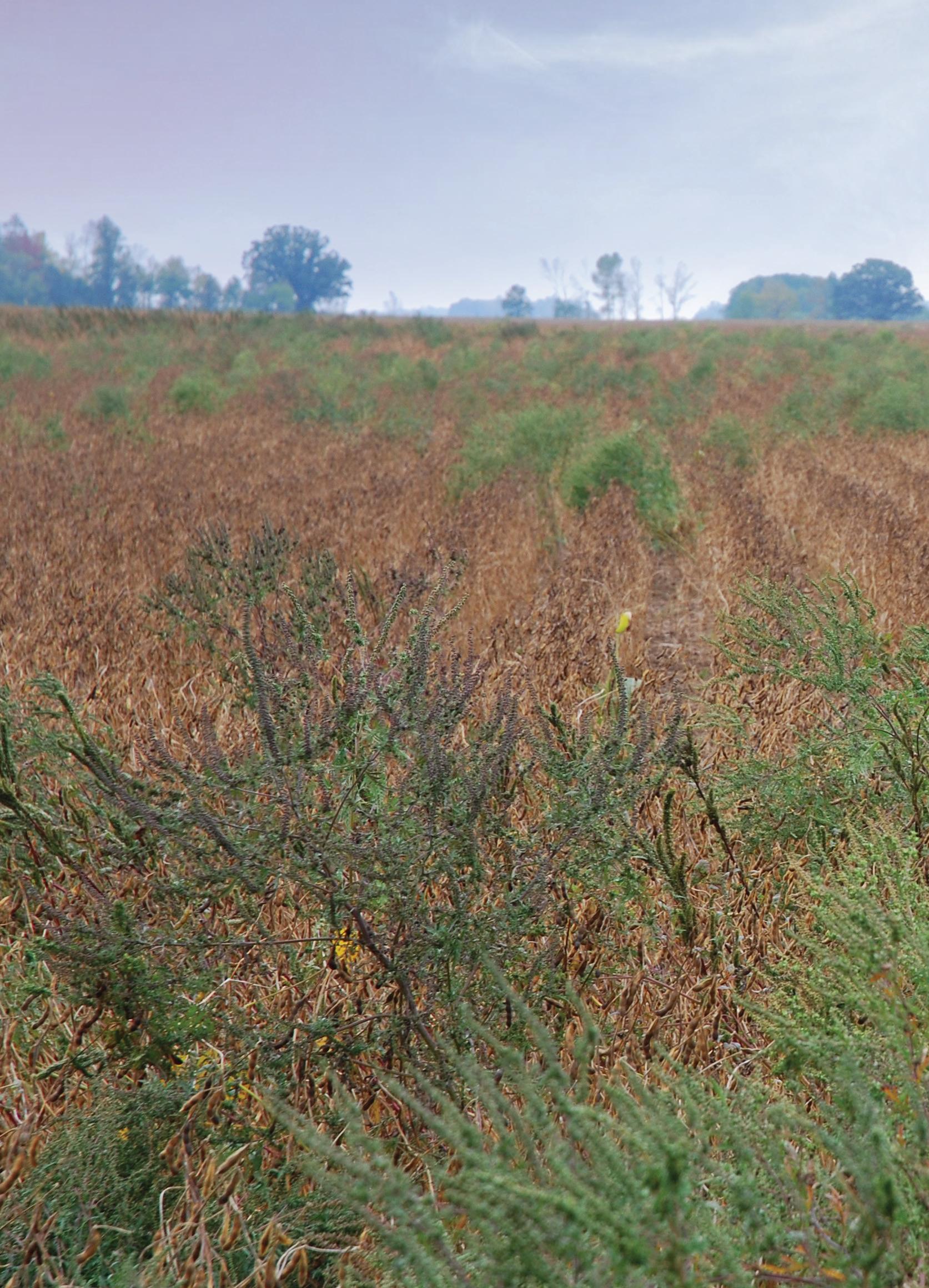
Informed opinion suggests growers will stick to their rotations or specific market opportunities, including IP soybeans.
will remain without increasing corn acres. “Certainly, some growers have switched to crusher soybeans and have moved away from Ip beans, but, due to the increasing demand for traceability, I don’t think we will see too many growers switch,” Vanderloo comments. “prices on corn and soybeans will continue to fluctuate, so growers will want to have options.”
The energy issue is adding another wrinkle to what may transpire because the corn-for-energy market is still heavily subsidized in the US, making it a viable option. However, if those subsidies
are ever removed, growing corn for China may be lucrative. Vanderloo believes eventually, there will be a move away from corn-for-ethanol towards more cellulosebased sources and then the markets will shift again.
A good future for crop farmers no matter what happens in China, aideyan believes times are good for anyone in cash crops. “If we have a normal spring in 2012, US growers will plant a corn crop that will shock everyone,” he says. This means Canadian growers who know weeks in advance of planting their own crops what is transpiring in the US ican adjust their planting intentions. If, as he suggests, US growers will plant higher corn acres, there could be opportunity for Canadian soybean growers to meet the needs of reduced soybean supplies from the US.
as of november 2011, more money was being offered for 2012’s crop than expected, so growers have time to decide how to divide their acres for various crops. However, the great unknown in this focus on what China wants is the world financial crisis and aideyan suggests that, if China gets sucked into the crisis, the analysts will be scrambling to understand how corn and soybeans will be affected. “Don’t forget there are social issues at play as well in China,” says Vanderloo. “The Chinese people want cars and that could have an effect on energy consumption, which will affect corn and soybeans indirectly. It’s all about supply and demand.”
Without a doubt, the challenge for growers is to remain calm and not get caught up in what could become an hysterical reaction to China’s continuing demand for western goods, from crops to cars. Despite the uncertainty with the financial markets and the attempts to predict what China may want, there will be some very positive opportunities for Canadian soybean producers – under favourable growing conditions.
If there is a story line, coming event or news brief that you would like to see covered in a future edition of Top Crop Manager, contact editor Ralph Pearce at 519-280-0086 or via e-mail at rpearce@annexweb.com

Understanding the differences is a big help.
by Dr. T. Scott Murrell*
Soil pH.
It is one of the most important chemical properties that affect nutrient interactions in soils and plants. It is, however, one of the most misunderstood measurements, particularly when comparing one pH value to another.
a question that is often asked is, “How many times more acid is one pH than another?” This question is not so straightforward to answer, because pH is not on a linear scale, like a ruler. Instead, it is on a negative log scale. Soils that are higher in acidity actually have smaller pH values, thanks to the negative log scale. The pH scale goes from 0 to 14. The 0 end of the scale is more acid. The 14 end is basic, and a pH of 7 is neutral, dividing acidic from basic. So we know that a pH of 5.8 is more acid than a pH of 6.6. But how many more times acid is it?
To get at the answer to this question, we must first recognize that pH is a transformed measure of the concentration of acid. To find out “how many more times acid” one pH value is than another, we have to do some mathematical manipulations to get us out of the negative log scale and back to a linear scale where such comparisons make sense.
The table below was developed from these mathematical manipulations and is provided to allow you to quickly determine how many times more acid a lower pH value is than a higher one. To use the table, take the higher pH value and subtract the lower one. Look up the difference in the table, under the heading “pH difference.” Then look at the corresponding number in the column to the right labelled “Times more acid.” Using our example, we want to compare
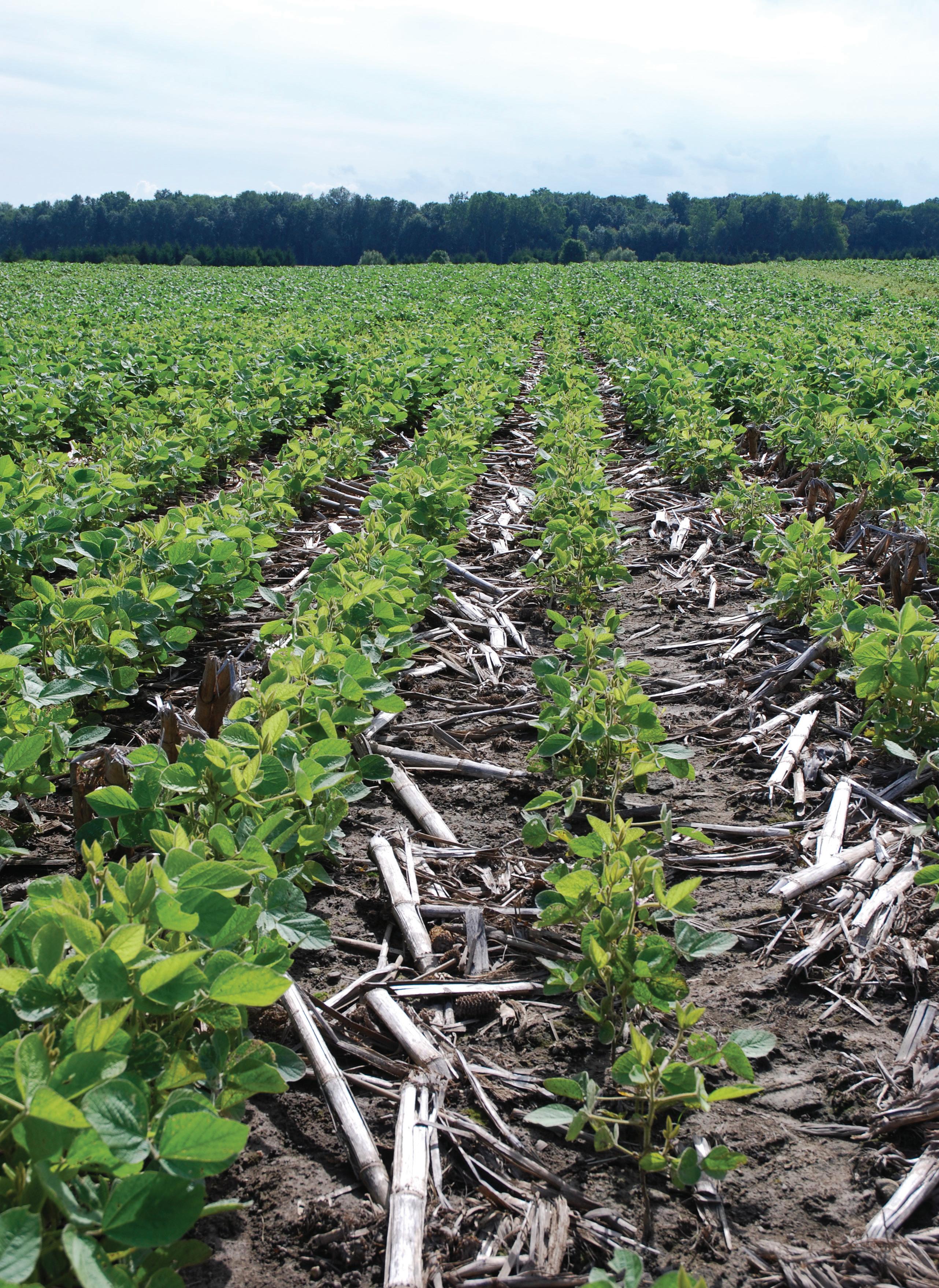
Soil pH affects nutrient interactions in soils and plants.
pH 5.8 and 6.6. We take the higher value and subtract the lower one: 6.6 – 5.8 = 0.8. When we look up 0.8 in the table, we get 6.3. So the lower pH of 5.8 is 6.3 times more acid than the higher pH of 6.6. Using this table, you can easily determine how two pH values compare to one another, up to a difference of 3 pH units. For a more complete set of units, visit http://nanc.ipni.net/articles/ nanC0022-en.
* Dr. T. Scott Murrell, northcentral Director, International plant nutrition Institute (IpnI). reprinted frompnIplant nutrition Today.

MANAGER
SoybEan SPECIal SECtIon
advances provide multiple benefits in one treated package.
by Treena Hein
At present, about 60 percent of soybean fields in o ntario receive an annual application of inoculants, which are placed on seeds to help the crop fix sufficient amounts of nitrogen. However, older research has shown that yield gains with inoculants were inconsistent, and relatively small, on fields that had successfully grown soybeans in the past.
That is why companies have introduced “pre-inoculants” for soybeans (and forages as well), that are applied to the seed by custom treatment companies or larger seed houses. pre-inocu -
lants are different from commonly used inoculants in that the grower does not apply the pre-inoculant but purchases the seed with the inoculant already inconvenient applied rather than applying at the time of planting. “These products contain two or even three highly efficient strains of bacteria as well as “extenders” that prolong the viability of the inoculants,” says Horst Bohner, soybean specialist with the o ntario Ministry of a griculture, Food and rural affairs. “ e xtenders are a food source to keep the bacteria alive on the seed, and also, without them, the rhizobia would dry out within a relatively short time: hours to
According to the results of a three-year research study, growers using a pre-inoculant could see return of up to $9.17 per acre, based on a conservative price of $10 per bushel for soybeans and a yield gain of 1.25 bu/ac.
days, depending on the conditions.”
Companies have gone beyond just extenders, however, and now offer “next generation” inoculants with additives that promote better crop performance. Becker Underwood’s HiStick nT product, for example, features the standard Bradyrhizobium japonicum bacteria, an extender and another strain of bacteria (Bacillus subtilis) in spore form, says piran Cargeeg, Becker Underwood’s technical team leader of seed enhancements/biologicals. “In addition, HiStick nT’s nodulating Trigger technology releases a phytohormone on the root surface,” he notes, “which is perceived by the plant, and results in increased root development and increased above-ground vigour, a reduced number of days-to-canopy closure, larger leaves and greater yield.”
The liquid version of HiStick nT with extender has an on-seed shelf life of up to 30 days. For the company’s HiCoat n/T S225 pre-inoculant, it is 225 days.
Use of pre-inoculants started in Quebec in the 1990s with dairy farmers, who were quick to take notice of them because of the convenience; their use has only expanded into ontario during the last couple of years. “Using pre-inoculants involves reduced procedures at planting time and excellent coverage, compared to traditional drill box application,” Cargeeg notes. “Current highquality pre-inoculants provide between 800,000 and 1,400,000 bacterial cells per seed, which are much higher concentrations than were previously available.”
Cargeeg points out that along with boosted soybean yield through helping with nitrogen uptake, pre-inoculants also increase soil nitrogen for the benefit of rotational crops.
Inoculants are produced, stored and delivered in water, peat or clay. “These forms have been developed to adapt to the grower’s application equipment and specific agronomic conditions,” says Cargeeg. “Thus growers must choose the inoculant carrier type that is most compatible to their situations.”
In eastern Canada, he says about 60 percent of Becker Underwood customers choose peat and 40 percent choose liquid inoculants.
Latest results also encouraging
Much has been made of secondary or complementary effects of various seed treatments and inoculants in the past few years. Since 2007, it has been common knowledge that certain name-brand seed treatments for soybeans and edible beans enhanced the growth of the plant. However, it was also discovered to offer secondary protection against pests such bean leaf beetles and the damage they
can do, to both plant and bean, as well create infection sites for diseases. That is another of the benefits that Dave Townsend, product manager with Becker Underwood, is seeing, beyond the aboveground effects. “The nT is providing that protective zone around the root that is displacing or not allowing damping-off diseases, like Fusarium or Rhizoctonia to be able to come into the root.”
although some of this is anecdotal, it follows along the same lines as the seed treatment and bean leaf beetle effect, where the inoculant’s properties enhance and increase root activity through the mycorrhizae.
Bohner and Dr. Hugh earl, an associate professor in the Department of plant agriculture at the University of guelph, have released the results of a three-year, 38-trial study of inoculants. “We tested two of the most popular products at the time of the study,” says Bohner.
However, the average statistical yield gain in fields with inoculants compared to untreated control was 1.25 bushels per acre across the three seasons. “We found that at a conservative selling price of $10 per bushel and a yield gain of 1.25 bushels per acre, a return of $9.17 per acre would be realized when using a inoculant, assuming a cost of $3.33 per acre (cited in the study) for the inoculant,” explains Bohner. “It should also be noted that the average yield gain in 2009 was higher than it was in the previous two years, probably due to the fact that it was a very cool growing season.”
Further studies will be designed to assess possible yield correlations to soil nitrogen levels, pesticide seed treatment use, and soil potassium levels.
Bohner definitely foresees more pre-inoculant developments to come. “I think we’ll see new strains of bacteria and new combinations of products such as fungicides, insecticides, biostimulants and more,” he says.
Cargeeg goes even further, calling these technologies “the next area of growth” in agriculture. “There’s an increased recognition of the power of biologicals to help promote growth and fight off pests and disease,” he states. “They can work in concert with existing pesticide usage and other agronomic practices that help prevent pesticide resistance as well.”
Cargeeg also predicts the power of seed treatments and shelf-life of pre-inoculants will be extended. He adds that because seeds can only carry so much material, “concentrations will also be increased.”
by Treena Hein
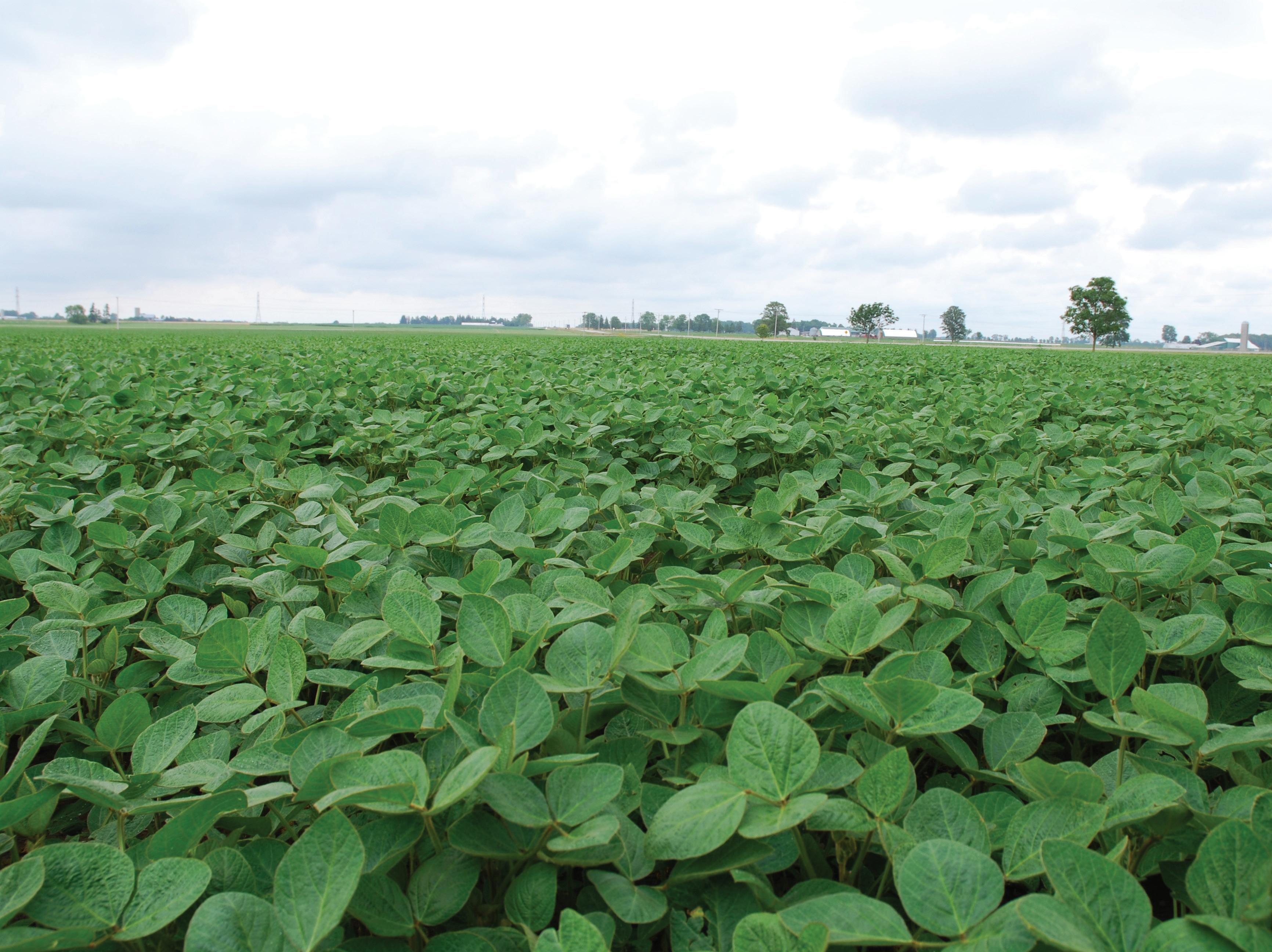
Farmers have often gone by the notion that corn planting should always come first, followed by soybeans. But when the right conditions present themselves, it may be a better idea to plant some corn, get some or most of a soybean crop into the ground, then go back and finish the corn. “generally, I think it’s a great idea to get your soybeans in early if the soil is fit,” says certified crop advisor alan McCallum, who is based in elgin County. “I think the practice of waiting until all the corn is done to even consider planting soybeans is leaving some yield potential on the table.”
Yield potential increases with later-maturing soybeans, but how much actual yield can be gained by planting long-maturing soybean varieties? These varieties tend to flower for a longer period and produce more pods, observes adam pfeffer, a technical development representative with Monsanto Canada based in Chatham. However, farmers should remember that harvest of long-maturing varieties can delay winter wheat planting by a few days.
planting date, germination rate (weather and soil conditions), as well as seasonal weather patterns and individual farm crop production practices such as weed, pest and disease management, also play a part in soybean yields. Many farmers are using treated seed, which can make a significant difference in stand establishment with early planting. “Soybean breeding is not generally focused on early season vigour,” notes pfeffer. “We always check to make sure it’s adequate in each new variety, but the thinking is that seed treatments such as CruiserMaxx are the way to provide this.”
pfeffer, along with ontario Ministry of agriculture and Food (oMaFra) soybean specialist Horst Bohner and University of guelph plant agriculture professor Dr. Hugh earl are studying how late-maturing soybean varieties interact with planting dates in terms of yield. Funding for the 2010-2012 study is being provided by the agricultural adaptation Council, grain Farmers of ontario and the University of guelph.
The trials involve measuring yield response to three soybean vari-
eties with a range of maturities, planted at an early date (april 15 to May 5), a normal planting date (May 6 to 20) and a late date (May 21 to June 5). The trials are located near Seaforth, Chatham, ridgetown, elora and Kemptville, in ontario, and ayr, St. Hugues and Coteau-dulac, in Quebec.
In terms of data analyzed thus far, pfeffer says “everyone remembers that the 2010 growing season was exceptional. There were aboveaverage temperatures and timely rains throughout the year, with no significant insect or disease pressure at the test locations. overall, we found that early-planted soybeans had outstanding yields, although the late-planted plots also had above-average yields.”
pffefer would not hesitate to advise a farmer to try earlier planting of late-maturing varieties. “Soybeans are more frost-tolerant than is generally believed,” he says. “Some growers don’t seem to know how soybeans can take a longer low-temperature spell than corn.” McCallum adds, “Soybeans are actually more tolerant to a mild frost than corn, but a hard frost will kill a soybean plant whereas it will only kill the top of corn plants. That’s why you have to be reasonable about early planting. But I definitely would advise giving early planting a try.”
The first 24 hours is crucial, so temperature forecasts need to be watched closely in terms of making decisions on early planting dates. “But in general, because soybeans flower in late July, springtime is not that critical to yield,” says pfeffer. “getting rain when flowering occurs is a much more important factor than when the crop went in.”
“This year (2011), planting was delayed in some areas until June, and it certainly didn’t necessarily reduce yield,” says McCallum. “The soybean crop got adequate moisture in august, September and october, in the elgin County area and a good portion of southern ontario, and that’s what counted.”
ABOVE: Varieties that flower for a longer period in the summer and produce more pods are attracting more growers.
BioStacked® means greater plant vigour, root biomass and more nitrogen-fixing nodules on every plant. Only HiStick® N/T and HiCoat® N/T S225 are BioStacked® –which in turn means increased performance, superior Return-on-Investment and most importantly, added yield potential.
In the planter or in the bag – ask your retailer about BioStacked® HiStick® N/T inoculant and HiCoat® N/T S225 pre-inoculant system – Canada’s #1 soybean inoculants.

• HiStick® N/T sterile peat can be easily applied on-farm
• HiStick® L N/T liquid can be conveniently applied on-farm or by your bulk seed retailer
• The only BioStacked® inoculant – with two beneficial microorganisms that work together with the soybean root system to enhance yield potential
• The first and only BioStacked® pre-inoculant system
• With HiCoat® N/T S225, you get soybean seed ready to plant with fresh BioStacked® inoculant, professionally applied by leading seed companies. Now that’s convenient!
• Maintains its inoculating power up to 225 days*, and is compatible with all commercial seed treatments
* When applied without a chemical seed treatment. Inoculant viability will vary from 90-150 days
commercial seed treatments. See your
for complete details.
The trend is moving north from the US.
by Blair andrews
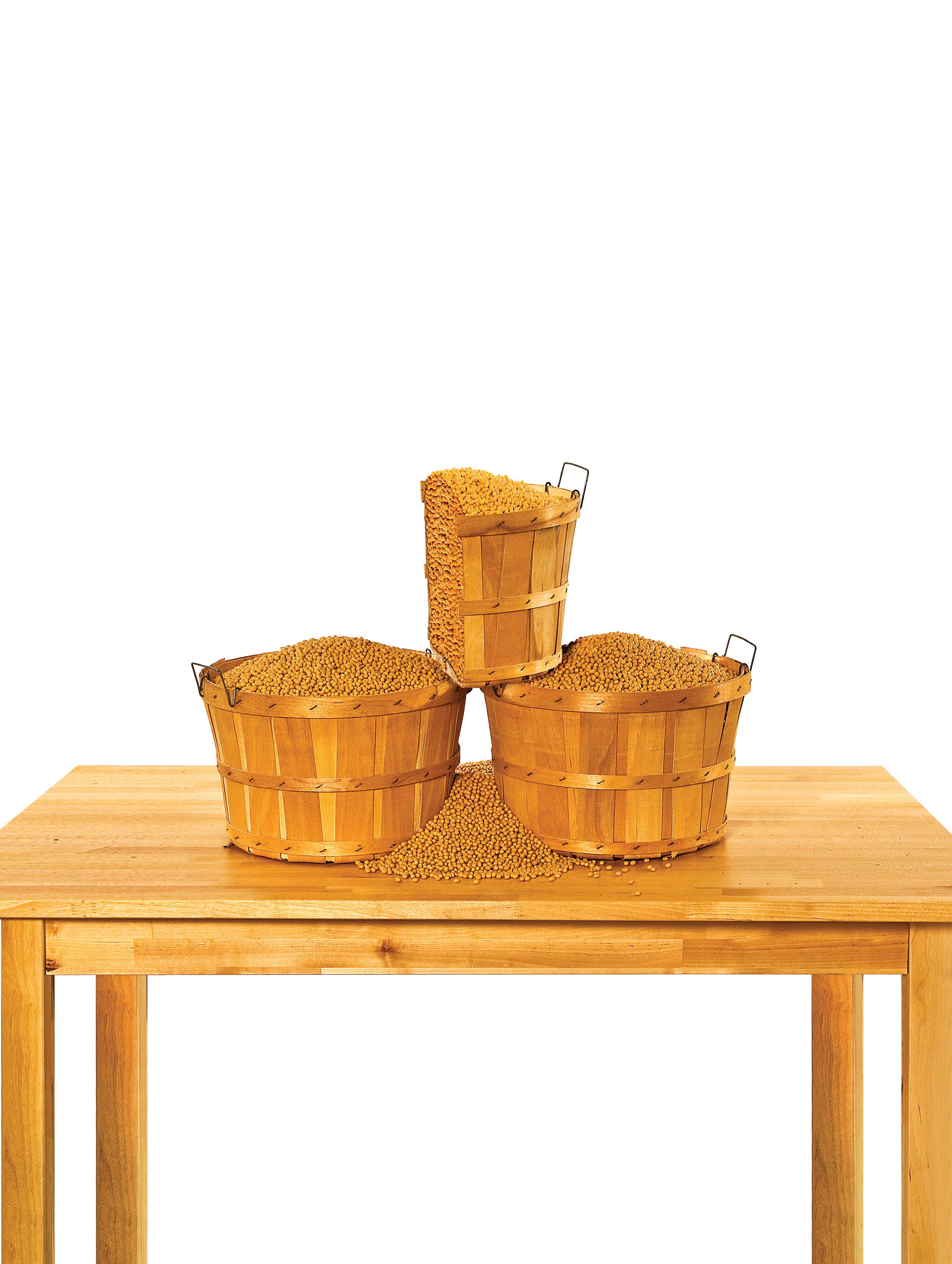
In an effort to take some of the confusion out of the marketplace concerning seed patents, pioneer Hi-Bred has launched a public education campaign as a guide for growers as they consider their 2012 seed purchases. although partly driven by the recent patent expiry of the original roundup ready technology in Canada, the campaign also introduces the company’s plans to introduce new “Variety Improvement patents” related to many of its commercial soybean varieties. The terminology is new for Canada, but variety patents are in place in the US. Sometimes referred to as utility patents, they cover the entire variety as opposed to a specific gene or trait such as glyphosate resistance.
For Ian grant, president of pioneer Hi-Bred, the awareness campaign is the first step in helping growers to understand and comply with the company’s conditions for using its seed products in the wake of the expiry of the original roundup ready technology.
His message is simple: pioneer brand soybean seed is sold for a single use, meaning the seed cannot be saved in order to be planted in another year. “We don’t want growers to have any uncertainty on
what they can and cannot do with our seed,” says grant of the campaign. “our policy is clear and we want to communicate it so everybody knows.”
To recap the changing climate in the seed marketplace this fall, the Canadian patent for the original roundup ready soybean technology expired in august 2011. although ending just prior to harvest, the contractual obligations to not save seed under Monsanto’s Technology Stewardship agreement (TSa) remain in effect for 2011.
In 2012, farmers may decide to save seed from the 2012 harvest for replanting in 2013, as long as the seed company from which they purchased the seed for 2012 planting does not have any contractual obligations preventing them from doing so. as part of the communication effort, grant wrote a letter to growers, outlining pioneer’s position on its seed sales for 2012.
ABOVE: The term “variety improvement patents” may be new Canada, but they are in place in the US. Often referred to as utility patents, they cover the entire variety, not just a specific trait.
There has been considerable confusion with the expiry of the original Roundup Ready patent, and Pioneer Hi-Bred is attempting to clarify the issue with variety, or utility, patents on its soybean technology.
In pioneer’s case, the company is stipulating that its soybean seed is sold for single use, which is spelled out on the bag tag and included in the terms and conditions the customers receive each year.
In addition to making growers aware of the company’s policy, grant says pioneer also wants them to understand the rationale behind single-use seeds and the need protect the technology with patents.
He says single-use allows the company to continue to invest large amounts of money into its research and development programs, which in turn creates a pipeline of new products that help farmers increase their yields and productivity.
For example, grant notes that it can take as long as seven years and an investment of over $1 million to bring a new soybean variety to the marketplace. “So for us, it’s about continuing to fuel that innovation pipeline by having the ability to protect our intellectual property and a way of enforcing single use. That’s what these patents do,” he says. “For farmers, it ensures there’s going to be continued investment in research and development that will provide them with newer and better genetics.”
according to pioneer, the company has secured allowances for these new variety improvement patents relating to many of its newest soybean varieties. a news release noted that these pending Canadian patents are scheduled to be issued in 2011.
For other soybean breeders such as Dr. Istvan rajcan at the University of guelph, the impact of patenting varieties on Canada’s agriculture industry remains to be seen. noting that he has limited information about the new development, rajcan says public breeders would be concerned if the patents were applied to non- gMo varieties that are important for Canada’s food-grade markets. “We have a consensus,

There is a lot of research that goes into a variety, whether it is from a private or a public breeder.
at least among public breeders, that patenting life is not necessarily a good thing for the grower or anybody,” says rajcan of patenting varieties. “It’s a specific set of genes that a plant variety, hence a living organism, has (and) it’s a result of selection in nature over a number of years and generations, with only the last few years being targeted for selection in a plant breeding program. But, it is still nature and it’s still life. I have a problem with that.”
rajcan adds that he would not be concerned if the patents were applied to gMo varieties that contain a gene insertion, which has been patented as an event. “We have had this in place for a while now and it is probably irreversible,” says rajcan.
as for the benefits of single-use seeds helping to fuel innovation, rajcan agrees with grant’s comments.
“There is a lot of research that goes into a variety and, whether you’re a public or private breeder, further research into developing new varieties definitely benefits most by a grower going back and buying new seed rather than growing farm-saved seed,” he says.
at the same time, rajcan also sympathizes with farmers who, especially after a bad year, would welcome the chance to plant bin-run seed as a way to save costs. “right now, Canada’s Seeds act allows for this exemption unless it is a gM variety which is grown under a Technology Usage agreement and treated separately,” notes rajcan. “It remains to be seen how the new patents would change this situation.” as for pioneer, building awareness about the issue will continue well beyond its initial outreach to growers.
In addition to the letter from Ian grant, the company also launched a dedicated website to the cause – www.pioneersoybeans. ca. “If there are folks who are out of compliance, education is the first step to try to help them understand about intellectual properly and the benefits,” says grant. “We’re going to take a fair approach with people. education is going to be a big part of this.”

what are you leaving on the table?
HiStick® N/T is BioStacked®. And BioStacked® means greater plant vigour, root biomass and more nitrogen-fixing nodules on every plant. Which in turn means increased performance, superior Return-OnInvestment and most importantly, added yield potential. As the #1 and only BioStacked® soybean inoculant, HiStick® N/T is trusted and proven
under Ontario growing conditions. Available in liquid and sterile peat formulations, it’s quite simply the best investment you can put into your beans. Ask your retailer about BioStacked ® HiStick ® N/T –for value and performance that really stacks up.™
The results are hard to dispute.
by Carolyn King
We’re always looking at how different things work for us, trying to learn and find better ways,” says eric Kaiser. Through ongoing testing and finetuning, the Kaisers have created a crop production system that works for them, and it includes no-till corn. What makes this especially remarkable is that Kaiser Lake Farms Ltd., near napanee in eastern ontario, has very heavy clay soils that, to some, might seem only slightly easier to farm than a strip of paved highway.
In 1969, eric and his wife Helen bought the first piece of property where they now farm and set up a layer-pullet operation. These days eric and son Max run the farm. They still have the layers and pullets but they now produce omega-3 eggs. over the years, the Kaisers have gradually expanded the farm from the original 300 acres to the current 1200 acres. They have about 950 acres in crops; most of that is for growing feed for their chickens, but about 30 acres is for pickyour-own strawberries and other market garden crops.
During the past four decades, the Kaisers have made many changes to improve crop production on their unyielding soils, such as adding tile drainage, growing a more varied crop rotation and using no-till. “We evolved into no-till,” says eric. “Initially we had farmed conventionally, of course, with a mouldboard plow, and spring tillage and planting. But most of our land is very heavy clay, with a clay content over 50 percent. It soon became apparent to me that we couldn’t continue to farm this heavy clay land conventionally; it was getting
more and more difficult to work.
“That was in the 1980s, when the Innovative Farmers of ontario and others were developing the no-till philosophy in ontario. I became interested and I attended their no-till conferences almost from the beginning.”
after looking into it, he decided to head towards no-till. “First we moved to conservation tillage. We quit mouldboard plowing and started chisel plowing. We stopped doing extensive spring tillage because it was obvious that every wheel mark in the spring was a wheel mark that stayed there. We also changed from continuous corn to a crop rotation, eventually settling on corn, soybeans and wheat.”
a crucial step came in the late 1990s when the Kaisers obtained a new row-unit planter. “I needed a better corn planter, and I needed to quit planting soybeans with a seed drill. We never knew whether the seeds were three inches deep or on the surface with a seed drill.”
They bought a White planter with 30-inch row spacings for corn and 15-inch for soybeans, and they reconfigured it to add a narrower row spacing for wheat. Since then, the Kaisers have modified their planter many times to fine-tune its operation for their needs.
Their planter provides the seed placement accuracy needed for planting into heavy clay soils through any kind of crop
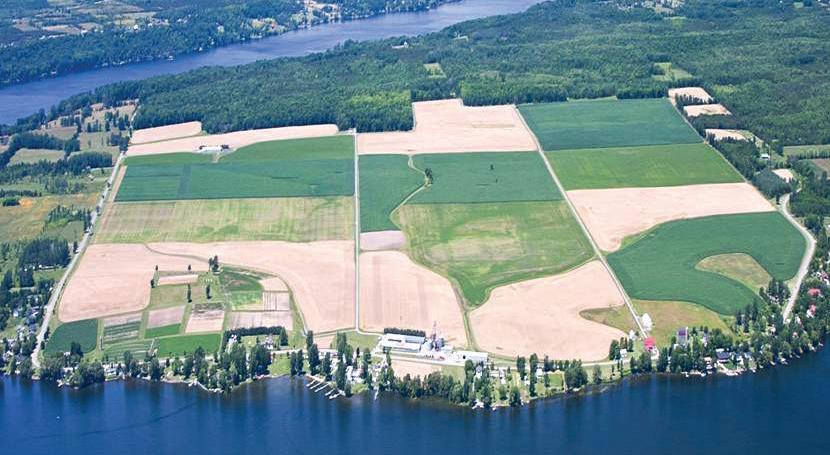
ABOVE: Most of the soil at Kaiser Lake Farms is a heavy clay, but the Kaisers have succeeded in making no-till work for them.
stubble. “once we got that planter, we realized we didn’t need to do conservation tillage; we could just plant,” notes eric. “With a row unit, you plant one seed at a time, so you maximize the emergence potential of your seed by placing it at the proper depth, in the proper environment and uniformly distributed.”
With better seed placement, they get better crop emergence and better yields. He adds, “We have 20 years of crop insurance records – 10 years of seed drill no-till planting and 10 years with the row planter – that show we have seen a 35 percent yield increase for our wheat by planting with the row unit.”
There is another benefit to the more accurate seed placement. eric explains, “We now plant 130,000 seeds per acre for soybeans. We arrived at that number by doing population plots that vary from 250,000 down to 110,000 seeds per acre at planting time, with a viability of germination of about 80 percent. on only two occasions did we see a yield reduction at 110,000, and we never saw a yield reduction at 130,000. The savings from planting 130,000 seeds per acre instead of 200,000 seeds per acre of roundup ready seed is about $25 an acre. If you were on something other than our heavy clay soil, you could probably go down to 100,000 seeds or lower.”
The Kaisers have also done side-by-side comparisons of no-till and conventional till corn, and found no yield difference. eric says, “I keep hearing suggestions that there’s a yield drag with no-till corn. We have not seen it. even if we did, we wouldn’t go back to conventional till because the yield drag may happen one year, but if you do tillage on heavy clay you’re going to pay for it eventually.”
To ensure proper seed placement, the Kaisers make planter maintenance a top priority. “We put that planter in the shop every winter, and we put on new disk openers, new seed tube guards, and new anything else it needs,” says eric. During seeding, they check the planter every time they fill up, and if anything is worn or broken, they replace it right then. “You need planting equipment in first-rate condition. That’s critical to no-till in heavy soils; it’s probably critical to no-till anywhere. otherwise, it won’t cut residue effectively and it won’t give you the trench profile required for good seed-to-soil contact.”
Other key parts in the Kaisers’ system no-till is just one of several components that all fit together into the Kaisers’ overall production system for farming their heavy clay soils.
Tile drainage is essential because of the very poor natural drainage of their soils. over the years, the Kaisers have been working on narrowing the spacing in their tile drainage system as they could afford it. eric notes, “on the clay soil, which is relatively flat land, every foot of drain tile increases the average farm yield. We’ve managed to get a lot of tiling on 30-foot centres, and we have some on 20-, 17- and 15-foot. We still have some left on 60foot and we paid dearly for that this year with the cold, wet May.” another major focus is to prevent soil compaction. eric says, “The only way you could go over heavy clay ground in the spring without causing a yield reduction is with an aircraft! everything else from an aTV on up causes a yield reduction of some kind.”
So the Kaisers stay off the land in the spring and in the fall when it is wet. They use low-pressure (8 psi) radial tires on their field equipment. at harvest, they leave the grain wagons on drive -
ways at the field edges and carry the grain to the wagons. and they have removed all of the fence-lines between the nine original properties to minimize the number of times their field equipment has to turn.
To improve their soils, the Kaisers apply chicken manure and then grow a cover crop, right after harvesting winter wheat. eric notes, “Theoretically you’re supposed to apply manure close to when you’re planting the crop to get the maximum nutrients to the crop. But the reality is we’re on very heavy clay soils and you don’t go there in the spring, and it’s better not to go there in the fall. So we harvest the wheat and leave the bulk of the straw. Then we spread the manure and incorporate it in the same pass. Then we spin the cover crop seed on the surface and do a very light tillage pass with the cultivator to plant it.”
The Kaisers have been using various types of cover crops for about 30 years. “These days we seed a multi-species or “cocktail mix” cover crop and add that to the winter wheat volunteers. In late october, we apply glyphosate and kill the cover crop. all but the winter wheat would die in the winter, but we can’t have green stuff out there in the spring on this heavy clay. Then in the spring we plant corn directly into that cover crop residue with our planter, without doing anything to it, and it works for us,” says eric.
“The cover crop residue prevents the direct impact of rain on the soil surface and reduces erosion. It also provides a lot of root mass in the topsoil so it plants much better than it used to conventionally or when we first started no-till. The cover crop also improves soil health by having a variety of rooting structures in the soil. The roots of each different plant species benefit a different species of soil organism, so the more variety, the better.”
He adds, “I begrudge the tillage we have to do to incorporate the manure. But if we don’t incorporate it we’ll lose the ammonia nitrogen, and the smell will annoy the neighbours – and my wife and me!”
Kaiser Lake Farms sits on a point of land along the Bay of Quinte and Hay Bay. eric says, “We’re surrounded by neighbours who have never farmed. We do whatever we can do to minimize our effect on them and on the environment.”
The Kaisers were among the first ontario farmers to complete an environmental Farm plan. along with no-till and cover cropping, they use other soil conservation practices such as grassed waterways to prevent “brown water” from going into the lake, and they warn their neighbours in advance when they plan to spread manure.
The Kaisers’ willingness to explore new options characterizes all that they do. They have test plots on their farm, both for their own tests and in co-operation with specialists. They participate in producer organizations; for example, eric was a director of the Innovative Farmers of ontario (IFao) and Max is currently president of ontario Soil and Crop Improvement association (oSCIa). They go on farm tours, and sometimes tours visit their own farm. and they attend conferences, like the IFao annual conference, Southwest agricultural Conference, FarmSmart, and the national no-Tillage Conference in the US. “I keep going to these conferences figuring sooner or later I’ll learn to farm!” says eric, with a laugh. “Life is a learning process; if you’re not learning, you’re going backwards.”


Responding to future demand is all about ‘nimble infrastructure.’
by Treena Hein
The global grain trade is changing, and everyone in the industry – including farmers – has to be ready. “The marketplace will only become more complicated, and to take advantage of all market opportunities, we need the right infrastructure in place,” says Barry Senft, chief executive officer of the grain Farmers of ontario. “We need the flexibility and capacity to be able to move quickly when an order comes in.”
Two of the major factors about to further complicate the grain trade are deregulation of wheat sales and Canada’s free trade agreement (FTa) with the european Union, both expected to take effect in 2012. once the Canadian Wheat Board loses control of cash grain buying, more high-quality milling-grade Canadian wheat is expected to flow into the US. The european Union’s FTa will likely increase export demand for many types of grain.
To prepare for these and other changes, brokers such as parrish & Heimbecker are increasing grain storage and handling capacity at ports. “our belief is that commodities will move globally
through the most cost-effective and energy-efficient mode,” says p&H spokesperson Steve Kell. “and in order to create access to the broader world market, the ontario grain industry needs to be constantly improving transportation infrastructure.”
as the first phase of an expansion at the port of Hamilton, p&H has constructed a new grain terminal that became operational in august 2011. It features two separated sections totalling 2.2 million bushels of storage. “The Hamilton location was selected due to its capacity to interchange between highway, railroad and marine transportation modes,” Kell notes. “The facility is designed to support high-speed loading and unloading of trucks and vessels.”
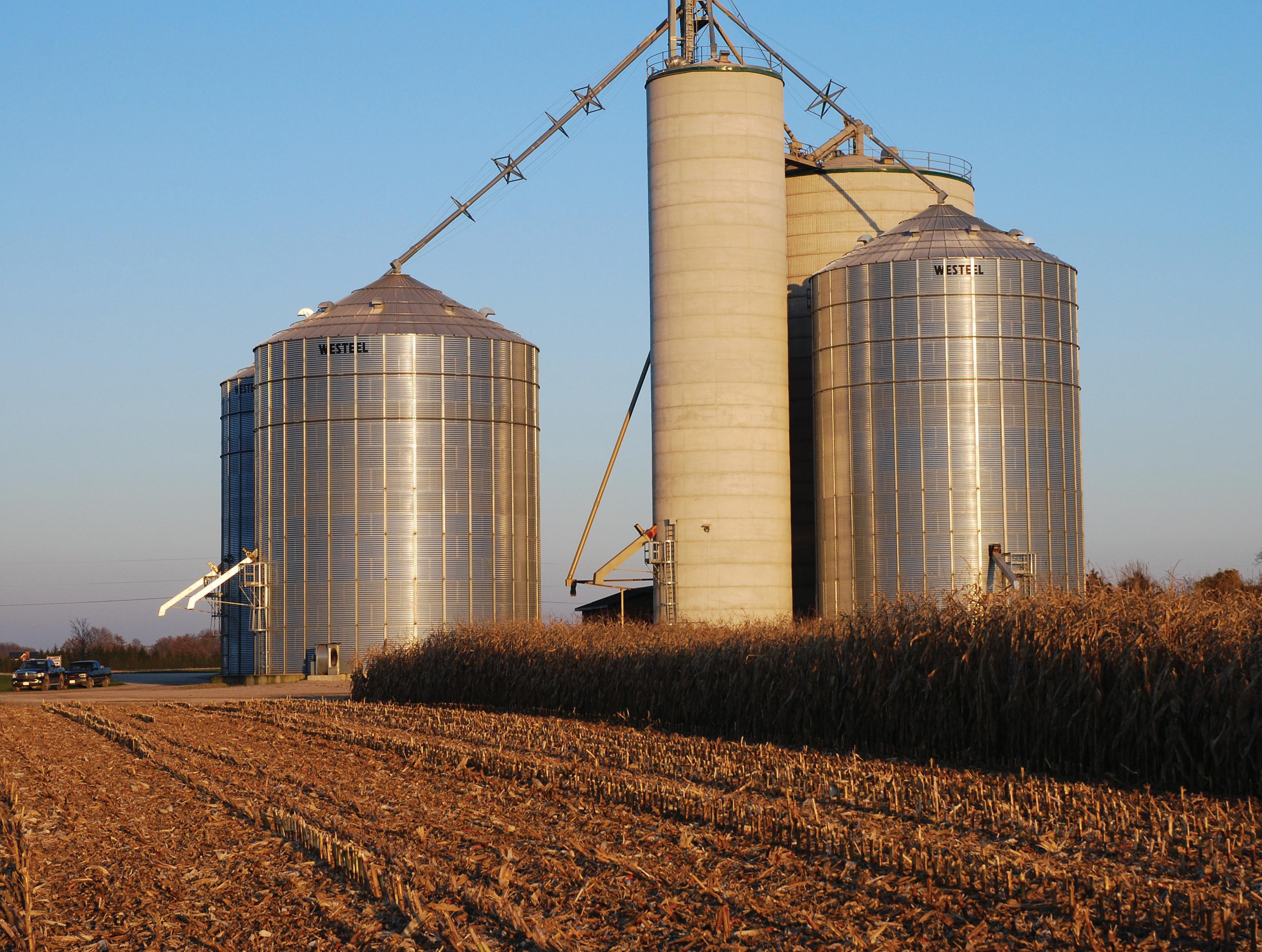
TOP: On-farm storage units are increasingly popular, particularly as crop yields and commodity prices have increased.
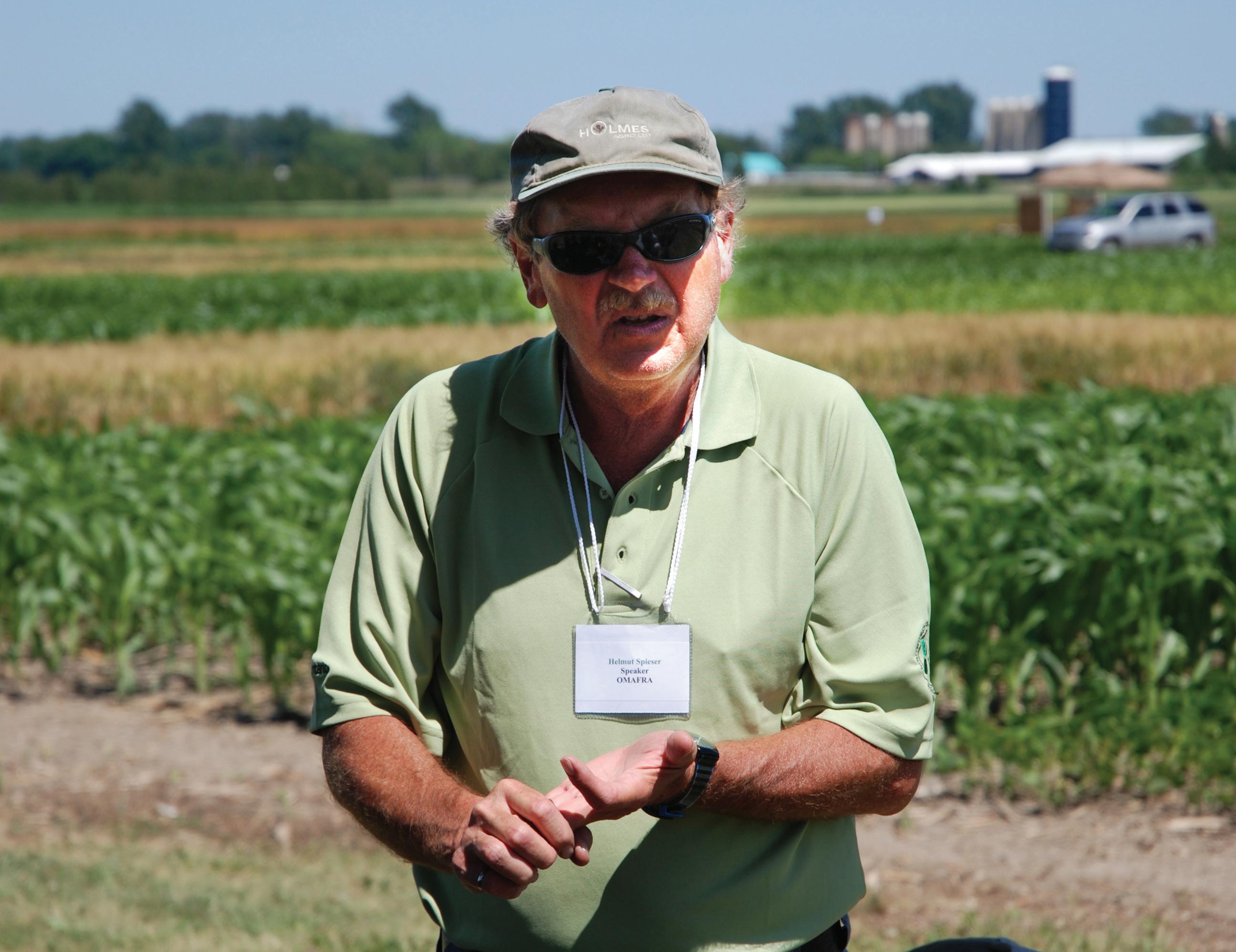
INSET: According to OMAFRA’s Helmut Spieser, growers need to look beyond the initial construction of their on-farm storage units, to keep future needs and enhancements in mind.





In addition to the changes at Hamilton’s port, p&H also has made significant improvements to the owen Sound grain elevator in order to boost efficiency and enable that facility to handle a broader range of grain products. Kell notes that the less segregation capacity there is at terminal facilities, the more critical traffic management becomes. “Too little ability to segregate makes it difficult to execute business and too much capacity is wasteful,” he observes. “The challenge is for each terminal operator to find their own level of comfort with their market and its requirements.”
richardson International Limited also has recently increased both its storage and truck-handling capacity at its Hamilton terminal. Further expansions on its vessel-loading system are also underway, says merchandising manager gino Becerra. “The time frame for export out of ontario is limited to the months the seaway is open,” he says. “and it is concentrated between october and December each year, so we need to be very efficient in handling an ever-growing harvest within a short period of time.”
grain storage capacity at ports, Kell says, only needs to meet operational requirements for the loading and unloading of vessels. “With the increase in storage, drying and conditioning capacity at the farm level, the core function of port terminals is to provide fast and efficient transitioning of the grain from one mode of transportation to another,” he says. The association of Canadian port authorities and Transport Canada are funding a joint study to assess the infrastructure needs of Canada’s 17 ports for handling all types of cargo during the next 15 years.
Due to some excellent crop yields and high crop prices since 2008, many farmers in ontario have taken the plunge and had their own grain storage systems installed, and many more are about to do the same. “I’ve talked to some of the companies that build systems and they’re booked into 2012,” says Helmut Spieser, field crop conditioning and environment engineer with the ontario Ministry of agriculture, Food and rural affairs (oMaFra). “Many new systems are being built, or farmers are adding things like a larger, taller bin to existing systems.”
Having on-farm storage is all about farmers enabling their ability to maximize profits. “You don’t have to be tied to what you can get at harvest or the month after harvest,” notes Spieser, adding that that month of storage may be free at elevators.
The grain Farmers of ontario is pressing the provincial government for accelerated depreciation for on-farm grain storage systems and for the harmonized sales tax (HST) to be waived at time of sale, rather than at the end of the year, as is now the case with fertilizer and other items.
Farmers who are thinking about installing a storage system must keep in mind above all, that they are responsible for the quality, says Spieser. “It’s certainly not a matter of just loading it into the bin or silo and forgetting about it,” he stresses. “especially in the spring when your attention is on the fields, you have to remember to routinely check your grain, aerate to keep it at ambient conditions, check moisture and insects – everything.”
In terms of planning a system, Spieser says the biggest mistake farmers make is putting the focus on only building what they need or what they can afford at that point in time. “You have to put thought into what ‘phase 2’ would look like,” he asserts. “Whatever you put up, it will be added to, whether that’s eventually a leg elevator, a dump pit, weigh scales or what have you, even though you
don’t foresee that these things will ever be needed. You will expand your system, so put phase 2 and even phase 3 on paper.”
as such, Spieser recommends that during initial system construction, farmers should try to envision what those subsequent phases will require. For instance, make accommodations for the additional wiring or spacing for those later modifications. The thought put in before the initial construction will save time and money after.
To avoid other mistakes, Spieser advises talking to as many people, and visiting as many storage systems, as possible. “Keep in mind that each system is unique, and yours will be different than theirs,” he says, “but be sure to ask people what they would have done differently. I’ve heard lots of useful comments like, ‘We should have designed it so that if someone is unloading, we can still use the weigh scale,’ and ‘I would have made more room for maintenance and repair.’ You are going to need to fix things.”
Spieser has heard farmers say they wish they had built the system away from their main farm. “If it’s at your home, people assume you’re always open,” he says, “and also, if you ever sell the home farm, potential buyers may not want a grain drying and storage system.”
Spieser advises spending at least six months on a plan. “Draw it out and see if you can move grain from anywhere to anywhere,” he says. “go over it with contractors. It’s a foolish farmer who thinks his design is without flaw or need for improvement.”
oMaFra offers workshops on on-farm grain storage systems several times a year; contact Helmut Spieser for dates and locations at 519-674-1618, or via e-mail at helmut.spieser@ontario.ca.
Total Canadian grain exports (000’s tonnes)
Wheat
Durum wheat
Wheat flour
Oats
Barley
Barley malt
Flaxseed
Canola
Canola oil
Canola meal
Soybeans
Peas
Corn
Rye
Wheat flour as a percentage of total wheat exported in all forms 1.1 % 1.6 %
SouRCE: CanaDIan GRaIn CoMMISSIon WEbSItE
During the 10 years between 1998-99 and 2008-08, export of all wheat has risen to 14,100,000 tonnes from 10,700,000 tonnes in 1998-99. Wheat flour exports have dropped a little (191,000 tonnes versus 230,000 tonnes 10 before then) while durum wheat exports are similar during the same time frame (roughly 3,700,000 tonnes). oat exports have increased from 1,100,000 to 1,500,000 tonnes, and canola exports have doubled from 3,900,000 to 7,800,000 tonnes. Corn exports are down from 550,000 to 145,000 now.

Farm decision-makers need to get their hands dirty with data.
by Treena Hein
Farming and technology are a natural fit. High-tech is making it easier than ever to achieve high yields and control disease and weeds at minimal cost, but it can definitely seem overwhelming at times. To increase a farmer’s comfort level and help reap the benefits of technology sooner, Karon Cowan of agTech gIS in embro, ontario, offers this overview of where things are headed and important tips to keep in mind.
“growers’ use of ag technologies has burgeoned in the last few years,” Cowan observes, “and the pace of acceptance and usage of handheld and in-cab devices is set to explode. Farmers are familiar with basic gpS technology such as yield monitors and at this point, more of them are competent and/or willing to try new directions and new applications.”
Meanwhile, manufacturers are continuing to improve handheld and in-cab devices, making them more rugged and compact while offering more features in one piece of equipment. “More devices now offer tap-and-click ease of use,” says Cowan. “The new devices are also mostly touch screen, which offers users a very easy interface.” at the same time, software programs are evolving quickly; more
information is available for farmers to analyze, and the potential for farmers to be able to access an integrated, useful picture, a format where action can be taken immediately, is being realized. “I think the next five years will be incredibly exciting in terms of data from the field and equipment being put in the hands of the farmer and his or her service providers,” outlines Cowan.
She notes there are a number of mobile tools now available that can transmit data from the field through wireless transmission to the farm office computer or store data for download later. “Mobile tools can also remotely access office records,” she says. “all the data you need should be available to you, wherever you are on-farm.”
gpS systems that can provide guidance of six to 12 inches (what is commonly called sub-metre) have been around since 2001 or so, but Cowan says the big change came in about 2006 when these systems became more affordable, allowing operators of any size to capitalize
ABOVE: Not only has technology transformed information gathering systems inside the cab, but handheld technology is evolving at a phenomenal pace as well.
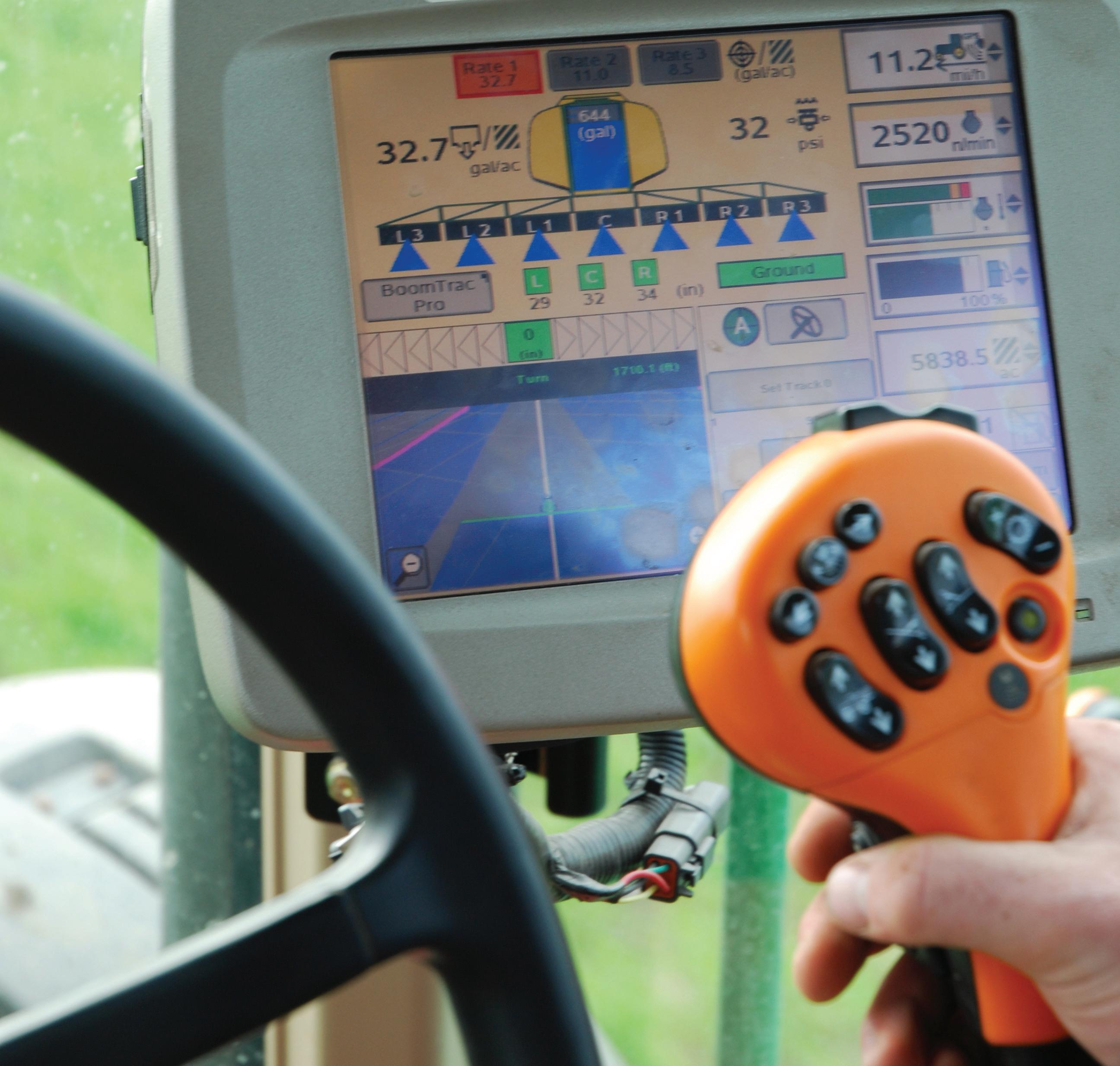
As the accessibility of GPS and RTK technologies has expanded, so too have the services offered by most custom operators.
on the advancements in technology. The consistency of performance became reliable, and government programs helped growers’ use of the systems become widespread. However, one of the most significant recent gpS advancements, in Cowan’s view, is the continuing expansion of rTK (real time kinematic) accuracy. rTK had been reliant on “line of sight” signal corrections, which not only requires the costly creation of towers or other stations, but involves signals that degrade with increasing distance from the tower or are affected by obstructions or atmospheric interference. “Instead, rTK high-accuracy correction signals are being delivered via cell or internet connections,” Cowan notes. “rTK accuracies of one to two inches or better are becoming the standard.”
She adds that since 2009, more new farming equipment is making use of this higher accuracy for integrated auto-steering and other applications.
For a farmer who hires a company to do custom manure application, spraying and other tasks, there is no need to be concerned about integrating and using the data they provide. Cowan says there are already a large number of custom operators who have gpS guidance, steering, application control and monitoring systems on their equipment, and that those who do can provide a digital file as well as paper documentation (report and maps) of the job. growers who do not have software ready to receive this type of file can access it for free from the brand used by their custom operator. “We offer Farm Works View as a free download from our website for instance,” notes Cowan. “If the grower later wishes to expand the capability, he can pay to turn this free viewer into a “live” program that has a full slate of information and map management tools, and all previously downloaded data are accessible.”
More points to keep in mind:
• Mixing and matching program and applications is perfectly fine.
• “open standards have been developed so that devices made by different companies can communicate with each other,” notes Cowan. This means data collected by a Brand X planter monitor can be overlaid on Brand Y application maps with a Brand Z yield monitor and topped off with a scouting map from a handheld from another brand. “I can think at least 20 brands, all of which have incredible capability,” she says, “so pick and choose in each application what best fits your needs.”
• Buying technology is not a one-time purchase.
• “Technology is a continuum, with each development leapfrogging over the last,” notes Cowan. “Those growers who are truly making
headway are those who stay current with the newest software versions and system upgrades.” She adds that the yearly “maintenance fee” or support program offered by vendors is a wise choice and provides great value.
• put programs to full use.
Photo by Ral P
• Cowan believes growers are still underusing the capability of onboard systems. “I worry that we’re still a bit dazzled by the shiny screens and amazing graphics and 3-D steering views,” she says. “It’s not about the visuals, and by now I’d hoped to see more information being collected going back into the office to be analyzed and mulled over and used.” She does, however, see a groundswell of motivation growing among farmers to move forward. “Farmers have all the tools they need to do their own variety trials or compare fertility programs or conduct any other management initiatives,” she asserts.
• Use all learning opportunities.
• Industry will be offering more and more opportunities to help operators become more proficient users of technology, and Cowan recommends taking advantage of any and all. “attend seminars, soak up the tutorials on the program CD, go online, spend some time with someone who knows the ropes, and even, dare I say it, read the manual,” she advises.
• Dig in. Cowan believes the greatest teacher of all is practice. “I encourage farmers to pick up a mouse whenever they finally let go of the steering wheel,” she says. “ag decision-makers need to get their hands dirty with data. They need to look at their maps and reports and ask tons of questions.”
Monsanto Company is a member of Excellence Through StewardshipSM (ETS). Monsanto products are commercialized in accordance with ETS Product Launch Stewardship Guidance, and in compliance with Monsanto’s Policy for Commercialization of Biotechnology-Derived Plant Products in Commodity Crops. This product has been approved for import into key export markets with functioning regulatory systems. Any crop or material produced from this product can only be exported to, or used, processed or sold in countries where all necessary regulatory approvals have been granted. It is a violation of national and international law to move material containing biotech traits across boundaries into nations where import is not permitted. Growers should talk to their grain handler or product purchaser to confirm their buying position for this product. Excellence Through StewardshipSM is a service mark of Excellence Through Stewardship. ALWAYS READ AND FOLLOW PESTICIDE LABEL DIRECTIONS. Roundup Ready® crops contain genes that confer tolerance to glyphosate, the active ingredient in Roundup® agricultural herbicides. Roundup® agricultural herbicides will kill crops that are not tolerant to glyphosate. Acceleron™ seed treatment technology for corn is a combination of four separate individually-registered products, which together contain the active ingredients metalaxyl, trifloxystrobin, ipconazole, and clothianidin. Acceleron™, Acceleron and Design™, DEKALB®, DEKALB and Design®, Genuity®, Genuity and Design®, Genuity Icons, Roundup®, Roundup Ready®, Roundup Ready 2 Technology and Design®, Roundup Ready 2 Yield®, RIB Complete and Design™, RIB Complete™, SmartStax®, SmartStax and Design®, VT Double PRO™, VT Triple PRO™ and YieldGard VT Triple® are trademarks of Monsanto Technology LLC, Monsanto Canada, Inc. licensee. LibertyLink® and the Water Droplet Design are trademarks of Bayer. Used under license. Herculex® is a registered trademark of Dow AgroSciences LLC. Used under license. Respect the Refuge and Design is a trademark of the Canadian Seed Trade Association. Used under license. (TR2054-E-06/11)
3 3/8 x 4 7/8
A lack of fungi can be a problem.
by Dr. T. Scott Murrell*
Standing water in fields.
It comes from those Wizard-of- o z-like storms that inundate the soil. The longer the water sits, the more processes get set into motion – all of which can create phosphorus ( p ) deficiencies in crops.
The cause? Soil fungi called mycorrhizae, and no, it’s not because these fungi appear after flooding and cause problems. In fact, it’s the lack of these fungi that causes the problems.
Most field crops form symbiotic relationships with mycorrhizae. These fungi explore the soil and take up nutrients, similar to plant roots. However, for fungi to grow, they need a host that provides a source of carbon, which they can’t get on their own. e nter the crop and its carbon-rich sugars – the perfect sweet treat for the fungi.
o nce fungi colonize the roots of the crop, the nutrient trading starts. Fungi get the sweet stuff and the plants get some of the nutrients the fungi took up from the soil. This relationship is so important that plants regularly depend on mycorrhizae for part of their p supply each season – except for the mustard family. They always were a little different.
Mycorrhizal fungi do two things that really help the plant. First, they explore areas of the soil that plant roots don’t always reach, especially those “hard to get to” places like small soil pores. Second, they can take up p from compounds in the soil that aren’t as easy for plants to tap.
recommended rates of p depend on crops playing well with these fungi, except of course for that odd mustard family down the block. But when soils remain flooded for days or weeks, the beneficial relationship gets hit hard. It turns out these fungi like oxygen, just as we do, and being under water for a long time really sets them back.
It takes about one cropping season to get things back on track. So if water stands in a part of a field this year and reduces crop growth, p nutrition can be affected next season too.
a couple of options can be tried. a cover crop can be planted in those previously flooded areas before next season’s crop, in an attempt to provide a late-season host for the fungi to help them get re-established. Second, banding p near the seed when planting the next year can provide an additional, well-positioned p
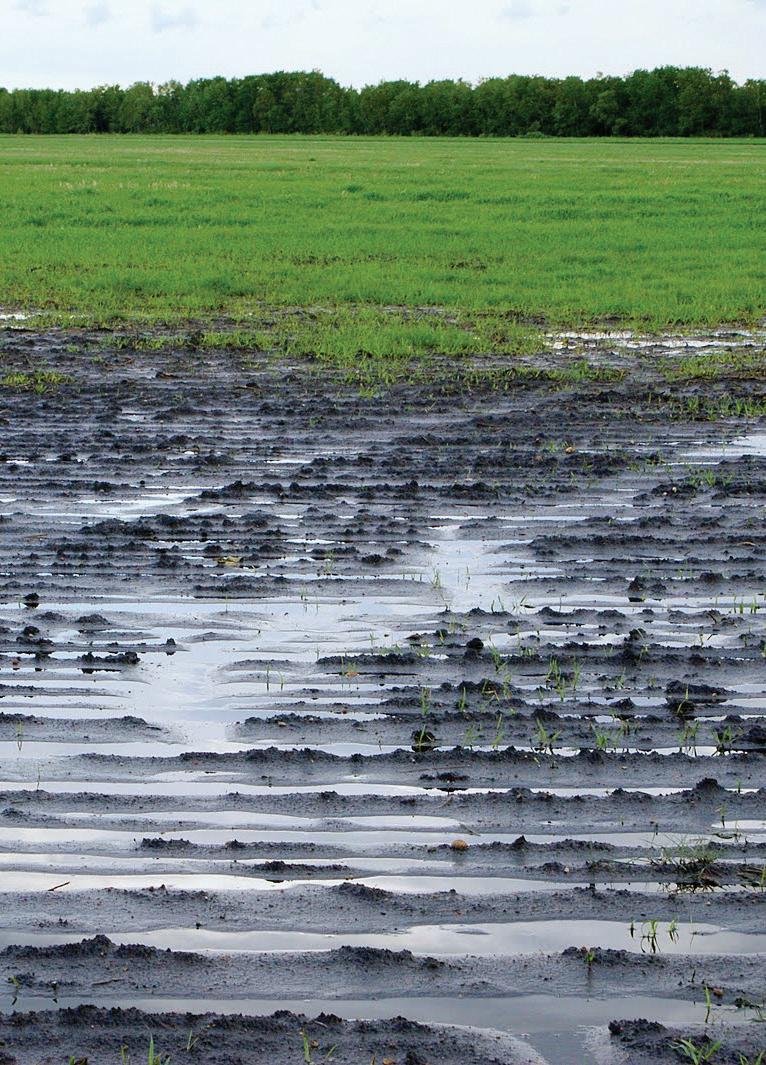
Flooded conditions can cause phosphorus deficiencies.
supply to help make up, at least partially, for a reduced supply of p from the struggling fungi.
So the next time you see water standing in a field for days to weeks, just remember that your good fungi may not be in Kansas anymore.
*Dr. T. Scott Murrell, northcentral Director, International p lant nutrition Institute (I pn I). reprinted from I pn I p lant nutrition Today.
While other manufacturers scramble for long-term solutions, ours are already out there in the fields. And now, the same industry-leading Selective Catalytic Reduction (SCR) technology you’ll find in our high-horsepower tractors is available in our all new Axial-Flow® combines and Patriot® 4430 sprayers. More power. More fuel efficiency. Lower emissions. Roll into your local Case IH dealer or visit caseih.com/efficientpower.
The strongest soybean genetics in the business. More soybean acres than any other brand. Industry-leading agronomic support.
Soybean yield doesn’t come from a single trait. It’s the core genetics that power performance.
Our ongoing investment in research continues to yield the strongest soybean genetics in Canadian fields.
Our comprehensive testing program not only shows us which varieties will outperform, but how to get the best out of them with solid, field-tested agronomics.
And your good management pushes the limits of every acre you farm.
Pioneer is here... Working with you to maximize yields.