Ralph Pearce – (519) 284-0345 ralphpearce@quadro net
Western Sales Manager
Advertising Sales
Tindustry, and that tends to be a bit of an understatement
Seemingly overnight, farming is a
h
guiding principles, including quality and integrity We strive to incorporate these properties with each story and each issue
Kevin Yaworsky kyaworsky@annexweb com
in
Peter Phillips
Western Field Editor
Kelly Dundas Gerry Hertz – (306) 771-2686
Production Manager
Bruce Barker bruce@haywirecreative ca
Julie Turkheim
Production Manager
he large urban centres, as well It is not to say that agriculture is “suddenly sexy, ” but it is making its way into the
variety of topics that pertain to your farm, from new market opportunities
f
Angela Simon
Production Co-ordinator
Colleen Brennan
Production Artist
Circulation Supervisor
Gerry Wiebe
Amy Johns ajohns@annexweb com
Circulation Supervisor
Marie Weiler mweiler@annexweb com
Printed in Canada All rights reserved Editorial material is copyrighted Permission to reprint may be granted on request
Printed in Canada All rights reserved Editorial material is copyrighted Permission to reprint may be granted on request
Subscription rates: Canada/USA Foreign WESTERN EDITIONS
d prices, the pressing energy situation, the environment: all have provided fodder for those minding the media under the big-city lights.
Such a development is not neces-
Subscription rates: Canada/USA Foreign
Top Crop Manager – seven issues:
Western editions
January, February, March, April, July, November and December
1
d news is that agriculture is becoming increasingly important to Canadians; t h
m
Top Crop Manager – seven issues: February, March, April (2), July, November and December
1
a b o u t farming, its practices and its impact on their daily lives
1 issue
3
EASTERN EDITIONS
1
3
Eastern editions
T
Top Crop Manager – five issues: January (Winter) February (Early Spring) March (Season Ready) August (Summer) November (Fall)
ment As we move forward in this time of “change and exchange,” the demands to keep pace become more challenging. Technology is evolving f a s t t h a n e v e r, a n d d e m a n d s f r o m consumers is likely to push opportunities for growers and the farm sector as a whole, towards new and exciting horizons It’s harried and hectic, but it is the challenge we welcome, and have come to expect, every day We also invite you to become an active participant in developing stories that reflect that frenetic pace; if you have s u g g e s t i o n s o n t o p i c s y o u w a n t covered, by all means, drop me a line
Top Crop Manager – seven issues: January, February, March, April, August, October and November
1 issue $9 00 $18 00
1
1yr $30 00 $60 00
1yr
3 yrs
3 yrs
C a n a d a , p a r t i
The door is always open, the information exchange ongoing
At Top Crop Manager, that much is never going to change ■
SPECIALTY EDITION February (Potatoes in Canada)
Specialty edition February (Potatoes in Canada)
1
1
u l a r l y f o r t h e v a s t majority of urbanites who are one or t w o g e n e r a t i o n s re m o v e d f ro m t h e farm The large city dailies, talk radio p r o g r a m s a n d t e l e v i s i o n n e w s s e g m e n t s a r e d o i n g a b e t t e r j o b o f presenting some semblance of life in the country. Unfortunately, there are still those instances where they do a s o l i d j o b o f re p o r t i n g , b u t t h ro w i n something a little too sensationalistic to cloud the effort.
M a y b e t h a t i s t h e d i f f e r e n c e
will be subject to the availability of back issues
Associated Publications:
Associated Publications:
•
• Canadian Rental Service
•
• Drainage Contractor
•
• Glass Canada
•
• Ground Water Canada
• Manure Manager
Publications
Annex
Printed in Canada
March 2006, Vol 32, No 10 ISSN 1717-452X
r e p o r t i n g : u n d e r s t a n d i n g t h e d i ff e r e n c e b e t w e e n p r o v i d i n g i n f o rmation and having to sell a story The media do the latter but farm writing, p a r t i c u l a r l y f o r r e a d e r s w
g row er s , a nd in du
r y s t ake hol de rs must offer balance and accuracy
B a l a n c e a n d a c c u r a c y a r e o f particular importance for us at To p Crop Manager They are two parts of a number of key components that we
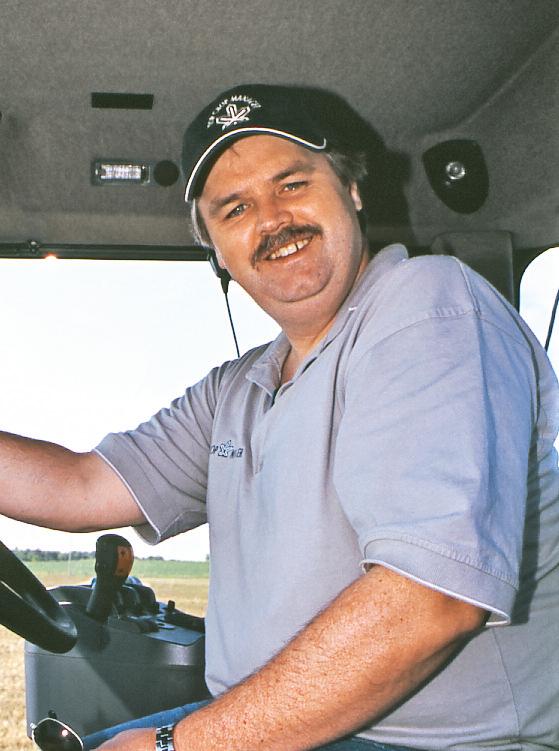
Ralph Pearce Editor
MARKETS
The possibilities of barley
Vast potential, significant challenges
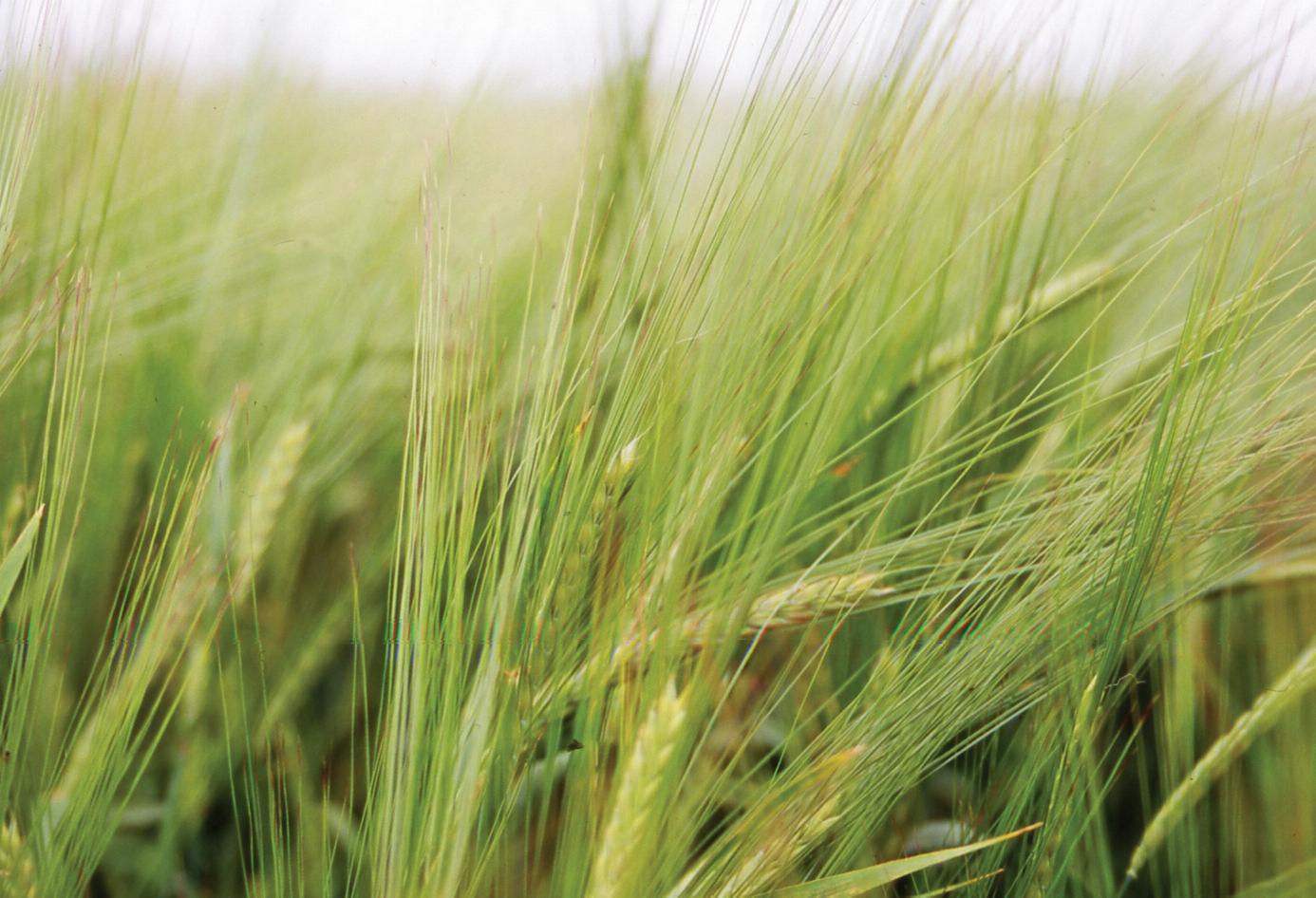
Ba r l e y, o f t e n t h e l a s t c ro p t o b e penciled into the farm plan, is gaining more interest from the food industry Although interest in barley from food processors and manufacturers is relatively small, the potential is huge “I think barley has a lot of potential, specifically because of its nutritional value It
o f f e r s a l o t o f o p p o r t u n i t y f r o m t h a t
p e r s p e c t i v e , ” s a y s D r N a n c y A m e s , a research scientist with Agriculture and A g r i - F o o d C a n a d a ’ s C e r e a l R e s e a r c h Centre in Winnipeg.
Since 1998, Ames has been researching the possibilities of incorporating barley into food products that would appeal to
t h e N o r t h A m e r i c a n c o n s u m e r. S h e
b e l i e v e s t h a t t h e f o o d i n d u s t r y a n d consumers should capitalize on barley’s nutritional qualities
“ I t h a s h i g h l e v e l s o f b e t a - g l u c a n , which is a soluble fibre, as well as high total dietary fibre It is shown to reduce cholesterol and therefore the risk of heart d i s e a s e a s w e l l a s i m p a c t g l y c e m i c response In addition, it has vitamin E in the germ component and contains antioxidants,” details Ames
T h e h i g h l e v e l s o f b e t a - g l u c a n a r e getting barley the most attention because beta-glucan is not found at such levels in any other cereal Dr Brian Rossnagel, a p r o f e s s o r a t t h e U n i v e r s i t y o f S a s k -
a t c h e w a n a n d a b r e e d e r w i t h t h e university’s Crop Development Centre, has been involved in breeding efforts to i n c r e a s e t h e l e v e l s o f b e t a - g l u c a n i n barley. “We started in the early 1980s with a p r o g r a m p a r t i c u l a r l y a i m e d a t enhancing the beta-glucan content and we have released four varieties to date,” says Rossnagel
These varieties, among others, have the p o t e n t i a l t o p r o d u c e h e a l t h y f o o d
p r o d u c t s A m e s c i t e s t h e d i v e r s i t y o f
b a r l e y v a r i e t i e s a s a n a s s e t t o f o o d
p r o d u c t c r e a t i o n “ A s a n i n g r e d i e n t , barley offers a lot of opportunity because there are so many different varieties and t h e y a r e s o d i v e r s i f i e d T h e y h a v e different starch properties and they have d i ff e re n t f u n c t i o n a l p ro p e r t i e s t h a t g o a l o n g w i t h t h e s t a r c h a n d f i b r e c o mposition,” continues Ames.
In her research, Ames has used barley
by Claire Cowan
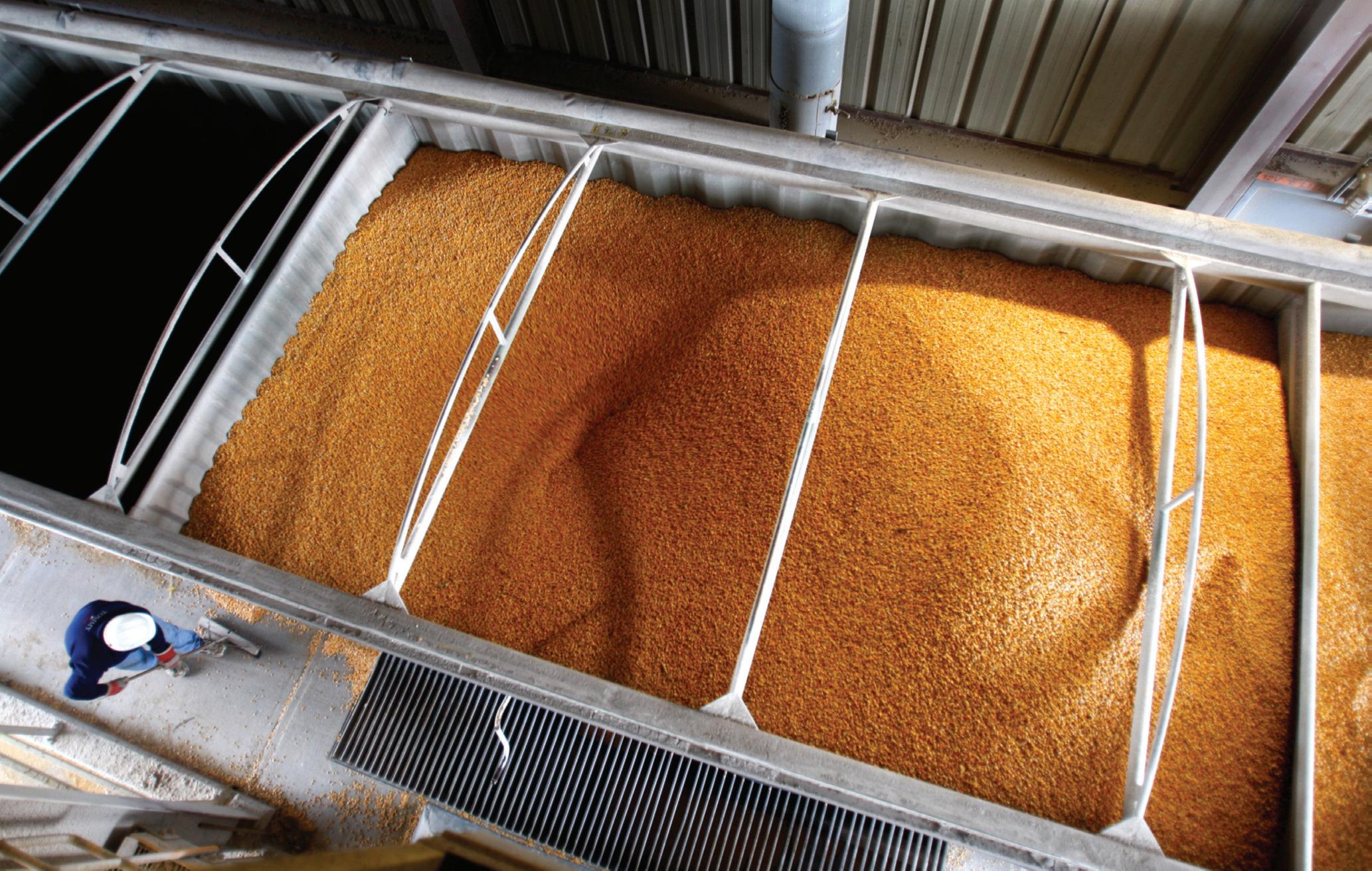
With corn and soybean prices remaining relatively high, there are concerns that small grains like barley may grow higher in demand with the approach of 2009.
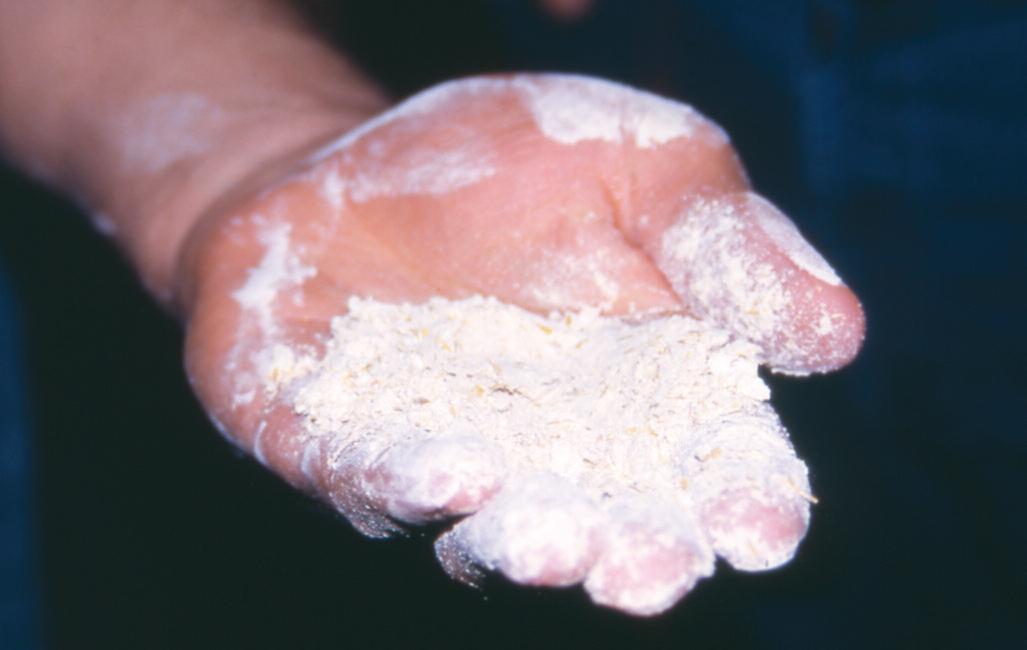
as the main ingredient in the creation of a flour tortilla, a tortilla chip and a crunchy s n a c k p ro d u c t “ I t ’ s a s h o w c a s e t o t h e potential of barley and how many ways it can be used ” Taste tests conducted on these products have been very positive
A m e s s e e s p o t e n t i a l b e n e f i t s f o r p r o d u c e r s a s w e l l a s c o n s u m e r s “ I b e l i e v e t h a t a n y t i m
farmers,” she explains
Finding value for producers is the goal o f R o s s
D
C
t h e development of barley varieties specific for use in food products, Rossnagel says that “if it is a big deal for some producers w h
d create some jobs from it, then we have been successful ”
Quentin Martin has realized the value o f b a r l e y, a
p
Wintermar Farms operation near Elmira, O n t a r i o , M
s m i n i
a l b a r l e y processing, focusing instead on cleaning, flaking and roasting for the baking and b re w i n g i n d u s t r y Ye t h e i s o p t i m i s t i c about the potential of barley as an ingredient in more food products
Martin also finds potential in barley for producers and has been trying to build a
concedes that “barley and oats have been considered the poor brothers and sisters of corn, soybeans and wheat,” he insists that with proper management, barley can provide equal economic returns as the big three
“Frankly, most growers have not been aggressive enough in their management o f o a t s a n d b a r l e y A n d f r o m o u r experience, growers who have tried oats and barley, and followed a more serious recipe have stayed with the crops by and large,” explains Martin.
Challenges facing barley food products
D e s p i t e t h e p o t e n t i a l , t h e re a re m a n y challenges barley must overcome before it is recognized as a common ingredient i n f o o d p r o d u c t s C u r r e n t l y, A m e s ’ s barley food product innovations are still available for uptake by large-scale food manufacturers She chalks up this lack of commercialization to the fact that barley has never been important in the North American diet
A l t h o u g h b a r l e y p l a y s a p ro m i n e n t role in the diets of people in many other cultures, specifically Tibet, most North A m e r i c a n s o n l y k n o w b a r l e y a s a n i n g r e d i e n t i n t h e i r b e e r a n d i n t h e i r soup Unlike its sister, oats, consumers are not aware of barley as an ingredient in food let alone its health properties.
MARKETS
ground corn, but the road to acceptance in North America is slow, despite the many health benefits
Ames sees this lack of awareness as a roadblock to barley’s potential. “If we could just get it into the diet, maybe food p r o d u c e r s w
continues Ames.
Traditional pot or pearled barley found on grocery store shelves can be added easily to the average North American diet. Martin explains that “the neat thing about barley is that you can substitute it for rice Think about the potential of that N o t o n l y a r e y o u s u b s
glycemic index and better fibre quality, you are substituting something that is produced locally ”
Overcoming the challenges
C u r r e n t l y, A m e s a n d h e r c
o
U n i t e d S t a t e s B o t h A
that a health claim will build awareness of barley’s unique qualities and create a demand among consumers for barley food products
“It really advertises it in a sense, ” says Ames of the health c l a i m . “ I t m a r k e t s t h e p r o d u c t a n d p
aware because of the health issues. Then they start to become i n t e re s t e d
have heard about it from the health claim,” she continues.
Rossnagel believes the health claim will provide the most benefit for small-scale processors. “The health claim is really important for small Canadian, locally owned operations so t h e y c a n o p e r a t e w i t h i n t h e r u l e
products,” details Rossnagel
Ames also mentions small-scale processors as an integral player in the expansion of the barley food market Although large companies are not yet prepared to take any big steps, she has found small-scale processors willing to take on some r i
says Ames
potential in the field. ■
BUSINESS MANAGEMENT
You too need an advisor
by Larry Smith*
Fear not the services of a good farm advisor: they are part of a positive evolutionary process, not just a single changing event!
What happens when a group of q u a l i f i e d , d e d i c a t e d p r o f e s -
s i o n a l s a l l w o r k d i l i g e n t l y
t o g e t h e r t o h e l p f a r m e r s c a p i t a l i z e o n
p o s i t i v e o p p o r t u n i t i e s o r n a v i g a t e
a r o u n d o b s t a c l e s t o t h e i r s u c c e s s ?
Everyone benefits!
O n e p a r t i c u l a r a s p e c t i s s e e k i n g assistance in transitioning the methods
o f m a k i n g s u s t a i n a b l e a n d p r o f i t a b l e
f a r m d e c i s i o n s t o a p ro p e r l y d e s i g n e d
f o r m a l s t r a t e g i c m a n a g e m e n t p l a n .
T h e k e y q u e s t i o n s t h a t n e e d t o b e
a n s w e r e d a r e : w h y d o n ’ t v e r y m a n y farmers have documented plans, what w o u l d i n s p i r e t h e m t o d o s o ; w h a t
u n i q u e o r n e w t r a i n i n g i t
have perceived value and who should deliver it to them?
The days of farmers keeping all their i d e a s a n d
letting the rest take care of itself are over This is precisely the consultation focus o
Canadian Association of Farm Advisors,
dedicated to assisting farm businesses We
credible skills and relevant knowledge as farm advisors and we are all dedicated
unique and confidential needs of every
hiring a farm advisor.
There is proven pay back in creating and using an active business plan: as an
profits Some farmers tend to think that
they either do not have the time; see the relevance due to all those complicated b u
documentation because it is too limiting; h a v e
actually even know where to start On-farm advisors have found that by d
and expert ag-training, farm operators
c
from Agriculture
agronomic partners, like ACC Farmers F
it
impossible to consider the
management are important, but that is only part of the story
Strategic marketing design, promotional partnering, time and p
human resource behavioral science and alternate investment strategies must come into play in a proper business plan Some
Farmers suggest “ we don’t necessarily need rescue programs for ineffectual farms, what we really need are the proper tools f o r v i a b l e f a r m e r s t o b e m
sustainable, as well as improving control opportunities for diversification up the end-use value chain ”
A good business plan provides the opportunity for different i a t i n g – v a l u e b r a n d i n g ! W h e n y o u a b d i c a t e y o u r b u s i n e s s re s p o n s i b i l i t y t o e ff e c t i v e l y m a r k e t a p ro d u c t o r
s e r v i c e t h r o u g h s t r a t e g i c p l a n n i n g , t o k n o w w h o y o u r customer is, what the big picture is, or know what the conting e n c i e s a re a n d c o n c e n t r a t e o n l y o n p ro d u c t i o n , y o u g i v e
u p y o u r o p p o r t u n i t y f o r r e a c h i n g t h e b e s t p r i c e a n d perceived value
D o c o m m o d i t y p r i c e / c o s t l e v e l s , c o m m o d i t y m a r k e t i n g s t r a t e g i e s , o r c o m m o d i t y m a n a g e m e n t s u p p o r t p ro g r a m s d r i v e y o u r l o n g - t e r m p ro f i t a b i l i t y ? N o t a t a l l ! I n s t e a d , t h e impact of uncontrollable or unexpected events can only be m i t i g a t e d t h r o u g h s p e c i a l i z e d p l a n n i n g c o u n s e l : f i n d i n g , describing, refining This can achieve a competitive value edge in efficiency, quality, volume or a unique organizational offering ■
*Larry Smith is a business adviser with SMX Business Management Consultants based in Mitchell, Ontario. He has 30 years of career experience with the seed trade a c ro s s C a n a d a a n d p ro v i d e s a u n i q u e p e r s p e c t i v e o n farm business operation and planning.
Breaking ground.
new ound.
Pioneer Hi-Bred is breaking new ground in every field of the seed business. Our customers have challenged us to dig deep for results that will meet the next decade’s toughest market and cropping challenges. And our researchers are delivering.
Growers across Canada are starting to see our dramatic improvements in crop yields, quality and disease resistance... and there are even greater breakthroughs to come.
Pioneer Hi-Bred.
We’re breaking new ground where it matters most:
In your fields.
How are fertilizer prices determined?
Global market leaves Canadian farmers bidding for product.
GDean Andersen with Westco Fertilizers in Calgary, Alta , describes the fertilizer market that Canadian manufacturers, wholesalers, retailers and farmers compete in Even though the prairie fertilizer industry is land-locked, global s u p p l y a n d d e m a n d a f
commodity in every sense of the word,” explains Andersen
W h o l e s a l e C
market fundamental of the Best Alternative To a Negotiated Agreement (BATNA). Essentially, if there is more than one fertilizer supplier in the market, a buyer looks at his options for every deal. If one seller is asking $1000 per tonne, and the B AT N A i s $ 9 2 5 p
e v e n t u a l
p r o d u c t i s i n l i m i t e d d e m a n d , t h e s e l l e r w i l l m o v e h i s product to the highest bidder.
“You always have to know what plan B is BATNA gives y o u t h e f r a m e w o r k t o e s t a b l i s h m a r k e t p r i c e s , ” explains Andersen
Nitrogen capacity moving overseasOverall, the urea trade accounts for a very large percentage of world nitrogen use; in fact it is four times larger than the grain trade Urea is the m o s t w i d e l y u s e d f e r t i l i z e r p ro d u c t i n t h e w o r l d , a n d t h e Middle East and the Former Soviet Union (FSU) countries are t h e l a r g e s t e x p o r t e r s H o w e v e r, C h i n a a n d I n d i a a r e t h e
l a r g e s t p r o d u c e r s – t h e y j u s t c o n s u m e m u c h o f w h a t they produce
At one time, North America was more or less self sufficient in nitrogen production; however that is no longer the case In t h e U S , f ro m 1 9 9 9 t o 2 0 0 5 , 2 2 a n h y d ro u s a m m o n i a p l a n t s were shut down, partially due to high natural gas costs and p a r t i a l l y d u e t o i n e ff i c i e n t p l a n t s t h a t w e re u n c o m p e t i t i v e w i t h o v e r s e a s p r o d u c t i o n . A s a r e s u l t , u r e a a n d U A N fertilizer production declined to the point where today, the U S i s t h e l a rg e s t i m p o r t e r o f u re a i n t h e w o r l d , a v e r a
around six million tonnes annually.
Natural gas comprises 80 to 85 percent of the cash costs to produce anhydrous ammonia Anhydrous ammonia is also the building block for urea and UAN Since January 2003, the correlation of AECO – the historical name of a virtual trading hub on the NGX system, located in Alberta, and now known a s t h e N o v a I n v
Tr a n s C a n a d a P i p e l i
Canadian whole price of urea is 0 26, meaning seven percent of the change in the price of urea can be explained by natural gas, with the remaining due to outside forces Now known as the Nova Inventory Transfer (NIT) system operated by Trans Canada Pipelines – natural gas price to the western Canadian wholesale price of urea is 0 26, meaning that seven percent of the change in the price of urea can be explained by natural gas, with the remaining due to outside forces.
“ C u r r e n t l y, t h
by Bruce Barker
explains Andersen
Indeed, North American producers use some of the most expensive natural gas in the world In 2006, using US$ per mmBTU pricing, the cost of natural gas in Canada averaged $ 5 7 5 , U
Africa and the Middle East at $0 75, Russia at $1 25, Ukraine
a t $ 3 6 0 , a n d w e s t e r n E u r o p e a t $ 7 6 0 U S p r o d u c e r s a r e p a y i n g a l m o s t 1 0
M i d d l e E a s t p r o d u c e r s N o w o n d e r t h a
the North American capacity has moved overseas
plants to shut down, forcing US wholesalers to place orders for Middle East imports for March delivery. But a January natural gas price free-fall allowed North American manufacturers to fire up their plants, causing a urea glut and corresponding decline in prices Because the Middle East urea was already on its way, many importers lost money and ended the spring w
Canadian market, to the benefit of western farmers
Globally, Andersen says urea demand is expected to grow nine to 10 mmt by 2010 To keep pace with this increase in demand, new production plants need to be built Sixty-two p
East, 25 percent from North Africa, and 13 percent from other areas with low natural gas prices or government incentives
In Canada, fertilizer is priced using product landed at New Orleans, Louisiana (NOLA) NOLA is the main entry point
f
Canada directly by rail or via barge to St. Louis and then rail.
BUSINESS MANAGEMENT
However, since it does not make sense to import urea back
i n t o C a
pricing tends to average below that of import products.
Andersen explains that western Canadian urea is priced by obtaining NOLA quotes and then adding up the costs to get the product to Canada That includes shrink, broker profit, r
warehouses, freight to retail sheds and margin
“ N O L A
says Andersen
u
I n w e s t e r n C a n a d a , A n d e r s e n s a y s t h a t p r a i r i e p r i
Surprising to many, nitrogen pricing is often more expensive
i n A l b e r t a , c h e a p e r i n S
Manitoba. The reason, explains Andersen, is that Manitoba dealers are closer to NOLA, which means their plan B is also more favourable.
Phosphate governed by import economics as well
T h e m a j o r i t y o f t h e w o r l d ’ s p h o s - p h a t e r o c k i s l o c a t e d
o u t s i d e N o r t h A m e r i c a C u r r e n t l y, t h e U S i s t h
l
r g e s t phosphate producer and exporter in the world with China and Brazil the largest importers However, declining ore and the threat of a new massive production plant in Saudi Arabia are killing North American expansion plans
I n f a c t , m o s t o f t h e w o r l d ’ s p h o s - p h a t e ro c k i s l o
s u p p l y M o ro c c o i s c u r re n t l y p a r t n e r i n g w i t h S a u d i A r a b i a
t o d e v e l o p t h e s e re s e r v e s C h i n a
6 0 0 , 0 0 0 i s p ro d u c e d i n A l b e r t a . T h a t l e a v e s a b o u t o n e - t h i rd
o f t h e p ro d u c t t o b e i m p o r t e d , w i t h 7 0 p e rc e n t c o m i n g v i a
r a i l f ro m p ro d u c t i o n f a c i l i t i e s i n N o r t h C a ro l i n a a n d F l o r i d a ,
2 5 p e r c e n t v i a t r u c k f r o m I d a h o m i n e s , a n d f i v e p e r c e n t
t h ro u g h M i n n e a p o l i s .
P r i c i n g p h o s p h a t e u s e s t h e s a m e B AT N A p r i n c i p l e a s
n i t ro g e n , a n d w o r l d w i d e s u p p l y a n d d e m a n d d e t e r m i n e t h e
p r i c e A f t e r g o i n g t h ro u g h t h e B AT N A p r i c i n g m e c h a n i s m s ,
b a s e d o n F l o r i d a p r i c i n g , A l b e r t a p h o s p h a t e p r o d u c t i o n
p r i c i n g e i t h e r r i s e s u p t o i m p o r t p r i c i n g , o r d e c l i n e s t o
i m p o r t p r i c e s t o re m a i n c o m p e t i t i v e
“ I f t h e F l o r i d a m a n u f a c t u re r s d o n ’ t l i k e t h e p r i c e s t h e y a re
g e t t i n g i n N o r t h A m e r i c a , t h e n t h e y w i l l e x p o r t t h e m f o r a
b e t t e r p r i c e , i f t h e y c a n , ” e x p l a i n s A n d e r s e n “ T h e y d o n ’ t
h a v e t o s e l l t o u s ”
Saskatchewan potash controls the market
C a n a d a , R u s s i a a n d B e l a ru s a re t h e l a rg e s t p o t a s h p ro d u c i n g
re g i o n s , w i t h A s i a a n d N o r t h A m e r i c a c o n s u m i n g t h e m o s t
Wo r l d p o t a s h p ro d u c t i o n c a p a c i t y i s 5 8 m i l l i o n t o n n e s , w i t h
C a n a d a p ro d u c i n g 2 1 m m t , R u s s i a 9 . 7 9 m m t , a n d B e l a ru s a t
8 . 3 m m t .
P o t a s h i s p r i c e d F O B S a s k a t c h e w a n m i n e s . A s a re s u l t , i n
N o r t h A m e r i c a , e v e r y re t a i l w i l l h a v e a d i ff e re n t p r i c e b a s e d
o n t h e i r f re i g h t r a t e . C u r re n t l y, t h e w o r l d ’ s u n d e r- u t i l i z e d
p o t a s h c a p a c i t y l i e s i n S a s k a t c h e w a n . T h e g l o b a l s u p p l y a n d
d e m a n d f o r p o t a s h i s s o t i g h t , t h a t w h e n p l a n t o r s h i p p i n g
f a i l u r e s o c c u r e l s e w h e r e , p r i c e s g o u p a s b u y e r s
c o m e k n o c k i n g
Government policies skew market prices
F o r v a r i o u s re a s o n s , g o v e r n m e n t s a ro u n d t h e w o r l d t a k e
d i ff e re n t a p p ro a c h e s t o f o o d p ro d u c t i o n a n d s e c u r i t y I n d i a n
f a r m e r s p a y a r o u n d $ 1 2 0 p e r t o n n e f o r u r e a , b u t t h e
g o v e r n m e n t b u y s i t o n t h e w o r l d m a r k e t f o r $ 3 5 0 t o $ 4 0 0 p e r
t o n n e a n d s u b s i d i z e s t h e d i ff e re n c e C h i n a i m p l e m e n t s a
Va l u e A d d e d Ta x o f 1 5 t o 3 0 p e rc e n t o n f e r t i l i z e r e x p o r t s i n a n e ff o r t t o k e e p t h e p ro d u c t a t h o m e a n d t h e p r i c e s l o w e r
Va r i o u s o t h e r g o v e r n m e n t s a l s o p u r s u e p o l i c i e s t h a t a ff e c t m a r k e t p r i c e s
O f c o u r s e , t h e re n e w a b l e f u e l s i n i t i a t i v e , e s p e c i a l l y i n t h e
U S , h a s h a d a h u g e i m p a c t o n g r a i n p r i c e s a n d t h e c o r re -
s p o n d i n g d e m a n d f o r i n c re a s e d f e r t i l i z e r p ro d u c t .
C a n a d i a n d o l l a r e x c h a n g e r a t e s h a v e h a d a b e n e f i c i a l
e f f e c t o n f e r t i l i z e r p r i c i n g . S i n c e t h e s p r i n g o f 2 0 0 7 , t h e
C a n a d i a n d o l l a r r o s e 1 6 . 6 c e n t s t o t h e e n d o f N o v e m b e r
2 0 0 7 T h e e f f e c t w a s s i g n i f i c a n t F o r e x a m p l e , i n t h e U S
p h o s p h a t e p r i c e s e s c a l a t e d $ 5 5 U S / t o n ( 2 0 0 0 l b s ) , w h i l e
C a n a d i a n p r i c e s d e c l i n e d $ 4 5 C d n / t o n n e
“ I f t h e d o l l a r w o u l d h a v e re m a i n e d f l a t f ro m M a rc h 2 0 0 7 ,
o u r u re a p r i c e s w o u l d h a v e b e e n $ 7 6 h i g h e r f o r u re a a n d
$ 1 0 8 p e r t o n n e h i g h e r f o r p h o s p h a t e , ” s a y s A n d e r s e n “ Yo u w o u l d n ’ t w a n t t o c a l c u l a t e t h e p r i c e s i f o u r d o l l a r w a s
6 5 c e n t s ” E x c h a n g e r a t e s a s i d e , o t h e r t h a n s e a s o n a l b u m p s u p a n d
d o w n , A n d e r s e n d o e s n o t s e e f e r t i l i z e r p r i c e s d r o p p i n g
s i g n i f i c a n t l y u n t i l 2 0 1 0 t o 2 0 1 2 “ O v e r a l l g l o b a l d e m a n d f o r
a n t h re e
p e r c e n t e a c h , a n d S o u t h A f r i c a a n d A u s t r a l i a t w o
p e rc e n t e a c h
We s t e r n C a n a d a c o n s u m e s a b o u t 9 0 0 , 0 0 0 t o n n e s o f M o n o
A m m o n i u m P h o s p h a t e ( M A P ) ( 11 - 5 2 - 0 ) o f w h i c h a b o u t
n u t r i e n t s i s a t a r e c o r d h i g h A s l o n g a s t h e g l o b a l
a g r i c u l t u re m a r k e t c o n t i n u e s t o g ro w s t ro n g , e x p e c t d e m a n d
f o r f e r t i l i z e r t o re m a i n f i r m , w i t h s t ro n g p r i c e s , ” h e s a y s
“ E x p e c t f e r t i l i z e r p r i c e s t o d ro p w h e n g l o b a l c o m m o d i t y
p r i c e s d ro p . R i g h t n o w, I t h i n k w e a re a t a n e w l e v e l . ” ■
Introducing the most forward-thinking line of engines ever built for agriculture. After 30,000 hours of real-world tests, New Holland is proud to be first to support the use of B100 in all New Holland–manufactured diesel
engines. Now you have the flexibility to confidently run on everything from plain diesel to 100% biodiesel. Whatever the future of fuel pumps at you. Check out newholland.com/na.
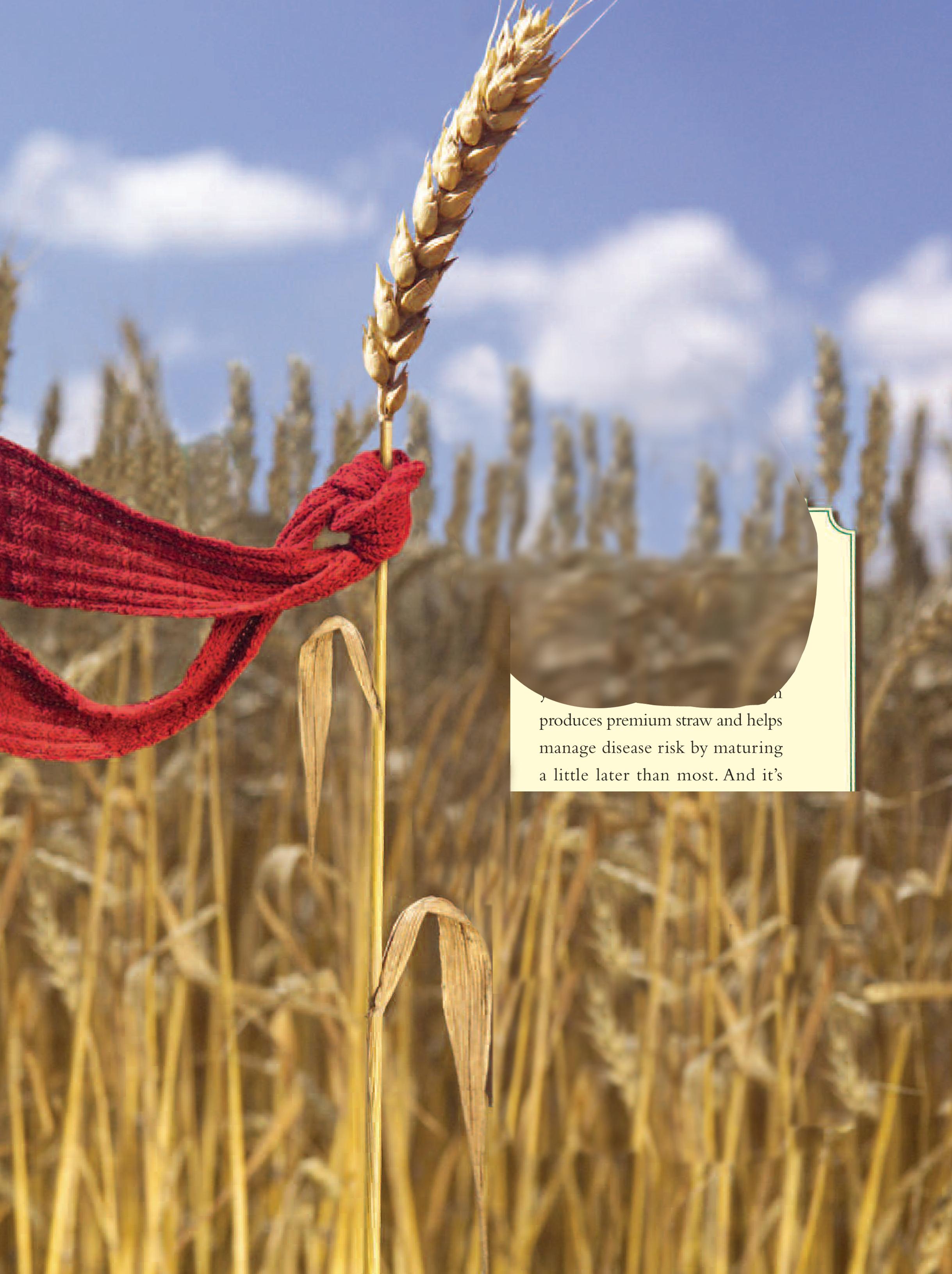
Durum: the new class of Ontario wheat
Processor ’s needs pulled development of market
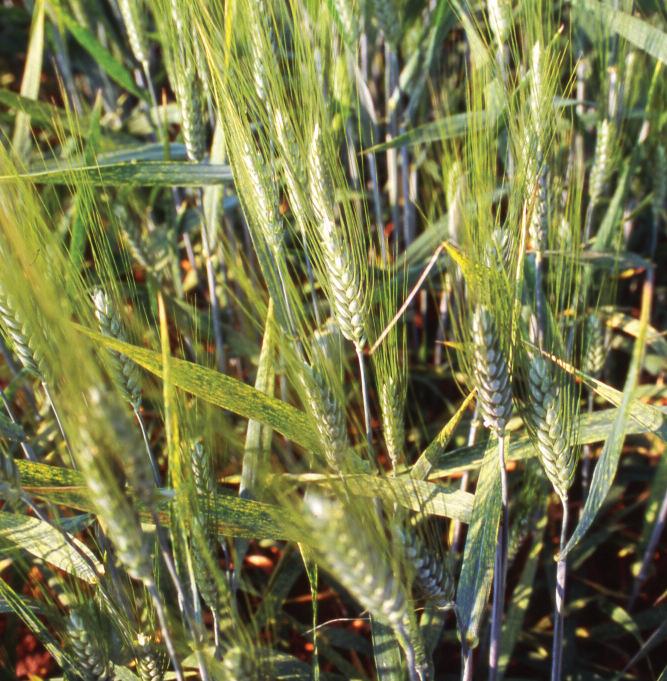
Du ru m w h e a t , o n c e t h o u g h t t o be strictly a western Canadian
c r o p , h a s f o u n d i t s w a y t o
O n t a r i o , a n d i t s a r r i v a l r e p r e s e n t s a win-win scenario for many in the agrifood sector
In the past, most crops are introduced through the hard work and research of public or private sector breeders, then sales and promotions campaigns of seed companies and their representatives.
The process is often referred to as an industry “push,” and depending on the crop, some launches can seem as though the push is uphill.
I n t h e c a s e o f d u r u m ’ s a r r i v a l i n
O n t a r i o , i t h a s b e e n a c a s e o f t h e
d o w n s t r e a m p r o c e s s o r “ p u l l i n g ” t h e
p r o d u c t t h r o u g h t h e v a l u e c h a i n , a s
m u c h a p o s i t i v e f o r C & M S e e d s , t h e
p ro v i d e r s o f H a l l m a r k d u ru m , a s i t i s for growers
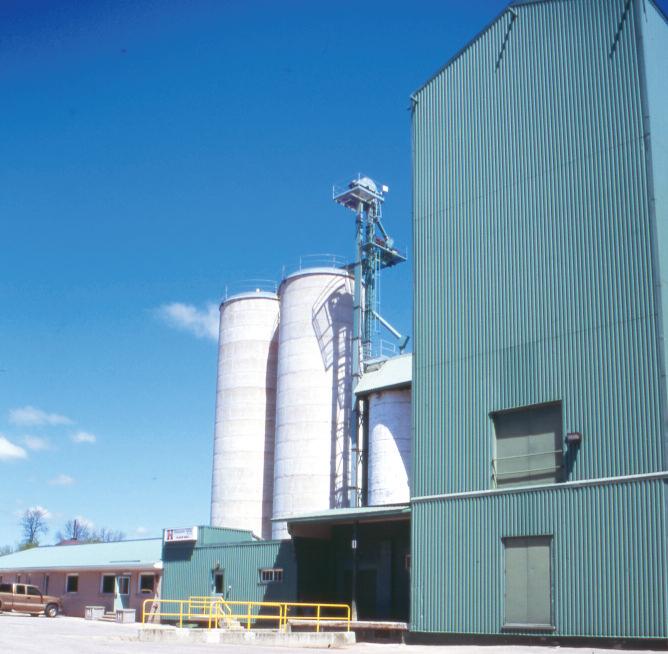
Howson and Howson, based in Blyth, Ont , is t h e m i l l e r t h a t p ro v i d e d t h a t
i n d u s t r y p u l l , i n m u c h t h e s a m e w a y
t h a t f o o d m a n u f a c t u r e r s a p p r o a c h e d
Monsanto to ask for help with the antit r a n s f a t m o v e m e n t i n 2 0 0 7 T h a t p u l l resulted in Vistive soybeans’ vaulting to t h e s c e n e l a t e t h a t y e a r M a n y i n t h e
O n t a r i o w h e a t s e c t o r a re h o p i n g f o r a similar level of of success for everyone involved with Ontario-grown durum.
The long road to success
Although Hallmark from C&M Seeds is the only durum variety currently registered and available commercially in
O n t a r i o , P e t e r J o h n s o n , c e r e a l specialist with the Ontario Ministry of A g r i c u l t u r e , F o o d a n d R u r a l A f f a i r s ( O M A F R A ) s a y s o t h e r c o m p a n i e s a n d
l a n d - g r a n t u n i v e r s i t i e s i n t h e U S a re
c u r r e n t l y r e s e a r c h i n g n e w d u r u m varieties
W h i l e H a l l m a r k i s t h e f i r s t d u r u m
v a r i e t y t o b e r e g i s t e r e d , r e s e a r c h o n durum in Ontario is not new
Researchers have been experimenting w i t h d u r u m i n O n t a r i o s i n c e t h e mid 1980s
B u t d e v e l o p i n g a v a r i e t y s u i t e d t o Ontario growing conditions was a slow,
by Claire Cowan
o f t e n d i s a p p o i n t i n g t a s k . “ I t w a s apparent that to be successful in durum was going to be a much bigger challenge t h a n i n o t h e r c a t e g o r i e s , ” s a y s J o h n McLaughlin, coowner of C&M Seeds
The development of a durum wheat variety was challenging because there is not a wide variety of durum genetics in t h e w o r l d “ B e i n g v e
throughout the world There wasn’t a w i d e r a n g e
categories,” states McLaughlin
The agronomic pros and cons
A
. “ We h a v e growers this year from Chatham to New L i s k e a rd a n d f ro m L a k e H u ro n t o t h e Ottawa River,” says Barry Gordon, sales and marketing manager for C&M Seeds
This wide growing area is surprising since durum is traditionally a regional crop grown only in dry areas However, C & M S e
Hallmark flourishes when it has access t o w a t e r a n d d o e s
gravelly, sandy, low moisture soils This is promising news for producers on clay and clay loam soils R e s e a r c h a l s o s h
But when introducing a new variety, let alone a new class of wheat, hurdles m
fusarium tolerance as one of the biggest c
in Ontario
A
C r o p s , H a l l m a r k i s r a t e d a s “ h i g h l y
s u s c e p t i b l e ” t o f u s a r i u m “ P a r t o f t h e
p r
fusarium has not been a big issue
S o f o r s p r i n g w h e a t s , i t ’ s p
d
m in a n t l y w e s t e r n C a n a d a . A n d u n t i l t h e last few years, they didn’t really worry about fusarium,” explains Johnson.
D u r u m g r o w e r s i n O n t a r i o a r e n o t
u n a w a r e o f t h e r i s k o f f u s a r i u m i n
d u r u m w h e a t . S t e v e Tw y n s t r a o f
Tw i l i g h t A c r e F a r m s L t d h a s b e e n growing durum since 2005 Under dry conditions, he has only needed to spray fungicides for fusarium in 2006
“There is an issue with fusarium It is not very resistant at all, in fact, it is quite susceptible I think we have the tools out there to manage that It’s just a matter of management, like any other crop ”
J o h n s o n a d d s , h e a t a n d h u m i d i t y i n c re a s e O n t a r i o ’ s g ro w i n g c o n d i t i o n c h a l l e n g e s c o m p a r e d t o t h e g r o w i n g conditions in western Canada In order for durum to thrive in Ontario, it must have greater heat tolerance and be able t o s u r v i v e a t o t a l l y d i f f e r e n t d i s e a s e s p e c t r u m t h a n w e s t e r n C a n a d a , explains Johnson.
Fortunately, C&M Seeds’ experience with Hallmark during the past five years indicates the variety fares well in higher heat unit areas However, the company h o p e s t o l e a r n m o r e a f t e r t h e 2 0 0 8 harvest, its initial big launch of acres
Howson & Howson of Blyth, Ont, was t he prima ry driv er in bring ing durum wheat to Ontario
Good management practices are key F i v e y e a r s o f t h e i r o
generally has a high falling number and strong sprouting resistance.
Howson & Howson of Blyth, Ont., was the p r i m a r y i n b r i n g i n g d u r u m w h e a t t o Ontario.
MARKETS
A p l e a s a n t s u r p r i s e w i t h t h e H a l l m a r k d u r u m v a r i e t y i s i t s a d a p t a b i l i t y a n d productivity to various growing conditions throughout Ontario.
there are some specialized management practices required. For example, a timely harvest is critical for durum in order to m a i n t a i n a g l o s s y c o l o u r, w h i c h h a s been identified as an important trait for the end user
S e e d i n g r a t e a l s o d i ff e r s f ro m o t h e r spring wheat varieties Durum does not tiller as aggressively as traditional spring wheat and it has a slightly larger seed size Therefore, growers should aim for 1 6 to 1 8 million seeds per acre
Twynstra cites seeding rate as one of the challenges to growing durum “The seeds are big Two years ago, it was almost like planting rice The big seeds didn’t flow through the air seeder very well and so we were not excited when we got our populations, we thought we were on the weak s i d e . B u t a t t h e e n d o f t h e y e a r, i t s t i l l yielded well,” says Twynstra.
H o w e v e r, Tw y n s t r a d o e s f i n d m a n y benefits to growing durum. “It provides a n o t h e r b re a k u p i n t h e c ro p m i x a n d d i v e r s i f i c a t i o n b e c a u s e i t i s a t o t a l l y different marketplace,” he adds It also allows him the ability to spread out the workload on the farm during the year a little better
Twynstra thinks Ontario durum will become more significant in the future But he also acknowledges the importance of quality and therefore the importance of segregation and proper management to maintain that quality “I don’t think it is for every grower I think for those that are looking for something different that can add to their bottom line in a meaningful w a y, t h e re i s t re m e n d o u s o p p o r t u n i t y there,” says Twynstra.
From Barry Gordon’s perspective, it is a
higher value crop. “It requires slightly higher management skills to grow a good durum crop in Ontario from Hallmark than it does in a conventional hard red spring crop, ” he continues. He also recogn i z
m e n t practices provided by C&M Seeds is part o f t h e r e a s o n
o w
r s h a v
e t h e decision to grow durum These tried and tested practices help reduce the risk of growing something new
Growers can also be confident in the market if they choose to grow durum The re l a t i o n
n d Howson & Howson that has been forged since the late 1980s is based on the opportunities in the market for semolina flour, which is used to make pasta
“It’s a symbiotic relationship Howson’s has a market for the semolina flour but that isn’t possible without the production and seed research and the quality of the elevator and vice versa. It’s got to be all players with a common goal,” explains Gordon.
Opportunities in the market
Traditionally, durum is transported from western Canada to meet the needs of pasta p r o d u c
produced durum
Decreased transportation costs not only make financial sense, it is also an attractive option because of the increasing focus on t h e e n
H
, s
O n t a r i o d u ru m a s a n e n v i ro n m e n t a l l y friendly crop because of the reduction in f o o d m i l e s c o m p a r e d w i t h a w e s t e r n Canadian durum crop.
Yet, in order for any type of market for Ontario durum to thrive, the semolina c r e a t e d f r o m i t m u s t b e o f e x c e l l e n t quality “We were actually shocked with the quality It was far beyond what we anticipated When we got into things, we anticipated Ontario durum being a durum y
e e n proven that we could put this durum on a s a s t r a i g h t g r i n d a n d m a k e q u a l i t y pasta,” explains Howson Hallmark has p r o v e d i t s e
Amber durum
A bright future for Ontario durum
The future of durum wheat in Ontario looks promising because the markets look
promising. “The whole semolina industry is moving outwards. That creates more opportunity,” says Howson. Traditionally, s e m o l i n a f l o u r i s u s e d o n l y f
. However, Howson & Howson is seeing semolina move beyond the pasta market a n d i n t o t h e b a k e r y i n d u s t r y, u s e d t o create specialty breads and buns
O
foresees durum providing growers with more options because of its adaptability
D u r u m w h e a t p ro v i d e s g ro w e
another option if weather conditions are unfavourable for other major crops like corn, soybeans and winter wheat explains Gordon
Howson agrees, adding that “it allows the Ontario farmer another opportunity;
harvesting standpoint.”
Although Ontario durum has a lot of potential its growth is still dependent on prices. Currently, Hallmark is a 95 yield i n d e x , w h i l e t h e b e s t h a rd re d s p r i n g wheat varieties are a 106 yield index. But the price incentives currently make up for that yield penalty “It’s the price to yield ratio that will drive it,” says Johnson Johnson continues that “if it does well across environments and the price stays u p , w e c o u l d
s i l y s e e 5
,
a c r e s production, probably a lot more than that We could ramp that up to a significant potential ” F
spring wheats
With all of this optimism, C&M Seeds a n d H o w
Currently, Hallmark is being produced in a c l o s e d l o o p . G
c o n t r a c t a n d m a r k e t t h e i r w h e a t t o b e processed into semolina flour by Howson & H o w s o n w h i c h i s t h e n m a r k e t e d t o Ontario pasta producers Not only does this closed loop provide transparency for growers; they know exactly where their c r o p i s g o i n g , i t
l s o p r o v i d e s t h e t w o c o m p a n i e s t h e o p p o r t u n i t y t o maintain deliberate growth in order to maintain quality
“As our commercial acres grow, we still w a n t t o m a i n t a i n a l l o f t h o s e s u p e r i o r qualities that we have done from stage one up to where we are now, ” says Howson But both Howson & Howson and C&M Seeds believe they are now in the position to see the market. ■
PEST CONTROL
Phytophthora a concern for several reasons
Dry conditions have kept it low recently.
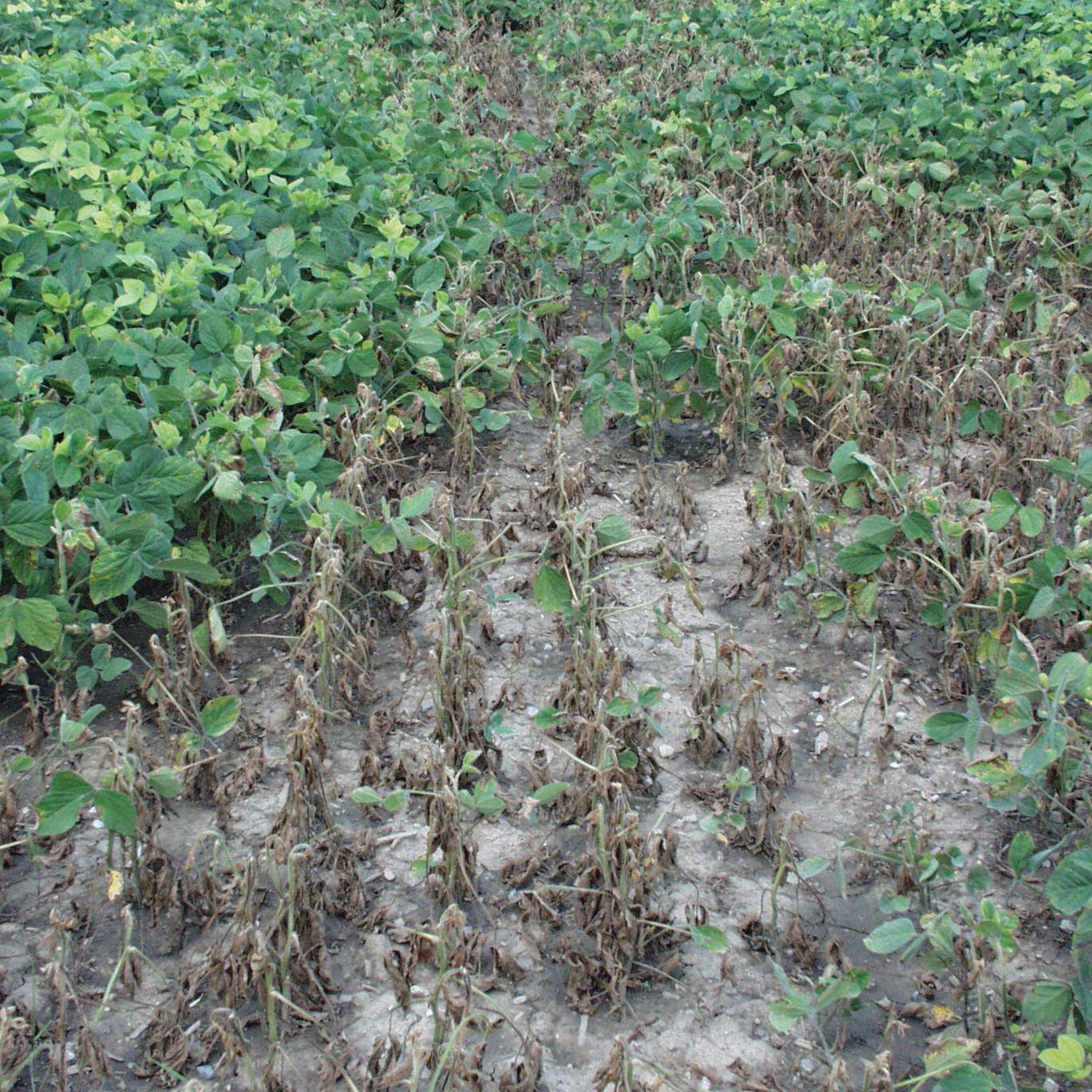
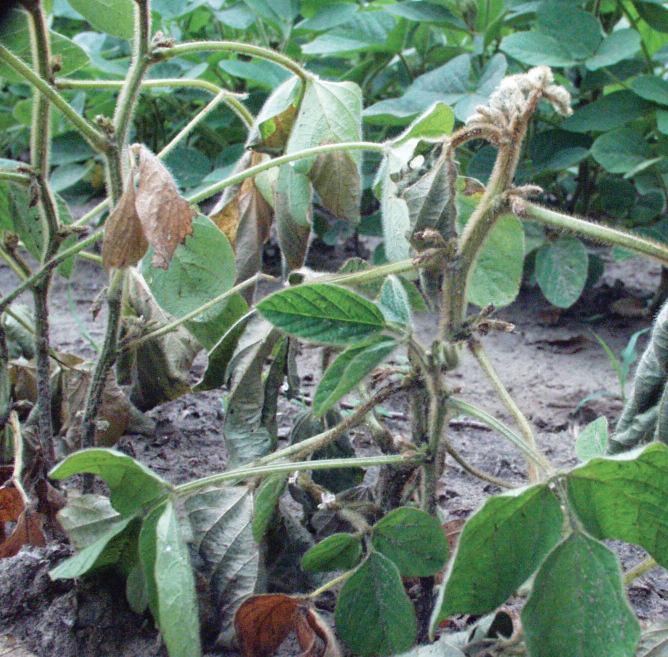
Phytophthora root rot has not been a significant problem in the past few years, thanks in part to the relatively dry conditions in soybean fields in Ontario and western Quebec Soybean cyst nematode and bean leaf beetles have done much to upstage phytophthora, as well as pythium
However, if there is such a thing as a n o r m a l s p r i n g a n d g ro w i n g s e a s o n i n 2008, the two diseases could be seen in higher concentrations, particularly with the findings of a recent research survey of north central Ohio and into Ontario. That survey has found that the most commonly d e p l o y e d r e s i s t a n c e g e n e s h a v e b e e n
c o m p ro m i s e d t o t h e e x t e n t t h a t s o m e genes are still effective while some are not
“We would have expected that based on the preliminary data that we had, but
t h e n t h a t m e a n s t h e p a r t i a l re s i s t a n c e
c o m p o n e n t i s r e a l l y i m p o r t a n t f o r
g ro w e r s t o p a y a t t e n t i o n t o , ” s a y s D r
Anne Dorrance of Ohio State University
“ A l o n g w i t h t h a t , w e e v a l u a t e d s e e d treatments and the trend indicates that w h e n i t r a i n s s h o r t l y a f t e r p l a n t i n g , growers will receive the economic benefit from putting on that seed treatment ”
According to Dorrance, that trend has been seen already by Ontario and Ohio growers who farm on heavier clay soils. A p a r t o f t h a t t r e n d t h a t s h e f i n d s
n o t e w o r t h y i s t h e l a c k o f s p e c i f i c i t y
t h a t s o m e g r o w e r s t e n d t o u s e w h e n discussing seed treatments. “There are all kinds of seed treatments, and just because a grower applies Poncho does not mean he’s controlling his pythium and phytopht h o r a , ” s h e e x p l a i n s S h e c i t e s C r u i serMaxx as an example of a fungicide and insecticide treatment on which growers a re i n c re a s i n g l y re l i a n t “ B u t g ro w e r s need the metalaxyl (metalaxyl-M) portion of it to control their pythium and phytophthora I’m still surprised that growers are mixing the insecticides and fungicides, and calling them all seed treatments ”
Resistance a reality
First and foremost however, concern with phytophthora is that resistance to the Rps 1k and Rps 1c genes, which have been
by Ralph Pearce
the most dominant resistance genes for s e v e r a l y e a r s , i s d e v e l o p i n g , a l t
e s obsolete. “Growers are still going to get c o n t r o l b e c a u s e n
adapted and I think that’s always going to be the case, ” reasons Dorrance. “But the fact of the matter is these genes are not going to give you that 100 percent control like they were doing beforehand S
p against that, so they don’t see the stem ro t p h a s e a n d t h e y d o n ’ t h a v e p l a n t s going down through the season ”
In general terms, phytophthora is not affected by rotation or other agronomic practices; it is more heavily influenced by weather conditions and their impact on t h e s o i l F o r A l b e r t Te n u t a , f i e l d c ro p s pathologist with the Ontario Ministry of Agriculture, Food and Rural Affairs, odds
are favourable that a normal, wet-to-start planting season is going to return. “At some point, we will have a normal spring and with that comes wet spring condit i o n s , ” s a y s Te n u t a . “ G ro w e r s a re a l s o pushing planting dates earlier and with that, you have the potential for more of the soybean crop hitting a wet spell ”
One cautionary note Tenuta adds is for growers to guard against the myth that once the crop is out of the ground and growing, the threat of phytophthora is gone “That’s not quite the case, ” he says “If you have saturated soil conditions, a one or two inch rain in July is enough to start the infection process If those condit i o n s a r e f a v o u r a b l e a t a n y t i m e , t h e plants can be susceptible Phytophthora as well as pythium are unique pathogens i n t h a t t h e y p r o d u c e m o b i l e s p o r e s (zoospores) which swim in the water film between soil particles to locate and infect soybean roots.”
Phytophthora pathogens are overcoming some of the standard resistance genes, meaning a return to a normal spring could see a return of the disease in 2008
PEST CONTROL
f dieback as the result of phytophthora root
r o t p r o v i d e s a c l
pathologists.
Tolerance can help
A l t h o u g h t h e r e a r e m o r e r a c e s
d e v e l o p i n g , Te n u t a r e m i n d s g r o w e r s that there are a lot of varieties with good l e v e l s o f t o l e r a n c e , w h i c h i s a b e n e f i t since it is not race specific, meaning it
p r o t e c t s o r c o m p e n s a t e s f o r i n j u r y against any race of phytophthora “The p r o b l e m t h o u g h , i s t h e r e a r e s o m e
v a r i e t i e s t h a t a r e n ’ t a s g o o d o n t h e
t o l e r a n c e s i d e , a n d i f y o u p l a n t e d a variety in which resistance is broken by a new race or races, significant damage can occur, ” he says
Te n u t a a n d D r Te r r y A n d e r s o n o f
A g r i c u l t u re a n d A g r i - F o o d C a n a d a i n Harrow, Ontario, are working with their n o r t h c e n t r a l U S s o y b e a n p a t h o l o g i s t
c o l l e a g u e s , i n c l u d i n g D o r r a n c e , t o
d e t e r m i n e t h e d i f f e r e n t P. s o j a e r a c e s
a c r o s s t h e n o r t h e r n U S s o y b e a n production areas, as well as Ontario.
“ We ’ r e s e e i n g r a c e s t h a t c a n t a k e
d o w n t h e R p s 1 c a n d R p s 1 k g e n e s , ”
e x p l a i n s Te n u t a . “ F o r t u n a t e l y, t h e
b r e e d e r s h a v e d o n e a g r e a t j o b
i n c o r p o r a t i n g t h e 1 c a n d 1 k re s i s t a n c e genes, but they’ve also kept up tolerance
l e v e l s i n m o s t c a s e s I f i t w a s n ’ t f o r
e n h a n c e d t o l e r a n c e l e v e l s i n t o d a y ’ s varieties, the changes in phytophthora
r a c e s w o u l d h a v e c a u s e d s i g n i f i c a n t l y
m o r e d a m a g e l i k e t h e y d i d 1 5 t o 3 0
y e a r s a g o w h e n t o l e r a n c e s , d e e m e d a
‘ b a c k - u p ’ s t r a t e g y, w e r e l o w e r o r not effective ”
Resistance to the 1c and 1k genes is
s i m i l a r t o w h a t o c c u r re d w i t h t h e l a s t standard for resistance, the Rps 1a gene, which was the first effective broad use
r e s i s t a n c e g e n e u t i l i z e d i
p ro d u c t
N o r t h A m e r i c a . Te n u t a says that gene survived for 20 years or m o r e b u t n o w, 9 5 t o 9 9 p e r c e n t o f phytophthora races in Ontario and the north central US can by-pass that source of resistance
However, there is a sense of optimism that creeps into a story like this; Tenuta t r e a t s t h e d i s c
Toronto as a good news story because
sentiment with respect to phytophthora. “Know ing that it’s here, knowing that t h
effective, growers need to do a little bit better job of choosing the best varieties to get the total resistance package,” she advises “Then use a seed treatment on t
drainage problems, and then they won’t see those losses ” ■
Future of farming dealing with many issues
by Ralph Pearce
Success based on adapting, finding value.
Since the late 1990s, growers and producers have been hearing much the same thing: success in agriculture is
a l l a b o u t c h a n g e a n d a c c e p t i n g n e w
i e s I n a current economy where commodity prices are at an all-time high, many involved in farming might believe there is little reason for concern Short supply and increasing worldwide d e m a n d a r e l i k e l y t
to 2009
Is there a need to change and accept new concepts? There is, i f l o n g - t e r m s u s t a i n a b
number of conferences and workshops that have taken place since early 2006. Some have focussed on farm size and the need to specialize in higher-value crops. Others have studied t h e f o o d v a l u e c h a i n i n C a n a d a a
S
l l others have acknowledged the existence of untapped market potential in previously unexplored places. The key in all of t h e s e s c e n a r i o s i s a n o p
explore the possibilities in order to succeed
Value – what is in a name?
Contrary to the success that high commodity prices can offer short-term, Martin Gooch maintains that now is the best time t
M o r r i s C e n t r e i n G u
Warburton Breads and Tesco Grocers, both from the UK, as two corporations that have succeeded in building value in the minds of the customer Tesco Grocers has become a leader in terms of its ability to tailor goods and services to the specific needs and demands of each consumer. The chain does this through a shopping card which gathers information on the individual’s purchases, including favourite brands, premium versus discount products and lifestyle choices (organic versus c o n v e n t i o n a l ) . Wi t h t h e k i n d o f i n f o r m a t i o n Te s c o o b t a i n s from thos e cards , it is c on ceiv ab le tha t growers could take a d v a n t a g e o f d e m a n d s f o r s p e c
have attempted this same approach, including Costco and Z elle rs “ But th ey do n’t ha ve the a bility to drill dow
a nd mine that information for its full value,” says Gooch The other impediment is the link between value and least cost, another s h o r t c o m i n g o f N o r t h A
creating that link of information back to the grower is the trend Canadian agriculture should recognize and follow
As for Warburton Breads, the UK company retails a variety of different types of bread, all in the $3 00 (C$) range, yet all reportedly, are hard to keep on the shelf That is because the value that a customer derives from the bread is greater than its price It is certainly not a tangible, scientific guideline, but their sales are certainly concrete. The same principle applies to H e i n z
Improved relations with millers and bakers have spelled premiums f o r w e s t e r n C a n a d a w h e a t g r ow e r s , w h o s e p r o d u c t i s u s e d i n Warburton Breads in the UK.
because of the satisfaction they create, either on the basis of f l a v o u r, f
consumer ‘feels’ better for buying it That feeling cannot be discounted; it may even be more tangible than price
The best part of the Warburton success story is that most of the wheat used in baking their specialty breads comes from western Canada where growers receive a premium for their management practices and production excellence
Gooch agrees that value has a place in the hearts and minds of the consumer that goes beyond price, provided the product h a s m e a n i n g t o t h e c
h e consumer, not in the eye of the producer,” he states bluntly. “ To o o f t e n
about growing commodity corn, don’t grow commodity corn; grow corn for a specific market, and also provide customer s e r v i c e b e c
these days ”
F r o m G o o c h ’ s p o i n t o f v i e w, t h e k e y i s t o a l l o w t h e individual the freedom to change, be creative and innovative “There’s far too much focus on looking at lifting an industry up rather than giving the innovators the free reign to innovate a n d l e t t h o s e b e n e f i t s t r i c k l e d o w n , ” h e s a y s ,
regulatory guidelines in Canada are too restrictive Instead, t h e p o w e r c
i nd us t ry b en ef it s “ We
‘ L e t ’ s d e v e l o p a s t ro n g i n d u s t r y a n d t h e n w e c a n d e v e l o p strong businesses’, which just won’t work You can’t hold back the leaders while you wait for the followers to catch-up ”
Recognizing opportunity for what it is, not how it looks Another fact of life in the modern world that producers need to understand is the changing face of Canada. Early in 2008,
BUSINESS MANAGEMENT
the Toronto Star published a statistical analysis of the impact o f i m m i g r a t i o n o n l
elaborate maps provided a stunning glimpse of just how many languages are now ‘at home’ in the GTA. It is little wonder that the United Nations has called Toronto the world’s most ethnically diverse city
Where Italian, Portuguese and Polish have been historically d o m i n a n t
most-frequently spoken languages aside from English in the provincial capital (the other is Italian) Yet it should not be v ie wed as a t hreat to conv ention , but a n incredib le opportunity for food processors and manufacturers to cater to the demands placed on the agri-food industry by such a diverse ethnic base And growers and producers are at the forefront of t h i s w a v e o f o p p o r t u n i t y, p r o v i d e d t h
g n i
i
f
exactly what it is, and not lose sight of it because of reluctance and cultural uncertainty
For Dr. Vincent Amanor-Boadu, the cultural void is one that has gone unnoticed by many primary producers. A former director of research at the George Morris Centre, and now a p r o f e s s o r o f a g r i
A
b
a n d w i l l i n g n e s s t o s e e o p p o r t u n i t i e s w h e n i t p re s e n t s i t s e l f . I n 2006, he led a group of American growers to Ghana On the road from the airport, they saw a GM Hummer among other high priced vehicles The astonished growers asked ‘How can they afford a Hummer?’ “And my response to them was, ‘No, the question you should be asking is, How could I sell them m o r e ? ’ , ” e x p l a i n s A m a n o r - B o a d u “ T h e w h o l e h i s t o r y o f agriculture has been driven by the notion of being a follower
B o b H u n s b e rg e r ( a b o a rd m e m b e r w i t h t h e G e o rg e M o r r i s Centre) put it nicely when he said that agriculture is the only industry where we take highly differentiated inputs and yield very homogenous, undifferentiated outputs ”
Like Gooch, Amanor-Boadu believes an adjustment to the d e f i n i t i o n o f ‘ v a l u e ’ i s i n o r d e r A t t h e 2 0 0 6 O u t l o o k C o n f e r e n c e i n To r o n t o , h e p r a i s e d a p r e s e n t a t i o n b y t h e p r e s i d e n t o f C a m b r i d g e b a s e d A l H a f i z H a l a l M e a t , f o r successfully restructuring their facility to cater to the large Muslim population in the GTA. The market emerged simply by seeing and seizing the opportunity. The same is true of Toronto’s gay community, says Amanor-Boadu. It is a vast and untapped market that is willing to pay premiums for products t h e y v a l u e “ I f r a m e i t f ro m
, ”
explains, noting that approval of a person or their lifestyle should never enter into the sales and purchasing equation of any product
T h e b o t t o m l i n e i
c h o i c e i s n o t f r e e “ W h e n
perceptions influence our willingness to seize opportunities, w e m u s t k n
perceptions,” says Amanor-Boadu
Which is important: size or value?
In 2006, Dr David Sparling made several presentations on the future of farming, particularly with regards to the size of farm operations As the executive director for the Institute of AgriFood Policy Innovation in Guelph, his research concluded that producers have a better chance of deriving sufficient income
Getting to know more about the food value chain, including processing, will help growers discover higher returns through more diverse markets and more lucrative end users.
from farms that are either large enough to generate $250,000 in annual revenue, or are managed well enough to derive higher re v e n u e s f ro m s p e c i a l t y c ro p s A l t h o u
benefits of higher commodity prices present day, his recomm e n d a t i o n s c a l l f o r a s h i f
research and development at the farm and processing levels He acknowledges that there are some very good commodity p r o d u
productivity, managing inputs, costs and marketing “If I can d
challenge is that I not only have to do it better than the people around me, I have to do it better than the people in Brazil, and s u d d e n l y, t
from ours ”
When he examines where agriculture is going, again, the term ‘value’ begins to creep into the conversation. Value is defined differently by different people. “To me, the next big shift for agriculture is going to be trying to A) focus on value and then B) asking, ‘Who do I have to work with to get that value?’” poses Sparling. One of the failings in Canada is that growers are not gifted at networking. Producers can produce $5 0 to $10 million of product yet not attract attention from investors “But maybe they’d capture a lot more attention if there were half a dozen producers together who are large, and say, ‘We’re going into business together and we ’ re going to crack that market’ ”
The issue at that point may be that together, they have the resources and financial clout to build those relationships and get noticed by investors This, notes Sparling, is where organizations like the Ontario Federation of Agri-culture can be of tremendous value, acting as an advocate on behalf of these fledgling ventures “When you look ahead, it’s going to be a d r a m a t i c a l l y d i f f e r e n t w o r l d , ” h e s a y s “ G r o w e r s c a n n o t function totally independent It’s extremely important for us t o a s k , ‘ W h o a re w e g o i n g t o w o r k w i t h a n d w h a t a re w e g o i n g t o t r y t o a c c o m p l i s h t o g e t h e r t h a t w e c a n ’ t accomplish alone?’”■
Ontario CCAs – Qualified to Grow With You
The mandate at Top Crop Manager is quite simple: provide field crop producers with timely and useful information. Our stories are based on ideas and input from researchers and government personnel, as well as independent sources, offering practical advice to improve yields and reduce costs. Producers benefit from a wealth of knowledge made available to them from other sources, including their local Certified Crop Advisers (CCAs), a group of professionals whose goals complement Top Crop Manager, particularly in increasing profitability. We welcome the assistance of Syngenta Crop Protection and NK Brand Syngenta Seeds in underwriting this listing of Ontario CCAs: they are ready and able to assist in your crop management decisions.
It is the objective of Top Crop Manager to provide field crop producers with the most up-to-date crop input advice. Our stories gather ideas and information from researchers as well as government and independent sources, providing practical advice to assist in improving crop yields and saving costs. Producers have a wealth of knowledge available to them from other sources as well, and this is as easily gathered as contacting one of their local Certified Crop Advisers (CCAs), a group whose goals are complementary to Top Crop Manager’s: increasing farm profitability.We welcome the assistance of Syngenta Crop Protection and NK Brand Syngenta Seeds in underwriting this listing of Ontario CCAs: they are ready and able to assist in your crop management decisions.
There are more than 450 Certified Crop Advisers in Ontario. Each CCAhas demonstrated their knowledge about Ontario crop production by passing the required exams. In addition, they have the crop advisory experience, the education, the commitment to continuing education and have signed a comprehensive code of ethics, which places the grower’s interest first. This industry driven program helps ensure that Ontario crop producers are well served by those providing their crop production advice.
Providing advice that fits your farm
Syngenta Crop Protection and NK® Brand Syngenta Seeds are proud supporters of Certified Crop Advisers (CCAs). In today’s world of diverse cropping practices, they can be counted on for valuable agronomic insight.
We salute CCAs for their commitment to the continuous learning required to maintain this certification. This commitment allows CCAs to play a vital role in providing the new technology, research and management advice required for success in today’s agricultural production.
More than450CCAsserve
Jack John Aarts
Darryl Dwayne Acres
Clark William Aitken
Douglas Robert Alderman
Robert C. Alton
Robert Chad Anderson
James Murray Anderson
Frederick Joseph Anthony
Christopher James Armstrong
David Edwin Bach
Scott C. Banks
Jeffrey Donald Bannerman
James Bradley Barclay
Russell Lloyd Barker
Dave A.R. Barkley
Andrew Dale Barrie
Murray M. Bauman
Larry Bauman
Michael Wilfred Bechard
Tammy Michelle Beirnes
John Allen Bell
Harry N. Bennett
Adam Thomas Bent
Steven John Bent
Martin Rock Besner
Thomas Wade Bickell
Shannon Heather Bieman
Susan Marie Bird
Leonard John Blydorp
Horst Gerhard Bohner
Robert T. Booth
Vincent Bernard Bourassa
Roger Bourassa
Paul Bourgeois
William Lawson Bowman
Jamie Lawrence Box
Aaron Jan Breimer
Shawn James Brenneman
Keith Eugene Brimner
Stephen Broad
Donald Alan Broad
Mark Darryl Brock
Bryan Robert Brodie
Edward Andrew Brooks
Ryan Michael T. Brophy
William Wilford Brown
Christine Mary Brown
Jennifer Heather Ela Bryson
Donald Edwin Burgess
Jeffrey Harry Burgsma
Chad Burley
J Alex Burnett
Darryl John Arthur Burnett
Gord John Button
Deborah Lee Campbell
Michael Brian John Campbell
Ian Rennie F. Carley
Steven William Carruthers
Merv Allan Carter
Jason Dean Casselman
Scott Anthony Caughill
Barry Elmer Cavanagh
William Craig Chapple
Tanja Silvia Checkley
Daniel James Clarke
Sean Joseph Cochrane
Scott Anderson Cochrane
James E. Coffey
Matthew Jerome Coffey
Scott Raymond Collins
Brian A. Colville
David William Consitt
Bryan H. Cook
Barry Matthew Cooper
Paul Neil Cornwell
Achille Correggia
William Bruce Court
Brian James Coutts
Kevin Arthur Couture *
John Carl Couwenberg
Dale G. Cowan
Nicholas John Cowan
Michael John Robert (J.R.) Cox *
Rick C. Craggs
Rodney J. Craig
Jason Daniel Crandall
A. Grant Craven
Randy George Phillip Cronmiller
Bruce Crichton Cruickshank
Ralph Gordon Currie
James Laird Currie
Andrew Michael Dales
Benjamin Joel Dalgleish *
Don I. Dalton
Shawn Michael Damen
James Edward D'Aoust
Marshall Whineray Davis
Jacco de Lange
Aart Marinus De Vos
Andy de Vries
Tony J. DeCorte
David Alan Den Boer
Stefan D. Dewaele
Gregory David Dewar
Bruce Archie Dewar
Michael John Dick
Jennifer Kathryn Dick
James A. Dippel
Leslie James Douglas
George Kenneth Drummelsmith *
William Glenn Dunbar
Christopher H. Dundas
Sean Richard Dunnett *
Charles James Dunsmore
Norman E. Eagleson
Michael Gordon Eckert *
David I. Elliott
Danny L. Ellis
Mervyn J. Erb
Gabrielle Mary Ferguson
Ronald Alan Ferguson
Joseph Albert Ferket
Patrick Gerald Feryn
David James Fink
Pamela Anne Fisher
Francis J. Flanagan
Andrew Ray Fletcher *
James Michael Folkard
William Gerard Foran
William Mark Foster
Dan Craig Foster
Derek Mark Wayne Freitag
Leanne Maria Freitag
Reiny Peter Freiter
Dennis P. Frey
Greg Scott Fritz
Susan Gagne
John Alexander Gal
Walter Lyle Gallagher
William B. Gallaher
William Harvey Gardhouse
Cheryl Lynn Garniss *
Adam Michael Garniss
Evert Bernard Geelen
Shawn Ashley Gillis
Anita J. Gilmer
Graham M. Glasgow
Terence Douglas Good
Lori Ann Goodwin-Burm
Barry Ross Gordon
Alan B. Govier
Wayne H. Graham
John Stuart Graham
Alain G. Gratton *
William Herbert Gray
Gerard John Grubb
C. Steven Gurney
Lawrence Edward Hale
Brian E. Hall
Jamie Davis Hall
Andrew Everett Harper
Ron Hathaway
Kevin Anthony Havekes
Wayne Douglas Hawke
Adam Ormey Hayes
James Eric Hazlewood
Robert Joseph Helm
Steven Douglas Henry
Paul H. Hermans
James David Hill
James Hubert Hodgins
Murray Lynn Hodgins
Peter E. Hodgins
Steven Rick Hodgins *
Merle L. Hoegy
Ryan Lloyd Hoegy
Chad S. Homick
William J. Honey
Robert Stanley Hopkins
Ronald Earl Horst
Brian Matthew Hoven
Bruce Robert Howson
Carl Andrew Huff
Steven Richard Hughes *
Perry William Hunter
Russel Jeffrey Hurst
John Lewis Hussack
Larry Hayden Hutchinson
Gordon Stephen Hyndman
Murray William Insley
Robert Bruce Irons
Ken C. Irwin
Tom Isotamm
Ammar Issa *
Joseph John Jackson
Jeffrey Thomas Jacques *
Mark L. Janiec
Janice Marie Ann Janiec
James Robert Jardine
John Ted Jarecsni
CCA In action
CCA in action
Gary S. Jeffery
Dwain A. Jeffrey
Steven W. Johns
Jeremy Peter Johnson *
Dale Alan Jones
Dean William Jones
Dan L. Kaufman
Shashi Kant Kaushik
Dan L. Kerr
Alan R. Kerslake
Ajmal Khan
Martin C Kiefer
Jennifer Lee Kilbourne
Bradley D. King
Donald King
Nicolaas C. Kinkel
Clare L. Kinlin
Stephen James Kinlin
Keith Norman Kirk
Nathan Harold Klages
Jonathan Henry Klapwyk *
Henry John Klassen
David John John Kloppenburg
Douglas Ross Koch
John Henry Konert *
Sebastian Dario Korob
Klaus Thomas Kristiansen
Alan M. Kruszel
Susan Elizabeth Kucera
John Andrew Kyle
Thomas Gerald Landon
Rob Langford
Victor Lapadat Jr.
Paul Kevin Larocque
Trevor Gerald Latta
Kevin Douglas Leeder
Paul Denis Legault
Jack A. Legg
Doug Legge
Raymond Lemoine
As a young person in agriculture, Ann is proud to say that the CCA accreditation demonstrates a level of dedication, knowledge, and integrity that gives her true credibility in the minds of growers. Says Ann, “the CCAaccreditation enables me to deliver the best possible agronomic advice, which is rooted in solid training and relevant, up-to-date information and research. My CCAqualification means the growers I work with know that they’re getting honest, practical advice they can trust.”
Ann McCordick, CCA Syngenta Crop Protection Canada, Territory Sales Agronomist Simcoe, Ontario
OntarioAgriculture
Mike Lenders *
William S. Lester
John Kenneth Lightle
Donald Stuart Little
Stephane Loiselle *
David Michael Louwagie
George Lubberts
Allan P. Lucier
James Cesar Luckhardt
Donald A. Lunn
Patrick Joseph Lynch
Hugh Jason MacCuaig
Jennifer F. G. Macdonald
James William MacEvoy
Jack B. R. MacLaren
Heather Suzanne MacLeod *
Donald B. MacMillan
Douglas John MacPherson
Judy Elaine Macuda
Chad Edward Mangan
Randy Norman Marshall
Randy John Martin
Birgit Martin
Hugh D. Martin
Brad R McAlpine
Alan Keith McCallum
Dale Marvin McComb
Ann A. McCordick *
William Keith McDonald
Glen Ivan McDonald
Robert Andrew McFadden
Barry Nelson McFadden
Mark Brian McFaul
Marc Edward McKeown
Mark Ritchie McKerrall
Donald Alexander McLachlan
Donald Paul McLean
C. Keith McMillan
Barry J. McMullen
Robert Craig McNeil
John Everett McNiven
John Barry McRoberts
Andrew Henricus Megens
Christopher Markus Meier
Kevin F. Melady
Paul Menard
Francois R. Mercier
Jeff W. Meredith
Alan Bruce Merrick
Eric Baron Metcalf
Clifford A. Metcalfe
Thomas James Michael
Alexander Matthew Michinski
Greg Raymond Millard
Neil Wilfred Millson
Michael G. Minielly
Tim C. Moher
Robert D. Moloney
Timothy Michael Montague
Jean-Marc Montpetit
Neil Ernest Moore
James Ray Morlock
Sheila Elizabeth Murphy
Ronald Gordon Murrell
Norman T. Nelson
Laura Grace Neubrand
M Leslie L. Nichols
Bradley William Nicholson
Thomas F. Nicol
Kevin Sterling Nixon
Jeremy Richard Nixon
Conrad Leigh Noble
Dennis John O'Connor
Jason Robert Oud
Ian Grandy Page
Julien Victor Papineau
Mike Frank Parker
Jim Kevin Parks
Robert Charles Parsons
Kirk Jon Patterson
Michael F. Payne
Terry Michael Peacock
Michael James Pedlar
Dale A. Peters
Paul Gerhard Petker
Terry Robert Phillips
Grant K. Piggott
Lindsay Irene Pink
Pierre L. Pinsonneault
Dean Cecil Porter
Walter Lawrence Quilty
Dave Charles Racz
Stephen Gregory Redmond
Terry Reesor
Lorraine Regnier
D Keith Reid
John Frederick Reinink
Richard Wendell Rell
Grant Marshall Richardson
Stephen E. Richter
Rodney Marshall Ricker
Francois Rivard
David P. Robertson
Paul Ernest Robinson *
James Bernard Roefs
Charlie Roland
James Alexander Ross
Steven Ross
William Graham Roy
Morris Eugene Sagriff
Tarlok Singh Sahota *
Marc Philippe Saumure
Martin Savoie
Kenneth Ronald Schiestel
Brian J. Schoonjans
Hugh James Scott
David Bruce Scott
Roy J. Searson
Jonathan Ross Sebok
Jeremy G. Segeren *
Pete George Sereda
Dean M. Shantz
Bradley S. Shantz
Bryan Todd Shantz
Michael J. Sharpe
Jeff Shea
Barton John Simpson
Fred Kenneth Sinclair
Anthony P. Siroen
Colin H. Smith
Jennifer Jane Smith
Iwan F. Smolders
Christopher William Snip
John Allan Snowe
Donna Gwendolyn Speranzini
Ian Andrew Sponagle
Burns Arthur Stephen
Reg Scott Stirling
Ross Stephen Stone
Glenn David Storey
Bryan Stover
David Lorne Strickler
Fiete Suhr
Paul T. Sullivan
Brad Murray Swance
Roger Willis Swance
Isaiah Nicholaus Swidersky
Brian Raymond Switzer
Ronny Sys
Marvin John Talsma
Brian Edward Taylor
Mark Lloyd Taylor
Robert Ernest Templeman
Cain Stewart Templeman
Bob J. Thirlwall
Andrew George Thompson
Edward Joseph Tomecek
David Alexander Townsend
Tim R. Trinier
Georges Erick Tsague
Joe James Tuer
Stanley Andrew Tufford
J. William Ungar
Patrick Joseph Unger
Robert David Uppington
Joseph Robert Uyenaka
Paul D Van De Wiele
Kevin Lawrence Van Eerd
Adrian C. Van Engelen
Herman Cordell Van Genderen
John Johannes Van Genderen
Jason Douglas Van Maanen
Kevin Andrew Van Netten
Adrian Cornelis Van Niekerk
Kirk Theodore Van Will
Murray Edward Van Zeggelaar
Scott Francis Vandehogen
John P. Vander Burgt
Rosa M. Vander Kuylen
Jasper Vanderbas
Rick Michael Vandewalle
E Anne Verhallen
Martin A. Vermey
Walter Marinus Vermunt
Paul John Vincent
Sharon L. Vogels
Carolyn Marie Vsetula
John Nicholas Walby
Gordon D. Walker
Joanna Maria Wallace *
Ethan Daniel Wallace
Lynne PWarriner
John Alexander Waters
William Albert Waters
Donald Irwin Weaver
Fred Otto Wedde
Timothy C. Welbanks
Steve John Wellein
Allan Timothy Weller
Robert Allan Wellington
CCA In action
CCA in action
Bernadette Noreen Wells
John Alexander Welsh
Douglas John West
Henry J. Westerhof
Charlene Anne Marie Whattam-Dick
Wayne W. Wheeler
George M. Whittal
Gordon Paul Wight
Timothy John Williams
Archie Robert Wilson
Jeffery Lloyd Wilson
Garth B.D. Wilson
Michael George Wilson
Gerald John Winnicki
Shawn Michael James Winter *
R. Duane Winter
Kent Hugh Wolfe
Andrew Gerald Thomas Woodbridge *
Steven Gregory Wright
Rodney Gordon Wright
Andrew Richard Wright *
Adrian Huburtus Wydeven
Matthew John Zeibari
John A. Zink *
Charles Karoly Zubovits *
Viliam Zvalo
Nicholas Christopher Zwambag
* ”Denotes CCAs who were certified within the last year”
For Deb Campbell, being a CCAis all about helping producers get results. “Successful producers are already strong from an agronomic and business management perspective,” explains Deb. “They want to fine tune their operations so they can achieve a higher level of results. As a CCA, I am able to tap into global research and resources and share my expertise with Ontario producers, so they can apply these learnings to their farms. This way, I help them remain competitive and meet their goals.”
Deb Campbell, CCA NK Syngenta Seeds, Field Agronomist Dundalk, Ontario
New co-pack targets perennials – fast WEED MANAGEMENT
Provides advantage over glyphosate.
Sp e e d , e f f i c a c y a n d n o c r o p rotation restrictions are some of the advantages being touted by
N u f a r m , a n d t h e r e g i s t r a t i o n o f
C l e a n S t a r t P l u s B i l l e d a s a p r e - p l a n t burndown for all crops and a desiccant
f o r e d i b l e b e a n s , t h e f o r m u l a t i o n s include Credit Plus, Nufarm’s brand of glyphosate, and carfentrazone, a Group
1 4 h e r b i c i d e r e g i s t e r e d s e p a r a t e l y a s
Aim Currently being promoted as a copack, the company received full regis-
t r a t i o n f o r p re - p l a n t b u r n d o w n a n d i s hoping for a September 2008 registration as a tank-mix to boost grower options for fall dessication.
Although it was tested in a number of f i e l d s i n t h e s p r i n g o f 2 0 0 7 , B l a i r
B o s s u y t , e a s t e r n s a l e s m a n a g e r f o r Nufarm, concedes the chemistry’s late re g i s t r a t i o n p re s e n t e d a c h a l l e n g e f o r
t h o s e i n t e r e s t e d i n s e e i n g i t s p e r f o r m a n c e “ F i r s t , w e d i d n ’ t h a v e much opportunity to train retailers and growers, and second, there wasn’t a lot of research done in Ontario,” explains
B o s s u y t N u f a r m p e r s o n n e l d i d t h e i r own field testing of the product in 2007, a n d f o u n d i t p e r f o r m e d w e l l w h e n considering economics, weed spectrum
a n d e f f i c a c y “ Wi t h t h i s p r o d u c t , w e gained five to seven days of efficacy and the control of weeds versus glyphosate alone, particularly on perennial weeds. On some weeds like chickweed, we ’ re usually seeing brown dead tissue within four or five days.”
The other major benefit Bossuyt cites i s t h e a d v a n t a g e o f h a v i n g n o c r o p rotation restrictions: growers can spray one day and plant the next
Jim Hodgins, a certified crop advisor
a n d t e c h n i c a l r e p r e s e n t a t i v e f o r
N u f a r m , a d d s t h a t f r o m a g r o w e r perspective, the speed component with CleanStart Plus is a visible advantage
“Within 24 hours, they were seeing some a c t i v i t y, ” s a y s H o d g i n s , r e f e r r i n g t o growers who were visiting the test sites
“ F r o m t h e g r o w e r ’ s p e r s p e c t i v e , t h e
q u i c k e r h e s e e s v i s i b l e r e s u l t s a f t e r application, in his mind, is best ”
H o d g i n s b e l i e v e s t h e r e s i s t a n c e m a n a g e m e n t w i t h C l e a n S t a r t P l u s i s also a factor with growers, particularly in the case of using glyphosate alone.
Test plots with dandelion (bottom) and chickweed (top) were usually showing brown tissue within four or five days using CleanStart Plus.
Spring and fall uses add diversity
O f c o u r s e , t h e e c o n o m i c s c o m p o n e n t can play a major role in the decision to u s e C l e a n S t a r t P l u s A c c o r d i n g t o B o s s u y t , t h a t i s a n o t h e r p o w e r f u l inducement, especially at a time when many growers are trying to justify the c o s t o f i n p u t s a n d c h e m i c a l a p p l i c at i o n s “ I t ’ s p r i c e d c l o s e t o t h e e q u i valent of a litre and a half of glyphosate, a n d w e k n o w t h a t m o s t o f t h e burndown market is between that and t w o l i t r e s , g i v e n t h e p e r e n n i a l w e e d spectrum we have today,” says Bossuyt The road ahead for Nufarm includes s e v e r a l p r o d u c t l a u n c h m e e t i n g s d u r i n g e a r l y s p r i n g , w h e r e t h e y c a n emphasize several factors that growers a n d r e t a i l e r s s h o u l d k e e p i n m i n d .
K e y a m o n g t h o s e a r e p r o p e r w a t e r volumes, pressures and rates. “We saw that more on the desiccant side because i t w a s a l o n g e r p e r i o d i n 2 0 0 7 , ” s a y s Hodgins “We started applying around August 20 and went through to about October 15, and in that period of time, w e w e r e l o o k i n g a t r a t e s a n d w a t e r v o l u m e s , p re s s u re s a n d n o z z l e t y p e s We realized that it came down to using m o r e w a t e r, m o r e p r e s s u r e a n d p r o b a b l y f l a t f a n s p r o v i d e d o u r b e s t results ” M a n y o f t h e i r f i n d i n g s i n t h e f i e l d w e r e c
d
o f g l y p h o s a t e a n d l o w e r r a t e s o f carfentrazone. ■
Our idea of precision farming covers a lot of new ground.
Changes in farming don’t take place overnight. But day after day our guidance systems are helping more farmers feed the world with efficiencies that past generations never imagined.
Building on that success, Trimble brings you a new line of application control products that cut costs and improve field management.
While others promise, we deliver.
Giving you control options like automatic individual row and boom
shutoffs, variety tracking, and prescription variable rate applications for up to four products.
You control all these and more on a simple touch screen, with all types and models of equipment, and within the tightest budget.
For more ways to increase your efficiency and profitability, go to trimble.com/agriculture.
Trimble Agriculture. The line everyone follows.
ISSUES & ENVIRONMENT
Potential biofuels influence on nutrient use and removal
EDITOR’S NOTE: This article is reprinted from
B e t t e r C r o p s w i t h P l a n t F o o d , w i t h
p e r m i s s i o n o f I n t e r n a t i o n a l P l a n t Nutrition Institute (IPNI), to help inform Canadian farmers of the impact biofuels
c o u l d h a v e o n f e r t i l i z e r u s e i n
North America
Nutrient use and management will likely be impacted significantly within the next five years through grain-based ethanolproduction Beyond that time period, another round of major i m p a c t m a y o c c u r a s c e l l u l o s i c b i o f u e l production is commercialized. A major challenge to the fertilizer industry and t h o s e c o n d u c t i n g re s e a rc h o n n u t r i e n t management will be the development of n u t r i e n t m a n a g e m e n t a p p r o a c h e s focussed on ecological crop intensification where productivity is increased to meet growing demand and the environment is improved
Failing to take this challenge seriously likely will lead one day to headlines in the m e d i a a b o u t t h e ‘ m i s a d v e n t u r e ’ o f b i o f u e l s a n d t h e l o s s o f a t
n d o u s opportunity for agriculture
“ U p o n t h i s h a n d f u l o f s o i l o u r survival depends Husband it and it will grow our food, our fuel and our shelter, and surround us with beauty Abuse it and the soil will collapse and die, taking man with it.” This quote is attributed to the
Sanskrit literature from around 1500 BC (Johnston and Dawson, 2005) It is a clear reminder that agriculture as a source of fuel is far from a new concept However, the advent of new technology coupled with a desire to reduce dependence on imported oil has us in the midst of a modern day agricultural revolution This a n c i e n t q u o t e a l s o r e m i n d s u s o f t
importance of resource stewardship as
opportunities biofuels provide
Intensified interest in yield improvement
The increased demand for corn can be met by either increasing acres or increasing production per acre. Higher crop prices offer incentives for both. This productionencouraging market comes at a time when biotechnology and genetics industries are promising leaps in genetic yield potential with estimates of three percent per year b
companies (Fitzgerald, 2006)
Figure 1 shows what a three percent a
projected out to 2020 and contains an inset t
a ddit ional produc ti on rel a ti ve t o 2 00 6
The N, P and K contained in the additional annual production in 2020 amounts to 18, 2
by Paul E Fixen*
Shifting of acreage to corn could have a dramatic influence on fertilizer use.
(average of 2004 to 2006)
If the genetics industry can deliver on the promised increased genetic potential, and if agronomic researchers, educators, crop advisors and growers can convert that genetic potential into bushels in the bin, then indeed we will be in the midst of a re v o l u t i o n n o t e x p e r i e n c e d s i n c e t h e hybridization of corn
C o n v e r t i n g g e n e t i c p o t e n t i a l i n t o harvestable yield should not be taken for g r a n t e d C ro p p i n g s y s t e m c h a n g e s i n p l a n t p o p u l a t i o n , f e r t i l i z a t i o n , p e s t management, tillage and other cultural practices likely will be necessary on a sitespecific basis. The yield drag of increased
c o r n - o n - c o r n a c r e s w i l
sustainability of the resulting modified s
positively to environmental impacts that nitrate and phosphate losses to surface water and groundwater are reduced, soil erosion and soil loss from the field are l
reduced, carbon is sequestered in the soil
o
used appropriately
Increase in corn acreage
A substantial increase in corn acreage was predicted in 2007 and about a 10 to 15 p e rc e n
ISSUES & ENVIRONMENT
av e r a g e a c re a g e ( 8 0 3 m i l l i o n ) i s a n t i c i p a t e d o v e r t h e n e x t couple of years by many Much of the increase is likely to occur in the traditional corn-soyb ean ro tati on region of the Corn Belt, resulting in an increase in corn-on-corn acres
Table 1 gives an estimate of the impact of a five million acre shift of soybeans to corn where use per acre on the new corn area is assumed to be the same as reported in the USDA Ag Chemical Use Survey for the two most recent survey years, p l u s a n a d d i t i o n a l 3 0 l b / a c N t o c o m p e n s a t e f o r l o s s o f a soybean previous crop credit The fertilizer that would have b e e n a p p l i e d f o r s o y b e a n s i s s u b t r a c t e d f r o m t h e c o r n fertilizer.
T h e e s t i m a t i o n a l s o a c c o u n t s f o r t h e i n c r e a s e d N r a t e needed for the additional corn-on-corn acres that show up in the second year of the increased corn acreage.
Since there are five million fewer acres of soybeans to rotate with corn, an increase of five million acres of corn results in 10 million acres of corn-on-corn With these assumptions, a five million acre increase in corn results in increases of 3 8, 1 7 and 1 3 p e rc e n t i n U S t o t a l f
2 0 0 6 average If 10 million acres shift from soybeans, these values would double
Table 2 shows a second scenario in which five million acres of additional corn results from acreage shifts of crops other than soybeans It is assumed that these will be lower yielding acres and therefore receive lower fertilizer rates than the acres
c o m i n g f r o m s o y b e a n s T h o u g h
influence which crops will contribute the acres, in this analysis t h e c o
acreage-weighted average fertilizer rate calculated to subtract f
o m t h e
contributing acres were wheat, cotton, sorghum and barley. Since the fertilizer rate differences between corn and the crops
contributing the new corn acreage
Harvest of crop residues and energy crops
The production of ethanol from cellulosic biomass occurs today on a pilot basis only, but progress is being made towards commerc i
commercial reality as many experts are predicting, the impact on t h e
especially for K Corn stover is expected to be a major initial f e e d
sustainable availability estimated at 75 million tons per year (Perlack et al., 2005).
The nutrient content of this stover is difficult to predict due to the wide range in ‘typical’ nutrient concentrations reported in the literature. Nutrient content of stover entering a biorefinery could be more variable due to variation in foliar leaching during crop s
techniques For the calculations made in this paper, eight reported ‘typical’ stover nutrient concentrations reported in the literature were averaged as shown in Table 3 Using these figures, the 75 million tons of harvestable corn stover would contain nutrients equivalent to six, five and 23 percent of annual US fertilizer sales of N, P2O5 and K2O, respectively
Table 4 compares the nutrient removal in grain and stover for a 150bu/ac corn crop (average yield for US for 2005 and 2006) A s s u m i n g t h a t
harvested sustainably and maintain soil quality, stover harvest increases nutrient removal by 20, 14 and 110 percent for N, P2O5 and K2O respectively over grain-only harvest
Thinking in terms of biorefinery capacity helps visualize how a commercial cellulosic industry might get started.
Table 1. Impact of adding five million acres of corn from soybean acreage in the US.
Table 2. Impact of adding five million acres of corn taken from non-soybean crop acreage.
Table 3. Nutrient content of corn stover.
Table 4. Impact of changing from corn grain to corn grain + stover harvest.
Small grains. Big results. High-performing
Pioneer ® brand winter wheat varieties
SOFT RED 25R56 25R47 25R51
NEW beardless variety with exceptional yield potential. Very good winterhardiness. Heads the same day as 25R47. Top yielding variety with an indexed yield of 113 in the 2007 Ontario Winter Wheat Performance Trials. (OCCC, Areas I & II Combined)
Leader variety with outstanding yield. Very good drought tolerance. Average yield advantage over all competitors of 8.9* bushels/acre. (87% wins; 450 comparisons)
Strong yield in a variety that is highly resistant to Fusarium head blight. Above average test weight and very good grain drydown. Average yield advantage over FT Wonder of 7.3* bushels/acre. (84% wins; 44 comparisons)
25W41 SOFT WHITE
Impressive yield. Good drought tolerance and winterhardiness. Above average resistance to Fusarium head blight. Average yield advantage over all competitors of 3.0* bushels/acre. (63% wins; 51 comparisons)
Pioneer weigh wagon data collected from weighs conducted in Canada 2005-2007. Information and results contained herein represent the average of all comparisons across the area indicated. Comparisons may be against any number of competitors. Results may not predict future performance and may not be complete. Product responses are variable and subject to any number of environmental, disease and pest pressures.
ISSUES & ENVIRONMENT
Table 5. Potential demand for corn stover for cellulosic ethanol production in the US.
Though the bio-energy literature indicates considerable uncertainty in commercial scale details, an 80 million gallon refinery seems to be in the central range of the capacities presented, as does an estimate of 80 gallons of ethanol per dry ton of stover (see Table 5). Therefore, a reasonable estimate of the stover demand for a refinery is a million tons... 10 refineries would require 10 million t o n s p e r y e a r o r s i x t o s e v e n m i l l i o n a c r e s s u p p l y i n g corn stover.
Once cellulosic ethanol production is commercialized, energy crops such as switchgrass or miscanthus (elephant grass) are bound to enter the scene in short order These are often described as ‘low input’ species, not requiring fertilization or at most, minimal fertilization (Tilman et al , 2006) However, studies show these species are highly responsive to N fertilization (Muir et al , 2001; Sanderson et al , 2001) and can remove large quantities of nutrients, especially K (see Table 6), though content is extremely variable Rainfall during leaf senescence can markedly reduce plant K concentration
At the assumed content of 46lb/t of K2O, 10 million acres of switchgrass yielding eight tonnes per acre would remove a quantity of K equivalent to 36 percent of total current US fertilizer K consumption However, deep rooted perennial crops often do not receive nutrient applications at removal rates due to the soils they sometimes are grown on, the ability to tap soil nutrient reserves not measured in routine soil tests and grower resistance
to application of the large rates involved. Even if the content estimate is off by 50 percent and growers only replace 50 percent of the P and K removed, it is still a lot of nutrients that will be transported from the field to biorefineries.
fertilizer industry At first glance, it appears to represent a potentially large increase in fertilizer demand following the logic that nutrients are being removed from fields that will eventually need replacement Yet when one considers the fate of the nutrients being removed, the vision of these removed nutrients as raw material for a new fertilizer source or sources appears At least some of the N and P moving to biorefineries likely will end up entering the livestock feed industry as is the case with grain-based ethanol production, but the K accumulating will have limited value for that use It will go somewhere and the likely place is back to production fields, but not necessarily the fields it came from It appears it would be wise for the fertilizer industry to further explore with the bio-energy industry the potential for partnerships based on the concept of biomass nutrients as fertilizer coproducts. Early discussions, before commercialization, may be beneficial to allow consideration of how processes could be modified to accommodate fertilizer co-product production while also increasing ethanol production efficiency. Brazil learned long ago how to make a fluid fertilizer (venasse) from the nutrients resulting from processing of sugarcane into ethanol. Perhaps there is a corollary with cellulosic ethanol production
A summary of reference points for the potential impact of biofuels on fertilizer use is offered in Table 7 It considers the March 30 USDA Prospective Plantings Report which indicates that corn plantings are expected to be 10 1 million acres above the 2004 to 2006 average and soybeans and cotton, 7 1 and 2 3 million acres, respectively, below the three year average This table does n
accelerated development of crop genetic potential might have on nutrient management across all planted acres which, of course, could be quite large in itself
The across-the-table impact is likely to be felt on both fertilizer product use and on the knowledge-based services associated with using those products effectively Though corn to fertilizer price ratios are not greatly different today than they have been in the past, the economic penalty for over or under-estimating need or for nutrient loss is much greater with $4.00 corn/$0.40 N than it was with $2.00 corn/$0.20 N. Economic justification for precision f
testing, plant sampling, soil or plant imaging, on-farm strip trials, omission plots and other forms of decision support is great indeed Investing in determination of right source, rate, time and place for plant nutrients is a low risk, high potential benefit proposition for both the pocketbook and the environment
The development and expansion of the biofuels industry may well mark the end of a 25 year era in agriculture an era that was dominated by the mindset that production is a problem and input reduction is the solution Perhaps biofuels, and the array of coproduct opportunities that are appearing along with it, offer a new mindset where sustainable development of the real potential of modern agriculture to harness the sun ’ s energy in meeting food, feed, fibre and fuel needs becomes the focus Such a mindset is ripe with opportunity for agriculture provided the steps taken are not only good business moves, but grounded in science-based sustainable practices leading to efficient and effective nutrient management and resource utilization. ■
Table 6. Nutrient content of switchgrass.
Table 7. Reference points for the potential impact of biofuels on fertilizer use in the US.
Technology increases germination rate
Weed out poor performing seed.
Germination rate is a key factor in determining seeding rate If a corn grower is shooting for a
2 8 , 0 0 0 p l an t s p e r a c re s t a n d, t h ey w i l l
n e e d t o p l a n t s e v e r a l t h o u s a n d m o r e
s e e d s p e r a c re t o c o m p e n s a t e f o r s e e d
g e r m i n a t i o n r a t e s t h a t n o r m a l l y f a l l between 90 to 95 percent
Ty p i c a l l y, t h e s m a l l p e r c e n t a g e o f seed that fails to germinate is strongly related to kernel damage undetectable
b y t r a d i t i o n a l s e e d i n d u s t r y c l e a n i n g
a n d g r a v i t y s y s t e m s d e s i g n e d t o identify and discard these duds. But in a w o r l d o f t e c h n o l o g y, s e e d c o m p a n i e s
h a v e m o r e h i g h - t e c h m a c h i n e r y t o
e n s u re t h a t t h e h y b r i d s g ro w e r s p l a n t this spring pop up quickly and produce a uniform stand
Hyland Seeds is one company that has taken steps to increase the seed quality
a s s u r a n c e i t o f f e r s c o r n g r o w e r s I n
D e c e m b e r 2 0 0 7 , H y l a n d i n s t a l l e d electric eye technology at its Blenheim,
O n t a r i o , s e e d p l a n t t o h e l p i t b e t t e r detect the tiniest of seed quality issues, from chipped kernels and insect damage to black spots and discolouration
T h e S c a n M a s t e r I I e m p l o y e d a t Hyland is produced by Houston based S a t a k e U S A . I t u s e s m u l t i p l e h i g h
re s o l u t i o n c a m e r a s t h a t v i e w t h e c o r n
s e e d f r o m f r o n t a n d b a c k a s w e l l a s i n f r a r e d t e c h n o l o g y t o d e t e c t s e e d defects. It is the first time the machine has been used on corn in Canada.
“The traditional methods of cleaning and sorting seed do a good job, but this technology raises the bar when it comes to ensuring quality,” says Hyland Seed’s production plant manager, Tom Hoy He notes that the ScanMaster II has helped i n c re a s e g e r m i n a t i o n r a t e s f o r H y l a n d h y b r i d s b y a s m u c h a s f i v e p e r c e n t
B e t t e r g e r m i n a t i o n m e a n s b e t t e r s e e d , says Hoy “It allows growers to reduce seeding costs by fine-tuning their rates
I t a l s o e n s u r e s t h a t o n l y t h e m o s t v i g o ro u s s e e d s e n d u p i n t h e b a g a n d more poor performers are weeded out before they reach the planter ”
Ontario Ministry of Agriculture, Food and Rural Affairs corn specialist, Greg
by Bernard Tobin
The ScanMaster II employed at Hyland uses infrared technology to detect seed defects and ensure that only the most vigorous seeds end up in the bag
Stewart says growers will benefit if seed companies could identify and eliminate seed that may germinate but produce a lower quality, under achieving seedling “ L a t e e m e r g e r s , w h e t h e r t h e y b e t h e result of poor seed quality or seeding or t i l l a g e e r r o r s , c a n h a v e a s i g n
t , w h
c i t e s U n i v e r s i t y o f G u e l p h r e s e a r c h conducted by Bill Deen.
“It’s a plus to have poor performers out of the bag. The research showed that w h e n w e h a v e s e e d e m e r g e u p t o 1 0 days or two weeks late, the yield hit was 10 bushels per acre, ” says Stewart, who adds that a poor seedling has five times t
planter skip or double “If there’s a gap, t h e p l a n t i s w o r k i n g w i t h g r e a t e r r e s o u r c e s p r o v i d e d b y m o r e s p a c e However, if the plant is there, but just d e l a y e d , i t d o e s n o t a l l o w t h e n e i g hbouring plant to use those resources and c o m p e n s a t e , a n d y i e l d i s g e n e r a l l y dragged down,” he says
A s c o r n t r a v e l s t h r o u g h t h e ScanMaster II, the seeds are continually a s s e s s e d f o r b r e a k s , i n s e c t d a m a g e ,
d i s c o l o u r a t i o n a n d f o r e i g n m a t e r i a l
Three stainless steel input hoppers are
u s e d t o c h a n n e l t h e c o r n t h ro u g h t h e s c a n n i n g p r o c e s s W h e n a d e f e c t i v
c o m p r e s s e d a i r i s u s e d t o s h o o t t h e kernel into another hopper where it is assessed for a second time. If the seed fails the second test, it is propelled into a third hopper where it is scanned a final time and discarded. The machine comes
c o m p l e t e w i t h l i g h t i n
that can be programmed to detect colour differences and spots as small as one to two microns By comparison, a human hair is 40 to 120 microns in diameter
“This technology provides a win-win f o r g r o w
Hoy “We feel it’s important to invest in t h i s
provide the highest quality of uniform corn seed for our customers It also saves a lot of good seed that can be lost in the traditional sorting process That makes a company like Hyland more efficient and more competitive.” ■
Growing Solutions for Growing Return$ POWER
Superior performance is born in the soil, where root development is the key to plant performance,especially at the early vegetative stage.
With a PowerfulStart,your wheat will finish with better yields,better quality and a better bottom line for your operation.
PowerStart is a fluid fertilizer that maintains plant vigour early on,elevating critical levels of nutrients in the seedling.
That ramps-up plant metabolism, boosting root development,root activity and retention.
Formulated into a fully-loaded mixture with sulphur,zinc,manganese and copper,
PowerStart also helps fight a wide range of fall diseases.
PowerStart reduces application rates through better placement and more efficient conversion of phosphates. Flag your wheat for a superior start - with
Farming and fish striking a balance
Farming and fish might be familiar to those living on one of Canada’s coasts, but they are not on the same page, so to speak in Ontario, are they?
They are when it comes to the role of watercourses through farmland, and the vital part that farms play in areas such as s
enthusiasts draw their sustenance from a food chain that originates in Ontario farming watersheds
The process of bridging that gap has fallen to fish habitat b
Department of Fisheries and Oceans (DFO) Canada The two h
since 2005 and have been working with municipalities since, a n d a re n o w e x p
particularly in 2008.
T h e t a k e - h o
simple: it may seem like a drain or a stream running through someone ’ s property, but it really is a thriving ecosystem with a variety of impacts that can be seen at various levels. And it is n o t a s t h o u g h t h e t w o s t o p a t a f
dictating terms and quoting chapter and verse from either the Drainage Act or the Fisheries Act They want to promote the health of watercourses and find an equitable course of action,
t e r c o u r s e s d o m u c h
farmland, they represent a thriving ecosystem that feeds streams, rivers and lakes.
not become bogged down in confrontations T h e f i n a l o u t c
e v e r y t h i n g : f i s h h a b i t a t i s i m p r o
moving up the food chain, including the health of streams, rivers and lakes And with the improvement of the drains, the v a l u e o f t h e l a n d , b
increases
According to Boyter, many landowners are quite content to comply with their recommendations “When we walked into the sessions in Ottawa, the results were good because most drains are connected to the Rideau River and we had young w a l
something a lot of people go after, so that rang true with a lot of people at that workshop,” says Boyter, who works out of the Burlington DFO office. He adds that working proactively with landowners can help make a connection through memories and reminiscences “It may reconnect them with some of the
landowners with what they remember being in that watercourse or drain ”
So many positives
For de Laronde, the opportunity to work with DFO personnel s h
understand there being any reluctance to working with the federal ministry “The workshop is all about minimizing the whole Drainage Act versus Fisheries Act type of discussion,” e x p l a i n s d e L
“ F ro m m y perspective, I would expect the same types of results that we
get out of drainage superintendents that we ’ re going to get from the farmers or the councillors or members of the public. All we ’ re saying is, ‘Here’s what we ’ re seeing, here’s what it relates to and what brings these fish species here, and what species they need to live’.”
T h e t w o c o v e r t h e re g
h
process, and work to help those attending the workshops to u
A johnny darter, just one of a number of small species of f i s h f o u n d i n f a r m d r a i n s
a n d s t r e a m s , t h a t f e e d
l a r g e r s p e c i e s i n t h e f o o d chain of rivers and lakes.
instance, although there is one
F i s h e r i e
number of agencies and author-
Canada and local Conservation
tions While it might be under-
B
asking about what else they can do,” offers de Laronde. “There are still some growers who just want to see a trough, but there are other incidents of greater enlightenment ” ■
Asian soybean rust: better all around
Better chance of infection, but better prepared.
Fsoybean rust, the Ontario soybean sector is said to be more prepared for the entrance of this disease than any other p
Ridgetown have had more than three years to take stock and ready themselves for its arrival But its detection in Ontario in late October 2007 confirmed its appearance was never a matter of ‘if ’ but ‘when’
Soybean fields are likely to be a haven for a growing number of d i s e a s e s a n d p e s t s i n 2 0 0 8 , m e a n i n g s c o u t i n g w i l l b
important
And now that it has arrived, the key question is ‘How bad will Asian soybean rust turn out to be?’ For Albert Tenuta, there i
soybean rust in Ontario was certainly a wake-up call for many in the soybean sector. However, it came at a time when there was almost no risk of any damage to the provincial soybean crop. But such a near miss may be a portent of things to come in 2008. Which means, the time is now to study and determine the best course of action before the disease has a chance to inflict greater damage on the Ontario soybean crop
“Determining Ontario’s risk in 2008 depends on a number of factors and this process has already begun The winter and early spring/summer conditions in the southern US and Mexico are c
Ontario Ministry of Agriculture, Food and Rural Affairs On a p
wintering host for soybean rust “The kudzu is very important i
through winter with rust infection, this potentially increases the inoculum load going into the spring ”
Steady progression north
The 2007 growing season actually marked the third year that A s i a n
ONTARIO SOYBEAN GROWERS
ONTARIO SOYBEAN GROWERS
Ontario AgriCentre, Suite 201 • 100 Stone Road W. • Guelph, Ontario • N1G 5L3
Soybeans are an amazing crop – their oil and protein components result in a wide array of industrial and food products. The OSG’s strategic plan defines a Made in Ontario value-added future for our industry by ensuring viable market and commercialization opportunities. Innovation, research, market development and strategic partnerships are key areas of focus.
Innovation is all about added uses for soybeans, and viable business models to bring these new products to market. There are more than “101 Uses for Soybeans” including everything from bio-plastics, lubricants, solvents and biofuels, to soybean straw bio-fibres for auto products.
To capture value-added opportunities such as those for identity preserved (IP) soybeans with specific traits for specialty oils, we desperately need a new Ontario crush facility. The ideal facility would have a network of affiliated elevators located in strategic heat unit areas.
OSG is laying the groundwork for a $25,000,000 Value Chain fund that will help to boost commercialization and new markets for Ontario soybeans.
Research is a vital part of innovation. In 2007, OSG’s total research budget was $666,610; 31% of this came from OSG, and 69% was funded by the Canada-Ontario Research (CORD) program, administered by the Agricultural Adaptation Council. Thirty-one percent of the 2007 research budget was spent on utilization projects, such as those focusing on:
• development of novel soy-based plastics,
• plant breeding to increase trait worth,
• soybean biodiesel refining,
• establishment of a responsive oilseed crushing facility in Ontario, and
• development of high oil soybeans for biodiesel markets in Ontario.
In 2008, an additional 20% of OSG’s research budget is supporting a further 5 utilization projects.
Market development will help to increase demand for Ontario soybeans. OSG and Soy 20-20 are collaborating to hire a senior market development person. This role will focus on increasing opportunities for soybean oil-based products, to replace ones currently made from petroleum. In many cases, technical solutions exist for making these new products possible; but significant start-up dollars will be required. When it comes to export market development, the Canadian Soybean Council (CSC) will lead the way.
Strategic Partnerships include those with Soy 20-20 and the CSC, as well as the Ontario BioAuto Council, Ontario Agri-Food Technologies, all three levels of government and other industry stakeholders. As well, the OSG will remain responsive as ever to our grower members.
OSG is working toward seeing all of the above elements working in harmony, to enhance returns for growers. A long term commercial strategy that is good for both growers and industry will be the result.
Soy oil can be used in a number of industrial applications, including polyol for rigid or flexible polyurethane foams; biodiesel; asphalt additive; inks and wax, to name a few.
previous year ’ s infection. In 2005, rust infections were limited primarily to the Gulf States, only to migrate north through M i s s i s s i p p i a n d M
slowed early each year by a continued drought in the southeastern US, Tenuta confirms the number of states and locations within each state have increased year by year
“The number of locations is probably quite a bit higher than what was determined because once a region has soybean rust, then the levels or intensity of scouting may decrease,” he says “In 2007, we saw more of a western expansion into Kansas, Nebraska, northern Iowa almost up to the Minnesota border, and of course, into Ontario ”
Te n u t a a n d h i s A g
colleagues in Ottawa and Harrow expect to be using sentinel plots, spore traps and computer models to pinpoint and finetune the scouting and detection methods in 2008, especially since unseasonable cold in the southern US is no guarantee against earlier infection “They had those cold temperatures during the first week of January where the citrus crop in the southern US was at risk, and there were a number of leaves on the kudzu that had defoliated,” he reports. “But during the past few weeks, we ’ ve been getting e-mails from people in Texas and other locations where there’s kudzu that survived the frost and have soybean rust on them, as well.”
That becomes worrisome as winter turns to spring, particul a r l y i f w e a t h e r c o n d i t i o n s r e t u r n
northward with early spring rains In that case, it could push t h e p o t e n t i a l f o r i n f e c t i
A
instead of October “In 2007, it was an early April frost that took a lot of kudzu away which delayed the disease’s development,” says Tenuta “At that point, we didn’t find soybean rust spores in Ontario until June 28 But in 2008, if kudzu is defoliating with a January frost and we ’ re starting to see the r u s t re - e s t a b l i s h i t s e l f , t h a t p ro v i d e s u s w i t h t w o o r t h re e months of potential infection ”
On the other hand, another late winter frost would provide some control, as well
More control agents coming W h e n A s i a n s o y b e a n r u s t f i r s t e
p r o b l e m f o r O n t a r i o , Te n u t a c a l m e d f e a r s o f w i d e s p r e
f o u r c h e m i s t r i e s p ro v i d e d , ru s t w a s a c o n t ro l l a b l e d i s e a s e .
F o l i c u r ( t e b u c o n a z o l e ) , Ti l t ( p r o p i c o n a z o l e ) , H e a d l i n e
( p y r a c l o s t ro b i n ) a n d Q u a d r i s ( a z o x y s t ro b i n ) w e re t h e f i r s t
f o r m u l a t i o n s re g i s t e re d a n d p ro m o t e d a s s u i t a b l e p ro d u c t s
t o c o n t ro l s o y b e a n r u s t i n 2 0 0 5 F o l i c u r a n d Ti l t w e re t h e
c u r a t i v e a n d p r o t e c t a n t s , w h i l e H e a d l i n e a n d Q u a d r i s
p o s s e s s e d p r i m a r i l y p ro t e c t i v e q u a l i t i e s N o w, Q u i l t ( a z o x y -
s t r o b i n + p r o p i c o n a z o l e ) i s a n o t h e r o f t h e p r o -
t e c t a n t / c u r a t i v e a g e n t s p r e v e n t i n g c e l l m e m b r a n e
f o r m a t i o n a n d i n h i b i t i n g s p o ru l a t i o n a n d g e r m i n a t i o n w i t h
a w i d e r w i n d o w o f c o n t ro l
“ F o l i c u r i s a p o t e n t i a l f o r e m e rg e n c y u s e a n d w e h a v e
o t h e r p r o d u c t s i n t h e p i p e l i n e t h a t h a v e b e e n o r w i l l b e
s u b m i t t e d t o t h e P e s t M a n a g e m e n t R e g u l a t o r y A g e n c y
( P M R A ) , ” s a y s Te n u t a “ T h e P M R A h a s p l a y e d a k e y ro l e i n
m a k i n g s u re C a n a d i a n s o y b e a n p ro d u c e r s h a v e a c c e s s t o
s o y b e a n r u s t p r o d u c t s . I n f a c t , m a n y p r o d u c t s w e r e
a v a i l a b l e , i f n e e d e d , s o o n a f t e r t h e d i s e a s e w a s d e t e c t e d i n
N o r t h A m e r i c a i n t h e f a l l o f 2 0 0 4 . Av a i l a b i l i t y o f f u n g i c i d e s i s i m p o r t a n t s i n c e a l l O n t a r i o c o m m e rc i a l s o y b e a n v a r i e t i e s
a re s u s c e p t i b l e t o t h e d i s e a s e a n d t h e P M R A’ s i n v o l v e m e n t
h a s b e e n g re a t l y a p p re c i a t e d b y s o y b e a n s t a k e h o l d e r s . ”
“ T h e o t h e r t h i n g w e ’ v e s e e n d e m o n s t r a t e d d u r i n g t h e p a s t
t w o o r t h re e y e a r s i s t h e m o n i t o r i n g p ro g r a m s , t h e c o m p u t e r
m o d e l s , t h e s p o r e t r a c k i n g , h a v e b e e n s h o w n t o b e v e r y
e ff e c t i v e , n o t j u s t i n O n t a r i o b u t a c ro s s t h e N o r