Developing better strategies to tackle tough pathogens.
PG. 16
AMP UP DISEASE CONTROL.
Get both preventative and post-infection control in corn.
A preventative application of Headline® AMP fungicide delivers proven protection against key leaf diseases, including Eyespot, Common rust, Gray leaf spot and Northern corn leaf blight. You’ll also enjoy consistently higher yields1 and improved standability thanks to the bene ts2 of AgCelence®. If Gibberella ear rot is a concern, Headline AMP can be tank mixed with Caramba® fungicide for even broader spectrum protection. To learn more, visit agsolutions.ca/HeadlineAMP or call AgSolutions® Customer Care at 1-877-371-BASF (2273).
1 All comparisons are to untreated, unless otherwise stated.
6 | Combatting clubroot in Ontario Clubroot project yields promising management strategies. by Julienne
Isaacs
PESTS AND DISEASES
10 | Resisting a devastating disease Towards improved FHB resistance in Ontario winter wheat varieties. by Carolyn King
THE EDITOR 4 A back-to-basics approach to disease management by Stefanie Croley SOYBEANS 12 Advances in extra-early soybeans by Carolyn King
PESTS AND DISEASES 16 | Managing barley disease
WINTER CANOLA SURVIVAL IN ONTARIO
The Ontario Ministry of Agriculture, Food and Rural Affairs has released data regarding winter canola survival for the 2018-2019 season in southwestern Ontario. Key findings include planting dates, fertility requirements and planting depth.
Visit www.topcropmanager.com for the full story.
STEFANIE CROLEY EDITORIAL DIRECTOR, AGRICULTURE
A BACK-TO-BASICS APPROACH TO DISEASE MANAGEMENT
Like many of you, I often start my day by reading the news. I began doing this before I was in high school, sitting at the kitchen table and flipping through the local newspaper while eating breakfast.
These past few weeks, headlines from every news outlet are dedicated to COVID-19, the disease caused by a novel coronavirus. There’s lots of conflicting information, scary stats and colourful language used in the discussion surrounding the disease, the risks, and the lasting effects on both people and the global economy. But when it comes to prevention and keeping yourself and your loved ones healthy and safe, the main messages being communicated are simple: avoid non-essential travel, stay isolated if you can, and wash your hands well and often.
This is the same advice we’ve all heard for years when suffering from a cold or flu that many of us – myself included – brush off lightly. We power through the day while feeling under the weather, all the while knowing a day of rest is beneficial. The risks associated with COVID-19 are serious, especially for those who are immunocompromised, and it’s nothing to joke about – but it’s a good reminder for all of us that disease prevention starts with a back-to-basics approach.
So how does handwashing relate to this issue of Top Crop Manager? The idea for this column stemmed from the place where all good ideas start: Twitter, of course. Jokes aside, I came across a tweet that suggested the ag community has a wealth of knowledge when it comes to disease prevention, referencing handwashing, boot-washing and other biosecurity measures in place at livestock barns or near disease-susceptible fields. The author didn’t get into the specifics in terms of crop disease, but producers employ several measures to keep their fields free from disease and pests. Scouting, multiple modes of action, crop and variety rotation, tank mixes and spray timing, among other things, are all part of a disease management strategy – much like washing your hands and staying home help prevent the spread of viruses.
Coincidentally, this issue of Top Crop Manager is focused on diseases and, thanks to the experts, we dive a little deeper into issues. Read about efforts to manage the spread of clubroot – a devastating canola disease found across Western Canada – in Ontario, on page 6. And on page 10, you’ll read about new research towards developing varieties of winter wheat with increased resistance to Fusarium head blight.
Whatever threat you face this season – in the field or otherwise – we hope the stories found in this issue help you stay prepared and informed. And don’t forget to wash your hands.
Grow your margins with
You come from a long line of hard workers, risk takers and quick thinkers. Generation after generation, season after season, you share one common goal –getting more out of every seed, every row and every field. So, if you’re in the family business of higher yields and increased margins, Bayer fungicides are here to help you get the job done.
Acomprehensive Canadian clubroot project that aims to help canola growers manage the disease is yielding hopeful results.
Mary Ruth McDonald is research program director of plant production systems at the University of Guelph and leads the Ontario research group investigating clubroot management tactics.
Clubroot was confirmed in Ontario canola only as recently as 2016, but has been present in Brassica vegetable crops in southern Ontario since at least the 1960s, says Meghan Moran, canola and edible bean specialist for the Ontario Ministry of Agriculture, Food and Rural Affairs (OMAFRA).
“It’s possible it’s been in canola for a long time,” Moran says.
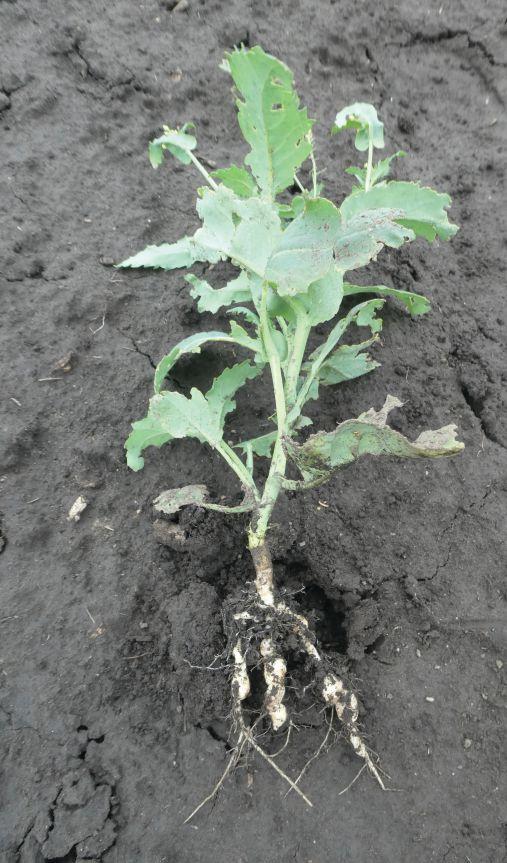
Clubroot is a soilborne disease caused by the organism Plasmodiophora brassicae that leads to gall-like growths on the root systems of cruciferous crops like canola. Galls eventually kill their host plant, and when they decay they leave behind millions of resting spores – so named because they can live for up to 20 years in the soil.
In extreme cases – when resting spore counts are high, and infection starts early – clubroot can cause yield losses of up to 100 per cent.
McDonald’s project is currently funded by a Canadian Agricultural Partnership grant that began in April 2018 and will run until 2023. She works closely with Stephen Strelkov and SheauFang Hwang at the University of Alberta, as well as Agriculture and Agri-Food Canada researchers Bruce Gossen and Gary Peng in Saskatoon.
A constellation of projects is underway across Canada, McDonald says, but the research community is highly collaborative.
“The overall objective of all of this work is based on something that the Canola Council of Canada had presented as a challenge years ago: how can growers grow canola in the presence of clubroot?” she says.
Grass cover crops
McDonald says one promising research area has focused on the use of grass cover crops to control the spread of clubroot in a field.
It’s believed that clubroot is chiefly transported into fields on dirt clods carried by heavy equipment.
“Years ago, Steve Strelkov’s group showed that in Alberta the highest concentrations of clubroot are close to the field entrance, because that’s where the clumps of soil would fall off. A small
amount would get started there, and the clubroot would move out into the rest of the field,” McDonald says.
Grass crops like ryegrass are not hosts for clubroot and can help limit the number of resting spores in a field. Research has shown that root exudates from grassy plants stimulate clubroot spores to
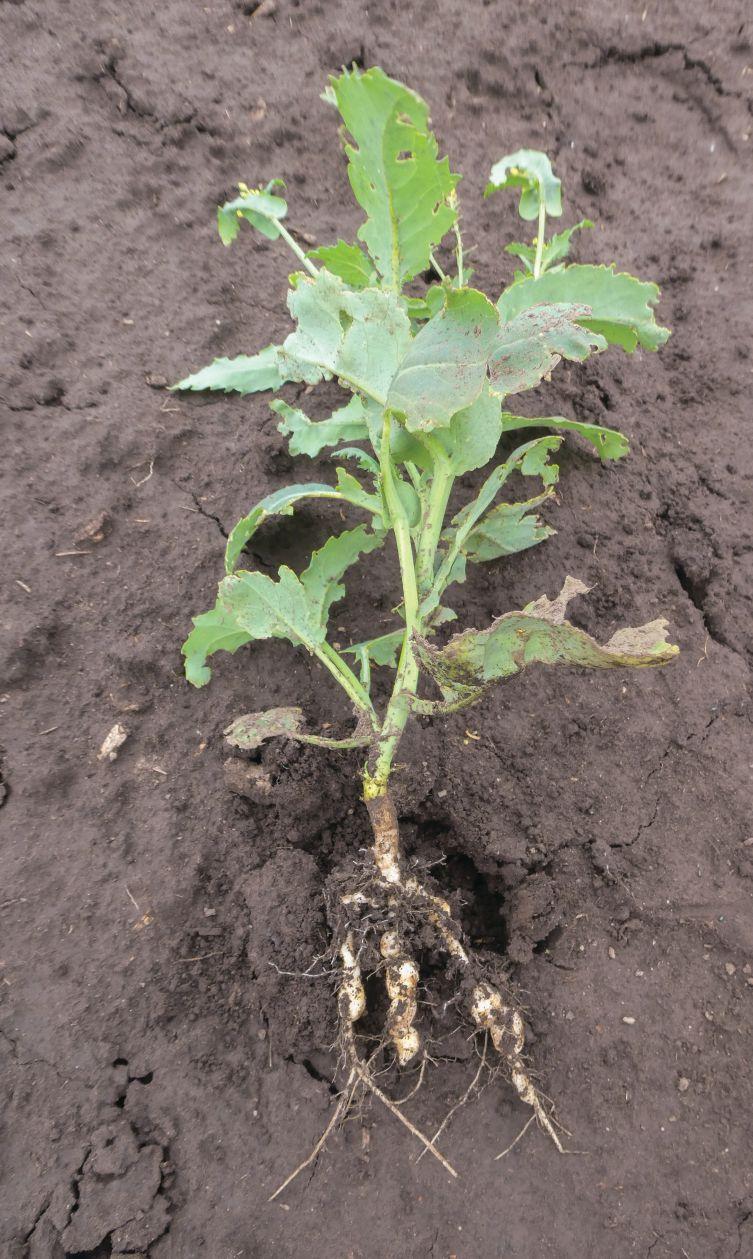
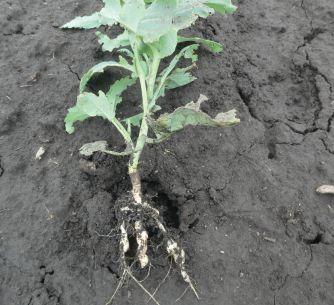
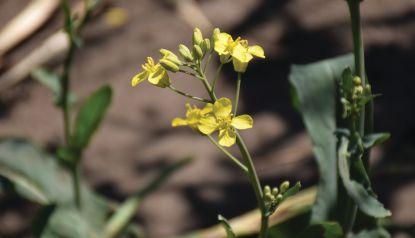
Grass cover crops work best if clubroot-susceptible weeds – such as shepherd’s purse, peppergrass, yellow rocket and volunteer canola (pictured) – are controlled in a field.
germinate, but as they cannot form galls and reproduce in grass roots, the overall amount of resting spores diminishes over time, McDonald explains.
Moran says that while western Canadian producers have adopted this strategy, grassing one or two acres at field entrances so they can stop tractors on the way into a field and kick clods off the machines, the practice is less common in Ontario.
Data from field trials conducted by McDonald’s and Gossen’s PhD student Afsaneh Sedaghatkish shows grasses can reduce resting spores by 60 to 78 per cent in only eight weeks.
“Having them in a field for a growing season or more can be even more effective,” McDonald says. “But if the spore counts at the start are over a million per gram, even a 78 per cent reduction can leave enough resting spores to cause high levels of clubroot on susceptible canola.”
In greenhouse and field trials in Ontario, Alberta, Saskatchewan and Manitoba, McDonald’s group has compared the impact of various grass cultivars on resting spore numbers. So far, smooth bromegrass is a standout, as well as ryegrass cultivar Fiesta, she says, but there are “no grasses to avoid” – in other words, the principle is sound regardless of the cultivar.
“It’s always a good idea to grass the field entrance. We can give some direction about which cultivars might be better, and we’re hoping to look at some more crops and cultivars to make better recommendations in the future,” she says.
She adds that the grass cover crops work best if clubrootsusceptible weeds – such as shepherd’s purse, peppergrass, yellow rocket and volunteer canola – are controlled in the field.
Other management approaches
McDonald has just begun a greenhouse trial at Guelph that will look at the influence of rotation crops on reducing the number of resting spores in an infected area.
Experimental rotations include winter wheat, field peas and barley.
“Our first run of that trial has shown that one cultivar of spring wheat, and a barley cultivar, did reduce the number of resting spores, compared with bare soil,” she says.
Many canola producers rotate with wheat anyway, McDonald says, but the trial might help producers select cultivars based on their ability to directly influence resting spore counts.
In another greenhouse trial at Guelph, McDonald’s group is looking at a combined approach of adding lime to the soil to raise its pH while also using a grass cover crop.
Adding lime to affected fields is a longstanding tactic of Brassica vegetable growers in Ontario, but the practice hasn’t been widely tested in canola. This past year, McDonald’s collaborators began field trials across Western Canada to test the principle.
“Ontario canola growers haven’t yet used lime in combination with grass cover crops, but producers are more and more interested in these additional tools for managing clubroot,” she says. “We think the combination of approaches will be more effective than the use of one strategy alone.”
In a third project, McDonald’s group is looking at the question of how soon after germination Brassica weeds should be terminated in clubroot fields to prevent the increase of resting spores. The results so far are concerning.
“You need to kill those plants after only three or four weeks,”
ORDER BY 6 PM FOR SAME DAY
she says. “We have results that show if you spray glyphosate five weeks after seeding, there’s already enough pathogen in the root that it’s multiplied, and once it gets to a certain stage of multiplication, the resting spores will mature and the spores will be released into the soil.”
This underscores the importance of scouting early and often, McDonald says, so weeds can be controlled before they do further damage.
Pathotyping and disease spread
McDonald’s team, in collaboration with Moran and other OMAFRA researchers, have conducted some pathotyping in Ontario fields to attempt to characterize the pathotypes or strains of the disease.
Clubroot-resistant canola varieties are available, but most of these rely on limited resistance mechanisms, meaning virulent pathotypes can overcome that resistance relatively quickly if they’re planted too often.
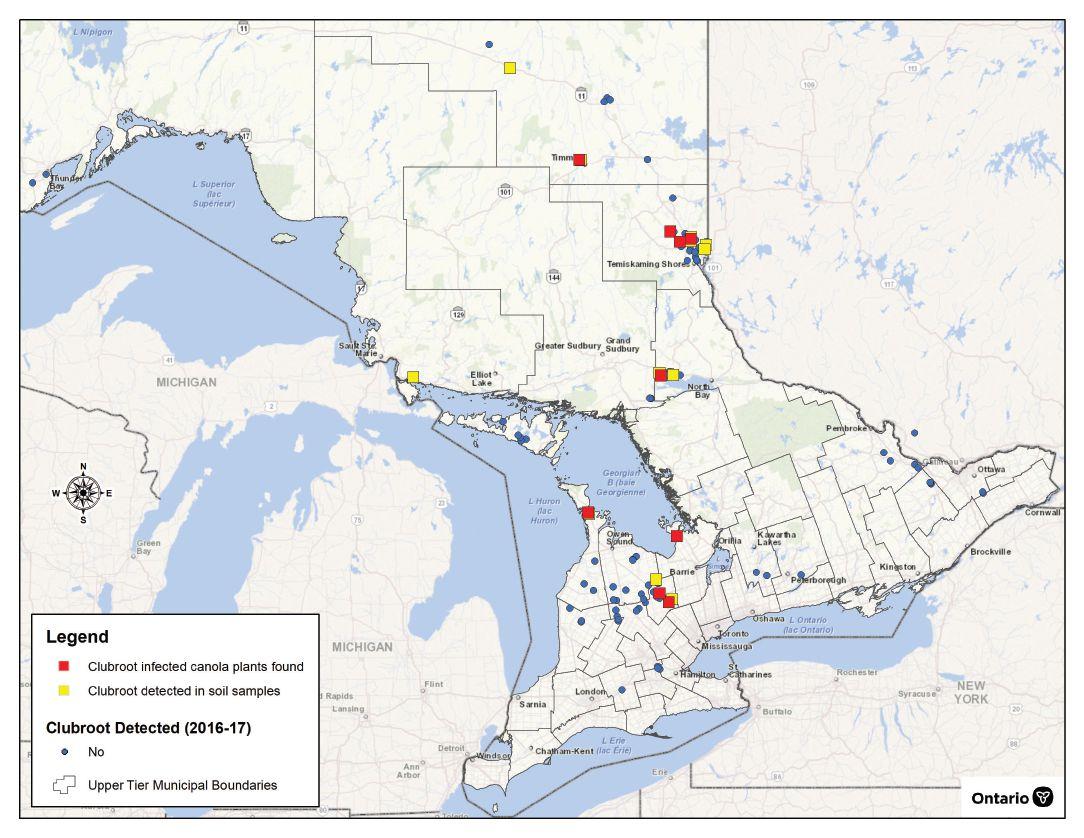
Clubroot is already widespread in Ontario. Pathotypes 2 and 5 have been identified; pathotype 2 was more common, McDonald says. In summer 2019 the team also discovered pathotype 3X, a new, virulent pathotype that is common in Alberta but apparently new to Ontario. This pathotype can quickly overcome the first generation of resistance, she says.
Second generation resistance – which combines or “stacks”
multiple resistance genes – are in seed companies’ pipelines. But McDonald says producers can’t afford to wait for better varieties.
“The seed companies won’t be able to keep up with the development of new pathotypes,” she says.
But Moran adds that clubroot presents differently in Ontario than in Western Canada. Ontario canola producers typically use three- or four-year rotations, and this helps mitigate disease pressure, although it might also “mask” clubroot in a field so the disease is harder to pick up on.
“If you have a four-year rotation you might not notice it as much,” she says. “For some growers, we’ve detected the disease on their farms but they haven’t seen symptoms.”
This simply means producers need to be more vigilant about scouting, she adds. “If they’re scouting, it may not be the fourth canola crop they lose to clubroot before they’re aware they have a problem,” she says. “They’re hopefully more likely to find it when it’s still confined to the field entrances.”
For now, first-generation resistance is still useful in Ontario. It could break down with high clubroot pressure, but Moran says the disease is still in its early stages, and attention to biosecurity tactics will go a long way toward disease prevention and management.
Any producers who suspect they may have clubroot in a field are encouraged to send soil samples to Moran at the Stratford office of OMAFRA, 63 Lorne Avenue E., Suite 2B, N5A 6S4.
OMAFRA survey data shows that clubroot is widespread in Ontario.
the go-to resistance management tool for
If you’re using advanced soybean technology, doesn’t it deserve protection to match? Engenia® is exclusively designed for Roundup Ready 2 Xtend® soybeans. Its highly concentrated liquid formulation offers easier handling and a lower use rate. Engenia is also an effective tool for managing Group 2-, triazine- and glyphosate-resistant biotypes. In other words, it seems tough weeds have also met their match. Visit agsolutions.ca/htsoybeans or contact AgSolutions® Customer Care at 1-877-371-BASF (2273) for more info.
Always read and follow label directions.
RESISTING A DEVASTATING DISEASE
Towards improved FHB resistance in Ontario winter wheat varieties.
by Carolyn King
The University of Guelph’s winter wheat breeding program is tackling the very tough challenge of developing varieties with stronger resistance to Fusarium head blight (FHB).
“Genetic resistance is the most cost-effective and environmentally safe method to control FHB. The focus of our program is to develop genetic FHB resistance while maintaining a high yield,” explains Mitra Serajazari, an adjunct professor at the University of Guelph. As a cereal pathologist, Serajazari has been involved in this wheat breeding program for seven years.
This program had its beginnings in 2013 and was formally established in 2014 through a partnership between the University of Guelph, the Grain Farmers of Ontario, and SeCan. It includes both winter and spring wheat breeding, but the main focus is winter wheat. The program was led by Dr. Alireza Navabi, who passed away last year. The university is in the process of hiring a new person to lead the program. In the interim, several of Navabi’s colleagues in the university’s plant agriculture department –Elizabeth Lee, Hugh Earl (the head of the department), Istvan
Rajcan and Peter Pauls – have been providing guidance.
FHB resistance has been a key objective of the breeding program right from the start.
Although some Ontario winter wheat varieties are rated as moderately resistant to FHB, no variety is completely resistant. Serajazari explains some of the reasons why enhancing resistance to this fungal disease is so challenging.
First of all, she notes that several different types of FHB resistance have been identified, including: type I – resistance to initial infection; type II – resistance to spread of the disease in the wheat spike; type III – resistance to kernel damage; type IV – tolerance against the disease or toxins produced by the pathogen, such as deoxynivalenol (DON); and type V – resistance to accumulation of those toxins.
Many different wheat genes are involved in these different types of resistance to the disease. Each of those genes contributes a little
ABOVE: The University of Guelph’s wheat breeding program uses the Fusarium head blight disease nursery in Elora to assess FHB response in wheat varieties and breeding lines.
bit towards a wheat plant’s overall ability to fight FHB infection and toxin accumulation.
“Also, the process of gene pyramiding to generate a desirable combination of resistance genes in a single wheat variety with high yield is challenging. This cannot be simply achieved by conducting a single cross between two parents,” Serajazari says.
“Another complicating factor is that resistance to FHB is a quantitative trait that is controlled by the environment. Therefore, the progeny of a promising cross may exhibit different FHB resistance responses depending on the environmental conditions.”
A further complexity is that FHB can be caused by several different species of Fusarium. “The University of Guelph’s wheat breeding program focuses on Fusarium graminearum because it is the predominant species causing FHB in North America,” Serajazari explains.
“More importantly, this species produces DON, a mycotoxin that can contaminate food and feed. Therefore, our laboratory and field experiments are artificially inoculated with Fusarium graminearum.”
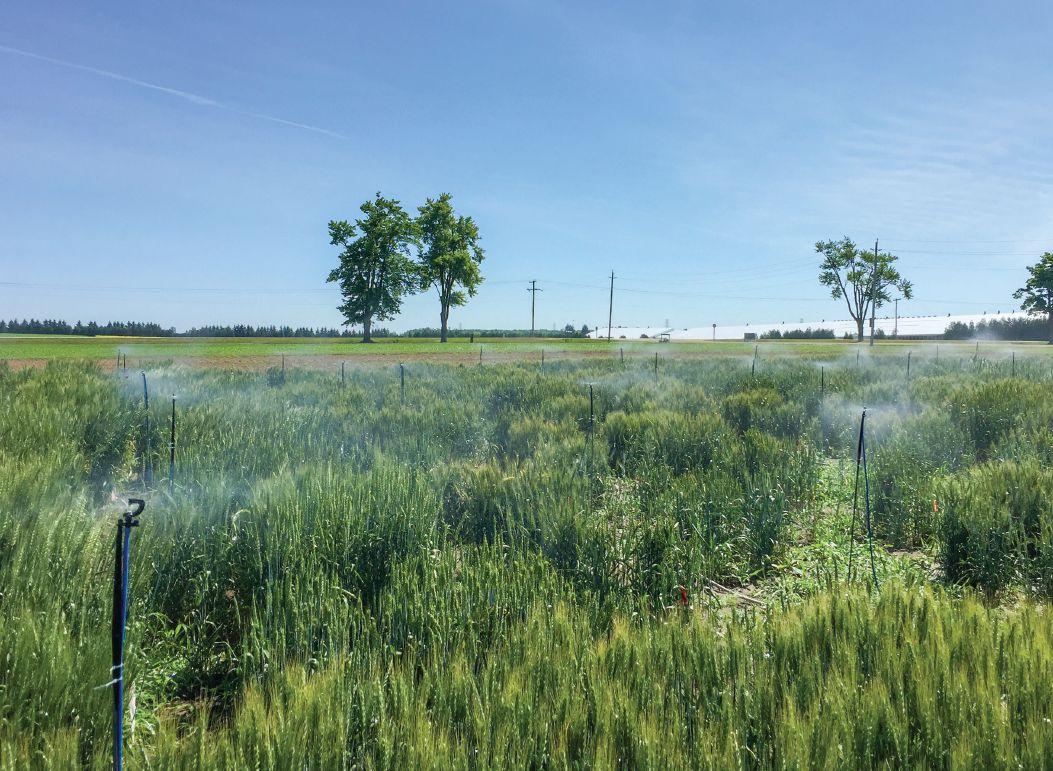
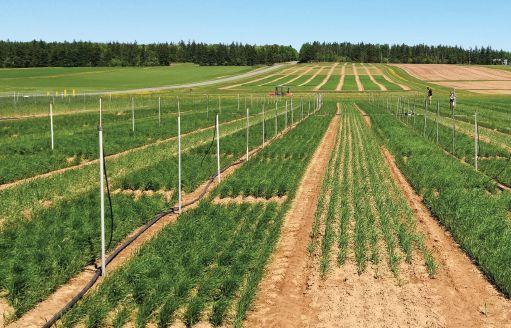
The program’s FHB nursery is located at the Elora Research Station. The nursery is vital for identifying breeding lines and varieties with superior resistance to the fungus.
“Our nursery is equipped with an overhead mist irrigation system that maintains the humidity above 70 per cent for the optimal establishment of FHB. The FHB inoculum is sprayed three times: at two days before flowering, at flowering, and two days after flowering. This inoculum is produced in our laboratory. It is a mixture of three Fusarium graminearum isolates collected from across Ontario,” she explains.
“We measure disease incidence (the number of infected spikes in a plot) and severity (the amount of infection in the spike), and we use those measurements to calculate the FHB disease index. We also measure post-harvest traits, including the number of Fusariumdamaged kernels (FDKs) and the DON content, in our lab.”
The nursery is used for evaluating the FHB response in a wide
range of winter and spring wheat varieties and breeding lines.
“In 2019, we screened over 2,000 winter wheat and 600 spring wheat varieties. These include the Ontario Cereal Crop Committee’s experiments to assess commercially available Ontario wheat varieties; the Canadian Winter Wheat Adaptation Trial to evaluate varieties from other regions to see if they are resistant across locations; and Advanced and Elite Yield Trials to assess breeding lines from the University of Guelph’s program. In addition, other germplasm resources are obtained from graduate student projects and collaborators across Canada.”
The breeding program’s team draws on a diverse array of wheat germplasm sources in the search for FHB resistance genes. In particular, they make use of the Canadian Winter Wheat Diversity Panel. This panel is a collection 450 modern and historic winter wheat samples obtained from across Canada. It was developed by Harwinder Singh Sidhu, a PhD student involved in the program. Work to characterize this collection included genotyping all the samples and assessing their FHB responses in the Elora nursery. Serajazari worked on the plant pathology component of this initiative.
The team is using the panel’s dataset to conduct genome-wide association studies (GWAS). Such studies involve comparing the genomes of many lines to look for small differences between their genomes. For example, researchers can determine how the genomes of susceptible lines differ from the genomes of moderately resistant lines.
Through this work, the team has identified various regions in the wheat genome that are associated with the different types of FHB resistance. Serajazari notes, “Breeders can use these FHB resistance-associated markers to develop new markers for resistance against type I (incidence), type II (severity) and types IV and V (DON content).”
Such markers are really helpful for screening breeding materials. For instance, when breeders are trying to pyramid several FHB resistance genes into their breeding lines, they can use the markers to determine which particular resistance genes are present in the progeny of the crosses.
The program’s team is also investigating the mechanisms of FHB resistance in wheat, which could help in developing winter wheat varieties with stronger FHB resistance in the future. “Our team is currently performing RNA sequencing to identify genes that are differentially expressed in highly resistant and susceptible wheat lines,” Serajazari explains. “Further development of this work will involve the generation of a population of recombinant inbred lines to determine locations along the genome that are involved in FHB resistance. Also, through our collaborations, we are involved in the analysis of protein profiles of FHB-resistant and susceptible lines to identify candidate proteins that regulate FHB resistance.”
All this work is contributing towards the development of winter wheat varieties with high yields and good FHB resistance – key traits for Ontario wheat growers.
Serajazari notes, “We have already developed three soft winter wheat varieties, which are in the process of being released. The FHB indices of these varieties are similar to the moderately susceptible or moderately resistant checks.” One of the three is rated as moderately resistant.
The Grain Farmers of Ontario, the Ontario Ministry of Agriculture, Food and Rural Affairs, Genome Canada and the Canadian Wheat Research Coalition are funding this breeding work.
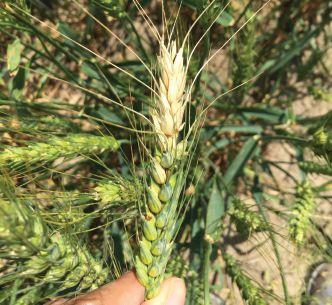
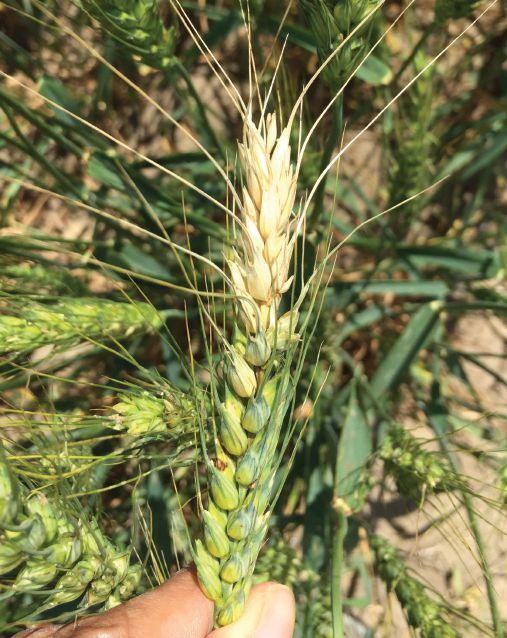
A wheat spike infected by Fusarium head blight.
PHOTO COURTESY OF MITRA SERAJAZARI.
ADVANCES IN EXTRA-EARLY SOYBEANS
Improving soybean varieties for short-season growing regions.
by Carolyn King
Growers in eastern and northern Quebec, northern Ontario, the Prairies and the Maritimes are interested in growing soybean. As a higher-value crop that fixes nitrogen, it is a good option for diversifying their rotations. But these growers need very early maturity varieties adapted to their own growing conditions. That’s where researchers like Louise O’Donoughue come in.
O’Donoughue is a research scientist with CÉROM (Centre de recherche sur les grains) in Quebec. She has been focusing on development of early soybeans for about a decade.
“Initially, my interest was to expand soybean production into parts of Quebec with shorter growing seasons like SaguenayLac-Saint-Jean. I also knew that interest in earlier maturing soybeans was increasing out West and in other short-season areas,” she explains.
“And the timing was good for addressing this issue because when I was starting this work, four maturity genes had been identified in soybean. So I knew that I could look at the status of these four earliness (E) genes in the breeding material, characterize the
material and develop markers. As well, the soybean genome had been completely sequenced [providing a strong foundation for indepth work on soybean traits].”
O’Donoughue’s work on early maturity soybeans has been funded through programs like Growing Forward, Growing Forward 2, the Canadian Agricultural Partnership and Genome Canada (SoyaGen). Her research so far has helped to create a springboard for further breeding advances and has resulted in the development of many advanced lines in the soybean maturity groups (MG) 00 and 000 for short-season regions.
Getting a better handle on earliness
A key objective of one of her recent projects was to find out more about the early maturity sources in the soybean gene pool.
“Canada was a pioneer in developing early maturity soybeans, but I thought perhaps we hadn’t exploited all the different ways of
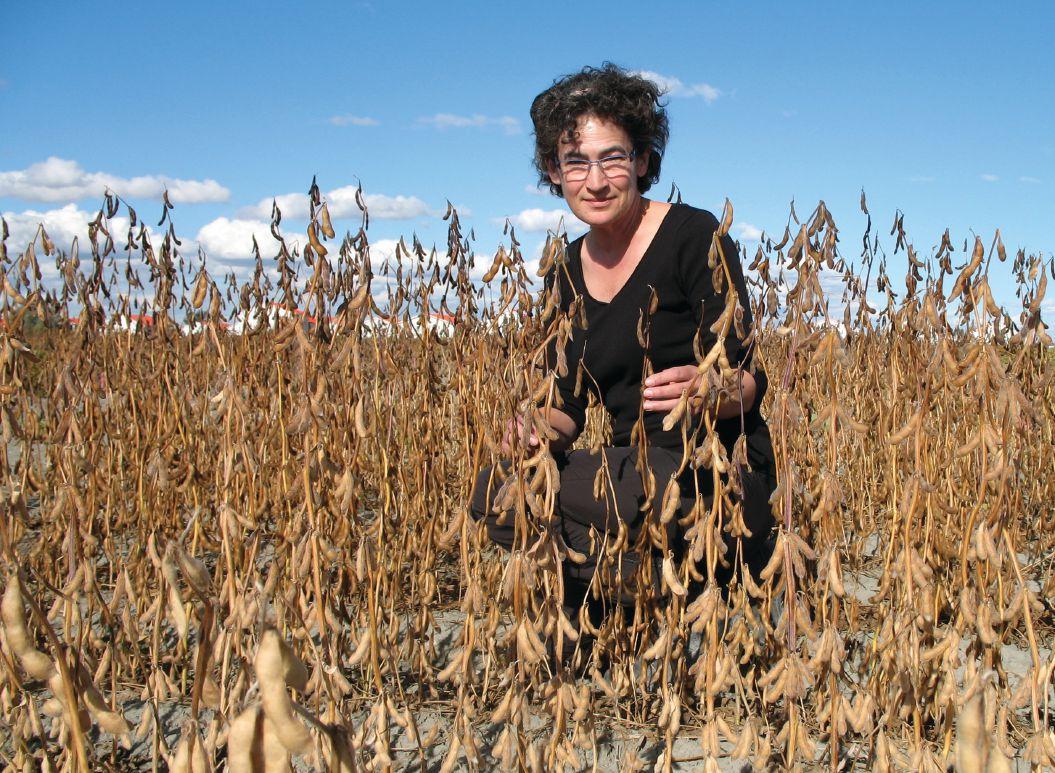
ABOVE: Louise O’Donoughue’s research focuses on developing early maturity soybeans for Canada’s short-season growing areas.
PHOTO COURTESY OF CÉROM.
getting early maturity that were available in the gene pool. Back in 2013 when this project started, we didn’t know what was in the Canadian soybean gene pool. So, we wanted to see what maturity genes we had been using in our germplasm,” she says.
To start the work of characterizing the early maturity genes in the Canadian gene pool, O’Donoughue teamed up with two other
over the world. “We also wanted to look at other sources of early maturity in soybeans from various areas in the world to see whether we could introduce more diversity in Canadian breeding of early maturity and to see what maturity genes were in those exotic lines.”
To characterize the earliness trait in the Canadian lines and the exotic lines, the researchers genotyped each line (determined its earliness genes and alleles) and phenotyped each line (evaluated its maturity in different environments).
Canada was a pioneer in developing early maturity soybeans, but I thought perhaps we hadn’t exploited all the different ways of getting early maturity available in the gene pool.
soybean breeders: Elroy Cober with Agriculture and Agri-Food Canada (AAFC) in Ottawa, and Istvan Rajcan at the University of Guelph.
“We put together a collection of lines that we thought represented the Canadian soybean gene pool at the time,” she says. “And we characterized them for allelic status at those four E genes, E1 to E4.” In other words, the researchers determined all the different variants, or ‘alleles’, of these four earliness genes that are present in the different lines.
They also characterized a set of about 100 early lines from all
A LONG WAY TOGETHER
For instance, the researchers grew the set of exotic lines at eight sites to see how the different lines with their various combinations of E genes and alleles would perform in different environments. The field trials took place at two sites in Saskatchewan, two in Manitoba, two in Ontario and two in Quebec.
These exotic lines ranged from MG 1 to MG 000. O’Donoughue explains, “At that time, we didn’t really know how those different maturities would behave in environments like Manitoba.”
Some highlights of accomplishments
This project’s characterization work has produced important outcomes. In particular, it has provided Canadian soybean breeders with a much better picture of the early maturity genetic resources available in the Canadian and exotic gene pools.
O’Donoughue and her research group also made several
MULTIMAX MP 522
No matter how challenging your needs, MULTIMAX MP 522 is your best ally for agro-industrial applications with telehandlers and compact loaders. MULTIMAX MP 522 features indeed a steel-belted casing and a special compound providing extraordinary stability and traction in addition to great cut and chip as well as puncture resistance.
MULTIMAX MP 522 is BKT’s response to the need of a versatile multi-purpose tire under toughest conditions.
valuable discoveries through this work. She says, “We discovered some alleles for these E genes that were previously unknown. And we also found other alleles in the exotic material that had not been utilized at all or were very underutilized in the Canadian gene pool, alleles that could be used to produce early maturity lines for Canada.”
In this same project, her group also developed more than 100 new breeding populations using the new exotic sources for early maturity. These new populations are a great source for those unused and underused earliness alleles.
“Another very important achievement is that we have developed at least 16 markers for various genes to select for early maturity, and we are using these markers in our breeding program,” she notes. “Developing markers for maturity may sound silly because you can select for maturity by growing the material in the field. But selecting for maturity in the field means that you have to wait until the plants are mature to see what their maturity is. With the markers, we can predict beforehand which ones have the most potential for early maturity.”
Poised for further advances
“As a result of this research, we have about 10 early maturity lines
that have potential for registration. We’re in the process of trying to commercialize them,” O’Donoughue says. Most of these advanced lines are rated as MG 00. So far only one is a MG 000, but O’Donoughue says more MG 000 lines are coming along in the breeding pipeline.
In one of her current early maturity projects, O’Donoughue is collaborating with AAFC’s Cober and Tom Warkentin at the University of Saskatchewan’s Crop Development Centre. They are targeting development of food-type soybeans for MG 00 and MG 000 areas.
Warkentin’s soybean breeding program is fairly new, so O’Donoughue and Cober are sharing some of their breeding materials with him for screening in his MG 000 environments.
And all three breeders are collaborating on testing their lines at locations in Saskatchewan, Manitoba, Ontario and Quebec.
O’Donoughue is also working to improve other traits in early maturity soybeans. For instance, she is developing lines with resistance to soybean cyst nematode (SCN) and Phytophthora root rot.
“Soybean cyst nematode is the most damaging pest of soybean in the world,” O’Donoughue notes. This soil-dwelling pest has been spreading across North America since it was first detected in North Carolina in 1954. In Canada, SCN was first found in southwestern
O’Donoughue is breeding soybean lines in the 00 and 000 maturity groups.
PHOTO COURTESY OF SOYAGEN.
Ontario in 1987. By 2013, the nematode had arrived in western Quebec. And in 2019, it was confirmed in southern Manitoba near the U.S. border.
Resistant varieties are key to SCN management, so SCN resistance is an important objective for O’Donoughue’s breeding program.
However, she notes, “Overall, about 98 per cent of SCN-resistant lines use a single source of resistance. This resistance source is now breaking down in the U.S. Also, a lot of the breeding materials with SCN resistance are later-maturing lines [so the resistance genes would need to be brought into earlier-maturing material for her breeding program].”
O’Donoughue and her collaborators at AAFC, Benjamin Mimee and Tom Welacky, obtained 12 alternate sources of SCN resistance from soybean genebanks. They have tested those sources and confirmed that they are resistant to very damaging SCN populations in Ontario.
O’Donoughue’s group has already made about 170 crosses with these new sources of resistance. As well, they have developed markers for one of these resistance sources, and they are now using those markers in their breeding program. And they are currently developing markers for another of the resistance sources.
O’Donoughue adds, “Some of these resistance sources are in soybean lines that are as late as MG 2. So if I make a cross and develop a population, I can use my maturity markers to remove anything that is beyond the maturities that I’m targeting.”
For her work on Phytophthora root rot, she is collaborating with Richard Bélanger at Université Laval. Phytophthora sojae is the
soilborne pathogen that causes Phytophthora root rot. This disease can cause 100 per cent yield loss in highly susceptible soybean varieties.
“Phytophthora sojae is an important pest here in Eastern Canada and I think it’s going to be a problem out West also,” O’Donoughue says.
“We are working on a horizontal resistance source for this pathogen. Horizontal resistance gives the plant some tolerance to all races of Phytophthora sojae,” she explains. This type of resistance can be a good alternative to race-specific resistance. Race-specific resistance is very effective, but sooner or later the pathogen will develop other races that can attack the plant.
Benefits for growers and breeders
“The advances from this research – the new knowledge about how maturity is controlled in the Canadian gene pool, the new sources of maturity and the underutilized sources, and the new markers – are already benefitting Canadian soybean breeders. I think that we’re all in a better position to breed for early maturity in Canada because of these projects,” O’Donoughue says.
“For growers, I hope this research will lead to soybean varieties that are better adapted to their various environments because a short-season soybean that performs well in Saskatoon is different from one that does well in Lac Saint-Jean. With the knowledge we have gathered and the tests we’re doing across environments, I’m hoping to be able to provide growers with varieties that have high yield potential in their own environment.”
AGRICULTURE NEWS
MANAGING BARLEY DISEASE IN THE MARITIMES
Developing better strategies to tackle tough pathogens.
by Carolyn King
Barley growers in the Maritimes have to deal with some challenging disease issues. Adam Foster, a plant patholo gist and research scientist with Agriculture and Agri-Food Canada (AAFC) in Charlottetown, is working to develop better disease management tools and information for these growers.
“In the Maritimes, the primary disease concern in barley is Fu sarium head blight (FHB). This fungal disease is mainly caused by Fusarium graminearum. [It’s] a serious issue because it can contami nate grain with a mycotoxin called deoxynivalenol (DON), which severely affects the grain quality and what its end-uses can be.”
Foster says, “Other diseases of concern in the region include fungal leaf diseases like net blotch and scald. In severe outbreaks, leaf diseases can significantly reduce barley yields. Root rot diseas es can also have a major impact.”
Cover crop strategies to reduce disease
Foster is leading an innovative project to examine the carryover effects of different cover crops on disease in the following barley crop. “One of the project’s primary goals is to identify if different cover crops will provide a positive or negative effect on managing diseases in barley. We are also trying to uncover the cause of the cover crop effects and whether these effects are due to changes in the soil microbial community,” Foster explains.
“So, in small-plot experimental trials at AAFC’s Harrington Re search Farm, we’re testing a dozen different cover cropping treat ments. These include a range of cover crops like legumes, grasses, Brassicas and forbs [other broadleaf crops such as buckwheat], but also some mixes like legumes plus Brassicas or forbs plus grasses.”
Foster and his research team collect soil and crop residue samples in both years of the two-year rotations. They use a nextgeneration DNA sequencing tool to quantify all the different mi crobes in those samples and detect if the different cover crops are causing any changes in the microbial community. He says, “The main focus is to see if any of the changes in the microbial community might be affecting the barley pathogens directly or indirectly.”
In the barley year, Foster’s team scouts the plots to see which diseases appear in the barley and to rate the severity of those diseases. They also collect data on barley yield and quality.
In the first two-year trial, they found that the primary barley disease was common root rot, mainly caused by F. oxysporum. “This pathogen can cause pretty severe damage to barley’s root system and that can affect all the aboveground parts of the plant,” Foster notes.
He adds, “F. oxysporum is a very complicated species complex,
Their preliminary results indicate that some cover cropping treatments may help reduce the amount of F. oxysporum inoculum in the field. However, Foster emphasizes the need to complete the second two-year trial in 2020 and finish their data analysis before drawing any major conclusions.
He sees several possible benefits from this research. “We’re hoping to provide crop growers with valuable information on how cover cropping affects soil health and the soil microbial community because it is generally understood that soil health is vital for long-term, sustainable agriculture.
“As plant pathologists, we’re also really interested to see how those changes in soil health have downstream effects on disease
PHOTOS
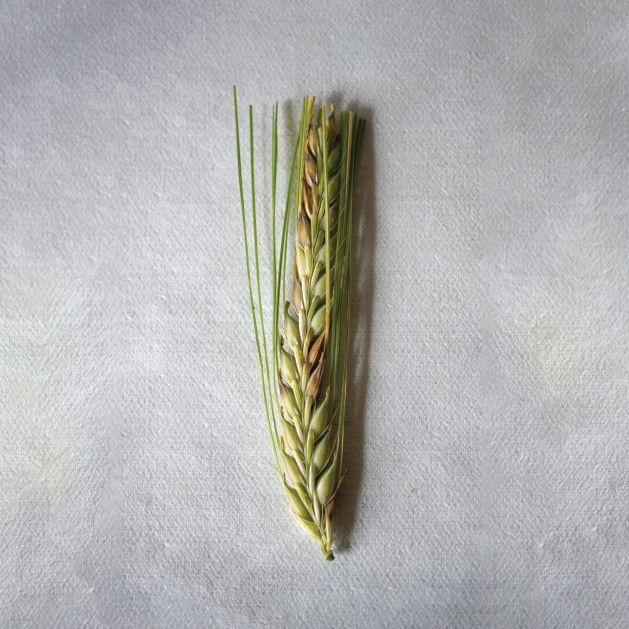
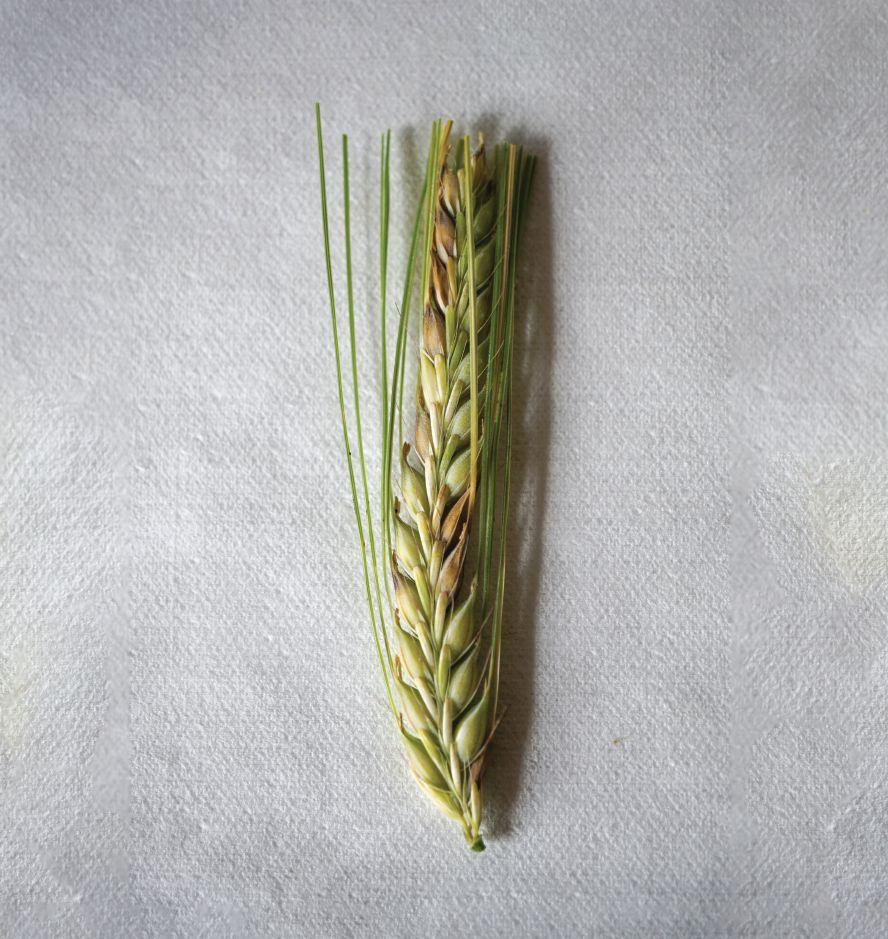
Fusarium head blight is the main disease concern for barley growers in the Maritimes.
Foster’s research team sets up the misting system for the FHB disease nursery where breeding lines are evaluated for FHB resistance/susceptibility.
management. We’re anticipating there will be both positive and negative effects, and that is what we are trying to quantify.
“We may also be able to provide growers with information [on] how different cover crops might affect disease in their barley crops, to help growers [choose] cover crops to put in their rotation.”
Forecasting FHB and DON risk
Foster is working on a number of initiatives to help Maritime barley growers to better manage FHB, a tough-to-control disease, which includes developing an FHB forecasting tool for the Maritimes.
“Once Fusarium spores are in the air and weather conditions are perfect for the disease, it is often too late for growers to apply a fungicide. So, the idea is to forecast the risk of infection earlier to allow the producers to apply their fungicides in advance and protect their crop.”
He explains, “Fusarium head blight forecasting tools exist all across North America. We want growers in Atlantic Canada to have access to the same kind of risk management tools as other areas.”
Foster is collaborating with Atlantic Grains Council on this project. “We are looking at a range of existing forecasting models that have been developed around the world, testing to see if they are appropriate for the Maritimes [to forecast] FHB in cereal crops, including barley.”
Some of the models forecast the disease, while others forecast DON contamination. The models base their forecasts on an area’s weather patterns, because weather conditions can play such a big part in the development of this disease.
To determine which model is best for the Maritimes, Foster and his team are comparing the actual FHB and DON situations in locations across the region with the predictions from the different models for those locations.
“The Grains Council is conducting barley research trials across the Maritimes as part of their on-farm agronomy project. They are providing us with harvested seeds from each of those trials. As a result, we have samples from farmers’ fields but under incredibly controlled and managed scientific settings. So we have really good data from all of the sites.”
Foster’s team cultures the Fusarium species isolated from the samples, identifies the different species and determines incidence of infection by the species that produce DON. They also grind up the grain and extract mycotoxins to quantify the amount of DON.
“In 2019, the project’s first year, four major Fusarium species were causing Fusarium head blight in barley in the survey. Only one of the species, F. graminearum, produced deoxynivalenol,” Foster says.
“All four species were found everywhere in the region. But when the weather conditions were more favourable for disease development, only the F. graminearum spiked, while the other species
stayed the same. We suspect that weather conditions may not be the most important factor for predicting the other Fusarium species, but [they] aren’t as much of a concern as F. graminearum.”
He notes, “We found some pretty large differences [in FHB and DON levels] between all the sites. Some preliminary data shows the differences might correlate with weather patterns that went through those different sites.
“Of course, we need a few more years of data before we can draw any firm conclusions. But it looks like a few of the models are starting to pull ahead as being the best models for our region, and they are not necessarily the models we would have expected.”
He had originally thought that the best models might be the ones developed in the regions neighbouring Atlantic Canada. However, so far some of the models developed in other maritime regions are the ones that are performing well for the Maritimes.
“Our goal is to find the most appropriate forecast model for the Maritimes and to integrate that into a web-based tool that growers can use to assess their FHB risk,” Foster says. “This will help growers in the three Maritime provinces when making decisions on their disease management practices.”
Improving in-crop management of FHB
Foster is one of several researchers collaborating on a major national project to evaluate ways to enhance FHB management in malting barley. It involves field trials across Canada to evaluate the effects of barley seeding rates and fungicide water volume and timing on FHB development, crop productivity and malting quality. This research focuses on malting barley as it must have zero or extremely low levels of Fusarium and DON to be acceptable for malt. But he also notes, “I think the project’s findings, particularly about water volumes, will be very applicable to other types of barley.”
Kelly Turkington, a plant pathologist with AAFC in Lacombe, Alta., is leading this project, and Foster’s team is running the Atlantic Canada site in P.E.I. Once the field trials are completed in 2022, the researchers will put all their data together from across the country and develop some recommendations for barley growers.
Screening for FHB resistance
Foster works with barley breeders across Canada to screen their breeding lines for resistance to FHB in the Harrington Research Farm’s FHB disease nursery.
In the nursery, Foster’s team creates conditions for high FHB disease pressure, including applying FHB inoculum to the plants and misting the plants to keep them wet to promote disease development. “We test the breeders’ new breeding lines for FHB resistance or susceptibility under really high disease pressure conditions. This lets the breeders compare their lines to registered cultivars with known FHB resistance profiles and make choices about removing susceptible lines from their breeding program and advancing lines that are more resistant.”
Foster’s team prepares the FHB inoculum for the nursery. “We are constantly collecting Fusarium isolates from the local environment. We choose a selection of those isolates and mix them together; this way we’re not testing for resistance to one isolate when nature will produce an unlimited source of variety in Fusarium.”
He notes, “The breeders work with disease nurseries across the country. It is really important to test for FHB resistance in different regions because the Fusarium [species and strains] and the disease pressure aren’t the same in every region.”
MORE PLANTING CHOICES THAN EVER
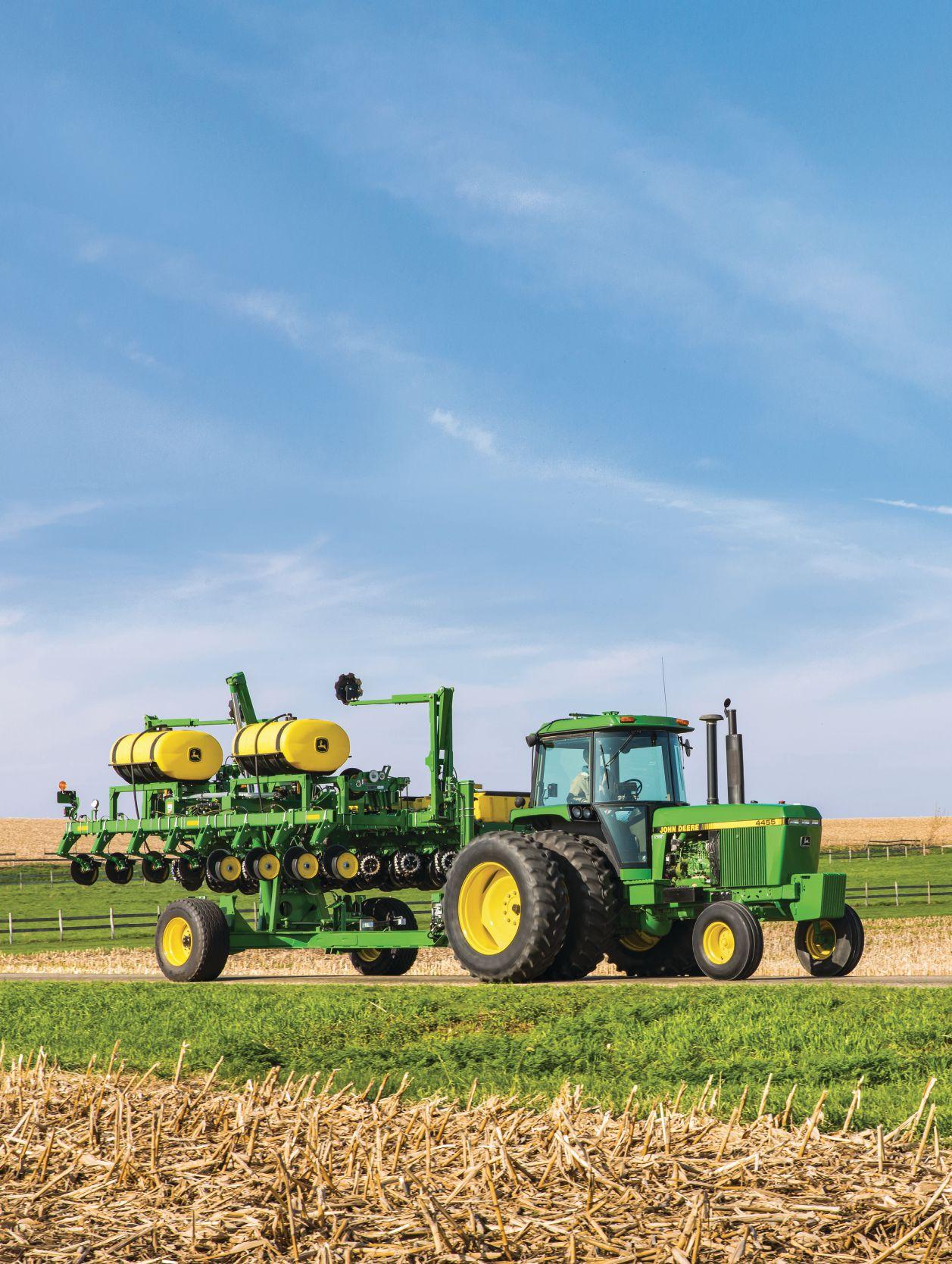
No matter the size of your operation, John Deere has a planter for you to help you increase your yield potential, lower your input costs, and work efficiently. You’ll find just about every possible planter product or feature available, including:
The new compact 1745 Planter is perfect for your small fields and narrow-road transport needs.
The new ExactRate™ Liquid Fertilizer System lets you fertilize as you plant – exactly – and is an ideal match for planters equipped with ExactEmerge™ or MaxEmerge™ 5e Row Units.
ExactEmerge™ Row Units help you finish fast without sacrificing uniform seed placement. Plant at up to 10 mph (16 km/h) with precise seed placement and depth control.
MaxEmerge™ 5 Row Units are designed for a wide variety of crop types with versatile row unit configurations.
MaxEmerge™ 5e Electric Row Units deliver accurate seed population around curves without the hassle of chains, sprockets or hex shafts.
Performance Upgrade Kits* make it easy for you to make your current planter perform like it’s new.
Talk with your John Deere Dealer to find your right choice.
Nothing runs like a Deere™.
*See dealer for compatibility details.
John Deere, the leaping deer symbol, and green and yellow trade dress are trademarks of Deere & Company.