Corn study shows no economic benefit with early fungicides
PG. 10
STUDYING SOYBEANS
Research on fungicides and diseases in the Maritimes
PG. 12
TOP CROP
MANAGER
FOCUS ON: WINTER CEREALS
6 | Preparing for an emerging threat
Working towards stripe rust resistance in winter wheat varieties for Ontario. by Carolyn King
FROM THE EDITOR
4 One step ahead by Stefanie Croley
APRIL 2019 • EASTERN EDITION
PESTS AND DISEASES
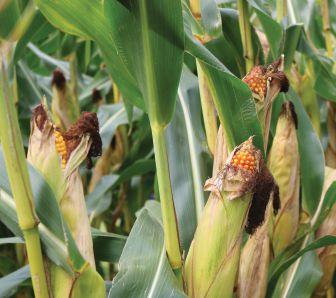
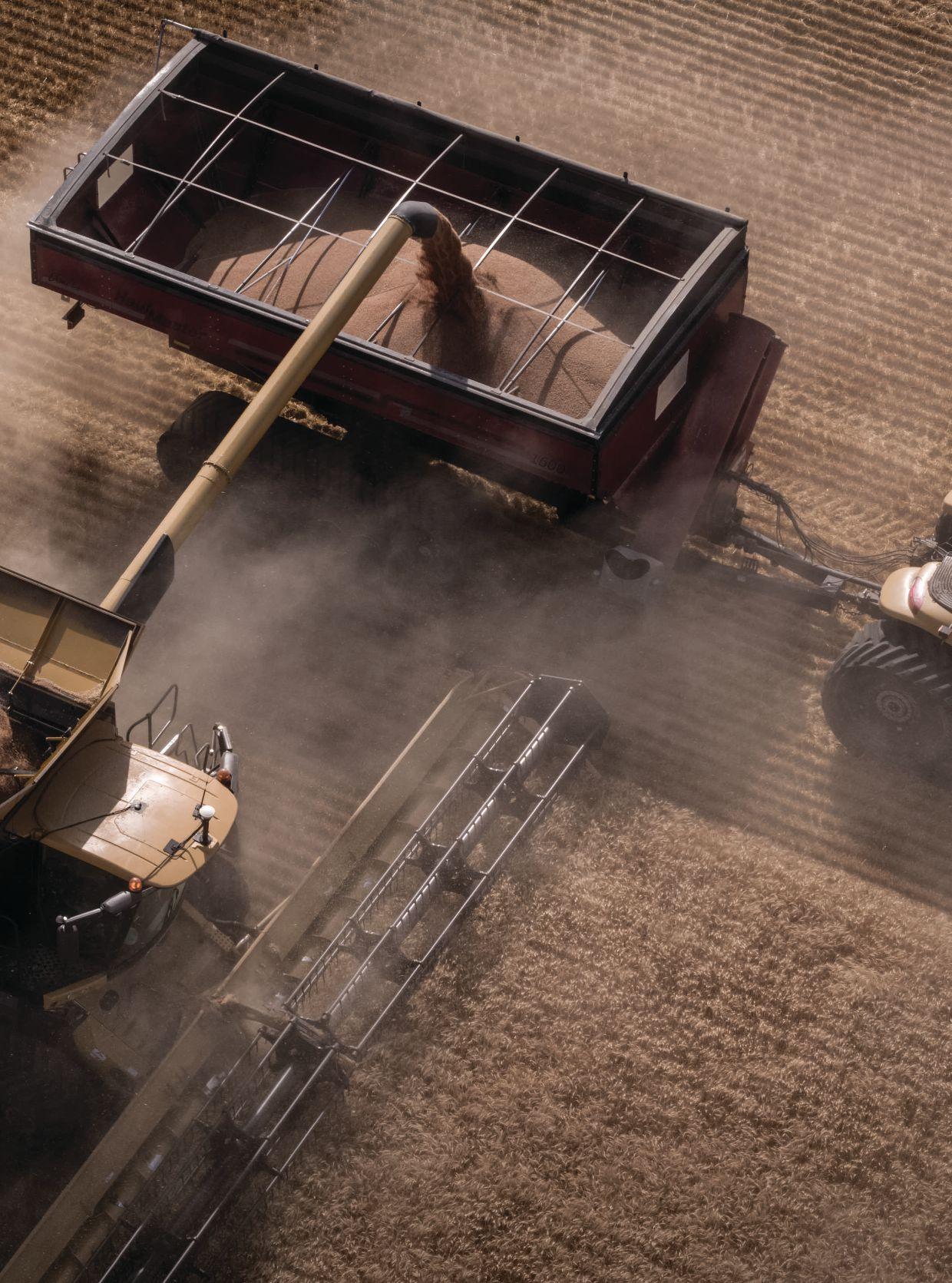
10 | No payoff for early season fungicide on corn
Study shows adding fungicide to early-season herbicide showed no economic benefit.
by Julienne Isaacs
PESTS AND DISEASES
16 Common rust or southern rust? by Carolyn King
PESTS AND DISEASES
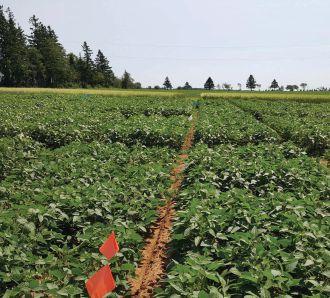
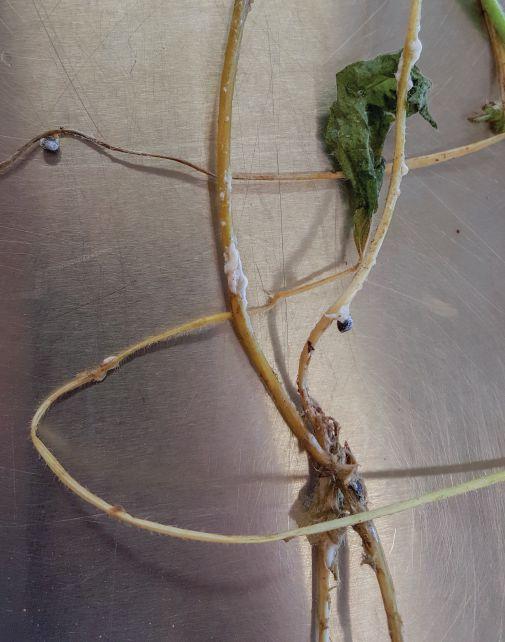
12 | Soybean disease studies in the Maritimes
With soybean acres on the rise, researchers investigate cover crops, fungicides and more.
by Carolyn King
ON THE WEB
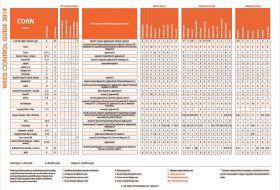
2019 WEED CONTROL GUIDE
Weed management is a part of crop production that never leaves a grower’s mind. To simplify the herbicide decision-making process for you, our annual Weed Control Guide lists all the products available, their control rating and optimal tank-mix partners for use on corn, soybeans, and various cereals.
The guide is now available to view online at topcropmanager.com/digital-edition
Readers will find numerous references to pesticide and fertility applications, methods, timing and rates in the pages of Top Crop Manager. We encourage growers to check product registration status and consult with provincial recommendations and product labels for complete instructions.
PHOTO COURTESY OF ADAM FOSTER/AAFC.
PHOTO COURTESY OF STEPHANIE GORDON.
PHOTO COURTESY OF MITRA SERAJAZARI.
STEFANIE CROLEY | EDITOR
ONE STEP AHEAD
We live in an era of constant connection, where it can be difficult to focus on the task at hand without looking ahead to what’s coming up next. Agriculture is no different, and, perhaps, has always been this way – I don’t know any farmers who aren’t thinking about scouting or spraying before planting has completely wrapped up. Producers are always on the hunt for the best possible strategies and solutions for problems that haven’t yet happened, and the industry is a reflection of that with constant innovation and development in the works.
Researchers at the John Innes Centre in Norwich, U.K., with assistance from colleagues in the United States and Australia, have developed a new way to quickly recruit disease resistance genes from wild plants and transfer them to domestic crops.
According to a release from the John Innes Centre, the technique, called AgRenSeq or speed cloning, enables researchers to search a genetic “library” of resistance genes discovered in wild relatives of modern crops. This assists researchers in identifying sequences associated with disease-fighting capability. The next step is to clone the genes and introduce them into domestic crops to protect them against troublesome pests and pathogens.
While this process has been done before, speed cloning will allow researchers to do it in a matter of months – record timing, compared to the 10 or 15 years it would take to accomplish using conventional methods, according to Dr. Brande Wulff, one of the project’s leaders in Norwich.
In field trials using wild wheat, researchers were able to successfully identify and clone four resistance genes for stem rust pathogens over a period of a few months. The team collected 151 strains of a wild grass and inoculated the population with the stem rust pathogen, then screened plants to identify those resistant and susceptible to the disease. After comparing the collected information with the DNA sequences of the plants, the team was left with a so-called library of resistance genes.
This breakthrough in technology could mean significant advancements in the fight against crop disease from a scientific level in the coming few years – especially timely news given the leaf disease theme of this issue. As you’ll read in this issue, Canadian scientists are on par with those previously mentioned, making great strides in the fight against serious disease threats. Of particular note, Dr. Alireza Navabi’s focus on stripe rust resistance research as part of his winter wheat breeding program, which you can read about on page 6, is just one example of how Canadian researchers are leading the charge when it comes to disease research.
It’s important to stay focused on what’s currently happening, but just as imperative to anticipate what lies ahead. As your season begins, take a note from the research playbook and look for ways to improve what’s to come.
Editor’s note: As this issue went to press, we became aware of the passing of Dr. Alireza Navabi, a wheat breeder and professor in the department of plant agriculture at the University of Guelph, whose research is featured in our cover story. We acknowledge Dr. Navabi’s contribution to Canadian agriculture and share our sincere condolences with his family, friends and extended community.
TOP CROP MANAGER
FOCUS ON: WINTER CEREALS
PREPARING FOR AN EMERGING THREAT
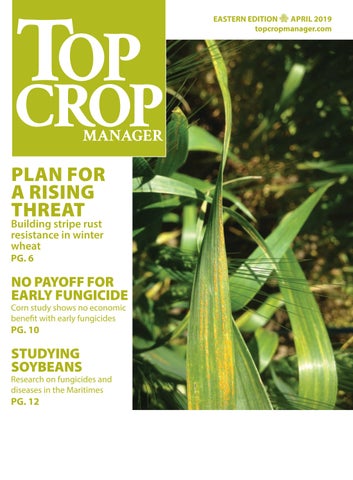
Stripe rust is a fairly new fungal leaf disease that has been spreading throughout the province and slashing yields in susceptible varieties. While there are fungicides available, researchers are working towards stripe rust resistance in winter wheat for Ontario, preparing to combat the rise of more aggressive pathogen races.
BY Carolyn King
Wheat stripe rust was first detected in Ontario in 2000, but this fungal leaf disease didn’t cause significant impacts in the province until 2016. That year, some areas reported yield losses as high as 40 bushels per acre for susceptible winter wheat varieties.
In response to the 2016 outbreak, Alireza Navabi, an associate professor in plant agriculture at the University of Guelph, added stripe rust resistance as a new objective in his winter wheat breeding program. The aim is to develop varieties that have resistance to both stripe rust and Fusarium head blight, the program’s other key disease resistance objective.
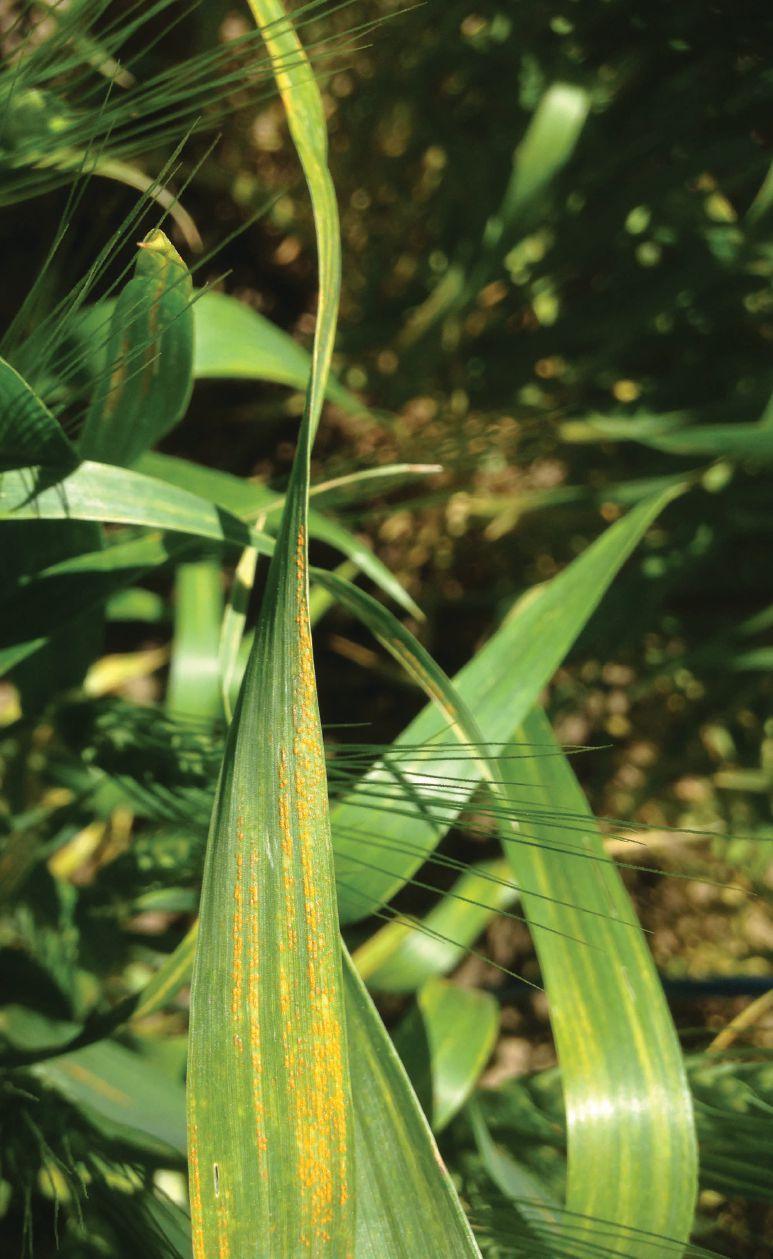
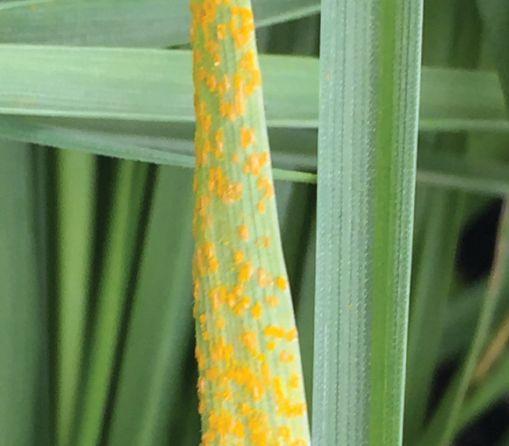
Stripe rust, also known as yellow rust, is caused by Puccinia striiformis. Like other cereal rust pathogens, it is able to produce huge numbers of spores that can be carried for long distances by the wind and has the potential to cause devastating crop losses. Stripe rust looks similar to leaf rust, but in stripe rust, the pustules are yellowish orange and run in stripes parallel to the leaf veins, whereas in leaf rust, the spores are reddish orange and are scattered across the leaf.
“In 2016, Puccinia striiformis was widely distributed in the wheat growing areas in the Canadian Prairies and in southwestern Ontario, to a level that was never seen before,” explains Mitra Serajazari, a research associate in Navabi’s program.
“It was hypothesized that this wide distribution of the stripe rust pathogen in Canada in 2016 was due to 1) a warmer winter allowing the pathogen to overwinter farther north in North America, and 2) the prevalence of more aggressive races of the pathogen that can tolerate higher spring/summer temperatures.” These newer races first arrived in North America in 2000 and have since replaced most of the older races that used to be found in the U.S. and Canada.
Serajazari says, “When development of an aggressive race is combined with the presence of a susceptible crop variety and optimum environmental conditions, rust epidemics can happen immediately.” So, although fungicides are available for managing stripe rust, resistant wheat varieties are a very valuable tool for controlling this disease,
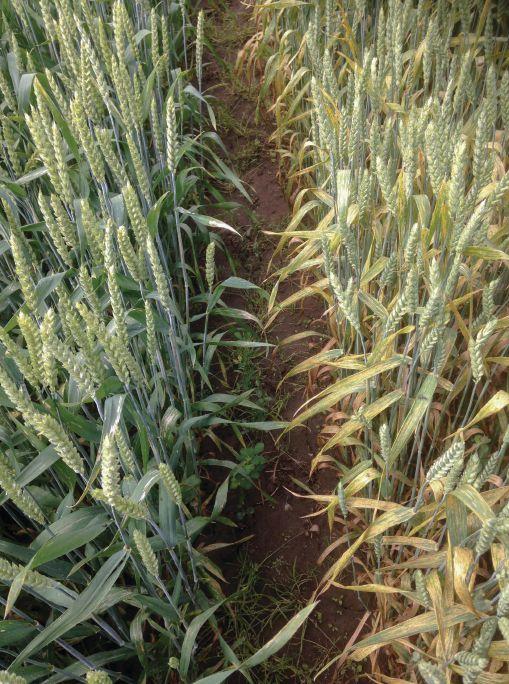
The winter wheat variety on the right is severely infected with stripe rust while the one on the left is resistant.
When it comes to blazing a trail toward higher-efficiency farming, the Case IH Steiger ® Quadtrac,® Steiger Rowtrac™ and Magnum™ Rowtrac tractors lead the way. Each is packed with innovation designed to make you more productive. Like our smoother-riding five-axle design. So you get more power to the ground with less berming and compaction. Plus, get an even more ideal fit for how you farm by choosing the transmission that matches your application requirements: the new CVXDrive™ continuously variable transmission or our proven PowerDrive powershift transmission. Learn more at caseih.com/tracks . 3-YEAR / 2,000-HOUR COMPLETE FACTORY WARRANTY*
!SUSTAINABLE RESISTANCE
Although fungicides are available for managing stripe rust, resistant wheat varieties are a valuable tool for controlling this disease, especially with the rise of more aggressive races.
Researchers are looking into two types of resistances: seedling resistance and adult-plant resistance.
Seedling resistance provides strong resistance but relies on a single gene, which means the pathogen only needs one mutation to overcome resistance. In contrast, adult-plant resistance requires several mutations, making it harder for the pathogen to overcome resistance.
especially with the rise of these more aggressive races.
Navabi and his research team are currently developing the information and tools needed to breed stripe rust-resistant winter wheat varieties for Ontario. This project is funded by Grain Farmers of Ontario, the Ontario Ministry of Agriculture, Food and Rural Affairs (OMAFRA) and the University of Guelph.
STRIPE RUST RACES AND RESISTANCE GENES
One of the studies in this project involves monitoring the stripe rust races in Ontario so the researchers will be able to develop varieties with resistance to those races.
So far, Navabi’s team has collected or received 80 samples from 20 locations across Ontario. To identify the races, they test the samples on a set of 42 differential wheat lines. These lines carry different stripe rust resistance genes so they respond differently to the different races.
Serajazari notes that there is no evidence that the stripe rust pathogen overwinters in Ontario. Instead, the spores are blown into the province from the United States.
“Our results have shown that the Ontario races resemble races from central and eastern United States,” she says. Most of the races found in Ontario are the more aggressive ones that are better adapted to warmer temperatures.
Through this work, the researchers have identified several stripe rust resistance genes – called Yr genes – that would work for Ontario. Serajazari says, “The results suggest that the seedling resistance genes Yr1, 5, 10, 15, 24, 26 and 28 are effective against the current prevalent races in Ontario.”
Seedling resistance, also known as all-stage resistance, is one of two types of rust resistance. Seedling resistance involves major resistance genes that provide strong resistance against specific races of the pathogen. Usually this resistance relies on a single gene, so the pathogen needs only one mutation to overcome the resistance.
The other type of resistance is called adult-plant resistance because it comes into play sometime after the plant’s seedling stage. Adult-plant resistance usually involves several genes, with each of the genes contributing a little to the plant’s ability to fight the pathogen. It usually produces moderate resistance. However, it can be more durable than all-stage resistance because the patho-
gen needs several mutations to overcome the resistance in the plant.
Navabi and his team would like to add both adult-plant and allstage resistance genes into the program’s breeding lines. Having both types of stripe rust resistance in individual varieties would help to provide resistance that is both strong and durable.
FIELD EVALUATIONS TO FIND RESISTANCE
In another component of the project, Navabi’s team is evaluating many winter wheat varieties and lines in the field for all-stage and adult-plant resistance to find plants that could be used for making crosses to add stripe rust resistance into the program’s breeding lines.
As part of this work, the researchers have evaluated diverse Ontario varieties. “Those evaluations showed that Priesley is the only Ontario commercial winter wheat with all-stage resistance against stripe rust,” Serajazari notes. “More than 50 per cent of Ontario commercial winter wheats possess varying degrees of adult-plant resistance.”
They have also tested 430 wheat lines and cultivars from the Canadian Winter Wheat Diversity Panel (CWWDP). This unique germplasm collection, which was developed by one of Navabi’s PhD students, includes a wide range of historic and modern winter wheats from across the country. Navabi’s team has genotyped all the lines in the CWWDP.
The researchers have found that 56 per cent of the CWWDP lines have varying degrees of adult-plant resistance to stripe rust. Less than five per cent carry effective all-stage resistance.
GENOMIC SEARCHES FOR RESISTANCE
Navabi and his team are also conducting genomic work to detect locations along the winter wheat genome that are related to stripe rust resistance. This work can lead to the development of molecular markers. Such markers would enable efficient, accurate screening of breeding materials in the lab, avoiding the laborious work of growing thousands of plants, exposing them to the pathogen, and measuring their disease responses.
Using the genotypes in the CWWDP, the researchers applied a technique known as a genome-wide association study to see if any particular genetic variants occurred most often in genotypes that have stripe rust resistance. As a result, they have identified eight potential locations in the winter wheat genome associated with all-stage resistance and one location associated with adult-plant resistance.
The research team is also using another technique for mapping
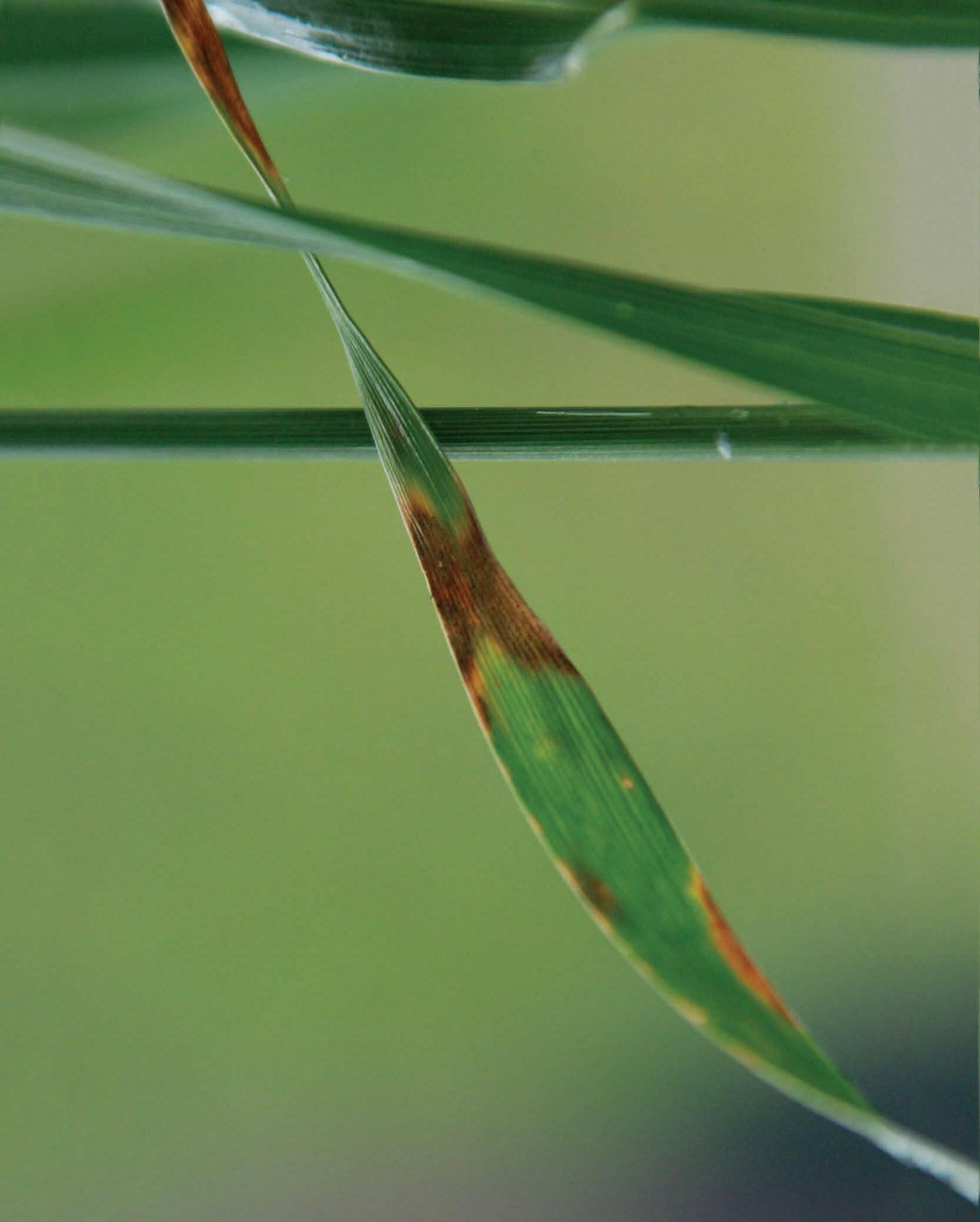
This stripe rust infection occurred at the seedling stage.
the location of resistance genes. This approach involves developing what are called recombinant inbred lines and then comparing those lines with each other. To create these lines, they have crossed a resistant wheat variety, Priesley, and a susceptible wheat variety, Venture.
The researchers now have a set of 250 inbred lines that they will be evaluating for adult-plant and all-stage resistance in the greenhouse and the field. Then, each line will be genotyped and analyzed against the disease response data collected in the field and greenhouse. This analysis will enable the researchers to figure out where the resistance is located in Priesley’s genome and to develop markers for that location.
UNDERSTANDING PATHOGEN-HOST INTERACTIONS
Another study in this project is gaining a better understanding of the interactions between Puccinia striiformis and its winter wheat host at a molecular level – fundamental work that will help in fighting the pathogen.
“We have a spectrum of different reactions to stripe rust in our wheat cultivars, from extreme susceptibility to moderate tolerance and finally full immunity. How mechanistically, at the genetic level, these diverse defense reactions are controlled in wheat is not yet entirely known. Unravelling key defence genes and pathways in these resistant plants will provide valuable building blocks for our existing and future breeding programs,” explains Hamed (Soren) Seifi, another research associate in Navabi’s program.
“What is known is that there are promising plant resistance sources available against stripe rust, but what is not known is the molecular mechanisms underpinning resistance response. For instance, [an
Australian wheat genotype known as Avocet-YR15], which harbours the Yr15 resistance gene is fully resistant to several virulent strains of stripe rust. In our lab, we have tested three different isolates of stripe rust on Avocet-YR15 plants. These plants are showing full immunity –absolutely no symptoms – against these isolates.”
He notes, “To unravel the resistance mechanism in Avocet-YR15 at the molecular level, we are conducting a transcriptomics study (a high-throughput gene expression analysis in an organism). The genome of wheat is very huge, more than five times bigger than that of humans. It is also exceptionally complex. Therefore, to be able to analyze such genetic codes, we needed to use high performance computing cloud services.”
This study had two phases. “In the first phase, we performed several infection trials, in vitro assays, microscopy analysis and finally RNA extraction and sequencing. In the second part, we analyzed the raw RNA sequencing data using different bioinformatics tools on our high performance computing cloud to make sense of the wheat gene expression profile during the resistance reaction to stripe rust,” Seifi says.
“We have already concluded both phases and were able to generate some promising and novel results. We are currently doing some lab experiments to validate our findings.”
Overall, Navabi’s stripe rust project is contributing to increased information on the stripe rust races in Ontario, the genetics of stripe rust resistance and pathogen-host interactions, and to the development of new tools for breeding winter wheat varieties that have the right combinations of resistance genes to provide strong, durable resistance to stripe rust.
NO PAYOFF FOR EARLY SEASON FUNGICIDE ON CORN
Study shows adding fungicide to early-season herbicide showed no economic benefit.
by Julienne Isaacs
Anew study out of the University of Guelph Ridgetown campus suggests there may be little benefit to earlyseason fungicide/herbicide combinations.
The practice has come into vogue in the last few years as an attempt to protect or boost corn yield while eliminating costs associated with a later-season pass over the field.
“There’s been interest in Ontario in adding a fungicide to your last in-crop application of glyphosate,” says Peter Sikkema, a professor of weed management, who co-led the study along with his colleague David Hooker, an associate professor in the department of plant agriculture at Ridgetown. “Our question was, ‘Is there value to doing this?’”
Hooker says many corn growers apply glyphosate in glyphosate-resistant corn around the V6 stage to ‘clean up’ late-emerging annual weeds or control difficult perennial weed species like perennial sow thistle.
“Economically, the decision to add a fungicide to the last in-crop herbicide application would only be the cost of the fungicide itself. A $15 per acre investment in fungicide would require a three bushel per acre corn yield response to break even,” Hooker explains.
“Before this research was initiated, there was some evidence from elsewhere that showed significant corn responses to an early fungicide application at weed control timing. Growers asked for more third-party data to help them make more informed decisions.”
The study’s goal was to investigate corn response to each of six different fungicides applied with glyphosate at the V4 to V7 stage of corn development, and to assess whether the co-application of glyphosate and a fungicide caused any early-stage injury in corn.
Study design and results
The study, which was funded by the Grain Farmers of Ontario and Growing Forward 2, consisted of six field experiments conducted between 2014 and 2016.
Fungicides tested in the study in combination with glyphosate (Monsanto’s Roundup WeatherMAX) included pyraclostrobin (BASF’s Headline), pyraclostrobin/fluxapyroxad (BASF’s Priaxor), pyraclostrobin/metconazole (BASF’s Twinline), trifloxystrobin/propiconazole (Bayer CropScience’s Stratego 250EC) and azoxystrobin/propiconazole (Syngenta’s Quilt). An untreated control was included in each experiment.
Treatments were applied using manufacturers’ recommended rates and applied at the V4 to V7 stage in corn.
Corn injury was visually assessed at seven, 14, 21 and 28 days after application (DAA), and disease incidence and severity were
visually estimated at 14, 28 and 56 DAA.
While corn injury at seven DAA was slightly higher for Roundup plus Twinline or Stratego compared with Roundup used alone, the other Roundup/fungicide combinations did not result in any increase in injury, and there was zero corn injury at 14, 21 and 28 DAA for all evaluated treatments.
In terms of disease severity, there was no difference among the treatments evaluated.
“At 28 DAA, the addition of Headline, Priaxor, Twinline, Stratego and Quilt to Roundup reduced disease incidence up to 19 per cent and disease severity up to four per cent compared with glyphosate alone,” note the authors of the study.
However, even though disease incidence decreased with the Roundup/fungicide combinations, there was no difference in corn yield, Hooker says.
“In general the study showed that fungicides reduced low levels of leaf disease in the crop canopies in all six field locations, but there were no grain yield responses to any fungicide applied with glyphosate as a tank mix around the V4 to V7 stage in corn,” he says.
No economic return
While the evidence points to good control of early-season leaf diseases such as eyespot and Physoderma brown spot when fungicides are applied with Roundup at the V4 to V7 stage, Hooker says this control only lasts for a few weeks after application— meaning no protection extends to leaves in the upper part of the canopy, which are important for yield.
“This study and others show very little evidence of a positive return on investment for an early fungicide application at herbicide timing, mainly because foliar diseases are usually at low levels around this time, the activity of a fungicide does not last for very long, and the corn canopy is still early in development,” he says.
“Our data would suggest that when herbicides are applied at this stage, there just isn’t the level of disease pressure that would justify the fungicide,” Sikkema agrees.
Most research shows that the likelihood for economic returns increase when foliar fungicides are applied at silking, Hooker says.
“At silking, growers in Ontario need to consider a fungicide that controls foliar diseases, if warranted, but also with a focus on reducing ear moulds that produce mycotoxins,” he says.
A pass over the field at this time could also include an insecticide tank mix to control western bean cutworm larvae if necessary.
Prosaro XTR fungicide. The best just got even better. Prosaro® XTR fungicide is here and it’s better than ever. How much better? How about 10.6% over untreated* in winter wheat. So regardless of disease pressure and environmental conditions, give your wheat and barley yields a big-time boost come harvest. Protect your cereals and your bottom line with Prosaro XTR.
*Source: 4
winter wheat product development trials (2013 and 2015). Your results may vary according to agronomic, environmental and disease pressure variables.
SOYBEAN DISEASE STUDIES IN THE MARITIMES
With soybean acres on the rise, researchers investigate cover crops, fungicides and more.
by Carolyn King
With the increase in soybean acres over the past 15 years in the Maritimes, disease management research is important for advancing soybean production in the region. “With more acreage, I would expect more soybean disease problems to start to be reported because the broader the area where a crop is grown, the more chance there is that some diseases will get a foothold somewhere,” says Adam Foster, a research scientist with Agriculture and AgriFood Canada (AAFC) in Charlottetown.
Foster, who first came to the Maritimes in the fall of 2015, is a plant pathologist focusing on grain and oilseed crops, including soybeans. He notes, “I’m one of those people who gets incredibly excited about working on organisms that most people probably don’t find exciting and many people find to be a problem. I’m hoping that my enthusiasm and drive will help me find some unique solutions to the disease problems that crop growers have in the region.”
Cover crop effects on disease
Foster’s soybean research includes an interesting three-year project that could help in developing some of those unique solutions to disease concerns in the crop.
His project grew out of a project led by Aaron Mills, another research scientist at AAFC-Charlottetown. “Aaron partnered with the Atlantic Grains Council to look at the agronomic effects of different cover crops on soybean and barley crops in the following years. I was a member of that project doing some pathology work,” Foster explains. Then an AAFC internal proposal call came along, and Foster took that opportunity to develop a study that builds on Mills’ project.
Foster’s study, which is funded by AAFC and the Atlantic Grains Council, started in 2018. It is assessing cover crop effects on the soil microbial community and on disease occurrence in the following soybean and barley crops.
“My goal is to identify the potential benefits that the cover crops are having on the soil microbial community but also to identify the risks that they might be having if some of the cover crops promote different pathogens,” he explains.
“For soybean growers, the findings from this research could help in choosing which cover crops to put in their rotation before soybean. Of course, growers choose cover crops for various reasons, including improving soil health and stopping erosion, as well as other factors; for instance, buckwheat and mustard are being heavily promoted in the Maritimes to control wireworms. So the project’s findings could give growers more knowledge about cover crop effects from a microbial perspective and potentially could pro -
vide a warning if a particular cover crop species could increase the risk of certain pathogens in their field. That way, the growers could watch out for those pathogens and take steps to control them before they cause serious problems.”
Out of the 25 different cover crop treatments in Mills’ project, Foster selected 12 treatments for his microbial project, mainly because of the high cost of microbial analysis.
The selected treatments are representative of a range of crop types. “Our cover crop treatments include alfalfa, annual ryegrass, brown mustard, buckwheat, clover, oilseed radish, and Sudan grass, and a few combinations of cover crop species such as buckwheat plus clover, and clover, buckwheat and brown mustard mixed together. Also, for comparison, we have a treatment that we call our red soil control. It has no cover crop, and we manually remove any weeds, so we can know what the microbial community would be like if a field was left bare,” Foster says.
Starting in 2019, Foster will be screening soybean lines from an AAFC breeding program for white mould resistance.
Dead simple weed control.
Enforcer ® M works fast to take out tough weeds in cereals.
Knocks down your toughest weeds
Including lamb’s-quarters, chickweed, common ragweed and cleavers (including Group 2- and glyphosateresistant biotypes)
Ask
Gentle on wheat and barley crops
Manage leaf disease and fertility with several tank-mix options
Convenient and flexible to use
Spray when it works for you with a wide window of application and an all-in-one formulation
He adds, “For a long time, a lot of the cover crop species have been reported to have effects on the soil microbial community. In our project, we are using new tools to understand what is happening more deeply than could be done in the past. We are using a next-generation DNA sequencing approach to try to identify how all of the individuals within the microbiome are being affected by the cover crops.”
In the cover crop year of the rotation, Foster and his project team are collecting soil and crop residue samples and conducting DNA analysis of the microbes in those samples. Then in the field crop year, they are measuring things like the levels of different root diseases, airborne spores and foliar diseases, as well as crop yields and quality factors.
Foster is intrigued by this opportunity to take a closer look at the pathogens within the soil microbiomes of the different cover crops. “Many of these crops could be alternate hosts for some of the pathogens that affect our crops in the next year. So it will be really interesting to see, for example, if perhaps a cover crop that is a potential host for a pathogen actually isn’t benefitting that pathogen and has a way to control it. And that might not be direct control by the plant itself; the plant might be promoting something else [in the soil that suppresses or kills the pathogen]. But until we get some results, it is just an exciting guessing game.”
Fungicide trials, variety evaluations
Last year, Foster completed a four-year soybean project to examine the effects of foliar fungicides and seed treatments to control disease across a range of different cultivars. AAFC and the Atlantic Grains Council funded this project, which was started in 2014 by Richard Martin, Foster’s predecessor at AAFC-Charlottetown.
This small-plot research took place under natural disease pressure, at AAFC-Charlottetown’s research farm at Harrington.
The foliar fungicide trials evaluated seven commercially available products for their effects on soybean disease and yields, compared to an untreated control. “In all the years of this project, the foliar disease pressure at the field site was lower than average, primarily because there was a lot less rainfall than usual,” Foster notes. “So none of the foliar fungicides had a significant effect because there was very little foliar disease to control.”
The seed treatment trials tested eight commercially available products as well as a mix of two of the products, Cruiser Maxx Beans plus Dynasty. The pressure from soil-borne diseases was low in all four years of these trials.
“Even though there was very little disease, some of the seed treatments did actually produce a small but consistent boost in soybean yield [compared to the untreated control], across the different cultivars and over the years of the study,” he says.
“The biggest effect came from the combination of Cruiser Maxx Beans plus Dynasty. This combination includes fungicides and an insecticide, and provides control for a variety of different soil-borne pathogens.” Cruiser Maxx Beans’ active ingredients include: fludioxonil (Group 12 fungicide); metalaxyl-M and S-isomer (Group 4 fungicide); and thiamethoxam (Group 4 insecticide). Dynasty 100FS’s active ingredient is azoxystrobin (Group 11 fungicide).
“We also had a control plot with the insecticide by itself. The insecticide on its own didn’t have any particular effect on yield,” he notes. “So the yield benefit from combining Cruiser Maxx Beans and Dynasty suggests that the ability to control lots of different organisms simultaneously might give a better overall benefit for the soybean crop.”
The cultivar-specific trials compared four soybean cultivars to see whether they would have different responses to the seed treatments.
Foster says, “The treatments performed pretty much identically on all the different cultivars. That is good news because you wouldn’t want to have a cultivar that didn’t respond to a particular seed treatment.”
Overall, Foster emphasizes that the foliar and seed treatment fungicide products might have produced stronger yield effects if the disease pressure had been higher during the project.
In 2018, Foster started a new soybean project, running until 2023, with the Atlantic Grains Council. This project is examining if seed treatments affect optimal planting density, and it is repeating some of the foliar fungicide work from the 2014-2018 project but with enhanced disease pressure.
And in 2019, Foster will be starting collaborative work with Elroy Cober, AAFC’s soybean breeder based in Ottawa. Foster says, “I’ll be screening for white mould resistance in some of his elite lines that he is planning to release in the near future.” The screening results will provide Cober with more data on the performance of these lines, helping him with things like deciding which of the lines will go into variety registration trials.
Tips for soybean growers
Foster’s main advice to growers for disease management in soybean is to be vigilant about scouting for disease problems.
“If you identify disease problems early enough and you work with your provincial extension staff or your local extension services groups, you could solve the problems before they have major impacts. That is not true for every disease, of course, and sometimes you won’t notice the disease until it is too late to control. But monitoring and scouting fields is the best way to keep an eye on what is going on in your crop.”
He suggests that growers watch for existing disease issues and also for symptoms that might indicate new disease risks.
“[For instance,] I think soybean growers should be on the lookout for the soybean cyst nematode. To my knowledge, this pest hasn’t been reported in Atlantic Canada, but it is a major problem in Ontario.” This nematode has been spreading through Ontario’s soybean growing area since it was first found in southwestern Ontario in 1988. It has already spread as far eastward as western Quebec, where it was reported in 2014. To watch for this nematode, growers can check yellowed, stunted and dead soybean plants to see if the roots have any tiny cysts on them. If they suspect the disease, they can send the root samples to a lab for diagnosis.
Although soybean diseases may become more troublesome in the coming years in the Maritimes, ongoing efforts by growers, extension agents and researchers like Foster will help reduce disease impacts.
Adam Foster’s research at AAFC-Charlottetown involves work on diseases in grain and oilseed crops, including soybean.
PESTS AND DISEASES
COMMON RUST OR SOUTHERN RUST?
What the differences are between these two corn rusts and why that matters.
by Carolyn King
Both common rust and southern rust can cause substantial yield losses in susceptible corn plants, but the two diseases differ from each other in some important ways. With common rust as a longstanding problem in Ontario and southern rust becoming an increasing concern, field crops pathologist Albert Tenuta walks us through the key differences between these two diseases, outlines current research and monitoring work, and offers some management tips.
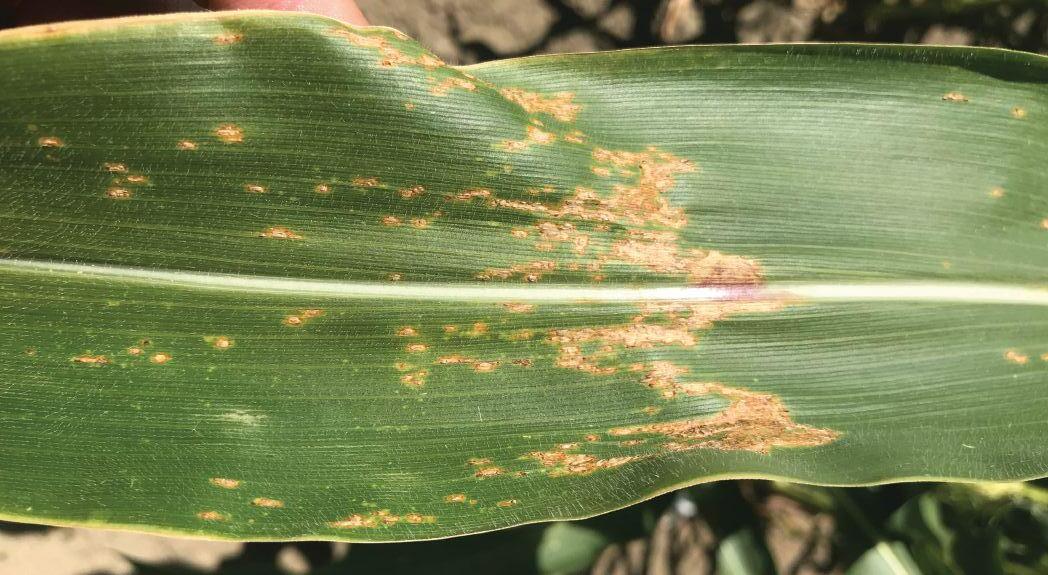
Common rust is caused by Puccinia sorghi, and southern rust is caused by Puccinia polysora. Both are fungal leaf diseases of corn. And both produce spore-filled pustules that erupt through the leaf’s surface. The specific characteristics of these pustules help in distinguishing between the two diseases.
“Where the pustules occur on the leaves differs somewhat. With common rust, the pustules are on the upper and lower leaf surfaces. With southern rust, the pustules are only on the upper leaf surfaces,” says Tenuta, who is with the Ontario Ministry of Agriculture, Food and Rural Affairs (OMAFRA).
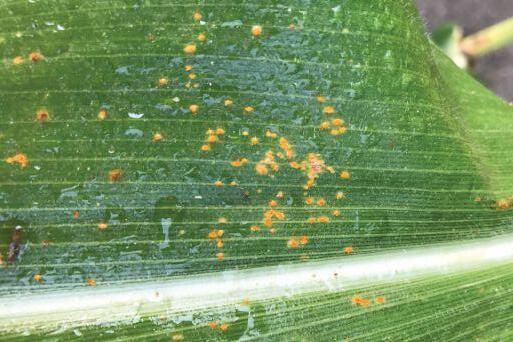
“The pustules also look different in the two diseases. Common rust has elongated, brick red to brown or cinnamon brown pustules. In southern rust, the pustules are orange to reddish orange, and they are much smaller, about the size of a pinhead, and more circular compared to the common rust pustules. Also, common rust pustules tend to be more spread out, while southern rust pustules usually cluster together.”
He notes that common rust is the most common corn rust in Ontario, and it is one of the three most important foliar diseases of corn in the province, along with gray leaf spot and northern corn leaf blight. The occurrence of common rust varies from year to year depending on the weather. For instance, in 2017 it was the most prevalent foliar disease in Ontario corn, and then in 2018 the levels of this disease were much lower.
“Southern rust is still at relatively low levels in the province compared to common rust, although we have been seeing southern rust more often in the last few years,” Tenuta says.
“In 2017, southern rust levels were probably the highest I have ever seen in Ontario, particularly in the southwest where I saw some plots with highly susceptible hybrids that were severely infected.” As well, southern rust’s distribution across Ontario increased in 2017, occurring as far east as eastern Ontario for the first time; in most years, this disease tends to be mainly in the southwest.
Neither pathogen overwinters in Ontario. He explains, “Common rust and southern rust are what we call obligate parasites, so they require living tissue to survive. They won’t survive much more than a few weeks without a living plant host to live on.” For both diseases, corn is the primary host, so when the corn plants die, these pathogens cannot survive.
Both pathogens overwinter in warmer climates farther south
PHOTOS COURTESY OF ALBERT TENUTA.
and have similar disease cycles. Each growing season, their spores are blown northward from their overwintering regions. If the spores land on susceptible corn plants under favourable weather conditions, the spores will germinate, infect the plant, develop pustules and produce the next generation of spores. The period from infection to spore production takes about one to two weeks, depending on the weather and the pathogen.
The infection cycle will continue to repeat itself on the plant as long as favourable conditions persist. The new spores can be blown further north, into the Corn Belt and then Ontario. If a susceptible corn crop is infected before the tassel stage, the risk of yield loss is high. If the infection occurs towards the end of the reproductive phase, it will likely not have much impact on yields.
A key difference between the two pathogens is their overwintering region. “Common rust typically overwinters in the southern United States and then works its way northward,” Tenuta says. “Southern rust usually overwinters in the Mexico-Caribbean area, then moves north into the southern U.S. and then farther north. However, southern rust is becoming more frequent and more problematic in the U.S. Midwest.”
He explains that the increasing levels of southern rust in the Midwest and Ontario in the last few years are likely mainly because of milder winters, like the winter of 2016-17. “The milder the winter, the earlier corn will be planted and the earlier the disease can develop in Mexico, then the southern U.S., the Midwest, and Ontario.”
Both diseases need wind and rain storms to carry their spores on northward. And, of course, the spores require the right environmental conditions in Ontario for the disease to develop in the province’s corn crops.
The two pathogens thrive under somewhat different conditions. Common rust likes high humidity and mild temperatures between about 15 and 25 C. Southern rust also likes humidity but it prefers warmer temperatures from about 25 to over 30 C.
Under the right conditions – favourable moisture and temperature conditions, a susceptible hybrid or inbred, and arrival of the spores early in the crop’s development – both rust diseases can quickly reach damaging levels. “For instance, OMAFRA has done inoculated trials here at Ridgetown in the southwest, and we’ve had up to 36 bushels per acre lost due to common rust on some susceptible lines,” he notes.
Research and monitoring
Tenuta and his colleagues are collaborating on various activities to advance management of common rust and southern rust in Ontario corn crops. For instance, Tenuta is helping Lana Reid, the corn breeder with Agriculture and Agri-Food Canada in Ottawa, with her work to develop rust-resistant lines.
“Lana has been breeding for rust resistance and has a number of corn rust-resistant or tolerant inbreds and hybrids,” he says. “She evaluates her breeding materials in eastern Ontario, and because we can get both southern rust and common rust in the southwest, we evaluate her materials in the fields here. For common rust, we either inoculate the lines or have natural infection. For southern rust, we depend on natural infection.”
He adds, “Many Ontario hybrids have resistance to common rust. But we haven’t had a lot of screening for southern rust in Ontario, so we have more susceptibility to that disease in our varieties.”
Tenuta and his OMAFRA colleagues also work with Reid’s research team to conduct annual corn disease surveys in the province to assess the incidence and severity of the two rusts and many other corn diseases. He notes, “At the same time, we collect different
isolates of the diseases and we use them either for inoculum in the greenhouse or to watch for changes in the different races.”
Tenuta and his colleagues in other provinces and the U.S. also regularly share information on corn diseases and their spread. “We have monitoring systems for rust and other pathogens. And we frequently discuss the movement and potential threats of new corn diseases, like Goss’s wilt and tar spot, and diseases that are here already, like southern rust, that are perhaps expanding their geographical distribution.” The Integrated Pest Information Platform for Extension and Education (iPiPE) tracks the annual spread of several crop diseases, including southern rust, across the U.S. and posts the tracking data at ext.ipipe.org.
Another ongoing task for Tenuta is to evaluate the efficacy of different fungicides for managing diseases like common rust and southern rust, and he works closely with his U.S. colleagues to develop efficacy tables for corn foliar fungicides.
Tenuta says, “A lot of the common fungicide products that are available in Ontario are very good to excellent for controlling both rust diseases.” He adds, “We don’t have as many registered products for southern rust since it is new concern for Ontario, but I would expect new registrations will have both rusts in future.”
Management tips
“Common rust is definitely a disease to keep an eye on, but we have the tools to manage it,” Tenuta says. So, although southern rust is less common in Ontario, it could be more of a threat when it does appear because there are few resistant hybrids and few fungicides registered for its control.
Tenuta’s key tip for managing both diseases in-crop is to start scouting as early as possible. “The earlier the spores are blown into the province, and the earlier you have favourable weather conditions that allow rust to develop, the greater the potential impact these diseases can have on corn health and yield.”
He adds, “Scouting is especially important for seed corn production because seed corn inbreds are much more susceptible to these rusts than commercial corn. Some of the greatest common rust impacts I’ve seen have been on seed corn.”
Tenuta concludes, “For Ontario, common rust is the most frequent and usually the most important corn rust. However, southern rust is one to keep on the radar, too, with its sporadic distribution and development in the province every year. And if you’re in seed corn production, whether it is southern rust or common rust, remember that they can hit 50 per cent or more yield losses.”
Southern rust pustules are more circular.
Service
We Didn’t Expect. Results We Depend On.*
During planting, the transmission went out on our three-year old 8320R. We’re small farmers, so we didn’t expect our John Deere dealer to drop everything and send a technician 40 miles to our farm, but that’s what happened. The service manager quickly identified the problem and a truck was on its way to haul the tractor to their shop. Technicians worked through the night and were able to track down the parts needed through the John Deere parts depot. We were back in the field only two days after we called our dealer! And that’s why we’ve been John Deere customers for more than 40 years – because they’ve gone the extra mile for us. We just thought you should know.
*Real story from John Deere customer shared in a letter to John Deere