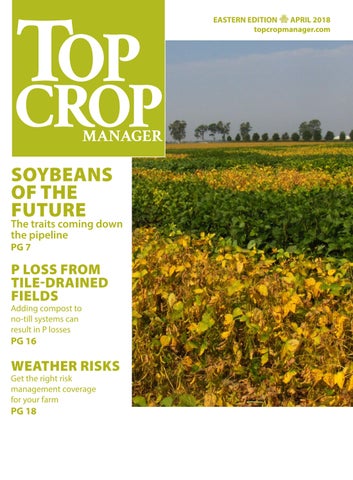
Adding compost to no-till systems can result in P losses
PG 16
WEATHER RISKS
Get the right risk management coverage for your farm
PG 18
NEW Prosaro XTR fungicide. The best just got even better.
NEW Prosaro ® XTR fungicide is here and it’s better than ever. How much better? How about 10.6% over untreated better * in winter wheat. So regardless of disease pressure and environmental conditions, give your wheat and barley yields a big-time boost come harvest. Protect your cereals and your bottom line with NEW Prosaro XTR.
* Source: 4 winter wheat product development trials (2013 and 2015). Your results may vary according to agronomic, environmental and disease pressure variables.
TOP CROP
MANAGER
5 | The effects of plant hormones
Understanding how plant hormones affect crop growth and development. By
Ross H. McKenzie, PhD, P. Ag.
| Proposed tax changes for the family farm
you need to know.
By Trudy Kelly Forsythe
ON THE WEB
EASTERN WEED CONTROL GUIDE NOW AVAILABLE
Weed management is always an important topic to producers. Weeds evolve and change year to year: What plagued fields last year may be completely different this year. Decisions on what to spray can become overwhelming. That’s why we’ve continued to make updates to our Weed Control Guide for 2018. Visit topcropmanager.com/resource-guides
STEFANIE CROLEY | EDITOR
PLANNING AND PREVENTION
An ounce of prevention is worth a pound of cure.”
Benjamin Franklin was reportedly referring to fire safety when he penned this quote, and at the risk of sounding cliché, it is more pertinent now than ever before.
In February, just down the road from Top Crop Manager’s head office in Simcoe, Ont., the county of Brant and the area surrounding the Grand River suffered serious flooding due to a quick thaw and excessive rain. Roads were washed out, homes were damaged, fields were completely underwater and a state of emergency was declared. In contrast, Western Canada experienced a severely dry winter, and the lack of moisture has producers concerned about the state of their winter wheat. Two completely opposite problems, but both equally concerning as the spring approaches.
If you’ve ever experienced a devastating event on your farm, you’ll know it’s not always possible to prevent things like extreme weather changes from happening. But with a little preparation and planning, you can prevent everything from completely falling apart. As spring approaches and minds shift toward seeding and strategies for the upcoming growing season, it’s important to remember how the decisions you make now (and all throughout the year) can impact your crops – and your bottom line. We tend to put a heavy focus on the well-being of the outside of the farm: warding off disease and insect pest threats; choosing the best varieties and crop rotations; selecting the best crop chemicals. But as the daughter of an accountant, I’ve always associated April with “tax season,” so I’d be remiss not to mention the importance of taking the time to check up on the inside of your business too. How organized is your paperwork? Are you prepared for a potentially disastrous event? Do you have a succession plan? Though these facets of the farm may take a backseat during the busy crop season, it’s important to take some time to complete those administrative tasks and organize what’s often thought of as the more mundane portion of your business.
We strive to fill each edition of Top Crop Manager with information to help you make the best decisions for your farm. So, in addition to our usual stories on plant breeding, pests and diseases, and crop management, we’ve included a special business management section in this issue. Starting on page 14, you’ll find an update on proposed tax changes that will directly impact tax planning for family farm corporations and tips on how to protect your farm from extreme weather events.
Planning is key to preventing problems in any business, and only you can choose the right options for your operation. So when you’re deciding what chemicals to use, what rotation to try, or what new equipment to buy, consider re-evaluating your insurance options, succession plan and financial management strategies. We can’t always prevent bad things from happening, but with the right tools and resources (and undoubtedly a little bit of trial and error), you’ll be able to make informed choices to help your operation succeed, even in a potentially devastating situation.
Best of luck.
TOP CROP
PRESIDENT & CEO Mike Fredericks
Printed in Canada ISSN 1717-452X
PUBLICATION MAIL AGREEMENT #40065710
CIRCULATION
email: rthava@annexbusinessmedia.com Tel: 416.442.5600 ext. 3555 Fax: 416.510.6875 or 416.442.2191 Mail: 111 Gordon Baker Rd., Suite 400, Toronto, ON M2H 3R1
SUBSCRIPTION RATES
Top Crop Manager West – 9 issues Feb, Mar, Mid-Mar, Apr, June, Sept, Oct, Nov and Dec – 1 Year - $47.50 Cdn. plus tax
Top Crop Manager East – 7 issues Feb, Mar, Apr, Sept, Oct, Nov and Dec – 1 Year - $47.50 Cdn. plus tax
Potatoes in Canada – 1 issue Spring – 1 Year $17.00 Cdn.
Occasionally, Top Crop Manager will mail information on behalf of industry related groups whose products and services we believe may be of interest to you. If you prefer not to receive this information, please contact our circulation department in any of the four ways
THE EFFECTS OF PLANT HORMONES
Understanding how plant hormones affect crop growth and development.
by Ross H. McKenzie, PhD, P. Ag.
Plant hormones are chemicals in plants that regulate almost all aspects of plant growth and development. Hormones play a critical role in how plants respond to biotic and abiotic factors, including sunlight, soil conditions, soil water and nutrients. Hormones are naturally occurring in plants, but some specific hormones can be made synthetically for application to crops.
Plant hormones are grouped into five classes depending on their chemical makeup: abscisic acid, auxins, cytokinins, ethylene and gibberellins. These hormones control or influence all aspects of plant growth and reproduction, including seed germination, growth of roots, stems and leaves, plant flowering, seed development, seed fill and seed dormancy.
In Western Canada for example, we presently use two types of plant growth regulators (PGRs) that are commercially available. The first type are ethylene-releasing agents (for example, Ethrel, with the active ingredient ethephon) registered for use with wheat. When applied at the flag leaf growth stage (GS 38), an ethylene-releasing agent decreases plant height and increases stem wall thickness. The second type of PGR is the gibberellin inhibitor, which shortens the crop and reduces stem elongation and lodging.
Plant hormones are frequently interactive to assist crops to respond to varying environmental conditions. As we learn more about how crops grow and how hormones influence crop growth and yield, the more we can use science to improve crop growth and production.
Abscisic acid
The principal effect of abscisic acid is inhibition of cell growth. Abscisic acid concentration increases in developing seeds to promote dormancy. Abscisic acid is relatively high in seed but decreases just before the seed germinates. During germination and early seedling growth, abscisic acid level continues to decrease. When plants start to produce shoots and leaves, abscisic acid levels increase. As levels continue to increase, growth in older, mature plant parts is slowed and terminated.
Plants produce abscisic acid in response to water stress. Abscisic acid is made in drought-affected leaves and roots and developing seeds. Abscisic acid travels to the stomata to prevent water loss through the stomata.
Auxins
Auxins are responsible for many aspects of plant growth, including cellular elongation and stimulating shoot growth. Auxins are responsible for the way plants grow towards light (called phototropism). Auxins regulate which cells elongate to control plant growth direction. Auxins maintain dominance of the main shoot over the growth of tillers and buds, and maintain dominance of main root growth over lateral root growth. Auxins control plant aging and
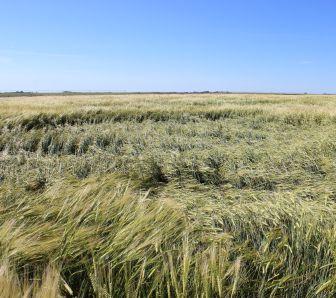
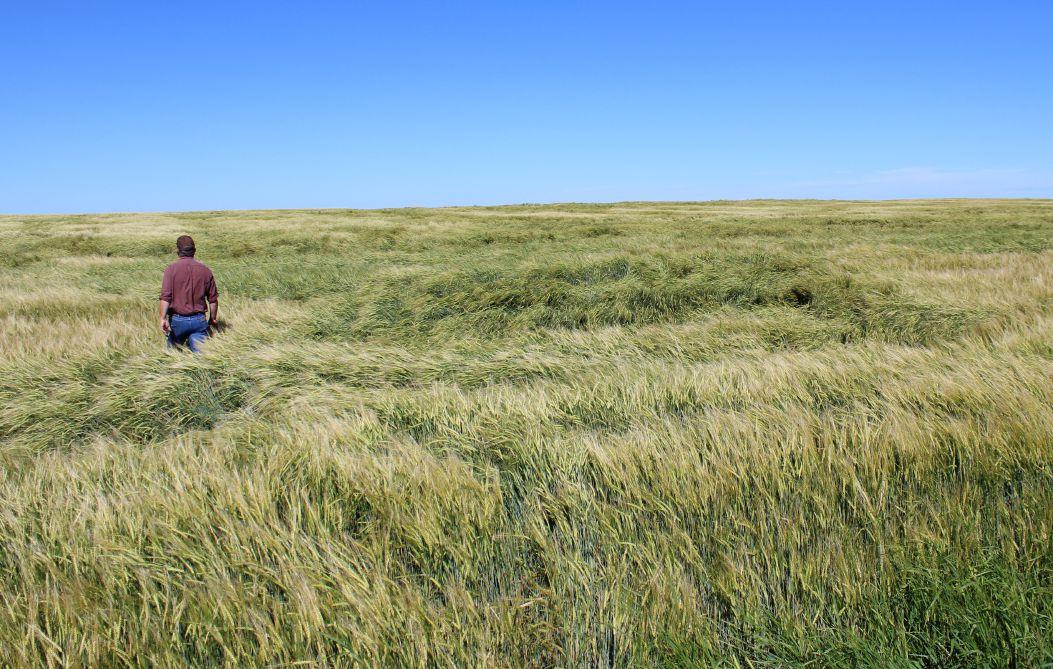
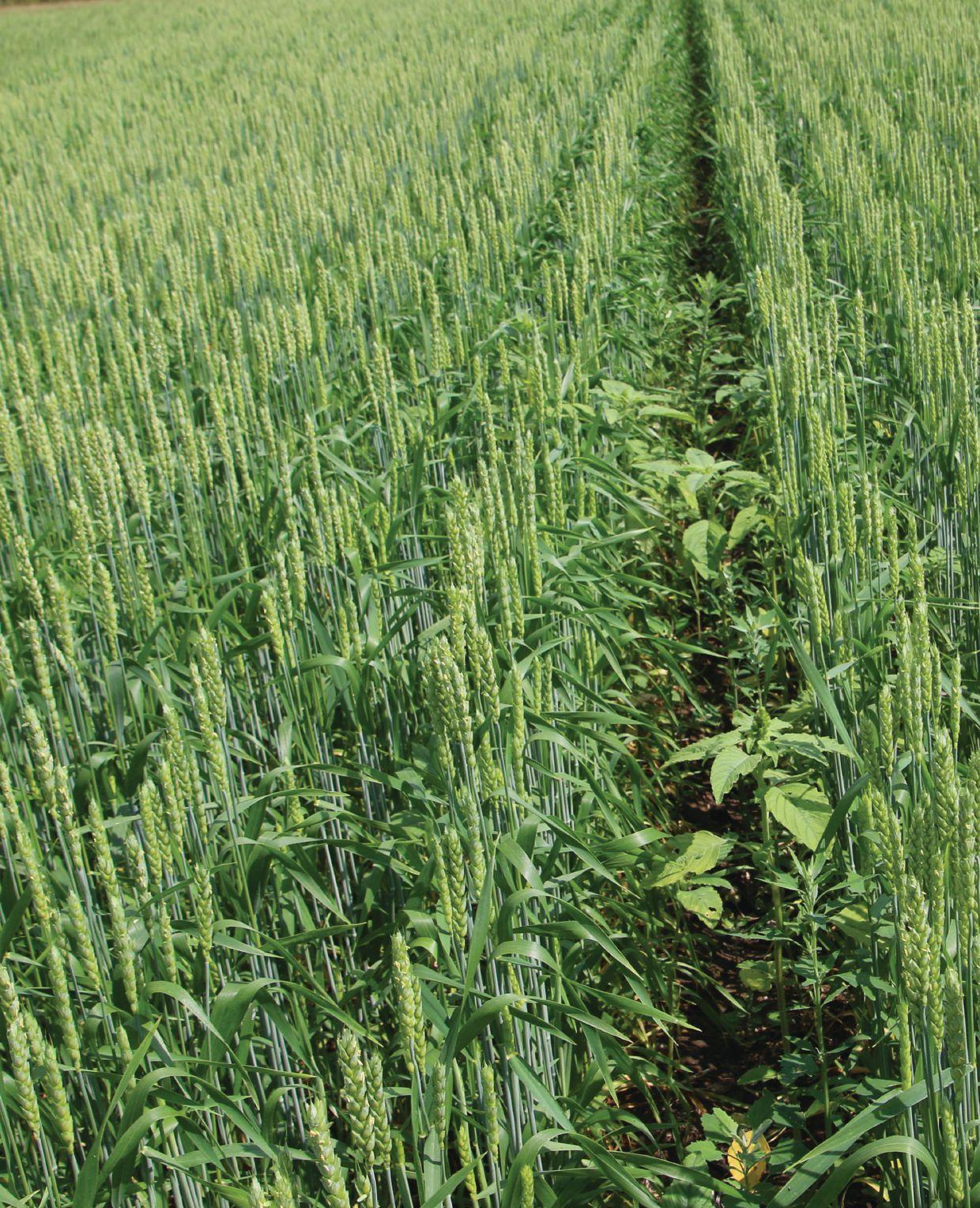
ABOVE: Cereal crop lodging could potentially be reduced with the use of plant growth regulators.
In
the future, canola breeders may need to include dwarf characteristics in new canola varieties to reduce plant height and increase leaf area to increase canola yield potential.
senescence and play a role in seed dormancy. However, plant roots are very sensitive to auxin levels, which can inhibit root growth.
Synthetic auxins, such as 2,4-D, are used as herbicides to kill many types of broad-leaved plants.
Cytokinins
Cytokinins and auxins tend to work together. The ratio of these two hormone groups affect growth throughout a plant’s lifecycle. Normally, both are relatively even in concentration in plants. When cytokinin levels are lower than auxin levels, the plant is in vegetative growth. As cytokinin levels increase and auxin levels decrease, the plant transitions into reproductive growth stage. Higher cytokinin levels can cause plants to have shorter internodal spacings.
Ethylene
Ethylene is a gaseous hydrocarbon that often occurs in larger amounts when plants respond to biotic or abiotic stress. Ethylene can diffuse from its site of origin into the air to affect surrounding plants. Roots, senescing flowers and ripening seed can produce large amounts of ethylene. Ethylene production can be promoted by auxins.
Gibberellins
Gibberellin hormones play a number of roles. They are present in plant shoots and seeds. Initially, gibberellins cause seeds to initiate germination. Gibberellins help to control the transition from vegetative to the reproductive growth. Gibberellins play an important role in stem strength and promote stem elongation between nodes on the stem. Increased gibberellin levels will elongate the internodes to increase stem length. A reduction of gibberellin reduces stem length between internodes to cause dwarf plants. This results in less space between nodes on a stem and leaves are clustered closer together.
Canola
Canola growers are constantly striving to achieve higher yields by maximizing their plant populations, which increase competition among neighbouring plants for sunlight. Hormones respond to increased sunlight competition by stimulating increased stem elongation. Increased competition can cause plants to put more energy into stem elongation growth versus expanded leaf area. This causes taller plants with thinner stems and reduced leaf area development, ultimately reducing yields rather than increasing.
Increased inter-plant competition can increase gibberellin and auxin levels, coupled with reduced ethylene levels. In theory, the application of ethephon, or a growth retardant, could be used to regulate shoot morphology and growth. In the future, canola breeders may need to include dwarf characteristics in varieties to reduce plant height and increase leaf area.
Canola yield is strongly affected by water and nutrient availability and is also influenced by several plant hormones. An optimum level of ethylene is needed for reproductive development in canola. Ethylene can play a role in seed development and maturity
in canola. The number of seeds per pod in canola is affected by gibberellin. An increase or decrease in ethylene production from normal levels during flowering can cause abortion of seed and seed loss.
Pea
Ethylene controls stem elongation in pea. When germinating pea seedlings encounter a surface soil crust, the ethylene hormone increases in response to this abiotic stress by inhibiting cell elongation and in turn, promotes the pea stems to be shorter and thicker. This gives the pea shoot greater strength to effectively push and break through the crusted soil to successfully emerge.
The development of pea leaves and tendrils is strongly controlled by plant hormones. Shorter stem length is caused by gene mutation that decreases the efficiency gibberellin. The mutation results in lower levels of gibberellin in the stem resulting in pea plants with shorter internodes and reduced stem length. A semileafless pea has stipule leaves that surround the main stem, but does not have leaflets. Tendrils are more pronounced, causing the intertwining of tendrils among plants to keep plants upright. This causes the pea to remain more upright as it grows and matures, which makes harvesting easier. During the development of leaves and tendrils, which originate from the apical bud (growing point), leaflets form in areas with low auxin levels and tendrils form in areas with high auxin.
Wheat
In recent years, cereal crop breeding has used dwarfed wheat varieties with altered or a modified sensitivity to gibberellins. Research has shown that wheat with reduced levels of growth-active gibberellins have shorter stems that reduce lodging and can improve grain yield.
PGRs can be applied to control lodging of taller wheat genotypes. Recent research has shown the effects of PGR application but results are greatly affected by application rates and the stage of application –there are even varietal differences.
Various types of PGR products are used in Europe with cereal grains. Most are applied at earlier growth stages to reduce lodging and increase grain yield. Later applications have been shown to reduce grain yield.
There have been promising advances in understanding of abscisic acid, ethylene and cytokinin hormones in signaling response pathways in plants and the interactions between them that can impact crop growth and yield. Researchers are realizing that changing the ratios and relative abundance of hormone concentrations in plants may be a better strategy than changes in the concentration of a single hormone to improved crop response to stress or to achieve optimum crop yield.
Research notes that crop response to abiotic or biotic stresses often cause overlapping hormone responses. Crop breeding and crop management for particular abscisic acid:ethylene and abscisic acid:cytokinin ratios or relative abundances may be an appropriate strategy in the future.
As researchers develop a greater knowledge and understanding of plant hormones on crop growth, crop breeding and management practices can be developed to further enhance crop production and yield.
SOYBEANS OF THE FUTURE
The traits we may see in Canadian soybeans in the years ahead.
by Carolyn King
Soybean breeding targeted to Canadian needs has been essential to the growth of soybean production in this country. We asked soybean growers, breeders and others to share their thoughts on what the future might hold for soybean traits.
Tackling crop stresses
“Some of the traits that will be important are related to ensuring sustainable production without losses due to biotic or abiotic stresses,” says Istvan Rajcan, who leads the soybean breeding program at the University of Guelph.
“When I think of abiotic stresses, I think about all the things that are happening to the environment as a result of climate change. To give you a couple of examples, the more volatile climate that is being predicted could lead to intermittent drought or cold or erratic weather patterns that would make growing crops more challenging. A number of breeding programs are working on drought tolerance including my program, and other researchers are working on cold tolerance.”
François Labelle is a farmer and the executive director of the Manitoba Pulse and Soybean Growers. One of his top priorities for soybean traits is drought tolerance. “There are two aspects to that. One is overall drought tolerance, so the plant will survive in dry conditions. But Manitoba often has a dry August, and that is when the beans are filling. So in a dry August, you tend to get lower yields. In my ideal wish list, you’d have a plant that is more tolerant to dry conditions at that time of year.”
“I think we’ll see some weather-related traits whether it’s drought tolerance or a kind of weather tolerance,” says Mark Huston, a farmer, and director with Grain Farmers of Ontario. “And, with the growth we’re seeing in the western provinces and moving north as well as west, we’ll continue to see a focus on breeding soybeans that can grow in shorter-day environments.” He also thinks cold and frost tolerance will be important. “If you can get a soybean that withstands your early-season frosts, then you could start planting it a little earlier and start pushing your yield that way.”
Huston is also chair of Soy Canada, an association that brings together all groups driving the Canadian soybean industry, from the farm to the marketplace.
Rajcan is fairly certain that resistance to biotic stresses, like diseases and insect pests, will continue to be a big part of soybean breeding for many years to come. “We are always in a constant race between the plant and the pathogen. It is referred to as the boom-and-bust cycle. You introduce resistance into a crop and the crop starts thriving because it is resistant and everybody wants to grow it. Then you’re putting so much selection pressure on the pathogen that it overcomes that resistance. And then you’re back to the drawing board.”
A current example of that is soybean cyst nematode. “Most of
the breeding programs have been using one source of resistance to this nematode, and there is evidence that the nematode is overcoming that resistance. I expect there will be more emphasis on developing alternative sources of resistance not only to soybean cyst nematode but to other diseases affecting soybean such as Phytophthora root rot and white mould,” explains Rajcan.
For western Canadian growers, Labelle says, “We need to pay attention to emerging pests. For instance, soybean cyst nematode is not an issue yet in Western Canada, but it is only a matter of time. So we need to make sure we continue to have some breeding on that and other issues that could be problems in the future, like soybean aphids, iron chlorosis deficiency, etcetera. As we’re growing more soybeans, we’ll see more of these problems.”
PHOTO
Istvan Rajcan’s soybean breeding program includes work on traits like higher yields, better disease resistance and better drought tolerance, as well as specialty oil soybeans and organic varieties.
Huston notes, “I think we’re still going to see some herbicidetolerant traits come forth, especially given what we’re seeing with resistance [as weeds develop resistance to the herbicides used in the current herbicide-tolerant cropping systems].”
More marketable meal
The other top trait on Labelle’s list is increased protein content. “Soybeans are grown for protein for meal to feed animals, and a very high percentage of beans end up in that marketplace,” he says. “Over the years we’ve seen a trend where the protein has been going lower. I understand from the breeders that, as we’re trying to get shorter-season varieties, improving the yield or bringing in resistance to diseases and/or pests, we have been dropping the protein of our soybeans. The lower protein is becoming an issue in the marketplace, and it is probably worse in Western Canada. So we definitely need to improve the protein content.”
“Soybeans are 80 per cent meal and 20 per cent oil. Much of the meal goes to animal feed, and the reason for that is because of the completeness of the proteins in the meal,” says Rob Roe, director of bioproduct commercialization at Oilseed Innovation Partners, an agency that works on pre-commercialization and commercialization of opportunities from Canadian oilseeds like soybeans, canola and sunflower.
Huston says, “We really haven’t seen a lot of development of soybean traits from the standpoint of the ability to get a more useful meal. With many traits, we’ve been trying to generate more and more value for the oil side. But if we can re-solidify soybean meal as the protein of choice for animal feed – perhaps through different amino acid profiles or what have you – then that would increase the value there.”
Roe has observed a growing interest in the broader food processing industry for non-genetically modified (non-GM) soybeans. “I’m not talking about organic soybeans necessarily; I’m talking about soybeans without GM traits. This interest is being driven largely by consumer demands, which are influencing food processors, and that is having an effect on crop commodity processors. We see this in the level of interest in non-GM soybeans for a variety of things like meal for poultry. A non-GM meal is worth more money than meal from a GM variety.”
Rajcan adds, “I think there is a potential that non-GM soybean production will remain significant and stable at about 25 to 30 per cent of the annual soybean production in Ontario and Quebec. That is partly driven by food-grade soybean and partly by the need for non-GM soybean for markets that do not accept genetically modified crops.”
Rajcan has also been involved in an organic soybean breeding project. “At present, a relatively small number of Ontario farmers are growing soybean organically, but in my view that number will likely increase because of the higher value for organic soybeans. Farmers can be paid two times or sometimes three times more for organically grown soybeans.”
According to Rajcan, another trait that might become more important for the meal is low-phytate content. The phosphorus in low-phytate soybeans is more digestible by non-ruminants, like pigs, so more of the phosphorus can be used by the animal and less is excreted in the animal’s manure.
Innovative oil profiles
The final steps in the global regulatory approval for trade of GM high oleic soybeans were recently completed. This opens the door to the expansion of high oleic soybean acres. Roe says, “It’s pretty certain that more high oleic soybean varieties will be developed for North America.” DuPont Pioneer and Monsanto both have high oleic soybeans, plus some smaller companies are developing nonGM high oleic soybeans.
High oleic soybean oil has some definite advantages over regular soybean oil for food uses. Regular soybean oil can be hydrogenated to improve its cooking performance and extend its shelf life, but hydrogenation creates trans fats, which increase the risk of heart disease. High oleic soybean oil has greater heat and oxidative stability, so the oil lasts longer in frying and processed foods have a longer shelf life. Also, the oil is lower in saturated fat content and contains no trans fats.
“High oleic soybean was originally designed as a trait for food uses. But the oil profile also suits itself very well to industrial uses like lubricants and high temperature cutting oils [fluids used in metalworking processes],” Huston says. “I think that type of crossplatform flexibility is going to be pretty vital.”
Roe adds, “With more acres of high oleic soybeans, that feedstock will become more available for things like bio-based lubricants. I think over the next five years, we’re going to see a growth in bio-based lubricants utilizing oils from high oleic oilseeds.”
Rajcan has a project on an industrial use of soybean oil. “We have developed a new soybean variety that has a modified oil composition with close to 70 per cent linoleic acid. That was initially created through mutagenizing soybean seeds with a chemical and some of the seeds happened to have that percentage of linoleic acid. For comparison, normal soybeans have about 53 per cent linoleic acid.” Rajcan and his group identified a particular soybean line with a high linoleic content that was stable under various growing conditions, and then crossed it with high-yielding soybeans to create the high-linoleic variety.
Roe’s group is exploring the commercialization possibilities of this high linoleic oil for the University of Guelph. However, he emphasizes that development and adoption of new industrial oils from oilseeds can be complex and take quite a while. “Let’s take the example of the high linoleic soybean oil use for finished paints and coatings,” he says.
Breeding for regions with shorter growing seasons will likely continue to be important for Canada.
PHOTO COURTESY OF ROBERT BRUCE.
“With many traits, we’ve been trying to generate more and more value for the oil side. But if we can re-solidify soybean meal as the protein of choice for animal feed – perhaps through different amino acid profiles or what have you – then that would increase the value there.”
“Before seed companies produce seed for growers, and the processors can consider crushing and producing a refined soybean oil, the coatings and paint manufacturing value chain requirements need to be addressed. There are additional manufacturing steps before the refined soybean oil can be made into a finished coating or paint. Alkyd resin companies transform the oil into a resin product that is in turn sold to coatings and paint companies for manufacturing into finished products. The resin companies need to be convinced of the oil’s benefits and value to produce a superior alkyd resin product. The resin companies require samples of the new oil, in this case provided by the University of Guelph, to make alkyd resins and paints for evaluation of performance and characterization of the resins made from the new specialty soybean oil. If the results are promising, as it has shown so far, they will work with the coatings and paint companies for further extensive testing and to prove the performance of the finished products. Consider all the steps in the value chain from seed breeding, seed production, crop production, oilseed crushing and refining, alkyd resin production and coatings and paint manufacturing. Each has its technical and economic requirements that must be satisfied. It all takes time.”
Breeding technologies, regulatory aspects
Rajcan and soybean breeder Asheesh Singh at Iowa State University both point to technological advances that are playing an increasing role in breeding of soybeans and other crops. “For instance, there’s high-throughput phenotyping – using technologies that allow breeders to phenotype, or measure traits, in an automated manner using different devices instead of people walking the fields for a long time and collecting data manually,” Rajcan says. “Also, most of the big seed companies are using genomic technologies, genome selection, molecular markers, to advance their breeding programs, and make better predictions about what would be superior new varieties in their selection and breeding programs. As well, gene editing technologies are being pursued.”
According to Rajcan, the combination of these technologies could help make the breeding process “more consistent with less wrong selections because we would be more precise in identifying what we need early in the process.”
“When it comes to breeding technologies, one of the questions is what will happen with the regulatory environment and whether or not we will be able to utilize gene editing tools like CRISPR and zinc-finger nuclease technologies in a non-GM fashion. If we can, that will open up a lot more doors than if we have to go through the traditional regulatory process on GM traits,” notes Huston.
In 2016, the U.S. Department of Agriculture concluded that a CRISPR-edited mushroom would not be regulated like a GM food product because no foreign genetic material had been inserted. But many other regulatory bodies are still considering whether or not to regulate gene-edited foods as GM foods.
“A number of questions around the regulatory aspect of gene editing are still being discussed. But if I might try to predict what will happen,” says Rajcan, “I think there will be some kind of a resolution to these discussions, and gene editing may become more commonly used for modifying crops, at least in North America.”
Huston says, “If gene editing technologies are accepted a little more easily in marketplaces like Europe and Japan, where currently we’re not allowed to export GM crops in very large volumes, then I think we could see some of the more traditional traits filter in through that way. And I think it could spur some innovation to look at some traits that might be a little further out of the box.”
Deciding which traits to target
When Singh considers soybean traits for the future, one of the things he thinks about is how we might make decisions on which traits to pursue in soybean breeding programs.
“It is one thing to talk about increasing production per acre –that’s very good when the economic winds are blowing in a favourable direction for farmers – but I think it is even more important to think about what we can do to increase the net farm income,” Singh says. “We need to ask: ‘Are we going to continue breeding cultivars that will be grown on a large number of acres and try to meet the requirements of the mainstream?’ Or can we meet the requirements of the mainstream, but also look more at niche markets and at the requirements of individual farms, [not just developing varieties suited to large agro-ecological zones] but at a little finer scale?”
One possibility is the development of prescriptive cultivars, varieties that are tailored to the needs of different farms.
Singh explains, “Prescriptive cultivars would probably be needed as farmers get into a systems approach to managing their farm and considering the farm’s climate, soil conditions and technology. Then you could think of the characteristics of the system being productivity, profitability, efficiency, stability, sustainability and flexibility.”
For example, by using some advanced analytics, the data from farm mapping technologies might be used to predict what would be good cultivars for the farm.
Singh believes that understanding the needs of every step in the value chain will depend not only on very good communication and understanding among stakeholders and breeders, but also on an ability to extract meaningful information from huge amounts of data about what is happening in the world. For example, perhaps a company has an idea for a particular use of a specific oil profile in a specialty soybean. Using predictive tools, analysts could discern from the patterns in the data that this particular use is generating a lot of demand from a certain marketplace. Then the company could use that information in creating a strategy for developing and marketing the product. “But if they didn’t use those predictive, dynamic tools, they would never be able to determine these demand patterns in time, and they would always be behind the curve.”
Overall, Singh believes the soybean traits that breeders target in the future will need to be ones that can make a tangible improvement in profitability, resiliency and efficiency for each part in the value chain.
Stratego PRO. Trusted on more crops and more farms, every year.
Trust has to be earned. And that’s how Stratego® PRO fungicide has risen to the top with growers like you. Day in and day out, season after successful growing season, it’s the go-to fungicide with a track record of delivering higher yields on soybeans, cereals and corn. So use its broader spectrum of disease control and residual protection with confidence. And then get after that harvest…as the best is yet to come.
Learn more at cropscience.bayer.ca/StrategoPRO
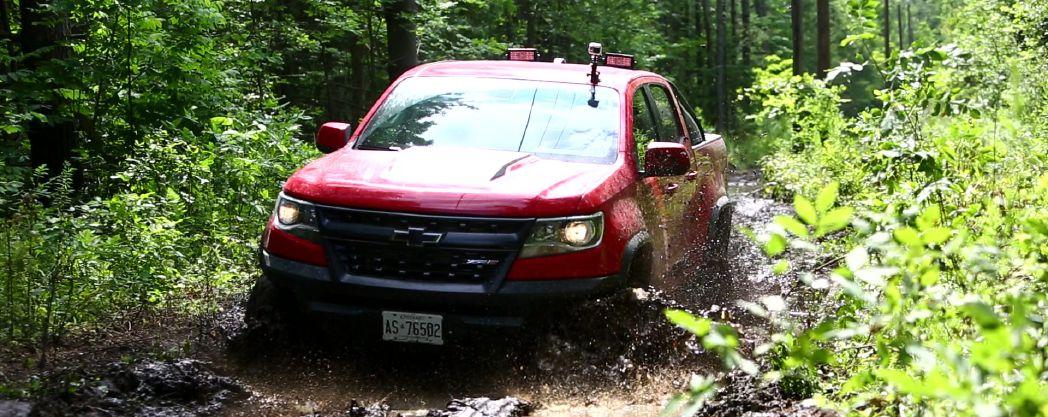
THE 2018 CANADIAN TRUCK KING CHALLENGE
Chevrolet Silverado LTZ 2500 is this year’s winner.
by Howard J. Elmer
The Truck King Challenge does “real world testing” in order to determine which truck will come out on top. The judges, a group of automobile journalists, drive the trucks on a course with no payload, then with payload, and finally towing a trailer – all on the same route, one after the other, back to back. Judges drove more than 3,000 kilometres while scoring each truck across 20 different categories. The totals are then averaged across the field of judges and converted to a percentage (included beside each truck name below).
Mid-size trucks carried a payload of 500 pounds and towed 4,000 pounds. The half-tons hauled a payload of 600 pounds and towed 7,000 pounds; the heavy-duty trucks towed 10,000 pounds and used 1,000 pounds for payload. (The weights used never exceed the published manufacturer limits.)
Here’s what was tested:*
Mid-size trucks
Chevrolet Colorado ZR2 (75.9%) – 2.8L Duramax diesel, 186 horsepower, 6-speed automatic, 4WD (2-speed transfer case; front and rear electric lockers), crew cab. Special features included off-road tires, skidplates, suspension lift, DSSV shocks. Payload limit: 1,100 lbs. Bumper tow limit: 5,000 lbs. Price as tested: $45,485
Toyota Tacoma TRD Pro (66.4%) – 3.5L V6 Atkinson cycle engine, 278 horsepower, 6-speed automatic, 4WD, double cab. Special features included all-terrain tires, aluminum skidplates and Fox racing shocks. Payload limit: 1,000 lbs. Bumper tow limit: 6,400 lbs. Price as tested: $53,295.
Half-ton trucks
Ford F-150 FX4 Platinum (75.6%) – 5.0L V8, 395 horsepower, 10-speed SelectShift automatic, 4WD (2-speed transfer case; electric rear locker) crew cab. Special features included auto stop/start standard, adaptive cruise w/pre-collision. Payload limit: 3,270 lbs. Bumper tow limit: 13,200 lbs. Price as tested: $78,699.
Chevrolet Silverado Z71 1500 LTZ (71.4%) – 5.3L V8 Ecotec3 with cylinder deactivation, 355 horsepower, 8-speed automatic, 4WD (2-speed transfer case), crew cab. Special features included Rancho shocks, underbody shield, hill descent, Wi-Fi. Payload limit: 2,120 lbs. Bumper tow limit: 11,700 lbs. Price as tested: $65,075.
Ram 1500 Limited Tungsten Edition Crew 4x4 (75%) – 5.7L Hemi V8 with MDS, 395 horsepower, 8-speed TorqueFlite automatic, 4WD (2-speed transfer case; anti-spin rear diff), crew cab. Special features included four corner air suspension, RamBox. Payload limit: 1,388 lbs. Bumper tow limit: 7,970 lbs. Price as tested: $74,550.
4x4 Toyota Tundra DBL Cab LTD (65.7) – 5.7L i-Force V8, 381 horsepower, 6-speed automatic, 4WD (2-speed transfer case, limited slip diff), double cab. Special features included a 144L fuel tank. Payload limit: 1,500 lbs. Bumper tow limit: 9,899 lbs. Price as tested: $55,690.
2018 Nissan Titan Pro 4X (68.5%) ¬ 5.6L V8, 390 horsepower, 7-speed automatic, 4WD (2-speed transfer case, limited slip diff), crew cab. Special features included pro 4X off-road package.
ABOVE: Judges drove more than 3,000 kilometres while scoring each truck across 20 different categories.
Payload limit: 1,610 lbs. Bumper tow limit: 9,230 lbs. Price as tested: $63,050.
2500-HD Trucks
2017 Ford F250 FX4 Lariat (no changes for 2018) (75.3%) – Power stroke 6.7L V8 turbo-diesel, 440 horsepower, TorqShift, six-speed, SelectShift automatic, 4WD with selectable 2-speed transfer case, crew cab. Special features: FX4 adds off-road tires and underbody protection. Payload limit: 3,350 lbs. Bumper tow limit: 17,600 lbs. Price as tested: $92,364.
Chevrolet Silverado 2500 LTZ Z71 (80.7%) – Duramax 6.6L V8 turbo-diesel, 445 horsepower, Allison six-speed automatic, 4WD with two-speed transfer case with hill descent control, crew cab. Special features: Z71 adds off-road tires, skid plates and Ranchero shocks. Payload limit: 2,513 lbs. Bumper tow limit: 13,000 lbs. Price as tested: $79,805.
Ram 2500 Limited Tungsten Edition (72.4%) – Cummins 6.7L I6 turbodiesel, 370 horsepower 6-speed automatic,** 4WD with two-speed transfer case, crew cab. Special features included auto-leveling rear air suspension.
Payload limit: 2,380 lbs. Bumper tow limit: 17,160 lbs. Price as tested: $92,105.
The winning truck
The 2018 Silverado HD came equipped with a new generation of the 6.6L V8 turbo-diesel. It’s been redesigned with a new cylinder block and heads. Its oil and coolant flow capacity has been increased and the turbocharging system is now controlled electronically. Horsepower has increased and torque now reaches 910 lb-ft. Ninety per cent of both numbers are achieved at just 1,550 rpm.
The new Duramax cold-weather performance engine requires less than three seconds to preheat in temps as low as -29 C.
Also new is a redesigned air intake system, which uses an integrated hood scoop that traps snow, sleet and rain, draining it away from the breather, allowing cool dry air to get to the engine without clogging.
The large number of electronic driver assist features that make moving loads easier and safer overall.
These new updates include the new digital steering assist that improves road handling and a new tire pressure monitoring
system with a tire fill alert. The driver alert package includes lane departure warning, forward collision alert, a safety alert seat, and front and rear park assist. General Motors’ long-time StabiliTrak stability control system has been updated to include rollover mitigation technology, a tie-in to the trailer sway control, and hill start assist.
A camera system broadcasts on the Chevrolet MyLink touchscreen. Reversing images make hooking up easy, while a view around the truck assists in parking. Turn signals now activate cameras in the mirrors showing images down the side of the truck, highlighting the blind spot. Other improvements include a gooseneck/5th wheel trailering prep package that includes a spray-in bedliner. Electronic upgrades include wireless phone charging and remote locking tailgate and 4 LTG Wi-Fi in the cab.
For more on all of this year’s entries please visit truckking.ca
*Manufacturers supplied trucks of their choice and decided which trim or accessory package to apply, as well as the choice of engine. ** Ram still offers a six-speed manual.
Bigger Picture
Let Your Data Drive You
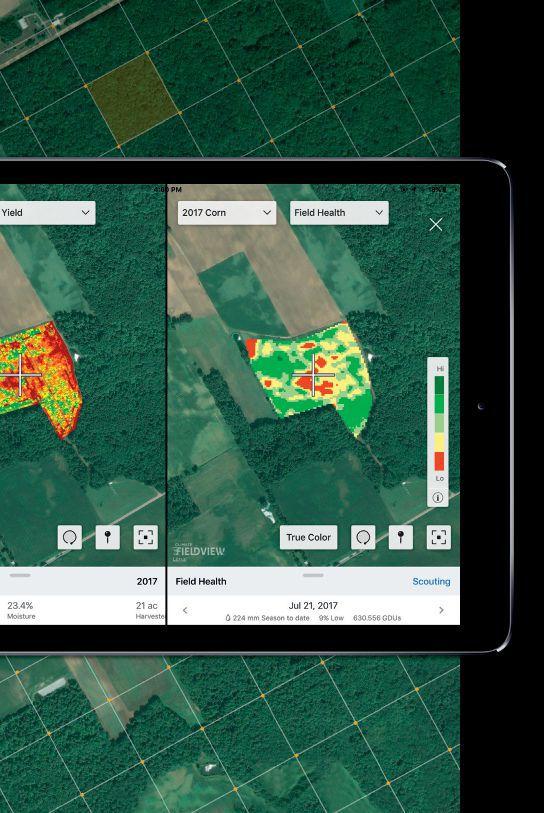
No two farms are the same. Your farm is as unique as you. Climate FieldView™ is an integrated digital platform that allows you to easily aggregate your field data in one easy to use software application. Simplify field data management. Climate FieldView is your data partner to support the decisions you make every day. Get started today at ClimateFieldView.ca
YOUR FARM AND THE PROPOSED TAX CHANGES
On July 18, 2017, Canada’s Minister of Finance, Bill Morneau, proposed changes to the taxation of private corporations. Following criticism about how the changes would impact businesses like family farms, Minister Morneau announced revised changes in October followed by draft legislation mid December. The proposals went into effect on Jan. 1.
BY Trudy Kelly Forsythe
While the proposed tax amendments will affect all private corporations, several of them will significantly impact tax planning for family farm corporations – an estimated 25 per cent of Canadian farms, according to Norm Hall, a producer in Saskatchewan and first vice-president of the Canadian Federation of Agriculture.
Two of the greatest impacts are the ability of a business to income split with related family members – not including aunts, uncles, nieces or nephews – and inter-generational transfers of farm property –such as land, shares of family farm corporations (FFCs) or an interest in a family farm partnership.
TAX ON SPLIT INCOME
Income splitting, or sprinkling, is the process of redirecting taxable income between family members in order to lower tax burden. Based on the draft legislation, split income is subject to the tax on split income (TOSI), which has now been extended to adults.
TOSI applies the highest tax rate to that income, which generally includes:
• Dividends and shareholder benefits from a private company
• Income received from a partnership or trust where the income is derived from a related business
• Interest on certain debt obligations (e.g. interest on loans to a related business)
• Income or capital gains from the disposition of certain property associated with a related business.
Related business will generally be a business carried on by a related individual, or by a partnership, corporation or trust where the related individual is actively engaged on a regular basis; a business of a partnership where a related individual has partnership interest; or a business of corporation where a related individual owns shares of the corporation (or property deriving all or part of its fair market value from the shares of the corporation) with a fair market value equal to or greater than 10 per cent of the fair market value of all the issued and outstanding shares.
“So all our family-owned-and-operated farm operations will be considered a related business for the related family members, spouses, siblings, parents, grandparents, children, grandchildren and so on,” explains Kurt Oelschlagel, a chartered professional accountant with BDO Canada LLP.
TOSI EXCLUSIONS
There are a number of exclusions, or safe harbours, from the TOSI rules.
One very important exclusion for farmers is that any capital gains from qualified farm property, which is farm property eligible for the lifetime capital gains exemption, or capital gains on death, are excluded and not subject to the TOSI. Income to spouses of business owners over age 65 is also excluded as long as it would have been an excluded amount for the business owner.
There is also a safe harbour for income or gains earned directly or indirectly by a person from an excluded business, generally a related business where the individual is actively engaged in the business. To determine this, the government has developed a “bright-line” test.
“If an individual works at least an average of 20 hours per week during the portion of the year the business operates, or in any of the five prior years, then the individual is considered actively engaged on a regular and substantial basis,” Oelschlagel says. “If this test is not met then it will depend on the facts and circumstances.”
This test is one area farmers have concerns. “We haven’t seen what the test is yet,” says Hall. “We are asking that it not be subjective.”
SEEK PROFESSIONAL ADVICE
Oelschlagel says the changes are significant and recommends that farmers seek tax advice regarding their specific situation to see if changes are necessary. “The rules are very specific and complicated, so a one-size-fits-all solution is not possible. The solution must be tailored to each client and their specific situation.”
“With farm corporations, extra diligence will be needed to determine if one of the safe harbour exclusions can apply to each shareholder,” Oelschlagel says. “Family members who are actively engaged and fulfil the excluded business requirement should not have any issues.”
However, family members who own shares of the family farm corporation and are not active in the farm operation will be at risk.
“Shares of the family farm corporation that are owned by another company, such as a holding company, or held by a family trust will be an issue and any producers with that type of structure should review it with their tax advisor,” Oelschlagel says.
SUCCESSION PLANNING
As for succession planning, there should be no impact when farm operations are transferred to family members who will be active in the farm business. These family members will be able to receive income, such as dividends, and not be subject to the TOSI.
It will impact the ability to issue shares of the family farm corporation to family members who are not active in the business. If they do not own excluded shares, then any dividend income will likely be subject to TOSI, Oelschlagel says.
“The rules are very specific and complicated, so a one-size-fits-all solution is not possible. The solution must be tailored to each client and their specific situation.”
“The capital gain on such shares will not be subject to TOSI as long as it is eligible for the lifetime capital gains exemption,” he explains. “The definition of excluded shares has a lot of nuances right now,” Oelschlagel says. “We need significantly more detailed guidance from the tax authorities on the interpretation of the various provisions.”
Right now, the proposed legislation is subject to interpretation in many areas.
“We have approached the government to get clarification and guidance, so things may change,” he says. “Unfortunately, the rules are complicated and expert advice will be needed.”
And there are more changes to come. Oelschlagel says the government is expected to introduce tax legislation in the 2018 federal budget that will affect corporations that hold passive investments. This may affect farmers who have built up other assets inside corporations, such as investment portfolios and rental properties.
The CFA agrees that producers need to seek qualified professional advice to understand the changes and how they will impact their family farms. “Farmers are a lot of things but we aren’t experts in tax,” Hall says.
“We know the work we put in to grow safe, healthy food. We’re
Sam Bourgeois, Agvocate Apple Producer
SOIL AND WATER
Anew study, co-authored by Tiequan Zhang, a soil fertility and water quality expert at Agriculture and Agri-Food Canada’s Harrow Research Station in Ontario, Chin Tan (another research scientist at Harrow) and others, shows that adding compost to tile drained systems can exacerbate P loss.
A three-year, on-farm trial compared the effects of adding leaf compost to soil on two different operations, both with established, long-term tillage systems – one a zero-tillage system, one a conventional tillage system.
Under conventional tillage, dissolved reactive P loss was 2.9 times higher when leaf compost was added than when it was not. But P losses were even more dramatic when compost was added to no-till systems – 5.3 times greater, in fact, than when compost was not added.
Overall, the addition of leaf compost led to an increase in total P loads in tile drainage water by 57 per cent under conventional tillage and 69 per cent under zero tillage. At least when it comes to mitigating P loss, systems that use some tillage – either rotational tillage or reduced tillage– are better than zero-tillage systems, Zhang says.
One of the major reasons for the dramatic P loss in no-till soils is a phenomenon called stratification, he explains. Whatever P is added to these soils in the form of leaf compost stays on the surface of the soil. When soil is tilled, this P can react with soil components and less P is available to run off.
A second reason P loss is higher in no-till soils is that these soils have higher porosity from cracks, root channels and earthworm activity, meaning tile drainage flow volume is higher.
WATCH PHOSPHOROUS LOSS FROM TILE-DRAINED FIELDS
Study shows adding compost to no-till, tiledrained systems can result in dramatic P losses.
by Julienne Isaacs
Zhang’s research does not suggest that producers should abandon zero tillage – it simply highlights problems that can result from the addition of compost to these systems in Ontario.
While adding leaf compost can improve soil structure and water holding capacity, producers should pay attention to the potential environmental costs of adding nutrient-rich compounds like compost to zero tillage systems.
Vertical tillage can be a good compromise for soils that receive a lot of rainfall, because it helps break down stratification and helps P bind to the soil while minimizing soil disturbance, he says.
Zhang also suggests producers “close the loop” of water use on the farm by adding control structures or riser pipes to their tile drainage systems, to control the water table while retaining water for use by the crops in the summer months and mitigate nutrient loss to the environment.
Tan says it’s key to use drainage controls. When producers add compost to zero-till soils, “they create a lot of channels moving down so that when heavy rain occurs they have more water that channels through the subsurface tile, and a high nutrient load ends up in there, creating an environmental problem.”
“Controlled drainage in the growing season reduces runoff by 43 per cent,” says Tan. “In the off-season, the reduction is 36 per cent, but you have much more runoff. That’s one reason why controlled drainage is important off-season as well.”
Zhang says the leaf compost study suggests that when best management practices are developed for organic amendments for soil quality improvement, soil nutrients should also be considered, but there are no guidelines for this in Ontario.
Zhang and Tan are involved in discussions with Ontario’s Ministry of Environment and Climate Change on whether the Ministry can support further work to validate and standardize environmental impact assessments for soil P loss for producers.
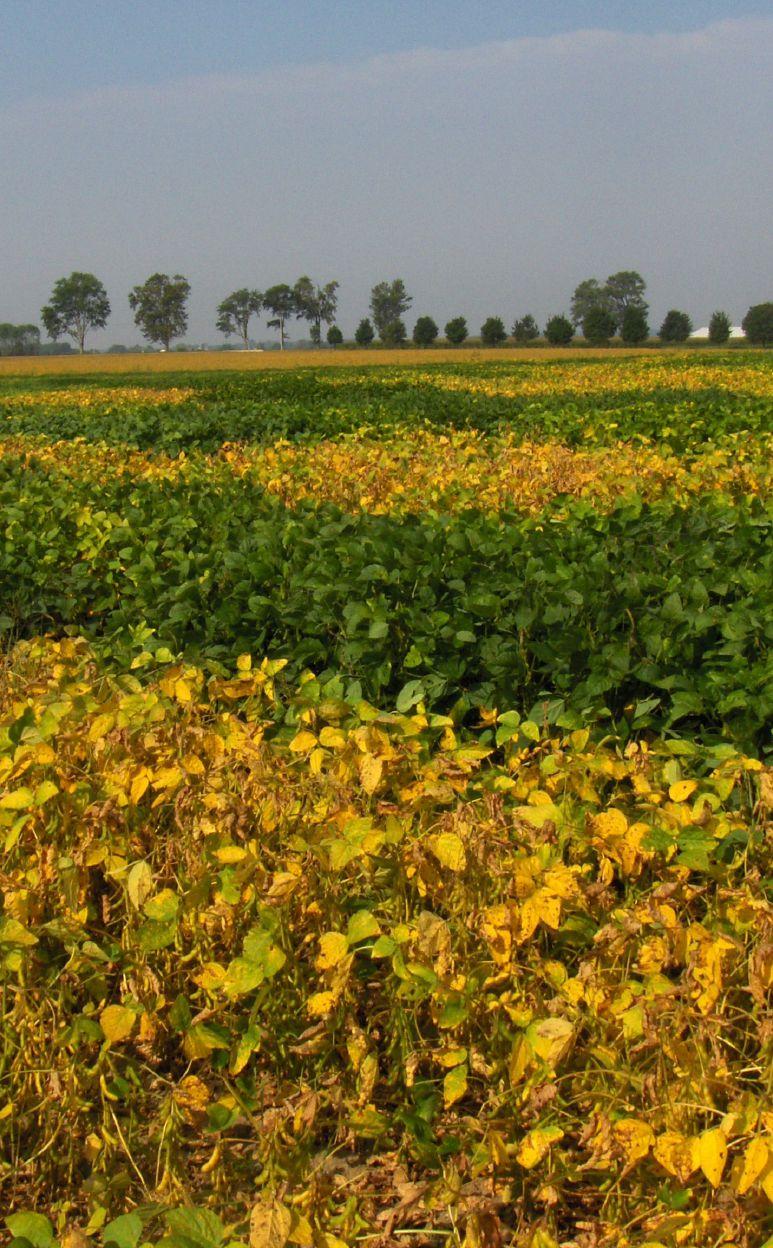
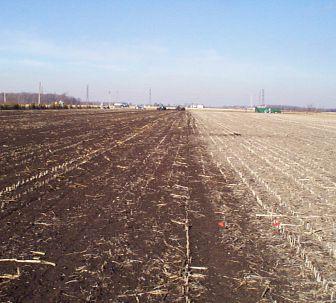
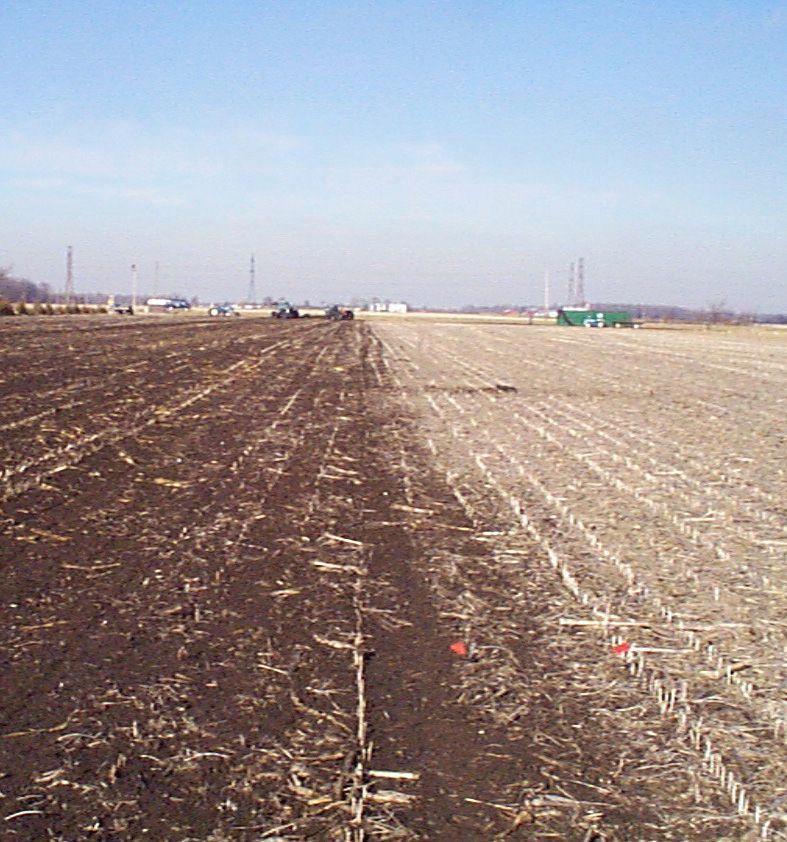
ABOVE: A field treated with compost on one half and without compost on the other half.
PROTECT AGAINST EXTREME WEATHER
Canadian producers dealt with their fair share of extreme weather events in 2017. Western Canada had record-breaking summer temperatures with many areas recording less than half their normal rainfall during the growing season. British Columbia experienced its longest and most destructive wildfire season in its history, while record rainfalls caused severe flooding in Quebec and Ontario.
BY Trudy Kelly Forsythe
Keith Currie, president of the Ontario Federation of Agriculture, says while the agricultural sector has a long history of learning and adapting to the variability of Canada’s weather and climate, global warming and climate change present a much more formidable challenge to agricultural production because of more frequent extreme weather events and changes to regional water cycles.
To protect their livelihoods, farmers can access a number of programs that offer coverage in the case of extreme weather. In Ontario, Agricorp delivers a variety of programs and payments on behalf of the federal and provincial governments to help protect Ontario producers against many of the business and agricultural risks they face every day.
“Right now happens to be renewal and enrolment time for most business risk management programs,” says Stephanie Charest, AgriCorp’s customer communications manager. “Having the right risk management coverage to meet the unique needs of a farm is important, and application and renewal season is a good time for producers to make sure their coverage is a good match to what their farms look like today.”
“As a farm evolves and the industry changes, so can coverage needs,” Charest says, explaining that the federal and provincial governments provide a comprehensive suite of business risk management programs to help mitigate risks. (It is important to note that different programs cover different risks.)
PRODUCTION INSURANCE
Production insurance guarantees producers a level of production in case they experience challenges beyond their control, such as hail, excessive rainfall and drought. Plans are available for more than 100 commodities based on yield, dollar value or acreage loss with producers receiving a payment when an insured peril causes their yield to fall below their guaranteed production.
“Generally, our customers report their final harvested yields from late November to early December,” Charest says. “Producers also report crop damage as soon as it occurs.”
Most production insurance plans offer the following types of claim payments:
• Reseeding claims cover the costs of replanting some or all of a crop that experiences damage because of an insured peril, such as hail, excess rainfall or drought
• The unseeded acreage benefit helps offset the financial burden when a farmer is unable to plant a crop due to an insured peril, except drought
• Production claims are determined at the end of the growing season (late fall) when actual yield is known. There is also a forage rainfall plan with excess rainfall and insufficient rainfall options. It uses measured rainfall as an indicator of forage quality.
Application and renewal time for most production insurance plans is May 1, 2018.
WILDFIRES
Wildfires are not an insured natural weather peril, so they are not eligible for production insurance, which covers weather risks that are beyond a producer’s control, such as drought, hail and wind. That said, there are options to buy private insurance coverage for fire due to third party liability, such as machinery breakdown, which is typically more common. If this occurs, Agricorp would make sure any crop losses do not affect their yield averages
Producers who experience production losses due to wildfires can access coverage through business risk management programs like AgriStability, AgriInvest, and Ontario’s SDRM: Edible Horticulture.
AGRISTABILITY
AgriStability helps protect against risks like unexpected, large declines in income. It protects the farm income as a whole instead of one commodity at a time.
“AgriStability is an affordable option and producers can get coverage for a low fee of $315 for every $100,000 of their reference margin,” says Charest. “Producers receive a payment if their farming income falls below 70 per cent of their farm’s recent average income.”
April 30 is the last day to apply and renew for the 2018 tax year. Producers must submit claim forms by June 30, 2019 to determine if they qualify for a payment.
RISK MANAGEMENT PROGRAM
The risk management program (RMP) helps producers offset losses caused by low commodity prices and rising production costs. RMP is available for grains and oilseeds, as well as cattle, hogs, sheep and veal. Producers receive payments if the market prices fall below their chosen support level. There are three payment periods for RMP for livestock and two for RMP for grains and oilseeds.
The application and renewal dates are May 1 for RMP for grains and oilseeds.
“The federal and provincial governments provide a comprehensive suite of business risk management programs to help mitigate risks. (It is important to note that different programs cover different risks.)”
SDRM: EDIBLE HORTICULTURE
This is part of the RMP and helps edible horticulture producers mitigate general risks. Producers receive a government contribution based on their annual deposit into a self-directed risk management (SDRM) account. Their maximum deposit is a percentage of allowable net sales and is set in September.
A withdrawal request can be submitted at any time after a deposit has been made.
AGRIINVEST
This program helps producers recover from small income shortfalls or make investments to reduce their farm’s risk. Producers receive a matching government contribution based on their annual deposits into an AgriInvest account. Their deposit is a percentage of their allowable net sales.
The application and renewal date for AgriInvest is Sept. 30, 2018.
There is also an AgriRecovery Framework, which may respond when natural disasters occur.
PESTS AND DISEASES
TACKLING NORTHERN CORN LEAF BLIGHT
Improving tools to fight Ontario corn’s most important fungal leaf disease.
by Carolyn King
Northern corn leaf blight [NCLB] is our most prominent foliar fungal disease in corn. It has been increasing over the past 15 years or more in Ontario, starting in the southwest and working its way to eastern Ontario,” says Albert Tenuta, plant pathologist with the Ontario Ministry of Agriculture, Food and Rural Affairs (OMAFRA).
Tenuta has teamed up with Lana Reid at Agriculture and AgriFood Canada (AAFC) in Ottawa and Dave Hooker at the University of Guelph-Ridgetown in a major NCLB initiative. “This initiative aims to find out what is going on with the pathogen and why we are seeing more of the disease, and to provide effective tools for managing the disease.”
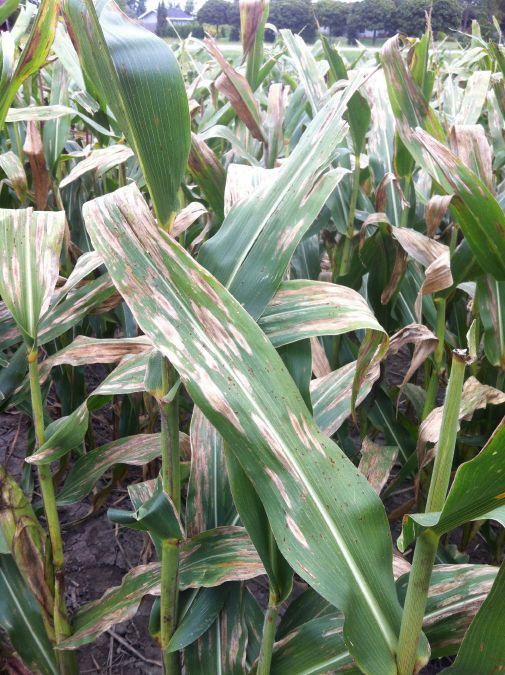
NCLB is caused by the fungus Exserohilum turcicum (also called Setosphaeria turcicax). “The disease has become endemic in Ontario. The pathogen overwinters locally every year, surviving nicely on corn residues,” Tenuta says. “The spores are easily spread by wind and rain splash.” The fungus thrives in wet, humid growing conditions in temperatures between about 18 and 27 C. It produces long, narrow, tan or greyish streaks on corn leaves, resulting in decreased photosynthesis and reduced yields.
“Yield loss can range from light to severe,” notes Tenuta. “It can be quite high – especially if the infection occurs early in the season before tasselling or earlier and particularly on susceptible hybrids. In our inoculated trials at Ridgetown, we could see a 30- or 40-bushel yield loss to northern corn leaf blight in some moderately susceptible lines under normal environmental conditions. In most cases, growers would probably see a potential yield loss of about five to 20 bushels or more.”
Tracking NCLB
One component of the project involves tracking the disease and its races through annual surveys. “We have seen a steady increase in this disease to the point that it is now detected in most corn fields across the province. For instance in 2017, we sampled 231 fields and 190 of those had northern corn leaf blight,” says Tenuta.
“In southwestern Ontario, the presence of the disease is very high; every year, over 90 to 95 per cent of the sampled fields have northern corn leaf blight. And in many cases, the severity has also been trending upwards over time. This past year was a little lighter in terms of the severity because the disease came in a little later than some other years, but the disease was still prominent.”
Krishan Jindal, a plant pathologist in Reid’s group, works on these surveys and on testing the pathogen’s races. To determine the races, the isolates collected during the survey are tested in a greenhouse using a set of corn lines with different NCLB resistance genes,
including Ht1, Ht2, Ht3, Htn1 and Htm1. (They are called “Ht” genes because the pathogen used to be known as Helminthosporium turcicum.) In other greenhouse work, the lines developed in Reid’s corn breeding program are inoculated with the different isolates to evaluate the plants’ responses.
“Within the last three years of the survey, we found 17 races (0, 1, 2, 3, M, N, 12, 1M, 1N, 3M, 12N, 13M, 13N, 1MN, 12MN, 13MN and 123MN) of the fungus in Ontario. Four races (0, 1M, 1N and 1MN) were most frequently isolated with an isolation frequency of 13 per cent, 10 per cent, 12 per cent and 41 per cent, respectively,” Jindal says. “Most of the races are limited to a particular county or region, although a few are found across the province.”
“One of the reasons for the increase in NCLB in the past 15 years is that some races have overcome the main resistance genes used in corn hybrids,” Tenuta explains. “We’ve collected over 677 isolates
PHOTO COURTESY OF LANA REID
Northern corn leaf blight causes long tan streaks on corn leaves.
“As with managing any crop disease, the more integrated our management program the better... agronomic practices like scouting and strategies to make the environment less favourable for disease development can all help minimize disease losses in Ontario corn crops.”
in our surveys, and we have definitely seen an increase in such races. Some of them can bypass a single resistance gene; that can be managed by simply putting a couple of different resistance genes into a hybrid. But we’re seeing races that can take down two, three, or four genes. And some isolates are able to take down all five resistance genes that we’ve tested. They could be considered ‘super’ northern corn leaf blight for Ontario because none of the five available genes can control them.”
These super-NCLB races are uncommon at present, but their emergence is worrisome. Jindal notes, “We have found 16 isolates that can knock down all five resistance genes. These 16 isolates have been collected from all four regions – we found a few in eastern Ontario, some in southern Ontario, a few in western Ontario and a few in central Ontario.”
The isolate testing shows that three of the Ht genes in particular are becoming ineffective. “Across Ontario, 81 per cent of the isolates are able to take down Ht1, which has been used in corn cultivars since the 1960s. Also, 64 per cent of isolates can take down Htm1, and 64 per cent can take down Htn1. And some races can take down combinations of those three genes. So corn hybrids with those resistance genes are at greater risk of the disease,” Tenuta says.
“The good news is that we have seen remarkably less injury and infection on hybrids with Ht2 and Ht3. For Ht2, only six per cent [of the isolates can overcome this gene], and for Ht3, only 12 per cent. In combination with the other Ht genes, we can still manage this disease with good genetics.”
Top-notch inbreds
Reid, along with a biologist in her group, Xiaoyang Zhu, is leading the breeding work on NCLB resistance. She is developing a series of inbred lines with known Ht genes that can be used by private and public breeders to strengthen the resistance packages in their hybrids or further their research.
“We collected different inbred lines of corn that had known northern corn blight resistance genes. A lot of those lines were very late maturing. We crossed them to some of our earlier maturing lines that did or did not have any resistance, and we bred some new lines,” she explains.
The first six of these new inbred lines, identified as CO468 to CO473, were released in January 2018. Reid’s group delayed the release of these inbreds until they had a package of information for seed companies and growers about deploying these genetics, including their performance when crossed with other inbreds to create hybrids.
Reid notes, “With corn, you have to combine different heterotic backgrounds to get the higher yields and heterosis [in the hybrids]. So the first three inbreds – CO468, 69 and 70 – have a stiff stalk background. The other three have a Lancaster background. So we’ve got several that combine quite well with each other for both yield and resistance.”
“Through our race studies, we have determined that you need two different single dominant genes to have good resistance in most fields with a heavy infestation of this fungus. So for most of those inbreds, if you cross them to another inbred that doesn’t have any other resistance genes, then you would get intermediate resistance, which is not great if you have a really heavy epidemic. But if you cross them to something that does have some resistance genes, then you can get excellent resistance,” Reid explains.
The six NCLB inbreds all have other great traits in addition to the Ht genes.
Fungicide evaluation
In another component of the project, Tenuta and Hooker have collaborated on field studies at the University of Guelph-Ridgetown to determine if the various NCLB races react differently to common foliar fungicides used in Ontario corn production. They compared the effectiveness of registered and experimental fungicides on NCLB disease levels in hybrids with low and high
levels of susceptibility.
These fungicide trials have produced welcome news for growers – researchers have seen very good efficacy across the board with the majority of the foliar fungicides available. Details on the fungicide efficacy ratings for NCLB management are available from Tenuta directly.
The fungicide testing, the work on the NCLB races and the resistance breeding program are all making practical contributions to management of this disease.
Funding for the project comes from the Canadian Field Crop Research Alliance, which includes Grain Farmers of Ontario, OMAFRA and AAFC through Growing Forward 2. The Agricultural Adaptation Council assists in the delivery of Growing Forward 2 in Ontario.
Other tools
Tenuta reminds growers of the other tools available for NCLB management. “As with managing any crop disease, the more integrated our management program the better. So not only genetics, which is the cornerstone of effective disease management, and fungicides, but also agronomic practices like scouting and strategies to make the environment less favourable for disease development can all help minimize disease losses in Ontario corn crops.”
“Always get out and scout. If you have had a variety or hybrid that you’ve grown before and you start to notice more disease or increases in other issues, then that is a tell-tale sign that something is going on, such as a breakdown in resistance,” Tenuta says, “Higher plant populations, narrower rows, higher fertility programs – all of those intensive management strategies that help maximize yield can also make conditions more favourable for disease, particularly foliar diseases that are very sensitive to even subtle differences in moisture or humidity. Since NCLB is a residue-borne disease, you can reduce the inoculum load by reducing residue levels. And rotation comes into play too, avoiding corn-on-corn with heavy residues.”
Tenuta also has a suggestion for the corn seed companies: “Down the road, it would help growers if the company descriptions of their different hybrids would identify which northern corn leaf blight resistance genes are present, like what is done with identifying the sources of resistance to diseases like soybean cyst nematode and Phytophthora in soybeans.”
FARMING HAS ALWAYS BEEN A SERIES OF RISKS. LOSING HALF YOUR NITROGEN DOESN’T HAVE TO BE ONE OF THEM.
When commodity prices decline, making smart decisions about your nitrogen investment is more critical than ever. AGROTAIN® nitrogen stabilizer protects your nitrogen, keeping it available to your plants to maximize performance and optimize yield potential. In fact, in corn trials conducted over a three-year period, AGROTAIN® stabilizer increased yield an average of 20 bushels an acre compared to untreated urea.* To see how much you can earn, try our grower calculator at agrotain.com and start growing smarter.
* Based on data collected from 2010-2013 in trials where nitrogen loss was the limiting factor. Actual results may vary based on a number of factors, including environmental conditions.
GET IT UNDER CONTROL.
IT ONLY TAKES ONE WEED TO SPREAD THE SEEDS OF DESTRUCTION IN A CEREAL CROP.
A cleavers plant can produce 3,500 seeds, a single chickweed plant, 20,000 seeds, and a single ragweed plant can generate a staggering 62,000 seeds.
Enforcer® M controls all these tough weeds and more. It’s part of Nufarm’s hard-hitting cereal product portfolio that targets your toughest weed challenges with Boost ® M and Estaprop® XT.