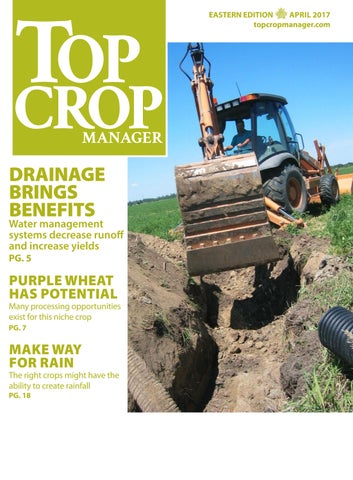
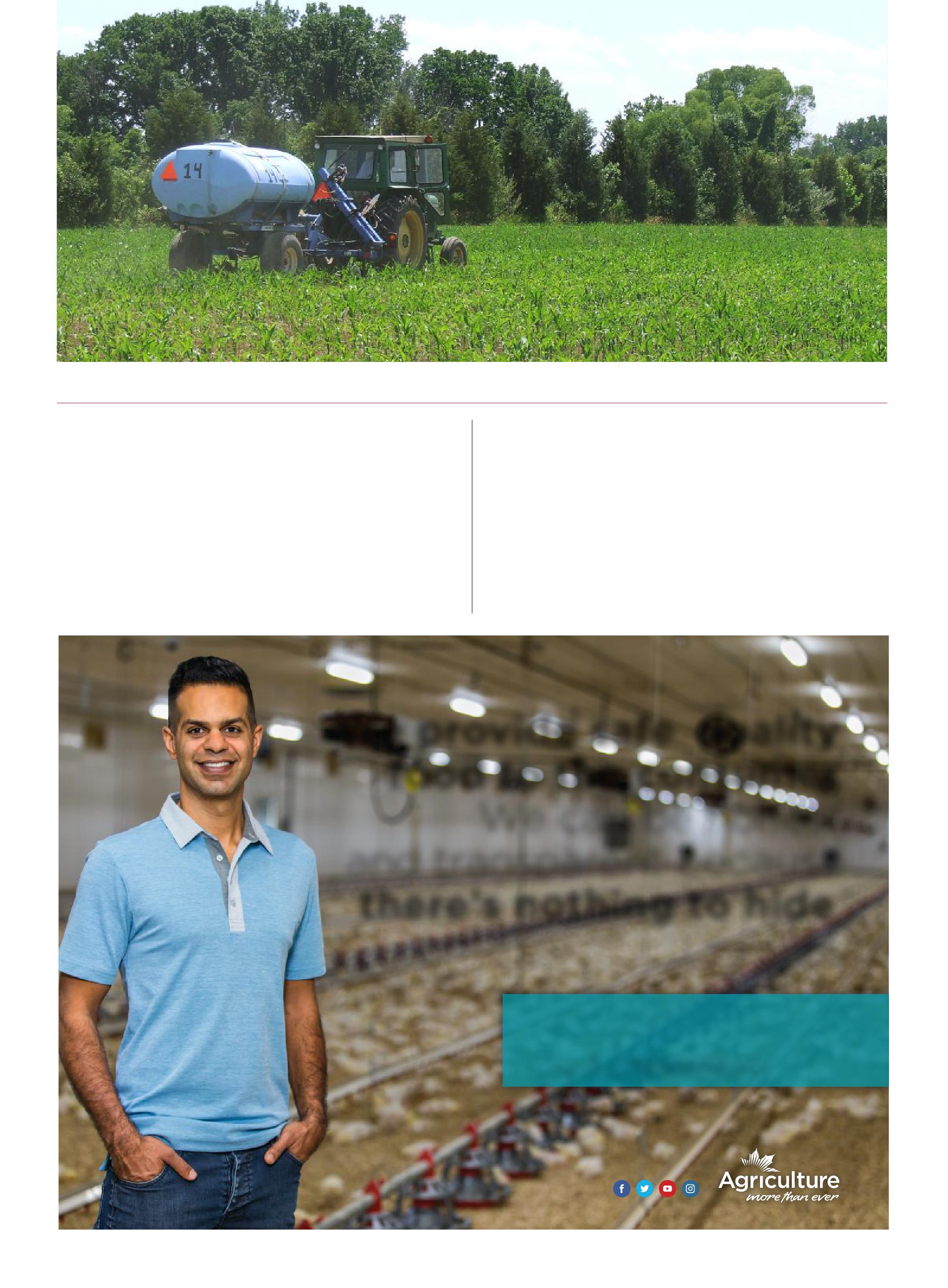
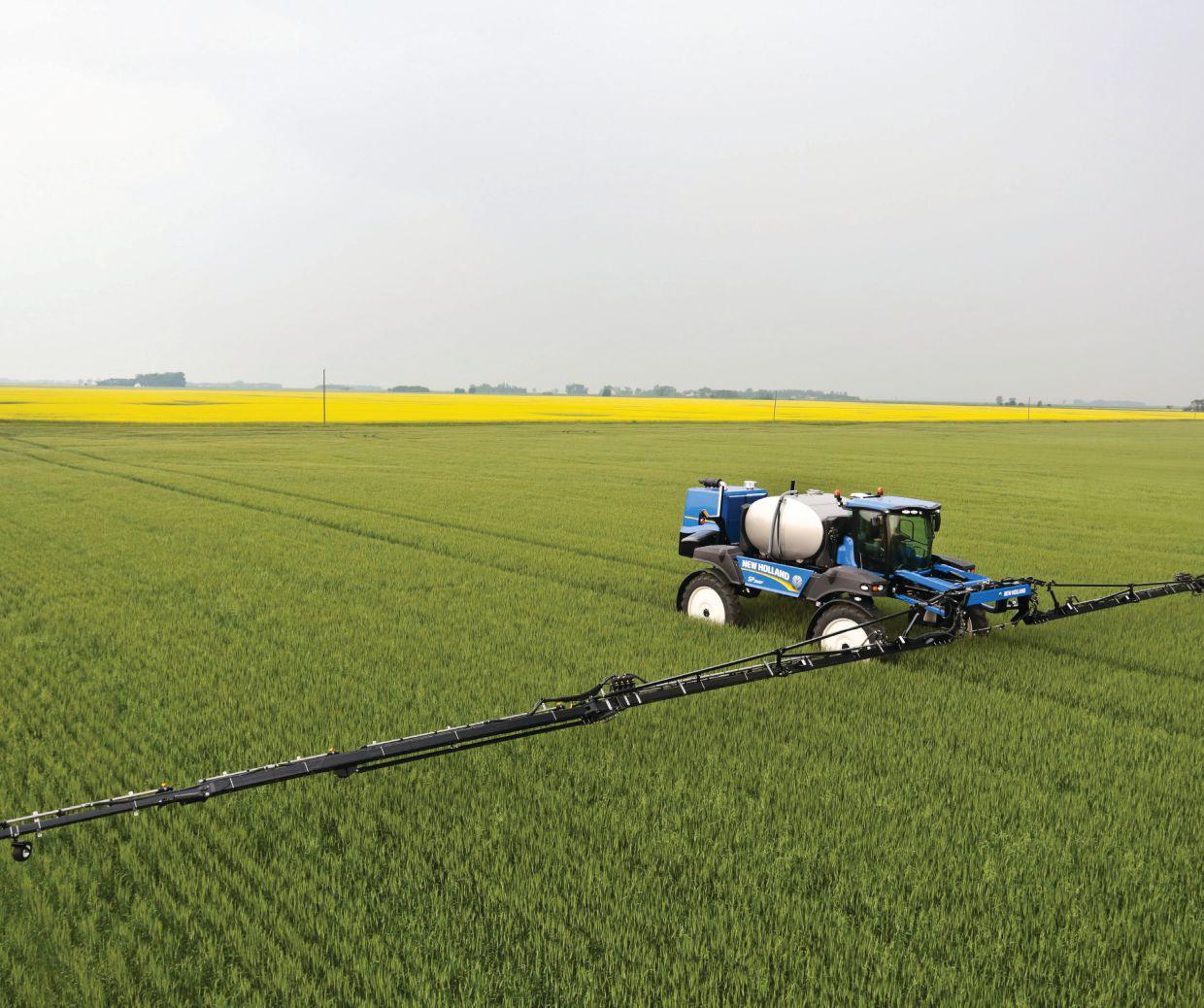
Water management systems decrease runoff and increase yields
PG. 5
PURPLE WHEAT HAS POTENTIAL
Many processing opportunities exist for this niche crop
PG. 7
MAKE WAY FOR RAIN
The right crops might have the ability to create rainfall
PG. 18
MAKING THE GRADE at the elevator IS AWESOME. MAKING THE GRADE at the elevator IS AWESOME.
Trust the proven effectiveness of Prosaro ® fungicide to make the grade. Canada’s #1 cereal fungicide has one of the broadest spectrums of leaf disease and fusarium head blight activity for improved yield and quality. Combined with its curative and protective properties, Prosaro makes a visit to the elevator about as automatic as it gets.
Learn more at cropscience.bayer.ca/Prosaro
cropscience.bayer.ca or 1 888-283-6847 or contact your Bayer representative.
More than the best products. Great rewards. Ask your retail about our program.
TOP CROP
Carolyn King 14 | Looking to the north The future of Ontario’s agriculture sector could lie outside more traditional farming areas.
| Exploring opportunities for bioprecipitation
Could producers one day plant crops to actively influence rainfall?
By Trudy Kelly Forsythe
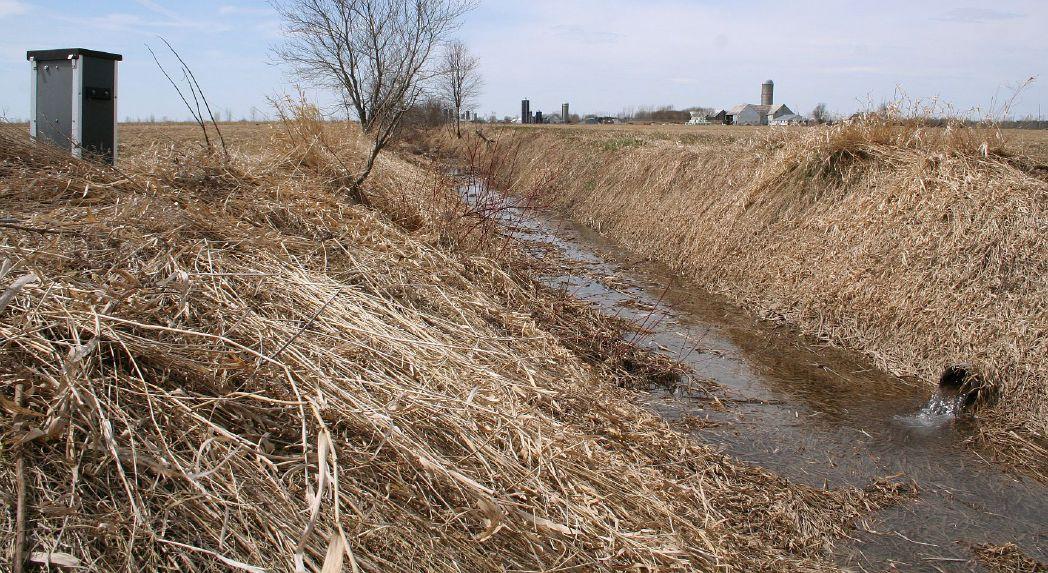
Controlled drainage can increase yields and decrease runoff
Julienne Isaacs
New possibilities with purple wheat
Carolyn King
22 | Mix and manage stops GR Canada fleabane
A great tank mix and a good management strategy can win the war against this weed.
John Dietz
On-farm trials yield unbiased, local data
moisture in a drier world
Brandi Cowen
ON THE WEB
CRISPR TO HELP PLANT
Only three plant species -- rice, wheat, and maize -- account for most of the plant matter that humans consume, partly because of the mutations that made these crops the easiest to harvest. But with CRISPR technology, researchers argue we don't have to wait for nature to help us domesticate plants.
Readers will find numerous references to pesticide and fertility applications, methods, timing and rates in the pages of
Crop Manager. We encourage growers to check product registration status and consult with provincial recommendations and product labels for complete instructions.
BRANDI COWEN | EDITOR
MANAGING MOISTURE IN A DRIER WORLD
It’s official: 2016 was the warmest year on record. The United States National Oceanic and Atmospheric Administration (NOAA) reports the average global surface temperature reached 14.83 C – the warmest it’s been since modern temperature records began in 1880.
A separate analysis from NASA considered average surface temperature readings from 6,300 weather stations, as well as ship- and buoy-based sea surface temperature readings and temperatures collected from Antarctic research stations. The agency reports the planet’s global average surface temperature has risen about 1.1 C since 1880; 0.99 C of that increase has been recorded since the middle of the 20 th century. Sixteen of the 17 warmest years on file have been recorded since 2001.
“2016 is remarkably the third record year in a row in this series,” said Gavin Schmidt, director of NASA’s Goddard Institute for Space Studies, in a press release. “We don’t expect record years every year, but the ongoing long-term warming trend is clear.”
Changes in the climate may offer some benefits to some producers (longer growing seasons, anyone?). However, they also threaten to change the conditions under which producers have learned to grow profitable crops. According to Natural Resource Canada’s 2014 report “Canada in a Changing Climate: Sector Perspectives on Impacts and Adaptation,” longer growing seasons will result in less snow cover during the winter and less rain through the summer. The result? Less water will be available for thirsty crops.
Researchers are searching for tools and techniques to ensure future crops will have the water they need to survive. One possible solution may be found in bioprecipitation. The idea, which was first proposed more than 30 years ago, is that bacteria and other biological particles associated with plants can contribute to the formation of ice in clouds, which, in turn, causes precipitation. Cindy Morris, research director in plant pathology at the French National Agricultural Research Institute and an affiliate professor at Montana State University, is part of a team that discovered various bacteria, pollen, algae, fungi and lichen particles that can contribute to ice formation. Check out our story on page 18 to learn more about this research and what it could mean for your farm in a warmer, drier future.
It’s not exactly rainfall on demand, but bioprecipitation offers one possible route around some of the obstacles presented by a warming world, and that’s good news for producers. But it's not the only tool being studied to help producers manage moisture in their fields.
Researchers are also exploring how water management systems can help farmers manage moisture in their fields. As our cover story on page 5 details, installing water flow control structures on tile drained land can not only protect crops during periods of heavy rainfall, but also provide much needed moisture during dry periods. One study out of North Dakota found closing control structures when rain was lacking boosted hard red spring wheat yields by roughly three bushels per acre. A project to assess yield benefits here in Ontario got underway late last year and will continue for at least one more year.
On behalf of everyone at Top Crop Manager, I wish you a prosperous and profitable season. Here's hoping for rain when you need it, and blue skies and sunshine when you don't.
President & CEO Mike Fredericks Printed in Canada ISSN 1717-452X PUBLICATION MAIL AGREEMENT #40065710
CIRCULATION email: rhtava@annexbizmedia.com Tel: 416.442.5600 ext 3555 Fax: 416.510.5170 Mail: 80 Valleybrook Drive, Toronto, ON M3B 2S9 SUBSCRIPTION RATES Top Crop Manager West – 9 issues Feb, Mar, Mid-Mar, Apr, June, Sept, Oct, Nov and Dec – 1 Year - $45.95 Cdn. plus tax
Top Crop Manager East – 7 issues Feb, Mar, Apr, Sept, Oct, Nov and Dec – 1 Year$45.95 Cdn. plus tax
Potatoes in Canada – 1 issue Spring – 1 Year $16.50 Cdn.
SOIL AND WATER
CONTROLLED DRAINAGE CAN INCREASE YIELDS
A new AAFC-OSCIA project aims to assess the benefits of water management systems.
by Julienne Isaacs
Most eastern Canadian producers have considered whether tile drainage is right for their operations.
According to Harold Rudy, executive officer of research and business development for the Ontario Soil and Crop Improvement Association (OSCIA), more than 50 per cent of the agricultural land in southern Ontario is tile drained. In many areas of the province, tile drainage facilitates timely field operations and helps decrease the risk of crop damage during heavy rainfall events.
But researchers are suggesting there can be yield benefits to retaining some of the water escaping through the tiles during the growing season through the use of water flow control structures added to tile drained systems.
“Researchers at Agriculture and Agri-Food Canada [AAFC] have been working on this for a number of years, but we haven’t paid enough attention to the benefits,” Rudy says.
AAFC, OSCIA and the University of Ottawa are working together on a new project to evaluate how using control structures in tile drained systems during the growing season can increase yields, minimize nutrient losses and increase the health of watersheds.
The project began in late 2016 and will continue for one to two years, Rudy says. OSCIA’s role in the project is to manage AAFC funding and co-ordinate outreach efforts.
A team from the University of Ottawa, led by Michael Sawada, a professor in the department of geography, environment and geomatics, will utilize field data to develop a tool that will assist extension staff and producers in calculating the benefits of tile drainage control structures.
David Lapen, a research scientist with AAFC, says the team will work with producers who installed tile flow control structures in a co-operative project with AAFC in 2005. A large amount of data has been collected over the past decade that shows economic benefits and yield boosts associated with tile drainage management, Lapen says, and the team wants to use plot and field data already collected to scale up to the watershed level.
Lapen says farmers have seen three to seven per cent yield increases, on average, through the use of control structures to retain water during the growing season, but there are some major environmental benefits as well.
“In Ontario we’re very concerned about any phosphorus moving through tile drains into the Great Lakes, so if an investment can be made to reduce some of that through tile drains and benefit the crop as well, everybody wins,” Rudy says.
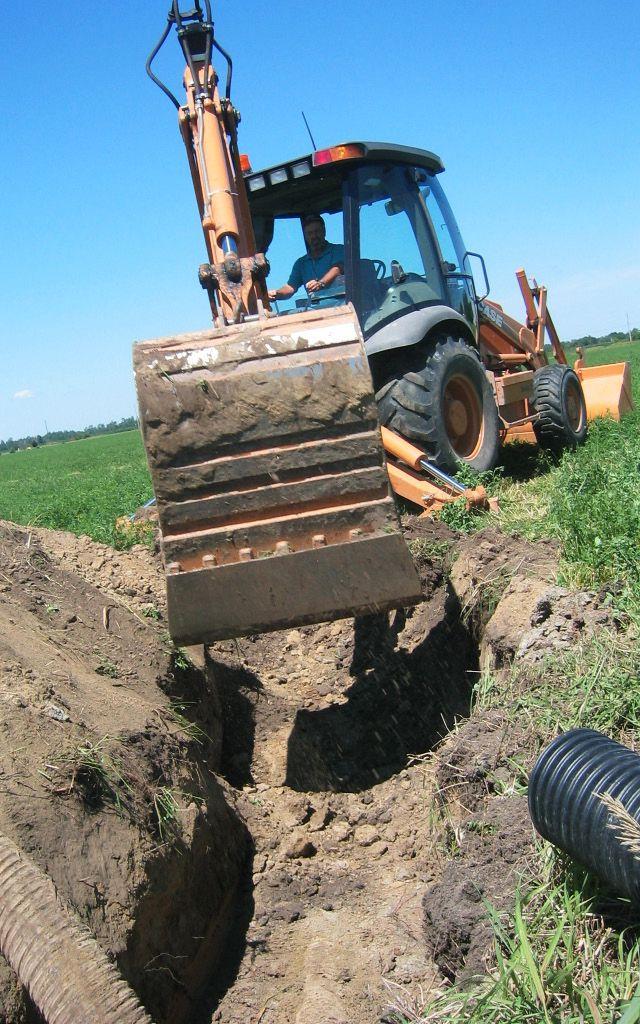
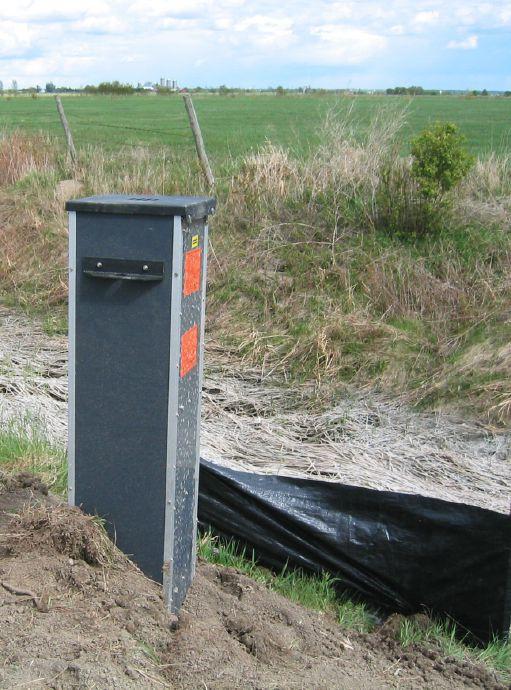
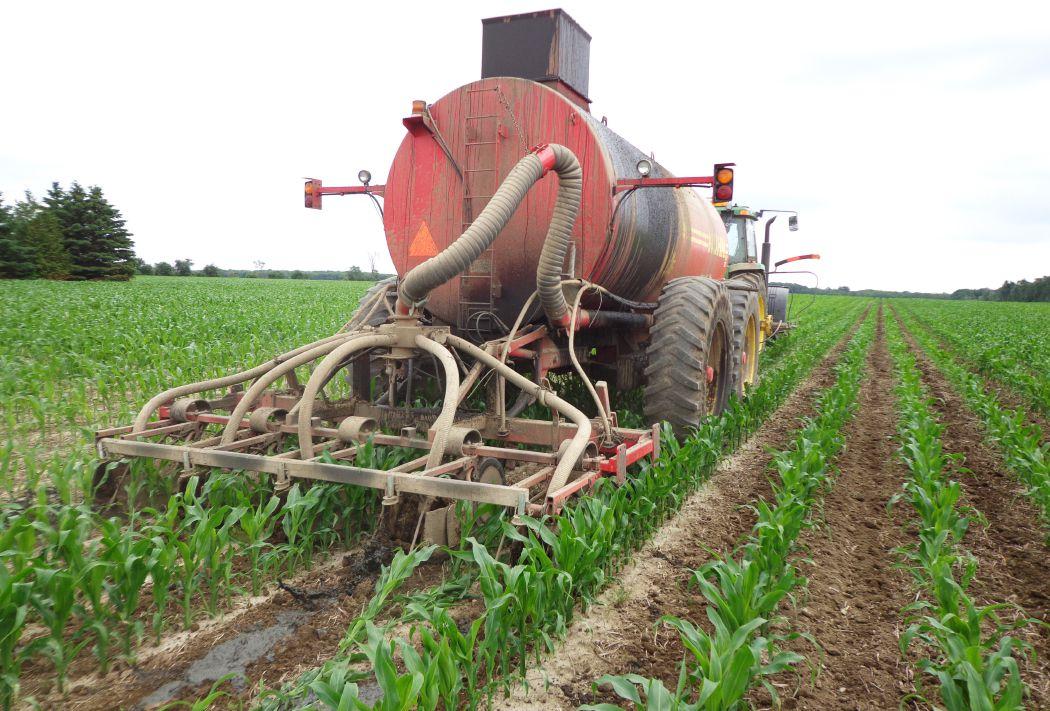
TOP: Farmers in Ontario have seen three to seven per cent yield increases through the use of control structures to manage moisture in their fields.
PHOTOS
How it works
Lapen says all of the farms his team has worked with have retrofitted control structures onto existing tile drainage systems.
“The ideal situation is that you have tiles and laterals coming into a main header and then the header intersects an outlet into the stream. So we put a structure on the header outlet so we can manage the field drainage,” he explains.
“These control structures are operated with stop-gates, like a dam, and when the groundwater level gets too high, tile drainage occurs. We keep the stop-gate upper level at approximately 60 centimetres below the surface. When the water levels rise above that point, water is allowed to drain out of the field,” Lapen says.
“You’re not stopping flow all the time, you’re allowing for overflow and drainage release during those conditions so you don’t damage crops. Tile drainage stops when the water level is below that point, and you then retain that water in the field, allowing the crops to access that moisture.”
In the spring, during or immediately after field operations, when producers are comfortable with the level of moisture in the fields, they head to the control structures and shut down the gates to conserve water. In the fall, prior to harvest, they return to the structures and open the gates to release water to conduct fall field activities.
Gates may also require opening during periods of excess moisture, such as severe rainstorms, during the growing season.
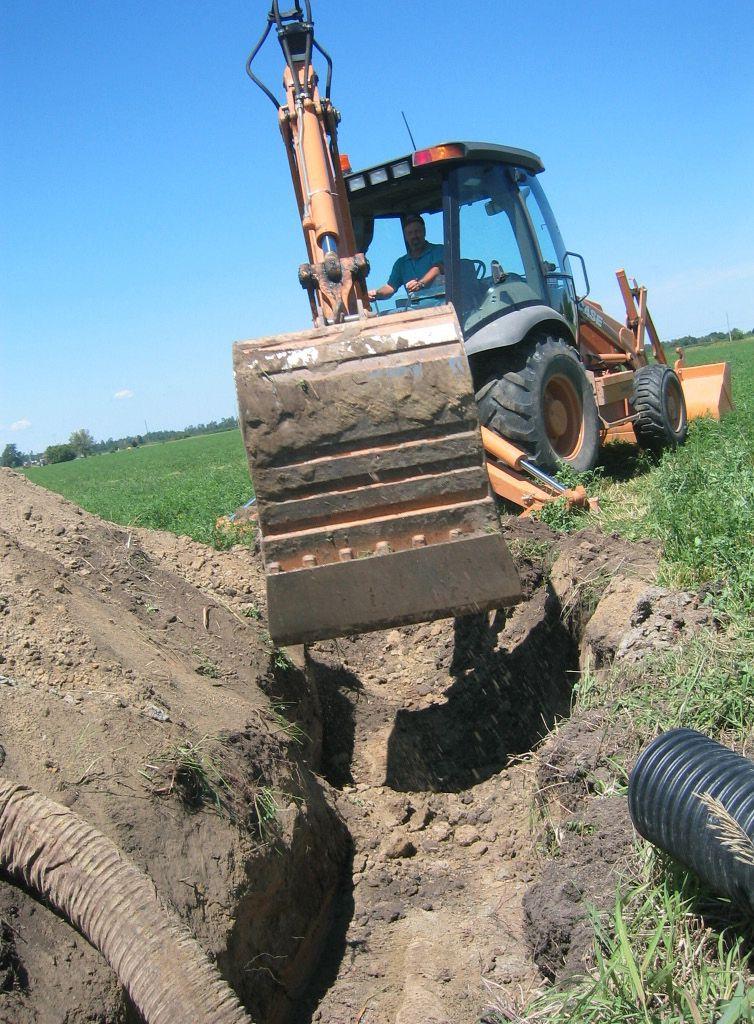
Depending on the size and depth of the outlet or access point, Lapen says it can cost producers around $1,000 to install a control structure. But that’s an investment producers can earn back in a few years as a result of yield boosts.
A new study out of North Dakota supports the use of control structures for agronomic reasons. The study investigates the response of hard red spring wheat (HRSW) to soil water management through the use of controlled tile drainage for yield, disease and other agronomic characteristics.
Grant Mehring, an assistant professor with North Dakota State University’s department of plant sciences and the study’s author, says there can be major benefits to closing drainage tiles when crops are thirsty.
In his study, Mehring saw an approximately three bushel per acre yield benefit in HRSW when the crop was allowed to use the water it needed during the growing season.
“Yield is the most important factor, but we also saw that there was slightly lower incidence rate of Fusarium head blight in the fields when we had closed tile systems,” he says. Obviously a producer’s number one control measure for leaf diseases is fungicide, but the result has interesting implications for future research – and is a promising indicator that water management can have multiple agronomic benefits.
“Our recommendation is that when you’re thinking about installing tile on your farm, give consideration to the added cost of putting in control structures,” Mehring says. “There are times in the season where it would actually pay with higher yields if you keep all of the water that ends up coming from rainfall in your fields, instead of pumping that excess water out.”
It can cost around $1,000 to install a control structure – an investment producers can earn back through yield boosts.
Control structures are operated with stop-gates. When the groundwater level gets too high, tile drainage occurs.
NEW POSSIBILITIES WITH PURPLE WHEAT
Evaluating the health benefits of this antioxidant-rich specialty grain.
by Carolyn King
Not only are purple foods eye-catching, but the colour can indicate the presence of health-promoting dietary compounds called anthocyanins. AnthoGrain, a Canadianbred purple wheat, has much higher levels of anthocyanins than regular wheat, plus it has the many other healthy compounds found in regular wheat. Now, a project involving two clinical studies is looking at just how beneficial AnthoGrain is for human health.
The principal investigator on this project is Elsayed Abdelaal with Agriculture and Agri-Food Canada’s (AAFC) Guelph Research and Development Centre. The project also involves Mark Pickard, the president of InfraReady Products, and Amanda Wright, an associate professor and director of the human nutraceutical research unit at the University of Guelph.
InfraReady, which produces AnthoGrain, is a Saskatoon-based food ingredient supplier specializing in cereal, oilseed, pulse and ancient grain products. Pickard says AnthoGrain is used in products like breads, crackers and breakfast cereals, and in noodles produced in southeast Asia. As well, the company has been exploring the possibility of using AnthoGrain in an alcoholic beverage.
According to Pickard, InfraReady first became interested in purple wheat as a food ingredient in the late ‘90s. “Initially it was the attractive colour; the diversity has marketing appeal. But by about 2000, it was the composition of the pigmentation that caught our interest. The colour is due to anthocyanins and anthocyanins are antioxidants.”
Variety development
InfraReady obtained its first purple wheat variety from the Saskatchewan Wheat Pool (SWP) after the pool discontinued its wheat breeding efforts in the mid-1990s. Pickard says, “The variety was a numbered line, so we trademarked the name AnthoGrain to recognize it as a distinct grain.”
Rob Graf, now a winter wheat breeder with AAFC in Lethbridge, Alta., was involved in developing that purple wheat
ABOVE: InfraReady sells AnthoGrain, a Canadian-bred purple wheat, in a variety of forms like flakes and flours for use in various food products.
variety. He says, “I was working with SWP at the time as a spring wheat breeder, but I wasn't alone in those efforts. Derek Potts, who was the CPS [Canada Prairie Spring] and durum breeder with SWP at the time (prior to his work on Brassica juncea canola), was the main person working on this. Derek and I obtained the purple wheat germplasm that was used in the breeding efforts from Pierre Hucl, who had brought some purple feed wheat lines back from New Zealand in the early 1990s.”
Hucl is a professor at the University of Saskatchewan’s Crop Development Centre (CDC) and works on improving spring wheat, specialty wheat and canaryseed varieties. He says, “In the late 1980s and early 1990s, I was looking for a seed type that we could use in developing wheat varieties for either feed purposes or ethanol production that would distinguish them from other classes of wheat in Western Canada. In those days, and up until [August 2008], wheats had kernel visual distinguishability (KVD) requirements. Most other combinations of colour and shape were already taken, so purple or blue was an alternative.”
Purple and blue wheats get their colour from the anthocyanins in different parts of the bran; the purple colour is found in the pericarp and the blue colour is in the aleurone. These wheats caught the attention of Abdelaal, who for many years has been a leader in anthocyanin research, although he recently moved to a management position with AAFC. Since the 1990s, Abdelaal and Hucl have collaborated on many studies related to purple and blue wheats and the anthocyanin composition of these wheats. They have found these wheats have relatively high levels of anthocyanins and contain many different anthocyanin compounds.
So, starting in the mid-1990s, with funding from the Saskatchewan Agriculture Development Fund, Hucl shifted the emphasis of his purple wheat variety development to focus on the anthocyanin aspect. He notes, “My initial work was mainly to see if it was possible to increase the anthocyanin levels in the bran to a point where it might be of interest to extract the pigments.” Once he got a good handle on that aspect, he started to work on improving other traits in his breeding lines.
Hucl adds, “I’ve been working with some pretty exotic material in terms of adaptation – lines that are later maturing, prone to disease and so on. The challenge has been trying to identify lines that are
Purple and blue wheats get their colour from the anthocyanins in different parts of the bran; the purple colour is found in the pericarp and the blue colour is in the aleurone.
not only higher in anthocyanin than what is currently available but also have all the other traits [desired by growers and processors].”
His first registered purple wheat variety is CDC Primepurple, which was registered in 2013. It has much higher levels of anthocyanins than his earlier experimental lines. CDC Primepurple is now the wheat used for AnthoGrain. InfraReady partners with a certified seed business that contracts farmers to grow the grain.
In recent years, a major objective in Hucl’s purple wheat breeding program has been to improve disease resistance. He says, “I have a line that will be in the final year of testing in 2017, so it could be up for support of registration in 2018. This new line is an improvement in disease reaction compared to anything else in a purple wheat background.”
Next, Hucl hopes to enhance the quality of purple wheat for different end-uses. “Are you going to use it for noodles or a topping on multigrain bread? Or are you going to extract anthocyanins from the bran or make a powder out of the bran, and if you do that, what are you going to do with the rest of the grain? So I’m looking at the baking quality and milling quality of some of these lines to see what we need to do to improve the marketability of the overall product, not just the pigment.”
Clinical studies
The clinical studies project was sparked by Abdelaal and Pickard’s interest in assessing the actual health effects of purple wheat. Pickard notes, “Knowledge is powerful. The presence of anthocyanins alone doesn’t really speak to their bioavailability or their recognizable health benefits. This work that we are doing could be the first step toward a qualified health claim for the product. So understanding the bioavailability and how purple wheat can affect human health is pretty important.”
“Mark and Elsayed came to us because we have a research unit in our department of human health and nutritional studies that is dedicated to human studies of functional foods and natural products. AnthoGrain,
because it has some health-promoting properties, can be considered a functional food ingredient,” Wright says.
“Anthocyanins are phytochemicals [plant compounds] that in fruits and vegetables often confer the red/purple/blue hue; for example, fruits like blackberries, cherries or cranberries are rich in anthocyanins. There has been a lot of evidence in pre-clinical work and in ‘in vitro’ [laboratory] studies, that anthocyanins have benefits that might have relevance for human health,” she explains. “We think anthocyanins are among the diverse phytochemicals that have the ability to modulate human health and diseases. In particular, because of their anti-inflammatory and antioxidative behaviours, we think anthocyanins might play a role in mitigating some of the factors that contribute to the high incidence of chronic disease in the North American population.” Anthocyanins might help in fighting such health problems as cancer, diabetes or heart disease.
Wright adds, “To our knowledge this is the first human study looking at the bioavailability and the health impacts of grain-based anthocyanin enriched products.” The project is funded through the Canadian Food Innovators program under Growing Forward 2.
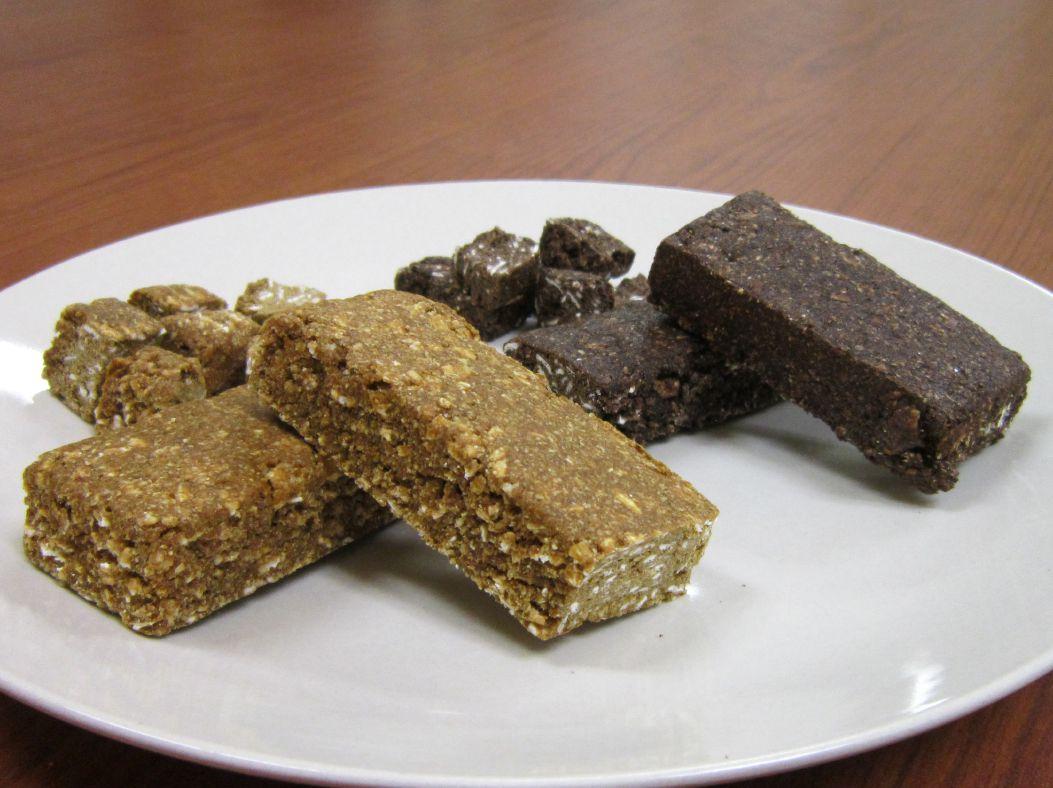
As a first step, InfraReady developed a number of different prototype food products using AnthoGrain. Then AAFC analyzed the nutrient and anthocyanin content of those products. Based on the results of that analysis, a granola bar and a cracker each containing AnthoGrain were selected for use in the clinical studies. InfraReady is making all the AnthoGrain and control wheat products used in the clinical studies.
Wright is working on the two clinical studies with a team composed of Tamer Gamel, a PhD candidate, and several other graduate and undergraduate students and staff at the University of Guelph.
The first study is assessing the bioavailability of the anthocyanins from the purple wheat granola bar and crackers. The aim is to see whether people who consume purple wheat-based products have changes
in their anthocyanin levels, in the many metabolites that are breakdown products of anthocyanins, or in different measures of inflammation or oxidative stress. The research team has finished the work with the trial participants and has almost completed the complicated lab analyses of the blood and urine samples. The team is now embarking on the data analysis.
The second study involves participants who are overweight or obese and who have some level of chronic inflammation. For eight weeks, these participants consume four daily servings of either the control granola bar or the purple wheat granola bar. Wright explains, “We are measuring their blood to look at changes in oxidative state and levels of oxidation and inflammation, and also things like blood lipids and glucose. Hopefully we will be able to see whether people who incorporate purple wheat products into their diet on a regular basis have beneficial impacts on these chronic disease markers.”
For this intervention study, the team started recruiting participants in the summer of 2016. So far, they have worked with 17 participants and aim to recruit 40 in total. Wright expects to have the study’s results by the fall.
It is challenging to find people who meet the study’s health criteria and can also commit to the eight-week trial period. However, Wright notes, “We do have a lot of people who are keen to try the purple wheat products and curious about purple wheat. When I was a kid, people seemed to prefer white bread, but now there is such diversity in terms of the products that are available. People want to be in our study and they want to be in the purple wheat treatment group.”
Potential benefits
The project offers an exciting opportunity for Wright and her research team to answer an important health question. “From the investment that InfraReady and the government are making in this project, we are able to advance the science further in terms of whether anthocyanins can modulate inflammation and oxidative stress, which are risk factors of chronic disease.” As well, the students involved in the project are learning about purple wheat, anthocyanins, and how to collect high-quality evidence that could help support commercial product development.
According to Wright, purple wheat has
lower anthocyanin levels than foods like blueberries or blackberries. But the big advantage in having higher anthocyanin levels in wheat is that wheat is a staple in many people’s diets. Consuming purple wheat food products could be a convenient way to help boost anthocyanin intake.
If purple wheat is proven to provide health benefits, then the project could help generate more interest in it and perhaps increase opportunities for purple wheat growers and processors. Hucl says, “I see purple wheat as a marketing
opportunity for a small number of producers and companies. My philosophy is that not everything has to be big. If you have many small things and you add them up, then you have something big.”
“I think niche wheat opportunities are fairly rare,” Pickard notes. “Purple wheat can offer higher returns per acre for the farmer. And the value-added primary and secondary processing activities contribute to economic development. So there are lots of potential positives from purple wheat for growers and others in the value chain for sure.”
TRUSTED THEN,TRUSTED NOW
In the 1920s, farmers trusted Westeel to protect their grain. We’ve built our legacy on careful planning and wise innovation, and we share these same values with our customers. Start building your legacy by choosing a storage system you can depend on for years to come.
PESTS AND DISEASES FORECASTING FUSARIUM
The science behind weather-based disease forecasting.
by Julienne Isaacs
If “technology transfer tool” can be defined as a way to get information into the hands of as many people as possible, weatherbased disease forecasting models are the perfect example of how this works in practice.
In Quebec, most producers are familiar with Agrométéo Québec (AQ) – or AgWeather Quebec in English – an agricultural management tool that offers real-time weather and climate information tailored to crop and region. It’s meant to help producers make informed spraying decisions.
AQ was developed through a collaboration between Agriculture and Agri-Food Canada (AAFC), the Quebec Department of Agriculture, Fisheries and Food, Solutions Mesonet and Environment Canada. The AQ tool was built to reference more than 40 bioclimatic models from the Computer Centre for Agricultural Pest Forecasting (CIPRA).
Until now, experts in the pest management warning network (Reseau d’avertissements phytosanitaires) have used a “rule of thumb” approach to Fusarium head blight (FHB) risk in the field, says Gaétan Bourgeois, an AAFC research scientist focused on bioclimatology and modelling. No mathematics-based FHB forecasting model is currently being used in Quebec.
“Over the years experts have developed a good sense of weather predictors for risk of infection. They looked at the temperature and forecast,” Bourgeois says. “But it’s a lot of work to gather weather data from each region and many sites and look at the risk index based on that data, so in a world where technology is getting faster and faster and we can grab data, we are aiming to make a map in a way that everything is done automatically. We’ll save a lot of time.”
Bourgeois is co-author on a new study comparing the accuracy of 10 different forecasting models for FHB in wheat. Over two growing seasons, Bourgeois and his colleagues gathered phonological, epidemiological and weather data from four experimental sites in Quebec (two in southern Quebec, one near Quebec City and one near Saint-Jean-sur-Richelieu), representing a variety of the province’s cereal growing regions. The team evaluated a hard red winter wheat cultivar and two spring wheat cultivars, using a variety of seeding dates in order to “create different weather scenarios in time,” Bourgeois says. They sprayed some plots with fungicide in a separate experiment evaluating fungicide efficacy, but the modelling experiment plots were left unsprayed to better assess disease risk.
Real-time updates
Models used to predict FHB in Italy, Argentina, Canada and the United States were examined in the study, along with DONcast,
a proprietary model used by the company Weather Innovations (WIN).
“Most of the models look at what we call polynomial linear regressions – they’ll look at the number of hours where relative humidity is over a given number over the last five days, at temperature and precipitation, and at flowering,” Bourgeois says. “Some are more dynamic or express the epidemiology of the disease, but essentially it’s all the same thing: they grab the weather, digest it into internal mathematics, and provide the disease forecast.”
Of the models studied, the two American models, De Wolf A and De Wolf B, provided the best disease prediction accuracy – even better than the Canadian models and others, according to Bourgeois. “Now we are in the process of integrating this model into the AQ website,” he explains. By the start of the 2017 growing season, producers will be able to log in on any given day, map the region and look at the FHB risks predicted by the forecasted models.
The AQ system is built to allow researchers to easily replace old models with newer models proven to be more accurate, which means producers will always be accessing the best possible information to help them make spraying decisions. “If we have upgrades or new models that are more efficient, they will be easy to apply,” Bourgeois says.
The search for the best, most accurate disease forecasting models is never over. Since the last study, Bourgeois and his colleagues have discovered more models used to predict FHB risk around the world.
They’ve just received a one-year grant from the provincial government to evaluate these models. The project will begin in April 2017 and run over the summer, for application on the AQ site by the 2018 growing season.
Bourgeois says the AQ site, and the research and development site CIPRA, which hosts bioclimatic models, have been receiving more interest from stakeholders in Quebec. “I’ve seen requests from people wanting to evaluate a model on a specific crop, or specific disease,” he says. “We’re getting a lot of requests of all sorts for many different crops.”
When the team first developed CIPRA, they made the decision not to make spraying recommendations, but rather to offer disease risk relative to weather conditions. CIPRA hosts a crop user guide that includes descriptions of pests, phenology and risks, and suggests times when producers should take action, but no specifics are offered in terms of products or pest control methods.“We let producers make their own decisions,” Bourgeois says.
Which is, after all, the goal of technology transfer.
The
Leading
Delegates
PESTS AND DISEASES
EVALUATING THE PRESENCE OF TAR SPOT
Is this foliar disease a cause for concern for Ontario corn growers?
by Carolyn King
In September 2015, a corn disease called tar spot was detected for the first time in the United States. Until then it had only been known to occur in Mexico and parts of Central and South America.
According to the University of Illinois’s Suzanne Bissonnette, the disease symptoms – little black spots on corn leaves – were first noticed by a commercial agronomist while inspecting his corn plots in Illinois and Indiana in 2015. He contacted Kiersten Wise, an extension plant pathologist at Purdue University in Indiana, and submitted samples to the Purdue Plant and Pest Diagnostic Laboratory. The lab identified the pathogen as Phyllachora maydis, a fungus that causes tar spot in corn. Since the pathogen was new, the Purdue lab sent the samples to the United States Department of Agriculture’s national diagnostic lab. The national lab confirmed this first U.S. detection of Phyllachora maydis
“So we started scouting for the disease in Illinois, and Kiersten and her group started scouting in Indiana, and a number of counties were found to have tar spot,” says Bissonnette, who is assistant dean for agriculture and natural resources at the University of Illinois
Extension and also director of the university’s Plant Clinic.
The pathogen was confirmed in a total of seven counties in northwestern Indiana and 13 counties in north central Illinois in 2015. “When this disease showed up in all those counties, we collected infected leaf material and did an overwintering study to try to determine if the pathogen could survive the Illinois winters or not,” Bissonnette explains. “When we took that material to the lab in the spring, we couldn’t find any live fruiting structures of Phyllachora maydis.”
That might sound like good news, but tar spot was found in Illinois again in 2016. Bissonnette says the Plant Clinic confirmed the presence of the pathogen in samples from three Illinois counties. The clinic also received photos, but not actual samples, of suspected tar spot in four other counties in the state. All the confirmed and suspected cases were found in counties where the disease had been detected in 2015.
ABOVE: If the tar spot complex does become a problem in the United States or Canada, it can be managed with the same fungicides already in use to control common leaf blights.
PHOTO BY BRANDI COWEN.
“So it looks like the pathogen survived in Illinois, but I cannot say definitively that it did. Certainly our overwintering study suggested that it wouldn’t. So again in 2016, we collected more infected leaf material, and we’re doing another overwintering study,” Bissonnette says.
Illinois was not the only state to have tar spot detections in 2016. Reports came from such states as Indiana, Iowa, Wisconsin and Florida; Michigan has a case that has not yet been confirmed.
Phyllachora maydis isn’t known to be seedborne, so if it didn’t overwinter in the soil or on crop residues, then it might have blown into the U.S. on the wind.
“We suspect the main reason why a lot of tar spot was found in 2015 was that the spores blew in from Mexico and possibly Central America with wind-driven rain and storm events. Common rust spores follow a similar pathway from Mexico and Central America and the southern U.S., moving those rust spores into Ontario,” says Albert Tenuta, a plant pathologist with the Ontario Ministry of Agriculture, Food and Rural Affairs (OMAFRA).
“In Mexico and Central America, tar spot is a disease complex with two different fungi. Phyllachora maydis is one of those two fungi,” Tenuta says. “This pathogen on its own causes tar spot symptoms, but the biggest potential risk for yield impacts in corn is when Phyllachora maydis works with the other fungus, which is Monographella maydis. Based on what we’ve learned from Mexico, Phyllachora maydis on its own does not cause economic damage. Monographella maydis needs to be there to make that complex complete.”
Where the disease has been studied in Mexico, Monographella maydis infection follows Phyllachora maydis infection. Monographella maydis prefers warmer conditions, which may be one reason it comes into the plant later. Some researchers have suggested a Phyllachora maydis infection may provide a means of entry for the other pathogen.
would normally show up in the Corn Belt,” Bissonnette says. “That’s one of the things that needs to be investigated – when does it really show up here, when does it really start infecting the plant material?”
In 2015 and 2016, the disease was found only later in the season in Illinois. She thinks fungicide application timing and/or weather conditions may have played a role in this. “Across the Corn Belt, it is very common to have a fungicide application in corn right around tasseling to manage a number of fairly significant fungal foliar leaf blights, like grey leaf spot and northern corn leaf blight. I suspect part of the reason we’re seeing tar spot at the end of the season is that there is no fungicide left on those leaves to protect them from fungal infection.” She adds, “We have had late-season cooler, wetter weather in the last several years in parts of the Midwest, which is a very conducive environment for this particular pathogen.”
“If you think of the conditions that favour white mould in soybeans or canola, those would be similar conditions that Phyllachora maydis would like. It likes cool temperatures with long periods of leaf wetness or heavy dews or other damp conditions,” Tenuta says.
Tar spot symptoms actually look like little flecks of tar on corn leaves, sheaths and husks. “You get these raised black fungal structures on the foliage. They are like peppercorns embedded in the tissue. They can be individual spots or the spots can coalesce into areas of damaged tissue. The spots can get some yellowing (chlorosis) and brown necrosis around them,” he says.
“Those black structures are called ascomata. They are little
“I suspect part of the reason we’re seeing tar spot at the end of the season is that there is no fungicide left on those leaves to protect them from fungal infection.”
So far, Monographella maydis has not been detected in the U.S. “In any of the tissues that we have received at our lab this year and last year, we tried to find Monographella in association with those tar-like fruiting structures, and we have yet to find it. So that is one bit of good news,” Bissonnette says.
Another piece of positive news is that, if the tar spot complex does become a problem in the U.S. and/or Canada, it can be managed with fungicides. Bissonnette says, “There is good data from CIMMYT [International Maize and Wheat Improvement Center] in Mexico that tar spot is controlled by the same fungicides that we use for our common leaf blights. The fungicides would require labelling for this use [in the U.S. and Canada], but it’s good news.”
For Ontario corn growers, there’s more good news: Tar spot has not been detected in the province to date. “We do our crop disease surveys every year. On a routine basis, we evaluate not only the distribution and severity of the diseases we have right now in field crops, but we also try to catch those invasive disease migrants when they first come into the province,” Tenuta says. “In 2015 and 2016, we looked for tar spot, Goss’s wilt, bacterial leaf streak and a whole bunch of other newer diseases and we didn’t detect or confirm the presence of any of them.”
Of course, it’s also important for growers to keep an eye out for new diseases like tar spot when scouting their crops. “I wish I could say when to scout for tar spot, but we don’t actually know when it
reproductive structures where the spores are produced. The ascomata may look similar to old lesions of common rust [which turn to black as they mature]. But with common rust, you’ll see what growers sometimes call ‘little volcanoes’ (pustules) that have ruptured open and you’ll see the rusty spores on the leaves or your clothes. Also, a tar spot-infected leaf will feel bumpy, almost like sandpaper. And if you rub your hands over those black structures of tar spot, they don’t come off, whereas rust spores come off easily.”
Bissonnette and Tenuta both note other plant diseases are also called tar spot because they cause black spots on the plant; an example is tar spot in maple and other trees. But these other diseases are caused by different pathogens. Phyllachora maydis infects only corn.
“Although we are still not sure what the impact of tar spot would be in Ontario [in the long run], based on what we know of the disease and what we’ve seen so far, it will likely be localized in its occurrence and sporadic from year to year,” Tenuta says. “So overall, from an economic standpoint, tar spot isn’t anything to be concerned about at present for Ontario corn growers.”
He advises growers to focus on existing diseases: “Tar spot hasn't been confirmed here, and many other diseases are present in Ontario fields right now – diseases that are overwintering and that could pose risks to Ontario corn crops, like northern corn leaf blight and grey leaf spot, as well as common rust (depending on the timing of spore arrival into Ontario). Those are all diseases that our growers see every year and should be included in their preventative disease management strategy.”
LOOKING TO THE NORTH
The future of Ontario’s agriculture sector could lie outside more traditional farming areas.
by Trudy Kelly Forsythe
Urban sprawl has some Ontario farmers, agricultural organizations and even politicians looking to the north as the future for agriculture in the province. It is, after all, where producers can find cheaper land – typically priced between $1,000 to $1,500 per acre – and lots of it.
“There are 16 million acres in the Great Clay Belt and 13 million in the same clay belt in Quebec,” says Terry Phillips, an agronomist with the Co-opérative Régionale de Nipissing-Sudbury and a pea, soybean and cereal farmer in the northern community of New Liskeard, Ont. “That’s roughly 3.5 times all the current production of Ontario in the clay belt in Ontario and Quebec.”
Of that Ontario clay belt acreage, approximately 2,800 farms currently operate on 700,000 acres producing beef, dairy and, to a lesser extent, cash crops. However, Ontario’s Ministry of Agriculture, Food and Rural Affairs (OMAFRA) reports most districts in northern Ontario could increase that by as much as 20 to 50 per cent by bringing idled private lands back into use.
Daniel Tasse, an agricultural development advisor with OMAFRA’s regional economic development branch says the Canada Land Inventory has identified 4.4 million acres of the Northern Clay Belt as Class 3 or 4, which are both suitable for cultivation.
“This region accounts for 50.4 per cent of Ontario’s Class 3 land and 67.8 per cent of Ontario’s Class 4 land,” Tasse says.
Overcoming the challenges
Despite the fertile land, a short growing season is one reason agriculture hasn’t expanded more in northern Ontario. That is shifting as climate change has a positive impact in the area; the warming climate over the past 50 years has increased crop options and improved yields.
“We’ve been growing fababeans in Temiskaming, but it’s getting too hot,” Phillips says. He explains an Ontario climate and agriculture assessment study revealed growing days in the clay belt area are expected to increase by 43 days by 2050. “We could grow cereals, canola, pulses, peas. Northern Ontario could become the next Saskatchewan for canola.”
The report revealed other impacts from climate change as well, including going from 30 to 64 days with temperatures over 25 C, an increase from 110 to 144 freeze-free days and improving land suitability scores from 5 to 3, and possibly even 2, on a five-point scale, where 5 is unsuitable and 1 offers slight to no limitations for a specified crop.
<LEFT: Minister of Northern Development and Mines
Michael Gravelle says the province has identified agriculture as an emerging sector.
BOTTOM: The area is expected to go from 110 to 144 freezefree days by 2050 as a result of climate change.
<LEFT: Ontario's clay belt region is expected to gain 43 additional growing days by 2050.
Climate isn’t the only challenge to overcome. “It can be tough to get people to go up north to live and work,” Phillips says. “And there’s zero infrastructure; no elevators, seed suppliers or equipment dealers.”
He says distance to market is another limitation, with northern producers paying at least 10 per cent of their cost on freight.
“There is a rail line and Highway 11 goes right through the clay belt, but there are no roads,” Phillips says. “If Crown land is sold, the government would have to build access roads and rail opens the North American market.”
And, like elsewhere in Canada, finding affordable farm labour is an issue. A successful mining industry in the region competes for labour and the social isolation limitations exacerbate the problem.
Northern farming success
As a second-generation farmer in northern Ontario – Phillips and his brother took over the pedigreed seed farm their father started in 1946 – Phillips is more than familiar with the challenges of operating a farm in the north. However, he really appreciates the freedom producers have there.
“There’s a lot of common sense up north still; there aren’t restrictions like in other parts of the province,” he says. “I have the freedom to do what I do using responsible, best management practices.”
Phillips also appreciates the opportunity for affordable expansion.
“The south is not a lot different in terms of yields, but they have higher rent costs and can’t expand,” he says. “Customers here have operations in a 20 to 25 mile radius and can run equipment back and forth; in the south, there are restrictions moving large equipment around urban areas.”
Finding support
Proponents of expanding agriculture in northern Ontario are optimistic, however, and government programs like the Northern Ontario Heritage Fund Corporation (NOHFC), an economic development fund dedicated to growing businesses and creating jobs in northern Ontario, help.
“Agriculture has been identified as an emerging sector in the North that is well positioned to support our plan to grow the economy, create jobs and help people in their
PHOTOS COURTESY OF TERRY PHILLIPS.
Since
the province has invested more than $37 million in agriculture projects in northern Ontario, including tile drainage and land clearing to bring new farmland into production.
everyday lives,” says Michael Gravelle, Minister of Northern Development and Mines and Chair of NOHFC. He says that since 2013, they have invested more than $37 million through the NOHFC towards 111 agriculture projects, including tile drainage and land clearing to bring new farmland into production.
“This has leveraged more than $59 million in direct economic activity in northern Ontario, and has supported 372 jobs,” Gravelle says. “I am pleased to see Ontario’s investments help farmers take advantage of local and niche markets, contribute to a sustainable local food source for northerners and diversify our northern economy.”
Other government programs available include the Northern Business Opportunity Programs for business expansion, small business start-up projects, the Strategic Economic Infrastructure
FINANCIAL ASSISTANCE
PPrograms and the Northern Ontario Internship Program.
Numerous organizations have also popped up to offer support, including Rural Agri-Innovation Network, Beef North, FarmNorth. com, the Northern Ontario Farm Innovation Alliance, and the Northeast Community Network, the latter of which is involved in hosting agriculture symposiums focusing on northern expansion.
The most recent symposium, called Cultivating the Great Claybelt, took place on March 30 and 31 and included networking opportunities, developmental and informational workshops and speakers and individuals who advised and educated attendees in many areas related to farming and cultivating northern Ontario.
It’s all a step in the right direction, according to Phillips. “We, the Great Clay Belt, are the future of agriculture in Ontario,” he says. “The opportunity is exciting.”
WITH FARMLAND IMPROVEMENTS
rimary agriculture and aquaculture in Ontario’s north generate more than $200 million in revenue each year, so perhaps it’s no surprise that in its Growth Plan for Northern Ontario, the provincial government committed to expanding food production and supporting the development of production, processing and distribution systems in the region.
Some of this support is provided through the Northern Ontario Heritage Fund Corporation (NOHFC) Strategic Economic Infrastructure Program. Among other things, the program provides funding to help farmers cover the costs of clearing land and installing tile drainage.
NOHFC will fund up to 50 per cent per acre of the material and labour costs to clear land and/or hire a licensed contractor to install drainage tile, to a maximum of $500 per acre.
Many producers have already taken advantage of the program. Terry Phillips reports NOHFC provided more than $22 million in funding to assist producers with tiling 27,247 acres and clearing 4,519 acres of land between 2014 and 2016. During this period, 4,607 acres were both cleared and tiled.
The Strategic Economic Infrastructure Program was recently extended through March 31, 2019. For more information, visit nohfc.ca/en/programs/strategic-economic-infrastructure-program.
2013,
Distance to market is a serious limitation for farmers in northern Ontario, where producers typically pay at least 10 per cent of their cost on freight.
Holding up traffic is out of sight. Holding up traffic is out of sight. cropscience.bayer.ca or 1 888-283-6847 or contact your Bayer representative. @Bayer4CropsCA Always read and follow label directions. Stratego® is
Get ready to cause even more gridlock out there. Trust Stratego® PRO fungicide to drive up the quality and yield of your winter wheat, spring cereals, soybeans and corn. While you may not end up too popular on the road, you can count on protecting against devastating diseases including rust, Septoria and white mould… and harvest healthier, higher-yielding crops. Learn more at cropscience.bayer.ca/StrategoPRO More than the best products. Great rewards. Ask your retail about our program.
of
EXPLORING OPPORTUNITIES FOR BIOPRECIPITATION
Could producers one day plant crops to actively influence rainfall?
by Carolyn King
Results from a flurry of studies over the past decade indicate certain plant-associated bacteria and other biological particles can play a part in ice formation in clouds, leading to precipitation. One possible implication is that in the future, farmers might grow specific crops to produce those particles in order to increase rainfall in drought-affected areas –although many questions would need to be answered before this could become a reality.
Land use, including vegetation type, is known to influence cloud formation and precipitation because it affects things like the amount of water vapour released through transpiration. But the idea that biological aerosols – particles so small that they remain suspended in the air – might be an important factor in precipitation is relatively new.
The concept of bioprecipitation was proposed in 1982 by David Sands, who is a professor of plant sciences and plant pathology at Montana State University. At the time, Sands was working on an outbreak of a wheat disease caused by the bacterium Pseudomonas
syringae. “He knew this bacterium is seedborne, so they disinfected all the seeds before planting. But within three weeks the whole field was diseased with this pathogen, so he wondered where the disease was coming from,” explains Cindy Morris, a research director in plant pathology at the French National Agricultural Research Institute (INRA) and an affiliate professor at Montana State University.
“He went up in an airplane with a colleague and put his hand out of the plane to collect samples in petri dishes as they flew over the field. He isolated Pseudomonas syringae from samples of ice crystals collected in the clouds. He also tested their ice nucleation activity.”
As a result, Sands proposed a novel idea: a bioprecipitation cycle that starts when the bacteria are picked up off the surface of plants by the wind and carried up into the clouds as aerosols. There, the bacteria facilitate formation of ice crystals, which help
ABOVE: Researchers are questioning how significant the effects of microbes are on cloud processes and precipitation.
in bringing together many tiny water droplets so they are heavy enough to fall. The resulting precipitation carries the bacteria back to the ground and promotes the growth of plants and the bacteria, starting the cycle again.
“For those living micro-organisms that survive this process –because many of them do come down alive – it’s a free trip to new places to colonize, so it’s a way to expand their geographic area,” Morris says.
Initially people dismissed the bioprecipitation concept, but about two decades later, research on the topic really started to take off. “There is one very simple reason for that,” Morris says. “In 2002, David Sands and I met at a conference – we’d known each other but we didn’t work together – and we decided to bring the subject back on the map. Then in 2006, I was able to get money for the first conference, which we called ‘Microbiological Meteorology’.”
“With funding from the European Science Foundation, I had the means to bring in 25 people from different geographic origins and different disciplines. I brought in atmospheric physicists, meteorologists, modellers, microbiologists, etcetera, and we got together for a four-day meeting at the French National Agricultural Research Institute’s centre in Avignon. Since then, interest has snowballed.”
A myriad of interdisciplinary, international meetings have followed that initial meeting. The core group has expanded to include about 140 researchers and they have produced diverse scientific publications.
For example, the researchers have found ice-nucleating microbes in precipitation samples collected in many countries around the world and in airborne sampling. They have simulated how biological ice nucleators would influence cloud processes. They have identified more bacterial species and other biological particles that are able to cause ice nucleation, such as pollen, algae, fungi, lichen and leaf litter fragments.
However, as Morris notes, mineral and biological aerosols are always present in the atmosphere; the types and amounts are constantly changing, so it’s very difficult to determine if and when bioaerosols occur in sufficient numbers to have a significant effect on precipitation.
More research is needed to figure out how common biological ice nucleators are in the atmosphere, what their physical, chemical and biological properties are, and how much of an influence they
have on the amount and location of precipitation under different conditions.
For instance, bioaerosols could be important in promoting rainfall in situations where cloud temperatures are relatively warm because biological ice nucleators cause ice to form at much warmer temperatures than most mineral aerosol particles, like dust and soot.
One area Morris and her colleagues are currently researching is a surprising feedback effect in bioprecipitation: it appears rain may sometimes cause more rain.
Field observations and simulations indicate that in some situations a rainstorm can cause a rapid increase in ice-nucleating particles in the air. The increase occurs immediately and can last up to about 20 days after the storm, so those particles could go up in the atmosphere and contribute to rainfall again. The processes involved aren’t known, although the researchers have proposed some hypotheses.
In one of their latest papers, the researchers calculated an index of rainfall feedback using 100 years of daily rainfall data for 1,250 sites in 17 of the western U.S. states, and mapped the results. Their analysis showed the patterns of rainfall feedback were affected by the site’s location and the season.
Morris says, “The type of questions you ask about how land use would affect rainfall in the Central Valley of California are not the same kind of questions you would ask in the Northwest U.S. because they have completely different responses to rainfall. Urban centres are going to behave differently than mountainous areas, are going to behave differently than pine forests, are going to behave differently than flat land with corn fields.”
“So, what we need to do now is to create site-specific hypotheses and think about what is happening in a very local way.”
This type of research might help improve the accuracy of precipitation forecasts and enhance understanding of how land use influences precipitation.
Growing wheat and rain?
Some researchers are exploring questions around the possibility of using crops to strategically influence precipitation. For example, Sands and Morris recently worked with the International Center for Agricultural Research in the Dry Areas (ICARDA) in the Middle East to examine the possibility of selecting wheat lines as sources of ice-nucleating bacteria, in this case Pseudomonas syringae.
More research is needed to figure out how common biological ice nucleators are in the atmosphere.
Not all strains of Pseudomonas syringae are ice-nucleation active and not all strains cause wheat disease. The researchers compared the ability of 25 different wheat lines to host pathogenic and nonpathogenic strains that were all ice-nucleation active. Twelve of those wheat lines naturally harboured the bacterium in the field and some harboured non-pathogenic strains, so it may be possible to select wheat lines that host non-pathogenic strains of icenucleating Pseudomonas syringae.
The researchers also inoculated the wheat seeds with different strains of Pseudomonas syringae to see if the bacteria could be transmitted from the seed to the plant’s leaves and eventually to its seeds. Depending on the wheat line and the bacterial strain, the inoculated seed sometimes transmitted the bacteria to the nextgeneration seeds. This suggests it might be possible to ensure the wheat plants would have strains of Pseudomonas syringae that are non-pathogenic and also good ice nucleators.
The results suggest wheat crops could potentially be grown for both grain yield and rain yield.
Many other crop production questions would also need to be
answered to make it practical for farmers to use crops to “grow rain,” like which crops and which production practices offer the best options – and yield the best results.
Society would also need answers for a tangle of scientific, economic and policy questions. “I think the next think tank we need to have is to work on the question: if we knew the mechanisms of what is going on, what could we actually do with that information? That would help scientists think about the tools we might need if we are going to put policies into place,” Morris says. “For instance, let’s say you could pay farmers to grow specific crops that generated bioaerosols, but then those crops failed because some of these organisms are plant pathogens. What then would be the indicators that the farmers succeeded?”
In that situation, crop yield wouldn’t be a good indicator because the crop failed. Perhaps an indicator related to extra rainfall could be used, but where would the region receiving extra rainfall likely be and how big would it be? And then there are questions like how much would the farmers be paid and who would pay? How much is rainfall worth?
Get an early jump on weeds with the ideal soybean set-up acre. Pre-emergent weed control with
get enhanced pre-seed burndown and residual activity for up to five weeks in soybeans.
MIX AND MANAGE STOPS GR CANADA FLEABANE
A great tank mix and a good management strategy can win the war against this troublesome weed.
by John Dietz
New herbicide technology, carefully applied and coupled with managing modes of action, is Ontario’s best hope for winning the war against what is arguably the worst broadleaf weed in Canada today.
The weed is glyphosate-resistant (GR) Canada fleabane, also known in the United States as GR horseweed. In 2001, after discovery in Delaware in the U.S., it became the world’s first broadleaf weed with confirmed resistance to glyphosate. It was first reported in Canada in Essex County, Ont., in 2010. Two years later, it was documented in eight counties in the province. By 2015, it was confirmed in 30 counties across Ontario, ranging from the Detroit to Quebec borders.
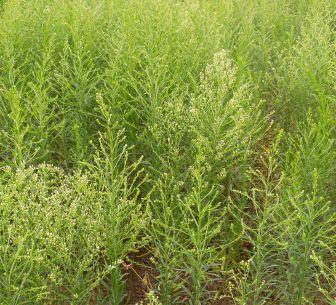
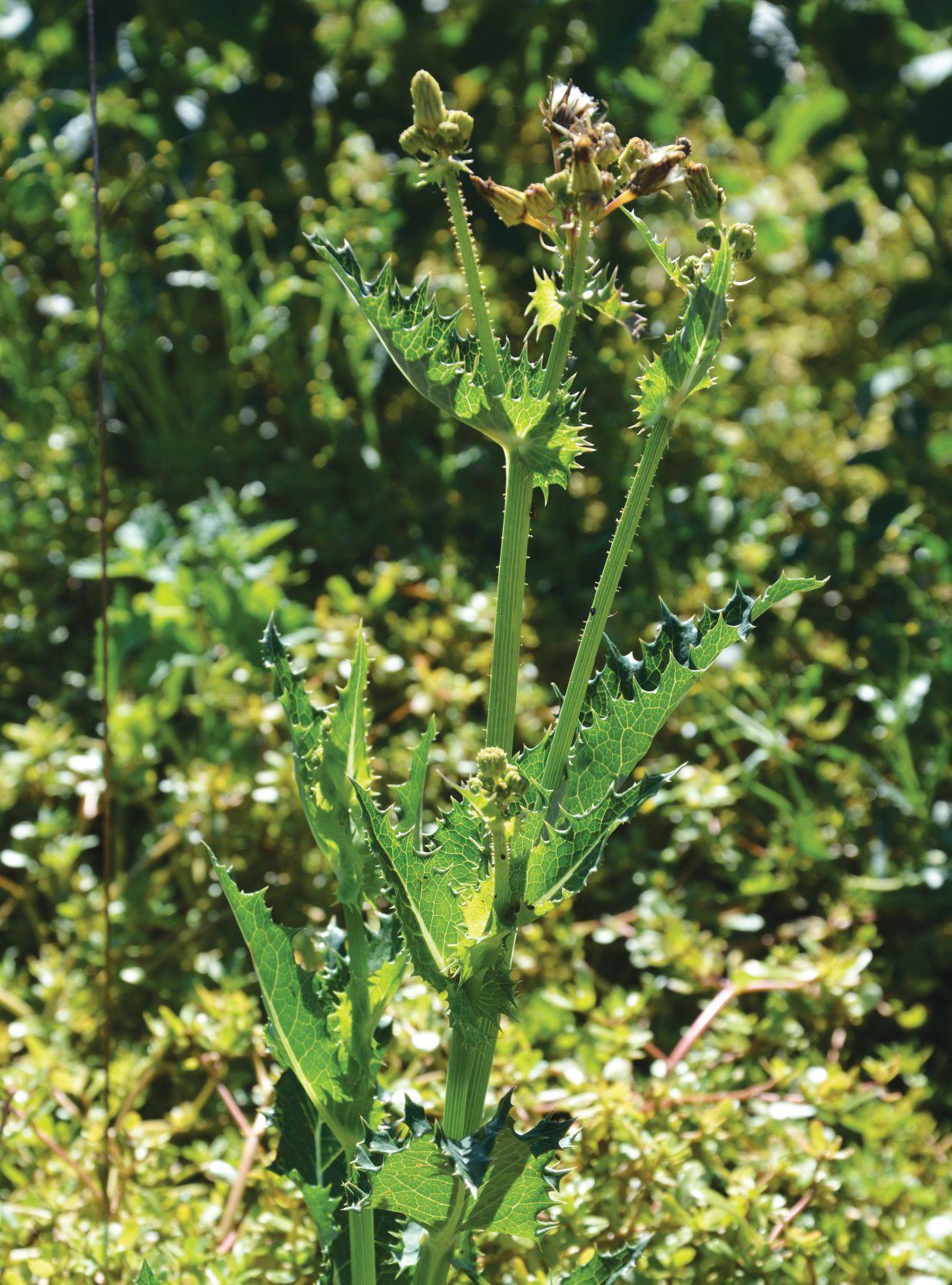
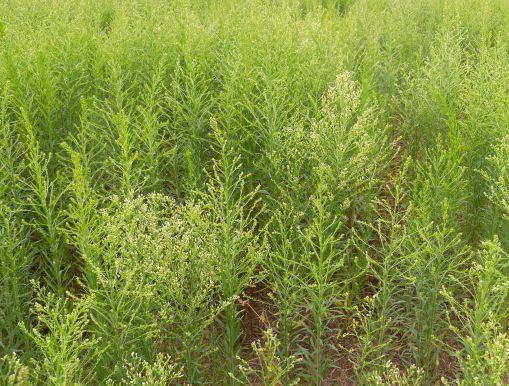
One mature fleabane plant can measure five feet tall and can produce more than 200,000 viable seeds.
Like fluff from a thistle or dandelion, the seed releases and drifts on air currents. Most stays within a hundred metres of the parent plant, but as an example, one study from Cornell University found horseweed seed can travel up to 550 kilometres from the parent plant.
“You see this pattern. In year one, one GR Canada fleabane plant goes to seed in a field; you might not notice it,” says Chris Budd, field biologist for BASF in Eastern Canada. “Year two, you start to see a teardrop pattern [of infestation] because of wind dispersal. By year three, if it’s not targeted and managed, it’s turning into a scattered situation across the field.”
When uncontrolled in a crop, it’s deadly to production. When glyphosate won’t control it, and if nothing else is used, the soybean yield loss due to Canada fleabane can be more than 90 per cent.
The herbicide technology first registered to control Canada fleabane was saflufenacil (Kixor), a Group 14 herbicide registered for annual broadleaf weeds in soybean, corn (field and sweet), barley, oats and wheat (spring, winter and durum) in Canada in 2010. When applied pre-plant and pre-emergence, glyphosate and Merge are required.
Herbicides in Group 14 inhibit the protoporphyrinogen oxidase (PPO) enzyme, which is important in the production of chlorophyll. Basically, they disrupt plant cellular membranes, causing cell leakage and desiccation of tissues.
Best practices
Three-way herbicide tank mix options for controlling Canada fleabane were the subject of a study at the University of Guelph in 2014
and 2015. The weed scientists concluded the best single mix for soybean was a combination using glyphosate, Kixor and metribuzin. This study laid a foundation, Budd says, since it identified the most effective treatment and timing for controlling Ontario’s worst weed.
However, for Budd, some questions still needed answering. Since the Canada fleabane species is highly adaptive, what more could be done to prevent the onset of new resistance to Kixor? Could the spraying methodology be fine-tuned to improve control?
So, Budd led a new University of Guelph study, published earlier this year in Weed Science, to dig into best management practices for using tank-mix technology in soybeans.
The two-year study was done on three Ontario farms in 2014 and 2015 by a four-member team of weed scientists in co-operation with BASF Canada. In the journal article, they reported on effectiveness of Canada fleabane control in relation to the weed density, weed height and time of day for spraying. Other components of the study included biologically effective rates and tank-mix partners with saflufenacil.
Time of day study
The weed science team at Guelph turned Budd loose to work on further management improvements. The work controlled for the possible effects related to the time of day the herbicide was applied. The
PHOTOS COURTESY OF CHRIS BUDD.
Chris Budd recommends a diverse crop rotation because it has additional benefits in weed control. More diversity gives more chemistry options than a corn-soybean rotation.
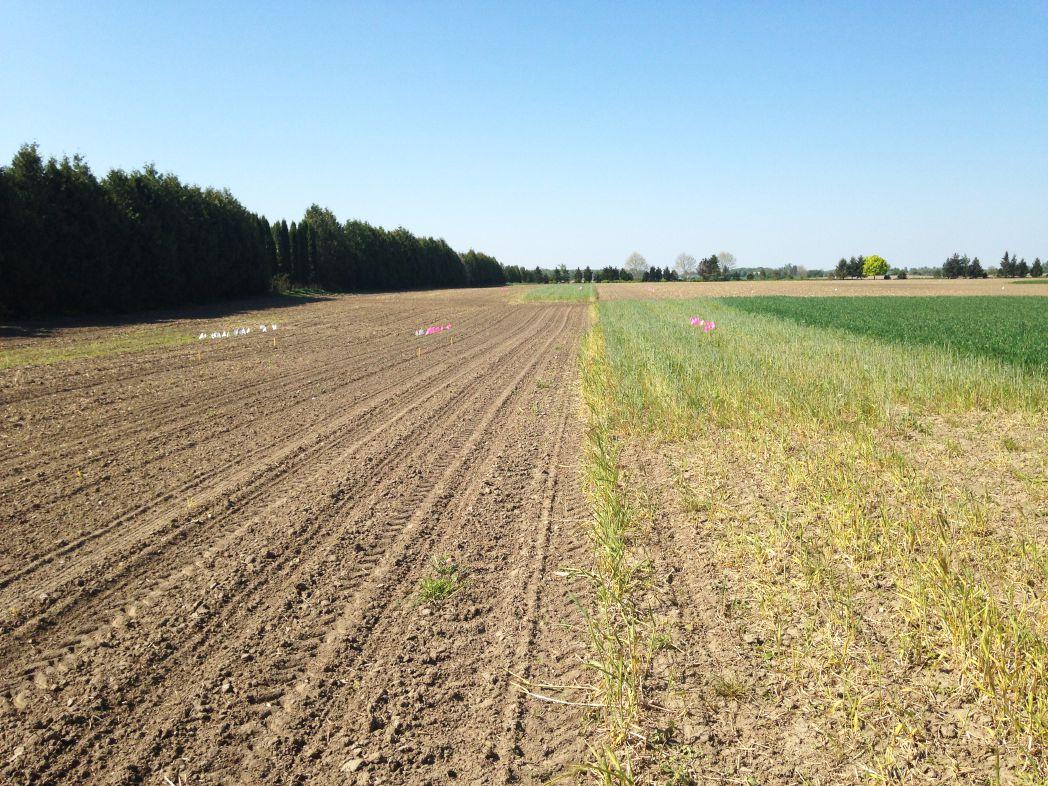
university set up small trial plots at locations that already had GR Canada fleabane infestations. The eight-metre plots were seeded to three rows of beans on 30-inch spacing.
All treatments in the two-year program used a base tank-mix application of glyphosate, Kixor and Merge surfactant.
The study also measured and considered non-controllable variables for their impact – temperature, humidity, light intensity and dew presence.
Beginning in May 2014, Budd set up a three-hour spray interval program: Seven times in 18 hours, starting at 6 a.m., Budd applied the recommended Kixor treatment to a fresh set of trial plots with similar levels of Canada fleabane infestation. Days later, he went to the second research site and repeated the treatment.
Starting a week after the first day of treatments, the team returned to rate the level of control. They repeated this in weeks two, three, four and eight.
For confidence in the numbers, the team repeated all of this in 2015. They also had weed-free plots and weedy, untreated plots.
The greatest control of GR Canada fleabane was achieved with applications between 9 a.m. and 9 p.m. Control was reduced when applications were at 6 a.m. or midnight.
Soybean yield peaked with the 3 p.m. or mid-afternoon spraying, with about 20 per cent more yield than treatments at 6 a.m. or midnight.
“We only saw a downside in the middle of the night, probably because of several environmental factors. Even at night, the difference was only 11 per cent so we were still maintaining control,” Budd says.
Height and density results
For height and density trials, they used a nearby non-crop area with eight alternating plots measuring three by 38 metres, both treated and untreated.
The height trial had seven categories of GR Canada fleabane plant heights, from one centimetre to more than 25 centimetres. The trial had 10 Canada fleabane plants per treatment, or 70 in total, randomly distributed in the plots and each marked with a wire flag. Six weeks after application, 99 per cent control was confirmed for plants under five centimetres tall. Control decreased to 95 per cent for plants more than 25 centimetres tall. The tallest plants also had some regrowth.
For the height study, Budd says there wasn’t much difference –a result that surprised him.
“For the 25 centimetre plants, there was slightly less control, but that’s a giant plant for any contact chemistry. These are big plants at the time of application. As for why it’s still effective on tall plants, I think that comes back to water volume. We were getting more coverage.”
The density trial had seven density treatments, ranging from less than 21 Canada fleabane plants per square metre to more than 800 per square metre.
On the basis of plant density, there was complete control of plots with densities up to 40 plants per square metre. At more than 800 per square metre, control was still 96 to 97 per cent. Where initial density ranged from 153 to 1,344 plants per square metre at eight weeks after treatment, Budd still found 88 per cent control of GR Canada fleabane.
“When you have very high density, you have multiple targets to hit. In a high density situation, you want to have a high water
One mature fleabane plant can measure five feet tall and produce more than 200,000 viable seeds. Those seeds can be dispersed on air currents, spreading the weed.
volume. We encourage using 20 gallons of water per acre in that situation so that you get good coverage of everything, down to hitting the smaller ones that otherwise would be shaded,” Budd says. Other significant findings include:
• Where weed control was greatest, growing conditions were warmest, brightest and driest. Dew was not present.
• Canada fleabane leaves appeared to hold a constant position throughout the day, unlike the leaves of velvetleaf, common lambs-quarter’s and redroot pigweed.
• Two weeks after application, glyphosate plus Kixor provided 95 to 100 per cent control of GR Canada fleabane, with lower control of the larger plants and death of most plants less than five centimetres tall at the time of spraying.
Real world applications
The 2017 crop year will see soybean growers using Kixor technology for pre-emerge crop protection, as well as the even newer dicambatolerant Roundup Ready Xtend crop system from Monsanto.
Generally, Budd recommends a diverse crop rotation because it has additional benefits in weed control. More diversity gives more chemistry options than a corn-soybean rotation. It also allows different crop competition scenarios, plus tillage, use of cover crops and crop residue options. Altogether, it decreases selection pressure for resistance.
“If the crop rotation is tight (corn-soybeans), you have the option of the Xtend soybean that is dicamba-tolerant. Then you can have a tank mix of Kixor with dicamba at the pre-plant, preemerge timing, and that is going to be effective,” Budd says. “Then another year you can have Kixor plus Metribuzin. You’re mixing your tanks, but maintaining multiple modes of effective action.”
The combination of Kixor with Metribuzin was pinpointed in a different study as part of his thesis, using RR2 soybeans. Many herbicide combinations were tested, but it was before dicambatolerant Xtend soybeans became available.
In the RR2 soybean system, the best treatment found for GR Canada fleabane control was the Kixor plus Metribuzin at 400 grams of active per hectare, Budd says.
“Today, an Xtend system with Kixor and dicamba would be just as good as the Kixor plus Metribuzin,” he concludes.
ON-FARM TRIALS YIELD UNBIASED, LOCAL DATA
On-farm research takes time and patience, but the rewards are often worth the extra effort.
by Julienne Isaacs
All agronomy recommendations are generalized. They can be specific to a region, but every farm is different,” says Chad Anderson, Ontario Soil and Crop Improvement Association (OSCIA) director for the St. Clair Region. “I have a lot of livestock and use a lot of manure, so my [nitrogen] rates are different than a farm that doesn’t use a lot of manure. The thing about doing your own testing is that it gets away from that generalization.”
Anderson, a beef producer in Lambton County, Ont., has been involved in many on-farm trials over the years, including a longterm neonicotinoid side-by-side trial and fungicide trials in soybean and nitrogen (N) rate trials in wheat, to name just a few.
He says hosting on-farm trials takes time and patience and involves extra work for producers when they’re at their busiest, but it’s work that pays off. “You don’t improve anything unless you test it,” he says.
Investigating new ideas
OSCIA, a not-for-profit organization, has been around since 1939
and currently boasts more than 4,000 members across the province.
“Ever since the beginnings of the organization, it was all about like-minded people wanting to investigate new ideas in superior crop production,” says Andrew Graham, OSCIA’s executive director. “We’re still very true to the original reasons why the organization was formed: finding ways to practice sustainable agriculture and get as much from the soil as possible in a sustainable way.”
OSCIA connects producers with organizations looking for onfarm trial sites and offers resources and funding to help make trials happen. The organization pools money with the Ontario Ministry of Agriculture, Food and Rural Affairs (OMAFRA) and makes it available to local clubs. Funding is organized in two tiers: Tier 1 funding involves $1,500 per year offered to counties or regional organizations to cover educational events or oneyear farm trials. Tier 2 funding – a total of $100,000 per year for
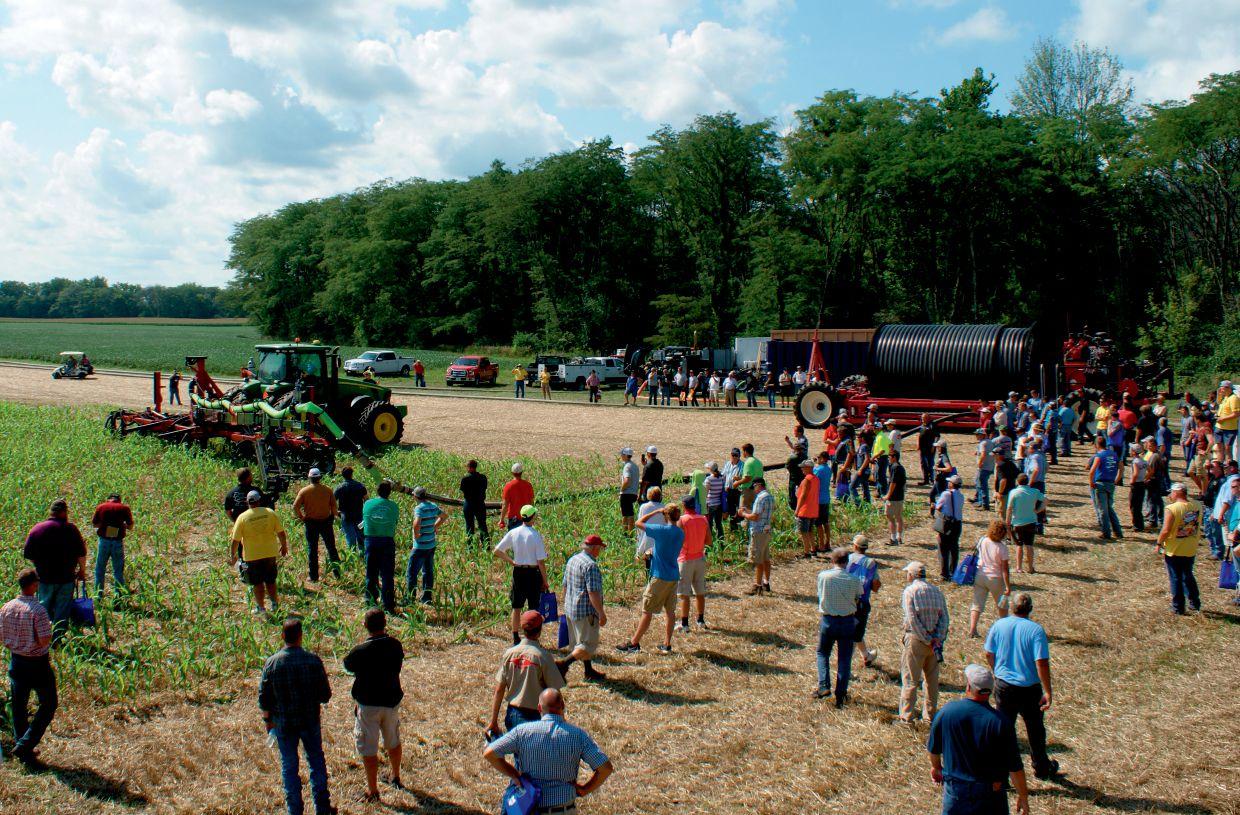
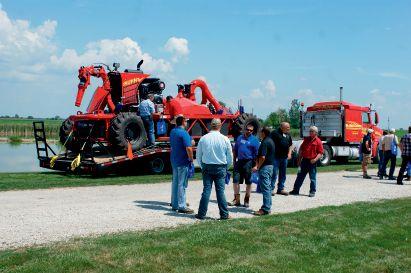
ABOVE: OSCIA connects producers with organizations looking for on-farm trial sites and offers resources and funding to help make trials happen.
PHOTOS COURTESY OF OSCIA.
three years – goes to four ongoing projects chosen for their broad appeal to members.
Current Tier 2 projects include a cover cropping project in the Thames Valley, another cover cropping project in St. Clair, a corn N study in Ottawa-Carleton, and a unique project in northern Ontario looking at converting boreal forest into farmland.
Graham says each of the Tier 2 projects is meticulously organized, with research protocols overseen by OMAFRA staff. “We’ve insisted that for every one of the project trials the protocols are satisfied and the treatments are properly replicated and
well managed,” he says.
Regular project updates are provided at regional meetings and in newsletters. Once projects are complete, information is “packaged” in writing and shared in the Crop Advances publication on the OSCIA website.
Ian McDonald is the applied research co-ordinator in field crops for OMAFRA. He says there are currently 13 crop specialists for field crops in Ontario, each of whom is assigned as a research liaison with the 11 regional soil and crop associations.
“Our primary role in OMAFRA is to help steer the projects to
“
,
.
Ravi Bathe, Agvocate Poultry and Berry Producer
Chad Anderson, a beef producer in Lambton County, has been involved in many on-farm trials over the years, including this nitrogen rate application trial in wheat.
make sure the question that’s being asked is clear, that the treatment being assigned is correct and is implemented and assessed properly,” he says. “We roll up the data and do the statistics and work in collaboration with the farmer to write the final reports.”
Benefits outweigh drawbacks
McDonald says each year there are hundreds of on-farm projects across the industry, from variety trials to agronomy trials, but farmers aren’t always directly involved in doing treatments or assessments. “They’re interested but busy,” he says. “Farmers are involved but the seed companies, retail people or OMAFRA are doing much of the work. Farmers are often fully engaged in the planting and harvesting of various types of plots in collaboration with the project advisor, which is a crucial role, but less involved in the day to day assessments and monitoring and report writing, etcetera.”
company’s plots always beat the competition,” he says. “They’re not unbiased. It’s important to get information that nobody will benefit from who’s involved in running the trial.”
Last year, Green was involved in the neonic project, as well as a digestate-based cover cropping study overseen by Christine Brown, a field crops sustainability specialist with OMAFRA.
Green says many benefits of on-farm trials outweigh the drawbacks; chief among the benefits is locally relevant data. “Some of the stuff we’re doing, for instance with cover crops, there isn’t much research out there,” he says. “There are lots of guys who think cover cropping is wonderful but we don’t have the numbers to back it up.”
“We’re still very true to the original reasons why the organization was formed: finding ways to practice sustainable agriculture and get as much from the soil as possible in a sustainable way.”
According to Gord Green, OSCIA’s past president and a dairy producer in Oxford County, farmers often struggle with the inconvenience of onfarm trials. “It’s annoying for the farmer to have to do a research plot because he could plant 100 acres per day, but all of a sudden he’s putting in a couple of hours on a test plot, and the flow of production gets interrupted,” he says.
But many believe the extra work is worth it, he explains, because they want the results.
“One of the problems is getting unbiased information. With variety trials for instance, all the corn companies say they have the best corn, and if you look at the test plot information, notoriously a seed
Green says members present new information gleaned from on-farm trials at annual OSCIA meetings. Although intriguing ideas don’t always work out as planned, even negative results can help farmers move forward.
“There are a lot of ideas, but we need to test them out,” he concludes.
For more on crop management, visit topcropmanager.com.
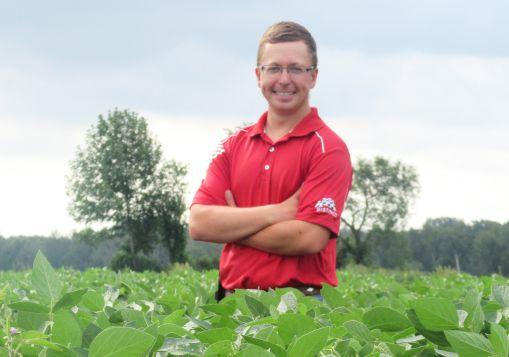
The benefits of on-farm trials outweigh the drawbacks for many producers; chief among those benefits is locally relevant data.