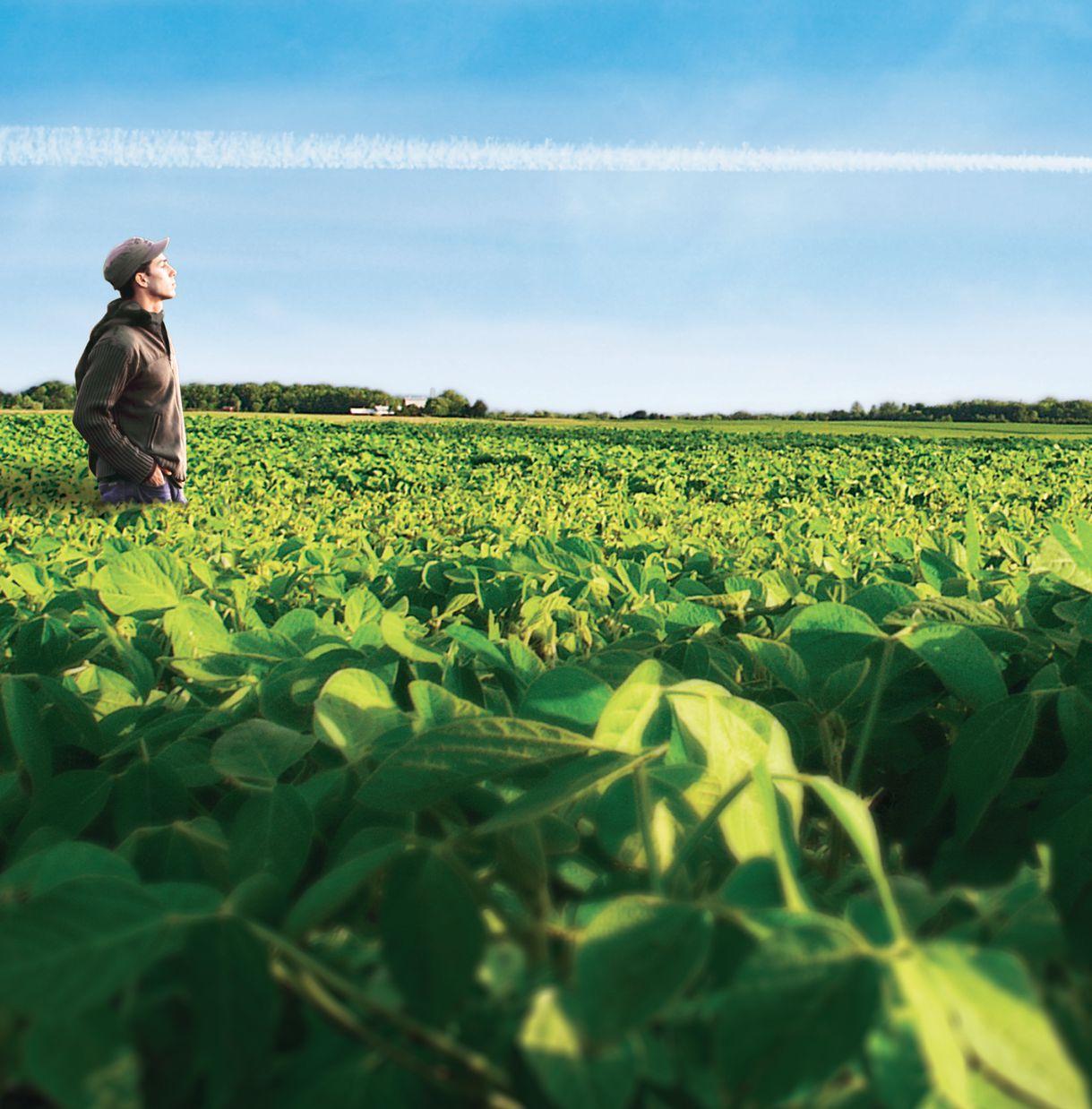
New Stratego® fungicide is registered on more diseases than any other soybean fungicide on the market.
With its two modes of action, Stratego provides both curative and preventative activity on all major leaf diseases. And it pays for itself by maximizing bean quality and saving you up to 10% in yield loss from crop disease*.
For under $10/ac., it’s your complete wish list. Everything you could wish for.
TOP CROP
6 | Top five economic drivers to watch in 2012 Agriculture is a complex, diverse and dynamic industry. by Jean-Philippe Gervais, senior agriculture economist, Farm Credit Canada 8 | A clear trend for edible beans Managing disease now more important. by Ralph Pearce
Tackling wireworms by Carolyn King 27 Chemical serendipity or part of the plan? by Blair Andrews BUSINESS
22 There is nothing like a plan by Rosalie I. Tennison
AND FEED 10 The value of oat and barley crops in wheat rotations by Melanie Epp
20 | Food versus fuel: The debate is over It all comes down to sound research and careful analysis. by Melanie Epp
New eastern editor by Sara Avoledo
18 Black soybeans a new option for Ontario by Carolyn King 25 Are high commodity prices here to stay? by Treena Hein TILLAGE AND SEEDING
30 The value of tile drainage by Melanie Epp
23 Planning your grain storage management system – The grain bin
SARA AVOLEDO | EDITOR
My name is Sara Avoledo and I am the new editor of Top Crop Manager East Some of you may remember me as Sara Brenneman, probably those of you from Oxford County, just outside of Embro, out in the country and surrounded by fields. My love and passion for the agricultural industry started there.
I have always been one to get out and get involved. I was a director and Fair Queen for the Embro and Zorra Agricultural Society, I taught Sunday School at church, I babysat, and I was one of those kids who did everything in high school. So it should be no surprise when I say I am involved in a lot and I like to keep busy.
As high school was ending I decided that there were four things I really liked in life: my rural roots, politics, communications and a good event, especially if I were organizing it. The question was how would I combine those loves into a career?
I started out at the university that must not be named, in London Ont. But soon I realized that my pickup truck just didn’t fit in with all of the BMWs in the parking lot. I did find, however, that I felt quite at home at the University of Guelph, when visiting for Aggie Pub. So I switched schools, became a proud Gryphon and graduated with an honours bachelor of commerce degree in public management.
Now what does that mean, you may ask? Well, I took business classes, pretended that I was an aggie, was president of the Junior Farmers club and took politics classes as electives. I even did a thesis centring on the decline of involvement of people in rural organizations, and all of these things helped to steer me towards a career specializing in agricultural communications.
My first real job after university was at Agline/TI Communications Ltd., where I worked for a variety of crop protection companies, creating and implementing grower payment and loyalty programs across Canada. I worked on a technical call centre line, and at farm shows, and realized that working in agriculture always meant there was darn good food at events!
Next I became a member of Class 12 of the Advanced Agricultural Leadership Program (AALP). This was an amazing opportunity that allowed me to network with agricultural professionals the world over and to learn so much more about the ag industry.
From there, I moved on to working as the customer relations manager for OnTrace Agrifood Traceability, which was a non-profit, industry-led initiative to champion traceability in Ontario’s agriculture and agri-food industries. There I furthered my passion for getting out into the industry at events and workshops. I started working with social media. It was something that I knew I wanted to develop further and stay involved in.
Most recently, I took on the role of manager, research communications and marketing, for the Office of Research at the University of Guelph. I worked on communications and marketing, and, among other duties, managed the Students Promoting Awareness of Research Knowledge (SPARK) team. This role allowed me to immerse myself in the research side of things, opening a whole new world to me that I had never been involved in. The students who work in the SPARK program are some of the brightest and most talented young people and helping them in getting the word out about all the great research being done at the university really struck a chord with me. I wanted to take it all one step further.
And that brings me to my current adventure. My specialties are getting the message out and getting involved, and as the new editor of Top Crop Manager East, I’ll be striving to spread the word about agricultural research to you, the reader...in print, online at AgAnnex.com and by social media, @TopCropMag. I look forward to the conversation.
TOP CROP
MANAGER
APRIL 2012, VOL. 38, NO. 7
EDITOR Sara Avoledo savoledo@annexweb.com
ASSOCIATE EDITOR David Manly dmanly@annexweb.com
EASTERN SALES MANAGER smccabe@annexweb.com
WESTERN SALES MANAGER kyaworsky@annexweb.com
SALES ASSISTANT
mburnie@annexweb.com
MEDIA DESIGNER Gerry Wiebe
GROUP PUBLISHER Diane Kleer dkleer@annexweb.com
PRESIDENT Michael Fredericks mfredericks@annexweb.com
RETURN UNDELIVERABLE CANADIAN ADDRESSES TO CIRCULATION DEPT. e-mail: subscribe@topcropmanager.com
Printed in Canada
CIRCULATION e-mail: subscribe@topcropmanager.com
SUBSCRIPTION RATES
Top Crop Manager West - 8 issuesFebruary, March, Mid-March, April, June, October,
Top Crop Manager East - 7 issuesFebruary, March, April, August, October, November
Specialty Edition - Potatoes in Canada - February -
Occasionally, Top Crop Manager will mail information on behalf of industryrelated groups whose products and services we believe may be of interest to you. If you prefer not to receive this information, please contact our circulation department in any of the four ways listed above.
All advertising is subject to the publisher’s approval. Such approval does not imply any endorsement of the products or services advertised. Publisher reserves the right to refuse advertising that does not meet the standards of the publication. www.topcropmanager.com
THE PURSUIT IS OVER
PHANTOM™ puts an affordable end to broadleaf weeds.
Control weeds on contact and in soil residual with the takeout power of imazethapyr, the same active ingredient found in Pursuit®. Support fair pricing and protect your soybean, dry bean and other broadleaf crops with Phantom herbicide. Available at leading retailers. Ask for Phantom by name.
MARKETS AND MARKETING
Agriculture is a complex, diverse and dynamic industry.
by Jean-Philippe Gervais, senior agriculture economist, Farm Credit Canada
The potential impacts of economic news on profitability are not always clear, especially with the world evolving at such a fast pace. There are so many connections between economic trends and agriculture that it can be hard to identify the most relevant factors to monitor in today’s marketplace. This is why it is always useful to stop and think about those economic drivers that are most likely to affect profitability in Canadian agri-food markets.
What are the top five economic drivers agri-business owners should monitor in 2012?
1. Global economic growth
Global economic growth would certainly come at the top of many lists.
Income growth and the emergence of a more affluent middle class in less advanced countries has had a positive impact on world food demand for the last few years.
Consider the case of China. Chinese officials recently revealed that the growth rate in gross domestic product (GDP) in the last quarter of 2011 was 8.9 percent, down from the previous period’s growth of 9.1 percent. While the estimate suggests decelerating income growth in China, it is also reassuring that inflation is falling at the same time.
In the opposite scenario, growth in the neighbourhood of 10 percent accompanied by high inflation could be unsustainable and could ultimately have a negative impact on agri-food markets.
The European debt crisis continues to represent a significant risk to the global economy.
There are two main channels through which the crisis impacts Canadian agrifood markets: trade and financial spillovers. The impacts on trade are somewhat minimal; but a further fall in the value of the euro against the Canadian dollar would make Canadian products
less competitive against goods sold by European businesses.
The impacts of a full-blown crisis triggered by Greece abandoning the euro or other countries threatening to default on their debt payments are harder to predict. The Bank of Canada estimates that the annual costs to the Canadian economy already amount to $10 billion, or 0.6 percent of our GDP.
2. The changing policy environment
A second important driver of Canadian agri-food markets in 2012 is the policy environment.
We already know that the removal of the Canadian Wheat Board’s exclusive marketing rights will change how producers in Western Canada market their
ABOVE: The global economy will have much to say about agricultural profitability in 2012.
grain. Canada is currently engaged in different trade negotiations and has expressed the desire to expand the scope of countries it’s negotiating with. Should a trade agreement with e urope be finalized in 2012, it would open up markets for crop and cattle producers, and perhaps be accompanied by higher dairy imports into Canada.
Trade negotiations with South Korea and within the Trans- pacific partnership could also generate new opportunities and challenges.
Discussions about the next american Farm Bill are also worth monitoring because it impacts the relative strength of Canadian producers in the north american marketplace. Budget pressures on the US federal government may force lawmakers to abandon direct payments to producers, a saving of $5 billion per year.
What, if anything, will replace these payments? Introducing a shallow loss program, in which revenue losses of five or 10 percent may be covered, could be seen as favourable from a budget perspective given strong crop receipt prospects in the short term. This, however, could evolve into significant payments following a downturn in the markets and again confer some sort of advantage on US producers.
The US government may also choose to revise its country of origin labelling policy as part of the next Farm Bill discussions.
e nvironmental policies, food safety initiatives, labelling regulations, etc., are other policies that could significantly impact profitability in 2012.
3. Production outlooks
The production outlook in major agriculture-producing regions is another important driver.
Drought worries in some parts of South america have caused concern about corn and soybean crops. e xisting wheat inventories are currently at the second-highest level on record, so weather worries offer less support to wheat prices.
Weather conditions also impact the livestock sector. a drought in Texas caused excessive culling of animals and will undoubtedly have a negative impact on cattle numbers for years to come. This will support north american beef prices because it will delay any potential american herd expansion.
4. Canadian dollar
a fourth driver of profitability is the value of the Canadian dollar. Half of Canadian agri-food production is exported and a strong dollar hurts the competitiveness of Canadian businesses.
g iven that Canada produces and exports many natural resources and commodities, the value of our dollar tends to be tied to prices of these commodities, especially oil. at current oil prices, the historical relationship between the value of our currency and oil suggests that our dollar should be slightly above parity with the US dollar. But current uncertainty in the global economy slightly pushes down the value of the loonie. Hence, the dollar is expected to fluctuate around parity in the near future.
5. Farm input prices
Finally, farm input prices round out our top five list of economic drivers to watch in 2012.
The farm input price index of Statistics Canada climbed almost 10 percent in the last year. g iven income growth prospects and increased food demand,
cost components of agriculture production such as fertilizer, land and energy will remain elevated in 2012.
Fertilizer demand is expected to increase given pressures to increase yield and production globally. High energy prices are supported by economic growth, and are the result of unpredictable turmoil in the Middle e ast. Interest rates are expected to remain unchanged for most of 2012. The low interest rate environment, coupled with strong crop receipts, supports elevated farmland prices.
a lthough weather or unpredictable economic conditions make it challenging for agribusiness owners to establish definite year-long business plans, there is a great deal of optimism in Canadian agriculture. Understanding economic drivers is one way to help you plan more strategically in an economic marketplace that is uncertain, but contains many opportunities. In the coming year, we are committed to checking back in on these issues and monitoring other trends that may impact your bottom line.
PESTS AND DISEASES
Managing disease now more important.
by Ralph Pearce
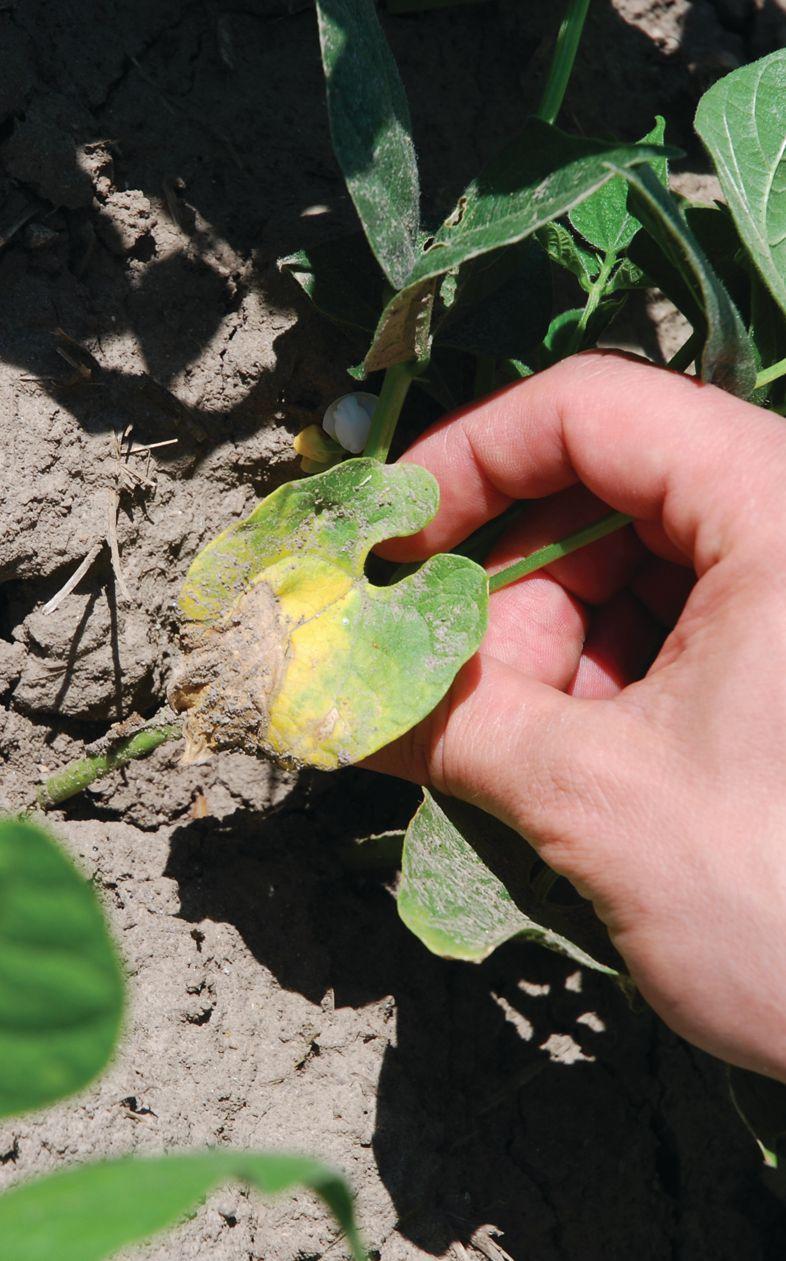
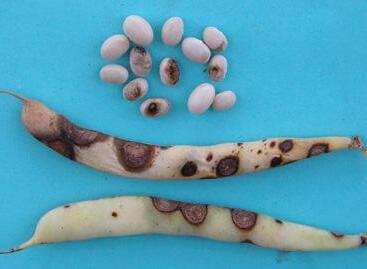
For several years, edible bean growers have had to deal with the prospect of anthracnose being a problem, particularly for growers of white beans. The disease, along with bacterial blight and sclerotinia, is a challenge to growers because of its capacity to reduce yield.
Yet in edible bean production, anthracnose is an issue for a different reason; because it can mar or blemish the seed coat, making the disease a threat from a quality standpoint, in addition to hurting yield.
A trend that is taking shape in the United Kingdom is emphasizing the need for even greater control of anthracnose. In the UK, canned or baked beans are a dietary staple – they are eaten for any meal, including breakfast – and Canada is one of the major exporters of dry beans to the British Isles. However, where baked beans in North America tend to be prepared with a dark tomato sauce, diners in the UK are favouring a clear sauce for their beans. That shift means that any blemishes or marks left behind by anthrac-
nose are more apparent and less pleasing to the consumer. And that means greater attention to disease management in Ontario fields is necessary.
It is well accepted that compared to corn, wheat or soybeans, edible beans are a more management-intensive crop, and that disease management has more to do with guarding quality than it does yield. But just as quality is persistent in edibles, so is anthracnose. “Anthracnose is one disease that is a constant, one that growers deal with every year, and unfortunately, will continue to deal with,” says Albert Tenuta, field crops pathologist with the Ontario Ministry of Agriculture, Food and Rural Affairs. “It’s one that has been challenging to keep under wraps all of the time, and we’ve made strides, but as with anything, when you go forward, sometimes you
CONTINUED ON PAGE 12
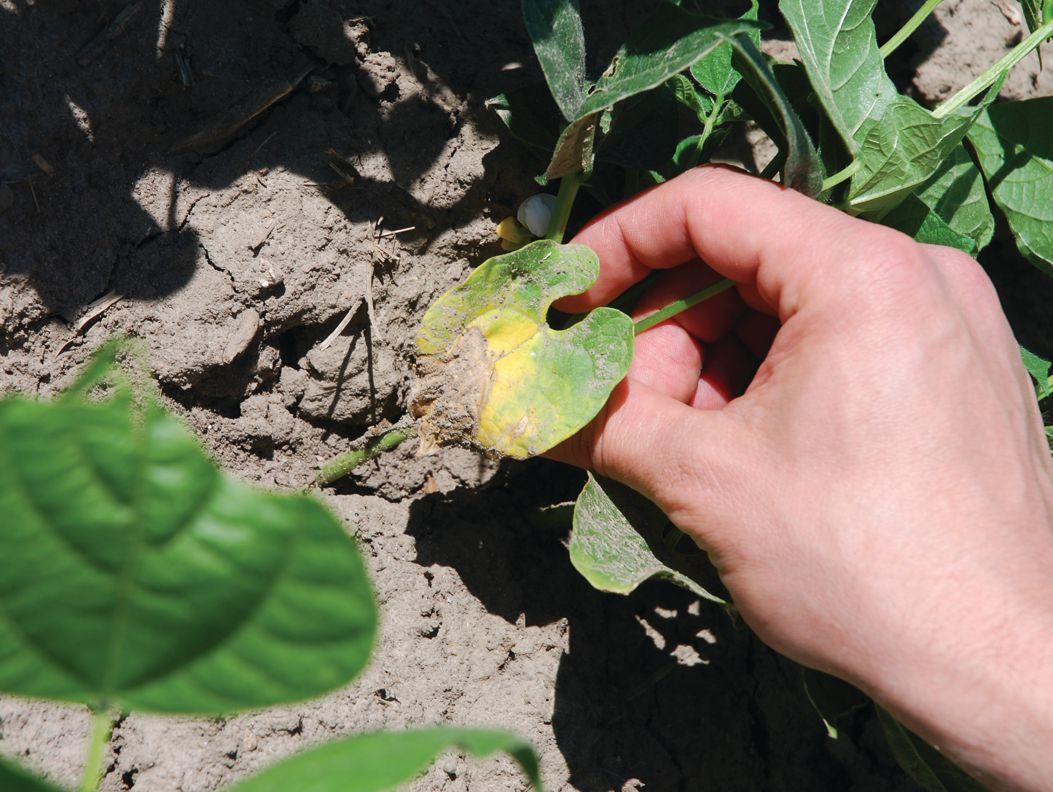
PHOTOS BY RALPH PEARCE.
TOP: Anthracnose lesions on bean leaf.
INSET: Anthracnose lesions on bean pods.
FORAGES AND FEED
Minimizing Fusarium and minimizing mycotoxins.
by Melanie Epp
Most Ontario farmers fully understand the importance of rotating crops, especially when trying to avoid Fusarium. “Ontario seems to be the epicenter for Fusarium, at least in wheat,” says Peter Johnson of OMAFRA. “It seems as if the fact that we’re surrounded by the great lakes, we have lots of corn out there in the countryside, and our weather conditions – the crops in the area seem to always make Fusarium the bullet that we’re trying to dodge. It is the number one issue in wheat production, bar none.”
Dr. Trevor K. Smith, a professor in the Department of Animal and Poultry Science at the University of Guelph, has devoted his entire career to the study of feed and food toxicology including the effects of feeding anti-nutritional factors such as Fusarium mycotoxins. Much of the information for this article has come from his research.
Fusarium head blight (FHB) is a mould or fungus that lives and overwinters in the soil. When the conditions are favourable, the fungus will grow in the soil and move up the stock of the plant, using the nutrients within the plant to promote mould growth. Fusarium produces mycotoxins, which are harmful compounds, especially to livestock, but they can also be harmful to plants.
Fusarium fungi produce a multiplicity of toxins, one of which is referred to as DON (deoxynivalenol), but is more commonly known as vomitoxin. When Fusarium head blight attacks the head of the wheat plant it will attack the grain and produce DON residues in the grain. When ingested, the DON toxin will act on three levels in animals. First, the farmers will see behavioural changes, including reduced feed consumption or loss of appetite, vomiting, loss of muscle coordination and lethargy (DON can act as a sedative). Secondly, it causes a reduction in immunity, making the animal more susceptible to disease. Thirdly, it causes damage to the intestinal tract, including ulcers and bleeding. Pigs are particularly susceptible to the presence of DON.
There are many different strategies you can use to minimize mould growth and toxin production, one of which is crop rotation. If you cultivate wheat endlessly in the same plot of land, the fungus will continue to grow and spores will be produced. “But if you rotate it with oats or with barley, for instance,” says Dr. Smith, “different species of Fusarium will develop, some of which will be more powerful in producing head blight than others.”
They will also produce different amounts of mycotoxins. Depend-
ing on what the crop is, whether it’s wheat, barley, oats or corn, you will see a proliferation of different strains of Fusarium. “So if you rotate the crops,” says Dr. Smith, “What’s going to happen is that the strains of Fusarium will start to change, and that means that you won’t have a proliferation of just one, which will then potentially reduce a large amount of mycotoxins.” Using crop rotation will minimize the chance that you will see severe disease in the plant, or severe production of mycotoxins, which will reduce the feeding value of the grain.
There are other strategies you can use too. Besides crop rotation, there is also the concept of no-till farming. No-till farming is great for soil conservation, which is something the province of Ontario encourages producers to practice, but not so great for minimizing the life cycles of fungal spores. “When you till the soil, it exposes the fungal spores to the air, which kills them,” says Dr. Smith. “So by tillage you minimize the life cycles of the spore. By practising no-till, you increase the chances that that’s going to happen. Crop residual remains on the ground, fungal spores thrive, and stay there.”
One other strategy that can be used to minimize fungal growth, and thereby reduce toxic residues, is the use of fungicides – a process that not only costs money, but which can also be a bit tricky. “It has to be applied at the right time in the growth cycle,” says Dr. Smith. “And that will depend on different times for different types of crops. It is also subject to the vagaries of weather.”
According to Peter Johnson of OMAFRA, Fusarium isn’t restricted to corn and wheat. Both barley and oats are susceptible too, but to a much lesser degree. “It’s much more difficult to see Fusarium in barley, than it is in wheat, because in wheat the kernels turn pink and you can see the bleached heads,” says Johnson. “In barley, you don’t get that same pink coloration. It’s a much paler pink. When you run barley for toxins, they will often come back with very high levels.”
Johnson is a firm believer in crop rotation, as well. “Crop rotation helps with limiting the initial infection,” he says. “It is, by far, the largest management tool that a grower can employ to reduce the toxin in the grain. If I can grow cereal crop following a legume crop, I’m going to get a lot less Fusarium or toxin in the grain almost all the time.”
“Once you get that infection in the crop, it really doesn’t matter whether it’s grown after corn or after soybean or after alfalfa hay, it’s
going to make the same toxin,” he continues. “If I get the infection, it’s still going to make vomitoxin. But I get way, way less Fusarium if I grow it in a good rotation.”
As the Cereals Specialist for Ontario, Johnson recommends that you do not grow wheat after corn, because corn is the big problem in creating the disease inoculum that infects the wheat crop. “I would say the same thing for barley and the same thing for oats.”
The dilemma, he says is deciding whether or not to spray, since it must be done on about the second day after it heads, which means making a decision on day 2 of a 42-day growth cycle. The weather in between those days, which has the biggest impact on the fungus, is another major factor of consideration.
“It’s a big guessing game,” says Johnson.
In recent years, there has been a dramatic increase in the use of fungicides on winter wheat. “The reason that we’ve seen that is that we’ve had a number of years with either a significant problem with toxins or a near miss.”
Johnson says that growers now have access to better fungicides
that cost less, particularly in the past couple of years. “We’ve gone from 10 years ago spraying none of the crop,” says Johnson. “Five years ago we maybe sprayed 15% of the wheat crop, and last year we probably sprayed 70% of the wheat crop. It’s because growers just cannot afford to take the risks. From a safe food standpoint, it’s just the right thing to do.”
Currently, there are two products on the market for Fusarium. One is a BASF product called Caramba; the other is Prosaro from Bayer Crop Science. They both have equal efficacy, and they both cost about the same.
“From my perspective,” says Trevor Krauss of BASF, “whether you’re growing wheat, oats or barley, Fusarium is a significant disease that’s very difficult to predict. So it’s not something where you can say, ‘Oh, I anticipate a big problem so I’m going to use it.’ You use them as a matter of course every year with the goal of producing grain that’s low in vomitoxin.”
Both Prosaro and Caramba are currently on the market. Prosaro is registered for wheat and barley, but not for oats. Caramba is registered for all three.
CONTINUED FROM PAGE 8
end up going back a bit.”
Mike Bakker, brand manager for fungicides for BASF Canada in Mississauga, Ontario, acknowledges the difficulty of managing diseases such as anthracnose, especially with the demand on quality, and particularly now with the trend in clear sauces in baked beans. But as with most diseases, it is often a case of out of sight, out of mind. “Anthracnose was a significant issue two years ago, then it didn’t get as many press highlights this year, so it sounds like quality was better,” says Bakker. “But it’s one of those diseases you have to be preventative about in application, you can’t be reactive.”
Growers are familiar now
In 2009, there was a fairly widespread anthracnose infection in Ontario bean fields, and that led to significant dockage issues with buyers. “Probably the worse-case scenario, we’ve already dealt with it,” says Grant Jones, chair of the Ontario White Bean Growers Association, who farms near Hensall. “That infection put everybody on notice; it was a real learning curve and dealers realized there were a lot of costs involved with harvesting infected beans.”
The lesson learned then was to drive around and monitor those areas of a field that were hardest hit with the infection.
The reality now is that consumer trends are pushing their way back onto the farm, and growers are learning to pay closer attention to their management strategies. “You’re almost at different levels of bean production, where the highest you’d have is an edible bean, which would include a white bean, or a kidney or a cranberry bean,” explains Bakker. “A little bit lower, you go into an IP soybean, and then far below that, you get into a Roundup Ready production system, where the issue is all about how many bushels I can produce, and quality is a much lesser factor driving that decision.”
Tenuta agrees. “Edible beans require more scouting, more hands-on, not even just within season, but during the planting process and ultimately, even at harvest time,” he says. “So rotation
is one thing that can help, and clean, disease-free seed is one of the most important aspects of managing this disease, particularly from an introduction early on in the season.”
Research showing slow progress
One of the key factors in dealing with anthracnose in the long term is the development of resistant varieties, which Jones believes will be available within three years. But Tenuta points out that anthracnose does not stem from a single-race pathogen. “There are differences in terms of some of the varieties, but we also have multiple and different races, and that throws a kink into the whole system as well,” he notes.
That can also have an impact on how fungicides perform. “There’s no fungicide which is curative; the vast majority of applications need to be done preventatively,” reminds Bakker.
In the case of BASF, Bakker says Headline not only provides a solid level of anthracnose control, but it also enhances plant health benefits (known as AgCelence in BASF’s program) that add to the plant’s performance, including better standability, better harvestability and increased yield potential. “This is in combination with a tank mix of Lance, because it really affects growers today in making sure they’re getting their sclerotinia product on, which is another key part of ensuring that you’re going to get a high-quality sample.”
Jones mentions that Quadris is another option for control of anthracnose.
Beyond the farmer’s “bottom line,” however, is this growing reality for row-crop producers, particularly in North America: the consumer does have a say in what is happening on the farm, particularly with edible bean products. “People don’t realize that any edible crop, a food crop, and 95 percent ends up in a can or on a plate somewhere in the world,” says Jones, adding that anthracnose is not a health hazard, but just unsightly. “It’s purely cosmetic, but it’s the first thing the consumer looks at – it’s that first glance when they take the lid off.”
Challenging problem for wheat growers.
by Carolyn King
Wireworm infestations can be a challenging problem for wheat growers. But researchers, with help from farmers and the crop protection industry, are making progress on meeting the wireworm challenge.
Wireworms are the larvae of click beetles. During the larval stage, which usually lasts about four or five years, they live in the soil, hidden from sight while eating the underground parts of plants. So farmers aren’t always aware that wireworms are the cause of crop problems. Wireworms can go several feet deep in the soil to escape adverse conditions and can survive for extended periods of time without food.
They can attack a wide range of crops, including cereals, potatoes, soybeans, corn and many others, so crop rotation doesn’t usually provide immediate control. Serious wireworm infestations can dramatically reduce crop stand, yield and quality.
Further complicating matters, there are many wireworm species, and wireworm responses to control measures and environmental conditions varies from species to species.
On top of that, almost all of the old insecticides that were once used to provide long-lasting control of wireworms, such as organochlorines like lindane, have been banned in Canada.
Dr. Bob Vernon, an entomologist with Agriculture and Agri-Food Canada (AAFC) at Agassiz, British Columbia, is tackling the wireworm problem from several angles, including finding out which species are where, and determining effective control options with new insecticide chemistries.
Mapping wireworm species
Vernon’s research team is conducting the first-ever national wireworm species survey. The survey will help in identifying wireworm problem areas across the country and in advancing control options.
“The number one rule when developing a pest management program is to know what species you’ve got. There are 30 different wireworm species that present pest problems in various crops
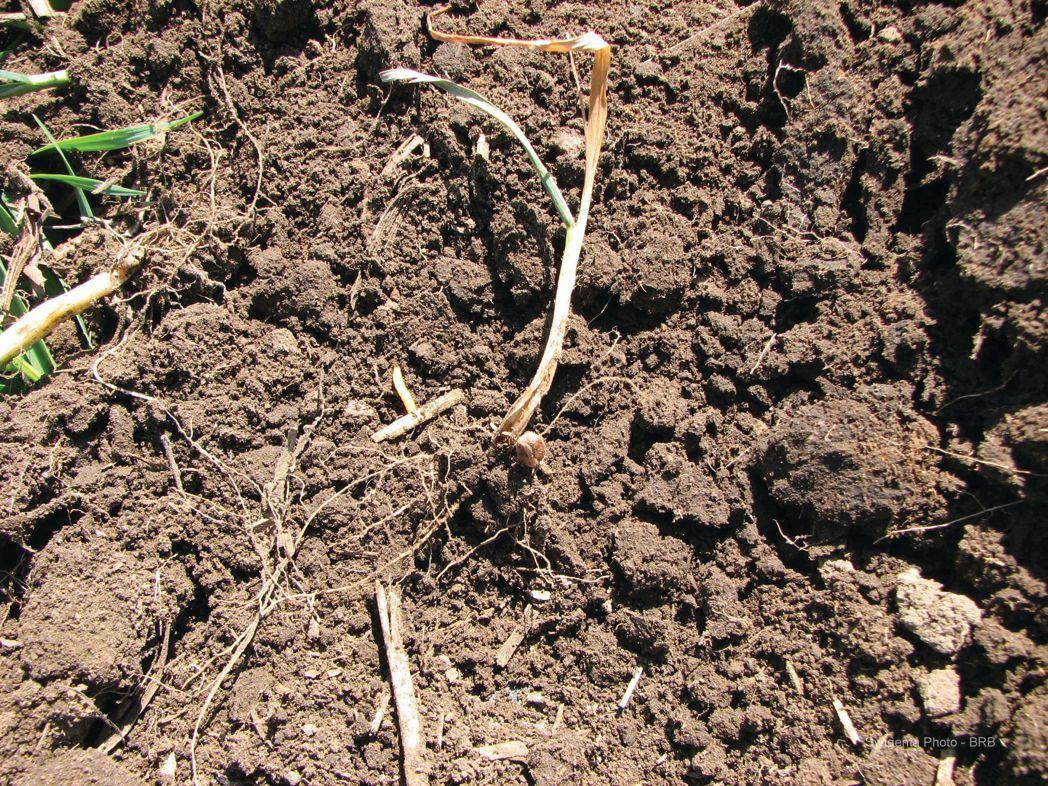
ABOVE: If the plant has emerged, the wireworm feeds on the crown and shreds the tissue.
across Canada. Those 30 species occupy different regions. Some of the species overlap with others, and in some fields you might have several different species,” Vernon explains.
“We have to know the key species in an area because some of the insecticides under development are somewhat species specific.” Identifying the main wireworm species in an area will enable researchers to develop control options tailored for those particular species.
Farmers have an essential role in the survey. “I’ve given wireworm talks in every province of Canada and at every talk I ask growers and field personnel to collect wireworms attacking their crops and send them to our lab. My technician Dr. Wim van Herk is a national expert on wireworm identification,” notes Vernon.
The survey started in 2004, but it got a big boost in 2010 and 2011 with the introduction of wireworm bait ball kits provided by Syngenta Canada and Bayer CropScience to capture wireworms in farmer’s fields.
“Syngenta wanted to help Dr. Vernon assess the pervasiveness of wireworms across Canada. Understanding how widespread and significant wireworm populations are benefits growers, who may be unaware that wireworms are a pest they need to be managed in their fields,” explains Bryan Briggs, Seed Care Specialist with Syngenta Canada.
“As such, Syngenta put together and distributed bait ball kits to growers, retailers, agronomists and Syngenta staff for the 2010 and 2011 seasons. Bait balls will determine where, in the field, wireworm populations exist. The kits contained all the items required for baiting wireworms such as oatmeal, shovel, gloves, field guide, marker, shipping envelopes, shipping container, and pin flags.”
Vernon says, “In 2011 alone, we got about 850 wireworms from 85 sites across Canada, and we had even more in 2010.”
Now the wireworm species map is really beginning to take shape. “For B.C. and the Prairie Provinces, we’re loaded with samples. We haven’t had that many samples from Ontario, Quebec and New Brunswick. But in 2011 we started getting more from Ontario, and an entomologist with the Quebec Government jumped on the bandwagon and we got lots of samples from Quebec. So we’re starting to fill those gaps,” Vernon notes.
The researchers plan to continue the survey until they have a complete picture of wireworm species distribution in Canada’s agricultural regions.
“Many growers don’t believe they have a wireworm issue, and as a result, don’t feel it necessary to test their fields for this pest. The results to date from Dr. Vernon’s study, however, reveal that wireworms are much more pervasive than people think. As such, Syngenta encourages growers to check their fields regularly by using the bait ball system to determine the density and species of wireworms in their field to minimize yield and crop quality loss,” says Briggs.
If you’re interested in helping with the wireworm survey, there’s a video series on the Syngenta Canada YouTube website with step-bystep instructions on how to make, plant and collect the bait balls.
Wireworms and wheat crops
Wheat is one of the crops preferred by click beetles. “In the spring, click beetles look for grassy areas to lay their eggs, including pasture or crops like wheat, barley oats and rye. They typically prefer not to lay their eggs in certain crops such as crucifers or potato plantings,” explains Vernon.
Briggs outlines the symptoms of wireworm damage in wheat. “If wireworms are active when the crop is seeded, the seedling may be chewed and damaged. It is common to find the wireworms feeding on the seed and hollowing it out. If this happens, producers may
never see a seedling emerge and dismiss this to seeding problems.
“If the wireworms become active after the crop has emerged, the plants begin to desiccate. Typically, if the plant has emerged, the wireworm will feed on the crown, shredding the tissue. As a result, the seedling loses its ability to move nutrients, causing its growth to be stunted or resulting in the death of the seedling.
“Wireworms will also feed along the crop row, usually feeding on about eight to 12 plants. Light populations of this pest will be most difficult to recognize as there will be thinning of rows in small areas of the field without any larger, general patches developing. With medium to high levels of wireworm infestations, visible patches can be spotted in the field where the larvae have damaged the crop.”
Vernon says, “In 2011 alone, we got about 850 wireworms from 85 sites across Canada, and we had even more in 2010.”
Some information sources suggest that wireworms are not as much of an issue in winter wheat as in spring wheat. Vernon has done many wireworm studies with spring wheat, and he’s now conducting two winter wheat trials.
“We planted winter wheat in October 2011 at two locations in B.C. to see if wireworms would cause significant damage to a fall planting. The answer right now is yes, at least under B.C. conditions.”
The potential for crop damage is related in part to wireworm movement up and down in the soil profile. Wireworms like warm, moist conditions, and as soil temperatures warm up in the spring, the wireworms move up into the top few inches of the soil. They are attracted to carbon dioxide, which is produced by growing plants, so they stampede to germinating seeds and young plants, and start feeding. In mid-summer, wireworms typically go deeper into the soil to escape hot, dry conditions that can kill them. Towards the end of the summer, wireworms tend to rise again to feed. Later in the fall, especially in the prairies, they descend deeper to avoid freezing temperatures.
Vernon explains, “If winter wheat planting occurs at about the same time as wireworms are coming up for Round Two of their feeding, and the field has a high wireworm population, then wireworms could cause significant damage in winter wheat. Our two winter wheat trials are showing that.”
Vernon and Dr. Christine Noronha, who is with AAFC in Prince Edward Island, are also using these winter wheat trials to assess what proportion of wireworms in a field come up to feed in the fall. “That’s important information because, if 80 or 90% of the wireworms come up to feed in the fall, then possibly we can look at controlling the wireworm population by treating the seed of the fall planting,” Vernon says.
Evaluating insecticide options
Vernon has been testing a wide range of the new insecticide chemistries for wireworm control in wheat, both in lab studies and at field sites in B.C. and elsewhere in Canada. He is finding that the most effective chemicals are the neonicotinoids, the pyrethroids, and a phenyl pyrazole insecticide called fipronil.
“Our field and laboratory studies show neonicotinoids, such as imidacloprid [Gaucho, Raxil WW], clothianidin [Poncho] or thiamethoxam [Cruiser, Cruiser Maxx], work by intoxicating
wireworms when they ingest or contact the insecticide applied to wheat seed. The intoxication stops the wireworms from destroying the seed, so the crop can become established. However, the neonicotinoids don’t kill those wireworms nor do they kill any new wireworms hatching from click beetle eggs laid midsummer. So the wireworm population in the field can continue to grow,” he says.
“Pyrethroids, such as Matador [lambda cyhalothrin] or Capture [bifenthrin], repel wireworms. So the crop is protected, but the wireworms are not killed and the population can continue to build.
“For fipronil, we’ve found that doses between 5 and 50 grams of active ingredient per 100 kg of wheat seed will kill wireworms very quickly, preventing crop damage and wiping out the populations even more effectively than the previous ‘lindane’ seed treatment. However, fipronil is not registered in Canada, although it is registered on certain crops (potatoes) in the United States and in about 70 other countries.”
The researchers are currently developing an insecticide blend that looks very promising. It is able to kill between 90 and 100% of the wireworms that come in contact with the treated seed. The blend is not as yet registered.
What to do for now
Until options for longer lasting wireworm control become available, Vernon has a couple of tips to help manage wireworms in wheat.
“If growers have had wireworm problems in the past, I definitely advise them to use a seed treatment with a neonicotinoid to preserve their crop,” he says.
“Also, if they have a field that they suspect has wireworms, they should plant that field when the germination weather is very good. That’s because we want the wheat to germinate very quickly in the presence of active wireworms. If the treated seeds end up sitting in the soil for extended periods before they germinate due to cool, wet weather, then the effectiveness of the chemical will decline by the time weather warms up and wireworms are attracted to the seeds.”
And of course, another tip would be to participate in the wireworm survey and help towards improving wireworm management in the long run!
A new soybean variety offers an interesting niche market opportunity for Ontario growers.
by Carolyn King
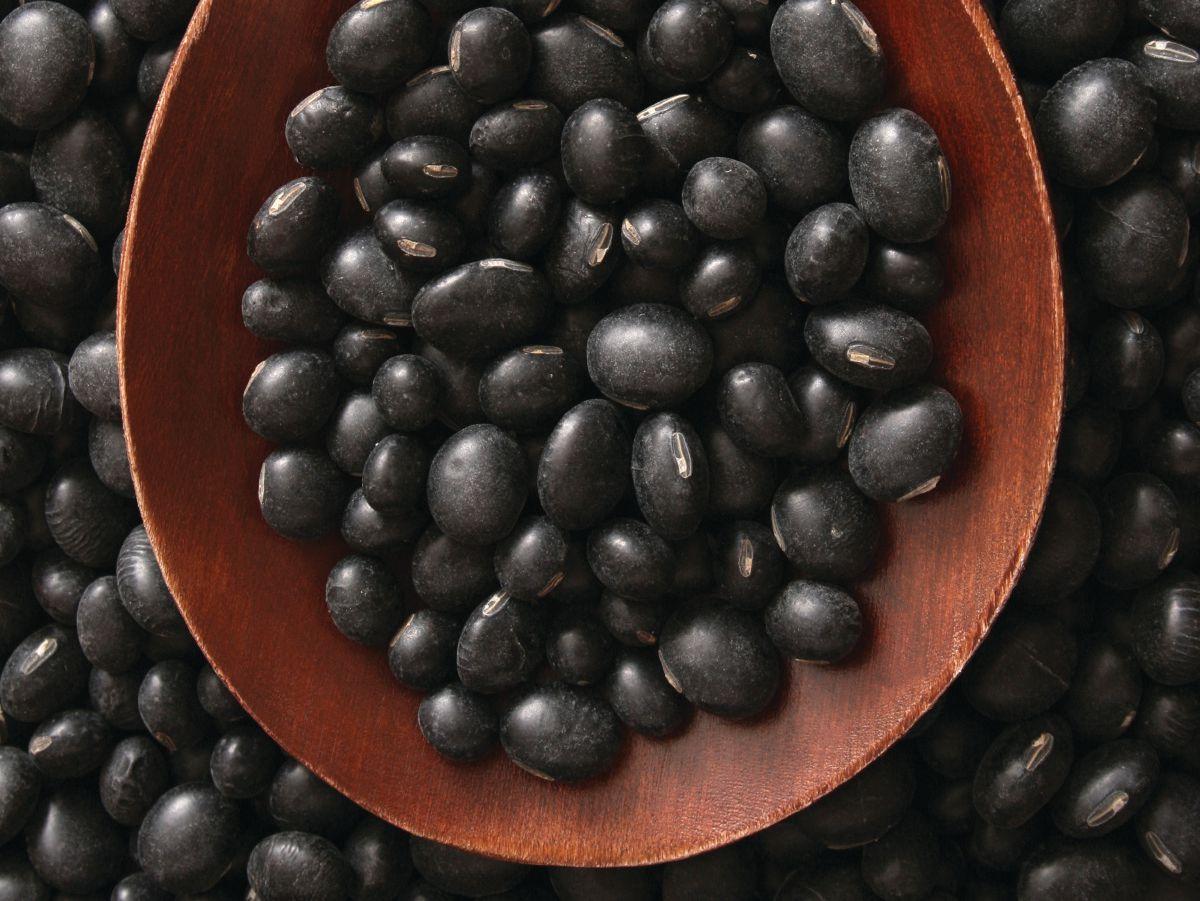
Called Black Pearl, it’s one of the first black soybean varieties for Canada. It was developed by Eric Richter, an Ontario agronomist, in his spare time. It took 14 years, but the resulting variety has a strong agronomic package and high levels of antioxidants that make it suitable for the functional foods marketplace.
The path to Black Pearl
“It started out as a curiosity project on Thanksgiving weekend in 1997, when my daughter made comments about black soybeans in a load of soybeans,” says Richter. “It was one of those, ‘can I do this?’ projects, and out of it has come what appears to be quite a competitive black soybean variety.”
He explains, “At the time, I was quite intrigued with the subject of functional foods and also with the growing trend in ‘black’ foods. In fact, there is no black colour pigment in the plant world. It’s actually a deep, deep purple. Foods such as blueberries, blackberries, black cherries and black grapes have very high concentrations of purple colour pigments in their skin.”
Those pigments, called anthocyans, are powerful antioxidants, which are known to have health benefits. Richter says, “Many of these ‘black’ or ‘blue’ foods were identified as what we would today call functional foods and they were held in very high esteem.”
For example, black soybeans have been used in Chinese medicine for over 2000 years and have a long tradition as food ingredients in many Asian countries.
So Richter spent years growing black soybean breeding material in Ontario and selecting the best plants and best seeds. By about 2005, he had a line that looked very promising. However, Canada is not known as a supplier of black soybeans, so it was a challenge to get people interested in this potential market opportunity.
“I approached companies involved with the soybean business in Canada – exporters, food processors and so on – and there was not a lot of support from that group as a whole,” he notes.
conditions.
INSET: Black Pearl is a black soybean variety developed for Ontario
One of the things that inspired Richter to continue his project was support from the Grain Farmers of Ontario. He says, “They provided some financial help so I could finish the project. Also, several of their members told me that they thought the variety looked really interesting. To get that support both financially and morally was really encouraging.”
Another source of inspiration was the growing market trend to use black soybean skins as additives to soy food products to enhance antioxidant levels. “I thought this was a really cool additional market for black soybeans,” says Richter.
So he continued working on improving his breeding line, and he grew commercial quantities of the crop ‘on spec’ to try to interest companies in the soybean value chain. As well, he had the seeds tested in the government lab at Harrow, confirming their very high anthocyan levels. Finally, in 2011, Richter got Black Pearl registered with the Plant Breeders’ Rights Office of the Canadian Food Inspection Agency and with the Canadian Seed Growers Association.
Now that Richter has concluded this “curiosity project,” he won’t be developing any more soybean varieties. And he’s letting others take the black soybean opportunity forward – he’s not involved in the marketing, production, processing or exporting of Black Pearl.
Richter has licensed the rights to Black Pearl to two companies: PRO Seeds of Canada, based in Woodstock, Ontario, and Beechwood Agri Services, based in Parkhill, Ontario.
“I didn’t want to make the variety available to the industry as a whole because, in my mind, it was very clear that it would be necessary for someone to invest some effort and resources upfront to cultivate the market, and put together a group of growers that year after year would produce a top quality bean that would get processed and exported,” explains Richter.
He adds, “Probably the earliest commitment I had was from a US company that wanted access to the rights for the variety. But I really wanted to give the opportunity to Ontario soybean growers, processors and exporters.”
Good yield potential, good premium
Black Pearl is the first black soybean variety offered by either PRO Seeds or Beechwood. It’s a medium-tall variety that is suited to the 2700 to 2800 corn heat unit region of Ontario and to all soil types. It was included in the Ontario Soybean Variety Trials for the first time in 2011, so there is only one year of data so far, but its agronomic characteristics look strong.
“We’ve taken on Black Pearl in just the last year. We experimented with some crop in 2010, but 2011 was our first year of production,” says Paul Kremer, Beechwood’s general manager. “I think the present growers are finding that, regardless of whether it’s black or yellow, it’s a good yielding soybean with a good overall agronomic package.”
PRO Seeds general manager Dennis O’Connor says, “Most of the farmers who grew Black Pearl for us in 2011 were very pleased with the yields, but then most soybeans did fairly well in 2011. With any variety, you need three or four years out there to really establish how they respond to different weather patterns and so on. However, the breeder has grown Black Pearl in the area for quite a few years and has had pretty good luck with it.”
O’Connor says Black Pearl has a somewhat higher premium
than most other identity-preserved (IP) soybeans. “The growers who are willing to do a little extra work will get rewarded for this product. With any IP crop, you always have to be very vigilant in your clean-out [of storage and handling facilities]. But with black soybeans, you have to step up that vigilance even higher because it’s a lot easier to see a black bean among yellow beans than to see one kind of yellow bean among another kind of yellow bean. If too many black soybeans get mixed in with the yellow, it could get rejected at the mill because they are a different class of beans.”
He notes, “In a lot of cases, Black Pearl is one of the first beans that the growers harvest. So they do those first, and then after a thorough clean-out, they move on to the rest of their crop.”
“We’ve taken on Black Pearl in just the last year. We experimented with some crop in 2010, but 2011 was our first year of production,” says Paul Kremer.”
‘A niche within a niche’
“The market for Black Pearl is a niche within a niche,” says Kremer. Black Pearl is targeted at the functional foods component of the nonGMO soybean market, focusing on the soybean’s black skin as an additive to increase antioxidant levels in soy products.
“The big market potential right now, as with a lot of our export beans, is in the Asian market. The skin of the black soybean has a very similar chemical make-up to the blueberry, which is being promoted for its health benefits. Both black soybeans and blueberries have polyphenol antioxidants that research has shown to have some cancer-fighting effects and other health benefits, like reducing infections. Down the road we can certainly see where black soybean would be an easier source of polyphenol antioxidants than blueberries,” says O’Connor.
“We’re definitely not the only player in this market,” notes Kremer. “The Chinese produce a soybean right now that is serving this market. So we’re starting small, but we’re optimistic the market is going to grow.”
O’Connor agrees. “There is a huge market right now for black soybeans that is serviced from China. As the market grows, there will be less exports coming out of China, so there is certainly a growth opportunity, although it will be slow, and has to be managed correctly.”
PRO Seeds had a little less than 2000 contracted acres for Black Pearl in 2011. O’Connor expects the acres to increase slightly for 2012, with the potential to double the acres by 2013 or 14. He thinks the contracted acreage might eventually increase to about 10 to 15 times the 2011 acreage, depending on factors like the value of the Canadian dollar, transportation costs, and the strength of other competitors.
O’Connor cautions growers: “IP markets tend to be cyclic. If you have a regular yellow soybean and the market happens to fall, you can always send it to crush. But with these black beans, there’s no crush opportunity. So you wouldn’t want to commit all your acres to black soybeans; you’d want to make sure you have a firm market for it.”
He notes, “Every time we can get a new export opportunity that strengthens the local economy here. So we’re hoping to see this grow to its full potential.”
It all comes down to sound reasearch and careful analysis.
by Melanie Epp
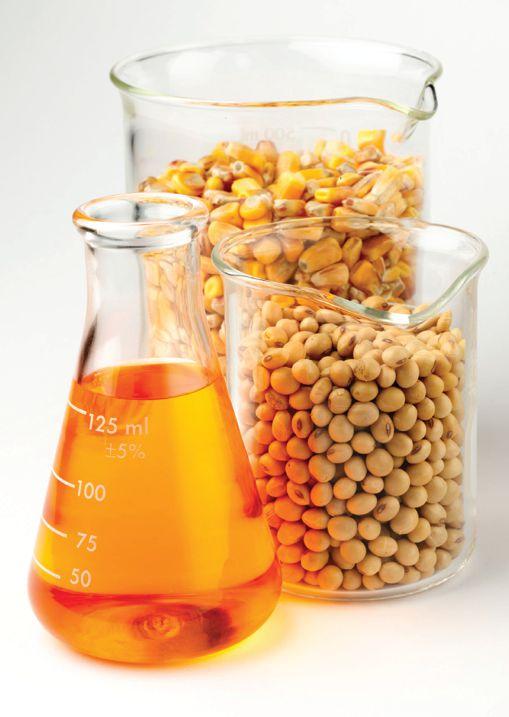
On Feb. 8, Gord Surgeoner, president of Ontario Agri-food Technologies (OAFT), presented Food Versus Fuel: The Debate is Over at the Canadian International Farm Show. The presentation comes in the wake of a 57-page report released by the George Morris Centre on the impact of Canadian ethanol on the livestock and meat industry in Canada. The report, which pits livestock farmers against grain farmers, has been highly criticized by corn expert Terry Daynard, who calls it “much weightier in opinion than analysis.” Surgeoner’s presentation was based on information compiled by the Grain Farmers of Ontario. Food versus Fuel makes a strong argument for biofuel, refuting concerns about rising food, grain, and gas prices, and world hunger, using sound research and careful analysis.
Despite evidence that clearly says otherwise, there have been concerns that ethanol has had an impact on food prices, and its production has been blamed for the grain price increases Ontario has seen both this year and in 2008. “Yes, we have affected corn prices,” said Surgeoner, “But let’s stop and put it into perspective.”
Ethanol production amounted to 1.8 billion litres in 2010, using 3.5 million tonnes of corn and 1 million of wheat, of which two-thirds was grown in Ontario. “Currently, 15% of the world’s corn and 5.7% of the grain is now going into that,” says Surgeoner. “When you take the byproducts, only 3.7% of the world’s grain supply is going into global ethanol production.”
Surgeoner says that while biofuels are an easy target, there is a multitude of factors that contribute to the rising price of grain. Even though global totals were up, poor wheat crops in Australia and parts of Europe helped create spikes, as did export restrictions on wheat and rice. Other contributing factors include panic buying, hoarding, and rising oil prices. As oil prices rose, the costs of both production and transport rose as well. Finally, one must also consider the shrinking US dollar as a contributing factor.
Ethanol isn’t just blamed for the rising price of grain; many accuse its producers of contributing to rising food prices, and therefore, world hunger. It’s true; biofuels are responsible for food price increases, but not as much as one would think, says Surgeoner. In actuality, biofuels are responsible for only 0.5 to
Will using your crops for fuel cause rises in food, grain and gas prices?
0.8% of the price increases seen in 2008. “Food prices went up by 5.1% [in 2008]; we may have been responsible for a half-percent of that.”
“The key thing that’s forgotten is that we don’t just make ethanol,” he says. “That becomes a very important factor when you look at the food versus fuel debate.”
When calculating for the available feed supply, the George
Morris Centre didn’t consider that ethanol production creates distillers dried grains and solubles (DDGS), a byproduct that is used as animal feed. DDGS is not the same as grain feed; actually, it’s higher in both protein and fibre, making it a more desirable feed.
If calculations had considered DDGS, they would have appeared much different. Despite six times more ethanol production in 2011, with the inclusion of DDGS, there has been little to no reduction in the amount of feed available.
What was far more important to price increases was the increase in energy prices. “Our costs, as farmers,” says Surgeoner, “are attached to oil prices.” So what happened to gas prices in 2008?
Gas prices in 2008 were relatively elastic. “A 5% increase in supply should mean a 10% price reduction,” says Surgeoner. According to one study, the retail effect may be minus 6-10 cents per litre, meaning that without ethanol, the price of gas would be six to 10 cents higher.
The overall effects of fuel ethanol on Canadian families, therefore, should be seen at the pump. “In my opinion, a 0.5-0.8% increase in food prices, which costs the average consumer between $35 and $60 a year, and a 6-10 cent per litre reduction in gasoline means about $100 to $180 less per year,” says Surgeoner. If you didn’t drive a car, you lost out; but if you did, you saved.
Not only that, but “the addition of 10% ethanol to gasoline means a 62% reduction in net GHG emissions on a per-litre of ethanol basis,” says Surgeoner. He notes that Canadian fuel ethanol usage is equivalent to removing 440,000 cars from the road, so there’s a positive effect on the environment as well. In fact, a 10-percent ethanol blend effectively reduces greenhouse emissions by 62%.
As for global hunger, Surgeoner is careful to note that ethanol has had minimal effect on Third World food prices and hunger. “Hunger is not a production issue,” says Surgeoner. “Hunger is a distribution of
wealth issue.”
Surgeoner points out that rice and wheat are far more important to Third World diets – 50% of their caloric intake – and spikes were higher for those grains than they were for corn and soybeans.
“And it’s not just biofuels,” says Surgeoner. “If we want to get the highest value, what we should be doing is extracting as much value before we eventually create fuel, or we burn as pellets. So how we get value all the way through the system is going to be a key aspect.”
So what does Surgeoner propose as a solution to the biofuel problem? He suggests that biomass producers focus on finding new bioproduct markets, as well as come up with an aggressive communication plan to explain the benefits of ethanol production to the rest of society. “Biofuel production,” he says, “offers a strong alternative market for their grain. Without ethanol, corn prices would drop by 15% in North America.”
“The greatest risk to food security,” concludes Surgeoner, “is farmers not getting fair return for labour and investment.”
Keeping track of the numbers is just good business.
by Rosalie I. Tennison
Afew years ago, every agricultural meeting had a session on marketing plans. Now that commodity prices are much higher than they were back then, the experts don’t seem to focus on marketing with the same fervour. However, it is still important to have a plan and, perhaps, even more so as input costs have risen as well. How do growers know if they are getting their costs covered if they don’t have a plan?
“A marketing plan is about planning what you need to make from selling your crop in order to make money,” says Cal Whewell, a commodities broker with FC Stone in Bowling Green, Ohio. “You have to know your cost of production and then plan your marketing to cover those costs plus make money.”
However, it seems that the push to get growers to develop marketing plans has dropped off recently. Todd Austin of the Grain Farmers of Ontario says many farmers do maintain marketing plans, but just as many don’t. “Even in these times of good prices, costs are increasing, so how do you know how well you are doing if you don’t have a plan?” he asks.
“Growers seem to be getting complacent about marketing,” says Martin Vanderloo of Huron Commodities in Clinton, Ontario. “Right now there are peaks in the market, but that could change.” He suggests that, without a marketing plan, growers may not be able to adjust if the change is downward.
As an example, Vanderloo says the price of corn at the beginning of 2012 probably got many growers thinking about planting corn. However, they still need to stick to their rotation, so they may not be able to put in as many acres as they might like. Vanderloo predicts that a record may be set for the number of corn acres in spring 2012, but, if the weather co-operates, and the crop is good-to-outstanding, the rules of supply and demand will kick in. If that scenario comes true, the price could go down and what will that mean for growers?
“Farmers need marketing plans now more than ever,” Vanderloo comments. “There are currency fluctuations, increasing prices for land purchases or rent, rising input costs and these can all affect a grower’s marketing.” He says the high commodity prices make it seem like nothing can go wrong and, as a result, there are “some crazy things happening out there.” He says there are reports of land renting at $1000/ac on a three-year contract that has to be paid up front. Without a marketing plan, how would a grower know if this is manageable?
“It’s human nature to get caught up in the markets and to want the best prices we can get,” says Whewell. “Sometimes if the plan is based on $6 corn and before the end of the year the price goes up or down, it can affect the way a grower feels about the success of the plan.” Marketing plans are designed using the information available when the plan is developed. Perhaps the price went up, he continues, and the crop was sold at a lower price, a grower can feel unsuccessful. However, it is important not to lose sight of the goal and that is to make money. Presumably, the plan was designed to do that.
“Growers need to spend time looking at numbers,” says Austin. “It takes time initially but it helps them to be profitable and to know what their costs are.” He adds there are many programs available to guide growers through the development of a marketing plan, from seminars offered by extension services to courses taught at colleges or through private companies.
“A marketing plan is not a static document,” continues Whewell. “It’s really a working paper that helps to reduce stress.” He says once a plan is in place, growers can take a look at it over the course of the season and make adjustments if needed.
All growers should take an active role in marketing their crop, adds Austin. “It’s a budget that helps growers understand whether it is feasible to store their crop or sell it.”
Sadly, the market volatility may scare some growers away from developing marketing plans, says Vanderloo, but that is when having a plan is most important. He says when markets did not fluctuate much, growers could get by without a marketing plan, but that’s no longer the case. Despite the strong prices for some commodities, Vanderloo says it is important to balance them against the cost of production.
A marketing plan helps with the decision-making and can spread out the risk. Just because commodity prices are high doesn’t mean growers will be making large amounts of money. If they haven’t considered that costs have also risen, the numbers on the bottom line may not have increased. But, without a marketing plan, even in the good times, how would a grower know?
“A marketing plan is a road map to satisfaction,” comments Whewell. “Everyone has a level at which they are satisfied. The goal is to make the most profit every day and a marketing plan can keep you on track to do that.”
PLANNING
The first in a series on grain storage.
In the first few editions of The Grain Guardian, we will touch upon a couple of farming practices that have been increasing in popularity as a means of ensuring a successful harvest in spite of inclement weather, shortened harvest seasons and busy fall schedules – aeration and in-bin drying. The principles behind these techniques have existed since the late 19th century, but have become increasingly popular as commodity prices have fluctuated, production costs have increased and more farmers have searched for a way to ensure and protect a bountiful harvest.
Aeration and in-bin drying can allow the crop to be harvested at a higher moisture content, which enables producers to get it into the bin earlier and eliminate some risk of crop damage in the field. These methods may also allow crops that were seeded late due to poor weather to be harvested without going too late into the season.
While an aeration or in-bin drying system seems like a wise investment – and it is – we have seen too many producers make buying decisions without knowing all the facts. These farmers end up with aeration systems that don’t meet their specific requirements. We’d really like to change that.
Here we will discuss key points for those of you who are considering a grain-conditioning or drying system. We hope the information provided will assist you in selecting the best system for your operation. Let’s begin by discussing grain bins – the keystone of your aeration or air-drying system – and progress through to duct systems, fans, and eventually conclude with supplemental heaters.
The grain bin
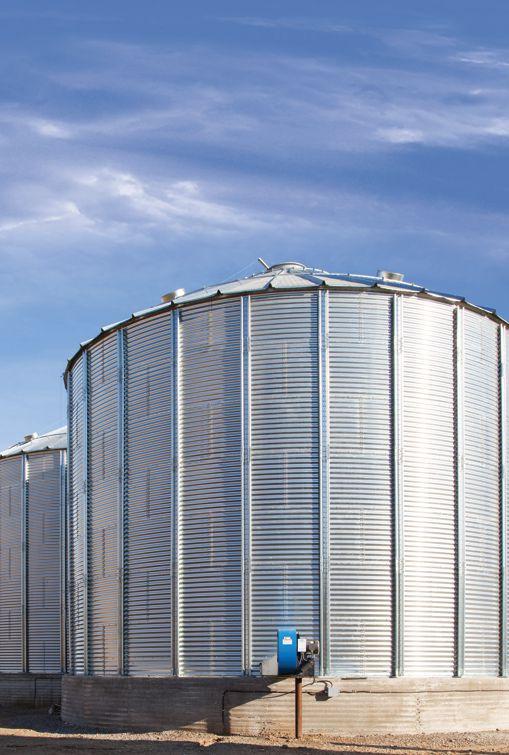
It seems wise to start with the first stage in building a successful aeration or air drying system. In most cases, the process of building one of these systems will begin with bin selection.
While it may run counter to the idea that a successful drying and aeration application can be accomplished as easily as tossing a one-size-fits-all aeration system into a bin and flicking on a fan, the fact of the matter is that the assembly of the most successful aeration system actually begins with the bin construction stage. Now, before you start scrapping your old bins, remember that you can still custom-build a successful aeration system for existing bins – a topic that we’ll return to shortly – however, the best aeration or drying system will exist in a bin that was specifically designed and constructed for its exact purpose.
Ultimately, your choice of a bin (and following that, an aeration system) needs to reflect what it is that you want to achieve, whether the goal is only aeration or cooling, or full-blown natural air drying.
When selecting a bin design with the goal of aeration or cooling in mind, a taller, narrower bin will work well, as a lower volume of airflow is required when compared to natural air drying – to push through the mass within it. As the bin gets taller, the static pressure inside increases, which makes it more difficult to get a large volume of air moving through the product inside the bin. In this situation, aeration and cooling can be undertaken
CONTINUED ON PAGE 29
ABOVE: Planning an aeration system starts with the grain bin.
MARKETS AND MARKETING
High commodity prices can seem like a positive development, but it can also be a double-edged sword.
by Treena Hein
It seems that higher commodity prices are here to stay, with a growing world population and a burgeoning middle class resulting in an increased demand for food and for higher-quality foods. But do higher prices mean that farmers will be able to enjoy an easier ride in 2012?
Many factors will affect how high prices go, as well as individual commodity crop prices. Final 2012 prices will depend on how the values of the Canadian and US dollars play out, supply and demand, the global economic situation and other factors.
With regard to last year, “The price of wheat fell a long way from its highs, while corn fell by less – but wheat has a disadvantage on the demand side,” observes Dr. Larry Martin, a senior research fellow at the George Morris Centre in Guelph. “Unlike corn, wheat is essentially a food crop and not generally used for animal feed and fuel, so fewer supply and demand factors affect it.”
Martin notes that the US government recently removed one of its subsidies for ethanol, and it’s anyone’s guess if manufacturers will be able to withstand this market change. That means demand for corn for ethanol production may dip. “Many people have also been saying for years,” he adds, “that ‘in three years, cellulosic ethanol will be produced on a large scale,’ but who knows when that will really happen.”
One thing is for certain – Martin foresees that more land will be used to grow crops like soybeans and corn, and that there will be less land for horticulture, squeezing supply and driving up the price of crops like peas. “With demand for meat declining domestically and demand for vegetables increasing, I think there will be continued diversification of crops grown on farms,” he asserts. “The price will always be a factor in how much of a given crop is grown, but we’ve seen the price of peas increase as the prices of soybeans and corn have risen.”
Todd Austin, the marketing manager at Grain Farmers of Ontario, adds that the price must be worth the effort. “If someone wants to buy something like edible beans from Ontario farmers, they will have to agree to pay an appropriate amount,” he says. “We may see more linking of producers and end-users in these lower-acreage markets.”
Martin, Austin and Maurizio Agostino (a managing commodity strategist at Farms.com based in London, Ontario) all predict that along with prices continuing to be high, they will also con-
More land will be used to grow crops, less land for horticulture.
tinue to be volatile in 2012. “South America has been dry due to La Niña, and many analysts are downgrading corn supply down there,” Agostino notes. “Yes, Argentina only makes up about three per cent of global production, but it’s the second largest exporter of corn to Asia, next to the US. However, this rally in grains could fizzle if weather turns around. It’s tough to predict.” He says feed demand is very low right now, which depresses corn prices, but demand could pick up if the global economy picks up.
“On the other hand, a good corn harvest could see prices drop,”
Agostino says. He observes that the information in US Department of Agriculture reports wasn’t terribly accurate over the last year due to weather factors. “In their May 12 report, they will make their first predictions about the 2012-2013 marketing year, and predicted prices are always higher in the first half of the season,” he notes. “They will then reassess based on weather, how the crop is doing, demand and so on.”
Another factor contributing to volatility, according to Martin, is the widespread use of just-in-time shipping. “When there are perceived temporary shortages from things like USDA reports, then people react by stockpiling to some extent, then demand goes up and prices go up,” he notes. “Then, when people realize there was no shortage they slow down with buying, prices drop, and so on.”
Impact on growers
Whether higher prices will mean easier times for farmers is a question, Martin says, that is best answered with another question. “It’s not the prices, but the margin that matters,” he says. “So, we
have to ask how things like the cost of land and the cost of inputs are going to affect the bottom line. Farming will always be a margin business.” He says it is more important than ever that farmers develop both their crop management and financial management skills. “High prices drive high risk, and there is a lot more pressure – and opportunity – to manage a situation like that, than a low price stable situation,” he states.
However, Steve Duff believes grain and oilseed farmers today have been able to take advantage of the marketing opportunities even more so than a few years ago. “Farmers are much more marketsavvy than they were, and much better equipped to take advantage of price volatility than ever before,” says the senior economist at the Ontario Ministry of Agriculture, Food and Rural Affairs’ Strategic Analysis and Planning Unit in Guelph. “They have a very good idea of their cost of production combined with access to a wide range of marketing tools and information technology.”
One factor that contributes to profit margins, which Martin thinks farmers
Disease Protection WANTED!
Only Natural Born Killer
should pay attention to, is government support. “I think growers should keep in mind that federal and provincial governments will not be able to provide the business risk payments they have been providing,” he asserts. “As we produce export products with higher and higher values to them, governments cannot keep up. They simply cannot do everything.” Duff agrees that the more the Canadian commodity market relies on exports, the more we will be affected by world prices on an individual and industry level, but he notes that in one way or another, government programs are all a function of margins.
The Agri-Invest Program, a national scheme available since 2007, allows farmers to contribute a small percentage of their earnings into a fund. The government matches their individual contributions, and farmers can later use these funds to manage growth or problems on their farms as they see fit. As well, the national AgriStabilty Program is available to those farmers who have had income negatively affected in some way. “In Ontario, we introduced the Risk Management Program for grains and oilseeds in 2007 and one for livestock in late 2011,” notes Duff. “It helps fill the gap between the cost of production and price of a commodity when the cost of production is higher.” He says all livestock farmers who applied got payments last year, but that was a unique situation. “The program had just started, and it addressed cost of production gap issues not just for 2011, but for 2010 as well,” Duff explains. “Most grain farmers didn’t get a payment because market prices exceeded the program cost of production.”
Duff concludes that the effects of commodity prices on farmers will always depend on how profitable and productive they’re able to be. “Commodity growers have recently had the opportunity to benefit from increasing global prices due to tight supply and high demand,” he says.
“Profits outpaced increasing input costs last year, and we didn’t have that situation during the years just before that. I think that going forward, supply will be reasonably tight and demand will stay reasonably strong, so we will likely continue to see strength in prices, certainly compared to historical levels, but such tight situations result in lots of day-to-day variations, and so that also means continued price volatility.”
Discovering new uses for established chemistries.
by Blair Andrews
Afungicide that was originally developed for cereals and potatoes has also become an effective tool for managing disease in corn. Meanwhile, a treatment for aphids in tree fruits has been found to work well against other insects in vegetable crops.
Were these discoveries pleasant surprises or were they part of the plan all along?
It’s a bit of both, according to a couple of crop protection business insiders.
One example of this serendipity is BASF’s Headline fungicide.
Wayne Barton, manager, research and commercial development at BASF, was involved in testing the active ingredient in the product when he was a contract researcher with the company in the 1990s. The focus was on cereals, potatoes, and lentils/legumes in Western Canada. It was also being tested on turf.
“Those were the main fungicide markets that directed our initial product development work in 1997,” recalls Barton.
While Headline was destined for the global marketplace as a cereal fungicide, he says BASF officials thought it was robust enough to capture opportunities in other markets.
Controlling diseases in corn was one of those opportunities.
“It is part of the plan to develop a product for the main market, but also to look at collaborating on new needs,” says Barton of the development process. “I think when you do that, quite often you’re pleasantly surprised by what’s exciting the team working in other areas of research, such as corn in this case.”
Since its registration for corn in 2005, Headline has been used by growers to help the crop remain healthy until maturity.
The foliar fungicide is applied to minimize late-season stresses that are caused by diseases that accelerate the crop’s senescence.
It is also registered for use in soybeans and was registered for use in canola in 2010.
Barton says the Headline example also serves as a model for the way new chemistries are being developed for the marketplace.
While BASF may do the initial work, collaboration with other researchers is a key strategy in evaluating chemistry to solve problems in other crops.
“When you have a new chemistry, one shouldn’t assume that it is going to do the same things in the crop that the old chemistry did. So we more systematically look at either the crop or the pathogen,
and look to collaborate with other researchers when we move beyond those traditional uses,” adds Barton.
Another source of pleasant surprise is Movento, an insecticide developed by Bayer CropScience.
David Kikkert, portfolio manager for horticulture, says the product was originally labeled to control aphids and white flies in many tree fruit and vegetable crops.
When it came into the market in 2008 as an aphid product, Kikkert notes that Movento was controlling other insects such as swede midge in brassica crops and thrips on onions.
“It is great news when you can successfully start testing and looking at different pest spectrums than what we had originally targeted,” he adds.
“When you have a new chemistry, one shouldn’t assume that it is going to do the same things in the crop that the old chemistry did,” adds Barton.
In Movento’s case, Kikkert says the product was registered in 2008 after it was jointly submitted for approval to the Environmental Protection Agency in the United States and the Pest Management Regulatory Agency in Canada.
Several minor uses were also identified before the commercial registration in the original markets.
“A lot of times, it’s a phased approach. We’ll work on getting approval for a core label and then we start looking at other opportunities as well,” notes Kikkert. “Sometimes the research is internal and sometimes it’s external – where researchers often ask to screen this product against other pests.”
Some of these other minor use opportunities are now being realized. For example, Movento was registered in 2011 for the control of swede midge larvae in leafy brassica vegetables.
In addition to using the product on more insects in horticulture crops, researchers have also been testing Movento as a solution for managing pests in soybeans and other legumes. Of note, Kikkert says
CONTINUED ON PAGE 29
PLANNING
CONTINUED FROM PAGE 23
without too great a difficulty, but natural air drying becomes next to impossible.
For natural air drying, a greater volume of air moving through the product is required, so a shorter, larger-diameter bin is ideal. This style of bin possesses a lower static pressure and allows a greater volume of air to pass through the product. Choosing a shorter, larger-diameter bin over a taller-bin design for natural air drying applications will thereby result in a lower operating cost, as a smaller, more efficient fan can be used and drying time will also be reduced.
These are also important considerations if you are planning to install an aeration or natural air drying system into an existing bin, as the style of bin you have would dictate which application you can undertake. As previously mentioned, a tall, narrow bin would be best for aerating, and would be much less effective for natural air drying. As you have probably guessed, a short, wide pre-existing bin would therefore be the perfect choice for setting up a natural air drying system.
Choosing a system
Now, whether you have designed a bin specifically for your aeration or drying application or have decided to use a pre-existing bin, we have reached the point where it comes time to choose the appropriate system. This is, yet again, a decision that must be made with the
CONTINUED FROM PAGE 27
the product could provide a new mode of action for controlling aphids in soybeans.
However, he cautions that maximum residue limit (MRL) approvals are needed in certain global markets before this use can be commercialized for these crops.
Besides discovering new uses, Kikkert says, bringing newer chemistries to the market sooner is another benefit of the innovation process.
He notes that recent joint registrations in Canada and the US are helping to expand the number of uses on crop labels.
“As we move forward, there may be fewer minor use requests for crops on the same type of target and hopefully (researchers) will start finding other uses,” says Kikkert.
And while Headline and Movento are just two examples of discoveries in the marketplace – both planned and unexpected –Kikkert says it’s difficult to predict if this exact trend will continue in the future.
“Future label expansions may be easier because I think a lot of the crops will already be registered, so adding a pest to the label is easier than adding a crop and a pest,” adds Kikkert. “Regardless, the industry will continue to provide innovative solutions to growers and look for new opportunities to use them.”
ultimate goal in mind.
Once again, you must look at whether you want to primarily aerate and cool, or to implement a natural air drying process. In order to be completed successfully, natural air drying requires a greater volume of air to be moved through the commodity than aerating or cooling. This requires a larger airflow system, from ducting to floor paneling, to ultimately, a larger fan. Aeration, on the other hand, requires less airflow, which a smaller system could easily provide. Of course, these systems must also be proportional to the bin size – a 10,000-bushel bin set up for aeration requires a larger system than a 5,000-bushel bin set up for the same purpose.
Another consideration when sizing the aeration system is the height of the grain mass that will be stored in the bin. While this is often determined by the height of the bin, there are instances when the bin is not filled completely. Therefore, a shorter grain mass creates less static pressure and can be managed by a system smaller in size. On the other hand, a taller grain mass creates higher static pressure, and thus requires a larger system, including a fan with more horsepower, to achieve the appropriate level of airflow.
To conclude, we hope we have impressed upon you how important it is to begin your search for an aeration, cooling or natural air drying system with the final goal in mind. This should help you to avoid some common pitfalls, and ensure you eventually purchase the system that best meets your needs.
The next column will continue the discussion on aeration and drying systems by moving on to venting and fans.
For further information, got to www.grainguardian.com.
But don’t forget crop rotation plays an important role too.
by Melanie Epp
“Everyone knows that tile drainage pays,” says certified crop advisor Chad Anderson. “But it can be trouble getting it done. And it’s a lot of money.”
With all the rain we’ve had in Ontario, though, the benefits are starting to outweigh the cost. And while it’s not as important in some counties, in others, it just makes good financial sense.
The benefits of tile drainage
Tile drainage is a wonderful thing, really. It works year round, regardless of the season. It improves planting conditions by allowing farmers to plant earlier and harvest later. By reducing excessive moisture in the root zone, tile drainage encourages plants to develop longer and stronger root systems, effectively reducing stress during the drier days of summer. Since it helps to lower the water table, good drainage can even improve crop yields in a drought.
Overall, tile drained fields see improved soil conditions through reduced compaction, as well. Tile drainage can also help herbicides and fertilizers do their jobs. Herbicides better adhere to soil particles and fertilizers work more efficiently in tile drained soil. And if you’re looking to sell, tile drainage can increase the value of your land.
Record rainfall creates drainage problems
This winter’s rainfall totals have caused concerns for some, especially those who weren’t able to get tile in last year. According to Weather INnovations Inc., an organization that investigates precipitation through a series of weather monitoring stations in farmer’s fields across Ontario, many regions have seen record rainfall this season. In some areas, including Windsor, Ridgetown, London, Sarnia and Delhi, precipitation records were broken in November.
“Last week alone we had some form of precipitation five out of the seven days,” says Chris Snip, Crop Specialist with AGRIS Co-operative. “The fields are saturated. Everything’s just saturated, and it’s been saturated for quite a while – months even.”
The fall before last, conditions were dry and farmers got plenty of wheat planted – some even in fields that don’t usually see wheat. But come spring, fields were so saturated that they started to heavily deteriorate, especially those that weren’t tiled, causing severe yield damage due to excess rain.
While it’s not every year that you see huge benefits from tile drainage, some years more than make up for it. “Last year was a
year that you saw large benefits from tiling,” says Snip. “A lot of guys wanted to tile last year, especially after the wheat crop really took a hard beating.”
Sid Vanderveen of OMAFRA estimates that 30 percent of Ontario cropland could still be tile drained. “Right now we’re at 45-50 percent, but we could certainly go to 75 percent,” says Vanderveen. “And that’s why there is still all sorts of tile drainage activity. It’s been an incredibly busy year.
“A lot of farmers wanted to get more tiling done last year,” says Snip. “The companies who do tiling had a terrible year last year, though. They had lots of jobs on the books, but they just couldn’t get anything done because it was just too wet all season.”
The less obvious benefits of tile drainage
Most of the acres that Chad Anderson works have very high clay content, so drainage is especially important. “It’s probably the number one factor to determine the productivity of the farm,” says Anderson.
Anderson who hails from Lambton County, says that the biggest benefit from tile drainage is the ability to maintain a rotation, especially in regions with heavy clay soil.
“The challenge we have is keeping wheat in the rotation. So if you have a poorly drained farm, it’ll be late to plant,” he says. “Because it’s late to plant, it’ll be late to harvest. That means you’re planting winter wheat later in the fall. Your odds of keeping that crop are reduced.”
“So it forces you to take that wheat crop out, put in a bunch of soybeans and try it all over again. And the next thing you know, you’ve got three or four years worth of beans back to back,” he says.
“It all gets tighter and it just doesn’t drain as well. And rotation plays as big a role in keeping your soil productive as the drainage does. So it’s kind of a vicious cycle. If you don’t have tile, you can’t get rotated. And if you can’t get rotated, you…” he trails off.
Anderson has other concerns as well. He recalls a day when farmers thought they were doing a really good job if they were putting tile two rods apart. “It seems that every time we go to upgrade a system we’re having to shrink those distances between tile,” he says.
“I worry, you know. What is making the soil so much tighter today than it was twenty years ago? Whether it’s too many soybeans in the rotation, or lack of rotation – it doesn’t seem to have the drainage capacity that it did 10 years ago.