Farmers! Got unwanted pesticides or livestock/equine medications?
Safely dispose of unwanted or obsolete agricultural pesticides and livestock/ equine medications – no charge!
Cleanfarms is holding collection events for these materials in regions throughout Canada in fall 2019.
Ontario – September 20 to October 1
Northern Alberta – October 7 to 11
BC, Alberta – Peace River Region – October 15 to 18
Newfoundland – October 16 to 18
Manitoba – October 21 to 25
Find details at Cleanfarms.ca – choose “what to recycle where.”
WHAT’S IN
• Unwanted or “obsolete” agricultural pesticides (identified with a Pest Control Product number on the label).
• Livestock medications that are used by primary producers in the rearing of animals in an agricultural content (identified with a DIN number, Ser. Number or Pest Control Product number on the label).
WHAT’S OUT
• Fertilizer, diluted solution, large quantities of unopened product, and treated seed.
• Needles/sharps, medicated feed, aerosol containers premises disinfectants/sanitizers, veterinary clinic waste and medications, ear tags, and aerosols.
• Any other household hazardous waste.
PARTNERS
FOCUS ON: SOYBEANS
By John Dietz
BITTERSWEET SOYBEANS
Soybeans are a bittersweet topic at the moment, facing the highest highs and the lowest lows. In the final four months of 2018, Chinese purchases of Canadian soybeans hit a record 3.2 million tonnes, according to Soy Canada. Now, “trade with China has fallen off a cliff,” Ron Davidson, executive director of Soy Canada, told The Financial Post.
Soybean producers are well aware of souring tensions between Beijing and Ottawa. It’s an added punch to the gut after dealing with the ramifications of a U.S.-China trade war, which resulted in American soybeans flooding the Canadian and European markets. Canada was pushed out of two markets and, as a result, became overly dependent on China, a solid alternative market until 2019.
Since the beginning of this year, Chinese purchases of Canadian soybeans have dropped by 95 per cent, with shipments being held for “further testing for plant pathogens.” Now, soybeans have been added to a list of casualties stemming from China’s retaliatory economic measures, alongside Canadian canola, pork and beef.
ON THE COVER
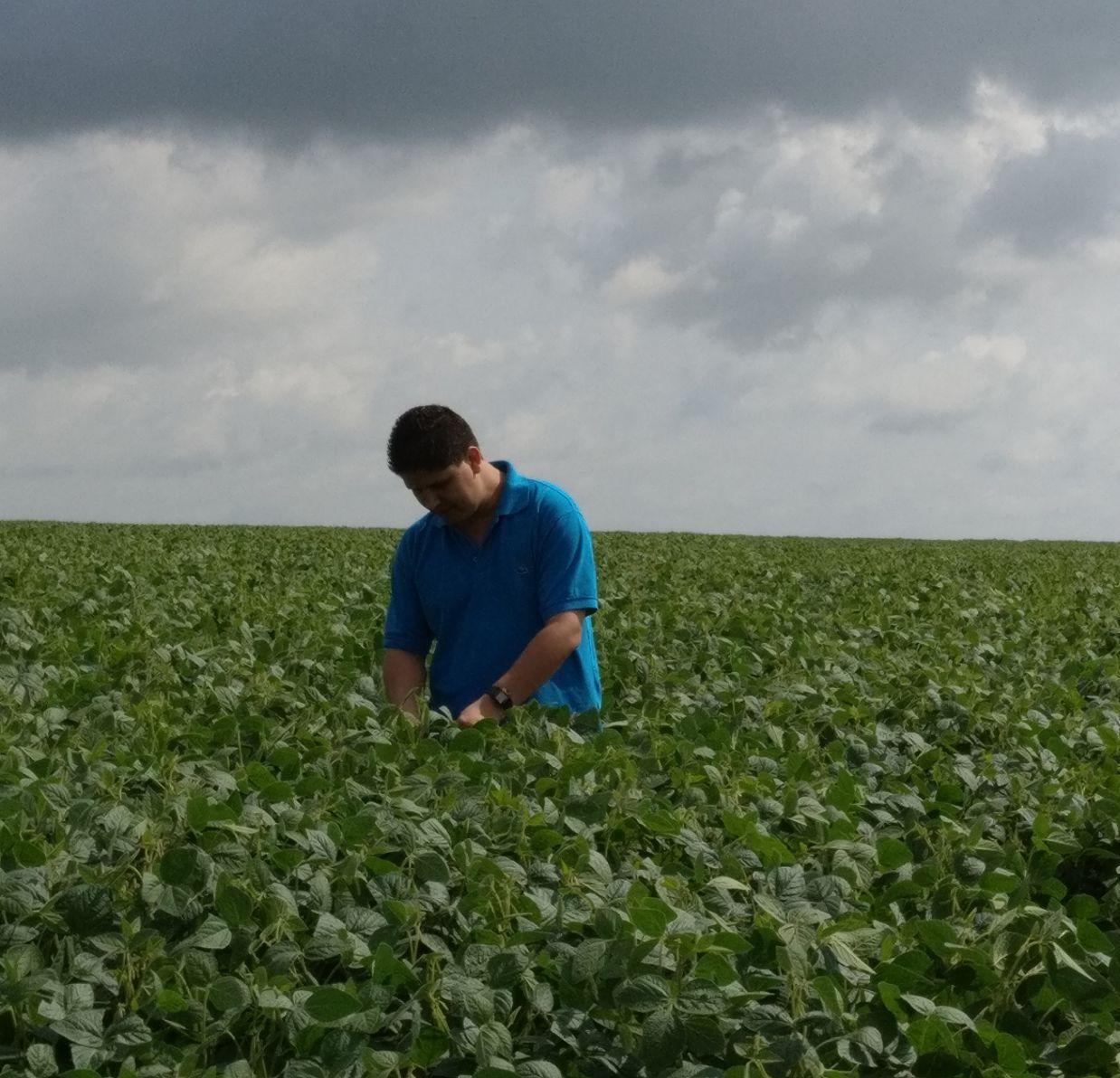
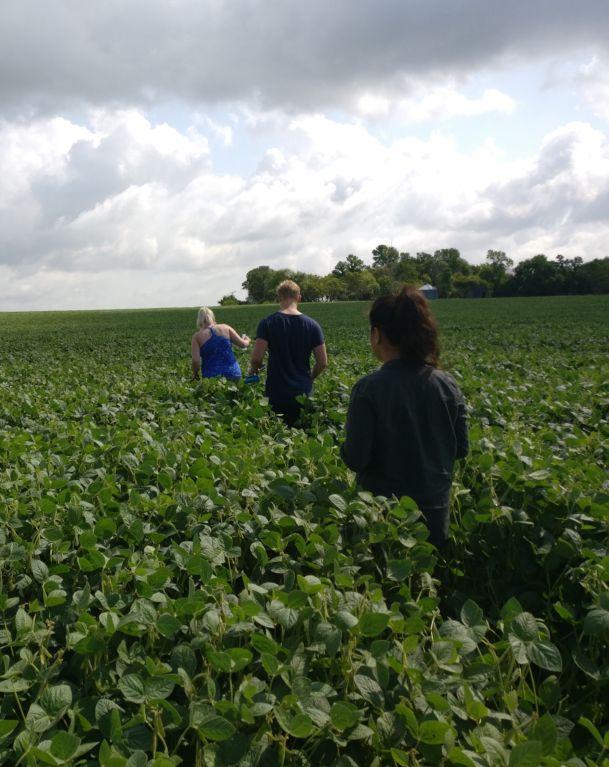
Brandon University used DNA sequencing for an accurate look at foliar diseases.
PHOTO COURTESY OF GUSTAVO
Editor: Stefanie Croley
Associate Editor: Stephanie Gordon
Western Field Editor: Bruce Barker
Associate Publisher: Michelle Allison
Group Publisher: Diane Kleer
Media Designer: Molly Darville
In response, the Canadian government announced more than $27 million in support of grain, oilseed and meat industries, with the aim of developing international markets. The government also boosted funding available for producers through programs such as AgriStability.
The soybean impasse is affecting 30,000 Canadian producers, but the hits to the agriculture industry are affecting us all. Trade disputes, alongside everything else a producer has to deal with, tie up a lot of time. Low confidence in the markets will have some producers rethinking about planned investment into the growth of their farms.
But the industry keeps going. Despite it all, investments are being made in research, innovation, and development to keep growers producing soybeans long after the rollercoaster of trade disputes is resolved. In this issue, you can read about research at the University of Manitoba that is improving water stress tolerance in soybeans. And on page 7, a DNA-based survey is uncovering soybean diseases with a newfound accuracy. Finally, an Ontario weed scientist is finding out how much leeway producers have when it comes to late burndown herbicide applications on page 4.
While this column takes on different tone than the rest of the issue, I hope when you stumble across this page again at some point in the future, the words written here will be news of the past. By then, they will serve as a reminder of another “crazy year” endured, and a testament to the resilience of Canadian crop producers. This soybean storm is, like any other, temporary.
DIAZ CRUZ.
CONTROLLING SOYBEAN WEEDS
Ontario weed management specialist Mike Cowbrough is conducting field trials to evaluate the risks associated with late burndown herbicide applications.
by Mark Halsall
Burndown herbicides are commonly used in no-till or minimum till soybean production systems to control emerged weeds prior to planting. Adverse weather conditions can delay those applications, putting growers in the difficult position of having to decide whether to spray after the recommended label date and risk crop injury, or not spray at all.
Mike Cowbrough, a weed management specialist with the Ontario Ministry of Agriculture, Food and Rural Affairs, is in the second year of field trials to evaluate the risks associated with late burndown herbicide applications.
Cowbrough says he started his study in response to farmers’ concerns. Some herbicide solutions for glyphosate-resistant weeds restrict applications being made beyond three days after planting, but as Cowbrough points out, it’s not unusual for growers to find themselves in a situation where they’ve been dealt a bad hand weather-wise and they’ve missed the window to follow the label recommendations.
“With glyphosate-resistant species like giant ragweed or Canada fleabane, your options to control them in soybeans once the beans are out of the ground are pretty well next to nothing,” he says.
“It’s about trying to identify what’s the lesser of two evils, and maybe taking some crop injury in order to get very good weed control.”
“This isn’t research about best management practices. It’s about trying to identify what’s the lesser of two evils, and maybe taking some crop injury in order to get very good weed control. That was basically the premise,” Cowbrough adds.
“It’s my hope that this will give an agronomist or a producer the confidence to be able to establish the risk, and then identify for themselves whether it’s reasonable to proceed [with late herbicide applications] or if they should be looking at hand-picking or another method to get rid of the weeds.”
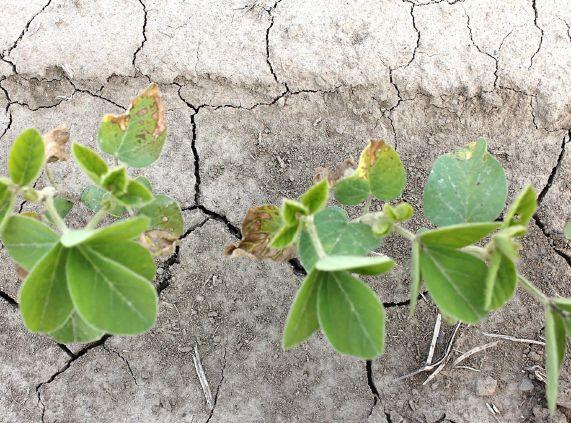
<LEFT: Metribuzin injury on lower leaves as a result of applying Sencor 75 DF nine days after planting.
<LEFT: Research is underway to test the tolerance of soybeans to late herbicide applications.
Cowbrough, who is performing his study at the University of Guelph’s Elora Research Station in Elora, Ont., is assessing Eragon LQ, Sencor 75 DF and 2,4-D Ester 700. These products are often used as tank-mix partners with glyphosate to help control problematic weeds like Canada fleabane in burndown applications.
According to Cowbrough, both Eragon LQ and Sencor 75 DF have a labelled application window of up to three days after planting, while the labelled application window for 2,4D products range from seven days prior to planting to three days after planting.
In the study, the herbicides are being applied individually with glyphosate and at four different intervals – including beyond the label restriction – after planting a glyphosateresistant soybean variety in order to evaluate the impact on crop injury and yield. These application timings are day of planting, three days after planting, six days after planting and nine days after planting.
Cowbrough’s 2017 research showed that when Sencor 75 DF was applied beyond the labelled application window, at six days and nine days after planting, this did not result in reduced soybean yields.
For Eragon LQ, applying the herbicide past the labelled application window at six days after planting resulted in no reduction in soybean yields, but yields did drop slightly for the treatment at nine days after planting.
For 2,4-D Ester 700, there was some yield loss when the herbicide was applied at six days after planting, and significant yield loss for the treatment at nine days after planting.
Cowbrough says the first-year results seem to indicate that Sencor 75 DF and Eragon 700 may be worth the risk of applying beyond the label window, but that doesn’t appear to be the case for 2,4-D Ester 700.
Cowbrough, however, cautions that one year of results is not definitive. “Anytime you’re looking at a sample size of one, we don’t get too excited about it, ” he says. This is why he is repeating the trial again this year.
As of July 2018, the results were more or less in line with what was seen in 2017. “Things look pretty much like they did last year,” he says, even though the weather this summer has been substantially different.
“This year it was very dry . . . whereas last year it was quite frankly the opposite,” says Cowbrough. “This is why you need to do things multiple years and in multiple locations.”
Cowbrough says he’ll continue his study in 2019, especially if he has an opportunity to
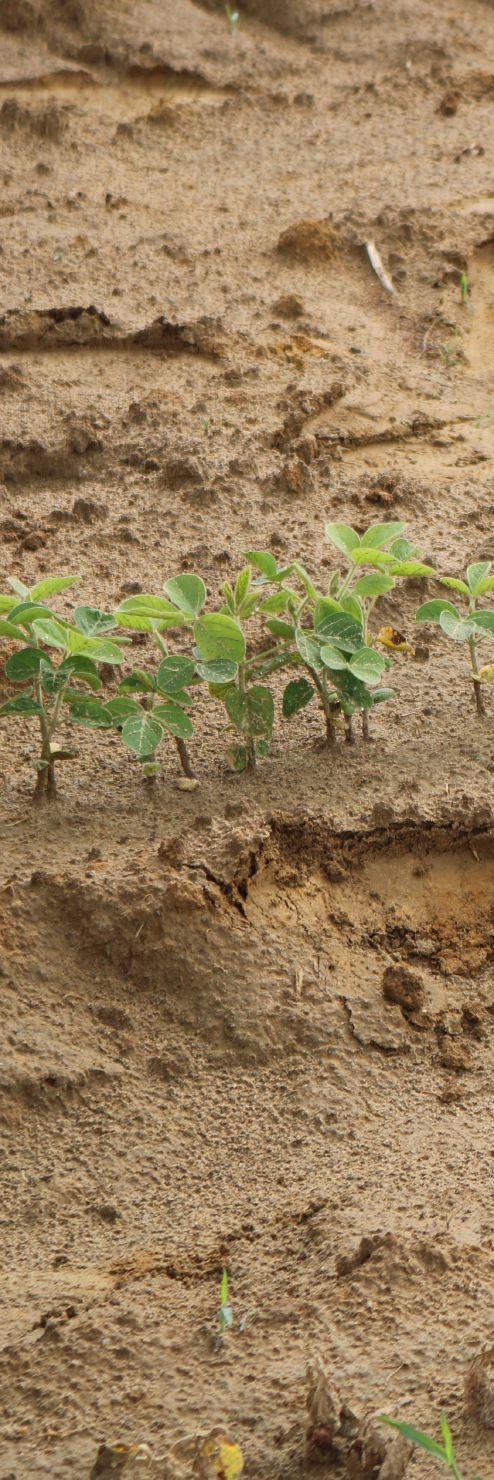
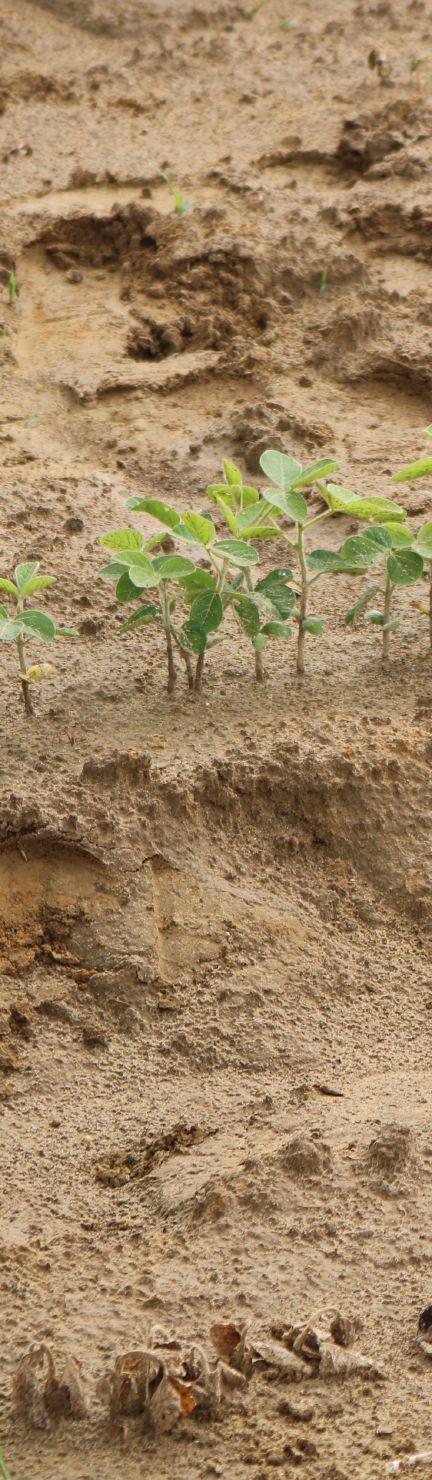
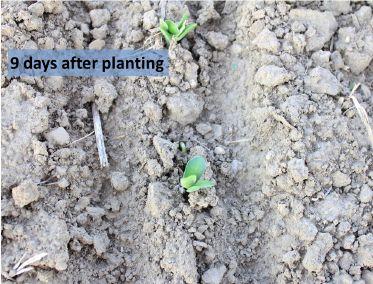
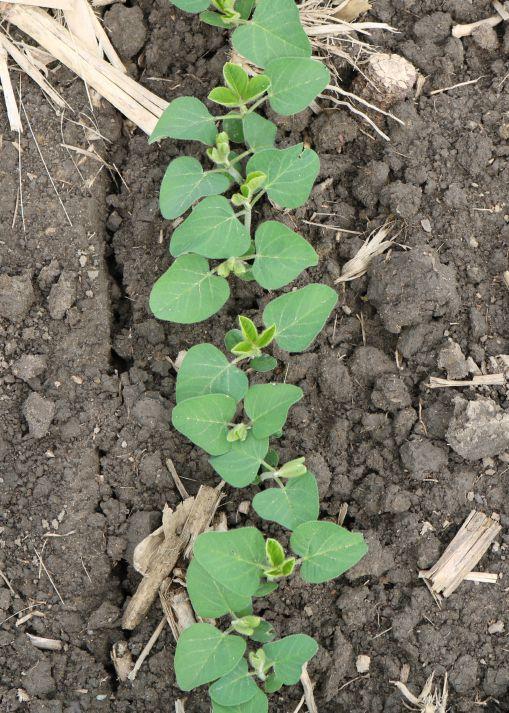
BOTTOM: Soybean seedlings beginning to break through the soil surface at nine days after planting.
PHOTO BY STEPHANIE GORDON.
PHOTOS
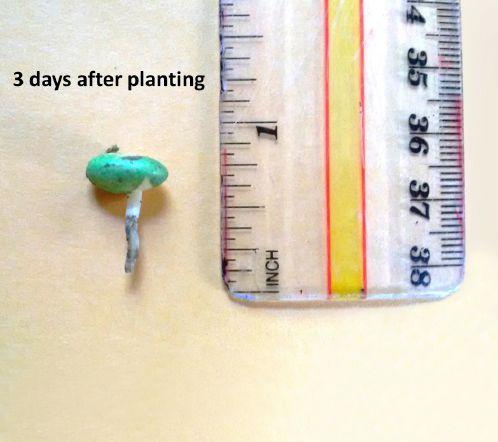
Soybean seedling with radical at three days after planting, seedling below the soil surface.
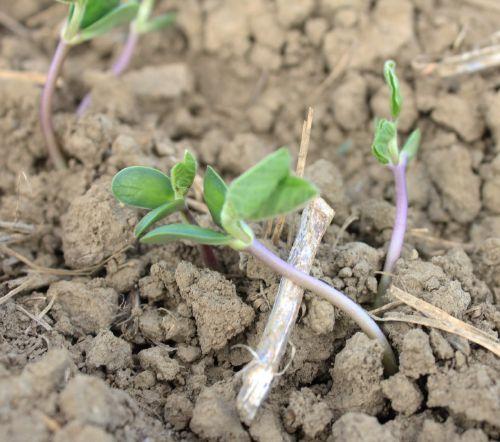
Severe epinasty of soybean seedlings following an application of 2,4-D Ester 700 at nine days after planting. These seedlings eventually died but there was still about 50 per cent of the intended stand left since half of the seedlings were still below the soil surface when 2,4-D Ester 700 was applied.
do the field trial in different soil conditions.
“I always plan to do about eight to 10 different trials every year, and for things like this there are enough questions about it that I feel there is value in pursuing this,” he says. “I’ll probably do this trial one more year and if we see a real anomaly, that would give us an indication that we need to look at it some more.”
For more weed management research, visit www.topcropmanager.com.
PHOTOS
A COMPLETE LEAF DISEASE SURVEY IN MANITOBA SOYBEANS
DNA sequencing has led to the discovery of emerging diseases and development of practical diagnostic tools.
by Carolyn King
Id entifying a crop disease based on visual assessments of symptoms or laboratory can sometimes be tricky. For instance, the symptoms might be unfamiliar to the surveyors because the disease is new to the area or very rare, or the symptoms might look really similar to another disease. In a recent project, Brandon University’s Bryan Cassone used DNA sequencing for an accurate look at the foliar diseases infecting Manitoba soybean crops
As a result of this research, Manitoba soybean pathologists, agronomists and growers now have a comprehensive list of the current foliar pathogens, including some that have never before been reported in Manitoba. Plus, the sequencing technology has enabled Cassone and his research group to develop new tools for improved diagnosis of soybean diseases.
Cassone targeted foliar diseases in this project because he knew they had the potential to become a very serious issue for Manitoba soybean growers. “I worked for four years as a scientist at Ohio State University in the midst of the soybean belt in the U.S. I saw how devastating foliar disease could be to soybean yield. I’ve seen it wipe out entire fields. So to me, it was a huge concern,” explains Cassone, an associate professor of biology at Brandon.
“Also, because soybean is a relatively young crop in Manitoba, we had very little knowledge of the foliar diseases that are actually infecting soybean here.”
At Ohio State, Cassone had worked with next-generation DNA sequencing – high-throughput technologies that enable sequencing of millions of pieces of DNA in a very short time. He says, “Next-gen sequencing is extremely sensitive and accurate, and
a really powerful tool for detecting pathogens.”
The Manitoba Pulse and Soybean Growers (MPSG) funded Cassone’s project, which ran from 2016 to 2018.
Frogeye and other emerging diseases identified
The project’s major objective was to identify the pathogens causing emerging and established foliar diseases in Manitoba soybean crops. Identification of emerging diseases is important for alerting growers and agronomists to new disease concerns, and it can prompt researchers to work on methods for combatting these diseases, like breeding resistant varieties and testing control products under local conditions.
Cassone’s research group worked with Manitoba Agriculture and MPSG to collect leaf samples from fields across the province’s soybean growing areas in 2016 and 2017. “We surveyed twice per year, once early in the growing season and once later in the growing season, because the pathogen composition can change quite a bit,” Cassone explains.
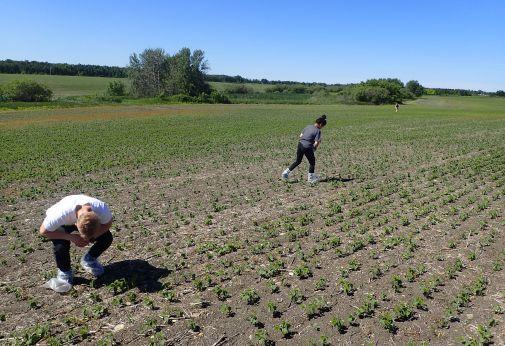
In each of the surveys, they visited between 20 and 25 fields. “There were three or four surveyors, depending on the field. At about three different places in the field, they used a 100-metre, Z-scheme sampling regime where they would collect a sample from every plant that appeared to have a foliar disease symptom.” If they found identical disease symptoms, they would only take one leaf
TOP: The pathogen composition can change quite a bit during the growing season, so they also surveyed soybean fields later in the season.
PHOTOS COURTESY OF GUSTAVO DÍAZ CRUZ, BRANDON UNIVERSITY.
from one plant. “We tried to get a good representation of all the disease symptoms that we saw, and not overlap with the same one over and over again.”
Cassone’s lab conducted the DNA analysis of each leaf. That analysis determined all of the organisms present in and on the leaf – the leaf itself, all the microbes, and any insects and other organisms that happened to be there.
He says, “This DNA work results in literally millions and millions of little pieces of DNA. We use our computers to piece them together; so this piece of DNA is the genetic code for soybean, this piece is the genetic code for microorganism one, this piece is for microorganism two, and so on. We literally piece together their entire genetic code or a good piece of their genetic code to determine which microorganisms are actually present in that leaf.”
T his approach resulted in the detection of diverse foliar pathogens – including fungi, bacteria, viruses and oomycetes –that currently infect Manitoba soybean crops. As expected, some of the diseases were already well known in Manitoba, such as Septoria brown spot, bacterial blight, and downy mildew. But some had never before been reported in the province’s soybean crops, confirming the value of using DNA analysis for identifying emerging diseases.
“Frogeye leaf spot is definitely the worst of the foliar diseases that we identified that were previously unreported,” Cassone says. Frogeye can result in serious yield losses under the warm, humid conditions that favour this disease.
“In 2016, conditions were really wet, and we found frogeye in quite a few places. In 2017, it was quite dry, and we found frogeye at very low abundances compared to 2016. So the hope is that the disease stays contained.” However, he notes that the widespread occurrence of frogeye in 2016 suggests the pathogen has been present in Manitoba for some years.
“Another of the previously unreported diseases was soybean bacterial pustule. It can be a problem for soybean, but we found it in small frequencies and it is rare to cause significant yield loss,” he says.
“ We also found several viruses that had never been reported in Manitoba soybean, like alfalfa mosaic virus, tobacco necrosis virus, and bean yellow mosaic virus. But typically these viruses are not major problems for soybean.”
Frogeye and the other newly detected diseases have been incor-
porated into the annual disease surveys conducted by Manitoba government pathologists and agronomists.
Surprising numbers of residual pathogens
“Another thing we found using this powerful approach was a whole bunch of residual pathogenic fungi and bacteria that had infected the previous crop,” Cassone says. He explains that a residual pathogen is one that remains from an earlier crop in the rotation. For instance, if you grew corn before your soybean crop, then the pathogens that infected your corn crop could still be present in the soybean field, even though they aren’t actually able to infect soybean plants.
Cassone points out that the high number of residual pathogens detected through the DNA work has implications for crop rotation decisions. For instance, if you plant the same crop two years in a row or if you have a two-year rotation, then you could have severe disease problems because the pathogens remaining from the earlier crop are still literally moving around in the field.
Co-infections very common
The project’s second objective was to evaluate the incidence of coinfections – where more than one foliar pathogen was infecting the same plant – and to look for pathogens that might be acting together to increase disease.
The ability to accurately identify co-infecting pathogens could be important in deciding what control measures to apply, but Cassone says co-infections are not usually determined in disease surveys. “The vast majority of surveys in North America for soybean and other crops are mostly visual assessments with a little bit of culturing. However, it is difficult to detect more than one pathogen if you are just looking at symptoms in the field. And even with culturing, you rarely detect all of them.”
In contrast, next-gen sequencing identifies all the co-infecting pathogens.
“ The major take-away message from this co-infection work is that most diseased soybean plants are infected by multiple microorganisms,” Cassone says. He suspects that this is true for all crop types.
Through analysis of the co-infection data, Cassone has identified associations between certain pathogens. “For example, particularly in 2016, more times than not when a plant was infected by Alternaria, a fungus that causes a type of leaf spot, the plant would
PHOTOS COURTESY OF GUSTAVO DÍAZ CRUZ.
The surveyors collected samples of diseased soybean leaves twice a year, including once early in the growing season.
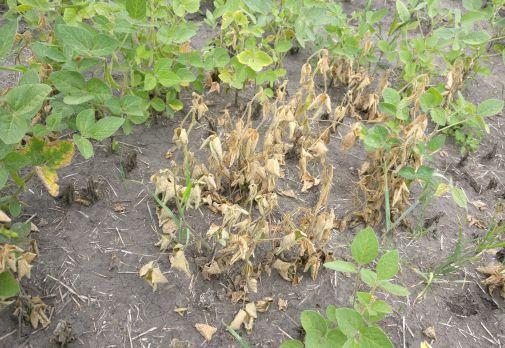
Some foliar diseases have the potential to cause serious yield impacts in soybean.
also be infected by frogeye, usually to a little lesser degree.”
A ccording to Cassone, not a lot is known yet about how some pathogens act together synergistically to increase the likelihood of disease. The co-infection associations identified in this project might be an area for future research to better understand disease development and perhaps improve control measures. For instance, if pathogen A can only infect a soybean plant if pathogen B has already infected that same plant, then maybe control measures could emphasize prevention of the spread of pathogen B.
Handbook for identifying co-infections
foliar pathogens are the most important ones to target with this diagnostic tool. Through a separate study, they conducted some preliminary sequencing work with soybean stem disease samples, so they have an initial assessment of which stem pathogens to target.
But some [diseases] had never before been reported in the province’s soybean crops, confirming the value of using DNA analysis for identifying emerging diseases.
The project’s results also clearly showed that it is extremely challenging to accurately diagnose co-infections based on visual assessment of symptoms. “During the field surveys, every time somebody collected a sample, they would assess what they thought it was infected with. It turned out that they were correct less than eight per cent of the time,” Cassone notes.
He adds, “We have found up to five pathogens co-infecting. A lot of times with the co-infections, we see really weird symptoms, and it seems like they can’t be from a pathogen that we know. Some of the leaves actually look like they might almost have a nutrition deficiency because they have an appearance that is very uncharacteristic of a disease.”
A lthough next-generation sequencing is great for identifying co-infecting pathogens, Cassone explains that using this technology every year in annual disease surveys is not practical at present because it is expensive and requires some special expertise, and it can take roughly six to 10 weeks to get the results.
As a result, Cassone added a third objective to his project: development of an extension disease handbook to help in identifying co-infections.
“In this handbook, we have catalogued about 200 different soybean leaves and identified which diseases they are infected with,” he explains. “The hope is that when agronomists and pathologists are carrying out their annual disease surveys, they can use our leaf guide as a reference. If they see very similar symptoms, they will have a very good idea of what might actually be infecting their plants.”
Cassone is currently finalizing the handbook. Once it goes through the scientific peer review process, he plans to make the publication available to soybean agronomists and pathologists.
A new quick, accurate diagnostic tool
“Even though the survey using next-gen sequencing is over, the results are feeding into the development of other methods that are faster and more cost-efficient and still very sensitive,” Cassone notes.
“ We are developing a PCR-based diagnostic that identifies our most important pathogens at the same time. With this, we can analyze a sample in less than a day. It is accurate and sensitive, but instead of getting the exhaustive list of pathogens that is produced with next-gen sequencing, we are limited to a few pathogens from a given tissue, such as a leaf or stem.”
PCR is a DNA-based technique, and creation of this PCR tool was only possible because of the DNA sequence information that Cassone and his group built through the project.
I n addition, their DNA work identified which particular
The four foliar pathogens identified by the tool are: Septoria glycines (brown spot), Peronospora manshurica (downy mildew), Alternaria alternata (leaf spot) and Cercospora sojina (frogeye). The four stem pathogens are: Sclerotinia sclerotiorum (white mould), Diaporthe phaseolorum (stem canker), Phytophthora sojae (root rot) and Phialophora gregata (brown stem rot).
“ We have noticed that it is usually these [eight] pathogens that are the most widespread and the most likely to be the greatest risk for soybean foliar tissue and stem tissue. The other pathogens are really rare or not really important to growers.”
The project has also generated some findings that are mainly of scientific interest. For instance, Cassone has published the firstever report of brome mosaic virus infection in soybean. “Brome mosaic virus infects grasses, but it is a really weird virus because it is also known to infect some [broadleaf] plants such as beets and cucumber. Before our study, brome mosaic was not known to infect soybean. Now we have proven that it does infect soybean. It’s not likely to be significant for soybean growers, but on a biology level it is quite interesting.”
He also notes, “To show how sensitive this technology is, we were actually able to find a virus that infects the pathogen that causes white mould. We were able to build the genome of this virus, and we are sending that out for publication.” Along with being pretty cool from a scientific perspective, this finding might possibly turn out to have some implications for the control of the white mould pathogen, which also causes disease in many other broadleaf crops.
Potent technology, practical benefits
Through the use of DNA sequencing, Cassone and his group have generated some valuable outcomes for Manitoba soybean growers. The researchers have detected several foliar diseases that have never before been reported in Manitoba soybean crops, including some like frogeye that are important additions to the annual disease surveys. And they have developed a rapid, accurate, low-cost method for identifying key foliar and stem pathogens.
The project’s findings have also underlined the significant issue of co-infection. In response, Cassone and his group have developed a handbook to help soybean agronomists, pathologists and growers with the very difficult task of identifying co-infecting foliar pathogens.
Down the road, technological advances might make next-gen sequencing a more practical tool to use every year in annual disease surveys in soybean and other crops. For now, Cassone suggests that it might be added to annual surveys every now and then, especially for newer crops like soybean.
THE WEED SHUFFLE: WHAT’S CHANGING IN MANITOBA
Weeds are responding to new herbicide-resistant crops and changing the dynamics for weed control.
by John Dietz
Weeds are evolving and upgrading to meet the latest herbicide-tolerant crop technologies. It’s happening in Manitoba, and starting in eastern Saskatchewan, as the weed spectrum encounters more highly selective herbicide pressure.
Working on the frontlines, Manitoba weed specialist Tammy Jones is seeing an increase in volunteer canola, kochia and other weeds. She is on the alert for outbreaks of new problems like Palmer amaranth, waterhemp and giant ragweed. Jones points to five actions a grower can take to stay ahead of the changing spectrum: crop rotation management, avoiding cosmetic spraying, using a two-pass system with residual, more scouting and preparation for hand-pulling new weeds.
“Farming is not just having a Plan A. It’s having a Plan B, Plan C, Plan D and pretty much a plan for every letter of the alphabet,” she says.
Crop rotation
Jones sees a lot of three-year rotations, more two-year rotations and only a few four-year rotations. Her ideal is four years or more, and crop rotation is important to mitigate problems down the road.
Rotation choices affect weed competition, herbicide mixes and modes of action. For instance, wide-row soybeans in the rotation, with slow canopy closure, are highly vulnerable to competition before the canopy closes. “Maybe we can reduce that weed pressure a little if we look at row spacing. Or maybe we need to go back to something very old fashioned, like inter-row tillage or a cover crop or intercrop, so that the soybean crop is more competitive,” Jones suggests.
The two-year broadleaf-cereal pattern helps with rotating through different chemistries. But the system isn’t as flexible and comes with its own challenges when a curveball gets thrown. “Maybe you have dry soil conditions and herbicide carryover. Then you have to change cropping plans based on a factor outside your control,” Jones says. “Volunteer crops are harder to control in tight rotations, especially crops with herbicide tolerance traits.”
The typical three-year rotation in Manitoba now is soybeanscanola-wheat. “That rotation seems to work OK most of the time and you have decent weed control options,” she says. “Nobody wants to deal with canola volunteers in soybeans but it’s easier to
control the soybean [volunteer] in canola. There are more herbicide options and it’s not as competitive as a canola volunteer. After canola, wheat tends to be a better option. Wheat gives the soil mycorrhizae a chance to recover and reorganize from the canola damage.”
The whole point of rotation is to build in resiliency. When Plan A goes wrong, you have backup. “If you’re using herbicide-tolerant crops as weed control tools, stagger them; don’t rely on the same
PHOTOS BY STEPHANIE GORDON.
ABOVE AND RIGHT: Wide-row soybeans in the rotation, with slow canopy closure, are highly vulnerable to weed competition before the canopy closes.
tool. If your herbicide-tolerant soybeans have the Roundup-ready trait and the Xtend trait, then go with a Liberty Link canola,” she says.
“Keep the rotations of crops and chemicals diverse so that you’re continuing to change the patterns within your fields. When you’re constantly changing, weeds have a harder time adapting.”
Cosmetic spraying
Not every weed is worth a field-wide application for protection. “I do like to see an economic reason to spray, not just a cosmetic one,” Jones starts. “Make sure you’re not doing revenge spraying because you feel it’s an eyesore and want to get rid of it.”
“Canola can be an eyesore in your soybeans but it’s probably not going to be at an economic control level, unless the population is more than three plants per square metre,” she says.
For that particular problem, Jones recommends fall harrowing in the canola stubble to get some early germination that reduces the population and seedbank. Charles Geddes, an Agriculture and Agri-Food Canada weed scientist working out of Lethbridge, Alta., proved that early autumn soil disturbance is very effective for managing volunteer canola in soybean production. When compared to zero tillage, it doubles the germination, and winterkill, of volunteer canola.
Two-pass system
Herbicide layering, where one uses a two-pass system as the standard choice, including a residual herbicide in the first pass, is probably the best response to the new challenges in weed management. Herbicide layering this past spring was Jones’ own best approach in demonstration sites.
“Herbicide layering – where you have a pre-seed that has a soil residual – followed by an in-crop with different modes of action to hit that weed again – I found to be surprisingly effective this year.
“The old one-pass idea might not be the best way to get a nice, weed-free crop, especially in soybeans,” Jones says. “Consider the two-pass system and staging. If you don’t get weeds controlled with the first pass, you might be able to go back and control them with the second pass.”
More scouting
When spraying and scouting have reached their limits, Jones says hand pulling is best for the worst-case scenario. “If you have a small patch of a bad weed, then hand-pulling it now is way easier than trying to figure out some magical chemical concoction three years from now when it has obliterated your crop.”
Times are changing
Wild oats are still the predominant weed problem in Manitoba, mainly due to increased resistance to Group 1 and Group 2 herbicides. However, volunteer canola and other herbicide-resistant weeds aren’t far behind the resistant wild oats. In his Manitoba research, weed scientist Charles Geddes focused on soybeans and new management options for volunteer canola. In Alberta, he switched focus to kochia.
“Herbicide resistance is by far the worst weed management problem we have in Western Canada,” Geddes says. What’s coming, he suggests, is a man-made weed management crisis. “In certain areas in the States, growers have had to revert to hand weeding. Weed resistance has grown to a level they can’t manage with crop
rotations,” he says. “Diversity really is our best tool to manage resistance. Diversity in the crops we grow allows for diversity in the herbicide management program.”
Crop scouting for weeds is critical, and even more scouting is better. Jones recommends crop scouting for weeds five times in every growing season, in as many fields as can be managed.
• Scout before you go out to spray in spring. Usually there will be more weeds than you expect.
• Scout before doing the in-crop weed control to be sure your timing is right.
• Scout 14 days after the in-crop, to be sure the application did its job. If not, a remedial treatment may still be possible.
• Scout pre-harvest, to decide on whether to swath or straight cut and if you need to do pre-harvest weed control.
• Scout post-harvest. It’s a perfect time to control weeds by tillage, chemicals or cover crops, and it’s the ideal time to get a weed forecast for the next growing season.
“Make sure things are effective. Set yourself up for future success by being in the crop many times just for weeds. Of course, you can combine that with scouting for insects or disease,” she says.
The rise of herbicide-tolerant soybeans as a major crop on the eastern Prairies is a double-edged sword. These soybeans can be new tools in crop rotations for weed management, but they can also lead to producers sacrificing the diversity of the rotation. For twenty years or more, herbicide tolerant lines of canola have aided growers with weed control. Now that a second major crop with herbicide tolerance is here, it will put pressure on crop rotations.
“Anytime you see a shift in predominant production practices you’re going to see a shift in the weed communities,” Geddes says. “With herbicide-tolerant crops, especially, you’ll see an additional selection pressure on your weed community. It’s hard to predict exactly what is going to happen, but we know the weed spectrum will adapt.”
A canola-wheat-soybean rotation has been very profitable and widely adopted. It makes short-term economic sense, but Geddes offers a word of caution. “Including two crops with the same herbicide resistance (in a three-year rotation) doesn’t make that much sense. Already, volunteer canola is the number one weed in soybeans in Manitoba. It makes a lot more sense to try to switch
off between your herbicide-resistant systems,” he says.
Worse, though, are back-to-back glyphosate resistant soybean crops that are grown in some areas of Manitoba. “That’s definitely an issue,” he says. “From discussions I’ve had, there are certain parts of Manitoba where growers focus on growing soybean crops continuously. They use glyphosate every year in crop as the primary weed tool. I predict, this is where we will see new glyphosate-resistant weeds popping up in the near future.”
“Keep the rotations of crops and chemicals diverse so that you’re continuing to change the patterns within your fields. When you’re constantly changing, weeds have a harder time adapting.”
He continues, “Rotational planning plays a large role in managing volunteers. I suggest growing a canola-wheat-soybean sequence so you have a cereal break crop. Volunteer canola is fairly easily managed in cereal. Then you can have a low volume canola population going into the soybean year.”
A four-year rotation would be better, if heavy volunteer canola pressure is an issue. Canola seeds are not dormant at harvest, but they can go dormant and persist for three or four years. Up to four years after the canola, you can have a viable canola seedbank –and potential trouble – with the next soybean crop.
Glufosinate option
In the long term, Geddes suggests, alternate between glyphosate and glufosinate resistance traits in canola and soybeans. Of course, even that has issues. A certain, low amount of outcrossing occurs in canola. “Over the years, with my project I had many growers say they had never grown a glyphosate-resistant canola but now that they were growing glyphosate-resistant soybean, they were seeing volunteer glyphosate-resistant canola,” he says. “Why? It could be due to adventitious presence of these traits in canola seed lots, or maybe even out-crossing among canola fields,
resulting in glyphosateresistant canola volunteers.”
Selective planting
One of the most useful discoveries Geddes found was proof that selectively planting soybeans in low-nitrogen fields gives them a distinct advantage on weeds. “Soybeans can fix their own nitrogen. The predominant weed community cannot do that,” he says. “The lower the nitrogen, the more competitive the soybeans can be. In that situation, volunteer canola will not cause nearly as much yield loss.”
The takeaway is to seed soybeans in fields where nitrogen is already low or depleted by the previous crop.
The kochia storm
The eastern Prairies are in the “infancy stage” of soybean production and Geddes believes the coming weed challenges will change production dynamics within a few years. Glyphosate-resistant kochia is one example. It was first found south of Lethbridge, Alta. in chemical-fallow fields. Then it showed up in crops. The Alberta population of glyphosate-resistant kochia was 50 per cent in 2017, up from only five per cent in 2012 – a notable increase.
A 2016 survey in Manitoba found glyphosate-resistant kochia in a few corn and soybean fields. Geddes says, “It’s likely those populations did not blow in from the West. I think they were actually selected within Manitoba cropping systems using glyphosate-resistant crops.”
Kochia was more abundant than ever in Manitoba in 2018. It was bad year, and quite a few resistance cases are suspected now, Geddes says. A new survey has been done, and the results, whether positive or negative, should not prevent producers from continuing weed management best practices.
IMPROVING WATER STRESS TOLERANCE IN SOYBEANS
Delving into the mechanisms of stress response in soybeans could lead to more resilient varieties.
by Carolyn King
In Manitoba, we experience moisture extremes where sometimes we have drought conditions but then it can swing back into a cycle of excessive moisture,” says Cassandra Tkachuk, a production specialist with the Manitoba Pulse and Soybean Growers (MPSG). As a result, having soybean varieties that could tolerate both flooding stress and drought stress would be a real advantage.
Claudio Stasolla with the University of Manitoba’s plant science department is leading some research that might eventually lead to such varieties. This research focuses on plant proteins called phytoglobins.
For about the past six years, Stasolla has been collaborating with Robert Hill, an emeritus professor in the same department, to investigate the roles of phytoglobins in different plant species. “Rob Hill was one of the people who really pioneered the discovery of phytoglobins in plants,” Stasolla notes.
Stasolla’s background is in plant developmental biology, so the two researchers started their collaboration by studying the function of phytoglobins in plant development processes. They have published several papers on this topic.
More recently, Stasolla and Hill have turned their attention to the role of phytoglobins in protecting against various stress conditions in plants. One of the strategies that plants may use to better tolerate stress in their environment is to ramp up their production of phytoglobins.
“In very simple terms, phytoglobins are animal-like hemoglobins found in plants. Like animal hemoglobins, they are able to bind to oxygen. The most important function of these proteins in plants is that they scavenge, or remove, nitric oxide. Nitric oxide is a signalling molecule implicated in many developmental and stress responses. But during many stress conditions, high accumulation of nitric oxide causes damage to cells and tissue,” Stasolla explains.
“Phytoglobin removes high levels of nitric oxide, thereby alleviating the stress response that high levels of nitric oxide can cause. So we decided to manipulate these proteins to see whether we could alter the response of plants to diverse types of stresses including flooding, salt and drought.”
It may seem surprising that phytoglobins might reduce both flooding stress and drought stress, which seem like opposite problems. But Stasolla says, “Plants respond to diverse types of stress often, but not always, through similar mechanisms. And in several plant species, one thing that associates hypoxic response –hypoxic refers to low oxygen conditions [that occur in flooded soils] – to drought response is the high accumulation of nitric oxide, which induces cell death.”
One of Stasolla’s current projects is focused on the role of
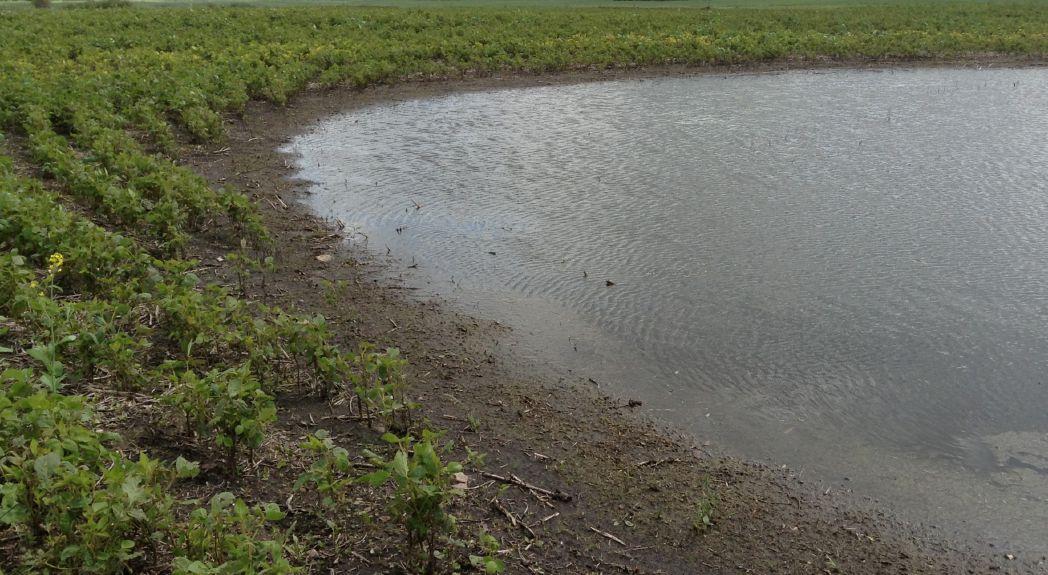
TOP: Manitoba researchers are working towards soybean varieties with better tolerance to flooding and other stresses.
phytoglobin in helping soybean plants to tolerate flooding. Although previous scientific studies have proven that phytoglobins can alleviate hypoxic stress in some other plant species, no such studies had been done with soybeans.
This project started in 2016 and is funded by MPSG and the Manitoba Government. “This project has two objectives. One is to screen commercially available soybean lines for their ability to tolerate flooding conditions and correlate their ability to their phytoglobin level. So, the idea is to determine whether soybean plants with a naturally high phytoglobin level are more tolerant to flooding stress, whereas plants with a naturally lower phytoglobin level are more susceptible to this stress,” he says.
“The second objective, which is more experimental, involves transgenic plants that we have developed in which the level of phytoglobin was experimentally increased or decreased. Again, our hypothesis is that increasing the level of phytoglobin would alleviate the negative effect of flooding thereby increasing tolerance, whereas lowering the level of phytoglobin would increase susceptibility to flooding stress.”
So far, both hypotheses have proven to be true. The researchers’ work with the commercial soybean varieties showed that all the varieties quickly increased their phytoglobin levels under flooded conditions, but some produced more phytoglobins than others.
“Those commercial varieties that performed better under flooding conditions have a naturally higher level of phytoglobin compared to those varieties that were more susceptible, which are characterized by a lower level of phytoglobin,” Stasolla notes.
Similarly for the second objective, the soybean plants with the experimentally increased phytoglobin levels had increased flooding tolerance, and the plants with the decreased phytoglobin levels had greater susceptibility to flooding stress.
As part of another MPSG-funded project, Stasolla and his research team are examining the role of phytoglobins in drought tolerance in soybean. Similar to the flooding tolerance study, they are testing commercial varieties and experimentally altered plants to see how phytoglobin levels are related to drought tolerance. Although this work is in its early stages, the very preliminary results suggest that higher phytoglobin levels are associated with better drought tolerance.
As well, the researchers are looking into the possible use of phytoglobin as a molecular marker. Stasolla says, “We feel that
phytoglobin can be used as a marker that could be very useful in soybean breeding programs. It could provide a way of quickly selecting breeding materials based on the expression of phytoglobins, to predict how the plants will perform in the field under flooding conditions and possibly other types of stress.”
They will also be digging deeper into the basic science around phytoglobins and plant stress responses. “We are very interested to determine why phytoglobins are expressed in specific cells in specific tissues and not others, and also what causes the production of higher levels of phytoglobin during a condition of stress,” he explains.
“When studying stress responses, like any type of plant response, it is very important to understand the mechanism behind these responses before providing recommendations. These mechanisms can only be understood by engaging in some basic, fundamental research. Then, once we understand the mechanism, we can come up with practical applications that could be used to improve the situation.”
Tkachuk notes, “MPSG funds research all the way from discovery to applied to on-farm. This phytoglobin research is an example of that discovery-type, upstream research. Finding out about the role of phytoglobin in stress responses will give us a direction for possible new tools that could be developed. Discovery research like this is a necessary first step toward practical applications.”
If phytoglobin turns out to be a key to developing soybean varieties that are able to survive and thrive despite flooding and other stresses, that would help to reduce crop losses and boost the profitability and sustainability of soybean production on the Prairies.
“Soybeans are generally pretty tolerant to excess moisture, but prolonged flooding will hurt the plants,” Tkachuk says. And drought stress can be a major limiting factor for soybean yields. “Improved tolerance to these extreme conditions would be helpful for soybean growers across different regions.”
She adds, “This research could also provide an opportunity to improve soybean productivity across a field. For example, in a rolling landscape with depressional areas and hilltops, soybean varieties with improved flooding tolerance would increase productivity in depressional areas that have excess moisture. That could result in more uniform crop growth across the field. And a uniform crop makes everything easier for a farmer in the field operations throughout the season all the way to harvest. So anything we can do to get a more uniform crop is definitely a positive.”
EFFECTS OF PHYTOGLOBIN LEVELS
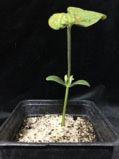
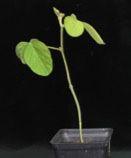
Examples of soybean plants fully submerged for seven days and then allowed to recover.