AFTER THREE SEASONS, CHOOSE A SEED WITH AS MUCH POTENTIAL AS YOU.
DEKALB® TRUFLEX™ CANOLA WITH ROUNDUP READY® TECHNOLOGY GIVES YOU THE SPRAYING FLEXIBILITY YOU WANT WITH THE WEED CONTROL YOU NEED.
You might get about 40 chances to achieve your best yield yet from the seed you choose. That’s why you need a canola with proven spray flexibility and next-level weed control. You need the proven performance of DEKALB canola. Developed with superior genetics to deliver yield and stand up against disease pressure, DEKALB canola is the choice you can depend on year after year to deliver an easier, faster and smoother harvest.
Published as part of Top Crop Manager, August 2021, by: Annex Business Media
PO Box 530, 105 Donly Drive South, Simcoe, ON N3Y 4N5 Canada Tel: (519) 429-3966 Fax: (519) 429-3094
EDITORIAL DIRECTOR, AGRICULTURE Stefanie Croley
ASSOCIATE EDITOR Alex Barnard
WESTERN FIELD EDITOR Bruce Barker
NATIONAL ACCOUNT MANAGER Quinton Moorehead
ALEX BARNARD ASSOCIATE EDITOR, AGRICULTURE
MANAGING IN A ROUGH YEAR
The siren song of combines in the field and the less enticing – but no less important – aroma of late summer manure applications: it’s harvest time again.
It’s that time of year when months of hard work and decisions come to fruition – or don’t, as the case may be this year for those affected by the harsh heat and drought conditions on the Prairies and northern Ontario. This year is already being compared to the summer of 2002, referred to as the culmination of the worst drought in at least a century for parts of the Prairies.
Whether you have a bumper crop or barren stalks, there’s more to harvest time than simply bringing in the crop. Clearing the fields means it’s time to prepare crops for storage, manage soil and nutrients, and plant any winter or cover crops, among other tasks.
It’s also a time to consider ways to improve your operation while the season is still fresh in your mind. On page 9, Western Field Editor Bruce Barker looks into a study conducted by the Prairie Agricultural Machinery Institute on harvest losses in canola. While some factors – like weather –aren’t really within a producer’s control, ground speed, feed rate, and optimizing your combine’s settings are all ways to decrease harvest losses and see more of your crop to sale or storage.
In early August, Top Crop Manager put on its second-annual Harvest Hub week, featuring a series of articles, podcasts and webinars covering a variety of harvest-related topics. Whether it’s managing your harvest data, staying safe at harvest time, optimizing your grain ROI, or doing some postharvest nutrient management, there’s something for every producer. Be sure to check it out – maybe you’ll find the next big idea for your operation, or tips to make this hectic time of year a little more manageable.
@TopCropMag /topcropmanager
ON THE COVER:
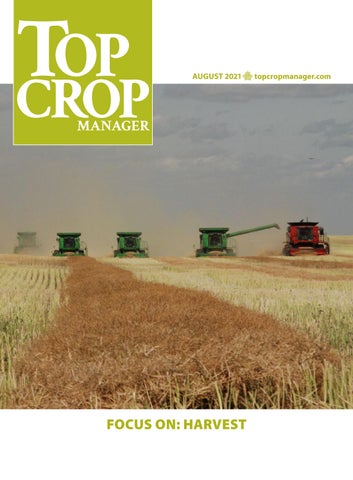
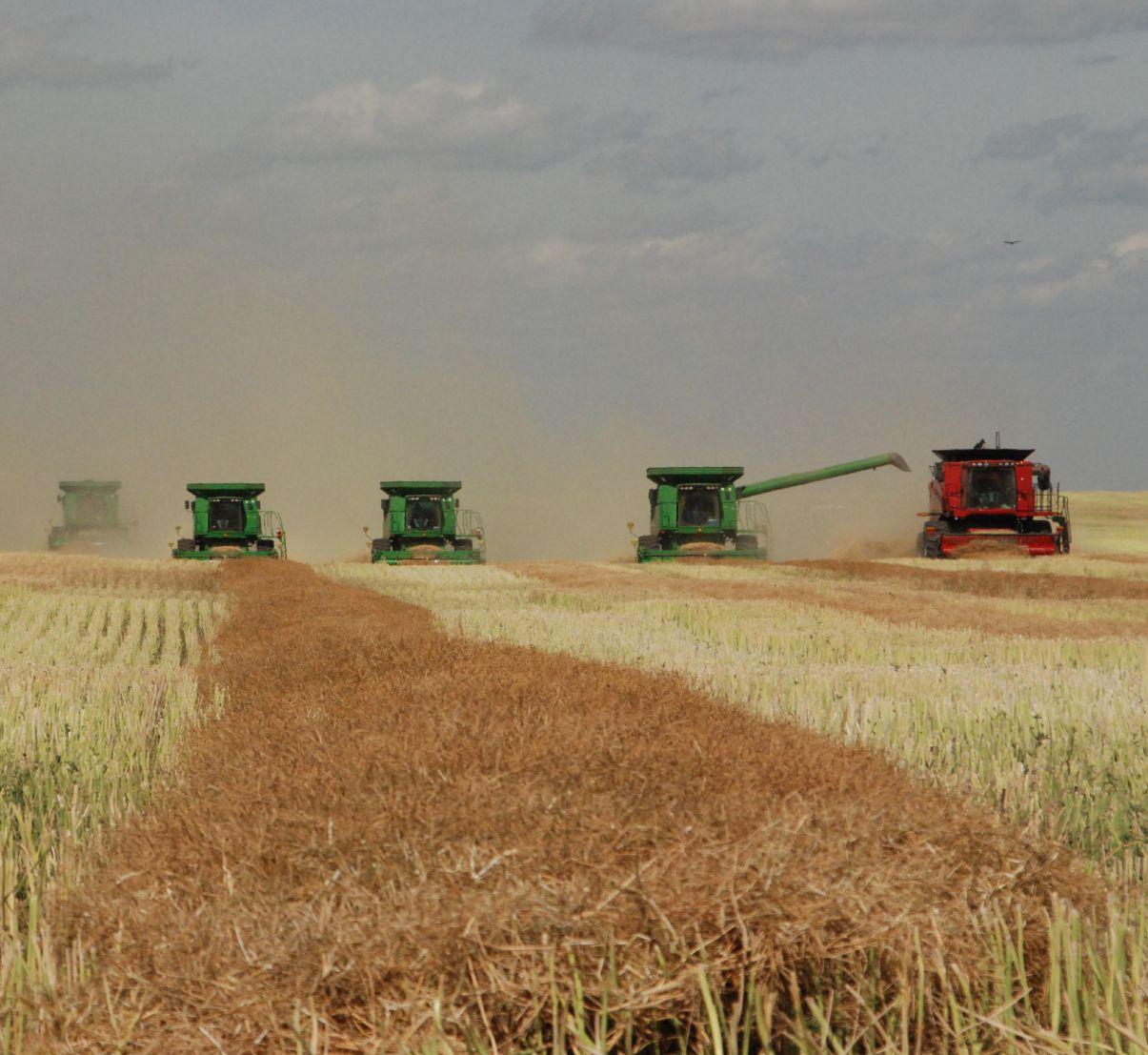
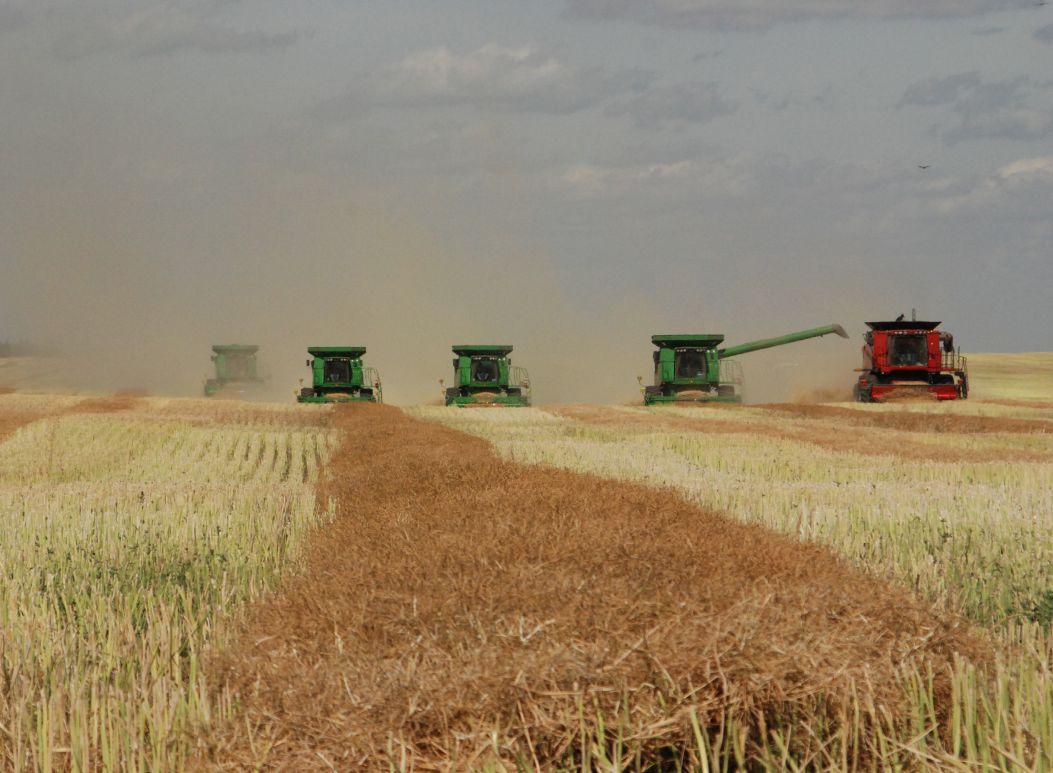
In terms of harvest losses in canola, weather conditions and feed rate were more important than the colour or age of the combine. PHOTO BY BRUCE BARKER.
ON THE WEB
PODCASTS
• How data can help you during harvest
• Applying manure before a fall cover crop
• Staying safe during harvest
• Minimizing yield loss during harvest
• Putting crops to alternate use in Manitoba
GROUP PUBLISHER Michelle Allison
Manager, or subscribe at topcropmanager. com. There is no charge for qualified readers.
WEBINARS
• Put data to work for you after harvest
• How to protect, connect and optimize the value of your stored grain
PRACTICE GRAIN BIN SAFETY
topcropmanager.com/harvest-hub
CEREALS
WINTER BARLEY: PERSPECTIVES ON PROSPECTS
A look at some recent experiences in cold climates and what it might take to adapt this crop to the southern Prairies.
by Carolyn King
Could winter barley become another crop option on the southern Prairies? It has some potential benefits for growers, but a significant challenge with winter survival.
“There is a lot of interest in winter barley here in southern Alberta. If we could have winter barley that was almost as reliable as winter wheat, I think we would sell a lot of winter barley,” says Greg Stamp with Stamp Seeds in Enchant, Alta.
“We’re in feedlot alley and a lot of barley comes into this area. Winter barley can be higher yielding than spring barley. As a higher yielding or more drought-resistant crop option, I think it would be pretty competitive to grow. If it could compete on a dollars per acre basis with crops like durum and hard red wheat, then maybe you’d see a change in some of the crops grown in this area.”
“Winter barley could take advantage of early season moisture, which is typically what we get. And if the crop was on irrigation, maybe you could reduce your irrigation needs,” he notes.
“And you could harvest really early and spread your combines over more acres. For silage here in feedlot alley, people could maybe double-crop more easily. For instance, they could grow a forage crop
and then another forage crop. People are now double-cropping with the hybrid fall ryes, although not every year is perfect. But winter barley might aid in that because it might have an even earlier silage timing.”
Stamp has been trialling some European winter barley varieties.
“We contacted seed companies out of Europe and asked, ‘Can we try the variety here?’ If it looks successful, maybe we can try and get it registered here,” he explains.
“We’ve tried winter barley for about three seasons now. One year we had pretty good survival, but in the other seasons there was too much winterkill to keep the crop. So far, we have tried two varieties, and neither seemed good enough. We’re trying a third one now and we’ll see.”
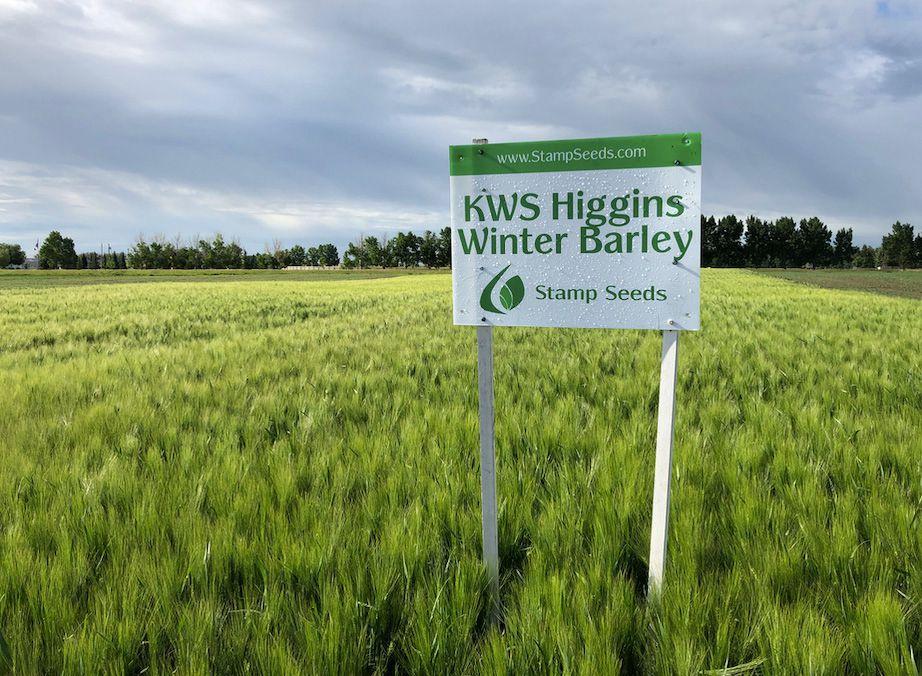
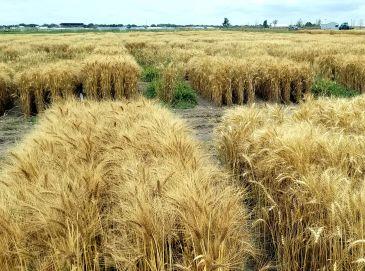
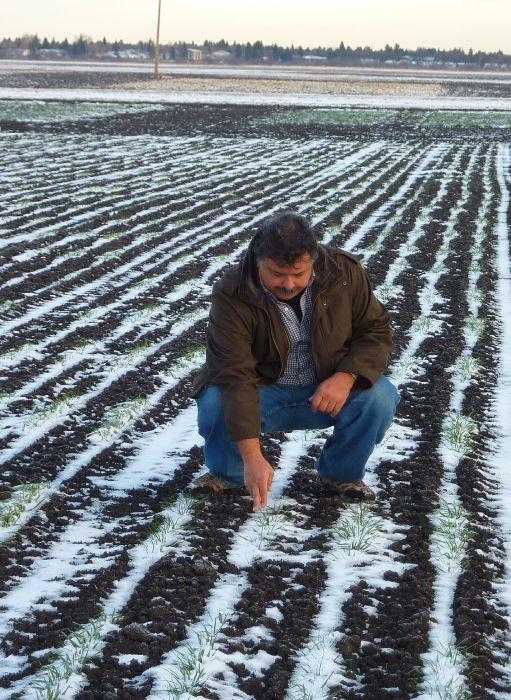
TOP: Stamp Seeds has been trialling several European winter barley varieties like this one, trying to find one that is almost as reliable as winter wheat when it comes to winter survival.
INSET: Experimental winter wheat lines in Lethbridge showing differences in winter survival.
PHOTO COURTESY OF ROB GRAF, AAFC.
He adds, “If winter barley is going to work anywhere in Western Canada, it’s probably southern Alberta [with its milder winters]. So, the variety might only be registered for the area south of Highway 1 in Alberta or whatever. Which is fine, because you could still have great success with something even if it is quite regional.”
Winter barley in central Alberta
The Field Crop Development Centre (FCDC) at Olds College recently evaluated winter survival in winter barley in Lacombe, Alta. This was part of an international project that tested 882 winter barley lines at 13 locations in 2013-14 and 11 locations in 2014-15.
“The project gathered a wide collection of commercial and experimental winter barley lines from breeding programs and gene banks around the world, tested them in different environments worldwide, and looked for new genes for winter hardiness,” says FCDC barley breeder Flavio Capettini.
The FCDC’s previous experience had been that no winter barley lines would survive in the Lacombe area or anywhere else in Alberta. “But as a germplasm program developer, I have always tried to find new things. This international collection was supposed to include the most cold-resistant winter barleys from around the world, and I wanted to see if there had been progress in winter hardiness in the last few years. With a little investment, this experiment would give us a glimpse of all that is available right now,” he says.
“It was very exciting in those first two years. We had acceptable conditions for winter survival in Lacombe in both years, and our trial was among the most successful in the project.”
Given these promising results, Capettini decided to further evaluate the 160 lines that had performed best in Lacombe. His goal was not to start a winter barley breeding program but to identify lines that might make good crosses with the FCDC’s spring lines.
Unfortunately, nothing survived in 2015-16 and 2016-17. “So, we confirmed the past experiences at Lacombe, but we gained the best winter barley lines from around the world to make crosses with our spring barleys.”
Along with collecting the survival data, the international team genotyped the 882 lines. Using genomic analysis, they mapped the locations of five known genes associated with winter survival and 10 other locations that could be potential contributors to the trait.
Winter barley is much less winter-hardy than fall rye, wheat and triticale. “That may be because barley’s centres of origin are in warmer climates in the Middle East,” Capettini says. “Although the plants had to face frosts and even snow in some small areas, winters rarely were as long as in our province. For winter survival in central Alberta, winter barley really needs all the winter hardiness genes possible.”
The
winter wheat experience
Assuming good winter survival, winter cereals can provide a range of benefits – such as higher potential yields than their spring counterparts, fewer acres to plant in the spring, spreading out the time for harvesting, use of early spring moisture, outcompeting annual weeds in early spring, prevention of soil erosion over the winter, and undisturbed fields for nesting waterfowl. “Plus, very often in the fall, we are in a feed deficit situation and so feed grain prices tend to be very good. Winter cereals can meet that need early on, so the returns can be quite good,” says Rob Graf, the winter wheat breeder with Agriculture and Agri-Food Canada (AAFC) in Lethbridge.
These types of benefits have spurred the development of many great Prairie winter wheat varieties – thanks to about seven decades of breeding.
“Winter wheat breeding in Western Canada started in 1949 here at AAFC in Lethbridge. Prior to that, winter wheat agronomy work was being done. As part of that, lines were brought in from all over the world to try to find ones that worked well in Western
Canada,” Graf explains.
“After doing that for several decades, it became clear that if we were going to have varieties that met the needs of western Canadian producers, we would have to develop the varieties in Western Canada.”
At that time, most winter wheat produced on the Prairies was grown in southern Alberta because of its milder winters. “Back then, winter wheat was being planted on basically bare soil; that was well before the development of minimum and zero tillage,” he notes. “Planting into standing stubble was a real game-changer for winter wheat survival [because the stubble helps trap snow to insulate the crop].”
Another key step forward was AAFC-Lethbridge’s development of the variety Norstar. “Norstar, which was registered in 1977, is still regarded as a world standard for winter hardiness,” Graf says. “There are some older lines out of Russia that may have slightly better winter hardiness, but Norstar had that unique combination of excellent winter hardiness along with the quality package required by the industry in a milling and baking wheat.”
Although today’s winter wheat varieties have much better agronomic characteristics and disease resistance than Norstar, going beyond Norstar’s winter hardiness level remains very difficult.
Beyond Norstar – for winter barley, too?
“If we could increase the low temperature tolerance by two degrees beyond Norstar’s level, that would make a huge difference from the standpoint of the assured survival of winter wheat,” Graf notes.
He is collaborating on a project led by Ravindra Chibbar, a professor at the University of Saskatchewan, to use genomic approaches in improving winter survival.
FCDC’s Flavio Capettini was part of an international project that evaluated the most cold-resistant winter barleys from around the world in Lacombe and locations in other countries.
PHOTO COURTESY OF FLAVIO CAPETTINI, FCDC.
“We have been working for the last decade on the genetics and genomics of winter survival in winter wheat and fall rye,” Chibbar explains. “We are working on the hypothesis that winter survival is complex: an interaction between the low temperature tolerance (freezing tolerance) and plant developmental traits such as prostrate growth habit and final leaf number. And we recently showed that anthocyanins [compounds with antioxidant effects] in the crown tissue are also associated with winter field survival and low temperature tolerance in fall rye.”
Chibbar’s group has been mapping the genes associated with these various characteristics, developing DNA markers for the genes, and identifying breeding materials with those genes. As a result, the researchers have developed some winter wheat lines that are more cold-hardy than Norstar.
The best of these lines have been provided to Graf for making crosses with his elite cultivars. Once Chibbar’s group gets the progeny from Graf’s crosses, they will analyze the plants for the candidate genes and identify the genes that improve winter hardiness beyond Norstar.
Chibbar notes, “In my opinion and that of my colleague Monica Båga, who has been working on this project since we started to work on winter cereals, all our research findings are of a very fundamental nature. So these findings can be applied to other winter cereals such as winter barley.”
Winter barley in Ontario
“We’ve been working on winter barley my entire career here in Ontario,” says Peter Johnson, an independent agronomist. “For a time, Les Shugar, a breeder with Hyland Seeds, tried to breed a more winter-hardy winter barley because he saw the potential for the crop in Ontario. It has high yield potential and good potential for double-cropping with soybeans. It is about 10 days earlier to harvest than winter wheat, and at that time of year that is essentially an additional 10 bushels per acre of double-crop soybean yield. So it takes the soybean crop from probably not economical to being quite economical.”
Unfortunately, winter survival remained a problem. “We would build some hype around winter barley, and we’d get up to 10,000 or 15,000 acres after three or four years. Then we would have a tough winter/spring with 95 per cent winterkill. And everybody would be
sour, and we would have to start over again,” he explains.
“The breeder’s challenge was that there was simply not enough genetic variability in winter hardiness to come up with a winterhardy winter barley for Ontario.”
So, winter barley production in Ontario stalled for a while. However, people are now becoming interested again.
Johnson sees several reasons why winter barley might work now. One is that Ontario’s climate is getting warmer; a recent study shows the province has gained seven frost-free days in the last 10 years. This longer growing season makes a winter barley/soybean doublecrop even more attractive. Another factor is that some new market opportunities are opening up for barley, particularly for malting in Ontario’s craft brewing industry.
“It’s a cool opportunity, so SeCan and a couple of other seed companies are investigating it,” Johnson says. These companies have been testing several varieties for possible registration in Ontario. In January 2021, the Ontario Cereal Crop Committee gave interim registration to four of the varieties.
“However, those varieties are pretty much all coming out of Europe from areas where the winters are probably not as tough as an Ontario winter,” he notes.
“So the winter hardiness issue has not gone away. The question is: Will it be one year in five that the winter barley crop in Ontario is wiped out? Or has our current climate moved that to one year in 10? Or one year in 20? I don’t think anybody knows the answer.”
Winter barley in Minnesota
Like Capettini, University of Minnesota professor Kevin Smith was part of the international winter barley project a few years ago. Smith has been leading the university’s spring barley breeding program for 21 years, and he started the winter barley program 12 years ago.
“Our winter barley work is part of a larger initiative at the University of Minnesota to develop cropping systems that better manage soil and water resources,” Smith notes. “We realized that there would be an opportunity if we could get winter barley into some cropping systems. We could create more continuous cover on the landscape and try to reduce erosion and improve nutrient cycling in double-cropping systems for Minnesota.” The idea is to double-crop winter malting barley and soybean.
“Winter survival is absolutely the biggest challenge we have. When we started testing the available winter-hardy varieties in southern Minnesota, we would get survival and be able to harvest crops in about half of the years. Those odds aren’t very attractive for farmers, but that is our starting point,” he explains.
“So we have been screening lots of germplasm from all over the world to identify older varieties or lines that survive the winter. We have started to use those lines in our breeding program. We also do some genetic studies to try to understand what genes are important for winter survival, and we are trying to use that information in our breeding program.”
In the next couple of years, Smith hopes to release some new varieties for southern Minnesota that have a good enough chance of winter survival that farmers will be willing to try the crop.
As part of this effort, the university’s soybean breeder has been trialling short-season soybeans to find the ones with the highest yields when double-cropped with winter barley. Smith says, “We may not get the best yield out of the soybeans, but the combination of the two crops might be profitable for farmers.”
Smith’s group also manages a national winter barley trial with sites across the U.S., including some in the northern Great Plains. “Usually winter survival is a yes-or-no kind of thing,” he says. “Either you’ll get pretty much total winterkill or you’ll get pretty reasonable survival. If we get about 70 or 80 per cent survival, we call that a success, and we usually can get reasonable yields. [With the current varieties,] the chances of that are about 50 per cent in Minnesota,
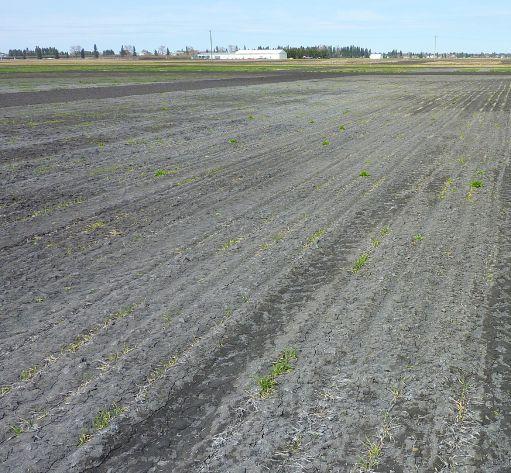
After two years with reasonable winter survival, no winter barley lines survived the next two winters in Lacombe.
PHOTO COURTESY OF FLAVIO CAPETTINI, FCDC.
a little lower than that in North Dakota and Montana, and maybe a little better than that in Wisconsin.”
A quick look at some other considerations
Along with having winter-hardy varieties, it would also be important to develop agronomic practices for winter barley production under Prairie conditions. Based on his initial experiences, Greg Stamp has some suggestions for practices that could boost winter survival.
“You probably need an earlier seeding date compared to our other winter crops, and a fungicide/insecticide seed treatment is probably important,” he says. “Plant stand may also be important, so higher seeding rates may help. And planting into standing stubble may help to catch more snow to provide more insulation, although in our area we often go through winter without snow cover.”
Varieties with resistance to the prevalent Prairie races of common barley diseases like net blotch, spot blotch and scald would also be essential, notes Kelly Turkington, a plant pathologist at AAFCLacombe. In addition, winter barley might be more at risk of certain diseases than spring barley. “Scald may become more of an issue in some regions as cooler late summer and fall temperatures can increase the risk of this cooler season disease, especially in the fall when the winter barley crop is establishing,” he says.
Turkington also cautions that winter barley could create elevated disease risks due to green bridge effects. One key concern is stripe rust. Because this disease requires a living host to survive, stripe rust on the Prairies is usually initiated by wind-blown spores from the U.S., especially the Pacific Northwest. “However, over the years we’ve seen an increasing risk of the fungus overwintering on winter wheat in this region.” Under favourable conditions, overwintering can allow the disease to spread from the winter crop to the spring crop, and then the next winter crop. With such an early start on each crop, the disease can have much greater impacts. This same green bridge effect could happen with winter barleys and spring barleys.
Outlook for the southern Prairies
Based on experiences with current varieties, winter barley would need significantly improved winter survival to make it a reliable crop for the most parts of the southern Prairies.
“Until we solve the lack of genetic variability in winter barley for winter hardiness or until we get even warmer climates in the Canadian Prairies, it will be a challenge to make big inroads in acreage,” Johnson says.
“I think one of the things that will be important is to look at weather trends and patterns, and try to find places where it doesn’t
get too cold but also places where, when it does get cold, it is usually accompanied by snow so you get a better chance of survival,” Smith suggests. “I think we will be able to improve winter hardiness in barley, but we will probably also need a little help from climate change to get it to work in these regions.”
“The general feeling is that, over time, our winters are going to get milder with climate change. So the requirement for an extreme level of winter hardiness may not be quite as important in perhaps 30 or more years. However, that is yet to be seen,” Graf says.
“Right now what we are seeing is a lot more variability in our winters. Some years they are pretty brutal and other years they are much milder. Because we can’t predict what the winter is going to be like with any amount of assurance, breeders still need to aim for as high a level of winter hardiness as possible.”
Chibbar notes, “The unpredictable weather that is currently accompanying climate change presents a challenge. We need to make winter cereals more climate change-hardy to survive the unpredictable freeze-thaw cycles in early spring.”
What might it take?
“It is possible to do almost anything in plant breeding, but it all depends on how much you want to invest,” Capettini says. For instance, private companies have been able to develop corn hybrids and soybean varieties suited to the Prairies by investing millions of dollars in breeding, “many times the funding invested in barley breeding in Alberta or even worldwide.”
He doesn’t know how much it would cost to develop winter-hardy winter barley for the Prairies, but he says, “It would require a whole additional breeding program. With the present tendency of decreasing the spring barley breeding programs, the probability of having the support for resourcing such a program would be very low. With the information we have right now, unless there is a game changer, I don’t think developing winter barley for the Prairies would be easy. I am pretty confident that we have already tested the best of the best winter barleys here at Lacombe.”
Capettini emphasizes that moving forward on winter barley breeding would first require a feasibility study, including an in-depth analysis of the potential market demand. “One question would be: should we start a winter barley program? We would need a clear message from farmers that this type of barley is needed in our target area [Alberta] and we would need a related investment of research funds,” he says.
“Then a second question would be: what level of effort would you like? Breeding can be done at different levels, ranging from just testing introductions to conducting a whole breeding program, from crosses to the release of varieties. It would also be important to decide who would be best suited to do the work. Some private seed companies have been testing winter barley varieties, and maybe they are in a better position to do that type of investigation and testing in their area.”
If required, the FCDC could undertake a full breeding program. “We have the infrastructure, the knowledge, and – the most important component – the germplasm,” Capettini says.
“A first step in such a program should be testing a wide diversity of germplasm at representative locations across the province where growers would eventually like to grow the crop.” Then the FCDC could use markers and other genomic tools to find winter hardiness genes in the germplasm, make crosses between winter-hardy lines and adapted germplasm, and develop winter-hardy varieties.
Continued research in Canada and other countries to identify genes in winter cereals associated with winter hardiness would also be important – along with ongoing advances in genomic technologies to more efficiently breed for this complex trait.
And of course, it would help to have good luck with overwintering weather.
The University of Minnesota’s Kevin Smith is breeding winter malting barley for southern Minnesota.
PHOTO COURTESY OF KEVIN SMITH.
CANOLA HARVEST LOSSES, INVESTIGATED
Multiple factors identified, including weather and ground speed.
by Bruce Barker
In the drive to put canola into the bin, harvest losses can unwittingly creep up on canola growers. In order to better understand what causes harvest losses, the Canola Council of Canada, along with the Saskatchewan and Manitoba canola growers associations, funded a Prairie Agricultural Machinery Institute (PAMI) study to investigate the factors contributing to harvest losses.
“The study was implemented to understand how high harvest losses are, and what the contributing factors are,” says Lorne Grieger, agricultural engineer and PAMI business development representative in Portage la Prairie, Man. “Once we understood what those factors are, then growers can take steps to minimize those losses.”
A secondary goal of the study was to continue to raise awareness about harvest losses to growers and educate them on methods to measure those losses.
During the canola harvest of the 2019 season, PAMI worked with 31 co-operator canola growers across the Prairies and measured combine losses from 50 combines. Six different combine manufacturers were represented, with a total of 40 different combine models.
Drop pans were provided by Bushel Plus and Schergain to mea-
sure losses. Each test was repeated three times for each combine. Of the 50 combines tested, 44 dropped their straw during the study, and the six that spread straw were not used in the statistical analysis due to reduced accuracy in measuring the losses.
The overall average loss was 1.3 bushels per acre (bu/ac), or 72.9 kilograms per hectare (kg/ha), which was an average of 2.8 per cent of total yield. Losses ranged from 0.2 bu/ac (11.2 kg/ha) to 4.1 bu/ac (229 kg/ha) – translating to 0.4 to 10.7 per cent loss of yield.
“There will always be some losses, and it is a balance between how quick you can go with how much loss you are prepared to accept as a grower,” Grieger says. “My personal preference would be to see less than one per cent loss.”
Weather and speed are the driving factors
Ground speed and feed rate are two factors that growers can control. The study found that keeping ground speed less than 4.3 miles per
ABOVE: Weather conditions and feed rate were more important than the colour or age of the combine.
PHOTO BY BRUCE BARKER.
hour and grain feed rate at less than 350 bushels per hour had significantly lower losses than faster speeds and increased feed rate.
“Ground speed and feed rate make a difference and are really important. They are something that a grower can easily control,” Grieger says.
Weather conditions also played an important role in combine losses. Losses were significantly lower with higher ambient temperature – above 23 C – and less than 45 per cent relative humidity. Sunny days also had significantly lower losses than partly cloudy or cloudy conditions.
“When weather conditions were tough and damp, we saw higher losses,” Grieger explains, adding that growers should monitor these weather conditions throughout the day and make adjustments as needed to keep losses to an acceptable level.
Swathed canola had significantly lower losses at an average of 1.2 bu/ac, compared to straight cut canola at 1.5 bu/ac. Nonshatter-resistant canola also had significantly lower losses at 1.1 bu/ac compared to shatter-resistant canola at 1.3 bu/ac. However, Grieger cautions that these comparisons need more testing to better understand the results.
One finding of interest was that combine age was not that important. In fact, older combines had lower losses compared to newer ones. Combine models from the years 1993 to 2005 had an average loss of 0.8 bu/ac, while combine models from 2006 to 2014 had 1.5 bu/ac loss, and the 2015 to 2019 models had an average loss of 1.3 bu/ac.
“I wouldn’t say combine technology is responsible for the differences. I think what is important is that a well-set combine can minimize losses. Operators of older combines have the knowledge to set up their machine and how to operate them,” Grieger says.
The study found that there is not a standard recommendation for combine setting to minimize harvest losses. Rather, each combine operating under a specific environmental condition needs to be optimized for those conditions.
“The important starting point is to measure those losses throughout the day as conditions change,” Grieger says. “Understand those losses and adjust accordingly.”
PAMI has developed a Combine Seed Loss Guide to help guide the measurement of harvest losses. It can be found at the Canola Council of Canada website in the Harvest Management section of the Canola Encyclopedia.
Pathways to Agri-Food Scholarships
The next generation of Canadian agricultural leaders is growing, and CABEF is proud to support them. Congratulations to these exceptional students who have won $2,500 CABEF scholarships. Based on their applications, the future of the agriculture industry is in great hands.
CABEF awards seven $2,500 scholarships annually to students entering or currently pursuing an agricultural
by April 30th , 2022
Marika Lemieux Coaticook, QC
Mireille Krul Winnipeg, MB
Julie Sharp Lacombe, AB
Maggie-Jo Hickson Oakwood, ON
Marika van den Berg White City, SK
Carleigh MacLeod Kinkora, PEI
Amanda Crane North Vancouver, BC
QUICK AND SIMPLE BIOSENSOR FOR MYCOTOXINS IN GRAINS
Taking a simple, inexpensive, strip-based test for mycotoxins from the lab to the grain elevator or farm.
by Donna Fleury
Researchers at Carleton University have made significant advances in their biosensors designed to detect mycotoxins in grains. In cereal grains, fungal diseases like Fusarium can cause infections such as Fusarium head blight in wheat, barley and corn, reducing grain yield and quality. These fungal diseases can also produce mycotoxins that can be dangerous and sometimes fatal to livestock and humans, and tend to be difficult and expensive to detect.
“One of the goals in my lab is to develop inexpensive aptamer biosensors for agriculture for detecting low levels of grain mycotoxins in a complex environment,” explains Maria DeRosa, professor and head of the Laboratory for Aptamer Discovery and Development of Emerging Research (LADDER) at Carleton University.
“Aptamers are short sequences of DNA that can recognize and bind tightly to very specific molecular targets like toxins, viruses, bacteria or drugs. We took our discovery of specific aptamers that bind to mycotoxins in food and crop matrixes and are turning it into a lowcost, easy-to-use technology and quick test at a grain elevator or farm, with minimal training or resources.”
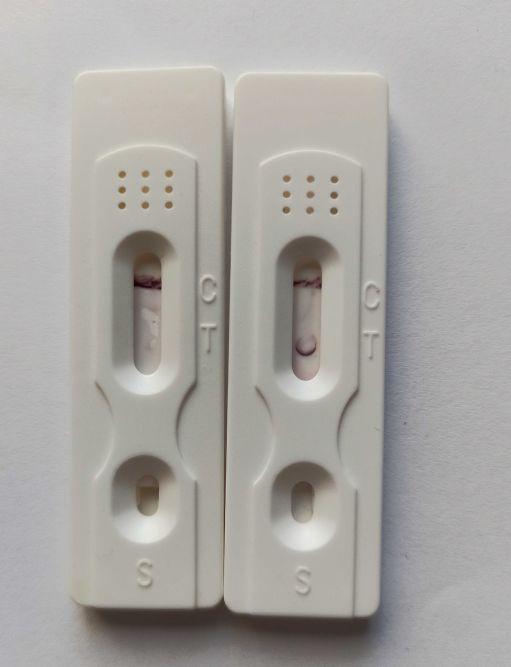
In an earlier project, DeRosa successfully developed a test kit for Ochratoxin A, a mycotoxin of concern in stored grain, using a small lateral flow assay test developed in her lab. This simple, inexpensive test is similar to a tiny pregnancy test; it has small paper strips in a plastic casing, with the results appearing as a coloured line or dot in another window.
“We put the initial prototype to the test by comparing the results of our test to sample results from a more expensive, advanced analytical technique for detecting Ochratoxin A. We were sent a small package of blind samples – some contaminated with Ochratoxin A and others were not. Our results were very encouraging, as we were able to successfully detect contaminated samples down to 0.5 parts per billion (ppb) in a real sample using our very simple assays. We are now scaling these test kits in the lab and will be piloting and optimizing them in the field.”
The next step for DeRosa is a new three-year project to take this successful technology and know-how and apply it to other challenging mycotoxins. “We have identified specific aptamers for other important mycotoxins in grains and are developing test kits for them,” she says. “Deoxynivalenol (DON) is an important crop mycotoxin that can be a problem throughout Canada in any given year for wheat, barley and corn growers. Aflatoxin B1-AFB1, although not yet a problem in Canadian grains, is definitely a problem elsewhere in the world and with climate change could be something to be concerned about. Aflatoxins are definitely a concern with some imported grains
Testing strip biosensor for quick, simple test for mycotoxins such as Ochratoxin A in grains developed by Professor Maria DeRosa in her LADDER lab (Laboratory for Aptamer Discovery and Development of Emerging Research) at Carleton University.
and other products.
“Another mycotoxin, Fumonisin B1-FB1 is sometimes an issue for corn growers. Our objective in this project is to get these additional mycotoxin tests to the same stage as the Ochratoxin A test for pilot testing in the field in different environments across the country.” This three-year project is funded by Western Grains Research Foundation, Saskatchewan Wheat Development Commission, Alberta Wheat Commission and Manitoba Crop Alliance.
One objective is to make things even easier by including all of the
THE HARVEST HUB PRESENTS
AVAILABLE ONLINE NOW
Did you miss out on some of the great content provided during The Harvest Hub?
Visit TopCropManager.com/harvest-hub to find readily available content such as:
WEBINAR:
Protect, connect & optimize the value of your stored grain
Sponsored by
WEBINAR:
Put data to work for you after harvest
Sponsored by
DOWNLOAD – Grain Bin Safety poster
LISTEN – 5 new podcast episodes focused around harvest
READ MORE ON:
• Safe storage guidelines for soybeans
• Repurposing crops as feed
• Data-driven farming, made easy
PRESENTING SPONSORS:
mycotoxins on one multiplex strip. Similar to a pool testing kit that includes several chemicals in one test, the mycotoxin test strip would be able to test several mycotoxins at once. A multiplex strip test can provide growers with peace of mind, whether they are selling to the grain elevator or another buyer, or importing grain into their operation.
DeRosa adds that another goal is to develop the test to be more quantitative, rather than just a visual test. With smartphone technology, there are ways to develop an app that could, for example, allow a user to take a photo of the strip that would provide more information about the results. This additional knowledge could help with decision-making, using a simple user-friendly test kit and a smartphone at the grain elevator or on the farm.
The test kits are currently being manufactured and assembled in the lab. “Once we can show all of the toxin tests work really well and reduce any risks to a very low level, then the manufacturing could be commercialized and scaled outside of the lab,” DeRosa says.
“We are also trying to reduce the manufacturing costs as much as possible, which roughly pencil out to less than $1 each to make. The most expensive part of the kit is the aptamers, which use gold nanoparticles for the colour sensor. We are exploring whether we could use less volume of colour or perhaps other nanoparticles, such as those from copper, that might make it even less expensive.
“We ultimately want to make sure the technology is not just in my lab, but easily accessible and available at a low cost to all Canadian farmers and industry.”
This novel bionanotechnology is getting attention for other potential applications in agriculture. In June 2021, DeRosa was one of 24 scientists worldwide – and the only Canadian – to receive a Bayer 2021 Grants4Ag award for using aptamers to make agriculture more sustainable. The program received over 600 applications from almost 40 countries. This one-year grant supports researchers to see if their promising innovations could provide future solutions for agriculture. Along with funding, Bayer provides mentors and access to industry networks for advancing these innovations.
“In this project, we are trying to develop a totally different aptam-
er that could be useful for smart delivery of nutrients or herbicides,” DeRosa explains. “For example, being able to selectively deliver nutrients to just the crop and not weeds, or deliver herbicides to target only the weed and not other plants.
“We do have evidence that this type of delivery can work in health, such as an aptamer that delivers drugs directly to cancer cells but not healthy cells, reducing side effects for patients. We also have aptamers for making drug delivery possible through the very challenging human blood-brain barrier, sort of a Trojan horse where the aptamer binds on a receptor and tricks the brain into letting it through. Agriculture often mirrors health, and these smart delivery systems could also work for crops. We are excited about the possibilities and the new innovations that will benefit agriculture – not just for mycotoxin detection, but for other applications in the future.”
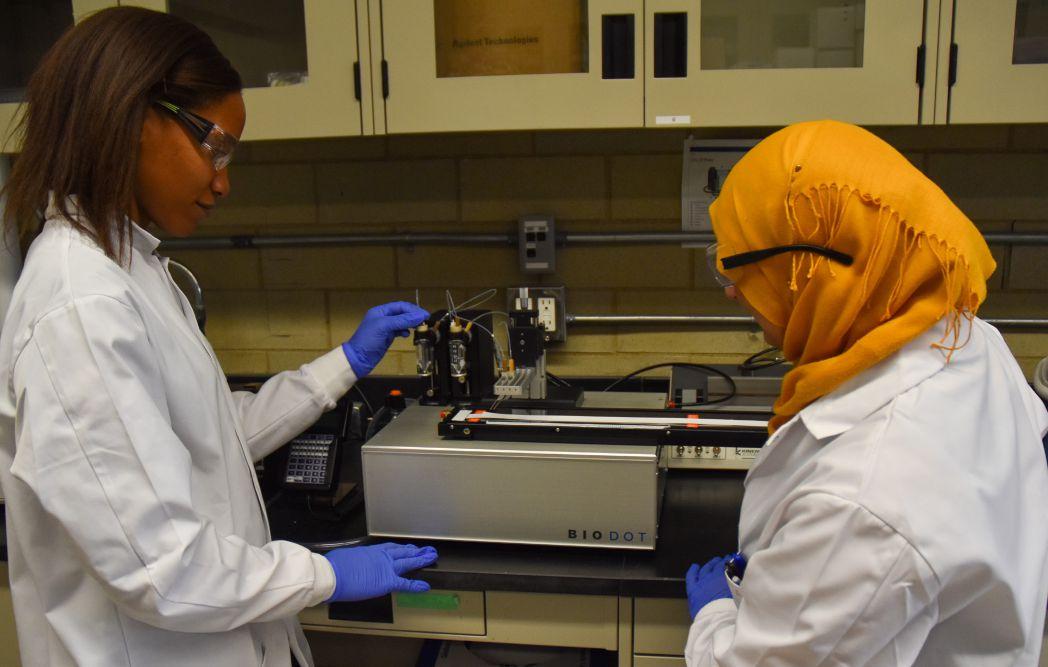
Fiona Ebanks and Shahad Abdulmawjood setting up the BioDot printer for producing the mycotoxin test kits in the LADDER lab (Laboratory for Aptamer Discovery and Development of Emerging Research) at Carleton University.
Fiona Ebanks preparing the mycotoxin test kits with the BioDot printer and lateral flow assay in the LADDER lab (Laboratory for Aptamer Discovery and Development of Emerging Research) at Carleton University.
SOYBEANS
SORTING OUT SOYBEAN DIFFERENCES
A
growth stage model based on temperature and photoperiod could benefit farmers, agronomists, crop physiologists and plant breeders.
by Bruce Barker
Those long summer daylight hours can be enjoyable when sitting around an evening campfire with a beverage. But they also have an impact on soybean development, making the use of crop heat units (CHUs) not entirely relevant when selecting varieties suited to the Prairies.
“We started looking at photoperiod sensitivity in 2008 because we wondered if we could develop a better system for variety selection than just using crop heat units, which don’t work that well in short season zones,” says Malcolm Morrison, research scientist with Agriculture and Agri-Food Canada (AAFC) in Ottawa.
Morrison has been involved in two research trials looking at how photoperiod influences soybean growth and yield. The first was an AAFC trial from 2008 to 2010 in Morden, Man., and Ottawa. Ten soybean varieties were grown at the two sites and their development and yield were compared. The research was resurrected in 2017, when Morrison thought it would make a good master’s project for a university student. He contacted Yvonne Lawley, assistant professor of agronomy and cropping systems in the department of plant science at the University of Manitoba, and Nathaniel Ort took on the project for his MSc program under the supervision of both Morrison and Lawley.
Ort’s field research was conducted in 2017 and 2018 in Carman, Man., and Ottawa. Soybean growth stages were recorded for each of the same 10 varieties grown in the 2008-2010 study three times a week, from emergence (VE) to harvest maturity (R8). His research was funded by Manitoba Pulse and Soybean Growers, Western Grains Research Foundation and AAFC.
Carman is about four degrees north of Ottawa, resulting in an extra 49 minutes of daylight (photoperiod) during the longest day
of the year, on the summer solstice. And that’s where the importance of photoperiod on soybean growth comes in.
Photoperiodism is the response of plant development to changing daylight hours. Ort explains that soybean is extremely photosensitive. Most important for Prairie soybean growers is that long daylight hours delay time to first flower (R1) in soybean. Ort says maturity can also be delayed, resulting in the risk of quality or yield loss from a fall frost.
However, Ort says most varieties with an earlier relative maturity group (MG) rating have been selected to have decreased sensitivity to photoperiod and may even be termed “photoperiodinsensitive.” This means plants reach R1 without experiencing the delaying effect photoperiod can have.
The 10 varieties Ort grew ranged in MG ratings from 000.9 to 1.3. As expected, there was a difference in days to maturity (R8) among the varieties, but days from emergence (VE) to beginning of bloom (R1) were the same for each variety in Manitoba. Varietal differences showed up during the reproductive development stages.
“For example, there was a three-week difference in time to R8 between a soybean variety with a relative maturity of 1.3 planted right beside a variety rated 00.0 in our 2018 field experiment in Carman,” Ort says.
Differences in crop development, in response to photoperiod, also showed up between Manitoba and Ottawa. The same 10
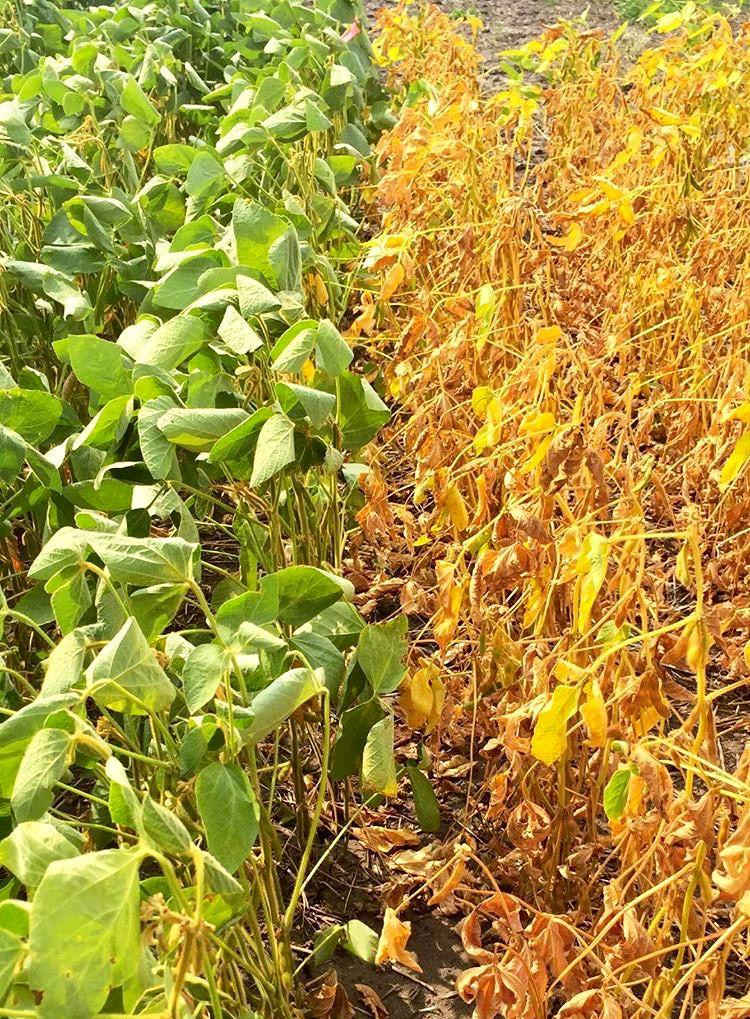
TOP: In Manitoba, varietal differences became prominent later in the growing season. Photo taken August 26, 2018. MG 1.3 (left) planted beside 00.0 (right) at Carman.
varieties spent less time in the vegetative state and more time in reproductive stages in Ontario. Beginning of bloom occurred 14 to 19 days earlier in Ontario than in Manitoba.
In Ontario, fewer CHUs were accumulated from emergence to beginning of bloom because of the fewer days spent in the vegetative stage. However, the Ontario soybeans accumulated more CHUs to maturity, and matured earlier than in Manitoba. Ort says this difference in CHU accumulation is partly due to lower nighttime temperatures in Manitoba than in Ontario, especially at the end of Manitoba’s growing season.
Ort verified the photoperiod effects on the 10 soybean varieties in a greenhouse setting. Varieties were grown in 14-, 15-, 16- and 17-hour days, with a constant temperature of 25 C for both day and night.
The longest photoperiod treatment (17 h) extended time from emergence to flowering by two to three days compared to the shortest (14 h) photoperiod treatment. Varieties with a later rated MG also took longer to reach flowering than earlier rated MG.
Yield difference between sites with some varieties
Yield differences were found with some of the varieties when compared between Manitoba and Ottawa. Morrison explains that the difference comes about because of the amount of time
spent in the various growth stages.
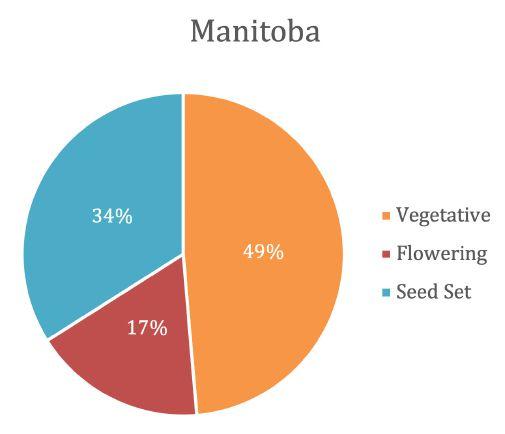
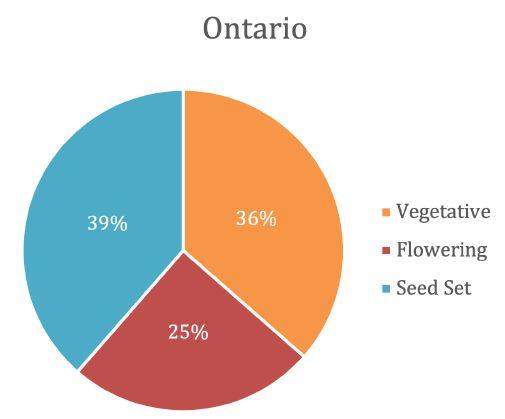
“I use the analogy that total crop development is like a pie. In Ontario, the crop uses about one-third of the pie to get to flowering, while in Manitoba it uses about one-half of the pie. In Manitoba, there is only one-half of the pie left for flowering, seed set and maturing. In Ontario, the soybeans flowered much earlier and spent two-thirds of their time in the reproductive phases, which can result in higher yield,” Morrison says.
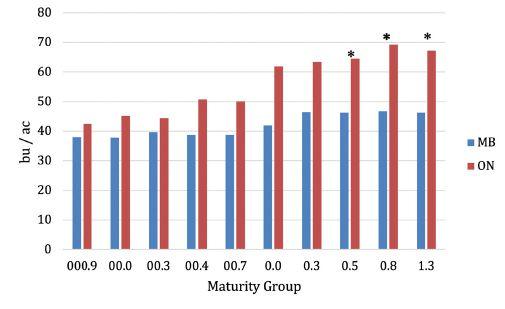
While all MGs had higher yield in Ontario than Manitoba, they were only statistically significant for the three latest varieties. Ort explains that even though the varieties in Manitoba spent more time in the vegetative state, there was still enough time for flowering and seed development for some of the varieties.
Seed yield for ten soybean varieties with a range of maturity groups grown in Manitoba and Ontario, averaged over five site years.
Development of a growth stage model
Ort has developed a model for soybean growth based on both temperature and photoperiod that can be used in all environments to predict crop growth stage. It is currently in an Excel format. Lawley says the next step is to get the research published in a peer-reviewed journal to verify the model. Eventually, the model could be used by agronomists in decision-support systems, or by farmers to help select soybean varieties for their area.
“I hope one of the outcomes of the research is plant breeders will have more information to further develop their selection criteria for long photoperiod environments and the criteria for selecting testing environments to assign maturity groups for varieties that will be grown in Western Canada,” Lawley says.
Ort says that’s important, as MG ratings are assigned by each company and can vary from company to company. “You can compare ratings within a company and have a good idea of their relative maturities, but not comparisons between companies,” he says. “Fortunately in Manitoba, the MCVET (Manitoba Crop Variety Evaluation Trials) provide a relative maturity rating that farmers can use to help select varieties based on maturity relative to a check variety.”
Lawley says another important result is the data on protein values. Grain protein concentration is generally lower in Manitoba than in Ontario, and the research provides a database to help understand why.
“I have a personal theory on it. Protein is laid down last, and if it is cold, there is not enough time to move amino acids into the seed,” Morrison says. “That gives breeders something to shoot for – better protein allocation under cooler temperatures.”
VARIETIES WITH A * HAVE STATISTICALLY DIFFERENT YIELDS BETWEEN MANITOBA AND ONTARIO (P=0.05).
SOURCE: ORT ET AL. 2020
OCT. 19, 2021 12:00PM EDT
JOIN THE CONVERSATION Register for a virtual mentorship event with some of the most influential leaders in Canadian agriculture.
This half-day virtual event will showcase select honourees and nominees of the IWCA program in a virtual mentorship format. Through roundtable-style sessions, panelists will share advice and real-life experiences on leadership, communication and balance working in agriculture.