Register for a virtual mentorship event with some of the most influential leaders in Canadian agriculture.
This half-day virtual event will showcase select honourees and nominees of the IWCA program in a virtual mentorship format. Through roundtable-style sessions, panelists will share advice and real-life experiences on leadership, communication and balance working in agriculture.
ASSOCIATE
STEFANIE CROLEY EDITORIAL DIRECTOR, AGRICULTURE
LEARNING –AND UNLEARNING
Have you ever caught yourself feeling confident about knowing something, only to subsequently realize you still have much to learn?
Before I worked in agriculture, agronomy was a word I seldom used (and admittedly didn’t truly know the meaning of). So, when I started this job more than eight years ago, I did what any millennial journalist would do, and looked up the definition on the Internet.
“Agronomy is the branch of agricultural science that deals with the study of crops and the soils in which they grow,” according to ScienceDaily.com. Sounds simple enough, right? I learned something new that day and moved along to the next item on my to-do list.
I’m sure you can see where I’m heading with this story. It didn’t take long before I realized there was so much more behind that all-encompassing term. Even a portion of the sentence – “the study of crops and soils in which they grow” – has so many nuances. Who knew there was more to growing crops besides planting seeds into soil, giving them a bit of water and crossing your fingers?
Jokes aside, I’m happy to report I did a lot of learning in those early days of my career in agriculture (and my vegetable garden and houseplants are mighty thankful I didn’t just rely on good luck). But the learning continues every day, and an important part of that learning process is un-learning: letting go of some of the biases and opinions that we continue to hold on to because that’s how it’s always been done. This can often be just as challenging as acquiring a new skill or employing a new strategy.
This issue of Top Crop Manager is our Focus On: Agronomy digital edition, the third in our summer digital-only series of e-magazines. While our content is always centred around agronomy, the stories in this edition zoom in on just some of the nuances behind that word. From seed selection and irrigation to pest updates and weed management strategies, these stories cover small portions of the study of crops. As always, we hope you learn something new – and perhaps you’ll also feel challenged to un-learn some of what you think you already know.
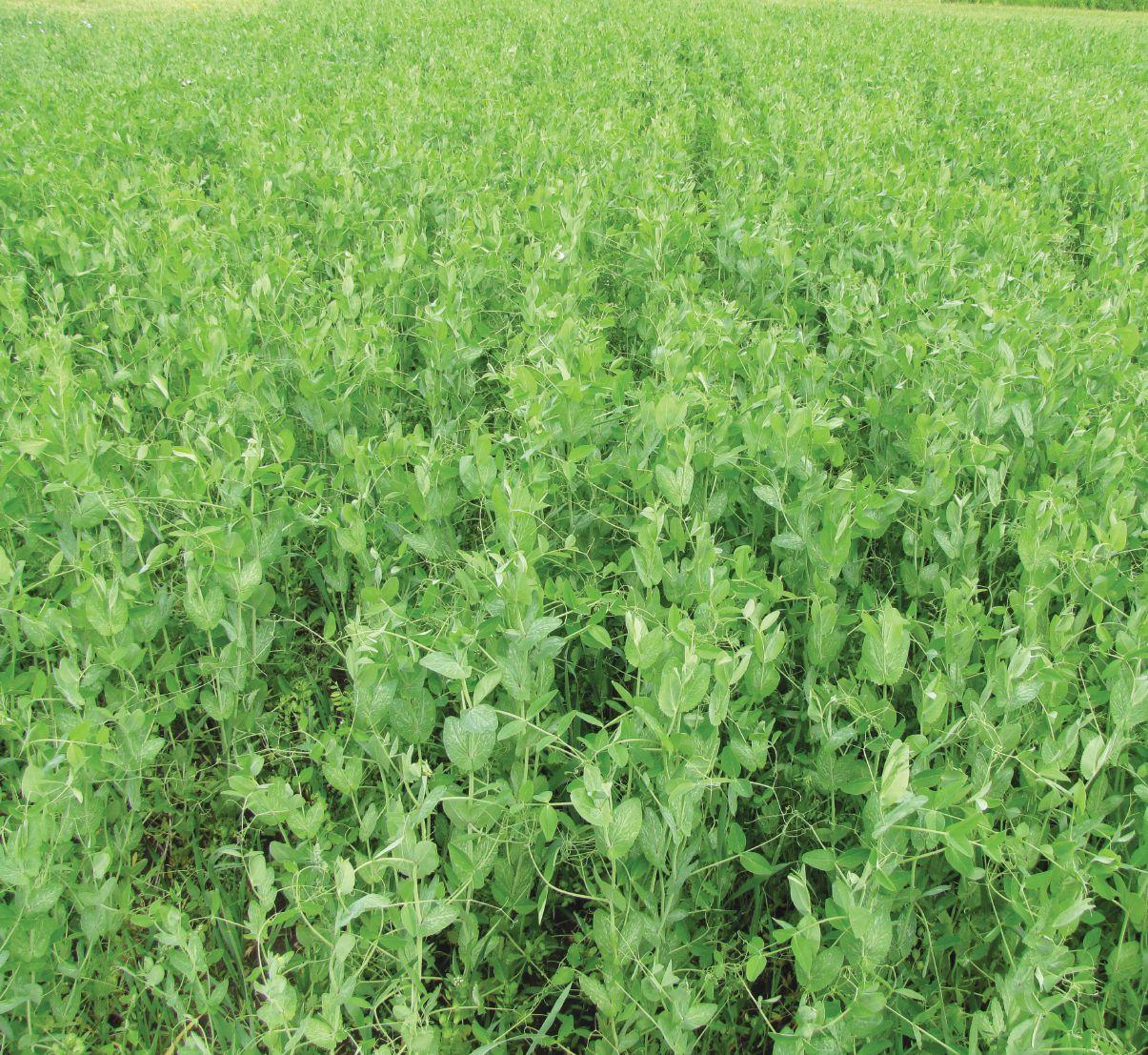
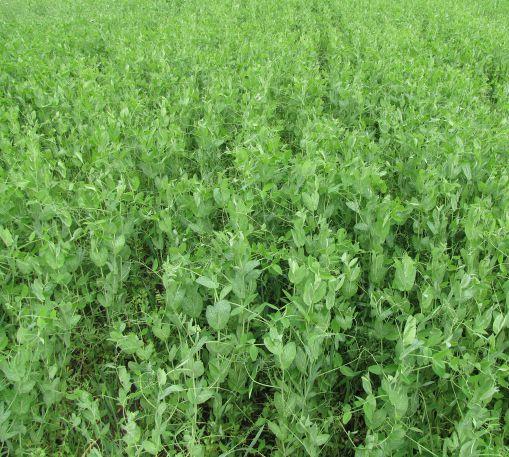
Organic field pea, part of a diversified crop rotation study for organic crop production at AAFC Swift Current Research and Development Centre (SCRDC). PHOTO COURTESY OF THE ORGANIC RESEARCH PROGRAM AT AAFC SCRDC.
CROP MANAGEMENT
ECONOMICS OF ORGANIC DIVERSIFIED CROPPING STRATEGIES
Diversified crop rotations and higher premium crops improve profitability.
by Donna Fleury
Organic crop production has been shifting to the use of legume green manure, diversified crop rotations and reduced tillage, rather than relying on summerfallow and mechanical tillage for nutrient and pest management in the semi-arid region of the Prairies. Different agronomic practices, such as crop rotation and tillage intensity, can affect the economics of production systems.
“In 2010, we initiated a six-year field study to determine if organic wheat production using diversified rotations and reduced tillage could optimize production, while minimizing its environmental impact,” explains Myriam Fernandez, research scientist with Agriculture and Agri-Food Canada (AAFC) in Swift Current, Sask. “We compared the impact of two crop rotation sequences, simplified and diversified, and two levels of tillage intensity, high and low, on the economics of organic production in the semi-arid Brown soil zone on the Prairies. We evaluated grain yield and quality, as well as soil fertility and quality as part of a larger project.” The project was funded by the Western Grains Research Foundation and Agriculture and Agri-Food Canada,
through the Organic Science Cluster II.
The two cropping sequences included a simplified rotation of green manure-spring wheat, which has become a standard practice used by most organic producers in the semi-arid region. The diversified rotation included green manure-oilseed-pulse-spring wheat. The oilseed crops rotated between flax and yellow mustard, while the pulse crop alternated between field pea and lentil. The tillage treatments compared “high tillage,” with at least one tillage operation prior to seeding, and “low tillage,” which was designed to reduce tillage frequency to only as-needed to prepare the seedbed and control weeds. Due to a persistent increase in perennial thistle populations, a fall tillage was added to all plots in year four and five of the trials. All phases of the rotations were present each year. Precipitation throughout the
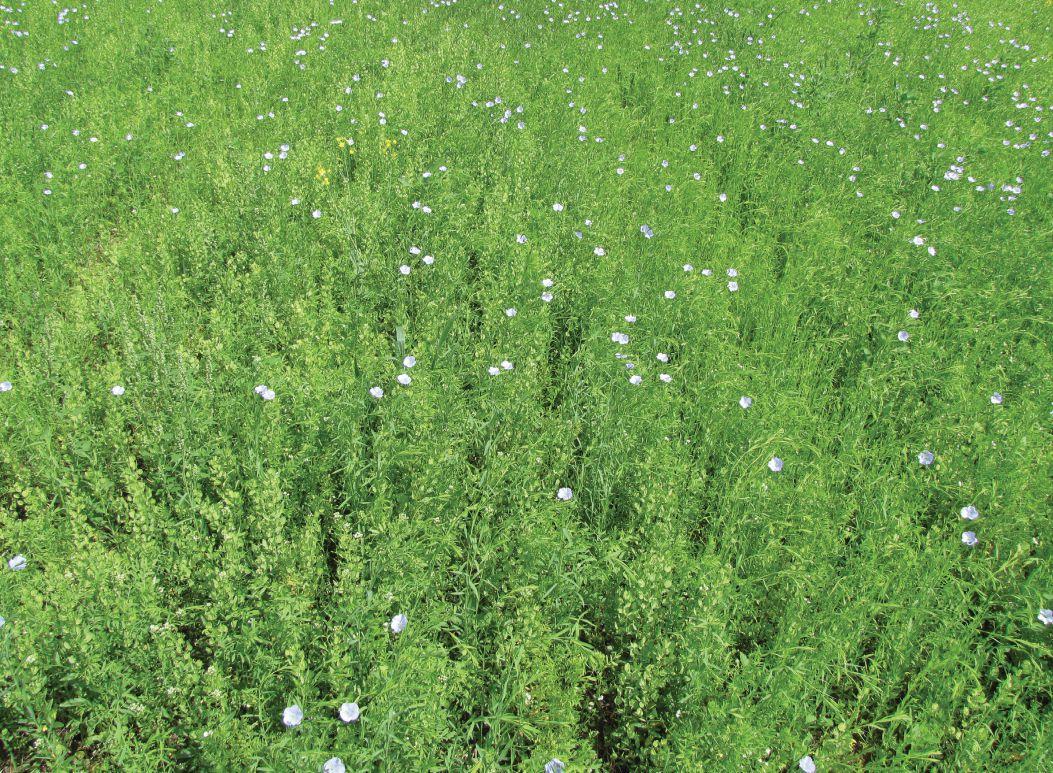
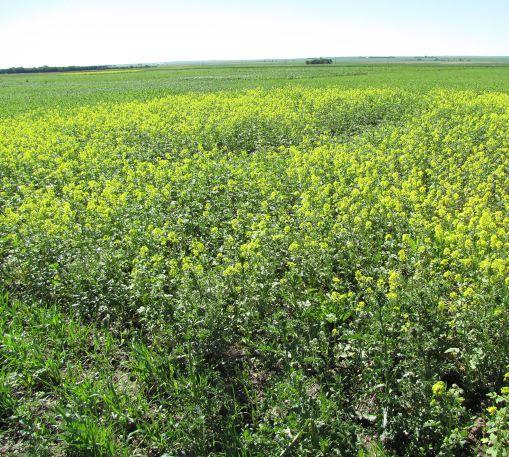
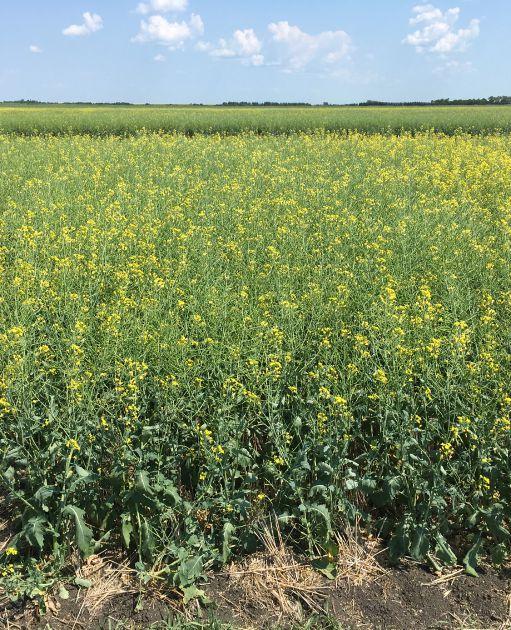
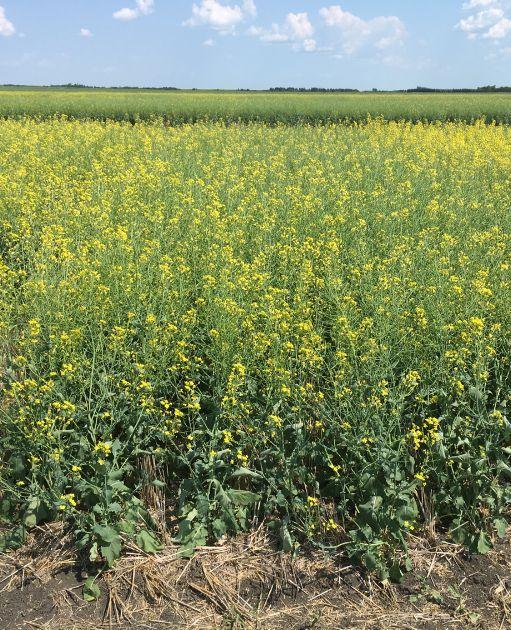
TOP: Organic flax in diversified rotation at AAFC Swift Current Research and Development Centre (SCRDC).
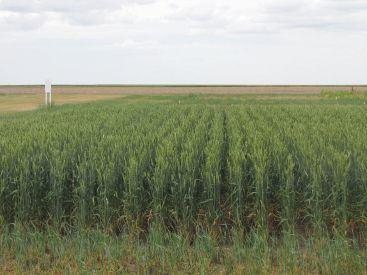
INSET: Organic spring wheat (pictured) was the main crop of comparison in the trials at AAFC SCRDC.
study period was substantially greater than the long-term average.
“The economic analysis considered the impact of rotation and tillage intensity on the cost of production, gross return and gross margin of all crops, including the break-even prices and yields,” explains economist Buwani Dayananda. Co-authors include Prabhath Lokuruge (AAFC), and Bob Zentner and Mike Schellenberg (AAFC, retired), with input from the Advisory Committee on Organic Research for the Swift Current Research and Development Centre. “The annual costs of production were estimated for each tillage and crop rotation using input costs for labour, seed, fuel, repairs and maintenance of machinery for each year. The crop returns were based on conventional prices compared to organic price premiums for crops over the time of the trials.”
As expected, the results showed a diversified crop rotation did result in greater farm profitability than a simplified crop rotation. The analysis of the break-even prices showed that organic price premiums have a large impact on the profitability of lentil, mustard and flax. During the six years of this study, these three crops improved the profitability of the diversified rotation. However, field pea, due to higher seed costs and lower yields, was the only crop with higher break-even prices compared to conventional crop prices. Therefore, in this study field pea was not an economically profitable crop.
“Although we expected to find that reducing tillage intensity and the combination of reduced tillage intensity and a diversified crop rotation would further enhance farm profitability, the study results did not show this,” Dayananda says. “Our economic analysis showed that the five-year average gross returns and gross margins, with and without organic price premiums, were significantly higher for the high tillage compared to the low tillage treatments. It was only in the first year of the study that gross returns for low tillage were higher than for high tillage. What our results showed is that gross returns for all the cropping systems displayed a declining trend over time, mainly reflecting the steady decline in crop yields due to increasing perennial weed pressure and lower soil nitrate levels.”
The study showed higher wheat yields overall under high tillage and a simplified rotation. The organic wheat yielded an average of three-quarters of conventional wheat in a nearby no-till study with a similar rotation, and an average of 85 per cent of commercial crops in the same region. The protein concentration of organic wheat was similar to or higher than the average for the commercial conventional wheat. However, the oilseed and pulse crops did not show the same yield decline over the years. The grain yields for flax and mustard were also higher under high tillage, but yields were higher for lentil and field pea under low tillage.
Fernandez notes that, traditionally, annual precipitation in the
Brown soil zone of the study is limited and highly variable. However, over the six years of the study, precipitation levels were persistently above average, especially in the first three years, with a very unfavorable rainfall pattern in 2015. This resulted in increasing perennial weed competition and decreasing yields under the low tillage treatments, suggesting that, under these higher precipitation conditions, the low tillage treatment did not appear to be viable for more than a few years. This would need to be followed with some tillage to achieve adequate perennial weed control.
The low-tillage system also had soil quality and environmental benefits compared to high tillage. “The lower tillage intensity treatments tended to increase soil organic [carbon],” Fernandez says. “Low tillage also increased the percentage of large soil aggregate fractions and wet aggregate stability, increasing the soil’s resistance to wind and water erosion. Although the high-tillage treatment and two-year rotation with wheat and green manure initially showed higher nitrogen (N) availability resulting in greater grain yields – likely due to higher N mineralization – over time, the depletion of N was apparent.”
Reduced or lower tillage intensity systems remain a priority for organic production systems, and this study shows the necessity of being flexible and considering strategic tillage. “There can be good reasons for adding an occasional use of more intensive and frequent tillage to help mitigate the adverse effects of perennial weeds when levels become unmanageable; [also, it] can contribute to increased N mineralization in the system,” Fernandez says. One example: after the 2016 season, when there was a lot of precipitation and higher levels of diseases such as Fusarium, some no-till growers added a tillage operation. “This idea of strategic tillage is gaining interest [from] both organic and conventional growers, and recent research in Australia and elsewhere is providing more information. Tillage is another tool when needed, and adding a strategic tillage once every few years likely won’t negatively affect soil quality.”
“It is important to emphasize that our economic results were based on this field trial and the conditions and prices during the time frame of the project,” Dayananda says. “Results may vary under different conditions depending on precipitation, geographic location, agronomic practices and crop prices for any given year.
“Overall, our analysis does show that a diversified crop rotation was more profitable, and particularly for crops with a high price premium. Although we expected low tillage to be more profitable, our results showed that, under the conditions of the trial, the high tillage intensity was more profitable. However, higher tillage can come at a cost of soil health and loss of moisture, making lower intensity tillage, good weed management practices and possibly strategic tillage important for sustainable organic crop production.”
Organic yellow mustard in diversified rotation at the AAFC Swift Current Research and Development Centre.
Organic field pea in diversified rotation at the AAFC Swift Current Research and Development Centre.
TURNING UP THE HEAT ON WEEDS
Thermal weed treatment gains steam in Canada.
by Julienne Isaacs
Canada’s weed control toolbox is big, but with the rise of herbicide resistance and the growth of organic markets, is it big enough?
Some industry experts believe it isn’t – and that mechanical weed control options will increase in importance.
Thermal weed control, one alternative to chemical weed control, is gaining momentum in Australia, Europe and now Canada.
“Growers are keen to find options outside of chemical control that they can use to combat weed populations,” says Christian Willenborg, an associate professor in the department of plant sciences at the University of Saskatchewan.
Willenborg says thermal weed control is sometimes used in organic production – for example, in “flaming,” where flames created with propane are held in close proximity to surface vegetation, causing cell destruction in the plant.
“Wet heat” is more efficient than dry heat and can transfer heat through the plant to the roots, so weed steaming with the use of a boiler is also occasionally used on small operations. But while the modus operandi is more efficient than that of flaming, the actual delivery is laborious and costly.
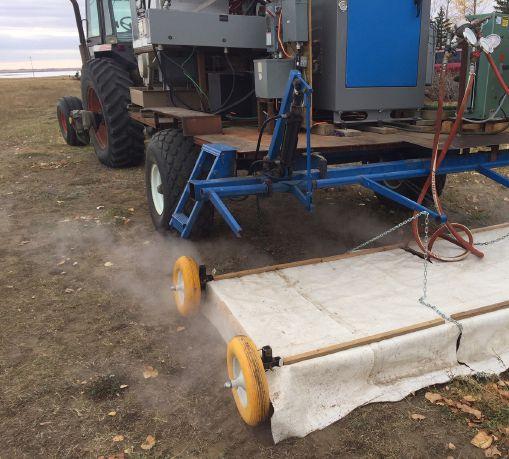
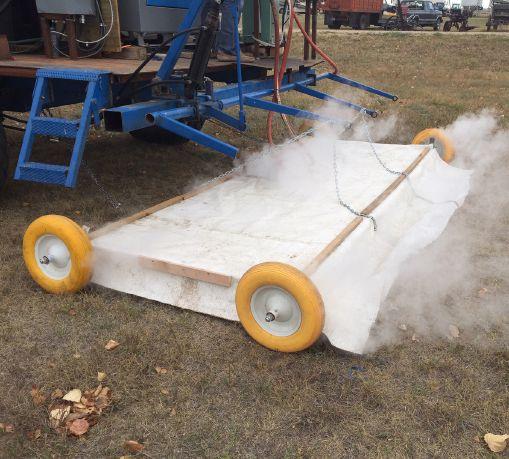
One new Canadian company has taken thermal weed control in another direction. The X-Steam-inator is a sprayer created by
Saskatchewan organic producer Ron Gleim that uses electricity to generate high-temperature steam that can terminate plant growth in one pass.
According to Kevin Hursh, a spokesperson for X-Steam-inator, the system uses induction heat instead of a boiler to produce hightemperature steam a lot more efficiently. The company has created a 10-foot sprayer prototype and aims to develop two more by later this year, but Hursh says it’s scalable and will appeal to conventional as well as organic producers.
“As we talk to more people, we realize a lot of people could use something 10 to 30 feet wide,” Hursh says. The company’s goal is to perfect its smaller units before scaling up. It recently partnered with Honey Bee Manufacturing to help design booms that closely follow the ground as well as a cart that can hold a heat exchange unit and a generator.
Hursh says the unit is non-selective, so its use is primarily in preseed burn-off, fallow land and terminating cover crops, but other applications could include tackling weed pressure between field crop rows as well as rows of orchard trees. The company plans to research
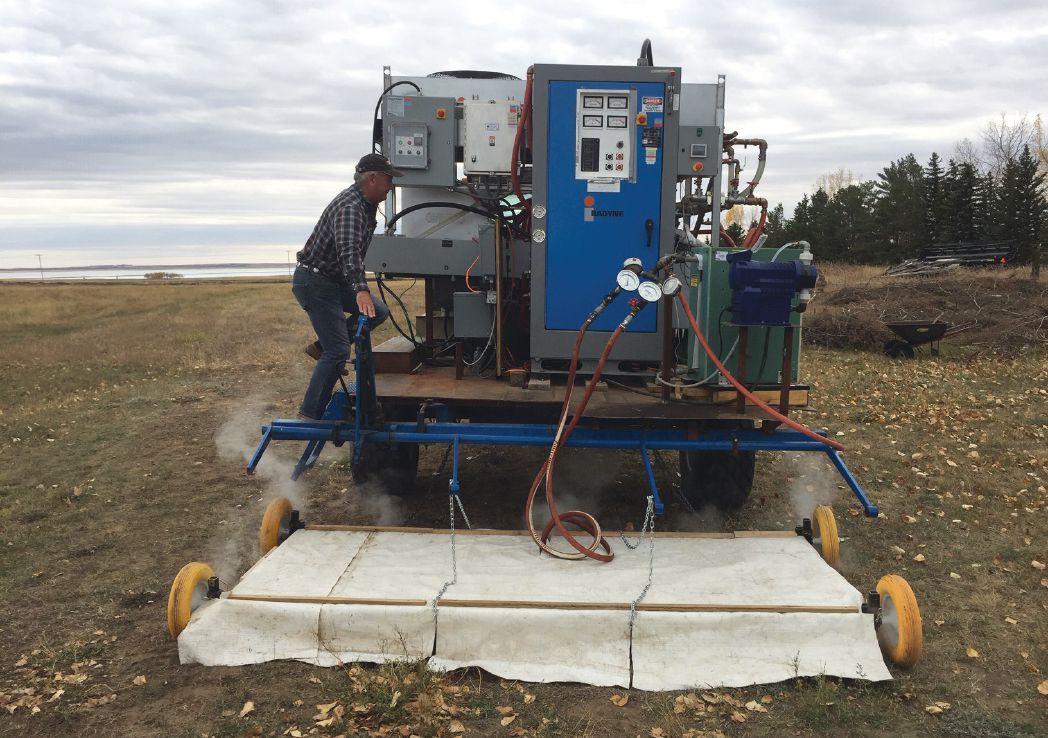
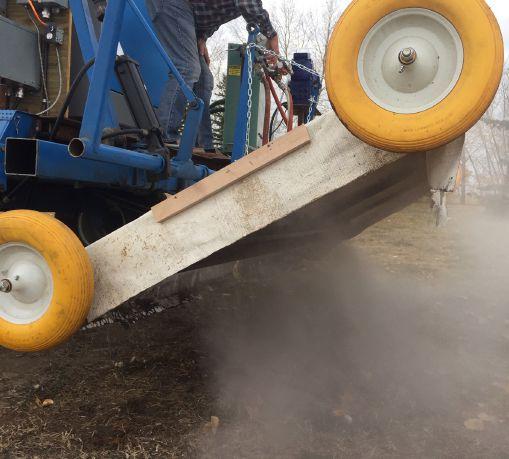
ABOVE: Ron Gleim climbs onto the rear of the X-Steam-inator prototype.
how the technology can be tailored to specific crops, including grain.
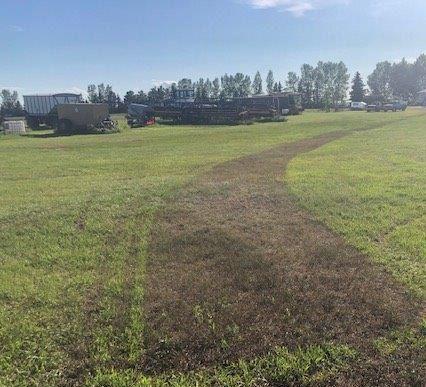
While the effects of one pass of an X-Steaminator machine are obvious – Hursh says that within minutes the vegetation is wilting and after a couple of days it’s completely brown –so far, the company only has estimates on its other effects: how effective it’ll be at reducing the weed seed bank, for example, and its impact on disease pathogens and insect eggs on and below the soil surface.
There’s little to no research on the effectiveness of steam treatment in Canada. More data has been collected in Australia, where the rapid progression of herbicide resistance has meant more widespread adoption of mechanical weed control technology (one notable example is the Harrington Seed Destructor).
“There’s a tremendous amount of research we have to do to understand all the applications,” Hursh says. “Until we do the research we don’t know what’s possible or desirable. I’m not even sure the other research that’s been done is all that instructive. We’re almost starting from scratch.
“The three prototypes that we have out next year will be very instructive, I think. And producers are pretty good at doing their own research.”
Other approaches
Another company offering high-temperature steam weed treatment in Canada is WeedTechnics, whose Australian founder Jeremy Winer recognized the technology’s utility in landscape maintenance and organic food production and patented its method of mixing saturated steam and boiling water for weed control in the early 2000s.
In Australia, the company offers several machines that use its Satusteam Weeder process, each of which superheats water to 120 C and delivers it in pressurized hoses to applicator heads and patented nozzles. Most WeedTechnics clients are in landscaping or horticulture, Winer says.
The entire Satusteam line is available in Canada through Steam ’N Weeds, its Albertabased distributor, according to Dan Dow, managing director. He says the company also does custom work and retrofits equipment to fit customers’ needs.
The partnership began in 2016; so far, its clientele in Canada is smaller farms (vineyards, haskap berries, row crops and organic producers), but Dow says since the beginning some of these farms have doubled their farm size and are looking at adding more machines.
Winer says he doubts the technology will make sense for larger operations. “It’s got potential in corn and sugar cane and in some of your intensive crops like garlic and vegetable crops, but not in 1,000 hectares of wheat. You need too much water and too big machinery to
get across the land,” he says.
But the technology promises more than short-term solutions to weed control, Winer says, and its uptake is only increasing in global markets, particularly Europe.
In eastern Australia, where WeedTechnics is based, Winer says Satusteam is the only known and reliable non-chemical method for reducing the weed seed bank.
The machine can travel between 0.5 and one kilometre per hour, which results in soil penetration of about five millimetres, he explains. If the machine stops and dwells in one area, it gets deeper penetration.
“With a flame, you’ll get green shoots in about six days if there’s moisture, but if you use Satusteam you can get three to four weeks before you get that first flush coming. Typically, we’ll see a simplification of the weed population,” he says.
“For weeds with harder seed coats, coming back with a second treatment is really important. It reduces the number of weeds and species and from one season to the next we get a drop in weed pressure.”
Winer believes the technology will become more and more popular as organic markets continue to grow. “The producers who supply these markets are starting to change their focus and starting to see, too, the benefits in soil health, with the movement toward carbon credits and building regenerative soils,” he says.
Willenborg says one concern he has about the technology is its impact on beneficial organisms in the soil. “There’s no research on what this ‘scorched earth’ technique does to the rest of your ecosystem,” he says.
“Most of our beneficial insects live on the surface or just below. Depending on when you apply this product, it can have an impact if they’re near the surface, which can vary depending on time of day and environmental conditions.”
What looks like a potential drawback from one perspective could be a benefit from another. In Europe, SoilSteam International markets their steam treatment technology as “soil cleaning” units that can destroy nematodes and harmful fungi as well as weed seeds.
Willenborg says it’s important to consider non-chemical weed control options and over time the designs will only improve.
“There’s very little research on steam treatment, but there’s also likely to be little to no resistance to this technology yet,” he says. “So it does add that extra tool in the toolbox.”
The X-Steam-inator prototype in action. Honey Bee Manufacturing will assist in boom design for delivery of the hightemperature steam.
The path left by the X-Steam-inator prototype a couple of days later.
A CUT ABOVE THE CUTWORMS BELOW
New cutworm research helps fill in the gaps toward developing an integrated pest management program.
by Jennifer Bogdan
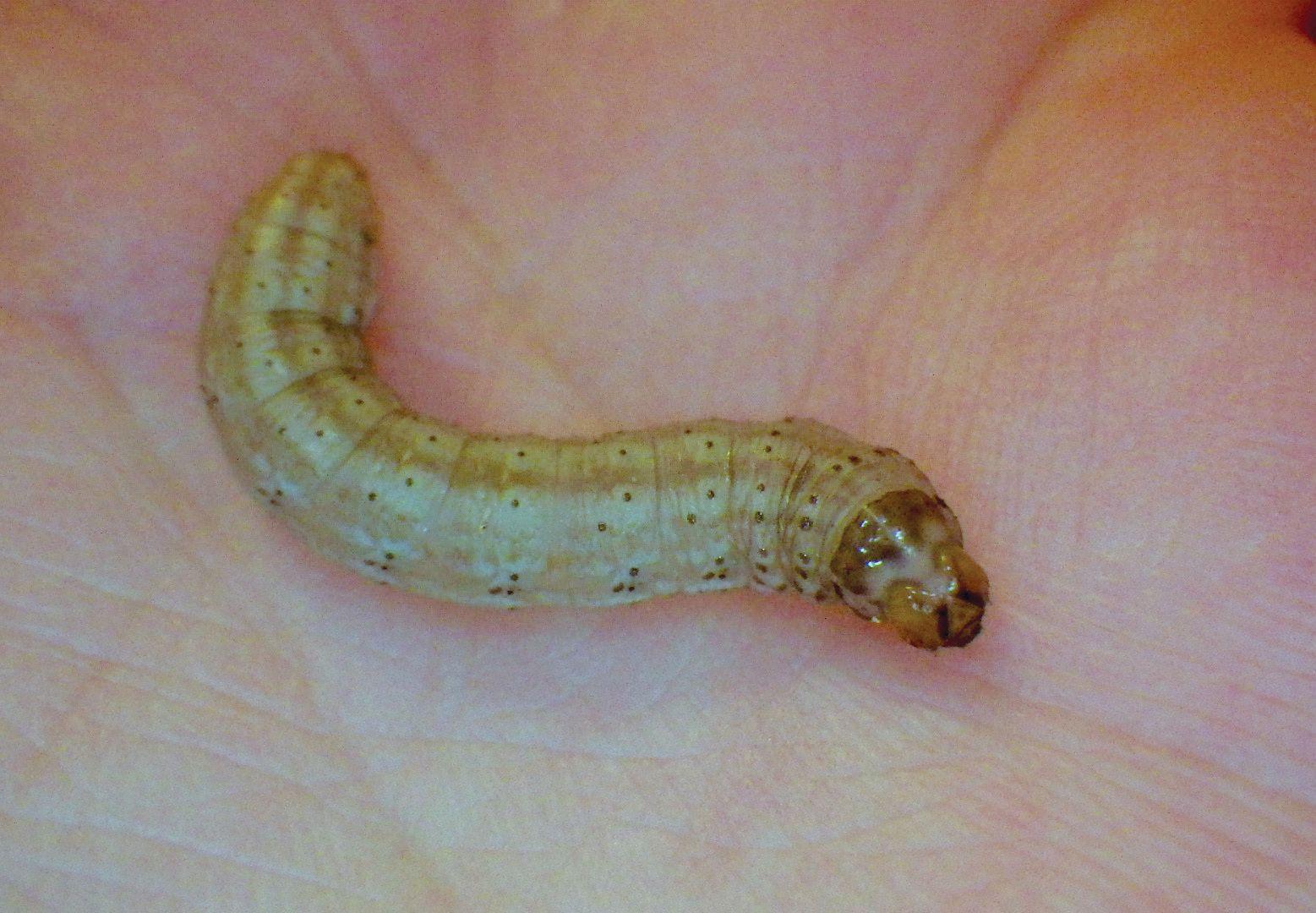
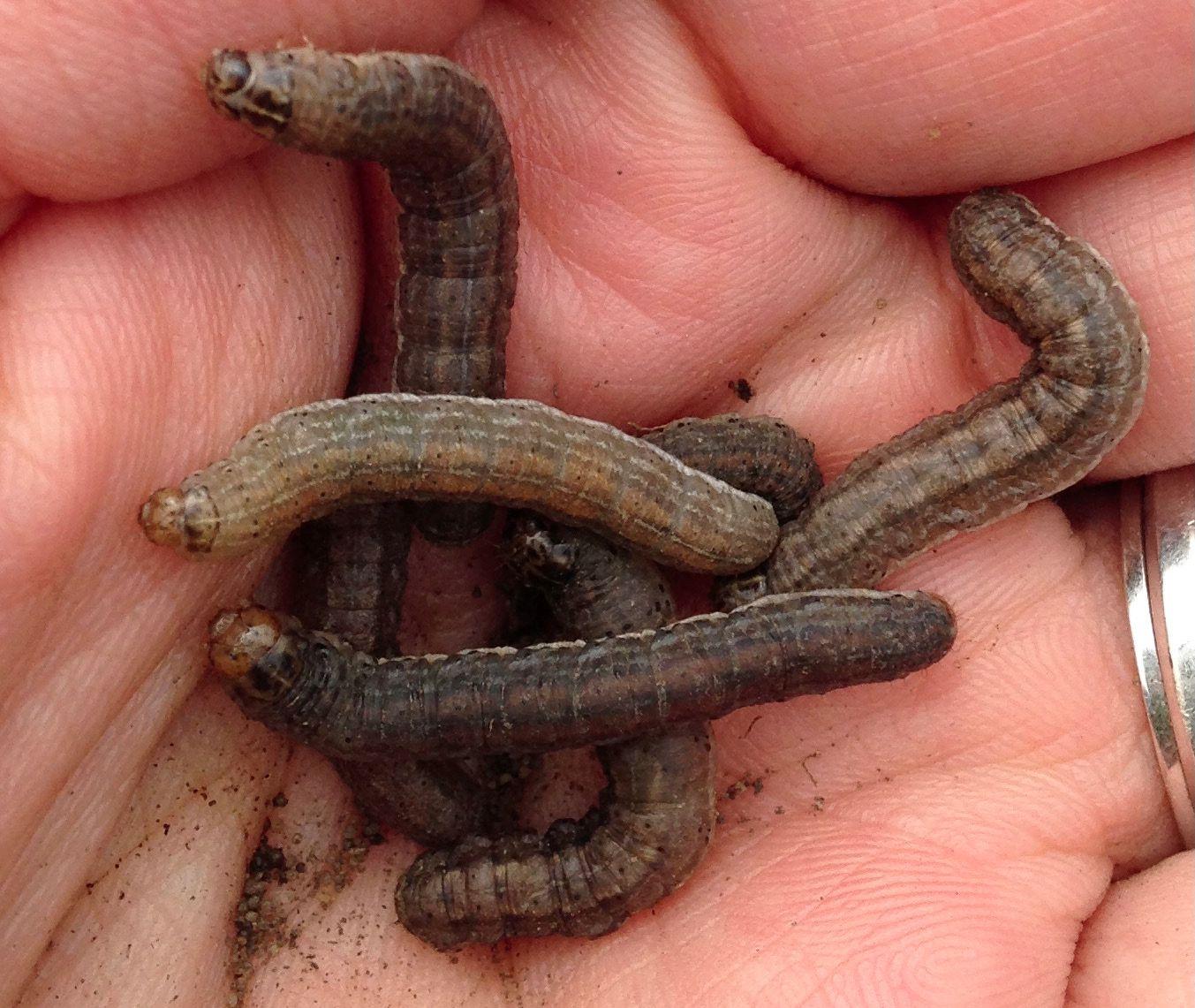
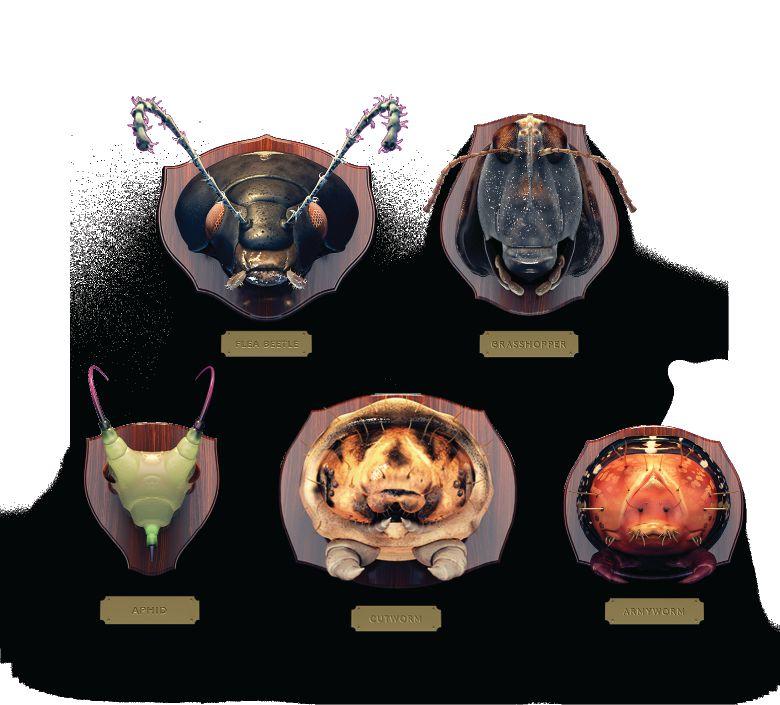
Cutworms are no stranger to the Prairies – these native insects have been causing sporadic but significant damage to crops since the early 1900s. But after more than a century of advancements in agriculture, we still don’t have a concrete solution for effectively managing cutworms on a consistent basis. A solid integrated pest management (IPM) plan requires thorough knowledge of the target pest but, for cutworms, a lot of this information was lacking. This is perhaps surprising, considering the long-standing pest status of cutworms.
Maya Evenden, professor in the biological sciences department at the University of Alberta, identified some key cutworm research gaps.
“For cutworms, there has been a lot of basic biology work and research on pheromone identification, but this is relatively old research from the 1970s and 1980s. As cropping systems and varieties change along with our changing climate, we will likely see a shift in plant-insect interactions between crops and cutworms. That is why we studied the effect of host plant species and the fertilization regime on cutworm performance and preference,” she says.
Ronald Batallas, now a science instructor and invertebrate lab coordinator in the University of Alberta’s Biological Sciences Depart-
ment, investigated cutworm-host plant interactions for his PhD thesis. Batallas selected two cutworm species, the redbacked cutworm (RBC) and the pale western cutworm (PWC), both common agricultural pests on the Prairies. He conducted three laboratory experiments to (1) measure larval performance (how capable a larva is in reaching its maximum growth potential) on three different host plant species (canola, spring wheat, and field peas) in a no-choice scenario; (2) determine larval feeding preference between these crops in a choice scenario; and (3) determine if fertilizer alters the suitability of the host crop (canola and wheat) for either cutworm species.
PWC has low survivability on field pea
In the no-choice experiment, RBC larvae were less influenced by the specific host crop; more than 87 per cent of larvae successfully reached pupation when fed canola, wheat, or peas. On the contrary, PWC larvae were very responsive to the host crop – larvae reared on wheat had 88 per cent survival, followed by canola at ABOVE: Pale western cutworm strongly favours wheat as a host crop.
66 per cent survival. Only 22 per cent of larvae reared on field pea were able to reach pupation.
As a measure of reproductive fitness (the ability to reach the adult stage and produce offspring), the pupae reared from each host crop were weighed and compared based on sex. For RBC, the ranking of female pupal weights was canola = peas > wheat; in other words, canola and pea were roughly equal, and both were preferred over wheat. No difference was observed in the males. For PWC, both female and male pupal weights were ranked wheat > peas > canola.
“These results show that RBC larvae raised on canola or peas and PWC larvae raised on wheat may have higher reproductive capabilities, so the crop species they develop on could influence the cutworm population density in the field,” Batallas explains
Different cutworm species prefer different foods, and perform better when they can feed on their favourites Redbacked and pale western cutworms are generalist feeders, consuming many different plant species in order to survive. But that doesn’t mean they don’t have their favourite foods to eat. In the choice experiments, where the larvae had equal access to all three host crops, both cutworm species showed clear feeding preferences. Redbacked cutworm larvae consumed the most canola plant mass, followed by wheat and then peas. Pale western cutworm larvae consumed significantly higher wheat biomass compared to canola and peas. “Egg-laying by the adult female moths of these two species is done in the loose, dry soil in the late summer and early fall. There is no
evidence that these moths show a preference to a specific crop when laying eggs. Yet, their larvae clearly do have a feeding preference between host plants, so our results suggest that the larvae have a more active role in host selection than the adults,” Batallas says. One of the questions Batallas had for this project was if the host plant selection by the larvae in the choice experiment matched the larval performance results from the no-choice experiment – and it did. Overall, canola and peas were the most suitable host crops for RBC and spring wheat was the most suitable host for PWC. Due to poor larval survival, field peas were deemed to be an unsuitable host for PWC, raising the thought of using crop rotation as a potential management strategy. “It’s possible that a cereal-pea crop rotation could help reduce pest density buildup of PWC, although it’s hard to say if a single year break with peas would be a long enough time to effectively reduce numbers. Because the females lay eggs after the crops are harvested, when the larvae hatch they are initially stuck with whatever host is planted. If peas are planted, they would not be expected to do very well, so a one-year rotation might be good following a cereal field that was infested. However, the adults are very good fliers and there is no guarantee that females will lay eggs in the same field from which they emerge,” Evenden clarifies.
To study the effect of fertilizer on host crop suitability, Batallas used a liquid NPK fertilizer blend of rates similar to what would be used in commercial field production, compared to an unfertilized treat-
Redbacked cutworms develop the best on canola and field pea.
ment. As a result, the fertilizer increased the nutritive qualities of canola and wheat, thereby improving the performance of both RBC and PWC. Specifically, Batallas noted that female RBC larvae fed canola had higher pupal weights than those fed wheat, suggesting that female RBC could be more reproductively fit under a well-fertilized canola crop.
Comparing the developmental time from larval to pupal stages, there were again differences between the two cutworm species. Redbacked cutworm larvae were more responsive to fertility –their larvae developed faster on fertilized seedlings compared to unfertilized seedlings, regardless of the crop species. Conversely, PWC larvae were more influenced by the actual crop species, developing faster on wheat seedlings compared to canola seedlings, regardless if they were fertilized or not. This is likely due to PWC having a special adaptation to the hot, dry summers typical of the southern Prairies. This cutworm species has a “prolonged prepupal phase,” meaning that it spends an extra-long time in its final larval stage before pupating, in order to delay the emergence of the moths until conditions are more favourable for egg-laying. Fullgrown PWC larvae burrow deeper in the soil, so reaching the final
larval stage faster reduces their exposure to predators or parasites.
IPM plan for cutworms still needs work
Newer seed treatments have helped to provide protection in canola, if the seed was proactively ordered with the specific treatment prior to planting. Insecticides impart a generally acceptable level of control but remain a reactive solution that can have negative implications for beneficial insects, depending on the product used. Evenden suggests the promotion of natural enemies (parasitic wasps, ground beetle predators, tachinid and bombyliid fly parasitoids) in a conservation biological control approach might be one of the best IPM measures a grower could currently implement. For example, allowing diverse field boundaries along roadsides or fence lines to remain undisturbed provides critical habitat for natural enemies to survive in. Diligent scouting to catch cutworm patches appearing in the field may mean that spot-spraying will suffice, as opposed to the more economically and/or biologically costly whole-field spraying. Economic threshold guidelines should be followed in order to minimize unnecessary insecticide applications.
DETERMINING OPTIMAL CANOLA SEED SIZE
Do seed size and hybrid influence optimal seeding rate?
by Donna Fleury
Seeding rates to optimize canola yield potential are influenced by various management and environmental factors.
Research and industry are trying to address whether seed size and hybrid variety can influence the optimal seeding rate to achieve the recommended plant population density and maximize yield potential.
“Among canola hybrids, the average seed size varies significantly, and even among seed lots within hybrids,” explains Christiane Catellier, a research agronomist at Indian Head Agricultural Research Foundation (IHARF) in Saskatchewan. “The seed size also depends on the year, location and environmental conditions under which the hybrid seed was produced, something producers have little control over. To better understand whether seed size and/or hybrid has an effect on optimal seeding rate of canola, we conducted a one-year multi-site field trial in Saskatchewan in 2018, funded by SaskCanola.”
This small-plot field trial was conducted at five locations in Saskatchewan including Indian Head, Yorkton, Melfort, Scott and Outlook. The first objective was to verify the optimal seeding rate
to achieve adequate plant populations and optimize yield under various environmental conditions in Saskatchewan. A second objective was to determine if seed size and/or hybrid had an effect on optimal seeding rate of canola. The trial compared various treatments, including two canola hybrids, InVigor L233P and Pioneer 45M35, two seed sizes of each commercial hybrid, either “small” or “large,” and three different seeding densities of five, 10, and 15 seeds per square foot (/ft2). The same four commercial seed lots were used at each of the five trial sites. Several factors were measured at each site, including spring plant density, maturity date, fall stubble density and seed yield.
The Canola Council of Canada recommendations are to seed canola at a sufficient rate to achieve a target spring plant density of five to eight plants/ft2 at emergence. When calculating the weight per area seeding rate required to achieve the recommended plant
TOP: Canola seeding rate plots comparing both small and large seed size for hybrid 45M35 at the recommended seeding rate of 10 seeds/ft2
population, there are two important considerations: seed size given as test seed weight (TSW) and field emergence rate. Emergence is a measure of the percentage of seeds that actually grow into plants, and plant population is the number of plants per area.
“Generally, our trial results did show an effect of hybrid and seed size on different crop response variables, such as emergence rates, in-season mortality and maturity. However, that did not necessarily translate into an effect on crop yield,” Catellier says. “If emergence and survival rates had been lower, we might have expected a greater yield penalty resulting from less-than-adequate plant population at the lowest seeding rate. In terms of yield response, we did see quite a difference between hybrids. The yield results of 45M35 showed a higher yield overall with the larger sized seed, with optimum yield achieved at the moderate seeding rate of 10 seeds/ft2. However, with the L233P hybrid, there was no yield response to seeding rate or seed size, indicating that the hybrid effect overshadowed all of the other treatment effects. Therefore, the minimum or adequate plant population required to optimize yield differs among hybrids, and the effect of seed size may or may not be important depending on the hybrid.”
Overall the emergence rates were very high at all trial locations in 2018, and in-season mortality was minimal. For all four seed lots, the moderate seeding rate of 10 seeds/ft2 achieved more than adequate plant populations for all combinations of hybrid and seed size. Seeding at the lowest rate resulted in adequate plant population (greater than four plants/ft2) for the two larger-seeded lots, but lower emergence and survival rates for smaller seed lots. The lowest seeding rate resulted in marginally adequate final plant population for small-seeded L233P and less-than-adequate plant population for small-seeded 45M35.
Plant density tended to be lower for small-seeded lots than large-seeded lots, regardless of hybrid. There was also a small effect of seed size on maturity, with the larger-sized seed maturing quicker than smaller-sized seed, but only at the highest seeding rate,
and this did not appear to translate into yield benefits. Therefore, even with the benefit of early and even maturity with higher seeding rates, the most economic and least risky seeding rate would be closer to the moderate 10 seeds/ft2. Producers who can ensure a high emergence rate and are willing to assume the risk of potential in-season plant loss may be able to use slightly lower seeding rates.
“The scope of this project was limited to comparing the responses between two hybrids,” Catellier explains. “Our study did show differing responses between hybrids; however, it will be difficult to predict other hybrids’ precise response to seeding rate and seed size from these results. It is also difficult to know the precise emergence and mortality rates that can be expected in any environment. There, growers should continue to target the recommended seeding rate, which would be to seed canola at or near the moderate seeding rate of 10 seeds/ft2, and consider using larger seed lots or a slightly higher seeding density with relatively smaller seed lots. Growers are also encouraged to monitor emergence and/or survival rates on a field-by-field and yearly basis to be able to determine typical or expected rates for their operation and management system. Keeping track of emergence rate and any differences they see between hybrids and seed lots on their own farms is something that will help provide more information on the seed size effect.”
Catellier has another on-farm study underway to measure canola emergence rates in the Indian Head area. “We are working with farmer collaborators to collect management information, as well as several environmental factors such soil moisture and temperature,” she says. “We expect the results of this multivariate study conducted in commercial farm fields to be very insightful and show how management practices interact with environmental conditions and the effect on emergence. We just completed the third year of the study in 2020 and expect to have more results next year. The results from this and other studies will help growers to optimize seeding rates and canola yield in Saskatchewan.”
Canola seeding rate plots comparing both small and large seed size for hybrid L233P at the recommended seeding rate of 10 seeds/ft2
IMPROVING IRRIGATED WHEAT PRODUCTION
Saskatchewan practices investigated.
by Bruce Barker
Afarmer survey and research by the Irrigation and Crop Diversification Corporation, at Outlook, Sask., are trying to wring as much profitability out of irrigated spring wheat and durum crops as is possible. The most profitable crops targeted high yields with an adequate fertility and crop protection program.
“Irrigated wheat is one of the crops with lower profitability. It is grown more from a crop rotation perspective to break up the disease cycle with dry beans and canola,” says Joel Peru, irrigation agrologist with the Crops and Irrigation Branch of the Ministry of Saskatchewan Agriculture in Outlook. “Having cereal crops in rotation helps to reduce diseases like Sclerotinia, blackleg and clubroot that can infect some of the following rotational broadleaf crops.”
An irrigation crop survey conducted in the Lake Diefenbaker area in 2020 identified that 32 per cent of the crop mix – about 22,000 acres – was in wheat production. The majority of these acres were hard red spring but there was some durum production as well. In the 2021 Irrigation Economics and Agronomics publication by ICDC, hard wheat with a target yield of 90 bushels per acre (bu/ac) is projected to net out $6 per acre (/ac), and durum targeted at 100 bushels per acre at $158/ac. That compares with pinto dry beans at $516/ac and black beans at $392/ac. The most profitable crops are projected to be seed potatoes at $5,880/ac and table potatoes at $3,941/ac.
With profitability numbers like that, wheat lags, but farmers are trying to squeeze as much profitability out of their wheat rotations. A 2018 farmer survey by ICDC looked into farm-scale practices to investigate best practices for the most profitable crops.
After the 2018 harvest, 10 participants provided agronomic practices and yields for spring wheat and durum wheat crops. 2018 proved to be an exceptional year for growing irrigated wheat in Saskatchewan. Spring wheat yields from the participants ranged from 72 to 107 bushels per acre (bu/ac), averaging 91 bu/acre from
the eight growers located in the Lake Diefenbaker Development Area. Two grew durum in the Riverhurst Irrigation District with yields of 103 and 110 bu/ac.
“These yields are impressive and suggest yield targets of 90 to 100 bushels per acre for hard red spring wheat and 100 to 110 bushels per acre for durum are well within reach for irrigation farmers,” Peru says.
Many factors are responsible for the high yields that were seen in 2018, including the dry hot weather, which helped to keep disease pressures down.
Deliver the groceries
A wide range of production practices were reported in the survey, yet yields were consistently high for most of the farmers. Seeding dates ranged from May 3 to May 29 and did not impact yield. However, Peru cautions that based on studies at ICDC, an seeding date of May 20 or earlier has been found to provide the highest yields.
Seeding rates were generally in the 120 lb./ac range, with one field at 90 lb. Stand counts ranged from 12 to 28 plants per square foot (124 to 284 plants per square metre) based on random field sampling, and had little effect on yield. Seed treatment packages were found to be important for disease control.
Fertility packages targeted the high yields achieved in this survey. To grow a 90 bu/ac wheat crop, 135 lb./ac of nitrogen (N) and 51 lb./ac of P2O5 is required. In the survey, N applications for hard wheat ranged from a low of 90 lb. N/ac to a high of 235 lb. N/ac. The most profitable were generally found in the 100 to 144 lb. N/ ac range. Phosphorus (P) rates were generally higher than recommended ranging from a low of 35 lb. P2O5 per acre to a high of 78 lb./ac.
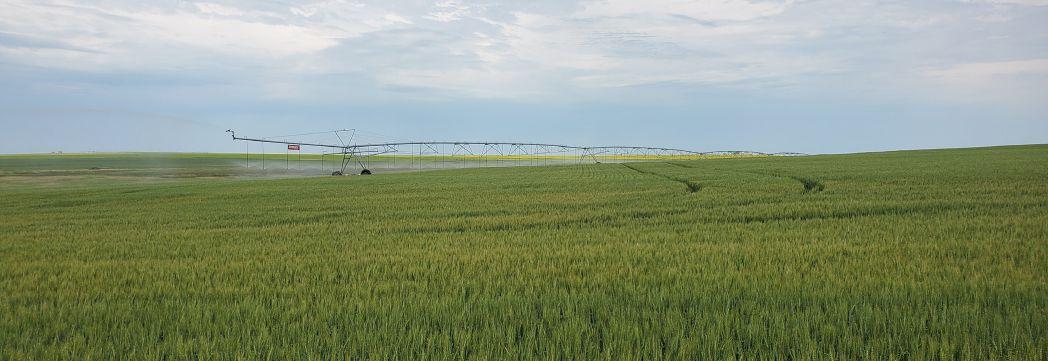
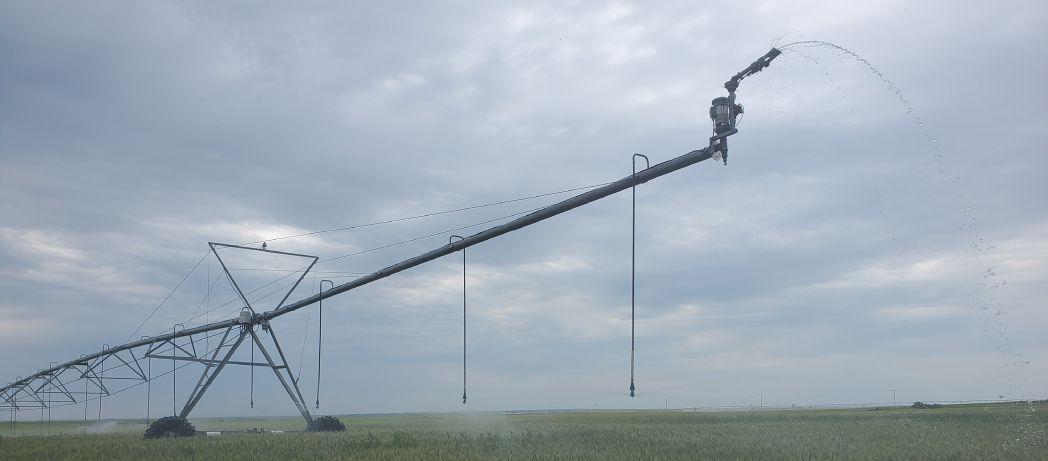
ABOVE: With intensive management, irrigated wheat profitability can be increased.
“They were definitely putting on the groceries,” Peru says. Only seven out of 10 of the responders applied a fungicide for Fusarium head blight (FHB) disease control and, in the low disease pressure year of 2018, those that didn’t got away with it. However, Peru recommends a fungicide application should always be budgeted for on hard wheat and especially durum under irrigated conditions.
Research conducted by Randy Kutcher with the Crop Development Centre at the University of Saskatchewan from 2016 through 2018 in Saskatoon, Outlook, Scott and Indian Head showed the value of FHB control in durum wheat. Under the conditions of study, fungicide applied to durum wheat under high FHB severity conditions was most effective to reduce Fusarium Damaged Kernels (FDK) and deoxynivalenol (DON) between the BBCH61 to 69 (early to late anthesis) stages.
In Kutcher’s research, under low to moderate FHB severity, fungicide was of benefit; however, the window of application appeared to be smaller at BBCH 61 to 65 (early anthesis to 50 per cent anthesis). There was no reduction in DON content from the application of fungicide late in crop development at BBCH 73 (soft dough).
The optimal timing of application in the research was the
same for both seeding rates of 40 seeds/ft² (400 seeds/m²) and 7.5 seeds/ft² (75 seeds/m²). The high seeding rate increased yield, but there was no interaction with fungicide application timing.
In Peru’s survey, four fields had a plant growth regulator (PGR) applied and three sites left check strips. Even though the fields produced large yields, there was no advantage to applying a PGR where check strips were left. Peru says there were apparent height differences between the treated and untreated portions of the field, although lodging was not an issue so yield losses did not occur.
“I have seen some really good results with a PGR under very good growing conditions and with varieties that are more susceptible to lodging,” Peru says.
The net return estimates done for the survey found that the cost of production for irrigated hard red wheat ranged from $462/ ac to $594/ac, with net returns from $9 to $179 per acre. For durum, the cost of production was $490/ac and $468/ac, and net returns were $249 and $275 per acre. While those returns aren’t as high as dry beans or potatoes, the survey shows that, with good management practices, wheat can be a profitable rotational crop.
“I wouldn’t want to paint a bad picture for wheat. Growers are finding ways to make it more profitable by upping inputs like fertilizer and applying fungicides and PGRs,” Peru says.
Hard Red Spring crop inputs and profitability
Durum crop inputs and profitablity
BUZZING ABOUT CANOLA YIELD AND QUALITY
Honey bees and insect pollination provide yield and other benefits to canola.
by Donna Fleury
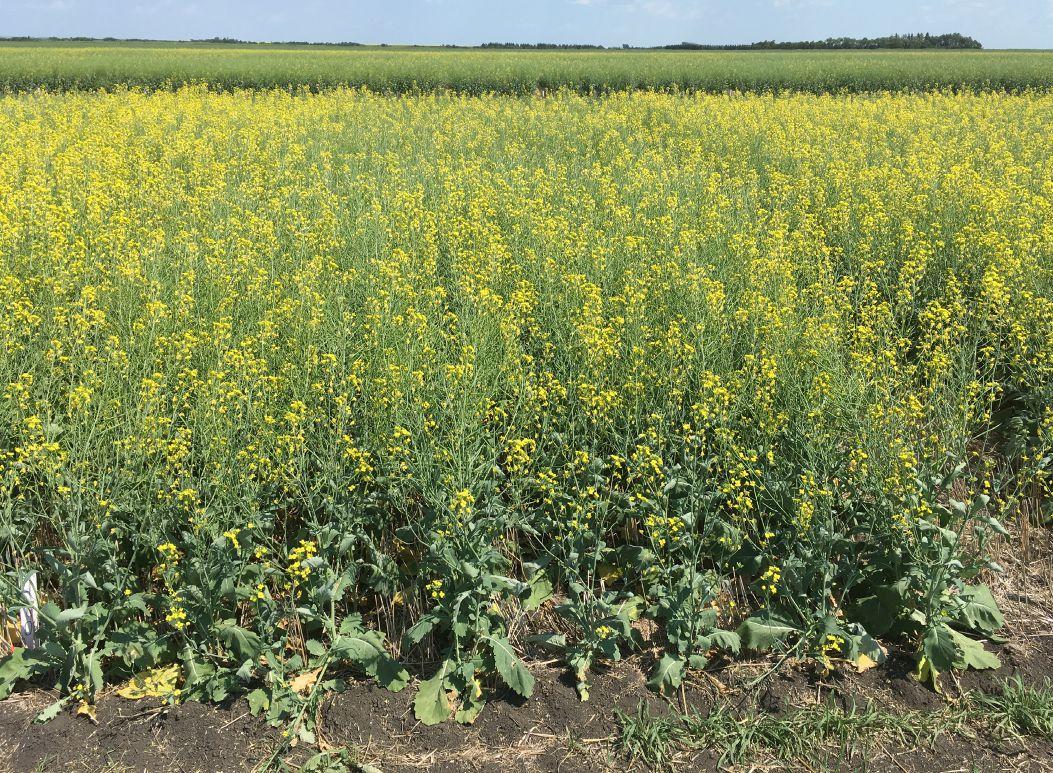
Honey bees and other pollinators are important for many agricultural crops. However, their effects and contributions can be challenging to determine. Canola is one of the crops that benefits from pollination, and a collaborative team of researchers in Alberta are working to better understand insect pollination benefits and their contributions to yield, quality and other crop responses.
“Canola has been grown for decades across the Prairies, however there are still a lot of questions around the contribution of honey bees to canola. Honey bees and leafcutter bees are absolutely necessary for successful hybrid canola seed production. However, the contribution to commodity canola production is less well-known,” explains Stephen Pernal, research scientist with Agriculture and Agri-Food Canada (AAFC) at the Beaverlodge Research Farm in Alberta.
“Pollinators are generally recognized as beneficial, but the question of how much honey bees or native pollinators actually contribute to canola yield or other crop factors has been the focus of some of our recent studies. These projects have been part of a very positive collaboration in the province with myself at AAFC, Shelley Hoover with the University of Lethbridge, and Ralph Cartar, recently retired
from the University of Calgary, along with graduate students George Adamidis, currently a postdoctoral fellow in Bern, Switzerland, and Andony Melathopoulos, currently a professor at Oregon State University.”
There are a wide range of canola varieties grown in Western Canada, which adds some complexity to evaluating the benefits of pollination. Historically, older, open-pollinated canola varieties have been more dependent on pollinators for improving yield, while newer hybrid canola varieties have less of an insect pollination dependence for yield.
To better understand the differences across varieties, a recent project included controlled greenhouse studies at AAFC Lethbridge to evaluate the responses of 23 commercially available canola varieties – both open-pollinated and hybrid – to insect pollination, while a subsequent field study at AAFC Beaverlodge examined responses in
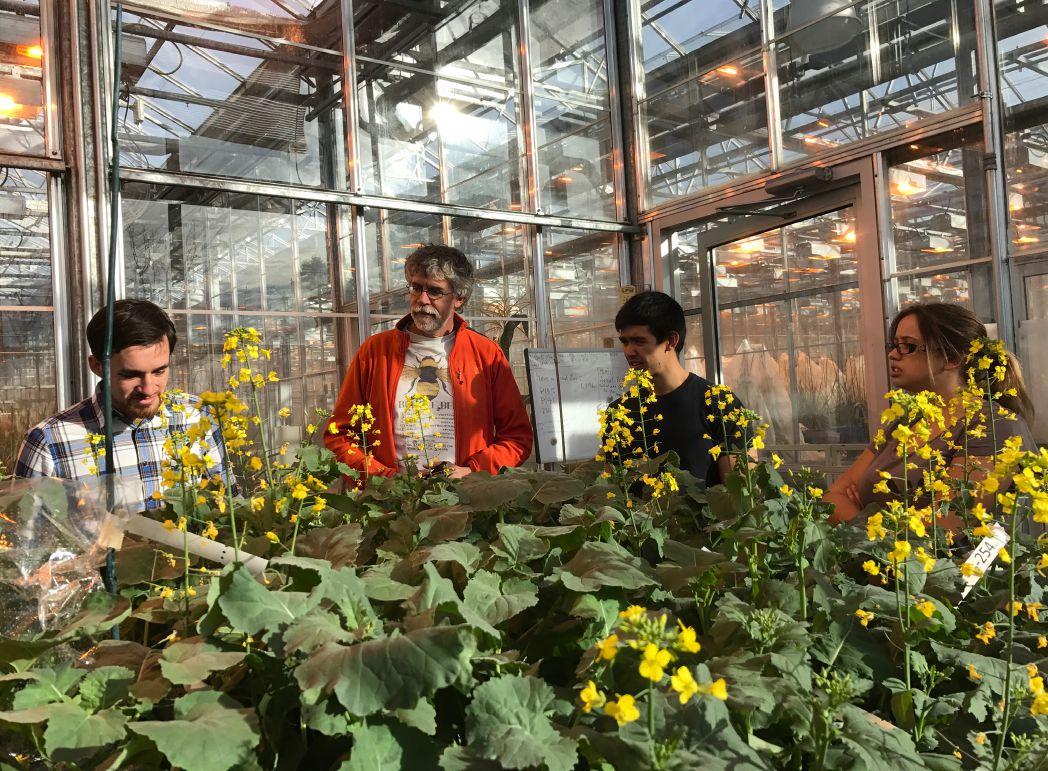
ABOVE: The greenhouse set-up for the experiment at AAFC Lethbridge. From left to right: Graduate student Samuel Robinson, Ralph Cartar (project lead, University of Calgary), and undergraduate students Joseph Desmaris and Ashley Londeau.
a subset of hybrid varieties. The studies compared seed production and quality across canola varieties, while also evaluating specific vegetative and phenological responses to insect pollination.
“One of the findings from the complicated results of these studies is that insect pollination does generally benefit yield across all of the varieties, whether open-pollinated or hybrid,” Pernal says. “However, varieties do respond differently to pollination and have different dependencies, although generally overall there was a positive response to yield with bee pollination.
“Plants respond to pollination in a number of ways, and various plant parameters were compared in the study, such as time of flowering, number of pods on main stems and branch stems, plant size, root biomass and maturity. Generally, canola plants that were pollinated flowered earlier, produced more flowers at peak flowering, had fewer secondary branches, matured earlier and more evenly, had better seed quality and less green seed than non-pollinated plants.
“Insect pollination alters many plant physiological mechanisms and responses differently, but across varieties pollinators alter the functional character of canola plants to enable them to more quickly reach their maximum reproductive capacity,” he adds.
The study results were recently published in Scientific Reports (published by Nature Research), and more papers are in development.
In another greenhouse study, researchers examined the response of canola plants to pollination under different stresses, such as drought conditions. Although the results are not yet published, preliminary findings show bee pollination is generally positive under certain stresses like drought and can mitigate the impacts. Pollina-
tion benefited yield, even under stress conditions.
“We also took this research into field trials at Beaverlodge and added some other variables to the study,” Pernal says. “We wanted to know if there were any interactions between pollination and agronomic practices, such as fertilizer and seeding rates. In the trials, we compared normal seeding rates and half seeding rates, and normal fertilizer N (nitrogen) rates and half N rates. The early observations are that although canola plants do respond positively to pollination, it tends to not compensate for major inputs like fertilizer rate or seeding rate. The results were somewhat variety-dependent. The effects of pollination are incremental and can ameliorate some stresses. Overall, plants do respond positively to honey bee pollination with other benefits beyond yield.”
Honey bees are the workhorse pollinator for agriculture, but there are many species of native bees and other pollinators that are important for crop production. Growers can manage habitat on their farms to ensure it is conducive to nesting and long-term proliferation for native bees.
“Many of the good practices are about trying to preserve what you already have,” Pernal says. “This may be overlooked, but can be one of the most essential steps on farms. Look at the habitat and consciously decide to preserve what is there, such as shelterbelts or treelines, grassy ditches or untilled areas that may not be as productive, but provide good natural habitat. The diversity of habitat and more native plants are conducive to sustaining native bee species, so proactively enhancing the habitat is also recommended. [As well,] promoting practices that won’t harm bees, such as planting crop rotations of perennial and flowering crops and reducing insecticide use
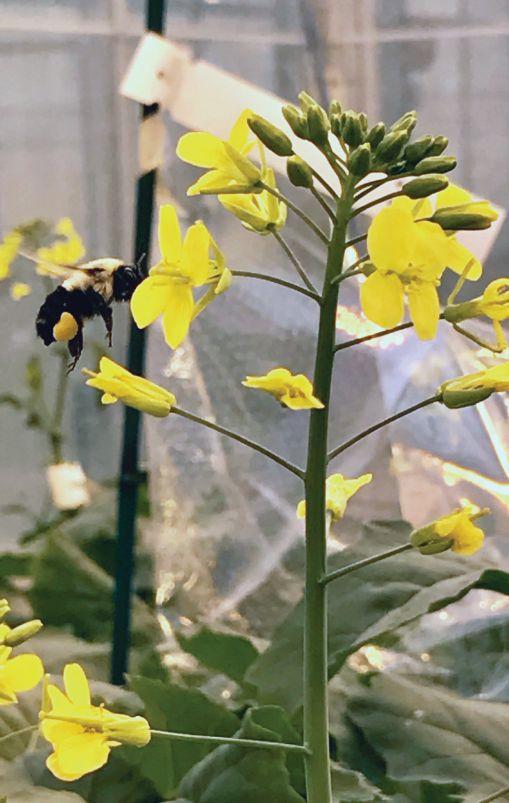
Bumblebees (Bombus terrestris) were used as pollinators in the published greenhouse study to evaluate the response of 23 canola varieties to pollination at AAFC’s Lethbridge Research and Development Centre.
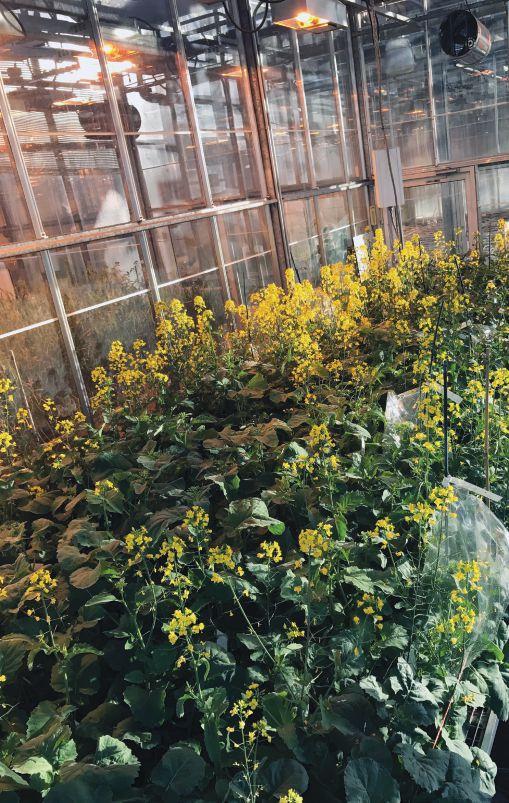
The greenhouse set-up for the experiment at AAFC-Lethbridge.
where it might harm native bees.”
For more information on the protection and cultivation of pollinator populations, Mark Wonneck, recently retired AAFC biologist, published an excellent guide for agriculture and native pollinators in Canada.
Pernal adds that there are long-standing relationships between growers and beekeepers. This mutually beneficial arrangement is often monetary, where crop growers pay beekeepers for contract pollination because it is so important for setting yields on that crop.
It can also be an incidental relationship, where beekeepers might place bees in a corner of commodity canola for a honey crop and crop growers may get an increase in quality and yield.
“Communication is very important and crop growers should let beekeepers know when spraying might occur and if products used are potentially harmful for bees,” he says. “I think communication has been increasing in recent years and generally there has been a very good relationship between beekeepers and growers in Western Canada. It is in everyone’s best interest to keep pollinators alive.”
Targeted Insect Control
Control 50+ insects in 30+ crops with SILENCER® 120 EC from ADAMA
Start Hunting
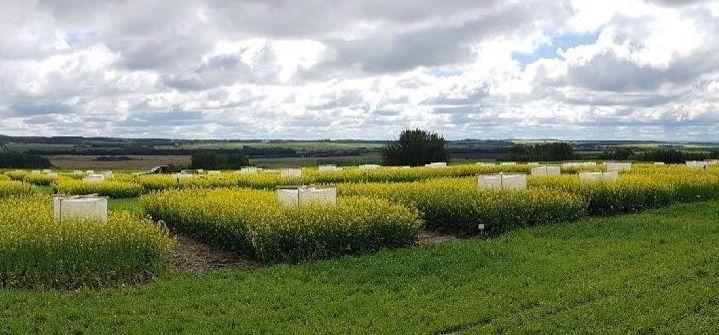
The experimental set-up of the field work done in Beaverlodge, examining the effects of pollination vs. non-pollination and the interaction of fertilizer and plant spacing treatments.
MULTIPLE-GROUP RESISTANCE IN WILD OAT IS CHALLENGING
Herbicide choices are becoming very small.
by Bruce Barker
Testing 1, 2, 8, 14, and 15. Those are the herbicide groups to which wild oats are resistant in Western Canada. In some crops, there are few – if any – choices for controlling a wild oat that has multiple resistance to those herbicide groups, especially Groups 1+2 biotypes.
“Herbicide resistance in wild oat is arguably the worst weed problem that Prairie growers face,” says Charles Geddes, weed scientist with Agriculture and Agri-Food Canada in Lethbridge, Alta. “With wild oat resistance to up to five herbicide modes-ofaction in the same population, growers are in need of alternate solutions.”
Overall, in the last herbicide-resistant weed surveys across the Prairies – conducted from 2014 to 2017 by weed scientist Hugh Beckie when he was with AAFC Saskatoon – of 578 fields where wild oat seed was collected, 69 per cent had a resistant biotype, with Group 1 resistance in 62 per cent, 34 per cent with Group 2 resistance, and 27 per cent with Group 1+2 resistance.
“Assuming a field has Group 1+2 resistant wild oat, in wheat, barley, pea and lentil, a grower only has pre-emergent herbicide options left. In canola, they would also have the option of Liberty and glyphosate in the herbicide resistance systems,” Geddes says.
Making herbicide selection even tougher is that Group 1+2+8 resistance has also been confirmed in all three Prairie provinces. This would remove triallate (Avadex and found in part of Fortress) from the list of effective herbicides. The trifluralin portion of Fortress may still provide suppression of wild oat.
Even worse, Group 1+2+8+14+15 wild oat resistance has been confirmed in Manitoba, which leave only Group 3 herbicides for wild oat suppression.
ABOVE: Farmers with wild oat resistant to Group 1+2 herbicides have few herbicide options.
PHOTO
8 - Avadex - PRE
14+15 - FocusS - PRE
3+8 - Fortress - PRE
8 - Avadex - PRE
3+8 - Fortress - PRE
3 - Trifluralin*S - PRE
14+15 - Authority SupremeS - PRE
8 - Avadex - PRE
3 - EdgeS - PRE
14+15 - Heat Complete - PRE
3 - Trifluralin*,S - PRE
WORLD’S FIRST METABOLISMBASED GLYPHOSATE RESISTANCE
At the Australian Herbicide Resistance Initiative (AHRI) at the University of Western Australia (where Beckie now works), researchers have identified the world’s first metabolism-based glyphosate resistance. A population of barnyard grass was confirmed with glyphosate resistance, and during the testing the researchers noticed the level of resistance was influenced by temperature, indicating that the mechanism might be metabolism-based.
The field was a horticulture field under drip irrigation, so tillage could not be used to control weeds. The field was aerially sprayed with five to six litres per hectare of glyphosate, five to six times per wet season for 12 to 15 years in a row. The researchers used a combination of genetic testing and rice calli tissue culturing to confirm the metabolic resistance.
While this is the first case of metabolism-based glyphosate resistance, it shows that evolution continues, and won’t likely be the last. This highlights the need for growers to use all their tools to manage herbicide resistance.
Target-site resistance versus metabolic resistance
8 - Avadex - PRE
3 - EdgeS - PRE
3+8 - Fortress - PRE
3 - Trifluralin*,S – PRE
10 - LibertyLL
9 - GlyphosateRR
3 - EdgeS - PRE
14+15 - Heat Complete - PRE
3- Trifluralin*,S - PRE
Multiple types of herbicide resistance can occur, but they fit into two general categories: target-site resistance and non-targetsite resistance. With target-site resistance, an herbicide binds to an enzyme target site to control the weed. When target-site resistance develops, it is like trying to fit a round peg into a square hole – it doesn’t fit so the herbicide doesn’t bind fully to the target site.
Target-site resistance develops as the result of random and naturally occurring mutations in a very low proportion of the wild oat population. Eventually, with increased selection pressure of the herbicide over the years, populations of the mutant biotype remain uncontrolled, multiply, and become the dominant biotype in the field. When this happens, the populations can survive high doses of the herbicide. Rotating or mixing herbicide groups can help slow the development of this type of resistance.
Metabolism-based resistance is one main type of non-target-site resistance. It occurs when the weed is able to break down or degrade the herbicide into less toxic metabolites before the herbicide reaches the target site. Low levels of resistance initially develop, but over time, the metabolic resistance builds to where a recommended herbicide dose does not control the weed. Herbicide rotation can be less effective in managing metabolic resistance after it has developed, because metabolic resistance can confer broad cross-resistance to multiple different herbicide modes of action – even ones that have never been used in the field.
Within Group 1, Beckie found there
were differences in cross resistance across the three chemical families commonly referred to as “fops,” “dims” and “dens.” In his research in 2001, he found that wild oat resistance was found more in the “fops” than the “dims.” In the “dims,” clethodim had a very low level of resistant biotypes. However, continual use of the “dims” for wild oat control would select for resistant biotypes, either through target-site resistance or metabolic resistance.
In Group 2, there are six chemical families. Beckie found that the Group 2 families were more likely to have cross-resistance across all families, such as the imidazolinones, sulfonylurueas, and sulfonylaminocarbonytriazolinones.
“This cross-resistance in Group 2 families is likely because of the development of more metabolic resistance, but further research is required,” Geddes says.
For growers interested in knowing if they have weed resistance on their farm and what kind, several labs across the Prairies offer testing for $125 to $200 per sample and herbicide subgroup. These include the Saskatchewan Ministry of Agriculture’s Crop Protection Lab and Ag-Quest in Minto, Man.
In Alberta, Geddes’ Prairie Herbicide Resistance Research Lab is looking for novel herbicide-resistant weed biotypes. If undocumented resistance to an herbicide mode of action is suspected, growers and agronomists can send a sample for free testing. The lab is also accepting kochia samples for Group 4 (auxinic) herbicide resistance testing.
Geddes says, “Diagnostic testing can be an excellent investment in helping to understand herbicide resistance on your farm, and how to manage it.”
Canola
EXPLORING GREENHOUSE GAS EMISSIONS IN ORGANIC SYSTEMS
A Manitoba study shows N2O emissions depend on fall moisture.
by Julienne Isaacs
Astudy out of University of Manitoba’s Department of Soil Science suggests that nitrous oxide (N2O) greenhouse gas (GHG) emissions increase in organic systems following wet fall conditions – and can even exceed those of conventional cropping systems treated with urea.
Nitrous oxide is 300 times more potent than carbon dioxide. Though N2O is naturally emitted from the soil, the process speeds up when applications of chemical fertilizers exceed demand.
But it’s generally understood that organic cropping systems –which rely on cover crop ploughdowns and manure applications, rather than synthetic fertilizers, to meet crop N requirements –emit less N2O than conventional systems.
Many studies looking at N2O emissions from organic systems have been conducted in the United States and Europe, says Megan Westphal, who completed the study as part of her master’s work at the University of Manitoba – but none had been conducted in the Prairies’ colder cropping environment.
“We wanted to see what happens in a climate with a longer and colder winter season and a shorter growing season,” says Westphal, who now works as a soil survey specialist with Manitoba Agriculture.
Mario Tenuta, a professor of applied soil ecology at the University of Manitoba, was Westphal’s supervisor on the study.
“One of the main focuses of the laboratory is to develop methods or farming practices to reduce our impact on the environment, particularly looking at reducing greenhouse gas emissions from agriculture,” Tenuta says.
“It’s pretty ingrained in the literature that organic plots reduce N2O emissions compared to conventional. But when I was looking at the literature I wasn’t sure why people are so confident about that. There were a handful of studies that were inconclusive. They were more southerly and decomposition and moisture regimes were quite different,” he says.
The study was a first for Manitoba’s cold environment, and its results will come as a surprise to organic producers in the province. But it also adds to researchers’ understanding about how soil cycling works in northern climates – and what to do about it.
Study design and results
Westphal ran the study between 2014 and 2015 on the long-term organic-conventional side-by-side plots at Glenlea Research Station in southern Manitoba. The long-term trial compares annual and perennial rotations under organic and conventional man-
agement. In the conventional annual grains rotation, Westphal looked at N2O emissions from spring wheat and soybeans; in the organic perennial-annual rotation, N2O was measured from spring wheat and two-cut harvest with late summer or early fall ploughdown alfalfa.
Westphal installed round, static vented chambers made of PVC pipe at four locations in each plot in order to account for soil
Westphal measured N2O emissions from organic and conventional plots.
variability. During sampling rounds, the researchers would bring lids to seal each gas chamber and take samples at zero, 15, 30 and 45 minutes. “That created a concentration gradient which we could see in the chamber, which allowed us to determine the daily flux of N2O in the soil,” Westphal explains.
In 2014, Westphal conducted 64 sampling days, with 16 of those samples taken during 2015’s spring thaw. In 2015, she conducted 60 sampling days, with seven of those occurring during the spring thaw of 2016.
The first year of the study was a dry year with a dry spring, while the following year was wet with a wet spring, Westphal says.
“We found that in a dry fall and a dry spring, when the snowmelt occurred quickly, there were little to no N2O emissions from the ploughdown in the fall and the spring and during the growing season of the following crop,” she says. “However, the following year it was wetter in the fall followed by a wetter spring with a slower melt, and there ended up being a lot more N2O emissions.”
The emissions were equal to or greater, in fact, than those from the conventional plots. This was surprising, Westphal says, due to the fact that most of the literature supported lower emissions from organic systems. (Cumulative emissions were not found to be statistically different.)
The reasons have to do with natural soil cycling processes in a northern climate.
“What we saw here was that the moisture increased the decomposition of the alfalfa and there was mineralization that was nitrified over the fall, was present over the winter, and was there in the thaw period the following year, when high moisture resulted in denitrification, and boom-presto we had more N2O under the organic system,” Tenuta explains.
Westphal says N2O emissions from ploughdown alfalfa are highly variable and dependent on soil moisture content for that organic matter to be mineralized and transformed into ammonium
or nitrate and lost as N2O. In a drier situation, she says, that mineralization doesn’t occur or occurs really slowly.
Martin Entz, a professor of cropping systems and natural systems agriculture and an author on the study, heads the long-term trial at Glenlea.
He cautions against concluding that organic systems produce more N2O than conventional systems.
“We were really comparing two different cropping systems here – one where wheat was grown after soybean in a conventional system and a second system where wheat was grown after alfalfa in an organic system. Not all organic farmers include alfalfa in their rotations and not all conventional farmers avoid alfalfa,” Entz says.
“What it does show is that alfalfa – because it puts such a large pulse of N into the soil – has the potential to release a lot of nitrous oxide. We also have a conventional alfalfa plot in the study, but Megan did not measure this one.”
In other words, it’s possible that the conventional alfalfa produced as much N2O as the organic alfalfa.
Producers are not out of options when it comes to managing N2O emissions after fall moisture. Tenuta says a possible solution is to put a non-leguminous cover crop in following ploughdown to take up excess nitrogen and water in the spring and reduce N2O emissions.
No robust system exists in Canada yet for producers to capitalize on carbon capture and reduction of GHG emissions, but if such a system were to be enforced in Canada, Tenuta says organic producers could take steps to minimize N2O emissions following fall moisture to protect their ability to gain carbon credits.
Conventional producers, too, could potentially tap into carbon credits by using 4R management to minimize N2O emissions.
“We have a pretty good idea of what’s going on,” Tenuta says. “Now, we should be thinking about ways to reduce N2O emissions. That’s what I find intriguing.”
Westphal installed round, static vented chambers made of PVC pipe at four locations in each plot in order to account for soil variability. Shown above: the static vented chamber in alfalfa.
The static vented chamber in front of organic wheat, used to account for soil variability.
LESSENING THE IMPACT OF FUSARIUM HEAD BLIGHT IN WHEAT
An integrated approach can reduce the amount of inoculum and extent of infection.
by Donna Fleury
Fusarium head blight (FHB), caused by F. graminearum, has become well-established throughout the Prairie region, resulting in widespread outbreaks of FHB, associated yield and grade losses and deoxynivalenol (DON) contamination. Researchers are investigating potential cropping strategies to lessen the impact of FHB for production of various wheat classes.
“For growers, current solutions related to resistance and fungicides only provide suppression of FHB at best, prompting some to re-evaluate wheat as a crop of choice,” says Kelly Turkington, plant pathologist with Agriculture and Agri-Food Canada (AAFC) in Lacombe, Alta. “In some areas such as north-east Saskatchewan, FHB can still cause significant yield and grade losses and DON to occur when the weather is favourable and F. graminearum is well-established, even when growers are using recommended strategies of a ‘resistant’ variety, avoiding host-in-host rotations and fungicides. In 2018, we initiated a five-year Wheat Cluster research project
to evaluate how cropping system-based strategies may reduce the amount of inoculum and extent of host infection to improve productivity of spring wheat.”
The research experiments are divided into two projects, Test 91 and Test 94. The objectives are to study the impact of rotation, residue management, row spacing, seeding rate, and fungicide timing on leaf disease, FHB and productivity of spring wheat. AAC Brandon spring wheat, which is moderately resistant to FHB, was selected for the study. Nine study sites across Canada with a range of established issues with F. graminearum are included: Beaverlodge, Lacombe and Lethbridge, Alta.; Scott, Melfort and Indian Head Sask.; Brandon, Man.; Normandin, Que; and Charlottetown. Turkington is also leading a similar project investigating cropping strategies for FHB in barley.
ABOVE: AAFC Brandon site for Wheat Cluster FHB fungicide timing trial, 2019.
“In Test 91, we are comparing rotations of one, two and three years between wheat crops, residue management and a single fungicide application at anthesis,” Turkington explains. “The residue management treatments include a comparison of intact stubble with the removal of straw and chaff, followed by chopping or mowing the remaining standing stubble. We are trying to determine if chopping the residue into smaller pieces facilities residue decomposition and faster disappearance of the source of disease, and whether there might be a synergistic effect when combined with crop rotations. The fungicide treatments include a single fungicide application using Prosaro XTR at the standard ideal timing of three to four days post-head emergence or anthesis compared with no fungicide.”
The Test 94 experiments are evaluating row spacing, seeding rates and timing of fungicide application with a focus on maturity, lodging, grain yield, kernel characteristics, leaf disease severity, and Fusarium-damaged kernel (FDK) severity. The study is being conducted at the same sites, except not at Lacombe and Beaverlodge, which have a low FHB risk compared to the other locations. Depending on equipment availability at the various sites, row-spacing treatments include a narrow seven- to nine-inch spacing compared to a wider 12- to 14-inch spacing, and seeding rates of 200 versus 400 seeds per square metre. Higher seeding rates may increase tillering and result in a more uniform crop and head emergence for fungicide application. Four fungicide treatments using Prosaro XTR are being compared: no fungicide, the ideal timing of fungicide applied three to four days following full head emergence or the start of anthesis, fungicide applied seven to 10 days after the start of anthesis, and a dual fungicide application at three to four days following full head emergence and again at seven to 10 days after full head emergence.
“Although we are including four different timing treatments for our research trials, the later stage may be outside the normal window and dual applications are not yet approved on the label,
plus there are still pre-harvest interval considerations,” Turkington explains. “However, some recent research out of the U.S. and also from the University of Saskatchewan is showing that putting fungicides on too early can be an issue. The research is suggesting that going in with a later application, or a dual application, may have some benefits for improving the ability to manage DON. By comparing the different timings, we want to see if we can get similar or better control at seven to 10 days after anthesis with a single application as compared to at anthesis. Or in high-risk environments, if a dual application of one earlier at anthesis and a second one a week or more later might provide better control, as some of the U.S. research is showing.”
The current recommended timing for FHB fungicide is at anthesis, when 75 per cent of the heads on the main stems have visible anthers. Turkington notes that although this is certainly an important growth stage for F. graminearum, infection can occur any time after the head comes out of the boot through to the start of senescence. Applying an early application at 75 per cent head emergence still leaves 25 per cent of the heads without any fungicide contact or protection, and the chemical activity may not carry through to the late milk or early dough stages. Fungicides provide suppression at best, with about 50 per cent control of FHB and even less for DON.
“The optimal timing for reducing FDK and DON contamination will vary depending on weather conditions prior to and after head emergence,” Turkington adds. “Typically, the earlier the infection, the higher severity of symptoms, such as more kernel shriveling and tombstone Fusarium-damaged kernels, premature ripening of the infected portion of the head and a salmon-pink or orange-coloured fungus in the wheat spikelet. If infection is later, toward the mid- or late-milk stage, the symptoms become much less distinct, but the infection has still occurred and DON can still be produced. A later application may be more conducive at getting better suppression of DON production. The DON level of harvested grain is very important and at levels typically above one part
A plant pathology technician at AAFC Lacombe removes Fusarium-damaged kernels (FDKs) as part of the assessment of the impact of treatments on FDK severity for the Wheat Cluster FHB trials.
per million is not accepted for milling quality or for feed grain for hogs. Testing for DON in harvested grain is important for grading and market acceptability. In addition, FDK symptoms can be also be caused by other Fusarium species that are not as big of a concern for DON production, or other leaf disease pathogens, such as Septoria nodorum leaf blotch or glume blotch. Therefore, testing for DON is important.”
Preliminary results for Test 91 and Test 94 for 2018 and 2019 have mostly been analyzed. However, some lab analysis results for DON and FDK assessments are still being completed due to COVID-19 delays, and results from early 2020 are limited. The conditions in 2018 were generally dry at most sites, and again at some sites in 2019, resulting in limited leaf disease FHB and DON development at most locations. The effects on grain yield were also limited, likely due to the low disease risk at most sites. Although results were variable across sites, generally the interaction for row spacing or seeding rate with fungicide timing were not significant. For sites where conditions were more conducive to leaf disease and FHB development, leaf disease severity was increased as seeding rate increased. Rotational effects and residue management results will be reported at the end of the project.
“From both Test 91 and Test 94, preliminary results show there is no real ideal timing to put fungicide on, with weather conditions prior to and after head emergence having the biggest effect,” Turkington says. “Generally, when conditions are dry and less conducive to leaf disease and FHB development, fungicide application even at different timings is of limited benefit for grain yield, DON management as well as reducing the amount of F. graminearum DNA in harvested grain. However, when FHB and leaf disease risk are increased, a fungicide application can help with leaf disease, FDK and DON, depending on conditions and early to mid-season leaf disease risk. When the risk of FHB is increased, fungicide application can help improve grade, but may not reduce FDK levels sufficiently to bring grades up to acceptable levels. Although dual applications tended to perform the best, differences with a single
early application were not always significant, while a dual application may be less economical, is not on the label, and may cause preharvest interval issues.”
“Growers are encouraged to use the weather-based FHB forecasting systems and risk maps that are available in each province, along with field scouting in late July and early August,” Turkington adds. “These risk maps can be very useful in gauging the risk and helping to decide on timing of fungicide application if needed. Growers and consultants should start looking at the maps right at flag leaf to see if conditions are conducive for the pathogen to start producing spores. If the maps show a moderate to high risk at flag leaf, booting or head emergence, that suggests there is a high risk –don’t delay a fungicide application, which should likely be applied soon after full head emergence. If the risk is high from flag through to head emergence and is projected to continue for the next 7 to 14 days, then this might be a scenario where a dual application would be justified when registered. Growers who have had significant downgrading issues due to FHB and DON in the past should also then consider leaf spot diseases and leaf or stripe rust, depending on their location, and may want to consider putting on a fungicide around flag leaf emergence as a precaution.”
For now, growers are encouraged to use an integrated approach of fungicide applications and best agronomic practices for managing FHB and DON contamination. Consider crop rotations of at least two years between host crops, use the most resistant variety available, monitor harvested grain and seed intended for planting, and consider residue management. Collect representative samples at harvest and have them tested for F. graminearum and DON, to be better prepared for marketing options. Turkington expects that by the end of the project they will have better information about timing of fungicide applications, and there may need to be potential changes in mindset, chemistries and regulation for expanded windows of fungicide application for FHB and DON management. The project will continue for two more growing seasons in 2021 and 2022.
Symptoms of FHB in wheat showing a brownish dicolouration on rachis and upper stem.
SUCCESSFUL WINTER WHEAT STAND ESTABLISHMENT
Research and demonstrations highlight seeding date and nitrogen management practices.
by Bruce Barker
How late can you seed? How much nitrogen (N) fertilizer to put down with the seed, if any? Is spring broadcast N efficient? These are some of the questions farmers consider when seeding winter wheat in the fall. The answers very much depend on where you farm and how much risk you can tolerate. Demonstration projects in Saskatchewan have built upon previous research to help provide some answers.
“As a general rule, when you apply nitrogen is driven by environment. If all the nitrogen is put down at time of seeding in the fall, there is a risk of potential losses in wetter environments. But in drier environments, spring broadcasting nitrogen could end up being stranded or lost to volatilization,” says Chris Holzapfel, research manager with the Indian Head Research Foundation in Indian Head, Sask.
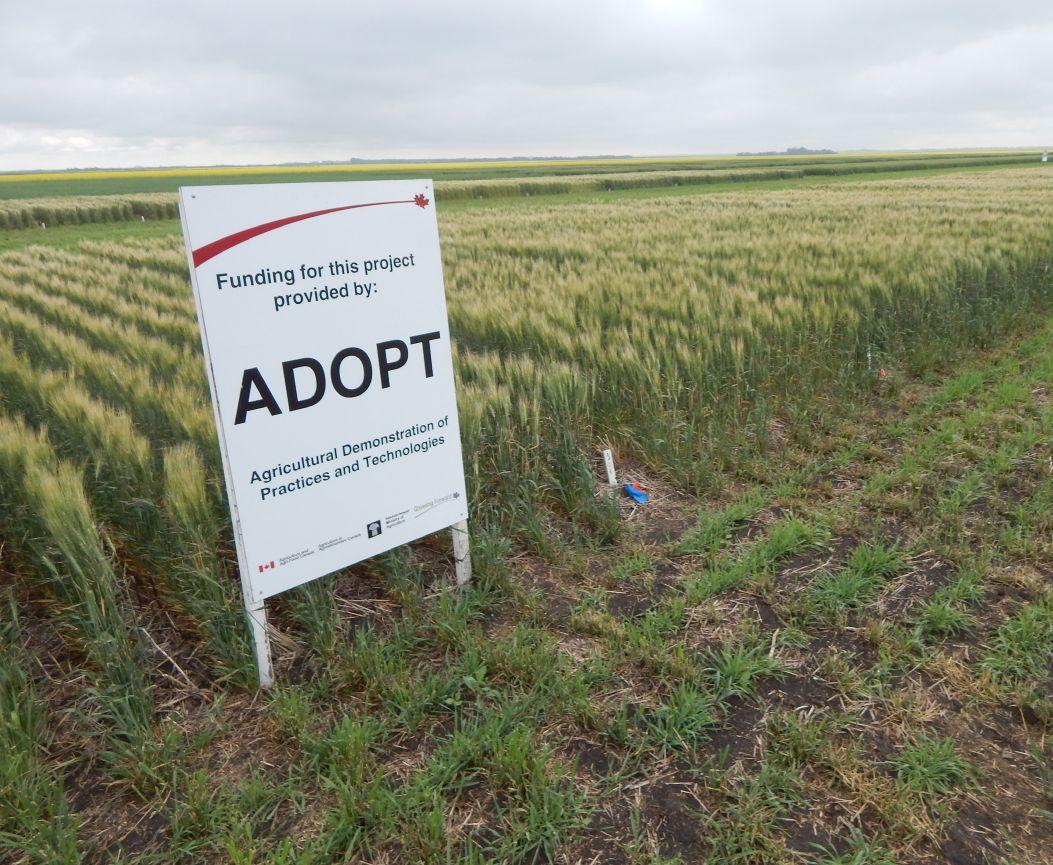
Holzapfel has results from two of three years of an Agricultural Demonstration of Practices & Technologies (ADOPT) program trial that looked at N placement and timing options in winter
wheat. The first year was established in 2018 and harvested in 2019; the second year was established in 2019 and harvested in 2020. A third year was seeded in the fall of 2020. These trials were co-funded by Fertilizer Canada.
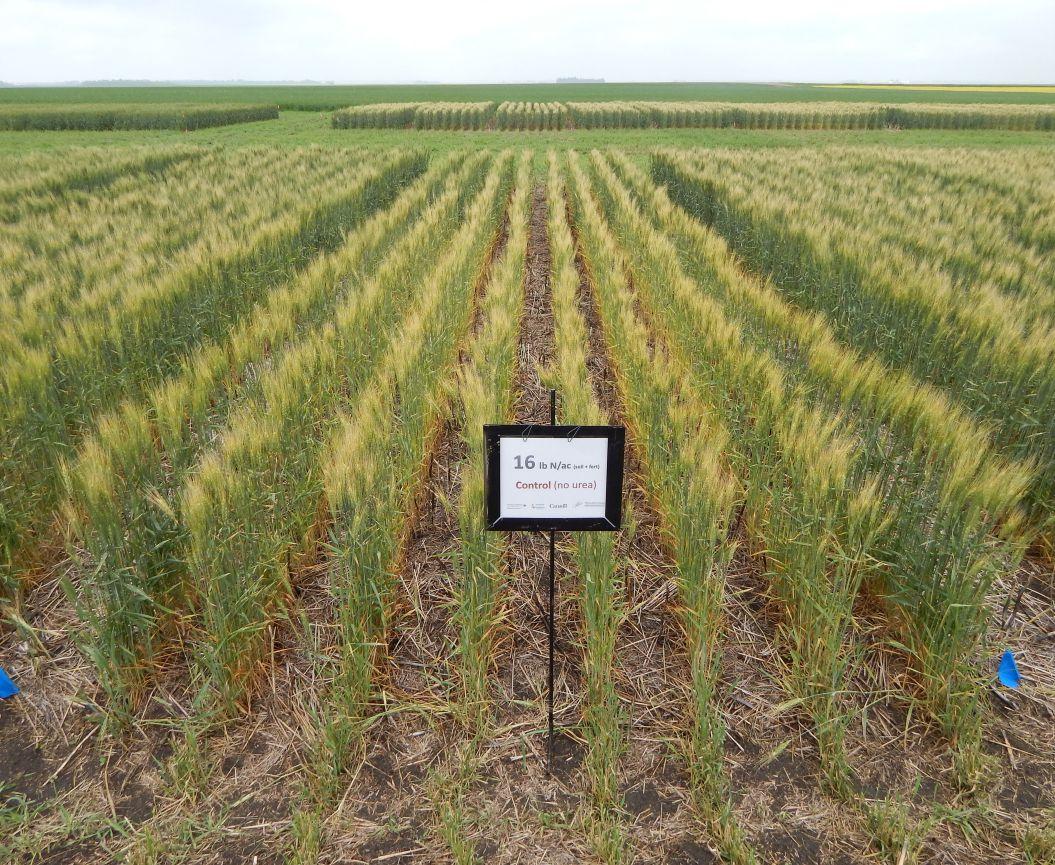
The objective was to demonstrate winter wheat responses to N rate when all the N was applied as urea either in a sideband during seeding in the fall, early spring broadcast, or a split application, with 50 per cent of the N side-banded and the remainder as an early season broadcast application. Nitrogen rates include a zero N control, as well as 53, 70, 107, 134, and 160 pounds total N per acre (lb. N/ac), including soil residual N measured with fall soil sampling (zero, 60, 90, 120, 150, 180 kilograms of N per hectare (kg N/ha)). Enhanced efficiency fertilizers were not assessed in this trial.
Fall seeding conditions were generally good in the first two
ABOVE: A 50:50 split application of nitrogen provided good risk management for winter wheat production.
PHOTO COURTESY OF CHRIS HOLZAPFEL.
years, with seed placed into moisture on Sept. 21, 2018, and Sept. 24, 2019, followed by cool, dry weather. Holzapfel says these weather conditions were ideal because it allowed the crop to get established but meant slow conversion to nitrate-N, which lowers the risk of leaching or denitrification in the fall and early spring. Following the spring broadcast application, 0.5 to 0.6 inches of precipitation occurred within 24 hours of seeding, followed by dry growing seasons, with 51 to 66 per cent of long-term averages.
“The precipitation received after spring broadcast applications was likely sufficient to move N into the soil but may not have completely mitigated volatilization losses,” Holzapfel says.
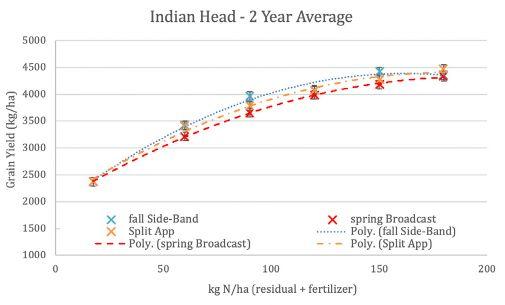
Yield was maximized when fertilizer plus soil residual was in the 107 to 134 lb. N/ac range. Average yields over the two years at these rates were 60 to 65 bushels per acre (bu/ac). This was considered somewhat below average, due to the dry springs encountered both years.
Averaged over the two years, time and placement of N fertilizer did not significantly impact yield. Sideband compared to spring broadcast compared to a 50:50 split application of N were similar. However, when 2020 was considered on its own, yields with spring broadcast were slightly but significantly lower.
“I think the difference in 2020 was that the spring broadcast nitrogen was applied two weeks later than in 2019. The crop probably lacked some early season nitrogen and that hurt yield,” Holzapfel says.
As expected, protein generally peaked at slightly higher rates
than yield, but the economic merits of fertilizing for maximum protein vary depending on where the grain is marketed and whether any premiums/discounts are being offered, Holzapfel says. Averaged over the two years, spring broadcast N resulted in slightly higher protein content, at 12.33 per cent, compared to side-banded N at 11.93 per cent and the split application at 12.06 per cent.
Winter wheat grain yield response to nitrogen rate and placement/timing options when averaged over a two-year period at Indian Head (2019-2020)
PHOTO COURTESY OF CHRIS HOLZAPFEL. SOURCE: CHRIS HOLZAPFEL, 2020.
Winter wheat yield was maximized when fertilizer plus soil residual was in the 107 to 150 lb. N/ac range at Indian Head.
“All factors considered, each of the N timing/placement strategies performed reasonably well,” Holzapfel says.
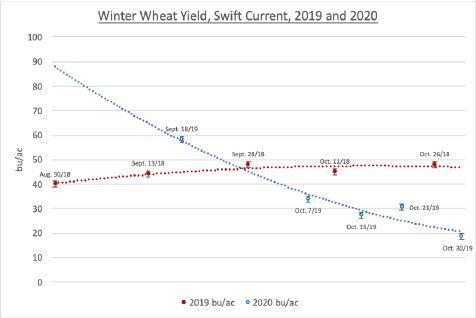
In Swift Current, Sask., Amber Wall with the Wheatland Conservation Area ran the same demonstration trial in 2018/2019. Winter wheat was seeded into very dry soil, but from seeding to harvest the crop received adequate moisture, with most of the rainfall accumulating from June 14, 2019, to harvest.
“We didn’t receive any rain after spring broadcasting nitrogen on May 14 until one month later. The nitrogen likely became stranded and there were probably some volatilization losses,” Wall says. “This meant that the timing of precipitation favoured treatments with some or all of the nitrogen applied in the fall.”
The highest yielding treatments resulted from 160 lb. N/ac applied in the fall sideband and split application at 59 bu/ac, but were statistically the same as 107 lb. N/ac split application at 58.3 bu/ac. Yields showed a general decline in spring broadcast treatments, especially as N rate decreased.
“It is really hard to know what the weather is going to be like ahead of time, so if farmers don’t want to put all their eggs in one basket, split applications look like the way to go in drier areas like ours,” Wall says.
Holzapfel agrees and says that applying all side-banded N at seeding is safest when later seeding is combined with relatively dry/cool climates and well-drained fields. He says that deferring at least some of the crop’s N requirements to a spring broadcast can be a good practice if seeding occurs early or in regions that are warmer and wetter on average. In wetter areas, where the risk of leaching or denitrification is higher, farmers often utilize a split application or broadcast all of their N in the spring.
“Indian Head can go either way with being wet or dry in the fall, so a split application seems to work pretty well here,” Holzapfel says.
The 2021 Indian Head results will be interesting, as the crop was seeded into very dry soil and almost no crop emerged. This could be the year that really highlights the risk management benefits of a split N application.
Assessing seeding dates
Wall also assessed seeding dates in the fall of 2018 and 2019 in an ADOPT demonstration trial. The trial was in response to seeding date research conducted by University of Manitoba assistant
professor Yvonne Lawley from 2013 through 2018 at 13 locations across the Prairies. This research found that 18 site-years followed the expected trend of declining yield with later planting, while 12 site-years were unresponsive to seeding date. Generally, yield reductions were not as large as expected for seeding in October.
When Wall set up her trial, the crop insurance seeding date for winter wheat was Sept. 15. Wall wanted to demonstrate whether that seeding date could be moved later (Saskatchewan Crop Insurance coverage was moved to Sept. 30 after the demonstration started).
Target seeding dates were Sept. 1 and 15, and Oct. 1, 15 and 31. Actual seeding dates varied.
The two years were complete opposites. The first year was very dry at fall seeding and little precipitation fell until June 14. The fall of 2019 was very wet and delayed winter wheat seeding until Sept. 18 as the earliest date. Yield results also followed opposite trends. In the dry year of 2018/2019, yield differences were relatively flat. However, in the wetter 2019/2020 growing season, winter wheat yield declined with later seeding dates.
“From these results, I would say that delaying seeding too long past Sept. 30 will likely cause yield loss. If you want to seed into the first or second week of October, the risk can be higher depending on the growing conditions,” Wall says. “But from the research that has been done, I think moving the crop insurance seeding deadline later was a good decision.”
Research found that winter wheat could be successfully seeded later into the fall.
THE HARVEST HUB PRESENTS
August 2 – 7, 2021
Join us for the second year of The Harvest Hub – we’re sharing harvest best practices and insights to help Canadian farmers prepare for a safe and successful harvest season!
• Pre-harvest crop management
• Cover crop agronomy
• Grain storage & aeration
• Data management
• Product showcases
• Market insights
Stay tuned to topcropmanager.com or subscribe for free at topcropmanager.com/subscribe to ensure you don’t miss any of the 2021 Harvest Hub highlights!
PRESENTING SPONSORS:
Interested in a content, product demo or sponsorship partnership with the Harvest Hub? Connect with us today to secure your spot! (availability is limited)
Quinton Moorehead | National Account Manager 204-720-1639 qmoorehead@annexbusinessmedia.com
Michelle Allison | Group Publisher 204-596-8710 mallison@annexbusinessmedia.com