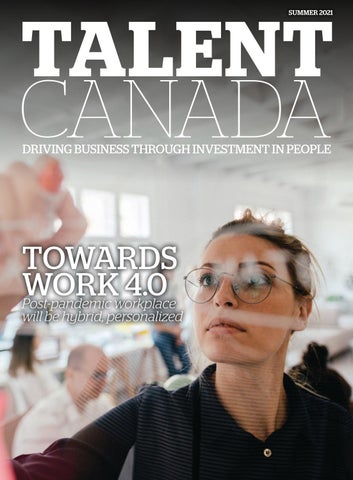

TOWARDS WORK
4.0
Post-pandemic workplace will be hybrid, personalized

Engaged teams and adaptable HR solutions help your business grow stronger.

Connect your workforce. HR, Talent, Time, Benefits & Payroll
Howatt are posted in this weekly online series at TalentCanada.ca. This editorial partnership takes a deeper look at mental fitness — an approach to prevent mental harm and promote mental health.

ON THE COVER
Senior workplace leaders are currently brainstorming the future of their offices. See page 10.


10 Work 4.0: The future of work is hybrid, personalized
The post-pandemic workplace will be employeefocused and include mass implementation of hybrid workplace conditions, experts say.
By Marcel Vander Wier
14 Reconciliation ‘critical’ in diversity, inclusion journey
The discovery of unmarked children’s graves in Kamloops, B.C., highlights the need for reconciliation to be a part of workplace policies across Canada.
By Marcel Vander Wier
18 HR’s reinvention: moving from benchmarking, best practices to guidance
Human resources needs to realize its potential for creating, delivering and capturing value.
By Dave Ulrich, Norm Smallwood and Alan Todd

FROM THE EDITOR
BY MARCEL VANDER WIER
CEOs take a stand against hate
On June 6, four members of a London, Ont., family were killed after being struck by a pickup truck while out for an evening walk. A nine-year-old boy survived.
Police were quick to label the incident an act of terrorism, alleging it was a planned and premeditated attack against Muslims — reportedly the first terrorism charge of its kind in Canada.
A 20-year-old Caucasian male has been charged and is facing a court trial.
The immediate outpouring of support from Canada’s corporate community was strong, with many condemning the act of racism and hatred, while urging solidarity in terms of equality, fairness and kindness.
On June 23, our media brand worked to harness this outpouring into a critical conversation — by way of a virtual event entitled “Taking A Stand: How organizations can overcome hate and inspire meaningful societal change.”
Joined by CEOs Mike Rencheck of Bruce Power and Chris Inniss of Pathwise Credit Union, as well as Nigel Branker, president and executive vice-president of health and productivity solutions at LifeWorks, we worked to unpack what has often been a difficult conversation.
Deloitte Canada’s Fatima Laher kicked things off with a keynote address, urging corporate Canada to truly embrace diversity.
“Disrespect invites disrespect and violence incites violence,” she said, noting the event in London, and other recent incidents, remind us that Canada is not perfect.
“We must take a better look at ourselves and our internal policies,” said Laher. “Acknowledging shortfalls, blind spots and avenues for positive change is an important step that we all need to take.”
“We are so much better than this. (Canada is) a leader, but that doesn’t make us immune to self-reflection and tangible change.”
“Our diversity must be celebrated — not feared or judged,” she said. “Hate and intolerance have no place in society.”
Our panellists took on some heavy questions in their discussion around the role of CEOs and senior management in addressing hate within Canadian society.
• What concrete steps can organizations take?
• How would you react if an employee engaged in inappropriate conduct off-duty?
• How can you listen to and amplify voices of victims?
Their responses were important, and could usher in a new wave of leadership on this subject within corporate Canada.
CEOs should not only denounce racism, but they should be actively anti-racist, said Inniss.
“Our diversity must be celebrated –not feared or judged.”
“I feel like our organizations owe it to society... to actively change the way that we do business fundamentally to meet the needs of our society,” he said. “We all impact it; it’s all of our problem.”
While unable to change the past, the future is shapeable, added Rencheck. Bruce Power completed grief counselling and community outreach following the London attack, as an employee was directly affected as a family member of the deceased.
“You can never undo the acts; you can never undo the consequences of the acts,” he said. “You can help people move forward and progress forward.”
Leaders and citizens have a role in shining a light into these “dark spaces,” said Branker.
“We have a position of privilege as organizations,” he said, before urging business leaders to use their platforms to make the world a better place.
For full coverage of this June 23 event, or to listen to the full discussion, visit talentcanada. ca/virtual-events/taking-a-stand. | TC
Summer 2021, Vol. 2, No. 3
Reader Service
Print and digital subscription inquiries or changes, please contact
Beata Olechnowicz, Audience Development Manager
Tel: (416) 510-5182
Fax: (416) 510-6875
Email:
bolechnowicz@annexbusinessmedia.com
Mail: 111 Gordon Baker Rd., Suite 400, Toronto, ON M2H 3R1
EDITOR
Marcel Vander Wier
mvanderwier@annexbusinessmedia.com
ACCOUNT MANAGER
Wendy Serrao wserrao@annexbusinessmedia.com
647-628-3610
ACCOUNT COORDINATOR
Trish Ramsay tramsay@annexbusinessmedia.com
MEDIA DESIGNER
Emily Sun
GROUP PUBLISHER
Todd Humber thumber@annexbusinessmedia.com
COO
Scott Jamieson sjamieson@annexbusinessmedia.com
MAILING ADDRESS
111 Gordon Baker Road, Suite 400, Toronto, ON M2H 3R1
Publication Mail Agreement #40065710
Printed in Canada
ISSN 2563-0164 (Print)
ISSN 2563-0172 (Online)
Published four times per year (Winter/Spring/ Summer/Fall) by Annex Business Media
SUBSCRIPTION RATES
Canada – 1 Year $ 26.50 (+ applicable tax)
Best pricing (Can/USA/foreign) available online at talentcanada.ca
Occasionally, Talent Canada magazine will mail information on behalf of industry-related groups whose products and services we believe may be of interest to you. If you prefer not to receive this information, please contact our circulation department in any of the four ways listed above.
ANNEX PRIVACY OFFICER
privacy@annexbusinessmedia.com Tel: 800-668-2374
No part of the editorial content of this publication may be reprinted without the publisher’s written permission. ©2021 Annex Business Media. All rights reserved. Opinions expressed in this magazine are not necessarily those of the editor or the publisher. No liability is assumed for errors or omissions. All advertising is subject to the publisher’s approval. Such approval does not imply any endorsement of the products or services advertised. Publisher reserves the right to refuse advertising that does not meet the standards of the publication.

the
of






BRIEFS
Paying wages in cryptocurrencies comes with complications
Cryptocurrencies are digital currencies that do not have a physical paper form and are not regulated by banks or governments. Compensating Canadian workers and workers who are living abroad in cryptocurrency comes with some complications, according to Andrew Caldwell, advisory team lead at HR consultancy Peninsula Canada in Toronto. “Tax implications and the changing values of cryptocurrencies could cause confusion and lead to the employer paying staff less than the minimum wage,” he said.
Businesses face higher risk as subsidies fade
Pandemic restrictions are labelled at fault for many business closures across Canada. And now, business groups are warning that many more may not survive the summer as federal aid begins to phase out before the economy fully reopens, according to the Canadian Press. “Cutting back on subsidies prematurely when busi-
nesses are still closed or severely restricted is a recipe for disaster,” said Corinne Pohlmann, senior vice-president of national affairs for the Canadian Federation of Independent Business.
Appropriate remote work balance can reduce burnout
Recruitment agencies and workers say remote-working norms in a pandemic age were created pretty much overnight, and employers need to ensure they stamp out any unhealthy work practices as the pandemic drags on. Experts told the Canadian Press it’s especially critical for retention: promoting a healthy work environment means fewer workers leaving for another company or changing careers altogether.
Provinces balance reopenings with vaccination progress
Many provinces are setting their sights on reopening as Canada’s COVID-19 vaccination pace brings optimism, but leaders are warning that those plans could be curtailed if people don’t get their shots. A delayed third wave has put immense pressure on health
care in Manitoba, where a record number of people were in intensive care and the daily case count hit a record 603 on May 20, the Canadian Press reported.
Self-regulation now available for CPHRs in Saskatchewan
The Chartered Professionals in Human Resources (CPHR) Saskatchewan became a self-regulating body for its members as The Chartered Professionals in Human Resources Act came into force on May 13. The act establishes two levels of regulation: registration for members; and certification for those who wish to pursue the CPHR designation. The legislation does not provide for licensure.
Business leaders demand plan to reopen borders
Workplace leaders called on Ottawa to immediately lay out a comprehensive plan to reopen the economy and international borders, the Canadian Press reported. On June 14, a Canadian travel and tourism roundtable said the federal government must heed advice from its expert advisory panel and allow fully vaccinated foreigners into the country. The border closure was subsequently extended until July 21.
Provinces pledge paid sick leave for COVID-19
British Columbia, Ontario and Nova Scotia are among the provinces who have pledged paid sick leave programming as a result of the COVID-19 pandemic. B.C.’s program provides three paid sick days at $200 per until Dec. 31 to anyone who shows COVID-19 symptoms, self-isolates or gets tested. Ontario has also commit-
ted to three paid sick days at $200 per day, until Sept. 25. Nova Scotia’s program will cover $160 per day for four days until July 31.

Action urged to end anti-Black racism in public service
The federal government must address anti-Black racism in the public service by implementing timely changes to staffing processes and effective training programs for public servants, not by long-term promises, according to advocates. The Canadian Press reported that Nicholas Marcus Thompson — one of 12 current and former Black federal workers who filed a proposed class-action lawsuit in Federal Court against the government in December — said it shouldn’t take the government five years to collect disaggregated data to understand the underrepresentation of Black workers in the upper echelons of the public service and to take down barriers they face. | TC
WEB POLL:
HEALTH & SAFETY
BY ALEX BOUCHER
Paid sick days matter even more than you might think
Historically, paid sick leave emerged out of early union drives for employee rights — practices where unions helped entrench rights such as workers’ compensation, weekends, injury and illness protection, and paid holidays.
Larger employers with bigger unions embedded some form of sick leave in collective agreements, whether it was a periodic allotment, or an accumulation of sick days over time.
The practice then extended to non-union employees who were also granted similar benefits, creating a marketplace where larger employers with predominantly full-time, nonunion, white-collar jobs developed paid sick leave programs as a competitive offering.
PANDEMIC EFFECT
COVID-19 has highlighted that millions of vulnerable employees in the low-wage sector and those working entry-level, part-time jobs have no protection for sick leave. Ironically, those are also the jobs that have been deemed most essential, while at the same time being more exposed to the impacts of the virus, both medically and financially.
Concurrently, employer-employee discussions have shifted from “Are you really sure you’re too sick to come to work?” to “Please don’t come to work if you’re sick.”
In areas where income is dictated by hours worked, taking a sick day equates to loss of pay, forcing employees to mask their symptoms or other illnesses to maintain financial security.
According to Statistics Canada, absenteeism costs employers $16.6 billion annually, keeping more than 550,000 workers at home, or almost
COVID-19 has highlighted that millions of vulnerable employees in the lowwage sector and those working entry-level, part-time jobs have no protection for sick leave.
four per cent of the Canadian workforce away from work in any given week.
Employers expect their employees to bring their best to the workplace.
A paid sick leave program — in case of an emergency, accident, unforeseen illness, or even for the short term — provides a measure of security that allows employees to be able to focus on what’s necessary at work.
Mutually beneficial paid sick days should be foundational to an organization’s brand and reputation.
SHIFT TOWARDS WELLNESS
Today, there’s significant talk about improving physical and mental workplace health in post-COVID recovery, or implementing more well-being programs to help employees.
However, we’ve found that employees are less likely to engage in those programs and with their workplace if foundational protective benefits providing income security for unforeseen events — such as paid sick days — are not in place.
It has become a key differentiator in recruiting, when recruiters review sick leave benefits and their health protection plans, to attract a better workforce.
Pandemic or no pandemic, employers need to have an effective attendance support program and identify how they will enable their employees to use sick leave when they need it.
Looking ahead, three key themes are going to dominate the future of the workplace.
First, post-pandemic there will be more focus on supporting employee health, with a bigger drive around mental well-being: There’s a lot more vulnerability in the work-
place, and the support to keep employees working and to help them stay at work is a fundamental need.
New well-being protections and programs will have to be created to support employees’ total health, rather than just treatment when they’re sick, helping to reduce absenteeism and the cost of paid sick leave programs.
Alongside employee health, workplaces need to consider attendance and productivity: Healthy, engaged and available employees are the backbone of any organization. The future is flexible, and that flexibility is going to vary based on job type and work location.
There is no going back to “everyone must be in the physical workspace, every day.” There are going to be more demands on flexibility from both employees and employers to manage work efficiently, because we’ve proven that it’s possible.
Flexibility means flexible programs to manage health and attendance. Dictating what is good for my physical and mental health is no longer the best approach. Meeting employees where they are is more important than a one-sized approach.
Finally, this leads to inclusive approaches. Diversity, equity, and inclusion are core to meeting employees where they are: The underlining statement is “don’t dictate my values; meet my needs.”
Individualization of offerings allows people to be their best and bring their best to the organizational bottom line.
Provide mechanisms to allow employees to manage their health and family needs, create an environment where they are supported as individuals, and ensure they have the skills and tools to do the job.
Success lies in including your workforce and supporting them as individuals. The cost of doing nothing differently is not affordable. | TC
Alex Boucher is principal and total health management practice leader at Mercer Canada. Mercer Canada has been a longtime sponsor of the SCNetwork, an HR peer-to-peer network in Canada.
LEGAL STEPS & MISSTEPS
BY JOHN HYDE
John Hyde is the managing partner at Hyde HR Law in Toronto. Nicholas Goldhawk, an associate at Hyde HR Law, co-wrote this commentary.
Five common misconceptions around vacation law in Canada
Do you think you understand the ins and outs of vacation laws? The rules are some of the most complicated, but least understood, parts of employment law in Canada.
When a dispute arises over vacation, the answer is almost never clear and the liabilities can sometimes be severe. Let’s examine some common misconceptions.
Misconception 1:
Vacation pay is payable on base salary only
Quite simply, this is wrong. It’s a common scenario: the employee receives a base salary every two weeks, and vacation pay on the base salary. Less frequently — perhaps monthly, quarterly, or yearly — the employee also receives a payment for a bonus, commission, or profit share, based upon the employer’s results. Usually, the employee does not receive vacation pay on those amounts. The employer could be making a very expensive mistake.
In most Canadian jurisdictions, vacation pay is payable on all regular pay, including salary, commission, and non-discretionary performance bonuses. However, the practice of withholding vacation pay on bonuses and commissions is so commonplace, that many employers — including large, sophisticated multinational corporations — are continually failing to meet this standard at the institutional level.
It may seem like a minor technicality, but the price tag for this misstep can be extremely expensive.
Misconception 2: All vacation is ‘use it or lose it’
Employee handbooks often warn that unused vacation time expires
Employers must schedule vacation time for most employees unilaterally to ensure that the minimum vacation time is taken.
at the end of the year. This idea is so ingrained, that each December, a rush of employees scramble to use up their banked vacation days.
In actual fact, it is the employer’s responsibility to ensure that every employee takes the minimum vacation time, and employers who fail to do so could be exposed to liability.
In most Canadian jurisdictions, employment standards legislation makes vacation time mandatory, as a separate (but parallel) entitlement to vacation pay.
That means that employers must schedule vacation time for most employees unilaterally to ensure that the minimum vacation time is taken — even if the employee does not want to use the vacation time.
Misconception
3:
Employees must keep track of their own vacation time
Contrary to popular belief, most employment standards legislation actually requires employers to keep records of an employee’s accrued entitlement to vacation time and vacation pay, and to produce statements of those entitlements to employees. This requirement goes hand-in-hand with the minimum vacation pay and vacation time entitlements.
Employers may frequently find that they have dug themselves into a deeper hole by:
• failing to pay the appropriate vacation pay
• failing to keep proper records of vacation pay.
In one Ontario Court of Appeal case, the court upheld an award to an employee for approximately eight years’ of vacation and holiday pay found to be owing — well beyond the general two-year limitation period for civil claims.
The employee was permitted to claim damages from many years ago, specifically because the employer failed to keep records of vacation pay as required by Ontario’s Employment Standards Act.
Misconception 4:
Employees may choose when to take vacation
Contrary to popular belief, employers have near-absolute discretion to schedule employee vacation at a time that is convenient to the business, so long as that discretion is exercised reasonably.
Legally speaking, employees have little to no say in when they may take their holidays.
The only stipulation is that employment standards require employer-scheduled vacation time to be of a minimum length (usually one week), so that the employer cannot “sprinkle” single-days of vacation throughout the year to satisfy the entitlement.
Misconception 5:
Two weeks of vacation is the standard
It is a common belief that the minimum standard is just two weeks of vacation per year. While this was once a widespread standard, recent amendments to employment standards legislation around the country have changed this.
Presently, vacation is a flexible entitlement across Canada (excluding the Yukon), which increases with an employee’s length of service. In most provinces, vacation increases from two to three weeks at around five years of service. Employees subject to federal legislation become entitled to four weeks’ vacation after 10 years of service.
Even still, employers continue to use employment contract templates that categorically limit employees to two weeks’ vacation. Those contracts are not only misleading, they may not be enforceable. | TC
EMPOWERING EMPLOYEES FOR THE NEW DIGITAL AGE
NEW INNOVATIONS FROM MICROSOFT OFFER EMPLOYERS NOT JUST A GLIMPSE OF WHERE THINGS ARE HEADED, BUT ALSO A PATH TO GETTING THERE.
When interpreting the massive changes of the last 15 months, especially in the working world, Microsoft’s Jason Brommet believes that “what we have been, and are continuing to participate in, is the single largest generational shift in the way work gets done, and what work will look like for frankly every person in every organization, all around the world.”
As Microsoft’s Head of Modern Work & Security, part of Brommet’s duty has been to look to where this shift is leading, in order to provide the tools necessary for navigating the future once it arrives. The destination, according to the findings of Microsoft’s 2021 Work Trend Index, is “hybrid work.”
This assertion comes from the Work Trend Index’s findings that as many as 68% of Canadian employees want to emerge from the pandemic with flexible remote work options still intact, but 59% would prefer a move toward increased in-person collaboration , post pandemic – what Microsoft sees as the “hybrid paradox.”
Accommodating these distinct needs is hybrid work, a paradigm where employees in the same organization are free to operate in different environments, alternating shared offices, the field, or homes as needed.
Brommet highlighted that with hybrid work, “the unique challenges and opportunities that sit in front of organizations is: how do you enable an experience that fosters culture and connection between your people, but also enables equitable and inclusive experiences as you have individuals continually switch between environments?”
‘THE GREAT CONNECTOR’
For Microsoft, that answer lies in technology, which Brommet calls “the great connector.”
The connections technology creates in new workplace structures are not solely about efficiency, though: “At its core, technology has become not only the lifeline for individuals and people, but has really become the empowerment platform for organizations to thrive and be resilient.”
The impending changes on the horizon of hybrid work were treated as inspirations, rather than obstacles in the development of the new employee experience platform,

Microsoft Viva. Announced earlier this year, Microsoft aptly describes Viva’s function as “empowering every employee for the new digital age.”
The four modules contained within Viva address different facets of this new digital age, all served up to employees in the flow of work so they no longer need to go to multiple destinations to consumer, learn or connect. Viva Connections, for instance, curbs the difficulties of decentralized or digital workplaces by providing what Brommet describes as “a personalized gateway to your digital workplace,” allowing organizations to create a virtual bank of internal communications customized on factors such as the geographic needs or diverse roles within a company.
Other modules include Viva Insights, which promotes optimal performance by detailing how individuals are working and spending their time; Viva Learning, which aims to simplify the onboarding and professional growth processes in hybrid work environments; and Viva Topics, an AI-powered information and expertise aggregator.
PROMOTING MENTAL HEALTH
Another major workplace shift that Microsoft has incorporated into its design philosophy is the increased importance of mental health. With hybrid work blurring the line between home and office, organizations are realizing that the signs of a healthy workplace go beyond fulfilling deadlines or metrics.
“As an individual who’s historically had
a commute both to and from the office, I miss those boundaries of the transition from personal to professional,” said Brommet. “Today, my calendar just blurs: my calls start early and they go late, so there is the balance of what policy and procedures we can implement, my own personal practices and proper use of our tools.”
The new Virtual Commute feature within Microsoft Teams reintroduces this boundary and the well-being it brings to changing workplaces. Developed in collaboration with leading meditation and mindfulness company Headspace, Virtual Commute offers employees a necessary buffer between roles, whether through guided meditations or curated roundups of actions or commitments for the day. Virtual Commute is just one of the many new features that is purpose-built to enable employees to have downtime and breaks in their day.
Unifying all of these innovations is Microsoft’s commitment to developing futurefocused technology, inspired by the reality that “there’s never been a bigger need for technology, data, insights that really enable a great employee experience, irrespective of location,” according to Brommet.
“I think that’s one of the foundational components of what Microsoft looks at, as we think about what we’ve lived through, and more importantly, as we look forward.”

WORK 4.0: THE FUTURE OF WORK IS HYBRID, PERSONALIZED
Post-pandemic workplace will be employee-focused: experts
BY MARCEL VANDER WIER
The future of work is coming into focus.
According to experts speaking at Talent Canada’s virtual event “Work
4.0: Revolutionizing work post-pandemic,” the post-COVID-19 workplace will see mass implementation of hybrid working conditions, and will focus on employees’ individual expectations.
More than 500 workplace professionals registered for the April 15 virtual event, which served to provide trusted, reliable information on how to redesign organizations to align with the future of work.
Since March 2020, employers have weathered the global pandemic with a variety of short-term, innovative solutions designed to keep doors open, staff engaged and productivity at respectable levels.
But with the one-year-mark come and gone, leaders are taking a step back and exploring longer-term strategies to respond to employee demands, capitalize on best practices and take advantage of proven technologies to create the best organizations.
Going forward, the employee experience may need to be rethought in order for organizations to compete for the best and brightest talent.
The event was supported by title sponsor Salesforce, and gold sponsors ADP Canada, LHH Knightsbridge, Microsoft Canada, PwC Canada, and UKG (Ultimate Kronos Group).
WHAT’S NEXT FOR THE WORLD OF WORK?
The COVID-19 pandemic is not the only crisis in today’s world, according to Dave Ulrich, human resources thought leader and professor at the Ross School of Business at the University of Michigan.
Add a global recession, political posturing, the digital revolution, social injustice and an emotional deficit disorder, and you gain a much fuller picture of current issues facing the world of work, he said in his opening keynote address.
“On the one hand, people feel threatened,” said Ulrich. “On the other hand, we see that crisis as an opportunity. Many have said a crisis is a terrible thing to waste.”
The most important thing business leaders can give an employee is an organization that succeeds in the

marketplace, he said.
In terms of talent, your staff are not only your most important asset — they are your customer’s most important asset, said Ulrich.
“Work is no longer a place — it’s a way to think; it’s a set of values,” he said. “The boundary of work is the value I’m creating for my customer.”
Work of the future will also be personalized, said Ulrich. Not only will work requirements be tailored to unique individual needs, it will also require emotion and empathy to be shown by leaders to create experience and energy.
Living with uncertainty will be a constant, and it’s up to HR professionals to harness “realistic optimism.”

Their job is to build a great talent base alongside a solid organizational culture focused outside-in, he said.
For an HR department, forming solid relationships with your team, employees, business leaders, customers and investors will allow for maximum business impact to be achieved, said Ulrich.
In terms of skills, turning complexity into simplicity is key, he said.
“HR is not about HR — it’s about creating value.”
FUTURE OF INNOVATION, COLLABORATION
Many expect the future of work to take place in a hybrid setting. But
what does that mean for the future of innovation and collaboration?
“Technology is going to continue to be important, in terms of the collaboration effort,” said Kathy Parker, partner, consultant and GTA leader of PwC Canada’s Workforce of the Future in Toronto. “But it goes beyond that.”
“The ways that we are going to successfully collaborate with people really depends on people having connection and trust, and people being able to feel part of something.”
Culture lays the bedrock for that effective collaboration, she said.
“This is not routine for a lot of managers. This is really about a new set of skills for managers to use.”
Technology can be a great enabler, and empowering employees with tools to help them shape their individual workflow is beneficial, said Jason Brommet, head of modern work at Microsoft Canada in Mississauga, Ont.
“The pandemic has really shown that when employees are equipped with the right technology and support from management to remain productive, engaged and connected, it’s truly amazing to see what they’re capable of,” he said.
Going forward, the employee experience may need to be rethought in order for organizations to compete for the best and brightest talent, said Brommet.
“We will see more and more employees looking at workplace strategies and decisions as the factors upon which they decide to move to an employer, or to leave.”
Offices of the future will likely be designed towards collaboration, said Robert Hosking, senior vice-president and managing director of search practices at LHH Knightsbridge in Toronto.
In the meantime, leaders need to challenge their assumptions and put their faith in their staff, he said. “Leaders need to possess the ability to trust that their team is actually performing… allowing flexibility for people to work the way that they work best — providing that the results are there.”
“Just because it worked in the past, doesn’t mean it will necessarily work in the future,” said Hosking.
Leaders should encourage weigh-in on return-to-work plans, he added.
“There will be mixes of people — some that will really want to come back to the office and be there much more frequently, and others that will say ‘I would really prefer not to.’”
ACHIEVING BUY-IN AND BUILDING A PLAN
As business leaders map out the future of their workplaces, settling on the best vision and achieving buy-in from leaders and teams can seem like monumental tasks.
However, the past year has proven that pivoting is both possible and sustainable, said Chris Mullen, executive director of The Workforce Institute at UKG in Colorado.
“We have to take a look at the past and the future to move our path forward,” he said, noting trust is a currency of great significance through this time of upheaval.
Manager effectiveness is key to achieving trust in the organization, said Mullen. Manager training and coaching may be required to ensure a “wonderful experience” for employees.
“(People managers) dictate your unique culture,” he said. “Your CEOs can talk about it all they want. If the management and leadership don’t buy in… it’s really difficult.”
Decentralization and digitization were the major themes of 2020, according to Vala Afshar, chief digital evangelist at Salesforce in Massachusetts.
“The pandemic was – some argue – a 10-year accelerant in terms of cultural and digital transformation.”
“The pandemic was — some argue — a 10-year accelerant in terms of cultural and digital transformation,” he said, noting the massive expansion of remote work as of March 2020.
“We’ve proven that we can do this — many companies have had record performance over the last year, during this incredibly difficult time,” said Afshar.
“It’s important to maintain a beginner’s mindset. I don’t think there are a lot of experts about tomorrow.”
“I think it’s a superpower now. If you can learn, unlearn, relearn and change yourself,” he said. “If you can do that, I think you position yourself to stay relevant in this new normal.”
Moving towards a culture-first, policy-second mindset is helpful, said Afshar, as is a design-for-movement type of mindset moving forward.
“Work from anywhere is going to be a new war for talent,” he said, noting one in four employees are ready to change their jobs as a result of shifting policy measures.
“It’s important to understand that if your job is no longer a function of location or time, and you’re not going to define your culture on proximity or perks… leaders need to really think about: ‘Are you going to be able to recruit, retain top talent if you don’t have flexible policies?’”
For employees unable to work from home, value can be found in recognition and acknowledgment, said Deon Blyan, director of global talent development, people and culture at Sunwing Travel Group in Toronto.
“Safety through the ongoing pandemic is paramount for those employees as well,” he said.
Plotting out a step-by-step plan is a slightly “high-minded” approach, according to Blyan.
“We’re paving the road as we’re driving on it,” he said, noting it’s often up to the CEO and executive to determine key focus and priorities. “While doing that, it’s likely that you’ll tap into the strengths that exist in the organization today.”
However, it’s important for leadership to continue to thread regular communications towards the “vague picture off in the distance,” said Blyan. “It’s a way to bring people along on that journey.”
LEADERSHIP SKILLS OF THE FUTURE
The current pandemic is changing more than workplaces — it’s been a “time machine to the future” for workplaces and leaders, according to Zabeen Hirji, executive advisor, future of work, at Deloitte Canada in Toronto.
“The future of leadership is human,” she said in her closing keynote address. “Leadership is not a title; it’s actions; it’s behaviour.”
Through COVID-19, leaders across sectors have come together to save lives and livelihoods, said Hirji. “One of the things I truly hope is that we don’t let those silos build up again because big issues, big problems can only be solved by all of us working together.”
Transparency, empathy, compassion and vulnerability create resilient individuals and organizations — forming deeper connections, she said.
“Leaders are sharing information real-time, even when they don’t have all the answers… We’ve entered this era of radical transparency, and there is no going back,” said Hirji. “This new way of connecting is building trust.”
It’s time to turn this leadership moment into a movement to build a better future, she said — one that is “more human, more inclusive, and that works for all.” | TC
Learn, Connect and Grow
Join CPHR Alberta as a general member today and stay updated on HR industry trends and changes, receive access to exclusive member perks and build your network with our engaged community. Our general members include over 800 industry professionals across Alberta including vendors, partners, educators, payroll professionals, coaches and more.
Join us today!


RECONCILIATION ‘CRITICAL’ IN D&I JOURNEY
Discovery of unmarked graves an opportunity to educate: experts
BY MARCEL VANDER WIER
The discovery of unmarked children’s graves at a former residential school in
Kamloops, B.C., highlights the need for reconciliation to be a part of workplace policies across Canada, experts say.
“It’s critical,” said Michael Bach, CEO of the Canadian Centre for Diversity and Inclusion in Toronto. “Arguably, it’s the missing piece of the puzzle.”
“Employers seem to avoid work with Indigenous peoples because it’s going to take a long time to produce results. But if you aren’t doing anything, you’re not going to produce any results. No one said reconciliation was going to be easy.”
On Sunday, May 30, Prime Minister Justin Trudeau ordered flags on federal buildings across Canada lowered for the 215 children whose bodies were found at a former residential school.
The children’s remains were located using ground-penetrating radar in late May.

Educating corporations
The process towards reconciliation begins with learning, and ensuring that corporations understand the history of our nation, said Rod Miller, president and CEO of CPHR Alberta in Calgary.
“It’s an opportunity to learn and to educate,” he said. “From a business perspective, there is a lot of opportunity within the Truth and Reconciliation Commission (TRC) calls to action around what corporations can do.”
“It’s about creating organizations where anybody feels as though they belong and they can contribute.”
No. 92 of the TRC report focuses on the private sector, calling upon the corporate sector to adopt the United Nations Declaration on the Rights of Indigenous Peoples as a reconciliation framework.
Rooting out any systemic discrimination policies from organizations needs to be conducted in order to provide an equitable workplace

Talent Canada, a national media brand for senior leaders and HR professionals, is proud to launch the Psychologically Safe Workplace Awards.
These aren’t vanity awards. The program is designed to provide your teams with individual data about their mental health, and your organization with a comprehensive dashboard showing where to focus resources.
Got two minutes? Go to PsychologicallySafeWorkplace.com and watch the explainer video.
Scan this for more information
Sponsors



Presented by:
DIVERSITY & INCLUSION
where Indigenous employees can thrive, said Miller.
“We have been so focused on the pandemic — trying to navigate what that world is like for all of us, that we’re not bringing this forward as much as we could,” he said.
“I believe fully that there is a very important social community requirement around this, that we need to bring this forward as part of our social fabric of our organization.”
For Miller, reconciliation is a “very Canadian” aspect to diversity and inclusion.
“I do believe that is fabric that needs to be unwoven within Canada, and a focus on the Indigenous inclusion is critically important,” he said.
“There are systemic barriers that exist within our society that we need to remove to ensure that everyone feels as though they can contribute, that they belong, and that they can be their best selves at work and in our society. The Indigenous conversation is a huge part of that for Canadians.”
“I hope that what we heard on the weekend proves to be a catalyst to move these conversations forward and deeper, to move us into action.”
Charting a path forward
Indigenizing workplaces includes Indigenous engagement strategies and benchmarking performance, said Kelly Lendsay, president and CEO of Indigenous Works, a national non-profit in Saskatoon, Sask., with a mandate to improve the inclusion and engagement of Indigenous people in the Canadian economy.
“Hope is not a strategy,” he said. “It’s very purposeful, intentional types of steps that companies need to take.”
Education of people leaders is crucial, as many did not learn about Indigenous history in school, said Lendsay, noting corporate engagement on this issue has been low.
“There is progress — it’s moving along, but we have to accelerate it,” he said, noting the discovery of the unmarked graves has “hit a nerve” and may push a further adoption of the TRC recommendations by corporations.
“It’s real. It’s painful… It has to be a sustained effort.”
Fostering an environment of consultation, such as

bringing in Indigenous elders to educate employees, would be a worthy consideration for employers, according to Miller.
“It’s important for us to ensure that we’re educating our employees and organizations around the truth of all of this,” he said.
Towards a statutory holiday
On June 3, the federal government passed legislation to create a national day for truth and reconciliation. The statutory holiday will be held annually on Sept. 30, and applies to federally regulated workers.
“Hope is not a strategy. It’s very purposeful, intentional types of steps that companies need to take.”
This history of residential schools needs to be commemorated, said Miller, noting the annual occurrence would be akin to Remembrance Day.
“To me, it’s a national day of mourning,” he said. “Lives were lost. Societies were broken. Cultures were disbanded.”
“We need to never forget that this is part of our history. It’s important for us as Canadians to step in that.”
It’s an important first step to “recognize the atrocities of the residential school system,” added Bach. “I think a statutory holiday will give us a talisman of sorts, to ensure we never forget.” | TC
The future of business is here.
While businesses keep evolving, CPHRs are bringing their education, expertise and experience to help shape the future of business.
IS YOUR BUSINESS READY?
HIRE A CPHR TODAY.
CPHRBC.CA/BUSINESS


HR’S REINVENTION
Moving the profession from benchmarking, best practices to guidance
BY DAVE ULRICH, NORM SMALLWOOD AND ALAN TODD
Like other functions (and organizations, leaders, and individuals), HR needs to continually reinvent itself to realize its potential for creating, delivering, and capturing value.
Recently, we have had conversations with thoughtful HR trendsetters. They almost all propose reinventing HR through benchmarking and best practices.
Benchmarking reports how well HR is doing against a standard (global, industry, or historical norm) to build on strengths or to overcome weaknesses; best practices suggest how to improve by learning from others. Both have had a long history in shaping the HR profession and both will continue to be important.
Descriptions compare oneself to others; prescriptions show how to improve oneself to achieve desired results.
But we must take them a step further. Now is the time to reinvent HR by pivoting from benchmarking and best practice to guidance.
Instead of improving by comparing oneself to others and by adapting what others do well, we must move beyond these descriptions of HR work to prescriptions.
Descriptions chronicle what has been or is being done; prescriptions anticipate what should be done. Descriptions focus on activities or initiatives; prescriptions focus on results.
Descriptions compare oneself to others; prescriptions show how to improve oneself to achieve desired results. Descriptions benchmark and seek best practices; prescriptions guide choices to deliver results through vested practices.
We have reviewed how benchmarking should pivot to guidance. Let us now propose why best practice focus needs to evolve to make guidance happen.
Pervasiveness of, and challenges to, best practices
For decades, all of us in the human capital profession have relied on best practice logic. We observe what leading companies do and try to distill and share that information with others.
Best practice work shows up as case studies of leading companies in seminars, talks, articles, books, workshops, and training sessions. Best practice work shows up when consulting firms recommend to their clients the innovative work that their other clients have done.
But using best practices falls short when human capital issues become ever more central to changing business conditions.
Consider the following examples:
Best practices focus on others and not oneself
Here’s how this might be remedied: At a personal level, I don’t need to be as (fill in the blank: well-dressed, wealthy, educated, cheerful) as someone else, but I do need to take care of myself well enough to have personal well-being and fulfil my potential.
In human capital work, comparing to and learning from others is good, but the primary agenda should be determining whether or not the human capital “best” practice will help your company meet its unique goals. The benchmark should not be others, but yourself, and working toward personalized goals.
Best practices focus backward more than forward
Learning what others have done will always leave you behind them as they reinvent.
As one leader said, “I hope others will copy our programs today because by the time they have copied them, we have moved on to the next practice. They will never catch up by copying us.”
Best practices are often piecemeal and not systemic
Too often, a best practice is considered in isolation (for example, here is what a leading company did in leadership training), but not within the entire context (leadership training occurs in the context of hiring, performance management, executive commitment, cultural norms, and so forth).
Adapting only a piece of the overall system does not often transfer success to another setting.
Best practices create circular thinking
Observing and learning from others often causes us to share existing ideas rather than innovate new ideas. Progress comes from spiraling forward more than recycling the past.
Benchmarking that leads to using best practices has been and will be a fundamental approach to improving human capital. But to reinvent HR, we need to build on that work and meaningful pivot to guidance (see figure on page 20).
Moving to guidance
Guidance builds on benchmarking (which sets a baseline for how your organization compares to others) and best practices (highlighting which practices others have successfully used).
Guidance focuses on what should be done to deliver your organization’s results from human capital investments.
Step 1: Define desired results
HR is not about HR but about helping five stakeholders receive outcomes that matter to them: employee (productivity and well-being), strategy (direction and execution), customer (net promoter score and customer share), investor (financial results and intangible confidence), and community (reputation).
Step 2: Classify human capital initiatives
There are thousands of human capital initiatives (processes, practices, or interventions) that have been and can be implemented.

HR CORNER
We have classified these complex ideas into four human capital categories and identified specific initiatives in each pathway: talent (9 initiatives), leadership (6 initiatives), organization (12 initiatives), and human resources (9 initiatives).
These four pathways and 36 initiatives capture the breadth of human capital.
Step 3: Measure human capital initiatives
Each of the 36 human capital initiatives can be measured several different ways: by perception of employees within the organization through surveys, with indicators from organization data (for example, productivity of employees measured by revenue or profit per employee, etcetera), or by public indicators accessed through social media.
For example, in the United States, the Securities Exchange Commission (SEC) now requires disclosure of human capital metrics that can be compared to others.
Step 4: Determine which human capital initiatives deliver desired results
Algorithms determine which of the 36 human capital initiatives impact each of the five stakeholder results.
These algorithms provide guidance about where to invest in human capital to deliver the outcomes that matter.
Step 5: Invest in the HR initiatives that matter most
Once the prioritized human capital initiatives are identified, they can be innovated and improved.
Instead of putting resources into what other companies are doing (best practices), companies can invest in tailored work they should do to achieve their outcomes.
Step 6: Monitor the impact of the human capital investments on results over time
Benchmarking Best Practice Guidance
Answers the question: How do I compare to others?
What are others doing that I can learn from?
Starts with … How am I doing? What are others doing?
Improve through … Build on strengths; overcome weaknesses Learning and mimicking what others have done
What human capital initiatives should I invest in to deliver key results?
What should I be doing?
Investing in initiatives that deliver results
Fundamental assumption Description Imitation Prescription
Primary analytics tools Dashboards/ scorecards Insights and interventions Impact and outcomes
Breadth Generally scores on single human capital area (talent, leadership, or organization)
Accesses others’ practice in a specific human capital initiative Evaluates which human capital area (talent, leadership, organization, HR) and initiative delivers results
An organization guidance system is not a single event or snapshot, but a longitudinal evaluation of which human capital investments lead to desired outcomes.
These six steps sound easy; they are not. They require a fundamental pivot from focusing on benchmarking and best practices to using guidance to innovate impactful initiatives.
The good news is that we have spent two years creating an organization guidance system that validates that that guidance is not only valuable, but possible. Even more, starting is easy.
Go to www.rbl.ai to take the short assessment and receive a free report.
Going forward, we envision any business or HR leader talking about human capital to be less focused on doing what others do and more committed and informed about what they can do within their organization to achieve their desired outcomes.
Instead of talking generically about the latest HR trends in (fill in
the blank: employee experience, digital HR, agility, HR design), business and HR leaders can prioritize and invest in specific HR initiatives that create, deliver, and capture value. We strongly believe that now is the time for HR to reinvent itself by moving beyond benchmarking and best practices to guidance. | TC

Dave Ulrich is the Rensis Likert Professor at the Ross School of Business, University of Michigan and a partner at the RBL Group, a consulting firm focused on helping organizations and leaders deliver value.

Norm Smallwood is a recognized authority in developing businesses and their leaders to deliver the right results the right way. In 1999, Norm co-founded the RBL Group with Dave Ulrich.

Alan Todd, Founder and CEO of CorpU, is regarded as one of the world’s preeminent authorities on strategy and leadership.

YOUR BOOKMARK TO BETTER LEADERSHIP
Talent Canada has partnered with Annex Bookstore to bring you industry-leading titles designed to help busy professionals become more effective leaders.
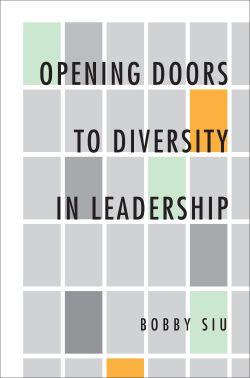
Opening Doors to Diversity in Leadership
Bobby Siu
Looking carefully at how current leaders view the relationship between top tier management and diverse groups, this book examines recruitment selection, performance evaluation, workplace succession, working conditions, and corporate culture and how they impact hiring, promotion, and retention of diverse groups.
# 1487500870 $38.95
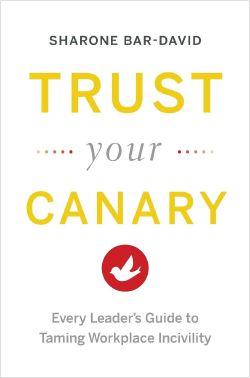
Sharone Bar-David
Every workplace experiences incivility. But left unchecked, incivility will become a pervasive disease that erodes performance, engagement, service delivery, physical and psychological safety, and more. A first of its kind, Trust Your Canary is a comprehensive resource that equips managers with step-by-step tools to diagnose and address workplace incivility confidently and effectively. Item # 0994726407 $21.00
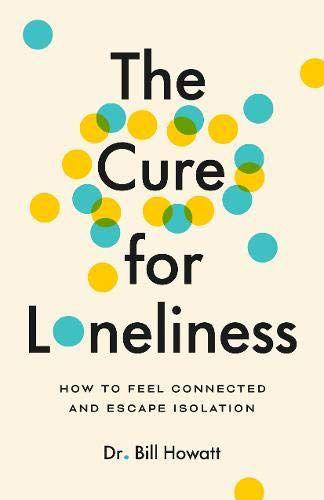
Dr. Bill Howatt
In this powerful guide and workbook, renowned mental health expert and addictions counselor Dr Bill Howatt drills into the root causes of isolation and loneliness – including the double-edged sword of digital technology – and shows you how to conquer them to achieve a more fulfilling, enriching life.
Item # 1774580004 $21.00
OFFICE ODDITIES

American receives final paycheque as pile of greasy coins
A Georgia man said his former employer owed him a pretty penny — US$915 to be exact — after leaving his job in November. But Andreas Flaten said he was shocked to see his final payment, 90,000 oil or grease covered pennies, at the end of his driveway in March. Atop the pile was an envelope with Flaten’s final paystub and an explicit parting message, the Associated Press reported. Flaten said he left his job at Peachtree City’s A OK Walker Autoworks in November.

Manure farmer fined for failing to produce payroll records
Talk about a foul-smelling situation.
A Saskatchewan company was fined $2,100 in Rosetown Provincial Court on March 11 for failing to provide payroll records to an employment standards officer. Joanne Elstad, operating as D&J Liquid Manure, pleaded guilty to contravening section 2-95(1) (a)(vi) of The Saskatchewan Employment Act (fail to provide records in the time and manner required by an employment standards officer.) The company was fined $1,500 plus a surcharge of $600. Employers are required to keep payroll records for all employees.
Canada’s spy service asks court to toss employee’s discrimination claim
Canada’s spy agency is asking a court to toss out the claim of an employee who alleges he endured racial discrimination and physical abuse from colleagues, the Canadian Press reported. The Canadian Security Intelligence Service said Sameer Ebadi (pseudonym) should have turned to internal grievance and harassment processes instead of filing a suit in Federal Court. Ebadi’s statement of claim, filed in January of last year, says he was passed over for promotion despite an excellent work record, and that he suffered bullying, discrimination, emotional and physical abuse, and religious persecution from fellow employees.
Chicago mayor sued for limiting interviews to reporters of colour
A white reporter for a conservative U.S. media outlet is suing Chicago Mayor Lori Lightfoot over her decision to grant interviews at the midpoint of her first term only to journalists of colour, saying she discriminated against him because of his race. The suit was filed May 27 in federal court in Chicago by the conservative organization Judicial Watch, the Associated Press reported. Lightfoot, who is Chicago’s first Black female mayor, said May 19 that she was granting interviews marking the second anniversary of her inauguration on May 20 exclusively to journalists of colour to draw attention to an “overwhelmingly white” press corps.
Saskatchewan inmate mistakenly released following video court appearance
Codie Tobie Cardinal, 49, was reported unlawfully at large after he was mistakenly released from Saskatchewan custody on March 9. Cardinal was released from remand after appearing in the Estevan Court of Queen’s Bench by video conference. The release was the result of an administrative error. Cardinal was meant to remain in remand at the Regina Correctional Centre to appear in the Court of Queen’s Bench in Regina on additional charges for conspiracy to commit a crime. Cardinal turned himself in later that month.
Ontario man handed six-month sentence following debit machine theft of $50K
The former night manager of a local hotel told a Barrie, Ont., judge he was unstable when he took $50,000 from his employer and he wants to make it up, the Canadian Press reported. On April 16, Kieren Amero, 27, pleaded guilty to theft over $5,000 for making 251 fraudulent transactions through the Barrie Comfort Inn & Suites’ debit machine, taking a total of $50,368.38. Justice Phil Brissette accepted a joint submission by the Crown and defence for a six-month conditional sentence to be served at home. His conditions include paying that money back to the hotel’s owners.
MP blasted for second indecent Zoom incident
Liberal MP William Amos urinating while on camera during virtual proceedings in May was “shocking, reckless” and in contempt of the House of Commons, the Conservatives said of his second Zoom lapse in less than two months. Amos made headlines around the world in April when he appeared naked on an internal parliamentary feed of virtual question period. He said in a statement posted to Twitter May 27 that he “urinated without realizing (he) was on camera’’ during a virtual session of the House on May 26, the Canadian Press reported.