


By Neil Sutton


By Neil Sutton
ver the years, I have hooked up TVs, video game systems, routers, speakers, modems, PVRs, Blu-ray players, DVD players and even VCRs.
Rarely have these events gone 100 per cent smoothly. There’s some trial and error involved, the occasional device incompatibility issue to resolve, but in the end, it all works. I’m also fairly diligent about keeping device software up-to-date. All in all, I’m maybe a slightly above average user of technology when it comes to installation and maintenance.
“The majority of smart home users are early adopters.”
But I recently received a gentle reminder of just how easy it is to fall behind. As I struggled to adjust the flash setting on my phone, my nineyear-old daughter whipped it out of my hands, pronounced herself to be a “smartphone expert” and accordingly had the flash working properly a few seconds later.
According to a February report from research firm Parks Associates, more than half of consumers who set up their own smart home devices experience a problem.
Patrice Samuels, a senior analyst at Parks Associates, said in a research note that “technical problems with devices can impact brand loyalty,” adding that 29 per cent of users who experience difficulty with a device will switch to a different brand. The number rises to almost 50 per cent in cases where an installation was “very difficult.”
Arguably, we’re still in a market situation where the majority of smart home users are early adopters — they want this stuff in their homes and in some cases they may be paying a premium to own it.
As home technology becomes more integral to our lives and as prices come down, adoption will inevitably rise. If half of today’s users are experiencing issues, what will that percentage be in a few years?
Of course, you can’t expect everyone to be an expert, hence the market for professional services. (The Parks report also indicates a need for brands to provide effective tech support.)
I don’t fix my own car. I don’t even want to lift the hood, unless I can help it. There are enthusi-
asts who can deal with their own car maintenance issues, but I’m not one of them. I take my car to a mechanic and rely on their expertise.
I expect I can still handle most of my home technology troubleshooting, but when it comes to more integral issues (security, energy management, lighting) I’m happy to rely on outside expertise.
The home automation industry is at a tipping point in this regard — as home-based systems become more complex, that outside expertise is not only going to be preferred but in many cases necessary.
But home automation providers also have to design and build equipment that not only works reliably by itself but can be part of an ecosystem that co-exists with other devices. Whether home automation systems are self-installed or professionally installed — or more than likely, a combination of the two — ease of use and long-term reliability are going to be two of the key ingredients that will help this market grow.

@SecurityEd

Anew Canadian smart lock company aims to capitalize on what one of its founders describes as a severely underserved market with huge growth potential.
The smart home market overall is projected to grow at a CAGR (compound annual growth rate) of 16.5 per cent, reaching US$144 billion by 2025, according to Research and Markets. A sizeable portion of that could be smart locks, according to David Steele, head of partner development at Toronto-based Alfred International.
Smart lock adoption rates are still relatively tiny, says Steele, a veteran of the access control industry. But the potential is there — driven by smart phone adoption and the entrance of crucial players like Google and Amazon into the home automation market.
Alfred incorporated in 2018 and officially launched its first product in January 2019 at the Consumer Electronics Show (CES International) — a deadbolt smart lock. Steele, who designed
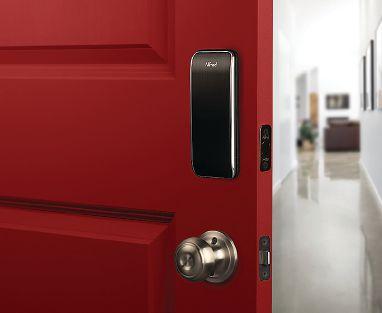
the product specification along with partner Dan Cook, says the lock’s sleek look was the first consideration in order to differentiate it from competitors. There’s a tendency for the industry to take existing locks that have served the market for decades and simply add smart components, like push-button keypads, he says. “We decided
The Monitoring Association (TMA) has taken over management of the IQ Certification program, which is designed to promote security system installation quality, in an effort to expand best practices in installation and monitoring.
IQ Certification started out as an Electronic Security Association committee in 1992, when it was still known as the National Burglar and Fire Alarm Association. In 2005, it was spun off into its own organization, and now 15 years later has found a new home at TMA. Celia Besore, TMA’s executive director, told SP&T News that the plan is to update the existing program and bring it to the next level.
to see the amount of pride from the member companies that are utilizing that,” he said.
Sevinor, who is also the president of Wayne Alarm Systems, said the program will be updated to reflect newer alarm technologies and “more enhanced false alarm strategies…. It’s really at the infancy stage. TMA is very excited about it because….it’s a great platform with a good foundation.”

According to the TMA website: “In order to be IQ Certified, companies pledge to adhere to a stringent code of ethics and to provide top-notch maintenance and service. They also must train their employees in industry-recognized programs, meet all licensing requirements and carry proper insurance coverage.”
Certified companies must also meet these criteria on an annual basis in order to maintain their certification. TMA member Ralph Wayne Sevinor, who is overseeing the development of the IQ program, said that IQ Certified companies can utilize the IQ logo as a marketing tool. “I was pleasantly surprised
Besore said the IQ program is another method that companies can use to distinguish themselves as professional security providers. “Our mission is to promote professional monitoring. Our members are full service, so they also install systems. For us, this is a way of promoting professionally installed and monitored systems. We firmly believe they are superior to do-it-yourself (DIY) and monitor-it-yourself (MIY).”
She added that the program could potentially dovetail with TMA’s existing Five Diamond programs, which recognize monitoring station and dealer excellence. Also, IQ Certification is expected to be one of the criteria that would allow the industry to qualify to join the FirstNet program, a public safety broadcast network available in the U.S. through a public-private partnership with AT&T.
— Neil Sutton
to focus on design and we really stuck with that all the way through.”
The deadbolt is available in two varieties: DB1, a consumer-focused product available online and through retailers like Best Buy, and DB2, a professional grade model available from security distributors and installers as well as directly from the Alfred website. (DB2 is also available in a keyed version.)
The primary target for these products is the single-family dwelling, says Steele, and the basic version can be installed in about 10 minutes. The locks can be accessed via PIN and Bluetooth out of the box and are Zigbee and Z-Wave compatible for integration with a third-party smart hub. Both the DB1 and the DB2, can be assigned up to 20 PIN codes and an optional Wi-Fi bridge allows for connection to Amazon and Google devices.
The locks currently require a battery to operate (a wireless charging unit was introduced in January for a mid-year release). Battery life is approximately a year and a lock without power can be temporarily activated using a micro USB.
Using an app to operate the lock opens up other possibilities, states Steele, such as checking the lock status from a phone or remotely opening the door for a dog walker or maid service.
There is also the potential to use the lock with an Airbnb property by assigning temporary keys to visitors.
The product is multi-generational by design, says Steele. Younger users will be comfortable treating their locked door as another app on their phone, but they may also want to install a lock for aging parents, so they can double-check that their door is locked at night, or let in a home health-care worker.
A mortise version of the lock, ML2, designed for multi-family dwellings such as condominiums, was just launched at CES 2020, which opens up a much larger market for Alfred, says Steele. He says a condo can update its existing lock to the Alfred model at roughly half of what it would normally cost to install a brand new smart lock, giving developers and condo corporations an incentive to consider a building-wide upgrade. The mortise also includes a card reader, allowing for card or fob access to the units.
Alfred is currently a five-person operation and functions from its Toronto location, but there is growth potential on the horizon. The anticipated target market at launch was Canada, says Steele, but the U.S. came online almost simultaneously and quickly proved to be the faster adopter of the product. The company plans to open a U.S. logistics centre to aid its American distribution plans.
— Neil Sutton
Norfolk County, Ont., is adopting a revised alarm bylaw designed to relieve the burden of false alarm dispatches for local police and encourage alarm owners to adopt means of verification that will help reduce the incidence of false alarms.
Dennis Travale, chair of Norfolk Police Services Board, notes that there are more than 1,000 alarm calls in the county a year, an overwhelming number of which are false (more than 95 per cent).
A number of Canadian municipalities, including Toronto and Hamilton, Ont., have already taken steps to change their alarm response policies in an effort to curb the incidence of false alarms and improve the use of police resources. Travale says it was important for Norfolk County to take a similar stance. “That’s a severe waste of police time and talent. When I heard that Toronto was moving away from that kind of a response to a verified response, I did a bit of research,” he says.
The bylaw was passed on Jan. 22 and is set to take effect March 1. Travale, who is also a former mayor of Norfolk County and held several senior positions in the Federal Government over a 24-year career, says he received full support from local OPP resources for the new policy.

Under the new bylaw, a flat fee of $200 will be administered for any alarm that is attended and later deemed false. This replaces the fee structure that was free for the first false alarm on a premise and escalated for each subsequent false alarm to a maximum of $500. The old system wasn’t sufficient enough deterrent for alarm users, says Travale, and “really didn’t focus on trying to force the industry to solve any problems or the alarm owner to take responsibility.”
• Video images that confirm an intruder or danger
• Confirmation of an emergency by the resident or keyholder
• Multiple alarm activation points on the premise
The bylaw also recommends the proper use and maintenance of the alarm system to lower the likelihood of a false alarm situation.
Travale anticipates that efforts made to bring the number of false alarms down will help to reduce the economic burden they generate for the county and allow police to refocus their efforts on where they are most needed.
“All of this wasted time chasing phantoms and ghosts could be better used at the front end,” says Travale.
Travale consulted with the Toronto Police Service, as well as the Canadian Security Association (CANASA) and other police services as the new Norfolk bylaw was drafted. The responding police agency for Norfolk County is the Ontario Provincial Police.
Local OPP will continue to respond to all alarm calls that come in, adds Travale, under the proviso that a $200 administrative fee will be issued for any that are false. An element of the new bylaw encourages alarm owners to adopt a verification process in an effort to significantly reduce the overall number of false alarms. According to the bylaw, those alarm verification recommendations include the use of:
• Audio sensors that can confirm criminal activity on the premise
“My ambition with the members of the board is to make sure that we have the best possible policing service that we can afford. Looking at the current Police Services Act and looking at the priorities that are listed in there, the top two are crime prevention and law enforcement and that’s where I want to focus.”
Travale says that Norfolk County is the first OPP municipality to adopt such a move. However, he hopes it will catch on.
“If I can encourage the other 140 municipalities that use the OPP to do similar stuff, then across the province the calls for service will reduce.”
— Neil Sutton
On May 15, Security ONE Alarm Systems, based in Leamington, Ont., hosted a live concert stream in support of the Windsor Essex Food Bank Association.
Country musicians Eric Ethridge and Buck Twenty took part in the event that live-streamed on Security ONE’s Facebook page and YouTube channel.
According to Corey Robertson, manager of community partnerships at Security ONE, the live concert was the company’s way to give back to the community during the COVID-19 pandemic.
front of mind for Security ONE.
“Could you imagine self-isolating during this time and not being able to afford food?” Robertson says. “We contacted a couple of different organizations that represent multiple food banks and they were obviously humbled and beside themselves with gratitude.”

“We can’t retool our factory to create respirators or PPE,” Robertson said in a recent interview with SP&T News. “We knew that the whole reason for doing this idea right from the beginning was to make a difference in the community.”
With all the proceeds from the event going to the Windsor Essex Food Bank Association, Robertson explained that raising awareness of food insecurity during the pandemic has been
The musicians refused to accept payment for the concert, added Robertson. “When we tried to pay them, they said, ‘No, kick back and put it into the same pot that everybody else donated to.’ So that’s how it came to be.”
While the live stream only faced one blunder when the camera was accidentally shut off, Robertson happily reports that the event otherwise went smoothly and with few technical errors.
“We got it back on, cracked a few jokes and then we carried on with the show,” Robertson recalled with a laugh.
The event was a resounding success, with more 2,700 people streaming the concert.
In an act of camaraderie, Robertson shared that when Security ONE was just shy of reaching $10,000, another security dealer from their network reached out to them and donated the remaining amount.
For Robertson, this act of kindness was a true testament to what Security ONE’s live concert stream was all about.
“It was just such a powerful moment,” Robertson said. “It was really special to say it’s exactly $10,000 dollars that we were able to raise and to be able to support 17 different food banks, as well as to be able to provide a significant amount of PPE.”
Looking ahead at a post COVID-19 world, Robertson said that he hopes Security ONE will continue to host concert events for a charitable cause, especially since the event was received so favourably.
“It was fun to do,” said Robertson. “It seemed to really touch people and it would be really nice if we could come up with a way of trying to somehow do something similar in the future.”
— Alanna Fairey

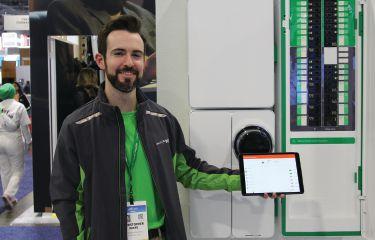
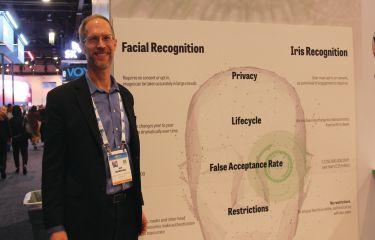
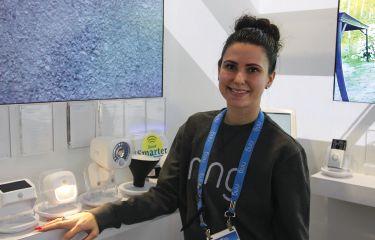
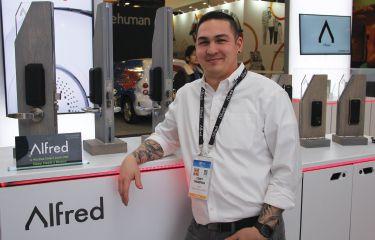
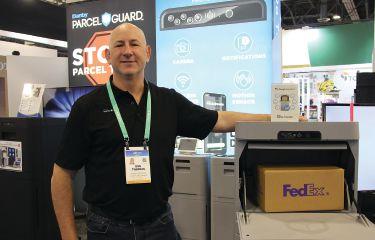
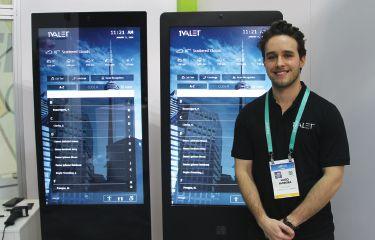
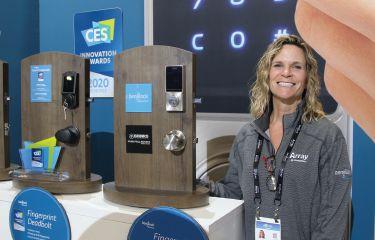
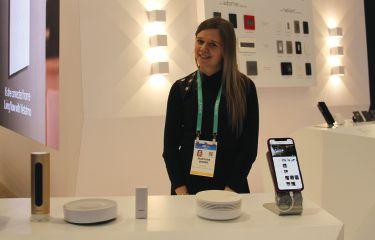
The 2020 Consumer Electronics Show was held Jan. 7-10 in Las Vegas, Nev., at several venues on the city’s iconic strip. The event, which featured more than 4,400 exhibits and hosted about 170,000 attendees this year, is a showcase for cutting-edge consumer electronics from the largest multinationals to the smallest tech startups. This year, the latest smart home innovations were on display, as were consumer and enterprise-focused offerings from security providers.

Virgil Reed explains what it takes to build an alarm and security business with more than 5,000 clients
Before founding Reed Security, a Saskatoonbased business that offers custom-designed alarm systems and high-definition video surveillance, Virgil Reed got his first taste of the security industry working as commercial sales representative for ADT back in 1998.
Though he appreciated the vital lessons that he learned from the company, Reed decided to follow his dream of starting his own business.
Founded in 2000, Reed Security started out as an authorized dealer for another company for five years before making a change.
“After five years of being a dealer, we became an independent — and it was the greatest choice I ever made,” Reed says.
Today, Reed Security services over 5,000 clients. Reed shares that his training and experience in commercial sales allowed them to sell large alarm, access control and video surveillance projects seemingly from the day the company began.
One of the biggest hurdles Reed had to overcome, however, was limited financing.
Thanks to a hefty $30,000 investment from a personal friend and credit cards, Reed Security was able to take off.
Over time, Reed Security developed professional relationships with lenders and currently has a bank that understands their needs.
Looking back on the security industry now in comparison to when he first launched the business, Reed reflected that the industry as a whole has never been more competitive, using the example of aggressive door-to-door programs.
“A customer may have had a contract that would last 10 years and today, door-to-door companies offered a buyout contract,” Reed explains. “The average length of time that a customer stays your customer is lower.”
Reed also shares that customer expectations add to the challenges that Reed Security faces in the industry today.
“Customer expectations have never been higher,” Reed says. “Consumers want everything now and if you cannot provide it, they will shop elsewhere.”
To combat these challenges, Reed and his team have learned that in order to remain afloat in a changing industry, one can never be complacent and must be prepared for the unexpected.
Due to the novel coronavirus (COVID-19)
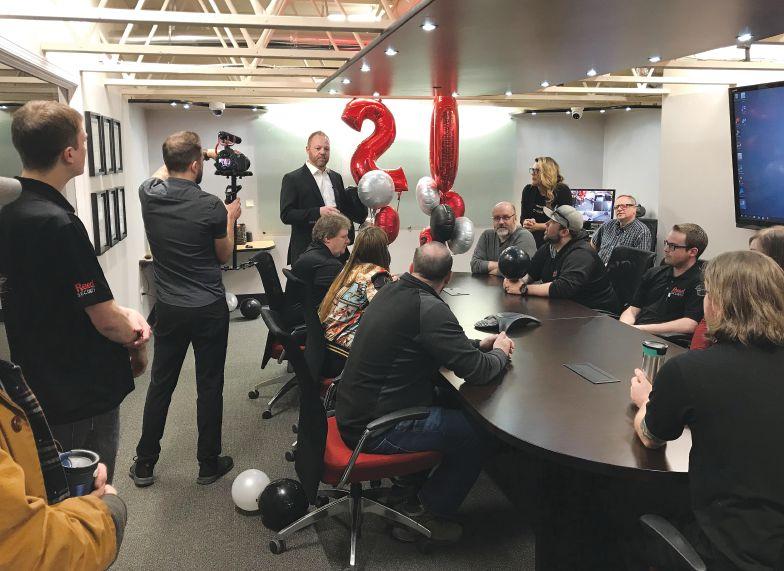
Reed and staff celebrate two decades in the security business
pandemic, many businesses were required to self-isolate and work from home, Reed Security included.
Though he admits that the events of COVID-19 were concerning and disruptive for business, Reed says that he and his staff adapted to the circumstances at lightning speed.
“The COVID-19 virus has actually created a lot of innovation,” Reed says. “Now my staff remote works, and now they have to change how they sell, as well as our procedures on how we’re going to do installs.”
Reed also shares that focusing on the end result in addition to the process along the way has also helped to contribute to Reed Security’s 20-year success.
Acknowledging that the company can always strive towards improvement, Reed Security implemented a Scaling Up program back in 2019, a strategy based on implementing Rockefeller habits that have a focus on leading people, setting strategy, driving execution and managing cash.
Following this new business model has proved to be beneficial for Reed Security, as the program taught them to implement new daily habits that will help them succeed in their business moving forward.
Another one of those habits, according to Reed, is increasing their communication within the company.
“Six months ago, we would have meetings as
we needed them,” Reed explains.
“Today, each department has a 10-minute daily huddle where we all share what’s going on in the business.”
Adds Reed, “Our goals right now are two times the cash flow, three times the profitability, and 10 times the valuation.”
When Reed first started his business, it was his dream to see one of his children join the business, to keep Reed Security in the family.
“Incidentally, nobody really wants to join the business,” Reed says with a laugh.
However, Reed says that he “would like to be able to support them in what they’re passionate about.”
With 21 employees and five dealers, Reed says that part of the company’s five-year plan is to double the size of staff and to have a large focus on commercial.
For his own personal development, Reed says the most important lesson he has learned on the road to starting his business is to have a great work-life balance and to not take that time for granted.
To manage the stresses of a fast-paced growing business, Reed bikes, plays hockey and listens to podcasts.
“I spend a lot of time with my family,” Reed shares. “And I will continue to spend a lot of time with my family — that’s what’s most important to me.”
— Alanna Fairey
The spread of COVID-19 has evolved on a daily basis, resulting in many companies being forced to make the decision to either close down or ask their employees to work from home.
Independent product safety testing, certification and inspection organization Underwriters Laboratories of Canada (ULC) has recently faced questions about how health risk mitigation techniques might impact Alarm Service Certifications, especially those that involve quarantine, social distancing or work from home policies.
“UL is working with industry to develop reasonable guidelines and alternative operating methods for scenarios such as the current COVID-19 outbreak,” the company said in a prepared statement that was sent via email on March 17 and also posted on the Canadian Security Association (CANASA) website (www. canasa.org).
“At this time, we encourage monitoring stations to make contingency plans for operating in environments where operators are not able to physically come together to monitor signals in a central station operating room.”
With the requirement that remote operators remain self-motivated and work well with minimal direction, the UL guidelines to working in a virtual environment from home include:

cannot gain access to the monitoring window.
The complete list of recommendations is available on the CANASA website.
To accommodate virtual monitoring during the time of COVID-19, Bay City, Mich.-based DICE Corp. is helping central stations so that their staff may work remotely during this time by providing them with their PBX (Private Branch Exchange) modules along with providing connectivity to the automation system they are currently using.

• Virtual workplace operators should be provided with a computer. Home/personal computers shall not be used;
• Connections between virtual workplace computers and central station automation systems shall be made through an encrypted virtual private network (VPN);
• Multifactor authentication should be required every 24 hours;
• When not on shift, computers should be in shutdown and put in a secure place to prevent any damage or theft of the computer;
“In the monitoring security industry, we’re talking about the many millions of customers that are getting the services that need response in real-time,” Avi Lupo, DICE executive vice-president, said in a recent interview with SP&T News
According to Lupo, the current COVID19 pandemic poses a plethora of challenges to the security industry, with liability being the main concern.

• When processing alarms, the computer should be setup as not to allow others to view the monitoring screen or any other information;
• If temporarily stepping away from the computer while on shift, lock the screen so others
“Traditionally, when people would look at disaster situations — like a terror situation, hurricane, or earthquake — many people typically say, ‘this is not going to happen to me,’ and many people would push that thought away,” Lupo explained.
“Part of the way that we believe things need to be done and our understanding of the way that we’re doing things on the disaster recovery. It’s not only the monitoring –– it is everything that has to do with the company, including service and the inventory.”
With a number of Canadian clients, DICE had been helping central stations get alarm
signals into their network, as more and more people were already moving their information to the cloud, but did not have the PBX automation platform set up in their centres.
With the COVID-19 pandemic at the forefront of people’s minds, services such as PBX have been in high demand from operators prior to the virus, according to DICE president and CEO, Clifford Dice.
“More and more, companies were already pushing for the services that we offer, but now the phones are ringing off the hook and people want to monitor remotely from their house,” Dice said.
“They want their operators at home and they don’t want them in one building because of the pandemic.”
For operators to take advantage of the PBX module from home, it is an easy process. Offered as a web application, operators at home are able to log in to their work computers, have PBX in their web application and then they can plug in in their headset.
“They can take phone calls, they can make phone calls, and they can get the alarm signal,” Dice explained.
“People are really seeing the benefits of not only cutting costs more efficiently, but also allowing their operators to stay home and get their work done in all departments, alarm centre, service, installation, sales and accounting.”
From a security standpoint, operators do not need to worry about their sensitive data being compromised from their remote workstations. According to Dice, the system requires a multi-factor authentication that, in addition to encryption, makes it a secure and resilient system.
“We’ve always been known for our disaster recovery services, which has been getting better and better for the last 20 years,” Dice extolled. “As technology changes, it really has allowed us to do a lot more.”
— Alanna Fairey
AToronto company has launched an app-based alarm response service that will put a security guard on the scene faster than previously possible, according to one of the firm’s executives.
“When I designed TAG, I designed it with the dealers in mind.”
— Michael Shvarzman, TAG Dispatch
The app and accompanying infrastructure, called TAG Dispatch, is available to central stations and alarm dealers, says managing partner Michael Shvarzman. Utilizing an on-demand model, TAG Dispatch sends out a request for dispatch based on the alarm’s location. A TAG security guard, or “Tagger” in the company’s parlance, can respond to the call via the app and immediately make their way to the premise in question. The system is designed to reduce alarm response to minutes, says Shvarzman, overcoming the age-old problem of slow or delayed dispatch that has frequently plagued the security business.
The average response time is currently under 20 minutes, says
Shvarzman, but could be as low as 10. “If the monitoring centre receives an alarm from the end user, whether it’s a business or residential, they follow the action plan, which would be to call the keyholder to see if they can reach them. We get into the picture when they can’t reach anyone and now it’s time to dispatch,” he explains.
Once the Tagger arrives at the premise, they follow the protocol as determined by the app, checking perimeter doors and windows, and taking pictures. The information is filed as a report to the central station, which can also be delivered as a pdf to the property owner or manager.
“Once he finishes his inspection and he hits submit, within 30 seconds, the monitoring station has a complete report with the timeline, the dispatch, when the Tagger received the call, when he was on route, when he got to the site, inspected it…. All the timelines are there. It’s all GPS driven. It’s all done automatically by the TAG platform,” says Shvarzman.
The service is currently available in Ontario’s Golden Horseshoe and across the Greater Toronto Area. TAG Dispatch is also expanding to Vancouver, Langley and Burnaby in B.C. and in London, Ont.
Shvarzman says there are more
than 500 Taggers currently signed up for the service. To qualify, they submit an application that includes information about their current guard licence, driver’s licence, work history, etc. Once they have completed TAG’s training course and are approved, they are sent a TAG branded safety vest and running lights that can be affixed to their vehicle.
Shvarzman declined to say who the app’s current customers are but confirmed that several central stations are already using the service. There are no set-up fees or monthly billing, he says — customers follow a pay-as-you-go model. The Taggers are paid per alarm call they attend.
Shvarzman, who was an alarm dealer for more than 18 years,
Weiser is expanding its partnership with Microban SilverShield technology, making its protection available to all consumers.
Weiser says it has been the exclusive residential lock partner of Microban for the past four years.
According to the company, it was the first residential lock manufacturer to offer door hardware with Microban antimicrobial product protection, first announcing it at the International Builders’ Show in 2016.
Weiser is now working on expanding the Microban part-
nership into keyless entry and smart lock lines. Weiser products with Microban technology provide protection of the products through a coating innovation that the company says will last for the lifetime of the hardware finish. Microban product protection fights against the growth of bacteria that would normally double in number every 20 minutes. Microban “silver-glass” technology is incorporated during the manufacturing process and permanently binds the silver ions to the coating. Treated hardware continuously inhibits the growth
of bacteria on the surface.
“Homeowners and renters can worry less knowing they have 24/7 Microban antimicrobial product protection, making their Weiser product 99.9 per cent cleaner, and because this protection is included in our finishing process, homeowners don’t have to worry about reapplying every day,” said Dave Smith, senior marketing manager, locks and hardware, for Spectrum Brands hardware and home improvement division, in a statement. “Weiser is dedicated to all facets of safety for its consumers and this includes pro-
says he’s familiar with many of the industry’s pain points such as false alarms and slow response. “When I designed TAG, I designed it with the dealers in mind. It was to solve problems for the dealers…. I was struggling with a lot of those issues that dealers are struggling with every day.”
The service was launched in March — not an ideal time to start a business, acknowledges Shvarzman. A self-described people person, Shvarzman says he prefers in-person contact and face-to-face networking. When the COVID-19 pandemic brought all that to a swift end, he resorted to video-conference meetings, as so many other businesses have done.
While the circumstances may be unusual, they have not stifled business growth, he says. Residential alarm owners may have been home most of the time during the earliest months of the pandemic, but many commercial businesses sat vacant, requiring additional guard response to any alarms that may have been triggered. When life eventually returns to normal, and more people go back to work, that will even out over time. He anticipates a roughly 60/40 split in commercial versus residential business over the long term.
— Neil Sutton

tection against surface bacteria growth with Microban product protection.”
Microban product protection is available on select Weiser products, including knobs, levers and a deadbolt and finishes. Architects, designers, builders and homeowners can purchase Weiser products with Microban technology at select retailers.
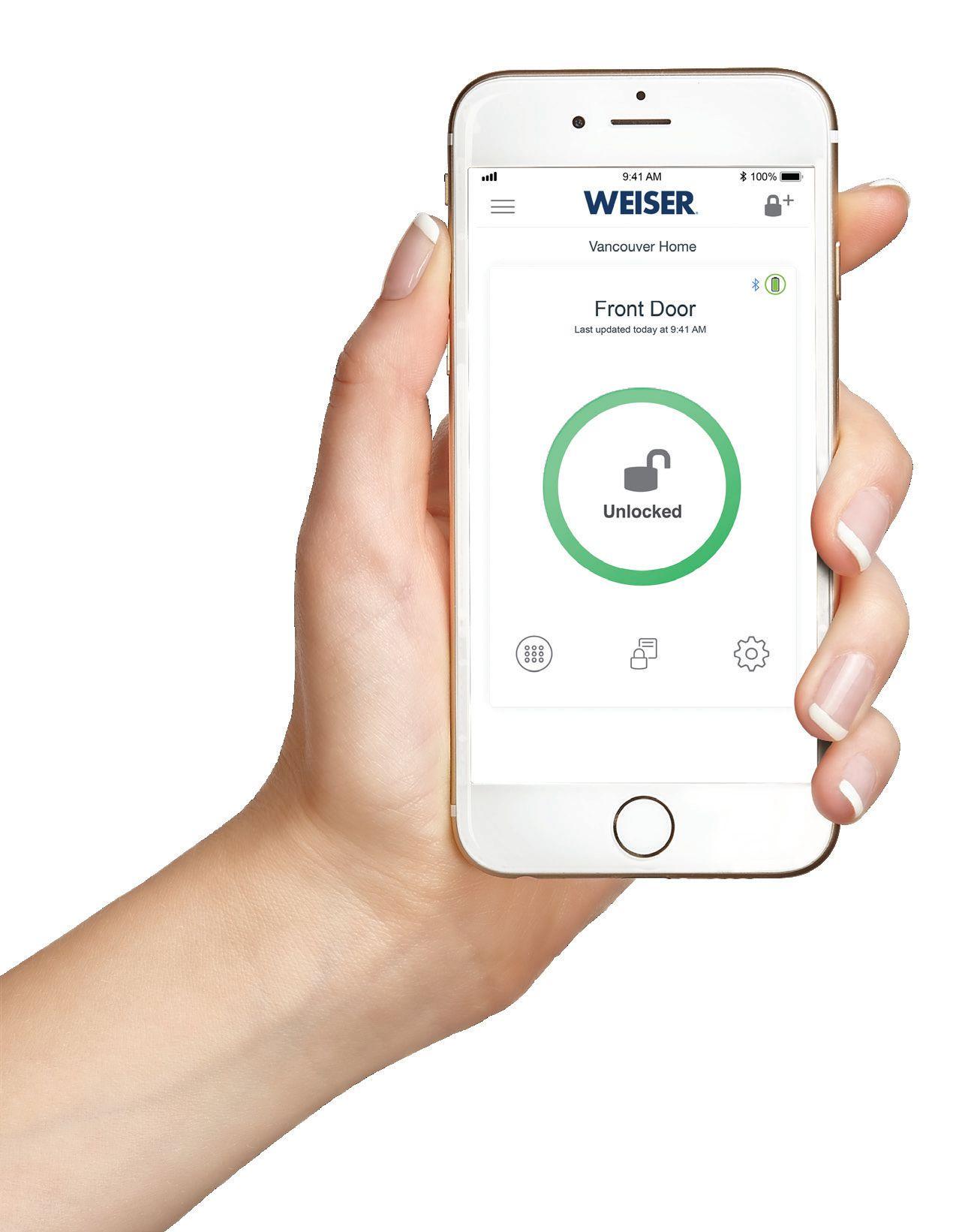
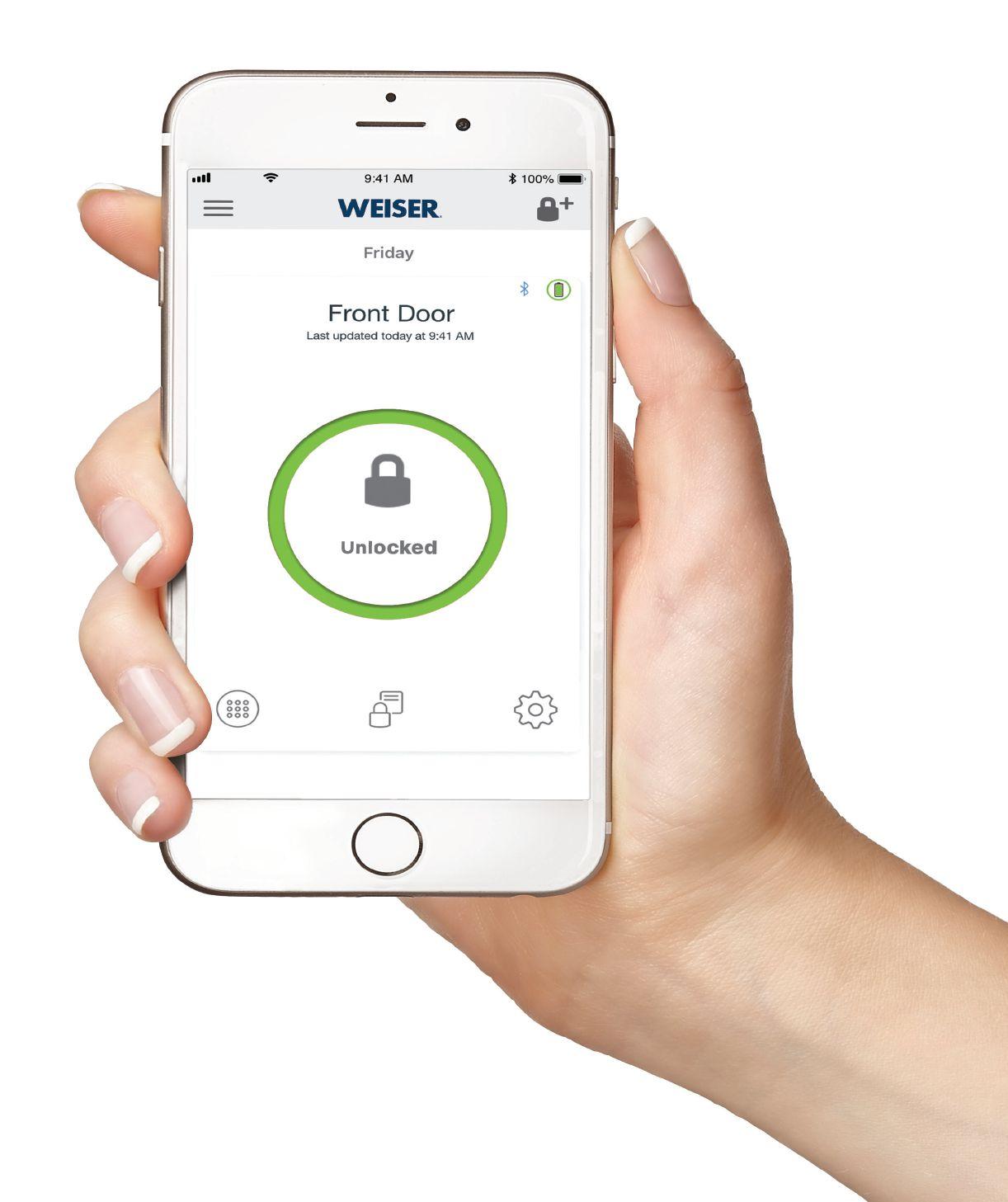
home’s existing Wi-Fi router. Operate, manage and monitor the lock with your smartphone using the Weiser app from anywhere there’s an Internet connection.
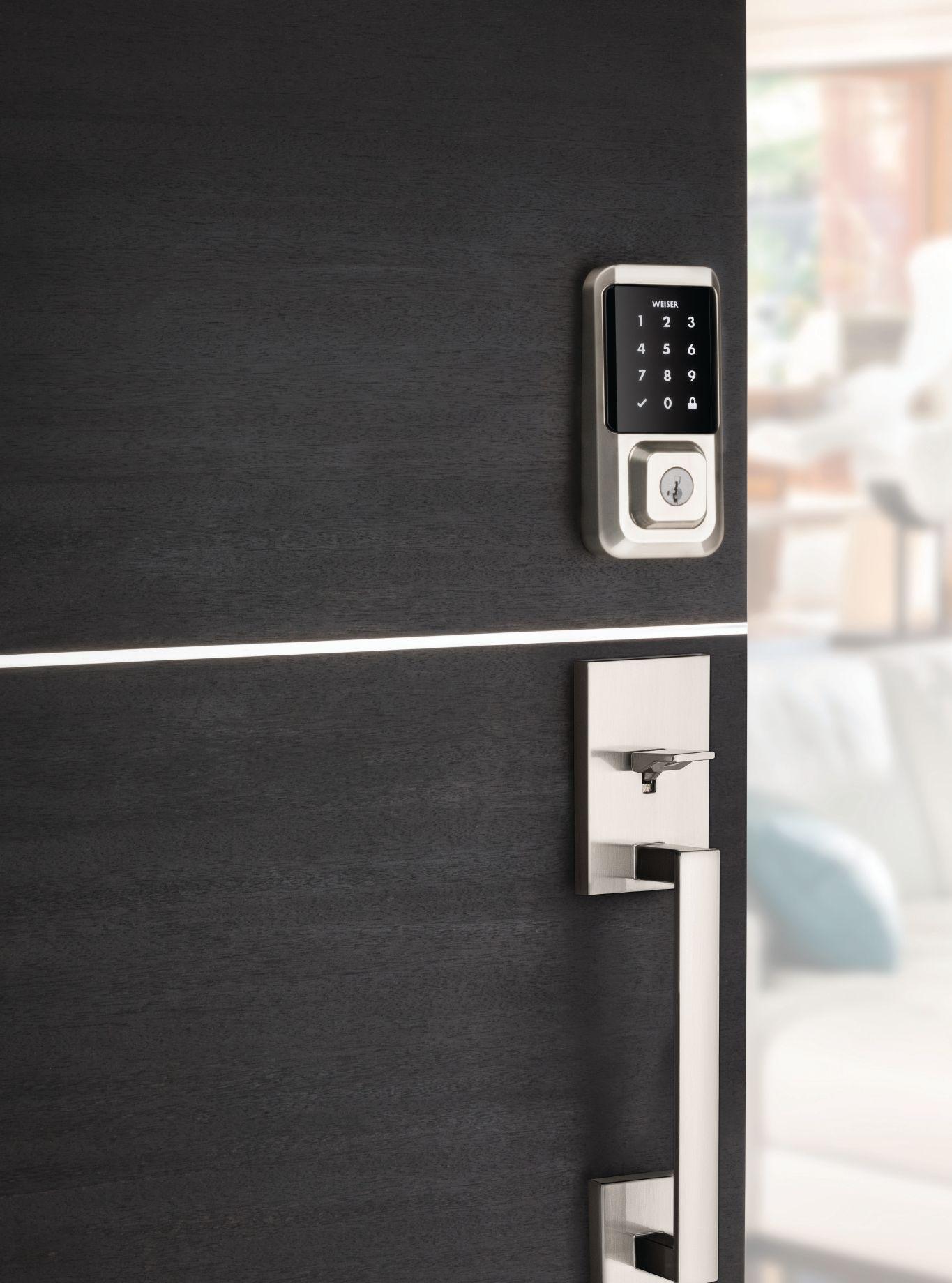
All you need is a WiFi router + smart phone + HALO smart lock.


Today’s dealer programs can help alarm companies with marketing, billing, tech support and potentially a lot more
By Neil Sutton
The home automation market has changed in recent years with the advent of new technology, new metrics, new players (many of them telco and consumer giants) and new customers.
To stay current with the market and ahead of the trends, alarm and security dealers may look to the support that a well-established alarm dealer program can provide.
The right mix of marketing and technical and financial support can help a dealer survive the tumult of the current market and hopefully thrive well into the future.
Smaller alarm companies run the risk of getting lost if they don’t have a proper support system, says Dina Abdelrazik, senior analyst
with Parks and Associates. The research firm conducts an annual dealer survey to take the pulse of the alarm industry.
“Dealer programs have really had to step up to provide dealers with the tools they need to differentiate themselves, as well as be able to compete well in the market,” says Abdelrazik.
Parks Associates’ survey looks at the U.S. market, but the trends it addresses can also apply to Canada, she says — the need for marketing and sales support to communicate the value of a modern security system is a universal one.
Monitoring models
Wes LaBrash, director of marketing and sales at Saskatchewan-based SecurTek Monitoring
Solutions, says the company has adapted to the changing needs of its dealers and customers over its two decades of business. When the company was first formed, it was driven 100 per cent by a dealer program. As SecurTek acquired new dealers, their accounts became SecurTek customers and they would receive service and support under the SecurTek umbrella.
But it became apparent that wholesale monitoring — selling monitoring services directly to independent dealers — was a necessary step in the company’s evolution, he says. As this trend continued, a hybrid approach emerged where “you could live in both worlds if you wanted to,” says LaBrash. Dealers could offer services to the public through SecurTek and represent

the company as an independent contractor, or else simply utilize SecurTek as a partner through a wholesale model. The hybrid program, which has been up and running for about a decade, has added some flexibility to the relationship between SecurTek and its dealers and opened up new options. “We’ve found a way to make that work,” says LaBrash.
A large provider like SecurTek can offer a range of support services, he adds. Under the wholesale program, the company can provide billing and customer support, while still allowing the alarm company to maintain their own logo on the invoice. For SecurTek dealers, there are a broad range of options available as well.
Industry pressures and an increasingly competitive environment have driven a lot of independents to seek out established dealer programs as a safe haven. Such programs can help mitigate the risk associated with customer churn, says LaBrash.
“They’re looking for creativity, flexibility and funding, and for marketing to still make that phone ring. Lead referrals, social media support, marketing support, co-operative funding. We’ve built mechanisms to
“[Dealers are] looking for creativity, flexibility and funding, and for marketing to still make that phone ring.”
— Wes LaBrash, SecurTek
offer that type of support.”
“Providing the correct language to sell is really big,” adds Abdelrazik. “When you’re moving into things like interactive services and smart home devices and having to have all these smart home devices work in the home with your security system, that becomes a huge challenge. How do you sell that? How do you upsell that? [Dealer] programs are really focusing on how to provide adequate training and marketing tools.”
LaBrash says SecurTek can provide its dealers with phone tech support to help installers when installing equipment on site and help end users who may still have questions after the install.
The technology is trending towards greater complexity, particularly with IP-based systems. “Now you’re wiring in doorbells and cameras and door locks, and you’re activating it on a third-party portal and you’ve got to train the customer on how to use it. What those dealers also need is somebody that can support the customer. If the customer has questions after the install and they want to phone somebody, they can phone us,” he says.
A major upside of today’s systems and security environment is the amount of useful data that is generated, says Patrick Soo, director of national sales, Canada, for Alarm.com.
“With interactive services, which is Alarm.com’s focus, we’re helping the dealers drive higher quality business,” he says. The technology can provide end users with more control and more insight into how their systems are working. Dealers get a clearer picture of what their customer base looks like.
According to Soo, Alarm.com is able to provide key data to dealers while still exceeding all Canadian privacy requirements.
“How many accounts are they adding, what does their attrition look like, what’s their service package, is it residential or commercial? They have a lot of resources at their fingertips through our dealer portal,” says Soo.
Residential vs. commercial
An unintended consequence of the Alarm.com platform and its reach is the degree to which it became adopted by small business, adds Soo. “What we found was, when we started off with a residential focus, a lot of our dealers were selling our solution into small and medium business and even medium enterprise. We realized we were really missing an opportunity.”
Soo says the commercial channel is now Alarm.com’s fastest growing market. “We’ve added access control to our platform. We’ve got commercial grade cameras and commercial grade streaming video recorders. We’re really excited about what we can do in the commercial space — helping dealers leverage that. Especially in light of what’s happening in the residential space. It’s becoming a lot more competitive.”
LaBrash says that SecurTek’s residential program continues to thrive — “We’re signing up new dealers pretty regularly” — but the commercial segment is growing more quickly.
“That’s where many dealers are focusing. I’d say our most successful dealers are investing more time and money into commercial, but they’re not walking away from residential.”
A relatively new wrinkle in the market is the appearance of do-it-yourself security products, often sold through big box retailers.
While this trend may have caused some initial consternation among the established alarm industry, or it has just been ignored altogether, some companies, both big and small, have figured out the upside of DIY.
Mike Chaudhary is the CEO of Toronto-based Alarm Guard Security Services, the largest of ADT’s Canadian dealers. (ADT Canada was acquired by Telus last year.)
Chaudhary has been an ADT dealer since 2003 and in 2016 started a sub-dealer program, providing support and services. “We teach them [dealers] from the get-go and work with them on a daily basis,” he says.
The outlook for professional monitoring firms looks good, he says, particularly for forward-looking companies who capitalize on opportunities to upsell clients.
There are a lot of legacy alarm panels still left in the field and smart dealers will be able “to fill that technology gap… At the end of the day, it’s a customer market. The customer is going to get a lot of benefits with this new technology,” he says.
Chaudhary has also established a business which caters purely to the DIY client, DIYProtection.ca. In Chaudhary’s view, the market for this remains an underserved one: retirees, cottagers and people who live in more remote areas. For the latter especially, it can be cost-prohibitive to send out a professional installer, “so it’s a big opportunity for us.”
Chaudhary tested out the business model for more than a year before launching the website in 2019. Customers can buy security systems that are pre-packed and pre-programmed. Everything can be shipped in one box and sent via an overnight courier. Once the user sets up the system in their home, they call in to activate it. Professional monitoring options are also available for those who desire a more complete offering.
“It’s working very well,” he says of the new business. “We’re seeing exponential growth, month by month.”
Parks Associates’ Abdelrazik says their research indicates solid growth in the smart home and DIY security market, with about 29 per cent of U.S. consumers adopting at least one smart home device. But the DIY model is still a disruptive one, says Abdelrazik, with many dealers wrestling with the question: “‘How am I going to sell a DIY system — something that’s self-installed. And how is that going to compete with what I’m currently offering?’ Dealers want to be in the home. They want to be installing the security system themselves.”
Some dealers are starting to make that transition. “It’s slowly growing,” she says. “They’re treading cautiously, trying to figure it out, but that is something that is emerging.”
For Home Automation in Canada, Weiser has been synonymous with entry locks. We have been fortunate to work with great partners who have challenged and guided us in this space to stay up to date with the technology you need.
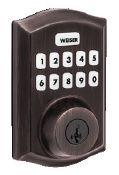
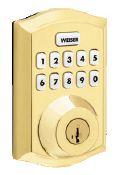
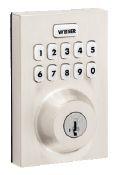
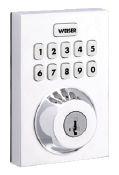
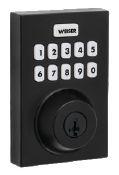
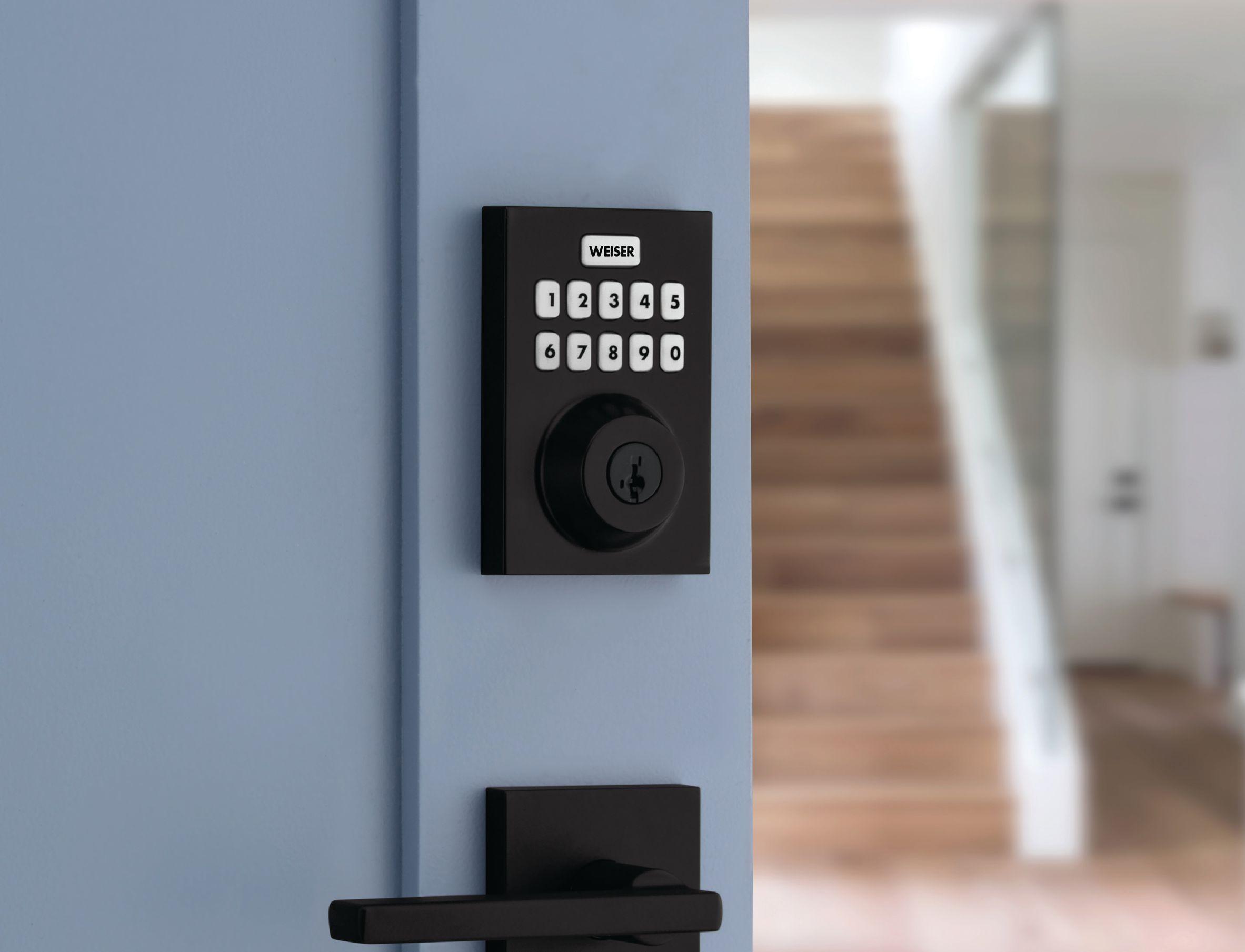
Coming Spring 2021, with our new Home Connect 620 smart lock, we are moving into the future by utilizing the new ZW700 chip and a faster gearbox that improves battery life and faster latch operation.
The ZW700 chip offers many different enhancements to this product offering including:
• S2 Enrollment offering improved network security
• SmartStart, the easy and fast way to get system setup and running
• 250 User Codes and Non-Access Code enablement
• Improved Wireless Range
• Extended battery life SmartStart
• Enroll devices by scanning a QR code
• Can be done before panel and devices are powered up or installed
• Easier and faster way to set system set up and running Availability
• Coming Spring 2021
• 10-digit interface
• Traditional finishes include Satin Nickel, Venetian Bronze and Brass
• Contemporary finishes include Satin Nickel, Polished Chrome and Matte Black



Voluntary registries allow homeowners and businesses to share footage with police in an effort to solve crimes faster
By Treena Hein
By now, the concept of voluntary camera registries is one that’s familiar to police forces across the world.
It’s therefore no surprise that the number of communities in Canada with these registries is growing. At least two more have been launched just in the past few months.
The benefits of having a da-
tabase with camera locations at homes and businesses are myriad. Most obviously, it allows police forces to solve crimes they might never have been able to solve otherwise. Officers can quickly check the registry after an alleged incident is reported, and then ask the owners of any cameras in the vicinity of the incident (voluntary registry participants) if there is pertinent footage. If so, the next question is whether they are willing to share it.
Said another way, it greatly ex-
pands the footage that’s potentially very easy and fast for police to access beyond public traffic and street cams (if they are even present in a given community), providing potentially significantly reductions in both investigative hours and wear on police vehicles. If police already know where a lot of cameras already are, calling or going door-todoor to canvass for possible footage is not needed nearly as much — or maybe at all.
Inspector Jeff Sheils of the Cobourg Police Service in Ontario, which is just getting its voluntary community camera registry up and running, explains that his force is like every other policing organization out there — trying to do more with less. This includes, he
says, a recognition that the community itself wants to play a valued role in its own protection. “We see this regularly with something like shoplifting,” Sheils explains, “or even gas drive-offs where the owner of the gas station provides video.”
And while these voluntary registries also have huge potential to deter crime as well as to help solve it, “there is a humanitarian side to their use, in that they can help a great deal in locating missing persons,” explains C.J. (Jay) Peden, an operations duty NCO at the RCMP detachment in Red Deer, Alta., where a registry has been in place since July 2019.
But there are also some other, less obvious benefits. Surrey,

B.C.’s registry (Project IRIS) was launched in October 2016, and from that relatively historic perspective, the city’s community safety manager Brian Aasebo reports that “knowing there is a co-ordinated initiative taking place can support people in feeling safer.” That can only be good for attracting and retaining both businesses and residents to a community. And alongside this boosted sense of safety comes a sense of engagement and control. “The ability for people to take action by installing and registering cameras,” says Aasebo, “allows business owners and residents to feel like they are partnering with the City, RCMP and fellow businesses and residents in addressing crime.”
“There is a humanitarian side to [camera registries] in that they can help a great deal in locating missing persons.”
— C.J. Peden, RCMP, Red Deer,Alta.
For details on how these registries work, let’s check in with ‘Red Deer Capture,’ about nine months old and the first in Canada to be operated directly by the RCMP. Its introduction followed about 20 months of preparation, says Peden, and complimented other initiatives to reduce crime. Anyone in Red Deer (population 103,000) with residential and/or business cameras can register, inputting their contact information on the website along with information on each camera (for example, faces north on Smith St.).
This information is then confirmed, which Peden says takes a few hours a week depending on how number of new participants (who can update or remove their profiles at any time; they can also decline to voluntarily share footage at any point in the process and still remain in the registry). “Our goal was 100 registrations by the end of 2019 and that was surpassed in October,” Peden reports. “We are at about 215 now and we’d like to reach 300 by the end of 2020.”
He estimates that with the low cost of different systems including doorbell cams, there is potentially a large number of residents that have cams or will have them soon to monitor their property.
So far, ‘Red Deer Capture’ has been used to locate an individual after a violent incident and also in a few cases relating to harassment and property damage. It’s too soon to say if it will deter crime to any significant extent, but Peden personally feels that individuals who might commit crimes are becoming more aware that they may be caught on camera and that the community is increasingly willing to share its footage with police. “In addition to local news and social media coverage, we got window decals made for registrants to show the public they are part of the program,” Peden explains. “We also have some promotional items to give out at community events.” Overall, he says the costs involved
in creating and maintaining the registry are very small.
In contrast to Red Deer, leadership at the City of Surrey set up its database in 2016 to be managed by staff and not the local RCMP in order to address potential privacy concerns. Project IRIS has never looked back. As of Jan. 3, 2020, there were 326 camera locations registered (and there are also 500 city traffic cams and 40 municipal cams). The Surrey RCMP tracks queries made by its officers to the database each month, as well as how many ‘matches’ are achieved: when a registered camera is located near where an incident took place. Over 2017 to 2019, there were 116 queries with 50 matches. With the database growing over time, it’s no surprise that the highest match rate so far is 2019: 56 per cent, up from 39 in 2018 and 29 in 2017. However, there is no system in place to track what happens after a match. “Measuring the impact of Project IRIS is challenging given the secure and private nature of police investigations,” Aasebo explains, “as well as the fact that investigations can take years to reach court completion.” However, he confirms that registry camera footage has been successfully used to help apprehend and prosecute in a number of cases, for example a sexual assault conviction and a robbery.
The greatest challenge, says Aasebo, has been raising awareness, and this year, a new Project IRIS marketing campaign is being launched to increase both its profile and uptake. Aasebo adds that because the use of vehicle dash cams in investigating vehicle incidents is becoming more common (with investigators appealing to the public for footage related to hit-and-runs, for example), the incorporation of dash cams in the registry will also be explored this year.
Red Deer and Surrey report very few concerns raised about their
camera registries, and Sheils says that so far at their early stage in Cobourg, “we really haven’t had any comments or concerns directed specifically to us, either positive or negative.” The Sarnia Police Service, which also launched a registry in early January, has been promoting it on radio, television and social media, at time with Sarnia-Lambton Crime Stoppers and other organizations. “We [also] have an FAQ on our website that dispels any myths or misinformation that might be out there,” says Constable Ron Smith.
On the subject of public concern, Smith highlights proactivity and good relationships. “Policing can only be effective with community involvement and trust,” he says. “We have worked hard in our community to establish trust, which is why we are confident a police camera registry can work [here]. The citizens know we have their best interests at heart.”
No doubt other communities in Canada are closely watching these registries and more of them will be launched. Indeed, Peden and his colleagues at ‘Red Deer Capture’ have already fielded inquiries from other police forces, and in Sarnia, Smith says a “major” motivation for launching their registry was “the positive feedback we have heard from police services throughout Ontario and elsewhere.”
It would seem that these registries may become the norm across Canada, and that’s not all. It’s becoming easier to imagine a future where all the video surveillance prevalent throughout our society — from business street cams, residential doorbell cams and bank ATMs to parking lot licence plate recognition systems and police dashboard/body cams — is integrated for policing and perhaps other purposes, taking crime resolution, deterrence and more to a whole new level.
Treena
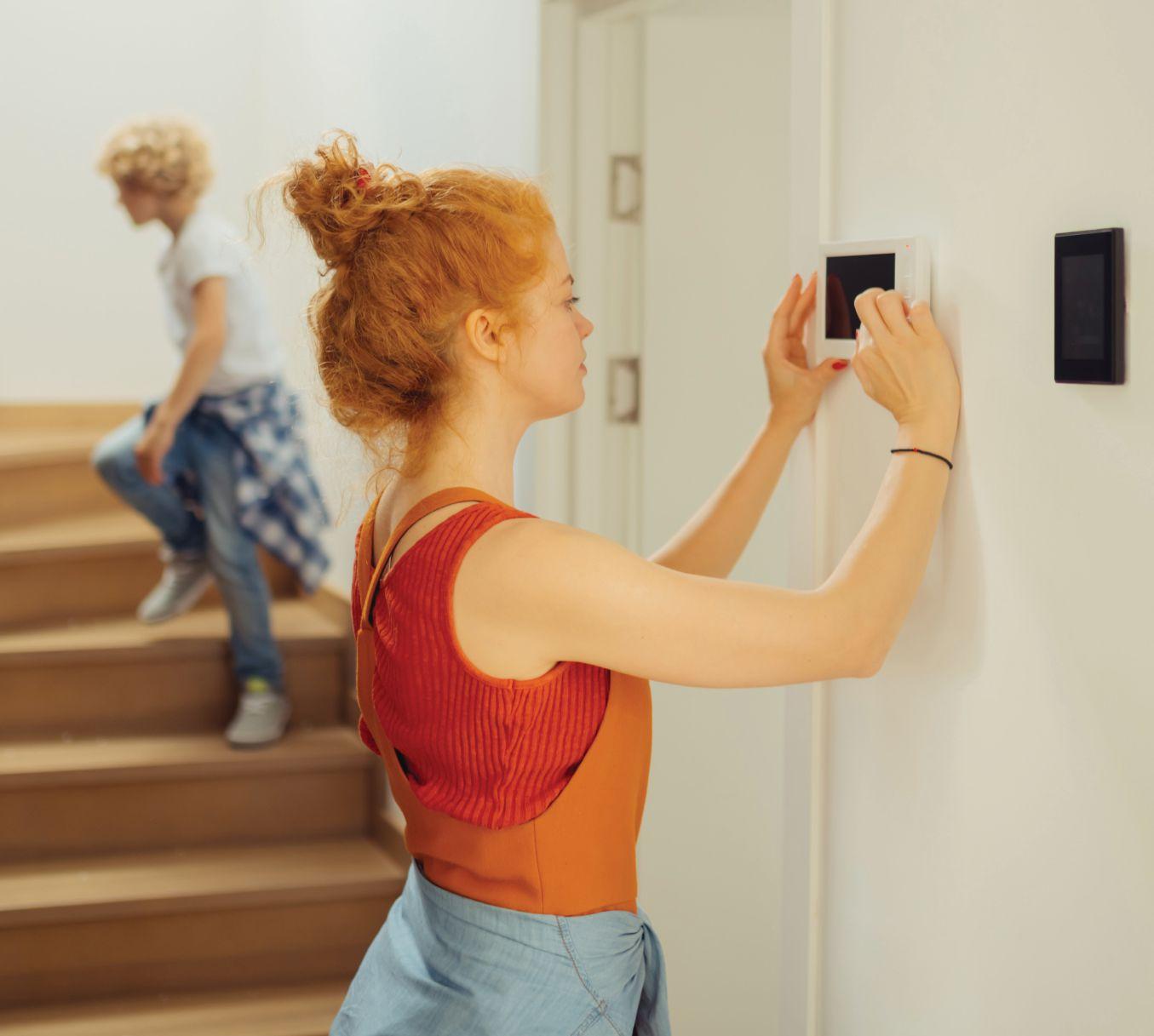
With home visits at a minimum due to the pandemic, alarm and security companies are finding new ways to connect with customers
By Alanna Fairey
Several alarm companies have come to the same conclusion: the Do-It-Together (DIT) trend has accelerated since the COVID-19 pandemic.
DIT is a variation on the DIY (Do-It-Yourself) trend in security, but instead of consumers buying security equipment from a retail-
er and installing it themselves, the alarm company sells the equipment, helps the homeowner through the install (though they still “do it themselves”), and offers a professional monitoring option.
Chris Currie, president of Ontario-based Damar Security Systems, says that when the company had its annual planning ses-
“If the customer is not comfortable doing it by themselves, we’re right there with them using FaceTime, Skype or Zoom to help walk them through it.”
— Chris Currie, Damar Security Systems
sion back in early March, DIT was not part of the conversation.
Two weeks later, when COVID-19 was declared a pandemic, Damar Security Systems started to roll out DIT services.
“It’s completely enhanced or increased its level of importance,” Currie says. “It’s funny how it’s just completely changed the direction that we were heading in at the time.”
While the topic of DIT security may not have been discussed at Damar Security Systems’ annual planning meeting, Currie shares that the company has taken the position that there is always going to be a market out there for them to come and professionally install a security system for customers, in addition to a demographic of customers that would want to do it themselves.
With the pandemic making customers anxious about strangers coming into their homes, Currie says that Damar Security Systems promptly adjusted their business model to accommodate DIT offerings.
“Now we’re looking at just trying to strike that balance between people that want security but are apprehensive about having outsiders coming into their home for their business,” Currie says.
“The only reason why we went with a DIY design type direction was to try and facilitate those that just weren’t comfortable having people come into the house all the time [but] they still kind of wanted that professional system.”
Gordon Hebb, vice-president of sales at Wilsons Security, which has offices across the Maritimes, shares that the security industry started to adapt to DIT/DIY technology back in 2013, but says that he never saw it being a hit with mainstream companies. Now, in the midst of COVID-19, he says he has seen a switch.
Echoing Hebb’s sentiments, Morgan Hertel, Rapid Response Monitoring’s vice-president of technology and innovation, shares that what has changed is the kind of customer buying — and installing — their own home security systems.
“What you’re seeing now in the DIY space is consumers that either couldn’t afford or just worked in a place to be able to do that or didn’t want an extensive system — they just wanted something that was better than nothing,” Hertel says. “The overall market is growing. It’s not necessarily taking away from one or the other.”
Since its sudden rise in popularity, DIT security has resulted in a number of alarm companies accommodating the needs and requests of their customers.
According to Currie, Damar Security Systems has changed the way that they approach a sale — they provision the security system gear before it goes out to the customer.
“We’re programming it all up, in-house testing it and shipping it out to the customer to install themselves,” Currie says. “If they’re a little bit more mechanically inclined, the customer can use a drill, screws and anchors.”
Currie says that once life gets back to normal, Damar will be checking in with their customers to make sure the alarm is working to their satisfaction.
Although the customers are installing the security system themselves, Currie shares that he and his team are still happy to assist from afar. “I’m using this as an opportunity to add other additional devices at that point, too,” Currie says. “If the customer is not comfortable doing
it by themselves, we’re right there with them using FaceTime, Skype or Zoom to help walk them through it.”
When it comes to utilizing pro installers for commercial jobs and leaving some home security installations for the homeowners, Hebb says that Wilsons Security would “absolutely” consider this.
“I think it’s important as a company to offer all the services so you’re adapting to the clients’ needs,” Hebb explains. “If a client is capable enough to install it on their own, then we should allow them the ability to be able to do that,” he says, provided that the client receives an appropriate level of professional support and guidance throughout the process.
In the case of commercial clients, Hertel says the size of the job may determine whether professional installers are preferred or not.
“What we’re seeing with the DIY is getting into the small commercial, in a strip centre — front door, back door, couple of motion detectors type of installation, not necessarily large industrial commercial warehouse type space,” Hertel says. “But certainly the smaller momand-pop kind of bakery stores are starting to entertain the idea of a do it yourself.”
Whether the DIT security trend will have an impact on customer loyalty is up for debate.
“It still remains to be seen at this point because it’s all still pretty fresh and new, to us at least,” Currie says. “But I can see having clients become more sticky if they’ve got more invested in the system, something that they have installed themselves.”
Whether or not DIT security is the future of monitoring remains to be seen.
Hebb believes that even though the trend has increased and changed recently, the demand will depend on the market.
“I think it’ll be a smaller portion and a little bit more in the residential market than in obviously the commercial market,” Hebb says. “I don’t think we’ll see installations in the commercial market.”
Hertel shares similar sentiments about the future of the monitoring industry, as he believes that the professional installation space is thriving.
“The typical traditional professional space is continuing and doing well,” Hertel says. “This is just coming in alongside it as an option. So for those people it’s another option that’s going to add to it.”
Noting that there are a number of big players in the market today, Hertel predicts that some significant innovation will come out of those organizations.
“It’s going to force the professional guys to step up their game a little bit and be able to support similar technology that you’re going to see over the next few years, which is good for the industry in general,” Hertel says.
Looking ahead, Currie is confident that DIT security will remain as an offering for Damar Security Systems. However, he adds that the company will always continue to professionally install technology for their customers.
“There is a segment of the market that they’re just not interested in and doing it themselves, and I think that’s the market that we’re still trying to go after,” Currie concludes. “But we’re trying to strike that balance between those that want that, but don’t want people to be coming into their homes right now. I think it’ll definitely still carry on into the future.”
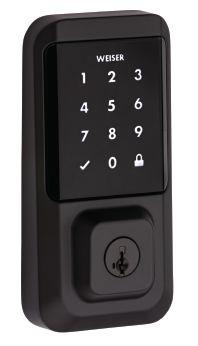
Introducing the Halo Wi-Fi enabled smart lock. It’s the uncomplicated way to get smart lock security and smart home convenience using your home’s existing Wi-Fi router. Operate, manage and monitor the lock with your smartphone using the Weiser app from anywhere there’s an Internet connection.
https://www.weiserlock.com/ en/smart-locks/halo
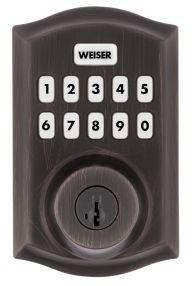
Coming Spring 2021, with our new Home Connect 620 smart lock, Weiser is moving in to the future utilizing the new ZW700 chip to deliver improved network security, faster installation and better performance. Available with a 10-digit interface in contemporary and traditional styles and multiple finishes.
https://ca.weiserlock.com/ en/smart-electronic-locks/

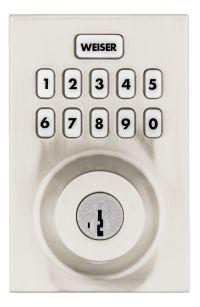
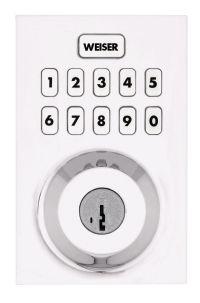
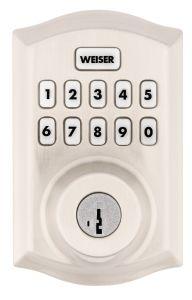
Coming Spring 2021, with our new Home Connect 620 smart lock, Weiser is moving in to the future utilizing the new ZW700 chip to deliver improved network security, faster installation and better performance. Available with a 10-digit interface in contemporary and traditional styles and multiple finishes.
https://ca.weiserlock.com/en/ smart-electronic-locks/
Coming Spring 2021, with our new Home Connect 620 smart lock, Weiser is moving in to the future utilizing the new ZW700 chip to deliver improved network security, faster installation and better performance. Available with a 10-digit interface in contemporary and traditional styles and multiple finishes.
https://ca.weiserlock.com/en/ smart-electronic-locks/
Coming Spring 2021, with our new Home Connect 620 smart lock, Weiser is moving in to the future utilizing the new ZW700 chip to deliver improved network security, faster installation and better performance. Available with a 10-digit interface in contemporary and traditional styles and multiple finishes.
https://ca.weiserlock.com/en/ smart-electronic-locks/
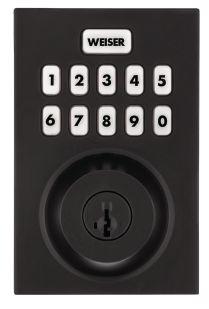
Coming Spring 2021, with our new Home Connect 620 smart lock, Weiser is moving in to the future utilizing the new ZW700 chip to deliver improved network security, faster installation and better performance. Available with a 10-digit interface in contemporary and traditional styles and multiple finishes.
https://ca.weiserlock.com /en/smart-electronic-locks/
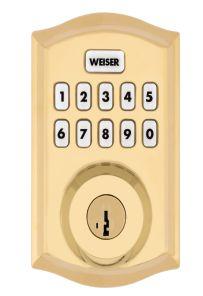
Coming Spring 2021, with our new Home Connect 620 smart lock, Weiser is moving in to the future utilizing the new ZW700 chip to deliver improved network security, faster installation and better performance. Available with a 10-digit interface in contemporary and traditional styles and multiple finishes.
https://ca.weiserlock.com/ en/smart-electronic-locks/
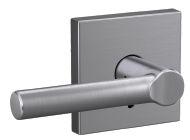
The Schlage Custom Door Hardware Collection features premium style alongside combined interior locks that offer both bed/bath and hall/closet functionality in one. This universal functionality allows homeowners to change from a doorknob to a lever, a traditional look to a modern look — even a non-locking door to lockable — in minutes, without having to remove the inner core of the lock. Premium handlesets in 3⁄4 trim and 2-piece styles are also available. The Schlage Custom Door Hardware collection consists of more than 78 pre-configured products, ranging from combined interior to non-turning hardware. Homeowners can choose from a variety of styles with seven trim designs and 12 knob/lever designs. www.schlage.com
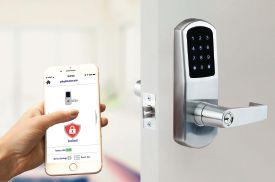
pdqSMART-STP stand-alone smart locks operate by smartphone. Applications include offices, co-working spaces, retail, hospitality, clinics, schools, daycare and more. The locks can operate by smartphone, PIN access code, smart watch and key. Scheduling is available for up to 100 unique users with an audit trail of 25 events on the app. Five lock types are available: Grade 1 and Grade 2 Cylindrical, Grade 1 Mortise, Heavy-Duty Deadbolt and Heavy-Duty Exit Device Trim. They are upgradeable to full access control with no hardware change. www.pdqsmart.com
SALTO’s residential solutions replace the traditional home or apartment door key with an electronic smart lock system that allows end users to use a smartphone to control doors – including garages, service doors, and lobby areas. SALTO offers flexible residential solutions for installations (homes, multi-family housing, highend residential, and rental properties), open via keyless and mobile options, and can connect to smart home hubs and devices like thermostats and alarms (via BLE, Z-Wave/ZigBee/HomeKit).

www.saltosystems.com
Leviton’s Decora Smart Voice Dimmer with Amazon Alexa built-in offers smart lighting and a voice assistant in a single device. Homeowners can benefit from Amazon Alexa’s voice command capabilities directly from a light switch. The Voice Dimmer doesn’t take up counter or desk space and provides the functionality of Alexa and smart lighting control built right into the wall. The Voice Dimmer (part number DWVAA), is a suitable replacement for standard light switches to add lighting control and intelligence to any area of the home.
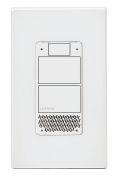
www.leviton.com/voicedimmer
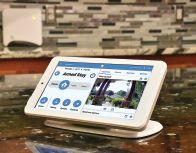
The Slimline Touchpad, offers in-home interactive control for the Connect+ Hub and the BAT-Connect Communicator. The seven-inch touchpad enables real-time command of intrusion security, video cameras and automation devices. The touchpad can be mounted on tabletops or walls with a power supply that utilizes existing wiring in the home or business. The device features the same look and functionality of the Alula smartphone app. The touchpad controls every aspect of a modern security system. www.alula.com
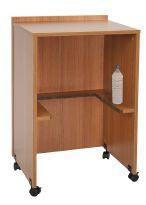
The Home Office School Desk is designed specifically for learn-at-home or work-at-home activities, with features that emphasize, mobility, durability and compact size for limited-space environments. The unit features a compact design (33” H x 21” W x 17”) and has mobility on four casters — two of which lock in place for stability. It is constructed of the same high-pressure laminate and melamine finish as many AmpliVox lecterns and multimedia furniture.
www.ampli.com
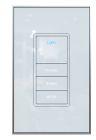
The Vantage EasyTouch Glass modular keypad station combines functionality with a contemporary design and colour options that can be matched with other Legrand products. EasyTouch Glass offers a highly reflective, mirrored look with a smoothtouch tactile surface. The keypad is available with up to five programmable buttons for different scenes — such as “Welcome,” “Away,” or “Party” — allowing users to set the lighting in a space with one touch. With this release EasyTouch Glass becomes the pre-programmed default keypad station within Vantage’s Design Center software — for standard lighting scenes and pre-configured, human-centric “Lighting for Life” scenes. The keypad’s button matrix is also the same as wired or wireless wallbox dimmers.
www.legrand.com
The new Linear LDCO863B and Linear LDCO841 Smart Garage Door Operators feature advanced GDO technologies. Yhe Linear LDCO863B offers wall-to-wall illumination using three LED panels for a total of 4,100 lumens. The Linear LDCO863B also features integrated battery backup compliant with California state regulations. Battery backup is an option with the Linear LDCO841.

In addition, dealers can offer customers real-time garage door monitoring and control from any mobile device with the Linear smart app. The smart app allows users to assign custom access and permissions for up to 10 authorized users, and schedule door and light operation. www.linearproaccess.com