VIDEO SURVEILLANCE
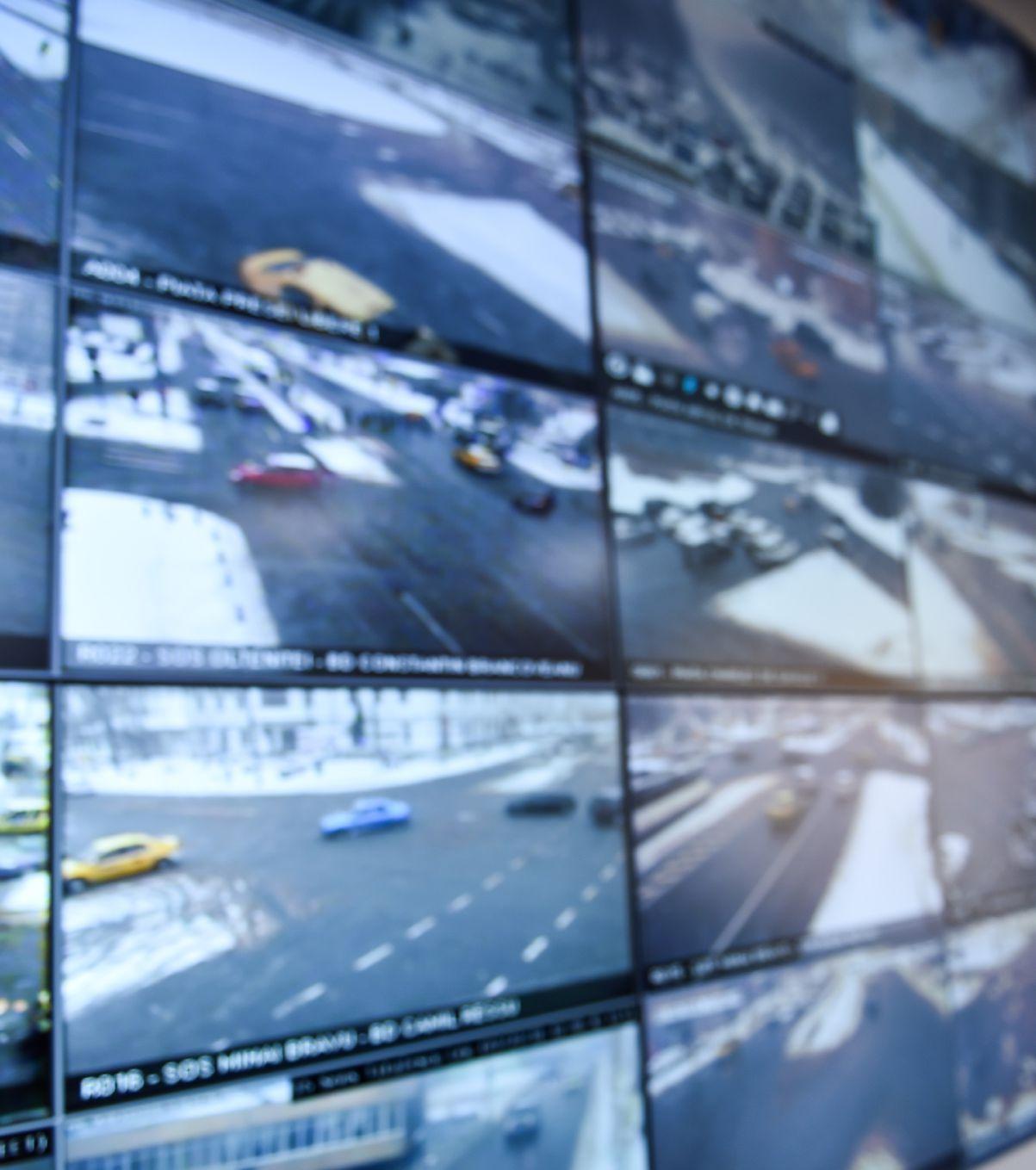



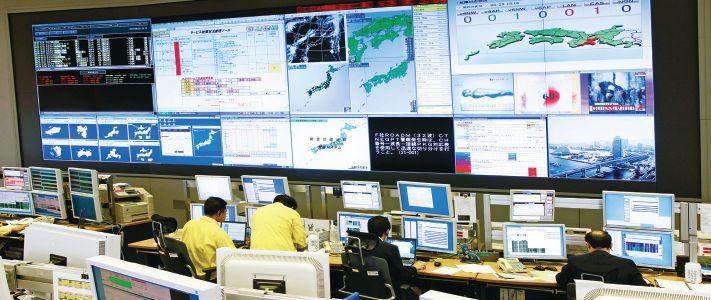
Modern Security Operations Centres (SOCs) or Surveillance Centres or Control Rooms, have evolved over the years, from rooms equipped with multiple disparate monitors for monitoring camera feeds, to complex Operation Rooms where powerful data processing technologies and analytics are used to supervise one or multiple sites. In addition to surveillance with camera systems, security professionals are responsible for access control, lighting control, alarm monitoring, monitoring & control of elevators, parking, dispatch and various other functions – all from the Security Operations Centre.
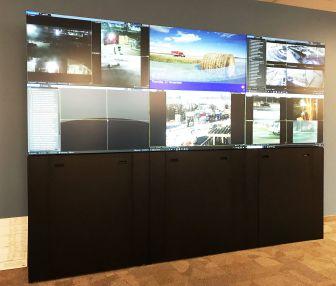
Huge amounts of real-time data, graphic and video information from multiple sources, need to be simultaneously and efficiently processed and displayed in an efficient, dynamic and easy to view and comprehend manner. Display systems employed in Security Operations Centres today, are not just large fancy displays, but are critical tools to ensure Situational Awareness and Safety. They are extensively used in long and multiple operating shifts – often 24x7 operations.
Mitsubishi Electric Sales Canada (MESCA) is the Canadian subsidiary of
Mitsubishi Electric, Japan – one of the largest manufacturers, with a division specialized in providing display solutions for Control Rooms including Security & Surveillance Operation Centres, which require display solutions with superb image quality, low cost of ownership and proven reliability, based on a choice of:
Display Technologies:
• LCD with LED backlight – for space and budget restricted control rooms
• Narrow Pixel Pitch DirectView LED – for large control rooms
• DLP™ with long life LED light source – for demanding 24x7 control rooms, especially where images or portions of image remain static for extended hours operation
Screen Sizes, Resolutions and Installation options:
• 50” to 80” display units that are easily put together to create large visually seamless digital canvases on which information may be displayed in any size and location based on operational needs.
• XGA, SXGA+, HD, WUXGA and other resolutions that put together help create ultra high-resolution display canvases to suit the customer’s specific operational requirements.
• Front or rear access for installation, cabling & maintenance to optimize utilization of available space.
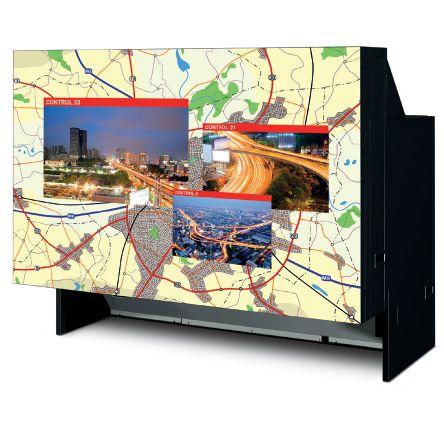
• Mitsubishi HS Series DLP™ SlimCubes provide a small footprint freestanding front-access display solution with depth only 20.5”, ideal for small-to-medium space and
budget limited 24x7 control room applications.
Lowest cost-of-ownership in the control room industry with
• Lowest Power Consumption –reducing ongoing operational costs
• Lowest Heat Dissipation – reducing cost of HVAC systems and ongoing operational costs
• LED light sources with anticipated life up to 130,000 hours (about 15 years) in 24x7 use.
• Self-diagnostic, no consumable and virtually maintenance free operations
• The longest MTBF (Mean Time Between Failures) and the shortest MTTR (Mean Time To Repair) in the control room display industry
Robust Image Processing Solutions that are secure, powerful and yet easy to use or operate.
Mitsubishi Electric Sales Canada (MESCA) supports Security and AV integrator partners across Canada who provide local installation and technical support backed by factory-trained display wall specialists and an in-house inventory of critical spare parts that can be locally dispatched if required, from the Canadian Headquarters in Markham, Ontario.
Mitsubishi Electric Sales Canada has deployed many such control room display systems in Canada. Contact us to find out how we can add value in your control room and help create an excellent security operations control room facility that will serve your organization well for many years into the future.

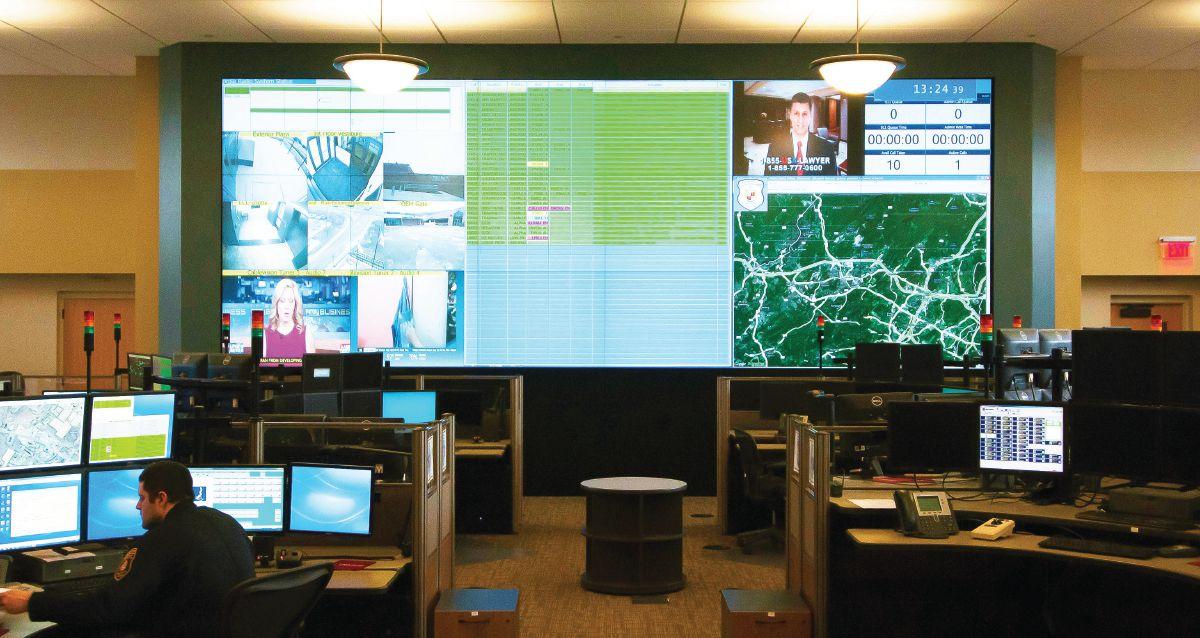


With over 89,000 mission critical display wall installations worldwide, Mitsubishi Electric plays an essential role in keeping our modern world moving.
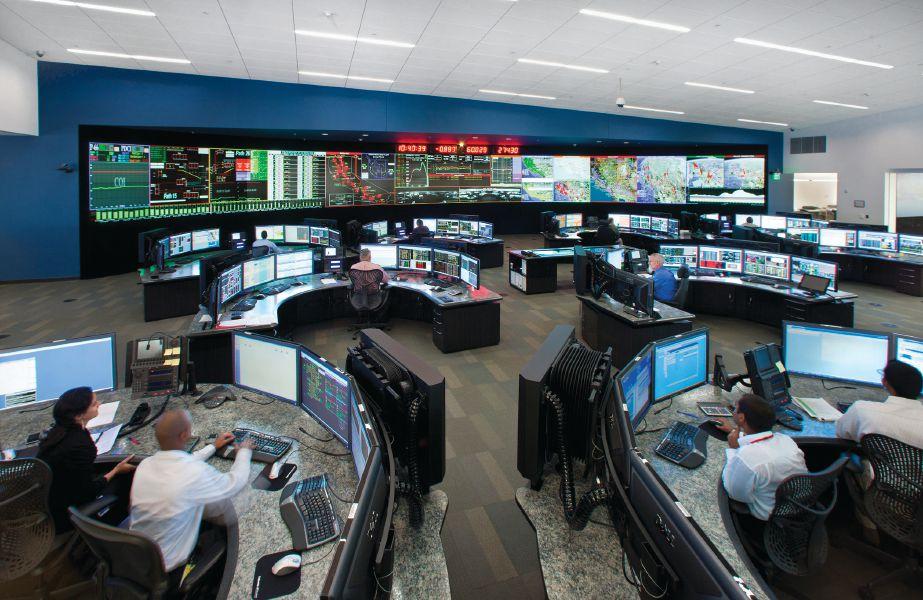
From Toronto to Tokyo and New York to Istanbul, Mitsubishi Electric displays operate around the clock, helping ensure the smooth running of the network and allowing operators to zoom in quickly to any potential trouble spots. With an expected lifetime of up to 130,000 hours (almost 15 years) in 24x7x365 operations, Mitsubishi Electric display wall systems are designed and built to meet the most demanding requirements of the end user with the lowest cost of ownership.
Where there is a need to monitor and control information ows, Mitsubishi Electric is there.

Networking and IT skillsets are taking centre stage as security systems run increasingly complex software
By Ellen Cools

Internet of Things (IoT), big data, video analytics and the cloud are terms security professionals hear constantly these days.
But they’re not just buzzwords. These technologies are making security systems such as cameras and access control much more complex.
As solutions become increasingly complicated, the question arises — are integrators (and vendors) finding qualified installers for today’s systems, and, by extension, what skillsets and qualifications should installers have?
Becoming part of a bigger ecosystem
Before that question can be answered, let’s look at how the industry has evolved.
“In the last 10, 20 years…the industry has transformed from analogue to IP cameras,” shares Ken Francis, president of Eagle Eye Networks. “In the analogue
“As we moved into IP …the technicians had to get a lot smarter and more certified.”
— Ken Francis, Eagle Eye Networks
world, we used coaxial cable, and when you plugged the camera in, it just worked — there was no programming or networking necessary to get a camera image.
“As we moved into IP and we introduced cameras and recorders and things with software that were all requiring networks, the technicians had to get a lot smarter and more certified,” Francis adds.
“The previous training was strictly limited to a single device configuration, checkboxes,” says Liliana Andjic, general manager, low voltage services, at Houle,
a Vancouver-based systems integrator. (Houle is also a two-time winner of SP&T’s Integrator of the Year award.) “There wasn’t really a level of complexity from the device itself, because…each and every single system was operating in an isolated environment.”
But as the industry has turned toward more connected solutions, often running on the cloud, this is no longer the case.
“We’re looking at the systems, including the camera systems, as part of the total operational delivery,” Andjic explains. “The camera system becomes a part of the bigger ecosystem — that requires software configuration, that requires networking experiences in order to achieve the outcome the end user is looking for.”
This means installers have to focus not just on the installation, but also on the information that a device transmits to the whole system, she says.
“You’re talking about information


sharing, you’re talking about dashboards, you’re talking about end users having information at the tips of their fingers,” she continues. “So it’s not just…a device sitting on the wall.”
Consequently, the necessary qualifications and skillsets for installers and integrators have changed.
Installers need a greater understanding of the software, networking and routing, Andjic says.
“They don’t have to be Cisco trained but they have to have VMware, which is becoming a big part of the virtualization, becoming a big part of the camera installation,” she elaborates. “So the technicians have to understand how to configure the system, and, sometimes, work the applications [and] create the software applications that the camera will actually do.”
Jim DeStefano, head of security solu-
“You’re talking about information sharing, you’re talking about dashboards, you’re talking about end users having information at the tips of their fingers.”
— LilianaAndjic, Houle
tions for Siemens Building Technologies, adds, “While we still need installers to know inputs, relays and basic wiring, we now favour more IT backgrounds, a problem-solving mentality when it comes to the more complex projects.”
Consequently, “those that have an extensive IT knowhow and expertise are
more in-demand as installers,” he says. Networking skills are highly desirable “because our customers expect us to be the experts.”
As a result, when hiring new technicians, Siemens is particularly interested in those with networking degrees and prior experience.
Additionally, cybersecurity education is key.
“Cybersecurity is a very important step that can’t be overlooked because most of our systems are on our customers’ networks, so we need to stay on top of these,” DeStefano says.
If technicians install a device and set it to its default password, “it creates a huge risk, a security hole in the customer’s network,” Andjic adds. “So it’s very instrumental that any installer has a very basic knowledge of cybersecurity.”
Sam Shalaby, CEO of Feenics, maker of the cloud-based access control solu-

tion Keep, agrees: “We need them to be in tune with the latest available technology, i.e., whether it’s software, whether we’re using the cloud, why and how we’re using the cloud, etc. The hardware is changing a bit so they need to be in tune with what changes.”
With regards to access control solutions, “Every controller has a resident IP on board, so it’s changed from the days of RS45 communication to now IP communications. So they need to understand IP communication, the utilities that allow them to address these panels,” says Shalaby. “They don’t need to be full-fledged IT people, but more or less [they need to] understand IP, understand cloud, understand the internet.”
Consequently, certifications are important.
“Installers should have networking skills and certificates that relate to their primary job responsibilities,” DeStefano says.
Certifications such as Cisco Certified Network Associate Routing and Switching (CCNA), Microsoft Certified Solutions Associate (MCSA) and Microsoft Certified Solutions Expert (MCSE) are particularly helpful, he says, along with other BICSI certifications.
Feenics also looks at integrators’ and in-
“While we still need installers to know inputs, relays and basic wiring, we now favour more IT backgrounds.”
— Jim DeStefano, Siemens BuildingTechnologies
stallers’ certifications when choosing a dealer.
“We like to qualify our integrators to see if they can handle the software that we are selling, because the more qualified they are, the less taxing it would be on us,” Shalaby explains.
But Cisco and Microsoft certifications are not 100 per cent necessary, he argues.
“If you [the integrator] have a Cisco certification, if you have a Microsoft certification, of course it’s a plus,” he explains.
“But we also look at how long you’ve been in the business, who are the installers that you have — are they technologists, do you have engineering staff or engineering qualifications on staff?”
Houle, Feenics and Siemens all provide training for their installers.
Andjic says that continuous training is
integral to ensuring installers understand the potential vulnerabilities in today’s security systems, as well as networking skills.
“It’s essential that ongoing training is being provided, not only from the manufacturing side, because there’s always critical updates that the manufacturer provides us …but in this complex Internet of Things environment … we have to make sure that we recognize what impact the camera creates on, perhaps, the building automation system,” Andjic explains.
“If they’re sharing several devices sitting on the same network, how to build secure networks, how to re-route a secure network, what sort of information can be stored at the facility, what sort of information can be transferred off the site [is important to understand],” she continues.
Houle has adopted a layered approach to training, Andjic shares, with entry-level,
“We like to qualify our integrators to see if they can handle the software that we are selling.”
— Sam Shalaby, Feenics
mid-level and then professional level networking training. The professional service group are Cisco trained and certified.
Likewise, Siemens provides a lot of onthe-job training.
The company provides basic training on topics such as compliance, data privacy and security. New installers also shadow experienced colleagues in similar roles and take online courses that are pre-requisites for classroom courses, DeStefano explains.
“Typical on-the-job training might include basic wiring techniques, reviewing project drawings, basic access control and video terms,” he elaborates. “We also partner with certain equipment manufacturers and have technicians become certified in specific products and competencies.”
But in addition to general IT security training and education, “installers need to share effectively their experience as they encounter new areas of vulnerability. Lessons learned and information sharing need to be institutionalized in the organization through regular workshops with peers,” he says
As a vendor, Feenics also provides training, both online and in classroom settings, on their software.
“We do training on the hardware itself and the utility that we use for the hardware to address the panel and how to address it,” Shalaby elaborates. “And we do a little bit of recap on the network and how it works, and that’s not specifically our network but in general.”
Additionally, Feenics provides cybersecurity education to both vendors and end users.
“If an integrator took our product, we explain what we’re doing and how we’re doing it and what their role is and our role,” he shares. “We really take all the responsibility about cybersecurity ourselves, and we explain it to the integrator so the integrator can explain it to the end user. But we are also available for the end user to address all cybersecurity skills.”
Eagle Eye Networks also provides web-based and classroom training teaching technicians how to install their prod-
ucts, Francis shares.
A different perspective
However, Francis has a different opinion about the impact of today’s security systems, particularly those that operate via the cloud, on the installer’s role.
“In a cloud system, when you install the appliance or bridge, the bridge phones home to the cloud, like E.T.,” he explains. “And it does it on its own without the technician having to know how to do that. The technician does not have to open any of the customer’s ports and their networks, there’s no cybersecurity vulnerability that’s created through installing the appliance.”
In Eagle Eye Networks’ case, their cloud software identifies cameras and automatically sets them up for the installer, essentially making the camera plug-andplay, Francis says.
“That removes the burden of network skills and network savviness from the technician altogether,” he argues.
“The installing company needs to understand networking skills because they have to decide whether or not they’re selling the right product,” he continues. “But the onsite technician does not.”
As a result, the company does not look for heavy certification such as Microsoft or Cisco, he says.
“The quality of the installation for the customer is really about three things. One, everything is done on a schedule. Two is the quality of the craftsmanship of the cable and device being installed. And three is the programming of the system,” Francis says.
Consequently, Eagle Eye Networks looks for program management and cabling skills in installers.
Specifically, the company looks for RCDD (Registered Communications Distribution Designer) certification, which “teaches [installers] how to properly install the cable so that the cable is not damaged, and how to put the ends on the cable so you get the best possible connection between the cable you’re installing and the network you’re plugging it into.”
Meanwhile, program management
skills are key to meeting customers’ needs, Francis says.
There are a lot of logistics with customers who have a large number of sites spread out across the world, he explains. The project manager has to co-ordinate with other teams to get the equipment and cable-running parties to the correct locations.
“Getting all of that done on schedule for the customer and communicating with the customer about how they’re progressing with the schedule are all elements of project management that are really important,” he concludes.
So are integrators and vendors finding qualified installers for today’s systems?
Francis argues that there are more qualified installers in the industry compared to 10 years ago.
Shalaby agrees that while it’s difficult, the industry is “getting there.”
“And we’re helping them get there,” he says. “As a vendor, we have a role to play with the integrators and we’re doing the best we can.”
However, DeStefano says, “Finding new people to go into the trades has become somewhat challenging.”
Siemens, therefore, is working with technical schools and high school programs to interest students in technology and recruit from that base, he says.
Andjic agrees that the challenge today is a lack of education.
“From a typical program, they [installers] come with a very limited knowledge,” she explains.
“We ended up finding the young engineers that have a combination of electrical or software development or electronics background, and we trained them to become some of those technicians.”
“It’s very, very difficult to find qualified techs,” she adds.
As such, Andjic believes the industry must create more awareness about this need and the current market.
“The industry has to educate more institutions, [develop] more programs that are tailored along the lines of where the industry is going,” she concludes. “Because I would say we are 10 years back in terms of training and where the industry is going, and it’s changing fast and furious.”

The notion of safer cities through technology integration and data sharing is an enticing one, but there are twists and turns to navigate first
By Ellen Cools
The Government of Canada recently launched the Smart Cities Challenge, a panCanadian competition that “encourages communities to adopt a smart cities approach.”
A number of Canadian cities across the country are taking part. Evidently, more and more municipalities see the benefit of installing and integrating intelligent sensors to efficiently manage their cities.
This, in turn, means integrators and installers will reap some of the rewards. But in order to benefit, they should know what municipalities are looking for.
To do that, installers and integrators first need to understand what a smart city is, and, by extension, what a safe city is.
According to the participant summary of IHS Markit’s “Safe Cities Report - 2017,” a smart city project is “one that uses an integrated ICT [Information and Communication Technologies] system to improve efficiency, manage complexity and enhance citizens’ quality of life through sustainable improvement in city operations.”
The smart city includes six components: “safe city,” mobility and transport, energy and sustainability, social infrastructure, physical infrastructure, and smart economy.
Additionally, the report says that while a smart city is not always a “safe city,” a safe city uses smart city concepts. A safe city is “a
security concept that integrates critical security information from a range of sources onto a consolidated IT platform.”
Those sources include video surveillance cameras, sensors, biometric applications, access control systems, etc.
In creating this convergence, it’s important to understand the role of surveillance in smart and safe cities.
“Strong surveillance infrastructure is critical to the success of a safe city, as much of the analytics and operational procedures are driven by the surveillance inputs,” reports IHS Markit.
According to the study, video surveillance equipment and hardware, as well as peripheral services, currently make up approximately 50 per cent of the market.
“A lot of cities already have a good number of surveillance cameras, so it just makes sense to continue to use those in the future,” adds Alexander Richardson, senior research analyst, technology, media and telecom for

Kabilan also believes the primary focus for most smart city installations is not surveillance, but “sensing.” For him, surveillance is the observation of a specific group, while sensing is directed at a process. “For example, if you think about sensors in traffic lights, what you’re trying to do is maybe gauge where the traffic is. By that, you may know what cars are around you, where all the traffic is, so you would have some information that might be useful from a surveillance aspect, but it’s more about the sensing aspect.”
“Sensors … can be used in conjunction with surveillance systems or camera systems to provide you with additional information on a situation,” he continues. “Combine that with the potential that AI (artificial intelligence) and big data offers, and maybe you could get real-time analysis of images.”
Evidently, analytics and big data will play an important role in smart city projects, particularly because of the sheer number of sensors and cameras required.
For example, “if you’re routing 15 or 20,000 surveillance cameras in a control room, there’s no way that a couple of operators … can sift through all of that data,” says Richardson. “It’s really important to have some kind of analytics program so that you can identify the anomalies.”
“You need to have [surveillance] automated, so you’re not stressing out your operators.”
— Alexander Richardson, IHS Markit
For example, a city she spoke to had a problem with illegal parking, particularly at city hall. But through licence plate recognition, city managers were able to determine who was parking illegally and who wasn’t.
For municipal managers, she adds, analytics and big data were daunting in the past. Their goal with analytics is to “be able to translate it into … real return on investment or some real tangible results for their citizens.”
The power of data analytics for governments, then, is to make more informed decisions regarding public safety, energy, public health, etc., she explains.
While Kabilan agrees analytics could potentially provide useful insights, he is still concerned about their effectiveness.
“A lot has been said about [video analytics], a lot has been touted by vendors, but as far as I see, the effectiveness has not been quite as good as many have hoped for,” he explains.
IHS Markit, and author of the report.
“You can keep adding more cameras on that network and you can add things like analytics, and once you connect with sensors, access control, etc., it [becomes] a lot more efficient,” he continues.
For example, Atlanta, Ga., implemented an initiative called Operation Shield in 2015. The city put together a steering committee to integrate the police and transportation department’s surveillance systems into one command centre, utilizing the pre-existing cameras to make their operations more efficient.
However, Dr. Satyamoorthy Kabilan, director of national security and strategic foresight at the Conference Board of Canada, believes there are a number of misperceptions about how surveillance systems function and affect public safety.
“In most cases, they affect public safety retroactively, i.e., they give us a better chance of tracking down the perpetrators … but it doesn’t always work from a prevention perspective,” he explains.
Giovanni Gaccione, justice and public safety practice leader at Genetec, also finds that surveillance will have broader applications through analytics and AI. “Surveillance as a thought is going to be important, but not [only] from a public safety or a policing perspective,” he explains. “It’s going to be for a whole city benefit.”
For instance, cities can use it to monitor traffic and pedestrian flow.
This is especially the case because video analytics are more advanced, which in turn makes cameras more intelligent so “not only can they tell me if traffic is flowing… but with a simple analytic, [they] can say, ‘traffic should always be flowing in this direction,’” he explains.
If a vehicle is going in the wrong direction, for example, an alert can be raised automatically.
Lisa Brown, senior national director of municipal infrastructure and smart cities, North America, for Johnson Controls has also seen how video analytics have helped city managers.
“I think really to make the most out of analytics, it’s not going to be video, it’s going to be…marrying all of those other sensing systems,” he continues.
To marry these systems, AI will play a “tremendous” role, especially as it becomes cheaper to install a variety of sensors through IoT.
But the challenge then becomes how to make sense of all the data.
“You need to have [the surveillance system] automated so that you’re not stressing out your operators,” says Richardson. “As you use the system more and more and as you tailor the analytics to each specific application, the system just becomes that much better — it becomes more intelligent.”
But simply gathering the data and finding patterns is not enough, says Gaccione. The footage pushed from cameras has to be interpreted and used correctly.
“As one of our police departments always tells us, ‘You need to tell us what we don’t know,’” Gaccione says. “I think what’s
going to be the most important tool of AI, is how can we, with all these different data sets, be able to pick out a trend or an anomaly that a city might not know?”
But Gaccione emphasizes that “the importance isn’t necessarily having a data set, it’s the ability to cross what information can the sanitation department’s data set [for example] help with public safety, or vice versa.”
For Richardson, sharing data is the ultimate goal of safe and smart city initiatives.
“You want to be able to disseminate information, so that especially when you have a large-scale incident, you can have all of the different agencies or stakeholders on the same page,” he shares.
“It would be very interesting to see that happen because it would certainly provide a lot of useful information and insight,” adds Kabilan. “The only thing I would say, of course, is that it certainly comes at a cost. You have to be able to access the data securely, the provision also has to take into account privacy — who has access to that data and where it goes.”
Consequently, privacy and cybersecurity should be a top priority.
Gaccione says that this is the No. 1 priority for Genetec’s Justice Public Safety team. “It’s the first thing we think about whenever we speak to customers,” he says.
“With IoT, the largest issue is scale,” he continues. “Maybe in the past, for NYC, they have a thousand computers. If they start rolling out cameras and sensors and… IoT, that might go … to 50,000 or to 100,000 units that need to be maintained, monitored and secured.”
Those devices need to be secure to make sure it’s “easy to keep those IoT devices up-to-date, and ... those IoT devices don’t turn against you and basically act as malicious devices on your network.”
Yet Kabilan says he hasn’t seen a lot of discussion about cybersecurity among municipal managers.
“Sometimes, what I’ve heard in discussions is, ‘Well, you know, it’s just a traffic light sensor, who’s going to want to hack that?’ But it’s an endpoint. It goes back into your system, and if you can hack 100,000 of those … you’ve now got a botnet,” he explains.
“A lot has been said about [video analytics], but as far as I see, the effectiveness has not been quite as good as many have hoped for.”
— Dr. Satyamoorthy Kabilan, Conference Board of Canada
The increase in endpoints combined with the lack of concern for cybersecurity and privacy is “creating what could potentially be a highly critical set of vulnerabilities,” he concludes.
Despite the potential vulnerabilities in smart city projects, it is undeniable that the industry is a growth market for installers and integrators.
“I think this market has been exploding,” says Gaccione.
Case in point, both Genetec and Johnson Controls have benefited from this growth.
“Genetec has been positioned and continues to position itself as a unification platform,” Gaccione says. “We see great benefit because it allows cities to not be locked into a specific technology.”
Likewise, Johnson Controls is “seeing significant growth in the market … because these projects are becoming more holistic,” says Brown.
For example, the company recently helped install a federated surveillance system in Philadelphia, connecting small businesses with universities, hospitals, police and fire.
“It was very, very interesting in terms of not just the security that it brought, but also the co-operation,” Brown says.
Integrators, she adds, will play a key role in the coming years “because they’re bringing more coalition partners together ... to really bring a bigger and broader offering for smart cities.”
“What I’ve been seeing out in the market is that companies are really aligning and approaching projects as teams, rather than just going it alone.”
Globally, the safe cities market reached total revenue of US$13.1 billion in 2015,
reports IHS Markit. By 2020, it is predicted to reach US$20.06 billion.
The fastest growing markets are predicted to be Broadband Enhanced Node Bs (the broadband infrastructure which transmits the signal for connected devices) and PSIM (Physical Security Information Management) software, which integrates video surveillance feeds, sensors, access control systems, etc., explains Richardson.
Video surveillance equipment will account for 8.6 per cent of the compound annual growth rate (CAGR) between 2015 and 2020, while communication and incident management will account for 9.4 per cent, data management 15.7 per cent and analytics 7.0 per cent.
In fact, a new study by IHS Markit, “Video Surveillance & Security ReportCities,” reveals that “the world market for security equipment in city surveillance has registered robust growth in the past few years, surpassing US$3 billion in 2017.”
Additionally, the global city surveillance market is predicted to grow at an average annual rate of 14.6 per cent from 2016 to 2021.
Evidently, installers and integrators will have plenty of opportunities as the smart and safe cities market evolves.
But Richardson warns there are challenges.
“There aren’t any absolute technology standards,” he explains. “There’s different video standards, there’s different communications standards and cities always have different generations of all these technologies made by different vendors, so it’s really tricky to get a system that can tie all of it together.”
Richardson says that while many PSIM software integrators claim their system can integrate sensors from different companies, that’s not always the case.
“A lot of times, I think there is a disconnect,” he adds. “The vendors will pitch this great system, but ultimately it’s not what their client needs.”
This might be because cities are often behind compared to the technology.
“From a technology side, I think we’re there as an industry,” says Gaccione. But cities have to do more to “wrap their head around … the technologies that are out there.”
Consequently, “discussion and interaction with the end user is a key thing,” concludes Richardson.