Avante Logixx CEO outlines growth strategy Craig Campbell discusses the company’s 2018 acquisitions and future plans p. 6
Integrator of the Year award highlights Fitch Security Integration celebrated their win at a recent gala event in Toronto p. 9 How to get on board with mPERS
Mobile health monitoring is taking off as seniors embrace active lifestyles p. 20
Joanne Rowe
16 Hall of Fame 2018
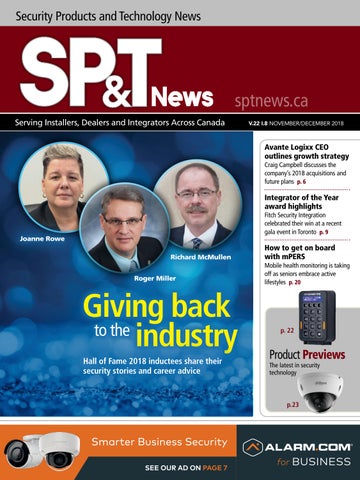
SP&T News celebrates the accomplishments and careers of three more inductees: Joanne Rowe, Roger Miller and Richard McMullen
By Neil Sutton
John Carpenter
• Avante Logixx acquires three security companies in Ontario
Study: Global guard revenues to grow 6% a year
11 CANASA Update CANASA sets 2019 agenda
Learned
14 Camera Corner
Where the camera keeps its mind By Colin Bodbyl
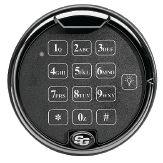
The AxisBlu lock from Sargent and Greenleaf combines
EDITOR’S LETTER
OBy Neil Sutton
Farewell to a friend
ne aspect of my job that I always look forward to is touring a trade show with Peter Young. There’s never a shortage of people who stop and talk to Peter, glad to see his smiling face and friendly demeanor.
I’ve known Peter for the 11 years I’ve worked at SP&T News — Peter has worked here for seven more than that as a sales manager and in more recent years as publisher.
Trade shows are, you might say, his natural habitat. He relishes meeting people, stretching his legs as he roams the aisles, eager for new business opportunities and the next conversation. Whether it’s shop talk, a chance to catch up with old friends, or maybe to arrange to meet for a steak and a beer at the end of the day, Peter is always game for a chat.
It was a particularly bitter-sweet experience at the most recent CANASA Security Canada Central show in Toronto, Peter’s last major event as the publisher of SP&T
Peter is retiring at the end of this year and it’s going to be tough to see him leave. Everyone wanted to talk to Peter at that show, if only to confirm that, yes, it’s true, Peter is actually retiring, and to shake his hand and wish him well.
We’re going to miss having Peter around the office. He is, most of all, a good sport. Peter can take a joke (and dish them out) and he’s always willing to help out in any
way he can. Whether it’s transporting carloads of magazines, banners and bric-a-brac to an industry function, showing up at 7 a.m. to set up a booth or MCing one of our events, he’s always willing to pitch in. Much of this magazine’s success is also due to Peter, who has tenaciously sold advertising space and other marketing opportunities that have helped us to grow over the years.
Your Partner in Securing Canada Security Products & Technology News is published 8 times in 2018 by Annex Business Media. Its primary purpose is to serve as an information resource to installers, resellers and integrators working within the security and/or related industries. Editorial information is reported in a concise, accurate and unbiased manner on security products, systems and services, as well as on product areas related to the security industry.
Group Publisher, Paul Grossinger 416-510-5240 pgrossinger@annexbusinessmedia.com
Publisher, Peter Young 416-510-6797 pyoung@annexbusinessmedia.com
Editor, Neil Sutton 416-510-6788 nsutton@annexbusinessmedia.com
Associate Editor, Will Mazgay wmazgay@annexbusinessmedia.com
Art Director, Graham Jeffrey gjeffrey@annexbusinessmedia.com
Account Coordinator, Kim Rossiter 416-510-6794 krossiter@annexbusinessmedia.com
I’ve had the privilege of meeting lots of fascinating and hard-working people in the security industry. People who have opened my eyes to new perspectives, wowed me with their insights, and frankly, showed me some really cool stuff. This is our annual Hall of Fame issue where we spotlight the accomplishments of security professionals who have demonstrated dedication to their industry and helped others to succeed as well. Congratulations go to Joanne Rowe, Richard McMullen and Roger Miller — three people who richly deserve that recognition.
Peter Young is our unofficial fourth Hall of Famer this year. We wish Peter and his family all the best as he looks forward to the next chapter of his life.
Annex Publishing & Printing Inc. disclaims any warranty as to the accuracy, completeness or currency of the contents of this publication and disclaims all liability in respect of the results of any action taken or not taken in reliance upon information in this publication.
Peter Young
redefine reinvent renew
LINE CARD
Avante Logixx acquires three security companies in Ontario
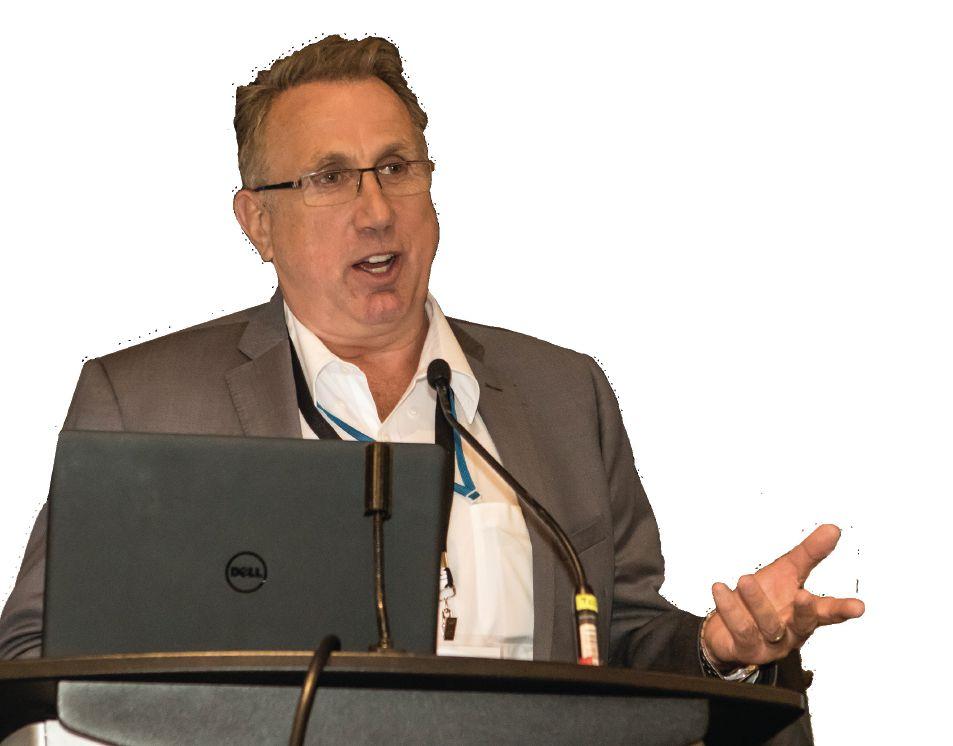
Since taking over the role of CEO at Avante Logixx in January, Craig Campbell has positioned the company for growth.
Primarily known for high-end residential security services under its Avante Security brand, the company has rapidly expanded this year, acquiring three companies in the space of a few months.
On Nov. 12, Avante Logixx announced its intent to acquire Intelligarde International, a security services business, including guard services, mobile response, private investigations and integration services. Toronto-based Intelligarde employs more than 300 people and generated approx-
Dealer Spotlight
Bob
imately $15 million in revenue in the last 12 months. (At press time, the acquisition was expected to close by Nov. 30.)
Two months earlier, Avante Logixx acquired Veridin Systems Canada, a Mississauga, Ont.based systems integrator with clients across Canada. In August of this year, Avante Logixx also acquired Watermark Security, a provider of alarm monitoring and cottage check services for clients in the Muskoka region of Ontario.
Growth ambitions
Campbell started working in the security industry as a guard at the age of 17. By 22, he had formed his own company, Total Security
SP&T News: Most experts peg the residential alarm penetration rate at 20-25 per cent. Do you see that changing?
Bob Price: I believe it’s going to move up… and I think it’s because you’ve got so many new players. The complexion of the business is changing.
SP&T: Do you see Google or Amazon as a competitor? What is your view of these relatively new players in the market?
BP: I think we have to wait and see. They’re definitely spreading the word. I can’t say we’ve encountered much of it where we are (in Victoria).
SP&T: Are people asking about the capabilities of security products from Amazon or Google?
BP: No, not from the Amazons or the Googles yet. We are seeing so much more shopping online. People come to you now and they know that they can get [good pricing]. There are free offers all over the place and they’re well aware of that.
Management Services (TSM), which he grew into a security solutions firm with offices across Canada and the U.S. and more than 3,000 employees. TSM’s Canadian guarding business was sold to GardaWorld in 2013.
Campbell acquired a 17 per cent stake in publicly-traded Avante Logixx in Dec. 2017 before assuming the role of CEO this January.
In an interview with SP&T News, Campbell said the company is assessing future acquisitions with continued growth on the horizon.
“What I saw in Avante was this unbelievable brand, a base of business in the high-end residential market,” explains Campbell. “When (former CEO) George Rossolatos resigned, I saw an opportunity to reposition the
SP&T: Does that create any pressure on pricing?
BP: I’ve come to the conclusion that you’ve got two types of customers. You’ve got the “old time” customers — they expect to pay something for a system. They want to have an advisor out to talk to them. They’re interested in, shall we say, more comprehensive security. Then you’ve got the Millennial consumer. They’re happy to go online and [find] an offering… they’re happy to buy and don’t need to see anybody. You’ve sort of got those two areas.
SP&T: So you’ve got Baby Boomers who have had the same security provider for 20 or more years and the Millennials, the new homeowners, who would have a different perspective on security.
BP: Yes. And I think down the line you’re going to have a third component too. Right now, $30 a month is the norm to a lot of people. I think you’re going to see more and more [people] gravitate to $15 a month monitoring. I suspect that is going to increase the [home market] penetration.
asset and use it as a platform for growth.”
Avante’s recent acquisitions have all been Ontario-based companies, but Campbell also has a broader vision. “In time, I certainly have Canadian, then North American, then global aspirations.”
The goal is to continue to evolve the company as a full-service security provider, he adds. “I think pureplay guard companies and pureplay integrators are going to have a tough time,” he says. “I think people expect more… The big [security providers] are getting bigger and the small are getting smaller. In there, I think there’s some white space for us to keep very tight, with a very targeted value proposition with a specific set of customers — and win.”
— Neil Sutton
SP&T: Is PERS or other new security technology interesting to you from a recurring monthly revenue (RMR) perspective?
BP: We’ve immersed ourselves fairly deeply in PERS. Just recently we’ve been handling GPS PERS. That has been very good and taken off faster than we expected. Also, from the commercial side, hosted access… we’re surprised at how quickly that has been embraced. We’ve only been doing that for the past few years, but it seems to be almost a standard way of doing access these days. Cameras have also exploded because the cost has come down so much and everybody seems to want [them]. The other part of the business is the interactive services. That is huge.
SP&T: Are you talking about residential or commercial for interactive?
BP: Both! It’s more in the residential business. People like being able to log on to their smart phone.
Craig Campbell, Avante Logixx
Price, owner, Price’s Alarms, Victoria, B.C.
LINE CARD Calendar
Applications
YMCA rolls out biometrics platform
Dr. P. Phillips YMCA in Florida has installed a security and event management platform as part of a visitor management system designed to increase security by verifying member identity.
The YMCA branch is the largest of 27 facilities in Central Florida, serving 11,000 members. The facility recently upgraded its physical access control system, incorporating biometric technology, as part of a larger US$11 million renovation.
The new system integrates Software House’s C-CURE 9000 system with biometric readers from iDentytech and swing glass optical turnstiles from Automatic Systems. YMCA members are able to gain access to the facility using a fingerprint instead of an access card. Membership enrollment is managed via a C-CURE system.
Appointments
• Nortek Security & Control announced that Quinto Petrucci has been appointed vice-president of product management.
• Vanco International announced the hire of director of audio products, Randy Blanchard, to oversee its Pulse Audio and Beale Street Audio brands.
U of T campus police upgrades communications centre
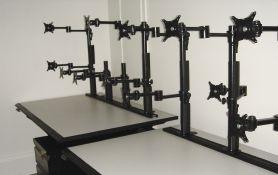
University of Toronto campus police recently upgraded its communications centre with new desks, video screen and a scalable computer monitor stand which could be accessed by more than 80 employees.
“When we were looking at our renovation and development plan, we were trying to fit everything in terms of access control, 24/7 employee utilization along with all of the operational systems required,” said Alan Truong, manager, security systems and services of The University of Toronto Campus Police.
The university worked with Winsted, outfitting the area with six Ascend sit/ stand consoles, which can be adjusted to any height for multiple users.
“Although our space was limited, Winsted presented us with a variety of options that would have worked well for our needs,” said Truong.
• Celia T. Besore is the new executive director of The Monitoring Association (TMA). Besore was previously executive director of the National Association of Hispanic Nurses as well as a former member of the board of directors of the American Society of Association Executives (ASAE).
• The Board of Governors of Commissionaires Southern
Dutch communications firm bolsters access control
Liberty Global, an international telecommunications and television company and Internet service provider (ISP), operates seven office facilities in Schiphol-Rijk, The Netherlands. The company required more advanced security measures for these facilities, which house approximately 1,600 employees.
“We did have security at the main entrance, but it could not always prevent people from entering our central hall unnoticed,” explains Simon Kuitert, corporate security manager, Liberty Global. “That is why we introduced ‘single point of entry’ during a recent renovation.”
The company deployed Boon Edam’s Lifeline Speedlane Swing optical turnstiles at its main building. Tourlock 180+90 security revolving doors were also installed at the six other facilities.
Alberta announced the appointment of Charles Caldwell as the company’s new chief executive officer and Dennis Ellahi as chief operating officer.
• Barix announced that it has promoted Reto Brader to chief executive officer. Brader was previously vice-president of sales and marketing for the company.
January 8-11, 2019
International CES Las Vegas, Nev. www.ces.tech
January 20-24, 2019 BICSI Winter Conference and Exhibition Orlando, Fla. www.bicsi.org
February 21, 2019 4th Annual Mission 500 Hockey Classic Toronto, Ont. www.sptnews.ca
March 7, 2019
Security Career Expo Toronto, Ont. www.securitycareerexpo.com
April 2-4, 2019
Canadian Technical Security Conference Cornwall, Ont. www.ctsc-canada.com
April 8-11, 2019 ICT Canada Toronto, Ont. www.bicsi.org
April 10-12, 2019 ISC West Las Vegas, Nev. www.iscwest.com
April 24, 2019
Security Canada East Laval, Que. www.securitycanadaexpo.com
Security Canada West Richmond, B.C. www.securitycanadaexpo.com
Quinto Petrucci
Celia T. Besore Charles Caldwell Randy Blanchard
Reto Brader
Dennis Ellahi
Integrator of the Year 2018 Gala
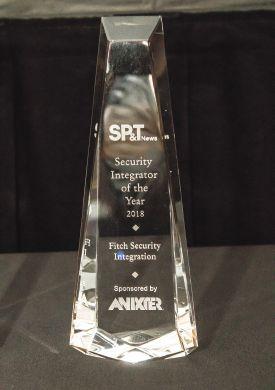
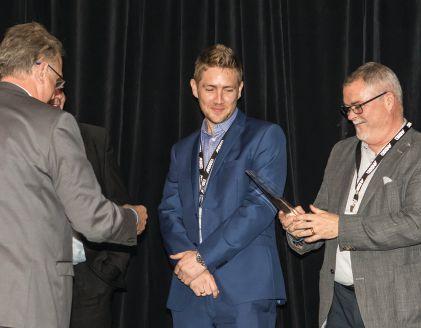
On Oct. 24, SP&T News awarded Integrator of the Year to Fitch Security Integration in a gala celebration sponsored by Anixter Canada. Fitch recieved the 2018 award for installing WiFi locks, an access control platform, cameras and other security equipment in the HOEM student residence in downtown Toronto.
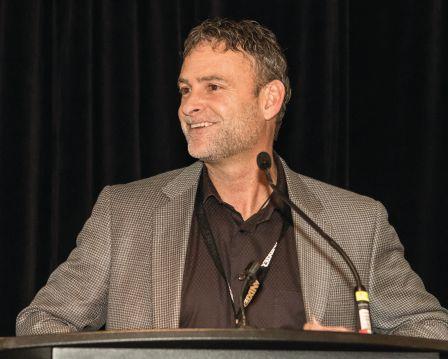
Ed Fitchett, owner and president of Fitch Security Integration, accepts the award, thanking staff and partners for the success of the winning project.
Stephen Sayle, CEO of SayleGroup, opened the gala with a keynote about the impact of legal marijuana on workplace safety.
Fitch’s Allan Dunne and Don Jensen admire the Integrator of the Year award.
Anixter Canada’s Gary Mistak and Francois Rousseau.
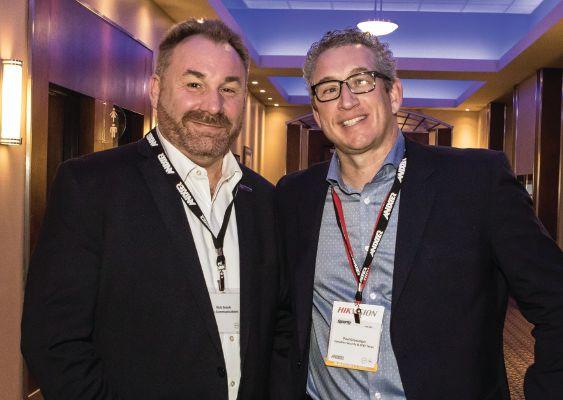
Axis Communications’ Rick Snook with SP&T News group publisher Paul Grossinger.
Images: Paul Wright
SPECIAL FOCUS Security Canada Central 2018
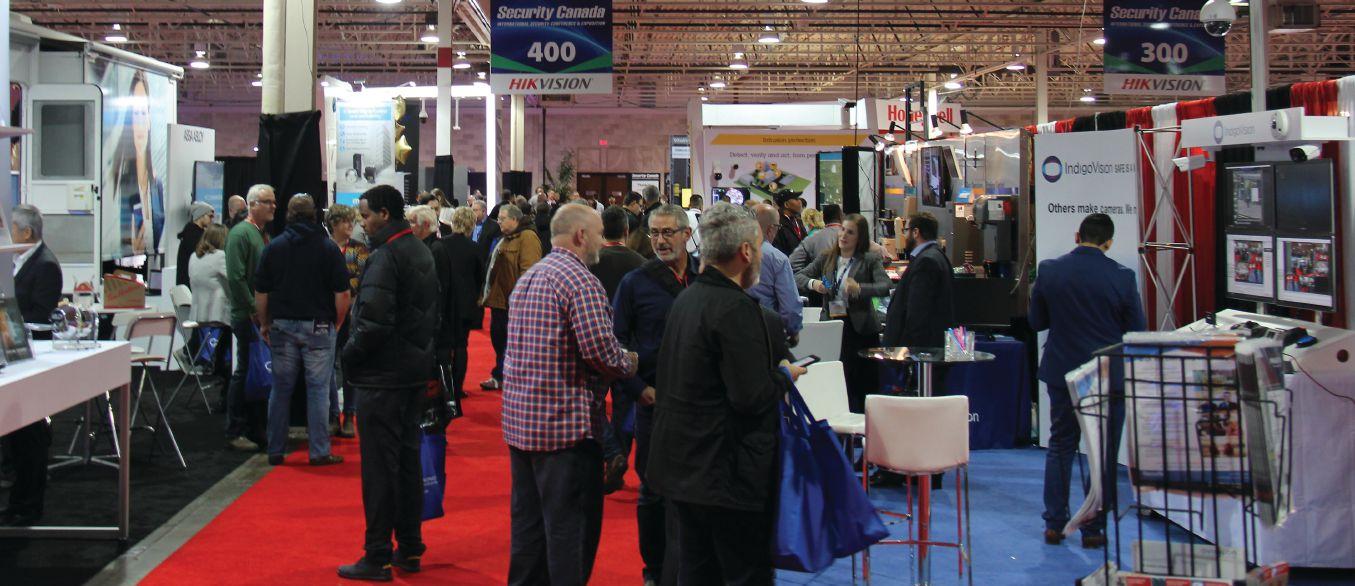
Big turnout for SCC in 2018
The Canadian Security Association (CANASA) drew record numbers to its annual Security Canada Central show this year, with 2,700 in attendance. The October event opened with a keynote address from David Shipley, founder and CEO of Beauceron
Security, and included manufacturers’ training sessions, education “Flash” sessions on the show floor, and more than 150 exhibitors. CANASA’s trade show calendar kicks off in 2019 with Security Canada East on April 24 in Laval, Que.
David Shipley, founder and CEO of Beauceron Security, opened SCC 2018 with a keynote address on cybersecurity.
Paul Higdon and Steve Dentinger.
CANASA staff, Erich Repper, Steve Basnett, Danielle Paquin, Lynn Bodwell, Erin Marsden and Patrick Straw.
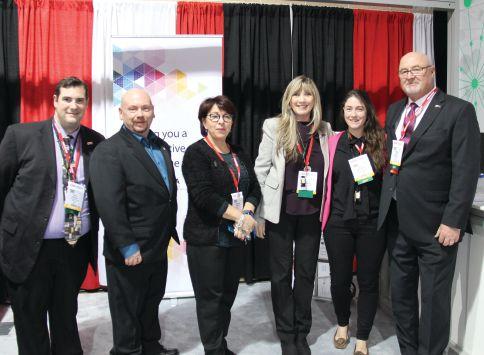
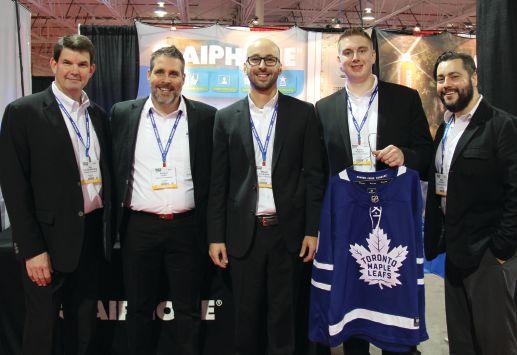
Aiphone’s booth contingent, Ken Van Der Wetering, Norbert Artur, Mikaël Lavergne, Karlis Praulins and Mike Lawrusik.
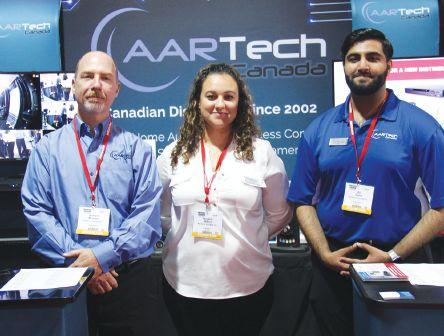
Aartech’s Robert Mowles, Krystal Hilton and Ali Syed.
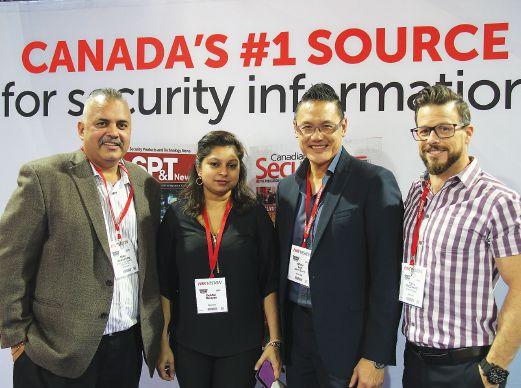
The Alarm Guard team, pictured in SP&T’s booth: Mike Chaudhary, Debbie Narayan, Chris Lue and Travis MacDonald.
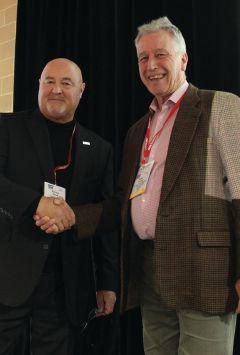
Patrick Straw, executive director, CANASA congratulates Peter Young, SP&T News’ publisher, on his retirement.
Dormakaba’s
By Patrick Straw
CANASA sets 2019 agenda
Security association announces the priorities and strategic objectives it will address next year
Security Canada Central, held in Toronto Oct. 24-25, smashed all previous attendance records. The largest security event in Canada kicked off with a robust keynote address delivered by David Shipley of Beauceron Security focusing on cyber security issues. When the doors opened, large crowds filled the exhibit hall as exhibitors displayed all the latest security products and services.
Dates and locations for the six 2019 Security Canada shows have just been announced so please visit www.securitycanada.com for all the details!
CANASA 2019 priorities announced CANASA recently announced four strategic objectives designed to raise the profile of the association and continue to increase the value of being a member.
Minimum Standards: These standards are intended specifically for those companies that deal directly with the public. Standards include: background checks for employees who
interact with end users or who have access to confidential information; companies should have a minimum of $1 million in liability insurance; and all employers must conform to their provincial health and safety regulations.
While the majority of CANASA members meet these criteria, it is our intent to modify registration requirements in order for this information to be captured. These standards will be voluntary for 2019. However, CANASA will begin to publicize to the AHJ community, the insurance industry and the general public that being a CANASA member company assures a credible standard of business.
Education: CANASA continues to work diligently with several community colleges as well as private technical schools to develop a “CANASA Endorsed” training program to bring new technicians into our industry. There is a major shortage at this time and CANASA is looking to assist our member companies by providing the training required to secure properly trained technicians. CANASA will continue to add online resources available through www.canasa.org with courses addressing: safety in the work place, cannabis in the work place as well as a variety of
Study: Global guard revenues to grow 6% a year
According to data recently released by Cleveland-based analyst firm The Freedonia Group, global guard service revenues are projected to increase six per cent a year to US$145.2 billion in 2022.
“Growth will be driven primarily by gains in developing countries, with highly populous industrializing nations such as China and India contributing a particularly large share,” said the firm in a statement.
Growth factors identified by Freedonia include:
• increased urbanization and income inequality, which will heighten concerns about crime as well as boost the size of the population able to afford guard services
• improvements in licensing and professionalization, which will
technically specific courses that can be taken according to one’s own schedule.
Relationships: CANASA has become deeply involved in improving relationships with emergency services across Canada. We feel that this is an important part of our ability to address the many issues that can affect member companies. CANASA is using direct involvement and an active media campaign utilizing both social media and print publications to get the message out about the association, explaining who we are and what we do.
Growth: Our final strategic initiative is to grow CANASA to be representative of the complete scope of “security” in Canada. We are no longer just the “Alarm Association” and are branching into areas such as cyber security, IT security, the guard industry and much more. Since all of these security segments are starting to work much closer together, this will help ensure that CANASA is the true “voice of the security industry in Canada.”
boost public trust and enable price increases
• greater outsourcing of noncore business activities such as guarding
• increased penetration of technologically advanced security systems, which will demand more highly skilled guards
Furthermore, this sector is already mature in developed nations, leading to “modest” gains in Western Europe and North America. Increasing amounts of investment in labour-saving equipment may reduce the need for the number of guards in a given application.
The firm states that global revenues for all security service types are forecast to grow 5.8 per cent per year to US$269 billion in 2022. More insights are available in the report, “Global Security Services.”
Patrick Straw is the executive director of CANASA
Patrick Straw
LESSONS LEARNED
IBy Victor Harding
Friendly reminders
As another year draws to a close, here are some best practices you should take with you into 2019
n going about my business recently, I have been reminded about certain do’s and don’ts regarding selling your security business. Perhaps they need to be said again.
The need for signed monitoring contracts
The last three deals I have been shown were from dealers who had not signed monitoring contracts with their customers.
Interestingly, each dealer gave me the same reason: they did not want to hold onto their customers by the force of a contract. If the customer wanted to leave, they should be allowed to leave. Although contracting your customer for a period of time is not such a bad idea, this is not the reason why most buyers look for a signed contract. Informed buyers, first and foremost, are looking for the Limitation of Liability clause. This clause is usually on the back of the contract in fine print, but in bold type due to its importance.
The clause limits the liability of the owner of the contract to a certain amount if the owner of the contract should be sued. While the initial owner of the contract may not have significant assets at risk, most of the bigger buyers do and consider themselves targets. So at the very least, most buyers want to see that Limitation of Liability clause. It’s very important.
There are other clauses that are also important in a monitoring contract. A good contract will also have a clause relating to assignability, automatic renewal, indemnification clause and an exculpatory clause.
I want to see the whole company, not just my accounts
I hear this statement quite often from owners, usually of small alarm companies.
These same owners have been called over the years by buyers asking if the owner was interested in selling their monitored accounts. At the time, they were not. So now that they are ready to sell, they want to sell “the whole company.” I have found that this can mean a number of things:
It can mean they want to sell the shares of their company to take advantage of their onetime capital gain exemption. Selling the shares may in fact be possible particularly when talking
to smaller buyers. However the bigger buyers do not like to buy shares for a number of reasons and many times the bigger buyers pay the best prices. If you have an alarm company with less than 500 accounts, it is going to be quite difficult to sell the shares unless it is to a smaller buyer.
Many times “selling the whole company” infers the owner thinks there is more value in his company than just the monitored accounts and he wants to get that extra value. (We are not referring to hard assets like inventory and vehicles, which can be sold as extras in a deal but are usually not.)
The inference here is that the company’s installation and service revenue is the something extra that is worth something. The problem is, most of the time, if you remove the monitoring revenue and costs out of most alarm companies’ income statement and adjust the income statement for the full costs of a person to run the company, the company is not making money. Buyers are not going to attribute value to something not making money.
Selling shares is even more attractive than it used to be
Having just said that it is difficult to sell the shares of your company if you are a small alarm
company (less than 500 accounts), let me turn that around and say that selling the shares of your company these days is even more beneficial compared to assets than it used to be. This is primarily because of the one-time capital gains exemption for the sale of shares of a Privately Controlled Canadian Corporation (PCCC) — a stipulation which thankfully our tax crazy federal government did not touch — but also because the tax act was changed effective Jan. 1, 2017 such that owners could no longer get 50 per cent of the purchase price relating to the sale of goodwill (i.e. monitored accounts) tax free into their own hands. It is more complicated than I have laid out here but the result is still the same. Selling “assets” became less attractive after Jan 1.
Trying to go it alone
I have made this point before but from a different angle.
There are several reasons why using an intermediary or broker when you sell can help you, but one reason is not talked about enough and that is just getting the deal done.
Victor Harding is the principal of Harding Security Services (victor@hardingsecurity.ca).
CAMERA CORNER
VBy Colin Bodbyl
Where the camera keeps its mind
Surveillance software can basically reside in three different areas — each has its benefits and drawbacks
ideo surveillance systems are becoming more intelligent every day.
Some of the world’s largest companies now invest heavily in the software behind the surveillance system, including artificial intelligence and video storage. While development houses forge ahead creating new features and enhancing the capabilities of video surveillance software, the physical location of where that software should operate is not always clear.
There are three locations in a surveillance system where software can operate. The first is on the camera, commonly referred to as “at the edge.” Running software at the edge has some significant benefits. For one, the more software that runs on the camera, the less reliant the system is on a centralized server. This reduces the points of failure and generally results in a more fault-tolerant system. A good example of software services that are beneficial at the edge would be video recording. If a camera is able to record to a storage drive on the camera itself, critical recordings are no longer at risk of being lost to network interruptions or even complete network failures.
The biggest downside to running software at the edge is cost. Cameras with the processing power to run video analytics or house internal storage drives are expensive. While this is typically offset by savings in other areas of the initial price of the system, it can make upgrading the system in the future significantly more expensive. Camera technology is constantly
evolving and becomes better every year with the release of higher resolution cameras with better image sensors. Unfortunately if users invest in too much intelligence at the camera level it can put them in an awkward position when those same cameras are quickly outdated and expensive to replace.
The second location where software can be located is at the NVR (or onsite server level). This is arguably the most popular location for software, requiring a lot of processing or storage. Servers can be built with powerful CPUs, able to support software upgrades and changes for years to come. Operating systems like Windows allow users flexibility to change or add new software and in turn features with the click of a mouse. Unfortunately, servers also create a single point of
“The more software that runs on the camera, the less reliant the system is on a centralized server.”
failure. While servers can be backed up and protected from failure using different devices, they are ultimately the brain of the surveillance system and should anything happen to them the entire system stops functioning.
The third and final software location is the cloud. While the cloud is essentially an offsite server, it offers redundancy that no onsite server can match, including guaranteed uptime. The cloud eliminates the need for intelligence on the camera, and can eliminate the need for onsite servers altogether. It also offers the ultimate in flexibility where users can enable the latest features as they become available and never have to worry about adding hardware or upgrading their server which is all done automatically on their behalf as part of the cloud service.
Cloud solutions are not without their faults. Monthly costs can be high, especially if processor intensive services like video analytics or AI are required. Furthermore, they
are critically reliant on the local cameras having constant access to a stable internet connection.
All three software locations have their merits, though none are perfect. In most cases, a blend of two of the three locations offers the best solution. Consumer cameras are best served with a blend of edge storage and cloud backups, as consumers are not interested in maintaining a server in their home. For commercial applications, the cloud is typically still too expensive where camera counts on a single site could number into the hundreds. It is unlikely any one solution will win in the end. For end users currently considering a new system, careful research needs to be put into calculating not only which solution is the best today, but which one will be able to evolve over time to keep up with new technology without costly changes to existing hardware.
Colin Bodbyl is the chief technology officer of Stealth Monitoring (www.stealthmonitoring.com).
INDUSTRY LEADERS SECURING INDUSTRY LEADERS
125 years of experience in putting the security of others first.
We understand you need to protect more than brick-andmortar, which is why ADT does more than monitor. ADT has a wide range of alarm and security options for organizations of any size to help protect people, goods, and data. With 24/7 surveillance, solutions against intrusion and fire, remote monitoring, interactive services and more, ADT has a security solution for your organization. Join those who trust ADT with their livelihoods and protect your business.
SECURITY AND AUTOMATION SOLUTIONS
WHY CHOOSE ADT CANADA?
We are an integrator, meaning we can take over nearly any of the existing security equipment you have on-site.
We are customer-service oriented, innovative and technology savy.
With over 125 years of experience and 15 branches in Canada alone, including four monitoring stations, you can trust the experts.
HALL OF FAME 2018
HALL OF FAME 2018
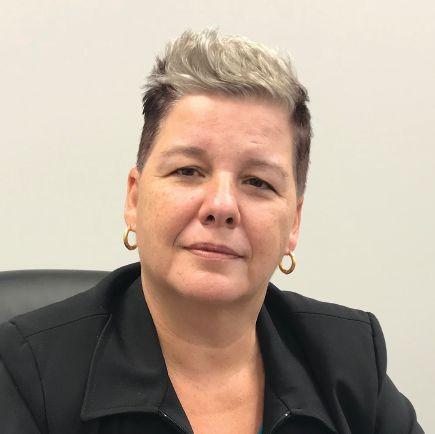
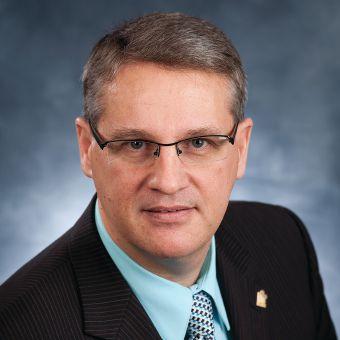
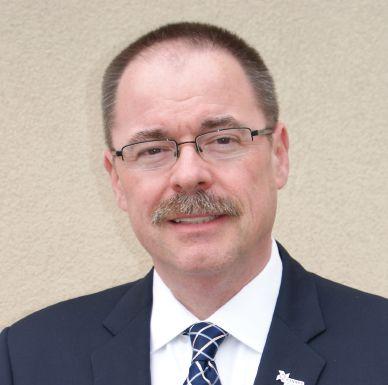
Joanne Rowe, ADI Toronto; Roger Miller, Northeastern Protection Service; and Richard McMullen, FCi are the latest inductees into SP&T News’ annual Security Hall of Fame.
By Neil Sutton
SP&T News introduced its annual Hall of Fame issue in 2015 to highlight the accomplishments of security professionals who have given back to their industry on a consistent basis. Whether it’s through business success, above-and-beyond attention to customers, or volunteer efforts for charities and associations, these individuals got our attention for all the right reasons. We’re very pleased to include three more professionals this year. Read on to learn more about what they do, how they got there, and the life lessons we can all appreciate.
Joanne Rowe, branch manager, ADI Global, Toronto
Joanne Rowe might best be described as a coach. Whether she is dealing with staff, customers, vendors or the kids’ soccer league she’s coached for the last 15 years, she is pushing others to succeed.
Rowe is the long-time manager of the Toronto branch of ADI Global Distribution, a company she has worked for in one iteration or another for 23 years.
Rowe’s first job in security was as a part-time customer service representative at Richardson Electronics. “I was young and trying to figure out what to do with my life,” says Rowe. She was hired in Oct. 1995 and within two months, transitioned to full time.
Two years later, Richardson purchased a distributor of low voltage equipment, Burtek Systems Corp., and Rowe was tasked with learning the new computer system and training sales people. Later that year, she took over management of Burtek’s Toronto branch warehouse, and created a returns department.
(More recently, ADI became part of Resideo Technologies, a Honeywell spin-off that also includes its homes business.)
As a long-standing member of the security industry, particularly in a pivotal role for a major distributor, Rowe has fostered countless relationships with people and companies. “Sales people, manufacturers’ reps or vendors: they either worked with me or for me at one point in their career,” says Rowe. “I think I’ve been able to continue those relationships over the years.”
“As long as you have that confidence, you will succeed.”
In 1999, Rowe was promoted to operations manager for Canada, responsible for designing the layout of Burtek’s branches across Canada. In 2002, the Toronto location moved into a larger facility — a point of pride for Rowe who says that managing that transition was “probably the best experience of my life … working with contractors and seeing the facility come together — making it one of the best distributors for Canada.”
In 2007, Rowe was part of another major transition when Honeywell bought Burtek and merged it with distributor ADI. The Burtek name was eventually dropped from the branding and Rowe became the branch manager for ADI Toronto, a position she holds to this day.
“The reason why I came into that role was bringing the two teams together: ADI staff and Burtek staff for Toronto, and really focusing on the customer service and vendor relations,” explains Rowe. “That was one of the best things [about] the new role.”
A recurring role for Rowe is one of event organizer. Every year, ADI’s Toronto location hosts an expo event, showcasing its vendors’ latest products. Hosted early in the year, typically March, it’s an opportunity to display new technology and set the tone for the year. “It’s fresh every year,” says Rowe. “It’s been extremely successful. Over the last seven or eight years, we’ve had a substantial number of vendors wanting to sign up for our show.”
The number of training sessions hosted at the expo has also steadily increased over the years, up to about 20 today.
Rowe is hands-on when it comes to ADI’s presence at other trade shows like CANASA’s annual Security Canada Central in Toronto in October. During that week, ADI hosts a fundraiser to support a charitable organization. For Rowe, charitable endeavours are a way to give back and strengthen team relationships. The Toronto office has raised funds to help food banks, women’s shelters, homeless shelters, terminally ill children and breast cancer awareness.
Elements of the security industry have changed and evolved over time, but Rowe’s outlook on quality customer service has remained consistently high. “It’s a mindset and it’s something that I coach,” she says. “You might not have all the answers, but as long as you have that confidence, you will succeed. That’s been my attitude my whole career. If I’m jumping in, I’m jumping in with both feet.”
Roger Miller, president, Northeastern Protection Service, Halifax
Active participation will only make your business and client relationships stronger. That’s a school of thought that Roger Miller has actively followed throughout his 30-plus year career in security.
Miller was a chair of the Atlantic chapter of the Canadian Society for Industrial Security during its active years. He has also served as the president of the Atlantic chapter of the Council of Private Investigators and has sat on two RCMP advisory boards.
“More recently, I’ve become a CANASA Atlantic council member,” he says. “I think it’s important to participate in the industry. If we’re going to tell our clients that we’re professionals and we know what’s going on in the industry… and we can give them our expertise, it’s up to us to develop our expertise. We can’t do it sitting behind our desks.”
Northeastern on a part-time basis, but it grew quickly and demanded more of his attention, explains Miller. Joseph eventually made it a full-time business and hired Miller as director of operations and business development in 2001.
“Coming from an international company to a local company, I understood the structure and processes needed to finetune the business,” says Miller. Their two styles meshed well: Joseph was an entrepreneur and eager to expand; Miller is more process-driven.
“If we didn’t have that phenomenal team, we wouldn’t be as successful.”
Miller started his career as a security guard in the early 1980s. He learned the basics of security through a 10-week security training program made available through what is now the Nova Scotia Community College.
The course was led by a former U.S. Marine who taught them “everything from your dress and deportment to how to design an alarm system.”
Miller spent five years working with a small, Halifax-area guard company before moving on to Pinkerton as a full-time investigator. He was able to travel extensively throughout eastern Canada and the U.S. — an opportunity he relished. He continued to work at Pinkerton after its acquisition by Securitas in 1999 before accepting a new opportunity to work for a smaller local firm, Northeastern Protection.
Northeastern was founded by Mark Joseph in 1983. Miller and Joseph were friends — and friendly rivals — in the security world. Joseph worked for Canadian retailer Eaton’s as a regional loss prevention manager. He started
Unfortunately, Joseph passed away in 2013 after a serious illness. Miller became the company’s president with Joseph’s son Chris working as vice-president.
“The first thing we learned after Mark passed away is we had to show our clients that we had a solid succession plan. And that Mark’s passing — although it would affect us … it couldn’t not affect us — wouldn’t affect their service delivery,” says Miller.
Succession planning and fluidity has remained a vital aspect of the business’s management style, with Miller’s keen focus on operational oversight. Miller is also aware of the personal toll a business like security — with its 24/7 demands — can take on workers, and also their families. “Your family is almost as committed to the business as you are. You have to be prepared that you’re going to be taken away from certain family events because of work. I’ve tried to find that work-life balance.”
Miller’s family has been very supportive over the years, he says. His son has attended security trade shows with him and his daughter received a scholarship through a program run by CANASA. He also credits his co-workers for their dedication as Northeastern continues to grow. “We’re surrounded here by a phenomenal team. If we didn’t have that phenomenal team, we wouldn’t be as successful.”
Richard McMullen, partner, security solutions, FCi, Ottawa
If you are member of the Canadian Security Association (CANASA), there’s a good chance you know Richard McMullen.
McMullen has been a fixture of the organization for many years, particularly the last four, when he held the role of national president (then past-president). He has also held the position of president for his local subchapter in Ottawa, as well as president of the Ontario board in 2013.
McMullen started in the security business in 1982 when he was still in high school. He worked part-time in the alarm monitoring business, first for Golden Triangle Alarms, then Pro-Tech Security, both in the Ottawa area. He continued working evenings, Fridays and weekends even while he attended Carleton University, then the University of Ottawa, where he studied law.
division in 2000. In 2007, McMullen was approached with a new opportunity — an Ottawa-based network cabling and IT infrastructure services firm called Fleming Communications Inc. (FCi) that was looking to expand into the security.
The economy hit hard times in 2007-2008, but FCi’s new security division flourished. “We didn’t have anywhere to go but up,” says McMullen, who recently passed his 10-year anniversary with the company. He adds that the security industry’s recent embrace of IP-based infrastructure coincided with FCi’s value proposition. “I thought, here’s a company [that] gets the network. They have the network infrastructure.”
“I’ve always tried to give back and do right by people.”
He says he considered a career in law enforcement, but ultimately opted for security, an industry where he already had considerable experience and also employed his two older brothers.
McMullen joined Honeywell, working on policies and procedures, travelling across the country visiting stations.
“I got to do a lot of special projects with Honeywell, which I thought was kind of cool,” explains McMullen. “I helped to develop our own monitoring procedures and operation guide with a small group of five or six of us. We’d go and meet in different parts of the country. It was a good education for a young person.”
During his tenure at Honeywell, McMullen sat on the company’s employee executive council. “We’d have quarterly meetings and go down to Minneapolis and meet with senior executives. They got a chance to be our mentors and champions for our individual business units,” he explains.
He stayed on with the company through a major reorganization when ADT acquired the Canadian portion of Honeywell’s protection services
In addition to his considerable efforts for CANASA, he has also found time to support the Ottawa branch of the Crimestopper’s organization.
McMullen found himself seated at a table of Crimestoppers members while attending a women in security event about seven years ago. McMullen offered to lend them a hand and turn their Ottawa golf tournament into a fundraiser. When the local chapter president stepped down, McMullen was asked to run. He’s now at the end of his second consecutive term as president.
The organization is also close to his heart — his wife works for the Ottawa police in their comms centre. McMullen’s children are now grown and he says he has always encouraged them to take part in volunteer work. Both his sons have helped out at various golf tournaments. His son Stephen in particular has followed McMullen into the industry, and now works full time alongside him at FCi as an estimator.
Reflecting on his career and volunteer work, McMullen can sum it up with a simple but powerful philosophy: “I’ve always tried to give back and do right by people.”
You Every Step oft
Launch Your Business
You acquired a security company or expanded into the alarm industry
> Your business is a growing concern and you need cash flow to fund your growth
> You need support when loading and servicing alarm customers
> You need access to quality security products, reliable suppliers and dealer pricing
Grow Your Business
Your current dealer program is limiting your growth
> You need stable and predictable funding
> You need to invest in inventory, staff and marketing
> You want access to new lines of business
Simplify Your Business
You've built a successful business and now it's time to reap the benefits of your hard work
> You need to turn equity into cash for life's special moments
> You need to remove administrative headaches (billing, collections, etc.)
> You need stable and predictable cash flow but retain ownership of your business
Sell Your Business
You're ready to live your dreams
> You need to maximize your payout
> You have a time-line and you need an experienced buyer who will navigate a smooth transition to the finish line
> Your customers need world class monitoring with continuing service and support
CONNECTED HEALTH SOLUTIONS ARE ON THE RISE
Physically active baby boomers, now in their 60s, are creating the need for more mobile health-care options
By John Carpenter
Everyone is familiar with the traditional PERS (Personal Emergency Response) device that sits on a counter, plugs into a phone line, and features one large red button that is pressed in the event of an emergency.
While these traditional PERS devices are still being sold today, a new wave of modern mobile PERS (mPERS) solutions is taking the connected health industry by storm, meeting the demands of a far more active generation of seniors while offering significant new revenue opportunities for security dealers.
A new generation of active customers
Historically, PERS has been a somewhat limited category of security sales, since the average
age of the device buyer is around 81-years old. Traditional PERS devices are stationary; they only work within the home and not outside of it. And, once purchased, the devices are used for an average of 18 months — eliminating the opportunity for any potential meaningful recurring revenue for security dealers.
“New solutions are able to upload information into a cloud-based service.”
Fortunately, mPERS is changing the game completely, targeting seniors that are more youthful and more active, and therefore need a solution that is well-adapted to users on-thego. As the baby-boomer generation approaches their mid-60s, they are more engaged with
sports, exercise, work, and travel than any other generation in history.
So, why would active and healthy seniors need an mPERS device? Even though the new generation of seniors is mobile, the reality is that one out of every three people over the age of 65 will experience a fall that requires medical attention. And, once they have fallen, they are three times more likely to fall again.
That’s why the market is looking for a modern mobile solution –– and it’s a need that security dealers can capitalize on right now.
Technology is expanding the customer base
Today’s mPERS devices are equipped with advanced technology that relays critical information to more stakeholders than ever before, greatly expanding a security professional’s potential customer base.
Most notably, new solutions are able to upload information into a cloud-based service that makes a wide range of information accessible to concerned family members. This development is simultaneously keeping seniors safe, while also allowing security dealers to use a subscription-based model for recurring revenue generation.
The information that is acquired by an
mPERS device and then uploaded to the cloud is getting increasingly more detailed, which entices more and more family members to subscribe. For example, one of the biggest innovations in the mPERS industry today is detailed fall detection. Historically, most PERS devices include an accelerometer, which can determine whether or not someone has fallen. Today’s solutions include a magnetometer and a gyroscope, which measures specific details of the fall and the twist motion.
A modern mPERS device can send the fall data to the cloud service, where it is compared automatically to 3,000 different fall types, then matched and identified. Therefore, mPERS devices can tell the difference between a fall from the chair, an accidental drop of the device to the floor, and a heart attack.
These developments allow family members to get more involved in the monitoring process. It also opens up an entirely new customer base in addition to the user.
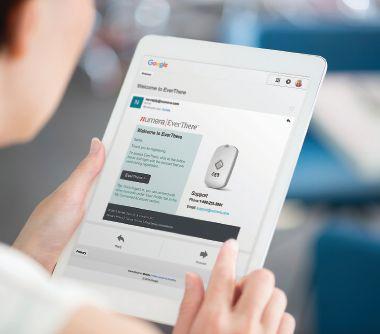
Currently, 70 per cent of these devices are purchased by family members and care givers. Therefore it is important to provide them with services to keep them involved with their loved ones and their device. With cloud-based services, such as the Numera EverThere, families can login on their mobile device and check the status of their senior family member’s device. They can set personalized notifications. For
example, they can configure the system to send them a ping if the device has been inactive for 24 hours, or if the battery is low and needs to be charged.
Dealers can sell more solutions to more family members because there are more solutions that directly cater to families, as opposed to just the individual users. More potential customers equates to more potential sales.
New market opportunities
In addition to selling to family members, security dealers can begin targeting health professionals — a new commercial market that can benefit from cloud-based service mPERS solutions.
mPERS devices equipped with Bluetooth functionality help to connect medical devices directly to health-care agencies or hospitals that seek to monitor chronically ill patients. mPERS devices can monitor a user’s vitals, such as blood pressure, and automatically upload these results to medical professionals through the unit, opening up an entirely new market of health professionals for potential sales.
Other commercial markets will also begin adopting mPERS solutions. For example, the lone worker market is a primary industry that could greatly benefit from the ability to equip remote employees with an mPERS device. This includes oil, gas and mining industries as well as sales, delivery or driving services.
In the next few years, these advancing technologies will only keep adding new customer markets. We expect to see even more technological developments similar to that within the smart home industry, including voice commands and voice recognition, that make devices more personalized and easier to control.
Security dealers don’t need to wait to capitalize on the opportunity to sell more to more potential customers. The technology is here — so, what are you waiting for?
John Carpenter is the vice-president of channel engagement at Nortek Security & Control (www.nortekcontrol.com).
Using products like the Numera EverThere platform, families can check in on senior relatives.
Product Previews Identity Management
Smart card reader
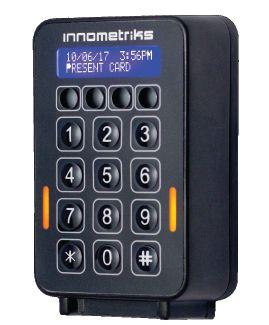
Innometriks
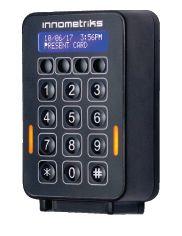
The Cheetah SE High Assurance smart card reader is a compact, high-assurance reader for installations requiring two-factor authentication. The readers can integrate into existing physical access control systems for authentication and network environments for administration. The reader provides tiered authentication levels designed to enable the incremental rollout of PIV-enabled access points. www.johnsoncontrols.com
Security management system
Software House
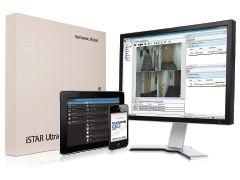
C-Cure 9000 v2.70 SP1 provides 24/7 mission critical security and safety protection for people, buildings and assets. This new service pack provides new capabilities. C-Cure 9000 can now be deployed under an Infrastructure-as-a-Service (IaaS) model, reducing or eliminating the need for onsite server hardware. Area supervisor has been added to ensure that one or more personnel designated as supervisors must accompany personal designed as supervised into an area at all times.
www.swhouse.com
Identity and badging
iLobby Corp.
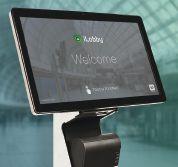
Currently used by Toronto Pearson International Airport, the iLobby platform checks against external watchlists, verifies then prints security badges, and tracks movement at portals throughout the grounds. According to the company, the iLobby solution has streamlined a costly and time-consuming process and reduced security issuance time from 10 minutes to one. The operations team is now able to have real-time tracking capabilities in order to respond quickly.
www.goilobby.com
Visitor management solution
AMAG Technology
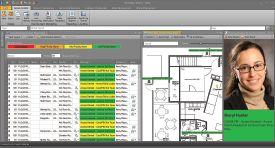
The Symmetry GUEST visitor management system includes several new enhancements. Symmetry GUEST operates on most tablets, smart phones or PCs as well as most web browsers allowing for pre-registration of visitors. GUEST provides the ability for roving lobby ambassadors or self-service kiosks to check-in visitors, contractors or visiting employees, speeding the flow of visitors through a lobby. The enterprise level solution fits any size organization. Symmetry GUEST fully integrates with Symmetry Access Control software.
www.amag.com/guest
Location services HID Global
Cloud-based access control Feenics
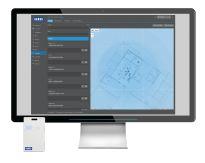
Keep by Feenics is an access control as a service platform built for and hosted in the public cloud. The UI is accessible via an evergreen Windows desktop app, web client and mobile applications. Feenics accomplishes cyber-readiness through TLS 1.2 encryption, eliminating inbound ports, use of multi-factor authentication, penetration testing by Veracode and no default passwords. Keep reduces the total cost of ownership by eliminating traditional on-site servers, while providing high availability, redundancy and a full disaster recovering environment. www.feenics.com
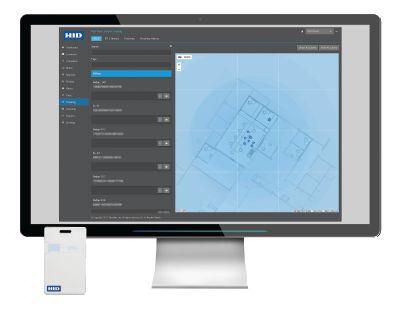
HID Global recently enhanced its HID Location Services solution for workplace optimization with a visitor awareness feature that enables organizations to know where guests are in a building. This feature also provides historical information about where in the building visitors and other people were in the past, which can be critical during an emergency or in the event of a security breach or theft. During an emergency, live location awareness data enables response teams and building managers to ensure that all occupants have exited a building. www.hidglobal.com
Facial recognition
BriefCam
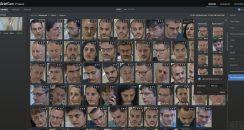
BriefCam v5.3 introduces new capabilities across all three of the platform’s integrated solutions. BriefCam’s v5.3 highly accurate face recognition extends its real-time alerting, search and quantitative analytics capabilities. Leveraging Deep Neural Networks trained in diverse data sets for accuracy in face matching, BriefCam v5.3’s face recognition capabilities help streamline post-event investigations, supports rapid response to situational changes, and derive rich operational intelligence for data-driven decision making.
www.briefcam.com
Smartphone credentialing
Vicon Industries
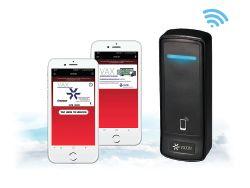
The VAX Access Control solution now features mobile credentialing. This feature allows users to present their smartphones, instead of cards or fobs, to specialized Bluetooth-enabled VAX door readers. Upon installation of a custom smartphone “wallet” app and a simple authentication process that links that app to the specific phone, users enter their personal VAX credentials into the wallet. Multiple credentials can be accommodated. No additional activation steps, such as entry of personal information or Bluetooth linking, are required. www.vicon-security.com
Product Previews The latest in security technology
Fixed bullet and fixed dome cameras
Dahua Technology
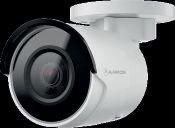
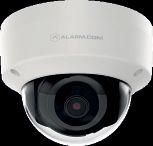
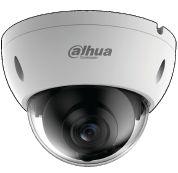
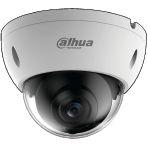
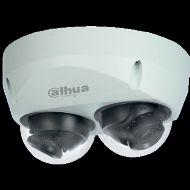
The DH-IPC-HFW4239TNASE 2MP Fixed Bullet and the DH-IPC-HDBW4239RNASE 2MP Fixed Dome are two new additions to Dahua’s ePoE product family. Dahua Night Color Technology cameras use a high-performance sensor and ISP and an achromatic, large aperture lens (F1.0) to produce clear colour images in low-light environments. This technology allows the camera to remain in Color Mode and to capture more available light to reproduce colour images with superior detail in applications with at least 1 lux of ambient or artificial light. dahuasecurity.com
Failover protection
LifeSafety Power
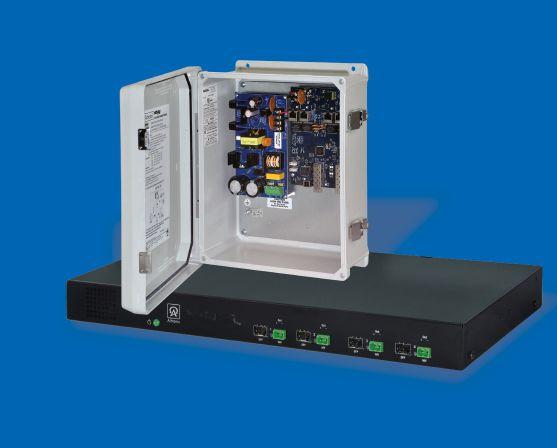
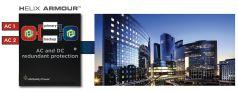
Helix Armour is designed for seamless failover protection with automatic backup switchover of AC or DC circuitry. Helix Armour minimizes the risk of failures that could compromise system integrity by providing both AC and DC redundancy in the event of problems with the power supply or incoming AC power. Featuring network management, it provides predictive network reporting that optimizes and maintains performance and connectivity to critical applications and devices. Helix Armour monitors separate AC branch circuits, reporting trouble with a primary branch immediately and instantly transferring power to backup for uninterrupted system operations. www.lifesafetypower.com
IP dome camera
Lilin
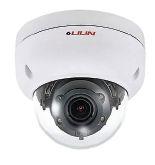
The ZMR6442AX-P IP dome camera offers a first line of defence for stores, homes, offices and hotels when monitoring suspicious activity indoors and outdoors, according to the company. The ZMR6442AX-P features 4MP video resolution, IR LED long-distance illumination, and P-IRIS support. The ZMR6442AX-P achieves 2688 (H) x 1520 (V) resolution or roughly 30 per cent more area coverage than an 1080p HD camera to help reduce the required number of cameras installed.
www.meritlilin.com
Waterproof Heated Fiberglass or Polycarbonate Enclosures
STI
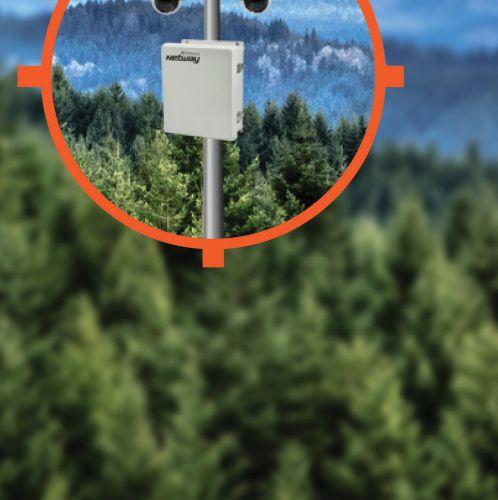
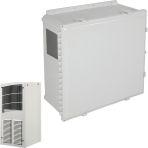
Thesee EnviroArmour Enclosures are now available in fiberglass or polycarbonate with several ventilation options. The wireless friendly, non-metallic lockable enclosures are durable, helping to guard sensitive devices. Their contemporary appearance is suited for devices requiring protection against rain, sleet, snow, splashing water, hose directed water and impact. They are for use with control panels, medical equipment, alarm panels, wireless equipment, DVRs and more. www.sti-usa.com
IP cameras
Matrix Security Solutions
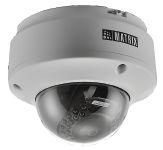
Matrix Professional Series IP Cameras are built using components such as Sony STARVIS sensor and higher MTF lens to offer image quality especially during the low light conditions. Powered by True WDR algorithm, these cameras offer consistent image quality even in highly varying lighting conditions. Built-in intelligent analytics including Intrusion Detection, Trip Wire, etc. ensure real-time security. Moreover, H.265 compression and Automatic Motion based Frame Rate Reduction save bandwidth and storage up to 50 per cent.
www.matrixvideosurveillance.com
Touchscreen display
NAPCO Security Technologies
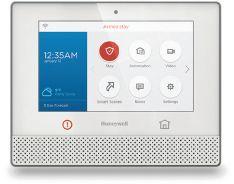
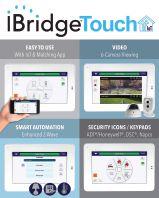
iBridge Touch is an advanced, neutral-colour, décor-friendly, wall-mounted touchscreen that controls security and/or video and smart automation (IoT services). Available in hardwire or wireless models, this slim-profile, high-res 7” full colour touchscreen is responsive with a highspeed, quad-core processor, matching the iBridge Smart App for mobile services. iBridge Touch has an intuitive graphical icon-based user interface, built-in voice prompts, onscreen MMS/SMS notifications, and offers one-touch security for arm, disarm, stay & away. www.napcosecurity.com
Surge protection DITEK
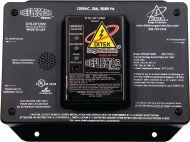
With its audible alarm, flashing LED indicator and remote notification capability, the new Deflector Series Surge Protective Device lets the user know in three ways when it requires attention. The Deflector is wall-mountable, with no additional enclosure required, allowing it to be placed in close proximity to core systems or devices that warrant the highest levels of protection. When the Deflector does its job by absorbing a power surge and stops functioning, the unit sounds a loud audible alarm and an LED flashes, indicating that the module needs to be replaced.
diteksurgeprotection.com
PoE fibre switches
Omnitron Systems
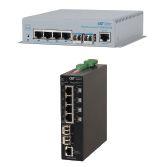
Omnitron Systems introduced the addition of high-power Power over Ethernet (HPoE) fibre switches to the industrial RuggedNet and enterprise OmniConverter product lines that enable fibre optic distance extension to HPoE powered devices. The introduction of the high-power PoE RuggedNet and OmniConverter fibre switches provide integrators and end users the ability to deploy Pan-Tilt-Zoom cameras with heaters and blowers, small cells, and multi-stream wireless access points at any distance from the head end network equipment, according to the company. www.omnitron-systems.com
Product Previews The latest in security technology
Subwoofers
Legrand
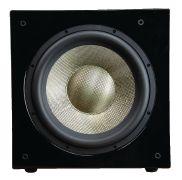
Available in 8-, 10- and 12-inch models, Nuvo powered subwoofers are designed to offer versatility to integrate with almost any audio system for the delivery of high performance bass. The new powered subwoofers each feature a front-mounted woofer in a cabinet constructed of durable MDF for distortion-free bass response and are also compatible with an optional wireless kit (NV-SUBTXRX) that includes one transmitter and one receiver for installation flexibility in single room installations. The NV-SUBRX is an additional accessory to the kit that contains one receiver. www.legrand.ca
Polycarbonate enclosures
Hammond Manufacturing
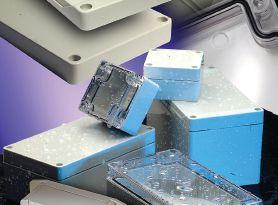
Optimised for use in harsh industrial environments, the 1554 flat lid and 1555 styled lid ranges of ABS and UV stabilised polycarbonate enclosures from Hammond Manufacturing provide IP66 sealing and good mechanical protection. The light grey RAL 7035 enclosures are designed to house printed circuit boards or DIN rail mounted components. IP66 sealing is achieved through a one piece silicone gasket in a tongue and groove seal. 23 sizes from 66 x 66 x 41mm to 239 x 160 x 119 mm are available. www.hammfg.com
Bluetooth safe access
Sargent and Greenleaf
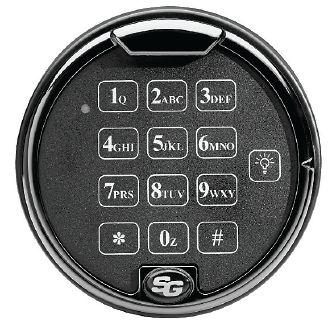
Called AxisBlu, the lock combines the latest Bluetooth technology with S&G’s proven lock components. AxisBlu uses an easy-to-install, unobtrusive medallion that connects via Bluetooth to an app on the user’s mobile device to remotely gain access to the designated safe anywhere within a 30-foot radius. With multiple layers of authentication, and the ability to pair up to five mobile devices, AxisBlu provides a secure solution for safe operation. Also, AxisBlu is available with the keypad, allowing for access manually or via the app.
www.sargentandgreenleaf.com
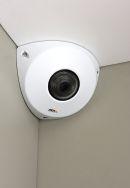
Corner cameras
Axis Communications
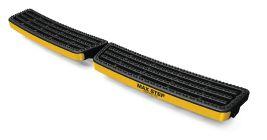
Van step Ranger Design
Axis recently released two models of AXIS P9106-V Network Cameras, which are suited for corner surveillance. AXIS P9106-V Network Camera Brushed Steel model has a design that is suitable for blending into elevators, whereas AXIS P9106-V Network Camera White model is ligature-resistant, ideal for the healthcare sector. The 3 MP cameras are specially designed for out-of-the-box optimized corner-to-corner coverage. They can cover up to 130 degrees horizontally and 95 degrees vertically, without blind spots. Both models are IK10- and IP66-rated. www.axis.com
Video management software
Senstar
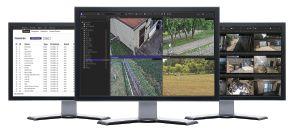
Symphony 7.1 is the latest version of Senstar’s intelligent video management software. Senstar Symphony delivers an all-in-one solution for video management, video analytics, perimeter intrusion detection system integration, and alarm management. Highlights include: HTML5-based viewing client for live video, playback and alarm log; improved integration with Senstar perimeter intrusion detection sensors; and new integrations such as Bosch alarm panel (B9512G) & S2 access control.
NVRs
Hanwha Techwin
www.senstar.com
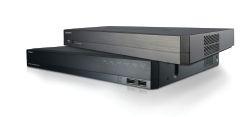
The new QRN NVRs provide high-performance recording solutions for smaller installations such as offices and retailers. Customers can save on both installation costs and time by using the Wisenet Q series cameras together with the new Wisenet Q series PoE NVRs (Network Video Recorders). The PoE ports negate the need for the provision of separate power cables and plug points for each camera or the need for an external PoE switch. QRN NVRs support Hanwha’s WiseStream compression technology to improve bandwidth and storage efficiency for high resolution images. www.hanwhatechwin.com
The Max Step is a van step that is attached to the frame of the vehicle in the back, in order to give tradesmen easy access to the cargo space or roof rack. Made with anti-slip tread plates, the Max Step is built to provide a rugged grip in any type of climate. A line of reflective tape across each step also ensures maximum visibility, day and night. The Max Step is manufactured to TUV standards and protected by an anti-corrosive finish to guard against weathering and early deterioration. The Max Step is currently available for the Mercedes Sprinter, the Ford Transit and the Ram ProMaster. www.rangerdesign.com
Soft close device ASSA ABLOY
The optional soft close device for Pemko box track and flat track straight sliding door hardware is designed to bring the door to a quiet, smooth and controlled stop. Healthcare, senior and assisted living, multi-family residences, childcare facilities, as well as hospitality and corporate applications may benefit from upgrading existing hardware or installing new systems with the optional soft close device. The new system is now available for the Pemko Builders Series (BLD) flat track sliding door hardware, as well as the Pemko H200, H180, SHS80, HBP200, and Side Wall Track (280_SWT) systems. The Side Wall Track system is offered with various fascia options. assaabloydooraccessories.us
2008:
Retailers cash in with IP video: Use for systems now extends beyond surveillance
2009:
Retailers brace for more crime as economy worsens: Hard times tend to bring out more crime, particularly in the retail sector
2009:
Using analytics as a business intelligence tool: Can retailers leverage video analytics beyond loss prevention?
2011::
IMS report: Retailers looking for more than just security from integrators
2012:
Retail tales
Retail and security seem to go hand in hand — the sale of goods requires a keen eye to help prevent theft and thus improve a retailer’s bottom line.
When the general public thinks about security, their first thought might be the guards they see at the mall, or they may notice the preponderance of cameras in almost every retail outlet.
The cameras themselves have shrunk over time, becoming cheaper, more efficient, and more useful. Even the smallest of retailers are able to deploy cutting edge camera tools, thanks to their affordability and the availability of cloud-based services that provide effective stor-
age solutions.
Retail is also surely one of the major benefactors of the rise of video intelligence. Analytics tools have turned the humble camera, ostensibly a security device, into a data-generating machine.
Cameras see all and are thus ideally suited to: count the number of people in a store at any given moment, analyze their traffic patterns, and even determine where and how long they stop at points along their travels (dwell time and hot spots).
Measured against point-of-sale data, the value of this information becomes... priceless.
“It helps with organizing merchandise and changing traffic flow
and with marketing,” noted analyst Katherine Brink of the Freedonia Group in an October 2016 article in SP&T News
The data can also be aggregated over a number of stores, leading to broader operational insights. “The real trick of this is to be able to take the information you’re seeing from all the different stores every second, every hour and be able to chart it out into a dashboard to see trends over time,” said Dan Cremins of March Networks, in a January 2016 article.
The role of surveillance analytics in retail is hardly new.
Analyst Steve Hunt commented in a June 2008 article that the technology has massive potential.
Using video beyond the security department: IP systems can provide a range of benefits for business operations. Everything from health care to education facilities can benefit from the data that video provides
At the time, however, the hype probably exceeded the reality of what was possible, leading Hunt to conclude that “analytics cannot do that (right now), except in the most primitive means.”
The technology is not yet perfect and requires careful oversight (in 2016, Brink cautioned that “it takes investment to find out how much of [that data] can be useful”), yet it seems to be improving all the time, strengthening that connection between security and retail. The camera in particular has taken on a much larger role, providing not only security data, but operational and marketing functions that have improved their usefulness.
Intelligent Solutions for: Hotels
Aside from the obvious accommodations anticipated upon check-in, hotel guests also expect to feel safe and secure throughout their stay. Through an integrated, end-to-end hotel surveillance system, employees and guests will have peace of mind that the premises are being monitored.
#IntelligentSolutionsForYou
and Attendance
personnel's exact shift start and stop time
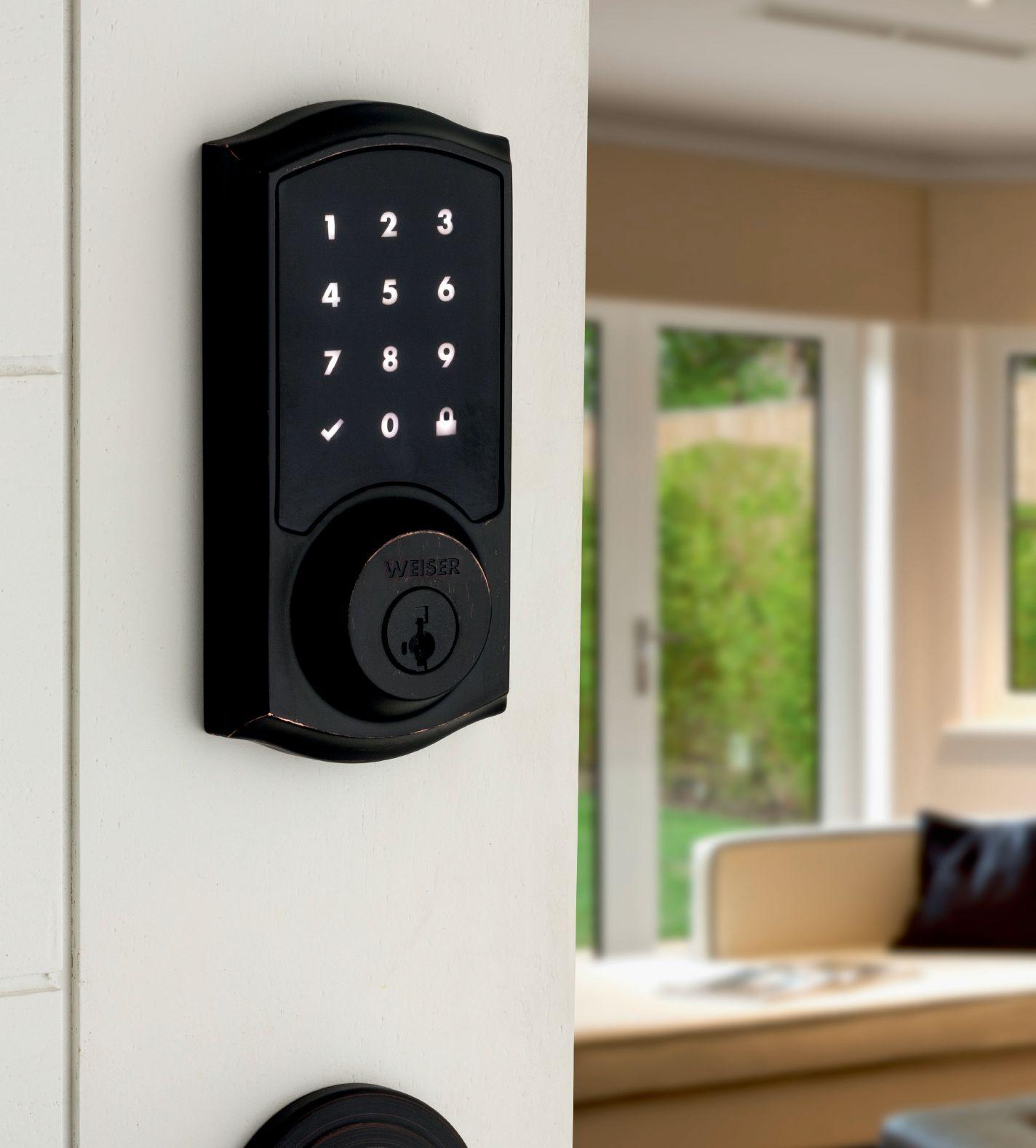
Weiser makes it easy to increase customer loyalty and position yourself as the core provider. If you already install security or home automation systems that are Zigbee or Z-Wave compatible, you’ll appreciate the easy installation and integration of Weiser Home Connect Locks.
Gain momentum in remote access and home automation as homeowners demand more from their primary solution providers.
Grow your business by building upon your existing services with Weiser.