Security Products and Technology News






SP&T News presents three Hall of Fame inductees for 2017: Pierre Racz (Genetec), Ed Fitchett (Fitch Security) and Ivan Spector (Alarme Sentinelle)


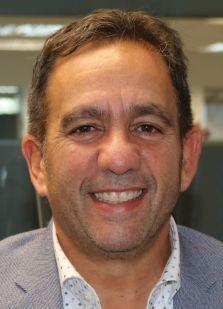
AlarmForce CEO on BCE acquisition
Graham Badun outlines crossselling opportunities available under telco giant ownership p.6
Integrator of the Year award gala Houle celebrated by integrator community at gala event in Toronto p.11
ONVIF update
Steering committee member Stuart Rawling discusses interoperability, cybersecurity and more p.16



Speco Technologies takes tremendous pride in our continued dedication to finding new ways of giving you more. Our feature-rich products, innovative technology and value-added services coupled with our commitment to protecting customers against cyber security threats during these trying times when the security industry is to not only document but also protect. This is all the more reason to CHOOSE SPECO as your partner against crime.
▪ Free U.S.-Based DDNS Servers and pending UL-2900 cybersecurity certification
▪ UL Listed Products
▪ Junction Boxes Included
▪ 5-Year Warranties on all HD-TVI and IP Cameras and Recorders*
▪ Hands-on Product Training / Webinars
▪ Free Audio and Video Surveillance Application Design Services
▪ Knowledgeable Sales Team
▪ Exceptional Customer Service
▪ Professional U.S.-Based Tech Support
▪ Turnkey Marketing Solutions



in a flourishing sector of the security equipment business, networking, biometrics and open versus closed systems


is still business than and this case, but confidence to forward.”

back from becoming “open.” In 2014, ONVIF announced the final release of Profile C, which brings the functionality of the ONVIF global interface specification into the physical access control arena.
ONVIF has been successfully introduced into the video surveillance industry. Baldvin Gislason Bern, Chairman of ONVIF’s Profile C Working Group, said, “Integration between IP-based physical access control systems and video surveillance is no longer considered a luxury in today’s market, and is becoming a necessary component for many different types of users. With Profile C, users and specifiers will be able to integrate the Profile C products of their choosing without relying on existing integrations between manufacturers.”
What concerns many access control manufacturers is that, as the market gradually becomes open and more competitive, their heritage real estate business will lose much of its protection.
Whilst ONVIF has become a major force in video surveillance and is widely embraced by video surveillance manufacturers it has yet to get the same acceptance by access control manufacturers.
Manufacturers here prefer to continue to be
proprietary. This is not good news because continued growth for traditional proprietary systems mean limited options, central servers with complex and expensive cabling, as well as restricted possibilities for integration and scalability.
The combination of IP and “open systems” will open up further opportunities for the access control business right across the physical security industry but not to those that stay proprietary.
Winning new business in this environment will be more competitive and will require continual product development, which is absolutely essential in order to maintain growth.
The pace of change will speed up but it will remain a much more discreet market than video surveillance and is not yet subject to the disturbance of drastic price cutting from Chinese suppliers (although there is some evidence of this in recent months).
System integrators have, in the last three years, paid much more attention to developing their access control business for it is proving to be more profitable and stable and currently offers better growth prospects and less disruption than video surveillance. We expect them to push for “open systems.”
Recognizing the accomplishments and contributions of three Canadian leaders: Pierre Racz, Ed Fitchett and Ivan Spector
Ellen Cools
AlarmForce CEO foresees growth and opportunity under BCE
A.p.i. acquires CCAQ
Most read stories of 2017


MBy Neil Sutton
ost people know Amazon as the e-commerce site where you can order basically anything and have it dropped on your doorstep in a day or two. For several years, the e-tailing giant has teased us with promises of a drone-based delivery service called “Prime Air.”
“One day, seeing Prime Air vehicles will be as normal as seeing mail trucks on the road,” states a page on Amazon.com.
I have no doubt that day will come, but with the complexity of drone regulations and, frankly, a buying public that probably doesn’t need a new set of coffee mugs in 30 minutes or less (the proposed delivery window for packages weighing five pounds or less), it may be several years before drone delivery is commonplace.
Amazon’s latest service “Amazon Key” isn’t exactly a stepping stone to drone delivery, yet it is still a substantial change in mindset for the average consumer. Amazon Key, launched in October, provides the delivery driver access to the package recipient’s home by unlocking the front door. The driver slips the package inside, closes the door and leaves. The entire transaction is monitored by a small HD camera inside the home (which can be viewed as a clip). The smart lock required (either Yale or Kwikset) can either be self-installed or professionally installed. The service can also be used to provide access to dog walkers, house cleaners, etc.
Almost instantly, naysayers took to social media. And understandably so. Amazon says its drivers will undergo background checks and of course, there is a camera to
confirm delivery, but it’s a huge accommodation to let a perfect stranger open your front door when you’re not home.
As much as there may be some initial resistance, and no doubt growing pains, this type of service may one day soon become the norm. With brick and mortar retail continuing to experience serious challenges, home delivery is only going to expand.
This isn’t even all that new of an idea.
Five years ago, Canadian Security, sister publication to SP&T, published an article about the growth of the virtual concierge market for condo developments. This virtual concierge, who is actually a human being located in a distant monitoring facility, can let a delivery person into the building remotely and then unlock a mailroom door so they can drop off a package. Granted, this isn’t a person’s home, but the premise is basically the same.
Our view of our homes and private spaces may change in the same way that notions of personal privacy have, and companies like Amazon are on the leading edge of this trend. There is a huge opportunity for well-established and knowledgeable security providers to either work with these companies or provide their own level of secure service.
Some of us may be approaching retirement age before we see the skies filled with drones delivering pizzas, but I don’t think it will be that long before the pizza guy is dropping off a pie on your kitchen table before you get home.

Your Partner in Securing Canada Security Products & Technology News is published 8 times in 2017 by Annex Business Media. Its primary purpose is to serve as an information resource to installers, resellers and integrators working within the security and/or related industries. Editorial information is reported in a concise, accurate and unbiased manner on security products, systems and services, as well as on product areas related to the security industry.
Group Publisher, Paul Grossinger pgrossinger@annexweb.com
Publisher, Peter Young pyoung@annexweb.com
National Account Manager, Jennifer Dyer jdyer@annexweb.com
Editor, Neil Sutton nsutton@annexweb.com
Assistant Editor, Ellen Cools ecools@annexweb.com
Art Director, Graham Jeffrey gjeffrey@annexweb.com
Account Coordinator,Trish Ramsay tramsay@annexweb.com
Circulation Manager, Carol Nixon cnixon@annexweb.com
COO, Ted Markle tmarkle@annexweb.com
President & CEO, Mike Fredericks
EDITORIAL ADVISORY BOARD
Colin Doe, Veridin Systems Canada Anna Duplicki, Lanvac Victor Harding, Harding Security Services Carl Jorgensen, Titan Products Group Antoinette Modica, Tech Systems of Canada Bob Moore, Axis Communications Roger Miller, Northeastern Protection Service Sam Shalaby, Feenics Inc.

80 Valleybrook Drive Toronto, Ont. M3B 2S9 Canada T: 416-442-5600 F: 416-442-2230
PUBLICATION MAIL AGREEMENT #40065710 Printed in Canada ISSN 1482-3217



this information, please contact our circulation department in any of the four ways listed above.
Annex Privacy Officer privacy@annexbizmedia.com Tel: 800-668-2374
No part of the editorial content of this publication may be reprinted without the publisher’s written permission. ©2017 Annex Publishing & Printing Inc. All rights reserved.
Annex Publishing & Printing Inc. disclaims any warranty as to the accuracy, completeness or currency of the contents of this publication and disclaims all liability in respect of the results of any action taken or not taken in reliance upon information in this publication.



Graham Badun, AlarmForce Industries president and CEO, says the recently announced BCE acquisition portends growth and significant cross-selling opportunities for the Toronto-based alarm company.
In early November, BCE announced its intent to acquire AlarmForce through a deal valued at approximately $166 million. BCE already has home security operations in Atlantic Canada through Bell Aliant NextGen Home Security, and in Manitoba under its AAA Security division.
in the middle Prairie provinces and Atlantic provinces,” said Badun.
AAA and Aliant are “good, complimentary businesses for AlarmForce. Certainly, those are two of our weaker geographies across the country.”

AlarmForce currently has approximately 100,000 subscribers. Badun said about 50 per cent of its customers reside in Ontario and the rest are split between B.C., Alberta and Quebec with “smaller numbers
A.p.i. Alarm said it has acquired the assets of Centrale de Contrôle d’Alarmes du Québec (CCAQ), including two monitoring station facilities in Shawinigan, Que. Terms of the acquisition were not disclosed but a.p.i. director Josh Garr described the deal as “sizeable.” CCAQ employs approximately 33 people, all of whom are expected to stay on and continue with operations. Previous owner Pierre St-Cyr will continue to be involved in the running of the business in Quebec. St-Cyr founded the company originally as Alarme St-Cyr in 1973 and opened his first control centre in 1981. The company was rebranded as CCAQ in 1991. CCAQ currently serves approximately 300-400 dealers, accord-
AlarmForce has undergone significant change since Badun took over as president of the company in 2015. Badun told SP&T News in 2016 that he was drawn to the company by the caché of its name and business potential. Since then, AlarmForce has transitioned to third-party products model and earlier this year shed its U.S. subscriber base, selling those accounts to Lancaster, Pa.-based Select Security for US$11.6 million.
The BCE acquisition is scheduled to close in January 2018. Until that time, few details will be
divulged. Bell spokesperson Marc Choma said it will be “business as usual” until the acquisition closes.
Badun said AlarmForce will reach out directly to its subscribers at or near the close date to update them on changes. “But certainly we’re already getting inquiries from our own subscribers around opportunities to bundle services. They’re seeing the same benefit that we saw and that Bell saw in putting the two companies together.”
AlarmForce operates a small dealer program with approximately 10 dealers — they will also be contacted with more information, said Badun.
According to Victor Harding, principal of Harding Security Services, and a regular SP&T News columnist, the acquisition is “a great sign for the alarm industry. The fact that another telco is coming into the business — they obviously see

ing to Garr, and 50,000 accounts. The vast majority of its business is conducted in Quebec. “It’s 97 per cent Quebec-focused,” said Garr. “It’s a good add-on for us to expand on our current Quebec business.” A.p.i. also owns and operates a station in Montreal.
A major appeal of the acquisition was the resources it brings, says Garr. Operating two sites will help the company comply with forthcoming ULC bylaws “where we can no longer have just a disaster recovery centre; we will have to run a fully hot redundant site.
some merit in doing so.”
BCE’s acquisition of AlarmForce is a “smart move. It gives them a platform to work with security that’s significant,” he added.
Badun said there will inevitably be some overlap between AlarmForce’s subscriber base and Bell’s, but “at the same time, there’s a ton of Bell customers that don’t have alarm services and therein lies the opportunity.”
Given a 20 per cent market penetration rate for home security across the industry, the growth potential is there, said Badun.
“There’s a terrific opportunity to cross-sell security and home automation and connected home type services,” he said. “For a company like ours to be able to access millions of households and crosssell our services, this is a dream come true.”
— Neil Sutton
This is part of that plan.”
One of the Shawinigan sites was upgraded approximately five years ago. New services will be added to those stations and the dealers they serve, like hosted and managed access control, and more video capabilities. “We’ll open them up to the full extent of our services over time,” said Garr.
This is the first major acquisition for a.p.i. in about two years. The previous was Trent Security in late 2015. A.p.i. now operates a total of seven stations across Canada and two in the U.S. (Denver and Scottsdale, Ariz.)
“It’s going to give us a better foothold in Quebec,” added Garr. “We’re going to be focusing a lot of attention there in the coming months and years.”
— Neil Sutton

#1 Home Security Company in Canada
125 years of security expertise
Monitoring Centres across Canada
Bilingual Service
Toronto hospital installs emergency towers

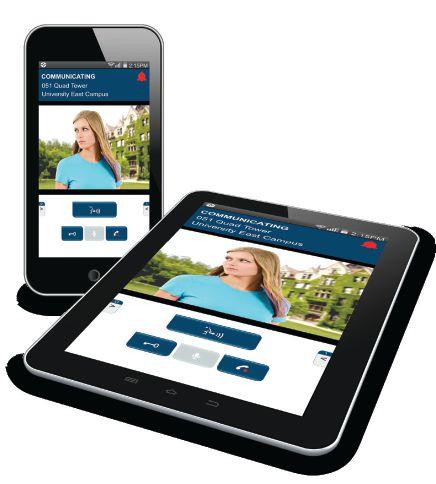
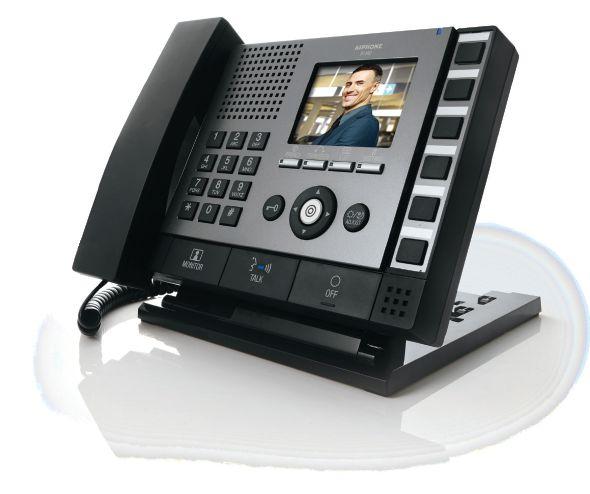
Baycrest Health Sciences, a Torontobased hospital, is using Aiphone IX Series emergency towers in its 500-space parking lot to improve the safety and security of employees and visitors. According to Martin Green, manager of security, telecommunications and emergency preparedness at Baycrest, and president of the International Association of Healthcare Security and Safety, the three new Aiphone IX Series emergency towers replaced a system that had become unreliable.
“While upgrading our security equipment we recognized we needed a higher calibre parking lot emergency system,” says Green. The parking towers are highly visible, each topped with a blue light. Once the emergency button is pushed, a call is received in the hospital’s security operations centre where officers can see and speak with the caller.


• Chuck Davis has been named director of cybersecurity for Hikvision North America. Davis previously worked with IBM as an executive security architect.
• Pelco by Schneider Electric recently introduced Jean-Marc Theolier as its new CEO.
• Honeywell announced Richard (Rich) Lattanzi as the president
Indiana medical complex using new surveillance solution
January 9-12, 2018


Shelbyville, Indiana’s new Major Health Partners (MHP) medical complex and surrounding campus has installed an end-to-end Vicon surveillance solution. The enterprise solution combines video management capabilities for cameras throughout the main hospital, oncology centre, orthopaedic centre and administrative data services building. Indianapolisbased systems integrator Open Control Systems (OCS) worked with hospital administrators to install Valerus VMS software, several NVRs with high storage capacity and close to 200 indoor and outdoor Vicon IP cameras. The Valerus solution is browser-based. Cameras have been placed in all critical areas, including lobbies, waiting areas and drug cabinets.
According to Jeff Williams, MHP’s vice-president of facility operations, “The centralized management, remote access and customizable user interface helps our team use the system to its maximum potential.”


of Honeywell’s global security business and Dino Koutrouki as the president of Honeywell’s global fire business.
• Joseph Byron was appointed vice-president Americas for MOBOTIX starting in October.
• At Milestone Systems, Ish Ishkhanian has been promoted from solutions engineer in Canada to pre-sales manager,
Specialist wildlife filmmakers WildEarth are now deploying Raytec VARIO2 illuminators in the greater Kruger National Park in South Africa for their live night-time filming needs. With regards to filming at night, ethics play a role in how images are captured. Using visible white light would disturb or temporarily blind the animals. Consequently, WildEarth turned to infrared lighting. The company chose Raytec’s VARIO2 i8-3 lighting, which delivers distances up to 600m. With VARIO holographic lensing, the illuminators produce an even spread of light, allowing WildEarth to capture consistent images of the animals.
“Not only have the illuminators allowed us to film incredible footage in zero light conditions, but the fact that they are low voltage means that we can conveniently power them via battery from our mobile camera vehicles,” said Jeandre Gerding, head of camera operations, WildEarth.


Americas. Sebastien Robitaille has joined Milestone as senior software engineer for custom development.
• Veracity has appointed Jack Meltzer director of A&E programs. Meltzer’s previous experience includes positions at Lenel Systems, Axis Communications, Samsung Techwin and FLIR.
CES 2018 Las Vegas, Nev. www.ces.tech
February 4-8, 2018
BICSI Winter Conference & Exhibition Orlando, Fla. www.bicsi.org
February 15, 2018
3rd Annual Hockey Classic Toronto, Ont. www.sptnews.ca/hockeyclassic
February 26-27, 2018
TechSec Solutions Delray Beach, Fla. www.techsecsolutions.com
March 7, 2018
Security Career Expo Toronto, Ont. www.securitycareerexpo.ca
April 11-13, 2018 ISC West Las Vegas, Nev. www.iscwest.com
April 25, 2018
Security Canada East Laval, Que. www.securitycanadaexpo.com
May 9, 2018
Security Canada Ottawa Ottawa, Ont. www.securitycanadaexpo.com
May 30, 2018
Security Canada Alberta Edmonton, Alta. www.securitycanadaexpo.com
June 6, 2018
Security Summit Canada Toronto, Ont. www.securitysummitcanada.com
June 13, 2018
Security Canada West Vancouver, B.C. www.securitycanadaexpo.com
June 19-22, 2018
Electronic Security Expo Nashville, Tenn. www.esxweb.com
September 12, 2018
Security Canada Atlantic Moncton, N.B. www.securitycanadaexpo.com

SP&T News has compiled a list of features and articles that were among the most read of 2017 based on page views from www.sptnews.ca.
The list of articles is current as of Nov. 1 and stories are presented here in chronological order. Highlights include: changes affecting alarm/monitoring companies, home automation, new technology and the shifting business landscape as a result of spin-offs and acquisitions.
2nd Annual Security Industry Hockey Classic brings the heat

Story posted: February 16, 2017
The 2nd Annual Security Industry Hockey Classic for Mission 500 brought the heat on Feb. 16 in Toronto with over 60 security professionals hitting the ice to raise money for children in need. The event was supported and sponsored by SP&T News, Canadian Security, Axis Communications, Hikvision, LANVAC, Mircom Group, Automatic Systems, Pelco by Schneider Electric, TSOC, Moni Smart Security, Camden Door Controls, G4S, AlarmForce, Stanley Security, Securitas, Graybar Canada, Anixter and Middle Atlantic Products - a Legrand Group brand. Through sponsorships, donations and raffle tickets, more than $19,000 was raised.
Q&A: Jeffrey He, president, Hikvision U.S.A. and Hikvision Canada
Story posted: March 14, 2017 SP&T News recently connected with Hikvision’s North American president Jeffrey He for an email interview and asked for an update on its current market strategy and plans for Canada.
The company opened an office in Montreal in 2015 and recently announced plans to open a global
R&D centre there. He provided additional details about Hikvision’s web presence and serving Canadians in both official languages.
Axis to launch thermal alternative at ISC West 2017
Story posted: April 5, 2017
Axis Communications co-founder
Paladin amalgamates recent acquisitions
Story posted: September 14, 2017

Martin Gren previewed soon-tobe released products at the company’s 10th annual press briefing at ISC West, including a radar technology that Axis says will offer a cheaper alternative to thermal cameras.
AlarmForce announces sale of U.S. subscriber base
Story posted: June 19, 2017
AlarmForce Industries said, effective June 14, it has entered into an agreement to sell its U.S. subscriber base to Select Security, based in Lancaster, Pa., for US$11.6 million. The transaction closed on June 20.
Canon announces Milestone spin-off
Story posted: June 28, 2017
Canon announced what it’s calling a “Video Cloud IoT as a Service” business called ARCUS Global based on the technology of Danish VMS vendor Milestone Systems.
Canon acquired Milestone in 2014. According to a statement issued by Canon Europe, ARCUS “will address the significant unmet global market demand from large enterprises for Video Cloud IoT as a Service for security and business optimization.”
ADT names U.S. and Canadian presidents
Story posted: September 8, 2017
ADT has named Jim DeVries as its new president and Steve Hopkins as president of ADT Canada. DeVries previously served as ADT’s chief operating officer and will continue to report to ADT’s CEO Tim Whall. Hopkins was previously the interim leader for ADT’s Canadian operations and will report to DeVries.
Paladin’s security systems integration arm said that as of Sept. 1, it has amalgamated its recent acquisitions — Action Data Communication Ltd, Marcomm Systems Group Inc., and CONTAVA Inc. — and will be known as Paladin Technologies going forward.
Nest expands into home security
Story posted: September 22, 2017
Nest Labs Inc. has announced a home security solution that includes the Nest Secure alarm system, Nest Hello video doorbell, Nest Cam IQ outdoor security camera and corresponding software and services.
Honeywell to spin off ADI, home businesses
Story posted: October 11, 2017 Honeywell recently announced its intention to spin off several of its businesses into standalone, publicly-traded companies. The company
product portfolio and ADI distribution business would comprise a new company. A second publicly traded company will be its transportation systems business. The spin-offs are expected to be completed by the end of 2018.
Security Canada Central 2017 in pictures
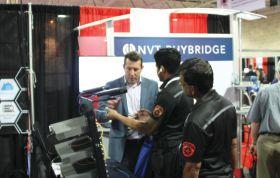
Story posted: October 23, 2017
The Canadian Security Association (CANASA) kicked off its annual Security Canada Central Toronto showcase with a focus on the monitoring community. CANASA brought back its Monitoring Symposium on Oct. 17. The 2017 edition of SCC followed on Oct. 18 and 19 with a showcase of more than

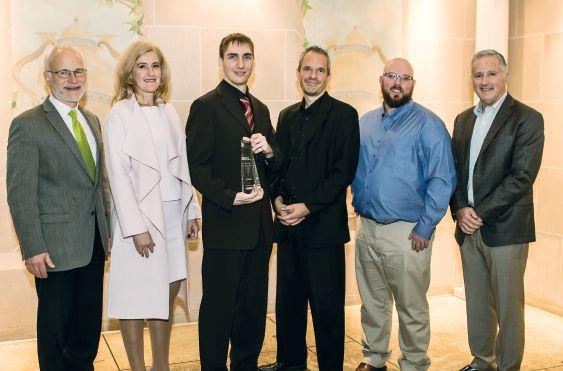
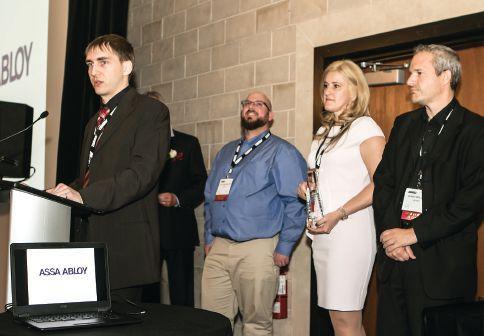
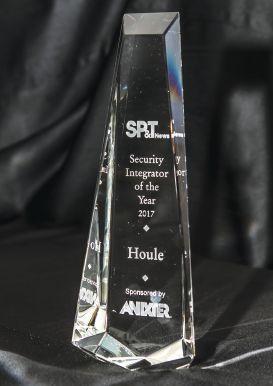
On Oct. 18, SP&T News celebrated the achievements of its first two-time Integrator of the Year, Houle, at a gala event sponsored by Anixter Canada. In 2016, Houle won for a project for the Port of Vancouver; this year it was a two-site hospital build and integration on Vancouver Island. You can read more about that project in the October issue of SP&T News.


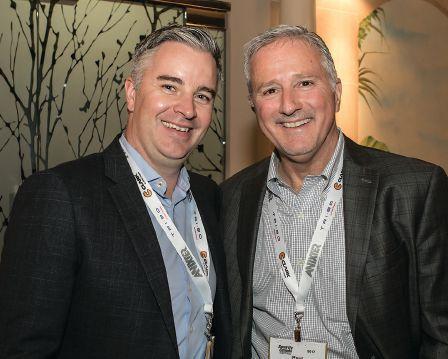
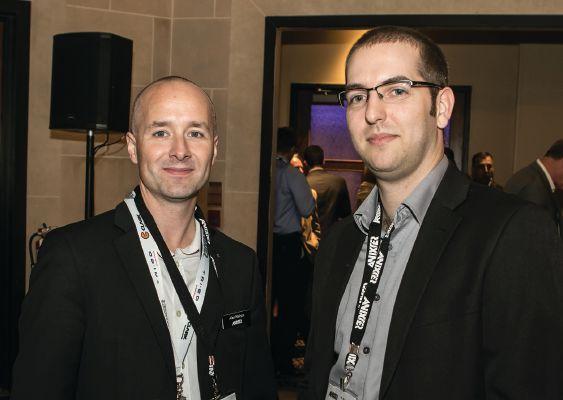
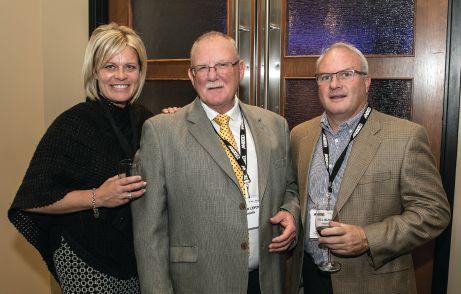
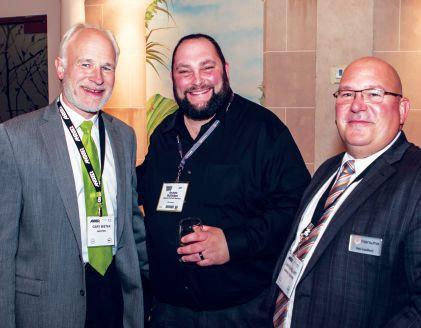

The Canadian Security Association kicked off its annual Security Canada Central Toronto showcase, the largest show of its kind in Canada, with its Monitoring Symposium on Oct. 17. The speaker list included Bell Canada’s Ken Short, ULC’s Alan Cavers, CANASA executive director Patrick Straw and The Monitoring Association’s new
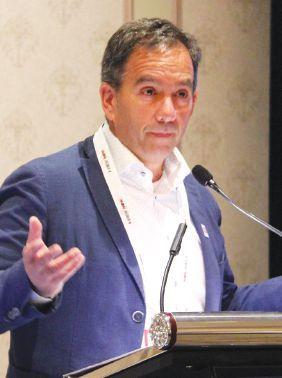

Ivan Spector, TMA president, presented at CANASA’s monitoring symposium this year.
president Ivan Spector (the first Canadian ever to hold that position). The 2017 edition of SCC followed on Oct. 18 and 19, opening with a keynote address from Brittany McBain, a member of the RCMP’s National Critical Infrastructure Team. SCC showcased more than 170 exhibitors, drawing 2,500+ attendees over two days.
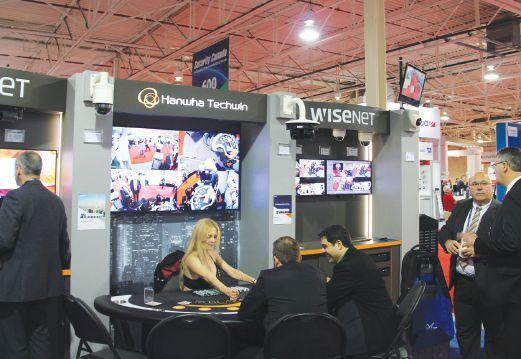
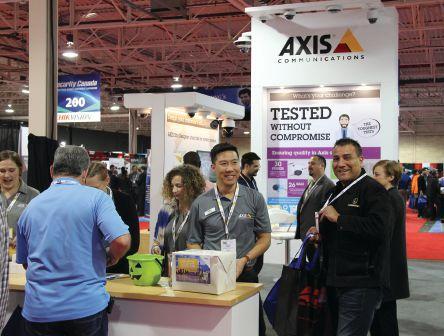
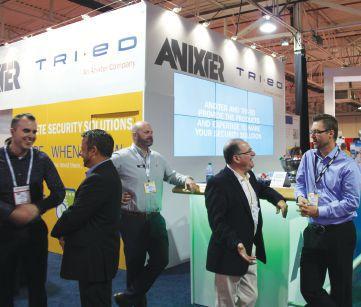
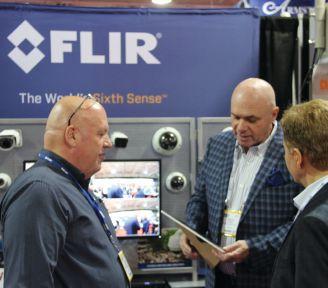
surveillance solutions, including those for the gaming industry.
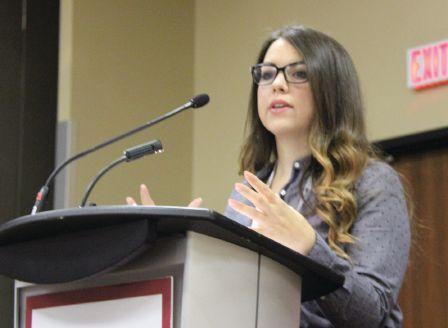
Supervisor of the
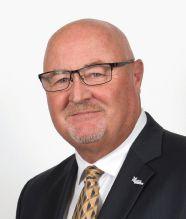
By Patrick Straw

CANASA wrapped up our show schedule for this year with a very successful Security Canada Central show in Toronto. (For more information please visit www.securitycanadaexpo.com).
Attendance was better than projected and the feedback we have received from our sponsors and vendors has been quite positive.
The show got off to a great start with a powerful presentation from Brittany McBain of the RCMP, who spoke about the protection of critical infrastructure related to events that have taken place in Canada — some of which were thwarted by the efforts of various police services.
Our Monitoring Symposium, which was held just prior to the Toronto show, was also a big
success, well attended and featuring some great contributions from our guest speakers:
• ULC - Alan Cavers
• The Monitoring Association
- Ivan Spector
• Cyber Security - Sascha Kylau
• Bell Communications - Ken Short
• Video Monitoring – Rob Baxter
• Software Integration Panel –Rod Coles, Cliff Dice, Hank Goldberg and Jens Kolind
Now it is time to get back to work on a number of the initiatives that we have already started.
CANASA has signed a MOU with ASIS Canada and we are looking forward to working with the ASIS team. By combining our resources, we can continue to promote the values and issues that are important to members of the Canadian security industry.
As executive director of CANASA, I am
scheduled to meet with the new executive director of the Canadian Fire Alarm Association (CFAA) before the end of November and look forward to exploring collaborative opportunities with them.
We have strengthened our social media presence by continuously improving our website and we are intensely marketing CANASA now on Twitter and LinkedIn. Our focus is on connecting with Authorities Having Jurisdiction (AHJs) and Canadian media outlets across Canada. I would urge you to visit www.canasa. org for information on the benefits of membership and security-related information.
All of us here at CANASA look forward to finishing off the year with lots of momentum moving into 2018.
Patrick Straw is the executive director of CANASA (www.canasa.org).
GRAPHICS
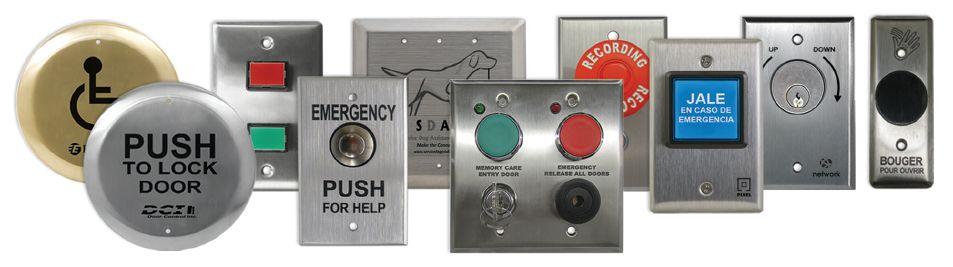
Engraved and paint filled text on buttons Laser engraved text and graphics on push plates and faceplates
19
CONTACTS
Additional



TBy Victor Harding
There are a wealth of conferences and seminars out there. Take the time and take advantage
rade shows, conferences and magazines are important for obvious reasons. You see suppliers, learn about new equipment, read about the issues in the security industry and you can network with other dealers. But there is another reason to take part in all of this. Most of us spend too many of our working hours just “doing” and don’t spend enough time standing back and thinking about the broader picture.
Hopefully, most of you take advantage of manufacturers’ training sessions. These sessions not only teach you about the equipment or service being sold but also are a great opportunity to network and learn from other dealers in your industry. Along the same line, the major distributors like ADI and Tri-Ed put on customer appreciation days which allow you to connect with suppliers and network with fellow dealers. Try to attend one per year.
If you have not done so already, join one of the main industry associations — CANASA or the CFAA are the main security associations in Canada. Consider joining one of the U.S. associations — the ESA (Electronic Security Association) or the TMA (The Monitoring Association). Also look at ASIS International or SIA (Security Industry Association). Most of these organizations put educational programs online or hold them at sites, which I can tell you from firsthand knowledge are worthwhile.
In Canada, there are annual industry trade shows put on by CANASA in almost every part of the country — most just one-day affairs but they offer you a lot. The circuit begins in Montreal in April, then to Ottawa and Alberta in May, Vancouver in June, the Maritimes in September and closing off in Toronto in October.
Most of these shows have training sessions either on or off the trade show floor. Spending half a day and maybe part of an evening at the annual trade show is a great way of not only catching up with equipment suppliers but also talking to your monitoring station and other dealers. You cannot afford not to go. Most of the biggest, most successful dealers that I know take the time to attend their annual trade show. In fact, many of the most successful Canadian dealers also attend one of the U.S. trade shows which offer a broader scope — more suppliers and more dealers.
The list of more popular U.S. trade shows in-
cludes ISC West in Las Vegas in early April, ISC East in New York in November, ESX in June and ASIS in September.
There is no question that ISC West is the biggest. I think every Canadian dealer should attend it at least once every three or four years. Not only is almost every supplier in the world there, but there is no larger collection of dealers or industry people anywhere in the Englishspeaking world. It can be overwhelming the first time through so I suggest planning who you want to see and what events you want to attend ahead of time.
ESX is the annual June show attached to the Electronic Security Association. This show is known for consistently having the best educational program of all the shows. Some Canadians go to this show just for the education.
If you can’t attend either one of these, try to get to either ISC East or ASIS. ISC East is always in New York in November and ASIS is every September but moves around. Be aware that ASIS aims to attract end users. Some of your larger clients may even go to ASIS.
Then there are annual security conferences that you should be aware of. Most of these last no more than two days but do cost money to attend. They all have good educational sessions
and offer great networking opportunities. The main ones that I attend are SP&T News’ Security Summit Canada, which was held for the first time this year. It is attempting to be the go-to security conference in Canada addressing the higher profile issues of the day. Securing New Ground, held in conjunction with SIA in October in New York, is primarily designed for integrators and manufacturers. The Imperial Capital investor Conference relates to their investing role in the security industry and features about 30 presentations from various security companies each year. Finally, the Barnes Buchanan conference held in Palm Beach, Fla., each February is structured around Michael Barnes’ work in M&A, mainly in the alarm industry. If you are more integration driven consider going to Securing New Ground in New York every so often. If you are a buyer of alarm accounts and want to learn all about that, go to Barnes Buchanan at least once.
It is important to stay up-to-date and push yourself and your company into new frontiers. It is also important to stand back and take stock of what’s available to you.
Victor Harding is the principal of Harding Security Services (victor@hardingsecurity.ca).

VBy Colin Bodbyl
How two well-established technologies can make cameras even better
ideo surveillance has become a critical component of any security system. However, the best security systems do not rely on any single product to provide a complete solution. Video surveillance is often most effective when paired with other devices or technology to expand a systems capability beyond the video. Motion detectors and alarm contacts are all popular devices to integrate into video surveillance systems but new technology is constantly emerging.
“LIDAR is able to distinguish humans, vehicles and hundreds of other objects at a far higher accuracy level than video analytics.”
LIDAR is just beginning to make its way into the commercial security space. These devices have been around for many years but were cost prohibitive for most commercial integrations. In recent years though, both LIDAR and its older counterpart RADAR have come down significantly in cost.
As LIDAR expands into the security space, it is important to understand the difference between LIDAR and RADAR, as well as where they are best used. Both technologies operate by transmitting a signal, waiting for it to reflect off an object, and then calculating the distance of that object based on the time between the signal being transmitted and when it returned. Both systems repeat these scans thousands of times each second to determine the location and movements of individual objects. The difference that gives each technology its name is that LIDAR uses lasers (or light) as its signal while RADAR uses radio waves.
RADAR is the oldest of the two technologies. Invented in the 1940s, it is most commonly known as the tool police use to catch drivers who are speeding. In the security industry, RADAR has been used in microwave detectors for a long time, but many integrators may not realize that. RADAR is a powerful technology widely used by the military and other high security facilities. Its greatest benefits are the ability to detect objects at extreme distances while resist-

ing interference from environmental conditions like fog, snow and rain. There are many different types of RADAR and LIDAR devices, but in general, LIDAR is known to be more precise.
Self-driving cars, drones and other autonomous vehicles are critically dependant on RADAR and LIDAR to function. The adaptive cruise control on modern cars uses RADAR to gauge the distance on the vehicle in front of you. Autonomous cars use LIDAR to collect real-time information about nearby objects. It is the dependence on this technology that has helped drive innovation and reduce costs in recent years, which in turn has made it more affordable for the price sensitive security industry.
While LIDAR is the most precise of the two technologies, it is also the most likely to face interference from environmental factors. Fog, snow, rain and dust can all interfere with the performance of LIDAR which can make it difficult to use in harsh conditions. RADAR, on the other hand, is less sensitive to these types of weather conditions.
The future of both products in the security space is bright. LIDAR is able to distinguish
humans, vehicles, and hundreds of other object at a far higher accuracy level than video analytics. LIDAR can even generate 3D images of an environment which are accurate down to less than a centimetre. RADAR, on the other hand, can operate in almost any weather conditions at extremely long ranges, though its short-range capabilities can also be impressive where it can detect breathing or even a heartbeat.
RADAR and LIDAR are both becoming increasingly affordable and new designs are making them easier than ever to integrate into existing systems. While video technology continues to evolve with better analytics and smarter processing, we cannot lose sight of complimentary products. Video has become a key component of any security solution but it has its limitations. By looking outside of video to other intelligent technologies like RADAR and LIDAR, integrators have an opportunity to provide customers with leading edge technology and truly differentiate their security solution.
Colin Bodbyl is the chief technology officer for UCIT Online (www.ucitonline.com).

ONVIF, as a security industry forum, has helped shape the way technology is created and deployed today. Founded almost 10 years ago by Bosch, Axis Communications and Sony, it has since grown into an organization of almost 500 members at various levels of participation. SP&T News recently spoke with Stuart Rawling, director of global business development and a member of ONVIF’s steering committee to get an update on the organization’s mandate, position in the industry and role in issues of growing importance like cybersecurity.
SP&T: How do ONVIF members work together as a group?
SR: Almost every major manufacturer is a player. We just had a meeting in Verona, Italy.
It’s so interesting how most of the attendees are engineers and technologists. The benefit is they have an interest in solving technical issues. They have been working extremely well together in advancing interoperability. That’s what their goal is.
That has a knock-on effect with the rest of the companies’ mentality. I know 10 years ago in this industry, going around a tradeshow you’d take off your [company] badge and hide a little bit… Now it’s completely different, because we all kind of work together now. It’s a very positive influence, I think, on the industry as a whole.
We have four committee meetings a year. Additionally we have two “Plugfests,” which is basically where people can bring devices and try them out.
We learn from every Plugfest whether we’ve got any issues. It’s a good chance for the vendors to test things out and figure out what they’ve got right and what they’ve got wrong. More importantly, they
By Neil Sutton
get to walk away having some degree of confidence about what’s been happening and learning what they need to do to take the standard further. Things have changed since we released Profile S and we need to do another iteration on that. We’re working on a new Profile that’s going to address new technologies like H.265, smart compression, 4K, 8K… whatever we’re talking about in a few years.
“You’ve got to remember, cybersecurity is about two things: it’s about the technology and it’s about the policy.”
SP&T: Given the current pace of development, do you have to devote more resources to the process? How do you stay on top of it?
SR: There’s a desire not to return to the state where we started, which was a lot of protocols and interoperability challenges. To a degree, an organization like ONVIF is always going to lag the bleeding edge, but ONVIF has been trying to follow it as closely as possible and embed in the industry that

cess control side, but that’s a different type of industry, so it’s adjusting a little bit differently, but from the video side, it’s very well accepted. I think end users see the benefit too, because they don’t necessarily have to pay a VMS vendor to develop a custom driver for their really cool one-off camera that they’ve bought.
SP&T: What is ONVIF’s role in helping physical security devices like cameras become more cyber-secure?
this is the standard — that’s why I’ve been working with ISO-type organizations, like IEC (International Electrotechnical Commission), ISO (International Organization for Standardization), to get those governing bodies to accept our standard as an internationally recognized standard. When we release something it’s really a “small” standard. Everybody uses it, but it’s not indoctrinated in the global technology ecospace until we get the big “S” Standard. That’s one of the things that we’ve been doing as well.
SP&T: Do you ever get pushback on standards from the vendors?
SR: Vendors? No. From the vendors’ perspective, if you’re a new company coming in and you walk around a trade show floor and there wasn’t a standard... you’d be panicking if you’re a VMS vendor, because you’ve got how many camera vendors to work with? For the pre-existing companies like us, like Pelco, it’s helpful.
If we’ve written an ONVIF driver and a new camera company pops up, we can work with that camera if they’re compliant with ONVIF too. Sometimes you have to have a conversation if there’s an issue, but, for the most part, the vendors have completely bought in. There are some aspects that we’re pushing for, like on the ac-
SR: As part of the work we’ve done with Profile Q, we made some recommendations about technologies to adopt within the standard… ONVIF can provide interfaces and interoperability, but ultimately it’s up to the manufacturers to provide the CVE (common vulnerabilities and exposures) response process. You can implement good security badly. You can have a password system that checks whether the password is the world’s most [secure password] … but if you store the password in the database in plain text, it doesn’t matter how complex the password is. That type of thing is really up to the manufacturers. That’s something that we’re looking at. Do we need to make sure that we have industry standards or recommendations for doing this type of thing? ONVIF does have a role in providing the interfaces and the technology recommendations along those lines, but you’ve got to remember, cybersecurity is about two things: it’s about the technology and it’s about the policy.
I think the cybersecurity piece is critical for the industry as a whole. ONVIF has a role to play in that [but] ONVIF isn’t the solution. I think there’s a huge awareness that the industry is going through.
I think we’ll be going through a lot of awakening over the next two years in this market.
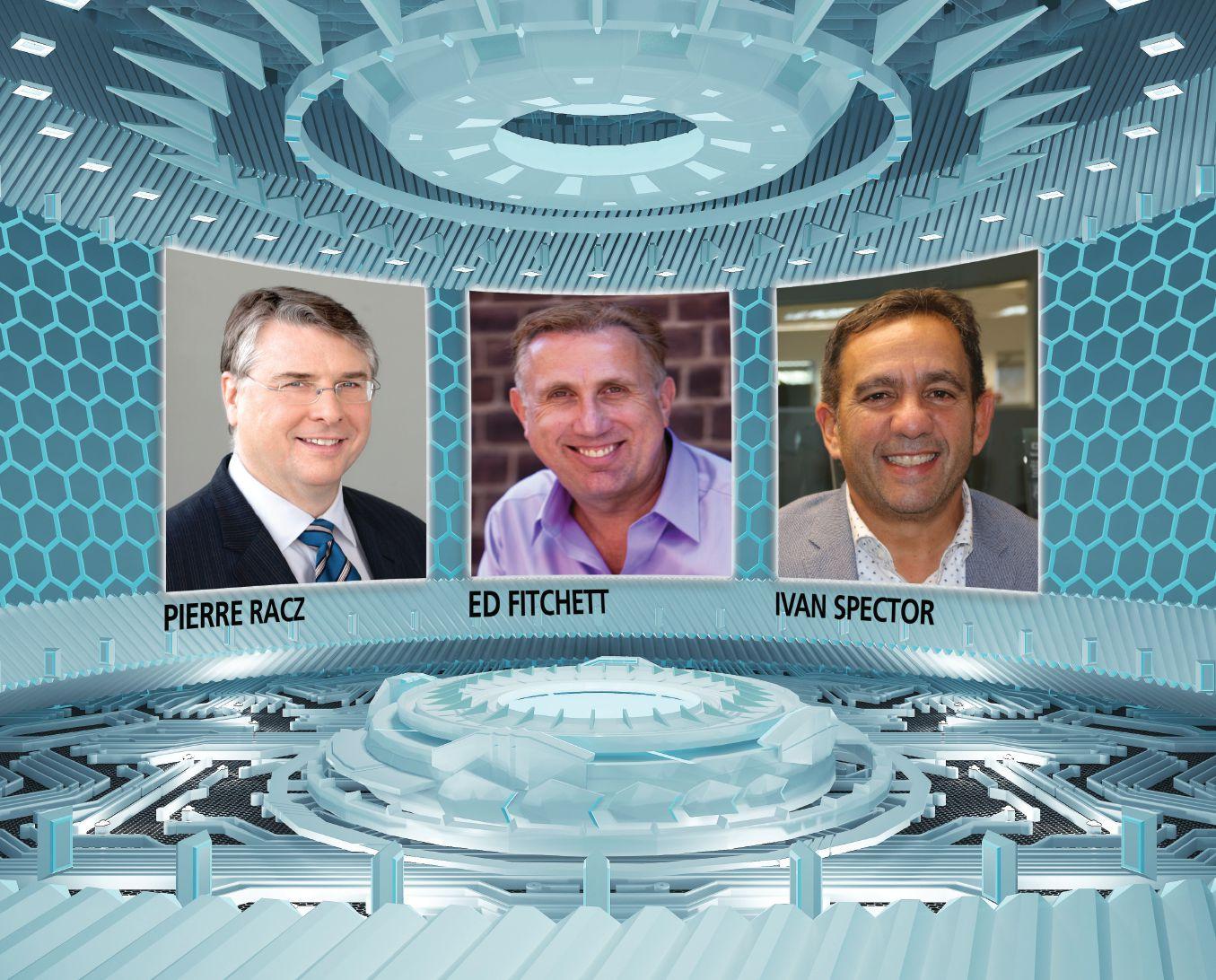

Pierre Racz, CEO of Genetec, Ed Fitchett, president of Fitch Security, and Ivan Spector, president of Alarme Sentinelle are SP&T’s newest inductees
By Ellen Cools
SP&T News is nothing without our readers, and the professional security community in Canada would be sadly diminished without its leaders, entrepreneurs, inventors and personalities.
SP&T has selected three individuals for our third annual Hall of Fame issue to acknowledge their contributions. Through their business skills, persistence and ingenuity, they are helping to shape the security industry. Whether its through volunteer efforts, drive for innovation or simply a desire to succeed in a growth business, Pierre Racz, Ed Fitchett and Ivan Spector are leaders through example. Please join SP&T News in congratulating them for their success and inclusion in our Hall of Fame. If you know of a worthy Canadian who has made an enduring impact on the security industry, let us know. We are always looking for more great candidates to acknowledge.
— Neil Sutton
Pierre Racz, CEO, Genetec
Pierre Racz comes from a line of entrepreneurs going back 300 years. So in his eyes, it was obvious that he would start a business.
Racz founded Genetec, a provider of open-platform, unified IP security solutions, in 1997, after studying electrical engineering at McGill University. His inspiration for the company came from an opportunity to experiment with C++, a coding language that, at the time, faced resistance from people in the industry.
“Facing the difficulties of convincing people to use this technology, I just assembled a bunch of merry men that I had been able to handpick and convince to use this technology,” he says, “and that’s how Genetec started.”
Racz fell in love C++, and, to this day, he continues to write code, some of which ends up in the product.
Racz says it was clear he was going to be an engineer even at the age of three. Even his hobbies reflect his interest in science and technology. A master scuba diver and a divemaster, he says the sport requires complete trust in technology.
time, the integrator on the project asked them to help. Genetec sent one of their engineers, who not only solved the issue, but stayed an extra two days to teach the company more about the software.
Five years later, when LAX wanted to upgrade its software in the Tom Bradley terminal, the airport asked that same integrator if they should stick with their OEM partner. The integrator advised the airport to use Genetec. “This is…a little bit emblematic of our success, because it’s based on long-term relationships,” says Racz.
“Preparing the next generation of engineers is something I really, really have to heart.”
Case in point, Racz first steered Genetec toward object-oriented software, not security.
“We stumbled into security by accident,” he explains.
Now, 20 years later, Racz attributes the company’s success to the work culture. “It is very much a craftsman culture,” he says.
Genetec is like a village that produces fine wine, he adds, because “to produce fine wine, you need a village of artisans and the relationship between artisans is much more collegial than in your classic company … where it’s much more hierarchical.”
Outside of the company culture, Racz focuses on building long-term relationships with integrators and dealers. For example, in the early 2000s, a project for the Los Angeles water supply ran into difficulties when the integrator encountered a network error while installing the software. Although Genetec was not selling its products directly to customers in the U.S. at the
Additionally, Racz has continued to innovate, regardless of industry reluctance. Just as he pushed for C++ before its time, he led Genetec to push for Cloud-based products years ago. “When we first announced our Cloud products,” he says, “we were a little bit ridiculed by people in the industry saying no one will ever use this stuff because … the bandwidth is just too expensive.”
But now their efforts are starting to pay off, and the company will be focusing on hybrid Cloud in the coming years.
Additionally, Genetec will be looking to young, creative engineers to continue innovating and thinking ahead in the industry. In fact, Racz’s advice for those in the industry is to pair industry veterans with younger people who don’t have security experience, but “know everything about computers.”
This advice stems from his personal experience. Prior to starting Genetec, while working at Marconi, he was put in charge of two interns and told, “It’s your social responsibility to prepare the next generation of engineers.”
He took this to heart, and designed the internship in a way that put interns directly in the product, giving them the opportunity to make mistakes, while pairing them with senior engineers to catch said mistakes.
Since then, he has been dedicated to training young people and providing internship opportunities at Genetec. “Preparing the next generation of engineers is something that I really, really have to heart.”
Ed Fitchett, president, Fitch Security Integration
Ed Fitchett’s inspiration for Fitch Security Integration came from outside the security industry altogether. Instead, it was his experience working as the Toronto operations manager for the Northern Electric Distribution Company (NEDCO) that sparked an interest in security.
Fitchett worked at NEDCO from the time he was a teenager through his early 20s. His involvement selling telecom items to some of the larger security vendors of the time led him to believe security “must be a good growth industry to get into.”
“I left the security of NEDCO and jumped out into my own with a book [that] you could get from ABC Ademco at the time, and that’s how I started.”
While Fitchett says he has a “perfectly lovely boring life,” outside of work, spending most of his time with his four-and-a-half year old daughter, and occasionally flying his plane, he has served as owner and president of Fitch Security Integration for nearly 40 years.
As a veteran of the industry, Fitchett has been involved in the Canadian Security Association (CANASA) since 1998. He spent 11 years on the CANASA Ontario Chapter Board of Directors, served four years as the president of the Ontario chapter and two years as the Ontario’s past-president. He has held numerous other positions and received multiple awards, including the CANASA Outstanding Leadership Award in 2013.
Consequently, Fitchett says he has been in the industry “long enough to have seen everything that people have claimed and thought and complained about.”
“I’m the type of guy that I need to strive to achieve a goal or fail trying.”
Fitch is now one of the oldest independent security companies in the Southern Ontario/Greater Toronto area. The company employs over 35 staff in the sales, installation, service and monitoring of card access, CCTV, intrusion and intercom systems.
Evidently, going out on his own paid off. But this was not without a struggle, Fitchett emphasizes. “You win some, you lose some,” he says.
“It has certainly become more than I ever thought it would be,” he adds. But he attributes Fitch’s success to his staff.
“I’m the type of guy that I need to strive to achieve a goal or fail trying, and what I can say is that without such a dedicated staff as I have — which really is in essence my second family — none of that is possible.”
When asked for his opinion on the current state of the industry, he remarks that the industry has always been changing, but today there is “rapid change.”
“I know we point at technology and say, ‘Look at how fast technology changes,’ but even the dealer profile is changing. If you look at the demographics of the industry, the larger are getting larger and I believe the smaller are staying small.”
Fewer integrators and security dealers are making it into the middle of the market, he adds. “I’ll say that has certainly been a change,” he continues, “to see the middle of the market either go out of business, be amalgamated, be bought out, sold up, whatever the case is.”
In the face of this rapid change, Fitchett says his company has become more technologically advanced over the last five years.
But while he looks to the future, he always remembers where he started. Consequently, his advice to people new to the industry is still the same: “I would say always believe. I would say never sell yourself short. I would say never sell yourself cheaply. And I would say never give up.”
Ivan Spector jokes, “I think the only business that is worse than [the fuel oil distribution] business is the alarm business, because the alarm business is 24 hours a day, 365 days a year.” Spector is the president of Alarme Sentinelle, a Montreal-based provider of customized security solutions and monitoring services for residential, commercial, industrial and institutional markets.
Ironically, Spector’s interest in the alarm industry came from his experience in the fuel oil industry, where he worked while studying industrial relations at McGill University and upon graduation.
During the energy conservation crisis in the late 70s-early 80s, the company he worked for was doing some monitoring for low-temperature alarm systems. “It seemed like this was a really good fit for … a security alarm company to start, and that’s how we started the business,” he explains.
But, “whenever there is disruption there is opportunity. My current position as president of The Monitoring Association certainly gives me the opportunity to send a message and be a part of this great change and state of disruption,” he continues. “You can’t fight change, you have be a part of the change.”
The influx of DIY systems and the ongoing issue of false alarms are major factors in this disruption. However, Spector isn’t sure the industry has enough information at the moment to understand the impact DIY systems will have on the market and dispatch rates.
“Whenever there is disruption, there is opportunity... you have to be a part of the change.”
Alarme Sentinelle originally cross-marketed their services to the fuel oil companies’ clients, but moved out in 1984. Since then, Spector remarks, “we’ve been gung-ho.”
A sports-enthusiast, Spector spends his time outside of work downhill skiing, cross-country skiing and snowshoeing in the winter, and waterskiing, swimming and biking in the summer. He says he is typically in the gym or doing something active every day. “I find it helps me keep my mental sanity in a fairly high stress environment,” he explains.
Despite the time commitment required in the alarm industry, Spector — who recently became president of The Monitoring Association — is passionate about life safety and security. “What really interests me about the security business is life safety, the fact that we can really impact and make a difference in people’s lives,” he explains.
However, the alarm industry has faced a number of changes in recent years.
In fact, Spector says it is in a “great state of disruption.”
Meanwhile, “false dispatches is a very complex issue,” he says. “I think it’s one of those issues where we’ve been wrestling with it for decades…. It’s somewhat frustrating from the standpoint that with today’s technologies, we’re still installing things very similarly to the way we’ve done in the past.”
Nevertheless, Spector acknowledges that new technologies, such as transmission of video to monitoring stations, can enhance false alarm prevention. He also believes increasingly interactive services will be a trend in the coming years. “It’s had a transformative effect on the industry,” he adds. “We’re living right now where change is exponential.”
As a result, he says it is critical to know what’s going on in the industry.
A founding member of the Security Industry Alarm Coalition and an active member of CANASA, having served on the board of directors as chair of its response committee and as national past president, Spector advises new entrants to the industry to find a mentor and join trade associations.
“I think that trade associations like CANASA, like The Monitoring Association, play very important roles in education, in awareness, in networking, in being able to learn from your peers and from your competitors and from other people in the industry,” he says.


By Memoori
The access control business has, over the last 10 years, completely changed its image from being a rather unattractive slow growth and conservative business to today, taking up a position as a fast growing, confident business.
The access control industry has listened and acted on the needs of the stakeholders in the supply chain and, as a result, the world market for access control products and software reached $6.84 billion in 2016, an increase of 10 per cent on 2015.
For the last two years access control has achieved a much higher rate of growth than either of the other two sectors (video surveillance, intruder alarms) and it looks like it will retain this status in 2017. We forecast that it will grow by a CAGR of 11.23 per cent to 2021, making sales of US$11.56 billion in that year. These levels of growth will be driven by ACaaS, biometric readers, identity management, wireless locking systems and more penetration of IP network systems.
“Access control is still a much smaller business than video surveillance and this will always be the case, but it now has the confidence to move forward.”
It is still a much smaller business than video surveillance and this will always be the case, but it now has the confidence to move forward and pick up the challenge of embracing new technologies, which is driving up demand. The future looks bright, as some major technological and commercial changes in this sector will continue to drive growth at these higher levels.
We feel bullish about this business as it moves into IP networking and strengthens its relationship with biometrics and identity management. These trends are significant drivers that should


maintain the growth momentum that has built up over the last two years.
However, it is possible that some access control manufacturers will become complacent and hold back from becoming “open.” In 2014, ONVIF announced the final release of Profile C, which brings the functionality of the ONVIF global interface specification into the physical access control arena.
ONVIF has been successfully introduced into the video surveillance industry. Baldvin Gislason Bern, Chairman of ONVIF’s Profile C Working Group, said, “Integration between IP-based physical access control systems and video surveillance is no longer considered a luxury in today’s market, and is becoming a necessary component for many different types of users. With Profile C, users and specifiers will be able to integrate the Profile C products of their choosing without relying on existing integrations between manufacturers.”
What concerns many access control manufacturers is that, as the market gradually becomes open and more competitive, their heritage real estate business will lose much of its protection. Whilst ONVIF has become a major force in video surveillance and is widely embraced by video surveillance manufacturers it has yet to get the same acceptance by access control manufacturers.
Manufacturers here prefer to continue to be


proprietary. This is not good news because continued growth for traditional proprietary systems mean limited options, central servers with complex and expensive cabling, as well as restricted possibilities for integration and scalability.
The combination of IP and “open systems” will open up further opportunities for the access control business right across the physical security industry but not to those that stay proprietary.
Winning new business in this environment will be more competitive and will require continual product development, which is absolutely essential in order to maintain growth.
The pace of change will speed up but it will remain a much more discreet market than video surveillance and is not yet subject to the disturbance of drastic price cutting from Chinese suppliers (although there is some evidence of this in recent months).
System integrators have, in the last three years, paid much more attention to developing their access control business for it is proving to be more profitable and stable and currently offers better growth prospects and less disruption than video surveillance. We expect them to push for “open systems.”
This article was taken from Memoori’s 8th edition of their Annual Report The Physical Security Business 2016 to 2021.
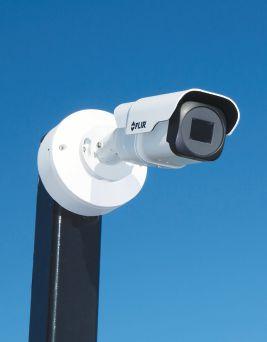
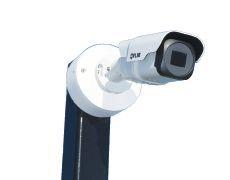
The FLIR FB-Series O fixed bullet thermal security camera is designed for short to mid-range perimeter protection. The FB-Series O offers plug-and-play integration with FLIR United VMS and is certified by other major third-party video management solutions. The thermal security camera features a 320x240 resolution thermal imaging sensor that detects potential intruders in total darkness, and through sun glare, smoke, dust and light fog. Three separate lens options — 93, 49 and 24-degree field of views — provide narrow-to-wide coverage of fence lines, building perimeters and open areas. The FB-Series O integrates with FLIR analytic encoders such as ioi TRK-101. www.flir.com


www.geovision.com.tw
Pro-Watch 4.3.5 is a connected buildings enterprise management platform. It equips organizations with the tools to protect their people and assets by combining access control, video surveillance, intrusion detection and other business critical functions. ProWatch 4.3.5 now features support for both iOS and Android and improves operator efficiency by allowing facility managers to control badging, badging verification and manage door controls via smart phones and devices. www.security.honeywell.com
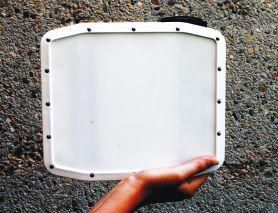
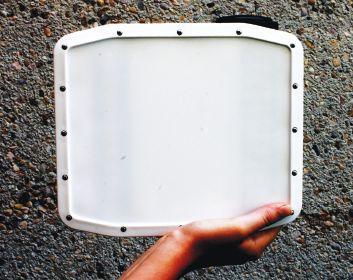
The C1050 radar is a textbook sized, solid state radar that tracks ground, sea and air targets, including drones. The C1050 provides drone detection and tracking for even a small hobby drone. The radar protects an aerial perimeter area greater than 70 football fields or an area greater than 200 football fields for a human ground target. Because each radar is about the size and weight of a small textbook, takes less than 20 Watts of power, and mounts on existing infrastructure, they can be distributed through a complex urban environment.
www.spotterrf.com
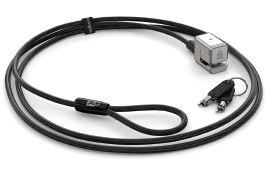
The Keyed Cable Lock for Microsoft Surface Pro provides non-invasive locking technology supported by Kensington’s common keying system. Designed specifically for the Surface Pro, Surface Pro 3 and Surface Pro 4, the product also features a strong lock head that meets industry standards for tamper-resistance, reliability and durability, a 5mm keying system and a register and retrieve program that offers free and secure cloud-based key replacement.
www.kensington.com

Genetec
Genetec has added new additions to its Streamvault line of turnkey security infrastructure solutions, including turnkey high-performance rackmount appliances that scale up to over 2,000 cameras, as well as workstations designed to provide playback of high-resolution video streams. Each product is delivered pre-hardened to safeguard security systems against cyber threats.
www.genetec.com
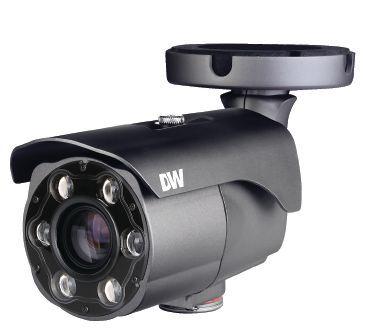
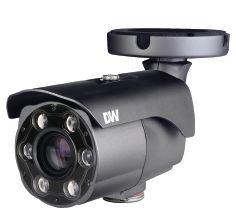
The MEGApix 4 Megapixel License Plate Recognition (LPR) camera (DWC-MB44iALPR) offers a specialty solution for applications looking to capture license plates on moving vehicles at up to 80 kph (50 mph). The camera is integrated with DW Spectrum IPVMS. These MEGApix IP cameras deliver clear images at 4MP resolution and re al-time 30fps performance. The new 4MP IP LPR camera delivers consistent plate capture both day and night with a 6-50mm P-Iris lens and Smart IR up to 60 feet.
www.digital-watchdog.com
The i1087TW NVR high-performance video surveillance workstation is a video management system (VMS) viewing workstation that can support multiple video feeds on several monitors and high performance storage servers with a hard drive capacity up to 48 terabytes. Featuring four hot-swap drive bays and optional Dual SSD for OS and live view storage, the unit supports three displays: HDMI, display port and VGA. It is also equipped with dual 1GB Ethernet and additional dual/quad 1GB or 10GB.
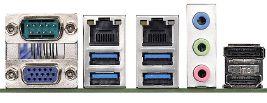
The NVR uses the Windows 10 Professional or Windows 10 IoT operating systems.
www.equuscs.com
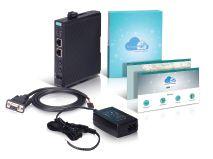
The IIoT Gateway Starter Kit includes built-in support for Amazon Web Services (AWS). The first main component of the starter kit is ThingsPro Gateway, a ready-to-run data-acquisition software platform that simplifies the complex task of transferring edge data to the Cloud. The other main component is the UC-8112 Edge Computer – an industrial-grade ready-to-deploy communication-centric computing platform that includes a 1 GHz ARM processor, 512 MB RAM, two LAN ports, and two serial ports, in a compact rugged box.
www.moxa.com
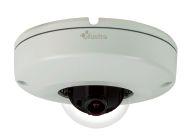
The Illustra Flex 3MP Compact Mini-Dome is an outdoor quality day/ night camera that can produce HD-quality images in low light conditions, and is small enough to fit into discrete settings, whether it’s a retail store, bank, or health-care facility. The 3MP Compact Mini-Dome goes beyond H.264 and H.265 for bandwidth management via its Illustra IntelliZip compression technology that monitors and then adjusts system streaming parameters to match the level of activity in the camera’s field of view. IntelliZip also optimizes the bitrate when activity ceases to reduce network bandwidth and video storage needs. www.illustracameras.com
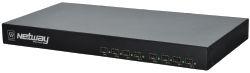
The single port NetWay SP1P Media Converter/Injector and the NetWay SP8A/16A 8 and 16port Media Converters are the newest additions to the NetWay Spectrum Series hardened PoE switches and Ethernet-to-fibre media converters. The products accommodate single or multimode fibre, as well as composite cable. The NetWay SP1P Single Port Media Converter/Injector converts Ethernet to Fibre and provides PoE, while the NetWay SP8A/16A Media Converters provide 8 or 16 ports (respectively) in a compact 1U rack mount configuration for head-end installation that converts Ethernet to Fibre.
www.altronix.com
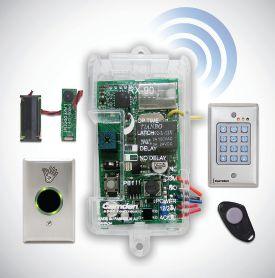
The CM-RX-90 advanced single relay receiver has three operating modes - Delayed (1 - 15 Seconds); No Delay (1 – 30 Seconds), and Latching, making it a suitable solution for most wireless door activation projects, including control of two automatic doors in vestibule applications. Features include 40 Transmitter capacity (either delayed, non-delayed or both), a Form ‘C’ Relay Output, and 12/24V AC/DC operation.
www.camdencontrols.com
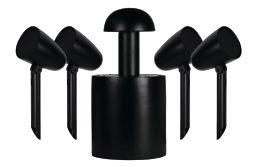
The Nuvo Series Two Landscape Satellite Speakers and Subwoofer low-profile speaker system delivers audio with extensive coverage outside of the home and extends the company’s outdoor speaker line offerings. Featuring a 3½-inch poly woofer and a ½-inch UFLC tweeter in a trim, black teardrop enclosure, the satellite speaker delivers clear audio to the deck, pool or backyard. The products are available as a kit (NV-2LSK-BK) including the buried sub and four satellite speakers, as well as an expansion pack of two satellite speakers (NV-2LS3-SAT2BK). www.legrand.com
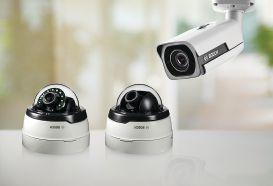
The fixed dome (FLEXIDOME) and bullet (DINION) IP 4000i, IP 5000i and IP 6000i cameras now have Essential Video Analytics built in as a standard feature. According to Bosch, this enables these cameras to understand what they’re seeing, generating metadata to add sense and structure to the footage. The cameras enable advanced intrusion detection, allowing users to set one or more alarm rules in parallel. Video data is enriched with statistics like colour details, and the type, speed and direction of moving objects in a scene. www.boschsecurity.us
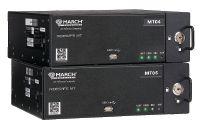
RideSafe MT Series IP Recorders provide transportation agencies with megapixel video evidence, automated wireless downloading, Power over Ethernet and search and investigative capabilities. Available in 4 and 6-channel models, the IP recorders are suitable for mid-sized vehicles and paratransit fleets ready to transition to all-IP video capture, the company says. The recorders also integrate with vehicle Computer Aided Dispatch (CAD) and Automated Vehicle Location (AVL) data. The platform also incorporates an embedded Linux OS. www.marchnetworks.com
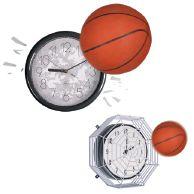
The Clock/Bell Damage Stopper wire cage is suitable for protecting clocks, bells and more against vandalism and damage. Constructed of 9-gauge steel wire, and featuring white or red corrosion resistant polyester coating or stainless steel, the guard offers defence against vandalism and damage, such as intentional or accidental basketballs, hockey pucks and more. Tamper resistant screws and installation bit provide added protection against vandalism. www.sti-usa.com
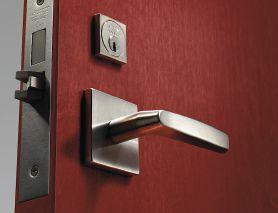
ASSA ABLOY Corbin Russwin
The ML2000 Series Mortise Lockset, an ANSI/BHMA Grade 1 mortise, now features an adjustable front to accommodate square or bevelled doors and a full 1-inch deadbolt throw. It also has a field reversible latchbolt made to re-hand without disassembling the lock case. The lock is available in 51 mechanical and electrified functions, including vandal resistant and behavioural health options, 59 standard trims and Museo Collection decorative lever designs. It is suitable for a range of applications. www.assaabloy.com
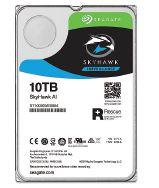
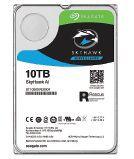
The SkyHawk AI hard disk drive (HDD) was created specifically for artificial intelligence (AI) enabled video surveillance solutions. SkyHawk AI provides bandwidth and processing power to manage always-on, data-intensive workloads, while simultaneously analyzing and recording footage from multiple HD cameras. SkyHawk AI is suitable for intensive computational workloads that typically accompany AI work streams, as its high throughput and enhanced caching deliver low latency and random read performance to quickly locate and deliver video images and footage analysis. www.seagate.com/internal-hard-drives
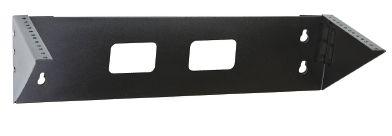
The ERVR Series of Vertical Equipment Racks are available in 1U, 2U and 4U configurations. The ER-VR4U accommodates rack equipment of any depth, features a fold out design, and has a load capacity of 150 lbs. The equipment can be wall mounted vertically or under a desk horizontally. The ER-VR2U and ER-VR1U have the same features, but have an overall depth of 4 inches and 2.25 inches, respectively. www.videomount.com
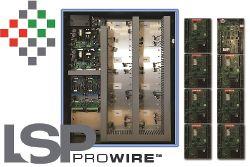
ProWire is a pre-engineered solution that integrates power and access control systems. The product is pre-wired, 100 per cent factory tested and UL/CUL certified. ProWire is designed to eliminate wiring and connection complexities, helping to reduce labour and field time. Featuring pre-installed wire harnesses for panel power, lock control, faults, communication buss and a tamper switch, the installation platform lets users standardize their power and access control solutions for consistent results across multiple locations. www.lifesafetypower.com
















































































The network you should know: The Internet of Things has the capacity to change security in the home, now and forever
The standard bearers: ONVIF, the PSIA, the HDcctv Alliance and more are on a mission to make technology easier to use, but integrators may need more convincing
Healthcare around the clock: Monitoring technology is changing perceptions of patient care
Canadian businesses split on IoT usefulness: A recent Internet of Things study conducted on behalf of Telus indicates a schism as far as Canadian businesses and IoT deployments are concerned.
Securing the gateways: There is no room for mistakes when integrating security equipment into critical environments
The Internet of Things, or IoT, is a phrase that means different things to different people — that is to say, almost as diverse as the Internet itself — but it has achieved some currency, even notoriety in physical security within the last three or four years. The first major reference to the IoT in the pages of SP&T was in 2014. In the January 2014 issue, Brian McIlravey, then the co-CEO of PPM (a company now known as Resolver) said, in answer to the question, “What advice do you have for security dealers and integrators for 2014?”: “Understand new age technology. You can’t escape it and we will only become more entrenched and dependent on technology to drive
operations and efficiencies.” He later elaborated that “the ‘Internet of things’ — SP&T lower-cased ‘things’ — is a concept related to the pervasive use of Internet connected items.” McIlravey would go on to explain the role of IoT in watches, phones, cars and more, as well as a means to share data.
Al Shipp, CEO of 3VR, noted in a Q&A in the May 2014 issue that “video should be a big part of [IoT].” He lamented, however, that North America may not be an early adopter due to poor Internet infrastructure and that Asian countries may benefit first.
The Internet of Things was SP&T’s cover story in August 2014, noting that IoT presents its own unresolved security risks — an
issue that would confound much of the security industry as hacking and cybersecurity became central talking points.
The article also noted the presence of Google in the home automation space, through its acquisition of Nest, maker of thermostats and smoke detectors. In the same article, Cisco was quoted, predicting 50 billion devices connected to the Internet by 2020.
Jumping ahead to October 2016, SP&T interviewed the president of standards body the Thread Group. Grant Erickson, also principal software engineer at Nest Labs, commented on the “amorphous” nature of IoT, as well as some fundamental issues with the term’s applicability in certain situations
(i.e. the very generic nature of IoT as a concept). He noted some of the major concerns, such as security (of devices) and interoperability, as well as the need for ease of use and plug and play simplicity especially in the home.
Stephen Joseph of Axis Communications, who penned an article for the March 2017 issue called “Banking on the Cloud,” refined IoT as “Internet of Security Things” which is composed of “producers, analysis, storage and consumers of all things related or leveraged by security data.” Those “Security Things” could include network cameras, access control, sensors, and so on.
So the IoT really is everywhere…

Halifax 2830 Agricola Street, Halifax, NS, B3K 4E4
Quebec 11054 Valcartier, Quebec, QC, G2A 2M3
Montreal 5800 rue Iberville, Montreal, QC, H2G 2B7
Ottawa 2212 Gladwin Crescent Unit B6, Ottawa, ON, K1B 5N1
Toronto 2863 Kingston Road, Scarborough, ON, M1M 1N3
Vancouver 2830 Douglas Road, Burnaby, BC, V5C 5B7



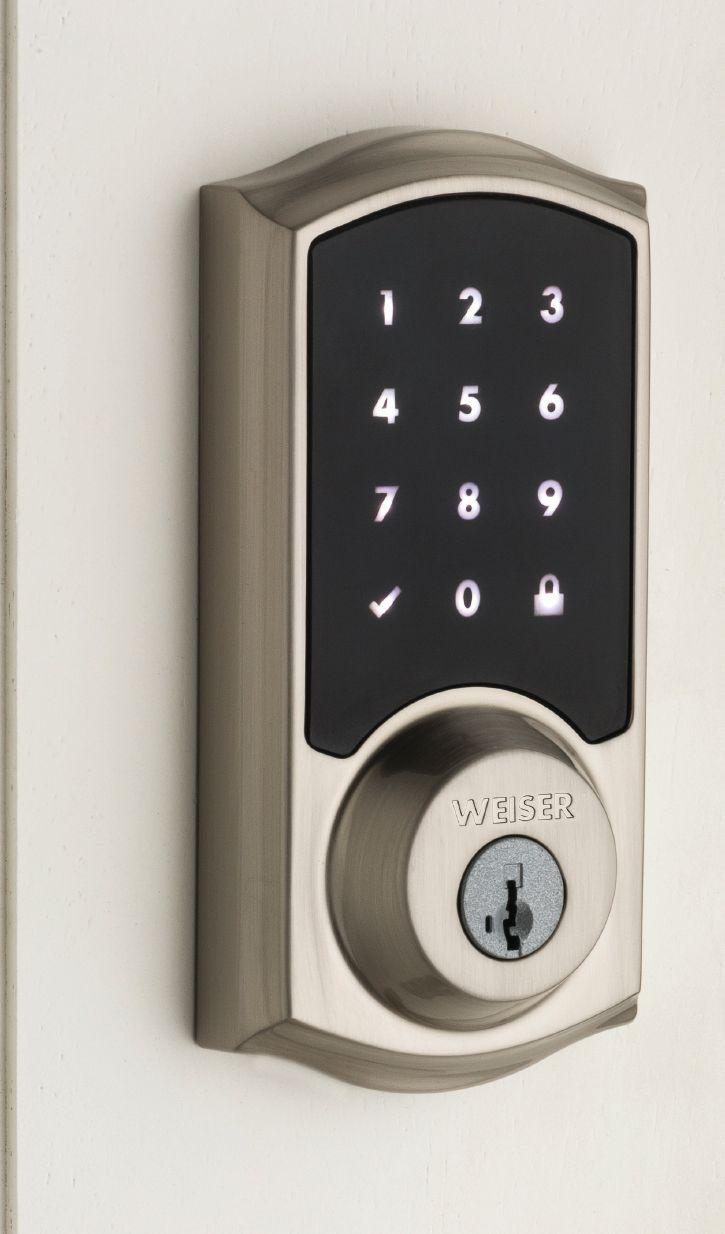
Weiser’s Home Connect Technology enables your Weiser door lock to wirelessly communicate with other devices in your home. Imagine locking your door from your cell phone or receiving a text message letting you know your child just got home from school. Home Connect Technology has the power to make it happen.