Serving Installers, Dealers and Integrators Across Canada
Serving customers in the summer months
The change of seasons is a great time for alarm dealers to add revenue opportunities p. 10
CANASA NextGen to help newcomers
Sub-committee is designed to encourage and support new talent entering the industry p. 11 Why RMR is still so important
Security and alarm dealers explain why it’s valued and how it can continue to grow p. 16
By Neil Sutton
By Andrew Snook
EDITOR’S LETTER
OBy Neil Sutton
The best revenue recurs
ne of the aspects of the security industry I remember learning about first when I joined SP&T News was the alarm industry’s reliance on the recurring monthly revenue (RMR) model.
It’s been almost 20 years since then, but in some respects not much has changed. Perhaps I latched onto the concept so quickly because I already intuitively knew what it was. I was familiar with paying phone, cable and internet bills every month, but at the time, I probably didn’t stop to think I was part of a much larger revenue ecosystem that relies on thousands of customers just like me. The idea is perfect in its simplicity: sell a customer something once and they will pay for it over and over and over again for as long as they’re able and they appreciate the service, or until something better comes along.
source of revenue. It’s so successful that other areas of the security industry are also looking to generate RMR. For example, you can install a great security system for an enterprise client and charge accordingly, but to keep that customer you can also provide them with ongoing support or offer to host or manage some of their software (for a competitive monthly fee, of course).
“Sometimes customers also need to be reminded that they are valued.”
Of course, it’s never quite as cut and dried as all that, as anyone who understands how customer attrition works will tell you. There are competitors to worry about, both big and small, and the customer’s tolerance for how much money they are willing to part with on a monthly basis. Once they reach a tipping point, they will evaluate which services they really need and which ones they can cut out.
Sometimes customers also need to be reminded that they are valued. In addition, they expect quality support. If they don’t receive it, they have plenty of options to go somewhere else.
But overall, RMR is a reliable and relatively stable
Two of the articles in this issue are devoted to RMR: Victor Harding breaks down the mechanics of RMR for the alarm industry and how it affects company valuations; we have also published a feature article that asks three different monitoring companies why RMR is so important to them (and to the industry in general) and where they are looking next for new sources of recurring revenue.
No comprehensive examination of the security industry would be complete without a look at the role of AI, so we also have a feature article on the evolution of generative AI.
Gen AI will soon have a significant influence on both enterprise and consumer technology as its accuracy and reliability improves and user skepticism diminishes over time. We will surely get to a point when an AI can be called upon to help manage those monthly billing cycles, but that’s a story for another issue.
@SecurityEd
READER SERVICE
Print and digital subscription inquiries or changes, please contact Shawn Arul, Audience Development Manager Tel: (416) 510-5181 • Fax: (416) 510-6875 Email: sarul@annexbusinessmedia.com
Mail: 111 Gordon Baker Rd., Suite 400, Toronto, ON M2H 3R1
Your Partner in Securing Canada Security Products & Technology News is published 5 times in 2025 by Annex Business Media. Its primary purpose is to serve as an information resource to installers, resellers and integrators working within the security and/or related industries. Editorial information is reported in a concise, accurate and unbiased manner on security products, systems and services, as well as on product areas related to the security industry.
Editor, Neil Sutton 416-510-6788 nsutton@annexbusinessmedia.com
Group Publisher, Paul Grossinger 416-510-5240 pgrossinger@annexbusinessmedia.com
Publisher, Adam Szpakowski aszpakowski@annexbusinessmedia.com
Associate Publisher, Jason Hill 416-510-5117 jhill@annexbusinessmedia.com
Media Designer, Graham Jeffrey gjeffrey@annexbusinessmedia.com
Account Coordinator, Kim Rossiter 416-510-6794 krossiter@annexbusinessmedia.com
CEO, Scott Jamieson sjamieson@annexbusinessmedia.com
EDITORIAL ADVISORY BOARD Patrick Soo, Alarm.com Floria Chiu, Telus Custom Security Systems Stephen Karchut, Alarmtech Val Michetti, HID Frank Pietrobono, Avante
111 Gordon Baker Rd, Suite 400, Toronto, ON M2H 3R1 T: 416-442-5600 F: 416-442-2230
PUBLICATION MAIL AGREEMENT #40065710 Printed in Canada ISSN 1482-3217
Annex Publishing & Printing Inc. disclaims any warranty as to the accuracy, completeness or currency of the contents of this publication and disclaims all liability in respect of the results of any action taken or not taken in reliance upon information in this publication.
LINE CARD
Athena Security actively seeking new customers in Canada
AU.S.-based weapons detection, visitor management and security operations software company is looking to grow in Canada, addressing multiple markets, including health care.
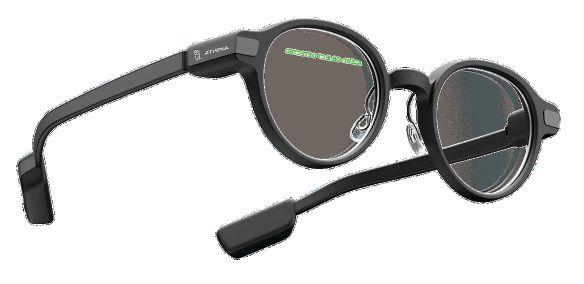
Athena Security, based in Austin, Tex., offers a number of security solutions that can work independently or integrated together on a platform: a weapons detection system, visitor management system, an AI-assisted X-Ray, and other technology including “AthenaVision” AR Alert glasses which can be worn by security personnel and feature a heads-up display to enhance situational awareness.
The company sells into several vertical markets, mostly in the U.S., including school campuses, retail, warehouse distribution, casinos, government and health care.
“We are a leading provider in the United States and we want to spread that around the world to places that need it,” Michael Green, CEO, Athena, told SP&T News. “We are terrific at health care because we’ve invested the time and energy to understand all the pain points of security officers, supervisors, [and] VPs of risk.”
Weapons detection technology is of growing interest in the Canadian health-care sector. Winnipeg Health Sciences Centre and the London Health Sciences Centre in Southwestern Ontario are two recent examples of health institutions that have installed various versions of the technology.
To raise awareness of its secu-
rity solutions north of the border, Athena recently hired Martin Green, a well-known Canadian health-care security professional and past-president of the International Association for Healthcare Security & Safety (IAHSS), as a brand ambassador. Todd Owens, a former police officer, has also represented Athena as a security advisor in Canada. In addition, the company has a number of Canadian investors and stakeholders.
Michael Green says Athena is looking to showcase its product line in Canadian health care, and is actively seeking partners and customers. “We’re absolutely looking to connect with end users, practitioners and security consultants, and to build a network that can help us scale in Canada,” he said.
— Neil Sutton
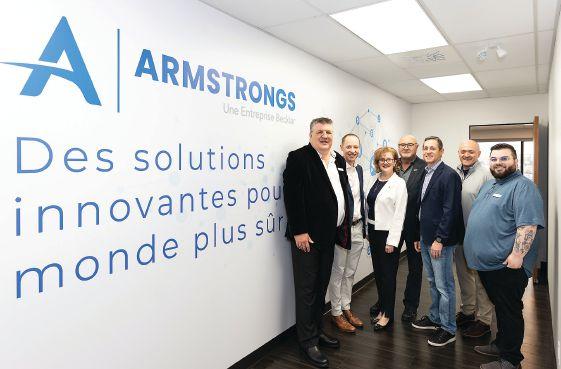
Armstrongs celebrates first year of service for Que. station
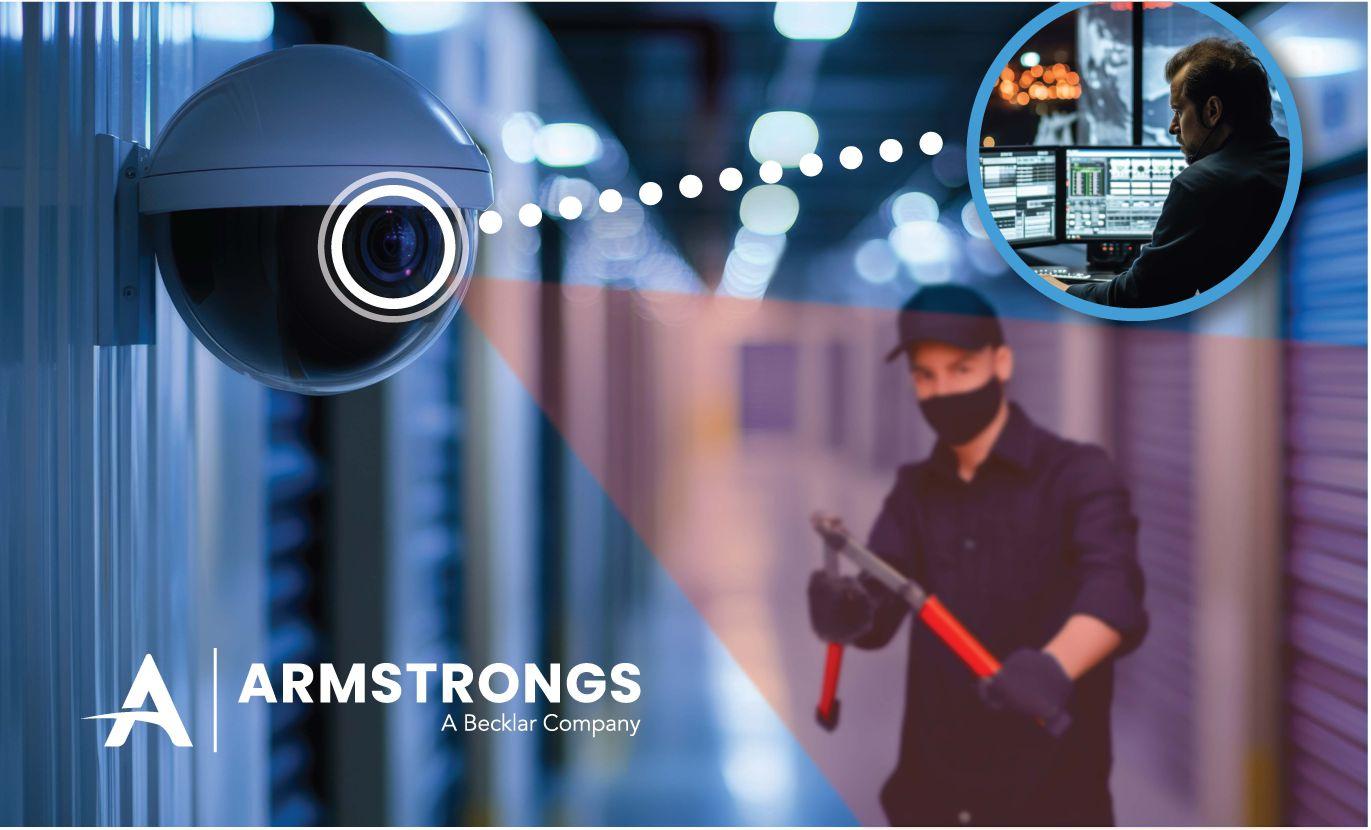
Armstrongs, a Becklar company, is marking one year of service for its latest monitoring facility located in Laval, Que.
According to the company, the facility, which is staffed by 70 bilingual professionals, has managed 451,000 incidents since it opened for operation last year. Operations are also supported by a SMART Protection Platform featuring an AVA (Artificial Voice Assistant), which “redirected over 106,000 medical false alarms, helping reduce emergency system overload and improving prioritization of genuine threats to live operators in an industry-leading nine-second response time,” stated the company.
The station is also ULC-compliant and boosts the company’s redundancy capacity across its Canadian monitoring network. Upon launch a year ago, the company said, “redundancy significantly increases the probability that a signal is properly received regardless of circuit issues, weather or equipment failure. We not only focus on equipment redundancy within our monitoring centres but also redundancy among our centres. Any two of our three centres can carry the entire North American monitoring load with capacity to spare. ULC is now recognizing this need for simultaneous redundancy with the new requirements for 2025 — so with Armstrongs, our dealers will be covered beyond the new standard.”
Armstrongs newest monitoring facility has managed more than 450,000 incidents since it officially opened last year.
Additional details about ULC’s redundancy requirements for central stations can be found in a feature article that originally appeared in the SP&T News July/Aug 2024 edition.
AthenaVision glasses for security personnel feature a heads-up display
Acre Security hosts open house in Ottawa
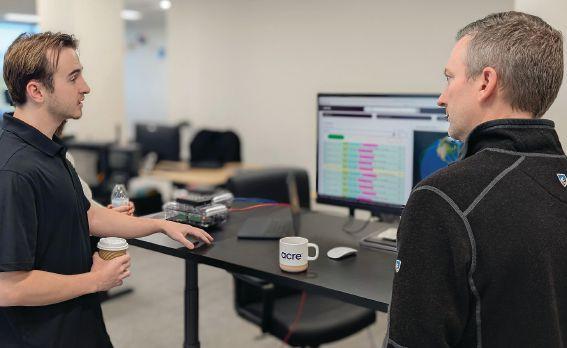
In early May, Acre Security welcomed industry professionals to its Ottawa facility for an open house event.
Senior executives from Acre greeted guests including systems integrators and technology partners. The Ottawa office is home to a team of engineers focused on “driving the evolution of access control through cloud-based innovation,” according to the company.
Guests experienced live demonstrations and interactive sessions featuring Acre’s most recent advancements, including new features within Acre Access Control such as Gallery and FITS. Gallery, Acre’s new online
innovation marketplace, functions as an app store for access control, stated the company.
FITS provides a suite of pre-configured scripts and templates that enable integration between disparate systems without the need for custom coding.
GardaWorld launches ECAM company
GardaWorld recently announced the launch of ECAM, combining the assets of its ECAMSECURE mobile surveillance unit business and Stealth Monitoring, which the company acquired last year.
ECAM has also launched a proprietary upscaling technology and process that the company says enhances the resolution and quality of lower-resolution video footage using advanced algorithms. This new technology, known currently as Integra, is now deployed across all ECAM
surveillance systems. ECAM has approximately 140,000 cameras currently monitored across North America. “ECAM enters the market at a time when customers are demanding smarter technology, faster threat detection and response and greater cost efficiency,” said Christopher Brooks, COO, ECAM in a statement. “Our deeply customer-centric model is built on operational excellence and innovative proprietary technology, developed by our own in-house R&D teams.”
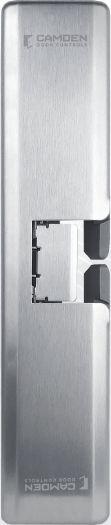
INTRODUCING THE REMARKABLE 1299 SERIES
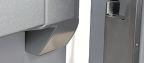
Camden Door Controls has launched a 1/2” version of our award-winning surface mount RIM strike with preload. The 1299 Series Grade 1 strike offers ‘Universal’ design that delivers superior performance under the most demanding conditions The patented design of 1299 Series RIM strikes will release with up to 15 lbs of preload pressure, caused by differences in air pressure, inexact installation, or misaligned doors (during or after installation).
» UL 1034 & 294 Security Listings; ANSI/BHMA A156.31
» 12/24V, AC/DC, Fail Safe/Fail Secure
» Latch monitor included
» 1/4” and 1/8” spacer plates included, to accomodate up to 3/4” Latch Projection
» Metal Marking Jig Included
» Exclusive 5-Year, No-Hassle Product Warranty
LINE CARD
Applications
Gallagher Security announced it has been awarded a contract to secure the University of Witwatersrand (WITS) in Johannesburg, South Africa.
WITS comprises 35 schools, 30-plus service departments, 11 libraries, 18 residence halls and more than 42,000 enrolled students.
With channel partner FS Systems, Gallagher will replace the existing access control system with their site management platform, Command Centre.
The 18-month roll out, which began this year, is expected to be completed in 2027 and will be conducted in two phases.
According to Gallagher, 173 buildings across seven campuses will be migrated onto the new system. Existing card readers and wave readers will be reused and hard-wired onto new Gallagher controllers. All other door hardware such as maglocks, breakglass units, pushbuttons and cabling will be kept, and a new interface will be developed. It is anticipated that the project will include 2,500 doors and 80,000 cardholders.
Appointments
New traffic management facility in Oklahoma
The City of Norman, Okla., has selected RGB Spectrum to deliver a video processing and control system for its new Traffic Management Center (TMC).
Designed in partnership with Stantec, the deployment comprises RGB Spectrum’s Zio 4000 series video processor, XtendPoint KVM-over-IP, and RGB Rack PCs.
“Norman’s commitment to cuttingedge technology ensures we can effectively monitor traffic patterns and enhance safety for all who live, work and travel through our city,” said David R. Riesland, city transportation engineer, City of Norman, in a statement.
The new 2,300 square-foot facility will include three offices, an operations room and an IT room. Within the operations space, four operators oversee five discrete networks, ranging from ATMS/ITS and enterprise to public safety, security and web administration. Each operator will have access to five dedicated Rack PCs located remotely in the IT room.
• Digital Watchdog announced the appointment of Scott Cappelletti as a regional sales manager for Eastern Canada and the New England region.
• Fleming Communications (FCi) announced that Richard
Texas A&M adopts LPR solution
Montreal-based Genetec announced that Texas A&M University is using Genetec AutoVu automatic licence plate recognition (ALPR) technology to modernize its parking enforcement system.
Texas A&M’s Transportation Services division faced increasing challenges in managing more than 36,000 parking spaces. Manual processes for managing permits and conducting parking enforcement with foot patrols were both time-consuming and inefficient.
Following the implementation of Genetec Omnicast, Texas A&M deployed AutoVu ALPR to help address these parking enforcement challenges. By equipping enforcement vehicles with AutoVu SharpZ3 cameras and installing fixed ALPR cameras at parking lot entrances and exits, the university transitioned to a real-time monitoring system. The automated system allows enforcement teams to identify unregistered vehicles and reduce patrol times. Transportation Services is working with T2 Systems, a Genetec partner, to implement ALPR-based access control in one of the campus garages with an existing Genetec ALPR installation.
McMullen, partner, security solutions, has retired following a career of 30+ years in security.
• System Surveyor, a provider of digital site surveys and system design, has promoted Maureen Carlson to president.
June 5, 2025
ADI Expo Calgary, Alta. www.adiglobaldistribution.ca
Security Canada West Richmond, B.C. www.securitycanada.com
June 16-19, 2025
ESX Atlanta, Ga. www.esxweb.com
September 11, 2025
ADI Expo Vancouver, B.C. www.adiglobaldistribution.ca
Sept. 29 – Oct. 1, 2025
GSX
New Orleans, La. www.gsx.org
October 4-8, 2025
TMA Annual Meeting Palm Springs, Calif. www.tma.us
October 14-15, 2025
Securing New Ground New York, N.Y. sng.securityindustry.org
October 22-23, 2025
Security Canada Central Toronto, Ont. www.securitycanada.com
• Paladin Technologies has appointed Marcus Noseworthy as the new regional manager for Atlantic Canada.
• Prosegur Security announced that Ty Stafford will assume the role of executive chairman,
while Daren Lopez transitions from COO to CEO.
• Martin Green, health-care security professional and IAHSS past-president, has joined Athena Security as brand ambassador.
Scott Cappelletti Richard McMullen Maureen Carlson
Marcus Noseworthy Daren Lopez Martin Green
South African university updates access control
LESSONS LEARNED
WBy Victor Harding
Why alarm accounts sell as a multiple of RMR
Understanding the key differences between security companies in terms of their valuation
hen security and fire protection companies change hands, their valuation is often approached differently depending on the nature of their revenue streams.
Alarm companies, particularly those with significant recurring monthly revenue (RMR), are typically valued based on a multiple of their RMR. Fire protection companies and guard service providers, on the other hand, tend to be valued based on a multiple of adjusted earnings or EBITDA (Earnings Before Interest, Taxes, Depreciation and Amortization).
This distinction isn’t arbitrary — it reflects fundamental differences in how revenue is generated, how predictable the cashflow is, and how risk is assessed in each business model.
For alarm companies, RMR is the defining asset that sets them apart from other security and fire-related businesses.
Recurring revenue represents contracted, predictable and highly profitable cash flow, which is attractive to buyers because it continues generating revenue over time with minimal additional effort. This makes RMR a stable and measurable asset for valuation purposes.
The multiple applied to an alarm company’s RMR varies mainly based on the following characteristics:
• Total number of accounts: The larger the account base, the lower the risk of major revenue disruption.
• Average RMR per account: Higher-value accounts command better multiples primarily because they produce higher gross margins.
• Annual attrition rate: Low attrition means more predictable
revenue, driving up valuation.
• Percentage of signed contracts: Buyers prefer accounts with signed contracts which have the proper waiver of liability on the back on the contract.
• Percentage of accounts programmed to seller’s lines: Accounts all programmed to the seller’s lines and call-forwarded versus those programmed directly to the station’s lines are easier to transfer and therefore looked upon as more valuable.
Alarm companies that score well on the above factors can typically sell for multiples of 30 to 40 times their RMR. In comparison, other businesses in the security sector are often valued based on entirely different metrics. Unlike alarm companies, fire protection and guard service companies rely more on one-time or project-based revenue streams rather than predictable RMR. This means that their cashflow is inherently more volatile, making earnings-based valuation models (such as EBITDA multiples) more appropriate.
The multiple applied to a fire or guard company’s EBITDA depends on:
• Size of the company in terms of annual revenue: Size matters here as it does with RMR-
based companies.
• Profit margin is important: Companies making a higher percentage of sales in net profit will trade for more than those making lower percentages.
• Revenue concentration: Companies with diversified revenue sources tend to secure higher multiples as they represent less risk to the buyer.
• Growth trajectory: Fast-growing companies are more attractive and receive stronger valuations.
• Operational structure: Businesses with management teams fully independent of the owner and scalable operations are more valuable.
• Customer contracts and retention: Higher retention and contract stability increase valuations.
Generally, smaller fire and guard companies sell for three to five times their EBITDA, while larger, well-structured businesses with strong recurring service contracts may command five to seven times EBITDA.
While alarm companies are often valued using RMR multiples, it’s important to remember that underlying all valuations is a company’s free cashflow. At the end of the day, a business is only worth
what it can consistently generate in excess cashflow after operational expenses.
Buyers ultimately care about the sustainability and predictability of cashflow, whether it’s coming from monitored alarm accounts, service agreements or ongoing guard contracts.
It’s worth noting that some fire inspection and service companies are now adopting RMR-based pricing structures, which changes how they are valued.
Fire system monitoring and recurring inspection contracts are increasingly treated similarly to alarm RMR, albeit at lower multiples than traditional alarm monitoring revenue because their margins are lower.
This shift reflects the broader industry trend toward securing long-term, contract-driven revenue streams, which provide more stability for both buyers and sellers in the market.
If you are buying or selling a business in the security industry, understanding valuation models is critical.
If you’re considering selling your alarm company, integration, fire business or guard business, knowing how your business will be valued can help you maximize your selling price.
Note: As part of Security Summit Canada, presented by SP&T News in February, I moderated a panel discussion on Artificial Intelligence and what it can do for the security industry. In that session I indicated I was already using AI to help me in my business. It is noteworthy that most of this article was produced with the assistance of AI.
Victor Harding is the principal of Harding Security Services (victor@ hardingsecurity.ca).
PRACTICAL SECURITY
WBy Roger Miller
Security systems shine in the summer
As your customers make travel plans, remind them how useful modern security systems are
ith the peak summer vacation season just around the corner, opportunities for increased revenues from home security solutions are readily available to alarm dealers.
For home or cottage owners, the technology has come a long way toward having eyes and ears on their property while they are on vacation. We’ve been involved in whole home systems for many years — home audio, security, video, intercom and other monitoring services have advanced at such a rapid rate that many of your customers may not be fully aware of what you can do for them.
“We can open an app to see our property from almost anywhere in the world.”
As a dealer, this creates an opportunity to upsell your customer, providing them with peace of mind that their property is not only monitored, but with the added advantage of checking in on it themselves. Recently, while on vacation, I was able to view my home and open the garage door for a friend, all while sipping on a cool beverage from a lounger on the beach!
Today, we can open an app to see our property from almost anywhere in the world. The technology also provides the ability to turn on the lights, open doors, monitor for water leaks and turn off a valve to prevent flooding.
These tools are common for many homes now, and they all give the homeowner a more interactive, productive experience. This type of experience is more likely to allow you to increase RMR by creating a stronger dependence on the systems.
Unlike a traditional security system where they set it and forget it (or if they’ve had history of false alarms they’re scared to set it) you’re able to offer something they use several times a day. That’s good for the consumer, the industry and for you, the dealer.
In addition, many jurisdictions in Canada require verification before dispatching authorities to an alarm call. Remote video can provide that verification. As someone who has personally
responded to many alarms, I can assure you that the police will respond much faster to any call where there is a verified break in than they will to a simple alarm call. The police want to catch the bad guys as much as you want them to, they sometimes just need our help. Regardless, if the call is verified by viewing the activity on your phone or a video monitoring station operator watching from another city, being able to guide them to the criminal hiding behind your garage is useful information. Police agencies in most jurisdictions have limited resources and are better able to support homes and businesses that have invested in their security.
We’ve come a long way from simple door and motion detection devices, so, what else can homeowners do remotely? The list is extensive:
• Remote video
• Remote control of security systems
• Remote keyless entry
• Ability to control lights, temperature and other mechanical systems
• Two-way audio
• Remote control of heating/cooling systems
• High/low temperature warnings
• Event notifications
• Emergency water valve shut-off
The following information is from the Insurance Crime Prevention Bureau of Canada website:
Protect your home against fire, theft, water and severe weather damage. Installing loss prevention devices such as a burglar alarm system, reinforced roofing, a sewer backwater valve, storm shutters, sump pumps and sprinkler systems can potentially provide additional protection and reduce your premiums. By installing modern interactive systems, property owners (i.e., your customers), may be eligible for discounts on insurance. This is another great way to summarize how security systems can provide a tangible benefit to the homeowner. Make sure your customers know what today’s security systems can do for them. It really is a win-win situation for both of you.
Roger Miller is the president of Northeastern Protection Service Inc. (www.protectionpartner.ca)
By Scott Young
NextGen initiative welcomes industry newcomers CANASA UPDATE
CANASA subcommittee will serve as a platform to encourage and foster new security talent
CANASA’s new executive director Kim Caron has shared a vision for increasing career awareness in the security technology sector.
I’m pleased to share another new initiative that kicked off in 2025: CANASA’s NextGen subcommittee, co-chaired by myself and the venerable Thomas Leslie of Titan Products. The CANASA NextGen Group focuses on the development and education of young/new careerists in the security industry.
This group is open to those who are:
• Security and alarm industry professionals under the age of 40
• New to the profession/industry
• Starting a second career
• Passionate about our NextGen mission
Industries across the western world are facing a demographic challenge to replace the leadership of retiring Baby Boomers and Gen Xers. Our group intends to raise awareness and be a warm welcome to newcomers to the security industry, sharing the many great benefits and opportunities that this industry presents to help prepare for this generational transition.
and job opportunity awareness.
We hosted our first ever event across the country with a Feb. 20 “NextGen Day,” a coordinated bowling event across multiple CANASA regions. Over 150 combined attendees met for bowling, networking and storytelling.
This will be done through open networking events, featuring experienced guest speakers who share their journeys and advice to up-and-coming security professionals. Through these events, the NextGen community will grow in numbers and influence in each council region, and also serve as a communication vehicle for scholarship, education
Scott Young
Watch out for future NextGen networking events in your local council area. If you’re interested in getting involved (personally or organizationally) with this new and exciting group, please reach out to your local CANASA council for more details.
Scott Young is the co-chair of CANASA’s NextGen subcommittee.
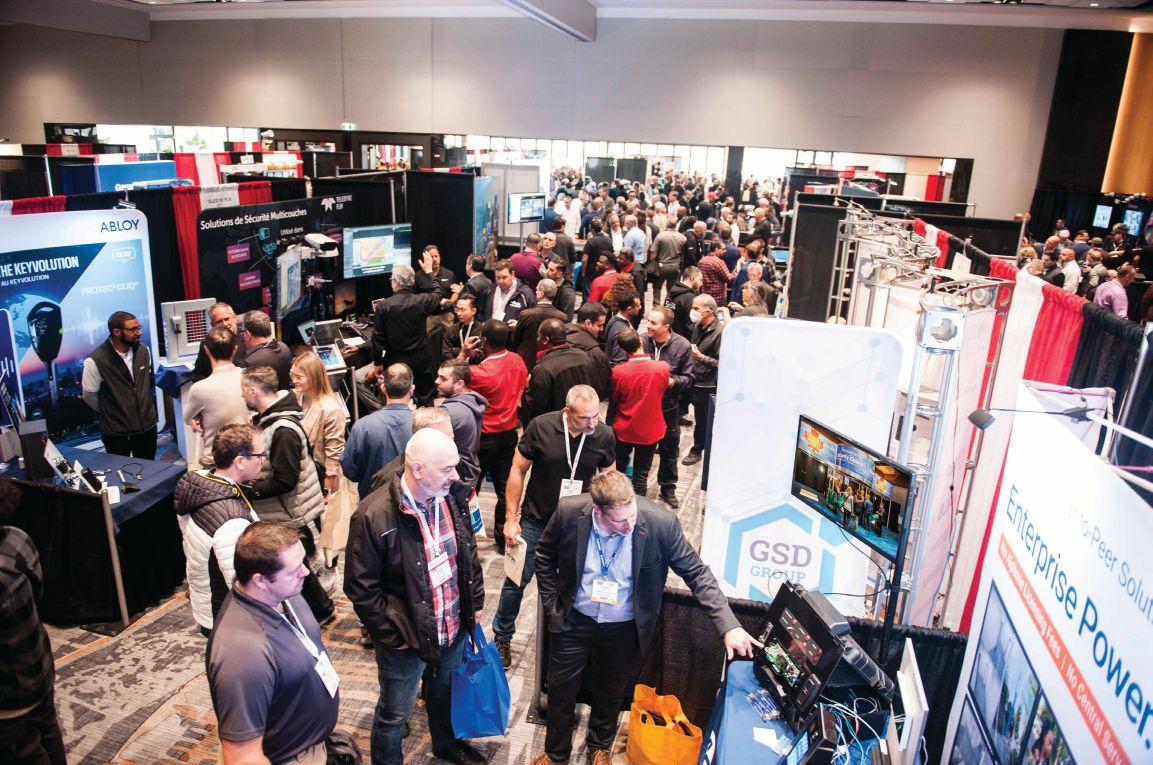
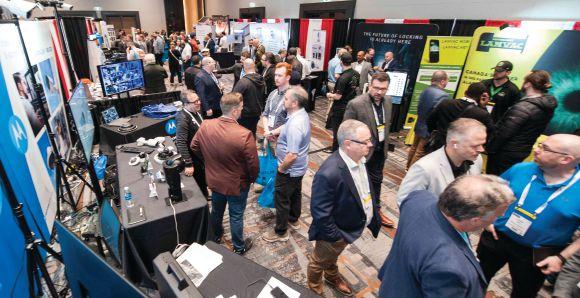
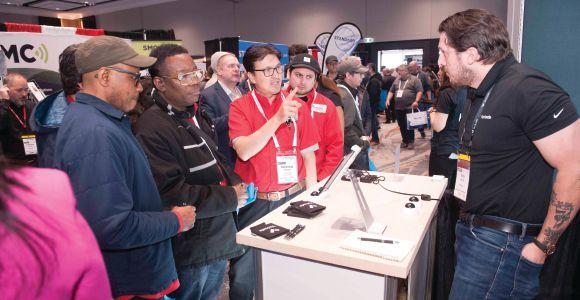
CANASA HOSTS ANNUAL QUEBEC-BASED TRADE SHOW
The Canadian Security Association (CANASA) recently held its annual Security Canada East in Laval, Que., on April 30.
CANASA will host two more trade shows across Canada this year. Security Canada West will be held in Richmond, B.C., on June 11. CANASA’s annual general
meeting is also scheduled to coincide with that event.
On Oct. 22-23, Security Canada Central will return to Toronto. For event details, visit www.securitycanada.com. For all other CANASA-related events, including golf tournaments, visit www.canasa.org.
GEN AI REVOLUTIONIZING SECURITY INTERFACES
The promise of generative artificial intelligence is convenience for security systems operators, but also next-level performance
By Neil Sutton
Artificial Intelligence (AI) has been one of the dominant driving forces behind technology acceleration in physical security for several years now, as providers highlight advances like more efficient video search tools and expedient data processing on the back end.
A subset of AI, still in its infancy in the security world, is generative AI. One of the major applications of Gen AI is an interface that would allow the user to interact much more easily and naturally with their security technology — in theory eliminating the need to navigate through clunky menus or spend precious time browsing lengthy reports for specific information.
The promise of Gen AI is a natural language, intuitive interface that delivers exactly what the customer wants almost immediately, and even makes useful suggestions they might not have even considered.
Alert Enterprise, a developer of identity and ac-
cess management solutions, was early to the market on this.
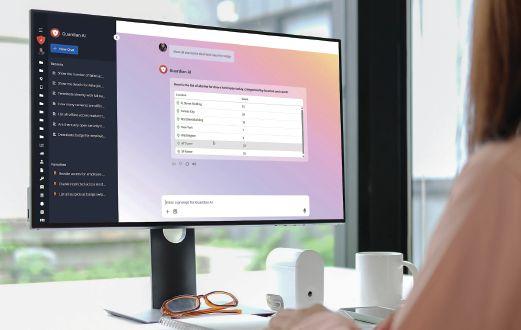
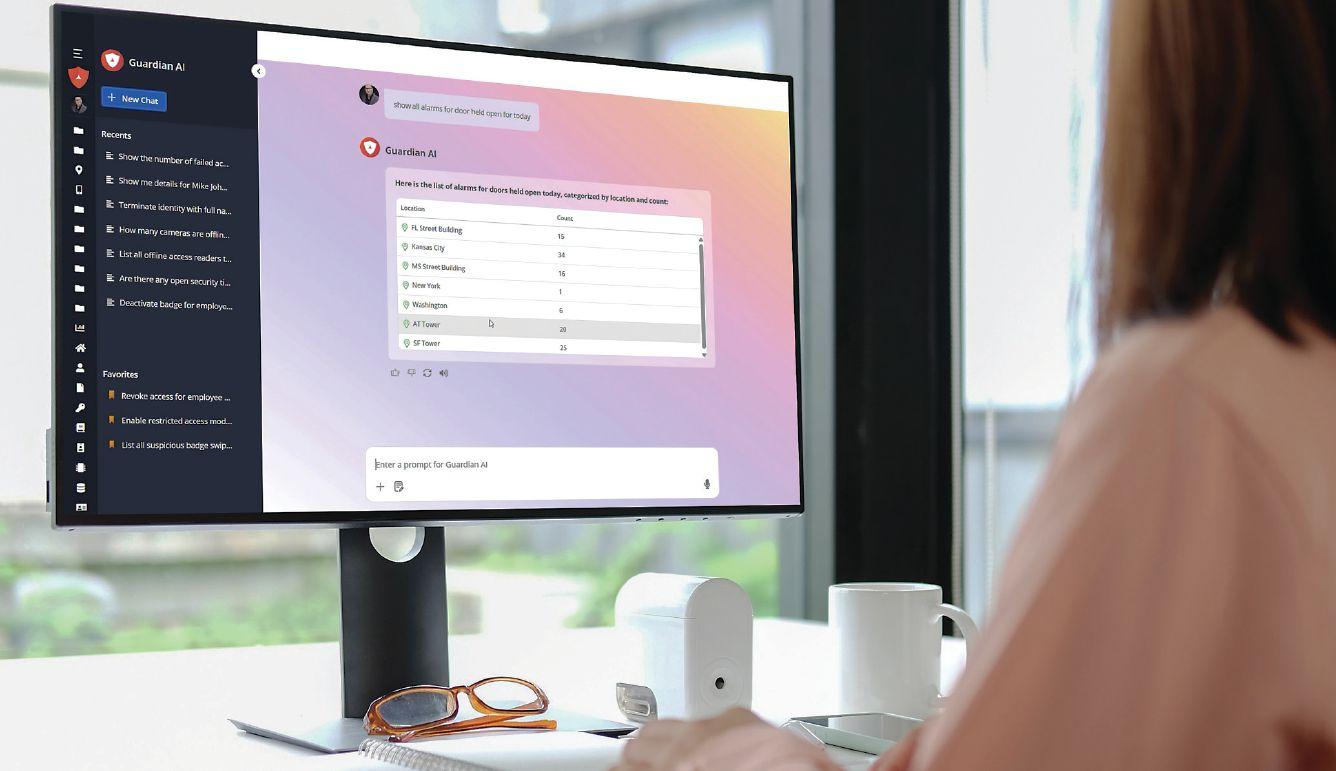
The company began testing a Gen AI interface for its security systems management tool several years ago in the form of a chatbot powered by OpenAI’s ChatGPT.
The Guardian AI Chatbot debuted in early 2023 at several security trade shows, including ISC West. The interface promised to “redefine the security operator’s experience, increasing their productivity by over 100 times with instant and actionable insights,” according to a press release issued by the company.
Since then, Alert Enterprise’s Gen AI interfaces have been refined and updated based on the continued evolution of the technology and the large language models (LLMs) that enable natural language chatbot functionality.
Gen AI “provides this amazing experience for rapid response to any question using large language models. They are able to find information for you in a
Alert Enterprise launched its latest update, Guardian AI Security Agent, at ISC West, held April 2025.
way that is more useful than what we were used to from an internet search,” explains Willem Ryan, senior vice-president of marketing and communications at Alert Enterprise.
“We applied it specifically to physical security. We used the large language models from OpenAI to create a physical security model that answers specific questions about identity and
access for an organization.”
Examples of this include, asking the interface how many employees or visitors are currently in the building, or which doors were held open and when. That data could be accessed previously, but required multiple clicks or menus in order to reach it. “Now you can just type in a question and get that information sent to you right away,” says Ryan.
Rapid growth
Generative AI (i.e. the ability to interact with an AI in real time and through natural language) has driven much of the public interest in the technology, and adoption has grown rapidly. Research firm Parks Associates recently released new data indicating that in Q4 2024, 47 per cent of U.S. households with internet access said that they had used a Gen AI tool, up from 40 per cent in Q1 of the same year.
Another Parks Associates study based on data collected from executives at home automation companies indicates the No. 1 use of customer-facing AI is for chatbots that provide technical support.
Jennifer Kent, vice-president, research, Parks Associates says that most companies will rigorously test AI interfaces internally before allowing them to have any direct or primary contact with customers. “That’s a pretty common story that we’re hearing,” she says.
Gen AI as cybersecurity enabler
According to James Miller, cybersecurity product lead at Bell, the positive applications of generative AI are more immediately obvious for cybersecurity than for physical security.
For example, Gen AI can find malicious code on a network with much greater expediency and accuracy than a human actor operating independently. “I think that physical security has needed to find tangible ways to say how Gen AI is helping as opposed to cybersecurity,” he says. “It’s all speed, really. It’s how fast Gen AI can find a threat.”
Bell recently conducted a study in partnership with Maru Research, collecting survey responses from 600 business leaders and IT/security professionals across Canada. Based on that data, Bell reports that “organizations are embedding generative AI in several core processes, from automating routine tasks to enhancing customer service interactions. IT, finance and security departments are seeing the biggest gains.”
The ability for Gen AI to serve as a helpdesk or troubleshooting function is now an established and proven technology. Miller says a Gen AI interface recently helped him repair an endpoint that was corrupted due to software that wasn’t installed correctly. “The AI got me to the point where it helped me check everything. I think I only had a human for the final few (steps) and I was back up and running.”
However, Miller advises that AI not be the first point of customer contact “where the user could give you critical data. You don’t want AI to collect critical data from a critical server. I would advise, as a cybersecurity professional, to always speak with a person when giving away any information that would help a threat actor get into your network.”
Miller says organizations would benefit from setting clear policies that govern how AI is used in the workplace. As people become more familiar with using public-facing AI tools in their personal lives, it is imperative that they understand that unsecured chatbots are not appropriate for business use.
He notes that “shadow AI” is similar to the “shadow IT” issue that arose about a decade ago as people began bringing personal technology devices, like tablets and smartphones, into the workplace. Organizations adjusted to this new reality and communicated policies to help maintain data integrity and keep the business (and their employees) safe. Bell’s report highlights some of the potential threats and concerns that come with mass adoption of AI in the enterprise, but it is generally positive about its future. For example, almost half of the organizations that participated in the study indicated “we are just at the beginning of AI model progress and much more progress will take place over the next five years… The consensus is clear: generative AI is just getting started and its role in reshaping Canadian industries will continue to expand.”
Common uses of AI inside corporations include research, software development, coding and marketing development, adds Kent.
The security industry in particular is using Gen AI to provide natural language descriptions of surveillance video footage, or using it to generate captions — something that both end users and police who must assess the nature of emergencies quickly would find useful.
While interest is high, and companies are rushing to get useful applications of Gen AI into the market, we are still in a “low knowledge, high skepticism moment,” as far as consumers are concerned, notes Kent. “They don’t know exactly what this is and can they trust it?”
Parks data reports that 69 per cent of U.S. internet households said they are concerned about society’s ability to control AI and use it responsibly. They are also concerned about data privacy implications.
In order to build trust with the user, says Kent, any use of Gen AI must serve the customer’s best interests first. “For companies who get it right versus companies who don’t get it right, they’ve got to make the customer feel like it’s working for them.”
Addressing data integrity concerns and taking next steps
Ryan says Alert Enterprise users have also voiced concerns about how an AI interface might potentially compromise data.
“When we were talking to customers, a couple of things became very clear,” he says. Customers sought assurances that there are guardrails in place to ensure that the AI does not exceed pre-defined operating parameters. In response, Alert Enterprise created a patented process that strips customer identifiers from the LLM, thus keeping sensitive information away from the AI interface.
As Gen AI began to grow in popularity, it also became clear that customers were standardizing on one of several enterprise AI options.
Alert Enterprise used an OpenAI interface when it first launched its chatbot two years ago, but has since created options to use LLMs from other major suppliers like IBM and Microsoft. Alert Enterprise also recently announced its Guardian AI Security Agent is natively available on ServiceNow, a cloudbased business automation platform.
The next major step forward for Alert Enterprise is “agentic AI” — a logical extension to the chatbot, Q&A format.
Rather than simply ask the AI a question and receive a response, the AI can be employed to perform certain tasks, such as extend or cancel employee access privileges. “It truly becomes an autonomous agent that gets rid of some of the repetitive work that humans
“Gen AI provides this amazing experience for rapid response to any question.”
—Willem Ryan,Alert Enterprise
had to do,” explains Ryan.
As the technology continues to improve and get smarter, Ryan says that more and more customers are coming to the company with a plan on how they want to use it in their own environments. Likewise, Ryan says integrators also want to talk about how they can leverage
Gen AI tools to serve their clients and meet their growing needs.
However, he says, some things don’t change: customers still want the ability to audit their software, generate and store reports, and maintain full governance over any AI agents operating on their networks.
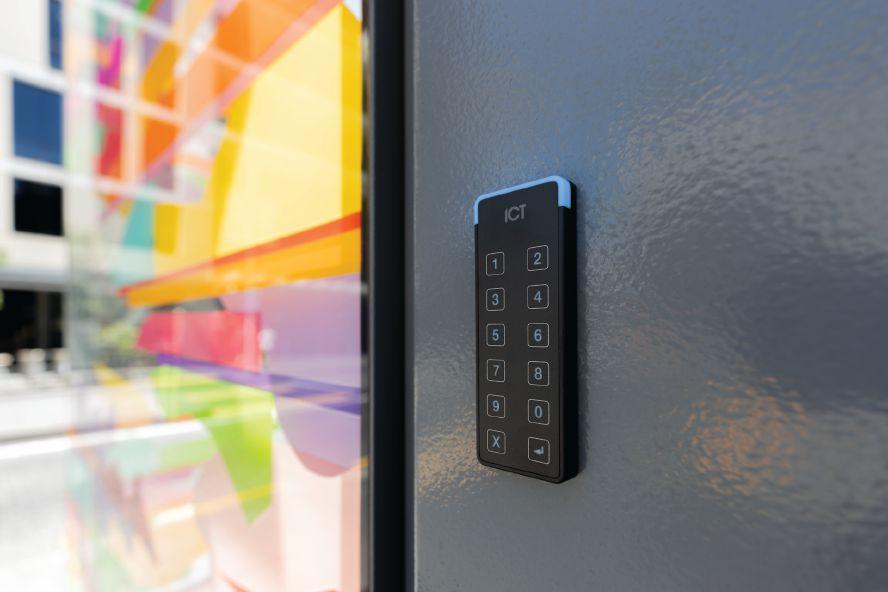
Where form meets function. The new TSL Access Reader blends sleek design with advanced technology and exceptional performance. Engineered with our partners in mind, this multi-technology reader o ers quick installation, unparalleled security, status at a glance convenience, durability and more. Future proof your investments, lower your labor costs and drive higher profits. Secure your success with ICT.
Pat Alvaro Senior Vice President, North America
THE IMPORTANCE OF RMR
Why recurring monthly revenue is the bedrock of financial stability for alarm and security providers
By Andrew Snook
While every successful company finds ways to earn revenue from a variety of products and services, many security providers rely on recurring monthly revenue (RMR) for a significant percentage of their business.
How important is RMR for security companies? It can be vital. “As a wholesale monitoring company, I see it as the best way to go to make sure that your company stays stable in bad times, as well as good in good times,” says Matthew Cormier, director of Maximum Security Video Monitoring, based in Moncton, N.B.
He adds that RMR is a particularly reliable option for smaller businesses. “It gives them the opportunity to have a reason to continue to engage with customers and sell them additional services or upgrades or service contracts,” Cormier says.
Patrice De Luca, vice-president of sales and marketing for Central d’Alarme Bromont in Quebec, says RMR is vital for the electronic security industry. “It defines the value of most organizations,” he says. “Upfront revenue and installation revenue are quite good; there’s a specific way to look at that revenue. But the revenue stream, the RMR, really is what makes the alarm industry function.”
De Luca says RMR allows the alarm industry to subsidize systems, creates stability in the revenue stream, and makes alarm companies more resistant to economic downturns, such as the COVID-19 pandemic a few years ago.
“Companies got through COVID because there was that recurring revenue, even though they could not install for a certain period of time,” De Luca says. “The valuation of the companies is often based on their recurring revenue and the banks and investors really love the recurring revenue, because it’s predictable. In my mind, it’s the backbone of the industry.”
Dave Lavoie, business development manager for Sarnia, Ont.-based Damar Security Systems, says that RMR for most companies is highly predictable, which adds to its appeal.
“Most organizations will know what their historical attrition percentages are, so they can quite effectively predict results of the coming year,” he says.
“I know that a lot of factors like economic pressures can weigh into that, but if I look in the rearview mirror at Damar Security Systems, one of our most accurately predicted things within our budget is our RMR.”
RMR challenges
When relying on RMR as a main source of rev-
enue, one of the biggest challenges for independent dealers is navigating a wide range of retail prices for a similar service from competitors. “In certain markets, you’ll see what I refer to as ‘a race to the bottom,’ and that’s no good for anybody,” Cormier says. “Getting the cheapest service winning is no way to go.”
Another challenge that smaller dealers sometimes face in their pricing models is competing against bigger players that have the capacity to reduce upfront costs to the subscribers. “Some of the bigger national or international chains are able to do a zero-cost installation in exchange for more monthly revenue, whereas a lot of independent dealers are more resistant to that model, mainly because they can’t float that for nearly as long. It’s a larger risk for them,” Cormier says. He adds that dealers need to be aware of what their competitors are charging, and what services they are offering, when pricing out their own services.
Growing RMR
The growth of home automation services has given companies an option to increase their RMR on the residential side of the business.
“We’ve seen all alarm companies start to increase their recurring revenue using the home automation revenues,” De Luca says.
On the commercial side of the business, turning upfront reve nue into recurring revenue will help increase the valuation of
“For example, if you do spot billing when you go to repair sys tems, it’s somewhat predictable. But when you turn your service into a maintenance contract or extended warranty, that really helps make your revenue stream more stable and predictable, and often more profitable,” De Luca
Lavoie agrees. He says there are many ways for companies to increase RMR, but offering ex tended warranty programs on all of your products and services is
“I know it sounds a little bit easier than what it actually is, because there’s a bit of complex math behind the calculation of extended warranty. You’ve got to make it easy for your sales team to consistently deliver, or you will simply have an extended warran ty program with no adoption or results,” he says. “An effective ex tended warranty program is one way to grow RMR without a tre mendous amount of time, effort
PROUDLY CANADIAN
OWNED & OPERATED
Camden Door Controls is a Canadian success story that began in a basement in Montreal over 36 years ago, and now employs more than 100 people in our 41,000 sq.ft. head office in Mississauga! When you buy Camden locking, control, activation or access products, you’re not just supporting Canadian jobs, your purchase means more money for research & development, new copyrights and patents, and more manufacturing horsepower to make Canada a world leader.
PROUD TO BE CANADIAN. PROUD TO SERVE YOU!
Product Previews Video Surveillance
Video management system
Hanwha Vision
Highlights of the Wisenet WAVE VMS 6.0 include a redesigned user management interface, enhanced LDAP integration, upgraded calendars, camera linking via hotspot/ teleport, the ability to add temporary users, and cloudbased email. Similar to previous WAVE VMS releases, all features are supported across the mobile, desktop and server versions of the platform using any operating system, as well as WAVE Sync, Hanwha Vision’s cloud-based service. www.hanwhavisionamerica.com
Video authentication
SWEAR
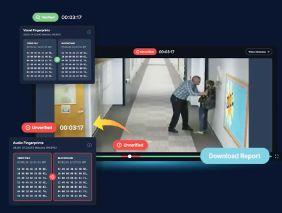
SWEAR announced the release of the enterprise version of its video content authentication tool, SWEAR Security. The tool integrates with video management systems to safeguard video data at the point of capture. SWEAR Security integrates directly with security and video recording platforms, capturing the unique digital layout of each frame, sound byte and pixel in real time. This mapped data is securely stored on a blockchain ledger, creating an unchangeable record.
www.swear.com
High zoom bullet camera
i-PRO
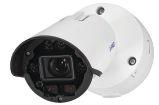
i-PRO announced a new line of high zoom bullet cameras. Equipped with zoom and IR LED technologies, the new cameras offer precision for long-distance monitoring across various environments. The new lineup includes 10x and 30x zoom options, complemented by long-range (up to 250m) infrared LED capabilities for optimal performance in low-light or nighttime conditions. Available in 2MP, 5MP and 4K resolutions, the range offers 20 new models across the X- and S-series. Four LPR-optimized models are available for capturing plates at high speeds. www.i-pro.com
Industrial camera
Opticom Tech
Video management
AMAG Technology
Opticom announced the release of its new CC04 industrial camera with M12 connection. The new option, CC04-IP3MV-3M12, is now available through Opticom Tech and its distributors. The new camera offers all the features of the CC04 — 3MP resolution, vibration resistance, ONVIF compatibility, IR infrared, IP67 waterproof and dustproof, and more, and the RJ45 connector is still available. This camera is suited for harsh industrial environments that experience vibration, debris and other hazards. www.opticomtech.com
Ultra high-def cameras
Resideo Technologies
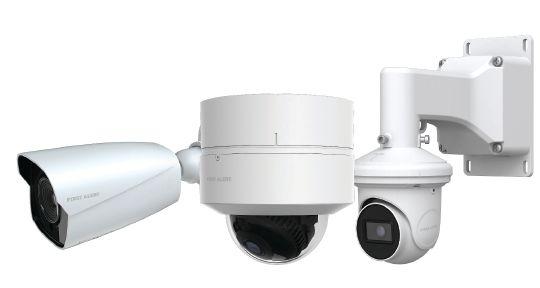
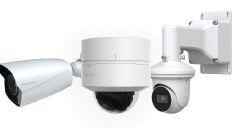
The new First Alert CX4 Camera Series is compatible with both the Resideo ProSeries Security System and Resideo’s First Alert VISTA Hybrid Security System.. The camera series offers three different models: CX4B Bullet Camera for perimeter monitoring, warehouses or retail applications; CX4T Turret Camera for lobbies, stairwells and retail areas; and CX4D Dome Camera for entrances, exits, offices or food service applications. www.resideo.com
SWIR cameras
Raptor
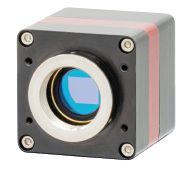
Raptor has enhanced its range of SWIR cameras with the launch of the Owl 2560 Vis-SWIR camera. Using a back-illuminated InGaAs sensor (1¼”, 2560 × 2048 pixels with 3.45μm × 3.45μm pixel pitch), the QUAD SXGA camera offers uniform spectral sensitivity from 400-1700nm running at up to 60fps. It interfaces through a single wire CoaXpress interface meaning less connectors for slip-ring / systems integration. The camera is temperature stabilized and is designed to MilSpec standards. www.raptorphotonics.com
AMAG Technology announced Symmetry CompleteView Video Management 7.5. This version introduces new enterprise capabilities including the integration of Iron Yun’s Vaidio AI Video Analytics which provides a comprehensive suite of advanced analytics for people, vehicles, facial recognition and objects, compatible with any camera or video source. This enhanced solution supports both real-time monitoring and forensic investigations. Symmetry CompleteView VMS 7.5 also introduces federation, storage encryption and export encryption. www.amag.com
Privacy masks IDIS
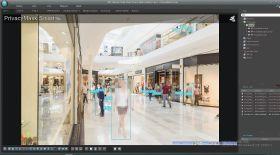
IDIS Smart Privacy Masks are a patented, real-time privacy masking solution that protects individuals’ identities while enabling reliable and responsive real-time video surveillance operations, according to IDIS. Using an in-house developed and trained IDIS Deep Learning Engine, it adjusts mosaic strength to enable video streams to deliver clarity and visibility while protecting privacy. IDIS Smart Privacy Masks combine the advantages of object detection and heatmaps with deep learning and IDIS Solutions Suite VMS processing to increase accuracy. www.idisglobal.com
Indoor camera
Ajax Systems
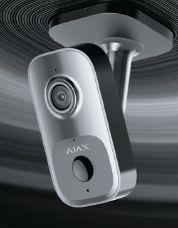
The Ajax IndoorCam is designed for households and small to medium businesses. Operating over Wi-Fi it features a fallback communication channel via the Jeweller radio protocol, built-in AI, and encrypted data transmission. Equipped with a 4 MP camera, HDR, and IR illumination of up to 8 m, the device offers image quality both day and night. The PIR sensor detects movement up to 4 m, while built-in AI recognizes people, pets or vehicles. ajax.systems
Outdoor turret domes
VIVOTEK
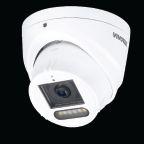
VIVOTEK launched two 5MP Outdoor Turret Dome AI cameras. Featuring WDR Pro and AI-powered Smart Motion Detection and Smart VCA, the IT9383-HV and IT9383HVW offer image performance day and night. The cameras also offer built-in IRs and Warm Light (up to 30M), cyber protection via Trend Micro IoT Security, and VIVOTEK’s Deep Search Support. VIVOTEK’s C-series AI camera offers image performance with its advanced Sony sensor featuring STARVIS 2 technology. www.vivotek.com
Cloud connectivity
Rhombus
Systems
Rhombus Relay is a new suite of solutions that enable organizations to transform existing camera infrastructure into intelligent, cloud-connected devices. Rhombus Relay establishes a bridge between legacy systems and modern cloud-based physical security. Relay Core N100 is a plug-and-play, on-premise device supporting up to 10 third-party cameras with no added licensing cost for video streaming. www.rhombus.com
Smart search
March Networks
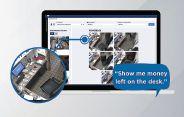
March Networks unveiled new advancements to its AI Smart Search solution. AI Smart Search leverages natural language processing and advanced LLM algorithms to identify specific events, people or objects from thousands of cameras across all locations. Using generative AI, video images are taken at regular intervals and transformed into a searchable database. www.marchnetworks.com
Product Previews The latest in security technology
Cloud appliance
Genetec
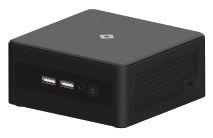
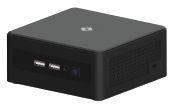
Cloudlink 210 is a cloud-managed appliance that supports multiple security workloads, including video management, access control, and intrusion detection. Designed for hybrid applications in Security Center SaaS, Cloudlink 210 serves as a cybersecure bridge between on-premises infrastructure and cloud-based systems. Cloudlink 210 is based on an open architecture, is designed to adapt to the needs of growing organizations and can scale to accommodate additional workloads and devices. A compact edge device, it can be deployed and installed in many types of locations. www.genetec.com
Worksurface space
Middle Atlantic Products
Middle Atlantic Products announced an expansion of the Forum Collaboration Suite with the Arc Table, now accommodating up to seven people. It features Wilsonart HPL surfaces and acoustic felt, along with a curved modesty panel and integrated power management. It also introduces a new table design, reducing the number of table legs for unobstructed seating and maximizing their use as concealed cable management for a clutter-free aesthetic. The Arc Table provides a 30-inch seated-height table base, and integrated bag holders. www.legrandav.com
Smart deadbolt
Schlage
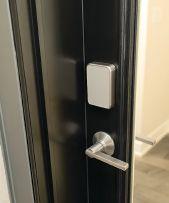
The Schlage Sense Pro Smart Deadbolt, which will feature Matter-over-Thread, delivers a hands-free unlocking experience. The Smart Deadbolt introduces the brand’s latest development of Schlage Converge technology. This feature uses Ultra Wideband and the user’s paired and authorized personal device to intelligently calculate speed, trajectory and motion, enabling intuitive entry that understands intent to enter and unlocks as the user reaches their door. www.schlage.com
Delayed egress magnetic locks
Camden Door Controls
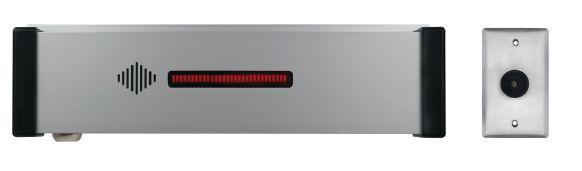
Camden Door Controls has announced a number of enhancements to its CX-DE1200 Series EXIT WATCH delayed egress magnetic locks. These include a louder 75 dB voice annunciation, packaging the lock with a 90 dB remote sounder, and adding the option for a kit that includes the maglock, remote sounder, and a remote reset key switch. These locks feature a 1,200 lb. holding force, voice, and LED count-down annunciation, with anti-tailgating and anti-passback. www.camdencontrols.com
Biometric devices
Invixium
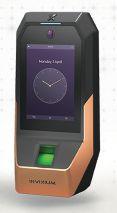
Invixium announced the launch of its Enterprise Series – IXM ROSTO (face + card) and IXM TOUCH 3 (finger + card). IXM ROSTO is a biometric device designed for access control, workforce, and visitor management. It features facial recognition technology, dual cameras, and a 5” IPS LCD touchscreen. IXM TOUCH 3 is the newest member of the TOUCH Series, offering advanced fingerprint recognition. It features a 3.5” IPS LCD touchscreen. www.invixium.com
Remote cloud management
TRENDnet
TRENDnet’s industrial managed switches now support remote cloud management through TRENDnet Hive. This update also includes the addition of a new feature, heatmapping, for compatible wireless devices. Hive compatibility for industrial switches launches with two of TRENDnet’s industrial network switches: the 12Port Industrial Gigabit L2+ Managed PoE+ DIN-Rail Switch (TIPG1284i), and the 6-Port Industrial Gigabit L2+ Managed PoE++ DIN-Rail Switch (TI-BG62i). www.trendnet.com
Sensors
Eagle Eye Networks
Eagle Eye Sensors detect and automatically alert when vaping, air quality changes, temperature shifts, water presence, and other environmental events occur. Integrated into the Eagle Eye Cloud VMS the sensors combine with video surveillance to monitor a variety of environmental conditions and give customers real-time data and a comprehensive view of what’s happening. Eagle Eye Sensors are suited for monitoring sensitive areas where security cameras cannot be used, such as restrooms and secure storage areas.
www.een.com
Digital amplifier Russound
The D890 Eight-Channel Digital Amplifier is designed to expand an audio system into multiple rooms or zones, or to add increased audio output for larger rooms or outdoor areas where a higher output volume is required. Like other models in the D-Series, the D890 incorporates an advanced digital design, enabling a smaller chassis size compared to any previous generation of Russound amplifiers — while delivering up to 90 watts per channel.The D-Series amplifiers also offer three turn-on modes: Always On, Signal Sensing, and 12V Trigger. www.russound.com
Product Previews The latest in security technology
Access control solution
Robotic Assistance Devices
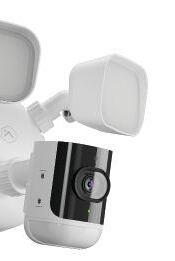
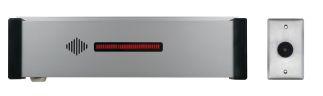
AVA (Autonomous Verified Access) Gen 4 is an advanced AI-powered access control solution for both residential and commercial applications. Completely redesigned, AVA Gen 4 integrates a new hardware and software platform, and security enhancements to serve a broader range of clients. AVA’s code has been rewritten, optimized for its NVIDIA-based processing platform running on Ubuntu. AVA Gen 4 consolidates all power supply and system controllers within its chassis. www.radsecurity.com
Access reader
Integrated Control Technology (ICT)
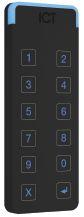
The new TSL Access Reader provides a solution for property managers, security professionals and building operators. The TSL is available in three sizes with a choice of black or white finishes and optional keypads. Key features include: Quick Connect Plug and app-based configuration; live over-the-network firmware updates; signal access status with 16 configurable LED colours; support for existing credential types, along with Bluetooth and NFC capabilities; advanced, encryption-dedicated hardware; and IP65-rating for harsh environments and vandal-resistant options. ict.co
Wireless sensors
Johnson Controls
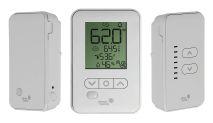
Johnson Controls announced the NSW8000 Series Wireless Network Sensor for Metasys building automation systems (BAS) and FX series programmable controllers. This multisensor offers a solution for real-time monitoring of temperature, relative humidity (RH) and occupancy (PIR) detection with optional CO2 sensing for improved air quality monitoring. The solution runs on a wireless mesh network with multiple sources of connectivity. It is powered by two lithium or alkaline AA batteries. www.johnsoncontrols.com
LP solution
SAFR
SAFR Guard is purpose-built for the retail loss prevention and asset protection market. SAFR Guard brings AI-based facial matching technology to the edge, providing real-time alerts. Built on SAFR’s AI computer vision platform, it’s an accurate, turnkey solution that can be rapidly deployed, scaling from a single location to an entire national chain. Built with privacy in mind, it includes data management tools and policies that protect sensitive information. www.safr.com
Gunshot detection
Acoem ATD
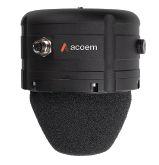
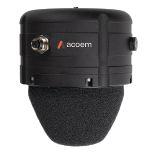
Acoem ATD (Acoustic Threat Detection) technology is designed for security professionals, law enforcement agencies and critical infrastructure operators who require a data-driven gunshot detection solution, according to the company. By processing events on the edge (within the sensor), a single ATD-300 sensor, combined with Acoem’s Cadence software, provides camera slewing toward detected threats, enhancing situational awareness. The system’s edge-processed AI analytics continuously learn from the environment. www.acoem.com
Turnstile platform
Boon Edam
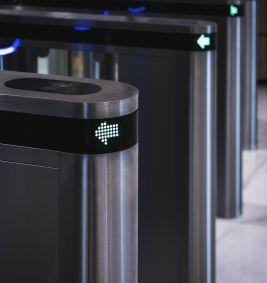
The Speedlane Compact Platform is designed for the Lifeline Speedlane Compact Optical Turnstile and offers a solution for facilities seeking advanced entry control while preserving existing floors. The Speedlane Compact Platform addresses the challenges of facilities where trenching or drilling into floors is restricted or undesirable. With a free-standing, modular design, the platform offers an ADA-compliant foundation that provides accessibility without compromising structural integrity. www.boonedam.com
Electronic deadbolt
Salto Systems
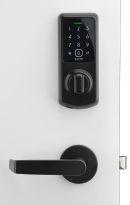
DBolt Touch Interconnected (IC) is a smart electronic deadbolt suited for multi-family new builds and retrofits. The DBolt Touch IC offers a manual, interconnected deadbolt and passage latch electronic locking solution with a touchscreen keypad. The DBolt Touch IC is an interconnected smart deadbolt that combines an electronic deadbolt with a design that replaces an existing mechanical deadbolt. The DBolt Touch IC is compatible with almost any interior unit entrance and connects wirelessly to a property’s ecosystem. www.saltosystems.com
Indicator locks
Marks
USA
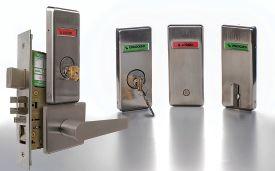
Marks USA, a division of NAPCO Security Technologies, announces the release of its new SKA-Series Indicator Locks. Suited for schools, health-care facilities, offices and commercial buildings, the locks feature bold red and green visual indicators, enabling staff, occupants and security personnel to confirm whether a door is locked or unlocked. Teamed with Marks’ 5 Series Grade 1 Mortise Locksets, the indicators can be mounted independently or combined double-sided, and are available in turnpiece, coin key or cylinder models. www.marksusa.com