Security Products and Technology News



Hockey Day in Peel raises $3,000
Security professionals and first responders come together for friendly game in support of Peel Crime Stoppers p. 6
CANASA committee to focus on recruitment
Canadian Security Association exploring new ways to draw next generation to the industry p. 11
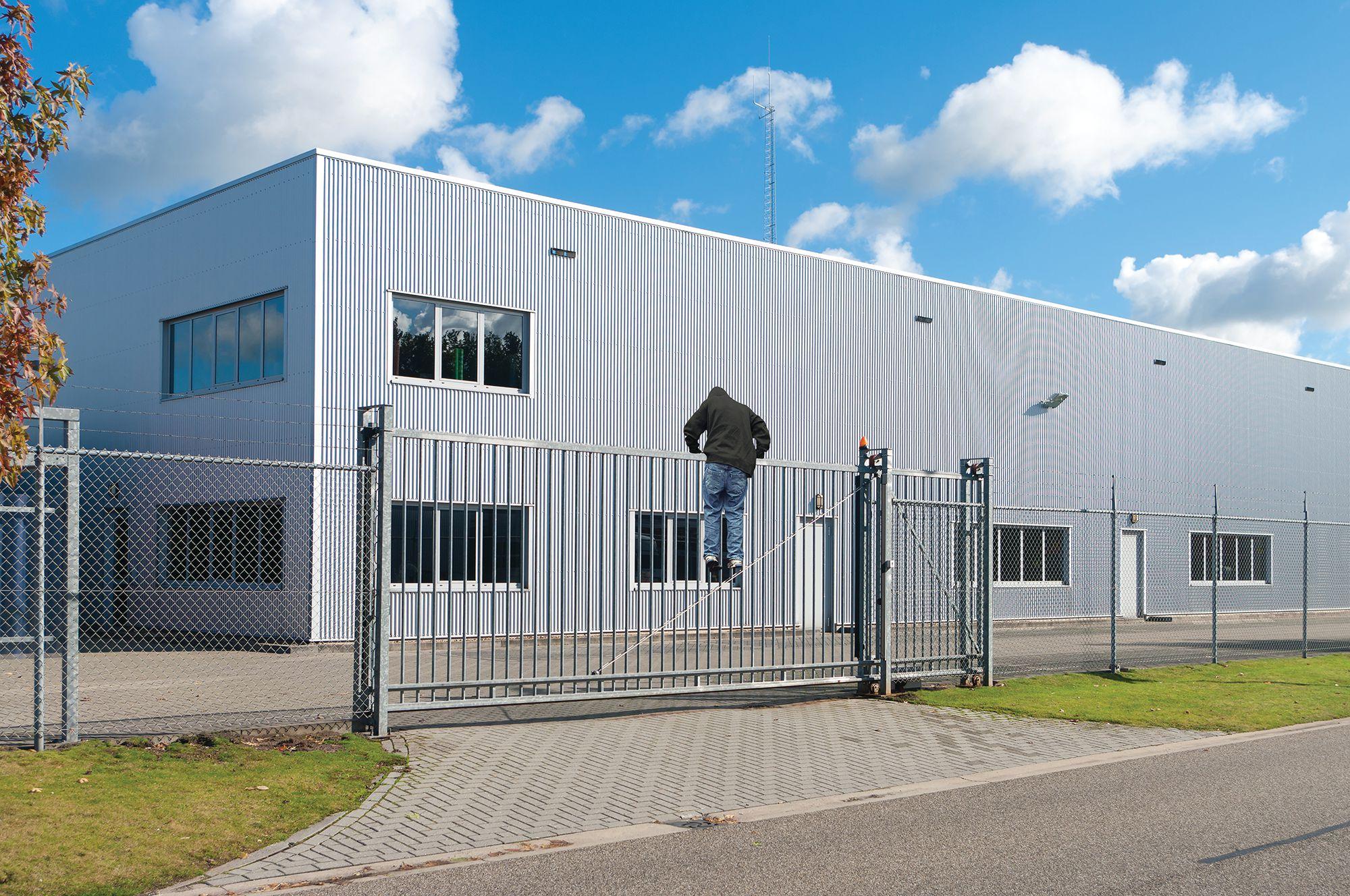
The latest security systems feature next-level technology, but what has really changed for users and installers? p. 18





















By James Careless
• Hockey Day in Peel raises $3,000 for Crime Stoppers
• WeSuite acquired by Montrealbased Valsoft
• Armstrongs opens new monitoring station in Quebec • ASIS/SIA report outlines security trends through 2026
By Neil Sutton

OBy Neil Sutton
ne of security’s favourite subjects is AI. You see it mentioned in many new product releases, and along with the cloud (the subject of last issue’s column), it forms the backbone of the future of the industry.
Walking the aisles at the ISC West conference and expo in Las Vegas recently, you couldn’t help but notice how many times AI is mentioned alongside some of the latest technology offerings.
AI also happens to be one of my favourite subjects as well, so immediately after ISC West I resolved to dig a bit deeper to try to get a better understanding of where the market’s at today and where we could be headed next.
sarily understanding what it means in the context of what they’re purchasing. Likewise, Josh Woodhouse at Novaira Insights, who was also interviewed for the article, said AI is generally “not well understood.”
With this is mind, it is incumbent on users to look closely at the implications of this new technology. Perhaps more crucially, integrators need to be the trusted and knowledgeable experts who can not only install these complex systems but be a voice of reason and guide their clients on their optimal use.
“Integrators need to be the trusted experts.”
Regular readers of this column will know that I’ve previously approached the subject of AI with some skepticism but also with an open mind.
Research and interviews conducted for the AI article featured in this issue (see p. 18) indicated that AI has been broadly adopted by the security industry as a powerful tagline, but sometimes irrespective of its realworld applications.
It’s hard to fault the industry for this, since AI’s potential as a marketing slogan is unrivaled. It’s when you start to take a hard look at the “real-world” part that the story gets a bit more complicated.
Mike Jude, with research firm IDC, told me that while AI is a powerful tool, it can sometimes be a checkbox that end users will look for without neces-


As someone who receives information about new security products almost daily, I’m aware that AI has been present in some form in security tools for years and years. But the truth is that the industry is only just getting started on this journey and the value of the technology will increase over time.
Our cover story this issue takes a closer look at another powerful technology: evidence management. This is more of a niche than the story I wrote about AI, yet it is also an indicator of the growing sophistication and utility of today’s surveillance systems and data management technology.
This is undoubtedly a period of transition for the industry with exciting times ahead. Installer and user knowledge will have to keep up with the pace of change in order for all parties to enjoy its full potential.
READER SERVICE
Print and digital subscription inquiries or changes, please contact Shawn Arul, Audience Development Manager Tel: (416) 510-5181 • Fax: (416) 510-6875 Email: sarul@annexbusinessmedia.com
Mail: 111 Gordon Baker Rd., Suite 400, Toronto, ON M2H 3R1
in 2024 by Annex Business Media. Its primary purpose is to serve as an information resource to installers, resellers and integrators working within the security and/or related industries. Editorial information is reported in a concise, accurate and unbiased manner on security products, systems and services, as well as on product areas related to the security industry.
Editor, Neil Sutton 416-510-6788 nsutton@annexbusinessmedia.com
Group Publisher, Paul Grossinger 416-510-5240 pgrossinger@annexbusinessmedia.com
Publisher, Adam Szpakowski aszpakowski@annexbusinessmedia.com
Associate Publisher, Jason Hill 416-510-5117 jhill@annexbusinessmedia.com
Media Designer, Graham Jeffrey gjeffrey@annexbusinessmedia.com
Account Coordinator, Kim Rossiter 416-510-6794 krossiter@annexbusinessmedia.com
CEO, Scott Jamieson sjamieson@annexbusinessmedia.com
EDITORIAL ADVISORY BOARD
Patrick Soo, Alarm.com Floria Chiu, Telus Custom Security Systems Stephen Karchut, Alarmtech Val Michetti, HID Frank Pietrobono, RSPNDR
111 Gordon Baker Rd, Suite 400, Toronto, ON M2H 3R1 T: 416-442-5600 F: 416-442-2230





The inaugural Hockey Day in Peel, a friendly hockey game played by security professionals and first responders, raised more than $3,000 in support of Peel Crime Stoppers.
Held on April 18 at the Century Gardens Recreation Centre in Brampton, Ont., the event drew players from the security industry, including representatives from the Peel Region corporate security department, as well as first responder agencies representing police, fire and paramedics. Overall, more than 30 players participated.
The rink was donated by the City of Brampton, and the event was sponsored by WeSecure, PG Security Associates, Graybar Canada, and S&K Lock and Security Solutions. The Canadian Security Association (CANASA) supported the event as industry partner and SP&T News was the official media

sponsor. Refreshments were provided by Krispy Kreme and Chaiiwala of London. City of Brampton Mayor Patrick Brown also dropped by the event in a show of support.
“We’re grateful to the City of Brampton for hosting us,” said Imran Hasan, chair, Peel Crime
Stoppers. “I think the pick-up game format was really an opportunity to build stronger connections between the security industry and first responders.”
Hasan added, “Having the partnership with SP&T News and having support from CANASA as our
industry partner is critical, and of course engagement from the participants to make sure that opportunities and initiatives like this continue to grow.”
“SP&T News was very pleased to support Hockey Day in Peel, and raise awareness about the great work done by the Peel Crime Stoppers organization,” said Paul Grossinger, group publisher, SP&T News “SP&T’s associate publisher Jason Hill also laced up his skates and hit the ice for a few hours of friendly hockey. The turnout for this important event was very encouraging and we look forward to supporting future Peel Crime Stoppers initiatives.”
Hasan said he heard positive feedback from everyone who participated, and the aim is to make Hockey Day in Peel an annual event. “People want to do this again and I think we can grow it,” he said.
— Neil Sutton
Valsoft Corp., a Montreal-based company specializing in the acquisition and development of vertical market software businesses, recently announced the acquisition of WeSuite, a provider of sales management software solutions for the security and technology services sectors.
WeSuite was co-founded by Tracy Larson, company president, and Michael Fazio, chief technology officer, in 2008. Established in 2015, Valsoft currently operates with a portfolio of 90-plus companies in more than 14 countries. Both Larson and Fazio will continue in their current roles under Valsoft ownership.
According to Valsoft’s website, its newly acquired companies “continue to operate as they did before but with additional support and expertise from our network.”

Larson said this model was an attractive proposition for WeSuite, offering access to more resources and helping the company achieve its vision more quickly. “We’re really focused on what we want to do, which is grow the business,” Larson told SP&T News
“We wanted something that would help our team to have a long-term, great environment to
work in,” Larson added. “We have a really good, very dedicated team. We also wanted our products to be able to expand and grow, within the [security] industry but also into other verticals.”
“We are excited about the opportunities WeSuite will bring to our sales management portfolio,” said Gustavo Vargas, operating partner of Valsoft’s operational arm, Aspire Software, in a press release statement. “WeSuite’s unmatched commitment to client satisfaction, coupled with a strong management team and solid product offerings, will unlock great opportunities for customers, employees and other Valsoft businesses in related industries.”
This acquisition marks the first company in the sales management software industry to join Valsoft.
— Neil Sutton


Armstrongs recently opened its latest monitoring station in Laval, Que. Collectively, the company monitors more than 250,000 accounts across Canada.
Armstrongs has invested almost $3 million into its Canadian operations and infrastructure in the last 18 months. The company was acquired by Becklar Enterprise Monitoring, based in Utah, in 2022.
Armstrongs said in a statement that adding another centre increases redundancy across its Canadian network.
“Redundancy significantly increases the probability that a signal is properly received regardless of circuit issues, weather or equipment failure. We not only focus on equipment redundancy within our monitoring centres but also redun-


dancy among our centres. Any two of our three centres can carry the entire North American monitoring load with capacity to spare. ULC is now recognizing this need for simultaneous redundancy with the new requirements for 2025 — so with Armstrongs, our dealers will be covered beyond the new standard,” stated the company.
Armstrongs has also introduced a toll-free reroute service, which allows a single receiver line to travel across multiple tier one carriers as well as report to multiple centres. Redundancy and automatic fail-over becomes a built-in component of those lines.
The Laval facility resulted in the creation of 55 new jobs with more personnel expected by the end of the year.
ASIS International and the Security Industry Association (SIA) jointly released a new research report, Complexities in the Global Security Market: 2024 Through 2026, which covers several key aspects of the security industry including technology, services and employment. SIA and ASIS partnered with Omdia to complete the research.
According to the associations, the report was designed for both practitioners of security serving in an end-user capacity, as well as solution providers, equipment
manufacturers and others allied to the security industry.
Key findings from the report include:
• The global physical security equipment market is expected to be worth US$60.1 billion in 2024 and grow to US$70 billion by 2026.
• The overall physical security equipment and services market totalled US$405 billion in 2023 and is projected to grow to nearly US$500 billion by 2026.
• The physical security market employs more than 30 million people worldwide.
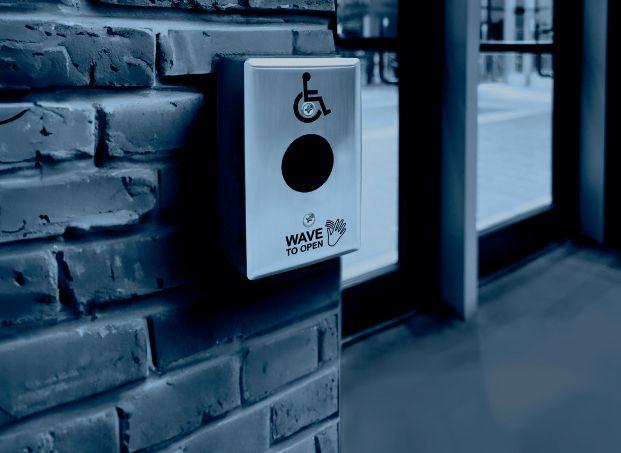
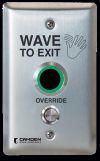
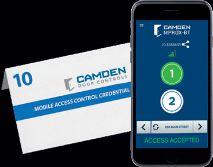
Camden brings industry leading innovation, quality and value to your next access control or entrance system project!
For preventing the spread of germs, meeting the latest code requirements for ADA compliance, or just enhancing the convenience of building occupants, Camden Door Controls is the professional’s choice.










Australian water utility adopts lone worker solution

An Australian water utility provider has contracted Calgary-based Blackline Safety for a lone worker solution in a deal valued at $1.4 million.
The corporation selected Blackline and their Australian channel partner to provide Blackline’s lone worker safety app, Loner Mobile, and G7c cloudconnected devices.
Blackline Safety has announced several other deals with water utility providers in recent years.
“Our devices are particularly well suited to the utility industry, including water and wastewater,” said Peter Attalla, Blackline Safety vice-president of international sales, in a statement. “People in these fields are at elevated risk when they go to work.”
According to the company, utility industry workers face multiple hazards on the job such as gas exposures, confined spaces, potential falls and adverse weather.
The Australian provider also opted for three years of monitoring services.

The Buffalo Public School District (BPSD), serving 28,000 K-12 students out of 70 facilities in western New York, has modernized its security architecture.
The BPSD updated cameras to replace those with limited field of view. In some cases, two older cameras could be replaced with a single unit. “Reducing camera count was a huge benefit not only for our budget but in terms of maintenance, too,” said BPSD security engineer John Waterhouse in a statement.
The BPSD initially replaced two per cent of their older interior PTZ cameras with i-PRO 5MP fisheye network cameras while swapping out their obsolete recorders with i-PRO NV300 NVRs.
In phases, they upgraded a large percentage of their 5,000 older cameras with new i-PRO cameras, including 360° fisheye and multisensor cameras.



• Deanna Steele has joined Allied Universal as chief information officer for North America.
• Toronto-based Invixium announced the appointment of Chris Thompson as its new national sales manager.
Danish go-kart track speeds ahead with upgrade

Racehall, the world’s longest indoor go-karting track facility, located in Aarhus and Copenhagen, Denmark, was looking to protect its assets and increase security without disrupting the enjoyment of its visitors.
The facility turned to Vivotek equipment through a project managed by Vivotek partner ITV Security. Surveillance cameras were deployed across the facility to ensure complete coverage. The 180degree surveillance covered expansive areas like the parking lot.
The VSS Pro Video Management System and Central Management System were deployed to optimize Racehall’s security infrastructure. A people counting camera also provides Racehall with data to make informed business decisions.
“It’s been a fantastic experience to see how our dedication to crafting tailor-made security solutions has met with Racehall’s wishes and needs,” said Martin Kristensen, CEO, ITV Security, in a statement.

Thompson previously held sales roles at Pelco, Avigilon, Cintas and ADT.
• Charles Burns has joined ISS and will serve in the newly created role of director of commercial facilities.
June 24-25, 2024
Security LeadHER Phoenix, Ariz. www.securityleadher.org
September 12, 2024
ADI Expo Vancouver Vancouver, B.C. www.adiglobaldistribution.ca
September 23-25, 2024 GSX Orlando, Fla. www.gsx.org
October 5-9, 2024
TMA Annual Meeting U.S. Virgin Islands www.tma.us
October 8, 2024
Canadian Security Honours Toronto, Ont. www.canadiansecuritymag.com
October 8-9, 2024
Securing New Ground New York, N.Y. sng.securityindustry.org
October 10, 2024
ADI Expo Ottawa Ottawa, Ont. www.adiglobaldistribution.ca
October 21-24, 2024 Sector Toronto, Ont. www.sector.ca
October 23-24, 2024
Security Canada Central Toronto, Ont. www.securitycanada.com


• Global integrator Convergint has appointed Ann Fandozzi as its new CEO. This is Fandozzi’s fourth CEO role, having previously led RB Global, Abra Auto Body & Glass and vRide.
• Nick Hoxha has joined
Montreal-based VuWall as the company’s regional sales manager, based in Toronto.
• Commissionaires Great Lakes recently welcomed Shekhar Gothi to its senior management team as vicepresident, partnerships.

IBy Victor Harding
A variety of factors have led to better mergers and acquisitions and improved results in recent years
often wonder whether the performance of M&A deals in general has improved over the last 20 years.
The conventional wisdom on all M&A, including the security industry, was that, up until the last 10 years or so, 70 per cent of all deals closed did not produce the returns that the buyers had initially wanted.
“More companies are using M&A as an integral part of their strategy for growth.”
Various reasons have been cited for these bad results: the buyer did not have a clear idea of what they wanted and ended up buying the wrong company; the buyer simply paid too much for the deal; or the buyer failed to pay enough attention to the integration part of the deal after it closed. These are just some of the reasons.
I recently read an article written by David Harding, Dale Stafford and Suzanne Kumar of Bain and Company on “How companies got so good at M&A” which indicated that indeed the financial results from deals has improved over the last 20 years. Acquisitions in general have also increased in number. More and more companies are using M&A as an integral part of their strategy for growth.
The Bain and Company article tells us that buyers appear much more satisfied with the returns they are getting from acquisitions a higher percentage of the time. This is a big turn-around. How did this happen?
I am going to relate some of the points in the Bain article to what I have read elsewhere and actually experienced in my time in the security industry. It stands to reason that if we look at the security alarm industry in Canada, the bigger buyers would not continue to buy unless they were getting good results from deals.
What can we learn from the Bain article to help us understand how to improve the financial results on deals?
First, buyers that consistently do deals produce better results than those that don’t. I have also read this conclusion in other M&A books.

My own experience with buyers is that those that do lots of deals are not only better and easier to deal with but also get better results. This is something that sellers should keep in mind: it is almost always easier doing a deal with a buyer who has done deals before.
Secondly, doing lots of smaller deals is usually safer and more financially rewarding to a buyer than doing one huge deal. Huge deals can be so much riskier and can consume more of the buyer’s time. They can also transform the buyer in a way that they did not want.
Another change I have seen is that more buyers today appear to have thought through why they are buying, what they want to buy specifically, and what they want to pay.
The reason why deals are being done has expanded as well. Up until recently, the main reason I see security industry buyers buying is that they wanted to build scale. We see this in all parts of the security industry. That is what is behind most of the deals done by the bigger Canadian buyers in the alarm industry.
Today more deals include what you could call “expanded scope.” A scope deal is one where the buyer is looking at you, the seller, because you provide an adjunct or new product or service to their existing business but in a slightly different field.
We see this with alarm companies that want to buy a small fire company to add to their alarm business, or a guard company looking to buy a commercial alarm business. The assumption behind many of these scope deals
is that the new business is not only profitable but may add to the existing business. You could argue that scope deals can be a little riskier but they can also produce great returns.
Another reason why deals have improved is that buyers are paying more attention to their people and the people in the target company. Sometimes a buyer will buy mainly because they want the people working for the seller.
A smart buyer will look at a seller’s staff and see that certain members will fill gaps in their existing structure and are high performers. Often, one or two top notch performers can make a huge difference.
There are some other steps that buyers are taking that have improved their “batting average” on deals. For example, they are doing more due diligence on the culture of the company they are looking to buy. Also, the companies that I see with an acquisition team in place almost always end up doing a better job at acquiring than those without.
As I have made mention in previous articles, acquisitions can be destroyed by a bad integration. When you buy, you not only want to hold onto the sellers’ existing customers but set up the combined company to increase its customer base. Integration is everything.
The main point here is that over the years M&A activity has improved. More deals closing today produce successful returns.
Victor Harding is the principal of Harding Security Services (victor@hardingsecurity.ca).

SBy Roger Miller
Effective training is essential to the success of integrators, but the economic model driving it may be one-sided
taying current in the security space becomes more challenging every year.
The complexity of the solutions and the abundance of new products — combined with new releases of existing products — makes for a hectic pace just trying to keep up.
“At the end of the day, problem-solving is what technicians do.”
Not only is it a challenge to stay current, it is expensive to keep our technical teams up to date. Obviously we need our partners in protection to provide training on their products.
However, this brings up a bit of an uncomfortable issue for many dealers and integrators: the cost. Let’s understand the cost of attending training, hosted by the manufacturer or distributor, for a security product.
Often there is a training fee for their trainer to attend your workplace or at the local distributor to train your sales staff and technical staff. On top of the training fees, you obviously have to pay your staff their usual wages to attend. Now, while they are in training, you lose that day’s revenue for their time. Using rough numbers to generate an example it would look like this:
• Lost revenue potential for the day: $1,000
• Paying a technician with statutory burdens: approximately $300 - $400
• Training/travel costs for training: $300+
As you can see, the true cost of attending training is somewhere between $1,600 and $2,000. That’s a lot of money with no guaranteed return on investment for one day of training. If the manufacturer is the trainer, you have invested more than $1,500 to sell their product. They are generating revenue with the purpose of generating more revenue — they can’t lose.
My professional opinion is that manufacturers that want your team to attend their training because it will greatly benefit you, and them, should recognize that it is equally beneficial to have more people trained on their product and find ways to reduce that cost. Manufacturers
that have faith in their product and truly want business partners should be willing to provide their dealers with the tools to properly sell and service those products.
Under the present method of training, if you pay, they train. No obligation or commitment from the manufacturers of anything other than becoming certified, often with no restrictions on how many dealers they’ll train. This is not a fair and equitable solution when one side is taking all of the risk.
I respect the manufacturers that provide training — we need it. We need their knowledge to properly work with their products. If the issue for manufacturers is about cost recovery, build that into your price. If your product is solid you’ll have nothing to worry about. We all want to generate more revenue — that’s the reason most folks are in business.
Often, manufacturers will work with distribution partners for training facilities to reduce cost. Some product training is offered virtually, and others have offered us the option to send technicians to their facilities. While the innovation is appreciated, there’s more to be done. What about:
• Offer rebates on the training fees when a sales number is achieved. This creates an incentive to ensure the training is working and an incentive to sell the product.
• Offer training outside of normal business
hours. For small companies it is not always possible to have multiple technicians out of the field for a day.
• Instead of offering training with a free piece of hardware, remove the hardware from the equation and reduce the cost further.
• If you train people well, they sell the hardware. There’s no risk.
• Offer any real incentive for us to have our team attend your training. If an experienced technician can use your products without training, give them a reason to attend.
In the absence of training, technicians are working on hardware or software that can be unfamiliar to them. Sometimes they’ll call the distributor and seek advice, or a co-worker, or a competitor.
At the end of the day, problem-solving is what technicians do and they’re a resourceful group. During my career I’ve only seen the lack of product specific certification hold us back a small number of times. That means people are by-passing the training for whatever reason.
Let me be clear: we want training. Everyone benefits from trained technical staff in the field. Under the current delivery model the manufacturers benefit more than the people they are training.
Roger Miller is the president of Northeastern Protection Service Inc. (www.protectionpartner.ca)
By Patrick Straw
Focus will be on communication, events and outreach to help bring new professionals into the industry
The onset of spring brought the first Security Canada show of 2024 to Laval, Que., on April 24.

Continuing the trend of the last three years, we had a sold-out venue with wonderful support from our vendor partners. Special shout-out to Steve Basnett, CANASA’s director of trade shows and events. This year we also set a new attendance record with well over a thousand security professionals from Quebec and Northeastern Ontario coming to see the latest and greatest in security products and services.
Our Quebec Regional Council also hosted a sold-out gala banquet after the show and put on a
great tribute to our members in Quebec. Special recognition to my colleague Danielle Paquin who organized the banquet and as usual made sure everything was perfect.
We have just started a new committee as a sub part of our membership committee which will focus on the recruitment of new “Next Generation” professionals in our industry. This will include events and a communication strategy to increase engagement and further enhance the value of membership in CANASA.
Sadly we have had to announce the cancellation of Security Canada West in Vancouver. This event was to take place June 19 and was also sold out. After continued momentum and record attendance we were unfortunately advised by the host
hotel that a labour dispute would make it impossible to host us.
Every effort was made to find an alternative venue but this was not possible partly due to the time line and the options in Vancouver. We will be back next year and are looking forward to spending time with our friends and colleagues on the West Coast. The Vancouver CANASA golf tournament scheduled for June 20 will take place as originally planned.
Soon we will be starting our summer and fall series of golf tournaments. Visit www.canasa.org and check under “events” for the tournament in your region. They are selling out quickly so be sure to register if you haven’t already.
Patrick Straw is the executive director of CANASA (www.canasa.org).


23 - 24,
There are many areas where Canada sits near the top of world rankings, and interest in smart home devices is just another example of this. In fact, according to Google Trends, only Singapore, the Philippines, and Germany show a higher level of interest. But what about those in apartments. Should multifamily dwellers miss out on the advantages smart buildings bring?
Of course, safety is still paramount, as security plays a crucial role in housing decisions. But it doesn’t need to come at the expense of other advantages that a connected building brings.
In fact, the willingness of most Millennials to pay more for residences equipped with smart apartment features such as electronic access and keyless entry systems, means there’s a great opportunity to sell developers and property managers on a solution that is not only safe and secure, but also smart.
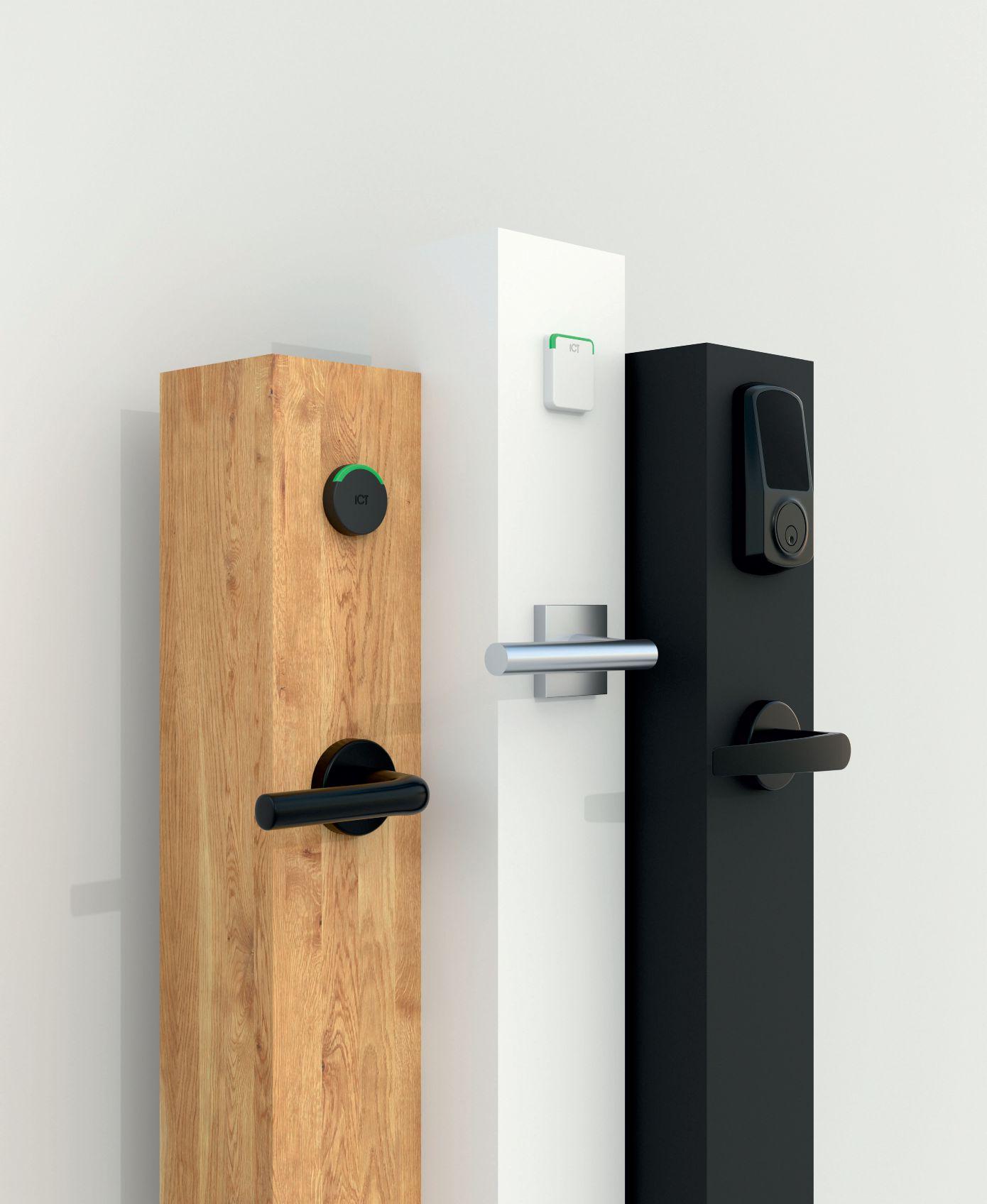
Protege GX from ICT is well proven in the MDU space, securing buildings right across Canada for two decades. With the release of Protege Wireless Locks, its ability to provide integrated access, intrusion, and building automation from the perimeter to the penthouse is further enhanced.
By bringing Protege Wireless Locks into a multifamily solution, now there’s no more juggling multiple keys or cards. Tenants can get from the parking garage into the lobby, and through their front door with one credential that works for both wired and wireless doors – a true one card solution for both physical and mobile credentials.
We recently set off across the country with
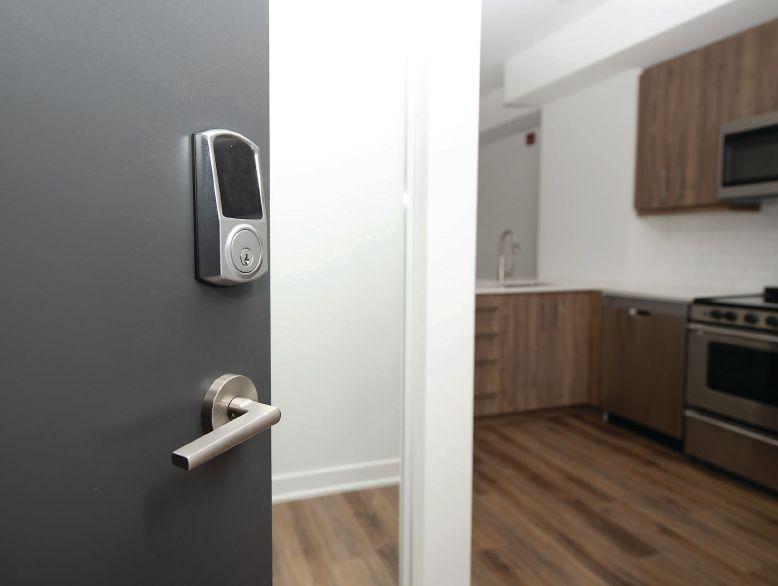
the ICT Smart Building Showcase, giving everyone from security technicians through to property managers and architects a chance to see the new Protege Wireless Locks and get hands on with the new tech and see how easy they are to install and configure.
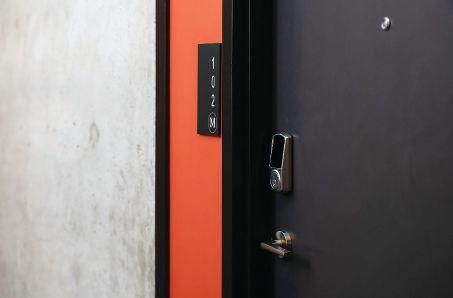
As offline wireless locks are not actively connected to Protege, all programming and data must be transferred from the software to the lock. Thankfully, setting up Protege Wireless Locks is easy with the Protege Config App (available for iOS and Android).
Barry Hunt, Wireless Lock Product Manager at ICT says, “We know techs don’t have time to spare on site, so we designed the config process to be as quick and intuitive as possible. It’s the same app and functionality you’ll be used to from setting up our tSec card readers.”
There are only 8 steps needed to configure and update a Protege Wireless Lock. And you also get visual confirmation the update has succeeded as the LED flashes blue
and lock reboots - then normal operation can begin.
Once you’re setup with wireless locks, you can layer on additional functionality with integrations between Protege GX and partners like Mosino One who provide their unique blend of easy-to-use digital concierge services like parcel and delivery management, smart home technology, and property management services.
Using Protege Wireless locks as part of an ICT Protege GX system means you can really unlock all the benefits a unified multifamily security system brings. And by solving more problems thanks to integrations like Mosino One, it’s clear you’ve made a safe, smart choice.
How video-based evidence is curated, from camera to courtroom, boosting partnerships between security departments and police agencies
By James Careless

Audio/video evidence gathering platforms can be incredibly effective tools for corporate and commercial security departments.
When their collected content is shared with law enforcement, these platforms can be real crime-solvers. The key is to do this sharing in ways that preserve the integrity and veracity of the evidence for use in court.
“Any time the community can step up, whether that be organizations or citizens, to provide useful information to police is critical for everything they do to solve crime and make our community safer,” says Sean Sportun, chair of Toronto Crime Stoppers.
How they do it: Three evidence gathering platforms
To explain how audio/video evidence gathering platforms can help solve crimes, we need to understand what these platforms are all about and how they share content. We can do that by looking at three popular platforms made by Axis Communications, March Net-
works and Motorola Solutions.
Axis Communications produces a wide range of fixed and body-worn cameras that capture audio/video content and record it to the company’s video management system (VMS). The VMS is structured as a unified system, says Sophie Laplante, the company’s business development manager.
“The advantage of a unified system is you can combine all the video/audio along with the body-worn video evidence,” she explains. “We believe in open architecture, which is why all this can be performed with Axis Camera Station and other platforms such as Genetec and Milestone. Additionally, users have the option to leverage cloud-based evidence management systems (EMS) for body-worn systems using our Axis Case Insight for cloud-based evidence management capabilities.”
When it comes to sharing audio/video evidence with law enforcement, “our set up is efficiently simple, requiring just a few key components such as a body-worn camera, a docking station for recharging, the system controller
and the content destination,” Laplante says. “The content destination can be either a VMS or our cloud-based EMS. Exporting the footage is trouble free, once the evidence has been reviewed and selected it can be named, protected from deletion and bookmarked. Once you have created the bookmark it becomes easily searchable based on its label.”
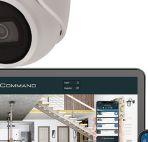
March Networks specializes in video cameras, recorders, encoders and the Command video management system. Evidence Vault is the company’s purpose-built product that has been specifically designed to ensure integrity of stored/shareable audio/video content.
“March Networks’ Evidence Vault is a cloud-based service that allows for the secure storage, management and sharing of video evidence and related data from surveillance systems,” says Jeff Corrall, the company’s chief product officer.
“Evidence Vault enables users to export cases to the cloud in .MP4 or .CME format, and securely share them with authorized recipients. The .CME format is a specialized video








































surveillance file format designed for use with certain recording systems to efficiently store and manage footage. Once a case is exported to Evidence Vault, the designated recipients are notified by email and can access and download the case from the cloud. Additionally, Evidence Vault allows system administrators to monitor and control access to cases through user permissions and activity audits.”
Because different agencies use different file formats, March Networks has configured its Command Enterprise web client interface to access and attach documents, photos and video to case files in any format.
“Initially, uploads are private and only become visible when shared,” Corrall notes. “External agents can also be granted rights to upload evidence. To ensure the protection of your case evidence, multiple security measures are in place, including time-limited sharing, encryption in transit and at rest, and an activity log for audit purposes.”
As part of its public safety technology solutions, Motorola Solutions is a provider of bodyworn cameras, in-car video camera/recording systems, drone video software and command centre software, among others.
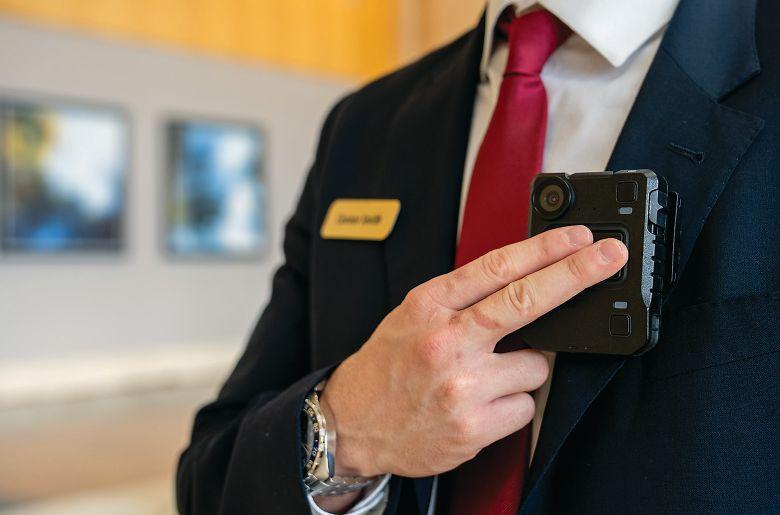
“Motorola Solutions’ VB400 body camera is relied upon by both security users and their law enforcement counterparts, who have similar, but distinct, evidential needs,” says Stuart Boutell, Motorola Solutions’ director of evidence product management.
“Its backend software, VideoManager EX, is deployable on-premises or in the cloud, and handles every stage of an evidential video’s journey from initial capture to closure — whether storing the video for future training and regulatory reasons, or sharing it with law enforcement for prosecutorial purposes.”
Once security personnel have compiled
all the relevant information about a particular event into an incident file — including video, audio files, PDFs and metadata — VideoManager EX allows them to share evidence with law enforcement in multiple ways. “This includes sending a password-protected link, an MP4 file or DVD, or inputting the content directly into a law enforcement agency’s system,” Boutell says. “VideoManager EX can also be configured to export incidents as soon as they are created — minimizing effort on the security user’s side, so they can remain focused on core duties.”
“The advantage of a unified system is you can combine all the video/ audio along with the bodyworn video evidence.”
— Sophie Laplante,Axis Communications
The legal value of audio/video evidence is rooted in its unaltered authenticity; in other words, certainty that the video file being shown in court is the same as the file that was initially captured and recorded by the camera. Being able to prove this is what the “chain of custody” is all about.
However it is configured, the chain of custody for audio/video evidence must keep it pristine and unaffected.
Here’s how each of the three companies mentioned above ensures the chain of custody.
At Axis Communications, “the camera’s internal storage is AES-256 encrypted to prohibit unauthorized access to data,” says Laplante. “Communication is based on IPv6 and certifi-
cates to ensure that the camera will offload data only to the specific system controller or system it belongs to. When data is offloaded from the camera to the system controller, an HTTPS encrypted network connection is used. The data is only briefly stored in the system controller’s AES-256 encrypted storage device, before being further transferred, using another HTTPS encrypted connection, to the content destination.”
The security and integrity of the Axis Communications system controller is further strengthened by a FIPS 140-2 compliant Trusted Platform Module (TPM). As well, “both the body-worn camera and the system controller are equipped with Axis Edge Vault, a hardware-based cybersecurity platform that protects all data on the devices and enables several security features,” Laplante says.
“For example, the file system is encrypted, and the key is protected by the Axis Edge Vault. Secure boot ensures that the devices can boot only with authorized firmware. Signed firmware makes them reject firmware upgrades if the firmware integrity is compromised. And signed video creates an extra layer of protection by adding a cryptographic checksum into the video stream.”
Under March Networks’ Evidence Vault system, “evidence is first exported from the recorder or server (media archiver) to a local PC, and then uploaded to Evidence Vault where it is stored in the cloud,” says Corrall.
“Users can manage permissions, control access, send email notifications and audit activities before sharing files with the designated recipients. Evidence Vault also enables system administrators to monitor and control case access through user permissions and activity audits. All actions such as viewing, sharing or downloading evidence are meticulously logged within the system’s activity audits. Finally, multiple measures are in place to ensure case evidence is protected, including an expiry on sharing time, encryption in transit and at rest, and an activity log to facilitate auditing.”
According to Motorola Solutions, their VideoManager EX platform has been designed to meet law enforcement security requirements and to provide clear chain-of-custody documentation. Every action taken on this system is recorded in an undeletable audit log that supervisors can access to show the file hasn’t been tampered with or inappropriately shared, and all footage is protected with AES-256 encryption, both in transit and at rest.
“Only authorized users and devices can access VideoManager EX through the proper authenticated connections,” Boutell says. “Further, system-specific keys allow only authorized VB400 body cameras to connect to VideoManager EX. This means that, if a body-worn camera is stolen or misplaced, the footage cannot be retrieved, watched or deleted by bad actors. Secondly, we
aim to ensure that once users are on the system, they only have access to the parts of VideoManager EX which are relevant to their duties.”
As impressive as the above three evidence gathering platforms are for sharing content securely with law enforcement today, the future holds even more exciting possibilities.
“As technology advances and becomes more affordable, I imagine a future where real time intelligent centres will be able not only to transfer evidence securely but to protect their officers on site,” says Laplante.
“Picture this: A real time live remote assist intervention where the operator can seamlessly collaborate with the officer on-site visualizing unfolding events and providing immediate assistance via two-way communication (video and audio) to prevent dangerous situations for both the officer and the public.”
Corrall foresees “strategic integrations” between secure evidence gathering platforms and providers in specialized areas such as video redaction.
“Also, future advances will see automated uploading of video evidence to Evidence Vault based on alarms and notifications for preconfigured events, where users set rules that trigger

alerts and automatically send important video to the cloud,” he says.
“For example, a retail store can set a rule where footage of any POS transaction where no customer is present can trigger an alarm and the clip will be uploaded to the cloud. The store owner or manager can then review and verify if the transaction was fraudulent.”
Meanwhile, Boutell says that Motorola Solu-

tions will continue to use AI and “well-designed human-centred technology” to “assist human decision-making and simplify connection points between public safety and businesses.”
The utility of evidence-gathering platforms seems destined to keep advancing and improving over time. The security industry has come a long way from pulling a VHS surveillance tape off the shelf and turning it over to police.
Lower cost for basic security protection than other providers.
Plug and play using DSC PC Link cables with remote upload/download
Web-based software and smartphone app for device configuration and administration
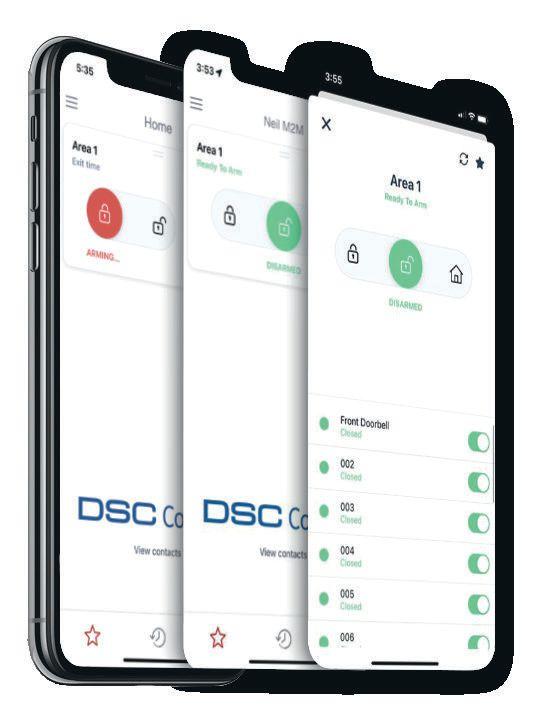
End-user app for remote alarm panel control, smartphone and email notifications
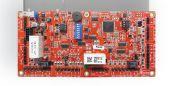
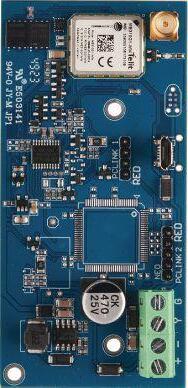
5G-Ready Dual SIM Cellular Communicator with LTE and network redundancy
Instantly support top carriers such as Verizon, AT&T, Rogers, Bell, Telus and more.


A product revolution may be underway thanks to new Artificial Intelligence tools, but what are the real implications for users and installers and where might we go next?
By Neil Sutton
If you have visited a security trade show, attended a vendor-led seminar, or read a security industry trade publication such as this one at any point in the last few years, you will have encountered the term Artificial Intelligence (AI) and heard about all of its benefits. Is AI a marketing slogan to entice integrators and end users, a catch-all term for a range of recent innovations, or a genuine boon to the security industry? The answer is almost certainly yes to all of these, but how to effectively move beyond these surface evaluations is a bigger question with multiple answers.
The term AI has been applied quite broadly to recent security technology; it is loaded with meaning and can have a major impact as a buzzword. However, it’s misapplication may have led to some confusion in the market.
“Generally, it is not well understood. AI is a broad umbrella term which is over-marketed,” said Josh Woodhouse, lead analyst and founder at Novaira Insights. “It is hard to ‘explain AI’.” Woodhouse, who responded to SP&T’s questions via email, said clarification may be required, depending on how AI is being applied.
In terms of surveillance technology, AI is most often being used in three main areas, he said: to improve the performance of video analytics and video quality; to apply intelligent automation to security systems; and as an assistive tool (more on “generative AI” below).
Mike Jude, research director, video surveillance and vision applications, IDC, agreed that users generally want their applications to be AI-enabled, “but when you drill into it, it’s not clear that they understand what that means,” he said. “They simply want to see it as a checkbox on the things that they buy.”
AI may come with a big wow factor, but
it some cases “it literally has no context or no meaning,” he said. “That’s kind of the challenge to the industry — providing concrete examples of what they mean by AI and how that reduces to benefits to the end user.”
Jude said AI has thus far proven itself to be most beneficial to physical security systems in terms of detection, interpretation and presentation. “Our perception is the market is getting kind of saturated on the terminology, but there are real benefits from AI approaches,” he said. “We’ve reached the point where the technology generally is mature enough that you can bake it into various things and achieve some measurable improvements.”
Dean Drako, president and CEO of Eagle Eye Networks, said AI represents a “complete game-changer” for the security industry, helping to usher in a new age where cameras can offer a lot more to the end user than they historically have as static surveillance tools.
“We have millions and millions and millions of cameras but nobody watches them. With AI, you can actually start to watch all of the cameras all of the time. That makes them more valuable,” said Drako.
He pointed to a range of recent technical developments and new applications that are helping to expand the security industry in a relatively short period of time, including gunshot detection, and parking lot and traffic management tools. “There’s a lot of things going on right now that are going to grow our business,” he said.
Ultimately, the end user is going to focus on the results they get from the technology they’ve invested in. Users will often narrow their concerns down to two main areas, said Jude: cost and

complexity (is this going to make my life easier or harder as a security practitioner?).
“We’ve seen a willingness on the part of end users to pay a premium for simplicity,” said Jude. “If AI results in a measurably simpler interface with the technology… then that’s going to be very well received.”
One of the most successful applications of AI in the security world is the use of “AI-powered” video analytics, which utilize deep learning to train their models, said Woodhouse.
“This technique has led to more accurate performance compared with rules-based video analytics historically used,” said Woodhouse. “The ability to run advanced deep learning video analytics on a surveillance camera is becoming ubiquitous … the majority of new camera models shipped will have this capability within the next two years.”
Woodhouse remarked that the increased availability of computing power in recent years has supported this transformation.
“This also means the cost of running advanced, power-hungry algorithms for video analytics and other security system-wide intelligence has reduced,” he said.

A quantum leap forward for technology also requires a period of adjustment for both the end user and the integrator installing the upgraded systems. In some cases, AI may be a hammer in search of a nail.
Speaking at a Security Industry Association “state of the industry” media briefing held during ISC West, Mike Mathes, president of global growth at integrator Convergint, likened the situation to the introduction of IPbased camera systems a few decades ago: the technology was revolutionary, but the network infrastructure necessary to adopt it took a while to catch up.
“Today’s infrastructure for AI is data,” he said, noting that end users may not currently have the resources to cull or aggregate data such that it that takes full advantage of AI-based systems. “We need the user base to evolve in a direction that allows them to be able to utilize AI.”
Woodhouse noted that integrators “are having to navigate a lot of customer education and confusion around AI for their security customers. However they are also able to of-
“That’s kind of the challenge to the industry — providing concrete examples of what they mean by AI.”
— Mike Jude, IDC
fer higher performing security systems which leverage the technology.”
The potential for AI is unquestionably vast. Eagle Eye’s Drako estimated that AI will eventually double the size of the security industry. “You need a lot of computers, you need a lot of engineering… you need a lot of work to make it happen. But people are going to want it and they’re going to demand it.”
A very recent innovation is the integration of natural language or generative AI interfaces into security systems.
“Generative AI is beginning to be used in
nearly all industries including consumer tech. Security is no different and we’ve seen the first integrations of popular generative AI interfaces such as ChatGPT into security systems,” said Woodhouse. “These allow the end users and installers to interact with security systems in a more natural way even without needing to be fully trained to operate the security system.”
Drako said AI’s greatest benefit to security technology is its capacity to analyze data at scale but acknowledged generative AI’s potential to improve the user experience. It’s “the icing on the cake,” he said.
AI has seemingly been a staple of the security industry’s product development and marketing efforts for many years now but we may only just be getting started.
In baseball parlance, Drako estimated we’re currently in the second of nine innings, and there’s another decade to go before we see his prediction of a doubling of the security industry come true.
For now, at least, we should appreciate how far AI has come, strive to understand its true potential and be ready for even greater advancements in the not-too-distant future.

U home includes the smart lock system ULTRALOQ, smart lighting system Bright, AI security camera Ulticam, and the Smart Plug & Switch. U home can simultaneously control and synchronize multiple devices, creating a central command centre and allowing users to access, control and monitor their devices. U home allows users to control ULTRALOQ smart locks, smart lights, plugs, switches, and cameras and is compatible with Apple Home, Alexa, Google Home and SmartThings for voice control. www.u-tec.com
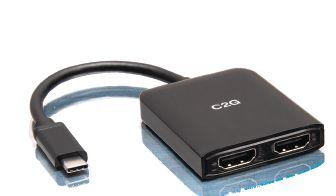
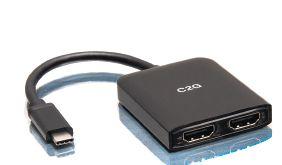
The C2G hub allows a USB-C-enabled device to connect to two HDMI-enabled displays for video mirroring, video extension, or viewing a single video image across two displays. The C2G C2G54540 USB-C to Dual HDMI MST Hub enables users to increase productivity by configuring the hub to work as a splitter with the same video image on each display, extending a video image to multiple displays, or expanding a video image by joining multiple monitors together as one display.
www.cablestogo.com
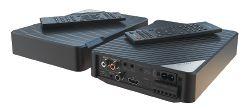
The AVA2.1 and AVA3.1 Mini-AVRs are designed for custom installation specialists, providing them with compact, plug-and-play amplification for 2.1 and 3.1 audio systems with Audio Return Channel (ARC) HDMI. Both models include a fully integrated, highly efficient Class-D amplifier with digital inputs, 100-240V 50/60Hz universal power supply for installation nearly anywhere, built-in Bluetooth 5.0, dedicated subwoofer output with gain control, and an IR remote control and external receiver. www.russound.com

The LG CineBeam Qube (model HU710PB) 4K model is capable of projecting 4K UHD (3,840 x 2,160) resolution images measuring up to 120 inches. Equipped with an RGB laser light source and LG’s image refining technologies, the new model delivers sharp pictures with a 450,000:1 contrast ratio and 154 per cent coverage of the DCI-P3 colour gamut. Additionally, LG’s 4K projector comes with Auto Screen Adjustment, which has an auto-focus feature that automatically optimizes image placement and size. www.LG.com
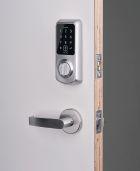
The SALTO DBolt Touch offers a retrofit and smart locking solution for upgrading mechanical deadbolt locks in the multi-family residential market. The smart lock has been designed to connect wirelessly to the property ecosystem. With secure smart keypad access, the SALTO DBolt Touch supports a wide range of access control methods. The smart keypad reader enables PIN-based entry for residents and visitors. Property managers and residents can use a smartphone to access a property’s various doors. www.saltosystems.com
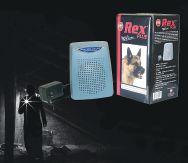
Rex Plus, the electronic watchdog alarm, provides a way to deter burglars without the responsibility of owning a real dog. With electronic radar eyes, Rex can “see” through doors, walls and glass. When movement is detected, he starts to emit sound. The closer an intruder gets, the more frequent the barking becomes. As the intruder backs off, the barking decreases in frequency, stopping when movement is out of range. Rex also offers a siren or a pleasant greeting. Plug the unit into a standard electrical outlet. Choose features by adjusting the switch on the back. www.sti-usa.com


The V300 Ultimate is a rugged cellular-connected security camera that provides on-demand live video streaming, motion-activated video recording with instant notifications and cloud management and storage without requiring any wires or Wi-Fi. The camera solution can operate in locations without Wi-Fi or electricity, as it only needs a 4G LTE cellular network for connectivity. The combination of the camera and the included solar power bank delivers a minimum of six months of autonomy. www.vosker.com
The IQ4 NS (No Screen) Security and Smart Home System features PowerG range and reliability. Connectivity with Z-Wave 800 Series enables smart home and automation features. The new system comes with built-in UL rated siren with 24-hour backup battery, built-in speaker for chimes, custom text to speech and language translation. The combined features make the IQ4 NS system suitable for many security applications like residential, builder, multi-family units, and small to mid-size buildings.
www.johnsoncontrols.com












Axis Communications
Axis Cloud Connect is an open cloud-based platform. Axis Cloud Connect was created to work together with Axis devices to enable a range of managed services that support system and device management, video and data delivery and meet high demands for cybersecurity. Managed services enable secure remote access to live video operations, and improved device management with automated updates throughout the lifecycle. Axis Cloud Connect also offers user and access management for control of user access rights and permissions. www.axis.com

The Forum Lectern is ADA-compliant and height-adjustable. It is available in 42inch, 60-inch, and 72-inch widths and in four colourways. The lectern can be configured with a flat worksurface or turret worksurface. The turret worksurface includes a presenter’s panel to mount touch screens, clock timers, microphones and more. The offering also includes worksurface power options from A. & H. Meyer. There is an optional matching 12RU, 16RU or 20RU side rack and 6RU under-worksurface mounted rack.
www.legrandav.com
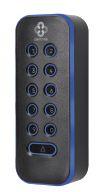
The Centrios Smart Reader is an access control solution for storefronts, employee entrances, storerooms, gates, offices, automatic doors, and access control retrofits. The Smart Reader can be paired with other electronic access control systems, features Bluetooth mobile access and PIN code management which can be managed with the Centrios mobile app, and is easily installed and operated. The new reader is IP65 weather resistant, FCC/IC certified, ADA compliant, and operates in temperatures ranging from -40º to 60º C. www.centrios.com
Kidde Commercial

STI’s new durable 9-gauge Wire Guard Damage Stopper helps protect vape detectors and other vital air sensors against damage and vandalism. The corrosion resistant cage is for use in a controlled environment (not intended for outdoor use) and where abuse is severe. The guard incorporates a patented web-like octagon shape that simulates a spider’s web for added strength. The flush mounted wire cage is easy to install with mounting clamps and hardware included. www.sti-usa.com
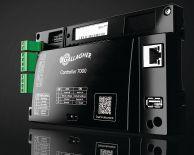
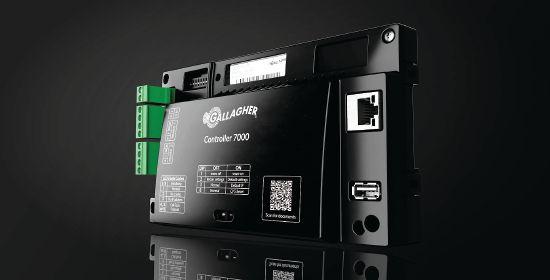
The Underwriters Laboratory (UL)-certified Controller 7000 (C7000) is now available for purchase in the Americas. Capable of managing localized access control, intruder alarms, perimeter security, business automation and logic needs, the Controller 7000 represents a new generation of Gallagher Security technology. The Controller 7000 is designed with longevity and cybersecurity in mind. The C7000’s hardware technology integrates security features at the silicon level, according to Gallagher Security.
www.gallagher.com
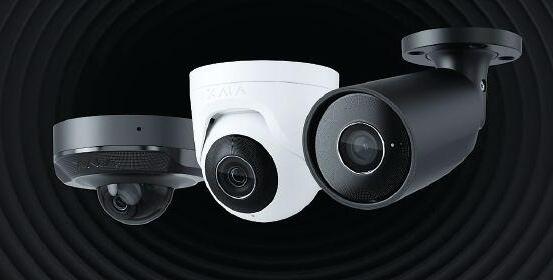
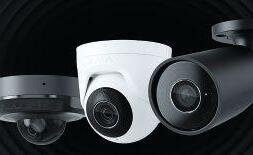
Ajax Systems announced the release of wired security IP cameras. These devices are designed to provide high-definition surveillance. Ajax cameras are versatile, working both indoors and outdoors with an IP65 rating. Key features include: customizable virtual video wall; built-in AI recognition; customizable motion detection area; builtin digital microphone; support for an SD card of up to 256 GB; a water and dust-resistant metal enclosure and more.
ajax.systems
The Optica Duct Smoke Detector is specifically designed for HVAC smoke detection and to address moisture and dust challenges of the HVAC environment. Optica is designed for the challenging HVAC environment with a free-flowing chamber, dual-wall construction, and anti-fog coating across the complete sensing area to enable greater performance and reduce nuisance alarms. Optica uses dual wavelengths, multiple angles, and detection algorithms to differentiate between nuisance particles and serious threats.
www.kidde-esfire.com

The Nautilus Rise Retractable Bollard is an automatic, hydraulic high-security bollard with built-in LED lights, designed in a compact style that doesn’t leave a footprint when it’s not deployed. The Nautilus Rise Retractable Bollard is suited for applications that require an impenetrable barrier at police stations, military bases, stadiums, data centres and more. The Nautilus is easy to raise or lower, ensuring immediate access when needed and quick deployment for emergency scenarios. www.barrier1.com