


Convergint launches affinity groups
Integrator champions inclusion and diversity through employeeled councils p. 6
CANASA announces summer golf schedule The Canadian Security Association is ready to get back to in-person events this year p. 15
Access control for workplace management











20 Enhancing access control for workplace management
There
By
Eric Talley
16 The robot revolution is underway
Design improvements and a renewed interest in robots during the pandemic is changing the market for these future-focused devices
By Madalene Arias

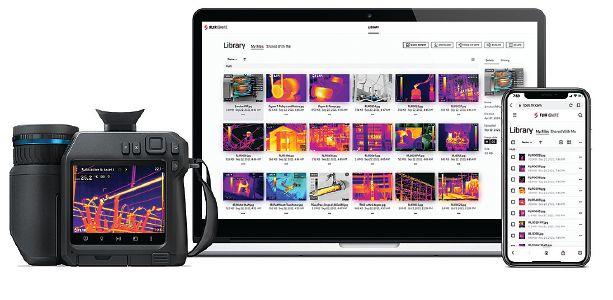
Teledyne FLIR announced the expansion of the Ignite Cloud Workflow to three families: the T8xx-Series, T5xxSeries, and the Exx-Series, along with offering secure cloud storage free (up to 1GB).
6 Line Card
• Convergint’s affinity groups celebrate diversity and inclusion
• EdgeSentry keeps an eye on networks
• ADI Global announces 2021 supplier awards
• Containerized VMS speeds deployment, says developer
12 Lessons Learned
What to expect from the balance sheet By Victor Harding
14 Camera Corner
Is the supply chain broken? By Colin Bodbyl
15 CANASA Update
Golf is back in full swing this summer By Patrick Straw


FBy Neil Sutton
ew jobs are immune to the rise of automation. Even in journalism, there is the increasing presence of artificial intelligence. Some newsrooms, for example, are utilizing AI-driven software that can generate short business articles based on quarterly financial reports.
The influence of automation is of course being felt in security too, with AI included in everything from video analytics to alarm response. This seems like an ideal time to take a closer look at what’s happening in the robotics market (see article on p.16).
It might be easy to dismiss robots as unfeeling machines, yet, to a large degree, it’s this quality that makes them so useful.
A great deal of their appeal comes from the fact that you can order them to do the mundane, or even the dangerous, with zero complaint. As described in our cover story, they also will not contract viruses, nor spread them, making them ideally suited to situations that might pose a health hazard to humans.
Robots are part of a class of technology that is sometimes referred to as “guard replacement,” but I’ve often thought that term is inaccurate.
Certainly, there’s a kernel of truth to it. Any time you install a machine to do the work that was previously done by a person, you are, in effect, replacing them — or at least replacing a function that was once performed exclusively by humans.
I think “guard augmentation” is a more fitting description, and it’s one I’ve heard more frequently from the security community. As mentioned by several experts in the robot article, you cannot simply replace people in every situation. You still need a human at the helm, ultimately making the decisions.
Security guards are amazing people. They are literally the eyes and ears of an organization and often the first person a visitor will see when they enter a building.
Jobs change, roles change and responsibilities change, and we’re seeing that happen in the guarding world too. For example, there is a greater emphasis today on the guard as ambassador, particularly, I think, as smart software and machines become more commonplace.
Over the years, my job has changed too. Some of my focus has shifted towards webinar hosting and other pursuits I never could have predicted when I was in journalism school. And as I mentioned, there is a growing trend in journalism towards AI. I haven’t experienced it personally yet, but I may one day.
I continue to watch the development of security technology with great interest and appreciation. How we humans fit into the equation might change over time but we’ll always be there.

@SecurityEd
READER SERVICE
Print and digital subscription inquires or changes, please contact Barb Adelt, Audience Development Manager Tel: (416) 510-5184 Fax: (416) 510-6875
Email: badelt@annexbusinessmedia.com Mail: 111 Gordon Baker Rd., Suite 400, Toronto, ON M2H 3R1
Your Partner in Securing Canada Security Products & Technology News is published 6 times in 2022 by Annex Business Media. Its primary purpose is to serve as an information resource to installers, resellers and integrators working within the security and/or related industries. Editorial information is reported in a concise, accurate and unbiased manner on security products, systems and services, as well as on product areas related to the security industry.
Editor, Neil Sutton 416-510-6788 nsutton@annexbusinessmedia.com
Associate Editor, Madalene Arias 416-510-5228 marias@annexbusinessmedia.com
Group Publisher, Paul Grossinger 416-510-5240 pgrossinger@annexbusinessmedia.com
Associate Publisher, Jason Hill 416-510-5117 jhill@annexbusinessmedia.com
Media Designer, Graham Jeffrey gjeffrey@annexbusinessmedia.com
Account Coordinator, Kim Rossiter 416-510-6794 krossiter@annexbusinessmedia.com
COO, Scott Jamieson sjamieson@annexbusinessmedia.com
EDITORIAL ADVISORY BOARD Victor Harding, Harding Security Services Carl Jorgensen, Titan Products Group Antoinette Modica, Tech Systems of Canada Anna De Jager, TAG Dispatch Roger Miller, Northeastern Protection Service Sam Shalaby, Feenics Inc. 111 Gordon Baker Rd, Suite 400, Toronto, ON M2H 3R1 T: 416-442-5600 F: 416-442-2230
PUBLICATION MAIL AGREEMENT #40065710 Printed in Canada ISSN 1482-3217















Annex Privacy Officer privacy@annexbusinessmedia.com Tel: 800-668-2374
No part of the editorial content of this publication may be reprinted without the publisher’s written permission. ©2022 Annex Publishing & Printing Inc. All rights reserved.
Annex Publishing & Printing Inc. disclaims any warranty as to the accuracy, completeness or currency of the contents of this publication and disclaims all liability in respect of the results of any action taken or not taken in reliance upon information in this publication.





Help customers manage & monitor their business strategically
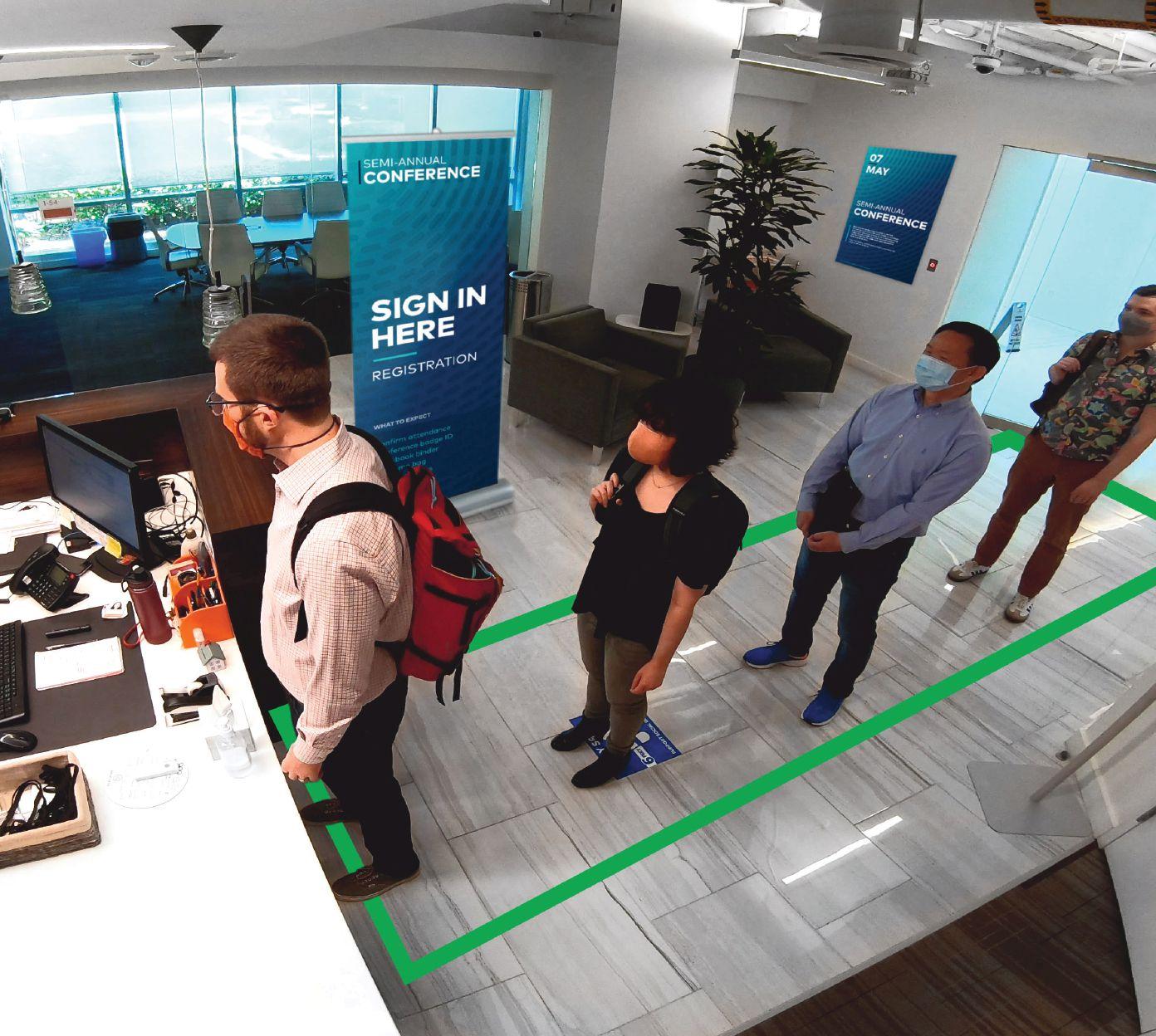
Transform the way customers protect their business with Business Activity Analytics, a powerful feature that uses compatible Alarm.com cameras to track the movement of people through a business.
Help your business customers make informed decisions that keep customers and employees safe with Business Activity Analytics.
Your customers will enjoy intelligent features like:
Heat mapping
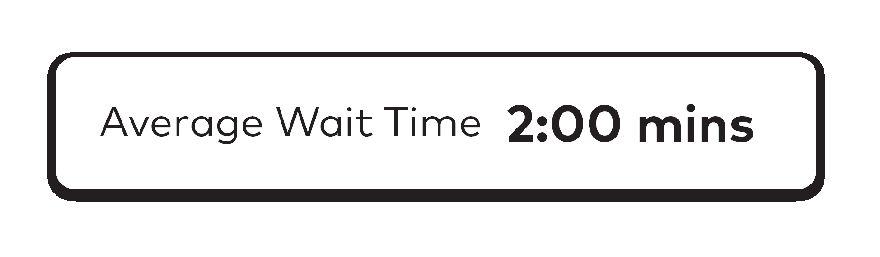
Queue monitoring
Crowd gathering
Occupancy tracking
People counting
Learn more at alarm.com/BAA .
indigenous truth
Over the past year, global systems integrator Convergint has championed the formation of “affinity groups” — councils that represent the interests of a diverse group of Convergint employees through cultural education, job advancement opportunities, awareness-raising activities, and partnerships with like-minded organizations.
Since 2021, the company has established half a dozen of these groups, including AsianAmerican Pacific Islanders Connect; Unify, a Black affinity group; Unidos, a Hispanic and Latinx affinity group; Veterans Connect; Disability Connect; and most recently, Indigenous Truth, representing Aboriginal voices in Convergint and the first group to be established in Canada.
“Each group is moving the needle on development opportunities, enhancing leadership skills, attracting and retaining talent, and creating cultural understanding throughout Convergint,” explained Yaruba Tate, vice-president of inclusion and diversity at Convergint.

Tate is a 20-year veteran of the company and has filled a variety of roles during his tenure, including management and sales. He was appointed to his most recent position in January of last year.
Convergint began to offer leadership training in diversity and inclusion in 2017, said Tate. For the company, this focus is not only a means to foster a healthy and welcoming workplace culture, but a sound business strategy. Convergint is in the midst of a growth goal to double in size, said Tate, and good candidates are more likely to look for an employer that demonstrates positive values and reflects cultural diversity.
The first official affinity group, Convergint Women Connect, dates back to 2018 and has served as a template for those that have emerged more recently. Asian-American Pacific Islanders Connect, which began in March 2021,
“Each group is moving the needle on development opportunities, enhancing leadership skills … and creating cultural understanding.”
was partially established in response to the hate and violence directed at Asian communities during the pandemic. Every few months since then, a new affinity group has formed. Each is represented by a chair, vice-chair and executive sponsor, and draws membership from Convergint’s global employees.
Indigenous Truth, the most recent affinity group, is chaired by Grant Lagimodiere, a program manager in the Convergint Ottawa office and a member of the Métis Nation of Ontario. The group is vice-chaired by William Beadle, sales support executive at Convergint Calgary, with Brian Haw, vice-president, Convergint Canada, as executive sponsor.
—YarubaTate,Convergint
Convergint’s number of Aboriginal suppliers, and promoting career opportunities for Indigenous communities at Convergint and more broadly across the security industry.
Convergint also recently announced a joint venture with Chard Métis Dene Inc. (CMD), an economic development organization for the Chard Métis Community Association located in Northern Alberta. According to Convergint, its venture with CMD is the first Indigenous partnership of its kind to provide security and building automation solutions to the Municipality of Wood Buffalo, Alta., as well as other clients across Canada.

Lagimodiere said he felt compelled to step up in response to the unfolding tragedy of Canada’s residential school system, which forced the assimilation of thousands of Indigenous children during the last century and resulted in countless deaths. “I witnessed the residential school findings last summer and was horrified, like many of us,” he said. “I would say that was my trigger to reach out to Brian [Haw] and our Canadian leadership to ask them if we could start an affinity group.”
Indigenous Truth held its first official meeting in February, and has laid the groundwork to promote Aboriginal interests throughout the company. “We have a lot of ideas that were generated,” said Lagimodiere. “We make sure that it’s attainable, first and foremost, and that we can measure it so there’s some accountability driving the goal.”
According to Lagimodiere, future plans for Indigenous Truth may include an orange shirt campaign for the National Day of Truth and Reconciliation in September, increasing
“We’re building a business relationship, being mindful of cultural issues [and] trying to improve awareness,” said Lagimodiere of the partnership.
In the year or so that Convergint has actively sponsored the creation of new affinity groups, a number of projects have been successfully launched, said Tate.
For example, the Asian-American Pacific Islanders Connect group has led seminars on stress management and avoiding burnout during the pandemic, Unidos established a program to support ESL (English as a Second Language) co-workers, and the Unify affinity group recently engaged with a HBCU (Historically Black Colleges & Universities) career fair.
“It’s been amazing what they’ve been able to do [in terms] of having a positive impact,” said Tate. “A lot of what we do is representative of the aspirations of our colleagues.”
There are more affinity groups on the horizon, he added, with an LGBTQ+ group already in development.
Established in Canada, Indigenous Truth has already branched out to include members from the U.S. Lagimodiere said he aims to keep expanding the group and welcomes new members from outside North America.



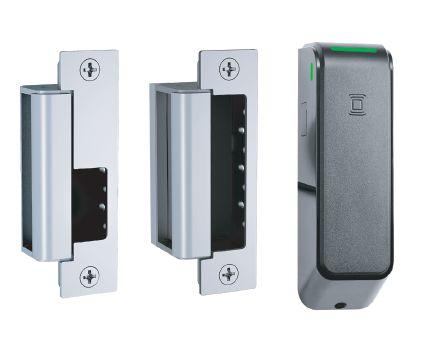




Nokia Arena opens with smart access

Nokia Arena in Tampere, Finland, opened in December 2021. Designed by architect Daniel Libeskind, the venue was created to host large events, including the 2022 Men’s Ice Hockey World Championships in May. Access management and control systems for the facility have been implemented by Abloy.
“Nokia Arena is a striking example of security trends, where access rights are becoming digital and door environments are touchless,” said Jari Perälä, vice-president, domestic sales and marketing, Abloy Oy. “In this development, various human resource, space and access management systems, for example, are integrated.”
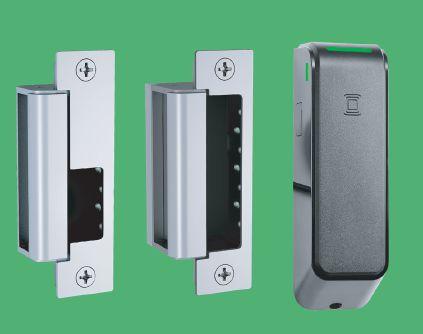
Nokia Arena doors are opened via mobile devices and wristbands, as well as electromechanical keys. Locks are also integrated into the work shift system so when, for example, wait staff arrive for work, their access rights are immediately granted. Arena door locks are also integrated with the fire safety system.

Car group adopts cloud for VMS
Indiana-based Chariot Automotive Group has adopted the 3xLOGIC Vigil Cloud solution for its surveillance needs.
Chariot sells new and pre-owned vehicles at five locations in north-central Indiana. Physical space was limited so the company required a creative solutions for its head office and four dealerships.
The company worked with Indianapolis-based ITech Digital to identify a solution that would meet their requirements. Using Vigil Cloud, Chariot has access to all the features of the Vigil VMS. After a systems rollout, Chariot has multiple IP megapixel cameras focused on entry points at each of its locations. Surveillance footage is stored and managed in the cloud, and can be viewed remotely.
“Reviewing video remotely through the cloud has been extremely helpful and assigning user-based roles and permissions is much easier with the cloud-based platform,” said Nicholas Cass, Chariot Automotive’s IT manager.



• Gordon Hebb has joined Johnson Controls as director of Canadian intrusion sales. Hebb is also a national past president of CANASA.
• TOA Canada announced that audio visual professional
Mobile access control for Utah property

Fairbourne Office Tower, a nine-story commercial building in West Valley City, Utah, worked with IT provider Summit Technology to deploy a building-wide solution.
A ProdataKey/Altronix solution was designed to meet the property’s security requirements for client Wasatch Commercial Management. The initial installation includes about 122 PDK devices to secure the lobby, elevators, electrical and storage closets, stairwells, and occupied office space. The readers throughout the building are PDK’s Bluetooth-compatible devices with touch-free capability, Touch io. A high-speed fibre infrastructure is able to support future access points.
Hardware installation was enabled by Altronix Trove enclosures with integrated power. The Altronix units consolidate up to three multi-door controllers and a power supply within a single housing. PDK’s mobile-first platform enabled Summit’s technicians to use their own phones to test and configure the system’s devices.

Bimal Devraj is now part the company’s technical support team.
• Classic Fire + Life Safety announced the appointment of Melissa Diaz as its vicepresident of human resources.
April 20, 2022
Security Canada East Laval, Que. www.securitycanada.com
April 26-28, 2022
Canadian Technical Security Conference Calgary, Alta. www.ctsc-canada.com
May 10, 2022
Security-Police-Fire Career Expo Vaughan, Ont. www.emergencyservicesexpo.ca
May 31, 2022
Advance: Women in Security Online www.sptnews.ca
June 14-17, 2022 ESX
Fort Worth, Tex. www.esxweb.com
June 22, 2022
Security Canada West Vancouver, B.C. www.securitycanada.com
September 12-14, 2022
GSX Atlanta, Ga. www.gsx.org
September 25-29, 2022
BICSI Fall Conference Las Vegas, Nev. www.bicsi.org


• Jeremy Scott was recently appointed as North American sales director for Arcules. Scott will develop strategic initiatives that support the growth of unified cloud security services in key markets.
• Pavithra Subramanian has joined Qognify as director of program management.
• Hakimo announced that Jason Wright has joined the company’s sales team as the new director of sales.


Value Meets Technology
• Advanced video analytics
• Reduced false alarms
• Better motion detection and classification
• Improved image quality
• Affordable accuracy
• Real-time threat detection



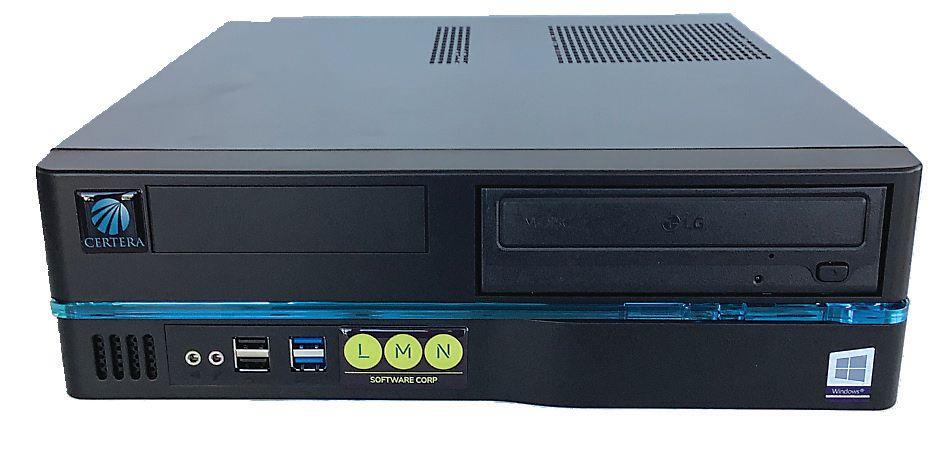
The business partners in a new company called LMN Software have introduced an appliance they say is ideally suited to monitoring networks that host security equipment like cameras, access control readers and other IoT devices.
John Day, the company’s Toronto-based founder and chief technology officer, says he got the idea based on his observations as a manufacturer’s rep. (Day is also the principal of rep firm ThinLine Sales Agents.) Most network monitoring appliances, he says, require a high degree of IT knowledge, meaning that security installers may have to rely on outside expertise to complete certain types of jobs. “That’s a dilemma in the security business,” says Day. “There’s often an abdication of the network to whomever.”
Day’s solution is an appliance called EdgeSentry that he says is highly capable of monitoring network activity yet is relatively simple to install and manage on an ongoing basis.
The EdgeSentry device can be installed between two switches on the network, or between a switch and a router. It uses network span or tap to connect to the network and begins monitoring traffic as soon as it is installed.
“It watches 24 hours of network activity and creates a profile of what the network is,” says Day. “Our goal is that any security installer would be able to walk in, attach this to the network, get it running and walk out in half an hour knowing that the system is doing what it’s supposed to do.”
EdgeSentry alerts the user via email if a device is unresponsive to pings, if a device has been installed without authorization, or if a
device attempts to connect with another network. EdgeSentry also includes a UPS monitor that will contact the administrator if a UPS on the network switches to battery power or fails a diagnostic test.
Day says he began to take more of an interest in network security about six years ago, and took some courses to develop his skills base. His professional hobby became more of a serious undertaking two years ago when he started down the path of product development. He brought on business partner Jeff Leite, a Pennsylvania-based security sales professional who recently joined LMN Software as vice-president of sales and marketing.
EdgeSentry’s software is developed in Canada by Day and the devices are manufactured in the U.S. Day says the product will be sold mainly through distribution channels. The company has American distribution in New York, New Jersey and California and
ADI Global Distribution recently announced the recipients of its 2021 Supplier Awards, selecting Nortek Control as its Supplier of the Year.
“Congratulations to the ADI 2021 Supplier Award winners. Our supplier relationships are important to ADI’s success, and help us deliver value to our customers every day,” said Bob Appleby, vice-president and general manager, ADI North America, in a statement.
“Nortek Control is pleased to be recognized by ADI as the Supplier of the Year for North America,” added Andy Lovsted, vice-president of sales, Nortek Control. “ADI’s support at both the corporate and local branch level have been critical to Nortek’s long-term success.”
According to ADI, suppliers are evaluated based on criteria including revenue, sales support, marketing initiatives, inventory results and feedback from ADI’s sales leadership team.
The awards were presented during the ADI 2022 Supplier Symposium, which was held virtually earlier this year and drew more than 400 attendees.
recently added a Canadian distributor, making EdgeSentry available in five provinces.
The customer base for EdgeSentry could be literally anyone who has experienced network security risks, says Leite. More specifically, the product has drawn interest from potential customers in retail and gaming, among others.
EdgeSentry is not aimed at organizations with big, dedicated IT departments, adds Day, nor is it suited for networks that support a large number of servers or computers. It will, however, handle 500 devices, provided most of them are IoT devices like surveillance cameras, intercoms or thermostats.
Day says he is working on a smaller version of EdgeSentry for networks with fewer devices and is also developing a multilingual version of the software. Currently, EdgeSentry’s main mode of communication is email, but support for SMS may be available in a future release.

The team at Edge 360 Enterprise Security Software and Services have pioneered what they dubbed the “new kid on the block” in security solutions — containerized video management systems.
“We took a video management platform and we tailored it to fit the modern type of architecture that networks are built on now.”
— John Rezzonico, Edge 360
“Containerization, just that one piece of it, brings to the table a manageable and deployable solution that can be easily deployed across a large enterprise at the push of a button,” said John Rezzonico, CEO of Edge 360 Enterprise Security Software & Services and Surveill.
The technology is implied in the name. The containers package up all of the VMS data. Once the container is installed at its destination, it expands and recreates the environment from the sources carried within that container. The product has been introduced under Edge 360’s Surveill brand.
“If you’re sending this out to a remote site or you’re going to deploy it, it speeds up that process by allowing you to just deploy a container,” said Rezzonico.
The company’s containerized VMS solution was born out of a search for ways to solve the problem of global enterprise video management.
As Rezzonico pointed out, digital cameras and analytic sensors eat up a lot of data and place heavy
traffic onto networks.
Before becoming CEO at Edge 360 and Surveill, Rezzonico served in the United States Marine Corps as intelligence chief from 1990 to 2006.
“We took a video management platform that we had and we tailored it to fit the modern type of architecture that networks are built on now that are horizontally scalable, expandable,” he said.
For enterprise purposes, VMS containerization can be added into a horizontally scaling cloud type of environment on either a public or private cloud.
Rezzonico noted that the licensing allows companies to expand as much as they want through the purchase of a single channel. Each channel allows clients to load 15 servers without additional cost.
Surveill’s VMS was designed for integration onto other security software. Rezzonico explained that the program is 100 per cent API facing which means it can run behind or in front of any other solution while providing 100 per cent of the capability to the user.
So far, the greatest impact Edge 360’s product has had on the market is a large reduction in hardware costs. Rezzonico said that on average the company has reduced 33 per cent of the hardware needed with Microsoft service architecture. Since VMS servers are managed remotely, their implementation has also reduced the size of security teams needed on premise.
Containerized VMS is suited for mid to large-sized companies that require cameras at multiple sites to be networked together and brought up to the cloud.
“We are one true large cluster; every node in the system is attached to one single cluster. No matter where you are in that cluster, you can access and control everything across the system,” said Rezzonico.
— Madalene Arias



IBy Victor Harding
In a purchase deal, the buyer will have a reasonable expectation of some working capital, so consider this before a sale
often get clients who think that, on top of the purchase price, they will also receive a great deal of extra value in a sale from various assets such as cash, accounts receivable, inventory and the fixed assets on the balance sheet.
While it is true a seller can retrieve some value from their balance sheet above and beyond the core purchase price, sellers should temper their expectations depending on whether it is a sale of assets or shares and even on the particular buyer.
The general rule of thumb in M&A transactions regarding the sale of businesses, particularly when a sale of shares takes place, is a buyer should expect to get most or all the fixed assets required to operate the business and a “normal” amount of working capital included with the purchase price. In other words, the buyer is not going to pay you extra for the fixed assets or your working capital.
Let’s stick with share deals and talk about other points on this subject. Many of you who are owners of small security businesses may have heard that when selling your company, buyers like to buy the company cash and debt free. Doing it this way just makes the deal easier and assumes that the owner will pay off any debt and move out most, if not all, of the cash before closing. This is a very common model used across all sorts of small businesses.
Staying with share deals, many (but not all) buyers will expect to get a reasonable amount of working capital left in the business when it is sold. This catches many sellers by surprise but when you think about it, it makes sense. Should we expect a buyer to pay a full price for an operating company and then have to write another big cheque just to finance the business for the first few months?
Working Capital (WC) is generally defined as Total Current Assets less Current Liabilities. Too often, this is not focused on enough in most businesses. If the business is being run properly, WC should be a positive number. In a really well run business, the ratio of Current Assets to Current Liabilities should be two to one. The amount of WC required to be left in the business is negotiable to some degree and is driven mainly by the nature of the business.
An integration business doing large installations will require much more WC to cover the ongoing investment in work-in-process. A simple alarm company not requiring much invest-

ment in inventory demands much less WC. The amount of WC can also be driven by how quickly a company collects its accounts receivables.
Arriving at a mutually agreed amount of WC target to be left in the business can be a tricky negotiation. I often tell buyers they cannot just look at what WC is left in the company on average over a number of months because small business owners don’t often move excess cash out of their company or manage their WC very well.
Sometimes small businesses will purposely carry extra inventory at certain times. WC in some businesses can vary throughout the course of the year. A company selling toys will require a lot more inventory in the last two months of the year than at any other time. Failing all else, I have sometimes seen a rule of thumb of 10 per cent of sales being the WC target.
Share deals will often include a small holdback of the purchase price to ensure that the WC target is met by the seller. This holdback should be no more than five per cent and held for only 60-90 days until the seller produces the final set of financials showing the closing WC.
There is a wrinkle to the WC rule that has established itself in the sale of alarm companies. Owners sell shares of alarm companies mostly to take advantage of their capital gains exemption. Secondly, alarm companies don’t usually require that much WC for buyers. As a result you can often see share deals done here where the seller does not have to leave WC but can actually sell off some of their assets to the buyer.
As for what happens with fixed assets in share deals, if the seller is a fire, guard or integration company and if the buyer is an experienced buyer, generally the buyer will expect to get almost all the fixed assets involved in running the business included free with the purchase price. The seller can remove any personal or unused assets such as their own vehicle or computer from the company before selling. With security companies, the fixed assets are mostly vehicles; real estate is usually held in another company.
The procedures in regards to how balance sheet assets are dealt with is simpler. With asset deals, the buyer will simply specify what assets they are buying. Having this choice is one reason why buyers like assets deals more than share deals.
Asset deals in the security industry involve the seller selling the customer base (goodwill, including the company name and telephone number where most of the value is contained) plus the small amount of inventory on hand and a vehicle or two. The seller is mostly left with dealing with any cash on hand, collecting their own accounts receivable and paying off any liabilities.
The purpose of this article has been to try to enlighten sellers as to what to expect in terms of getting value from their balance sheet when they sell their business. In simple terms, sellers should not expect to hit a home run from extra value on the balance sheet.
Victor Harding is the principal of Harding Security Services (victor@hardingsecurity.ca).

By Colin Bodbyl
Product ordering issues triggered by the pandemic have revealed some weaknesses in the system

The supply chain crisis is affecting every industry, but technology has been one of the hardest hit, alongside automotive and medical supply.
Experts say it could take years for the supply chain to get back to normal. To understand why it will take so long, we need to dive into three key factors that are driving the crisis: demand, supply and shipping.
Demand was the catalyst for this whole collapse, largely because of how manufacturers handle it. Most manufacturing companies operate on a just-in-time inventory model. Which means they aim to carry very little extra inventory, and instead attempt to time new inventory purchases to be as close as possible to when they need them.
This model has worked well for decades. Manufacturers knew what their run rates were on certain products, and even knew how to anticipate changes based on a multitude of different factors — but not a pandemic. When the pandemic hit, manufacturers using the just-in-time model were forced to guess at how the market would react, and most of them got it wrong.
The belief was that, out of panic, consumers would stop spending and instead hoard whatever money they had. Manufacturers cut back on inventory purchases which caused a ripple effect through the supply chain, forcing everyone in the system, all the way down to the raw material mines, to scale back production.
It took weeks, and in some cases months,
before suppliers could see how consumer demand would change. Rather than cutting back on spending, consumers were forced to purchase products to support a move to home offices and virtual schooling. Once settled into their daily routine, consumers who would typically spend their extra earnings on services or experiences like vacations, restaurants, movies, etc. suddenly found themselves with extra money. Stuck at home and with little to entertain them, consumers started spending on products instead of services through purchases like renovations, TVs and gaming consoles.
As demand grew, a major bottleneck occurred on the supply side. Almost all electronics require microchips and there are only a handful of companies, all based in Asia, that make the bulk of the world’s chips. To produce a microchip can take six months from start to finish. To build out additional manufacturing space to support increased demand takes 12 to 15 months. Therefore, to catch up with the surge in demand could take almost two years. This is where the supply side of the process is stuck and will not improve anytime soon.
Even if the supply side of the equation is solved, there are ongoing issues with shipping. Most of the containers coming into the U.S. and Canada come from Asia, and since Asia was the first to be impacted by the virus, they were also the first to recover. As a result, while North America was only beginning to deal with lockdowns and quarantine measures, Asia was ramping back up and shipping containers to coun-
tries that were not ready to receive them. This created an imbalance where U.S. and Canadian ports received more containers than they could ship out, leading to a shortage of containers in Asia and an excess of empty containers in North America. Even today, the U.S. and Canada are receiving more containers than they ship out, which is blocking ports and warehouses, further slowing down the shipping process and driving up costs by as much as 400 per cent.
There is no end in sight for the supply chain issues. Chip manufacturers have ramped up production by moving to 24/7 models, but even with that change, many are already fully booked through 2022. Governments have implemented incentives for shipping companies to speed up their processes, and there is hope that with the lockdowns ending, consumer spending will shift back to services, but it could take a year or longer before we see the supply chain recover.
For those in the surveillance industry, 2022 is likely to be a difficult year for locating products. Regardless of where a manufacturer is based, they will be impacted by the chip shortage. Even parts that do not require chips, such as mounting brackets or housings, will need to make their way through the shipping backlog. Integrators and end users will need to be flexible with their requirements, because 2022 will likely be the year we switch from using what we want to using what we can get.
Colin Bodbyl is the chief technology officer of Stealth Monitoring (www.stealthmonitoring.com).
By Patrick Straw
CANASA’s membership committee has now completed three very successful “Members Only” webinars focusing on skills for CANASA member companies to learn how to promote their businesses on various social media platforms.
association. We will first review all of our existing programs and then start looking for fresh ideas.
Dorchester, Ont.
• August 2: Prairie Regional Council and ASIS Local Chapter, Glendale Golf and Country Club, Winnipeg
• August 11: Eastern Ontario Regional Council, Pine View Municipal Golf Course, Ottawa

A big thank-you to all of our participants and presenters, as this series has been well received and will continue. If you have a topic that you think would be a benefit to our members without promoting a specific product, please contact us through the CANASA office.
We are going to be doing a full overhaul of our AFFINITY programs to review and source the best opportunities for our members to find great services and to save money through our
It’s full speed ahead for in-person events. Along with the reboot of our Security Canada trade shows, we are now going to continue with a full slate of regional golf events as an opportunity to get our members and friends at ASIS together for some much needed networking and a little fun. Please mark the following dates in your calendar:
• June 23: B.C. Regional Council and ASIS Local Chapter, Mayfair Lakes Golf and Country Club, Richmond, B.C.
• July 12: Central Ontario Regional Council, Station Creek Golf Club, Stouffville, Ont.
• July 19: Southern and Northern Alberta Regional Councils, Alberta Springs Golf Club, Red Deer, Alta.
• July 28: Southwestern Ontario Regional Council, Pine Knot Golf and Country Club,
• September 15: Golden Horseshoe Regional Council, Willow Valley Golf Course, Mount Hope, Ont.
• September: Quebec Regional Council Golf and Bike Event (date and location TBD)
As well as our golf events we will also be hosting member meetings with a variety of topics and guest speakers, including wine tours, specialty panels and much more.
Make sure to follow us on social media and on our website (www.canasa.org) for updates throughout the year.
Patrick Straw is the executive director of CANASA (www.canasa.org).

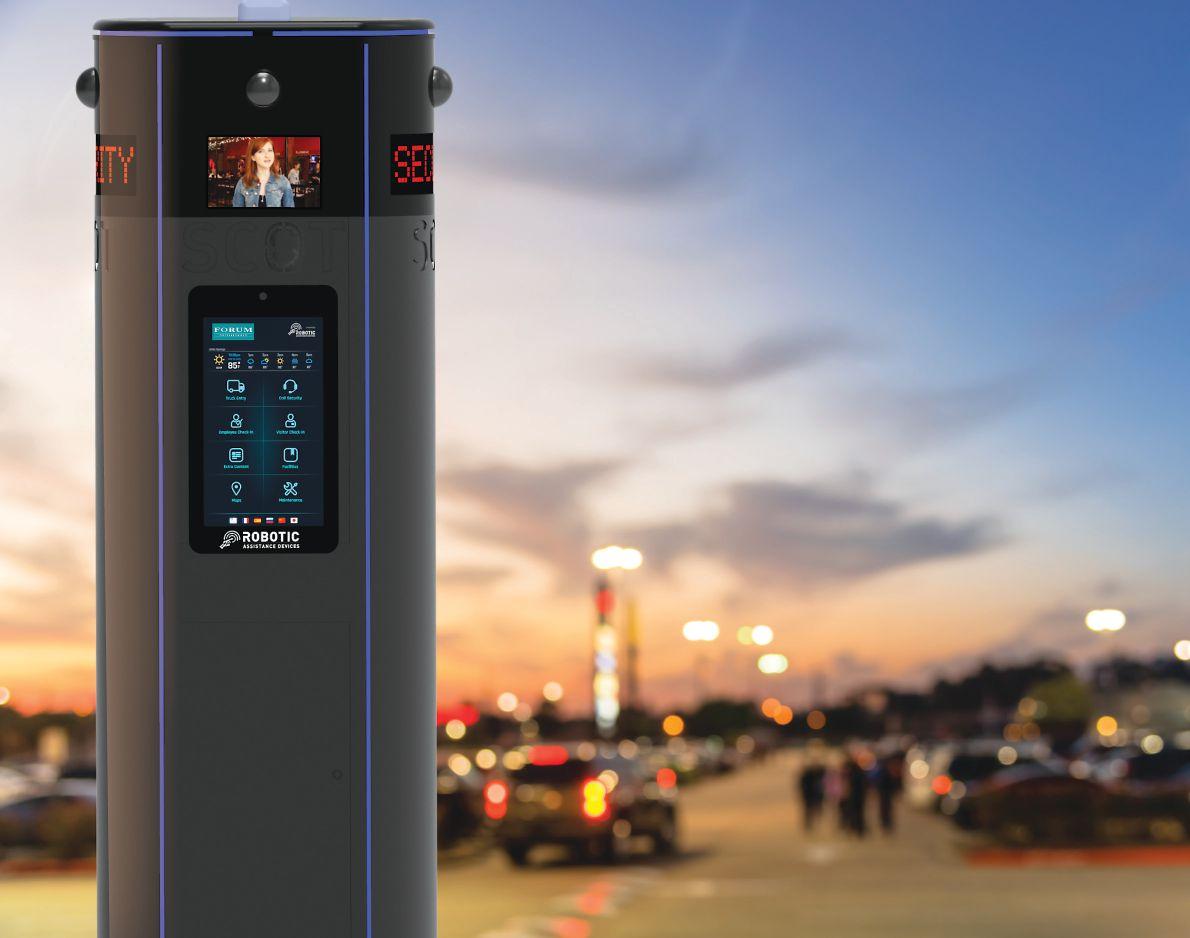
Technical improvements and fresh uses for robots during the pandemic have resulted in new market interest
By Madalene Arias
While robotics has established itself in industries like manufacturing, food processing and health care, the security industry is still quite early in its adoption of the technology.
This is how Jason Ouellette, director of technology and business innovation for Johnson Controls, described the current state of security robotics.
The tech that drives the bots
Security robot technology has become more robust within the last decade, according to Ouellette, who noted incidents where robots have demonstrated problematic mobility issues in their earlier stages of development.
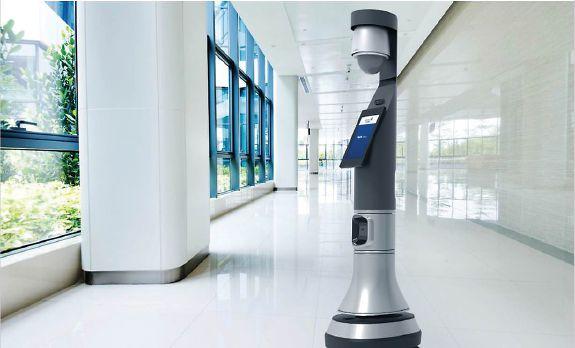
In September 2021, Johnson Controls shared news that it has chosen Ava Robotics to power its security robots under the Tyco brand. The com-
pany stated that it had made this decision as part of its digital transformation and innovation initiatives. Earlier this year, the company presented the Tyco Security Robot powered by Ava Robotics in Dubai at Intersec 2022.
Ouellette explained that choosing to partner with Ava Robotics came down to payload and allowing them to integrate their own video management solution, which can either be VideoEdge, Exacq or any other VMS that is ONVIF compliant.
Since Ava’s technology allows Johnson Controls to integrate its own video products, this provides what he described as a more seamless, unified experience.
The camera sitting at the top of the Tyco model records while Ava’s technology ensures
video continuity even in the event that a Wi-Fi connection is lost. Another feature which helped Ava make the cut for Johnson Controls was ledge detection to ensure the robot doesn’t fall down a stairwell — an important component for building inspections and patrols.
“Their autonomy engine really met the needs of what we’re looking for,” said Ouellette.
He noted that Ava now has a partnership with Cisco Telehealth which has introduced the Telepresence nurse robot.
“That is momentum that we wanted to build on. The fact that our security robot and the telepresence robot run on the same platform means we can have both robots,” he said, adding that the addition of another robot under this partnership would come without charge and without the need to retrain the machine.
For one of Silicon Valley’s security solutions providers, Cobalt Robotics Inc., established in 2016, simple tasks such as navigation through doors and elevators signify major
“It’s really eyes and ears at a site where the guards can be focused elsewhere.”
— Paul Baziuk, Cancom

You acquired a security company or expanded into the alarm industry
Your business is a growing concern and you need cash flow to fund your growth
You need support when loading and servicing alarm customers
You need access to quality security products, reliable suppliers and dealer pricing
Your current dealer program is limiting your growth
You need stable and predictable funding
You need to invest in inventory, staff and marketing
You want access to new lines of business
You’ve built a successful business and now it’s time to reap the benefits of your hard work
You need to turn equity into cash for life’s special moments
You need to remove administrative headaches (billing, collections)
You need stable and predictable cash flow but retain ownership of your business
You’re ready to live your dreams
You need to maximize your payout
You have a time-line and you need an experienced buyer who will navigate a smooth transition to the finish line
Your customers need world class monitoring with continuing service and support






technological advancements.
“In robotics, we were the first robot company to deploy a system that could work on any elevator without modification,” said Cobalt’s founder and CEO Travis Deyle.
Deyle shared clips from Cobalt’s YouTube channel which depicted one of their robots lifting its arm to press an elevator key then turning and gliding through the opened elevator doors.
“It seems very simple, and conceptually it is, but it’s an incredibly complex task to pull off.”
Deyle said another major change has been integration of access control technologies from LenelS2 and Genetec.
“The big data lakes where all of security technology is pushing events and alerts — subscribing to them and being able to automate the workflows. Those have been the biggest changes in the last two years,” said Deyle.
Are they here to replace guards?
In some circles where security and robotics overlap, the short answer is yes. Steven Reinharz, CEO of
“Not only am I able to see what the robot is seeing, but analytics are running in the background.”
— Jason Ouellette, Johnson Controls
Artificial Intelligence Technology Solutions Inc. elaborates, saying that security robots are absolutely here to replace guards, but not all of them.
“It’s specific post orders. I don’t intend to replace all guards. It’s impossible. Guards do a lot of great things,” said Reinharz.
“But guards are also assigned dull, dangerous, mundane post orders that will be replaced by autonomous robots and are being replaced by autonomous robots today.”
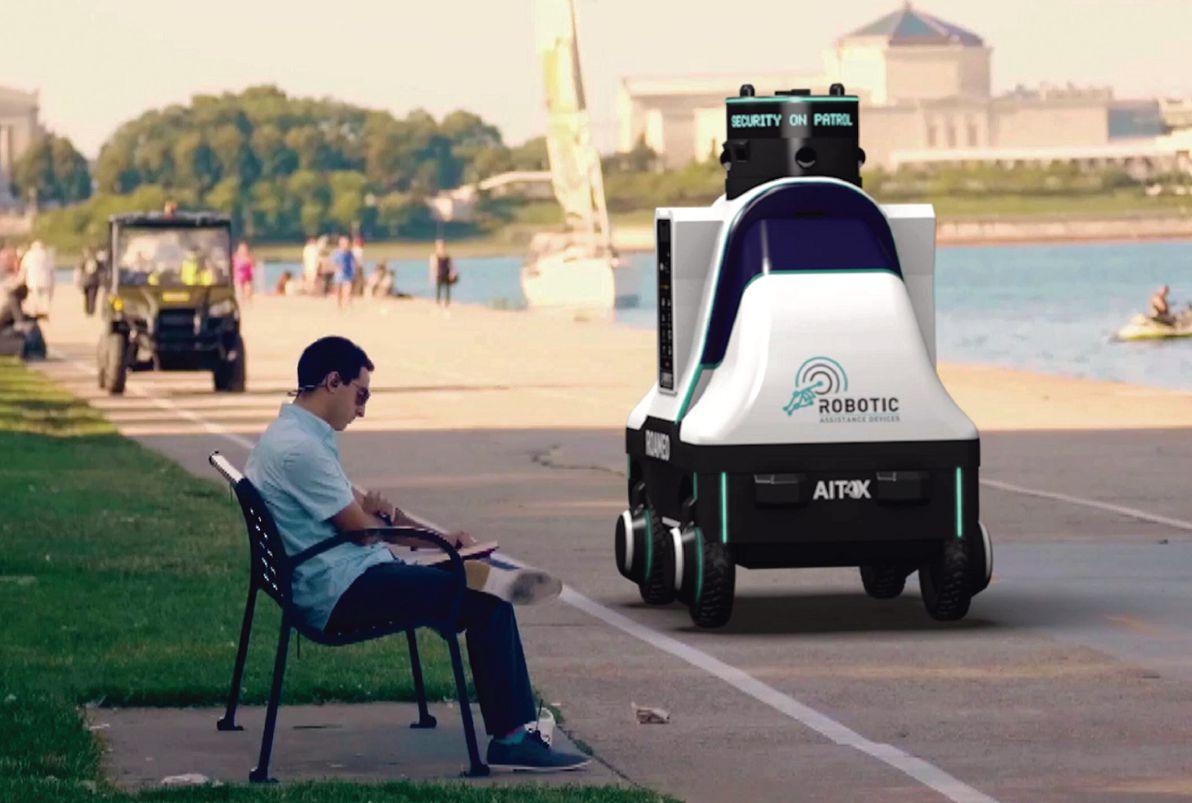
Last month, AITX received an order for five of its robots. The order came through its wholly-owned subsidiary, Robotic Assistance Devices Inc., for Cancom Security, a provider of private security services based in Ontario.
Cancom’s vice-president Paul Baziuk explained that RAD’s security robot, the ROSA, is one that highly complements a guard-based business like Cancom.
“It’s really eyes and ears at a site where the guards can be focused elsewhere,” said Baziuk.
Additionally, the ROSA has a lower operating cost than a human guard and provides additional value, according to Baziuk.
That value is in the technology, some of which Ouellette also described.
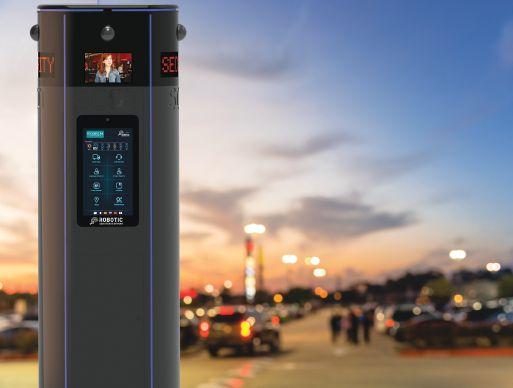
As Baziuk explained, the ROSA has two cameras on it, a display, a speaker and other components that enable communication with persons in front of it in real time.
“It’s really high-tech. It’s new technology that I think will provide a lot of value to clients that have security guard services at their site,” said Baziuk.
Ouellette noted that not only will a robot never call in sick, companies can incorporate AI and analytics into the robots to capitalize on their deployment.
“Not only am I able to see what the robot is seeing, but analytics are running in the background and convert on things that are abnormal,” Ouellette concluded.
Rather than thinking of robots as guard replacements, Sherman Brawner, vice-president and general manager, Allied Universal Technology Services, said he views them as replacements of the more repetitive aspects of a guard’s job and an augmentation to his or her tasks.
Allied Universal recently entered into a partnership with security robot technology company Knightscope to deploy its products to Allied Universal’s U.S.-based customers.
Brawner explained that robots are good at observation and reporting. But unlike a human guard who has experience and training, a robot cannot collect details from its environment and use them to make a decision. Therefore the human in the middle is still a necessity.
“In many cases, what we may be doing is putting the robot out in the dangerous area and putting the person who interacts with them at a spot where they can interact with
the robot and maybe other security technology. So the guard didn’t really go away. What he did was become smarter,” said Brawner.
Vertical markets
Cobalt Robotics treats any indoor environment as viable for deployment, Deyle said. Cobalt’s distribution mainly covers corporate offices but also extends to warehouses, schools and hospitals.
Autonomy is another key factor in determining verticals for security robots.
In the case of Johnson Controls and Ava Robotics, the ability to deploy one of their Tyco robots without the need for any human involvement or the need for the human ability to drive a robot was a big selling point for the company. As Ouellette expressed, the absence of any human interaction embodies the true spirit of autonomy.
Brawner said the most important verticals for security robots are commercial real estate and retail.
He attributes this to the fact that both environments have the highest mix of people and the most dynamic ability for interactions. In both scenarios, robots lend themselves as a moving set of eyes.
Brawner noted that since robots have recorded voices that enable them to speak, they can greet tenants or clients in a retail setting once their presence has been detected which could also fulfill an advertising role for the business and benefit the owner.
Another area where interest in security robotics is growing is in dangerous environments like petrochemical plants or chemical manufacturing facilities where a human might come into contact with noxious gases or a hazardous substances.
“The robot is essentially unaffected,” said Brawner.
Involving
RAD president Mark Folmer said that his company’s current ecosystem consists of 30 channel partners who are mainly guarding companies.
He explained that customers will approach their channel partners with a security problem to which they will respond with a solution that includes some combination of security officers, an access control system, a background
check and two or three robots, for example.
Folmer added that more recently, security technology companies and security integrators have also begun to participate with RAD.
It’s the people who have a profound grasp of how robotics technology works who are the most adept at selling it, according to Ouellette.
He added that these aren’t the sort of products sold through PowerPoint presentations and virtual discussions. Bringing these products to live demos and conferences is key to driving market adoption.
“It’s seeing, touching, believing and seeing the value,” he said.
Robots and the pandemic
The spread of the highly contagious coronavirus and all of its social, political, economic repercussions pushed security robots onto the market in three ways.
Firstly, several industries suffered labour shortages and the security industry was no exception. Security has struggled to secure resources and talent for guard positions specifically. There is also a high turnover rate in the industry. All of these factors combined have accelerated robot adoption, according to Ouellette.
Brawner noted that COVID-19 created the necessity for symptom screening and compliance reporting.
During this time, robotic systems producers and their software development teams quickly deployed machines to screen personnel for elevated body temperatures.
The purpose of using this approach to coronavirus screening was to reduce the interaction of a person checking temperatures while recording images and gath-
ering other information to ensure compliance with policy.
Machines deployed to this type of scenario were able to produce exceptions from the information gathered and made them available to a remote handler or an agent monitoring the outcomes. Additionally, robots served to detect persons not following social distancing measures in public places as well as calculating the total number of people in a given space. They were also able to detect whether people adhered to mask policies.
“They can be in areas with people in fairly close contact, and not get sick or be concerned about being in a high-risk category of exposure, all while gathering information and sending notifications when applicable,” he later wrote in an email to SP&T News
Since robots proved capable of fulfilling essential COVID screening duties, what followed was the recognition of these devices and their software as potential alternatives to people while eliminating the risk of exposure or further spread of the virus.
Lastly, the height of pandemic restrictions brought forth angry and aggressive behaviour from some members of the public towards individuals in frontline roles like security guards.
According to Folmer, the growing concern for the personal safety of security guards made robots more attractive to the industry. “People said, ‘Hey, I would much rather somebody get angry at a device that’s up on a wall or something that’s roaming around than get angry at a person who’s enforcing a rule.”


By Eric Talley
Maintenance closets storing cleaning supplies and government vaults protecting national secrets each have security needs.
However simple or complex they are, the physical access control of facilities risks neglect if innovation is ignored.
Thanks to advances in access control, implementing modern technological systems can be transformative not just for security, but for workplace management as a whole. If there’s a benefit to glean from the past two years, it’s been the opportunity for innovation through the integration of health indicators to existing security systems.
Such new features include skin temperature analysis, symptom screening and additional ad-
vancements in automated visitor management. Advances like these and others below help organizations to oversee employee and visitor flow effectively and with greater efficiency. They help organizations safeguard their people and assets as this pandemic has progressed and provide policies and governance for navigating unforeseen safety concerns in the future.
Security systems already in place have likely been serving organizations adequately. As threats evolve, so should the systems meant to address them. Modern advances in electronic access control systems contain features that fit into existing systems.
Adding features and functionality is as simple as integrating software applications. This allows separate systems within the overall security program to communicate and work collaboratively to manage seamless control.
Incorporating these functions creates a robust and nimble security network.
• Directory services: Utilizing an electronic access control system can effectively add a security layer if it’s not already incorporated within the current environment. These systems draw upon existing human resource and time and attendance data, as well as directory services like Active Directory and Azure AD. The resulting access control is user-friendly and reduces fail points when you are adding or removing employees.
• Video management: Video management systems integrate with the physical access control structure and include features such as video verification — which is a function used to verify alarms when they trip due to an intrusion. Individual or multiple cameras and alarms are a feature of this type of setup. Beyond individual access, video management can
“Beyond security, modern access control systems can tie into a building management network.”
a counting function that eliminates unauthorized access by anyone walking closely behind an authorized user. This function can also help manage space capacity limits, sending alerts when occupancy thresholds are met.
• Building and visitor management: Beyond security, modern access control systems can tie into a building management network, such as automated HVAC and lighting, to provide monitoring and control benefits. These systems also send a unique credential via smartphone to any visitor appointments or staff due to be onsite for only select periods. This code offers them access through security while also alerting their host upon arrival. Half of the battle in managing access to a facility are the protocols that a business puts in place. It is vital that your system can work in conjunction with these protocols while giving you the freedom to adjust them as you see fit.
• Health and safety: Integrating skin temperature detection or health symptom screening wasn’t on the radar of most facility security specialists before the pandemic. Times change. Yet, electronic access control systems are ready to adopt these measures to better manage workspaces. Available features include push notifications for personnel to complete and submit mandatory health symptom surveys before arriving or gaining admittance. Skin temperature detection can also be integrated and serve as a security layer. When this integrated system identifies a symptom indicator, its configuration immediately alerts human resources and enables an automatic postponement or rescheduling of appointments. Push notifications also offer any next steps that the host recommends or requires, such as quarantine.

try only, modern electronic access control systems are a dynamic toolset to manage modern spaces securely. Choosing modern setups capable of upgrading functionality allows property managers and entire enterprises alike to help protect business space, their brand and reputation.
Facility accommodation will transform as workplace demands change. What the catalysts for future change will be — a new COVID variant, an altogether different pandemic, new hybrid work combinations or some unforeseen influence still over the horizon — is anybody’s guess. Electronic access control systems hold the promise to evolve in unison with the demands placed on them.
Access control has evolved dramatically. Historically designed to limit en-
Eric Talley is a strategic account manager at STANLEY Security (www. stanleysecurity.com)





















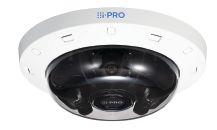
The i-PRO multi-sensor camera is available with three or four imaging sensors in 4K, 6MP and 4MP. The camera incorporates a built-in AI processor enabling advanced analytics to detect people and vehicles and automatically optimize images. The unit offers wider coverage capabilities with a larger tilt range, as well as IR LED lighting on select models. The camera also features FIPS 140-2 level 3 encryption and level 3 compliance, tamper-resistant technology and identity-based authentication. www.i-pro.com
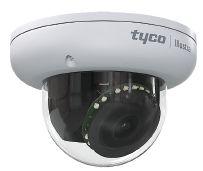
Johnson Controls
Johnson Controls has announced Tyco Illustra Pro Gen4 2MP, 4MP and 8MP Edge-AI minidomes. These cameras provide organizations with the capability to respond to incidents faster as AI enhances the speed and accuracy of forensic searches. This is achieved by embedding object classification capabilities directly on security cameras. Events can be narrowed to classes such as a person, car, bus, motorcycle or bicycle. Smart features such as smart wide dynamic range automatically scans the video scene and adjusts contrasting and overall scene balance without operator intervention or maintenance and the new smart defog feature allows for surveillance even in challenging weather conditions. www.illustracameras.com
3xLOGIC has added Smart Search capability and a Network Video Recorder plugin to its VIGIL CLOUD mobile app. With Smart Search capability, mobile app users can now quickly identify and review events of interest. Providing functionality between 3xLOGIC VIGIL Server, client-based solutions and CLOUD, Smart Search allows users to focus their searches on just the areas or frames that most interest them. The interface allows users to narrow down their search results by selecting as many or as few blocks of the image as they wish to search within the playback field. www.3xLOGIC.com


Quantum announced the availability of an update to the Quantum VSHCI Series Acuity software platform, which was recently acquired from Pivot3. The 10.9 version of the Acuity software platform addresses the system-level availability, health, maintenance and performance needs of organizations where video is mission-critical. This update extends the features of the VS-HCI Series built-in Intelligence Engine, which is at the core of the Quantum Acuity software platform. www.quantum.com
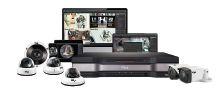
The updated IDIS camera line-up, designed for a wide range of settings and environments, includes 2MP, 5MP, and 8MP domes, bullets, and turret cameras, plus the company’s 5MP and 12MP IR Super Fisheyes. The new NDAA-compliant models come with IR, true WDR, IDIS Smart Failover, alarm in/out, and two-way audio and vandal resistance options. New NDAA-compliant recording is enabled with 16- to 32-channel network recorders, featuring built-in PoE switches, incoming throughput of up to 370Mbps, and allow 960ips UHD real-time recording. www.idisglobal.com
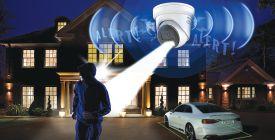
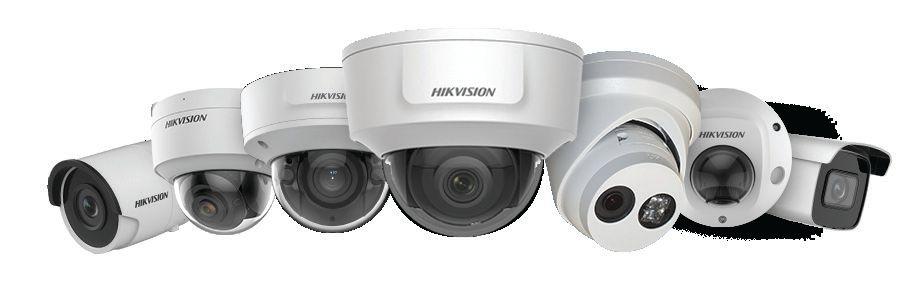
The new AcuSense Audio and Strobe Light Camera Series combines advanced machine learning with integral strobe lighting and audio warnings. Equipped with Hikvision’s second generation AcuSense intelligence, these new cameras help reduce false alarms by up to 90 per cent, according to the company, by accurately classifying humans and vehicles, and filter out innocuous motion events. Users can customize audio responses with pre-recorded audio messages that play at up to 60dB from a built-in speaker. www.hikvision.com
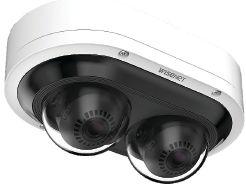
Hanwha Techwin America
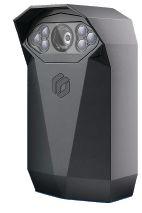
AutoVu Cloudrunner is a new cloud-based vehicle-centric investigation system that detects, analyzes, and stores accurate vehicle identification data to support public safety investigations. Cloudrunner CR-H2 is a new high-performance solar-powered automated licence plate recognition camera. Powered by AutoVu Machine Learning Core, the CR-H2 camera goes beyond licence plate recognition and can identify vehicle colour and type, as well as behaviour analytics, such as speed estimation and direction of travel. The Cloudrunner investigation system is also compatible with existing ALPR cameras and has the ability to integrate with ALPR data coming from select third-party cameras. AutoVu Cloudrunner will be available in summer 2022. www.genetec.com
The PNM-C12083RVD supports 15fps image capture and true 120dB WDR (Wide Dynamic Range) without compromising the frame rate for each of its 6MP sensors. Motorized vari-focal lenses offer a focal range of 3.54–6.69mm for flexible field of view adjustment in each direction. Similarly, the new PNM-C7083RVD supports 30fps with 120dB WDR for each of its 2MP sensors. The camera’s motorized vari-focal lenses support a range of 3.0–6.0mm. The new multi-directional AI cameras’ deep-learning algorithms can identify multiple distinct objects.
www.hanwhasecurity.com

Alarm.com
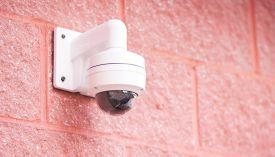
Alarm.com introduced the Pro Series commercial-grade Power Over Ethernet (PoE) cameras. There are four new cameras now available: Two 1080p domes with varifocal and fixed lens options, a 4MP varifocal turret, and a 4MP varifocal bullet. The 4MP varifocal bullet includes an audible buzzer and supports Alarm. com’s Perimeter Guard deterrence technology. The cameras integrate with the Alarm.com platform including intrusion and access control.
Alarm.com
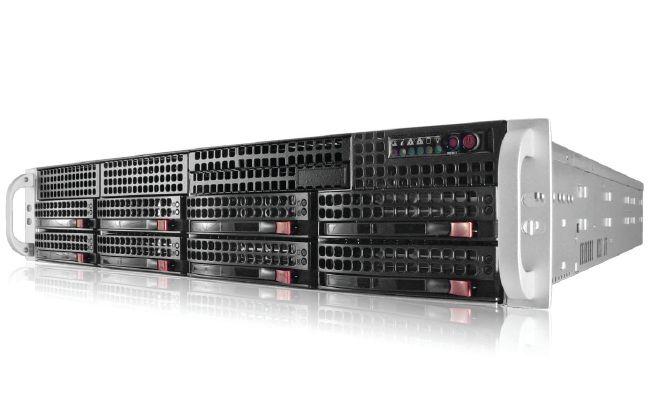
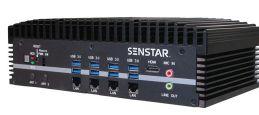
The E5000 Physical Security Appliance is a turnkey hardware and video management software solution. The E5000 PSA combines ruggedized compact, purpose-built hardware with the Senstar Symphony Common Operating Platform. Available in two models — with 8 or 16 base VMS licenses — the E5000 Series PSA is suited for critical sites where vibration and extreme temperatures are difficult to manage, including remote utility and energy infrastructure, as well as space constrained environments. www.senstar.com
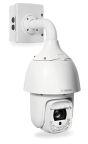
Bosch has introduced the Autodome IP starlight 5100i IR moving camera with a new 1.1/8 inch sensor offering 4-megapixel resolution and 30x optical zoom. It offers HDR X combined with starlight technology and dual illumination — integrated IR and white light — to capture images that can distinguish individuals or objects. With built-in AI, the camera, when idle, supports operators with object detection in areas of interest. www.boschsecurity.com
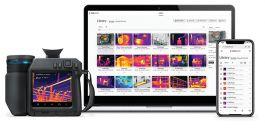
Teledyne FLIR announced the expansion of the Ignite Cloud Workflow to three families: the T8xx-Series, T5xx-Series, and the Exx-Series, along with offering secure cloud storage free (up to 1GB). The expansion also includes Ignite Sync, giving users the ability to sync their respective online image libraries to their PC or mobile device, in addition to transferring images between the camera, client devices and the cloud. Technicians can connect the cameras to the FLIR Ignite library while in the field. ignite.flir.com



TRENDnet
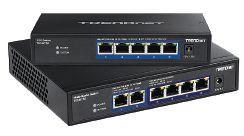
TRENDnet announced two new 10G switches: the 5-Port 10G Switch (TEG-S750) and the 6-Port 10G Switch (TEG-S762). The 5-Port 10G Switch, model TEG-S750, features five dedicated 10G ports, with a 100Gbps switching capacity. It also supports 2.5G and 5G connections over Cat5e cabling (or better); 10G speeds are supported over Cat6A cabling (or better). The 6-Port 10G Switch, model TEG-S762, features two dedicated 10G ports and four dedicated 2.5G ports, with a 60Gbps switching capacity. www.trendnet.com
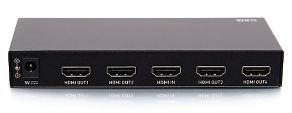
C2G is expanding its family of HDMI Distribution Amplifier Splitters with the two-port C2G41600 and the four-port C2G41601 4K 60Hz models. Supporting resolutions up to 4K (4096 x 2160) at 60Hz 4:4:4, the HDMI 2.0 and HDCP 2.2 compliant splitters are equipped with HDMI outputs that can supply 5V at 150mA to two or four sink devices (displays) and handle total HDMI data rates up to 18Gbps with plug-and-play convenience. Both splitters utilize the HDMI 2.0 standard. www.C2G.com
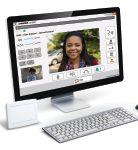
Aiphone has enhanced the IX Series PC Master Station Software. It now offers two options to turn any personal computer into a feature-rich intercom. The IX-SOFT and IXW-MA-SOFT give customers the option to choose between a portable, plug-and-play USB dongle to activate individual personal computers or a multipurpose adaptor for a single PC, a group of five PCs, or a group of 10 PCs. www.aiphone.com
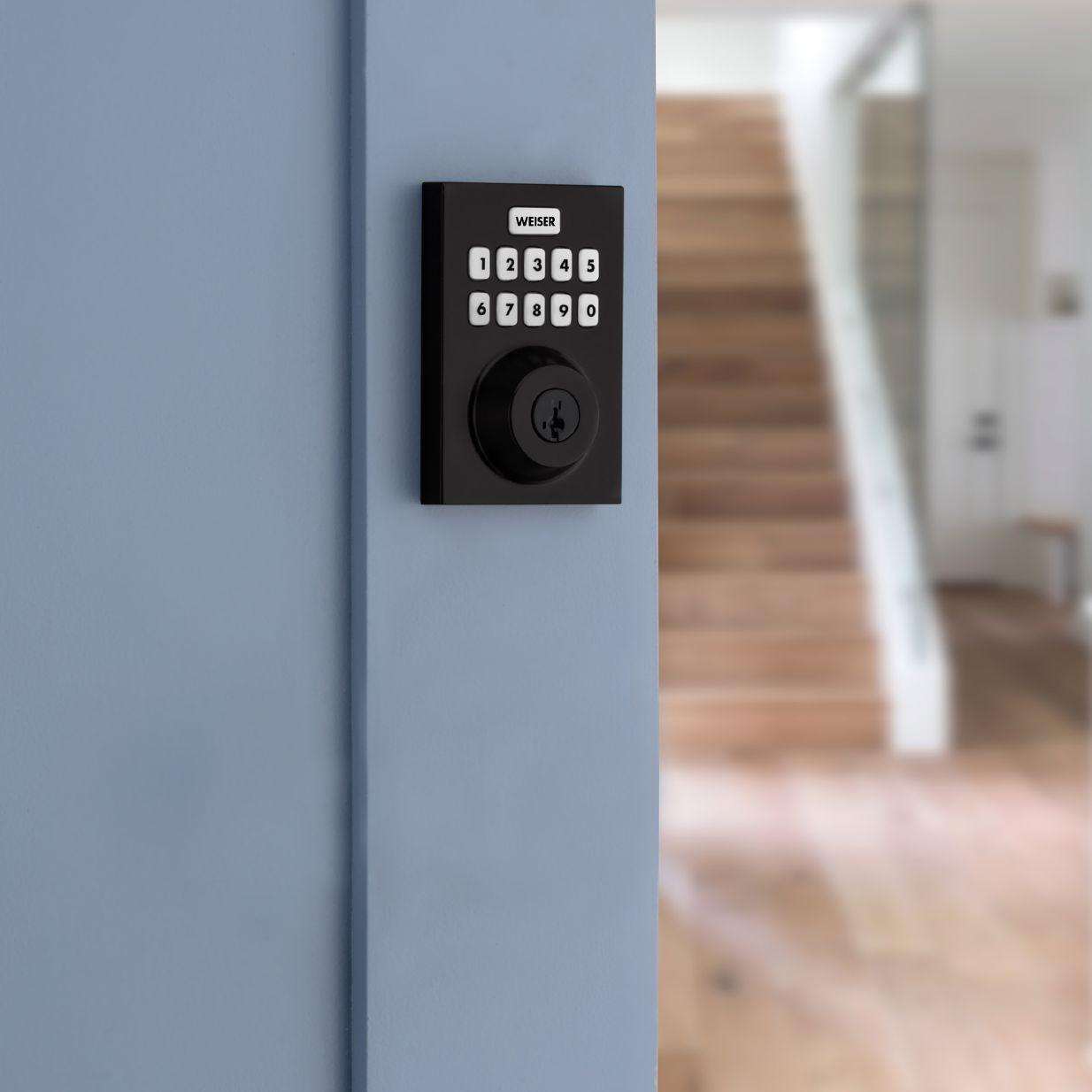
Z-Wave® 700 for enhanced network security, network pre-enrollment, and extended wireless range and battery life
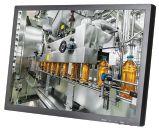
TRU-Vu Monitors has released a new 21.5” industrial-grade LCD monitor. The new VM-21.5UNBS24 monitors provide 1920 x 1080 Full HD resolution and super-wide 178 x 178 viewing angles. The VM-21.5U-NBS24 features HDMI, VGA and Composite BNC video inputs for connectivity to any camera, device or system. They will operate on 1224VDC as well as 90-240VAC. These monitors are suited for manufacturing plants, refineries, processing plants, OEM equipment, inspection, surveillance systems and more.
www.tru-vumonitors.com
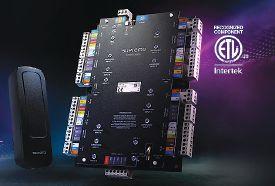
Suprema announced its products and solutions have acquired international safety certificates. Suprema’s four-door access control panel CoreStation is its first controller that acquired UL 294 compliance. Suprema’s compact outdoor RFID reader, XPass D2 is SIA OSDP verified. Suprema’s access control and time & attendance platform BioStar2 has acquired ISO 27001 and ISO 27701 certifications, which certify compliance with GDPR. www.supremainc.com
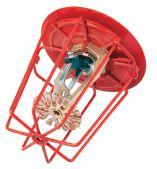
Johnson Controls introduces the Tyco Model ES-1 and ES-2 Sprinkler Shields for the protection of in-rack early suppression fast response (ESFR) sprinklers in storage facilities and warehouses. The all-metal shields work to protect sprinkler elements from cold soldering, which occurs when cascading water from ceiling-mounted and high-mounted in-rack sprinklers cool down and inhibits the operation of in-rack sprinklers mounted at lower heights. The sprinkler shields are designed for use with Tyco Model ESFR pendent sprinklers. www.tyco-fire.com

AmpliVox Sound Systems is now offering lecterns and AV equipment rack carts formerly marketed by Da-Lite. The lecterns, which have been manufactured by AmpliVox on behalf of Da-Lite for the past four years and have been recently discontinued by Da-Lite, are now available exclusively from AmpliVox and its resellers. The lecterns are available in several basic series as well as an extended offering of over 50 standard and custom models. www.ampli.com
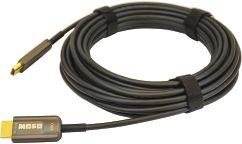
TechLogix Networx
TechLogix MOFO HD21 Series cables feature a true fibre optic core for interference-free, uncompressed 8K HDMI signal transmission up to 30m without the need for in-line boosters or power supplies — run the MOFO cable and connect it to your source and destination devices. HD21 Series cables support a 70lb pull-rating and 1.8 inch minimum bend-rating, and the plenum-rated jacket accommodates in-wall installation or in conduit larger than one inch in diameter.
www.tlnetworx.com
ProdataKey
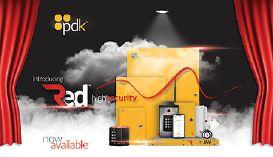
ProdataKey has introduced four new controllers: the PDK Red 8, Red Max, Red Gate and Red Pedestal. The new PDK Red 8 and PDK Red Max are all-inone multi-controller and power supply enclosures designed to streamline ordering and installation of access control hardware in midsize to large-scale commercial projects. The Red Gate and Red Pedestal bring security to outdoor areas like parking lots, garages, gated entrances, athletic fields and loading docks. Each are available in two versions, offering a choice of Wimac wireless or Ethernet connectivity. www.prodatakey.com

TDSi
Additions to the GARDiS integrated access management software solution v2.3 include: universal decode/auto detect, support for RS485 readers, generation of FILO (First In Last Out) reports, an extended door lockdown feature, a data fusion and exporter function, for Access Control Units (ACU) inconsistency alerts, automated emailing of reports, bespoke badge printing, integration with GAMANET’s C4 platform, support for Gpoll 1.0.8, and a password reset via email function. www.tdsi.co.uk
iDter can be used as a standalone security system or to augment guard services with integrated technology at the protected premises. Engineered with Nio guardian nodes and protector technology, it features artificial intelligence deep-learning, cloud video storage and video verified monitoring with dispatch to PSAP. Nio nodes are positioned around the protected premises to detect intrusion with a 4K HD resolution camera with wide-angle lens, multiple motion detectors, omni-directional microphone and quad-core intelligence.
www.idter.com
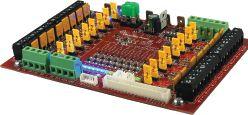
The SD16 provides voltage, current and power measurements for 16 network managed auxiliary outputs. Power cycling a device to reset can be accomplished remotely without resetting the entire access control system or taking it offline. With the SD16, frozen access control panels or DC cameras may be remotely reset. Custom high and low alert triggers may be set for each output. Featuring an on-board RS485 connection, the SD16 is ideal for remote monitoring applications using Distributed Power Monitoring with the NLX NetLink Network Communication Module. www.lifesafetypower.com
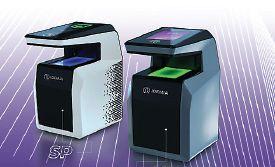
With MorphoWave, users wave their hands to have their four fingerprints 3D-scanned and verified in less than one second. In 2022, two new versions will be available for worldwide deployment. MorphoWave XP X-tended Performance provides a 20% increase in performance compared with the previous generation. It accommodates up to 60 users per minute and up to 100,000 user records. MorphoWave SP Simplified Profile accommodates up to 40 users per minute and up to 10,000 user records. www.idemia.com
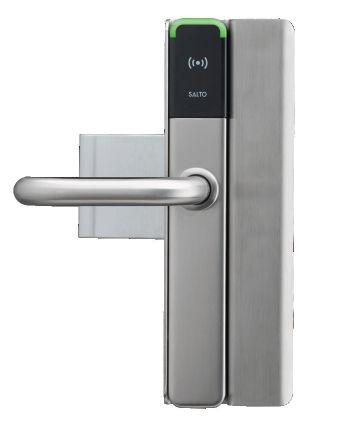
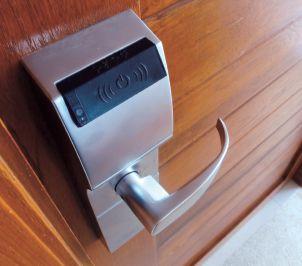
With the Resident Visitor Management feature and the enhanced BlueSky mobile app, property managers can enable residents to provide temporary access to both perimeter and common areas by creating and sharing mobile keys or PIN codes. Mobile keys can also be sent for access to interior unit locks. Residents can create and manage PIN codes including single use, date and time specific use, or multiple use access. Using the BlueSky app, residents have the flexibility to send credentials by text or email. They can use this new functionality to provide access for package and food deliveries, visitors, etc. www.dormakaba.com

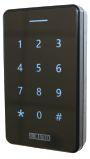
Matrix COSEC ATOM RD100K features a minimalist installation. With its third-party integration via Weigand interface, it can be used to expand and update the existing infrastructure. Matrix COSEC ATOM RD100K optimizes security in the workspace, according to the company. Key features include: multi-credential support (RFID card & mobile authentication); multiple interfaces (Wiegand, RS-232, Exit Switch Interface, Door Lock Relay); certified protection against ingress and vandalism; and third-party integration. www.matrixcomsec.com
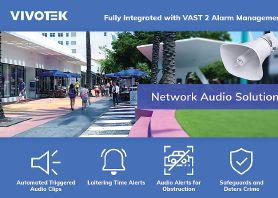
VIVOTEK announced the launch of its new network audio solutions. The system includes the AU-001 Network Horn Speaker and the AU-002 Network Audio Driver. The indoor/ outdoor AU-001 Network Horn Speaker provides a long range 106 dB voice alarm. It’s compatible with VAST 2 and allows users to upload their own audio clips on VAST 2 for broadcasting. The AU-002 Network Speaker Driver solution converts a traditional analogue speaker to a network speaker. It supports SIP and UDP broadcast protocols. www.vivotek.com


















































































































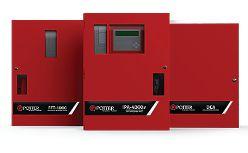
Potter announces the release of the Integrated Voice System along with the IPA-4000V and AFC-1000V fire alarm control panels. These updated panels now include the ability to create and send out voice evacuation messages. The Integrated Voice System can be used to address multiple site requirements for the Potter AFC-1000V and IPA4000V, with capacity including up to 104 programmable push buttons, 31 total system amplifiers, 248 speaker circuits, and remote system control. www.pottersignal.com
Antaira’s LMP-1802G-M12-10G-SFP-67-24
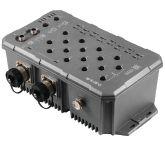
Light Layer 3 managed series switch is IP67-rated switch and was designed for industrial applications that are subject to high vibration and shock, water and dust. The company’s switches offer 24 to 55VDC redundant power inputs through a 5-pin M12 K-coded male connector. The total power of 240W is available for supplying up to 16 IEEE 802.3af (PoE) & 802.3at (PoE+) devices. Builtin fault tolerance ensures against PoE system or PD overloads thanks to the PSE management system. www.antaira.com
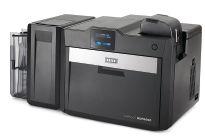
Built on six generations of retransfer technology, the HID FARGO HDP6600 high-definition printing and wasteless lamination solution delivers reliable, high-volume, high-quality card and ID production. Newly available in 2022, HID’s phase III release includes new features such as resin scramble data protection, a multipass function for added card durability, AES-256 encryption and more. www.hidglobal.com
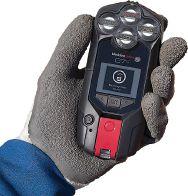
The G7 wearables detect gas leaks, falls and other health events in all types of environments. They can also be used for contact tracing purposes or to determine how often workers travel through high-risk areas. The devices operate on available cellular, with optional satellite connectivity. Workers are instantly alerted to emergency situations to facilitate evacuation and emergency response.
www.blacklinesafety.com