



Drone detection firm visits Toronto Alabama company is working with Vipond for Canadian sales of perimeter solution p.6
Assessing the impact of DIY and MIY Are these solutions helping or hindering the traditional alarm dealer? p.14
Lights, cameras, security Lighting and CCTV can offer the best possible options when paired and installed correctly p.22






Robots roll out Unmanned ground vehicles may represent a new paradigm in patrolling and security — particularly when paired with their aerial counterparts,UAVs
By Ellen Cools
Lighting
By Latif Jamani
• O.W.L. hunting for drones • Motorola Solutions to acquire Avigilon
• Dahua acquires Lorex business unit from FLIR 17 Hockey Classic
Mission 500 event raises $17,000 for Crime Stoppers Youth Programs
7 CANASA Update
Security Canada taking shape By CANASA Staff
12 Camera Corner
Cameras you can count on By Colin Bodbyl
Lessons Learned DIY and MIY: Opportunity and threat By Victor Harding


WBy Neil Sutton
ith the recent news that Amazon had reportedly paid more than US$1 billion to acquire smart doorbell maker Ring, another, perhaps more charming story also circulated.
Ring was pitched as an idea on the TV show “Shark Tank” and was rejected. Back in 2013, when the concept was presented to the panel of judges, the company was known as Doorbot. A recent article published by MSNBC on the subject featured an image of Jamie Siminoff, Ring’s founder and CEO, who appeared on the show wearing a Doorbot-branded golf shirt. He’s pictured standing next to a convincing prop of a front door complete with welcome mat, porch light and planters — and a small device placed at about doorbell height, presumably a prototype of the product that would eventually become a big success.
The charming part of this story isn’t that Siminoff suffered an initial setback — and one that might have derailed a great many entrepreneurs — but that he clearly believed in his vision enough to persist.
The last five years in the security business have probably seen as much change as the previous 15, so it’s difficult to fault anyone for passing on an idea that was clearly ahead of its time. At press time, Amazon had not officially announced its Ring acquisition, nor was the purchase price officially disclosed, but the implication is clear — Amazon is very serious about the home security business, as is one of its main corporate rivals Google, which owns the Nest brand.
Both are household names and both have already
established a toehold in the home itself through popular devices like Amazon Alexa and Google Home. Add-on products, whether those are speakers, thermostats or doorbell cameras, may seem like a natural fit for many consumers.
What this all means for the traditional home security market remains to be seen. The next five years may be even more disruptive than the last five.
I think there will always be a market for professionally monitored alarm systems installed by trained technicians, particularly for high-end residential. I also think the key question here is one raised by Victor Harding in his column on p. 14.
Will Amazon, Google and other mainstream technology providers dramatically expand the home alarm market beyond its current 20-25 per cent penetration rate, or will the market grow marginally with those companies accounting for a larger proportion of a small pie? My personal view is that it’s somewhere in the middle. This market will grow. It has to.
To give all this a sense of perspective, consider that Amazon paid more than US$13 billion for Whole Foods last year. The company is hard-wired for growth in multiple markets. Home security is just one of its many interests, and by no means the largest one. But if Ring can grow to be a $1B company in just five years, anything’s possible.

Your Partner in Securing Canada
Security Products & Technology News is published 8 times in 2018 by Annex Business Media. Its primary purpose is to serve as an information resource to installers, resellers and integrators working within the security and/or related industries. Editorial information is reported in a concise, accurate and unbiased manner on security products, systems and services, as well as on product areas related to the security industry.
Group Publisher, Paul Grossinger pgrossinger@annexbusinessmedia.com
Publisher, Peter Young pyoung@annexbusinessmedia.com
Editor, Neil Sutton nsutton@annexbusinessmedia.com
Assistant Editor, Ellen Cools ecools@annexbusinessmedia.com
Art Director, Graham Jeffrey gjeffrey@annexbusinessmedia.com
Account Coordinator,Trish Ramsay tramsay@annexbusinessmedia.com
Circulation Manager, Aashish Sharma asharma@annexbusinessmedia.com Tel: 416-442-5600 ext. 5206
COO, Ted Markle tmarkle@annexbusinessmedia.com
President & CEO, Mike Fredericks
EDITORIAL ADVISORY BOARD
Colin Doe, Veridin Systems Canada Anna Duplicki, Lanvac
Victor Harding, Harding Security Services
Carl Jorgensen, Titan Products Group Antoinette Modica, Tech Systems of Canada Bob Moore, Axis Communications Roger Miller, Northeastern Protection Service Sam Shalaby, Feenics Inc.

111 Gordon Baker Rd, Suite 400, Toronto, ON M2H 3R1 T: 416-442-5600 F: 416-442-2230
PUBLICATION MAIL AGREEMENT #40065710
Printed in Canada ISSN 1482-3217
CIRCULATION
e-mail: asingh@annexbusinessmedia.com
Tel: 416-510-5189 • Fax: 416-510-6875 or 416-442-2191
Mail: 111 Gordon Baker Rd, Suite 400, Toronto, ON M2H 3R1


SUBSCRIPTION RATES: Canada: $42.00 + HST/yr, USA: $74.00/yr and International: $84.50/yr Published 8 times a year

Occasionally, SP&T News will mail information on behalf of industry-related groups whose products and services we believe may be of interest to you. If you prefer not to receive this information, please contact our circulation department in any of the four ways listed above.
Annex Privacy Officer privacy@annexbusinessmedia.com Tel: 800-668-2374
No part of the editorial content of this publication may be reprinted without the publisher’s written permission. ©2018 Annex Publishing & Printing Inc. All rights reserved.
Annex Publishing & Printing Inc. disclaims any warranty as to the accuracy, completeness or currency of the contents of this publication and disclaims all liability in respect of the results of any action taken or not taken in reliance upon information in this publication.


125 years of experience in putting the security of others first.
We understand you need to protect more than brick-andmortar, which is why ADT does more than monitor. ADT has a wide range of alarm and security options for organizations of any size to help protect people, goods, and data. With 24/7 surveillance, solutions against intrusion and fire, remote monitoring, interactive services and more, ADT has a security solution for your organization. Join those who trust ADT with their livelihoods and protect your business.
We are an integrator, meaning we can take over nearly any of the existing security equipment you have on-site.

We are customer-service oriented, innovative and technology savy.
With over 125 years of experience and 15 branches in Canada alone, including four monitoring stations, you can trust the experts.
By Ellen Cools
As unmanned aerial vehicles (UAVs), or drones, become more popular and sophisticated, so does the demand for drone detection solutions in the security industry.
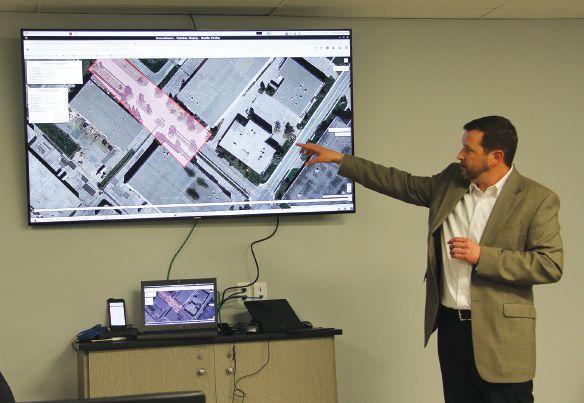
Vipond recently hosted a live demonstration of O.W.L.: Observation Without Limits’ perimeter radar defence and drone detection system, GroundAware, at its facility in Mississauga, Ont.
Huntsville, Ala.-based O.W.L. aims to provide awareness to “customers who operate in a world of ever-present threats” via technology solutions that “enhance the security, safety and efficiency of customers’ critical sites.”
The GroundAware series includes the GA1360, GA4120 and GA9000, each of which can detect, track, classify and respond to threats caused by humans, animals, vehicles, and drones in real time. The GA1360 provides a 360-degree field of view with a one km range, while the GA4120 has a 120-degree field of view with a four km range. The GA9000 Series introduces 3D ground surveillance capabilities.
At the demonstration, Anthony Tucker, senior account executive, and Josh Salmon, sales engineer, at O.W.L., showed how GroundAware can detect and track intrusions, how to set up alarm zones and discussed available integration options, as well as the installation process.
GroundAware can detect Class A and Class B drones, the “typical quad drones that you can buy off the shelf,” Tucker explained. “The larger the drone, the further we can detect it.”
Tucker and Salmon demonstrated the system by accessing the camera and GA9000 unit at their office in Huntsville, and an Axis Communications camera and GA1360 unit set up outside of Vipond’s facility.
Attendees saw real-time footage of the system tracking cars and people as they moved in and out of designated alarm zones at both sites. These designated alarm zones are geofences that users can draw on the interface.
“[The radar] can tell the speed, how long we’ve been tracking [the target], the heading and then the distance and altitude,” Tucker explained.
GroundAware can also be programmed with specific responses to alerts; it can file an alarm, send an email or a text, or pan-tilt-zoom the cameras to the target.
Alarm zones can also be silent, meaning that they are only turned on under certain circumstances. “The radar is always tracking,” Salmon explained. “So if, for instance, you put it next to a busy highway, it’s going to track every car that’s on that busy highway. In that instance you’re not necessarily concerned about that busy highway, so you’d draw a zone around it and those targets wouldn’t show up on your screen.”
When the system alerts the user to a target passing through an alarm zone, it classifies said target using an algorithm that determines whether it is a person, animal, vehicle, etc. “The radar itself detects torso movement, arm movement, leg movement,” Salmon elaborated.
In keeping with the theme of customization, O.W.L. performs a site assessment to determine the best location to place a pole on which to mount the system. During this assessment, the company also determines if a pole is
even necessary, as the unit can be mounted on a roof or an existing pole near the facility, provided line of sight is attained.
Typically, a Groundaware unit with a camera is mounted onto a telecommunications tower or a mast, with a power supply at the bottom.
Since the radar is Power over Ethernet (PoE), it requires a 60W PoE switch. O.W.L. sets up a 148W power supply in close proximity to the radar, a PoE injector, a switch connected to the user’s network and a Dyn relay. “You can host the computer, the server, anywhere on your network,” Tucker said.
The Dyn relay mechanism gives O.W.L. remote accessibility to restart the radar if there are any problems. It also allows the user to set up LED lighting and trigger other alarms such as voice commands.
This installation takes a day, Salmon explained. “We need a few days after the installation for our engineers to go and fine-tune the radar, and then also do some integration with the cameras and VMS system.”
Tucker told SP&T News O.W.L. currently has “over a dozen … maybe even 20 [clients] at this point.”
Currently, the company manufactures the units in Huntsville and does all installations.
The largest vertical market for this type of detection system, Tucker adds, is the utilities market.
“We also have some units that are at airports,” he continued. “We have a lot of interest in protecting large events such as concerts and … outdoor sporting events, especially when it comes to drone detection.”
During his presentation, an attendee asked whether being located close to an airport would be an issue.
O.W.L. began as a market for airports, Tucker explained. “In regards to interference with other RFs [radio frequencies], other frequencies out there, we have not seen it.”
Vipond is currently their only dealer in Canada. The system can be integrated with “just about any VMS we approach,” including systems from Johnson Controls, Avigilon and Genetec, Tucker said.
GroundAware “is just one more layer or one more sensor on your security network,” he concluded.
Motorola Solutions recently announced its intent to purchase Vancouverbased surveillance firm Avigilon in an all-cash transaction valued at approximately US$1 billion.
According to the terms of the agreement, Motorola will acquire all of Avigilon’s outstanding shares for $27 per share. The $1B enterprise value of the transaction includes Avigilon’s net debt.
“This acquisition will bring Avigilon’s advanced video surveillance and analytics platform to the rapidly evolving public safety workflow, while also expanding our portfolio with new products and technologies for commercial customers,” said Greg Brown, chairman and CEO, Motorola Solutions, in a statement.
A joint statement from both companies announcing the deal pointed to the role of cameras in

public safety as well as surveillance and analytics enabling public-private partnerships between communities and law enforcement. Motorola explained that its customers will be able to purchase security and surveillance solutions “as part of Motorola Solutions’ portfolio of critical communications technology for commercial markets.”
“We’re very pleased to be joining Motorola Solutions, as their vision and strategy aligns fully with our own,” added Alexander Fernandes, Avigilon’s founder, chief executive officer and chairman of the board. “This combination will bring new opportunities to Avigilon, allowing us to accelerate our innovation and provide even more value to our customers.”
Fernandes will retire as chairman and CEO upon completion of the acquisition.
“I think it’s a great deal for Avigilon,” said Bill McQuade, president of Toronto-based security consulting firm Final Image, in an email to SP&T News. “The valuation makes sense based on their current revenue.”
In a research note, IHS Markit analyst Jon Cropley said that “Motorola’s focus on public safety projects is likely to have
been a major motivation for the acquisition. City surveillance is an important element of public safety. Professional video surveillance equipment revenue has been growing faster in the city surveillance sector than in the rest of the market in recent years.”
According to IHS Markit forecasts, the city surveillance sector is growing at a compound annual growth rate (CAGR) of 11.1 per cent to 2021 compared to the overall market at 6.8 per cent CAGR. IHS also estimates that the command and control technologies and services market was worth almost US$5 billion in 2017, with Motorola holding approximately seven per cent, making it the largest supplier.
The acquisition is expected to close in the second quarter of 2018, subject to customary closing conditions.

Texas school districts comply with new video requirements

Texas School districts are using a video surveillance solution from Hikvision and Eagle Eye Networks in order to comply with Texas Senate Bill 507 (SB-507).
The SB-507 Video Surveillance Solution combines Eagle Eye’s Cloud Security Camera VMS and Hikvision IP cameras. According to the requirements of SB-507, school districts must install audio and video monitoring equipment in any classroom where special education services are being provided at least 50 per cent of the time. The camera equipment must also be capable of recording audio. In addition, school districts are required to store video and audio for a minimum of 90 days and video clips must be available to review within 48 hours if requested.
The Cloud-based solution allows for video-sharing from any Internet-connected device and utilizes high-definition IP-based cameras.


• OnSSI has promoted Dan Berg to the newly created position of sales engineering manager. OnSSI has also promoted Duncan Havlin from western regional manager to national sales manager.
• Delta Scientific, a manufacturer of counter-terrorist vehicle control systems, announced that Keith Bobrosky has
The Musical Instrument Museum (MIM) in Phoenix, Ariz., recently upgraded its outdoor surveillance to help protect its staff and visitors as well as its collection of more than 13,000 instruments.
The museum worked with integrator IES Communications, who installed a combination of Bosch camera equipment including AUTODOME IP starlight 7000 HD, FLEXIDOME IP starlight 6000 VR and AUTODOME IP 5000 IR cameras.
The cameras are used to protect outdoor areas including courtyards at the main entrance and a student entryway, an outdoor cafe and two parking lots.
The cameras provide full colour images and also feature analytics, helping security staff identify objects left behind as well as large crowds that may create congestion points.
Video throughout the museum is monitored around the clock using Genetec’s Security Center.



been promoted to senior vicepresident. Bobrosky comes to this role with 11 years of experience at Delta Scientific.
• Safe-T, a provider of softwaredefined access solutions which mitigate attacks on enterprises’ business-critical services, has brought on John Parmley as its new U.S. CEO.
• IP networking solutions

The University of the Republic of Uruguay (Udelar) has deployed a new security system to help protect high-end equipment, including audio and video equipment as well as an advanced television studio.
“The new headquarters greatly increased the vulnerability points for security. Without a video system like the one now implemented, it would be unfeasible to maintain an acceptable level of security,” explained Yonathan Benelli, IT manager at Udelar.
The school installed a Milestone IP video management system using its existing IT network infrastructure. Security integrator Foxsys managed the install.
Digital Watchdog and Hikvision cameras were deployed, along with Milestone’s XProtect Smart Client.


firm Luxul has added John Epeneter and Lindsay Bull to the positions of product manager and technical writer, respectively.
• Leviton recently announced that it has hired Philip G. Warner as the new vicepresident and general manager of the Leviton Lighting Business Unit.
April 11-13, 2018 ISC West Las Vegas, Nev. www.iscwest.com
April 18, 2018
Focus On Manufacturing Security Mississauga, Ont. www.focusonseries.ca
April 24, 2018
ADI Expo Ottawa, Ont. www.adiglobal.ca
April 25, 2018
Security Canada East Laval, Que. www.securitycanadaexpo.com
May 8, 2018 ADI Expo Edmonton, Alta. www.adiglobal.ca
May 9, 2018
Security Canada Ottawa Ottawa, Ont. www.securitycanadaexpo.com
May 10, 2018 ADI Expo Calgary, Alta. www.adiglobal.ca
May 30, 2018
Security Canada Alberta Edmonton, Alta. www.securitycanadaexpo.com
June 6, 2018
Security Summit Canada Toronto, Ont. www.securitysummitcanada.com
June 13, 2018
Security Canada West Vancouver, B.C. www.securitycanadaexpo.com
June 19-22, 2018
Electronic Security Expo Nashville, Tenn. www.esxweb.com
September 12, 2018
Security Canada Atlantic Moncton, N.B. www.securitycanadaexpo.com
September 23-27, 2018 Global Security Exchange Las Vegas, Nev. www.gsx.org


Dahua announced in February that it has purchased FLIR subsidiary Lorex for approximately US$29 million.
The deal includes FLIR’s Toronto-headquartered SMB security products business. Dahua has a prior OEM arrangement with the company as the primary supplier of video surveillance products to Lorex. According to a statement from Dahua, “Lorex brings to Dahua strong relationships with leading North American retailers.... After the acquisition, Lorex will operate
independently. Looking forward, Lorex will continue its business relationship with existing customers and strive to provide even more diversified security solutions.”
In a separate statement, FLIR CEO Jim Cannon said, “This divestiture will focus our security business on critical infrastructure and enterprise segments of the broader security market, which are attractive customer bases for our differentiating technologies.”
FLIR originally purchased Toronto-based Lorex and its subsidiary Digimerge in 2012.
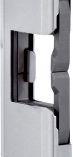
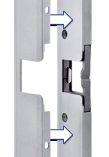
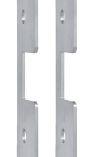
Camden’s CX-ED1259L is the only ½” thick grade 1 surface mount RIM strike on the market that is both UL 1034 Burglary and UL 10C/ULC S104 Fire listed! Best of all, the CX-ED1259L offers ½” to ¾” latch projection (throw), so this one model is equivalent to three RIM strike models sold by our competitors!
• Selectable 12/24V, AC/DC
• Selectable fail safe/fail secure
• Latch monitoring included
• Horizontal adjustment
• Cover plate included
• 5 year warranty


By CANASA Staff

Security Canada is pleased to announce that information on the six shows to be held across the country is now available at www.securitycanadaexpo.com.
The Security Canada event calendar kicks off April 25 in Laval, Que., with stops in Ottawa, Edmonton, Richmond, B.C., Moncton and culminating with Canada’s largest show in Toronto this October.
Steve Basnett, Director, Trade Shows & Events, says that as “cyber and physical security challenges continue to increase, it is important that the Security Canada shows provide security providers with the tools and skills needed to protect businesses and individuals.
“Innovations within perimeter security, access control, video surveillance and alarm se-
curity will be highlighted at all of our shows in 2018. Attendees can expect to see a whole host of exhibitors showcasing products and services offering solutions for their customers’ requirements. The educational program is designed to explore how products and services can assess and mitigate security risks from the experts in their respective fields.”
Patrick Straw, Executive Director, CANASA, recently updated the initiatives being championed by CANASA for 2018.
“CANASA will be focusing on a number of educational opportunities this year and we have been successful in securing excellent keynote speakers for Moncton, Ottawa and Toronto focusing on cyber security, forensic video analysis and how the new cannabis laws will affect our member companies. We are working on additional speakers for the other shows. In addition, CANASA continues to work with the Canadian Professional Sales Association (CPSA) in devel-


oping a security sales program. We expect a first draft of this completed by the end of February.
“The CANASA National Scholarship Program is open for submissions until May 1, 2018. Valued at $1,000, the scholarship is open to dependents of individuals that are employees of a CANASA member. Visit www.canasa.org for all the details.
“We are continuing to expand our member events in the various regions and encourage all of our members to reach out to their local chapter and get involved. I would urge you to visit www.canasa.org for the complete list of events and golf activities.”





















ABy Colin Bodbyl
AI has automated many tedious tasks — making good use of all that data is the next challenge
rtificial intelligence (AI) and deep learning for video has opened the door to new possibilities where computers can analyze both live and recorded video to produce surprisingly accurate data.
“Manufacturers and developers will need to find ways to make the data actionable and generate a tangible return on investment.”
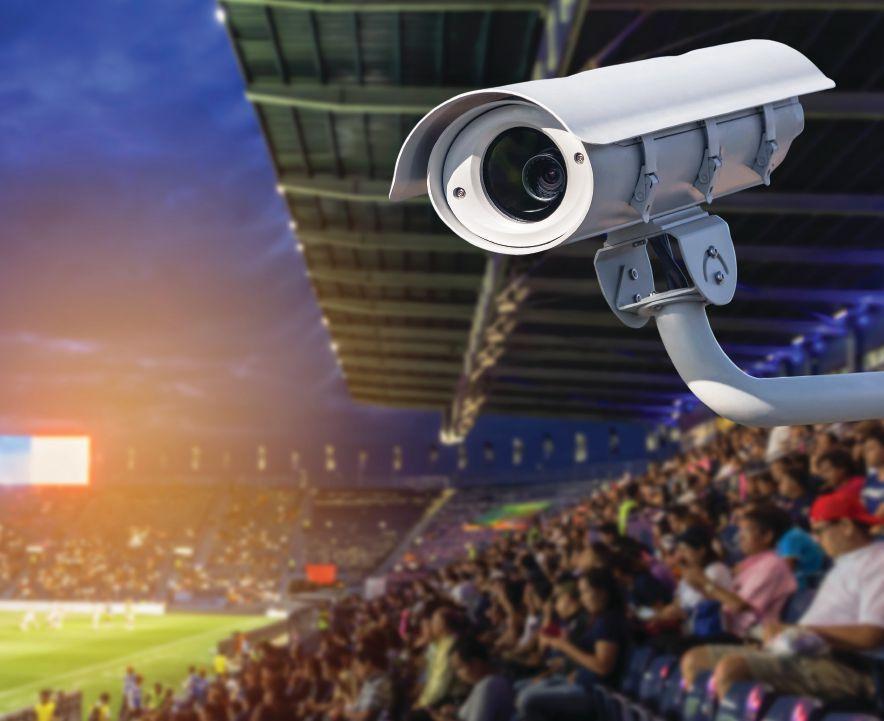
Information such as colour, quantity, frequency, gender, age, and more can all be collected automatically through AI and reported back to users. Previously, collecting such information would require a person to manually review hours of footage and document each data point.
There are two primary methods developers are using to present and utilize this data. The first is to present the data in a table as a report that outlines information about the people or objects the system observed over a set period of time. Retailers, for example, can use this data to see customer demographics in their store. They can analyze the average age group of their customers, their gender, or the colour clothing they wore.
While this data may be fascinating, it is challenging for users to generate revenue or reduce costs simply by having the data. Retailers still need to take action based on the data. This could mean changing their store layout or adjusting the products they sell. In addition, retailers then need to analyze how
these changes affected their sales and finally they can connect that return on investment back to the data they originally collected from their surveillance system.
It is a long and challenging path for users to take action on this data and prove a return on investment in AI technology. How the data is used is key to proving its value, but without users taking further action the data is essentially useless. This requirement for further action, which users need to solve on their own accord, is a significant barrier to user adoption.
The second application of AI is to use the data as a tool to help users locate specific objects in recorded video using keywords. Most commonly we see this type of technology marketed as a tool
for speeding up the search and video review process. Using AI, users are able to search video footage in a similar manner to how you would search the Internet using Google. A user could search for a white pickup truck travelling westbound and the AI could process the recorded video and show only events that show a white pickup truck travelling westbound. At first glance this may seem extremely useful to many users.
The unfortunate reality is that in the majority of cases where users are searching through video to find an incident, they do not know what the suspect looks like, or the vehicle, or any details on the event for that matter. In addition, the current process of searching through video by simply skimming through motion events is already very efficient.
In rare cases, law enforcement may find themselves searching through hundreds of cameras for a specific object where this would be helpful, but the applications are few and far between.
Artificial intelligence will undoubtedly change our industry in the upcoming years. For this to happen, however, manufacturers and developers will need to find ways to make the data actionable and generate a tangible return on investment for end users. Current solutions are expensive and without a simple method to prove the technology is profitable, users will not adopt it.
Colin Bodbyl is the chief technology officer for UCIT Online (www. ucitonline.com).

DBy Victor Harding
There is a huge untapped market for home security. This may be the answer that has eluded our industry
IY means Do It Yourself and MIY means Monitor It Yourself.
If you are like me you have heard these two terms a lot over the last two or three years in our industry. Will these trends account for any meaningful piece of the pie? Should dealers be looking at them? If you are an existing alarm dealer, how do you set yourself up to handle DIY or MIY?
Truthfully, I did not pay that much attention to this discussion until I had lunch with my old friend Gordon. Gordon is in his 50s. He’s not really a “techie” or “do it yourself” guy, but he is an “early adopter” as far as technology is concerned.
Gordon recently went out to Best Buy, with no coaching, no calls to any security company, and bought and installed a DIY “security” system complete with hub, motion detectors, cameras, lock and light control and CO detectors. Gordon lives in a condo so it is fair to say that his motivation was as much about convenience as it was about security. He wanted to be able to control his lights and locks through his cell phone. The scary thing to me was he never thought about calling a security alarm dealer. He simply went to Best Buy, a place he instinctively knew would have what he was looking for. And he was right. Because we are all in the security industry, perhaps we mistakenly assume that Gordon would call one of us.
It is not like the customer service reps at Best Buy knew as much about motion detectors as a typical alarm dealer. But that did not seem to matter. Gordon said the kit was self explanatory and remarkably easy to install.
There are those who will say that Gordon is not really getting a full security system. But for him, this was more than enough. My fear is that for many people in single family dwellings, they will think the same way. They will think these systems can give them 80 per cent of what a professional system can give them — and it will probably be at less than half the price of a professionally installed system.
So let’s look at this event again. Gordon is clearly not a millennial. He does live in a multiunit building, so that reduces his security needs somewhat. Although he bought what we would call “security” equipment, he was looking for convenience as well.
Based on what I know of him, Gordon would

never have thought of going to a security dealer to get what he wanted — too slow, way too expensive and unnecessary, and he does not know the name of a security dealer anyway.
You ask, what about monitoring? A security dealer would surely have tried to push monitoring on Gordon. But Gordon is functioning with MIY and quite happy having all signals come directly only to his smart phone.
He can call the police or fire department if he sees something very definitely wrong in his condo. He has been around enough to hear about his friends having to deal with false alarms, the hassle and the potential fines. He may even know that in a city like Toronto, police reaction to an alarm is very slow without verified response. In fact it was when Gordon leaned across the lunch table and said to me that based on his experience, he would be seriously worried about the future of the monitoring business that I really took note.
Aside from what Gordon thinks about all this, here is what I think. Based on the small amount of research I have done, I think DIY and MIY are definitely here to stay in some form or other. I think they are capitalizing on our whole digital, interactive, Wi-Fi-enabled, smart phone dominated world and giving customers a lot of convenience and some security at a much reduced cost. It is possible these new DIY systems have the potential to take the smart home penetration rate from its current 20 per cent level for monitored systems to 50 per cent and above over the
next five to 10 years. Just look at the names that are in this market now, and only in the last two to three years: Honeywell, ADT-Samsung, Google Nest, Ring, Amazon, Kwikset, Vivint, Apple and Best Buy to list some of the bigger names. I have never seen so many new names offering what we have to call a “security” product since I joined the industry 25 years ago. They cannot all be wrong. You can bet these big companies have not entered this DIY market to try to steal part of the 20 per cent penetration of monitored security systems. They want part of the other 80.
How far will this DIY/MIY trend spread? For sure it is attacking the traditional alarm market for residential systems including condo and apartment owners like my friend Gordon. And yes, I think it will make it more difficult for alarm dealers to sell first-time home buyers on a professionally installed system.
What about existing monitored accounts and the potential for new ones? Is monitoring in danger? Let’s put it this way. DIY and MIY are going to make it tougher to get professional monitoring accepted in certain situations. Certainly if I was an alarm dealer, I would be watching my monthly monitoring rates. To me, these new interactive systems being sold by the high volume alarm dealers at a rate of $50/month are at risk in the future.
Victor Harding is the principal of Harding Security Services (victor@hardingsecurity.ca).

At Security Summit Canada, you will learn more about: growing your customer base, keeping your customers happy and protecting your business.
Featured Speakers:



Jeffrey Zwirn, President, IDS Research and Development
Jeffrey D. Zwirn is a nationally recognized alarm and security expert who specializes in the forensic study of alarm systems. He has forensically investigated thousands of cases and claims for Plaintiffs and Defendants, both nationally and internationally. With over 40 years of specialized education and experience Jeff has been involved in sales, design, installation, programming, inspection, testing, maintenance and central station monitoring of more than 3,000 security and life safety systems.
John M. Brady, President, TRG Associates
Since its inception, TRG has assisted a wide range of companies, entrepreneurs, lenders, and investors in evaluating and assimilating acquisitions, assisting with the placement of debt and equity, providing expert witness in court and arbitration hearings. John also has extensive experience with some of the larger PERS providers in the US serving in management and advisory roles.




SP&T News hosted the third annual Mission 500 Hockey Classic on Feb. 15 at the Canlan Ice Sports complex at York University, raising more than $17,000 in support of Toronto Crime Stoppers Youth Programs. More than 100 players on nine teams took to the ice for tournament play. Teams included: Circle K, Mircom, Peel Police (tournament winner), Anixter, Tyco/JCI, York University, G4S, Graybar and Mission 500. A tournament banquet, including raffle and prize draw, was held immediately after. The event was generously supported by sponsors Hikvision, Axis Communications, Automatic Systems, TSOC, Mircom, Circle K, Securitas, Paragon Security, Graybar Canada, Anixter, Titan Products Group, 3SI Security Systems, Tyco Integrated Security and G4S. For more photos and video coverage, visit www.sptnews.ca.








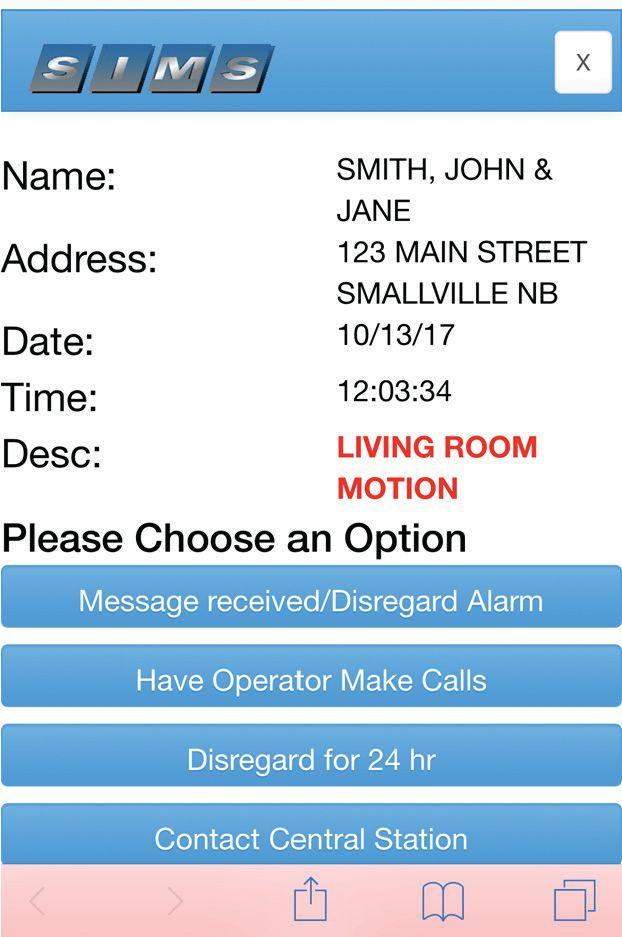
• No App required.
• Armstrong’s virtual operator (STAN) sends detailed text notification direct to customer.
• Customers can respond to the station immediately with no phone call required.
• Alarm resolution notification to all keyholders simultaneously.
• Convenient, easy to use on a smart phone.
• Fully backed up with central station operator response.
• Customizable by alarm type and/or zone.
Aerial drones may be getting most of the attention, but unmanned ground vehicles (UGVs) are being recognized as a solution for security applications
By Ellen Cools

Unmanned ground vehicles (UGVs) have become increasingly common and sophisticated. More and more, UGVs can be seen patrolling facility perimeters while transmitting data and video surveillance footage to their human counterparts.
Let’s explore the current market for these robots, their intended uses, synergies with other robotic systems — as well as some unintended consequences.
First, it’s important to understand what a UGV is and its different applications.
UGVs “are basically self-navigating computers with large amounts of processing power and storage capacity,” explains Alice DiSanto, director of marketing for Sharp Robotics Business Development, manufacturer of the Sharp INTELLOS Automated Unmanned Ground Vehicle (A-UGV), and an expert at Robolliance. (The Robolliance is a “forum for technology partners and industry experts in robotics, surveillance and security to advance the understanding and awareness of the Autonomous Robotics marketplace,” according to the organization’s website.)
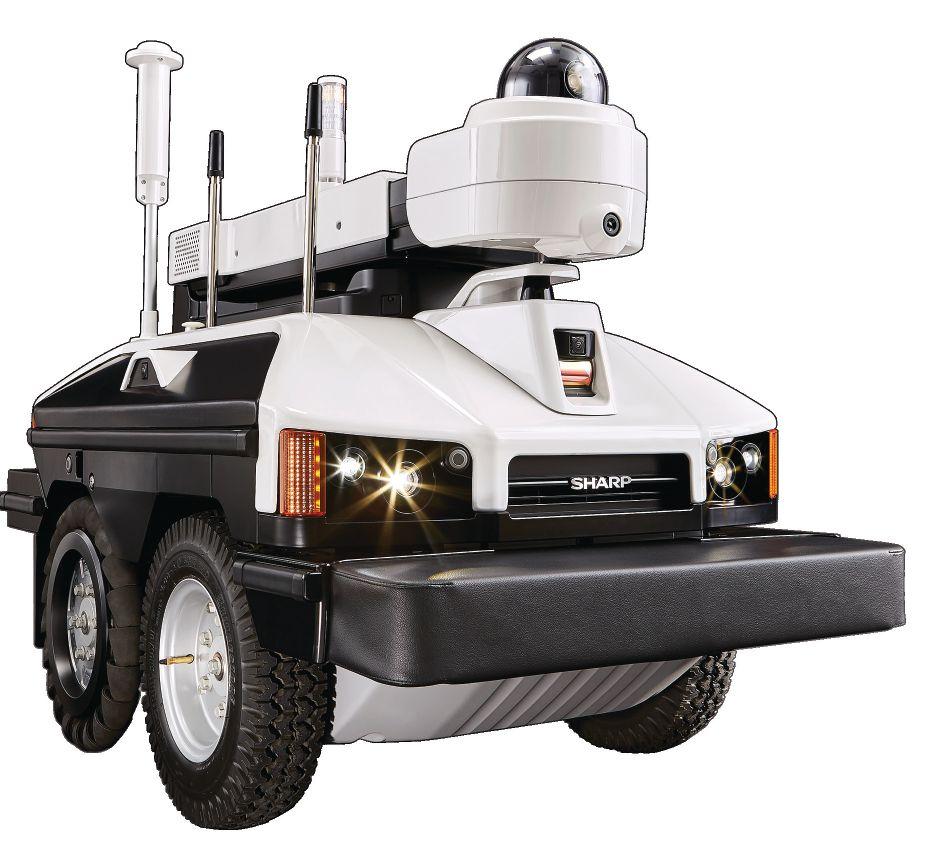
DiSanto says these “self-navigating computers” are equipped with observation technologies, which can include cameras, microphones, speakers, thermal vision and chemical detection. They can also be equipped with alarms, flashing lights and voice announcements to report security breaches.
UGVs are used for a wide range of applications such as data and location capturing, gauge reading, gate checking and door/window/fence-
Linda Ziemba, founding CEO of Drone Go Home (DGH), a drone detection system, and also a Robolliance expert, adds that UGVs can help prevent accidents that often occur while guards are patrolling fa-
“For a person to drive around … the perimeter of the property, it’s inevitable for the human to become bored and drowsy and exposed to the
But “the ground vehicles are great to patrol non-stop for days at a time and to be able to detect small changes
Additionally, UGVs can provide information to tourists, deliver packages and be used as service vehicles, says Barrie Kirk, executive director, Canadian Automated Vehicles Centre of Excellence (CAVCOE), an organization which provides consulting services, analyses and recommendations to stakeholders involved in the deployment of automated vehicles.
“UPS, for example, has an active pilot system where you have a UPS van, which is initially driven by a human — eventually it will be autonomous — it goes to a neighbourhood, the roof slides open and drones

Drone Go Home detects, locates, alerts and tracks both drones and pilot controllers.
lift off with packages,” he explains.
Many of the smaller robots — both Unmanned Aerial Vehicles (UAVs) and UGVs — have a more limited range, so driving a van to a neighbourhood and then using UAVs or UGVs for the last hundred meters or so “is a very, very good combination,” Kirk says.
When it comes to security, however, DiSanto says UGVs should not be used as stand-alone security systems. Instead, they should be fully integrated with other systems and manpower resources to create “comprehensive situational awareness.”
“They can capture people’s faces, and facial image processing has come a long way in the last few years,” Kirk adds.
Additionally, in large, crowded areas, two or three UGVs in the same space could triangulate a gunshot to determine the shooter’s location.
“Robots can serve as a security force multiplier,” DiSanto adds, “by integrating with existing security infrastructures and using technology to lower security operating costs for routine tasks.”
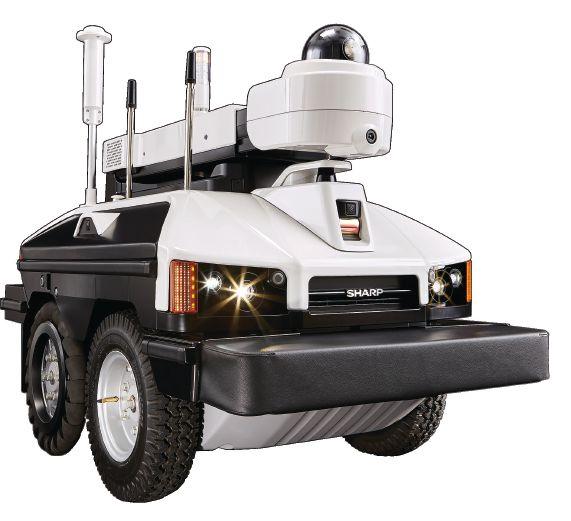
For example, the Sharp INTELLOS A-UGV is equipped with high-resolution cameras and follows a predetermined route within fenced areas.
The A-UGV “can navigate patrol paths along waypoints, recording and securely transmitting to security personnel, allowing them to decide when human inspection is necessary,” says DiSanto.
Semi-autonomous vehicles are typically operated by remote control while autonomous vehicles are automated by navigational guidance, such as GPS. The A-UGV has both modes.
Sharp introduced the initial version of the A-UGV in September 2016. This version had “the features that were most requested and most critical to the security market,” based on customer, sales and industry feedback.
One of the main differentiators was a thermal imaging camera, says DiSanto.
“Unlike a traditional guard, you now — with thermal imaging — have vision all hours of the day and also under variable weather conditions. So it literally extended the capabilities of the human eye,” she says.
“Robots can serve as a security force multiplier by integrating with existing security infrastructures.”
— Alice DiSanto, Sharp Robotics Business Development
The “capabilities of the human eye” can also be extended through integration with UAVs.
DiSanto advocates for integrating UGVs with other technologies, and looking at “the strengths and weaknesses of each one of the robotics platforms and help[ing] them work together to fulfill … your unique needs.”
If an intrusion occurs at a facility, a UGV can capture and document observations, and has the potential to communicate with its human counterparts, she explains.
“If there was this intrusion and the intruder were then to flee, if in the arsenal of that particular end user … they had a UAV, because of the speed of the UAV and the vantage point,
that technology would be able to get this vehicle in pursuit of the intruder and continue on with the observation.”
Additionally, UGVs and UAVs can be used together to help law enforcement stop the delivery of contraband to prisons, Ziemba says.
Drone detection solutions, also known as Counter-UAS (C-UAS), can be used as part of an overall risk mitigation strategy, she says. When a C-UAS system detects drone incursions at security-oriented organizations and correctional facilities, rather than send humans to a potentially dangerous perimeter, you can “automatically send UGVs to safely capture evidence that can be used to prosecute while local law enforcement travels to the sites,” Ziemba explains.
“With advanced intelligence, a UGV equipped with infrared cameras and other detection technologies can be placed in an area near the expected incursion location to confirm activity and alert appropriate resources,” she elaborates.
However, integration with UAVs faces some regulatory restrictions.
“Today, one could certainly remotely direct a UGV to a specific location for further inspection or tasks based on data obtained from a UAV flight,” Ziemba says.
But, the current regulation states that UAVs cannot fly beyond visual line of sight (BVLOS).
Ziemba foresees a potential integration where UAVs fly without a human pilot’s involvement or BVLOS.
“It’s technically possible today, but it’s … legally prohibited,” she explains.
Nevertheless, Ben Waters, CEO of WiBotic, a Seattle-based provider of wireless power and battery intelligence solutions for robotic systems, says UGVs could be equipped with
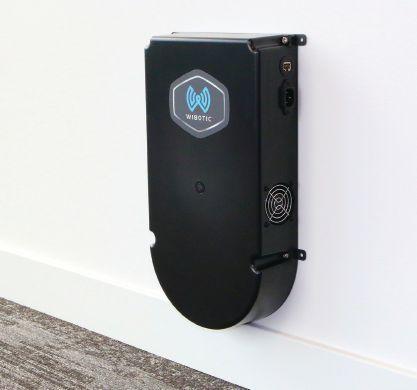

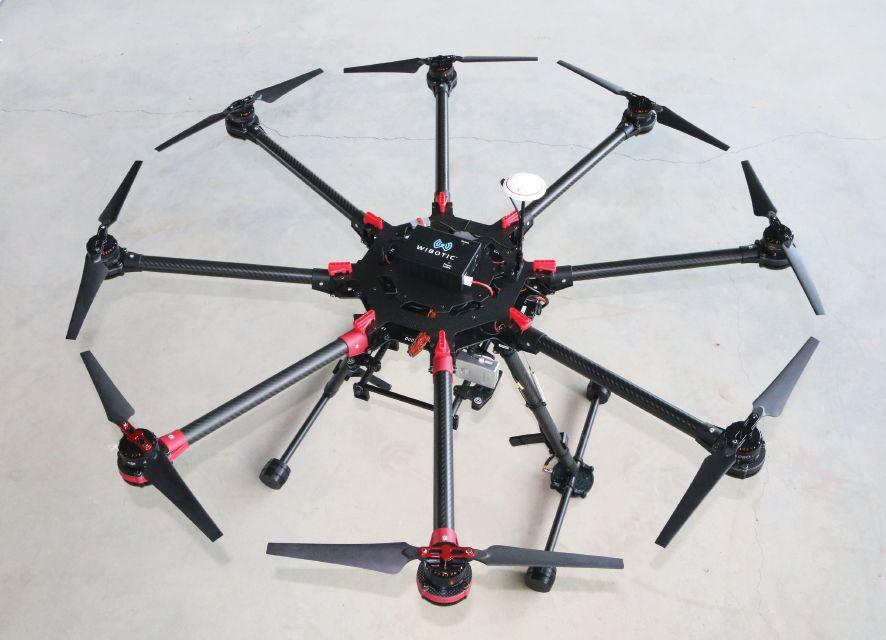
landing pads for the deployment and retrieval of UAVs.
“Relatively large UGV batteries provide the power source to recharge drone batteries after each flight, often through the use of wireless autonomous charging systems that eliminate the need for a human involvement,” he elaborates. “The solution allows UGVs to rapidly expand surveillance and incident response into areas that are otherwise inaccessible.”
Matt Carlson, vice-president of business development, WiBotic, explains that while such a solution has not been implemented yet, the company is working with a few UGV companies who are exploring this capability.
Yet even when using UGVs and UAVs together to expand surveillance capabilities, Waters points out there is a technical setback: UGVs and UAVs must make contact with a docking station to recharge. For a robot to be fully autonomous, Carlson says, “it truly needs to be able to recharge itself autonomously.”
WiBotic creates wireless power and battery intelligence solutions because “power has not been a point of optimization for autonomous systems in the past,” Waters explains.
Prior to the introduction of wireless charging, the robot had to make physical contact between probes that protrude from it and connect with the power source, Carlson explains.
“Any mechanical contact … has a rated number of mating cycles,” Waters adds. This means that after plugging in the UGV a certain number of times, it won’t establish a good connection and will need to be replaced.
Robots are also exposed to harsh environments, dirt and dust. Outdoors, the corrosive effects are compounded because of the introduction of water.
Over time, arcing occurs with those contacts, to the point that you “end up with human beings still running around … maintaining those charging stations,” Carlson says.
“You can think of the robot as the means to collect the data — they can drive in areas that are difficult for people.”
— Ben Waters,WiBotic
In contrast, “wireless [charging] is fully sealed up, and so we can protect the electronics and it’s just plastic on the outside,” says Carlson.
Additionally, corroding mechanical contacts present a regulatory challenge.
“Exposed contacts, if they’ve got electrical voltage on them, are subject to, in different countries, different levels of regulatory requirements and enclosures and safety provisions,” Waters explains. While wireless charging has its own regulatory requirements, “it at least eliminates some of those challenges that might otherwise add a lot of cost.”
Wireless charging also allows end users to be strategic about where robots are placed since they do not need to follow a physical docking procedure.
“With wireless you can deploy the charging
infrastructure throughout the space they’re op erating and achieve a model where robots can continue to operate and get charged when they need to, which is a model that we refer to as ‘Opportunity Charging,’” Waters explains.
Despite these difficulties, Waters and Carlson both believe that 2018 will see more robots in deployment.
When asked how this might impact human guarding, Waters says the initial deployment will be very co-operative between robots and humans.
“You can think of the robot as the means to collect the data; they can drive in areas that are difficult for people to frequently survey, they have very nice software platforms that may call up the data very easily … but they’re not taking any action,” he explains. “It’s going to be the co operative effort with humans to take action and understand what to do with the data.”
Likewise, DiSanto says guards will still be instrumental. In fact, guards are currently trained on the hardware and software capabil ities of the robot. Consequently, they can program UGVs to perform the missions required for outdoor perimeter security.

However, Kirk points out that there are potential negative consequences to the increased deployment of autonomous robotic systems.
“The flip side is that these devices can be used by terrorists,” he explains. “You could take one of these … unmanned ground vehicles, pack it full of [explosives], program it to go to a certain location and detonate.”
“One of the truisms of technology is most, if not all, advances in technology do carry a downside of one sort or another,” he concludes.
Despite this, Waters believes “UGVs will be a mainstay of security in the coming years.”
This will especially be the case in “applications where constant coverage of large areas is required. Working together with their human counterparts, UGVs will offer a broader security presence in venues such as malls and sports arenas, both deterring crime and offering faster response when needed.”

Your business is dynamic, and growth is just as critical as protecting what you already have. Utilizing a technology solution that not only protects your store but provides enhanced analysis to help you grow your business. #IntelligentSolutionsForYou





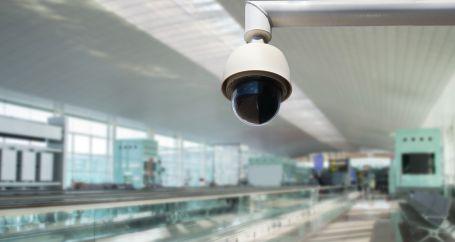
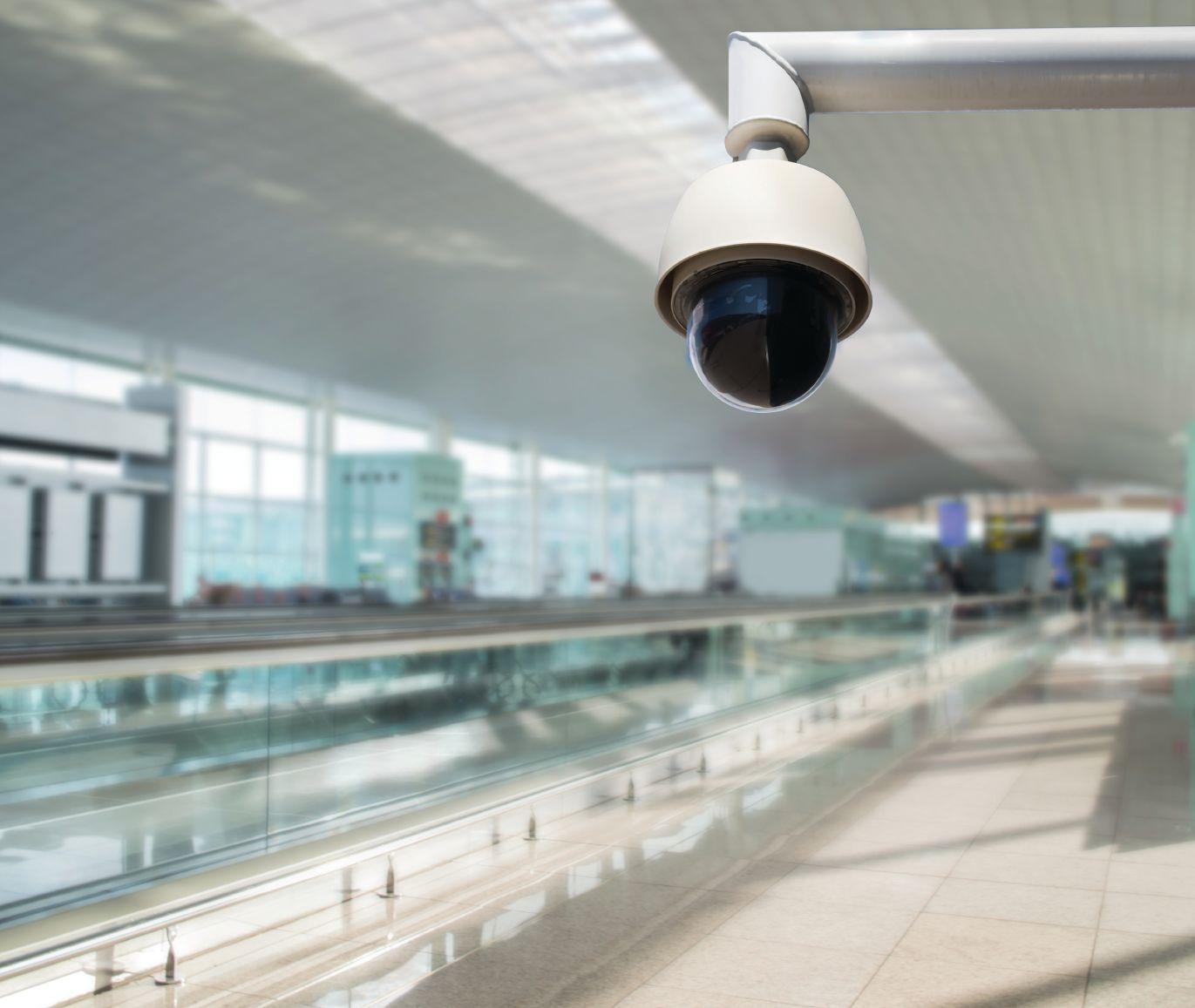
Consider how lighting and surveillance cameras can work best together to promote security and deter crime.
By Latif Jamani
Beyond the look that lighting adds to a building, it must also serve the greater purpose of adding security to a property. Lighting is the primary deterrent of crime on any property, so when it comes to building an effective security system, it plays a critical role.
During the design and decision-making process for security lighting, there can be a disconnect between selecting the technology (primarily cameras) and adding light to the space. These decisions are made for the same areas:
• entrances and exits
• public spaces
• perimeter areas
• shared spaces
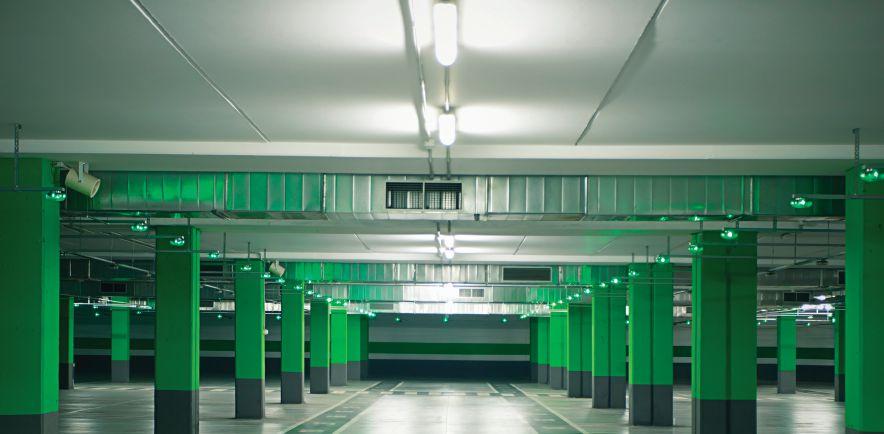
• parking areas
Lighting is the primary deterrent of crime on any property, so when it comes to building an effective security system, it plays a critical role.
These choices can be made concurrently during the planning stages for new construction. However, when updating the security and lighting of an existing building, lighting selection often comes after both camera selection and placement have been established. This results in poor visibility and can lead to issues obtaining useful footage in the event of a crime.
The Illuminating Engineering Society’s (IES) “Guideline for Security Lighting for People, Property, and Public Spaces” recommends a
vertical illuminance of 5-8 lux or lumen/m2, or a luminance ratio of 4:1 for facial recognition, and to be able to read the body language of a person “as either familiar, unfamiliar, or threatening at a distance of at least 9m from the viewer.”
IES also has average recommendations for the illuminance of certain spaces, including the areas highlighted in the graphic on p. 23.1
On the other hand, the selection of security cameras depends on the decision-maker’s budget and preference. Sometimes they choose the highest-quality equipment available, which may have the ability to capture images in low light.
Lower-quality cameras, however, may re-
quire additional lighting to capture clear images. Since cameras cost more and require a higher investment per unit compared to lighting, the choice of camera, number of units and placement must be well-planned to maximize this investment.
While the lighting selection process is usually done with the human experience in mind, time and consideration should also be given to how these decisions impact the surveillance system being installed on the property. The colour, levels and placement of lighting can work against security cameras when the decisions are not made in unison.
For example, a camera that captures images in low light should probably be placed away from brightly lit areas. Motion sensor cameras should be placed near motion sensor lighting to properly secure an area. Cameras that need lighting assistance must have lighting nearby that is sufficient to illuminate the area without producing glare.
CCTV or video surveillance systems do specify their lux ratings. The lux rating indicates the minimum amount of light needed to capture a usable picture, as well as the amount of light required for full video. Cameras can be tested in the areas in which they are going to be installed. Also, the amount of light needed for the camera can be determined with this equation from IES:2
E = π LT 4N2 where
E = Illuminance on the image sensor, lm/m2 (lm/ft2)
L = Luminance of scene (cd/m2) (cd/ft2)
T = Transmittance of lens (usually 0.70 to 0.90)
N = F-number or F-stop of the lens
Illuminance (lux) meters are used to measure luminance, which is the amount of light that will hit the area where a camera is intended to be placed. If the camera being considered is not fixed, it is recommended that the light is measured from all possible directions at which
the camera will be pointing.
This ensures every possible camera angle will be lit well enough to capture the best and most useful image possible.
Another important consideration for selecting light sources for use with security cameras is colour. IES regards the Colour Rendering Index (CRI) as the most important measurement of colour. CRI “measures the degree of colour shift objects undergo when illuminated by a particular light source as compared with the same objects when lighted by a reference source of comparable colour temperature.”3 Light sources with a CRI of 50 or higher (usually white light) are best for accurate colour identification. These include standard incandescents, tungsten halogens, fluorescents and metal halide.
When we are engaged in the lighting design process, and working with the surveillance system that is being put into place, the areas most often addressed are entrances and exits, alleyways, driveways (which are areas that show perimeter access), as well as building enclosure access points (doors, windows, loading docks, parkade doors). The goal is to capture the maximum angle where the light fixture can be placed in a way to project maximum light output for the camera while reducing glare.
A great lighting option for general security — as well as making sure the areas are well-lit for security cameras — are LEDs, which provide a better-quality of light for security purposes as compared to, say, incandescents. The white light from LEDs makes for a better environment for users of the space, and works well for lighting an area where surveillance cameras are installed. LEDs also have a higher lumen output per watt, giving brighter light with lower wattage, saving on electricity consumption. They also have a longer lifespan, saving on maintenance and overall costs.
Since
crime in general, it may reduce the need for installing additional security cameras
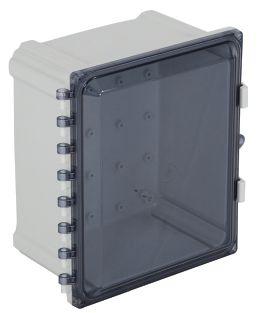
Non-metallic fiberglass or polycarbonate enclosures
Guards against weather, vandalism, tampering and theft
Lockable cabinets offer an opaque, clear or tinted door
Variety of sizes and options
— can help deter criminal activity. Since breaking into a building can take time, criminals will want to avoid spending too much time in areas of high visibility and, therefore, move on. Good lighting also benefits users of these buildings — such as residents of an apartment building or guests of a hotel — as they will have a better sense of safety and security around the building.
Take, for example, an apartment building with basic exterior lighting. The goal is to improve security as well as increase general feelings of safety around the building. An inexpensive way to do this is to increase the light levels in the areas around the building’s access points (front and rear entrances, parking garages). Check whether the building meets the recommended vertical illuminance of between 5-20
Lux and adjust accordingly.
In common areas inside the building, make sure that the horizontal illuminance is at 30 Lux, and 100 Lux at the common mailbox area. If the building already has surveillance cameras installed in these areas, assess any changes that occurred as a result of the improved lighting before considering adding any more. In most cases, updating the lighting of buildings works to improve security without having to spend more on increasing the number of security cameras. Having well-lit buildings can also pay dividends for property owners. Whitestone Properties — a company that owns apartment buildings in Edmonton — recently had the exterior lighting of its buildings updated to make them more safe and secure.
“The tenants seem quite happy with the improved appearance at night,” says Whitestone’s James Knull. “There are no creepy, shadowed spots at night anymore, and we have received lots of positive feedback.” Since updating their exterior lighting, they have seen a decrease in illegal dumping and car-related crime. “In the winter, when it gets dark closer to 5 pm, we have had a much easier time with prospective tenants appearing for showings and filling out applications during evening showings.”
Security systems for any property must have elements that work together to be effective. This also empowers security personnel to do their jobs well by giving them a visual of certain areas of the property. By having all the elements of a security system designed to work together, the return on investment will be maximized. Most importantly, the property and its occupants will be kept safe and secure.
Notes
1. “Guideline for Security Lighting for People, Property, and Public Spaces,” Illuminating Engineering Society, p. 7-12.
2. As above, p. 58.
3. As above, p. 16.
Latif Jamani is the president of Calgary Lighting Products (calgarylightingproducts.com), which specializes in commercial solutions, energy audits and LED retrofits.

















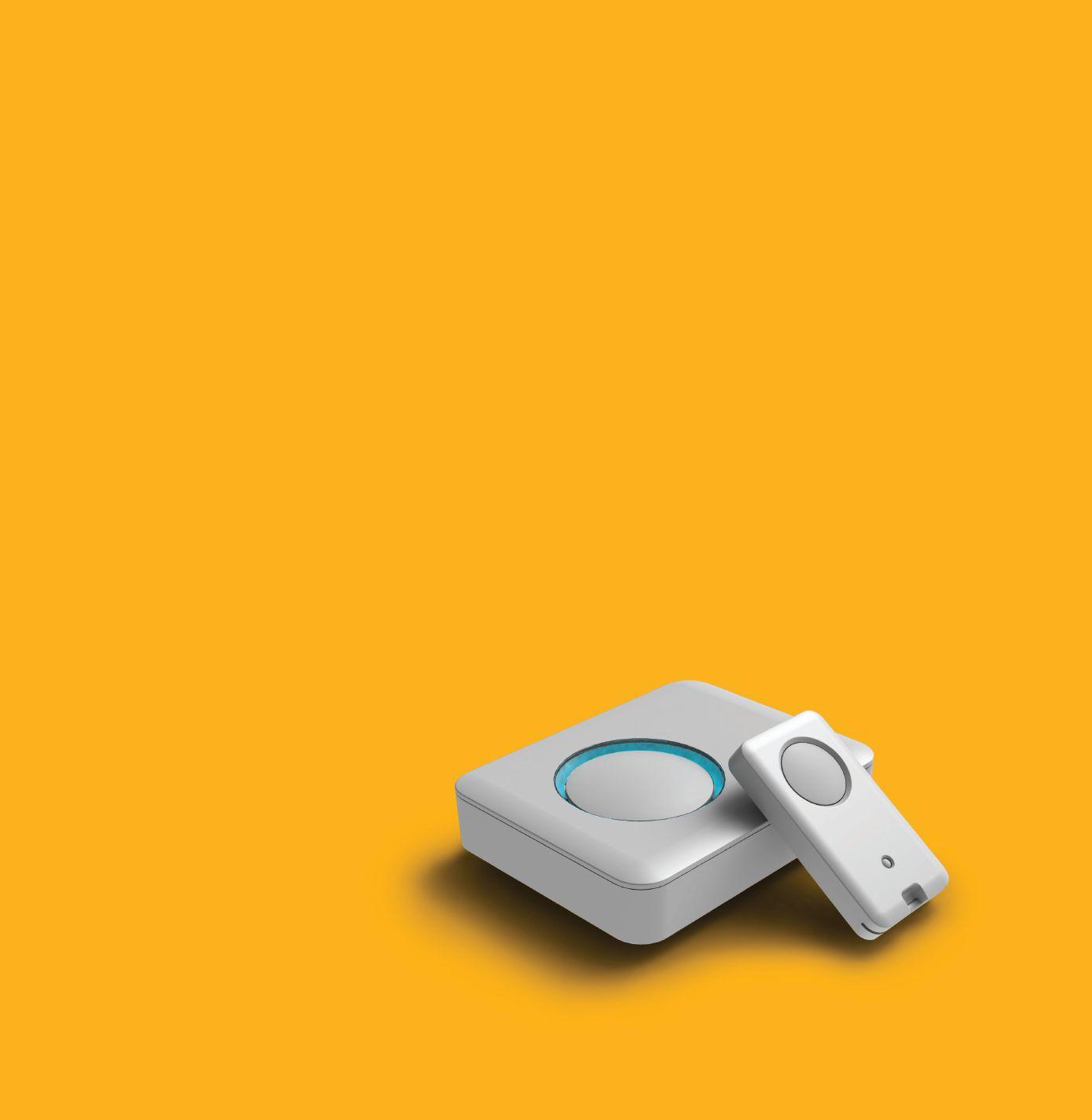
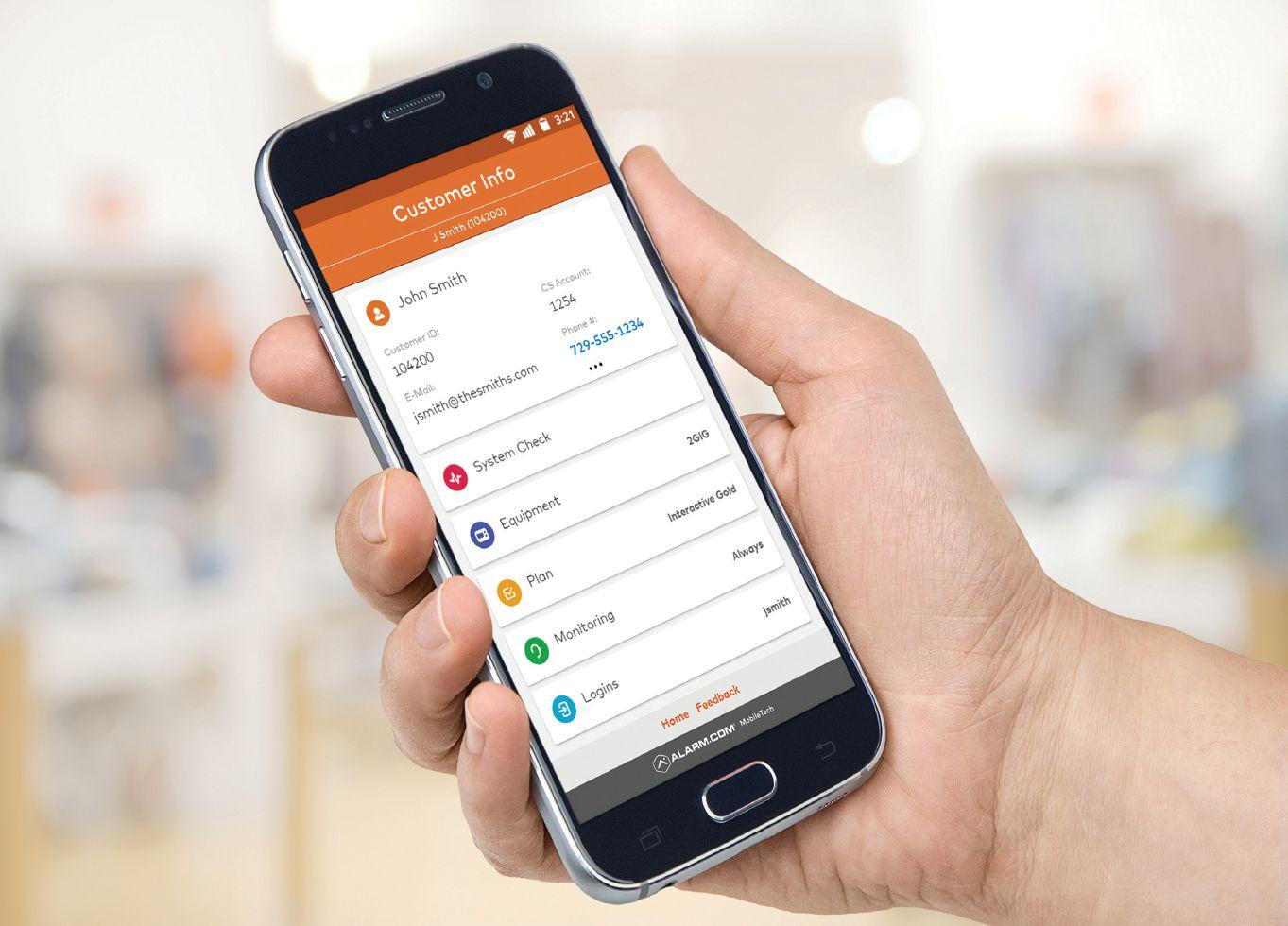
Solo’s next generation, advanced smart-monitoring system detects and reports abnormal behaviours with motion and audio-based occupancy sensors and inactivity notifications. Easy to sell, even easier to install, with great margins and an ever expanding base of RMR generating options. The future of personal emergency systems has arrived. Pure genius.
To find out more go to www.mysolo.online or visit us at the ISC West Show in Las Vegas at booth #35067.

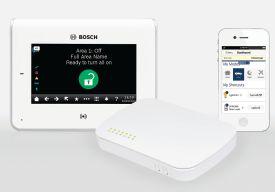
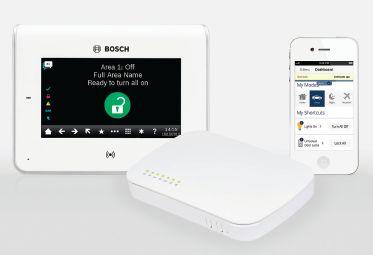
The G450 Home Control Gateway connects Bosch B and G Series intrusion control panels to a variety of devices to enable a full range of residential and business automation solutions. The new gateway connects the control panels with Z-Wave, ZigBee, Bluetooth and Wi-Fi radio compatible devices and with wired third-party IP cameras for customized control of residences or businesses. With a connected system, users can control security, door locks, home appliances, lighting, heating, cooling and more through a browser or via the Remote Security Plus app. www.boschsecurity.us
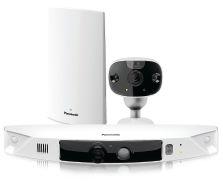
The HomeHawk HD Remote Home Monitoring System can be configured as a single camera or combined with up to 16 perhipheral HD camera units. The HomeHawk HD Remote Monitoring System eliminates what Panasonic says is a common home monitoring security camera problem: low grade, blurry black and white video that makes it hard to effectively identify someone at night. Panasonic’s night-vision colour technology allows homeowners to quickly and easily know what and/or who is at the front door. www.panasonic.com
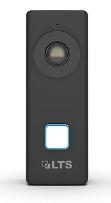
The LTS Platinum Network Video Doorbell, LTK6128W-WIFI, is compatible with LTS NVRs and DVRs, and offers on-board storage utilizing up to 128GB on a microSD card. Built-in 2-way audio allows end-users to hear and speak with visitors at their door using the mobile app, LTS Connect. The video doorbell is powered by the user’s existing doorbell connections, and users can use their existing chimes. The video doorbell offers 180-degree panoramic viewing and it supports Wi-Fi for easy installation.
www.ltsecurityinc.com
The DSC iotega features built-in PowerG wireless technology and provides a fully encrypted security system. The company says it provides reliability with end-to-end 128-bits AES encrypted two-way sensors and includes a built-in siren, two-way voice, 99 user codes and Transport Layer Security. Iotega allows end users to view cameras, lock doors, adjust temperatures, switch on/off lights, etc. The actions can be implemented on demand or by set scenes and schedules, powered by SecureNet’s app. For in stallers, the platform offers a system management portal and an iOS and Android mobile app. www.johnsoncontrols.com
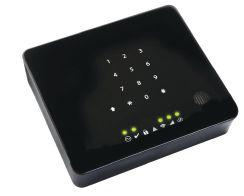
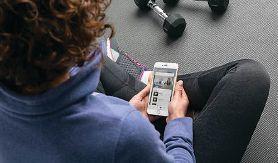
New features of the UltraSync SmartHome system include hands-free voice control, high-definition cameras, an LTE cellular module and doorbell camera. Now compatible with Amazon’s Alexa-enabled Echo digital assistant, UltraSync system users can use voice command to control lights, thermostats and other Z-Wave-enabled appliances that have been programmed into the system. The system can also be controlled via an optional 7-inch touch screen or a voice-guided menu on the self-contained hub. Additionally, it is now available with an optional LTE cellular module.
www.interlogix.com

The IvedaHome doorbell security camera is a standalone product that can also be bundled with Iveda’s IvedaHome automation and security system. Iveda’s doorbell camera is a DIY product that can be installed to replace the existing doorbell in most homes or offices. The doorbell does not need to be pushed for the camera to capture events. Iveda’s doorbell camera serves as a surveillance camera, equipped with a PIR (passive infrared) motion detector sensor. When motion is detected, an alert will be sent to the same devices and each can use the app to verify what is going on outside the door.
www.iveda.com
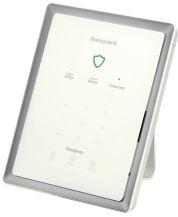
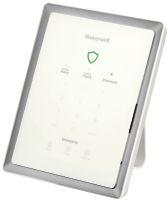
Lyric Gateway allows consumers to control their home security and automation systems on their personal devices. It is designed for the mobile lifestyle, including renters, condo and second home owners, and those who frequently move. The Lyric Gateway integrates with AlarmNet 360 and can be placed anywhere in the home using the included desk stand. It serves as the central hub for controlling the entire Lyric wireless connected platform. Through the Honeywell Total Connect Remote Services app, consumers can control all aspects of their Lyric connected home system.
www.lyricgateway.com
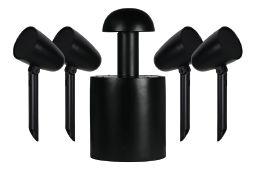
The Nuvo Series Two Landscape Satellite Speakers and Subwoofer is a low-profile speaker system that delivers audio with extensive coverage outside of the home. The system includes a 3.5-in. poly woofer and a 1/2-in. UFLC tweeter in a black teardrop enclosure. The subwoofer features an 8-in. driver housed in a cylindrical enclosure that is designed to be buried underground. The products are available as a kit, including the buried subwoofer and four satellite speakers, and as an expansion pack of two satellite speakers. Each of these landscape speakers is IP-67 and MIL-STD810-compliant.
www.legrand.us
•
•
V5 Systems and Pelco
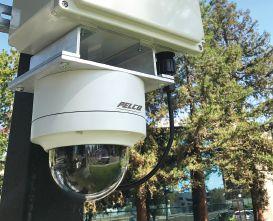
V5 Systems has integrated its V5 Camera Adaptive Platform (V5 CAP) with Pelco’s Sarix Professional IP Surveillance Cameras. The V5 CAP is an ongoing power, computing and communications platform for third-party cameras. It features ongoing power via a combination of proprietary bullet-resistant solar technology and a battery management system; up to 1TB of storage; and wireless communication via Wi-Fi, cellular or RF. www.v5systems.us
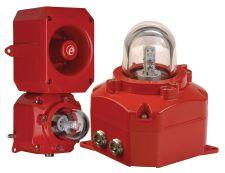
E2S Warning Signals
E2S Warning Signals introduces the new D2xB1LD2 beacon, which is UL1638 approved for private mode fire applications and general signalling duties. Candela rated 73.4cd to UL1638 for private mode fire and 180cd for general signalling applications, the beacon has five flashing modes: 1Hz, 1.3Hz, 2Hz, double strike and triple strike with an effective output of up to 180cd for warning applications. DC voltage versions feature three remotely selectable stages, enabling different flash rates to be allocated to different processes or alarm conditions from one device. www.e2s.com
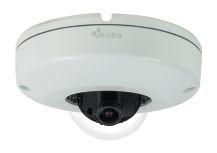
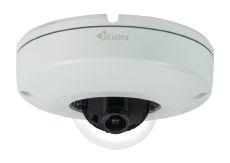
Small enough to fit into discrete settings, the Illustra Flex3MP Compact Mini-Dome is an outdoor quality day/night camera that can product HD-quality images in low light conditions. The Mini-Dome goes beyond H.264 and H.26 for bandwidth management via its Illustra IntelliZip compression technology. It also optimizes the bitrate when activity ceases to reduce network bandwidth and video storage needs. Advanced VideoEdge TrickleStor technology enables edge-based video recording, even in an outage. www.johnsoncontrols.com
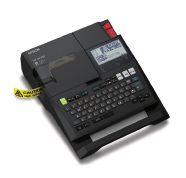
The LABELWORKS PX LW-PX750 is a portable and PC-connectible label and barcode printer that can create custom and compliant labels up to 1 in. wide. With application-specific hot keys for barcoding, asset management, mixed-length and half-cut labels, the product also includes a Pickand Print feature that allows users to queue a series of labels that the printer will print, cut and hold until removed. The LW-PX750’s MixedLength feature prints variable-length labels on a single, half-cut strip, and uses LABELWORKS PX industrial supplies from 1/8 in. to 1 in. wide. labelworks.epson.com
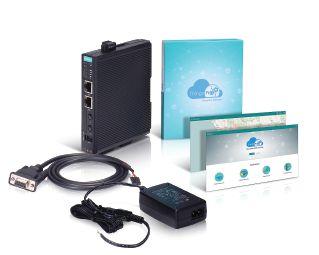
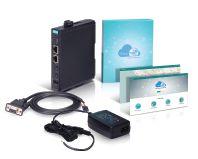
With built-in support for Amazon Web Services, the IIoT Gateway Starter Kit is a data-acquisition ready kit that simplifies the development of IIoT solutions. The first component of the starter kit is ThingsPro Gateway, a ready-to-run data-acquisition software platform that simplifies transferring edge data to the Cloud. The other main component is the UC-8112 Edge Computer — a computing platform that packs a 1GHz ARM processor, 512 MB RAM, two LAN ports and two serial ports in a compact, palm-sized box. www.moxa.com
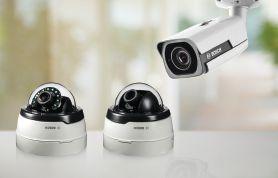
The new fixed dome (FLEXIDOME) and bullet (DINION) IP 4000i, IP 5000i and IP 6000i cameras now have Essential Video Analytics built in as a standard intelligent feature. This enables these network video cameras to understand what they’re seeing, generating metadata to add sense and structure to the video footage. These intelligent cameras allow users to set one or more alarm rules in parallel, only receiving alerts when needed. They are available in a range of resolutions, from 720p up to 5 megapixels, with frame rates up to 60 frames/second. www.boschsecurity.us
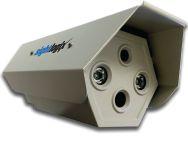
The dual-stream SightSensor HD combines a thermal sensor for intruder detection, a high-definition colour imager for detection verification, integrated video analytics and NIR illumination. The thermal SightSensor HD combines SightLogix’s video analytics with HD colour video into a single solution for shorter ranges at critical sites and commercial applications. The product is available in three models that detect inbound targets at 42m, 74m and 80m. Integrated with NIR illumination, both thermal and colour video streams are viewable through third-party VMS systems. www.sightlogix.com
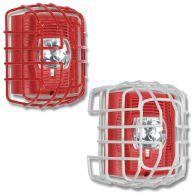
STI’s Horn/Strobe/Speaker Damage Stoppers are UL/cUL listed guards designed to protect the System Sensor SpectrAlert Advanced series of notification appliances. Constructed with 9-gauge steel wire, coated with corrosion resistant red or white polyester, they are tough against accidental or intentional damage. Available in flush or surface mount, they are recommended for areas where abuse is severe or it is imperative horns/strobe/ speakers continue to operate. A variety of wire cages are available for smoke detectors, emergency lights, speakers/strobes, etc. www.sti-usa.com

SECUREX, is a leading provider of financing to alarm companies in Canada. We are seeking managing dealers for account portfolios ranging from 500 to 6,000 accounts located in Vancouver, Calgary, Winnipeg and Toronto. For more information please call Leonard Sudermann at 403-299-2299.
Leonard M. Sudermann
President and Chief Executive Officer
Securex Financial Corp
Tel: 403-299-2299 • Fax: 403-299-2209 E-mail: len@securex.ca






































































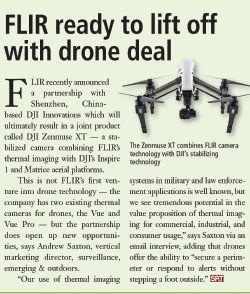
FLIR ready to lift off with drone deal: FLIR recently announced a partnership with Shenzhen, Chinabased DJI Innovations
ISC West launches Unmanned Security Expo: ISC West has unveiled plans for a new event, Unmanned Security Expo @ ISC West, focusing on aerial drones and ground robotics for security applications.



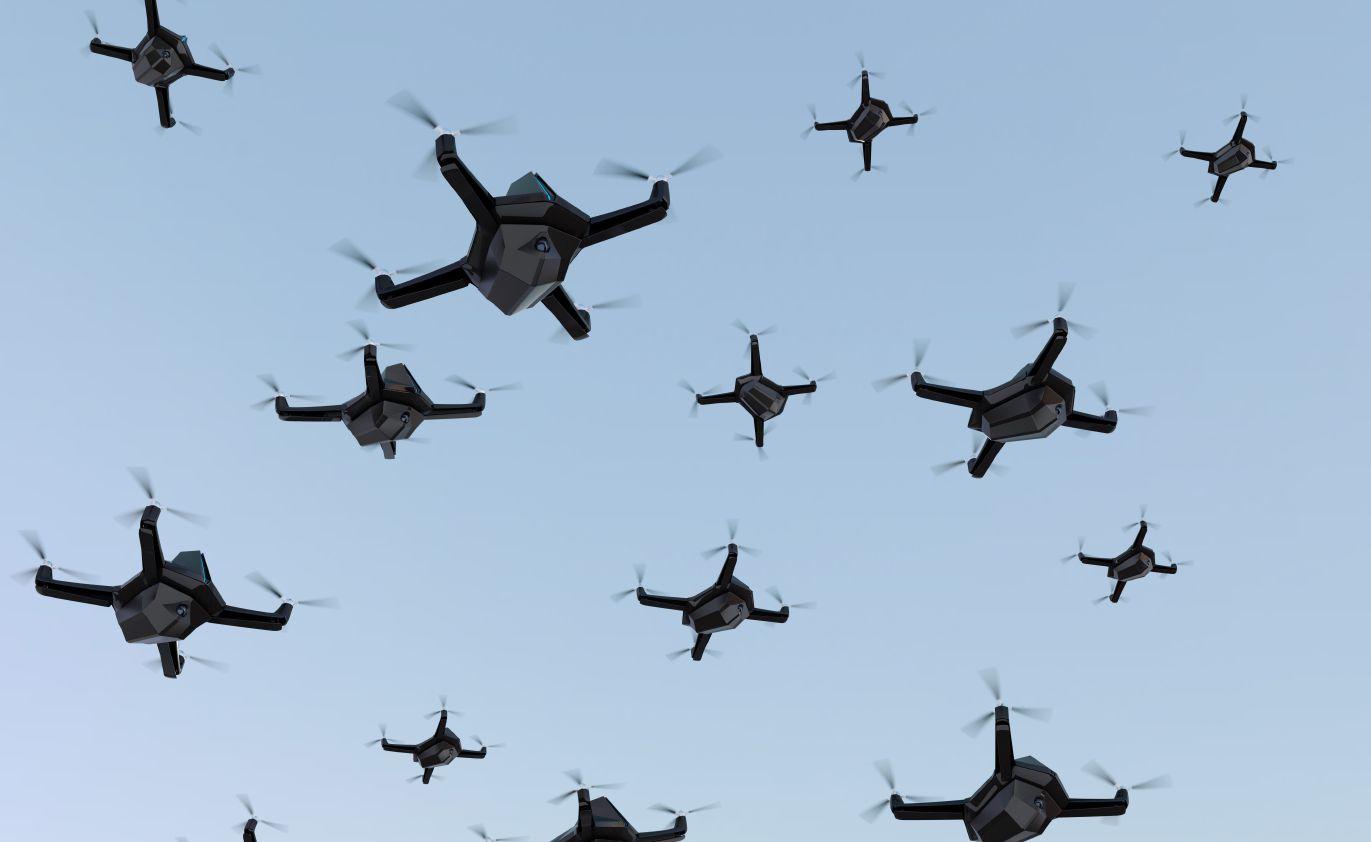








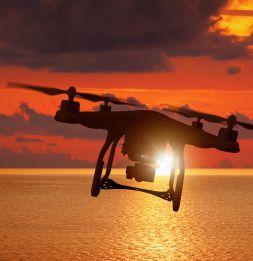


Drones are not a new technology, particularly when it comes to military applications, but few would argue they have achieved their true potential in the security industry.
Drones have numerous applications across a variety of industries, from oil and gas to agriculture to real estate and even entertainment. Wedding a lightweight camera to a drone or unmanned aerial vehicle (UAV) makes it a natural fit for security. The technology is abundantly available (and getting cheaper all the time); it becomes a matter of compliance with legal and privacy restrictions, as well as packaging it as the right solution for the right market.
In 2016, SP&T reported that FLIR, a manufacturer noted for its
thermal camera applications, had formed a deal with China-based DJI Innovations resulting in the creation of the DJI Zenmuse XT — a joint product featuring FLIR’s thermal imaging technology and DJI’s aerial platform. Andrew Saxton, a FLIR director, remarked that the technology was well suited to perimeter protection and quick response to emergency situations.
SP&T’s first major coverage of the drone market came in 2017 when we examined their early potential in security. (Coincidentally, the first appearance of the Unmanned Security Expo at ISC West was also in 2017). Oliver Philippou, senior technology analyst with research firm IHS Markit, commented in the article that “large integrators seem
very well placed to use this type of application,” adding that drones can act as “force multipliers” for manned guarding and monitoring situations, with the caveat that the market wasn’t expected to pick up until after 2017.
In the same article, Mark Aruja, chairman at Unmanned Systems Canada, commented that regulatory approvals for drones to be able to operate beyond line of sight would have huge implications for the technology and its usefulness to numerous industries.
SP&T News sister magazine Canadian Security has also covered the drones market in some depth, examining their policing and military applications, as well as some of the security challenges that have
Anti-drone radar protects presidential debate (from www.sptnews.ca)
Welcome to 2017: We ask the experts how drones, cybersecurity, and smart city initiatives will affect the security community this year and beyond
Safety and security drone sales to reach $250 million in 2019: Freedonia Group (from www. sptnews.ca)
occurred as a result of drones in the hands of private users (Sept/Oct. 2015 issue). Canadian Security’s first cover story on drones (“Close to the sun” – May/June 2017) looked at some of the early adopters of drones in security, in many cases guard companies, as well as the potential for counter-measures against drones.
Getting back to SP&T, the current cover story considers the role of unmanned ground-based vehicles and their role in perimeter protection. The argument for their usefulness becomes even more persuasive when they are deployed in conjunction with aerial drones, but as with all new technology, further research and education is key.

Anixter, as a Partner, can help you take on bigger, more profitable projects, managing the supply chain so you can focus on fast, streamlined installation.
From large integrator customers working on multi-site complex projects to small-medium installers and residential dealers, we have a full portfolio of products, technical expertise you can rely on, and services designed for your success.
Anixter does business how you want:
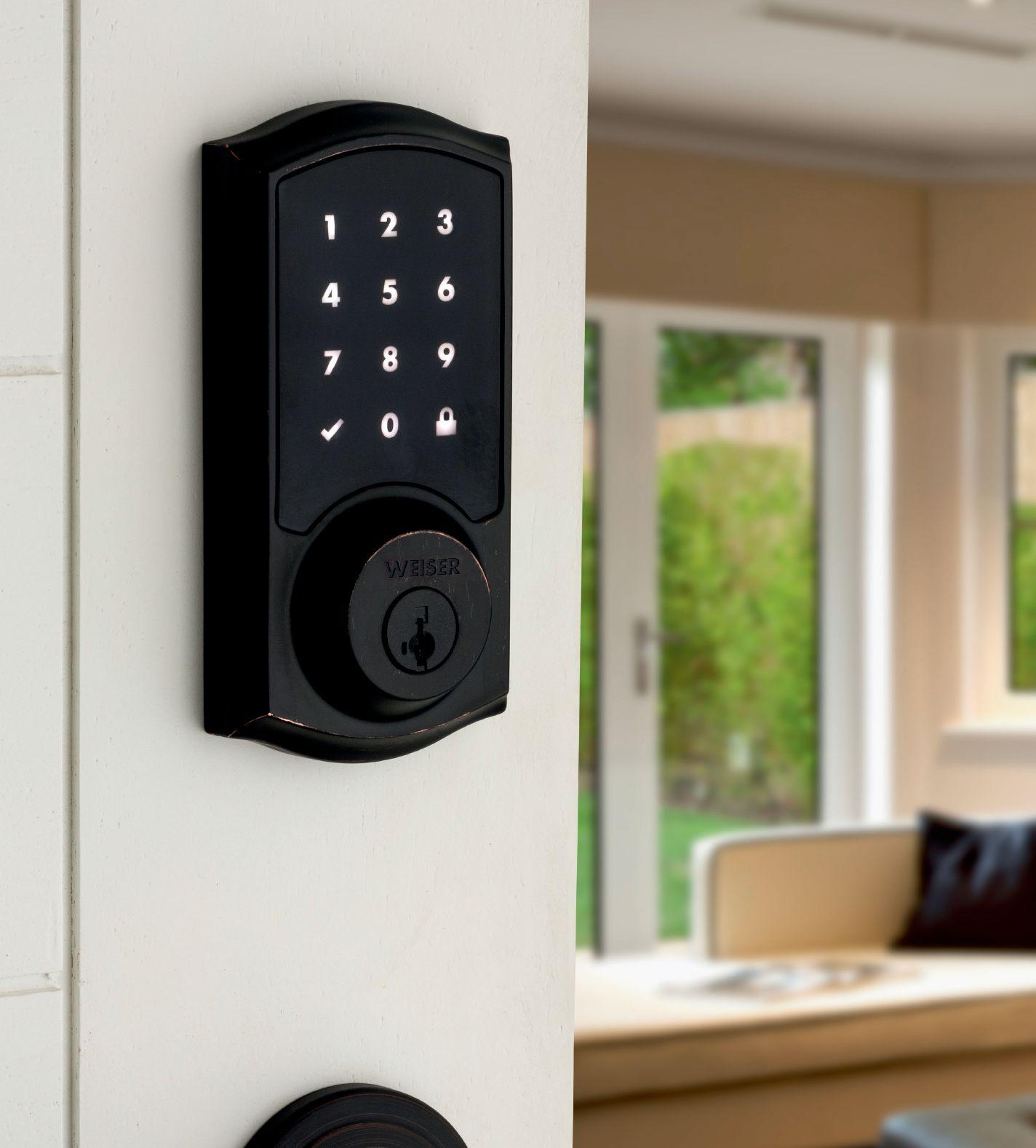
Weiser makes it easy to increase customer loyalty and position yourself as the core provider. If you already install security or home automation systems that are Zigbee or Z-Wave compatible, you’ll appreciate the easy installation and integration of Weiser Home Connect Locks.
Gain momentum in remote access and home automation as homeowners demand more from their primary solution providers.
Grow your business by building upon your existing services with Weiser.