









The Latest IP Technology Dealers Corner Thousands of Independent Dealers Personalized Customer Service
24/7 Monitoring 365 Days a Year

• Wholesale Monitoring
• Interactive Services
• Video Monitoring
• Managed/Hosted Card Access
• Advanced Web Services
• Acqusition and Funding Program


With home visits at a minimum due to the pandemic, alarm and security companies are finding new ways to connect with customers.
By Alanna Fairey


By Neil Sutton and Alanna Fairey
during the pandemic
Who’s buying and selling during COVID-19?
to
Bodbyl


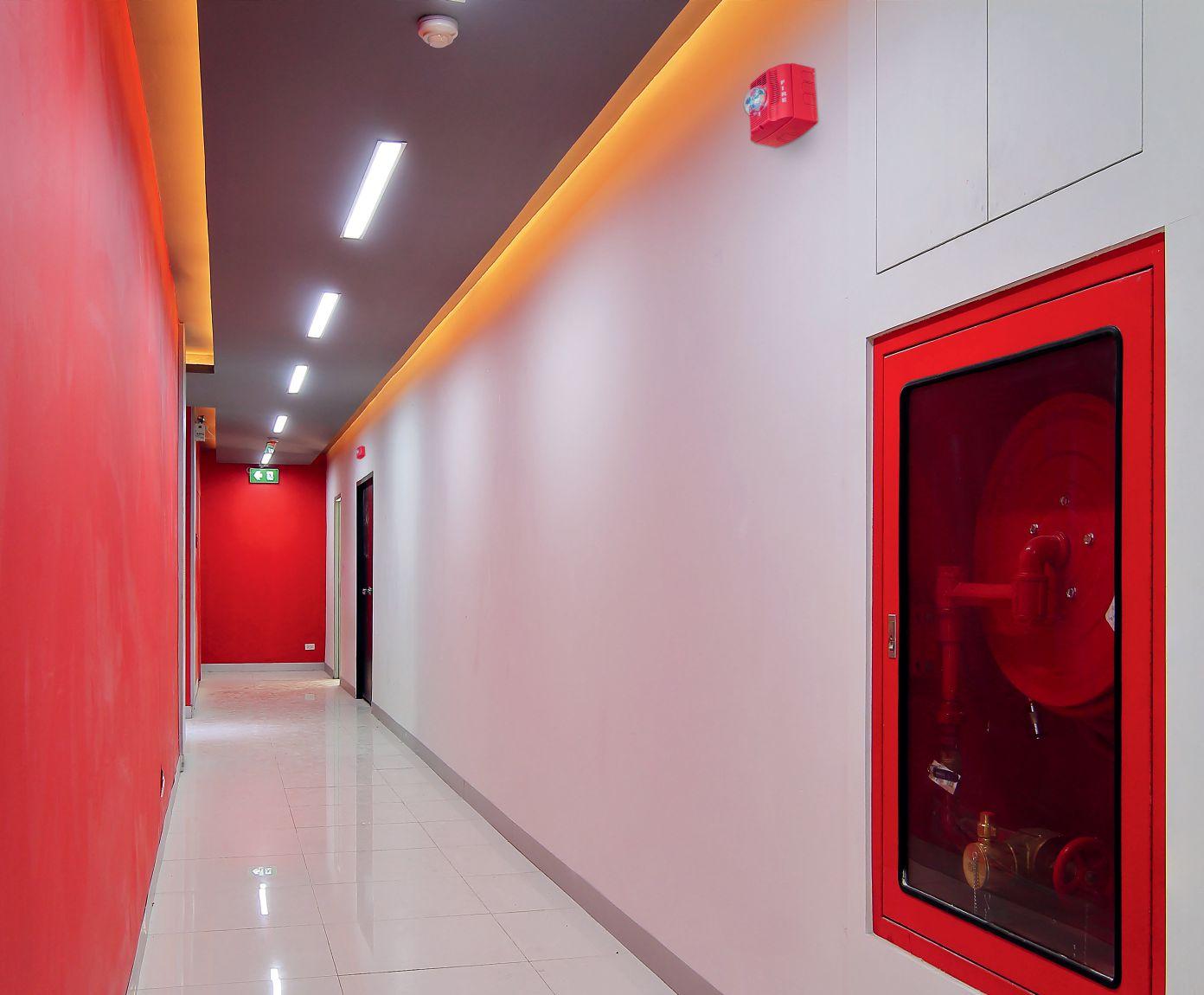
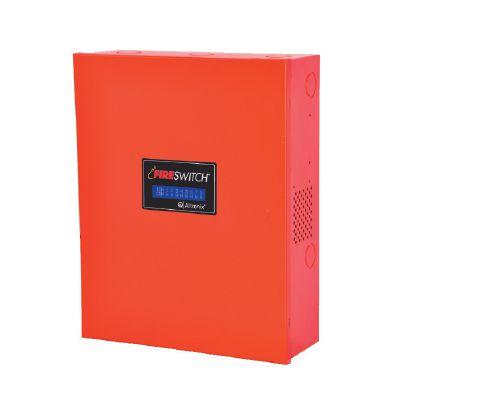
DESIGNED WITH MAXIMUM FLEXIBILITY, FIRESWITCH OFFERS MORE PROGRAMMABLE NACS, WITH ADDED LABOR SAVING FEATURES – INCLUDING REMOTE MONITORING AND DIAGNOSTIC REPORTING.
SOPHISTICATED SIGNALING POWER THE NETWORKED NAC POWER
On May 15, Security ONE Alarm Systems, based in Leamington, Ont., hosted a live concert stream in support of the Windsor Essex Food Bank Association.
Country musicians Eric Ethridge and Buck Twenty took part in the event that livestreamed on Security ONE’s Facebook page and YouTube channel.
According to Corey Robertson, manager of community partnerships at Security ONE, the live concert was the company’s way to give back to the community during the COVID-19 pandemic.
“We can’t retool our factory to create respirators or PPE,” Robertson said in a recent interview with SP&T News. “We knew that the whole reason for doing this idea right from the beginning was to make a difference in the community.”
“We knew that the whole reason for doing this idea right from the beginning was to make a difference in the community.”
— Corey Robertson, Security ONE
different organizations that represent multiple food banks and they were obviously humbled and beside themselves with gratitude.”

With all the proceeds from the event going to the Windsor Essex Food Bank Association, Robertson explained that raising awareness of food insecurity during the pandemic has been front of mind for Security ONE.
“Could you imagine self-isolating during this time and not being able to afford food?” Robertson says. “We contacted a couple of
The musicians refused to accept payment for the concert, added Robertson. “When we tried to pay them, they said, ‘No, kick back and put it into the same pot that everybody else donated to.’ So that’s how it came to be.”
While the live stream only faced one blunder when the camera was accidentally shut off, Robertson happily reports that the event otherwise went smoothly and with few technical errors.
“We got it back on, cracked a few jokes and then we carried on with the show,” Robertson recalled with a laugh.
The event was a resounding success, with more 2,700 people streaming the concert.
In an act of camaraderie, Robertson shared that when Security ONE was just shy of reach-
Paladin Technologies recently announced a merger with Montreal-based Groupe Sécurité Robillard.
Originally founded in 1896 as a locksmith business, Robillard has provided custom security integration to commercial and industrial customers in Quebec for the last 30 years.
“Paladin is an excellent strategic partner for Robillard,” said Janko Simoncic, president and owner of Robillard, in a statement. “Our complementary capabilities will allow us to offer our local and

provincial customers a more diverse integrated set of services, while our employees will appreciate Paladin’s similar culture and commitment to ongoing growth and innovation in the province of Quebec.”
Iain Morton, executive vice-president, Paladin Technologies, added, “In working with Janko and Robillard for the past two years, we have grown a strong respect for his organization and team members in delivering integration projects in Quebec and find the Robillard culture to be a fantastic fit.”
ing $10,000, another security dealer from their network reached out to them and donated the remaining amount.
For Robertson, this act of kindness was a true testament to what Security ONE’s live concert stream was all about.
“It was just such a powerful moment,” Robertson said. “It was really special to say it’s exactly $10,000 dollars that we were able to raise and to be able to support 17 different food banks, as well as to be able to provide a significant amount of PPE.”
Looking ahead at a post COVID-19 world, Robertson said that he hopes Security ONE will continue to host concert events for a charitable cause, especially since the event was received so favourably.
“It was fun to do,” said Robertson. “It seemed to really touch people and it would be really nice if we could come up with a way of trying to somehow do something similar in the future.”
— Alanna Fairey
“Robillard will remain Groupe Sécurité Robillard, a Paladin Technologies company,” said Ted Reid, president, Paladin Technologies.
“I am particularly pleased that Janko will retain his leadership role as vice-president in our expanding team. We are committed to the Quebec marketplace and the journey all starts with building the right team of people. I am excited to get to work with the great group at Robillard.”
All Robillard technicians maintain certification by the BSP (Bureau de la Sécurité Privée) and are professionally trained. Paladin states that Robillard, as a Paladin Technologies company, will provide technology offerings and door opening solutions nationwide as businesses begin to re-open during COVID-19.

Broome County protects critical infrastructure
Broome County in New York State has installed a new surveillance system to help protect its recently upgraded public safety radio network.
The county worked with partner Integrated Systems on a solution that combined Axis cameras, illuminators and radar motion detectors with Qognify’s Ocularis video management system. Surveillance is utilized to monitor and protect the nine new radio towers which replaced a system that had been there since the 1970s. The new infrastructure is designed to improve communications for first responders and emergency services.
“Each of the radio tower sites required a combination of networked PTZ and fixed cameras, as well as radar motion detection to provide comprehensive coverage that would ensure any unauthorized activity would be swiftly detected,” said president of Integrated Systems, Mark Hamilton.

Laval, Que., properties select locking solution
Rhapsody Property Management Services recently selected a dormakaba access control solution for its Laval, Que.-based properties.
“When it comes to access control, our residents are mostly focused on ease of use and security,” said Rob Martin, senior vice-president, Rhapsody Property Management Services, in a statement.
“We wanted to provide one-key access for residents through an integrated system that is easily maintained and reliable.”

According to dormakaba, its Saffire LX-M mortise locking solution was selected by Rhapsody Property Management for its RFID technology, contemporary design, ease of use, flexibility and security. The solution was installed in its Central Parc property located in Laval, comprised of six buildings and a community centre.
Saffire users have the option of issuing mobile, fob, wristband or keycard credentials. The Saffire LX-M is managed by dormakaba Community access management software.


• Boon Edam has appointed Patrick Nora as the new president and managing director of the Boon Edam factory organization (Boon Edam Manufacturing).
• Michael Seiter has assumed the role of senior vice-

Harvest Health & Recreation, an Arizona-based cannabis operator founded in 2011, is rolling out 3xLOGIC infinias access control to its locations across the U.S.
“We want to be able to control who goes where, regardless of the facility,” said T.J. Buskirk, national security director, Harvest, in a statement. “For example, why might an employee be in an area they shouldn’t? Our access control allows us to track who, when and where. I like the fact that the system grants access to someone for a particular door, and then after hours, that access is shut down—that level of control.”
Harvest has standardized on 3xLOGIC infinias access control and is using separate solutions for video surveillance and alarm systems. Integration partner Dem360 has installed the access control solution in 30 facilities to date, controlling more than 400 doors.

president, responsible for Bosch Building Technologies’ video systems & solutions business. Magnus Ekerot has joined Bosch as senior vice-president, responsible for global marketing of the company’s security offering.
Please continue to check with event organizers regarding COVID-19 updates.
September 16, 2020
Security Canada Atlantic Moncton, N.B. www.securitycanada.com
September 21-23, 2020
Global Security Exchange Atlanta, Ga. www.gsx.org
Sept. 27 - Oct. 1, 2020 BICSI Fall Conference & Expo Las Vegas, Nev. www.bicsi.org
October 5-8, 2020 ISC West Las Vegas, Nev. www.iscwest.com
October 21-22, 2020
Security Canada Central Toronto, Ont. www.securitycanada.com
October 24-28, 2020
TMA Annual Meeting Marco Island, Fla. tma.us
November 18-19, 2020 ISC East New York, N.Y. www.isceast.com


• Platinum Tools announced that David Johny will take on a GM role as company founder Lee Sachs moves towards retirement.
• Clare Controls announced that 2GIG Technologies co-founder Lance Dean is
joining the company’s board of advisors.
• James Mundle has joined Quantum Corp. as global channel chief. Mundle will be responsible for Quantum’s global partner strategy, programs and execution.
Video analytics tools innovate to meet social distancing and other COVID-19 criteria
The coronavirus pandemic has given rise to the term “social distancing” in more ways than one.
As the world begins to slowly reopen, how we go about our daily routines will change, primarily based on the social distancing practices and regulations that have been set in place.
To aid in physical distancing regulations, a number of security vendors have adapted their analytics offerings to these new parameters by introducing new technology or adjusting already existing technologies.
According to Vivotek’s marketing manager Meng Chhun, the company has two new features in their analytics: non-facial mask detection and social distancing.
Chhun explained that Vivotek has face detection in their Smart VCA package, which allows their cameras to detect coordinates of the human face.
“Developers on our platform adapted existing capabilities to meet this new demand.”
—AdamWynne, S&ST
Chhun shared that the company has a human tracking technology that is optimized by their 12-megapixel fisheye cameras because of the wide coverage it provides.
“In order to help prevent the spread of COVID-19, we enhanced our technology to not only detect the human face but also detect if a person is wearing a mask or not,” Chhun said in a recent interview with SP&T News. “If it detects a person not wearing a mask, then our camera can trigger an alarm, informing the security guard for further actions.”
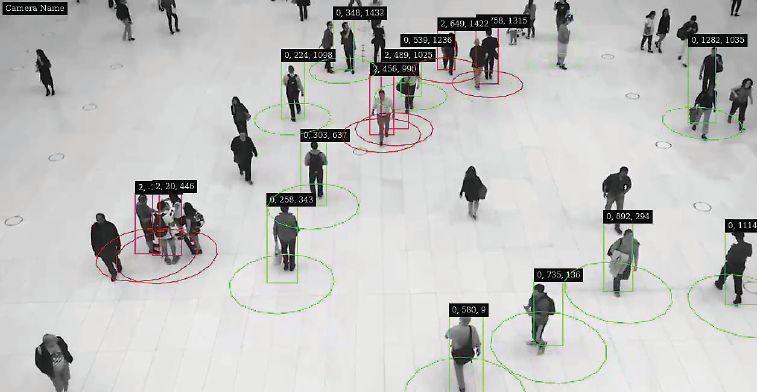
Based on Vivotek’s current tracking technology, Chhun said that their technology can also calculate the distance between two people.
“In the setting parameters, the owner of the business can set the social distancing he wants,” Chhun explained. “If the customers are too close to each other, our camera can also trigger an alarm.”
While Vivotek’s non-facial mask detection and social distancing technology are still under development, Chhun said that given the strong
demand under the current heightened conditions, Vivotek hopes to launch the technology soon.
“When we have these new solutions available, we foresee that they will be utilized everywhere, including education, health care and many others,” Chhun said.
Germany-headquartered Security and Safety Things (S&ST) provides an IoT platform for smart security cameras that allows them to run a variety of AI-enabled applications directly on the camera.
According to S&ST’s software engineering manager Adam Wynne, these applications have been created by third-party developers, and include several options for social distancing detection analytics, along with other applications that can assist organizations with other COVID19 response measures.
“The third-party developers on our platform adapted existing capabilities to meet this new demand,” Wynne said. “In some situations, existing apps could be modified slightly to fit the new use case while in others new detection algorithms and models were retrained with minimal effort.”
Wynne shared that one of the applications that is most helpful in helping companies to monitor social distancing is S&ST’s CVEDIA Talos Crowd Detector.
According to Wynne, Crowd Detector offers visual analytics that can help to enforce physical distance and analyze the movement of people in the workplace by determining popular paths, in both indoor and outdoor scenarios, as well as in daylight or low light conditions.
“The app is also effective for individually detecting persons in groups, busy areas and crowds,” Wynne added.
The Crowd Detector is suited for a few key
segments that are in immediate need of measures to reopen such as retailers, transportation venues and manufacturing operations that have an array of differing social distancing, queue management and face mask detection requirements.
Ottawa-based Senstar announced that the company has been able to quickly get its social distancing software up and running, thanks to a pre-existing Windows-based Symphony VMS platform and Senstar Safe Spaces that can be used for organizations of all sizes.
“Our existing crowd detection analytics was adapted for social distancing while a new analytic for basic face mask detection was rapidly developed,” COO Jeremy Weese said.
“These analytics run on standard PC hardware while our new analytics, including enhanced facemask detection and physical distancing leverage advances in deep-learning and make use of purpose-built GPU hardware.”
The Symphony VMS has been on the market for many years and is used in multiple industries, including education, airports, retail, logistics and utilities.
“The Symphony VMS-based analytics provide a level of performance that enables them to be used with existing systems without consuming massive amounts of computing capacity,” Weese said.
Weese said that trial versions of the new Senstar Safe Spaces video analytics are currently available for download, with new updates and capabilities to be added in the coming weeks.
“Senstar Safe Spaces can benefit a wide range of organizations, from small businesses that have one IP or network camera to large organizations with comprehensive video management systems,” he said.
— Alanna Fairey
Virgil Reed explains what it takes to build an alarm and security business with more than 5,000 clients
Before founding Reed Security, a Saskatoonbased business that offers custom-designed alarm systems and high-definition video surveillance, Virgil Reed got his first taste of the security industry working as commercial sales representative for ADT back in 1998.
Though he appreciated the vital lessons that he learned from the company, Reed decided to follow his dream of starting his own business.
Founded in 2000, Reed Security started out as an authorized dealer for another company for five years before making a change.
“After five years of being a dealer, we became an independent — and it was the greatest choice I ever made,” Reed says.
Today, Reed Security services over 5,000 clients. Reed shares that his training and experience in commercial sales allowed them to sell large alarm, access control and video surveillance projects seemingly from the day the company began.
One of the biggest hurdles Reed had to overcome, however, was limited financing.
Thanks to a hefty $30,000 investment from a personal friend and credit cards, Reed Security was able to take off.
Over time, Reed Security developed professional relationships with lenders and currently has a bank that understands their needs.
Looking back on the security industry now in comparison to when he first launched the business, Reed reflected that the industry as a whole has never been more competitive, using the example of aggressive door-to-door programs.
“A customer may have had a contract that would last 10 years and today, door-to-door companies offered a buyout contract,” Reed explains. “The average length of time that a customer stays your customer is lower.”
Reed also shares that customer expectations add to the challenges that Reed Security faces in the industry today.
“Customer expectations have never been higher,” Reed says. “Consumers want everything now and if you cannot provide it, they will shop elsewhere.”
To combat these challenges, Reed and his team have learned that in order to remain afloat in a changing industry, one can never be complacent and must be prepared for the unexpected.
Due to the novel coronavirus (COVID-19)
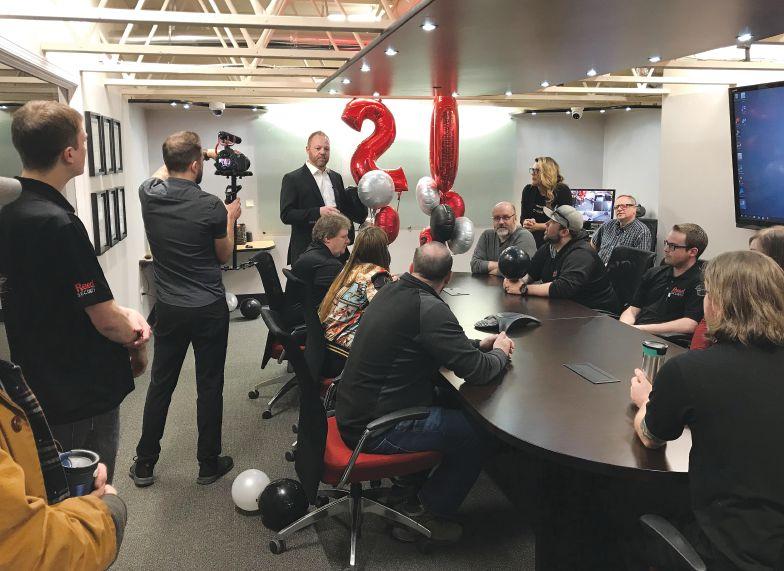
Reed and staff celebrate two decades in the security business
pandemic, many businesses were required to self-isolate and work from home, Reed Security included.
Though he admits that the events of COVID-19 were concerning and disruptive for business, Reed says that he and his staff adapted to the circumstances at lightning speed.
“The COVID-19 virus has actually created a lot of innovation,” Reed says. “Now my staff remote works, and now they have to change how they sell, as well as our procedures on how we’re going to do installs.”
Reed also shares that focusing on the end result in addition to the process along the way has also helped to contribute to Reed Security’s 20-year success.
Acknowledging that the company can always strive towards improvement, Reed Security implemented a Scaling Up program back in 2019, a strategy based on implementing Rockefeller habits that have a focus on leading people, setting strategy, driving execution and managing cash.
Following this new business model has proved to be beneficial for Reed Security, as the program taught them to implement new daily habits that will help them succeed in their business moving forward.
Another one of those habits, according to Reed, is increasing their communication within the company.
“Six months ago, we would have meetings as
we needed them,” Reed explains.
“Today, each department has a 10-minute daily huddle where we all share what’s going on in the business.”
Adds Reed, “Our goals right now are two times the cash flow, three times the profitability, and 10 times the valuation.”
When Reed first started his business, it was his dream to see one of his children join the business, to keep Reed Security in the family.
“Incidentally, nobody really wants to join the business,” Reed says with a laugh.
However, Reed says that he “would like to be able to support them in what they’re passionate about.”
With 21 employees and five dealers, Reed says that part of the company’s five-year plan is to double the size of staff and to have a large focus on commercial.
For his own personal development, Reed says the most important lesson he has learned on the road to starting his business is to have a great work-life balance and to not take that time for granted.
To manage the stresses of a fast-paced growing business, Reed bikes, plays hockey and listens to podcasts.
“I spend a lot of time with my family,” Reed shares. “And I will continue to spend a lot of time with my family — that’s what’s most important to me.”
— Alanna Fairey
By Patrick Straw
How quickly this very different way of doing business and looking after our families is starting to feel normal.
While this has been an extremely challenging time for our member companies, all indications are that the Canadian security industry has adapted quickly, safely and very professionally.
Never before has the dedication to protecting life and property been more evident as companies completely changed their routines to look after their employees and their customers — adapting on the fly without missing a beat.
I have had the pleasure of sitting in on dozens of committee meetings, listening to companies who compete with each other on a daily basis that are now working tirelessly to help each other out by sharing best practices and ideas for converting to home offices. This is the community that is the Canadian security industry.

again. Much has been learned about running businesses efficiently and what can be accomplished in a safer and less fragile work environment. While it hasn’t been easy for many, it has taught us that we can do things differently and still do them well.
The internet has allowed companies to keep their brands alive and current while there are still so many limitations on sales activity and travel. Sales haven’t stopped, they are just done differently now. The need for security in Canada is at its peak and we will deliver.
CANASA is here to support you!
People have been able to address questions and issues that have been around for a long time and they have shared conversations with their peers from coast to coast.
As restrictions are slowly being lifted, we must diligently follow social distancing protocols to make sure we do not slide back into a second wave. If you have experienced COVID-19 related challenges while operating your business, get in touch with me at the CANASA office (pstraw@canasa.org). I can share ideas and best practices that I have learned from other companies.
The future of business as usual?
It is my opinion that life will never be the same
With the majority of our industry working from home, the engagement and sharing of information on our social media platforms has been incredible. Make sure you join our Facebook group “Canadian Security Online” if you are not already a member. It’s very active daily.
Lastly, I want to wish everyone in our industry a safe and prosperous second half to 2020. We will get through this together and we will be a stronger security industry in Canada as a result of all of your efforts.
Patrick Straw is the executive director of CANASA (www.canasa.org).




ABy Victor Harding
Deals are getting done, despite the toll the pandemic has taken on the security industry
lthough the security industry was deemed an “essential service,” many security businesses have been adversely affected. But how has the pandemic affected M&A deals in the industry?
“We will all have to pick our spots and be more flexible.”
This is a time of greater financial uncertainty and risk for both buyers and sellers. Past experience suggests that deals will be harder to do, those that get done will take longer, and valuations will likely drop a little. Despite this gloomy picture, my initial take on deal activity in the industry is things are not looking that bad.
How is this possible given the economic devastation we have been going through? Firstly, the security industry has not been affected as much as other industries, so valuations have not been impacted as badly. Secondly, there is a huge amount of private money in Canada and the U.S. on the sidelines looking to be invested. Finally, those with capital are viewing this as a time to possibly take advantage of some deals in the market.
My take is most alarm companies have been affected mainly on the installation and service side but their monitored accounts have held up. There have been some account cancellations, but not as many as we might have first thought. There are alarm account deals being done — some in the normal course, some by dealers who are being forced to sell or have decided to sell because they can’t rely on their monitoring RMR alone. For example I closed two small deals right in the midst of the pandemic in normal fashion without any appreciable discounts or abnormal terms. Interestingly enough, some alarm accounts buyers are telling me they are looking to buy because they can’t grow organically right now so they are resorting to acquisitions. This pandemic has actually brought new buyers out of the wood-work to do smaller deals — 500 accounts or less. Medium sized deals — 500 to 2,000 accounts — are still being done by the regular buyers.
Fire service companies have been affected by the shut down but inspections that had to

be delayed will, by law, get done so inspection revenue will be delayed not lost completely. In March, only essential fire service work was being done but that is loosening up now and owners tell me mostly their technicians are back at work full time now. However, my guess is some of the larger fire installation jobs will be lost delayed or cancelled forever. I have talked to two private equity buyers of fire companies and got the same message from both. They are still actively looking for fire deals. In assessing value they will likely treat the virus shut down period as an aberration and pay more attention to future forecasts of EBITDA than they have in the past. The key thing they will be looking for is that there is no long term damage done to the company (i.e. technicians or customers being lost).
Some guard companies have been hurt by the pandemic in a way that will affect short and medium terms valuations. Others have actually benefited by the shutdown as guards are now being used to protect empty buildings. Also new guards are being hired to manage traffic in and out of all sorts of buildings and stores.
This leaves integration businesses where the main source of their revenue is larger installation jobs. I think they are perhaps the most
vulnerable. Their installation jobs have been delayed or cancelled and it is unlikely that new work will appear to replace these cancellations anytime soon. As a result, selling integration businesses may well be the most difficult of all the sectors of the security industry. A buyer looking at an integration business’s EBITDA for the last few months will likely see reduced numbers and this could extend out to the end of the year.
In summing up, here are some tips on what sellers should be aware of in the next few months:
• The big question buyers will be asking is how has the seller’s business been affected by the virus in the short, medium and long term.
• Deals may well take longer to do. Due diligence will likely become more important and take longer to do.
• Forecasting revenues, the linchpin of all valuations, has become much more difficult. This adds risk and will likely lower valuations.
• Because valuations have become less definitive, more deals today may come with earnouts. Care needs to be taken by sellers on what earn-out clauses to agree to.
• Hold-backs on deals may increase in size and their length of time.
• Everybody will be paying more attention to the reps and warranties in purchase agreements. Sellers need to make sure they are not agreeing to something they can’t be sure of.
• Because of the virus, the “material adverse change” (MAC) clause in most purchase agreements becomes much more important now. To what extent should sellers be responsible down the road for any MAC due to COVID-19?
• In these days where cash is king, purchasers will be paying much more attention to makeup and amount of working capital that a company needs to survive.
• Be ready for more post closing disputes to occur even on deals that closed before the virus struck as the buyer realizes that they might not be getting what they bargained for. In summary, my feeling is that deals in certain sectors of the security industry will continue to get done. We will all have to pick our spots and be more patient and flexible.
Victor Harding is the principal of Harding Security Services (victor@hardingsecurity.ca).

By Colin Bodbyl
In pandemic times, artificial security personnel offer a solution
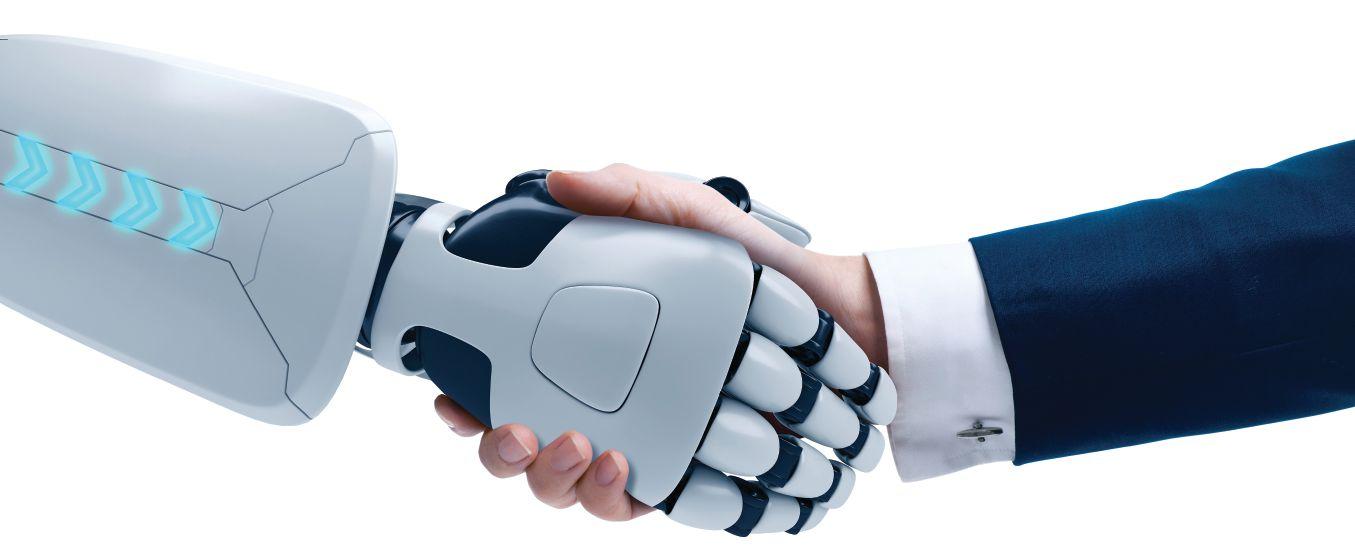
Before security robots existed, movies portrayed them as gun-slinging, laser-shooting assassins, far superior to any human counterpart.
In reality, most security robots will not work outdoors, cannot outrun a human, and would not intimidate a small child. Security robot manufacturers have struggled to justify their price points and limited applications, but that could be changing due to COVID-19.
To be fair to security robot manufacturers, their products are intentionally unintimidating. In part, this is to avoid triggering people’s fears of a robot-controlled dystopian future. There are also legal liabilities associated with a product that could restrain or harm a human. It is understandable then, that when faced with this choice, manufacturers chose to pursue a product that users would feel was more like a friend or colleague than an enforcer.
Faced with the limitation of being unintimidating, robot manufacturers focused on more routine security related tasks that robots could complete inside a building. Some examples include patrolling hallways for open doors, making sure people are not in areas they should not be, or using AI to learn what is normal in an area and automatically alerting someone when something is not. These are all practical and useful features, but until recently, they could also be performed for free by the everyday staff
“COVID-19 has forced people to change the way they live and the way they operate their businesses.”
who roam the average office space.
COVID-19 has emptied out offices across the world — many employees now work from home and rarely visit the office, if at all. This has left properties vulnerable to the types of problems many took for granted before. Most people are unaware that, for good reason, many insurance policies restrict the length of time a property can remain vacant. With fewer people visiting the office, problems can go unseen for days. A door ajar, flooding, lone workers, and more are all liabilities that would rarely go unnoticed in the past.
Vacant buildings, of course, can be monitored by a guard, but guards are expensive and are most efficiently deployed when the hours they are required to work are predictable. In the case of COVID-19, it has become difficult for office managers to predict when employees will be in the office, with many allowed to come and go from the office whenever they like.
The unpredictable hours of vacancy combined
with the simplicity of the tasks that are required to be completed each day has created a strong argument for using robots over human guards. Robots are billed at a monthly rate, regardless of how many hours they work, while guards are billed hourly. A robot working 24 hours a day, seven days a week, is far cheaper than a human guard working the same hours. Where human guards are superior to robots is typically in their ability to deal with criminals or threatening situations, but in this case the responsibilities of the robot are far more mundane. Perhaps most important of all, robots are immune to COVID-19 and are not concerned about their own wellbeing.
The sudden change in people’s ability and desire to perform certain tasks that were once taken for granted has created an environment ripe for change. COVID-19 has forced people to change the way they live and the way they operate their businesses. Where the innovation curve may previously have moved to equip humans with more advanced technology, COVID-19 could move us to a whole new curve where humans are no longer part of the equation. Security robots might not be what we imagined in the movies, but after enduring nearly a decade of uncertainty they might finally find their place in this strange new world.
Colin Bodbyl is the chief technology officer of Stealth Monitoring
(www.stealthmonitoring.com).

With home visits at a minimum due to the pandemic, alarm and security companies are finding new ways to connect with customers
By Alanna Fairey
Several alarm companies have come to the same conclusion: the Do-It-Together (DIT) trend has accelerated since the COVID-19 pandemic.
DIT is a variation on the DIY (Do-It-Yourself) trend in security, but instead of consumers buying security equipment from a retailer and installing it themselves, the alarm company sells the equipment, helps the homeowner through the install (though they still “do it themselves”), and offers a professional monitoring option.
Chris Currie, president of Ontario-based Damar Security Systems, says that when the company had its annual planning session back in early March, DIT was not part of the conversation.
Two weeks later, when COVID-19 was declared a pandemic, Damar Security Systems
started to roll out DIT services.
“It’s completely enhanced or increased its level of importance,” Currie says. “It’s funny how it’s just completely changed the direction that we were heading in at the time.”
While the topic of DIT security may not have been discussed at Damar Security Systems’ annual planning meeting, Currie shares that the company has taken the position that there is always going to be a market out there for them to come and professionally install a security system for customers, in addition to a demographic of customers that would want to do it themselves.
With the pandemic making customers anxious about strangers coming into their homes, Currie says that Damar Security Systems promptly adjusted their business model to accommodate DIT offerings.
“Now we’re looking at just trying to strike that balance between people that want security but are apprehensive about having outsiders
coming into their home for their business,” Currie says.
“The only reason why we went with a DIY design type direction was to try and facilitate those that just weren’t comfortable having people come into the house all the time [but] they still kind of wanted that professional system.”
Gordon Hebb, vice-president of sales at Wilsons Security, which has offices across the Maritimes, shares that the security industry started to adapt to DIT/DIY technology back in 2013, but says that he never saw it being a hit with mainstream companies. Now, in the midst of COVID-19, he says he has seen a switch.
Echoing Hebb’s sentiments, Morgan Hertel, Rapid Response Monitoring’s vice-president of technology and innovation, shares that what has changed is the kind of customer buying — and installing — their own home security systems.
“What you’re seeing now in the DIY space is consumers that either couldn’t afford or just worked in a place to be able to do that or didn’t want an extensive system — they just wanted something that was better than nothing,” Hertel says. “The overall market is growing. It’s not necessarily taking away from one or the other.”
“If the customer is not comfortable doing it by themselves, we’re right there with them using FaceTime, Skype or Zoom to help walk them through it.”
— Chris Currie, Damar Security Systems
Since its sudden rise in popularity, DIT security has resulted in a number of alarm companies accommodating the needs and requests of their customers.
According to Currie, Damar Security Systems has changed the way that they approach a sale — they provision the security system gear before it goes out to the customer.
“We’re programming it all up, in-house testing it and shipping it out to the customer to install themselves,” Currie says. “If they’re a little bit more mechanically inclined, the customer can use a drill, screws and anchors.”
Currie says that once life gets back to normal, Damar will be checking in with their customers to make sure the alarm is working to their satisfaction.
Although the customers are installing the security system themselves, Currie shares that he and his team are still happy to assist from afar. “I’m using this as an opportunity to add other additional devices at that point, too,” Currie says. “If the customer is not comfortable doing it by themselves, we’re right there with them using FaceTime, Skype or Zoom to help walk them through it.”
When it comes to utilizing pro installers for commercial jobs and leaving some home security installations for the homeowners, Hebb says that Wilsons Security would “absolutely” consider this.
“I think it’s important as a company to offer all the services so you’re adapting to the clients’ needs,” Hebb explains. “If a client is capable enough to install it on their own, then we should allow them the ability to be able to do that,” he says, provided that the client receives an appropriate level of professional support and guidance throughout the process.
In the case of commercial clients, Hertel says the size of the job may determine whether professional installers are preferred or not.
“What we’re seeing with the DIY is getting into the small commercial, in a strip centre — front door, back door, couple of motion detectors type of installation, not necessarily large industrial commercial warehouse type space,” Hertel says. “But certainly the smaller mom-and-pop kind of bakery stores are starting to entertain the
idea of a do it yourself.”
Whether the DIT security trend will have an impact on customer loyalty is up for debate.
“It still remains to be seen at this point because it’s all still pretty fresh and new, to us at least,” Currie says. “But I can see having clients become more sticky if they’ve got more invested in the system, something that they have installed themselves.”
Whether or not DIT security is the future of monitoring remains to be seen.
Hebb believes that even though the trend has increased and changed recently, the demand will depend on the market.
“I think it’ll be a smaller portion and a little bit more in the residential market than in obviously the commercial market,” Hebb says. “I don’t think we’ll see installations in the commercial market.”
Hertel shares similar sentiments about the future of the monitoring industry, as he believes that the professional installation space is thriving.
“The typical traditional professional space is continuing and doing well,” Hertel says. “This is just coming in alongside it as an option. So for those people it’s another option that’s going to add to it.”
Noting that there are a number of big players in the market today, Hertel predicts that some significant innovation will come out of those organizations.
“It’s going to force the professional guys to step up their game a little bit and be able to support similar technology that you’re going to see over the next few years, which is good for the industry in general,” Hertel says.
Looking ahead, Currie is confident that DIT security will remain as an offering for Damar Security Systems. However, he adds that the company will always continue to professionally install technology for their customers.
“There is a segment of the market that they’re just not interested in and doing it themselves, and I think that’s the market that we’re still trying to go after,” Currie concludes. “But we’re trying to strike that balance between those that want that, but don’t want people to be coming into their homes right now. I think it’ll definitely still carry on into the future.”
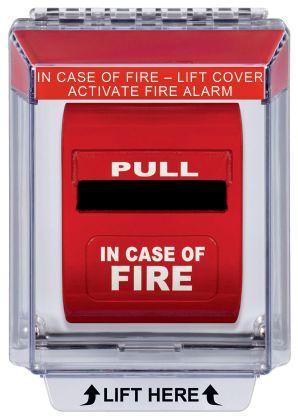
Covers are Proven Effective for 40 Years
Polycarbonate covers and buttons help prevent vandalism and accidental activation, without restricting legitimate operation. Ideal for use in areas where there is a risk of malicious misuse of safety appliances. Horn in cover sounds and FLASHES Draws attention before appliance is activated
to install, super tough Helps stop false alarms and building distruption

Remote video monitoring is a popular option that may receive an even bigger boost due to COVID-19
By Neil Sutton
The security industry has been leaning into a trend towards more automation and remote video options for several years now. Conventional wisdom suggests that a pandemic and near-empty commercial properties would push that trend even further, but as with almost everything we’ve seen during COVID-19, it’s complicated.
“It’s a bit of a mixed bag,” says Anna Sliwon-Stewart, senior analyst and research manager, security and building technologies, Omdia.
“On the one side, you’ve got a lot commercial facilities that are just standing empty with no one working there, almost no one supervising them. There’s a lot of expensive equipment or maybe data… that is just left unattended.”
On the other hand, remote video monitor-
ing may be an expense not everyone can afford right now. Non-essential smaller businesses that were forced to shut down for several months due to the pandemic have sustained massive financial losses. “You can clearly see how their capital to pay for monitoring is going to run out,” notes Sliwon-Stewart.
The pandemic may have been an unforeseen variable in the development of automated and remote surveillance solutions, but the technology’s future seems assured. For companies that have modest surveillance needs — like one or two cameras on a premise — remote monitoring offers a highly affordable option, says Sliwon-Stewart, with a predictable and regular cost structure. Cloud-based VSaaS (video surveillance as a service) options have few or no upfront fees and a monthly cost structure, which helps companies manage their expenses. Also,
there are no requirements to store data on site. As cameras and surveillance software have become more sophisticated in recent years, customers of all sizes have been able to take advantage, adds Sliwon-Stewart.
“There has been a transition to make sure that the system is being used in a much more active way,” she says.
Virtual guard tours that utilize surveillance cameras allow organizations to keep tabs on their premise at a distance. “For example, end users can ask a third-party monitoring station to check in on their premises every couple of hours,” she explains. “Or they can do video monitoring [such that] whenever a camera triggers an alarm — based on motion detection, mostly — then the operator at the monitoring station can log into that specific camera, see a very quick clip [and make a determination on the incident].”
On a grander scale, there could be added responsibilities for surveillance operations by leveraging the existing infrastructure for keeping track of the pandemic itself, argues Dimitri-

os Pavlakis, industry analyst for ABI Research, particularly if surveillance systems with hundreds or thousands of cameras are called into service for that purpose. “My hypothesis is this also enables new data streams from video surveillance,” he says. “You can monitor infection rates, monitor the population in real-time and apply different behavioural AI models to predict future outbreaks or hot spots that might require the government’s attention. Similar AI models are already used by law enforcement to predict crime. This will be valuable for emergency response and infectious control operations with the added value of key implementations for smart cities and health care.”
A system like this would have to handled in such a way that the privacy cost does not outweigh the benefit of monitoring the spread of the virus, says Pavlakis. To meet most privacy legislation requirements, any data collected should be anonymized.
“Until the outbreak curve is flattened, governments are expected to take some liberties when it comes to data protection. As more open source data becomes available, this might be helpful in the short term to predict any hotspots,” he says. “It is of the utmost importance, however, that any near-future implementations do not have long-term ramifications
“We can definitely see how the video surveillance industry is trying to perform the same functionality as intrusion detection systems.”
— Anna Sliwon-Stewart, Omdia
that limit citizen rights under the guise of viral research or monitoring.”
The sophistication of today’s cameras systems has opened up a world of possibilities, notes Sliwon-Stewart. In addition to the traditional model of a camera as a surveillance tool and visual deterrent, it can provide deeper insight into situational awareness. Cameras, for example, can help limit the occurrence of false alarms.
“The role of video here is to really get an insight into what’s happening, and maybe avoid alerting the manager of the facility if it’s just a false alarm,” states Sliwon-Stewart. “Obviously, they will get the reports of the incidents, but this is going to give them peace of mind that someone else is looking after everything… and
if it requires police response or not.”
The technology is only getting better with advancements in machine learning and artificial intelligence. The same cameras that are used to monitor property for intruders could also be used to monitor for smoke or fire, and may one day compete with traditional intrusion systems. That day is still a ways off, says Sliwon-Stewart, “but we can definitely see how the video surveillance industry is trying to perform the same functionality as intrusion detection systems.”
Live monitoring with real-time analytics processing is likely to get better still with the advent of super-fast 5G networks — perhaps at first for critical infrastructure applications, then more broadly. “I think this could be a game-changer for all of us,” she says.
With commercial properties close to vacant, monitoring providers indicate clients are looking for camera-based solutions that can be deployed quickly
By Alanna Fairey
In light of the COVID-19 pandemic, many businesses have been required to shut down, leaving unattended properties susceptible to break-ins and vandalism.
When employees were mandated to work from home to prevent the spread of COVID-19, a number of security companies indicate they have noticed an exponential increase for remote monitoring across a plethora of different sectors.
“We’ve seen an increased demand and a common trend in the construction sector for new video monitoring installations,” says Stephanos Georgoudes, products and manufacturer relations at Surveillance Lanvac Monitoring.
“There is more of a demand for video surveillance for those sectors.”
Georgoudes shares that other sectors that have seen a demand in remote monitoring include insurance companies and automotive garages in areas across Quebec, Ontario and B.C.
“Overall, the commercial sector shows the biggest increase and interest in video monitoring, primarily construction and special trades,” Georgoudes says.
Robert Plume, vice-president of secure integration at G4S Secure Solutions, agrees that there has been a huge uptick in remote monitoring, with customers asking for extra surveillance during the day.
Plume shares that G4S spoke to customers during COVID-19, and operators helped to assess which solution would work best for their current situation.
“I think what we’re finding through this in
“It’s not necessarily extra surveillance, but rather smarter surveillance.”
— Stephanos Georgoudes, Lanvac
Like many other security businesses in Canada, Lanvac has taken a number of measures to reduce the risk of contamination during the COVID-19 pandemic.
“We provided secured computers and phones that VPN and VoIP to our central stations across Canada,” says Georgoudes.
“Any operator from anywhere in Canada assists with all alarm traffic, and this allows for a perfect load-balancing system where staff from one part of the country can jump in and help with increased volume in another part of the county.”
particular is creating different conversations,” Plume says. “Each client and each site is really unique and quite often we recommend a blended or integrated solution to meet their full requirements.”
Luciano Cedrone, senior account executive with Logixx Security, shares that remote video monitoring for private properties is a good option during these unprecedented times.
“To be able to feed those cameras back to an isolated control centre like some of those some of the vendors have, or some of the buildings have in their basement — that’s a great plus. You don’t have to send somebody up there,” Cedrone explains.
While this technology may be a benefit, Cedrone stresses that security guards should not be entirely replaced by remote video monitoring options.
“If a company is reducing their guard complement in order to deploy more cameras and then that sacrifices their ability to manage the security program, that’s a problem,” Cedrone says. “You’ve got to balance the mission statement of your security program and how that camera system is going to complement that…. If you’re in Barbados and an alarm comes through and there’s nobody that can actually go and take care of the door that’s open, then it eliminates the point of having that camera.”
Recognizing the increased demand for remote monitoring solutions, security companies have adjusted their business solutions accordingly.
Georgoudes shares that shortly after the COVID-19 outbreak, Lanvac’s dealers went to their alarm customers to offer them a forensic video tool that he says could easily work in conjunction with the alarm system.
“Traditionally, you have an on-site guard, whereas now with event-based monitoring and the use of advanced camera analytics, you can pin point the intruder,” Georgoudes explains. “It’s not necessarily extra surveillance, but rather smarter surveillance.”
To accommodate the increased need for remote monitoring with smarter surveillance, Lanvac has partnered with IPX360 to help Canadian security companies provide remote CCTV maintenance checks by using CheckMyCCTV, a 24/7 automated remote checking system.
“Dealers can receive daily health checks from all their CCTV systems that include connection issues, camera failures, image integrity, recording issues and time/date accuracy,” Georgoudes says.
Additionally, Lanvac added more shifts to accommodate the increased demand for remote video monitoring options.
“We’ve had to remotely train some current operators to help out with the increase of video monitoring traffic,” Georgoudes says. “We are also currently finalizing remote training strategies for all types of operator tasks to be ready for the future.”
Despite seeing an increased demand for remote monitoring, Plume says that G4S has not added more monitoring shifts, explaining that the company has been able to manage the demand.
“Our solution is scalable because it’s based on analytics,” Plume explains. “It’s really incumbent on our technicians and the client to kind of streamline where we deploy and what analytics we use to really create the best solution for them and to ensure that we can better secure their property.”
With strict work from home orders set in place due to COVID-19, setting up monitoring operators to work from home has been essential.
While Lanvac operators are working from home, Plume shares that G4S has taken a couple of different routes.
In the case of their monitoring centres, G4S sent home all non-essential employees. However, Plume says that G4S is aware that not all employees — ranging from schedulers to operators — can work from home and the company has taken precautionary measures to ensure the safety of their employees.
“We’re able to keep all of our operators that come in over six feet apart and we’ve done a great job of isolating people within our environment, even though they’re coming to our environment,” Plume says.
While the future of remote video monitoring beyond COVID-19 is yet to be determined, understanding the current demand is a top priority.
Since the COVID-19 outbreak, Plume shares that remote video monitoring has helped G4S to open up to a variety of new business opportunities.
“We have technicians that are working 24/7,” Plume says. “We’ve ensured that the entirety of the solution from the way it’s designed to the way it’s monitored can be fired up quickly on client demand.”
While the demand may continue to increase, Cedrone reiterates that there will still be a need for security personnel, as it is an extra step to ensure that properties are protected from trespassers.
“Don’t get distracted by the fact you’ve got a fancy camera and think that the camera being setup is going to cover all your liabilities and take care of your security issues,” Cedrone advises. “You need to have the background support to the camera, which is policies and procedures that manage how the camera’s going to be used.”

Telguard’s cellular alarm communicator for commercial fire, the TG-7FS LTE-A, is now available in Canada. TG-7FS is a universal cellular communicator and works with virtually every fire alarm control panel. Using Canada’s LTE cellular networks, the TG7FS transmits alarm signals from the fire panel to the designated monitoring station. The unit can serve as the sole communications path for fire alarm systems, meaning it can replace all landlines currently dedicated to the master control unit. The TG-7FS is a drop-in replacement featuring a dial capture, meets ULC S559 and ULC S304 standards, and has been listed for use in Canada. www.telguard.com
Bosch Building Technologies
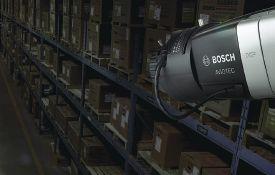
With a new version of its video-based fire detection system AVIOTEC IP starlight 8000, Bosch enables the early detection of fires with cameras. Flames and smoke are detected down to an ambient lighting level of 2 lux. For this purpose, Bosch has extended its video analytics in the camera by artificial intelligence, which processes the results of more than 20 algorithms and makes an alarm decision on this basis. With the new firmware version 7.61, AVIOTEC IP starlight 8000 is suitable for application in areas with very low light. boschbuildingtechnologies.com
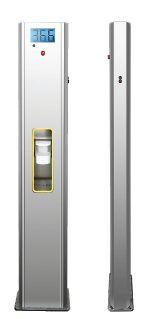
The company’s fixed thermometer pole is designed to be used at the entry of head offices, command posts and other essential infrastructures. It allows the temperature of employees (and other visitors) to be monitored. Unlike body heat scanners or manual equipment, this product does not mobilize the intervention of additional staff. It can be installed and left at reception, and then synced with pre-existing access control devices.
www.prod360.ca

Syndesy announced the release of a new feature called ‘Check-Ins’ which lets users check-in with the push of a button wherever they have to go during the COVID-19 pandemic. The app can now help users keep each other safe if they are diagnosed with the virus by allowing users to generate a report of their check-ins for all their friends and family. The Syndesy app is available to download in the Apple App Store and is being offered for free in an effort to help support the containment of this pandemic. Syndesy’s “Check-Ins” feature allows users to store their geo-location with a date- and time-stamp.
www.syndesy.io
Digital Monitoring Products
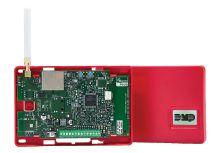
DMP’s new CellComF-LTE is designed with the same platform as the DualCom Universal Communicator and includes two sets of tip and ring terminals for easy installations. This new design meets the NFPA 72 standard for single communications technology. For instance, if the CellComF stops communicating, it’s designed to automatically disrupt voltage on the second tip and ring — that triggers the host panel to annunciate the trouble. For fire panels, it’s a simpler way of ensuring local annunciation, according to the company. The new CellCom Series includes both fire and non-fire options — each one with built-in LTE cellular. www.dmp.com
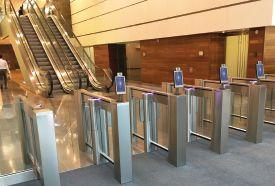
Temperature Monitoring Integrated Solutions detect if an individual seeking access is wearing a face mask and verifies their body temperature while in motion. Equipped with the COVID-19 software predisposition option, the pedestrian gates deliver an automated process to help preserve social distances. Access is granted only to authorized people when used in conjunction with the facility’s access control system. When indicated for pre-identification authorization, the system can monitor for mask and body temperature detection without the need for credentials. www.automatic-systems.us

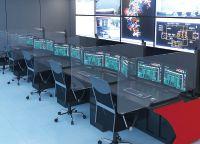
The new Winsted protective operator partition creates a physical barrier between operators in control rooms and operations centres. The partitions define the personal workspace and reinforce social distancing. These partitions can be easily repositioned as needed. The partitions feature: extended height and depth for extra protection; easy-to-clean acrylic partitions; temporary or permanent installation options; clear or frosted surface; smooth bullnosed edges; and radius corners. www.winsted.com
HELIAUS platform enhancements include a new visitor screening application which is fully configurable to support different visitor screening procedures. Using GPS and Bluetooth beacons, HELIAUS understands security professional locations in real-time, even indoors. If they approach an elevator bay, it might ask whether people are present, and if they are obeying social distancing guidelines. These answers are then recorded. Over time, based on the knowledge collected, the AI engine will make predictions about when enforcement of social distancing guidelines is most likely to be needed.
www.aus.com
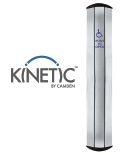
Camden Door Controls announced the introduction of CM-75 Series Column push plate switches with built-in Kinetic no-battery wireless transmitters. Kinetic by Camden is a 900 Mhz. ‘power harvesting’ wireless system that uses the energy created by the operation of the switch to power the wireless transmitter. The CM-75 Series Column switches are available in aluminum, with the choice of clear, dark bronze and blue finishes, and also a 36” tall stainless steel model. Column switches are suitable where high/low switches (at hand and wheelchair foot height) are required. www.camdencontrols.com
Genetec
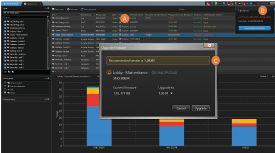
Firmware Vault now supports cameras from Axis, Bosch, and Panasonic in addition to existing support for Hanwha Techwin cameras. Designed to help IT administrators and systems integrators stay up to date with the latest camera firmware, Genetec says Firmware Vault helps organizations ensure they have the latest protection from the manufacturer against cyber threats. Firmware Vault streamlines the camera firmware update process so that customers can implement the latest cybersecurity protection measures. Firmware Vault is available for free with Security Center version 5.8 and above. www.genetec.com
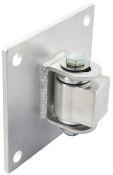
D&D Technologies has expanded its mounting bracket line by introducing three new sizes of its half bolt-on line: a 4” Half Bolt-on with aluminum, 4” Half Bolt-on with steel/aluminum combo and 6” Half Bolt-on with aluminum. These new brackets, suitable for 4” and 6” fence posts, are designed to dramatically reduce post flexing. The wider brackets on the Shut It mounts enable anchor points to be positioned at the sides, rather than the centre, of the fence post. These brackets, available in both aluminum and steel, can handle gate loads up to 1,000 pounds. www.ddtech.com
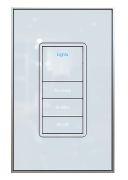
The latest Vantage EasyTouch Glass modular keypad station combines functionality with a contemporary design and colour options that can be matched with other Legrand products. EasyTouch Glass offers a highly reflective, mirrored look with a smooth-touch tactile surface. The keypad is available with up to five programmable buttons for different scenes allowing users to set the lighting in a space with one touch. The keypad’s button matrix is also the same as wired or wireless wallbox dimmers, allowing integrators to select the best technology for their application while maintaining a consistent aesthetic. www.legrand.com
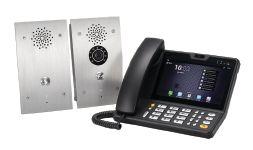
TOA’s Softphone Application for their N-SP80 SIP intercom system is available for both iOS and Android mobile smart phones. The software will offer users a simple interface and audio/video quality over IP/ SIP networks. The Intuitive UI delivers a one-screen option to see all features at a glance. The N-SP80 offers sound and video quality using HD technology and sound algorithms like echo cancellation. When offline the user may set their mobile phone to continue to receive push notifications, so they don’t miss an important message. Additionally, the system includes the ability to message, access the log and real-time monitoring. www.toacanada.com
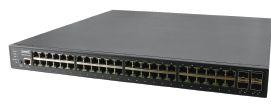
This high-density 48-Port Managed Gigabit PoE+ Switch offers 176 Gbps switching capacity. The switch is suited for use in networks that need extensive connectivity for high-resolution IP cameras, wireless access points or VoIP phones. In a single rack unit, the switch (SM48TAT4XA-RP) provides (48) 10/100/1000 copper ports and four dual-speed 1G/10G SFP+ slots and features a redundant, hot swappable power supply. When equipped with dual power supplies, the switch can provide a total of 1640 Watts of power for 30 Watts to all 48 ports simultaneously. For lower port requirements, the switch can be used with a single power supply to provide up to 820 Watts of power. www.transition.com

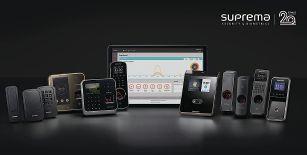
Suprema says it is refocusing its efforts to offer fully integrated access control solutions for physical security and time and attendance applications in the post-pandemic world. Solutions include end-to-end access control and workforce management system capabilities employing various touchless credentialing solutions such as facial recognition, RFID, and remote and contactless mobile devices. www.supremainc.com
SPC Connect is a remotely managed, cloud-based, intrusion detection solution. This latest version, 3.0, includes an entirely reworked user interface. Collected information is now visible to the installer and enables them to have an overview of the installed SPC systems out in the field. Dashboard widgets like a geographical site map with status information from individual panels or a multisite status widget show the overall status information from all connected SPC panels. A new centralized operations menu allows the installer to more intuitively navigate a specific operation more quickly.
www.vanderbiltindustries.com



















































































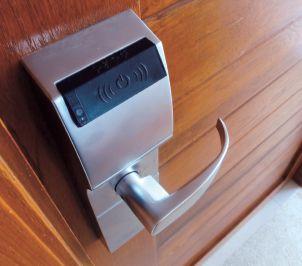


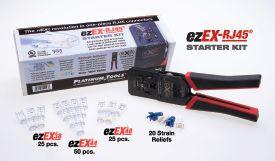
The new ezEX RJ45 Starter Kit (p/n 90188) contains: EXO Crimp Frame with EXO-EX Die; ezEX38 connector (25 pieces); ezEX44 connector (50 pieces); ezEX48 connector (25 pieces); ezEX strain reliefs in assorted colours (20 pieces). This new series of connectors will cover a wide range of insulation diameters (conductors) and cable jacket diameters. All three sizes, ezEX38, ezEX44, and ezEX48, shielded or non-shielded, are rated for 10 Gig and PoE+ and can be used for Cat6A, Cat, and Cat5e, covering a full insulation diameter range of 0.83mm – 1.22mm.
www.platinumtools.com
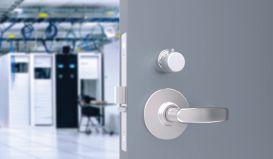
The new Switch Tech platform extends electronic access control to applications previously not practical by offering a digital replacement for mechanical keys and mechanical small format interchangeable cores, commonly referred to as SFICs. The initial product to feature this platform, Switch Core, will work wherever SFICs do, including cylindrical, mortise and other locks by BEST, Sargent, Yale, Corbin Russwin, Schlage and more. Switch Core is suited for retrofitting electronic control into existing doors on interior rooms, closets, cabinets and cases.
www.timeforaswitch.com
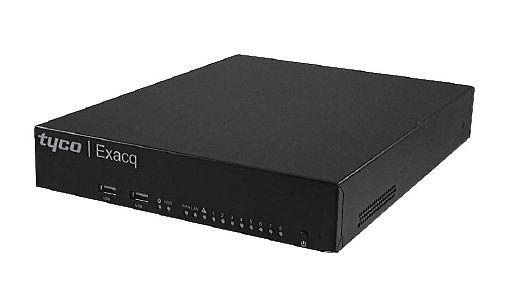
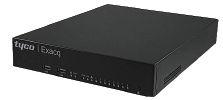
The exacqVision G-Series PoE is a video recording solution for customers with smaller facilities. This compact NVR offers flexibility with a generous PoE budget, delivering 15 watts simultaneous on all ports, and up to 30 watts on any port, integrating with a variety of cameras complemented by a plug-and-play setup. This solution brings local client performance that allows live video to be viewed directly on the NVR with eight full-HD simultaneous streams at 15fps, providing a high-quality experience when viewing live video or searching stored video. www.johnsoncontrols.com
The new U-Series Network Cameras offer high quality imaging performance and many of the features found in the company’s flagship i-PRO Extreme Series Cameras. The U-Series includes 13 models in indoor and outdoor dome and bullet camera configurations with fixed or varifocal lenses, 2MP and 4MP models. Features include: H.265 compression and smart coding to increase bandwidth efficiency and reduce storage requirements; colour night vision for use in low-light conditions; and iA (Intelligent Auto) and Super Dynamic functions for enhanced dynamic range in scenes with varying lighting conditions. security.us.panasonic.com

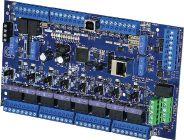
The LINQ8ACM Dual-Voltage Access Power Controller with LINQ Network Power Management facilitates a wide range of locking devices while providing network monitoring, reporting, and control of eight independently controlled fuse or PTC protected access control outputs. For instant on-site verification, the LINQ8ACM is equipped with bi-colour LEDs which indicate 12 or 24VDC on each of the 8-outputs. The LINQ8ACM distributes power to a variety of access control devices, including magnetic locks and electric strikes, while providing critical diagnostics and management capabilities via its on-board network communications.
www.altronix.com
Mircom
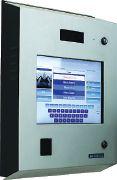
The TX3 Touch Weather Resistant Telephone Access system has a 1600 nits high brightness display, suitable for outdoor usage. The weather resistant 6.4mm thick glass display can work under any weather condition, rain or snow. The touch screen can be used even when wearing gloves. The system has a built-in proximity reader for access control capabilities. HD camera also gives the system to have a video calling feature with Mircom provided SIP service and the MiEntry application. www.mircom.com
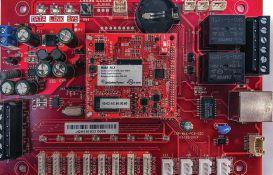
Network Communication Module is a remote monitoring device engineered to handle enterprise applications and specifications which require large numbers of network-managed outputs. NLX offers eight Serial Peripheral Interface (SPI) ports instead of four in the NL4 – allowing users to connect up to eight local devices. NLX also adds RS-485 communication which is compatible with Generation 2 FPO and M8 boards with the optional RS-485 module installed.
www.lifesafetypower.com
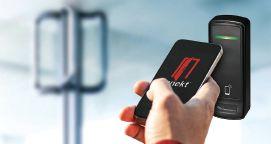
The new Auto-Unlock enhancement on the Conekt Wallet App for Apple iOS and iPhones (Version 1.2.0) can replace the current 10-second timing of the “Tap Here to Unlock” button with a 30 second or 1-, 2-, 3-, 4- or 5-minute response from a drop-down menu. These additional times are available when the Auto-Unlock feature is activated with a selected mobile access control credential designated with a star. When not selected to be on and/or a starred favourite credential is not chosen, timing for all remains at 10-seconds, the industry normal. The Auto-Unlock feature is available immediately.
www.farpointedata.com

• FREE text & email notifications • FREE unsupervised openings & closings • FREE report distribution for you and your customers