Canadian ADT dealer expands into U.S. Alarm Guard sets up shop in Atlanta with further expansion planned p.6
Security Summit Canada recap and photos
Second annual event returns with expert advice on RMR, market trends and more p.10
Protecting critical infrastructure
How to make the most of today’s security systems, from drones to access control p.18
Ellen Cools
Alarm Guard expands into the U.S.
Niagara transitioning to verified alarm response
March Networks recognizes top partners
Bill Maginas
EDITOR’S LETTER
IBy Neil Sutton
Message received
usually keep my phone on silent, just out of habit. It’s easier that way than having to turn it off in the middle of a conference or a meeting when it starts blaring out your ringtone. There are also fewer accusing stares.
But for whatever reason, I left the ringer on high one morning as I was driving back to my office after a meeting. Seemingly out of nowhere, a loud siren noise took me by surprise. It took me a fraction of a second to realize that this noise was coming from inside the car and not some sort of an emergency vehicle looking to cut through traffic. As soon as I noticed it was actually my phone, I silenced it to avoid distraction. And when I drove past a highway sign flashing an Amber Alert message, all the pieces came together.
The Amber Alert in question was requested by police for an eight-year-old boy in the Thunder Bay, Ont. area. (The alert was subsequently cancelled after the boy was found safely.) Not long after, social media was flooded with complaints — not that the alert was issued, but that so many people received it loudly on their phones, most of them far away from Thunder Bay.
Across Canada, the Alert Ready mobile system recently held trials — coincidentally, one week before the real Amber Alert was issued. The system is designed to notify Canadians of potential emergencies in a manner that is likely to have the biggest impact (mobile phones). It’s not perfect and trials didn’t all go according
to plan. According to several reports, a large number of people didn’t receive the test alerts as intended. You can read more about Alert Ready in the most recent issue of Canadian Security magazine (sister publication to SP&T News), along with commentary and recommendations from emergency management experts.
I met with AtHoc’s GM Sanjay Saini not long after these Alert Ready trials to get a better sense of what it means to offer mass notification tools in today’s world and what the role is of public notification systems.
You can read the full Q&A on p. 20 of this issue, but to summarize one key point, the “mass” part of mass notification is a relative term: it works best if you’re targeting the right people and with the right message.
Saini pointed out that Alert Ready is “the right path forward” and I have to agree. Whatever its current failings may be, they will be ironed out over time. Companies and institutions like hospitals and university campuses will likely adopt their own mass notification tools — if they haven’t already — which they can localize to groups of people in their care or employ. But having a publicly available mass communications tool provides an extra level of reassurance.
Maybe I should turn my ringer on again. I’ll just keep the volume low.
Your Partner in Securing Canada Security Products & Technology News is published 8 times in 2018 by Annex Business Media. Its primary purpose is to serve as an information resource to installers, resellers and integrators working within the security and/or related industries. Editorial information is reported in a concise, accurate and unbiased manner on security products, systems and services, as well as on product areas related to the security industry.
Group Publisher, Paul Grossinger 416-510-5240 pgrossinger@annexbusinessmedia.com
Publisher, Peter Young 416-510-6797 pyoung@annexbusinessmedia.com
Colin Doe, Veridin Systems Canada Anna Duplicki, Lanvac
Victor Harding, Harding Security Services
Carl Jorgensen, Titan Products Group Antoinette Modica, Tech Systems of Canada Bob Moore, Axis Communications Roger Miller, Northeastern Protection Service Sam Shalaby, Feenics Inc.
111 Gordon Baker Rd, Suite 400, Toronto, ON M2H 3R1 T: 416-442-5600 F: 416-442-2230
CIRCULATION
e-mail: asingh@annexbusinessmedia.com
Tel: 416-510-5189 • Fax: 416-510-6875 or 416-442-2191
Mail: 111 Gordon Baker Rd, Suite 400, Toronto, ON M2H 3R1
Occasionally, SP&T News will mail information on behalf of industry-related groups whose products and services we believe may be of interest to you. If you prefer not to receive this information, please contact our circulation department in any of the four ways listed above.
Annex Publishing & Printing Inc. disclaims any warranty as to the accuracy, completeness or currency of the contents of this publication and disclaims all liability in respect of the results of any action taken or not taken in reliance upon information in this publication.
LINE CARD
Alarm Guard expands into the U.S.
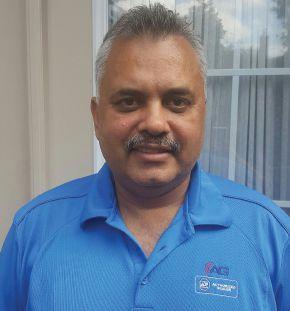
Alarm Guard, a Torontobased Master Dealer for ADT in Canada, is expanding its operation into the U.S.
The company was started by Mike Chaudhary, founder and president, in 2003 and has grown to a cross-Canada pres ence.
The company’s success “gave us the confidence that now is the right time to explore opportunities in the bigger market. With a 35 million population, we can grow up to a certain level, but that process will be a little slow.”
co. is Atlanta, Ga. — Alarm Guard opened its first U.S. office there in May and has started recruiting dealers.
“We are going to grow our business with corporate sales in Georgia as well as dealer partners. We already have a couple of dealers under our belt, so we’ve signed them and they’re going to start working with our program,” explains Chaudhary.
The first stop for Chaudhary &
Alarm Guard’s overall business is split 80/20 between residential and commercial, but Chaudhary expects that proportion to change in Atlanta, particularly with the recent growth of its
corporate sector.
Chaudhary is planning to expand Alarm Guard’s U.S. presence quickly and will move into the Florida market as soon as July.
“I think it’s a good time for Canadians to show that we can not only survive, we can thrive in the U.S. market too,” he says.
Changing market
ADT has undergone many corporate changes over the years — it was taken private through a US$6.9 billion buyout from Apollo Global Management in 2016 and went public again less than two years later. Ownership changes have no appreciable impact on the dealer business, says Chaudhary. But the alarm market itself has shifted over time, particularly with the arrival of
the cablecos, he says. “We’re losing some customers to the low-hanging fruit. They’re not worried about service levels; they’re worried about bottom-line pricing. We cannot win all the customers. But the people who really need [security], we definitely educate them about the new smart home lifestyles rather than about intrusion.”
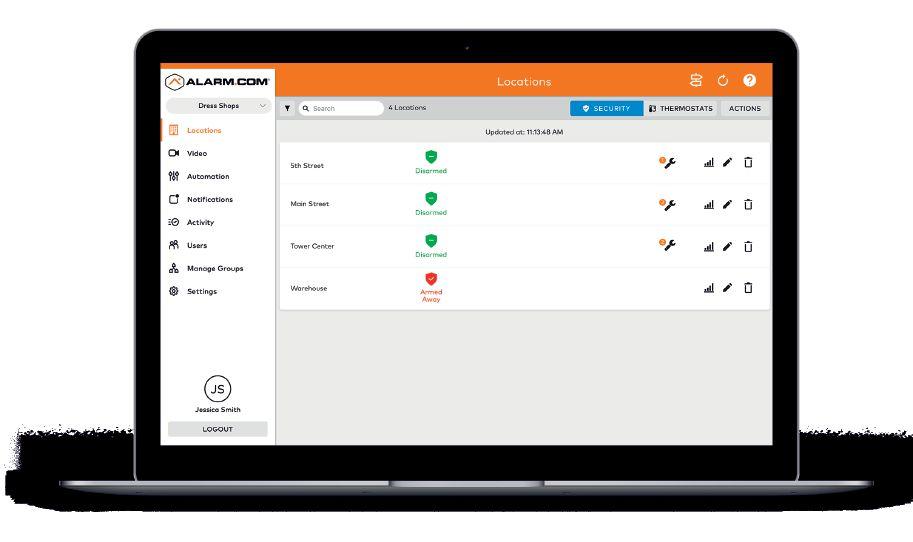
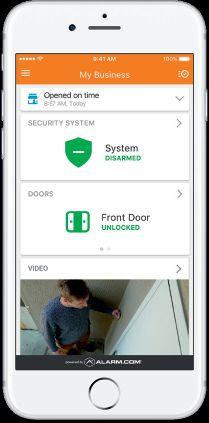
Chaudhary adds that interactive services through Alarm.com and ADT’s Pulse have ramped up significantly. “That’s a big game changer for us.”
He also sees relative newcomers like Amazon and Google carving out their own space in the home security market but “there will always be room” for more traditional monitored security providers.
— Neil Sutton
Niagara transitioning to verified alarm response
The Niagara Regional Police Service (NRPS) recently announced a change to its alarm response protocol.
“We are transitioning our fee-based False Alarm Reduction Program to a no-fee Verified Alarm Response Program for residential and business intrusion alarms,” a public letter from NRPS Superintendent Richard Frayne, Operational Services, reads.
Effective July 1, 2018, alarm companies and monitoring agencies must verify any intrusion alarm before requesting a response from the NRPS. The NRPS will not accept an intrusion alarm if it has not been verified.
There are several instances that would justify a verified dispatch request, including: audio signals and/or video monitoring that confirm criminal activity;
confirmation of a suspected criminal act by an owner, key holder, response agency, or witness at the scene; or multiple alarm activation points “whose manner or sequence of activation indicates that suspected criminal activity is, or has taken place.”
Once an intrusion alarm is verified, the NRPS will dispatch the first available police unit.
Speaking with SP&T News, Frayne explains that the NRPS made this change to align their alarm response policy with the way other police services across Canada respond to alarms, and to maximize their efficiency and effectiveness.
The NRPS reports it receives and responds to approximately 6,500 residential and business intrusion alarms each year — 99 per cent of which are false. This is part of the reason
why the Verified Alarm Response Program focuses solely on intrusion alarms, Frayne explains. Holdup, robbery, panic/duress or registered Mobile Tracking Emergency Response System alarms called in by an alarm company or monitoring agency are not affected by the policy change.
Despite the extra responsibilities placed on monitoring agencies and alarm companies, Frayne says the industry’s reaction has been very supportive.
“We met with CANASA prior to finalizing where we want to go with this and did a bit of a pulse check to see where the industry was on things, and they were supportive of where we were going,” he says.
The NRPS has communicated the change with the industry in several ways — sending a letter to the industry and CANASA about
the program and holding a meeting with the industry to answer questions.
“We’ve really tried to give them lots of time in advance — we gave them a couple of months notice on this — so they can work with their customers if they needed to upgrade their equipment,” Frayne continues.
While the potential for miscommunications between monitoring agencies/alarm companies and the police exists, Frayne believes once the companies update their technology and have a good understanding of the program, “it’s actually going to enhance our response.
“They’ll be contacting us when appropriate and we’ll be able to respond actually quicker as a result because we’re not going to be tied up [with false alarms].”
— Ellen Cools
March Networks recognizes top partners
Ottawa-based March Networks recently announced the winners of its annual North American Partner Awards. The company says the awards recognize companies for their excellence in delivering on customers’ video surveillance and video-based business intelligence requirements, and for driving exceptional results.
Dealer Spotlight
Key partner of the year:
Johnson Controls Inc.
Partner of the year, by sales territory:
Canada
Stanley Black & Decker
Rockies
Security & Safe of Colorado
South West DBSI
Mid-West
Steak & Case, Inc.
Great Lakes
Integrated Protection Services (IPS)
Gulf
Smith Hamilton
North Atlantic
Portland Safe Inc.
Mid-Atlantic
Wittenbach Business Systems
South East
FEDCorp Integrated Solutions
Rising stars:
Capital Business Equipment, Inc. (CBE)
Iverify
market watch
Bob Hoevenaars, owner, Alarmtech Security Systems, London, Ont.
SP&T News: What side of your business is showing the most growth? Is it residential, commercial, a mix of both?
Bob Hoevenaars: It’s a bit of both, probably hedging a little bit more towards the commercial side of things, but we’re doing a lot more cameras and stuff on both sides, residential and commercial.
SP&T: What new technology are you embracing?
BH: We’re embracing connectivity on the security side of things, allowing our clients to have remote access and receive notifications in multiple ways on events and control of their system. And we’re doing that across the board — residentially and commercially.
On the commercial side, we find that business owners really appreciate knowing their alarm system has been armed or knowing the time and who disarmed their alarm system. So in that case, they’ll really feel quite a bit of comfort, over and above what we used to be able to offer in the past. On the residential side, people just really like the cool idea of being able to be in touch with their home.
SP&T: So what impact (if any) is DIY or MIY having on your business?
BH: At this point and time I don’t think it has a lot of impact on my business yet. There’s still a lot of people out there who want and need a personal consultation. We just did a system the other day and there are 70 zones in this one person’s house — obviously they’re not going to DIY something like that.
But on the smaller end of things, I do think it’s coming, it’s going to grow, and we’re looking at ways to be able to embrace that opportunity when it starts becoming more mainstream.
SP&T: Are the kinds of questions your customers are asking different than five or 10 years ago?
BH: Five or 10 years ago it was all, “Can you come out and do a quote for a security system?” and we would go out to the site. One of the biggest things we were really trying to enhance the system with is, “You should be adding fire protection and maybe carbon monoxide and make your alarm system do a little bit more for you.”
But now they might be saying we need
an alarm system and a camera. It almost always is, “We need this and a camera.”
SP&T: With Amazon and Google in the mix, how is that affecting the traditional alarm market?
BH: We do have people wanting to have Alexa in part of their system. At this point and time, we’re using it more as an enhancement rather than a replacement. But we struggled with the market for many, many years, where 20 per cent of the people got involved in security, and I believe that this is kind of opening the doors to higher and higher numbers.
SP&T: Is the industry as a whole moving the needle on home alarm market penetration rates (currently stuck around 20 or 25 per cent)?
BH: I think they will be helping move that needle. I think that the 20, 25 [per cent] might grow to 30, 35 [per cent], and if we keep working at it and providing what the end user is looking for, then we can become a decent portion of that 60 per cent middle portion of the market.
Jeff Storrs (JCI), Net Payne (March Networks) and Neal Vanskiver (JCI).
LINE CARD
Vehicle access control deployed at Commonwealth Games
The Commonwealth Games, held April 4-15 in Queensland, Australia, utilized Delta Scientific’s MP5000 portable barrier systems to help protect people who attended the event.
Security planning included hostile vehicle mitigation (HVM) measures.
Knight Brothers, a Delta partner located in Australia, secured a contract in late 2017 and worked with the organizers on implementation of Delta technology.
“Barriers protected major event venues including the main games stadium, Gold Coast Convention Centre, the Athletes Village and critical street closures throughout the Gold Coast area,” said Matthew Knight, director of Knight Brothers.
“It was important for the Games’ operations that access for emergency and authorized vehicles was maintained through the duration of the event.”
Field of security dreams
3xLOGIC, in cooperation with installer Control Installations of Iowa (Ci3) has donated a video surveillance system to the ball field featured in the iconic baseball-themed movie “Field of Dreams,” originally released in 1989.
The movie location, in Dyersville, Iowa, still draws more than 100,000 visitors a year. The donation came weeks after the facility was damaged by vandals.
Carl Bracken,technical security sales for Ci3, contacted Denise Stillman, Manager of the Field of Dreams movie site.
Contacting vendors, including 3xLOGIC, Bracken devised a plan to upgrade the field’s security.
Appointments Twitter Poll Applications
“We hadn’t really thought much about security, because for 29 years we had no incidents,” said Stillman. “Now that the system is in place, it’s doing a lot of things for us....I can even check if the sod is greening up.”
The Greek American Institute (GAI) in Bronx, N.Y.C., has completed the implementation of a Valerus video management system from Vicon Industries, which was conducted by the New York office of Chicago-based solutions provider ITsavvy.
The VMS system is being used across the entire GAI property, including its Greek Orthodox School, the Church of Zoodohos Peghe and a community centre.
Cameras have been deployed across the property, inside and out, and are managed through the web-based VMS, which is accessible to school administrators on-site and remotely. According to Vicon, the Valerus interface can provide customized views for each user — cameras of greatest interest are displayed as a default setting based on each user’s unique log-in credentials.
August 15, 2018 CANASA Eastern Ontario Regional Council Golf Tournament Ottawa, Ont. www.canasa.org
August 22, 2018 CANASA Prairie Regional Council Golf Tournament Rosser, Man. www.canasa.org
September 5-7, 2018 Interdrone Las Vegas, Nev. www.interdrone.com
September 9-13, 2018
BICSI Fall Conference & Exhibition San Antonio, Tex. www.bicsi.org
September 13, 2018 ADI Expo Vancouver, B.C. www.adiglobal.ca
September 23-27, 2018
Global Security Exchange Las Vegas, Nev. www.gsx.org
October 4, 2018 CS@40 Toronto, Ont. www.canadiansecuritymag.com/ cs40
• Speco Technologies recently announced the addition of Dan Caputi to the SecureGuard Software Engineering Department. Caputi has 25+ years of experience as a software developer.
• Brady Carthy was recently promoted to executive vice-president of Paladin Technologies Inc. He initially joined the Action BMS & M6 Group of Companies in 2003.
• Hikvision USA Inc. announced that its director of cybersecurity, Chuck Davis, has been appointed to the Security Industry Association’s (SIA) Cybersecurity Advisory Board.
• Wayne Hurd has been named vice-president of sales, North America for Dahua Technology USA.
October 13-17, 2018 TMA Annual Meeting Manalapan, Fla. www.tma.us
October 24-25, 2018 Security Canada Central Toronto, Ont. www.securitycanadaexpo.com
November 14-15, 2018 ISC East New York, N.Y. www.isceast.com
December 4, 2018 Focus On Health Care Security Mississauga, Ont. www.focusonseries.ca
Greek American Institute installs new surveillance
Dan Caputi Chuck Davis Wayne Hurd Brady Carthy
CANASA UPDATE
By Patrick Straw
New initiatives at CANASA
CANASA working on new projects with the Canadian Association of Chiefs of Police and ULC
It’s been a busy time here at CANASA. Just some of the highlights I think you’ll be interested in hearing about include:
Security Canada
Security Canada held its Security Alberta trade show in Edmonton on May 30 following a very successful show in Ottawa earlier in the month. Attendance at all of the Security Canada events continues to be strong as attendees flock to the various venues to see the latest products, services and security technologies on offer from a wide array of exhibitors.
Plus, Security
Canada Ottawa presented a keynote address by David Shipley, founder and CEO of Beauceron Security. His detailed presentation explored how the current state of cybersecurity impacts gov-
ernment, military, private-sector organizations and individuals.
David will be presenting his up-to-date findings at Security Canada Central on Oct. 24 in Toronto.
Canadian Association of Chiefs of Police
I recently had the pleasure of meeting with Bill Moore, Executive Director of the Canadian Association of Chiefs of Police.
The CACP is the national association dedicated “to the support and promotion of efficient law enforcement and to the protection and security of the people of Canada.”
Their mandate is to work to pursue the “safety and security for all Canadians through innovative police leadership.” Visit www.cacp.ca for more information on the association.
CANASA is exploring a number of opportunities to work with this important association and I hope to announce my participation on a committee along with Richard McMullen, past president of CANASA.
ULC standards on cannabis
Along with the important opportunity to work with the CACP, CANASA has been approached to participate on a ULC Standards Committee on cannabis. CANASA will bring a unique perspective to this committee owing to the association’s national perspective and wealth of knowledge of security-related issues.
This committee will assist in “the development of a standard for Canada that can be applied across the country to assess the safety and security of buildings, facilities ... including devices, equipment and systems utilized in the cultivation, processing and production of cannabis.” Visit www.canada.ul.com for all the details.
Mark your calendars
Security Canada Atlantic takes place in Moncton on Sept. 12. Security Canada Central rounds out the 2018 national trade show program in Toronto, Oct. 24-25. Mark your calendars and please visit www.securitycanada.com for more information on these important security events.
Patrick Straw
View from the summit
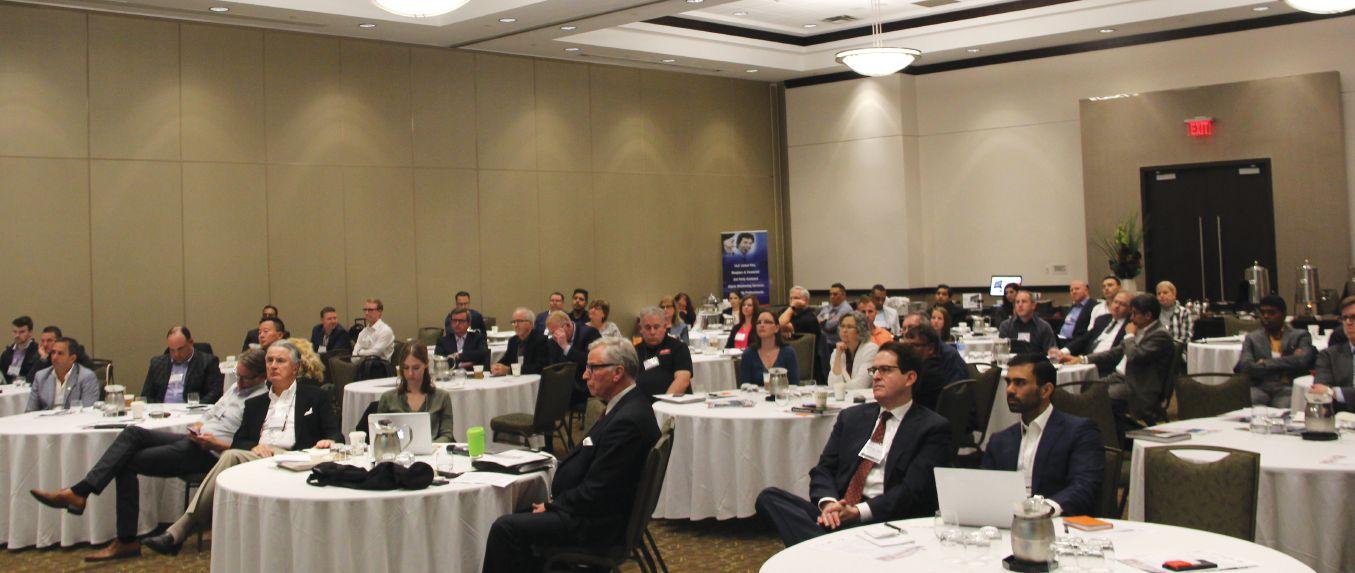
The second annual Security Summit Canada, held June 6 in Toronto, was attended by home automation and alarm professionals, financial and M&A experts, trainers, analysts, associations, integrators and more. Security Summit Canada was supported by G4S Canada, Alarm.com, Stanley Security, Anixter Canada, Armstrong’s National Alarm Monitoring, CDVI, Dfendus, ULC, CANASA, The Monitoring Association and Harding Security Services. The Summit will return in 2019 with a new line-up and more industry voices.
discuss the
and
of
Patrick Straw, executive director, CANASA
Daniel Demers, GardaWorld; Patrick Soo, Alarm.com; Ivan Spector, The Monitoring Association.
Panelists
future
security: Ivan Spector, The Monitoring Association; Tim Saunders, G4S Canada; Kim Caron, Armstrong’s National Alarm Monitoring; and Dan Marston, Dfendus Security.
Jeffrey Zwirn, president, IDS Research and Development, provided two sessions: Extreme Alarm Science Boot Camp™ and Your Company On Trial!™ Now What?
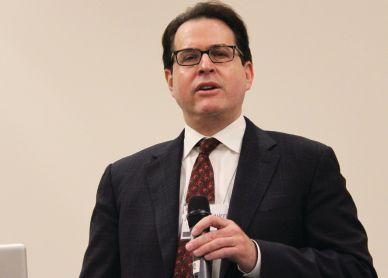
Saliq Khan, vice-president, Imperial Capital, opened the day with a session on home security and alarm trends.
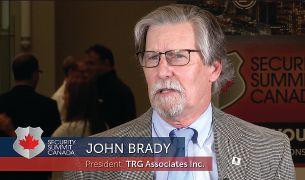
John Brady, president, TRG Associates, spoke about how to measure and manage attrition.
Cyril Pinault, Alarm.com
Rita Murphy, Graybar Canada
Mike Jagger, closing speaker and president of Provident Security, chats with AlarmForce’s Graham Badun and Joel Orvis.
CAMERA CORNER
By Colin Bodbyl
ODon’t neglect your (camera) health
Remote troubleshooting of CCTV systems may be one of the most overlooked aspects of IP-based equipment
ne of the greatest benefits of using network cameras is the ability to monitor their health and troubleshoot issues remotely.
“Despite the obvious benefits of remote health monitoring and service, many integrators and even manufacturers are not leveraging it fully.”
Cameras or video management systems (VMS) with access to the Internet can alert users any time a camera fails or goes offline. Once a user receives notification of the problem, they can log in remotely and troubleshoot the camera without having to travel to a site. While not all issues can be resolved remotely, the ability for users to troubleshoot cameras remotely drastically reduces the number of times a technician has to conduct a site visit for simple issues.
Despite the obvious benefits of remote health monitoring and service, many integrators and even manufacturers are not leveraging it fully. Most integrators rely on their VMS manufacturer to provide them with health monitoring tools within the software. Typical health alerts include camera failures, storage errors and VMS offline. To most integrators, the built-in health monitoring of the VMS is sufficient, but for largescale health monitoring, these alarms can become overwhelming
without proper controls.
Camera failure alerts are often reported as a nuisance. This is because, like most networks, IP camera networks will occasionally drop connections or suffer from packet loss. This is very common where wireless links are in use and do not always signal a serious issue. To make this service more valuable, VMS manufacturers need to extend the criteria required to send a camera failure alert. For instance, frequency and duration are key indicators of critical issues on a camera network. If a camera connection fails for half a second once a year, this would not warrant a health notification. In other cases, a camera may be losing connections for a fraction of a second every minute, which would signal a serious network issue. Of course, a camera failure that extends beyond a few minutes almost always requires attention. Without frequency and duration thresholds, many
integrators choose not to use the health monitoring features in an effort to avoid unnecessary alerts. While VMS manufacturers are responsible for providing health alert services for the video system, integrators are responsible for monitoring the health of the video servers and networks on which the VMS operates. One common problem integrators encounter when setting up remote access for clients is port blocking. For end-users to view their cameras remotely, certain ports on the network need to be open. Sometimes these ports are open when the system is first installed, but may be blocked later by an IT department that does not understand their purpose. This would prevent the end user from viewing video remotely, but the VMS would not report any health issues because it does not monitor ports on the network. To monitor problems like this, integrators need to
use third-party software tools.
Health monitoring has changed the way integrators service their customers. It has created a valuable method for remote support and drastically reduced (or eliminated) the costs associated with many service calls. That being said, both VMS manufacturers and system integrators have opportunities to improve and better utilize the technology. Manufacturers who build a comprehensive health monitoring tool in their VMS create a far more positive experience for users. Integrators, on the other hand, benefit from reduced costs, faster service response times, and improved customer satisfaction. With such obvious benefits, health monitoring may become the most overlooked and yet valuable benefit of the network camera.
Colin Bodbyl is the chief technology officer for UCIT Online (www.ucitonline.com).
LESSONS LEARNED
RBy Victor Harding
Filtering out the DIY noise
The DIY phenomenon has captured the industry’s attention, but what is its real influence?
ecently I feel we are being bombarded by countless articles and presentations on the twin subjects of DIY and the connected home.
My instinct is to say, while both are definitely worth paying attention to, they are being over-hyped. So for all of you out there currently selling, installing and servicing security systems, here is where I am at on these recent phenomena:
1. When companies like Google, Amazon and Samsung all buy companies tangentially involved in the security field, we all should pay attention. Try to find out what the customers who buy their products are looking for and whether they are satisfied with what they have got. Frankly, I am not sure anyone knows where these big companies want to go in this field. But they are so big that if they decide to truly enter the intrusion field with a monitored solution, it could have a huge effect.
2. We know that more and more MSOs (cable and telcos) are entering the security industry and pushing many of the items in the connected home in their offerings. They are not using equipment from the big boys above. I think this is driven mostly by not wanting anybody else to have access to that home, including Google and Amazon. The MSOs — in Canada currently this would be Rogers, Telus, Bell, SecurTek and Eastlink — will certainly take their share of market in the short term. But with the exception of Comcast in the U.S., I am not sure the MSOs’ security initiatives have been all that successful. Certainly offering connected home devices is not going to determine their success. It is more likely to be running their program on a model that works financially, i.e. paying sensible multiples for new accounts, managing their cost to create new accounts carefully and achieving good attrition numbers. These will be far more important.
3. I have heard that smaller dealers who are exposed to all this chatter about the need to offer the “connected home” have concluded that it is all too much for them and are getting out. That might be too drastic. Instead, do what most dealers are doing and offer interactive panels for those who want them.
4. There are new businesses springing up across Canada offering interactive panels that can control the customer’s cameras, lights, doors and heat. I can see that this “complete” system will appeal to those who want the convenience they offer, but they have to be able to afford them. Whether these new companies can make a long term go of it remains to be seen.
5. In terms of market penetration, how much DIY and the connected home will increase the market penetration of monitored security systems is undetermined. I think DIY and MIY (Monitor It Yourself) will grab their share of what we might broadly define as the security market. There is a concern that the DIY systems you see at Best Buy will peel off some customers who might have otherwise bought a professionally installed system. Let’s face it: some people simply do not think they need monitoring. A system that sounds an alarm and/or notifies them on their phone is enough. As these DIY systems improve their equipment, I believe they will take more market share.
6. As for the connected systems that are selling for upwards of $60/month for monitoring, I worry that this pricepoint is not sustainable once the first five-year contract expires.
7. Instead of obsessing about DIY and connected home devices, based on conversations I have had with some dealers today, the most important option to offer is the ability to connect to the cell network through either something like Total Connect or Alarm.
com. This covers you should the customer drop their landline (many times without telling you) which thousands are doing and at the same time allows you to add interactive devices in the future. It stands to reason that accounts with this built into their systems will hold their value better than those without.
8. Finally, and most importantly for all of us, I am closely monitoring the value of those alarm accounts that don’t offer cell or interactive technology versus those that do. So far I am surprised I have not seen any serious deterioration in the selling price of old technology accounts where I think there should be. Why would anybody today pay 35X for a panel which can’t even detect whether the system is still being monitored or not or cannot allow for interactive use or the controlling of locks and cameras in the future? On top, some telcos right now are paying much more than 35X for old technology accounts when they know they are going to have to sink more money into the account to upgrade after.
I would argue that we all should be paying attention to DIY and the connected home, adjust our business models a little to adapt, but for the time being, aside from making sure you incorporate cell technology into as many accounts as possible, don’t panic.
Victor Harding is the principal of Harding Security Services (victor@hardingsecurity.ca).
Intelligent Solutions for: Banking
Each year, highly sophisticated criminals steal millions of dollars from banks and financial institutions. As a result, the safety of customers and staff is a top concern. Thanks to breakthrough technologies in video surveillance, the right solution can add increased functionality for optimal results, offer business analytics for running a more efficient environment, and provide high definition images as a proactive security measure.
#IntelligentSolutionsForYou
Fail safe recording
True Wide Dynamic Range
Overcome challenging lighting from window glare
Compatible with any PoE device
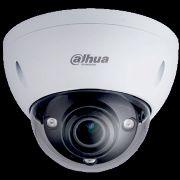
2MP IR Starlight Vari-focal ePoE Dome N25CL5Z
PLEASE, WON’T YOU STAY FOR A WHILE?
Keeping customers and managing attrition is one of the cornerstones of any successful business that relies on recurring monthly revenue.
By Ellen Cools
For alarm dealers and monitoring centres, attrition is part of life. But is your attrition really as low as you think?
With the advent of do-it-yourself (DIY) systems and higher customer expectations, understanding and managing attrition is more important than ever before.
But a number of companies still don’t have a good understanding of their attrition, the reasons behind it, and how to earn customer loyalty.
Look in a mirror
In fact, John Brady, president of TRG Associates, based in Old Saybrook, Conn., shares that,
in his experience, the entrepreneur who started the alarm company almost always says his attrition is low.
“What we almost invariably find is it’s a lot higher than he understands, because he’s so busy growing the business for new customers and new sales, and most guys don’t have reporting systems that give them monthly information and monthly attrition tracking,” he says.
Given this, companies should “look in a mirror,” to find out what’s causing attrition. Attrition should be measured based on two metrics: gross attrition and net attrition, Brady says.
Bob Harris, president of The Attrition Busters in West Hill, Calif., agrees. “The formula for gross attrition is how many accounts you start with at the beginning of the month and how many have cancelled by the end of the month,”
Harris explains. “Net attrition has to do with how many accounts did you lose at the beginning of the month minus how many accounts did you add during the same period of time?”
However, there is another important factor companies should be aware of, he says.
“There’s an account creation multiple, which means that it costs money to generate a new account, whereas it doesn’t cost money to keep one that you already have,” he explains.
“So a lot of mistakes are being made between gross and net attrition. People think if they … lose 10 accounts and they add 10 accounts, that they’re in the same place they started in. But they’ve lost.”
For example, Harris says that in Quebec, his data shows that it’s approximately a 36 times account creation multiple, meaning it’s 36 multiplied by every dollar to generate a new account.
“So if the account creation multiple is 36 times and you get a new $25 a month customer, that’s $300 a year. But what’s 25 times 36? It’s a lot more than a year, even two years’ revenue.”
Brady adds that attrition should be measured
based on recurring monthly revenue (RMR), rather than the number of customers. “You measure based on RMR and you measure on a monthly basis, and then each month, you annualize to see what your gross attrition rate is, and then you track your reasons,” he explains.
Understanding the roadmap
Tracking the reasons behind attrition is the first step to better understanding attrition.
Alarm dealers need to know more than “‘Hey, I have seven per cent attrition.’ You’ve got to know the reasons for the losses,” Brady says. “Because if you don’t know the reasons for the losses, it’s really hard to manage what you’re doing wrong.”
Many companies say they track the reasons, but often they offer customers the option of choosing ‘other’ in a survey.
“What do you do with ‘other’? How do I manage ‘other’?” asks Brady.
While it is difficult getting unhappy customers to share why they are cancelling their contracts, he says the management team “really have to be come in-tune with unhappy customers.” He recommends they ask customers why they are leaving so they can learn from their mistakes.
“The reasons give you the roadmap to managing to lower your attrition,” he adds.
“If you don’t know the reasons for the losses, it’s really hard to manage what you’re doing wrong.”
— John Brady,TRGAssociates
And there are a range of reasons, including loss to competition and poor service on calls.
To address the problem of poor service, Brady suggests companies look at their “go backs.”
“Look at all the times that a service tech went to see Mrs. Smith and she probably took off [time] from work…and you don’t show up on time or you don’t show up at all, or you show up and you do a little work, but you don’t have all the right parts, so you have to come back.” Mrs. Smith won’t be happy.
“So we track go backs, because go backs are endemic; they create unhappy customers,” he explains.
Poor service can also be measured by looking at the turnaround time — the time between when a customer calls with a problem and when the company fixes it.
If the quickest a company can fix a client’s system is a few days, then they are in trouble, he adds.
Additionally, moves is a big driver of attrition, since customers may move out of a company’s
“Our industry as a whole has become so lethargic in the way we communicate and how we add value to the professional services we do.”
— Bob Harris,The Attrition Busters
geographic market. But they can also be an opportunity.
“A good management team will tell you not only how many move-outs they had, but how many re-signs they got,” Brady explains. “Think of the re-sign as two different things. I can either resign the same customer in the new home, or I can get a two-for-one. I can sign the existing customer in the new home and I can sign the new homeowner in the old home.”
“It’s [all about] the management team and what they do about re-signs, follow up,” he continues. “Because think about it — who’s really your customer? Long term, the home is your customer.”
Finally, the most important factor driving attrition is “the perception of value that people receive or don’t receive. It’s the experience-based perception of value they get based on the money they invest,” Harris says.
The best way to engage customers and stop attrition is to “shore up the front-end of an all-out team approach to engage our customers and make the customer really believe that they’re not paying us enough for the services that we’re providing them. And when you do that effectively, it makes it really, really hard for them to dump you.”
“We’re falling short”
But as customer expectations have become higher
“I would say the challenge has never been higher, and our strategy to combat that has been to go above and beyond with service.”
— Virgil Reed, Reed Security
over the years, “How we communicate, what we communicate, specifically, and what do we do in terms of education… has changed dramatically, and frankly we fell short, or we’re falling short still on doing that,” Harris says.
In his experience, countless alarm companies have lost a customer to a competitor for a service they already provide, simply because they didn’t communicate properly.
Reaching out to customers outside of renewing contracts, collecting payments, or service calls is a simple way to earn customer loyalty, Brady adds.
He suggests that companies pick a few customers a week to call and check up on. When he tells entrepreneurs to do this, “they all look at me like I’ve got four heads,” he says.
But “there’s just a lot of different places where a customer can discern poor service…and if you’re really looking carefully, you can tell that they might be getting unhappy.”
Harris also believes lack of communication plays a role in losing customers to DIY.
“One of the primary ways to really persuade people from DIY is the monitoring component. You’re on an airplane, you’re in a meeting, there’s a fire at your house — there’s no possible way that you can respond as quickly as a professionally monitored service can,” he explains.
Additionally, he says, a professionally monitored service would only cost clients approximately one dollar a day.
But the industry is not explaining this to customers.
“Our industry as a whole has become so lethargic in the way we communicate and how we add value to the professional services we do,” he shares.
“What we’ve done is we’ve done the opposite, we’ve gone cheap, especially in Canada! … [Instead of focusing] on value and service and relationships, we’re competing on product and price, and it’s totally backwards.”
Dealing with problem customers
These communication problems are exacerbated further by higher customer expectations.
“I believe [higher expectations are] due to having a smart phone, instant access to the internet, and consumers, including us, are used to getting whatever we want now. And so that’s been the number one challenge of adapting our business to today’s consumer and their high expectations,” says Virgil Reed, president of Reed Security & Dealer Program, based in Saskatoon, Sask.
With such high expectations, some customers can become a drain on a company, especially if they require several service calls.
When it comes to dealing with these customers, Reed says if they become belligerent, it may be time to let them go.
“There are times where the expectations are so high that you do have to actually agree to [say] ‘We can’t make you happy, we’re happy to cancel your contract and you can shop around elsewhere,’” he explains.
Sometimes customers do cancel their contracts, and other times this changes the tone of the conversation, and they can work together to come up with a solution, he adds.
“I would say the challenge has never been higher, and our strategy to combat that has been to go above and beyond with service, including adding more to our support desk, more staffing, more hours, more resources, and trying to create a better experience for that client base.”
Harris adds that when it comes to problem customers, “you need to turn that customer into a profitable customer, otherwise it’s a huge drain on your financial position.”
To identify these customers before they become problematic, Brady suggests that companies watch for signs of unhappiness, such as a sudden stop in payments or lack of system activity.
Many alarm dealers don’t pay attention to accounts with no activity and don’t want to reach out to those customers if they are still paying, he shares.
But the problem with that is “there’s a good chance that someone like Vivint …they’re going to come knocking on doors.”
Greater awareness
However, not all alarm dealers are falling short managing attrition and communicating with customers.
“I think the management teams in general
have gotten far more aware of the importance of understanding the metric and understanding the dynamics of it,” says Brady.
Additionally, more companies are taking attrition seriously.
“We’ve got a lot of smaller clients and they do a monthly report, they use our template …and they track the reasons and they really do something about it,” he says.
In fact, Reed Security does just that.
“We look at gross attrition, we track our data, we do monthly reports on what our attrition is and we pay attention to it quite heavily,” Reed shares.
“Proactively educating our customers is our best strategy,” he adds.
The company writes educational articles on their blog and shares them via social media, particularly Facebook, and through their email database, he explains.
Reed Security especially focuses on communicating and educating customers during the “summer door-knocking programs.”
“As soon as May hits, I’m always going to send a proactive email to our client database and we will educate [them]…Some years it’s been ‘Beware of door-to-door sales people,’ and then we’ll share articles that we find online,” Reed says.
This year, he took a slightly different approach, writing an article from the perspective of a fictitious door-to-door salesperson who was sharing his secrets and tactics.
“Boy, did we get a lot of attention on that one, as far as our customers sharing various stories, on social media in particular,” he says. “It’s the best awareness that we’ve ever come up with. To this point, I don’t think we’ve had a single cancellation relating to door-to-door this season.”
On top of education, Reed agrees with Brady and Harris.
“You have to make sure that those customers feel like they’re valued, and you have to actually stay in communication with them,” he says. “You can’t just sit back and relax and be on cruise control — you have to take an active approach with your customer experience and that’s really what we’ve done.”
To learn more about how alarm and security dealers can get ahead in the market and manage their attrition, check out our six-part video series with Bob Harris, “Selling Points” as well as our interview with John Brady, who was a featured speaker at Security Summit Canada. Both are available at www.sptnews.ca.
PROTECTING THE
POWER
Essentially, all of the technologies in the security arsenal can be used to safeguard critical infrastructure like utility companies
By Bill Maginas
Power grids are responsible for providing electrical power across cities and provinces.
Although we don’t often consciously think about the importance of power until it’s unavailable, so many of our daily needs rely on electrical power such as heating, cooling, cooking, and powering computers and mobiles devices — which means they also rely on power grids.
With a wide range of important responsibilities, it’s no surprise that power grids are considered critical infrastructure. However, with most power grids in open facilities, there are increasing concerns over how they’re being physically secured.
The known vulnerabilities of power grids
Power grids are designed to help ensure we are protected against failure. If one line becomes damaged, then another line has the ability to take over. Unfortunately, in the event of a natural disaster, rerouted lines are also at risk, causing a more widespread problem, as initial failures that are close together are most susceptible to larger cascades, such as blackouts.
When a grid fails, it comes at a high price. Transformers are expensive and difficult to re-
place because there are only a few manufacturers of transformers in the world, with each costing around one million dollars and weighing up to approximately 500,000 pounds. In Canada, one of the most well-known power grid failures was the Northeast blackout of 2003 that knocked out power for 50 million people in Ontario and Quebec, and parts of the Northeastern and Midwestern United States for up to two days.
The event cost an estimated US$6 billion according to the final report from the North American Electricity Reliability Council (NERC).
More recently, Puerto Rico experienced severe consequences from the high price of restoring their power grid when Hurricanes Irma and Maria brought catastrophic damage to the country beginning in September 2017; and as of March 2018, the country had still not returned to full power.
Lack of money and supplies are a huge reason for the delay of rebuilding efforts, especially because the hurricanes hit the generation, transmission and distribution of the power grid – meaning the country is forced to rebuild their power systems from scratch.
After any failure, utility companies need to assess the damage to prioritize the weak links in the grid to improve resiliency in the future. The northeast Blackout of 2003 assessment found the culprit to be a high-voltage power line brushing against overgrown trees in northern Ohio and,
eventually, the vulnerable links in Puerto Rico’s power grid will need to be analyzed once the country reaches one hundred percent power to help prevent a similar incident in the future. Protecting against natural disasters that penetrate power grids is something that has always been top of mind, however it’s the unexpected attacks against the perimeter that have become a more prevalent issue.
Protecting power grids from the unknown
The heightened awareness of the need to protect power grids from unknown attacks jolted into government officials and law enforcements minds in 2013, when snipers opened fire on an electrical substation in Metcalf, Calif., and knocked out 17 huge transformers in charge of directing power to Silicon Valley. Electric grid officials had to reroute power around the site and ask power plants in the area to produce more electricity to help avoid a complete blackout. The substation took utility workers 27 days to get it back up and running properly. The incident was an enormous wake up call for the industry as it exposed serious holes in the power grid and critical infrastructure in North America.
Before Metcalf, threats of an attack coming from outside of the perimeter hadn’t been a major area of focus. Security measures were more concentrated on protecting a facility in the event of a natural disaster. The incident opened the
eyes of regulators, including the NERC, that additional measures are required to help protect power grids and other critical infrastructure from a potential coordinated attack.
An integrated approach to securing power grids
According to the Canadian Electricity Association, the North American power grid consists of over 35 electric transmission interconnections between the Canadian and United States power systems, forming a highly integrated grid. Canada and the U.S. work in conjunction to develop best practices and institutions in support of a safe, secure and reliable electricity system. The cross-border partnership has served Canadian and American communities and business for over one hundred years.
Prior to the Northeast blackout of 2003, the North American Electricity Reliability Council (NERC), set voluntary standards for protecting power grids. Following an extensive investigation, the joint U.S.-Canada Power System Outage Task Force recommended that appropriate branches of governments in the United States and Canada make reliability standards mandatory and enforceable.
These standards covered training and tools to prevent blackouts and made it mandatory to keep trees clear of transmission lines, but the rules didn’t address the need for protection against the unknown like in Metcalf.
“Without having to start from scratch, the existing infrastructure can act as the catalyst for smarter security implementations.”
However, after the Metcalf incident, Critical Infrastructure Protection (CIP) Standards were created for the North American power system. The CIP standards and requirements address the security of perimeters and the protection of critical assets, including training, security management and disaster recovery planning. They embody all utilities that contribute power to critical sections of the national grid and requires them to provide a plan to secure their Tier One and Tier Two assets. The guidelines provide details around what elements may be included within these assets, but still, the directions for protection are rather broad.
With technology integrations on the rise, utility companies should consider taking advantage of the advanced systems at their disposal and create a comprehensive plan. The following security solutions all have integration capabilities that meet CIP requirements and address protection needs.
Perimeter protection
Perimeter protection, like concrete barriers and metal panels, is typically the first level of protection installation for critical infrastructure. It’s an important security component to help prevent against physical damage that could occur, although it serves an even bigger purpose as the foundation for technology integration. Without having to start from scratch, the existing infrastructure can act as the catalyst for smarter security implementations.
Lighting
Similar to perimeter protection, lighting is another existing infrastructure that can be connected with future security applications, lighting and non-lighting related. In terms of lighting, advanced features, such as strobes, can be installed and programmed to flash during an intruder situation to disorient trespassers and alert security that someone is approaching the perimeter. Lighting automation is another addition that can be connected with existing lighting systems in place to help illuminate designated areas upon entry.
Thermal and visual camera surveillance
Video surveillance is a traditional security method that plays an important role in ensuring the safety of power grids. Cameras can be placed on top of perimeter protection and lighting fixtures to monitor people and objects around the power grid 24/7.
Along with visual cameras, thermal cameras can outperform typical video surveillance in dark scenes as they’re less sensitive to problems with light conditions, such as shadows, backlight, darkness and camouflaged objects.
Drone technology
To detect threats farther away from the perimeter, drone technology can be stationed on lighting structures where they are charged and protected by their hub. The drones can help identify intruders by using their own lights with voice messaging to alert the appropriate parties. In the event of an attack on the grid or natural disaster, the drone lights and voice messaging can also help guide people in surrounding areas to the safest evacuation routes.
Access control
Controlling who has access to the power grid is an essential component of a security plan. A multi-factor authentication can be installed which requires a pin and a card for access. This is an easy way to help control who can access the area, and can also provide a clear log of who was there and when. To further access control capabilities, they can become more powerful when paired with cameras, to assist officials in verifying who was on site should an incident occur.
Radar
Radar systems are a cost-effective way to monitor perimeters. They easily integrate into existing security systems, and can be automated with technology, like security cameras, to another level of perimeter protection. Additionally, these robust devices have no moving pieces, so they are easy to maintain.
Analytics
To help further leverage data collected through the aforementioned applications, organizations can tie in analytics for another layer of security. Utility organizations should look to create Security Operations Command Centers (SOCC) for these pieces of critical infrastructure. Typically, SOCCs are centrally located and enable the staff to supervise the site using data processing technology. Officials can monitor activity from all solutions at once, closely manage access credential administration for employees and contractors and manually let individuals in and out of the perimeter when the need arises. While these technology integrations can help utility providers address CIP requirements and protect power grids, the technology is only successful if it is installed, maintained and updated regularly and correctly. Enlisting a qualified security partner who can support security efforts on critical infrastructure sites may be the most valuable resource in protecting power grids.
Bill Maginas is area vice-president and GM, Canada, for Johnson Controls (www.johnsoncontrols.com).
QA &
AtHoc, a crisis communications tool, is part of the BlackBerry organization following its acquisition in 2015. SP&T spoke with AtHoc’s GM Sanjay Saini at a recent BlackBerry event in Toronto to get more information on how mass notification can be integrated into companies and organizations and what the role of crisis communications is now that Canada has launched its own coast-to-coast alert service called Alert Ready.
SP&T News: What is AtHoc and how does it work?
Sanjay Saini: AtHoc is a product suite from BlackBerry and it focuses on providing a solution for critical and crisis communication. [It] allows organizations to reach out to their employees or contractors during the times of crisis [and] to be able to reach out to other organizations in a very effective and streamlined way. It is predominantly used by very large enterprises, including governments, whether they are state or local, and also multinationals, which are globally spread [out]. It is primarily alerting… but also “where are my people and are they safe?”
SP&T: What kind of architecture do you need to run the solution?
SS: It’s IP-based. It’s a software solution that integrates with all kinds of devices you can think of. We integrate to [personal devices]. We also integrate to land lines. I know there’s a whole trend towards mobility, but — guess what? — a lot of people have land lines, especially in remote areas. All we need is a phone number and we can make a phone call.
We have enough capacity to do a mass-scale phone call if need be. We also integrate with “mass” devices… screens, highway signs, it could be as simple as a fire alarm in a building.
Sanjay Saini, general manager, AtHoc
By Neil Sutton
SP&T: Can you integrate with a SOC or a PSIM solution?
SS: We don’t expect our customers to reinvest or reinvent the technology… A lot of them have invested in their infrastructure. We integrate through that. We take advantage of that capacity. We can integrate with fire panels from Honeywell [for example] … loud speakers… all of these are integration points. It’s not just about cell phones. You have to take a holistic approach to it. The question is, what triggers [the alert]? It could be as simple as pushing a panic button on your phone…
Let me give you a simple example. You’re sitting here with your phone. Let’s say your [prox] card was read in your office right now, that’s something that is wrong. There’s something wrong with this picture. Either your phone is messed up or you’re not in your office. The two things cannot happen [simultaneously]. We could create a security alert to [investigate] this situation.
SP&T: The national Alert Ready system recently held cellular trials across Canada — is this type of public alerting system also something you could integrate with?
SS: A very similar solution exists in the U.S. It is used for three things: an alert from the President, which is basically a national alert; when there is a severe and imminent threat at the nation or state-level; and third is Amber Alerts, which is primarily for child abduction. These are the use cases where it is allowed in the U.S. and there are only certain agencies that can activate it. We were the first technology that went through the testing of that integration… we are integrated with that.
We think of it as a complementary technology. It is based on a cell broadcast method. I am happy to see that Canada is moving in
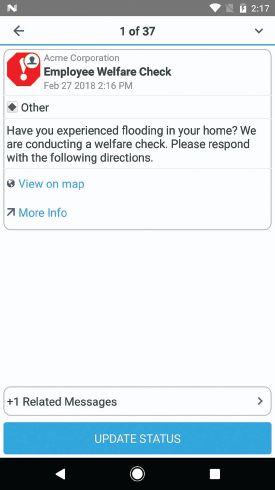
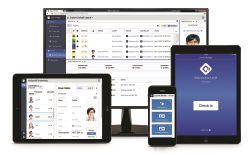
AtHoc’s app allows organizations to check in with employees in the event they may be affected by an emergency situation
that direction. It’s the right path forward… but it carries a very narrow subset of the use cases. What I mean by that is, you don’t want to send an alert to a huge [population] if the impact is only going to be in one block of the city. The reach of the cell broadcast is miles and miles. If you are attached to the cell tower, you will get an alert. You might be sitting 20 miles away [from the emergency]. That’s the downfall of the technology. We consider it a complementary method. In certain use cases, it’s very good. In other use cases, it may not be very effective.
At a state government or national government level… that’s where it will make sense. But if it’s a fire in a building, I don’t think you want to activate a cell broadcast. You definitely do want to take care of it, but there are other methods to do that. We think of it as one of the channels and we will integrate with it.
SP&T: What types of customers does your type of solution appeal to? SS: The solution is applicable in
a very broad way, but you have to start with some sort of a focus. The solution is available to all industries and all sectors, but [one of the] key areas we have focused on is the government sector — government has a duty of care to its employees, contractors and citizens.
The second thing is, we focus on specific industries where we feel the impact of our solution is effective. If it happened to be a nuclear plant or a petrochemical plant… oil and gas or a refinery. They’re very sophisticated and the probability of an event occurring is low. But when something happens, the impact is huge. Utilities, transportation, railways… railways carry so much hazardous material on a daily basis and most people don’t even realize it. Health care has a very different approach to [crisis communications]. In health care, people work in a very high-stress situation. Areas where, either by regulation or by common sense, there is a duty of care… those are the places where we tend to focus.
SP&T: How much do you need to tailor the crisis communications tool to a specific client?
SS: Security and encryption is already baked into the product. Certain government agencies may have slightly higher security requirements and we can meet those as well.
SP&T: And the U.S. government is one of your biggest clients?
SS: Yes. Whether it is the DoD (Department of Defense) or other U.S. federal agencies, they are BlackBerry customers and use the AtHoc product.
SP&T: And in Canada?
SS: Absolutely. The House of Commons is using the AtHoc product suite… And there are many discussions that are happening at different stages.
Anixter, as a Partner, can help you take on bigger, more profitable projects, managing the supply chain so you can focus on fast, streamlined installation.
From large integrator customers working on multi-site complex projects to small-medium installers and residential dealers, we have a full portfolio of products, technical expertise you can rely on, and services designed for your success.
Anixter does business how you want:
Product Previews Intrusion Detection
High-security sensors
HSI Sensing
The company’s high-security sensors product line, Sentinel, now includes four new UL 634 certified sensors. HSI launched its Sentinel sensors line in 2017 as an enhanced technology for high-security intrusion detection. Sentinel sensors utilize Solid State technology and are designed with a wide range of anti-tamper features that allow them to resist physical, electrical and magnetic tampering. Sentinel is intended to be a door contact sensor and entry-point alarm where failure is not an option, like at government facilities, prisons, banks, weapon sites and other high security areas. www.hsisensing.com
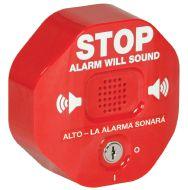
Exit door alarm STI
The newly redesigned Exit Stopper Door Alarm now offers a number of new features. Alongside the audible warning alarm, models now have a flashing LED. The enhancement also includes updated text, universal sound symbols, and an area for a second language (21 label options included), allowing the unit to be used globally. The Exit Stopper (STI-6400) is easy to install, according to the manufacturer, and helps prevent unauthorized use of emergency exits and fire doors. When a protected door is opened, it emits a 95/105 dB alarm and flashes. The door alarm can serve as an security device which helps prevent theft. www.sti-usa.com
Security management platform
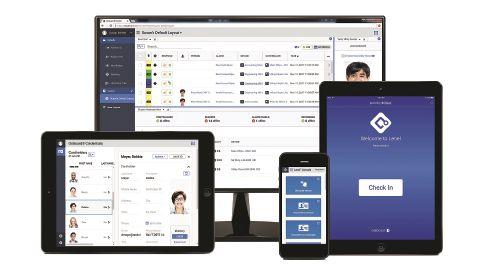
Lenel
OnGuard version 7.4 security-management platform can be deployed in the cloud and accessed through a browser. OnGuard Monitor provides alarm-management capabilities and OnGuard Access Manager provides access-rights management to area managers. Improvements to the OnGuard Credentials client and OnGuard Cardholder Self Service module expand the range of tasks, including the ability for anyone in the enterprise to schedule visitors or change their own PIN number. www.lenel.com
Thermal security camera
FLIR
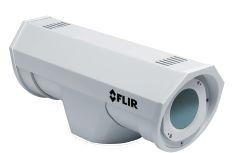
The F-Series ID, a high-resolution thermal security camera with onboard analytics, features a 640x480 FLIR thermal sensor with up to 300 per cent greater thermal sensitivity than previous F-Series models to provide detailed imagery in low-contrast conditions. The F-Series ID detects potential intruders in both low or zero light conditions, and its builtin analytics classify human and vehicular targets that pose a risk. It also ignores innocuous targets that might otherwise trigger nuisance alarms. With five lens options, the camera provides wide-to-narrow coverage that reduces the number of cameras needed to monitor fence lines. www.flir.com
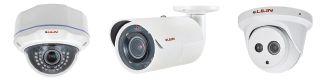
Outdoor IP camera LILIN
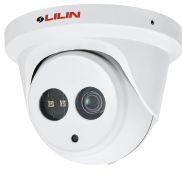
The MR652 is a 2MP outdoor IP camera housed in an IP66-rated casing. This fixed lens camera is suited for use in exposed outdoor locations that require 24/7 monitoring such as parking lots, public spaces and convenience stores. The MR652 is a high definition professional surveillance and security solution featuring a turret-style design that achieves the same quality imagery of a dome camera, but without the IR bounce caused by the glass housing. The MR652 IP camera delivers full HD 1080p video at up to 30 frames per second (fps) in H.264 compression. www.lilin.com
Radar technology Magos Systems
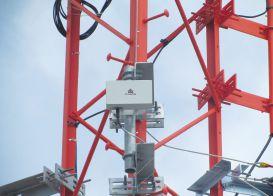
Magos Systems perimeter protection radar technology is suitable for a variety of security applications and can be implemented in facilities ranging from oil & gas production sites, utility substations, campus environments, ports, to smaller sites such as data centers, warehouses, car lots and construction sites. While radars traditionally were affordable only to governments, militaries, and highly budgeted entities, now Magos can provide a solution to commercial security clients that works in all weather conditions, according to the company.
www.magossystems.com
PTZ camera Vicon
Keyless lockdown
Napco Security Technologies
ArchiTech Wireless Access Locks with remote keyfob-activated lockdown can secure one lock or a global lock group in seconds, according to the company. Once lockdown is activated, a bright red strobe light is illuminated on the inner door to give occupants, i.e., sheltering in place, greater peace of mind that the door is securely locked down. Able to be retrofitted to any standard door lock, the ArchiTech cylindrical locks provide keyless access for up to 5,000 users and includes a 500 auto lock/unlock event schedule. www.alarmlock.com
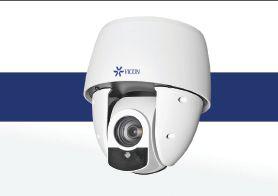
The Cruiser SN673V-C outdoor PTZ dome combines a 1080p day/night H.265 camera with 23X optical zoom. Featuring 360° continuous rotation and full -5° to 90° tilt range, this dome can provide coverage in all directions. This latest Cruiser model offers synchronized IR illuminators that support distances of up to 196 feet. In-camera video content analysis can alert system operators to camera tampering, video motion and intrusion detection. Quad streaming capabilities include H.265 compression technology, reducing file sizes and bandwidths.
www.vicon-security.com
Product Previews The latest in security technology
Project assistant app Bosch
Bosch says the Project Assistant app makes planning, pre-configuration, commissioning and reporting for video systems projects up to 30 per cent more efficient. Once on site, installers can use the app to scan the Bosch cameras’ QR codes to match the virtual cameras to the real ones. Project Assistant will automatically connect the corresponding camera to the virtual one within the app via Wi-Fi or cable. After connecting to the camera, the integrator can use the app to setup the field of view, adjust image sharpness and change additional settings.
www.boschsecurity.us
Waterproof push button switches
Dortronics
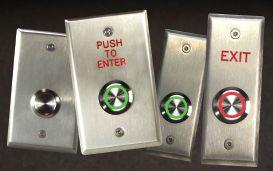
Dortronics’ waterproof push button switches include the IP65 rated WR5276-HD28/HD29 Series and IP-66 rated WR5276HD22 Series, which have been specifically designed and manufactured to withstand harsh environments. The former are designed for card access systems or automatic door openers. The WR5276-HD 22 Series Heavy Duty Push Button Switches are vandal-resistant and feature various timer options that can be fixed/delayed or adjustable. Additional features include optional bi-colour LEDs and tamper-resistant screw mounting.
www.dortronics.com
Bluetooth controller
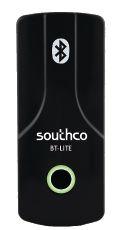
Southco
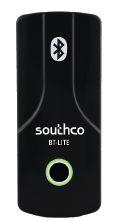
The EA-BT BLUETOOTH Controller provides wireless control and monitoring of intelligent locks without having to physically connect to a network, or install, manage and maintain software. When combined with any of Southco’s intelligent electronic locking solutions, the BLUETOOTH Controller provides a completely concealed physical security solution using BLUETOOTH LE for user access, and a remote web portal for credential management and audit trail monitoring.
www.southco.com
Unified security interface
S2 Security
Cloud surveillance solution
Manything
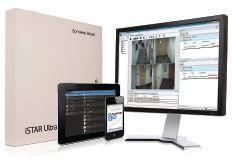
S2 Magic Monitor Version 6 unifies access control, video surveillance, forensics, digital signage and live internet feeds in a single interface. V.6 introduces enhanced access control functionality and a new web widget. In V.6, comprehensive people management enables users to add, search for and manage person records directly from S2 Magic Monitor. The people search tool displays information including credentials, access levels and recent activity. Simultaneous S2 NetBox access control system connections are supported, allowing users to manage multiple S2 NetBox servers. www.s2sys.com
Key management solution
Morse Watchmans
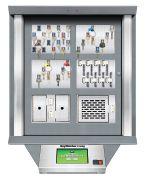
The KeyWatcher Touch key management solution from Morse Watchmans provides key management to a range of industries and business types, including server farms and data centres. Keywatcher Touch is a key control platform that uses touchscreen technology to control the company’s SmartKey system with KeyAnywhere technology. Updates to Keywatcher Touch include a new database design, a desktop fingerprint reader that allows users to enroll fingerprints through TrueTouch software, and the ability to utilize multiple KeyWatcher Touch server instances with a single SQL database.
www.morsewatchmans.com
Water leak detector
Nortek Security & Control
The 2GIG Water Leak Detector provides dual-source protection against water leaks and flooding. The detector is a notification sensor, designed to give homeowners important information in advance of events. The patent-pending 2GIG Water Leak Detector alerts the homeowner of a leak before costly water damage or flooding has a chance to occur. The sensor, when placed under a water source, will send notifications to a homeowner’s smartphone or security panel if it detects either drips or pooled water. Transmitting wirelessly at 345MHz and compatible with 2GIG and Honeywell systems, the unit requires no tools to install.
www.nortekcontrol.com
Manything Pro offers remote surveillance viewing and offsite cloud recording. Integrators can install the software onto a compatible camera directly from the Manything Pro app with no additional hardware, no port forwarding or router configuration required. An unlimited number of cameras can be added for free. Users can view installed cameras via an Apple or Android app, with remote camera control and the ability to save video locally and/ or to the cloud. The software automatically adjusts frame rate, bit rate and resolution.
www.manything.com
Management system
Johnson Controls
With C•Cure 9000 v2.70, a cardholder can now request access to a space, which is directed to the correct personnel for approval, and the system provides a complete audit trail of the approval or decline of clearances. The new version also adds visitor badge printing from the self check-in kiosk, “group add,” which allows users to add a group of visitors for events, and new host instructions. Internal watchlists have also been added for personnel and visitor management, and an assistance button is available for personnel to send an alert to the security team.
www.swhouse.com
Product Previews The latest in security technology
Dome cameras
Vicon
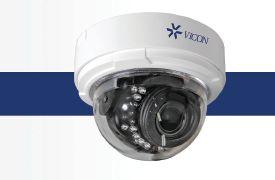
The V800D Series of H.265 indoor domes, including 2 MP and 4 MP models, are available with a choice of fixed or motorized varifocal autoiris lens and include IR illuminators for viewing in all lighting conditions. True Wide Dyanmic Range (T-WDR) improves picture quality by balancing high contrast between bright and dark areas, including difficult-to-see spaces with backlit lighting. The cameras’ compression technology reduces file size and conserves bandwidth. With Smart Encoding, which adjusts encoding algorithm based upon the amount of motion within a scene, file size is further reduced. www.vicon-security.com
Electronic deadbolt
Kwikset
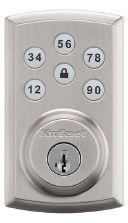
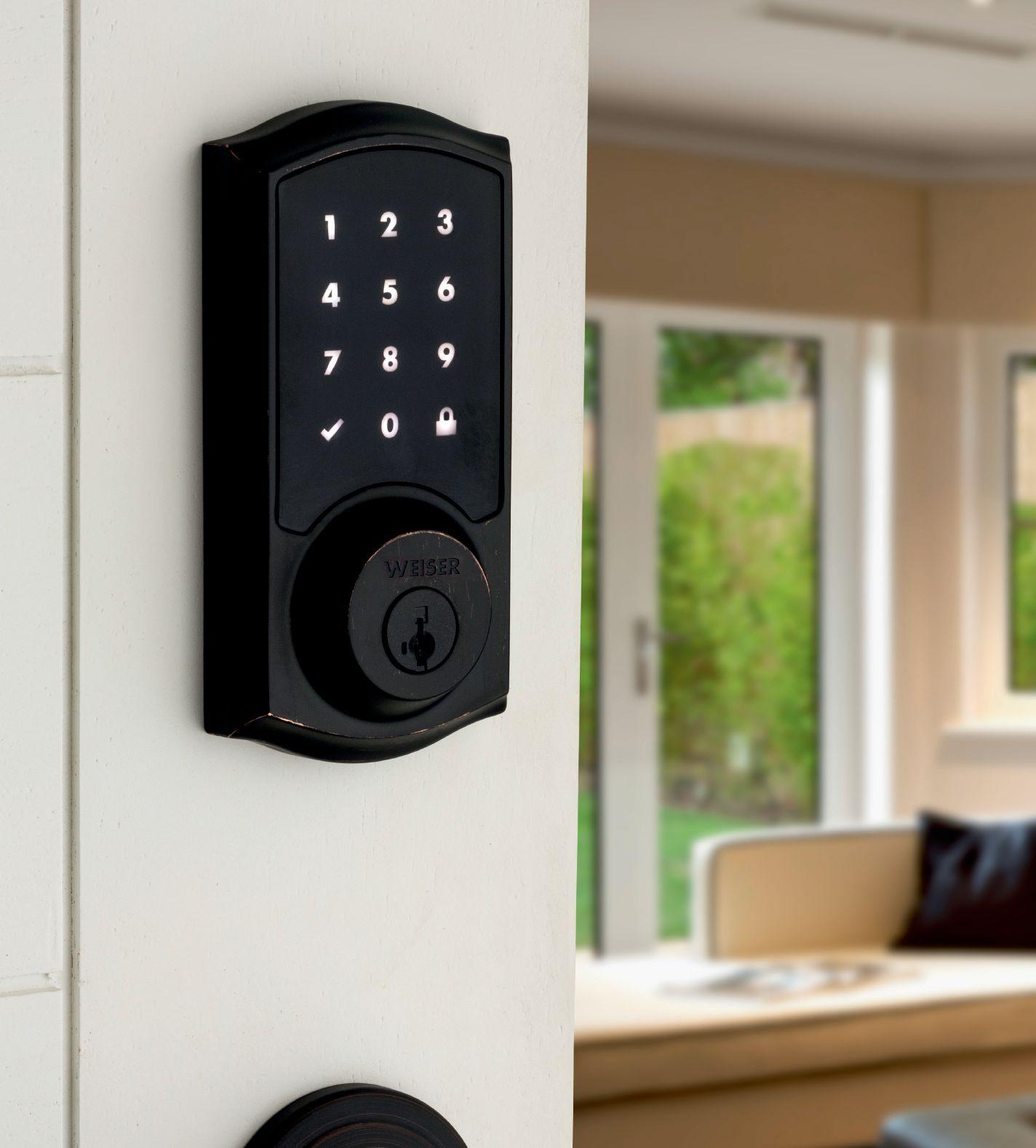
The SmartCode 888 touchpad electronic deadbolt can be included in virtually every smarthome or security package. Featuring an all-metal design and traditional styling, it is designed to integrate with most Z-Wave smart home systems. With complete remote locking/unlocking via smartphones and tablets, as well as total home control, it features Kwikset’s patented SmartKey Security, which protects against advanced break-in techniques and allows homeowners to re-key the lock in seconds, the company says. www.kwikset.com
Access control solutions
Altronix
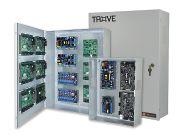
The new Trove Access and Power Integration Solutions combine Altronix power with access controllers from several access control manufacturers, including DMP, ProdataKey, Sielox and ZKTeco USA. The solutions simplify broad layout and wire management, while providing flexibility and scalability when designing and deploying access systems. Removable backplanes designed for specific access control brands allow for easy configurations. In addition to the Trove1 and Trove2 Series, Altronix introduced Trove3 for the largest access control deployments. www.altronix.com
Mantrap portal solution
Boon Edam
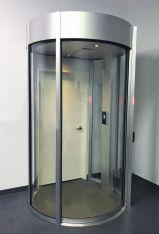
The Circlelock Combi is a “half portal” solution that helps security executives prevent unauthorized entry into high security areas currently using fire-rated swinging doors. The Combi was designed as a retrofit option to address the risk that exists with swinging doors — once an authorized user opens a swinging door, other people may also gain access (“piggybacking”). The Circlelock Combi attaches to an existing fire-rated door, converting it into a mantrap solution that prevents piggybacking 24/7 and eliminates the need for manned supervision. www.boonedam.us
Analogue HD cameras LILIN
LILIN has expanded its surveillance camera family with three new AHD models. The new AHD652AX2.8 is a small, turret-style dome camera designed for indoor/outdoor use, especially in low-light areas. The AHD662AX2.8 is an outdoor dome camera with an IK vandal-resistance protection, defogging and IP66 weather resistant rating in a temperature range of -40°F to 122 °F (-40°C to 50 °C). The AHD842AX2.8 is a bullet camera for indoor and outdoor use. UTC or “Up The Coax” lets users remotely set up these AHD cameras using compatible UTC recorders. www.meritlilin.com
Equipment enclosure
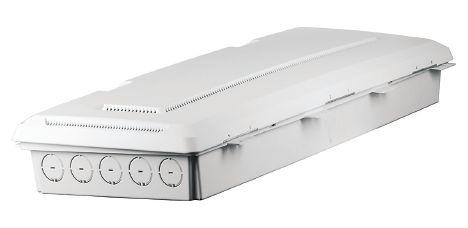
Legrand
Model ENP2050 is a 20-inch tall plastic equipment wiring enclosure that is transparent to radio frequencies and enables placement of IoT and other wireless devices into traditional structured wiring installations without causing signal interference or reducing signal coverage. The company also introduced a series of plastic trim rings in 20-, 30- and 42-inch sizes that conceal imperfections in drywall cutouts. Made of durable, paintable white ABS plastic, the new enclosure’s six-inch deep interior features a universal mounting grid that maximizes its compatibility with third-party products without requiring additional brackets. www.legrand.ca
Mobile credential
3xLOGIC
The newest version of infinias, infinias 6.3, features advanced mobile credential, which alerts some or all credential holders to sensitive information, a new responsive user interface, and location services whereby administrators can configure how close a user must be to a door to gain access, to ensure the phone (credential) is present. It also comes with infinias CLOUD’s Elevator Control with support for up to 64 floors per bank/cab. The mobile credential adds push notification, location services, multi-factor authentication (MFA) and upgrades to the default door page. www.3xlogic.com
Cloud-based access control
Galaxy Control Systems
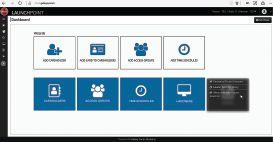
The new addition to Cloud Concierge cloud-based access control solution includes integration of LENSEC’s Perspective VMS and Launchpoint App, enabling users to view live or recorded video from virtually anywhere via a web browser or App. Cloud Concierge is a turnkey, cloud-based, fully hosted and managed access control and monitoring solution that integrates video surveillance, visitor management, elevator control, locks and turnstiles onto a unified platform. Three configurations are available, including on-site user-managed, remote user-managed and remote-integrator managed. www.galaxysys.com
Landlines disappearing from monitored accounts: According to a new report from IMS Research, monitored alarm accounts using telephone landline transmission accounted for nearly 90 per cent of RMR in North America in 2009. However, this is forecast to decrease to nearly 70 per cent by 2014.
It does not have to be all about the RMR: Recurring monthly revenue may be the bread and butter, but there is value to be gleaned elsewhere
Is your company capable of more?: There is no time like the present to step up your game. If you don’t, someone else will step up theirs.
Alarm reduction 101 - Working with abusers: How to address “problem customers” in a manner that works best for everyone.
The art and science of attrition
There is a certain degree of inevitability to attrition.
You will lose customers. It is virtually a guarantee — just another aspect of doing business with people who can exercise their free will and vote with their dollars.
But that doesn’t mean it is unmanageable or that service providers are powerless to prevent it. This issue’s cover story takes another long look at attrition and talks to experts about: a) what attrition is; b) what causes it; and c) how to minimize it.
Looking back on SP&T ’s past coverage, some of these perspectives have shifted over time, particularly in relation to market uncertainties like the influence of
DIY — but the value of customer service always persists.
Just three years ago in the June/July 2015 issue (but perhaps an eternity in the DIY security space), SP&T News held a roundtable discussion with Canadian monitoring companies. In a response to a question about DIY, a.p.i.’s director of dealer sales Lewis Jacobson responded, “I haven’t seen a great demand or attrition of business because of DIY, at least in Canada. I think it’s just another segment, just like discounters of monitoring… There’s always your low-cost customer and then there’s your customer that wants it done right, and they’re willing to pay for that — to have a professional look after it.”
Earlier that same year (Jan/Feb issue), SP&T sought the opinions of a variety of experts for a current and future trends article. Sandra Jones, principal of Sandra Jones & Co., had this to say about market influences and attrition: “We will continue to attract non-traditional market participants that will disrupt the existing channels and redefine how technology and services go to market. In regard to these new entrants, I think a high tide raises all ships. But I also think we need to pay attention to customers again. We’ve tolerated attrition in the marketplace. I think we’ve been reluctant, once the sale’s been made, to sometimes go back to the customer.”
Jones urged dealers and integrators to step up their game and be
more of a “value-added provider.”
Looking back to 2011, regular columnist Victor Harding commented in the Nov/Dec issue that attrition can often double after an account base has been sold, jumping from 6-8 per cent to 15 per cent. Much of Harding’s advice when accounts change hands had to do with dealing with some of those outcomes in the purchase agreement before the sale but a big takeaway was this: “Nothing beats having the buyer call every newly bought account — something that very few buyers do.”
In some ways, attrition (and how to manage it) has changed very little. Whatever the new technology or trends coming to the fore, customer service will always tend to win out.
INDUSTRY LEADERS SECURING INDUSTRY LEADERS
125 years of experience in putting the security of others first.
We understand you need to protect more than brick-andmortar, which is why ADT does more than monitor. ADT has a wide range of alarm and security options for organizations of any size to help protect people, goods, and data. With 24/7 surveillance, solutions against intrusion and fire, remote monitoring, interactive services and more, ADT has a security solution for your organization. Join those who trust ADT with their livelihoods and protect your business.
SECURITY AND AUTOMATION SOLUTIONS
WHY CHOOSE ADT CANADA?
We are an integrator, meaning we can take over nearly any of the existing security equipment you have on-site.
We are customer-service oriented, innovative and technology savy.
With over 125 years of experience and 15 branches in Canada alone, including four monitoring stations, you can trust the experts.
Weiser makes it easy to increase customer loyalty and position yourself as the core provider. If you already install security or home automation systems that are Zigbee or Z-Wave compatible, you’ll appreciate the easy installation and integration of Weiser Home Connect Locks.
Gain momentum in remote access and home automation as homeowners demand more from their primary solution providers.
Grow your business by building upon your existing services with Weiser.