



Security
Security solutions to vehicular attacks

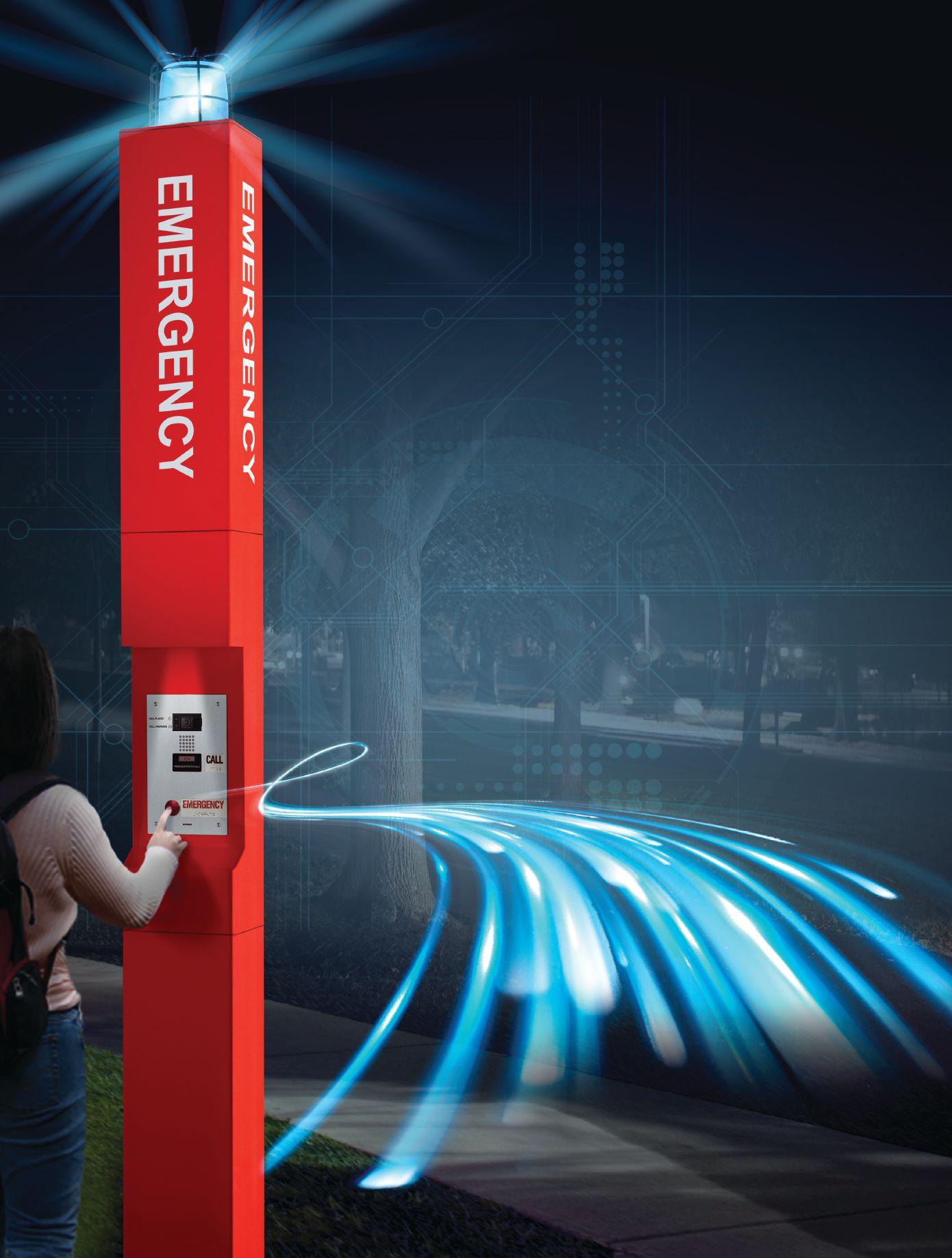
Barriers and bollards may help prevent cars and trucks from becoming deadly weapons p.22
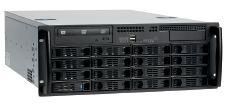

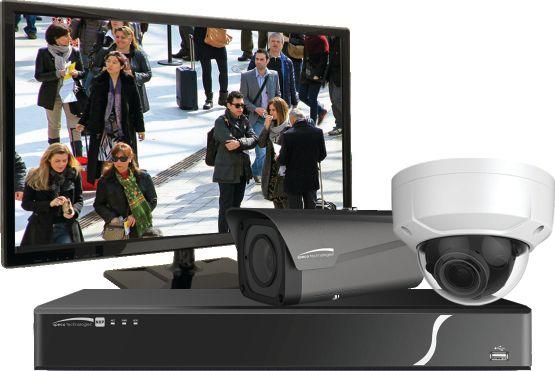

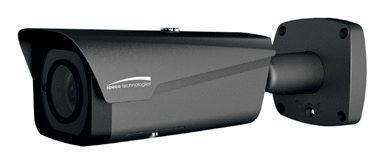
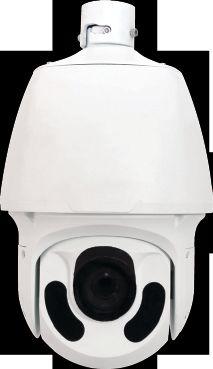
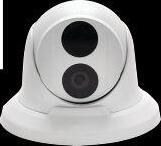
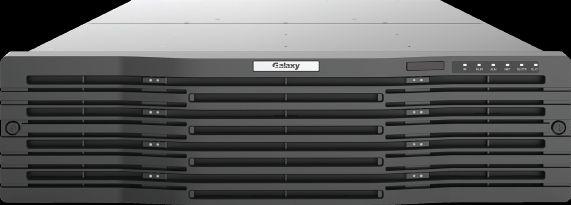
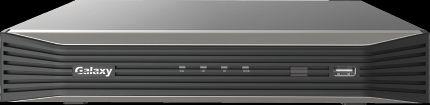
4K offers users 4x greater resolution than an average 1080p camera, recorder or monitor. Our 4K cameras capture activity in ultra high definition, allowing users to zoom into an area of interest and retain the highest image quality available. In conjunction with our 4K network video recorders, users can record all surveillance activity in ultra high definition and review the video (via playback or in real time) on our 4K monitor.
View, capture and playback in 4K Ultra HD.



Renée Francoeur
Greg Hamm



JBy Neil Sutton
ohn Mack, executive vice-president of Imperial Capital and a leading authority on the security markets, was our keynote speaker at the recent Security Summit Canada (see p. 12 for photos and conference details).
Mack, who joined us for both days of the Summit, opened Day 1 with a comprehensive presentation that covered the major aspects that make up physical security landscape, including where the investment dollars are coming from and the technology trends that are driving the industry forward. On Day 2, he moderated a panel on the residential security market. But before launching into questions, he paused a moment and asked he audience if they were in the right mindset to talk about alarm systems and home automation.
The presentations that immediately preceded Mack’s were “Canadian Security in the Age of Trump,” and a panel I hosted, Canada’s Threat Landscape, where we discussed terrorism (foreign and domestic), corporate risk and cyber-threats — generally the issues that wake security directors in the middle of the night (or prevent them from sleeping in the first place).
The juxtaposition of topics seem a little jarring at first, but I think the range of information is what helped to make the event a success. During one of the break periods, I spoke with one of the attendees, whose background is more on the corporate security and risk side. She remarked that she hadn’t given the home security market some serious thought in a while. But by putting
the Canadian Security and SP&T News audiences in the same room at the same time, we’d opened up the dynamic a little and allowed ideas to flow more freely.
The security industry is becoming more inclusive by necessity. Security end users, dealers, integrators and manufacturers all occupy the same ecosystem, and it’s mutually advantageous if they all know something about the others — what they do, what they know, and indeed what keeps them up at night.
In some ways, it can also be a dilemma. There’s an increasing amount of specialization in security, but security professionals are also expected to know so much more about everything. I’ve had dozens of conversations with security professionals about cyber-security — everyone from ethical hackers to surveillance manufacturers. Regardless of background or skill level, there’s an expectation that all professionals should at least be conversant in the subject matter and familiar with the pain points.
Defining roles in security has never been easy — at least not of late. Given the shifting geopolitical landscape and the emergence of new threats, the more apt description might be agility. Based on the discussions I had at Security Summit Canada and the reactions I heard to some of the sessions, that skill is certainly coming to the forefront.

Your Partner in Securing Canada Security Products & Technology News is published 8 times in 2017 by Annex Business Media. Its primary purpose is to serve as an information resource to installers, resellers and integrators working within the security and/or related industries. Editorial information is reported in a concise, accurate and unbiased manner on security products, systems and services, as well as on product areas related to the security industry.
Group Publisher, Paul Grossinger pgrossinger@annexweb.com
Publisher, Peter Young pyoung@annexweb.com
National Account Manager, Jennifer Dyer jdyer@annexweb.com
Editor, Neil Sutton nsutton@annexweb.com
Assistant Editor, Renée Francoeur rfrancoeur@annexweb.com
Art Director, Graham Jeffrey gjeffrey@annexweb.com
Account Coordinator,Trish Ramsay tramsay@annexweb.com
Circulation Manager, Barb Adelt badelt@annexbizmedia.com
COO, Ted Markle tmarkle@annexweb.com
President & CEO, Mike Fredericks
EDITORIAL ADVISORY BOARD
Colin Doe, Veridin Systems Canada Anna Duplicki, Lanvac Victor Harding, Harding Security Services Carl Jorgensen, Titan Products Group Antoinette Modica, Tech Systems of Canada Bob Moore, Axis Communications Roger Miller, Northeastern Protection Service Sam Shalaby, Feenics Inc.



Annex Publishing & Printing Inc. disclaims any warranty as to the accuracy, completeness or currency of the contents of this publication and disclaims all liability in respect of the results of any action taken or not taken in reliance upon information in this publication. PUBLICATION MAIL AGREEMENT
Printing Inc. All rights reserved.



#1 Home Security Company in Canada
125 years of security expertise
Monitoring Centres across Canada
Bilingual Service
The physical security industry has lost one of its most successful and influential figures in Marc Mineau, who passed away in May after a long battle with Alzheimer’s.
Mineau made an indelible impression on his friends and colleagues, helping to shape the industry through business relationships as well as association volunteerism and leadership.
A Quebec native, Mineau was involved with multiple companies and organizations during his busy career. He was the founder of alarm company Omnitron Systems as well as the founder of

access control firm Kantech, which was sold to DSC, both of which became part of Tyco’s security products group. He was also the president of Brivo Systems.
Mineau was extremely active in security associations, serving as the president of the Quebec chapter of the Canadian Security Association (CANASA), as well as national president.
He was also the president of the Security Industry Association (SIA) and was involved in other associations including The Central Station Alarm Association (CSAA International) and the
Austin, Tex.-based Eagle Eye Networks announced it has acquired Panasonic Cloud Management Service Europe BV, giving the company an immediate presence in Europe, according to CEO Dean Drako. Terms of the sale were not disclosed.
The company already had a limited presence in Europe thanks to an initial foray into the U.K. However, the acquisition is expected to significantly boost Eagle Eye’s growth in the region. “It allows Eagle Eye to accelerate our efforts in Europe by 100x what we would have been able to do on our own,” explains Drako.
Originally known as Cameramanager. com, the company was founded by Rishi Lodhia and Tijmen Vos in The Netherlands in 2005. (It was acquired by Panasonic in 2013.) Both principals will remain with the company, which will be rebranded as Eagle Eye Networks EMEA (Europe, Middle East, Africa) division. “[They] are a good part of the reason I wanted to do the acquisition,” says Drako. “They’ve been working in the Cloud video surveillance space for a long time and have been leading the charge.”
Lodhia is now managing director for Eagle Eye EMEA and Vos will lead the division’s R&D efforts. In addition to management tal-
ent, Eagle Eye has also added the company’s customer base, distribution channel, facilities and surveillance products — CameraManager and NuboCam. CameraManager is a Cloudbased VMS product suitable for a low camera-count site and NuboCam is a 4G/wireless camera with two-way audio, suitable for residential or small business use. The products fit well within Eagle Eye’s current portfolio, according to Drako, and will create more of an evolutionary upgrade path for customers who wish to add more cameras as they grow. Eagle Eye’s products include a VMS offered in Cloud-based and on-premise (or a mixture of the two) configurations and suggested for multi-site operations. All of the products will be available through Eagle Eye’s global dealer network.
The acquisition also includes two data centres in the Netherlands, bringing Eagle Eye’s total to eight: three in North America (including one in Montreal), three in Europe and two in Asia. “Now we have a global presence in the three major markets,” says Drako. Drako founded Eagle Eye Networks in 2012 as a Cloud-based video solutions company. Drako is also the founder and former CEO of Barracuda Networks.
— Neil Sutton
National Burglar and Fire Alarm Association (NBFAA).
Mineau received multiple industry awards during his prolific career, including the Triton Award (jointly awarded by SIA, NBFAA and CSAA) and CANASA’s R.A. Henderson Award.
Friend and colleague Ivan Spector credits Mineau for encouraging him to get involved in security associations. Spector is a former president of CANASA and currently serves as first vice-president at The Monitoring Association (formerly CSAA).
“He was a leader and a visionary in the industry,” says Spector. “I think he motivated a lot of people to get involved in association work and become involved in the industry at a whole different level. From my perspective, had Marc not gotten me involved in the way he did, I probably would never have embarked on a parallel career of security industry association work and volunteerism. I think Marc’s really important message was to give back to the industry.”
George Fletcher, co-founder of Mission 500, a security industry association dedicated to improving the lives of children in need, describes a similar relationship. Fletcher says Mineau encouraged him to create The Latin American Security Association (ALAS), which has since certified more than 10,000 security dealers in access control and intrusion systems.
“This man was a truly multi-disciplinary professional,” says Fletcher. “You meet people in walks of life who can be brilliant technologists, they can be brilliant strategists, financiers… This guy could wear five hats and be as good as anybody in each of those roles. He just seemed to have mastery of so many subjects.”
René Mallandain, president, CDVI Americas, who partnered with Mineau when their two alarm companies merged almost 40 years ago, describes Mineau as a “genius” who had tremendous entrepreneurial business skills and was dedicated to increasing the level of professionalism in the security industry. Mallandain says Mineau was modest, never complained, even when he became seriously ill, and was more focused on the needs of others.
A memorial service was held for Mineau in June. Mineau’s family asked that those wishing to pay tribute to his legacy make donations to the Alzheimer’s Society of South Shore, Montreal (Société Alzheimer Rive-Sud).


A 153-piece Pablo Picasso exhibit held in São Paulo, Brazil last year, was monitored 24/7 by a video surveillance solution.
The exhibit was housed at the Tomie Ohtake Institute, which first opened in 2001, and was showcased in two galleries measuring 300 square meters each. The systems integrator who worked on the surveillance project stated the key objective was to ensure there were no blind spots.
Milestone’s XProtect VMS is used to manage and display video data for real-time monitoring, as well as stored video which can be subjected to forensic review. Video is also accessible on iOS and Android devices using Milestone’s mobile client.
The system also included Axis 3007-PV panoramic network cameras, Allied Telesis PoE Switch and SPEEDY fiber optic technology.


• James J. (“Jim”) Cannon has been appointed president and chief executive officer of FLIR Systems. Cannon succeeds Andy Teich, who recently retired.
• Eyal Assa is new CEO of Siklu. He most recently held the positions of VP customer business executive and VP global sales at Amdocs.
The Holocaust Memorial in Miami Beach, Fla., founded 27 years ago by survivors, children of survivors and community leaders has deployed a Hikvision surveillance system to improve its security profile.
The site, which hosts more than 130,000 visitors annually, is an open air facility set on two acres which can create security challenges. The previous analogue security system in operation was “extremely outdated,” according to Brenda Moxley, director of community security for the Greater Miami Jewish Federation. Moxley is a retired FBI Assistant Special Agent in Charge, Miami Division, whose background includes counter-terrorism. She currently provides security consulting to 120 Jewish organizations in Miami-Dade.
Jeffrey He, president of Hikvision USA and Hikvision Canada, said the company is pleased to be working with Moxley. “Safeguarding people and protecting property is why Hikvision is in the security business,” he said.



• Dana Pruiett has joined Aiphone Corp., a manufacturer of intercom and entry security products, as marketing manager.
• BCDVideo has appointed Perry Levine as director of strategic alliances.
• BAE Systems’ Peder Jungck has been named president of the Information Technology
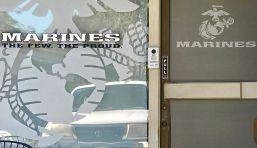
The U.S. Army Corps of Engineers has installed Aiphone’s JP Series and GT Series video intercoms in military recruiting centres across the country.
According to a statement, military officials have opted to lock recruitment centres as a result of the a 2015 shooting incident that claimed the lives of five military personnel in Chattanooga, Tenn. Currently, to access centres, visitors push a button to notify personnel in the centre, who can then identify the visitors using an embedded 170-degree PTZ camera. The intercom also allows for two-way conversation and a one-touch door release allows access when visitors are approved. Stations are using either 3.5- or seven-inch LCD screens and a control allows the camera to be repositioned appropriately for optimal viewing. An optional handset is available for privacy if necessary. Images and conversations can also be recorded.


- Information Sharing and Analysis Center, a not-forprofit composed of member companies dedicated to enhancing cyber-security.
• David Grinstead has been named vice-president and general manager for Global Security Products, a newly created position within Johnson Controls.
September 12, 2017 ADI Expo Vancouver, B.C. www.adiglobal.ca
September 13, 2017
Security Canada Atlantic Halifax, Nova Scotia www.securitycanadaexpo.com
September 25-28, 2017
ASIS International Seminar and Exhibits Dallas, Tex. www.asisonline.org
October 4, 2017
Focus On Drones Toronto, Ont. www.focusonseries.ca
October 7-11 2017
TMA Annual Meeting Scottsdale, Ariz. www.tma.us
October 12, 2017
Anixter Showcase Toronto, Ont. www.anixter.ca
October 17, 2017
Central Station Monitoring Symposium Toronto, Ont. www.canasa.org
October 18–19, 2017
Security Canada Central Toronto, Ont. www.securitycanadaexpo.com
October 27, 2017 Anixter Showcase Montreal, Que. www.anixter.ca
November 15-16, 2017 ISC East New York City, N.Y. www.isceast.com
November 16, 2017 ADI Expo Montreal, Que. www.adiglobal.ca
November 21, 2017
BICSI Canada Regional Meeting Mississauga, Ont. www.bicsi.org

AlarmForce Industries announced in June, it had entered into an agreement to sell its U.S. subscriber base to Select Security, based in Lancaster, Pa., for US$11.6 million (approximately CDN$15.3M). The transaction closed on June 20.
According to a company statement: “Following the second quarter, the company commenced discussions regarding the sale of its U.S. subscription base. As previously discussed, part of our long-term strategy involved the departure from the U.S. market as the cost per acquisition for new
subscribers had turned out to be cost prohibitive and not consistent with parallel opportunities in the Canadian market.”

AlarmForce CEO Graham Badun told SP&T News in October 2016 that the company was refocusing its efforts on the Canadian market, where it is strongest. He acknowledged that the U.S. market had not performed as well for the company. “I’ve been pretty candid about this in my letter to shareholders and in my annual report, said Badun. “There’s a couple of markets in particular that are very expensive for us to acquire customers in.”

“Innovation distinguishes between Leaders and Followers” Steve
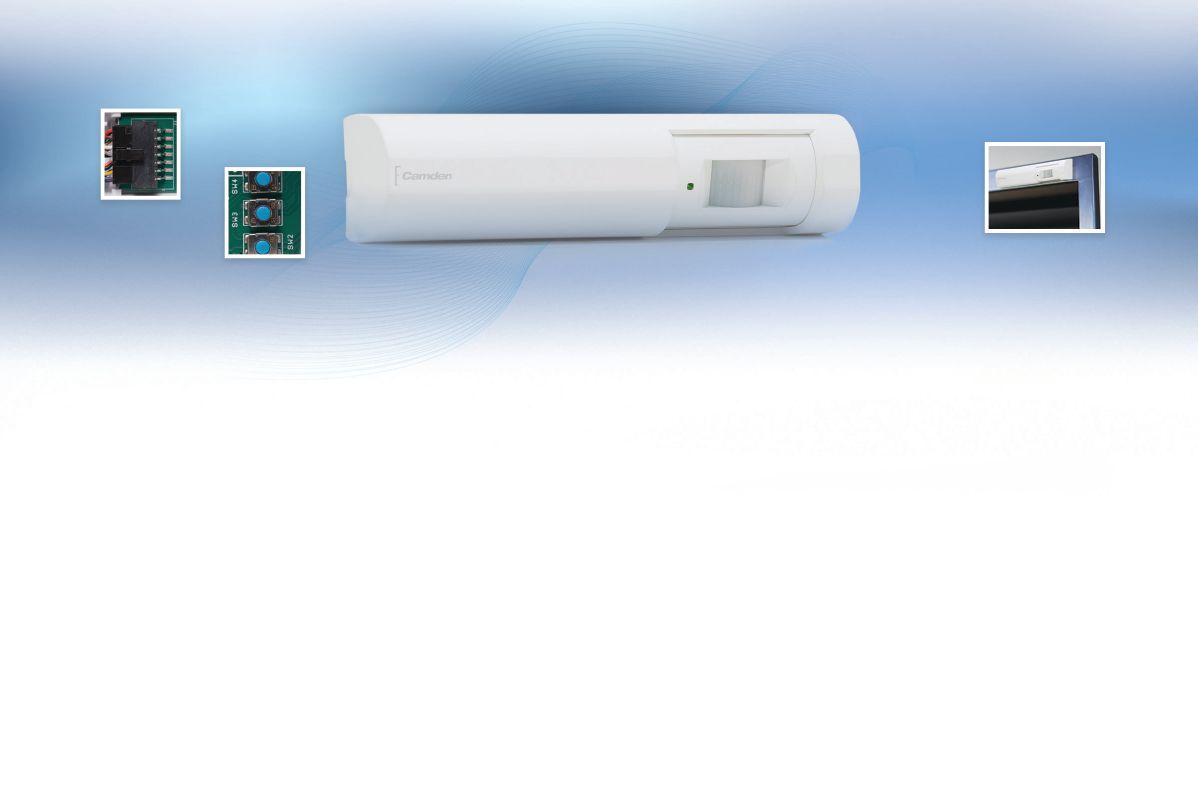
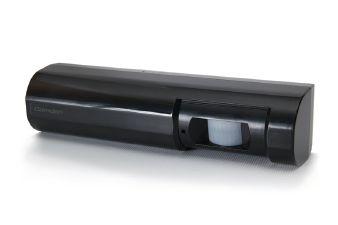
Camden Door Controls started with all the features of the bestselling REX detectors on the market, and then added design innovations never seen in the industry before. The result is a next generation REX detector that can be mounted in more locations, is easier to wire and can be programmed with the press of a button. Best of all, the CM-RQE70 offers this remarkable innovation at a remarkably competitive price!
• Secondary device activation for additional security
• (4) factory default operating modes, with the ability to customize mode attributes
• (2) form ‘C’ contacts (DPDT)
• Momentary and latching relay modes
• Card/key, door position switch and REX switch inputs
• Adjustable sounder
• Tamper switch
• Black and white models
BlackBerry recently announced it has expanded its AtHoc product to include a new module that is designed to help large organizations improve their ability to account for personnel in the event of a crisis.
Called AtHoc Account, BlackBerry says the tool will provide automated status updates of staff, allowing organizational leaders to make more informed decisions at all stages of an emergency situation. It is also designed to help users comply with U.S. and Canadian regulatory requirements as well as business resilience standards like ISO 22301.
The Account tool is able to amalgamate information from a variety of data sources and departmental tools, such as human resources information, travel itineraries, individual reports filed by employees, etc.
AtHoc’s two other main components include AtHoc Alert, a secure multi-channel mass notification tool and AtHoc Connect, which enables communication between agencies during an emergency.
“In times of a crisis, things change very, very quickly,” said Sanjay Saini, general manager, BlackBerry AtHoc, in a conference call to media. “An organization needs a way to be able to inform all of its people. But more importantly, in real time, understand how that that particular incident is impacting the people.”
Saini added that Account is designed to replace the labour-in-
“In a nutshell, what we are aiming for is, leave no one behind.”
— Sanjay Saini, BlackBerryAtHoc
tensive and time-consuming process of manually compiling an accurate picture of a company’s or organization’s workforce under the difficult circumstances created by
an emergency.
The tool includes preset workflows out of the box but can be configured to a client’s particular organizational structure or data set.
It can be integrated into call centres and can also incorporate access control reports from company locations. It is also able to communicate information to first responders, company leadership teams or even family members of employees, said Saini. “In a nutshell, what we are aiming for is, leave no one behind.”
— Neil Sutton
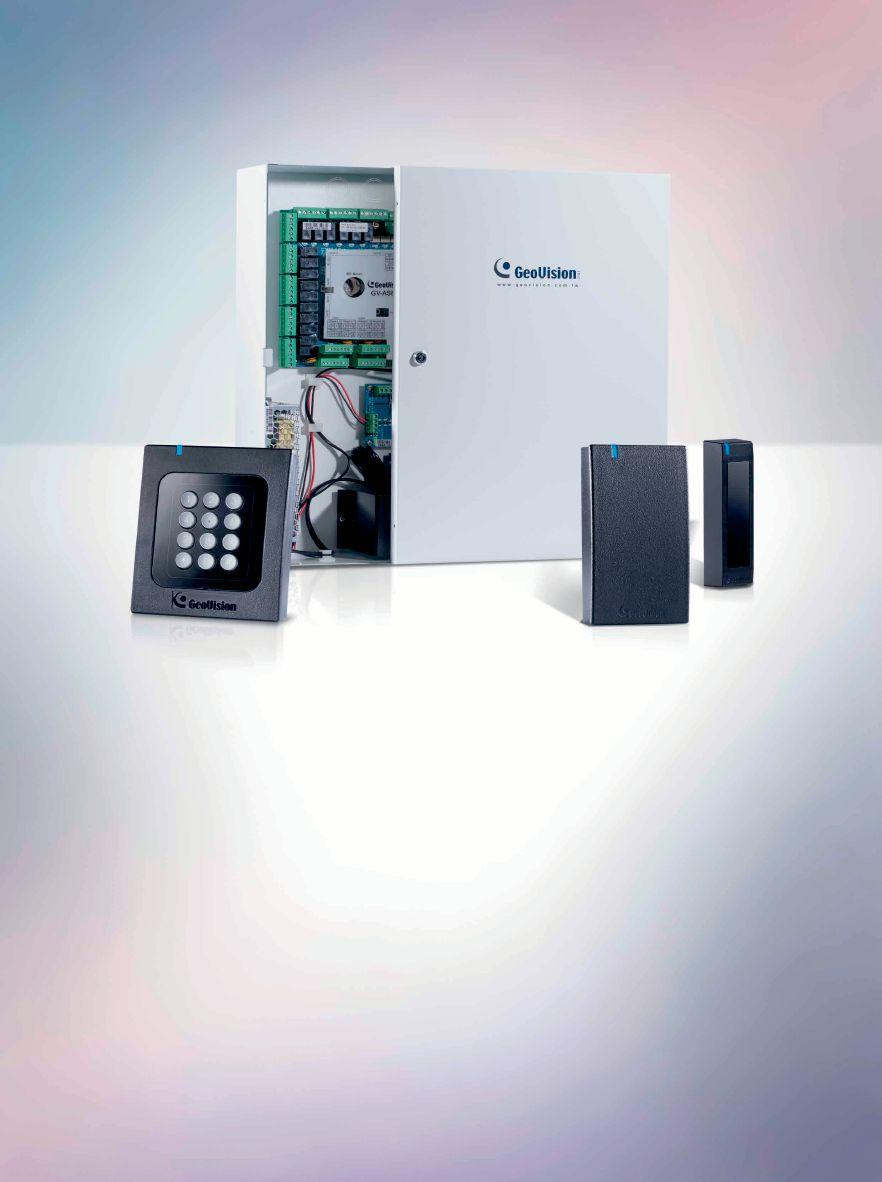
There are thousands of Access Control brands in the market today With Underwriters Laboratories Inc. (UL) certificated, GeoVision Access Control can bring more safety to your installation.
GV-Access Control provides the most advanced full security solution by integrating seamlessly with GeoVision VMS, and IP products, which provides you with easy and safe accesss to both live and recorded video from any access event
GV-Access
SP&T News and Canadian Security magazine held their first official joint event on June 14-15, combining an educational program that appealed to end users, security directors, integrators, dealers, installers and alarm professionals. The diverse agenda included a keynote address from John Mack, executive vice-president, Imperial Capital, as well as panels
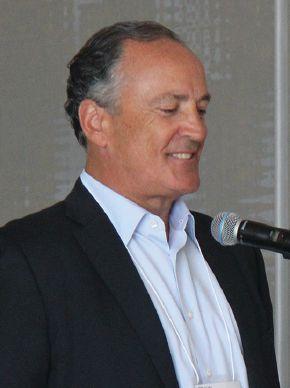
John Mack, Imperial Capital, kicked off Day 1 with an in-depth look at the state of the security market today
and presentations on video surveillance, integration, threat assessment, residential security, cyber-security and much more. The Summit was sponsored by G4S, Graybar, Aiphone, Boon Edam, Informatica, Aartech, Securitas, Final Image, Bosch, Foscam, Johnson Controls and INKAS. Visit www.sptnews.ca for more photos and information.

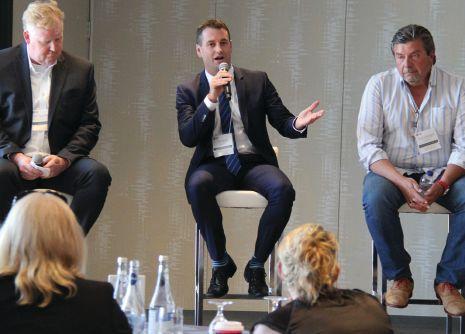



Integrator panelists: Tim Saunders, chief business development officer, G4S Canada; Ted Reid, president, Paladin Technologies; and Paul Georges, president, Underwriter Security Controls Inc.

Popa,
and CEO,
proceedings with an in-depth presentation on the
and

of 2017
By Steve Basnett
CANASA is more than halfway through its expo calendar this year, but there’s plenty more to come
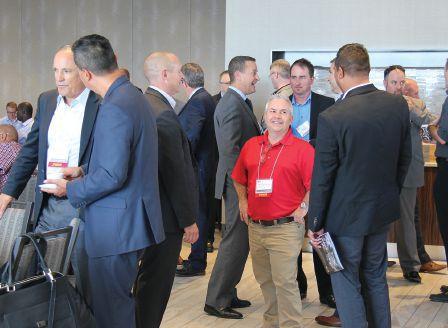
Security Canada, Canada’s only national series of exhibitions and conferences, got off to a flying start for 2017. The first event in the series, Security Canada Quebec, kicked off in Laval, Que., on April 26 and proved to be a wonderful opportunity to give the security community in Quebec a chance to network and experience the latest products and services.

A new exhibitor to Security Canada, Robotic Assistance Devices CEO Steve Reinharz put it this way: “Robotic Assistance Devices was thrilled to launch Canadian operations at Security Canada East. Announcing our industry-changing security robots was best served in an industry forum

attended by the most prominent local industry professionals and there is no better platform than Security Canada for that.”
The next stop for Security Canada was Edmonton on May 10 where another large group of security industry professionals gathered for the event. Product demonstrations and conversations caused a busy and bustling environment on the floor with a number of exhibitors and attendees expressing their enthusiasm as “deals were made on the floor!” Security Canada Ottawa was held on May 31 and featured a session from the Ottawa Police on how private businesses can work with police partners.
A special word of thanks to those who attend and exhibit at these important events.
Supporting the industry by investing your time and expertise is vital to the future of the security community in Canada. Your commitment is appreciated.
At the time of publication, Security Canada West in Richmond B.C. was underway (on June 21), leaving two events to go: Security Canada Atlantic in Halifax on Sept. 13 and Security Canada Central in Toronto on Oct. 18 and 19. For information on attending or exhibiting at these events, please visit www.securitycanadaexpo.com.
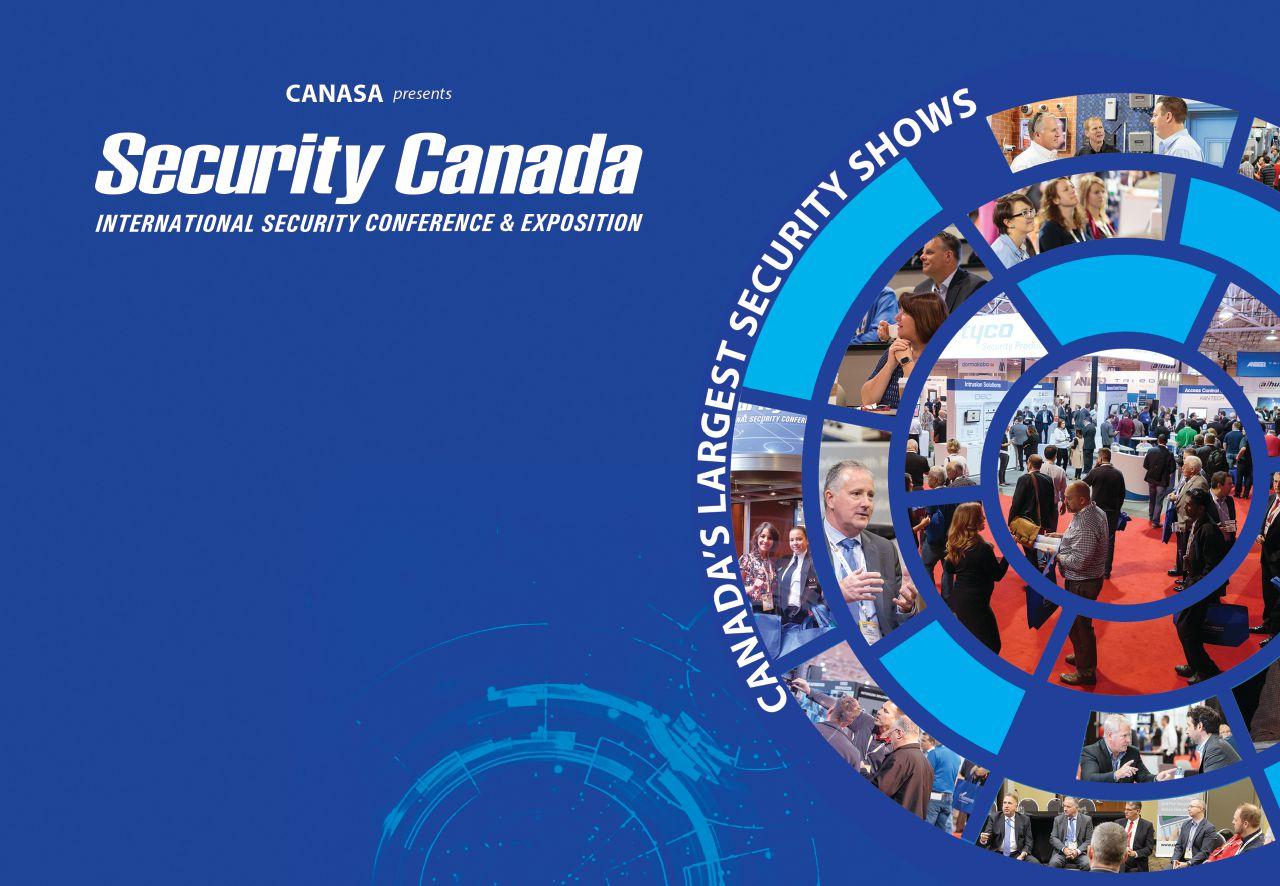
Security Canada is produced by the Canadian Security Association (www.canasa.org). Held in six locations across the country over the year, Security Canada is the only national series of shows where security professionals can experience the latest products and services serving the industry.
Steve Basnett is the Director of Trade Shows and Events (www.securitycanadaexpo.com).


dations to you based on what it has learned about your online behaviour as well as the behaviour of other users with similar interests to you.
Another challenge industry outsiders often overlook is that surveillance systems are most often installed by technicians with fairly basic IT





IBy Victor Harding
Are they necessary? How do they help? Here’s a guide for business owners
am often asked by prospective clients, what does a broker actually do? Is it necessary to use a broker to sell your business? How does using a broker help and finally what do they cost?
Let’s sort out some terminology first. Broker and intermediary are two words for the same function. Both are usually associated with buying or selling smaller, privately-owned businesses. As the business gets larger, and if publicly owned, we tend to use the term “investment banker” instead of broker.
Brokers can act for a buyer or a seller, although most brokers I have met earn most of their money acting for sellers. The broker usually gets paid their fees for helping an owner sell their business.
“A broker will often work on a deal for over a year. That is how long it can take to sell a company.”
The world of intermediaries or brokers is broken down into those that specialize in a particular field (there are not as many as there should be) and those that do not. I specialize in the area of security. I act for owners of all types of security companies (alarm, integration, fire and guard) that want to either sell or buy. I sometimes have to compete with “general” business brokers who claim to be able to sell any kind of business. Frankly, and I am basing this opinion here on actual experience, general business brokers are not very good at selling security companies. First, they don’t understand the special value attached to recurring monthly revenue (RMR) and secondly they simply don’t know the industry (most importantly, the buyers). My strong advice to any owner who is thinking of selling their business, whatever industry they are in, is to hire a broker that has experience in your field.
All brokers that I know have a simple brokerage agreement that they use to lay out the terms under which they will work with their clients. Most brokers working on the “sell side” only work exclusively and will ask for a period of anywhere from four months to a year for the initial term of their agreement. Most brokers ask for a small up-front fee to create the selling pack-

age, which by the way can take up to three full weeks of time plus a success fee when the deal is completed. Some brokers will ask for a progress payment when a letter of intent (LOI) has been signed. Brokerage fees are usually expressed as a percentage of the final purchase price and will vary also on the size of the deal — the larger the deal, the lower the percentage. These percentages can range anywhere from three per cent on larger deals to eight or 10 per cent on much smaller deals. My experience is that fees charged by security brokers are generally less than the fees that other brokers charge.
A broker will often work on a deal for over a year. That is how long it can take to sell a company. Secondly, only about 70 per cent of the clients that brokers sign up actually get to a closed deal.
Once a broker has created the selling package, or what is more properly known as the confidential business review, they put out a teaser to potential buyers describing the opportunity but not naming the company. Those that are interested in buying will then talk to the broker and if still interested after that, will sign a non-disclosure agreement in order to get the selling package. This process is usually going on with several potential buyers at the same time. Buyers inevitably have lots of questions for the brokers about the company for sale.
Hopefully the broker can solicit more than one offer for the company he is selling. Going down the road with just one offer is risky; particularly if that buyer gets the feeling they are only show in town.
If and when an LOI is signed, the buyer signing the LOI then gets to do due diligence (DD) on the company for sale. A good broker should pay close attention to this part of the process to make sure the buyer is being reason-
able in what they are asking to see. Assuming the DD goes well, the buyer will then produce a draft of the purchase and sale agreement. While I don’t think the seller necessarily needs to use a lawyer to review the LOI, I strongly suggest all sellers employ a lawyer to review the purchase and sale agreement. By the way, a good broker in a field will have seen several other purchase and sale agreements and can help his client immensely by giving his clients his comments on the purchase agreement. Although the back and forth process on the deal is at this stage mostly between lawyers, a good broker can help solve road-blocks on the deal right up to the closing date.
Is it absolutely necessary to use a broker to sell your business? The answer is no. Lots of alarm companies in particular were sold in Canada before a brokerage function appeared to service this field. Did all those sellers get the best possible deal for their accounts? We will never know. As the size of your alarm business increases or if your business is an integration, fire or guard company I think there is a greater need for a broker.
In the end, using a good broker should accomplish the following for you if you are a seller:
• Allow you to continue to run your business while your business is being sold. Remember, selling your business can take up to a year or more in time.
• Give you at the outset a good idea of what your business is worth.
• Make sure your business is shown to all the best buyers in your field. This helps maximize your selling price.
Victor Harding is the principal of Harding Security Services (victor@hardingsecurity.ca).















Mobile and Cloud offerings are helping to expand the PERS market in health-care and beyond
By Renée Francoeur
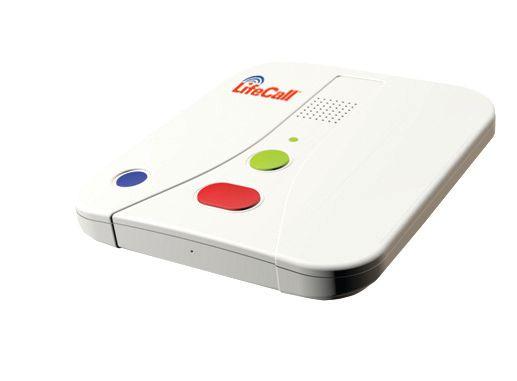
Personal Emergency Response Solutions (PERS) haven’t had the most glamourous or warmly received reputation. Just look at a recent episode of the popular Grace and Frankie comedy series on Netflix where the main characters are presented with wearable panic alert buttons by their children. Their reaction is explosively negative — one of the devices is smashed with a shoe.
Professionals in the PERS and personal safety industry, however, say there is work underway to change all that, including an erosion of the stereotype that PERS is just for seniors.
Personal safety and home safety are converging, says Anu Herranen, di-
rector of marketing at Nortek, and this brings plenty of potential for dealers and installers alike.
Cloud and other developments
PERS providers have “incorporated new technologies, such as GPS, fall detection sensors, and mobile apps, which have expanded PERS services from responding to emergency calls to proactively managing personal safety and emergency situations,” reported market research and consulting company Parks Associates in a recent article on digital health. “As a result, the market has expanded from fragile seniors who live alone to schoolchildren, boom-
ers with fragile health conditions, night-shift employees, lone workers, and outdoorsy hikers.”
Moreover, the personal safety market opportunity is “much larger” than the traditional PERS market, the research firm contended.
A trend of “living independently” is the best way to describe what is about to shake up the PERS sector, according to Neil Jones, ADT’s national director of operations in Canada.
“Change is coming to this market segment as a whole... It’s not just about ‘I’ve fallen and I can’t get up,’” Jones says. “Things are moving towards allowing the now-grown children to monitor or manage what their parents are doing or not doing. Analytics [and] exception reporting is the future. For example, don’t tell me if Dad gets up by 9 a.m., tell me if he doesn’t.”
“It’s not just about ‘I’ve fallen and I can’t get up.’”
— Neil Jones, ADT Canada
Similarly, the last few years have seen stationary, home-based systems shifting to more mobile solutions, says Herranen, which has been driven by a number of factors, including demand from younger generations who are interested in personal safety and health solutions, and the attraction of diverse options in the mobile offerings.
Fall detection is becoming more of a norm in PERS, whereas before it was a unique feature, Herranen notes. That in general has been a huge driver of change for PERS, she says, adding Nortek’s fall detection has been available ever since the mobile PERS was first revealed over three years ago.
“Now, with fall detection we’ve addressed the issue of false alarms in the way we use Cloud intelligence. We gather data from actual human falls and improve the intelligence of our algorithms continuously,” she says.
The Cloud service is also extra attractive to the tech-savvy generation stepping up as caregivers for the aging boomers, Herranen says.
“There is a peace of mind with mobile devices as safety is provided everywhere; it’s not just confined to the home. But we also understand
now how important it is to the caregiver to be in the know and have access to that information all the time,” she explains. “And they can create specific notifications customized to their family with the Cloud service.”
A game-changing benefit with Cloud is the transition from “reactive” to “proactive” monitoring, Herranen continues, noting the competition is fiercer in mobile PERS, which she believes is growing at a much faster pace than traditional PERS.
It’s not going to be just the panic buttons or fall-down sensors for
the near future of PERS, Jones believes — it’s going to be movement activity alerts, such as tracking when medicine cabinets or the fridge is opened.
“It’s time for PERS to catch up with the traditional security industry, because there are so many benefits and features that can come from tying the two together,” Jones says. “ADT is in process of investigating how the PERS industry will evolve in Canada... Looking at potential partners, etc.”
Mark Phillippi, director of station
operations at SaskTel company SecurTek, agrees with Herranen and Jones that PERS has transformed from a medical monitoring focus to more “life solutions” honed. And this means the elderly aren’t the only ones PERS can target.
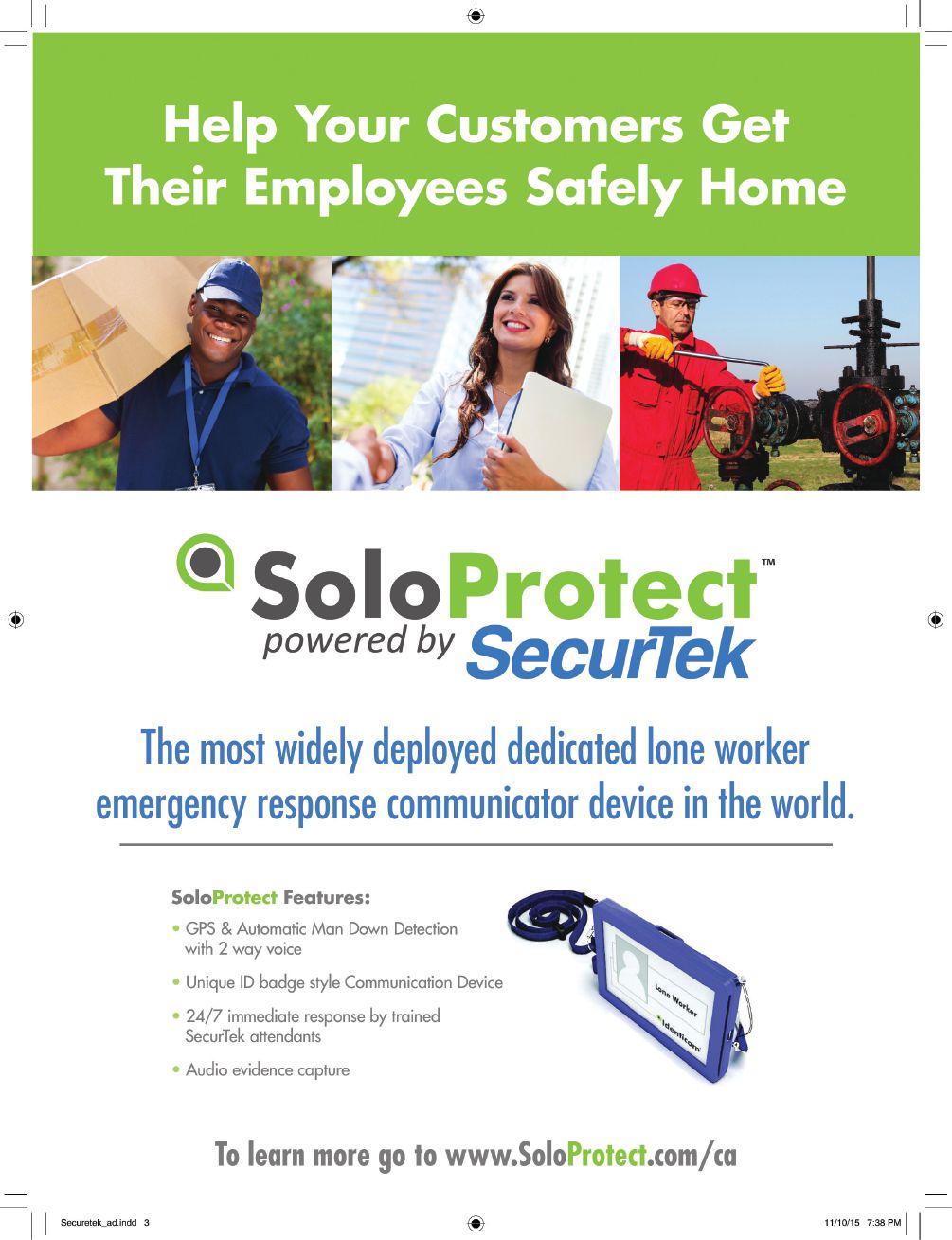
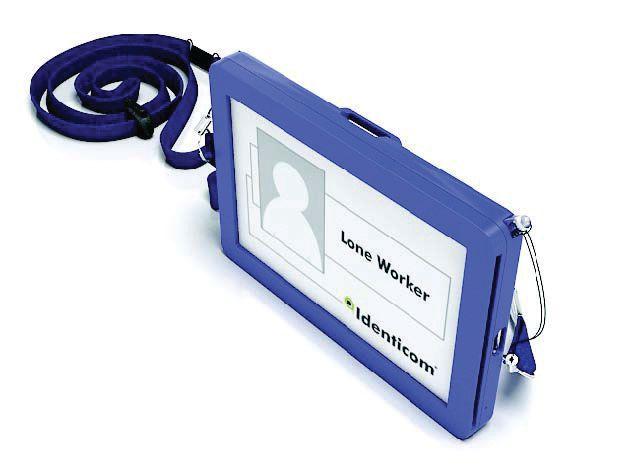
“People are looking to safeguard their employees — arming the lone worker with two-way voice capability devices. This is huge right now and legislation is pushing it,” Phillippi says. “This is big for the bush workers in oil and gas and even realtors who are going into houses alone.”
For SecurTek, its SoloPro-



• Competitive multiples
• Residuals
• Comprehensive technician and Sales training
• Authorized Dealer Sales and Marketing materials
• Equipment discounts
• ULC Listed CSAA Certifi ed 5 Diamond Central Monitoring Station



Contact us by calling 1-800-267-2001 x290 or emailing dealersupport@alarmforce.com You can also visit us online for more details: www.alarmforce.com/dealer-program Leverage the power of the AlarmForce brand to acquire new customers



“The competition is fiercer in mobile PERS, which is growing at a much faster pace than traditional PERS.”
— Anu Herranen, Nortek
tect solution meets this demand. Though it was available in the U.S. for years, it was launched this past fall in Canada, pairing the ISO9001 device with SecurTek emergency communications and monitoring for a new level of worker safety.
“Large corporate companies are coming aboard for this,” Phillippi says. “They sign on for a trial then buy large amounts of units. It could be for a gas station down the street, utility workers on towers, guards working by themselves...”
The traditional radio communication is beginning to disappear and PERS can step into this space, according to Phillippi.
“SoloProtect can also handle the medical side of monitoring. It’s a space we’re just getting into but we definitely see it monitoring the health of an individual down the road as well as keeping them safe. This can be for an elderly person or a 10 year-old child. It doesn’t matter.”
Nortek is also “heavily investing” in collecting blood pressure, pulse, weight and other health data, Herranen says, as seen with its wireless Numera Libris with EverThere solution, which integrates health data, personal safety and emergency response with “proactive and socially engaging wellness services.”
Additionally, digital health re search by Parks Associates in 2016 shows that “23 per cent of chronic-care patients (U.S.) re port it is very difficult for them to exercise regularly and 19 per cent struggle to maintain a prescribed diet.” Parks Associates notes that new smart health-care devices and apps, as well as remote monitoring solutions by caregivers, could help these patients stick to their health-care plans.
flix, Uber, or GrubHub,” said Harry Wang, senior research director, Parks Associates. “This approach, which is supported by the development of smart home solutions, will provide real value to patients with chronic conditions and help improve outcomes by following care plans and interacting more frequently with their doctors.”
“As smart home adoption increases and consumers become more familiar with the capabilities of connected devices, use cases expand into health and wellness offerings,” added Brad Russell, a research analyst at Parks Associates. “Medical alerts and emergency response monitoring, daily activity monitoring, and remote video-based communication and caregiving are a few of the early health-related applications that have been integrated with smart home providers.”
Home automation, home security — it all has the potential to meet PERS on an interactive and interoperable level.
PERS value add-ons, such as the aforementioned Cloud analytics offering or specific health data tracking, are the secret ingredient to RMR streams, Phillippi says.
“The growing availability of virtual care options such as telephonic consultation and video chat has given some care services an on-demand aspect similar to Net-

additional RMR. Imagine adding on additional sensors throughout the home. It’s endless...”
An alarm or medical monitoring system was considered a luxury in the past, Phillippi says, but it’s becoming more mainstream now, thanks in part to the diversity of ways information is gathered and the varied purposes of that information.
“Sales can be driven by either the home or personal safety need but either way you still need someone to explain the benefits and walk you through the user experience. There is still an opportunity to meet with the customer this way and cross sell or upsell features to meet their unique needs.”
“Adding another device or another item we can monitor to an alarm system means huge uptake, I’m finding, whether it’s thrown in initially or later,” he says.
“Even if it’s just another sensor — that’s RMR and that adds up
RMR is key for mobile PERS’ additional services, Herranen remarks, mentioning how there are plenty of accessories in the ecosystem to increase the convenience of mobile PERS, such as small wearables to wear while the main device is charging.
“You can easily upsell these for
“People are willing to pay a little extra now to ensure their life or their life solution is there, as it’s more ingrained in society,” Phillippi notes.
While the traditional PERS requires installation work (such as mounting door sensors), Nortek’s mobile offering is pre-configured, Herranen explains.
“This shifts the device immediately to the end user so you don’t have to roll a truck out there and it saves time,” she notes. “It’s important for our customers and our dealers to be aware of how seamless it is for them. Ease of use is very important and that is something that will only improve in the future.”
And as for the simplicity of these solutions posing a threat to the need for an installer’s expertise, Herranen says not to worry.
Mistakes happen when you have to learn a system on your own, Phillippi adds. Which is why it’s important for the dealers to get proper training so they in turn can train the end user.
The mindset is beginning to change, according to Jones, where dealers are selling to what customers’ specific needs and wants are compared to what a company itself is trying to sell.
“Offering an all-inclusive solution that gives the kids peace of mind so they know what’s going on in their parents’ house, I think you would see an increase in revenue for something like that,” Jones says.
“It’s not just about hitting the panic button when you fall in the bathtub anymore — it’s staying in your house longer and living with dignity and better suiting the market so a PERS user can have that is what we want.”
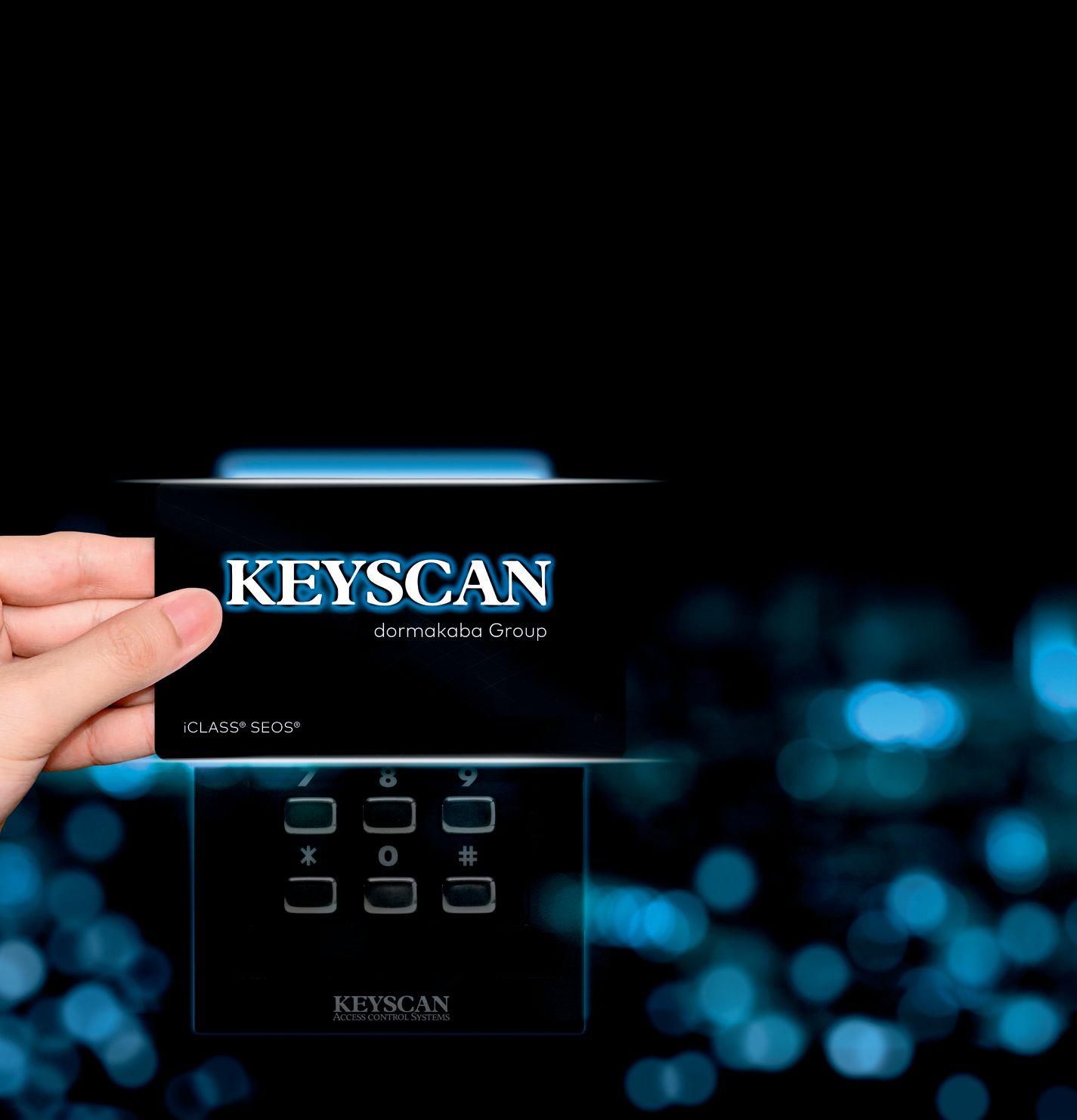
Keyscan iCLASS® high frequency (13.56Mhz) contactless readers are powered by SEOS®. The SEOS platform offers more choices, functionality, flexibility and applications providing the highest level of secure communication between devices.
Keyscan iCLASS SEOS readers are mobile ready and will only authenticate Public Key SEOS smart credentials — to make your access system even more secure.
Keyscan iCLASS® SEOS® Public Key High Frequency Readers
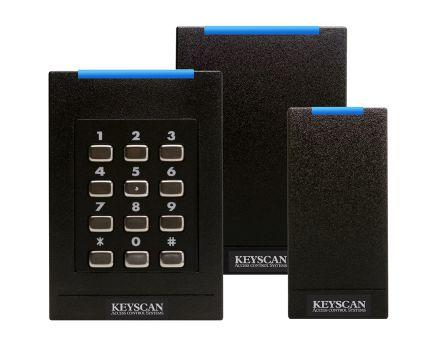
Keyscan iCLASS® SEOS® readers are mobile ready using either Near Field Communication or Bluetooth Low Energy and operate with SEOS smart credentials to prevent compromise and sustain the highest level of security.
Cars and trucks used as weapons against
pedestrians is a disturbing trend. There are physical security options that can help prevent such attacks
By Greg Hamm
On Dec. 19, 2016, the news exploded with information about a vehicle attack on a Christmas market in Berlin that killed at least 12 and injured more than 50.
Less than a month earlier, the U.S. State Department had warned about such attacks in public places, saying that extremist groups including the Islamic State and Al Qaeda were planning to focus on such locales during the holiday season. Indeed, both terrorist groups have called on followers to use trucks in particular to attack crowds. On July 14, a truck plowed into Bastille Day
vacationers in Nice, France, killing 86 people. On Nov. 28, a car ramming attack and mass stabbing occurred at 9:52 a.m. in the U.S. at Ohio State University’s Watts Hall. The attacker was shot and killed by the first re sponding OSU police officer and 13 people were hospitalized for injuries, nine of them struck by the vehicle. Luckily, nobody was killed.
Then, an intoxicated driver injured at least 28 people when smashing into the Krewe of Endymion parade, the largest at Mardi Gras in New Orleans, at a yet unprotected intersection this past Feb. 25. Four people were killed on April 7 in Stockholm by a terrorist who had stolen a truck to run them down. On June 3, eight people lost their lives, including one Canadian woman, and dozens more were injured in London, U.K., when three assailants drove a van into pedestrians on London Bridge, then went on a stabbing spree in a nearby neighbourhood.
To stop such attacks, security professionals need to be cognizant of two different types of vehicle access points for such massive, cowardly incidents to occur. The first would be in a location where the primary use is pedes trian but, frequently, vehicles need to pass through. An example could be a square in which the maintenance truck comes through to clean the square periodically. Other areas could be those locations with restricted parking. At













a hospital, it may the entrance to the emergency unit. Such access points are well served by bollards, some moveable that go up and down to let vehicles through and others fixed or stationary.
The other access points are those that are temporary. At a stadium, traffic may need rerouting for sporting weekends. A hospital might be having an open house. In either case, sections normally open to traffic will be closed to create pedestrian paths and gathering points. However, these areas still have a need for delivery trucks and certain other authorized vehicles to enter. These locations are best protected with crash-rated portable barriers that erect in 15 minutes and are then removed once the event is over.
Bollards are aesthetically pleasing and let pe-
destrians move between them in non-roadway applications. Bollard systems operate individually or in groups. They are used for intermediate level security applications. Individual bollards are up to 32 cm in diameter, up to 88.9 cm high and are usually mounted on 0.9-1.5 m centres. They are tested to stop and destroy an attacking vehicle weighing 4,536 kg moving at 104 kph or a 9,072 kg vehicle moving at 74 kph. Typically kept in the “up” position to stop traffic, moveable bollards lower to allow vehicles through.
Ranging from faceted, fluted, tapered, rings and ripples, colours, pillars, to shields, emblems and logos, bollards look nice and are versatile. Buyers can specify ornamental steel trim attached directly to the bollard, or select cast aluminum sleeves, which slip right over the crash tube. Bollards can be galvanized for corrosion
resistance, fitted with an internal warning light for increased visibility and engineered to suit high traffic volume. If damaged, simply slip off the old and slip on the new.
Fixed post bollards are available to secure the sides of roadways with the same crash rating and appearance as their moveable cousins. Versus cement barriers such as posts and pots, many campuses prefer fixed post bollards for several reasons. First of all, when hit, cement posts and pots can explode, literally spreading shrapnel throughout the crowd, potentially creating numerous injuries. Shallow foundation bollards can be installed within sidewalks or on top of concrete deck truss bridges as well as conform to the inclines and turns of a locale. Think of the attack in London. They would be an ideal solution for such sites.
By their very nature, terrorist attacks are unpredictable and predicated on surprise. Staying one step ahead by identifying vulnerable areas, and securing them, is critical to staving off vehicular attacks. That means being able to deploy security equipment in tough conditions, at a moment’s notice. Such equipment has existed for several years in the forms of portable temporary barriers.
Terrorists typically don’t go where they see barricades, so placing them wherever possible attacks can happen reduces security risks dramatically. Temporary barriers are often used to protect facilities while permanent ones are being



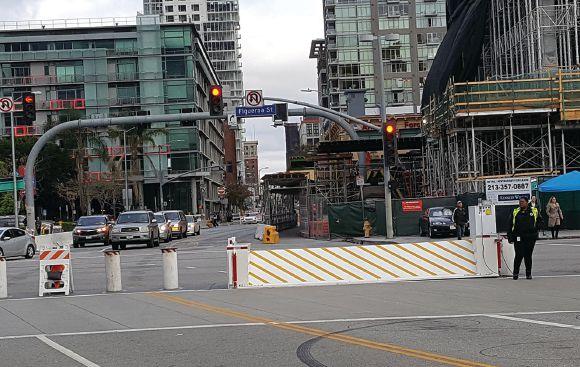
built. Plus they’ve even been effective for the long-term where physical conditions preclude permanent solutions.
“Terrorists typically don’t go where they see barricades.”
Their most common use, though, is for when vehicle access is required temporarily. Parking for a sporting event, a grand opening of a new building, parades and open houses are temporary events needing only a temporary solution. These barriers can be deployed quickly and effectively, even in places where it’s impossible to excavate for a permanent foundation.
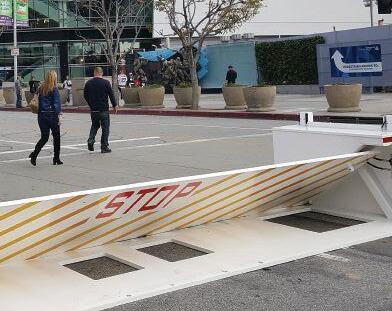
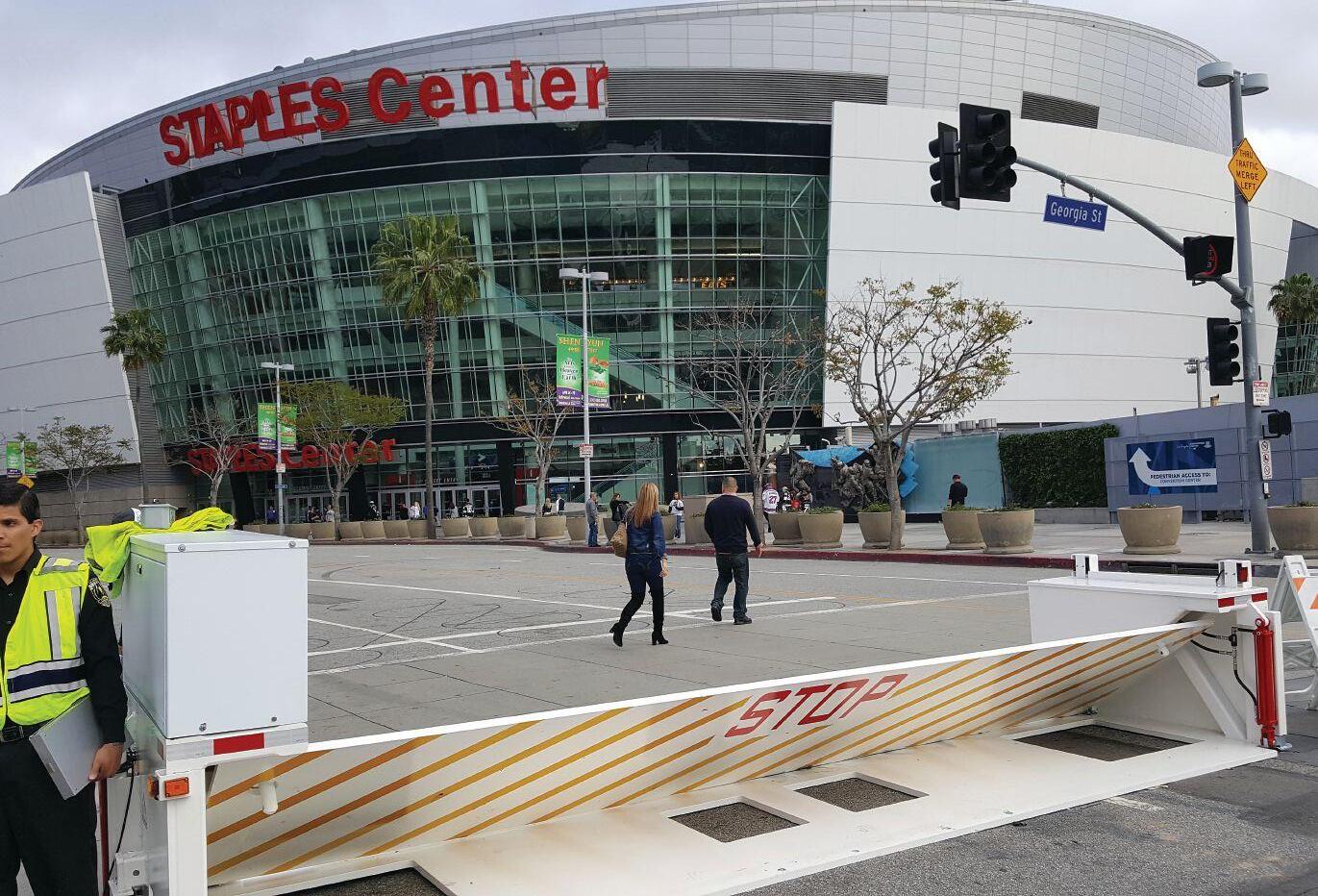
Moveable self-contained barricades can be towed into position to control vehicle access within 15 minutes to answer the need of organizations that quickly require a temporary barricade system to address a specific threat or secure a facility during special events. These mobile deployable vehicle crash barriers carry a M40 rating, stopping 13,608 kg vehicles traveling 64 kph. No excavation or sub-surface preparation is required. Once towed into position, the portable barricade uses DC-powered hydraulic pumps to unpack and raise and lower itself off its wheels. There is no hand cranking. Wheels are stored along the sides and the vehicle ramps fold out, completing the implementation. To move the barrier from that spot to another, the procedures are just reversed.
A second version, light enough to be towed by a golf cart and set
up in only 10 minutes, provides an ASTM crash rating of P40, which means it will stop a 2,268 kg vehicle going 64 kph. With no foundation or electrical hook-up needed, two people can set up and take down the barrier in minutes. A self-contained power system provides all the power necessary to raise and lower the unit onto its trailer and open and close the barrier. This battery-powered system re-charges with a solar panel or external means. Controls can be locked or operated at the barricade or remotely.
Differing from the “hard stop,” wanted with anti-terrorist barricades, the Soft Stop technology of the portable barrier decelerates and stops the vehicle over a short distance. This is important because, in many cases, the tragedies that the portables negate are accidents. Authorities want the vehicle stopped but they also want to minimize injury to the driver.
Protecting people from vehicle attack is no small responsibility; it’s becoming mandatory. Knowing that you’ve got the right equipment in place to secure the campus from vehicle threat and prevent what is becoming all too common human tragedy brings a peace of mind that no amount of money can buy. Carefully researching available options and consulting with experts will ultimately lead to the right solution in helping you protect your campus from vehicle-based terrorism.
Greg Hamm is the vice-president of sales & marketing at Delta Scientific (www.deltascientific.com).


Rockwood ArborTek door pulls feature collar mount posts, combining classic wood with modern metals. The wood’s natural grain and colour variations make each pull visually unique, while wood grips are gentle to the touch in any environment or temperature. In addition to customized options, wood types such as hickory, mahogany and walnut are offered. A variety of metal finishes are also available, including bright brass, oil-rubbed bronze, bright stainless steel, and custom finishes and powder coats on request.
www.assaabloy.com
The RTS Lock with lockdown is suitable for locations, such as educational buildings, retail stores, and office spaces, where people can freely enter a space but remain locked in when a threat exists and evacuation is not an option. To employ lockdown on the Westinghouse Security RTS Lock, users simply press the programming up and down arrow keys simultaneously and hold down for five seconds. Since the arrow keys are located on the interior portion of the RTS Lock, the user does not need to access the exterior side of the lock, which may be where a threat or intruder is located. www.westinghousesecurity.com


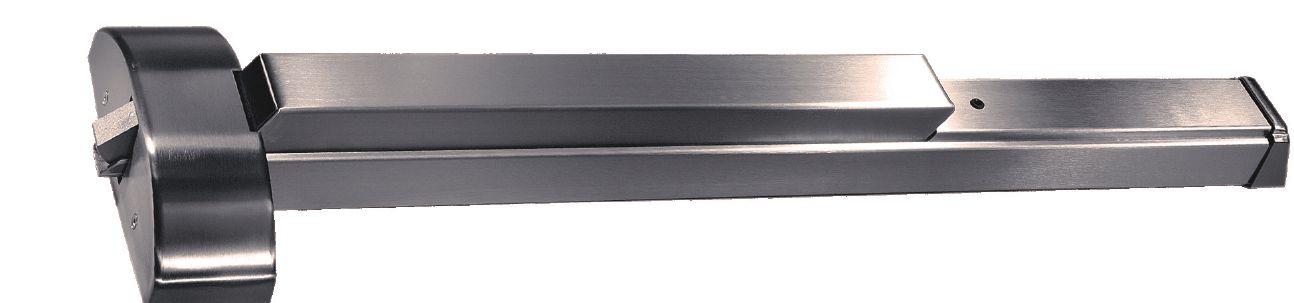
The new X-iT Series Narrow Stile Exit Device, M8800, is now available. These durable, Grade 1 exit devices are suitable for high impact applications, such as schools, universities and other institutional or commercial buildings, and retrofit all popular preps. The exit device is designed for use on all types of narrow stile single and double doors, of either 36” or 48” door width, and conveniently, non-handed for installation flexibility. www.marksusa.com
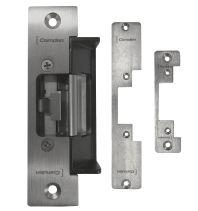
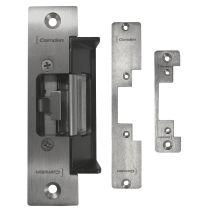
CX-ED2079, CX-1079L and CX-ED1079DL ‘Universal’ electric strikes for cylindrical locksets are now UL1034 Certified and equipped with three stainless steel faceplates designed for ANSI square, round and wood frames. The CX-ED1079L (low profile, for 5/8” latch projection) and CX-ED1079DL (standard depth, for 3/4” latch projection) ‘Universal’ Grade 1 ANSI strikes offer ‘Universal’ performance with selectable 12/24V AC/DC and fail safe/fail secure operation. www.camdencontrols.com




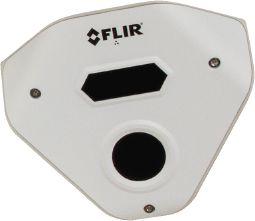
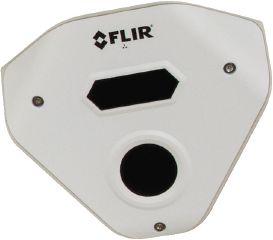
The FLIR Ariel 3MP corner camera features a 3-megapixel visible camera that provides ceiling-to-floor and wall-towall viewing. The corner camera also includes a built-in microphone for audio monitoring and discrete night vision illumination for monitoring low light to totally dark locations. FLIR Ariel 3MP also features an impact-resistant, vandal-proof, flush-mount housing, making it suitable for locations such as medical facilities and prisons where the safety of at-risk occupants is essential.
www.flir.com
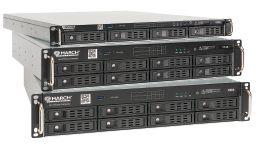
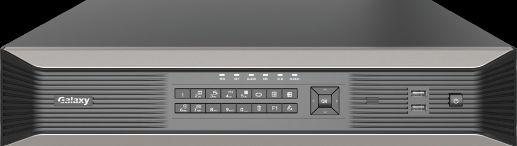
March Networks 9000 Series IP Recorders are suitable for mid-sized commercial organizations with all-IP video environments, as well as banks, retailers and other multi-site enterprises transitioning from analog or hybrid video networking. Available in 32, 48 and 64-channel models, the 9000 Series recorders support high-megapixel, high-throughput video capture. In addition, all channel licenses are included. The 9000 Series IP Recorders incorporate a customized embedded Linux OS, which eliminates unnecessary background services and frequent system updates. www.marchnetworks.com
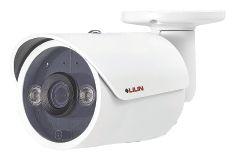
The MR832 outdoor bullet camera features a 4mm fixed lens with an IP66 environment rat ing, an operating range of -40° to 122°F, along with 30M IR LED illumination and Day/Night imaging. LILIN MR832 IP cameras feature 2D wide dynamic range, which provides accurate video capture in high-contrast lighting, and use 3D Noise Reduction for maximum clarity in low light conditions. Energy-efficient IR LEDs automatically illuminate scenes in complete darkness for discovering subjects at a range of up to 30 meters (98 ft.).
www.LILIN.us
Genetec
Toshiba Surveillance & IP Video Products Group is adding the cloud-based MySurveillix health monitoring application to its Surveillix Web Services (SWS) suite as a benefit to customers who use SWS to pilot the company’s Percept Network Video Recorders. MySurveillix automatically verifies the health of IP video cameras and Percept NVRs enterprise-wide in a single solution that can be viewed on a PC or mobile device. By providing critical alerts in the form of an email or text if the status changes, MySurveillix allows end-users to access the system and troubleshoot the problem before a security event occurs.
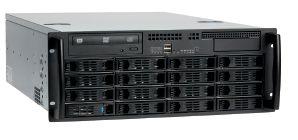
www.toshibasecurity.com
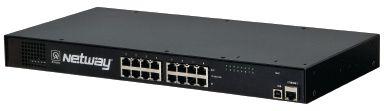
The NetWay8E Endspan features an integral PoE switch with two 1Gb uplinks and eight 10/100/1000 Ethernet ports. The NetWay8G Midspan also features eight 10/100/1000 Ethernet Ports. Both units provide up to 30W full power per port to support PoE or PoE+ devices and are equipped with both remote management capabilities and the ability to remotely reset IP devices, potentially reducing costs.
www.altronix.com
G4S
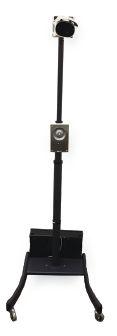
G4S Virtual Patient Watch raises an alarm the instant a patient either attempts to get out of bed, or begins demonstrating escalating behaviour requiring immediate medical attention. G4S Virtual Patient Watch has a wide range of applications in a health-care setting, including the provision of enhance monitoring and security of patients suffering from psychiatric illnesses or chronic conditions such as dementia. Central to the system is a high-resolution bedside camera with infra-red capability that allows it to function in the semi-dark of night time units.
www.g4s.com
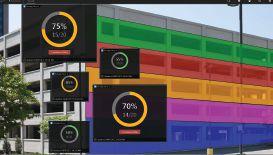
AutoVu Free-Flow off-street parking management solution will now be offered within Genetec Security Center, the company’s unified security platform. With Free-Flow now an integral part of Security Center, parking managers will be able to monitor occupancy and violations across all their parking lots, directly from one location. Genetec Plan Manager provides an added interactive and graphical mapping application which allows operators to better visualize and manage environments. www.genetec.com

The Pro-Watch security management system has been updated to include custom solutions for highly-connected campuses. Pro-Watch 4.3 combines access control, video surveillance, intrusion detection and other business critical functions into one intelligent system. Pro-Watch 4.3 is capable of accommodating more than a million card holders and more than 10,000 doors. The system features a new API that allows integration with other operational services.
www.honeywell.com
Winsted Corporation
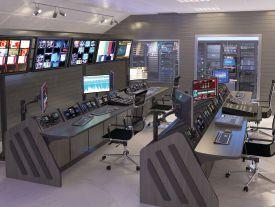
Spectrum-2 consoles bring access to rack-mounted electronics for multi-operator control rooms or single-bay workstations. Each rack-mount turret conforms to 19”W EIA standards. Adaptable lower equipment units can be configured for 19 ¼” (11RU) of rack space, a CPU pullout tray or an adjustable shelf storage. Each unit features a hinged front-access panel and a removable rear access panel. Upper turret units each accommodate 4U rackmount equipment. Each turret is vented and features a removable top-access panel. www.winsted.com
Orion Entrance Control
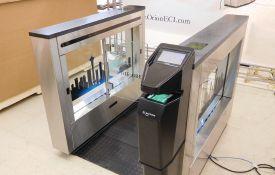
The OBSG-LG-CV-Wave Turnstile is an Optical Barrier Swing Glass-Low Glass-Clear View Wave turnstile with an open look – accentuated by 3/8-inch transparent glass on the sides and 3/8-inch tempered swing glass. Integrated into the pedestal is the Safran MorphoWAVE biometric reader that captures fingerprints with one contactless movement or “wave.” The throughput yield is one person per second which provides any lobby with a modern option for turnstile security. Also offered by the company: Infinity Remote Lane Control Software (IRLC-SW) and Surface Pro 4 Touchscreen/Armodilo Case. www.orionECI.com
Hanwha Techwin America
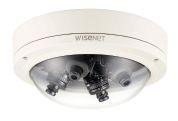
Building on its line of Wisenet multi-sensor cameras, new additions include multi-directional cameras that allow individual adjustment of each image sensor to capture high quality images of specific areas of interest. The new Wisenet multi-directional cameras are available in IP and Analog HD (AHD) configurations. Key features include: motorized varifocal lenses for easy and remote adjustment; built in licence-free video analytics; high frame rates of 60fps (8MP) and 30fps (20MP); and 120dB Wide Dynamic Range (WDR) for highly contrasted lighting environments. www.hanwhatechwin.com
Geutebrück
The G-Health Monitoring software package monitors the performance data of video systems and automatically logs critical states. As a result, component failures are detected quickly and reliably. The software supports administrators, maintenance technicians as well as advanced users to permanently monitor the functions of a Geutebrück security system. As soon as a critical condition is detected, the administrator will receive an e-mail or a G-Health alarm notification in the web interface, locally or remotely on a smartphone. www.geutebrueck.com
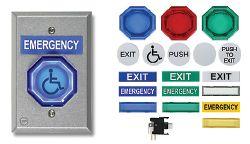
The STI 2” Universal Button (UB-2) offers over 300 combinations in one package. This single-gang momentary button includes two sets of Form “C” contacts, multiple message plates and button inserts. Constructed of cast aluminum, and slightly oversized, it covers old plate installation marks for a clean retrofit installation. The button is ADA and UL/cUL Listed. Also available: 2” Universal Button with Latching Timer or 2” Universal Pneumatic Button. www.sti-usa.com
Vicon Industries
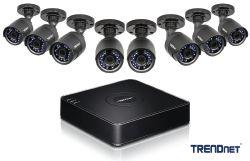
TRENDnet’s standalone DVR Surveillance Kits are a DIY surveillance solution for homes and businesses, offering a video, storage, and management package, with remote video access capabilities. Two new kits are available: the 8-Channel HD CCTV DVR Surveillance Kit, model TVDVR208K, and the 4-Channel HD CCTV DVR Surveillance Kit, model TV-DVR104K. With all HD cameras, a pre-installed hard drive, and required cabling included (display required), TRENDnet’s DVR kits include the hardware needed to build a new surveillance setup, or upgrade an existing one. www.trendnet.com

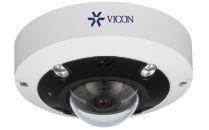
Vicon Industries introduces a new line of 6MP and 12MP panoramic cameras with fisheye lens. The cameras’ extremely wide angle and highly detailed image allow it to provide coverage of an area that would typically require as many as four traditional HD security cameras, while eliminating blind spots. Server-side image dewarping, as well as edge-based dewarping at lower resolutions, enable the camera’s video to be displayed in a variety of formats. The cameras feature Wide Dynamic Range (WDR), true day/night functionality and smart IR illuminator LEDs. www.vicon-security.com
With the Bosch Video Management System (BVMS) 7.5, Bosch has expanded its range of VMS software with the introduction of the BVMS 7.5 Viewer — a new variant aimed at small and medium-sized applications. This entry-level and free of charge version of Bosch’s existing Video Management System enables small business owners to view multiple live video streams of their surveillance cameras in high resolution from their computer screen. BVMS 7.5 ViewerThe also allows replaying recorded videos, and carrying out forensic searches of video recordings. www.boschsecurity.us





































































OVER 34
HAS BEEN PROVIDING MONITORING SERVICES TO OUR DEALERS.
However, how do you gauge a Station’s commitment to its Dealers?
Early on, we owned wholesale and retail accounts, over half our revenue came from our retail subscriber base.
In essence we were like every other monitoring station, competing with our Dealers.
On many occasions we would be bidding for the same account, competing with our Dealers.
Partners and competitors on the same court, it just wasn’t good business.
How strong is our commitment?
We gave up retail monitoring and in doing so we surrendered over half our monthly revenue, Partnering with our Dealers.
We wrote our non-compete promise to our all dealers, partnering with our Dealers.
That’s right. Overnight. We gave up half our revenue.
We did, we did it willingly, we did it on principle, and our conscience is clear.

We decided to fully commit Lanvac® to wholesale monitoring only, the dawn of a new era.



For over 34 Years, Lanvac® has been at the forefront of innovation and excellence in Canadian Alarm Monitoring. www.lanvac.com
Halifax 2830 Agricola Street, Halifax, NS, B3K 4E4
Quebec 11054 Valcartier, Quebec, QC, G2A 2M3
Montreal 5800 rue Iberville, Montreal, QC, H2G 2B7
Ottawa 2212 Gladwin Crescent Unit B6, Ottawa, ON, K1B 5N1
Toronto 2863 Kingston Road, Scarborough, ON, M1M 1N3
Vancouver 2830 Douglas Road, Burnaby, BC, V5C 5B7



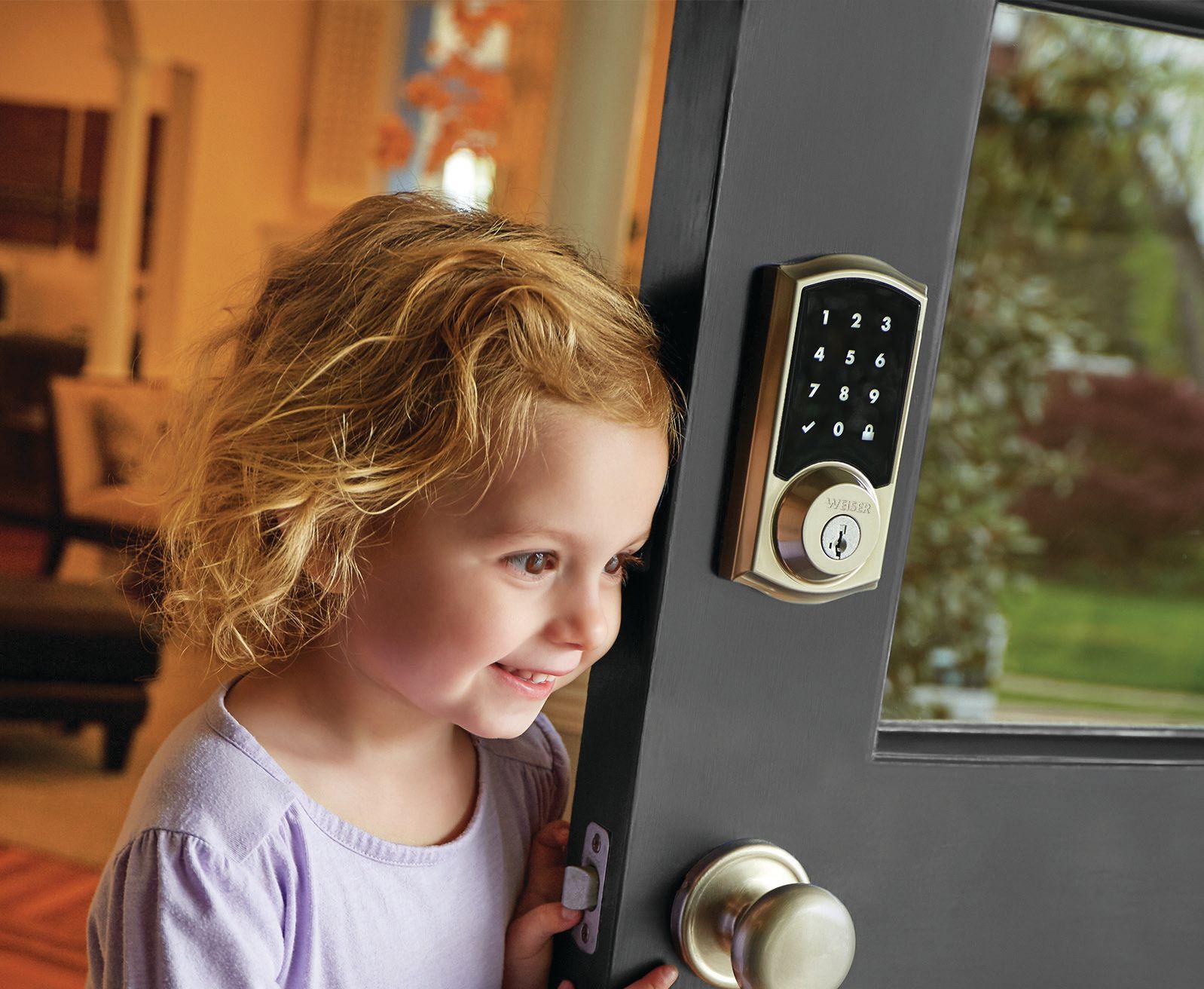
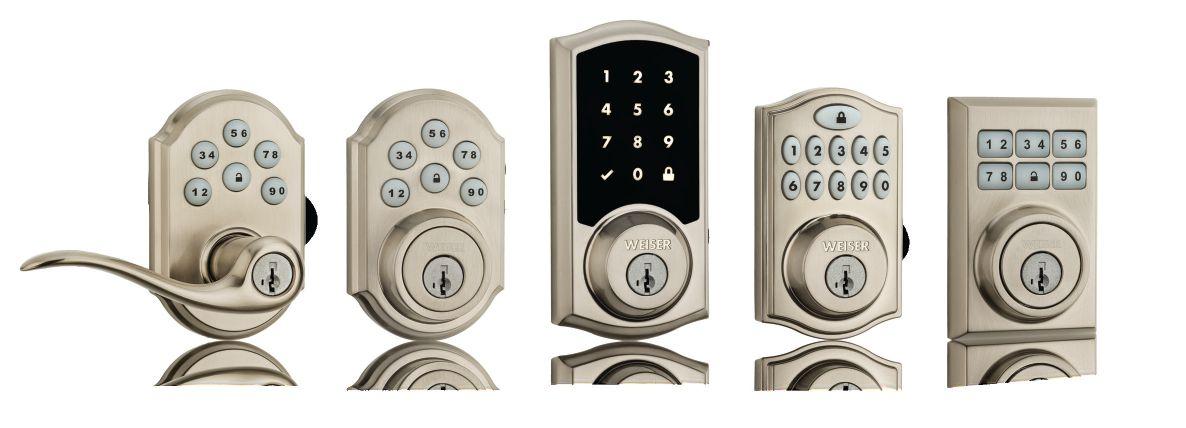
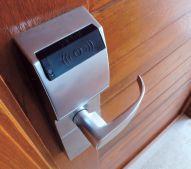
Weiser’s Home Connect Technology enables your Weiser door lock to wirelessly communicate with other devices in your home. Imagine locking your door from your cell phone or receiving a text message letting you know your child just got home from school. Home Connect Technology has the power to make it happen.