




Blackline Safety expands production capability
Calgary-based company invests $2M in manufacturing, expands product lines p. 6
Extend the life of legacy networks
NVT Phybridge says it offers a cost-effective solution to deploy IP cameras on existing cabling p. 6
Toronto’s Humber College updates access












Neil Sutton
Madalene Arias



OBy Neil Sutton
ver the last six to 12 months, I’ve entertained the possibility of travel, both work and personal, only to second-guess myself and think, “It might be better to try this next year.”
I’ve also put dinner plans on hold and rescheduled family outings due to the pandemic restrictions that came into effect in Ontario at the beginning of this year. (As of Jan. 31, those restrictions were scheduled to lift again in a phased recovery plan.)
In short, it’s tough to plan anything more than a few months in advance. We can keep our fingers crossed and make a few educated guesses, but we really don’t know what’s around the corner any more.
Amid all this uncertainty, it might be difficult to predict what’s ahead for the security industry, but there are some mega-trends that were already in motion before the pandemic. In fact, the renewed urgency around safety and security has added more fuel to the fire and pushed the industry to innovate even faster.
This issue we explore some of those trends and we asked several industry professionals to delve a bit deeper into what’s driving them.
It’s not just a matter of the technology improving or the continual migration of data to the cloud. Both of these are important, but what I gleaned from my conversations with these experts is there are some fundamental changes happening in the relationships between security providers (both manufacturers and
installers) and end users.
Corporate users are looking for solutions that meet their needs, but they are also utilizing security equipment and data more broadly across their organizations, whether it’s for building management, business intelligence or HR purposes.
Likewise, vendors and installers are meeting with their clients’ security department, but they’re also talking to IT managers, property managers and the operations folks.
It’s almost as if a dynamic loop has been created between supplier and end user — each contributing to the conversation and pushing the other party to innovate faster.
Of course, not all discussions are going to unfold this way. There will always be end users who are looking for recommendations, guidance and a helping hand, and likewise there are dyed-in-the-wool security experts more than willing to step up and offer that support.
But I think it’s exciting to realize that innovation is accelerating. We may not know what the next six months or year will hold as we navigate what’s left of the pandemic, but we can be certain that the security industry will continue to meet those challenges and new ideas will emerge.

READER SERVICE
Print and digital subscription inquires or changes, please contact Barb Adelt, Audience Development Manager Tel: (416) 510-5184
Fax: (416) 510-6875
Email: badelt@annexbusinessmedia.com
Mail: 111 Gordon Baker Rd., Suite 400, Toronto, ON M2H 3R1
Your Partner in Securing Canada Security Products & Technology News is published 6 times in 2022 by Annex Business Media. Its primary purpose is to serve as an information resource to installers, resellers and integrators working within the security and/or related industries. Editorial information is reported in a concise, accurate and unbiased manner on security products, systems and services, as well as on product areas related to the security industry.
Group Publisher, Paul Grossinger 416-510-5240 pgrossinger@annexbusinessmedia.com
Associate Publisher, Jason Hill 416-510-5117 jhill@annexbusinessmedia.com
Editor, Neil Sutton 416-510-6788 nsutton@annexbusinessmedia.com
Associate Editor, Madalene Arias 416-510-5228 marias@annexbusinessmedia.com
Media Designer, Graham Jeffrey gjeffrey@annexbusinessmedia.com
Account Coordinator, Kim Rossiter 416-510-6794 krossiter@annexbusinessmedia.com
COO, Scott Jamieson sjamieson@annexbusinessmedia.com
EDITORIAL ADVISORY BOARD Victor Harding, Harding Security Services Carl Jorgensen, Titan Products Group Antoinette Modica, Tech Systems of Canada Anna De Jager, TAG Dispatch Roger Miller, Northeastern Protection Service Sam Shalaby, Feenics Inc.
111 Gordon Baker Rd, Suite 400, Toronto, ON M2H 3R1 T: 416-442-5600 F: 416-442-2230
PUBLICATION MAIL AGREEMENT #40065710 Printed in Canada ISSN 1482-3217















four ways listed above.
Annex Privacy Officer privacy@annexbusinessmedia.com
Tel: 800-668-2374
No part of the editorial content of this publication may be reprinted without the publisher’s written permission. ©2022 Annex Publishing & Printing Inc. All rights reserved.
Annex Publishing & Printing Inc. disclaims any warranty as to the accuracy, completeness or currency of the contents of this publication and disclaims all liability in respect of the results of any action taken or not taken in reliance upon information in this publication.










Blackline Safety, a Calgary-based maker of wearable safety technology, will expand its portfolio this year to include new devices and applications.
The company’s flagship product is the G7, a wearable product available in several configurations including multi-gas detection (up to five per unit) and lone worker monitoring. Units also feature fall detection and motion detection; are cloud connected; and support push-to-talk and 2-way voice communications.
In 2022, two new wearable products will be introduced, a lower-priced G6 unit aimed at the mass market and the G8, a productivity tool. The G6 is a smaller device than the G7, supports detection of one gas, and is low-powered (according to the company, it will run off a single battery charge for at least a year).
The G8 is designed to enhance workplace productivity in industrial environments where there may be multiple workers or teams coordinating activities. “Moving the right information to the right people at the right time — that’s a key piece of that program,” explains Sean Stinson, Blackline Safety’s chief revenue officer. “The G8 is there to try to make industrial companies a lot more profitable.”
Blackline Safety recently announced a $2-million investment in its manufacturing capa-

bilities, allowing it to double its current hardware production. Stinson says the company is a vertically integrated business, with the ability to manufacture, assemble, test and ship its equipment from its head office in Calgary, as well as develop software and firmware.
When the global pandemic hit almost two years ago, the company reacted quickly to its customers’ needs, says Stinson, and launched a contact-tracing application for its wearable products in April 2020.
“Our customers tend to be very industrial. They’re the kind of industries that weren’t allowed to take time off during the pandemic. These are the people that clean the water and keep electricity moving,” he says.
The safety market has changed in response
to the pandemic, adds Stinson, but much of that has to do with shifting attitudes towards worker well-being. “It’s really opened up the eyes of leadership in most companies to go the extra mile to take care of their employees,” he says.
The risks associated with being a lone worker have also received added attention, he says. Working alone may not pose any more of an apparent risk than those who work in groups, but the outcome may be more severe in the event of an accident when there are fewer people around to help. “We’re getting more interest [in lone worker solutions] now because it goes hand in hand with this philosophy of taking care of your employees,” says Stinson.
Customers are also asking for the ability to integrate safety tools with other workplace applications and systems, adds Stinson. A common request is the ability to integrate lone worker apps with GPS vehicle tracking for workers who are mobile.
“We’re starting to see on the horizon the expectation rising that software should all talk to each other,” says Stinson. “We’ve been investing in that pretty significantly in the last year just to improve our ability to integrate into any wearable piece of technology or any other piece of software.”
— Neil Sutton
Toronto-based NVT Phybridge says it is helping security systems integrators tap into the vast legacy network architecture market and compete with networking professionals who have been edging their way into the security space.
It’s no secret that new security equipment tends to run on IP, however, there are many potential customers out there with legacy infrastructure. These networks may not have been updated due to cost or the age of the building that houses them.
There is a “rip and replace” attitude towards older network infrastructure (update everything from the ground up), but this need not be the case, argues John Croce, CEO of NVT Phybridge.
The company’s switches enable installers and users to take advantage of existing networks and still gain the benefits of today’s
IP-based security cameras and appliances.
Croce says there are obvious environmental and cost benefits to leveraging older network infrastructure for longer — to “sweat those assets in the wall rather than replace them.” There are also advantages to keeping security equipment on a dedicated network rather than allowing it to share network space with other building systems and applications.
“What we’ve found, based on our thousands of customers who have used our technology, is we’ve been able to create savings of 40-80 per cent in infrastructure over the alternative. [That] basically means you can allocate more of the customer’s budget to that which is important to the customer, which is the application layer and the quality of the devices,” says Croce.
“You can shift the budget away from that infrastructure when presenting these modern
LAN principles and our PoE innovations.”
As an example, NVT Phybridge worked with St. Anne’s Church in Annapolis, Md., to update its CCTV. As a historical landmark, the church was keen to maintain the original aesthetics of its property and not incur high network upgrade costs. Working with a consultant, the church utilized its existing CAT3 wiring infrastructure and installed PoLRE switch technology from NVT Phybridge to enable the upgrade to IP-based cameras.
Other examples of buildings and industries that are still using analogue endpoints include institutional structures like corrections, schools and health care, says Croce.
He adds that NVT Phybridge products also work with dedicated IP-based networks and new-builds via its Flex PoE switch product line.
— Neil Sutton

Outstanding Value with Vast Form
Imaging, and
2.0



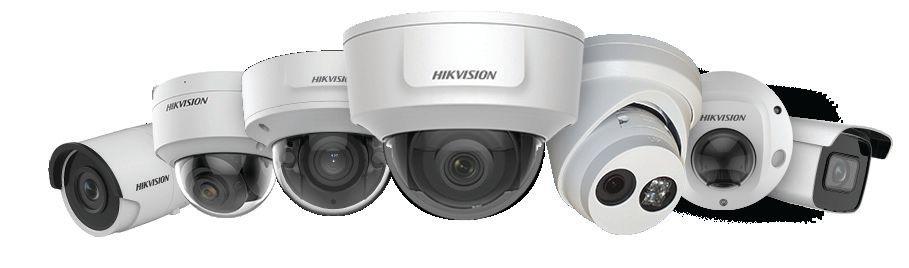
Protection, security and peace of mind come standard with Hikvision surveillance cameras. We are constantly innovating to bring quality solutions to a wider audience. Introducing the new 2nd Gen Value Series with AcuSense, providing you cutting-edge technology at an affordable price.
Frustrated with false alarms? Our cameras accurately capture threatening activity around a secured property. Our new 2nd Gen Value Series now includes AcuSense as a standard feature, providing premium accuracy and image quality and enhanced motion detection, without the high price tag.
Our new 2nd Gen Value Series with AcuSense also has the added protection of greater IR distance than previous generations, giving you a better distance view in darkness. Our 8-megapixel cameras also deliver improved, highdefinition sharpness and WDR performance, giving you crisper, clearer images.
The new 2nd Gen Value Series with AcuSense includes better motion detection, meaning minimal false alarms triggered by weather and light changes. End users will appreciate reduced time and disruption searching video clips for specific events. AcuSense also produces quick, smart and reliable alarms for users to filter targets. End users will benefit from alarms that better indicate and classify moving targets.
Motion detection 2.0 makes playback and target classification more efficient. The new 2nd Gen Value Series with AcuSense classifies target types and sorts them into human, vehicle and others. The segmented clips can then be colour coded and easily identifiable in NVR playback.
The new 2nd Gen Value Series with AcuSense is available in bullet, turret or dome form factors and continue to demonstrate our commitment to innovation.
AcuSense with Motion Detection 2.0 provides an AI solution to improve accuracy and event classification in day or night, providing better perimeter protection, target searches and face detection.
The new 2nd Gen Value Series with AcuSense is the new standard for surveillance cameras and offer an increased level of protection at an affordable price.
Atlanta facility utilizing smart building portfolio

Emory Healthcare’s new Musculoskeletal Institute (MSKI), a six-story,180,000 sq.-ft. building in Atlanta, Ga., is implementing solutions from Carrier’s Healthy Buildings Program, including HVAC, building automation, fire detection, access and video management and digital services.
“Emory’s vision to be a model of transformative practices and sustainable choices at every level serves as the inspiration for the ecofriendly design of the building,” said Scott D. Boden, MD, director of Emory MSKI, in a statement.
Central to the enhancements is the Automated Logic WebCTRL building automation system, a webbased platform.
MSKI also selected products from Carrier, including LenelS2 and Edwards, to enhance safety and security. The Edwards EST4 emergency communications system and Signature Optica detectors are utilized by the facility.

New video in the car wash
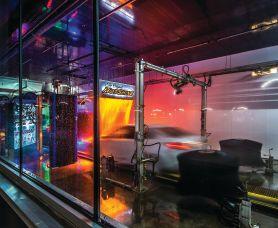
Mister Car Wash, which operates more than 350 locations, selected Interface Security Systems, to upgrade its video monitoring and alarm systems.
Interface integrated security camera feeds with a third-party vehicle anticollision system to increase efficiency and reduce the chances of accidents inside the car wash tunnel. The solution tracks the flow of vehicles and automatically stops the conveyor belt if an imminent collision is detected.
“Interface’s consultative approach to identifying key problems and innovative solution design was a breath of fresh air for us,” said Jim Figueredo, director of asset protection, Mister Car Wash, in a statement. Integrating cameras with the anti-collision system “has allowed us to reduce costs while improving operations.”
With 90 locations already upgraded, Interface is collaborating with Mister Car Wash to address most other locations in the company’s network.

• John Wright has been appointed as SALTO North America vertical business leader for retail and fitness.
• Salient Systems announced that Keith Aubele has been named as the company’s chief security officer.
Canada-based data centre operator
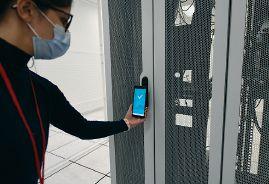
Core Data Centres is working with access control provider iLOQ and systems integrator WeSecure.ca. WeSecure.ca recommended the iLOQ S50 mobile access sharing solution to Core Data. With iLOQ S50, a smartphone acts as both a key and a power source. The cylinders are NFC powered and can be installed on the swing handles of the racks without the need for batteries or cabling. Access rights are sent as a mobile key and only to authorized personnel. Features include time-restricted access, instant granting and revoking of access rights and real-time audit trail reports.
iLOQ NFC-powered locking cylinders provide access to the server racks while iLOQ S50 padlocks are to be installed on the standby generators and the gas lines feeding them.
“We have full control at all times and can be sure only the right people have permission to access the servers,” said Bill Henneberry, CTO, Core Data Centres, in a statement.


• SecureNet Technologies announced that Mike O’Neal has been appointed as the new CEO.
• SALTO Systems introduced a new technical sales team including Vasili Kourelos, senior technical sales
February 17, 2022
Security Summit Canada Online securitysummitcanada.com
March 22-25, 2022 ISC West Las Vegas, Nev. www.iscwest.com
April 20, 2022
Security Canada East Laval, Que. www.securitycanada.com
April 26-28, 2022
Canadian Technical Security Conference Calgary, Alta. www.ctsc-canada.com
May 10, 2022
Security-Police-Fire Career Expo Vaughan, Ont. www.emergencyservicesexpo.ca
June 14-17, 2022
ESX Fort Worth, Tex www.esxweb.com
June 22, 2022
Security Canada West Richmond, B.C. www.securitycanada.com
September 12-14, 2022
GSX Atlanta, Ga. www.gsx.org


lead; Roland Smith and Miles Ethridge, technical sales leads; and Nicholas Buffington, product manager.
• Leviton announced the appointment of Daryoush Larizadeh as CEO. He will continue to serve in the roles
of president and COO, which he has occupied for six years.
• Sage Integration has named Caroline Santiago as a senior account executive and Jonathan Smithwick as business development manager.


JBy Victor Harding
The hardest part might be out of the way, but there are still obligations to meet
ust because your deal has closed and you have received the bulk of your purchase price, you are seldom home free. Most sellers will have the following concerns that are part of almost every deal:
1. Honouring the reps and warranties contained in their agreement;
2. Living up to the terms of the non-compete or non-solicit that are part of most deals;
3. Collecting on the rest of your purchase price.
My advice to sellers about reps and warranties contained in the purchase and sale agreement is to have a good lawyer working for you. They will weed out any rep or warranty that is unreasonable.
Regarding the non-compete or non-solicit almost all sellers have to sign on their deal, this clause is important to the buyer and a reasonable request. Some buyers get overzealous in the scope of the non-compete and need some push back. I personally like non-solicits for sellers better than non-competes because they are more specific about what the seller cannot do, i.e. approach any customer that they sold to the buyer. However, buyers tend to use non-competes more than non-solicits. When all is said and done, I have not had problems develop with deals where I have acted for the seller.
As you might expect, the area where the real issues develop is No. 3: getting paid the rest of your purchase price. Some sellers are lucky enough to get 100 per cent of their purchase price at the closing. This does not happen often, although, in my experience, more often in the sale of guard or fire companies than alarm companies.
If you have not been paid 100 per cent up front, the remaining amount fits into one of three categories all of which have risks attached:
As a seller, you willingly agreed to take part of your purchase over time after the deal closes. VTBs are often done because the buyer did not have all the cash available to pay for 100 per cent up front. Lots and lots of deals are done with VTBs. Technically, the only thing preventing you from being paid with a VTB is time. As the seller, neither you nor your company has to perform in any way to get paid the VTB. Some VTBs come with interest paid on them; others with no interest. VTB can range from 10 per

cent of the total purchase price all the way to 40 per cent and can be paid out over one to five years.
But let there be no doubt: VTBs represent risk to the seller. Sellers and their advisors need to look at the buyer’s ability to pay and their track record on other deals. Having the right to get your assets or shares back in case of non-payment is obviously desirable.
Earn-outs are often used in deals to help bridge a purchase price gap between what a buyer is willing to pay and what a seller wants. They can make up anywhere from 10-25 per cent of the final purchase price and usually are paid out over the first two years after the deal closes.
I am personally very cautious about the use of earn-outs and I avoid them where I can. If an earn-out is the only way to get the deal done, then big issues sellers have to pay attention to is, on what basis will the earn-out be paid, and will the company being sold be run in a manner similar to how it was before it was acquired. I strongly recommend basing any earn-out on the simplest variable possible such as revenue only. Where I see earn-outs used most of the time is by private equity firms. It is their way of making sure the owner stays involved and also to help meet the firm’s return on equity on the deal.
Occasionally, a buyer of shares of any kind of company will ask for a small holdback (five per
cent) to cover off the possibility of undisclosed liabilities attached to the purchase of the shares. Here we are referring to items like more HST owing than originally planned. As the buyer of the shares is taking on all future liabilities of the company, such a holdback is reasonable as long as it is small in size, short in duration (three to six months) and defined specifically.
As most of you know, holdbacks of 10-20 per cent for a period of a year are very common in the sale of monitored accounts. It is just the way deals in the alarm industry are done.
The holdback is designed to protect the buyer from a large number of account cancellations in the early going. I personally think holding back more than 15 per cent in an account base sale is unreasonable unless the buyer has real reason to believe that the attrition is going to sky-rocket — in which case I have to ask why they bought the account base in the first place.
There are some steps sellers can take to protect themselves on attrition holdbacks such as attrition buy downs. The important point to note for sellers here is seldom will you get 100 per cent of your purchased price paid up front.
Buyers will use any one of these well-established tools to pay the seller out. Each of them presents their own risks. The show is definitely not over most of the time when the deal closes. But the issues can be managed with good legal, accounting and M&A advice.
Victor Harding is the principal of Harding Security Services (victor@hardingsecurity.ca).
By Patrick Straw
The popular event for central stations is back, along with three Security Canada shows across Canada this year
On behalf of the staff and our Board of Directors, I would like to wish all of you a safe and prosperous 2022.
CANASA is very excited about moving ahead with in-person events this year, particularly our three Security Canada shows starting in April in Laval, Que. We have made some exciting changes to our show format. Security Canada now has a new online floor plan with built-in search capabilities. Using this new interactive floor plan, attendees can easily search by exhibitor, category or booth on any device.
2022 Show Dates:
• April 20: Laval, Que.
• June 22: Richmond, B.C.
• Oct. 19 and 20: Toronto, Ont.
The first class from our revised ATC course graduated late last year and we were very pleased to present 13 diplomas. We will have a new suite of online training programs ready to go soon.
CANASA also worked with Conestoga College to develop an Alarm Technician course, which they are ready to start in the spring. But first we need students to register. We all know there are hundreds of jobs available across Canada, but we need students to recognize the great opportunities ahead. We will be working with Conestoga to promote the program, but we definitely need your help as well to get the word out.

Our Membership Committee is now hosting a series of educational webinars for members only. Our first three are all on
subjects related to building your business online using social media tools. We are actively promoting these on our website and on all of our social media platforms. We have also started a weekly “Benefits of Membership” campaign promoting CANASA and the work that we are doing for our members.
We are very pleased to announce that our next Monitoring Station Symposium is well into the planning stages. We will be running this event in conjunction with our Security Canada Central show, so put Oct. 18, 2022 in your calendar. Sponsorship opportunities and a complete agenda will be available soon.
After the success of our last symposium, we are very excited about continuing this series.
Patrick Straw is the executive director of CANASA (www.canasa.org).

By Colin Bodbyl

igital ethics can be defined in several ways, depending on the context.
One way of describing digital ethics is, the unwritten rules around how users treat one another in the digital world. In other words, how we communicate with others and how we treat the information or data we obtain from them online.
“Everyone, from the manufacturer to the end user, must play their part.”
Like ethics in the real world, we hope everyone follows the same set of rules, but for those who do not, we need to create barriers or laws to prevent unethical behaviour. For example, you may not burglarize a home, but because there are a few people who would, we need to place locks on our doors. The digital world is no different, except that it is a lot more complicated than putting a lock on your door. In the digital world, you may not even know the door exists.
The first step towards creating an environment that prioritizes digital ethics is to prevent people from being in the position where their ethics might be tested. Technology can be used to restrict an employee’s access to only the data they need to do their job (also called zero-trust). For example, in the surveillance industry, sales and finance staff typically do not need access to customer cameras, so they should not be given credentials to those systems.
Of course, no matter the technology barriers you put in place, certain employees will require access to sensitive data as part of their job. Support should be given to those employees in the form of regular training sessions about digital ethics.
Employees should also be encouraged to provide feedback and help identify opportunities for improvement. Finally, if employees leave the company, their accounts must quickly and easily be decommissioned.
The video surveillance industry needs to be particularly careful given the trust our customers place in us with their video data. It has become standard practice for new video surveillance systems to be connected to the internet for remote viewing and management. While this is extremely convenient for users, it has created a lot of

ethical challenges regarding who can view that video and what they do with it. The responsibility of protecting this data does not all lie with one group; everyone from the manufacturer to the end user must play their part.
Manufacturers are responsible for ensuring their devices have the tools and features that integrators and end users need to secure them properly. To do this, their products must support the latest security features and must not have any known vulnerabilities. In addition, they should provide timely updates and patches to any newly discovered bugs. Backdoors, or other methods for allowing secret access to any device should be eliminated altogether.
An integrator’s role can be particularly challenging, as they may manage multiple team members who need administrative access to a client’s site during the setup process. Adding to their challenges, some of these team members may be sub-contractors from other companies. Integrators must ensure the installer who has administrator access to the system does not abuse that power. The same applies to any support staff. And if a team member leaves for any reason, their administrative access should be re-
moved immediately.
Finally, the end user must play their role to protect the privacy of those they capture on their surveillance system. Besides protecting their user credentials and not sharing their own information, end users need to think about what they do with the video they record. Often cameras do not only capture video from the end user’s property, but neighbouring properties or public areas as well. Before any video is shared publicly, end users must think about the impact to the lives of those in the video and whether it is acceptable or even legal to share what they have recorded.
Cybersecurity is a growing topic in the surveillance industry, and digital ethics is a critical component of that, but is a lot more difficult to regulate. Security measures can only do so much before it is up to the ethics of an employee, contractor, or end user to safeguard the information they have access to. In an industry where we are typically hired to protect someone’s assets, it is equally important we protect their data.
Colin Bodbyl is the chief technology officer of Stealth Monitoring (www.stealthmonitoring.com).


Smarter access control and video as a business intelligence tool are just two of the major trends gaining momentum in recent years
By Neil Sutton
Brian McIlravey stepped back from the security industry in 2018 and returned just a few months ago.
He spent more than 10 years in policing and 16-plus years in leadership roles at incident management company PPM (which became Resolver via an acquisition in 2015) before joining Igloo Software, an intranet and digital workplace company, as vice-president of customer experience. McIlravey returned to security full-time last year as the chief operating officer of RightCrowd, a provider of security and compliance solutions including access control, visitor management and contact tracing.
How did the security industry change in the three years McIlravey was away? The obvious answer is the pandemic — the one, sweeping factor that has altered the way business is done across almost all industries. But more than that, security is on an evolutionary path that has accel-
erated in recent times, notes McIlravey.
“I can’t believe the amount of technology that has changed in three years,” he says, citing the growing influence of the cloud on security products and services, as well as the technical sophistication of today’s security robots (McIlravey is also a member of Robotic Assistance Device’s advisory board).
“The old-school ways of security are just starting to disappear,” he says.
Back in the saddle of the security business, McIlravey’s attention is now focused on workforce access management and battling perceptions of access as simply an all-or-nothing proposition.
“I think the whole concept of access control has to change from the card either works or it doesn’t,” he says.
There are many layers of security beyond the access card, he explains, which can dictate when and where that card is able to grant access and what specific doors it will open. McIlravey’s company RightCrowd provides what he calls a workflow layer that can help an end user establish rules, such as which days an employee’s card will grant access and to which specific office location, based on an agreed upon schedule.
This type of technology has taken on a much greater level of importance during the pandemic, notes McIlravey, as employers are compelled to follow strict guidelines around capacity limits, social distancing and the potential for virus exposure.
RightCrowd offers a lanyard-based product that makes these distinctions even clearer — the wearable acts as a sort of holster for an access
“The old-school ways of security are just starting to disappear.”
— Brian McIlravey, RightCrowd
card, is colour-coded to indicate access permission and will dynamically change colour based on circumstance.
A contact-tracing element is integrated into RightCrowd’s offering — the wearable will flash yellow if one employee gets too close to another, and will flash red if that distance is closer than three feet. A contact-tracing incident is also logged into a report if this occurs.
RightCrowd will also integrate with an attestation form, i.e. an employee’s acknowledgement of current health status, as well as the days or hours they plan to work in the office.
The pandemic may have accelerated this trend of more sophistication in access control, says McIlravey, but it was already well underway. For example, the onus is on an organization to cancel access rights for employees who have quit or been terminated.
“It’s way more common than we think,” says McIlravey. “Think of that risk: if one of those people comes back into the workplace and causes an event or an incident … could you have known or should you have known that person shouldn’t have access? Well, the answer is yes, and it’s a massive liability risk.”
It’s a matter of addressing what McIlravey calls “access chaos.”
“There’s so many people, so many cards, so
“It makes good business sense to understand how your visitors, your customers, your guests are navigating spaces.”
— StephanieWeagle, BriefCam
many access rights, so many layers — people are going to have to start tackling it very, very soon.”
Stephanie Weagle, chief marketing officer at BriefCam, joined the company four years ago, and in that time has seen a marked transition in how its products are used and by whom.
“When I joined BriefCam, more than 80 per cent of our business was done within law enforcement, within the safety and security use-cases,” says Weagle. Today, security is closer to 50 per cent of the overall business due to steep growth in video analytics for operational and marketing applications.
“It makes good business sense to understand how your visitors, your customers, your guests are navigating spaces, where the bottlenecks are, [and] some of their behaviours moving through spaces,” she says.
“From our perspective, the biggest shift that we’ve seen in the last year or two, and where we see the shift continuing to evolve over time, is really beyond safety and security.”
A decade ago, the video analytics industry might have been accused of over-promising and under-delivering, says Weagle, but those criticisms are “a distant memory today.”
Conversations with clients are also easier since many of the advantages of the technology are self-evident and typically well understood.
“Certainly the advances in deep learning research and certainly the overwhelming amount of cameras and devices that are out there collecting data at any given moment is really transforming the space,” she says.
Video analytics are also being used to drive business intelligence, which means the customer might be the marketing department rather than security.
“We’re seeing that once the operational

folks are understanding what video analytics can do for them and their environment, they’re footing the bill,” says Weagle.
“So the safety and security teams are getting the benefit of video analytics as they typically would, but other departments are paying for it. It’s a very interesting dynamic.”
Similar to access control, video analytics have also adapted to changing conditions created by the pandemic.
The technology’s facility for detection has been useful in terms of mask mandates, social distancing and contact tracing, says Weagle, which ultimately helps retailers, transportation hubs and other industries get back to business.
While COVID has accelerated the development of some technologies (access control and video analytics to enable smoother transitions between working on- or off-site, or periods of lockdown), the security industry is still facing the same
headwinds as many other businesses. The supply chain crunch, for example, may be taking a toll.
“The pressure on semiconductor production in particular is both unprecedented and pronounced and that has been much discussed, but costs are also up across the board, for everything from shipping to raw materials to components such as cases, cables, lenses, and packing materials, so it’s a real issue,” states Owen Kell, senior IoT research associate at Memoori, in a recent market report. “These costs will eventually get passed onto customers if they aren’t starting to be already.”
“The challenges we face in this industry are not all that different than other companies are experiencing,” adds Tim Grose, remarking that equipment with computer chips is subject to shortages. (Grose, who recently joined Kandor Management Corp. as chief revenue officer and was previously vice-president of sales at Allied Universal Technology Services, responded to questions via email.)
try is not an easy process,” says Kell, adding that companies can spend decades cultivating partner and supplier relationships. “So if change does come, we expect it to be more noticeable over a five to 10 year period, rather than in the next 12 months.”
A more immediate concern, says Grose, is the availability of workforce to go on site for security installs.
Installers have generally been able to gain site access throughout the pandemic by working during off-peak hours, but vaccination requirements have complicated the process. “This has caused some issues and shortages of labour when workers refuse to be vaccinated,” says Grose. “This starts a downward spiral that leads to delays for completion, less availability of qualified workers and overall anxiety to realize revenue on projects.”
On the upside, however, clients are also aware of these supply chain challenges, which may in some cases lead them to reach decisions more quickly when it comes to security installs.
“Integrators and media are notifying the customers of these issues and forcing them to be more proactive with the procurement of these parts,” says Grose, “…so what might seem like a problem could actually be a nice uplift in sales.”
According to Kell, the prevailing wisdom from supply chain pundits on when these shortages might end is anywhere from six months to the remainder of 2022.
He notes, however, that there is talk of the potential for longterm supply chain resilience due to increased “‘re-shoring’ or increased regionalisation of production capacity,” but there is little evidence at the moment of that change occurring within the security industry.
“Making profound changes to the supply chain of any indus-
There are so many factors to consider today that making predictions about the security industry is perhaps a more onerous task than it might have been only a few years ago. But it’s also reasonable to say that the health crisis has amplified and accelerated some trends that were already in motion, whether that’s cloud adoption, smart access control, or video surveillance as a business intelligence tool.
Kell’s report notes that the physical security market is predicted to grow almost 12 per cent yearon-year in 2021 — about twice the rate of the global economy.
“The upgrading to newer IP technology has opened new avenues [for end users] to gain insights into parts of their business that were only available by way of third-party reports,” notes Grose. “This is giving them real time assessments to make decisions.”
As the value proposition changes, so does the expertise required today to successfully sell security solutions. Grose adds that effective integrators may need insight into all aspects of a customer’s business in order to capitalize on this transition. “The team that brings the best knowledge base to the table stands the best chance to win the deal,” he says.

Toronto’s Humber College opts for an access control solution that takes advantage of mobile and touchless technology
By Madalene Arias
The security team for Toronto-based Humber College, an institution serving a student body of more than 30,000, aims to stay on the cutting edge of security technology without disrupting existing systems.
Any enhancements must be done correctly the first time around. They must minimize costs, ensure their solutions stand the test of time and adapt to the changing demands of the ongoing pandemic.
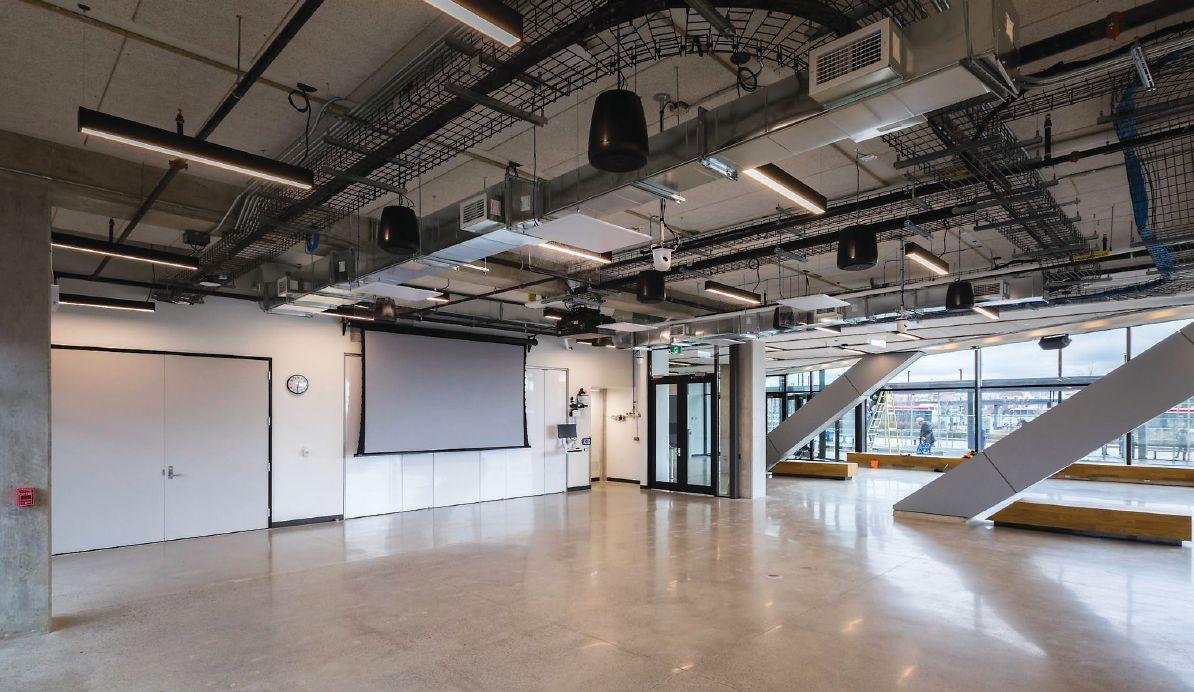
To meet these requirements, Humber has deployed LenelS2’s BlueDiamond platform in its Barrett Centre for Technology Innovation.
By employing the BlueDiamond app, Humber’s students, staff and faculty will be able to use their smartphones and mobile credentials to gain entry into various areas of the facility rather than rely on physical access cards.
In the context of a pandemic, this technology
“We were challenged to think outside the box.”
— Michael Freitas, Humber College
serves to minimize surface contact as there is no swiping required.
According to LenelS2, Humber College was also quick to adopt two key features in the BlueDiamond app which promote mobility and convenience while staying touchless.
Phone-as-a-Badge allows users to hold up their phones as they would to gain entry with traditional ID cards.
With the Pathways feature, users can record their regular routes onto the app so that doors will automatically open for them without needing to pick up their mobile devices.
According to Michael Freitas, security systems coordinator at Humber College, Humber’s integration of BlueDiamond happened quite seamlessly.
“We’ve got a wonderful relationship with
our vendor — nearly close to 10 years,” he said.
Freitas said successful integration of a new technology comes down to coordination, ensuring all resources are on location, and detailing the responsibilities of everyone involved.
Implementing the BlueDiamond mobile app for the Barrett Centre was an incredible success from start to finish, Freitas added.
Additionally, Humber College implemented LenelS2’s intrusion detection technology inside two of its art galleries.
Freitas said that the college has introduced numerous sensors for Humber’s stakeholders including a water levels detection system operating through a plant wall.
“If there is low water or water is not going through, we will get an alert for that,” said Freitas.
He also said that over the years Humber has introduced point temperature monitoring technology for the college’s refrigerators and freezers that may contain medicinal fluids or those in the kitchens containing ingredients that may expire.
Currently, Humber has just over 1,000 card readers. According to Freitas, more than half of these have been upgraded to the BlueDiamond system. The transition began in September of 2021.
More recently, Humber opened up the International Graduate School in downtown Toronto. As Freitas explained, all 20 of the access control readers are BlueDiamond.
The college has also released the virtual one card for students and staff at Humber and Guelph Humber to use. Freitas said the main component of the virtual card is the digital key which encompasses the LenelS2 BlueDiamond framework.
Mobile credentials
“We were challenged and told to kind of think outside the box and think of anything innovative
and what we could bring, especially with industry partners coming from all over the world,” said Freitas.
The Barrett Centre served as one of LenelS2’s pilot projects between 2017 and 2018.
As part of their internal process, they also provided stakeholders of the Barrett Centre with a presentation on the BlueDiamond platform.
“Being able to finally see the building opened up and seeing the BlueDiamond readers interact with mobile phones — the stakeholders, they loved it. Everyone using their mobile credentials were amazed,” said Freitas, adding that the college has come a long way through its adaptation of mobile access control.
“It was all part of the design and construction and it rolled out seamlessly,” said Freitas.
Brandy Edgecombe, LenelS2’s director of higher education solutions, further described the vendor’s relationship with Humber College.
“Humber was and is one of our major higher education beta testers. Many of the features found in the BlueDiamond app such as the Phone-as-a-Badge and Pathways features, were tested and vetted by
Humber,” said Edgecombe in an email response.
She also stated that LenelS2’s BlueDiamond offering was part of the Carrier Healthy Buildings Program.
Finally, through the Higher Education LenelS2 User Group (HELUG), LenelS2 provides clients like Humber the opportunity to share feedback and best practices with other higher learning institutions. LenelS2 uses this feedback to improve its services, according to Edgecombe.
Humber College worked with 360 Advanced Security to integrate LenelS2’s OnGuard access control system.
According to 360 Advanced vice-president Andrew Pierce, working with LenelS2 at Humber is as easy as riding a bike.
“Extending an existing system, databases are set up, cardholders, programming, infrastructure — it’s already there, so it’s already a simplified process,” said Pierce.
Pierce has been working with 360 Advanced for at least 12 years,

but he said that Humber College has been working with the integrator for several years more.
According to Pierce, Humber College is very hands-on and savvy as a client and does not require much more beyond general support and licensing for upgrades.
Switching the college’s card readers to work with BlueDiamond has not presented any real challenges, he added. “We have one of our junior techs on the site, and she is
doing an amazing job upgrading all the readers. If compliance is happy, then I am happy,” said Pierce.
According to Pierce, Humber is likely to migrate to a hybrid or pure cloud-based security model five years from now as the college likes to implement the latest technology. More challenges may present themselves in this time due to the potential for cybersecurity threats.
“The biggest thing is you want to make sure you have a steady
“Colleges have a very diverse user population. This probably makes them one of the most complex verticals that we play in.”
— Brandy Edgecombe, LenelS2
connection and up time as well as the pipe to upload that data and that material up to the cloud,” said Pierce.
Freitas said that Humber manages LenelS2’s OnGuard system on the college premise. However, there is a slice of cloud in the BlueDiamond mobile credentialing component.
Freitas said the most recent integration involved the college’s fire system.
In the event of an emergency such as an active attacker, the fire panel will activate to trigger LenelS2, causing all active and unlocked readers to automatically revert to card-only mode.
“So, you have to swipe to get in. You won’t be able to freely enter,” said Freitas. “We’ve integrated with a number of systems, whether it be HR, or the student record information systems that we can perform a number of duties automatically as well, so that’s been a big one.”
According to Freitas, access control needs at Humber have evolved over the last decade not only in their basic functionality but also over the protection of assets such as data centres, technology and staff.
Edgecombe said the most popular demand in all of education is the ability to lockdown all or part of a campus easily. “Whether it be higher education or K-12, everybody wants the ability,” said Edgecombe.
She said that in response to this demand, LenelS2 has a one-button lockdown feature which users like Humber College can configure to their preference.
For example, security teams at the college can lockdown the sys-
tem with the swipe of a special card, or they can configure a red button on the user interface of the software to lockdown all or a section of the facility.
“Colleges have a very diverse user population. This probably makes them one of the most complex verticals that we play in. You have everything from security professionals to public service to residential housing management,” said Edgecombe.
“We look at it as multiple types of customers under one umbrella.”
Edgecombe said that LenelS2’s response to the diversity of college environments was to divide the day-to-day tasks of their college clients so that users can concentrate their attention on the area for which they are responsible or as required.
Edgecombe said LenelS2 has also created what it calls Magic Monitored clients which operate on a more unified security method.
This system pulls data from various places. For example, it can pull in RSS feeds, data from real-time situational awareness as well as data from websites. In larger university settings, clients using this type of system can view everything on a single pane of glass, Edgecombe added.
She also noted that due to the nature of the facilities contained within higher learning institutions, people studying or working in these environments must have a high level of confidence in the security systems that are in place.
This means colleges and universities are shopping for additional features that go above and beyond basic security, she added. Examples of this could be multi-factor authentication or two-party control which are typically required in areas that have hazardous materials.
Select the best access control credential for each system user

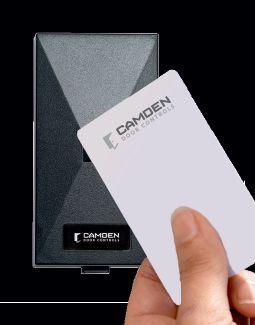
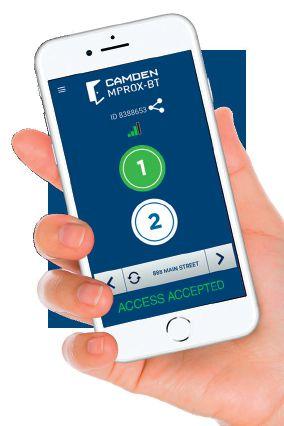
The CV-603 BLE two door access control system now supports smartphone credentials! No additional reader/interface OR subscription fees.
Designed to provide maximum flexibility in small door and gate applications, users have the choice of using prox cards/tags, or their phone to gain entry.
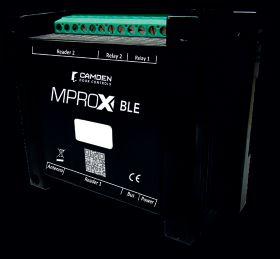
• Supports up to 2,000 users
• Bluetooth® managed system configuration App
• Built-in 433Mhz. RF receiver
• CV-603PS controller with 1.5 Amp power supply and metal cabinet

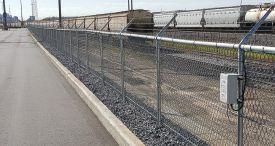
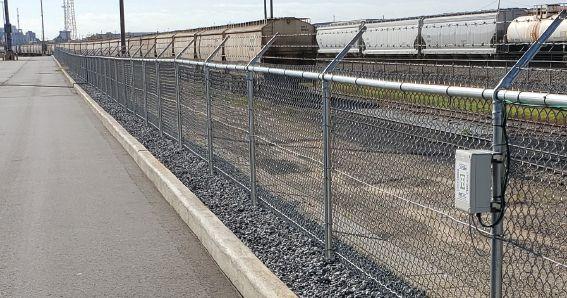
RBtec Perimeter Security Systems has released a brand new series of fence alarm processors, including 2 Zone Processor (LPU-402), 4 Zone Processor (LPU-404), and their new accessories. The LPU-400 processing unit works with RBtec’s line of sensor cables to provide commercial and industrial businesses with tangible protection through real-time perimeter intrusion detection. The LPU400 Series supports the connection of up to 4 zones of up to a conditional maximum of 500m/1640ft per sensor cable. www.rbtec.com
Integrating with IDIS’s full line-up of cameras and devices, as well as third-party technologies, the IDIS Intelligent Video Wall Station uses a single server and network wall controller to manage up to 12 UHD monitors as standard. The station connects up to 4,096 cameras and lets operators monitor 64 panes simultaneously, including dewarped 360-degree fisheye video. Users can customize their monitors to display the most critical video streams and event data to provide a real-time visual overview. www.idisglobal.com

The Senstar LM100 perimeter intrusion detection and deterrence system uses wireless self-healing mesh communication network technology to relay intrusion information. When networked, the LM100 reports intrusion attempt locations to the site’s security management system to enable a directed response. Optimized for use with camera surveillance systems, the Senstar LM100 provides localized, uniform lighting along the fence line.
www.senstar.com

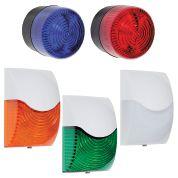
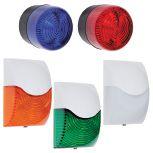
Select-Alert sirens/strobes are a way to alert to unauthorized use, theft or vandalism, as well as unwarranted exits and entries. For use with cabinets, or mount above doors, to the wall, or the ceiling, the Select-Alert Mini Controllers feature 32 sounds with volume control. The round model (STI-SA5500) has a choice of eight strobe flash patterns with speed selection, backup battery feature, and is weather resistant. The rectangle model (STI-SA5600) has a tamperproof lens option, and alert trigger on power. www.sti-usa.com

Featuring keynote speaker: Dean Drako, founder and CEO, Eagle Eye Networks













































































































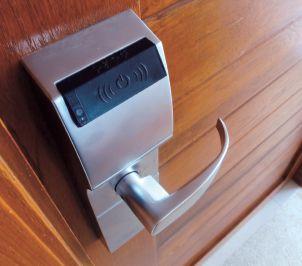





The Genetec Security Center Airport Badging Solution (ABS) reduces the need to work with multiple different systems and simplifies the badging process. ABS helps reduce human error that can stem from managing multiple disconnected systems. ABS streamlines and automates background checks within their unified physical security platform – Genetec Security Center. All data collected on each badge applicant is compiled and stored within the system. Customized dashboards are included within Security Center to showcase insights such as real-time applicant statuses. www.genetec.com
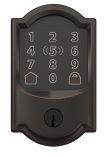
With home keys in Apple Wallet, consumers can tap to unlock the Schlage Encode Plus Smart WiFi deadbolt using their iPhone and Apple Watch. With a Schlage Home Key in Apple Wallet, homeowners don’t even need to unlock their iPhone or Apple Watch to open their lock, and with Power Reserve (supported on iPhone XS or later and Apple Watch Series 4 running watchOS 8 or later), even if the iPhone needs to be charged, they may still be able to tap to unlock for up to five hours after their iPhone battery runs out. The Schlage Deadbolt will retail for approximately $379.
www.schlage.ca
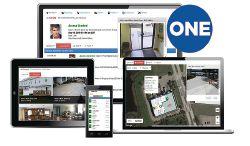
Connected Technologies, maker of the Connect ONE cloud management platform, recently completed an update to its application. Features of the platform include: a new card layout style which shows all relevant record information at a glance; improved dark mode support; users can retain their viewing preference across sessions and save that choice as default; dealers can set a default for all customers and/or individually per customer; expansion of automated reports. www.simplifywithconnectone.com
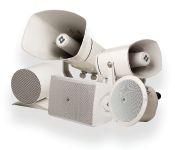
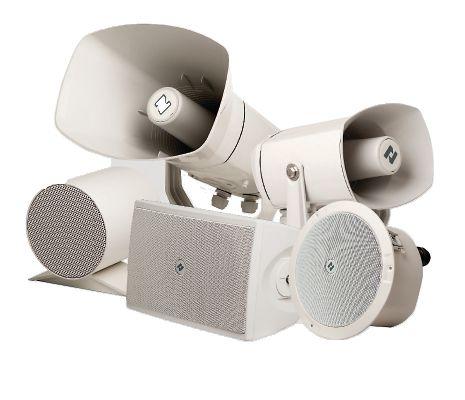
Zenitel announced the launch of five, next-generation IP speakers that provide intelligent two-way communications. The ELSIR-10CM is an IP56-rated ceiling speaker built for indoor use. The ELSII-10HM horn speaker is designed for perimeter and asset protection. The ELSII-10LHM long horn speaker delivers communication in large areas. The ELSII-10WM wall-mounted, IP67-rated cabinet speaker is suited for both indoor and outdoor use. The ELSII-10PM IP65-rated projector speaker is a bi-directional speaker that is designed for both indoor and outdoor applications. www.zenitel.com
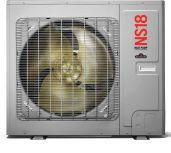
The Napoleon NS18 heat pump and air handler is an all-in-one heating and cooling system. The new series includes the NS18 Heat Pump and the 18 Seer Air Handler. The heat pump has newer, more efficient technology that features a variable inverter compressor and vapor injection technology to heat a home in temperatures as low as -30°C and cool it on days as hot as 54°C. It also operates on electricity, helping homeowners reduce their carbon footprint. It features a multi-speed Constant Torque (CT) ECM blower motor and a fully insulated cabinet design with an integrated filter rack to facilitate tool-less door access. www.napoleon.com
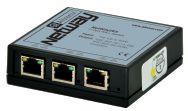
Altronix has released new 2-Port PoE+ Switches. These latest additions to the NetWay Series provide installers with increased flexibility and efficiency by allowing two IP devices to be deployed over a single CAT6 cable. NetWay2ES delivers up to 30W to two IP cameras (60W total output) from any midspan or switch such as Altronix NetWay and NetWay Spectrum series. NetWay2ESWPN is an outdoor version mounted in NEMA 4/4X IP66-11 Rated enclosure. Both the NetWay2ES and the NetWay2ESWPN are TAA and NDAA compliant, and carry a lifetime warranty. www.altronix.com
Alula
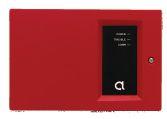
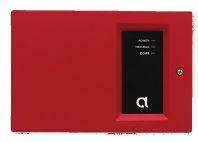
BAT-Fire is a universal 5G -ready fire communicator. BATFire offers easy configuration and support of all fire alarm control panels using dial-capture to report Contact ID signals, or flexible inputs for interfacing with dialer-less FACPs. Connect the communicator via its dual Tip & Ring Dial Capture, configure the panel and the system is ready to go. The new communicator provides sole path cellular (LTE-M) and IP or dual path communications. BATFire’s four programmable inputs or outputs allow monitoring of auxiliary building systems, such as the HVAC and sprinkler flow control. www.alula.com
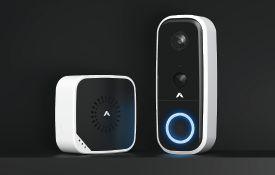
The Abode Wireless Video Doorbell is a battery-powered doorbell camera. The Wi-Fi enabled, HD 2K video doorbell camera features an IP65-rated weatherproof housing and mounts to the door via the included, lockable installation bracket. The Abode video doorbell can be leveraged for liveview and two-way communication with anyone at the door and has a tactile push-button for standard arrival notification. When upgraded with an Abode Standard or Pro plan, the doorbell is capable of recording video clips to the cloud.
www.goabode.com