


Anew security service aims to be the connective tissue that puts central stations in touch with guard services with the ultimate goal of responding to alarms more quickly and making end users happier in the process.
Toronto-based RSPNDR launched a pilot program for its service in 2017 and now works with two of Canada’s largest telcos as well as multiple monitoring companies, including API, Graham Alarm Monitoring, Global Link, Central Security BPG and Lanvac, according to the company’s management.
RSPNDR’s software is a cloudbased guard dispatching service that can be utilized by central stations as well as the guard companies that RSPNDR has partnered with. When an intrusion alarm is set off and recognized by a moni-
toring station, the software locates the guards close enough to respond and sends out an alert received by an app on guards’ phones. When one guard responds, all other guard notifications are cancelled. The responding guard then attends the scene and files a report based on a series of criteria laid out in the RSPNDR app.
Any guard, regardless of which guard company he or she works for, could potentially respond to alarm as long as the guard works for a company that is currently partnered with RSPNDR and is in close enough vicinity to the alarm to receive the app notification in the first place.
According to RSPNDR, everyone wins in this scenario. The monitoring station can dispatch more quickly; the responding guard companies collect revenue; both the
Armstrong’s National Alarm Monitoring announced in March it has acquired the monitoring assets of Consolidated Monitoring Ltd. (CML Security), based in Edmonton, Alta.
CML is a wholesale monitoring company that has been in business for more than 25 years. CML is privately-owned and operates a ULC-approved monitoring station in Edmonton. According to Armstrong’s, all of CML’s monitoring station management and staff will become part of the Armstrong’s compa-
ny. CML monitoring operations will also be rebranded under the Armstrong’s umbrella.

CML also operates a security services and installation division. That business was not part of the deal with Armstrong’s and will continue as an independent operation under the leadership of CML president Ed Pringle. “With the fast pace evolving world of alarm monitoring, we were looking for a quality company that would help take our company into the next phase of monitoring services, and we have found this with Armstrong’s,” said Pringle in a prepared statement.

station and the alarm dealer receive detailed reports from the guards; and the end user is assured of a swift response in the event of an alarm. The app will also track total response time (RSPNDR calls it Total Time for Service) in addi-
According to Armstrong’s, CML represents the company’s first major acquisition in more than a decade. Terms of the deal were not disclosed.
“This has been a great acquisition for us,” Gary Armstrong, president, Armstrong’s, told SP&T News, “[including] tens of thousands of accounts. We have known Ed for a long, long time. We have retained all of his employees…. They’re all very excited and they all signed on.”
Armstrong said that adding a property in Western Canada expands the company’s ability to offer service and technical support across all of Canada’s time zones.
The company operates three central stations in Dartmouth, N.S., Moncton, N.B. and now Edmonton. With the acquisition, Armstrong’s now serves approximately 175,000 accounts and 800 alarm dealers.
— Neil Sutton
tion to written reports and photos. Video from a guard’s phone cannot be integrated yet, but that may be an option in the future.
“We’re trying to change the habits and provide a new bar for what we call customer experience and transparency,” said Frank Pietrobono, RSPNDR’s vice-president of sales.
“People love the fact that they know where the guard is, when he’s there. [When] the report goes live, they have it at their fingertips. We’ve had a few incidents where the dealer has been able to use that report right away and can share it with their customer. It’s different from what we’ve had for the last 25to 30 years.”
This type of on-demand model has worked well in other industries — RSPNDR compares their service to similar innovations in the ride-sharing industry — and the company sees avenues outside of security and alarm response where their software could be a good fit.
According to the company, RSPNDR currently offers service in the Greater Toronto Area, lower mainland B.C., Montreal and Ottawa with more Canadian cities coming on board. RSPNDR also has plans to expand into the U.S. later this year.
Since joining GardaWorld just over a year ago, alarm industry veteran Daniel Demers has helped the company significantly expand its base in the monitoring world.
When he was hired by GardaWorld in the fall of 2017, Demers held the title of strategic advisor to the CEO. More recently, he has been appointed as president of alarm and technical services for the company.
Demers, who was the CEO of Quebecbased monitoring firm Protectron (now part of ADT) for almost 20 years before joining GardaWorld, has overseen several acquisitions on behalf of his new employer. In 2018, GardaWorld acquired Alarme Microcom, an alarm monitoring firm founded in 1985 with locations in Quebec City and Montreal, and Centrale Ashton, a wholesale monitoring firm also in Montreal. GardaWorld also owns the assets of Alarme Prudential, a Montreal firm that was bought by Microcom before it became a GardaWorld company.
The acquisitions provide the company two central stations — one in Montreal and one in Quebec City.
Demers says this trend will continue — with more acquisitions planned in the alarm monitoring space as GardaWorld expands that side of its operation. “We are actively seeking… acquisitions outside of Quebec,” he notes.

But these acquisitions are not only to plant a stake in the monitoring market. The vision for GardaWorld, says Demers, is to integrate monitoring services into GardaWorld’s other operations, including the one it is still best known for, guarding. “The goal is clearly to realize synergies with the guard patrol and the other divisions. GardaWorld is a very, very well-known brand. It is extremely well recognized and we see great opportunities to capitalize on that,” explains Demers.
With these recent acquisitions, GardaWorld has fully entered the alarm business, monitoring premises for both residential and commercial customers. At the moment, it offers
The Monitoring Association recently announced it has expanded its Five Diamond program to include dealers.
The program, which has been in existence since 2003, recognizes central monitoring stations that have achieved a level of excellence and meet certain TMA criteria including a high standard of customer service, a commitment to reducing false dispatches, and all operators have successfully passed TMA training courses.
There are more than 100 central stations in North America that
have earned the Five Diamond designation, approximately 10-15 of which are located in Canada. The expanded program, which was first announced in March, allows Five Diamond recognized stations to include their dealers.
“We saw the need to cast a wider net with the Five Diamond program. We think [the program] is very important for TMA and its members and for those companies that have achieved Five Diamond certification. This was one way to go about that,” explained Ivan Spector, president of TMA, and the president of Sentinel Alarm,
monitoring on a wholesale basis and also plans to offer a retail service as well. For Demers, these are not mutually exclusive or even competing notions. As GardaWorld brings additional services on board like billing services or interactive services, it will offer them to all of the dealers it serves, suggests Demers. Wholesale dealers “make the overall family stronger,” he says.
“We are looking to go to market with a formula [where] the small guys are happy with the big guys… What we want to offer goes beyond monitoring. We want to expand the services on the residential [side]. One of our visions is very B2C. Up to now, GardaWorld was mostly B2B, but with the acquisitions and the plan that we’re putting forward — [both] residential and commercial — it clearly is a B2C venture.”
Both Alarme Prudential and Alarme Microcom are labelled as GardaWorld companies on their websites. Centrale Ashton, which offered wholesale monitoring prior to acquisition, will continue to do so, says Demers, and there are no immediate plans to change or update the name.
Demers notes that the monitor-
based in Montreal.
The idea was proposed two years ago, said Ralph Sevinor, president and CEO, Wayne Alarm Systems, a member of the TMA Five Diamond committee and a TMA past-president. He added that there was clearly support for expanding the existing program.
“Some of the Five Diamond facilities asked if they could extend the program to some of their best dealers,” he said.
According to Sevinor, some of the details are still being worked out — like what exactly the criteria for dealer recognition should look like — and the program extension will be available on an invitation-only basis. Sevinor anticipates that the top 10 to 20 per cent of dealers working with Five Diamond sta-
ing market has changed significantly in recent years, but he does not view companies like Amazon or Google as his new competitors. More likely, they will enable the established security industry to access untapped markets by enabling homeowners to add security options to their homes more easily. “I do hope they are successful in selling tons” of devices like Amazon Echo and Google Home, notes Demers. “Because the more they do, the more we are likely going to pick up potential customers who have components in their houses that can be integrated into our solutions.”
He also doesn’t see professional monitoring being under threat from newer providers on the scene. Life safety monitoring, like fire or panic alarms, “really has a requirement to have someone external available 24x7 to dispatch properly. That need will not go away.”
Demers also remarked that the monitoring market still has plenty of room to grow, with current estimates of overall market penetration still hovering around the 20 per cent mark. “It’s still a blue ocean out there,” he says.
— Neil Sutton
tions will be asked to apply.
One major reason for this program extension is the success the Five Diamond program has achieved to date. “People are truly seeing the value,” said Sevinor. “TMA gets a significant amount of calls asking us to verify if a company is TMA Five Diamond. That’s been a driving force. Some companies are writing [a requirement for Five Diamond certification] into their spec…. It’s not just a seal of approval. There’s some teeth to it.”
It’s early days yet for the dealer program, but “we’re getting great response,” said Spector. “We’re looking to increase our landscape and footprint in terms of membership and bring in those forward-looking and forward-thinking companies.”
— Neil Sutton
Local CANASA president says monitoring firms can do their part and improve customer records management
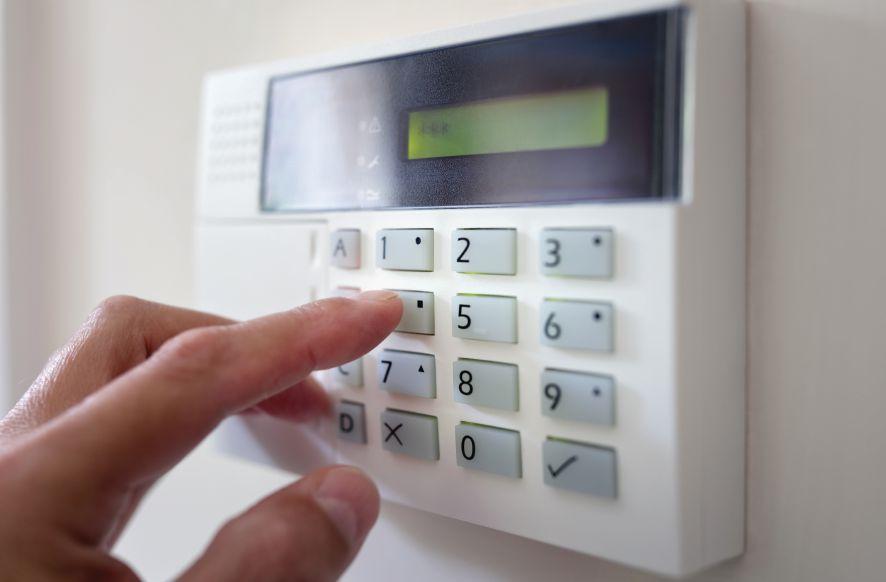
To reduce the number of false alarms requiring a police response, the Edmonton Police Service (EPS) is seeking changes to the City of Edmonton’s Alarm Systems Bylaw, and is currently asking for feedback from permit holders through a brief survey.
“[If] you move six times in the next year or two, we have no up-to-date information.”
— Carlos Cardoso, Edmonton Police
The EPS says under the current bylaw, alarm permits have no expiry date, resulting in out-ofdate contact information. To rectify this, the EPS is proposing that alarm permits be renewed on an annual basis for a fee of $15 a year.
EPS spokesperson Carlos Cardoso, Manager, Police
Information Check and Alarm Control Section, said that yearly renewals will be a big help because, “we have in our system 110,000 permits, and we can’t say which ones are valid and which ones aren’t.” He continued, “If you have your alarm permit and you pay your one-time fee, you move six times in the next year or two, we have no up-to-date information.”
Cardoso said he is encouraged by the fact that other police services that have implemented yearly permits have had reduced false alarm rates.
Patti Jones, president of the Northern Alberta council, CANASA, welcomed the proposal, but said the monitoring industry hasn’t done a good enough job in setting up their customers and the police for success.
Regarding the administration of alarm holder contact information, Jones said, “Our perspective is that the ownership of maintaining and keeping information on emergency contacts really should be the responsibility of the monitoring stations and the companies
themselves…That’s an awful lot of administration for them (EPS) to have to own on an annual basis.”
The EPS is also is proposing one free false alarm to be given to every permit holder, after which, escalating penalties will be in place. (No information on penalty fees was available at press time.)
This isn’t the first time the EPS has attempted to tackle false alarms. It took a significant step in 2016, when it brought in an enhanced call verification process. This means that police dispatch to an intrusion alarm won’t occur unless the following conditions are met:
1. A combination of an exterior breach (door/window breach, glass break, etc.) and interior motion alarm activations.
2. Contact with keyholder(s) to determine the alarm’s legitimacy.
“In general, we get about 6,300 calls per year to our 911 lines,” said Cardoso. “By doing the enhancement call verification, we narrow it down to 1,800.” While such a reduction appears to be a success, Cardoso explained that 98 per cent of these are still false alarms.
Going forward, “We’re also looking at trying to encourage alarm companies to do their part on call verifications,” said Cardoso.
“We’ve had a really good relationship with the Edmonton Police Service at CANASA.”
— Patti Jones, CANASA
Jones agreed that alarm companies need do their part. “They (the EPS) need to be able to trust that when we’re calling, we’ve got the current information, we’ve called the keyholders, we’ve followed the current bylaw,” she said. “We want them to be able to spend their resources focused on those actual alarms that we’re pretty confident are legitimate.”
To help reduce false alarms, Jones said alarm firms can also make sure systems are installed properly to provide adequate coverage. It’s also crucial, according to Jones, that customers understand how to use their system properly. Lastly, firms can encourage customers to upgrade old systems to those with better coverage, or better yet, a system with video, to bring in a visual verification for intruders.
Jones said that alarm firms ensuring protocol is followed and false alarms are reduced will help maintain good relations between the alarm industry and police.
“We’ve had a really good relationship with the EPS at CANASA local council over the past couple of years,” she said, stressing that the relationship needs to be continually fostered, or else communication and co-operation between the two sides may suffer.
— Will Mazgay
As the alarm industry grapples with high false alarm rates that create headaches for police services and reduce the efficiency of monitoring operations, video verification is becoming an attractive option.
During a presentation at an August event in Toronto, hosted by security products distributor Ameta International, Anna de Jager, vice-president of business development at Montreal-based Lanvac Surveillance, discussed the value of using video to keep properties safe.
De Jager, whose firm provides wholesale monitoring for dealers and integrators, explained that other types of verification for an intrusion incident aren’t as effective as video hooked up to and triggered by an alarm system.

Cross-zoning verification requires two zones on the property to be tripped, but for that, “you’re depending on a system that’s installed in a way that two zones would trigger based on the intrusion,” de Jager said. “What if they came in through the roof? There’s just so many options.”
Audio, meanwhile, can’t determine who has tripped the alarm or what they are doing, de Jager said.
De Jager also asserted that video is a more effective verification method than a guard, explaining that trained thieves will trip alarms multiple times, banking on users neglecting to send in a guard to check on the property after several false alarms. “By having video, you know that each and every time, we’re looking in and we’re checking.”
Winnipeg-based Protelec Alarms, a 48-year-old family-owned firm with residential and commercial security solutions, announced the sale of its residential business to Toronto-based a.p.i. Alarm Inc. on July 2.
Protelec president Harry Black said in an open letter to customers that the firm’s residential monitoring services have been permanently transferred to a.p.i., and a forwarding system has been activated so all customers have immediate access to a.p.i.’s emergency monitoring centre.
Black said in the letter, “With this important responsibility top of mind, we set out to carefully select the right company with the right customer care team to be your new residential security provider. We are pleased to have found that partner in a.p.i. Alarm Inc., a family-owned, 100 per cent Canadian company with a Five Diamond-Certified and ULC-Listed, annually inspected emergency monitoring centre. Since 1983, a.p.i. Alarm Inc. has provided alarm installation and ULCapproved monitoring services to Canadians.”
A.p.i describes itself as North America’s largest privately-owned and operated alarm
monitoring network.
Josh Garr, director at a.p.i., said in an email interview with SP&T News of the acquisition, “It was great fit for both companies and we continue to work together on more services for our dealer base with partners like Protelec. And as the industry continues to consolidate we are providing more and more support to smaller stations who are looking to take advantage of infrastructure we can provide them that they couldn’t on their own.”
Black went on to explain in the letter that the sale of Protelec’s residential business allows full-time focus on its commercial business in the security and lone-worker safety industries, and that over the past year and a half, the business has expanded with integrated security services and technology such as CCTV, door access and intercom systems.
Black said the firm continues to service long-standing clients at hospitals, property management companies, industrial, financial and agricultural businesses, and has entered the cannabis producer market.
— Will Mazgay
Video is also safer than sending in a guard or a keyholder, according to de Jager. “Another huge issue is sending someone into a site not knowing if someone is still there,” she said. “Often people (intruders) go into somewhere, they’re not expecting to hurt you, they’re not expecting to get into an altercation, but god forbid you walk in on someone breaking in, you don’t know how they’re going to react.”
“By having video, you know that each and every time, we’re looking in and we’re checking.”
— Anna de Jager, Lanvac
In addition to offering more effective verification, de Jager said opting for video monitoring can also lead to savings on manpower costs and insurance.
“More and more insurance companies are offering additional discounts for video monitoring. It’s wise that they would. They reduce their liability for fraud quite substantially if they can look in and see a video of the event.”
While accuracy, safety and cost-savings are certainly attractive to end users, de Jager asserted that what everyone really wants is faster response from police. “A video operator is able to call the police department and say, ‘I see an event that’s happening,’ and the police dispatcher takes that as a 911 call,” she said.
De Jager also said that video will eventually become integral to maintaining compliance with police. Already police services across Canada are starting to require some combination of video, audio, cross-zoning or contacting keyholders before they will respond to an alarm, but video verification could eventually become mandatory. “I believe very strongly that in the next five years, police departments will not even attend if they don’t have video. And that’s true already in many countries in Europe,” de Jager said.
Patti Jones, president of the Northern Alberta council, CANASA, who was interviewed by SP&T News in the June/July issue about alarm verification practices, also sees police services requiring video verification in the future, as a response to sky-high false alarm rates.
“At some point, it might be, if it’s not visually verified there’s not going to be a response. I wouldn’t be surprised to see that in the next couple of years.”
De Jager said, “By starting to offer this service (video monitoring), you’re going to be ahead of the game…Video is the future of the monitoring world.”
— Will Mazgay
Telus announced the closing of its $700-million acquisition of ADT Canada on Nov. 6. The executive responsible for Telus’s security business said the company is poised to take advantage of its new assets and offered a glimpse of what the future might look like under a combined organization.
Telus kicked its security division into gear last year with the acquisition of AlarmForce’s western assets (BCE currently owns the remaining AlarmForce assets). The company subsequently launched a consumer security division called Telus SmartHome Security and Telus Secure Business for its small business customers.

Jason Macdonnell, president of security and automation at Telus, said that the addition of ADT will enable the company to broaden its reach across Canada. It will also bring to bear ADT’s longstanding assets in Canada including three central stations and a dealer network, along with its heritage in the market and brand awareness. Telus had more than 100,000 security customers at the time of closing, according to Macdonnell, and added about another half a million via the ADT deal.
“For us, there’s an opportunity to take the structure, the experi-
ence and the professionalism of the ADT organization and really build around it,” he explained. “At a high level, in terms of integrating the two organizations, there’s a lot more that’s complementary than redundant. For us, we’re really going to leverage the brand, especially as we look at central and eastern Canada, wrap our arms around the organization in terms of our marketing and pricing prowess and value in the marketplace.”
The company plans to go to market under the brand “ADT by Telus” in the immediate future but that could vary region by region or business unit by business unit, said Macdonnell. “We’ll keep our options open as we go forward.”
Telus will also be contacting ADT Canada customers in the coming weeks with “an extensive outreach program… it will involve heightened levels of value opportunities to the broader ADT customer base.”
Macdonnell stressed that the scope of the company’s security business is about to get much bigger. It will offer a broad portfolio of security services that includes ADT as well as Telus’s hosting, cybersecurity and emergency management businesses, and communications infrastructure.
“There’s a number of complementary capabilities that we can bring,” he said. “Think about the importance of video verification riding on a world-class reliable network and the importance of both fibre and wireless in that regard.”
In addition to the dealer channel that has expanded via the ADT acquisition, Telus will utilize other avenues available to grow its security business including online and retail. Likewise, ADT dealers could become a channel for Telus’s other product offerings.
“We look forward to being able to leverage that dealer organization for our broader breadth of services like cybersecurity and IoT and
“When you look at the long-standing relationships between ADT and their dealer network, I think that’s a fantastic asset for us to be able to leverage.”
— Jason Macdonnell,Telus
our health services,” he explained. “When you look at the long-standing relationships between ADT and their dealer network, I think that’s a fantastic asset for us to be able to leverage — not only for security as we broaden our positioning in national and commercial accounts, but also as we give them the opportunity to sell other products of value to the marketplace.”
Telus offers a mix of home security options, including professional monitoring and self-monitoring packages for customers and will continue to assess its product roadmap, said Macdonnell, with ADT now in the mix. (Telus currently utilizes a Qolsys panel and Alarm.com.)
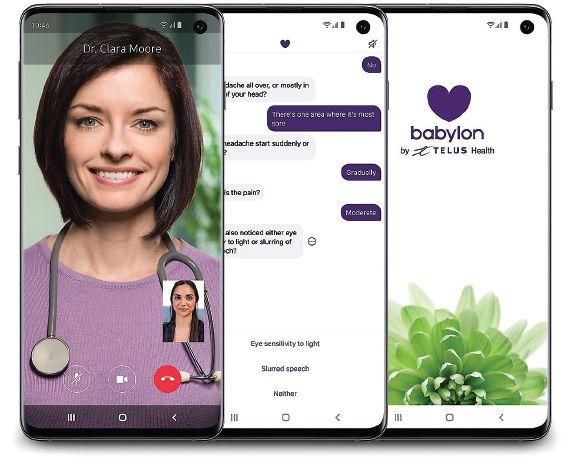
A major driver for Telus is its home health business — a point that was stressed in the initial announcement regarding the ADT acquisition and again upon closing. The company launched its LivingWell Companion product — a wearable device with GPS and cellular enabled and with features like twoway voice and fall detection — following the AlarmForce acquisition. It also offers a remote video service called Babylon by Telus that con-
nects patients with doctors via their smartphones.
“There are a multitude of ways we can pair the technology we have at Telus and the technology at ADT and the services there and bring those to bear to solve some very challenging problems that we’re facing as Canadians,” said Macdonnell. “One of them certainly is being able to extend people’s time at home to improve their quality of life. Being able to make sure they can be in a home or in a residence that is safe and keeps them connected with family and loved ones.”
He said the company has also piloted biometric monitoring options for home health users. “You’ll see that come to the forefront more.”
Macdonnell also noted that ADT Canada customers will now be served by a Canada-based business in Telus. “For me, it’s as much a cultural and Canadian event, if you will, as it is one that’s both strategic and tactical,” he said of the acquisition. “It’s not very often where we get the opportunity to repatriate Canadian businesses.”
— Neil Sutton

EBy Victor Harding
Annual security conference is a wealth of information for security dealers and professionals
very two or three years, I make a point to go to the annual Barnes Buchanan (BB) security conference in Florida.
It is focused on the security alarm industry and attracts industry players, bankers and M&A advisors. I recommend that any mid to large sized player in the Canadian electronic security industry attend every so often as well. Not only are the educational sessions good, but the opportunities to network and learn are significant.
With the qualifications that BB reports strictly on American activity, and by their own admission tells us their data is not foolproof, this is what I picked up from this year’s conference, held in February.
“New technology is attracting customers who now realize that their alarm systems can do way more.”
Overall, revenues in the electronic security industry through 2018 continued to grow both on the installation and monitoring/ service sides. This is probably true in Canada well.
BB gave its reasons why the electronic security industry continues to grow but this is what I think: Even with all the talk of DIY and new players like the cable companies in the industry, the market penetration of alarm systems is still below 30 per cent. New technology is attracting customers who now realize that their alarm system can do way more than simply monitor for burglary and fire. You can see security images on your smartphone

and use it to open your doors, turn on the lights and control the heat. Also, DIY and MIY (monitor it yourself) companies are proliferating like crazy.
If you are running a security company, this is what happened to the three key metrics in the industry in 2018:
a) The net margin on monitoring and service revenue, with more and more added services like alarm.com and cell, continues to drop. It is now at about 54 per cent. When I first got into the industry, and systems mainly just had digital monitoring, it was closer to 65-70 per cent.
b) The overall gross attrition rate, now at 11.6 per cent, continues to drop partly because of the extra services mentioned above.
c) The overall cost to create new RMR increased a little to 29X.
Know that the cost to create residential accounts, where the system is installed for very little, is almost always much higher than for commercial accounts. Handling house moves well is still the best way to reduce attrition as moves still account for 41 per cent of all cancellations of alarm accounts. A good alarm operator manages to capture one or both of the two opportunities generated from a move — either the existing customer moving to a new premise
or the new customer moving into the old premise.
While EBITDA is still the standard variable you use to value fire and integration businesses, Steady State Net Operating Cash Flow (SSNOCF) is fast becoming the key measure for companies with significant monitoring RMR. SSNOCF gets at the cash flow an alarm company generates after accounting for the cash cost of replacing its annual attrition.
There are lots of threats to small and medium sized alarm dealers in both Canada and the U.S. — DIY, the large nationals, the telcos, etc. However, the smaller players can still beat the bigger players on key items like creating new RMR at a much lower cost, running with significantly less attrition and generally providing better service. When all is said and done, the cable /telcos in the U.S. have only managed to secure two per cent of the American RMR market. In fact, two of the telcos have left the U.S. security market in the last year.
The best session put on at BB this year, in my mind, was that by Comcast — the success story of the cable companies in the U.S. with more than one million subscribers. Their brand, called Xfinity Home, offers the most advanced technology in the industry and through a partnership with Comcast, Rogers
Smart Home Monitoring will be leveraging this technology in Canada starting almost immediately.
Two other subjects were spotlighted at this year’s BB conference, illustrating their growing importance to the industry:
PERS has grown its target market well beyond placing pendants around people’s necks in case they fall. The technology has taken off with mobile PERS units being worn on wrists. Every alarm dealer should be able to provide some kind of up-to-date PERS unit.
Video monitoring of all kinds is exploding. This is being driven partly by the concepts of “verified response” where the responding authorities are demanding pictures of what is happening before rolling a unit and video analytics, which are doing a better job every day of isolating real from false security threats. You can’t pretend to be a successful wholesale monitoring station today without providing video monitoring.
These comments reflect just some of what I gleaned from the education sessions. If you work the conference properly, you can pick an equal amount of information by networking with people.
Victor Harding is the principal of Harding Security Services (victor@ hardingsecurity.ca).
By Patrick Straw
Recent statistics from several police services have shown that the collaborative efforts between our industry and emergency services are beginning to have a measurable effect on our collective goal of reducing false alarms.
Our goal is to constantly work with the Authorities Having Jurisdiction (AHJ) community on sharing of information, promoting best practices and ensuring that CANASA members have access to current information and training that will provide them with the knowledge to conduct themselves to the highest standards.
cedures for setting up and updating customer account information so that address and phone information is accurate to minimize wasted time. Visit www.canasa.org for the information.
CANASA recently held a Monitoring Symposium in conjunction with our Security Canada Central show in Toronto and we were pleased to have active participation on our discussion panels from members of the Ontario police and fire services.

We support the initiatives that have been implemented over the last couple of years requiring verified alarm protocols and we are well aware of the need to reduce the false alarm numbers and minimize resources that can be better used in other situations.
CANASA regularly publishes white papers for our members which detail the proper pro-
PERS and mPERS (Personal Emergency Response Systems and Mobile Personal Emergency Response Systems) are another important area of discussion. With the aging population there is going to be a significant increase in the use of personal alarm products. Some are localized to an address and some have GPS capabilities designed to locate a person in distress.
Recognizing that this could be another burden on monitoring and dispatch resources, CANASA has established a committee which is
looking into all aspects of the use of these devices. We will be consulting with AHJs as well as both legal and industry experts to ensure that our members have the latest information.
The public’s need for quality security protection is growing at a very fast pace. CANASA is committed to making sure that we are partners with the emergency services working together for the highest possible quality of service to the public who we serve and protect. We encourage all of the AHJ community to contact us at any time to assist with issues that we are mutually involved in. As CANASA’s executive director, I am an active member of the CACP, Private Sector Liaison Committee, and the OACP.
I would be happy to answer any questions you may have regarding these important issues. You can reach me at pstraw@canasa.org.
Patrick Straw is the executive director of CANASA (www.canasa.org).




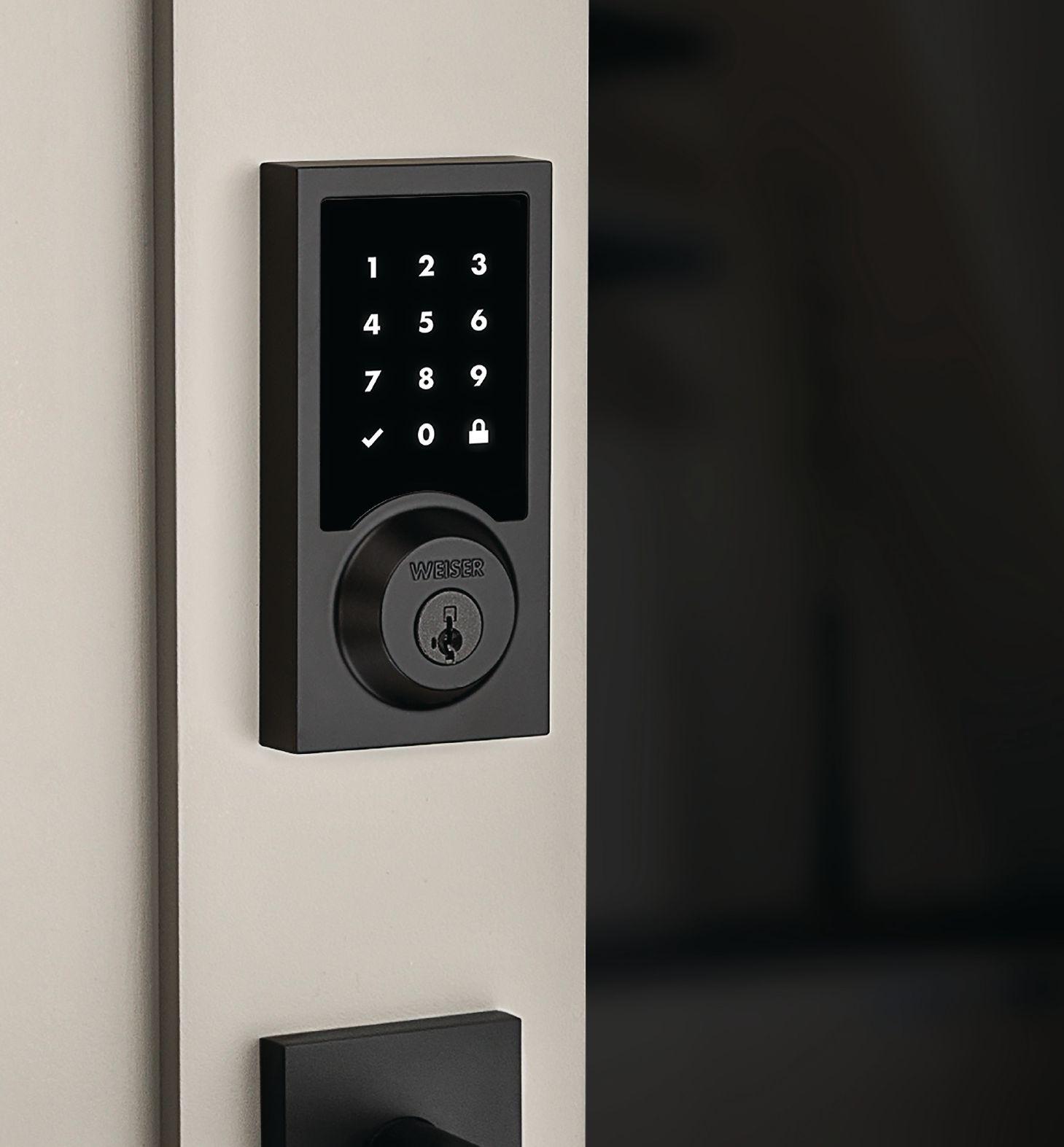
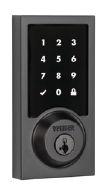
Weiser makes it easy to increase customer loyalty and position yourself as the core provider. If you already install security or home automation systems that are Zigbee or Z-Wave compatible, you’ll appreciate the easy installation and integration of Weiser Home Connect Locks.
Gain momentum in remote access and home automation as homeowners demand more from their primary solution providers.
Grow your business by building upon your existing services with Weiser.

How voice integration and other recent advancements are reshaping home security systems
By Will Mazgay
Smart home technology is becoming increasingly ubiquitous, as more and more home owners move to install devices or entire systems in their homes.
The global install base for smart home technology is now at 70 million homes, according to a recent report by research firm ABI Research. Jonathan Collins, ABI Research’s Smart Home research director, says the value that end users see in the technology is driving that growth.
“There’s certainly a usability and an awareness around these devices that’s grown. I think you’re seeing it where it’s become a very simple financial choice whether you want one of these devices in your home or not. You’re talking around $20 low-end at the moment,” he says.
According to Collins, a lot of money is being pumped into marketing, promoting and consumer education on smart home devices, so that the public understands what the benefits are.
Another huge draw for consumers is voice control, using it to make sure if your front door is locked or to turn smart lights on and off.
Collins says Amazon’s Alexa, and Google and Apple, have really made headway in voice
technology in the last couple of years, and in addition, consumers are becoming more acquainted with voice commands on smart phones.
As well as making life easier for end users, Collins says there is value to be gleaned by platform providers through the relationship between the platform and the end user: “They get to understand a great deal more about that customer. They get to understand daily routines, personal preferences, plans, spending habits — and that is of great value, to advertisers, to the platform providers.”
“The consumer, if they really want ‘smart home,’ then they need to do the research.”
— Blake Kozak, IHS Markit
He stresses that for big providers like Amazon and Apple, armed with a greater understanding of customer habits, the goal is to entice customers to buy more of their hardware or hardware that is compatible with their platforms.
Blake Kozak, principal analyst, Smart Home and Security Technology, with research firm IHS Markit, agrees that the smart home space is growing in a healthy manner.
New technologies, new horizons
Kozak says video doorbells will continue to be a big trend, especially those with a social aspect. He cited Neighbors from home security products manufacturer Ring (owned by Amazon), a smart phone app that allows end users to share video footage or photos of crimes (such as package theft) or suspicious activity recorded on video doorbells with their neighbours.
When it comes to access control, Collins says that voice biometrics are increasingly being used to profile and verify voices.
Kozak also sees big things in this space: “In terms of disarming the alarm system I think Honeywell and a few others have suggested that that’s going to become a trend where you can send a text to your camera and you can walk up and it will automatically disarm the system, or maybe audio analytics where if you just talk or something like that, maybe it will disarm the system.”
Collins says certain companies are also using Wi-Fi disturbance to understand who and what is moving around in a space.
Kozak elaborates further on spatial awareness technologies, explaining that identifying what’s happening in an environment ties into video analytics: “It’s becoming table stakes now for a consumer video surveillance camera manufacturer to have at least the capabilities, whether it’s a free or paid for service, to determine the difference between an animal or a flag or a tree blowing in the wind versus a person,” he says.
Artificial intelligence is a big driver of these technological improvements: “It’s not so much AI that’s enabling these systems to talk together, but there’s certainly a wealth of data being collected, or that can be collected, that can certainly be leveraged by AI to finesse and make their (platform provider’s) services better,” Collins says, explaining that the more AI that is applied to these technologies, in terms of understanding environments within homes and preferences of specific individuals, the more seamless they become.
For consumers looking to create a smart security system in their home through the doit-yourself (DIY) route, it can be a little overwhelming.
“That’s the continuous challenge,” Kozak said. “The consumer, if they really want ‘smart home,’ then they need to do the research. They can’t just walk into a retailer or go online and just make it happen with a few clicks of a mouse. They really have to do their homework.”
Creating a seamless smart home ecosystem is also a challenge for platform providers, as they deal with synchronizing devices from different manufacturers with their systems.
“They do it in a number of ways,” says Collins. “They have outreach programs and developer programs and a degree of funding set aside.” He says there’s a big push and pull fac-
tor, with platform providers drawing in original equipment manufacturers, and these players vying to attach their devices to platforms.
Platform providers are also working feverishly to expand their own offerings.
“This year Amazon brought out a number of devices that can start to make a security system, through a couple of acquisitions,” Collins says. “Google also extended their offering. They already had cameras, but they added some contact sensors, key fobs, to really round out that security offering.”
Collins says that when it comes to security offerings, there is going to be increased competition between the traditional installer market and the DIY market.
“If you look at a traditional home security system, that’s not necessarily the same thing as smart home. You’re not necessarily talking to the same level of intelligence in the home, or the same degrees of sensing or flexibility,” he says. “Certainly, there’s more and more interest and more and more capabilities for consumers to build up their own security system, not pay that monthly revenue, or have that monthly revenue as an a la carte option if you like, instead of committing to a long contract.”
Kozak agrees: “Consumers will move more towards the home automation aspect and less focus will be given just to security…especially as price comes down.”
Conversely, Collins says consumers who
do commit to long term contracts expect more from their security system, for it to have smart home capabilities.
“We’ve seen in the past the professional security market growing quite slow, not a whole lot of innovation. But I think those companies and those providers have really improved,” says Kozak.
According to Collins, the installer market and the DIY market are also meshing.
“We see retailers start to offer installation services, crossing over into that traditional home security market,” Collins says, explaining that Office Depot recently announced it was going to be offering installer services for smart home devices. Other firms, like Comcast, are “also offering that kind of gateway ability to host and control a lot of smart home devices. They’re doing that very much so they also can get that customer connection and don’t miss out on their valuable subscriber base.”
As for what this means for traditional security installation, Collins put it this way: “There’s probably still a role for installers there; there’s certainly still a role for home security of some sort. It’s just a matter of whether it takes a dedicated, long contract, installation that’s just about security, or really if it’s about a whole range of smart home services and one of them happens to be security. Maybe installation is a part of that and maybe it’s not. It’s a time where a lot of boundaries are being crossed.”





Getting the latest technology into the hands of consumers requires a user-friendly and flexible approach
By Will Mazgay
As smart home security technology dominates the headlines, it is worth examining how this technology is being delivered to consumers by dealers and other solution providers — and how this process might be improved.
According to a report by Addison, Tex.-based research firm Parks Associates Inc., dealers still play a pivotal role in getting smart tech into the hands of consumers, making up nearly 50 per cent of sales of smart door locks, garage door openers, water leak/humidity detectors and networked security cameras in the U.S. market.
As well, roughly 75 per cent of security dealers reported to the firm that they offer security systems with at least basic interactivity and some smart home devices.
Parks Associates also says deal-
ers selling smart tech are reaping the rewards, because security systems with smart home devices receive nearly double the upfront fees of systems without smart home devices, and higher recurring monthly revenue to boot.
For Gordie Hebb, vice-president of sales for Nova Scotia-based security dealer Wilsons Security, smart home automation is a major selling feature for his solutions.
“The ease of use in the new technology has made the adoption rate skyrocket,” he says. Hebb also asserts that customers are enthusiastic about upgrading their old panels to new panels with smart features.
“The adoption rate average has been eight out of every 10 systems visited.”
With that said, selling and installing smart home technology isn’t attractive to every dealer.
“A lot of really small dealers don’t even want to touch smart home devices or offer smart home
devices in their package because they see it as a huge cost,” says Dina Abdelrazik, Parks Associates research analyst. “Their support costs will go up. There’s going to be a huge investment in terms of training and knowledge of staff.”
Abdelrazik continues, “Now consumers are demanding those devices so it’s kind of a Catch-22 for small dealers. If you don’t offer it you’re going to lose to your competition, but if you do offer it, it’s a huge learning curve, and also a cost suck essentially for the support costs that they might not necessarily be able to support.”
Another barrier, according to Abdelrazik, is consumer costs, as smart home capabilities attached to
professionally monitored systems — both the ability to interact with the system and smart devices compatible with it — tend to jack up the price.
She says, “One of the leading factors for customers cutting or canceling their pro-monitored services is because the fees were too high. Dealers really have to educate consumers on the value of these products, and why it’s necessary to have them.”
Higher costs for interactive pro-monitored services are causing another headache for dealers, pushing customers toward the do it yourself (DIY) market, which Abdelrazik says is attractive because of low costs and ease of install.
“Dealers really have to educate consumers on the value of these products, and why it’s necessary to have them.”
— Dina Abdelrazik, Parks Associates

Increase RMR ✓ Increase system usage ✓ Increase customer retention ✓ Provide the total security solution
There are many drivers for why incorporating connected locksets into your customers’ total security solution will provide otherwise unseen benefits. Whether interested in safety & security, remote access control or everyday convenience, Weiser provides the products that give your customers the solutions they are looking for.
Innovative Security
• Full 128-Bit Encryption Security
• Motorized Deadbolt - enables true remote locking & unlocking
• SmartKey Security™
Easy Integration
• Wireless Protocol
• Replaces Existing Deadbolt with just a screwdriver
• 4 AA Batteries (no hard wiring) - batteries last for approximately 1 year
In addition to cutting into their market share, DIY presents another challenge for dealers — achieving synchronicity between existing devices in a consumer’s home, from different manufacturers.
“Now essentially if you’re installing a new security system in the home there’s a whole new challenge of, ‘How do I get all these devices to interoperate with one another?’” says Abdelrazik.
Self-installed systems that leverage professional monitoring represent a growing segment of dealer business, as do self-installed systems without professional monitoring, according to Parks Associates.
Saliq Khan is a senior vice-president of investment bank Imperial Capital LLC and a security firm researcher, and he says deal ers need to stop think ing of competing with DIY as a zero-sum game and start striving to achieve interopera bility between the systems they install and the devices already in consumers’ homes.
“Dealers should not be just pushing product. They need to find a way to solve a problem the consumer has.”
put the cameras and sensors in place quickly, and done. That’s what I’m looking for as a consumer,” says Kahn.

“Why can’t it be that I pick up a camera or a sensor from the store and it can still be professionally monitored if I choose for it to be by ADT or Brinks Home Security? It most certainly can be,” says Khan. “Interoperability, either through Bluetooth, WiFi, which are the main driving forces right now, is key to that consumer experience — I don’t want five different applications to be able to make my system work.”
Consumer control of a security and home automation system that links together devices from different manufacturers can be achieved through voice control, smart phone control or other tools, but the result is the same, a system that lets consumers leverage what they already have in the home or pick and choose what hardware they like.
In addition to ease of use, ease of installation is also important.
“I’m not going to call someone, take time off work, just so they can come to my house and do the install. Ship me the box, make it damn easy for me to take it out of the box,
Dealers can satisfy the desire for a user-friendly experience through interoperability, but great service is also key. Even with self-installed systems with no monitoring, that are sold to an end user through a dealer, that dealer can assist with common problems like connectivity issues. Dedicated service is still something dealers can hang their hats on, according to Abdelrazik. She says “They (dealers) know the security system, they come into your home, they provide you that service, while consumers who have the DIY product, they’re installing it themselves, they may not know what they’re doing, they don’t have that service from the dealer. That’s how they’re playing their advantage there.”
Providing great service is important for Hebb and Wilsons. “We work hard to ensure the security solution investment meets the potential customer’s expectations. This starts with the assessment by our security consultants to understand the potential customer’s needs, budget and expected outcomes,” he says.
Patrick Soo, director of national sales, Canada for Alarm. com, says the company sells exclusively through dealers. He believes it is the best sales channel for his firm because of the personal touch provided. “Going through dealers, you’re getting the professional installation,” he says.
“The dealer is able to provide
— Saliq Khan, Imperial Capital
that turnkey level of service that, according to our statistics, most consumers want. If you’re going to go to a Best Buy for example, and try to install this stuff yourself, it’s still not quite plug and play today.”
Soo continues, “You need to be very technically proficient to get these things working — you have to have the time, and you have to be able to service on your own. Whereas, by going through a professional channel, our dealers install it, they service it, they program it, they make sure it’s working when they walk out that door.”
While the turnkey approach is a big part of Alarm.com’s brand, Soo says some of the firm’s dealers, providing its central station backed home monitoring software, offer it on a DIY basis.
“They will package the product, they will ship it to a customer, they will walk the customer through the install, and provide them with the Alarm.com ser vice,” Soo says. He cautions that this approach is not as easy as many dealers think it is. “Some dealers think that I can just ship this to a customer and the custom er’s going to install it and it’s going to work great. That’s not the case. There are a lot of touch points in that professional DIY.”
have to replace any equipment … it will convert that older, legacy panel into full interactive services, full automation services, and provide that customer with modern day features and modern conveniences, with using an older panel.”
Regardless of the solutions offered, for Khan, getting the consumer experience right means squaring the desire to serve customers with the new ways security is being delivered.
“Dealers should not be just pushing product. They need to find a way to solve a problem the consumer has,” he says. “When you solve a problem for somebody else, that allows you a way to build a relationship where you can sell them more solutions. When they trust you, they’ll keep coming back to you. But for all of this to happen, we need the next generation of dealers to embrace technology and a consumer-first mentality.”
Khan says many dealers may be well-versed in the business but are reluctant to change. “They’re not embracing technology, they’re not embracing online advertising, they’re not embracing that you no longer need to sell the old, clunky panels, you can sell the new panels that are not just security but it’s pure play home automation as well.”
Hebb concurs that dealers need to keep with the times. “Security solutions have become more and more complex, and Wilsons has evolved its solution delivery process to make sure our customers achieve success,” he says.

Soo says his forward-thinking network of dealers didn’t just spring up magically; it needed to be nurtured through extensive training — a labour-intensive and expensive proposition.
Alarm.com doesn’t provide an open platform for hardware, as pieces need to be from approved manufacturers, but one of the more unique offerings is the firm’s ability to run its software on legacy systems through an LTE radio. Soo says, “You don’t
For those dealers on their own, squaring the man hours and expenses necessary to educate themselves and their staff on how to sell, install and service this new technology with the potential return on investment might become a necessary exercise.

Social media sites like Facebook and Twitter can be major promotional tools to reach clients and attract new ones. But you have to know how to make the most of your message.
By Will Mazgay
Security systems and equipment have traditionally been sold door-to-door or through radio and TV ads, but with the growing power of social media, this is changing.
Firms that sell security solutions are looking for a cheap and effective alternative to traditional advertising, and social media provides that.
According to Bill Hensley, senior director of marketing for Nortek Security & Control, “Most smaller dealers don’t begin to have the budget to look at local area TV.”
Pascal Bergeron, national director of dealer sales at ADT Canada, argues that TV and radio ads are not just expensive, but ineffective: “TV and radio are very expensive. People are watching less TV, and sometimes with the radio you pay a lot and you miss the target. Social media is safer for dealers, and they have more return on investment.”
He says his dealers are seeing improved sales and exposure by using social media, and he recommends all of the dealers representing the home security giant invest in it.
A lack of customer engagement is also an issue with radio and TV: “If I put an ad on the radio or I have a spot on TV, there’s no interaction with that customer, I don’t know who those customers are unless they contact me,” says Sean O’Leary, president and CEO of SafeTech

Alarm Systems, a Toronto-based alarm and security equipment dealer, installer and monitor. “Whereas, I can ask Facebook to recirculate my ad or my dissemination to the same group, over and over again. It’s this idea of repetitive market targeting.”
Even other digital advertising methods have drawbacks. “Google search costs have grown substantially in the past year,” says Dina Abdelrazik, analyst for security industry research firm Parks Associates. “Small and medium-sized dealers can’t afford search ads anymore, and smaller dealers are shifting their advertising spend to Facebook, where dealers can get more leads for lower cost.”
O’Leary says, “There’s no question that payper-click is very expensive. When you’ve got companies like Rogers and Bell in our space... it becomes prohibitive to duke it out with them. So, then you just try to find other mediums.”
Graybar Canada, a wholesale distributor of security equipment, which represents brands like Alarm.com, Interlogix, Pelco and Aiphone, is taking advantage of paid social media (ads and sponsored posts) through Facebook and Linke-
“With paid social media we’re able to target specific demographics.”
— Julie Darnbrough, Graybar Canada
dIn. Julie Darnbrough, the firm’s marketing and communications developer, says, “With paid social media we’re able to target specific demographics such as job title, location, age, interests…etc. This is extremely valuable as we can measure engagement.”
O’Leary says most of his efforts go towards boosting the content shared on Facebook, SafeTech’s preferred social medium: “We create different videos and different information cases and we disseminate that.”
Another important aspect of social media for O’Leary is building trust with customers, which includes contributing to social media network groups, being a part of a dialogue and developing a reputation as a security expert. “A lot of stuff you do online, it’s first about giving back. You really have to give to the medium and once you become a trusted source and a known source, or an expert, more people will circle back to you,” he says.
O’Leary’s social media strategy boils down to reaching a target audience, sharing informative content to educate followers about his products and services, and building lasting relationships: “Do your best to educate and hopefully entertain as well.”
Darnbrough, whose firm is also building and sharing multimedia content, like videos, blogs and case studies, says, “Having a basic information-based website isn’t enough today. Customers are looking to make connections with brands they can rely on and trust.”
However, Darnbrough cautions that once a firm starts churning out content for followers, it needs to maintain that engagement: “One of the main differences between digital and traditional marketing is the expectation of creating content. With digital and social media, your audience expects fresh content more frequently — sometimes even multiple times a day. If you’re not able to commit to posting content
“Do your best to educate and hopefully entertain as well.”
— Sean O’Leary, SafeTechAlarm Systems
on a regular basis it can lead to your audience losing interest.”
For the dealers involved in Nortek’s dealer program, which marketing director Hensley supports across North America, “On the social front, we’re wrapping up a guide document for our dealers on how they can best use the tools that we’re providing to maximize their exposure and their social channels in their area.”
Bergeron says ADT provides social media guidelines for its dealers, but the guidelines are more focused on how to best represent the brand and mistakes to avoid, such as misrepresenting offers or changing ADT’s iconic logo to suit personalized branding. “The guidelines are more what not to do, than what to do. We just want to protect the brand. What they (dealers) should do, normally they are good with,” he says. He explains that ADT audits dealers, visiting their websites and social media pages, and provides constructive feedback when aspects might need improvement.
Hensley says Nortek is also “trying to produce a lot of new video content for the dealer to be using, whether it’s on social or posting on their website, or sharing with the customer…video is a key thing. It’s what we’re trying to make a lot more of this year.” He also says Nortek tries to focus on competencies that are difficult for most dealers to do, and video can be tough for some.
Bergeron says that while ADT provides images and videos for dealers to help craft their social media presence, the firm’s dealers create their own messaging. When it comes to shooting videos he says, “Sometimes they (dealers) will prefer to do their own because they can have their logo and it can be more personalized than the ADT generic logo.”
O’Leary says SafeTech has never utilized marketing support or content from its manufacturer partners, and instead has crafted its own digital presence. SafeTech’s Facebook page and website are filled with videos emphasizing the personalized service of the dealer over the value proposition of the equipment, in many of which the CEO himself plays a starring role as the face of his brand.
While the prospect of controlling their own message may be attractive to dealers, it can be time-consuming. So, Hensley says he advises dealers to leverage what Nortek’s central marketing team is doing to promote the manufacturer’s offerings.
“We have our social media manager posting on multiple different channels across security and other brands. And then for dealers, it’s

as simple as following us there, and then when there’s something that makes sense, repost it to your followers and add that local level — ‘we’re the supplier of that product in the area,’ for example,” he says. “We’re just trying to make it easy. Most dealers have got way too much to do, so the easier the manufacturers can make it with these tools the better.”
When it comes to providing marketing support for individual dealers, Hensley says it’s a matter of playing to strengths, as some are very clear on what they need, while others need a helping hand to find what works for their business. “Some dealers are better at installing, some are better at selling, and so for those who may be better at the installation part, we’ve got to have more of the cookie cutter availability of the assets. For those who have a phenomenal sales force and just occasionally need some fresh tools and graphics, it can be a little bit easier. It’s a spectrum,” he says.
In terms of where most dealers are at in their embrace of social media, Bergeron says about half of his dealers have jumped on board while the other half are “more old fashioned.” He says, “The Yellow Pages are dying, everybody’s going on the Internet, so of course it’s (social media) the new way to do business.”
O’Leary concurs. “We cancelled all of our Yellow Pages ads… we stopped receiving the value so we ended up cancelling a lot of the
traditional things.” He says SafeTech still does some direct mail and telemarketing, but in general, his firm had to scale back use of traditional media because they were becoming cost prohibitive and unsuccessful.
Hensley says his experience with social media adoption is a mixed bag as well. “Some dealers embraced social early on and built reasonable networks. Others are maybe a little late to the game or don’t have the energy or the knowhow to make it work,” he says.
For Graybar, “Social media and digital strategies are going to be our main content distribution platforms as we move forward ... we’ll likely have a 50/50 split between digital and traditional, but as we begin to create more digital content these ratios will begin to favour online platforms,” says Darnbrough, who explains that with traditional marketing strategies it’s very difficult to track and measure engagement, which is where social media provides an edge.
Hensley says that ultimately dealers want to have a social media presence, so that they can be a part of trending conversations — they can find customers and customers can find them. He continues, “Social media isn’t just one thing anymore. It’s Twitter, LinkedIn, Facebook — wherever customers are, dealers should be ready to be there.”
Bergeron says that exposure is vital for dealers: “If the customers don’t see you, you cannot make any sales.” He continues, “Of course, the more dealers invest, the more results they have.”
Security integrators are offering AV products and installs to increase the suite of options they can bring to customers

By Will Mazgay
For security dealers and integrators facing shrinking margins, it is increasingly important to have a broader offering of products and services. One way to expand these offerings is to provide audiovisual products and installations, and be able to tie AV systems into other home automation solutions.
Charlie Porritt, CEO of New Hampshire-based audio systems firm Russound, says margins and money have somewhat left the home solutions industry. “People are looking for additional sales as well as recurring revenue on the alarm side — some of those dollars have come down as well,” he says. “So, when trying to get the maximum revenue per sale, it’s more than just getting that recurring revenue, but looking at saying ‘what else can we add into this sale while we are still here?’”
Electrical equipment giant Legrand sees
security integrators as one of its primary target audiences for residential AV, according to Fritz Werder, vice-president and general manager, Residential AV Systems for Legrand’s AV division. He says, “If you look at some of the leading security companies now, they’re not just security, alarm control through their interface. They may also integrate lighting and audio systems.”
Werder uses the example of Alarm.com, which integrates Legrand’s digital audio system into its security interface.
“A big part of why we see security installers doing AV products is because of that blending of the interface…The other thing I would say is there are security installers definitely seeing an opportunity to be able to sell a bigger basket of goods,” he says.
Werder continues, “In the case of new construction, they’re often working with builder partners and they get a chance to meet with homeowners, and if they’re responsible for doing
the low voltage work on the security install, why not try to do the rough-in for home theatre, to do the TV mounts, do the cabling and the power for TVs, why not do the speakers?”
He says there is also opportunity for security installers to win AV business in the retrofit market, as they are “going back out to homeowners where they’ve done security installations over the years and they may have a monitoring contract with them, and they’re looking for ways to maintain that relationship. So, they’ll come back in with optional products to try to upsell them on. Whether it’s wireless audio or other opportunities like that.”
Burlington, Ont.-based integrator A1 Security Systems has been offering Russound distributed audio for the past 10 years. Over the past two to three years, the company has introduced more home interactive services connected to its alarm systems, according to sales representative David Vaine.
He says, “It gives the end user more choices, to go with a single solution provider, that we can provide alarms, we can do the distributed audio — for entertaining purposes — as opposed to reaching out to us to do the alarm system and then somebody else, now we can offer that whole package for that end user.”
Peter Garnham, president and CEO of PG Security Associates (PGSA), a Mississauga, Ont.-based manufacturer representative for AV firms and security vendors, says dealers and integrators from the security world have been dabbling in AV for some time now. He says, “A lot of people are migrating over because they’re leaving money on the table, they’re leaving projects out there that they can tackle.”
Garnham continues, “The average dealer out there, if they’re relying on security to bring the dollars and cents in, they’re not taking advantage. The majority of integrators out there, they’re putting in security, they’re putting in closed-circuit television, they’re putting in AV, degrees of home automation.… I think that there’s enough knowledge out there, and there’s enough consumer demand looking for those types of products that dealer/integrators are being pulled into the market.”
Vaine says A1 Security uses the Russound audio system because of its ease of install. He says, “The technicians don’t need laptops when they go onsite. It’s more of an online portal, and most of the stuff is configured prior to going onto site. Technicians set it up here, and when they arrive to site, load it all up, plug the speakers in, and within minutes the client has access to the app, whether it’s their mobile device or their iPad or tablet.”
He says the firm has also recently started installing iPads on each floor in custom homes. “So now the iPad not only controls the audio system, it also gives you the ability to control your alarm system, and any automation we have through the alarm system as well, whether it be controlling the lights, thermostat, garage doors.… It complements the intrusion system because it’s all one package, one service provider that provides that whole solution for them,” he says.
For integrators, providing this full suite of home automation amenities to a customer can require learning new skills and taking on new capabilities.
Legrand’s Werder cites one example: “As security and AV integrators get more and more requests around lighting or find themselves in more lighting projects, in most cases those require knowledge of electrical insulations or electrical certifications.” He says firms can gain this expertise through partnering, subcontracting or in-house training.
Another area where integrators require growing expertise to deliver automation solutions is in networking infrastructure, which Werder says has grown in importance as more security products have become IP-based.
He explains, “When you’re talking about
“There’s enough consumer demand looking for those types of [AV] products that dealer/integrators are being pulled into the market.”
IP cameras for example, or video doorbells, the foundation for performance of those security systems is the network. If you don’t have a reliable wired or wireless network in the home, you can’t be successful with those security systems.”
Werder continues, “The capabilities have continued to expand around remote network management to where installers or integrators are able to remotely control things away from the job site.”
He uses the example of rebooting cameras remotely as opposed to going to a job site, noting that solving these issues without having to do a truck roll is a huge boon to productivity. Werder also says that digital video recorders, security panels and other equipment can be housed using Legrand’s AV infrastructure products: “They can be stored and work with our infrastructure solutions.”
PGSA’s Garnham agrees that educating dealers and integrators on networking is becoming increasingly important. He says, “It’s just an understanding of how networks go together, how to attach products to them and how to troubleshoot them.”
Garnham continues, “It’s a whole new opportunity. Within the next 12 to 18 months, when the 5G networks are established and running, you’re going to see just a huge proliferation of products that people will be using in their homes.”
While offering AV and holistic automation solutions may be attractive to security integrators, in most cases, specific training is a necessary step to add these tools to their toolboxes.
Garnham, for example, provides training for Russound products and systems. “When I do a certification, call it a full day,” he says, while acknowledging that these intensive courses aren’t for everyone. “The problem with something like that is that integrators can’t find the time or don’t want to find the time to take advantage of that. So, they’d prefer to look at a short video clip to get up to speed.”
Garnham continues, “I think that what you’re seeing today, though, is manufacturers putting together YouTube video clips to show dealer/integrators how to do things. I’m seeing short video clips in the one to two to three minute range.”
Russound’s Porritt says, “People are busy and really can’t travel and do the days that they used to do in terms of training.” As a result, “we see a ton of people attending our webinars…We try to make sure we have training wherever and whenever people want.” He explains that the firm hosts about six to eight webinars a month and four to six short videos in the same time span.
A1 Security’s Vaine is the beneficiary of Rus-
— Peter Garnham, PG SecurityAssociates
sound’s training programs, and says he tries to make himself available for technical sessions for new product launches or similar events, along with the firm’s online sessions.
Vaine also explains that PGSA provides valuable product training and technical support. He says, “There haven’t been any issues or any questions that haven’t been answered the first time.”
Werder says Legrand provides training videos as well, from 15 minutes to an hour, along with live webinars every month across different product lines, covering topics like lighting, audio, shading and wireless networks. With respect to webinars, “dealers can sign up and listen in, ask questions and engage on a live basis,” he says. The firm also engages in regional and in-the-field training, often partnering with distributors.
The Legrand executive explains that the level of training depends on the product. “We obviously don’t require someone to be certified to install a TV mount or a structured wiring enclosure, but things that are a little more complex like the luxury lighting solutions or shading, where there is a lot of nuance, we do require them to go through a certain set of training after hours as part of the dealer set-up process.”
Werder says catering to the home automation market has definitely changed the way his business unit approaches training. “Before, you could talk mainly about your own products, and now a lot of our trainings are about how our products integrate with other systems, whether it’s voice control, or how our products integrate with control systems — you have to be able to now talk about how your products fit in to the broader ecosystems that are out there,” he says.
AV might just be one slice of the home automation pie, but for security dealers and integrators, it could be one of the most appetizing.
Porritt says AV can add a new dimension to home solution sales. “They start with the security system and then they add the dessert table, which is, we sell fun. There’s no fear in our sales.” This can be a refreshing change for dealers used to selling alarm systems, solutions designed for worst case scenarios.
As for Vaine, he appears to relish selling fun, and explains that when a customer mentions that they like to entertain, he’s more than happy to help with that. He says, “You can use Spotify through Russound, which is a great added feature, and if you’ve got a SiriusXM radio account you can integrate that as well. Listening to it while you’re sitting outside in the backyard, in the middle of the summer, it’s great for entertaining.”
Convenience and comfort may be on the rise, but home owners could be exposed to hacks if the proper precautions are not taken
By Jon Williamson
When it comes to cyber security, the industry has been vocal about its commitment to best practices and education as it relates to video surveillance and access control solutions.
Integrators have become increasingly proactive to ensure they are delivering the best solutions possible, while simultaneously providing the highest level of security. While video systems have traditionally garnered much of the focus as it relates to cyber security, there’s a new kid on the block who is gaining much attention from hackers with malicious intent: home automation.
Home automation has become a convenient normality in residences across the world. While turning lights off and changing the temperature with the sound of one’s voice is a perk, smart homes are capable of so much more.
Automation improves daily lifestyle, but also provides a security solution accessible from anywhere. Users can keep an eye on their homes from their cell phones. They are able to check to make sure the kids get home safe or confirm their package is delivered. It is presented as a convenience and much of its implementation has revolved around that. Where there is convenience for end users, there is also convenience for hackers. By using devices that connect to the internet, there are inherent security risks.
It is the job of the security systems integrator to ensure their clients are protected.
The first thing integrators should do is make sure the system is encrypted. This probably seems obvious, but it is the first line of defence against potential threats. It is one of the best methods of safeguarding privacy. This is especially important when protecting people’s homes.
We live in a world of constant connectivity — whether through phone calls, emails, online purchases, or social media. Actions that seem innocent, such as setting up a recurring delivery for pet food, can actually pose some big threats.
Hackers are becoming increasingly interested in targeting homes because, unlike major corporations, most system users are not security professionals. IP-based systems in homes have not traditionally had the same level of security as those in the corporate world.
Home owners believe that once a system is set up, they are good to go. With the right integrator, and only after security measures have been implemented, this is the case. Without encryption in place, hackers can easily intercept online logins, banking information, and can discover schedule patterns for when doors are locked and unlocked, such as when people are home.
Gone are the days when passwords were enough to secure your life from intruders. Integrators need to encrypt everything to be sure cyber integrity is upheld.
The second thing integrators should do is set up multifactor authentication to validate the connection and be sure the data is only accessible by the homeowner. This protects data while simultaneously assuring that the homeowner is indeed the homeowner.
Hackers can guess passwords but the odds of them breaching multiple levels of authentication are slim. The more factors set in place, the lower the risk of an intruder gaining access to a private system. It is best to combat attacks before they happen, rather than wait for a system to be compromised. As the saying goes, it is not a matter of “if” a user will fall victim to a cyber-attack, but rather “when.” Multiple layers of security are a good practice to deter potential hackers.
Third, integrators need to be sure the system stays updated. If the system is not regularly updated with patches, then over time hackers will find new ways to infiltrate it. Just as humans need a new flu shot every year to protect against changing virus strains, security systems require the same level of routine maintenance. The industry is constantly evolving for the better. However, as fast as new technologies evolve, so do new hacking methods.
Hackers are always looking for soft targets. As big corporations and smaller businesses up their cyber security game, what better target than an unsuspecting home owner without an IT team at their disposal? Homes equipped with automation are being targeted because they have multiple devices that connect to the internet and, as we know, an internet connection means cyber vulnerabilities. The more devices a user has, the more vulnerable they are to cyber-attacks.
Wireless doorbells, keyless entry, digital thermostats, and lighting systems are a few of the ways hackers are gaining access to homes today. Because the systems in a home automation setting are controllable via Bluetooth or internet connection, it opens the door for hackers to use a seemingly innocent device, such as a wireless doorbell, as a point of entry. This allows them to then gain access into something of higher importance, such as a computer. From there, hackers can gain access to a user’s most private information, including banking information, passwords or lock/unlock schedules.
Once a hacker gains entrance to a home system, users fall vulnerable to cyber physical attacks. Cyber physical attacks occur when hackers are able to intrude over the wire/internet and enable an action such as disabling security systems then physically entering homes to steal or hack information directly rather than remotely. Home automation opens the
“Hackers are becoming increasingly interested in targeting homes because, unlike major corporations, most system users are not security professionals.”
door to new threats both literally and figuratively. Establishing baseline requirements when selecting vendors is the most necessary and responsible measure an integrator can take.
Integrators can utilize best practice solutions, but one of the most important aspects of their job is the vendor selection process. By making sure the product has built-in security protocols, it alleviates the need to take additional steps and saves both the integrator and user time and money in the long run. Home owners are bringing experts in to simplify the process as much as possible. What simpler way than choosing products with outof-the-box capabilities?
Home owners who choose to implement home automation solutions do so with the understanding that it is easy, streamlined and risk free. Most people are not cyber security experts and in turn expect those they have contracting with to provide top-of-the-line service and recommendations. The challenge for integrators in this scenario is not in implementing best practices, but rather in choosing cameras and solutions that will ensure the maintenance of cyber security.
As in any market, manufacturers compete to provide the latest and greatest solutions, but often the race to be first leads to long-term issues. There is great pressure to make cutting edge solutions available. This idealized manufacturing timeline typically results in products that are not completely vetted. While some companies go about deployment in a mature way, by designing cameras with cyber security in mind from initial development, others position cyber as a second thought compared to functionality. In turn, system integrators must do their research to select cameras that include both functionality and security. Also, they must not be afraid to ask the supplier questions such as: Have they deployed a secure development lifecycle policy? Is communication encrypted? Why is your camera better than someone else’s? Integrators are advocates for their customers and should recognize that the latest solutions are not always the greatest.
Integrators should always think ahead and anticipate what might be a vulnerability in any system. While a low-cost device, such as a motion sensor outside the home, will save the user money, it can also enable some activity that could ultimately raise a risk for the homeowner.
In some instances, this can force both the integrator and the user to compromise. If you cannot trust the connectivity of a particular device that is costly, you may opt to use a less modern solution, such as wires, that uses technology that is not accessible from the internet. It is important to not just look for the cheapest solution, but to implement the one that will not raise the risk level for end users. Functionality, cost and security should be the three determining factors when creating a solution.
Cyber-attacks are expected to increase, especially as home automation technology continues to evolve and becomes more readily available at a reasonable price.
Hackers do not care about someone’s business, livelihood, or peace of mind. It’s critical that security system integrators also ensure that home automation systems can exist in a way that will not pose a cyber security threat. Homes should be a safe haven, and it is the integrator’s job to keep it that way.
Jon Williamson is the director of cyber solutions for building technologies & solutions at Johnson Controls (www.johnsoncontrols.com).

Smart network organization the Zigbee Alliance has already achieved a lot this year. In January, the alliance and fellow IoT standards body The Thread Group jointly announced the completion of the Dotdot 1.0 specification to improve IoT interoperability. According to a statement from the organizations, the specification will “enable new IoT applications, and improve the consumer experience by reducing IoT fragmentation.”
“The DIY is useful but we’re not there yet.”
In the same month, the Zigbee Alliance also announced that Amazon will join its board of directors. SP&T News spoke to Tobin Richardson, president and CEO of the alliance, recently about the drive towards interoperability, the role of major players like Amazon in the smart home, and how professionally-installed and DIY home automation systems can continue to co-exist.
SP&T News: What’s new with the Zigbee Alliance?
Tobin Richardson: More recently, we’ve had ecosystems joining. We’ve had Comcast join the board of directors, Amazon joining the board of directors. These have been the ecosystem plays that have said, we need all these devices to talk to each other, so they’re not having to manage different walled gardens.
Today we’re focused on Internet of Things and we’re seeing a lot of traction in smart homes, but we’re also focused on smart buildings and smart city. If you look at the volume of sales — I don’t want to say it’s evenly split — but the workgroups that are active in the alliance and certification that we’ve got going fit

By Neil Sutton
into those categories pretty well.
SP&T: Is Amazon’s increasing participation in this market raising the level of awareness for smart home?
TR: They’re really bringing a coherence to the smart home. What we saw, a few years ago, was even though organizations and companies would use standards, whether it was WiFi or even Zigbee, they would do things to really still keep those ecosystems closed. If you’re only looking at six months or a year, then maybe that’s an OK business model. I think Amazon has shown, through the introduction of voice, a different experience. But also their alignment to as many products as possible from as many vendors as possible. That’s a really good alignment with open standards that are then truly, really open in multi-vendor environments. That’s a great alignment with an organization like ours or even with any standards organization. We’re really happy to see them do that in a way that brings that energy and that focus on delivering great consumer experiences into the standard.
We have great engineers, computer scientists and PhD’s and companies that are building the products — what really drives useful standards, though, are companies that are actually using them and stand to benefit by products interoperating at a really easy level and simple way for consumers. For the smart home market, that’s really important. It’s a good alignment with their business model and also the continued evolution of Zigbee, as we look at more and more devices talking to a smart home hub.
Also what Amazon is doing to reduce the number of hubs in the home is really important. The more hubs you have, the more areas for complexity and confusion on the consumer side. If you have a smart home hub you can get to with a voice, and from there access all the
different devices, it makes for a better consumer experience. Amazon has been really great within the Zigbee Alliance at driving this notion of: even the hubs have to act the same. That’s not something we really saw before.
SP&T: What is the role of the professional installer in the home market?
TR: As an organization, we’re just starting to touch that community through member companies such as Legrand… We’re excited to start working with them. We are stepping up our outreach to the developer community as well as installer networks in 2019 through our relationships with some international organizations that touch those communities. There will be an ability to get up to speed on some of the nuances of open standards versus what they may have always known and always been used to. As consumers demand more from that, I think there’s still a strong role for installers. The DIY is useful but we’re not there yet, and Amazon even recognizes that.
SP&T: Is there an opportunity for DIY and professionally installed systems to co-exist or even collaborate to some degree?
TR: Yes, I think there is in the nearterm. New technology takes a while to build up. Amazon or Google or others may want to have 200 devices in the home and capture that data and develop some interesting learning that helps the consumer and also maybe helps people sell to you. But it’s a very small percentage of the population that knows how to install 200 devices in their home in an intelligent way today. That doesn’t change overnight. For the installer community, there is a huge role here in the near-term. I think there’s an opportunity to learn about some of the newer technologies, especially the ones that have the largest reach. Five years ago, when I was being

asked this question: which product is going to take off in the smart home first? Which model is going to win out? Is it going to be DIY? It’s all of the above and none of the above. One’s not going to dominate in the near-term because the technology is complex and can break. There’s still a need for a curated process and a curated experience. But there are also the folks who want to do it themselves.
SP&T: How do you address the ongoing cybersecurity concerns with networked devices?
TR: I think historically there was a notion there was a trade-off between usability and security. I think that notion seems to be giving way to built-in security or security by design. I’ve worked in security in different ways, since before I had a professional career, so I don’t necessarily believe anything is secure by design. Every system I’ve ever seen has been hacked, whether physical or cyber. I think you do what you can to mitigate that. At the Zigbee Alliance… we have an active security group and continuously evolving methods to bring in new security and to update how we address the security of the devices themselves. Straightforward things like expanding key length on keys, taking on whatever is best in class in the market and bringing that into the standard itself. We’re looking to the world’s best security experts as well as the leading consumer electronics companies to bring their experts into the standard itself so that continues to be evolved. We’ve recognized that this is an area that is going to be much bigger than Zigbee. It’s going to be with WiFi, it’s going to be with closed networks. We’re actually working with a cross-section of different consortia as well as leading firms to come up with principles and guidelines and we actually anticipate publishing those in the next several months.
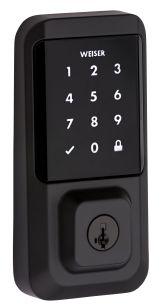
Weiser
Introducing the Halo Wi-Fi enabled smart lock. It’s the uncomplicated way to get smart lock security and smart home convenience using your home’s existing Wi- Fi router. Operate, manage and monitor the lock with your smartphone using the Weiser app from anywhere there’s an Internet connection.
Coming Spring 2020! weiserlock.com
Johnson Controls
The LUX KONOzw Smart Hub Thermostat is the first KONO thermostat featuring Z-Wave technology. KONOzw allows users to connect DSC security systems, including PowerSeries Neo, iotega and PowerSeries Pro, when combined with SecureNet or Alarm.com interactive services to the smart thermostat through the Z-Wave smart hub. KONOzw offers all the traditional modes of a smart thermostat, including heat and cool and works with forced air, gas, oil and electrical furnaces. Pro.LuxProducts.com
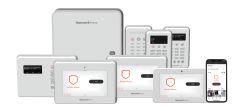
The Honeywell Home ProSeries was designed to give dealers an end-to-end platform to deliver a complete security and smart home solution. The platform offers fast and responsive operation and an easy-to-understand user experience. A common user interface is featured across all customer touchpoints making the system easy for consumers to learn and operate. www.resideo.com
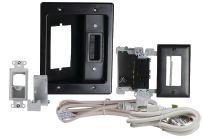
On-Q Flat Screen TV Pro Power and Cable Management Kits provide installers with what they need to safely extend power to wall-mounted displays and accompanying devices, while concealing power and AV cables inside the wall. Each in-wall kit includes a power input module with a drywall bracket and six-foot power cord. Offered in white to blend in with a home’s décor, the module’s decorator power inlet strap provides the flexibility of ganging other connections. Each kit’s power output module includes a six-foot UL-rated power cable. A tamper-resistant outlet with a recessed design accommodates almost any type of power plug, including right angles and wall warts, while a bush strap opening allows for the connection of AV cables. Available kits include the HT22U2-WH-R6 with a white output module and the HT22U2-BK-R6 with a black output module that blends in with TV mounts and hides cable connections. www.legrand.ca
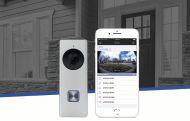
The new Video Doorbell allows the user to see, hear and speak to visitors at their door, all with the same Virtual Keypad app, which also controls the user’s security and home automation systems. While watching in Live view from the app’s doorbell tab, the owner can arm or disarm their system, lock or unlock doors, and trigger one or several Z-Wave devices through the app’s favourites. Without opening the app, the owner will also be able to see at a glance who’s at their door. Push notifications of motion at the door also include thumbnails of a snapshot taken from the doorbell. www.dmp.com
The 2GIG eSeries is the next generation of the 2GIG security and control ecosystem that includes two allnew GC2e and GC3e panels and a new line of encrypted sensors. Compatible encrypted 2GIG sensors include the standard door/ window sensor, motion sensor, glass break sensor, key fob sensor, and recessed D/W sensor — with more to come in the near future. And the two new panels support all traditional 2GIG sensors and other legacy 345 sensors for system upgrades. The new GC2e panel includes a larger, brighter 5” capacitive touch screen, while the GC3e features a 7” touchscreen. Both panels have two-way audio and front-firing speakers. www.nortekcontrol.com
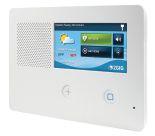
The Legacy 650 Model 1129 and Legacy 850 Model 2129 garage door openers are integrated with OHD Anywhere Wi-Fi technology. The new Overhead Door openers offer quiet and durable performance while granting homeowners the ability to monitor and operate their garage doors from almost anywhere using a smart device. The garage door openers have an opening speed of up to seven inches per second and were each built with a 24V DC motor, providing smooth and quiet operation. With the capability to operate doors up to eight feet in height, Legacy 650 Model 1129 can lift doors up to 350 pounds and Legacy 850 Model 2129 can operate doors weighing up to 500 pounds.
www.overheaddoor.com
Safe365 is a free mobile telecare application for seniors. Through the app, family members can know at all times where their loved ones are, such as if they have arrived safely home or at their destination. Other functionalities include: an emergency button for a senior to press to get help; automatic notifications when a family member enters or leaves a certain area; an option to warn when a mobile device is running out of battery, or whether they have internet access or not. Safe365 also features intelligent notifications based on pattern detections of the elderly user.
www.Safe365.com

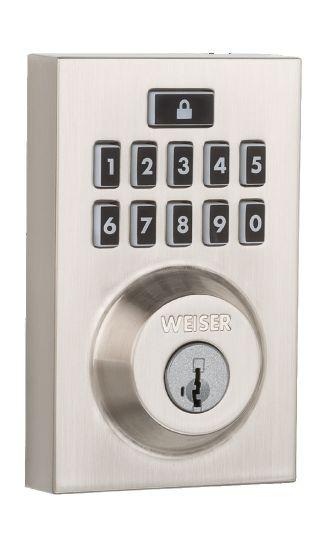
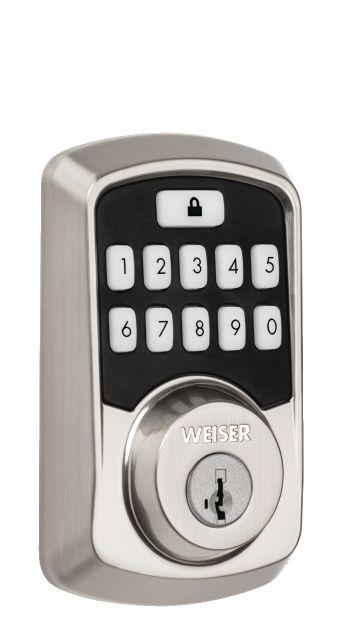
SMARTCODE™ 10 TOUCHPAD
+ Keyless Entry + Home Connect + Z-Wave + SmartKey® + Available in
Nickel & Polished Chrome

Z-Wave is the smarter choice for smart homes. With the largest choice of smart home products, Z-Wave provides more choice for homeowners and renters. So what does that mean for you? It means that you can customize your smart home with Weiser to meet your needs.
AURA™ SMART LOCK
+ Keyless Entry + Home Connect + Bluetooth enabled + SmartKey® + Available in Satin Nickel & Iron Black