AutomAtion HomE
A look into the products, technologies And solutions shAping the mArket
Sponsored by: DigitAl SupplEmEnt to


A look into the products, technologies And solutions shAping the mArket
Sponsored by: DigitAl SupplEmEnt to
Today’s customers are increasingly tech savvy, mobile, and are being bombarded with advertising for ‘Smart Home’ technology that integrates with their security systems, phones and tablets. The functionality is appealing because it helps mobile professionals and techies alike to stay in touch with their home base, business, and family.
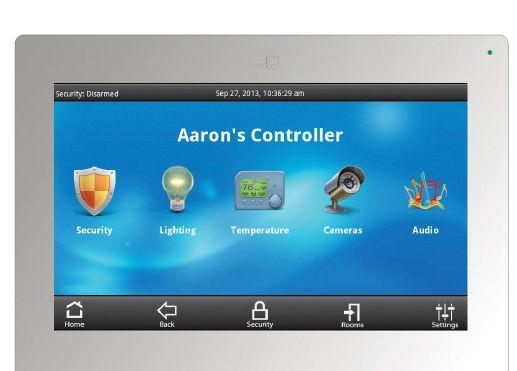
At the same time, competition is increasing from the large cable & telcos across Canada, not to mention discount monitoring services and major online E-tailers and big box stores. Meanwhile, professional security dealers are looking to maintain or increase their RMR and customer retention, while traditional service providers are seeking to charge extra for smart home features. So how does a dealer hold on to their existing business, let alone keep growing?
Give the customer what they are asking for and be flexible. Offer email or SMS alerts and smart phone control to an existing monitored account as a bonus or trial period. Perhaps a free service level upgrade (which may cost nothing), bonus daily or weekly test, or a preventative maintenance service call, or enhanced service coverage included in the monitoring contract.
Yes, there are solutions available that can add automation
and alerts to existing systems without monthly fees to the dealer and minimal hardware cost, which not only allows for an upsell opportunity but also the ability to retain customers who are looking for a bit more than just a monitored alarm. Expand your horizons. There is an entire segment of customers looking for affordable but more advanced automation, touch screens and multi room audio capabilities somewhere between the budget big box automation systems, and pie in the sky elite automation packages. You can fill that need with a little bit of creativity and some expertise to put the pieces together.
That’s where the folks at Aartech Canada come in to play. Aartech Canada is an independent, 100% Canadian owned and operated distributor of automation, security, audio video, camera systems and access control products based out of Oshawa Ontario. Starting with X10 technology back in 2002, today Aartech’s staff are experts in automation and integration with alarm systems, automation technologies like Z-Wave, Insteon and UPB as well as cameras, audio systems, mounts and more. Aartech offers a huge brand selection and their team can help put together creative solutions for today’s challenging environment.
Home automation is an emerging market in Canada with several products available to the consumer across many platforms. The rapid adoption of smartphones and tablets, along with the low cost of ownership of home automation systems, are contributing factors to this high growth rate.
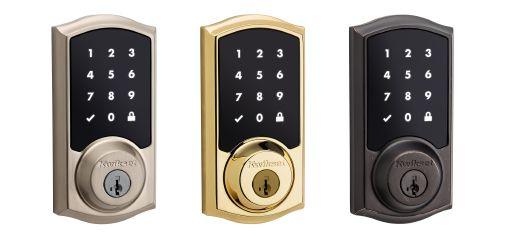
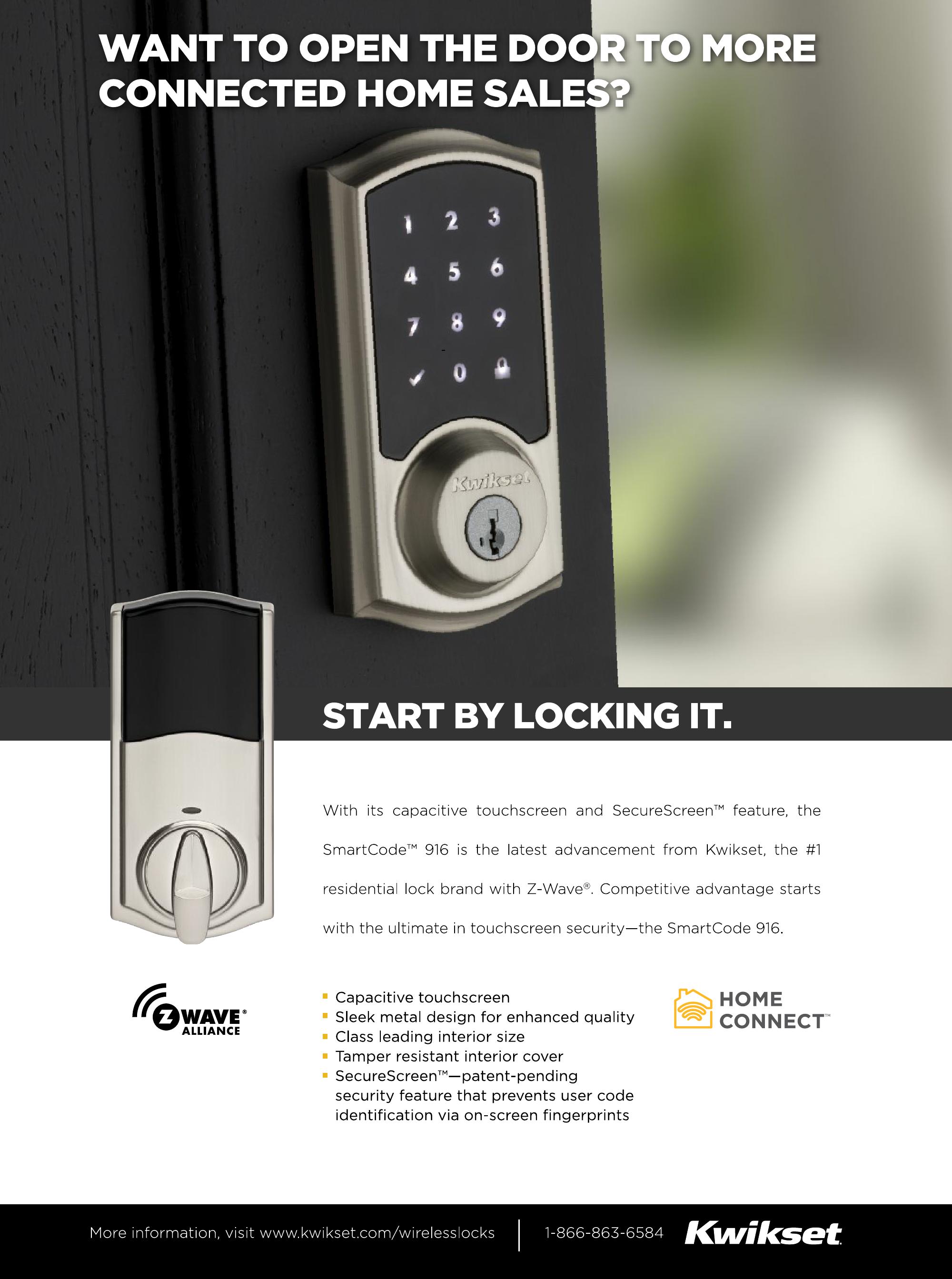
The current trend in smart locks is exponential based on technology meeting the real world needs of homeowners in a market where locks have changed little over the past 100 years. The smart lock is one of only a few devices in an automation platform that are utilized on a daily basis by a consumer. For example, parents can receive notifications when their children arrive home from school; homeowners can give access on specific dates and times for the nanny, house cleaners, or even a contractor. If someone attempts to tamper with your lock or force entry into your home, you can receive alerts. All of these functions can be easily accessed using your Kwikset Home Connect lock with your automation platform of choice.
Kwikset is the #1 selling residential lock brand in North America and the #1 selling Z-wave electronic lock that has been fully integrated for use by all of the major security and automation panel manufacturers. Kwikset door hardware is presently installed on 65 out of every 100 homes.
Kwikset® SmartCode™ Locks with Z-Wave® Technology is a line of electronic keyless entry locks developed specifically for interoperability with home automation and security systems to deliver a variety of access control options for added convenience with effortless integration. This allows homeowners to monitor and remotely control their door locks using either a Smart Phone or an Internet connected computer in conjunction with a home automation/security system. These systems will allow users to remotely check door lock status (locked/ unlocked); can be configured to automatically arm and disarm the security system by simply locking or unlocking the door and have the capability to initiate customized scenes upon entry and exit like controlling lighting, temperature and other types of energy management devices.
Kwikset Provides Patented and Innovative Security features such as SmartKey Technology with Bump Guard which allows customers with existing Kwikset door hardware to easily rekey their lock in less than 10 seconds to their existing house key.
Kwikset Lock Benefits:
• Increase your customer’s use of the overall system as well as increasing the likelihood of retaining their service for years to come
• Allows you to offer an Upgrade solution to your customer for increased revenue
• The lock, as an accessory to an existing Home Automation or Security System, will expand the systems functionality to add greater value to your customer’s overall experience
Kwikset Dealer Benefits:
• Increased RMR for Interactive Services
• Increased retention based on enhanced system usage
• Provides a total security solution for the ultimate customer experience
• Kwikset is the only lock manufacturer to provide comprehensive 6 day/week technical support to our partners and their customers (M-F 5:00am PT to 6pm PT; Sat 7:30am PT to 4pm PT). This includes support for all security panels inclusive of programming and troubleshooting
• Kwikset has developed the only certified Z-Wave training class in North America in which we teach the “Do’s & Don’ts” of Z-Wave system design and how to successfully sell the value proposition of the overall system (inclusive of lighting and thermostats) ensuring it’s sold and installed right the first time maximizing profits and eliminating gobacks. The course is CEU approved by both the ESA and BICSI and is valued at 2.0 credits.
For more information on Kwikset Home Connect products or Z-wave mesh network system design, please contact Steve Lubin, National Account Manager Canada at steve.lubin@spectrumhhi.com or 289-233-2060. www.kwikset.com/wirelesslocks

With devices getting smarter, the vision of a truly connected home may be coming to fruition, but where does the security industry fit in?

It seemed pretty “smart” at the time — the home that allowed its owner to program cameras and sent alerts when a window is opened.
But as ever more devices are connected to networks — as appliances start gathering data about their environment, communicate with each other and know when you come and go — homes today are moving towards an entirely new level of smart.
How the advent of the Internet of Things (IoT) will affect the security industry is unclear. The IoT may present increased security risks, which are not yet resolved. But the entry of Google (through its purchase of thermostat and smoke detector maker Nest Labs and Nest’s subsequent purchase of camera company Dropcam) into home automation suggests a promising new stage for the market.
“We’re predicting by 2020, there will be more than 50 billion devices connected on the Internet. These are devices within the home. It could be appliances, home automation systems, security systems,” says Victor Woo, general manager for the Internet of Things for Toronto-based Cisco Canada.
“And in the private sector, these are machines on the plant floor; these are buses, cars. All these devices that generate data are natural items that are going to be connected, and we’re going to be able to leverage that data.”
Within the security industry, says Earl Perkins, research vice-president at Stamford, Conn.-based Gartner, the Internet of Things is going to be transformed by the availability of IoT form factors. “This is particularly the case with the use of sensors for determining changes of state in a device or in the environment surrounding them; for example, in industrial automation and control environments,” he says in an email interview.
“We also believe that there will be a convergence between the digital security experience and the physical security experience by the introduction of IoT devices in automating some physical security processes (for example, monitoring perimeters through video surveillance, sound and movement detection, building and facilities management integration with security systems for the building).”
Perkins says Google’s purchase of Nest represents a move by want-
to-be-major IoT players to address the “Connected Home.” In addition to the industrial automation and control environments, there are other possible markets.
“Other interesting potential areas are smart city initiatives (for example, intelligent lighting that adds sensor and control systems to augment security of different urban areas), transportation (particularly in sensitive facilities such as airports, where the digital and physical security convergence will be critical) and health care,” he says.
“We believe that identity and access management will be especially important, since we predict ‘Identity of Things’ requirements to facilitate device-to-device (machine-to-machine or M2M) authentication and authorization prior to any exchange of data, as well as the need to define relationships between IoT devices and humans; for example, think of automobiles as collections of IoT device networks and the collection’s relationship with the different drivers.”
smart phone, when you are coming home and heats or cools the house to your preferred temperature. It also factors indoor and outdoor temperature, humidity and weather into its algorithm, enabling it to provide the most comfortable temperature for homeowners.”

“We’re predicting by 2020, there will be more than 50 billion devices connected on the Internet.”
— Victor Woo, Cisco Canada
The introduction of more sophisticated smart devices will benefit the security industry, Gottlieb says. “Products like Lyric help raise awareness and drive consumer demand for connected home solutions. That ultimately will help security dealers, who are already in the home [automation market] and are in a great position to offer their customers fully integrated home automation products and services,” he says.
A camera system by San Franciscobased Butterfleye uses a combination of external sensors, video analysis software and learning algorithms that allow the camera to decide when to record.
“The trend is to move away from the dumb, passive 24/7 surveillance camera,” says Ben Nader, CEO and founder of Butterfleye.
Woo believes the main significance of Google’s purchase of Nest and Dropcam is the validation it provides for the IoT. “It says the Internet of Things is here to stay — because of the ability to monetize or provide big data analytics. The ability to collect information and provide value is really driving this market, and I think Google understands that.”
A competitor of Nest’s “learning thermostat,” Honeywell’s new Lyric thermostat, allows the user to toggle between two preset temperature settings: “at home” and “away.” The thermostat uses geofencing to adjust the temperature as residents leave or return to the house.
“The geofencing feature turns the Lyric thermostat to energy-saving mode when a home is empty,” says David Gottlieb, director of marketing communications at Melville, N.Y.-based Honeywell Security Group. “And then it senses, through the location of your
“We want to move towards a system where the camera itself can sense what’s going on around it and can make a decision: ‘The person who just walked in was not supposed to walk into this house. This is not the homeowner’ or ‘Yes, this is the homeowner. He goes in and out of the house at this time. I’ve learned this pattern about him.’”
The camera recognizes the homeowner through sensors, including thermal heat and face detection, as well as the smart phone, Nader says. It also recognizes certain sounds. Thus, it learns the house has a dog and knows not to trigger an alert whenever the dog moves.
The company plans to integrate the “Active Eye” cameras with third-party software and devices, such as speakers, a smart watch and intelligent lighting systems.
Greater connectivity, however, raises security challenges that must be
addressed, says Ahmed Etman, general manager of security and enterprise networking for Cisco Canada.
“Traditionally, devices were not communicating outside their domain, or they communicated in isolation, within their own domain. Now, with the connectivity capability that all these smart devices have, it opens up the attack surface,” he says.
As a result, Etman adds, more security measures must be put in place, and all businesses and consumers will have to be more aware of security. Manufacturers in particular will have to approach security in a completely new way. “You have to bake security into every application you build to leverage a smart device; you have to build security into every practice and every process,” he says.
Nader says the Butterfleye system achieves security through heavy encryption both at the camera end and at the Cloud end. The company also controls the camera, the Cloud and the app.
“If you have this closed, end-to-end loop, you get to put security check points at each point, and we can provide the highest security and the highest level of encryption,” he says.
Whether the IoT makes home automation more attractive to consumers, Woo says, will depend on the application. While simple connectivity doesn’t add value, certain applications — such as the ability to monitor a video system remotely — have great consumer appeal.
“It’s about its usability and practicality. And as they build these features into the products, that’s going to drive the need,” he says, pointing as an example to the growth of Internet-connected TV. “Because of things like on-demand video and Netflix, these capabilities are now built into our culture, and we tend to consume these devices.”
Nader believes security dealers will benefit from IoT devices because they offer consumers many appealing features, such as added privacy. The camera monitors when the user is outside the house but automatically shuts down when residents arrive home and are recognized. “People want these things to work when they’re not home, but when they come home, it gives them privacy. It’s all about attuning to you and learning your behaviour.”
Moreover, because the sensing capability goes beyond simple motion detection and can tell the difference between homeowner and intruder, between human and dog, IoT systems generate fewer false notifications and alarms.
But Reza Raji, founder and former CEO and chairman of iControl Networks, now a Silicon Valley entrepreneur, says many IoT devices so far have been conversation pieces rather than real solutions and so have had little mass market appeal. “They are a solution looking for a problem. They’re really cool. They have a great user experience. But the key is, what is the real pain point you’re trying
to solve?” he says.
However, Raji believes the IoT will in future offer valuable solutions in home health care. One area is elder care, as baby boomers try to stay independent as they age. Another is health monitoring: smart devices could be layered on top of a home automation system to let users monitor and manage their health.
“The monitoring could be by yourself, your activity, blood pressure and weight, or third party, such as your doctor. Or, if you’re an outpatient living at home and you want to have somebody else monitor these things, you would use a system like that,” he says. “That’s a real pain point. People are paying a lot of money these days to solve that problem.”
In the private and public sectors, Woo says, Cisco estimates the IoT market will be worth $19 trillion in 2020. Applications will include “smart traffic” (the ability to intelligently direct traffic flows based on vehicle position) and “smart grid” (the ability to read connected meters wirelessly, providing the utility with data that helps it distribute energy more efficiently).
“I think that can be mirrored in the consumer market. These applications will allow us to interact with other devices and with our homes in different ways. That’s where the opportunity lies, in the consumer market,” he says.
Toronto.
By Neil Sutton
The Thread Group is a new coalition of companies fostering the development of a wireless mesh networking layer that allows technology devices in the home to communicate with each other.
The group was founded by Yale Security, Silicon Labs, Samsung Electronics, Nest Labs, Freescale Semiconductor, Big Ass Fans and ARM. According to Chris Boross, president of the Thread Group and also a member of Nest’s product marketing team, Thread was created due to a perceived gap in networking technology that is currently serving the home automation market.
“We were looking for an existing standard that would allow us to connect products in the home wirelessly through a mesh network that carried Internet Protocol — we were looking for IPV6 support natively. It needed to be extremely low-power consumption and very, very secure, but also carry IP,” explains Boross.
“We couldn’t find anything that was suitable to do the job, so we started working as a group of seven companies to develop Thread.”
Thread uses the 802.15.4 radio standard in the 2.4 GHz band, which is also used by ZigBee, another wireless home automation standard which was created more than 10 years ago.
The Thread Group is still in its infancy by comparison, but shares some
“It’s performing extremely well. A version of Thread is seeing real use.”
— Chris Boross, president,Thread Group
similarities with the ZigBee Alliance as well as the Z-Wave Alliance, both of which were started by a handful of companies and have since grown to dozens of members. (Freescale is also a member of the ZigBee Alliance and sits on its board of directors.)
The differentiator for Thread is its support for battery-operated devices, says Kevin Kraus, director of product management for Yale Residential and the Thread Group’s treasurer.
“Yale has a line of electronic residential door locks that communicate with home control systems. We offer locks that communicate with both Z-Wave and ZigBee — two of the predominant home automation mesh network protocols. The reality is, neither of those are really optimized for batteryoperated products,” he says.
He adds that Thread is “the foundation to say, ‘We’ve moved the bar up from Z-Wave and ZigBee. We now have a new protocol that is much more focused on supporting battery-operated devices.’”
But, he says, Thread isn’t likely to supplant existing protocols. Mostly likely, they will share the market, along with
“We know how much hard work the Thread Group has ahead of it. ”
— Mark Walters, chairman, Z-Wave Alliance


any others that come along. “At some point . . . the product that consumers want will drive that final solution, but I see them co-existing for many, many years.”
In an email interview with SP&T News, Mark Walters, chairman of the Z-Wave Alliance, says, “As a leader in this market for almost 12 years, we at the Z-Wave Alliance know how much hard work The Thread Group has ahead of it. But we welcome them and applaud their efforts to advance the state-of-the-art in connected-home technology.”
According to Boross, Threadcompatible products should be available by the second half of 2015; the first half of the year will be devoted to helping companies test and certify products.
Nest, which makes home products including thermostats and smoke detectors, currently uses an early version of Thread. “It’s performing extremely well in the field. A version of Thread is seeing real use,” says Boross.
Nest garnered attention earlier this year when it was bought by Google for US$3.2 billion. Nest subsequently acquired Dropcam, a manufacturer of Wi-Fi based surveillance cameras for US$555 million. Boross wouldn’t address Dropcam’s potential role in the Thread Group because, at the time of the interview, the acquisition had not closed.
Kraus says he expects to see other security companies show an interest in the Thread Group, saying it will “likely be looked at” by multiple vendors that wish to take advantage of its potential.