


























































































































































































Italy-based video event management software (VEMS) company Arteco recently announced a partnership with a new Canadian distributor.
— Steve Birkmeier,Arteco
Waterloo, Ont.-based Santeri is a national distributor of IP-based security systems and event-based analytics software. “One of the reasons we brought on our new distributor is because of their ties in the oil and gas industries,” says Steve Birkmeier, vice-president at Arteco’s U.S. operations, based Chesterfield, Mo. The company also distributes
in Canada through Guelph, Ont.based Hall Telecommunications, a distributor of telephony, structured cabling, security and IP network products.
Birkmeier says that Arteco started distributing its products in Canada approximately two and a half years ago and introduced local representation about a year and a half ago. The company’s current Canadian manager, Kevin Wallace, was appointed last August.
While it is possible to serve the Canadian market via a U.S. office, having a Canadian presence “has been very helpful for us,” says Birkmeier.
He estimates that the company has experienced about 60-70 per cent growth in Canada in the last year. “It’s really that direct penetration, getting out there and working with the systems integrators and doing training locally.”
Arecont Vision says it has committed more resources to Canada in an effort to bolster its presence up here.
The firm has hired JFC Solutions to act as its representative here and also has three sales engineers serving western, central and eastern parts of Canada.
“We’ve had a long term commitment to the Canadian market — lots of airports, and lots of other customers across the country, but we’ve always felt we needed to ramp up our presence quite a bit more to make sure that we’re addressing the issues properly,” says Jeff Whitney, vice-president of marketing, who joined the company’s U.S. operation last September.
all about how that works,” adds Whitney, who currently resides in California, where Arecont Vision is located.
Another recent addition is John Voyatzis, who joined the company as director of sales for Canada.


“We’re trying to make significant effort to notify the marketplace that we are in-country, we are well-positioned in terms of products [and] resources,” he says.
By Neil Sutton
Leaders at Samsung Techwin are eager to squash rumours that there are big changes taking place at the company as the result of a major stock transaction between Samsung and new part owner Korea-based Hanwha Group.
Samsung sold its stake in the Samsung Techwin company (32 per cent) late last year to Hanwha Group, a large Korean company that was interested in increasing its presence in defence and physical security, according to Tom Cook, vice-president of sales for Samsung Techwin America. But, he said, there will be no major shifts in the company as a result of the transaction: the name and branding will remain the same, there are no management role changes expected, and Samsung Techwin is poised for further growth.
over …This is a stock transaction in a public company.
“Will [Hanwha] influence the strategies and investments? Most likely they will have a say. Just one say, though. This is a very large public company that will continue to grow,” added Cook.


Branding and the name of the company was one of the first questions on the lips of employees when they heard the news, said Janet Fenner, senior marketing group manager, Samsung Techwin. “What’s that [booth] banner going to say at ASIS … or ISC West? We were reassured that everything is going to be Samsung.”
“Lots of American companies just treat Canada as if it’s an extension of the market. I’m originally from Toronto, so I know
Voyatzis says the company’s key strengths include surveillance coverage of large spaces, as well as solutions to fit infrastructure, public sector, manufacturing, etc. “Anywhere where we can apply our multi-sensor technology to actually reduce the amount of cameras that you would need to cover a significantly large area.”
“This was a stock transaction. I think people get very nervous when they hear ‘acquisitions,’ ‘mergers’ and things like that,” said Cook during a conference call with security industry media. “We’ve seen that in our industry and other industries where companies are acquired and they’re almost disabled or just taken
Cook said that Samsung was ranked seventh in the market by research firm IHS at the end of 2013 and is expected to reach fourth when the firm’s next major report is released later in 2015. The goal is for Samsung to move up to the No. 2 spot.
“Our growth has been phenomenal over the last two and half or three years — about 40 per cent last year [2013] and about 70 per cent over last year to this year [2014].”
Hanwha Group, founded in 1952, is one of the top 10 business enterprises in South Korea.
Canadian firm Avigilon made two key announcements in the last few months regarding its acquisition of patents.
The company said in December that it had completed the acquisition of Reston, Va.-based ObjectVideo’s patent portfolio and patent licensing program for US$80.3 million. The acquisition includes the company’s 76 U.S. and international patents and more than 50 U.S. and international patent applications. In January, the company said it had purchased a further 96 U.S. and international patents and 25 patent applications from four unrelated companies for approximately US$13.37 million. Those companies include: Behavioral Recognition Systems, Inc., FaceDouble Inc., ITS7 Pty Ltd., and VideoMining Corp.
According to Avigilon, the patents from the most recent acquisitions “relate to various video analytics capabilities, including emotional and attentional response measurement, in-store object tracking and behavioural analysis, object tracking and anomaly detection, video segmentation and metadata generation, user interfaces, and image classification and retrieval over wireless networks.”
Avigilon now holds a combined total of 213 U.S. and international patents and 215 U.S. and international patent applications.
Israeli-based wireless networking technology firm Siklu Communication is making inroads into the surveillance market through a series of partnerships and by hiring an industry veteran.
Alex Doordyun, Siklu’s director of business development and sales for security and surveillance, joined the company six months ago. He was formerly business manager at Johnson Controls.
for our technology.”
—Alex Doordyun, Siklu
Doordyun is tasked with helping the company sell its networking technology, which is well established in the telephony market, for security applications.
“Siklu sees the security market as a key growth area for our technology. They’d already had a good number of successes in this market [in the year] before I joined the company. They decided to expand their scope into the security surveillance market. Up until then, their primary market had been on the telecommunications side,” says Doordyun.
Doordyun adds that the transition from analogue to IP is helping to drive that market presence for the company and its point-to-point wireless solutions, which are suitable for surveillance systems, particularly in municipal environments where low-frequency networks are already over-used.
Existing 802.11 frequencies are “getting very, very congested, particularly in urban areas, where there’s a lot of wireless activity going on — not just for surveillance,” he says.
“Our technology is at higher frequencies — 60, 70, 80 GHz — which are uncongested and interference free and as a result a lot more reliable and stable in terms of providing a wireless connection.”
of markets that we operate in — city surveillance, transportation, campuses,” says Doordyun.
The company’s U.S. headquarters is located in Fair Lawn, N.J., and also has a presence in Ottawa where its regional sales manager for northeastern Canada and U.S., Paul Lefebvre, is based. Lefebvre joined the company approximately 18 months ago.


The company has formed a partnership with Anixter, which is distributing its products in North America. It is also reaching out to security installers, expanding beyond its base of IT resellers, and has a relationship in place with Johnson Controls.
In addition, Siklu has partnered with established security vendors like Axis Communications, OnSSI, Milestone Systems, Arecont Vision and Avigilon.
“We’re working with the top-end camera and VMS manufacturers who operate in the same kinds
Eagle Eye Networks has opened a data centre in Montreal, its first outside the U.S., in an effort to appeal to Canadian customers who would prefer their data be stored locally.
Eagle Eye is a provider of Cloud-based video surveillance. In addition to the new Montreal location, it operates data facilities in Austin, Tex. and Santa Clara, Calif. At press time, another undisclosed location was due to open.
on encrypting its data both at rest and in transit.


While the Internet may in theory be borderless, the practice of retaining data can have different ramifications depending on where it’s stored. “In general, when you’re dealing with customers’ data, whether it be computer or video data, customers don’t want their data to go out of country. The laws that apply can get very confusing,” says Dean Drako, president and CEO of Eagle Eye Networks, adding that the company places a premium
While the company’s products are available in Canada, it does face limitations here. “Only the 60 GHz frequency is currently regulated in Canada, so the 70 and 80 GHz are not regulated,” explains Doordyun. “Sixty GHz is more for short range products, so it’s ideal for edge-level connectivity … as opposed to 70 or 80 GHz, which is more for long range, up to about a mile and a half. That currently limits our expansion into the Canadian market, but there are lots of opportunities for the 60 GHz technology.”
The company also recently received US$18 million in funding, which will help the company not only with its push into security but also residential networking solutions such as Gigabit to the Home (GTTH), says Doordyun.
— Neil Sutton
Eagle Eye’s service offers the ability to store video data from its VMS in the Cloud, which is appealing to customers based low maintenance and investment costs, maintains Drako. The company has some customers in Canada that precede the new centre in Montreal, he says, and they will be given the opportunity to move their data there. Eagle Eye also has a partnership in place with integrator Diebold and will be selling the service in Canada through them.
While the intent is for Canadian clients to house their data in Montreal, it’s not exclusively Canadian, says Drako.
“If a U.S. customer comes to me and says, ‘I want to put my data in a Canadian data centre,’ we’re going say, ‘OK, that’s fine,’” he says. “It doesn’t make that much nevermind to us — it’s really just about what the customer wants.”
Drako believes in the efficacy of Cloud-based solutions, positing that surveillance is following the same trend as other services that were once locked into static solutions, like email, file transfer and desktop software. “It’s much easier to use a Cloud-based service, pay for what you use and reduce your upfront investment costs,” he says.
Drako also recently purchased Cloud-based access control firm Brivo for US$50 million. While Brivo and Eagle Eye will continue to run as separate companies, there are obvious synergies which allow for integration between their respective products, he says.
“With Brivo and Eagle Eye under the same stewardship, the resellers and the installers and the integrators are kind of excited that someone’s very seriously addressing the Cloud services that they so desperately need to meet what the customers are asking for,” he says.
“There’s a lot of integration that’s going to be done between the products so that it’s seamless for the customer.”
— Neil Sutton
Bosch Security Systems has named Jacquelyn HallDavies vice-president of sales for Canada.
In this position, she will lead the Canadian sales team for the company’s security and communications product portfolios.

Hall-Davies joins Bosch with more than 20 years of experience in a range of sales and management roles for manufacturers, manufacturer’s representatives and dealers.

“Jacquelyn is an accomplished sales leader with a history of establishing strong relationships with integrators and distributors,” says Brian Wiser, president of sales, North America. “Her experience combined with her knowledge of the Canadian market will be a benefit to Bosch and our customers as we support them in their efforts to win new business and grow sales.”

By Neil Sutton
Canon’s offer to buy Axis Communications for US$2.8 billion could see one of the leaders in the IP video surveillance become part of a much larger Japanese entity that is perhaps best known for its SLR cameras, copiers and printers, and reaction is mixed at this early stage as to how this might ultimately benefit security installers and end users.
Axis and Canon have both released communications indicating that there will be no immediate changes and dealers can expect business as usual from the IP camera company they have been dealing with for years.
Canon spokesperson Richard Berger said in an email interview with SP&T News, “We do not see this having any effect on the way Axis currently conducts business with its partners. Axis will remain an independent entity within the Canon Group with the current management structure in place and continue conducting business as it has to date. Axis is the leading name in the network surveillance camera industry and its strong brand name will not change.”
relationship between Canon’s intellectual property, that of Axis, and the Milestone Systems VMS software Canon acquired last year, Berger stated that the company was pursing synergies through “the mutual use of technology assets (optical, imaging and networking technologies, etc.).”

In an interview with SP&T News, Axis president and CEO Ray Mauritsson elaborated that Canon has “vast knowledge of sensor development or lens development, image algorithms development and the manufacturing technologies from their consumer or professional camera business. There are leverage points there . . . that we hope to be able to access.”
Surveillance tools, both hardware and software, can be harnessed for several functions, including loss prevention, marketing data, customer experience information, energy management and building automation, argues Jones.
Canon has the reach “and now they have a trusted technology [in Axis] that they can use,” she said, adding the company already has established relationships with commercial office managers through its copier and printer products.
Tying in the intellectual property
estimated to be the third largest supplier of video surveillance equipment, with an approximate five per cent share of the global market. Canon’s proposed purchase of Axis, along with its acquisition of Milestone “shows just how seriously Canon is about expanding its interests in the video surveillance equipment market,” said Cropley.
He added that the current level of fragmentation in the security market is likely to result in even more acquisitions. In the past few months alone, Samsung Group has sold its stake in Samsung Techwin and Panasonic has acquired VMS vendor Video Insight.
When quizzed about the potential
The stakes could be even higher than a coming together of successful technologies from two different companies, according to industry analyst Sandra Jones, principal of Sandra Jones and Co., based in Chardon, Ohio. Canon’s established track record in both consumer and office environments could help to elevate the security industry in general, providing some much needed momentum to push surveillance beyond the security applications it is known for.
Bosch Security Systems has announced Cloud-based services enabling central monitoring stations to take advantage of video monitoring.
These services were already available in Europe and are now an option in North America.
“The video monitoring market is expected to grow at a rate far above traditional monitoring services,” says Chris Larcinese, regional marketing manager, Bosch Security Systems, in a statement. “This growth is being driven by small and mid-sized businesses that have similar security requirements as large organizations but often lack sufficient funds to recruit their own security personnel or invest in professional security technology.”
With Cloud-based services, partner central monitoring stations are
able to provide remote video verification, virtual guard, and assistance and surveillance services to their dealers and their direct small and mid-sized business customers.
The SaaS solution is hosted and maintained by Bosch. For each CMS, Bosch integrates Cloud-based Services with their alarm management platform, enabling new video monitoring services within the established environment. For example, when a Bosch IP camera equipped with Intelligent Video Analysis detects a critical event at the customer site, the operator is presented with an alarm in the alarm management platform. As soon as the operator acknowledges the event, a website is opened that helps the operator to gain situational awareness based on live and recorded video evidence to confirm the source of the alarm.
technology developed inside Canon that we may be able to leverage going forward.”
— Ray Mauritsson,Axis Communications
it has acquired through Milestone and now Axis could help that relationship, she said. Moreover, it potentially allows a single company to present the end user with an end-to-end solution, creating a deeper integration between compatible technologies.
But while there may be seemingly boundless opportunities on the horizon, Mauritsson tempered expectations about what a Canon-owned Axis may yield, at least in the short term.
“It’s not a ready-made smorgasbord that we’d be able to pick and choose from and we’d be able to create a completely new product today,” he said, “but we know that there’s a lot of knowledge and technology developed inside Canon that we may be able to leverage going forward. At the same time, we need to take responsibility for our own development.”
Jon Cropley, analyst at IHS, pointed out in a recently published research note that Canon has had serious goals in mind for the surveillance market for at least 18 months: “Back in August 2013, it revealed big ambitions when its CEO, Fujio Mitari, spoke about security cameras becoming an ‘important pillar’ for the company and the market having ‘limitless possibilities for growth.’”
According to IHS, in 2014 Axis was
Pierre Racz, president of Montrealbased privately-held security software vendor Genetec, and a main rival to Milestone for market share, agrees that the current acquisitive environment is likely to continue. “There’s a process of natural selection going on here,” said Racz. “When the market is fragmented, you’re going to get a lot of consolidation. The people who climbed above that barrier to entry are now being put to the test.”
But will these shifts in the market deter end users from buying products or integrators from installing them? Not likely, said Racz. “This is not going away. There is not going to be a chill or a stop of people putting in these kinds of things. They are very useful. Certainly customers are going to ask themselves whether to put these systems into a closed system basket or not. . . . [But] people are still going to deploy these systems.”
Michael Elkin, security sales and marketing manager for Ottawa-based integrator and Axis partner Marcomm Systems Group, admitted that “everything is a little gray right now. We don’t know how this is going to affect the Axis team in general. We just hope that there’s a smooth transition.”
However, he added, “as long as everything has stayed the way it’s stayed, it doesn’t matter if there’s a new face on top — as long as the cameras keep being pumped out as Axis and they work the same way.”
The fact that both Canon and Axis have made assurances about the future of their respective companies will go a long way with integrators, said Jones. “There are certain promises Canon made and I have a great deal of trust in both [Axis co-founder] Martin Gren and [Axis North America GM] Fredrik Nilsson. They are going to continue to make sure that customer service remains the same.”
By Neil Sutton
In a time when consolidation is increasingly common in the security industry, Genetec executives are placing a premium on the company’s independence and ability to innovate quickly.
The privately-held security software company hosted a media day at its Montreal headquarters in February to outline key aspects of its product roadmap for 2015 and beyond, as well as demonstrate why it feels it is leading the pack in innovation.


Company president Pierre Racz told assembled security industry media that the company prides itself on its ability to “turn on dimes.”
Racz also said that Genetec is rededicating itself to “reconnecting the people to the purpose. . . . I’m harnessing the entire company to remain innovative.”
Part of that process has entailed the hiring of a new chief commercial officer, Georges Karam. Karam previously led Atelka Enterprise, a business process outsourcing company that specializes in solutions for call centres, as its co-founder and CEO. Racz, who was also one of Atelka’s backers, said he approached Karam to take on a new senior role at Genetec. As such, Karam will shoulder some business responsibilities, freeing up Racz to focus more on technology development.
“Pierre and the whole company is extremely focused on delivering continuous innovation,” added Genetec vice-president of marketing Andrew Elvish. “By staying independent, that will help us to innovate. Working with our integrators, we can offer our clients a turnkey solution.”
pany a nimbleness that may not be afforded to larger, publicly traded companies. Prophetically, initial comments about consolidation were made the day before Canon’s Feb. 10 announcement that it had made an offer to buy Axis Communications for US$2.8 billion. Racz held an impromptu press conference shortly after the offer was made public to discuss how the industry is changing (see Axis story on p.6 for Racz’s comments).
As the surveillance industry experiences a certain amount of flux due to mergers and acquisitions, Genetec is readying its release of Security Center 5.3, which it will preview at the upcoming ISC West conference in April in Las Vegas, Nev.
A key element for this release will be Sipelia, a communications technology that Genetec first acquired in 2010 from a French company of the same name.
Sipelia allows for unified SIPbased communications between operators and intercom devices. SIP (Session Initiated Protocol) is a common protocol used for voice, video and instant messaging communications over an IP network. As part of the latest version of Security Center, Sipelia means that intercom-based communications can be integrated into a security system running over an IP network.
“Very large corporations are moving as much of their stuff to the Cloud as possible.”
— Pierre Racz, Genetec
Company executives acknowledged the current climate of consolidation in the industry, mentioning Milestone’s acquisition by Canon and the more recent purchase of Video Insight by Panasonic. Elvish noted that Genetec has only two major shareholders, Racz and executive vice-president Alain Cote, providing the com-



based services, and as such is going to lengths to promote it as a viable solution for businesses of almost any size. “Cloud is really at the cornerstone of our innovation strategy at Genetec,” said Christian Morin, vice-president of Cloud services.
The company first launched Stratocast, a Video Surveillance as a Service (VSaaS) solution running on the Microsoft platform two years ago, and is now updating it every three to four weeks with new features.
ing as much of their stuff to the Cloud as possible,” he said, adding that the average person may not be aware that the money they entrust to banks is basically stored in the Cloud.
Sipelia is one aspect of Security Center 5.3 that makes it “a very big release” for the company, said Jimmy Palatsoukas, senior manager of product marketing at Genetec. “We saw a lot of VMS vendors lacked intercom integration,” he said, adding that there was little support for SIP through security-based software.
The Sipelia product is designed to be effective in any industry where intercom is widely used and often central to security, such as retail, universities, schools, health-care, airports and corporate campuses.
More broadly, the company is tying many of its future goals to Cloud-
A stumbling block for Cloud adoption has been some hesitancy on the part of end users to trust a solution that is not hosted on their own soil. While Morin admits that “the biggest obstacle facing the industry is education and awareness in general,” there is progress being made as users become more familiar with its benefits. By allowing data to be managed by a third party, it takes the pressure off a company’s existing IT infrastructure, reduces reliance on corporate IT departments and allows users to experience upgrades as they become available rather than managing a complex rollout internally.
Racz dismissed notions that Cloudbased models are unreliable or hack prone, positing that encrypted data is fundamentally safe — the bigger issue is managing encryption keys.
“Very large corporations are mov-
As much as the company touts the Cloud, it also allows for a hybrid model where the user can dictate how much or how little data it wishes to store outside its premises. Genetec’s new Cloud Archive Services for Security Center, which was announced late last year, offers a mix of storage options, allowing clients to scale storage capacity as their needs dictate. For example, explained Racz, a company could store its first 30 days of video surveillance footage on its premises, then migrate it off-site, allowing for 720 days in the Cloud. Alternatively, a business may want to store its first 24 hours of surveillance off-site in case a recording device is stolen from the premises, and then store an additional 30 days on site.
Additional features of the forthcoming 5.3 release include a means to allow users to view ultra-HD surveillance images more efficiently by allowing some of the processing to be managed by a video graphics card. By leveraging the GPU, the hardware can perform more effectively, says the company, allowing for multiple high-resolution streams and improved video playback without the need for additional workstations.
Hikvision, a company that has seen explosive growth over the last few years, claims to be much more than a surveillance camera company, providing a range of solutions to suit a variety of needs across multiple markets.
Hangzhou, China-based Hikvision, which first opened for business in 2001, is currently the No. 1 supplier of video surveillance equipment in the world, according to research firm IHS, with a 16.5 per cent share of the global market.
It is probably best known as a hardware manufacturer but its product set also includes software such as age, gender and facial recognition; people counting; and “smart city” solutions like traffic management. Its products can be customized for specific geographies and vertical markets, including banking, energy and health care. It also produces a wide variety of home security solutions and showcased its new drone technology at the recent China Public Security Expo held in Shenzhen, China in October.
The fact that some of this is probably unknown to the North American market is a situation the company is trying to remedy. At a recent media event held at its China HQ, senior company officers Yangzhong Hu, president; Keen Yao, international marketing director; and Tony Yang, general manager, Latin America, who acted as translator for the group, laid out some of Hikvision’s high level plans and recent developments.
Many of the company’s vertical solutions are currently limited to Chinese markets. The company is exploring ways to bring these solutions to the rest of the world and will introduce them to overseas markets “as needed,” according to the company.


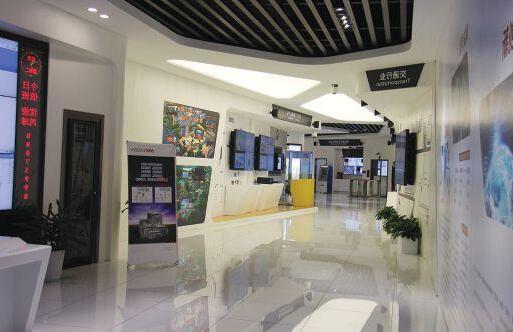
“The way we get into different markets will be very different and diverse,” Yao said. Hikvision’s international expansion follows a strategy the company refers to as “Glocalization” — global growth with a local focus — and regional offices are adopting marketing and management styles that make sense for the local geography, said Yao.
Earlier this year, Hikvision opened an office in Montreal, serving customers in both French and English. Hikvision also plans to open another three to five manufacturing operations overseas and is dramatically expanding its online presence with multiple websites in a variety of languages (there are 11 under development).
China’s strong economy over the last decade has helped the company flourish, said Hu, providing it with a solid foundation upon which to extend its reach. It has also formed partnerships with major distributors like ADI and Anixter and is evaluating other partner opportunities globally.
Hikvision has made strategic investments over its history, said Hu, betting on new technologies as they emerge. Hu said that Hikvision began to develop video content analysis in 2006 and Cloud/Big Data solutions in 2011.
The company’s pace of development has not come without cost, however. Last year it was reported that
the company’s DVRs were vulnerable to remote attacks, forcing Hikvision to revise its approach and harden its technology. “This is a long process,” said Hu, adding that the initial problems occurred mainly because user passwords were not resilient enough. Users are now prompted to use tougher passwords and Hikvision now employs ethical hackers to put the company’s software through its paces, looking for potential security gaps or loopholes that could be exploited.
“This is something we have to continuously work on, moving forward,” said Hu. While Hikvision and other manufacturers must be diligent in terms of developing products that are resistant to cyber-attack, said Hu, it takes vigilance on all fronts to address the issue. Users, as well as the integrators who install security products, should exercise caution and good judgement, he said.
According to Jon Cropley, principal analyst, video surveillance & security services, IHS, Hikvision has been growing at 60 per cent a year, far outpacing the surveillance industry’s overall growth of 10 per cent annually.
“To continue growing at 60 per cent a year through video surveillance alone, it would therefore have to continue rapidly expanding its market
share,” says Cropley in an email interview. And while Hikvision has developed a series of vertical solutions, it is by no means alone. Cropley says many other companies in the surveillance market are following that path, “so Hikvision needs to come up with something that stands out.”
Hikvision’s expansion will continue apace, according to the company. A new factory is being built, three times the size of its current main Hangzhou manufacturing facility. The company is also expanding its headquarters, which only opened two years ago. A new office tower, set for completion in 2018, will contain the bulk of the company’s R&D efforts.
Hu says the company will also look at expansion through acquisition if the right opportunities are there. He noted that the growth of IP-based technology across the industry has helped to fuel the recent spate of mergers and acquisitions in the physical security market.
Technology development and marketing have been historically been Hikvision’s two main areas of focus — with acquisition as a possible third — but Hu said luck has also played a role in the company’s success. He estimated that over the next decade, Hikvision will continue to be “very lucky.”
— Neil Sutton
3VR is committing more resources to Canada, resulting in what the company hopes will be a doubling of business here over the next year.


TRick Spillane, 3VR’s senior vice president of global sales, says the San Francisco, Calif.-based company, which specializes in video intelligence solutions, has expanded its presence in Canada by adding two new manufacturer’s representative firms in the East and West. SP Dynamic, based in Waterloo, Ont., will cover Canada from Manitoba to Newfoundland for 3VR. Surrey, B.C.-based SVT Solutions will represent 3VR in the West. The company has also augmented its channel strategy by working with distributor Synnex to help develop partnerships in Canada.
Spillane describes 3VR’s approach to the market as two-tiered: large, global or national customers that make up the bulk of its business; and small and medium-sized customers — everything from schools to commercial buildings to “mom and pop” operations.
Spillane says 3VR should be able to leverage its expertise in retail and financial verticals to win more of that business in Canada. “We would like to add some banking logos and also retail logos in the Canadian marketplace. With 3VR being so strong in those two verticals from a product set standpoint, we feel like we’re very well suited for some of the banks that are looking to upgrade their systems,” he says.
He estimates that Canada currently accounts for approximately five per cent of its total global business, but expects that to increase at least twofold this year.
“We feel like that is probably going to happen,” he says.
— Neil Sutton
yco Security Products is looking for a few good ideas. The company recently launched InnovationWorks — a program, designed to recognize security-based projects that show promise. Tyco is asking start-up companies to present their ideas for new, innovative security technologies, the best of which could be funded, or even outright acquired, based on their potential for the market.
A team of four people is leading the initiative for Tyco: Anita Santos, vice-president of marketing; Robert Locke, vice-president of corporate development; Stephen Meagher; director of customer experience; and strategic product marketing manager Greg Blackett, a Canadian based in Tyco Security Products’ Toronto office.
submissions.”
Santos, who describes InnovationWorks as a technology incubator, says the group is looking for companies with a fresh perspective, tempered with a realistic business plan and viable product with market potential. That could mean companies that are just getting started or may already have something close to fruition.

She says they’ve consulted with companies that are already in the “post MVP” (minimum viable product) phase, and have made the transition from an idea to a product that they can begin to sell. They have also looked at companies that are just getting started.
successful innovation.
She says it’s too soon to tell what will come out of Tyco’s InnovationWorks; it takes a minimum of six months to make the crucial transition from a great idea to a product that is close to market-ready. Without giving too much away, she says that many of the solutions she has assessed so far involve software as a service (SaaS) and mobility-based solutions.
Thus far there have been no ground-breaking discoveries and she hasn’t seen anything “completely off the wall” yet, but she emphasizes that market viability is a bigger priority than innovation for the sake of innovation. “We’re really looking for solutions that help customers with their problems and help resolve their issues.”
At press time, the group had received about a dozen ideas, and met with some promising candidates during the recent ISC West conference, held in April in Las Vegas, Nev.
According to Santos, this isn’t the first time Tyco Security has demonstrated an interest in this type of investment — the company’s Tyco Ventures initiative was behind the decision to make a strategic investment in home automation company QolSys — but InnovationWorks represents more of a targeted effort to reward new ideas.
“When we started this, we weren’t sure what we were going to receive,” says Santos. “However, I’m happy to report that within the first day, we had
ONVIF’s Profile Q designed for interoperability

Standards body ONVIF has announced the Release Candidate for Profile Q, the specification that provides interoperability in addition to advanced security features. This new Profile is now available for review on the ONVIF website.
“ONVIF developed Profile Q in direct response to the industry’s request for out-of-the-box functionality and easier and secure configuration,” said Per Björkdahl, Chairman of ONVIF’s Steer-
While there are potentially other funding opportunities available to startups, Santos says that Tyco offers an established track record. “With private equity partners, you will get a cash infusion to help run your business. You’ll also get people who are very knowledgeable and know how to help you operate your company. However, you can get that with Tyco, plus the advantage of having somebody who has deep experience within the security industry,” she says.
Santos also runs her own angel investment firm, Ascend Investments, completely separate from Tyco and the fire/security business, so as to avoid any potential conflict of interest.
Ascend focuses on helping female entrepreneurs get funding for their projects — a passion project for Santos who is keen to see more women leading
The security business as a whole is producing a greater number of start-ups with serviceable ideas, she adds, particularly “as the industry starts to transition from more of a physical security model to a logical security model.”
At least one idea she has seen could be applicable in an IT environment as well as more of a pure-play security solution. Eventually, the InnovationWorks model could be applied to Tyco’s other divisions as well. There are already ideas coming in that have potential in the integration side of the business.
“It’s really about getting folks interested and trying to get a pipeline developed,” she says.
Within reason, all ideas are on the table. “While we recognize that we’ve got great technology in-house, there’s also the opportunity to leverage what’s available on the outside. We’re very open minded.”
ing Committee, in a prepared statement.
“With Profile Q, systems designers and installers will be able to more easily realize the full potential of interoperability using ONVIF.”
Flaw discovered in city surveillance

Research by Kaspersky Lab has uncovered configuration flaws in a city-based CCTV system which could be exploited by hackers. The research was undertaken by Kaspersky Lab’s Vasilios Hioureas
and Thomas Kinsey from Exigent Systems. They examined the security video surveillance network in one city. Cameras were connected via a mesh network — a type of network in which nodes are connected with each other and serve as stepping stones for data. Instead of using a Wi-Fi hotspot or wired connection, nodes in such networks transmit data to the closest node which transmits it further through other nodes right to the command centre. Should an intruder connect to just a single node in the network, they will be able to manipulate the data transmitted through it. In the case investigated by the researchers, the network of cameras used no encryption.

here’s something of an arms race going on in the surveillance world, with companies trying to outdo each other with higher and higher megapixel cameras and promises of greater intelligence on-board.
Nowhere is this more evident than a show like ISC West, the annual Las Vegas showcase of latest and greatest security technology. While I was attending the conference, I visited with maybe a dozen camera manufacturers. I lost count of the number of 4K cameras, and there were plenty of multi-sensor as well as panoramic cameras, many of which were impressive. To a degree, I think a lot of this newer technology functions much like a concept car at the auto show: it can dazzle you with its clean lines, fat tires and oversized engine, but it’s the hatchback at the back of the booth that’s really going to be the big seller.
Of course, many of today’s cheaper hatchbacks come with standard ABS, seat warmers and satellite navigation. And so it is with any highly competitive high-tech industry: the luxuries, thrills and gimmicks of today’s high end models will eventually make their
way into budget lines as the technology becomes cheaper to manufacturer. Only a few years ago, a 4K camera on a trade show floor was enough to cause a stir, but today it seems like a given at any large manufacturer’s booth. Avigilon even upped the ante this year with 7K technology — product marketing manager Willem Ryan remarked, tongue in cheek, at a press event that “4K is so 2012.”
“Abundant features are helping to drive the industry forward.”
The reality is that most end users probably aren’t even up to date with 2012 technology. In most cases, I would guess they don’t need to be. The range of options available to them in recent years is surely daunting and it would take a highly skilled and well-rounded integrator or consultant to make a decent recommendation as to what technology they actually require based on the price they can afford.

elationships are critical to any successful business.
Relationships with our clients, suppliers, staff and community allow us to continue to grow and develop our business. Collaboration is not only critical, it allows us to develop and explore new opportunities.
Client relationships are key to doing business — more importantly, doing repeat business. Understanding their individual requirements allows us to develop solutions that best address their concerns. It sounds simple, but it can be complicated. The best relationships develop over time and require nurturing and adjustments.
Equally important, relationships exist with our supply partners. Having the proper mix of product and service offerings can make you an invaluable partner. Knowing just how to achieve this can be tricky. Like many companies, we support a wide variety of solutions for video surveillance, access control and intrusion detection applications. Finding the balance and the right solution for your
client is critical. We understand that you cannot be all things to all people. We also appreciate that we have to maintain our order volume and bring value to our suppliers.
“Sometimes our relationships involve collaboration with
Employee relationships are also fundamental as we continue to grow. Stakeholders across the spectrum, including our front line technical, sales and administration teams have direct relationships with our clients and management team. These relationships are more than salary and benefits; they are about connecting with them as individuals. Again, having a mutually beneficial arrangement makes these relationships flourish.
At FCi, we are deeply involved with CANASA, Crime Stoppers and a variety of causes that we are passionate about. Our team members help
And with the technology advancing at such a tremendous rate (4K to 7K in a matter of a few years), future-proofing a surveillance system must seem a bit like trying to read an entire newspaper before the next day’s edition comes out. The matter becomes more complex when factoring in storage and compression requirements. H.264 has become the go-to standard today, but H.265 is around the corner. There were smatterings of the latter at this year’s ISC West, but we’re likely to see a lot more applications of that technology in the next few years.
In many ways, ISC West has come to mirror the city that hosts it. Each new casino on the Las Vegas strip tries to outdo its predecessor with more opulent décor, fancier restaurants and over-the-top retailers. For security vendors, particularly camera manufacturers, that’s not a bad model to emulate. Abundant features, clearer images, and smarter analytics are helping to drive the industry forward. As long as the fundamentals are sound and they’re truly paying attention to what the end user needs, it almost doesn’t matter how large the number is before the “K.”
coach, mentor and develop talent in arenas, soccer pitches and other venues across our community. Connecting with the community is another relationship that requires commitment and investment. Sharing expertise and helping to support worthwhile community programs leaves a lasting legacy and community relationships allow you to share your business success with others.
Sometimes our relationships involve collaboration with unlikely partners. Partnering on projects may involve working with competitors or unlikely allies. Sub-contracting or providing service offerings for others can be rewarding. There can also be reciprocal opportunities.
Clearly, maintaining strong and healthy relationships can be a challenge. The challenge is absolutely worth the effort as the benefits to these relationships can be rewarding and provide successful outcomes for all involved.



or end-users, the move from analogue systems to IP surveillance systems has always been an expensive one.
Fortunately, the price difference between IP and analogue has been easy to justify given the superior image quality and advanced integration options available with IP technology. Within the IP surveillance market, most manufacturers initially chose to compete on features rather than price. However, cheaper IP cameras are now catching up in both image quality and features creating a market where end users cannot easily identify the differences between budget IP surveillance products and more expensive brands. Here are three strategies integrators and manufacturers are using to compete with budget brands and close more deals despite having higher priced products. Sell the VMS first. The VMS is what customers will be interacting with on a daily basis, not the cameras. The VMS is also a weak spot for lower priced brands. Simply put, writing software is easy but creating user-friendly software that end users love is very difficult and is best done by engineers who
are based in the market they design for. Integrators and manufacturers must focus on educating end users about the user-friendly features of their VMS as well as superior technical support available for it. End users expect technical support in the form of written documentation, online video tutorials, and phone support. Budget brand VMS’s are not only less user-friendly, they also cannot provide the type of technical support expected by most end users.
“Integrators and manufacturers must focus on educating end users.”
Sell end-to-end solutions. End-users feel more comfortable using one brand or product line across an entire project rather than different cameras with different recorders. Selling end-to-end solutions was a successful business model in the analogue world and it
continues to prove successful in the IP world. Sell network security. When selling IP surveillance systems many integrators find themselves not only presenting to the security director, but also to the IT administrator. Most integrators avoid discussing the likelihood of their devices being hacked despite the fact that network security is a top priority for almost any IT administrator. With several low cost IP surveillance brands suffering security breaches in their products over the past year, it is now easy to justify why IT administrators should spend more on a reputable and proven brand.
As with any market, price will remain a powerful motivator for buyers in the security industry. That being said, the incentives that drive end users to invest in more expensive products still exist. To close sales and continue growing, manufacturers and integrators need to educate end users about the strengths of premium brands beyond just image quality and features that no longer hold the power they once did.
Point to point, point to multi-point or mesh topologies address different applications and concerns.
A typical point to point application would be to connect the network of two buildings together or connect a remote edged device such as a camera in a parking lot to a building. Manufacturers have been offering bundled kits for these applications to simplify the product selection. These kits provide two sets of radios, mounting hardware and accessories required to have a successful deployment.
Point to multi point allows us to connect several


“Tools are available to help you test the environment and determine the best deployment strategy.”
edge devices such as a camera to a radio. The challenge with this topology becomes the one to many relationship with regards to the radios. If one base station is the aggregate point for multiple radios, then calculations must ensure that the single radio has all required aggregate throughput to support the data coming in from multiple locations. The antenna on this base station must also have the coverage ability to receive signals from the multiple locations. These antennas come with a variety of coverage patterns from 15-360 degrees of coverage. Take care not to over design as antennas need to filter out the rogue signals, otherwise referred to as noise, that take up needed headroom of the radio. For example, using a 360 degree omni-directional antenna instead of a directional sector antenna in a parking lot cam-
era installation will mean that the omni-directional antenna will pick-up signals from all directions and it will be focused on filtering the noise. A 90 degree sector antenna should provide sufficient wireless coverage in a typical rectangular parking lot.
A mesh topology is a multi-point to multi-point solution offering multiple wireless paths to each location. This added layer of redundancy is important in citywide wireless deployments where uptime is critical for emergency services. These multiple wireless paths are also utilized for load sharing, providing added efficiency for network performance. This topology has been used in the past for applications where line of sight can be temporarily obscured. For example, large ship traffic can obscure a signal crossing a wireless port authority network. In this case the radio would route signals through other radios to get around the obstruction and revert back once the obstacle has gone.
Tools are available to help you test the environment and determine the best deployment strategy for your wireless.
Anixter Canada.












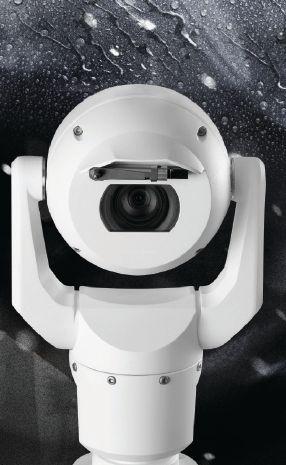

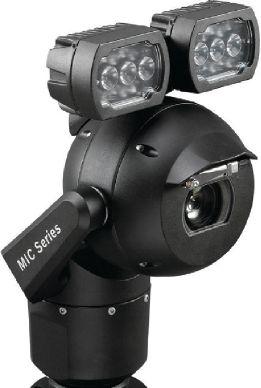

Capturing of details in extreme environments 24/7

Punishing winds, relentless rain, huge temperature fluctuations, clouds of dust or high-impacts. No matter how tough conditions get, with MIC IP 7000 HD cameras your surveillance operation always goes on. Learn more at www.boschsecurity.com/hdsecurity




















Our focus is providing you with a 360-degree overview in a single image








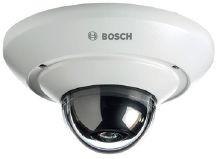

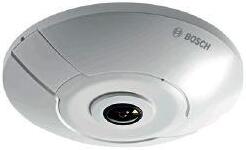
Never miss a thing with FLEXIDOME IP cameras. Blind spots can seriously undermine the reliability of your video surveillance solution. With the range of FLEXIDOME IP panoramic cameras from Bosch, you will never miss a thing. Thanks to a choice of 5 or 12 megapixel sensor resolution at high frame rates and fish eye lens, a complete overview without blind spots and easy capture of moving objects significantly improves the quality of every video surveillance operation. So you can capture objects of interest with superb clarity, eliminate blind spots and always see the bigger picture. Learn more at www.boschsecurity.com/hdsecurity


























E t t t d th t th i t i 2014 t h h d f ll f thi i d t
Expect to see trends that were gathering steam in 2014 to push ahead full force this year — industry consolidation, mobile credentials, RMR opportunities, cyber security and much more
by Linda Johnson
Work is often a race against the clock, about meeting daily or weekly goals. Now and then, it’s important to stop and try and take in the longer view.
At the start of this new year, SP&T News turns to financial and industry analysts — whose business is the longer view — to look ahead to the changes they see shaping the security industry through 2015 and beyond and to share their insights into the economics, technologies and other forces driving these changes.
Across their comments run several themes. One frequently sounded note is
the continued movement towards managed services and the Cloud, along with the concomitant expansion of RMR. They envision a changing competitive landscape and the emergence of new geographical markets, as well as other new opportunities. And, not surprisingly, given the frequency and prominence of cyber attacks, they point to the growing awareness of the urgency for better logical security.
Their answers suggest some new directions but also the not-so-new advice that investing in customers and building long-term relationships makes good business sense — not just for 2015, but well beyond.

Blake Kozak
senior analyst, security and building technology
IHS, Englewood, Colo.
In access control, I think mobile credentials are going to start to evolve.
market is evolving into: How are you going to use role-based security to integrate VMS with logical and physical access control systems and mobile phone apps and really adopting that technology aspect?
Lastly, technology is getting closer to the edge. People are utilizing the Cloud a lot more with access control as a service.

A lot of manufacturers are coming out with their own systems. HID has their gesture technology, and Allegion has a product called Engage. It seems today almost all manufacturers have some form of mobile application for their systems. In hardened security environments, people will get used to using applications, and it could expand into commercial real estate or other types of end-user industries. So you find hotels using it.
In the residential market, you’re seeing a lot of growth in mobile applications in remote access. So these more personal ways of using the solution could drive the market forward for other parts of the industry.
Services and RMR are also going to become more important over the next 12 months, especially as part of it becomes a bit of a commodity. A lot of integrators and manufacturers are going to look for ways to differentiate.
Electronic locks are a mega-trend, so we will continue to see wireless access control. The cost per door comes down due to the lower cost of installation and less system hardware on the door. You’re going to see more of these electronic locks that don’t necessarily require power supply and all the wiring. What’s going to be interesting is how systems begin to integrate. Integration has been around for a long time, but now everybody’s starting to embrace it.
It’s about integrating logical and physical access control, using role-based access control. So we’re moving beyond the idea of just talking about trends being hardware, like biometrics or smart cards. The
principal market analyst
IHS, Englewood, Colo.
One trend is HDcctv, which seems to be growing in popularity. The prices for HDcctv equipment have fallen, and users are increasingly adopting that in place of standard analogue video surveillance equipment. And, from a technology viewpoint, H.265 is likely to become a much more common compression standard in 2015.
We’ve also seen Chinese vendor growth. Video surveillance vendors from China have entered the market in Europe and America and have a growing share in recent years. We expect that to continue.
A really topical trend is body-
Education will see a lot of growth across North America, but also in Europe. Utilities and energy is the other big one. You have continued investment in infrastructure: in Brazil and Mexico, for example. Health care will continue to expand. Commercial, too, is a big growth area: a lot of facility managers are centralizing their access control. It’s also a good opportunity for hosted and managed access control.
I think new entrants will help the market evolve. It’s interesting that many of these players are shifting to a retail format. I think there will some consolidation, perhaps in 2016. There are dozens upon dozens of players offering electronic locks and video systems. How are you going to bring that together? Because many of these new entrants utilize similar platforms, whether it be iControl or another offering. It should be an interesting 12 months.
tide raises all ships. But I also believe we need to pay attention to customers again. We’ve tolerated attrition in the marketplace. I think we’ve been reluctant, once the sale’s been made, to sometimes go back to the customer.

Dealers and integrators will put a much greater emphasis on keeping existing customers, delighting them with new services and focusing on selling them more and being more of a value-added provider than just a seller of security.
In the next few years I think we’ll be relying more and more on Cloud-based services. We’ll also be seeing stronger identity requirements to protect big data. We’ll also see growth in analytics: it’s about taking information and moving it from lots of data to actionable intelligence in real time.
mobile credentials are going to start to evolve.”
— Blake Kozak, IHS
principal, Sandra Jones and Company, Chardon, Ohio
Wewill continue to attract non-traditional market participants that will disrupt the existing channels and redefine how technology and services go to market.
In regard to these new entrants, I think a high
worn cameras. They are receiving a bit more press and attention, particularly in the U.S. I think sales of the equipment are likely to start to take off.
For so many years now, the use of network video surveillance equipment has been growing, and that’s likely to continue. Within that, certain categories of products are particularly popular, such as 360 degree cameras. And 4K cameras are receiving a lot of attention; they’re likely to start shipping in volume.

Then, there are certain verticals and geographic markets that are likely to grow. Video surveillance in China has been growing quickly. China is a large country with a large population, and the ratio of cameras per head is still much lower in China than it is elsewhere. So there’s lots of room for growth there.
We’re continuing to see investment interest, by both private equity as well as strategic buyers. There’s still a lot of money out there looking for a home in security, and while our industry fluctuates with the economy, we’re more resilient than most markets. So we are still attractive. As a consumer or as a business owner, security is in the news every single day, and that awareness and new risks help people think about: Should they be buying our services?
for a home in security.”
— Sandra Jones, Sandra Jones and Company
Nick Galletto
partner and national leader, cyber risk services, Deloitte Canada, Toronto, Ont.
Over the last couple of years there have been regular breaches, and one of the things we’ve seen is that security — in particular cyber security — is top of mind for executives.

I believe there’s going to be a heightened awareness across all industries. And, at no particular point in time will things slow down. The key is that organizations must continue to be pro-active and vigilant when it comes to cyber security. That means a number of things. One is making sure they have the processes in place to practically manage information security and, in particular, cyber threats. The second is to continue to enhance their technology capabilities to proactively identify specific threats, in particular malware and
patterns. Thirdly, it comes down to a fully integrated monitoring ability, which means ensuring they are actively looking for new, emerging and evolving threats. So cyber-threat intelligence gathering is going to be critical.
Enhancing your threat monitoring ability requires resources and a team of individuals. So many organizations will look to third parties to provide that level of security operations.
“Cyber-threat intelligence gathering is going to be critical.”
— Nick Galletto, Deloitte Canada
senior vice-president, security alarm group, Bank of America Merrill Lynch, Chicago, Ill.
We see continued expansion of additional forms of RMR, from home automation and PERS [personal emergency response system] in residential to video and access control in commercial.

It is vital that security alarm companies stay on top of the key metrics of creation cost multiples, margins and attrition and work closely with their banks to ensure that adequate financing is available to fund these growth efforts.
We also see growing familiarity and acceptance of the newer forms of RMR, both in the bank and capital markets.
“It is vital that security alarm companies stay on top of the
— David Stang, Bank ofAmerica Merrill Lynch
market analyst, access control, fire and security IHS, Englewood, Colo.
One of the biggest things coming down the line in 2015 is the announcement by the TSA and European Civil Aviation Conference (ECAC) to move forward on a risk-based approach to security.
This is an intelligence-driven screening program where passengers submit data. Passengers in the U.S. can submit to the precheck program, and the TSA will give them a security level, low or high threat, based on the information they’ve provided.

(In the U.S., it’s a bit easier because we don’t have the restrictions they have in the EU on collecting personal data.)
Risk-based screening will drive for the checkpoints the purchase of newer technologies, like advanced imagery technology.
Currently, there’s not a lot of integration at checkpoints and hold baggage (baggage in the hold
of an aircraft). But risk-based screening is looking to integrate these systems, particularly hold baggage, where they would use bag-tag readers and new explosive detection units. At the CT scanners, this would allow them to do image analysis, as well as atomic number analysis of products in the bag, so they can tell, for example, if an item is a homemade explosive or there’s no threat at all.
The ultimate goal is to link passengers with their baggage from the time they enter the airport to the time they leave their destination airport. The bags you check on the plane would be tied to you. And information, such as where you’re going, layovers, how many people you’re travelling with — all that would be accessible by security personnel.
“The ultimate goal is to baggage.”
— Jared Bickenbach, IHS
managing director, security lending group Capital Source, Los Angeles, Calif.
Onthe commercial side, we continue to see the trend toward managed services.
Chris Peterson president and owner
The technology for some of the hosted and managed services regarding access control has been there for three or four years, but I see some of the security integrators being trained now and are learning how to sell it.

They’re building the right sales teams, the right sales methodologies, and they’re holding their sales people accountable for selling some of these solutions — primarily access control, but also some video.
The integration companies doing the enterprise installa-
tions are starting to figure out that their client base needs to be educated on hosted and managed solutions. Their client base needs to understand the pros and cons of having someone else host their data. And integrators are figuring out how to sell these recurring-revenue services. Those are the three key ingredients. The sales people now have the tools and the training; management is holding them accountable and paying them properly; and third, the end-user clients are being educated, rather than just sold to.
So, I think there will be an uptick on this in 2015, but we’re not going to see real traction until 2017-18.
“Their client base needs to understand the pros and cons of having someone else host their data.”
— Chris Peterson,Vector Firm

More people are taking products that used to be bought standalone and are buying them now as part of an integrated service package, which is allowing security alarm companies to have more meaningful relationships with their customers. So where someone in the past would have just purchased, and an alarm company would have installed, an access or video system, now there are many more services that the installing companies are able to provide around those systems, whether it’s helping manage the access control system on an ongoing basis or providing video monitoring or analytics that are allowing the dealer to generate more ongoing revenue from that customer. We’ll continue to see that trend materialize over the next 12 months. On the residential side, we continue to see more and more uptake in the connected home and additional services being bundled or added on to the traditional security panel. The RMR will continue to increase as the adoption of those products increases.
“We continue to see more connected home.”
—Will Schmidt, Capital Source



By Richard Brent
When it comes to surveillance, using video alone can only go so far. In many cases, video can be a reactive tool, played back after an incident has occurred to determine the cause of the crime or identify a suspect. Today, more security professionals are realizing the importance of integrating audio into their cameras and how audio can be a proactive, preventative resource that provides the missing element in a surveillance solution. In other words, audio adds ears to the eyes of a security solution and yields information that offers greater situational awareness, real-time response and return on investment for end users.
The role of audio in surveillance
The compelling reason for integrating audio into a surveillance system is that it greatly enhances and complements the security solution. One of the primary ways audio monitoring demonstrates its value is by offering alarm verification and crime deterrence.
For example, let’s say a central station officer receives an alert from one of the zones that he’s monitoring. A microphone’s audio feed gives the officer a second opportunity to verify whether it was a true or false alarm before dispatching someone to the area, which saves the end user time and resources. Moreover, if a two-way audio system — such as intercom or speakerphone — was integrated with a camera, the central station officer could speak to an unwanted visitor. The officer could give a verbal warning such as, “You in the red shirt. We see you and the police will be here in 60 seconds.”
This type of dialogue often scares the suspect and deters further activity. This is just one example of how twoway audio monitoring, when paired with video, can play a crucial role in preventing crime.
Audio monitoring proves to be an important component in a securi-
ty system when it delivers additional evidence. By integrating a microphone with a camera, staff can gain important information such as the number of voices heard — a clue to the number of people involved — at the crime scene. The audio can reveal if there were gunshots or broken glass, helping authorities determine the equipment and number of police needed to respond to the situation.
By adding audio to a surveillance solution, greater accountability and cost-savings can be achieved — two very important issues for the end user. If an employee reports that a colleague or customer is verbally harassing him, an audio record can verify the truth and resolve the matter before the issue is taken to court and legal or investigation fees are incurred.
Integrating audio into a camera is also a sound, durable way to upgrade a surveillance system without having to spend thousands of dollars replacing all the equipment. Generally speaking, microphone installation is not time intensive. Depending on the type of microphone installed and who manufactured it, the audio solution can require minimal maintenance throughout the lifetime of the product. In some cases, microphones have lasted 20 years before needing replacement.
The industries in Canada that most frequently use audio are law enforcement, retail, commercial and transportation. In transportation, there has been an increase of access control and regulated entry over the last several years. Adding an audio component to those systems is a smart choice because it provides another checkpoint for visitors and another opportunity to identify the purpose for someone’s visit. Additionally, as retailers continue to focus on preventing cyber attacks and protecting their bottom line, audio offers a way to ensure quality control, resolve customer disputes, monitor business operations, and aid in loss prevention. In instances where retailers receive a high volume of truck deliveries with merchandise, audio can verify that a conversation and transaction took place.













Over the next several years, the security industry will likely see a greater adoption of sound detectors by education centers and municipal agencies. Sound detection and analytics has been one of the most significant innovations in the audio sector in recent years. Experts in audio classification have developed software that analyzes sounds and then uses algorithms to categorize them into alarm-worthy categories such as gunshot, glass break and aggression. If the audio frequency reaches a certain level, the detector will immediately alert staff so that they can quickly intervene. In the case of aggression, where 90 per cent of physical contact is preceded by verbal aggression, a detector can play a huge role in deterring crime.
Despite the several advantages of integrating audio into a surveillance system, there are some clear barriers preventing it from being more widely used. The primary challenge is the public’s concern regarding monitoring and privacy. However, there are several facts to keep in mind when it comes to audio and the protection of privacy.
First, and perhaps more important to note, is the fact that new audio solutions like sound detectors actually support privacy. Analytics software in a gunshot detector or an aggression detector, only listens for very specific sound patterns. The products are designed to hear frequency and stress, but not words or language. This protects the privacy of those who may be conversing within the zone being monitored, while still yielding valuable information for security purposes.
Regarding legality, Canada’s law (code CBSA BPD 1101) is one-party consent. Additionally, where there’s no expectation of privacy, monitoring is

allowed. In public areas, easily seen signage removes the expectation of privacy and creates awareness. People always have a choice of where they choose to be. If they know that an area is under surveillance, they don’t have to stand in that area, and they can take steps to avoid it. Although signage is always recommended, commonly held assumptions for specific environments could also remove expectation. For example, if someone is making a speech in a public square, it can be assumed that there may be recording going on.
Generally speaking, it is incumbent on the end user, whether the end user is a municipal government or a small business owner, to remove the expectation of privacy. However, integrators can play an important role by acting as an information resource for their customers. They can do this by knowing the monitoring law that applies to the end user’s specific application and encouraging their customer to post signage. In all cases, integrators should be familiar with legal and privacy obligations regarding audio monitoring before proceeding with an install. Secondly, integrators need to be mindful of microphone placement. A good rule of thumb is never place a microphone where you wouldn’t place a camera such as a restroom or other private area. Integrators should also be cognizant of the level of expectation of privacy in a given area. If there is a high level of expectation, such as in a residential area, installing audio is not recommended.
Now more than ever, the value proposition of audio is clear. Audio monitoring serves as crucial resource that industry leaders will need to tap into in order to effectively respond to today’s security challenges.




















Meaningful access to vast quantities of data can transform physical security operations
By Joe Leung
Whether it is private enterprises or public institutions, children or journalists, locales from cafés to government offices, the exposure to ever-increasing levels and varieties of security threats are mind-numbing.
In the face of these omnipresent risks, physical security professionals are under tremendous pressure to plan better, respond faster and act smarter while minimizing unwarranted alerts, unnecessary disruptions and unneeded investments. The stakes have never been higher, with the pressure to be more prepared as security risk continues rising in a rapidly changing environment shaped by the IoT (Internet of Things), urban population growth, widespread social media usage, emerging geopolitical issues, unrelenting socioeconomic challenges, growing criminality and the ease of transportation.
The limitations of traditional security approaches
Traditional physical security infrastructures and predominately labour-intensive approaches are reaching their breaking points under the weight of overwhelming
volume and variety of intelligence data from ever-proliferating sources such as video, social media, broadcast, sensors, audio, transactions and email. In April 2014, a 16-year-old runaway successfully breached San Jose Airport’s security and gained entry onto a plane, which eventually took off with the illegal passenger on board. According to a news article from the San Jose Mercury News, San Jose Airport’s spokesperson Rosemary Barnes said that cameras did not capture the perimeter breach, but that there is surveillance footage of “an unidentified person walking on the airport ramp and approaching” the plane.
Local ABC News reported that airport officials acknowledged that there was video footage of a person lurking around the Hawaiian Airlines jetliner early Easter morning, but they did not see the video until after the teen had reached Hawaii. How was the teenage boy not noticed? While many might wonder why there was surveillance but no intervention, the critical issue exposed here is quite common with many surveillance systems today, whether those involve video analytics, social media and call recording monitoring, or even sweeping huge big data sets for key information.
According to the National Center for Biotechnology Information, at the U.S. National Library of Medicine, the average attention span of a human being, defined as the amount of concentrated time on a task without becoming distracted, has dropped from 12 seconds in the year 2000 to eight seconds in 2013. In a world where 24x7 protection is critical and expanding coverage is common, human limits are being put to the test, especially in surveillance operations. But in today’s risk-laden world, can we afford to take chances? Is there a path to a
system where security operators can escape from the nightmare of having to choose between disastrous oversight and costly false alarms? Whether an operator is trying to preempt or respond to a threat, the decision on what action to take and the timing of such an action could have monumental consequences.
To get ahead of the security management challenge requires an approach that improves the quality and speed of decisions with better and more complete intelligence. For example, when a person is attempting to enter a secure area, a series of steps may be necessary for an effective risk assessment:
captured by security cameras and verify it against a staff database.
granted. If not, video footage of the person loitering around the property perimeter may indicate a potential threat.
databases to ascertain identity and uncover potential criminal records.
goes up, but not to the point where the person should be denied entry — it may still be a legitimate visit.
and see if there are other threatening indicators expressed in social media and communications such as email.
may reach a threshold by which entry is denied and other security responses may be triggered.
Each step addresses a piece of the risk puzzle. While the process can stop at any point, it is obvious that with each additional step, the accuracy of risk assessment goes up and the probability of an inappropriate response goes down.
Making sense of your information
So, where do we start? Well, the good news is that there is an abundance of data available for leverage. Existing physical security infrastructure is laden with CCTVs and sensors, making this information a rich and critical source. There are also numerous databases that can be used to compare information (e.g. Terrorist Watchlists and law enforcement databases) to identify security risks. And many systems allow integration with existing corporate systems, such as HR databases, email repositories and social media feeds.
To the detriment of a security program, these data are, in most cases, captured, stored, and rarely looked at except for post-incident investigations. But why can’t these data be used in real time to mitigate risks and/or to facilitate effective responses? What about actively integrating security systems with other data from databases, email or social media? With a more comprehensive approach, would it be possible to unlock that coveted security picture depicting risks holistically, and derive actionable intelligence by tapping into all these sources? With a plethora of big data technologies in the market to address your physical security needs, it is paramount to consider the following factors in your evaluation process.
Data silos
While the value of leveraging different data sources in completing the risk puzzle is indisputable, there could be significant barriers to bringing all these data
together. In general, not only are the data scattered across the organization, they are of different formats and managed by different groups. For this reason, you’ll need to know if the technology has out-of-thebox connectors to access various types of data where it resides, without requiring data relocation. Or, does it require extensive consulting and customization work that increases the cost and prolongs your time to benefits?
“Traditional physical security infrastructures and predominately labour-intensive approaches are reaching their
The key data types you can expect to monitor and analyze are video, text, audio, sensor and structured data in databases.
lyze objects and events, faces, demographics, and vehicle types and licence plates should be the essential functions. Event detection activity is identified from within a scene using a tripwire, zone detection and suspicious movement. Objects are identified and tracked with a detector continuously monitoring an area to identify suspicious objects that are not part of the “normal” scene. It should also be able to “learn” a scene and recognize existing objects for asset protection. Face recognition identifies a face in real time from CCTV video feeds, and can perform one-to-one biometric verification or one-to-many identification for the closest match from a database. The technology should allow automatic enrollment, enabling new use cases like detecting loitering or repeat visitors. Once the images have been captured, you should be able to perform demographic analysis to determine age, sex, ethnicity, facial expression and clothing, which will further enrich the intelligence from the video images.
media, etc., a linguistically agnostic and probabilistic approach to text analytics is essential in light of the “free” form expressions often found in social media. What you are looking for are statistically relevant concepts, trends, patterns, and relationships. Instead of relying on grammar and linguistic rules, you need the capability to integrate new information with a growing body of indexed content to refine and retrain the analysis engine. As new vocabulary and terms are introduced, or their meaning changes, they need to be automatically updated in the system. This learning ability should include developing an understanding of what may be of interest to users, by dynamically monitoring the content they consume and contribute, and then delivering relevant content as it is added to the system.
perform speech-to-text processing, so your text analytics can perform more in-depth analysis. Also, a key capability should include the detection of a number of speakers, speaker’s gender, language and sentiment. Audio signature functions can identify the nature of the sound such as
a gun shot, glass breaking, alarms, shouting, etc.
establish easy connections to these sources and perform timely analytics to uncover trends, patterns and relationships in conjunction with other data sources.
Data fusion is the critical functionality for putting the puzzle together. While single incidents by themselves may not signal a high threat level, any relationship that exists among these incidents may tell a different story. Data fusion is the ability to extract potential relationships, connecting seemingly disparate events, and deliver the coveted picture of truth. For example, a car passing through an airport terminal may not be much of a threat. However, if the following events occur, data fusion can connect the “dots” and issue an alert:
through the terminal multiple times in a short timeframe.
tion detects that the licence plate does not match the vehicle make and model.
at a parking lot near the terminal.
As the need to increase protection continues, can the technology scale out easily to cover, for instance, an increase in CCTVs or data source/volume? Is the technology proven in large scale implementations under taxing conditions such as military combat situations?
With analytics delivering valuable actionable insights to drive effective responses, it is important to make sure that workflow rules can be easily incorporated and that the critical workflow leading to action can be optimized and automated so you don’t miss a beat in addressing the threat.
There are many industry leading technologies that complement big data analytics. For instance, PSIM (Physical Security Information Management) and VMS (Video Management System) are just two examples that can add value. Be sure to find out how the technologies can work together and develop a clear understanding of the ease of integration or lack thereof.
These may be a lot to consider and they are certainly not something you can deploy overnight; however, not taking action is not an option either. The best way to approach security management challenges is to lay out a roadmap that can take care of your immediate issues as you establish the foundation for, and a path towards, a safer environment secured by a more productive infrastructure.
Big data may be stretching our comfort zone, but as one of the greatest and most admired leaders of modern times, Winston Churchill, who triumphed against all odds, once said, “Sometimes doing your best is not good enough. Sometimes you must do what is required.” Getting the holistic intelligence to drive smarter decisions might just be what is required in this increasingly dangerous world.






By Linda Johnson
One of the rising stars of trade shows these days is the new video compression standard H.265.

Expectations for the new technology are high. Providing a significant reduction in bandwidth consumption and storage requirement, H.265 promises to reduce system costs and facilitate the move to higher resolution cameras, such as 4K. But despite the benefits of increased efficiency, experts disagree on how great an advance the new standard represents and how it will affect the surveillance market.
“With a security system




— Sean Murphy, Bosch Security Systems
Released in 2013, H.265, or HEVC (High Efficiency Video Coding), is a video compression standard that is said to significantly reduce bandwidth consumption over H.264/AVC. With H.265, video can be displayed at the same image quality as H.264 with lower bandwidth consumption or bandwidth can be maintained to achieve higher video quality.
H.265 video coding will allow 4K video to be delivered over a network at a much lower bit rate than H.264. H.265, however, comes with increased complexity of coding, requiring greater computing power, especially on the encoding side.
Sean Murphy, North American regional marketing manager for Fairport, N.Y.-based Bosch Security Systems, says H.265 will affect the surveillance market primarily in that it will enable the implementation of higher resolution in the system.
“It can potentially achieve half the bandwidth at a higher-end resolution than you get today with H.264. That’s the golden nugget that most people are trying to latch onto,” he says.
“With a security system of any size, how do you deal with a 4K or higher resolution? Not only from the storage perspective but also getting that through your network from the camera to the viewing client


to a remote viewer you may have in the field, a smart phone or tablet. All those things, H.265 has the potential to make easier.”

Murphy notes that — in contrast to H.264, which requires equal work for encoding and decoding — with H.265, it’s three to four times more difficult to compress the image than to decompress it. “There’s a lot more work done at the camera level, on the encoder side, to achieve these greater reductions in bandwidth and storage and a lot less work when you decode it.”
Because it requires less work on the viewer side, he says, H.265 provides an advantage in applications involving smaller, less powerful viewers, such as tablets or cell phones, which don’t have as much battery power or processing power as a computer.
“If you start decompressing lots of high-resolution images on H.264 on a cell phone, you’re quickly going to chew through your battery power. So this has a big effect. With H.265, when you use it on something less powerful, you don’t need to have

as much processing power to view it as you do with H.264,” he says.
This feature is particularly beneficial in residential security applications, Murphy says, where smaller devices are popular. Smaller viewing devices are also being used in small- and medium-sized businesses and even, though not as much, in larger businesses. “There are many security personnel and even management personnel wanting to view it on a phone or tablet because it’s convenient.”
Jonathan Lewit, director of product management for VMS at Clovis, Calif.-based Pelco by Schneider Electric, says they look at H.265 as an enabling piece of technology. Its adoption will become essential as the higher megapixel cameras, specifically 4K technologies, start to come out.

“That’s where it will become crucial, because H.265 is really a compression algorithm. That’s where we’ll see the most gains in it. That said, we expect to see some modest gains in standard resolutions that are available in the market today:

the one megapixel, two megapixel cameras, 1080p resolution,” Lewit says.
“But we don’t think the gains that you’ll see on the resolutions available on the market today are going to by themselves justify a market shift to H.265. It’s really going to be the introduction of that new higher bitrate streaming standard that will drive it.”
The downside of H.265, Lewit says, is that, because of the increased compression capability, the VMS has to work harder on the viewing side to pull up the video display.
“That’s why you may need a more expensive, or at least a more performant, client machine to process that stream. You’re probably not going to see a lot of people incurring that expense to get a modest gain on resolution if they already have a solution that uses H.264 format,” he says.
Jason Spielfogel, Pelco’s director of product management for accessories, says it is important for people to realize the move to H.265 does not represent the same technological jump as was H.264.
“We don’t want to set the expectation that H.265 is to H.264 what H.264 was to MPEG4. H.265 was designed around optimizing efficiency on 4K and higher resolution. For resolutions lower than 4K, the bandwidth savings is not going to be as appreciable.”
Pelco plans to introduce 4K cameras in 2016 when, they expect, the real market adoption will happen, Spielfogel says. “At Pelco, we’re excited about H.265 and 4K. But we want to make sure we’re doing the correct messaging for the market, so expectations will equal what it can actually do.”
The appeal of H.265 will be strongest in two kinds of applications, Spielfogel says. The first are those where users require 4K or higher resolution images — critical infrastructure, airports and other large expanses. The second is very large scale applications, which may involve hundreds or thousands of inputs.
“Even a 10 or 15 per cent efficiency gain in bandwidth and storage here may translate to several terabytes of additional available storage or to fewer hard drives that they need to buy to get that storage. As you scale up or as you’re going higher resolution,

the benefits of any efficiency increase are going to be more noticeable,” he says.
Jon Cropley, principal analyst, video surveillance and security services at IHS, says H.265 promises a range of benefits to the surveillance market.
“As a higher quality image is always a priority, and with limits on bandwidth and storage capacity, an upgrade to the coding standard is an effective way to reduce the cost of the whole system. The objective performance and subjective feeling of H.265 are both believed to surpass H.264 high profile, and the compression could be more efficient when handling higher resolution video,” he says in an email interview.
tionally a niche market.
“Cameras such as 180°, 360°, fisheye, licence plate and face recognition, which used to gobble up bandwidth because H.264 didn’t have the capabilities to compress the video properly, will start to become more mainstream. Some of these cameras almost had to be on their own network just because of the bandwidth usage. These now could be incorporated into existing infrastructure quite easily without being the burden they once were,” he says.
Metcalfe says they work with many property management companies where H.265 provides significant advantages. In the past, for example, where managing a parking lot might have taken up seven or eight cameras, it can now be covered with a couple of 180° cameras.
— Jon Cropley, IHS
“Despite this, based on H.264 it takes time for the market to adopt a new coding standard. MJPEG, MP4 and SVAC are still preferred in some projects some 10 years after H.264 was released.”
Cropley agrees H.265 will facilitate the move to 4K. One concern about the greater adoption of 4K has been its higher bandwidth demands, and H.265 should help with that.
“However, there is also much room for H.265 coding standard to be optimized, reducing calculation complexity and enhancing coding efficiency,” he adds. “This work will be done by the whole electronic value chain, not just the video surveillance industry. With help from better 3G/4G wireless infrastructure and more display devices supporting H.265 decoding, its adoption should be quicker and wider than that of H.264.”
Winnipeg-based dealer National Industrial Communications has used H.265 and 4K cameras in many applications. Jonathan Metcalfe, strategic account manager, says H.265 means people will be able to use certain types of cameras that were tradi-


“It reduces the number of cameras, reduces the cost of the install. With the H.265 compression algorithms, you can get to the point where you can add them onto their own networks and not have to run separate cables for them,” he says.
For a major expansion project at the Winnipeg Convention Centre, he says, they used H.265 for the installation of a 29-megapixel camera that overlooked the construction site and regularly sent in images.
“This allowed them to post daily snapshots onto their website and say, ‘Hey, look at the construction.’ But it was also recording, so they could play back and ensure, ‘I have paid for 100 truckloads of concrete for this elevator shaft, and that’s what I’m getting.’ So, it allowed them to catch deficiencies much quicker and help mitigate future losses.”
Metcalfe, however, is already looking beyond 4K. A vendor they work with, he says, has just launched a 7K camera.
“4K is certainly a higher resolution, but technology is getting better. One of the benefits of H.265 actually is that it can handle up to 8K UHD definition,” he says. “The 7K camera, that’s snazzy technology. It will be exciting to see it get launched in the industry.”
































When the retailer becomes the customer, tailor a solution that meets their specific requirements
By Dan Cremins
Understanding your customers’ needs is a critical requirement in any business, and is especially important if you’re a an integrator selling surveillance to a mid-sized or large retail organization.
The first thing to recognize about enterprise retail is, of course, its multi-site structure. Whether you’re selling to a family-owned pizza chain with a dozen local restaurants or a national retailer with hundreds of stores, you’ll be designing a video surveillance system for multiple physical locations. Proven reliability and centralized video management will be must-haves for these customers, with mobile access and system health monitoring sitting high on the priority list.
It’s important to establish up front who in the organization will be accessing the video and what they will be doing with it so you can guide your customer to the best products and solutions. Depending on the size and structure of the organization, users and applications may vary.
In most cases, a large enterprise organization will need a solution that can be centrally managed by its security team, loss prevention (LP) investigators and IT professionals working at corporate offices dozens or hundreds of miles apart. They’ll want the ability to search and retrieve video from any location, monitor the performance of the system, manage recording parameters and update software remotely as required.
Managers working at each retail location will likely also need access to the archived video for their specific store or restaurant. Typically, they will use the video to help review operations, ensure corporate compliance, settle customer disputes and possibly provide video evidence to law enforcement immediately following a serious incident.
In contrast, franchisees and family-owned businesses with fewer locations often have one or two people responsible for all aspects of their video surveillance solution. For these users, who wear many hats and have to be in different locations at different times, being able to remotely access the system via their computers or mobile devices is essential.
Reliability is another critical requirement in the retail sector. Presenting a solution with a track record for reliable performance is crucial, but any mechanical device can fail, so a robust health monitoring system

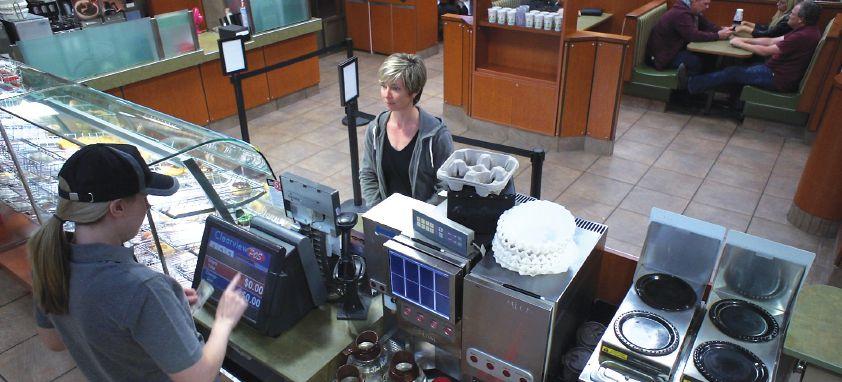
that alerts staff to a potential hard drive failure or a camera malfunction is equally important.
Some retailers may not want to dedicate internal resources to managing their video surveillance system, so solutions that offer optional managed services are a definite advantage.
“Leveraging people time and other business analytics enables retailers to do more with the video.”
The integration of IP video and point-of-sale (POS) transaction data provides retailers with an incredible advantage when it comes to loss prevention. The integration enables owners and LP professionals to proactively identify and investigate suspicious transactions and review synchronized video with a single mouse click. The most advanced solutions provide graphical reporting dashboards that enable investigators to run daily exception-based reports using their established key performance indicators (KPIs), such as listing all voids over a set dollar value or all employee discounts. Investigators can quickly run through the reports and drill down if a transaction warrants further review. They can also compare data from the same location or employee over a longer time period, or run similar data searches across multiple locations to identify trends and anomalies.
There’s never been a better time for retailers to extend the use of video to other areas of their organization, such as marketing, operations or customer service.
Video-driven analytics are now available to help
retailers gather relevant insights into how their business is performing and identify areas for improvement. A regional manager responsible for 10 stores, for example, can use a people counting analytic integrated with POS transaction data and recorded video to remotely view daily reports on each store’s conversion rate and how they compare.
Leveraging people counting, queue length, dwell time and other business analytics enables retailers to do more with the video they already have in place for security and LP, and to directly impact profits. This is something you should discuss with your customer early on in the planning process. Many retailers might not realize these capabilities exist.
You will need to understand from your retail customer what their existing video surveillance infrastructure consists of and what needs to be replaced. Retailers are like everyone else. They want sharp, crystal-clear video to capture facial images, transactions at the cash and other activities in their locations. Most won’t need to capture high-definition (HD) IP video from every camera, however, and (depending on their size) don’t want to incur the expense of replacing hundreds of analogue cameras in one fell swoop.
If they’re upgrading their video surveillance system, chances are they’ll be open to deploying HD cameras behind their POS terminals and at entrances/ exists, while continuing to use existing analogue cameras in other parts of the store.
For complete scene capture, you may also want to propose a 360-degree IP camera to your retail customer. One 360-degree IP camera located strategically in the middle of a smaller-footprint store or restaurant can replace several analogue cameras and in some circumstances allow a retailer to use a hybrid recorder with fewer video inputs.
Dan Cremins is the global leader for product management
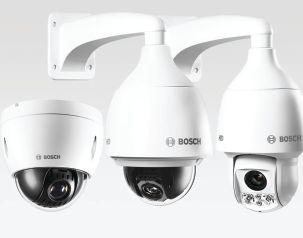
Bosch Security Systems
Locate, track and zoom in on details. AUTODOME IP 4000 HD indoor cameras offer 1080p resolution, 30 frames per second and 12x optical zoom. With 30x optical zoom, AUTODOME IP 5000 HD cameras deliver identification up to 190 meters away in full HD - indoors or outdoors. In low light, AUTODOME IP 5000 IR cameras provide optimum illumination at any zoom level with an intelligent IR beam.
us.boschsecurity.com
Bosch Security Systems is a supplier of equipment for the global electronic protection and communications systems industries. Bosch Security Systems works closely with an extensive network of certified dealers and integrators to design dependable communications, security and life safety solutions for the market.
With the DINION IP ultra 8000 MP, Bosch enables you to see every detail, everywhere. Covering a large area and identifying objects at a great distance is challenging. That’s why the 4K ultra HD technology in this camera offers 12MP resolution to deliver amazing detail even when zoomed in. The 30 FPS rate for a 4K ultra HD camera captures fast moving objects in high resolution. This provides the level of detail that makes the difference when collecting video evidence.
us.boschsecurity.com
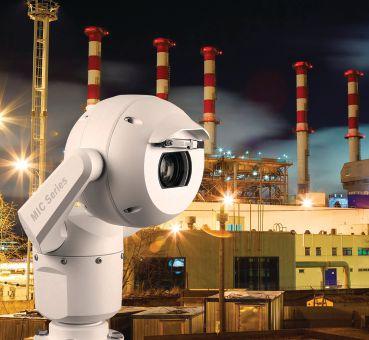
The MIC family of ruggedized PTZ cameras provides reliable surveillance in the most difficult outdoor locations by combining high-quality HD imaging with an IP68/NEMA 6P-rated architecture. The cameras deliver the highest quality images in areas with extreme conditions like roads or highways, transportation facilities, city surveillance and critical infrastructure sites. They withstand a range of harsh conditions – from -40 to +60 degrees Celsius with up to 100 percent humidity to rain and snow, high wind gusts and significant vibration.
us.boschsecurity.com
Bosch Security Systems
Blind spots can seriously undermine the reliability of a video surveillance solution. With the FLEXIDOME IP panoramic cameras, you will never have to deal with blind spots again. The cameras offer a full 180-degree or 360-degree overview in a single image, a choice of 5 or 12 megapixel resolution and high frame rates to ensure moving objects are easily captured. Choose FLEXIDOME IP panoramic cameras to oversee everything in superb clarity and significantly improve video surveillance operations. us.boschsecurity.com
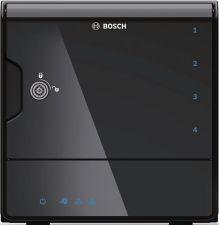
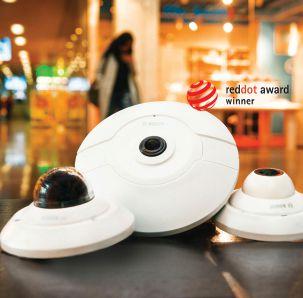
The DIVAR IP 2000 storage unit offers professional security features in a device that is both easy to install and use. The web-based installation wizard works on any PC or tablet with LAN access and helps get the system up and running in less than 15 minutes without training or certification. The free Video Security app provides users with remote access and camera control regardless of available bandwidth.
us.boschsecurity.com
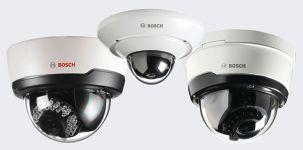
Bosch Security Systems
The FLEXIDOME IP 4000 and FLEXIDOME IP 5000 camera families make professional surveillance easy for everyone. The cameras have been redesigned to reduce installation time by up to 60%. They offer the same graphical user interface to simplify setup, and feature Automatic Varifocal (AVF) on FLEXIDOME IP 5000 models for remote commissioning. The FLEXIDOME IP 5000 family offers resolutions up to 5MP to make it easy to distinguish individuals or minor details. The FLEXIDOME IP 4000 family offers 720p resolution. us.boschsecurity.com

Bosch Security Systems
After only 20 minutes, operators can miss 90% of the activity on a screen. Intelligent Video Analysis (IVA) assists by alerting when predefined alarms are triggered. By combining up to eight IVA rules, complex tasks are made easy and false alarms are reduced to a minimum. IVA also adds sense and structure to video with metadata. This enables quick retrieval of relevant images from hours of stored video. us.boschsecurity.com
The VD022 HD four-channel IP video decoder with Virtual Matrix functionality is a monitoring solution for displaying live video from up to four IP cameras without a PC or NVR. The VD022 decodes full 1080P video at up to 30FPS at a maximum resolution of 1920 x 1080 on one HD monitor or in standard resolution in Quad-View. An automated installation wizard speeds up commissioning by quickly identifying and storing camera IP addresses in a database while importing a preview thumbnail of each channel. www.lilin.us
ALLIE (formerly called IC720) is a 720-degree video monitoring camera. ALLIE is a dual-lens camera that gets placed on a countertop (or mounted to the ceiling) and easily connects to the Wi-Fi network. With an immersive field-of-view that’s 360-degrees horizontally and 360-degrees vertically, the camera — in conjunction with its integrated, proprietary software App — delivers an unprecedented remote-monitoring experience wherein the user can panoramically scan from floor-to-ceiling and completely around the camera itself — even zoom and freeze images — all in a smooth, unrestricted fashion without any blind spots or distortion. www.icrealtech.com
Equipped with a 360-degree rotation function, 256 pre-set pattern tours, and an 18x optical zoom lens, the Toshiba IKS-WP806 (indoor) and IKS-WP816R (outdoor-ready) PTZ dome cameras are suited to environments that require situational awareness in large spaces plus the ability to zoom-in on subjects of interest with high precision. Both cameras also feature digital wide dynamic range to cope with high contrast and changing light conditions. www.toshibasecurity.com
This full HD 1080p (1920 x 1080) IP zoom camera is engineered to withstand -40° to 167°F temperature range without a cooling fan. Offering long-term durability and reduced maintenance costs, the new Moxa VPort 56-2MP camera is tailored for mission critical applications, indoors and outdoors. The VPort 56-2MP can be transformed into an IP positioning system with PTZ capability and two-way audio using an optional built-in fiber interface and PT scanner accessory. The fiber port extends network distances up to 87 miles, providing a viable solution for remote applications. With 3D Digital-Noise Reduction built in and 10x optical zoom/16x digital zoom, the camera brings extra clarity and precision to unique applications.
www.moxa.com

The CC8130 Height Strip camera features a 1-Megapixel video resolution at 30 fps, a 180° wide-angle lens and height strip housing design, allowing the camera to deliver clear images for reliable facial recognition with no dead angles. The plug-and-play design make installation simple and decreases the risk of vandalism because it does not resemble the common surveillance camera. The CC8130 (HS) is suggested for discreet indoor applications such as retail stores, banks, restaurants, small business areas and cash wrap areas. www.vivotek.com
Hikvision





The “Easy IP” range brings together a complete solution of cameras, NVRs and VMS focused on easy installation, viewing and Wi-Fi connection. “Easy IP” allows users to monitor their home or business on their PC, tablet or smartphone through a simple interface. Wi-Fi camera connection is easy, without IP address forwarding. Automatic Network Reconnection (ANR) enables on-board storage supported cameras, like the DS2CD2942F, to create temporary recordings automatically and upload the stored video when the connection recovers. www.hikvision.com

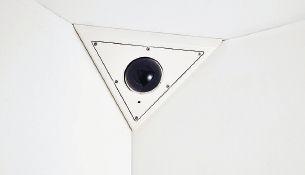
This flush corner-mount adaptor for the Canon mini dome series allows the cameras to be installed in environments where there is a likelihood of physical attack. The triangular design of the new unit, combined with Canon’s wide-angle lens, deliver as complete a view of the room as possible by eliminating the blind spot usually found below the camera. The adaptor is installed by fitting a mounting frame complete with an IP-rated seal in the corner of the room. The clamping bracket and dome are fitted back onto the front panel and fitted into the frame. www.its-products.co.uk

Honeywell Security Group
The newest analogue HDZ PTZ camera offers image quality and features comparable to the line’s IP cameras, including indoor/outdoor zoom and 360-degree capabilities. Suitable for mid-range to high-end facilities across a range of industries, the HDZ Series cameras provide up to 1080p resolution, 360-degree continuous rotation function and a zoom lens for sharp clarity. www.honeywellvideo.com




Searchlight 4 for Banking is a video-based business intelligence solution providing banks and credit unions with insights into customer service, operations and marketing. It also delivers search and investigation capabilities that enable financial institutions to reduce costs associated with ATM skimming, cash harvesting and other fraudulent activity. Searchlight incorporates intelligent analytics – including people counting, queue length and dwell time – from March Networks’ MegaPX Indoor Analytics Dome camera. www.marchnetworks.com
The SNC-VM772R 4K surveillance camera, features resolution that is four times higher than Full HD (1080p). Video can be magnified and examined down to the slightest detail, like facial features or licence plates. In addition, it allows users to simultaneously monitor a large area and a specific object. The SNC-VM772R features a 1.0 type back-illuminated Exmor R CMOS image sensor and bandwidth optimization. It targets various applications including city surveillance, transportation, education, corporate facility and airport surveillance. The camera offers support for up to 20MP. pro.sony.com n,
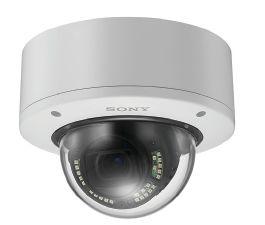
The CC8370-HV anti-ligature 3-Megapixel fisheye network camera features an anti-grip design, WDR Pro and vandal resistant housing. The CC8370-HV is specially designed for high security environments, such as detention houses, holding cells, psychiatric wards and correctional institutions. With anti-ligature edges, the camera can act as a life saver by preventing both self-harm and conflict. Featuring 180° horizontal panoramic views with an adjustable 25° tilt angle, the CC8370-HV allows security officers to see any event in cells. www.vivotek.com
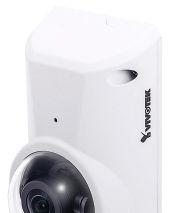

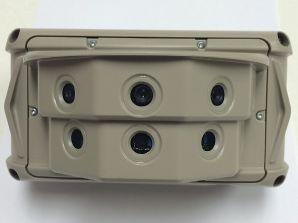
The company has released symmetry CompleteView Video Management System version 4.5. Earlier this year AMAG announced a deepened partnership with Salient Systems where AMAG now offers Salient’s CompleteView VMS, PowerProtect NVRs and TouchView Mobile App video solutions as part of the Symmetry product line. Symmetry CompleteView VMS 4.5 includes a suite of software tools called Dynamic Video Management. The suite offers: dynamic resolution scaling, dynamic video decoding and dynamic frame throttling. Symmetry CompleteView 4.5 also offers a new Web Client that is HTTP/HTTPS capable with native H.264 live and playback support with enhanced viewing features for ultra fast display of video feeds. Users can view multiple cameras simultaneously from multiple NVRs. www.amag.com om he ng.
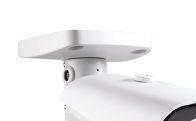


The TCX thermal mini bullet camera combines 24/7 high-contrast thermal video and high-performance built-in video motion detection. FLIR TCX provides the advantage of seeing clearly in complete darkness without any illumination, in bright sunlight, through smoke, dust or even light fog — enhancing accuracy and reducing false alarms. The camera is suitable for integration in any environment, indoors and out — even in temperatures as cold as -40°C. www.flir.com/security T
The Evolution Mini 360° indoor surveillance camera features a diameter of 4.25 inches (108mm). The Mini is suitable for hospitality, education, retail and banking facilities—anywhere a small, discreet camera is required. Suitable for ceiling, wall or table mounted applications, the Evolution Mini is an IP camera with a 5-megapixel sensor and no moving parts. The small unit is designed for quick and easy indoor installations where a professional, small indoor enclosure is required. www.pelco.com
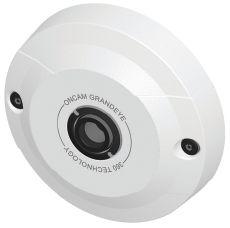
The D14-180 is a 14 megapixel surveillance camera that provides full-colour high resolution 180-degree video without fisheye distortion. At night, the camera offers monochrome, extreme low-light capability for viewing and recording in conditions as low as 0.01 lux. The D14-180 processes more than 100 MP per second, providing a 180-degree full situational awareness image with up to four zoom windows. This stream is combined with a second, simultaneous full resolution video stream for recording and forensic purposes. www.scallopimaging.com



AXIS P3905-RE is an outdoor-ready camera addition to the family of AXIS P39-R Network Camera Series. They are specially designed for onboard video surveillance in or on buses, trains, subway cars and emergency vehicles. The AXIS P3905-RE is designed to be mounted on the exterior of a vehicle. AXIS P3905-RE comes with a 6 mm lens that provides a 55° horizontal field of view optimized for the typical use of surveillance alongside a vehicle. www.axis.com
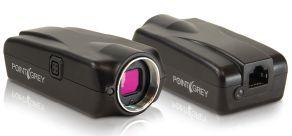
The Cricket CR-POE-20S3C model features a 1/2” Sony IMX185 Exmor CMOS sensor capable of 1920 x 1080 resolution at 60 FPS. This 2.0 MP sensor uses the same 3.75 micron pixel structure as the existing 1.3 MP Cricket camera with the Sony IMX139, which offers low light performance and wide dynamic range. The new model uses Sony’s Xarina image processing platform, which enables multi-image WDR functionality, multi-streaming, noise reduction, video encoding and ONVIF support.
www.ptgrey.com
The SMARTcontrol Management Suite comes standard on all of BCDVideo’s enterprise access control and video recording platforms. SMARTcontrol 2.0 not only alerts the user when something is wrong, but can tell the user what is wrong. The performance panel allows a single-pane view into the system, graphing and logging performance. SMARTalert panel can even prevent failure before it occurs with behaviour monitoring and can be integrated with VMS software. SMARTsupport feature opens up a ticket straight to the BCDVideo tech support team or the integrator. SMARTvault and SMARTrestoration features can help restore a system in minutes. www.bcdvideo.com/smartcontrol-2
The Cloud Archives service for Security Center will allow organizations to scale the available storage capacity of their surveillance system, and eliminate the need to invest in additional servers. With the ability to continue leveraging their existing on-premise storage equipment, this hybrid Cloud service will provide a solution for customers who need to extend their video retention period or implement off-site recording. Archived video will be encrypted prior to its transfer to the Cloud to help ensure only authorized users can access recordings, while allowing operators to view and search video.
www.genetec.com vice will a solution on e ene -


The Video Surveillance System includes a variety of IP cameras, recorders, video-storage devices, and an integrated access-control system with badging functionality, as well as the video-management software. The new software release delivers a number of features. It utilizes a new user interface that improves work flow and is easier to use. Additional capabilities include: the ability to automatically fit any number of cameras feeds within the viewing window and a reporting function for the licence-plate-reading application. www.zetron.com
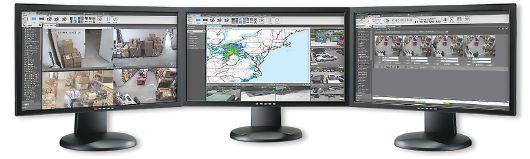
The Evolution Mini camera has received IK10+ Certification for its vandal-proof housing. The rigorous testing process included dropping a 0.5kg metallic ball from increasing heights onto several critical areas of the camera — including a direct hit on the dome, then moving to a 5.89kg bullet-shaped weight drop on the dome from a height of 864mm. The same camera was used during the entire certification process. www.oncamgrandeye.com


The NS1 Video Storage and Management Server is a solution for either on-premise, mobile or perimeter video surveillance and monitoring applications, the NS1 Server, supports up to 16 IP cameras with a choice of H.264, MxPEG, MPEG-4, and MJPEG compression, and provides 2 TB of recording storage. Audio recording is also supported. The NS1 Servers come preloaded with the latest version of Wavestore V5 Video Management Software to allow for direct or remote connectivity to capture, store and transmit continuous recording of live video views. www.wavestoreusa.com
Part of the XVi Enhanced HDCVI lineup, the new XVI-21IRBVM-B/W (available in black or white) release offers full 2.1MP 1080p HD video and features a builtin motorized vari-focal lens for remote zoom and focus. The compact vandal-proof mini turret ball camera is compatible with all WatchNET EVi DVRs and Tribrid NDVRs (or HDCVI DVRs) allowing for upgrade or retrofit of analogue systems to full HD using the existing coax cable or UTP. The motorized lens offers full zoom and focus capabilities locally or remotely using only the single coax cable or UTP without the need of additional cables. www.watchnetinc.com
The exacqVision Z-Series line of hybrid and IP camera recorders continuously record up to 1,200 Mbps of video. Suggested for large installations, the Z-Series delivers up to 1,800 frames per second of video to web and mobile clients, allowing users to deploy the freely distributed cross-platform client, web browser client or Exacq mobile app to more users simultaneously. Up to 500 exacqVision client users or 100 web browser/mobile app users can connect to a single Z-Series recorder at the same time. www.exacq.com







Avigilon is not about to let the grass grow under its feet.
The company purchased video analytics firm VideoIQ a year ago, and late last year purchased the patent portfolio from ObjectVideo for US$80.3 million — a total of 76 patents and more than 50 patent applications. At the time, Alexander Fernandes, the company’s founder, president and CEO, said, “The future of the video surveillance industry is in video analytics.”
opens up a whole other the realm of business intelligence.”
Barely a month later, Avigilon stated that it had completed the acquisition of an additional 96 patents and 25 patent applications from another four vendors for US$13.37 million, bringing its grand total to 213 patents and 215 patent applications. This new batch related to video analytics capabilities such as emotional response measurement, behavioral analysis, anomaly detection and a great deal more. SP&T News recently spoke with Fernandes about all these acquisitions and why the company is putting so much faith in analytics as a driving force behind security.
SP&T News:
Alexander Fernandes: Simply put, we see the future of the video surveillance industry to be seated in video analytics and putting intelligence in the video. There’s this ongoing trend of conversion from analogue cameras to HD cameras. Analogue sales are still quite strong and account for somewhere between 40-50 per cent of new sales. But they’re obviously on the decline. Avigilon is at the very forefront in leading the way of this convergence. We’re in a very different position over the next five to seven years — that’s the time frame we estimate for ultimately replacing all of these cameras as they get old.
For most other manufacturers, whether analogue or digital or HD, [sur-

with Alexander Fernandes,


veillance] is a post-incident tool. No one’s really watching all this video. There are tens, if not hundreds, of millions of cameras around the world, and there simply isn’t enough money or people to watch all this video. If something bad happens, most often they don’t even realize it until after the fact. It’s a great tool in being able to apprehend after the fact: a bomber, a terrorist, a mugger. There’s value in catching these people, but there’s even more value in being able to detect the bad behaviour or catch people on a wanted list before they even commit an offence. That’s really what the analytics is all about. It’s putting intelligence into the video system and automating the process. We firmly believe the future of the industry is in analytics. A year ago, we purchased VideoIQ, which we believe had the most robust, strongest video analytics technology in terms of products and source code.
SP&T: What was the rationale behind your
AF: The rationale behind acquiring ObjectVideo and subsequently these other patents from four other video analytics companies is really to build the biggest intellectual patent portfolio, both in terms of technology that came from VideoIQ as well as all the patents related to that technology. We feel that today, we have the strongest portfolio and offering related to video analytics in the world. We have some core, fundamental patents upon which all other analytics are built upon. We feel we have the strongest video analytics offering. We have begun incorporating the VideoIQ technology into our Avigilon HD end-to-end platform.
SP&T:
AF: The royalty program is a secondary benefit — it’s a nice to have. Our business is selling security solutions; we’re not a licensing company. That’s not to say that we don’t intend to receive payments or give permission to others to participate or to commercialize technology that belongs to us, but that’s a secondary consideration.
SP&T: analytics is focused on business operational
AF: It’s two fold. Our core business is






providing security solutions that incorporate access control, video, as well as analytics — and that’s made up of hardware and software and all the accessories needed. But with video analytics and all the data, it opens up a whole other adjacent opportunity in the realm of business intelligence. Think of it as big data beyond security applications — increasing visibility to operate efficiently, to do quality control. So, for example, in cargo and logistics, it could be used for tracking of vehicles or containers or other assets. In retail, there is a tremendous amount of information that, to a large extent, is being unused. If you think in conceptual terms, data becomes information and information, when it’s aggregated in a useable way, becomes knowledge and knowledge is power.
SP&T: With a number of your competitors -
AF: I think it’s inevitable, I think it’s a good thing. I think it’s long overdue. If you look at the security industry, it has been around for a very, very long time. To some extent, it’s a bit of an anomaly. It still hasn’t been consolidated. There’s been some moves, but I think there’s a lot more consolidation to be had yet. If you look at the plethora of manufacturers and providers, it just creates confusion and a lot of inefficiency. You don’t need 150 companies all doing more or less the same thing, servicing one market. It’s an interesting time in the market. It’s a growing market and it really touches everyone’s lives in one shape or another. Consolidation will simplify the purchasing process for end users. It should ultimately create efficiency and serve to eliminate a lot of the bottom feeders — the smaller companies that really aren’t

adding a lot of value but creating confusion, more than anything else.
SP&T:
needs to develop in order to capitalize on this
AF: It’s really about getting away from what I call the speeds and feeds and selling cameras by the pound. Rather than selling technology or widgets, what Avigilon is all about, and ultimately what the customers want, is solutions. If you think of it as an automobile, there’s obviously motor enthusiasts who get into the spark plugs and the horsepower . . . and what’s going on under the hood. But for the most part, what people want to do is get from A to B and when they switch on the ignition and push the accelerator, the car moves and when they push the brakes, the car stops. They don’t want breakdowns or unexpected interruptions. For the most part, people don’t really care what’s under the hood, so long as it works and it makes sense and it’s economical.
SP&T:
pay off in the short term and how much is a
AF: It’s already paying off. In the short term it’s paying off, because people recognize that if they want to get the latest and greatest technology, they can buy it from us. People know that what they’re buying from us is the best and is also protected by our intellectual property portfolio. Long term, we feel we have the strongest video analytics portfolio in the world, both in terms of patents and in terms of technology. We’re in a very strong position to emerge as the market leader. The spend last year — the estimates are approximately US$15 billion in global spend, but it’s also growing. It’s projected over the next 24 to 36 months to exceed US$30 billion.