

ROM’s security director outlines upgrade Toronto’s Royal Ontario Museum balances security and accessibility for visitors p. 7
Signal 88 now in Toronto U.S.-based security franchise growing in Canada with more locations planned p. 12
Q&A: David Bunzel, PSIA The organization’s executive director discusses the future of access control and what’s next for the PLAI specification p. 30










The Latest IP Technology Dealers Corner Thousands of Independent Dealers Personalized Customer Service
24/7 Monitoring 365 Days a Year
• Wholesale Monitoring
• Interactive Services
• Video Monitoring
• Managed/Hosted Card Access
• Advanced Web Services
• Acqusition and Funding Program



18 Sports facilities need security on-side
Securing venues as large and as busy as sports stadiums requires a team approach to communications, surveillance, weapons detection and access control by Will
Mazgay

24 Bringing biometrics to the door
Improvements in the technology increasingly make it a more viable option in the field by Wayne Pak
6 Line Card
• Vipond hosts “beyond security” event
• ROM’s security director curates recent upgrade
• Today’s Genetec: parking, privacy and the new perimeter
• Signal 88 comes to Canada
• A.p.i. acquires Protelec residential business
• Avante Logixx to bring Intelligarde, Veridin under one roof
15 CANASA Update
Why you should become a member of CANASA By Patrick Straw
16 Lessons Learned
How to maximize the selling price of your business By Victor Harding
17 Camera Corner
Hybrid solutions rising By Colin Bodbyl



s a member of the security media, I’m used to interviewing senior leaders and attending company presentations, but a session with Pierre Racz, president of Genetec, is a rare opportunity.
At one point during the Genetec press summit I attended in July (see p.10), he launched into a deeply nuanced description of blockchain, preceded by a warning to the assembled journalists that they were about to have their minds blown. (I can’t speak for everyone, but… yes.)
Whatever he’s talking about, Racz always communicates a passion for what he does. He distilled his company’s longterm goals down to a single word: perennity, which means the state of being perennial, or continuing to exist. That’s different from the objective most corporations aspire to which is growth (or revenue). And for what it’s worth, I think he’s also referring to relevancy and maybe even reinvention.
In the spirit of perennity, here are a few ideas that may benefit security companies as they develop their own long-term plans.
Work with more companies outside the security industry: You sometimes hear of security companies partnering with Microsoft or Amazon or other tech giants, but I would like to see a company really go to bat and work with a true outsider. Maybe they partner with a car company to co-market a road safety solution, or a shoe company to talk about safe practices when walking alone at night. It doesn’t always have to result in a new technology or demonstrate immediate ROI. Just some-
thing to get security into the public consciousness and make the industry more approachable. Celebrate victories: I’ve heard several security professionals lament this before. Security, as an industry — manufacturer, channel partner or end user — doesn’t blow its own horn enough. Security, done right, saves lives, prevents tragedies and mitigates the effects of disasters. Let’s share more success stories and demonstrate how valuable this industry is.
Expand the mindset: Incorporate ideas and skillsets that may have been overlooked by the industry. Much as security providers should look for more opportunities to partner outside the industry, maybe they should also be hiring people with expertise in other disciplines. One path to creativity is working with people whose ideas are different from your own.
Talk about solutions: I don’t mean how you integrate well with technology partners or sell an end-to-end stack that meets most security needs. I mean helping end users work more collaboratively with other departments, or communicate more effectively with the public. To a large extent, the industry is already moving in this direction, but there is still work to be done.
If there’s one thing I’ve learned from Pierre Racz, it’s that people work at their best when their minds are engaged and they’re having fun. We could probably all benefit from a little more of both.



Your Partner in Securing Canada Security Products & Technology News is published 8 times in 2019 by Annex Business Media. Its primary purpose is to serve as an information resource to installers, resellers and integrators working within the security and/or related industries. Editorial information is reported in a concise, accurate and unbiased manner on security products, systems and services, as well as on product areas related to the security industry.
Group Publisher, Paul Grossinger 416-510-5240 pgrossinger@annexbusinessmedia.com
Associate Publisher, Jason Hill 416-510-5117 jhill@annexbusinessmedia.com
Editor, Neil Sutton 416-510-6788 nsutton@annexbusinessmedia.com
Associate Editor, Will Mazgay wmazgay@annexbusinessmedia.com
Media Designer, Mark Ryan mryan@annexbusinessmedia.com
Account Coordinator, Kim Rossiter 416-510-6794 krossiter@annexbusinessmedia.com
Circulation Manager, Aashish Sharma asharma@annexbusinessmedia.com Tel: 416-442-5600 ext. 5206
COO, Scott Jamieson sjamieson@annexbusinessmedia.com
EDITORIAL ADVISORY BOARD
Anna Duplicki, Lanvac
Victor Harding, Harding Security Services Carl Jorgensen, Titan Products Group Antoinette Modica, Tech Systems of Canada Bob Moore, Axis Communications Roger Miller, Northeastern Protection Service Sam Shalaby, Feenics Inc.

111 Gordon Baker Rd, Suite 400, Toronto, ON M2H 3R1 T: 416-442-5600 F: 416-442-2230
PUBLICATION MAIL AGREEMENT #40065710 Printed in Canada ISSN 1482-3217

Occasionally, SP&T News will mail information on behalf of
groups whose products and
we

be of
to you. If you prefer not to receive this information, please contact our circulation department in any of the four ways listed above.
Annex Privacy Officer privacy@annexbusinessmedia.com
Tel: 800-668-2374
No part of the editorial content of this publication may be reprinted without the publisher’s written permission. ©2019 Annex Publishing & Printing Inc. All rights reserved.
Annex Publishing & Printing Inc. disclaims any warranty as to the accuracy, completeness or currency of the contents of this publication and disclaims all liability in respect of the results of any action taken or not taken in reliance upon information in this publication.





Vipond recently held a customer and partner event to showcase some of the major innovations in security technology and design, often with the added benefit of providing information and intelligence that goes beyond the security department. The event, held at Toronto’s Royal Ontario Museum (see p.7 for more on the ROM’s recent security upgrade), included presentations and demonstrations from Axis Communications, AI solutions firm Anyvision and Genetec. It was co-hosted by Vipond’s own integration division Habtech.
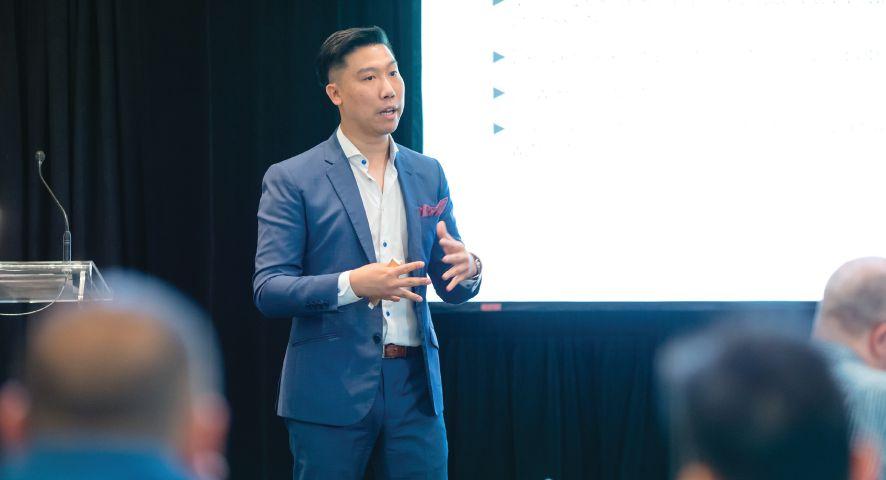
Axis, known for its depth in the surveillance market, showcased solutions that go “beyond video security” or augment more traditional camera solutions. Stanley Kuan, regional sales manager, Axis, provided insights into the company’s radar detection solution, which uses electromagnetic waves to detect movement.
According to Axis, the solution is less likely to be triggered by common nuisances like animal movements and weather, resulting in fewer false alarms.
Kuan also reviewed Axis’ network audio systems, which offer security-based applications, such as mass notification and gunshot detection, but can also be utilized day-to-day for paging and broadcasting marketing messages.
In some cases, security and marketing can be part of the same package, said Kuan. For example, pre-recorded audio can be triggered if a person is detected as loitering in a specific area. Baby departments might be targeted by would-be thieves, since baby formula is a valuable commodity and potential theft opportunity. A pre-recorded message that simply says, “Thank you for shopping in
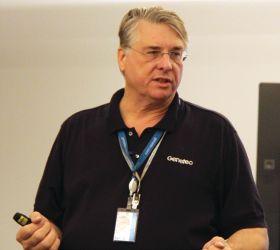
Stanley Kuan, Axis Communications (Image: Neil Ta)
the baby department” could also serve as a reminder that the area is being monitored and thus deter thieves. These types of solutions “make surveillance systems more robust,” offered Kuan.
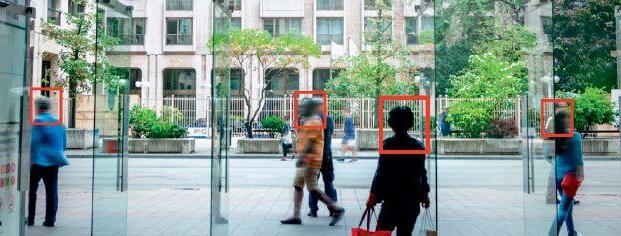
Anyvision, an AI solutions company, is able to identify a person from a video stream without actually having to store an image of that person on file. The key, said Adnan Kichlu, regional sales manager, Anyvision, is utilizing the mathematical vectors that describe a person’s face rather than a picture of the face itself.
Kichlu demonstrated the principal by using a 20-year-old photo of a person to then detect that same person from current video — the geometry, not the image, is the key to detection and recognition. The solution is completely agnostic to the type of camera sensor or video stream it draws data from, he added, and is also GDPR compliant.
Kichlu said his company’s solution can be integrated with an
access control solution, such as a turnstile, to allow (or refuse) entry based on facial recognition. It can also be integrated into a smartphone to confirm the identity of the user.
Heat mapping, gender detection and gaze estimation (approximating where a person is looking, i.e. what draws their attention) are non-security related functions that would be of interest to a marketing department, he said.
Nada Ebeid, business development manager at Montreal-based Genetec continued the “beyond security” theme of the meeting with a presentation titled “Your building is talking. Are you listening?”
“Our mission is to really allow people to flow,” said Ebeid of her company, describing how technology enables people to “flow” through public life (public buildings, museums, transit systems, etc.), by enabling their movement rather than impeding it.
Genetec, known for its video management software, provides
other solutions that serve security purposes, like access control and licence plate recognition. It can also provide useful data points of how people utilize and navigate spaces (for more on Genetec, see p.10). “Knowledge of how people are flowing through our different buildings helps us make better business decisions,” she said. “Anyone not acting on this data is going to get left behind.”
Ebeid indicated that work spaces are changing as the workforce becomes more mobile. Office real estate can be put to better use if tenants have a handle on how it is being utilized — “security” data (i.e. that generated by cameras, access control and LPR) can be useful in that regard.
Ebeid also cautioned that data comes with a cost if measuring tools are not deployed in a cybersafe manner. She estimated that only 30 per cent of cameras deployed in the field have up-todate firmware installed. “It’s about managing your exposure and being mindful of the technology you are putting in place,” she said.
— Neil Sutton

For Ascanio Odorico, security is a balancing act between protecting and pleasing the public who visit the Royal Ontario Museum.
A Toronto tourism and cultural staple, the ROM is home to a massive collection of artifacts — approximately 13 million — five per cent of which are on display at any given time across 40 exhibit areas. The goal, said Odorico, is to mind the precious objects and protect the patrons but in an environment that doesn’t feel restrictive or oppressive. “I need to find that balance of technology that is out there and be able to mitigate that risk without impacting the visitor experience,” he said.
There is a trend in museums globally towards more openness, allowing visitors to get up close to art and historical objects to enhance their appreciation, he said. The downside is, some people want to get too close — encouraging their children to be a little too hands-on, or sidling up to exhibits to pose for selfies.
Odorico, who has worked in the ROM’s security department for 16 years, the last five as its head of security.
The ROM was using multiple systems to handle security, which sometimes proved difficult in terms of management and staff training. The ROM’s most recent upgrade has helped in that regard, he said. “We kind of undertook a four-year project. In the last year and a half, it’s been fully implemented.”

Odorico is eager to embrace new technology, but is also “old school” when it comes to big picture thinking. With pen and paper, he said he likes to outline a plan based on three categories: “My needs” — the essentials for a successful security implementation; “My wants” — the nice-to-haves if budget wasn’t an issue; and “My wishes” — a category of possible future implementations based on vendor partners’ product roadmaps and how the museum’s security requirements might evolve over time.
Odorico spoke recently at an event hosted in the ROM and organized by Vipond, a Mississauga, Ont.-based provider of fire and security systems.
He was interviewed by Nada Ebeid, business development manager at Genetec. The manufacturer has a long-standing partnership with the ROM and was recently engaged with the facility as it upgraded security systems over a four-year period.
Upgrading security systems, while at the same time simplifying them, was a goal for
Addressing broad trends across security, Odorico said he believes cloud-based technology will continue to play a large role, due to its affordability and scalability. He also sees biometrics stepping up as the technology gets cheaper and its ability to deliver realtime information becomes even more useful to security professionals. Whatever security professionals adopt, now or in the future, Odorico encourages them to hold their vendors accountable for their products.
— Neil Sutton
Dominican store chain uses VMS for business intelligence

Ferretería Ochoa, a hardware and home improvement chain that has operated in the Dominican Republic for more than 45 years, is using Senstar’s Symphony VMS for security and business intelligence. First installed in 2013, the retail chain is now using Symphony in six locations, including storage and manufacturing facilities. According to Senstar, its VMS product is helping manage inventory control through shoplifting detection and also the reduction of errors during shipping and receiving, whether they are intentional or accidental.
“It dissuades deceitful and malicious situations such as shipping more items than ordered or a more expensive item,” said Luis Gomez, director of security, in a statement.
In addition, the VMS delivers data that helps to understand customer and employee behaviour, and enables the retailer to utilize security personnel more efficiently.


• Retired Col. Chris Lythgo, was confirmed as Commissionaires
National Chair during the Commissionaires’ AGM. He replaces retired Vice-Admiral Duncan (Dusty) Miller, whose three-year term had concluded.
• Allied Universal recently hired Morgan Price as senior vicepresident of recruitment and
The New Bedford Housing Authority (NBHA) in Massachusetts has deployed an Avigilon solution to monitor 13 of its properties. The NBHA operates almost 1,750 federal public housing units and 748 state aided units, helping to provide 6,000 people with safe and affordable housing. The Avigilon system includes 125 cameras and Appearance Search technology, which helps security officers to quickly sort through video to locate a person or vehicle of interest. The sites are all connected to the same Avigilon Control Center client software. “Our goal is to provide a safe environment for our residents and deploying an Avigilon system has allowed us to monitor critical areas more efficiently and respond more quickly,” said Steven Beauregard, executive director, NBHA, in a statement. “So far, the results are tangible as we’ve made great strides in improving the safety and security of our communities.”


talent acquisition to lead the company’s recruiting efforts. He is based in the Santa Ana, Calif. corporate office.
• RBH Access Technologies Inc. announced two new territory sales managers: Bill Daniel for Western Canada and Julio Parrales for Central Canada.
• Ken Gould of Ken Gould Consulting has been elected

The Northern Alberta Institute of Technology (NAIT), a polytechnic with 40,000 students, began evaluating IP video solutions in 2017.
The facility ultimately selected Hanwha Wisenet X, P, and Q series of camera models. The cameras are equipped with multiple sensors, enabling them to monitor large areas with a single unit.
“We are a fairly large institution and we could foresee a significant increase in the number of cameras we’d need to install over time. However, we also realized that the number of people that we would have to support the system wouldn’t increase as the cameras increased so we wanted efficiency as well,” said Mario Poier, NAIT’s manager of network services, in a statement.
Poier added that NAIT is incorporating Hanwha’s analytics features into their overall security set-up, mentioning technology such as licence plate recognition, motion detection and line-crossing.


chairman of the board for Mission 500. Gould is also president-elect of the New Jersey Electronic Security Association.
• Key control and asset management systems firm Morse Watchmans has announced the promotion of Tim Purpura to vicepresident of sales and marketing.
September 8-12, 2019 GSX Chicago, Ill. www.gsx.org
September 11, 2019 Security Canada Atlantic Moncton, N.B. www.securitycanada.com
September 17, 2019 ADI Expo Vancouver, B.C. www.adiglobal.com
Sept. 29 - Oct. 3, 2019 BICSI Fall Conference & Exhibition Las Vegas, Nev. www.bicsi.org
October 3, 2019
Canadian Security Honours Toronto, Ont. www.canadiansecuritymag.com/ cshonours
October 8, 2019 ADI Expo Ottawa, Ont. www.adiglobal.com
October 12-16, 2019 TMA Annual Meeting Napa Valley, Calif. www.tma.us
October 21-22, 2019 CANASA Monitoring Symposium Toronto, Ont. www.canasa.org
October 23-24, 2019 Security Canada Central Toronto, Ont. www.securitycanada.com
October 25, 2019 Anixter Showcase Montreal, Que. www.anixter.com
October 29-30, 2019
Securing New Ground New York, N.Y. sng.securityindustry.org
November 20-21, 2019 ISC East New York, N.Y. www.isceast.com
December 5, 2019 Focus On Healthcare Security Toronto, Ont. www.focusonseries.ca
• dealer billing
• Dynamic call Display
• Bilingual Services
• Video Verification Services

• dealer tech Support
• Live Operator Answering
• LoNE Worker Monitoring Solution
• PERS / mpers Serving Dealers Across Canada Halifax | Moncton | Edmonton
Genetec recently earned a feather in its cap — a No. 1 global ranking for its video management software, according to research firm IHS Markit.
But the company made it clear during a recent press summit that this accolade, while much appreciated, is definitely a feather, not the cap itself. Genetec made its name in surveillance software, but has increasingly pivoted towards solutions that address issues that affect more than just security and asset protection. (IHS Markit also released its access control rankings in July, recognizing Genetec as the No. 3 provider of access control in North America and No. 6 globally.)
The company hosted the media event over two days in July at its headquarters in Montreal. Briefings covered key aspects of Genetec’s roadmap, such as cloud strategy, privacy frameworks, evidence sharing for law enforcement, access control, cybersecurity, parking solutions (through licence plate recognition) and yes, surveillance.
According to Genetec’s vice-president of marketing, Andrew Elvish, the company has consistently achieved a 30 per cent CAGR (compound annual growth rate) over the last 12 years and invests 28 per cent of its top-line revenue back into R&D. It is also privately-held, which “gives us a great deal of freedom, it gives us a great deal of latitude to do what we want.”
Genetec has almost 20,000 global end users (Elvish stressed that its main market is enterprise-level customers) and its video business alone is growing at 22 per cent annually, more than double the market growth rate.
Elvish also said that Genetec has inverted its priorities in recent years. It once was video first, followed by operations, then intelligence. Today it is intelligence first.
Genetec’s CEO Pierre Racz, an outspoken proponent of privacy and integrity in security systems, began his presentation with an affirmation that security is generally moving in the right direction: “Their job is to measure the flow of people, things and information,” he said. “Security is no longer the cost centre, but integral to the decision-making of an organization.”
He quickly moved, however, to the topic of the internet and its deep failings, comparing its status to that of an urban water supply before the advent of modern sewage systems. The rapid rise of the internet has come with significant costs — chief among them, it is frequently untrustworthy and easily polluted.
“The effluence of our civilization is leaking into our information supply. And who does it harm? The very young and the very old,” said Racz, comparing internet predators to contagious diseases that prey on those age groups.
Old paradigms of data security, with firewalls that protect network perimeters have given way to the “new perimeter” of identity. “You have to know who you’re talking to,” he said. “Establishing the identity of machines and people is of critical importance.”
He also called for more accountability in the information security market — particularly in light of recent data breaches — which could be accomplished with the equivalent of the Sarbanes-Oxley Act of 2002. SOX, as it became known, is a U.S. federal law that came to prominence as a means to regulate corporate conduct. It sets out a number of regulations designed to hold public companies and their corporate officers accountable for their actions, with serious criminal penalties for misconduct.
IA not AI
Sean
data science, continued the theme of veracity in security by discounting the notion that artificial intelligence, in the truest sense of the term, currently has a practical application. “We’re not anywhere near AI,” he said. Machine learning (or deep learning, a specific type of machine learning) is a more accurate reflection of today’s capabilities. Machines excel at repeated tasks, he said. In the security context, that could mean scanning video data for people wearing red hats and relaying that information to an operator.
Racz added that Genetec’s focus is more on IA (Intelligent Automation) than AI. “IA is where we’re putting our marbles,” he explained. The emphasis is on human input with machines doing the heavy lifting.
In its quest to make data more useful, Genetec recently acquired Valcri, a research project originally developed at Middlesex University in the U.K. Valcri’s principal scientist B.L. William Wong described Valcri in an article published on LinkedIn “as a crime analysis and case investigation system for facilitating intelligence-led policing by enhancing sense making.” He added that “Valcri also facilitates data discovery and construction of relationships between people, places, time, objects and activities.”
In his presentation, Lawlor said that Valcri will be useful to Genetec and its customers for its capacity to give data meaningful context. (Genetec said it will reveal more about Valcri later this year.)
Stephan Kaiser, general manager of Genetec’s AutoVu automatic licence plate recognition suite, addressed a topic that appears mundane on its surface, but is vital to the functioning of a city: parking.
“There’s emotions involved,” he said. “It affects our everyday lives…
If your parking experience goes badly, there’s a good chance the rest of your evening will go badly.”
He said 30 per cent of traffic is caused by drivers cruising for the cheapest parking spots.
The world of parking is becoming more digital, less hardware focused, he said — the aim is “frictionless” parking, with fewer literal barriers between a driver and a parking spot, and cashless payment. Customers are getting rid of parking gates whenever possible, he said, preferring better integration with payment systems enabled by licence plate recognition tools.
There is also a desire on the part of municipal managers to have a better accounting of the actual number and location of parking spots in their cities. The curb itself is an asset, since it is integral not only to parking spots but deliveries. It is also desirable, since the curbside usually represents a premium parking spot. As such it is often underpriced, said Kaiser, compared to hourly rates charged in parking lots. Raising curb rates will free up more spots, he added, and dynamic pricing — based on scarcity — will also help to manage traffic flow.
Genetec is currently working towards a new LPR-based parking enforcement platform, said Kaiser, taking advantage of machine learning and real-time enforcement enabled by 5G networks and in-car sensors.
— Neil Sutton




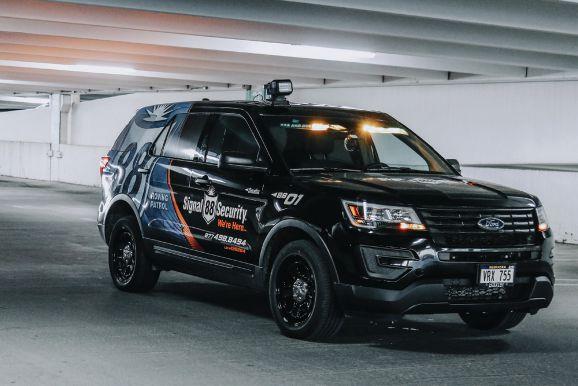
Signal 88 Security is an Omaha, Neb.-based company founded in 2003 on the model of mobile vehicle patrols to provide low-cost security to clients for whom around-the-clock guards isn’t financially feasible.
It has grown exponentially in the U.S., and is expanding quickly into Canada with new franchises.
Kevin Jones, chief development officer for Signal 88, is looking to the Canadian market as an untapped source of potential business. He said, “We’re almost in all the major markets in the U.S,” but as for Canada, “We’re fairly new, just getting started up there.” The firm has locations in Ottawa, Calgary, London, Ont., and two in Toronto, but is looking to grow that list. Jones continued, “We’re also targeting Vancouver, Edmonton, Saskatoon, Winnipeg…Eventually, we want to get into Montreal, Quebec City.”
A new addition to Signal 88’s growing footprint in the great-
er Toronto area and southern Ontario is Darryl Culley, who recently started up a York Region franchise.
Culley has an established foothold in the emergency training industry as the founder and president of Emergency Management & Training, which offers emergency preparedness training and consulting for hospitals, government, schools and private and public corporations.
Culley said he entered security services because of the synergy with his existing business.
Jones said Signal 88 primarily serves property management, but hospitals, schools, hotels, retail and a myriad of other industries make up its client base. The firm’s roving vehicle patrols will offer clients facility checks, maintenance assessments, access control services, alarm response and fire monitoring. The firm also provides dedicated standing guard services, and event security.
Culley said he was attracted to Signal 88 because “they’ve established that very high-quality assurance standard.… You have to have processes in place to monitor quality of service, and that ensures that each guard and each location has the highest quality service.” He continued, “They bring together that background, that expertise, they use a high degree of technol-
Winnipeg-based Protelec Alarms, a 48-year-old family-owned firm with residential and commercial security solutions, announced the sale of its residential business to Toronto-based a.p.i. Alarm Inc. on July 2.
Protelec president Harry Black said in an open letter to customers that the firm’s residential monitoring services have been permanently transferred to a.p.i., and a forwarding system has been activated so all customers have immediate access to a.p.i.’s emergency monitoring centre.
Black said in the letter, “With this important responsibility top of mind, we set out to carefully select the right company with the right customer care team to be your new residential security provider. We are pleased to have found that partner in a.p.i. Alarm Inc., a family-owned, 100 per cent Canadian company with a Five Diamond-Certified and ULC-Listed, annually inspected emergency monitoring centre. Since 1983, a.p.i. Alarm Inc. has provided alarm installation and ULC-approved monitoring services to Canadians.”
A.p.i describes itself as North America’s largest
privately-owned and operated alarm monitoring network.
Josh Garr, director at a.p.i., said in an email interview with SP&T News of the acquisition, “It was great fit for both companies and we continue to work together on more services for our dealer base with partners like Protelec. And as the industry continues to consolidate we are providing more and more support to smaller stations who are looking to take advantage of infrastructure we can provide them that they couldn’t on their own.”
Black went on to explain in the letter that the sale of Protelec’s residential business allows fulltime focus on its commercial business in the security and lone-worker safety industries, and that over the past year and a half, the business has expanded with integrated security services and technology such as CCTV, door access and intercom systems.
Black said the firm continues to service long-standing clients at hospitals, property management companies, industrial, financial and agricultural businesses, and has entered the cannabis producer market.
— Will Mazgay
ogy. Every day, each client gets a report electronically as to what was going on.”
Culley also praised the firm for the support it provides its franchisees.
Jones said the firm offers its franchisees sales coaches, marketing support, financing, strategic partner relationships with national accounts, and operations support. Signal 88 also provides a digital platform to manage payroll, billing, clocking workers in and out, report writing, and tracking patrol routes.
Jones explained further, “About 80 per cent of our franchise owners come from military or law enforcement background, not a formal business background, so we help them with a lot of things that otherwise they wouldn’t know how to do…Basically, they can focus on being a good service provider.”
Moving forward with his franchise, Culley said, “We want to build it as part of the community. We’ve had that reputation with Emergency Management & Training. Some of our clients have been coming back to us on a regular basis for 17, 18 years. Many of our new clients, once we do projects for them, they come back and say, ‘What else can you do for us?’ We get a lot of work through word of mouth, and that’s really what we want to establish through Signal 88 Security as well.”
— Will Mazgay

Toronto-based Avante Logixx announced it is realigning two of its companies, Intelligarde International and Veridin Systems Canada under a new brand: Logixx Security.
Avante Logixx comprises several companies across the security spectrum, including high-end residential security and locksmithing. Intelligarde, a guarding operation, and Veridin, an integration service provider, are two of Avante’s more recent acquisitions, both completed within the last year.
Combining those two into a single entity will help to provide customers with a proverbial onestop shop when it comes to enterprise security services, said Craig
Campbell, CEO, Avante Logixx.
“In September, we’ll be doing a full rebrand with a combination of the two business operations under one roof with a sales team that is focused on being solutions-oriented and cross-disciplined,” said Campbell in an interview with SP&T News. Both businesses are based in Toronto but have a national scope, he added. “Veridin has an install base right across the country and we’ll further complement that with future transactions.”
Campbell said clients are shopping for solutions rather than products. “Customers are looking for a single point of contact to help them have holistic view of their security and risk landscape.


We intend to bring a complete set of solutions.”
Avante Logixx also recently announced an exclusive agreement with 3SI Security to distribute its asset tracking and recovery solutions in the residential market. Campbell said the target market for these solutions is high networth clientele looking to safeguard objects of high value. “It’s another device that they’re interested in putting into their security systems,” he said.
According to the 3SI website, its solutions are used to protect ATMs, pharmaceutical products, jewelry, and other high value assets.





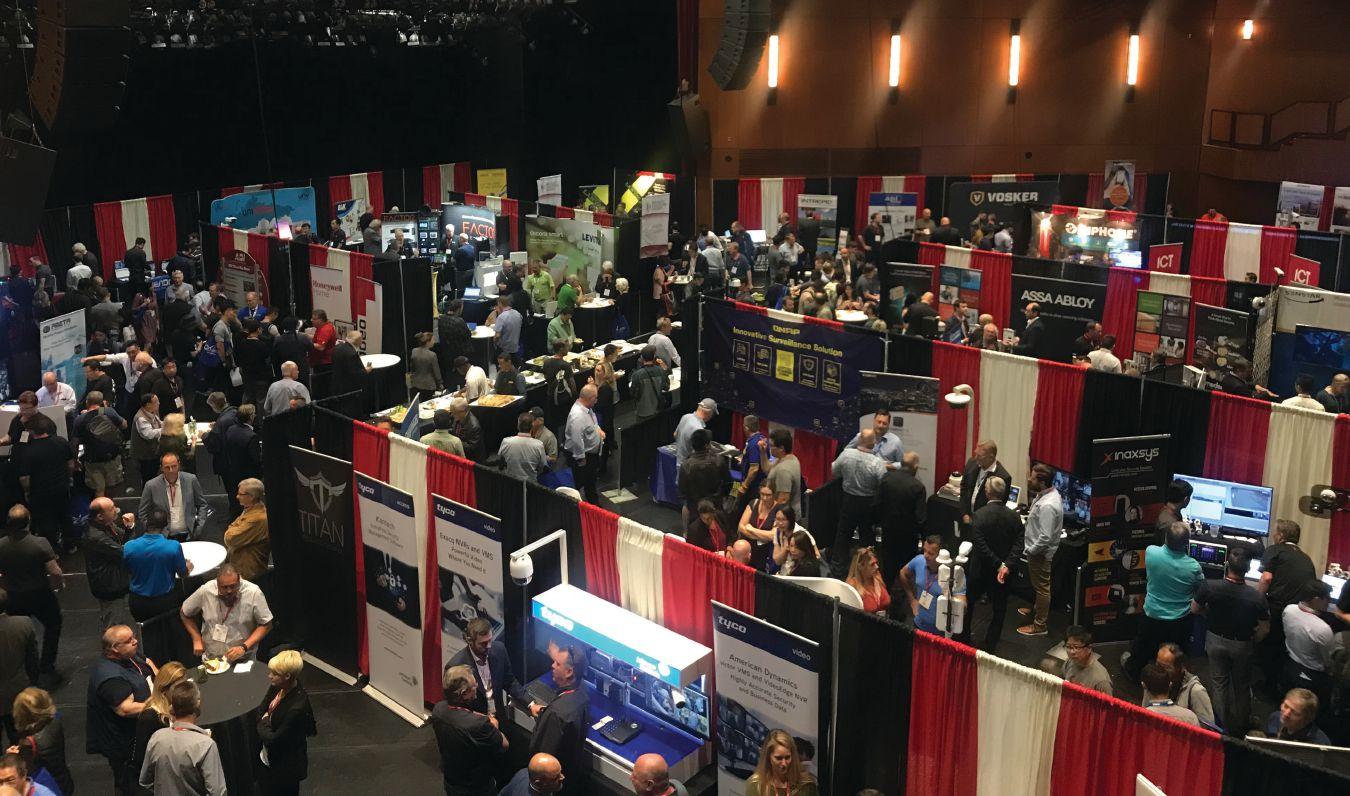
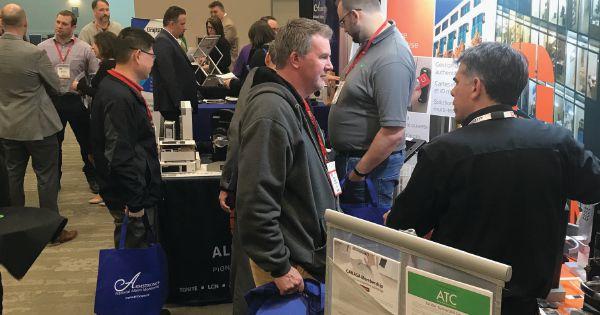
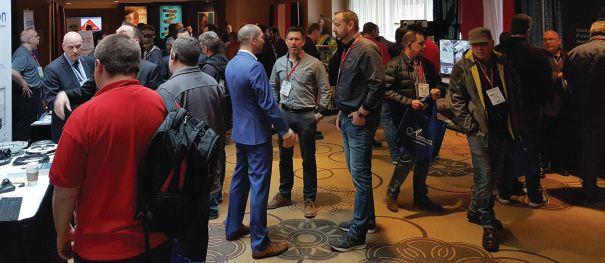
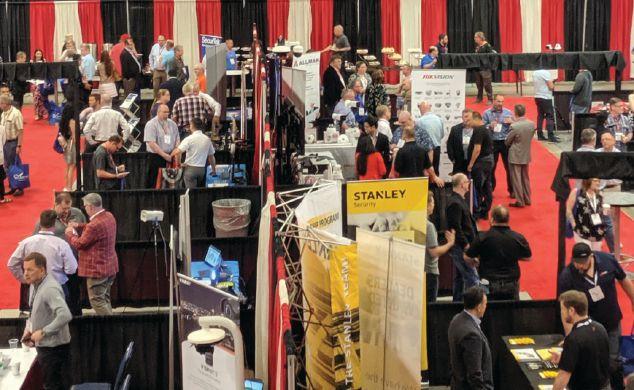
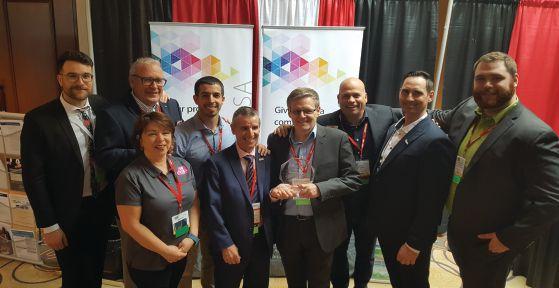
The Canadian Security Association hosted another busy trade show season in spring/summer 2019, bringing Security Canada events to Laval, Que. (April 24), Ottawa (May 8), Edmonton (May 29) and Richmond, B.C. (June 19). The two remaining shows on the Security Canada calendar are Security Canada Atlantic, in Moncton, N.B., on Sept. 11, and Security Canada Central on Oct. 23-24, in Toronto. CANASA will also host a Monitoring Station Symposium in Toronto immediately prior (Oct. 21-22). For more details on Security Canada events, visit www.securitycanada.com.

By Patrick Straw
The landscape of the traditional security industry is changing and it is changing quickly.

All levels of government are trying to understand the legislative requirements to control or monitor artificial intelligence, facial recognition and associated privacy concerns as well as the emergence of DIY systems and the ways to respond to them.
CANASA is in communication with many levels of government, working with AHJs (Authorities Having Jurisdiction) and actively advocating on behalf of our industry to ensure that our member companies are represented in a way that will ensure future growth.
As all of you know, there is a need for the security industry to be seen as a viable career for people starting out or looking to change professions.
CANASA is working with educational facilities across the country to provide entry-level training courses to fill this gap so that our members can continue to grow and fulfill their obligations to their customers. Business is booming and we have a labour shortage!
We are also working with industry partners in the United States to take advantage of well-designed courses that have already been created for a market that uses products and services identical to ours.
This could help us to include training for project management certification and sales courses.
CANASA’s board of directors is working to endorse minimum standards which will become a membership requirement in the near future:
• Criminal record checks for employees who deal with consumers and have access to confidential information pertaining to end users.
• Mandatory liability insurance for companies who deal with the public.
• A commitment to comply with provincial health and safety regulations in whatever province they are operating in and compliance with workers compensation regulations in your jurisdiction of work.
• PIPEDA (Personal Information Protection and Electronic Document Act) compliance.
Patrick Straw is the executive director of CANASA (www.canasa.org).

RBy Victor Harding
Some of these might be tough to accomplish, but all should help you generate value
ecently, I listened to a pitch from a well-known company that helps businesses maximize their value when they sell.
Truthfully, I was investigating this topic in regards to my own business Harding Security, but having gone through the process I thought I should pass along some of these tips.
Several of the tips listed below are also mentioned in “Built to Sell,” written by John Warrillow.
1. Buyers are buying the future but paying for the past
This translates into you should not consider selling unless you have two to three years of solid financial performance as shown in your annual financial statements. I have witnessed first-hand with a couple of clients how hard it is to sell a business that has only got one year of really good financial performance. You spend a lot more time convincing buyers that one year represents a trend.
2. Specialize, don’t generalize
Find and develop a niche for your business that is scalable or can be grown substantially. Buyers love companies that have a single focus that they do better than anyone else. Not only do they tend to come with higher margins but the staff are usually that much better. Connected to this is the ability to say no to certain business.
3. Be ready to sell at any time
This even includes family businesses. You never know when an opportunity is going come knocking. It takes discipline and organization to be ready to sell any time. For an alarm company, this means making sure all your accounts are on signed contracts and call forward lines. For all businesses, it means having good financial records and documented procedures.
4. Treat “family” businesses like any other business
Family wealth is sometimes destroyed because business owners treat their children in a special way. Children in family businesses should be prepared to buy shares at the market price, not have them given to them. There needs to be regular meetings and conversations

between the majority owner and his or her offspring to assess where both parties are at in their thinking.
5. As the founder and majority shareholder of the business, make yourself as redundant possible
This is tough to do with small businesses. Many owners I have talked to have had bad experiences when they tried to hire a general manager.
If you are still key to the business when you sell, expect to have the buyer want you to stay on board and go through a two-year transition period for the new owners. I find that buyers of integration, guard and fire companies are more concerned about having a planned twoyear owner transition than buyers of alarm companies. Alarm accounts appear to be more portable.
6. Try to create a subscription business that generates recurring monthly revenue
All of us in the security industry have heard about the extra value attached to the recurring monthly revenue of monitored accounts. But fire inspection revenue and guard contracts can also have special value, as they are also close to being viewed as RMR as well.
7. Don’t allow any one customer to be more than 10-15 per cent of your overall revenue
This reduces risk for buyers. Private equity firms will look for over reliance on one customer and will raise flags and lower their offers if they find too much emphasis on one customer. It is very easy for a small business to have a single customer responsible for 20 per cent of their annual revenue.
8. Develop a pipeline of good future projects for your buyer to see and be able to capitalize on
Not only does this help convince the buyer that the future market for your product is substantial but it reduces the immediate risk for the buyer once he buys. I have recently had this discussion with an integration business that I am selling. Leave some projects for the buyer to realize later on.
9. Have a three-year business plan drawn up and think big when you do it
There are very few security businesses I have seen that even have a yearly budget let alone a three-year business plan. I say “think big” because often the buyer will have more resources than you have to develop that threeyear plan.
10. Find an advisor/intermediary/broker to help you sell your business who has experience in your industry, and make sure you are neither their biggest nor smallest client
I have seen this over and over. General business brokers who are good at marketing sign up clients and don’t know how to value the business or know who it is should be sold to.
11. Make sure your business is marketed to a broad selection of potential buyers I see this all the time. An owner calls me because they have talked to a particular buyer and now want to sell to this buyer. They just want my help to close the deal. I try to get that owner to assess who else might be interested in his business. On the same note, an owner hires a broker who only shows the business to a single buyer, maybe their favourite buyer. Big mistake. The stats have shown that businesses that are marketed broadly attract higher prices in the end.
These are just some tips to maximize your value when you sell. There are others. The tips above that I think will give an owner of a security business the most “bang for the buck” are 1, 2, 6, 7 and 11. Test your company against these five and see how you do.
Victor Harding is the principal of Harding Security Services (victor@hardingsecurity.ca).

TBy Colin Bodbyl
A mix of off- and on-premise security software is popular today, but expect cloud to rule the future
raditional surveillance systems with network video recorders installed on the customer’s site (otherwise called on-premise) will someday be reserved for sites with only the most complex of needs.
Otherwise, off-site or cloud services will dominate the surveillance industry. This is not a new idea. The first cloud video management software companies were created more than five years ago. In an attempt to skip straight to the finish line, cloud VMS providers launched before the market was ready and without a transition plan for users of traditional surveillance products.
There are many reasons end users would not want to subscribe to a purely cloud-based VMS. Data security, bandwidth requirements, and costs associated with remote storage were obvious concerns for most. It was safe to assume these issues would improve with time but to capture early adopters willing to experiment with a cloud service, VMS providers had to start with a hybrid solution that minimized or eliminated these concerns. Today, it is this hybrid market where we are seeing success for solution providers looking to move users to the cloud.
Hybrid solutions mitigate many of the issues with the cloud by hosting only part of the software in the cloud with other key features staying on premise. Video recording and storage is performed on a small appliance that is installed on the customer site, with site management and video viewing tools hosted in the cloud. This allows users to access video from multiple sites through a web portal. They can also manage users and monitor the health of their surveillance systems through this same platform.
The advantage of storing video onsite is that it keeps costs down; it is far cheaper to store video onsite than in the cloud. This model also future proofs users who can switch to cloud recording at any time without the need to purchase new hardware. By simply subscribing to cloud backup, video from their onsite appliance can be uploaded or streamed to the cloud for off-site storage.
While hybrid solutions are the immediate future, over the long-term pure cloud VMS solutions will own the majority of the market. Unfortunately, that still will not simplify decisions. Even in the cloud, conflicting offerings

“Even in the cloud, conflicting offerings exist.”
exist. Cloud VMS solutions today can be divided into two types, open and closed. Open systems allow users to integrate their existing cameras or third-party devices into a cloud VMS regardless of the camera manufacturer, as long as they support standard protocols like ONVIF and RTSP. Closed systems require users to purchase specific cameras (typically sold by the VMS provider) and restrict or prevent the integration of devices or software from other companies. While open systems allow users to mix and match the brands of camera they want to use, closed systems offer the ultimate in simplicity. It is due to this simplicity that closed
systems are very popular in the consumer space where users are less tech savvy and prefer a plug and play solution.
It is difficult to predict who will own the most market share in the future between open and closed cloud VMS solutions and it may take many years before the majority of the industry makes the transition. During that transition hybrid solutions will enjoy the most success as wary users can experiment with the cloud while keeping costs low and without risking too much. The timelines may be unclear, but one thing is for certain, cloud solutions are the future and users need to start thinking more carefully about how long their on-premise VMS will remain relevant.
Colin Bodbyl is the chief technology officer of Stealth Monitoring (www.stealthmonitoring.com).
Securing venues as large and as busy as sports stadiums requires a team approach to communications, surveillance, weapons detection and access control
By Will Mazgay

Sports bring people together. A lot of people.
Stadiums and arenas take in thousands of spectators every time there is a sporting event or a concert, and controlling where they can and cannot go, keeping track of individual behaviour, and ensuring they don’t bring dangerous items past the gates are difficult undertakings — next to impossible today without the smart use of technology.
To that extent, multinational security services firm G4S says it offers a full suite of integration services.
Jason Simpson, manager, corporate risk services for G4S Canada, says the security operations centre is “the beating heart of the security program that runs any sort of massive event space like a stadium…and you’re going to have everything flowing through that.” He continues, “Your people on the ground are going to be integrated with the command centre and issue commands about where to go or what to do or what’s happening.”
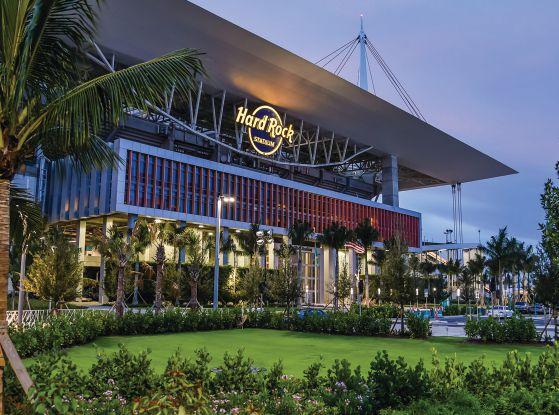
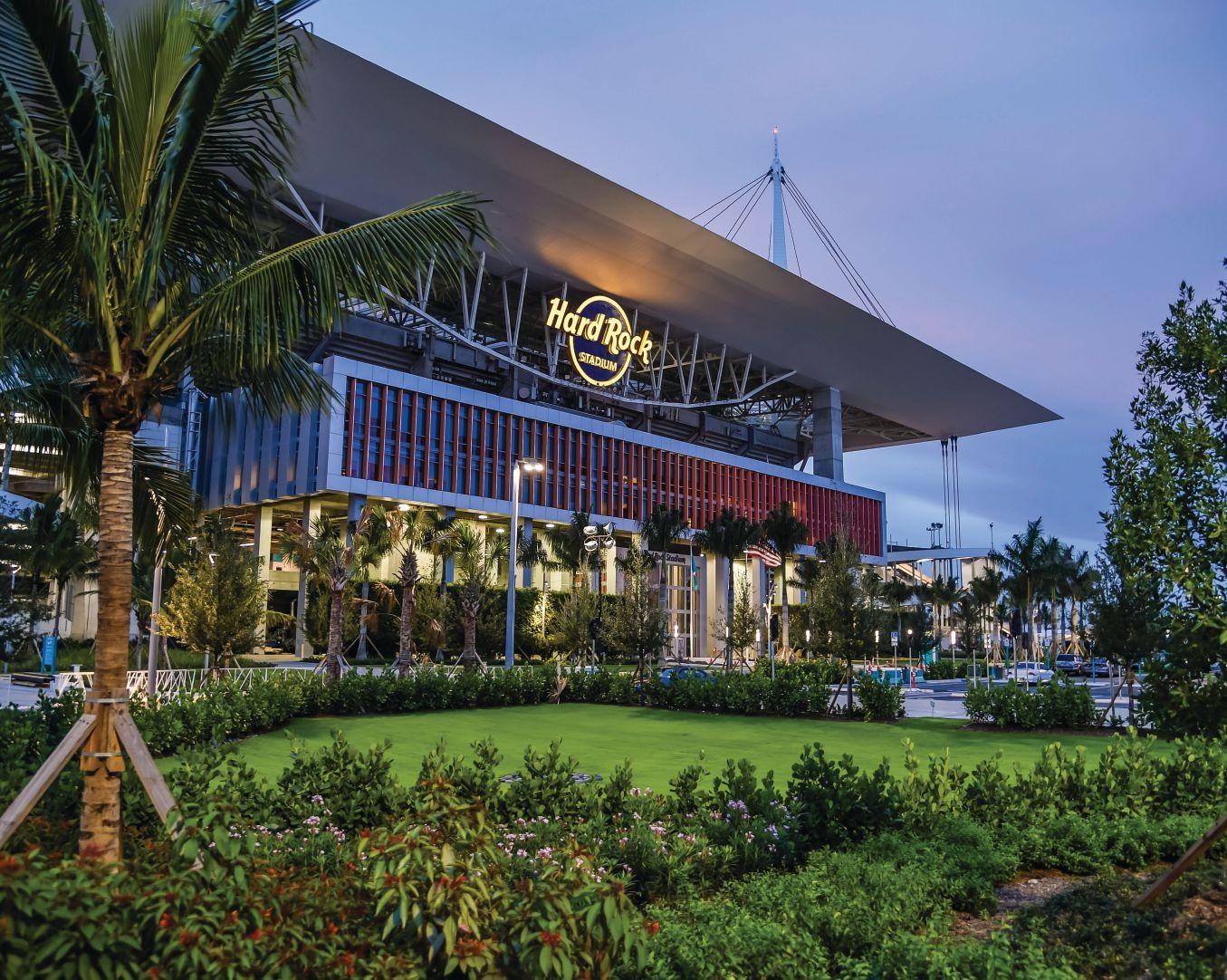
One of the firm’s most notable projects was their involvement in the renovation of Hard Rock Stadium in Miami, home to the National Football League’s Dolphins and the University of Miami football team, the Hurricanes.
Simpson says of the project, “The hub of the solution is the G4S security command centre, where all the trained personnel maintain eyeballs inside and outside of the stadium to be able to respond quickly and efficiently to any incidents.”
G4S says it helped build the new security operations centre for the venue, from initial design to cabling infrastructure, as well as ensuring the capabilities of the server worked in conjunction with the camera system installed. G4S partnered with camera manufacturer Avigilon to provide video management software and 829 cameras for the stadium and an accompanying training facility. “There is the very high resolution surveillance system now that covers the facility, the parking areas, the perimeter,” Simpson says.

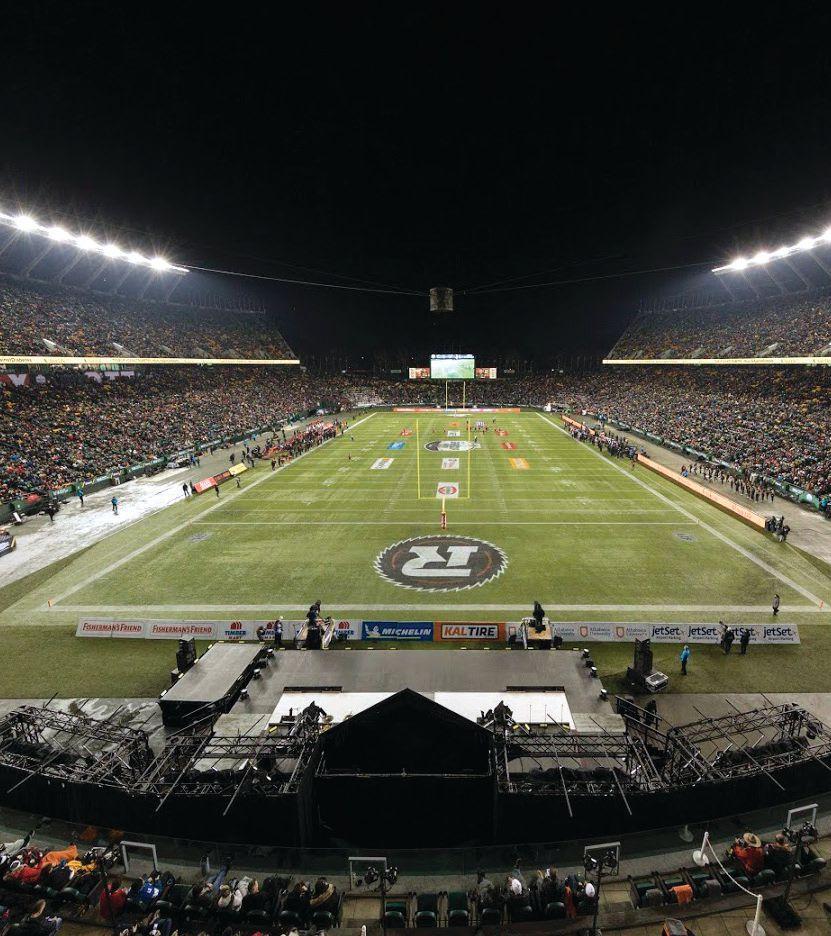
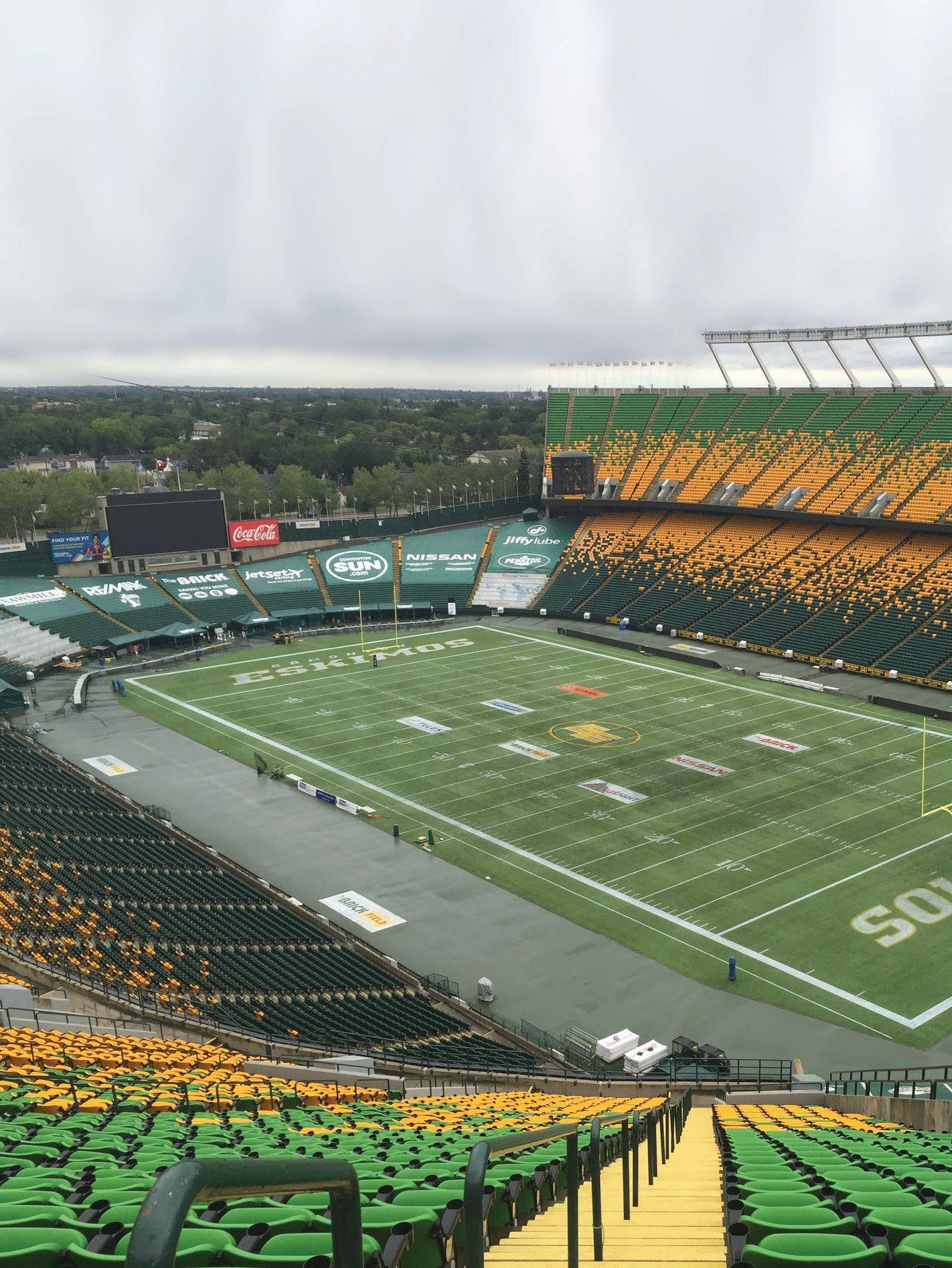
Edmonton’s Commonwealth Stadium is home of the Canadian Football League’s Eskimos — called “The Brick Field at Commonwealth Stadium” during Eskimos games and team events — and it is a venue that relies heavily on surveillance technology as well. To keep track of what’s going on in every corner of the sprawling 56,400 seat venue, roughly 150 high-definition CCTV cameras are utilized.
Jason Fesyk, events supervisor for Commonwealth Stadium, says, “It’s really helpful to have the CCTV cameras. We utilize them for a lot of monitoring of specific areas, areas where we know that there’s going to be congestion, areas that we know have high traffic volumes. That way we have a firsthand look at what’s going on there, and we’re able to deploy our resources, be it our usher teams, our security teams, and even Edmonton Police Service, to areas when we need to.”
However, given that Commonwealth is an outdoor stadium, ensuring that cameras are able to capture what’s happening clearly in all lighting conditions can be tough. Fesyk says, “It becomes a lot more of a challenge with the sun setting in the west. A lot of the cameras along that side need to be strategically placed so that when the sun is going down or at the highest point of the day, we’re able to still get quality views from those areas.” He continues, “Our group of security electricians that help us to install and get these cameras into the right positions do a really great job of making sure that we’re putting the cameras in the place where they’re
“Drones bring a ton of unique and creative security challenges.”
— Jason Simpson, G4S Canada
the most valuable for us, that will allow us to use the full extent of the camera and not be blocked out by bad angles or dark corners.”
Fesyk says artificial lighting, both in open air and indoor areas, is also crucial to ensuring cameras are capturing clear footage. “We’ve moved a lot of our lighting over to LED lighting, in the concourses and in our food service areas so that we have the best available vision with those cameras either during the day or at an evening event,” he says. Fesyk explains that LED lighting “helps us with bridging that gap from natural light to our covered-in areas. It’s easier to pick up and detect when the light is a little bit more consistent.”
Beyond adjusting to shifting lighting conditions, G4S’s Simpson says another potential issue facing outdoor stadiums is dealing with drones. “How people are able to mitigate those drone incursions and what they can do might be as simple as a network of wire mesh that nothing can pass through.” He continues, “The technology to stop the drones isn’t necessarily widely available or invented yet…You can’t cut a wireless signal, you can’t cut a radio signal without messing up other stuff. Drones bring a ton of unique and creative security challenges.”

Traditional systems and manual procedures can be complicated and time consuming. Genetec ClearID is a smarter solution. It’s a fully automated, self-service identity and access management system that improves the flow of people in your organization. By empowering employees to take control of their own access requests, the pressure is taken off administrators.
Whether adapting to changes in employee profiles, verifying contractors’ credentials or streamlining visitor admissions, Genetec ClearID helps keep your business moving confidently and efficiently.
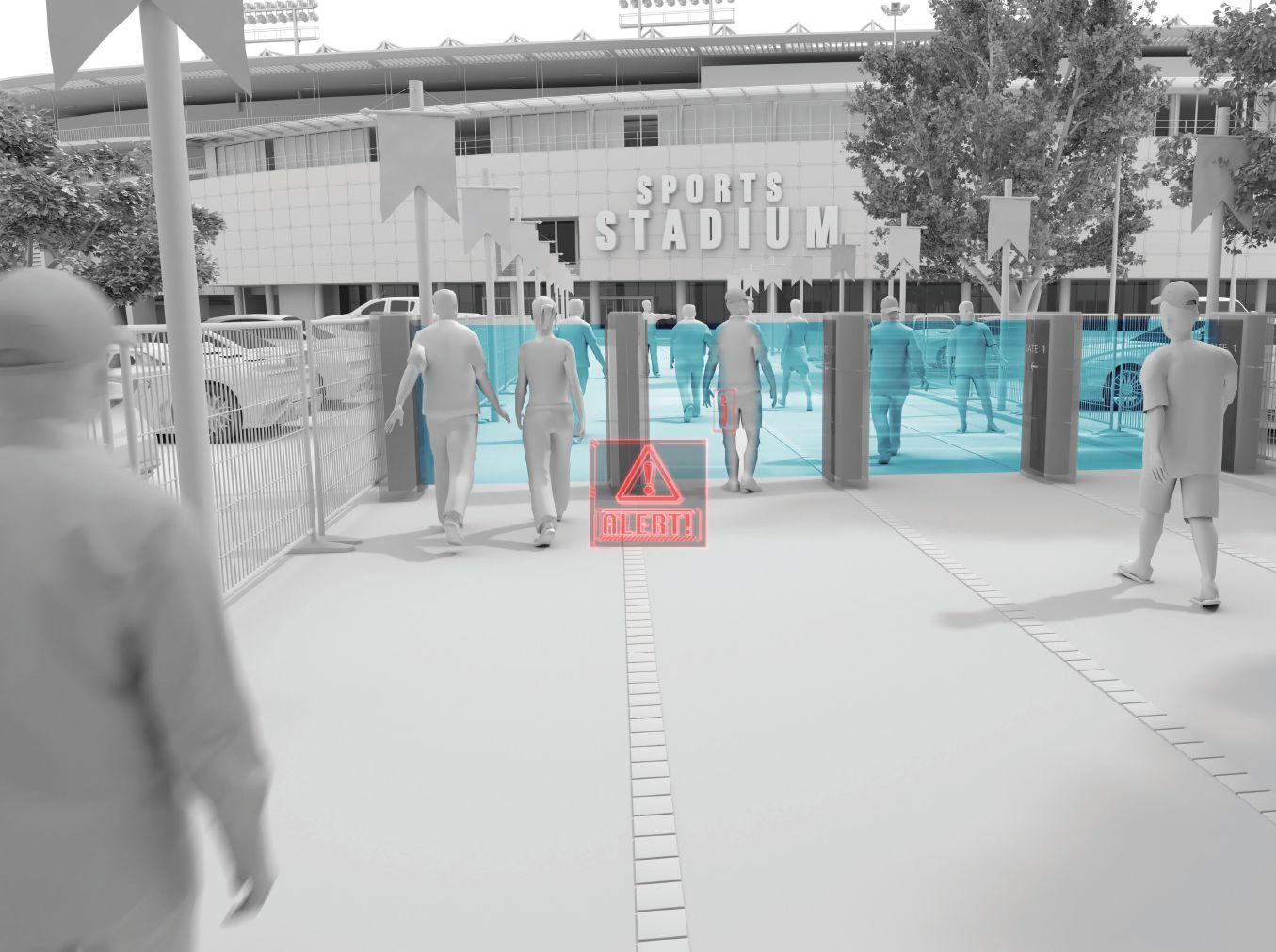
While flying robots buzzing through a football field might provide headaches for security, what really keeps these professionals up at night is the prospect of weapons entering their facilities. In the age of mass shootings, weapons detection at large event venues has become a focal point for security.
Walk-through metal detectors have become standard policy for most North American sports leagues.
Kevin Kempcke, director of security for Maple Leaf Sports & Entertainment (MLSE), is in charge of two marquee sports stadiums in downtown Toronto: Scotiabank Arena, the home of the Maple Leafs and the Raptors; and BMO Field, where Toronto FC and the CFL’s Argonauts play. He says walk-through detectors, mandated by the National Hockey League in 2015, made an immediate impact. “When we first introduced metal detectors we were catching approximately 50 knives a game from people coming in,” he says, noting the detectors provide a quicker throughput of guests as well.
Kempcke further explains that since initial introduction of metal detectors, guests have shifted their behaviour. He says, “People would carry swiss army knives, utility knives, box cutters. But once metal detection started to be implemented, people changed their ways and said, ‘I can’t bring my swiss army knife to the game anymore.’”
Kempcke does acknowledge that metal detectors aren’t perfect, as they are tripped by benign items like keys and cell phones. He says, “But there’s new technologies and we’ve been looking at them — technologies that won’t detect cell phones or keys and it’s only going to hit knives and guns.”
“Once metal detection started to be implemented, people changed their ways.”
— Kevin Kempcke, MLSE
Liberty Defense Technologies, a Vancouver-based firm, is working to bring such a technology to market, which it licensed from the Massachusetts Institute of Technology.
The firm’s CEO, Bill Riker, says his weapons detection system, called Hexwave, uses three-dimensional radar imaging to create images of objects on individuals’ bodies, and those images are analyzed by artificial intelligence to determine if they are benign, or in fact, knives or guns or bombs. He says the system can also pick out objects like bottles of alcohol, and it works for both metallic and non-metallic items.
Riker explains further that the system’s panels send out low-power radio frequency signals, and that energy hits objects and generates 3D maps that are then received by the same panels. That’s when the AI-powered analytics go to work to determine what an object is and where it is on a person’s body. Riker says, “We teach the algorithm what all the target objects look like, and it’s that algorithm that resides in each of the units that enables us to do the real-time threat determinations. So it’s the algorithm
taking a look at this image and saying, ‘Ah, that’s a handgun, that’s a set of keys, or that’s something else’…And we teach the algorithm what an object looks like at all different angles.”
All computing is done within the units themselves, and according to Riker, quickly. “When I say real-time, it’s actually doing the detection and the analysis in roughly 0.2 seconds, and that’s a constant update, like a video rate almost.”
The CEO touts the system’s versatility, saying it can be deployed overtly or covertly—behind walls or in kiosks or vestibules. It works both inside or outside, and it can integrate into existing systems like video management, access control or a security operations centre, and detection can be set up to trigger locking doors, queuing up cameras or communication with the stadium’s central hub. The system can also be manned by guards with tablets.
Riker says the system makes security teams more agile. “Right now you’ve got a bunch of dumb stations out there. Something goes wrong, you’ve got to get on the walkie talkie. There’s a latency in detection and action. What we’re finding as we talk to venues, is they want to have everything connected, fast.”
Riker imagines a future when these machines will replace metal detectors as the weapons detection standard. He says, “The breadth of this capability enables us to be able to do something that metal detectors are limited in…The threats are evolving beyond metallic threats, plastic handguns, for example, explosives, those are things that are going to require a different detection capability.”
The system is already garnering interest from large sports venues, as the firm is scheduled to enter beta testing with Rogers Arena, home of the Vancouver Canucks, in 2020, and the home of one of Europe’s most storied soccer franchises, FC Bayern Munich, shortly after.
In addition to keeping weapons and contraband out, controlling where people can go once they’re in a stadium needs to be paid careful attention, especially ensuring that athletes and musicians have unfettered access to their private spaces and the general public is kept out.
Fesyk says at Commonwealth, “we do have a card system that we utilize for the majority of the doors in the building. You need to have either a team provided pass or a city provided pass, to get access to certain areas…. All of our stadium passes all have privileges and zones, as well as a photo and a name for the individual and who they work with.” He continues, “Depending on who you are and where you need to get to will determine which areas of the stadium you’re going to get access to and when, because things do change from our regular day-to-day to our event operations when we have a football game or a large concert.”
MLSE has moved away from cards, since at their properties, biometric readers have been used for about a decade. Kempcke says for busy athletes who need quick access to multiple areas of the facilities, the bio-readers make more sense than proxy cards. He says, “Now players just scan their finger and they get in to access their locker room or wherever their destination,” explaining further that eliminating the need for proxy cards eliminates the scenario where a player will forget their card and leave a door propped open. “We never want to see doors propped.”
For Kempcke, leveraging technology is a huge help to his operations, but keeping up with changing trends can be a challenge. “You think you put in the new system, the latest and greatest with all the bells and whistles and two months later there’s something brand new on the market and its ‘Oh, I want that new toy.’” He continues, “We go to technology trade shows every year to stay current and see what’s out there, look at what’s an investment that makes sense.”
MLSE is just about to start a three-year plan to upgrade its CCTV, security operations centre and analytics program.
However, Kempcke cautions that technology is only as good as the people using it. He says, “You can have an X-ray machine, and if staff don’t know what they’re looking for or how to use the machine, then the

“It’s the algorithm taking a look at this image and saying, ‘Ah, that’s a handgun, that’s a set of keys, or that’s something else.’”
— Bill Riker, Liberty DefenseTechnologies
machine is as good as it being off.” He says the key is “educating staff, so they know the maximum use of that technology and how they can benefit from it and create a safe environment for all attending.”
For G4S’s Simpson, when a venue is putting a security program together, “you’re integrating communications, you’re integrating technology, you’re integrating access control, and you’re integrating the human element as well.”


Improvements in the technology increasingly make it a more viable option in the field
by Wayne Pak
Biometrics fuse convenience and security while validating “true identity” versus identity that is associated with possessing an ID card (or mobile credential on a smartphone), and offers numerous benefits to access control and other enterprise applications.
With the emergence of new anti-spoofing capabilities and its integration into secure platforms that protect privacy and support numerous credential technologies, biometric authentication is poised to deliver a much higher matching speed and better overall performance along with improved security and user convenience.
New developments
Development of the latest solutions has focused on the following key areas:
Improving image capture
The quality of the captured image is critical, across all types of fingerprints and environments. Many customers choose sensors that use multispectral imaging because it optimizes the quality of the captured image and illuminates the skin at different depths to collect information from inside the finger to augment available surface fingerprint data. Additionally, the multispectral sensors work for the broadest range of people with normal, wet, dry or damaged fingers, across the widest range conditions (from lotions or grease to sunlight, wet, cold conditions). The sensors also resist damage from harsh cleaning products and contamination from dirt and sunlight.
Liveness detection to enhance trust
An increasingly visible dimension of biometric performance in commercial applications, liveness detection is critical for preserving trust in the integrity of biometrics authentication.
At the same time, it must not impede performance or result in excessive false user rejections. The most trusted multispectral imaging fingerprint sensors with liveness detection provide a real-time determination that the biometric data captured by the fingerprint reader is genuine and being presented by the legitimate owner, rather than someone impersonating them.
This capability leverages the image-capture approach of using different colours or spectrum of light to measure the surface and subsurface data within a fingerprint.
In addition to this optical system, the biometrics sensor features sev-
eral core components including an embedded processor that analyzes the raw imaging data to ensure that the sample being imaged is a genuine human finger rather than an artificial or spoof material.
Advanced machine learning techniques can be used so the solution can adapt and respond to new threats and spoofs as they are identified. This is critical if biometrics are to eliminate the need to use PINs or passwords. It also protects privacy — if you can’t use a fake finger, then even if you did obtain someone’s fingerprint data, it is meaningless.
“Cryptography prevents any man-in-the-middle attacks while also protecting the biometric database.”
The top-performing solutions capture usable biometric data on the first attempt for every user and speed the liveness detection process. They quickly perform template matching to reject impostors and match legitimate users. They should be tested by skilled and independent third parties like the National Institute of Standards and Technology (NIST) for interoperability so that performance is based on data that can be trusted in all template-matching modes.
As an example, HID Global uses the top-ranked NIST certified MINEX III minutia algorithm to ensure interoperability with industry-standard fingerprint template databases. This interoperability ensures that today’s systems, which are based on much more powerful hardware than in the past, will perform accurate 1:N identification of a full database in less than a second.
Incorporating biometrics into access control systems requires a secure trust platform designed to meet the concerns of accessibility and data protection in a connected environment. The platform should leverage credential technology that employs encryption and a software-based infrastructure to secure identities on any form factor for trusted access to doors, IT networks and beyond.
Cryptography prevents any man-in-the-middle attacks while also protecting the biometric database. This system also should encompass remote management of all readers and users, spanning all onboarding as well as template loading and enrolment activities for supported authentication modes.
Tools should be available to allow system administrators to manage all configuration settings from time and data to language, security and synchronization. Additionally, the system should enable continuous live monitoring of authentication, alerts and system health. To simplify deployment, application programming interfaces (APIs) should be available for direct integration of biometrics authentication solutions with the access control infrastructure.
Biometrics data must be handled like all sensitive and identifying information, and properly architected system designs will always consider and protect against both internal and external threats and attacks.
New system architectures and data models have been created to protect personal information and maintain user privacy. Beyond the encryption of the data itself, there are now many good alternatives available for building highly secure and well protected systems, including the use of multi-factor and even multi-modal authentication to maintain security even if some identifying data is compromised.
Today’s fingerprint authentication solutions are on a fast track to deliver a unique combination of ease of use and higher security to access control systems. With their latest enhancements in liveness detection, system architectures and performance, they seamlessly combine security and convenience to make them a viable option for secure access to facilities, networks and services.
Wayne Pak is director of product marketing, physical access control, HID Global (www.hidglobal.com).
125 years of experience in putting the security of others first.

We understand you need to protect more than brick-and-mortar, which is why ADT does more than monitor. ADT has a wide range of alarm and security options for organizations of any size to help protect people, goods, and data. With 24/7 surveillance, solutions against intrusion and fire, remote monitoring, interactive services and more, ADT has a security solution for your organization. Join those who trust ADT with their livelihoods and protect your business.
Why choose ADT canada?
We are an integrator, meaning we can take over nearly any of the existing security equipment you have on-site.
We are customer-service oriented, innovative and technology savy. With over 125 years of experience and 13 offices in Canada alone, including three monitoring stations, you can trust the experts.
The 2GIG eSeries is the next generation of the 2GIG security and control ecosystem that includes two all-new GC2e and GC3e panels and a new line of encrypted sensors. Compatible encrypted 2GIG sensors include the standard door/window sensor, motion sensor, glass break sensor, key fob sensor, and recessed D/W sensor — with more to come in the near future. And the two new panels support all traditional 2GIG sensors and other legacy 345 sensors for system upgrades. The new GC2e panel includes a larger, brighter 5” capacitive touch screen, while the GC3e features a 7” touchscreen. Both panels have two-way audio and front-firing speakers.
www.nortekcontrol.com

Johnson Controls
The LUX KONOzw Smart Hub Thermostat is the first KONO thermostat featuring Z-Wave technology. KONOzw allows users to connect DSC security systems, including PowerSeries Neo, iotega and PowerSeries Pro, when combined with SecureNet or Alarm.com interactive services to the smart thermostat through the Z-Wave smart hub. KONOzw offers all the traditional modes of a smart thermostat, including heat and cool and works with forced air, gas, oil and electrical furnaces.
Pro.LuxProducts.com
The Honeywell Home ProSeries was designed to give dealers an end-to-end platform to deliver a complete security and smart home solution. The platform offers fast and responsive operation and an easy-to-understand user experience. A common user interface is featured across all customer touchpoints making the system easy for consumers to learn and operate.
www.resideo.com
On-Q Flat Screen TV Pro Power and Cable Management Kits provide installers with what they need to safely extend power to wall-mounted displays and accompanying devices, while concealing power and AV cables inside the wall. Each in-wall kit includes a power input module with a drywall bracket and six-foot power cord. Offered in white to blend in with a home’s décor, the module’s decorator power inlet strap provides the flexibility of ganging other connections. Each kit’s power output module includes a six-foot UL-rated power cable. A tamper-resistant outlet with a recessed design accommodates almost any type of power plug, including right angles and wall warts, while a bush strap opening allows for the connection of AV cables. Available kits include the HT22U2-WH-R6 with a white output module and the HT22U2-BK-R6 with a black output module that blends in with TV mounts and hides cable connections.
www.legrand.ca
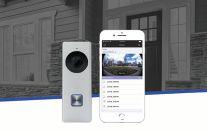
The new Video Doorbell allows the user to see, hear and speak to visitors at their door, all with the same Virtual Keypad app, which also controls the user’s security and home automation systems. While watching in Live view from the app’s doorbell tab, the owner can arm or disarm their system, lock or unlock doors, and trigger one or several Z-Wave devices through the app’s favourites. Without opening the app, the owner will also be able to see at a glance who’s at their door. Push notifications of motion at the door also include thumbnails of a snapshot taken from the doorbell.
www.dmp.com
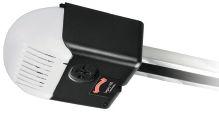
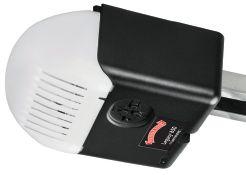
The Legacy 650 Model 1129 and Legacy 850 Model 2129 garage door openers are integrated with OHD Anywhere Wi-Fi technology. The new Overhead Door openers offer quiet and durable performance while granting homeowners the ability to monitor and operate their garage doors from almost anywhere using a smart device. The garage door openers have an opening speed of up to seven inches per second and were each built with a 24V DC motor, providing smooth and quiet operation. With the capability to operate doors up to eight feet in height, Legacy 650 Model 1129 can lift doors up to 350 pounds and Legacy 850 Model 2129 can operate doors weighing up to 500 pounds.
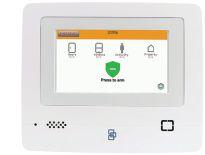
Simon XTi-5i is a self-contained, wireless security system for heightened residential security. The new platform supports 80 wireless zones, features a five-inch colour LCD touchscreen and is compatible with a wide range of devices through leading service providers. When paired with an LTE modem from leading active home services provider Alarm.com, Simon panels can be used as a comfort management and automation system enabling local and remote control of Z-Wave devices such as wireless lighting controls, thermostats, door locks, garage doors and more. www.interlogix.com/simon
www.overheaddoor.com
Safe365 is a free mobile telecare application for seniors. Through the app, family members can know at all times where their loved ones are, such as if they have arrived safely home or at their destination. Other functionalities include: an emergency button for a senior to press to get help; automatic notifications when a family member enters or leaves a certain area; an option to warn when a mobile device is running out of battery, or whether they have internet access or not. Safe365 also features intelligent notifications based on pattern detections of the elderly user.
www.Safe365.com




Leica Geosystems
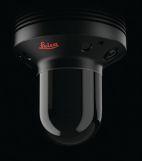
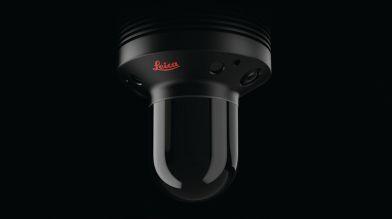
The Leica BLK247 is a real-time reality capture sensor for building security and operations.
Part of the BLK product line, a collection of reality capture, scanning, and photogrammetry hardware and software, the BLK247 uses LiDAR, 3D digital fencing and continuous scanning to monitor buildings and spaces 24x7. Drawing on the Leica BLK360 imaging laser scanner, the BLK247 is an intelligent device that can alert appropriate staff of physical changes, expected or unexpected, within a space. The BLK247 builds 3D digital fences to protect valuable objects and creates digital barriers for spaces. Designed with situational awareness in mind, the BLK247 is capable of differentiating between still and moving objects and is suited for locations that must be continuously monitored and protected.
www.BLK247.com
Platinum Tools
Platinum Tools
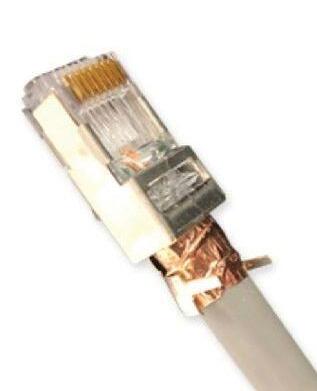
Copper Foil Strips (p/n 2039) consist of a copper foil backing and conductive adhesive. They are supplied on a removable paper sheet for easy handling, and are typically used as an EMI / RFI shielding for applications in the electronics industry such as static charge draining, seaming shielded rooms, cable wrapping, and surface contact to non-solderable materials. These copper foil strips work with all the Platinum Tools Shielded RJ45 Connectors and Shielded Keystone Jacks. Platinum Tools Copper Foil Strips come 10 strips per sheet (10 sheets per pack) with an MSRP of US$7.95. www.platinumtools.com
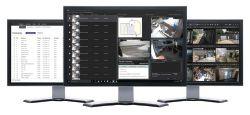
Symphony Access Control is an open software solution designed to support the industry’s most trusted brands of access control and intrusion hardware. Available as an extension to the Symphony Video Management Software (VMS), the module provides a full set of access control functions, including enrollment, scheduling, monitoring and reporting.

www.senstar.com
ProdataKey
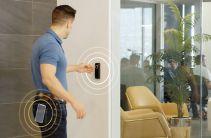
Touch io is a new Bluetooth reader and credentialing option for smartphones designed for use with the company’s cloud-based access control solution, pdk io. Touch io does not require the user to unlock the phone, or to even remove it from pocket or purse, in order to gain access through a protected door. The individual’s identity is validated through communication directly between his or her credentialed device and the reader, via Bluetooth. This can occur from distances as far as 30 feet away, as defined by the customer. By the time the user reaches the door and indicates an intent to enter, by simply touching or tapping a hand to the reader, door activation is immediate. A combination of machine-learning algorithms that learn door opening patterns, combined with directional antennae placed on each side of controlled doorways, ensure that credentials are not inadvertently validated when employees pass in proximity to the doors from the unlocked side.
www.prodatakey.com
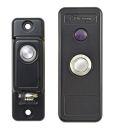
Supra has introduced additions to its TRAC-Mini controller to enhance lock management in offline locations ranging from remote outdoor telecom sites to indoor office file drawers. The new configurations of the TRAC-Mini controller extend the capabilities of the Supra TRACcess system, which uses mobile credentials and Bluetooth technology. The system includes TRACcess Manager cloud-based administration, which sends access permissions to the TRACcess eKEY app on a user’s Apple or Android device. System operators can monitor access activity online or via email alerts, or generate routine reports.
www.suprasystems.com
LILIN Americas
Through a secure online interface and user-friendly software, this static code, electronic time lock allows for increased flexibility and security for convenient vault access. Combining an attack-resistant lock case and enhanced features to protect against a variety of threats — vibration, bouncing and punching attacks — the Digital Vault Lock provides durable security for financial institutions. With the ability to assign four independent time lock schedules for up to 100 users and retrieve up to 1,000 time- and date-stamped audit events with a simple USB connection from the lock, the Digital Vault Lock increases shift coverage without overriding security and can be customized for a single user, dual user or manager.
www.sargentandgreenleaf.com
Sonitrol
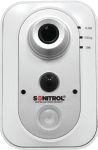
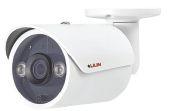
The MR832 bullet camera is designed to help security professionals easily deploy an outdoor surveillance system. The MR832 features a 4mm fixed lens with an IP66 environment rating, an operating range of -40° to 122°F, along with 30M IR LED illumination and Day/Night imaging. LILIN MR832 IP cameras feature 2D wide dynamic range, which provides accurate video capture in high-contrast lighting, and use 3D Noise Reduction for maximum clarity in low light conditions. Energy-efficient IR LEDs automatically illuminate scenes in complete darkness for discovering subjects at a range of up to 30 meters (98 ft.).
www.lilin.us
TotalGuard is an all-in-one, edge-based device that acts as a standalone IoT panel. Each TotalGuard device includes the Sonitrol impact activated audio detection, glass break analytics, video verification and surveillance, motion and wireless connectivity that is professionally monitored by a Sonitrol central station.These Zigbee devices operate over AES 128-bit encryption, are supervised and tamper protected. TotalGuard can also be paired with exterior thermal imagers for added outside protection and exterior cameras and Sonitrol Cloud Access Control. With the TotalGuard Smart Hub, up to 32 wireless devices may be enrolled. www.sonitrol.com
The purchase price for a portfolio of accounts may vary based on a number of factors, including: 1) Signed monitoring agreements; 2) Term of agreement; 3) Auto renewal of agreement; 4) Pre-authorized payment provision; 5) Credit scores; 6) Accounts receivables aging; and 7) Type of equipment installed (age, ability to service, system functionality).
Many of the smaller companies in the industry are motivated to sell their accounts or companies to not only ease the financial strain they may be under but also, in the case of a share sale, to avail themselves of the favourable enhanced capital gains tax under the capital gains exemption.
A share sale would typically result in a lower purchase price because the shares cannot be written off (amortized) against income by the purchaser, as is the case with the sale of accounts. However, the after-tax net purchase price to the seller may be greater. The purchaser may also be reluctant to purchase shares because of the heightened due diligence required to determine the veracity of the company’s assets and liabilities.
The seller of shares, being a “Canadian Controlled Private Corporation,” may be in a position to take advantage of the enhanced capital gain tax rate resulting in only 50% of the gain being taxable and when combined with each owners “lifetime capital gain exemption” of $866,912 may
dealer has to advertise or employ door knockers to locate a reasonable ammount of thes customers. This is an expensive and difficult barrier to overcome. When compared to the complications and expense of luring a customer out of an existing monitoring agreement and trust relationship with the installing dealer, dealers opt to solicit the many households



ing the customer to take advantage of cellular phone functionality in order to, among other things:
a) View their home remotely;
b) Moderate lighting;
c) Change heating and cooling settings; and
d) General interaction with their system.
Looking to grow your business and expand your reach in the market?

Interested in managing account portfolios?
Would you like to increase referral sales?
Want to generate more sales, installation and service revenues?





























































































The Physical Security Interoperability Alliance (PSIA) officially turned 10 this year. Founded in 2008, and enshrined in 2009, it initially focused on establishing specifications that could address the surveillance industry along with interoperability that incorporated access control.
But by 2013, executive director David Bunzel determined that the PSIA’s efforts would best be served by focusing on the latter.
“In techspeak, I guess we did a little bit of a pivot. We focused on one of the things that we thought was the most promising and that we thought we could make a valuable contribution.”
Bunzel says the organization was reignited by this realization. PSIA board members include access power houses ASSA ABLOY and Allegion, along with a dozen other companies including vendors, integrators and end users.
SP&T News spoke with Bunzel recently about the move to access and how the organization’s PLAI specification (Physical Logical Access Interoperability) can help end users better manage disparate access control systems.
SP&T News: What were some of your initial steps with access control?
David Bunzel: With access control we actually started pursuing it as area control, which included access and intrusion.
We had some specifications that were written. We had a number of people in the industry who were very involved who were very effective and very good with that. About three years ago, one of the things that came out of our area control spec was the fact that there was a use case that [it] could address very well: the sharing of information between disparate PACS (physical access control systems).
By Neil Sutton
It was perceived as a fairly significant issue when companies were making acquisitions — they were acquiring other companies that had different PACS systems and they had a real mess trying to integrate systems and records and badges.
You’d see people with different badges and three or four different lanyards, going between facilities with different PACS systems, and buildings that have three or four different [card] readers in them to try to accommodate all the different PACS. We thought this was an interesting thing and we created the Physical Logical Access Interoperability (PLAI) spec.
We’ve gone through three years of enhancements and adoption. At ISC West this year we had a demonstration where we showed two PACS systems — Lenel and Software House — and three biometrics systems from IDEMIA, eyeLock and Princeton Identity all sharing information from one common, trusted source active directory. It all worked smoothly. There’s two components to it: there’s adapters that the vendors incorporate into their product and then an agent that is available from a couple of different sources that acts as the air traffic controller to transfer information.
SP&T: How is the PSIA currently organized?
DB: We have three different parts of the industry in our group. We have the vendors — typically PACS and biometrics, but we also have lock vendors like ASSA ABLOY and Allegion. We also have integrators. Convergint and Tech Systems are two of the most important ones involved. We also have some large customers who are advocating for us: Microsoft and Nokia. Between all these different parts, we’re able to have the industry represented in the discussion.
SP&T: To what extent is the evolution of technology like smart buildings and mobile access and cloud-based access control systems driving the PSIA?
DB: Those are all considerations. They’re all part of it. The spec can be used with all of them. With some of these things, we have to wait until the industry determines that these particular products are critical to their application.
SP&T: Is the PSIA directing most of its efforts towards PLAI?
DB: I would say most of our efforts are there. There are some opportunities we have in extensions to PLAI or things that are complementary to PLAI.
Obviously there are some things related to locking devices. They are being discussed and have been discussed over the years. We have extensions potentially into the elevator business because elevators are part of building management technology. They are also integrated into security, especially in multitenant buildings where you might see the building having one security system, but each floor, designated to a particular company, might have a separate system.
Trying to make all those work together — I guess you could call them extensions to what PLAI is doing.
SP&T: Is that where you’re headed — access control and identity management?
DB: Getting systems to support effective identity management is probably a general way to frame our focus.
SP&T: In terms of the goals of the organization, how far do you feel you’ve come and how close are you to achieving them?
DB: The organization has evolved. Whereas we initially had a pretty broad mandate to try to devel-

op standards to try to support the physical security industry, now we’re a lot more specific in terms of trying to support identity management as it relates to physical security. That crosses between logical and physical security.
In the discussion of PLAI, I guess we’re in some ways at a tipping point. We have some of the critical PACS vendors who are engaged.
SP&T: Is the goal also to have access control vendors make PLAI part of their product development lifecycle?
DB: Yes, they basically have to write a PLAI adapter. It’s fairly easy to do. Companies are doing it in four to six weeks. It’s not a very complicated process and even that is going to be shrunk down.
There are some independent parties that have done a number of PLAI implementations already. They’re able to do it even faster for a fairly modest cost, and once they have a PLAI adapter, they’re set. Then when the integrator or consultant specifies, they basically say, there’s an agent you can source from these companies, and as long as you have adapters in the system, you’re fine.
SP&T: What is the role of the integrator community in PLAI? You have Tech Systems and Convergint Technologies as board members. Are they helping you to evangelize this?
DB: They are our advocates out in the market.
Right now, we’re doing training for their sales teams. And also identify appropriate customers for PLAI, because not every company is an appropriate customer for PLAI.
We’re also working with their technical integration teams to help them understand what’s involved in putting together a PLAI implementation and how you support it.