Security Products and Technology News



Audio-based technology is helping to address a variety of issues from safety messaging to shoplifting prevention

Advice for central station employees working from home ULC has provided a set of guidelines for monitoring facilities working through COVID-19 p. 7
Camera registries helping police Across Canada, police agencies are reaching out to camera owners for support p. 14
Coping with COVID-19 CANASA’s Patrick Straw answers frequently asked questions about the impact of the coronavirus on the security industry p. 26









The Latest IP Technology Dealers Corner Thousands of Independent Dealers Personalized Customer Service
24/7 Monitoring 365 Days a Year
• Wholesale Monitoring
• Interactive Services
• Video Monitoring
• Managed/Hosted Card Access
• Advanced Web Services
• Acqusition and Funding Program

Add some volume to your business
From mass communications to false alarm reduction, audio tools are becoming more popular as a means to improve both security and customer care
By Andrew Snook
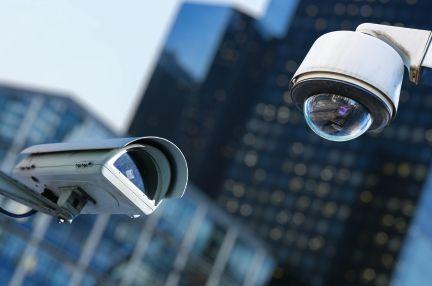
Voluntary registries allow homeowners and businesses to share footage with police in an effort to solve crimes faster
By Treena Hein
6 Line Card
• TrackTik integrates with U.K. staffing solutions firm
• G4S expands integration business with Montreal acquisition
• Monitoring stations facing workfrom-home scenarios
• TMA to update IQ Certification program
10 Lessons Learned
More rumblings in the residential market By Victor Harding
11 CANASA Update
A busy spring and summer ahead for CANASA By Patrick Straw
12 Camera Corner
Thinking outside the box, bullet and dome By Colin Bodbyl Dish mount
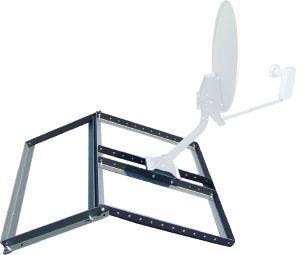
The PRM-2 nonpenetrating pitched roof mount is suitable when mounting most standard DBS dishes directly to the roof is not possible.


t’s amazing the difference a few days can make. At the beginning of this week, concerns about the Coronavirus pandemic were swelling. Many public events had already been postponed or rescheduled (including ISC West, which will now be held in July) and there was a sense that attitudes were changing from taking precautionary measures to acting out of necessity.
By Thursday, almost every public gathering — conferences, sporting events, music concerts — had been cancelled or postponed.
By the end of the week (March 13, the day I am writing this) many schools, universities, businesses, public pools and recreation centres, libraries, museums, art galleries, theme parks, etc. had all closed for at least a few weeks.
The Canadian government was advising against all non-essential travel out of the country and the U.S. had declared a national emergency. One of my co-workers asked me, have you ever seen anything like this? No, I said. Maybe 9/11, in terms of its impact on our way of life and our perception of our place in the world. But otherwise, no.
I think the impact on the security industry is going to be hard to quantify, at least at first. (We still haven’t seen the full effect of the virus in North America yet.) As with many industries, COVID-19 is taking its toll on security equipment production, and restrictive measures designed to keep people out of gathering places and in their homes are going to dampen commerce across the board.
A March 13 report from research firm Omdia sug-
gests the smart home market will fall almost US$20 billion short of revenue expectations this year (US$101.1B versus an earlier forecast of US$120.6B).
“Due to the vast number of products available, the smart-home market tends to be more resilient in the face of economic challenges like coronavirus compared to other, less-diversified industries,” noted Blake Kozak, principal analyst at Omdia, in his research note. “Nevertheless, the smart home market is expected to undergo a correction during 2020.”
We’ve only had a few short weeks to adjust to the idea that the world is now in the grip of a full-blown pandemic. The warning signs were there, and we’ve already experienced outbreaks of SARS, MERS and H1N1 in the last few decades, but it’s still a shock to the system. Security can fill a unique role in times like these. The entire industry is geared towards coping with disasters — security teams globally are now being called upon to open their playbooks and follow emergency plans to help keep people safe.
Eventually this will pass and we will all be able to travel without restriction and go back to our normal routines. In the meantime, I hope the impact on this industry and others will be minimal and that we heed the lessons from COVID-19 that will help us avert another health crisis or at least deal more effectively with its dire consequences.



Your Partner in Securing Canada Security Products & Technology News is published 8 times in 2020 by Annex Business Media. Its primary purpose is to serve as an information resource to installers, resellers and integrators working within the security and/or related industries. Editorial information is reported in a concise, accurate and unbiased manner on security products, systems and services, as well as on product areas related to the security industry.
Group Publisher, Paul Grossinger 416-510-5240 pgrossinger@annexbusinessmedia.com
Associate Publisher, Jason Hill 416-510-5117 jhill@annexbusinessmedia.com
Editor, Neil Sutton 416-510-6788 nsutton@annexbusinessmedia.com
Associate Editor, Alanna Fairey 416-510-5228 afairey@annexbusinessmedia.com
Media Designer, Graham Jeffrey gjeffrey@annexbusinessmedia.com
Account Coordinator, Kim Rossiter 416-510-6794 krossiter@annexbusinessmedia.com
Circulation Manager, Shawn Arul sarul@annexbusinessmedia.com Tel: 416-510-5181
COO, Scott Jamieson sjamieson@annexbusinessmedia.com
EDITORIAL ADVISORY BOARD
Victor Harding, Harding Security Services Carl Jorgensen, Titan Products Group Antoinette Modica, Tech Systems of Canada Bob Moore, Axis Communications Roger Miller, Northeastern Protection Service Sam Shalaby, Feenics Inc.

111 Gordon Baker Rd, Suite 400, Toronto, ON M2H 3R1 T: 416-442-5600 F: 416-442-2230
PUBLICATION MAIL AGREEMENT #40065710 Printed in Canada ISSN 1482-3217

Occasionally, SP&T News will mail information on behalf of industry-related groups whose products and services we believe may be

written permission. ©2020 Annex Publishing & Printing Inc. All rights reserved.
Annex Publishing & Printing Inc. disclaims any warranty as to the accuracy, completeness or currency of the contents of this publication and disclaims all liability in respect of the results of any action taken or not taken in reliance upon information in this publication.


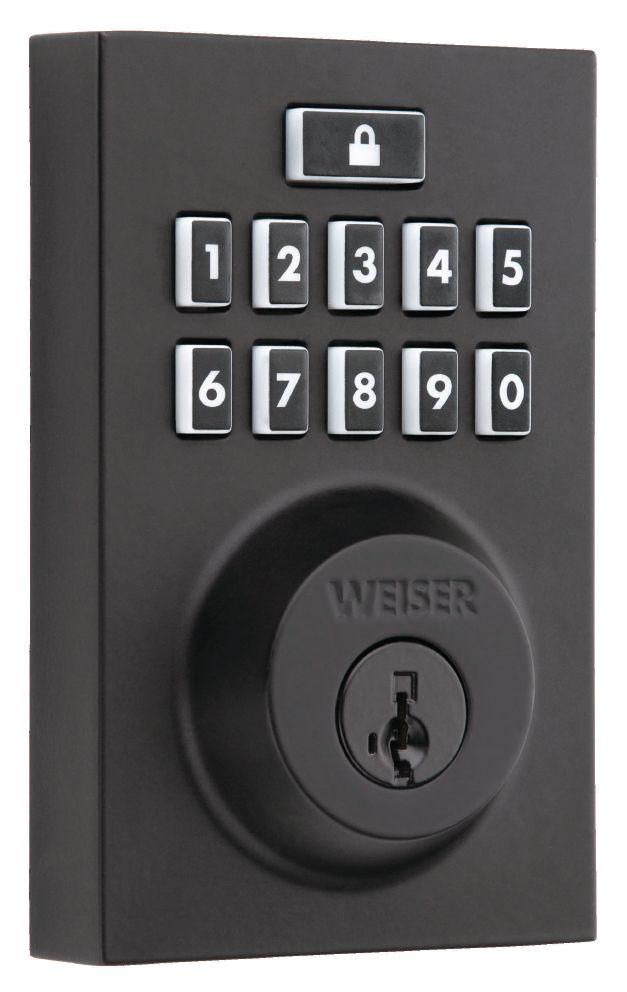
ADD A LEVEL OF SECURITY AND STYLE TO YOUR HOME WITH THE CONTEMPORARY SMARTCODE 10
• Z-Wave plus wireless technology
• New contemporary design
• 10 digit backlit touchpad with one touch locking
• Motorized deadbolt - enables true remote locking and unlocking

• Sleek metal design for enchanced quality
• Features 30 user access codes and 1 master code
• SmartKey and Bump Guard
Montreal-based TrackTik recently reached an agreement with Broadstone, a U.K. firm that specializes in staffing solutions, to integrate their respective platforms and grow their mutual markets in North America and the U.K.
TrackTik, founded in 2013, offers solutions that provide back office functionality to manage guard scheduling and client billing, as well as data reporting designed to improve quality and efficiency of service. Going forward, TrackTik will integrate with Broadstone’s “labour-as-a-service”
technology — a platform that enables security providers to reach a large pool of security guards and schedule shifts for short term or temporary assignments.
The service is utilized by security guard companies that may need extra staff for a specific site or client. A matching engine will pair available workers with appropriate jobs — almost like a dating app — enabling guard companies to staff up on short notice and without going through a complex and lengthy hiring process, according to Tom Pickersgill, Broadstone’s co-founder and CEO.
G4S Canada says it has made its first major expansion into Quebec for its security integration business with the recent acquisition of Montreal-based Securium Inc.
The acquisition represents another step in the company’s strategy to grow the integration portion of its overall business, said Tim Saunders, chief business development officer, G4S Canada.
“We initiated a strategic roadmap in 2015 where we had made a commitment to our company as well as to our key stakeholders that we would start down a path to strengthen our service offering across the board,” he explained. The company opened a G4S Secure Integration office in Toronto in 2016 and acquired Sudbury, Ont.-based i-Vision Systems the same year.
veillance and access control. Securium also has expertise in perimeter protection solutions such as buried cable and microwave detection systems.
“Securium seemed liked a great fit for us culturally and from a product perspective,” said Saunders.

Like the i-Vision acquisition, Securium will eventually be rebranded under the G4S integration business. Saunders estimated that transition will take place over the next 12 to 18 months. Securium’s president, Joe Bozzo, has joined G4S as business development manager.
“G4S provided a unique opportunity to bring our innovative technology services to a wider audience,” said Bozzo in a statement.
“When a company has a requirement, it sends out a notification to our 38,000 workers. We match them on the basis of datasets and then they apply,” explained Pickersgill. He says the service has proved useful to guard service companies that are faced with the dual challenges of turnover and recruitment — an issue that is compounded by a job market with low unemployment.

“The reality is that guard companies don’t just compete with other guard companies for staff. They’re competing with just about any other hourly wage or service industry-type roles,” added Mark Folmer, vice-president, security industry, TrackTik.
Pickersgill said that a post on the Broadstone app for a security assignment in London, U.K., will have several hundred applicants within a few minutes. The software will automatically narrow the pool down to a few of those applicants based on work history and knowledge of their skills and forward the details to the hiring company. All potential workers are pre-screened by Broadstone staff, said Pickersgill.
In today’s “gig economy” world, there are more and more people who prefer to work this way, offered Pickersgill. “They want a simple, frictionless journey through a platform like ours. We’re delivering that to more traditional agencies, i.e. security, which haven’t had that approach or the opportunity to do that.”
Broadstone’s current base of operations is the U.K. By uniting with TrackTik, the company has an opportunity to export its technology and platform to North America. TrackTik currently maintains offices in Montreal, the U.S., U.K. and the Netherlands.
Saunders said that Securium will help G4S “broaden the path” in Quebec and Eastern Canada. He added that Securium also has a national presence, as well as specific strengths in some vertical markets, including retail. According a statement issued by G4S in February regarding the acquisition, Securium will enhance G4S’s capabilities in video sur-
“With a strong commitment to service excellence and a desire to grow within the security technology arena, I am confident that as our two teams collaborate, we will continue to drive technological advancements for our combined client base.“
G4S estimated that the Securium acquisition will increase the overall size of its integrated security team by almost 40 per cent.
— Neil Sutton
Broadstone’s ambition is to enter the U.S. market by 2021 and by allying itself with TrackTik, issues such as localizing its platform to North America will be that much smoother, according to Pickersgill. “This is the great benefit of integrating with the guys at TrackTik. They’ve already got those regulations and rules in place. We’ve already started discussions with our legal team to look into the employment law perspective.”
Folmer said the integration work between the two platforms is underway. The companies will market each other’s solutions, he said in an effort to broaden their geographic reach.
The spread of COVID-19 has evolved on a daily basis, resulting in many companies being forced to make the decision to either close down or ask their employees to work from home.
Independent product safety testing, certification and inspection organization Underwriters Laboratories of Canada (ULC) has recently faced questions about how health risk mitigation techniques might impact Alarm Service Certifications, especially those that involve quarantine, social distancing or work from home policies.
“UL is working with industry to develop reasonable guidelines and alternative operating methods for scenarios such as the current COVID-19 outbreak,” the company said in a prepared statement that was sent via email on March 17 and also posted on the Canadian Security Association (CANASA) website (www. canasa.org).
“At this time, we encourage monitoring stations to make contingency plans for operating in environments where operators are not able to physically come together to monitor signals in a central station operating room.”
With the requirement that remote operators remain self-motivated and work well with minimal direction, the UL guidelines to working in a virtual environment from home include:

cannot gain access to the monitoring window.
The complete list of recommendations is available on the CANASA website.
To accommodate virtual monitoring during the time of COVID-19, Bay City, Mich.-based DICE Corp. is helping central stations so that their staff may work remotely during this time by providing them with their PBX (Private Branch Exchange) modules along with providing connectivity to the automation system they are currently using.

• Virtual workplace operators should be provided with a computer. Home/personal computers shall not be used;
• Connections between virtual workplace computers and central station automation systems shall be made through an encrypted virtual private network (VPN);
• Multifactor authentication should be required every 24 hours;
• When not on shift, computers should be in shutdown and put in a secure place to prevent any damage or theft of the computer;
“In the monitoring security industry, we’re talking about the many millions of customers that are getting the services that need response in real-time,” Avi Lupo, DICE executive vice-president, said in a recent interview with SP&T News
According to Lupo, the current COVID19 pandemic poses a plethora of challenges to the security industry, with liability being the main concern.

• When processing alarms, the computer should be setup as not to allow others to view the monitoring screen or any other information;
• If temporarily stepping away from the computer while on shift, lock the screen so others
“Traditionally, when people would look at disaster situations — like a terror situation, hurricane, or earthquake — many people typically say, ‘this is not going to happen to me,’ and many people would push that thought away,” Lupo explained.
“Part of the way that we believe things need to be done and our understanding of the way that we’re doing things on the disaster recovery. It’s not only the monitoring –– it is everything that has to do with the company, including service and the inventory.”
With a number of Canadian clients, DICE had been helping central stations get alarm
signals into their network, as more and more people were already moving their information to the cloud, but did not have the PBX automation platform set up in their centres.
With the COVID-19 pandemic at the forefront of people’s minds, services such as PBX have been in high demand from operators prior to the virus, according to DICE president and CEO, Clifford Dice.
“More and more, companies were already pushing for the services that we offer, but now the phones are ringing off the hook and people want to monitor remotely from their house,” Dice said.
“They want their operators at home and they don’t want them in one building because of the pandemic.”
For operators to take advantage of the PBX module from home, it is an easy process. Offered as a web application, operators at home are able to log in to their work computers, have PBX in their web application and then they can plug in in their headset.
“They can take phone calls, they can make phone calls, and they can get the alarm signal,” Dice explained.
“People are really seeing the benefits of not only cutting costs more efficiently, but also allowing their operators to stay home and get their work done in all departments, alarm centre, service, installation, sales and accounting.”
From a security standpoint, operators do not need to worry about their sensitive data being compromised from their remote workstations. According to Dice, the system requires a multi-factor authentication that, in addition to encryption, makes it a secure and resilient system.
“We’ve always been known for our disaster recovery services, which has been getting better and better for the last 20 years,” Dice extolled. “As technology changes, it really has allowed us to do a lot more.”
— Alanna Fairey
Gallagher solutions installed across University of Melbourne campuses

The University of Melbourne, Australia has installed Gallagher equipment, upgrading 150 buildings across seven campuses.
Gallagher worked with channel partner MGA Electronic Security on the upgrade, which included access control for over 3,000 doors, over 177,000 cardholders, and thousands of inputs. Gallagher Command Centre software was also installed, offering complete site control from a central platform. Site integrations include Active Directory, Unicard, Syllabus Plus, IndigoVision and Schindler. “We’re pleased to be able to support the University of Melbourne with their long-term plans, all while ensuring the safety of their people, assets and information,” said Scott Johnstone, Gallagher national sales manager, Australia and Papua New Guinea, in a statement. MGA Electronic Security completed the upgrade on budget and in less than 18 months.

The National Law Enforcement Museum in Washington, D.C., is a unique structure: a 55,000-square foot facility that is mostly located underground, with two all-glass pavilions that rise above the ground.
The two pavilions are the primary entrance and exit for visitors — the museum required door solutions that would accommodate high traffic, would fit the design elements and also be energy efficient in varying weather conditions. The museum’s architect selected two Boon Edam BoonAssist TQ manual revolving doors to meet those parameters. According to Boon Edam, the doors are almost entirely glass, feature a low-energy drive to assist users, as well as speed control for safety and automatic positioning when the door is not in use.



• Jim Kelly has joined ACRE as chief revenue officer and Chuck O’Leary has joined ACRE brand Open Options as president.
• Allegion has appointed Steven C. Mizell, executive vice president and chief human

The Singapore Police Force’s traffic branch has deployed an electronic Know Your Customer (eKYC) system that utilizes HID Lumidigm’s V-series fingerprint sensors to verify the identities of driver’s licence applicants. Secur Solutions Group, an HID partner, deployed the solution, which replaces a paper-based process, at three driving schools. According to HID, verification and enrollment can occur in seconds — Singapore Police are able to enroll 500 to 700 people per day, reducing almost 1,500 manhours of labour a month. “New opportunities are being considered for service enhancement and parts of the eKYC system are being evaluated for integration,” said Tseng Wun Hsiung, CEO of Secur Solutions Group, in a statement.
Photo: Casper1774Studio/ iStock / Getty Images Plus

resources officer at Merck & Co. to the company’s board of directors.
• Graybar Canada announced the appointment of Jason Taylor to executive vicepresident and general manager, replacing Brian
Please continue to check with event organizers regarding COVID-19 updates.
June 9, 2020
Buildings IoT Forum Vaughan, Ont. www.biotforum.ca
June 9-12, 2020
Electronic Security Expo Nashville, Tenn. www.esxweb.com
June 16-17, 2020
Grower Day St. Catharines, Ont. www.growerday.ca
June 17, 2020
Security Canada West Richmond, B.C. www.securitycanada.com
June 24-25, 2020
Grower Day West Abbotsford, B.C. www.growerday.ca
July 20-22, 2020 ISC West Las Vegas, Nev. www.iscwest.com
September 16, 2020
Security Canada Atlantic Moncton, N.B. www.securitycanada.com
September 21-23, 2020 Global Security Exchange Atlanta, Ga. www.gsx.org


Thomas upon retirement.
• SAFR from RealNetworks Inc. announced the appointment of Eric Hess as senior director of product management.
• ABLOY USA has hired Jeff McCormick as CLIQ system specialist. McCormick has
15 years of experience in the software and technical support field.
• Nortek announced that Christoper Larocca has joined the organization as CEO. Darren Learmonth has also joined at CTO.
The Monitoring Association (TMA) has taken over management of the IQ Certification program, which is designed to promote security system installation quality, in an effort to expand best practices in installation and monitoring.

IQ Certification started out as an Electronic Security Association committee in 1992, when it was still known as the National Burglar and Fire Alarm Association. In 2005, it was spun off into its own organization, and now 15 years later has found a new home at TMA. Celia Besore, TMA’s executive director, told SP&T News that the plan is to update the existing program and bring it to the next level.
According to the TMA website: “In order to be IQ Certified, companies pledge to adhere to a stringent code of ethics and to provide top-notch maintenance and service. They also must train their employees in industry-recognized programs, meet all licensing requirements and carry proper insurance coverage.”
Certified companies must also meet these criteria on an annual basis in order to maintain their certification. TMA member Ralph Wayne Sevinor, who is overseeing the development of the IQ program, said that IQ Certified companies can utilize the IQ logo as a marketing tool. “I was pleasantly surprised to see
“Our members are full service, so they also install systems. For us, this is a way of promoting professionally installed and monitored systems.”
— Celia Besore,TMA
the amount of pride from the member companies that are utilizing that,” he said.
Sevinor, who is also the president of Wayne Alarm Systems, said the program will be updated to reflect newer alarm technologies and “more enhanced false alarm strategies…. It’s really at the infancy stage. TMA is very excited about it because….it’s a great platform with a good foundation.”
Besore said the IQ program is another method that companies can use to distinguish themselves as professional security providers.
“Our mission is to promote professional monitoring. Our members are full service, so they also install systems. For us, this is a way of promoting professionally installed and monitored systems. We firmly believe they are superior to do-it-yourself (DIY) and monitor-it-yourself (MIY).”
She added that the program could potentially dovetail with TMA’s existing Five Diamond programs, which recognize monitoring station and dealer excellence. Also, IQ Certification is expected to be one of the criteria that would allow the industry to qualify to join the FirstNet program, a public safety broadcast network available in the U.S. through a public-private partnership with AT&T.
— Neil Sutton
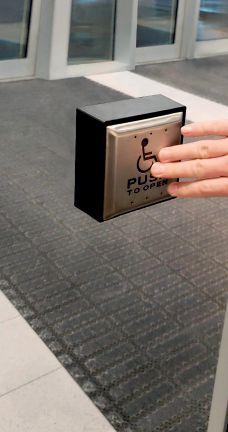
KINETIC BY CAMDEN


• No-batteries. Switch operation powers transmitter
• No hazardous waste in landfill
• Switches rated for 1 million cycles
• Up to 300ft. wireless range
• Kinetic™ transmitter built into a wide range of Camden push plate switches
• Ultra compact receiver with instant or delayed relay operation
• Kinetic™ Wireless Switch Kits available

SBy Victor Harding
omething is going on in the residential and small business alarm market. Let’s look at some anecdotal evidence pertaining to these markets — some of which was addressed during the Barnes Buchanan annual conference, held in February —keeping in mind that the U.S. and Canadian markets are not the same.
• Monitronics, a large U.S. dealer based residential and SMB alarm company, went through a complete financial restructuring about a year ago.
• In the U.S., the DIY market is reputedly growing at a rate of 20 per cent per year right now — huge growth which is eating into the professionally-installed market. Many of these new DIY systems are being monitored. There is far less data available in Canada but at the moment, it appears that DIY is not nearly as popular here as in the U.S.
• In Canada, I am getting more calls from dealers these days asking about an exit from their monitored accounts and the most common reason is the increasing influence of the telcos like Telus and Rogers. These dealers say they just cannot compete.
• Buyers in Canada who have normally been very keen to buy any kind of monitored account are now being much more discriminating.
I don’t think this means that those in Canada owning residential and SMB monitored accounts should panic. However there are several forces at work in this market that make doing business there more difficult for professional alarm dealers:
• Alarm dealers cannot afford to let their customers sit with old technology anymore like they used to be able to. If they don’t offer to upgrade them, a cable company will come along and do it for them.
• In Canada, more so than in the U.S., there has been some pushback on the ever higher and higher monitoring rates being thrust at customers. Although most residential alarm customers accept the need for cellular and a sizable number like the interactive features offered today, they don’t want to pay $60 a month for these services. So there is a move to higher install fees and lower RMR rates. The telcos have realized this and are offering these services for much less.
• Just staying up to date on new technology today is more time-consuming for an alarm dealer. And this technology can be expensive. It is much more difficult for an alarm dealer to offer a basic system for free when the panels cost twice what they did 10 years ago.
• As mentioned, DIY has arrived in the U.S. and will soon come in more force in Canada. Although it is helping to expand the overall market for alarm systems, I don’t think it is helping the average Canadian alarm dealer.
• In terms of buyers, there are fewer buyers of alarm accounts in Canada both for smaller blocks of accounts and even the larger platforms companies. Private equity is more interested in fire and integration companies these days.
• Multiples for blocks of accounts have fallen off somewhat. ADT’s 500,000 accounts sold to Telus for 33X ADT’s RMR.
I cannot over-emphasize the impact that the major telcos have had on the alarm market recently in Canada — much greater in Canada than in the U.S. If you look across the country, all the best deals for new interactive panels are being offered by the telcos — Rogers, Bell, Telus and Eastlink — and these are almost all deals that an independent cannot match. In addition, the telcos are using their marketing power so that any new customer in Canada will likely go to a telco first to get a quote.
So what effect does all this noise have on the market for alarm accounts? Here is my take. Residential/SMB accounts are not in as much demand as they used to be. It is becoming much more difficult to sell small blocks of accounts, i.e. less than 250 accounts.
Secondly, gone are the days that dealers can get away with trying to sell alarm accounts without signed contracts. Buyers want that waiver of liability on the back of the contract.
I am constantly surprised at how many dealers don’t have signed contracts. Trust me on this. The buyer does not care if you ran your business for 30 years without signed contracts. They don’t care if you relied on your liability insurance. They want contracts. So get at least a one-year monitoring contract signed now.
Next, buyers want accounts that are on call forward lines. Otherwise the dealer will most likely have to move the accounts to the buyer’s station before they get paid. These are the top three issues when selling accounts: size of the base, signed contracts and accounts on a call forward line. When you add up what’s going on day by day in the residential market and the increased difficulty in getting deals done at multiples done in the past, it makes for an all round much more difficult story in the residential, SMB market.
Victor Harding is the principal of Harding Security Services (victor@hardingsecurity.ca).
By Patrick Straw
CANASA recently announced it has joined the Global Life Safety Alliance (www. globallifesafetyalliance.org) as an associate member.
The alliance was formed in 2018 as a means to connect and assist in the progress of the life safety and security industry, work with other security and safety markets and share research information. The organization will share what has been researched by members and will also make the findings available with the industry at large.
which provides a forum for Canadian security professionals to ask questions, seek advice and network with others in the industry.
Join your fellow industry experts as they explore solutions to their security-related issues and network with other experts who can assist you.

CANASA is looking forward to the opportunity to share any information with our members and non-members. Updates and information, as they become available, will be announced by the Global Life Safety Alliance.
CANASA has launched a new Facebook group
CANASA will be conducting our Annual General Meeting in Richmond, B.C. on June 17, following the Security Canada West trade show.
This meeting is open to all but voting is restricted to CANASA members only. Please RSVP no later than May 11, by email to emarsden@canasa.org.
Part of the Annual General Meeting is our awards ceremony — the opportunity to recognize outstanding contributions to the association and the industry.
Nominations close April 29, so if you know a deserving CANASA member who has made a
positive contribution, please visit www.canasa. org for all the information.
The first two Security Canada (www.securitycanada.com) shows in Laval, Que., and Edmonton, Alta., have been postponed from their original dates as a precaution against COVID-19. Revised dates will be announced soon.
Shows in Ottawa, Richmond, B.C., Moncton, N.B., and Toronto are scheduled to proceed as planned and are being reviewed on a regular basis.
Golf season is coming up as well in all the regions across the country. Visit www.canasa.org for the complete schedule of tournament dates and locations. These tournaments are a great opportunity to enjoy a day of golf with your industry colleagues.
Patrick Straw is the executive director of CANASA (www.canasa.org).
Ottawa, Ontario May 27, 2020
Edmonton, Alberta May 6, 2020
Richmond, British Columbia June 17, 2020
Moncton, New Brunswick Sept. 16, 2020
Toronto, Ontario Oct. 21 – 22, 2020
By Colin Bodbyl

Specialty cameras that are different from the typical range can address specific surveillance needs
Most people are familiar with the common camera types.
Box, bullet, dome and turret cameras are all popular choices. These four form factors will meet the needs of almost any application, but there are niche cases where a different type of camera could be a better choice.
“It is up to integrators to challenge themselves to learn and apply these cameras.”
Specialized cameras are nothing new, yet many integrators avoid them either because they are outside of their comfort zone, or because they have had a negative experience with them in the past. Familiarizing yourself with these cameras and understanding their limitations is key to delivering the best surveillance solutions.
Fisheye cameras have been around a long time, but their popularity is gradually increasing as de-warping software becomes more common. Fisheye cameras use a single wide-angle lens to provide a circular, 360° view. They work particularly well in small, indoor spaces where detail is not as important as the ability to track activity throughout a scene. Fisheye cameras do not work well for scenes where great detail is required or where lighting is poor.
Their image sensors are required to capture an enormous field of view. This leads to the most common mistake when specifying these cameras, which is not understanding the impact this has on the camera’s range. For large spaces or areas where objects will be at a great distance, fisheye cameras are not the right choice.
Panoramic cameras are another type of camera that can achieve 360° coverage, but they are typically more expensive than fisheyes. For that extra cost, you get a camera that overcomes many of the shortfalls associated with fisheyes. Panoramic cameras are very good at capturing details and can perform well in low-light environments. Panoramic cameras are typically made up of anywhere from two to four image sensors inside a single housing. Sometimes these sensors are fixed in place to provide complete 180° or 360° coverage.
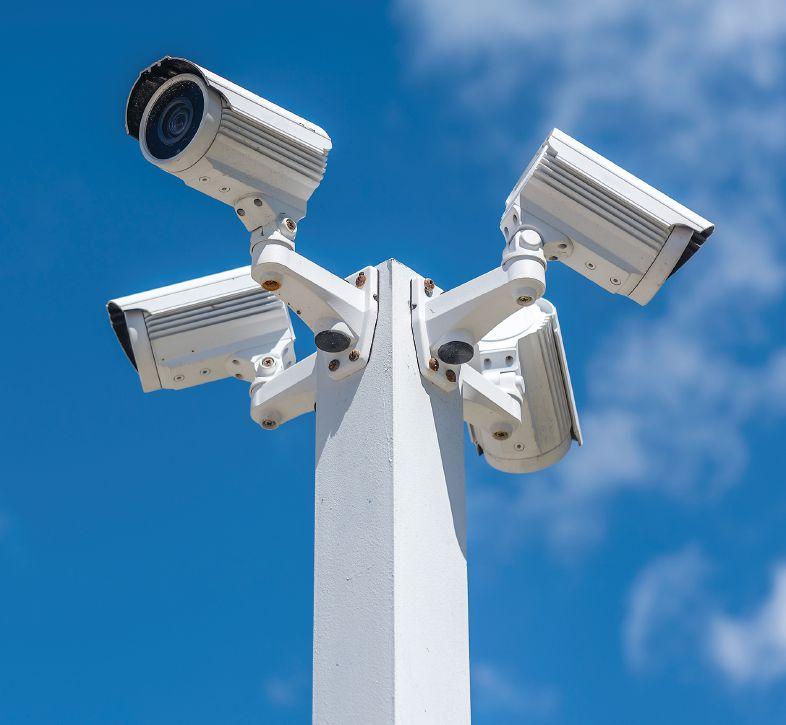
In other cases, panoramic cameras allow users to reposition each sensor and customize the coverage area. Panoramic cameras have the added benefit of requiring only one network cable, whereas integrators looking to achieve the same coverage with multiple cameras would need to use multiple cables which can quickly increase costs. The major downside of panoramic cameras is the upfront cost, though this is usually offset by operational savings in the end.
Covert cameras are probably the most famous of specialty cameras, but their uses are not always as nefarious as some might think. Covert cameras have found their place in applications where traditional cameras would be obtrusive or simply would not fit.
ATMs are a popular application for covert cameras, where the device needs to be discrete while only inches away from a customer’s face. Another popular application for covert cameras is where finishes or architectural design would be disturbed by traditional surveillance cameras.
In these cases, using a camera that can be
hidden or at least blend into the environment can provide the surveillance required without taking away from the aesthetic of a carefully designed space. Due to their size, covert cameras lack features like vari-focal lenses or IR illuminators. Because of this, they are not good for large scenes and should never be used in lowlight applications.
It can be difficult to know when specialty cameras are required or when traditional cameras are a better choice. As manufacturers expand their specialty camera product lines, end users will become more aware of them and start asking for them specifically.
In the meantime, it is up to the integrators to challenge themselves to learn and apply these cameras as part of their solutions. In most cases, a traditional camera will still get the job done, but switching to a specialty camera can take a project to the next level.
Colin Bodbyl is the chief technology officer of Stealth Monitoring (www.stealthmonitoring.com).



Voluntary registries allow homeowners and businesses to share footage with police in an effort to solve crimes faster
By Treena Hein
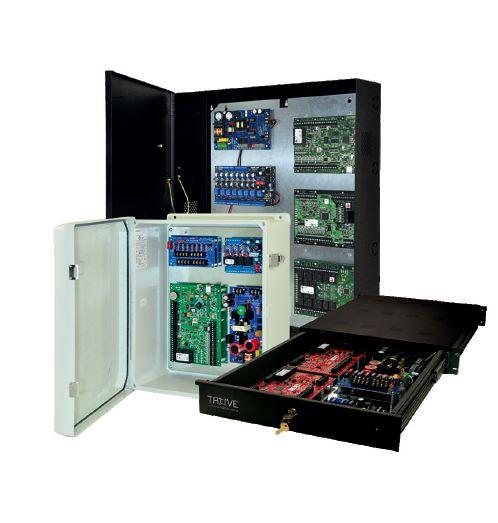
By now, the concept of voluntary camera registries is one that’s familiar to police forces across the world.
It’s therefore no surprise that the number of communities in Canada with these registries is growing. At least two more have been launched just in the past few months.
The benefits of having a da-
tabase with camera locations at homes and businesses are myriad. Most obviously, it allows police forces to solve crimes they might never have been able to solve otherwise. Officers can quickly check the registry after an alleged incident is reported, and then ask the owners of any cameras in the vicinity of the incident (voluntary registry participants) if there is pertinent footage. If so, the next question is whether they are willing to share it.
Said another way, it greatly ex-
pands the footage that’s potentially very easy and fast for police to access beyond public traffic and street cams (if they are even present in a given community), providing potentially significantly reductions in both investigative hours and wear on police vehicles. If police already know where a lot of cameras already are, calling or going door-todoor to canvass for possible footage is not needed nearly as much — or maybe at all.
Inspector Jeff Sheils of the Cobourg Police Service in Ontario, which is just getting its voluntary community camera registry up and running, explains that his force is like every other policing organization out there — trying to do more with less. This includes, he
says, a recognition that the community itself wants to play a valued role in its own protection. “We see this regularly with something like shoplifting,” Sheils explains, “or even gas drive-offs where the owner of the gas station provides video.”
And while these voluntary registries also have huge potential to deter crime as well as to help solve it, “there is a humanitarian side to their use, in that they can help a great deal in locating missing persons,” explains C.J. (Jay) Peden, an operations duty NCO at the RCMP detachment in Red Deer, Alta., where a registry has been in place since July 2019.
But there are also some other, less obvious benefits. Surrey,

B.C.’s registry (Project IRIS) was launched in October 2016, and from that relatively historic perspective, the city’s community safety manager Brian Aasebo reports that “knowing there is a co-ordinated initiative taking place can support people in feeling safer.” That can only be good for attracting and retaining both businesses and residents to a community. And alongside this boosted sense of safety comes a sense of engagement and control. “The ability for people to take action by installing and registering cameras,” says Aasebo, “allows business owners and residents to feel like they are partnering with the City, RCMP and fellow businesses and residents in addressing crime.”
“There is a humanitarian side to [camera registries] in that they can help a great deal in locating missing persons.”
— C.J. Peden, RCMP, Red Deer,Alta.
For details on how these registries work, let’s check in with ‘Red Deer Capture,’ about nine months old and the first in Canada to be operated directly by the RCMP. Its introduction followed about 20 months of preparation, says Peden, and complimented other initiatives to reduce crime. Anyone in Red Deer (population 103,000) with residential and/or business cameras can register, inputting their contact information on the website along with information on each camera (for example, faces north on Smith St.).
This information is then confirmed, which Peden says takes a few hours a week depending on how number of new participants (who can update or remove their profiles at any time; they can also decline to voluntarily share footage at any point in the process and still remain in the registry). “Our goal was 100 registrations by the end of 2019 and that was surpassed in October,” Peden reports. “We are at about 215 now and we’d like to reach 300 by the end of 2020.”
He estimates that with the low cost of different systems including doorbell cams, there is potentially a large number of residents that have cams or will have them soon to monitor their property.
So far, ‘Red Deer Capture’ has been used to locate an individual after a violent incident and also in a few cases relating to harassment and property damage. It’s too soon to say if it will deter crime to any significant extent, but Peden personally feels that individuals who might commit crimes are becoming more aware that they may be caught on camera and that the community is increasingly willing to share its footage with police.
“In addition to local news and social media coverage, we got window decals made for registrants to show the public they are part of the program,” Peden explains. “We also have some promotional items to give out at community events.” Overall, he says the costs involved
in creating and maintaining the registry are very small.
In contrast to Red Deer, leadership at the City of Surrey set up its database in 2016 to be managed by staff and not the local RCMP in order to address potential privacy concerns. Project IRIS has never looked back. As of Jan. 3, 2020, there were 326 camera locations registered (and there are also 500 city traffic cams and 40 municipal cams). The Surrey RCMP tracks queries made by its officers to the database each month, as well as how many ‘matches’ are achieved: when a registered camera is located near where an incident took place. Over 2017 to 2019, there were 116 queries with 50 matches. With the database growing over time, it’s no surprise that the highest match rate so far is 2019: 56 per cent, up from 39 in 2018 and 29 in 2017. However, there is no system in place to track what happens after a match. “Measuring the impact of Project IRIS is challenging given the secure and private nature of police investigations,” Aasebo explains, “as well as the fact that investigations can take years to reach court completion.” However, he confirms that registry camera footage has been successfully used to help apprehend and prosecute in a number of cases, for example a sexual assault conviction and a robbery. The greatest challenge, says Aasebo, has been raising awareness, and this year, a new Project IRIS marketing campaign is being launched to increase both its profile and uptake. Aasebo adds that because the use of vehicle dash cams in investigating vehicle incidents is becoming more common (with investigators appealing to the public for footage related to hit-and-runs, for example), the incorporation of dash cams in the registry will also be explored this year.
Red Deer and Surrey report very few concerns raised about their
camera registries, and Sheils says that so far at their early stage in Cobourg, “we really haven’t had any comments or concerns directed specifically to us, either positive or negative.” The Sarnia Police Service, which also launched a registry in early January, has been promoting it on radio, television and social media, at time with Sarnia-Lambton Crime Stoppers and other organizations. “We [also] have an FAQ on our website that dispels any myths or misinformation that might be out there,” says Constable Ron Smith.
On the subject of public concern, Smith highlights proactivity and good relationships. “Policing can only be effective with community involvement and trust,” he says. “We have worked hard in our community to establish trust, which is why we are confident a police camera registry can work [here]. The citizens know we have their best interests at heart.”
No doubt other communities in Canada are closely watching these registries and more of them will be launched. Indeed, Peden and his colleagues at ‘Red Deer Capture’ have already fielded inquiries from other police forces, and in Sarnia, Smith says a “major” motivation for launching their registry was “the positive feedback we have heard from police services throughout Ontario and elsewhere.”
It would seem that these registries may become the norm across Canada, and that’s not all. It’s becoming easier to imagine a future where all the video surveillance prevalent throughout our society — from business street cams, residential doorbell cams and bank ATMs to parking lot licence plate recognition systems and police dashboard/body cams — is integrated for policing and perhaps other purposes, taking crime resolution, deterrence and more to a whole new level.
Treena
From mass communications to false alarm reduction, audio tools are becoming more popular as a means to improve both security and customer care
By Andrew Snook
By implementing audio into existing systems — or installing entirely new tools with audio features — security users can improve their systems while taking advantage of additional benefits, such as enhancing customer experiences.
“I think the biggest thing we’ve seen here is people just want more,” says Michael Zuidema, marketing operations manager for Code Blue Corp., a manufacturer of emergency systems. “Whether that’s more features, more functionality, more integrations or abilities to work with other products, people want to be able to do more things with their emergency communications products.”
He says it comes as no surprise that people expect more from their security products, since so many of our everyday items now serve multiple functions.
“Look at an iPhone — it can take pictures, play music, make phone calls,” Zuidema says. “I think people look at our products the same way. It’s almost a piece of real estate, if you will, that they can expand and build on as technology changes and advances. It makes sense that customers are wanting to get more in order to keep their customers, visitors, students, patients — whatever the case may be — as safe as possible.”
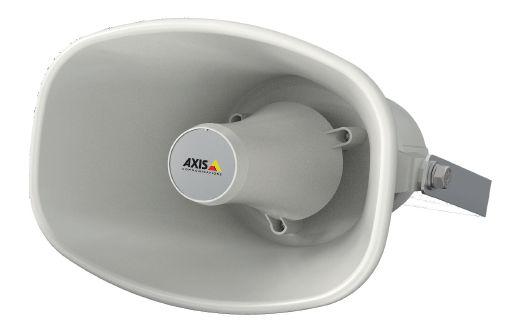
The primary function for audio security devices is as a proactive deterrent solution, says Chris Wildfoerster, business development manager of audio for Axis Communications.
“Having a voice message come out is more of a deterrent than a camera that might sit passively in a corner during an event,” he says. “The key is that it changes passive into a proactive deterrent to stop something ... before it happens.”
Another vital role that audio applications play in security is in helping reduce the number
“Typically, most folks that are looking for a system don’t even realize that audio is available.”
— Chris Degenhardt, Stanley Convergent Security Solutions
of false alarms that emergency crews and security teams are dispatched to investigate.
“We’re plagued with false alarm issues from motion detectors, glass breaks. A lot of alarms don’t give 100 per cent coverage in a facility, and police response is not as fast with that kind of technology,” says Chris Degenhardt, sales director for Stanley Convergent Security Solutions, who says false alarms comprise about 98 per cent of the alarm notifications in the U.S. (Similar numbers have been reported in Can ada.) “The more we can verify an alarm, the better off we are.”
Jan Wittmann, director of regional marketing for Bosch Security and Safety Sys tems, says that incorporating audio is a huge advantage in emergency evacuation scenarios.
ally impact the case. But from an overall interest perspective, we have not seen it going down, we’ve only seen it going up from the last four to five years from both a quoting and sales perspective.”
Wildfoerster says that one of the biggest challenges related to selling audio systems is that a lot of the security dealers are not necessarily comfortable with installing these types of systems. But he argues that by adding these types of systems to the
“If it’s a life or death situation — like an evacuation, for example — then audio just has big advantages because you have a response to a threat that’s immediate,” he says.
Aiphone technical sales and support engineer Paul Hefty says that audio systems have two main applications.
“You still have your traditional paging to get announcements out, but with everyone having cameras everywhere, you need to have audible communication to identify who is there,” he explains. “Primarily, you see that in door-entry environments, or data entry.”
Although someone can easily identify a co-worker or a courier, it can be more difficult to assess the threat level an unidentified visitor poses without an audio system in place, Hefty says.
“People put in all these camera systems and then are unable to identify potential threats,” he says.
Does adding audio features into an existing security require a substantial financial investment?
“It really depends on what kinds of features you want,” Code Blue’s Zuidema says. “How many bells and whistles are going to add onto this? If you’re just looking for a phone, we have a number of economical options for somebody just looking for intercom applications.
“But if you’re going to incorporate cameras, public address speakers, other types of software and technologies — and if you’re looking for something larger — that can re-
services and products they offer potential and existing clients, dealers and installers are able to increase their profitability per project while growing their relationships.
“It makes them much more important to their client,” Wildfoerster says.
When incorporating audio into a security system, service providers really have to understand what the customer’s needs are, including how their homes are built and set up.
“If they have a train that drives by every day at 1 p.m., that’s something we need to consider,” Degenhardt says, adding that any type of regular loud noises should be taken into consideration.
“I think the biggest challenge, for us, is making sure the communication line is continuous and making sure we have all the players we need at the table,” Zuidema adds. “Whether that’s IT, whether that’s local security, whether that’s local facilities — whoever the players are — making sure everybody is on the same page, so we get everybody exactly what they need and there’s no confusion or questions and no delays.”
The retail market space is one area where companies are constantly looking for additional features to enhance security while improving customer experience, and analytics plays a key role.
“We have the network cameras, we have the network audio, but what ties those two together is analytics,” Wildfoerster says. “You think of someone who dwells or stands
Smart access control technology platform designed to give users ultimate freedom of choice regarding system layout, type and number of access points as well as level of security.
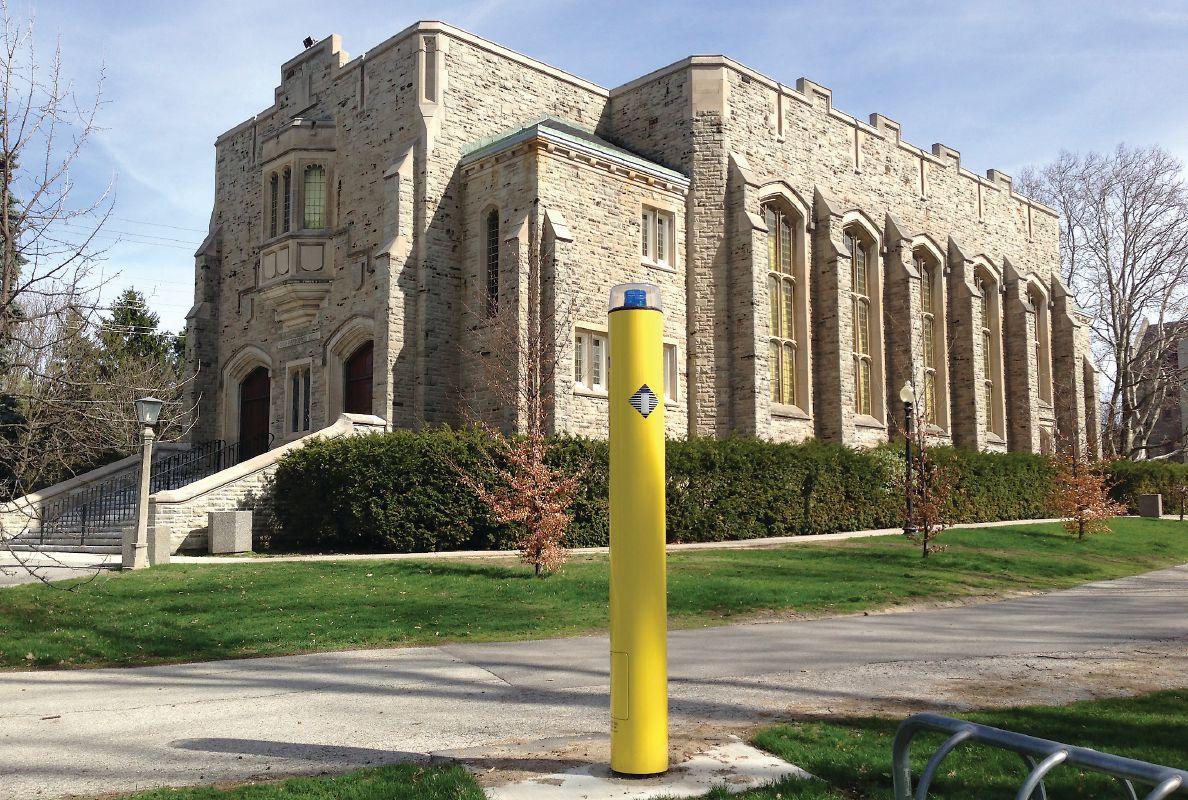
“There’s so many more uses and applications for these products that I really have a hard time seeing it slow down.”
— Michael Zuidema, Code Blue
in a particular area for particular period of time, the camera notices that and we can send a message out to that person.”
Property managers and owners can also use analytics to track people throughout a store.
“You can see where they’re going, what they do when they’re in the store, how often they stay in different areas,” Wildfoerster says. “These are analytics that you can add to the system and incorporate your audio messaging to reinforce where the customer is going and what they’re doing.”
These applications have been very successful in helping stores reduce organized shoplifting, also referred to as shrinkage.
Wildfoerster says stores have found that 85 per cent of shrinkage is reduced by incorporating analytics as part of their audio security solutions. One of the ways analytics is sometimes used to reduce shrinkage is with the help of pressure sensitive pads that are placed on shelves with commonly stolen items, such as energy drinks.
“They have a system where it senses the pressure on the pad being reduced significantly — like someone taking an arm and swiping the cans off — and it sends a message out over the
store letting someone know that assistance is needed in the energy drink aisle,” Wildfoerster explains. “It’s pretty cool. They’ve got the videos of people taking armloads of energy drinks and putting them in bags, and then once they hear the message, they drop the bags and try to put the energy drinks back. Again there, the power is behind the analytics.”
Wittmann adds that retail stores often require a certified mass communications system integrated into their fire systems, but also want it to be used for enhancing customer experience with features like background music, advertisements and page calls.
“Multiple uses of systems is another thing we see as a trend,” he says, explaining that by integrating audio features with video can cover off a large number of a customer’s security needs while providing considerable cost savings.
Educational and religious institutions are other areas where audio systems are growing in popularity.
“Churches and schools are, unfortunately, the highest crime areas based on size and space; and its really tough for a traditional alarm system to protect those buildings,” Degenhardt says.
“Historically, we were always in an educa-
tion setting — colleges and universities,” Zuidema adds. “But in the last five years we’ve seen a lot of growth in the health-care sector, airports and large corporate campuses with multiple parking lots and locations.”
Hefty says one market segment that tends to elude many companies is the residential side of security systems. But with systems going network-based, he sees a lot of potential for growth.
“Now the number of devices doesn’t matter. As long as you have a network drop then you can usually make something happen,” he says. “It just opens up so many options for people.”
As people and companies become better educated on the types of audio solutions available in the marketplace, the more these products will continue to grow in popularity.
“Typically, most folks that are looking for a system don’t even realize that audio is available,” Degenhardt says. “That’s where our job comes into play, to help them understand what’s available.”As far as Zuidema is concerned, the sky is the limit for the potential for audio applications.
“In my view, we’re only limited by our imaginations,” he says. “There’s so many more uses and applications for these products that I really have a hard time seeing it slow down or taper off in the near future. I don’t see it slowing down at all and can only imagine what the future has in store for us.”
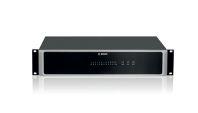
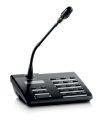
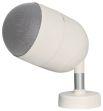
The coupled system consists of a Bosch Video Management System server, one or more Bosch PAVIRO Public Address and Paging System and at least one operator client workstation.
▶ Live intervention through the Bosch PAVIRO Public Address and Paging System from the Bosch Video Management System user interface
▶ Automatic or manual triggers
▶ Possibility to address specific zones
Having an area monitored by cameras does not allow the operator to actually intervene when an incident is happening. For that, they need to dispatch a security guard. Unfortunately, it could take a while before the guard arrives at the location of the incident. Combining the Bosch Video Management System (BVMS) with the Bosch PAVIRO Public Address and Paging System allows operators to trigger announcements from the user interface of the BVMS. Furthermore, the BVMS can also trigger announcements automatically, for example based on a Video Content Analysis alarm coming from a camera.
The Bosch division Security and Safety Systems is a leading global supplier of security, safety and communications products, solutions and services. Protecting lives, buildings and assets is our aim. The product portfolio includes video surveillance, intrusion detection, paging, mass notifications, electronics and speaker solutions. Bosch Security and Safety Systems develops and manufactures in its own plants across the world.

Big (and not so big) Solutions for your Business.
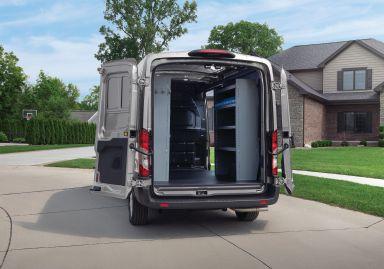
As a business owner, you know there’s no such thing as a day off. That’s why you need tools you can rely on to get the job done – day in and day out. With the Ford Transit and Transit Connect family, we’ve created tough, dependable cargo, crew, and passenger vans that are completely customizable to suit the needs of your business.
Big Thinking for your Business.
When it comes to your unique business, we know that one size doesn’t fit all. With the 2020 Ford Transit, you have the option to choose from three different body lengths, three roof heights, three engines, and two wheelbases. In fact, the Transit has 58 different configurations, so you can build your van to exactly fit the needs of your business. The Transit cargo van offers a payload range of 3,550lbs.(1,610 kg) to up to 4,550 lbs.(2,063 kg)*. Dual sliding cargo doors and a new
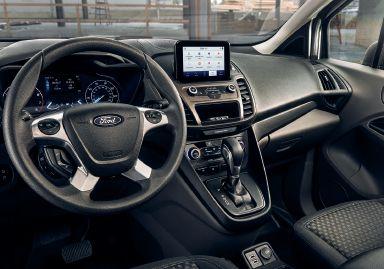

power-sliding door feature are available on medium and high-roof cargo van models to make it easy to access your payload. Also new for 2020 is our Transit Crew Van with seating for five. The Transit is also available with All-Wheel-Drive capability, and Ford Co-Pilot360™^ - a comprehensive suite of advanced driver-assist technologies. So, when you need to get to work, you can be confident your Transit will get you there.
Built Small and Smart.
Need a more compact and fuel-efficient solution for your business? The 2020 Ford Transit Connect offers versatile cargo and passenger configurations, and is welldesigned for custom upfitting. Despite its smaller size, the Transit Connect provides a maximum 145.8 cu.ft. (4,129 litres) of storage** and max. payload of 1,610 lbs. (730 kg) *. We’ve also loaded it with available smart technology like voice-activated SYNC®3
with Apple CarPlay™ and Android Auto™ Compatibility†, plus Ford Co-Pilot360™^ - a suite of advanced driver-assist technologies, to help you stay productive and confident when you’re behind the wheel.
We’ve Got Your Back.
When you own a business, it’s nice to know that you have support when you need it. Our large national network of Ford dealers means that help is always close by. So whether you’re looking for sales, service, or access to our extensive network of custom upfitters, we’re here to help your business succeed.

With a full suite of services, expertise, and flexible configurations, Ford makes is easy to upfit and customize your vehicle to create a mobile space that is an exact fit for you. No matter the size of your business, the rightsized solution can be found in the 2020 Ford Transit and Transit Connect family of vans.
With the dependable versatility of Transit and Transit Connect, plus the power and capability of F-150 and Super Duty, Ford’s lineup of commercial vehicles makes achieving your ultimate business goals possible.

• Super Duty has best-in-class*
available payload of 7,850
• F-150 has available features like Pro Trailer Backup Assist^
• Transit has 3 lengths, 3 heights and 58 cargo congurations
• Transit Connect has a compact footprint, and a maximum cargo space of 145.8 cu ft†

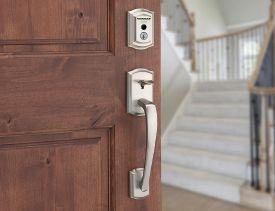
The Halo Touch Wi-Fi Smart lock provides homeowners access to their home via fingerprint. Halo Touch comes with the ability to program and store up to 100 fingerprints (50 users). In addition, through the Weiser app, homeowners can remotely monitor and control their Halo Touch Smart Locks from anywhere in the world while connected to the Internet. Like its predecessor, Halo Touch will connect directly to homeowners’ existing Wi-Fi network and smartphone without the need for a third-party hub, panel or subscription service. weiserlock.com
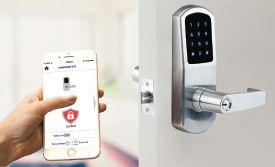
PDQ
pdqSMART-STP stand-alone smart locks operate by smartphone. Applications include offices, co-working spaces, retail, hospitality, clinics, schools, daycare and more. The locks can operate by smartphone, PIN access code, smart watch and key. Scheduling is available for up to 100 unique users with an audit trail of 25 events on the app. Five lock types are available: Grade 1 and Grade 2 Cylindrical, Grade 1 Mortise, Heavy-Duty Deadbolt and Heavy-Duty Exit Device Trim. They are upgradeable to full access control with no hardware change. www.pdqsmart.com

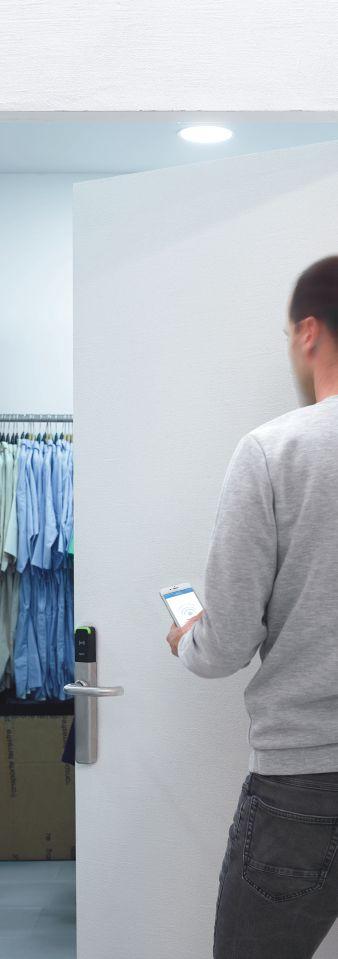
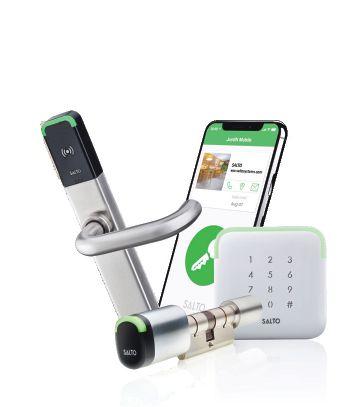
SALTO’s residential solutions replace the traditional home or apartment door key with an electronic smart lock system that allows end users to use a smartphone to control doors – including garages, service doors, and lobby areas. SALTO offers flexible residential solutions for installations (homes, multi-family housing, high-end residential, and rental properties), open via keyless and mobile options, and can connect to smart home hubs and devices like thermostats and alarms (via BLE, Z-Wave/ZigBee/HomeKit). www.saltosystems.com
These single gang CM-AF142SO red/green/blue/white multi-colour LED dome lights are vandal and weather resistant, with field selectable colour, continuous LED/Sounder alarm, and an adjustable sounder volume. When controlled by a door control relay, the dome light colour can be changed to indicate door closed or door locked status (e.g. from green to red). The LED dome light is suited for a range of applications, including restroom control, emergency call, nurse call and room occupancy. The unit is supplied with a blank lens cover and ‘Assistance Requested’ self-adhesive label. www.camdencontrols.com
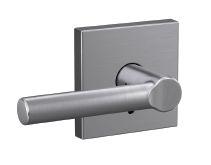
The Schlage Custom Door Hardware Collection features premium style alongside combined interior locks that offer both bed/bath and hall/closet functionality in one. This universal functionality allows homeowners to change from a doorknob to a lever, a traditional look to a modern look — even a non-locking door to lockable — in minutes. Premium handlesets in 3⁄4 trim and 2-piece styles are also available. Priced from $66 to $329, the Schlage Custom Door Hardware collection consists of more than 78 pre-configured products, ranging from combined interior to non-turning hardware. Homeowners can choose from a variety of styles with seven trim designs and 12 knob/lever designs. www.schlage.com
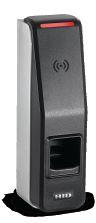
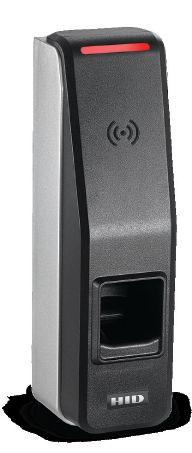
HID Signo readers are interoperable with over a dozen credential technologies and support Apple’s Enhanced Contactless Polling (ECP) to enable Student IDs in Apple Wallet. The readers include features such as automatic surface detection that recalibrates and optimizes read performance based on the mounting location. The readers are also IP65 rated with no additional gasket needed, and feature a capacitive touch keypad resistant to harsh weather conditions. HID Signo enables administrators to remotely configure and diagnose readers and monitor status through a centrally managed and connected reader ecosystem. www.hidglobal.com
Codelocks
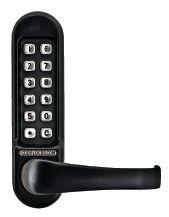
CodeLocks has introduced two marine grade tubular mortise locks (CL510 and CL515). The new CL500 locks have a marine-grade coating that resists exposure to salt spray and moisture, helping to prevent damage caused by corrosion. The CL510 and CL515 contain robust features: a mortise latch, large, full-size lever handles and coded-access flexibility. Offering a code-free function with over 2,000 non-sequential code combinations, the tubular locks are suited for day-to-day use when unrestricted access may be required. www.codelocks.us
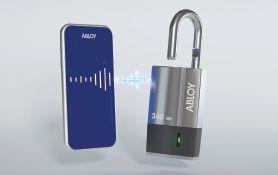
ABLOY BEAT includes a digital key, a mobile app and an IP68-rated, weatherproof Bluetooth padlock. ABLOY BEAT is managed with the visual ABLOY OS user interface and is designed for professional physical protection of critical infrastructure, businesses and industry sites. BEAT can be integrated with existing security workflow solutions or be implemented as a standalone locking solution with ABLOY OS. The ABLOY digital portfolio now includes keyless (BEAT), electromechanical (PROTEC2 CLIQ) and mechanical (ABLOY PROTEC2) options. www.abloy.com

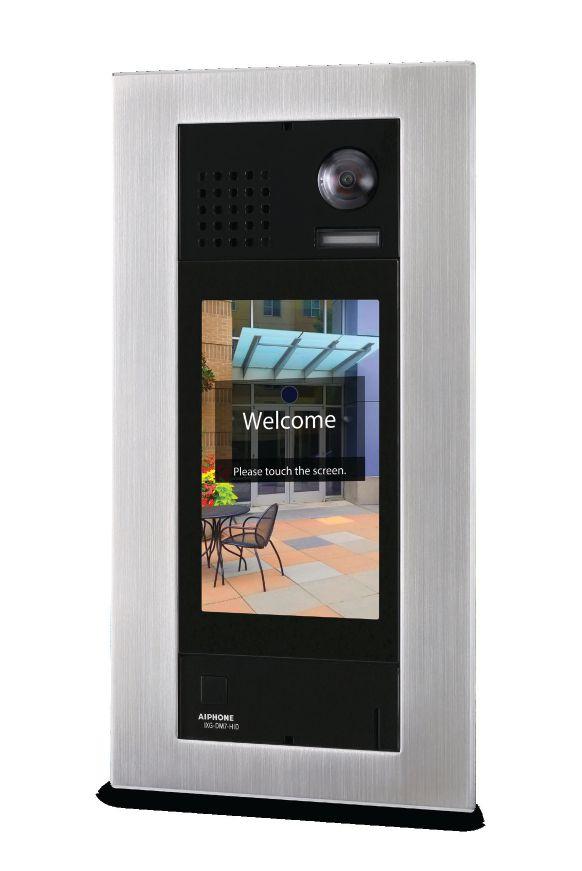
You can now offer property owners a single, powerful system that combines the feature-rich benefits of an IP intercom with the versatility of a multi-tenant solution.
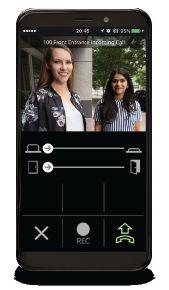
The IXG Series IP Multi-Tenant Video Intercom helps solve security communication challenges beyond any other intercom.
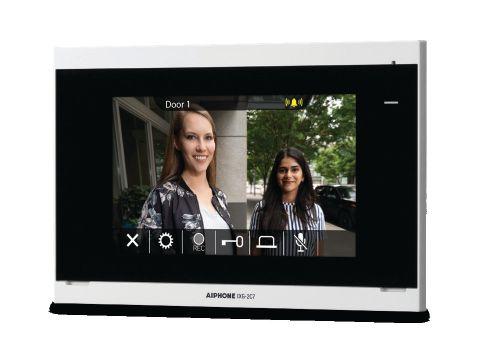
• Easy to start small, expand at any time
• Cloud-based app (service fee will apply)
• All stations are PoE
• Touchscreen entrance panel
• U pdates can be programmed remotely
• Physical video guard station (Sept 2020)
• Compatible with IX Series stations


STI NEMA 4X fibreglass and polycarbonate EnviroArmour
Enclosures are available with several ventilation options to help combat inclement weather and harsh indoor conditions. The wireless friendly, non-metallic lockable enclosures are designed for use with control panels, medical equipment, alarm panels, wireless equipment, DVRs and more. A variety of sizes and options are available. The fiberglass enclosure offers a choice of a clear or opaque door and is resistant to chemical agents.
www.sti-usa.com
Security Center for Airports enables security managers, control room operators, terminal and ground handling staff as well as passenger experience managers to work together using a single unified product. In addition to video management (Security Center Omnicast), access control (Security Center Synergis) and automatic licence plate recognition capabilities (Security Center AutoVu), Security Center for Airports features a number of airport-specific capabilities.
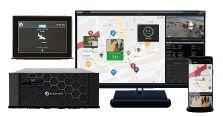
www.genetec.com
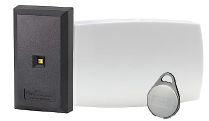
DMP announced that all 734 Series access control modules now support both Wiegand and OSDP (Open Supervised Device Protocol) readers. To connect to compatible OSDP readers, DMP access control modules use RS-485, which provides bi-directional two-way communication to acknowledge messages between the reader and module. Also, with standard wiring, it extends the range of data transmission.
www.dmp.com
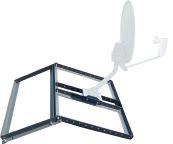
The PRM-2 non-penetrating pitched roof mount is suitable when mounting most standard DBS dishes directly to the roof is not possible. This heavy duty mount has an adjustable mounting plate for satellite dish placement. Features of the PRM-2 include: accommodates 18in. and 24in. DBS/DSS antennas; galvannealed steel construction; adjustable dish mounting plate; holds up to 11 anchoring 8in. x 8in. x 16in. standard concrete blocks; comes with pitch pad kit; dark grey weather resistant powder coat finish.
www.videomount.com









The purchase price for a portfolio of accounts may vary based on a number of factors, including: 1) Signed monitoring agreements; 2) Term of agreement; 3) Auto renewal of agreement; 4) Pre-authorized payment provision; 5) Credit scores; 6) Accounts receivables aging; and 7) Type of equipment installed (age, ability to service, system functionality).
Many of the smaller companies in the industry are motivated to sell their accounts or companies to not only ease the financial strain they may be under but also, in the case of a share sale, to avail themselves of the favourable enhanced capital gains tax under the capital gains exemption.
A share sale would typically result in a lower purchase price because the shares cannot be written off (amortized) against income by the purchaser, as is the case with the sale of accounts. However, the after-tax net purchase price to the seller may be greater. The purchaser may also be reluctant to purchase shares because of the heightened due diligence required to determine the veracity of the company’s assets and liabilities.
The seller of shares, being a “Canadian Controlled Private Corporation,” may be in a position to take advantage of the enhanced capital gain tax rate resulting in only 50% of the gain being taxable and when combined with each owners “lifetime capital gain exemption” of $866,912 may
knockers to locate a reasonable ammount of thes customers. This is an expensive and difficult barrier to overcome. When compared to the complications and expense of luring a customer out of an existing monitoring agreement and trust relationship with the installing dealer, dealers opt to solicit the many households























































































By Neil Sutton
For Canadian and global citizens, we are living in unprecedented times — the COVID-19 pandemic has changed the fabric of our lives. And while we can be sure this situation won’t persist forever, it may take months for society to return to a sense of normality.
SP&T News recently reached out to the Canadian Security Association’s executive director Patrick Straw for some guidance on how security businesses can best serve their staff, customers and partners during these challenging times. Straw responded to questions via email on March 20.
SP&T News: What are your recommendations for alarm/security equipment installers who may be called for site visits?
Patrick Straw: We are asking our member companies, if and when they contact us, to comply with the Health and Safety practices as published by the local, provincial and federal governments on social distancing. Screening would have to be done prior to a service call being dispatched and a lot of discretion would have to be used as to the importance or necessity for a service call. Most larger companies have already addressed formal policies but often the small companies are looking for a bit of guidance. Really all we can be is a “forwarding” agency passing on information as we receive it from legitimate sources.
SP&T: What should security business owners be doing to ensure their staff are safe?
PS: I have been on many conference calls with security companies across the country including several monitoring stations. The monitoring stations have been working very hard to restructure their operations so that there is a minimal amount of social interaction in person and


a ton of work is being done with cleaning practices, as would be expected. There have also been visitor restrictions placed on many businesses. Just like all other industries, employees who can work from home are doing so. That is the case with our own staff at the CANASA office.
SP&T: What can owners do to ensure their businesses are able to keep operating?
PS: Individual companies are going to have to make their own determination as to what the risks are continuing to do business. Very challenging time and the government is tightening up the rules on a daily basis in an effort to slow the spread of the virus. Many businesses are going to take a hit and hopefully the promises from the government on all levels for support will be available to these companies.
SP&T: Have companies expressed concern about HR or staffing issues?
PS: Most of this is about staffing. There have already been many layoffs and more will continue. Some functions will simply have to go on hold till this crisis is over. I have received several press releases from a wide range of large companies from telecoms to grocery chains explain-
ing what they are doing to ensure the safety of their staff and to give direction on the courtesies that we all need to extend.
SP&T: What is the status regarding the security product supply chain? Can dealers/installers still expect to be able to order the equipment and parts they need?
PS: So far I have not heard any major issues on the supply chain. Trucks are still rolling and to the best of my knowledge the distributors are still operating. The change will happen when they are restricted access into buildings to finish an installation or the construction is delayed causing the same problem. I also wonder if some integrators are stockpiling product, worried that there will be a limitation on stock down the road.
SP&T: In what cases can security professionals expect to be deemed an essential service?
PS: The essential service question is an important one. We have sent letters to both provincial and federal governments requesting that this be the case, especially if the situation worsens. Public safety is a big concern for our members monitoring for fire, intrusion, medical and personal emergencies and many other critical areas.
SP&T: What are the lessons the security industry can take away from COVID-19 to improve services in case of a future public emergency?
PS: Already much information has been shared by groups such as ULC/UL who have lived through many of the natural disasters which have happened in the United States. Whether via weather or earthquakes or flooding, many things changed as a result of these experiences. One of the most incredibly positive aspects to this situation is the co-operation between CANASA member companies who are really competitors. I just got off a call with our national Monitoring Station Committee and they are on a day by day basis sharing learned experiences and best practices to help each other out. And the larger stations with more resources are offering assistance to the smaller businesses as required. I am very proud of this group.
At the end of the day, we are all going through a situation which is unprecedented in Canada. We have to work together, support each other at work and at home and conform very strictly to the Health Ministry practices to keep the pandemic from spreading. We will get through this as an industry and as a country.



• FREE text & email notifications
• FREE unsupervised openings & closings
• FREE report distribution for you and your customers
