




















































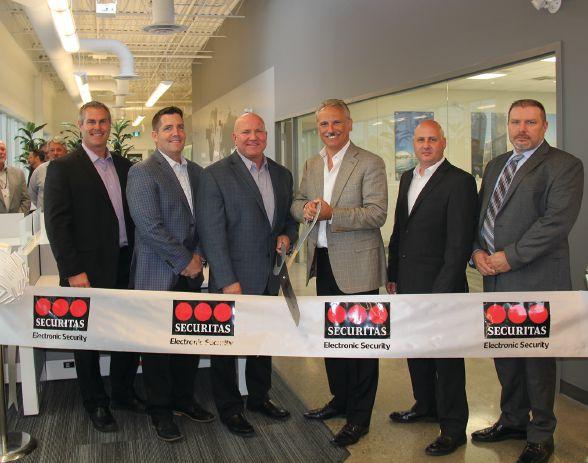
Securitas Electronic Security (Securitas ES) has officially opened its new Toronto headquarters. Tony Byerly, Securitas ES president, based in the company’s Cleveland office, presided over a ribbon-cutting ceremony with Dan Marston, senior director and general manager, Securitas ES Canada. Customers and vendor partners were also invited to the opening event.
According to the company, the facility houses sales, operations and regional support in more than 10,000 sq. ft. of work space. Prior to opening, the building was completely renovated and now features an engineering centre, warehouse, staging lab and “video collaboration centre.”
Byerly said in opening remarks that the new office marked the last
stage of separation of Securitas ES from its former parent Diebold. Securitas completed the acquisition of Diebold’s electronic security business in February 2016. Byerly also noted that the acquisition and integration of the business into Securitas’ portfolio is part of two major trends inside the organization: specialization and collaboration. The former refers to the degree to which the integration side of the business can offer specialized services, the latter to the opportunities the company can capitalize on by leveraging all aspects of its business, including guarding services and monitoring.
Securitas also announced the relaunch of its Pinkerton brand in Canada earlier this year — the company offers complementary riskbased services and solutions.
Isonas says it will be increasing the number of onsite certified partner trainings, certifying “thousands” of access control technicians on Pure IP technology in 2017.
The company says the adoption of its new product line is driving the need for more onsite training to continue educating partners and integrators on its new RC-04 hardware family and Pure Access software platform.
In 2015, Isonas launched a certified partner program, which involved an online training program. Now Isonas says it is on the road creating a hands-on experience for partners and certifying them in a single day.
The cost per technician is $500 and includes a full-day session, lunch and now also includes an Isonas demo unit with an RC-04 reader-controller.
“We are excited about offering
our valued partners a free demo unit to assist them in helping their customers implement a Pure IP access control solution successfully,” says Rob Mossman, CEO. “Knowledge is the key to our suc-
cess and we firmly believe in sharing our resources with partners across the country by providing on-site training along with presales support and design assistance to drive our partners’ success.”
The sale of 3M’s identity management business to Gemalto is complete, according to the company.
business are approximately $205 million, according to 3M.



3M’s identity management business provides biometric hardware and software that enable identity verification and authentication, as well as secure materials and document readers. The business includes 3M Cogent, a wholly owned subsidiary of 3M, which focuses on the law enforcement, border control and civil identification sectors.
Annual global sales of the
The identity management business was part of 3M’s Traffic Safety and Security Division, which is in the Safety & Graphics business. Approximately 450 3M employees are expected to join Gemalto or one of its affiliates.
As 3M discussed on its April 25, 2017, earnings conference call, the company will record a $0.05 to $0.10 per share benefit from this divestiture, net of various investments to drive growth and improve productivity.
As 2016 drew to a close, access control firm
Dormakaba announced it had signed an agreement with Stanley Black & Decker to acquire aspects of mechanical security businesses for US$725M in cash.
The agreement, announced Dec. 21, is to include Stanley Commercial Hardware in North America, a production facility in Taiwan and GMT in China, which makes commercial hardware for mid- and lower-price point markets. (Stanley’s Sargent and Greenleaf business is not included in the transaction.)
Michael Kincaid, COO, access solutions segment Americas for dormakaba Group, said the deal is expected to boost the company’s profile in North America, making it
a “top-three player.”
Riet Cadonau, CEO, Dormakaba Group, added in a statement that the acquisition is “fully in line with our stated strategy and it will add substantial scale in North America and expand our offering to a full portfolio of door hardware and access control solutions.”
Dormakaba is the product of a recent merger itself — Dorma and Kaba, two separate European access control firms announced their own merger in April 2015. The two had bolstered their own ranks prior to this merger with Canadian acquisitions: Kaba purchased Keyscan and Dorma acquired Rutherford Controls International.
Dormakaba also announced another acquisition in late 2016: Huntsville, Ala.-based Mesker
Allegion says it has made, through one of its subsidiaries, an equity investment in Yonomi — a mobile application and Cloud platform provider for connected living.
“As an IoT thought leader, Allegion drives connected device integration in both residential and non-residential security markets,” said Rob Martens, Allegion futurist and vice-president of strategy and partnerships. “We form strategic alliances with others who embrace the IoT as we do, furthering our capabilities and pushing innovation in our industry. This new alliance with Yonomi is a perfect example. We’re impressed by the flexible IoT solutions Yonomi offers to manufacturers as well as end consumers and look forward to using this technology to give our customers smarter security experiences.”
Through the alliance, Allegion’s portfolio has elite access to Yonomi’s Thin Cloud Infrastructure and cloud computing expertise. Schlage recently deployed Yonomi Thin Cloud to support millions of its smart locks.
Allegion will also further its integration into the smart-home market through the Yonomi consumer application that fosters communication between smart-home devices. The mobile application allows users to set conditions and personalized routines that control multiple smart-home devices with a voice command. The app currently integrates with more than 60 smart-home devices, including some Schlage locks.
“We’ve designed Yonomi to be both easy to use and powerful, much like Allegion’s IoT-enabled products,” said Yonomi CEO Kent Dickson. “As a company that’s focused on simplifying smart-home experiences, we’re excited to have a strategic partner like Allegion with expertise specific to the evolution of smart security devices – an important part of the connected home.”

Openings Group.
Prior to its recent Stanley news, Dormakaba had already gone through comprehensive reorganization to leverage its growing brand portfolio. Steve Dentinger, vice-president of Dormakaba’s Electronic, Access and Data (EAD)
division in North America, told SP&T News before the Stanley announcement that the company had created new divisions and retrained staff on new products and cross-selling opportunities in the latter half of 2016. “Access control, strikes, maglocks, door openers and closers, revolving doors: We’ve truly become that end-toend one-stop shop for the door,” said Dentinger.
At press time, the Stanley acquisition was expected to close in the first quarter of 2017, subject to closing conditions. Integration of the Stanley businesses is expected to take up to three years, according to Dormakaba. The affected Stanley businesses employ approximately 1,000 people.
— Neil Sutton
CrucialTrak’s Biometric Access Control System (BACS) took home Best New Product in the SIA New Product Showcase (NPS) at ISC West 2017.
BACS is “the world’s first multi-biometric authentication technology, providing security measures by layering four different biometric authentications into one terminal,” according to CrucialTrak. In each BACS module, up to four biometric identification technologies are considered: touchless fingerprint, iris patterns, vein patterns and facial recognition authentication.
“Many returning companies entered the SIA New Product Showcase this year, and many new entrants also competed in the showcase,” said SIA CEO Don Erickson. “New and familiar faces did very well in the 2017 showcase. I congratulate CrucialTrak for distinguishing itself as Best New Product overall in a very competitive year.”
Since its inception in 1979, SIA NPS says it has been the security industry’s “premier awards-based marketing program.” This year’s NPS Program had 120 entries from small, medium and large companies in the security industry, roughly a 20 per cent increase from last year.
Anixter, which is marking its 60th year in business this year, recently invited a group of security industry media, including SP&T News, to its Chicago headquarters to meet with the company’s senior leaders, tour its demonstration facilities and to listen to a series of presentations that communicated Anixter’s philosophy and customer approach.
Pat Comunale, president, global security solutions, remarked in an opening presentation that the company has undergone significant change in recent years — the result of major acquisitions that brought Tri-Ed Distribution into the fold in 2014 and Clark Security Products in 2010.
Comunale, who was previously Tri-Ed’s president of global security solutions, said Anixter has been able to take a more holistic view of the market, particularly since Tri-Ed tended towards the SMB market and Anixter the enterprise side.
The company is now taking a three-tiered approach: global and national integrators, regional integrators, and SMBs and locksmiths. Anixter is collectively aligning all of its businesses (Anixter, Tri-Ed and Clark) under one management team, which will also improve communications with its dealer base, said Comunale.
Brent Edmunds, president and co-founder of Stone Security, a Salt Lake City, Utah-based integrator, who attended the Anixter media event, said he has partnered with Anixter for about a decade. Stone Security has grown from a company of three people to more than 40 today, increasing its revenue 10-fold in the process. Edmunds said he relied on Anixter for additional support when the integrator landed a global account.
Comunale said Anixter is able to provide support services to its dealers in some cases, for example, shipping specially prepared pallets of products to a customer site, thereby speeding time of install.
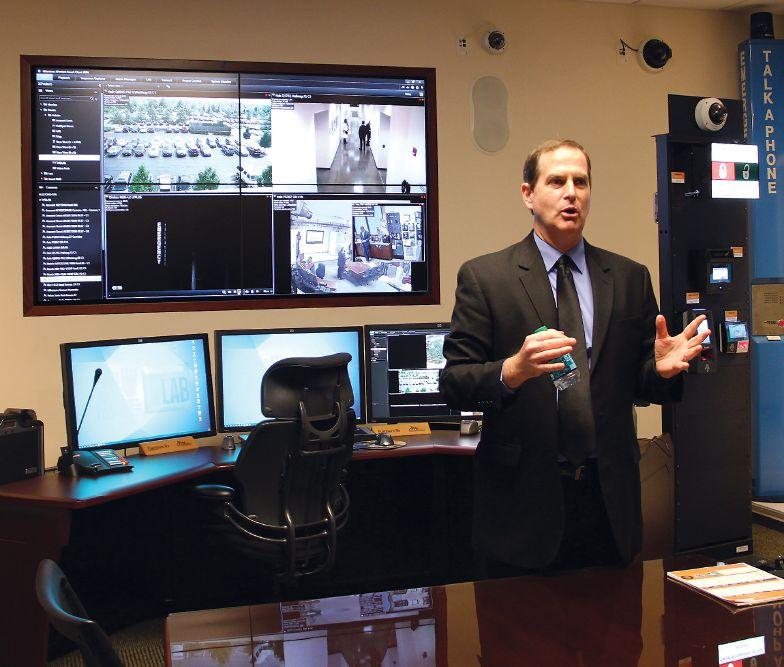
configured for biometrics products.
Another major way the distributor is working with its partners is through helping them manage and adapt to the increasing influence of IP- and network-based equipment in security.
“The integrators are getting into technologies that they haven’t used in the past,” said Bob Dolan, director of technology for enterprise cabling and security solutions. “We’re trying to help the integrators become ‘sticky’ to the end user.”

Anixter’s demo facilities can also help cement a sale, according to Comunale, by allowing integrators to show their clients product possibilities in a convenient setting. “There’s a lot more products sold after the end user comes here” when clients see the full potential offerings available, remarked Comunale. When SP&T News visited the facility, one section of the demonstration area was
Pat Comunale, Anixter
Dolan said upgrade paths for security equipment have changed for end users (cable infrastructure might be upgraded only every 15 years, but cameras could be replaced every seven years and servers every five), but one of the biggest changes lately have come from the role of intelligent systems. Integrators are being called upon to be problem-solvers for their clients, he said, by taking advantage of the increasing sophistication of analytics software. “That’s where we’re starting to see integrators thinking out of the box.”
This complexity has also resulted in a
more solutions-focused approach to selling and installing security equipment. Multiple product lines (video, access control, intrusion, mass notification, etc.) are presented as combined solutions addressing specific security issues.
Dolan also speculated that video, in particular, is moving away from proprietary solutions. As it sits today, the industry is getting beyond the siloed approach with disparate vendors, and moving towards more interoperability where technology is designed to talk to each other more effectively. “It is probably a few years until we get to a full, open architecture,” he said, “but the video surveillance space is changing.”
He also remarked that cybersecurity issues have presented both integrators and end users with new and growing challenges and that Anixter offers expertise to help dealers better contend with those issues when it comes to installing new equipment.
Anixter also houses product testing facilities on site — a service that can help dealers formulate solutions for end user clients. “We rely on it to help us with our product selection and our product management,” said Edmunds.
— Neil Sutton

IBy Victor Harding
The purchase of a small or mid-sized security installer comes with its own set of challenges
n my last column, I talked about buying alarm accounts from a buyer’s perspective. This time I will address some issues to be aware of if you want to buy an integration business.
Let’s define an integration business as one where the vast majority of the company’s revenue is driven by installation and spot service revenue. In short, recurring monthly revenue is not the dominant item of value. Most integration businesses are mainly driven by the installation of medium and large-sized camera, access control or intrusion systems or a combination of all three (producing an integrated system). There are security businesses that do smaller access control and camera system work; their value is not tied to their installation work but their monitored account base. I don’t consider these integration businesses.
“Buying an integrator is very different from buying an RMR business.”
There are not as many good integration businesses out there in Canada to be bought as there are alarm companies (and companies that do smaller access and camera work). Bidding on and successfully installing larger commercial, institutional or industrial security systems is a field requiring special skills. Your techs often need specialized training on the equipment they are working on. It is easy to “blow your brains out” on a large job by either underestimating the costs or not delivering on time or on budget.
Smaller integration businesses in Canada can range in size from just under $1 million to over $10 million
in annual revenue, although what I see the bigger buyers of integration businesses buying are businesses with a minimum of $5 million in annual revenue. These are established businesses with systems and ongoing new business that does not depend on the owner. Often integration businesses are focused on a particular niche where they have developed expertise — access control, building automation or video monitoring — as in the last three businesses in Canada that Convergint has bought.
Although valuing and buying most businesses is about valuing the future stream of free cash flows that the target company produces, buying an integration business is very different than buying an RMR based business. With an integration business you should probably use a Multiple of Normalized Earnings method to get at the value of the company rather than a Multiple of RMR. What counts here the most is past Earnings before Taxes normalized for a normal owner’s salary and any one time revenue or expenses items. My experience is that although the future is important, the more experienced buyers will pay based mainly on past earnings.
There are other factors that affect the value of an integration business. Does the business have a well-developed niche in a segment of the market where there is lots of future business? This can definitely make the business more attractive. Businesses like this experience higher gross margins on each job. Following on from that, can that business be “scaled up” to double or several times its size?
I have found that most buyers of integration businesses will want to get an amount of “normal working capital,” included in the purchase price determined as a multiple of earnings. Determining normal working capital is an important cal-

culation in the sale of any integration business. Deals can fall apart on this. In addition, some buyers expect that they will get some or most of the fixed assets used to produce the revenue streams in the business also included in the purchase price.
Considering payment terms for the target company, I would say this partly depends on how big and advanced the target business is. Will the business continue to operate successfully without the owner there? This is more likely to be the case with a $10 million integration business than $3-5 million business. With a $10 million business, I would expect to see a much higher proportion of the purchase price paid up front. As the business shrinks in size, be ready for smaller amounts up front and maybe even some kind of earn-out after the deal closes for a part of the total purchase price.
All in all, buying an integration business is a more difficult process to accomplish. First, finding a good
one is more difficult. There aren’t that many that are really scalable out there to buy. I think this is partly because overall the Canadian market is just a smaller market. Then finding one that does not depend too much on the owner (or owners) is even more difficult. We have not talked about financing the buying of an integration business. Our chartered bank system is not really there yet in terms of financing deals to buy RMR (let alone deals where there is no RMR).
I am looking for more buyers of good integration businesses. Right now in Canada, for various reasons, not very many of the bigger names on the integration side — Tyco, Chubb Edwards and Johnson Controls — are actively buying. This has left an opportunity for companies like Convergint.
Victor Harding is the principal of Harding Security Services (victor@hardingsecurity.ca).
“Effective security plans are supported by enabling technology to automate, streamline and simplify.”
Learn where and how to install security equipment on campuses to keep students, faculty and staff safe
By Taleen Merjanian
Building a safe and secure environment for school campuses can be overwhelming when you consider what is at stake.
Because of this, knowing where to begin can be the hardest part. The best thing you can do is to start by evaluating your unique challenges and risks, outline a tailored plan to address them and use this blueprint to begin implementation.
Within the classroom, administrators are tasked with helping to keep students safe. However, it can be a tricky balance to create a safe learning environment while ensuring students don’t feel as though they are being monitored while learning.
Outside of the classroom, colleges and universities must also manage security spanning across multiple buildings, campuses and sports facilities, all while dealing with a diverse group of stakeholders including students, faculty, staff, and the larger community. The following serves as a guide for administrators to ensure they have the proper security plans implemented on each area of a campus.
Before you can determine which technologies are best suited for your campus, you need to understand the threats and vulnerabilities, and where they lie. Start by conducting an assessment to both uncover these risks and determine if there are you must address any regulatory requirements.
A risk assessment can also help you adhere to budget restrictions by finding exactly what your campus needs and providing the best solutions to address them, including recommended strategies for leveraging existing technologies in place. For example, upgrading to a new hybrid DVR system enables migration to an IP-based camera system over time. This way, both existing ana-
logue and newer IP-based cameras can be used together, removing the need to replace all systems in order to upgrade your technology.
With clearer insights into potential vulnerabilities, we suggest creating an emergency preparedness plan to help address the key risks identified in your assessment. This should include likely emergency scenarios and recommended responses to each. For example, in the event of a fire, outline the most appropriate response depending on location, including evacuation routes and emergency exits.
Since every emergency is different, consider installing a method of communication for plan execution and sharing updates in real time. In a school environment, this can be challenging, as people are spread across a wide area. Make sure there is a clear chain of command to dictate exactly what the appropriate response should be. Emergency coordinators must be clearly defined and trained, and students and faculty should be made aware of who those individuals are. Ensure that you have back up coordinators in the event that the designated staff are unavailable.
Designed to deliver varied and customized communications to large groups of people as part of a comprehensive system, Mass Notification Systems (MNS) are an increasingly popular solution for this purpose. Mass notification offers various forms of communication from simple text message alerts to mass emails, strobe lights or automated phone calls. For larger, open campuses, an MNS could include a loud speaker, which can announce a pre-programmed message or sound a siren.
Social media is also a growing mass notification communication tool. Many universities and colleges use social media to provide regular updates such as weather-related class cancellations. Additionally, it can be used for timely emergency updates as it can allow for two-way communication between students, staff and law enforcement officials.
You should also ensure your emergency plan includes personnel outside of the immediate campus such as local police, fire and health officials as well as local stakeholders such as civic leaders and surrounding public businesses.
Effective security plans are supported by enabling technology to automate, streamline and simplify overall safety and security. The following is a list of the fundamental technologies you should consider implementing as part of your safety strategy.
Video surveillance: Security professionals recommend that a school implement a video surveillance system into its security strategy. It can be both proactive and reactive with the ability to monitor an area in real-time as well as review saved footage. When efficiently managed, a surveillance solution can be a useful.
Monitoring and remote monitoring: Many modern surveillance systems also offer remote management and monitoring, ideal for busy security personnel who are tasked with monitoring several sites across campuses. From a phone or tablet, it makes it easy to keep an eye on each location whether it is inside a building or an outside sports arena. Remote monitoring enables personnel to work offsite when needed, and can help to increase productivity and save time, so that resources can be allocated elsewhere.
Additionally, ULC-certified monitoring can be critical in helping to address alarm events as they arise. Video alarm verification as well as a variety of other monitoring services such as critical condition monitoring can help to ensure that your campus is being supported 24/7/365.
Access control: For colleges and universities, there is a constant flow of students, faculty and visitors who are coming and going, so it is important to provide a clearly marked visitor entrance that provides a welcoming environment for guests, and also controls access to the campus. This is especially important for after hours or when school is not in session, when students may need access to portions of buildings for research or studying. Having an access control system in place can help administrators keep track of visitors while also helping to protect students and faculty.
Wireless card readers for interior doors are a great option for many campuses. Not only are they a budget-friendly technology, but they also secure individual rooms more effectively for students and staff than tradi-

tional lock and key systems. Additionally, by eliminating those antiquated systems you also eliminate the need to replace that hardware every time an incident occurs or a faculty member with access leaves the university, which can be costly as well as a hassle.
Furthermore, you can combine an access control system with a video intercom and a visitor management system, which can save ID information into a database for future reference. Not only does this save time by automatically populating fields with the visitor’s photo, contact information and the last time they accessed campus buildings, it also helps administrators keep better records of who is on campus. This can be helpful should an incident occur by ensuring everyone is accounted for or by helping authorities determine any suspects.
Addressable fire detection: Another example of a mass notification technology, addressable detection can pinpoint the origin of a fire condition, allowing responders to locate the source in a timely manner. Similar to other MNS technologies, it offers the ability to play different tones or messages to targeted areas within a building, providing clear communication and direction – whether that be to shelter in place or move to a different location. The combined feature set of addressable detection and notification provides a more reliable fire alarm solution and a safer educational environment.
Safety on campuses will remain a top priority and as new challenges arise, security providers and integrators will continue to adapt and design technologies that address emerging threats. Being prepared and planning your security strategy ahead of time can be lifesaving. Look at the bigger picture and consider your roadblocks, from there begin pulling together a strategy taking it one step at a time until you have a plan you are confident in implementing.
Taleen Merjanian is corporate marketing manager at Tyco Integrated Fire & Security (www.tycoifs.ca).
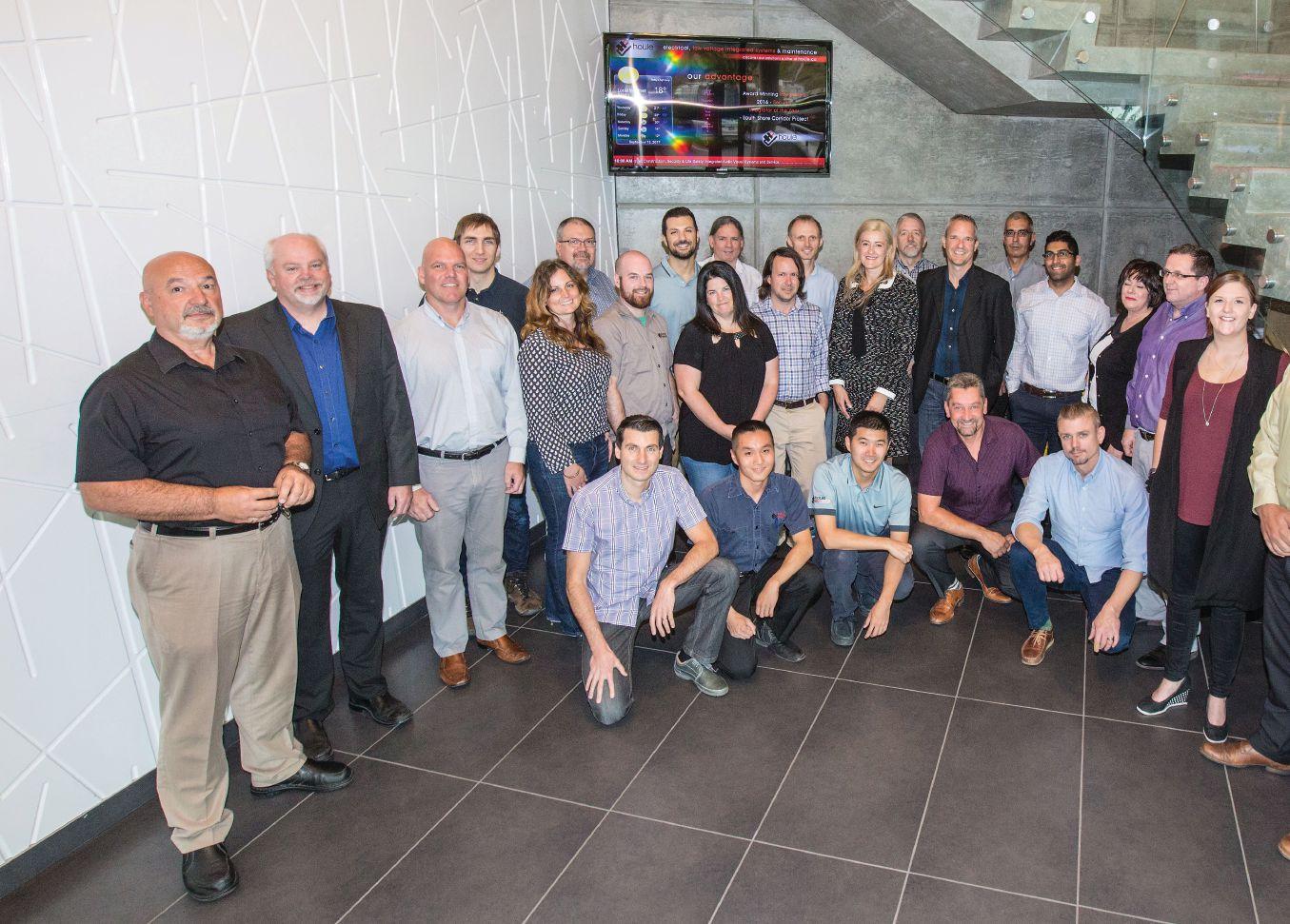
Houle is SP&T News’ first two-time Integrator of the Year for a project that required the B.C. company to work on two hospital sites at the same time
By Neil Sutton
It is fitting that Houle is recognized with the 2017 Integrator of the Year award, sponsored by Anixter Canada, for a project that required them to work on two different sites simultaneously.
Houle is the first two-time winner of the award, which is given out annually to an integrator that has demonstrated ingenuity, excellence and sheer hard work.
The winning project for 2017 is the North Island Hospital Project (NIHP) for the Vancouver Island Health Authority (VIHA). Last year, Houle received the Integrator of the Year award for a project for the Port of Vancouver.
If anything, NIHP is even more complex, most obviously because it involves two separate yet connected sites. NIHP comprises two new hospitals: Comox Valley Hospital and Campbell River Hospital, which were built to benefit those communities as well as others close by. About 40 minutes apart, they operate independently on some levels, but share common systems, some of which are maintained centrally in Victoria, B.C.
The project is collectively a P3 (public-private partnership). Houle is part of a larger P3 team that includes the general contractor, Graham Construction & Engineering, as well as the project engineer and design consultant Stantec,

and the facilities maintenance partner Honeywell. Houle was selected as the electrical contractor for Comox (the Campbell River electrical work was contracted out to another company), and was also selected as the systems integrator for both sites.
The hospitals were built in tandem, starting with construction in 2015. Both are now completed with Campbell River opening on Sept. 10 and Comox scheduled for Oct. 1, based on estimates that were available at press time. Comox is a 153-bed facility comprising 428,700 sq. ft. whereas Campbell River has a capacity of 95 beds for a total of 348,000 sq. ft. — the major difference is that Comox, the larger of the two, has a mental health facility on-site.
For Houle, working on two sites simultaneously required a highly orchestrated approach, especially since their roles differed site to site. Houle was responsible for a long list of security (and related) systems that includes: access control, surveillance, intrusion systems, wireless panic, A/V, intercom, public address, real-time location (RTLS), nurse call, a distributed antenna system, infant abduction, patient wandering, structured and fibre-optic cabling, networks, and lighting. Manufacturer products installed include those from: Tyco, Aiphone, Avigilon, Sonitor, Lenel, HID Global, Crest Healthcare, Crestron,


Schneider Electric, Life Safety Power, Zinwave, Motorola, Vocera, Cerner, HP, VMware, Cisco Systems, QSC, Ascom, Samsung, McRoberts and Spok. In total there were 33 systems, about 13,000 network connections and in excess of 123 points of integration.
The complexity of a single site incorporating this much equipment might seem somewhat daunting, but Houle had to manage two. Clearly, careful co-ordination was required not only between both sites, but also between the P3 partners involved in the build, including the project owner VIHA. This was accomplished through a variety of means. Houle and its partners collaborated every step of the way with VIHA’s Architectural Review Board (ARB), a committee of 30-plus people who reviewed design documents for interoperability as well as privacy and other necessary compliance measures. In addition to working with partners like the general contractor Graham, and the design consultant Stantec, Houle divided its own work into seven co-ordinated teams, each with a separate responsibility. To simplify matters somewhat, Houle appointed a project lead to each site. One could warn or encourage the other, based on their point of progress at their site, helping to reduce the potential for mistakes as well as keeping the project on track and on time.
“If one guy discovered an issue, he made sure the other guy knew about it right away so they didn’t replicate the issue again,” explains Levis Veilleux, Houle’s integration architect.
For Veilleux, the North Island Hospital Project represents more than a challenging install. It required Houle to be innovative, configuring and installing systems that had practically never been used before. The VIHA’s ARB requirements were stringent, and they reviewed every system design meticulously before it could be installed, requiring Houle to essentially “design it before we even designed it,” says Veilleux.
“Typically when we’ve done hospitals, and I’ve done them across the country, often you’ll see things where the owners will specify things like, ‘the system shall be capable of this or that,’ but they never, ever deploy that. These two hospitals were unique in the sense that, they never used the word ‘capable of,’ they made us do everything. So, literally the system is doing things that no other hospital [can],” he says.
Probably the best example of this is the RTLS system from Sonitor, which uses a combination of ultrasonic technology and Wi-Fi to accurately locate staff. It’s also tied into the asset tracking system, patient wandering system and infant protection system.
“Ultrasonic, because it’s soundwaves, the

signals cannot penetrate through walls or solid objects. The system is able to give room-level accuracy of locating tags,” says Veilleux. “Whenever a tag walks into a room, it picks up a new beacon signature. If the tag is a staff tag, and they hit their panic button, that tag will transmit the panic alarm as well as the location of the last room that it was signed in to.”
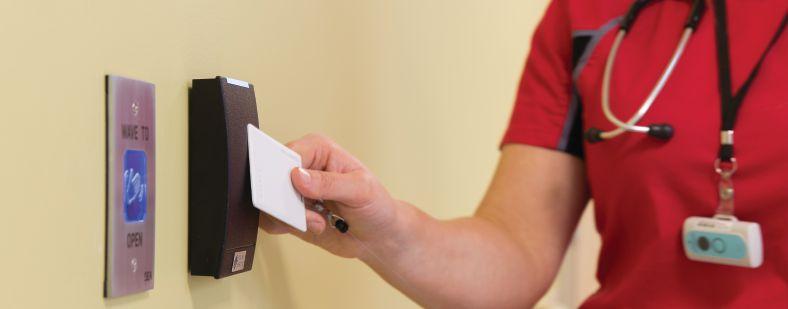
The RTLS is also tied into the access control system, essentially creating smarter doors. For instance, in the case of a Code Blue alert, activated on the nurse call system, a door will automatically open as a crash cart approaches it.
Because the Sonitor system is so new, Houle worked closely with the manufacturer. There are 400 beacons, or location transmitters, on each hospital site which allow the ultrasonic technology to function. Normally those beacons are battery powered, but Houle worked with a local company to develop a board that would hardwire power to the beacons. Sonitor is now looking at reselling that innovation on a wider basis.
The hospitals share some IT and security in-
frastructure, in some cases enabled by a third site. For instance, the VIHA manages its alarm systems centrally from a monitoring facility in Victoria. VIHA’s access control is also centrally managed from Victoria thanks to a new Lenel OnGuard system, which is replacing an older FCWinX access control platform. Lenel will be the go-forward access control platform for all of VIHA’s hospitals in the future.
It was Stantec, the design consultant, that brought the Lenel system to the table. Houle originally had a different plan in mind, according to Dean Kaardal, Stantec’s design lead for the project, but Houle was able to get on board and support the change. “Houle helped the owner fix the obsolescence of the existing [access control] solution,” says Kaardal. “It was a big part of the integration strategy, because that obsolescence would have created some problems for us down the road. The owner didn’t have a solution for it; we proposed one and then Houle jumped on board and really helped the owner try to wrestle it to the ground and
get a solution that’s now working — not just on our two sites, but on the entire Vancouver Island Health Authority. They really stepped up.”
Houle also worked closely with Lenel’s own professional engineering services to ensure that the technology was deployed smoothly (in addition to Lenel equipment installed on-site, Lenel servers were also installed in Victoria, where they will manage all of VIHA’s hospitals).
A methodology that allowed Houle to stay ahead of the curve across the entire project was its reliance on prefabrication. The company, which used prefab to good effect in its previous winning project in 2016, relied on it again for this major undertaking. The company’s prefabrication shop was involved in pre-testing, pre-configuration and pre-programming systems, which helped considerably when it came time to installing systems for real.
If Veilleux has his druthers, Houle will use this prepared approach to an even greater extent on future projects. “We tried to mock up all of the systems prior to install, so we can see where we will encounter issues. The biggest issues that we had was some of the products that we went with were bleeding edge.
“The biggest lesson learned [from NIHP] is to do complete mock-ups, not just partial, of all integrated systems.”
Another Houle project, Penticton Hospital, has an expected completion date of 2021. “We’re working on the new Penticton Hospital now and we’re already adopting these lessons learned,” says Veilleux.
Houle was able to complete the NIHP on-time — the scheduled completion date never wavered, even though the project proved to be exceptionally complex, and in some cases, broke new ground for health-care facilities in Canada.




dormakaba makes mobile access a reality –simply and securely.
The mobile mindset of today’s generation demands choice and convenience. We’ve become an online, on demand culture that expects interactive technology to deliver instant, intuitive and fluid user experiences. Opening the door to a new era of instant access is dormakaba. Our Mobile Access Solution was the first to connect the lodging industry with guest security and convenience. Now, commercial properties are networking with the mobile lifestyle by turning smart devices into authorized credentials, providing simple and secure employee access to buildings, offices and controlled areas of the facility.
Convenient, reliable and secure, dormakaba’s Mobile Access Solutions are end-to-end mobile credential applications utilizing Bluetooth Low Energy (BLE), the preferred communication technology for dormakaba mobile-enabled RFID locks and high-frequency readers. Our mobile access solutions integrate seamlessly with access control systems providing a cloud-based platform to securely issue and manage keys on mobile devices for facilities and organizations of any size.
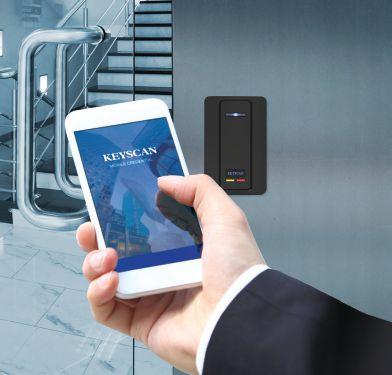
Our Keyscan Mobile Credential brings convenience to commercial facilities secured with Keyscan access control systems. System administrators can meet the demand for digitization and issue mobile credentials that authorize access to entrances, elevators, parking garages and other entry points to commercial, industrial and institutional buildings. iOs and Android compatibility assures flexibility, agility and connectivity.

Trends that existed on the edge of the security industry for years are now having a real impact. Here’s how to take advantage of them.
By Michael DeMille
The buzzwords of our industry — Big Data, Internet of Things (IoT), mobile credentials, the Cloud, and artificial intelligence — are increasingly becoming more about deliverables and less about “what ifs.”
After years of talking about them in the abstract or relating them to high-end security installations out of the reach of most, today, we can see the applications for, and the impact of, these key trends.
That being said, making the most of Big Data, the Cloud and other important developments requires a clear understanding of how they will fit best into a par-
ticular scenario for a specific client. For building solution providers, there needs to be a delicate balance between selling products with a high level of intelligence and pricing yourself out of projects and the market with items a customer may not require or yet fully understand.
Knowing how and when to use the technologies and concepts we’re discussing here, how to price the related systems and then sell them to customers based on their particular needs will help systems integrators remain competitive and retain the loyalty and trust of their customers.
Today, customers find themselves swimming in data, which can make it difficult for everyone from property managers to police and security personnel to find relevant information, whether a specific security-related event has occurred or they are trying to apply data to solve a non-security problem. Big Data is a good thing if it can be used precisely and efficiently and if it can be retrieved easily and applied with purpose.
Fortunately, the advent of analytics has made the difference by allowing those who have to deal with pre- and post-event data to hone in on what they need. In a security situation, this means being able to concisely identify a situation, often by applying a series of algorithms that can sort through the data and get to the heart of the matter, such as finding a man in a red car exiting a parking lot or determining who left a package unattended by the front door.
Big Data also has applications outside the security realm, as when it is applied to a visitor management system or toward time and attendance tracking. Through data analysis, you can extrapolate information to determine specific actions, whether it is setting appropriate shift times at a manufacturing plant or determining the right heating or lighting patterns within a building. Retailers are using video analytics from Big Data to help merchandise their stores for maximum sales results based on traffic pattern data. Within the context of buildings, stronger integration of systems enhances not only the installer’s setup experience, but the user’s experience as well. Lower installation costs, based on hardware and labour, are critical for winning project bids, but so is providing an intuitive user experience with an integrated interface that allows for ease of viewing, controlling and reporting.
Among the interesting developments surrounding IoT is the growing partnership between security players and non-security data gatherers, or artificial intelligence (AI). By teaming together, an alarm system begins to learn a user’s behaviour and make decisions related to those actions, such as knowing to turn on the air conditioning and
“There needs to be a delicate balance between selling products with a high level of intelligence and pricing yourself out of projects.”

the lights as employees arrive for work. Based on behaviours shared by the alarm system and its AI partner, the system can even begin to discern the difference between weekday and weekend actions and respond accordingly. In a commercial setting, by combining the intelligence of building systems with AI, the building can “know” certain things and respond, such as unlocking the office door or sending the elevator to the first floor when the CEO arrives.
With the proliferation and ubiquitous use of mobile devices, we foresee the days of access cards potentially coming to an end. The use of mobile credentials, typically housed in an individual’s smartphone, has the potential to greatly reduce cost and lower the risk of unwanted user access. Even in temporary situations, one can easily create a mobile credential that can be turned on and off and will not be lost or stolen.
One of the latest technologies being used in this arena is BLE (Bluetooth Low Energy). Using the built-in Bluetooth feature of a mobile phone, an individual can access doors, elevators and other secured locations. And the opportunities continue to rise for mobile credentials as society becomes increasingly tethered to smart devices.
The downside fear of transitioning to mobile credentials vs. access cards is that dealers and inte-
maintenance chores or risk those same people introducing viruses to the system by downloading their personal music and videos on to the company’s security servers. Operating in the Cloud is insurance against some of these bothersome, yet very real, threats.
There will always be new areas to explore as well as existing ones to fine-tune. Cybersecurity is one area that, although not a new issue, requires constant attention, especially in light of changing industry standards that need to be followed.
grators will no longer have the opportunity for a markup. This source of revenue has been the norm with card sales. However, the industry is finding a way around the loss of card revenue by charging for the mobile credential licence, so the movement is away from card revenue and toward licensing fees.
Operating in the Cloud takes away much of the hardware and maintenance burden for building managers; it becomes a win-win for both dealers and integrators as well as end users because both can see and experience a true upside.
The managed/hosted solution has become popular with installers and integrators because it allows them to add more value to their clients and helps build an on-going relationship between them. By getting commercial customers onto monthly contracts, dealers and integrators strengthen their position with their customer and it becomes harder for their end user to shop around.
Clients like these Cloud-based solutions because they solve a very real problem for them. The bottom line is that clients don’t want to have to backup and maintain servers, issue access cards or upgrade systems, and so they are willing to pay a monthly fee to outsource this work. They also don’t want to have to train people who sit at the security desk or the reception area to handle some of the backup and
Both the retail and the commercial industries present continuing opportunities to cross-pollinate technologies for security and non-security purposes. On the retail side, video analytics, which began as a security technology, is now being used to reshape how people shop. Some retailers are using video analytics to incentivize their customers to make a purchase, noting how long someone pauses in front of a display and then sending a coupon to their phone as a nudge to buy.
Within commercial and residential buildings, voice entry systems, designed to regulate who enters a space, are also being used to advertise local businesses. This not only helps the advertiser with targeted sales — a building manager, for example, may share data on what types of cars are in the parking lot to get advertising from a specific dealer — but the building manager can recoup some of the investment in the hardware by multi-purposing the entry security system.
In the end, maintaining and growing your customer base comes down to how you can show value to your customers. Understanding what they value must be the primary objective. This level of understanding usually comes from staying abreast of the latest developments and usage trends and working with your clients to determine and guide them in which technologies and practices will have the longevity to best serve them now as well as in the years ahead.
Michael DeMille is the senior director of product management at Torontobased Mircom Group (www.mircom. com).

By Scott Lindley
Hacking has become a threat far bigger than most people think.
Many hackers are teenagers in basements just trying to get into any system that they can. It’s referred to as “opportunistic hacking.” And, when they get in, they like to change code that will create mayhem. That should not give you rest. Apple CEO Tim Cook warns, “The hacking community aren’t hackers anymore; they are sophisticated enterprises.”
IPVM recently reported how a $30 copier easily spoofed a popular proximity card. The column stated that the copier “used to copy the cards works much the same way as normal card readers, with transceiver coil, power supply, IC chip, buzzer and even LEDs components shared by both. Given the principal operation of contactless card readers, the copier excites the coil and delivers power wirelessly to the card, which then momentarily stores energy and then uses it to broadcast card details back to the copier.”
Interestingly, some security people don’t seem to secure their own security equipment. Users are learning that today’s IP-enabled contactless card readers and wireless cameras have become favourite targets of hackers. Unsecured, they provide irresistible backdoors. Thus, new specifications are needed for electronic access control projects.
For instance, were you aware that by simply putting the default installer code in a disarmed state, it can be used to view the user codes including the master code or to change or create a new code? Therefore, if a potential unauthorized person gains access to a panel in the unarmed state, using the installer code gives that person access to all installed hardware and will even allow creation of a new user code or change of a current user code. This code then trumps the master code or other user codes.
So, if the installer does not change the default code, the user might as well be giving a user code to everyone. Less than 30 seconds is all it takes to view the master, all other user codes, or even create a new one. Yes, you say, but what if the installer says that they don’t have the default installer code? Unfortunately, too often, these codes can be found online with a simple Google search. And, of course, once inside the system, the hacker can also get access to the rest of the computer system.
Sometimes the problem is within the software itself. Oftentimes, the default code is embedded in the app to provide a mechanism to let the device still be managed even if the administrator’s custom pass code is lost. However, it is a poor developer practice to embed passwords into an app’s shipped code, especially unencrypted.
Adding to the problem is that Wiegand, the industry standard overthe-air protocol commonly used to communicate credential data from a contactless access credential to an electronic access reader, is no longer inherently secure due to its original obscure and non-standard nature.
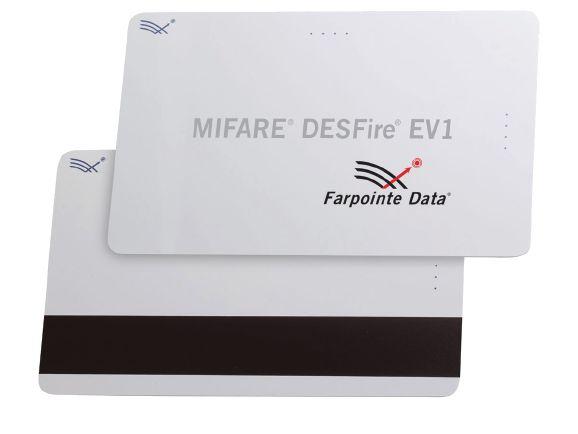
For this reason, options are now available that can be added to the readers. The first is MAXSecure, which provides a higher-security handshake, or code, between the proximity or smart card, tag and reader to help ensure that readers will only accept information from specially coded credentials. The second is Valid ID, a relatively new anti-tamper feature available with contactless smartcard readers, cards and tags. Embedded, it can add an additional layer of authentication assurance to NXP’s MIFARE DESFire EV1 smartcard platform, operating independently, in addition to, and above the significant standard level of security that DESFire EV1 delivers. Valid ID lets a smartcard reader effectively help verify that the sensitive access control data programmed to a card or tag is indeed genuine and not counterfeit.
First of all, when considering any security application, it is critical that the access control provider needs to realistically assess the threat of a hack to a facility. For example, if access control is being used merely as a convenience to the alternative of using physical keys, chances are the end user has a reduced risk of being hacked. However, if the end user is using their access system as an element to their overall security system because of a perceived or imminent threat due to the nature of what they do, produce or house at their facility, they may indeed be at higher risk and they should consider methods to mitigate the risk of a hack. Here are a few steps that may be considered in reducing the danger of hacking into a Wiegand-based system.
• Install only readers that are fully potted. Potting is a hard epoxy seal that does not allow access to the reader’s internal electronics from the unsecured side of the building. An immediate upgrading is recommended for readers that fail to meet this standard.
• Make certain the reader’s mounting screws are always hidden from normal view. Make use of security screws whenever possible.
• Embed contactless readers inside the wall, not simply on the outside, effectively hiding them from view. Or, if that is not possible and physical tampering remains an issue, consider upgrading the site to readers that provide both ballistic and vandal resistance.
• Make use of reader cable with a continuous overall foil shield tied to a solid earth ground in a single location. This helps block signals from being induced onto the individual conductors making up the cable as well as those signals that may be gained from the reader cable.
• Deploy readers with a pig tail, not a connector. Use extended length pig tails to assure that connections are not made immediately behind the reader.
• Run reader cabling through a metal conduit, securing it from the outside world. Make certain the metal conduit is tied to an earth ground.
• Use the “card present” line commonly available on many of today’s access control readers. This signal line lets the access control panel know when the reader is transmitting data.
• Provide credentials other than those formatted in the open, industry standard 26-bit Wiegand. Not only is the 26-bit Wiegand format available for open use but many of the codes have been duplicated multiple times. Alternatives can include ABA Track II, OSDP, RS485 and TCP/IP.
• Offer the customer cards that can be printed and used as photo badges, which are much less likely to be shared.
• Employ a custom format with controls in-place to govern duplication.
• Offer a smart card solution that employs sophisticated cryptographic security techniques, such as AES 128-bit.
• Make available non-traditional credentials with an anti-playback routine, such as transmitters instead of standard cards and tags. Long range transmitters offer the additional benefit of not requiring a reader be installed on the unsecure side of the door. Instead they can be installed in a secure location, such as the security closet, perhaps up to 200 feet away.
• Offer a highly proprietary contactless smartcard technology such as Legic advant.
• Provide two-factor readers including contactless and PIN technologies. Suggest users roll PINs on a regular basis. If required, offer a third factor, normally a biometric technology (face, fingerprint, voice, vein, hand, etc.).
• Assure additional security system components are available. Such systems can also play a significant role in reducing the likelihood of an attack as well as mitigating the impact of a hack attack, should it occur.
• Intrusion: Should the access control system be hacked and grant entry to a wrong individual, have a burglar alarm system in place to detect and annunciate the intrusion.
• Video: If the access control system is hacked, granting entry to an unauthorized individual, have a video system in place to detect, record and annunciate the intrusion.
• Guards: If the system is hacked and intruders are let in, make sure that guards in the control room as well as those performing a regular tour receive an alert notifying them that someone has physically tampered with the access control system.
We must always stay one step in front of the bad guys. With the proper tools, any of these assaults can be defended.
One aspect of securing a card’s information is to make the internal numbers unusable; they must be encrypted. To read them, the system needs access to a secret key or password that provides decryption. Modern encryption algorithms play a vital role in assuring data security.Today,13.56 MHz smart cards are used to provide increased security compared to 125 KHz proximity cards. One of the first terms you will discover in learning about smart cards is “MIFARE,” a technology from NXP Semiconductors. MIFARE enables 2-way communications between the card and the reader.
The newest of the MIFARE standards, DESFire EV1, includes a cryptographic module on the card itself to add an additional layer of encryption to the card / reader transaction. This is amongst the highest standard of card security currently available. MIFARE DESFire EV1 protection is therefore ideal for sales to providers wanting to use secure multi-application smart cards in access management, public transportation schemes or closed-loop e-payment applications.
Protecting your customers’ organization(s) from hackers is imperative. The threats have grown to the point where they now include sophisticated government backed entities as well as teenaged mischief makers.
With knowledge of what hackers seek and the remedies available to thwart them, anti-hacking specifications are now mandatory.
For additional help, ask your manufacturer to provide you with their cybersecurity vulnerability checklist.
Scott Lindley is the president of Farpointe Data (www.farpointedata.com).
By Memoori
The access control business has, over the last 10 years, completely changed its image from being a rather unattractive slow growth and conservative business to today, taking up a position as a fast growing, confident business.
The access control industry has listened and acted on the needs of the stakeholders in the supply chain and, as a result, the world market for access control products and software reached $6.84 billion in 2016, an increase of 10 per cent on 2015. For the last two years access control has achieved a much higher rate of growth than either of the other two sectors (video surveillance, intruder alarms) and it looks like it will retain this status in 2017. We forecast that it will grow by a CAGR of 11.23 per cent to 2021, making sales of US$11.56 billion in that year. These levels of growth will be driven by ACaaS, biometric readers, identity management, wireless locking systems and more penetration of IP network systems.
“Access control is still a much smaller business than video surveillance and this will always be the case, but it now has the confidence to move forward.”
It is still a much smaller business than video surveillance and this will always be the case, but it now has the confidence to move forward and pick up the challenge of embracing new technologies, which is driving up demand. The future looks bright, as some major technological and commercial changes in this sector will continue to drive growth at these higher levels.
We feel bullish about this business as it moves into IP networking and strengthens its relationship with biometrics and identity management. These trends are significant drivers that should


maintain the growth momentum that has built up over the last two years.
However, it is possible that some access control manufacturers will become complacent and hold back from becoming “open.” In 2014, ONVIF announced the final release of Profile C, which brings the functionality of the ONVIF global interface specification into the physical access control arena.
ONVIF has been successfully introduced into the video surveillance industry. Baldvin Gislason Bern, Chairman of ONVIF’s Profile C Working Group, said, “Integration between IP-based physical access control systems and video surveillance is no longer considered a luxury in today’s market, and is becoming a necessary component for many different types of users. With Profile C, users and specifiers will be able to integrate the Profile C products of their choosing without relying on existing integrations between manufacturers.”
What concerns many access control manufacturers is that, as the market gradually becomes open and more competitive, their heritage real estate business will lose much of its protection. Whilst ONVIF has become a major force in video surveillance and is widely embraced by video surveillance manufacturers it has yet to get the same acceptance by access control manufacturers.
Manufacturers here prefer to continue to be


proprietary. This is not good news because continued growth for traditional proprietary systems mean limited options, central servers with complex and expensive cabling, as well as restricted possibilities for integration and scalability.
The combination of IP and “open systems” will open up further opportunities for the access control business right across the physical security industry but not to those that stay proprietary.
Winning new business in this environment will be more competitive and will require continual product development, which is absolutely essential in order to maintain growth.
The pace of change will speed up but it will remain a much more discreet market than video surveillance and is not yet subject to the disturbance of drastic price cutting from Chinese suppliers (although there is some evidence of this in recent months).
System integrators have, in the last three years, paid much more attention to developing their access control business for it is proving to be more profitable and stable and currently offers better growth prospects and less disruption than video surveillance. We expect them to push for “open systems.”
This article was taken from Memoori’s 8th edition of their Annual Report The Physical Security Business 2016 to 2021.
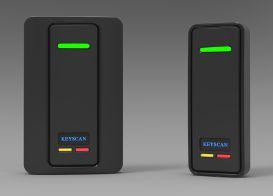
A cost-effective 13.56MHz reader solution, with the ability to function with both physical and mobile credentials, K-SMART3 makes the ideal choice for new Keyscan installations and existing system upgrades and retrofits. The K-SMART3 reader series is a versatile reader that supports Keyscan mobile credentials as well as K-SECURE 1K/4K physical credentials. Its support for physical credentials allows K-SMART3 to function with existing Keyscan systems using legacy K-SMART readers. www.dormakaba.com/us-en
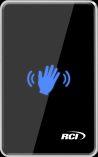
RCI is pleased to bring you the 910TC touchless switch with mechanical override. This aesthetically-pleasing switch offers capacitive proximity technology with a read range of 1” to 2” (30-50mm). The low-profile touchless actuator plate utilizing unique capacitive technology for the activation of automatic doors. Hands-free activation helps reduce the spread of germs and bacteria and its short-range adjustable detection zone helps to reduce unwanted activations. When the device is activated, an indicator light (waving hand) will change color with an audible tone (selectable). The 910TC offers built-in mechanical override in the event of power loss and selectable unlock times (1-63 seconds) www.dormakaba.com/us-en
Your requirements are our top priority. We do everything to understand what motivates you as our customers, partners and users. To develop solutions that do everything they promise to do. Solutions that do not just meet your expectations, but exceeds them. With over 150 years’ experience and millions of products and solutions installed worldwide – from pushbutton locks and door closers to highly complex, networked access solutions, dormakaba is your reliable partner for secure and flexible access to buildings and rooms.
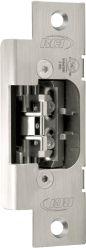
RCI’s new Grade 1 cylindrical strikes are designed to fit ANSI-prepped hollow metal and aluminum frames with minimal modification.
Accommodates 5/8” (16mm) latch projection with 1/16” horizontal adjustment and 1/2” vertical adjustment. Plug-in wire connectors allow for easier installation and cooler operation ensure that these electric strikes run cool to the touch. Optional 3-hour fire-rated and latch monitor models available.
www.dormakaba.com/us-en
PowerPlex Locks are self-powered electronic locks that do not require batteries or other power sources. The lock generates its own power with every turn of the lever, making it the most efficient and versatile electronic lockset available with virtually no maintenance costs.
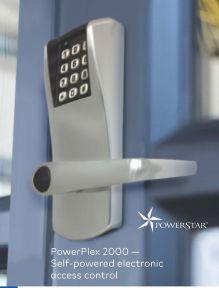
PowerPlex 2000 is a self-powered, eco-friendly electronic lock that does not require batteries or other external power sources. PowerPlex offers an access control solution that helps meet sustainability initiatives by removing battery waste disposal. Employing PowerStar™ technology, the PowerPlex Series uses new super capacitor technology to store power longer and more efficiently. There is no handle pumping required to wake up the lock and the built-in super capacitors will hold a full charge for up to 10 weeks with no activity at the lock.
Providing exterior access by PIN code while allowing free egress, PowerPlex is as reliable as a mechanical lock with the features of an electronic lock. The lock supports 100 user codes and records the last 1,000 events for increased accountability. Lock audits provide information, such as date, time, transaction description, user number, user access code/name, and user status.
www.dormakaba.com/us-en
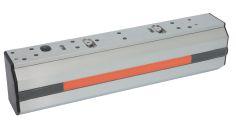
RCI’s Delayed Egress (DE8310) electromagnetic lock offers the ability synchronize up to 4 doors (with or without mullion) using a converter. Doors are not required to be beside each other; they could be separate single doors, or sequential doors, that are passed through. Up to two doors may be synchronized without the converter. Authorized egress time is programmable 0 to 15 seconds and the LED color and flashes may be customized. Monitored fire alarm input and delayed egress may be triggered with pressure on the door or with a REX input (or disabled completely). Larger dipswitches are used for easy configurations.
www.dormakaba.com/us-en
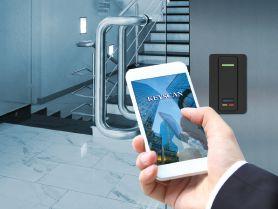
Keyscan merges security and convenience with its cloudbased Mobile Credential. The Keyscan Mobile Credential app brings security and convenience to commercial facilities secured with Keyscan access management systems. Keyscan mobile credentials utilize Bluetooth Low Energy (BLE) to enable communication between mobile device and K-SMART3 mobile-ready readers, that may be installed and used in conjunction with existing Keyscan K-SMART 13.56MHz access control environments using smart cards, fobs or transmitters
www.dormakaba.com/us-en
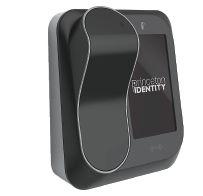
Princeton Identity
IOM Access200 is a feature-rich biometric solution with the ability to provide flexibility for various access control applications. The IOM Access 200 is presented in a compact design featuring multimodal (face & iris) and multi-factor capabilities (PIN & card). Utilizing patented technologies, the IOM Access200 is configurable and works with variety of protocols (including OSDP).
www.princetonidentity.com
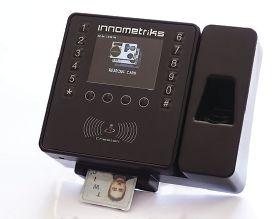
Tyco Security Products
Innometriks’ Cheetah high assurance physical access reader, which is now UL 294 certified, features advanced architecture allowing integration into existing PACS and network environments. Cheetah paves the way for full FIPS-201 deployments, allowing customers to set authentication factors to match the threat. When elevated to a different security threat level, the reader changes to the corresponding authentication mode. Infinitas is a credential validation, registration and authentication suite that offers a turnkey approach to PIV, CAC, and TWIC card validation. www.tycosecurityproducts.com
Based on the same platform as the entire SIGMA product line, the outdoor MA SIGMA Extreme is specifically designed to operate in harsh conditions, resisting rain, snow, dust and salt mist. The ruggedized biometric reader is designed for secure access control in challenging environments, such as mines, seaports, airports and industrial sites. In addition, all components adapt to demanding operating conditions, such as a field-proven, large area optical fingerprint sensor, a high visibility display, and a powerful loudspeaker. www.morpho.com
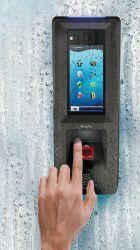
Netatmo
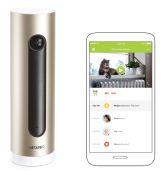
Due to its Artificial Intelligence algorithm, Netatmo Welcome’s Pet Detection is able to track motion caused by pets in real time. Users can choose to ignore motion alerts caused by pets or keep them running to check on their companions. With face recognition technology, Welcome also alerts users on their smartphone about intruders.
www.netatmo.com
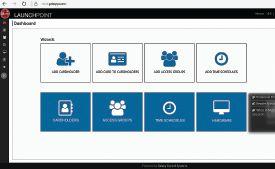
Galaxy Cloud Concierge offers end users a turnkey, Cloudbased, fully hosted and managed access control and monitoring solution that integrates video surveillance, visitor management, elevator control, locks and turnstiles into a unified platform. Galaxy Control Systems offers Cloud Concierge in three configurations: an on-site, user-managed, Cloud-based system; a remote Cloud-based, user-managed integrated system; and a remote Cloud-based, reseller/integrator managed integrated system. Cloud Concierge incorporates AES encryption to ensure the security of data. cloud.galaxysys.com
American Dynamics
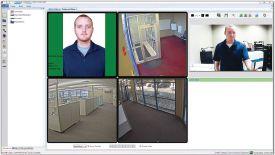
Facial biometrics can be added to a VideoEdge network video recorder (NVR). Users can conduct a SmartSearch within VideoEdge to automatically find a matching face and view the associated corresponding video. This allows security operators to identify criminals, terminated employees, VIPs and other persons of interest, while also enrolling and saving known faces with video associated for faster future investigations. Users are able to save up to 1,000 faces per NVR enrollment database.
www.americandynamics.net
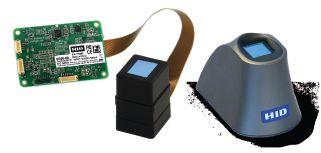
Lumidigm M-Series fingerprint solutions bring multispectral imaging technology into challenging yet cost-sensitive applications such as time and attendance, physical access control, banking, and health care. The enhanced M Series enables OEMs and IT security integrators to deliver authentication solutions that ensure customers, staff and citizens are who they say they are, reducing identity fraud risk and minimizing user frustration. Proven biometric identity protection provides reliable image capture for users in all conditions and high-performance liveness detection that prevents fraudulent use of fake or stolen biometric data.
www.hidglobal.com
IMID Access 4.0 uses a fusion of biometrics-based technologies for identification-oriented applications, including access control, employee time-and-attendance and retail consumer experience. Utilizing FST’s visual identification technology, IMID Access can be implemented in low-light environments, is equipped to overcome fraud attempts, and employs long-term enrollment. www.fstbm.com
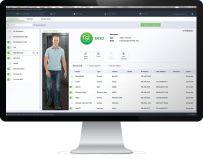
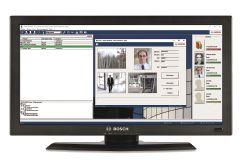
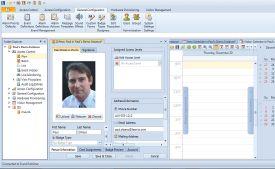
The Access Professional Edition (APE 3.4) software solution enables installers and system integrators to manage access control. It goes beyond locking and unlocking of doors and allows a large number of functionalities from reception registration, badge registration to entrance monitoring, alarm management and video verification. APE can be integrated with other building management and security functions like elevator management and intrusion protection. www.boschsecurity.us
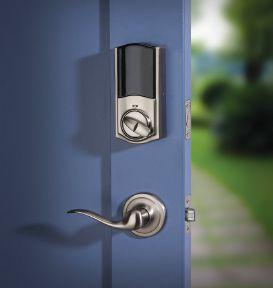
Kwikset Convert is the company’s new Z-Wave Smart Lock Conversion Kit. The kit will turn mechanical locks — even non-Kwikset locks — into smart, electronic locks, bringing keyless entry and home automation to new consumer audiences. Kwikset Convert is designed to appeal to homeowners who want a smart lock but also want to maintain the style of the front door or match an existing handleset, and don’t want to change out their existing deadbolt. www.kwikset.com
Iveda
The IvedaHome doorbell security camera is a standalone product that can also be bundled with Iveda’s IvedaHome automation and security system. Iveda’s doorbell camera is a DIY product that can be installed to replace the existing doorbell in most homes or offices. Iveda’s doorbell camera serves as a surveillance camera, equipped with a PIR (passive infrared) motion detector sensor. When motion is detected, an alert will be sent to the same devices and each can use the app to verify what is going on outside the door.
www.iveda.com
Dormakaba
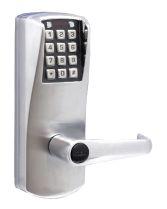
The Kaba PowerPlex 2000 self-powered electronic lock generates its own power through PowerStar technology, making it an efficient and versatile electronic lockset available with virtually no maintenance costs. Every time the lever is activated, the lock is energized to provide PIN code access. The lock can be simply programmed with as many as 100 different user-codes and five different authority levels with audit trail accountability of the past 1,000 events.
www.dormakaba.com
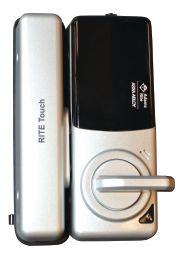
The RITE Touch digital door lock with the new ADA compliant accessibility lever offers compliance while providing a security solution for design professionals and building owners. Intended for indoor single or double all-glass door applications, the surface mounted RITE Touch requires no modification to the glass. It is battery-operated, programmable via touchscreen, and supports up to 40 credential cards. The digital lock features two options for credential actuation on the secure side of the door, a user code using the touch-screen or using the Mifare credential cards provided. With choice of thumbturn or ADA compliant accessibility lever, the RITE Touch provides aesthetics with the latest touch screen technology.
www.adamsrite.com
Farpointe

Proximity and smart card credentials are now available with tactile laser engraving. Whether clamshell, printable, printable with magnetic stripe card or key ring or disc tag, Farpointe will permanently laser engrave logos and text, URLs, signature blocks, messaging, other graphics or whatever the customer wants. Images and text can be individualized for each organization’s needs while meeting security standards. www.farpointedata.com
Keep by Feenics Access Control as a Service (ACaaS) Security Management System (SMS) gives users the choice of on-site servers or offsite Cloud hosting. In a hosted environment, Keep eliminates the need for servers or appliances, while providing full redundancy and disaster recovery. The platform features two-factor authentication, TLS encryption and a native User Interface (UI) that allows users to configure and monitor access control via an Internet connection. www.feenics.com
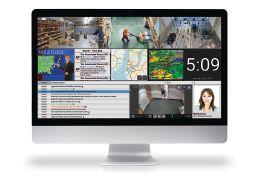
S2 Magic Monitor Version 4 provides a unified security management user experience for access control, video surveillance, forensics, digital signage and live Internet feeds. Version 4 introduces new features including third-party video management system support, audio support and advanced Internet widgets. Version 4 of Magic Monitor includes audio support for cameras, video clips and online digital content. Real-time media from Twitter and Everbridge and enhanced weather radar maps bring tailored situational awareness into a variety of environments. www.s2sys.com
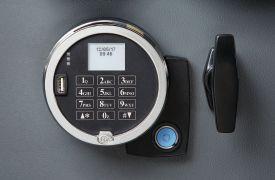
The A-Series with Display is the newest lock in the company’s ATM access control management system. The 30-character display screen includes universally recognizable texts, codes and icons. Regardless of native language, technical background or traffic and noise volume around the vicinity of the lock, the display screen allows trouble-free lock interpretation. With a verified USB flash drive, up to 1,000 events can be uploaded to coordinate and analyze the security for auditing. www.sargentandgreenleaf.com
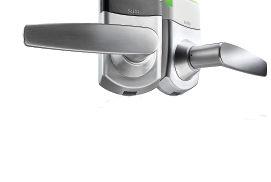
The SALTO XS4 Mini escutcheon’s compact de sign allows security professionals to upgrade security and replace mechanical-key-operated door locks with the latest electronic access control solution suitable for a wide range of customer applications. Its zinc alloy construction and Mifare-DESFire and BLE (Bluetooth Low Energy) technologies allow it to work with conventional smartcards and/or via SALTO’s JustIN Mobile app. Power is supplied via three AA batteries, with battery life good for up to three years of normal operation. When batteries run low, the XS4 Mini has audible and visual indicators. www.saltosystems.com
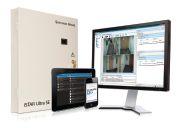
C•CURE 9000 v2.60 offers advanced access control policy enforcement and customization, after-hours reader groups, expiring clearances and other features. This latest version of the security and event management platform also supports IPV6 address protocols for the iSTAR Ultra door controller and introduces a new C•CURE 9000 Web Client user interface. Enhancements give the ability to configure the platform to create a new event after a number of consecutive rejections. www.swhouse.com
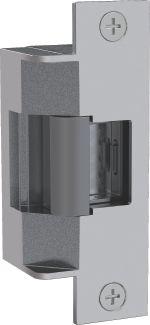
HES has upgraded the 7000 and 7501 series electric strikes with a new dual-voltage feature to provide greater flexibility for installers and eliminate the need to stock both single- and dual-voltage product. The 7000 and 7501 Series electric strikes support 12 and 24 VDC installation to simplify the ordering process compared to the previous single voltage option. The 7000 and 7501 Series are fail safe/fail secure, accommodate cylindrical latch bolts, are tamper-resistant, and suitable for metal and wood framing for commercial facility installations. www.hesinnovations.com
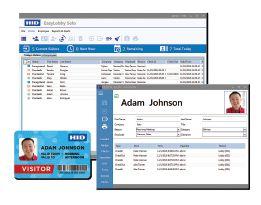
The EasyLobby Solo visitor management system for small- to medium-sized organizations functionality is based on HID’s enterprise-class EasyLobby Secure SVM solution. EasyLobby Solo makes it possible for organizations to transition from a multi-stage guestbook process to a digital solution managed from a single workstation. The solution provides registration and check-in, and makes it possible to generate visitor reports. www.hidglobal.com
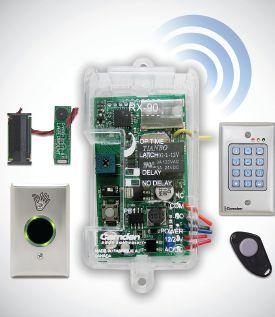
Door Controls
The CM-RX-90 advanced single relay receiver has three operating modes - Delayed (1 - 15 Seconds); No Delay (1 – 30 Seconds), and Latching, making it a suitable solution for most wireless door activation projects, including control of two automatic doors in vestibule applications. Features include 40 Transmitter capacity (either delayed, non-delayed or both), a Form ‘C’ Relay Output, and 12/24V AC/DC operation.
www.camdencontrols.com
Camden Door Controls
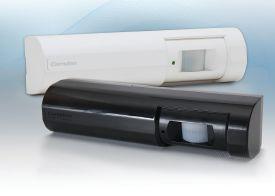
The CM-RQE70-PIR “Request-to-Exit” detector includes door contact, card reader and switch inputs, two relay outputs, sounder and tamper alarm — and factory default operating modes that are selectable by the press of a button on the circuit board. The CM-RQE70 is be smaller, so it can be installed in more places, including door frames. Detector mounting and wiring is simplified with a plug-in wiring harness. www.camdencontrols.com/ rexdetector
ASSA ABLOY Corbin
Russwin
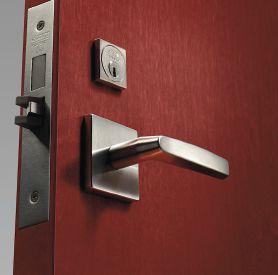
The ML2000 Series Mortise Lockset, an ANSI/BHMA Grade 1 mortise, now features an adjustable front to accommodate square or bevelled doors and a full 1-inch deadbolt throw. It also has a field reversible latchbolt made to re-hand without disassembling the lock case. The lock is available in 51 mechanical and electrified functions, including vandal resistant and behavioural health options, 59 standard trims and Museo Collection decorative lever designs. It is suitable for a range of applications.
www.assaabloy.com



Trust dormakaba for solutions that provide the perfect blend of form, flexibility and function. Our comprehensive line of networked access systems, electronic access controls, wireless and stand-alone access solutions are designed for multihousing, healthcare, financial, retail, transportation and commercial applications with a single goal in mind— making access in life smart and secure.
Visit dormakaba.us